


Abstract
Group coaching for school leaders can make a positive contribution to supporting professional and school development. Little research has focused on the effect of group coaching as an integrated approach during a professional development trajectory. To maximize effectiveness, empirical research on perceived key factors is essential. A professional development trajectory for school leaders with integrated professional learning communities provided an opportunity to examine the experienced impact of coach characteristics linked to the coaching approach, coaching skills and coaching expertise on outcomes. Based on mixed-method research, we can conclude that the PLC coach matters. Depending on the didactic approach and coaching skills applied by the coach, school leaders sometimes experienced that coaching had a major impact on their ability to convert insights into concrete actions, as well as on their desire to continue working on the content of the trajectory. Both school leaders and coaches perceived that coaches with a large amount of domain expertise but little in the area of coaching were less effective than those more skilled with coaching and with less domain-specific knowledge. Nevertheless, both are important: coaches should use existing expertise in the development process, taking into account the needs and expectations of school leaders. Mediating factors that influenced the experienced effectiveness of PLC coaching were also examined.
1. Introduction
Coaching for school leaders can make a positive contribution to supporting professional development within challenging and demanding societal contexts (Brandmo et al., 2021; Ritzema et al., 2022). Research specifically on coaching for school leaders is nevertheless limited, and empirical research on factors that influence it is essential to maximizing the effectiveness of coaching for professional and school development (Darling-Hammond et al., 2022; Lochmiller, 2021). A professional development trajectory (PDT) for school leaders provided an opportunity to study integrated professional learning communities (PLCs). Few studies have examined the impact of this specific form of group coaching as part of a PDT (Brandmo et al., 2021; Flückiger et al., 2017). This specific research context provided a unique opportunity to examine the impact of coaching characteristics (Cannon-Bowers et al., 2023; Lofthouse & Whiteside, 2019) on learning and other outcomes, as perceived by school leaders.
2. Theoretical Framework
2.1. Coaching
Coaching is defined as collaboration between a coach and clients during a process of reflection and enquiry aimed at inspiring clients to personal and professional development. It often involves tapping into underutilized resources, such as imagination, productivity and leadership (International Coaching Federation, 2023). Executive coaching can help leaders to focus on both personal and organizational goals (Lochmiller, 2018). The emphasis should ideally be on development (Wise & Cavazos, 2017) and customized to the specific position and context of the client (Rowland, 2017). Coaching supports the formulation of a vision, goals and/or desires, as well as the development or expansion of the ability to achieve them (Huff et al., 2013).
In group coaching, several professionals participate together with a coach (Flückiger et al., 2017). There are many different forms of group coaching, including professional learning communities (PLCs) (Harris & Jones, 2019; Poortman et al., 2022). The participants in a PLC—in this case, school leaders—share common goals and collectively gain knowledge through reflection and interaction, thereby creating opportunities to improve their practices (Kools & Stoll, 2016). In this process, individual school leaders bring in the perspectives of their own school cultures and contexts (Kools & Stoll, 2016). Recent research on PLCs within inter-school networks emphasizes that process coaching and facilitation are critical for achieving depth and sustainability in collaborative learning (Tanghe et al., 2024). Five key characteristics of PLCs are collaboration, a shared purpose focused on student learning, reflective professional inquiry, leadership of this professional learning network, and boundary crossing (Poortman et al., 2022).
2.2. Benefits of Coaching
In general, school leaders perceive that coaching is valuable for boosting their self-efficacy (Saddler, 2023). They report having greater self-efficacy (Brandmo et al., 2021) and feeling less isolated (Wise & Cavazos, 2017). Coaching also helps improve their ability to cope with job demands (Lofthouse & Whiteside, 2019). As a form of professional development, coaching can also contribute to job retention and sustainability (Lofthouse & Whiteside, 2019). In addition, after coaching, school leaders report experiencing stronger strategic leadership and enhanced ability to define goals effectively, achieve them faster and better anticipate complex challenges (Saddler, 2023).
Specific to group coaching, peer learning is perceived as valuable for current and future professional development (Coenen et al., 2021). School leaders indicate that participation in coaching enhances their ability to recognize common problems and challenges (Brandmo et al., 2021). In addition, school leaders identify the unique perspectives brought in by individual participants as enriching (Daniëls et al., 2023; Flückiger et al., 2017).
2.3. Coaching Quality: Characteristics of Coaches
Coaches provide support as equals (Ritzema et al., 2022), and they continuously adapt their approaches to the needs of the PLC groups with which they work (Margalef & Roblin, 2018). They combine the development of close relationships with a critical attitude, thus providing a challenging balance (Aas & Flückiger, 2016; Margalef & Roblin, 2018). This suggests that the characteristics of individual coaches play an important role in perceived quality and effectiveness (Coenen et al., 2021; Lofthouse & Whiteside, 2019). These characteristics can be divided into four categories: the coaching relationship as a fundamental foundation; the coaching process or approach; coaching skills; and personal characteristics (Cox et al., 2014). Other models propose similar classifications (Goff et al., 2014; Leedham, 2004; Wise & Hammack, 2011).
2.3.1. The Coaching Relationship as an Essential Foundation
The role and mandate of the coach should be clear (Harris & Jones, 2019). The independence of the coach creates a sense of safety and confidentiality (Lochmiller, 2018). Facilitating the development process deeply and ethically requires mutual trust, respect and equal status (Weathers & White, 2015). Coaches invest in this mutual relationship and make roles and expectations explicit (Aas & Flückiger, 2016). By fostering a sense of safety, coaches enable school leaders to be vulnerable and have the courage to explore (Saddler, 2023; van Nieuwerburgh et al., 2020).
2.3.2. The Coaching Approach
Coaches should ideally adopt an approach customized to the specific contexts of education and the personal and professional needs of the school leaders with whom they work (Huggins et al., 2021; Lochmiller, 2018). They should also work according to research-based frameworks (Darling-Hammond et al., 2022; Rowland, 2017). To facilitate maximum positive outcomes, coaches focus on both content and social interaction within the group (Aas & Flückiger, 2016; Brandmo et al., 2021). Sufficient focus on content in the coaching process also enhances engagement and motivation (Kets de Vries & Korotov, 2012; van Nieuwerburgh et al., 2020). Recent research on PLCs embedded in inter-school networks emphasizes that effective coaching approaches should not only address content but also actively facilitate group dynamics and structural conditions to ensure sustainability (Tanghe et al., 2024). This perspective reinforces the need for a balanced approach that combines goal orientation with flexibility to adapt to the evolving needs of the group.
Clarity about the overall purpose of coaching and the context within which it takes place is essential. At the very beginning of the process, a coach should establish whether there is a common goal or whether each of the participating school leaders has a separate goal (Brandmo et al., 2021). Given the contextuality of school leadership, a common goal may also be combined with individual or school-specific goals (Reiss, 2015). It is helpful to specify the most important development goals, desired outcomes and an action plan for achieving them (Grant, 2020; Huff et al., 2013). School leaders are accountable for the goals, primarily through progress monitoring and feedback from the coach during the coaching process. This enhances effectiveness (Wise & Hammack, 2011). At the same time, however, it raises questions concerning which coaching approach would be most conducive to planning concrete actions for professional and school development.
2.3.3. Coaching Skills
Encouraging reflection, reframing and continued development are key goals in coaching (Patrick et al., 2021). By applying coaching skills, coaches encourage and facilitate peer learning and problem-solving, in addition to supporting the transfer of key insights to the work context. This renders learning purposeful and creates opportunities for development (Aas & Flückiger, 2016; Patrick et al., 2021). Coaches guide the development process by using a variety of coaching methods (Leedham, 2004) and apply intervision (peer feedback) methods to facilitate processes of co-creative development in a purposeful manner (Aas & Flückiger, 2016; Daniëls et al., 2023).
Coaches ask purposeful, in-depth and activating questions to promote meaningful reflection and changes in levels of awareness, combining this with strong listening skills (Aas & Flückiger, 2016; Patrick et al., 2021). They provide feedback based on data from multiple perspectives (Huff et al., 2013) and explicitly identify progress and good practices, thereby enhancing motivation (Wise & Hammack, 2011). Given the broad range of coaching skills, we seek to identify which ones are most effective for facilitating sustainable professional and school development, as perceived by school leaders participating in a PLC.
2.3.4. Personal Characteristics: Expertise
Previous studies suggest that, instead of experience, a coach’s level of professional development may be a better predictor of coaching quality and self-awareness of the quality delivered (Diller et al., 2020; O’Broin & Palmer, 2010). It is nevertheless unclear exactly what constitutes a high level of professionalism, given the wide variety of coaching education. The existing body of research on coaching provides no clear consensus on the relative importance of the ability to draw on substantive educational expertise, as opposed to the ability to apply coaching skills (Lochmiller, 2021; Reiss, 2015). At the same time, however, scholars have found that the effectiveness of coaching increases when school leaders perceive the coach as inspiring (Leedham, 2004). This raises questions concerning the impact of contextual and personal factors amongst school leaders. Such questions are particularly relevant, given that the same coach with the same approach can attain different levels of effectiveness with different participants or groups (van Veelen et al., 2017).
2.4. Integration of Group Coaching into a Professional Development Trajectory for School Leaders
2.4.1. Benefits of PLCs with Coaches
In general, coaching should be undertaken over an extended period (Reiss, 2015). For example, studies have reported that school development can result from collaboration of at least two years between a school leader and a coach (Heston, 2013). Although the development of leadership takes time as well (Kets de Vries & Korotov, 2012), long-term professional development for school leaders is subject to structural underfunding (Rowland, 2017). Such development nevertheless represents a return on investment for school leaders themselves, as well as for the sustainability and effectiveness of their leadership and for school development (Lofthouse & Whiteside, 2019). One way to ensure the necessary preconditions could be to integrate group coaching into a PDT (Brandmo et al., 2021; Flückiger et al., 2017).
Group coaching offers the opportunity to provide personal support within a PDT by connecting the current development process of as school leader with that of the school (Zhang & Brundrett, 2010). School leaders have reported perceiving the addition of a PLC into a PDT can enhance the quality of the trajectory (Tanghe & Schelfhout, 2023). Previous studies on PLCs embedded in inter-school networks highlight the importance of structural conditions and facilitation for long-term sustainability (Tanghe et al., 2024). These findings reinforce the relevance of examining the role of the coach in ensuring transfer and continuity within a PDT. Effective coaching plays a crucial role in this regard (Leedham, 2004). Characteristics of the coach play a key role in facilitating internal personal benefits for the school leader, including clarity, focus, increased self-efficacy and motivation. The realization of such benefits can subsequently generate external benefits, including increased knowledge and insight, and improved skills and behaviour on the part of the school leader. Group coaching enables the initiation of true professional and school development, which is the ultimate goal of a PDT. For this reason, the role of the coach in PLC meetings is to facilitate transfer to each school by applying an appropriate approach and coaching skills, in line with the predetermined depth of learning (Kirkpatrick & Kirkpatrick, 2016). The personal motivation of participants both during and after the PDT is an important prerequisite to the desire to continue working with the content (Leedham, 2004), as well as to ensuring the sustainability of the outcomes. For this reason, such personal motivation is also included as an outcome variable of the PLC.
2.4.2. The PLC Coaching as a Research Context
Based on theoretical insights regarding key factors in effective professional development (Tanghe & Schelfhout, 2023), the facilitation of in-depth learning and development processes (Kirkpatrick & Kirkpatrick, 2016), and the predefined goal of transfer to the school context, five common principles for the didactic coaching approach to PLCs have been identified: deepening theoretical frameworks and addressing practical examples; working towards an action plan; adopting a varied and activating approach; providing customized support; and creating opportunities to network and share. In the current study, although both the goals of the PDT and the approach were predefined, the coaches had the opportunity to shape their own approaches to PLC coaching, drawing on their expertise in coaching processes of school policy development (Patrick et al., 2021).
Despite the clearly established importance of understanding the specific effective role and approach of a coach during a PDT, little research has been performed on quality interventions, success factors and necessary conditions for optimal integrated coaching that has an impact on school development and the sustainable professional development of school leaders (Aas & Flückiger, 2016; Patrick et al., 2021). This issue is relevant both nationally and internationally for all organizers of professional development programmes for school leaders, as well as for the coaches who participate in such programmes and their training (Brandmo et al., 2021; Huggins et al., 2021). Building on previous research (Patrick et al., 2021; Tanghe & Schelfhout, 2023; Tanghe et al., 2024), we hypothesize that PLC coaches who integrate a goal-oriented and activating didactic approach with strong coaching competencies—such as providing tailored support, using activating questioning techniques, and fostering psychological safety—will positively influence school leaders’ capacity to translate insights into concrete actions and their motivation to continue engaging with PDT content. Moreover, by addressing both the substantive content and the group dynamics within structured conditions, coaches are expected to strengthen the sustainability of professional learning and school development.
To examine this hypothesis, we formulated five research questions that explore: (1) the outcomes experienced by school leaders in terms of action-taking and motivation; (2) the perceived value of coach-related characteristics such as didactic approach, coaching skills, and expertise; (3) potential differences between coaches in these characteristics and their association with outcomes; (4) the role of coach expertise in achieving these outcomes; and (5) the influence of school leader and contextual characteristics on the perceived effectiveness of PLC coaching.
3. Research Design and Methodology
3.1. Research Model and Research Questions
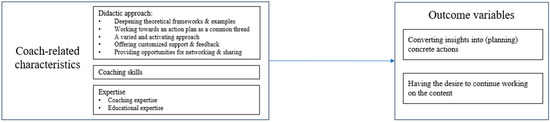
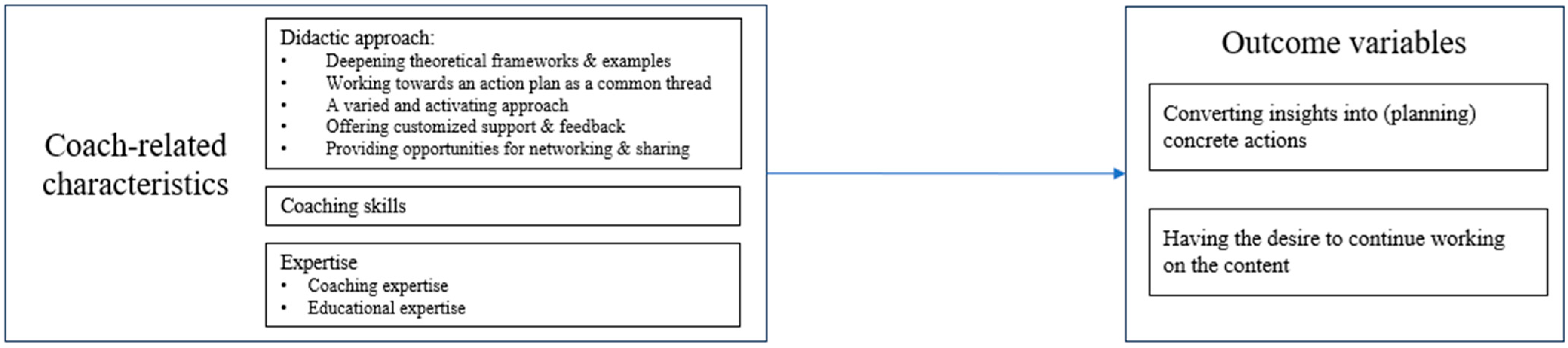
We conducted empirical research to identify coach-related characteristics that determine school development and the professional development of school leaders, focusing on two outcome variables—‘Converting insights into planning and undertaking concrete actions’ and ‘Having the desire to continue working on the content’—as experienced by school leaders participating the PLC meetings as part of a PDT (Figure 1). We adopted a mixed-methods research approach involving a fully mixed, sequential equal-status design, in which quantitative and qualitative data were collected in part simultaneously and used in an integrated manner (Mortelmans, 2018). The triangulation of quantitative and qualitative data with equal weight has been shown to increase the relevance and depth of the analysis, in addition to providing the opportunity to ground the relationship between variables (Darling-Hammond et al., 2022).
Figure 1.
Research model.
We address the following specific sub-questions:
- Q1: What outcome variables relating to the predefined outcome variables of ‘Converting insights into planning and undertaking concrete actions’ and ‘Having the desire to continue working on the content’ of PLC coaching were experienced by the school leaders participating in the PDT?
- Q2: What is the value of a coach’s didactic approach, coaching skills and expertise (as part of the coach-related characteristics), as experienced by school leaders during PLC meetings, in terms of the predefined outcome variables?
- Q3: Is there any evidence of differences between PLC coaches in terms of their didactic approaches and coaching skills that might be associated with differences in the predefined outcome variables, as experienced by school leaders?
- Q4: What is the value of the expertise of a PLC coach (as part of the coach-related characteristics), as experienced by school leaders, in terms of the predefined outcome variables?
- Q5: Which characteristics of participating school leaders and school contexts mediate the perceived effectiveness of PLC coaching?
3.2. Research Context
A two-year PDT started in September 2021, commissioned by the government of Flanders (Belgium). Although the substantive focus areas were fixed, the implementers were free to determine the approach to be adopted in this PDT. This created the opportunity to design an evidence-informed approach that included elements considered crucial to effective professional development and school development. It also provided the opportunity to conduct effective research.
The PDT for school leaders consisted of training days, establishing and developing PLCs, and individual coaching. The purpose of the eight training days (four each year) was to provide theoretical frameworks and practical examples for the whole group of participants. The deepening and concretization of the content of these frameworks took place in the PLCs. The focus of these smaller groups was on peer learning and social incentives. They met four times each in the first and second years. Individual coaching was also provided for each participating school, with three sessions during the two years of the PDT. Although this coaching was optional, participation was highly recommended and monitored by a coach. This organizational approach was combined with a specific didactic approach aimed at generating maximum transfer to the participants’ schools, along with concrete actions in terms of vision and school development. More specifically, the aim was to deepen theoretical frameworks and explore more practical examples, to work towards an action plan as a common thread, to ensure a varied and activating approach, and to offer customized support and feedback. A more in-depth description is provided in Tanghe and Schelfhout (2023).
During the process, each PLC was supervised by a regular coach. These coaches also provided individual coaching to the participants in their own PLCs, thus making it possible to identify differences between coaches in terms of perceived effectiveness. The coaches worked independently of any school, and they were thus not involved in any form of evaluation of the participating school leaders. Prior to the PDT, each coach possessed coaching qualifications (albeit with differences between coaches) and extensive coaching experience, but not necessarily in the field of education. The coaches thus differed in terms of experience working in the field of educational leadership. All coaches knew about the goals and content of the entire PDT, based on information shared during meetings and email communication. They were always present during the training days, and they were kept abreast of the theoretical frameworks and practical examples provided.
Based on the theoretical insights regarding the facilitation of deep learning and development processes during a PDT (Kirkpatrick & Kirkpatrick, 2016), as well as on guidelines from previous research concerning effective professional development initiatives for school leaders (Fluckiger et al., 2014; Goldring et al., 2012; Levine, 2006; Pashiardis & Brauckmann, 2009) and the predefined goal of transfer to the school context, we identified five common principles guiding the approach to coaching within the research setting: deepening theoretical frameworks and providing more practical examples; working towards/working on an action plan; adopting a varied and activating approach; offering customized support; and creating opportunities for networking and sharing. Although the goals of the PDT and the approach were fixed, this framework allowed the coaches room to shape their own approaches to coaching. In doing so, they drew on their expertise in coaching processes of school policy development (De Meuse et al., 2009; Patrick et al., 2021).
3.3. Participants
Following a call by the government and organizers specifically addressed to primary and secondary school leaders, 149 school leaders from 69 schools started the two-year PDT in September 2021. The participants were employed in either primary education (43%) or secondary education (57%) (10 state schools, 7 subsidized public schools and 52 free subsidized schools) from rural (22), urban (16) and metropolitan (31) areas. More specifically, the participants were involved in primary and secondary school leadership, with 58% holding higher management positions and 42% holding middle management positions. Most of the school leaders (93%) participated with a colleague.
Participation in the PDT was free and voluntary, and all participants signed a statement of commitment to confirm their participation in the whole programme and to start working with the content of the PDT. They also agreed to participate in research surveys.
One condition of enrolment for the study was participation with schools that were part of an existing inter-school network. As a result, 14 inter-school networks participated in the PDT (Tanghe et al., 2024). Each network consisted of 4–19 schools and was organized as a PLC. The network of 19 schools was divided into two groups due to the extensive size of the network. Each PLC thus consisted of 7–13 participants and was supervised by a permanent coach. Each coach supervised a maximum of three PLCs (Table 1).
Table 1.
PLCs of inter-school networks at the start of the PDT.
3.4. Data Collection
The research questions were investigated according to a mixed-methods approach. The newly developed questionnaires were based on the literature review, as presented above, as well as observations of the PDT (Tanghe & Schelfhout, 2023; Tanghe et al., 2024), with the aim of capturing important aspects of the process. The observations took place during all training days and PLC meetings of the different PLC groups. After obtaining feedback from the supervisors and a pilot test with several school leaders, the online survey was refined and administered through Qualtrics. To limit bias, the questionnaire was pseudonymized, without any identifying information. Exploratory factor analyses were conducted to identify an underlying factor structure (Tanghe & Schelfhout, 2023; Tanghe et al., 2024).
We organized two data-collection moments during the two-year trajectory. At the end of the first year, an online survey (TSA-S) with closed-ended and open-ended questions was administered, focusing on experiences with the PDT and observed outcomes. The survey also included thematic questions about the PLC coaching. These questions focused on the general perceived value of PLC coaching, the specific perceived benefits (in relation to training days and individual coaching), and the perceived didactic approach, coaching skills and expertise of the coach. Further questions concerned how school leaders perceived the same coach for individual coaching and the PLC group. 130 participants (88%) completed the first survey. At the end of the second year, a new online survey (ESA-S) was administered to the same participants (N = 131). Some questions were included in both surveys. For this study, we used the data from the survey conducted at the end of the second year (ESA-S), as it reflected the final expertise of the participants. Everyone who completed the survey had participated in the training days and the PLC.
Focus-group discussions were organized with PLC groups, and semi-structured interviews were conducted according to a question protocol (Morris, 2015). The focus-group discussions lasted up to 1.5 h. Of the 15 PLCs, 11 participated in a focus-group discussion. The other four PLCs formed a second or third PLC under the supervision of the same coach, thus decreasing the relevance of collecting data from them. Finally, an in-depth interview was conducted with each coach (N = 7). These interviews were also conducted according to a question protocol that was in line with the questions used in the group discussions. This provided further triangulation of the data and additional interpretation from the perspectives of the coaches.
Participants were not required to meet any specific conditions. The group of school leaders was therefore not uniform in terms of certain characteristics, thus making random comparisons or multilevel analysis impossible. Participants in the programme to take part in the data-collection exercise, as well as a friendly reminder. The signed commitment statement provided an additional incentive to participate.
3.5. Data Processing
The quantitative data from the surveys were processed in SPSS 30. Six-point Likert scales were created (ranging from completely disagree (1) to completely agree (6)). Reliability was assessed where applicable: Cronbach’s alpha values for multi-item scales are reported in the respective tables (α > 0.70). Single-item indicators were used for outcome variables, for which internal consistency is not applicable. The scales for didactic approach and coaching skills were adapted from prior validated instruments (Cox et al., 2014; Tanghe & Schelfhout, 2023).
Prior to the analyses, the assumptions for ANOVA were examined. Normality of residuals was assessed using the Shapiro–Wilk test and visual inspection of Q-Q plots, and homogeneity of variances was evaluated with Levene’s test. Although some deviations from normality were observed, ANOVA is generally considered robust to moderate violations of this assumption, particularly with balanced group sizes. To ensure the robustness of our findings, we also performed the non-parametric Kruskal–Wallis test, which yielded the same pattern of significant group differences. We therefore report the ANOVA results together with effect sizes (ηp2), noting that the non-parametric analysis supported these conclusions. Analysis of variance (ANOVA, partial eta squared) was used to examine differences between coaches (tests of between-subjects effects). First, we examined potential differences in the predefined outcome variables across coaches. Second, we separately investigated whether differences in coaching approach and skills could explain variations between coaches. For effect size (ηp2), the following scale was used: ηp2 < 0.01: negligible; 0.01 ≤ ηp2 < 0.060: small; 0.06 ≤ ηp2 < 0.14: medium; ηp2 ≥ 0.14: large (Cohen, 2013).
The possible differences between coaches were further examined using multiple regression analyses, in which each coach was treated as a categorical independent variable representing the different coaching groups they guided. To incorporate these coaches into the regression model, six dummy variables (k − 1) were created, with each dummy variable corresponding to a specific coach based on the coaching groups they supervised (De Vocht, 2021; Field, 2018). Multicollinearity was controlled by the Variance Inflation Factor (VIF) and was at most 3.3. To identify the extent to which the variance in the dependent variables was explained by the independent variables (R2), the following classification was used: <10%: weak relationship; 10–25%: moderately strong relationship; 25–50%: strong relationship; >50%: very strong relationship; 100%: perfect relationship (De Vocht, 2021).
The qualitative data from the focus-group discussions and in-dept interviews were analyzed in two sequential phases. We began with a deductive approach grounded in the theoretical framework (summarized in Figure 1), using the predefined categories to guide the initial coding and to identify quotations that aligned with these categories. This ensured that the analysis was anchored in the research model and directly connected to the research questions. In the second phase, we applied an inductive approach to capture insights emerging from the data itself, which led to the identification of several additional categories beyond those anticipated in the framework. Details on the resulting categories and their definitions are provided in Section 4.
Due to the mode of enrolment in the PDT, a wide diversity of school leaders participated. Capturing this diversity would require mapping a complex set of variables. The research design did not allow controlling for an extensive set of characteristics of coaches and participants. We also did not add a set of questions to control for unobserved coach characteristics that could potentially affect the predefined outcome variables. This decision was made to enhance the feasibility of the questionnaire. For this reason, the results of the quantitative analyses are only indicative.
4. Results
4.1. Experienced Outcomes of PLC Coaching
As indicated by the results of the ESA-S administered at the end of the PDT (Table 2), the participants experienced the PLC coaching on ‘Converting insights into planning and undertaking concrete actions’ and ‘Having the desire to continue working on the content’ as strongly positive (M > 4.50), albeit with a large spread.
Table 2.
Outcomes initiated by PLC participation (ESA-S).
We conducted focus-group discussions (N = 11) to examine which aspects of the PLC the school leaders perceived as beneficial (Table 3). The most prominent was content input (N = 10), and particularly the sharing of practical examples and ideas, the sharing of materials and the discussion of theoretical frameworks. Most (10) of the PLC groups also indicated that the PLC had served as a sounding board. In this regard, it was mentioned that other participants can offer a critical view, contribute different perspectives and provide feedback, all of which promote reflection and depth. The participants also experienced the PLC as supportive and encouraging (10 groups). Two PLCs cited it as a welcome aid in transferring the content to their schools, which was made easier by both the input from the PLC and the time provided. Some participants (1 group) also reported experiencing follow-up, given that the PLC was structurally embedded within the programme.
Table 3.
Quantified qualitative data: Focus groups on the benefits of participation in PLC (N = 11).
Almost all participants (10 groups) noted that getting to know each other better and expanding their networks had encouraged them to continue working together. In two PLCs, sharing the same themes, experiences and challenges was mentioned as beneficial. In six PLCs, the benefit of experiencing a PLC yourself was mentioned: ‘You can read about coaching and PLCs, but by immersing yourself in it, you experience it yourself. It does inspire you to apply it in your organization’ (PLC9).
4.2. The Experienced Value of the Coach’s Didactic Approach and Coaching Skills During PLC Meetings for the Predefined Outcome Variables
As indicated in Section 2.4, common principles guiding the didactic approach to PLC coaching were identified at the beginning of the PDT, focusing on the key elements of effective professional development for school leaders (Tanghe & Schelfhout, 2023). In the sections below, we analyse how the participants experienced the characteristics of the coaches throughout the process of PLC coaching, and why, based on a descriptive analysis of the quantitative data and an in-depth qualitative analysis of the focus-group discussions. In line with the theoretical framework, we focused on the didactic approach, coaching skills and expertise of the coaches.
4.2.1. Didactic Approach
Results from the ESA-S indicated that school leaders perceived the coach’s didactic approach as effective and above average (Table 4). It is interesting to note the high mean score for opportunities to network and share in the PLC (M = 5.22; SD = 8.71). The spread was large, however, which might have been due to differences in the approaches of individual coaches and/or in the ways in which participants appreciated these approaches.
Table 4.
Independent variables: Didactic approach in the PLC.
During the focus-group discussions, the benefits of the PLC were often mentioned simultaneously with the didactic approach adopted (Table 5). The focus was always (N = 11) on two benefits: opportunities for interaction and sharing, and learning from and with peers. Four focus groups referred to the link the coach made during the PLC meetings with the theoretical frameworks provided during the training days, and two groups mentioned newly introduced frameworks. Action orientation was addressed in all focus groups in various ways, including being given preparatory tasks, focusing on the action plan, having participants formulate concrete goals, and following up on actions taken: ‘The coach was always focused on the group’s goal, but was still able to leave room for all the side activities needed to get there’ (PLC13). Customized support was also noted: the questions and goals of participants were central to the approaches of all coaches, as was time for feedback, the sharing of ideas, and expertise. Six focus groups mentioned that their coaches had purposefully applied a variety of didactic approaches: ‘That brought depth and a critical view of how you are doing as a school. At the same time, you receive suggestions and feedback that you can work with. Without that methodology, the conversation would have been uneven and not so constructive’ (PLC11).
Table 5.
Quantified qualitative data: Focus groups on effective approaches during PLC meetings (N = 11).
Five focus groups noted that they would have liked their coach to have made an explicit link to the content of the training days, thereby promoting better embedding. Four PLCs shared extensively about what their schools were working on, but without further inspiration and depth. Participants also mentioned that there could have been more forward-thinking and action orientation (2 groups), and more critical thinking and substantive discussion (1 group). In addition, participants mentioned that the PLCs had lacked a goal-oriented approach (3 groups) with a clear practical/organizational framework to facilitate the quality of the PLC (2 groups), as well as clear expectations and responsibilities regarding preparation and assumption of roles within the PLC (3 groups). Some also mentioned that the coaches’ didactic methods had not always been appropriate. For example, one group noted that, although a particular methodology had been useful, there had been a lack of depth, due to the limited time available (1 group), too much time had been spent on introduction and exploration (1 group) or the approach had not fit the group and the purpose of the PDT.
4.2.2. Coaching Skills
The ESA examined 12 skills in PLC coaching (Table 6). The presence of these skills amongst the coaches was rated as above average (M > 4.50). At the same time, a very large spread (SD > 1.000) was found for all these skills.
Table 6.
Independent variable: Coaching skills during PLCs.
Eight focus groups (Table 7) explicitly mentioned the safe and open learning environment that their coaches had created by adopting an enthusiastic, calm, nonjudgmental, supportive, sincere, constructive and appreciative approach. Participants in two focus groups reported that their coaches had used skills that converged on connection and group dynamics, involving everyone equally. Three groups mentioned the empathy of their coaches. In addition, it was mentioned that coaches had monitored goal orientation by explicitly linking back to the goals or questions formulated by the participants (7 groups). Six focus groups mentioned a good balance between creating a relaxed atmosphere without being non-committal and aimless. The focus groups referred explicitly to coaching skills in terms of asking purposeful and in-depth questions (6 groups); listening, encouraging listening, and using silences (4 groups); summarizing and synthesizing (4 groups); and giving feedback (2 groups). Five focus groups mentioned the effectiveness of the PLC in terms of preparation. Some said that the approach had felt authentic and organic (2 groups) and that some coaches had also modelled through the approaches they adopted (3 groups) and had asked for feedback themselves so they could adapt their approach to the group (2 groups).
Table 7.
Quantified qualitative data: Focus groups on coaching skills during PLCs (N = 11).
Two groups mentioned that their coaches had not sufficiently integrated the coaching role or had not been good examples: ‘I did not feel coached, but acknowledged’ (PLC6). Where one coach was allowed to bring in more expertise, another group said that the coach had shared many examples from their expertise, but had not facilitated transfer to the contexts of the schools: ‘Sometimes, it was limited to many examples from a lot of expertise. But then, the next step should also come; specifically, let’s look at everybody’s context’ (PLC3).
The focus groups revealed that the effectiveness of an approach was determined by the expectations and needs of the PLC group and/or individual participants. According to one PLC, a great deal of listening and sharing of practical examples was not sufficient when there was a need for depth and support in the transfer to each school. In contrast, another PLC with the same coach considered it sufficient. During the focus-group discussions, participants indicated that a good coach can anticipate this. Two focus groups noted that they themselves had played a role in the effectiveness of the PLC. It might have been better to share their feedback and desires with the coach instead of simply letting things pass by.
4.2.3. Expertise of the Coach
The perceived expertise of the coaches was positive in terms of both experience in coaching (M = 4.85) and relevant educational expertise (M = 4.71). At the same time, however, a very wide range was also observed (Table 8).
Table 8.
Independent variables: Coaching expertise during PLCs.
4.3. Indication of Differences Between PLC Coaches in Terms of Didactic Approach and Coaching Skills That May Be Associated with Differences in the Outcome Variables
In the descriptive analyses, the wide range of benefits of PLC coaching, as perceived by school leaders, was notable. This raised questions concerning whether this spread might have been due to differences between coaches. Multilevel analysis school leaders nested in the 14 PLCs proved impossible, due to the low N for each PLC (Maas & Hox, 2005). We therefore analysed this question according to a combination of descriptive analyses, analysis of variance and regression analysis.
Variance analysis (tests of between-subjects effects) of the predefined outcome variables—‘Converting insights into planning and undertaking concrete actions’ (F(6,131) = 5.06, p < 0.001, ηp2 = 0.197) and ‘Having the desire to continue working on the content’ (F(6,131) = 3.82, p < 0.001, ηp2 = 0.169) revealed a large effect variance between coaches. In other words, some coaches achieved better results than others did. These differences might have resulted from differences in the approaches adopted by coaches and/or in the relationships between participants and their coaches.
Variance analysis (tests of between-subjects effects) of the independent variables showed a large difference between coaches for ‘Deepening theoretical frameworks and practical examples’ (F(6,131) = 6.58, p < 0.001, ηp2 = 0.241), ‘Working towards an action plan’ (F(6,131) = 4.43, p < 0.001, ηp2 = 0.177), ‘Varied and activating approach’ (F(6,131) = 7.04, p < 0.001, ηp2 = 0.254) and ‘Coaching skills’ (F(6,131) = 15.021, p < 0.001, ηp2 = 0.421). For ‘Customized support and feedback’, there was a significant mean difference between coaches (F(6,131) = 2.99, p = 0.009, ηp2 = 0.126). For ‘Networking and sharing’, there was a small, non-significant difference (F(6,131) = 1.66, p = 0.136, ηp2 = 0.074).
These analyses provided an initial indication that the approaches adopted by the coaches could have made a difference in achieving the predefined outcomes, albeit without accounting for control variables. It remained unclear how much influence the coach had on the predefined outcome variables and which specific approach contributed the most to achieving those outcome variables.
Multiple regression analysis, without the inclusion of control variables, showed a strong explanatory value (R2 = 0.437) for the coach’s didactic approach during the PLC for ‘Converting insights into concrete action’ (Table 9, Model 1). The predictors that made the largest unique contribution in addition to the joint value were ‘Working towards an action plan’ (β = 0.326, p < 0.001) and ‘Customized support and feedback’ (β = 0.294, p = 0.001). Coaching skills during the PLC meetings had a moderately strong explanatory value for action planning (R2 = 0.229, p < 0.001).
Table 9.
Multiple regression analysis: Perceived benefits of didactic approach and coaching skills on converting insights into actions.
For the outcome variable of ‘Having the desire to continue working on the content’, multiple regression analysis indicated that the coach’s overall didactic approach during the PLC had very strong explanatory value (R2 = 0.573, p < 0.001) (Table 10, Model 1). The predictors that made the greatest unique contribution in addition to joint value were a ‘Varied and activating approach’ (β = 0.314, p = 0.002), ‘Working towards an action plan’ (β = 0.202, p = 0.016) and ‘Opportunities to network and share’ (β = 0.214, p = 0.003). Coaching skills also had strong explanatory value for ‘Having the desire to continue working on the content’ (R2 = 0.339, p < 0.001).
Table 10.
Multiple regression analysis: perceived benefits of didactic approach and coaching skills on having the desire to continue working on the content.
Because multilevel analysis was not possible due to an insufficient limited N, we examined differences between coaches using regression analysis with dummy variables (Table 9 and Table 10, Model 2). In this model, without accounting for control variables, each coach was treated as a separate category, and dummy variables were created for each coach (6 in total). The mean responses of group members were calculated for each coach. These group means were then compared across coaches to assess differences. The regression analysis, with the inclusion of the coach dummy variables, indicated differences between coaches. In light of the high p-value (p > 0.05) for the didactic approach, however, we concluded that there was no significant difference for this outcome. In contrast, the results revealed significant differences between coaches for coaching skills (p < 0.05).
We also examined how the coaches (N = 7) themselves perceived the implications of their coaching approaches and skills for the predefined PLC outcome variables, as well as the extent to which these perceptions corresponded to the perceptions of school leaders, as described in Section 4.2.1 and Section 4.2.2. During the in-depth interviews (Table 11), the coaches identified goal-oriented and action-oriented creation and monitoring as the most effective approach (6 coaches). They felt this approach was complementary to structuring, summarizing and synthesizing (2 coaches). The coaches also felt that having the courage to adapt, challenge and enrich content was crucial (5 coaches). At the same time, one coach indicated that too much guidance with an view to timing and providing a large amount of content was not effective.
Table 11.
Quantified qualitative data: In-depth interviews of coaches (N = 7) on effective approaches.
Five coaches noted that the effectiveness of their approaches was enhanced by connecting with the group, focusing more on the PLC’s learning process than on their own aspirations as coaches, and responding to group dynamics and present needs, experiences and expectations: ‘Effectiveness = quality × acceptance. I feel acceptance is very important’ (C1). One coach indicated that he had given too little direction when participants wanted to express their needs, in light of their complaints, or when they were distracted by a topic on the sidelines.
One coach did not consider himself a good coach within the context of the PDT with PLCs: ‘I am good at giving information, but that is different from coaching. In training, I can use my expertise more’ (C2).
Four coaches identified the participants as a co-determining factor in the effectiveness of PLC coaching: ‘I think you can be a very competent coach and still hit a barrier if participants are not open to participating in the PLC or if mutual dynamics prevent full participation’ (C6).
4.4. Experienced Value of the Expertise of a PLC Coach on the Predefined Outcome Variables
The explanatory value of perceived coaching expertise was found to be moderately strong for ‘Converting insights into planning and undertaking concrete actions’ (F(1,102) = 11.07, p = 0.001, R2 = 0.098). For the perceived educational expertise of the coach, the regression analysis showed a moderately strong relationship for ‘Having the desire to continue working on the content’ (F(1,102) = 11.00, p = 0.001, R2 = 0.097). As mentioned above, we did not control for variables that might have mediated this explanatory value, because it was not possible to capture potential mediating variables (e.g., professional development initiatives in which participants had been involved, existing knowledge and pre-existing attitudes toward specific forms of professional development) with a feasible set of questions that would not jeopardize the likelihood that respondents would complete the already extensive questionnaire.
In eight focus groups (Table 12), participants expected coaches with coaching expertise to facilitate content and group dynamics, as well as to ensure transfer. According to these participants, if this did not occur, any educational expertise a coach might have would not play a role. Although a coach did not necessarily need to have experience in education, familiarity with it and an education-oriented mindset appeared to be needed (N = 6). Although other contextual experiences could be valuable in terms of providing a broader perspective, there was a chance that a coach who was unfamiliar with the educational context might offer less depth or provide little realistic input (2 groups). A coach with a large network (outside of education) from which to gather or to which to refer input was also valued (2 groups).
Table 12.
Quantified qualitative data: Focus-group discussions on expectations regarding the expertise of a coach (N = 11).
To what extent did the coaches (N = 7) confirm these findings? Six of the coaches mentioned the necessity of having coaching expertise (Table 13), and one mentioned the need for specific experience in PLC coaching. All coaches mentioned that educational expertise should enable a coach to guide schools in transferring theoretical frameworks and practices to their schools. To this end, a coach should have sufficiently strong affinity with education, in addition to knowing the context and preconditions well and speaking the same language, thereby ensuring that input is not limited to general ideas or borrowed examples. Having educational experience made it easier to provide examples on the topic, bring in authentic experiences and be articulate, but it did not necessarily require being a school leader, according to five coaches. One coach indicated that a PLC might actually need a coach who was not familiar with education, in order to promote out-of-the-box thinking, but that the participants themselves did not realize this, and thus perceived the process guidance provided by such a coach as a mismatch. For this coach, the central question concerned the purpose of a PLC, rather than whether a coach had the right expertise.
Table 13.
Quantified qualitative data: In-depth interviews with coaches on necessary expertise (N = 7).
5. Conclusions and Discussion
In this mixed-methods study, we examine coaching characteristics that were perceived as effective in facilitating sustained professional and school development during PLC meetings in a PDT for school leaders. The focus was on the predefined outcome variables of ‘Converting insights into planning and undertaking concrete actions’—in line with the fourth level of depth of professional development (Kirkpatrick & Kirkpatrick, 2016)—and ‘Having the desire to continue working on the content’ (Leedham, 2004) as a basis for sustainable development. Participants experienced these outcome variables as strongly positive, albeit with a wide range. The triangulation of quantitative data based on online surveys, qualitative data from focus-group discussions with PLC participants and in-depth interviews with coaches contributed to the detection of possible indications. As mentioned above, however, this analysis could not comprehensively control for possible underlying mediating characteristics specific to coaches and participants. For this reason, any conclusions drawn should be regarded as tentative. Below, we discuss the findings in relation to the four research questions posed at the start of the study.
5.1. The Experienced Value of Coach-Related Characteristics During PLC Meetings for the Predefined Outcome Variables
As demonstrated by the descriptive analyses, school leaders perceived participation in their PLCs as valuable, both for ‘Converting insights into planning and undertaking concrete actions’ and for ‘Having the desire to continue working on the content’, which addresses RQ1 and RQ2. There was nevertheless a large spread in these predefined outcome variables. Although the independent variables of ‘Didactic approach’ and ‘Coaching skills’ of the coaches were perceived positively as above average, there was also a large spread in their responses, as reflected in both the quantitative and qualitative data.
5.2. Indications of Differences Between Coaches in Terms of Didactic Approach and Coaching Skills That Might Be Associated with Differences in Outcome Variables
This section responds to RQ3, exploring whether differences between coaches in didactic approach and coaching skills are associated with variations in the predefined outcomes. We further examined the large spread observed in the predefined outcome variables of ‘Converting into planning and undertaking concrete actions’ and ‘Having the desire to continue working on the content’, and the perceived benefits of the coach’s approach and coaching skills for those outcome variables. Results of ANOVA revealed differences between coaches in terms of their didactic approaches, possibly leading to a difference in perceived effectiveness in terms of the outcome variables, but these differences were not confirmed in the regression analysis, which yielded non-significant results. For coaching skills, the multiple regression results did reveal significant differences between coaches (p < 0.05).
Quantitative and qualitative data from PLC groups with the same coach revealed different ratings of perceived effectiveness. These differences centred on commitment, goal orientation and customized support. Although in-depth interviews revealed that these coaches tended to have positive perceptions of their achieved effectiveness, they did note differences in the effects of their approach between their respective groups. These results confirm previous research that argues that the ability to apply multiple techniques and methods at the right time and in a goal-oriented manner that is customized to the target group makes the difference (Patrick et al., 2021).
Previous studies have noted that the level of professional development that coaches have helps to determine their own self-awareness of the quality delivered (Diller et al., 2020; O’Broin & Palmer, 2010). If participants experience high levels of empathy with and support from the coach, this appears to be a better predictor of perceived effectiveness than the approach and methods used (Cox et al., 2014). In other words, how the coach perceives the purpose of coaching (Heston, 2013) and concretely realizes this role can influence perceived effectiveness (Coenen et al., 2021; Patrick et al., 2021).
5.3. Experienced Value of a PLC Coach’s Expertise for the Predefined Outcome Variables
This section relates to RQ4, focusing on the perceived impact of coaching expertise—both coaching and educational experience—on the predefined outcome variables. Although qualifications and relevant professional experience are a guarantee of quality coaching (Cox et al., 2014; Lofthouse & Whiteside, 2019; Reiss, 2015), these characteristics did not automatically lead to high perceived effectiveness on the part of participating coaches. Previous research has defined ‘relevant professional experience’ more broadly. In this study, the focus was on two further-operationalized facets: perceived coaching and educational experience. The descriptive data showed above-average positive perceptions for both independent variables, albeit with a wide range.
Results of quantitative and qualitative analyses indicated that coaches with extensive coaching experience—ideally, PLC coaching—best facilitated content and group-dynamic processes, in addition to ensuring concrete transfer to the school context, which entails concrete planning and undertaking action. This finding contradicts previous research, which argues that a coach’s level of professional development is a better predictor of coaching quality than is the coach’s level of experience (Diller et al., 2020; O’Broin & Palmer, 2010). The more detailed operationalization applied this study on coaching expertise and educational expertise supports a further nuanced analysis. For example, our results suggest that coaches do not necessarily have to have educational expertise (e.g., as school leaders), they should be strongly familiar with education and school policy in order to facilitate depth and provide sufficiently realistic and feasible input on education and leadership (Thornton, 2010). Although previous studies (Lochmiller, 2021; Reiss, 2015) have indicated that, in principle, coaches do not necessarily need to possess expertise that is entirely related to education or the specific topics at hand, as they assume the role of facilitator, our results demonstrate that effective facilitation is not possible without educational affinity. Moreover, educational expertise should serve to guide the transfer of theoretical frameworks and examples to each context, rather than primarily showcasing the personal expertise of coaches and their ability to position themselves as consultants rather than as coaches. This finding is consistent with previous research (Heston, 2013; Margalef & Roblin, 2018). Finally, we found that a coach’s educational expertise had a moderately strong impact on ‘Having the desire to continue working with the content’, which is related to the inspirational effect of a coach (Leedham, 2004).
5.4. Characteristics Associated with the Participating School Leaders and School Context That Mediate the Perceived Effectiveness of PLC Coaching
This section elaborates on findings related to RQ4 that emerged from the analysis, identifying both contextual and participant-related factors that mediate the perceived effectiveness of PLC coaching. These insights not only help interpret the answers to RQ1–RQ4 but also inform future research and practice by highlighting conditions that may enhance or hinder the impact of coaching interventions.
According to our data analysis, even if PLC coaches strive for high quality, mediating factors are likely to affect their perceived effectiveness. Based on the input from the focus-group discussions with PLC groups (N = 11) and the in-depth interviews with coaches (N = 7), these mediating factors can be divided into two categories: the school context and the participating school leaders.
In PLC groups where the coach perceived the start-up as challenging and laborious, the meetings continued to be challenging and laborious. The first meetings took place during the COVID-19 pandemic, and the online start-up of the PLC groups was therefore especially challenging. According to some coaches, this was in part responsible for the difficulty they experienced in connecting with school leaders. The actual role of the pandemic context remains unclear, however, as this was not an issue for other coaches. Moreover, some coaches worked with multiple groups, not all of which had experienced a difficult start-up.
Participants identified contextual factors that had hindered the effectiveness of their PLCs. Examples include teacher shortages or absences of, as these were priorities for the school leaders to solve. At the same time, school leaders mentioned that a good coach would support the group in this regard by not paying endless attention to it and challenging participants to continue to engage in professional and school development. If a coach did not adopt such an approach, participants with such needs felt heard, but not coached. Participants also mentioned their own responsibility to address this.
Coaches identified the role of the participants as a co-determining factor in the effectiveness of PLC coaching. They noted that this could transcend the competence of a coach in both positive and negative ways. In the interviews, they made references to the participants’ motivation and aspirations to participate in the PDT and PLC, as well as their willingness to work towards systemic change. In the absence of these aspects, any attempts the coaches made to challenge the PLC groups were perceived as a mismatch between the coaches and/or their expertise and their PLC groups, rather than generating introspection. Such an association between lower effectiveness and lower willingness has been reported in previous studies as well (De Meuse et al.,2009).
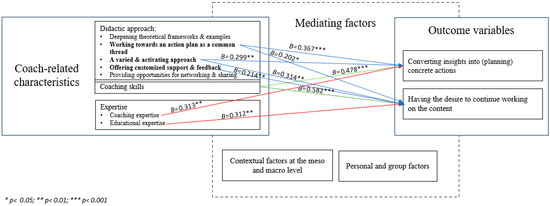
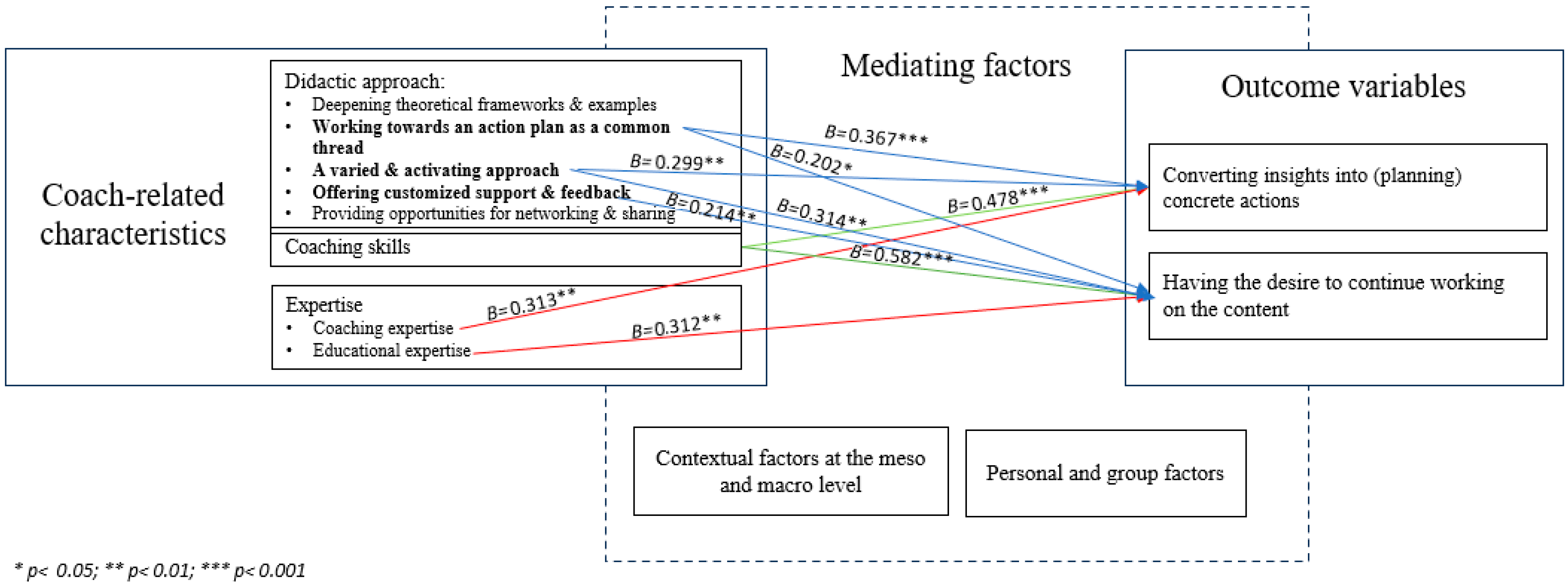
The results of our study suggest a relationship between the didactic approach, coaching skills and expertise of coaches and the predefined outcome variables (Figure 2). To obtain evidence of causal relationships, however, it would be necessary to apply other research designs (e.g., using randomized controlled trials). Our qualitative results confirm those of previous studies (Coenen et al., 2021; Lofthouse & Whiteside, 2019; Tanghe et al., 2024), which report that coaches influence the perceived effectiveness and outcomes of a PLC within a PDT. The selection of competent coaches to take on such a crucial role within a PDT for school leaders is extremely important for facilitating sustainable professional and school development. In this regard, it is necessary to consider the competencies of the coaches, with a particular focus on didactic approaches and coaching skills as success factors for effectiveness, as perceived by school leaders. Given that external factors play a mediating role as well, it is important for both PDT organizers and coaches to anticipate them consciously.
Figure 2.
Determinants associated with the coach for outcome variables during the PLC meetings of a PDT for school leaders.
6. Limitations and Recommendations
Although we had a large number of respondents, this dataset was too limited for in-depth multilevel analysis. Due to the design of the PDT and the enrolment procedure, it was not possible to cluster the PLC groups according to specific characteristics. Moreover, our research design allowed for only a partial comparison of coaches. In relation to the PDT, we established common goals and, in line with them, the principles of the approach. Within this framework, coaches had the autonomy to shape their approaches according to their own expertise. For this reason, there are limitations to the comparison between coaches in terms of their coaching approaches and coaching skills. Furthermore, we did not consider any control variables, due to the reasons already discussed in the methodology section.
The associations and mediating factors identified in this study can serve as a basis for future research, with a potential for experimental research in which groups of school leaders receive PLC coaching that meets certain conditions. Further research on the influence of background and context characteristics also remains important, with triangulation between quantitative and qualitative data. It would be beneficial to examine the long-term effects of PLC coaching involving action-oriented and goal-oriented prompts on concrete professional and school development, thereby allowing coaches to further customize their didactic approaches and coaching skills. Another valuable avenue for further research concerns the perceived impact of the interaction between PLCs and individual coaching as an approach within a PDT for school leaders, as well as on the benefits they perceive.
Author Contributions
Conceptualization, E.T. and W.S.; methodology, E.T. and W.S.; software, E.T.; validation, E.T. and W.S.; formal analysis, E.T.; investigation, E.T.; resources, E.T. and W.S.; data curation, E.T.; writing—original draft preparation, E.T. and W.S.; writing—review and editing, E.T. and W.S.; visualization, E.T.; supervision, W.S.; project administration, E.T. All authors have read and agreed to the published version of the manuscript.
Funding
This research received no external funding.
Institutional Review Board Statement
The study was conducted in accordance with the Declaration of Helsinki. During this non-interventional study based on administering surveys, all participants were fully informed in advance that their anonymity was assured, why the research was being conducted, how their data would be used, and that there were no risks involved in participating. The study did not require approval from an Ethics Committee at the time it was conducted. This was because it involved non-funded research with adult participants, and according to the regulations in place at that time (study conducted between 2021 and 2023), formal ethics approval was not mandatory. All procedures were carried out in accordance with relevant ethical standards, and informed consent was obtained from every participant at each stage of data collection. Although all participants had already signed a general engagement declaration, individual consent was systematically requested and recorded for every data collection moment. This procedure was intentionally implemented to ensure full compliance with ethical and GDPR requirements. Furthermore, all data were fully anonymized prior to data processing.
Informed Consent Statement
Informed consent was obtained from all subjects involved in the study.
Data Availability Statement
The data from this study are available upon request.
Conflicts of Interest
The authors declare no conflicts of interest.
Abbreviations
The following abbreviations are used in this manuscript:
| PDT | Professional Development Trajectory |
| PLC | Professional Learning Community |
References
- Aas, M., & Flückiger, B. (2016). The role of a group coach in the professional learning of school leaders. Coaching: An International Journal of Theory, Research and Practice, 9(1), 38–52. [Google Scholar] [CrossRef] [Scilit]
- Brandmo, C., Aas, M., Colbjørnsen, T., & Olsen, R. (2021). Group coaching that promotes self-efficacy and role clarity among school leaders. Scandinavian Journal of Educational Research, 65(2), 195–211. [Google Scholar] [CrossRef] [Scilit]
- Cannon-Bowers, J. A., Bowers, C. A., Carlson, C. E., Doherty, S. L., Evans, J., & Hall, J. (2023). Workplace coaching: A meta-analysis and recommendations for advancing the science of coaching. Frontiers in Psychology, 14, 1204166. [Google Scholar] [CrossRef] [Scilit]
- Coenen, L., Schelfhout, W., & Hondeghem, A. (2021). Networked professional learning communities as means to Flemish secondary school leaders’ professional learning and well-being. Education Sciences, 11(9), 509. [Google Scholar] [CrossRef] [Scilit]
- Cohen, J. (2013). Statistical power analysis for the behavioral sciences. Academic Press. [Google Scholar]
- Cox, E., Bachkirova, T., & Clutterbuck, D. (2014). Theoretical traditions and coaching genres: Mapping the territory. Advances in Developing Human Resources, 16(2), 139–160. [Google Scholar] [CrossRef] [Scilit]
- Daniëls, E., Hondeghem, A., & Heystek, J. (2023). Developing school leaders: Responses of school leaders to group reflective learning. Professional Development in Education, 49(1), 135–149. [Google Scholar] [CrossRef] [Scilit]
- Darling-Hammond, L., Wechsler, M. E., Levin, S., & Tozer, S. (2022). Developing effective principals: What kind of learning matters? Learning Policy Institute. [Google Scholar]
- De Meuse, K. P., Dai, G., & Lee, R. J. (2009). Evaluating the effectiveness of executive coaching: Beyond ROI? Coaching: An International Journal of Theory, Research and Practice, 2(2), 117–134. [Google Scholar] [CrossRef] [Scilit]
- De Vocht, A. (2021). Basishandboek SPSS 27 voor IBM SPSS statistics 27. Bijleveld Press. [Google Scholar]
- Diller, S. J., Passmore, J., Brown, H. J., Greif, S., & Jonas, E. (2020). Become the best coach you can be: The role of coach training and coaching experience in workplace coaching quality and quality control. Organisationsberatung, Supervision, Coaching, 27(3), 313–333. [Google Scholar] [CrossRef] [Scilit]
- Field, A. (2018). Discovering statistics using IBM SPSS statistics. Sage publications limited. [Google Scholar]
- Fluckiger, B., Lovett, S., & Dempster, N. (2014). Judging the quality of school leadership learning programmes: An international search. Professional Development in Education, 40(4), 561–575. [Google Scholar] [CrossRef] [Scilit]
- Flückiger, B., Aas, M., Nicolaidou, M., Johnson, G., & Lovett, S. (2017). The potential of group coaching for leadership learning. Professional Development in Education, 43(4), 612–629. [Google Scholar] [CrossRef] [Scilit]
- Goff, P., Edward Guthrie, J., Goldring, E., & Bickman, L. (2014). Changing principals’ leadership through feedback and coaching. Journal of Educational Administration, 52(5), 682–704. [Google Scholar] [CrossRef] [Scilit]
- Goldring, E. B., Preston, C., & Huff, J. (2012). Conceptualizing and evaluating professional development for school leaders. Planning and Changing, 43(3/4), 223. [Google Scholar]
- Grant, A. M. (2020). An integrated model of goal-focused coaching. In Coaching researched (pp. 115–139). Wiley. [Google Scholar] [CrossRef] [Scilit]
- Harris, A., & Jones, M. (2019). Leading professional learning with impact (Vol. 39, pp. 1–4). Taylor & Francis. [Google Scholar] [CrossRef] [Scilit]
- Heston, B. L. (2013). Coaching for instructional leadership: A case study of executive coaches and principals [Ph.D. thesis, University of Connecticut]. [Google Scholar]
- Huff, J., Preston, C., & Goldring, E. (2013). Implementation of a coaching program for school principals: Evaluating coaches’ strategies and the results. Educational Management Administration & Leadership, 41(4), 504–526. [Google Scholar] [CrossRef] [Scilit]
- Huggins, K. S., Klar, H. W., & Andreoli, P. M. (2021). “I thought I was prepared to do this”: An exploration of the learning and development of leadership coaches. International Journal of Mentoring and Coaching in Education, 10(4), 486–500. [Google Scholar] [CrossRef] [Scilit]
- International-Coaching-Federation. (2023). What is coaching. International Coaching Federation. Available online: https://coachingfederation.org/ (accessed on 21 October 2023).
- Kets de Vries, M., & Korotov, K. (2012). Transformational leadership development programs: Creating long-term sustainable change (pp. 263–282). SSRN. [Google Scholar]
- Kirkpatrick, J. D., & Kirkpatrick, W. K. (2016). Kirkpatrick’s four levels of training evaluation. Association for Talent Development. [Google Scholar]
- Kools, M., & Stoll, L. (2016). What makes a school a learning organisation? OECD. [Google Scholar]
- Leedham, M. (2004). The coaching scorecard: A holistic approach to evaluating the benefits of business coaching. Oxford Brookes University. [Google Scholar]
- Levine, A. (2006). Educating school teachers. Education Schools Project. Education Resources Information Center. [Google Scholar]
- Lochmiller, C. R. (2018). Coaching principals for the complexity of school reform. Journal of School Leadership, 28(2), 144–172. [Google Scholar] [CrossRef] [Scilit]
- Lochmiller, C. R. (2021). Guest editorial: Coaching for improvement in education: New insights and enduring questions. International Journal of Mentoring and Coaching in Education, 10(4), 393–398. [Google Scholar] [CrossRef] [Scilit]
- Lofthouse, R., & Whiteside, R. (2019). Sustaining a vital profession: Evaluation of a headteacher coaching programme. Leeds Beckett University. [Google Scholar]
- Maas, C. J., & Hox, J. J. (2005). Sufficient sample sizes for multilevel modeling. Methodology, 1(3), 86–92. [Google Scholar] [CrossRef] [Scilit]
- Margalef, L., & Roblin, N. P. (2018). Unpacking the roles of the facilitator in higher education professional learning communities. In Teacher learning through teacher teams (pp. 41–58). Routledge. [Google Scholar]
- Morris, A. (2015). A practical introduction to in-depth interviewing. Sage. [Google Scholar]
- Mortelmans, D. (2018). Handboek kwalitatieve onderzoeksmethoden. Acco. [Google Scholar]
- O’Broin, A., & Palmer, S. (2010). Exploring key aspects in the formation of coaching relationships: Initial indicators from the perspective of the coachee and the coach. Coaching: An International Journal of Theory, Research and Practice, 3(2), 124–143. [Google Scholar] [CrossRef] [Scilit]
- Pashiardis, P., & Brauckmann, S. (2009). Professional development needs of school principals. Commonwealth Education Partnerships, 3, 120–124. [Google Scholar]
- Patrick, S. K., Rogers, L. K., Goldring, E., Neumerski, C. M., & Robinson, V. (2021). Opening the black box of leadership coaching: An examination of coaching behaviors. Journal of Educational Administration, 59(5), 549–563. [Google Scholar] [CrossRef] [Scilit]
- Poortman, C. L., Brown, C., & Schildkamp, K. (2022). Professional learning networks: A conceptual model and research opportunities. Educational Research, 64(1), 95–112. [Google Scholar] [CrossRef] [Scilit]
- Reiss, K. (2015). Leadership coaching for educators: Bringing out the best in school administrators. Corwin Press. [Google Scholar]
- Ritzema, L., Maslowski, R., Bosker, R., van Geel, M., Rekers-Mombarg, L., & Visscher, A. (2022). Behorend bij de deelrapporten van NRO-onderzoek naar bestuurlijk vermogen en professionalisering in het VO. Available online: https://www.nko.nl/sites/nro/files/media-files/Oplegger%20-%20Bestuurlijk%20vermogen%20en%20professionalisering%20in%20het%20VO_NRO.pdf (accessed on 29 December 2025).
- Rowland, C. (2017). Principal professional development: New opportunities for a renewed state focus. Education Policy Center at American Institutes for Research. [Google Scholar]
- Saddler, A. (2023). The only person in my way is me: A multiple case study exploring the perspectives of experienced school principals regarding the perceived impact of executive coaching [Ph.D. thesis, Baylor University]. [Google Scholar]
- Tanghe, E., & Schelfhout, W. (2023). Professionalization pathways for school leaders examined: The influence of organizational and didactic factors and their interplay on triggering concrete actions in school development. Education Sciences, 13(6), 614. [Google Scholar] [CrossRef] [Scilit]
- Tanghe, E., Smits, T. F. H., & Schelfhout, W. (2024). Professional learning communities of school leaders within inter-school networks: Opportunities and conditions for sustainable professionalization. Pedagogische Studiën, 101(2), 91–124. [Google Scholar] [CrossRef] [Scilit]
- Thornton, C. (2010). Group and team coaching: The essential guide. Routledge. [Google Scholar]
- van Nieuwerburgh, C., Barr, M., Munro, C., Noon, H., & Arifin, D. (2020). Experiences of aspiring school principals receiving coaching as part of a leadership development programme. International Journal of Mentoring and Coaching in Education, 9(3), 291–306. [Google Scholar] [CrossRef] [Scilit]
- van Veelen, R., Sleegers, P. J., & Endedijk, M. D. (2017). Professional learning among school leaders in secondary education: The impact of personal and work context factors. Educational Administration Quarterly, 53(3), 365–408. [Google Scholar] [CrossRef] [Scilit]
- Weathers, J. M., & White, G. P. (2015). Executive coaching of school leaders in a mid-sized urban school district: Development of a model of effective practice. In Leading small and mid-sized urban school districts (Vol. 22, pp. 191–222). Emerald Group Publishing Limited. [Google Scholar] [CrossRef] [Scilit]
- Wise, D., & Cavazos, B. (2017). Leadership coaching for principals: A national study. Mentoring & Tutoring: Partnership in Learning, 25(2), 223–245. [Google Scholar] [CrossRef] [Scilit]
- Wise, D., & Hammack, M. (2011). Leadership coaching: Coaching competencies and best practices. Journal of School Leadership, 21(3), 449–477. [Google Scholar] [CrossRef] [Scilit]
- Zhang, W., & Brundrett, M. (2010). School leaders’ perspectives on leadership learning: The case for informal and experiential learning. Management in Education, 24(4), 154–158. [Google Scholar] [CrossRef] [Scilit]

Disclaimer/Publisher’s Note: The statements, opinions and data contained in all publications are solely those of the individual author(s) and contributor(s) and not of MDPI and/or the editor(s). MDPI and/or the editor(s) disclaim responsibility for any injury to people or property resulting from any ideas, methods, instructions or products referred to in the content. |
© 2026 by the authors. Licensee MDPI, Basel, Switzerland. This article is an open access article distributed under the terms and conditions of the Creative Commons Attribution (CC BY) license.