Article

Overexcitability and Perfectionism: A Comparative Study of Mathematically and Scientifically Talented, Verbally Talented, and Regular Students


1
Taichung Municipal Taichung First Senior High School, No. 2, Yucai St., North Dist., Taichung City 404009, Taiwan
2
Department of Special Education, National Taiwan Normal University, Taipei 106010, Taiwan
3
Taipei Department of Education, Taipei City Government, 8F North Wing, 1, City Hall Rd., Xinyi District, Taipei City 110204, Taiwan
*
Authors to whom correspondence should be addressed.
Educ. Sci. 2025, 15(3), 392; https://doi.org/10.3390/educsci15030392

Submission received: 9 February 2025 / Revised: 10 March 2025 / Accepted: 17 March 2025 / Published: 20 March 2025
(This article belongs to the Special Issue Teaching and Learning for Gifted and Advanced Learners)

Abstract

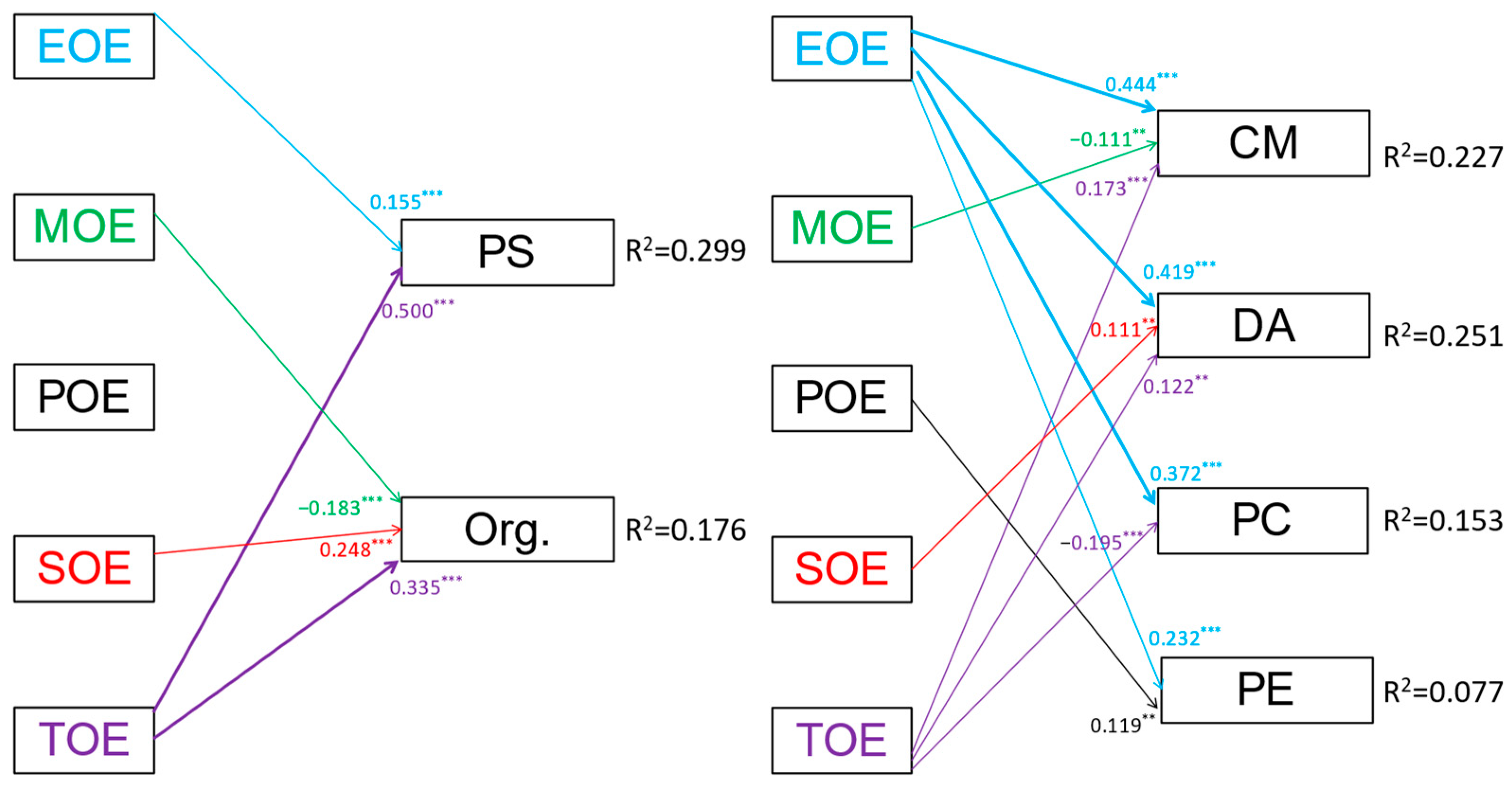
High school students face critical psychological challenges during adolescence, including academic pressures and educational decision-making. Dabrowski’s Theory of Positive Disintegration provides a framework for understanding growth through disintegration and reintegration, with perfectionistic traits acting as intrinsic motivators for self-improvement. This study examined the psychological profiles of 641 Taiwanese high school students: 207 mathematically and scientifically talented students (MSTS), 187 verbally talented students (VTS), and 247 regular students (RS). Using the ME III, refined from the ME II, and the Multidimensional Perfectionism Scale, our research assessed overexcitabilities (OEs) and perfectionism traits. MSTS and VTS scored significantly higher in Intellectual and Imaginational OEs than RS, with VTS also overperforming in sensual OE. MSTS and VTS showed higher personal standards, while VTS excelled in organization, and RS reported higher parental criticism. Emotional OE correlated with perfectionism, such as concern over mistakes, doubts about actions, and parental criticism, while Intellectual OE positively correlated with personal standards and negatively with parental criticism. Intellectual and Emotional OEs jointly predicted personal standards and organization; while Sensual, Intellectual, and Emotional OEs predicted doubts about actions, etc. These findings underscore the importance of tailored educational and counseling strategies to address the unique needs of gifted students, fostering environments that enhance their abilities and overall well-being.
Keywords: gifted education; overexcitability; perfectionism; psychometrics; theory of positive disintegration gifted education; overexcitability; perfectionism; psychometrics; theory of positive disintegration