


Abstract
This systematic review on teachers’ Personalized Continuing Professional Learning (PCPL) frameworks explores integrating core professional competencies with core job-related components. Findings across 43 studies identify effective PCPL frameworks, emphasizing adaptability, interdisciplinary collaboration, reflective practice, and digital tools for self-assessment and growth. Key challenges include resource constraints, institutional rigidity, and the need for career-stage-specific support. Adaptive strategies for diverse teaching contexts are discussed. A self-assessment multidimensional model is proposed to set personalized professional goals and align their development with broader educational needs. Findings have practical implications for policy and practice, highlighting how PCPL can foster continuous growth and improved teaching efficacy.
1. Introduction
The professionalization of teachers is a fundamental goal in contemporary education systems, as educators play a critical role in shaping students’ learning experiences and outcomes. Teacher professionalism encompasses not only technical skills and pedagogical knowledge but also lifelong learning, ethical standards, and an ability to adapt to diverse and evolving classroom contexts (Carpendale et al., 2024; Hayes et al., 2021).
A professional teacher is, therefore, one who possesses professional knowledge and implements effective professional skills, while also acting as a critical and reflective agent who continuously learns, questions assumptions, and takes responsibility for their practice and its impact on students’ achievements (Boylan et al., 2023). This ongoing process is conceptualized as continuing professional learning (CPL), which emphasizes structured and long-term learning processes rather than short, event-based professional development.
To clarify the conceptual basis of “professional teacher” used in this review, professionalism is understood through Avidov-Ungar’s (2024) multidimensional model, which conceptualizes teacher professionalism as a combination of six interrelated aspects of professional knowledge, professional skills, identity, and agency. These aspects reflect the theoretical understanding of what constitutes a profession and a professional role within an organization (Avidov-Ungar, 2024, pp. 158–173). Accordingly, the studies included in this review were examined through these six aspects, which served as the analytical framework for identifying how PCPL frameworks support teacher professionalism across contexts and career stages.
Recent research suggests that developing these competencies requires effective personalized continuing professional learning (PCPL) frameworks that support teachers’ growth across different career stages and provide a structured pathway for continuous improvement (Teasdale et al., 2020; Yoon & Jung, 2023). Such frameworks are adapted to teachers’ individual needs, roles, and developmental trajectories, offering differentiated learning opportunities rather than uniform, one-size-fits-all models. In light of the complexity of the teaching profession, which demands both systematic knowledge and adaptability, PCPL frameworks are increasingly emphasized in teacher education and professional learning (PL) programs worldwide (Alexander, 2022; Gerard et al., 2022). To better understand how these frameworks can support teachers’ development, this review draws on Avidov-Ungar’s (2024) multidimensional model, which conceptualizes teacher professionalism through six interrelated aspects of professional knowledge, skills, identity, and agency. These dimensions provide a structured way to analyze how different CPL and PCPL approaches cultivate the competencies required for effective and adaptive teaching.
However, despite the recognized importance of PCPL, existing frameworks often lack the comprehensive structure necessary to address the multifaceted nature of teacher professionalism. Effective PCPL frameworks must not only build teachers’ knowledge and skills but also promote self-regulation, reflective practice, and collaboration within professional networks (Heaysman & Kramarski, 2022; Prain et al., 2022). This gap in the alignment of PCPL with the multidimensional competencies of the teaching role, as highlighted in Avidov-Ungar’s (2024) multidimensional model, underscores the need for a more robust approach to teacher development. This model conceptualizes the association between professional and job-related components of the teachers’ profession, emphasizing nine interconnected areas across the dimensions of systematic knowledge, lifelong learning, and ethical conduct. These elements guide teachers in diagnosing their professional needs and bridging gaps in knowledge, skills, and values critical to effective teaching. Integrating this model into PCPL frameworks may help educators systematically assess and fulfill their developmental needs, promoting both immediate and sustained professional growth.
This systematic literature review (SLR) aims to address the gap in the literature by providing a holistic perspective on the effectiveness of PCPL in fostering teacher professionalism. Specifically, it examines and synthesizes practical frameworks in PCPL through the lens of the multidimensional model, offering a comprehensive understanding of how PCPL supports continuing teacher growth across its various aspects. This review leverages the multidimensional model as an innovative framework to address gaps in existing PCPL research. Unlike traditional models such as TPACK (Technological Pedagogical and Content Knowledge) or SAMR (Substitution–Augmentation–Modification–Redefinition), which primarily emphasize technical and pedagogical dimensions, the multidimensional model integrates systematic knowledge, lifelong learning, ethical standards, and reflective practices. This holistic approach provides deeper insights into the interplay between professional competencies and job-related components, such as collaborative networks and career-stage adaptability. By applying this model, the review identifies actionable strategies for overcoming barriers in PCPL implementation, including institutional constraints and limited resources. While the model is relatively new, this study demonstrates its unique potential to advance teacher professionalism by aligning developmental needs with educational goals, offering practical implications for policy and practice. Future research should further validate and refine the model to maximize its relevance across diverse educational contexts.
The multidimensional framework relates to professional competencies—systematic knowledge, lifelong learning, and ethical standards—alongside the job-related components, of means of action (practical and intellectual resources teachers draw upon to enact their professional roles), collaborative networks, and role constraints, to effectively guide teachers’ professional growth. Furthermore, it assesses the challenges teachers face when implementing PCPL frameworks and identifies strategies that can adapt these frameworks to support sustained learning and effectiveness across various career stages.
The research questions guiding this review are as follows:
- What kind of continuing professional learning (CPL) frameworks exist to support in-service teachers’ professionalism?
- According to the six aspects of Avidov-Ungar’s (2024, pp. 166–167) Multidimensional Model, what are the components that exist in in-service teachers’ CPL frameworks?
- What challenges do in-service teachers encounter when implementing CPL frameworks across different career stages (early, mid and late)?
Through a comprehensive analysis of empirical studies, this review offers insights into the role of PCPL frameworks in advancing teacher professionalism and proposes ways to enhance their relevance and effectiveness in using the concept of the multidimensional model.
It is important to note that this review does not aim to empirically measure the effects of PCPL across different career stages. Rather, the analysis examines how the frameworks described in the literature conceptually address early-, mid-, and late-career considerations. Since the included studies do not report numerical distributions of teachers by career stage, the conclusions presented here reflect a theoretical synthesis rather than stage-specific empirical evidence.
2. Materials and Methods
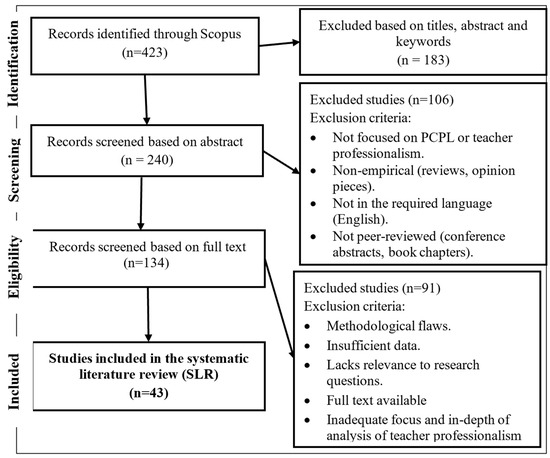
To ensure rigor and transparency, this systematic literature review (SLR) adhered to the Preferred Reporting Items for Systematic Reviews and Meta-Analyses (PRISMA) guidelines (Page et al., 2021), which promote a standardized approach to planning, conducting, and reporting systematic reviews. All required PRISMA reporting elements, including the search strategy, eligibility criteria, screening procedures, study selection, and synthesis methods are fully documented in this manuscript. The PRISMA 2020 flow diagram is presented in Figure 1, and the complete PRISMA 2020 framework’s 27-item checklist is included in the Appendix A.
Figure 1.
PRISMA Flow Diagram for Study Selection in Systematic Review on Practical Frameworks in Personalized Continuing Professional Learning (PCPL) for Teacher Professionalism.
2.1. Planning the Review
The review was initiated with the establishment of clear research objectives, a detailed search strategy, specific inclusion and exclusion criteria, and a structured process for screening and selecting studies. This approach ensured that the review was rigorously aligned with the study’s focus on practical frameworks in PCPL to enhance teacher professionalism, addressing the integration of multidimensional competencies, implementation challenges, and support for continuing learning across career stages.
- Research Objectives—The primary objectives guiding this review were to: (1) examine the practical frameworks within PCPL that contribute to teacher professionalism (RQ1); (2) explore how these frameworks integrate multidimensional aspects of professional competencies—such as systematic knowledge, lifelong learning, and ethical standards—and job-related components such as means of action, collaborative networks, and role constraints to guide teachers’ CPL (RQ2); and (3) identify challenges teachers face when implementing practical frameworks in CPL, with a focus on how these frameworks can be adapted to support continuing learning and enhance effectiveness across different career stages (RQ3).
- Search Strategy—The Scopus database (https://www.scopus.com/) was selected as the primary source due to its extensive coverage of peer-reviewed literature across multiple disciplines. A structured search was conducted using keywords carefully designed to capture the full scope of PCPL frameworks, teacher professionalism, multidimensional competencies, and implementation challenges within education contexts.
Search Terms—The search terms included combinations of the following keywords to ensure relevance: (“teacher” OR “educator”) AND (“Personalized Continuing Professional Learning” OR “PCPL” OR “teacher professional growth”) AND (“practical framework” OR “model” OR “approach”) AND (“teacher professionalism” OR “professional competencies” OR “multidimensional competencies” OR “ethical standards”) AND (“systematic knowledge” OR “lifelong learning” OR “ethical standards” OR “means of action” OR “collaborative networks” OR “role constraints”) AND (“effectiveness” OR “evaluation” OR “assessment”).
The search was restricted to articles published after 2014, English-language, peer-reviewed journal articles within education, social sciences, and psychology. This initial search yielded 423 articles. This study relied on Scopus, a widely recognized multidisciplinary database with extensive coverage of peer-reviewed journals, ensuring access to high-quality literature relevant to PCPL. Scopus is commonly used in systematic reviews within the education field and provides substantial overlap with other major databases, such as Web of Science. While using multiple databases might identify additional studies, the choice of Scopus aligns with the practice in other SLRs (e.g., Arar et al., 2024; Gamarra & Girotto, 2022) and ensures a robust and focused review process.
- 3.
- Inclusion and Exclusion Criteria—The inclusion and exclusion criteria applied to this review helped refine the selection process and ensured a focus on relevant, high-quality studies.
- Inclusion Criteria: Empirical, peer-reviewed articles focused on PCPL frameworks that promote teacher professionalism, with attention to practical applications, professional competencies, and adaptability across career stages.
- Exclusion Criteria: Studies that were non-empirical, non-peer-reviewed, not published in English, or lacking relevance to PCPL or teacher professionalism were excluded from the review.
2.2. PRISMA Flow Diagram and Study Selection Process
The study selection process adhered to PRISMA’s structured phases to ensure a transparent and systematic approach:
- Identification: An initial search in Scopus generated 423 articles. Following a review of titles, abstracts, and keywords, 183 records were excluded for not addressing core themes such as PCPL, teacher professionalism, or relevant frameworks.
- Screening: Of the remaining 240 records, abstract-based screening led to the exclusion of 106 additional articles, which did not meet the inclusion criteria. Reasons for exclusion included non-empirical content, theoretical discussions, non-peer-reviewed status, and non-English language.
- Eligibility: A full-text review of 134 articles was conducted to assess eligibility based on quality and relevance. 91 studies were excluded due to issues such as methodological limitations, insufficient data, lack of relevance, or inadequate focus on teacher professionalism.
- Inclusion: Ultimately, 43 studies were included, offering comprehensive insights into practical frameworks in PCPL, their integration of professional competencies and job-related components, implementation challenges, and career-stage support.
The PRISMA flow diagram in Figure 1 visually details this process, illustrating the progression through identification, screening, eligibility, and final inclusion.
Adhering to PRISMA guidelines and a rigorous search and selection process, this review systematically examined practical frameworks within PCPL that enhance teacher professionalism. Through meticulous planning, data extraction, and synthesis, this analysis provides a comprehensive examination of framework integration of professional competencies and job-related components, implementation challenges, and career-stage-specific adaptations, offering valuable insights for the evolving field of teacher professional learning.
2.3. Data Extraction and Synthesis
Data extraction from the selected studies targeted information relevant to each research question, including study context and background, research methods (qualitative, quantitative, or mixed), core findings related to practical frameworks in PCPL, assessments of effectiveness, implementation challenges, and career-stage-specific support. The synthesis emphasized identifying themes and patterns aligned with each research question, creating an organized framework for analyzing how PCPL frameworks contribute to teacher professionalism across diverse educational contexts.
The 43 studies were distributed across the research questions as follows: RQ1, which examines practical frameworks developed in PCPL to foster teacher professionalism, encompassed 26 studies (n = 26). RQ2, exploring how current frameworks incorporate multidimensional aspects of professional competencies and job-related components, encompassed 30 studies (n = 30). RQ3, focused on the challenges teachers encounter in implementing PCPL frameworks and possible adaptations to enhance effectiveness across career stages, encompassed 24 studies (n = 24). This distribution facilitated a comprehensive analysis for each research question by examining a diverse range of studies relevant to PCPL frameworks and their influence on teacher professionalism. Some of the studies addressed more than one research question, demonstrating their applicability to multiple dimensions of PCPL frameworks and their contribution to understanding teacher professionalism.
2.4. Sample Background and Demographic Characteristics
The key background characteristics of the 43 articles analyzed in this study are summarized and presented in Table 1, categorized by publication year, study context, research methods, participant types, primary topics or themes, and geographic distribution.
Table 1.
Summary of background characteristics of analyzed studies (N = 43).
As seen in Table 1, the analyzed studies cover diverse regions, educational contexts, and methodologies, with a primary focus on North America and Asia-Pacific and additional representation from Europe and the Middle East. The sample spans K-12 and higher education settings, employs qualitative, quantitative, and mixed methods, and includes teachers at various career stages (early, mid and late), offering a broad perspective on PCPL frameworks across different educational and cultural contexts.
3. Results
The Results and Discussion section details the findings from the SLR, analyzing them in relation to each research question, which is discussed in its own subsection, providing a detailed examination of the identified themes and patterns.
3.1. Addressing RQ1: Practical Frameworks in CPL for Realizing Teacher Professionalism
The analysis of PCPL studies identifies frameworks that promote teacher professionalism, focusing on (1) Reflective and collaborative learning practices; (2) Self-regulated learning and independent practice; (3) Personalized and competency-based learning; (4) Transfer and practical application frameworks; (5) Digital literacy and technology-enhanced frameworks; (6) Context-specific and flexible frameworks.
3.1.1. Reflective and Collaborative Learning Practices
Reflective practice and collaboration are key elements in effective PCPL frameworks, with studies highlighting the importance of feedback, professional dialogue, and shared reflection for teacher development (Boylan et al., 2023; Jacobs et al., 2024). The Knotworking Model (Andrews, 2024) facilitates group problem-solving, while Digital Communities of Practice enable resource-sharing and mentorship, especially for teachers in remote or diverse settings (Prain et al., 2022). Research shows that learner-centered, reflective frameworks foster professional identity and adaptability.
3.1.2. Self-Regulated Learning and Independent Practice to Enhance Self-Assessment
The development of self-regulated learning (SRL) within PCPL is bolstered by frameworks such as the SRL-AIDE Model (Heaysman & Kramarski, 2022), which leverages digital tools to enhance self-assessment and metacognitive skill development. Similarly, frameworks promoting independent learning and reflective practice, as highlighted by Alexander (2022) and Gerard et al. (2022), underscore SRL’s essential role in fostering continuing professional growth. ElSayary et al. (2024) further contribute to this perspective by demonstrating how online training modules can support teachers’ independent learning effectively.
3.1.3. Personalized and Competency-Based Learning
Personalized learning frameworks, such as competency-based PL (Lee et al., 2022; Bernacki & Walkington, 2018), focus on individualized, student-centered approaches to enhance teacher adaptability. Studies by Sasson and Miedijensky (2023), Olofson et al. (2018), and Bui et al. (2020) reinforce this approach, demonstrating the efficacy of personalized assessments, goal-setting, and progress monitoring in aligning teacher development with adaptive, student-focused instruction.
3.1.4. Transfer and Practical Application Frameworks
Frameworks that emphasize practical application and skill transfer focus on real-world teaching challenges. Models by Sasson and Miedijensky (2023) and Fix et al. (2019) support teachers in applying professional development (PD), traditionally associated with short-term, workshop-based learning, directly in classrooms, especially in high-needs settings. In contrast, contemporary literature increasingly refers to professional learning (PL) to describe ongoing and reflective learning processes, aligning more closely with the CPL and PCPL frameworks examined in this review. Boylan et al. (2023) note that transformative learning fosters critical professionalism. Tulowitzki (2021) and Gutierez (2019) highlight adaptable frameworks that make teaching strategies responsive to diverse cultural contexts through professional networks and global exchanges.
3.1.5. Digital Literacy and Technology-Enhanced Frameworks
Digital literacy PL models (Hobbs & Coiro, 2019; Lai & Hwang, 2015; Zhang et al., 2020) underscore the importance of incorporating digital tools into PCPL to develop digital fluency and adaptability. Studies by Fix et al. (2019), Jacobs et al. (2024), Tur et al. (2019), and Patall and Zambrano (2019) illustrate how frameworks that integrate digital portfolios, rubrics, and personalized assessments foster continuous and flexible professional growth. This emphasis on digital literacy and technology-enhanced learning enables teachers to stay aligned with evolving educational technologies and adapt to the dynamic needs of the classroom (Trevisan et al., 2024).
3.1.6. Context-Specific and Flexible Frameworks
Flexible frameworks that adapt to teachers’ unique needs and contexts are particularly effective for enhancing professionalism in diverse educational environments (Stark, 2021). These adaptable frameworks, especially those designed to respond to evolving educational demands, such as during the recent pandemic, play a crucial role in supporting teacher professionalism across varied settings (Bennett et al., 2017; Bergdahl, 2022; Lee et al., 2022; Sasson & Miedijensky, 2023).
Table 2 provides a summary of the practical frameworks identified in the analysis of RQ1, categorizing the key models and their relevance to PCPL in supporting teacher professionalism across different settings and professional needs.
Table 2.
Practical Frameworks in PCPL Supporting Teacher Professionalism (n = 26 studies).
3.1.7. Synthesized Insights for Practical Frameworks in PCPL
The review of practical frameworks for realizing teacher professionalism in PCPL highlights key elements for professional growth: collaboration, self-regulation, practical application, digital literacy, and context-specific flexibility. Reflective models and Communities of Practice, such as Knotworking and digital communities of practice (D-CoPs), support peer learning that enhances reflective and adaptive practices (Andrews, 2024). Self-regulated learning frameworks, including SRL-AIDE, foster growth by developing metacognitive skills through self-assessment (Heaysman & Kramarski, 2022). Personalized and competency-based approaches tailor strategies to student needs, while transfer-focused and digital literacy frameworks ensure CPL insights apply directly in classrooms, improving teacher effectiveness (Sasson & Miedijensky, 2023).
3.2. Addressing RQ2: Integration of Multidimensional Professional Competencies and Job-Related Components in PCPL Frameworks for Guiding Teachers’ Continuing Professional Learning (CPL)
The analysis of the selected studies revealed various ways in which existing frameworks in PCPL integrate both the professional competencies and job-related components essential for enhancing teacher professionalism. This synthesis aims to provide a cohesive holistic overview of how these dimensions interact to support teachers’ CPL across different contexts.
3.2.1. Professional Competencies
Systematic knowledge and intellectual skills. Systematic knowledge and intellectual skills. PCPL frameworks enhance teachers’ knowledge and skills through reflective practice, knowledge-sharing, and self-directed learning. Reflective practice is vital for refining pedagogical understanding and applying it in practice (Teasdale et al., 2020). Self-directed learning, supported by independent study tools, strengthens engagement and adaptability (Gerard et al., 2022). Knowledge-sharing platforms and collaborative environments enable expertise exchange, deepening intellectual engagement and expanding the professional knowledge base (Hayes et al., 2021). These approaches highlight the importance of systematic knowledge-building, supporting sustained growth across career stages (Sasson & Miedijensky, 2023; Bennett et al., 2017).
Creating new knowledge and lifelong learning. The analyzed frameworks emphasize the importance of lifelong learning and knowledge creation as essential elements of teachers’ CPL. Numerous studies highlight reflective and experiential learning as critical for fostering continuous growth and enhancing problem-solving skills among educators. Structured self-reflection and inquiry-based models, for instance, encourage teachers to identify and creatively address classroom challenges, thus reinforcing a culture of ongoing improvement (e.g., Alamri & Alfayez, 2023; Czajka & McConnell, 2016; Hayes et al., 2021; Gerard et al., 2022; Gutierez, 2019; Prain et al., 2022). Furthermore, integrating digital tools within CPL programs enables teachers to participate in ongoing learning, providing access to resources and opportunities for collaboration beyond their immediate setting (ElSayary et al., 2024; Huang et al., 2020). This commitment to lifelong learning is further supported by frameworks that offer flexibility in adopting new methodologies and adapting skills to evolving educational contexts (Fix et al., 2019; Teasdale et al., 2020).
Norms, values, and code of ethics. Ethical standards and values are foundational to PL frameworks, emphasizing the development of teachers’ commitment to ethical practices and professional integrity. Studies consistently report that PL programs focused on ethical awareness help teachers align their personal values with professional norms, enhancing their sense of responsibility and integrity (e.g., Alexander, 2022; Carpendale et al., 2024; Patall & Zambrano, 2019). These frameworks often integrate mentorship, collaborative learning, and reflective practices to reinforce ethical standards across diverse educational settings (Sasson & Miedijensky, 2023; Yoon & Jung, 2023). By participating in programs that emphasize ethical conduct, teachers cultivate an awareness of their responsibilities to students, colleagues, and the broader educational community, ensuring their actions are aligned with professional standards (Bennett et al., 2017; Gerard et al., 2022).
3.2.2. Job-Related Components
Means of action: knowledge, intelligence, control, content enhancement, and skills. Frameworks that emphasize “means of action” focus on providing teachers with the practical skills and knowledge needed to effectively manage and enhance their instructional content. Studies show that competency-based and personalized learning models equip teachers with specific instructional strategies and technological skills, enhancing their control over teaching content and adapting methods to student needs (Bernacki & Walkington, 2018; Hobbs & Coiro, 2019; Gutierez, 2019; Lee et al., 2022). Additionally, digital and interactive tools, such as e-portfolios and data analytics, support teachers in building subject-specific knowledge, enabling them to tailor content and assessments in ways that improve learning outcomes (Lai & Hwang, 2015; Zhang et al., 2020). The focus on actionable skills within these frameworks underscores the importance of aligning PD with practical classroom applications, particularly in environments that require flexible instructional approaches (Ma et al., 2018; Teasdale et al., 2020).
Networks of action: patterns of cooperation, communicative awareness, and the transmission of messages. Many frameworks integrate collaboration as a core element, recognizing that teacher development is enhanced through engagement with professional networks and collaborative learning communities (Boylan et al., 2023). Studies highlight that communities of practice (CoPs) and professional learning networks (PLNs) foster cooperative knowledge-sharing, mentorship, and communicative awareness among educators (e.g., Bennett et al., 2017; Prain et al., 2022; Tulowitzki, 2021). Through these networks, teachers not only share resources and strategies but also receive constructive feedback, which contributes to their professional growth and adaptability (Yoon & Jung, 2023). Additionally, digital platforms support collaboration across geographical and institutional boundaries, enabling teachers to participate in broader learning communities that transcend local limitations (Bui et al., 2020; Lam et al., 2024).
Constraints of the role: commitment to values, ethics, and rules of conduct. The reviewed frameworks emphasize the importance of values and ethical responsibilities as integral constraints in the teacher’s role. Many studies suggest that PL models that incorporate ethical reflection and role-based constraints help teachers navigate the complex moral landscape of education (Ma et al., 2018; Sasson & Miedijensky, 2023). By engaging in PD that underscores values and ethical behavior, teachers cultivate a sense of duty to uphold standards of conduct and accountability within their professional environments (Alexander, 2022; Patall & Zambrano, 2019). Furthermore, frameworks that include structured mentorship and peer collaboration reinforce teachers’ commitment to ethical practices, guiding their interactions with students, colleagues, and the broader community (Hobbs & Coiro, 2019; Yoon & Jung, 2023).
Table 3 provides a synthesized overview of key components identified within practical frameworks for PCPL that support teacher professionalism. Each component aligns with essential professional competencies and job-related aspects, reflecting the multifaceted nature of teacher development in PCPL frameworks.
Table 3.
Summary of Key Components in PCPL Frameworks Supporting Teacher Professionalism (n * = 30 studies).
3.2.3. Synthesized Insights for Integrating Multidimensional Competencies in PCPL
The analysis of practical frameworks within PCPL demonstrates how multidimensional competencies—systematic knowledge, lifelong learning, ethical standards, means of action, collaborative networks, and role constraints—support teacher professionalism. Frameworks that integrate systematic knowledge and intellectual skills emphasize reflective practice and self-directed learning, promoting teachers’ engagement with both pedagogical content and metacognitive strategies (Hilton et al., 2013; Teasdale et al., 2020; Hayes et al., 2021). Lifelong learning is bolstered by frameworks fostering continuous skill development and problem-solving, often facilitated by digital tools and peer-supported environments (Gerard et al., 2022). Ethical standards and values are reinforced through professional communities that encourage commitment to shared practices and standards, shaping teachers’ professional identity and accountability (Carpendale et al., 2024; Gutierez, 2019). Collaborative networks, such as digital communities and PL groups, provide essential support for communication and shared knowledge, especially in diverse or remote teaching settings (Prain et al., 2022; Sasson & Miedijensky, 2023). Additionally, frameworks that address role constraints offer teachers guidance on balancing professional responsibilities with ethical considerations, equipping them to navigate complex classroom and institutional demands.
3.3. Addressing RQ3: Challenges in Implementing Practical Frameworks in PCPL and Solutions for Enhanced Effectiveness Across Career-Stage Support
For RQ3, examining the challenges teachers face when implementing practical frameworks in PCPL reveals a need for adaptable support structures. This includes addressing stage-specific needs, promoting collaboration, integrating digital tools, encouraging reflective practices, and offering flexible engagement options. These challenges align with the multidimensional competencies of professional roles and job-related components as described in the previous section, synthesized into the following themes: (1) Resource and accessibility constraints; (2) Organizational and structural barriers; (3) Adaptability to specific teaching contexts; (4) Competency-focused support for high-needs environments; (5) Integration of digital tools and data analytics.
3.3.1. Resource and Accessibility Constraints
Resource limitations, particularly for early-career teachers and those in high-needs settings, restrict full engagement in systematic knowledge-building practices. Studies indicate that limited materials and funding constrain teachers, affecting their ability to personalize instruction and adapt curricula effectively (Fix et al., 2019; Teasdale et al., 2020). In rural contexts, these challenges are often magnified, with Nawab (2020) highlighting how resource barriers impact teachers’ PL in rural Pakistan. Expanding access to resources and digital tools can help mitigate these constraints, providing crucial support for teachers across different career stages (Avidov-Ungar & Herscu, 2020; Sasson & Miedijensky, 2023), equipping them to navigate complex classroom and institutional demands.
3.3.2. Organizational and Structural Barriers
Rigid institutional structures often limit teachers’ autonomy and ability to implement PCPL effectively. Flexibility is essential for career-stage support, especially for advanced teachers seeking greater professional independence (Andrews, 2024; Hayes et al., 2021). Adopting adaptable policies within institutions, such as through collaborative frameworks like Communities of Practice (CoPs), fosters environments conducive to stage-specific growth (Prain et al., 2022; Tulowitzki, 2021).
3.3.3. Adaptability to Specific Teaching Contexts
PCPL frameworks must accommodate diverse teaching contexts and career stages, promoting lifelong learning and collaborative networks. Teachers benefit from adaptable frameworks that align with their unique classroom and career-stage needs, with digital tools aiding flexibility (Prain et al., 2022; Zhang et al., 2020). Tools such as SRL frameworks are particularly useful, fostering metacognitive skills that are beneficial across different career stages (Alexander, 2022; Lee et al., 2022).
3.3.4. Competency-Focused Support for High-Needs Environments
Competency-focused frameworks offer essential support for novice and high-needs teachers, helping them to meet professional standards and build resilience in challenging settings (Bui et al., 2020; Luft et al., 2015; Ma et al., 2018; Sasson & Miedijensky, 2023; Yoon & Jung, 2023). Peer coaching and collaborative learning frameworks address the unique difficulties these teachers encounter, fostering professional resilience and adaptability (Bui et al., 2020; Ma et al., 2018; Sasson & Miedijensky, 2023). Structured peer networks are particularly beneficial, providing both practical and emotional support crucial for managing complex classroom dynamics (Bui et al., 2020; Yoon & Jung, 2023).
3.3.5. Integration of Digital Tools and Data Analytics
Digital tools and data analytics are instrumental in fostering lifelong learning and structured knowledge acquisition for educators (Stromholt et al., 2024; Trevisan et al., 2024; Xu et al., 2024). Frameworks that incorporate digital portfolios, SRL, and data-driven feedback systems enable teachers at various career stages to monitor progress, refine teaching strategies, and participate in reflective practices (Hobbs & Coiro, 2019; O’Brien et al., 2022; Prain et al., 2022; Zhang et al., 2020). Data analytics facilitate evidence-based adjustments to teaching practices, reinforcing PL that aligns with teachers’ career trajectories (Huang et al., 2020; Teslo et al., 2023).
Table 4 provides a consolidated overview of the primary challenges encountered in implementing practical frameworks for PCPL. Each challenge theme is supported by relevant studies, demonstrating the common obstacles teachers face and the solutions proposed to enhance framework effectiveness.
Table 4.
Summary of Challenges and Supporting Studies for Implementing Practical Frameworks in PCPL (n * = 24 studies).
3.3.6. Synthesized Insights for Addressing Implementation Challenges in PCPL Frameworks with Career-Stage Support
Effective implementation of PCPL frameworks requires a comprehensive approach that ensures resource accessibility, promotes organizational flexibility, supports context-specific adaptations, develops competencies, and integrates digital tools. Aligning these strategies with professional competencies and career-stage needs enables PCPL frameworks to cater to teachers’ diverse requirements, supporting both immediate and sustained professional growth across all stages of their careers.
4. Discussion
This systematic literature review provides a comprehensive analysis of practical frameworks in Personalized Continuing Professional Learning (PCPL) that enhance teacher professionalism. By systematically examining studies on PCPL, the review reveals key frameworks and insights for effective teacher development across various dimensions of professional and job-related competencies.
The analysis of RQ1 identifies a range of practical frameworks that promote teacher professionalism through reflective practices, collaborative learning, self-regulation, personalization, and technology integration. Reflective and collaborative models, such as knotworking and D-CoPs, play a crucial role in fostering professional identity and adaptability (Andrews, 2024; Gutierez, 2019; Prain et al., 2022). Frameworks focused on self-regulated learning, competency-based learning, and skill transfer highlight the importance of tools for independent growth and practical application in diverse contexts (Heaysman & Kramarski, 2022; Lee et al., 2022; Bernacki & Walkington, 2018; Sasson & Miedijensky, 2023; Olofson et al., 2018). Incorporating digital literacy and flexible models, these frameworks ensure teachers’ adaptability to evolving technological demands, supporting professional growth across various educational settings (Hobbs & Coiro, 2019; Lai & Hwang, 2015; Zhang et al., 2020; Fix et al., 2019; Tur et al., 2019).
For RQ2, the review examines how PCPL frameworks integrate professional competencies—systematic knowledge, lifelong learning, and ethical standards—and job-related components, including means of action, collaborative networks, and role constraints. The synthesis shows that PCPL frameworks effectively enhance teachers’ intellectual skills and support lifelong learning, often through digital tools and collaborative networks (Teasdale et al., 2020; Gerard et al., 2022; Heaysman & Kramarski, 2022; Hayes et al., 2021; Alexander, 2022; Yoon & Jung, 2023). Ethical standards and values are embedded within these frameworks, reinforcing teachers’ commitment to professional norms through shared practices and standards (Carpendale et al., 2024; Sasson & Miedijensky, 2023; Patall & Zambrano, 2019; Gerard et al., 2022). By balancing these competencies with practical job-related needs, such as skill-building and knowledge-sharing platforms, while also providing clarity about educational purpose, knowledge, and the relationship to knowledge that is developed as integral aspects of PL (Boylan et al., 2023), PCPL frameworks provide a holistic approach to PL that supports both immediate and sustained growth (Lai & Hwang, 2015; Prain et al., 2022; Tulowitzki, 2021; Bui et al., 2020; Lam et al., 2024).
Addressing RQ3, the review highlights the challenges teachers face in implementing PCPL frameworks, especially across different career stages. Key challenges include resource limitations, organizational rigidity, the need for adaptability to specific teaching contexts, competency-focused support for high-needs environments, and the integration of digital tools. Studies underscore the importance of securing adequate resources, promoting organizational flexibility, supporting context-specific adaptations, and developing digital skills (Hayes et al., 2021; Avidov-Ungar & Herscu, 2020; Sasson & Miedijensky, 2023; Teasdale et al., 2020; Fix et al., 2019). Recognizing career-stage-specific needs within these frameworks further supports teachers in their professional journeys, ensuring that PCPL frameworks foster continuous, meaningful growth at each career stage (Prain et al., 2022; Zhang et al., 2020; Yoon & Jung, 2023; Ma et al., 2018; Bui et al., 2020).
The findings emphasize the importance of adaptable, reflective, and collaborative PCPL frameworks that integrate multidimensional competencies and cater to career-stage-specific needs according to Avidov-Ungar’s (2024) Multidimensional Model. These frameworks not only advance teacher professionalism but also equip educators to meet the dynamic challenges of modern education, supporting lifelong learning and professional resilience. The insights provided by this review underscore the value of structured, contextually adaptable PCPL frameworks in enhancing teachers’ PL and readiness for the evolving demands of education.
5. Implications
The findings from this systematic literature review, in alignment with Avidov-Ungar’s (2024) multidimensional model for the personalization of teachers’ continuing professional learning (CPL), highlight key implications for practice and policy that can drive teacher professionalism and effectiveness.
5.1. Practical Implications
The practical implications of this study underscore the potential for Avidov-Ungar’s multidimensional model to serve not only as a theoretical construct but as a practical, actionable tool for guiding teachers in self-assessment and targeted professional growth. Our findings validate each component of the model, demonstrating its effectiveness in supporting diverse facets of teacher development and linking theoretical insights with practical applications to enhance teaching effectiveness and career growth. By using this model, teachers can diagnose specific areas of strength and identify knowledge or skill gaps across the model’s nine components, thereby setting clear, personalized goals that align with both their individual aspirations and the evolving demands of the educational field.
Consider the example of a mid-career science teacher aiming to strengthen interdisciplinary teaching and assume a leadership role. While confident in subject knowledge, this teacher identifies a need for improved interdisciplinary collaboration and limited experience in leadership. Applying the 3 × 3 Grid Model for self-assessment, the teacher can evaluate competencies across both job-related and profession-related dimensions, recognizing specific growth areas and setting targeted goals. Table 5 illustrates how this model could be practically applied.
Table 5.
Application of Avidov-Ungar’s 3 × 3 Grid Model for Self-Assessment and Professional Learning Planning for a Mid-Career Science Teacher.
Using this framework, the teacher can establish clear actions for each component. In Systematic Knowledge and Intellectual Skills, the teacher might aim to expand expertise in advanced science topics and initiate interdisciplinary discussions with colleagues. Under Creating New Knowledge and Lifelong Learning, they could prioritize independent learning and participate in collaborative projects to effectively integrate ICT into science education. For Norms, Values, and Code of Ethics, the teacher may commit to mentoring newer colleagues and fostering a supportive environment for students and peers.
This structured, reflective tool offers teachers at all career stages a way to map their growth trajectory—from developing foundational skills in early-career stages to enhancing leadership and collaborative capabilities as they progress. By supporting individual growth and fostering a culture of continuous improvement within schools, the model aligns personal and PL with institutional objectives, enhancing teaching effectiveness across diverse contexts. Integrating this model into ongoing PCPL practices enables teachers to take ownership of their PL, ensuring it remains relevant and adaptable to their unique teaching environments and career aspirations. This alignment of individual and institutional goals promotes sustained, meaningful professional growth that benefits both educators and educational organizations.
5.2. Policy Implications
This study underscores the need for policies that support PCPL frameworks tailored to teachers’ evolving professional needs. Policies should provide structured, career-stage-specific support, from foundational PD for novices to leadership opportunities for experienced teachers. Investment in digital infrastructure, particularly tools that enable self-regulated learning and data-informed teaching, is essential for modernizing teacher development. Encouraging collaborative professional networks and communities of practice helps foster shared learning and resource exchange, benefiting teachers across varied settings. Furthermore, policies that integrate ethics training in PD programs reinforce professional integrity, while flexible organizational policies enable teachers to adapt PCPL practices to meet dynamic classroom and institutional demands.
6. Future Research Directions
Future research should assess the multidimensional model in diverse educational contexts, focusing on its practical application across career stages and its impact on teacher efficacy and student outcomes. Studies could explore its effectiveness in high-needs or resource-limited settings, particularly regarding collaborative networks and digital integration. Longitudinal studies could examine how ongoing engagement with the model affects teacher growth, adaptability, and retention. Comparative studies with other PL frameworks would also offer insights into the best practices for integrating multidimensional competencies in PCPL. In addition, Future studies could expand the database scope to enhance comprehensiveness review and should further validate and refine the model to maximize its relevance across diverse educational contexts.
Funding
This research received no external funding.
Institutional Review Board Statement
Not applicable.
Informed Consent Statement
Not applicable.
Data Availability Statement
The raw data supporting the conclusions of this article will be made available by the authors on request.
Conflicts of Interest
The author declares no conflicts of interest.
Appendix A. PRISMA 2020 Checklist
| Section and Topic | Item # | Checklist Item | Location in Manuscript |
| Title | 1 | Identify the report as a systematic review. | Title page |
| Abstract | 2 | Structured summary following PRISMA Abstract guidelines. | Abstract |
| Rationale | 3 | Describe rationale for the review in context of existing knowledge. | Introduction |
| Objectives | 4 | State explicit objectives/questions. | Introduction—Research Questions |
| Eligibility criteria | 5 | Specify inclusion/exclusion criteria and grouping of studies. | Methods—Inclusion/Exclusion Criteria |
| Information sources | 6 | Specify all sources searched, with last search date. | Methods—Search Strategy (Scopus, 2014–2024) |
| Search strategy | 7 | Present full search strategies for all databases and filters used. | Methods—Search Terms |
| Selection process | 8 | Specify methods used to determine study inclusion. | Methods—PRISMA Flow Diagram & Screening Process |
| Data collection process | 9 | Specify methods used to collect data from reports. | Methods—Data Extraction and Synthesis |
| Data items (Outcomes) | 10a | List and define outcomes sought. | Methods—Data Extraction (RQ-linked outcomes) |
| Data items (Other variables) | 10b | List other variables sought and assumptions about missing data. | Methods—Data Extraction |
| Risk of bias assessment | 11 | Specify methods/tools used for bias assessment. | Not applicable—qualitative/narrative synthesis only. |
| Effect measures | 12 | Specify effect measures used for outcomes. | Not applicable—no effect size calculations performed. |
| Synthesis eligibility | 13a | Describe process for determining which studies were eligible for each synthesis. | Methods—Synthesis Procedure |
| Data preparation | 13b | Describe methods for data preparation. | Methods—Narrative Synthesis |
| Presentation methods | 13c | Describe methods used to tabulate/visualize results. | Tables and thematic synthesis |
| Synthesis methods | 13d | Describe synthesis methods and rationale. | Methods—Narrative/Thematic Synthesis |
| Heterogeneity exploration | 13e | Describe methods to explore heterogeneity. | Not applicable |
| Sensitivity analyses | 13f | Describe sensitivity analyses conducted. | Not applicable |
| Reporting bias assessment | 14 | Describe methods used to assess reporting bias. | Not applicable |
| Certainty assessment | 15 | Describe methods to assess certainty/confidence. | Not applicable |
| Study selection results | 16a | Describe search results and selection process, ideally with flow diagram. | Methods—PRISMA Flow Diagram |
| Excluded studies | 16b | Cite studies excluded and why. | Methods—Reasons for Exclusion |
| Study characteristics | 17 | Cite each included study and present characteristics. | Table 1—Background Characteristics |
| Risk of bias in studies | 18 | Present risk of bias assessment. | Not applicable |
| Results of individual studies | 19 | Present summary statistics and effect estimates where appropriate. | Results—Findings per RQ |
| Synthesis summaries | 20a | Summarise characteristics and risk of bias for each synthesis. | Results—Thematic Synthesis |
| Synthesis results | 20b | Present results of all syntheses; if meta-analysis, provide estimates. | Results—Narrative Synthesis |
| Heterogeneity causes | 20c | Present investigations of heterogeneity. | Not applicable |
| Sensitivity analyses | 20d | Present sensitivity analyses. | Not applicable |
| Reporting biases | 21 | Present assessment of reporting bias. | Not applicable |
| Certainty of evidence | 22 | Present certainty assessments. | Not applicable |
| Discussion—Interpretation | 23a | Interpret results in context of other evidence. | Discussion |
| Discussion—Evidence limitations | 23b | Discuss limitations of included evidence. | Discussion—Limitations |
| Discussion—Review process limitations | 23c | Discuss limitations of review process. | Discussion—Limitations |
| Discussion—Implications | 23d | Discuss implications for policy, practice, research. | Discussion—Implications |
| Registration | 24a | Provide registration information or state unregistered. | Not registered—stated in Methods |
| Protocol | 24b | State where protocol can be accessed or that none was prepared. | No protocol prepared. |
| Amendments | 24c | Describe and explain protocol amendments. | Not applicable |
| Support | 25 | Describe sources of support and role of funders. | Funding Statement |
| Competing interests | 26 | Declare competing interests. | Conflicts of Interest Statement |
| Availability of data | 27 | Report public availability of data, forms, analysis code, materials. | Not applicable—qualitative synthesis; no datasets generated. |
References
- Alamri, H. A., & Alfayez, A. A. (2023). Preservice teachers’ experiences of observing their teaching competencies via self-recorded videos in a personalized learning environment. Humanities and Social Sciences Communications, 10(1), 745. [Google Scholar] [CrossRef] [Scilit]
- Alexander, C. (2022). Using gamification strategies to cultivate and measure professional educator dispositions. In Research anthology on developments in gamification and game-based learning (pp. 1727–1742). IGI Global. [Google Scholar]
- Andrews, D. P. (2024). Teacher professional development through Knotworking: Facilitating transformational agency through collaboration to overcome constraints to teaching in relation to disruptive events. Professional Development in Education, 50(6), 1176–1191. [Google Scholar] [CrossRef] [Scilit]
- Arar, K., Tlili, A., & Salha, S. (2024). Human-Machine symbiosis in educational leadership in the era of artificial intelligence (AI): Where are we heading? Educational Management Administration & Leadership, 17411432241292295. [Google Scholar] [CrossRef] [Scilit]
- Avidov-Ungar, O. (2024). The personalized continuing professional learning of teachers: A global perspective. Routledge. [Google Scholar]
- Avidov-Ungar, O., Hadad, S., Shamir-Inbal, T., & Blau, I. (2023). Formal and informal professional development during different COVID-19 periods: The role of teachers’ career stages. Professional Development in Education, 51, 666–682. [Google Scholar] [CrossRef] [Scilit]
- Avidov-Ungar, O., & Herscu, O. (2020). Formal professional development as perceived by teachers in different professional life periods. Professional Development in Education, 46(5), 833–844. [Google Scholar] [CrossRef] [Scilit]
- Bennett, M., Ng-Knight, T., & Hayes, B. (2017). Autonomy-supportive teaching and its antecedents: Differences between teachers and teaching assistants and the predictive role of perceived competence. European Journal of Psychology of Education, 32(4), 643–667. [Google Scholar] [CrossRef] [Scilit]
- Bergdahl, N. (2022). Adaptive professional development during the pandemic. Designs for Learning, 14(1), 1–13. [Google Scholar] [CrossRef] [Scilit]
- Bernacki, M. L., & Walkington, C. (2018). The role of situational interest in personalized learning. Journal of Educational Psychology, 110(6), 864–881. [Google Scholar] [CrossRef] [Scilit]
- Boylan, M., Adams, G., Perry, E., & Booth, J. (2023). Re-imagining transformative professional learning for critical teacher professionalism: A conceptual review. Professional Development in Education, 49(4), 651–669. [Google Scholar] [CrossRef] [Scilit]
- Bui, V., Woolcott, G., Peddell, L., Yeigh, T., Lynch, D., Ellis, D., Markopoulos, C., Willis, R., & Samojlowicz, D. (2020). An online support system for teachers of mathematics in regional, rural, and remote Australia. Australian and International Journal of Rural Education, 30(3), 69–88. [Google Scholar] [CrossRef] [Scilit]
- Carpendale, J., Berry, A., Cooper, R., & Mitchell, I. (2024). Balancing fidelity with agency: Understanding the professional development of highly accomplished teachers. Professional Development in Education, 50(5), 909–927. [Google Scholar] [CrossRef] [Scilit]
- Czajka, C. D., & McConnell, D. (2016). Situated instructional coaching: A case study of faculty professional development. International Journal of STEM Education, 3, 10. [Google Scholar] [CrossRef] [Scilit]
- ElSayary, A., Eppard, J., Mohebi, L., Bailey, F., & Thomure, H. (2024). The effectiveness of an online training module for pre-service and in-service teachers: A case study. Journal of Educators Online, 21(3), 1–21. [Google Scholar] [CrossRef] [Scilit]
- Fix, G. M., Ritzen, H. T. M., Pieters, J. M., & Kuiper, W. A. J. M. (2019). Effective curricula for at-risk students in vocational education: A study of teachers’ practice. Empirical Research in Vocational Education and Training, 11(1), 1. [Google Scholar] [CrossRef] [Scilit]
- Gamarra, M. P., & Girotto, M. (2022). Ethical behavior in leadership: A bibliometric review of the last three decades. Ethics & Behavior, 32(2), 124–146. [Google Scholar] [CrossRef] [Scilit]
- Gerard, L., Bradford, A., & Linn, M. C. (2022). Supporting teachers to customize curriculum for self-directed learning. Journal of Science Education and Technology, 31(5), 660–679. [Google Scholar] [CrossRef] [Scilit]
- Gutierez, S. B. (2019). Learning from teaching: Teacher sense-making on their research and school-based professional development. Issues in Educational Research, 29(4), 1181–1200. Available online: https://www.researchgate.net/publication/342475911 (accessed on 25 September 2025).
- Hayes, K. N., Inouye, C., Bae, C. L., & Toven-Lindsey, B. (2021). How facilitating K–12 professional development shapes science faculty’s instructional change. Science Education, 105(2), 99–126. [Google Scholar] [CrossRef] [Scilit]
- Heaysman, O., & Kramarski, B. (2022). Promoting teachers’ in-class SRL practices: Effects of authentic interactive dynamic experiences (AIDE) based on simulations and video. Instructional Science, 50(6), 829–861. [Google Scholar] [CrossRef] [Scilit]
- Hilton, G., Assunção Flores, M., & Niklasson, L. (2013). Teacher quality, professionalism and professional development: Findings from a European project. Teacher Development, 17(4), 431–447. [Google Scholar] [CrossRef] [Scilit]
- Hobbs, R., & Coiro, J. (2019). Design features of a professional development program in digital literacy. Journal of Adolescent & Adult Literacy, 62(4), 401–409. [Google Scholar] [CrossRef] [Scilit]
- Huang, L., Zhang, T., & Huang, Y. (2020). Effects of school organizational conditions on teacher professional learning in China: The mediating role of teacher self-efficacy. Studies in Educational Evaluation, 66, 100893. [Google Scholar] [CrossRef] [Scilit]
- Jacobs, J., Scornavacco, K., Clevenger, C., Suresh, A., & Sumner, T. (2024). Automated feedback on discourse moves: Teachers’ perceived utility of a professional learning tool. Educational Technology Research and Development, 72(4), 1307–1329. [Google Scholar] [CrossRef] [Scilit]
- Küçükaydin, M. A., Çopur, E., Altunkaynak, M., Yildiz, B., Türkmenoglu, M., Ulum, H., & Ulum, Ö. G. (2024). An investigation of the effects of out-of-school learning environments-based teaching on pedagogical belief systems and practices. SAGE Open, 14(1), n1. [Google Scholar] [CrossRef] [Scilit]
- Lai, C. L., & Hwang, G. J. (2015). An interactive peer-assessment criteria development approach to improving students’ art design performance using handheld devices. Computers & Education, 85, 149–159. [Google Scholar] [CrossRef] [Scilit]
- Lam, L., Lien, V. P., Hung, L. T., & Vy, N. T. P. (2024). Impact of professional development activities on teachers’ formative assessment practices. International Journal of Evaluation and Research in Education, 13(5), 3028–3035. [Google Scholar] [CrossRef] [Scilit]
- Lee, D., Huh, Y., Lin, C. Y., & Reigeluth, C. M. (2022). Personalized learning practice in US learner-centered schools. Contemporary Educational Technology, 14(4), ep385. [Google Scholar] [CrossRef] [Scilit]
- Luft, J. A., Dubois, S. L., Nixon, R. S., & Campbell, B. K. (2015). Supporting newly hired teachers of science: Attaining teacher professional standards. Studies in Science Education, 51(1), 1–48. [Google Scholar] [CrossRef] [Scilit]
- Ma, N., Xin, S., & Du, J. Y. (2018). A peer coaching-based professional development approach to improving the learning participation and learning design skills of in-service teachers. Journal of Educational Technology & Society, 21(2), 291–304. Available online: https://www.jstor.org/stable/26388408 (accessed on 25 September 2025).
- Nawab, A. (2020). Perceptions of the key stakeholders on professional development of teachers in rural Pakistan. SAGE Open, 10(4), 2158244020982614. [Google Scholar] [CrossRef] [Scilit]
- O’Brien, S., McNamara, G., O’Hara, J., & Brown, M. (2022). Learning by doing: Evaluating the key features of a professional development intervention for teachers in data-use, as part of whole school self-evaluation process. Professional Development in Education, 48(2), 273–297. [Google Scholar] [CrossRef] [Scilit]
- Olofson, M. W., Downes, J. M., Petrick Smith, C., LeGeros, L., & Bishop, P. A. (2018). An instrument to measure teacher practices to support personalized learning in the middle grades. RMLE Online, 41(7), 1–21. [Google Scholar] [CrossRef] [Scilit]
- Page, M. J., Moher, D., Bossuyt, P. M., Boutron, I., Hoffmann, T. C., Mulrow, C. D., Shamseer, L., Tetzlaff, J. M., Akl, E. A., Brennan, S. E., Chou, R., Glanville, J., Grimshaw, J. M., Hróbjartsson, A., Lalu, M. M., Li, T., Loder, E. W., Mayo-Wilson, E., McDonald, S., … McKenzie, J. E. (2021). PRISMA 2020 explanation and elaboration: Updated guidance and exemplars for reporting systematic reviews. BMJ, 372, n71. [Google Scholar] [CrossRef]
- Patall, E. A., & Zambrano, J. (2019). Facilitating student outcomes by supporting autonomy: Implications for practice and policy. Policy Insights from the Behavioral and Brain Sciences, 6(2), 115–122. [Google Scholar] [CrossRef] [Scilit]
- Prain, V., Muir, T., Lovejoy, V., Farrelly, C., Emery, S., & Thomas, D. (2022). Teacher professional learning in large teaching spaces: An Australian case study. Issues in Educational Research, 32(4), 1548–1566. Available online: https://hdl.handle.net/102.100.100/548190 (accessed on 25 September 2025).
- Sasson, I., & Miedijensky, S. (2023). Transfer skills in teacher training programs: The question of assessment. Professional Development in Education, 49(2), 243–256. [Google Scholar] [CrossRef] [Scilit]
- Stark, J. (2021). Beyond the workshop: An interpretive case study of the professional learning of three elementary music teachers. Research Studies in Music Education, 43(3), 401–416. [Google Scholar] [CrossRef] [Scilit]
- Stromholt, S., Wiggins, B., & Von der Mehden, B. (2024). Practice-based teacher education benefits graduate trainees and their students through inclusive and active teaching methods. Journal for STEM Education Research, 7(1), 29–62. [Google Scholar] [CrossRef] [Scilit]
- Teasdale, R., Ryker, K., Viskupic, K., Czajka, C. D., & Manduca, C. (2020). Transforming education with community-developed teaching materials: Evidence from direct observations of STEM college classrooms. International Journal of STEM Education, 7(1), 56. [Google Scholar] [CrossRef] [Scilit]
- Teslo, S., Thurston, M., Lerum, Ø., Mandelid, M. B., Jenssen, E. S., Resaland, G. K., & Tjomsland, H. E. (2023). Teachers’ sensemaking of physically active learning: A qualitative study of primary and secondary school teachers participating in a continuing professional development program in Norway. Teaching and Teacher Education, 127, 104113. [Google Scholar] [CrossRef] [Scilit]
- Trevisan, O., Christensen, R., Drossel, K., Friesen, S., Forkosh-Baruch, A., & Phillips, M. (2024). Drivers of digital realities for ongoing teacher professional learning. Technology, Knowledge and Learning, 29(4), 1851–1868. [Google Scholar] [CrossRef] [Scilit]
- Tulowitzki, P. (2021). Cultivating a global professional learning network through a blended-learning program–levers and barriers to success. Journal of Professional Capital and Community, 6(2), 164–178. [Google Scholar] [CrossRef] [Scilit]
- Tur, G., Urbina, S., & Forteza, D. (2019). Rubric-based formative assessment in process ePortfolio: Towards self-regulated learning. Digital Education Review, 35, 18–35. [Google Scholar] [CrossRef] [Scilit]
- Xu, S., Chang, Y. C., & Gao, H. (2024). Principal support on teacher professional development and mediating role of career calling: Higher education vocational college teachers’ perceptions. International Journal of Learning, Teaching and Educational Research, 23(7), 186–206. [Google Scholar] [CrossRef] [Scilit]
- Yoon, K., & Jung, H. (2023). Positive and negative effects of close-knit relationships among teachers in a community of practice. Physical Education and Sport Pedagogy, 30(6), 659–674. [Google Scholar] [CrossRef] [Scilit]
- Zhang, S., Shi, Q., & Lin, E. (2020). Professional development needs, support, and barriers: TALIS US new and veteran teachers’ perspectives. Professional Development in Education, 46(3), 440–453. [Google Scholar] [CrossRef] [Scilit]

Disclaimer/Publisher’s Note: The statements, opinions and data contained in all publications are solely those of the individual author(s) and contributor(s) and not of MDPI and/or the editor(s). MDPI and/or the editor(s) disclaim responsibility for any injury to people or property resulting from any ideas, methods, instructions or products referred to in the content. |
© 2025 by the author. Licensee MDPI, Basel, Switzerland. This article is an open access article distributed under the terms and conditions of the Creative Commons Attribution (CC BY) license (https://creativecommons.org/licenses/by/4.0/).