Article

Designed for Practice, Practical for Design: Disciplinary Professional Learning Community as a Pedagogical Design Resource

The Seymour Fox School of Education, The Hebrew University of Jerusalem, Jerusalem 9190501, Israel
*
Author to whom correspondence should be addressed.
Educ. Sci. 2025, 15(11), 1503; https://doi.org/10.3390/educsci15111503
Submission received: 17 August 2025 / Revised: 23 October 2025 / Accepted: 5 November 2025 / Published: 6 November 2025
(This article belongs to the Section STEM Education)

Abstract

This study examines how the characteristics of a disciplinary professional learning community (DPLC) of middle school science and technology teachers function as resources for pedagogical design. Qualitative data were collected through in-depth interviews with teachers and community leaders, alongside passive observations of community meetings. The thematic analysis revealed the interconnectedness of five key DPLC dimensions—structural, content, social–affective, common-production, and meta-community—with two established categories of teacher resources: personal and curricular. Participants explicitly linked these resource types, leading to the development of a new model for understanding pedagogical design resources. This model offers guidance for DPLC leaders and teacher educators in intentionally leveraging DPLC dimensions to enhance teaching practice.

1. Introduction

Teacher professional development is widely recognized as a key driver of improved student achievement and positive attitudes toward learning (Eylon et al., 2020). Its importance is especially evident in science and technology (SaT) education, a central priority of educational systems worldwide (OECD, 2017). This is particularly critical for middle school students, who are at a pivotal stage in choosing their high school majors and shaping their attitudes toward science (Eylon et al., 2020).
In recent years, disciplinary professional learning communities (DPLCs) have emerged as a prominent framework for teacher professional development, aimed at improving teaching practices through collaborative learning and knowledge sharing (Merzel et al., 2025; Bolam et al., 2005; Levy et al., 2020; Vangrieken et al., 2017). These communities place significant emphasis on advancing pedagogical practices and their implementation in teachers’ actual classroom instruction. This focus on practice-based professional development requires teachers to integrate the knowledge, strategies, and resources developed within the community with other resources available to them—such as personal and curricular resources—when designing and implementing their lessons.
Understanding how teachers navigate this integration process is closely related to conceptualizing teachers as designers of their instruction—a perspective articulated through the pedagogical design capacity (PDC) framework (Brown, 2009). While curriculum serves as the foundation of teaching and learning, providing teachers with essential knowledge and practices to guide instruction (National Academies of Sciences, 2012), research indicates a complex relationship between teachers and curriculum materials. Teachers often adapt and modify these materials rather than implementing them as designed, demonstrating their active role as designers who draw upon multiple resources in crafting instruction (Brown, 2002, 2009; Brown & Edelson, 2003; McKenney et al., 2015; Remillard, 2005).
Building on this understanding, our study examines teachers’ perceptions of their DPLC: how they conceptualize the community’s contribution and how they describe its various dimensions as resources for lesson design. Drawing on Brown’s (2009) PDC framework, we explore whether, and in what ways, teachers connect their community participation to their instructional design practices. To examine this connection, our theoretical framework draws upon two complementary perspectives. First, we explore the characteristics and functions of DPLCs as contexts for teacher learning and development. Second, we examine the conceptualization of teachers as designers of instruction, focusing on how they draw upon various resources in their design practices. Together, these perspectives provide a comprehensive lens for understanding how community participation shapes teachers’ pedagogical design capacity and their approach to lesson planning and implementation.

2. Theoretical Framework

2.1. Disciplinary Professional Learning Communities and Their Dimensions

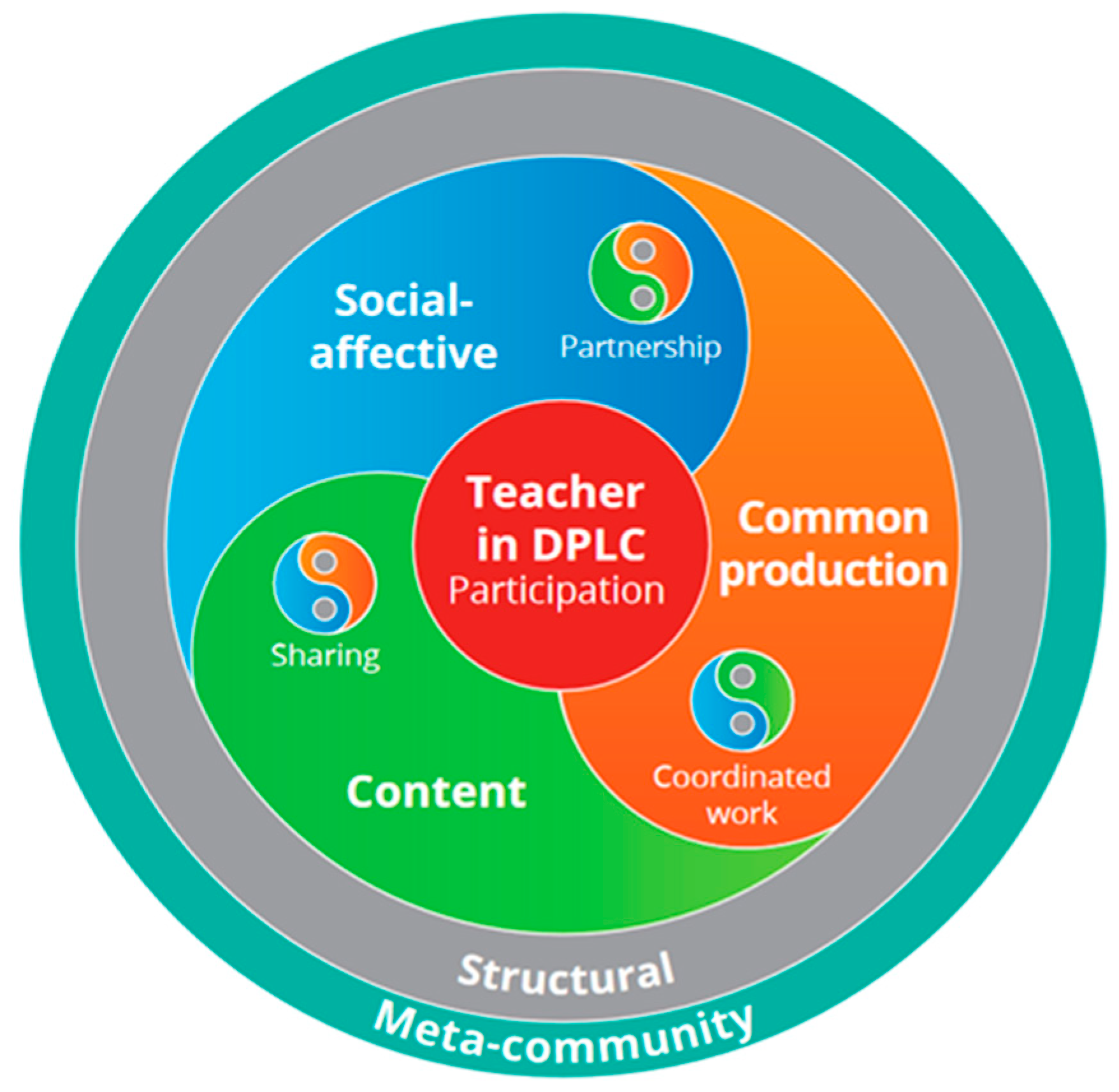
One prominent way of fostering SaT teachers’ professional growth is through DPLCs (Eylon et al., 2020). A DPLC is a specialized form of professional learning community that brings together teachers who share expertise in a specific subject or discipline, such as SaT or physics (MOFET, 2020; Merzel et al., 2025). It is similar to the Communities of Practice described in some literature (e.g., Wenger et al., 2002) and shares characteristics with broader definitions of teachers’ communities (Van Meeuwen et al., 2020; Vangrieken et al., 2017; Jäppinen et al., 2016; Prenger et al., 2019), but differs in several ways, such as being focused on a specific discipline, not being initiated by governmental authorities, and involving entirely voluntary participation (cf. Eylon et al., 2020; Merzel et al., 2025). In a study we conducted (Merzel et al., 2025), we identified five dimensions of DPLCs, described briefly below (see Figure 1).
  • Structural dimension—describes the tangible and logical structure of the DPLC.
  • Content dimension—focuses on the discipline’s subject matter and its teaching.
  • Common-production dimension—encompasses the products of cooperation and collaboration among DPLC members.
  • Social–affective dimension—relates to the social and emotional aspects, as well as the values that establish a sense of community.
  • Meta-community dimension—describes the relationships between the DPLC and its broader environment.
The purpose of many models of teacher communities—and specifically SaT DPLCs—is to influence teaching (e.g., Eylon et al., 2020; Vangrieken et al., 2017). Among the DPLC dimensions, the focus on content particularly reflects the goal of turning community-acquired resources into actual teaching, a process that requires design capacity.

2.2. Teachers as Designers

Although teachers were once seen primarily as consumers of curricula, some scholars have recognized that teachers rely on their professional judgment to unlock the potential of any curriculum and turn it into a series of lesson plans, that is, teachers develop a personal interpretation of the curriculum (Davis et al., 2016). Penuel et al. (2009) found that science teachers used curriculum manuals differently than intended by the developers, and a growing body of research views teachers as the de facto designers of their pedagogies. Teachers frequently adapt teaching materials to their contexts (Brown, 2002, 2009; Brown & Edelson, 2003; McKenney et al., 2015; Remillard, 2005), whether during lesson planning, implementation, or evaluation of students’ learning, by modifying the available resources.
Teachers act as designers because original content developers cannot tailor materials to every combination of student, teacher, and school contexts. Thus, it is possible for teachers to teach the same curriculum in different ways, using it as a basis for interpretation, evaluation, and adaptation to specific classroom needs (Brown, 2002, 2009; Brown & Edelson, 2003; Ellingson & Roehrig, 2025). As Brown (2009) explained, teachers “must perceive and interpret existing resources, evaluate the constraints of the classroom setting, balance tradeoffs, and devise strategies—all in the pursuit of their instructional goals” (p. 19). His argument posits that when teachers plan a lesson, they interact with the available instructional resources according to their beliefs, goals, knowledge, and skills. Brown defines all of these as resources for lesson design.

2.2.1. Pedagogical Design Resources

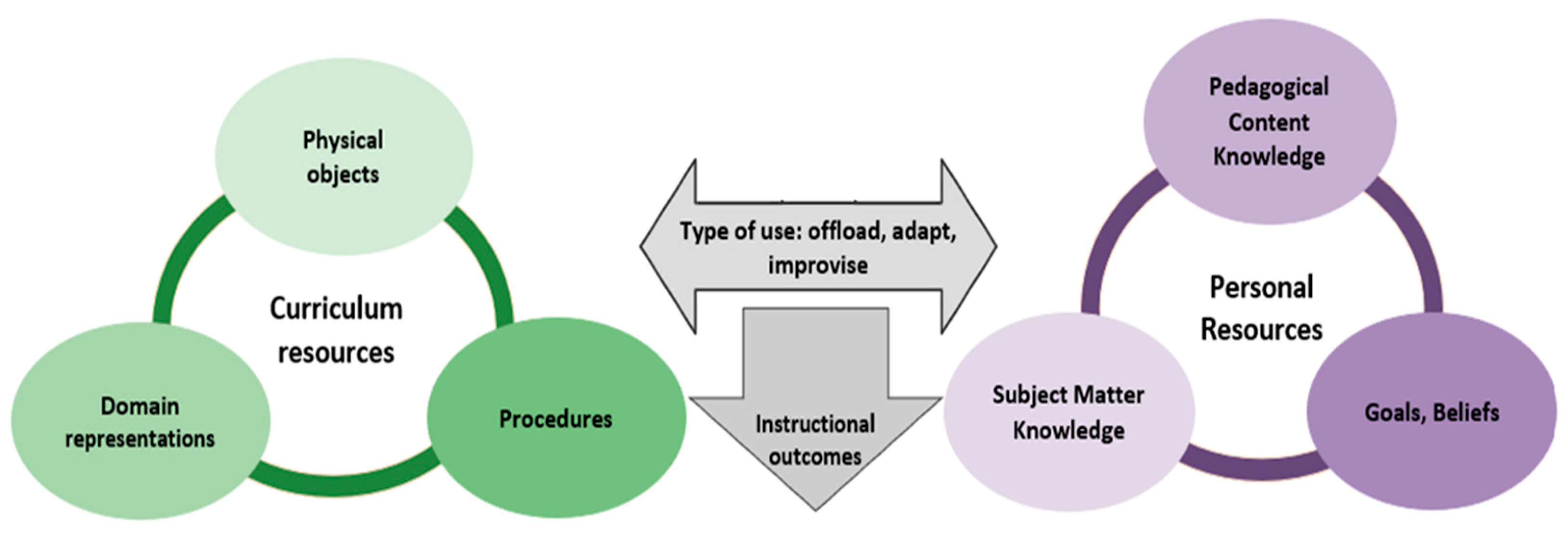
Brown (2009), Brown and Edelson (2003), and Ellingson and Roehrig (2025) identified two main types of resources available for teachers’ pedagogical design: curricular resources and personal resources. Curricular resources are sets of tools and materials that help shape instruction (Brown, 2009). These include physical objects (e.g., textbooks, worksheets), procedures (instructions for implementation), and domain representations (diagrams, models, explanations).
Teachers’ personal resources are also divided into three types. The first is subject matter knowledge (SMK), which includes knowledge of the facts and concepts related to the curriculum content (Ball, 1991; Stodolsky & Grossman, 1995, as cited in Brown, 2009). The second is pedagogical content knowledge (PCK), which encompasses knowledge about the teaching and learning of a particular subject (Carlson et al., 2019; Shulman, 1986). The third, goals and beliefs, referred to by Cohen and Ball (1999, as cited in Brown, 2009) as “commitments,” includes teachers’ attitudes toward the material, their motivation to teach it, and self-efficacy (Bandura, 1995) as a mechanism for setting goals (Velthuis et al., 2015).
Similarly, Pareja Roblin et al. (2014) identified knowledge sources for pedagogical design, with formal knowledge corresponding closely to curricular resources and practical knowledge, which includes general pedagogical knowledge, to personal resources. They additionally recognized knowledge derived from teacher inquiry and connected all three to collaborative pedagogical design—highlighting the need to examine community resources.

2.2.2. Turning Resources into Pedagogical Design

Brown (2009) argues that pedagogical design processes emerge from bidirectional interactions between teachers’ personal resources and curricular resources. Curricular resources may, to some extent, shape how teachers design their lessons and, in some cases, constrain their design choices. Conversely, teachers’ personal resources influence both the selection of curricular resources and their use in lesson design. Brown presents these resources and their interactions in the Design Capacity for Enactment framework (see Figure 2, adapted from Brown, 2009, p. 26)1.
According to this framework, teaching products are ultimately created in three ways (Brown, 2002, 2009; Brown & Edelson, 2003; Ellingson & Roehrig, 2025; Pepin et al., 2017):
  • Offloading—teachers follow the prepared program closely, relying heavily on curricular resources and drawing only partially on personal resources.
  • Adapting—teachers adjust curricular resources, integrating substantial amounts of personal resources.
  • Improvising—teachers rely primarily on personal resources, sometimes going beyond curricular boundaries in terms of knowledge scope and the introduction of additional tangible resources.
Brown’s framework examines the design process as it occurs within the individual teacher. However, the design process in a collaborative environment such as a DPLC remains understudied. The DPLC dimensions, particularly the focus on content (including PCK), reflect the aim of turning resources gained from the community into actual teaching. This raises the need to examine whether teachers view the DPLC as a resource for pedagogical design. Based on Brown’s model (2009) and subsequent work (Ellingson & Roehrig, 2025; Pepin et al., 2017), interactions between personal and curricular resources serve as the channel through which pedagogical design occurs. Therefore, interactions between community dimensions and personal and curricular resources can indicate that the DPLC also functions as a resource for pedagogical design.
Moreover, there is a gap in the professional learning community literature: while most research on PLCs examines learning processes and knowledge sharing within the community itself, far less is known about how participants translate community-derived assets into daily pedagogical design, which prospectively leads to classroom practice. Addressing this gap requires exploring teachers’ own perspectives on their community involvement and how they perceive its various dimensions as contributing to their lesson design. This focus leads to the following research question:

3. Research Question

In what ways do teachers associate the characteristics of their DPLC with pedagogical design, particularly in relation to personal and curricular resources?

4. Methodology

4.1. Study Population

The study population was one SaT DPLC (for details about these communities, see Eylon et al., 2020; Merzel et al., 2025). Focusing on a single community has methodological limitations; however, case study data have proven valuable for generating in-depth insights into professional learning processes (e.g., Velthuis et al., 2015).
The DPLC comprised 12 SaT teachers (10 women, 2 men) from eight middle schools, with diverse teaching experience (1–15 years) and varied professional backgrounds. The community was led by two teachers who received academic training and support through a community of SaT leading teachers. One leader, with over 30 years of teaching experience, had been leading the community since its inception. The second leader had entered the position one year prior to the study.
The community met once every three weeks, with about ten annual meetings, each lasting three hours. Meetings began with short social activities, continued with longer SaT teaching activities, included reflections on community development and potential activation, and concluded with a summary and feedback (Eylon et al., 2020). Each meeting was designed to introduce and develop new teaching materials and to promote teachers’ inquiry into their own practice. This inquiry took several forms: teachers often brought in lesson materials for peer feedback, presented students’ artifacts from their classes for collective discussion, or raised questions and dilemmas for the group to address. In such cases, disagreements sometimes emerged, as different members proposed alternative solutions, which in turn stimulated richer dialogue and reflection. The leaders’ role was to mentor teachers in adopting new materials, facilitate productive dialogue among participants, and model teaching practices. In addition, the leaders contributed an academic perspective, bringing in research-based pedagogical insights and methods. Overall, the DPLC discourse emphasized workshop learning, experiential activities, and modeling, while members experimented with new practices in their classrooms and reflected on them with the support of their colleagues and community leaders.

4.2. The Researchers

In addition to their roles as education researchers and teacher educators, the first author has been involved in the leadership of SaT teacher communities since the program’s inception in 2015, initially as a community member and later as a community leader. The second author is a co-leader of a regional DPLC in a different scientific discipline. At the time of the study, the first author served as a facilitator and mentor in the national leadership team guiding the SaT community leaders.
Consequently, there was prior acquaintance with some participants in the studied community, as well as an ongoing and constructive professional relationship with the current community leaders. Nevertheless, the interviewees also included new teachers in the community with whom the first author had no previous contact. These existing relationships fostered a high degree of openness during the interviews, and it was evident that participants felt comfortable expressing criticism when relevant.

4.3. Data Collection

A qualitative–interpretive paradigm was chosen to examine teachers’ perceptions, as this approach emphasizes the meanings individuals attribute to their experiences and the ways in which these meanings are constructed through social interaction (Shkedi, 2003). This paradigm enables an in-depth exploration of complex educational phenomena even within small participant groups (Given, 2006).
In line with this approach, we collected two complementary forms of data. The first source consisted of eight in-depth interviews conducted with three selected community members and one community leader, both at the beginning and at the end of the school year. The second source comprised observational data gathered during five community meetings held throughout the year, following Shkedi’s (2003) definition of passive participant observation.

4.3.1. Interviews

The interviews were in-depth and semi-structured (Kouritzin et al., 2008), conducted face-to-face, online via Zoom, or over the phone; all were recorded and transcribed. At the beginning of the year, interviewees were asked to present their professional background, describe their motivations for participating in the DPLC, and explain their professional credo, with particular focus on pedagogical design resources and processes for lesson planning.
In the end-of-year interviews, participants were mainly asked to reflect on the topics discussed in the first interview, characterize their DPLC, assess whether it met their expectations, and describe what the community had contributed to them. Additional prompts aimed to assess self-efficacy, as this can moderate teachers’ willingness to develop and implement new resources (Blonder et al., 2014; Velthuis et al., 2015).
To ensure diversity in perspectives, interviewees were selected based on their teaching experience and seniority within the community (Table 1), as professional growth motives and perceived gains often vary by seniority (Grossman et al., 2001).

4.3.2. Meeting Observations

Passive participation is an observation method characterized by a high level of involvement in the environment under study for a limited period, without taking an active role in ongoing activities (Shkedi, 2003; Spradley, 2016). Considering the first author’s involvement in the SaT DPLCs project, the observations of the DPLC’s meetings adhered to this definition of passive participation.
The observations aimed to characterize the community space, or, ‘the community’s atmosphere’ as called by Jäppinen (2012), and the interactions among participants, exploring possible links between representations of the dimensions mentioned above (Figure 1). For example, while talking on a specific topic (content dimension), a teacher shares her materials (content dimension), receives emotional support and appreciation from her colleagues (social–affective dimension), and they offer her to present it to other communities in the national network (meta-community). We observed how the participants stated that the topics discussed would be expressed in the ways teachers shaped their lessons. Data was recorded as field notes during the meetings. This passive participation continued during the COVID-19 pandemic, when the community space shifted online and social interactions adjusted accordingly.

4.4. Data Analysis

The interpretive analysis of the interviews was based primarily on grounded theory (Charmaz, 2006; Shkedi, 2003), employing the constant comparative method as a core analytic strategy throughout the process with considerations of space and time (Bell, 1992; Foucault, 1970). The process followed these stages:
  • Initial open coding—All interviews were read holistically to gain familiarity with the data. Following Charmaz’s line-by-line coding approach (in Shkedi, 2003), each interview was then systematically analyzed, examining each line to identify its meaning and assigning codes accordingly. Throughout this stage, incidents within and across interviews were constantly compared to identify similarities and differences, allowing codes to emerge and be refined. Each code was defined precisely to ensure consistent application. Since interviews were conducted at two time points (beginning and end of the academic year), constant comparison between early and late interviews led to refinement of existing codes and emergence of new ones, prompting iterative re-examination of all data.
  • Code verification—At this stage the two authors checked their agreement about the code assignment to quotations, conducting comparisons both hierarchically (statements per code) and horizontally (similarities between statements per code), and discussed and resolved disagreements.
  • Dimension development—Core categories were identified through systematic comparison across all data based on four criteria: frequency of occurrence, connections to multiple other categories, clarity of relationships, and relevance to the research questions (Shkedi, 2003). At this stage, we found that core categories are similar to core categories we identified in another study about the facets of DPLC. We therefore combined and refined the core categories of the two studies, connecting them to relevant literature and made them the final five dimensions mentioned above (see Figure 3). Note that some codes were identified in low frequency in the interviews but were pronounced in meeting observations (see below). For detailed description of the way the dimensions were generated, see (Merzel et al., 2025). The two authors independently verified code assignments into categories and dimensions, resolving the few disagreements through discussion until consensus was achieved.
  • Mapping relationships and interactions—At this stage, relevant literature on pedagogical design capacity and Brown’s framework (Brown, 2002, 2009; Brown & Edelson, 2003) was consulted to inform interpretation, allowing for dialogue between emergent categories (bottom-up analysis) and theoretical concepts (top-down perspective) (Shkedi, 2003, p. 129). This process resulted with 44 codes, which comprised 17 categories (see Supplementary Materials) linking community resources to pedagogical design.
The inclusion of observations was not intended to serve as a separate or comparative data source but rather as an integral part of the interpretive process. Observations enabled us to witness and interpret how teachers’ professional learning unfolded in real time, including social dynamics, interactions, and practices that might otherwise remain implicit or unarticulated in interviews. Within the interpretive paradigm, this combination supports a richer understanding through methodological triangulation, linking teachers’ retrospective narratives with their observed participatory behaviors in the community. For example, interviewees emphasized the importance of participation. Observations revealed that in one community meeting, participants were asked to collaboratively design a student task to diagnose understanding of inquiry processes. However, only a few teachers attended this meeting. The low attendance resulted in reduced motivation, and the task was left unfinished, preventing its prospective implementation in classrooms. This example illustrates how observational data complemented the interview analysis: it provided an interpretation of the interaction between participation in the DPLC and the production of joint curricular resources.

5. Findings

We present the findings in two sections. The first describes the categories—referred to here as facets—of the five DPLC dimensions (mentioned above; see also Merzel et al., 2025), as perceived by the teachers. The second section explores the interactions between these facets and personal and curricular resources. Note that the research question focuses on the association of the characteristics of DPLC with pedagogical design, and not on the facets of a DPLC. Therefore, the findings of the first section are presented here only to support the connection to pedagogical design. Accordingly, we do not include supporting quotes in the first section, as the interactions inherently involve these facets. Supporting quotes are provided solely in the second section. In these quotes, one can see both the DPLC relevant facets and the interaction with curricular and personal resources (for evidence of these facets, see Merzel et al., 2025).

5.1. The DPLC Dimensions and Their Facets

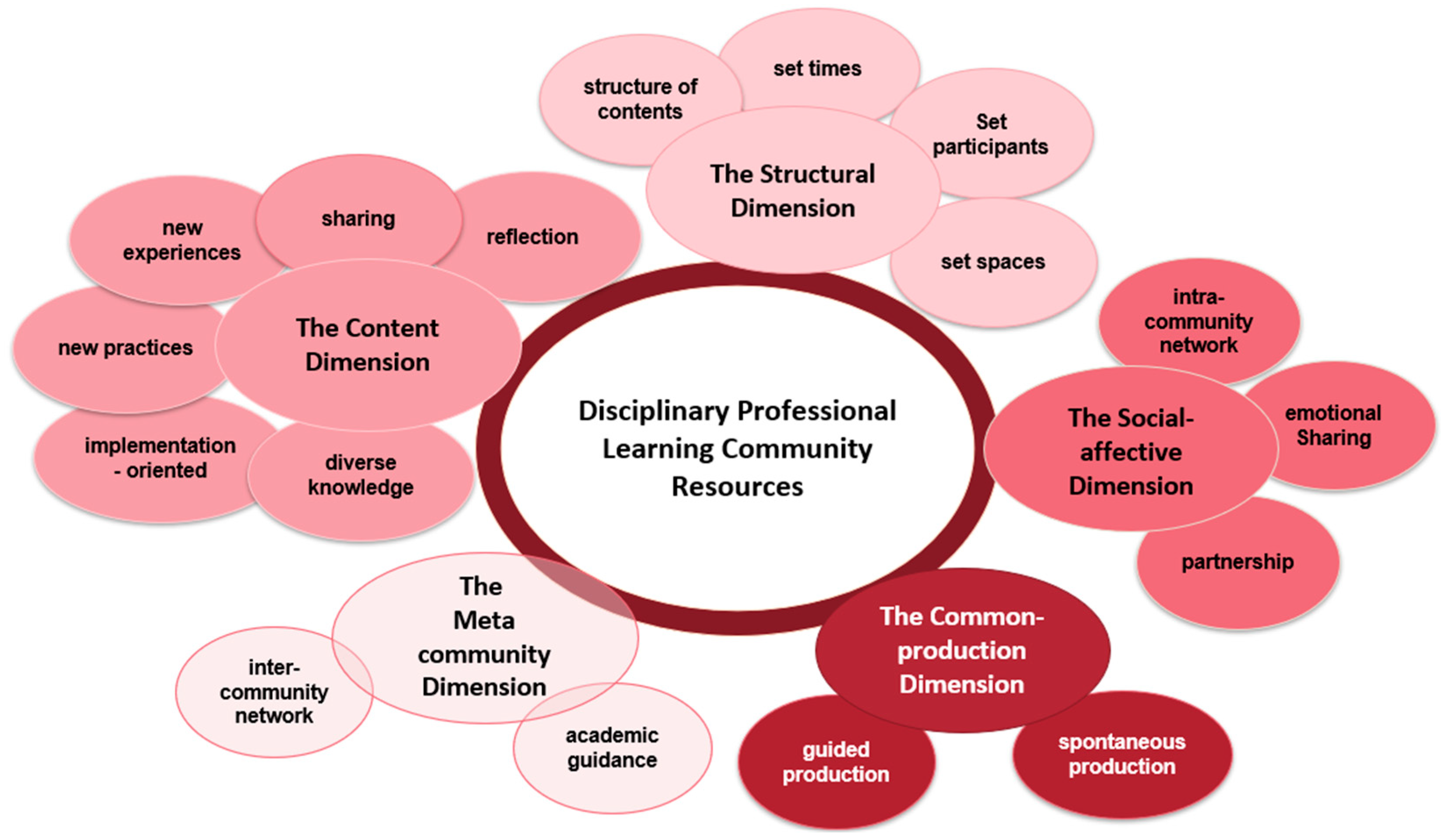
The data collected through interviews and observations revealed several facets to each SaT DPLC dimension, depicted in Figure 3 and highlighted in bold in the descriptive text below.

5.1.1. Facets of the Structural Dimension

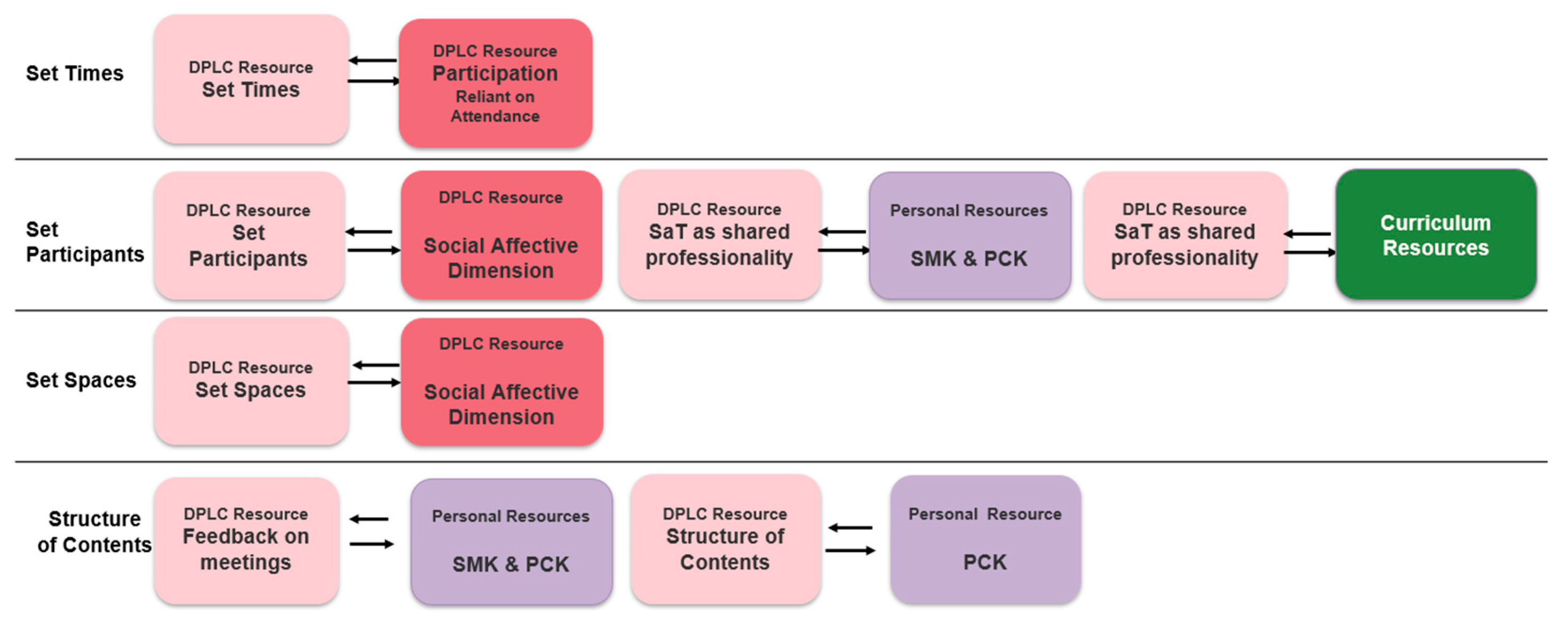
The community has several clear structural facets that support its existence and foster its development. Set meeting times support the attendance and participation of members. Set meeting spaces—i.e., the locations and how they are organized (e.g., school lab). Being disciplinary, the community has a structured focus on SaT content as an integral part of the meeting’s logical structure. Set participants—a consistent group of the same teachers and leaders throughout the year, all with SaT as their shared professional focus and living in the same region—further strengthen continuity.
Although some of these structural facets were not expressly linked to pedagogical design, teachers identified them as prerequisites for the community, without which no other dimensions could exist.

5.1.2. Facets of the Content Dimension

Shared learning of content is at the heart of community activity. This core facet drives the flow of SMK and PCK. Prominent content facets include diverse science knowledge (chemistry, biology, physics), tailored for middle school, discussed in the context of new teaching practices, with an emphasis on classroom implementation and reflective thinking about teaching. Another facet is the emphasis on new experiences based on active, workshop-style learning and modeling of teaching practices, as evident in participants’ interviews.
Engagement with content takes the form of sharing knowledge, insights, dilemmas, challenges, and successes. This dimension does not include sharing social feelings or emotions, which belong in the social–affective dimension. Instead, it focuses on collaborative learning, addressing disciplinary aspects of challenges and exploring professional solutions. We found that teachers especially valued field-based content, that is, resources originating from actual classroom practice.

5.1.3. Facet of the Social–Affective Dimension

According to the data, the DPLC is built on interactions and sharing between members and leaders that create intra-community networking, uphold norms of non-judgmental discourse, and foster trust, which lead to friendship, openness, and cross-fertilization. These facets focus on sharing emotional aspects, particularly the self-efficacy they nurture.
Other important social–affective facets include shared goals and vision for teaching SaT, which strengthen professional identity, generate a sense of partnership, and motivate members’ participation.

5.1.4. Facets of the Common-Production Dimension

In advanced stages of community development, knowledge sharing leads to the production of new content for classroom implementation, alongside the adaptation of existing content. This occurs both through guided production facilitated by the leaders and through spontaneous production arising from consultations and collaborations among community members outside meeting times.
This dimension requires higher levels of social bonds and sustained engagement with content. While this dimension appeared less frequently in interviews, they were observed during community interactions and recognized as an important marker of the community’s maturity.

5.1.5. Facets of the Meta-Community Dimension

Each DPLC is part of a broader network that enables multi-directional knowledge transfer among SaT communities through the leaders’ own community of practice and the guiding academic institutions in the network, which contribute research-based resources and pedagogical insights. This structure allows for the flow of knowledge between communities, both directly and indirectly, as leaders share news of activities and resources with community members.

5.2. Interactions with Personal and Curricular Resources

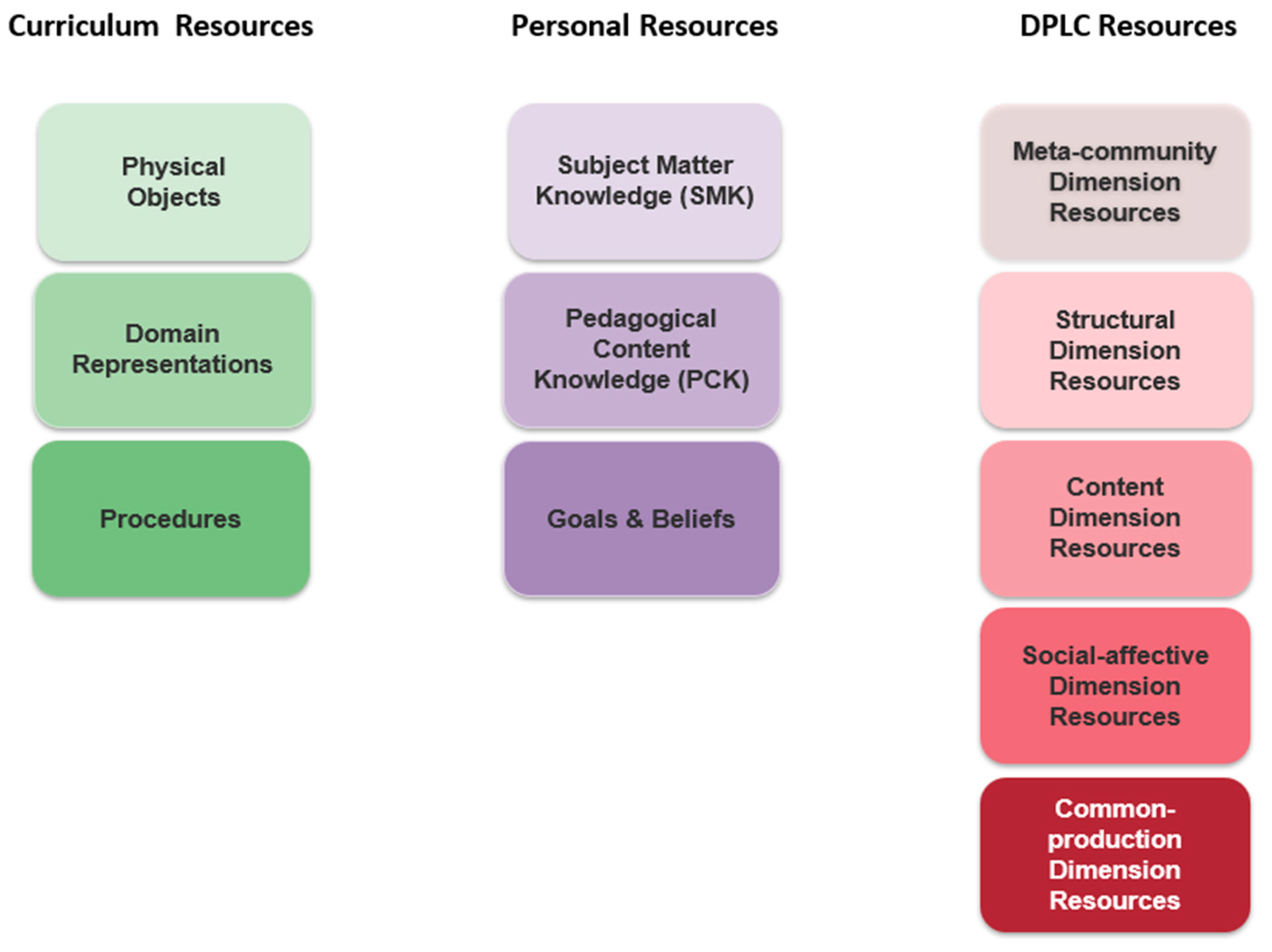
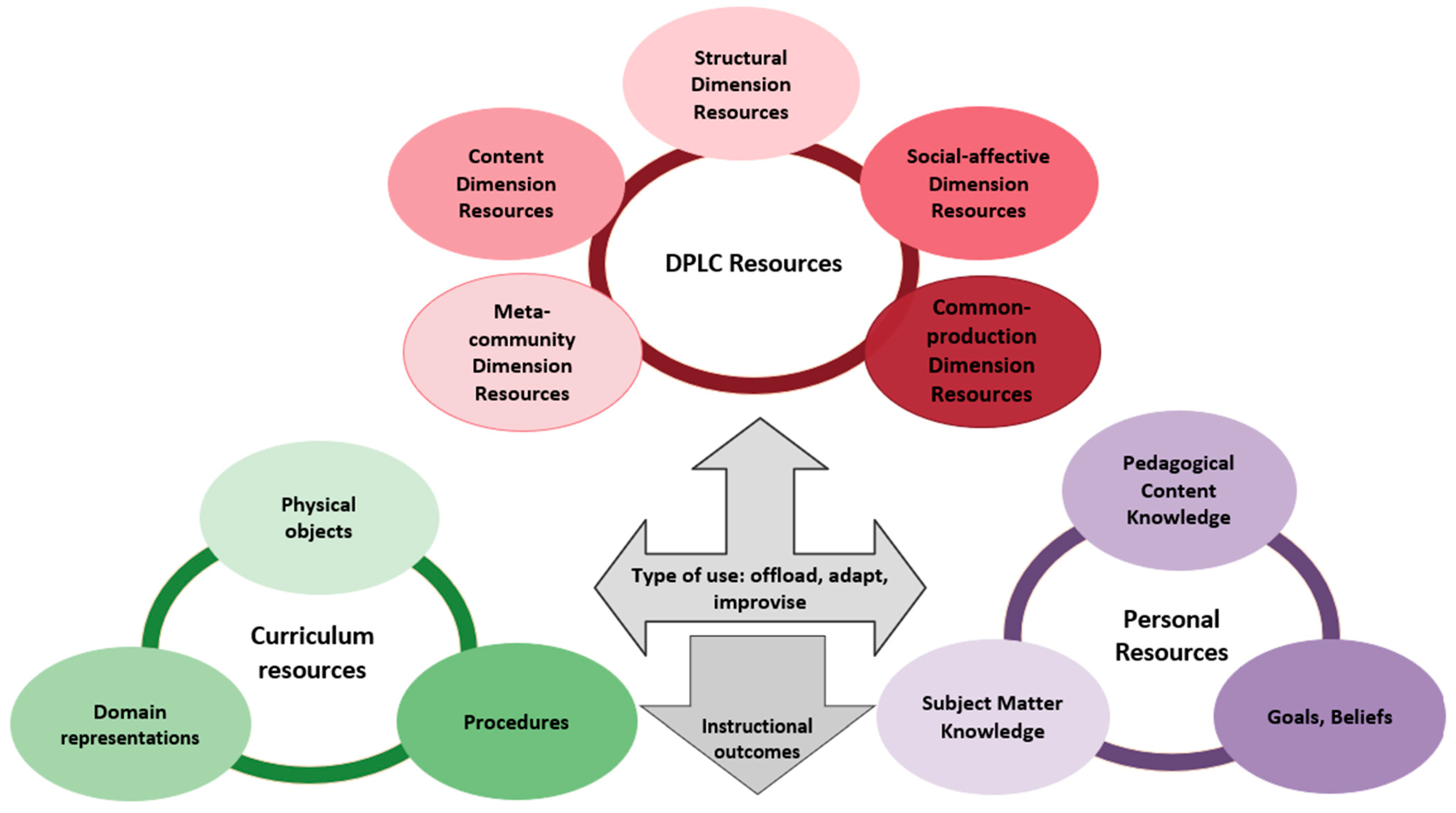
Just as personal resources interact with curricular resources and produce instructional outcomes (Brown, 2009), the dimensions of the community—and their facets—also interact with these resources. These interactions occur “inward”, when the DPLC influences a teacher’s resources, and “outward”, when the teacher influences the DPLC (Merzel et al., 2025). In this way, each of the five dimensions constitutes an additional type of resource for pedagogical design that teachers draw upon when designing a lesson. Teachers participating in the DPLC described how they structured and sequenced lessons, incorporated peer-validated classroom practices, engaged in collaborative co-design, and gained the confidence to experiment with new instructional approaches. In this sense, the DPLC served not merely as a source of additional tools that enriched teachers’ repertoire of materials and strategies, but as a transformative context for how they conceived, planned, and enacted science and technology lessons. Figure 4 visualizes how DPLC resources stand alongside other resource types.
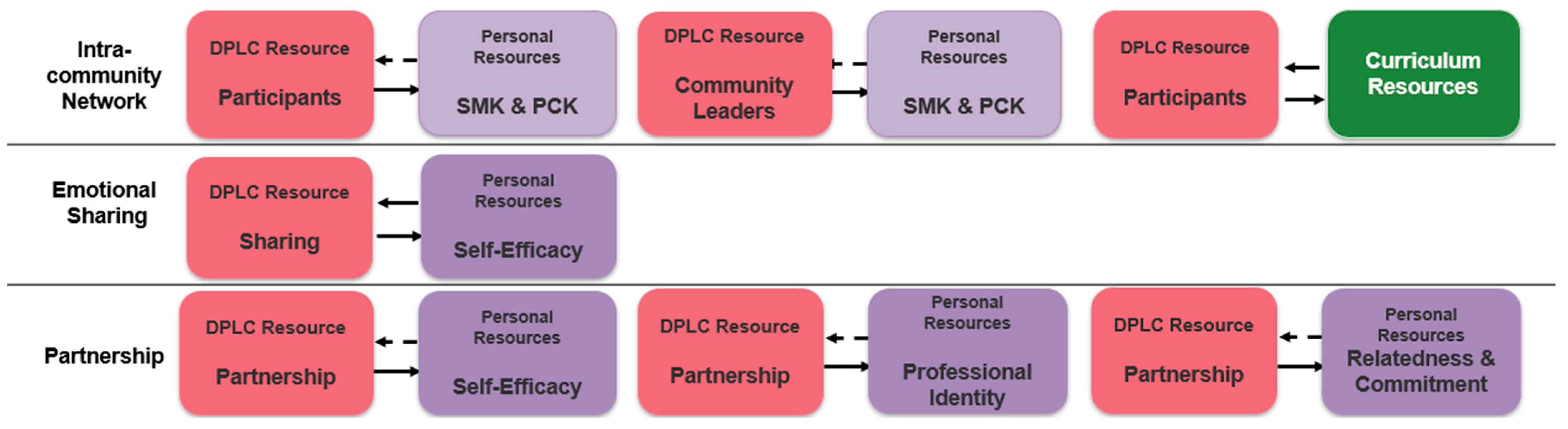
We illustrate the various interactions graphically using a diagram that links one of the DPLC facets with teachers’ personal or curricular resources.
Typically, interviewees spoke more about what the community contributed to them than about their own contributions to the community (“inward” more than “outward”; see Merzel et al., 2025). Additionally, there was not always explicit evidence of bidirectional interaction between the resources in the data. Where one direction lacked evidence, we marked it with a dashed arrow (Figure 5, left). We identified 31 interactions in the interviews, most of which were also observed during community meetings; these are presented in the sections that follow. Double parentheses ((…)) indicate additions clarifying speaker intent, and square brackets […] indicate in-text explanations.

5.2.1. Structural Dimension Resource Interactions

The structural dimension forms the bedrock of the DPLC, and participants emphasized its importance for establishing meetings and supporting community development. They also recognized its influence on pedagogical design.
For example, Zurit noted in her second interview:
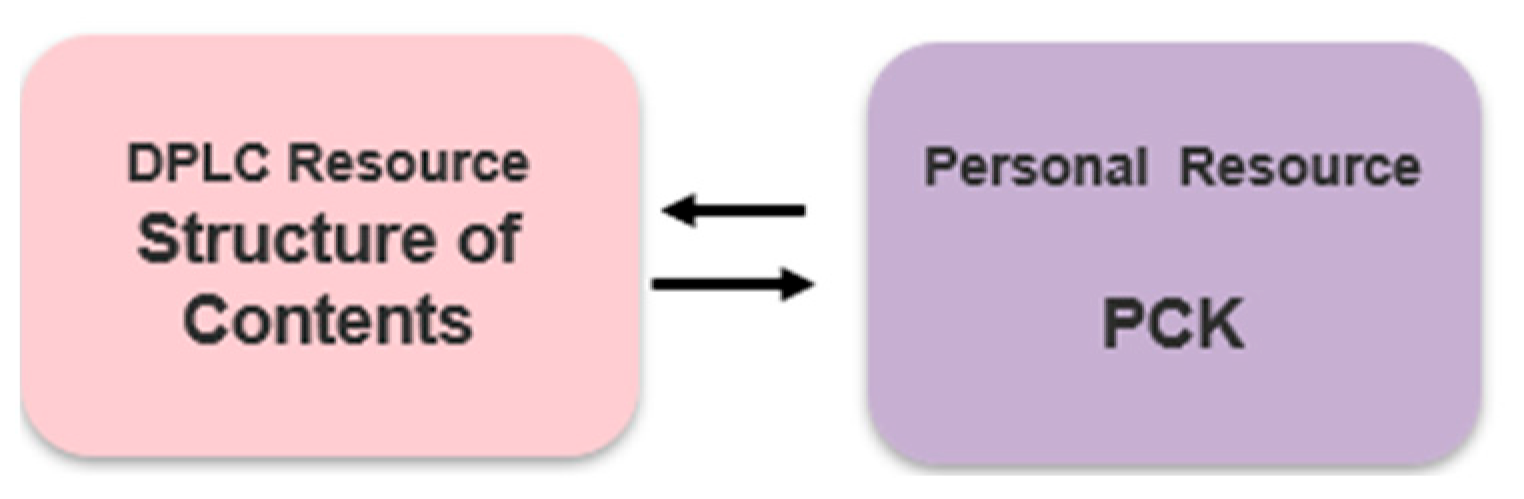
Each ((DPLC)) session exposed me to different instruments… ((so)) I was able to diversify ((myself)) more during a lesson… ((I saw)) that in the same lesson several things can be used… In a short time, I managed to see more things than expected in one session, because ((the structure of)) the meeting itself was of variety.
Zurit’s remarks indicate that the meeting structure was intentionally designed to cover a variety of content and tools. This exposure influenced how she thought about structuring and designing her lessons, showing that a community resource affected her personal resource. Similarly, leader Haviva explained that the meetings were “meant to expose a variety of practices in each session,” indicating that the intention to enrich teachers’ personal resources shaped the community’s structure. This represents a bidirectional interaction (Figure 6).
Figure 7 summarizes all identified interactions between the facets of the structural dimension and other resources. Regarding personal resources, the strongest interactions were with teachers’ SMK and PCK.

5.2.2. Content Dimension Resource Interactions

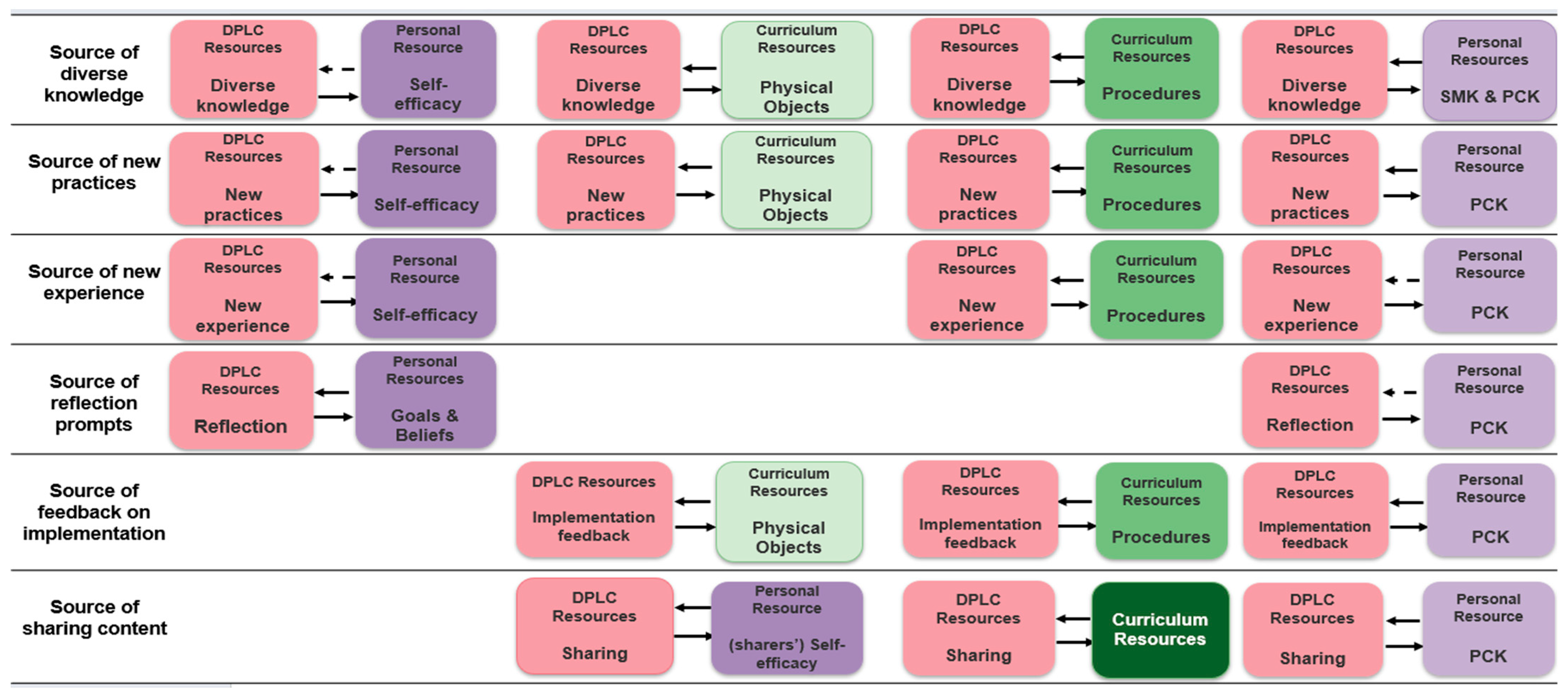
The DPLC is engaged in shared learning, where work with SaT content knowledge and PCK enriches participants’ personal and curricular resources. This makes the DPLC itself a resource for pedagogical design.
Both novice members, such as Odelia, and experienced members, such as Amitai, described the DPLC as addressing a broad and diverse body of knowledge—chemistry, biology, physics, and technology—taught over a three-year SaT curriculum. This breadth makes the community relevant for teachers from varied scientific backgrounds and at different career stages. As Odelia explained in her first interview:
No meeting is like the previous one—they [the leaders] always innovate—whether in games, presentations, topics that change every time, once chemistry and once biology, once physics… Once they brought ((teaching)) material that is more suitable for grades 9–10, once they brought material that is more suitable for 7–8 and once 8–9, all these ((contents)) are a resource. The diversity, the interest, the different methods, the different knowledge, it is [the community] really a strong place.
In this example, Odelia emphasizes the richness and diversity of content as a natural outcome of community activity. As observed in meetings, the DPLC also fosters sharing among members, creating an “outward” effect in which teachers’ personal resources, namely, SMK and PCK, enrich the community’s resources. This bidirectional interaction between the community as a source of curricular resources (e.g., games, presentations, methods) and of broad knowledge (both content and pedagogical), and the teachers’ personal resources, is illustrated in Figure 8.
With community members as knowledge agents, through sharing content and pedagogy, DPLCs differ from other professional growth frameworks. Amitai, for example, details in his second interview how sharing was meaningful to him:
A teacher came to one of the meetings and brought all her things, all the products that her students made, and showed all kinds of ideas from the field [the classroom], and not something that ((outsiders)) did—It was important to me to see what her pupils had prepared… It was something that spoke to me.
Similarly, Zurit described in her first interview how sharing “outwards” and receiving feedback from respected colleagues enhanced her self-efficacy:
When (the teachers)) are enthusiastic about something that I share, it makes me feel good ((and more professional)), like, when I get the ((positive)) feedback from people who really understand it, and not only from a bunch of kids who enjoyed the lesson.
Interactions can thus be seen between the DPLC’s facilitation of peer sharing of proofed practices and teachers’ personal resources (PCK—“…her things…was important to me”) as well as curricular resources (materials and ideas from the field). Figure 9 summarizes these interactions, and Figure 10 presents all interactions between content dimension resources and other resources.

5.2.3. Social–Affective Dimension Resource Interactions

As noted earlier, this dimension encompasses the social and emotional aspects, as well as the values that establish a sense of community. Emotionally, teachers highlighted the importance of celebrating successes and expressing frustrations. While such exchanges are not necessarily direct resources for lesson design, teachers reported that the community’s responses—both in terms of encouragement and practical tips—were highly meaningful to them. In the following example from her first interview, Zurit emphasizes how emotional sharing that arises from partnership can promote a professional response:
((The community is)) an open place for ((emotional)) sharing and… inclusion and speech and… it has someone who understands you, like you, is in the same place as you [i.e., teach the same subject, at about the same time of the year]… ((supporting is)) from a place of truth and non-judgment.
Teacher Odelia presents a similar idea in her second interview, emphasizing the importance of the community’s response after she shared a challenge with her students:
((The leading teacher)) supported those who shared. She kept saying ‘my students were also weak, and the class was weak, and it [the method of teaching] succeeded, so try—maximum it will not succeed’.
Here is an explicit description of how self-efficacy is promoted by encouraging sharing that enables learning from the experiences of others, coupled with support and encouragement. This process benefits both the givers (“sharing outward”) and the receivers (“sharing inward”).
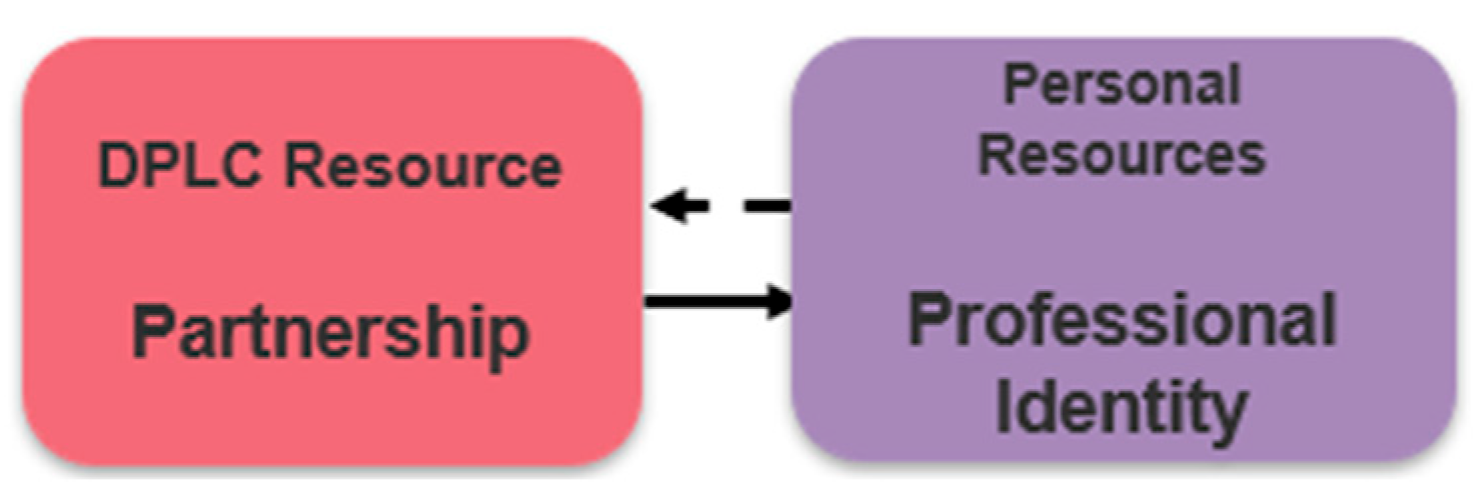
Throughout the interviews, several respondents noted that belonging to the community—through a sense of partnership—helped foster a solid professional identity, which in turn influenced their lesson design abilities. In his first interview, for example, Amitai connected his attendance and participation to a desire to develop his professionalism and linked the DPLC to his professional beliefs:
I go there [the DPLC meetings] to grow, to be more professional and to be better.
When asked later, in the second interview, whether he recognized a contribution of the community, he added:
((The DPLC)) confirmed to me that I can continue to do what I believe and what I thought that I should do… ((the community)) ratified my point.
Amitai thus receives reassurance regarding his methods and professional identity and is encouraged to continue designing lessons as he has done so far. A resource connection can, therefore, be drawn between teachers’ sense of partnership with the community and their professional identity (Figure 11).
In summary, multiple interactions can be seen between the various components of the social–affective dimension and the personal and curricular resources, indicating that these facets influence the pedagogical design of community members (Figure 12).

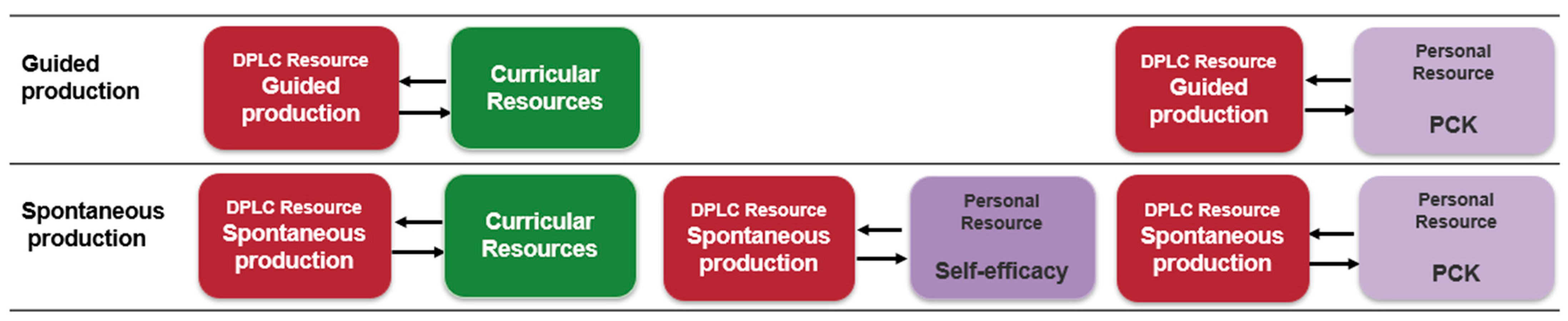
5.2.4. Common-Production Dimension Resource Interactions

This dimension refers to various DPLC activities in which community members jointly design teaching resources and instructional units. It encompasses two types of co-production—collaboration and cooperation (Merzel et al., 2025). Such productive teamwork can indicate an advanced stage of community development (Eylon et al., 2020; Chen & Wang, 2015), capable of achieving more than individual teachers could on their own (DuFour & Eaker, 2009). Production within the community can contribute substantially to teachers’ professional growth, enhance their lesson design abilities (Ackermann, 2001), and generate synergy among community members (Hefetz & Ben-Zvi, 2020).
Common production may result from deliberate guidance by community leaders but can also emerge spontaneously from unguided interactions, as teachers consult with one another. Odelia’s account of “two teachers collaborating even outside of meetings” and Zurit’s observation that common production lies at the heart of the community’s essence—serving as an indicator of its developmental stage—both underscore the importance of this DPLC dimension for lesson design. As Zurit explained in her second interview:
DPLC is a learning community that shares and design materials together. ((So)) What I’d like to have for next year—I think I wrote it ((as feedback)), is more building things together.
Haviva’s explanation in her second interview indicates that the DPLC leaders also place a strong emphasis on the production dimension:
I meant to say that I still feel that the community does make me more effective… Because I think there are things that are also learned not in the form of direct engagement but really from meeting teachers, from seeing all kinds of ideas for activities, just, for example, there were groups that [made and] presented ‘choice boards’, so just to see how each group takes it somewhere else, and what the particular group did—there was a group that took it to experimentation and there was a group that just turned it into one big celebration ((of materials)). From a very small activity they made many more activities. Then I opened the binder, and I looked and I saw and said ‘wow’, from one activity about invasive species, I can learn a lot of things about making a poster and using a digital tool and so on. These are tools that I now take to the matter of creating posters, for example, that I adopted to my class.
This example first illustrates how the DPLC enhances Haviva’s self-efficacy (“I feel that the community makes me more effective”) and then shows how it contributes curricular materials that can be integrated into her own teaching, thereby adding new resources for lesson design. The community’s contribution to both self-efficacy and curricular materials strengthens teachers’ personal resources: exposure to new practices enriches their PCK, while the creation of curricular resources within the community provides tangible tools for lesson planning. As with other cooperative actions, the act of production here constitutes a dual interaction in which the producing teachers both give and receive (Figure 13).
In summary, the interview data reveal multiple interactions between the common-production dimension of the SaT DPLC and other resources, underscoring this dimension’s role as a valuable contributor to members’ pedagogical design. Figure 14 illustrates these interactions.

5.2.5. Meta-Community Dimension Resource Interactions

This dimension describes connections between the DPLC and other factors that influence its operation, particularly other communities in its network. Being part of a system of communities affects what happens in each one through multi-directional knowledge transfer (Hefetz & Ben-Zvi, 2020). Knowledge flows in two primary ways: first, from the leaders’ DPLC to each SaT DPLC and back; and second, between DPLCs themselves, both directly and indirectly, through the leaders’ DPLC (as leaders share updates about their communities’ activities) and via SaT network conferences.
Haviva’s first-interview description highlights this structure as a resource that enables the inter-community flow of knowledge to and from various sources:
How the connections between communities’ works are also a resource for me. We receive ((materials to our community)) from the group of leaders and, like, ((we, as DPLC leaders, are)) connected to the ((academic institute that supports us)) and to its people, and there is something in this order that is also a resource, without anyone in the community noticing. ((A teacher from our community)) doesn’t know what happened there [in another SaT DPLC] and I don’t know what happened in the ((academic institute)) before I got ((the materials)) but I receive it and I pass it on, and they [teachers in her DPLC] will pass it on to their classrooms, I mean, this order of how things go—it’s a resource of community; a weave is formed.
According to her, this inter-network structure creates a “fabric” that extends well beyond what is typically seen in regular professional growth. Haviva notes that, although the original sources are often invisible to most, enriching knowledge nonetheless flows through the system. Her account also illustrates the contribution of the affiliated academic institution that researches science pedagogies. Such bidirectional meta-community resource interactions with personal and curricular resources are represented in Figure 15.

6. Discussion

6.1. SaT DPLC Resources for Pedagogical Design

The pedagogical design capacity model (Brown, 2002, 2009; Brown & Edelson, 2003) describes interactions between personal resources (goals and beliefs, SMK, PCK) and curricular resources (physical objects, procedures, domain representations) available to teachers for lesson design. Each of the facets identified in this study as distinguishing the five DPLC dimensions was also found to interact with these resources, which teachers transform into pedagogical design. Importantly, our findings indicate that these interactions did not merely expand the range of resources available to teachers but also brought about specific shifts that reflect transformations in the way they conceive, plan, and structure their instruction.
With regard to the diversification and restructuring of lesson design, as exemplified by Zurit, exposure to multiple teaching instruments and approaches within a single DPLC meeting influenced how teachers organized their lessons, integrating a wider range of tools and sequencing classroom activities differently than before (Section 5.2.1). This demonstrates a change not only in what was taught but in how lessons were designed and sequenced.
In terms of integrating peer-validated classroom practices, participants reported incorporating methods and materials developed and proven effective by their colleagues (e.g., Odelia’s emphasis on field-based content and Amitai’s appreciation of student artifacts shared in the community, Section 5.2.2). This reflects a shift toward design practices informed by authentic classroom evidence rather than solely by formal curriculum materials.
Another shift concerns the linking of emotional support to design decisions. Through the social–affective dimension, teachers developed greater confidence to experiment with new strategies (e.g., Odelia’s account of trying a method despite previous difficulties, Section 5.2.3), indicating that changes in pedagogical design were not merely technical but also rooted in enhanced self-efficacy, a key factor influencing teachers’ willingness to implement innovative instructional approaches (Velthuis et al., 2015).
Collaborative co-design represents an additional transformation in lesson development, as teachers moved from isolated planning to jointly designing instructional units and activities within the community (Section 5.2.4). Teachers reported that the resulting co-produced materials were subsequently adapted for classroom use, showing that pedagogical design increasingly occurred through a collaborative and iterative process rather than as an individual task.
Finally, meta-community connections enabled teachers to incorporate research-based practices and ideas originating beyond their immediate community (Section 5.2.5), thereby broadening the knowledge base informing lesson design and encouraging alignment with wider pedagogical trends in SaT education.
Taken together, these findings indicate that the DPLC influenced not only the content of teachers’ lessons but also the processes and principles guiding their pedagogical design: lesson structures became more varied, sources of design expanded to include peer-generated knowledge, emotional and collaborative dynamics became integral to design work, and teachers engaged more actively with broader pedagogical ideas. Evidence for these interactions showed that some were one-way, but the vast majority appeared to be bidirectional.
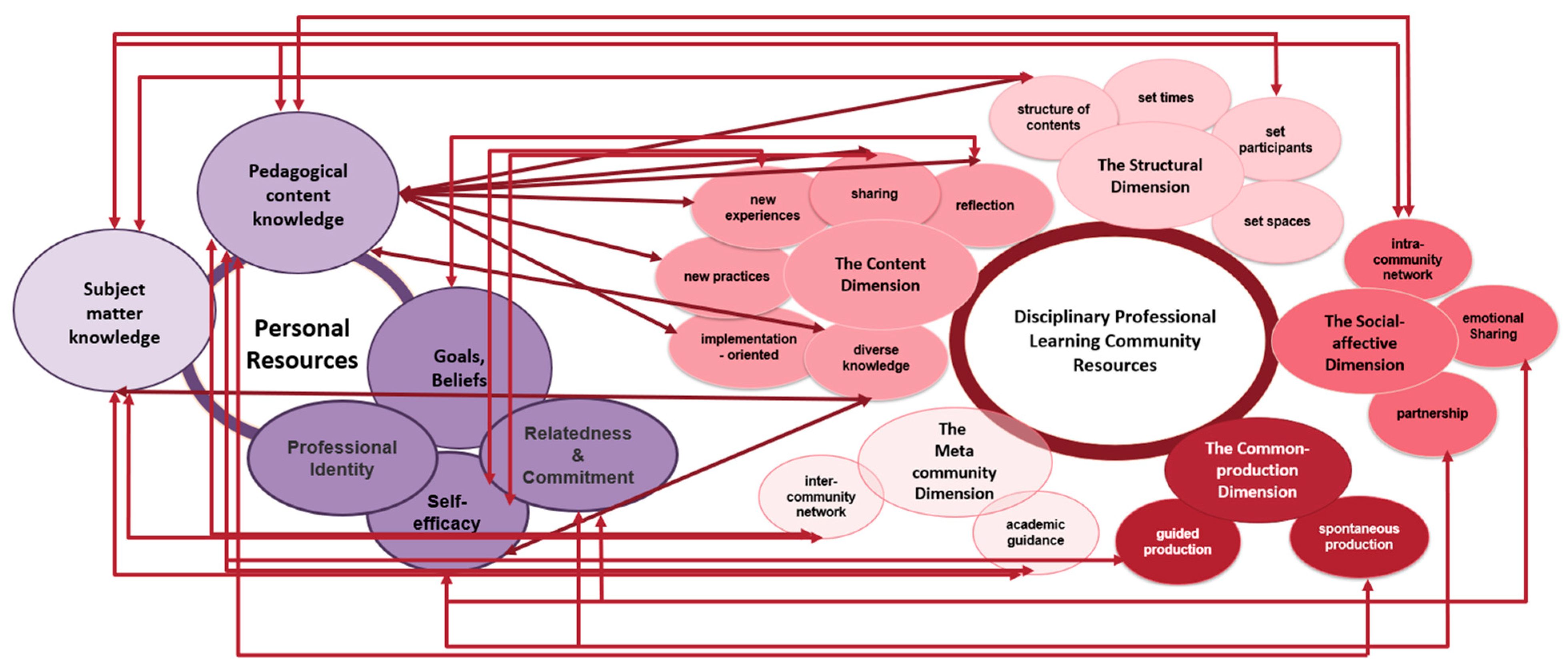
For most DPLC dimension facets, more than one type of interaction was identified, with links to teachers’ personal resources particularly prominent. Interactions between the DPLC dimensions and self-efficacy, as a subcategory of goals and beliefs, were more pronounced than those involving professional identity and relatedness and commitment. Figure 16 provides a holistic visualization of all identified personal–community resource interactions.
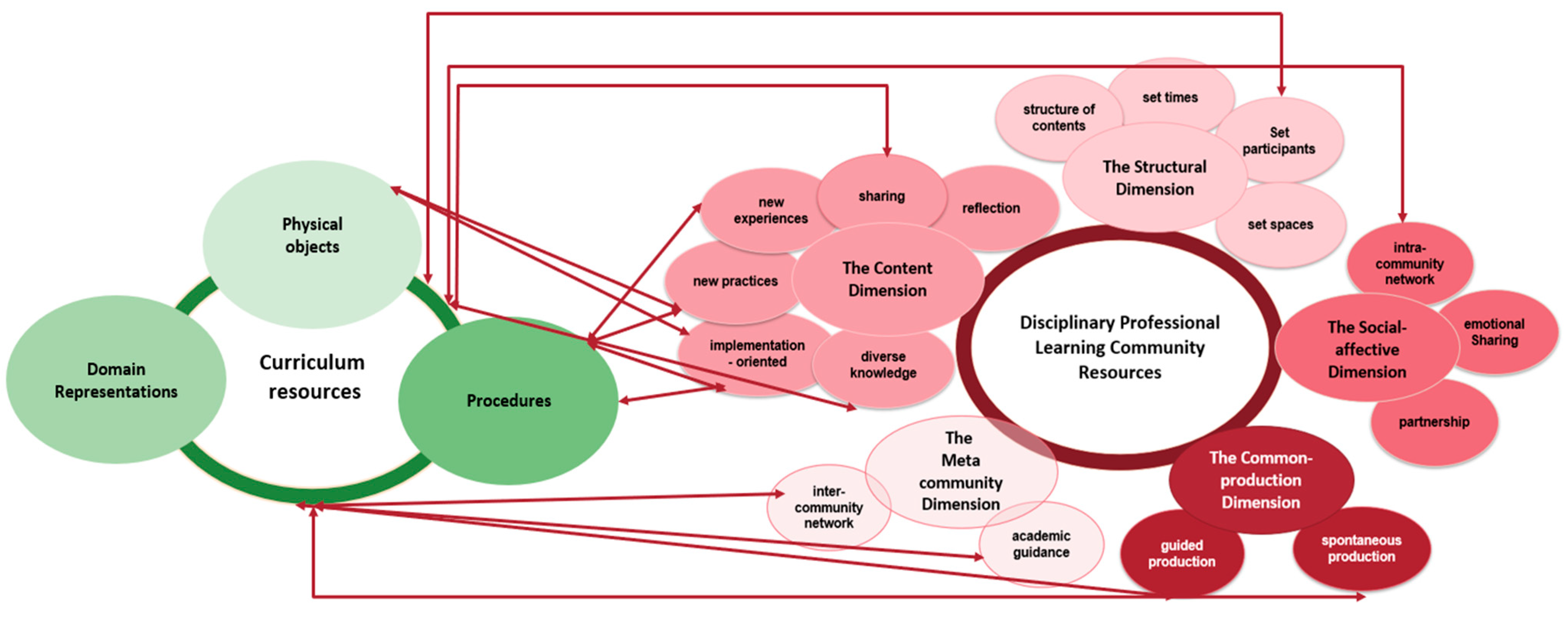
Community–curriculum interactions, although fewer in number, were also identified. Data sometimes linked these interactions to specific facets—physical objects, domain representations, or procedures—but many utterances did not specify. Therefore, in Figure 17, such interactions are represented by arrows pointing to the general curricular resource circle.
Identifying these interactions allows us to determine that the DPLC professional growth framework constitutes an additional source of resources beyond those previously noted (Brown, 2002, 2009; Brown & Edelson, 2003), resources that teachers draw upon when engaging in pedagogical design. The examination of actual resource use in lesson design and in classrooms (through offloading, adapting, or improvising) warrants a separate study. Nonetheless, teachers’ accounts illustrated these three modes of resource use. For example, some described offloading when they transferred community-generated tools into their classrooms. Adapting was also noted when teachers reflected experimenting with new activities developed during DPLC meetings, such as collaborative puzzle design that required the application and reorganization of subject knowledge. Improvising was not explicitly discussed during interviews, but all observed community production processes (creating new teaching materials for classroom use) can be regarded as such. Even when new resource categories are added, the same observable types of use continue to apply. Considering all the new evidence, we propose extending Brown’s pedagogical design capacity model to include the resources available to teachers participating in a DPLC (Figure 18).
A model similar to ours was proposed by Ellingson and Roehrig (2025), who studied STEM teacher pedagogical design processes within design teams. While these teams did not necessarily meet the DPLC definitions used in this study, they exhibited aspects of coordinated work that align with our description of the common-production dimension. Ellingson and Roehrig (2025) extended Brown’s model by adding cooperative resources. Although these cooperative resources bear some resemblance to the community resources described here, the only overlapping sub-category is one they themselves noted as unexpected: sharing. Their other characteristics relate directly to the internal procedures of design teams and are therefore less relevant to our focus on individual teachers mobilizing community resources for their own classes. Nevertheless, since they also identified sharing as a resource for teachers engaged in pedagogical design, their findings support our own.
Our model also echoes the findings of Sjoer and Meirink (2016) regarding SaT teachers, who emphasize that collaborative curriculum design relies heavily on community resources and, to a lesser extent, on personal resources. Combining their findings with ours reinforces the notion of multi-directionality in the connections between resources and design outcomes.
The extended model for pedagogical design highlights several noteworthy points regarding the interactions between pedagogical design resources and DPLC dimensions.

6.1.1. The Content Dimension as a Pedagogical Design Amplifier

There are many types of teacher communities (Vangrieken et al., 2017), yet the contribution of those focusing on subject matter is rarely addressed. Our findings indicate that a substantial part of the community’s value lies in its engagement with specific subjects at the SMK, PCK, and even techno-pedagogical levels (e.g., digital and online tools). This is consistent with findings in the professional growth literature (e.g., Garet et al., 2001; Desimone, 2009; Avdor, 2015). For SaT teachers, and possibly for others, a DPLC appears to strengthen their content-specific personal and curricular teaching resources.
Guidelines for 21st-century teaching emphasize the ongoing development of high-tech and psycho-pedagogical proficiencies (Voogt & Roblin, 2012). Our findings show that DPLCs provide tools relevant to teachers’ professional contexts that are immediately applicable and implemented in classrooms. Even experienced teachers described needs that the community addressed, despite their extensive prior exposure to SMK and PCK. This suggests that sharing professional growth knowledge and tools for practical pedagogical design is far from trivial. Special structures that explicitly promote dialogue, mutual enrichment, experience-based sharing, emotional support, and personal inspiration, combined with reflective and data-informed processes, seem particularly beneficial for achieving these aims.
Nevertheless, processes and models of pedagogical design should be discussed more explicitly. Doing so could help teachers connect their goals and resources, deepen pedagogical discourse on the relationship between teaching and learning (Brown, 2009), and ultimately strengthen the DPLC’s core goal of improving teaching for better learning. This aligns with Eylon and Bagno’s (2006) recommendation that developing a teaching unit should be an authentic process embedded within a teacher’s professional growth. Furthermore, teachers may increasingly be required to integrate technology into their teaching, especially in STEM education. Designing technology-based curricular materials not only increases the likelihood that teachers will use these resources in their classrooms but also fosters a stronger understanding of techno-pedagogical principles for instruction (Kali et al., 2018).

6.1.2. The Common-Production Dimension as a Self-Efficacy Amplifier

The importance of common production was highlighted by teachers as an activity they wished to engage in more frequently. Through the collaborative creation of content within the community, this dimension can offer a comprehensive approach to engaging with and exploring lesson design processes. Consistent with the findings of Mintzes et al. (2013), our results suggest that when professional growth frameworks provide opportunities for teachers to collaborate with peers, they can enhance teachers’ self-efficacy. In this light, the interaction between common production and personal resources (goals and beliefs; self-efficacy) through “improvising” processes appears to hold particular significance for teachers. This relationship warrants further focused research.

6.1.3. The Social–Affective Dimension as a Pedagogical Design and Professional Beliefs Amplifier

DPLCs bring together teachers with varying levels of seniority. Meaningful commonalities are essential for fostering the sense of partnership that underlies any community (Bolam et al., 2005; DuFour, 2004). At the same time, our findings show that this diversity is also a community strength, contributing significantly to the variety of pedagogical design resources. While the content dimension focuses on sharing subject matter, the social–affective dimension centers on sharing emotions, which interact with teachers’ goals and beliefs and influence their self-efficacy. Self-efficacy is associated with teacher motivation and their willingness to implement new teaching practices to advance their students (Birnbaum, 2009; Velthuis et al., 2015).
Identifying interactions between community participation and teacher self-efficacy is not straightforward. On the surface, experienced teachers might not seem to require enhanced self-efficacy. However, in end-of-year interviews, even senior teachers reported that participating in the community—particularly through content sharing—increased their confidence in their own abilities. The social–affective dimension reflects two of Bandura’s (1977) four sources of self-efficacy: learning from the experiences of others and receiving encouragement from peers. Examining the self-efficacy typology more closely, teachers spoke more often about personal self-efficacy—i.e., their confidence in conducting classroom activities—than about outcome expectancy, which relates to their perceived ability to raise pupils’ academic achievement. This emphasis may be linked to the focus of this particular community, which devotes less attention to assessment and outcomes during its meetings.
Beyond strengthening self-efficacy, the sense of partnership that developed within the community also contributed, according to teachers’ reports, to additional personal resources in the “belief” category: establishing a professional identity, reinforcing the importance of professionalism, and fostering a sense of belonging and responsibility toward teaching SaT. These findings extend Brown’s (2009) goals and beliefs category (which includes commitment to curricula and adapting them to promote teachers’ educational philosophies) and support his assertion that these are only some of the beliefs that may influence teachers’ interactions with other pedagogical design resources available to them.
As noted, social–affective resources are significant contributors to professional growth. Their centrality—evident in the multitude of interactions they share with other resource types—is particularly prominent in Figure 16 and Figure 17.
A key structural feature that connects several dimensions is the co-leadership of the DPLC by a pair of leading teachers, as defined by the Ministry of Education (MOFET, 2020). In relation to the content and social–affective dimensions, this arrangement brings dynamism to community leadership and enriches discourse by introducing a variety of approaches and resources for teachers. This aligns with Yalom and Leszcz’s (2020) argument that joint facilitation offers multiple perspectives on group processes and needs, thereby expanding both the quantity and quality of approaches, action strategies, and leadership styles. As both leaders participate in a leaders’ DPLC and receive guidance from the academic accompaniment, they can each transfer different portions and interpretations of knowledge back and forth, thus representing the meta-community dimension.

6.1.4. Directional Effect

Findings reveal bidirectional channels of influence: community contributions to teachers are closely linked to teachers’ contributions to the community (“inward” and “outward,” as described by Merzel et al., 2025), and maintaining this balance is essential (Adams & Vescio, 2015). The content, experiences, and pedagogical discourse within the DPLC become meaningful and productive only when teachers are actively engaged. This engagement begins with routine presence and participation and can progress to higher levels of cooperation and collaboration (Chen & Wang, 2015). Failure to reach such levels may hinder the community’s full maturation (Grossman et al., 2001).

6.2. Limitations and Directions for Further Research

Applying this extended model can help DPLC leaders and teacher educators deliberately channel the dimensions of DPLCs into practice, and future studies could address its current limitations. For example, this study relied heavily on teachers’ self-reported actions. Future research could examine teaching artifacts and resulting classroom outcomes while exploring how teachers utilize the various resources through offloading, adapting, and improvising. Such investigations could further strengthen the link between community participation and pedagogical design outcomes. Researchers might also compare lesson plans before and after community participation to identify changes in teaching practices. While this study focused on a single DPLC over one academic year, future work could extend to a wider range of communities—both within SaT and in other subject areas—and span longer periods, conducting comparative and longitudinal investigations to examine how design practices evolve over time. Given that the duration of professional growth may be significant, these longitudinal studies could track teachers and resource use across multiple years of community participation, with particular attention to why some teachers leave and how resource utilization supports community sustainability.

7. Conclusions

This study makes important contributions at both theoretical and practical levels. Theoretically, it proposes an extended model of pedagogical design capacity that, alongside established personal and curricular resources, incorporates community resources organized into five key dimensions, as identified in the context of teachers’ participation in a DPLC. This expansion of Brown’s (2009) theoretical framework offers a novel analytical lens for examining pedagogical design processes in an era of collaborative professional development. Moreover, this study enriches scholarly understanding of DPLCs by mapping, in detail, the interactions between community dimensions and other design resources, showing how participation in a community shapes teachers’ approaches to lesson planning and instruction. Future research may examine whether similar community-derived resource interactions emerge in other professional development settings.
Practically, the findings can inform the work of DPLC leaders and teacher educators by supporting the deliberate structuring of community dimensions to enhance classroom practice. The proposed model serves as a roadmap for increasing the relevance and effectiveness of professional learning communities, emphasizing the need for a balanced integration of content, social–affective and common-production dimensions, supported by ongoing inquiry and reflective evaluation of pedagogical design and its classroom effects.

Supplementary Materials

The following supporting information can be downloaded at: https://www.mdpi.com/article/10.3390/educsci15111503/s1.

Author Contributions

Conceptualization, S.B. and A.M.; methodology, S.B. and A.M.; validation, S.B. and A.M.; formal analysis, S.B.; investigation, S.B.; data curation, S.B.; writing—original draft preparation, S.B.; writing—review and editing, S.B. and A.M.; visualization, S.B.; supervision, A.M.; project administration, A.M. All authors have read and agreed to the published version of the manuscript.

Funding

This research received no external funding.

Institutional Review Board Statement

The study was conducted in accordance with the Declaration of Helsinki, and approved by the Ethics Committee of The Hebrew University of Jerusalem (date of 21-06-2020).

Informed Consent Statement

Informed consent was obtained from all subjects involved in the study.

Data Availability Statement

Data is not available due to privacy constraints. Interview transcripts (in Hebrew) might be shared upon request.

Acknowledgments

We thank the teachers and teachers’ leaders that agreed to participate in this research. During the preparation of this manuscript, the authors used ChatGPT, version 4.0, for the purposes of language editing only. The authors have reviewed and edited the output and take full responsibility for the content of this publication.

Conflicts of Interest

The authors declare no conflicts of interest.

Abbreviations

The following abbreviations are used in this manuscript:
PLCProfessional Learning Community
DPLCDisciplinary Professional Learning Community
SaTScience and Technology
SMKSubject Matter Knowledge
PCKPedagogical Content Knowledge

Note

1
Note that Brown used “Teacher resources,” while we refer to all resources for pedagogical design as ready for the teacher to utilize. Therefore, we refer to these resources with the term “Personal resources”.

References

  1. Ackermann, E. (2001). Piaget’s constructivism, Papert’s constructionism: What’s the difference. Future of Learning Group Publication, 5(3), 438. [Google Scholar]
  2. Adams, A., & Vescio, V. (2015). Tailored to fit: Structure professional learning communities to meet individual needs. The Learning Professional, 36(2), 26–30. [Google Scholar]
  3. Avdor, S. (2015). Teachers’ in-service training is only the beginning of a journey: Personal and organizational contexts of teachers’ professional development. Dapim, 59, 231–264. [Google Scholar]
  4. Ball, D. L. (1991). Research on teaching mathematics: Making subject-matter knowledge part of the equation. In J. Brophy (Ed.), Advances in research on teaching (pp. 1–48). JAI Press Inc. [Google Scholar]
  5. Bandura, A. (1977). Self-efficacy: Toward a unifying theory of behavioral change. Psychological Review, 84, 191–215. [Google Scholar] [CrossRef]
  6. Bandura, A. (1995). Exercise of personal and collective efficacy in changing societies. In A. Bandura (Ed.), Self-efficacy in changing societies (pp. 1–45). Cambridge University Press. [Google Scholar]
  7. Bell, C. (1992). Ritual theory, ritual practice. Oxford University Press. [Google Scholar]
  8. Birnbaum, M. (2009). Assessment for learning and characteristics of a school professional community and classroom culture that empower it. In Y. Kashti (Ed.), Evaluation, Jewish education and the history of education: A collection in memory of Prof. Arie Levy (pp. 77–100). Ramot Publishing. [Google Scholar]
  9. Blonder, R., Benny, N., & Jones, M. (2014). Teaching self-efficacy of science teachers. In R. Evans, J. Luft, C. Czerniak, & C. Pea (Eds.), The role of science teachers’ beliefs in international classrooms (pp. 3–15). Sense Publishers. [Google Scholar]
  10. Bolam, R., McMahon, A., Stoll, L., Thomas, S., Wallace, M., Greenwood, A., & Smith, M. (2005). Creating and sustaining effective professional learning communities. University of Bristol. [Google Scholar]
  11. Brown, M. (2002). Teaching by design: Understanding the intersection between teacher practice and the design of curricular innovations [Doctoral dissertation, Northwestern University]. [Google Scholar]
  12. Brown, M. (2009). The teacher-tool relationship: Theorizing the design and use of curriculum materials. In J. T. Remillard, B. A. Herbel-Eisenmann, & G. M. Lloyd (Eds.), Mathematics teachers at work: Connecting curriculum materials and classroom instruction. Routledge. [Google Scholar]
  13. Brown, M., & Edelson, D. (2003). Teaching as design: Can we better understand the ways in which teachers use materials so we can better design materials to support their changes in practice? LeTUS. [Google Scholar]
  14. Carlson, J., Daehler, K. R., Alonzo, A. C., Barendsen, E., Berry, A., Borowski, A., Carpendale, J., Kam Ho Chan, K., Cooper, R., Friedrichsen, P., & Gess-Newsome, J. (2019). The refined consensus model of pedagogical content knowledge in science education. In A. Hume, R. Cooper, & A. Borowski (Eds.), Repositioning pedagogical content knowledge in teachers’ knowledge for teaching science (pp. 77–94). Springer Nature. [Google Scholar]
  15. Charmaz, K. (2006). Constructing grounded theory: A practical guide through qualitative analysis. Sage. [Google Scholar]
  16. Chen, P., & Wang, T. (2015). Exploring the evolution of a teacher professional learning community: A longitudinal case study at a Taiwanese high school. Teacher Development, 19(4), 427–444. [Google Scholar] [CrossRef]
  17. Cohen, D. K., & Ball, D. L. (1999). Instruction, capacity, and improvement (CPRE RR-43). Consortium for Policy Research in Education, University of Pennsylvania. [Google Scholar]
  18. Davis, E., Janssen, F., & Van Driel, J. (2016). Teachers and science curriculum materials: Where we are and where we need to go. Studies in Science Education, 52(2), 127–160. [Google Scholar] [CrossRef]
  19. Desimone, L. M. (2009). Improving impact studies of teachers’ professional development: Toward better conceptualizations and measures. Educational Researcher, 38(3), 181–199. [Google Scholar] [CrossRef]
  20. DuFour, R. (2004). What is a ‘professional learning community?’. Educational Leadership, 61, 6–11. [Google Scholar]
  21. DuFour, R., & Eaker, R. (2009). Professional learning communities at work: Best practices for enhancing students achievement. Solution Tree Press. [Google Scholar]
  22. Ellingson, C., & Roehrig, G. (2025). Collaborative design capacity for enactment framework: An analytic tool for conceptualizing pedagogical design capacity within social context. Science Education, 109(2), 339–354. [Google Scholar] [CrossRef]
  23. Eylon, B. S., & Bagno, E. (2006). Design Model for professional development of teachers: Designing lessons with physics education research. Physical Review Special Topics-Physics Education Research, 2(2), 020106. [Google Scholar] [CrossRef]
  24. Eylon, B. S., Scherz, Z., & Bagno, E. (2020). Professional learning communities of science teachers: Theoretical and practical perspectives. In Y. Ben-David Kolikant, D. Martinovic, & M. Milner-Bolotin (Eds.), STEM teachers and teaching in the digital era: Professional expectations and advancement in the 21st century schools (pp. 65–89). Springer. [Google Scholar]
  25. Foucault, M. (1970). The order of discourse. Collège de France. [Google Scholar]
  26. Garet, M., Porter, A., Desimone, L., Birman, B., & Yoon, K. (2001). What makes professional development effective? Results from a sample of teachers. American Educational Research Journal, 38(4), 915–945. [Google Scholar] [CrossRef]
  27. Given, L. (2006). Qualitative research in evidence-based practice: A valuable partnership. Library Hi Tech, 24(3), 376–386. [Google Scholar] [CrossRef]
  28. Grossman, P., Wineburg, S., & Woolworth, S. (2001). Toward a theory of teacher community. Teacher’s College Record, 103, 942–1012. [Google Scholar] [CrossRef]
  29. Hefetz, G., & Ben-Zvi, D. (2020). How do communities of practice transform their practices? Learning, Culture and Social Interaction, 26, 100410. [Google Scholar] [CrossRef]
  30. Jäppinen, A.-K. (2012). Distributed pedagogical leadership in support of student transitions. Improving Schools, 15(1), 23–36. [Google Scholar] [CrossRef]
  31. Jäppinen, A.-K., Leclerc, M., & Tubin, D. (2016). Collaborativeness as the core of professional learning communities beyond culture and context: Evidence from Canada, Finland, and Israel. School Effectiveness and School Improvement, 27(3), 315–332. [Google Scholar] [CrossRef]
  32. Kali, Y., Levy, K. S., Levin-Peled, R., & Tal, T. (2018). Supporting outdoor inquiry learning (SOIL): Teachers as designers of mobile-assisted seamless learning. British Journal of Educational Technology, 49(6), 1145–1161. [Google Scholar] [CrossRef]
  33. Kouritzin, S. G., Piquemal, N. A. C., & Norman, R. (2008). Qualitative research: Challenging the orthodoxies in standard academic discourse(s). Routledge. [Google Scholar]
  34. Levy, S., Bagno, E., Berger, H., & Eylon, B. S. (2020). Motivators, contributors, and inhibitors to physics teacher-leaders’ professional development in a program of professional learning communities. In Y. Ben-David, D. Kolikant, M. Martinovic, & M. Milner-Bolotin (Eds.), STEM teachers and teaching in the digital era: Professional expectations and advancement in the 21st century schools (pp. 159–184). Springer. [Google Scholar]
  35. McKenney, S., Kali, Y., Markauskaite, L., & Voogt, J. (2015). Teacher design knowledge for technology enhanced learning: An ecological framework for investigating assets and needs. Instructional Science, 43, 181–202. [Google Scholar] [CrossRef]
  36. Merzel, A., Bismuth, S., & Arica, Z. (2025). The Parts and Parcel: A Collegiality Model for Teacher Disciplinary Professional Learning Communities. Education Sciences, 15(4), 397. [Google Scholar] [CrossRef]
  37. Mintzes, J. J., Marcum, B., Messerschmidt-Yates, C., & Mark, A. (2013). Enhancing self-efficacy in elementary science teaching with professional learning communities. Journal of Science Teacher Education, 24(7), 1201–1218. [Google Scholar] [CrossRef]
  38. MOFET. (2020). Models for running disciplinary teachers PLCs in education. Ministry of Education. Available online: https://kehilotmorim.macam.ac.il/modelim-kehilatim/ (accessed on 3 September 2022). (In Hebrew)
  39. National Academies of Sciences, Engineering, and Medicine. (2012). A Framework for K-12 science education: Practices, crosscutting concepts, and core ideas. The National Academies Press. [Google Scholar] [CrossRef]
  40. OECD. (2017). PISA 2015 science framework. In PISA 2015 assessment and analytical framework: Science, reading, mathematic, financial literacy and collaborative problem solving. OECD Publishing. [Google Scholar]
  41. Pareja Roblin, N. N., Ormel, B. J. B., McKenney, S. E., Voogt, J. M., & Pieters, J. M. (2014). Linking research and practice through teacher communities: A place where formal and practical knowledge meet? European Journal of Teacher Education, 37(2), 183–203. [Google Scholar] [CrossRef]
  42. Penuel, W., Fishman, B. J., Gallagher, L. P., Korbak, C., & Lopez-Prado, B. (2009). Is alignment enough? Investigating the effects of state policies and professional development on science curriculum implementation. Science Education, 93(4), 656–677. [Google Scholar] [CrossRef]
  43. Pepin, B., Gueudet, G., & Trouche, L. (2017). Refining teacher design capacity: Mathematics teachers’ interactions with digital curriculum resources. ZDM Mathematics Education, 49, 799–812. [Google Scholar] [CrossRef]
  44. Prenger, R., Poortman, C. L., & Handelzalts, A. (2019). The effects of networked professional learning communities. Journal of Teacher Education, 70(5), 441–452. [Google Scholar] [CrossRef]
  45. Remillard, J. T. (2005). Examining key concepts in research on teachers’ use of mathematics curricula. Review of Educational Research, 75(2), 211–246. [Google Scholar] [CrossRef]
  46. Shkedi, A. (2003). Words of meaning: Qualitative research—Theory and practice. Ramot. [Google Scholar]
  47. Shulman, L. S. (1986). Those who understand: Knowledge growth in teaching. Educational Researcher, 15(2), 4–14. [Google Scholar] [CrossRef]
  48. Sjoer, E., & Meirink, J. (2016). Understanding the complexity of teacher interaction in a teacher professional learning community. European Journal of Teacher Education, 39(1), 110–125. [Google Scholar] [CrossRef]
  49. Spradley, J. P. (2016). Participant observation. Waveland Press. [Google Scholar]
  50. Stodolsky, S. S., & Grossman, P. L. (1995). The impact of subject matter on curricular activity: An analysis of five academic subjects. American Educational Research Journal, 32(2), 227–249. [Google Scholar] [CrossRef]
  51. Vangrieken, K., Meredith, C., Packer, T., & Kyndt, E. (2017). Teacher communities as a context for professional development: A systematic review. Teaching and Teacher Education, 61, 47–59. [Google Scholar] [CrossRef]
  52. Van Meeuwen, P., Huijboom, F., Rusman, E., Vermeulen, M., & Imants, J. (2020). Towards a comprehensive and dynamic conceptual framework to research and enact professional learning communities in the context of secondary education. European Journal of Teacher Education, 43(3), 405–427. [Google Scholar] [CrossRef]
  53. Velthuis, C., Fisser, P., & Pieters, J. (2015). Collaborative curriculum design to increase science teaching self-efficacy: A case study. The Journal of Educational Research, 108(3), 217–225. [Google Scholar] [CrossRef]
  54. Voogt, J., & Roblin, N. P. (2012). A comparative analysis of international frameworks for 21st century competences: Implications for national curriculum policies. Journal of Curriculum Studies, 44(3), 299–321. [Google Scholar] [CrossRef]
  55. Wenger, E., McDermott, R., & Snyder, W. M. (2002). Cultivating communities of practice: A guide to managing knowledge. Harvard Business Press. [Google Scholar]
  56. Yalom, I. D., & Leszcz, M. (2020). The theory and practice of group psychotherapy (6th ed.). Basic Books. [Google Scholar]
Figure 1. The Collegiality Model for DPLCs comprising five intertwined dimensions and four main characteristics (Merzel et al., 2025).
Education 15 01503 g001
Figure 2. The Design Capacity for the Enactment Framework (based on Brown, 2009, p. 26).
Education 15 01503 g002
Figure 3. The five dimensions of the SaT DPLC and their facets.
Education 15 01503 g003
Figure 4. Pedagogical design resources.
Education 15 01503 g004
Figure 5. Example representation of resource interaction channels. Dashed arrows indicate a lack of evidence for that direction.
Education 15 01503 g005
Figure 6. Two-way interaction between the structure of content DPLC resource and the personal PCK resources.
Education 15 01503 g006
Figure 7. DPLC structural dimension and the other resources interactions.
Education 15 01503 g007
Figure 8. Two-way interaction between the DPLC diverse knowledge resource and the other resources.
Education 15 01503 g008
Figure 9. Two-way interaction between DPLC sharing resource and the other resources.
Education 15 01503 g009
Figure 10. DPLC content dimension and the other resources interactions.
Education 15 01503 g010
Figure 11. Interaction between personal and DPLC partnership resources.
Education 15 01503 g011
Figure 12. DPLC social–affective dimension and the other resource interactions.
Education 15 01503 g012
Figure 13. DPLC Common-production dimension and other resource interactions.
Education 15 01503 g013
Figure 14. Interaction between teachers’ personal resources and DPLC common-production resources.
Education 15 01503 g014
Figure 15. DPLC meta-community dimension and other resource interactions.
Education 15 01503 g015
Figure 16. Interactions between DPLC resources and teachers’ personal resources.
Education 15 01503 g016
Figure 17. Interactions between DPLC resources and the curriculum resources.
Education 15 01503 g017
Figure 18. The Extended Design Capacity for Enactment Framework for participants in a DPLC.
Education 15 01503 g018
Table 1. Interviewee details.
PseudonymDPLC RoleFormal SaT TrainingDPLC SeniorityTeaching Experience (Years)
ZuritMemberMaster’s degree in science teachingFourth year11
OdeliaMemberSaT teaching certificateFirst year2
AmitaiMemberNoneThird year (not consecutive)11
HavivaLeaderMaster’s degree in science teachingFourth year (First year as a leader)15
Disclaimer/Publisher’s Note: The statements, opinions and data contained in all publications are solely those of the individual author(s) and contributor(s) and not of MDPI and/or the editor(s). MDPI and/or the editor(s) disclaim responsibility for any injury to people or property resulting from any ideas, methods, instructions or products referred to in the content.