1. Introduction
Norway is becoming an increasingly multicultural society, comprising, among others, immigrants and Norwegian-born individuals with immigrant parents (
Statistics Norway, 2025a), as well as people fleeing from war (
Statistics Norway, 2025b). Consequently, Norwegian classrooms reflect this growing diversity, with increasing linguistic and cultural variation (
Killi & Xenofontos, 2024). At the same time, there are relatively few first-generation immigrants working as teachers in Norwegian schools (see, for instance,
Burner & Osler, 2021). One possible reason for this is that, since 2017, becoming a certified teacher in Norway requires a minimum of five years of study and a master’s degree (
The Norwegian Directorate for Education and Training, 2022). Additionally, these studies demand a high level of proficiency in Norwegian, as the curriculum materials are written in Norwegian and nearly all subjects are taught in that language. Although many immigrants to Norway possess higher education from their countries of origin, the path to becoming a qualified teacher in a Norwegian classroom may appear too long, challenging, and discouraging.
To address this challenge, the University of Agder
1 offers an alternative teacher qualification program specifically tailored for first-generation immigrants. This is a bachelor’s degree program which was first introduced in 2005, enabling students to qualify as subject teachers within three years. Admission requirements include a general university and college admission certificate, and the applicant’s mother tongue must not be English or a Scandinavian language. It is also recommended that applicants have prior teacher education or some form of higher education from their home country. This program provides a unique opportunity to qualify a resourceful segment of the Norwegian population, individuals who can bring valuable perspectives to increasingly multicultural classrooms. It is the only program of its kind in Norway, attracting applicants from across the country. The program can be completed on either a part-time or full-time basis and is organized through periodic gatherings to ensure accessibility for students living in various regions. Developing a successful study program for future teachers requires careful attention to both academic quality and the specific needs of the pre-service teachers. In this article, we describe the choices and design of the mathematics course offered as part of the bachelor’s degree in teacher education. The course was among the first that the student cohort encountered. The pre-service teachers enrolled in the program are preparing to become mathematics teachers for grades 1 through 10 in Norway. Therefore, the educational quality must be equivalent to that found in Norwegian teacher education programs. Here, “equivalent” does not mean identical in content, structure, or delivery. In the Norwegian policy landscape, the concept of “equivalence” in education sits within a broader shift from earlier assimilationist expectations, where minorities were expected to conform to dominant linguistic and cultural norms, toward a more explicitly integrationist framework. The government’s white paper Meld. St. 6 (2012–2013), En helhetlig integreringspolitikk: Mangfold og fellesskap defines integration as ensuring that everyone who lives in Norway can use their resources and participate in the community, thereby framing cultural and linguistic diversity as a societal asset rather than a deficit (
Barne-, likestillings- og inkluderingsdepartementet, 2012). Scholarly analyses note, however, that integration in Norway has often been operationalized in ways that risk reproducing assimilationist pressures, especially through strong emphases on Norwegian language mastery, civic alignment, and employment as the primary pathway to belonging (
Brochmann & Djuve, 2013;
Stein & Fedreheim, 2022). In this study, we adopt an integrationist interpretation of “equivalence”, maintaining the same professional standards for all pre-service teachers while enabling differentiated pedagogical routes that recognize and mobilize the cultural capital of multicultural and multilingual cohorts. Accordingly, we use “equivalent” to mean that graduates must meet the same professional standards and demonstrate comparable competence, while recognizing that equitable provision may require different pedagogical designs, assessment formats, and support structures to address the distinct linguistic, cultural, and systemic challenges this student group faces (
Abtahi & Planas, 2024).
Throughout the years of the program’s existence, the mathematics course discussed here has been taught by various instructors, each making adaptations based on their professional vision of how best to support multilingual pre-service teachers in becoming well-prepared mathematics teachers. For instance, in 2019, before the two authors of the current paper were involved in the course, a digital learning environment, originally created for Norwegian in-service teachers pursuing professional development in mathematics, was adopted. This environment allowed flexible, self-paced learning and included instructional videos, suggested readings, discussion forums, assignments, and more. It had already proven effective for several hundred Norwegian teachers. The bilingual pre-service teachers were granted access to the same digital environment, with the addition of four in-person gatherings each semester to provide extra support. The aim was to ease the transition and address the unique challenges they faced. Although the design was well-intentioned, the implementation did not lead to the expected outcomes. The structure and expectations, modelled on formats familiar to Norwegian in-service teachers, proved less accessible for some in this cohort, leading to greater reliance on support and limited opportunity to develop independent study routines. At the final oral examination, 13 of the 43 pre-service teachers did not pass, and none of those who did not pass attempted a second examination. It is likely they instead selected other subjects to complete their teacher education.
Although the program has a long-standing history, the story presented in this article begins in 2022, when the first author (Opheim) took on responsibility for co-teaching the course under investigation. In pursuit of equity, the revisions made to the course aimed to ensure that the “extra work” of navigating a new language, culture, and curriculum was not borne solely by the pre-service teachers. To this end, the course structure, assessment design, and delivery methods were deliberately adapted to shoulder part of this load. For example, assessment expectations were made transparent, pre-service teachers were taught how to locate and interpret the national curriculum (LK20), the instructors explained the scope of teachers’ professional autonomy and responsibilities in Norway, and created learning activities that validated and mobilized participants’ prior knowledge. These challenges were significant, as pre-service teachers did not only have to acquire mathematical knowledge and develop teaching competence, but also were expected to adjust to a different classroom culture and study in a second language (
Opheim et al., 2023).
At first glance, the outcomes of the 2019 mathematics course could be read as a matter of individual effort, an interpretation that might offer a convenient explanation for the university lecturer. However, this perspective risks overlooking deeper systemic issues. What if these results were not simply due to individual effort, but rather the consequence of unintended practices of marginalization? Could improved outcomes be achieved by designing a course that more intentionally considers the experiences and needs of this unique group of pre-service teachers? These reflections led us to reconsider our approach and ultimately guided the formulation of our research question:
How can we design a pre-service mathematics teacher course for multicultural and multilingual students that works towards equity, diversity, and inclusion?
We use the terms equity, diversity, and inclusion as framed by
Abtahi and Planas (
2024), who conceptualize efforts to counter marginalization in mathematics education as work towards these three principles. Accordingly, we adopt their definitions and theoretical perspective. In the next section, we present this framework in more detail and explain how it informs our research.
Let us be clear from the outset: this article reports on an action-research study. Action research is a well-established approach in education that integrates practice and inquiry. In this study, the process of revising the course, reflecting on those changes, and analyzing their outcomes forms both the method and the result. While such integration of action and reflection might appear distinctive compared to other empirical traditions, it is a defining feature of action research. The article aligns with a deliberate embrace of the unfamiliar (see
Andriani, 2023;
Davis & Shadle, 2000), presenting a narrative of resistance, redesign, and reimagining that offers a values-driven account of transforming a mathematics teacher education course in which equity, diversity, and inclusion are not mere buzzwords but foundational principles for meaningful change.
3. Methods
We adopted an action research approach in this study to address our central research question. As
Kemmis (
2009) explains, “action research aims at changing three things: practitioners’ practices, their understandings of their practices, and the conditions in which they practice” (p. 463). Similarly,
McNiff (
2016) describes action research as “evaluating your practice to check whether it is as good as you would like it to be, identifying any areas that you feel need improving, and finding ways to improve them” (p. 9). In our case, this involves implementing changes to a pre-service teacher education course we teach, while also researching and reflecting on the process and the insights it generates. Unlike traditional research models that often focus on evaluating past events, action research is a means of shaping desired futures (
Reason & Bradbury, 2008). According to
McNiff (
2016), achieving the broader aims of action research involves
A commitment to educational improvement;
The formulation of particular types of research questions;
Taking personal responsibility for one’s own practice;
Engaging in educational action that is informed, purposeful, and value-driven.
Below, we explain how our research aligns with each of these four aims.
First, our commitment to educational improvement was grounded in addressing the high failure rate in a pre-service teacher education course for bilingual students. Rather than attributing this issue to the pre-service teachers themselves, we recognized that the root of the problem might lie in how the course was structured and delivered. This awareness became the starting point of our research, prompting us to identify the course as a problem area and to investigate ways to improve it.
Secondly, action research is characterized by the types of research questions it pursues. In our case, the guiding research question was: How can we design a pre-service mathematics teacher course for multicultural and multilingual students that works towards equity, diversity, and inclusion? The use of the word ‘how’ reflects the nature of action research, which aims to enhance understanding through a developmental and iterative process (
McNiff, 2016). This process of learning inherently involves growth and change; at the outset of the course redesign, we did not yet have a fully developed theoretical framework. What we did have was a strong belief, grounded in both personal values and the existing literature, that multicultural and multilingual students are valuable resources in the teaching profession. This belief, alongside known challenges and barriers related to language and culture in mathematics classrooms, informed our initial actions. Although we did not begin with a complete theoretical foundation, the framework proposed by
Abtahi and Planas (
2024), particularly their definitions of equity, diversity, and inclusion, closely aligned with our professional values and goals for the course, and provided us with a language to articulate and analyze the changes we made. Consequently, these concepts are used in this article as a retrospective analytical frame to present and discuss the most relevant aspects of our course redesign.
Thirdly, taking responsibility for the self implies making the researchers visible, both in the research process and in its documentation. In action research, the researcher assumes a dual role as both practitioner and investigator. As
Flornes (
2007, p. 91) notes, “[i]t requires action as an integral part of the research process itself, being focused by the researcher’s professional values rather than methodological considerations, and it is necessarily insider research”. Accordingly, this article takes the form of an explanatory account, in which we articulate the reasoning and intentions behind our actions. To make this reflective stance explicit, we write in the first person. It is also important to clarify the distinct roles of the two authors in this project. The first author has been involved throughout the entire process, leading course revisions, implementing changes, and teaching the course. The second author’s involvement has been limited to co-authoring this article. This collaboration enables a productive dialogue between an insider researcher and a colleague offering an outsider perspective. The account presented here is thus a joint effort, reflecting our shared analytical work, while also acknowledging the different positions we occupy in the research process.
Finally, in terms of educational action that is informed, committed, and intentional, we have outlined the rationale behind the changes we implemented. Our primary goal was to create a learning environment in which this group of pre-service teachers could thrive and come to recognize their value as future mathematics teachers in Norway. When we observed not only improved exam performance but also a more engaging and motivating classroom atmosphere, one that we, as teacher educators and researchers, looked forward to participating in, we were prompted to examine more closely the underlying reasons for this positive shift in outcomes. This reflection led us to the framework developed by
Abtahi and Planas (
2024), which offered both a language and a conceptual lens through which we could better understand and articulate the success of our interventions. Their work situates our practice within a broader theoretical tradition that emphasizes equity, diversity, and inclusion, and in doing so, provides explanatory power for the changes we observed.
3.1. Researcher Positionality
To enhance the trustworthiness and transparency of our study, we include positionality statements outlining our respective backgrounds, roles, and perspectives (
Milner, 2007;
Olukotun et al., 2021). In qualitative and action research, the researcher is not a neutral observer but an active participant whose identity and experiences shape both the process and the interpretation of the work. Providing these statements allows readers to better understand the lenses through which we approached the redesign, implementation, and analysis of the mathematics teacher education course.
Linda G. Opheim: I am a Norwegian mathematics teacher educator and researcher, and the lead instructor of the course described in this study. I have spent my academic and professional career within the Norwegian educational system and have experience teaching both standard and bilingual cohorts of pre-service teachers. My cultural and institutional familiarity with the Norwegian school context initially made it easy to assume that certain knowledge, such as how to navigate the national curriculum, was “common sense”. However, working closely with a diverse group of multilingual and multicultural pre-service teachers challenged these assumptions. This project has been both a professional and personal journey, prompting me to reflect critically on my teaching practices and to reconsider what constitutes equitable support. As the instructor, I was deeply embedded in both the everyday classroom dynamics and the broader structural dimensions of the course design, allowing for an insider’s perspective in this study.
Constantinos Xenofontos: I am a mathematics teacher educator and researcher, originally from Cyprus, who moved to Norway in 2021 and assumed responsibility for co-teaching this course from August 2025. My lived experience as a cultural and linguistic outsider within the Norwegian education system offers a unique vantage point on issues of inclusion and access. Although I did not teach the course during the period studied, I co-authored this article by closely analyzing its structure, content, and outcomes in collaboration with the first author. This role allowed me to contribute both as a researcher and as a critical friend, someone who could question assumptions, offer alternative interpretations, and prepare to apply this learning in my own future teaching. My commitment to equity and inclusion is grounded not only in scholarship but in the everyday realities of navigating language and cultural difference, which I share with many of the pre-service teachers in the course.
The first author has drawn on prior and ongoing empirical research to inform an understanding of the cultural backgrounds of the pre-service teachers. In earlier work (
Opheim et al., 2023), she engaged directly with multilingual pre-service teachers at the University of Agder to explore their perspectives on mathematics teaching in their home countries and in Norway, collecting survey responses in multiple languages and facilitating classroom discussions where participants compared norms, algorithms, and curricular emphases across contexts. This experience, together with related studies by the second author on Norwegian teachers’ awareness of pupils’ home mathematical practices and cross-cultural variation in teaching (see
Khilji & Xenofontos, 2024;
Killi & Xenofontos, 2024), has contributed to the ability to recognize and interpret diverse educational approaches. Sustained interaction with pre-service teachers through lectures, group work, practicum supervision, and assessment has provided concrete examples of cultural knowledge, including variations in classroom authority, emphasis on process versus product, alternative problem-solving algorithms, and differences in measurement systems, which have been integrated into course design and discussion. This knowledge is mediated both by the pre-service teachers’ own narratives and by the literature, and is acknowledged as partial, with a focus on the specific practices, resources, and perspectives that they themselves choose to share while avoiding essentializing cultural groups. Together, we bring both insider and outsider perspectives to this research (
Bukamal, 2022;
Dwyer & Buckle, 2009). Our collaboration enabled a productive dialogue that challenged assumptions, revealed blind spots, and ultimately strengthened the analysis. These positionality statements are intended not only to acknowledge our subjectivities, but also to reinforce the credibility and contextual grounding of our findings.
3.2. Context of the Research
In order to qualify as a mathematics teacher within the Norwegian school system, candidates are required to complete five years of study culminating in a master’s degree. All teacher education programs in Norway are subject to approval and oversight by the Norwegian Agency for Quality Assurance in Education (NOKUT). While general regulations ensure that teacher education providers maintain high academic standards and deliver well-structured programs, universities and university colleges retain substantial autonomy in designing their courses and study programs (
Norwegian Ministry of Education and Research, 2018).
A distinctive feature of Norwegian teacher education is the integration of practical training throughout the program. Each academic year, student teachers are required to spend several weeks in schools, engaging in classroom observation and/or teaching under the supervision of experienced mentors. The government underscores the importance of fostering close collaboration between schools and higher education institutions in preparing future teachers (
Norwegian Ministry of Education and Research, 2018). At the same time, the government refrains from prescribing detailed curricular content, thereby entrusting universities with the responsibility of drawing on their disciplinary expertise to develop relevant and robust curricula. Institutions are also encouraged to employ varied forms of assessment to enable student teachers to demonstrate their professional competence in diverse ways.
Within the bachelor’s degree program for bilingual subject teachers at the University of Agder, the mathematics education component comprises two sequential courses, both of which must be completed for qualification as a teacher. Each course requires approximately 400 h of student workload and is organized around four gatherings per semester, each consisting of two full days of instruction. Between these gatherings, students are expected to engage in independent study and coursework.
In Norway, teacher education programs generally integrate mathematics content and mathematics didactics within the same courses. Rather than completing separate mathematics courses followed by courses on mathematics pedagogy, students acquire disciplinary knowledge and didactical competence in parallel, as interconnected components of their studies. This principle is also applied in the mathematics education courses for bilingual pre-service teachers.
The University of Agder offers a wide range of teacher education programs and, consequently, possesses substantial expertise in the design and delivery of such programs. The mathematics education courses for bilingual pre-service teachers follow the same core content and curriculum as the introductory mathematics courses in the general teacher education program. However, they place greater emphasis on the challenges and opportunities associated with teaching multilingual and multicultural student populations. The content of the two courses can be broadly summarized as follows:
Key mathematical topics from grades 1–10 in the Norwegian school system.
Discussions on issues related to learning and teaching mathematics at grades 1–10.
Practical approaches to facilitating varied and differentiated mathematics instruction, including the integration of digital tools and online resources.
Formal and summative assessment practices.
Application of varied teaching methods, instructional materials, and digital tools.
The pre-service teachers are also required to complete 20 days of supervised professional training in a school setting, during which they are expected to teach under the guidance of experienced mentors. This practicum is an integral part of their teacher education, with a key aim being to establish strong connections between the university-based courses and the school-based training. Pre-service teachers are encouraged to implement teaching sequences developed in their university courses with pupils during their school placements. Subsequent university sessions are then used to facilitate discussions and reflections on these experiences. This collaboration between schools and the university creates valuable opportunities for integrating theoretical knowledge with practical application. The nature of this connection is explored further in the results section, where we elaborate on the mandatory assignment undertaken by the pre-service teachers in their first semester.
3.3. Data Collection and Analysis
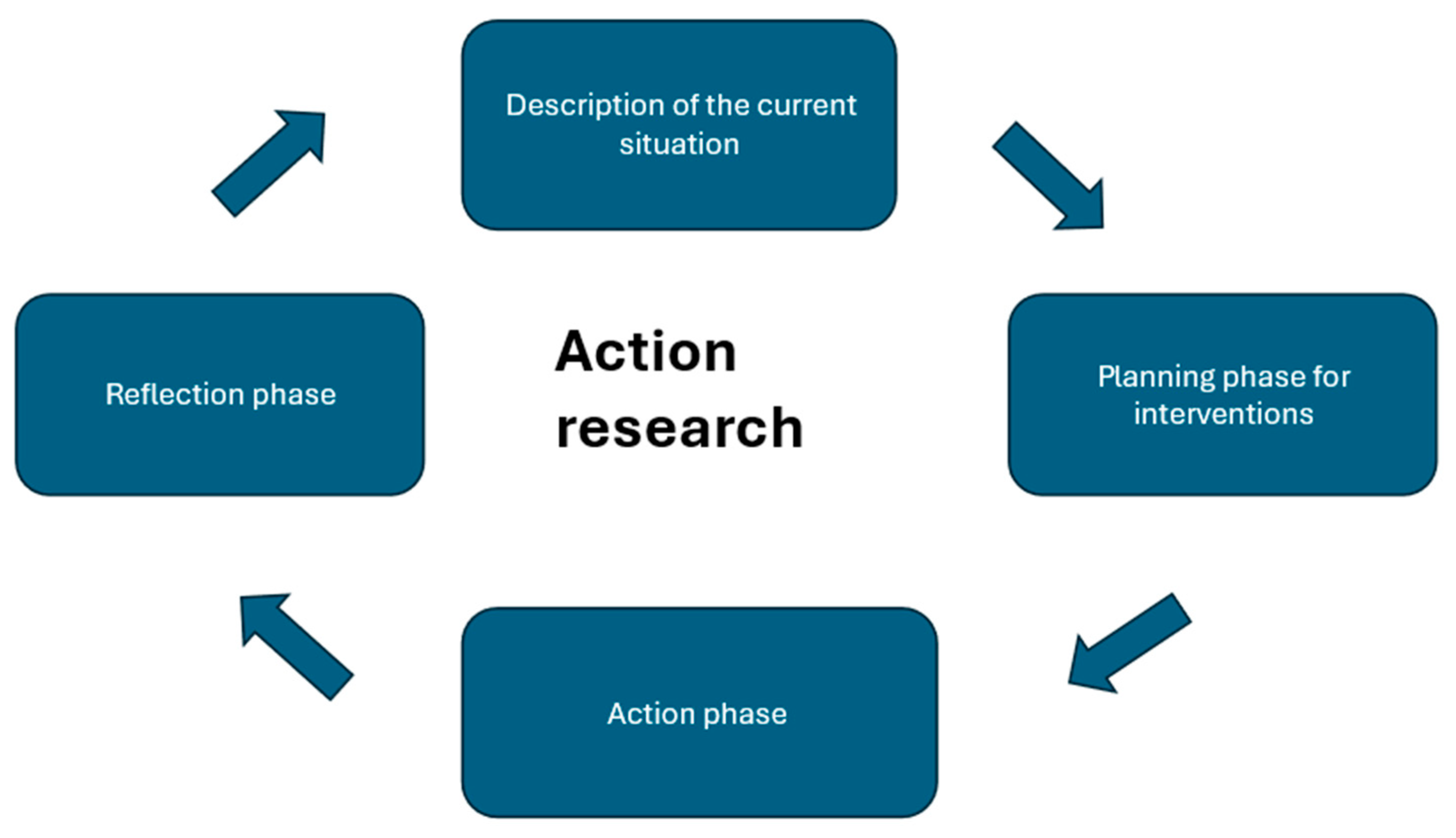
Action research is a cyclical process (
Figure 1) in which theory and practice continually inform one another. In this study, we positioned ourselves as educators and researchers, outlining the context and rationale for the course changes we introduced. Our focus is on the reflection phase, where we consider how these changes transformed practice, understandings, and conditions (
Kemmis, 2009). We view this process within the tradition of action research as ongoing professional learning (
Noffke & Somekh, 2009), and we interpret our results through the equity, diversity, and inclusion framework proposed by
Abtahi and Planas (
2024).
The data draws on multiple sources, including the first author’s reflections, course requirements, participant feedback, and course outcomes. To better understand the participants’ backgrounds and experiences with mathematics education in different cultural contexts, 23 pre-service teachers were also invited to respond to a brief open-ended questionnaire during the first session. The questionnaire aimed to inform the course redesign by highlighting how participants perceived mathematics teaching in their home countries and in Norway. The responses were used to contextualize and guide our pedagogical decisions rather than to generate analytical results for this article. A more detailed analysis of these data is presented in
Opheim et al. (
2023); in the present study, the questionnaire serves only to illustrate how participants’ perspectives informed the course design.
Our analysis began with planned modifications for multilingual pre-service teachers, such as encouraging new ways of engaging with mathematics. Other adjustments emerged during the course, for example, taking more time to explore the Norwegian school system. We present these changes not only as pragmatic responses but as theoretically informed actions, interpreted through the lens of equity, diversity, and inclusion.
3.4. Ethical Considerations
Most of the data collected did not contain personally identifiable information and was therefore not considered sensitive. The exception was the questionnaire, which was reviewed and approved by Sikt—The Norwegian Agency for Shared Services in Education and Research. All participants provided informed, written consent, and all data were anonymized.
However, ethical responsibility extends beyond anonymity and procedural compliance. As
Hostetler (
2005) observes, “[g]ood education research is a matter not only of sound procedures but also of beneficial aims and results; our ultimate aim as researchers and educators is to serve people’s well-being” (p. 16). In this spirit, we view this article as a continuous enactment of our ethical commitment, through its aims, processes, and intended contributions to educational practice.
4. Results
In line with the action research approach, we present our results as cycles of observation, reflection, action, and outcome. For each major change, we describe what we observed in practice, how we interpreted this evidence, what modifications we made to the course, and what outcomes we noted. This structure makes explicit how action research guided the ongoing redesign of the mathematics course. We begin with the dimension of practice and followed by the dimension of awareness. In doing so, we incorporate relevant new literature where appropriate, situating these changes within broader international discussions.
4.1. Practice
4.1.1. Building Relationships with the Pre-Service Teachers
When designing a course that aims to promote equity, diversity, and inclusion, who the pre-service teachers are truly matters. Extensive literature highlights the importance of mathematics teachers building relationships with students, particularly in the context of equity, diversity, and inclusion (e.g.,
Mendez & van Es, 2024;
Turner et al., 2012). However, most of these studies focus on primary and secondary school settings, emphasizing relationships between pre- and in-service teachers and children, rather than on the relationships between teacher educators and prospective teachers. As teacher educators, we cannot meaningfully include pre-service teachers as resources in the learning process without first understanding who they are and building mutual trust. This was therefore a crucial first step for us. At the very first gathering, we created name tags and took photos to help us learn their names. One pre-service teacher initially reacted negatively and asked why it was necessary for us to know her name. For some, building a relationship of trust and understanding with lecturers was unfamiliar. However, we viewed this relationship as essential. We recognize that being a mathematics teacher in a classroom shaped by a different culture than the one you grew up in is not simply about adapting yourself. It also involves embracing and understanding that your unique background can be a source of additional knowledge and competence. To create a meaningful and supportive learning environment, we needed to get to know our pre-service teachers, not only as learners but as individuals with valuable experiences and perspectives. Having observed initial hesitation to engage, we reflected on the need to build trust. Part of our response was to learn more about their background, thinking and experiences with mathematics classrooms. We therefore formulated a questionnaire with the three open-ended questions as described in the methods section.
4.1.2. Encouraging New Ways of Engaging with Mathematics
Working towards equity does not mean treating this group of pre-service teachers in the same way as our Norwegian pre-service teachers. Many of them come from educational backgrounds where mathematics is taught in a highly procedural way, with a strong focus on following algorithms and quickly producing correct answers (
Opheim et al., 2023). In such contexts, the teacher is often viewed as the primary authority, someone who holds the knowledge and determines what is right or wrong in the classroom. In contrast, mathematics education in Norway has moved away from this traditional model. To meet the requirements of the national curriculum (LK20), teachers are expected to foster a broad set of mathematical competencies. The curriculum outlines six core elements: exploration and problem-solving, modeling and applications, reasoning and argumentation, representation and communication, abstraction and generalization, and mathematical fields of knowledge. Consequently, mathematics teachers in Norwegian classrooms must support pupils in developing skills across all these areas, and mathematics must be taught with a focus on understanding and cannot be solely procedural.
To help our pre-service teachers expand their approach to mathematics, we used course gatherings to introduce activities designed to develop these competencies. These included practices like choral counting followed by structured discussions, strategies inspired by the Building Thinking Classrooms framework, open-ended problem-solving, and exploring various strategies for the four arithmetic operations. We encouraged thoughtful reflection on different teaching approaches, including a focus on the teacher’s role in facilitating this kind of learning. This approach invited the pre-service teachers to move beyond the algorithms they were accustomed to, and to engage with mathematics in new and often unfamiliar ways, but always with support and guidance.
For this shift to be successful, it was essential to establish an inclusive environment, one that was open, safe, and grounded in mutual trust. This allowed the pre-service teachers to share their knowledge and support one another. Building a strong, respectful relationship with the pre-service teachers was key. Equally important was acknowledging and integrating their cultural backgrounds into the learning process. For example, we emphasized how diverse cultures have contributed to the development of mathematics, and we drew on concrete examples from cultures we knew were represented in the group of pre-service teachers. When discussing different strategies for arithmetic operations, we invited the pre-service teachers to share the algorithms they had learned in their own schooling. Rather than replacing their prior knowledge, we encouraged them to critically reflect on how it might inform their teaching practice within the context of the Norwegian curriculum. By taking this approach, we aimed to foster an inclusive learning environment that values diversity and promotes deeper engagement with mathematics.
4.1.3. Taking the Time to Understand the Norwegian School System
To ensure equity for this group of future mathematics teachers, it is essential that they gain a clear understanding of the Norwegian school system. Many aspects of the system may seem obvious to Norwegian pre-service teachers but are unfamiliar to those who have immigrated to Norway. Indeed, several studies across various contexts highlight the challenges migrant teachers face in reconstructing their professional identities within new educational environments (e.g.,
Ennerberg & Economou, 2021;
Peeler & Jane, 2005). As teacher educators, we often assume that pre-service teachers possess certain background knowledge. However, when working with bilingual and multicultural pre-service teachers, it is important to reassess these assumptions. For example, Norwegian pre-service teachers are generally aware that there is a national curriculum they are required to follow in their teaching. This was not necessarily common knowledge among our bilingual pre-service teachers, many of whom had not previously encountered the Norwegian curriculum system or learned how to access it. As a result, we could not simply refer them to it. We also had to guide them through the process of locating it, understanding its structure, and learning how to read it with a critical and practical perspective.
Another important aspect is the role of textbooks. In Norway, there is no national system for quality assurance of textbooks. Teachers are therefore responsible for evaluating whether a textbook aligns with the curriculum and supports good teaching practices. For many of our pre-service teachers, this was a new and unfamiliar concept. Early discussions showed many saw textbooks as unquestionable authorities. Reflecting on this, we recognized the need to model professional autonomy, so we needed to make it clear that in Norway, it is both acceptable and expected for teachers to critically evaluate the content of textbooks. Teachers are not required to assign tasks they find unsuitable or ineffective.
Equity in this context involves giving bilingual pre-service teachers the opportunity to develop their full learning and professional potential. This cannot happen without a solid understanding of the educational system they will be working in. It is essential to provide them with explicit knowledge about how the Norwegian school system operates and what is expected of them as future teachers. We also recognize that there may be aspects of the system we have not yet considered. Supporting diverse groups of pre-service teachers is an ongoing process that should be continuously developed and adapted. It is equally important to create a learning environment where pre-service teachers feel safe to ask questions and openly explore areas where they seek further clarity. This sense of openness is a key part of fostering equity and inclusion.
4.1.4. Providing Assignments and Support to Foster Teacher Autonomy
Knowing about the Norwegian school system is not enough. To truly foster inclusion, we must also support pre-service teachers in developing how they think about and practice teaching in a Norwegian mathematics classroom. The Norwegian system grants teachers significant autonomy in choosing teaching methods (
Eriksen et al., 2024). However, this autonomy also places a responsibility on teacher education to empower pre-service teachers to make professionally justified decisions. As future teachers in Norway, pre-service teachers must take into account both the Education Act and the national curriculum (LK20). Beyond these frameworks, they are free to make their own educational choices. We therefore encouraged our pre-service teachers to use LK20 to identify learning goals for their pupils, apply didactical knowledge gained during the course, and select appropriate tasks from textbooks or other teaching resources. In doing so, they were expected to design teaching sequences that were aligned with curriculum goals, informed by research, and reflective of their pedagogical reasoning. They also needed to evaluate and reflect on the outcomes of these lessons. This approach can be challenging even for Norwegian pre-service teachers. For our bilingual group of pre-service teachers, it was particularly demanding, as many of them were not familiar with the level of autonomy expected from teachers in Norway. To support them, we made it a mandatory part of the course to design a teaching sequence as described and reflect on its implementation and further development. This was expected to be submitted as a video-recorded oral presentation. The pre-service teachers could use the support of slides, show physical materials, or they could present freely. They got feedback from the lecturer on the submission, and had the opportunity to revise their presentation based on the feedback received. This improved version formed the basis for their final oral examination where they started by presenting how the teaching sequence was designed, and argued for their choices and reflections upon possible learning outcomes. In this way, pre-service teachers were encouraged to engage deeply with the assignment, while also receiving meaningful support. The structure provided them with guidance, and the connection to their final grade gave the task relevance and weight within the course.
4.1.5. Creating Flexible Pathways to Knowledge and Learning
To promote equity, it is important to design learning opportunities that are not solely dependent on traditional academic practices, particularly those where language and cultural background can become barriers (
Edelmann et al., 2015). Although pre-service teachers in this course are required to demonstrate a certain level of proficiency in Norwegian, it cannot be assumed that all of them can easily read and understand lengthy academic texts or extract key insights from them. To address this, we made it clear that students were welcome to attend classes even if they had not completed readings in advance. Core content would be presented and discussed during class sessions, ensuring that all students had access to essential knowledge. At the same time, they were provided with academic literature for those who wanted to explore the topics in greater depth on their own. Ahead of the final oral examination, students received a list of key themes along with specific learning objectives for each one. This approach gave them clear guidance on what to prepare and allowed them to draw on a variety of resources for their learning. These could include lecture notes, PowerPoint slides, textbooks, or other materials. This structure replaced the more traditional approach of assigning reading chapters without clear expectations, which can be particularly challenging for pre-service teachers unfamiliar with the examination format.
One particularly telling example of the pre-service teachers’ strong work ethic came from their mandatory course assignment. This assignment served as preparation for the opening segment of their oral exam and involved creating a 5- to 10-min recorded presentation. Based on this, we expected most videos to fall within that time frame. However, we quickly realized that we should have set an upper time limit. Almost none of the pre-service teachers submitted presentations shorter than 10 min. Many lasted 20 min, and one was as long as 45 min. Importantly, the quality of all the presentations was high, so we could not fault the pre-service teachers for their effort or the extra time they spent. We simply reminded them to be more concise and focus on the most essential elements in the actual oral examination. From an inclusion perspective, we see this as a sign of success. The pre-service teachers demonstrated a desire to share their learning with us and to engage meaningfully with the course content. It also reflected a strong collaborative culture in the group, one that supported shared development of educational goals. Their commitment and enthusiasm were not only impressive, but also a clear indication that, given flexible and supportive structures, all pre-service teachers can thrive.
4.1.6. Designing an Examination Format That Provides a Safe Space to Demonstrate Competence
Acknowledging diversity in education involves more than recognizing differences; it requires actively using those differences as strengths in shaping educational and learning goals. For migrant pre-service teachers, assessment formats must reflect and respect the diversity of their experiences and should avoid allowing language or cultural barriers to obscure their competence. Instead, their varied backgrounds can enrich the educational process. Similar principles are observed in Norwegian secondary education, where
Nortvedt and Wiese (
2020) found that culturally responsive, student-centered mathematics teaching, when coupled with adaptable assessment practices, can promote inclusion and better support migrant students’ numeracy development. These findings emphasize the importance of designing assessments that enable all students, regardless of cultural or linguistic background, to meaningfully demonstrate their skills and understanding.
Expressing oneself academically in a language that is not one’s first language can be particularly demanding. After seeing 13 of 43 fail the 2019 exam, we reflected on how the format might mask competence rather than reveal it. To address this, we carefully designed the oral examination structure to reduce stress and build familiarity with the format. Each oral exam lasted around 30 min. The first 5 to 10 min were dedicated to presenting the compulsory assignment previously described in this article. Starting with a known and prepared task gave the pre-service teachers a sense of security, allowing them to enter the conversation with confidence and a clear focus. Following the presentation, the pre-service teachers drew one of the pre-announced themes. They had flexibility in how they approached this part of the exam. Some chose to speak freely based on their preparation, others preferred responding to examiner questions, and some opted for a combination of the two. All themes were communicated in advance, along with clear learning goals, so that the pre-service teachers knew exactly what to expect. This approach ensured that the assessment measured content knowledge and pedagogical understanding, rather than performance under pressure or unfamiliar conditions. The clarity and predictability of the structure helped create an inclusive and supportive environment in which all pre-service teachers could show their abilities and reflect on their growth as future teachers.
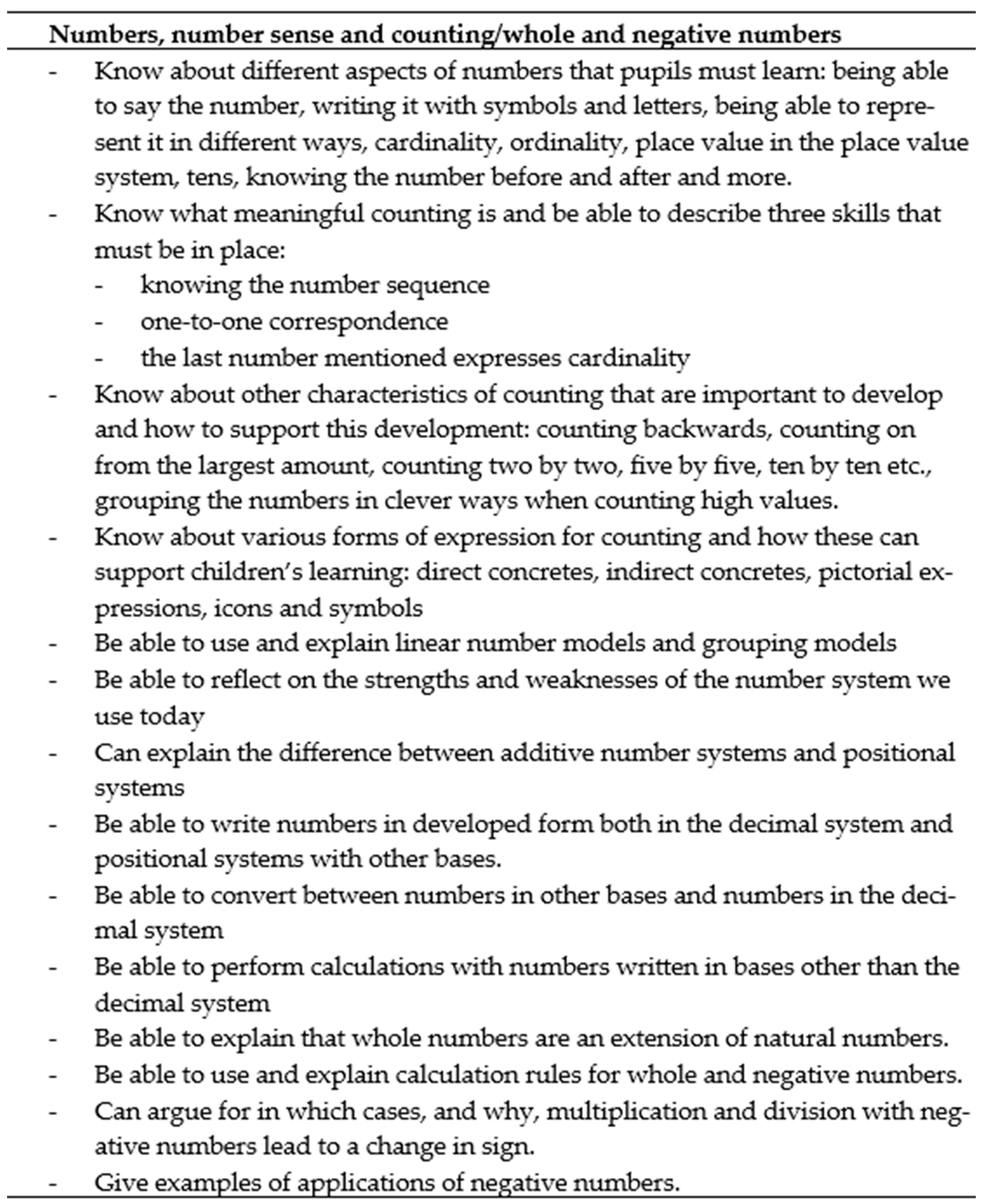
An example of a theme with connected learning goals is shown in
Figure 2:
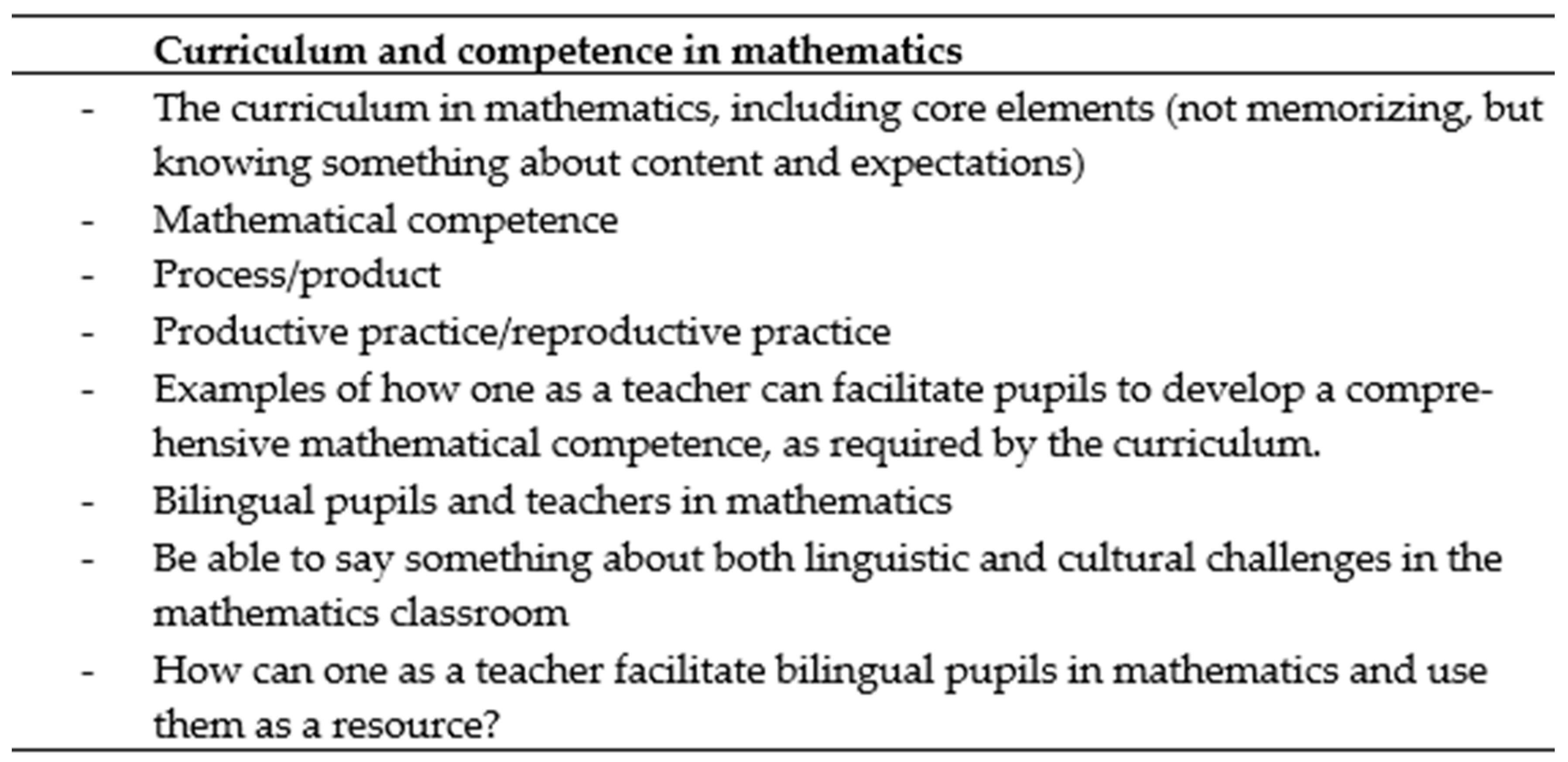
This theme is an example that the bilingual pre-service teachers were expected to hold the same quality and standards as the regular Norwegian pre-service teachers. The course maintained the same depth and rigor as the regular Norwegian teacher education program, and in addition to mastering specific content, the pre-service teachers were expected to make broader reflections on teaching and the national curriculum. Consequently, regardless of the themes they drew, they were expected to connect with the general topics listed in
Figure 3. That is, the pre-service teachers were expected to relate the more specific themes like counting to the more general didactical concepts with respect to the curriculum and how to develop competence in mathematics. As an example, we would expect that when the pre-service teachers talked about meaningful counting, they could discuss the point “the last number mentioned expresses cardinality” in relation to the core element in the curriculum on abstraction and generalization and describe activities with pupils in terms of productive and reproductive practicing, this way demonstrating in depth understanding not only of the mathematical content, but also of didactical aspects.
The overarching goal before the final oral examination, was to provide detailed information so that the pre-service teachers knew what was expected of them, and that they also would know how to work to achieve these goals up front. With specific themes and learning goals, the pre-service teachers could ask us for help and guidance on how to find information about it. We worked with them to interpret the curriculum material together in order to understand what we wanted from them.
As a final precaution, we also made sure that we chose external examiners that were not only experts in the field, but who also acknowledge barriers of language and culture. This way, we as examiners could work as a team to bring out the best in the pre-service teachers, rather than setting traps for them by language.
4.1.7. The Second Semester: Developing Mathematical Calculation Skills
As future mathematics teachers, pre-service teachers are expected not only to understand pedagogical approaches but also to demonstrate proficiency in performing mathematical calculations. While the first semester focused on conceptual understanding, teaching practices, and building inclusion, the second semester placed greater emphasis on mathematical problem-solving and computation. We have already outlined our rationale for not including written calculation assignments in the first semester. This decision allowed the pre-service teachers to first become familiar with the culture of the Norwegian classroom and to shift their focus from rote use of formulas to a more conceptual and reflective approach to mathematics. By the start of the second semester, the pre-service teachers had built a solid foundation in this approach. Equally important, we had developed strong relationships based on trust and openness. Pre-service teachers felt comfortable asking for help and clarifying concepts, which was crucial for their learning process. The diversity of the group was evident not only in cultural and linguistic backgrounds, but also in mathematical experience. Some pre-service teachers were well-versed in the subject, while others had significant gaps in their knowledge due to disrupted schooling caused by conflict or displacement. It was therefore essential to create a safe and supportive environment where all pre-service teachers could engage with the mathematics at their own pace, while still being challenged to grow. As in the first semester, pre-service teachers received a list of learning goals to guide their studies. However, the form of assessment was different. The second semester concluded with a supervised, six-hour written exam. This assessment required pre-service teachers not only to perform calculations, but also to write clear and reasoned arguments in support of their answers, in line with the expectations of the LK20 curriculum. This structure emphasized both procedural fluency and mathematical reasoning, aligning with the competencies required of teachers in Norwegian schools. The exam also provided an opportunity for pre-service teachers to demonstrate their understanding in a format that mirrors real-life teaching expectations, while continuing to support inclusion through clarity, preparation, and structured learning goals.
4.2. Awareness
Making Cultural Differences Explicit
While it is essential to foster equity, diversity, and inclusion through our teaching practices, this alone is not sufficient. In order to truly prepare this group of multicultural pre-service teachers for their future roles in Norwegian schools, we must go beyond modelling inclusive practices. We must also create opportunities for explicit reflection and dialogue about how to navigate and embrace diversity in the mathematics classroom.
From the very first day of the course, we made cultural differences a deliberate topic of discussion. We opened a conversation about how pupils in Norwegian classrooms may come from a wide range of cultural backgrounds, and how these differences might affect their behavior, communication styles, and learning needs. For instance, we discussed how, in some cultures, a pupil might never admit to not understanding something, as doing so could be perceived as disrespectful to the teacher. We also addressed the challenges that arise when pupils are expected to engage in mathematical argumentation and reasoning in a language in which they are not yet proficient. Although the initial focus was on the pupils they might encounter in their future classrooms, this conversation created a space where the pre-service teachers felt safe to share their own cultural experiences and challenges. The discussion naturally expanded to include their personal reflections and habits shaped by their cultural backgrounds. Our goal was to create a safe and open environment where cultural identity could be both acknowledged and critically examined. Pre-service teachers were encouraged to take pride in their heritage and recognize how elements of their cultural background could positively contribute to a mathematics classroom in Norway. At the same time, they were invited to reflect on any cultural norms that might limit their effectiveness as teachers within the Norwegian educational context. This approach aimed to deepen pre-service teachers’ awareness of cultural dynamics in education while empowering them to grow into reflective and inclusive practitioners.
4.3. Practice Versus Awareness
When organizing the changes we implemented in the course within the framework proposed by
Abtahi and Planas (
2024), we realized that most of these changes fell under the category of practice, with relatively few explicitly addressing awareness. This insight was thought-provoking, and we would like to share some reflections on possible reasons for this outcome.
This course is unique in that equity, diversity, and inclusion are central aims, not only in how we engage with our pre-service teachers, but also in how we aim to raise their awareness and empower them as future mathematics teachers to promote relevant associated values in their own classrooms. However, since the framework and its definitions were not explicitly considered during the redesign process, our revisions focused primarily on practice, with less emphasis on explicitly distinguishing these from awareness-oriented changes. Our primary goal was to revise the course to create a safe and inclusive learning environment for our pre-service teachers.
That said, one area where awareness was made explicit was in our efforts to encourage new ways of engaging with mathematics. In these instances, we paused to engage pre-service teachers in meta-level discussions, prompting them to reflect on the nature of these practices. We asked: What is different about this way of working? What are we achieving? How can this approach support diversity in the classroom? These discussions were intended to surface and explore the deeper implications of our pedagogical choices.
One moment that stands out is when a pre-service teacher described a particular activity as “just”. The activity involved choral counting, followed by a discussion on patterns and structures observed in a co-created number grid. The teacher educator (first author) invited pre-service teachers to identify and explain the patterns they noticed. The pre-service teacher explained that because there were no right or wrong answers in this activity, it felt “just”. This was a novel expression for the teacher educator at the time, but it offered a meaningful perspective, perhaps reflecting a broader understanding of inclusion, particularly from pre-service teachers with multicultural backgrounds. This moment provided an important opportunity for the educator to reflect and grow.
In contrast, most of the other course changes aimed at promoting equity, diversity, and inclusion focused on practical implementation, with less emphasis on explicitly fostering awareness of these goals among the group. In hindsight, we recognize that this was a missed opportunity. Going forward, we believe it is essential to explicitly discuss both what we are doing and why we are doing it. If we are successful in our efforts to influence pre-service teachers through these changes, we must ensure they understand the rationale behind them. We cannot assume they will automatically recognize or internalize these goals on their own.