Article

Evaluating the Impact of the Language Mindset Toolkit among Thai Undergraduate Students
by
Jeffrey Dawala Wilang
School of Foreign Languages, Suranaree University of Technology, Nakhon Ratchasima 30000, Thailand
Educ. Sci. 2024, 14(8), 844; https://doi.org/10.3390/educsci14080844

Submission received: 20 June 2024 / Revised: 1 August 2024 / Accepted: 5 August 2024 / Published: 5 August 2024
(This article belongs to the Section Education and Psychology)

Abstract

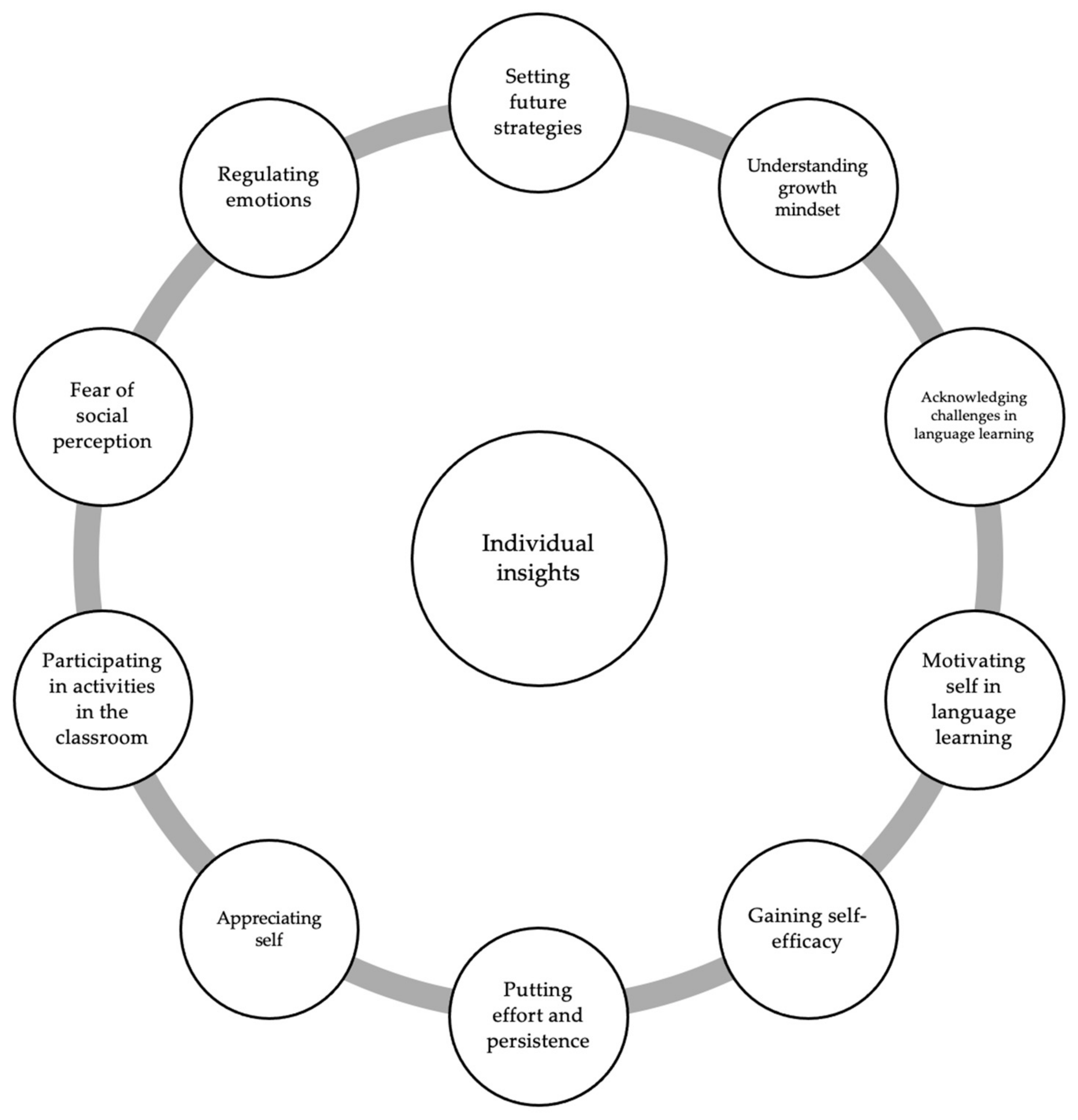
This study reports the impact of a language mindset toolkit in influencing the language mindsets of Thai undergraduate students. An explanatory sequential mixed method design was used to determine how language mindset changes and know the students’ language learning insights through a focused mindset intervention. Data from 67 students chosen from convenience sampling completed language mindset surveys, journal entries, and semi-structured interviews were analyzed. Descriptive statistics was used to analyze the survey data, while thematic and content analyses were utilized for journal entries and interview data. Key findings revealed a notable shift from a fixed to a growth mindset, particularly in language learning abilities. While mindsets related to intelligence and age sensitivity remained relatively stable, there was a marked change in participants’ belief in the malleability of their language learning abilities, underpinned by the principles of effort and persistence. Thematic analysis of journals supports these findings, with themes such as knowing about language mindset in learning, putting effort into language learning, setting goals in language learning, using strategies in language learning, and regulating emotions in language learning. Meanwhile, the content analysis of individual interviews revealed insights such as appreciating self, motivating self in language learning, and gaining self-efficacy. Growth mindset-oriented interventions could transform the students’ beliefs in language learning.
Keywords: growth mindset; language mindset; mindset toolkit; Thai; undergraduate students growth mindset; language mindset; mindset toolkit; Thai; undergraduate students