Article

Post-COVID-19 Development of Transnational Education in China: Challenges and Opportunities
1
Department of Civil Engineering, Xi’an Jiaotong-Liverpool University, Suzhou 215123, China
2
Department of Civil Engineering and Industrial Design, University of Liverpool, Liverpool L69 3BX, UK
3
Educational Development Unit, Xi’an Jiaotong-Liverpool University, Suzhou 215123, China
4
College of Design and Innovation, Tongji University, Shanghai 200092, China
*
Authors to whom correspondence should be addressed.
Educ. Sci. 2022, 12(6), 416; https://doi.org/10.3390/educsci12060416

Submission received: 25 May 2022 / Revised: 13 June 2022 / Accepted: 16 June 2022 / Published: 18 June 2022

Abstract

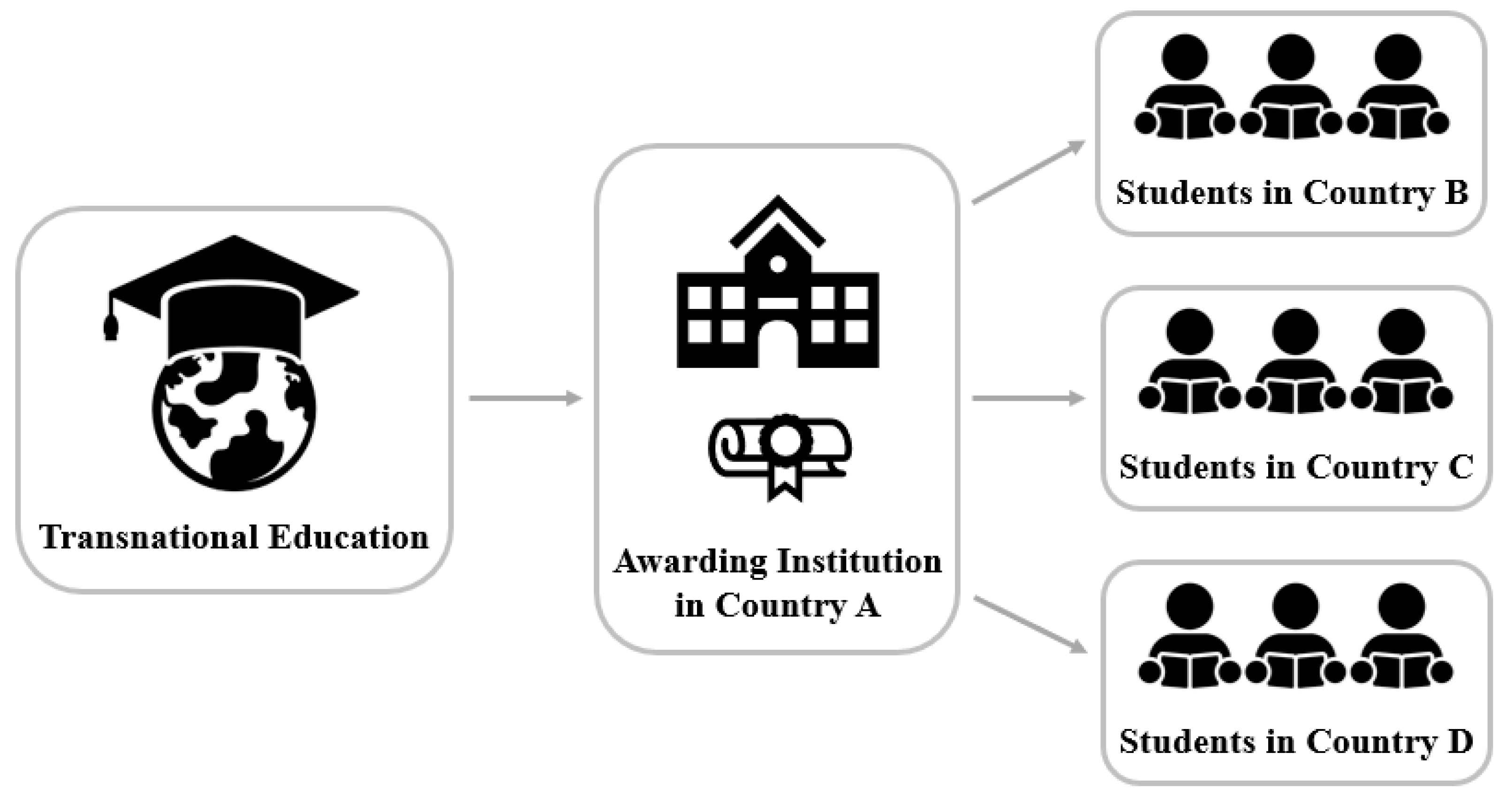
Transnational education is education delivered to students in a country other than the country in which the awarding institution is based. While the outbreak of COVID-19 has significantly affected higher education, transnational education has exhibited its resilience against the pandemic, and has been continuously expanding in China. In parallel with the golden opportunities for the expansion of transnational education in China after the pandemic, a series of challenges resulting from the transnational context needs to be taken into due consideration, and to be properly addressed. In this paper, the opportunities and challenges for the post-COVID-19 development of transnational education in China are systematically discussed, based on the transnational education delivery at a Sino-Foreign cooperative university. Following our observations on opportunities and challenges, several suggestions are proposed, to address the potential challenges for the stable post-COVID-19 development of transnational education in China.
Keywords: civil engineering; COVID-19 pandemic; digital and intelligent era; flipped classroom; future education; higher education; Sino-Foreign cooperative university; transnational education civil engineering; COVID-19 pandemic; digital and intelligent era; flipped classroom; future education; higher education; Sino-Foreign cooperative university; transnational education