1. Introduction
Public expenditure on education remains a central policy concern in both developing and developed economies, as the efficiency with which resources are allocated directly influences learning outcomes, human capital development, and long-term socio-economic growth. While increased spending can expand access and infrastructure, evidence suggests that higher expenditure does not automatically translate into better educational outcomes. This highlights the importance of evaluating not only the level of investment but also its efficiency in producing learning outcomes, particularly in the post-pandemic era, when education systems have faced unprecedented disruptions.
Recent empirical studies since 2020 have increasingly applied Data Envelopment Analysis (DEA) to measure the relative efficiency of education systems across countries. These studies typically compare multiple inputs, such as public spending, teacher numbers, and infrastructure, with outputs including test scores and graduation rates. However, much of the literature remains descriptive, often focusing on a single education level or a limited set of countries, and providing limited insight into dynamic changes in efficiency over time. Moreover, cross-country comparisons frequently fail to account for structural differences between high-income and middle-income countries, potentially biasing efficiency estimates.
A critical review of prior DEA studies reveals several inconsistencies. Some studies suggest a strong positive link between spending and outcomes, while others find weak or no association, reflecting differences in input selection, outcome measures, and methodological approaches. Most studies rely on pre-2020 data and thus do not capture the impact of the COVID-19 pandemic on resource allocation and learning outcomes. Few studies integrate static and dynamic efficiency measures, which limits understanding of both current performance and temporal changes in productivity.
Against this backdrop, the present study addresses key research gaps by evaluating post-pandemic efficiency in 20 countries over the period 2011–2023, including the years 2020–2023, to capture the effects of COVID-19 disruptions and subsequent recovery policies on educational spending efficiency. The study compares primary and lower-secondary education, enabling the identification of efficiency patterns at foundational and intermediate stages. It integrates static efficiency measurement using input-oriented DEA with dynamic productivity analysis through the Malmquist Productivity Index, decomposing productivity changes into technical progress and efficiency catch-up. By including countries with varying income levels, governance structures, and socio-economic contexts, the study highlights structural and managerial factors driving efficiency. A robustness framework employing multiple DEA variants ensures reliable and policy-relevant results.
In summary, this study provides a comprehensive, post-pandemic, cross-country assessment of educational spending efficiency. By integrating multi-level education comparison, static and dynamic efficiency analysis, and structural heterogeneity, it offers policy-relevant insights for improving the allocation of public education resources and enhancing learning outcomes, particularly in the context of fiscal constraints and global recovery from the pandemic.
This study contributes to the existing literature on education efficiency in several ways. First, it covers the post-pandemic period (2011–2023), capturing potential shifts in educational efficiency due to COVID-19 disruptions and the subsequent adoption of digital learning initiatives. Second, it adopts a multi-level approach by analyzing efficiency separately for primary and lower-secondary education, allowing for more nuanced cross-country comparisons. Third, the study employs multiple DEA specifications (DEA 1–4) alongside the Malmquist Productivity Index to assess both static and dynamic efficiency, providing robustness against model specification sensitivity. By integrating these elements, the study not only measures efficiency but also highlights patterns of technical progress across countries, while framing efficiency scores as indicative rather than prescriptive measures for policy.
2. Literature Review
The role of public spending in promoting economic growth and improving social outcomes has been a key focus of research since the 1990s.
Barro (
1990) developed an endogenous growth model incorporating public spending, emphasizing that investment in public capital, education, and research could enhance productivity and economic development. This theoretical foundation has guided subsequent empirical studies examining the effectiveness of public expenditure, particularly in education.
Empirical assessments of education efficiency have increasingly employed Data Envelopment Analysis (DEA) to evaluate how resources are transformed into learning outcomes.
Hounsounon (
2009) applied DEA to public spending in education and health, highlighting that the efficiency of resource use critically affects economic growth. Similarly, analyzed educational efficiency in Morocco, revealing that reducing school size does not automatically improve performance and may result in underutilized resources. These studies collectively demonstrate that contextual factors, such as resource allocation practices, institutional policies, and socio-economic environments, strongly influence efficiency outcomes.
Cross-country and sectoral DEA applications further illustrate the complexity of measuring efficiency. For example, studies of primary schools in Morocco, public spending in Brazil (
Campoli et al., 2018), and the Tunisian school system (
Smaoui & Kammoun, 2019) all highlight the importance of contextual and governance-related factors.
Yu (
2021) examined Chinese education spending, showing that strong investment in higher education does not necessarily translate into improved efficiency, while
Firsova et al. (
2022) applied DEA and the Malmquist index in Russia, demonstrating the method’s usefulness for dynamic productivity assessment in specialized regional contexts. Collectively, these studies underscore that efficiency is not solely determined by expenditure levels but is mediated by institutional, policy, and socio-economic factors, although the relative influence of these factors varies across contexts.
The literature also provides a clear conceptual foundation for efficiency measurement. Technical efficiency evaluates the ability of a unit to maximize outputs from given inputs, a concept formalized by
Koopmans (
1951) and
Debreu (
1951) as the optimal utilization of resources.
Farrell (
1957) further distinguished technical, allocative, and economic efficiency, highlighting the distinction between producing outputs effectively and choosing inputs cost-effectively.
Coelli et al. (
1998) later formalized methods for calculating efficiency in public sector contexts, including education and health, emphasizing that both input-oriented and output-oriented DEA approaches provide complementary perspectives on performance.
Despite this extensive literature, several gaps remain. First, many studies are descriptive and focus on static efficiency, without assessing productivity changes over time. Second, few studies integrate multi-level educational analysis (primary and lower-secondary) or account for the post-pandemic context, which has substantially altered resource allocation and learning outcomes. Third, cross-country comparisons often assume homogeneity, failing to consider structural differences between high- and middle-income countries, governance quality, and socio-economic conditions, which may bias efficiency estimates. Finally, prior studies have rarely combined static DEA with dynamic Malmquist productivity analysis, limiting insights into both current efficiency and temporal trends.
In response to these gaps, the present study uses DEA and the Malmquist Productivity Index to provide a comprehensive and dynamic assessment of public education spending efficiency across 20 countries over the period 2011–2023. By comparing primary and lower-secondary education, accounting for heterogeneity across income levels, and incorporating post-pandemic data, this study provides novel insights into the drivers of educational efficiency and productivity, contributing to the literature both theoretically and empirically.
Previous studies suggest that cross-country differences in educational efficiency are influenced not only by resource allocation but also by broader institutional and structural factors. Governance quality, effectiveness of education policies, teacher training, and the integration of digital tools are key determinants of why certain countries consistently perform on the efficiency frontier In the context of this study, technical progress captured by the Malmquist index may reflect both policy-driven improvements and broader structural transformations, such as the adoption of ICT in classrooms or reforms in curriculum and assessment methods. By situating efficiency results within these structural and institutional frameworks, we can provide more meaningful interpretations beyond descriptive comparisons.
3. Theoretical Framework
3.1. Education Expenditure and Human Capital Formation
The relationship between public education spending and learning outcomes is rooted in Human Capital Theory. Seminal contributions by Gary Becker and Theodore Schultz conceptualize education as an investment that enhances individual productivity, earnings capacity, and long-term economic growth. Within this framework, public education expenditure represents a strategic allocation of resources intended to accumulate human capital and generate both private and social returns.
At the macroeconomic level, education spending contributes to economic development through skill formation, innovation capacity, and labor market efficiency. However, Human Capital Theory implicitly assumes that allocated resources are transformed efficiently into educational outcomes. In practice, this transformation process may be subject to institutional inefficiencies, governance constraints, and structural rigidities. Therefore, assessing not only the level of spending but also its efficiency becomes essential.
3.2. Public Sector Efficiency and the Education Production Function
The evaluation of educational spending efficiency is grounded in Public Sector Efficiency Theory and the education production function approach. Following the public finance literature, particularly the work of Athanassios A. Afonso and Enrico S. Tanzi, public services can be modeled as a production process in which governments combine inputs to generate measurable outputs and outcomes.
In the context of education, the production function can be expressed as:
Inputs: Public education expenditure, number of teachers, infrastructure investment, educational materials.
Intermediate Outputs: Enrollment rates, completion rates, teacher–student ratios.
Final Outcomes: Learning achievements, standardized test scores, literacy and numeracy performance.
Efficiency is defined as the ability of a country (or decision-making unit) to maximize educational outcomes given a set of financial and structural inputs. Differences in institutional quality, governance, policy design, and resource allocation mechanisms may explain cross-country heterogeneity in efficiency levels.
This framework implies that higher spending does not automatically lead to better educational performance. Instead, what matters is how effectively resources are utilized within the education system.
3.3. Efficiency Measurement: DEA and Productivity Dynamics
To operationalize this theoretical framework, we adopt a non-parametric frontier approach based on Data Envelopment Analysis (DEA), originally introduced by Abraham Charnes, William W. Cooper, and Edwardo Rhodes. DEA is consistent with production theory and allows the construction of an efficiency frontier that identifies best-performing decision-making units (DMUs).
Within this framework, efficiency is decomposed into:
Technical Efficiency: The ability to obtain maximum outputs from given inputs.
Scale Efficiency: The extent to which production operates at an optimal scale.
Pure Managerial Efficiency: Efficiency related to governance and management quality.
To capture the dynamic dimension of educational performance, we further employ the Malmquist Productivity Index, developed by Sten Malmquist and later operationalized by Robert Färe and co-authors. The Malmquist index enables decomposition of productivity change into:
This dynamic approach is particularly relevant in the education sector, where reforms, digitalization, demographic shifts, and governance improvements may alter the production frontier over time.
3.4. Conceptual Framework of the Study
Based on the theoretical foundations discussed above, this study conceptualizes the relationship between public spending and educational performance as a three-stage mechanism:
- 1.
Resource Allocation Stage
Efficiency analysis evaluates the effectiveness of the transformation stage, while the Malmquist index captures productivity evolution across time.
This integrated framework allows us to move beyond a purely expenditure-based evaluation and instead assess whether countries achieve optimal educational outcomes relative to their resource endowments. By embedding DEA and Malmquist methodology within Human Capital Theory and Public Sector Efficiency Theory, the study ensures theoretical consistency between conceptual foundations and empirical strategy.
4. Methodology
To ensure methodological robustness, the study implements multiple strategies:
Comparison across four DEA specifications (CCR vs. BCC, input-oriented CRS vs. VRS).
Complementary Malmquist Productivity Index analysis to evaluate dynamic changes in efficiency over time.
Sensitivity checks on input selection and normalization to ensure results are not driven by outliers or scale differences.
This comprehensive framework enhances confidence in the results and provides policy-relevant insights on efficiency and productivity across heterogeneous education systems.
This study aimed to evaluate the effectiveness of public interventions in the field of education. To do this, we applied the Data Development Analysis (DEA) method. This technique was selected because of its simplicity and ease of implementation, which avoids the use of complicated econometric tools. DEA enables decision units (DMUs) to be compared effectively by evaluating their performance using several inputs and outputs.
To examine adjustments in technical efficiency, technical progress, and overall productivity (TFP), we use the Malmquist index. This index measures the productivity adjustments over time and provides a dynamic and comprehensive performance assessment.
The Malmquist index is particularly well suited for studying changes in efficiency in the education sector, where technological adjustments and improvements in teaching strategies play a key role.
The advantage of the DEA technique, combined with the Malmquist index, is that it provides a global assessment that considers both the quantitative and qualitative components of effectiveness. This technique enables policymakers, academic planners, and higher education managers to optimize the allocation of aid and improve educational outcomes sustainably and inclusively.
4.1. Data Envelopment Analysis (DEA) Method
Charnes introduced the process of “Data Envelopment Analysis”, also known as DMUs, to measure the performance of the US federal resource allocation system in certain school follow-up programs. This approach is used in a variety of fields, from private insurers, banks, and commercial and manufacturing companies to public organizations, as it requires relatively few constraints (
Färe et al., 1994).
DEA has been widely applied in recent decades as a significant approach to measure the relative efficiency of DMUs. The idea behind DEA is to calculate the relative efficiency of n DMUs based on m-weighted inputs and outputs, which serve as the performance criteria. Several procedural rules have been proposed for achieving acceptable results. These include the homogeneity of the DMUs to be evaluated, the performance criteria to be used as inputs or outputs, the minimum number of DMUs to be analyzed, and the specific DEA model to be applied.
For each DMU, a mathematical programming model maximizes its efficiency score, ranging from 0% to 100%. Thus, the weights of inputs and outputs are determined endogenously, presenting the DMUs in the best possible light. in the best possible light. Given the restriction that the efficiency scores of the other DMUs do not exceed 100%, no other weight vector would lead to a higher efficiency score for .
This property represents one of the main advantages of DEA, as a low efficiency score cannot be attributed to the unfavorable weighting used to aggregate the performance criteria. In addition, this method makes it possible to identify benchmarks for inefficient DMUs by constructing an effective boundary with DMUs that are qualified as 100% efficient.
To fully understand the DEA method, it is necessary to specify that each decision unit uses a quantity of inputs
Xj = [
xij](1, 2, …) in order to produce a quantity of output
Yj = [
yij](1, 2, …). Therefore, the efficiency of each DMU was calculated using the following formula:
where
k denotes the number of decision units.
There are two variants of the DEA method in the literature: the CCR model, which assumes constant returns to scale (CRS model); and the BCC model (
Färe et al., 1994), which assumes variable returns to scale (VRS model). The CCR model assumes that an increase in the number of inputs generates a proportional increase in the output. In the VRS model, the number of outputs is used to proportionally define the number of inputs.
4.2. Input-Oriented DEA
This study adopts an input-oriented DEA model, which seeks to minimize inputs while maintaining observed output levels. Formally, the model calculates the proportional reduction in inputs (θ) that a DMU could achieve without reducing outputs:
The input-oriented approach is particularly appropriate for public education, as it reflects the goal of optimizing expenditure while maintaining student performance in science and mathematics.
4.3. CCR and BCC Models
Two main DEA variants are employed in literature:
- 1.
CCR Model (Constant Returns to Scale, CRS)
The CCR model, introduced by Abraham Charnes, William W. Cooper, and Edwardo Rhodes, assumes constant returns to scale. Here, a proportional increase in all inputs results in an identical proportional increase in outputs. The CCR model measures overall technical efficiency, which captures both pure technical efficiency and scale efficiency.
- 2.
BCC Model (Variable Returns to Scale, VRS)
The BCC model, developed by Rajiv D. Banker, Abraham Charnes, and William W. Cooper, allows for variable returns to scale, comparing DMUs relative to a frontier constructed from units of similar scale. This model isolates pure technical efficiency, excluding scale effects, and is particularly suitable when DMUs differ in size or capacity, as is the case for countries with heterogeneous education systems.
4.4. Model Choice in This Study
Given the substantial heterogeneity in population size, fiscal capacity, and education system scale across the 20 countries analyzed, we adopt the input-oriented BCC (VRS) model. This choice allows for meaningful efficiency comparisons without assuming all countries operate at an optimal scale, focusing on the effectiveness of resource allocation and managerial performance in transforming public expenditure into learning outcomes.
4.5. The Malmquist Index
The Malmquist Index is a dynamic analysis tool used to measure changes in the total factor productivity (TFP) of a company or country over time. This index is described as the ratio of output to input, reflecting the efficiency of the production method and the impact of the technologies used. This decomposition makes it possible to assess both the progress made in the green use of resources (technical performance) and the advances in innovation and overall technological performance (technological transition). The index is calculated using a distance function based entirely on linear programming, which compares the output of one period with that of the following period, given the corresponding inputs. This approach makes it possible to identify trends in efficiency and technological development and provides a complete view of productivity trends over time. Using the Malmquist index to study the effectiveness of public spending on schooling, we can observe adjustments within the productivity of schooling systems in exceptional international locations and identify the important elements that influence these adjustments.
In this formulation, the technology at time t is used as the reference technology. This distance function estimates the greatest proportional change in production required to make (yt+1, xt+1) feasible in relation to the technology at time t. It calculates the difference between an experiment and the technological frontier.
The first term in the equation denotes a transition in technical efficiency, that is, a move towards or away from the frontier of best practices. Färe et al. decomposed technical efficiency into two forms: pure technical efficiency and technical efficiency of scale (
Färe et al., 1994). The size of the production unit is referred to as scale efficiency. Volume inefficiency refers to insufficient size, whereas pure technical inefficiency refers to the suboptimal use of capital by production unit managers. The second term in the equation represents technological transition or innovation at time t + 1 as a shift in the production frontier.
4.6. Choice of Variables
To measure the efficiency of the education system in our sample, we chose inputs and outputs. A wide range of variables must be considered in education. Therefore, we selected variables based on literature.
To establish an efficient education system, it is essential to combine various direct inputs to guarantee the provision of a wide range of services. Among these inputs, financial resources (educational expenditure) must be adequately distributed among the many elements required to deliver educational services. This includes physical resources, such as the number of specialist teachers, as well as other elements, such as buildings and equipment.
In education, as in other activities, investment decisions are of great importance as they are generally irreversible. Therefore, we chose four inputs for this study.
- →
Public expenditure on education (as % of GDP): This reflects the total investment in education in a country, expressed as a percentage of its gross domestic product (GDP). This indicator measures the importance of a country’s education and can impact the results achieved by the education system.
- →
Expenditure per pupil (as % of GDP per capita): This indicator considers the scale of resources allocated to each pupil within the school system. It considers variations in funding per pupil between countries or schools, which can impact pedagogical outcomes.
- →
Number of specialist technology and math teachers: Specialist technology and math teachers play a crucial role in the quality of technology and math teaching. The inclusion of this input allows us to consider human capital specialized in teaching these subjects, which can influence student performance.
When selecting these inputs, we were careful to cover the economic, human, and motivational elements that contribute to the effectiveness of the training system. By analyzing these variables, we can gain a better understanding of the elements that influence educational outcomes in the countries in our sample.
The outcome dimension of a training system is an important aspect of assessing its effectiveness. The choice of appropriate schooling indicators is complex, particularly when comparing the performance of schooling structures in developing countries. These indicators are generally classified as simple and multidimensional measures, as indicated by Audibert (
Audibert, 2009).
For our study, we chose specific results to assess the performance of training systems in the countries in our sample: Mathematics and Technology rankings.
Mathematics and science grades: These grades represent the results of standardized examinations in these subjects. These are direct indicators of overall academic performance in these key areas. These rankings now offer not only an objective assessment of students’ information and skills in math and science but also reflect the effectiveness of education systems in providing essential information and developing key skills.
Using these outcome measures, we can assess academic performance in terms of arithmetic and technological knowledge in the countries in our model. This comparison will enable us to determine the relative effectiveness of different education systems and to identify excellent practices and areas for development.
4.7. Potential Biases in Efficiency Estimation
While DEA is a widely used and powerful non-parametric method for evaluating relative efficiency, several potential sources of bias should be acknowledged:
DEA efficiency estimates are sensitive to the choice of inputs and outputs. If relevant inputs (e.g., teacher quality, school infrastructure) or outputs (e.g., student engagement, non-academic skills) are omitted, efficiency scores may be biased. In our study, we focus on public spending as the primary input and science and mathematics performance as outputs, which captures core educational outcomes but may not fully represent all dimensions of learning.
Errors in reported data for inputs or outputs can directly affect efficiency scores. For instance, discrepancies in cross-country reporting of expenditure or test scores could lead to overestimation or underestimation of efficiency for some countries.
- 3.
Sample Size Limitations
Although our sample of 20 countries satisfies conventional DEA rules of thumb (n ≥ max {m × s, 3(m + s)}), small samples can reduce the discriminatory power of DEA and lead to a larger proportion of DMUs appearing efficient. We mitigate this by employing panel data over 2011–2023 and complementing DEA with the Malmquist Productivity Index, which provides dynamic efficiency and productivity insights over time.
- 4.
Environmental and Contextual Factors
DEA assumes all DMUs operate in a comparable environment. Cross-country heterogeneity in socio-economic conditions, governance quality, or policy frameworks may affect efficiency estimates. While the BCC (VRS) model partially accounts for scale differences, unobserved contextual factors may still introduce bias.
DEA constructs a frontier based on observed best-performing DMUs. Outliers or extreme performers can disproportionately shape the efficiency frontier, potentially skewing results for other units.
By recognizing these possible biases, our study highlights that DEA efficiency scores show how well units perform compared to each other based on what they use and produce, not how well they perform in absolute terms. Complementary analyses, such as robustness checks and Malmquist productivity decomposition, are used to strengthen the reliability of our findings.
4.8. Potential Endogeneity and Reverse Causality
In assessing the efficiency of public education expenditure, one key methodological concern is reverse causality, which can lead to endogeneity in efficiency estimates. Specifically:
- 1.
Definition of the Issue
Reverse causality occurs when the dependent variable, educational outcomes, exerts an influence on the independent variable, public education spending, instead of the opposite direction. For instance, governments may increase education budgets in countries that show high performance to maintain or further improve outcomes, or conversely, they may increase spending in underperforming countries as a remedial measure. This feedback loop can bias interpretations of the efficiency scores derived from DEA.
While DEA is a non-parametric, deterministic method that measures relative efficiency, it does not explicitly control for endogeneity or causal relationships. Therefore, efficiency scores should be interpreted as relative performance under observed inputs and outputs, without claiming strict causal effects of spending on outcomes.
To reduce the impact of reverse causality in our study:
- ○
We focus on input-oriented DEA, which evaluates the ability of countries to minimize inputs while maintaining observed outputs. This orientation is less sensitive to the direction of causality, as it treats outputs as given.
- ○
We complement static DEA results with the Malmquist Productivity Index decomposition, which examines productivity and efficiency changes over time. Temporal dynamics provide additional insights, allowing for a more robust understanding of performance evolution that is less prone to contemporaneous reverse causality.
- ○
We acknowledge that a fully causal analysis would require panel regression techniques with exogenous instruments, which are outside the scope of this efficiency measurement study.
- 4.
Conclusion
By pointing out the chance of reverse causality and endogeneity, we emphasize that our results indicate trends in relative efficiency and productivity, rather than direct cause-and-effect relationships between spending and educational outcomes. This caution enhances the transparency and reliability of the study’s conclusions.
We employ four DEA specifications to ensure robustness of efficiency scores to model choice and input-output definitions. While DEA 1–3 capture standard efficiency measures, DEA 4 introduces additional inputs and outputs to test model sensitivity. It is important to note that DEA is deterministic; efficiency scores reflect relative rather than absolute performance. Consequently, all policy-relevant interpretations derived from DEA should be regarded as indicative insights rather than prescriptive measures.
4.9. Justification of Outcome Measures and Data Source
In this study, we focus on mathematics and science performance at the primary and lower-secondary levels as the outcome measures for two main reasons:
- 1.
Core Skills in Education and Human Capital Development
Mathematics and science are widely recognized as fundamental components of human capital formation. They underpin analytical reasoning, problem-solving, and technological literacy, which are essential for long-term economic growth and innovation (Eric Hanushek; Ludger Woessmann). Focusing on these subjects captures the most critical cognitive skills that reflect the effectiveness of public education spending in producing economically relevant learning outcomes.
- 2.
Comparability and Objectivity Across Countries
TIMSS (Trends in International Mathematics and Science Study) provides internationally standardized assessments of mathematics and science performance for primary and lower-secondary students. TIMSS is particularly suitable for this study for several reasons:
- ○
Age/Grade Coverage: TIMSS assesses students at grades 4 and 8, which aligns with primary and lower-secondary education levels. These are the stages where foundational skills in mathematics and science are established, making them sensitive indicators of education system efficiency.
- ○
Cross-Country Comparability: TIMSS uses a consistent curriculum-based framework across participating countries, minimizing comparability issues due to differences in national curricula.
- ○
Time Coverage and Panel Availability: TIMSS data are available for multiple waves between 2011 and 2023, enabling the construction of a panel dataset suitable for dynamic efficiency analysis using the Malmquist Productivity Index.
- 3.
Why TIMSS instead of PISA
While PISA focuses on 15-year-old students and assesses applied knowledge in reading, mathematics, and science, its focus on competencies at age 15 may reflect accumulated life experiences and informal learning, rather than direct outcomes of national spending at the primary and lower-secondary levels. In contrast, TIMSS assesses curriculum-based knowledge earlier in the education process, which is more closely aligned with the timing and impact of public expenditure on school resources, teachers, and instructional quality. Therefore, TIMSS outcomes provide a more direct measure of the efficiency of resource allocation in transforming inputs (spending, teachers) into educational outputs.
By selecting mathematics and science as outcome measures and using TIMSS data, the study ensures that efficiency estimates are focused, policy-relevant, and methodologically consistent with the objectives of measuring the effectiveness of public education expenditure in producing fundamental learning outcomes.
5. Efficiency Evaluation Methodology
We selected four combinations of outcomes and inputs to assess the performance of the training structures in the sample countries (
Table 1). These combinations were chosen because of their relevance and ability to capture the various aspects of educational performance. Each aggregate was designed to provide a unique perspective, offering a comprehensive view of the effectiveness of the observed education systems.
6. Results
6.1. Model Estimates: DEA Input Orientation
This study employs an input-oriented Data Envelopment Analysis (DEA) to evaluate the efficiency of public education systems across countries, focusing on 4th and 8th grade levels over the period 2011–2023. The input-oriented specification is appropriate in this context, as education authorities typically have greater control over resource allocation than over learning outcomes. Efficiency scores range from zero to one, with unity indicating operation on the efficiency frontier.
6.1.1. Cross-Country Efficiency Patterns
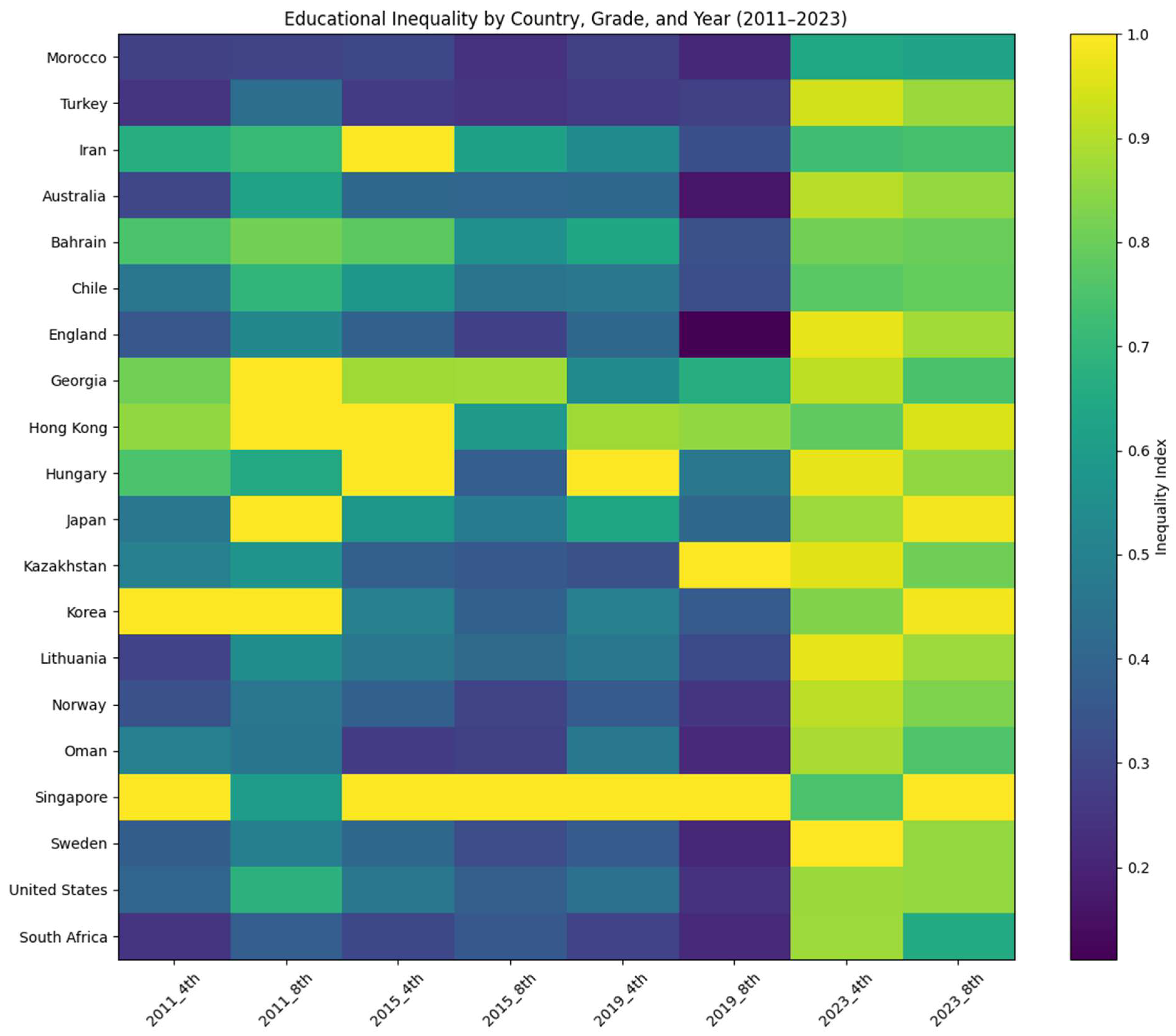
The results reveal substantial cross-country heterogeneity in education efficiency. On average, efficiency scores increased in 2023, suggesting a relative improvement in input utilization across education systems. The mean efficiency for 4th grade rises from 0.530 in 2011 to 0.848 in 2023, while for 8th grade it increases from 0.647 to 0.836 over the same period. This pattern indicates a general convergence toward the efficiency frontier, possibly reflecting post-pandemic policy adjustments and efficiency-oriented reforms.
High-performing education systems—most notably Singapore, Korea, Hong Kong, Japan, and Sweden—consistently operate on or near the efficiency frontier. These countries combine strong learning outcomes with effective resource management, serving as benchmarks for less efficient systems.
6.1.2. Primary Versus Lower-Secondary Education
A notable finding is the systematic efficiency gap between grade levels. Efficiency scores are generally higher and more stable at the 4th grade than at the 8th grade, where dispersion increases markedly. This suggests that inefficiencies intensify as students progress through the education system, potentially due to curriculum complexity, teacher specialization constraints, governance challenges, or student disengagement at the lower-secondary level.
6.1.3. Morocco’s Relative Performance
Morocco exhibits persistently low efficiency scores relative to the international average, particularly at the 8th grade level. For 4th grade, efficiency remains below average from 2011 to 2019, before improving to 0.643 in 2023, which nonetheless remains significantly lower than the sample mean (0.848). In input-oriented terms, this implies that Morocco could theoretically reduce inputs by approximately 36% while maintaining current achievement levels, if it were to operate on the frontier.
At the 8th grade level, Morocco’s efficiency declines between 2011 (0.294) and 2019 (0.214), followed by a notable rebound in 2023 (0.625). Despite this improvement, the gap relative to the sample average (0.836) remains substantial, pointing to structural inefficiencies in lower-secondary education.
6.1.4. Policy Interpretation of the DEA Results
From a policy perspective, the findings indicate that inefficiency in Morocco’s education system is driven more by suboptimal input utilization than by insufficient resources. The input-oriented DEA results of
Table 2 and
Figure 1 suggest that efficiency gains could be achieved through:
Improved teacher allocation and workload management,
Rationalization of class sizes and school infrastructure,
Strengthened school-level governance and accountability mechanisms,
Targeted reforms at the lower-secondary level, where inefficiencies are most pronounced.
Table 3 reports the efficiency scores obtained from the DEA 2 model, applied to 4th and 8th-grade education for the years 2011, 2015, 2019, and 2023. As in the previous specification, efficiency scores range between zero and one, with values equal to one indicating full efficiency relative to the best-performing countries in the sample. The DEA 2 model provides a complementary perspective, allowing for a robustness assessment of the baseline results.
6.1.5. Overall Efficiency Trends
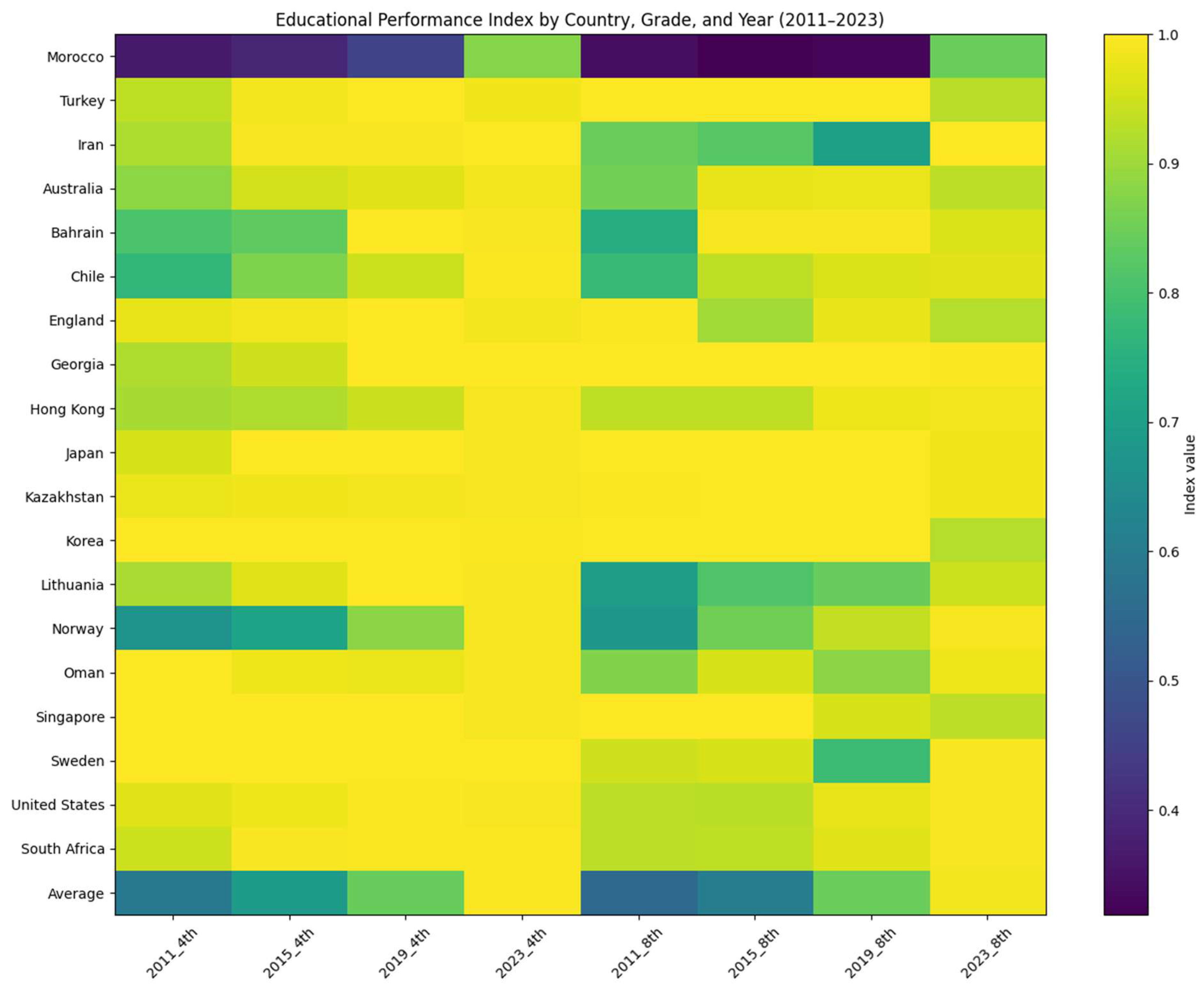
The DEA 2 results reveal substantially higher efficiency scores across countries compared to the baseline DEA model, suggesting that once additional flexibility is introduced in production technology, most education systems operate close to the efficiency frontier. Average efficiency increases markedly over time, reaching near-unity values in 2023 for both grade levels (0.995 for 4th grade and 0.989 for 8th grade), indicating a strong convergence toward best-practice performance.
High-income and high-performing education systems—such as Korea, Singapore, Japan, England, Sweden, and Kazakhstan—consistently record efficiency scores equal to or very close to one throughout the period, confirming the stability of the efficiency frontier across model specifications.
6.1.6. Morocco’s Performance Under DEA 2
Morocco’s efficiency scores improve substantially under the DEA 2 model, though they remain below the sample average in earlier years. For 4th grade, efficiency rises steadily from 0.369 in 2011 to 0.877 in 2023, reflecting a significant catch-up process. Despite this improvement, Morocco only approaches the frontier in the most recent period and does not consistently achieve full efficiency.
At the 8th grade level, Morocco exhibits moderate but persistent inefficiency between 2011 and 2019, with scores ranging between 0.319 and 0.345, before a sharp improvement in 2023 (0.848). While this represents notable progress, Morocco still lags behind the near-frontier performance observed in most comparator countries.
6.1.7. Comparison with the Baseline DEA Model
Comparing the DEA 2 results with those of the baseline input-oriented DEA highlights two important insights. First, the relative ranking of top-performing countries remains broadly unchanged, reinforcing the robustness of the efficiency frontier. Second, the substantial upward shift in efficiency scores—particularly for Morocco and other developing countries—suggests that part of the inefficiency identified in the baseline model reflects model restrictiveness rather than pure technical inefficiency.
Thus, DEA 2 appears to capture potential efficiency under more favorable production conditions, while the baseline DEA provides a stricter assessment of input misallocation.
6.1.8. Policy Interpretation of the DEA 2 Findings
From a policy standpoint, the DEA 2 findings in
Figure 2 suggest that Morocco’s education system possesses latent efficiency potential, especially at the lower-secondary level. The sharp improvement in 2023 indicates that recent reforms or contextual changes may have enhanced the system’s capacity to transform inputs into learning outcomes. However, the persistent gap relative to frontier countries implies that further gains depend on:
Consolidating governance and management reforms.
Enhancing teacher effectiveness and curriculum alignment.
Strengthening transition mechanisms between primary and lower-secondary education.
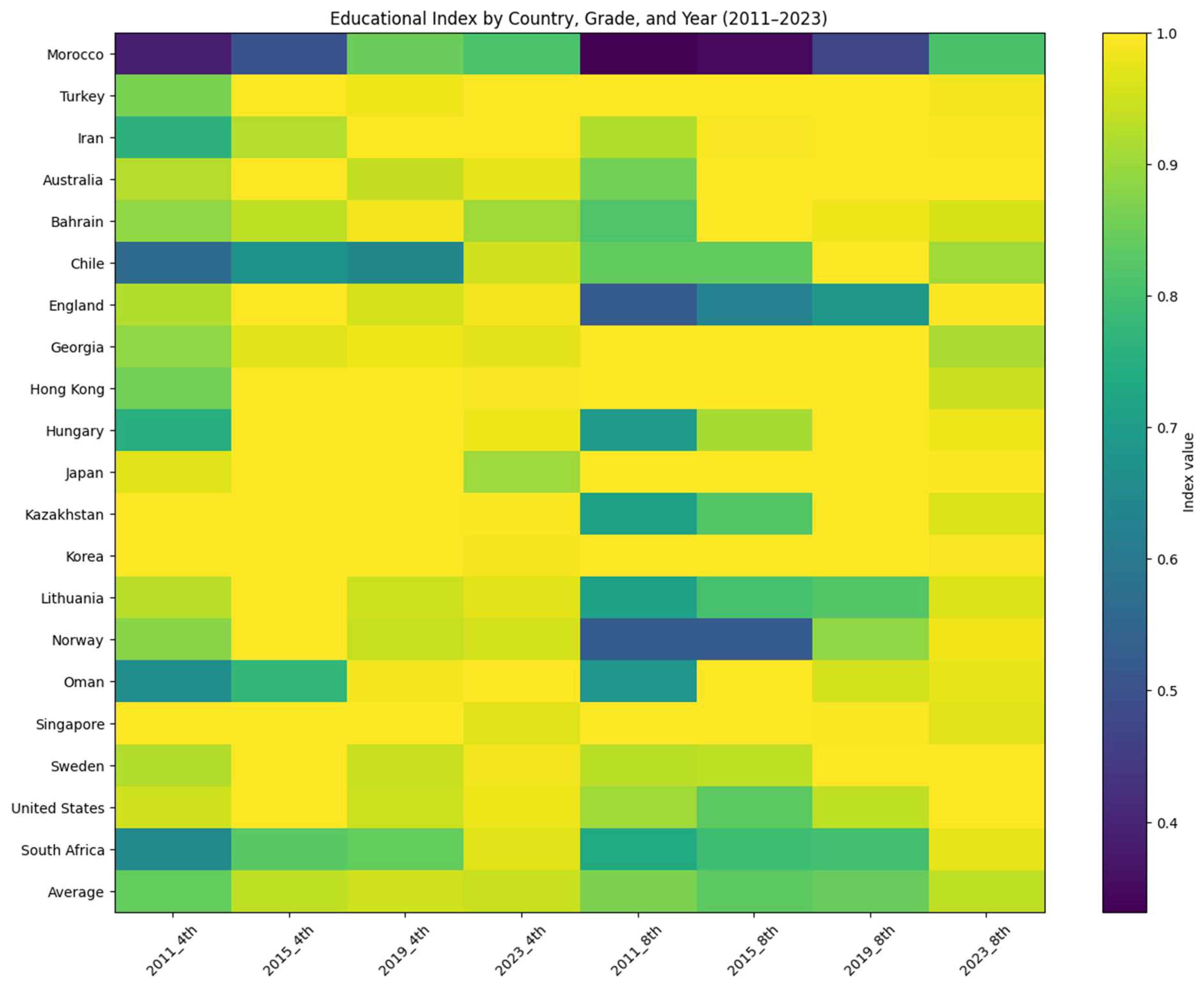
Table 4 presents the efficiency scores derived from the DEA 3 model, applied to 4th and 8th-grade education systems over the period 2011–2023. As in the previous specifications, efficiency scores range between zero and one, with values equal to one indicating full efficiency relative to the estimated production frontier. The DEA 3 model offers a further robustness perspective by relaxing additional assumptions on the education production process.
6.1.9. Overall Efficiency Patterns
The DEA 3 results indicate high levels of efficiency across countries, with average scores remaining consistently above 0.84 for both grade levels throughout the period. Efficiency improves markedly between 2011 and 2019, followed by a stabilization phase in 2023, suggesting that most education systems converge toward the frontier over time rather than exhibiting continuous efficiency gains.
Top-performing education systems—including Singapore, Korea, Japan, Hong Kong, Sweden, and Kazakhstan—operate persistently on or near the efficiency frontier across all years and both grade levels. This stability confirms the robustness of the frontier and underscores the structural strength of these systems under alternative DEA specifications.
6.1.10. Differences Between Primary and Lower-Secondary Education
Under the DEA 3 specification, efficiency scores for 4th grade are slightly higher and more stable than those for 8th grade, although the gap narrows substantially over time. The average efficiency for 8th grade increases from 0.869 in 2011 to 0.936 in 2023, indicating notable improvements in lower-secondary education efficiency when assessed under a more flexible production framework.
The remaining dispersion in early years suggests transitional inefficiencies, particularly in countries undergoing education system reforms or facing structural constraints at the lower-secondary level.
6.1.11. Morocco’s Performance Under DEA 3
Morocco exhibits a clear efficiency catch-up trajectory under the DEA 3 model. For 4th grade, efficiency increases from 0.389 in 2011 to 0.851 in 2019, before stabilizing at a relatively high level in 2023 (0.811). This pattern indicates substantial improvements in resource utilization at the primary level, although Morocco does not consistently reach the efficiency frontier.
At the 8th grade level, Morocco’s efficiency improves steadily from 0.332 in 2011 to 0.809 in 2023. While this represents a significant convergence toward best-practice performance, Morocco continues to lag behind frontier countries, suggesting persistent structural challenges in lower-secondary education.
6.1.12. Comparison with DEA 1 and DEA 2 Models
When compared to the baseline DEA (DEA 1) and the more permissive DEA 2 model, the DEA 3 results occupy an intermediate position. Efficiency scores are substantially higher than in DEA 1 but slightly lower and more dispersed than in DEA 2, particularly for Morocco and other middle-income countries. This pattern indicates that while part of the inefficiency identified in the baseline model reflects restrictive assumptions, genuine inefficiencies remain even under more flexible production technologies.
Importantly, the relative ranking of high-performing countries remains largely unchanged, reinforcing the robustness of the main findings across specifications.
6.1.13. Policy Interpretation of the DEA 3 Findings
From a policy perspective, the DEA 3 findings suggest that Morocco’s education system has achieved meaningful efficiency gains, particularly at the primary level, and has made notable progress at the lower-secondary level. However, the inability to consistently reach the frontier indicates the need for continued reforms focused on:
- −
Strengthening the transition between primary and lower-secondary education.
- −
Enhancing teacher quality and subject specialization.
- −
Improving school governance and accountability mechanisms.
- −
Addressing regional and socio-economic disparities affecting learning outcomes.
6.2. Impact of Additional Inputs on Educational Efficiency
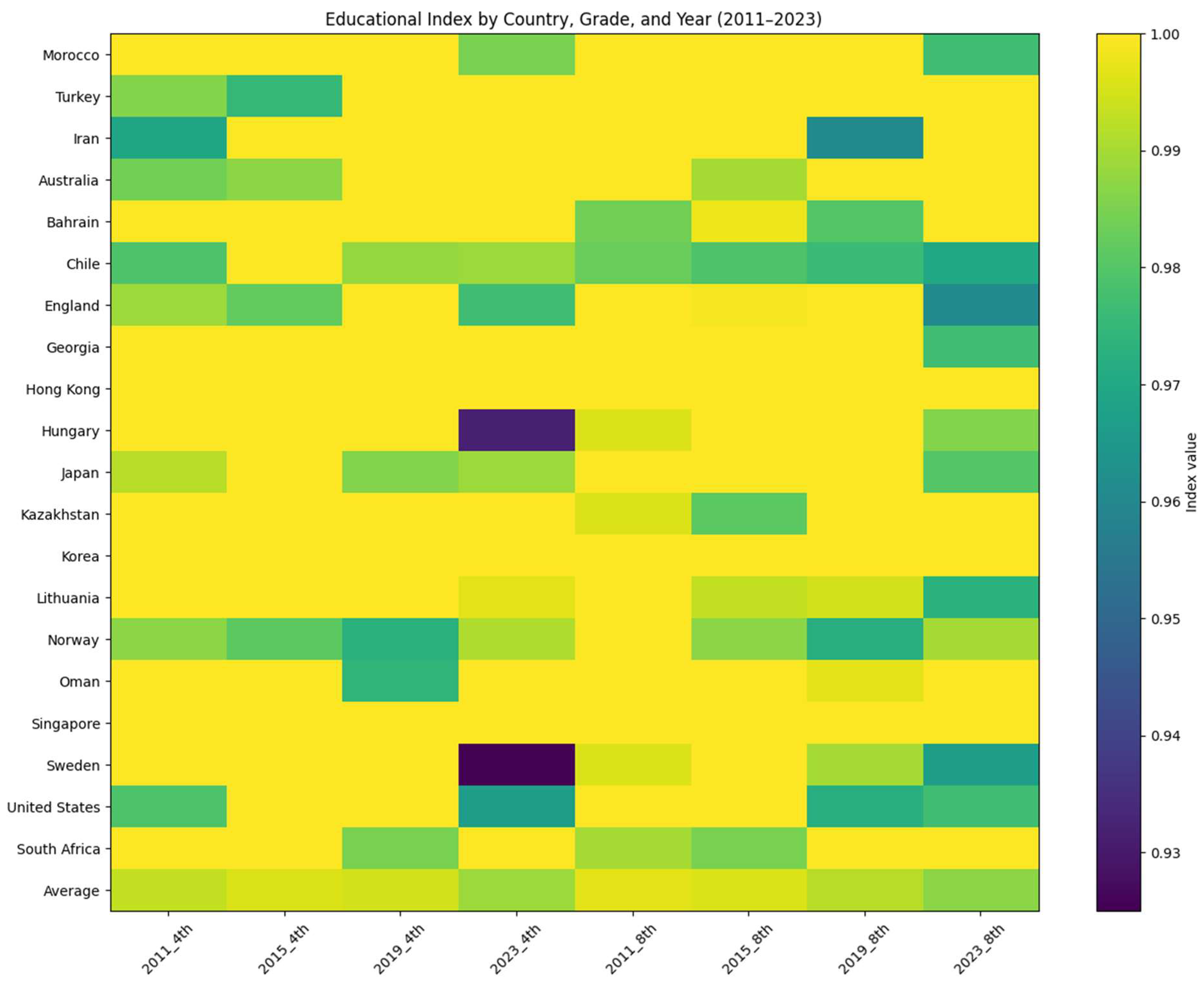
Table 5 reports the efficiency scores obtained from the DEA 4 model for 4th and 8th-grade education systems over the period 2011–2023. Efficiency scores range between zero and one, with values equal to one indicating full efficiency relative to the estimated production frontier. The DEA 4 specification and results in
Figure 3 represent the most flexible production framework among the four models and serve as an upper-bound robustness benchmark.
6.2.1. Overall Efficiency Levels
The DEA 4 results indicate near-universal efficiency across countries and years. Average efficiency scores exceed 0.99 for both grade levels in all periods, revealing a strong clustering of countries on the efficiency frontier. This outcome suggests that, under highly flexible assumptions, differences in input utilization across education systems become marginal.
High-performing countries—including Singapore, Korea, Hong Kong, Japan, and Georgia—consistently achieve full efficiency throughout the entire sample period, confirming the stability of best-practice performance even under the most permissive technological assumptions.
6.2.2. Grade-Level Comparison
Under the DEA 4 model, differences between 4th and 8th grade efficiency are minimal. Average efficiency scores remain extremely high for both levels, with only slight declines observed in 2023, possibly reflecting short-term adjustment effects rather than structural inefficiencies. The convergence of efficiency across grade levels suggests that once technological and scale constraints are fully relaxed, educational production appears highly efficient at both primary and lower-secondary stages.
6.2.3. Morocco’s Performance Under DEA 4
Morocco attains full efficiency (score = 1) for both 4th and 8th grades in 2011, 2015, and 2019, indicating that, under the DEA 4 specification, the Moroccan education system operates on the efficiency frontier in most periods. A marginal decline is observed in 2023, with efficiency scores of 0.985 (4th grade) and 0.977 (8th grade), though these values remain extremely close to unity.
These results suggest that, when evaluated under the most flexible DEA framework, Morocco’s education system does not exhibit substantial technical inefficiency, and any remaining deviations from the frontier are economically negligible.
6.2.4. Interpretation and Robustness Implications
The DEA 4 findings must be interpreted with caution. While they confirm the existence of strong latent efficiency potential, the near-complete saturation of the efficiency frontier indicates a loss of discriminatory power, a well-documented limitation of overly permissive DEA specifications. Consequently, DEA 4 should be viewed as an upper-bound benchmark rather than a standalone diagnostic tool.
Importantly, the contrast between DEA 1 and DEA 4 highlights that the magnitude of measured inefficiency is highly sensitive to model assumptions, reinforcing the relevance of a multi-model DEA approach.
6.2.5. Policy Interpretation of the DEA 4 Results
From a policy perspective, the DEA 4 results imply that Morocco’s education system is not fundamentally constrained by technical inefficiency, but rather by structural, institutional, or qualitative factors not fully captured by highly flexible DEA technologies. Therefore, efficiency-oriented reforms should prioritize:
Enhancing learning quality and curriculum relevance.
Improving governance and accountability frameworks.
Addressing equity and regional disparities.
Strengthening outcome-based performance monitoring.
6.3. Evolution of Efficiency Using the Malmquist Index
The
Figure 4 examines the dynamic evolution of the education system performance using the Malmquist Productivity Index (MPI) over the periods 2011–2015, 2015–2019, and 2019–2023. The Malmquist index decomposes total factor productivity change (TFP) into two components: technical efficiency change (catch-up effect) and technical progress (frontier shift). A value greater than one indicates productivity growth, while a value below one reflects a decline.
6.3.1. General Productivity Trends
The results reveal systematic productivity growth across all countries and subperiods, with TFP values consistently above unity. This indicates a sustained improvement in the education sector performance over time. Importantly, productivity growth is predominantly driven by technical progress rather than efficiency gains, as efficiency change remains close to one in most cases.
Across the sample, technical progress ranges between 1.1 and 2.0, reflecting significant outward shifts in the production frontier. This suggests that improvements in educational outcomes are largely attributable to innovation, pedagogical reforms, technological adoption, and institutional modernization, rather than purely improved resource allocation.
6.3.2. Morocco’s Productivity Dynamics
Morocco exhibits robust and sustained productivity growth throughout the entire period. Between 2011 and 2015, total factor productivity increased by 71.4%, driven almost exclusively by strong technical progress (1.718), while technical efficiency remained stable (0.998). This pattern persisted in subsequent periods, with TFP growth of 44.9% (2015–2019) and 57.8% (2019–2023).
The near-unity values of technical efficiency change indicate that Morocco’s productivity gains are not primarily due to catching up with the efficiency frontier, but rather to shifts in the frontier itself. This finding is consistent with the DEA results, which show that Morocco’s relative efficiency remains sensitive to model assumptions, while its dynamic performance improves steadily over time.
6.3.3. International Productivity Dynamics and Frontier Shifts (Primary Education)
Countries such as Iran, Australia, Chile, England, and Turkey display particularly strong productivity growth, especially in the 2011–2015 period, where TFP growth frequently exceeds 80%. These gains are again largely driven by technical progress, often exceeding 1.8, suggesting a period of intense reform or structural transformation in education systems.
Advanced education systems such as Singapore, Korea, Japan, and Sweden show more moderate but stable productivity growth, with efficiency change values very close to unity and consistent technical progress. This pattern reflects frontier stability, where productivity gains arise from incremental innovation rather than large structural adjustments.
Conversely, some countries (e.g., Kazakhstan, Oman, Norway) experience episodes of efficiency decline (efficiency change < 1) offset by strong technical progress, resulting in net productivity growth. This reinforces the dominance of frontier shifts in explaining long-run productivity improvements.
6.3.4. Productivity Dynamics over Time
A temporal comparison reveals that productivity growth is strongest in the 2011–2015 period, followed by a moderation in 2015–2019, and a renewed acceleration in 2019–2023. The rebound in the most recent period likely reflects post-pandemic adjustments, including digital learning expansion, curriculum reorganization, and targeted policy interventions aimed at system resilience.
Notably, the persistence of productivity growth during 2019–2023 underscores the adaptability of education systems, even under adverse conditions.
6.3.5. Interpretation in Light of DEA Results
When interpreted jointly with the DEA findings, the Malmquist results suggest that static inefficiency and dynamic productivity growth can coexist. While Morocco and several middle-income countries do not consistently lie on the efficiency frontier in static DEA models, they nevertheless experience substantial productivity gains over time, primarily through technical progress.
This highlights the importance of complementing static efficiency analysis with dynamic measures to avoid underestimating long-term system improvements.
6.3.6. Policy Implications
From a policy perspective and based on the results of
Table 6, the Malmquist analysis indicates that productivity gains in education systems are mainly driven by innovation and systemic transformation rather than efficiency catch-up alone. For Morocco, this implies that:
Continued investment in educational technology and pedagogical innovation is critical.
Structural reforms can yield productivity gains even when short-term efficiency remains constrained.
Policies should balance frontier-shifting strategies with targeted measures to improve internal efficiency, particularly at the lower-secondary level.
Table 7 shows that most examined countries have technical efficiency scores above 1, indicating a relatively efficient use of resources in the education sector. Australia, Japan, and Turkey stand out with above-average technical efficiency scores, suggesting that they achieve high output of knowledge and skills in relation to the resources invested.
Most countries have achieved above-average scores in terms of technical progress, indicating an improvement in the use of technology and teaching methods.
Japan and Australia achieved high technical progress scores, demonstrating their ability to adopt new educational practices and technologies to enhance students’ performance.
Similarly, in terms of Total Factor Productivity (TFP), most countries have average scores above 1, indicating an overall improvement in productivity within the education sector. Notably, countries such as Australia, Chile, and England stand out with above-average TFP scores, suggesting that they effectively utilize their educational resources to achieve significant results.
However, it is important to note that certain countries score below the average in specific areas. For instance, both Georgia and Hong Kong exhibit below-average technical efficiency and TFP scores, suggesting room for improvement in resource utilization and result optimization.
Table 8 reports the Malmquist Productivity Index (MPI) results for 8th-grade education systems over the period 2011–2023. The index decomposes total factor productivity (TFP) change into technical efficiency change (catch-up effect) and technical progress (frontier shift). Values greater than one indicate productivity growth, while values below one signal a decline.
6.3.7. General Productivity Patterns in 8th Grade Education
The results reveal strong and persistent productivity growth across all countries and subperiods, with TFP indices systematically above unity. This indicates that lower-secondary education systems experienced sustained performance improvements over time. Across countries, productivity growth is predominantly driven by technical progress, while technical efficiency change remains close to one in most cases.
This pattern suggests that improvements at the 8th grade level are mainly attributable to shifts in the production frontier, reflecting curriculum reforms, pedagogical innovation, digitalization, and institutional modernization, rather than large-scale efficiency catch-up.
6.3.8. Morocco’s Productivity Dynamics at the Lower-Secondary Level
Morocco exhibits substantial and stable productivity growth in 8th-grade education throughout the period. Between 2011 and 2015, TFP increased by 71.4%, driven almost entirely by strong technical progress (1.718), while technical efficiency remained virtually unchanged (0.998). This pattern persists in subsequent periods, with TFP growth of 44.9% (2015–2019) and 57.8% (2019–2023).
The near-unity values of technical efficiency change indicate that Morocco’s productivity gains at the lower-secondary level stem primarily from frontier shifts rather than efficiency catch-up. This result is consistent with the static DEA findings, which highlight persistent relative inefficiencies at the 8th grade level under restrictive model specifications, despite notable dynamic improvements over time.
6.3.9. Productivity Growth Patterns and Innovation Dynamics (Lower-Secondary Education)
Several countries—such as Iran, Australia, Chile, Turkey, and England—record exceptionally high productivity growth, particularly during the 2011–2015 subperiod, where TFP growth often exceeds 90%. These gains are largely driven by pronounced technical progress, suggesting intensive reform phases in lower-secondary education systems.
Advanced education systems, including Singapore, Korea, Japan, Sweden, and the United States, display more moderate but stable productivity growth, characterized by efficiency change values close to unity and steady technical progress. This reflects frontier maturity, where productivity gains arise from incremental innovation rather than structural transformation.
Some countries (e.g., Kazakhstan, Oman, Norway) experience episodes of efficiency decline (efficiency change < 1), which are more than compensated by technical progress, resulting in net productivity growth. This underscores the dominant role of innovation-driven frontier shifts in explaining long-run productivity dynamics at the lower-secondary level.
6.3.10. Temporal Evolution of Productivity
A temporal comparison indicates that productivity growth is strongest during the 2011–2015 period, followed by a relative slowdown in 2015–2019, and a renewed acceleration in 2019–2023. The recovery in the most recent period likely reflects post-pandemic policy responses, including accelerated digital learning adoption, curriculum adjustments, and targeted interventions to mitigate learning losses at the lower-secondary level.
The persistence of productivity growth during 2019–2023 highlights the adaptive capacity of lower-secondary education systems in the face of significant external shocks.
6.3.11. Complementarity with DEA Results
When interpreted alongside the DEA efficiency estimates, the Malmquist results indicate that static inefficiency and dynamic productivity growth coexist at the 8th grade level. While several countries—including Morocco—do not consistently lie on the static efficiency frontier under restrictive DEA specifications, they nevertheless experience substantial productivity gains over time, primarily driven by technical progress.
This finding emphasizes the importance of combining static DEA with dynamic Malmquist indices to capture the full spectrum of education system performance.
6.3.12. Policy Implications for Lower-Secondary Education
From a policy perspective, the results suggest that productivity improvements in 8th-grade education are mainly driven by innovation and systemic reforms, rather than efficiency gains alone. For Morocco, this implies that:
Continued investment in pedagogical innovation and digital infrastructure is essential,
Frontier-shifting reforms can yield substantial productivity gains even in the presence of static inefficiencies,
Targeted policies should aim to convert productivity gains into efficiency improvements, particularly through governance reforms and improved resource allocation at the lower-secondary level.
Table 9 shows that for Grade 8, most countries have an average technical efficiency around the mean, with values ranging from 0.929 (USA) to 1.166 (Singapore). This indicates that these countries are making relatively effective use of their educational resources to achieve positive educational results.
Additionally, most countries achieved above-average technical progress, with values ranging from 1161 (Kazakhstan) to 1700 (Georgia). Most countries have made significant progress in adopting and using new technologies and teaching methods. Additionally, their total factor productivity (TFP) is above average, ranging from 1184 (USA) to 1712 (Singapore), indicating that they have effectively increased the efficiency of their educational resources through improved technical efficiency and significant technical progress.
However, it is important to note that educational performance varies between countries. Some countries, such as Singapore, Australia, and Iran, had above-average values in all three categories, whereas others, such as the USA and Oman, scored lower in at least one category.
In conclusion, the Malmquist index averages for grade 8 indicate a certain diversity in educational performance among the countries studied. These results highlight the importance of technical efficiency and progress in improving the quality of education. Countries with above-average results can serve as inspiring examples for other countries that wish to improve their educational performance.
7. Limitations
Countries consistently located on the efficiency frontier may benefit from strong institutional frameworks, effective resource management, and timely adoption of digital learning strategies. For example, nations with high governance scores and well-structured post-pandemic recovery programs demonstrate sustained technical efficiency. The Malmquist Productivity Index indicates that observed productivity growth is primarily driven by technical progress, representing shifts in the efficiency frontier over time. These shifts may be attributed to policy reforms, improvements in curriculum and instructional practices, or broader digitalization initiatives. It is important to recognize that while Malmquist results suggest patterns of improvement, the absolute magnitude should be interpreted with caution due to potential measurement artifacts inherent in cross-country data.
The DEA model implicitly assumes that all decision-making units (DMUs) operate in comparable environments. However, the 20 countries analyzed in this study include both high-income and middle-income countries, which differ in education system structures, fiscal capacity, and governance quality. These structural differences can influence efficiency estimates in several ways:
- 1.
Resource Availability and Scale Effects
High-income countries typically have greater financial resources, more qualified teachers, and better infrastructure. In contrast, middle-income countries may face budgetary constraints, lower teacher–student ratios, and limited access to learning materials. While the BCC (VRS) model partially accounts for scale heterogeneity by isolating pure technical efficiency, efficiency scores may still reflect differences in resource endowments rather than management or policy effectiveness alone.
- 2.
Institutional and Governance Differences
Variations in institutional quality, education policies, and governance practices can influence how effectively resources are transformed into learning outcomes. Countries with strong governance may achieve higher efficiency even with similar or lower spending, whereas weaker governance can reduce efficiency in higher-spending countries. DEA does not explicitly model these structural factors, so they may bias efficiency comparisons.
- 3.
Socio-Economic Contexts
Socio-economic conditions, including income inequality, parental education levels, and regional disparities, affect learning outcomes. These factors introduce heterogeneity beyond the direct impact of public spending and may influence efficiency estimates, particularly in cross-country comparisons.
- 4.
Implications for Interpretation
As a result, DEA efficiency scores should be interpreted as relative efficiency under observed inputs and outputs, rather than absolute performance across structurally heterogeneous education systems. The analysis highlights patterns of efficiency and productivity, but differences between high-income and middle-income countries may partially reflect structural heterogeneity rather than managerial performance alone.
Further research could incorporate environmental variables or apply conditional DEA approaches to control for structural and contextual heterogeneity, providing more nuanced efficiency assessments across countries with different income levels.
8. Conclusions
Efficiency in education constitutes a central concern in both developed and developing economies and represents a key indicator of the effectiveness of public expenditure in this sector. Beyond learning outcomes, educational investment generates broader socio-economic returns through the accumulation of human, physical, and technological capital, which are ultimately reflected in improvements in the Human Development Index and in the overall quality and resilience of education systems.
Using Data Envelopment Analysis (DEA) and the Malmquist Productivity Index, this study examines cross-country efficiency dynamics over the period 2011–2023. The results reveal marked heterogeneity in performance across countries and over time. While some education systems consistently operate close to the efficiency frontier, others display greater volatility, particularly under more restrictive DEA specifications. At the 4th grade level, strong contrasts persist between frontier countries—such as Singapore, Korea, and Hong Kong—and less efficient systems during earlier periods. However, by 2023, efficiency scores converge upward across most countries, suggesting a general improvement in resource utilization and institutional adaptation.
Across grade levels, efficiency scores tend to be higher at the 8th grade than at the 4th grade, indicating increasing maturity in management and deployment of educational inputs as students progress through the system. Nevertheless, this pattern is sensitive to model assumptions, and static efficiency gaps remain evident for several countries under baseline DEA models, particularly at the lower-secondary level.
The findings also underscore the importance of contextual and institutional factors in shaping education efficiency. These include the allocation of financial and material resources, the consistency and credibility of education policies, governance quality, and socio-cultural values that prioritize educational achievement. Together, these factors play a decisive role in determining how effectively public spending is transformed into educational outcomes.
Dynamic analysis based on the Malmquist index further reveals substantial differences in technical efficiency change, technical progress, and total factor productivity (TFP) across countries and subperiods. Importantly, productivity growth between 2011 and 2023 is predominantly driven by technical progress (frontier shifts) rather than efficiency catch-up, with a renewed acceleration observed in 2019–2023, likely reflecting post-pandemic reforms and digital transformation in education systems. These results suggest that long-term improvements in education performance are closely linked to innovation and systemic change, rather than efficiency gains alone.
Understanding these cross-country and temporal variations is essential for designing policies aimed at enhancing the education system’s performance and promoting sustainable, inclusive growth. In this respect, combining static efficiency analysis with dynamic productivity measures provides a more comprehensive assessment of how education systems evolve and respond to structural challenges over time.
This study advances the literature on education efficiency by combining post-pandemic data coverage, multi-level analysis, and a robust multi-model DEA framework integrated with the Malmquist Productivity Index. Our findings provide insights into structural factors and institutional mechanisms driving technical progress, while emphasizing that efficiency scores should inform rather than dictate policy. Future research could investigate causal mechanisms behind technical progress, such as digitalization, governance reforms, and teacher quality, and explore complementary methodologies (e.g., stochastic frontier analysis or panel regressions) to provide deeper policy guidance.