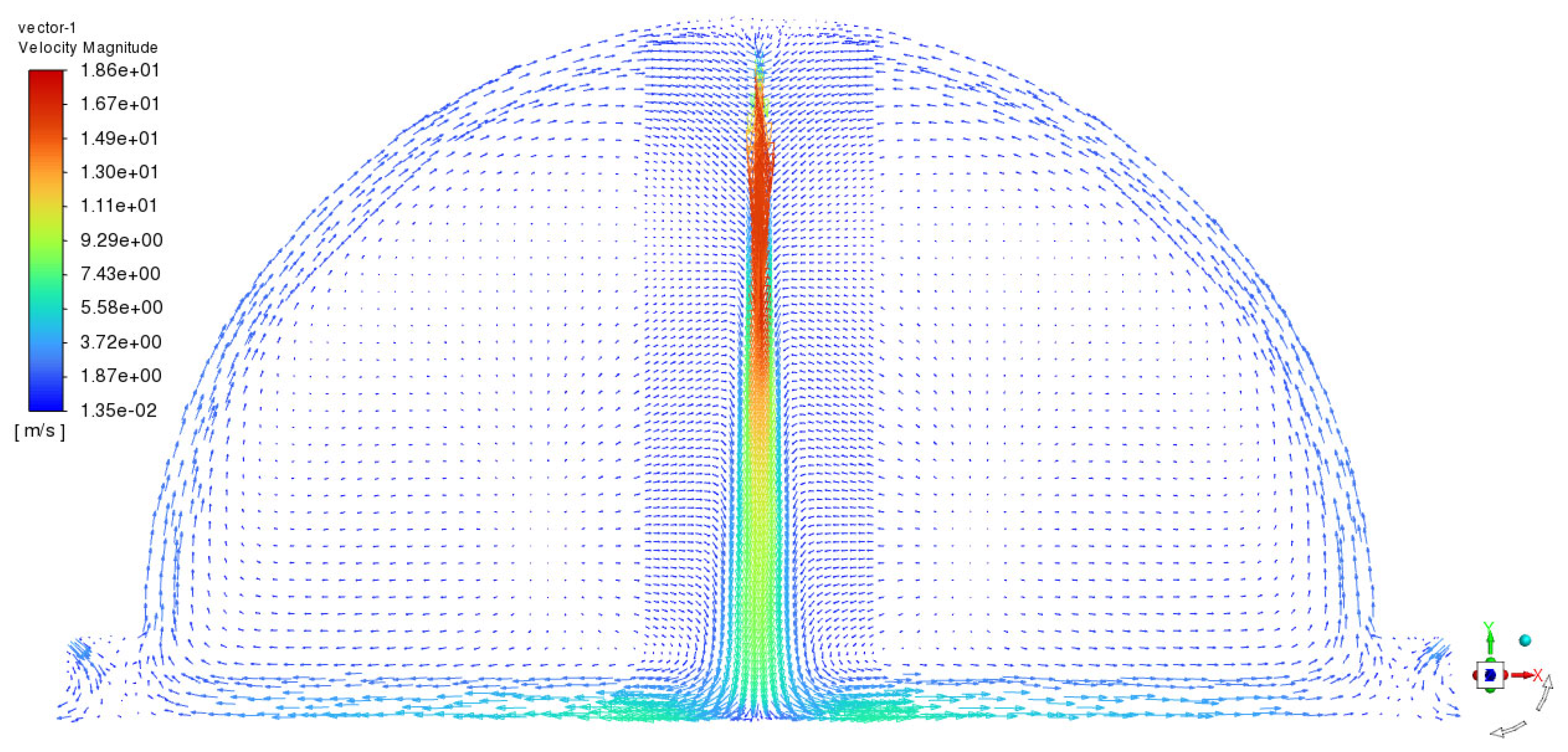

Overspray Containment Using an Air-Curtain Spray Hood in High-Pressure Airless Spray Coating with CFD Simulation and Experimental Validation


Abstract
1. Introduction
2. Theory
2.1. Airflow Simulation Theory
2.2. Droplet Impact Theory
3. Finite Element Simulation
3.1. Spray-Coating Analysis Procedure
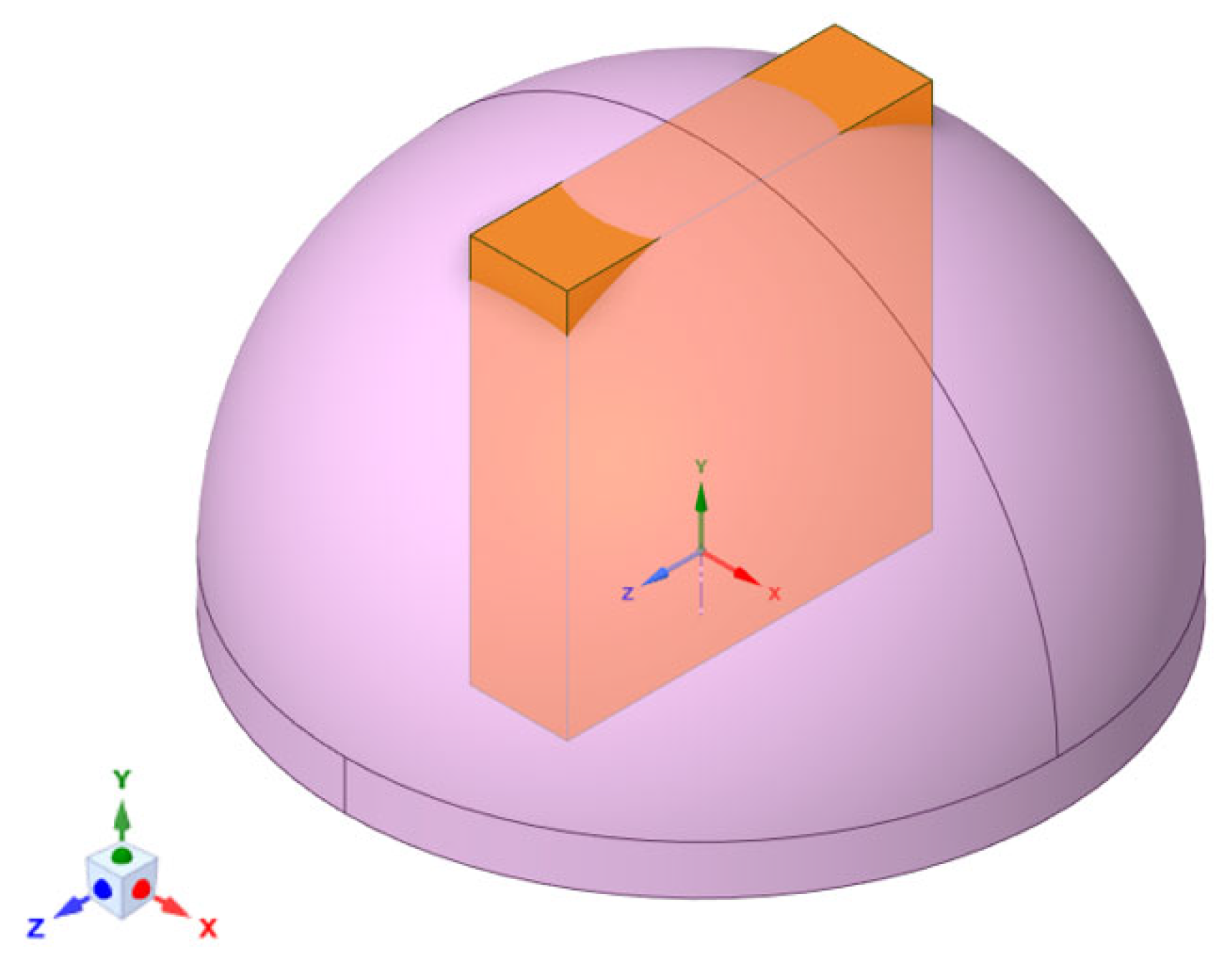
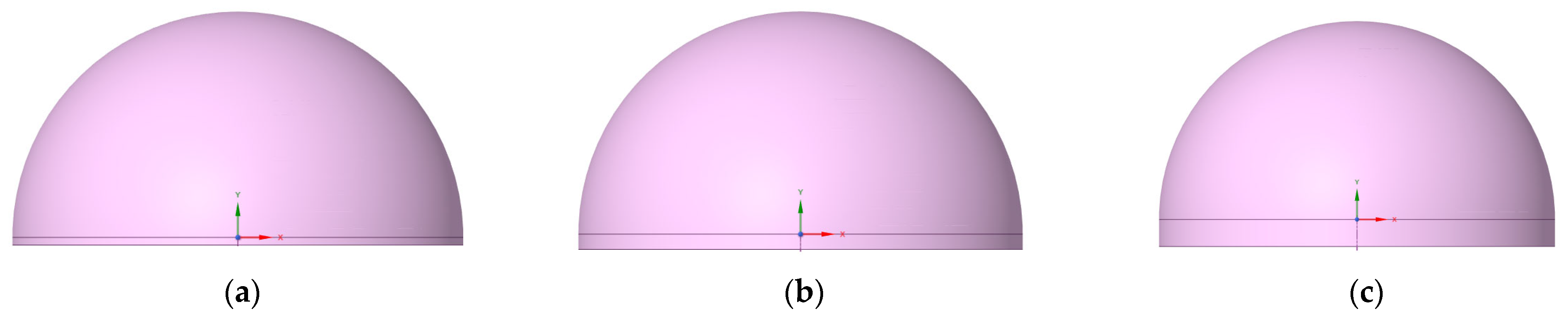
3.2. Geometry
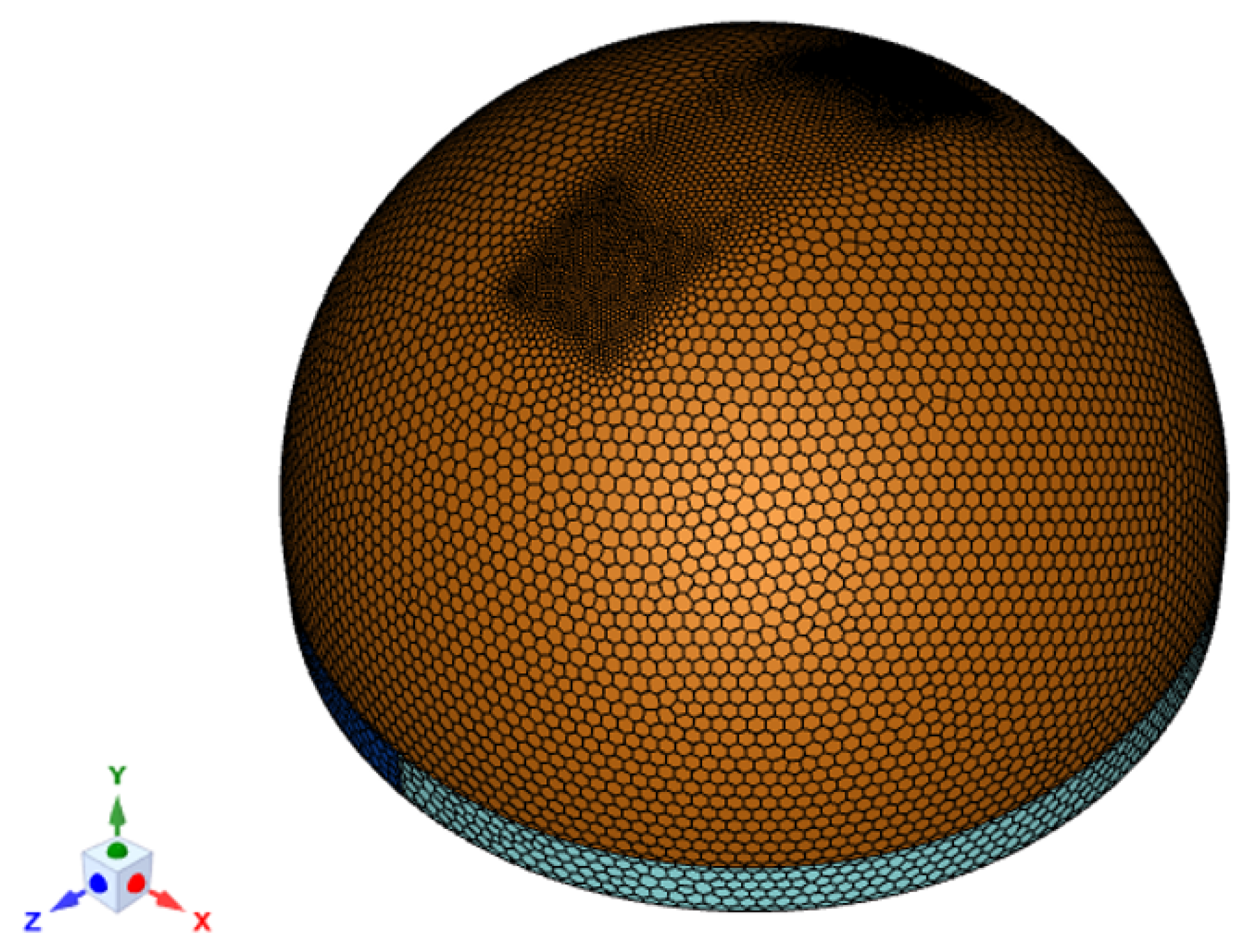
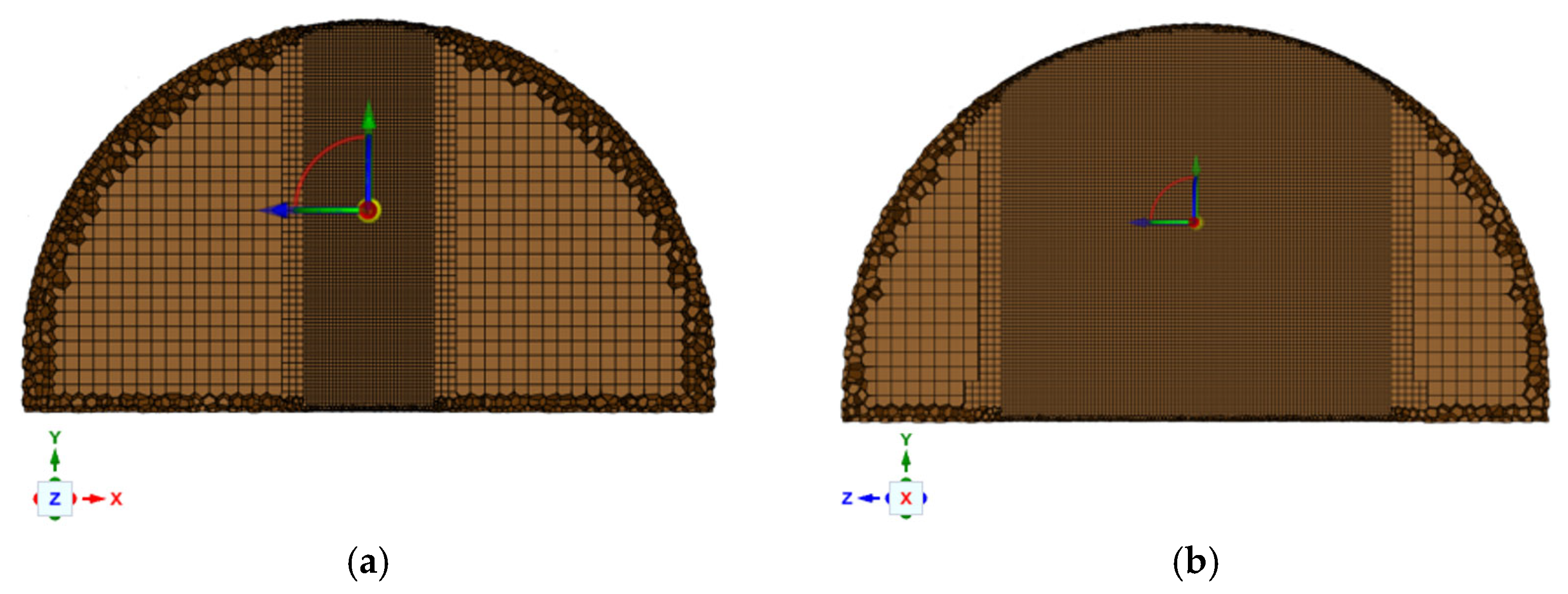
3.3. Mesh Generation
3.4. Material
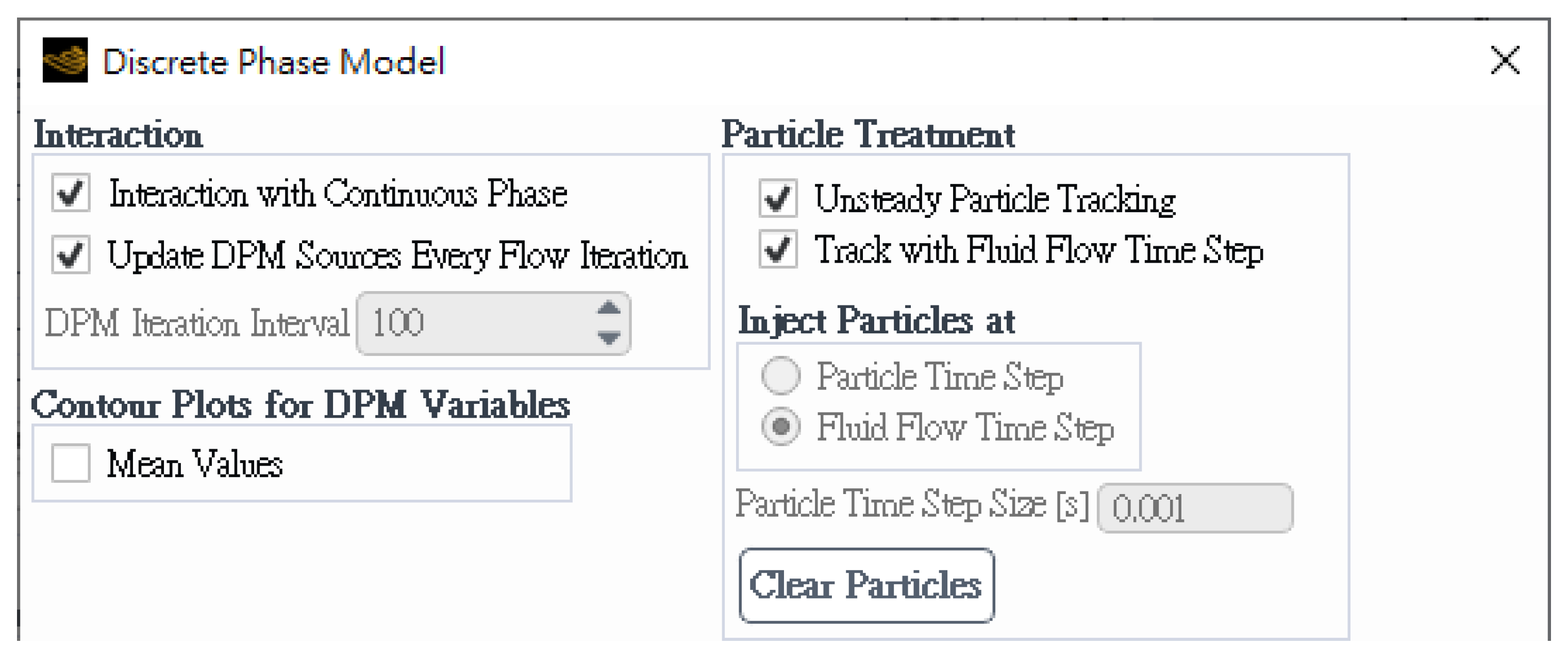
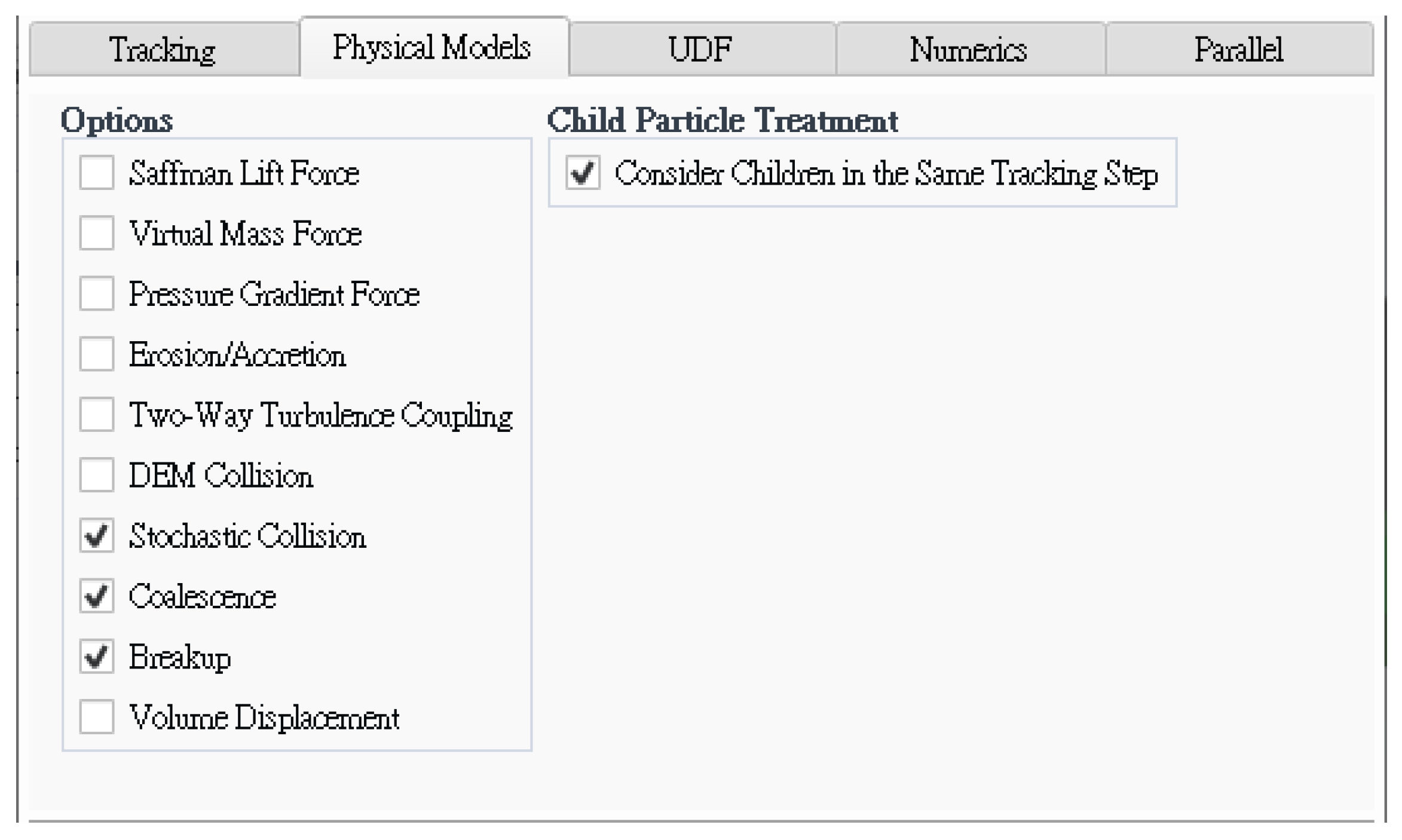
3.5. Numerical Simulation Settings
4. Experiment Setup
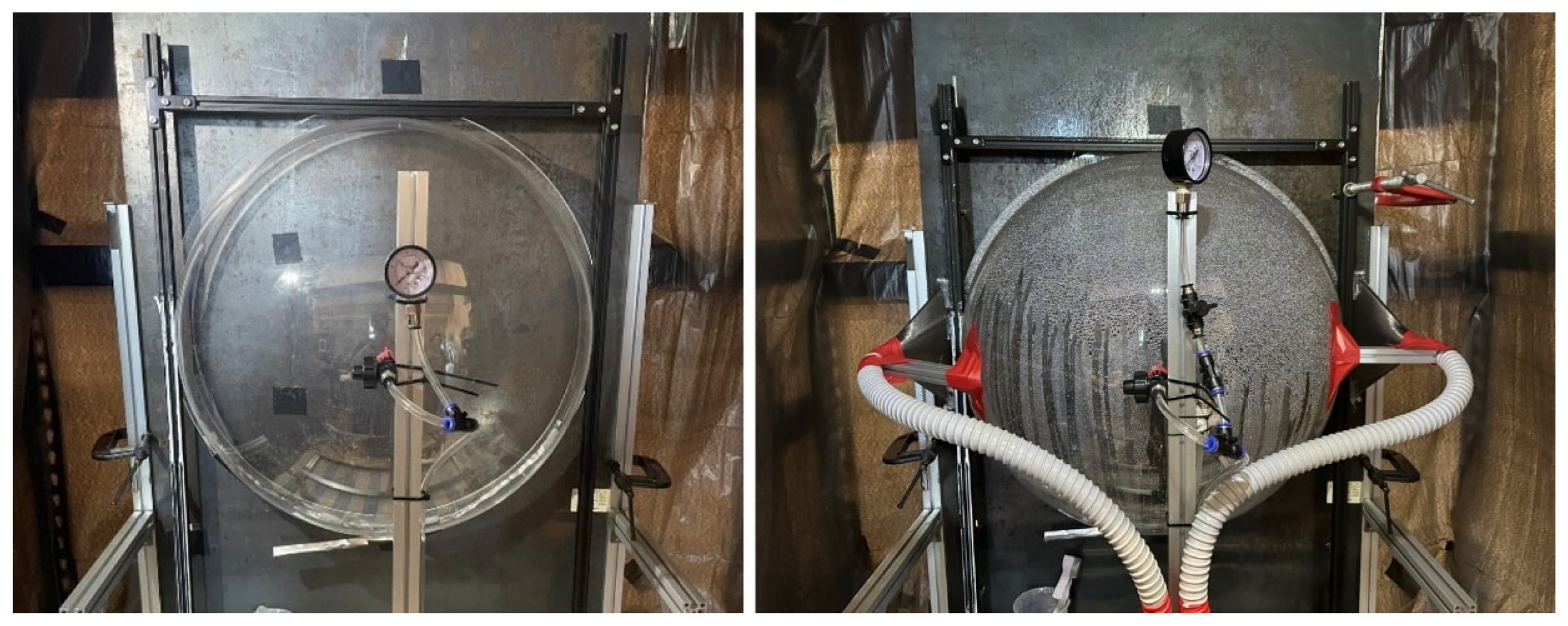
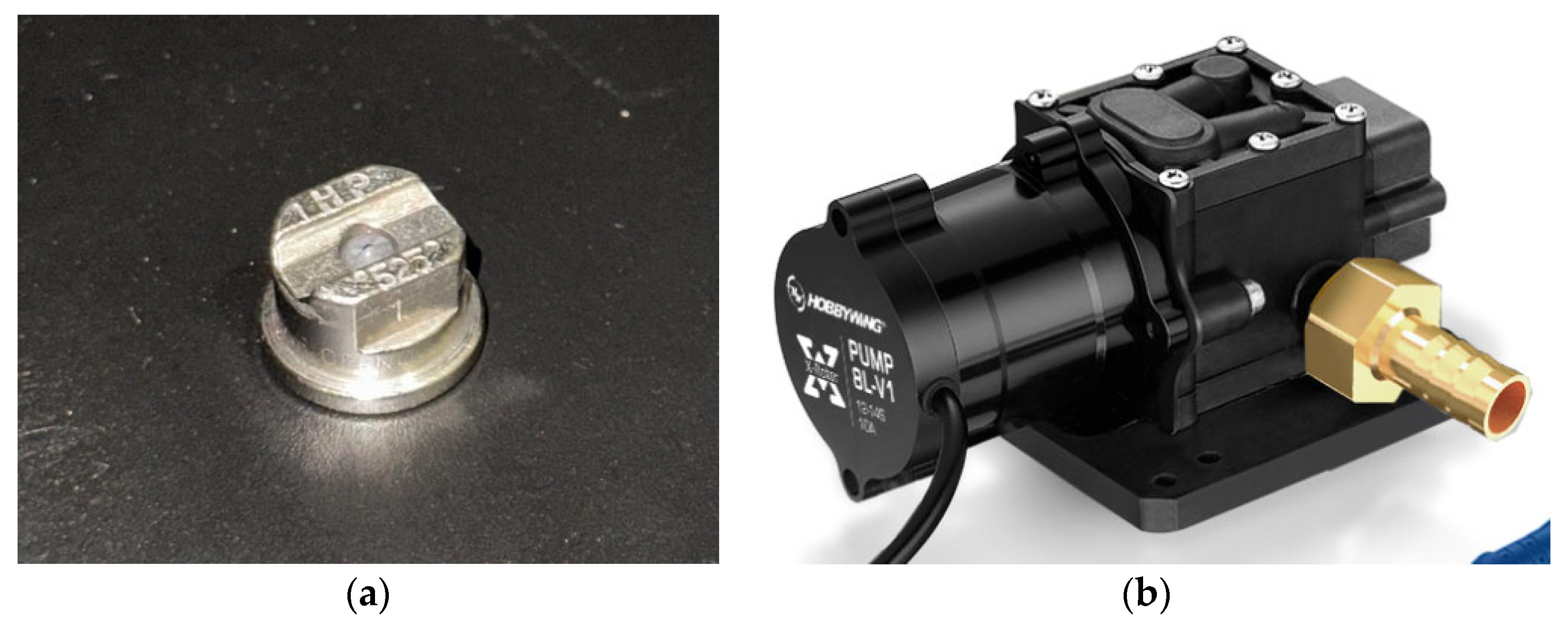
4.1. Experiment Equipment
4.2. Spray Process Settings
5. Results and Discussion
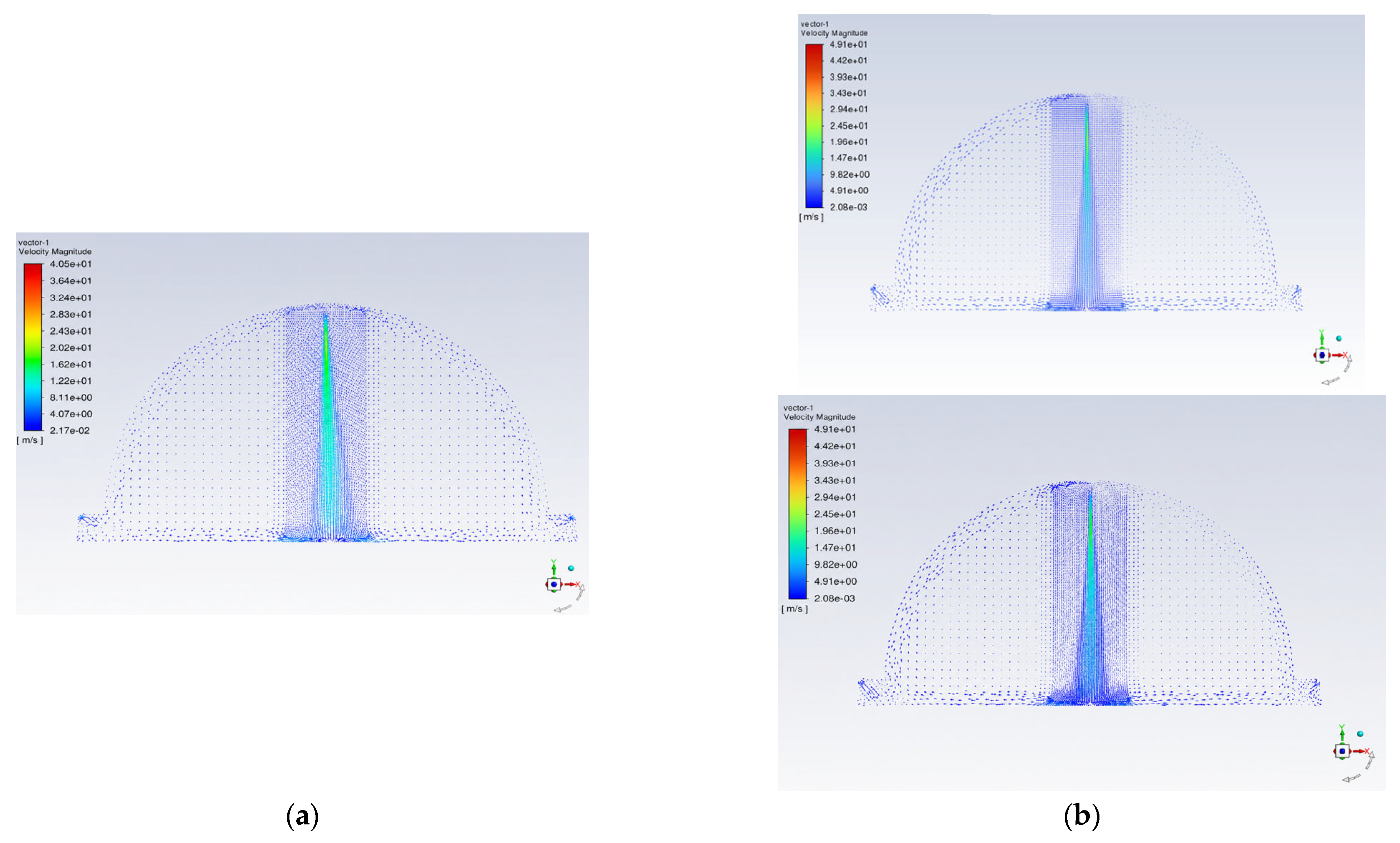
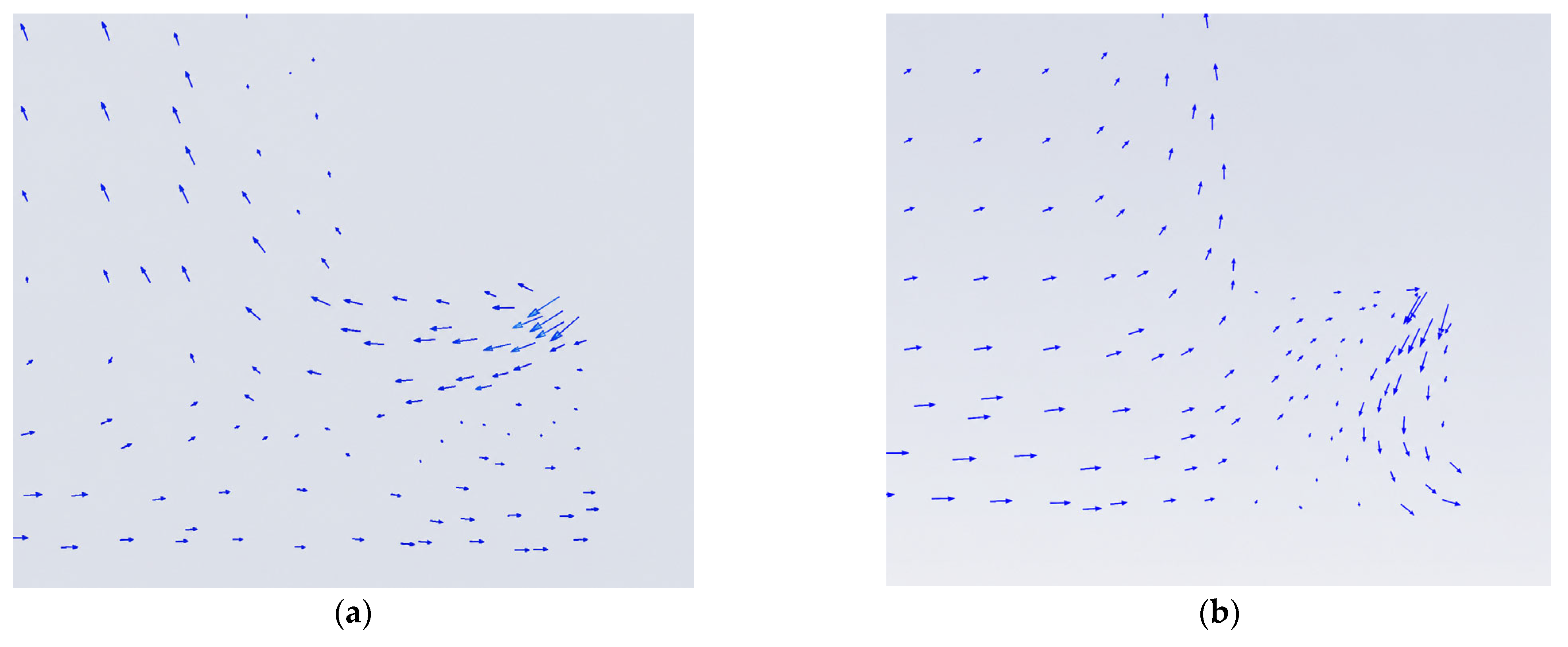
5.1. Effect of Hood-to-Wall Distance on Particle Dispersion and Model Validation
5.2. Effect of Blowing Flow Rate on Particle Dispersion
5.3. Effect of Blowing Angle on Particle Dispersion
6. Conclusions
- The developed CFD model demonstrated high accuracy after experimental validation and reliably predicted particle motion and overspray behavior in high-pressure airless spraying.
- The integration of a spray hood, particularly with reduced hood-to-wall spacing, effectively decreased overspray and limited particle escape into the surrounding environment.
- Both numerical and experimental results confirmed that increasing the blowing flow rate significantly reduced the overall overspray rate, highlighting its effectiveness in particle suppression.
- The blowing angle played a decisive role in overspray control. At 60°, the airflow confined most particles within the hood region, leading to a substantial reduction in overspray and achieving the objectives of this study.
- The main contribution of the present work lies in establishing a validated CFD–experiment approach for systematically evaluating overspray containment in high-pressure airless spray coating. The results provide practical guidance for hood design and airflow optimization and can serve as a useful basis for future research on automated industrial coating systems and overspray mitigation.
Author Contributions
Funding
Institutional Review Board Statement
Informed Consent Statement
Data Availability Statement
Conflicts of Interest
References
- Yan, Y.; Mohanarangam, K.; Yang, W.; Tu, J. Experimental measuring techniques for industrial-scale multiphase flow problems. Exp. Comput. Multiph. Flow 2024, 6, 1–13. [Google Scholar] [CrossRef] [Scilit]
- Aminjan, K.K.; Sedaghat, M.; Heidari, M.; Heidari, M.; Khashehchi, M.; Mohammadzadeh, K.; Salahinezhad, M.; Bina, R. Numerical investigation of the impact of fuel temperature on spray characteristics in a pressure-swirl atomizer with spiral path. Exp. Comput. Multiph. Flow 2024, 6, 428–445. [Google Scholar] [CrossRef] [Scilit]
- Li, X.; Chen, X.; Hong, N.; Li, Q.; Xu, Z.; Sheng, M.; Wang, R. A CFD-DEM Simulation of Droplets in an Airless Spray Coating Process of a Square Duct. Coatings 2024, 14, 282. [Google Scholar] [CrossRef] [Scilit]
- Park, J.H.; Kim, H.J.; Yook, S.J. Design and performance evaluation of a paint particle dispersion reduction device for airless spraying. Particuology 2025, 103, 242–251. [Google Scholar] [CrossRef] [Scilit]
- Chen, S.; Zhang, Y.; Wu, Z.; Fang, G.; Chen, Y.; Duan, J. Near-nozzle atomization characteristics in air-assisted spraying: Integrated VOF-DPM modeling and experimental validation. Coatings 2025, 15, 939. [Google Scholar] [CrossRef] [Scilit]
- Domnick, J.; Lindenthal, A.; Tropea, C.; Xu, T.-H. Application of Phase Doppler Anemometry in Paint Sprays. At. Sprays 1994, 4, 437–450. [Google Scholar] [CrossRef] [Scilit]
- Ye, Q.; Shen, B.; Tiedje, O.; Domnick, J. Investigations of Spray Painting Processes Using an Airless Spray Gun. J. Energy Power Eng. 2013, 7, 74–81. [Google Scholar]
- Chen, W.; Chen, Y.; Zhang, W.; He, S.; Li, B.; Jiang, J. Paint Thickness Simulation for Robotic Painting of Curved Surfaces Based on Euler–Euler Approach. J. Braz. Soc. Mech. Sci. Eng. 2019, 41, 199. [Google Scholar] [CrossRef] [Scilit]
- Chen, W.; Chen, Y.; Wang, S.; Han, Z.; Lu, M.; Chen, S. Simulation of a Painting Arc Connecting Surface by Moving the Nozzle Based on a Sliding Mesh Model. Coatings 2022, 12, 1603. [Google Scholar] [CrossRef] [Scilit]
- Chen, Y.; Hu, J.; Chen, W.; Zhang, G.; Zhou, S.; Li, B. Simulation Research on Characteristics of Paint Deposition on Spherical Surface. IOP Conf. Ser. Mater. Sci. Eng. 2019, 542, 012024. [Google Scholar] [CrossRef] [Scilit]
- Yang, G.; Wu, Z.; Chen, Y.; Chen, S.; Jiang, J. Modeling and Characteristics of Airless Spray Film Formation. Coatings 2022, 12, 949. [Google Scholar] [CrossRef] [Scilit]
- Fogliati, M.; Fontana, D.; Garbero, M.; Vanni, M.; Baldi, G.; Donde, R. CFD Simulation of Paint Deposition in an Air Spray Process. JCT Res. 2006, 3, 117–125. [Google Scholar] [CrossRef] [Scilit]
- Mundo, C.H.R.; Sommerfeld, M.; Tropea, C. Droplet-wall collisions: Experimental studies of the deformation and breakup process. Int. J. Multiph. Flow 1995, 21, 151–173. [Google Scholar] [CrossRef] [Scilit]
- O’Rourke, P.J.; Amsden, A.A. The TAB method for numerical calculation of spray droplet breakup. In Proceedings of the 1987 SAE International Fall Fuels and Lubricants Meeting and Exhibition, Toronto, ON, Canada, 2–5 November 1987; SAE technical paper; SAE International: Warrendale, PA, USA, 1987. [Google Scholar]
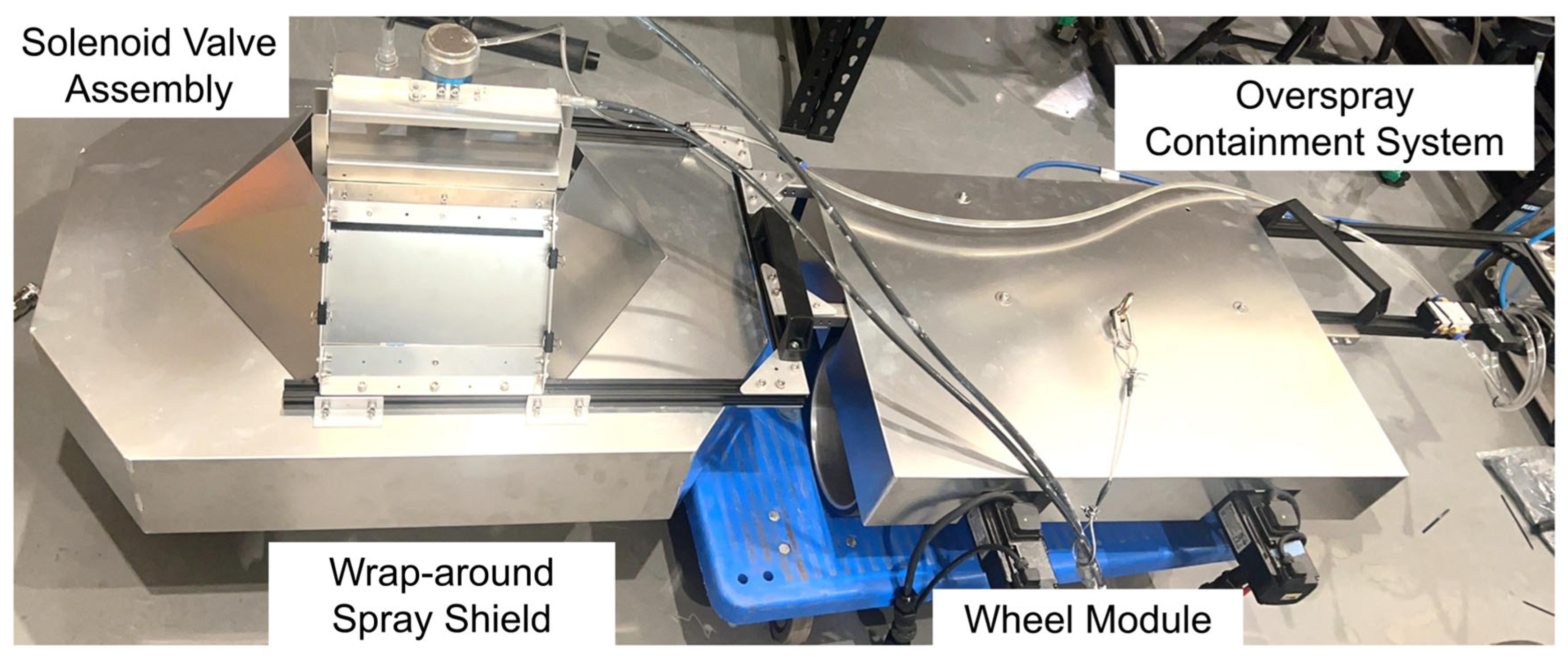
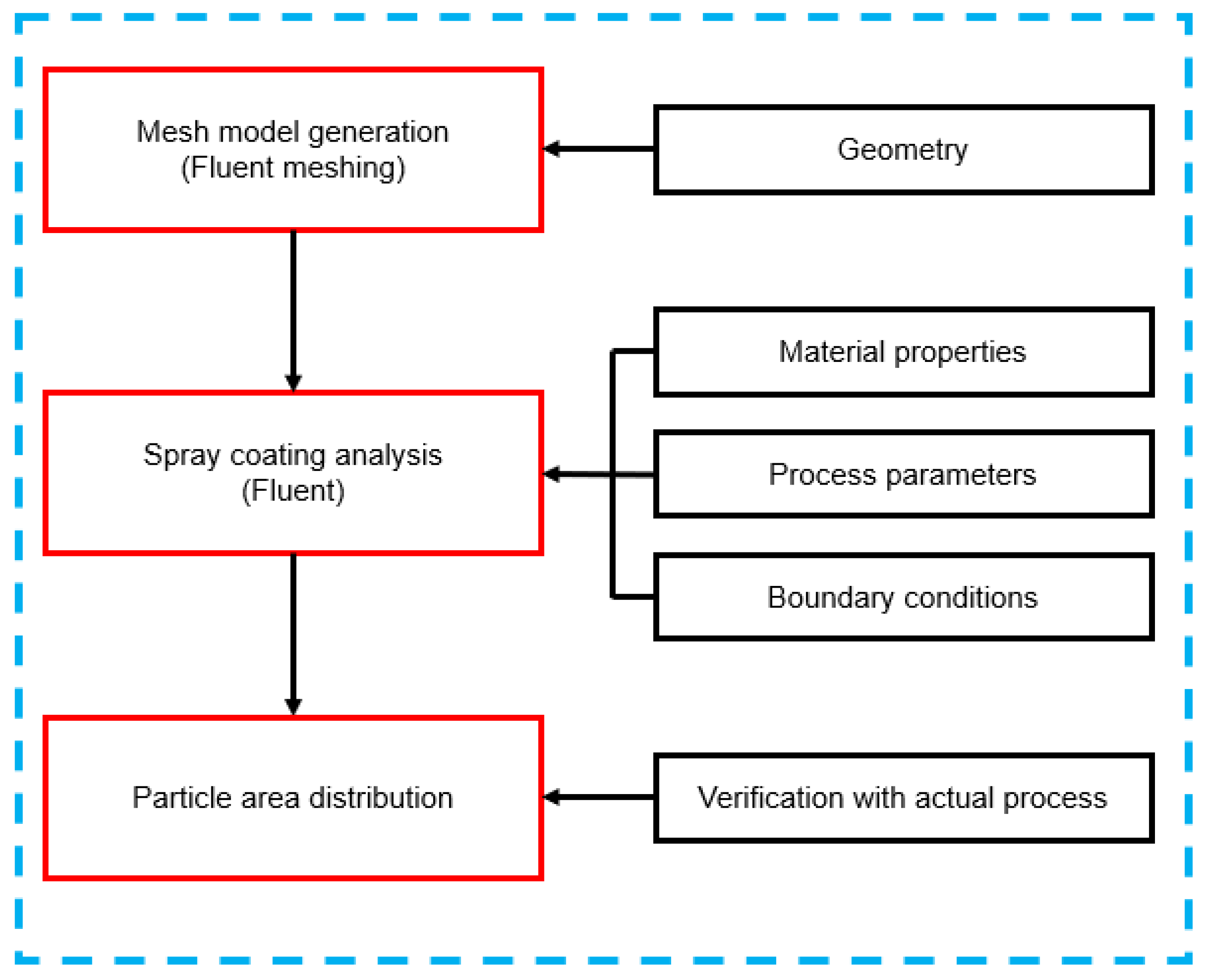
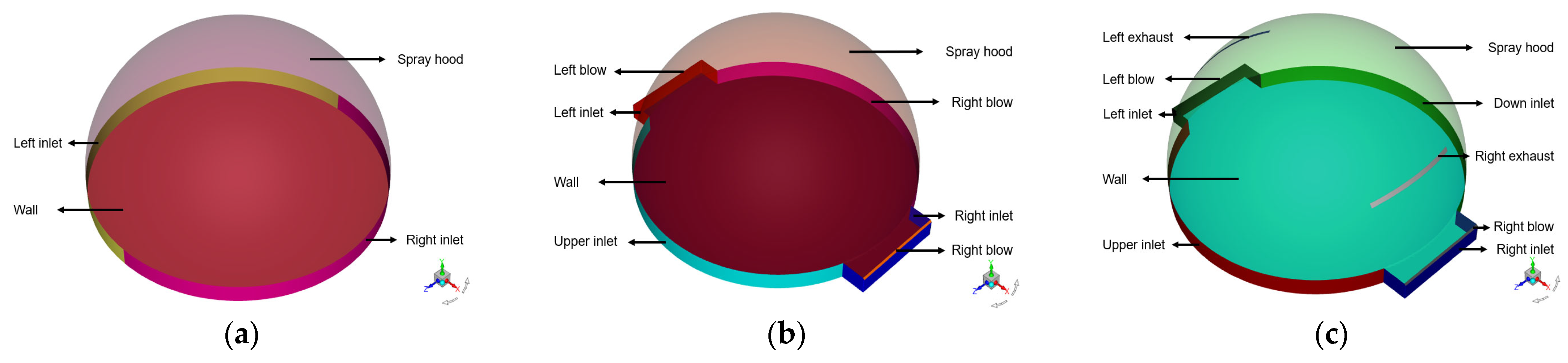
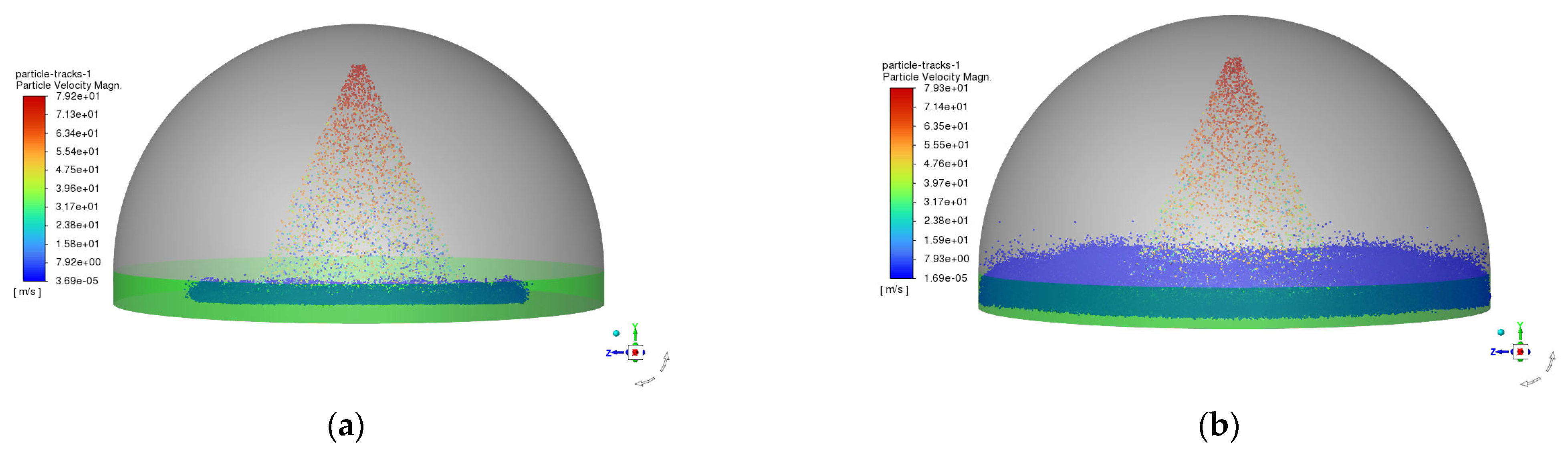
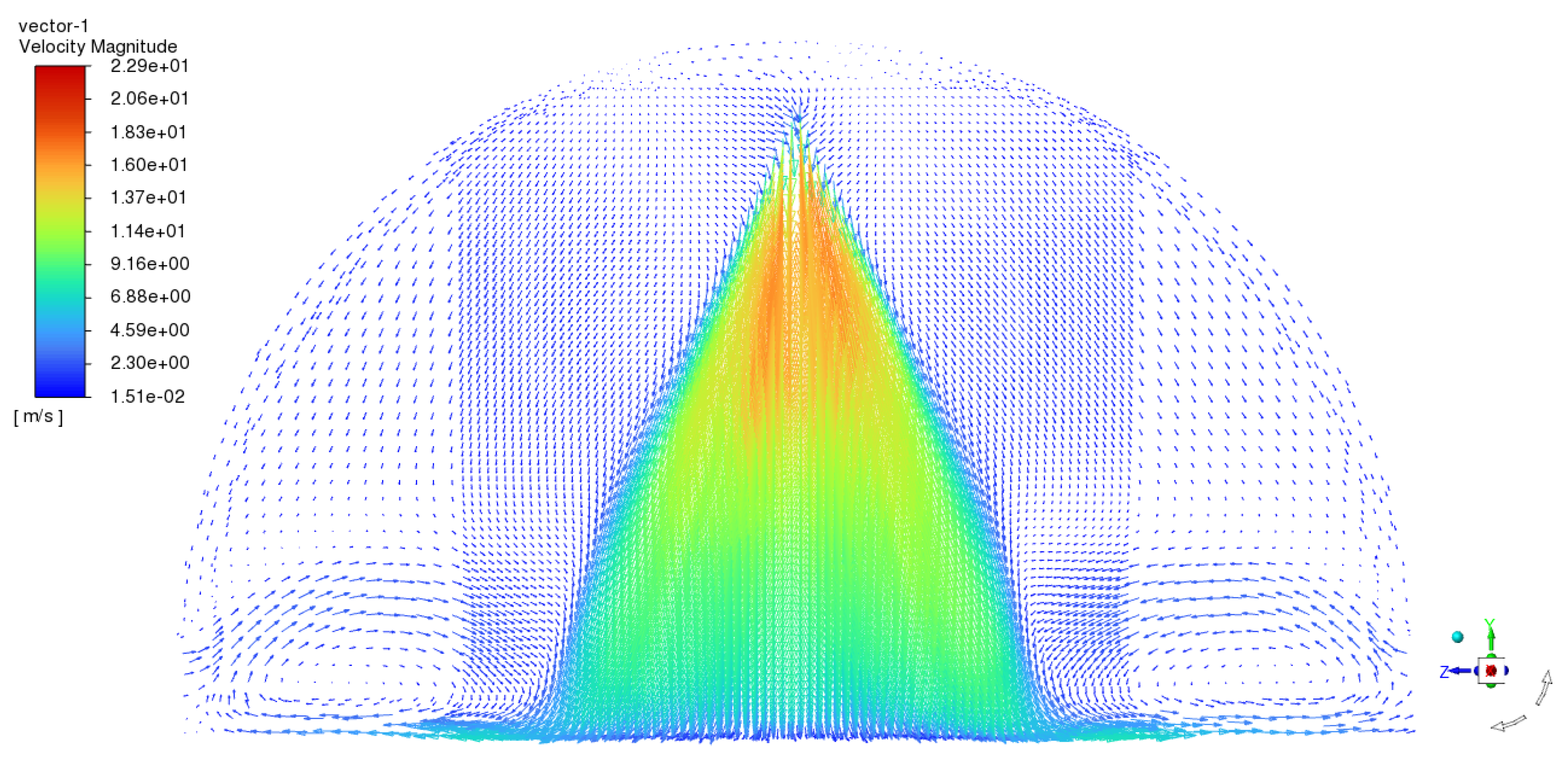
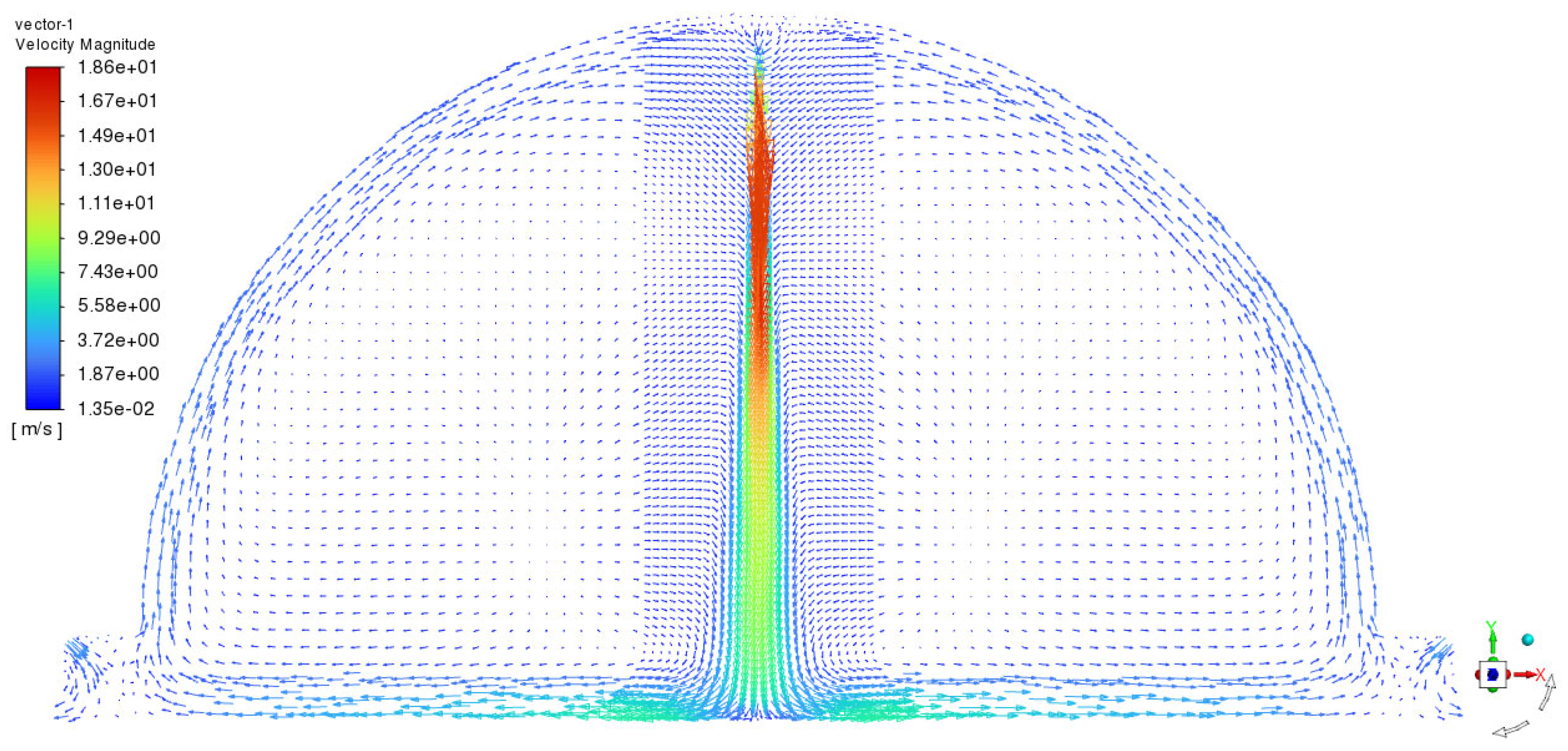

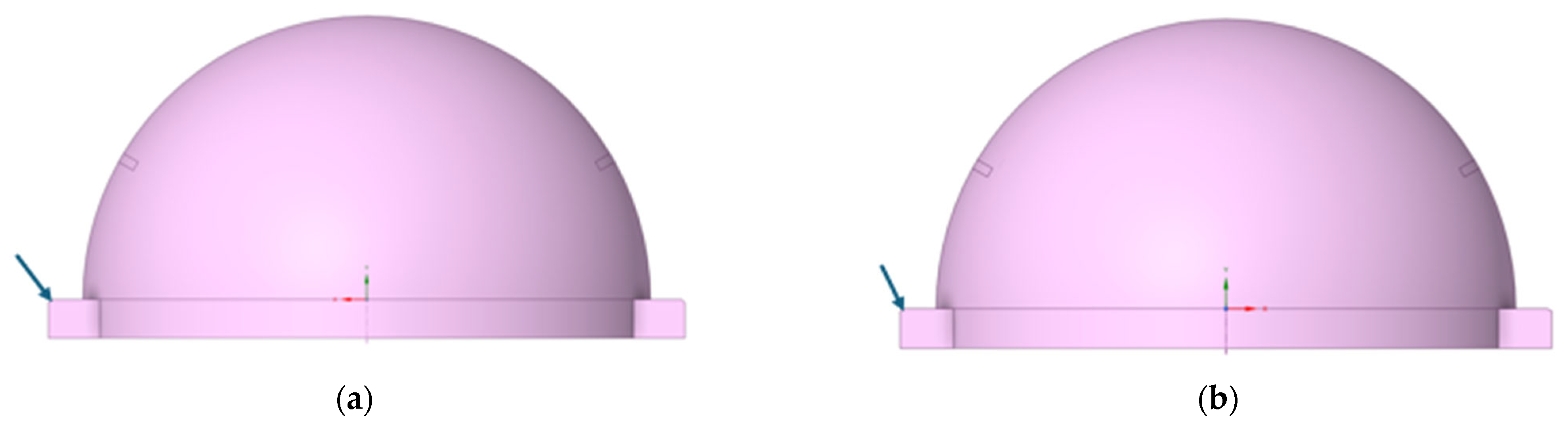

| Model | Blowing Angle | Exhaust Type | Exhaust Angle | Exhaust Size | Blowing Slot Size |
|---|---|---|---|---|---|
| A | None | None | - | - | - |
| B | 45° | None | - | - | 20 cm × 0.5 cm |
| C | 45° | Slit | 30° | 20 cm × 1 cm | 20 cm × 0.5 cm |
| D | 60° | Slit | 30° | 20 cm × 1 cm | 20 cm × 0.5 cm |
| Model | Z Direction | X Direction |
|---|---|---|
| A | 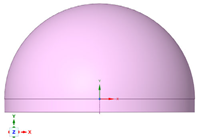 | 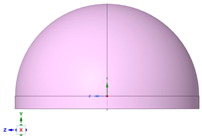 |
| B | 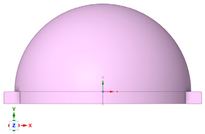 | 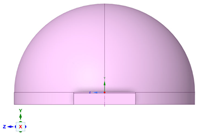 |
| C | 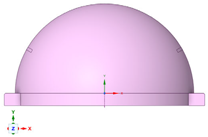 | 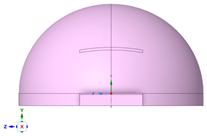 |
| D | 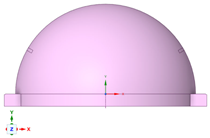 | 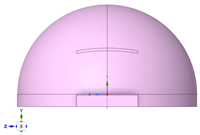 |
| Maximum Element Size | Minimum Element Size | Number of Cells | Wall Flow Rate (g/s) | Hood Flow Rate (g/s) | Escape Flow Rate (g/s) |
|---|---|---|---|---|---|
| 0.012 | 0.004 | 284,145 | 7.16 | 2.52 | 1.42 |
| 0.01 | 0.003 | 445,963 | 7.28 | 2.45 | 1.37 |
| 0.008 | 0.002 | 638,420 | 7.29 | 2.44 | 1.37 |
| Material Type | Material | Density | Viscosity (kg/m∙s) | Droplet Surface Tension (N/m) |
|---|---|---|---|---|
| Fluid | Air | 1.225 | 1.7894 × 10⁻⁵ | - |
| Solid | High-carbon steel | 7810 | - | - |
| Insert particle | Water | 998.2 | 0.001003 | 0.0719404 |
| Parameters | Value |
|---|---|
| X center (mm) | 0 |
| Y center (mm) | 280 |
| Z center (mm) | 0 |
| X virtual origin (mm) | 0 |
| Y virtual origin (mm) | 280.56 |
| Z virtual origin (mm) | 0 |
| X fan normal vector (mm) | 1 |
| Y fan normal vector (mm) | 0 |
| Z fan normal vector (mm) | 0 |
| Mass flow rate (g/s) | 11.8 |
| Start time (s) | 0 |
| Stop time (s) | 1 |
| Spray half angle (deg) | 25 |
| Orifice width (mm) | 0.3 |
| Flat-fan sheet constant | 3 |
| Atomizer dispersion angle | 6 |
| Equipment | Parameters |
|---|---|
| Wall | High-carbon steel |
| Spray nozzle | 525 model |
| Spray angle 50° | |
| Sprayer diameter 0.0635 cm | |
| Spray hood | 29.3 cm × 29.3 cm |
| Spray pressure | 150 psi |
| Blowing | 500 L/min |
| Exhaust | 500 L/min |
| Boundary Name | DPM Boundary Condition Type | Flow Boundary Type | Setting |
|---|---|---|---|
| Left inlet | Escaped | Pressure inlet | 0 Pa |
| Right inlet | Escaped | ||
| Spray hood | Trap | - | - |
| Wall | Wall Film | - | Stationary |
| Sprayer | Flat-fan atomizer model | Mass flow rate | 11.8 g/s |
| Boundary Name | DPM Boundary Condition Type | Mass Flow Rate (g/s) (Percentage) | ||
|---|---|---|---|---|
| 1 cm | 2 cm | 4 cm | ||
| Inlet | Escaped | 0.874 (7.4%) | 1.488 (12.6%) | 2.566 (21.7%) |
| Spray hood | Trapped | 3.404 (28.8%) | 2.504 (21.2%) | 1.073 (9.1%) |
| Wall | Wall film | 7.522 (63.7%) | 7.811 (66.2%) | 8.161 (69.2%) |
| Total | - | 11.8 | ||
| Spray Distance (cm) | Hood Presence | Sprayer Flow Rate (g/s) | Hood Distance (cm) | Wall Flow Rate (g/s) (Percentage) | Hood Flow Rate (g/s) (Percentage) | Escape Flow Rate (g/s) (Percentage) |
|---|---|---|---|---|---|---|
| 30 | X | 11.1 | - | 11.1 | - | 3.71 (33.4%) |
| O | 2 | 7.28 (65.6%) | 2.45 (21.1%) | 1.37 (12.3%) | ||
| 32 | X | - | 7.55 (68%) | - | 3.55 (32%) | |
| O | 4 | 7.75 (69.8%) | 1.02 (9.2%) | 2.34 (21%) | ||
| 35 | X | - | 7.78 (70.1%) | - | 3.33 (29.9) | |
| O | 8 | 8.23 (74.1%) | 0.57 (5.1%) | 2.3 (20.7%) | ||
| 40 | X | - | 8.11 (73.1%) | - | 2.99 (26.9%) |
| Spray Distance (cm) | Hood Distance (cm) | Method | Sprayer Flow Rate (g/s) | Wall Flow Rate (g/s) (Percentage) | Hood Flow Rate (g/s) (Percentage) | Escaped Flow Rate (g/s) (Percentage) |
|---|---|---|---|---|---|---|
| 30 | 2 | Simulation | 11.8 | 7.811 (66.2%) | 2.501 (21.2%) | 1.488 (12.6%) |
| Experiment | 11.1 | 7.28 (65.6%) | 2.45 (22.1%) | 1.37 (12.3%) | ||
| 32 | 4 | Simulation | 11.8 | 8.161 (69.2%) | 1.073 (9.1%) | 2.566 (21.7) |
| Experiment | 11.1 | 7.75 (69.8%) | 1.02 (9.2%) | 2.34 (21%) |
| Boundary Name | DPM Boundary Condition Type | Flow Boundary Type | Setting | |
|---|---|---|---|---|
| Simulation 1 | Simulation 2 | |||
| Upper inlet | Escaped | Pressure inlet | 0 Pa | |
| Down inlet | ||||
| Left inlet | ||||
| Right inlet | ||||
| Left blow | Flow inlet | 250 L/min | 500 L/min | |
| Right blow | ||||
| Spray hood | Trap | - | - | |
| Wall | Wall Film | - | Stationary | |
| Sprayer | Flat-fan atomizer model | Mass flow rate | 11.8 g/s | |
| Boundary Name | DPM Boundary Condition Type | Mass Flow Rate (g/s) | |
|---|---|---|---|
| Simulation 1 | Simulation 2 | ||
| Upper inlet | Escaped | 0.5591 | 0.8346 |
| Down inlet | Escaped | 0.6993 | 0.9387 |
| Left inlet | Escaped | 0.4218 | 0.1499 |
| Right inlet | Escaped | 0.4224 | 0.1321 |
| Left blow | Escaped | 0 | 0 |
| Right blow | Escaped | 0 | 0 |
| Spray hood | Trap | 1.3773 | 1.5951 |
| Wall | Wall film | 8.318 | 8.148 |
| Total | - | 11.8 | |
| Boundary Name | DPM Boundary Condition Type | Mass Flow Rate (g/s) (Percentage) | |||
|---|---|---|---|---|---|
| Simulation 1 | Simulation 2 | Experiment 1 | Experiment 2 | ||
| Inlet | Escaped | 2.1026 (17.82%) | 2.0553 (17.42%) | 2.275 (20.49%) | 2.3241 (20.94%) |
| Spray hood | Trap | 1.3773 (11.67%) | 1.5951 (13.51%) | 1.182 (10.65%) | 1.2492 (11.25%) |
| Wall | Wall film | 8.318 (70.49%) | 8.148 (69.05%) | 7.643 (68.86%) | 7.5267 (67.8%) |
| Total | - | 11.8 | 11.1 | ||
| Boundary Name | DPM Boundary Condition Type | Flow Boundary Type | Setting |
|---|---|---|---|
| Upper inlet | Escaped | Pressure inlet | 0 Pa |
| Down inlet | |||
| Left inlet | |||
| Right inlet | |||
| Left blow | Flow inlet | 500 L/min | |
| Right blow | |||
| Exhaust | Flow outlet | 1000 L/min | |
| Spray hood | Trap | - | - |
| Wall | Wall Film | - | Stationary |
| Sprayer | Flat-fan atomizer model | Mass flow rate | 11.8 g/s |
| Boundary Name | DPM Boundary Condition Type | Mass Flow Rate (g/s) | |
|---|---|---|---|
| 45° | 60° | ||
| Upper inlet | Escaped | 0.7589 | 0.6831 |
| Lower inlet | Escaped | 0.8811 | 0.7332 |
| Left inlet | Escaped | 0.1531 | 0.0803 |
| Right inlet | Escaped | 0.1329 | 0.08627 |
| Left blow | Escaped | 0 | 0 |
| Right blow | Escaped | 0 | 0 |
| Exhaust | Escaped | 0.0777 | 0.0759 |
| Spray hood | Trap | 1.6149 | 2.001 |
| Wall | Wall film | 8.181 | 8.14 |
| Total | - | 11.8 | |
| Boundary Name | DPM Boundary Condition Type | Mass Flow Rate (g/s) (Percentage) | |
|---|---|---|---|
| 45° | 60° | ||
| Right blow | Escaped | 1.926 (16.3%) | 1.5829 (13.4%) |
| Exhaust | Escaped | 0.0777 (0.6%) | 0.0759 (0.6%) |
| Spray hood | Trap | 1.6149 (13.7%) | 2.001 (17%) |
| Wall | Wall film | 8.181 (69.3%) | 8.14 (69%) |
| Total | - | 11.8 | |
Disclaimer/Publisher’s Note: The statements, opinions and data contained in all publications are solely those of the individual author(s) and contributor(s) and not of MDPI and/or the editor(s). MDPI and/or the editor(s) disclaim responsibility for any injury to people or property resulting from any ideas, methods, instructions or products referred to in the content. |
© 2026 by the authors. Licensee MDPI, Basel, Switzerland. This article is an open access article distributed under the terms and conditions of the Creative Commons Attribution (CC BY) license.
Share and Cite
Chen, Y.-H.; Huang, L.-T.; Hwang, S.-J.; Liao, H.-H.; Hsien, C.-H.; Chang, W.-T.; Hsu, M.-C.; Huang, Y.; Chuang, Y.-T. Overspray Containment Using an Air-Curtain Spray Hood in High-Pressure Airless Spray Coating with CFD Simulation and Experimental Validation. Technologies 2026, 14, 280. https://doi.org/10.3390/technologies14050280
Chen Y-H, Huang L-T, Hwang S-J, Liao H-H, Hsien C-H, Chang W-T, Hsu M-C, Huang Y, Chuang Y-T. Overspray Containment Using an Air-Curtain Spray Hood in High-Pressure Airless Spray Coating with CFD Simulation and Experimental Validation. Technologies. 2026; 14(5):280. https://doi.org/10.3390/technologies14050280
Chicago/Turabian StyleChen, Yu-Hsien, Li-Ting Huang, Sheng-Jye Hwang, Hsueh-Hao Liao, Chen-Han Hsien, Wei-Ting Chang, Ming-Chang Hsu, Yi Huang, and Yu-Ting Chuang. 2026. "Overspray Containment Using an Air-Curtain Spray Hood in High-Pressure Airless Spray Coating with CFD Simulation and Experimental Validation" Technologies 14, no. 5: 280. https://doi.org/10.3390/technologies14050280
APA StyleChen, Y.-H., Huang, L.-T., Hwang, S.-J., Liao, H.-H., Hsien, C.-H., Chang, W.-T., Hsu, M.-C., Huang, Y., & Chuang, Y.-T. (2026). Overspray Containment Using an Air-Curtain Spray Hood in High-Pressure Airless Spray Coating with CFD Simulation and Experimental Validation. Technologies, 14(5), 280. https://doi.org/10.3390/technologies14050280