
An Efficient Odor Source Localization Method for Wheeled Mobile Robots in Indoor Ventilated Environments


Abstract
1. Introduction
2. Materials and Methods
2.1. Z-Shaped Algorithm
2.2. Particle Filter Search Algorithm Based on a Smoke Plume Model
3. Results
3.1. Simulation and Results Analysis
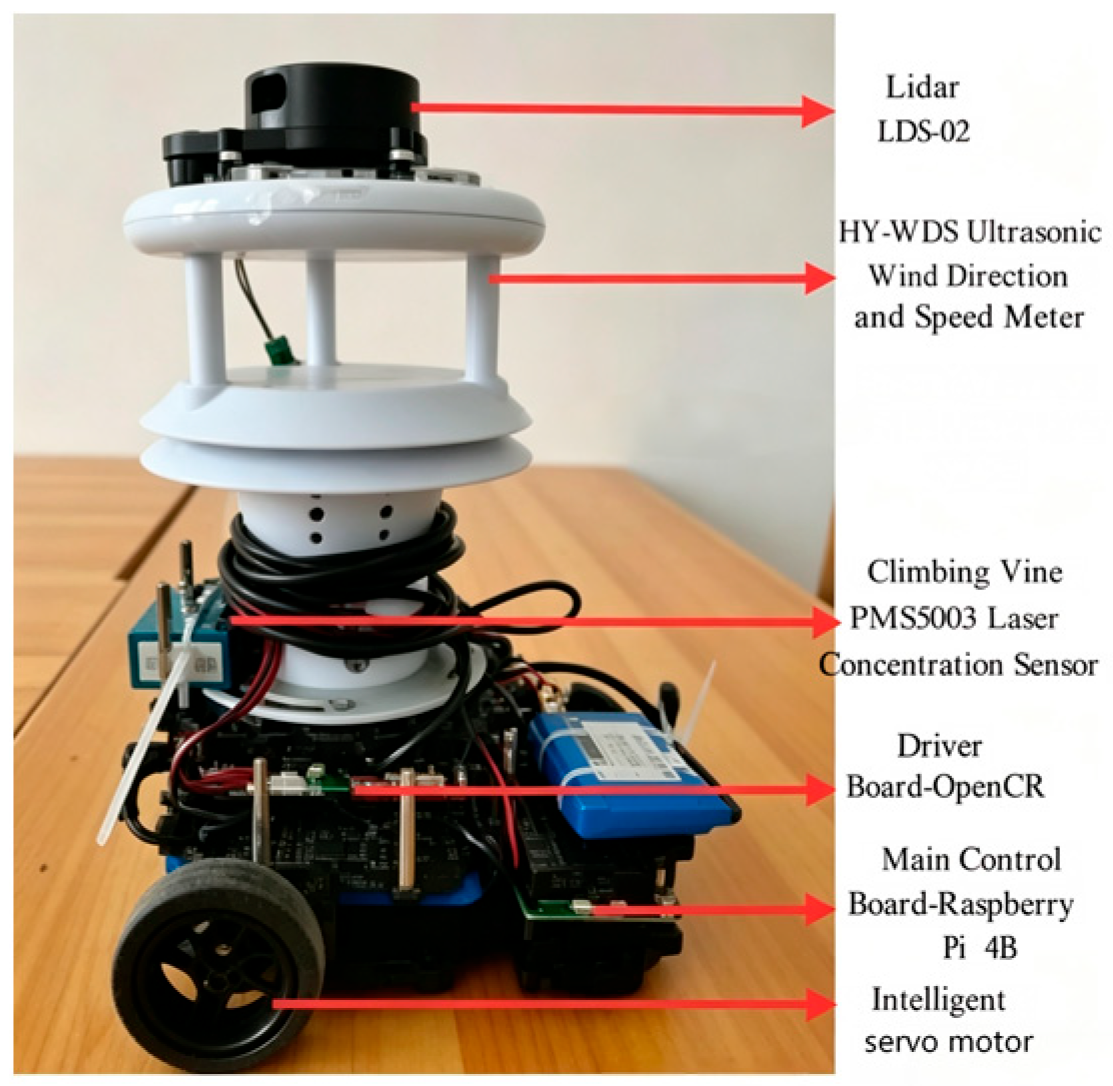
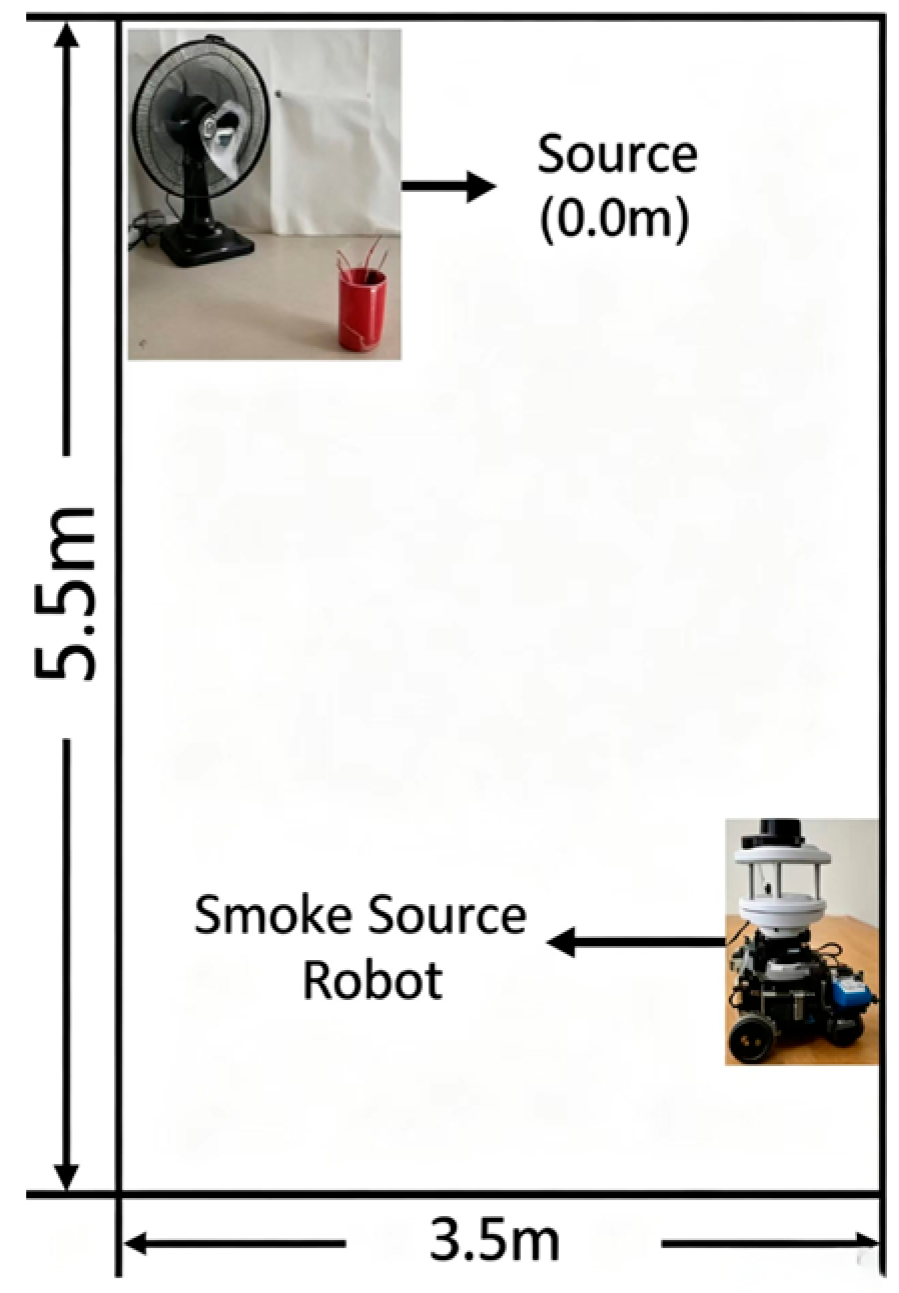
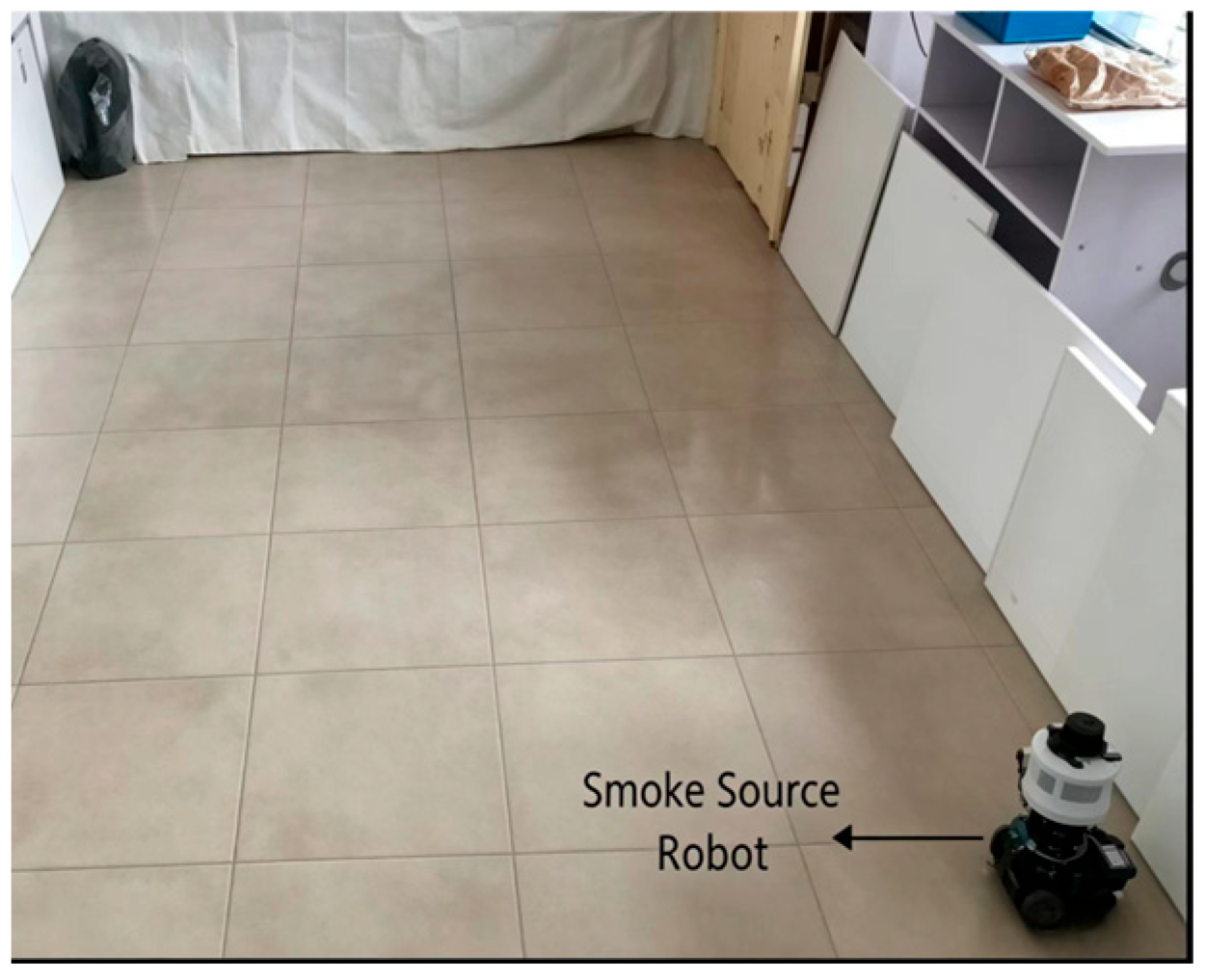
3.2. Experimental Platform Setup and Validation Analysis
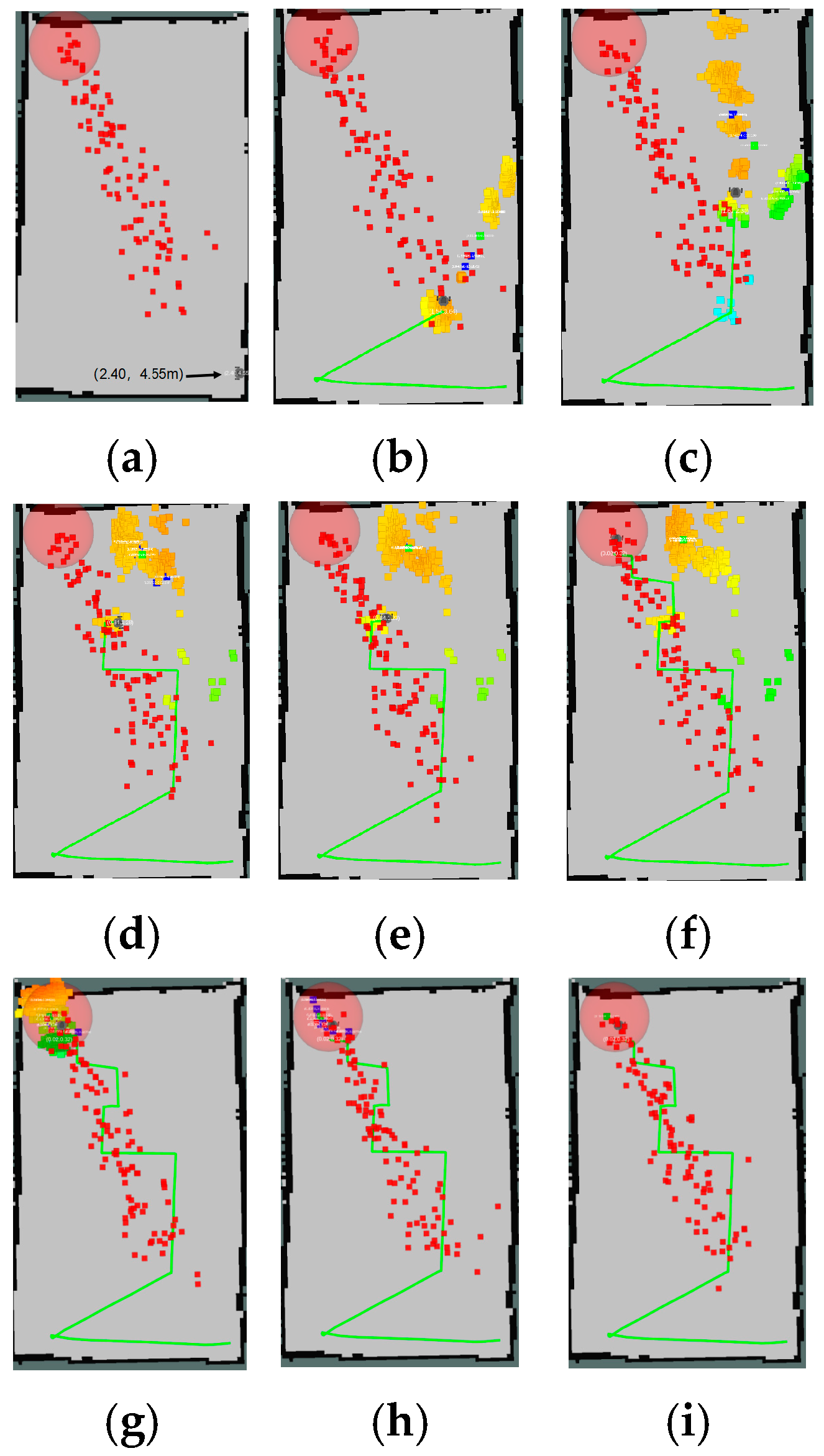
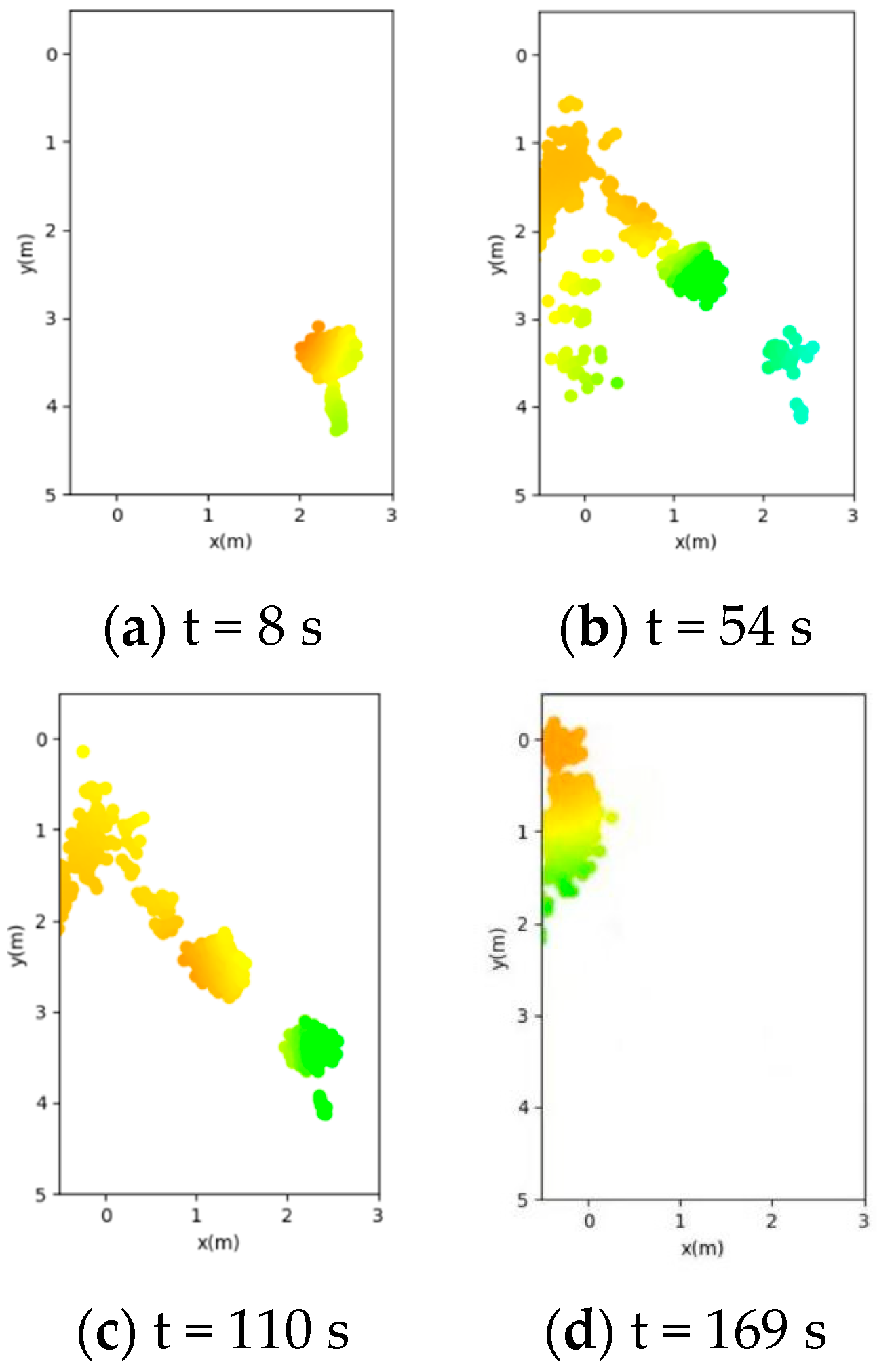
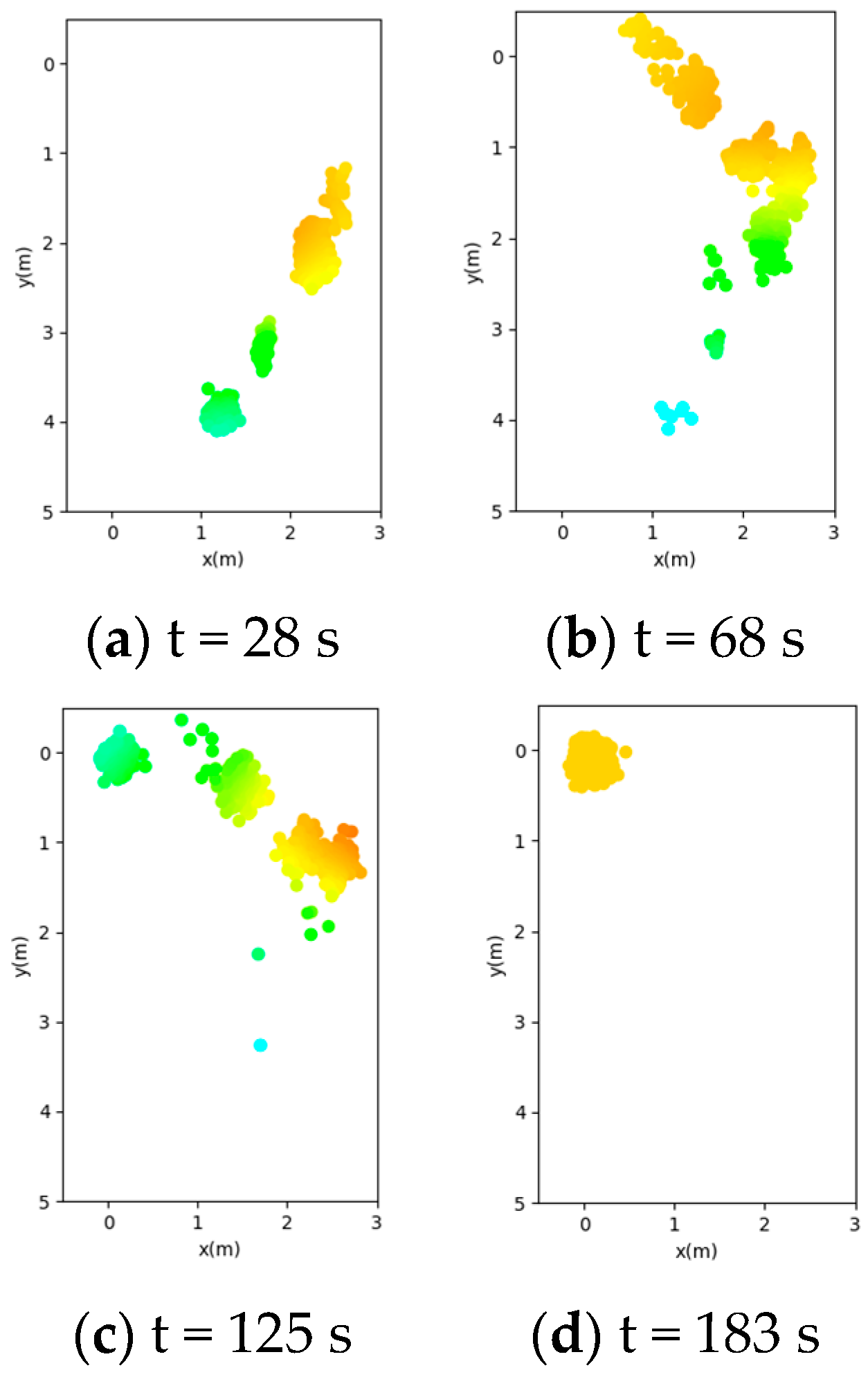
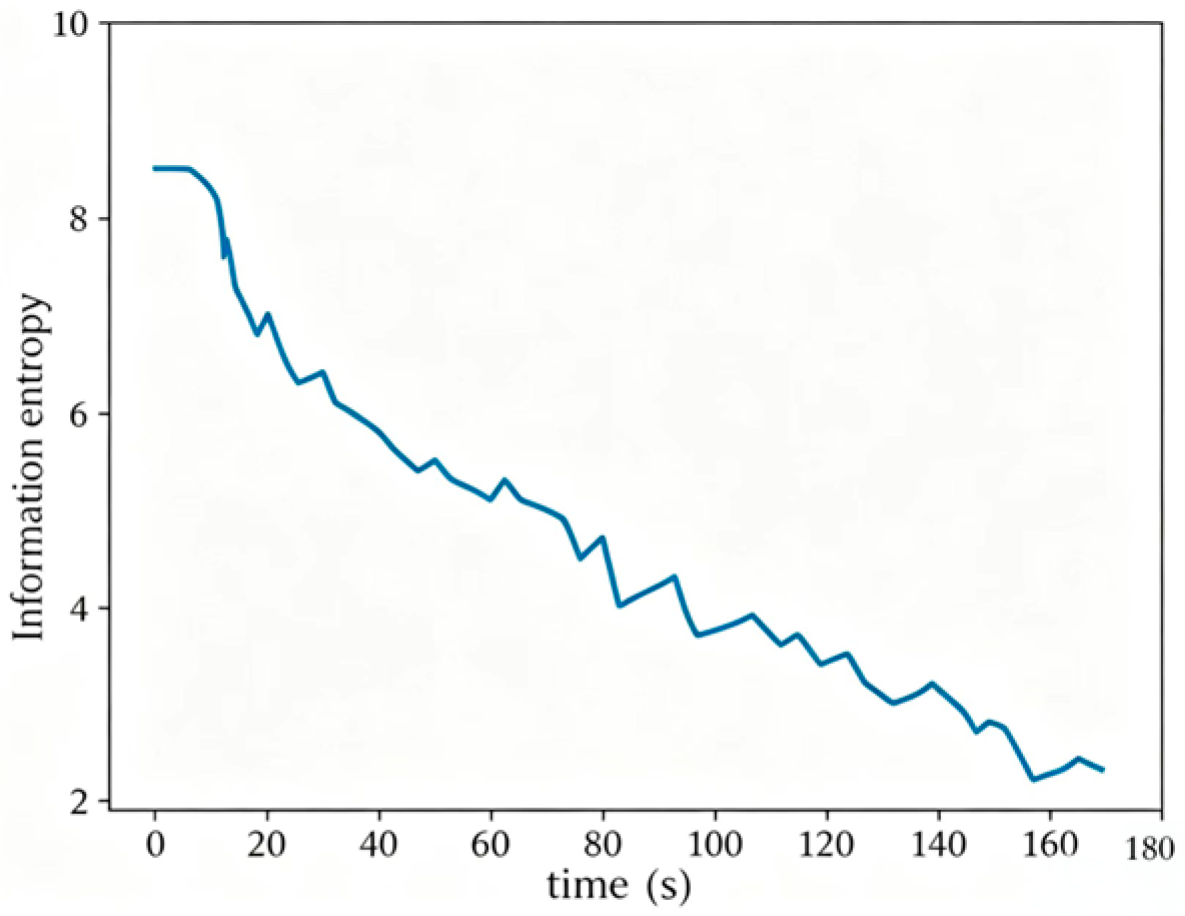
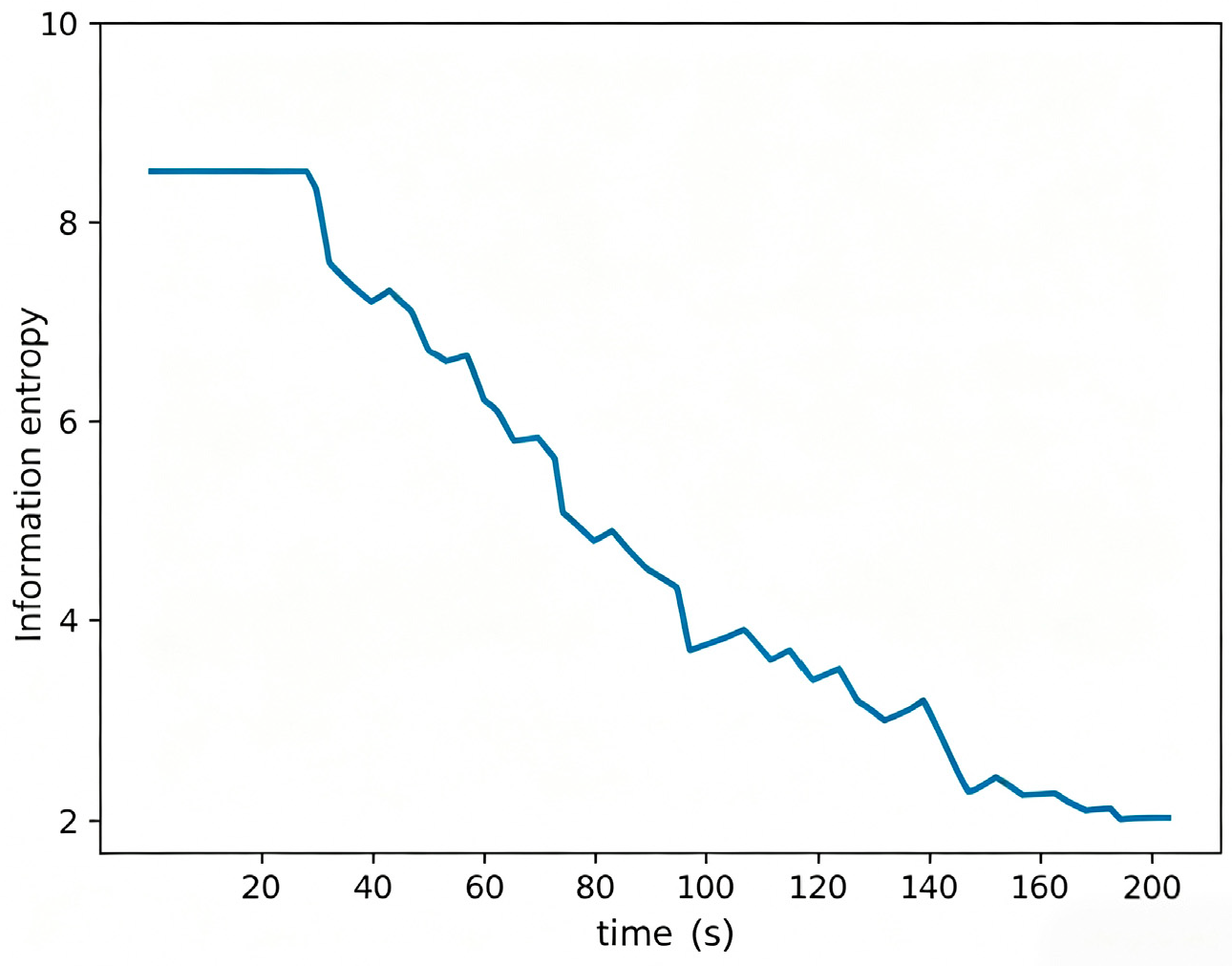
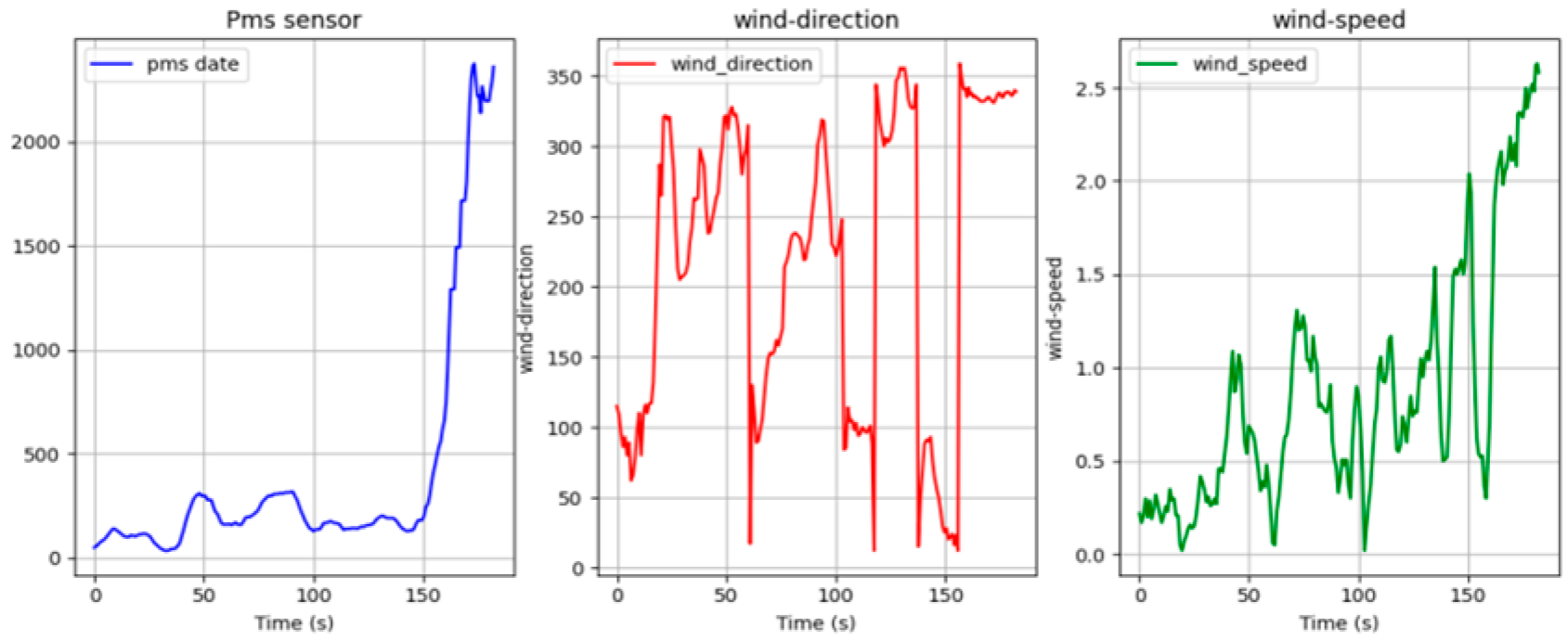
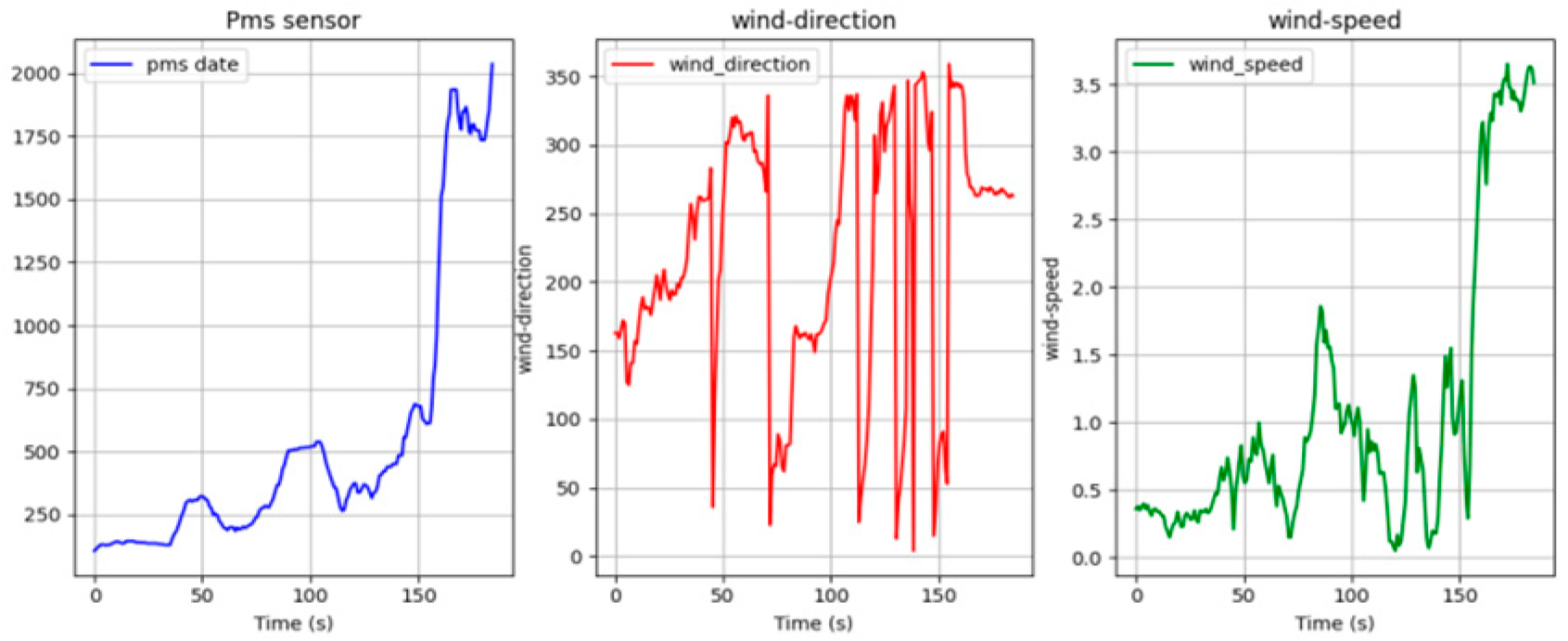
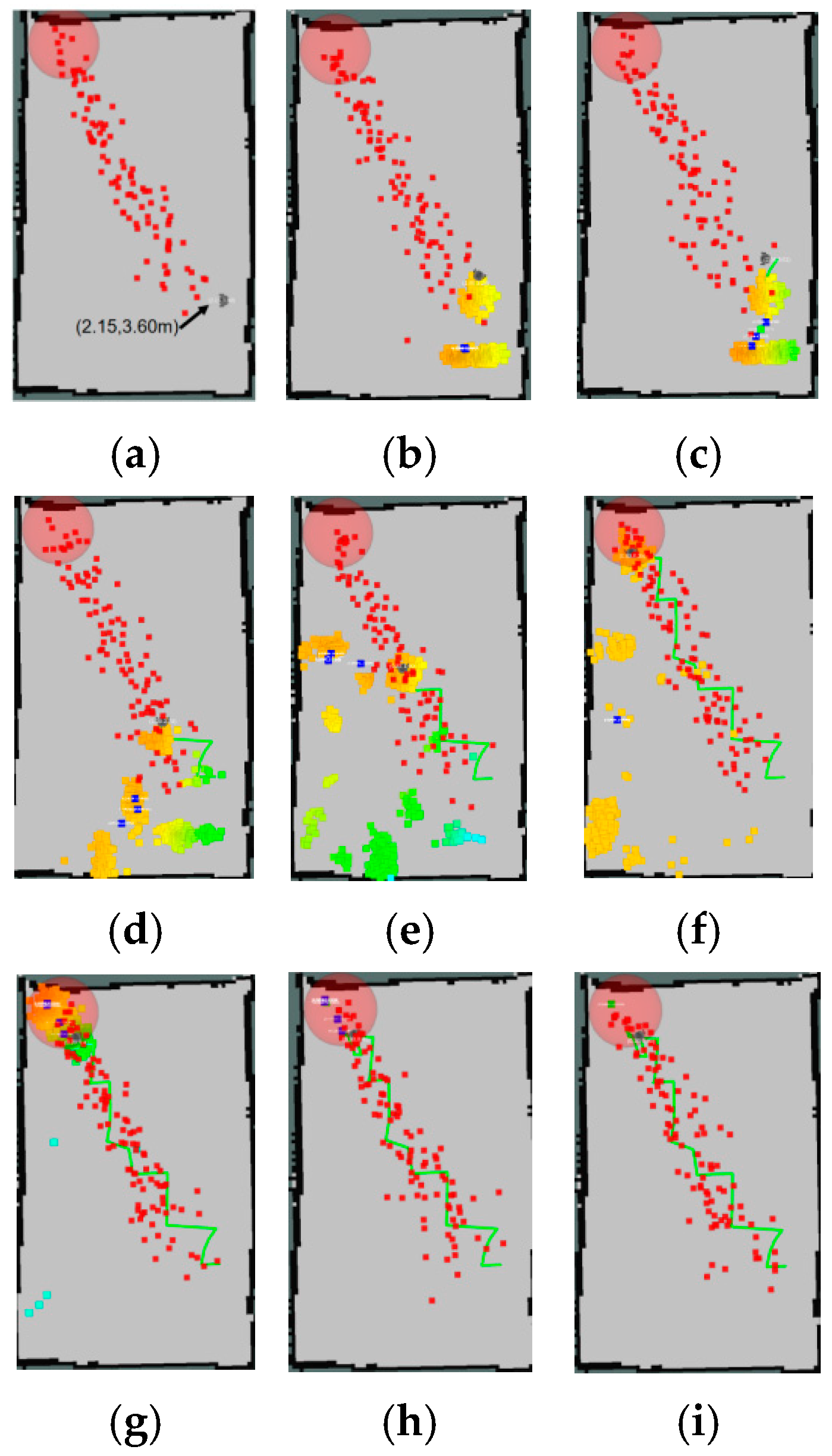
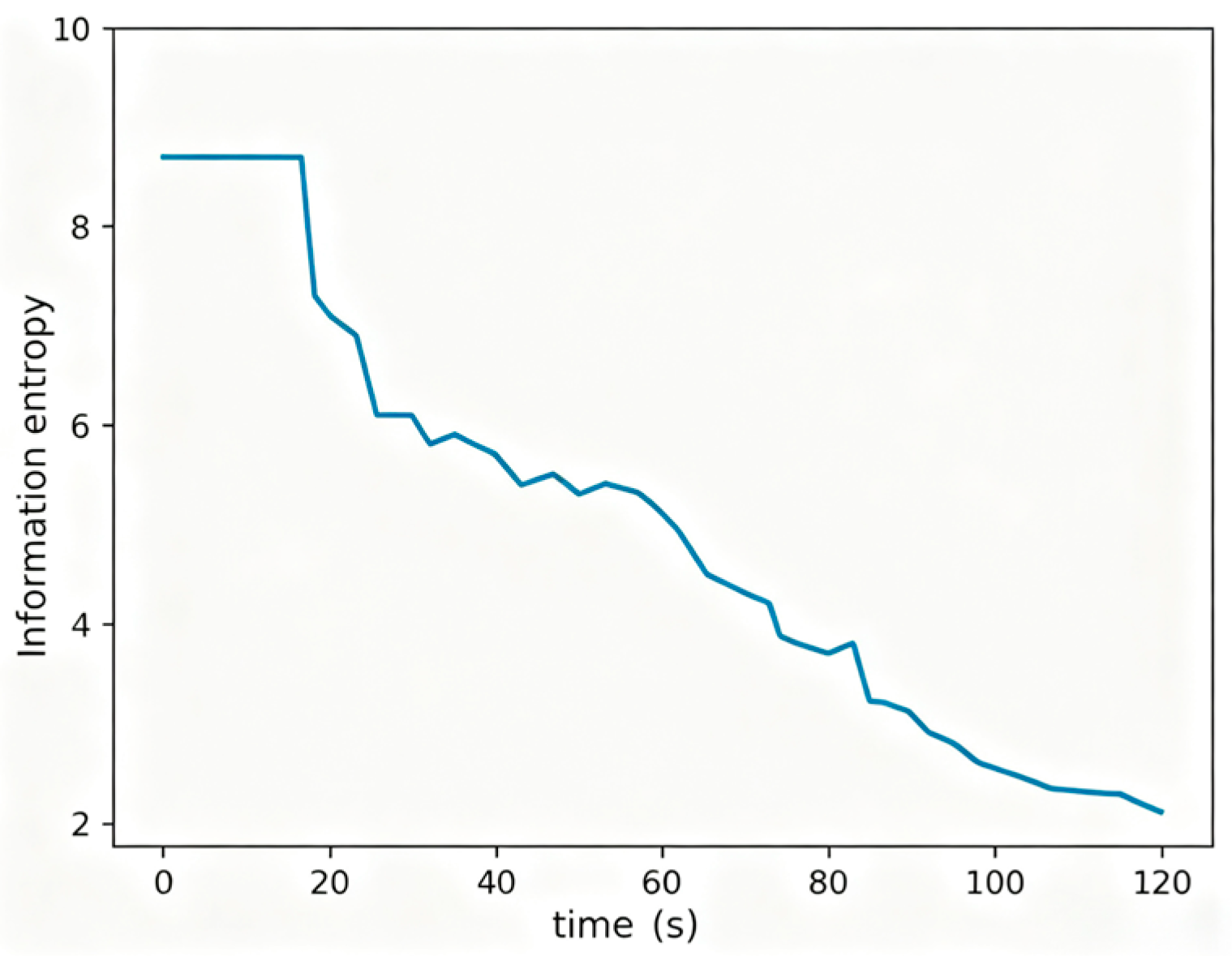
3.2.1. Particle Filter Algorithm Experiment
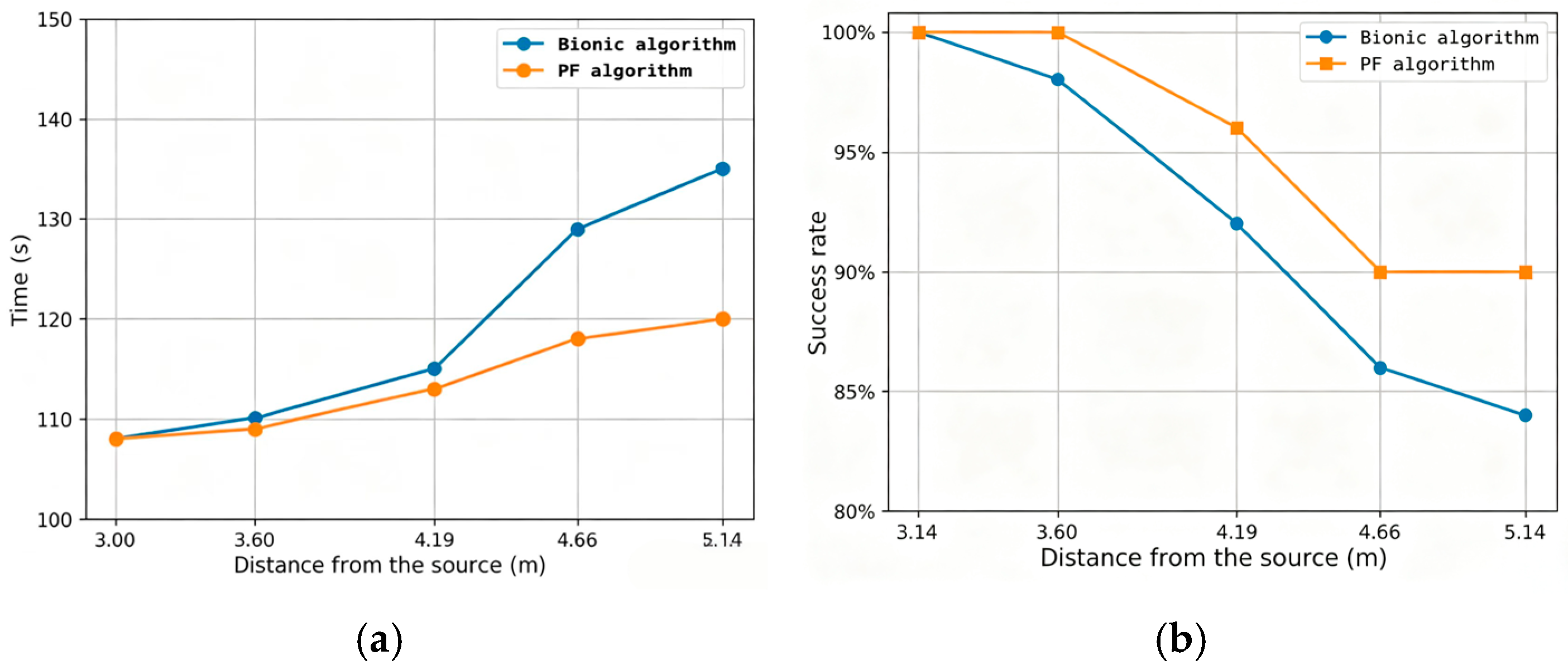
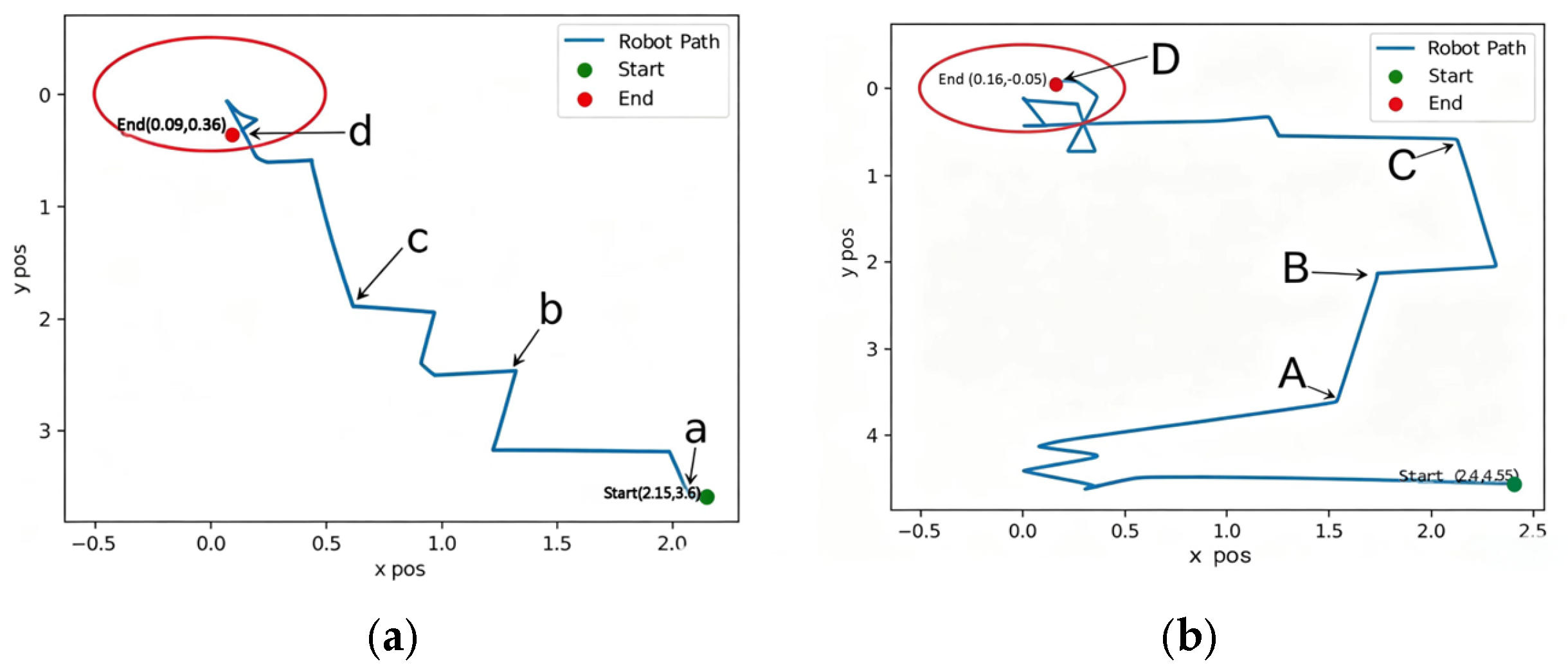
3.2.2. Analysis of Experimental Results
4. Discussion
Author Contributions
Funding
Institutional Review Board Statement
Informed Consent Statement
Data Availability Statement
Acknowledgments
Conflicts of Interest
Abbreviations
| OSL | Odor source localization |
| PF | Particle filtering |
References
- Russell, R.A. Locating underground chemical sources by tracking chemical gradients in 3 dimensions. In 2004 IEEE/RSJ International Conference on Intelligent Robots and Systems (IROS) (IEEE Cat. No.04CH37566); IEEE: New York, NY, USA, 2004. [Google Scholar] [CrossRef]
- Jain, U.; Kansal, V.; Kumari, S.; Dewangan, R.K.; Mishra, K.; Saroj , A. A Review of the Evolution of Mobile Robot Odor Source Localization Methods. Discov. Comput. 2025, 28, 44. [Google Scholar] [CrossRef]
- Zhao, B.; Yang, C.; Yang, X.; Liu, S. Particle dispersion and deposition in ventilated rooms: Testing and evaluation of different Eulerian and Lagrangian models. Build. Environ. 2008, 43, 388–397. [Google Scholar] [CrossRef]
- Kowadlo, G.; Russell, R.A. Robot odor localization: A taxonomy and survey. Int. J. Robot. Res. 2008, 27, 869–894. [Google Scholar] [CrossRef]
- Hayes, A.T.; Martinoli, A.; Goodman, R.M. Distributed odor source localization. IEEE Sens. J. 2002, 2, 260–271. [Google Scholar] [CrossRef]
- Jia, Y.; Fan, S.; Cui, W.; Di, C.; Hao, Y. A Novel Distributed Hybrid Cognitive Strategy for Odor Source Location in Turbulent and Sparse Environment. Entropy 2025, 27, 826. [Google Scholar] [CrossRef]
- Li, W.; Farrell, J.A.; Pang, S. Moth-Inspired Chemical Plume Tracing on an Autonomous Underwater Vehicle. IEEE Trans. Robot. 2006, 22, 292–307. [Google Scholar] [CrossRef]
- Farrell, J.A.; Pang, S.; Li, W. Chemical Plume Tracing via an Autonomous Underwater Vehicle. IEEE J. Ocean. Eng. 2005, 30, 428–442. [Google Scholar] [CrossRef]
- Pang, S.; Farrell, J.A. Chemical Plume Source Localization. IEEE Trans. Syst. Man Cybern. Part B (Cybern.) 2006, 36, 1068–1080. [Google Scholar] [CrossRef]
- Montanaro, U.; Dixit, S.; Fallah, S. Towards Connected Autonomous Driving: Review of Vehicle System Dynamics. Veh. Syst. Dyn. 2019, 57, 779–814. [Google Scholar] [CrossRef]
- Wang, L.; Ren, Z.; Fan, S.; Zhang, Y. A Novel Hybrid Information-Based PF-WOA Algorithm for Gas Source Localization in 3D Space. Robotica 2024, 42, 3748–3767. [Google Scholar] [CrossRef]
- Vergassola, M.; Villermaux, E.; Shraiman, B.I. Infotaxis as a Strategy for Searching Without Gradients. Nature 2007, 445, 406–409. [Google Scholar] [CrossRef] [PubMed]
- Numann, P.P.; Bennetts, V.H.; Lilienthal, A.J.; Bartholmai, M.; Schiller, J.H. Gas source localization with a micro-drone using bio-inspired and particle filter-based algorithms. Adv. Robot. 2013, 27, 725–738. [Google Scholar] [CrossRef]
- Villarreal, B.L.; Gordillo, J.L. Directional Aptitude Analysis in Odor Source Localization Techniques for Rescue Robots Applications. In 10th Mexican International Conference on Artificial Intelligence; IEEE: Puebla, Mexico, 2011; pp. 109–114. [Google Scholar] [CrossRef]
- Chen, X.X.; Huang, J. Odor Source Localization Algorithms on Mobile Robots: A Review and Future Outlook. Robot. Auton. Syst. 2019, 112, 123–136. [Google Scholar] [CrossRef]
- Shigaki, S.; Shiota, Y.; Kurabayashi, D. Modeling of the Adaptive Chemical Plume Tracing Algorithm of an Insect Using Fuzzy Inference. IEEE Trans. Fuzzy Syst. 2019, 28, 72–84. [Google Scholar] [CrossRef]
- Hutchinson, M.; Oh, H.; Chen, W.H. Entrotaxis as a strategy for autonomous search and source reconstruction in turbulent conditions. Inf. Fusion 2018, 42, 179–189. [Google Scholar] [CrossRef]
- Dunbabin, M.; Marques, L. Robots for Environmental Monitoring: Significant Advancements and Applications. IEEE Robot. Autom. Mag. 2012, 19, 24–39. [Google Scholar] [CrossRef]
- Soldan, S.; Bonow, G.; Kroll, A. Robogasinspector-A Mobile Robotic System for Remote Leak Sensing and Localization in Large Industrial Environments: Overview and First Results. IFAC Proc. Vol. 2012, 45, 33–38. [Google Scholar] [CrossRef]
- Liberzon, A.; Harrington, K.; Daniel, N.; Gurka, R.; Harari, A.; Zilman, G. Moth-inspired navigation algorithm in a turbulent odor plume from a pulsating source. PLoS ONE 2018, 13, e0198422. [Google Scholar] [CrossRef]
- Rahbar, F.; Marjovi, A.; Kibleur, P.; Martinoli, A. A 3-D bio-inspired odor source localization and its validation in realistic environmental conditions. In 2017 IEEE/RSJ International Conference on Intelligent Robots and Systems (IROS); IEEE: New York, NY, USA, 2017; pp. 3983–3989. [Google Scholar] [CrossRef]
- Jordan, M.I.; Mitchell, T.M. Machine learning: Trends, perspectives, and prospects. Science 2015, 349, 255–260. [Google Scholar] [CrossRef] [PubMed]
- Kim, H.; Park, M.; Kim, C.W.; Shin, D. Source localization for hazardous material release in an outdoor chemical plant via a combination of LSTM-RNN and CFD simulation. Comput. Chem. Eng. 2019, 125, 476–489. [Google Scholar] [CrossRef]
- Wang, L.; Pang, S.; Li, J. Olfactory-based navigation via model-based reinforcement learning and fuzzy inference methods. IEEE Trans. Fuzzy Syst. 2020, 29, 3014–3027. [Google Scholar] [CrossRef]
- Jiu, H.; Chen, Y.; Deng, W.; Pang, S. Underwater chemical plume tracing based on partially observable markov decision process. Int. J. Adv. Robot. Syst. 2019, 16, 1729881419831874. [Google Scholar] [CrossRef]
- Chen, Y.; Cai, H.; Chen, Z. Active olfactory localization method for indoor time-varying pollution sources. J. PLA Univ. Sci. Technol. (Nat. Sci. Ed.) 2016, 17, 257–263. [Google Scholar]
- Chen, X.; Huang, J. Combining particle filter algorithm with bio-inspired anemotaxis behavior: A smoke plume tracking method and its robotic experiment validation. Measurement 2020, 154, 107482. [Google Scholar] [CrossRef]
- Li, J.G.; Cao, M.L.; Meng, Q.H. Chemical Source Searching by Controlling a Wheeled Mobile Robot to Follow an Online Planned Route in Outdoor Field Environments. Sensors 2019, 19, 426. [Google Scholar] [CrossRef] [PubMed]
- Bennetts, V.H.; Lilienthal, A.J.; Neumann, P.; Trincavelli, M. Mobile robots for localizing gas emission sources on landfill sites: Is bio-inspiration the way to go? Front. Neuroeng. 2012, 4, 20. [Google Scholar] [CrossRef]







| Starting Point | Terminal | Estimated Average Position | Average Time (s) | Success Count | Success Rate |
|---|---|---|---|---|---|
| (2.15, 3.60 m) | (0.40, 0.35) | (0.31, 0.21) | 110 s | 47 | 94% |
| (2.40, 4.55 m) | (0.02, 0.32) | (0.10, 0.01) | 120 s | 45 | 90% |
| Starting Point | Number of Trials | Time | Endpoint | Estimated Position | Euclidean Distance | Successful |
|---|---|---|---|---|---|---|
| (2.15, 3.60) | 1 | 172 s | (0.24, 0.42) | (0.24, 0.12) | 0.26 | √ |
| 2 | 182 s | (0.01, 0.35) | (0.35, 0.14) | 0.37 | √ | |
| 3 | 176 s | (0.26, 0.24) | (0.17, 0.28) | 0.32 | √ | |
| 4 | 169 s | (0.09, 0.36) | (0.09, 0.12) | 0.15 | √ | |
| 5 | 165 s | (0.12, 0.24) | (0.34, 0.15) | 0.37 | √ |
| Starting Point | Number of Trials | Time | Endpoint | Estimated Position | Euclidean Distance | Successful |
|---|---|---|---|---|---|---|
| (2.40, 4.55) | 1 | 179 s | (0.34, 0.16) | (0.24, 0.34) | 0.41 | √ |
| 2 | 186 s | (0.24, 0.14) | (0.12, 0.28) | 0.09 | √ | |
| 3 | 183 s | (0.16, −0.05) | (0.02, 0.42) | 0.42 | √ | |
| 4 | 192 s | (0.27, 0.17) | (0.24, 0.37) | 0.44 | √ | |
| 5 | 187 s | (0.11, 0.31) | (0.41, 0.15) | 0.43 | √ |
| Algorithm | Starting Point | Average Time Spent | Success Rate |
|---|---|---|---|
| Concentration gradient algorithm | (2.15, 3.60 m) | 255.6 | 100% |
| Particle filtering algorithm | 172.8 | 100% |
| Algorithm | Starting Point | Average Time Spent | Success Rate |
|---|---|---|---|
| Concentration gradient algorithm | (2.40, 4.55 m) | 266.0 | 100% |
| Particle filtering algorithm | 185.4 | 100% |
Disclaimer/Publisher’s Note: The statements, opinions and data contained in all publications are solely those of the individual author(s) and contributor(s) and not of MDPI and/or the editor(s). MDPI and/or the editor(s) disclaim responsibility for any injury to people or property resulting from any ideas, methods, instructions or products referred to in the content. |
© 2026 by the authors. Licensee MDPI, Basel, Switzerland. This article is an open access article distributed under the terms and conditions of the Creative Commons Attribution (CC BY) license.
Share and Cite
Ye, X.; Guo, B.; Gu, Y.; Jiu, H.; Pang, S. An Efficient Odor Source Localization Method for Wheeled Mobile Robots in Indoor Ventilated Environments. Technologies 2026, 14, 279. https://doi.org/10.3390/technologies14050279
Ye X, Guo B, Gu Y, Jiu H, Pang S. An Efficient Odor Source Localization Method for Wheeled Mobile Robots in Indoor Ventilated Environments. Technologies. 2026; 14(5):279. https://doi.org/10.3390/technologies14050279
Chicago/Turabian StyleYe, Xutong, Boxuan Guo, Yujiao Gu, Haifeng Jiu, and Shuo Pang. 2026. "An Efficient Odor Source Localization Method for Wheeled Mobile Robots in Indoor Ventilated Environments" Technologies 14, no. 5: 279. https://doi.org/10.3390/technologies14050279
APA StyleYe, X., Guo, B., Gu, Y., Jiu, H., & Pang, S. (2026). An Efficient Odor Source Localization Method for Wheeled Mobile Robots in Indoor Ventilated Environments. Technologies, 14(5), 279. https://doi.org/10.3390/technologies14050279