
A Safety-Constrained Multi-Objective Optimization Framework for Autonomous Mining Systems: Statistical Validation in Surface and Underground Environments



Abstract
1. Introduction
Related Research
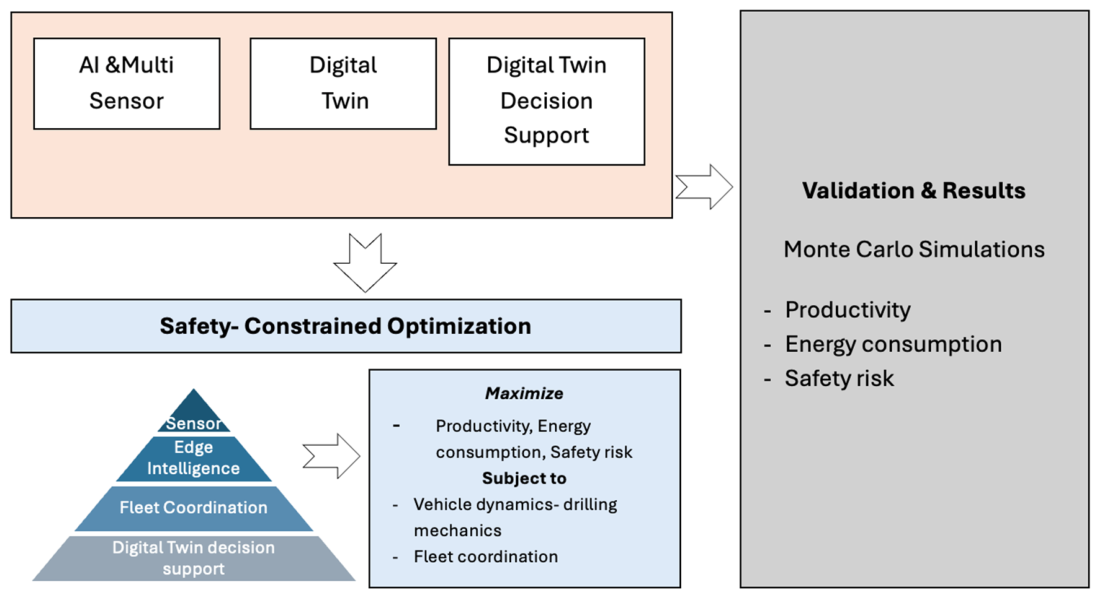
2. A System Architecture for Autonomous Mining System
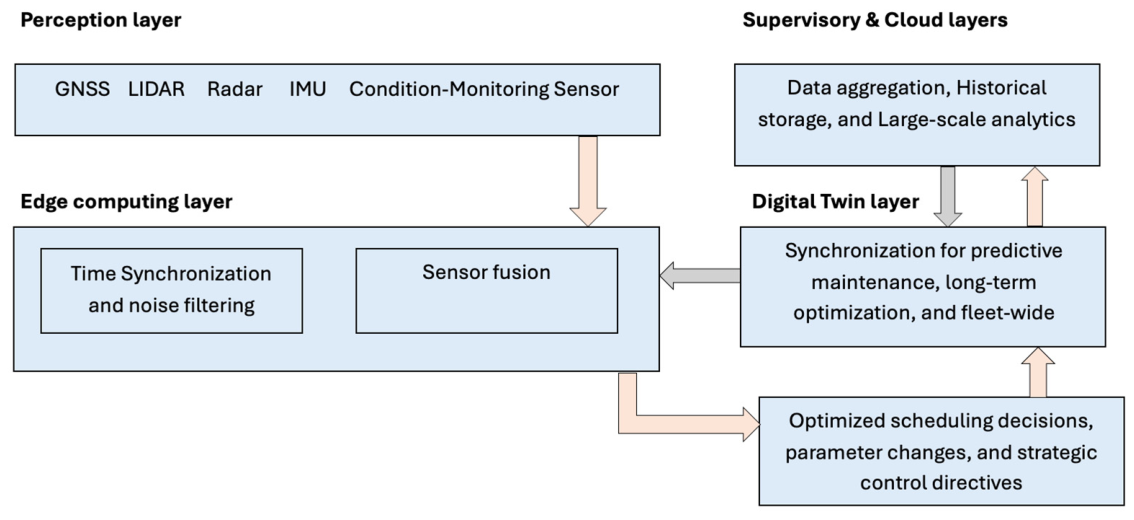
2.1. Field and Perception Layer
2.2. Edge Control and Communication Layer
2.3. Supervisory Control and Fleet Management
2.4. Digital Twin and Decision Support Layer
2.5. Real-Time Data Communication and Edge Intelligence
2.6. Architectural Implications of Mining Operations
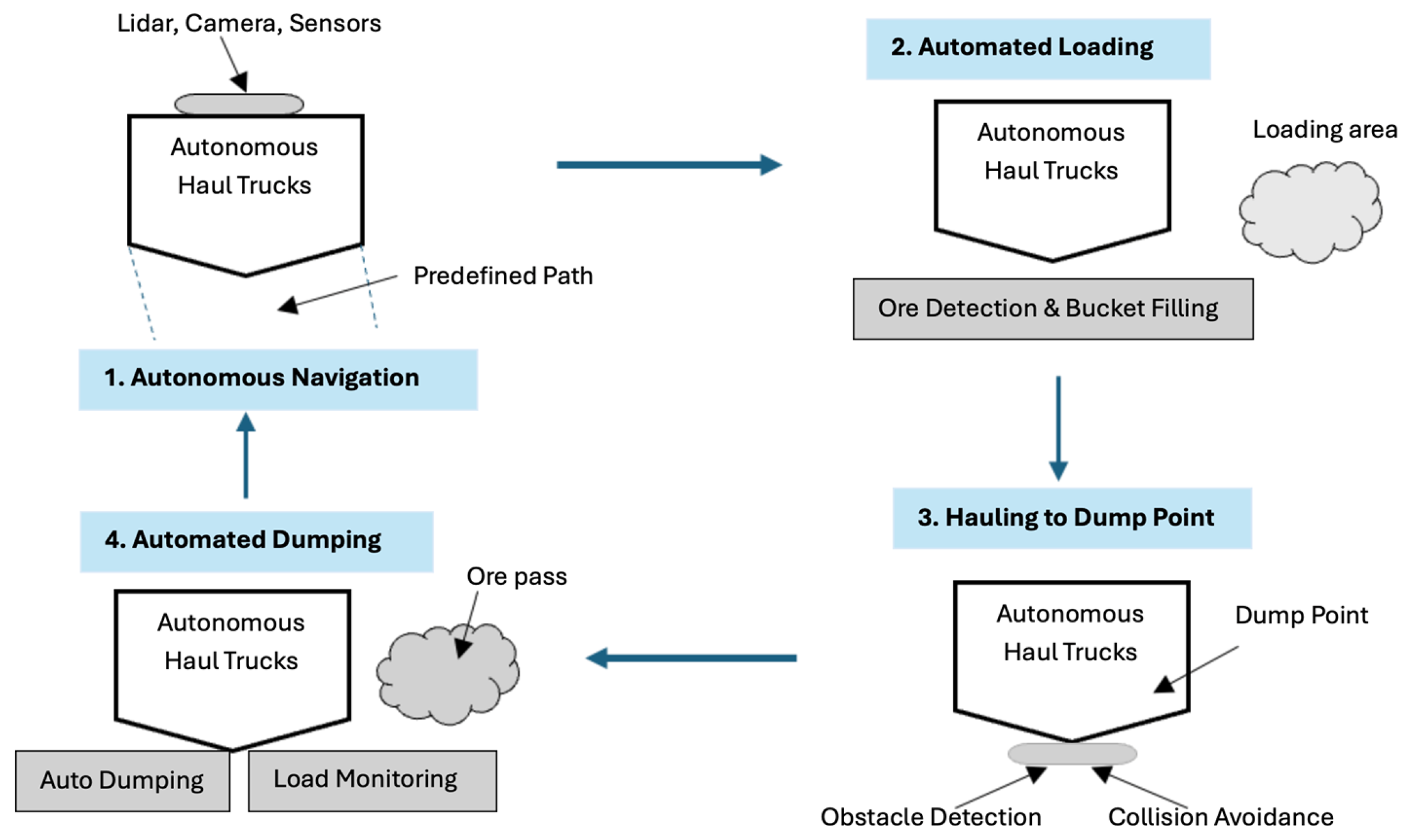
2.7. Operating Classification Mining Stages
2.8. Real-Time Data Flow and Edge–Cloud Interaction Mechanism
3. Mathematical Modeling: Autonomous Mining Systems
3.1. Sensor Fusion and Localization Model
- -
- GNSS signal-to-noise ratio (SNR) satellite visibility.
- -
- LiDAR feature density and scan-matching residual error.
- -
- IMU drift and bias instability.
- -
- Drop in satellite count (<4 satellites).
- -
- Increase in dilution of precision (DOP).
- -
- Rapid growth in GNSS covariance ().
3.2. Multi-Agent Fleet Coordination and Optimization
3.3. Drilling Dynamics and Rock Interaction Model
3.4. Safety and Reliability Modeling
3.5. Integrated System Objective Function
4. Autonomous Mining System Implementation
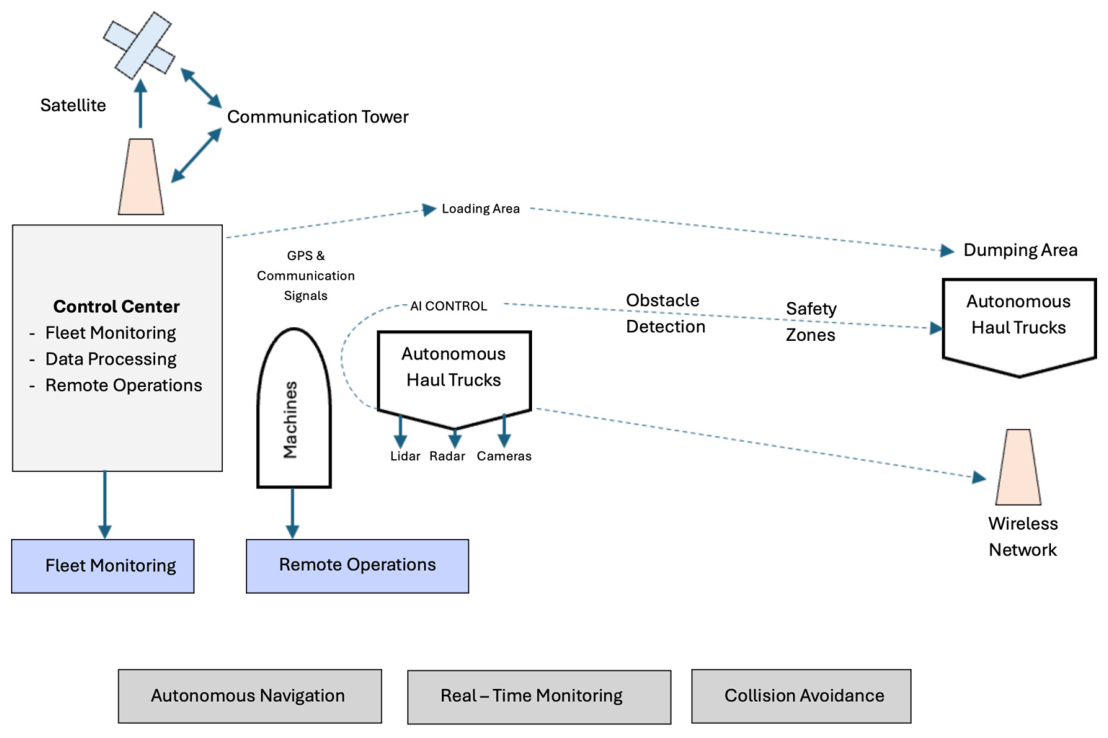
4.1. Surface Mining Systems
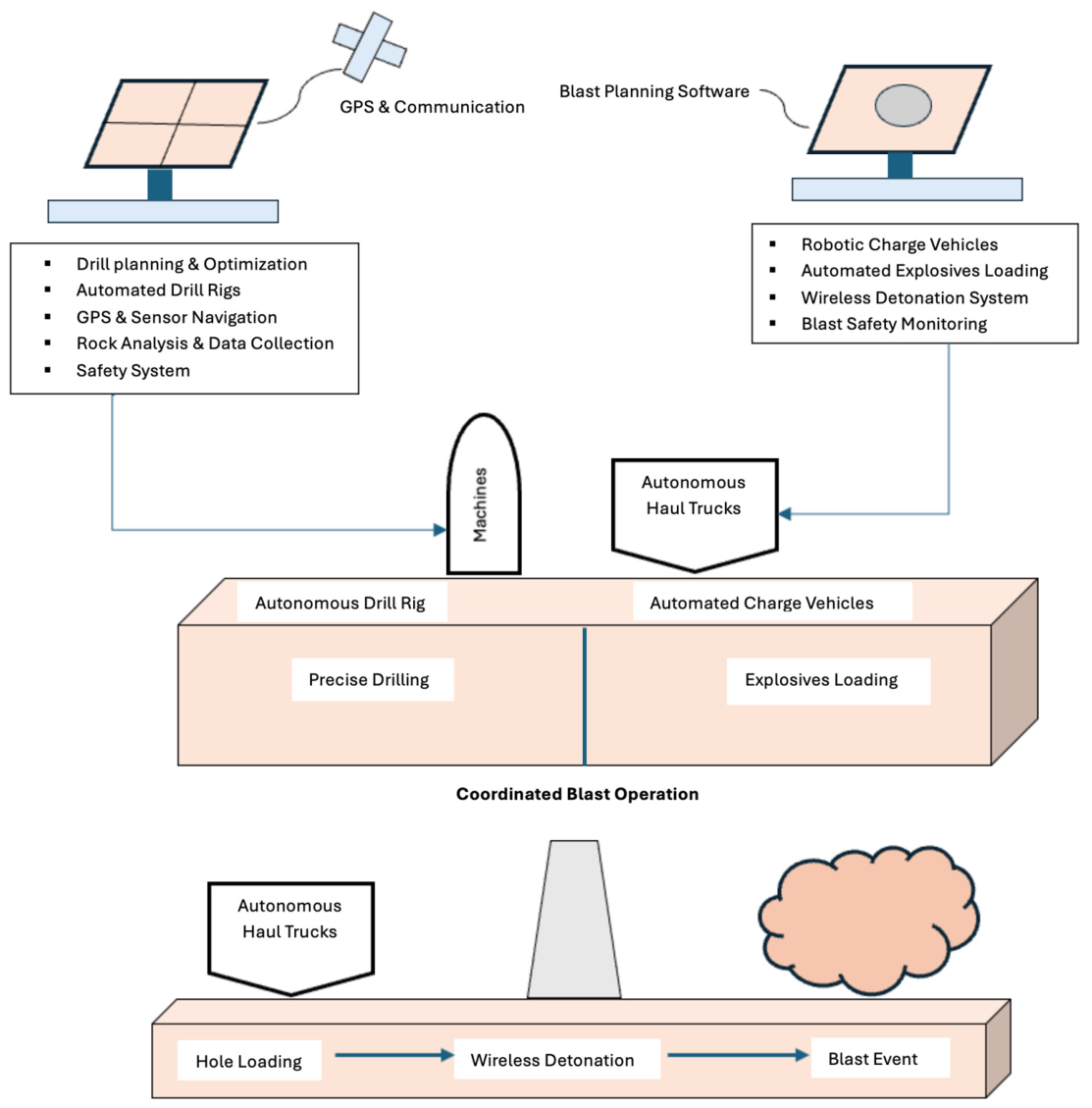
4.2. Underground Mining Systems
5. Simulation-Based Validation
5.1. Simulation Framework and Baseline Definition
5.2. Key Performance Indicators
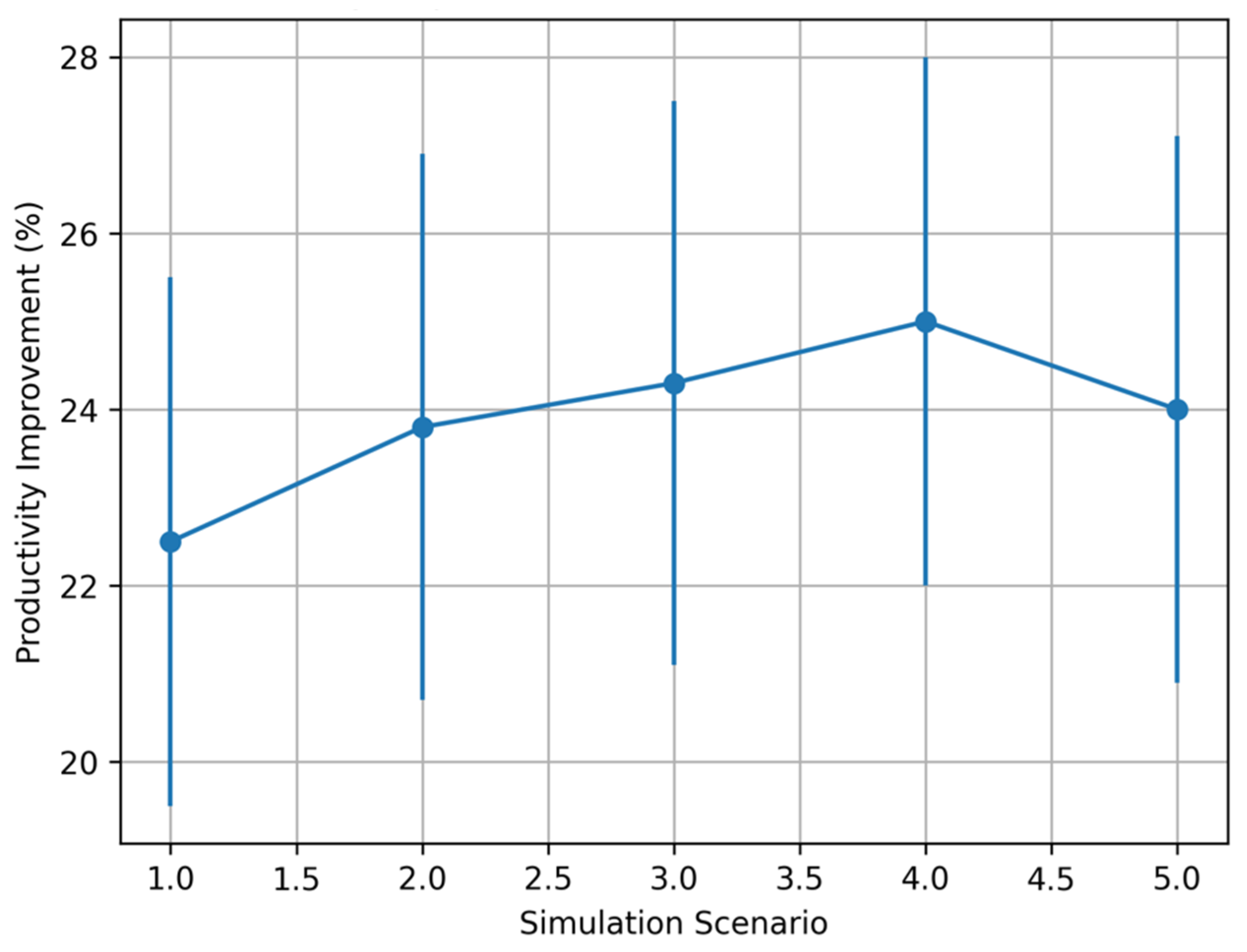
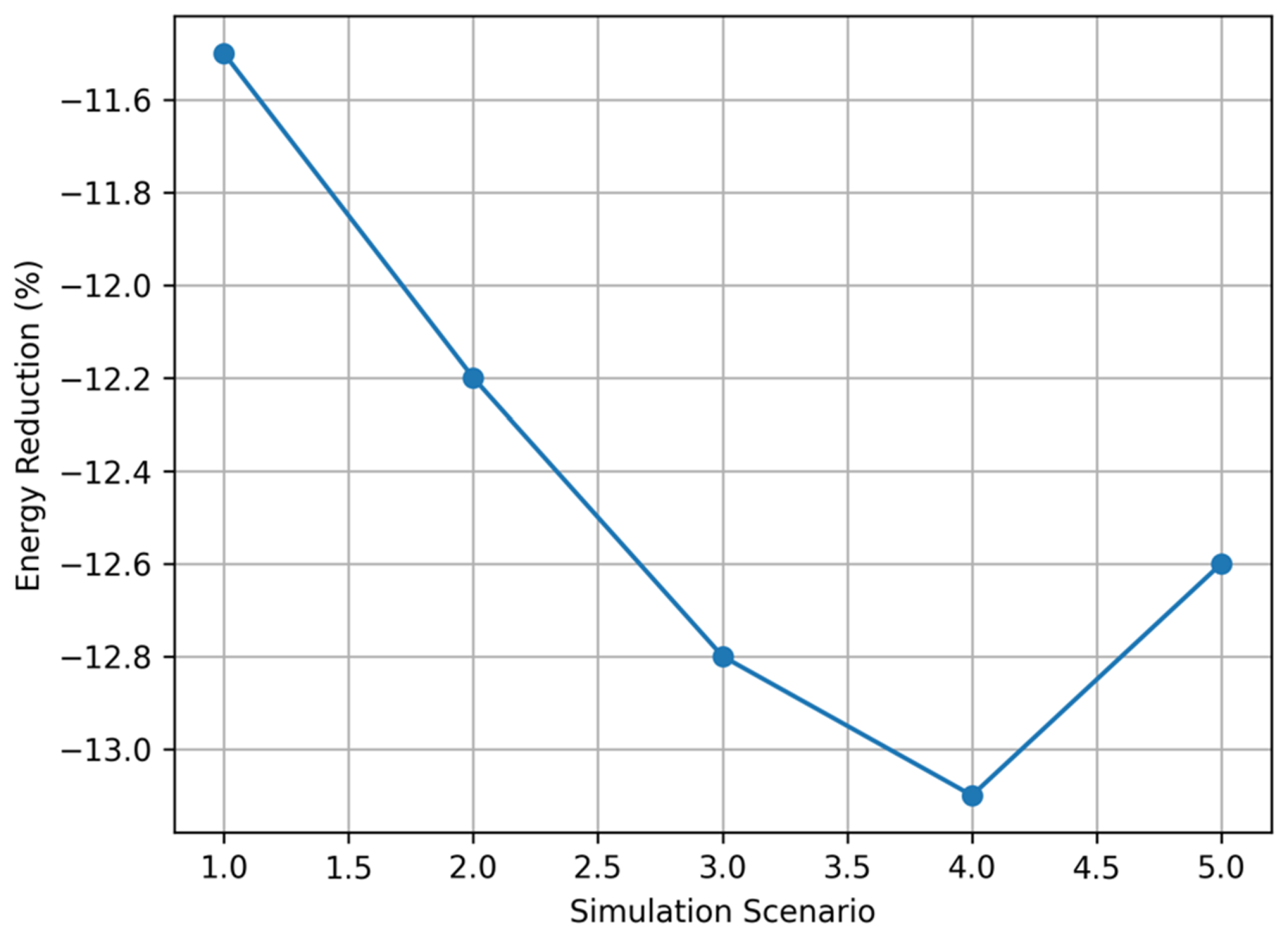
5.3. Statistical Validation Results
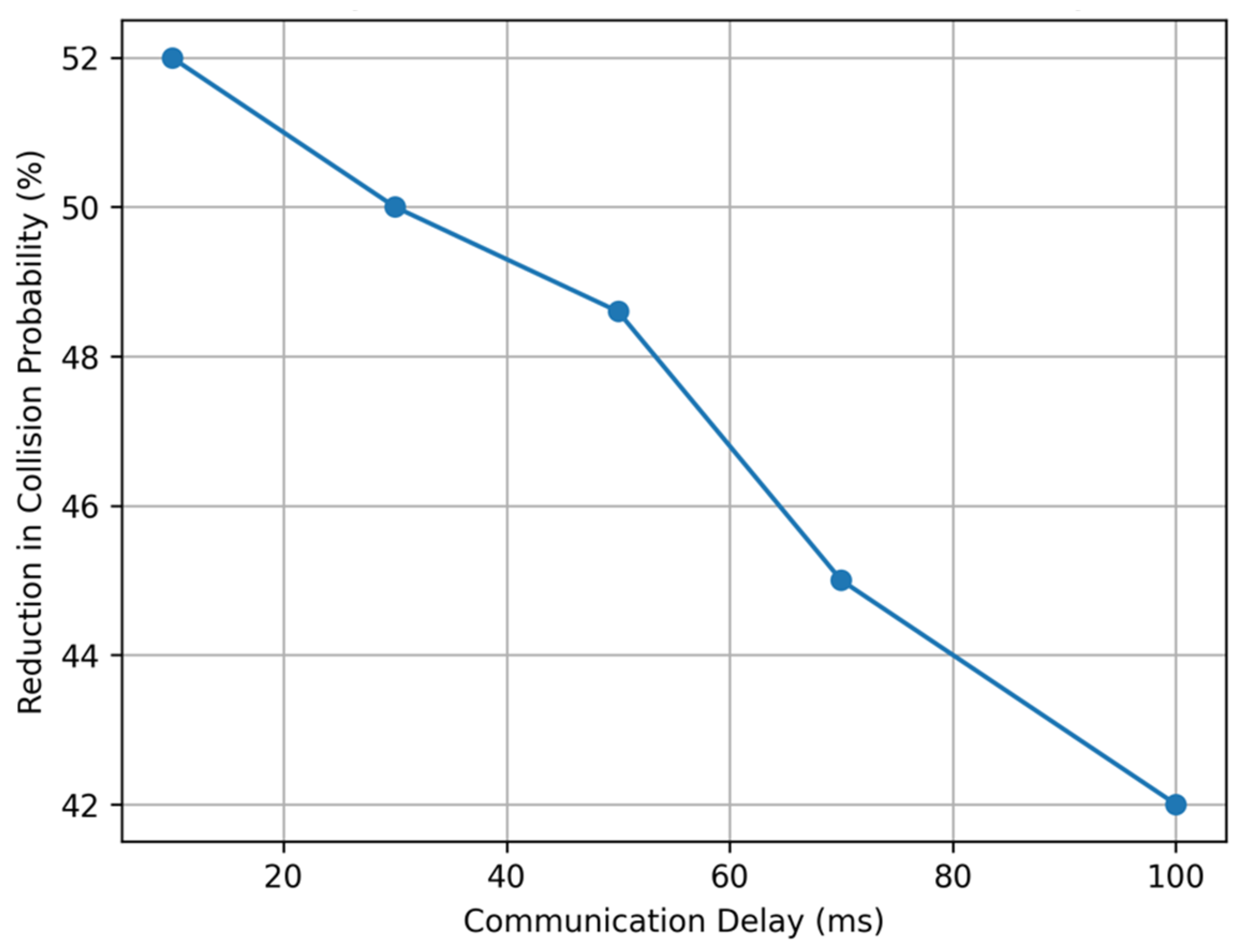
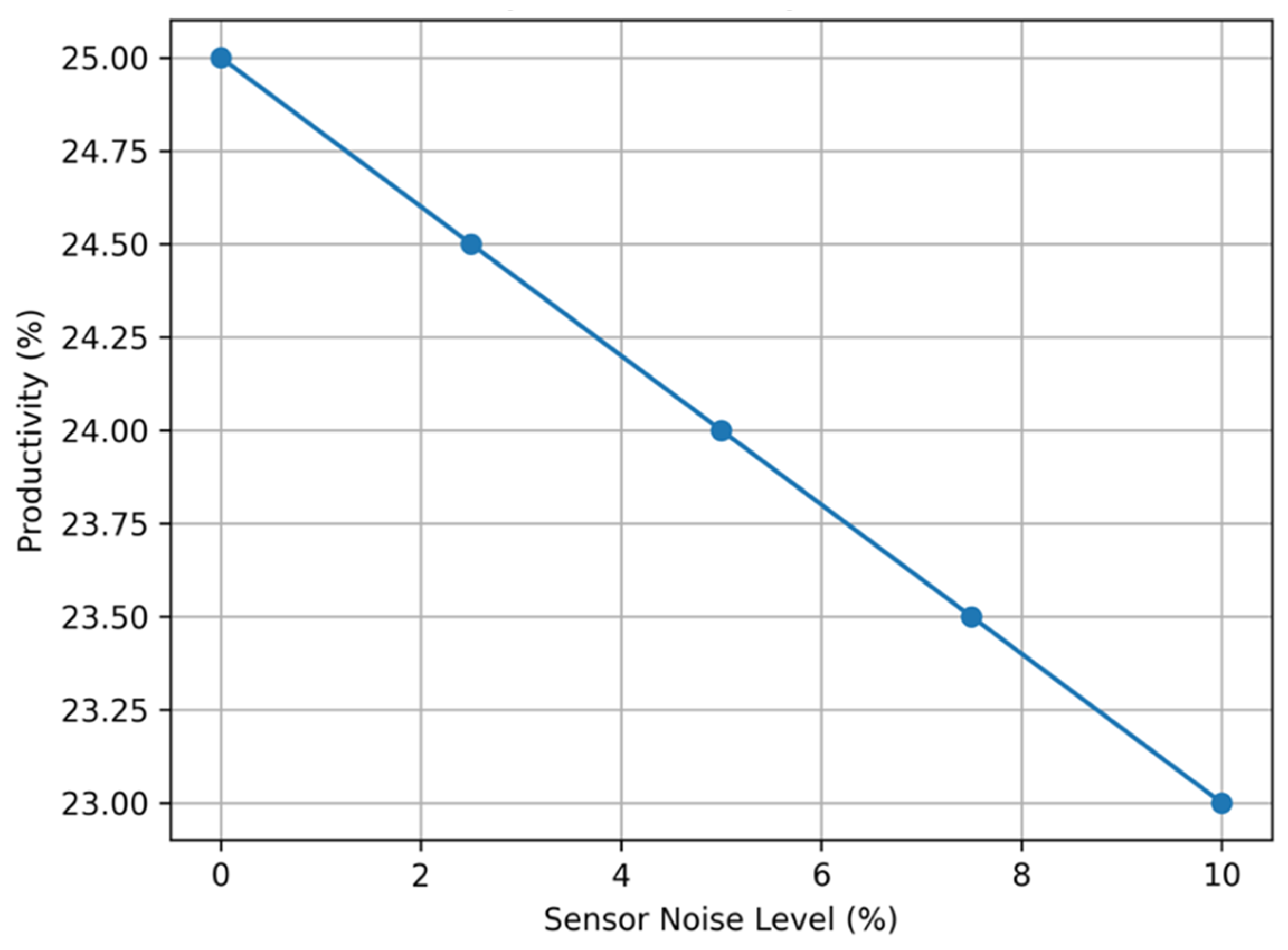
5.4. Sensitivity Analysis
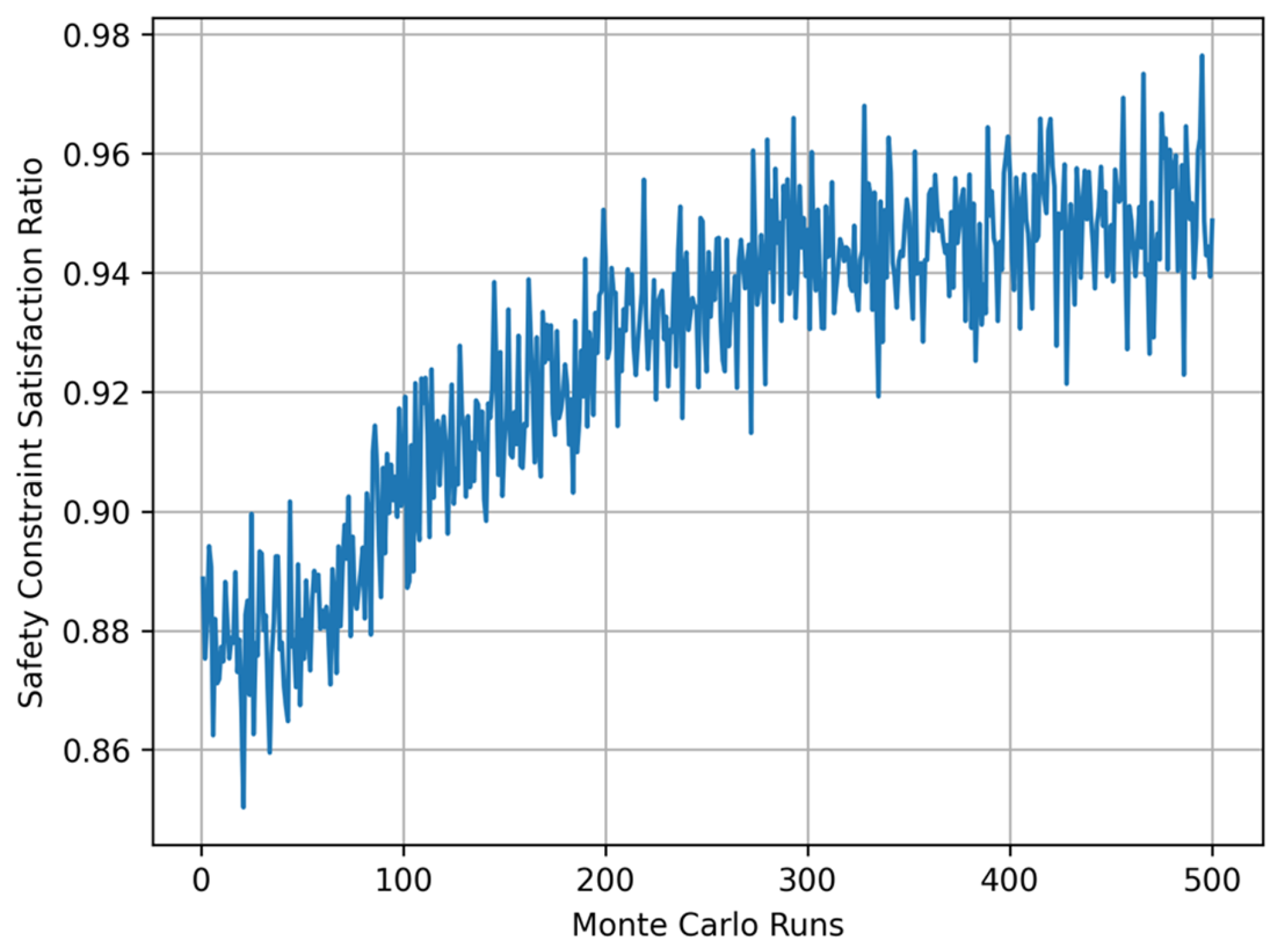
5.5. Monte Carlo Robustness Evaluation
6. Operational Performance Analysis
6.1. Surface Mining Operational Performance
6.2. Subterranean Mining Operations
6.3. Comparative Operations Benchmarking
6.4. Economic Viability and Cost Analysis
6.5. Implementation Challenges
7. Conclusions
7.1. Novelty and Contributions
- -
- A complete system-level framework that incorporates AI, sensor fusion, and cyber-physical control across both surface and underground mining operations, filling a significant vacuum in the literature where previous contributions have focused on isolated subsystems.
- -
- The integrated Swedish-specific operational restrictions, such as sub-zero temperatures, limited vision, GNSS-denied conditions, and regulatory compliance requirements, to create a realistic and transportable reference model for harsh and regulation-intensive mining operations.
- -
- The quantitative validation methodology, which includes mathematical modeling, Monte Carlo stochastic simulation, and statistical hypothesis testing, resulted in validated performance improvements of +24.3% productivity, −12.8% energy consumption, and −48.6% safety risk at 95% confidence.
- -
- A multi-layered autonomous architecture that combines vision, edge intelligence, fleet coordination, and digital twin technologies to enable real-time, safety-constrained optimization across the whole mining value chain.
- -
- A scalable AI-enabled system that supports predictive maintenance, dynamic routing, and coordinated multi-asset operations, serving as a transferable standard for both industrial implementation and future autonomous mining research.
7.2. Future Research Directions
- -
- Full-system integration entails creating completely integrated surface-subsurface autonomous platforms with real-time coordination of drilling, haulage, loading, and inspection operations using a single control architecture.
- -
- Advanced AI and learning models: Using reinforcement learning, physics-informed neural networks, and foundation models to make autonomous decisions in complex and uncertain geotechnical situations.
- -
- Sustainability optimization entails creating energy-aware autonomous systems with the goal of lowering carbon emissions, optimizing power scheduling, and improving environmental performance in accordance with Nordic sustainability standards.
- -
- Digital twins and simulation: Extending digital twin frameworks to mimic operational dynamics, stress redistribution, and emergency response scenarios in real-time underground mining environments.
- -
- Cybersecurity and data governance: Develop safe, resilient communication infrastructures and established protocols to defend autonomous mining systems from cyber-physical threats.
- -
- Human–machine collaboration: Creating supervised autonomy frameworks to balance AI-driven operational efficiency with meaningful human oversight in safety-critical mining operations.
Author Contributions
Funding
Institutional Review Board Statement
Informed Consent Statement
Data Availability Statement
Acknowledgments
Conflicts of Interest
Nomenclature
| Symbol | Description | Unit |
| State vector of agent at time step | – | |
| Estimated system state | – | |
| Control input vector | – | |
| Measured output | – | |
| Process noise | – | |
| Measurement noise | – | |
| Position vector | m | |
| Velocity | m/s | |
| Orientation (heading angle) | rad | |
| Sensor bias | – | |
| Measurement from sensor | – | |
| Measurement model | – | |
| State transition function | – | |
| Measurement covariance matrix | – | |
| Relative pose constraint | m | |
| Number of autonomous units | – | |
| Number of sensors | – | |
| Optimization horizon | s | |
| Task completion time | s | |
| Energy consumption of agent | J | |
| Risk metric | – | |
| Weighting coefficients (fleet optimization) | – | |
| Task assignment variable (binary) | – | |
| Travel time component | s | |
| Power consumption | W | |
| Collision probability | – | |
| Failure probability | – | |
| Safety threshold | – | |
| Failure rate | ||
| System reliability | – | |
| Drill penetration depth | m | |
| Penetration rate (ROP) | m/s | |
| Thrust force | N | |
| Rock resistance force | N | |
| Compressive strength of rock | Pa | |
| Drill bit area | m2 | |
| Rock resistance coefficient | N·s/m | |
| Torque | Nm | |
| Cutting friction coefficient | – | |
| Drill bit radius | m | |
| Rotational inertia | kg·m2 | |
| Angular velocity | rad/s | |
| Mechanical specific energy | Pa | |
| Control gains | – | |
| Productivity metric | t/h | |
| Operational cost | € or SEK | |
| Safety risk function | – | |
| Energy consumption | J | |
| Haulage force | N | |
| Gravitational acceleration | m/s2 | |
| Road gradient | rad | |
| Rolling resistance coefficient | – | |
| Multi-objective weights | – | |
| (energy) | Emission conversion factor | kgCO2/J |
| Carbon emission equivalent | kg | |
| Safe state space | – | |
| Unsafe state space | – | |
| Control constraints | – |
References
- Ruiz-del-Solar, J. The road to the mine of the future: Autonomous collaborative mining. Mining 2025, 5, 25. [Google Scholar] [CrossRef]
- Urrea, C.; Vélez, M. Intelligent autonomous systems for autonomous mining operations: Real-time robust perception and resilient decision-making. Systems 2025, 13, 801. [Google Scholar] [CrossRef]
- Obosu, M.; Frimpong, S. Advances in automation and robotics in mining. J. Saf. Sustain. 2025, 2, 181–194. [Google Scholar] [CrossRef]
- Du, H.; Chan, L.; Tong, J.; Raad, R.; Naghdy, F.; Guo, Q.; Ros, M. Industrial progress of robotic automation in mining applications: A survey. Min. Metall. Explor. 2025, 42, 537–556. [Google Scholar] [CrossRef]
- Long, M.; Schafrik, S.; Kolapo, P.; Agioutantis, Z.; Sottile, J. Equipment and operations automation in mining: A comprehensive review. Machines 2024, 12, 713. [Google Scholar] [CrossRef]
- Codoceo-Contreras, L.; Rybak, N.; Hassall, M. Exploring the impacts of automation in the mining industry: A systematic review using natural language processing. Min. Technol. 2024, 133, 191–213. [Google Scholar] [CrossRef]
- Chen, L.; Zhang, Y.; Tian, B.; Cao, D.; Wang, F.-Y. Autonomous mining through cooperative driving and operations enabled by parallel intelligence. Commun. Eng. 2024, 3, 74. [Google Scholar] [CrossRef]
- Pei, S.; Yang, J. Multi-objective velocity trajectory optimization method for autonomous mining vehicles. Int. J. Automot. Technol. 2023, 24, 1627–1641. [Google Scholar] [CrossRef]
- Leung, R.; Hill, A.J.; Melkumyan, A. Automation and artificial intelligence technology in surface mining: A brief introduction to open-pit operations in the Pilbara. IEEE Robot. Autom. Mag. 2023, 30, 40–51. [Google Scholar] [CrossRef]
- Chimunhu, P.; Topal, E.; Asad, M.W.A.; Shirani Faradonbeh, R.; Ajak, A.D. The future of underground mine planning in the era of machine learning: Opportunities for engineering robustness and flexibility. Min. Technol. 2024, 133, 163–190. [Google Scholar] [CrossRef]
- Hrica, J.K.; Bellanca, J.L. A rapid review of collision avoidance and warning technologies for mining haul trucks. Min. Metall. Explor. 2022, 39, 1357–1389. [Google Scholar] [CrossRef] [PubMed]
- Seguel, F.; Palacios-Játiva, P.; Azurdia-Meza, C.A.; Krommenacker, N.; Charpentier, P.; Soto, I. Underground mine positioning: A review. IEEE Sens. J. 2022, 22, 4755–4771. [Google Scholar] [CrossRef]
- Barnewold, L.; Lottermoser, B.G. Identification of digital technologies and digitalisation trends in the mining industry. Int. J. Min. Sci. Technol. 2020, 30, 747–757. [Google Scholar] [CrossRef]
- Ali, D.; Frimpong, S. Artificial intelligence, machine learning and process automation in mining: Existing knowledge frontier and way forward for mining sector. Artif. Intell. Rev. 2020, 53, 6025–6042. [Google Scholar] [CrossRef]
- Rogers, W.P.; Kahraman, M.M.; Drews, F.A.; Powell, K.; Haight, J.M.; Wang, Y.; Baxla, K.; Sobalkar, M. Automation in the mining industry: Review of technology, systems, human factors, and political risk. Min. Metall. Explor. 2019, 36, 607–631. [Google Scholar] [CrossRef]
- Bellamy, D.; Pravica, L. Assessing the impact of driverless haul trucks in Australian surface mining. Resour. Policy 2011, 36, 149–158. [Google Scholar] [CrossRef]
- Hodouin, D. Methods for automatic control, observation, and optimization in mineral processing plants. J. Process Control 2011, 21, 211–225. [Google Scholar] [CrossRef]
- Lööw, J.; Abrahamsson, L.; Johansson, J. Mining 4.0—The impact of new technology from a workplace perspective. Min. Metall. Explor. 2019, 36, 701–707. [Google Scholar] [CrossRef]
- Bayer, J.; Cížek, P.; Faigl, J. Autonomous multi-robot exploration and with ground vehicles in DARPA subterranean challenge finals. J. Field Robot. 2023, 3, 266–300. [Google Scholar] [CrossRef]
- Muratbakeev, E.; Kozhubaev, Y.; Cheng, H.; Potekhin, V.; Ershov, R. Intelligent mine ventilation systems. Symmetry 2026, 18, 311. [Google Scholar] [CrossRef]
- Odeyar, P.; Apel, D.B.; Hall, R.; Zon, B.; Skrzypkowski, K. A review of reliability and fault analysis methods for heavy equipment and their components used in mining. Energies 2022, 15, 6263. [Google Scholar] [CrossRef]
- Rojas, L.; Peña, Á.; Garcia, J. AI-driven predictive maintenance in mining: A systematic literature review on fault detection, digital twins, and intelligent asset management. Appl. Sci. 2025, 15, 3337. [Google Scholar] [CrossRef]
- Yang, Y.; Huang, F.; Kang, S. Mechanism of penetration rate improvement in hot dry rock under the coupling of impact load and confining pressure release. Reserv. Sci. 2026, 2, 52–64. [Google Scholar] [CrossRef]
- Hu, Y.; Yang, Y. A comparative study on drag reduction methods for continental shale drilling in the Fuxing Block, Southeastern Sichuan Basin. Reserv. Sci. 2026, 2, 81–96. [Google Scholar] [CrossRef]
- Deb, K.; Pratap, A.; Agarwal, S.; Meyarivan, T. A fast and elitist multiobjective genetic algorithm: NSGA-II. IEEE Trans. Evol. Comput. 2002, 6, 182–197. [Google Scholar] [CrossRef]
- Ma, H.; Zhang, Y.; Sun, S.; Liu, T.; Shan, Y. A comprehensive survey on NSGA-II for multi-objective optimization and applications. Artif. Intell. Rev. 2023, 56, 15217–15270. [Google Scholar] [CrossRef]
- Liu, Y.; You, K.; Jiang, Y.; Wu, Z.; Liu, Z.; Peng, G.; Zhou, C. Multi-objective optimal scheduling of automated construction equipment using non-dominated sorting genetic algorithm (NSGA-III). Autom. Constr. 2022, 143, 104587. [Google Scholar] [CrossRef]
- Lyu, G.; Peng, Z.; Wang, J. Safety-certified parallel model predictive control of autonomous surface vehicles via neurodynamic optimization. IEEE/CAA J. Autom. Sin. 2025, 12, 2056–2066. [Google Scholar] [CrossRef]
- Lee, J.; Bagheri, B.; Kao, H.A. A cyber-physical systems architecture for Industry 4.0-based manufacturing systems. Manuf. Lett. 2015, 3, 18–23. [Google Scholar] [CrossRef]
- Löfstrand, M.; Eklund, P. Systemic predictive and prescriptive maintenance. Appl. Sci. 2026, 16, 1088. [Google Scholar] [CrossRef]
- Eklund, P.; Kortelainen, J.; Löfstrand, M. Quantales for fuzzy sets and relations of higher types. Mathematics 2025, 13, 2159. [Google Scholar] [CrossRef]
- Rausand, M.; Barros, A.; Høyland, A. System Reliability Theory: Models, Statistical Methods, and Applications, 3rd ed.; John Wiley & Sons: Hoboken, NJ, USA, 2021. [Google Scholar]
- Dhillon, B. Mining Equipment Reliability, Maintainability, and Safety; Springer: Berlin/Heidelberg, Germany, 2008. [Google Scholar]
- Orošnjak, M.; Saretzky, F.; Kedziora, S. Prescriptive maintenance: A systematic literature review and exploratory meta-synthesis. Appl. Sci. 2025, 15, 8507. [Google Scholar] [CrossRef]
- Villegas, L.F.; Macchi, M.; Polenghi, A. Digital twins in manufacturing: A unified conceptual framework. Annu. Rev. Control 2025, 60, 101031. [Google Scholar] [CrossRef]
- AIAG & VDA. FMEA Handbook, 1st ed.; AIAG & VDA: Southfield, MI, USA, 2019. [Google Scholar]
- Löfstrand, M.; Kyösti, P.; Reed, S.; Backe, B. Evaluating availability of functional products through simulation. Simul. Model. Pract. Theory 2014, 47, 196–209. [Google Scholar] [CrossRef]
- Law, A.M. Simulation Modeling and Analysis, 5th ed.; McGraw-Hill Higher Education: New York, NY, USA, 2015. [Google Scholar]
- Tian, L.; Zhang, Q.; Li, X.; Li, C. Fracturing effectiveness evaluation based on flowback data using pressure transient testing. Reserv. Sci. 2026, 2, 97–110. [Google Scholar] [CrossRef]
- Dekker, S.; Cilliers, P.; Hofmeyr, J.-H. The complexity of failure: Implications of complexity theory for safety investigations. Saf. Sci. 2011, 49, 939–945. [Google Scholar] [CrossRef]
- Ale, B.J.M.; Hartford, D.N.D.; Slater, D.H. Living with legacy risk—The limits of practicalities? Sustainability 2021, 13, 3004. [Google Scholar] [CrossRef]
- Patil, R.V.; Reddy, Y.P. Multiform weld joint flaws detection and classification by sagacious artificial neural network technique. Int. J. Adv. Manuf. Technol. 2023, 125, 913–943. [Google Scholar] [CrossRef]
- Patil, R.; Löfstrand, M. Detection and classification of engine exhaust weld joint defects using RNN and SVM on SS316L–SS410 and SS310–SS410. J. Fail. Anal. Prev. 2025, 125, 2491–2511. [Google Scholar] [CrossRef]
- Patil, R.; Löfstrand, M. Integrated experimental FE analysis of temperature distribution, molten metal flow, and residual stress in GTAW dissimilar metal welds. Int. J. Adv. Manuf. Technol. 2026, 142, 6057–6079. [Google Scholar] [CrossRef]
- Patil, R.V.; Reddy, Y.P. Weld imperfection classification using texture features and LBP. Smart Innov. Syst. Technol. 2021, 206, 367–378. [Google Scholar] [CrossRef]
- Patil, R.V.; Reddy, Y.P. Multi-class weld defect detection using SVM and ANN. Smart Innov. Syst. Technol. 2021, 206, 429–438. [Google Scholar] [CrossRef]
- Patil, R.V.; Reddy, Y.P. Correlation assessment of weld bead geometry and temperature circulation by online measurement in Nd:YAG laser welding. In Advances in Engineering Materials; Lecture Notes in Mechanical Engineering; Springer: Singapore, 2021; pp. 21–29. [Google Scholar] [CrossRef]
- Patil, R.; Löfstrand, M. Robots and Intelligent Agents for Product Creation and Manufacturing in Sustainable Digitalized Manufacturing Systems. IOP Conf. Ser. Mater. Sci. Eng. 2026, 1342, 012043. [Google Scholar] [CrossRef]



| Architecture Layer | Component | Specification | Specific Considerations |
|---|---|---|---|
| Perception | GNSS (RTK) | ±2–3 cm positioning accuracy | Limited availability during polar night; |
| Perception | LiDAR | 16–64 channels, 120–250 m range | Performance degradation due to snow/ice contamination |
| Perception | Radar | 76–81 GHz, all-weather operation | Preferred sensing modality in snowfall and fog |
| Perception | IMU | <0.01 °/s angular rate resolution | Thermal drift at sub-zero temperatures |
| Condition Monitoring | Vibration sensors | 5–20 kHz sampling rate | Cold-rated sensor housings required |
| Communication | Industrial Ethernet | 1–10 Gbps | Hardened cabling for −30 °C environments |
| Communication | Private 5G | <20 ms latency | Coverage challenges in remote arctic regions |
| Edge Control | Control loop frequency | 10–100 Hz (navigation), up to 1 kHz (drilling) | Increased fault tolerance required |
| Fleet Management | Fleet size | 20–50+ autonomous units | Seasonal production variability |
| Digital Twin | Update rate | 1–5 s | Used for regulatory reporting and compliance |
| Parameter | Range | Description |
|---|---|---|
| Haul truck payload | 200–400 t | Surface AHS operations |
| LHD payload | 10–18 t | Underground operations |
| Drift width | 4–6 m | Underground mining geometry |
| Drilling thrust | 20–35 kN | Electrohydraulic drill rigs |
| Rotation speed | 150–300 rpm | Drilling systems |
| Penetration rate | 5–15 mm/s | Rock UCS 80–300 MPa |
| Sensor fusion rate | 100–500 Hz | LiDAR, IMU, GNSS combined |
| Position accuracy (drill) | ±5–10 mm | Drill collar localisation |
| Position accuracy (vehicle) | ±10–20 cm | LHD/truck navigation |
| Communication latency | 50–100 ms | Edge-to-fleet systems |
| Ambient temperature | Down to −30 °C | Arctic conditions |
| Safety threshold (ε_safe) | 0.05 | Maximum collision probability |
| GNSS availability | 60–80% | Surface variability |
| LHD cycle time | 20–35 min | Nominal underground cycle |
| Energy per cycle | 15–25 kWh | Electric equipment baseline |
| KPI | Baseline System | Autonomous System | Change |
|---|---|---|---|
| Equipment utilization | 65–75% | 85–95% | +20–30% |
| Cycle time variance | High variability | Reduced by 10–20% | Improved |
| Energy consumption | Baseline | Optimized | −10–15% |
| Safety exposure | High (human factor) | AI-controlled | −40–60% |
| System reliability R(t) | Lower | >0.95 over 30 days | Significantly higher |
| Material throughput | Baseline capacity | >350,000 t/day | Increased |
| Metric | Baseline Mean | Autonomous Mean | Change | 95% CI | p-Value |
|---|---|---|---|---|---|
| Productivity (Q) | Normalized = 1.0 | 1.243 | +24.3% | ±3.2% | <0.01 |
| Energy consumption (E) | Normalized = 1.0 | 0.872 | −12.8% | ±2.5% | <0.01 |
| Safety risk (S) | Normalized = 1.0 | 0.514 | −48.6% | ±4.1% | <0.01 |
| Performance Indicator | Conventional | Autonomous | Improvement |
|---|---|---|---|
| Equipment utilization | 65–75% | 85–95% | +20–30% |
| Daily throughput | 120,000–150,000 t | 180,000–250,000 t | +50–67% |
| Fuel/energy consumption | Baseline | Optimized | −10–15% |
| Maintenance strategy | Reactive | Predictive | −15–25% cost |
| Safety incidents | High (human exposure) | Reduced (AI-driven) | −40–60% |
| Emergency response time | 5–10 min | 1–3 min | 60–80% faster |
| Near-miss events/100k h | 12–18 | 5–10 | ~−50% |
| Worker exposure to hazard zones | 100% (baseline) | 40–50% | −50–60% |
| Benefit Metric | Conventional | Autonomous | Impact |
|---|---|---|---|
| CAPEX per haul truck | €2–3 M | €4–7 M | Higher initial cost |
| Equipment utilization | 65–75% | 85–95% | +20–30% |
| Throughput | 120k–150k t/day | 180k–250k t/day | +50–67% |
| Maintenance cost | Reactive baseline | Predictive | −15–25% |
| Fuel/energy cost | Baseline | Optimized | −10–15% |
| Safety-related costs | High | Substantially reduced | −40–60% |
| Workforce model | Manual operations | Skilled/AI-supervised | Role transition |
| Typical ROI period | N/A | 3–5 years | Economically viable |
Disclaimer/Publisher’s Note: The statements, opinions and data contained in all publications are solely those of the individual author(s) and contributor(s) and not of MDPI and/or the editor(s). MDPI and/or the editor(s) disclaim responsibility for any injury to people or property resulting from any ideas, methods, instructions or products referred to in the content. |
© 2026 by the authors. Licensee MDPI, Basel, Switzerland. This article is an open access article distributed under the terms and conditions of the Creative Commons Attribution (CC BY) license.
Share and Cite
Patil, R.; Löfstrand, M. A Safety-Constrained Multi-Objective Optimization Framework for Autonomous Mining Systems: Statistical Validation in Surface and Underground Environments. Technologies 2026, 14, 248. https://doi.org/10.3390/technologies14050248
Patil R, Löfstrand M. A Safety-Constrained Multi-Objective Optimization Framework for Autonomous Mining Systems: Statistical Validation in Surface and Underground Environments. Technologies. 2026; 14(5):248. https://doi.org/10.3390/technologies14050248
Chicago/Turabian StylePatil, Rajesh, and Magnus Löfstrand. 2026. "A Safety-Constrained Multi-Objective Optimization Framework for Autonomous Mining Systems: Statistical Validation in Surface and Underground Environments" Technologies 14, no. 5: 248. https://doi.org/10.3390/technologies14050248
APA StylePatil, R., & Löfstrand, M. (2026). A Safety-Constrained Multi-Objective Optimization Framework for Autonomous Mining Systems: Statistical Validation in Surface and Underground Environments. Technologies, 14(5), 248. https://doi.org/10.3390/technologies14050248