Article

New Approach for Mapping Land Cover from Archive Grayscale Satellite Imagery

by
Mohamed Rabii Simou
1,2,
Mohamed Maanan
1,*,
Safia Loulad
2,
Mehdi Maanan
2 and
Hassan Rhinane
2
1
UMR 6554 CNRS LETG-Nantes Laboratory, Institute of Geography and Planning, Nantes University, 44312 Nantes, France
2
GEOPEN Laboratory, Earth Sciences Department, Faculty of Sciences-Ain Chock, University Hassan II, Casablanca 20000, Morocco
*
Author to whom correspondence should be addressed.
Technologies 2025, 13(4), 158; https://doi.org/10.3390/technologies13040158

Submission received: 4 March 2025 / Revised: 7 April 2025 / Accepted: 10 April 2025 / Published: 14 April 2025
(This article belongs to the Section Environmental Technology)

Abstract

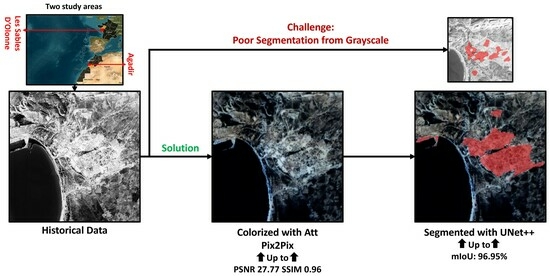
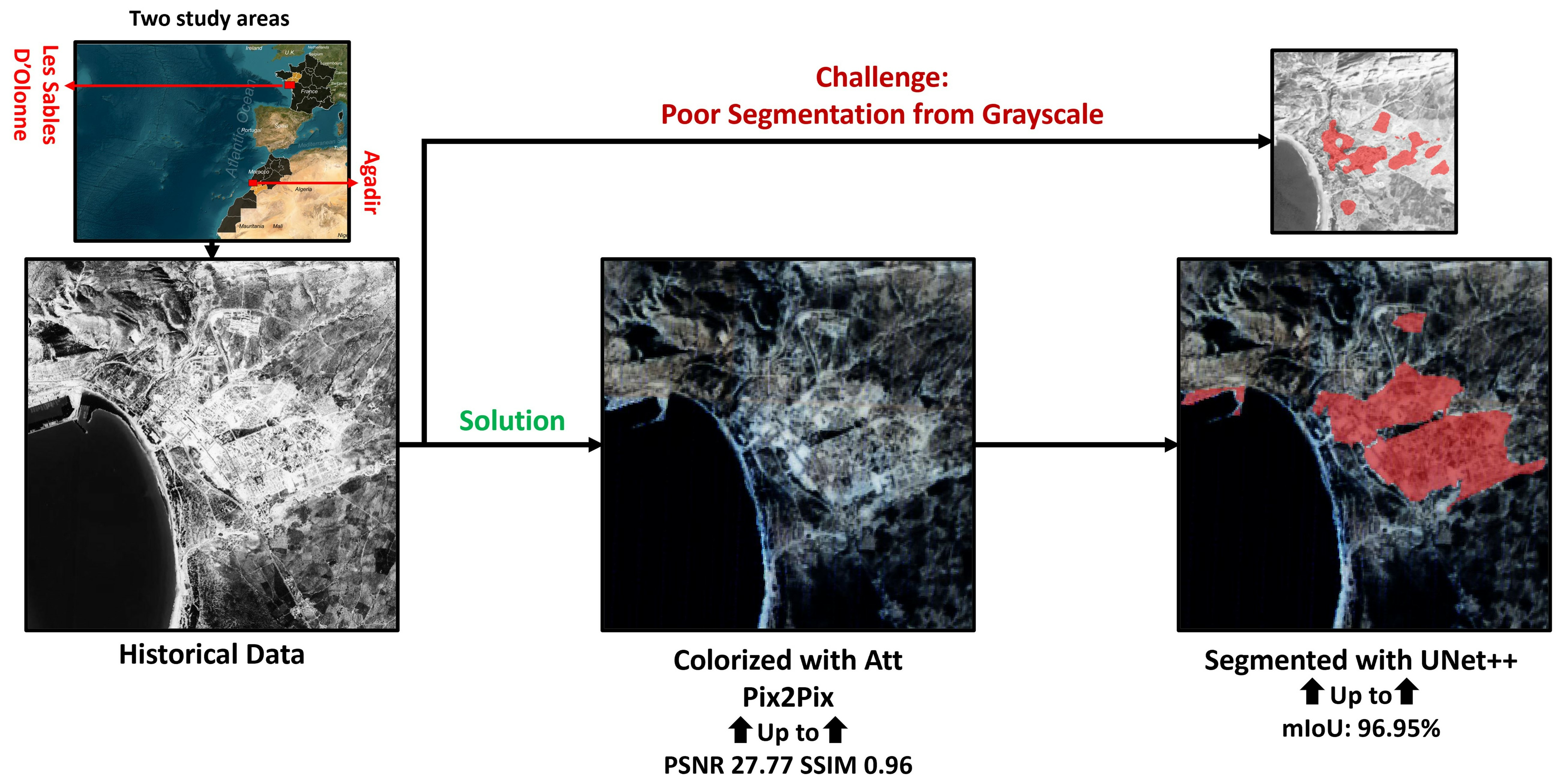
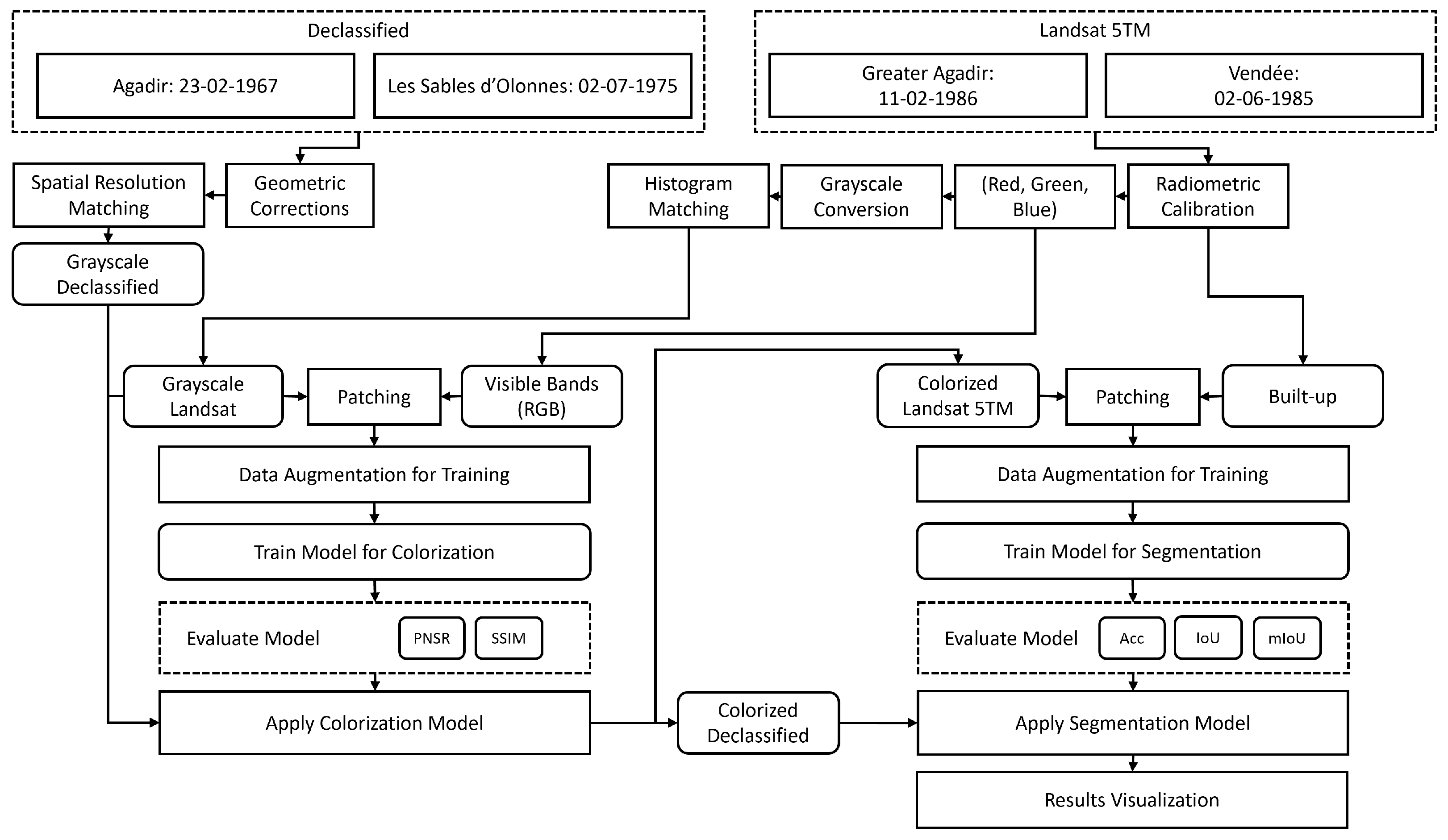
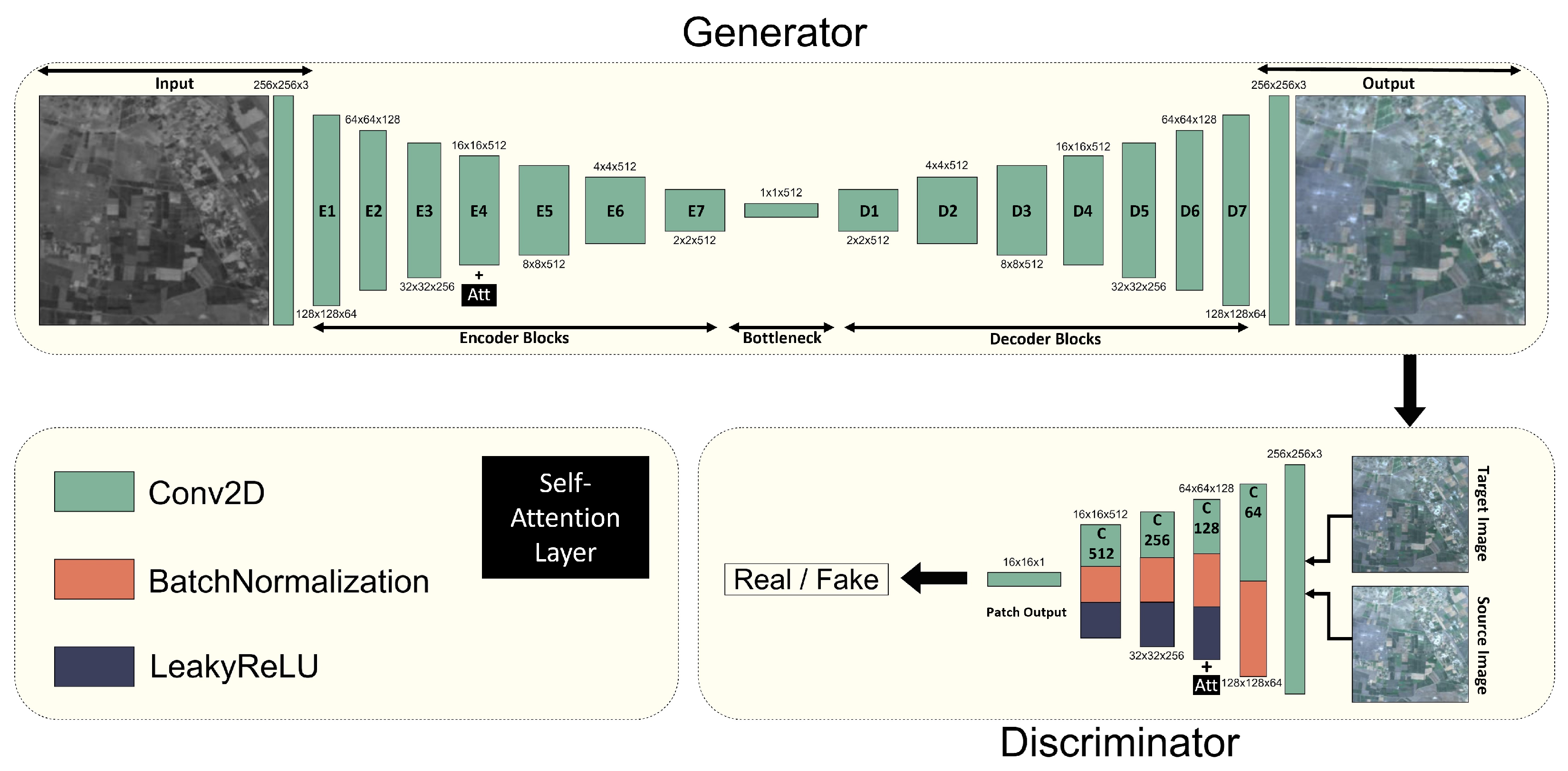
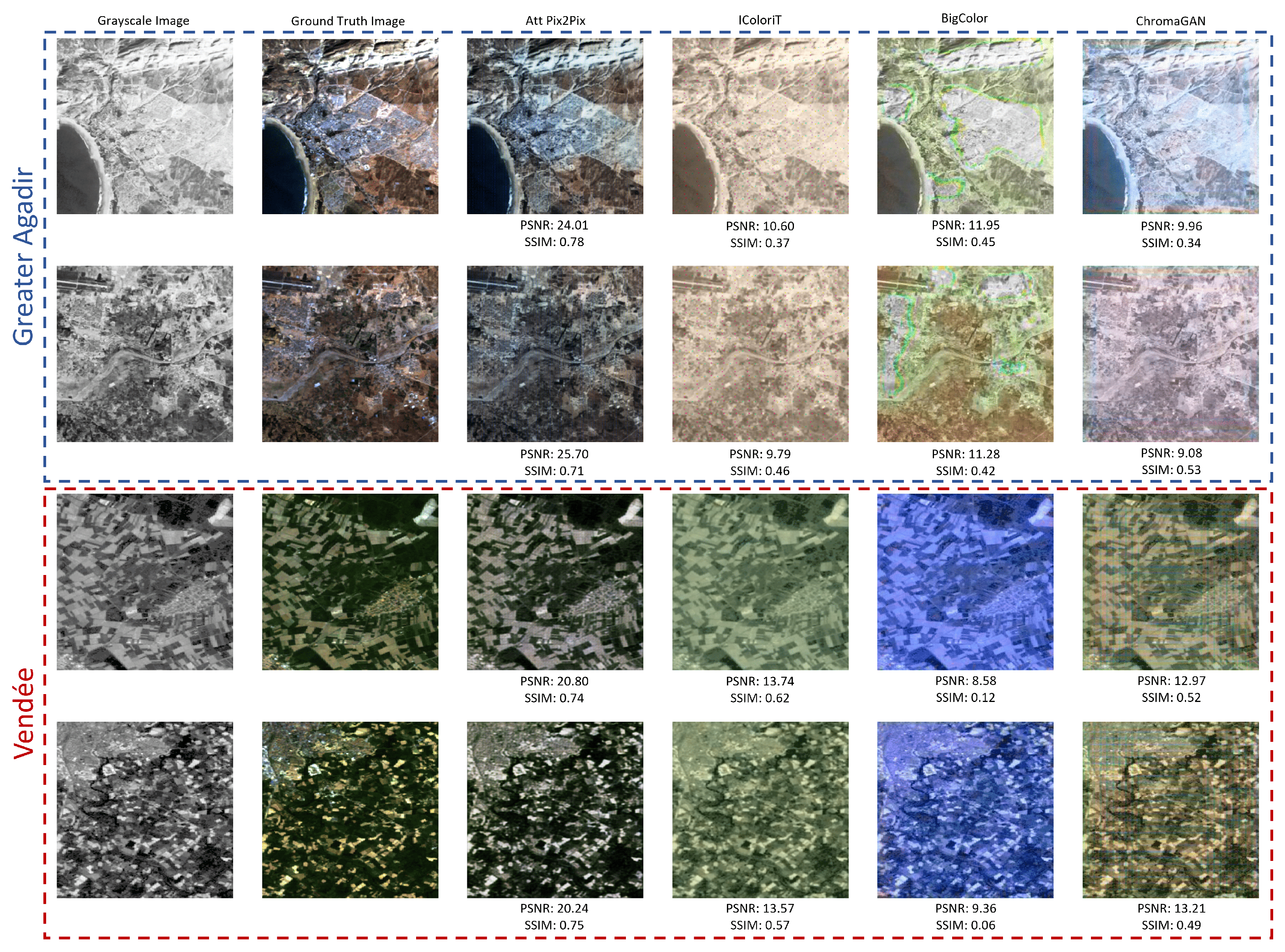
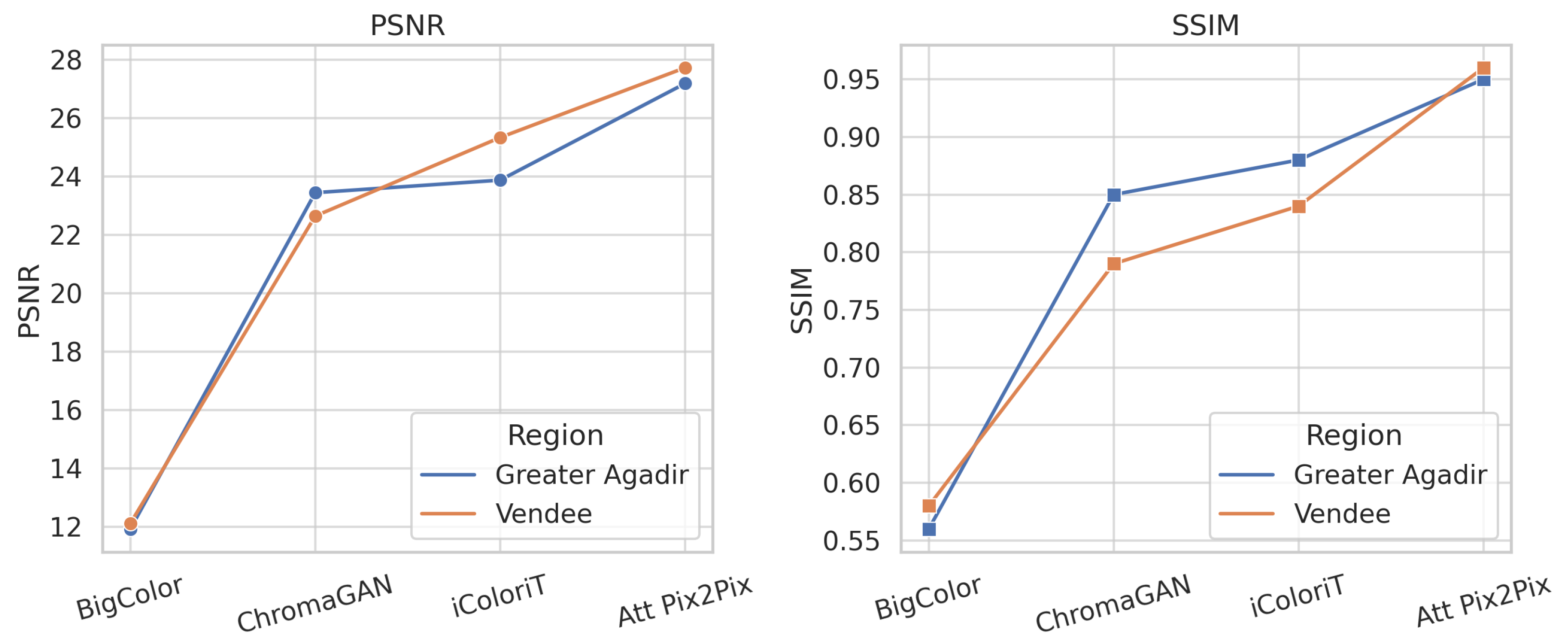
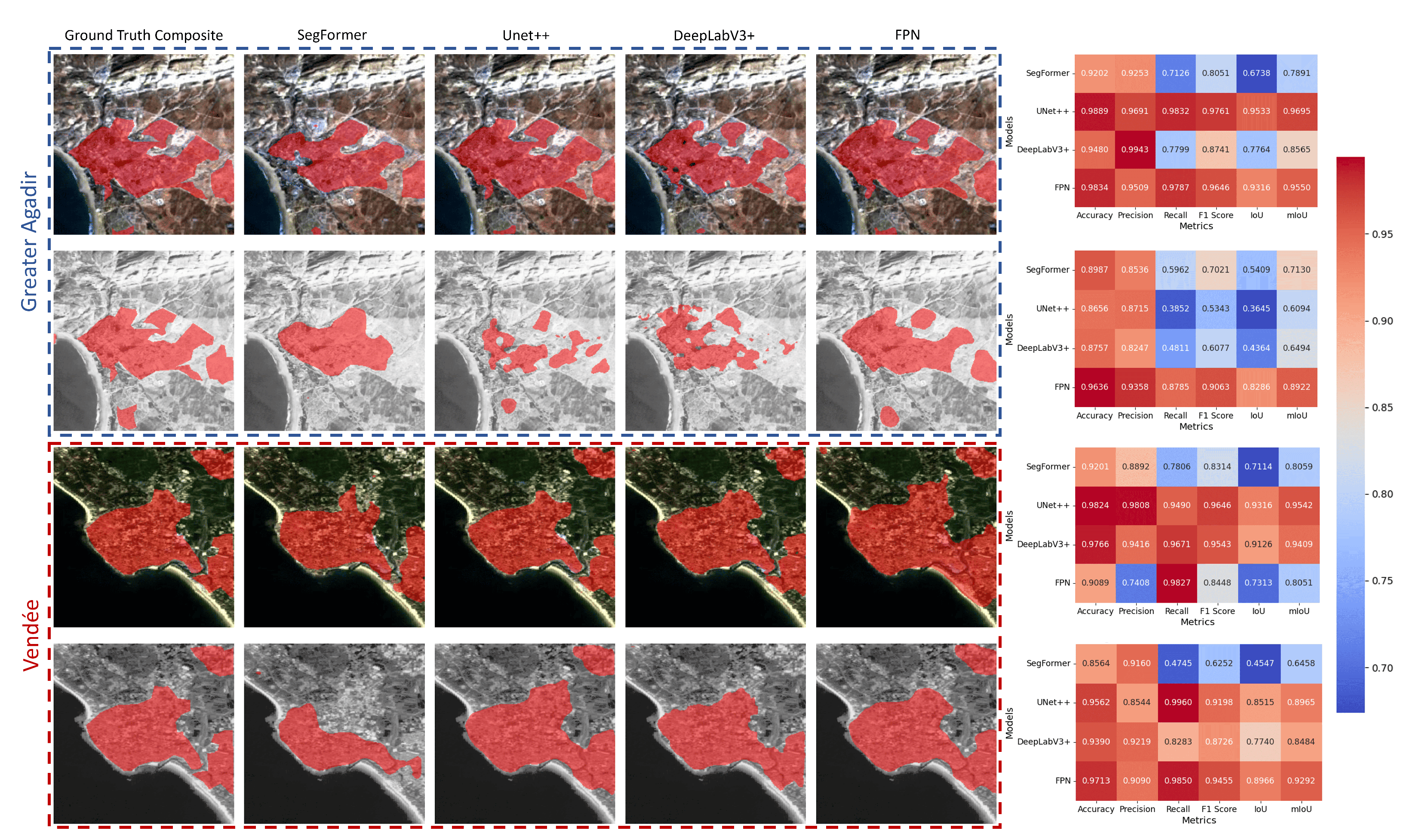
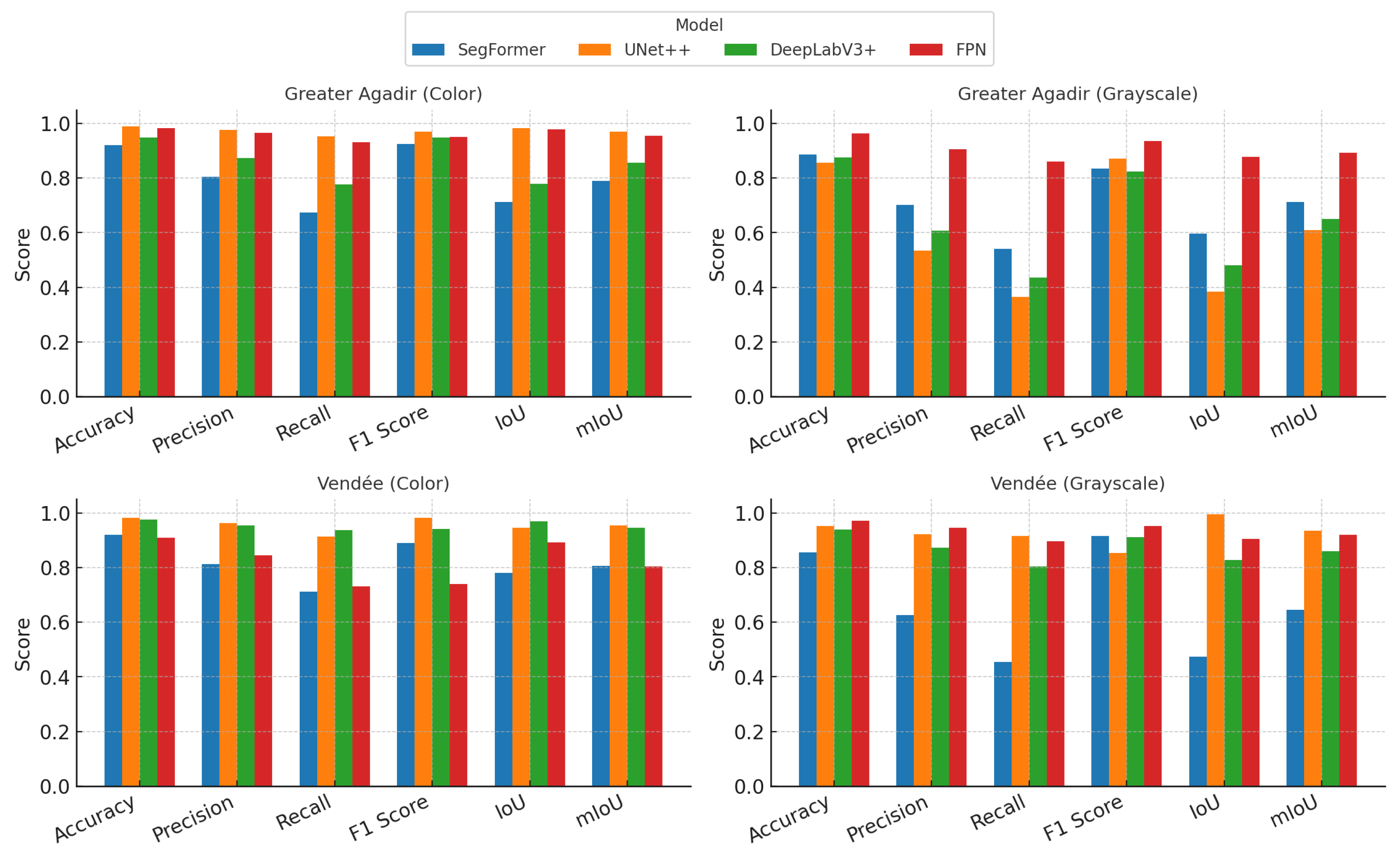
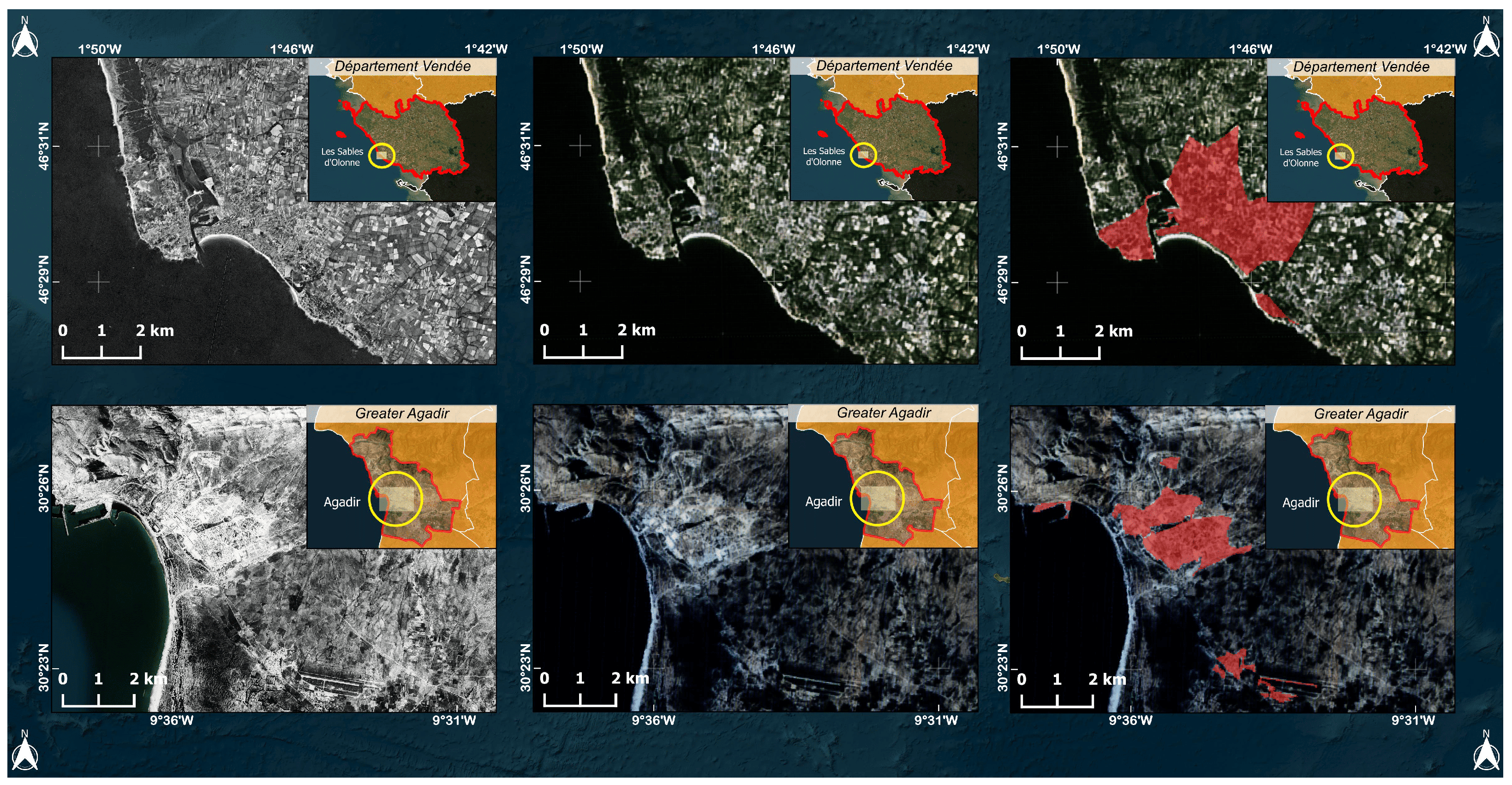
This paper examines the use of image-to-image translation models to colorize grayscale satellite images for improved built-up segmentation of Agadir, Morocco, in 1967 and Les Sables-d’Olonne, France, in 1975. The proposed method applies advanced colorization techniques to historical remote sensing data, enhancing the segmentation process compared to using the original grayscale images. In this study, spatial data such as Landsat 5TM satellite images and declassified satellite images were collected and prepared for analysis. The models were trained and validated using Landsat 5TM RGB images and their corresponding grayscale versions. Once trained, these models were applied to colorize the declassified grayscale satellite images. To train the segmentation models, colorized Landsat images were paired with built-up-area masks, allowing the models to learn the relationship between colorized features and built-up regions. The best-performing segmentation model was then used to segment the colorized declassified images into built-up areas. The results demonstrate that the Attention Pix2Pix model successfully learned to colorize grayscale satellite images accurately, improving the PSNR by up to 27.72 and SSIM by 0.96. Furthermore, the results of segmentation were highly satisfactory, with UNet++ identified as the best-performing model with an mIoU of 96.95% in Greater Agadir and 95.42% in Vendée. These findings indicate that the application of the developed method can achieve accurate and reliable results that can be utilized for future LULC change studies. The innovative approach of the study has significant implications for land planning and management, providing accurate LULC information to inform decisions related to zoning, environmental protection, and disaster management.
Keywords: deep learning; remote sensing; grayscale colorization; built-up segmentation; historical satellite imagery deep learning; remote sensing; grayscale colorization; built-up segmentation; historical satellite imagery
Graphical Abstract