Article

Trends in Capital Structure: A Bibliometric Analysis to Support the Construction of Decision-Support Methodologies


by
José Matheus Ferreira Gomes dos Passos
1,
Marcelo Nunes Fonseca
2,
Rodrigo Martins Baptista
3,*,
Wilson Toshiro Nakamura
4 and
Jonas Poutilho de Morais Pereira
2
1
Post-Graduate Program in Production Engineering (PPGEP), Federal University of Goiás (UFG), Municipal Road 4, Fazenda Santo Antônio, Goiânia 74971-451, GO, Brazil
2
Professional Master’s in Production Engineering, Presbyterian University Mackenzie (UPM), Rua da Consolação, 896, São Paulo 01302-907, SP, Brazil
3
School of Engineering, Presbyterian University Mackenzie (UPM), Rua da Consolação, 896, São Paulo 01302-907, SP, Brazil
4
Graduate Program in Business Administration (PPGA), Center for Applied Social Sciences (CCSA), Rua da Consolação, 896, São Paulo 01302-907, SP, Brazil
*
Author to whom correspondence should be addressed.
Int. J. Financ. Stud. 2026, 14(3), 69; https://doi.org/10.3390/ijfs14030069
Submission received: 1 January 2026 / Revised: 2 February 2026 / Accepted: 12 February 2026 / Published: 5 March 2026
(This article belongs to the Special Issue Advances in Corporate Finance: Theory and Practice)

Abstract

This paper presents a bibliometric analysis and literature review of methodologies for optimal capital structure decision making, focusing on research published between 2000 and 2024. This study reviews current research, identifies gaps, and outlines a plan to support with financial decisions. A mixed-methods approach was employed, combining data from the Web of Science and Scopus databases using the search string “capital structure” AND (“decision making” OR “optimal structure”). The study used Bibliometrix(R), VOSviewer, and NVivo tools, and followed the Preferred Reporting Items for Systematic Reviews and Meta-Analyses (PRISMA) flowchart for choosing studies. The findings show that this field is well-developed but still changing. The intellectual structure is organized around two main clusters: one focused on testing classical theories and another oriented toward optimization and managerial applications, revealing a clear theory–practice divide. The mapping also highlights the dominance of Chinese and U.S. scholarship and the central role of practitioner-oriented journals such as Managerial Finance, indicating both a shift toward emerging markets and a strong demand for applicable research. The study provides three key contributions. First, it identifies important countries, authors, outlets, and themes. Second, it uses a method that combines bibliometric and text-mining tools. Third, it introduces a new decision-support framework that is thorough, context-sensitive, and flexible. There are some limitations. These include relying on Scopus and Web of Science, language limits, and the fact that bibliometrics cannot judge the quality of methods. Future research should empirically validate the proposed framework in different contexts, expand studies in emerging markets, test emerging theories such as Brusov–Filatova–Orekhova (BFO) theory, and develop more dynamic and stochastic models to better capture financial uncertainty.

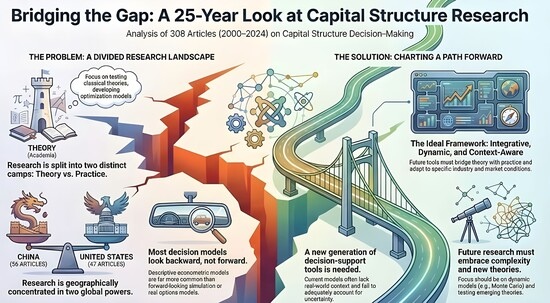
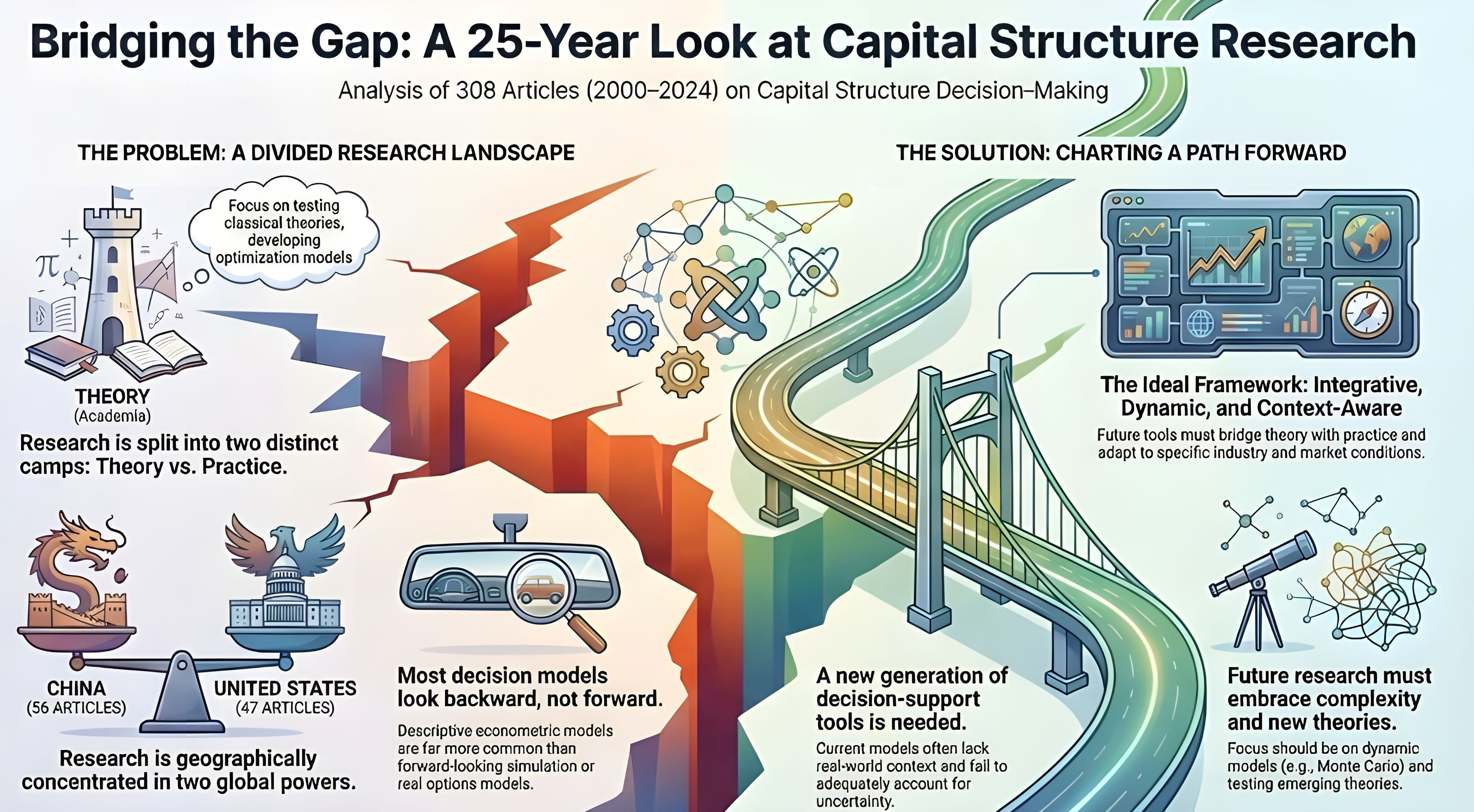
Graphical Abstract

1. Introduction

The capital structure of a company comprises a blend of debt, equity, and other financial instruments used to finance its operations and expansion (Soni & Satpathy, 2025). It plays a crucial role in financial management by shaping cost of capital, financial risk, and operating flexibility, thus constituting a key determinant of firm value and long-term resilience (Bui et al., 2023; Soni & Satpathy, 2025). For example, Apple Inc. illustrates how capital structure affects strategic financial management. In recent years, the company has combined shareholder equity with long-term debt to finance share buybacks and dividends while maintaining substantial cash reserves (Apple Inc., 2025). By issuing low-interest bonds instead of using internal cash, Apple has reduced financing costs and preserved financial flexibility, enabling continued investment in innovation. Managers therefore seek an optimal balance between borrowing and internal financing, a task widely recognized as complex and critical for value creation (Brusov & Filatova, 2023).
The mix of stocks and loans affects borrowing capacity, financial flexibility, and investment potential (Modiglani & Miller, 1958). Although Modiglani and Miller (1958) originally asserted the irrelevance of capital structure under frictionless conditions, subsequent studies incorporating taxes, financial distress, and agency costs demonstrated that financing choices materially affect corporate value and stability (Kraus & Litzenberger, 1973; Myers, 1984).
Recent evidence further indicates that firms continuously adjust their capital structures in response to regulation, market risk, and industry characteristics, underscoring the need for robust decision-support tools (Y. Fu et al., 2023). Additionally, the trade-off and pecking order theories formalize the balance between tax benefits and expected distress costs (Kraus & Litzenberger, 1973; Myers, 1984). In practice, managers must simultaneously consider cash flows, borrowing capacity, expected returns, and operational constraints, making financing decisions inherently multifactorial. Despite a rich theoretical tradition, a practical gap persists: managers still lack decision-support approaches that integrate quantitative metrics, such as cost of capital dynamics, leverage adjustments, and risk measures with qualitative judgments related to governance, regulation, life cycle stage, and ESG pressures. Consequently, recommending an optimal financing mix across changing market regimes remains challenging. Complexity is further amplified by market frictions, including taxation, financing constraints, agency conflicts, and information asymmetries (Bui et al., 2023).
Although seminal, the Modigliani and Miller framework relies on strong assumptions that limit its practical applicability (Brusov & Filatova, 2023). More recent models relax these assumptions by incorporating finite firm life and escalating distress costs, challenging the traditional trade-off under specific conditions (Brusov & Filatova, 2023). Nevertheless, empirical evidence remains fragmented, as many studies are sector- or region-specific, rely on static econometric designs, and rarely translate findings into actionable decision frameworks (Y. Fu et al., 2023; Mahmoud et al., 2024; Soni & Satpathy, 2025).
Given this context, a bibliometric analysis combined with a systematic literature review is warranted to map the field, identify influential contributors, and reveal gaps relevant to managerial practice (Y. Fu et al., 2023). Accordingly, this study critically analyzes the literature on capital structure, decision making, and optimal structure from 2000 to 2024 to inform the development of a multicriteria, managerially usable decision-support methodology. Data are drawn from Scopus and Web of Science and analyzed using the Bibliometrix package in R and VOSviewer. The remainder of the paper is organized as follows: Section 2 outlines the methodology; Section 3 presents the bibliometric results; Section 4 discusses the findings; and Section 5 concludes the study.

1.1. Capital Structure: Classical and Contemporary Theories

The discussion about capital structure and its influence on firm value and the cost of capital has been one of the most persistent and fundamental debates in corporate finance (Brusov & Filatova, 2023; Lourenço & Reis, 2023). Modigliani and Miller (MM) theory, developed by Modiglani and Miller (1958), are based on the irrelevance of capital structure in perfect markets, where the value of the firm is independent of the combination of equity and third-party capital (Brusov & Filatova, 2023; Lourenço & Reis, 2023). Later, in 1963, by incorporating corporate taxes, MM theory was modified to suggest that the weighted average cost of capital (WACC) decreases, and the firm’s value increases continuously with leverage because of the tax shield of debt (Brusov & Filatova, 2023). Despite its seminal influence, MM theory is criticized for its unrealistic assumptions, such as the infinite life of the company, which limits its practical applicability in its classic form (Brusov & Filatova, 2023). However, it was used as a theoretical basis to investigate the factors that compromise this irrelevance. The Trade-Off Theory (Static and Dynamic) introduced by Kraus and Litzenberger (1973) seeks a balance between the benefits of debt (mainly the tax shield) and its costs (costs of financial distress and bankruptcy) (An et al., 2015; Brusov & Filatova, 2023; Soni & Satpathy, 2025). The static version ignores adjustment costs, while the dynamic version recognizes that high adjustment costs lead companies to maintain their capital structure within an optimal range, changing it only when the benefits outweigh the costs (Brusov & Filatova, 2023). This theory is widely referenced and empirically tested, especially in capital-intensive sectors (Soni & Satpathy, 2025). Evidence from the Brazilian market corroborates the theory that companies respond to the macroeconomic and tax contexts when adjusting for leverage (Tristão & Sonza, 2019). However, the Brusov (Filatova) Orekhova theory argues that the trade-off theory may not work under conditions of increasing costs of financial distress and risk of bankruptcy, indicating a flaw in its premises (An et al., 2015; Brusov & Filatova, 2023; Soni & Satpathy, 2025). On the other hand, Pecking Order Theory, defined by Myers (1984) and Majluf, states that companies prefer to finance themselves internally, then with debt, and, finally, with stocks. That is, it suggests that companies follow a financing hierarchy: first, they use retained earnings, debt, and finally, the issuance of new shares (An et al., 2015; Brusov & Filatova, 2023; Soni & Satpathy, 2025). This theory explains that managers know more about a company’s value than people outside the company. Also, studies show that companies with good profits often rely less on money from outside (Soni & Satpathy, 2025). Studies with panel data in Brazil show strong adherence, especially for large companies, although the degree of preference varies according to information asymmetry (Silva, 2019).
The market timing theory presents that managers use good times in the market to sell shares. They do this when stock prices are high, which can temporarily change the company’s debt level (Baker & Wurgler, 2002). That is, it postulates that companies issue shares when their prices are high and repurchase them when they are low, taking advantage of temporary market fluctuations (Baker & Wurgler, 2002; Brusov & Filatova, 2023). This approach suggests that capital structure decisions are influenced by market conditions and not by a company’s internal factors. In the Brazilian context, Silva (2019) identified consistent evidence of this behavior, although with less long-term persistence and non-existence in closed capital companies. Several Brazilian studies confirm the relevance of these theories in emerging markets. Empirical research in Brazil has explored the volatility of capital structure, questioning the stability of trade-off theory in a market with its political and economic particularities (Lourenço & Reis, 2023). Cordeiro et al. (2018) highlight that Brazilian companies’ financing patterns follow the pecking order model more rigorously than the trade-off model. Investigations into the stability of leverage in Brazil (1995–2015) demonstrate the sensitivity of debt to structural factors, such as size, taxation, and access to credit, after the 2008 crisis (Cordeiro et al., 2018). Previous studies have also investigated the practices adopted by public and private companies in Brazil, identifying the concern of private companies regarding the volatility of profits and cash flow (Macedo et al., 2015). Brazilian literature has applied theoretical models such as the Modigliani-Miller, Trade-Off, and Pecking Order to analyze profit maximization and the influence of capital structure on financial performance (Lourenço & Reis, 2023).
Other relevant theories include Agency Theory, which explains the conflicts of interest between shareholders and managers and between shareholders and creditors, seeing debt as a tool to reduce agency problems (Brusov & Filatova, 2023; Soni & Satpathy, 2025). According to Signaling Theory, managers can reduce information asymmetry in the capital market by sending signals (Brusov & Filatova, 2023). Recently, Behavioral Theories have become more important. They show that our thoughts and actions can affect financial choices. This means people do not always make decisions based on logic alone (Soni & Satpathy, 2025).

1.2. Decision Models in Corporate Finance

The process of decision-making in corporate finance is sophisticated, encompassing multiple criteria, risks, and uncertainties. Multi-Criteria Decision Analysis (MCDA) or Multi-Criteria Decision-Making (MCDM) offers a structured approach to address these challenges, allowing for the systematic evaluation of alternatives based on a set of predefined criteria (Černevičienė & Kabašinskas, 2022; Taherdoost & Madanchian, 2023). The MCDA/MCDM process typically includes structuring the problem, specifying criteria (preferably independent), measuring the performance of alternatives, scoring and weighting the criteria, and applying this information to rank alternatives (Černevičienė & Kabašinskas, 2022). MCDA is used in finance for deciding on investments, company funding, choosing stocks, and evaluating company performance (Taherdoost & Madanchian, 2023). In Brazil, multi-criteria models have been used to assess competitiveness in sectors such as renewable energy, considering both financial and non-financial criteria (Lessa et al., 2024; Paiva et al., 2025). Risk, uncertainty, and leverage are fundamental components of corporate finance and play a pivotal role in decision-making processes. For instance, financial leverage, which is the use of third-party capital to finance assets, can amplify returns, but it also enhances the risk of losses and excessive indebtedness (An et al., 2015; Prekazi et al., 2023; Wennie & Nugroho, 2023). Uncertainty, which arises from limited information to predict the future, can negatively affect leverage, as companies with high uncertainty tend to have unstable revenues and high indirect costs (Wennie & Nugroho, 2023). Financial risk management aims to minimize uncertainty scenarios, providing data and information that support decisions (Prekazi et al., 2023). The Degree of Financial Leverage (DFL) is an important metric for measuring a company’s financial risk, especially when there is third-party capital in its structure (Prekazi et al., 2023). High cash flow volatility and macroeconomic risk influence the choice of the mix between debt and equity. These elements reinforce the complexity of decisions and the need for frameworks that contemplate sensitivity and scenario analyses (Cordeiro et al., 2018; Silva, 2019). The role of decision support tools is fundamental for managers to have a broad and complete view of the company’s situation, allowing them to correct flaws and enhance successful tactics (Černevičienė & Kabašinskas, 2022; Prekazi et al., 2023). These tools, which can vary according to the business profile, include research (quantitative and qualitative) on Business Intelligence (BI) solutions and Financial Planning & Analysis (FP&A) platforms (Černevičienė & Kabašinskas, 2022; Ievsieieva, 2024). The objective is to provide valuable information for the decision-making process, reduce response time, and base strategies on reliable data (Černevičienė & Kabašinskas, 2022).

1.3. Systematic Reviews and Bibliometrics in Economic Engineering

Systematic reviews and bibliometric analyses have been used in Economic Engineering to consolidate methodological approaches, identify gaps, and guide research practices (Mahmoud et al., 2024). Bibliometrics is a quantitative research methodology that applies mathematical and statistical techniques to academic literature to identify patterns, trends, research hotspots, and academic influence within a given field (H. Fu et al., 2013; Soni & Satpathy, 2025). In Economic Engineering, especially in financial decisions, bibliometrics is a useful tool. It helps map current knowledge, track how it changes, and find research gaps. Financial decision methods have improved with bibliometrics, allowing a thorough analysis of scientific work. This includes the identification of predominant theories, the most used empirical approaches, and the impact of global economic events on research (Aria & Cuccurullo, 2017). Bibliometrics helps to understand how financial decisions are studied and the main research directions. Bibliometric Analysis consists of collecting and organizing bibliographic data, followed by employing techniques such as performance assessment, scientific mapping, and network analysis (H. Fu et al., 2013). It allows for the management of large volumes of information, revealing the evolution and structural composition of a scientific domain (H. Fu et al., 2013). Indicators such as the number of publications, citations, authors, journals, and keywords were analyzed to provide quantitative insights (Y. Fu et al., 2023; Soni & Satpathy, 2025).
Several established tools highlight contemporary bibliometric and scientometric analysis. Bibliometrix, an R package, provides a versatile environment for importing data from major databases such as Web of Science, Scopus, Dimensions, PubMed, and Cochrane, and for performing descriptive statistics and building co-citation, bibliographic coupling, collaboration, and word co-occurrence matrices (Aria & Cuccurullo, 2017). VOSviewer, in turn, is specifically designed to construct and visualize bibliometric networks—linking publications, journals, authors, countries, and keywords through co-authorship, co-occurrence, citation, bibliographic coupling, and co-citation—and to display these structures via network, overlay, and density maps that facilitate the identification of thematic clusters (Kirby, 2023). Complementarily, CiteSpace focuses on detecting trends and pivotal developments within knowledge domains by generating co-occurrence and co-citation maps from Web of Science records, thereby highlighting turning points, specialized areas, and emerging research fronts (Chen, 2006; Zheng & Wang, 2019).
The use of PRISMA, although more commonly associated with systematic reviews, can be adapted for bibliometric studies to enhance the reproducibility and replicability of the article selection process (Page et al., 2021; Soni & Satpathy, 2025). This ensured transparency in data collection and increased the credibility of the study. The adoption of these methods provides advantages for mapping the state of the art, such as a structured view of the scientific corpus, identification of emerging trends, an empirical basis for the construction of theoretical and practical frameworks, and greater robustness and transparency in financial methodology (Y. Fu et al., 2023). There are multiple advantages of these approaches for mapping the state of the art. Bibliometrics allows the identification of the main authors and journals, visualization of collaboration networks and thematic clusters, and identification of emerging topics and intellectual turning points (Aria & Cuccurullo, 2017; Soni & Satpathy, 2025). This foundation supports the proposed methodology, which begins with a combination of bibliometric analysis and literature review (LR), and is capable of identifying relevant inputs, decision-making tools, and specific application areas, subsequently contributing to the construction of a decision-support methodology for optimal capital structure. This synergy provides a deeper understanding of the research landscape, going beyond simple counts to reveal underlying dynamics and intellectual structures, which is crucial for identifying gaps and directing future research (Soni & Satpathy, 2025).

2. Methodology

This study uses both bibliometric analysis and an LR. This combination provides a comprehensive understanding of the field, offering both quantitative and qualitative insights (Soni & Satpathy, 2025). More detailed information can be accessed via the Supplementary Materials.

2.1. Characterization and Type of Study

This study is characterized as a Bibliometric Analysis, which is an interdisciplinary quantitative method that employs mathematical and statistical techniques to examine academic literature (H. Fu et al., 2013). Its purpose is to identify patterns, trends, research hotspots, and academic influence within a given field by analyzing data points, such as document counts, authors, citation relationships, keywords, and journals (H. Fu et al., 2013). Complementarily, the LR aims to synthesize the findings of key articles through an exhaustive search, in-depth analysis, and synthesis of results, with the objective of answering a specific research question (Soni & Satpathy, 2025).

2.2. A Triangulation of Tools: Nvivo and VOSviewer

A methodological triangulation strategy was employed to ensure analytical rigor, combining the distinct functionalities of Bibliometrix (R), NVivo (13) and VOSviewer (1.6.20). NVivo was tasked with a qualitative content analysis to delineate the hierarchical structure of concepts, while VOSviewer mapped the relational network connecting these themes. Bibliometrix (R) served as the foundational analytical engine for generating core bibliometric indicators and preliminary network structures. This synergistic approach provided a dual perspective: NVivo clarified the vertical organization of concepts, whereas VOSviewer and Bibliometrix illuminated their horizontal interconnections. The result is a far more comprehensive and robust understanding of the field’s intellectual structure than a monothematic analysis could yield.

2.3. Databases Used

The primary academic databases for the collection of bibliographic data were the Web of Science (WoS) from Clarivate and Scopus from Elsevier. These databases are recognized for their comprehensiveness in the scientific literature and are widely used in bibliometric studies (H. Fu et al., 2013; Soni & Satpathy, 2025). Scopus was chosen for its comprehensive coverage, and Web of Science for its ability to provide data for co-citation and network analysis (Pranckutė, 2021; Soni & Satpathy, 2025).

2.4. Search Criteria

An exhaustive search strategy was developed, using the search string with the keywords: [“capital structure” AND (“decision making” OR “optimal structure”)]. This string was applied to the titles, abstracts, and keyword fields of the articles in the selected databases. The analysis period defined for the search was from 2000 to 2024, covering a period of 25 years, to capture the evolution of research trends and the most recent contributions in the field. The exclusion and inclusion criteria were rigorous to ensure the relevance and quality of the selected articles. Only peer-reviewed articles were considered, written in either English or Portuguese, and published between 2000 and 2024. To maintain relevance to the research problem, we restricted the scope to studies in the fields of business, economics, engineering, and the social sciences. In addition, articles had to engage directly with methodologies, theoretical frameworks, or empirical findings related to optimal capital structure and decision making, rather than addressing these topics only tangentially. Additionally, the exclusion criteria were applied to refine the sample and reduce the risk of bias. Articles not indexed in the selected databases were excluded, as were conference papers that had not subsequently appeared in peer-reviewed journals. On the other hand, book reviews and other non-scientific formats were also removed. We further excluded non-peer-reviewed sources such as thesis, dissertations, and technical reports that were not published in journals. Finally, any article that did not clearly address the central theme of optimal capital structure and decision making was omitted from the analysis.

2.5. Tools Used in Bibliometrics

In this study, bibliometric analysis was conducted using Bibliometrix (2024) to structure and describe the dataset, VOSviewer (Eck & Waltman, 2010; Kirby, 2023) and CiteSpace (Chen, 2006; Niazi, 2016; Zheng & Wang, 2019) to map and visualize co-authorship, co-citation, keyword and knowledge-domain networks, while the PRISMA 2020 framework (Page et al., 2021; Soni & Satpathy, 2025) was adapted to ensure a systematic and transparent article selection process.

2.6. Process Steps

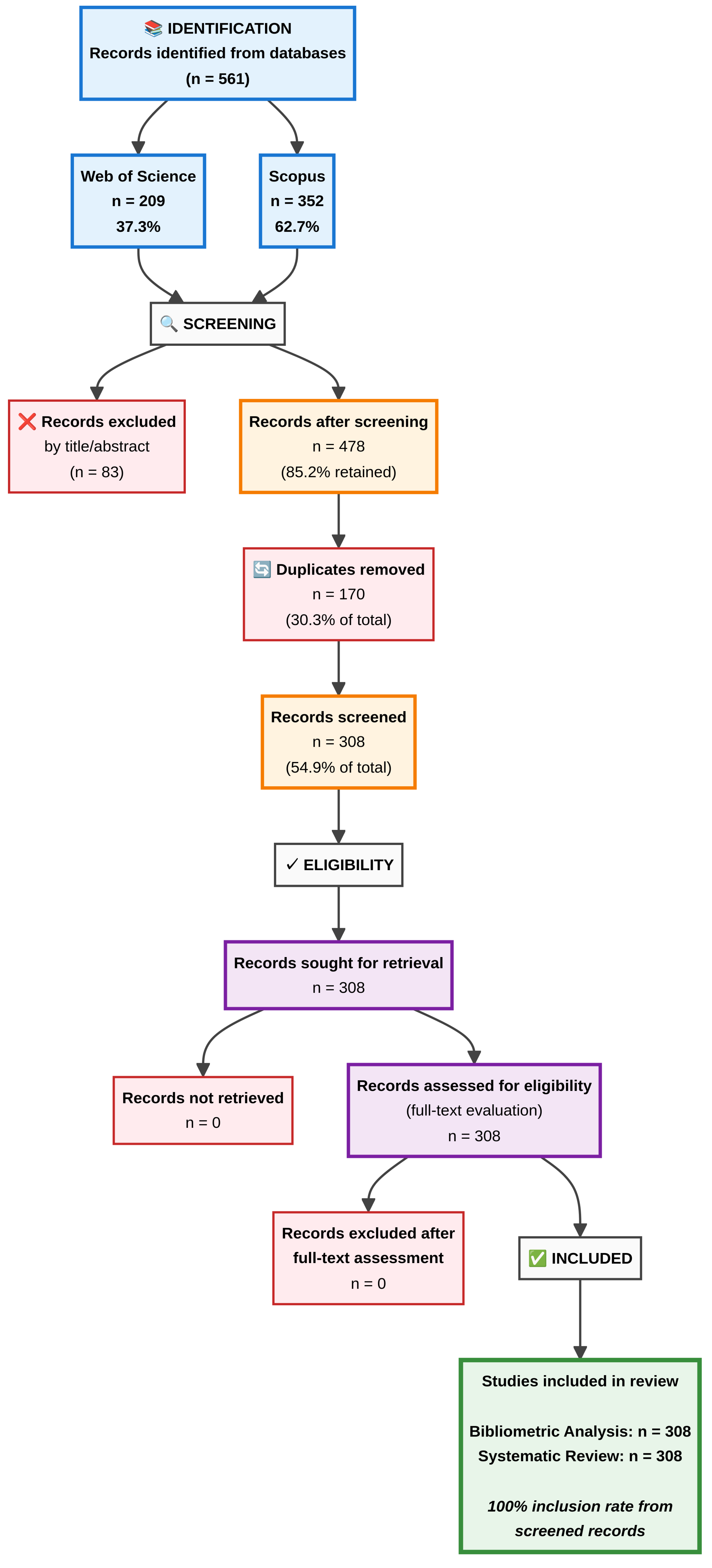
The process of selecting and analyzing the articles followed the adapted steps of the PRISMA 2020 flowchart, as detailed in Figure 1 (Page et al., 2021).
The complete search string applied to the Web of Science and Scopus databases was identical and defined as: [“capital structure” AND (“decision making” OR “optimal structure”)]. The database search was conducted on 4 July 2025, using the fields Title, Abstract, and Keywords.
The following filters were applied: publications written in English and Portuguese; a publication time frame from 2000 to 2024, covering a 25-year period; and articles classified within the areas of business, economics, engineering, and social sciences.
The retrieved records were exported in formats compatible with bibliometric analysis tools (RIS, CSV, and BIB). After the export process, a screening procedure was carried out based on predefined criteria.
  • Exclusion criteria included:
    Articles not indexed in the selected databases or without access available to the researchers;
    Conference proceedings, unless published in peer-reviewed journals;
    Book reviews;
    Non-peer-reviewed sources, such as theses, dissertations, and technical reports not published in academic journals.
  • Duplicate records were identified after merging all retrieved files and subsequently removed using reference management software or specific functionalities embedded in bibliometric analysis tools.
The systematic study selection process, detailed in the PRISMA flowchart in Figure 1, culminated in a final sample of 308 studies. The efficiency of the selection protocol is evidenced by several key metrics. From an initial pool of 561 records identified across the Web of Science (n = 209) and Scopus (n = 352) databases, the screening phase proved highly effective. First, 83 records (14.8%) were excluded based on title and abstract review. Subsequently, the removal of 170 duplicate records (30.3% of the initial pool) refined the sample to 308 unique articles for full-text assessment. Notably, the process achieved a 100% retrieval rate and a 100% inclusion rate from the screened sample, as no articles were excluded during the full-text eligibility assessment. This rigorous, multi-stage filtering resulted in an overall retention rate of 54.9%, confirming the selectivity and robustness of the search and screening protocol.

3. Results of the Bibliometric and Text-Mining Analysis

The results present a foundation of the strength, which stems from the convergent findings yielded by our multi-tool approach.

3.1. Temporal Evolution and Geographic Distribution

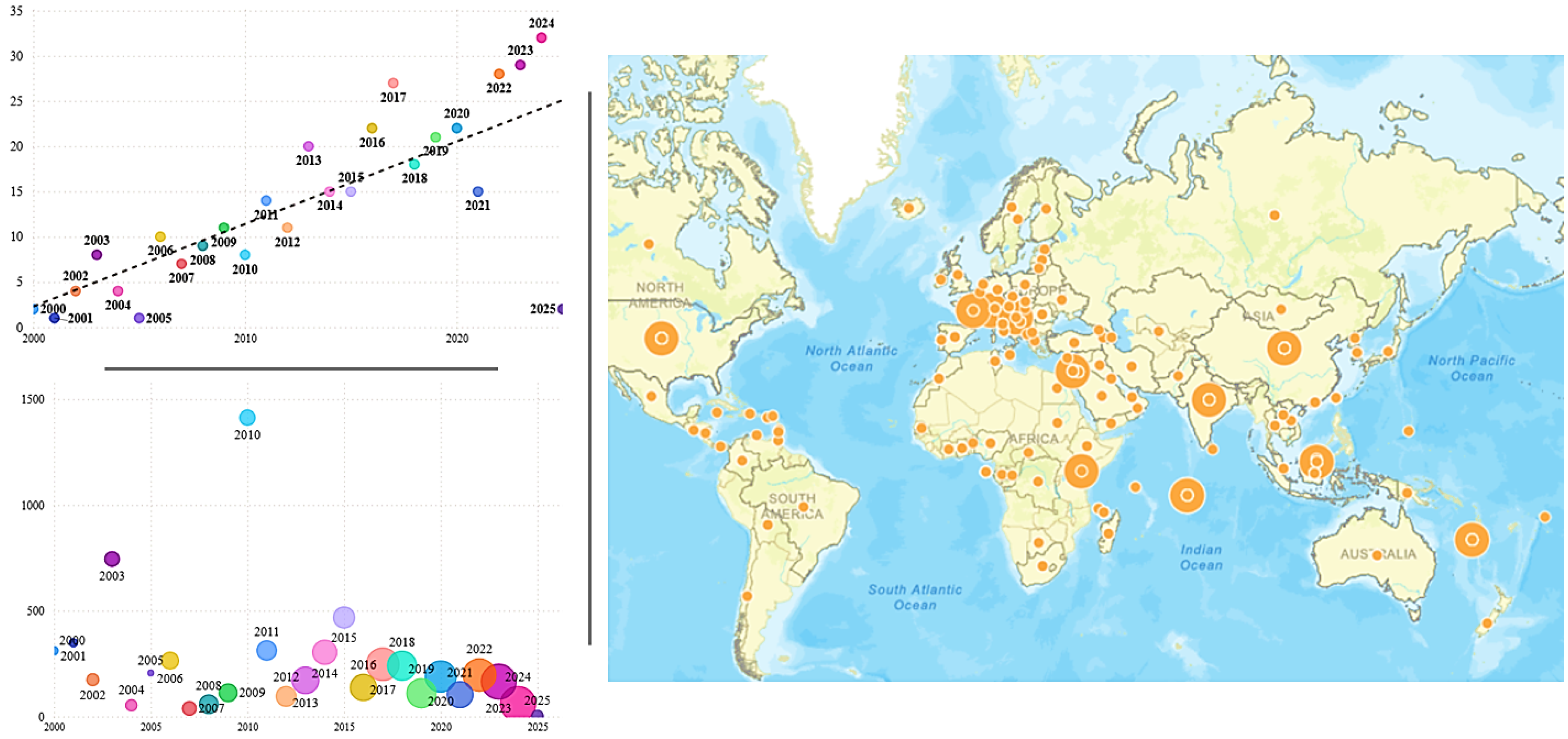
Figure 2 shows the main results of the temporal evolution and geographic distribution:
Figure 2 presents three complementary visualizations that characterize the temporal and spatial dimensions of research on capital structure and decision-making over the past two decades. The upper-left panel displays the annual publication output from 2000 to 2024, revealing a consistent upward trajectory in scholarly interest. The field experienced modest activity in the early 2000s, with fewer than 10 publications per year, followed by steady growth through the 2010s.
A notable acceleration occurred after 2015, culminating in peak production of 32 publications in 2024. The lower-left panel illustrates the annual citation patterns across the same period. A pronounced citation peak occurred in 2010, with approximately 1400 citations, indicating the presence of influential publications from that period. The citation landscape shows considerable volatility, with secondary peaks around 2003 and 2015, followed by a decline in recent years. The visualization of the world map indicates a concentration of research activities in regions such as North America, Europe, and Asia, with particularly dense clusters found in the United States, Central Europe, China, India, and Australia. The size of the circular markers reflects the level of research output, emphasizing the significant influence of developed economies and emerging research centers. Notably, regions such as South America and Africa show limited representation, suggesting potential geographic gaps in the literature and opportunities for expanding the empirical and theoretical scope of capital structure research to underrepresented contexts. Hence, these visualizations collectively emphasize the advancing maturity and international scope of research on capital structure decision-making. They also uncover chronological patterns of influence and geographical variations that deserve additional scrutiny. The next section presents the VOSviewer analysis.

3.2. Intellectual Structure of Capital Structure Research

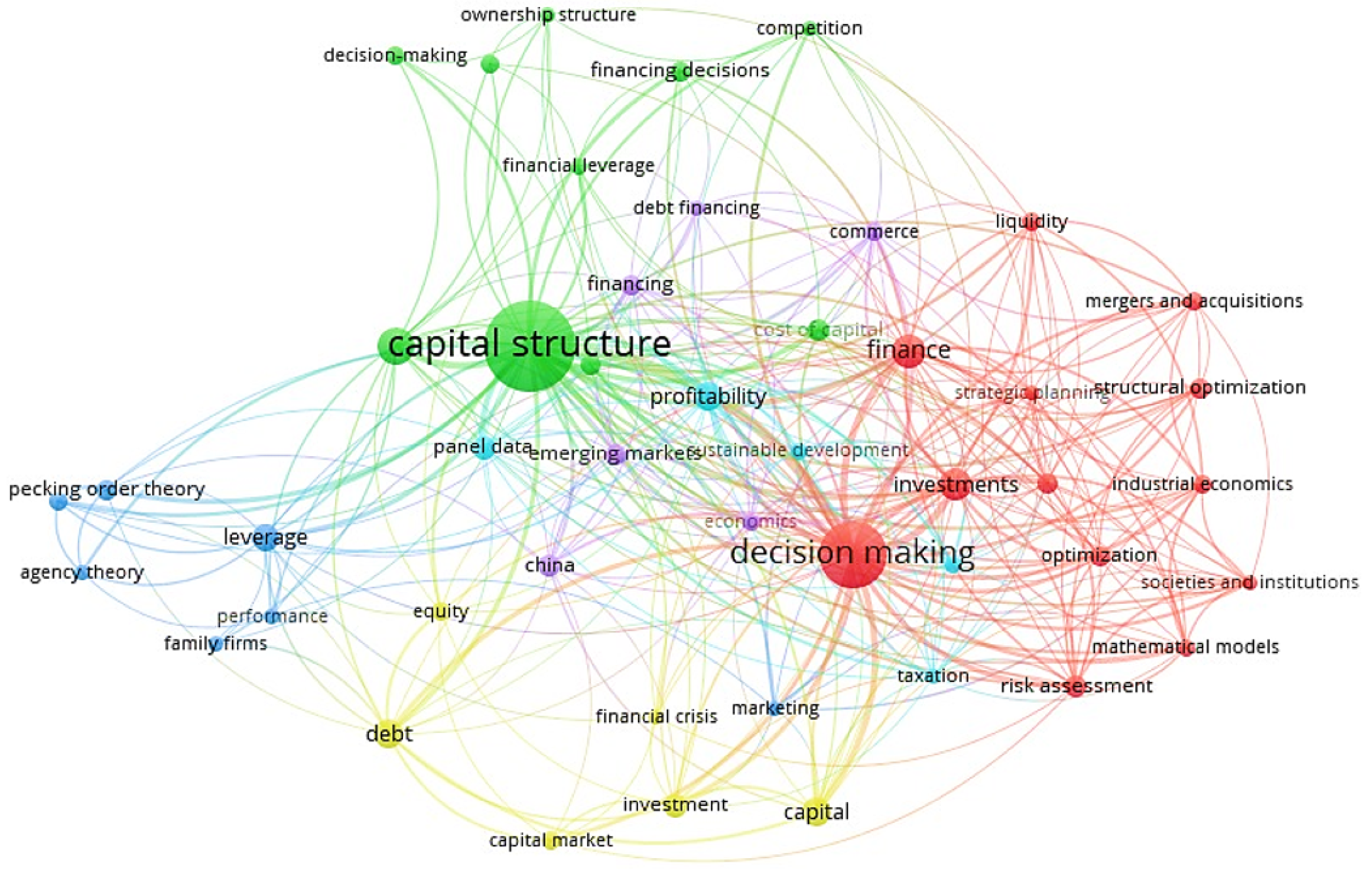
The network visualization in Figure 3, generated through VOSviewer analysis, maps the intellectual landscape of capital structure research by examining co-occurrence patterns among keywords extracted from the bibliometric corpus.
Each node represents a keyword, with node size proportional to its frequency of occurrence across the literature. The connecting lines indicate co-occurrence relationships, with line thickness reflecting the strength of association between terms. The color coding identifies distinct thematic clusters that emerge from the analysis. The network reveals two primary thematic clusters that characterize the field. The green cluster (left side) centers on the core concept of “capital structure” and encompasses the traditional theoretical foundations of the field. This cluster includes prominent keywords such as “pecking order theory,” “agency theory,” “leverage,” “panel data,” “family firms,” “performance,” “equity,” and “debt.” The strong interconnections within this cluster suggest a cohesive body of literature grounded in classical corporate finance theories that examine the determinants and consequences of financing choices. The presence of methodological terms like “panel data” indicates the empirical orientation of this research stream. The red cluster (right side) combines around “decision making” and represents a more applied, optimization-oriented perspective. This cluster features keywords such as “mathematical models,” “optimization,” “risk assessment,” “strategic planning,” “structural optimization,” “investments,” “industrial economics,” “societies and institutions,” and “mergers and acquisitions.” The prominence of these terms reflects a research stream focused on developing analytical frameworks and decision-support tools to guide capital structure choices in complex, dynamic environments. The central region of the network, where the two clusters intersect, contains bridging concepts such as “finance,” “profitability,” “financing decisions,” “cost of capital,” and “sustainable development.” These terms serve as conceptual connectors between theoretical foundations and practical decision-making applications. Additional peripheral clusters appear in blue (pecking order theory and agency theory), yellow (debt, capital market, investment), and purple (emerging markets, sustainable development), suggesting specialized research niches within the broader field. The spatial separation between the green and red clusters is particularly noteworthy, as it reveals a potential gap between traditional capital structure theory and decision-support methodologies. While both domains address financing choices, their limited overlap suggests that theoretical insights have not been fully integrated into practical decision frameworks. This structural insight underscores the need for research that bridges these domains, developing decision-support tools that are firmly grounded in capital structure theory while remaining responsive to managerial needs and market complexities.

3.3. Thematic Structure of Capital Structure Studies: VOSviewer and NVivo

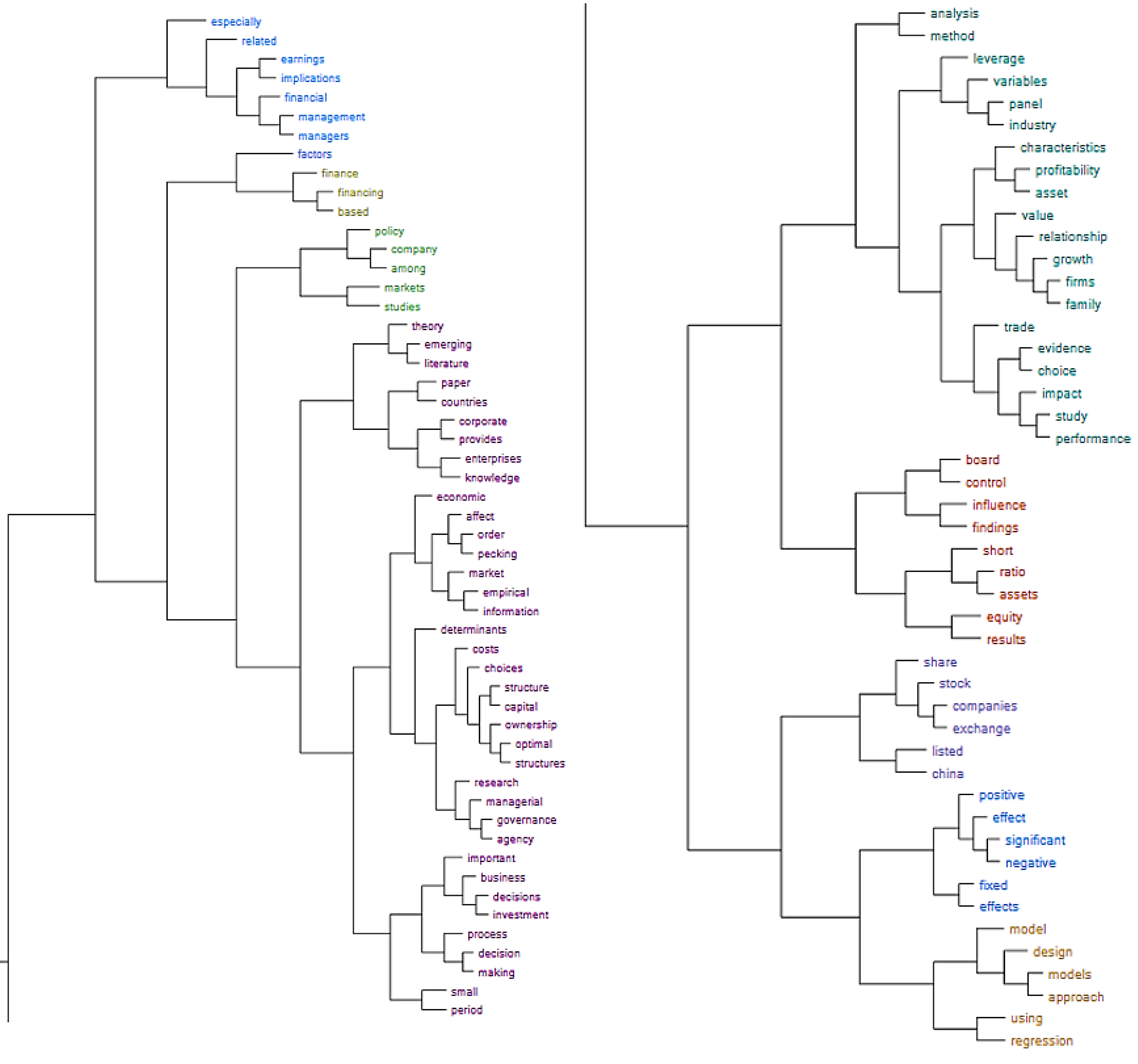
As follows, Figure 4 compares two complementary text-mining techniques to clarify the thematic architecture of capital structure research: the VOSviewer co-occurrence network and NVivo’s hierarchical word clustering. The dendrogram identifies several major branches that align with, and extend, the thematic clusters observed in the VOSviewer analysis.
The upper-left branch contains terms related to managerial and strategic considerations, including “especially,” “related,” “earnings,” “implications,” “financial,” “management,” and “managers.” This branch appears to correspond to research focused on the practical implications of capital structure decisions for firm management and financial outcomes. The words “policy,” “company,” and “among” show a focus on how companies make decisions. A central-left branch encompasses theoretical and empirical foundations, clustering terms such as “theory,” “emerging,” “literature,” “paper,” “countries,” “corporate,” “enterprises,” “knowledge,” “economic,” “order,” “pecking,” “market,” “empirical,” and “information.” This branch clearly aligns with the green cluster from the VOSviewer network, representing the traditional theoretical corpus grounded in pecking order theory, market dynamics, and empirical investigation. The hierarchical structure reveals that theoretical concepts (“theory,” “pecking,” “order”) are closely linked to methodological approaches (“empirical,” “information”) and contextual factors (“countries,” “emerging”). Another central branch groups terms related to capital structure fundamentals and optimization, including “determinants,” “costs,” “choices,” “structure,” “capital,” “ownership,” “optimal,” and “structures.” This branch bridges theoretical and applied perspectives, connecting the determinants of capital structure with optimization objectives. The proximity of “research,” “managerial,” “governance,” and “agency” within this branch suggests recognition of agency theory and governance mechanisms as key determinants of financing choices. The right side of the dendrogram reveals a distinct branch focused on empirical methodology and firm-level analysis, clustering terms such as “analysis,” “method,” “leverage,” “variables,” “panel,” “industry,” “characteristics,” “profitability,” “asset,” “value,” “relationship,” “growth,” “firms,” and “family.” This branch corresponds closely to the empirical research stream identified in the VOSviewer green cluster, emphasizing panel data methods and firm characteristics as determinants of leverage. The hierarchical structure indicates that methodological terms (“analysis,” “method,” “panel”) are conceptually linked to the variables they examine (“leverage,” “profitability,” “growth”). A lower-right branch groups terms related to research design and statistical modeling, including “model,” “design,” “models,” “approach,” “using,” and “regression.” This methodological cluster reflects the quantitative orientation of capital structure research and its reliance on econometric techniques. Notably, the dendrogram also reveals a branch containing terms related to corporate outcomes and market dynamics, such as “board,” “control,” “influence,” “findings,” “short,” “ratio,” “assets,” “equity,” “results,” “share,” “stock,” “companies,” “exchange,” “listed,” and “china.” The inclusion of “china” as a distinct node suggests that country-specific research, particularly on Chinese firms, represents a recognizable subfield within the literature.
When compared with the VOSviewer network, the NVivo dendrogram provides convergent evidence of the field’s thematic structure while offering additional granularity. Both analyses identify a core theoretical cluster centered on classical capital structure theories (pecking order, agency theory) and a separate, though related, cluster focused on decision-making and optimization. However, the dendrogram’s hierarchical structure reveals intermediate levels of conceptual organization that are less apparent in the network visualization. For instance, the dendrogram shows that methodological terms form a distinct sub-cluster within the broader empirical research stream, and that governance-related terms occupy a bridging position between theoretical and applied research. The hierarchical clustering also highlights certain terms that appear isolated or weakly connected in the VOSviewer network but are meaningfully grouped in the dendrogram. For example, “family” (family firms) is nested within the firm characteristics branch, indicating its role as a contextual variable in empirical studies. Similarly, “positive,” “effect,” “significant,” and “negative” cluster together, reflecting the language of hypothesis testing and empirical findings.
Overall, the NVivo hierarchical clustering seems to corroborate the dual structure observed in the VOSviewer analysis: a theoretical–empirical foundation and a decision-oriented application domain, while revealing finer-grained thematic subdivisions. The convergence between these two analytical approaches strengthens confidence in the identified thematic structure and underscores the multifaceted nature of capital structure research, which integrates theory, empirical evidence, methodological rigor, and practical application.
Overall, the network visualization confirms the multidisciplinary nature of capital structure research, spanning corporate finance theory, empirical analysis, optimization methods, and strategic management, while simultaneously highlighting opportunities for greater integration across these perspectives. For instance, the centrality of “Capital Structure” and the clear prominence of related themes such as “Decision-Making” were not mere artifacts of one particular analytical lens. On the contrary, this thematic architecture was consistently revealed through the quantitative metrics from Bibliometrix (R), deepened by the content analysis in NVivo, and visually confirmed by the network structures mapped in VOSviewer. Consequently, this methodological synergy provides a firm basis for our interpretations, allowing for a more profound exploration of the results and their broader implications. The centrality of “Capital Structure”, alongside key themes like “Decision-Making” and “Corporate Governance”, is not a methodological anomaly but a robust consensus confirmed across quantitative, content, and network analyses. This cross-methodological validation solidifies the integrity of the identified thematic clusters, thus enabling a more assured interpretation of the field’s intellectual landscape.

3.4. Core Contributors and Publication Outlets

Beyond the aggregate trends, our bibliometric analysis identified the core intellectual structure of the field by examining its most influential authors, institutions, countries, and publication outlets. This analysis provides insight into the key players and academic communities driving the research agenda on capital structure and decision-making. Table 1 summarizes the most productive authors and their affiliations, while Table 2 highlights the leading journals that serve as the primary conduits for this body of knowledge.
The analysis of core contributors reveals a research landscape with significant representation from China (56 articles), followed by the United States (47 articles) and India (21 articles), which aligns with the geographic distribution patterns observed in Figure 2. This concentration suggests that while the research topic is global, intellectual leadership is centered in a few key academic ecosystems, particularly in Asia and North America. The importance of Chinese institutions such as Chongqing University and Tsinghua University, beside established Western institutions like Duke University, reveals the growing reputation of Asian research centers in corporate finance scholarship. The productivity of individual authors is relatively distributed, with the most prolific contributor (Graham, J.) authoring 8 articles over the 25-year period, indicating that the field is characterized by broad participation rather than dominance by a small number of scholars. This outline suggests a healthy diversity of perspectives and methodological approaches. Furthermore, the list of top publication outlets seems to confirm that research on capital structure decision-making is primarily situated within applied corporate finance and managerial journals. The distinction of Managerial Finance (15 articles) as the leading outlet is particularly noteworthy, as it signals a strong orientation toward practical, managerially relevant research. The presence of journals such as Global Business Review and Euromed Journal of Business indicates growing attention to capital structure issues in emerging markets and specific regional contexts. Meanwhile, the inclusion of Review of Quantitative Finance and Accounting underscores the field’s continued emphasis on rigorous quantitative methods. Afterwards, our previous finding of a difference between theoretical–empirical and decision-oriented research groups seems to be supported by this dual emphasis on theoretical precision and practical use. Additionally, it indicates that the latter is becoming more prominent in academic literature.

3.5. Analysis of Reported Decision-Support Methodologies

A qualitative analysis of the final sample of 308 articles was conducted to categorize the primary decision-support methodologies discussed in the literature. While a significant portion of the studies focus on empirically testing capital structure theories, a distinct subset propose or apply specific quantitative models to address the optimization problem. These approaches can be broadly classified into three dominant categories, as summarized in Table 3.
Our analysis reveals a clear predominance of Econometric Models, which are primarily descriptive rather than prescriptive. This finding highlights a significant gap: while the literature is rich in explaining the factors that have influenced capital structure, it is less developed in providing forward-looking tools for managers. Optimization Models, though directly addressing the core problem, often rely on simplifying assumptions that limit their practical application in complex, dynamic environments (Brusov & Filatova, 2023). The less frequent use of Simulation and Real Options suggests that incorporating uncertainty and flexibility remains an underexplored yet critical area for developing more realistic decision-support methodologies (Soni & Satpathy, 2025).

3.6. Synthesis of Gaps and Implications for a Decision-Support Framework

Before proposing a methodological framework, it is essential to synthesize the gaps identified in our bibliometric and systematic review. The findings converge on three critical shortcomings in the existing literature that a practical, managerially oriented methodology must address (Table 4).
Accordingly, the proposed framework should be understood as an exploratory and theory-informed contribution, grounded in the synthesis of bibliometric patterns and systematic evidence, rather than as a prescriptive or empirically validated decision model.
The framework presented tends to be flexible, aware of its settings, and able to change. This helps solve the main problems in current research and gives financial managers a better tool. These identified gaps directly inform the design principles of the methodological framework proposed in the following section.

4. Analysis and Discussion of the Findings

The interpretation of the findings of this bibliometric analysis and systematic review reveals a field of research in corporate finance that, although mature in its central themes, demonstrates continuous evolution and a search for greater realism and practical applicability. There are two particularly significant findings: First, the emergence of China as the most productive country (56 articles) suggests that the field’s center of gravity is shifting towards emerging markets. It seems the trend calls for future research to move beyond universal theories and develop context-aware models that account for the unique institutional, regulatory, and corporate governance landscapes of these economies. So, the comparative studies that test the generalizability of findings from Chinese firms against those from other regions are now essential. Second, the prominence of “managerial finance” as the leading publication outlet (15 articles) signals a clear demand for practical, managerially relevant research. This reinforces the need to bridge the theory–practice divide identified in our analysis. Consequently, the future research agenda should prioritize the development and empirical validation of decision-support frameworks that are not only theoretically robust but also directly applicable and useful for financial managers navigating real-world complexities.
On the other hand, the interpretation of the findings suggests that the growing scientific production of capital structure and financial performance reflects the persistent relevance of this topic for academics and professionals. However, according to Soni and Satpathy (2025), the decline in the visibility of citations for more recent articles may indicate a saturation phase, in which incremental research is more common than truly innovative contributions. This does not diminish the importance of research, but points to the need for studies that offer new theoretical or methodological perspectives, rather than simply replicating findings in new contexts. A comparison with previous studies, as also found by Soni and Satpathy (2025), reinforces the predominance of Trade-Off and Pecking Order theories as pillars of empirical research. However, the emergence of the BFO Theory (Brusov & Filatova, 2023) represents a significant advance by challenging the premises of MM’s infinite life and the universality of the trade-off. The slow adoption and empirical validation of BFO in the broader literature suggest a gap in the transition from theoretical knowledge to practical application and validation in various contexts. This is a critical point because BFO offers a more realistic framework for the valuation of companies with a finite useful life, which is the reality of most organizations. The validity and timeliness of the concepts are constantly tested by empirical evidence, which frequently presents mixed results on the relationship between debt and profitability in different sectors and regions. This inconsistency validates the premise that the “optimal” capital structure is not a universal concept but rather highly dependent on the context (Bui et al., 2023).
Research in emerging markets such as Brazil has contributed to this understanding by highlighting the influence of political and economic factors on the volatility of capital structure (Lourenço & Reis, 2023). The implications for practice are substantial. For companies and financial managers, the analysis of the results underlines the need for an adaptive and contextualized approach to decision-making regarding capital structure. There is no single formula for optimization; instead, decisions must carefully consider the specific characteristics of the company (size, growth, asset tangibility, profitability), market conditions, regulatory environment, and macroeconomic variables. As stated by Černevičienė and Kabašinskas (2022) and Prekazi et al. (2023), the management of financial risks, including leverage and uncertainties, becomes even more critical and requires the use of decision support tools that provide a comprehensive and data-driven view. The integration of qualitative insights into the managerial decision-making process is vital, as subjective and behavioral factors can influence financial choices.
The limitations of the approach used in this study should be acknowledged. Although bibliometric analysis and systematic review are robust methodologies, the dependence on the Scopus and WoS databases and the restriction to articles in English and Portuguese may have excluded relevant literature from other sources or languages. Furthermore, the interpretation of thematic clusters and collaboration networks is, to some extent, subjective despite the use of quantitative tools. The depth of the analysis of the articles included in the systematic review was limited by the availability of information in the abstracts and, in some cases, by the need to synthesize a large volume of data. The nature of bibliometrics, which focuses on publication and citation patterns, does not directly assess the methodological quality or internal validity of studies, which is a task for a more in-depth systematic review.
In summary, the analysis of the results reinforces the complexity of the capital structure and the need for decision support frameworks that are dynamic, multifaceted, and capable of integrating diverse sources of information and theoretical perspectives. Future research should focus on filling the identified gaps, especially in the application of more realistic theories and understanding the contextual factors that shape financial decisions.

5. Final Considerations

This study undertakes a bibliometric analysis and literature review to delineate the intellectual structure, thematic evolution, and principal contributors in the domain of capital structure decision-making research from 2000 to 2024. By fulfilling its stated objectives, this research presents some contributions to the field, identifies critical gaps, and establishes a foundation for a more robust, managerially oriented research agenda.

5.1. Summary of Findings and Contributions

Our analysis revealed a field that is both mature and in transition. The steady growth in publications confirms sustained academic interest, while the intellectual structure, revealed through co-occurrence network analysis, is anchored by two distinct poles: a theoretical–empirical cluster dedicated to testing classical theories like Trade-Off and Pecking Order, and a decision-oriented cluster focused on optimization and managerial application. The clear separation between these clusters is a key finding, highlighting a significant theory–practice divide that our proposed framework aims to bridge.
The study makes three primary contributions. First, it provides a descriptive contribution by quantitatively mapping the field. We identified the dominance of Chinese (56 articles) and American (47 articles) scholarship, highlighting a geographic concentration that shapes the current debate. We also found that practitioner-focused journals, led by Managerial Finance (15 articles), are the primary outlets, signaling a strong demand for applicable research. This finding reinforces the relevance of developing practical decision-support tools.
Second, this research offers a methodological contribution by demonstrating the power of triangulating bibliometric tools (Bibliometrix, VOSviewer, and NVivo). This multi-faceted approach allowed for a richer, more nuanced understanding of the field’s structure than a single tool could provide, revealing not only co-occurrence patterns but also the contextual similarity of concepts.
Finally, the study makes a conceptual contribution by synthesizing the identified gaps into a blueprint for a decision-support methodology. Our analysis showed a predominance of descriptive econometric models and a lack of frameworks that integrate uncertainty and context-specificity. The suggested conceptual framework effectively holds these limitations by being integrative, offering a direction for creating more efficient tools for financial managers.

5.2. Limitations

Despite these contributions, this study has several limitations. First, the reliance on the Scopus and Web of Science databases, while comprehensive, may have excluded relevant literature from other sources or in languages other than English and Portuguese. Second, the search string, though carefully constructed, may have omitted studies using alternative terminologies for “decision making” or “optimal structure,” potentially narrowing the scope. Third, the nature of bibliometric analysis, while powerful for identifying broad trends, does not permit an in-depth assessment of the individual methodological quality or internal validity of each study (Soni & Satpathy, 2025). Finally, as noted, the proposed decision-support methodology is a conceptual blueprint and has not yet been empirically validated. These limitations offer clear pathways for future research.

5.3. Future Research Directions

Future research should first focus on empirically validating the proposed framework through applications in real organizations from different sectors and regions, allowing an assessment of its effectiveness and adaptability. There is also a clear need for more context-sensitive investigations, especially in emerging markets beyond the dominant U.S.–China axis, to understand how institutional, regulatory, and cultural environments shape capital structure decisions. Additional studies should test the applicability of emerging theories, such as BFO Theory, comparing their explanatory power to traditional models. To reduce the persistent gap between theory and practice, future work must translate complex financial models into accessible decision-support tools, potentially integrating qualitative insights from managers. Finally, advancing dynamic and stochastic modeling remains essential, calling for the use of techniques such as Monte Carlo simulation and real options to better capture uncertainty and financial volatility. By addressing these future directions, research on capital structure can continue to evolve, providing more robust insights and effective tools to assist decision-making in an increasingly complex and dynamic financial environment.

Supplementary Materials

The supporting information can be downloaded at: https://www.mdpi.com/article/10.3390/ijfs14030069/s1.

Author Contributions

Methodology, M.N.F. and J.M.F.G.d.P.; investigation, J.M.F.G.d.P.; data curation, W.T.N.; writing—original draft preparation, J.M.F.G.d.P. and M.N.F.; writing—review and editing, J.M.F.G.d.P., J.P.d.M.P. and R.M.B.; supervision, M.N.F. and W.T.N.; project administration, J.M.F.G.d.P., M.N.F., R.M.B., W.T.N. and J.P.d.M.P.; funding acquisition, M.N.F. All authors have read and agreed to the published version of the manuscript.

Funding

This research was funded by Mackpesquisa No. 231016 (Mackenzie Presbyterian University).

Institutional Review Board Statement

Not applicable.

Informed Consent Statement

Not applicable.

Data Availability Statement

The data used in this manuscript are derived exclusively from studies published by other authors and are fully documented in the reference list and the data are openly available in Web of Science and Scopus databases, according to the procedure presented in Section 2.6, Process Steps, of this document.

Acknowledgments

In this study, the authors acknowledge the use of bibliographic data retrieved from the Web of Science and Scopus databases, which were systematically searched to identify and select the articles relevant to the development of this manuscript. The VOSviewer tool was also employed to construct and visualize bibliometric networks. The authors have reviewed and edited the output and take full responsibility for the content of this publication.

Conflicts of Interest

The authors declare no conflicts of interest.

Abbreviations

The following abbreviations are used in this manuscript:
BFOBrusov–Filatova–Orekhova Theory
BIBusiness Intelligence
BIBBibliography file (BibTex format)
CSVComma-Separated Values
DFLDegree of Financial Leverage
ESGEnvironmental, Social and Governance
FP&AFinancial Planning & Analysis
LRLiterature review
MCDA/MCDMMulti-Criteria Decision Analysis/Multi-Criteria Decision-Making
MMModigliani & Miller
NVivoQualitative Analysis Software
PRISMAPreferred Reporting Items for Systematic Reviews and Meta-Analyses
RISReference Information Systems format
SMESmall and Medium Enterprises
WACCWeighted Average Cost of Capital
WoSWeb of Science

References

  1. An, Z., Li, D., & Yu, J. (2015). Firm crash risk, information environment, and speed of leverage adjustment. Journal of Corporate Finance, 31, 132–151. [Google Scholar] [CrossRef]
  2. Apple Inc. (2025). Form 10-K: Annual report for the fiscal year ended September. Apple Investor Relations. Available online: https://investor.apple.com/investor-relations/default.aspx (accessed on 2 December 2025).
  3. Aria, M., & Cuccurullo, C. (2017). bibliometrix: An R-tool for comprehensive science mapping analysis. Journal of Informetrics, 11(4), 959–975. [Google Scholar] [CrossRef]
  4. Baker, M., & Wurgler, J. (2002). Market timing and capital structure. The Journal of Finance, 57(1), 1–32. [Google Scholar] [CrossRef]
  5. Brusov, P., & Filatova, T. (2023). Capital structure theory: Past, present, future. Mathematics, 11(3), 616. [Google Scholar] [CrossRef]
  6. Bui, T. N., Nguyen, X. H., & Pham, K. T. (2023). The effect of capital structure on firm value: A study of companies listed on the Vietnamese stock market. International Journal of Financial Studies, 11(3), 100. [Google Scholar] [CrossRef]
  7. Chen, C. (2006). CiteSpace II: Detecting and visualizing emerging trends and transient patterns in scientific literature. Journal of the American Society for Information Science and Technology, 57(3), 359–377. [Google Scholar] [CrossRef]
  8. Cordeiro, F. M., Pamplona, J. B., & Lucas, E. C. (2018). Determinantes da estrutura de capital no Brasil: Evidências empíricas a partir de dados em painel no período entre 2010 e 2016. Revista de Administração, Sociedade e Inovação, 4(2), 183–203. [Google Scholar] [CrossRef]
  9. Černevičienė, J., & Kabašinskas, A. (2022). Review of multi-criteria decision-making methods in finance using explainable artificial intelligence. Frontiers in Artificial Intelligence, 5, 827584. [Google Scholar] [CrossRef]
  10. Eck, N. J. V., & Waltman, L. (2010). Software survey: VOSviewer, a computer program for bibliometric mapping. Scientometrics, 84, 523–538. [Google Scholar] [CrossRef]
  11. Fu, H., Wang, M.-H., & Ho, Y. (2013). Mapping of drinking water research: A bibliometric analysis of research output during 1992–2011. The Science of The Total Environment, 443, 757–765. [Google Scholar] [CrossRef]
  12. Fu, Y., Mao, Y., Jiang, S., Luo, S., Chen, X., & Xiao, W. (2023). A bibliometric analysis of systematic reviews and meta-analyses in ophthalmology. Frontiers in Medicine, 10, 1135592. [Google Scholar] [CrossRef]
  13. Ievsieieva, O. (2024). Financial modeling and forecasting in corporate finance management. Economic Affairs, 69(1), 629–646. [Google Scholar] [CrossRef]
  14. Kirby, A. (2023). Exploratory bibliometrics: Using VOSviewer as a preliminary research tool. Publications, 11(1), 10. [Google Scholar] [CrossRef]
  15. Kraus, A., & Litzenberger, R. H. (1973). A state-preference model of optimal financial leverage. Journal of Finance, 28(4), 911–922. [Google Scholar] [CrossRef]
  16. Lessa, M. S. C. d. M., Amaral, T. M., Leão, P. C. S., & Oliva, J. T. (2024). Multi-criteria decision analysis applied to Brazilian grapevine genotype selection. Journal of Food Composition and Analysis, 130, 106126. [Google Scholar] [CrossRef]
  17. Lourenço, A., & Reis, F. (2023). The volatility of capital structure in Brazil—An empirical analysis. Open Journal of Business and Management, 11(3), 1158–1180. Available online: https://www.researchgate.net/publication/371001699_The_Volatility_of_Capital_Structure_in_Brazil-An_Empirical_Analysis (accessed on 2 December 2025). [CrossRef]
  18. Macedo, G. H. S. d., Sampaio, J. O., Flores, E., & Aprigio, P. L. (2015). Capital structure: Empirical evidences of public and non-public firms in Brazil. Corporate Ownership & Control, 12(3–2), 223–232. [Google Scholar] [CrossRef]
  19. Mahmoud, M. I., Surwanti, A., & Pribadi, F. (2024). Bibliometric analysis of trends and patterns in capital structure research: A decade-long review (2012–2022). Multidisciplinary Review, 7(2), 2024025. [Google Scholar] [CrossRef]
  20. Modiglani, F., & Miller, M. H. (1958). The cost of capital, corporation finance and the theory of investment. The American Economic Review, 48(3), 261–297. Available online: http://www.jstor.org/stable/1809766 (accessed on 2 December 2025).
  21. Myers, S. C. (1984). The capital structure puzzle. The Journal of Finance, 39(3), 574–592. [Google Scholar] [CrossRef]
  22. Niazi, M. A. (2016). Review of “CiteSpace: A practical guide for mapping scientific literature” by Chaomei Chen. Complex Adaptive Systems Modeling, 4, 23. [Google Scholar] [CrossRef]
  23. Page, M. J., McKenzie, J. E., Bossuyt, P. M., Boutron, I., Hoffmann, T. C., Mulrow, C. D., Shamseer, L., Tetzlaff, J. M., Akl, E. A., Brennan, S. E., Chou, R., Glanville, J., Grimshaw, J. M., Hróbjartsson, A., Lalu, M. M., Li, T., Loder, E. W., Mayo-Wilson, E., McDonald, S., … Moher, D. (2021). The PRISMA 2020 statement: An updated guideline for reporting systematic reviews. BMJ, 372, n71. [Google Scholar] [CrossRef]
  24. Paiva, A. C. P. d. A., Figueiredo, C. J. J. d., & Pedrosa, C. K. A. (2025). Modelo multicritério para avaliação de competitividade no setor energia renováveis. Revista de Gestão e Secretariado, 16(2), e4711. [Google Scholar] [CrossRef]
  25. Pranckutė, R. (2021). Web of Science (WoS) and Scopus: The titans of bibliographic information in today’s academic world. Publications, 9(1), 12. [Google Scholar] [CrossRef]
  26. Prekazi, Y., Bajrami, R., & Hoxha, A. (2023). The impact of capital structure on financial performance. International Journal of Applied Economics, Finance and Accounting, 17(1), 1–6. [Google Scholar] [CrossRef]
  27. Silva, I. L. D. (2019). A abertura de capital das incorporadoras brasileiras: Um olhar sob a ótica das teorias de pecking order e market timing. Available online: http://educapes.capes.gov.br/handle/1884/64192 (accessed on 2 December 2025).
  28. Soni, U., & Satpathy, B. (2025). Mapping the research landscape of capital structure and financial performance through bibliometric and systematic literature review. Journal of Informatics Education and Research, 5(2). [Google Scholar] [CrossRef]
  29. Taherdoost, H., & Madanchian, M. (2023). Multi-criteria decision making (MCDM) methods and concepts. Encyclopedia, 3(1), 77–87. [Google Scholar] [CrossRef]
  30. Tristão, P. A., & Sonza, I. B. (2019). Is the capital structure stable in Brazil? RAM. Revista de Administração Mackenzie, 20(4), eRAMF190154. [Google Scholar] [CrossRef]
  31. Wennie, & Nugroho, V. C. (2023). The effect of uncertainty on capital structure. Journal of Management and Financial Sciences, (47), 771–786. [Google Scholar] [CrossRef]
  32. Zheng, K., & Wang, X. (2019). Publications on the association between cognitive function and pain from 2000 to 2018: A bibliometric analysis using CiteSpace. Medical Science Monitor, 25, 8940–8951. [Google Scholar] [CrossRef]
Figure 1. PRISMA flowchart. Source: Authors.
Ijfs 14 00069 g001
Figure 2. Temporal evolution and geographic distribution of scientific production on capital structure and decision making 2000 to 2024. Source: Author (2025).
Ijfs 14 00069 g002
Figure 3. Keyword co-occurrence networking revealing the intellectual structure of capital structure and decision-making research. Source: Authors in VOSviewer.
Ijfs 14 00069 g003
Figure 4. Hierarchical cluster analysis of keywords using NVivo. Source: Authors in NVivo software.
Ijfs 14 00069 g004
Table 1. Most productive authors, institutions, and countries in capital structure decision-making research (2000–2024).
RankMost Productive AuthorsNo. of ArticlesMost Productive InstitutionsNo. of ArticlesMost Productive CountriesNo. of Articles
1Graham, J.8Chongqing University10China56
2Ho, K.6Tsinghua University10United States47
3Agarwal, Y.5Duke University7India21
4Mundi, H.5University of Liberec6Australia18
5Yadav, S.5Beihang University6United Kingdom17
Source: data generated from the merged sample of Web of Science and Scopus. Author names are presented in abbreviated format (last name, first initial).
Table 2. Top 5 most relevant publication outlets for capital structure decision-making research.
RankJournal TitlePublisherNo. of ArticlesMain Thematic Focus
1Managerial FinanceEmerald Publishing15Applied corporate finance, financial management, managerial decisions
2Global Business ReviewSAGE Publications6International business, emerging markets, corporate governance
3Applied EconomicsTaylor & Francis6Applied economic analysis, econometric methods, policy evaluation
4Euromed Journal of BusinessEmerald Publishing5Mediterranean region business, international finance, small and medium enterprises (SME)
5Review of Quantitative Finance and AccountingSpringer5Quantitative methods in finance, accounting research, empirical studies
Source: data generated from the merged bibliographic sample. Journal names are presented in title case format.
Table 3. Categorization of decision-support in capital structure.
Methodology CategoryDescriptionKey CharacteristicsRepresentative Keywords
Econometric modelsThe most common method is using regression analysis.
  • Focus on past behavior.
  • Employs panel data, time-series, or cross-sectional analysis.
  • Tests theories like Trade-Off and Pecking Order.
panel data, regression, determinants, leverage, profitability
Optimization modelsMathematical programming aimed at finding a single optimal debt-to-equity ratio.
  • Seeks to minimize WACC or maximize firm value.
  • Often based on the static Trade-Off theory.
  • Includes linear programming, dynamic programming, and algorithms.
optimization, optimal structure, target debt, WACC, mathematical models
Simulation & real optionsStochastic models that incorporate uncertainty and managerial flexibility into the decision process.
  • Uses Monte Carlo simulation.
  • Values flexibility to delay, expand, or abandon financing decisions.
  • Addresses market timing and dynamic adjustments.
simulation, real options, stochastic, uncertainty, market timing
Source: Authors.
Table 4. Matrix synthesizing the main elements of the text.
Analytical AxisDescription of the Identified GapEvidenceImplications for the Decision Support
Theory–practiceA structural separation persists between theoretical–empirical studies and applied optimization studies in capital structure.The literature focuses either on testing theories (e.g., Trade-Off, Pecking Order) or on optimization problems, but integrates the two theories.The framework must bridge this divide by embedding theoretical principles directly into the stages of the decision-making process.
Lack of contextual and sectoral elementsGeneric models fail to capture differences industries, countries, and firm sizes.The review indicates geographic concentration and limits contextual adaptation; industry, country, and size effects materially influence financing decisions (Y. Fu et al., 2023).The framework must include diagnostic steps that allow methodological adaptation to the firm’s specific operational environment.
Predominance of static and deterministic modelsThe literature relies on econometric and classical optimization models that do not adequately handle uncertainty.In a volatile financial environment, static models are insufficient; dynamic and flexible approaches remain underutilized.The framework must incorporate forward-looking components such as scenario analysis and real-options reasoning to reflect real-world complexity.
Overall synthesisThe three gaps jointly shape the core design principles of the proposed framework.Bibliometric and systematic findings converge in identifying these structural limitations.The resulting framework seems to be integrative, dynamic, providing managers with a more effective and realistic decision-support tool.
Source: Authors.
Disclaimer/Publisher’s Note: The statements, opinions and data contained in all publications are solely those of the individual author(s) and contributor(s) and not of MDPI and/or the editor(s). MDPI and/or the editor(s) disclaim responsibility for any injury to people or property resulting from any ideas, methods, instructions or products referred to in the content.