
Article

Effect of Pharmacist-Led Educational Intervention on Switching to Generic Medicine Among Patients Using Brand-Name Medicines in Japan

1
Regina Pharmacy Jimbocho, Unimat Life Co, Ltd., 1F Tamura Building 3-2-4 Kanda-Jimbocho, Chiyoda-ku, Tokyo 101-0051, Japan
2
Division of Pharmacy, Unimat Life Co, Ltd., Unimat Aoyama Building 2-12-14 Minami-aoyama, Minato-ku, Tokyo 107-0062, Japan
3
Mayumi Pharmacy Shoto, Unimat Life Co, Ltd., 1F Matsuo Building 1-29-2 Shoto, Shibuya-ku, Tokyo 150-0046, Japan
4
Division of Clinical Pharmaceutics and Pharmacy Practice, Department of Clinical Pharmacy, School of Pharmacy, Iwate Medical University, 1-1-1 Idaidori, Yahaba-cyo 028-3694, Japan
5
Department of Clinical Pharmacology, Nihon Pharmaceutical University,10281 Komuro, Ina-Machi, Kitaadachi-gun, Saitama 362-0806, Japan
6
Department of Pharmacy, Juntendo University Hospital, 3-1-3 Hongo, Bunkyo-ku, Tokyo 113-8431, Japan
7
Laboratory of Clinical Pharmacology, Faculty of Pharmacy, Juntendo University, 6-8-1 Hinode, Urayasu-shi, Chiba 279-0013, Japan
*
Author to whom correspondence should be addressed.
Pharmacy 2026, 14(3), 70; https://doi.org/10.3390/pharmacy14030070
Submission received: 26 March 2026 / Revised: 4 May 2026 / Accepted: 5 May 2026 / Published: 11 May 2026
(This article belongs to the Section Pharmacy Practice and Practice-Based Research)

Abstract

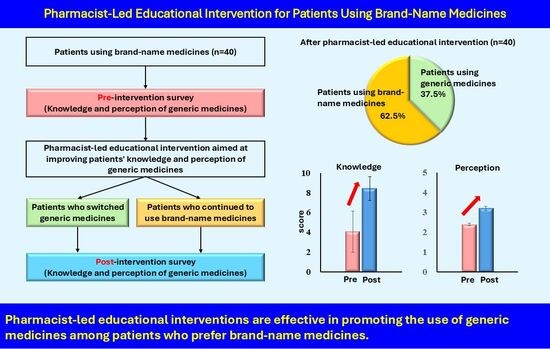
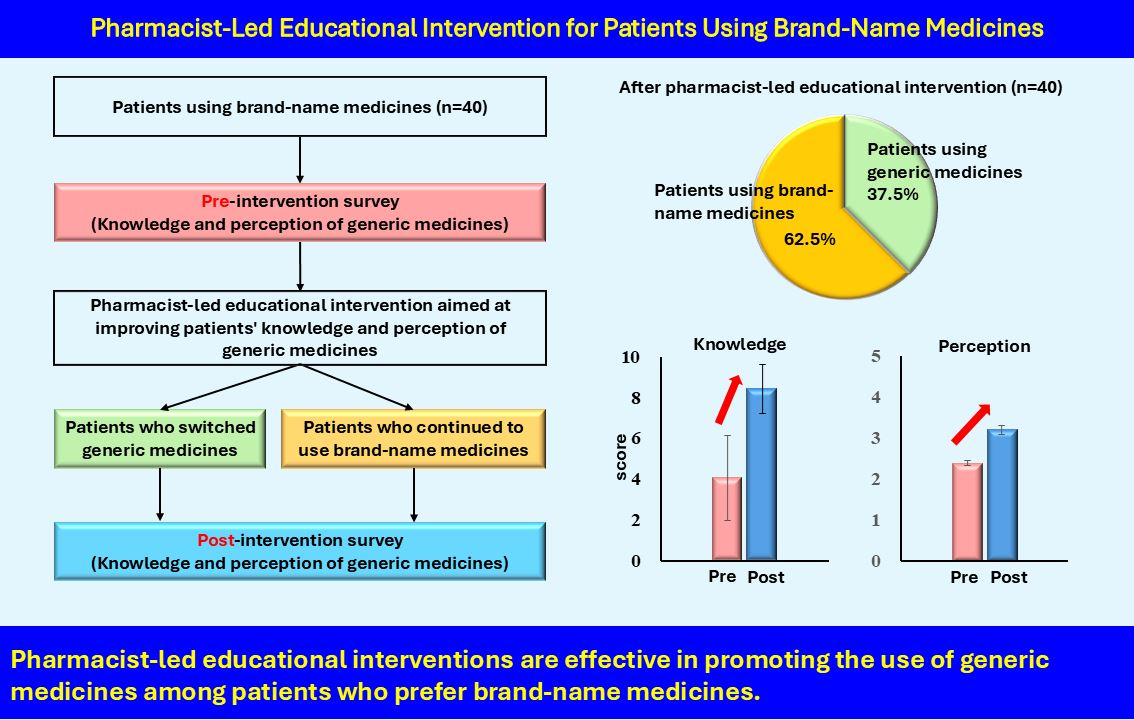
The use of generic medicines (GEs) is being promoted to reduce healthcare costs. This study aims to evaluate the effect of a pharmacist-led educational intervention on the number of patients switching from brand-name medicines to GEs among patients who preferred brand-name products. Pharmacists provided a standardized explanation using pamphlets about GEs to patients who wished to use brand-name medicines and allocated time to answer questions. Basic knowledge about GEs (nine items) and perceptions of GE use (three items) were assessed before and after the intervention to determine whether changes influenced switching behavior. Between 1 March and 30 July 2025, 40 patients were enrolled in the analysis. Following the intervention, the number of patients using one or more brand-name medicines significantly decreased to 25. Knowledge and perceptions of GEs significantly increased after the intervention and were associated with an increased rate of switching to GEs. Binominal logistic regression analysis identified age ≥ 65 years as a strong factor associated with preference for brand-name medicines (OR, 16.45; 95% CI, 1.48–182.65; p = 0.02). These findings indicate that pharmacist-led educational interventions are effective in promoting GE use among patients who prefer brand-name medicines. In the future, we plan to conduct comparative studies with a control group to further investigate the factors that lead to patients strongly preferring the use of brand-name medicines.

Graphical Abstract

1. Introduction

In Japan, the use of generic medicines (GEs) is being promoted to reduce healthcare costs associated with population aging and advances in medical care [1,2,3,4]. In 2013, the Ministry of Health, Labour and Welfare issued the “Roadmap for Further Promoting the Use of GE” [5] and has since implemented initiatives to encourage the use of GEs. As a result, GE utilization has increased annually; the volume share reached 85% in the September 2024 survey [6]. The Ministry has set a target of achieving a GE volume share of 80% or higher in all prefectures by the end of fiscal year 2029 and continues to promote GE use [7]. However, in value terms, GEs accounted for only 62.1% of total pharmaceutical expenditure in 2023, which remains relatively low compared with other countries [4,6]. Therefore, the government decided to achieve a new value term target of at least 65% by the end of fiscal year 2029 and reaffirmed its commitment to promoting the use of GEs [7].
A 2022 survey on the impact and implementation status of GE promotional measures reported that 48.8% of patients using brand-name medicines indicated “no specific reason” for not using GEs [8]. Previous studies have also shown that patients who prefer brand-name medicines often lack basic knowledge about GEs and have low positive perception regarding their use [9]. These findings suggest that patients do not have an adequate understanding of GEs.
Furthermore, a survey of patients using GEs found that the most common reason for switching from brand-name medicines was an “explanation from their family pharmacist” (36.2%). When combined with an “explanation from a pharmacist other than their family pharmacist”, pharmacist explanations accounted for 60.9% of responses [8]. These findings suggest patients may switch to GEs if pharmacists provide them information and educational intervention regarding GEs.
However, a prospective investigation of whether pharmacist-led educational interventions can effectively convince patients to switch from brand-name medicines to GEs remains lacking.
Therefore, this study aimed to investigate whether patients using brand-name medicines, who had limited knowledge and low perception of GEs, would switch from brand-name medicines to GEs following pharmacist-led educational intervention. Additionally, we compared the knowledge and perceptions of GEs before and after the intervention and assessed whether these findings contributed to an increase in the number of patients switching from brand-name medicines to GEs.

2. Materials and Methods

2.1. Study Design and Data Collection

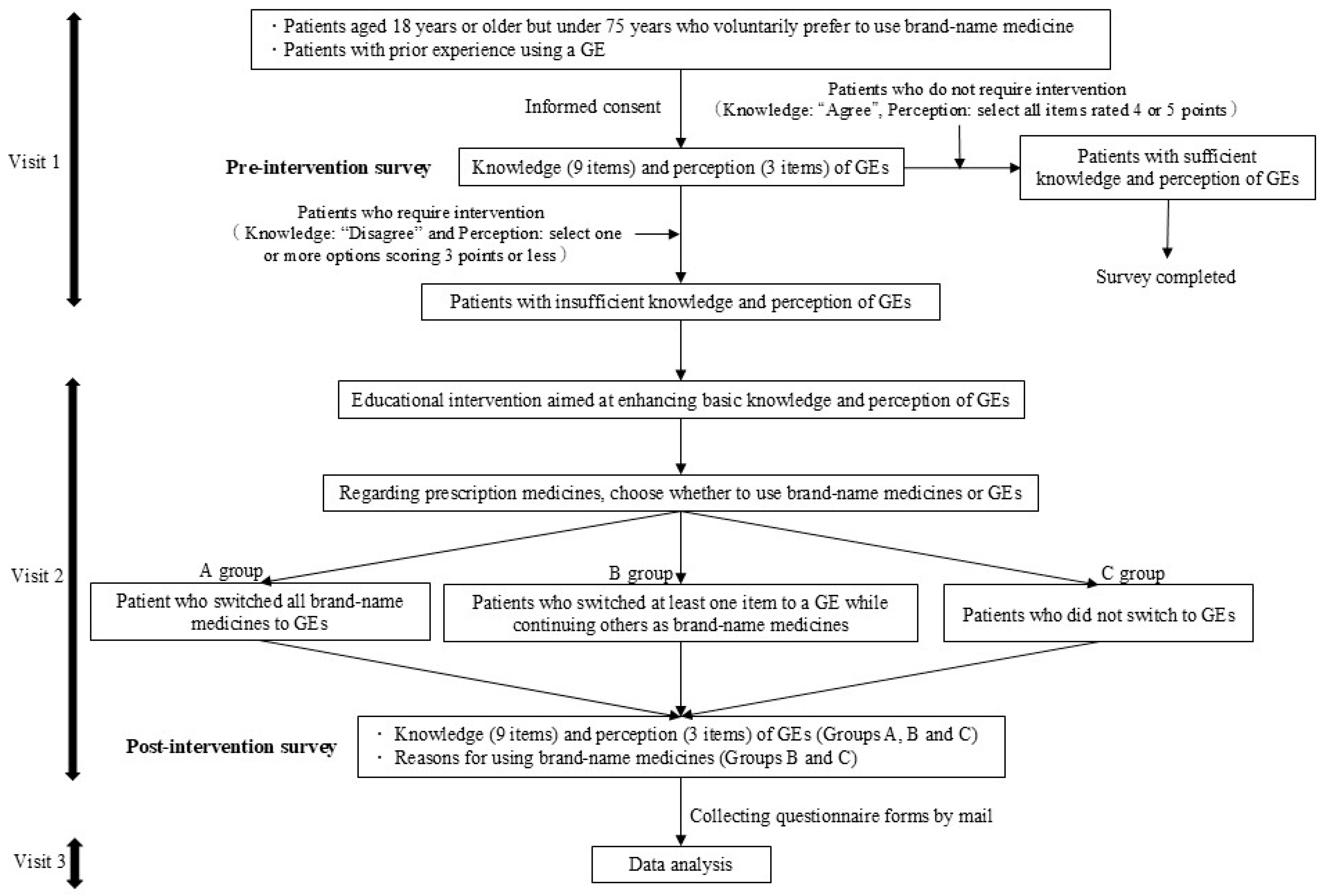
Figure 1 illustrates the survey flow. Patients aged 18–75 years were enrolled between 1 March 2025 and 30 July 2025. Eligible patients were those who regularly visited our pharmacy, had prior experience using GEs, and were using brand-name medicines at their own request. Patients with mental disorders or cognitive impairments were excluded due to the potential risk of excessive distress. Participants were provided with written information regarding the study purpose, methods, preservation of anonymity, voluntary participation, and the absence of disadvantages for non-participation. Their responses were considered to provide consent to participate in the study.
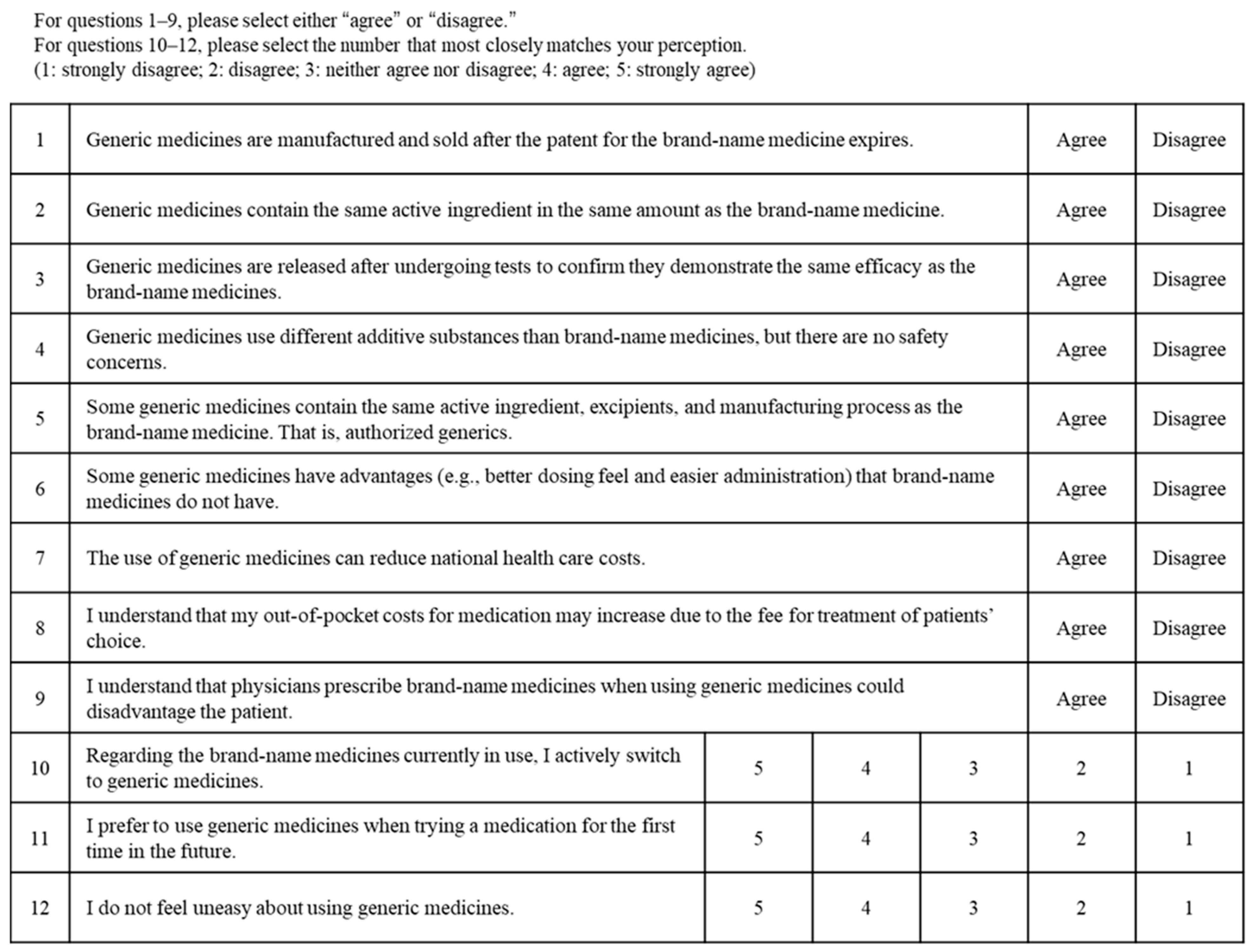
The questionnaire survey was conducted anonymously and administered before the pharmacist-led educational intervention at Visit 1 and after the intervention at Visit 2. The questionnaire comprised nine items evaluating basic knowledge of GEs and three items evaluating the perception of GE use (Figure 2). For the knowledge items, respondents selected either “agree” or “disagree”. Perception items were rated using a five-point Likert scale (1 = strongly disagree, 2 = disagree, 3 = neither agree nor disagree, 4 = agree, and 5 = strongly agree).
Furthermore, we investigated the reasons for continuing to use brand-name medicines after the educational intervention (multiple choice: having experienced reduced effectiveness when using a GE, having experienced side effects when using a GE, concerns about quality (drug content, expiration date, etc.), family or acquaintances not recommending GE use, concerns regarding GE distribution or supply, increased anxiety when switching to a GE due to changes in drug name or design, no particular reason, and other).
A questionnaire survey was conducted following the educational intervention on the same day. To reduce participant burden, the patients were asked to complete the questionnaire at home and return it in a self-addressed envelope.

2.2. Educational Interventions by Pharmacists

We determined eligibility for the educational intervention as follows. In the pre-intervention questionnaire survey, patients who answered “disagree” to questions regarding basic knowledge about GEs or who scored ≤3 on at least one question regarding perceptions of GE use were classified as having “insufficient knowledge and perceptions of GEs.” In this study, the educational intervention consisted of pharmacists providing standardized explanations using pamphlets about GEs to patients who preferred brand-name medicines and allocating time to answer questions. The content covered GEs’ manufacturing approval processes, efficacy, quality, safety, advantages not present in brand-name medicines [e.g., improved bitterness and dosing convenience], economic benefits of using GEs, the background of GE promotion policies, and fees related to patient preference for brand-name medicines. The standardized explanation and Q&A sessions were scheduled to take approximately 20 min.
However, the standardized explanation was delivered by multiple pharmacists, which posed a risk of variability in the intervention quality. To mitigate this risk, interventions were standardized using a checklist that comprehensively covered all essential items requiring explanation. Patients whose circumstances necessitated interruption during the explanation or a subsequent Q&A session were excluded from this study. The educational intervention was conducted in a separate consultation room within the pharmacy, rather than at the regular medication counseling counter, to protect the privacy of the participants.

2.3. Comparison of the Number of Patients Using Brand-Name Medicines, Knowledge, and Perception of GEs Before and After Pharmacist-Led Educational Intervention

The primary outcome was the number of patients using one or more brand-name medicines before and after the intervention. We compared the number of patients using one or more brand-name medicines before and after the intervention to determine whether switching from brand-name medicines to GEs increased. The secondary outcome assessed changes in basic knowledge of GEs and perceptions of their use, measured using a comprehensive evaluation index [10,11].
For the basic knowledge questions about GEs, responses of “agree” to each of the nine questions were considered correct, and the total number of correct responses (range, 0–9) was calculated for each patient. The mean number of correct responses (knowledge score) was then calculated for all patients and compared before and after the intervention. For the perception items, the mean response value for each patient was calculated based on the response scores (1–5) for the three questions. The overall mean response value (perception score) was subsequently calculated for all patients and compared before and after the intervention.
After the intervention, the patients were classified into three groups: Group A (switched all brand-name medicines to GEs), Group B (switched at least one item to a GE while continuing others as brand-name medicines), and Group C (did not switch to GEs). Within each group, pre- and post-intervention knowledge and perception scores were compared to evaluate differences in intervention effects among the groups.

2.4. Analysis of Factors Influencing the Preference for Brand-Name Medicines

Univariate analyses were conducted for age, sex, number of brand-name medicines used, prescription duration, number of currently used medications, and post-intervention knowledge and perception scores of GEs to identify factors associated with a strong preference for brand-name medicines after the intervention. Variables with p < 0.2 were selected as potential explanatory variables for multivariate analysis.

2.5. Statistical Analysis

Normality was assessed using normal probability plots and the Shapiro–Wilk test. Patient characteristics, including sex, age, therapeutic classes of brand-name medicines, number of brand-name medicines, prescription duration, and number of medicines used, were compared using the chi-square test or the Kruskal–Wallis test, as appropriate. The number of patients requesting brand-name medicines before and after the intervention was compared using the McNemar test. Knowledge and perception scores before and after the intervention were compared using the Wilcoxon signed-rank test. The factors associated with preference of patients for brand-name medicines were compared using a binomial logistic regression analysis. Statistical significance was considered at p < 0.05. All statistical analyses were performed using SPSS Statistics version 25 (IBM Corp., Armonk, NY, USA).

3. Results

3.1. Patient Characteristics

Table 1 lists the patient characteristics. A total of 47 patients were enrolled, and informed consent was obtained from all participants during the study period. Of these, 40 patients (22 males and 18 females) were included in the study after excluding 2 patients who did not submit the questionnaire and 5 patients for whom educational intervention could not be implemented according to the protocol. The valid response rate was 85%.
The average results were as follows: age, 56 years; prescription duration, 34 days; number of brand-name medicines used, 2.0; and number of medicines used, 2.8. Brand-name medicines were classified into 17 therapeutic categories, comprising 77 medicines. No significant differences in patient characteristics were observed for any of these items.

3.2. Comparison of the Number of Patients Using Brand-Name Medicines Before and After the Pharmacist-Led Educational Intervention

As shown in Table 2, the number of patients using brand-name medicines significantly decreased (p < 0.01) from 40 to 25 after the pharmacist-led educational intervention on GEs in patients using brand-name medicines.

3.3. Comparison of Knowledge and Perceptions of GEs Before and After the Pharmacist-Led Educational Intervention

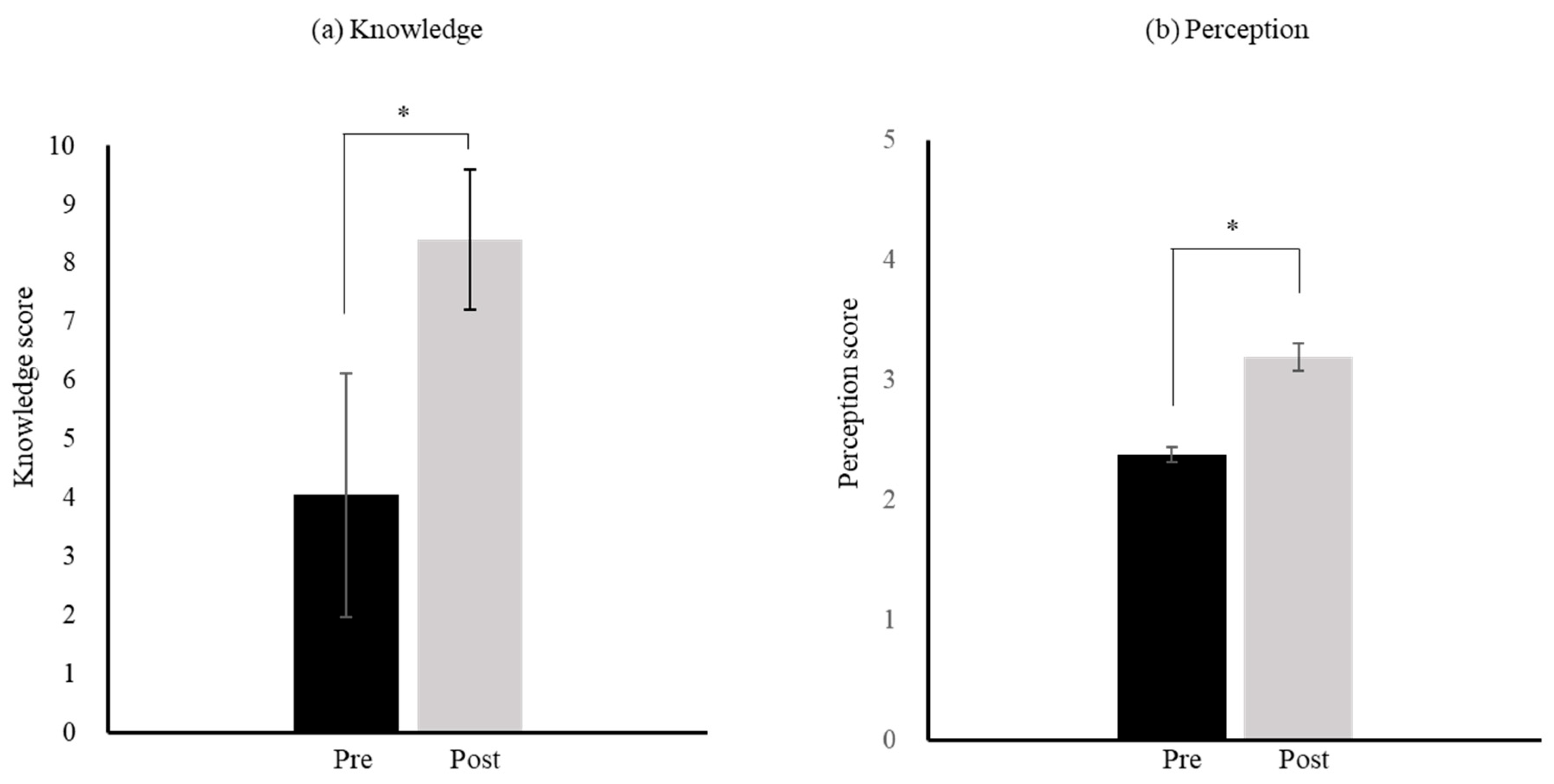
Regarding the knowledge score, the mean number of correct responses per person was compared before and after the intervention. Knowledge scores were significantly higher after the intervention than before (8.4 vs. 4.1, p < 0.05) (Figure 3a).
Regarding the perception score, the mean response score per person was compared before and after the intervention. Perception scores were significantly higher after the intervention than before (3.2 vs. 2.4, p < 0.05) (Figure 3b). Moreover, the results of a comparison of the correct answer rates regarding knowledge and perception of GEs are provided in the Supplementary Materials (Supplementary Files S1 and S2).

3.4. Comparison of Knowledge and Perceptions of GEs Before and After Pharmacist-Led Educational Intervention: Classified by Whether GE Switching Occurred

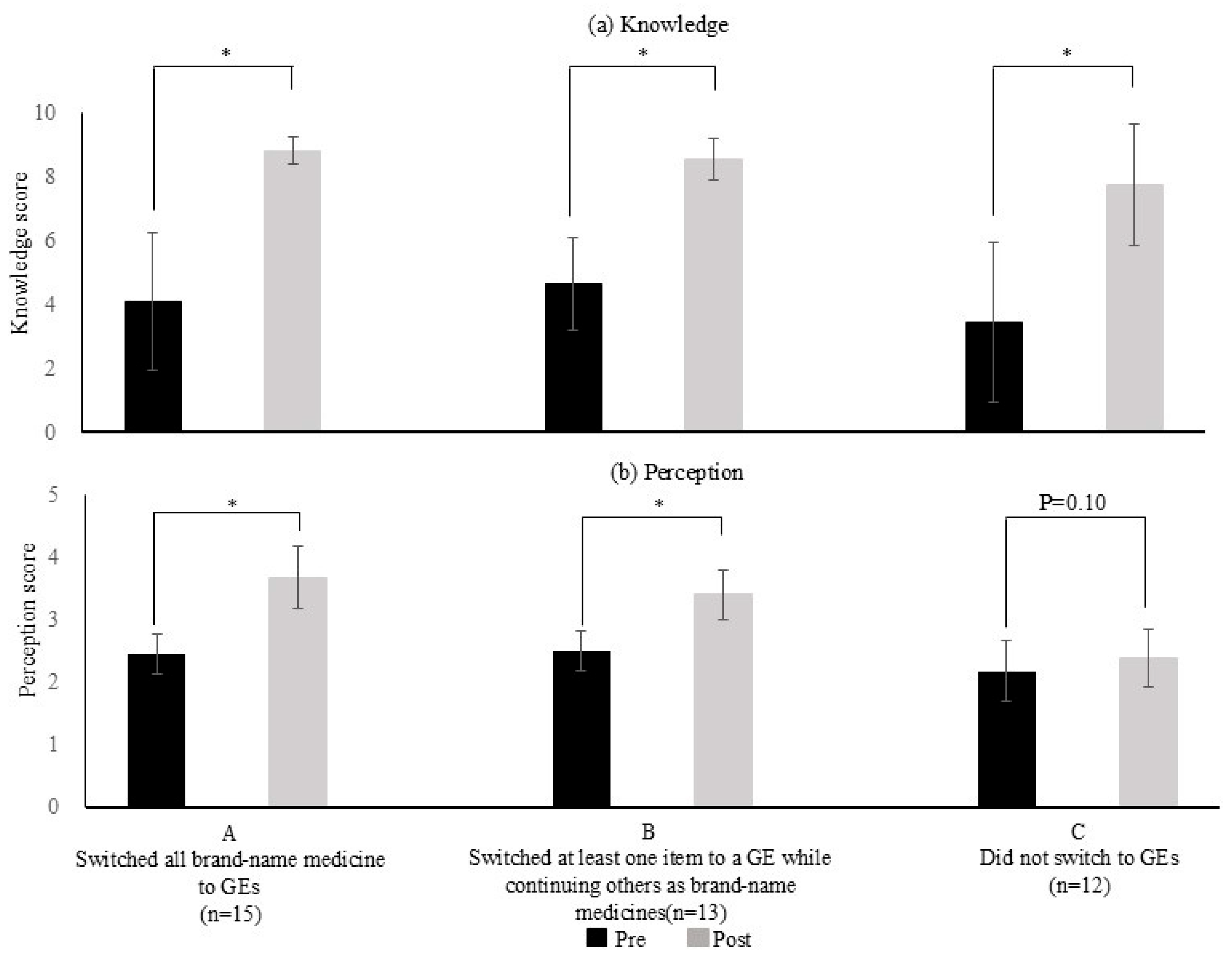
Following the intervention, the 40 patients were classified into three groups: Group A (15 patients), Group B (13 patients) and Group C (12 patients). As shown in Figure 4a, the post-intervention knowledge scores in Groups A, B, and C were 8.8 ± 0.1, 8.5 ± 0.2, and 7.8 ± 0.6, respectively, which were significantly higher than the corresponding pre-intervention scores of 4.1 ± 0.6, 4.6 ± 0.4, and 3.4 ± 0.7 (p < 0.05). In all groups, pharmacist intervention improved overall knowledge of GEs.
As shown in Figure 4b, the post-intervention perception scores in Groups A and B were 3.7 ± 0.1 and 3.4 ± 0.1, respectively, which were significantly higher than the pre-intervention scores of 2.4 ± 0.1 and 2.5 ± 0.1 (p < 0.05). In contrast, the perception scores in Group C showed no significant difference before and after the intervention (2.2 ± 0.1 vs. 2.4 ± 0.1, p = 0.10). Although the knowledge scores increased in Group C, the perception scores remained unchanged. Moreover, “the results of a comparison of correct answer rates with respect to knowledge and perception of GEs: Classified by whether GE switching occurred” are provided in the Supplementary Materials (Supplementary Files S3 and S4).

3.5. Multivariate Analysis of Factors Influencing the Preference for Brand-Name Medicines

Univariate analysis identified the following factors as potential explanatory variables for preference for brand-name medicines: age ≥ 65 years, use of ≥2 brand-name medicines, low overall knowledge of GEs after the intervention, and low perception of GEs after the intervention (Table 3a). Binomial logistic regression analysis identified age ≥ 65 years as a factor that is strongly associated with preference for brand-name medicines (OR, 16.45; 95% CI, 1.48–182.65; p = 0.02) (Table 3b).

3.6. Reasons for Using Brand-Name Medicines After Pharmacist Intervention

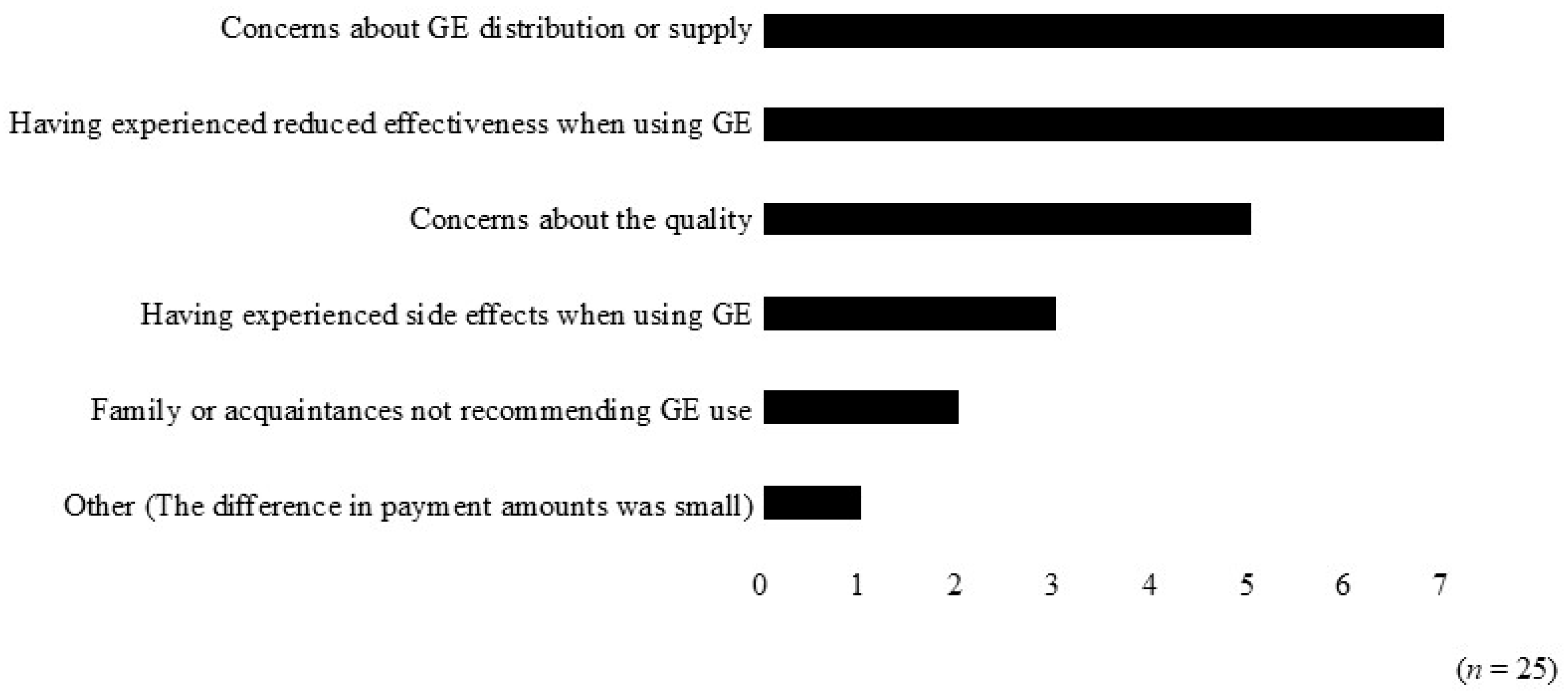
After the intervention, a survey was conducted among the 25 patients who wished to continue using brand-name medicines to assess their reasons. The most common reasons were “Concerns about GE distribution or supply” and “Having experienced reduced effectiveness when using GEs,” each reported by 7 patients, followed by “Concerns about quality” (5 patients) and “having experienced side effects when using GE” (3 patients) (Figure 5).

4. Discussion

In Japan, the rules allow physicians to prescribe medications using both brand names and generic names. However, if a physician wishes to prescribe the brand-name medicines for any reason (such as a history of side effects or differences in indications between the brand-name and generic), they will include a note on the prescription stating that it cannot be substituted for a generic equivalent. Unless otherwise specified by the physician, the pharmacist will ask the patient whether they prefer the brand-name medicine or the GEs, confirm their preference, and then dispense the medication. In many cases, pharmacists advise patients to use GEs to help control medical costs.
We investigated whether pharmacist-led educational intervention on GEs would increase the number of patients switching from brand-name medicines to GEs. Furthermore, we investigated the patients’ knowledge and perceptions of GEs before and after the intervention and assessed whether these findings contributed to increasing the number of patients switching from brand-name medicines to GEs. In addition, we aimed to identify factors associated with continued use of brand-name medicines rather than GEs after the intervention. The number of patients using one or more brand-name medicines decreased from 40 to 25 following the intervention, suggesting its effectiveness (Table 2). To our knowledge, this study is the first to demonstrate that a pharmacist-led educational intervention targeting patients who request brand-name medicines increases switching to GEs. These findings indicate that pharmacists play a crucial role in encouraging patients who strongly prefer brand-name medicines to switch to a GE.
GE knowledge scores for all patients were significantly higher after than before the intervention. This finding suggests that the intervention improved the patients’ understanding of GEs and contributed to an increase in the number of patients switching from brand-name medicines to GEs (Figure 3a). In particular, the correct response rates for questions 4 (knowledge of additive substances in GEs) and 6 (knowledge of the advantages of GEs) were low before the intervention (15% for each). These results indicate that knowledge of these topics was insufficient among patients who preferred brand-name medicines and highlight the need for educational intervention.
Similarly, the GE perception scores were significantly higher after than before the intervention. This result suggests that the intervention improved the patients’ perceptions of GE use and contributed to increased switching from brand-name medicines to GEs (Figure 3b). A survey of Finnish pharmacists reported that patients’ insufficient knowledge of GEs hindered the medications’ promotion [12]. Previous studies have also suggested that educational and policy interventions by healthcare professionals targeting patients with insufficient knowledge or perceptions of GEs are essential to achieve the goal of promoting GE use [13,14,15,16,17]. Our study demonstrated that the intervention improved the patients’ basic knowledge of GEs, enhanced their perceptions of GE use and ultimately facilitated switching to GEs.
As shown in Figure 4a, the knowledge scores significantly increased in all groups after the intervention. This finding suggests that the pharmacist-led educational intervention improved patients’ overall knowledge of GEs, regardless of whether they subsequently switched to GEs. Furthermore, the perception scores in Groups A and B significantly increased after the intervention. In contrast, the patients in Group C did not show a significant increase in perception scores and did not switch to GEs (Figure 4b). In other words, although knowledge of GEs increased in Group C, perceptions regarding their use did not change, which may have prevented switching.
Multivariate analysis of the factors associated with preference for brand-name medicines identified age ≥ 65 years as a significant factor (Table 3). This finding suggests that patients aged ≥ 65 years who prefer brand-name medicines are likely to continue using them even after the intervention. Previous studies have reported that older adults who have used the same brand-name medicine for many years may refuse to switch to GEs due to a sense of safety associated with familiar medications [18,19,20]. Therefore, pharmacists should provide careful and reassuring explanations when discussing GE use with patients aged ≥ 65 years who prefer brand-name medicines to facilitate confident switching.
Furthermore, even after intervention, the most common reasons for continuing to use brand-name medicines were “Concerns about GE distribution or supply” and “Having experienced reduced effectiveness when using GEs” (Figure 5). In recent years, cases of GE shortages in Japan have increased due to (1) manufacturing suspensions resulting from penalties for deviations from approved manufacturing processes at GE companies and (2) reduced production volumes caused by difficulties in obtaining active pharmaceutical ingredients [21,22]. As a result, pharmacies have frequently been required to switch to alternative GEs or brand-name medicines for dispensing. Consequently, patients may have concerns regarding the distribution and supply of GEs. Strict adherence to the Generic Drug Supply Guidelines established in 2023 [23,24] may improve the supply of pharmaceuticals in Japan and enable a consistent supply of GEs, potentially alleviating patient concerns and improving perceptions of GE use.
Additionally, patients who have experienced reduced efficacy during previous GE use may develop negative perceptions regarding switching from brand-name medicines to GEs [18,25]. This study showed that many patients who wished to continue using brand-name medicines after the intervention expressed similar concerns.
This study has several limitations. First, it had a single-center design, and patients primarily from internal medicine departments were enrolled. Different results may be observed when patients from other departments are included. Second, this was a countywide comparative study without a control group, thus, the intervention group was not compared with a non-intervention control group. Consequently, factors such as differences in the timing of the intervention may have confounded the results. Finally, previous reports in Japan have indicated that patients with higher income tend to have lower GE usage rates [26,27]. However, this study did not assess patient income; therefore, this factor could not be examined.

5. Conclusions

When pharmacists provided educational intervention regarding GE use to patients requesting brand-name medicines, the number of patients who switched to GE increased. Furthermore, the intervention contributed to increased in the number of patients switching to GE by improving patients’ basic knowledge of GE and their perception of its use. Additionally, patients over 65 years of age may continue to prefer brand-name medicines even after intervention. To promote the use of generic medicines for medical cost containment, pharmacists should appropriately intervene in patients who prefer brand-name medicines and provide reassurance regarding GE use.

Supplementary Materials

The following supporting information can be downloaded at: https://www.mdpi.com/article/10.3390/pharmacy14030070/s1, File S1: Comparison of correct answer rates with respect to knowledge of GEs. File S2: Comparison of correct answer rates with respect to perception of GEs. File S3: Comparison of correct answer rates with respect to knowledge of GEs: Classified by whether GE switching occurred. File S4: Comparison of correct answer rates with respect to perception of GEs: Classified by whether GE switching occurred.

Author Contributions

Conceptualization, T.T., T.M. and T.C.; methodology, T.T., T.G. and K.Y.; software, T.T., T.G., K.Y. and K.-I.S.; validation, K.-I.S., T.M., K.K. and T.C.; formal analysis, T.T., T.G., K.Y. and K.-I.S.; investigation, T.T., T.G. and K.Y.; resources, T.T.; data curation, T.G. and K.Y.; writing—original draft preparation, T.T.; writing—review and editing, T.T., K.K., K.-I.S., T.M. and T.C.; visualization, T.T., T.G. and K.Y.; supervision, T.M., K.K. and T.C.; project administration, T.C.; funding acquisition, K.K. All authors have read and agreed to the published version of the manuscript.

Funding

This research received no external funding.

Institutional Review Board Statement

The study was conducted in accordance with the Declaration of Helsinki and approved by the Japanese Association for Community Pharmacy Clinical Epidemiology Research Ethics Review Committee (protocol code: 202501, date of approval: 7 February 2025).

Informed Consent Statement

Informed consent was obtained from all patients involved in the study. Written informed consent was obtained from the patients to publish this paper. Before participating, patients were informed that the analysis results might be published in academic papers or similar outlets, but no personally identifiable information would be disclosed, including names. Consent was obtained with this understanding.

Data Availability Statement

The data presented in this study are available on request from the corresponding author due to privacy or ethical reasons.

Acknowledgments

The authors acknowledge the use of Gemini 3 Pro, an AI-based language tool, for the enhancement of clarity and readability of the manuscript.

Conflicts of Interest

Tomohiko Tairabune, Terutaka Goto and Kentaro Yamazaki are employees of Unimat Life Co, Ltd. The remaining authors declare no conflicts of interest.

Abbreviation

The following abbreviations are used in this manuscript:
GEGeneric medicine

References

  1. Hakonsen, H.; Toverud, E.L. A review of patient perspectives on generics substitution: What are the challenges for optimal drug use? Generics Biosimilars Initiat. J. 2012, 1, 28–32. [Google Scholar] [CrossRef]
  2. Hassali, M.A.; Alrasheedy, A.A.; McLachlan, A.; Nguyen, T.A.; Al-Tamimi, S.K.; Ibrahim, M.I.M.; Aljadhey, H. The experiences of implementing generic medicine policy in eight countries: A review and recommendations for a successful promotion of generic medicine use. Saudi Pharm. J. 2014, 22, 491–503. [Google Scholar] [CrossRef] [PubMed]
  3. Toverud, E.L.; Hartmann, K.; Håkonsen, H. A systematic review of physicians’ and pharmacists’ perspectives on generic drug use: What are the global challenges? Appl. Health Econ. Health Policy 2015, 13, S35–S45. [Google Scholar] [CrossRef]
  4. Le, K.D.R. Promoting health system resilience through health policy reform for the ageing population of Japan: A rapid literature review. Cureus 2025, 17, e90931. [Google Scholar] [CrossRef]
  5. Ministry of Health, Labour and Welfare. A Road Map for Further Use Promotion of the Generic Medicine. Available online: http://www.mhlw.go.jp/stf/houdou/2r9852000002z7fr-att/2r9852000002z7it.pdf (accessed on 20 March 2025).
  6. Ministry of Health, Labour and Welfare. Preliminary Figures from the 2024 Pharmaceutical Price Survey. Available online: https://trinitylifesciences.com/blog/japan-pricing-policy-reform-2024/ (accessed on 10 February 2025).
  7. The Cabinet Office. A Road Map for the Appropriate Use of Generic Drugs Based on Ensuring Stable Supply. Available online: https://www.mhlw.go.jp/content/10807000/001310036.pdf (accessed on 10 February 2025).
  8. Ministry of Health, Labour and Welfare. Survey Report on the Impact and Implementation Status of Generic Drug Promotion Measures. Available online: https://www.mhlw.go.jp/content/12404000/001075458.pdf (accessed on 10 February 2025).
  9. Hatem, G.; Itani, R.; Ajrouche, R.; Abbas, N.; Farah, R.; Goossens, M.; Awada, S. Knowledge, perception and acceptance of generic drugs in the general Lebanese population: A cross-sectional survey among adults. J. Med. Access 2023, 7, 27550834221147789. [Google Scholar] [CrossRef]
  10. Guo, Y.; Li, X.; Chen, D.; Zhang, H. Evaluation study on the use of non-contact prevention and protection products in the context of COVID-19: A comprehensive evaluation method from AHP and entropy weight method. Int. J. Environ. Res. Public Health 2022, 19, 16857. [Google Scholar] [CrossRef]
  11. Fernandez Trujillo, A.; Vallverdu Cartie, H.; Roman Maestre, B.; Lema Vazquez, J.; Berrade Zubiri, J. Validation of “the patient evaluation of emotional care during hospitalisation” questionnaire in intensive care unit patients. PLoS ONE 2022, 17, e0277172. [Google Scholar] [CrossRef]
  12. Rainio, R.; Ahonen, R.; Lamsa, E.; Timonen, J. Factors facilitating and hindering counselling about generic substitution and a reference price system in community pharmacies—A survey among Finnish dispensers. BMC Health Serv. Res. 2022, 22, 1130. [Google Scholar] [CrossRef]
  13. Kassandros, K.; Saranti, E.; Misailidou, E.; Tsiggou, T.A.; Sissiou, E.; Kolios, G.; Constantinides, T.; Kontogiorgis, C. Machine learning analysis of patients’ perceptions towards generic medication in Greece: A survey-based study. Front. Drug Saf. Regul. 2024, 4, 1363794. [Google Scholar] [CrossRef]
  14. Colgan, S.; Faasse, K.; Martin, L.R.; Stephens, M.H.; Grey, A.; Petrie, K.J. Perceptions of generic medication in the general population, doctors and pharmacists: A systematic review. BMJ Open 2015, 5, e008915. [Google Scholar] [CrossRef]
  15. Dunne, S.S. What do users of generic medicines think of them? A systematic review of consumers’ and patients’ perceptions of, and experiences with, generic medicines. Patient 2016, 9, 499–510. [Google Scholar] [CrossRef]
  16. Alwhaibi, M.; Alshammari, M.; Al Aloola, N.; Aloudah, N.; Almomen, A.; Alhawassi, T.M. Knowledge and perception of consumers towards generic medicines in Saudi Arabia: A prospective cross-sectional survey. Patient Prefer. Adherence 2025, 19, 2179–2187. [Google Scholar] [CrossRef]
  17. Dylst, P.; Vulto, A.; Simoens, S. Demand-side policies to encourage the use of generic medicines: An overview. Expert Rev. Pharmacoecon. Outcomes Res. 2013, 13, 59–72. [Google Scholar] [CrossRef]
  18. Salmane Kulikovska, I.; Poplavska, E.; Ceha, M.; Mezinska, S. Use of generic medicines in Latvia: Awareness, opinions and experiences of the population. J. Pharm. Policy Pract. 2019, 12, 1. [Google Scholar] [CrossRef] [PubMed]
  19. Olsson, E.; Kälvemark Sporrong, S. Pharmacists’ experiences and attitudes regarding generic drugs and generic substitution: Two sides of the coin. Int. J. Pharm. Pract. 2012, 20, 377–383. [Google Scholar] [CrossRef]
  20. Iosifescu, A.; Halm, E.A.; McGinn, T.; Siu, A.L.; Federman, A.D. Beliefs about generic drugs among elderly adults in hospital-based primary care practices. Patient Educ. Couns. 2008, 73, 377–383. [Google Scholar] [CrossRef] [PubMed]
  21. Izutsu, K.I.; Ando, D.; Morita, T.; Abe, Y.; Yoshida, H. Generic drug shortage in Japan: GMP noncompliance and associated quality issues. J. Pharm. Sci. 2023, 112, 1763–1771. [Google Scholar] [CrossRef]
  22. Izutsu, K.I.; Abe, Y.; Kurita, M.; Yoshida, H. Shortages of prescription drugs due to compliance and quality issues in Japan. Yakugaku Zasshi 2023, 143, 139–152. (In Japanese) [Google Scholar] [CrossRef]
  23. Takahashi, S.; Takarada, T.; Kitamura, R.; Shikano, M.; Sakurai, S. Creating an assessment indicator of quality culture development in the generic pharmaceutical industry in Japan. PDA J. Pharm. Sci. Technol. 2024, 78, 45–69. [Google Scholar] [CrossRef]
  24. Mamiya, H.; Izutsu, K.I.; Mitani, D. Draft guideline for industry to manage drug shortages in Japan. Ther. Innov. Regul. Sci. 2024, 58, 1023–1026. [Google Scholar] [CrossRef] [PubMed]
  25. Barsky, A.J.; Saintfort, R.; Rogers, M.P.; Borus, J.F. Nonspecific medication side effects and the nocebo phenomenon. JAMA 2002, 287, 622–627. [Google Scholar] [CrossRef] [PubMed]
  26. Ito, Y.; Hara, K.; Yoo, B.K.; Tomio, J.; Kobayashi, Y. Can income-based co-payment rates improve disparity? The case of the choice between brand-name and generic drugs. BMC Health Serv. Res. 2019, 19, 780. [Google Scholar] [CrossRef] [PubMed]
  27. Suzuki, T.; Iwata, M.; Maezawa, M.; Inoue, M.; Satake, R.; Wakabayashi, W.; Oura, K.; Tanaka, H.; Hirofuji, S.; Miyasaka, K.; et al. Promoting generic drug usage in Japan: Correlation between generic drug usage and monthly personal income. J. Pharm. Policy Pract. 2023, 16, 27. [Google Scholar] [CrossRef] [PubMed]
Figure 1. Survey process. GE: generic medicine.
Pharmacy 14 00070 g001
Figure 2. Questionnaire on knowledge and perceptions regarding GEs.
Pharmacy 14 00070 g002
Figure 3. Comparison of knowledge and perception scores regarding GEs before and after pharmacist-led educational intervention. GE: generic medicine; Wilcoxon signed-rank test; * p < 0.05, n = 40. (a) The mean number of correct responses (knowledge score) was calculated for 40 participants and compared before and after the intervention. Mean ± SD. (b) The mean response value (perception score) was calculated for 40 participants and compared before and after the intervention. Mean ± SD.
Pharmacy 14 00070 g003
Figure 4. Comparison of knowledge and perception scores regarding GEs before and after pharmacist-led educational intervention: classified by whether GE switching occurred. GE: generic medicine; Wilcoxon signed-rank test; * p < 0.05, n = 40. (a) The average number of correct answers (knowledge score) was calculated for Groups A, B, and C and compared before and after the intervention. Mean ± SD. (b) The mean response values (perception scores) were calculated for Groups A, B, and C and compared before and after the intervention. Mean ± SD.
Pharmacy 14 00070 g004
Figure 5. Reasons for using brand-name medicines after pharmacist-led educational intervention. GE: generic medicine.
Pharmacy 14 00070 g005
Table 1. Baseline clinical characteristics of patients.
All Patients
(n = 40)
Switched All Brand-Name Medicines to GEs
(n = 15)
Switched at Least One Item to a GE While Continuing Others as Brand-Name Medicines
(n = 13)
Did not Switch to GEs
(n = 12)
p-Value
Properties n%n%n%n%
SexMale22/4055.09/1560.05/1338.58/1266.70.33 a
Female18/4045.06/1540.08/1361.54/1233.3
AgeMean ± SD56.3 ± 13.950.7 ± 11.557.9 ± 14.761.4 ± 12.70.06 b
20s (20–29)3/407.52/1513.31/137.70/120.00.24 a
30s (30–39)2/405.00/150.01/137.71/128.3
40s (40–49)5/4015.03/1520.00/130.02/1216.7
50s (50–59)14/4035.08/1553.34/1330.82/1216.7
60s (60–69)8/401751/156.73/1323.14/1233.3
70 and older8/4020.01/156.74/1330.83/1225.0
Therapeutic classes of brand-name medicinesAntihypertensive18/7723.46/2722.25/2718.57/2330.40.11 a
Diabetes5/776.52/277.40/270.03/2313.0
Hyperlipidemia10/7713.03/2711.16/2722.21/234.3
Hyperuricemia1/771.31/273.70/270.00/230.0
Hypnotic sedative12/7715.64/2714.81/273.77/2330.4
Antiarrhythmic3/773.91/273.72/277.40/230.0
Proton pump inhibitor5/776.52/277.42/277.41/234.3
Vertigo and balance disorders1/771.30/270.01/273.70/230.0
Allergy7/779.10/270.06/2722.21/234.3
Corneal injury healing1/771.31/273.70/270.00/230.0
Inhaled asthma and COPD2/772.60/270.01/273.71/234.3
Urinary incontinence1/771.30/270.01/273.70/230.0
Liver and gallbladder digestive1/771.31/273.70/270.00/230.0
Treatment of mucosal defensive gastritis1/771.31/273.70/270.00/230.0
Digestive function enhancer2/772.62/277.40/270.00/230.0
Skin moisturization1/771.30/270.01/273.70/230.0
NSAIDs6/777.83/2711.11/273.72/238.7
Number of brand-name medicines UsedMean ± SD2.0 ± 1.01.6 ± 0.72.3 ± 0.81.9 ± 1.10.06 b
113/4032.58/1553.30/130.05/1241.70.06 a
220/4050.05/1533.311/1376.95/1241.7
35/4012.52/1513.31/1315.41/128.3
4≥2/405.00/150.01/137.71/128.3
Prescription DurationMean ± SD34.3 ± 11.831.7 ± 9.937.0 ± 12.735.0 ± 13.10.54 b
Days 28–3031/4077.513/1586.79/1369.29/1275.00.53 a
Days 56–609/4022.52/1513.34/1330.83/1225.0
Number of medicines in use
Mean ± SD
2.8 ± 1.63.0 ± 1.92.9 ± 1.22.8 ± 1.40.52 b
a χ2 test; b Kruskal–Wallis test; GE: generic medicine.
Table 2. Number of patients using brand-name medicines before and after pharmacist-led educational intervention.
Post-Interventionp-Value
Using Brand-Name MedicinesNot Using Brand-Name MedicinesTotal
Pre-interventionUsing brand-name medicines251540<0.01 *
Not using brand-name medicines000
Total251540
McNemar’s test; * p < 0.05.
Table 3. (a) Univariate analysis of factors influencing the preference for brand-name medicines. (b) Multivariate analysis of factors influencing the preference for brand-name medicines.
(a)
Factor Group That Switched Entirely to GEs After InterventionGroup Using One or More Brand-Name Medicines After InterventionOdds Ratio95% Confidence Intervalp-Value
(n = 15)(n = 25)
SexMale9131
Female6121.63 0.44–5.950.46
Age65<14121
65≥11315.171.72–133.530.01
Number of brand-name medicines used2<851
2≥7203.61 0.92–14.210.07
Prescription duration30 days<13181
30 days≥272.520.45–14.200.29
Number of medications in use3<8121.00
3≥7131.230.34–4.460.74
Knowledge of GEs after interventionHigh knowledge12141
Low knowledge3113.140.71–13.960.13
Perception of GEs after interventionHigh perception641
Low perception9213.500.79–15.480.10
(b)
Explanatory VariableOdds Ratio95% Confidence Intervalp-Value
Age (65≥)16.451.48–182.650.02 *
Number of brand-name medicines used (2≥)3.990.74–21.560.11
Knowledge of GEs after intervention (low knowledge)3.080.48–19.670.23
Perception of GEs after intervention (low perception)2.910.48–17.560.24
GE: generic medicine; binomial logistic regression analysis; * p < 0.05, n = 40.
Disclaimer/Publisher’s Note: The statements, opinions and data contained in all publications are solely those of the individual author(s) and contributor(s) and not of MDPI and/or the editor(s). MDPI and/or the editor(s) disclaim responsibility for any injury to people or property resulting from any ideas, methods, instructions or products referred to in the content.