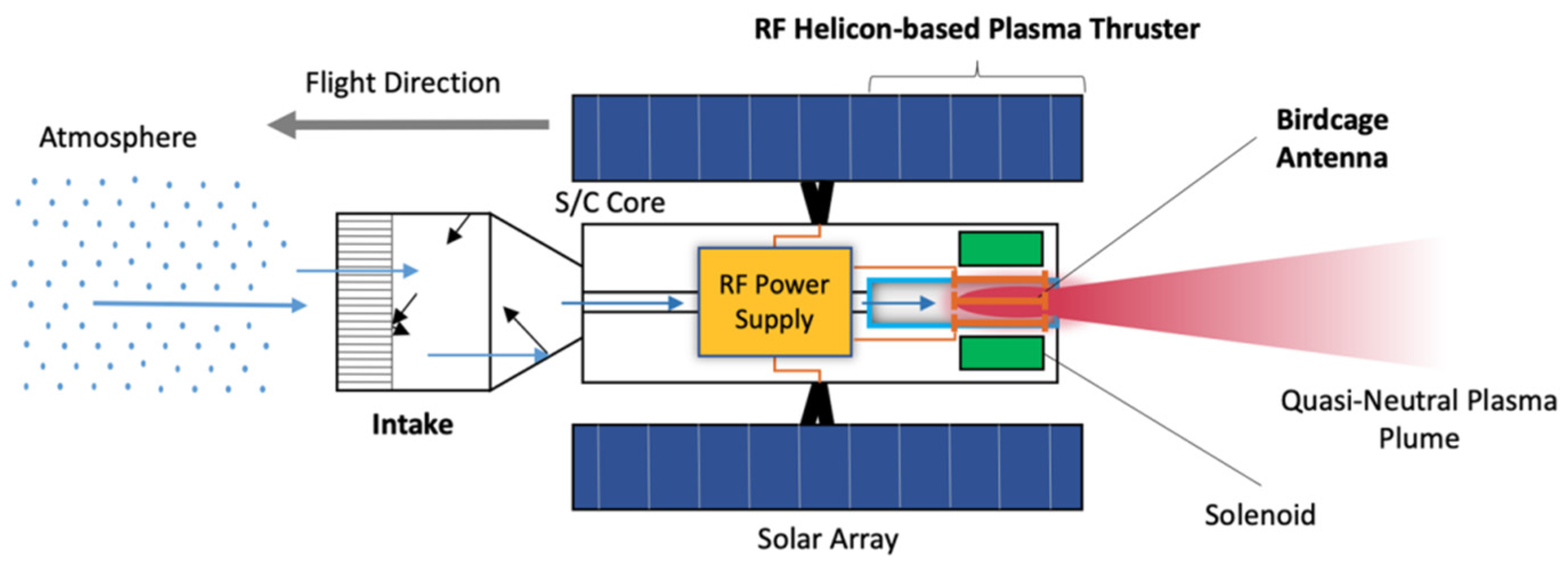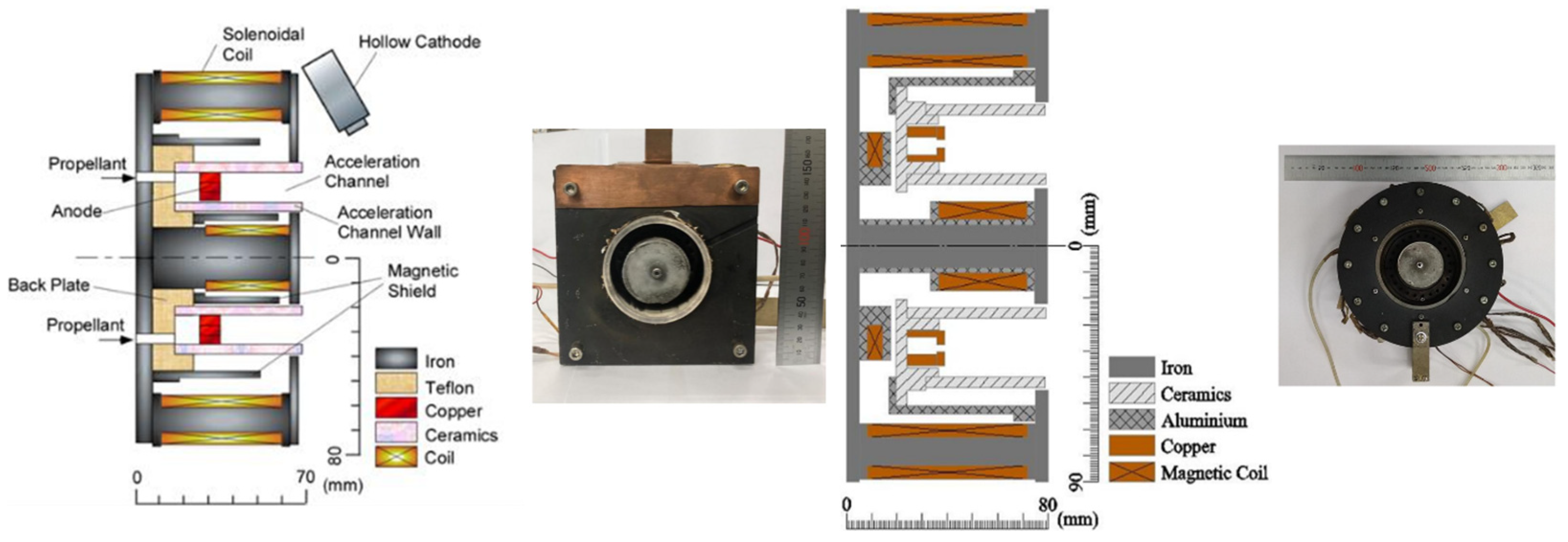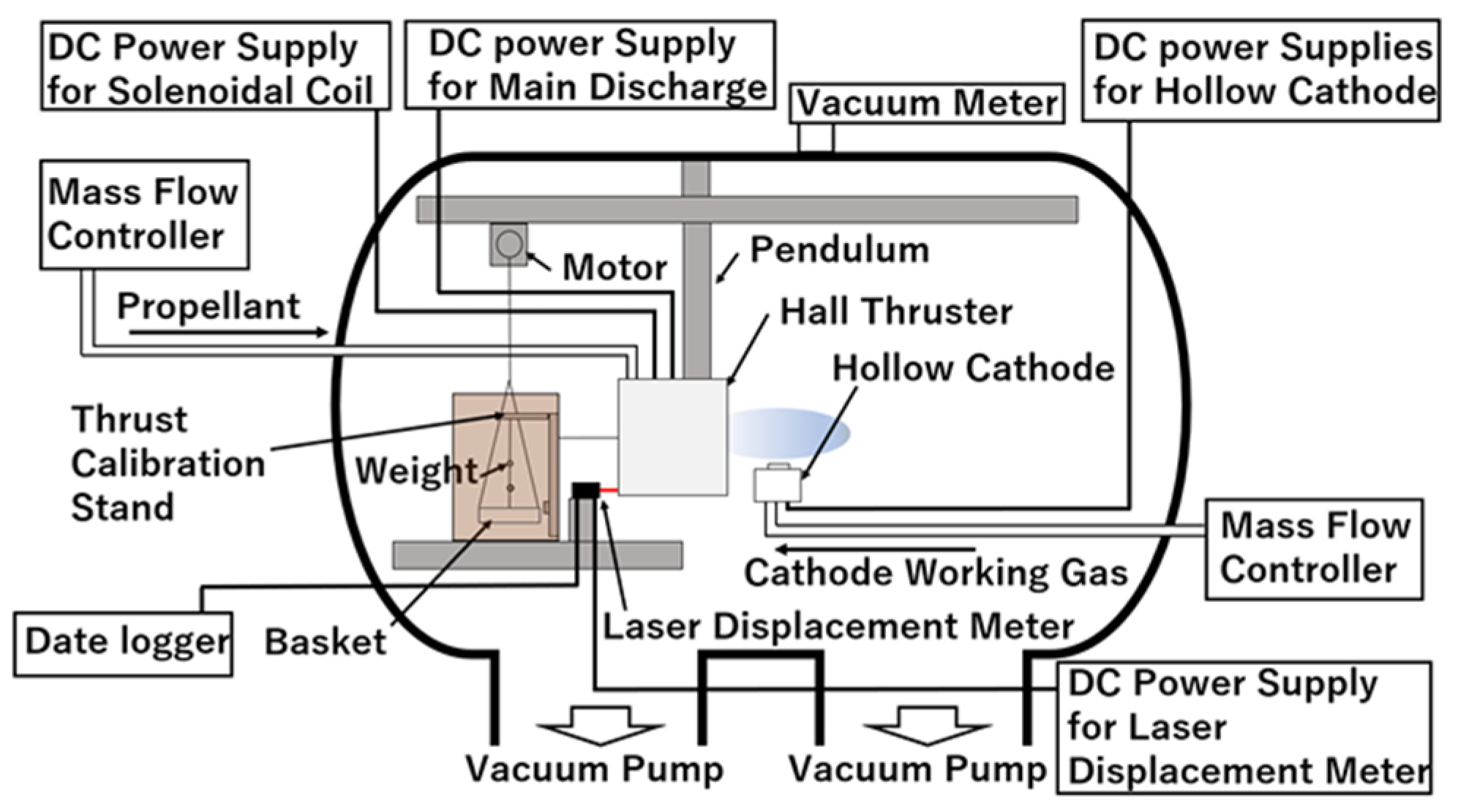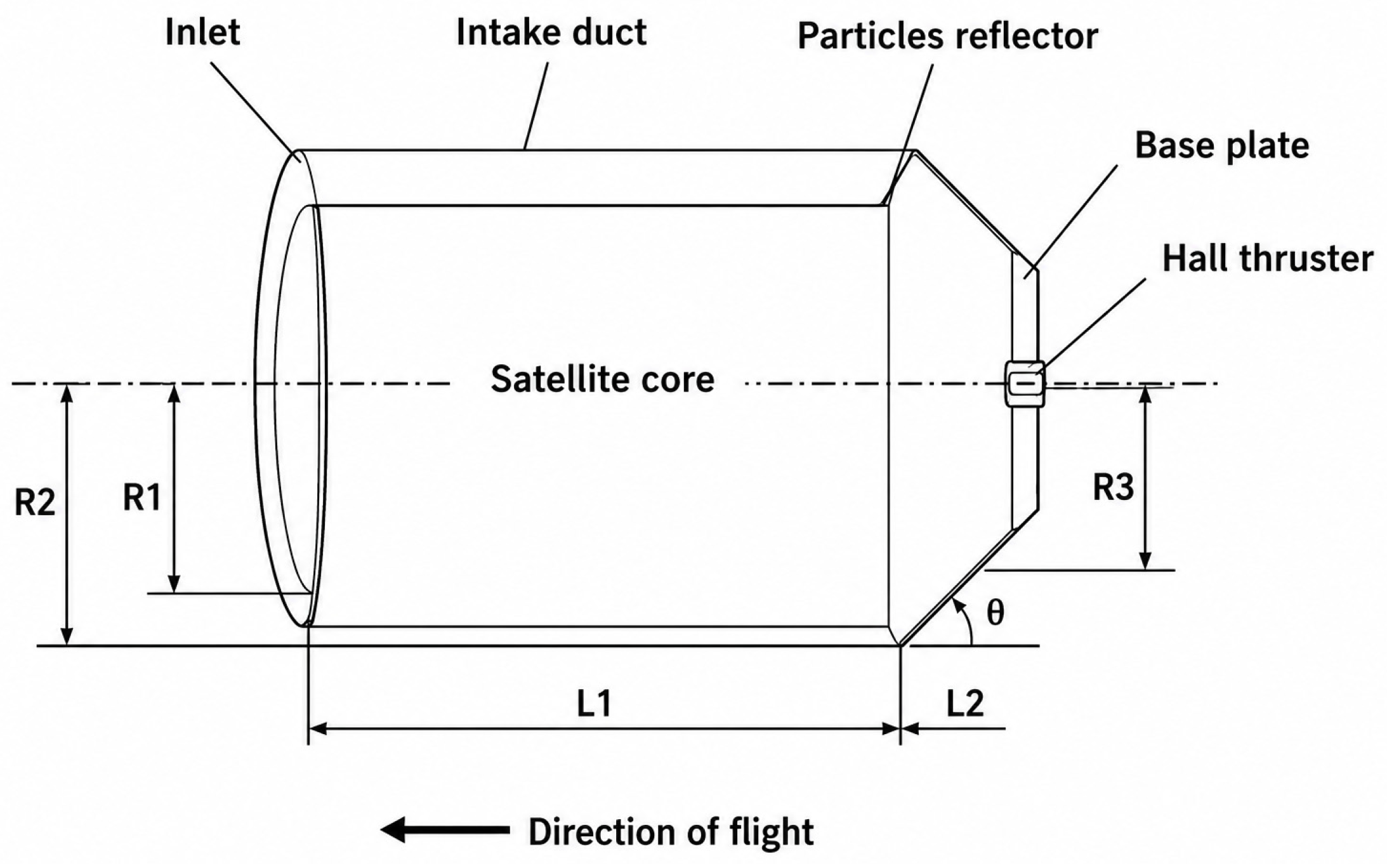

Rarefied Intake Flow in an Atmospheric-Breathing VLEO Hall Thruster



Abstract
1. Introduction
2. Methodologies
2.1. Experimental Setup
2.2. Numerical Analysis
2.2.1. Knudsen Number and Classification of Flow
2.2.2. The Boltzmann Equation
2.2.3. Numerical Methods
2.2.4. Computer Specifications
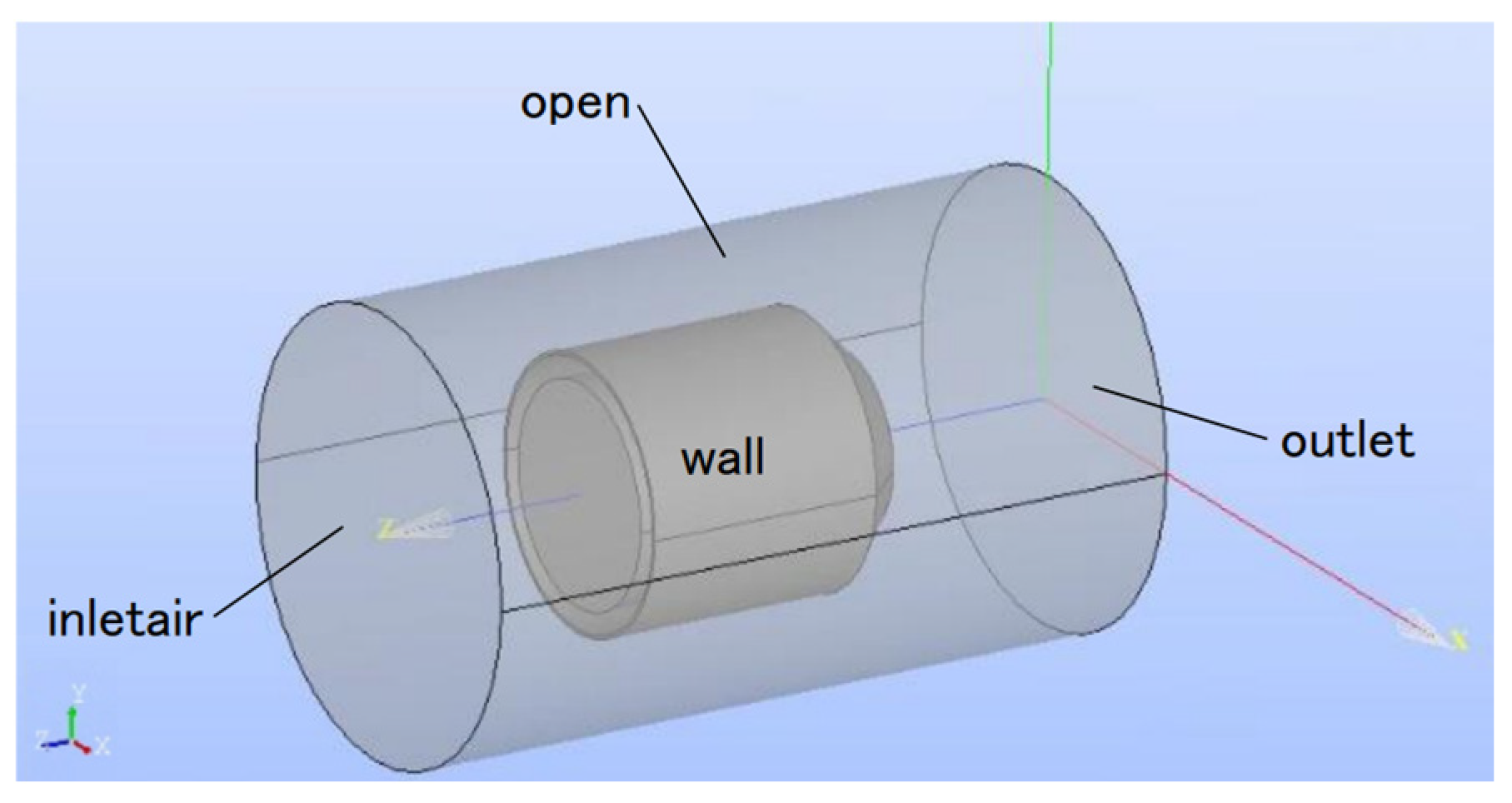
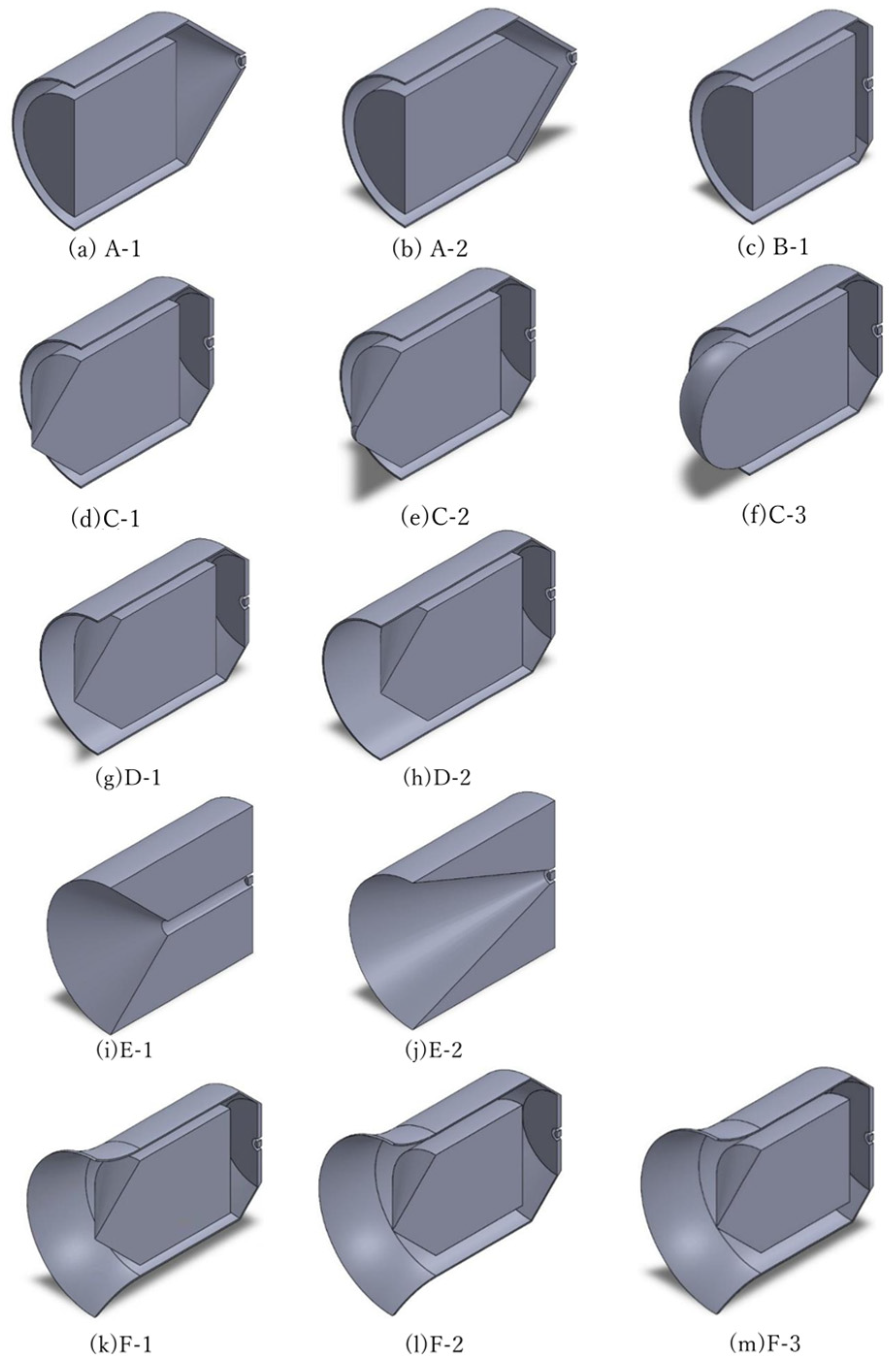
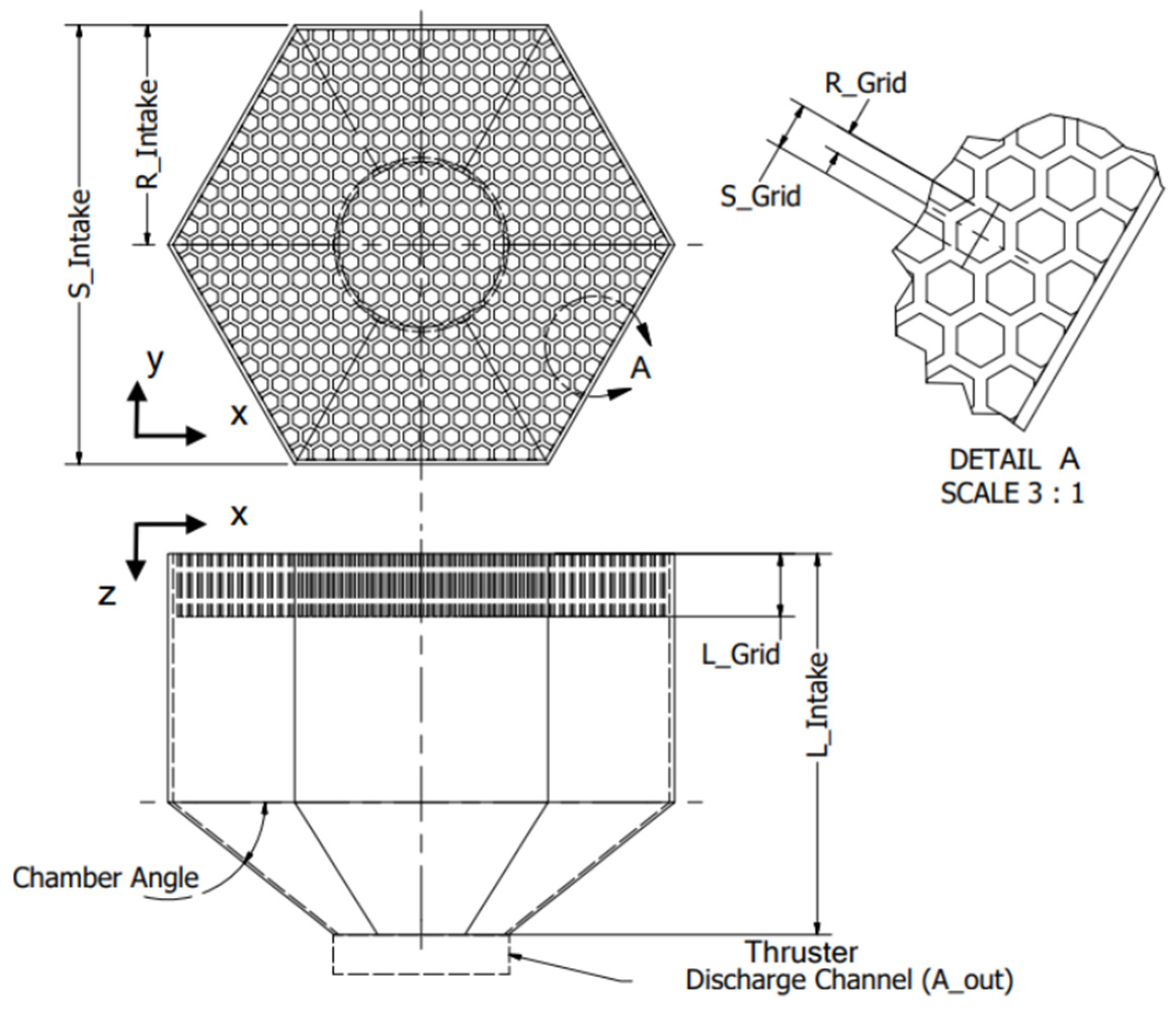
2.3. Geometric Model
2.4. Simulation Conditions
3. Results
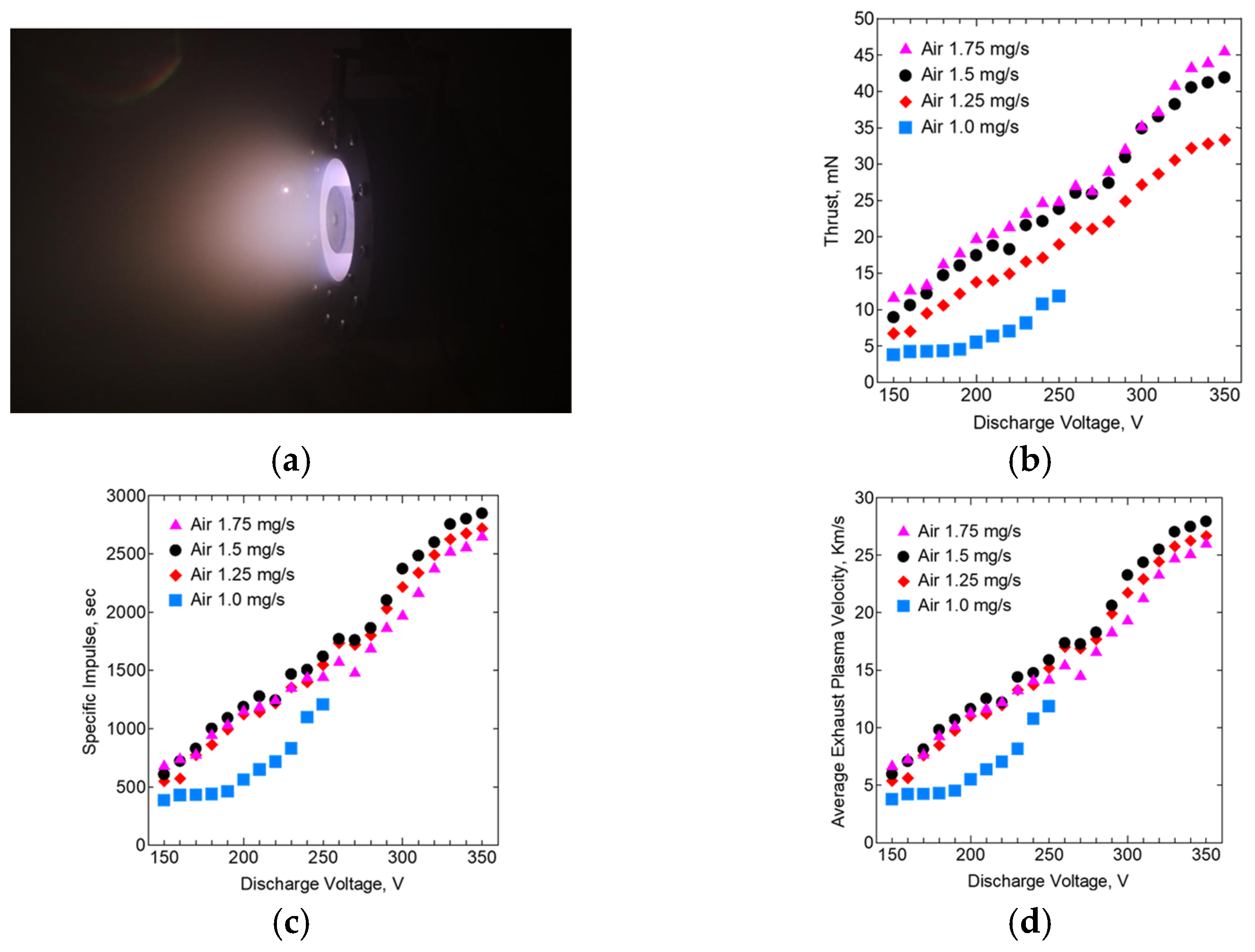
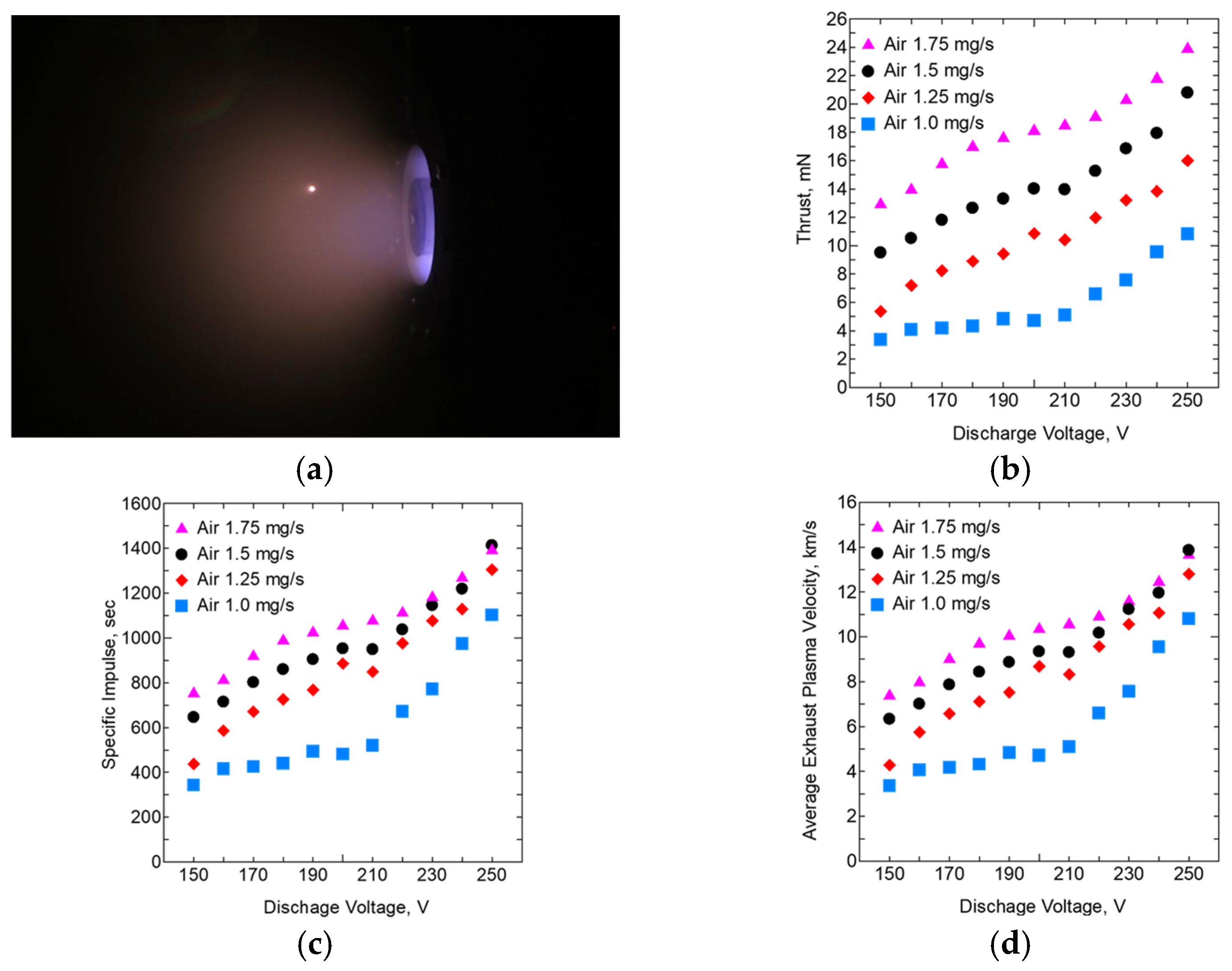
3.1. Experimental Results
3.2. Computational Results
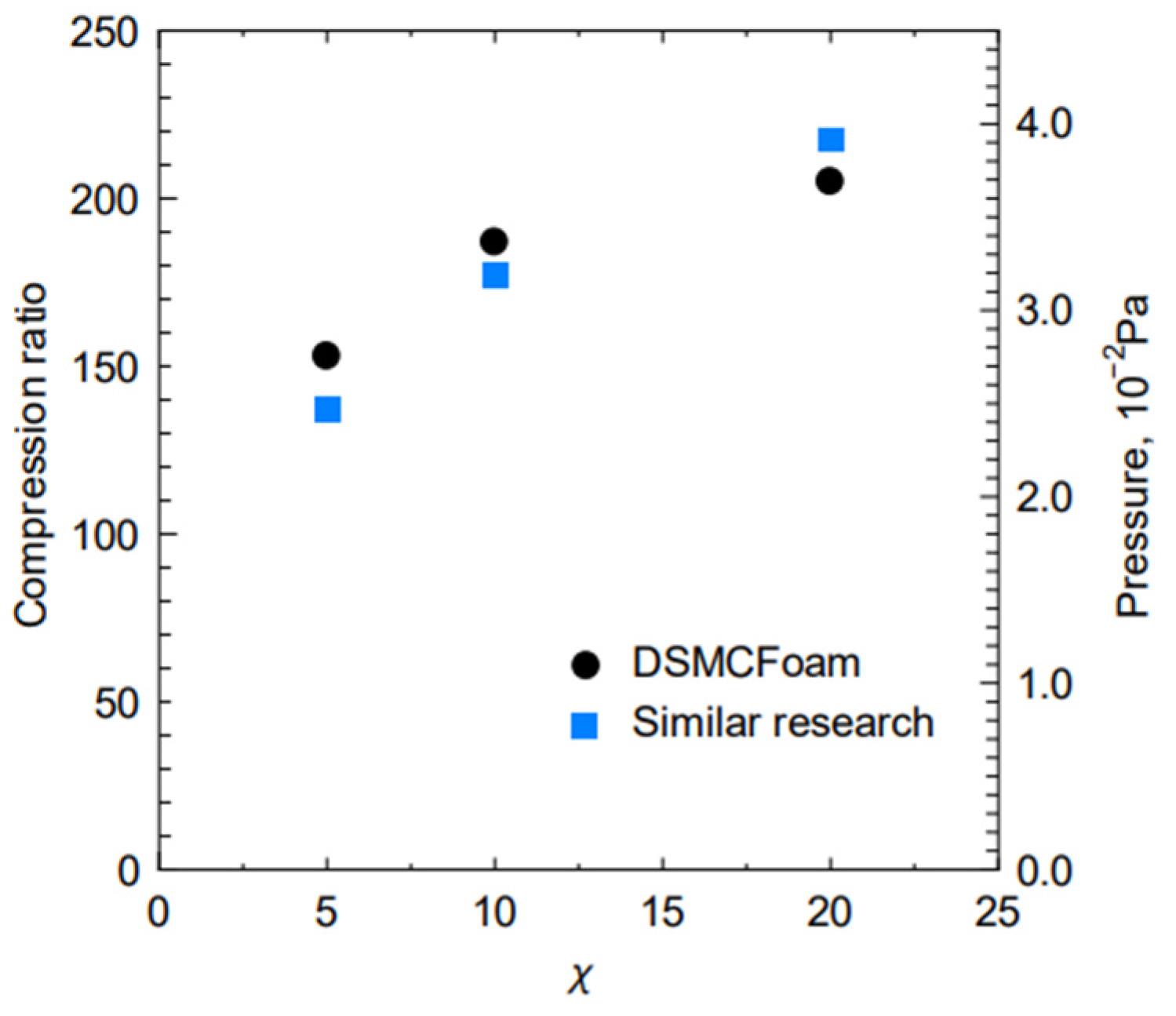
3.2.1. Verification of Simulation
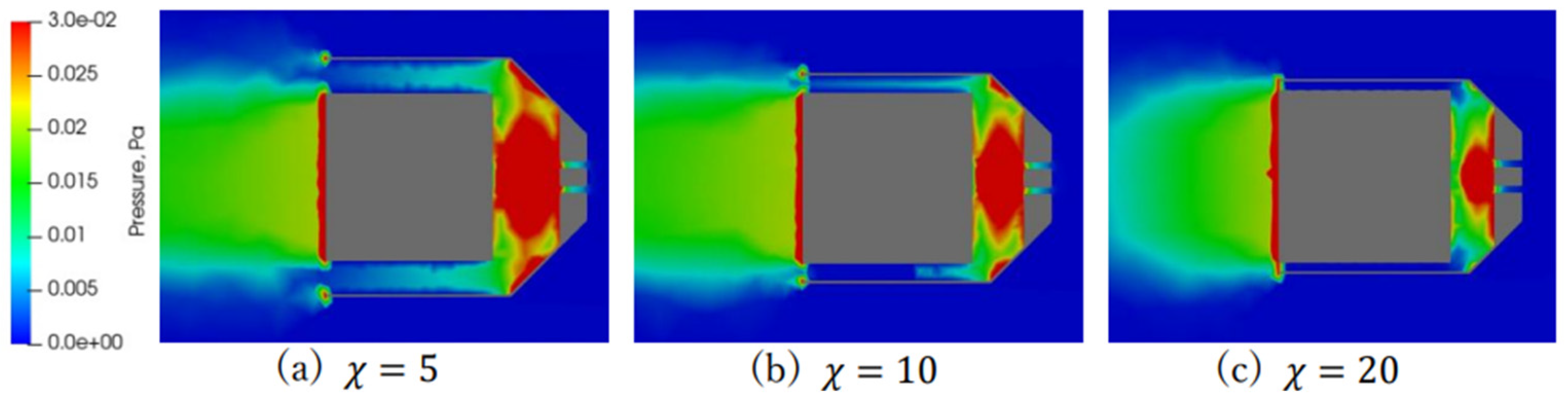
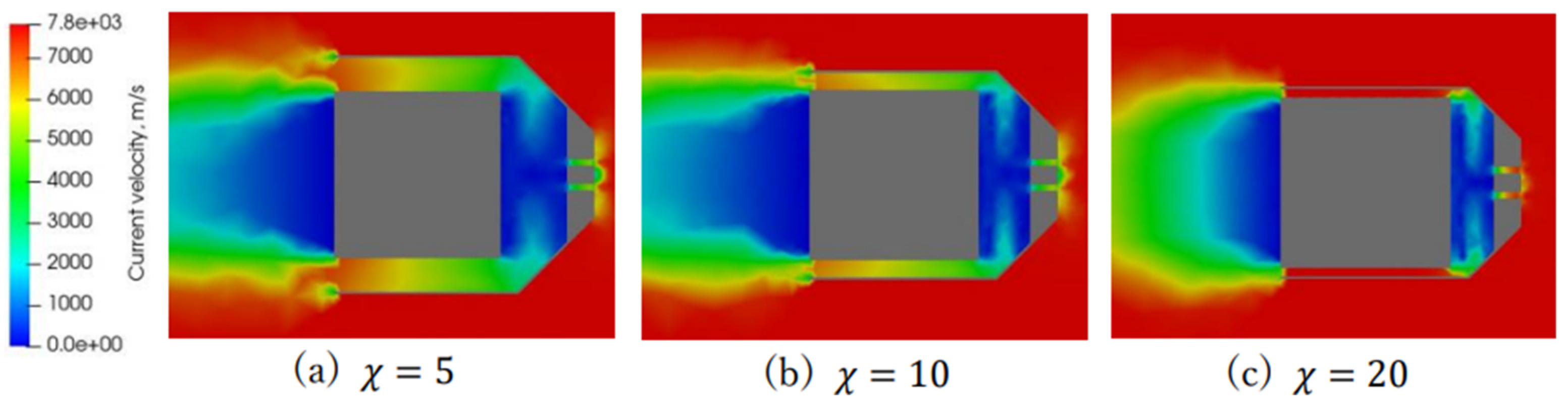
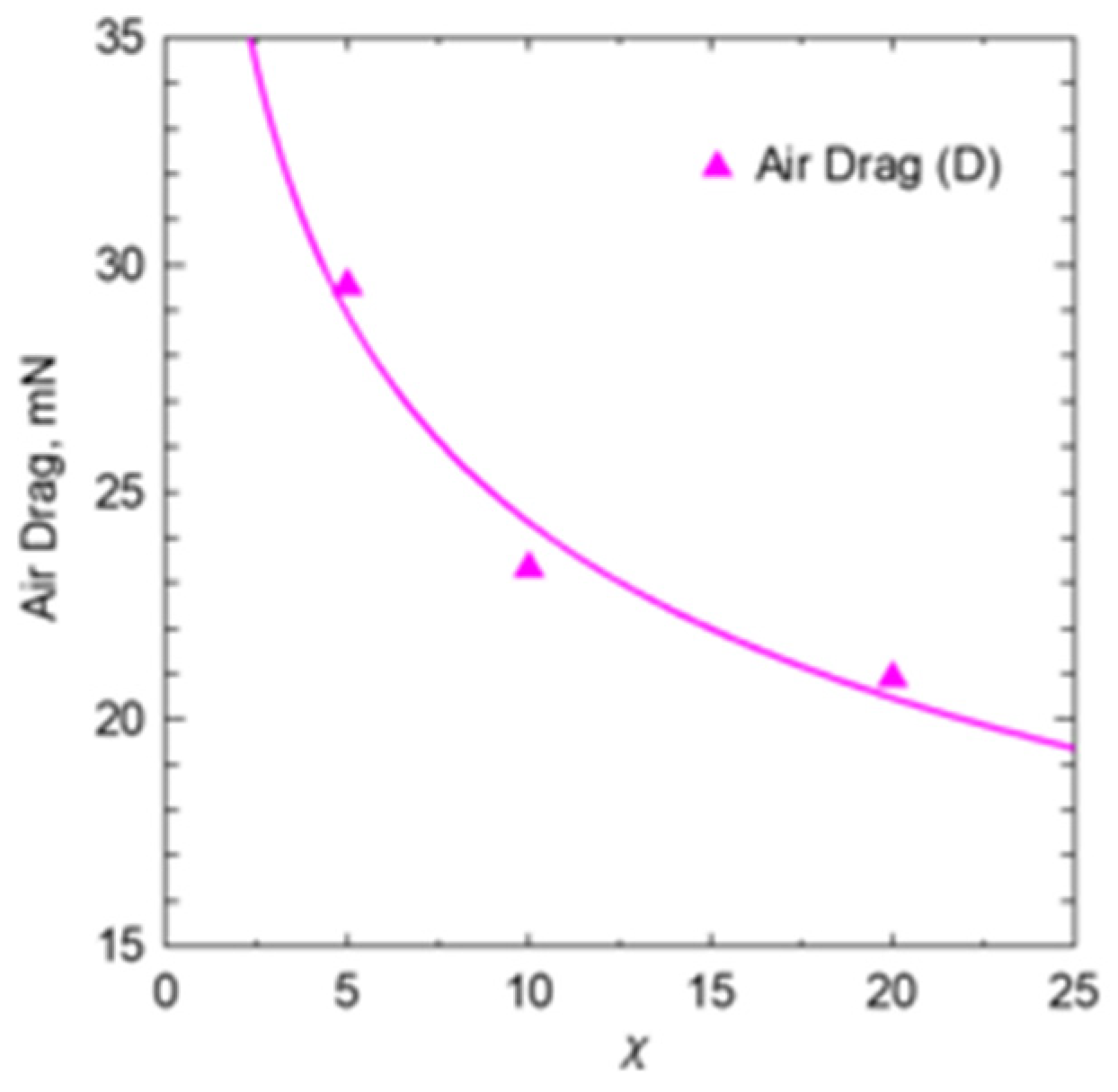
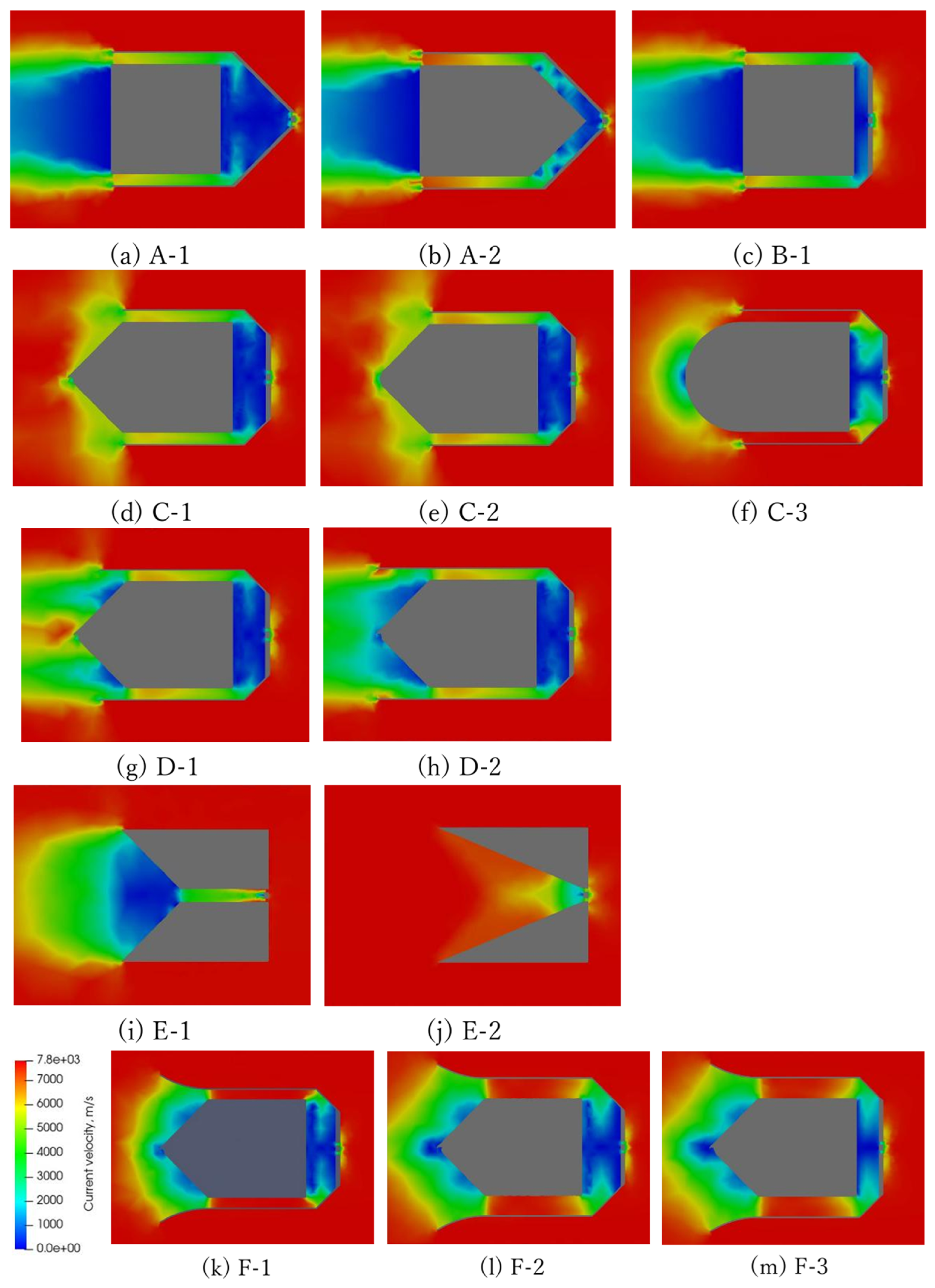
3.2.2. Effect of Air Intake Duct Aspect Ratio
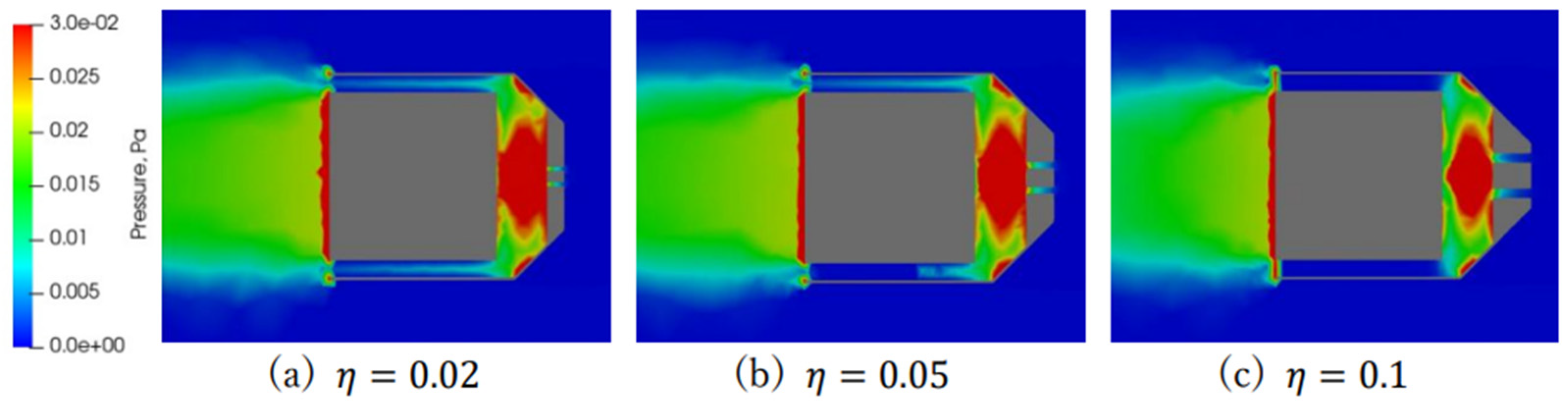
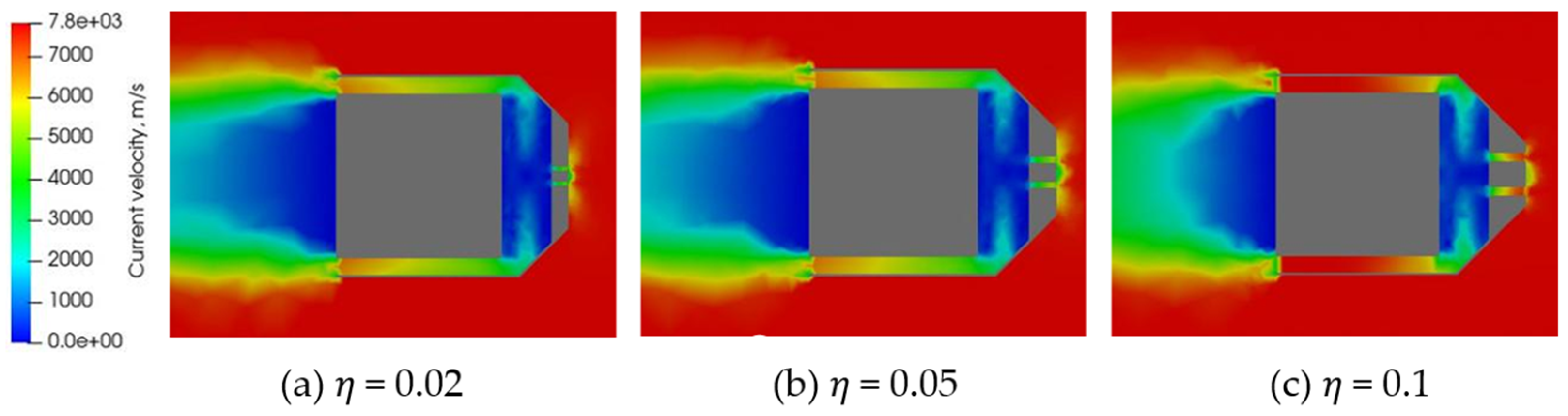
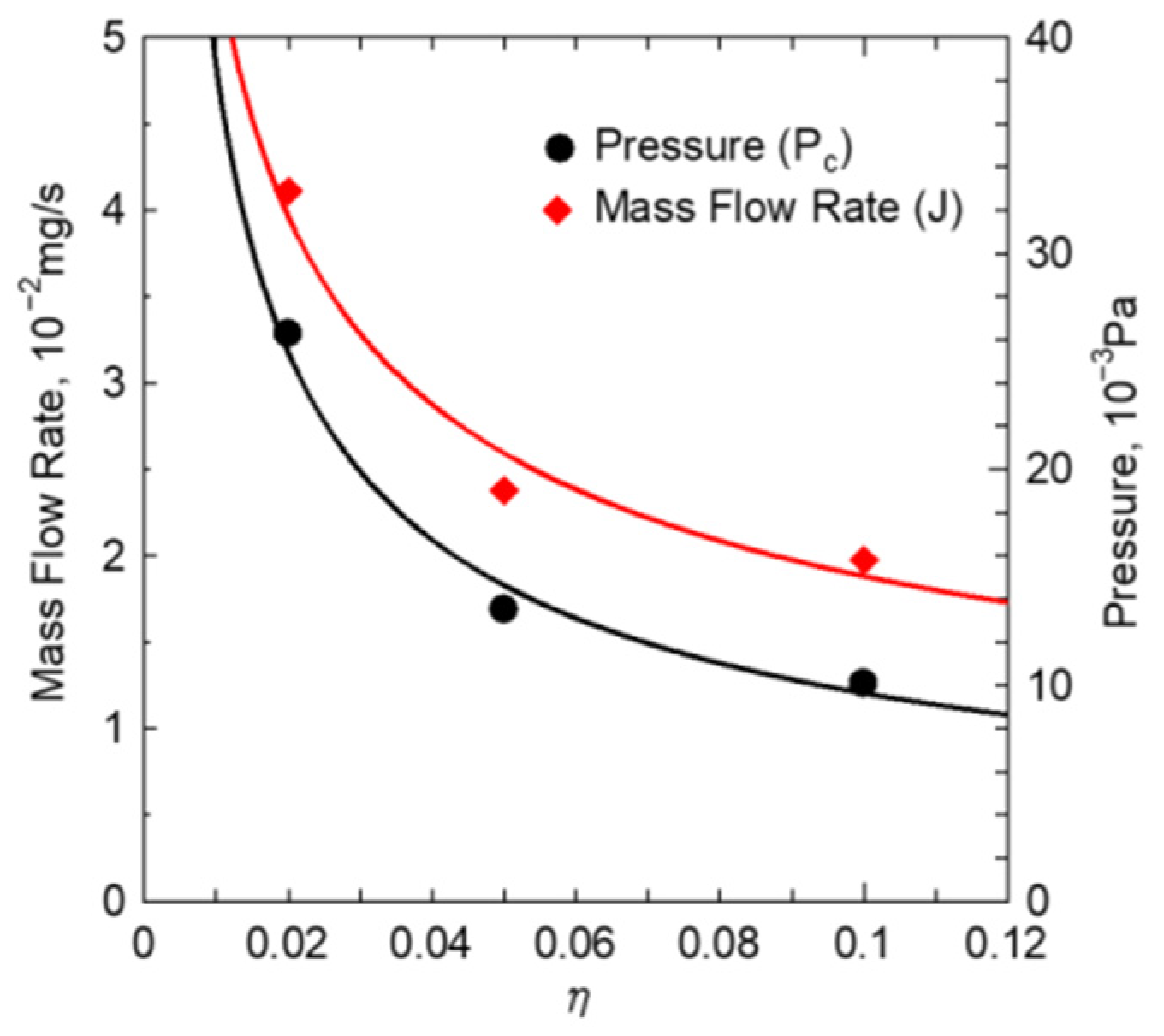
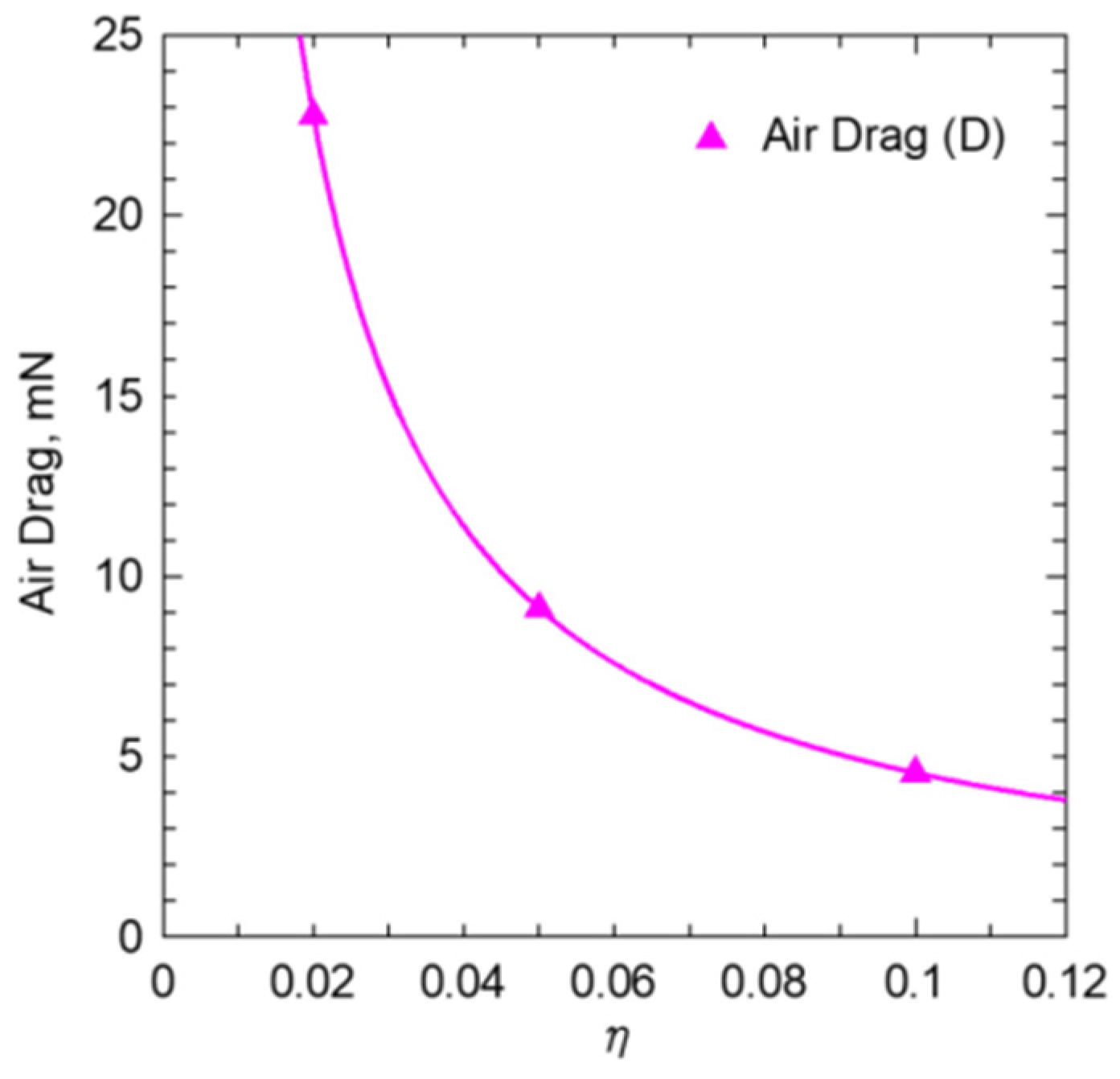
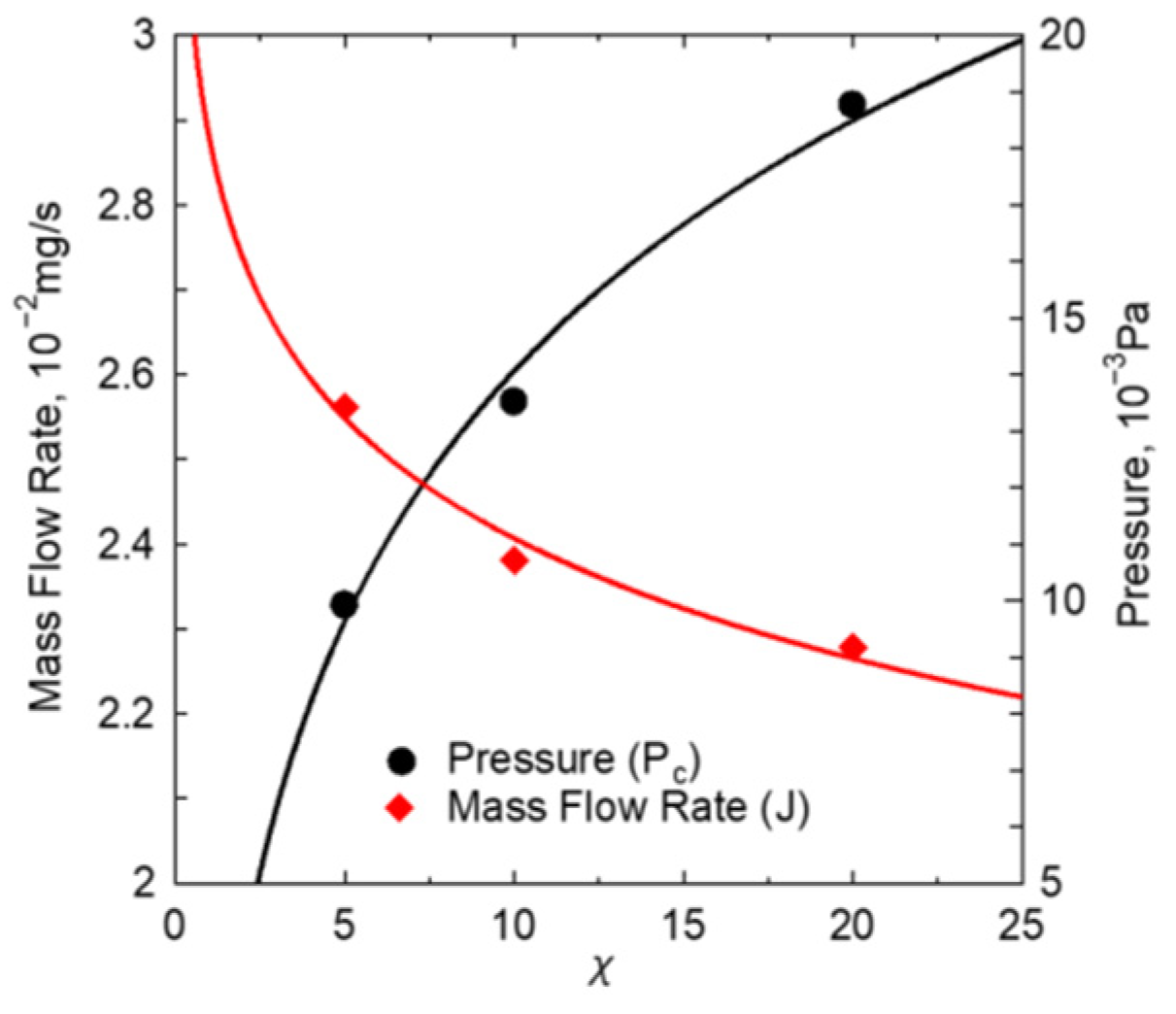
3.2.3. Effect of Area Ratio on Air Intake Performance
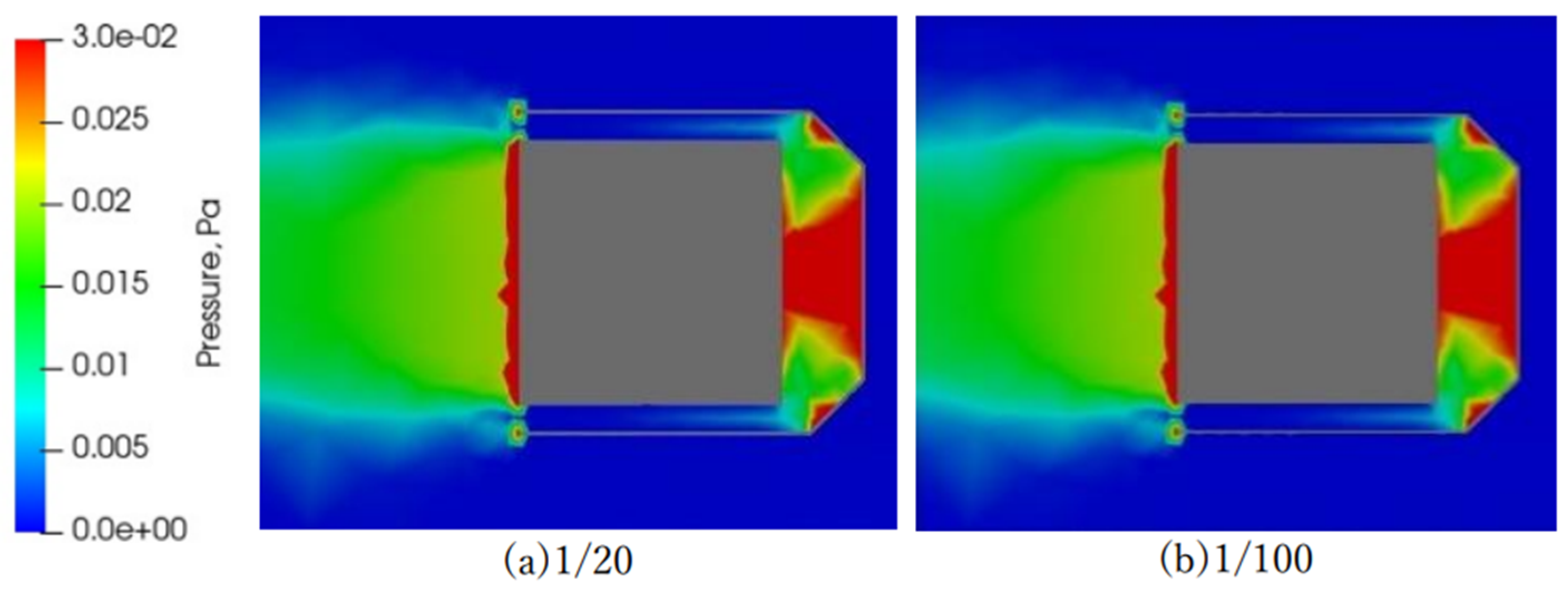
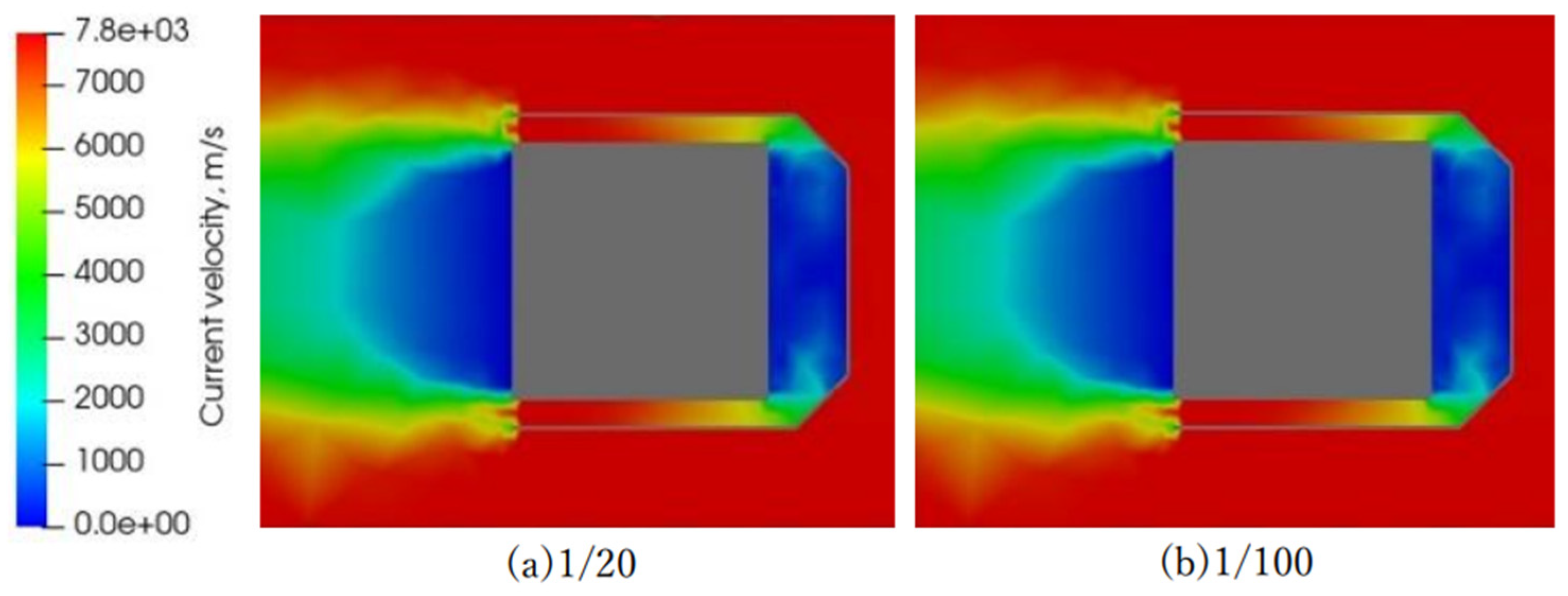
3.2.4. Effect of Geometric Scaling on Air Intake Performance
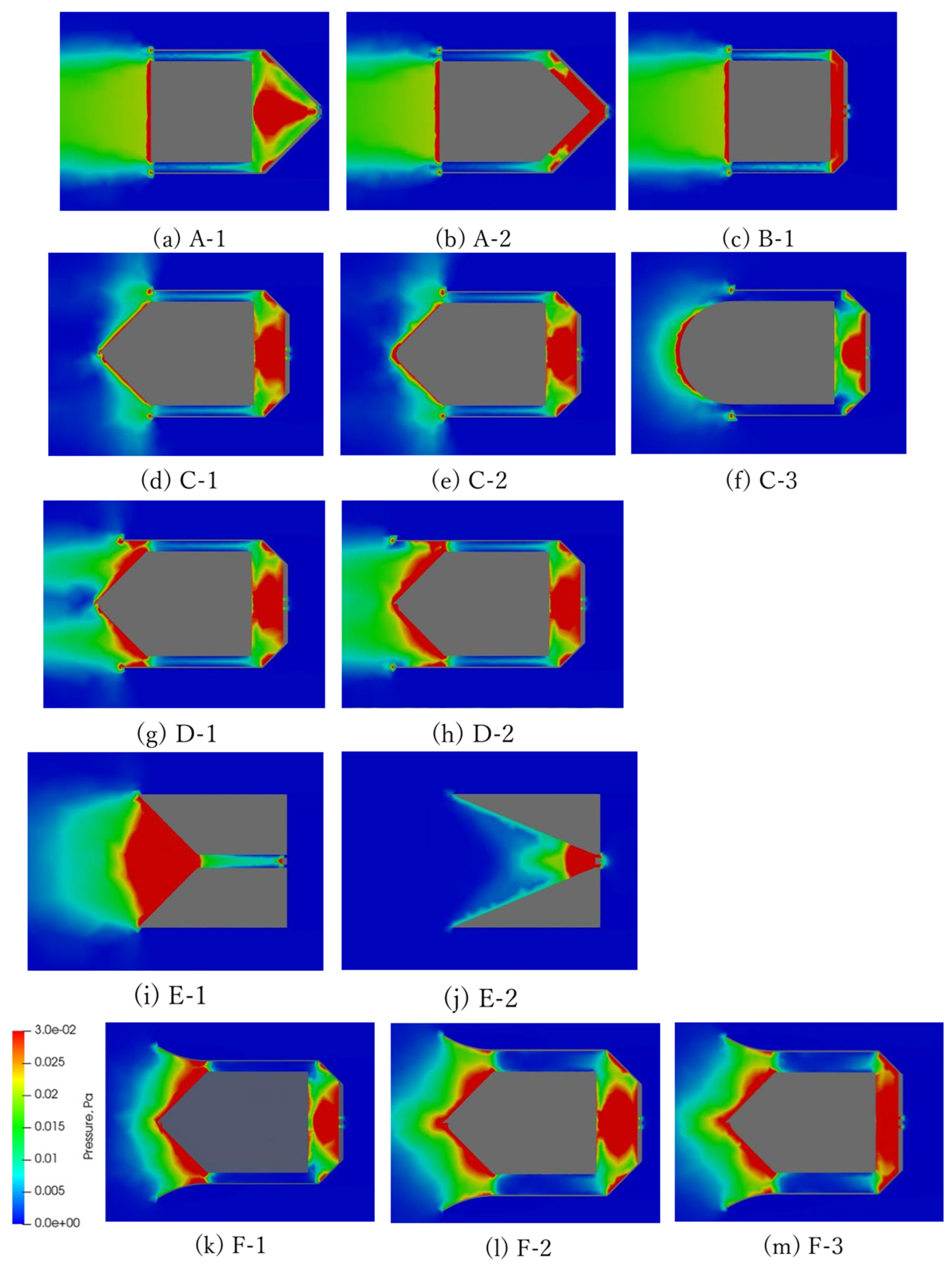
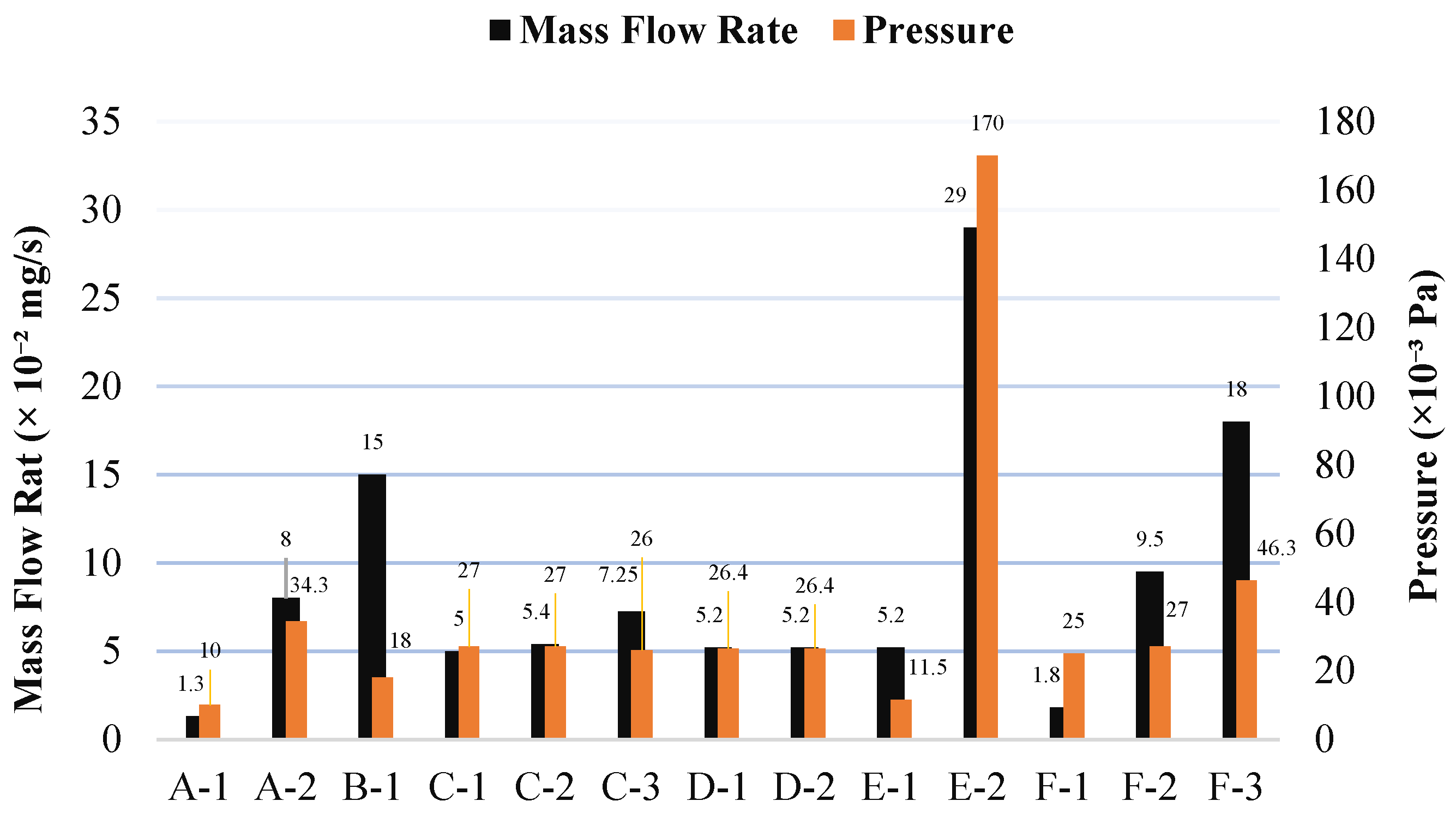
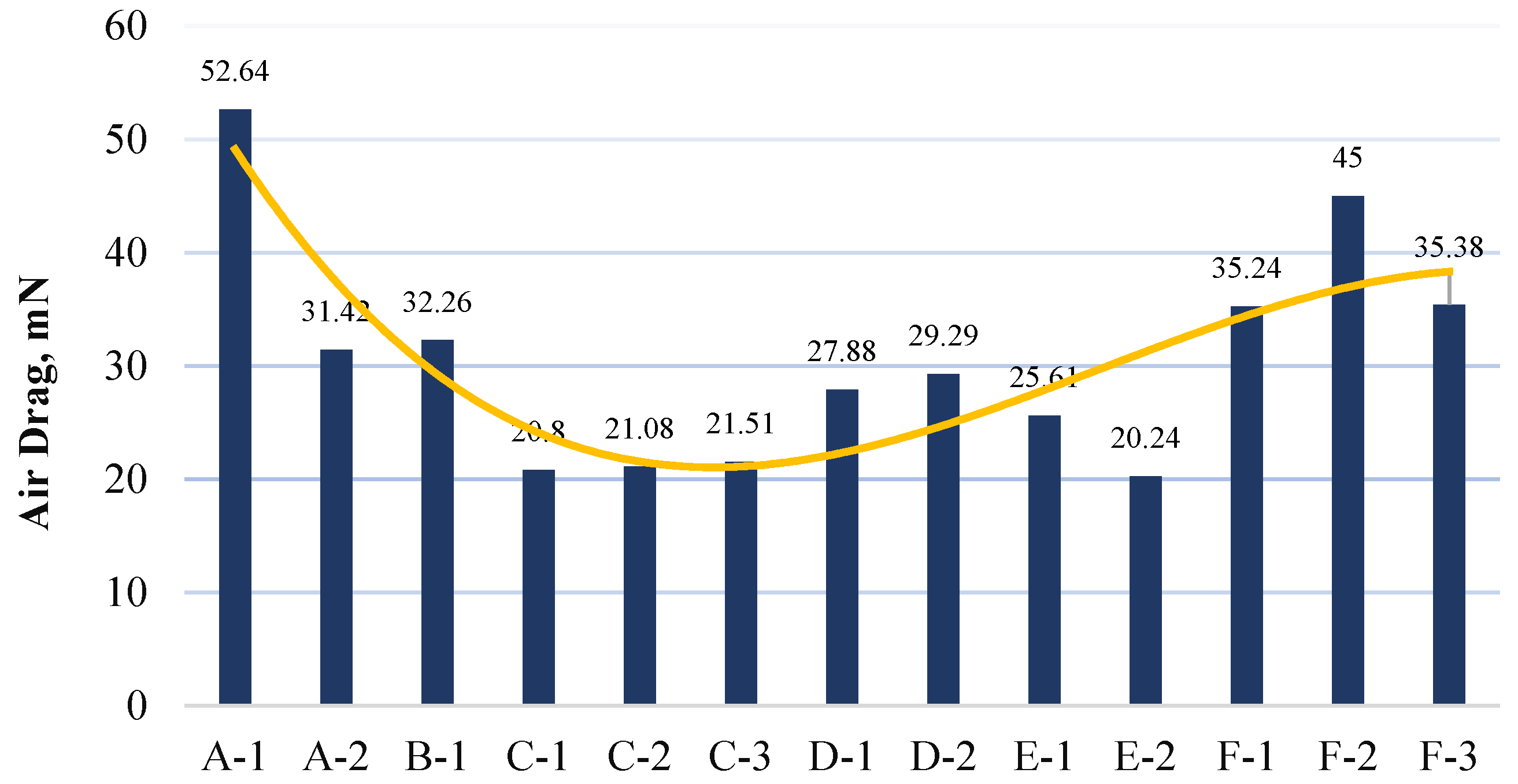
3.3. Simulation Using the Optimized Model
4. Challenges and Limitations
4.1. Summary of Simulation Results
4.2. Challenges and Future Improvement Strategies
5. Conclusions
Author Contributions
Funding
Data Availability Statement
Acknowledgments
Conflicts of Interest
Abbreviations
| ABEP | Atmosphere-Breathing Electric Propulsion |
| ABHT | Atmosphere-Breathing Hall Thruster |
| CFD | Computational Fluid Dynamics |
| CLL | Cercignani–Lampis–Lord |
| CPU | Central Processing Unit |
| DSMC | Direct Simulation Monte Carlo |
| GSI | Gas–Surface Interaction |
| HDD | Hard Disk Drive |
| HS | Hard Sphere |
| Kn | Knudsen Number |
| MSISE | Mass Spectrometer and Incoherent Scatter Extended Model |
| RF | Radio Frequency |
| VHS | Variable Hard Sphere |
| VLEO | Very Low Earth Orbit |
| VSS | Variable Soft Sphere |
References
- Crisp, N.H.; Roberts, P.; Livadiotti, S.; Oiko, V.; Edmondson, S.; Haigh, S.; Huyton, C.; Sinpetru, L.; Smith, K.; Worrall, S.; et al. The benefits of very low earth orbit for earth observation missions. Prog. Aerosp. Sci. 2020, 117, 100619. [Google Scholar] [CrossRef]
- Andreussi, T.; Ferrato, E.; Paissoni, C.A.; Kitaeva, A.; Giannetti, V.; Piragino, A.; Schäff, S.; Katsonis, K.; Berenguer, C.; Kovacova, Z.; et al. The AETHER project: Development of air-breathing electric propulsion for VLEO missions. CEAS Space J. 2022, 14, 717–740. [Google Scholar] [CrossRef]
- Livadiotti, S.; Crisp, N.H.; Roberts, P.C.; Worrall, S.D.; Oiko, V.T.; Edmondson, S.; Haigh, S.J.; Huyton, C.; Smith, K.L.; Sinpetru, L.A.; et al. A review of gas-surface interaction models for orbital aerodynamics applications. Prog. Aerosp. Sci. 2020, 119, 100675. [Google Scholar] [CrossRef]
- Roberts, P.C.E.; Crisp, N.H.; Romano, F.; Herdrich, G.H.; Oiko, V.T.; Edmondson, S.; Haigh, S.J.; Huyton, C.; Livadiotti, S.; Lyons, R.E.; et al. Discoverer: Making commercial satellite operations in very low Earth orbit a reality. In Proceedings of the International Astronautical Congress (IAC); IAF: Washington, DC, USA, 2019. [Google Scholar]
- Romano, F.; Massuti-Ballester, B.; Binder, T.; Herdrich, G.; Fasoulas, S.; Schönherr, T. System analysis and test-bed for an atmosphere-breathing electric propulsion system using an inductive plasma thruster. Acta Astronaut. 2018, 147, 114–126. [Google Scholar] [CrossRef]
- Leomanni, M.; Garulli, A.; Giannitrapani, A.; Scortecci, F. Propulsion options for very low Earth orbit microsatellites. Acta Astronaut. 2017, 133, 444–454. [Google Scholar] [CrossRef]
- Schonherr, T.; Komurasaki, K.; Romano, F.; Massuti-Ballester, B.; Herdrich, G. Analysis of Atmosphere-Breathing Electric Propulsion. IEEE Trans. Plasma Sci. 2015, 43, 287–294. [Google Scholar] [CrossRef]
- Romano, F.; Chan, Y.-A.; Herdrich, G.; Traub, C.; Fasoulas, S.; Roberts, P.; Smith, K.; Edmondson, S.; Haigh, S.; Crisp, N.; et al. RF Helicon-based Inductive Plasma Thruster (IPT) Design for an Atmosphere-Breathing Electric Propulsion system (ABEP). Acta Astronaut. 2020, 176, 476–483. [Google Scholar] [CrossRef]
- Wu, J.; Zheng, P.; Zhang, Y.; Tang, H. Recent development of intake devices for atmosphere-breathing electric propulsion system. Prog. Aerosp. Sci. 2022, 133, 100848. [Google Scholar] [CrossRef]
- Brabants, C. Development of a Methodology for VLEO Intake Performance Testing in a Low-Density Facility. June 2021. Available online: https://matheo.uliege.be/handle/2268.2/11557 (accessed on 24 March 2026).
- Romano, F.; Espinosa-Orozco, J.; Pfeiffer, M.; Herdrich, G.; Crisp, N.; Roberts, P.; Holmes, B.; Edmondson, S.; Haigh, S.; Livadiotti, S.; et al. Intake design for an Atmosphere-Breathing Electric Propulsion System (ABEP). Acta Astronaut. 2021, 187, 225–235. [Google Scholar] [CrossRef]
- Rapisarda, C.; Roberts, P.C.; Smith, K.L. Design and optimisation of a passive Atmosphere-Breathing Electric Propulsion (ABEP) intake. Acta Astronaut. 2023, 202, 77–93. [Google Scholar] [CrossRef]
- Raisanen, A.; Faust, A.; Taylor, J.; Higginson, J.; Zuber, M.E. Intake Design for Air-Breathing Electric Propulsion: A Framework. In Proceedings of the AIAA SCITECH 2025 Forum; American Institute of Aeronautics and Astronautics: Orlando, FL, USA, 2025. [Google Scholar] [CrossRef]
- Zheng, P.; Wu, J.; Zhang, Y.; Wu, B. A Comprehensive Review of Atmosphere-Breathing Electric Propulsion Systems. Int. J. Aerosp. Eng. 2020, 2020, 8811847. [Google Scholar] [CrossRef]
- Andreussi, T.; Ferrato, E.; Giannetti, V. A review of air-breathing electric propulsion: From mission studies to technology verification. J. Electr. Propuls. 2022, 1, 31. [Google Scholar] [CrossRef]
- Vaidya, S.; Traub, C.; Romano, F.; Herdrich, G.H.; Chan, Y.-A.; Fasoulas, S.; Roberts, P.C.E.; Crisp, N.H.; Edmondson, S.; Haigh, S.J.; et al. Development and analysis of novel mission scenarios based on Atmosphere-Breathing Electric Propulsion (ABEP). CEAS Space J. 2022, 14, 689–706. [Google Scholar] [CrossRef]
- Filatyev, A.S.; Golikov, A.; Erofeev, A.; Khartov, S.; Lovtsov, A.; Padalitsa, D.; Skvortsov, V.; Yanova, O. Research and development of aerospace vehicles with air breathing electric propulsion: Yesterday, today, and tomorrow. Prog. Aerosp. Sci. 2023, 136, 100877. [Google Scholar] [CrossRef]
- Cushen, A.T.; Oiko, V.T.; Smith, K.L.; Crisp, N.H.; Roberts, P.C.; Romano, F.; Papavramidis, K.; Herdrich, G. Performance Test Methodology for Atmosphere-Breathing Electric Propulsion Intakes in an Atomic Oxygen Facility. arXiv 2024, arXiv:2406.06299. [Google Scholar] [CrossRef]
- Johnson, K.N.; Li, Y.; Ezell, M.J.; Lakey, P.S.J.; Shiraiwa, M.; Finlayson-Pitts, B.J. Elucidating gas–surface interactions relevant to atmospheric particle growth using combined temperature programmed desorption and temperature-dependent uptake. Phys. Chem. Chem. Phys. 2024, 26, 23264–23276. [Google Scholar] [CrossRef] [PubMed]
- Hedahl, M.O.; Wilmoth, R.G. Comparisons of the Maxwell and CLL Gas/Surface Interaction Models Using DSMC; NASA Technical Memorandum 110205; National Aeronautics and Space Administration (NASA): Washington, DC, USA, 1995.
- Sannino, A.; Pessina, V.; Savino, R.; Schein, J. Design and performances of intake for atmosphere-breathing electric propulsion systems with the direct simulation Monte Carlo method. Phys. Fluids 2025, 37, 027189. [Google Scholar] [CrossRef]
- Herdrich, G.; Maier, P.; Rojas, E.G.; Papavramidis, K.; Skalden, J. Advancements of a VLEO satellite system study utilizing an RF Helicon-based Plasma Thruster. In Proceedings of the Aerospace Europe Conference 2023–10th EUCASS–9th CEAS, Lausanne, Switzerland, 10–13 July 2023. [Google Scholar] [CrossRef]
- Böckler, H.-B.; de Huu, M.; Maury, R.; Schmelter, S.; Schakel, M.D.; Büker, O. Metrology infrastructure for high-pressure gas and liquified hydrogen flows. In Proceedings of the 19th International Flow Measurement Conference 2022 on Flow Measurement—FLOMEKO 2022; IMEKO: Chongqing, China, 2023; pp. 1–6. [Google Scholar] [CrossRef]
- Yonover, J.M.; Gjesdal, K. Spinoza in Germany: Political and Religious Thought Across the Long Nineteenth Century; Oxford University Press: Oxford, UK, 2024. [Google Scholar]
- Joseph, N.S.; Selvam, R.P.; Hanley, A.S. Visualization Using Open-Source Software ParaView for Finite Element Class and Research. In Proceedings of the 2025 ASEE Midwest Section Conference Proceedings, Fayetteville, AR, USA, 14–16 September 2025; ASEE Conferences. p. 57824. [Google Scholar] [CrossRef]
- Knudsen Number—An Overview|ScienceDirect Topics. Available online: https://www.sciencedirect.com/topics/engineering/knudsen-number (accessed on 25 March 2026).
- Scribd. Knudsen Number Effects on Micro-Channel Flow|PDF|Fluid Mechanics|Fluid Dynamics. Available online: https://www.scribd.com/document/85832266/A-Fm-2002 (accessed on 25 March 2026).
- Liu, C.; Zhou, G.; Shyy, W.; Xu, K. Limitation principle for computational fluid dynamics. Shock Waves 2019, 29, 1083–1102. [Google Scholar] [CrossRef]
- Islam, A.; Patzek, T. Slip in natural gas flow through nanoporous shale reservoirs. J. Unconv. Oil Gas Resour. 2014, 7, 49–54. [Google Scholar] [CrossRef]
- Soto, R. The Boltzmann equation for dilute gases. In Kinetic Theory and Transport Phenomena, 1st ed.; Oxford University Press: Oxford, UK, 2016; pp. 63–94. [Google Scholar] [CrossRef]
- Yuan, Y.; Rahman, S. Extended application of lattice Boltzmann method to rarefied gas flow in micro-channels. Phys. A Stat. Mech. Appl. 2016, 463, 25–36. [Google Scholar] [CrossRef]
- Liu, S.; Ding, N.; Fang, M.; Jin, H.; Zhang, R.; Zhuo, C.; Zhong, C. The near-continuum mechanism for extended Boltzmann theory: The non-equilibrium relaxation. arXiv 2026, arXiv:2602.05775v1. [Google Scholar]
- Burt, J.; Deschenes, T.; Boyd, I.; Josyula, E. Evaluation of a Hybrid Boltzmann-Continuum Method for High Speed Nonequilibrium Flows. In Proceedings of the 48th AIAA Aerospace Sciences Meeting Including the New Horizons Forum and Aerospace Exposition; American Institute of Aeronautics and Astronautics: Orlando, FL, USA, 2010. [Google Scholar] [CrossRef]
- Zhang, Y.; Qin, R.; Emerson, D.R. Lattice Boltzmann simulation of rarefied gas flows in microchannels. Phys. Rev. E 2005, 71, 047702. [Google Scholar] [CrossRef] [PubMed]
- Kara, V.; Yakhot, V.; Ekinci, K.L. Generalized Knudsen Number for Unsteady Fluid Flow. arXiv 2017, arXiv:1702.0778. [Google Scholar] [CrossRef]
- Wu, J.-S.; Lian, Y.-Y. Parallel three-dimensional direct simulation Monte Carlo method and its applications. Comput. Fluids 2003, 32, 1133–1160. [Google Scholar] [CrossRef]
- Sabouri, M.; Zakeri, R.; Ebrahimi, A. Improving Computational Efficiency in DSMC Simulations of Vacuum Gas Dynamics with a Fixed Number of Particles per Cell. arXiv 2024, arXiv:2407.01589. [Google Scholar] [CrossRef]
- Gosma, M.; Gopalan, K.S.; Subramaniam, S.; Stephani, K. Recommended direct simulation Monte Carlo collision model parameters for planetary entry and related applications. Phys. Fluids 2025, 37, 036156. [Google Scholar] [CrossRef]
- Fujita, K. Air Intake Performance of Air Breathing Ion Engines. J. Jpn. Soc. Aeronaut. Space Sci. 2004, 52, 514–521. [Google Scholar] [CrossRef]
- Zheng, P.; Wu, J.; Wu, B.; Zhang, Y. Design and numerical investigation on the intake of atmosphere-breathing electric propulsion. Acta Astronaut. 2021, 188, 215–228. [Google Scholar] [CrossRef]
- Nishiyama, K. A Study of Air Breathing Ion Engine. SPACE Technol. J. Jpn. Soc. Aeronaut. SPACE Sci. 2005, 4, 21–27. [Google Scholar] [CrossRef][Green Version]
- Ito, K.; Sano, R.; Yano, H.; Arai, K. Numerical Analysis of Meteoroid Impact on Multilayer Insulation for Micro-Spacecraft. Bull. Res. Cent. Comput. Multimed. Stud. Hosei Univ. 2024, 39, 40–49. (In Japanese) [Google Scholar] [CrossRef] [PubMed]
- Zhang, H.; Shan, F.; Fang, H.; Zhang, X.; Zhang, J.; Sun, J. An accurate moving wall boundary algorithm for direct simulation of Monte Carlo in unsteady rarefied flow. Phys. Fluids 2021, 33, 097105. [Google Scholar] [CrossRef]
- Shariati, V.; Ahmadian, M.H.; Roohi, E. Direct Simulation Monte Carlo investigation of fluid characteristics and gas transport in porous microchannels. Sci. Rep. 2019, 9, 17183. [Google Scholar] [CrossRef] [PubMed]
- Composition of the Atmosphere. Available online: https://peshkin.mech.northwestern.edu/scifair/Atmosphere.html (accessed on 25 March 2026).
- Wang, M.; Li, Z. Simulations for gas flows in microgeometries using the direct simulation Monte Carlo method. Int. J. Heat Fluid Flow 2004, 25, 975–985. [Google Scholar] [CrossRef]
- Gallis, M.; Torczynski, J.; Rader, D.; Bird, G. Accuracy and Convergence of a New DSMC Algorithm. In Proceedings of the 40th Thermophysics Conference; American Institute of Aeronautics and Astronautics: Seattle, WA, USA, 2008. [Google Scholar] [CrossRef]









| Parameter | Value |
|---|---|
| Thruster Type | Hall Thruster (THT-VI) |
| Inner Channel Diameter | 56 mm |
| Outer Channel Diameter | 100 mm |
| Propellant | Air (80% N2, 20% O2) |
| Operating Mass Flow Rate | 1.5 mg/s |
| Discharge Voltage Range | 150–350 V |
| Thrust at 250 V | 20.79 mN |
| Maximum Thrust | 41.89 mN |
| Specific Impulse at 250 V | 1413 s |
| Maximum Specific Impulse | 2847 s |
| Exhaust Velocity at 250 V | 13.86 km/s |
| Maximum Exhaust Velocity | 27.93 km/s |
| Operating Objective | Atmospheric drag compensation in VLEO |
| Kn < 0.01 | 0.01 < Kn < 0.1 | 0.1 < Kn < 10 | Kn > 10 |
|---|---|---|---|
| Continuous Flow | Slip Flow | Transition Flow | Free Molecular Flow |
| Kn < 0.01 | 0.01 < Kn < 0.1 | 10 < Kn |
|---|---|---|
| Continuous Flow | Intermediate Flow | Molecular Flow |
| CPU | Intel® Core™ i7-14700KF |
| Memory | 64 GB |
| HDD | SEAGATE ST1000VN0008 (10 TB) |
| Chemical Species | N2 | O2 | O |
| Volume Fraction (%) | 51.4 | 45.9 | 2.7 |
| Density [kg/m3] | 5.51 × 10⁻¹ | 1.8 × 10⁻⁴ | - |
| Pressure [Pa] | - | - | - |
| Flow Speed [m/s] | 7.8 × 10⁻³ | - | - |
| Temperature [K] | 877.67 | - | - |
| Description | Value |
|---|---|
| Number of real particles represented per reference particle | 1.0 × 10⁷ particles |
| Model when particles collide with the wall | Specular Reflection |
| Time step | 1.0 × 10⁻⁹ s |
| Cell shape | Quadratic |
| Maximum mesh size | 0.002 mm |
| Minimum mesh size | 0.0015 mm |
| Mesh size around the wall | 0.0005 mm |
| Mesh size around the Hall-Slats | 0.25 mm |
Disclaimer/Publisher’s Note: The statements, opinions and data contained in all publications are solely those of the individual author(s) and contributor(s) and not of MDPI and/or the editor(s). MDPI and/or the editor(s) disclaim responsibility for any injury to people or property resulting from any ideas, methods, instructions or products referred to in the content. |
© 2026 by the authors. Licensee MDPI, Basel, Switzerland. This article is an open access article distributed under the terms and conditions of the Creative Commons Attribution (CC BY) license.
Share and Cite
Alam, M.M.A.; Mamun, M.; Kuri, T.; Islam, M.K.; Saadi, M.M.U. Rarefied Intake Flow in an Atmospheric-Breathing VLEO Hall Thruster. Aerospace 2026, 13, 589. https://doi.org/10.3390/aerospace13070589
Alam MMA, Mamun M, Kuri T, Islam MK, Saadi MMU. Rarefied Intake Flow in an Atmospheric-Breathing VLEO Hall Thruster. Aerospace. 2026; 13(7):589. https://doi.org/10.3390/aerospace13070589
Chicago/Turabian StyleAlam, Miah Md Ashraful, Md. Mamun, Takayuki Kuri, Md. Kawsarul Islam, and Md. Mesbah Uddin Saadi. 2026. "Rarefied Intake Flow in an Atmospheric-Breathing VLEO Hall Thruster" Aerospace 13, no. 7: 589. https://doi.org/10.3390/aerospace13070589
APA StyleAlam, M. M. A., Mamun, M., Kuri, T., Islam, M. K., & Saadi, M. M. U. (2026). Rarefied Intake Flow in an Atmospheric-Breathing VLEO Hall Thruster. Aerospace, 13(7), 589. https://doi.org/10.3390/aerospace13070589