Article

Shock Control on a Double-Fuselage Aircraft with a Natural Laminar Flow Wing

1
College of Aerospace Engineering, Nanjing University of Aeronautics and Astronautics, Nanjing 210016, China
2
Huzhou Institute of Zhejiang University, Huzhou 313000, China
3
Department of Mechanical Engineering, University of Sheffield, Sheffield S1 3JD, UK
*
Author to whom correspondence should be addressed.
Aerospace 2026, 13(6), 540; https://doi.org/10.3390/aerospace13060540 (registering DOI)
Submission received: 28 April 2026 / Revised: 4 June 2026 / Accepted: 8 June 2026 / Published: 10 June 2026
(This article belongs to the Section Aeronautics)

Abstract

This paper presents the design of shock control bumps on a double-fuselage aircraft with a natural laminar flow (NLF) wing section. Both two-dimensional (2D) and three-dimensional (3D) bumps were investigated to identify the high-impact factors on both shock control and natural laminar flow for the aircraft, and to understand the associated flow physics. Firstly, two key geometric parameters, namely the bump crest location and the bump height, were optimized to trade off shock control and laminar flow. The optimized 2D bump results in 8.19% total drag reduction in the wing section, specifically, 8.61% pressure drag reduction and 6.23% viscous drag reduction. The total drag coefficient of the aircraft reduces by 8.12 counts while the lift slightly increases. Then, the robustness of the bump at off-design conditions was verified as well. Finally, the 2D bump was converted to 3D bumps according to the transonic area rule to explore more alternative designs, and it was found that the two have similar performances, confirming the effectiveness of the transonic area rule applied in the shock-control-bump design.

1. Introduction

Drag reduction is crucial for civil transport aircraft due to an increasing demand to reduce greenhouse gas emissions. For civil transport aircraft, about half of the drag comes from skin friction [1]. Therefore, expanding the laminar flow region on the aircraft surface offers great potential in drag reduction because the skin friction drag of the laminar boundary layer is significantly lower than that of the turbulent boundary layer. The main approaches to achieve laminar flow on the wing surface include laminar flow control (LFC), hybrid laminar flow control (HLFC), and natural laminar flow (NLF). HLFC combines suction at the leading edge, namely LFC, with an NLF design downstream, allowing the boundary layer to maintain laminar flow with a relatively low cost. However, like LFC, the efficiency of HLFC is still severely limited by the suction system [2,3]. Therefore, NLF is highly desirable in aircraft aerodynamic design, due to its simplicity and zero energy input.
The design of NLF wings can be traced back to the NACA 6-series airfoils [4] of the 1940s. In the 21st century, NLF technology continues to attract attention and be investigated. Cella et al. [5] designed and tested a transonic NLF wing, namely UW-5006, for jet airliners. Hue et al. [6,7] conducted both numerical simulations and wind tunnel tests on NLF wings. The Breakthrough Laminar Aircraft Demonstrator in a European project tried to test the concept of NLF in a real aircraft [8]. An A340 aircraft had been modified to meet the needs of testing NLF technology. Later, the First Aircraft Institute in China (AVIC) developed a new aircraft to check the performance of both NLF and HLFC wings in real flight [9,10,11,12]. The aircraft adopts a novel configuration of double fuselages, designed to support different test wing sections.
There are still many obstacles in applying NLF technology to modern airliners. Cruising at transonic speeds, modern passenger aircraft usually adopt supercritical wings with a high sweep angle to delay drag divergence. The unfavorable surface pressure distribution produced by a supercritical wing causes an early flow transition, and sweeping the wing promotes leading-edge attachment line transition [13] and crossflow instability-induced transition [14] as well. To apply NLF technology in transonic transport aircraft, the wing surface should maintain a large region of favorable pressure gradient [15], and the leading-edge sweep angle should be limited, usually less than 20° [16]. Both constraints can lead to strong shock waves on the wing surfaces, resulting in a high demand on shock control technology.
The earliest research on shock control of transonic wings can be traced back to the 1960s, when Pearcey [17] applied vane vortex generators to a transonic wing. In 1992, Ashill et al. [18] first proposed a two-dimensional (2D) shock control bump to reduce the wave drag of a laminar airfoil. Later, the European research project, EUROSHOCK, studied different shock control methods, and ultimately showed that the shock control bump is the most effective shock control device [19]. The drag-reduction mechanisms of shock control bumps were continued to be studied in [20,21,22]. Then, Bruce and Colliss [23] summarized the research on shock control bumps. Qin et al. [24,25,26] first conducted a series of detailed studies on three-dimensional (3D) bumps for reducing the wave drag on transonic NLF wings. Their research shows that the optimized 3D bumps have better shock control capability on NLF wings in a wider operational range than the 2D bump. Deng and Qin [27] quantitatively compared the drag reduction of 2D and 3D bumps on an infinite unswept NLF wing, proposing to use the transonic area rule to explain the bumps’ performance. Zhu et al. [28] applied 3D bumps to NLF wings with a low sweep angle, conducting both wind tunnel experiments and numerical simulations. Later, Zhu et al. [29] proposed a gradient-based optimization method to design NLF wings with bumps.
Although the previous studies have carefully explored the applications of shock control bumps on simple NLF wings, no research on shock control bumps applied in a real aircraft with an NLF wing is reported yet. In addition, most previous studies assumed fully turbulent flow even for a natural laminar flow wing. Therefore, there are very few detailed investigations on the impact of bumps on the natural laminar flow region. To fill these research gaps, this paper aims to investigate the design and optimization of shock control bumps on a real flight test aircraft [9,10,11,12], which was specifically developed for testing laminar flow technologies.
The paper is organized as follows: The aircraft geometry and validation of Computational Fluid Dynamics (CFD) simulations are presented in Section 2. Then, in Section 3, 2D bumps are designed to trade off shock control and natural laminar flow, followed by verification of the bump’s performance and design of 3D bumps; the last section gives some concluding remarks.

2. Aircraft Geometry and Numerical Methods

2.1. Flight Test Aircraft

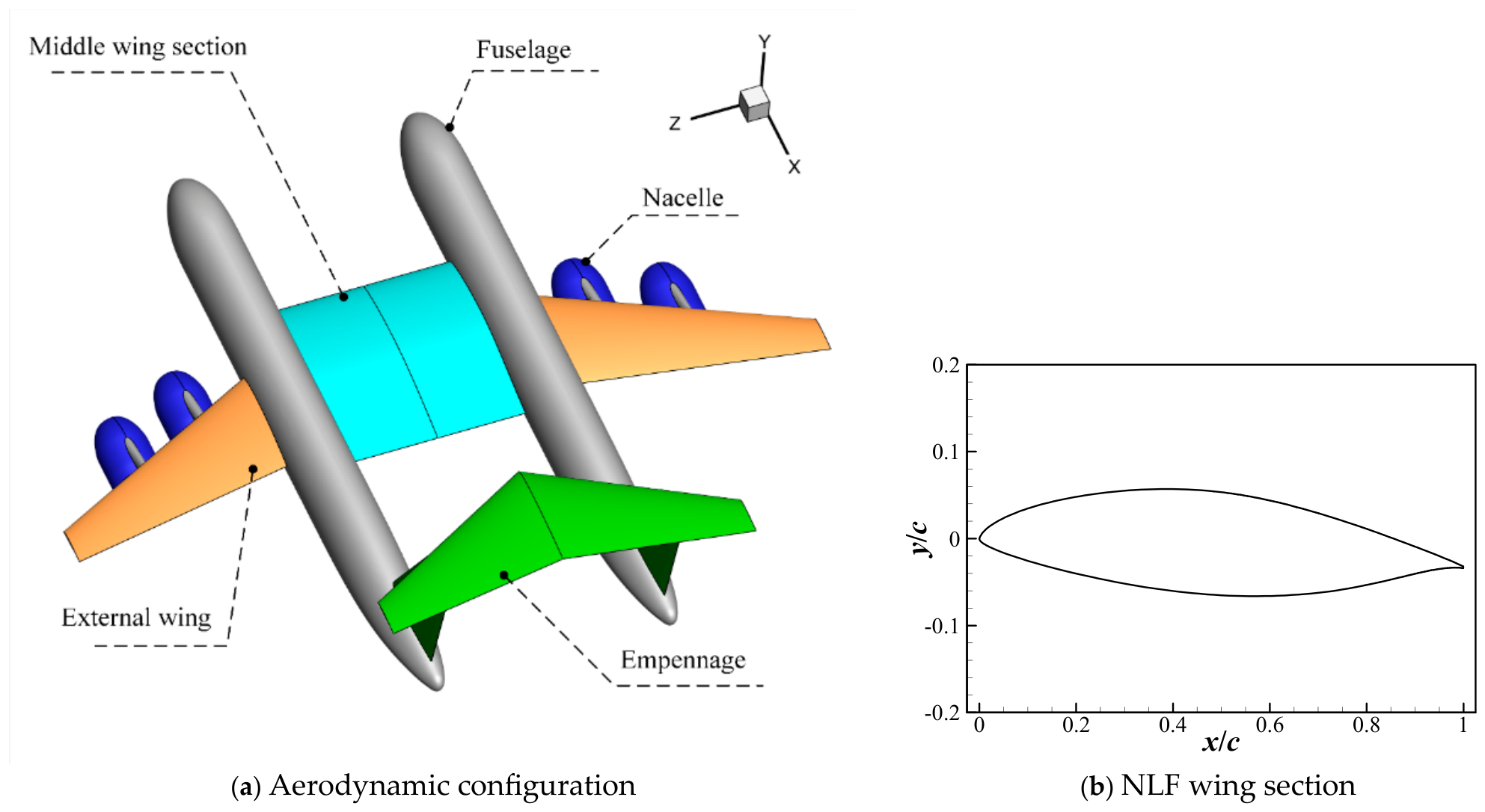
The flight test aircraft was developed by the First Aircraft Institute of AVIC for testing laminar flow technologies, including NLF and HLFC. Figure 1a shows the aerodynamic configuration of the aircraft. The aircraft adopts double fuselages, a π type empennage and four turbojet engines mounted on the external wing. The wing is divided into a middle wing section and an external wing. The middle wing section is designed as a test section, which can be easily replaced by another one for a different purpose. Here, an NLF wing section was chosen for this study. Figure 1b shows the NLF airfoil of the wing section. Table 1 shows the main geometric parameters of this NLF wing section, and more details can be found in [10].

2.2. Numerical Methods

The governing equations of CFD simulations are the Reynolds-averaged Navier–Stokes (RANS) equations. To simulate the flow transition, the γ R e θ t ¯ transition model developed by Menter et al. [30,31] was adopted. It is a four-equation model coupled with the original SST model and two transport equations, namely one equation for solving the momentum-thickness Reynolds number and the other one for solving the intermittency factor. The work of [28] confirmed that this transition model can well predict the flow transition on the wing with a sweep angle less than 20°.
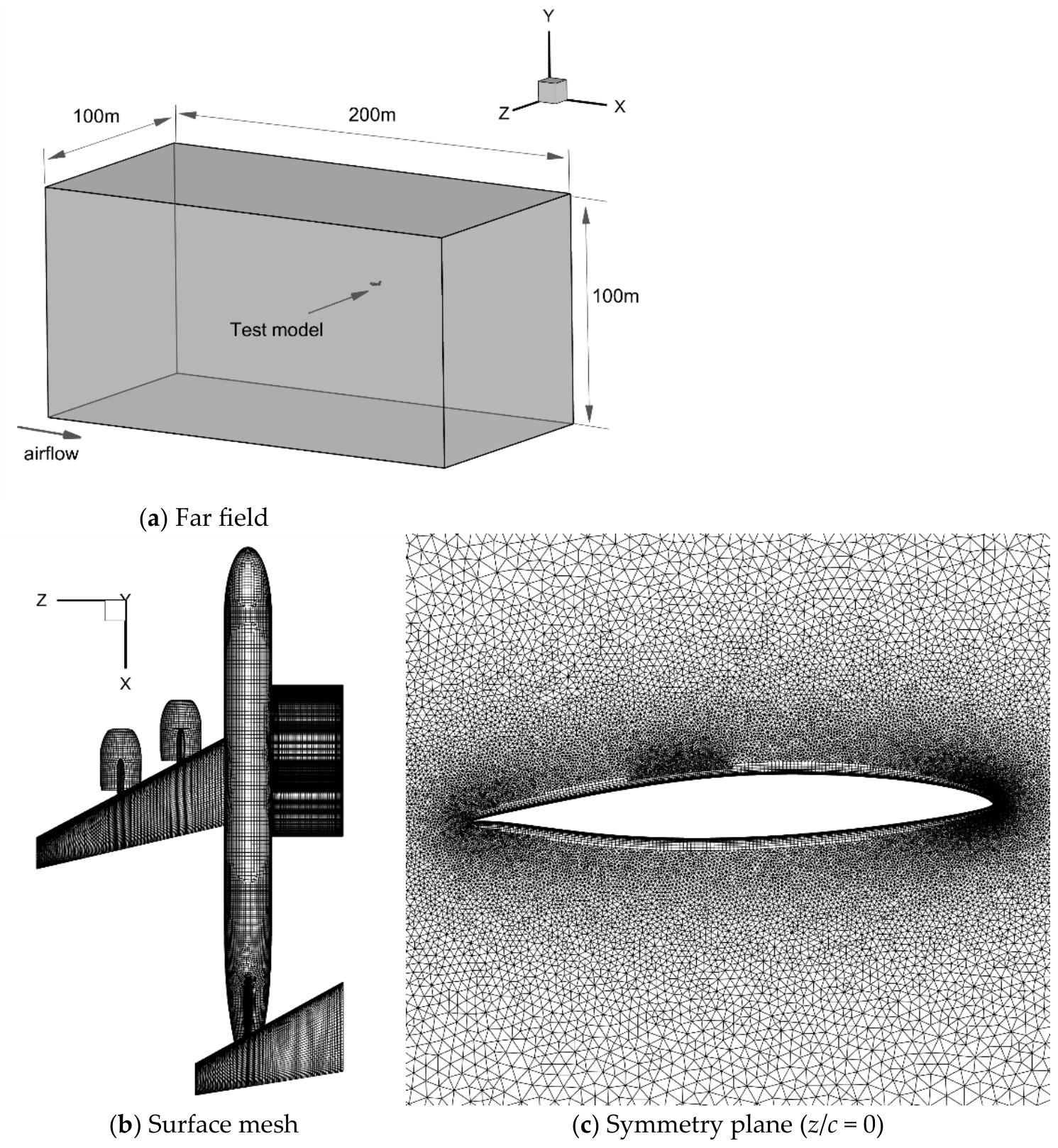
Figure 2 shows the computational mesh for CFD simulations. As shown in Figure 2a, it extends to the far-field 10~15 times the fuselage length away from the wall surface. Only half of the aircraft geometry is considered and the plane of z/c = 0 is set as the symmetry boundary condition. Figure 2b,c show the surface mesh of the aircraft and the mesh at the symmetry plane, respectively. In particular, the surface mesh of the wing section is refined to cope with the large gradients of the flow field along the streamwise direction caused by the flow transition or the shock waves.
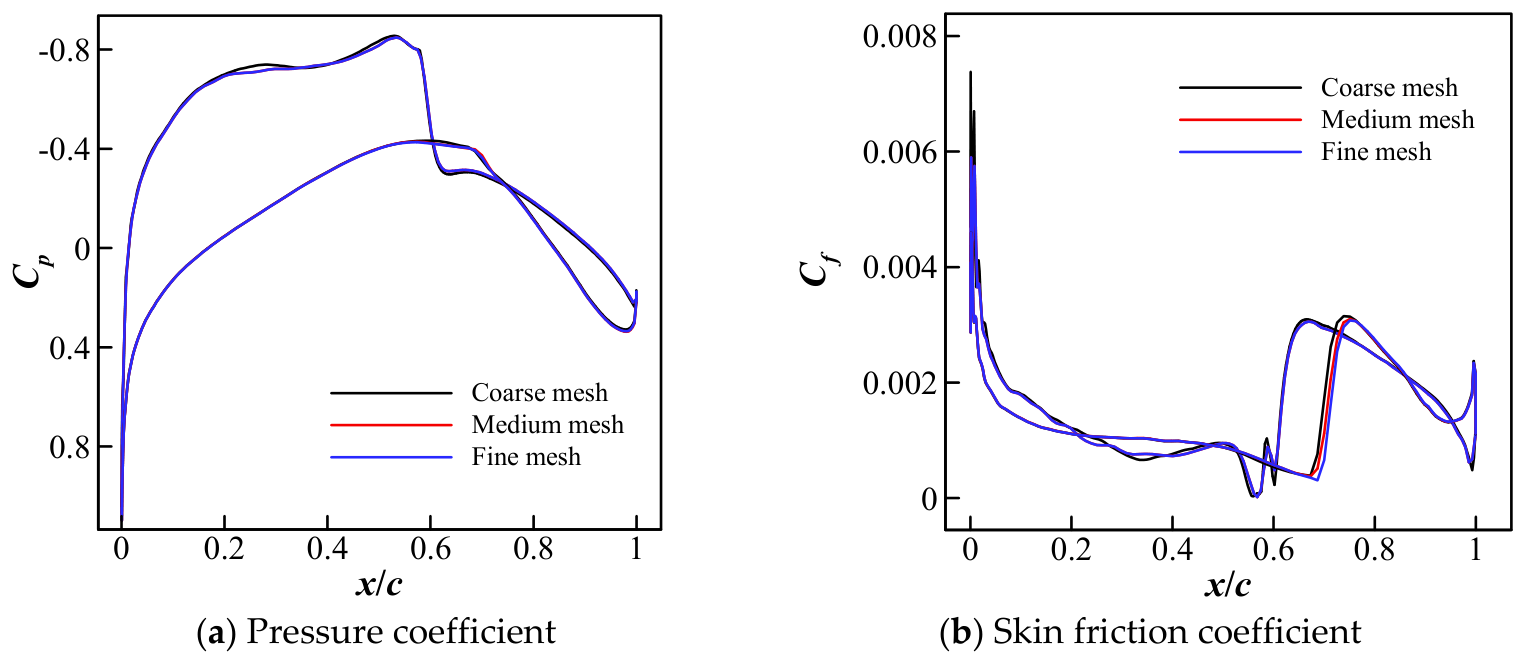
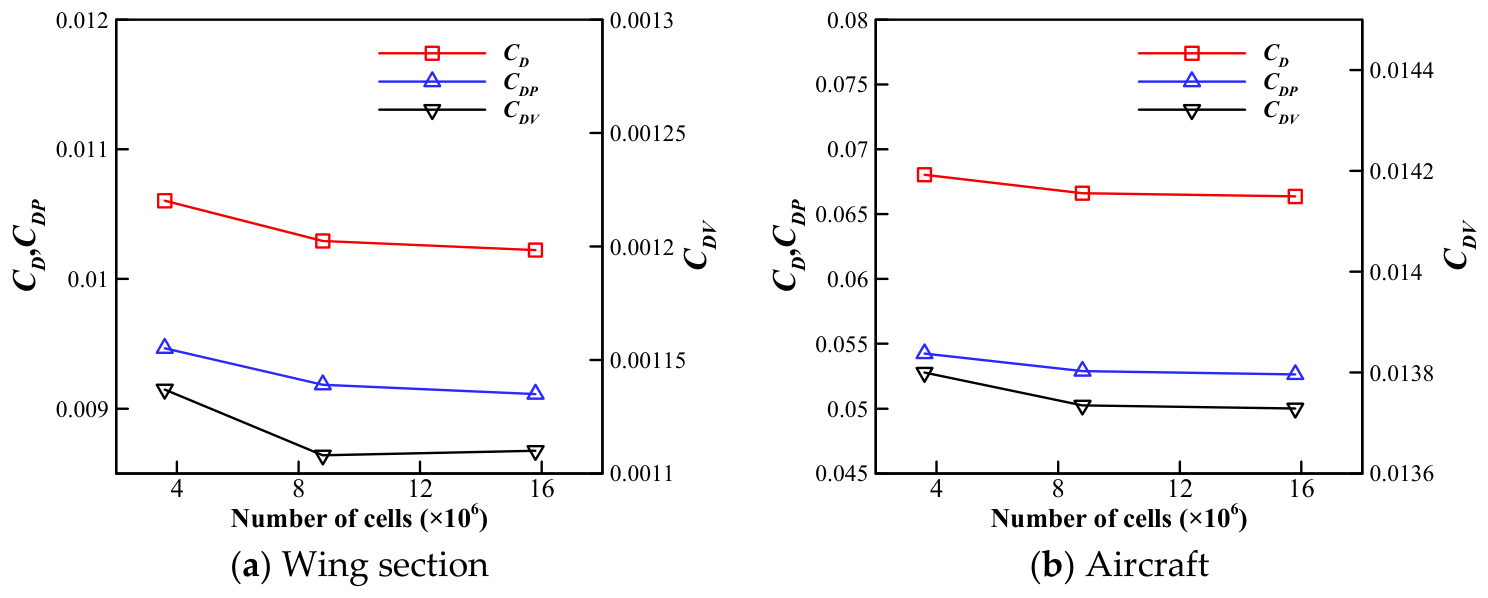
Three meshes with different densities are adopted for the mesh convergence study. The number of cells is 3.6 million for the coarse mesh, 8.8 million for the medium mesh, and 15.6 million for the fine mesh, respectively. The operating conditions for simulations are as follows: M = 0.80, α = 2°, Re = 3.0 × 10⁶. Figure 3 shows the pressure coefficient and skin friction coefficient distributions along the middle of the wing section (z/c = 0.0) for three meshes. The drag coefficients of the wing section and aircraft are given in Figure 4. The results by the medium mesh and the fine mesh are very close. Therefore, the medium mesh has sufficient accuracy for the following study. Specifically, the chosen surface mesh for the wing section is arranged with 455 grid points in the streamwise direction and 81 grid points in the spanwise direction, respectively, and the height of the first mesh cell away from the wall surface is set as 4.0 × 10⁻⁶ to ensure y+ < 1.

2.3. CFD Validation

The aerodynamic performance of the test aircraft has been measured in the FL-2 high-speed wind tunnel of the Aerodynamics Institute [10,11]. The wind tunnel tests adopt a 1:7 scale model. For more details about the wind tunnel tests, please refer to [10,11].
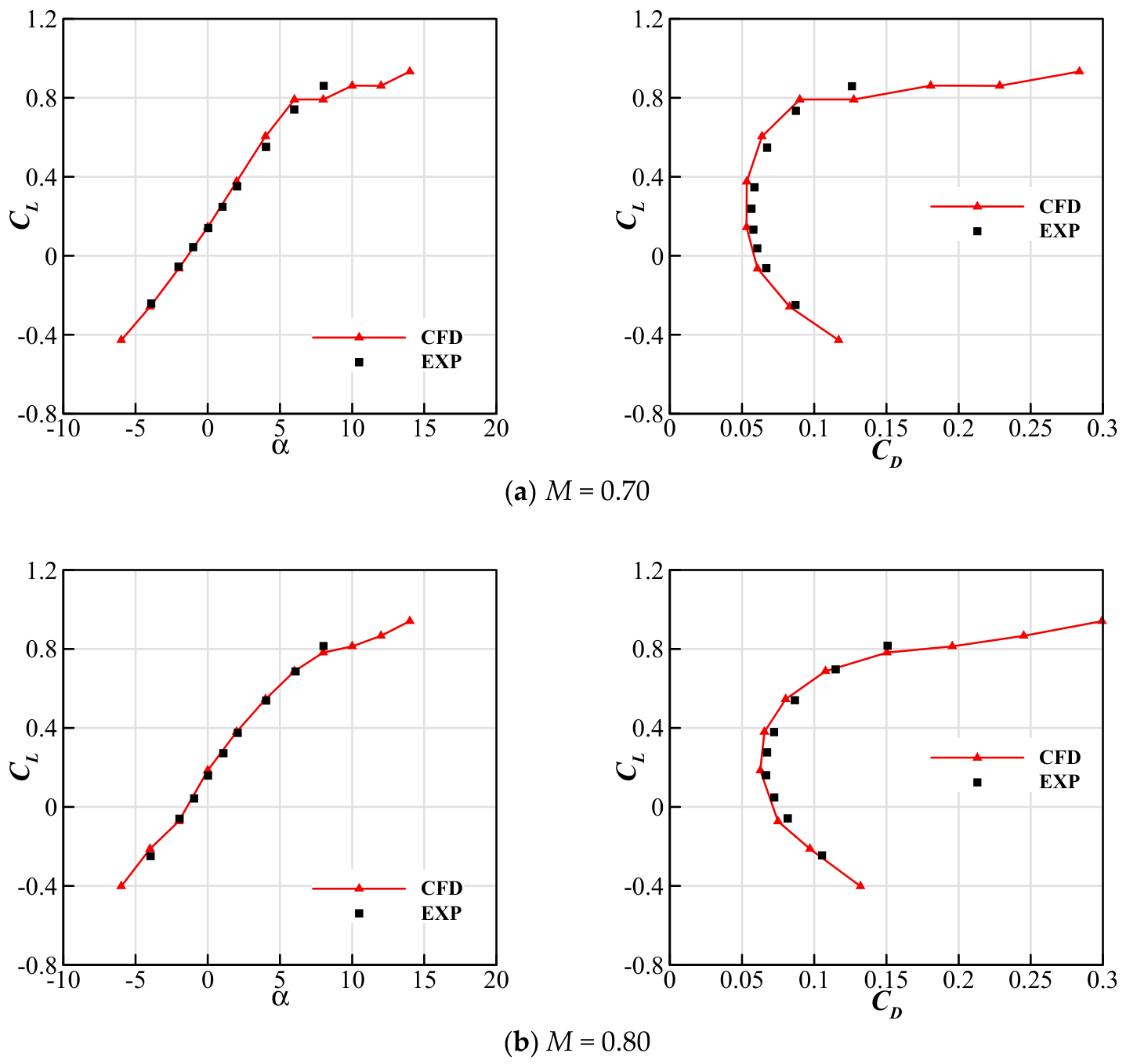
Figure 5 shows the comparison of aerodynamic force coefficients on the aircraft between the simulation data and the experimental data. The chosen Mach numbers in the wind tunnel tests are 0.70 and 0.80, respectively, and the test Reynolds number is 3 × 10⁶. Note that the freestream turbulent intensity in CFD simulations is set to 0.3% to match that of the wind tunnel experiment. The computational data agrees well with the experimental data.
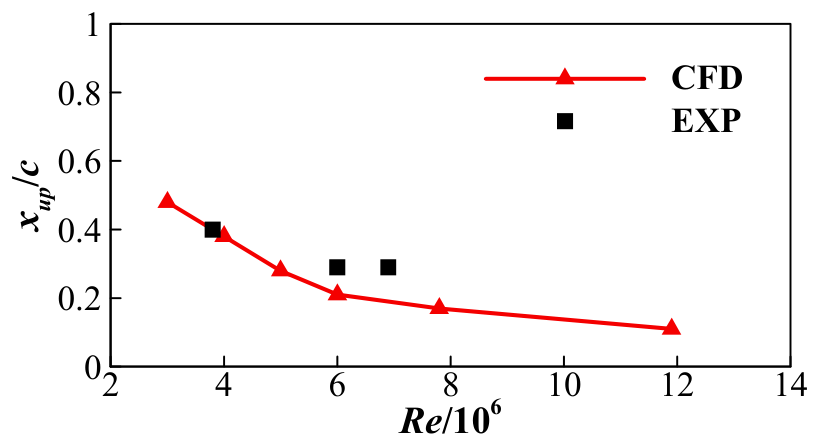
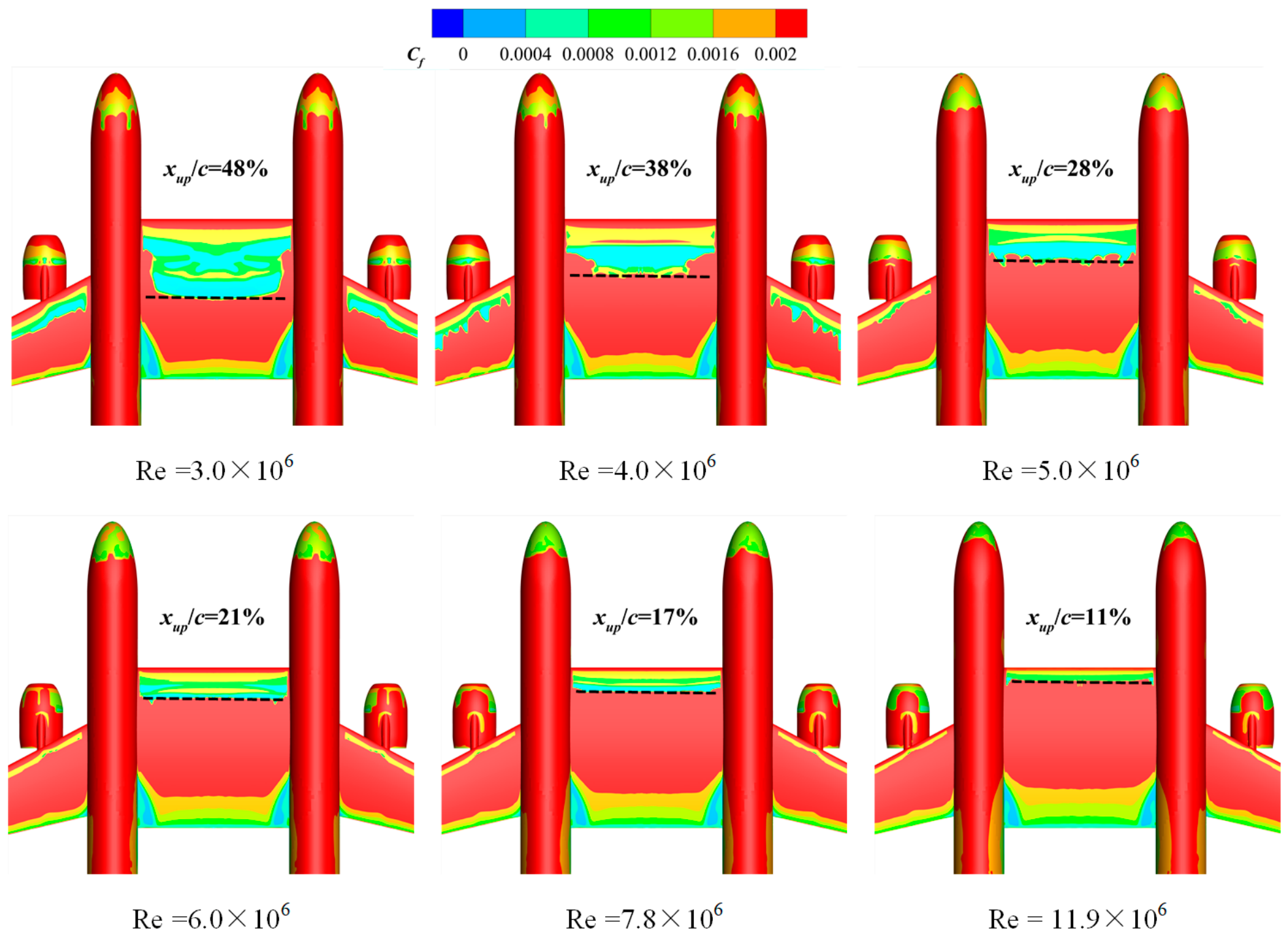
Figure 6 shows the comparison of the relative transition location on the upper surface of the wing section, namely xup/c, between the CFD simulations and the wind tunnel tests. The CFD simulations were carried out at several Reynolds numbers, while the other two flow conditions, namely M = 0.70 and α = 2 °, were kept the same. As shown in Figure 7, the transition location is calculated according to the sudden change in skin friction coefficient on the wing surface, because the skin friction caused by the laminar boundary layer is much lower than that caused by the turbulent boundary layer. The agreement between the CFD simulations and the wind tunnel tests is relatively good, especially for the cases with a Reynolds number less than 6 × 10⁶.

3. Results and Discussions

3.1. Design of 2D Bumps

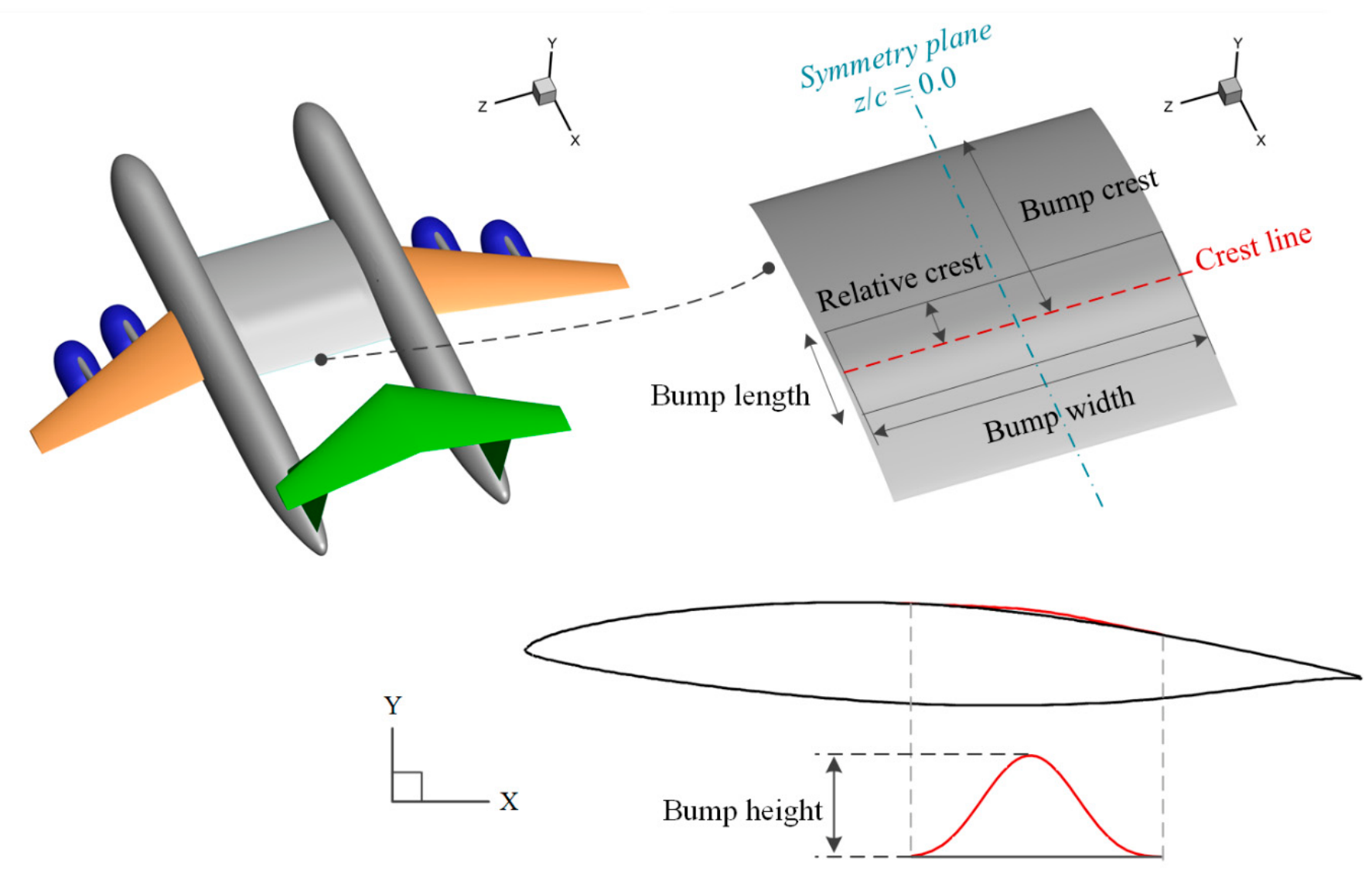
As shown in Figure 3, at the design condition, namely M = 0.80, α = 2° and Re = 3.0 × 10⁶, the normal shock wave on the upper surface of the wing section increases the total drag and induces the flow transition. The shock control bumps can be used to suppress the shock wave. The geometric parameters of a typical 2D bump are shown in Figure 8, including the bump crest, the relative crest, the bump length, the bump width and the bump height. Based on previous studies [25,26,28], the bump crests and the bump height are the most important design parameters for wave drag reduction. Therefore, these two parameters will be fully explored. The remaining parameters are determined based on the previous design experiences. The bump length, the relative crest and the bump width are set as 0.40c, 50% and 1.00c, respectively.
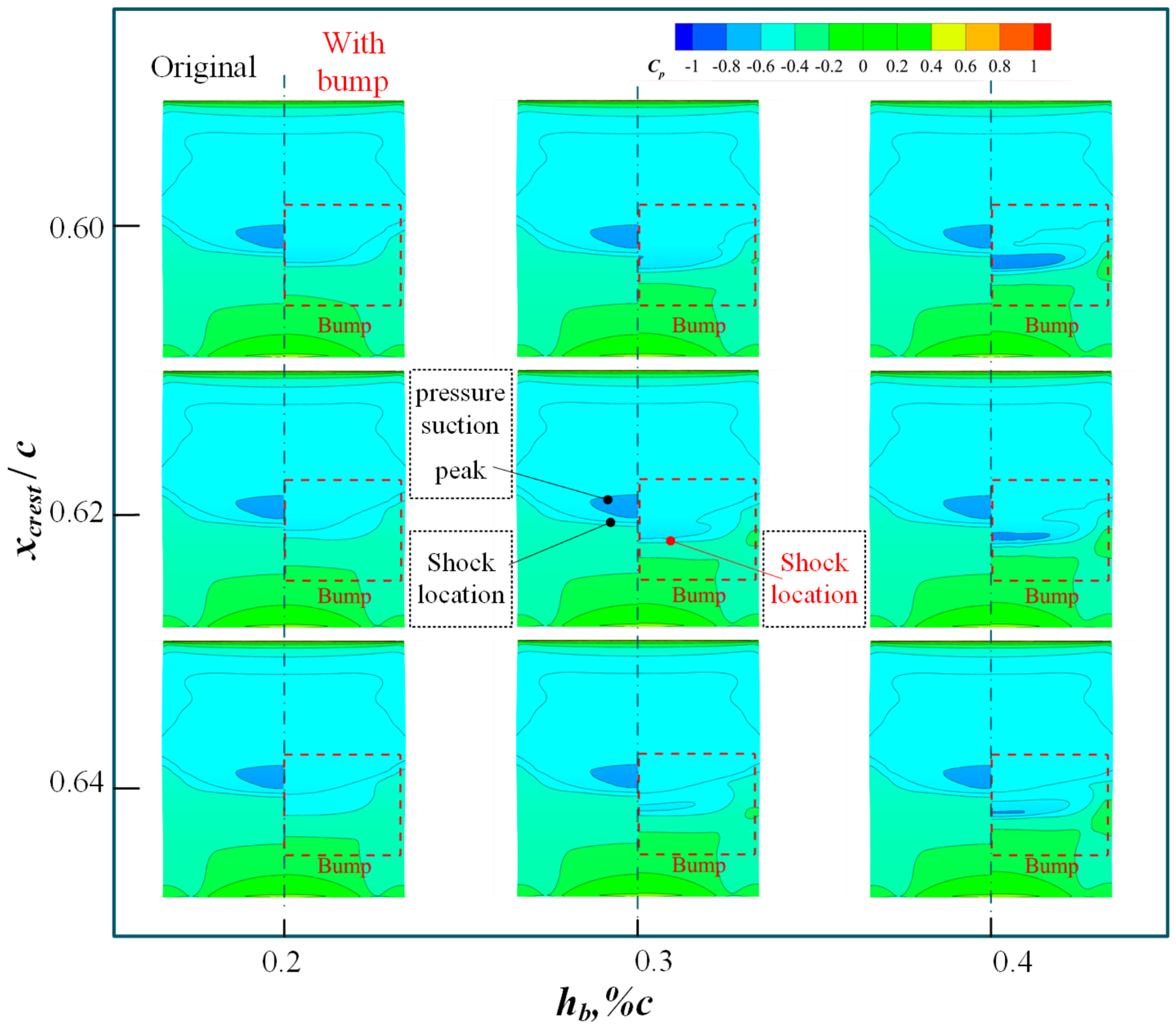
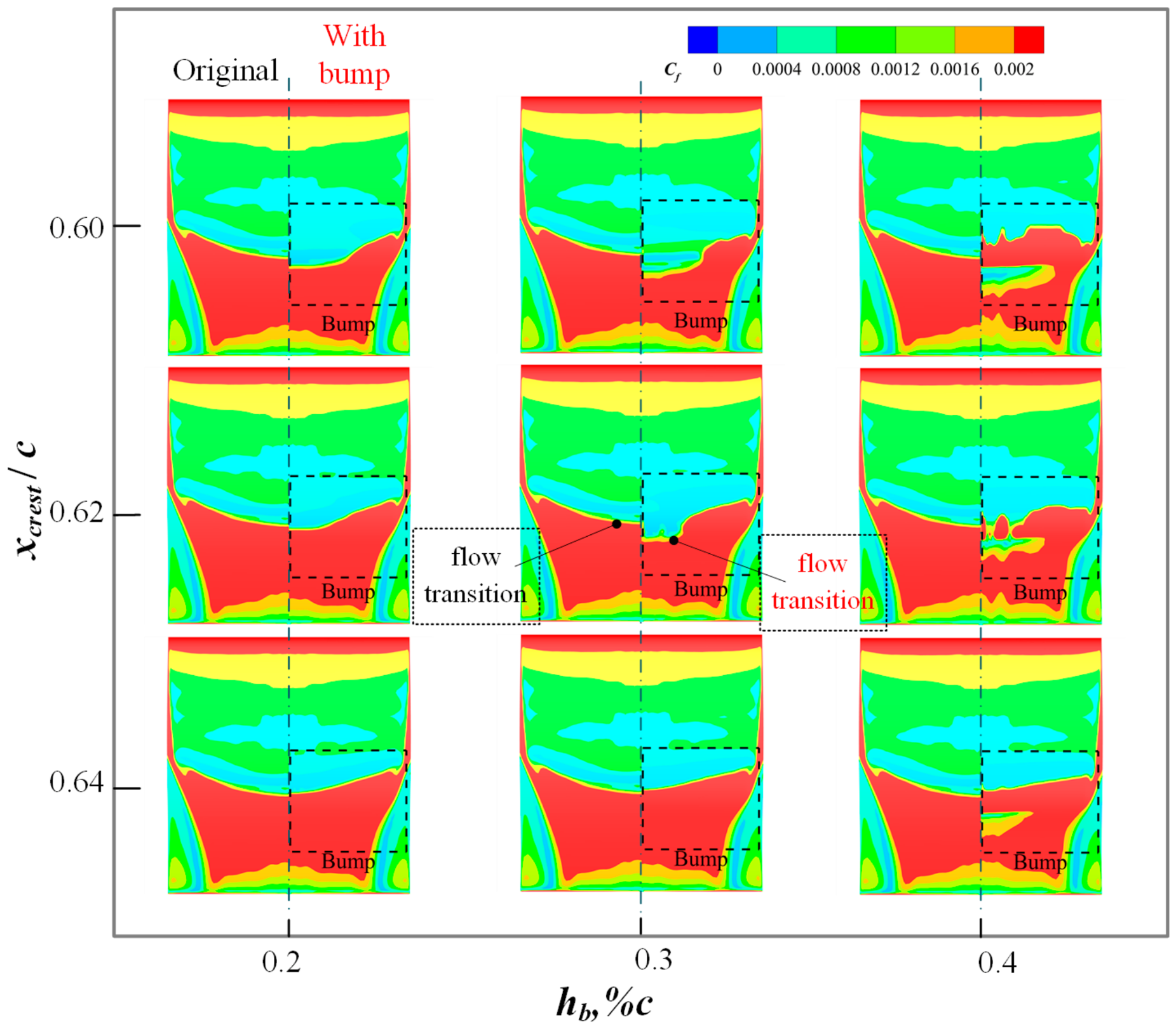
Figure 9 shows the pressure coefficient contours on the surface of the wing section for various bump designs. The horizontal axis represents the bump height, h b , and the vertical axis represents the bump crest, x c r e s t / c . In each sub-graph, the left side represents the original wing section, and the right side represents the wing section with a bump. In the figure, the bump is marked with red wireframes. Similarly, Figure 10 shows the skin friction coefficient contours on the surface of the wing section for various bump designs. The bump with a proper combination of the bump crest and the bump height significantly lowers the pressure suction peak on the upper surface of the wing section. Although the effects of the bump on skin friction are much more complicated, the bump does not cause an earlier flow transition in most cases, and even slightly delays the flow transition in some cases.
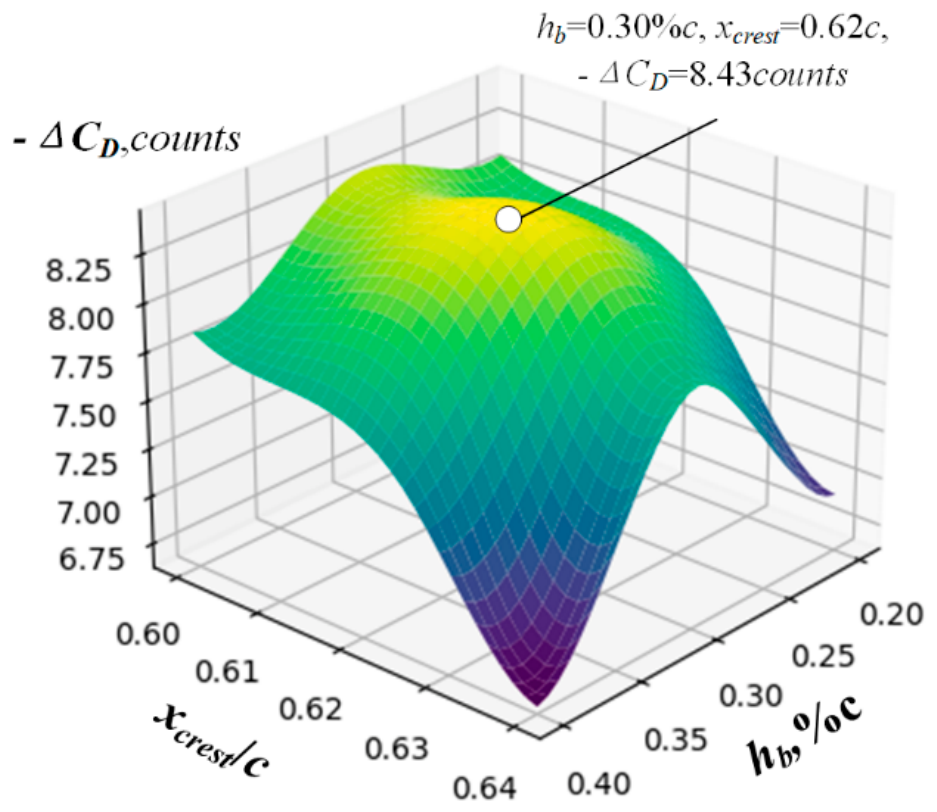
Figure 11 shows the polynomial response surface of total drag reduction with respect to the two key design parameters, namely the bump height and the bump crest. Note that the bump optimization on wings was already well established in previous studies [27,28]. Based on the previous studies, a focused design space was chosen and a total of nine samples were calculated, as shown in Figure 9 and Figure 10. The optimized bump parameters, shown in Table 2, can be easily found by a genetic algorithm optimizer. Table 3 shows the aerodynamic force coefficients at the design condition. The total drag coefficient of the wing section decreases by 8.19% after adding the bump, with an 8.36% reduction in pressure drag and a 6.77% reduction in viscous drag. The total drag coefficient of the aircraft decreases by 8.12 counts with a 1.35% increase in lift coefficient. Note that one count is equal to 0.0001 in drag coefficient.

3.2. Effect of Bump on Shock Control

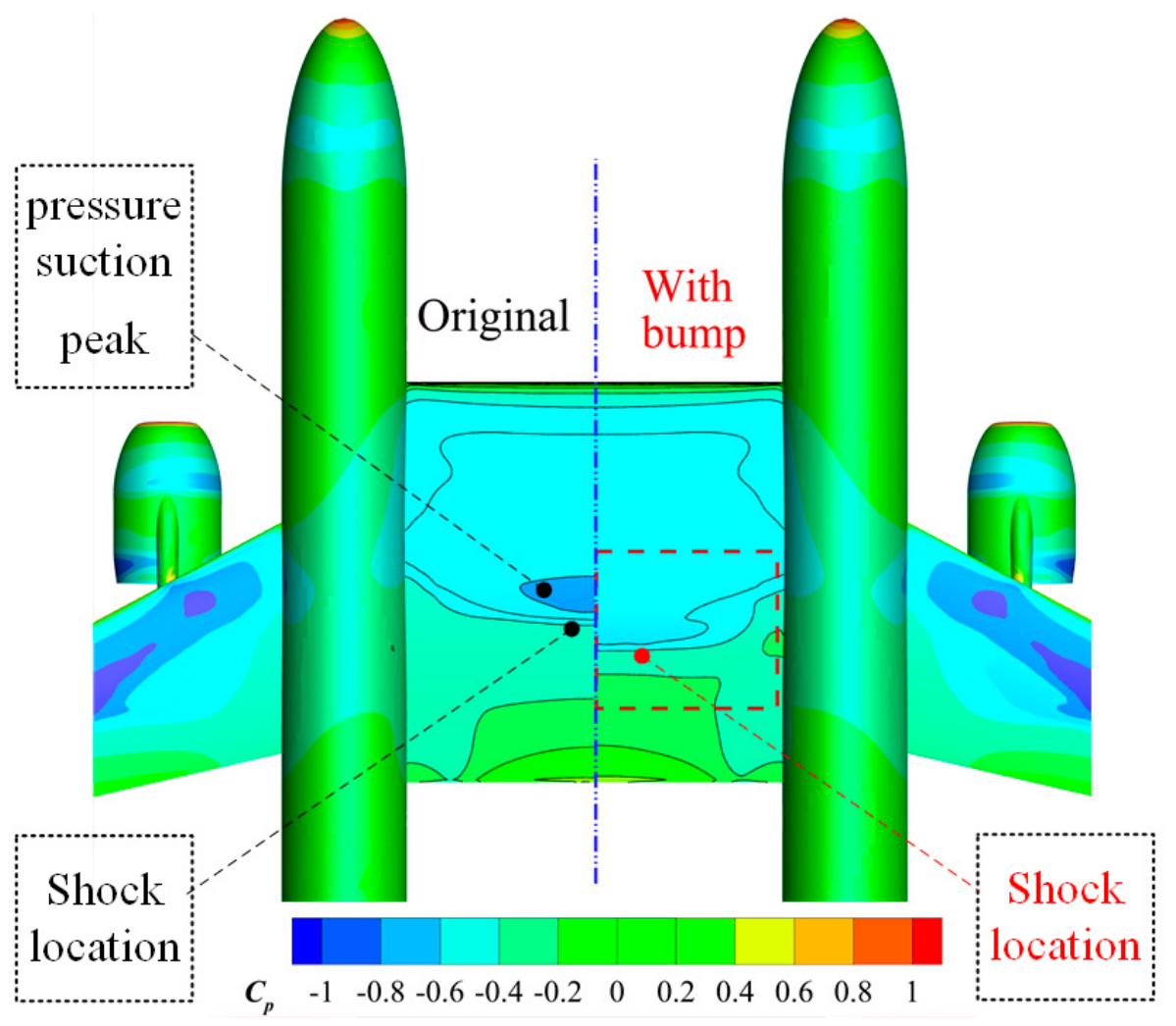
To further investigate the optimized bump design, the pressure coefficient distributions are compared. Figure 12 shows the pressure coefficient distributions on the upper surfaces of the aircraft with and without the optimized bump. The left side is the original geometry without the bump. There is an obvious low-pressure region in the middle of the wing section, indicating a pressure suction peak followed by a downstream shock wave. The right side is the geometry with the optimized bump. The addition of the bump lowers the original pressure suction peak and moves the shock wave downstream.
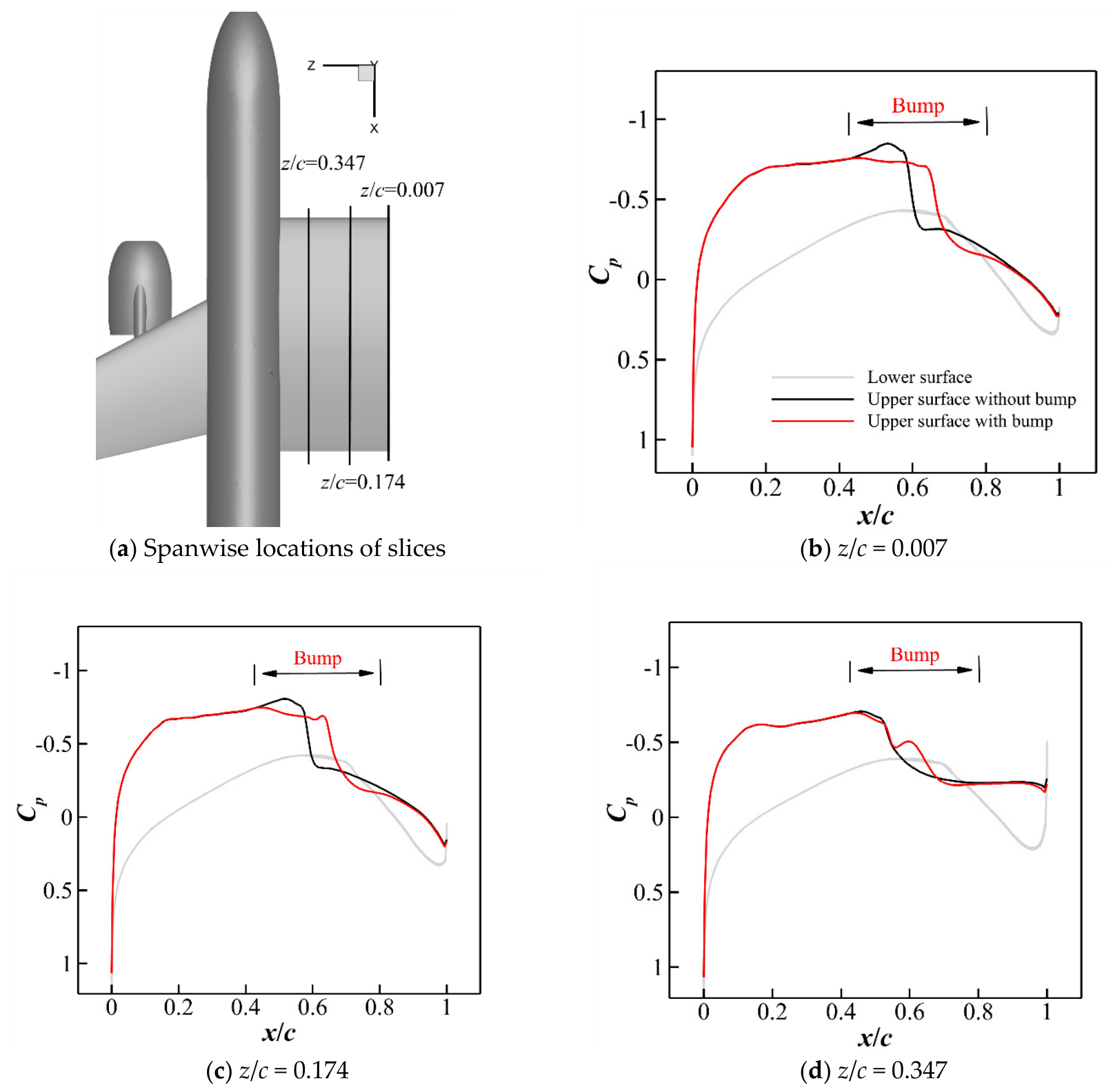
The pressure coefficient distributions at the different spanwise locations are compared to investigate the effect of the bump on shock control. Figure 13a gives the spanwise locations of slices. Figure 13 shows the distributions of surface pressure coefficient at the different slices and the streamwise locations of the bump are marked in the figure as well. The pressure coefficient distribution at the middle slice, z/c = 0.007, clearly shows that the pressure suction peak upstream of the shock wave is lowered by the bump. The pressure coefficient distribution at the slice of z/c = 0.174 shows a similar trend as that of the middle slice. The pressure coefficient distribution at the slice of z/c = 0.347 shows that a single shock wave becomes double shock waves, indicating a three-dimensional shock wave structure near the fuselage, which can also be seen from the pressure coefficient contours shown in Figure 12.

3.3. Effect of Bump on Natural Laminar Flow

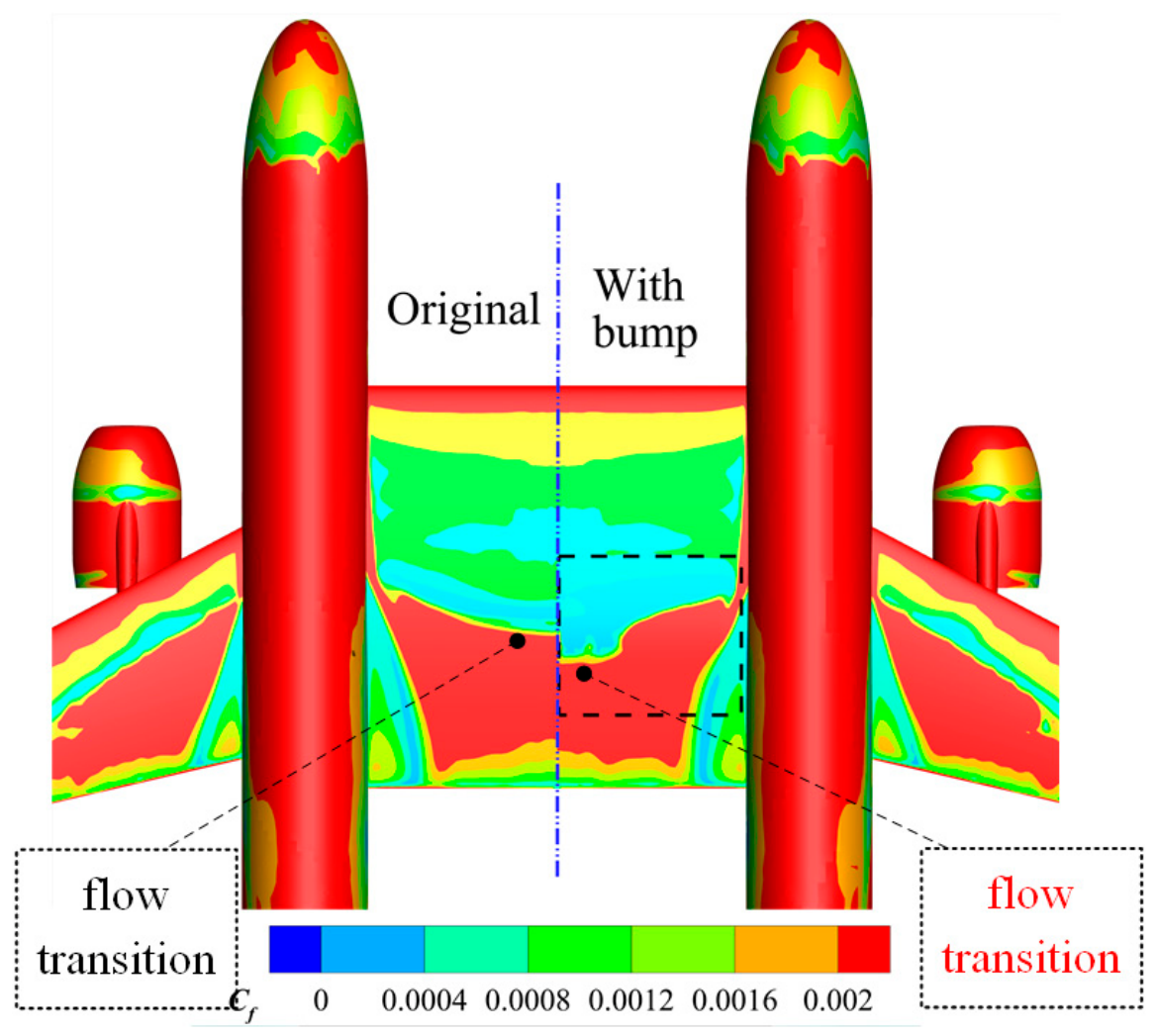
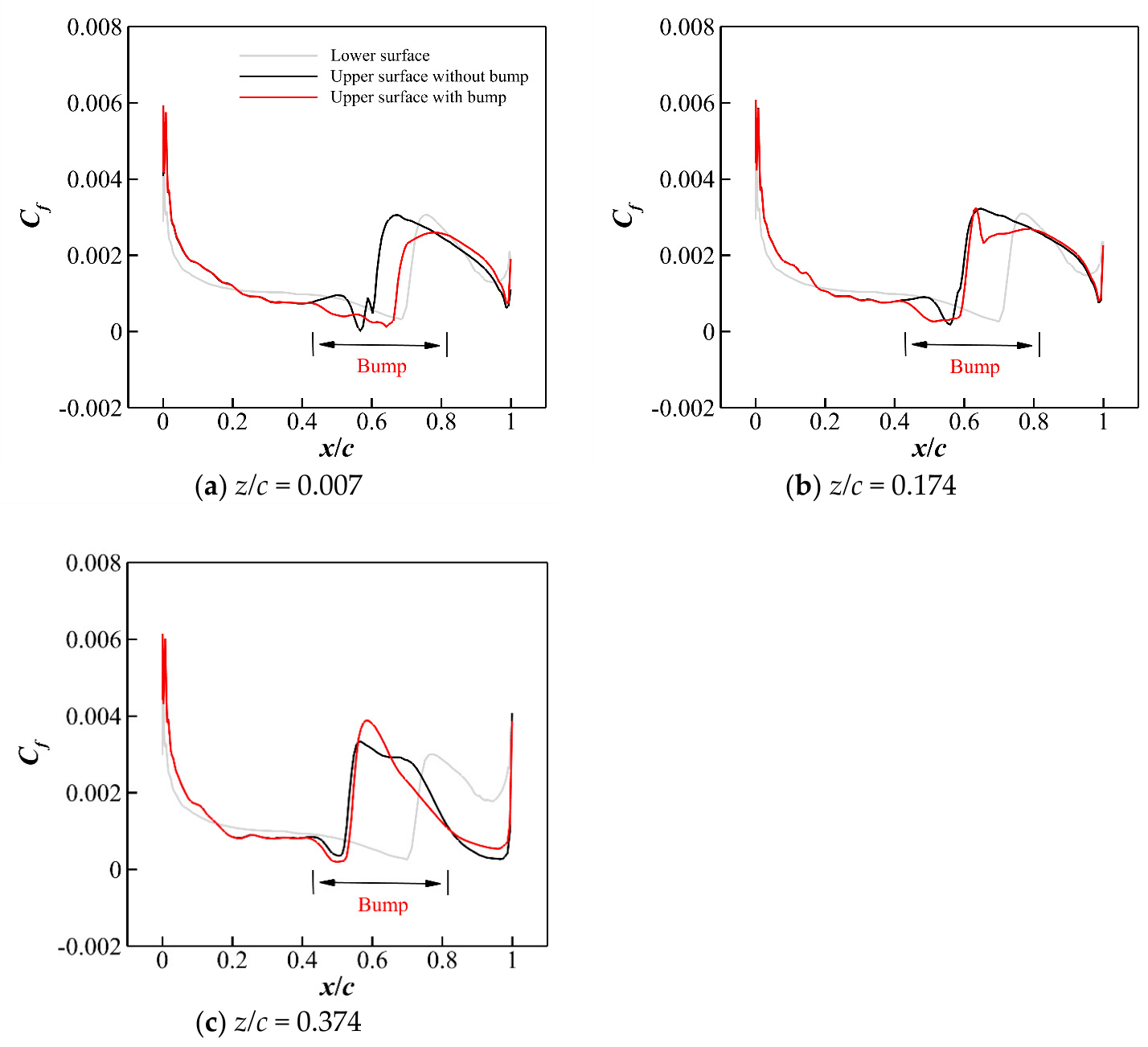
The addition of the bump weakens and delays the shock wave on the upper surface of the wing section, and the changes in the shock strength and shock location will further affect the boundary layer development. Figure 14 shows the comparison of skin friction coefficient contours between the two wing sections. As shown in the figure, the wing section with a bump has more laminar flow than that of the original wing section. The proportion of laminar flow area on the wing surface increases from 51% to 54.2%. This observation is further confirmed in Figure 15. The flow transition on the upper surface of the wing section is clearly delayed at the spanwise location of z/c = 0.007, with a delay distance of 0.08c. It can be explained by the reason that the shock wave location is delayed by the bump, as shown in Figure 13b. Note that at the spanwise location of z/c = 0.174, the flow transition location does not follow the movement of the shock wave, and the flow transition is triggered early by the pressure fluctuation before the shock wave. However, the bump does not cause more turbulent flow. Note that the bump does not apparently affect the boundary layer development along the bottom surface of the wing section. Overall, an optimized bump can slightly increase the laminar flow while maintaining the shock under control.

3.4. Robustness of Shock Control Bump

As a passive shock control device, the bump needs to work well at a wide range of Mach numbers and angles of attack. Therefore, the robustness of the optimized bump is also investigated.
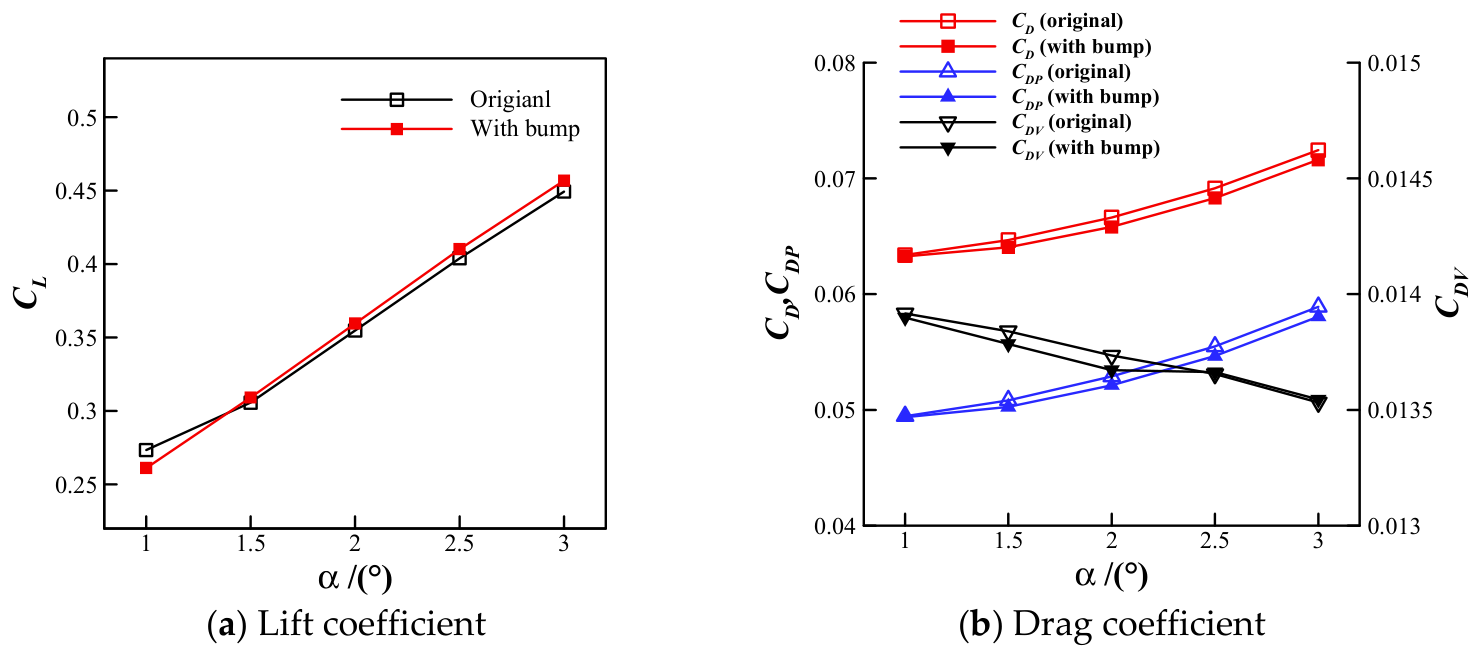
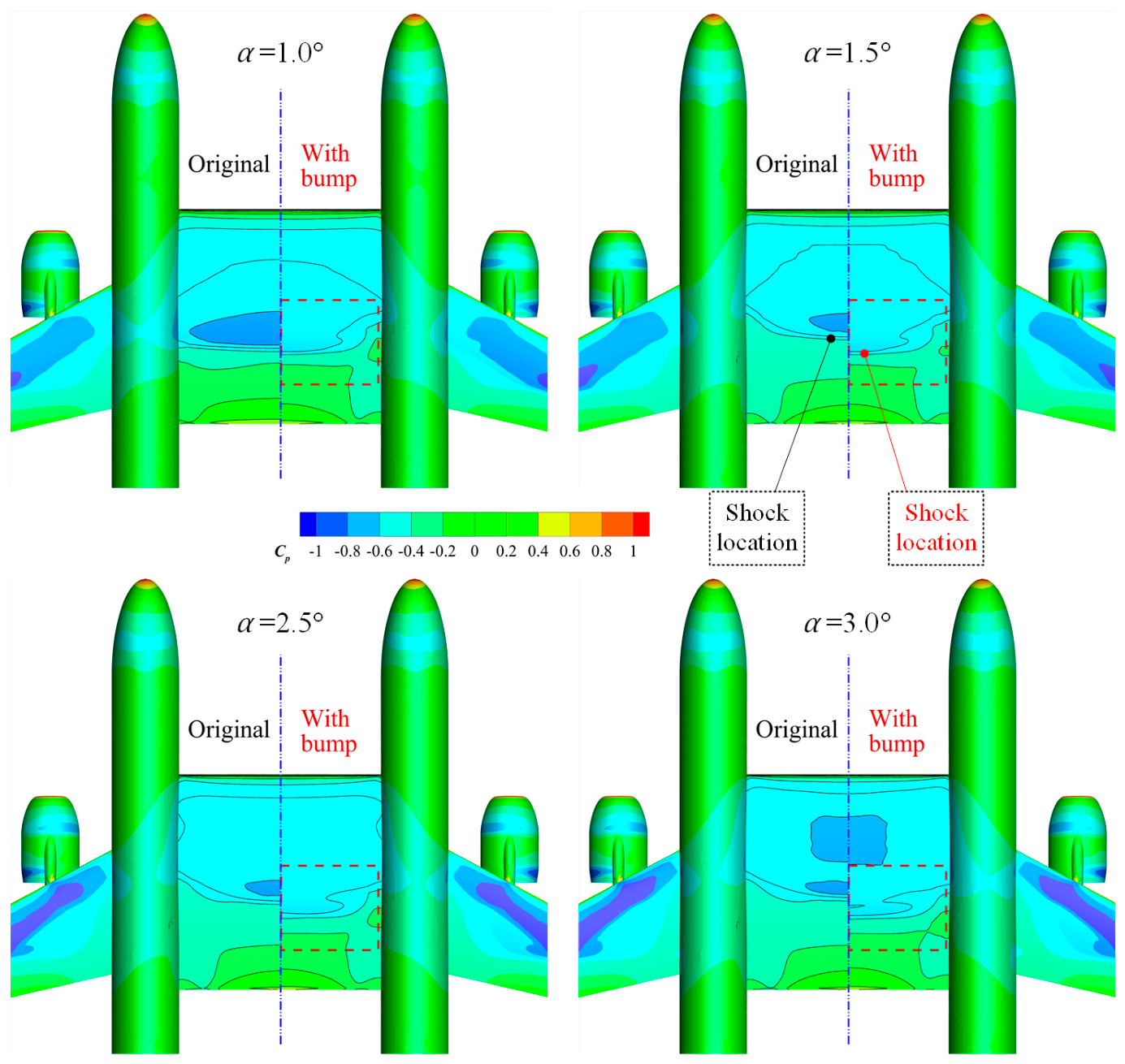
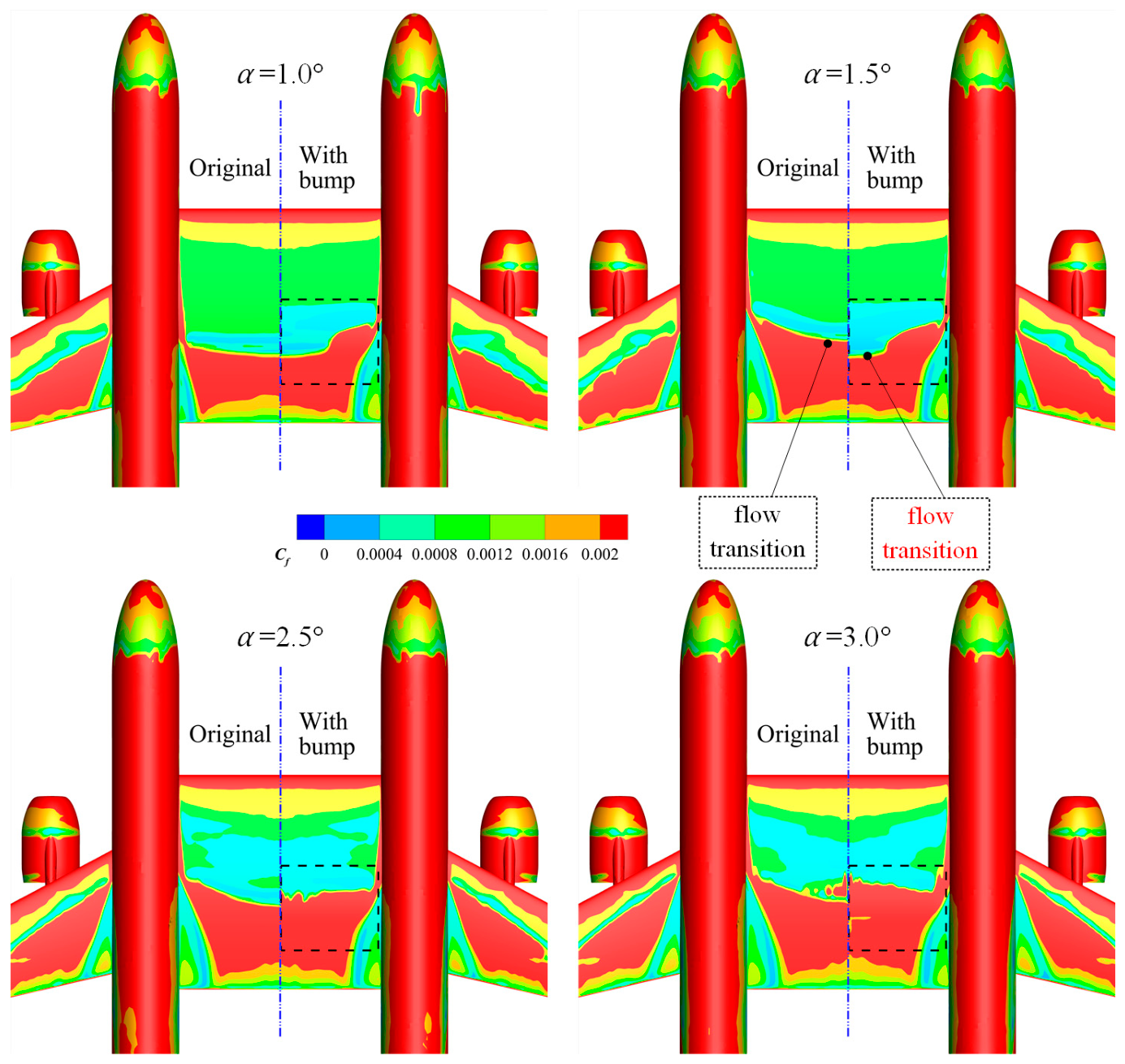
Figure 16 shows the aerodynamic force coefficients of the aircraft at a range of angles of attack, from 1° to 3°, and the other two flow conditions are fixed as follows: M = 0.80, Re = 3.0 × 10⁶. The bump has reduced the total drag and increased the total lift at most angles of attack. One exception is the case of α = 1.0°, at which a nonlinear lift increase in the original aircraft is observed. A further investigation on surface pressure and skin friction is presented in Figure 17 and Figure 18. Overall, the bump works quite well at these conditions. Although the bump has triggered an earlier flow transition at a higher angle of attack, the corresponding increase in viscous drag is negligible in comparison with the decrease in pressure drag. Note that a large low-pressure area on the original wing section is observed in the case of α = 1.0°, which is the reason for a nonlinear lift increase.
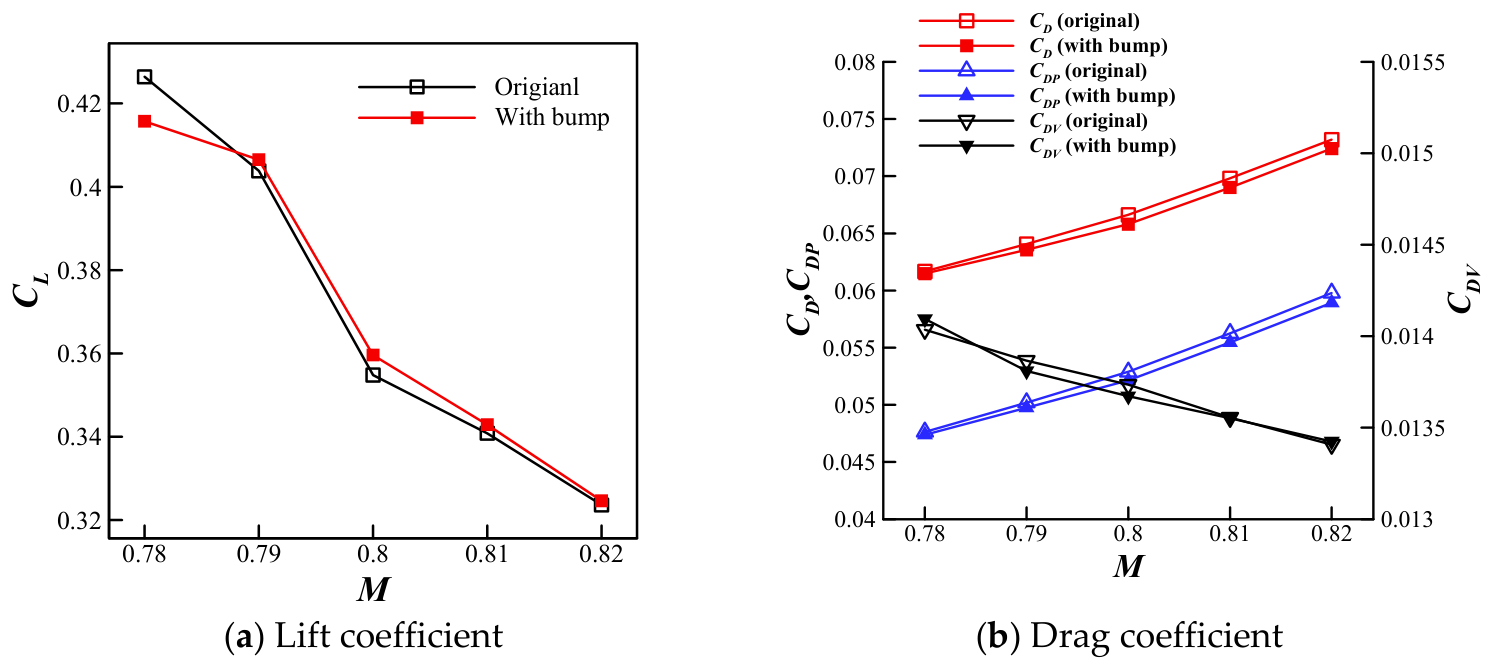
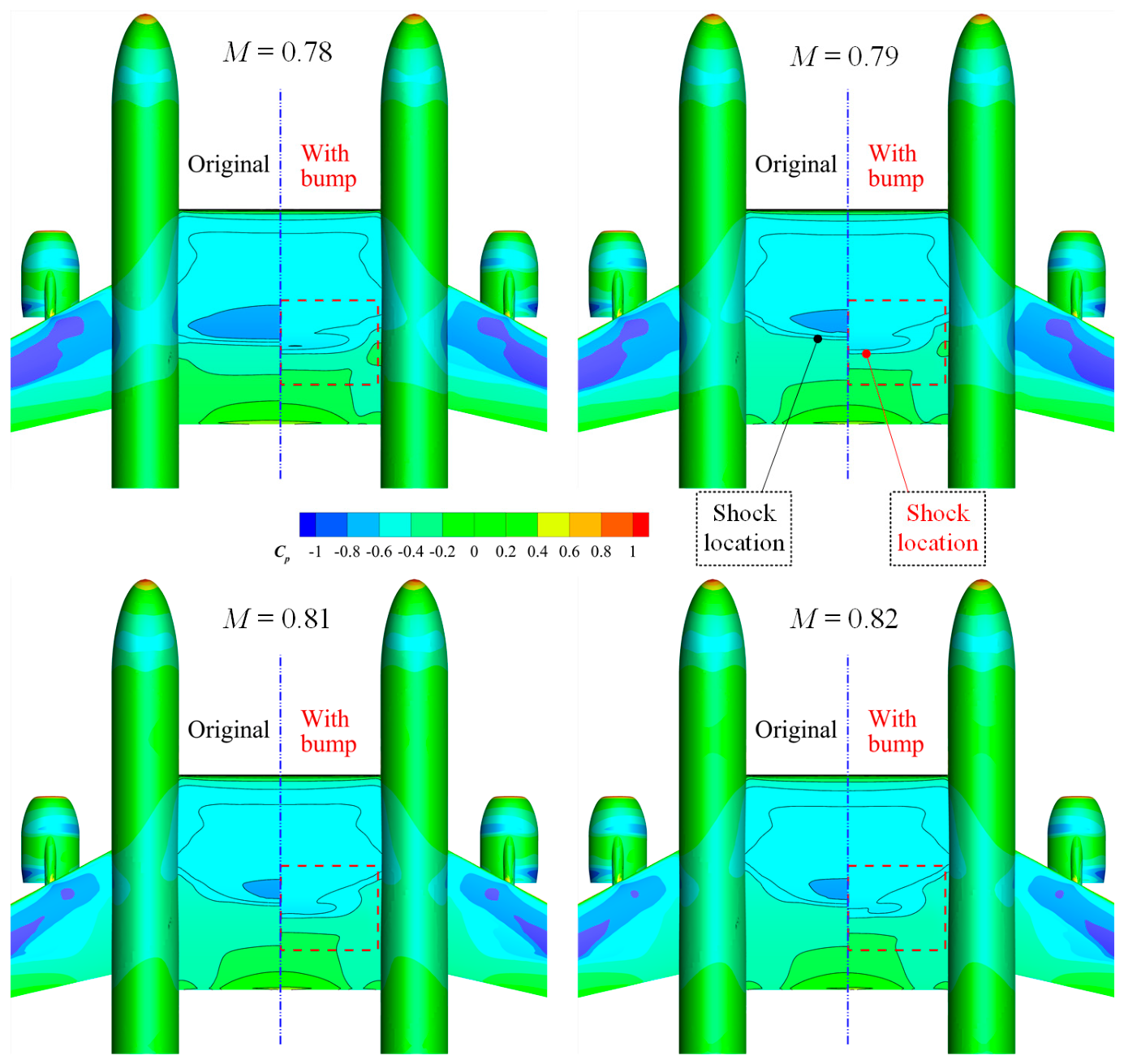
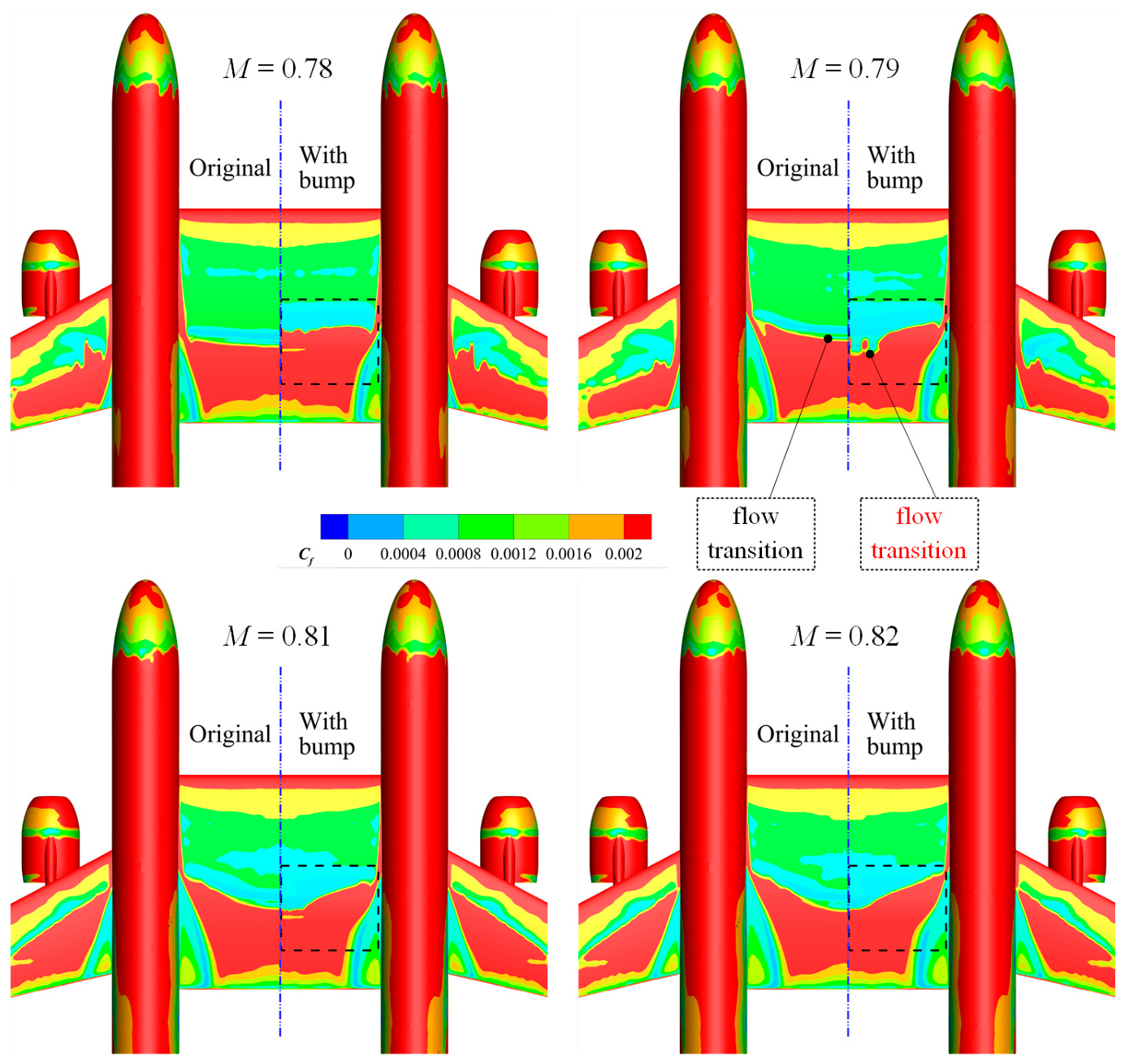
The robustness of the bump with respect to Mach number is investigated as well. Figure 19 shows the aerodynamic force coefficients of the aircraft at a range of Mach numbers, from 0.78 to 0.82, and the other two flow conditions are fixed as follows: α = 2°, Re = 3.0 × 10⁶. Like that of angle of attack, the bump is quite robust at these Mach numbers. The exception is the case of M = 0.78, at which a lower lift is observed for the wing section with the bump. As shown in Figure 20, the bump causes a sharp rise in pressure in the middle of the original wing section at M = 0.78, while the bump triggers an earlier flow transition at this Mach number, as shown in Figure 21. It is reasonable that the bump designed at a higher Mach number works less well at a lower Mach number because the corresponding shock wave is weaker. However, the bump works quite well at a higher Mach number.

3.5. Design of 3D Bumps

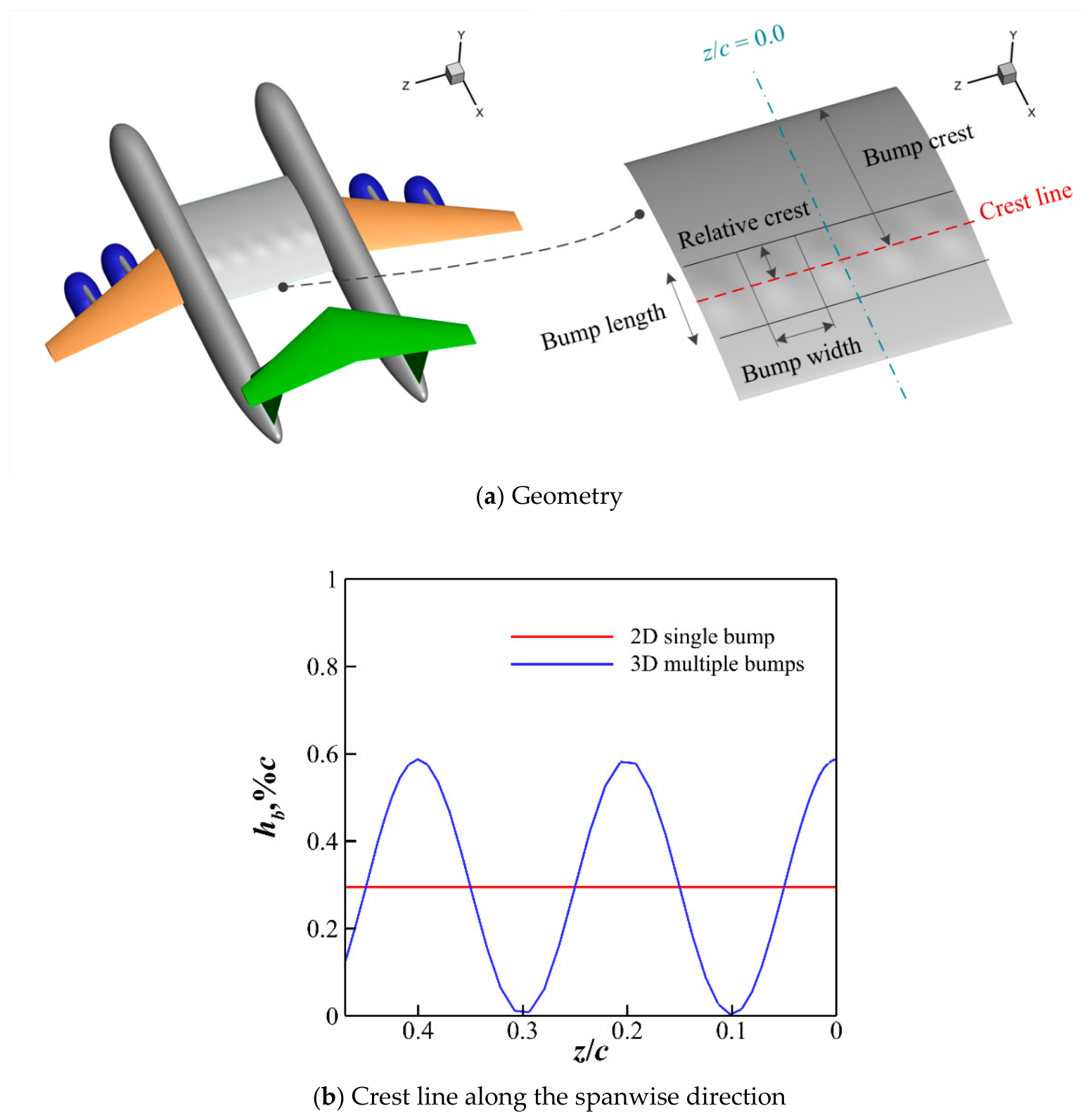
A previous study [27] has shown that 2D and 3D bumps have similar performances, which can be explained by the transonic area rule. To investigate more alternative designs, the 2D bump is converted to 3D bumps according to the transonic area rule. Figure 22 shows the geometry of 3D bumps. A total of five bumps were designed on the upper surface of the wing section. Figure 22b shows the crest lines of the bumps along the spanwise direction. To satisfy the transonic area rule, the 3D bumps were designed with the same cross-sectional area as that of the 2D bump, namely a height of 0.6%c and a width of 0.2c.
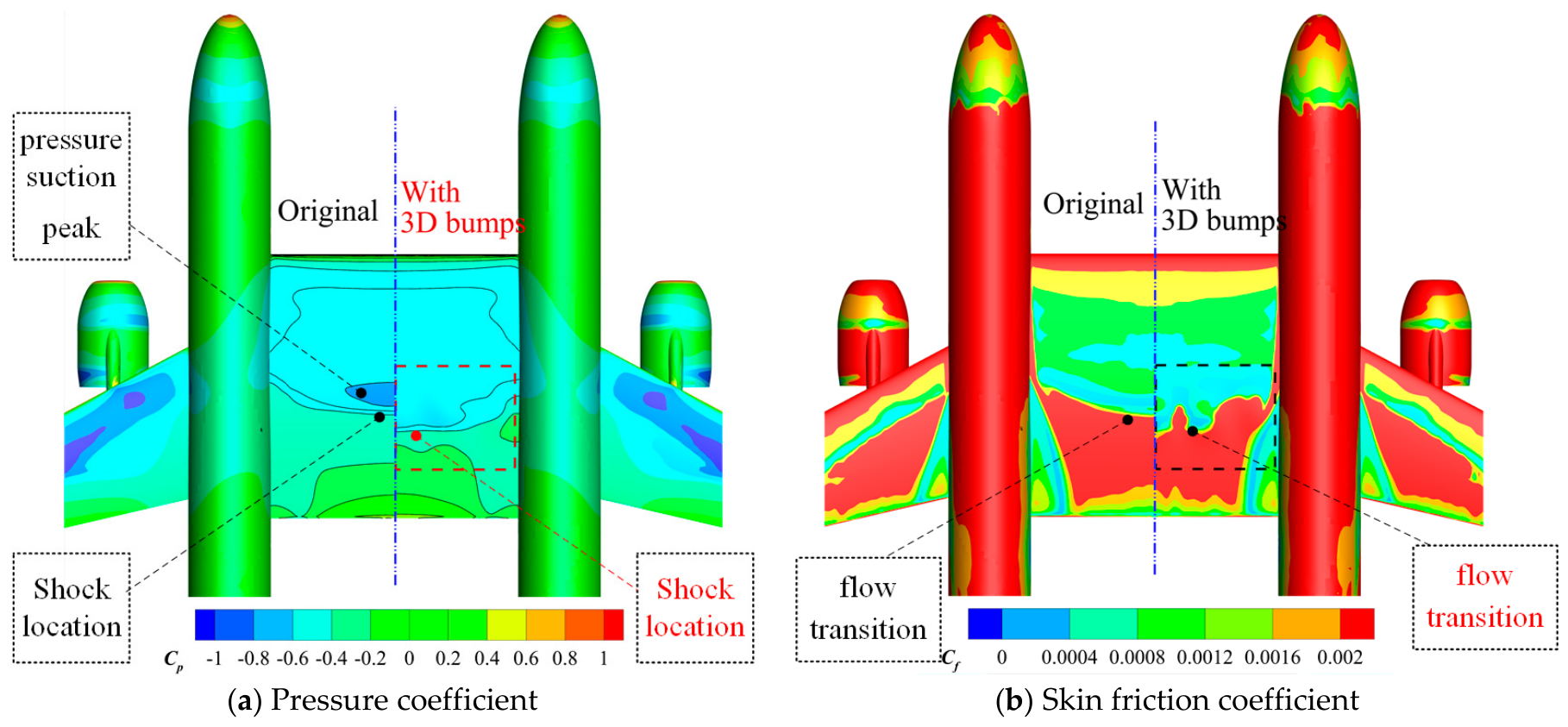
Table 4 compares the aerodynamic force coefficients of the wing sections with and without 3D bumps. By adding the 3D bumps, the total drag coefficient of the wing section decreases by 8.35, specifically, an 8.61% reduction in pressure drag and a 6.23% reduction in viscous drag. In comparison with the data in Table 3, the data in Table 4 shows that the performance of 3D bumps in this case is even slightly better than that of a 2D bump. The explanation is that 3D bumps have slightly better control effectiveness in the area near the fuselage, as shown in Figure 23. Overall, the performances of 2D and 3D bumps are quite similar. The selection of 2D or 3D bumps should depend on the other design requirements instead of shock control.

4. Conclusions

The design of shock control bumps on the natural laminar flow wing section of a double-fuselage aircraft has been conducted. Both 2D and 3D bumps were investigated to identify the high-impact factors on both shock control and natural laminar flow for the aircraft, and to understand the associated flow physics. The main findings of the paper are as follows:
(1)
With an optimized 2D bump, the total drag of the natural laminar flow wing section decreases by 8.19%, specifically, an 8.36% reduction in pressure drag and a 6.77% reduction in viscous drag. The total drag coefficient of the aircraft reduces by 8.12 counts while the lift slightly increases.
(2)
At the design point, the optimized 2D bump significantly reduces the pressure suction peak and weakens the shock wave, thereby reducing the wave drag, and the optimized bump slightly delays flow transition, thereby resulting in a little more laminar flow.
(3)
In terms of shock control, the 2D bump shows good robustness and is effective at a wide range of angles of attack and Mach numbers. In terms of natural laminar flow control, the bump is less robust than that of shock control. However, the increase in viscous drag is negligible in comparison with the decrease in pressure drag.
(4)
The performances of 2D and 3D bumps are quite similar, confirming the effectiveness of the transonic area rule applied in the shock-control-bump design.

Author Contributions

Conceptualization, F.D. and N.Q.; methodology, F.D.; software, J.Y.; validation, F.D., J.Y. and G.C.; investigation, F.D.; resources, F.D.; data curation, J.Y.; writing—original draft preparation, F.D., J.Y., G.C. and N.Q.; writing—review and editing, F.D. and N.Q.; visualization, J.Y.; supervision, F.D. and N.Q.; project administration, F.D.; funding acquisition, F.D. and N.Q. All authors have read and agreed to the published version of the manuscript.

Funding

This research was funded by Jiangsu Provincial Industrial Science and Technology Innovation Leading Talent Project: “Aerodynamic Configuration, Multidisciplinary Optimization, and Flow Control for Low-Altitude Traffic and Green Aviation”.

Institutional Review Board Statement

Not applicable.

Data Availability Statement

Some or all data, models, or codes that support the findings of this study are available from the corresponding author upon reasonable request.

Conflicts of Interest

The authors declare no conflicts of interest.

Nomenclature

The following abbreviations are used in this manuscript:
CDDrag coefficient
CDPPressure drag coefficient
CDVViscous drag coefficient
CfSkin friction coefficient
CpPressure coefficient
CLLift coefficient
cChord length of wing section
hbHeight of bump crest
MMach number
ReReynolds number
x,y,zCartesian coordinates in streamwise, vertical, spanwise directions
xcrestStreamwise location of bump crest
xupTransition onset location
αAngle of attack
AVICAviation Industry Corporation of China, Ltd.
CFDComputational Fluid Dynamics
NLFNatural laminar flow
RANSReynolds-averaged Navier–Stokes

References

  1. Lammering, T.; Anton, E.; Risse, K.; Franz, K.; Hoernschemeyer, R. Gains in Fuel Efficiency: Multi-Stop Missions vs. Laminar Aircraft. Presented at the 11th AIAA Aviation Technology, Integration, and Operations Conference, Virginia Beach, VA, USA, 20–22 September 2011. [Google Scholar]
  2. Atkin, C.J.; Courtenay, W.J.A. Predicting the Cruise Performance of a Retrofit Hybrid Laminar Flow Control System. In Proceedings of the CEAS Aerospace Aerodynamics Research Conference, Cambridge, UK, 10–12 June 2002; No. 1–11; Royal Aeronautical Society: Cambridge, UK, 2002. [Google Scholar]
  3. Atkin, C. Performance Trade-off Studies for a Retrofit Hybrid Laminar Flow Control System. Presented at the 2nd AIAA Flow Control Conference, Portland, OR, USA, 28 June–1 July 2004. [Google Scholar]
  4. Abbott, I.; Doenhoff, A.; Stivers, L. Summary of Airfoil Data; Publication NACA-TR-824; National Advisory Committee for Aeronautics: Washington, DC, USA, 1945.
  5. Cella, U.; Quagliarella, D.; Donelli, R.; Imperatore, B. Design and Test of the UW5006 Transonic Natural-Laminar-Flow Wing. J. Aircr. 2010, 47, 783–795. [Google Scholar] [CrossRef]
  6. Hue, D.; Vermeersch, O.; Bailly, D.; Brunet, V.; Forte, M. Experimental and Numerical Methods for Transition and Drag Predictions of Laminar Airfoils. AIAA J. 2015, 53, 2694–2712. [Google Scholar] [CrossRef]
  7. Hue, D.; Vermeersch, O.; Duchemin, J.; Colin, O.; Tran, D. Wind-Tunnel and CFD Investigations Focused on Transition and Performance Predictions of Laminar Wings. AIAA J. 2018, 56, 132–145. [Google Scholar] [CrossRef]
  8. Williams, G. Aerospace Technology Demonstration: BLADE, the Flagship Laminar Flow Project within the Clean Sky Programme. SAE Technical Paper, 19 September 2017.
  9. Zhou, Z.; Lyu, F.; Zhou, B.; Yang, Z. Verification Method for Natural Laminar Flow Drag Reduction and Layout Design of Test Section. Acta Aeronaut. Astronaut. Sin. 2022, 43, 526751. [Google Scholar]
  10. Yang, Z.; Li, J.; Niu, X. Analysis and Correction of Reynolds Number Effect of a Flight Verification Platform with Laminar Wing Section. Acta Aeronaut. Astronaut. Sin. 2022, 43, 527287. [Google Scholar]
  11. Jiang, Y.; Li, J.; Yang, Z. Data Correction Method of Wind Tunnel Test for Validation Aircraft with Laminar Wing Section. Acta Aeronaut. Astronaut. Sin. 2022, 43, 526814. [Google Scholar]
  12. Geng, Y.S.; Ai, M.Q.; Wang, W.; Geng, J.Z.; Zhao, Y. Efficient Design and Experimental Verification of Laminar Airfoil. Acta Aeronaut. Astronaut. Sin. 2022, 43, 526798. [Google Scholar]
  13. Poll, D.I.A. Transition in the Infinite Swept Attachment Line Boundary Layer. Aeronaut. Q. 1979, 30, 607–629. [Google Scholar] [CrossRef]
  14. Campbell, R.L.; Lynde, M.N. Natural Laminar Flow Design for Wings with Moderate Sweep. Presented at the 34th AIAA Applied Aerodynamic Conference, Washington, DC, USA, 13–17 June 2016. [Google Scholar]
  15. Joslin, R.D. Aircraft Laminar Flow Control. Annu. Rev. Fluid Mech. 1998, 30, 1–29. [Google Scholar] [CrossRef]
  16. Schrauf, G. Stability Analysis of the F100 Flight Experiment-A Second Look; ELFIN II Rept. 173; Publication Daimler-Benz Aerospace Airbus: Bremen, Germany, 1996. [Google Scholar]
  17. Pearcey, H.H. Shock-Induced Separation and Its Prevention by Design and Boundary Layer Control. In Boundary Layer and Flow Control; Pergamon Press: New York, NY, USA, 1961; pp. 1166–1344. [Google Scholar]
  18. Ashill, P.R.; Fulker, J.L.; Shires, J.L. A Novel Technique for Controlling Shock Strength of Laminar-Flow Airfoil Sections; DGLR Bericht: Hamburg, Germany, 1992; pp. 175–183. [Google Scholar]
  19. Stanewsky, E.; Délery, J.; Fulker, J.; De Matteis, P. Synopsis of the Project EUROSHOCK II. In Notes on Numerical Fluid Mechanics and Multidisciplinary Design: Drag Reduction by Shock and Boundary Layer Control-Results of the Project EUROSHOCK II; Springer: Berlin/Heidelberg, Germany, 2002. [Google Scholar]
  20. Wong, W.S.; Qin, N.; Sellars, N.; Holden, H.; Babinsky, H. A Combined Experimental and Numerical Study of Flow Structures over Three-Dimensional Shock Control Bumps. Aerosp. Sci. Technol. 2008, 12, 436–447. [Google Scholar] [CrossRef]
  21. Ogawa, H.; Babinsky, H.; Pätzold, M.; Lutz, T. Shock-Wave/Boundary-Layer Interaction Control Using Three-Dimensional Bumps for Transonic Wings. AIAA J. 2008, 46, 1442–1452. [Google Scholar] [CrossRef]
  22. Colliss, S.P.; Babinsky, H.; Nübler, K.; Lutz, T. Vortical Structures on Three-Dimensional Shock Control Bumps. AIAA J. 2016, 54, 2338–2350. [Google Scholar] [CrossRef]
  23. Bruce, P.J.K. Review of Research into Shock Control Bumps. Shock Waves 2015, 25, 451–471. [Google Scholar] [CrossRef]
  24. Qin, N.; Zhu, Y.; Shaw, S. Numerical Study of Active Shock Control for Transonic Aerodynamics. Int. J. Numer. Methods Heat Fluid Flow 2004, 14, 444–466. [Google Scholar] [CrossRef]
  25. Qin, N.; Wong, W.; Le Moigne, A. Three-Dimensional Contour Bumps for Transonic Wing Drag Reduction. Proc. Inst. Mech. Eng. Part G J. Aerosp. Eng. 2008, 222, 619–629. [Google Scholar] [CrossRef]
  26. Qin, N.; Monet, D.; Shaw, S.T. 3D Bumps for Transonic Wing Shock Control and Drag Reduction. In Proceedings of the CEAS Aerospace Aerodynamics Research Conference, Cambridge, UK, 10–12 June 2002; Cat No. 439; Royal Aeronautical Society: Cambridge, UK, 2002. [Google Scholar]
  27. Deng, F.; Qin, N. Quantitative Comparison of 2D and 3D Shock Control Bumps for Drag Reduction on Transonic Wings. Proc. Inst. Mech. Eng. Part G J. Aerosp. Eng. 2019, 233, 2344–2359. [Google Scholar] [CrossRef]
  28. Zhu, M.; Li, Y.; Qin, N.; Huang, Y.; Deng, F.; Wang, Y.; Zhao, N. Shock Control of a Low-Sweep Transonic Laminar Flow Wing. AIAA J. 2019, 57, 2408–2420. [Google Scholar] [CrossRef]
  29. Zhu, M.; Qin, N. Balancing Laminar Extension and Wave Drag for Transonic Swept Wings. AIAA J. 2021, 59, 1–13. [Google Scholar] [CrossRef]
  30. Menter, F.R.; Langtry, R.B.; Likki, S.R.; Suzen, Y.B.; Huang, P.G.; Volker, S. A Correlation-Based Transition Model Using Local Variables—Part 1: Model Formulation. J. Turbomach. 2004, 128, 413–422. [Google Scholar] [CrossRef]
  31. Menter, F.R.; Langtry, R.B.; Likki, S.R.; Suzen, Y.B.; Huang, P.G.; Volker, S. A Correlation-Based Transition Model Using Local Variables—Part 2: Test Cases and Industrial Applications. J. Turbomach. 2004, 128, 423–434. [Google Scholar]
Figure 1. Geometry of flight test aircraft.
Aerospace 13 00540 g001
Figure 2. Mesh for CFD simulations.
Aerospace 13 00540 g002
Figure 3. Pressure coefficient and skin friction coefficient distributions along the middle of the wing section.
Aerospace 13 00540 g003
Figure 4. Drag coefficients versus number of mesh cells.
Aerospace 13 00540 g004
Figure 5. Comparison of aerodynamic force coefficients between the simulation and the experiment.
Aerospace 13 00540 g005
Figure 6. Comparison of transition locations on the upper surface of the wing section between the simulation and the experiment at M = 0.70, α = 2 °.
Aerospace 13 00540 g006
Figure 7. Transition locations calculated by identifying the sudden change in skin friction coefficient on the upper wing surface (M = 0.70, α = 2 °).
Aerospace 13 00540 g007
Figure 8. Geometric parameters of shock control bump on the wing section.
Aerospace 13 00540 g008
Figure 9. Pressure coefficient contours on the upper surface of wing section for various bump designs.
Aerospace 13 00540 g009
Figure 10. Skin friction coefficient contours on the upper surface of wing section for various bump designs.
Aerospace 13 00540 g010
Figure 11. Response surface of total drag reduction.
Aerospace 13 00540 g011
Figure 12. Comparison of pressure coefficient contours at M = 0.80, α = 2 ° , and Re = 3.0 × 10⁶.
Aerospace 13 00540 g012
Figure 13. Comparison of pressure coefficient distributions at the different spanwise locations.
Aerospace 13 00540 g013
Figure 14. Comparison of skin friction coefficient contours at M = 0.80, α = 2 ° , Re = 3.0 × 10⁶.
Aerospace 13 00540 g014
Figure 15. Comparison of skin friction coefficient distributions at the different spanwise locations. The spanwise locations of slices are shown in Figure 13a.
Aerospace 13 00540 g015
Figure 16. Aerodynamic force coefficients of aircraft at different angles of attack (M = 0.8, Re = 3.0 × 10⁶).
Aerospace 13 00540 g016
Figure 17. Pressure coefficient contours at different angles of attack (M = 0.8, Re = 3.0 × 10⁶).
Aerospace 13 00540 g017
Figure 18. Skin friction coefficient contours at different angles of attack (M = 0.8, Re = 3.0 × 10⁶).
Aerospace 13 00540 g018
Figure 19. Aerodynamic force coefficients of aircraft at different Mach numbers (α = 2°, Re = 3.0 × 10⁶).
Aerospace 13 00540 g019
Figure 20. Pressure coefficient contours at different Mach numbers (α = 2°, Re = 3.0 × 10⁶).
Aerospace 13 00540 g020
Figure 21. Skin friction coefficient contours at different Mach numbers (α = 2°, Re = 3.0 × 10⁶).
Aerospace 13 00540 g021
Figure 22. Geometry of 3D bumps.
Aerospace 13 00540 g022
Figure 23. Pressure coefficient and skin friction coefficient contours of the aircraft at M = 0.80, α = 2°, and Re = 3.0 × 10⁶.
Aerospace 13 00540 g023
Table 1. Geometric parameters of NLF wing section [10].
Geometric ParameterValue
Span1.8 m
Leading-edge sweep angle
Dihedral angle
Twist angle
Angle of incidence
Chord length1.44 m
Table 2. Geometric parameters of the optimized bump.
ParameterValue
Length40%c
Width100%c
Relative crest50%
Crest62%c
Height0.3%c
Table 3. Comparison of aerodynamic force coefficients at M = 0.80, α = 2°, and Re = 3.0 × 10⁶.
GeometryCDCDPCDVCL
Wing section without bump0.0102930.0091850.0011080.1230
Wing section with bump0.009450
(−8.19%)
0.008417
(−8.36%)
0.001033
(−6.77%)
0.1267
(+3.01%)
Aircraft without bump0.0666190.0528940.0137350.3548
Aircraft with bump0.065807
(−8.12 counts)
0.052135
(−7.59 counts)
0.013672
(−0.63 counts)
0.3596
(+1.35%)
Table 4. Aerodynamic force coefficients with 3D bumps at M = 0.80, α = 2°, and Re = 3.0 × 10⁶.
GeometryCDCDPCDVCL
Wing section without bump0.0102930.0091850.0011080.1230
Wing section with 3D bumps0.009433
(−8.35%)
0.008394
(−8.61%)
0.001039
(−6.23%)
0.1276
(+3.74%)
Aircraft without bump0.0666190.0528940.0137350.3548
Aircraft with 3D bumps0.065774
(−8.55 counts)
0.052112
(−7.82 counts)
0.013662
(−0.73 counts)
0.3601
(+1.49%)
Disclaimer/Publisher’s Note: The statements, opinions and data contained in all publications are solely those of the individual author(s) and contributor(s) and not of MDPI and/or the editor(s). MDPI and/or the editor(s) disclaim responsibility for any injury to people or property resulting from any ideas, methods, instructions or products referred to in the content.