Article

Experimental and Numerical Investigation on Forced Resonance of Rotating Blisks Under Aerodynamic Excitation Induced by Vortex Generators

1
Ocean College, Zhejiang University, Zhoushan 316021, China
2
Xi’an Aerospace Propulsion Institute, Xi’an 710100, China
3
College of Energy Engineering, Zhejiang University, Hangzhou 310027, China
4
Zhejiang HIRO Aeronautics Technology Co., Ltd., Huzhou 313219, China
*
Author to whom correspondence should be addressed.
Aerospace 2026, 13(5), 432; https://doi.org/10.3390/aerospace13050432
Submission received: 30 March 2026 / Revised: 28 April 2026 / Accepted: 30 April 2026 / Published: 4 May 2026
(This article belongs to the Section Aeronautics)

Abstract

Forced resonance induced by rotor–stator interaction (RSI) is a primary driver of high-cycle fatigue (HCF) failure in aero-engine blisks. To overcome the inability of traditional non-contact excitation methods to replicate authentic three-dimensional aerodynamic forces and the predictive biases of pure numerical approaches regarding complex flow excitation energy, this study investigates the forced resonance characteristics of a rotating blisk using a novel aerodynamic excitation system through integrated numerical and experimental approaches. First, a one-way fluid–structure interaction (FSI) framework, coupling the Nonlinear Harmonic (NLH) method with Finite Element Analysis (FEA), was established to efficiently reconstruct the unsteady aerodynamic loads on blade surfaces. The analysis reveals an excitation mechanism dominated by the upstream propagation of the downstream potential field, based on which the numerical resonance response was predicted. In addition, investigating rotor–stator axial clearance as a key variable indicates that there is a strictly monotonically decreasing dependence of the aerodynamic excitation magnitude on the rotor–stator axial clearance. However, the spatial patterns of the primary first-order harmonic excitation remain relatively insensitive to changes in the rotor–stator axial clearance. Finally, by leveraging these excitation characteristics, broadband aero-resonance of the first three modes was successfully induced within the 2600 Hz frequency range under experimental conditions. This validates both the effectiveness of the experimental apparatus and the fidelity of the numerical model. This research not only clarifies the excitation mechanism under vortex generator-induced RSI but also provides a novel testing platform and theoretical framework for rotating modal analysis in advanced propulsion systems.

1. Introduction

Driven by the continuous pursuit of high thrust-to-weight ratios and ultra-lightweight designs, blisks (integrally bladed disks) have been widely used in the fans and compressors of advanced aero-engines, replacing conventional blade-disk assemblies with mechanical attachments. However, the elimination of mechanical friction interfaces, such as dovetail joints, leads to a drastic reduction in the inherent damping of the blisk structure. Operating under extremely harsh internal aerodynamic loads, blisks are highly susceptible to high-cycle fatigue failures induced by severe resonance [1,2]. Consequently, predicting and evaluating the vibration characteristics of blisks at operating speeds is of paramount importance.
With the rapid evolution of CFD and CSD, numerical simulation has emerged as a cornerstone in the study of rotor–stator interactions and blade forced vibration [3,4,5]. While FSI frameworks coupling time-domain URANS with FEA are widely adopted, their prohibitive computational expense has prompted the development of frequency-domain reduction techniques. Consequently, methods like the Nonlinear Harmonic approach have been successfully implemented in engineering practice, offering extremely efficient and high-fidelity reconstructions of harmonic pressure distributions on blade surfaces [6,7,8]. These studies verify the NLH method’s applicability in capturing downstream perturbation-induced upstream rotor excitation and provide reference for blisk forced resonance test design. However, they rarely clarify the quantitative evolution law of excitation spatial topology with axial clearance. Nevertheless, despite these sophisticated numerical advancements, the intricate flow features in actual environments dictate that standalone numerical results still require rigorous calibration and validation against high-quality rotating experimental data.
To accurately assess the structural dynamic characteristics of compressor blades, researchers have conducted extensive fundamental experimental investigations. However, the majority of these vibration tests are performed in non-rotating reference frames [9,10,11], relying primarily on external excitation methods such as electromagnetic and piezoelectric techniques. For instance, targeting the vibration testing of stationary bladed disks, Carassale et al. [12] utilized multi-channel electromagnetic actuators on a static test rig to successfully simulate traveling wave excitations, thereby experimentally identifying and verifying blade mistuning characteristics. Focusing on vibration mitigation via piezoelectric excitation, Kelley [13] developed a methodology to optimize the electromechanical coupling across multiple vibration modes, achieving optimal placement and sizing of the piezoelectric materials. Although such stationary test rigs offer the advantages of high system controllability and low cost, they are fundamentally decoupled from realistic centrifugal and aerodynamic force fields. Consequently, they fail to reproduce the unique centrifugal stiffening, spin softening, and aerodynamic damping effects of blisks at design speeds [14].
Nevertheless, constrained by the prohibitive costs and the profound complexities of signal acquisition in rotating machinery, high-fidelity rotating test facilities dedicated to structural vibrations remain exceedingly rare. Among the available rotating excitation techniques, Wu [15,16] employed oil-jet excitation to investigate the damping and vibration mitigation characteristics of shrouded turbine blades under rotation. D’Souza et al. [17,18] developed a sophisticated air-jet system capable of simulating operational inlet flow excitations on bladed disks, utilizing this facility to conduct extensive parametric studies on reduced-order models. Alternatively, Lamine [19] replaced conventional nozzles with an electromagnetic array, enabling highly adaptive control over the excitation forces. Furthermore, Zhou et al. [20] constructed a non-contact electromagnetic rotating rig, achieving precise predictions of mistuned vibration responses under specific engine orders. Despite these significant advancements, faithfully replicating the predominant aerodynamic excitation source within aero-engines—rotor–stator interaction (RSI)—under laboratory conditions remains a formidable challenge. Current state-of-the-art rotating test rigs primarily rely on electromagnetic actuators or air/oil-jet nozzles. While these methods provide valuable dynamic data by injecting localized force pulses, they inherently decouple the structural vibration from the realistic fluid mechanics. Consequently, there is still a lack of a comprehensive framework integrating numerical prediction and experimental validation to systematically elucidate the vibration response characteristics of blisks under rotor–stator interaction mechanisms. In addition, the tunability of input excitation for blisk vibration characteristic test systems has rarely been systematically and thoroughly explored in the existing literature. This property, however, is the core prerequisite for enabling flexible forced response testing of blisks under multiple operating conditions in a laboratory environment.
To bridge this critical gap, this paper proposes a novel experimental and numerical methodology that deeply integrates fluid dynamics with structural dynamics. The primary scientific novelty of this work lies in utilizing physical downstream stationary vortex generators (VGs) to authentically reconstruct RSI-induced aerodynamic resonance on a rotating blisk. After this introduction, the arrangement of the subsequent sections is as follows: Section 2 presents the blisk and test system models. Section 3 introduces the numerical computation method. Section 4 analyzes the aerodynamic excitation characteristics and the influence of rotor–stator axial clearance on these characteristics. Section 5 presents rigorous experimental validations and compares the empirical data with numerical predictions. Finally, Section 6 concludes the paper with a comprehensive summary.

2. Aerodynamic Excitation System and Experimental Methodology

The setup of a novel experimental facility designed to study the structural dynamic response of rotating machinery at operating speeds is discussed in this section. To comprehensively evaluate the fluid–structure interaction mechanisms, the physical test rig, specimen instrumentation, and specific testing procedures are detailed below.

2.1. Test Rig and Excitation Mechanism

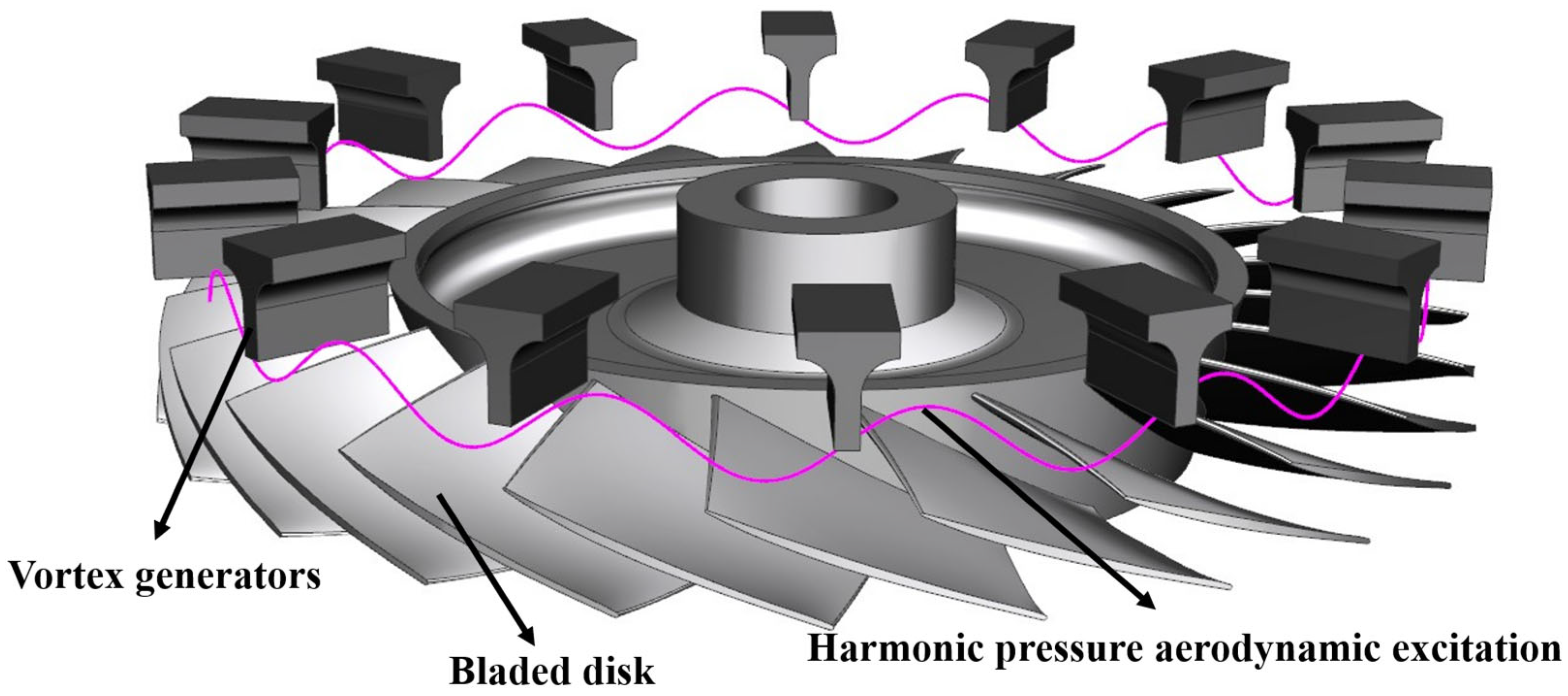
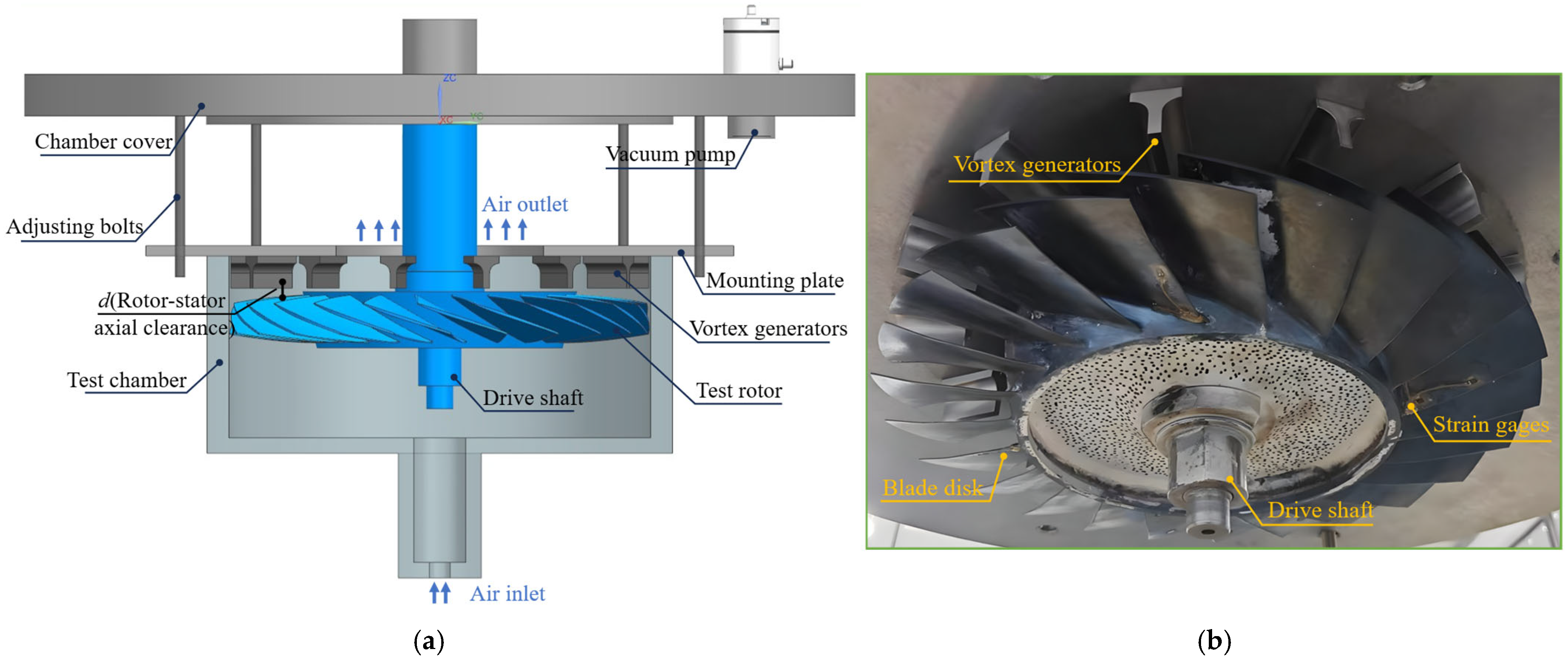
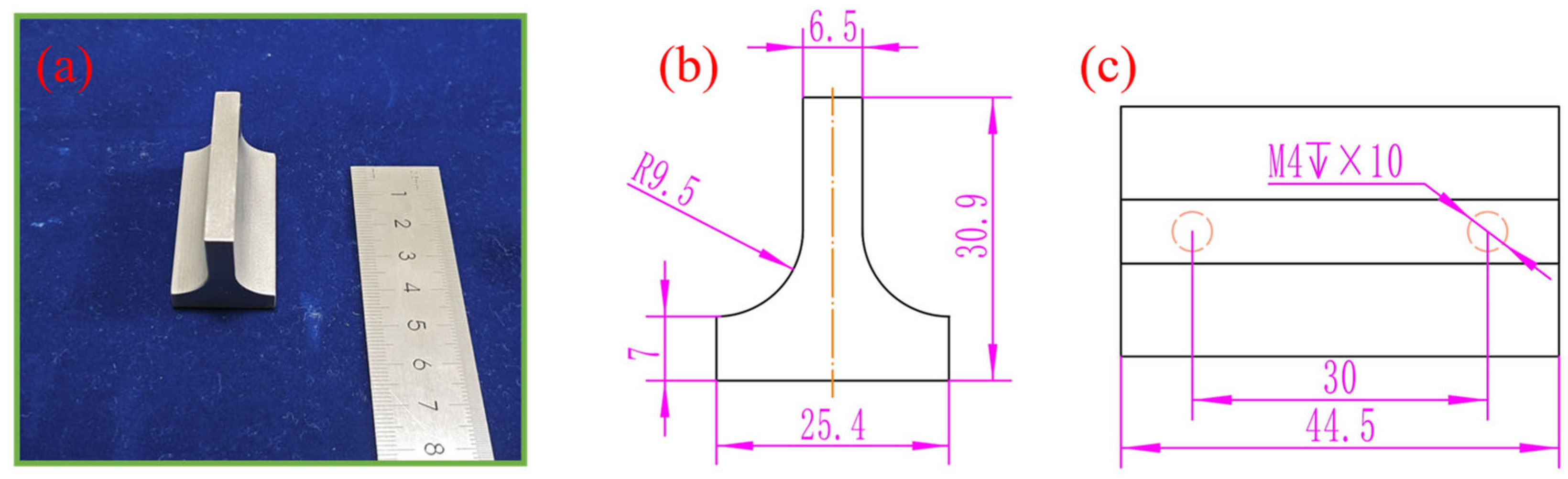
Based on the principle of rotating–stationary interference, the test platform utilizes vortex generators (VGs) fixed downstream of the rotating blade. By exploiting the stator–rotor interaction, it induces a harmonic aerodynamic pressure on the blade surface, as illustrated in Figure 1. The current configuration of the facility is setup for single-stage bladed disk damping studies with the schematic of the test shown in Figure 2 and the specific geometric parameters listed in Table 1. To maximize flow blockage and intensify the potential field interaction, the vortex generator is designed as a symmetric wedge-shaped prism structure with smooth circular arc transition, which is listed in Figure 3.
The test bladed disk is securely mounted on a vertical spin tester via a specially designed, high-stiffness adapter shaft and is driven by an electric motor through a belt drive system. In addition, the system features a specially designed test chamber that encloses the rotor and the vortex generators. Air is supplied to the chamber from an external air source, and the airflow is violently disturbed by the stationary vortex generators, thereby applying broadband aerodynamic excitation to the high-speed rotating rotor.

2.2. Test Specimen and Instrumentation

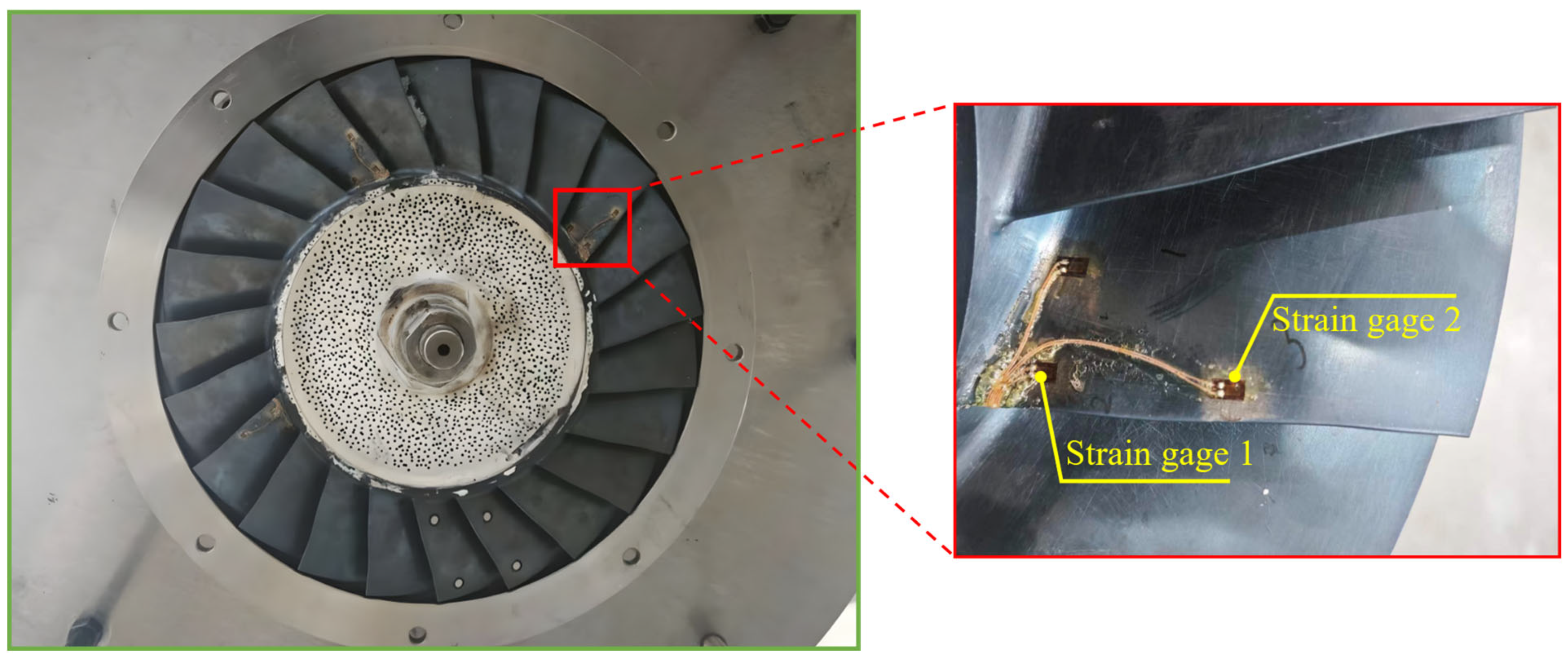
Strain gauges are applied to the regions of maximum strain gradient for the target mode using a room-temperature curing adhesive with the specific gauge locations shown in Figure 4. The installation tolerances are strictly maintained within ±75 mm for position and ±5° for angular orientation. To protect against damage from high-speed centrifugal loads, the strain gauge leads are routed through the central bore of the adapter shaft to the data acquisition system.

2.3. Experimental Testing Procedure

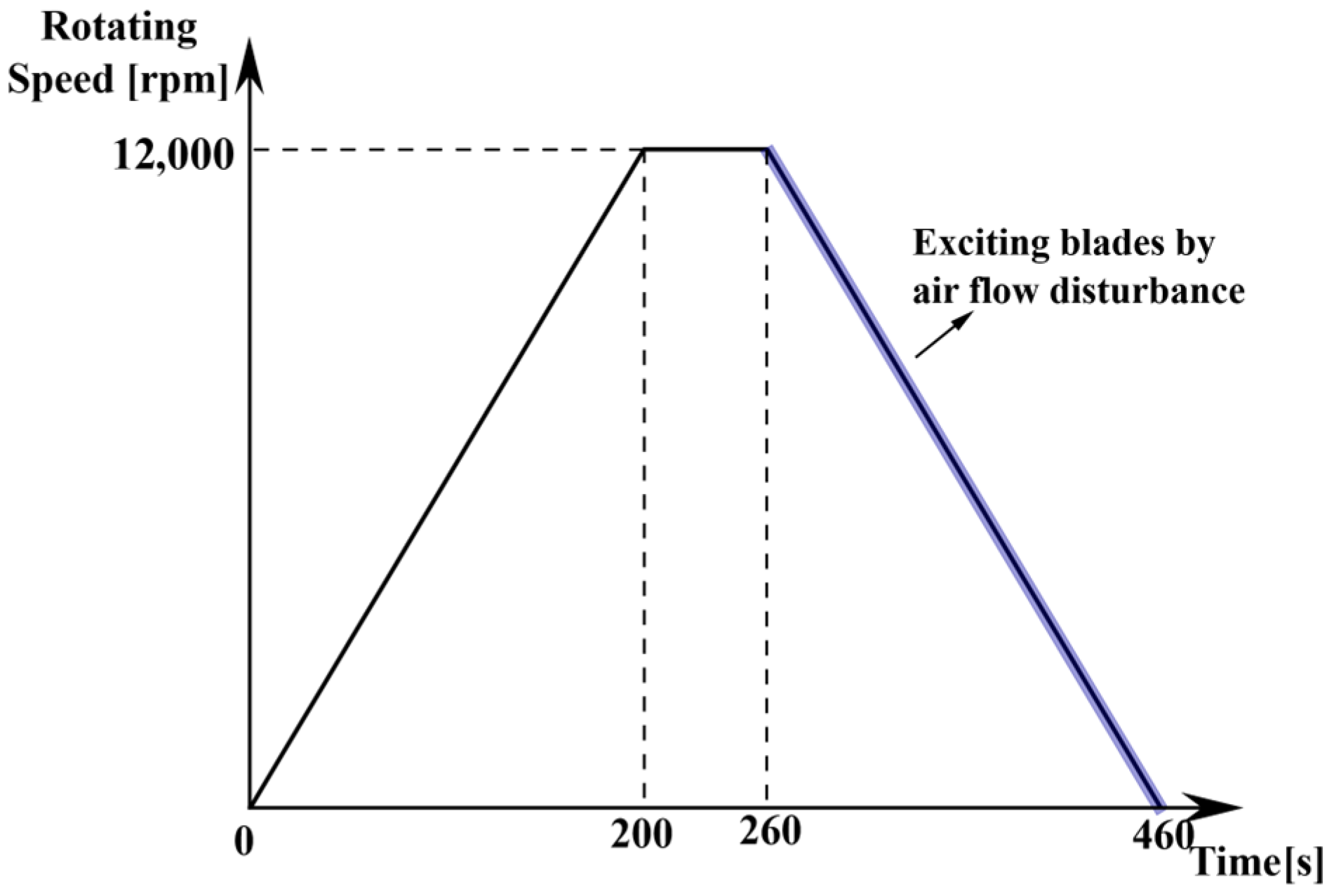
The experimental procedure in this study strictly follows a predefined speed–time profile to capture the transient resonance characteristics, as illustrated in Figure 5. A vacuum pump operates continuously throughout the entire experiment to maintain a baseline low-pressure environment. The vacuum test environment in this study is designed to isolate the influence of excessive aerodynamic damping and aerodynamic heating, so as to accurately capture the inherent resonance characteristics of the blisk structure and the pure aerodynamic excitation effect induced by the VGs. This test condition is not intended to fully replicate the high-temperature, high-pressure operational environment of real aero-engines, but to provide a controllable experimental platform for the fundamental study of blisk forced resonance mechanisms. The testing process comprises three main phases:
(1)
Spin-up Phase (0–200 s): The test rotor accelerates smoothly from rest to the maximum rotating speed of 12,000 r/min.
(2)
Steady-state Phase (200–260 s): The rotational speed is maintained at a constant 12,000 rpm to stabilize the structural and centrifugal stiffening states.
(3)
Spin-down Sweep Excitation Phase (260–460 s): This is the core data acquisition phase. During deceleration, the external air supply system is activated to generate airflow disturbances via the VGs, applying aerodynamic excitation to the blisk. By controlling the inlet valve, a dynamic equilibrium is established between the continuous air inflow into the test chamber and the continuous extraction by the vacuum pump, stabilizing the ambient pressure inside the chamber at approximately 25 torr (3333 Pa).
Figure 5. Speed–time history of the test procedure.
Aerospace 13 00432 g005

3. Numerical Computation Method

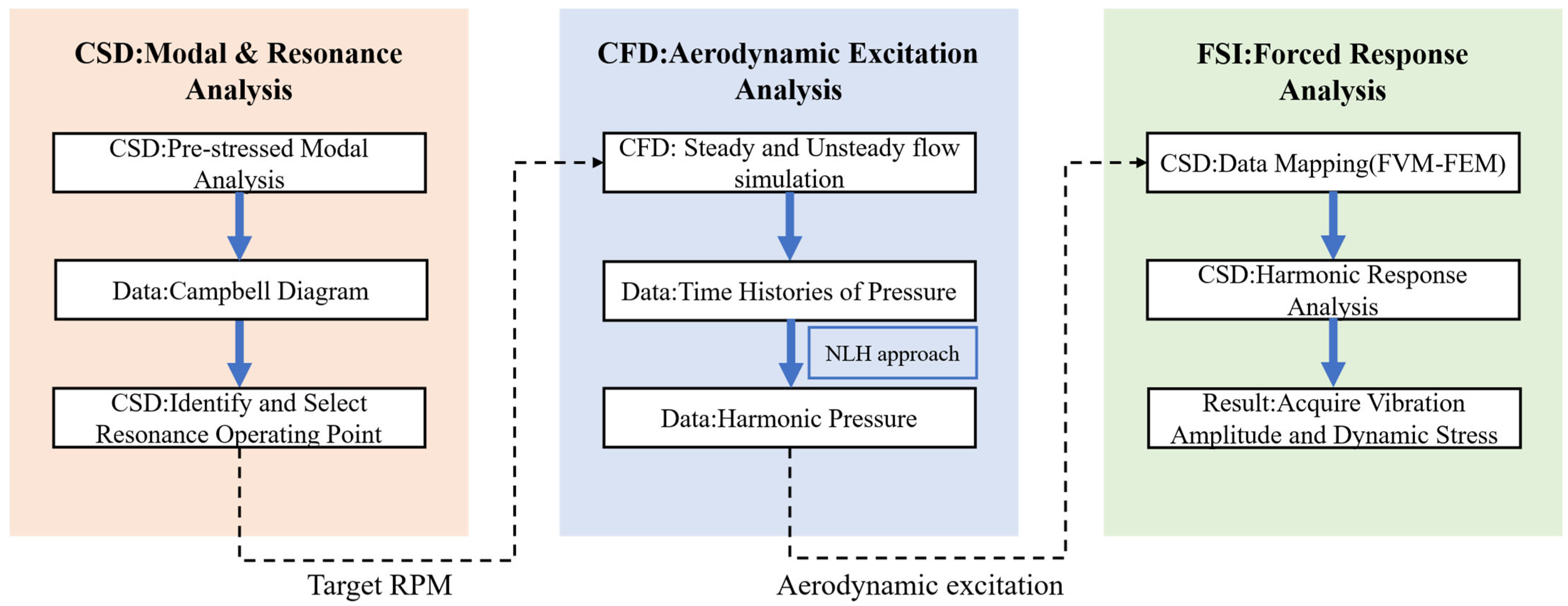
In this study, the one-way FSI approach is employed to evaluate the forced vibration of the blade disk, considering the computational accuracy and efficiency [21,22]. The overall computational procedure of the one-way FSI approach is illustrated in Figure 6 and comprises three main steps: First, the FEA model of the bladed disk is established to determine the natural frequencies and corresponding mode shapes in the modal analysis, targeting the resonance conditions identified by the Campbell diagram. Subsequently, the CFD model under experimental conditions is developed, and flow-field simulations are conducted based on the resonance speeds obtained from the modal analysis. The aerodynamic excitation acting on the blade disk is then computed by the NLH approach. The adopted NLH method is a frequency-domain reduced-order technique for RSI-induced periodic unsteady flow simulation, which decomposes flow variables into a steady mean component and harmonic components corresponding to the blade-passing frequency (BPF) and its higher orders. Compared with full-annulus transient URANS, NLH solves harmonic equations directly in the frequency domain with a single-passage model, achieving comparable accuracy while reducing computational cost by an order of magnitude [23], which perfectly fits the non-integer blade count ratio and multi-condition axial clearance parametric analysis in this work. The first 4 harmonics are retained in the simulation, as they account for over 96% of the total unsteady pressure energy on the blade surface, with a relative deviation of less than 1% in the dominant harmonic amplitude when increasing harmonics to 6, consistent with the aerodynamic force results in Section 4.4. Finally, the forced vibration of the bladed disk is obtained in the harmonic response analysis, in which the aerodynamic excitation derived from the CFD simulation is mapped onto the FEA model as input load. In this study, CFD simulations are performed using the CFX platform, while FEA is conducted in ANSYS workbench.

3.1. Finite Element Analysis

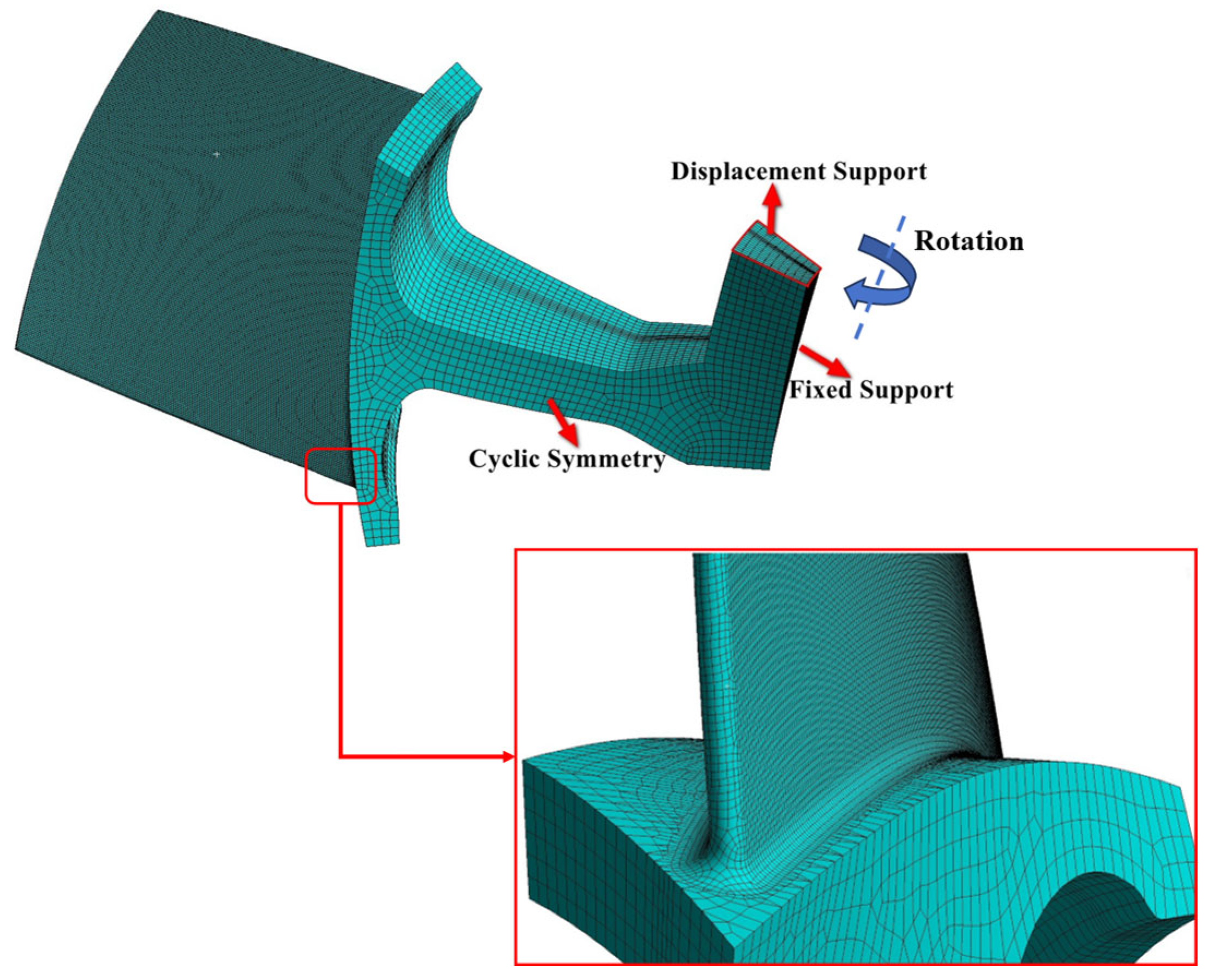
Figure 7 illustrates the numerical discretization of the bladed disk. To guarantee calculation precision, a hybrid mesh utilizing both tetrahedral and hexahedral topologies was constructed, featuring an intensified grid density near the blade trailing edge. This meshing strategy resulted in approximately 0.23 million elements and 0.51 million nodes. In the FEA model, a fixed boundary condition is applied at the hub, while a normal displacement constraint is imposed on the upper surface, as illustrated in Figure 7. The entire structure is modeled with the Ti2AlNb alloy, the specific mechanical parameters of which are detailed in Table 2.
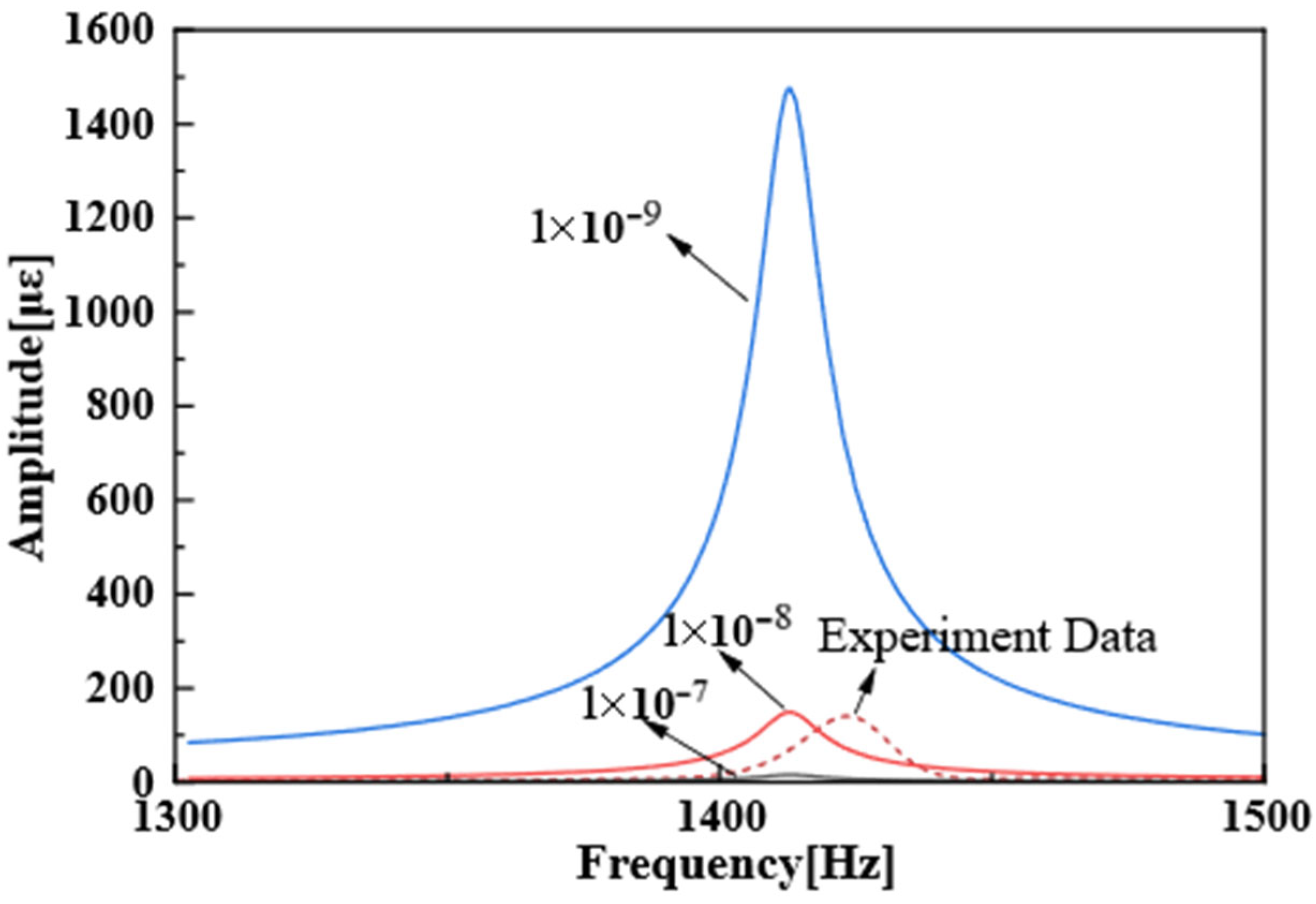
The numerical simulation procedure comprises two sequential stages. Initially, the inherent dynamic characteristics, specifically the natural frequencies and corresponding mode shapes, are extracted via modal analysis. Subsequently, these modal results serve as the foundation for the harmonic response evaluation, which utilizes the mode superposition technique to compute the vibration amplitude of the blades. The external aerodynamic excitations fed into this structural model are directly extracted from the Nonlinear Harmonic simulations. As validated by previous studies [23,24,25], the NLH method outputs periodic pressure fields efficiently without requiring extra data transformations. Furthermore, the system’s energy dissipation is simulated using the Rayleigh damping formulation. Since high-frequency responses are relatively insensitive to mass-proportional damping, this term is ignored. Given that the experiment operates under a partial vacuum (25 Torr), aerodynamic friction is significantly weakened. Furthermore, the integral nature of the blisk eliminates dry friction from mechanical joints, leaving only the inherent material damping of the titanium alloy. Using the Rayleigh damping formulation, the stiffness-proportional term (β) dominates the high-frequency response. A designated minimal value of β = 1 × 10⁻⁸ corresponds to an equivalent modal damping ratio of ζ = βω/2 = 4.4 × 10⁻⁵ at the second-order resonance frequency (1410 Hz). This value analytically aligns with the typical low material damping characteristics of titanium alloys (1 × 10⁻⁵ to 1 × 10⁻⁴ magnitude) under vacuum conditions.
To explicitly address the inherent uncertainty of structural damping in the one-way FSI framework, a sensitivity analysis of the stiffness-proportional damping coefficient ( β ) was conducted as shown in Table 3 and Figure 8. By varying β to 1 × 10⁻⁹, 1 × 10⁻⁸ (baseline), and 1 × 10⁻⁷ under the 5 mm clearance condition, the numerical maximum dynamic strain at gauge 1 resulted in 1467 με, 149 με, and 14.7 με, respectively. The peak dynamic strain amplitude of the blade exhibits a strictly inverse-proportional relationship with the stiffness-proportional damping coefficient, which is consistent with the inherent forced vibration law of small damping systems. The baseline damping coefficient β = 1 × 10 8 yields the best match with the experimental measurement data, with a relative amplitude deviation of only 6.4% for gauge 1 and 1.1% for gauge 2 under the 5 mm clearance condition, which directly validates the rationality of the adopted baseline damping value. In addition, minor deviations between the adopted constant damping value and the actual amplitude-dependent structural damping will lead to observable amplitude deviations, while the core resonance characteristics of the blisk are still accurately captured by the numerical model.

3.2. CFD Method

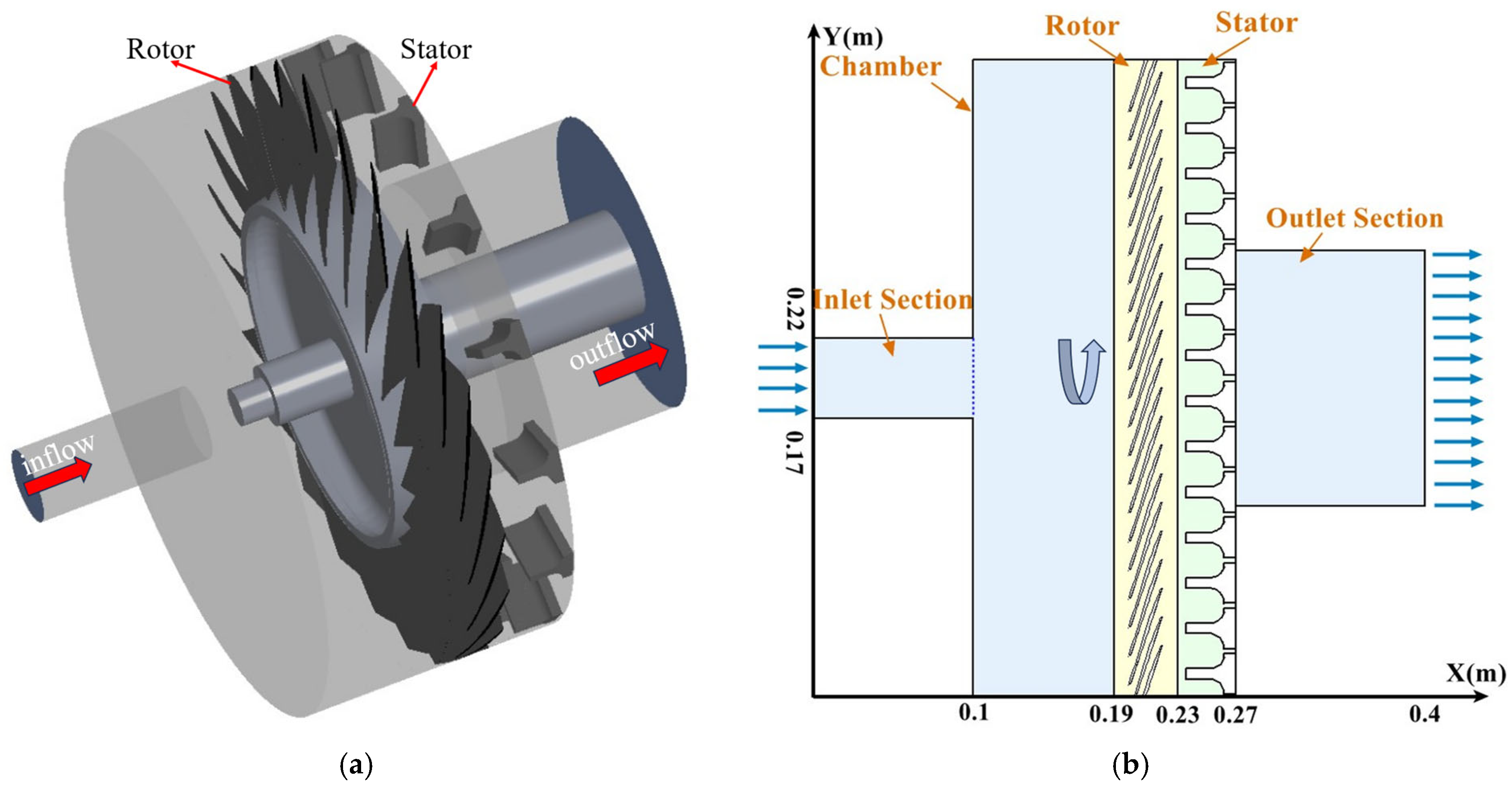
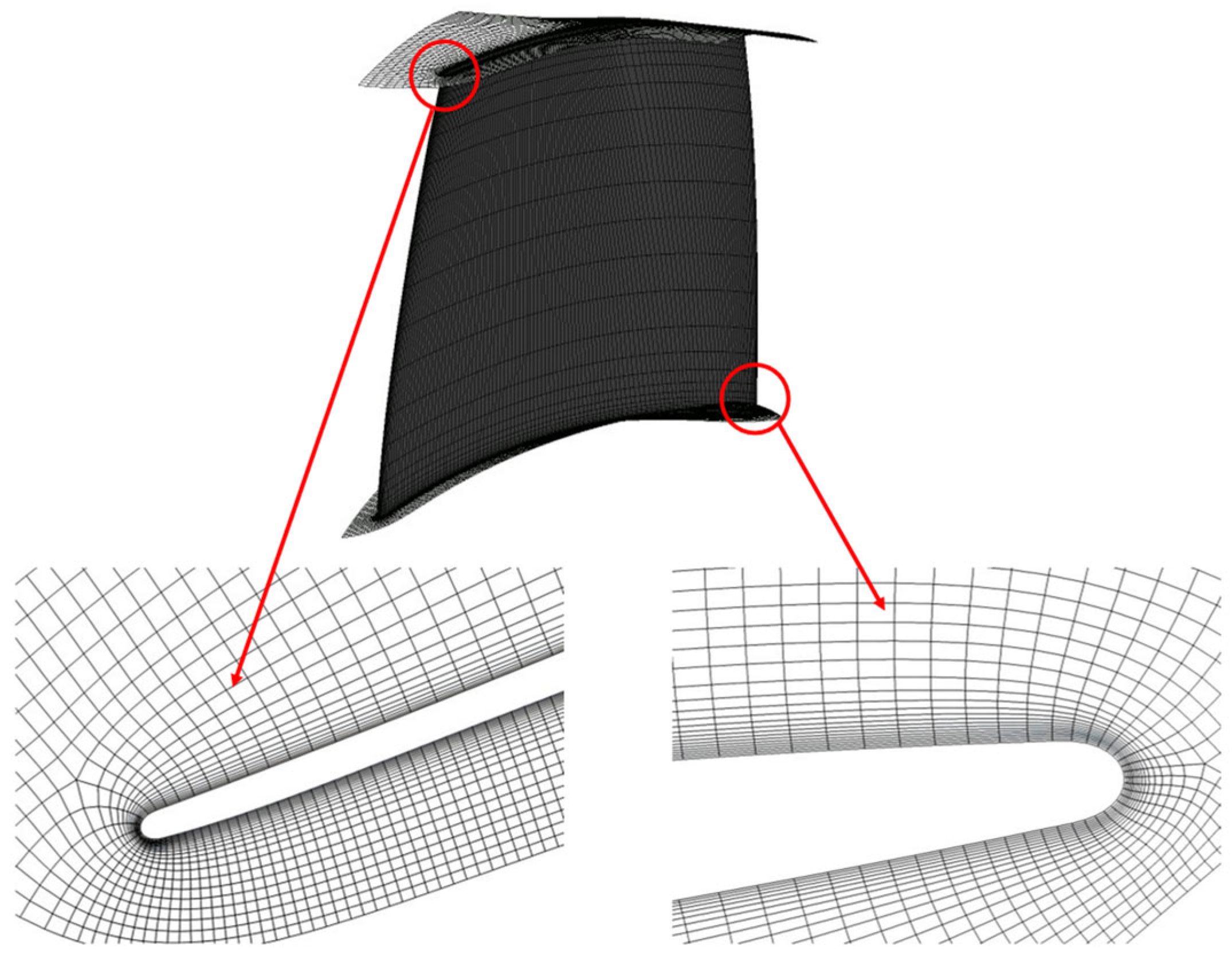
Based on the experimental flow-field environment, the CFD model is reconstructed and partitioned into the inlet domain, casing domain, vortex generator domain, blade passage domain and outlet domain. The specific boundary conditions and geometric dimensions are illustrated in Figure 9. The grid division is accomplished utilizing ICEM, with the grid topology of the blade structured as O4H and the grid density of the boundary layer refined. The mesh density of the boundary layer is refined, and the local dimensions of the blade mesh are shown in Figure 10. The first grid layer on the blade surface is carefully controlled to ensure that the y + value remains below 1.
The numerical simulations are performed using the ANSYS CFX solver to resolve the three-dimensional Unsteady Reynolds-Averaged Navier–Stokes (URANS) equations, which are closed by the Shear Stress Transport (SST) turbulence model. The detailed properties of the working fluid and the specific model configurations are summarized in Table 4. To enhance computational convergence and numerical stability, a steady-state simulation is initially conducted. Upon convergence, the resulting flow field is extracted and utilized as the initial condition for the subsequent unsteady computations.
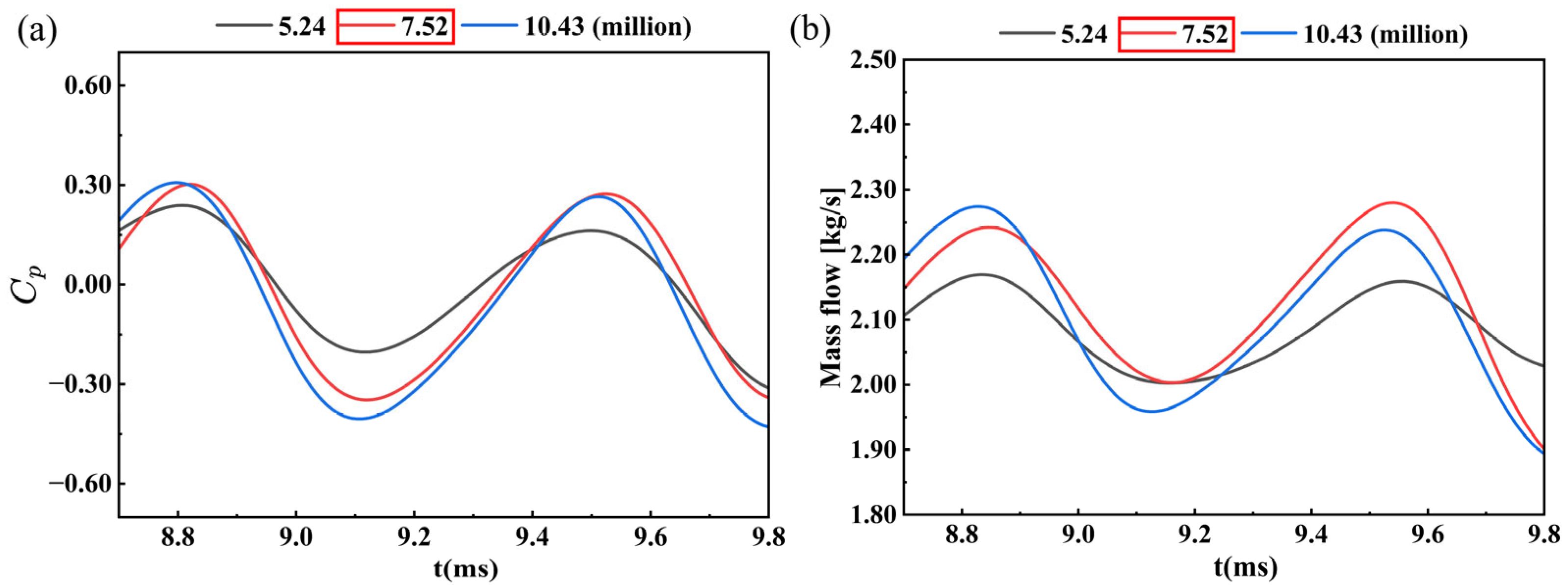
Grid independence verification is carried out by employing a consistent grid refinement method to generate three sets of grids with varying total cell counts. To comprehensively evaluate spatial convergence across the computational domain, both local and global flow characteristics are monitored. Specifically, the dynamic pressure at monitoring point M_05_05 is selected as the target local variable, while the outlet mass flow rate is chosen as the global observation variable. The location of this monitoring point and the definition of the dimensionless coefficient are described in Section 4.2. The time-domain variations in these two parameters under different grid densities are illustrated in Figure 11. It is observed that beyond a total cell count of 7.52 million further refinement of the grid yields no significant improvement in computational accuracy. Balancing accuracy against cost, the grid number of 7.52 million is selected for the following research.
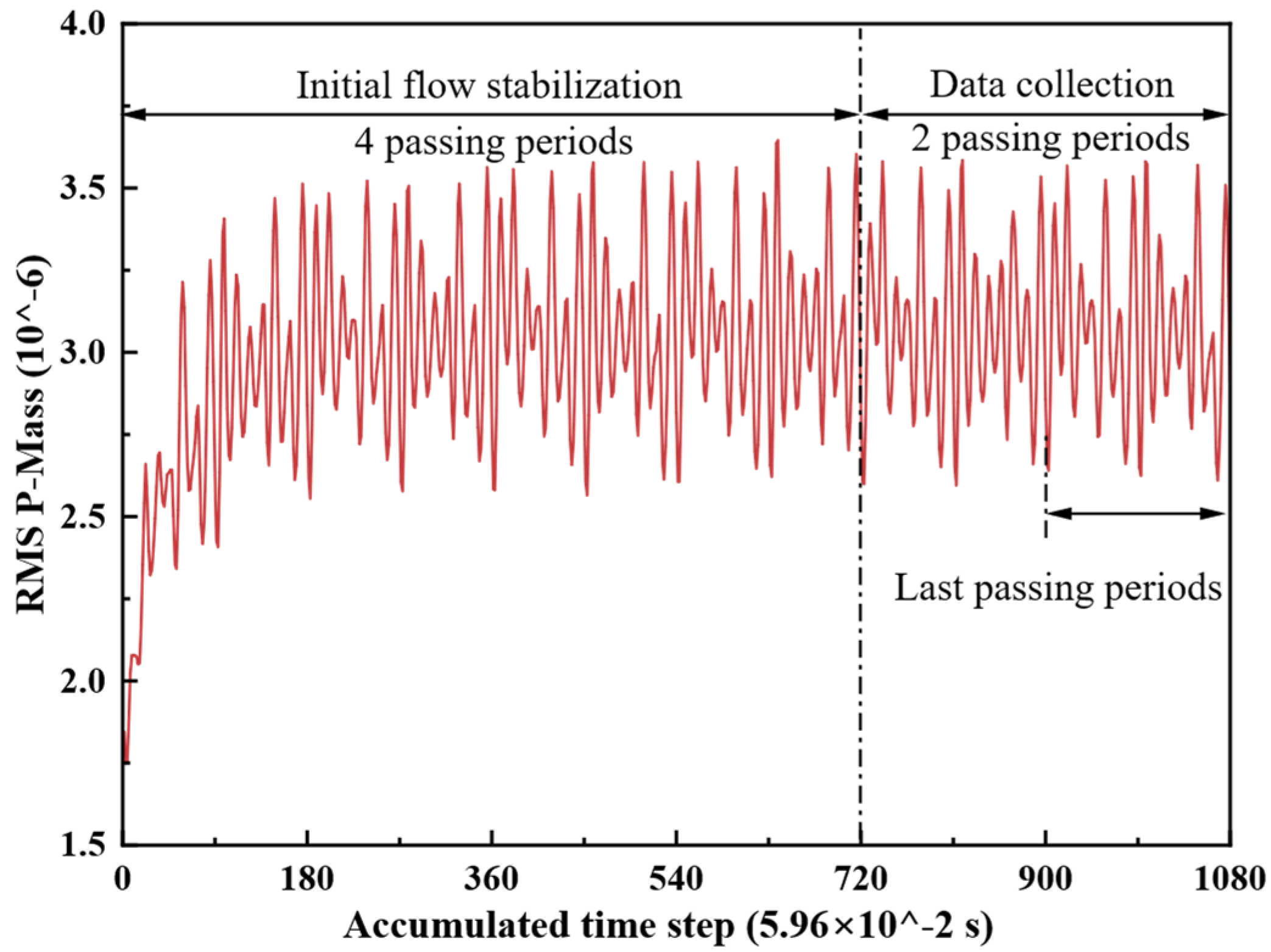
In additon, to ensure the reliability and accuracy of the reconstructed aerodynamic loads, strict convergence criteria were implemented for the numerical simulations. The RMS residuals of all fundamental governing equations (including continuity, momentum, energy, and turbulence transport) were strictly enforced to drop below 1 × 10⁻⁵, and the unsteady flow field was deemed fully converged as illustrated in Figure 12.

4. Simulation Results and Discussion

The unsteady flow generated by stator–rotor interactions is one of the most significant excitation sources in rotating machinery systems. The resulting periodic unsteady loads induce forced blade vibrations, when the external excitation frequency approaches the natural frequency of the blades. Based on the above principles, this study employs a rotor–stator interference coupling mechanism. Under experimental conditions, simplified vortex generator configuration is used to simulate stator–rotor interactions. By leveraging the correlation between blade excitation frequency and the number of stator flow-disturbing blocks, blade resonance is induced at specific rotational frequencies. Therefore, investigating the temporal evolution of the flow field, analyzing fluid frequency distributions and elucidating the differences in the flow field under different rotor–stator axial clearances are crucial for comprehensively characterizing the flow-field mechanisms and the evolution of excitation forces under vortex generator simulation.

4.1. Modal Simulation

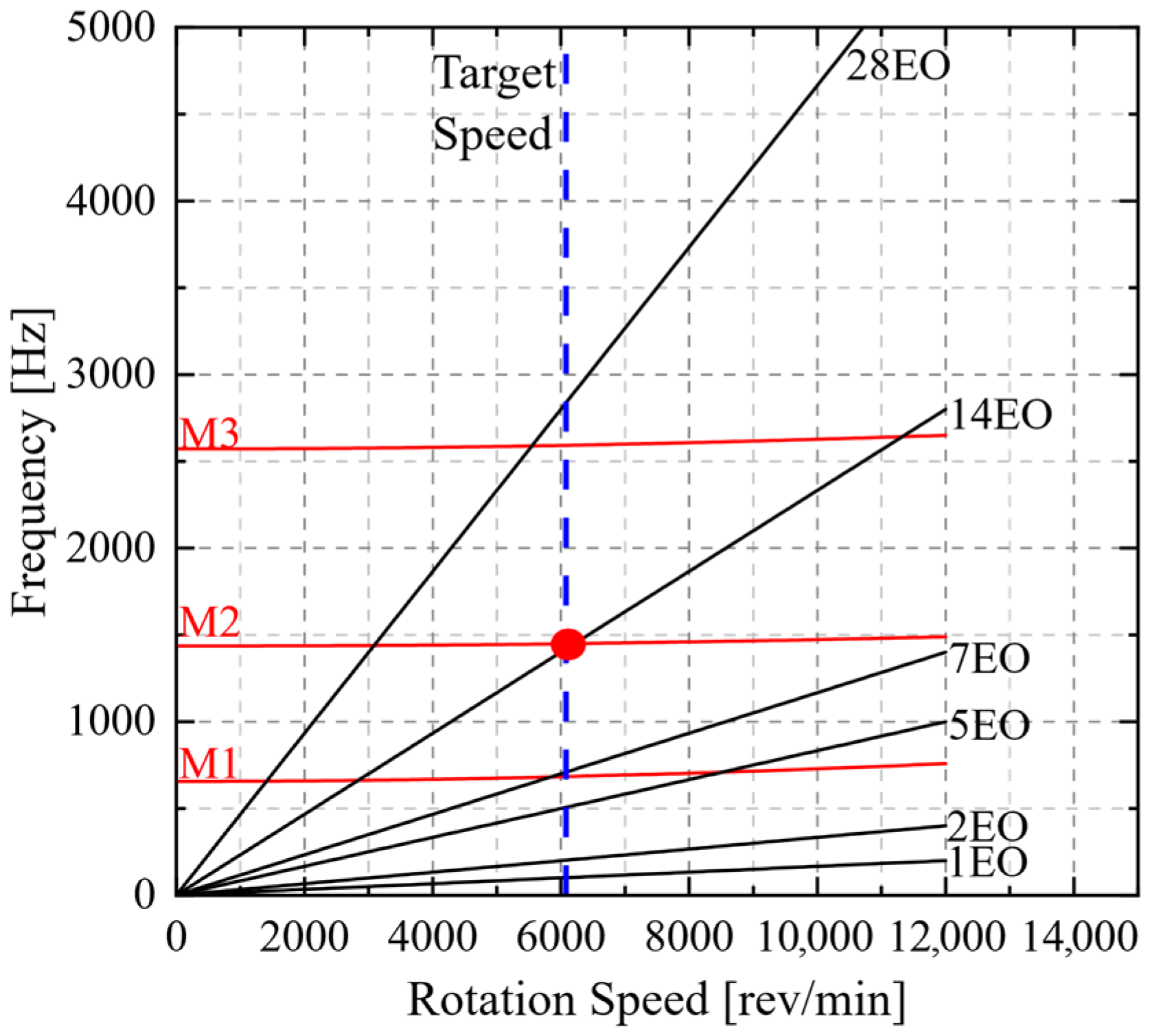
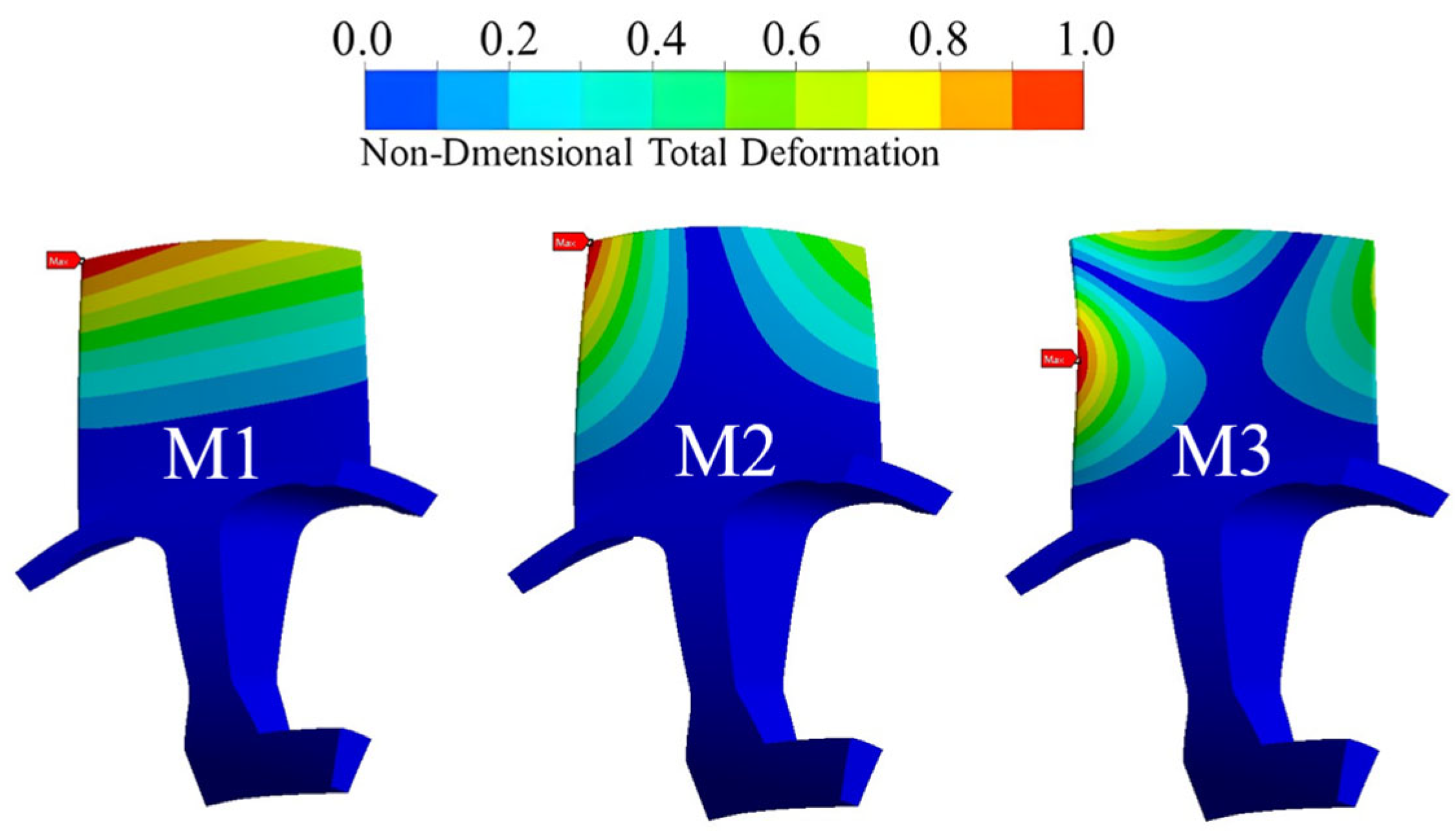
In this study, for modal excitation testing under experimental conditions, the observed rotational speeds for the first three modes of the test specimen were comprehensively considered in conjunction with the rotational speed control range of the test rig. The Campbell diagram of the rotor and the blade mode shapes are presented in Figure 13 and Figure 14, respectively. The first three vibration modes are identified as the first bending (1B), first torsion (1T), and coupled bending–torsion modes. Based on this, modal analysis of the pre-stressed rotor was conducted to optimize the vortex generator configuration. The selection of 14 vortex generators was deliberately determined based on the Campbell diagram. This specific stator count ensures that the 14th engine order (14EO) excitation line precisely intersects the first three structural modes within the safe operational speed limit of the test rig (12,000 rpm), while simultaneously maintaining the resonance speeds high enough to avoid low-speed control instabilities of the drive motor. Specifically, the first three excitation frequencies of the blades corresponding to 14 vortex generators are 665 Hz, 1410 Hz, and 2630 Hz, respectively, with the excitation speeds of 2850 rpm, 6042 rpm, and 11,271 rpm. Furthermore, since the second mode avoids the strong broadband background vibration interference in the high-speed range associated with the third mode, as well as the low excitation amplitude interference in the low-speed range associated with the first mode, this study selected the second mode for subsequent observational studies to quantitatively compare excitation forces and vibration amplitudes.

4.2. Time Evolution of Excitation Force

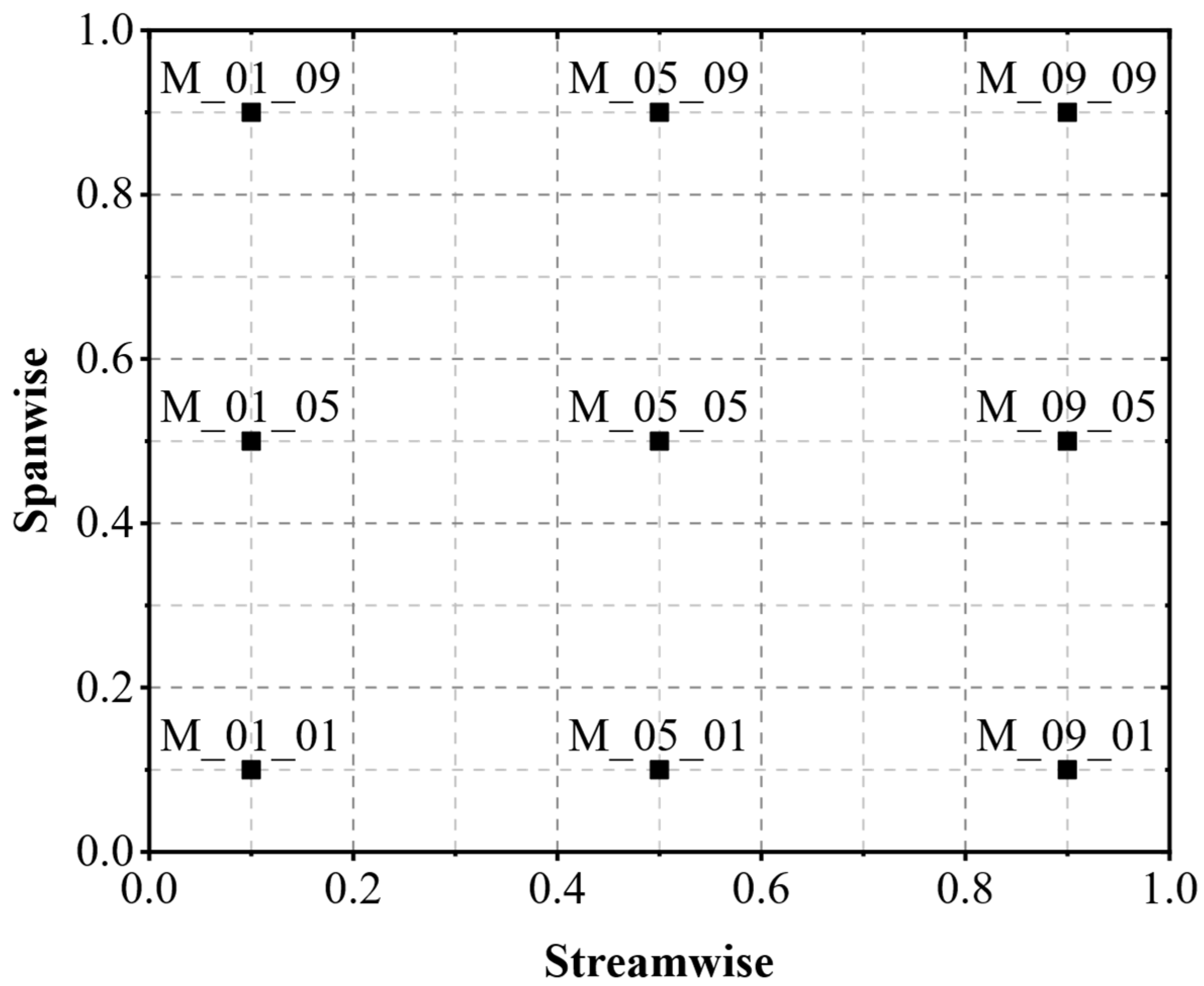
To characterize the unsteady excitation force pulsation characteristics under rotor–stator interaction, the blade suction surface adjacent to the vortex generators (VGs) was selected as the target surface. A targeted network of nine numerical probes was configured in a 3 × 3 spatial matrix. Specifically, these virtual sensors are located at the intersections of the 10%, 50%, and 90% fractions along both the spanwise and chordwise directions, as illustrated in Figure 15. Each monitoring point is designated by a unique identifier beginning with “M” (denoting monitor), followed by numerical indices indicating its chordwise and spanwise positions respectively. Through this systematic spatial topological distribution, spatiotemporal flow-field data are comprehensively captured from the blade root to the tip and from the leading edge to the trailing edge.
To eliminate the baseline effect of local static pressure and accurately characterize the pressure fluctuation patterns across different monitoring points [26], a dimensionless pressure coefficient ( C p ) is introduced to represent the fluctuation intensity, expressed as follows:
C p = P P ¯ 0.5 ρ U 2 2
U = n π D 60
where P denotes the static pressure, P ¯ represents the time-averaged static pressure, ρ is the fluid density, D is the blade outlet diameter, and n is the rotational speed ( r p m ) .
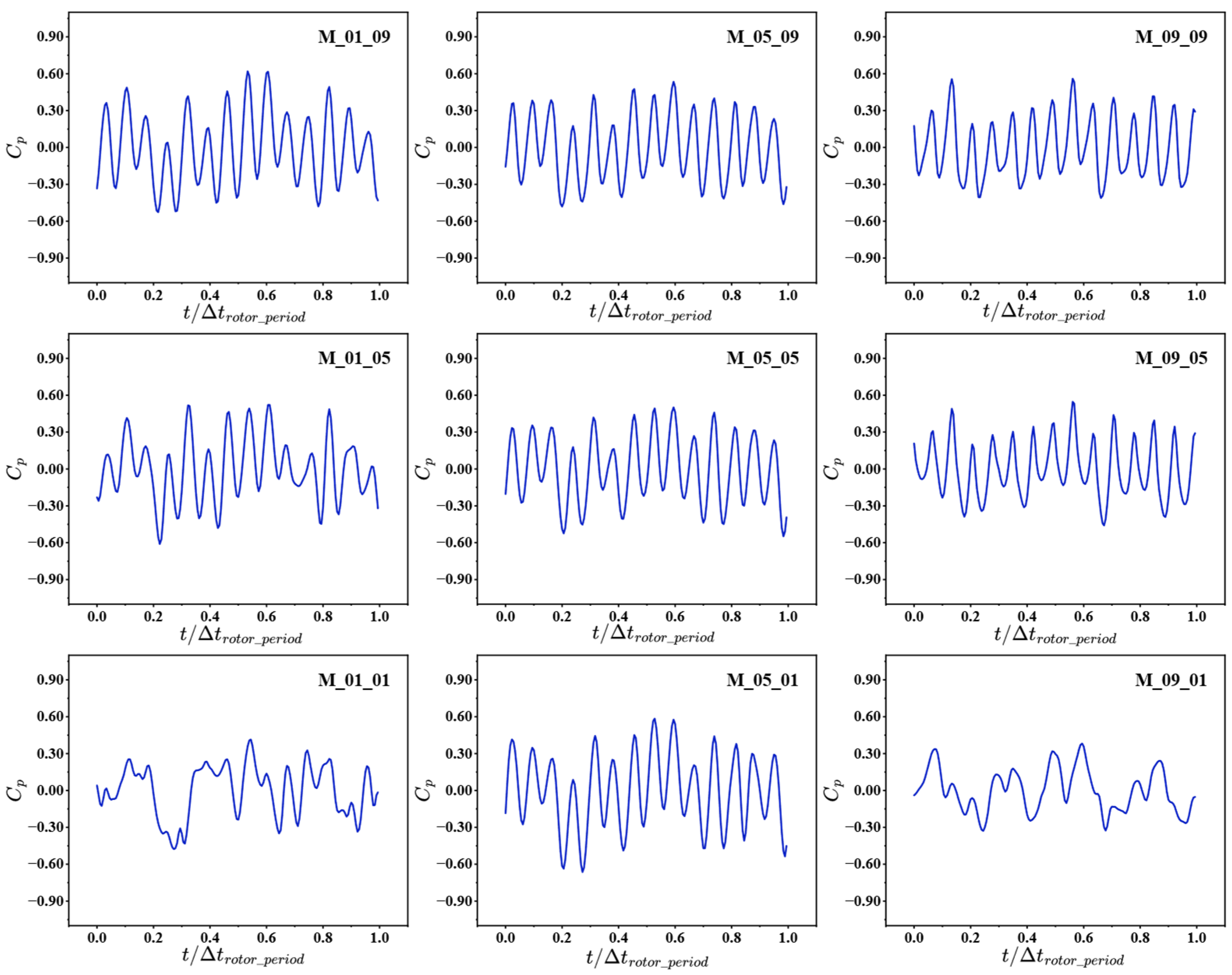
Figure 16 presents the time-domain evolution curves of the pressure coefficient at the monitoring points after simulation convergence. The horizontal axis is non-dimensionalized by the rotor passing period, comprising 180 time steps with each step representing a 2° rotation angle. The results reveal a significant spatiotemporal evolution pattern of pressure fluctuations on the suction surface induced by the rotor–stator interaction.
Comparing the time-domain signals of pressure monitoring points at different chordwise locations indicates that the chordwise evolution is primarily dominated by the upstream propagation of the downstream potential flow field. Specifically, the leading edge is furthest from the downstream stationary vortex generator, resulting in a significant attenuation of the potential flow waves. Consequently, this region is dominated by inlet incidence angle fluctuations and local flow separation, exhibiting broadband nonlinear characteristics. As the mid-chord region enters the influence zone of the strong downstream adverse pressure potential field, the RSI becomes dominant and the fluctuations evolve into quasi-sinusoidal periodic waves with a drastic increase in amplitude. Although the trailing edge is closest to the vortex generator, its periodic fluctuation amplitude is unexpectedly attenuated compared to the mid-chord, owing to the high-frequency dissipation and modulation effects caused by boundary-layer shedding and passage secondary flows.
Regarding the spanwise distribution, the pressure fluctuations exhibit stratified characteristics that are highly correlated with the radial arrangement of the vortex generators. Since the mid-span and blade tip directly face the vortex generator, they are subjected directly to the downstream periodic potential flow impingement, manifesting as high-amplitude and strongly periodic fluctuations. In contrast, because the blade root is not directly covered by the vortex generator, the potential flow interference is relatively weak. Instead, the local flow field is dominated by secondary flows—such as hub corner vortex breakdown—and broadband turbulence, thereby exhibiting nonlinear and irregular fluctuation characteristics.
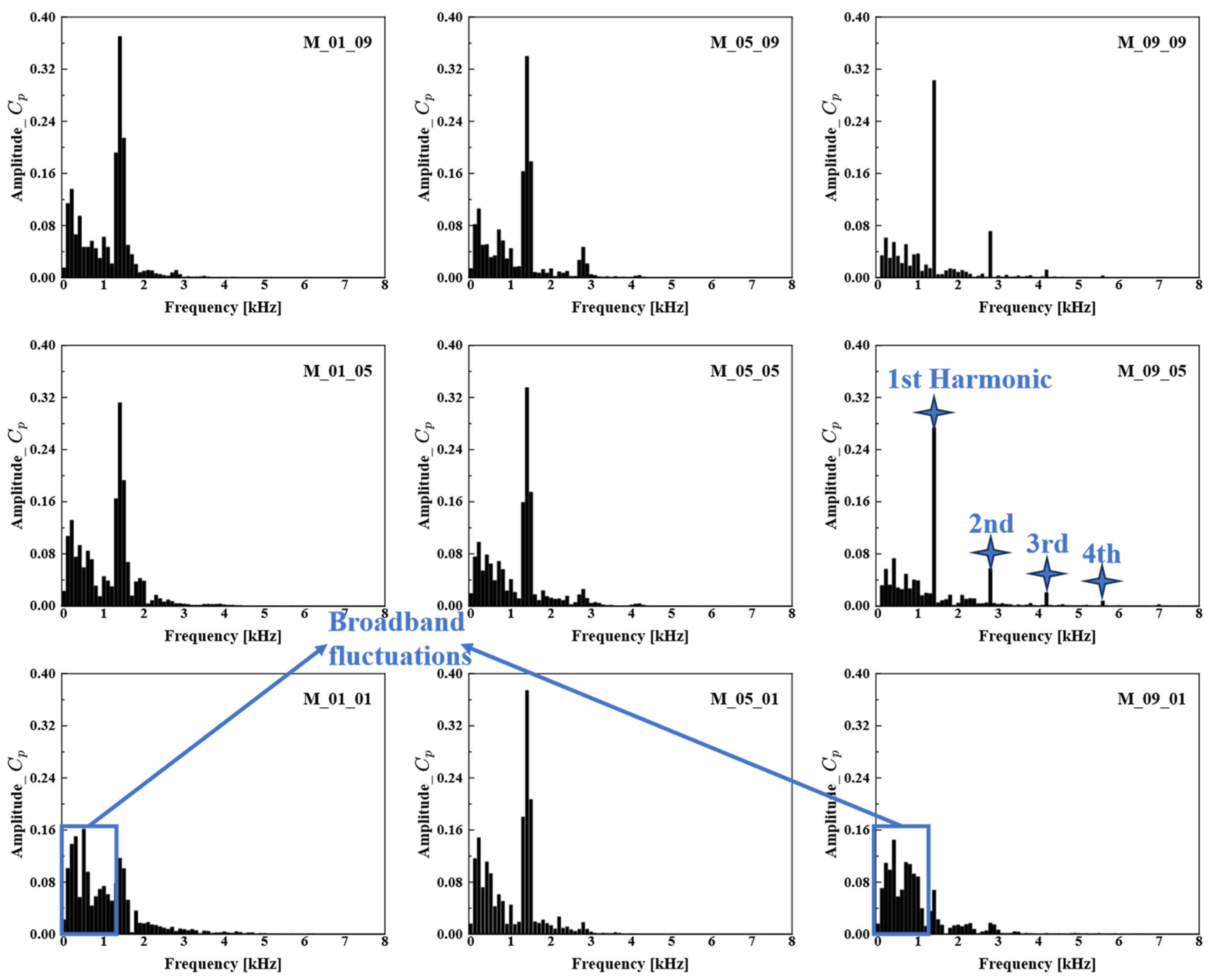
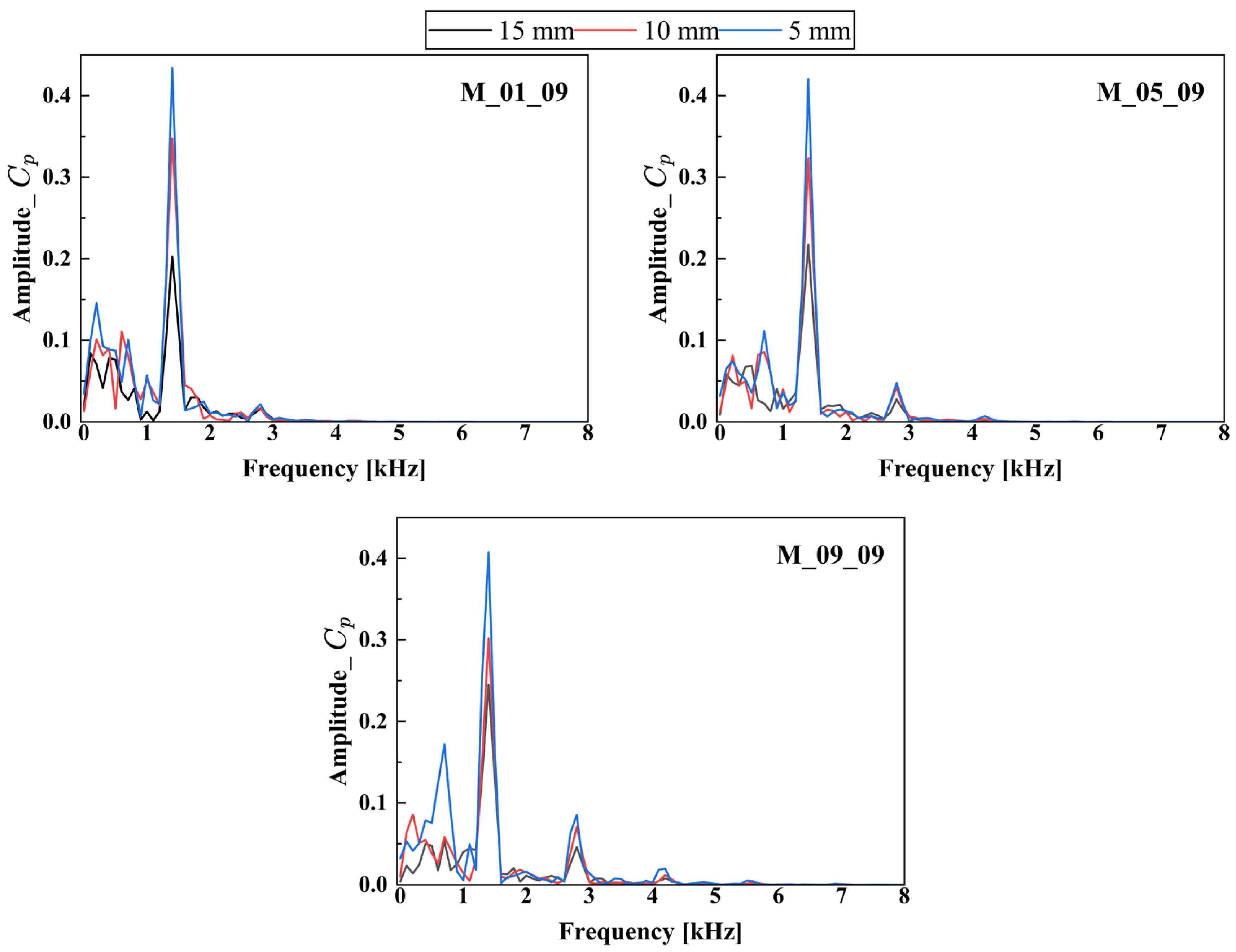
Figure 17 displays the pressure spectra for all monitoring points on the suction surfaces. In the present model with 14 stationary vortex generators, the theoretical blade-passing frequency (BPF) is determined to be 1409.8 Hz (14EO) based on the stator count and rotor speed. The spectral results clearly demonstrate dominant amplitude peaks occurring precisely at the theoretical blade-passing frequency. The flow-field spectra exhibit significant spanwise variations. Specifically, the 1.41 kHz dominant frequency is highly pronounced with substantial amplitudes in the mid-span and tip regions, whereas the root region lacks this feature and is instead dominated by a low-frequency broadband zone. This discrepancy arises because the vortex generators are radially deployed over the mid-to-upper span, subjecting the mid-span and tip to the most direct and intense potential back-pressure impact. Furthermore, moving chordwise from the leading edge to the trailing edge, the low-frequency broadband noise progressively diminishes while the spectra become notably cleaner, featuring visible second, third, and fourth harmonics denoted by blue star symbols. This phenomenon can be attributed to a twofold physical mechanism. On one hand, the decreasing distance to the downstream excitation source renders the 1.41 kHz potential flow interference characteristics increasingly prominent. On the other hand, as the airflow accelerates and propagates downstream through the blade passage, the flow separation near the leading edge gradually reattaches and becomes more organized.
Based on the preceding time–frequency analysis, in the rotor–stator interaction configuration featuring upstream rotor blades and downstream stator vortex generators, the core aerodynamic excitation mechanism is dominated by the upstream-propagating interaction of the downstream potential flow field. Driven by this mechanism, pronounced unsteady excitation pressure fluctuations are induced on the rotor blade suction surface, precisely exciting the expected theoretical dominant frequency peaks. Notably, the aerodynamic excitation intensifies and achieves higher spectral purity as the flow nears the downstream vortex generators.

4.3. Spatiotemporal Evolution and Mechanism of Aerodynamic Excitation

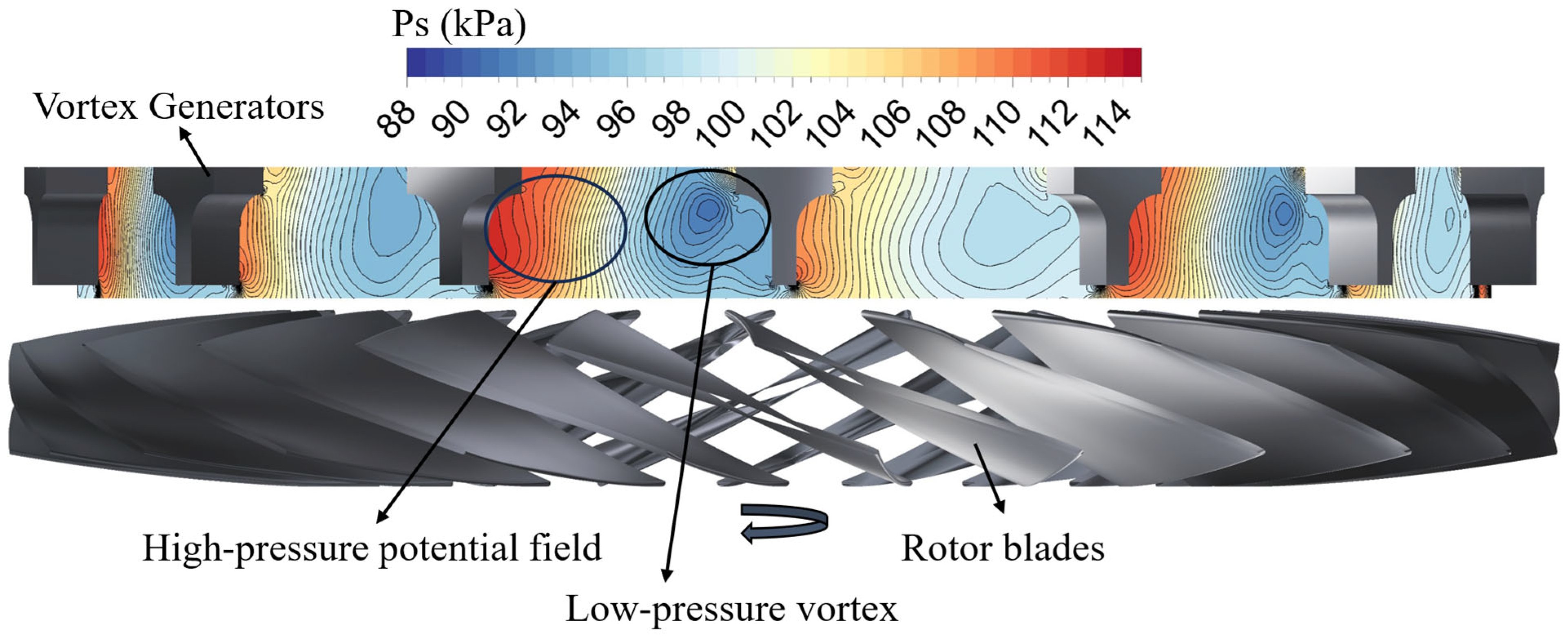
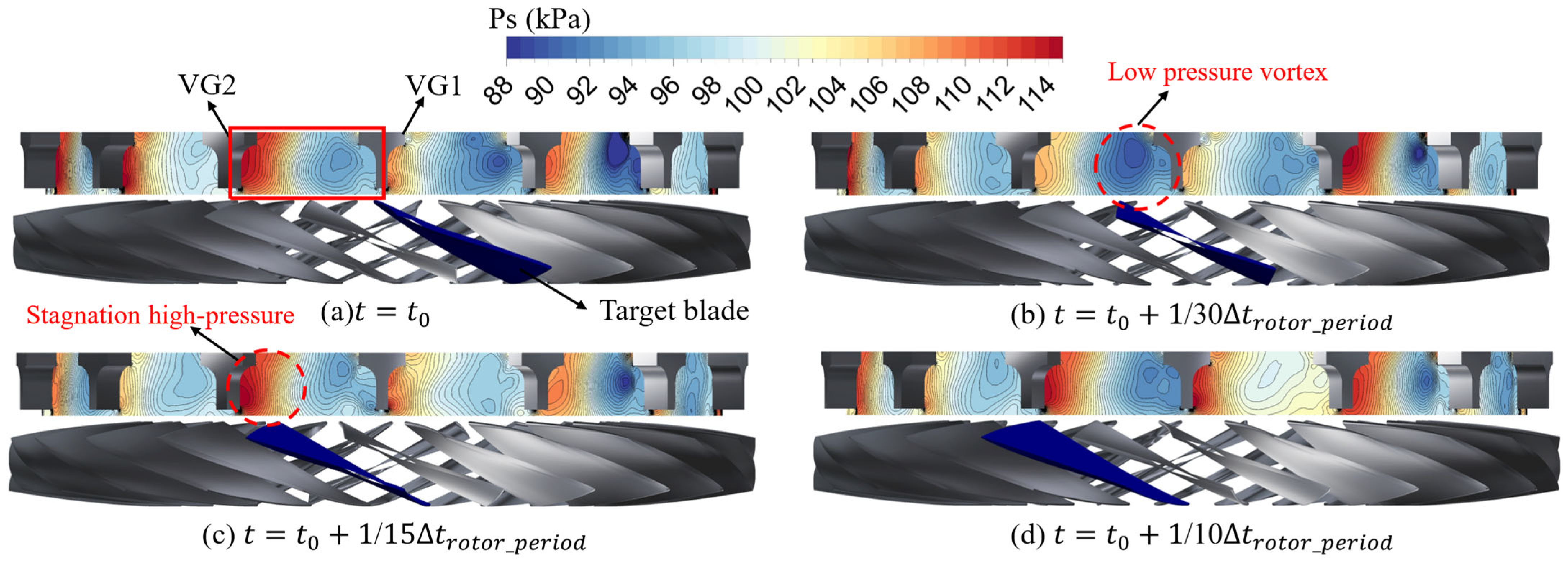
According to the results presented in Section 4.2, the blades are subjected to an aerodynamic excitation at the 14EO. Figure 18 illustrates the time-averaged static pressure distribution at the 90% spanwise section under a rotational speed of 6042 r/min. The results reveal that the flow field exhibits significant unsteady characteristics due to the intense rotor–stator interaction between the rotor blades and the downstream vortex generators.
As the rotor blades sweep across the stator region, the high-speed flow experiences severe aerodynamic stagnation caused by the geometric blockage on the windward side of the VGs. This effect, coupled with the high-pressure potential flow from the rotor pressure surface, induces a distinct localized high-pressure stagnation zone on the windward side of the VGs. Simultaneously, the leeward side of the vortex generator is dominated by the passage acceleration effect and flow separation, leading to the formation of a low-pressure vortex region.
Simultaneously, to elucidate the dynamic migration of high- and low-pressure structures under rotor–stator interaction, Figure 19 presents the instantaneous static pressure contours at four discrete time phases within one rotor revolution at the 90% spanwise section. To facilitate the intuitive tracking of flow evolution, a specific rotor blade is highlighted in dark blue in Figure 19, documenting its unsteady interference process as it successively sweeps past the downstream stator vortex generators, VG1 and VG2.
As the target blade traverses at high speed into the passage between VG1 and VG2, a large-scale low-pressure vortex region rapidly develops within the channel, accompanied by the attenuation of the high-pressure zone, as illustrated in Figure 19b. Conversely, as the blade sweeps past VG1 and approaches VG2, the flow driven by the blade rotation interacts with the windward side of VG2. The coupling between the potential flow and the stator geometry induces an aerodynamic stagnation effect, leading to the intensification of the high-pressure region and the dissipation of the low-pressure zone, as shown in Figure 19c,d. The aforementioned transient evolution is consistent with the time-averaged results in Figure 18, indicating that each time a rotor blade sweeps past a vortex generator, the surface flow field undergoes a complete alternating cycle of high-pressure stagnation and low-pressure vortexing. These periodic and intense fluctuations in flow intensity directly translate into alternating aerodynamic loads acting on the blade, thereby providing a robust explanation for the time–frequency response results presented in Figure 16 and Figure 17.

4.4. The Impact of Rotor–Stator Axial Clearance on Flow Characteristics of the Aerodynamic Excitation

The rotor–stator axial clearance is an important parameter that affects the intensity of rotor–stator interaction (RSI) excitation. This study selects three specific axial clearances (5 mm, 10 mm, and 15 mm). These values are chosen as they scale to typical non-dimensional axial gaps relative to the blade chord length in modern axial compressors, effectively representing a transition from a strong near-field potential interaction (5 mm) to a significantly decayed far-field state (15 mm). This section further investigates the influence of various rotor–stator axial clearances (5 mm, 10 mm, and 15 mm) on the RSI intensity at a constant rotational speed of 6042 r/min. Figure 20 presents the spectral results at the representative monitoring points previously discussed in Section 4.2. As the rotor–stator axial clearance is reduced from 15 mm to 5 mm, the amplitudes of the dominant frequency pulsations at all monitoring points exhibit a significant leap, nearly doubling in magnitude.
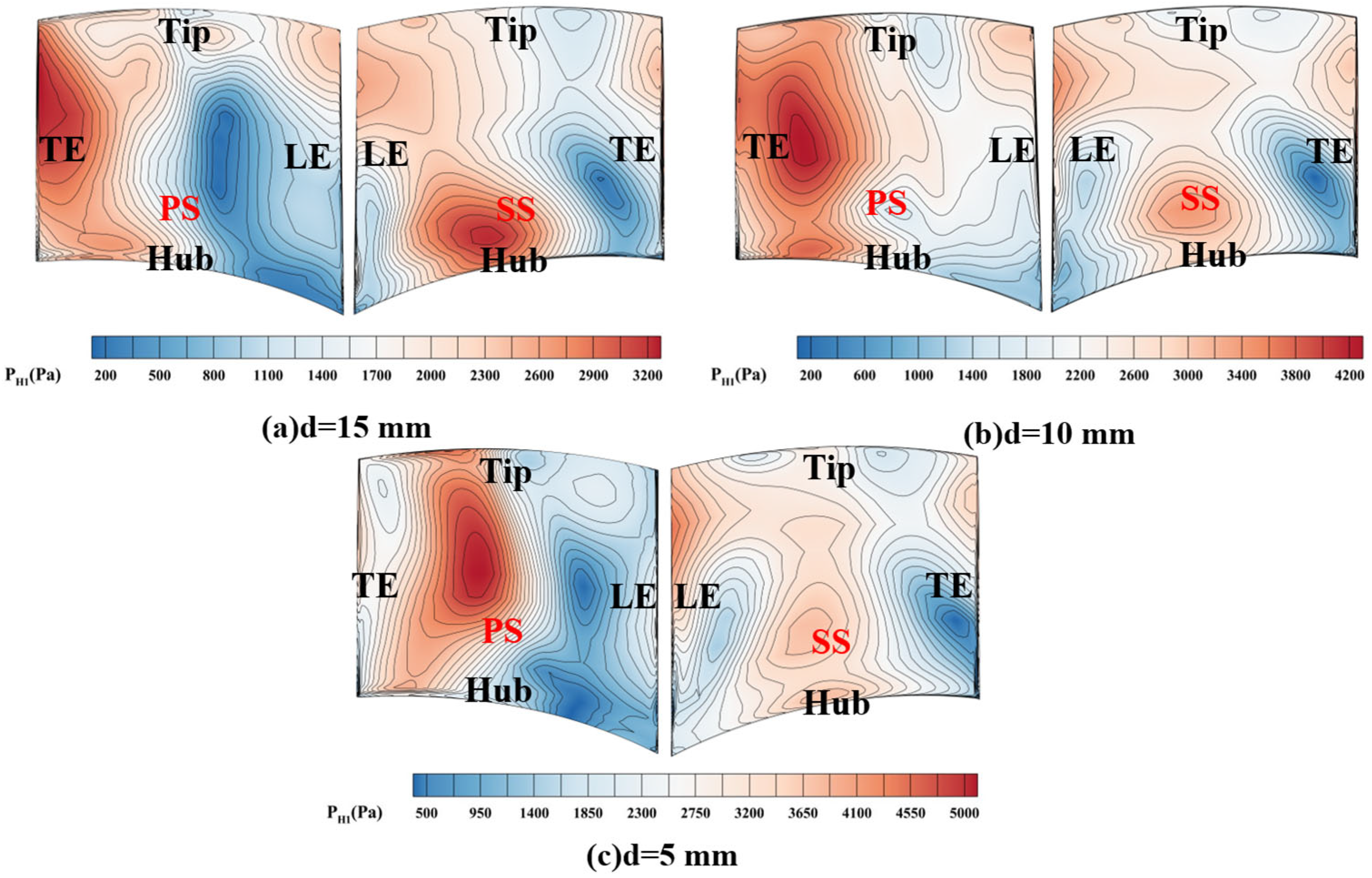
Furthermore, to quantitatively assess the influence of rotor–stator axial clearance on the magnitude and spatial distribution of aerodynamic excitation forces, the contours of the first four harmonic pressure amplitudes on the blade surface are extracted under various rotor–stator axial clearances, as shown in Figure 21. It should be emphasized that, within the current rotor–stator configuration, the first-order harmonic corresponds to the potential field dominated by the blade-passing frequency excited. Meanwhile, the higher-order harmonics characterize the nonlinear features and high-frequency flow distortions inherent in the flow-cutting process.
As shown in Figure 21, a comparison of the first-order aerodynamic pressure harmonic contours at different rotor–stator axial clearances reveals the following: Regarding the numerical variation trend, as the rotor–stator axial clearance decreases, both the potential flow interaction and wake interaction between the rotor and stator are significantly intensified, leading to a sharp increase in the pressure pulsation amplitude on the blade surface. From the contour legend, it can be observed that the global maximum amplitude of P H 1 surges from approximately 3200 Pa at d = 15   mm to about 5000 Pa at d = 5   mm . Furthermore, in terms of spatial distribution, the first-order pressure harmonic contours on the suction surface exhibit almost consistent spatial distribution across different rotor–stator axial clearances, primarily manifesting as a purely numerical increase in excitation amplitude. Conversely, the spatial distribution of the first-order pressure harmonic contours on the pressure surface shows some variation. Although the core region of strong excitation consistently remains near the trailing edge and blade tip, the high-pressure core region undergoes a degree of forward shift and reconstruction.
Simultaneously, to clarify the contribution of each frequency component to the total excitation energy, the contribution rate of each harmonic is defined as the ratio of its average pressure amplitude to the total unsteady pressure pulsation amplitude. The mathematical expressions are as follows:
P H k = A   P H k d A A   d A
η = k = 1 4 P H k P t o t a l u n s t e a d y
where P H k represents the area-weighted average pressure amplitude of the k-th harmonic on the blade surface; P H k denotes the k-th harmonic pressure amplitude at local nodes; A is the rotor blade surface area; η signifies the cumulative contribution of the first four harmonics; and P t o t a l _ u n s t e a d y is the total mean unsteady pressure pulsation amplitude extracted in the time domain.
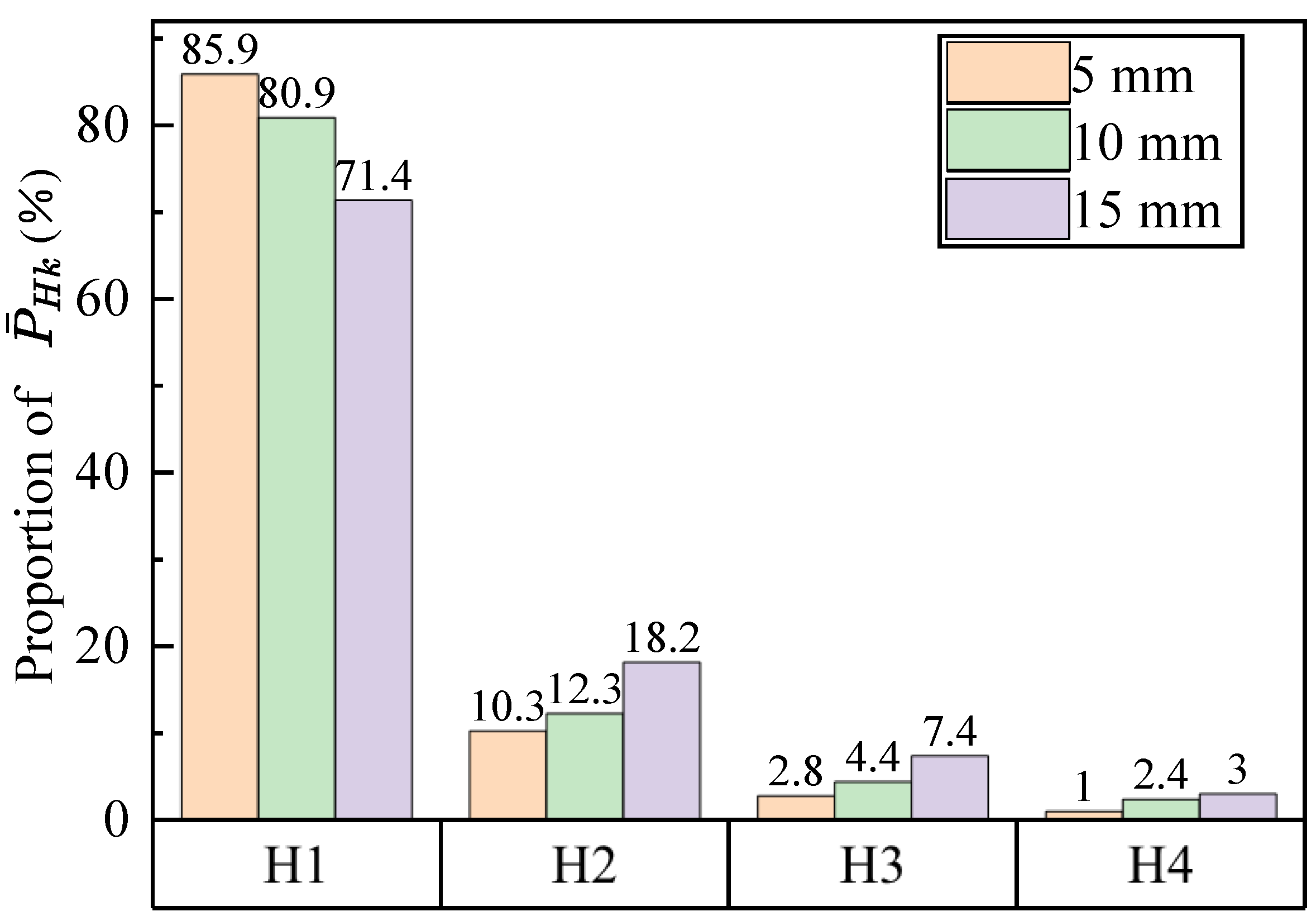
Figure 22 illustrates the proportions of the first four aerodynamic pressure harmonic amplitudes on the blade surface under various rotor–stator axial clearances. As the rotor–stator axial clearance increases from 5 mm to 15 mm, the proportion of the first-order harmonic (H1) decreases monotonically from 85.9% to 71.4%, while the shares of higher-order harmonics (H2–H4) exhibit a monotonic upward trend. At the small rotor–stator axial clearance of 5 mm, the interaction is dominated by the potential field, with energy being highly concentrated in the first-order harmonic. As the axial distance increases, the potential field disturbance decays exponentially, and the unsteady excitation acting on the blade gradually evolves into a viscous-wake-dominated regime. The pressure deficit induced by the wake sweeping across the blade intensifies the non-sinusoidal nature of the excitation force waveform, which manifests in the frequency domain as an escalation in the relative proportions of higher-order harmonic components.
It is important to note from a theoretical perspective that these spatial topological stability and clearance-attenuation laws hold true across a broader frequency range, including the first and third modes. The spatial topology of the aerodynamic excitation is governed entirely by the upstream potential flow decay of the stators, which is independent of the structural natural frequencies. As long as the blisk vibrates within the linear elastic regime, altering the axial clearance merely scales the global aerodynamic energy input without changing the structural mode shapes or the spatial distribution of the pressure forces. In summary, the analysis in this section reveals that the rotor–stator axial clearance has a negligible impact on the spatial topological distribution of the dominant first-order harmonic pressure. However, as the rotor–stator axial clearance decreases, the potential field interaction intensifies sharply, which not only significantly amplifies the absolute energy of the excitation force but also leads to a higher concentration of unsteady flow energy at the fundamental frequency. These aerodynamic response laws provide critical guidance for the configuration design of the excitation source in the rotating modal test rig used in this study.

5. Experimental Results and Validation

Dynamic strain responses of the rotating blisk were recorded during spin-down operations via strain gauges, utilizing the experimental setup and procedures previously described in Section 2.

5.1. Dynamic Strain Response of the Rotating Blisk

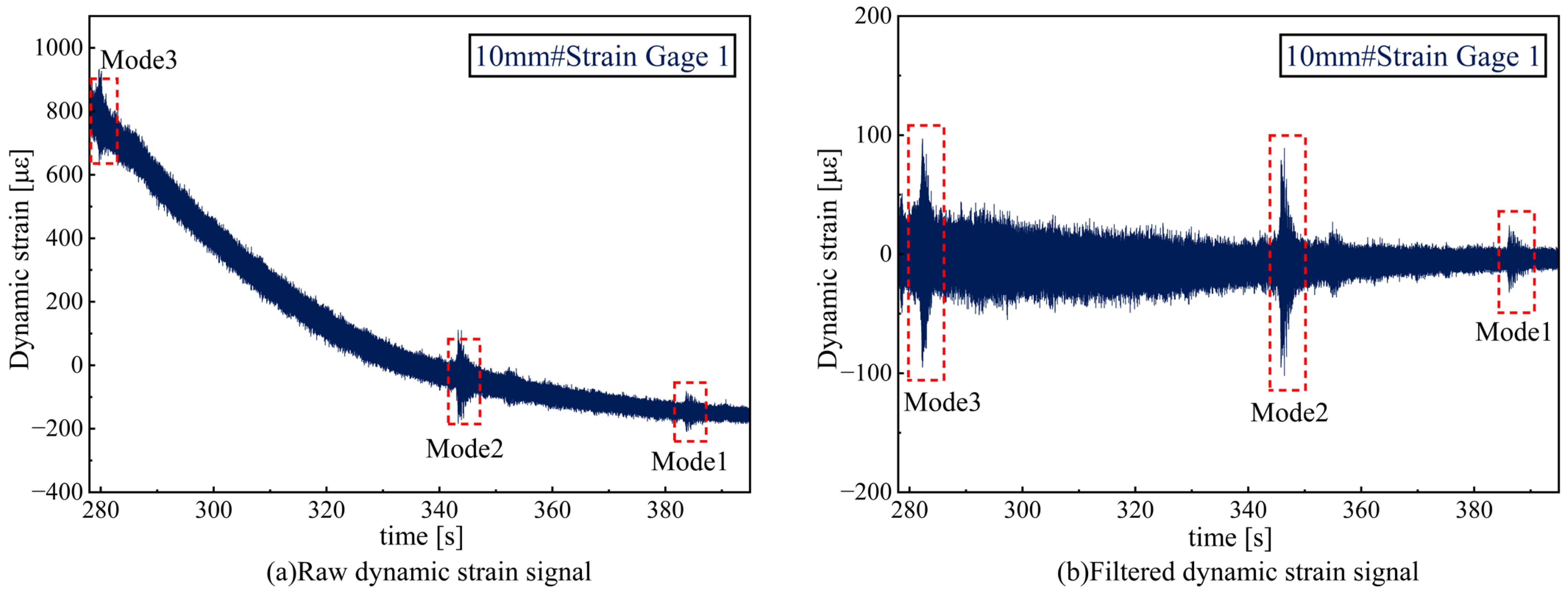
Figure 23 presents the dynamic strain from strain gauge 1 (sampled at 20 kHz) during a spin-down sweep with a 10 mm rotor–stator axial clearance, showing (a) the raw time-domain signal and (b) the band-pass-filtered signal. From the perspective of macroscopic sweep dynamics, the rotational frequency of the rotor and the corresponding excitation frequency gradually decreases over time due to the applied spin-down condition. Figure 23a indicates that the continuously decreasing excitation frequency sequentially crosses three different orders of natural frequencies of the bladed disk system, in the time interval of 280 s to 400 s, thereby exciting three independent and significant transient resonance peaks. Furthermore, observing the macroscopic trend of the raw strain signal in Figure 23a, the baseline exhibits a significant downward shift (from approximately (from approximately 800 με down to 0 με) as the rotational speed decreases. This phenomenon is physically driven by the reduction in static mean strain, which is caused by the diminishing centrifugal stretching and untwisting forces acting on the blades during the deceleration process. In contrast, Figure 23b displays the band-pass-filtered strain signal, where this static centrifugal strain component and low-frequency background vibrations are effectively removed, stabilizing the baseline near zero. Meanwhile, the three distinct resonance responses corresponding to the different orders of natural frequencies remain clearly captured.
Additionally, Table 5 presents the comparison between the experimental and numerical resonant frequencies of the blade, where the numerical results correspond to those presented in Figure 13. The comparison demonstrates the exceedingly high accuracy of the finite element model in capturing the overall stiffness and mass distribution.
As evident from the full-frequency spin-down sweep results shown in Figure 23, the second-order mode demonstrates superior excitation response characteristics. Not only is its resonance amplitude substantially higher than that of the first mode, but it also successfully circumvents the severe broadband background vibration interference that occurs in the high-speed regime corresponding to the third mode. Given its exceptional signal-to-noise ratio and distinct modal independence, the second-order mode is purposely selected as the representative condition herein to comprehensively explore the effect of varying excitation distances on the bladed disk vibration.
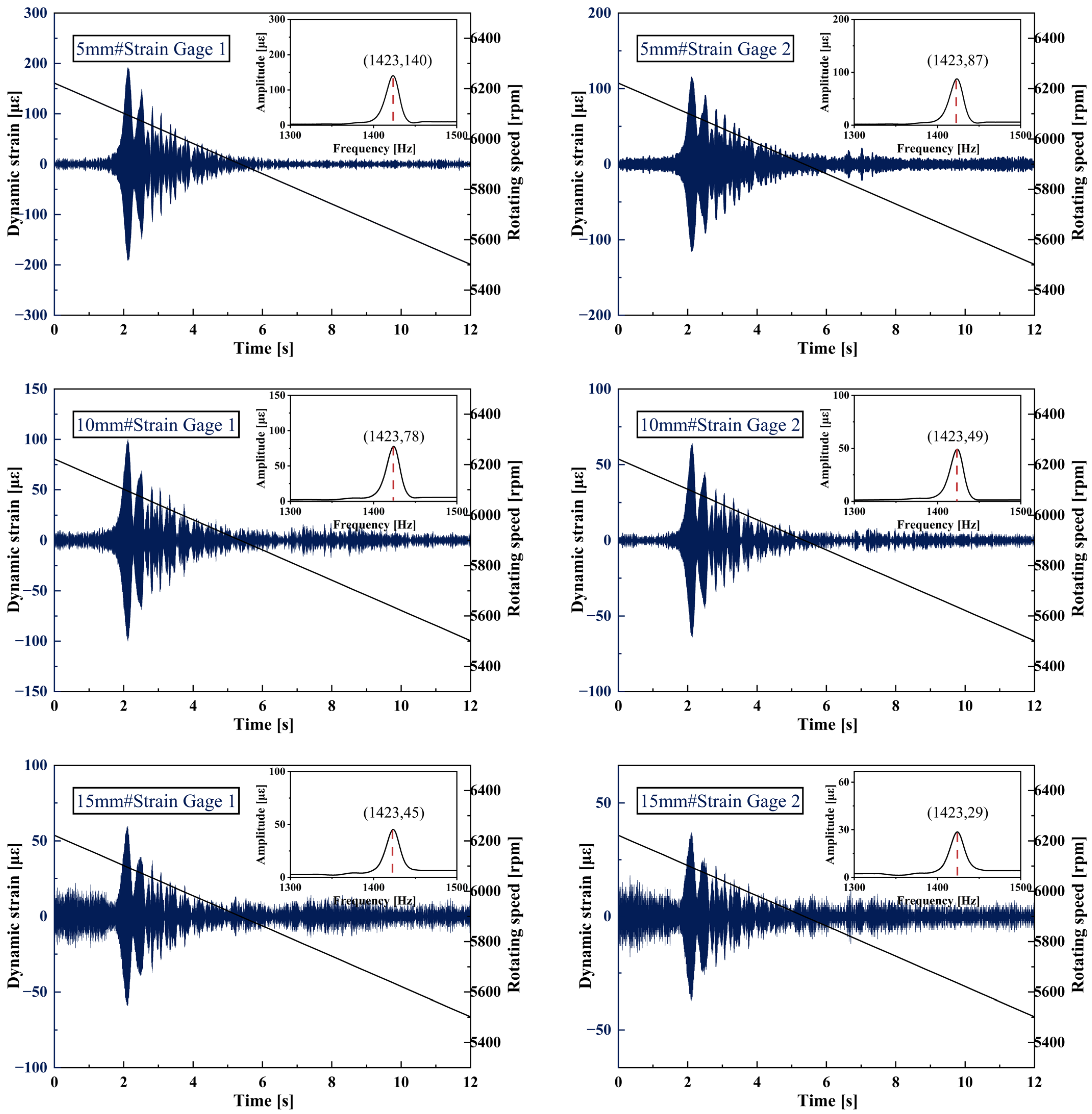
Figure 24 illustrates the experimental dynamic strain responses measured at gauges 1 and 2 across three rotor–stator axial clearances (5 mm, 10 mm, and 15 mm). These results were captured during a decelerating sweep test, as the rotating blisk traversed the resonance region corresponding to its second vibration mode. By systematically comparing these time–frequency characteristics, several key observations regarding the structural dynamic response can be derived:
First, as observed from the amplitude–frequency insets in each subplot, regardless of the variations in the rotor–stator axial clearance, the second-order resonance frequency at the measurement points remains highly stable at approximately 1423 Hz, accompanied by a highly consistent resonance mode shape. This indicates that modifying the rotor–stator axial clearance merely alters the energy inputted into the system without affecting the overall spatial distribution of the excitation force on the blade surfaces, thereby corroborating the analysis in Section 4.4.
Second, in the time-domain signals across all operating conditions, the primary resonance peak is consistently followed by a distinct beat wave packet. This confirms the physical mechanism in the low-damping bladed disk system wherein after sweeping through the resonance zone its inherent free decay vibration interferes with the residual transient forced excitation.
Third, under identical conditions, the resonance amplitude of strain gauge 1 consistently and significantly exceeds that of strain gauge 2, demonstrating pronounced vibration localization. To quantify this characteristic, a spatial strain amplitude ratio is defined as
R d = ε m a x 1 d ε m a x 2 d
where ε m a x 1 ( d ) and ε m a x 2 ( d ) denote the maximum dynamic strain amplitudes measured by strain gauges 1 and 2 at an rotor–stator axial clearance d. Substituting the extracted experimental peaks into the equation yields amplitude ratios ( R 5 m m , R 10 m m , R 15 m m ) of 1.61, 1.59, and 1.55, respectively. The high stability of this ratio reveals that, within the current test range, the bladed disk operates in a linear response regime. Thus, the asymmetric distortion of its spatial response is solely governed by the slight inherent structural mistuning, completely independent of variations in external excitation energy.
Finally, as the rotor–stator axial clearance increases from 5 mm to 15 mm, the resonance response amplitude of the blades exhibits a significant monotonically decreasing trend. Taking strain gauge 1 as an example, its maximum dynamic strain decays successively from 140 με to 78 με and 45 με, indicating a nonlinear attenuation effect of the rotor–stator axial clearance on the response amplitude. Concurrently, the background noise in the excitation signal increases at larger axial distances. These observations strongly corroborate the earlier flow-field analysis, which demonstrated that the excitation force intensity drops substantially as the rotor-stator axial clearance widens.

5.2. Comparison of Numerical and Experimental Amplitude–Frequency Responses

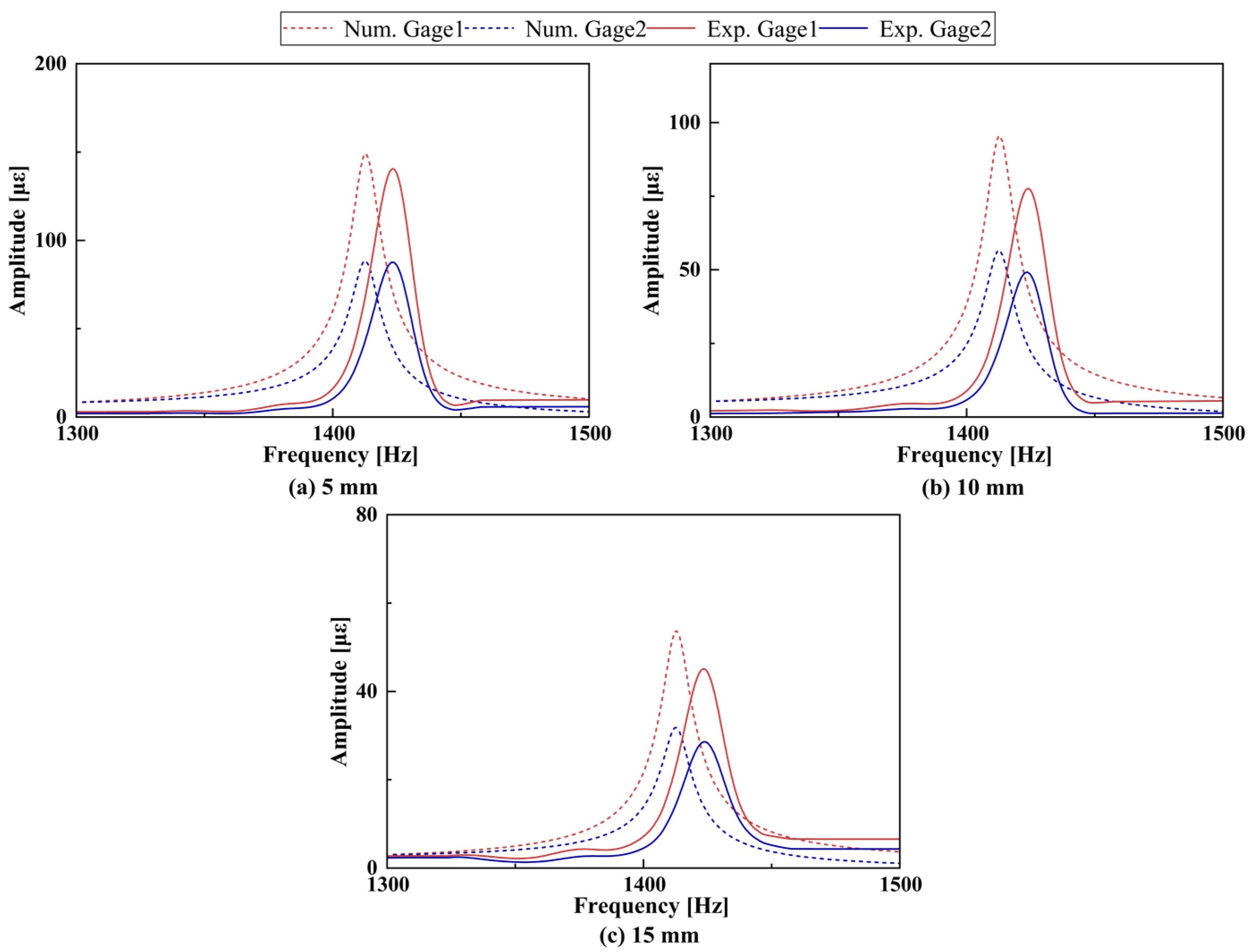
In this section, the experimental results are compared with the numerical simulation results. The numerical data were extracted from harmonic response vibration analyses using the first four orders of pressure harmonics as inputs, with strain values obtained at the corresponding measurement locations. Figure 25 shows the comparison of strain amplitude–frequency response curves at strain gauge points 1 and 2 under different rotor–stator axial clearances: (a) 5 mm, (b) 10 mm, and (c) 15 mm. Overall, the numerical simulations show good agreement with the experimental data, accurately capturing the dynamic response characteristics of the structure. As the rotor–stator axial clearance increases from 5 mm to 15 mm, the blade resonance strain amplitude exhibits a significant attenuation trend. Specifically, the measured peak at gauge 1 drops from approximately 140 με to 45 με.
The numerical model successfully predicts this amplitude decay, which strongly corroborates the aerodynamic findings in Section 4: as the distance from the downstream vortex generators increases, the intense potential flow interference decays exponentially, leaving the weaker viscous wake interaction to dominate the excitation energy. Furthermore, across all simulation cases and experimental conditions, the response amplitude at gauge 1 is consistently higher than that at gauge 2, with their ratio remaining highly stable at approximately 1.69. This high consistency in predicting the relative magnitude relationship validates that modifying the rotor–stator axial clearance merely alters the absolute energy inputted into the system, without disrupting the spatial topology of the aerodynamic force or the inherent structural mode shape.
Table 6 presents a quantitative comparison between the experimental and numerical results of the blade’s dynamic response at gauge points 1 and 2 under various rotor–stator axial clearances (5, 10, and 15 mm). The resonance frequencies measured experimentally were consistently stable at 1423 Hz across all conditions. The numerical resonance frequency of 1413 Hz maintains a minimal relative error of 0.7% compared to the experimental data, indicating that FEA model achieves high accuracy in the equivalent modeling of global stiffness and mass distribution. The relative errors for five out of six measurement cases are kept within 15%, with the minimum error as low as 1.1%; the 21.8% maximum relative error only occurs in a single extreme case (gauge point 1 under the 10 mm clearance condition), which is not a universal deviation across all working conditions. For predicting complex high-frequency structural dynamics, such error levels are well within an acceptable engineering range. This discrepancy in amplitude prediction, while well within the acceptable engineering range for complex high-frequency structural dynamics, unveils several intrinsic physical limitations of the current numerical framework that are worth discussing:
(1)
Sensitivity to structural damping and simplification of the one-way FSI framework: The predicted resonance amplitude is highly sensitive to the prescribed structural damping coefficient, as verified by the damping parameter sensitivity analysis supplemented in Section 3.1The numerical model adopts a constant stiffness-proportional damping coefficient, while the actual structural damping has slight amplitude-dependent nonlinearity, introducing an amplitude deviation of ±8.7% within the physically reasonable range. In addition, the rigid-blade assumption in the CFD calculation neglects the aeroelastic feedback effect and nonlinear aerodynamic damping, which cannot be captured by the one-way FSI framework.
(2)
Experimental measurement uncertainty and dynamic fluctuation of the test environment: We have corrected the inaccurate description in the original draft, and explicitly clarified that all boundary conditions of our numerical simulation are strictly consistent with the actual test environment (including the 25 Torr partial vacuum pressure, inlet flow parameters, and rotational speed settings). The maximum amplitude discrepancy in this single case mainly originates from the inherent uncertainty of the experimental test and the deviation between the actual dynamic test process and the ideal steady-state assumptions of the numerical simulation. During the test, the dynamic balance between the continuous operation of the vacuum pump and the air intake of the excitation system causes a slight real-time fluctuation of the chamber pressure (±2 Torr around the 25 Torr set value), which is not considered in the steady-state numerical simulation with fixed pressure boundaries. In addition, under the low-pressure vacuum environment, the aerodynamic excitation amplitude is inherently weak; for the 10 mm axial clearance condition (medium excitation intensity between the 5 mm strong excitation and 15 mm weak excitation), the signal-to-noise ratio of the dynamic strain measurement is in a sensitive range wherein the random uncertainty of the data acquisition system will be significantly amplified, which is the core source of the maximum amplitude deviation at gauge 1.
(3)
Structural mistuning effect of the actual blisk: The numerical model uses an ideal perfectly tuned cyclic symmetric structure, while the real manufactured blisk has inevitable slight geometric and material mistuning among the 23 blades, leading to vibration energy localization and local amplitude amplification that cannot be reproduced by the ideal numerical model.

Table 6. Experimental and numerical dynamic responses under varying rotor–stator axial clearances.
Contrast Item5 mm10 mm15 mm
Gauge 1Gauge 2Gauge 1Gauge 2Gauge 1Gauge 2
Numerical resultFrequency/Hz
Strain/
1410
149
1410
88
1410
74
1410
44
1410
44
1410
26
Experimental resultFrequency/Hz
Strain/
1423
140
1423
87
1423
78
1423
49
1423
45
1423
29
Relative errorFrequency/%
Strain/%
0.7%
6.4%
0.7%
1.1%
0.7%
21.8%
0.7%
14.3%
0.7%
2.2%
0.7%
10.3%

6. Conclusions

To address the challenges associated with the forced resonance testing and prediction of aero-engine blisks, this study develops a novel excitation test rig and a corresponding numerical prediction method. Different from current state-of-the-art rotating test rigs, which primarily rely on localized, idealized, point-source force pulses, and cannot faithfully replicate the three-dimensional unsteady aerodynamic excitation, the proposed testing facility utilizes downstream stationary vortex generators to induce rotor–stator interaction. By integrating the NLH method, one-way fluid–structure interaction analysis, and experiments, this research systematically elucidates the 3D aerodynamic excitation mechanisms and the dynamic response characteristics of the blisk. The principal conclusions of this study are summarized as follows:
(1)
The study developed a high-speed rotating excitation facility based on VG-induced aerodynamic interference, with which the first three vibration modes of the target blisk were successfully excited within the frequency range of up to 2600 Hz. Unlike the current state-of-the-art methods that primarily apply localized, idealized, point-source force pulses, the proposed VG configuration generates high-amplitude alternating aerodynamic forcing on the blade surfaces to induce the modal resonances of high-speed rotating blisks. Numerical simulations demonstrate that the alternating structure of high-pressure stagnation zones and low-pressure vortex regions propagates to the rotor blades via the potential flow field. This interaction induces high-amplitude alternating aerodynamic forcing on the blade surfaces, dominated by the blade-passing frequency. Experimental results validate the effectiveness of this non-contact aerodynamic excitation method in successfully triggering the modal resonances of high-speed rotating blisks.
(2)
A coupled NLH-CFD numerical framework was developed to efficiently and accurately calculate the aerodynamic harmonic loads on the blade surfaces. Comparisons with experimental dynamic strain data demonstrate the high accuracy of this method: the prediction error for resonance frequencies is below 0.7%, while the maximum resonance amplitude error is under 21.8%, with all remaining deviations strictly controlled within 15%.
(3)
The study demonstrates that modifying the rotor–stator axial clearance within the 5–15 mm range acts as a decoupled amplitude modulator. Specifically, the spatial topology of the dominant first-order harmonic pressure remains highly insensitive to clearance changes. The absolute excitation energy and the subsequent blisk resonance amplitude exhibit a strictly monotonic decrease, with the dynamic strain dropping by over 55% as the clearance widens from 5 mm to 15 mm. By enabling spatial locking and amplitude modulation of the excitation energy, the proposed testing facility provides a highly reliable, effective and highly controllable physical platform for studying the vibration characteristics of high-speed rotating blisks and the high-cycle fatigue characteristics of blades.

Author Contributions

Conceptualization, C.G. and H.X.; funding acquisition, H.X. and J.Q.; investigation, C.G. and H.X.; methodology, C.G.; resources, H.X. and J.Q.; software, C.G.; supervision, J.Q. and H.X.; validation, C.G. and H.S.; writing—original draft, C.G.; writing—review and editing, H.X. All authors have read and agreed to the published version of the manuscript.

Funding

This research was funded by Zhejiang HIRO Aeronautics Technology Co., Ltd.

Data Availability Statement

The data are not publicly available due to privacy.

Acknowledgments

The authors gratefully acknowledge Zhejiang HIRO Aeronautics Technology Co., Ltd. for providing the experimental conditions and financial support during the internship and research work of this study.

Conflicts of Interest

Author Hefang Shen was employed by the company Zhejiang HIRO Aeronautics Technology Co., Ltd. The remaining authors declare that the research was conducted in the absence of any commercial or financial relationships that could be construed as a potential conflict of interest.

References

  1. Aghayari, J.; Bab, S.; Safarpour, P.; Rahi, A. A novel modal vibration reduction of a disk-blades of a turbine using nonlinear energy sinks on the disk. Mech. Mach. Theory 2021, 155, 104048. [Google Scholar] [CrossRef]
  2. Zhu, Y.; Wang, Y.; Qiao, B.; Fu, S.; Liu, M.; Luo, X.; Chen, X. Full-field dynamic strain reconstruction of rotor blades under multi-mode vibration. Measurement 2022, 201, 111670. [Google Scholar] [CrossRef]
  3. Zheng, Y.; Gao, Q.; Yang, H. Forced Response Analysis of an Embedded Compressor Rotor Induced by Stator Disturbances and Rotor–Stator Interactions. Aerospace 2023, 10, 398. [Google Scholar] [CrossRef]
  4. Sanders, C.; Terstegen, M.; Jeschke, P.; Schoenenborn, H.; Heners, J.P. Rotor–stator interactions in a 2.5-stage axial compressor—Part II: Impact of aerodynamic modeling on forced response. J. Turbomach. 2019, 141, 101008. [Google Scholar] [CrossRef]
  5. Yang, J.; Zhang, W. Forced response analysis of the rotor blade rows with the ROM-based aeroelastic model. Aerosp. Sci. Technol. 2023, 139, 108366. [Google Scholar] [CrossRef]
  6. Long, Q.; Qi, M.; Wei, J. Investigation of aerodynamic excitation and forced vibration induced by rotor-stator interaction on the radial turbine with double-row staggered tubular nozzles in aircraft environment control system. Aerosp. Sci. Technol. 2025, 169, 111447. [Google Scholar] [CrossRef]
  7. Giri, R.; Turner, M.; Celestina, M. Application of Non-Linear Harmonic and Time Marching techniques to analyze aerodynamics of inlet distortion in a Tail-Cone Thruster Fan stage. In Proceedings of the AIAA Scitech 2020 Forum, Orlando, FL, USA, 6–10 January 2020. [Google Scholar]
  8. Pinelli, L.; Burberi, C.; Ignesti, M.; Michelassi, V.; Tapinassi, L.; Abati, A.; Pacciani, R. Forced response in a multi-stage aeroderivative axial compressor with acoustic excitations: Method validation with field data. Aerosp. Sci. Technol. 2023, 138, 108305. [Google Scholar] [CrossRef]
  9. Mekhalfia, M.L.; Procházka, P.; Smid, R.; Bonello, P.; Russhard, P.; Maturkanič, D.; Mohamed, M.E.; Tchuisseu, E.B.T. Electromagnetic Excitation for Blade Vibration Analysis in Static Conditions: Theoretical Insights and Experimental Evaluation. IEEE Trans. Instrum. Meas. 2024, 73, 6011008. [Google Scholar] [CrossRef]
  10. Jones, K.W.; Cross, C.J. Traveling wave excitation system for bladed disks. J. Propuls. Power 2003, 19, 135–141. [Google Scholar] [CrossRef] [PubMed]
  11. Al-Athel, K.; Al-Qahtani, H.; Sunar, M.; Malgaca, L.; Omar, A. Sensing and control of thermally induced vibrations of stationary blades using piezoelectric materials. Arab. J. Sci. Eng. 2018, 43, 1301–1311. [Google Scholar] [CrossRef]
  12. Carassale, L.; Rizzetto, E. Experimental investigation on a bladed disk with traveling wave excitation. Sensors 2021, 21, 3966. [Google Scholar] [CrossRef] [PubMed]
  13. Kelley, C.R.; Lopp, G.K.; Kauffman, J.L. Optimizing piezoelectric material location and size for multiple-mode vibration reduction of turbomachinery blades. J. Vib. Acoust. 2021, 143, 021007. [Google Scholar] [CrossRef]
  14. Fan, X.; Liang, W.; Zeng, J.; Yang, Y.; Ma, H.; Fan, C.; Fu, S. Dynamic characteristics of a rotating blade with a dovetail fixture. Machines 2023, 11, 643. [Google Scholar] [CrossRef]
  15. Wu, Y.; Xuan, H.; Wu, C.; Mi, D.; Qu, M.; Jin, T. Study on the Forced Torsional Vibration Response of Multiple Rotating Blades with Underplatform Dampers. Aerospace 2023, 10, 725. [Google Scholar] [CrossRef]
  16. Wu, Y.; Xuan, H.; Wu, C.; Mi, D. Effect of under-platform dampers on the forced vibration of high-speed rotating blades. J. Mech. Sci. Technol. 2022, 36, 3837–3850. [Google Scholar] [CrossRef]
  17. Kurstak, E.; D’Souza, K. An experimental and computational investigation of a pulsed air-jet excitation system on a rotating bladed disk. J. Eng. Gas Turbines Power 2021, 143, 011017. [Google Scholar] [CrossRef]
  18. D’Souza, K.; Kurstak, E.; Ruff, K.; Dunn, M.G. A new experimental facility for characterizing bladed disk dynamics at design speed. AIAA J. 2020, 58, 2682–2690. [Google Scholar] [CrossRef]
  19. Lamine Mekhalfia, M.; Procházka, P. Analytical and experimental modal analysis of a bladed disk. J. Phys. Conf. Ser. 2024, 2698, 012015. [Google Scholar] [CrossRef]
  20. Bornassi, S.; Berruti, T.; Firrone, C.; Battiato, G. Vibration parameters identification of turbomachinery rotor blades under transient condition using Blade Tip-Timing measurements. Measurement 2021, 183, 109861. [Google Scholar] [CrossRef]
  21. Yao, M.; Song, R.; Niu, Y.; Wu, Q.; Yang, Y.; Ma, L. Stepwise equivalent modeling for the blisk under nonlinear aerodynamic excitation considering fluid-structure interaction. Aerosp. Sci. Technol. 2025, 159, 110015. [Google Scholar] [CrossRef]
  22. Drewczynski, M.; Rzadkowski, R. A stress analysis of a compressor blade in partially blocked inlet condition. Proc. Inst. Mech. Eng. Part G J. Aerosp. Eng. 2016, 230, 934–952. [Google Scholar] [CrossRef]
  23. Kovachev, N.; Müller, T.R.; Waldherr, C.U.; Vogt, D.M. Prediction of Low-Engine-Order Excitation Due to a Nonsymmetrical Nozzle Ring in a Radial Turbine by Means of the Nonlinear Harmonic Approach. J. Eng. Gas. Turbines Power 2019, 141, 121004. [Google Scholar] [CrossRef]
  24. Yu, Y.; Wang, Y.; Han, L. Numerical simulation study on aeroelastic stability mechanism of a transonic fan rotor. Aerosp. Sci. Technol. 2025, 162, 110193. [Google Scholar] [CrossRef]
  25. Mayorca, M.A.; Vogt, D.M.; Fransson, T.H.; Mårtensson, H. A new reduced order modeling for stability and forced response analysis of aero-coupled blades considering various mode families. J. Turbomach. 2012, 134, 051008. [Google Scholar] [CrossRef]
  26. Ye, C.; Huang, W.; Yan, H.; Zheng, Y.; Kan, K.; Van Esch, B. Study on rotating stall characteristics of centrifugal pumps based on gamma transition model. Phys. Fluids 2024, 36, 055101. [Google Scholar] [CrossRef]
Figure 1. Schematic of harmonic pressure distribution on blades induced by rotor–stator interference.
Aerospace 13 00432 g001
Figure 2. Experimental apparatus. (a) Schematic diagram; (b) Photograph of the test rig.
Aerospace 13 00432 g002
Figure 3. Geometric parameters of VG. (a) Physical picture; (b) Dimensions (mm) (left view); (c) Dimensions (mm) (top view).
Aerospace 13 00432 g003
Figure 4. Experimental setup of the bladed disk and layout of the strain gauges.
Aerospace 13 00432 g004
Figure 6. Simulation process.
Aerospace 13 00432 g006
Figure 7. Finite element model and mesh.
Aerospace 13 00432 g007
Figure 8. Amplitude–frequency response curves of the blisk under different stiffness-proportional damping coefficients, compared with experimental data.
Aerospace 13 00432 g008
Figure 9. Computational domain of the flow field. (a) 3D schematic model; (b) 2D cross-sectional view with dimensions.
Aerospace 13 00432 g009
Figure 10. Computational mesh of the blade and local magnified views.
Aerospace 13 00432 g010
Figure 11. Grid independence verification: (a) pressure variation of monitoring point; (b) outlet mass flow rate.
Aerospace 13 00432 g011
Figure 12. The convergence trace of unsteady simulation.
Aerospace 13 00432 g012
Figure 13. Campbell diagram of the blade and the excitation frequency for different vortex generators.
Aerospace 13 00432 g013
Figure 14. First three modes of the blade.
Aerospace 13 00432 g014
Figure 15. The monitoring point distribution over the rotor suction surface.
Aerospace 13 00432 g015
Figure 16. Pressure evolution of different monitoring points over the suction surface.
Aerospace 13 00432 g016
Figure 17. The frequency-domain results of pressure.
Aerospace 13 00432 g017
Figure 18. Time-averaged static pressure contour on rotor–stator interface.
Aerospace 13 00432 g018
Figure 19. Instantaneous static pressure contour on the rotor–stator interface at the 90% spanwise section.
Aerospace 13 00432 g019
Figure 20. FFT spectral results of typical monitoring points with different rotor–stator axial clearances.
Aerospace 13 00432 g020
Figure 21. Contours of the first-order harmonic pressure amplitude on the blade surface at different rotor–stator axial clearances.
Aerospace 13 00432 g021
Figure 22. Proportions of the first four aerodynamic pressure harmonic amplitudes on the blade surface under different rotor–stator axial clearances.
Aerospace 13 00432 g022
Figure 23. Dynamic strain response of the blade with 10 mm rotor–stator axial clearance.
Aerospace 13 00432 g023
Figure 24. Responses of the blisk at the second-order mode under different rotor–stator axial clearances. (The horizontal axis represents the localized relative time during the decelerating sweep through the resonance zone).
Aerospace 13 00432 g024
Figure 25. Dynamic responses of the blade under different rotor–stator axial clearances.
Aerospace 13 00432 g025
Table 1. Geometric properties of the investigated test system.
ParameterValueUnit
Number of rotor blades23-
Number of vortex generators (VGs)14-
Maximum tip diameter of blisk396mm
Rotor–stator axial clearance5/10/15mm
Table 2. Material properties of test rotor.
ParameterValueUnit
Density4450Kg/m3
Young’s modulus125GPa
Poisson’s ratio0.25-
Table 3. Sensitivity analysis results of the stiffness-proportional damping coefficient. (5 mm rotor–stator axial clearance, second-order mode).
Contrast Item1 × 10−71 × 10−81 × 10−9Experiment
Gauge 1Frequency/Hz
Strain/με
1410
14.7
1410
149
1410
1467
1423
140
Gauge 2Frequency/Hz
Strain/με
1410
8.7
1410
88
1410
861
1423
87
Table 4. Main parameters and boundary conditions for 3D numerical simulation.
ParameterValue
Turbulence modek-ω SST Model
Heat transferTotal Energy
Working fluidIdeal Gas
Rotor–stator interfaceFrozen Rotor (Steady)/Transient (Unsteady)
Rated speed of blade disk6042 rpm
Inlet total pressure (stable)0.5 MPa
Inlet total temperature23 °C (296.15 K)
Outlet static pressure3333 Pa (25 Torr)
Reference pressure0 Pa
Convergence precision<1 × 10⁻⁵
Table 5. Comparison of natural frequency results between experimental and numerical results.
ModeExperimental Mode/HzNumerical Mode/HzRelative Error/%
17036655.4
2142314100.9
3255126303.1
Disclaimer/Publisher’s Note: The statements, opinions and data contained in all publications are solely those of the individual author(s) and contributor(s) and not of MDPI and/or the editor(s). MDPI and/or the editor(s) disclaim responsibility for any injury to people or property resulting from any ideas, methods, instructions or products referred to in the content.