Article

High-Fidelity VR Simulation for Aircraft Maintenance Training

1
Faculty of Aeronautical Engineering, Vietnam Aviation Academy, Ho Chi Minh City 700000, Vietnam
2
Aviation Management (BCD Cluster), Singapore Institute of Technology, 1 Punggol Coast Road, Singapore 828608, Singapore
3
Vietjet Aviation Academy, Ho Chi Minh City 700000, Vietnam
4
Faculty of Applied Science, School of Engineering, The University of British Columbia, Okanagan Campus, 1137 Alumni Avenue, Kelowna, BC V1V 1V7, Canada
*
Author to whom correspondence should be addressed.
Aerospace 2026, 13(5), 423; https://doi.org/10.3390/aerospace13050423
Submission received: 4 December 2025 / Revised: 25 February 2026 / Accepted: 4 March 2026 / Published: 1 May 2026
(This article belongs to the Section Aeronautics)

Abstract

Providing regulation-compliant, high-fidelity training in aircraft maintenance remains challenging for institutions of education, where access to real aircraft, specialist tools, and operational environments is limited by cost, safety, and resource factors. This paper presents the design, in-house development, and pilot deployment of a virtual reality (VR) training system for an operationally critical maintenance procedure—Airbus A320 nose landing gear (NLG) wheel removal, strictly following the official Airbus Aircraft Maintenance Manual (AMM). Managed by an Agile-based methodology, the application, programmed with the Unity engine, uses full-size 3D CAD models and domain-expert input iteratively for quality-assured and rapid deployment. The system was piloted with aeronautical engineering students at the Vietnam Aviation Academy (VAA), achieving significant engagement and perceived gains for procedure knowledge and skill development. Positive comments emphasized the realistic, interactive, and repeatable quality of the simulation. Usability issues related to controller handling, cybersickness, and the absence of haptic feedback, however, suggest opportunities for refinement. This paper reports an early published case study of VR use in commercial aircraft maintenance training that is practically replicable and scalable, and developed in alignment with applicable civil aviation procedural requirements. It suggests that such a high-fidelity VR training platform can provide an accessible solution for aviation stakeholders to help bridge classroom training and real-world application in safety-critical training contexts.

1. Introduction

Aircraft maintenance is one of the keys to aircraft operations in providing airworthy status, and the quality of such maintenance is paramount to operational safety. Although the overall quality of aircraft maintenance relies on complicated and multidimensional determinants, technical competency of maintenance staff is most essential in assuring quality and safety [1,2,3].
Aircraft maintenance training is a very demanding process involving theoretical education and practical training on particular aircraft types and systems. Yet, regular training arrangements, even if carried out by industrial organizations like Airlines or Maintenance, Repair, and Overhaul (MRO) shops, have several weaknesses. These typically include the unavailability of actual aircraft and specialty equipment [4], as well as hazardous working conditions [5], which equate to prohibitive costs, enormous time demands, and infrequent practice [6]. These training shortcomings are often exacerbated in academic environments, where aircraft courses are restricted to classroom settings with the minimal resources of academic institutions, resulting in a lack of practice and a possible reduction in trainee engagement and learning effectiveness. In this, the creation of accessible and effective means of enhancing practical aircraft maintenance training is of great value to academia and industry alike.
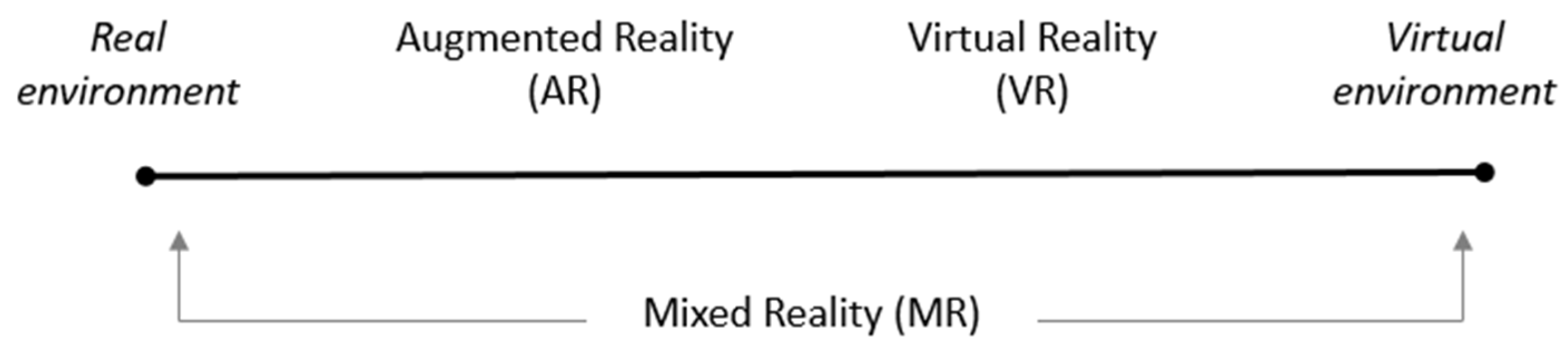
Virtual reality (VR) technologies, which were first developed in the 1960s, have in recent years been reaffirmed as a significant driver of global economic development. VR has been projected to be a key driver of digital economy expansion in a number of industries, such as healthcare [7,8] and media [9]. The new technology has been discovered to be beneficial in enhancing productivity, efficiency, and operational expenses [6]. In education and training [10,11], numerous studies show the advantages of utilizing VR, particularly for procedural tasks [12], through the improvement in students’ performance and participation [13]. VR is a subset of a broader technology discipline called Mixed Reality (MR) [14], which enables the potential to create a ‘numerical twin’ in a virtual space with the capability to replicate a related system of the real world (Figure 1) [15]. Despite VR being touted as a novel educational medium, research also suggests that the extent to which it is beneficial varies greatly on how effectively it is designed and deployed [16]. Excessive complexity or graphically rich VR settings have the potential to distract students’ attention and even degrade performance [17]. Such results highlight the need to design VR tools with appropriate guidance to prevent shallow or counter-effective effects. Within aviation, VR technology has only recently been used in training for particular niche applications, i.e., pilots’ flight simulators [18], aircraft marshaling or turnaround checks for ground personnel [19].
Yet, for aviation engineering and maintenance, not many applications of the VR type are reported in the literature [6], with some exceptions, e.g., engine run-up procedures reported by Airbus [20] or walk-around visual inspection tasks [21]. These kinds of applications tend to follow a ‘checklist’ form of activity, where tasks are merely checked off, thus reducing the level of interactive manipulation among virtual objects. Further, the software, which is supposed to be created by OEMs [20] for commercial reasons with unshared productive methodologies, restricts access to the majority of active institutions providing this type of instruction in aircraft maintenance, particularly universities. Notably, Gómez-Cambronero et al. (2023) [22] describe a Boeing 737 VR training scenario experimentally tested with 22 undergraduate students of aeronautical engineering, but the simulation is devoid of apparent reference to OEM documentation or regulation standards, reducing its industrial applicability. In particular, Wu and Vu (2022) [21] model maintenance tasks for the Dornier 228 small airplane and mention its maintenance manual but do not demonstrate clearly how OEM-approved step-by-step tasks are specifically realized as VR tasks and aligned with aviation regulations. It is further noted that both studies used relatively modest samples of participants, 22 and 26 students, respectively, potentially restricting generalizability; however, these kinds of sample sizes are not exceptional in this niche discipline, where VR-based applications are still in the process of emerging and access to suitable participants, qualified data, and operational training environments is still restricted in practice. Both samples allude to the wider shortage of high-profile, practically informed VR deployments replicating real-world procedures for contemporary aircraft such as those manufactured by Airbus or Boeing. Without this kind of integration, it remains difficult to estimate the usability of VR systems in strongly regulated industrial contexts.
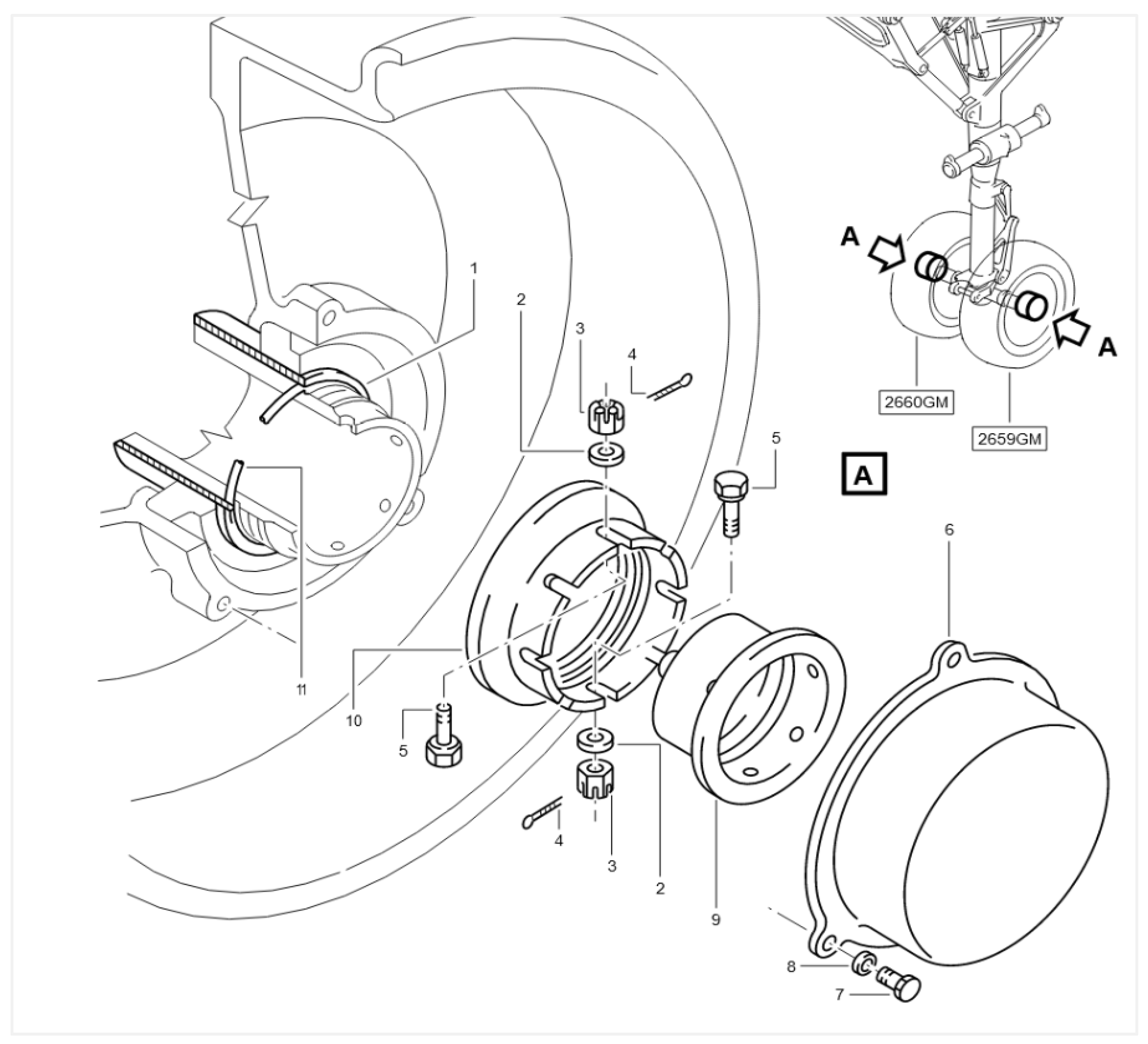
To complement the above gaps found in the current literature, i.e., the limited references to industrial-standards-compliant, pedagogically effective, and realistic virtual reality applications for commercial aircraft maintenance training, the current study presents a complete in-house developed virtual reality training platform focusing on a high-fidelity procedural mission: removal of the nose landing gear (NLG) wheel from an Airbus A320 aircraft (Figure 2). In contrast to previous research that frequently employs oversimplified checklist-based engagements or shows limited alignment with OEM documentation in terms of rigor, the present study follows OEM-certified data and conforms to applicable civil aviation regulations. Consequently, this approach importantly increases its applicability to practical real-life scenarios and its utility for educational purposes at the higher education level (and similar related programs like Approved Training Organizations (ATOs)).
The selection of the Airbus A320 was based on its large popularity, in terms of fleet number [23], in both international and Vietnamese markets, and the removal of wheel and tire systems from the aircraft landing gear is a practical task undertaken frequently by qualified maintenance technicians. Removal of the nose landing gear (NLG) wheel and tire from an Airbus A320 is a critical maintenance mission that requires correct sequencing and strict adherence to procedure in aircraft maintenance. The procedure is a multi-step operation that demands precision, safety consciousness, and thorough knowledge of the aircraft systems, as any deviation can endanger safety and damage components. In practice, it is well noted that the initial logical step prior to the utilization of any tools is a careful reading of the applicable portions of the Aircraft Maintenance Manual (AMM), which provides the required tooling specifications, safety precautions, and task sequencing. Failure to refer to the AMM can result in using the incorrect tools, incorrect actions, or omission of critical safety warnings. Precisely, the present work offers several key contributions that distinguish it from earlier efforts:
(i)
The procedural workflow is conducted in strict compliance with the Airbus Aircraft Maintenance Manual (AMM Task 32-41-12-000-001-A) [24];
(ii)
The VR system was created and implemented entirely in-house using Unity [25], an open-source engine, based on genuine OEM technical data;
(iii)
Full-scale 3D CAD models were created to digitally replicate actual aircraft components, programmed for interactive manipulation in step-by-step relation to AMM tasks;
(iv)
The application offers high interactivity, with learners able to interact directly with aircraft parts and tools as per maintenance sequences practiced in industry;
(v)
The system architecture was purposely designed to be scalable and extendable to other systems of the Airbus A320 or to other aircraft types.
Figure 2. Airbus A320 nose gear wheel (AMM, Figure 32-41-12-991-00100-00-A (SHEET 1)–Nose Gear Wheel ** ON A/C FSN ALL) [24].
Aerospace 13 00423 g002
In contrast to the low fidelity and relevance of earlier versions of the prototype, this virtual reality solution is able to effectively replicate actual maintenance activities with procedural realism and technical validity. To achieve this, the current project was conducted using an Agile project management methodology [26], which is well-suited to the cross-disciplinary and iterative process of VR simulation development. Agile methodologies facilitate adaptive planning and adopt evolving stakeholders’ feedback, qualities integral to projects where subject matter experts, like certified mechanics and educators, need to work closely with software programmers. It allows the VR tool production cycle to be shortened without quality compromise. This strategy is proving effective in situations with intricate requirements and scarce resources [27], and has even been shown to work well even in highly regulated, safety-critical domains [28] such as aerospace [29,30].
The rest of this paper is structured as follows: Section 2 presents the methodology, outlining an Agile-based development process of the VR tool and conducting an initial training session. Section 3 reports and discusses the findings, both in terms of the technical viability of the VR platform itself and also initial learner reaction via surveys. Section 4 concludes with a summary of the main findings, limitations, and future directions with regard to introducing immersive VR technology within the higher education and industry-orientated training environment.

2. Methodology

2.1. Virtual Reality Product Development

The project’s virtual reality (VR) platform was written completely in-house, a strategic choice to produce an affordable training tool precisely crafted to address our pedagogical requirements in this particular area of application. To control the intricacies of this development, we utilized a project management approach founded on Agile concepts [26]. Agile methods allow for adaptive planning and diverse stakeholder contributions necessary for cross-disciplinary projects in which domain specialists, i.e., experienced mechanics and educators, must work in close collaboration with computer programmers and potential users. This approach is particularly effective in circumstances with challenging requirements (e.g., highly regulated, safety-critical environments like aerospace) and limited resources.
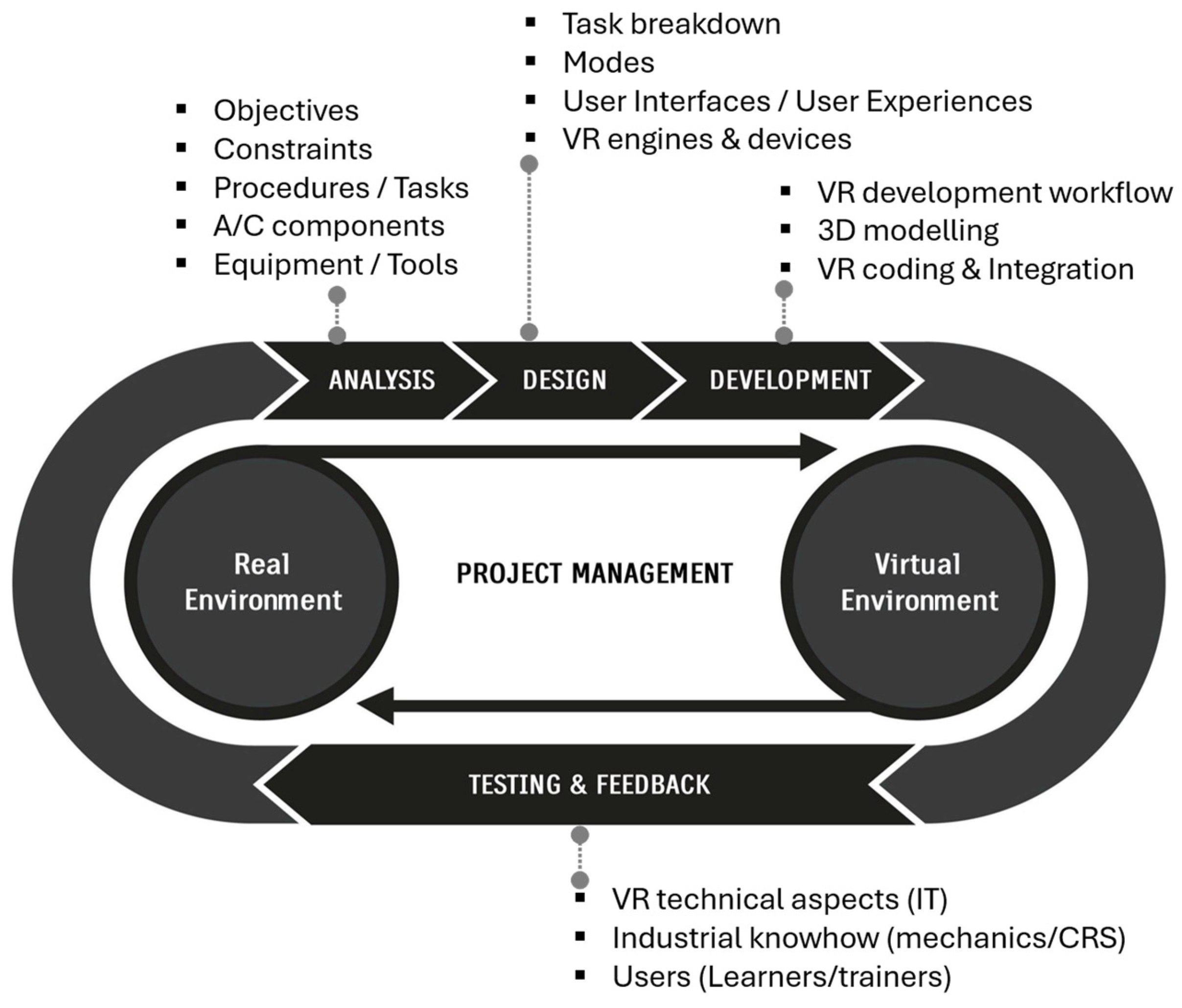
Our Agile-based methodology was realized through a four-stage repeating cycle of Analysis, Design, Development, and Testing and Feedback (Figure 3). The stages were not entirely in chronological order, but rather intertwined at different levels depending on emerging issues and problems. Each stage involved several interconnected tasks that required careful attention. The cyclical process was managed by a stakeholder group comprising key members such as the lead researcher, the industry-certified aircraft mechanic who verified procedural compliance against the AMM, and students (distinct from the students participating in the initial training and survey) and lecturers who helped with coding and 3D design. Every development cycle concluded with a Test and Feedback stage where useful feedback from all stakeholders was utilized to guide the following cycle. To facilitate this interactive and reactive workflow, the project was managed centrally using ClickUp [31] for task management and GitLab [32] for code consolidation and version control, allowing for an agile and effective development process that was instrumental in delivering a regulation-compliant and pedagogically appropriate VR training tool.
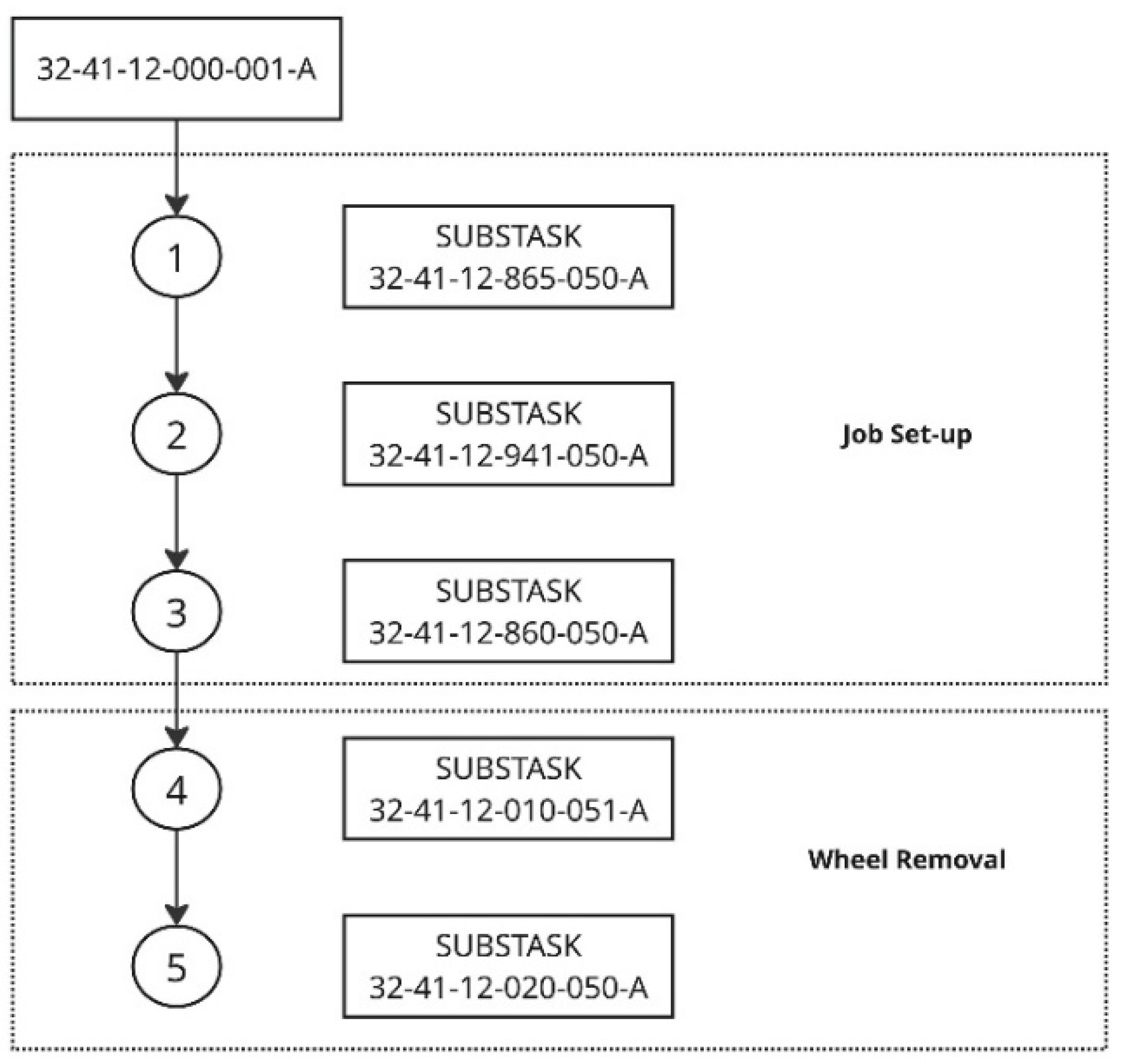
The first ‘Analysis’ stage was a close investigation of the chosen maintenance task included in the Aircraft Maintenance Manual (AMM), the Airbus AMM Task ‘32-41-12-000-001-A’ for the ‘Removal of the NLG Wheel’ of an Airbus A320 in the present case. This first step consisted of a systematic deconstruction of the formal procedure into a sequential process, separated into two phases of group tasks—‘Job Set-up’ and ‘Wheel Removal’ (Figure 4)—to provide a clear AMM-to-VR mapping for subsequent scripting and implementation. Each subtask was further decomposed into micro-tasks (later called simply ‘tasks’) to define each individual user interaction required by the AMM. The ‘Job Set-up’ group tasks involve preparatory tasks, such as the insertion of safety pins and the application of warning notices to the cockpit; the ‘Removal’ tasks consist of step-by-step actions, including jacking of the nose wheel, the removal of objects such as cotter pins and nuts with the use of specific tools, and detachment of the wheel and tire assembly. Detailed data and information of the aircraft and its involved system, as well as specialist tools and equipment, were gathered and examined, not only to understand the real-world related maintenance actions but also to establish the level of detail necessary for the subsequent modeling of related components. Importantly, resource constraints, including manpower, time and budget, and OEM data availability and accessibility, were also factored to outline a feasible development schedule.
The resulting principal maintenance steps involving the aircraft system were scripted to simulate the process of the ‘Removal of the NLG Wheel’ as per the selected Airbus AMM procedure. These steps, with the corresponding working places, are summarized in Table 1. The procedure begins with general on-ramp safety preparations, such as the fitting of ground safety locks and wheel chocking (Step 1). This is followed immediately by de-energizing applicable systems in the aircraft cockpit by opening and tagging circuit breakers (Step 2), placing warning notices on control handles (Step 3), and releasing the parking brake (Step 4). After securing the aircraft, on-ramp work continues with lifting the landing gear using a hydraulic jack (Step 5) and deflating the tire (Step 6). The subsequent disassembly steps involve the removal of the hubcap (Step 7), locking nuts and cotter pins (Step 8), wheel casing (Step 9), and the main axle nut using a special adaptor (Step 10). The process concludes with the installation of a protective tool on the axle (Step 11), prior to the actual removal of the wheel and tire assembly (Step 12).
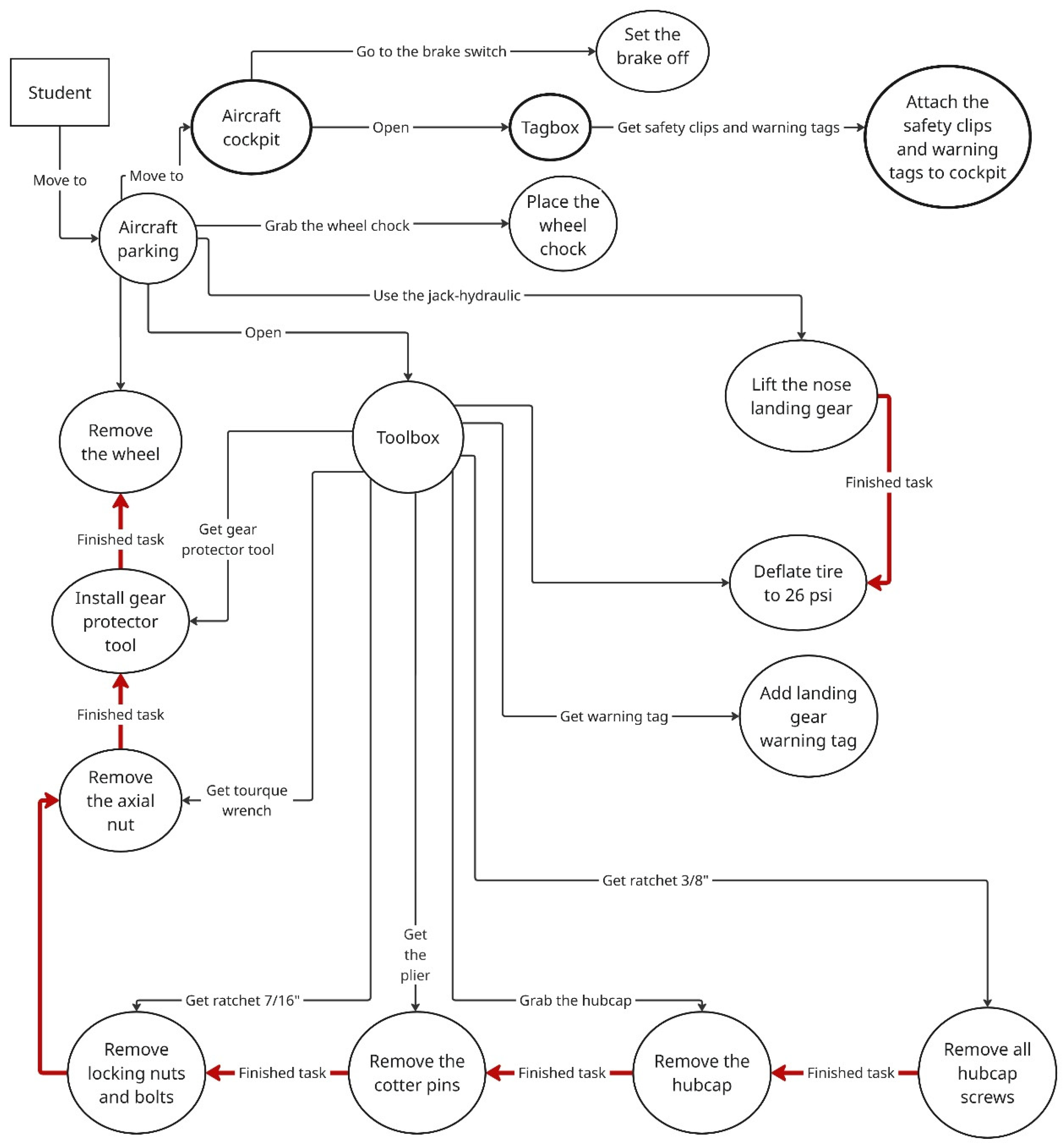
The subsequent ‘Design’ stage dealt with the architecture of the information system, including determining training modes, and designing user interfaces (UIs) and user experience (UX) in virtual space. For the project, operational environments pertinent to the chosen maintenance work, including the aircraft cockpit and parking ramp, were set up for simulation. The Oculus Quest 2 (or Quest 3) [33], as a standalone headset with controllers that provide virtual hand interaction, was chosen as the target VR hardware. The project was designed with scalability in mind for future growth into other systems and aircraft types. To facilitate implementation throughout all the stages, the NLG Wheel-Removal Feature Chart was created (Figure 5). Driven by the analysis of real-world maintenance actions, the chart established the interactions among users, virtual parts (or objects), and step-by-step interactions with direct and conditional task dependencies. As shown in the figure (Figure 5), the square box represents the user (e.g., trainees), while each circle represents an object (e.g., aircraft parts, tools) or a task. Black arrows indicate a direct path to a task/object, and red arrows indicate a conditional (mandatory) path. To execute a task, all incoming paths, both black and red (if any), must be satisfied. It acted as a blueprint for organizing interaction logic, task-user flows, and conditional triggers that allowed program task flow and interactivity based on the selected AMM procedure. The chart was also consulted during the Testing and Feedback stage to verify consistency between programmed logic and realistic procedural actions.
The third stage, ‘Development’, involved modeling and programming, implementation of design elements, and the construction of the VR application. This phase encompassed approximately 1700 man-hours, focusing on achieving high technical fidelity and procedural realism. Defining an appropriate workflow, from 3D object creation with CAD software to programming and integration on VR hardware, was essential to maintain 1:1 dimensional accuracy, which was ensured by extracting geometric specifications directly from Airbus OEM technical manuals (e.g., Airbus AMM [24]). The standard workflow is illustrated and explained in Figure 6; 3D digital assets, including full-size 3D models of the A320 aircraft and its NLG system-related parts, as well as the involved maintenance equipment and tools, were designed with CAD software (e.g., using SolidWorks [34]), and textured and refined (e.g., using Blender [35]) using retopology techniques to significantly reduce polygon counts while maintaining essential visual details and surface accuracy. This ensured the assets remained visually realistic yet optimized for real-time applications. After retopology, simplified colliders were created in Blender to further optimize physics calculations within the game engine (C#-based Unity). The prepared assets were integrated into the Unity-based environment, where lightmaps were baked directly in Unity to capture realistic lighting and shading information without incurring additional runtime performance costs. And finally, the application was compiled and integrated on the Oculus Quest 2 (or 3) devices.
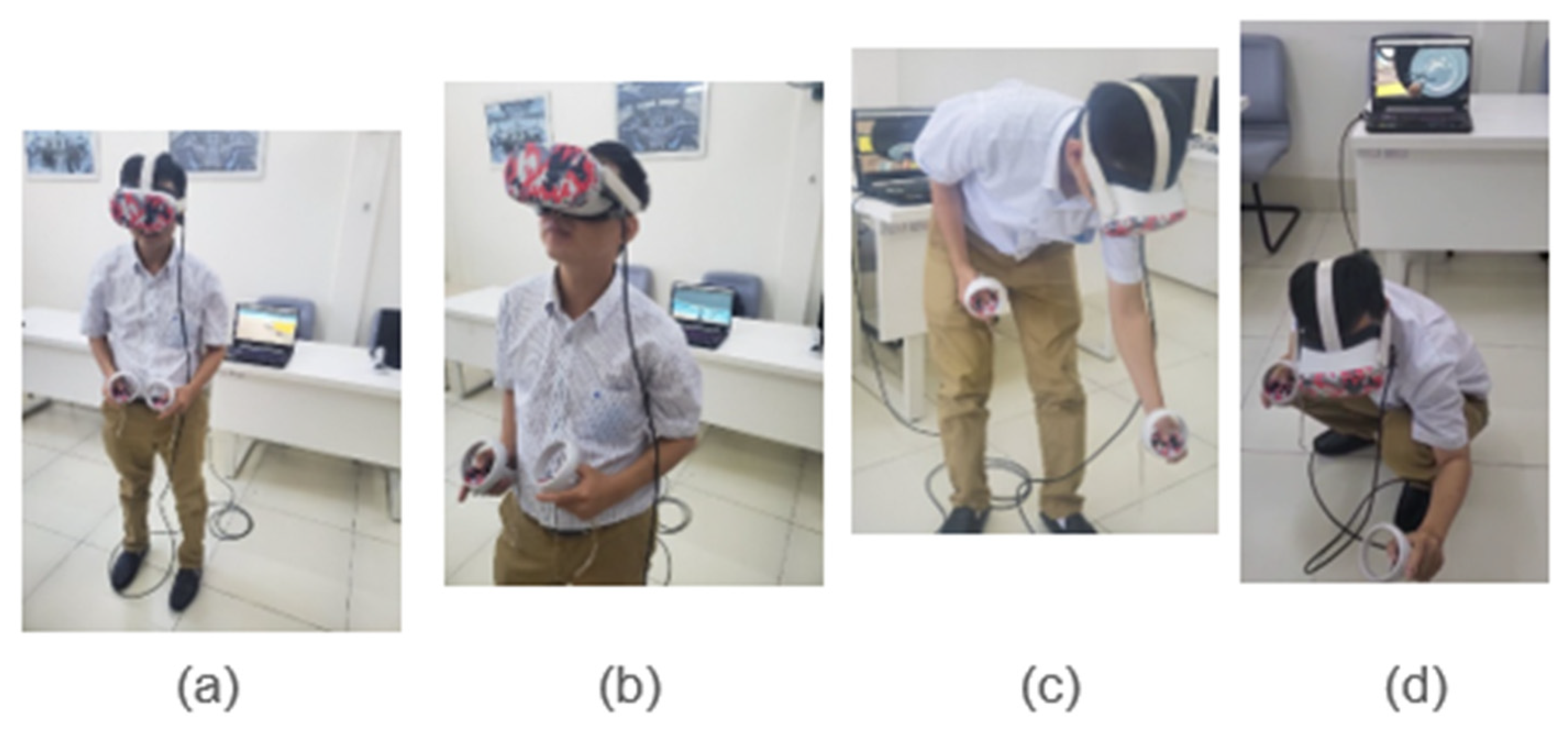
The last stage, ‘Testing & Feedback’, involved testing by practitioners to ensure procedural fidelity (i.e., conformity to AMM tasks) and to identify potential technical issues (e.g., bugs and lag). For this project, two aircraft maintenance professionals (all with more than 10 years’ direct experience and CAAV-certified qualifications meeting EASA/FAA standards) were invited to test the product and offer practical feedback for iterative refinement. A session of product testing, carried out by a Category B licensed aircraft engineer (CAAV-approved), is shown in Figure 7 to demonstrate the verification of VR application functionality and procedural accuracy against authority-approved procedures.

2.2. Initial Training Implementation

The virtual reality (VR) platform, running on standalone hardware (Oculus Quest 2 or 3), was tested in a training session with 24 volunteer students of the Vietnam Aviation Academy (VAA) aeronautical engineering study programs, employing a convenience sampling approach. In the session, the VR application was presented and tried out. The overall reason for this session was to gain initial user feedback for the current VR application in the context of a higher education environment.
The initial training session, as outlined in Table 2, was a structured four-stage process designed to familiarize students with the VR-based maintenance training platform and evaluate their experience. To begin with, a pre-training survey was administered via a questionnaire to gather participant profiles, their familiarity with VR technology, expectations, and concerns. This was followed by a short lecture introducing the basic concepts of VR technology and the application development process of the training application, with demonstrations on Oculus Quest 2 or 3 headsets. In step 3, hands-on VR practice was given to the students for a maintenance task derived from the Airbus Aircraft Maintenance Manual (AMM). This activity involved familiarization with the VR device, movement in the virtual working scenes, performance of the tasks described above (Table 1), and one-on-one practice (within each group of 4–6 students). Five VR devices (Oculus Quest 2 or 3), connected to independent television screens through Wi-Fi, were utilized for this initial introduction. An after-training survey, in step 4, was also administered to assess learners’ initial interest, engagement, and attitude towards the VR-based training experience. It first included demographic and contextual questions such as participants’ age range, gender (optional), current program and study year, and practice hours using the VR application. Second, it was composed of five questions on a 5-point Likert scale to identify students’ initial perceptions regarding their understanding of such complex aircraft maintenance procedures, engagement, interest, practical skills, and accessibility. All the Likert items were anchored from 1 (e.g., Strongly Disagree) to 5 (e.g., Strongly Agree). Four open-ended questions were also included in the questionnaire for feedback on the helpful features of the VR technology, problems or barriers faced, improvements or features wanted, and other general comments or recommendations.
Twenty-four students finished the Likert-scale and demographic sections, with open-ended questions eliciting variable response rates. It is recognized that with a sample size of 24 students, the study largely offers descriptive and exploratory findings. This small sample (N = 24) requires statistical generalizability caution, and the findings, which are premised on one-point-in-time self-reported perceptions, should be taken into account and interpreted within these methodological limitations.
Ethical approval for the study was secured from the Ethical Review Committee of the Vietnam Aviation Academy (No. 1866/QĐ-HVHK), and informed consent was obtained from all participants.

3. Results

3.1. Virtual Reality Self-Developed Platform

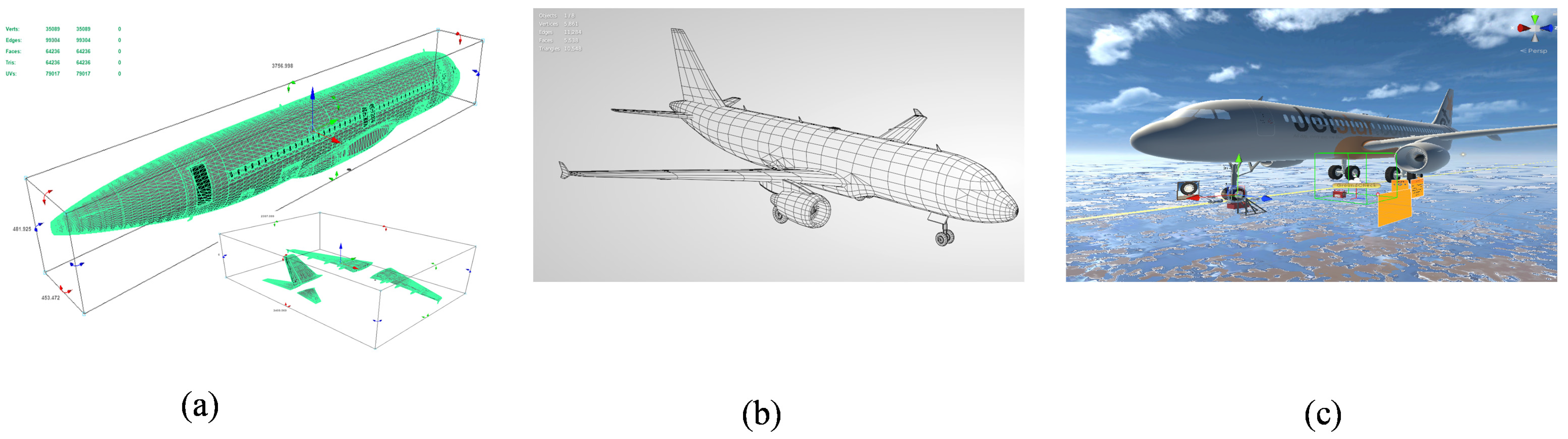
Highly detailed full-scale (1:1) 3D models of the Airbus A320 airplane, NLG wheel–tire assembly component parts, and the related safety devices (tags), pertinent to the Airbus AMM task ‘32-41-12-000-001-A’ (removal of the NLG wheel), were carefully developed. The modeling was performed in CAD software, including Blender for featuring textures. Actual geometrical specifications of the aircraft parts and dedicated tools were obtained from applicable Original Equipment Manufacturer (OEM) technical manuals. Figure 8 shows the complete 3D CAD modeling process of the Airbus A320 used in the VR platform. Subfigure (a) illustrates the initial meshed models of key parts, including the airplane body, wings, and tails. Subfigure (b) shows the merged full-scale aircraft model. Subfigure (c) is the completed aircraft model simulated within the virtual working environment for interactive simulation and task integration.
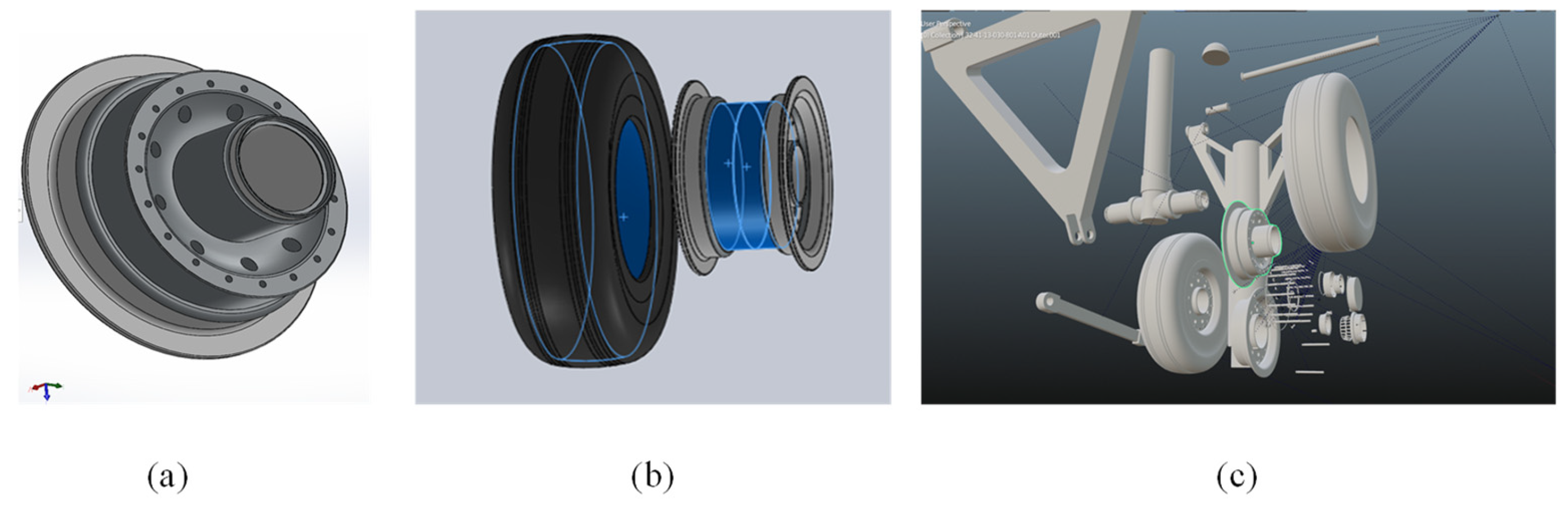
Figure 9 shows the whole 3D CAD modeling process of the Airbus A320 nose landing gear wheel assembly. The process steps include generating 3D geometry from 2D sketches (a), finishing single-part models (b), and assembling all the component parts together to develop the completed integrated model (c).
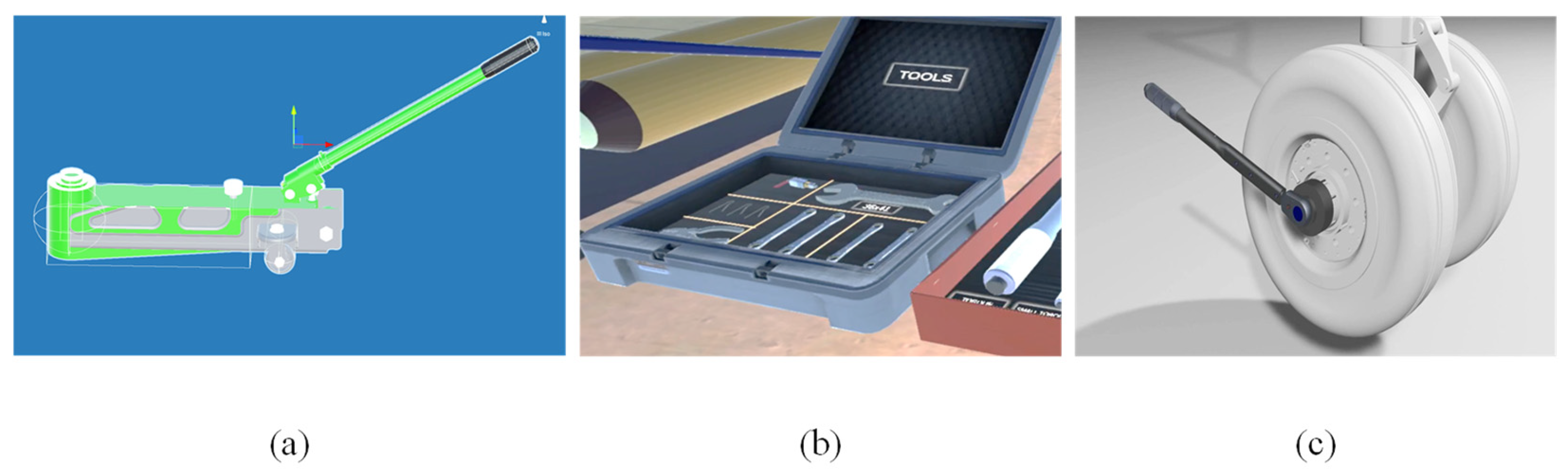
Figure 10 shows the 3D CAD models of the major equipment and tools incorporated into the VR simulation. They include a hydraulic jack (a), a toolbox (b), and a torque wrench and adaptor (c), all accurately modeled to mimic their real-life counterparts as far as dimensions and look are concerned. Their incorporation brings procedural accuracy and realism to the training environment by allowing users to work with virtual tools in the same way that they would under actual maintenance scenarios.
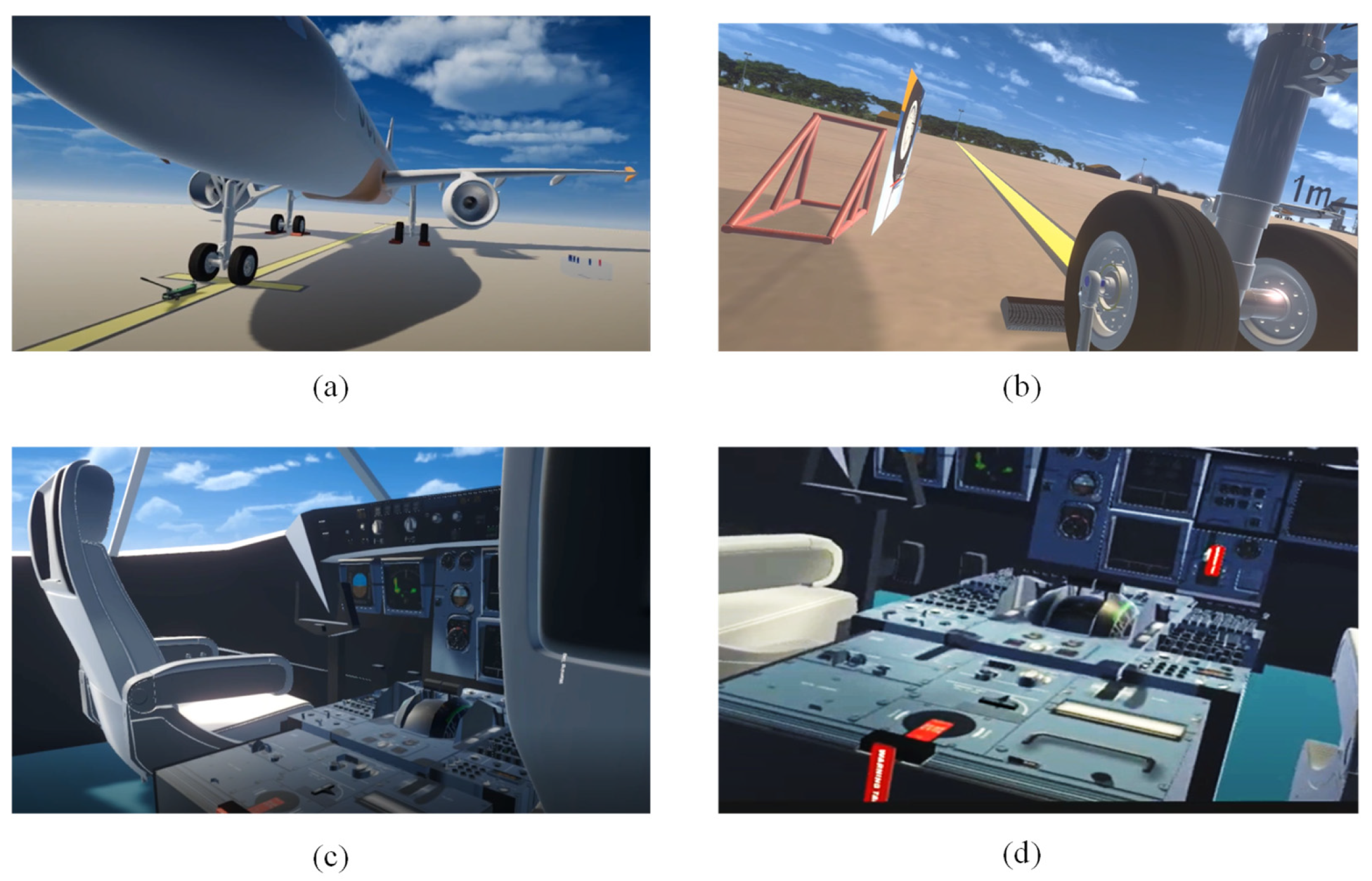
The respective working conditions and scenarios applicable to the chosen maintenance tasks, i.e., aircraft parking ramp and aircraft cockpit, were also simulated in the virtual application. Figure 11 illustrates virtual maintenance work environments extracted from the VR platform. The screenshots illustrate two main operational scenes—the aircraft on the ramp (a,b) and the aircraft cockpit interior (c,d)—corresponding to the real work locations defined in the AMM for the NLG wheel-removal procedure. These environments were replicated with the aim of providing enhanced procedural realism and spatial awareness during training. Importantly, safety actions, e.g., operating with safety tags in the aircraft cockpit, were comprehensively integrated into the simulation. Since safety is of the utmost importance in aviation, each step in terms of safety compliance in this industry-based application, which strives to emulate real-world practice by following AMM procedures, was carried out with utmost precaution.
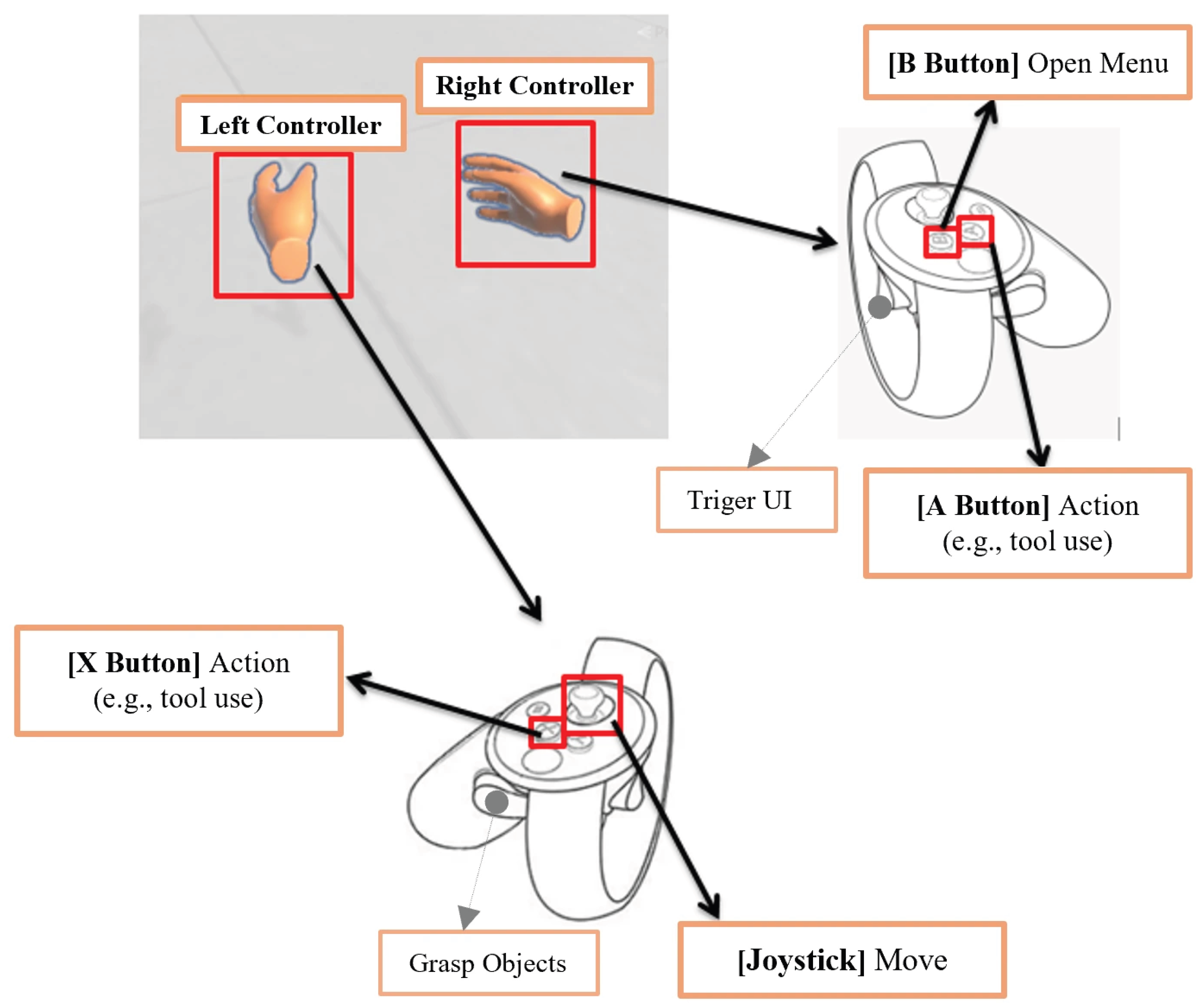
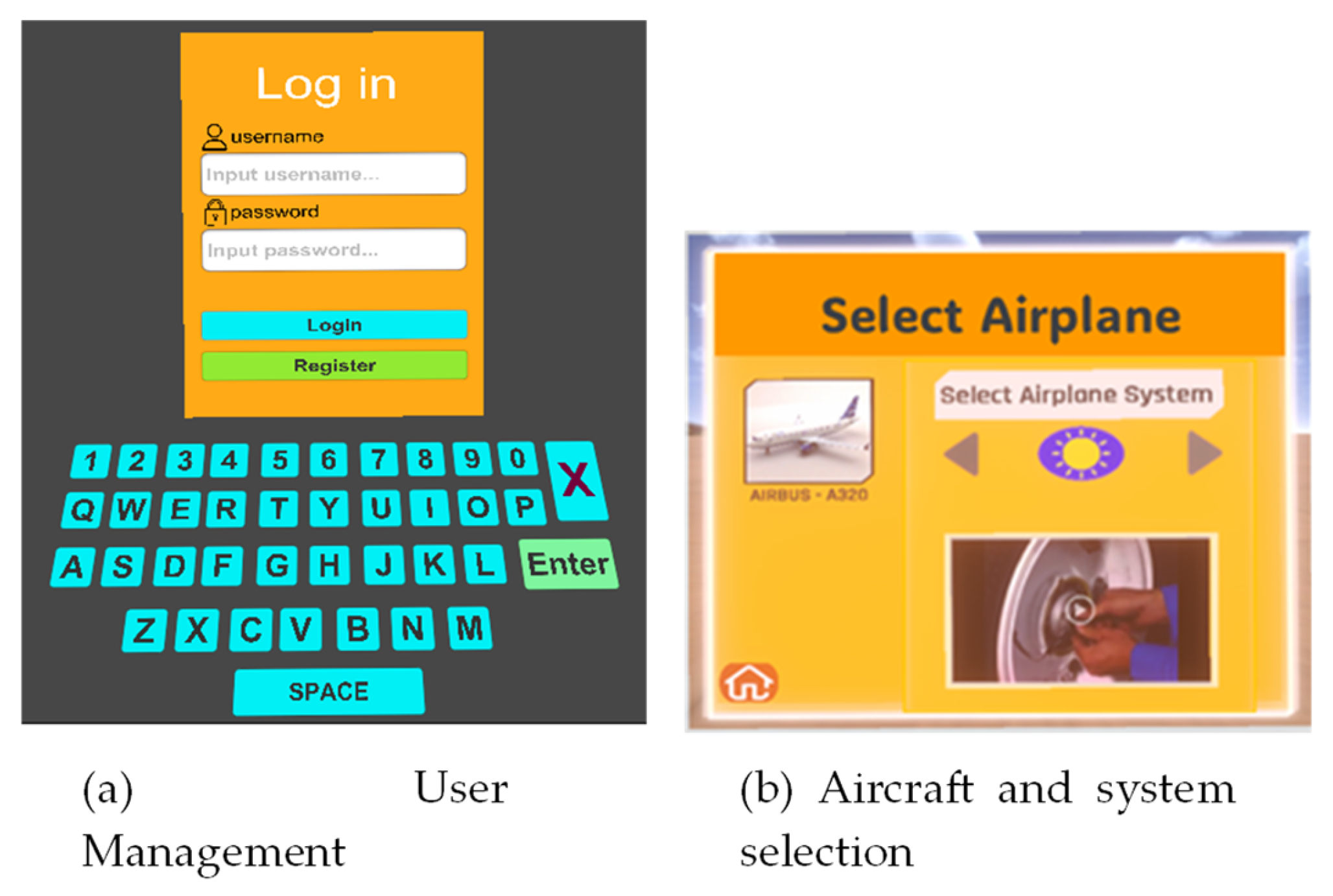
The ‘Oculus Quest 2’ (compatible with Quest 3), a standalone VR headset with an Android-based operating system and two controllers, was used in this project. Users interact with virtual objects (i.e., functional pieces of aircraft parts, tools, and equipment in the respective virtualized working environments) via the designed inputs and user interfaces (UIs), as per extracted examples shown in Figure 12 and Figure 13; Figure 12 details user interactions designed on the Oculus Quest 2 controllers employed in the VR simulation. There are dedicated functional inputs on both the left- and right-hand controllers; the trigger engages the UI, the joystick engages locomotion, and buttons [A] and [X] perform task-directed actions such as the use of tools. Button [B] engages the main menu, and the grip buttons are used for object grasping. Those designs support users’ experience from data entry to operational option selection (e.g., for user administration; aircraft type, system, procedural step, scene, or tool selection), and the manipulation of simulated objects to replicate the maintenance tasks.
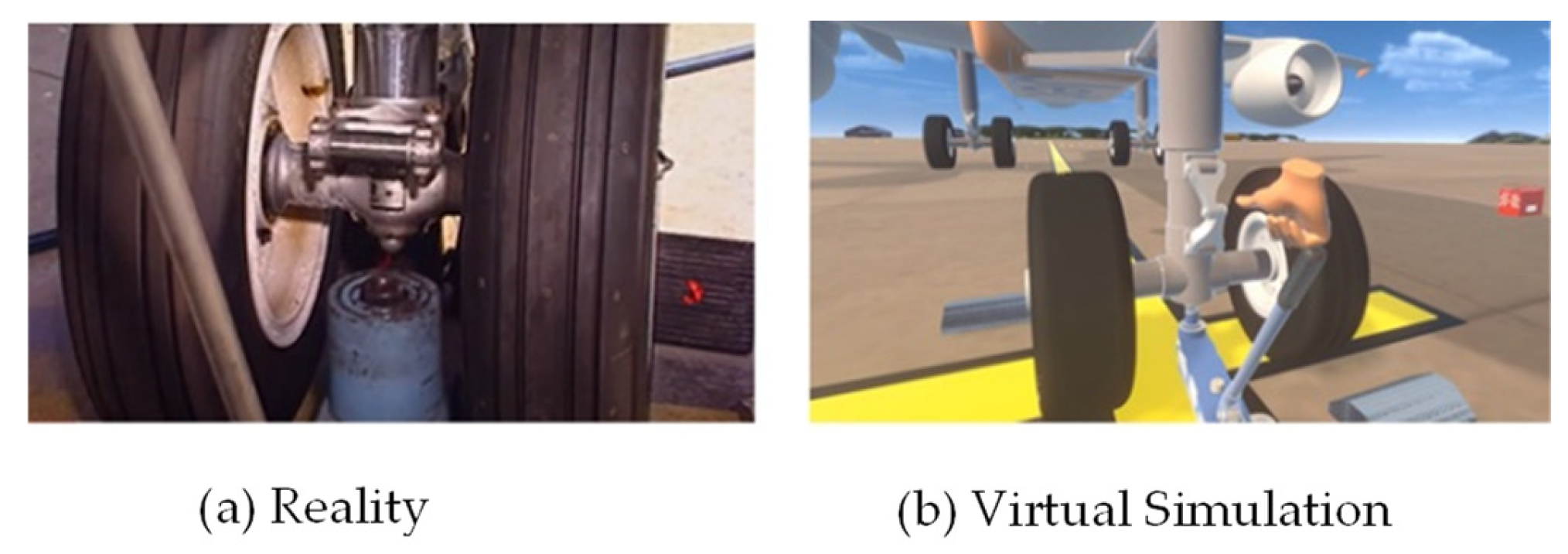
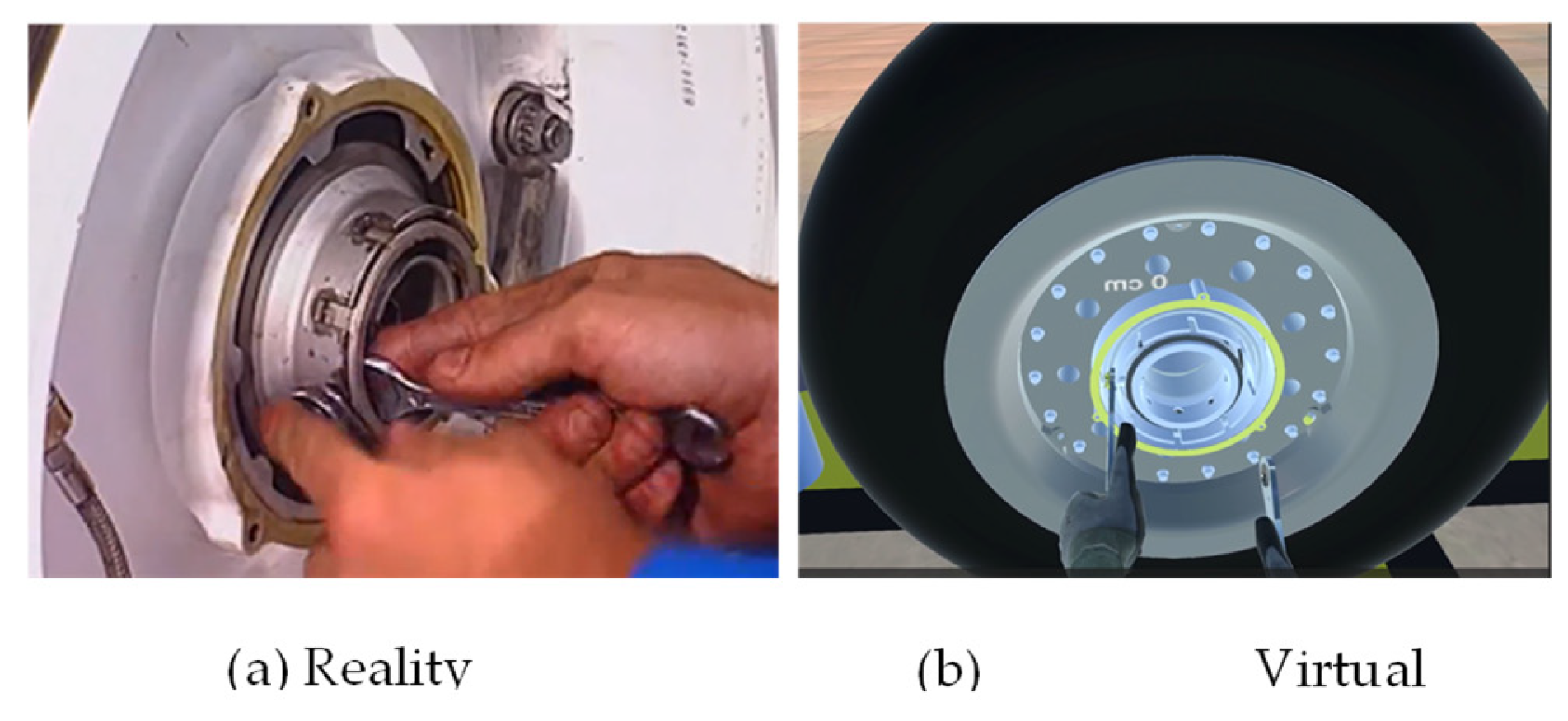
In order to demonstrate the realistic fidelity of the VR simulation, Figure 14 and Figure 15 illustrate a comparison between real [36] and VR-based maintenance operations for two distinct tasks: jacking of the nose landing gear (Ref. AMM task 07-12-00-582-001-A) and removal of two locking nuts (3) (Ref. AMM task 32-41-12-020-050-A), respectively.
The novelty of this is the creation of a VR simulation whose degree of realism is rooted closely in official industry documentation. In contrast to most current academic VR software in the same field, the virtual maintenance task in this study is an authentic digital replica of a certified task within the Airbus Aircraft Maintenance Manual (AMM Task 32-41-12-000-001-A). Based on OEM-approved data, the training thus attained is not only realistic but procedurally accurate and industrially applicable (see Supplementary Materials Video S1). The originality of the work is also attested by the fact that the whole process, including the construction of full-size (1:1) models and the simulation of obligatory safety procedures, is carefully integrated. The approach goes beyond object manipulation per se to a realistically integrated procedural practice. The side-by-side comparisons of real against virtual operations (Figure 14 and Figure 15) give unambiguous, empirical evidence for the fidelity of the simulation and, hence, its applicability for use in acquiring transferable motor skills and procedural compliance. To supplement these qualitative observations with objective proof of technical stability, performance metrics were recorded across the platform development cycle. Through the asset optimization pipeline, the platform achieved high visual fidelity and stable frame rates, ensuring a performant user experience on the selected hardware (i.e., Oculus Quest 2 featuring a Qualcomm Snapdragon XR2 processor, 6 GB of RAM, and 90 Hz refresh rates). As detailed in Appendix A, the data show that average frames per second (FPS) improved from 20 in early versions (v1, v2) to a stable 30 in the final iterations (v3–v5). Additionally, thermal indicators remained low and stable across versions, while memory usage stabilized at approximately 460 MB RAM in later versions, well within the device’s 6 GB capacity, confirming the platform’s technical suitability for this high-fidelity application.

3.2. Preliminary Training Survey and Feedback

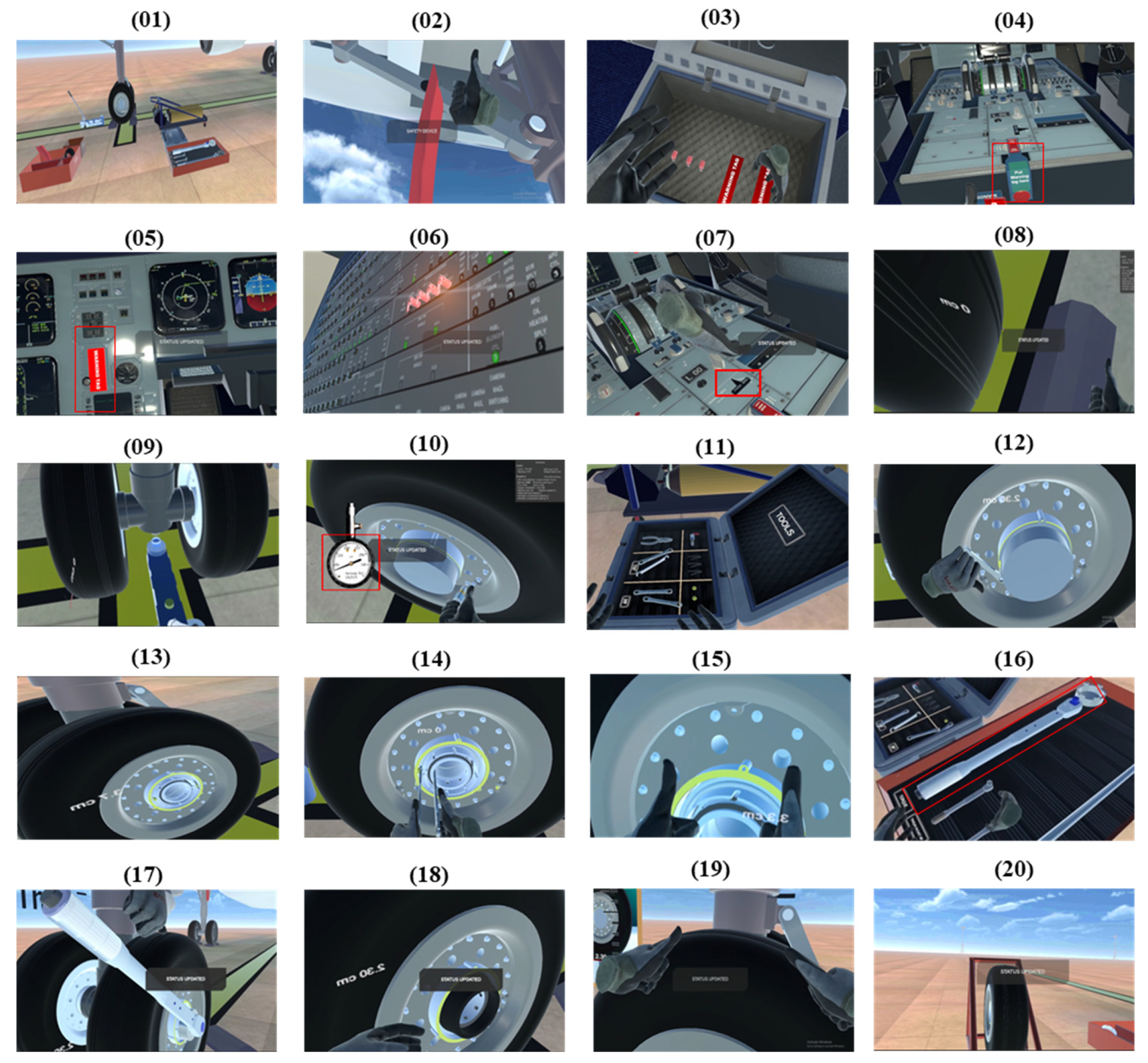
The sequential workflow for the ‘Nose Landing Gear wheel-tire removal’ is visually detailed in Figure 16, which presents a timeline of several screenshots extracted from a standard simulation session. The process begins with user authentication (Figure 13) and scene selection (image 01), followed by mandatory safety protocols. These involve installing landing gear safety pins (image 02), moving to the cockpit to tag the free-fall and landing gear levers (images 03–05), applying relevant circuit breakers (image 06), and engaging the parking brake (image 07). Returning to the apron, the operator removes wheel chocks (image 08) and positions the hydraulic jack (image 09) to elevate the nose landing gear. Once appropriately lifted, the tire is deflated (image 10). The disassembly phase requires selecting tools (image 11) to remove the hubcap (images 12–13), locking bolts (image 14), and axial casing (image 15). Subsequently, the axle nut is removed using a torque wrench assembly (images 16–17). Finally, a thread protector is installed (image 18) to allow the safe dismounting of the tire (image 19) onto a support dolly (image 20). It is important to note that while these static images outline the procedural logic, they cannot fully convey the complex, interactive 3D manipulations required in the immersive environment; for this dynamic perspective, please refer to the Supplementary Materials (Video S1).
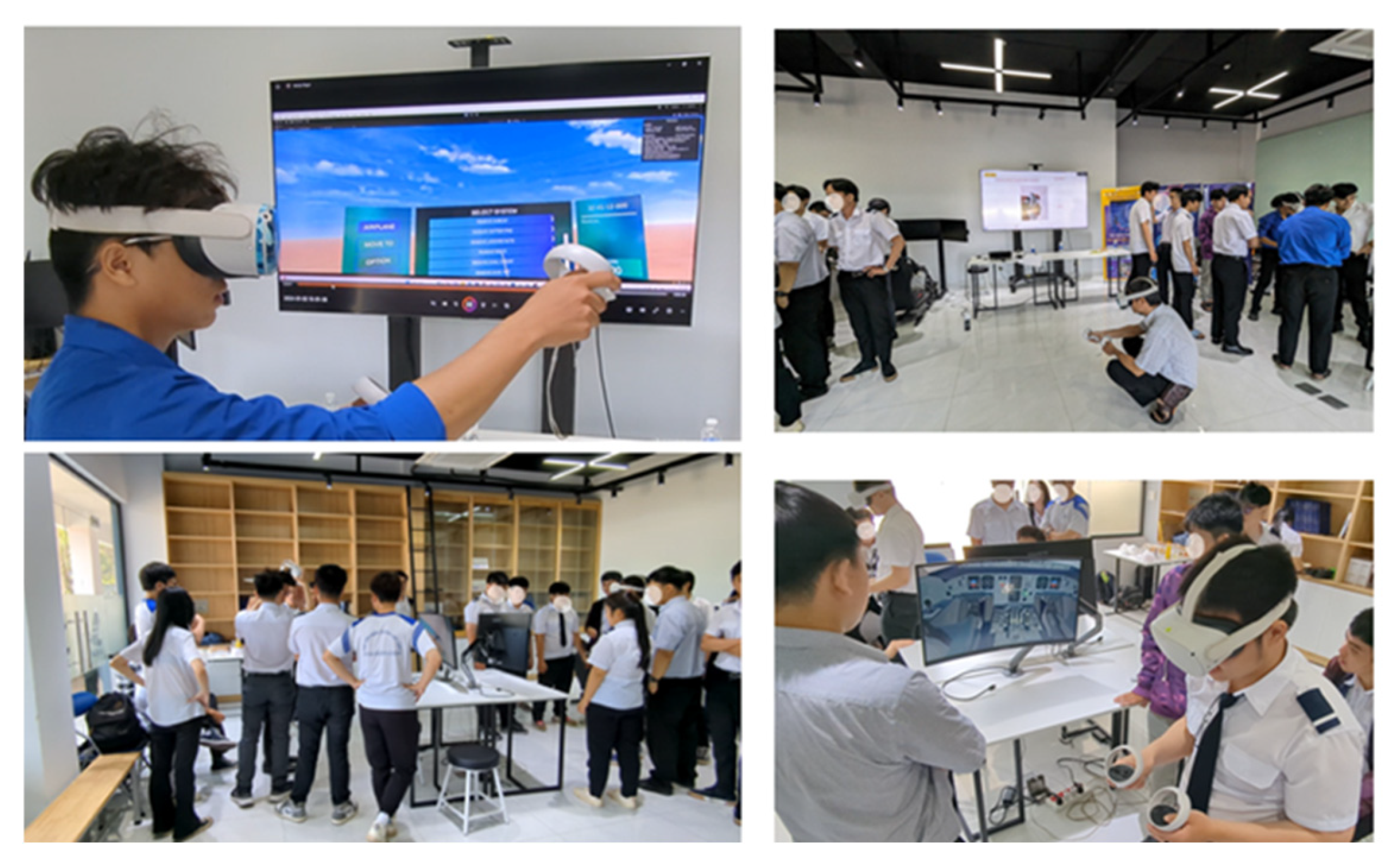
Figure 17 shows photos of students at VAA engaged in the initial VR-based training session. Using standalone VR head-mounted displays, which can be Wi-Fi connected to independent large screens, students practiced within the virtual world of aircraft maintenance, focusing on procedural actions in accordance with the selected AMM for the removal of the nose landing gear wheel system. The setup demonstrates the actual integration of immersive technology into hands-on maintenance training.
The pre-training survey collected information on students’ demographics, study program and year, general previous experience with VR technology, and familiarity with aircraft maintenance. A total of 24 students participated, aged between 18 and 25 years. All participants were in either their second (75%) or third year (25%) of aeronautical engineering or maintenance studies. For previous VR experience, ~57% indicated little experience, ~32% indicated none, and just ~11% reported moderate experience. Regarding the familiarity with aircraft maintenance work, 50% reported ‘Slightly Familiar,’ ~32% indicated ‘Moderately Familiar,’ and ~18% ‘Not Familiar at all,’ with none reporting high familiarity.
The subsequent post-training survey was designed to preliminarily assess participant perceptions following the VR-based training session. The instrument includes a series of items to collect demographic and contextual information from the participants; five five-point Likert-scale questions to quantify perceptions of the VR experience (e.g., understanding, effectiveness, interest, contribution to skill ability, accessibility); and four open-ended questions to provide feedback on benefits, problems, and areas for improvement. The findings of this post-training survey (N = 24) provide initial impressions of the users’ perceptions. The quantitative results of the Likert-scale items are presented in Table 3. In general, the findings reveal positive feedback to some of the most important elements of the VR experience. VR contribution to the learning of complicated aircraft maintenance procedures (Q1) was received with positive feedback across the board (100% positive; median 4, IQR 4–5; 90% CI [4, 5]). Similarly, high levels of positive agreement were also registered for the effectiveness of VR as opposed to conventional methods (Q2: 95.8% positive; median 5, IQR 4–5; 90% CI [4, 5]), for its effect in stimulating interest in aircraft maintenance (Q3: 95.8% positive; median 5, IQR 4–5; 90% CI [4, 5]), and for its effect in practical skills learning (Q4: 91.7% positive; median 4, IQR 4–5; 90% CI [4, 5]). Interestingly, there were no negative responses for these initial four questions. The reaction of participants to how accessible the VR technology was to use for their educational needs in aircraft maintenance (Q5), however, was less uniform, with 66.7% positive, 29.2% neutral, and 4.2% negative reactions. Its corresponding median score on Q5 (median 4, IQR 3–4; 90% CI [4, 4]) was still above the scale’s neutral midpoint, but notably lower and more mixed in response compared to other facets. This indicates that although the majority of users perceived VR to be accessible, a meaningful portion of the group was either neutral or negative on this particular facet, which is further explored through the open-ended feedback in Table 4.
It is also noted that, in Question Q2, learners were asked to compare their general impression of VR training with ‘traditional learning approaches’, referring to the conventional teaching methods prevalent in the Vietnamese undergraduate aeronautical engineering curriculum at VAA. This is generally lecture-based teaching supplemented by static material such as e-documents, printed notes, and two-dimensional drawings or diagrams. Teaching is often in the form of initial lecturers’ explanations and then followed by students’ self-study, with students having to mentally visualize and build their own model of complicated, three-dimensional aircraft parts and systems from these predominantly two-dimensional resources. Taken together, the quantitative findings above indicate that VR-based training was received positively and rated as highly effective for practical understanding and engagement in aircraft maintenance training, with the highest positive ratings to be recorded for perceived understanding and engagement, both of which are essential for acquiring technical skills.
To supplement these results, qualitative feedback from students across four open-ended survey items (Table 4) was analyzed. The findings were used to further understand learners’ perceived values and areas for improvement. Across the responses, answers were generally concise (median length: 5–6 words), but they nevertheless revealed several consistent themes. Corresponding to Q6, which received 13 usable brief answers and dealt with perceived benefits, the most frequently noted theme was hands-on interaction (n = 5), followed by realistic visualization (n = 3) and practical convenience (n = 3). Other positive comments related to motivation and understanding of procedures and safety, thus echoing the perceived instructional value of VR-based simulation. No student expressed a negative view in the Q6 responses. In Question 7, regarding difficulties encountered, 15 students provided usable responses. Six students indicated no difficulties, and nine students reported at least one difficulty. The most common difficulties indicated were lack of experience with virtual reality device controls (n = 3) and the expense of the system or limited access (n = 3). The other self-assessed difficulties listed were cybersickness (n = 2), limited session time (n = 1), and absence of haptic feedback (n = 1). For Q8 (suggestions for improvement), participants recommended expanding the variety of maintenance tasks covered (n = 4), bug fixes for software (n = 2), improving graphics, including tactile feedback, and making it easier to use and offering more frequent training. In Q9 (general comments), several students made no additional comment, while others suggested a need for broader application across aircraft systems and student levels, emphasizing content expansion and wider integration of VR into training (e.g., “Develop more modules for other aircraft components” and “Should be expanded for more students, especially first-year students”). Some students’ comments reiterated VR’s value for realistic exposure, and one respondent expressed hope that the VR tool could soon be applied in real aircraft maintenance practice.

4. Discussion

This study developed and piloted a virtual reality (VR) platform to support aircraft maintenance training, demonstrated through a high-fidelity case study of the Airbus A320 nose landing gear (NLG) wheel system removal process aligned with the Airbus Aircraft Maintenance Manual Task 32-41-12-000-001-A. The pilot survey with a small-scale Vietnamese aeronautical student sample (N = 24) indicates a positive attitude toward the VR platform as a learning environment, especially considering constrained intervention time. Although students experienced a brief session period, they evaluated the simulation as effective in perceiving complicated procedures and supporting practical skills development. Open-ended responses further complement these findings by highlighting perceived benefits, difficulties encountered, and suggestions for improvement, including requests for broader content coverage across aircraft components and wider integration into training.
Beyond the immediate pilot outcomes, the platform is positioned as an applied tool that can help reduce the potential gap between academic preparation and the intricate, high-stakes, and strictly aviation authority-regulated context of actual aircraft maintenance. Through a structured development approach and applied resource management, the platform provides an empirically tested and extensible basis for learning process-oriented procedures in a safe, repeatable, and controlled environment.
To inform more general considerations of first-time learner attitudes, it is also useful to refer to our previous publication [37], where a similar survey was administered to a cohort of 36 aviation students at the Singapore Institute of Technology (SIT) using the same VR training tool and the same set of questions. While the primary focus of the present paper is the initial deployment of the VR tool in the Vietnamese tertiary education setting, the SIT outcomes provide contextual support that the overall perception trends were generally aligned across two dissimilar institutional settings. In particular, students in both cohorts acknowledged VR’s advantages for learning procedural skills, visualization, and engagement, while similarly reporting challenges related to ergonomic discomfort, usability constraints, and demands for additional instructional content and support. These commonalities suggest that the perceived pedagogical affordances of immersive VR in aircraft maintenance training may extend beyond a single implementation context; however, the modest sample sizes and contextual differences still require cautious interpretation and further investigation.
From a platform perspective, objective performance metrics were recorded across five iterative versions (v1–v5) to provide additional system-level context for standalone deployment (Appendix A). Overall, the recorded indicators support stable platform performance in the selected configuration, complementing the pilot learning feedback with objective system-logged evidence.
In the broader context, a direct functional and pedagogical comparison with existing commercial VR aircraft maintenance training tools remains inherently limited by the proprietary nature of industrial aerospace software. Detailed technical methodologies and objective performance metrics for OEM-developed systems are seldom disclosed in academic literature due to intellectual property protections, creating a significant benchmarking gap for researchers. In this context, the present work contributes by offering a documented, high-fidelity replication of an approved maintenance procedure and a structured, practically replicable development approach shaped by iterative stakeholder feedback. The VR platform was built on an Agile-based framework using iterative cycles shaped by stakeholder feedback, focusing on domain expertise in commercial aircraft maintenance. This approach enabled efficient and affordable development of a regulation-consistent VR tool simulating the OEM-approved process, while demonstrating the effectiveness of a collaborative model integrating academia (researchers, lecturers, students) and industry (certified engineers). Beyond the specific case study, this development model highlights a scalable pathway for producing cost-effective and accessible VR training solutions for high-cost maintenance practices in regulated aviation environments. As shown in Appendix B (Table A2), this system differentiates itself from existing academic research through its strict procedural gating logic and scalable architecture, transitioning beyond ‘gamified’ simulation toward an industrial-grade training substitute.
Regarding the limitations, this study is exploratory and based on a small-scale pilot survey (N = 24) using a convenience sample and one-point-in-time self-reported perceptions following a brief session period; therefore, findings require caution in generalization. The study did not include objective learning outcome measures or a comparative experimental design to quantify learning gains relative to traditional training. In addition, participant background (e.g., student level, academic background, and any prior exposure to VR and aircraft maintenance contexts) may influence perceived usability and accessibility outcomes. A practical challenge in scaling is also acknowledged. While the platform can be extended to additional modules (e.g., the full-scale 3D aircraft model and cockpit can be reused), the creation of type-specific content remains labor-intensive (e.g., modeling type-dependent components, parts, and specialized tools, including their geometry, textures, and interactions). This clarifies the difference between extending the software framework and the workload of the content-creation pipeline.
Building on this study, future work will address the identified critical issues and explore several promising avenues. One of the potential solutions that will be carried out by our research team, as a fundamental response to the usability and haptic feedback complaints, is the use of glove-type devices, i.e., HaptX Gloves G1 [38] or SenseGlove Nova [39]. These devices potentially provide accurate manipulation and control of aircraft components with haptic sensation responses. Additionally, matching with the users’ need for more content to be incorporated, the current VR platform will be extended to cover more aircraft maintenance procedures, along with enhancing ergonomic design. Subsequent releases could include other systems, such as PowerPlant- and Structures-related ones, and cover other aircraft types such as the Airbus A350 or Boeing 737. Environmental conditions, such as varying lighting and visibility levels, will be simulated to investigate contextual influence. AI-based chatbots will be integrated to enable even more effective user interaction by offering real-time advice, reducing cognitive burden, and maximizing learning outcomes for such complex, regulation-controlled procedures. The platform could also be broadened for other high-stakes aviation situations, such as emergency landings, evacuations, and routine tasks such as pre-flight checks. Finally, extensive testing will evaluate the learning effectiveness of target users, e.g., engineering students and trainee technicians, by employing suitable research methodologies (e.g., quasi-experimental methods) to rigorously and reliably measure VR-based training impact.

5. Conclusions

This study presents the end-to-end development and initial deployment of a high-fidelity virtual reality training system for a safety-critical commercial aircraft maintenance procedure, demonstrated through the Airbus A320 nose landing gear wheel-removal task based on the Airbus Aircraft Maintenance Manual Task 32-41-12-000-001-A. Developed in-house using Unity and full-scale 3D CAD assets, the platform supports interactive, step-by-step procedural practice grounded in OEM documentation. The study offers three primary contributions to aeronautical engineering education: (i) it reports a structured and practically replicable development workflow, using an Agile-based approach to manage cross-disciplinary production and incorporate domain-expert feedback; (ii) it provides initial pedagogical evidence from a pilot cohort of 24 aeronautical students, who perceived the platform as engaging and useful for understanding complex, multi-step maintenance sequences; and (iii) it reports objective system benchmarking to support feasibility for standalone deployment in educational settings. Regarding learners’ feedback, these exploratory pilot findings are based on one-time self-reported perceptions from a specific learner group and are constrained by the small sample size and brief intervention period; therefore, the findings require caution in generalization. The pilot also does not distinguish learning needs between ab initio and on-type maintenance training, nor does it address currency requirements, which warrant further investigation. Future work will therefore expand procedural coverage and strengthen evaluation through larger samples and objective outcome measures.

Supplementary Materials

The following supporting information can be accessed at: https://www.youtube.com/watch?v=y_Q48eWOe-Y (accessed on 1 March 2026), Video S1: Immersive VR Demonstration of Aircraft Maintenance Simulation.

Author Contributions

Conceptualization, H.T.N.; Methodology, H.T.N., A.H.H. and T.V.L.; Software, H.T.N., T.V.L. and S.T.N.; Validation, H.T.N., A.H.H. and S.T.N.; Formal analysis, H.T.N.; Investigation, H.T.N., A.H.H., T.V.L. and S.T.N.; Resources, H.T.N. and T.V.L.; Data curation, H.T.N. and S.T.N.; Writing—original draft, H.T.N.; Writing—review & editing, H.T.N., A.H.H., T.V.L. and S.T.N.; Visualization, H.T.N. and S.T.N.; Supervision, H.T.N.; Project administration, H.T.N. and S.T.N.; Funding acquisition, H.T.N. All authors have read and agreed to the published version of the manuscript.

Funding

Part of the research reported in this paper was funded by the Ministry of Transport of Vietnam under grant number DT2310. No external funding was received for the publication of this article.

Data Availability Statement

Data are contained within the article.

Acknowledgments

The author acknowledges the support of the Vietnam Aviation Academy (VAA) during the course of this research. Appreciation is also extended to the Faculty of Aeronautical Engineering at VAA and colleagues from the Air Transport Management program at the Singapore Institute of Technology (SIT) for their supportive involvement.

Conflicts of Interest

The authors declare no conflict of interest.

Abbreviations

The following abbreviations are used in this manuscript:
AbbreviationFull Term
3D3-Dimensional
AMMAircraft Maintenance Manual
ATOApproved Training Organization
CAAVCivil Aviation Authority of Vietnam
CADComputer-Aided Design
CBCircuit Breaker
CIConfidence Interval
EASAEuropean Union Aviation Safety Agency
FAAFederal Aviation Administration
IQRInterquartile Range
MROMaintenance, Repair, and Overhaul
MRMixed Reality
NLGNose Landing Gear
OEMOriginal Equipment Manufacturer
SITSingapore Institute of Technology
UIUser Interface
UXUser Experience
VAAVietnam Aviation Academy
VRVirtual Reality

Appendix A

Table A1. Technical performance benchmarks (Oculus Quest 2).
Versionv1v2v3v4v5Key Technical Impacting Factors
Average FPS
(Quest 2)
2020303030Lightmap baking; simplified colliders; reduce mesh polygon counts.
Hardware Temp
(°C)
4243404040Reduce polygon counts; efficient memory management; simplified colliders.
Memory
(MB RAM)
120300450460460Texture optimization; memory management; reduce mesh polygon counts.

Appendix B

Table A2. Feature-level positioning analysis.
Feature DimensionTypical Academic Trends
(e.g., [21])
Commercial OEM Tools
(e.g., [20])
This Study’s Platform
Documentation SourceGeneric/Simulated manuals; Often not clearly reported with limited detailsProprietary OEM dataVerified OEM Documents
Procedural LogicRegulatory compliance is not clearly reported; Checklist-based/GamifiedStrict industrial logicOEM-Aligned Gating Logic
ArchitectureScenario-specific/Rigid; Typically, scalability is not evident.Closed-source/ProprietaryScalable, Container-Based
Architecture (with AI Extension Capability)
Objective MetricsOften missing in publications.Internally tracked (private)System Benchmarks (FPS/Temperature/Memory -Appendix A).

References

  1. Hrúz, M.; Pecho, P.; Mariášová, T.; Bugaj, M. Innovative changes in maintenance strategies of ATO’s aircraft based on their operational status. Transp. Res. Procedia 2020, 51, 261–270. [Google Scholar] [CrossRef]
  2. Steven, S.; Hasibuan, S. Airworthiness Analysis in the Maintenance Department to Improve the Safety Rating in the Aircraft Industry: Indonesian Aviation Case. Int. J. Adv. Eng. Manag. Res. 2024, 9, 124–133. [Google Scholar] [CrossRef]
  3. Kraus, D.C.; Saboda, R.; Gramopadhye, A.K.; Chandler, T.N. Supervisory task analysis: Aircraft maintenance environment. In Proceedings of the 1997 IEEE International Conference on Systems, Man, and Cybernetics. Computational Cybernetics and Simulation, Orlando, FL, USA, 12–15 October 1997; IEEE: New York, NY, USA, 1997; pp. 1878–1883. [Google Scholar] [CrossRef]
  4. Yao, C.; Ma, L.; Wu, F.; Liu, Y. Aircraft Maintenance Training and Assessment: The Potential Applications of Mixed Reality. In Training, Education, and Learning Sciences, Proceedings of the 15th International Conference on Applied Human Factors and Ergonomics (AHFE 2024), Nice, France, 24–27 July 2024; AHFE International: New York, NY, USA, 2024. [Google Scholar] [CrossRef]
  5. Ainakulov, Z.; Pirmanov, I.; Koshekov, K.; Astapenko, N.; Fedorov, I.; Zuev, D.; Kurmankulova, G. Risk Assessment of the Operation of Aviation Maintenance Personnel Trained on Virtual Reality Simulators. Transp. Telecommun. J. 2022, 23, 320–333. [Google Scholar] [CrossRef]
  6. Li, S. Design and Development of Aviation Aircraft Maintenance Training Platform Based on VR Technology. Procedia Comput. Sci. 2023, 228, 898–906. [Google Scholar] [CrossRef]
  7. Ibrahim, F.E.; Elsayed, N.A.M.; Zayed, H.H. A Survey on the Effectiveness of Virtual Reality-based Therapy and Pain Management. Int. J. Adv. Comput. Sci. Appl. 2021, 12, 602–616. [Google Scholar] [CrossRef]
  8. De Lotbiniere-Bassett, M.; Batista, A.V.; Lai, C.; El Chemaly, T.; Dort, J.; Blevins, N.; Lui, J. The user experience design of a novel microscope within SurgiSim, a virtual reality surgical simulator. Int. J. Comput. Assist. Radiol. Surg. 2022, 18, 85–93. [Google Scholar] [CrossRef]
  9. Valenza, G.; Alcaniz, M.; Alfeo, A.L.; Bianchi, M.; Carli, V.; Catrambone, V.; Cimino, M.C.; Dudnik, G.; Duggento, A.; Ferrante, M.; et al. The EXPERIENCE Project: Unveiling Extended-Personal Reality Through Automated VR Environments and Explainable Artificial Intelligence. In Proceedings of the 2023 IEEE International Conference on Metrology for eXtended Reality, Artificial Intelligence and Neural Engineering (MetroXRAINE), Milano, Italy, 25–27 October 2023; IEEE: New York, NY, USA, 2023; pp. 757–762. [Google Scholar] [CrossRef]
  10. Bailenson, J.N.; Yee, N.; Blascovich, J.; Beall, A.C.; Lundblad, N.; Jin, M. The Use of Immersive Virtual Reality in the Learning Sciences: Digital Transformations of Teachers, Students, and Social Context. J. Learn. Sci. 2008, 17, 102–141. [Google Scholar] [CrossRef]
  11. Oje, A.V.; Hunsu, N.J.; May, D. Virtual reality assisted engineering education: A multimedia learning perspective. Comput. Educ. X Real. 2023, 3, 100033. [Google Scholar] [CrossRef]
  12. Merchant, Z.; Goetz, E.T.; Cifuentes, L.; Keeney-Kennicutt, W.; Davis, T.J. Effectiveness of virtual reality-based instruction on students’ learning outcomes in K-12 and higher education: A meta-analysis. Comput. Educ. 2014, 70, 29–40. [Google Scholar] [CrossRef]
  13. Javaid, M.; Haleem, A. Virtual reality applications toward medical field. Clin. Epidemiol. Glob. Health 2020, 8, 600–605. [Google Scholar] [CrossRef]
  14. Siyaev, A.; Jo, G.-S. Towards Aircraft Maintenance Metaverse Using Speech Interactions with Virtual Objects in Mixed Reality. Sensors 2021, 21, 2066. [Google Scholar] [CrossRef]
  15. Milgram, P.; Kishino, F. A Taxonomy of Mixed Reality Visual Displays. IEICE Trans. Inf. 1994, E77-D, 1321–1329. [Google Scholar]
  16. Luo, H.; Li, G.; Feng, Q.; Yang, Y.; Zuo, M. Virtual reality in K-12 and higher education: A systematic review of the literature from 2000 to 2019. Comput. Assist. Learn. 2021, 37, 887–901. [Google Scholar] [CrossRef]
  17. Petersen, G.B.; Petkakis, G.; Makransky, G. A study of how immersion and interactivity drive VR learning. Comput. Educ. 2022, 179, 104429. [Google Scholar] [CrossRef]
  18. Aydemir, H.; Zengin, U.; Fischer, O.J.P.; Durak, U.; Hartmann, S. From Iron Birds to Digital Twins with Engineering Simulators: Toward Virtual Certification. J. Aerosp. Inf. Syst. 2025, 22, 583–593. [Google Scholar] [CrossRef]
  19. IATA launches RampVR, the first VR training tool for ground operations. Airport News, 16 September 2019; Available online: https://an.aero/iata-launches-rampvr-the-first-vr-training-tool-for-ground-operations/. (accessed on 1 March 2026).
  20. Airbus. Virtual Engine Run-Up. Airbus, Flyer. 2025. Available online: https://aircraft.airbus.com/sites/g/files/jlcbta126/files/2023-10/20210190_virtualenginerun-up_eflyer_16_9.pdf (accessed on 1 March 2026).
  21. Wu, W.-C.; Vu, V.-H. Application of Virtual Reality Method in Aircraft Maintenance Service—Taking Dornier 228 as an Example. Appl. Sci. 2022, 12, 7283. [Google Scholar] [CrossRef]
  22. Gómez-Cambronero, Á.; Miralles, I.; Tonda, A.; Remolar, I. Immersive Virtual-Reality System for Aircraft Maintenance Education: A Case Study. Appl. Sci. 2023, 13, 5043. [Google Scholar] [CrossRef]
  23. Airbus. 40 Years of A320 Family Innovation. Available online: https://www.airbus.com/en/newsroom/stories/2024-03-40-years-of-a320-family-innovation (accessed on 13 June 2025).
  24. Airbus. Aircraft Maintenance Manual. Available online: https://w3.airbus.com/ (accessed on 1 January 2024).
  25. Unity. Unity Real-Time Development Platform|3D, 2D, VR & AR Engine. Available online: https://unity.com (accessed on 18 June 2025).
  26. Williams, L. Agile Software Development Methodologies and Practices. Adv. Comput. 2010, 80, 1–44. [Google Scholar] [CrossRef]
  27. Albuquerque, D.; Guimaraes, E.; Perkusich, M.; Costa, A.; Dantas, E.; Ramos, F.; Almeida, H. Defining agile requirements change management: A mapping study. In Proceedings of the 35th Annual ACM Symposium on Applied Computing, Brno, Czech Republic, 30 March–3 April 2020; ACM: New York, NY, USA, 2020; pp. 1421–1424. [Google Scholar] [CrossRef]
  28. Islam, G.; Storer, T. A case study of agile software development for safety-Critical systems projects. Reliab. Eng. Syst. Saf. 2020, 200, 106954. [Google Scholar] [CrossRef]
  29. Ribeiro, J.E.F.; Silva, J.G.; Aguiar, A. Weaving Agility in Safety-Critical Software Development for Aerospace: From Concerns to Opportunities. IEEE Access 2024, 12, 52778–52802. [Google Scholar] [CrossRef]
  30. Mirachi, S.; Villani, E.; Lemes, M.J.R. Developing Critical Aerospace Embedded Systems with Distributed Teams Using Agile Methodologies. J. Aerosp. Inf. Syst. 2021, 18, 212–230. [Google Scholar] [CrossRef]
  31. ClickUpTM. The Everything App for Work. Available online: https://clickup.com/ (accessed on 16 June 2025).
  32. GitLab. Try GitLab Ultimate for Free. Available online: https://about.gitlab.com/free-trial/devsecops (accessed on 16 June 2025).
  33. Meta Platforms, Inc. Quest 2 Tech Specs. Available online: https://www.meta.com/gb/quest/products/quest-2/tech-specs/ (accessed on 4 June 2025).
  34. SOLIDWORKS. The Solution for 3D CAD, Design and Product Development. Available online: https://www.solidworks.com/ (accessed on 18 June 2025).
  35. Blender Foundation. Home of the Blender Project—Free and Open 3D Creation Software. Available online: https://www.blender.org/ (accessed on 18 June 2025).
  36. AviaLearn. Nose Landing Gear Wheel Removal and Installation A320 Family, (23 May 2015). Available online: https://www.youtube.com/watch?v=aBAB2vsUiqk (accessed on 29 June 2025).
  37. Nguyen, H.T.; Tan, J.C.H.; Tan, S.; Thuan, L.V. Development and implementation of virtual reality in higher education for aviation: A case study. J. Aerosp. Soc. Malays. 2024, 2, 22–29. [Google Scholar]
  38. HaptX. Gloves G1. Available online: https://haptx.com/gloves-g1/ (accessed on 26 June 2025).
  39. SenseGlove. Find Out About Our New Nova 2 Glove. Available online: https://www.senseglove.com/product/nova-2/ (accessed on 26 June 2025).
Figure 1. Mixed reality continuum [15].
Aerospace 13 00423 g001
Figure 3. Agile-based framework for the self-developed VR tool in aircraft maintenance.
Aerospace 13 00423 g003
Figure 4. Breakdown of Airbus AMM procedure 32-41-12-000-001-A.
Aerospace 13 00423 g004
Figure 5. NLG wheel-removal feature design chart.
Aerospace 13 00423 g005
Figure 6. Simulation development pipeline: from CAD to VR headset.
Aerospace 13 00423 g006
Figure 7. Testing current VR product by a certified aircraft engineer—corresponding gestures throughout the maintenance process are as follows: (a) starting the VR platform, (b) preparing and observing surrounding aircraft working area on parking ramp, (c,d) selecting tools and working on the aircraft system.
Aerospace 13 00423 g007
Figure 8. 3D CAD-based full-scale modeling of the aircraft (A320)—(a) initial meshed models of aircraft body, wings, and tails; (b) integrated full-scale aircraft model meshed; (c) finished full-scale aircraft model in virtual working platform.
Aerospace 13 00423 g008
Figure 9. 3D CAD-based full-scale nose landing gear wheel (A320): (a) 3D modeling from 2D sketches; (b) completed 3D object; (c) assembly of all component parts.
Aerospace 13 00423 g009
Figure 10. 3D CAD-based full-scale models of maintenance equipment and tools: (a) axle hydraulic jack (RH1029); (b) toolbox; (c) torque wrench (QD2R350) and adaptor (J47549).
Aerospace 13 00423 g010
Figure 11. Aircraft maintenance working scenes extracted from the current VR application: (a,b) aircraft on parking ramp; (c,d) aircraft cockpit.
Aerospace 13 00423 g011
Figure 12. Input design on VR devices.
Aerospace 13 00423 g012
Figure 13. Examples of designed user interfaces extracted from the developed VR platform (Version 1): (a) user management; (b) aircraft and system selection.
Aerospace 13 00423 g013
Figure 14. Comparison between simulation and reality—jacking of the nose landing gear (AMM Task 07-12-00-582-001-A).
Aerospace 13 00423 g014
Figure 15. Comparison between simulation and reality—removal of two locking nuts (3) (Ref. AMM task 32-41-12-020-050-A).
Aerospace 13 00423 g015
Figure 16. Illustrative sequential breakdown of the A320 NLG wheel-removal procedure (static frames 01–20 extracted from the VR simulation).
Aerospace 13 00423 g016
Figure 17. VR-based maintenance training session with VAA aeronautical students.
Aerospace 13 00423 g017
Table 1. Scripted tasks in accordance with Airbus AMM (32-41-12-000-001-A).
StepsTaskWorking Place
1Install the ground safety locks, ensure they are in position on the landing gear, and put the wheel chocks in positionParking ramp
2Open, secure, and tag the relevant circuit breakers (CB-M33, CB-M34, CB-M35, CB-M36)Aircraft cockpit
3Affix warning notices on the free-fall and landing gear control handles (400VU panel)Aircraft cockpit
4Set the parking brake to OFF (released position)Aircraft cockpit
5Position hydraulic jack under the jacking point, engage correctly, and lift the landing gearParking ramp
6Deflate the tire to 1.79–2.20 bar (26–32 psi) using the appropriate toolParking ramp
7Remove 3 screws (7) and washers (8), then remove the hubcap (6)Parking ramp
8Remove and discard 2 cotter (split) pins (4); remove the two self-locking nuts (3)Parking ramp
9Remove associated washers (2) and bolts (5); detach and retain the wheel casing (9)Parking ramp
10Remove the axle nut (10) with the ADAPTOR NLG (J47549)Parking ramp
11Install the NLG PROTECTOR (J47548)Parking ramp
12Remove the wheel and tire assembly manually or using puller tool (1324A)Parking ramp
Table 2. VR training approach.
StepsActivity Supporting Tools
1Pre-training survey
Purpose: investigate learners’ profile and background
Survey form.
2Lecture
Purpose: present principles of virtual reality technology and development stages of a new application, along with a brief introduction of the selected maintenance work and the respective procedure (Airbus AMM)
VR devices (Oculus Quest 2 or 3 for demonstration).
3Virtual reality practice
Purpose: teach learners to understand the involved procedure by practicing in VR. Several steps are presented:
(i) Familiarize the VR devices;
(ii) Familiarize the VR working environment and practicing required tasks;
(iii) Self practice (students in group)
VR application and devices (Oculus Quest 2 or 3);
5 units of devices were employed in class for this pilot project. A group consists of 4–6 members.
4Post-training survey
Purpose: investigate learners’ interest and feedback
Survey form.
Table 3. Post-training learner perceptions of the VR module (N = 24).
QuestionItem DescriptionMedian (IQR)90% CI for MedianPositive (4–5),
n (%)
Neutral (3),
n (%)
Negative (1–2),
n (%)
Q1VR technology helps in understanding complex aircraft maintenance procedures4 (4–5)[4, 5]24 (100.0%)0 (0.0%)0 (0.0%)
Q2Effectiveness of VR compared to traditional learning methods5 (4–5)[4, 5]23 (95.8%)1 (4.2%)0 (0.0%)
Q3Impact of VR on interest in aircraft maintenance5 (4–5)[4, 5]23 (95.8%)1 (4.2%)0 (0.0%)
Q4Contribution of VR experiences to practical skills in aircraft maintenance4 (4–5)[4, 5]22 (91.7%)2 (8.3%)0 (0.0%)
Q5Accessibility of VR technology for educational needs in aircraft maintenance4 (3–4)[4, 4]16 (66.7%)7 (29.2%)1 (4.2%)
Note. Likert scale is 1 to 5. Positive is defined as 4–5, neutral as 3, and negative as 1–2; 90% CIs are order-statistic intervals for the median.
Table 4. Open-ended questions (post-training survey).
QuestionQuestion Wording
Q6What aspects of VR technology do you find most beneficial for learning aircraft maintenance procedures?
Q7Have you faced any challenges or barriers while using VR in your aircraft maintenance education? If so, please describe.
Q8What improvements or additional features would you like to see in VR applications used for aircraft maintenance education?
Q9Do you have any other comments or suggestions regarding the use of VR in aircraft maintenance education?
Disclaimer/Publisher’s Note: The statements, opinions and data contained in all publications are solely those of the individual author(s) and contributor(s) and not of MDPI and/or the editor(s). MDPI and/or the editor(s) disclaim responsibility for any injury to people or property resulting from any ideas, methods, instructions or products referred to in the content.