


Abstract
Morphing aircraft, which are capable of adaptively changing their configurations in response to mission requirements and flight environments to achieve improved aerodynamic performance, have become an important direction in aircraft design. Since the unsteady aerodynamic characteristics during continuous wing morphing differ from those in corresponding quasi-steady states, evaluating dynamic aerodynamic effects during morphing is important. In this study, a surface-based dynamic mesh approach was developed based on a spring-analogy method to simulate continuous wing morphing processes. The method employed a surface-driven mesh motion strategy, in which prescribed analytical motion of surface nodes was propagated into the volume mesh without relying on global interpolation procedures. By coupling this approach with a CFD solver, unsteady simulations of a continuously stretching wing were performed. Numerical examples showed consistent results between moving-mesh and fixed-mesh simulations. Further simulations under subsonic, transonic, and supersonic conditions allowed analysis of aerodynamic responses during continuous morphing. The proposed approach provides a numerical framework for unsteady aerodynamic simulations involving continuous surface deformation.
1. Introduction
With the rapid advancement of aerospace technology, mission requirements for both military and civil aircraft have become increasingly complex. Cross-domain and wide-speed-range flight, together with multi-mission adaptability, are now core demands in modern aircraft design. Traditional fixed-configuration aircraft, constrained by inherent performance limitations, can no longer satisfy these diverse requirements. Consequently, morphing aircraft—capable of actively altering their configurations in response to changing flight environments to optimize aerodynamic performance—have emerged and shown broad application prospects in both military and civilian fields [1,2,3,4].
Extensive research has been conducted on the aerodynamic performance of morphing aircraft. Chen Qian et al. [5,6] investigated variable-sweep and variable-span morphing aircraft through wind-tunnel experiments. Their results demonstrated that the unsteady aerodynamic characteristics during morphing differ significantly from the corresponding quasi-steady properties, indicating that unsteady effects should be considered in engineering design. Peng Wuyu et al. [7] applied morphing concepts to hypersonic vehicles and performed steady CFD simulations for three morphing modes—telescopic, variable-sweep, and two-dimensional folding—under supersonic and hypersonic conditions. The results showed that all configurations exhibited good longitudinal static stability, with the telescopic wing providing the best performance in terms of stability and control effectiveness. Within the MAS program, Lockheed Martin proposed a Z-shaped folding wing configuration and carried out a series of application studies, including wind-tunnel testing [8]. The results revealed that significant unsteady phenomena occur during the folding process, and local aerodynamic interference remains a non-negligible issue.
For the steady aerodynamic characteristics of specific deformed configurations, extensive understanding has been accumulated through wind-tunnel experiments and numerical simulations, leading to the identification of fundamental trends associated with different morphing modes [9,10,11,12], such as variable sweep [2,13,14,15], variable span [13,16], and folding [17,18]. In recent years, several review studies have further systematically summarized the state of research on morphing aircraft from perspectives including aerodynamic layout design [19] and technological development pathways [9].
However, in actual flight, morphing aircraft undergo continuous and transient configuration changes. Wind-tunnel experiments show that such processes can induce unsteady aerodynamic phenomena distinct from quasi-steady behavior, and these dynamic effects are important in engineering design [5,6,11,12]. At present, the evaluation of these effects relies mainly on wind-tunnel testing and numerical simulations. Among these approaches, CFD simulations offer flexibility, relatively low cost, and short turnaround time, while providing detailed flow-field information and motion parameters. As a result, they have become a commonly used tool in engineering development [20]. Therefore, developing CFD techniques capable of simulating transient processes associated with continuous surface deformation remains important for aerodynamic design, structural analysis, and control strategy development of morphing aircraft [21,22,23].
At present, CFD numerical simulation methods for morphing aircraft mainly focus on two categories of scenarios: (1) treating the morphing components as rigid bodies and simulating their six-degree-of-freedom separated or relative motions, which typically employ global displacement of surface meshes combined with internal dynamic mesh or overset grid techniques [24]; and (2) performing steady aerodynamic computations for discrete, fixed deformed configurations [9]. In addition, for cases with prescribed deformation modes (e.g., airfoil camber variation) or small deformations, techniques such as local mesh deformation based on radial basis function (RBF) interpolation [25,26] have also been applied [27].
However, for problems involving continuous and large-scale deformation, such as wing extension with evolving surface topology, these approaches face limitations. The rigid-body assumption becomes invalid, steady computations on discrete configurations fail to capture transient effects, and conventional local mesh deformation methods often show reduced performance when handling large displacements and analytically prescribed continuous motion. Therefore, it is important to develop a dynamic mesh update strategy that can directly drive surface mesh nodes according to prescribed analytical laws, while maintaining stable behavior and remaining coupled with the flow solver, enabling the investigation of unsteady aerodynamic characteristics.
To address these challenges, this study developed and validated an automated dynamic mesh framework for continuous body-surface deformation. The framework was built on a combination of the classical spring analogy method, an adaptive remeshing trigger based on mesh quality thresholds, and field-variable interpolation techniques. Compared with open-source platforms such as OpenFOAM [28,29,30] and SU2 [31,32], where users typically need to manually combine multiple independent modules and manage complex interfaces, the proposed approach provided a more unified solution for the deformation–remeshing cycle. This design reduced the setup complexity and improved the stability of simulations involving continuous surface deformation.
This study focused on the continuous extension of an aircraft wing. By introducing a spring-based mesh motion mechanism into local surface deformation control, a surface-based dynamic mesh technique was proposed. The method was assessed through numerical test cases, and unsteady simulations of the wing extension process under subsonic, transonic, and supersonic conditions were carried out. The study aimed to provide a practical numerical approach for simulating the dynamic aerodynamic behavior of continuous morphing processes in morphing aircraft.
2. Numerical Simulation Method
2.1. Finite Volume Control Equations Based on the ALE Formulation
In this study, the Arbitrary Lagrangian–Eulerian (ALE) method is employed. This approach introduces a mesh velocity vector to enable transformation between two coordinate systems: when , the formulation corresponds to the Eulerian coordinate system; when ( denotes the flow velocity vector), it corresponds to the Lagrangian coordinate system. The integral form of the governing control equation is expressed as follows:
Here, and denote the spatial domain and surface of the control volume, respectively; represents the vector of conserved variables; is the convective flux vector; is the outward unit normal vector on the control surface; and are the volume and surface elements, respectively; and denotes the mesh velocity.
In the above equation, and denote the fluid density and pressure, respectively; , , and represent the velocity components in the , , and directions, respectively. , , denotes the relative velocity vector of the fluid in the ALE coordinate system, defined as
Here, , and denote the components of the mesh velocity along the three directions of the Cartesian coordinate system. The specific heat ratio of a calorically perfect gas is set to , and the total energy per unit mass is given by:
A density-based solver is employed for the solution, decomposing the governing equations into spatial and temporal terms that are computed separately. Spatial discretization is carried out using a cell-centered finite-volume method; the governing equation for an arbitrary control volume indexed by is expressed in semi-discrete form as:
where is the cell-averaged conserved variable in cell , and denotes the convective flux of the fluid through the surface element. denotes the area of the surface element, is the outward unit normal vector of the face, and is the number of faces comprising the cell.
2.2. Unstructured Dynamic Mesh Technique
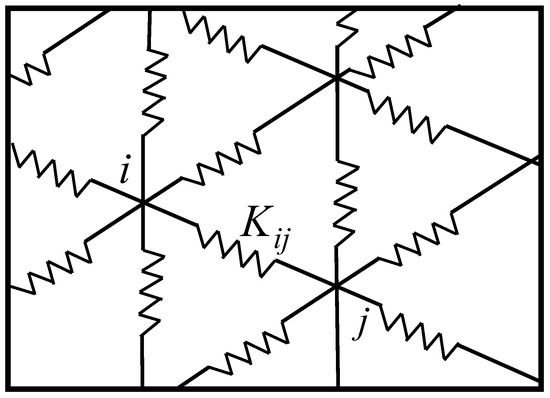
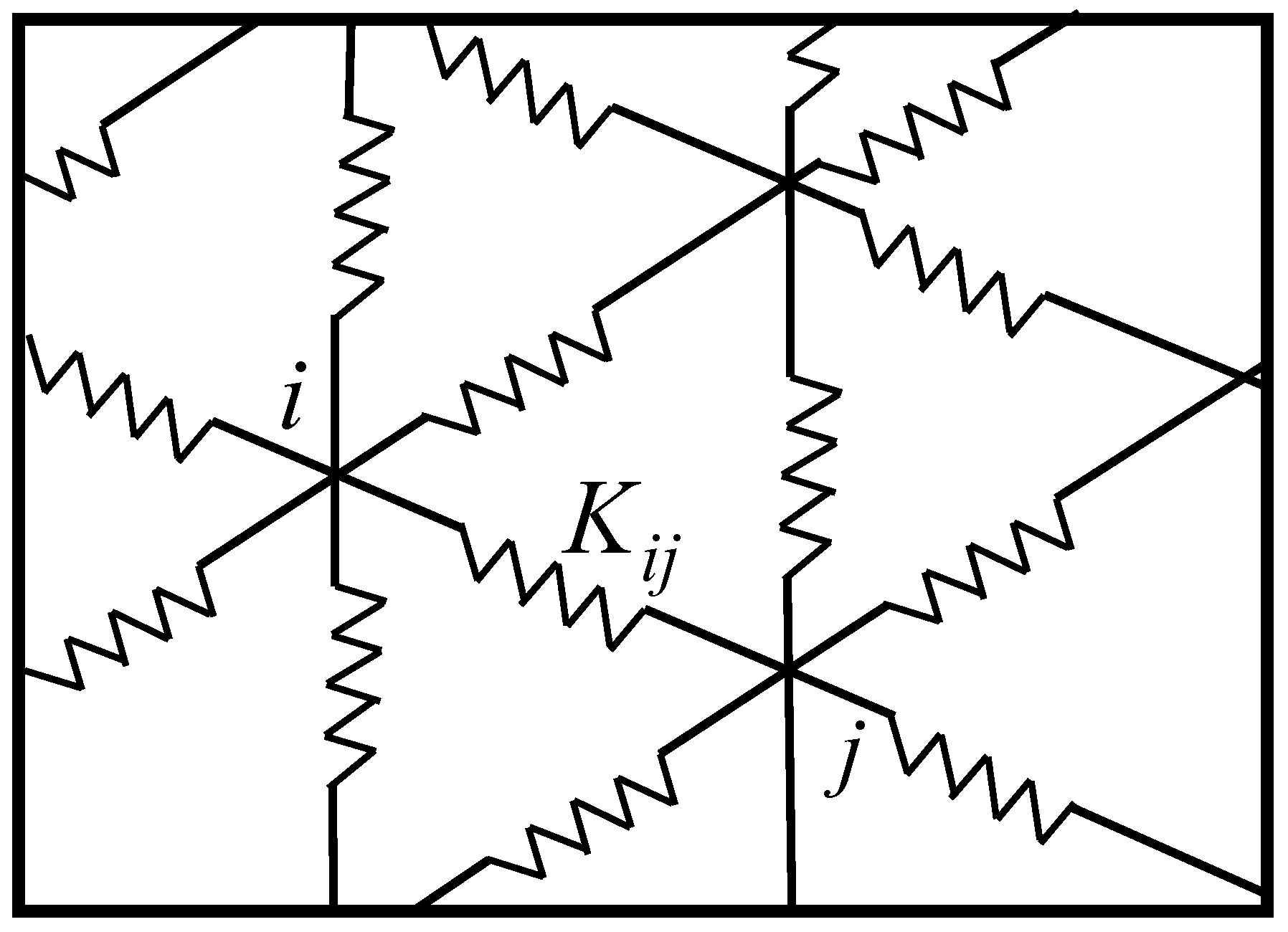
The mesh deformation technique employed for the fluid computational domain is based on the spring analogy method [33]. When boundary displacements occur, the forces acting on the internal mesh nodes change accordingly. By allowing the mesh nodes to move until the entire system reaches a new state of force equilibrium, the updated positions of the mesh nodes can be obtained [34]. As illustrated in Figure 1, an arbitrary interior node in the spring system is denoted as , and node represents one of the nodes connected to it. The elastic force between mesh nodes and can be expressed as:
Figure 1.
Schematic diagram of the spring model.
Here, denotes the elastic stiffness coefficient between mesh nodes and , while and represent the position vectors of nodes and , respectively. According to Hooke’s Law, the resultant force acting on mesh node can be expressed as:
Here, denotes the number of nodes connected to node . By assembling the governing equations for all mesh nodes, a linear system of equations governing the new node positions can be obtained. First, the initial forces acting on each mesh node are computed according to Equation (7). When node displacement causes changes in the spring lengths, the corresponding nodal forces vary accordingly. To maintain the initial force equilibrium, the positions of the surrounding mesh nodes must be adjusted to restore balance within the spring system. After adjustment, the resultant forces on all nodes continue to satisfy Equation (7). On this basis, by combining the control equations corresponding to the new node positions, the linear system of Equation (8) is established.
This system of equations characterizes the relationship between the position vectors of the deformed mesh nodes and the corresponding forces, where represents the total number of moving nodes.
The matrix is diagonally dominant and converges using the Jacobi iterative method. The new coordinate position of mesh node can be determined by the following iterative equation:
Considering folding and torsional effects, the spring stiffness coefficient may be expressed as:
In the expression, and are correction factors for the spring stiffness. Increasing raises the stiffness of the springs at the boundary, allowing the deformation of the internal mesh caused by the motion of boundary nodes to be propagated farther; is used to adjust the spring stiffness to prevent excessive mesh distortion.
When the displacement of boundary nodes exceeds a predefined threshold, traditional mesh deformation techniques can no longer maintain adequate mesh quality. In such cases, a dynamic mesh reconstruction strategy must be employed. After reconstruction, the flow field variables are interpolated through an inter-mesh data transfer technique [35]. In the test cases considered in this study, the triggering criterion for mesh reconstruction in the remeshing region is defined as follows: when the mesh quality metric within this region falls below the prescribed threshold of 0.001, the mesh reconstruction procedure is activated.
2.3. Surface-Based Dynamic Mesh Technique
The unstructured dynamic mesh technique was used in aerodynamic simulations involving multi-component rigid-body six-degree-of-freedom motions. This method represented the six-degree-of-freedom motion of different components through the overall movement of the surface mesh, while the deformation of the surrounding volume mesh was driven by the spring analogy method, which allowed aerodynamic computations to be performed. In this process, the surface mesh moved as a rigid body. Building upon this foundation, the present study introduced mesh motion into the local deformation of the surface mesh and extended the unstructured dynamic mesh technique to flow simulations of wing extension morphing.
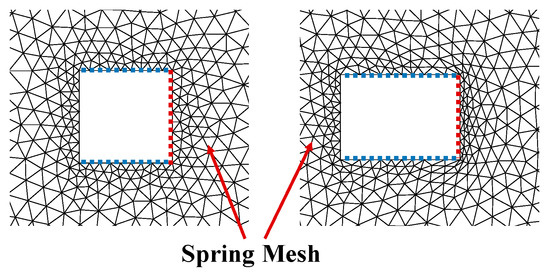
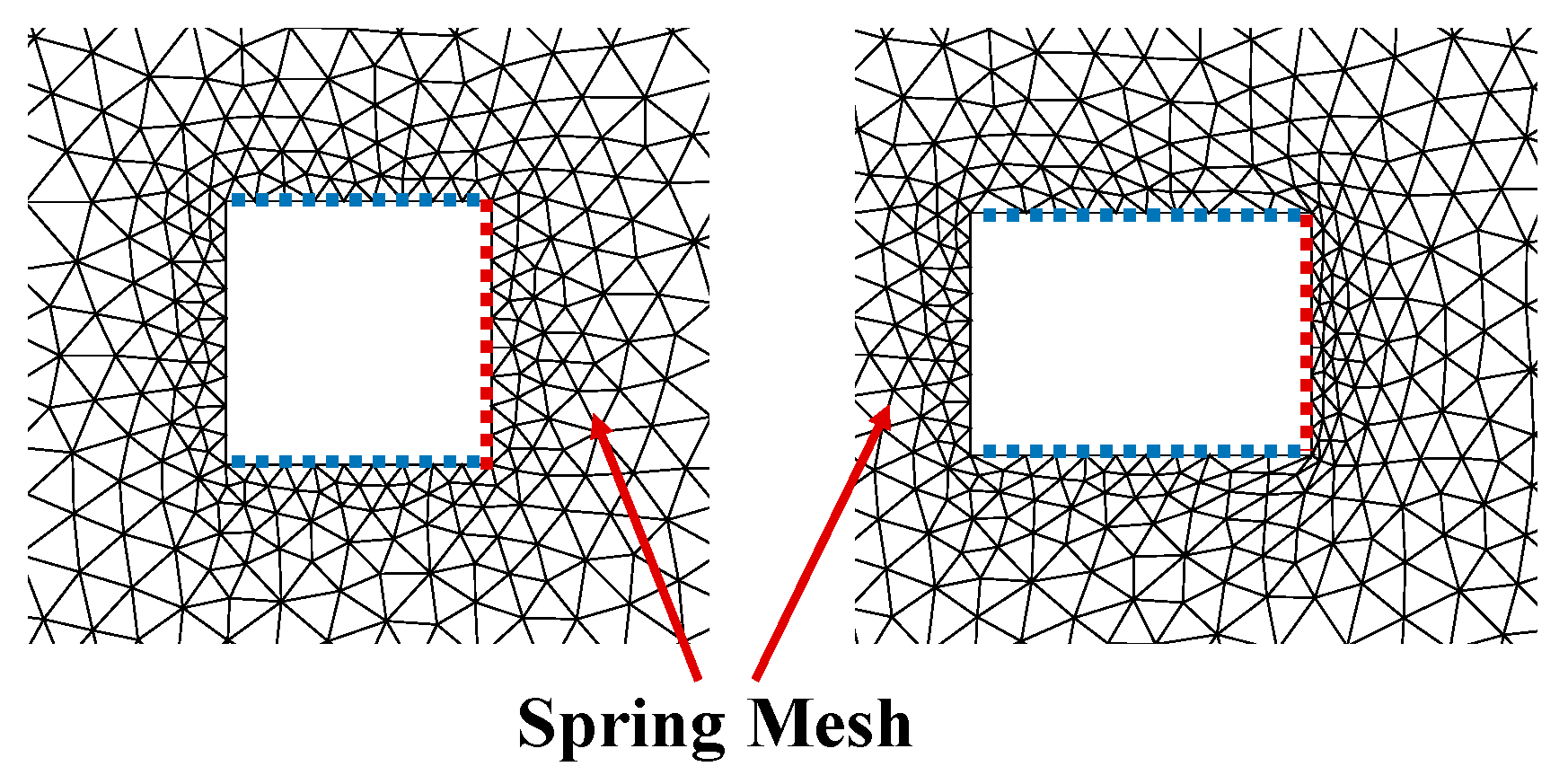
As illustrated in Figure 2, the motion of the solid-surface mesh was achieved by assigning different motion velocities to the red and blue boundary nodes. The movement of the surface nodes subsequently drove the motion of the connected spring-based volume mesh, resulting in a continuous deformation of the solid surface.
Figure 2.
Schematic diagram of surface-based dynamic mesh.
In this study, a wing-extension model was employed as the solid-surface deformation case. The continuous wing extension process was simulated by prescribing the analytical motion velocity along the solid-surface boundary.
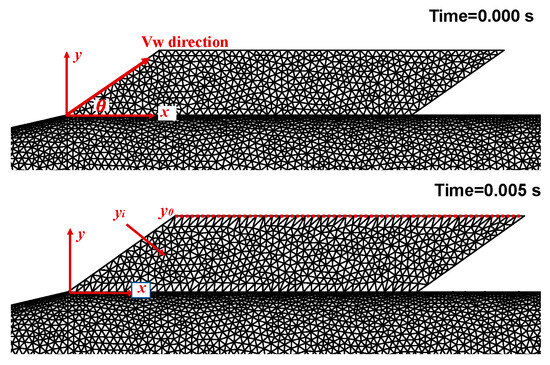
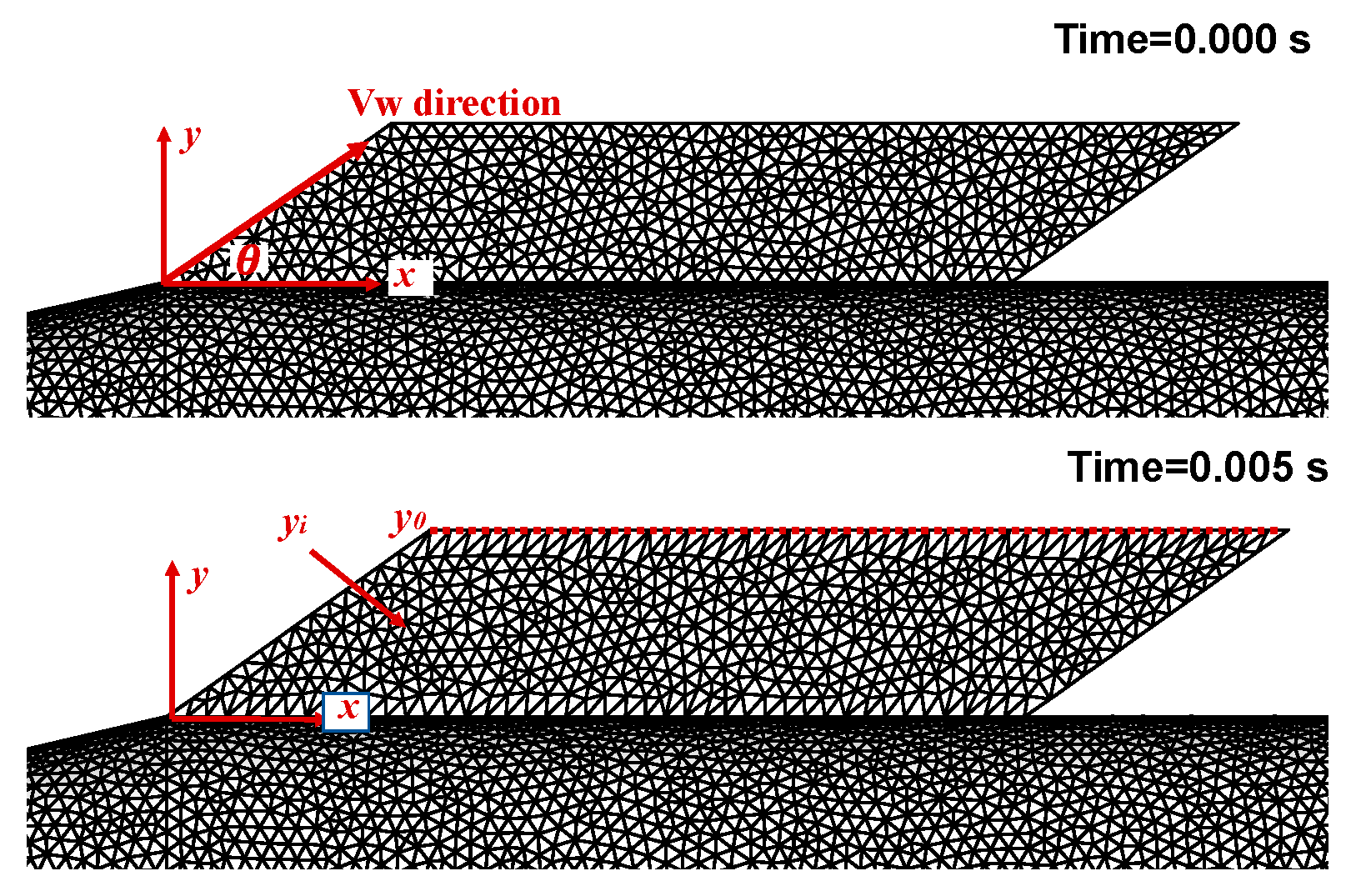
As shown in Figure 3, a coordinate system was established with the -axis directed from the nose to the tail of the fuselage and the -axis oriented outward, perpendicular to the fuselage. The red nodes represent the outermost edge of the wing, with their vertical coordinate denoted as . All other surface nodes on the wing are assigned coordinates . The outermost edge nodes are prescribed a constant motion velocity of magnitude along the direction. To ensure a uniform surface mesh distribution during the motion of the solid surface, the motion velocity of each surface node is determined according to its distance from the outermost edge of the wing. The velocity distribution is defined by Equations (12) and (13), where was a positive integer, and denotes the angle between the wing motion direction and the -axis.
Figure 3.
Schematic of wing mesh motion.
3. Computational Model and Method Verification
3.1. Computational Method and Validation of the Spring-Based Mesh
The store separation benchmark case [36] is a classical validation example in the field of CFD used to assess the reliability of numerical methods. In this study, this benchmark is employed to verify the accuracy of the computational program. It should be emphasized that this benchmark case is employed to validate the robustness of the dynamic mesh framework and flow solver, rather than the surface deformation strategy itself.
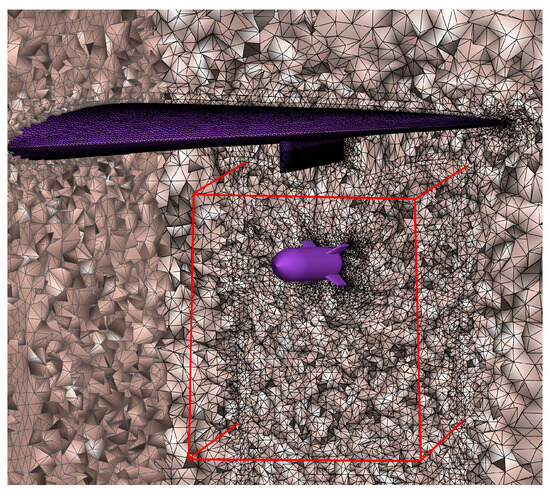
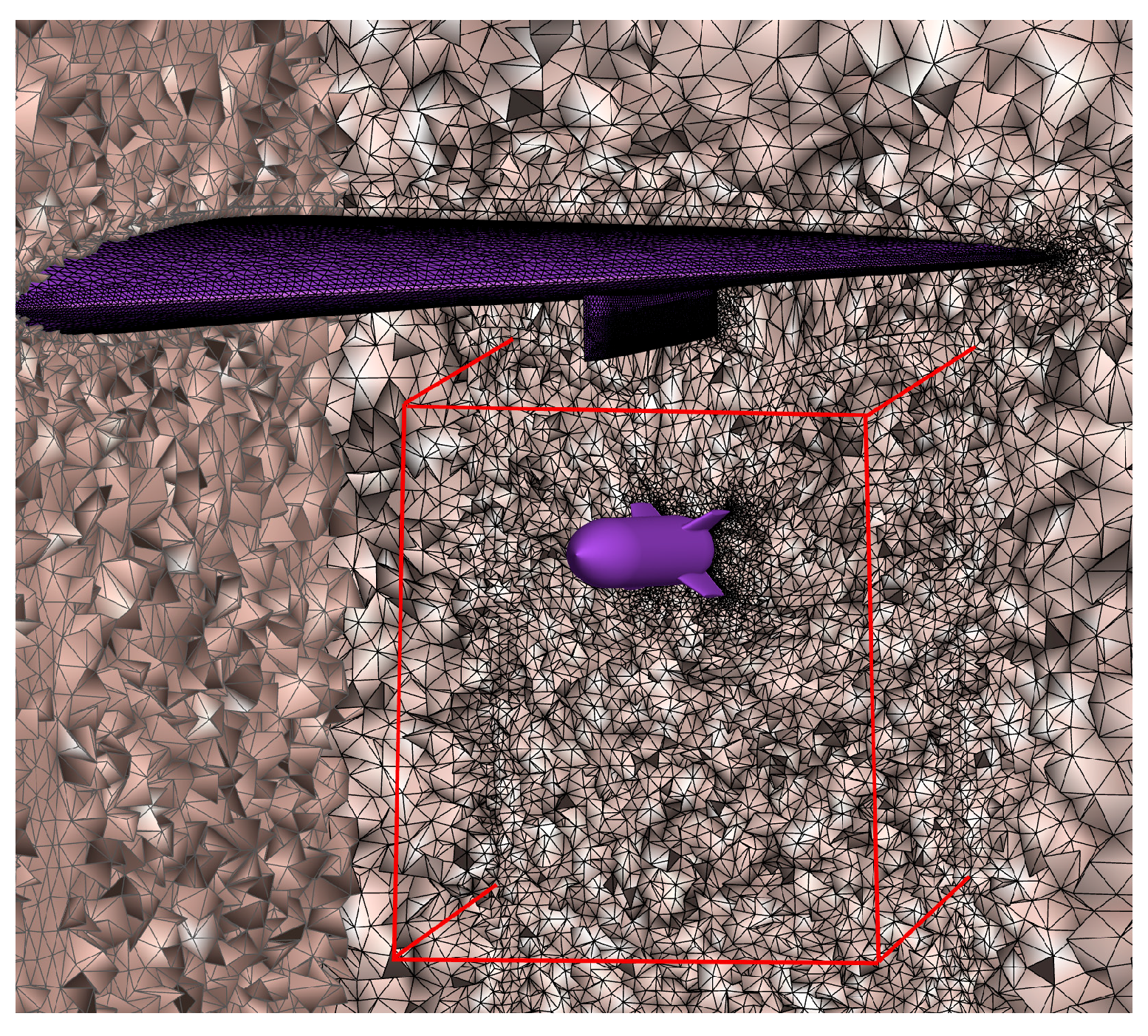
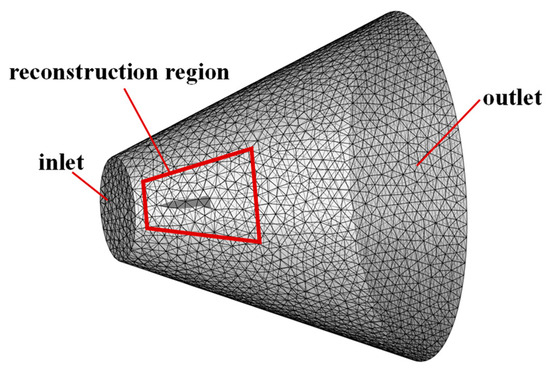
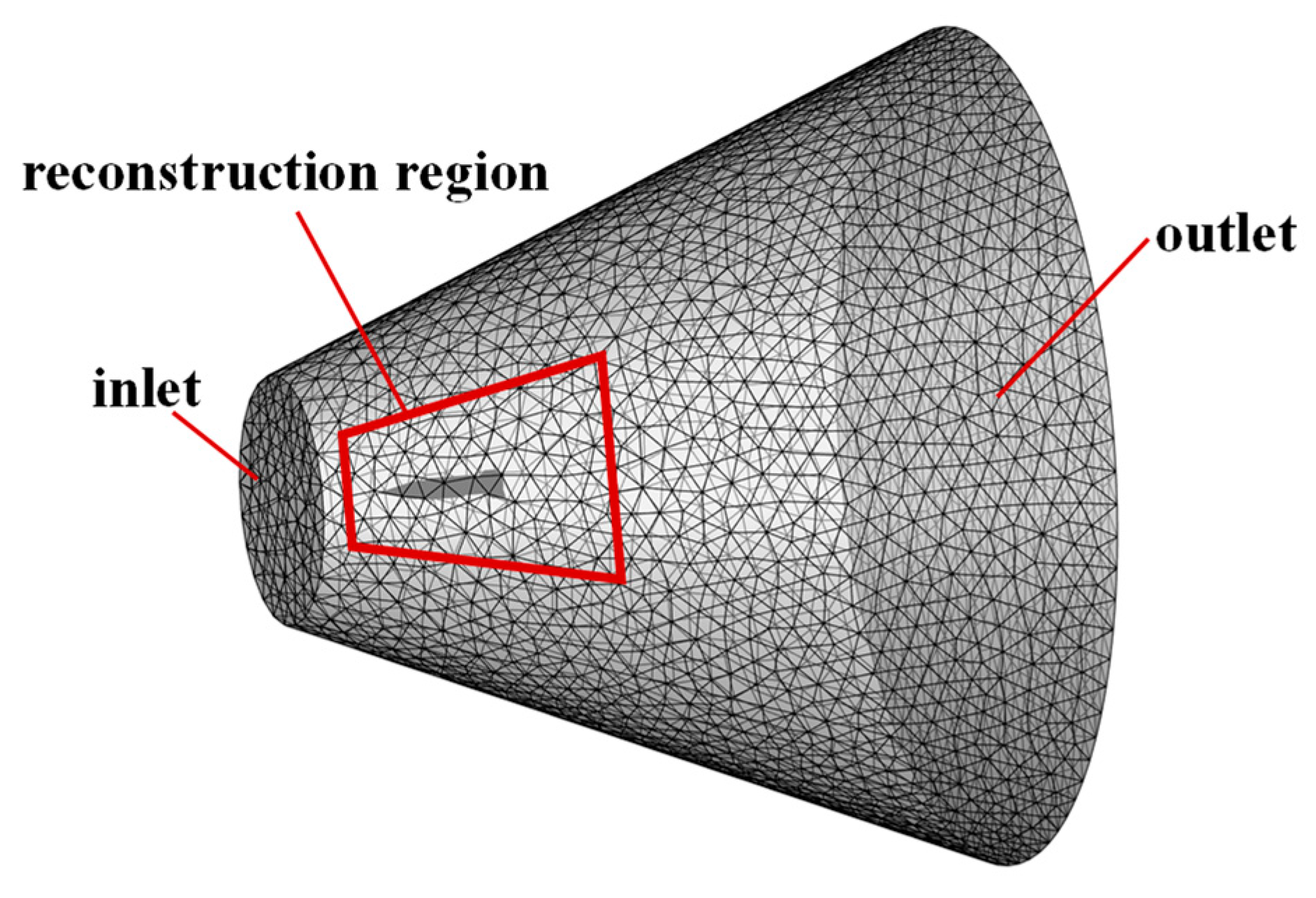
The computational parameters for this case are set as follows: free-stream Mach number , angle of attack 0°, and separation altitude , corresponding to a free-stream density of and a free-stream pressure of = 20,659 Pa. The computational domain is discretized using approximately 2.54 million hybrid cells, as shown in Figure 4. The mesh in the region of the store motion (indicated by the red box in the figure) employs the spring-based dynamic mesh, which undergoes deformation and reconstruction during the store separation process.
Figure 4.
Computational mesh.
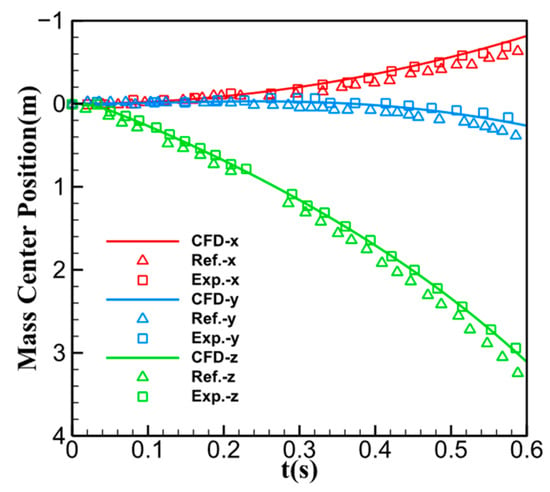
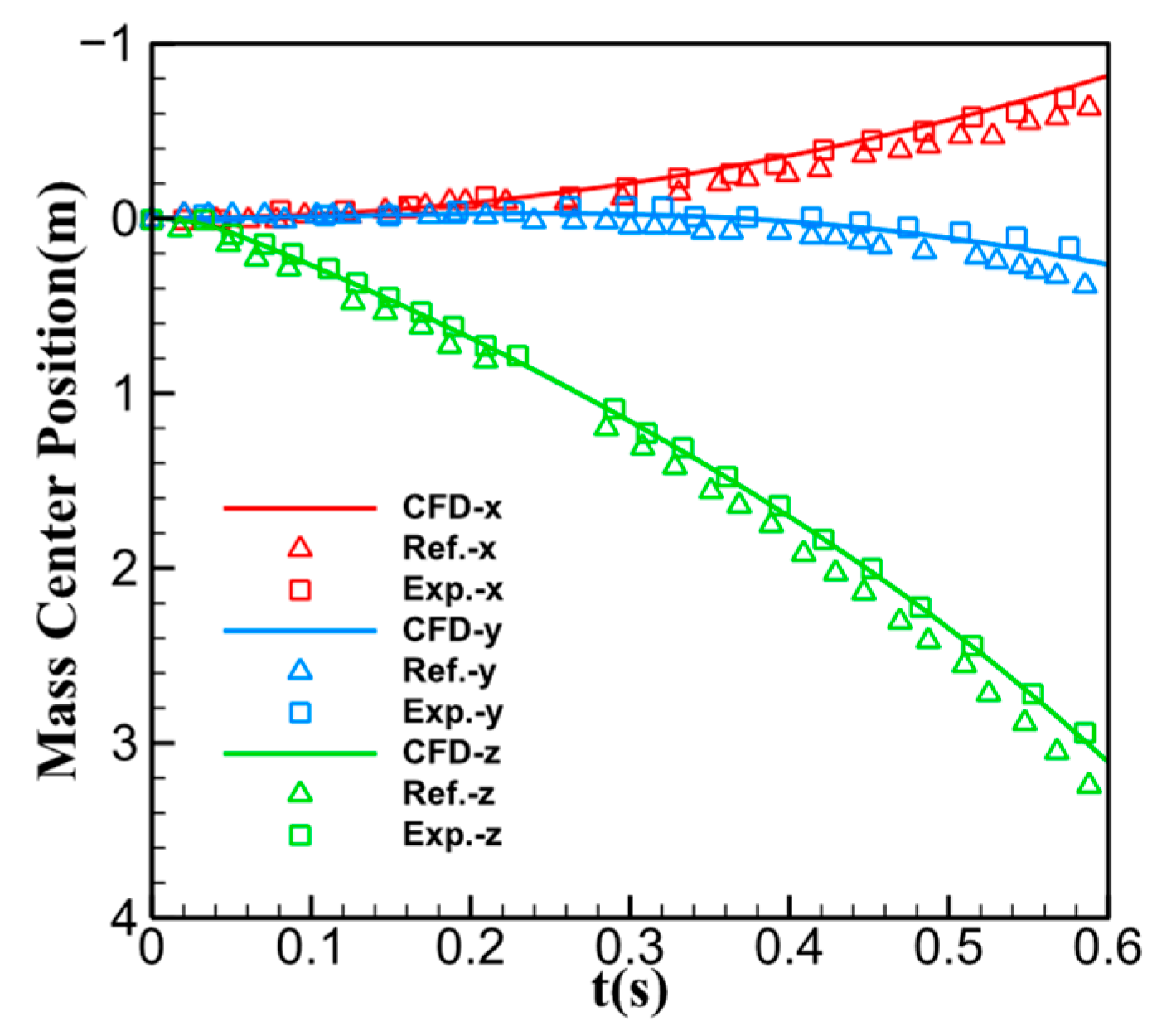
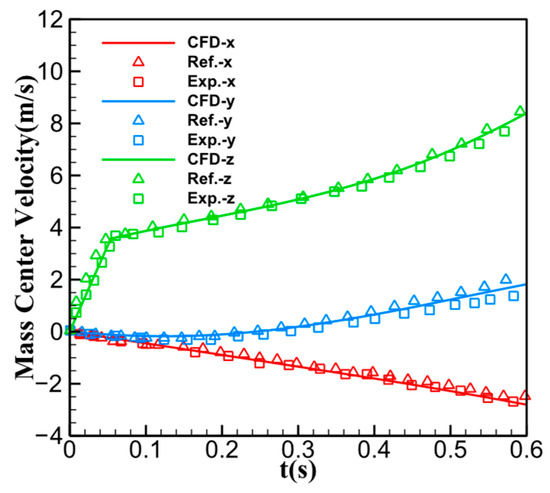
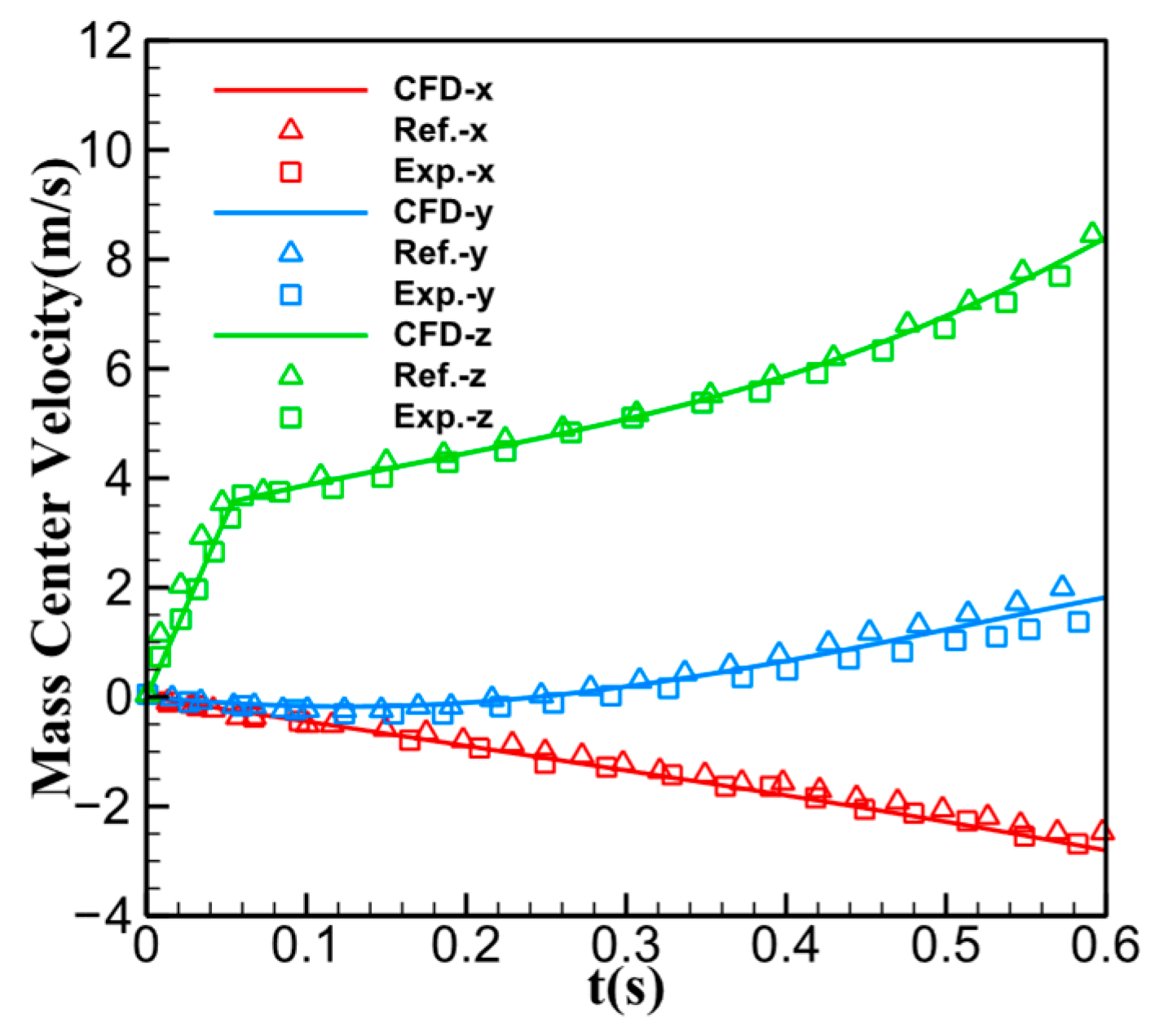
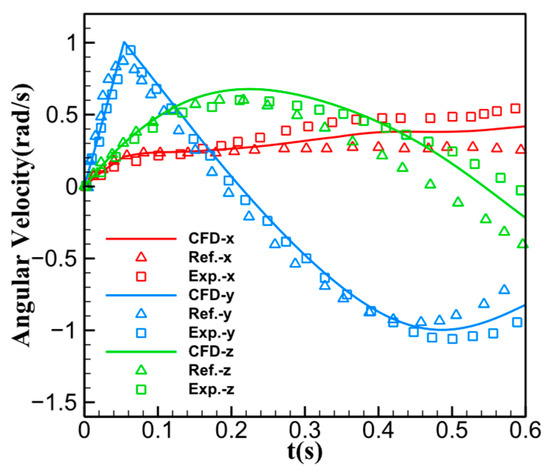
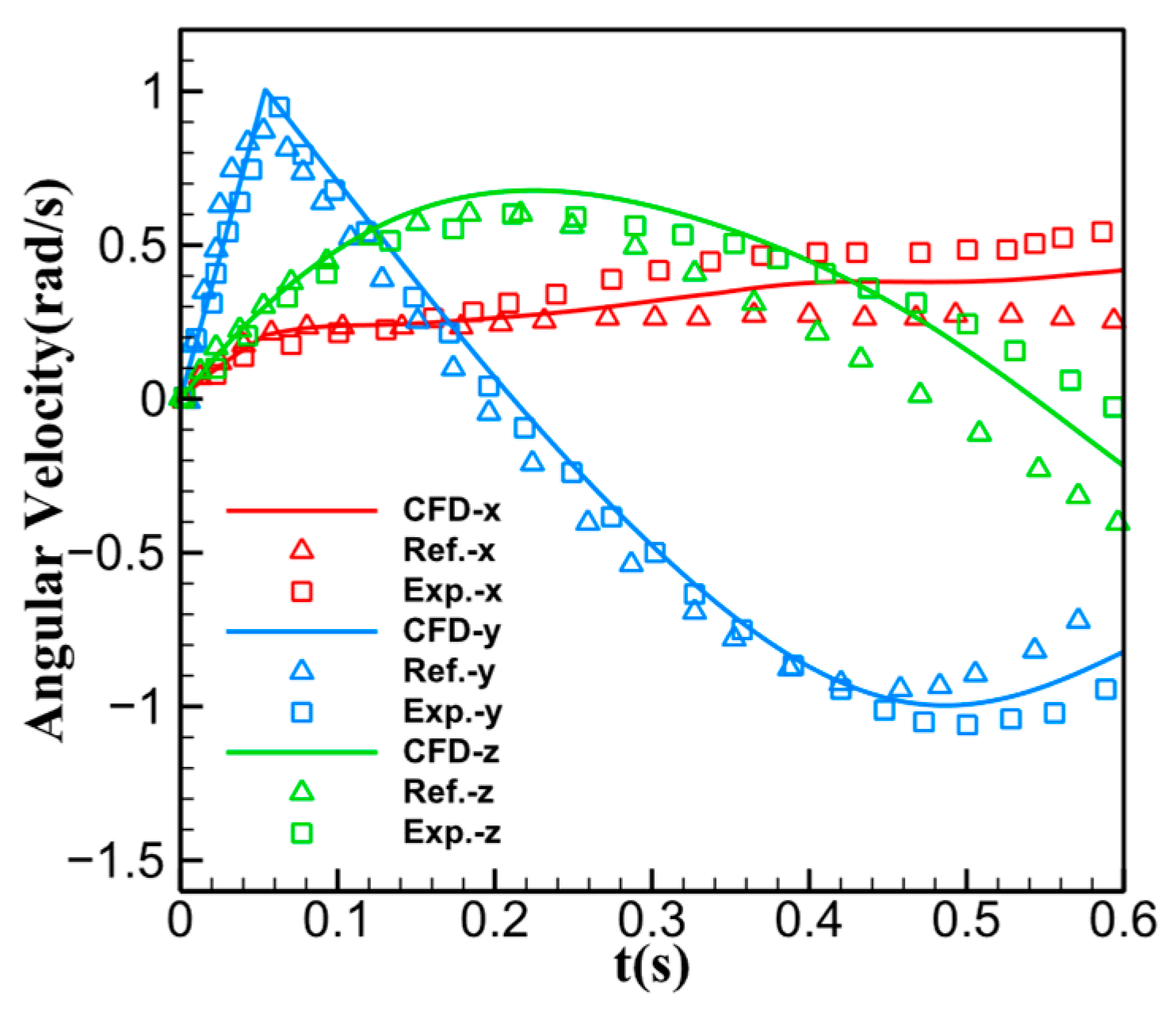
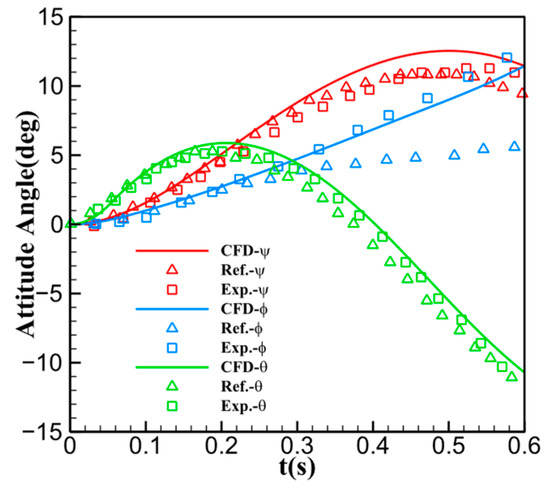
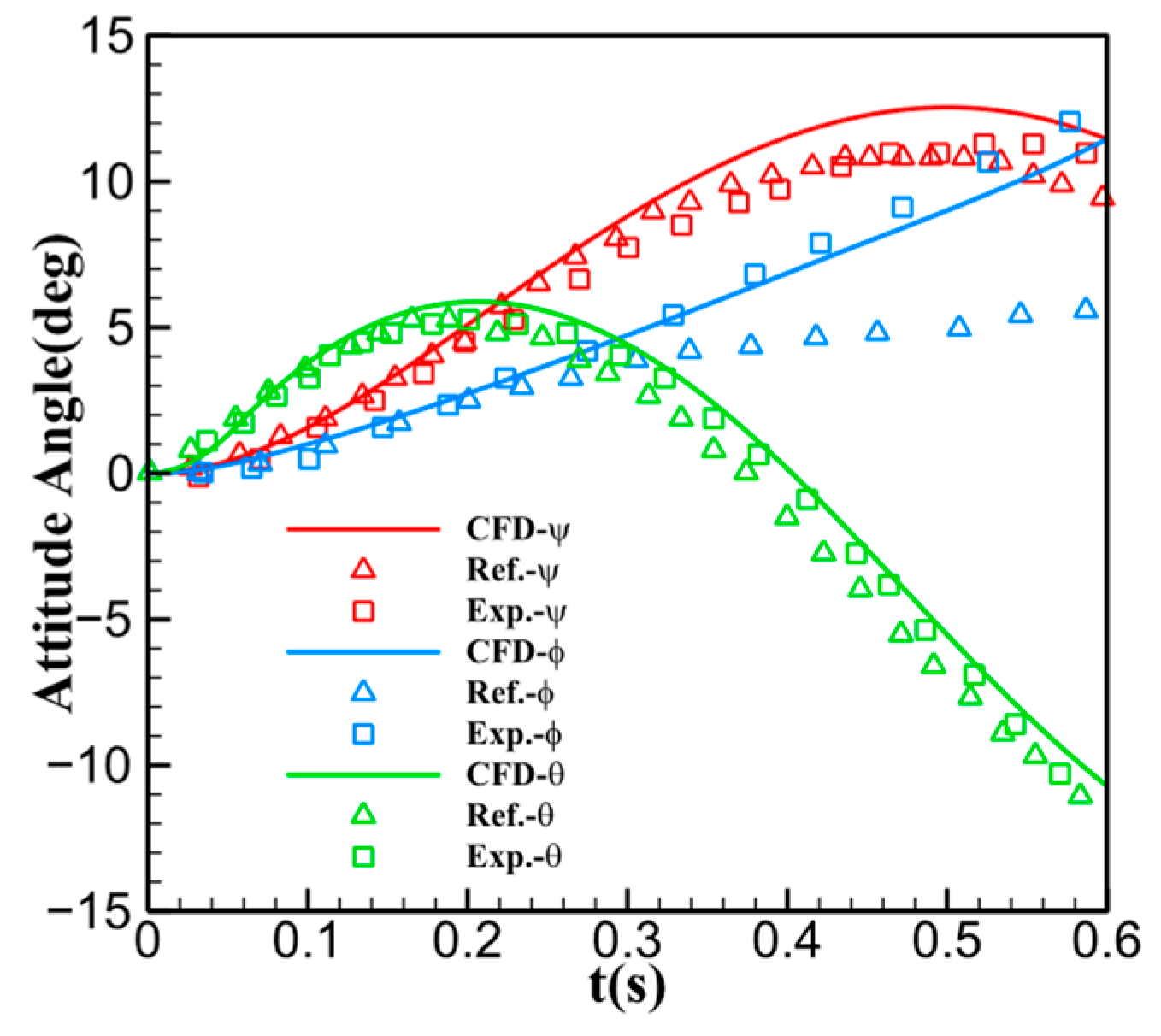
The simulation duration for this case is . Figure 5, Figure 6, Figure 7 and Figure 8 present the time histories of the store’s center-of-mass displacement, velocity, angular velocity, attitude angle, and separation trajectory, respectively. Here, CFD denotes the results obtained from the present method, Exp. represents the experimental data [37], and Ref. corresponds to the computational results reported in the literature [38].
Figure 5.
Curve of position change for the mass center of external attachments.
Figure 6.
Curve of velocity change for the mass center of external attachments.
Figure 7.
Curve of angular velocity change for the orientation of external attachments.
Figure 8.
Curve of attitude angle change for external attachments.
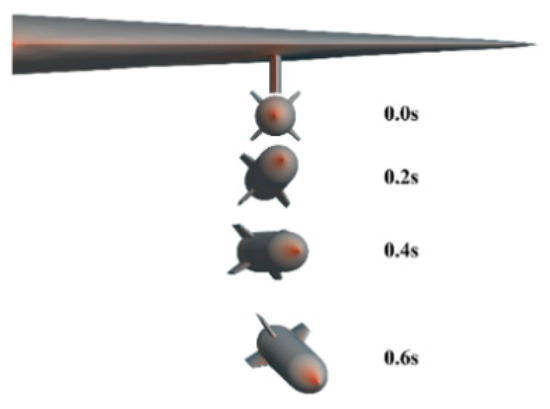
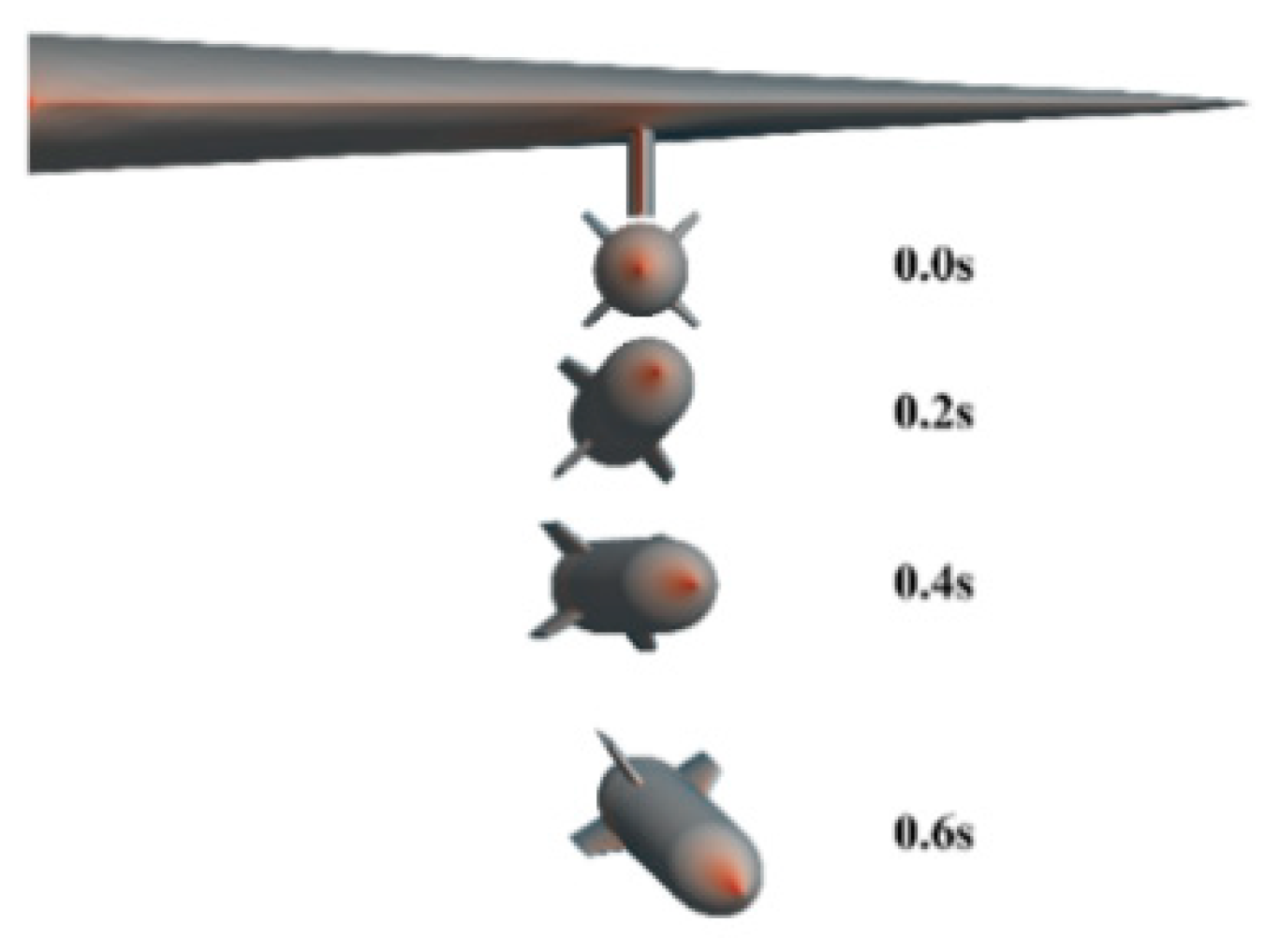
As shown in Figure 5 and Figure 6, the computed results of the store’s center-of-mass position and velocity using the present approach showed good agreement with both the experimental data and the reference results. Figure 7 indicated that after , a slight deviation appeared between the calculated and experimental angular velocities; however, the overall trend remained consistent with the experimental data and was comparable to the reference results. Furthermore, from the attitude angle evolution curve in Figure 8, the present results were in close agreement with the experimental data and were similar to those reported in the reference study. Figure 9 further illustrated the trajectory evolution of the store during separation.
Figure 9.
Change in separation position of external attachments.
Overall, these comparisons indicated that the spring-based dynamic mesh method and computational framework adopted in this study produced consistent results with the experimental and reference data.
3.2. Verification of the Surface-Based Dynamic Mesh Technique
The previously discussed store separation benchmark case provided a basis for assessing the capability of the present computational platform in handling rigid-body six-degree-of-freedom motion problems. In this section, the performance of the proposed surface dynamic mesh technique for simulating continuous deformation was examined through four aspects: (1) mesh independence analysis; (2) evaluation of numerical errors introduced by the surface mesh motion; (3) CFL number sensitivity analysis and (4) assessment of the numerical stability of the coupled dynamic mesh–solver system under flow conditions that can be regarded as quasi-steady.
The objective of this study was to simulate the continuous variation in the wing span. Accordingly, all numerical cases adopted a fixed center-of-mass strategy, with unsteady simulations achieved solely by controlling the time-dependent extension of the wing to obtain the corresponding aerodynamic characteristics and flow field evolution. Among the aerodynamic parameters, the wing—being the principal source of lift—exerted a dominant influence on the lift characteristics through its area variation. Therefore, this study focused on analyzing the evolution of the lift coefficient to examine the aerodynamic behavior during the morphing process.
3.2.1. Mesh Convergence Verification
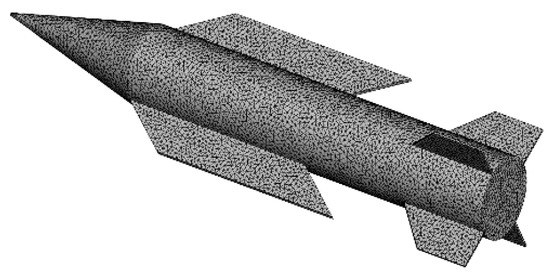
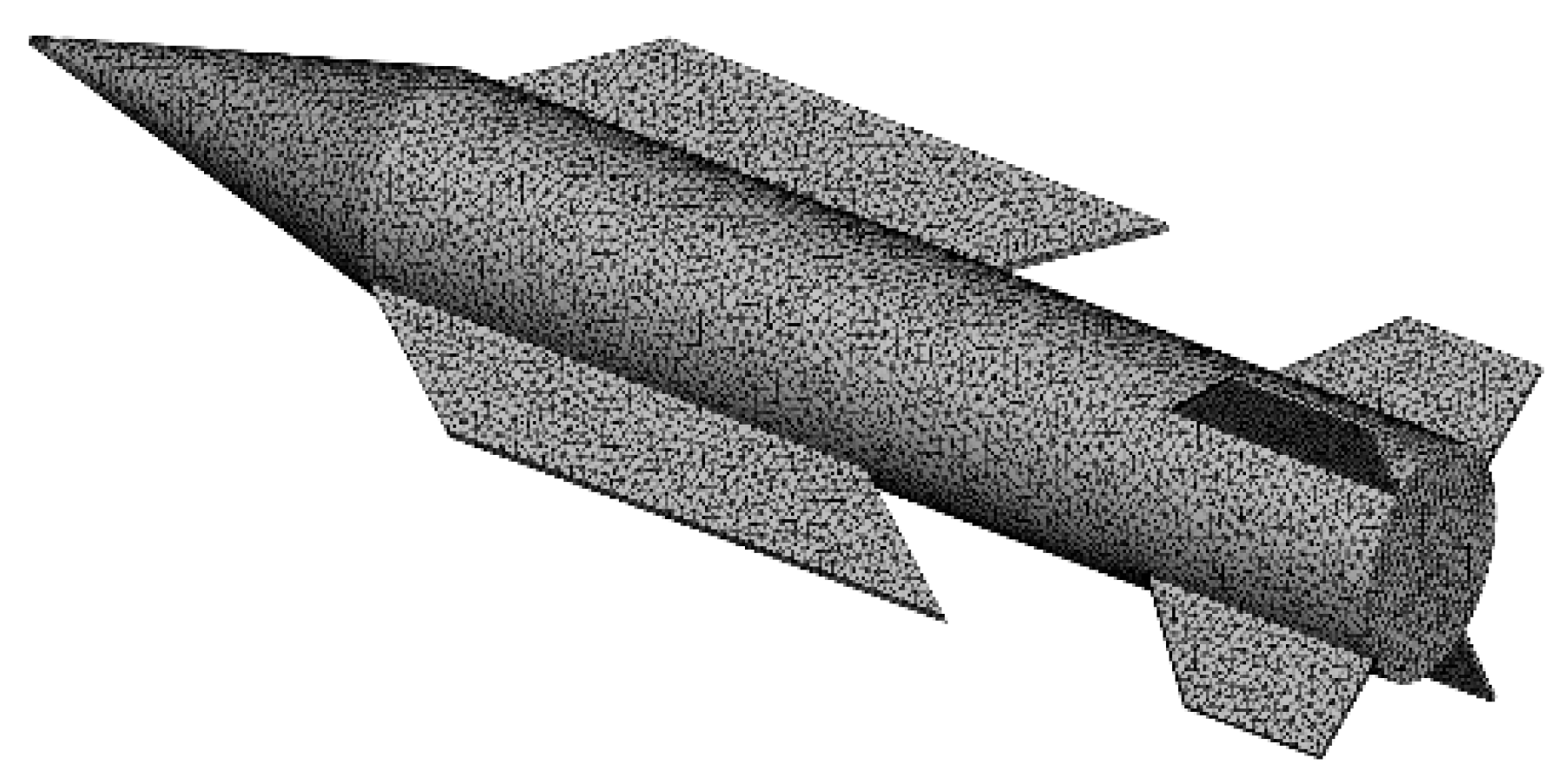
As shown in Figure 10 and Figure 11, the computational domain was discretized using tetrahedral elements, with the dynamically deforming region (reconstruction zone) treated using the spring-based mesh method. The continuous spanwise extension of the wing surface was prescribed through an analytical velocity boundary condition and was propagated to the entire fluid domain via the spring mesh system. Since the flow solution was more sensitive to the mesh resolution within the reconstruction zone, the mesh convergence analysis in this section was restricted to this region.
Figure 10.
Computational domain mesh.
Figure 11.
Surface mesh of the model.
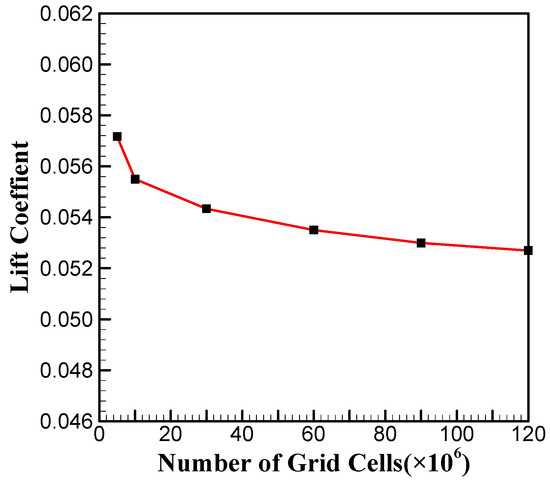
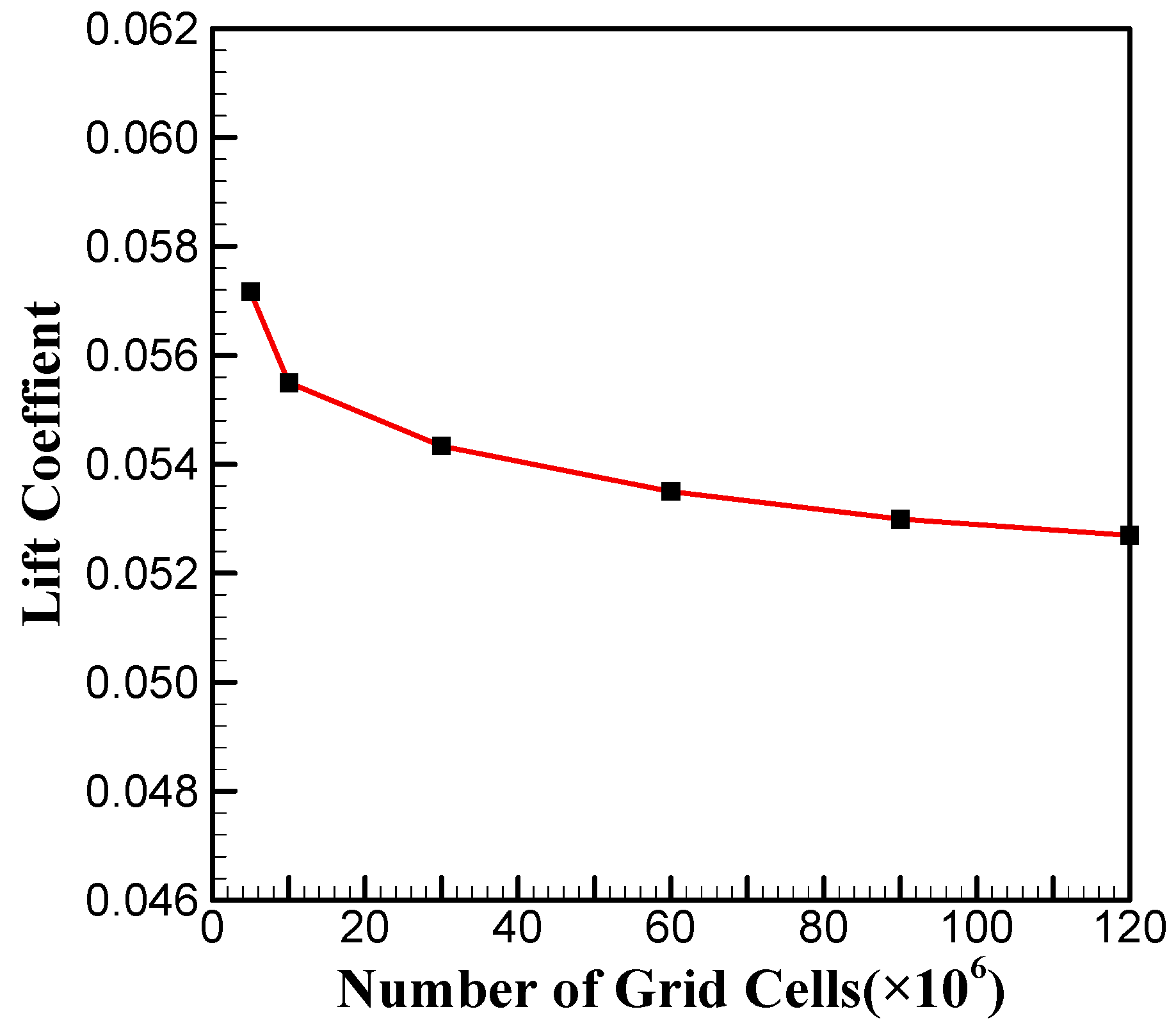
The verification case was conducted under the following conditions: a freestream Mach number of , an angle of attack of 2°, and a flight altitude of . The van Leer scheme was employed for flux evaluation. Steady-state simulations were performed until convergence was achieved, yielding a reference lift coefficient. Figure 12 and Table 1 present the computed lift coefficients obtained with different mesh resolutions in the reconstruction zone.
Figure 12.
Lift coefficient convergence curve.
Table 1.
Lift coefficient at different mesh resolutions.
As indicated by Figure 12 and Table 1, the lift coefficients showed convergence with increasing mesh resolution in the reconstruction zone. When the number of cells reached 0.9 million, the relative errors of the lift coefficient were reduced to low levels. Based on these results, the mesh in the reconstruction zone was fixed at approximately 0.9 million cells for subsequent simulations. For the case with a freestream Mach number of 3.0, the total number of cells in the computational domain was approximately 1.3 million. For the cases with Mach numbers of 0.9 and 0.4, the total cell count increased to about 1.8 million due to the outward extension of the computational boundaries.
3.2.2. Evaluation of Numerical Errors Induced by Surface Mesh Motion
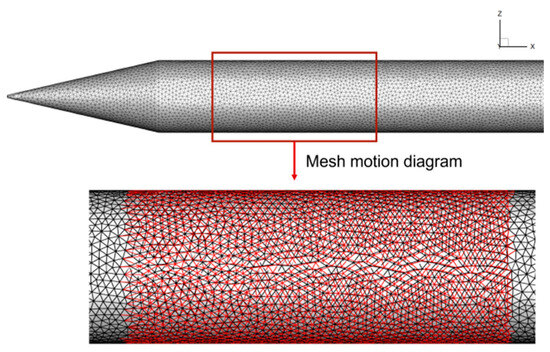
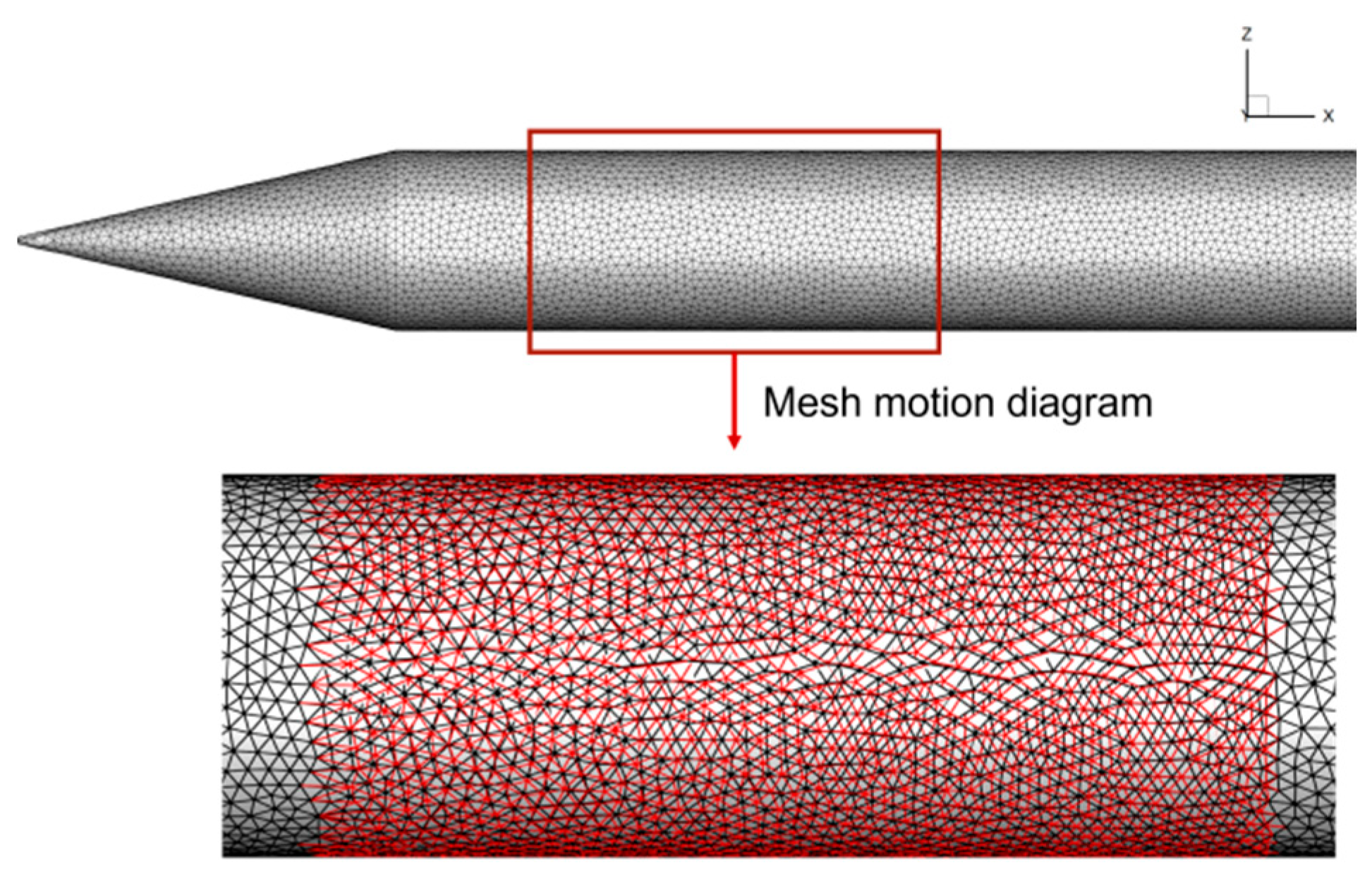
To quantify the numerical errors introduced solely by surface mesh motion itself (without involving any geometric shape change) in unsteady aerodynamic simulations, a comparative test case was designed in this sub-section. The aircraft geometry was kept unchanged, and the computational domain was configured identically to that shown in Figure 10 of Section 3.2.1, except that the wing and tail surfaces were removed, resulting in approximately 1.0 million cells in the reconstruction zone. A localized portion of the surface mesh (highlighted by the red box in Figure 13) was prescribed to translate along the x-direction according to a specified law, while a reference case with a completely stationary surface mesh was also considered. By comparing the lift coefficient obtained from the two unsteady simulations, the numerical differences induced by mesh motion were evaluated.
Figure 13.
Schematic of surface mesh motion (black: initial mesh; red: deformed mesh).
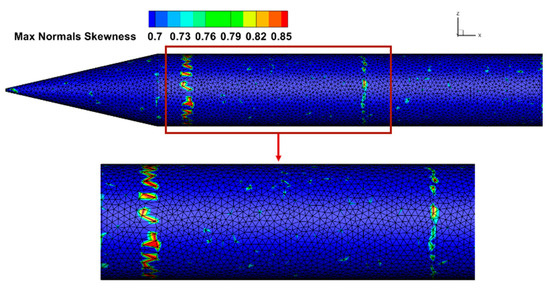
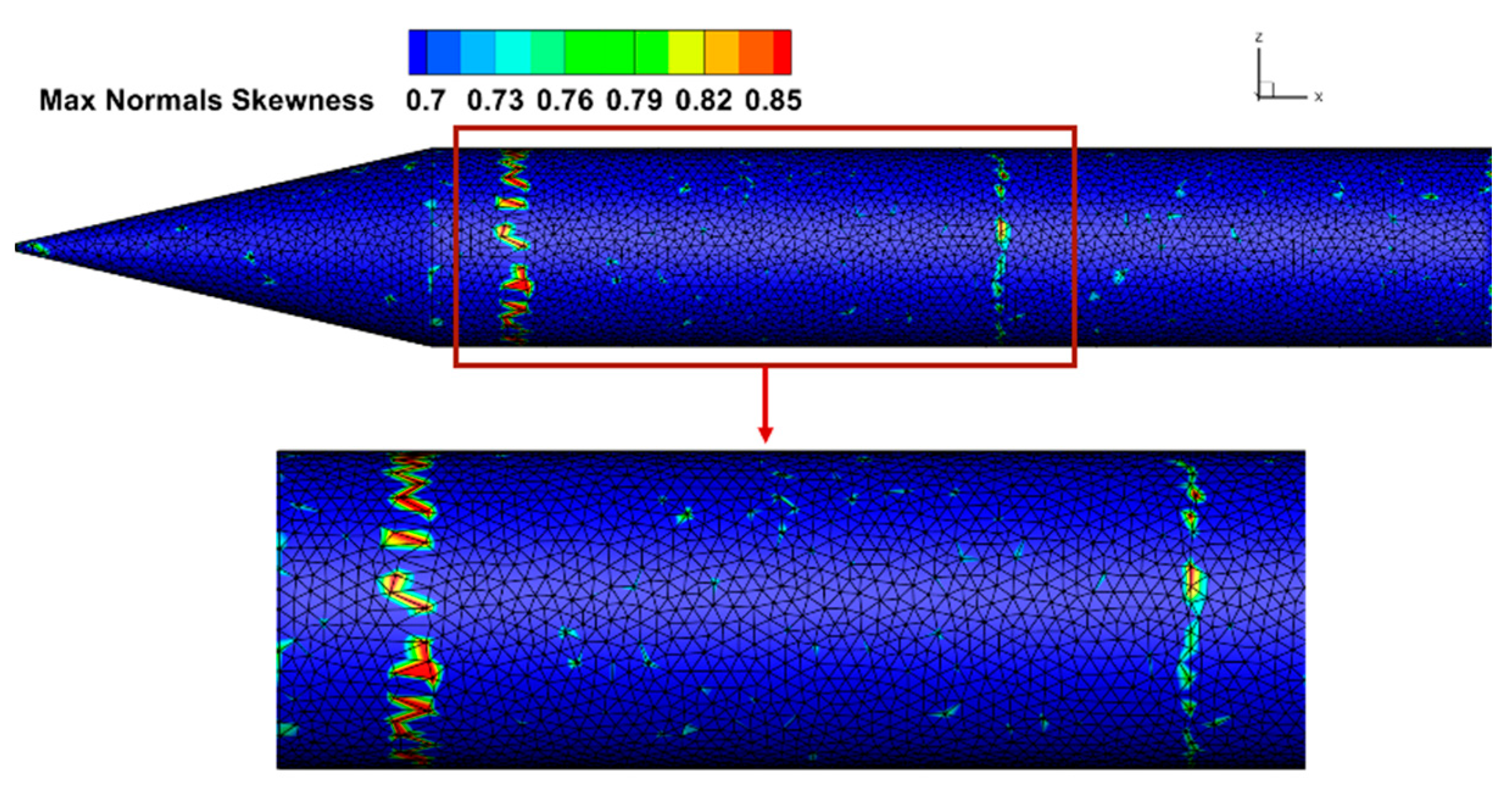
The test case is configured as follows: a freestream Mach number of , an angle of attack of 2°, and a flight altitude of . Time integration is performed using a Runge–Kutta scheme with the CFL number fixed at 2.8, and the van Leer scheme is employed for flux evaluation. When the mesh motion reaches its maximum displacement, the maximum normal skewness is approximately 0.9 (Figure 14). The total simulated physical time is .
Figure 14.
Mesh quality (normals skewness) contour plot.
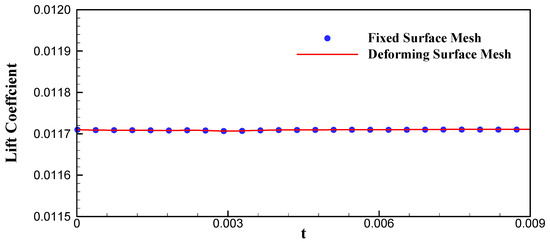
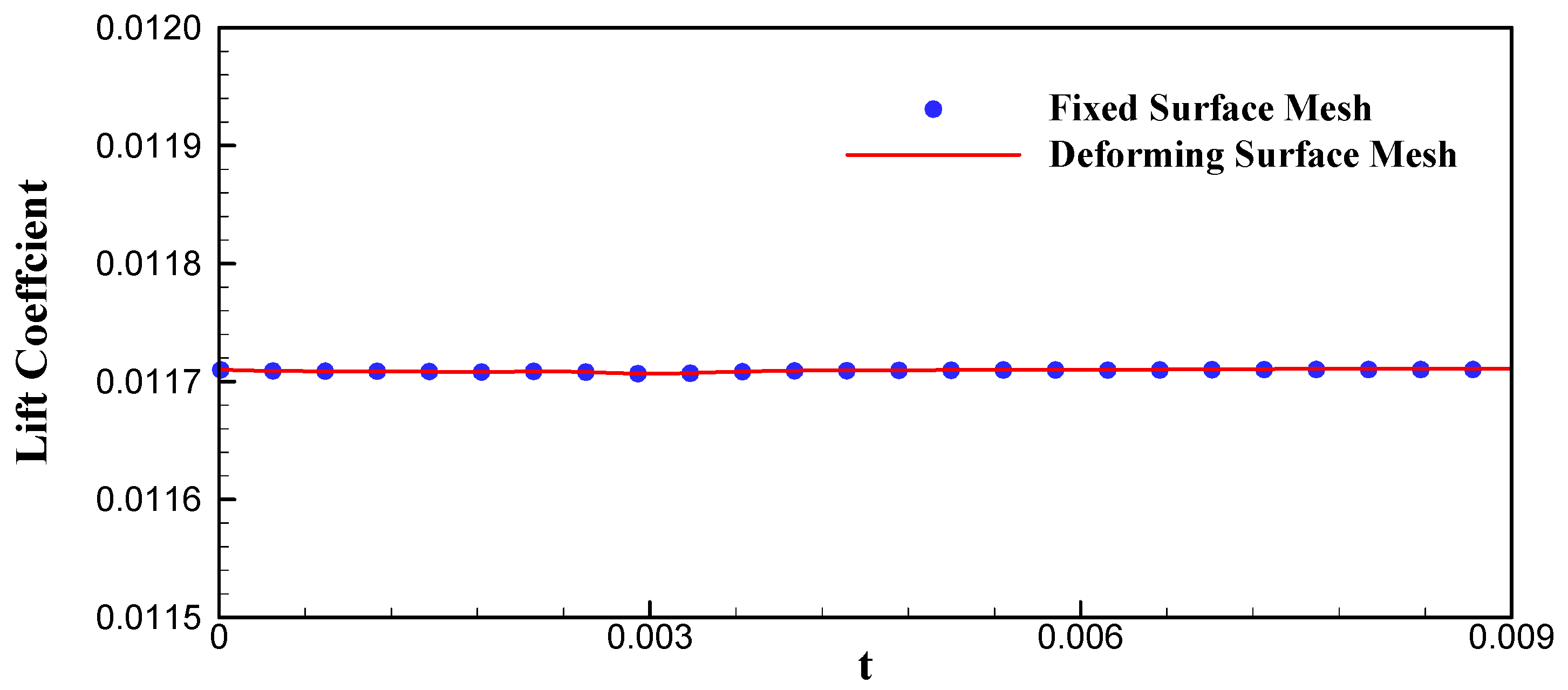
Figure 15 presents the comparison of lift coefficient histories from the two simulations. The results showed that even under relatively large mesh deformation (skewness up to 0.9), the differences between the moving-mesh case and the stationary-mesh reference case remained small. This indicated that the additional numerical effects introduced by surface mesh motion were limited under the present conditions. It was also noted that in all subsequent wing extension simulations, the maximum normal skewness induced by mesh deformation was kept below 0.9.
Figure 15.
Comparative curve of lift coefficient.
3.2.3. Sensitivity Analysis of the CFL Number
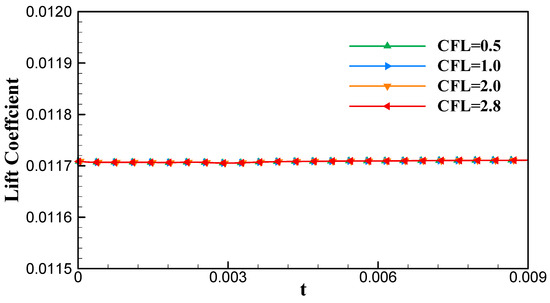
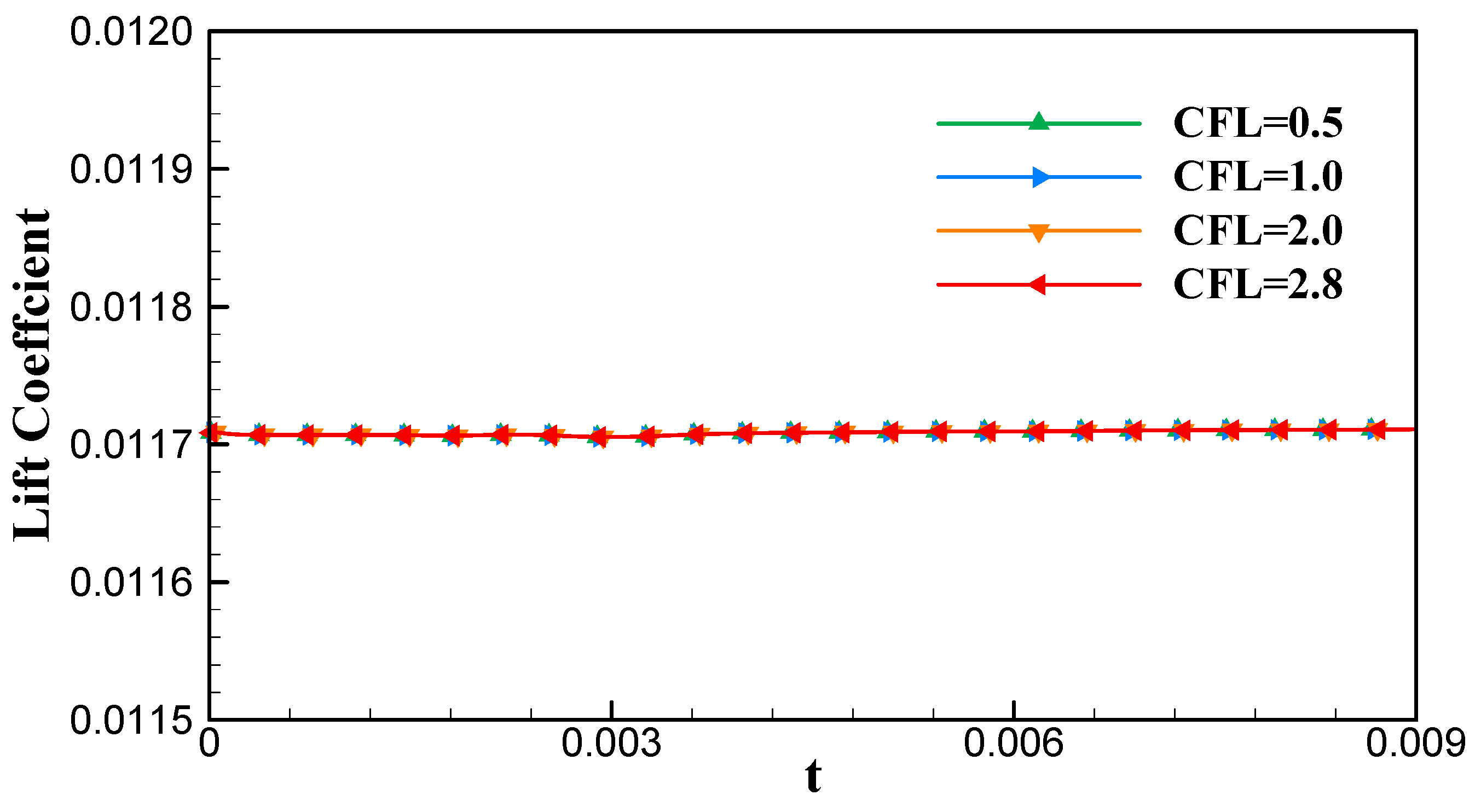
To evaluate the temporal resolution of unsteady simulations under dynamic mesh conditions, a CFL number sensitivity study was conducted based on the mesh motion case presented in Section 3.2.2. Four CFL numbers (0.5, 1.0, 2.0, and 2.8) were tested, with inflow conditions consistent with those in Section 3.2.2. The computed lift coefficient histories are shown in Figure 16.
Figure 16.
Lift coefficient under different CFL numbers.
The results showed that the overall variation trend of the lift coefficient remained consistent across different CFL numbers, with no significant additional deviations observed. This suggested that the selected CFL = 2.8 provided a reasonable compromise between computational accuracy and efficiency.
3.2.4. Verification of the Robustness of the Numerical Solution Framework During the Continuous Deformation Process
To assess the numerical behavior of the integrated solver system, including the dynamic mesh technique and CFD solver, during continuous deformation of a realistic geometry, this section analyzed the wing extension process under supersonic conditions () as a representative case. The purpose of this test was to examine the performance of the coupled system under a flow condition where the flow field was dominated by a stable nose shock and the wing extension speed () was much lower than the freestream velocity. Under these conditions, fluid inertial effects were considered weak, and the aerodynamic response could be approximated as quasi-steady. Based on this assumption, the unsteady results were compared with steady-state solutions for corresponding configurations. The objective was to evaluate whether the coupled system could maintain stable numerical behavior and preserve geometric consistency during mesh motion and remeshing, while producing trends comparable to those obtained from steady simulations.
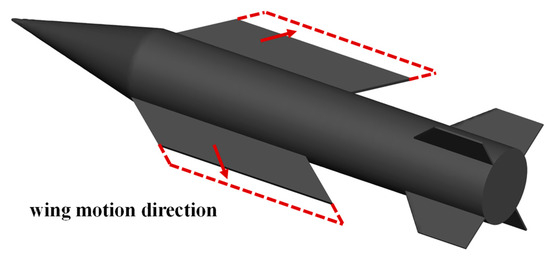
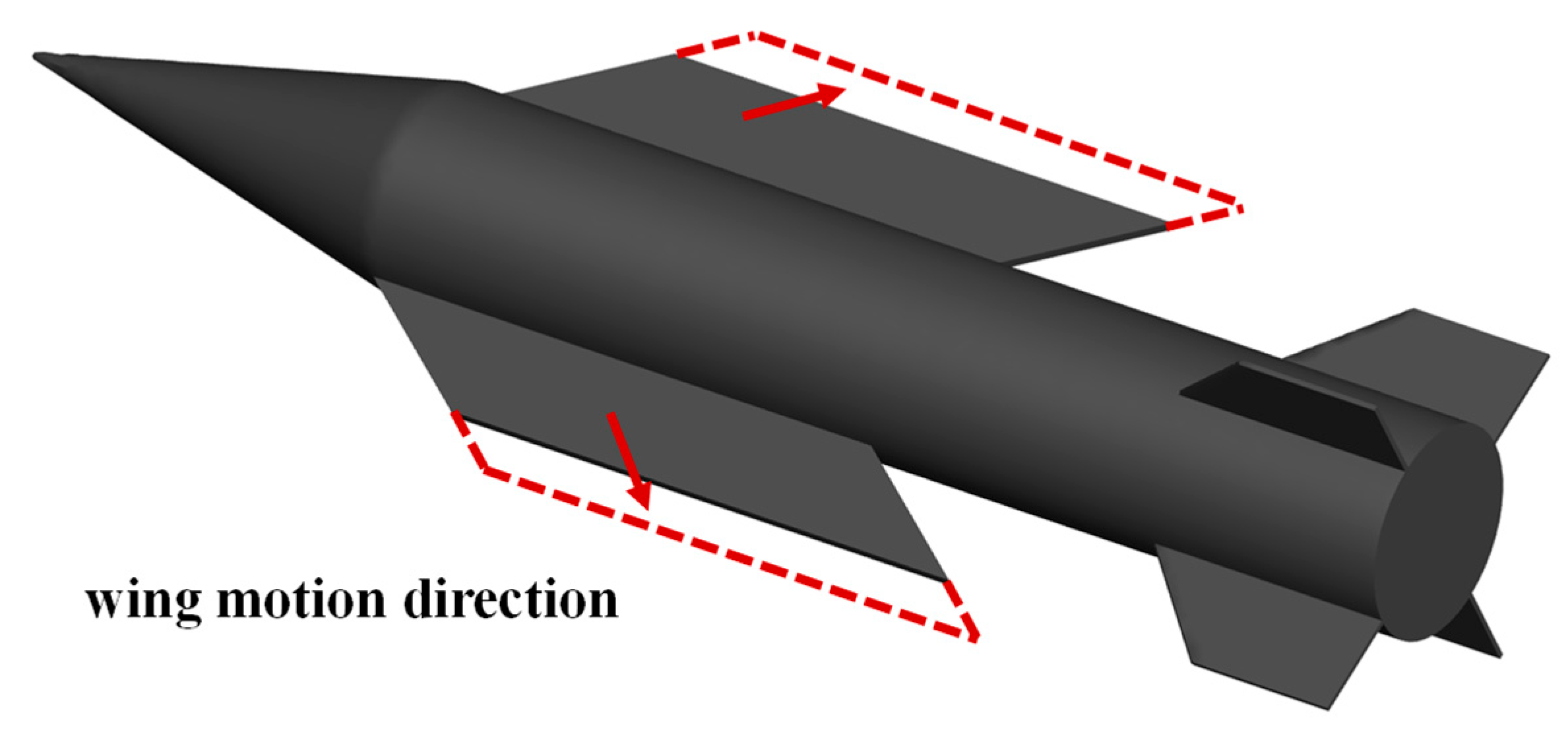
The unsteady simulation was conducted under the following conditions: a freestream Mach number of , an angle of attack of 2°, and a flight altitude of . The time integration and flux schemes were the same as previously described. The schematic of the wing extension and its direction are shown in Figure 17; the wing extension velocity is set to , with a total simulated time of and a total extension of .
Figure 17.
Schematic diagram of wing motion.
Steady-state simulations were performed for configurations corresponding to extension increments of , and all steady-state conditions were computed until convergence, while all other conditions remain consistent with the unsteady case. The unsteady results at the corresponding instants were then compared with the steady-state solutions.
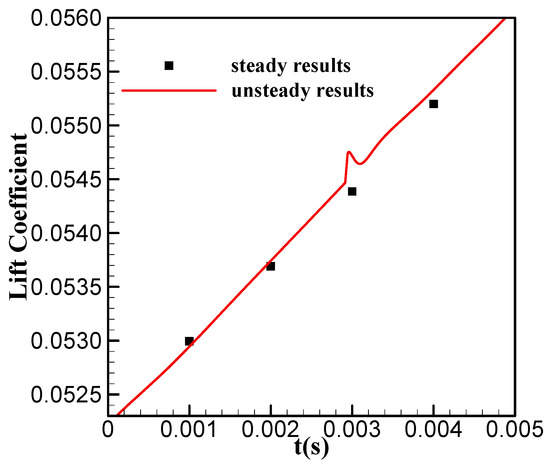
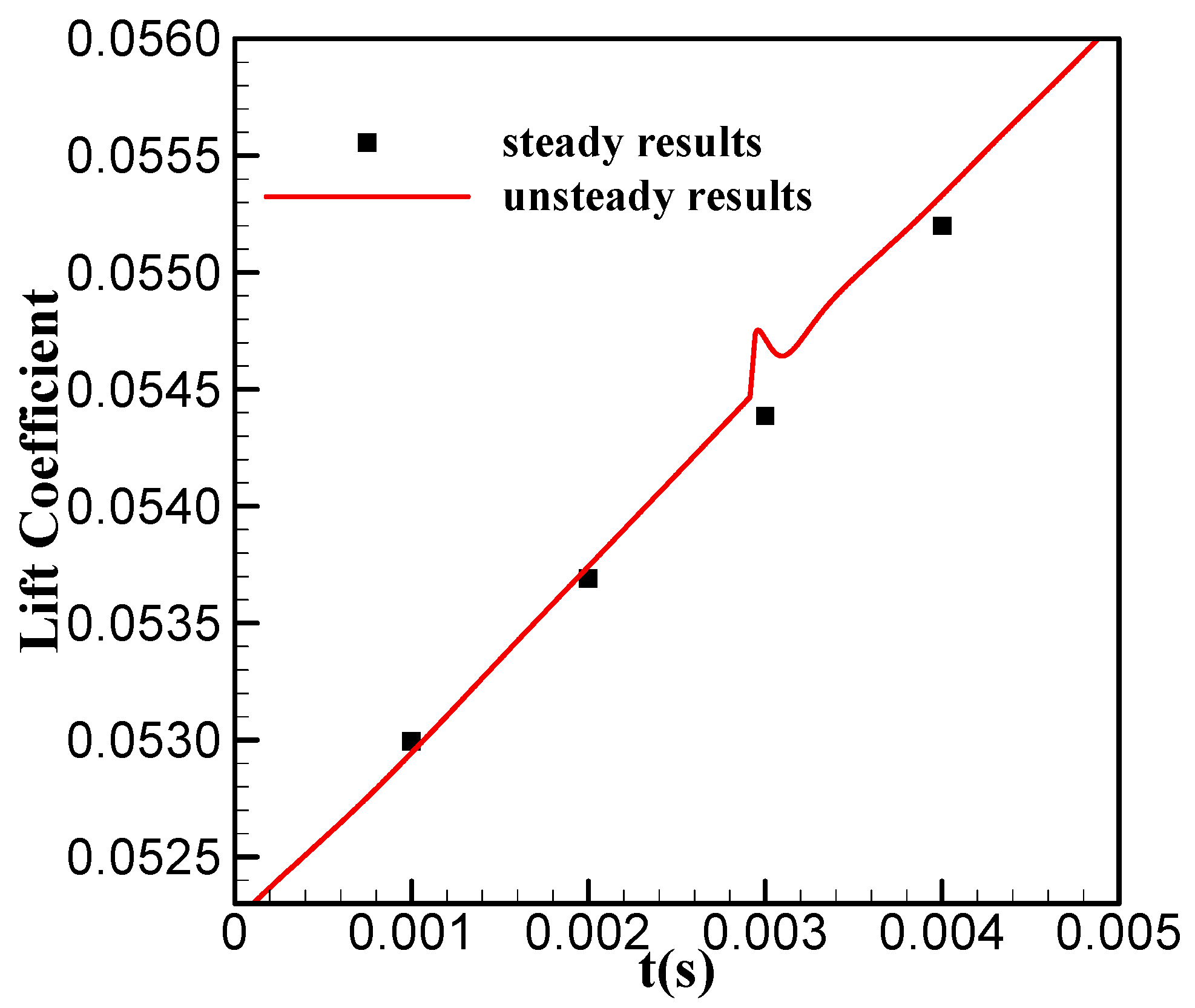
The comparison of lift coefficients obtained from the unsteady and steady computations is presented in Table 2 and Figure 18.
Table 2.
Lift coefficient relative error.
Figure 18.
Comparison of lift coefficients.
As shown in Figure 18, the lift coefficient increased approximately linearly with wing extension due to the gradual increase in wing area, which is consistent with expected physical behavior. At time , a small fluctuation appeared in the curve, which was associated with mesh reconstruction; however, the overall trend quickly returned to the general linear evolution observed in the steady-state results.
The data in Table 2 showed that the steady-state results at different span lengths were in close agreement with the corresponding unsteady results at each time instant, with the relative error in the lift coefficient remaining below 0.55%.
These results suggest that, under flow conditions that satisfy the quasi-steady assumption, the surface-based dynamic mesh method was successfully coupled with the CFD solver to form a stable computational framework. This method was able to simulate continuous geometric deformation while maintaining bounded numerical differences under the present conditions.
In summary, the verification cases presented in this section indicate that the surface-based dynamic mesh method, together with its coupling with the CFD solver, produced consistent results for the test cases considered. This supports the applicability of the proposed framework for unsteady aerodynamic simulations of continuous morphing processes with dynamic mesh motion.
4. Dynamic Aerodynamic Characteristics of Wing Extension at Different Mach Numbers
In this section, unsteady aerodynamic simulations were performed to investigate the wing extension process at different Mach numbers. Under constant conditions of angle of attack, flight altitude, and wing extension velocity, simulations were carried out for free-stream Mach numbers of 0.4, 0.9, and 3.0. The time integration employs the Runge–Kutta scheme with a fixed CFL number of 2.8. The total unsteady simulation time was , during which the wing extends by a total length of .
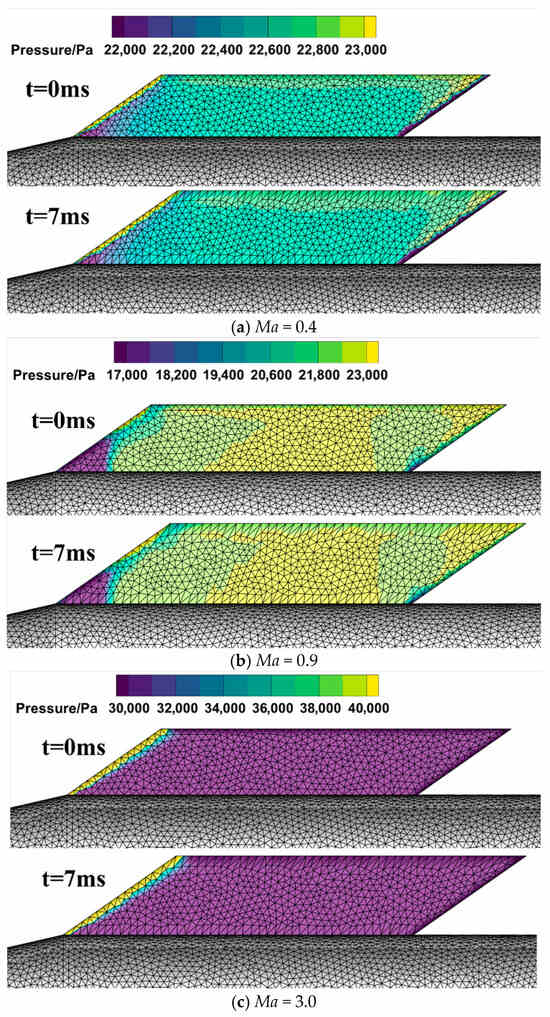
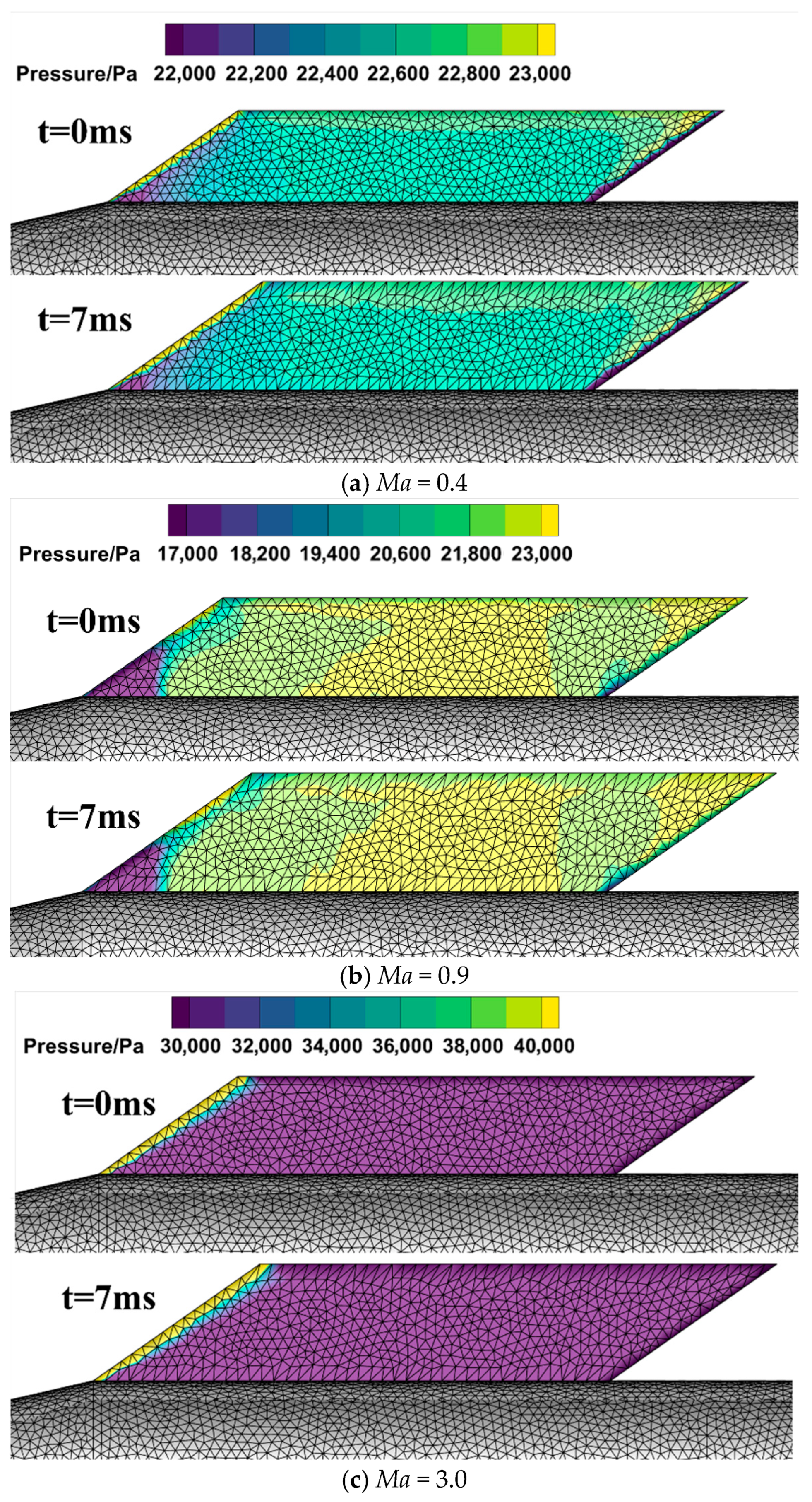
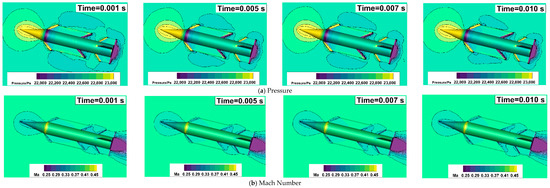
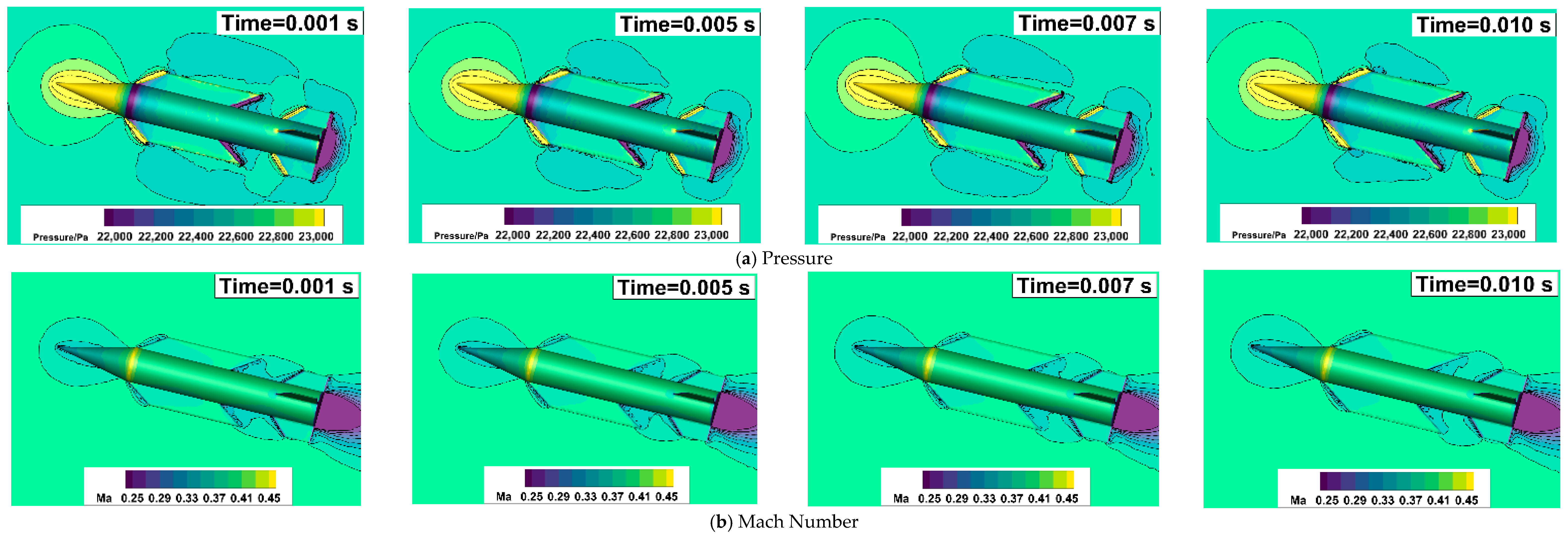
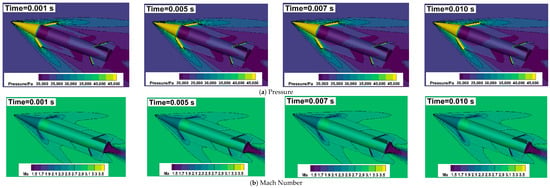
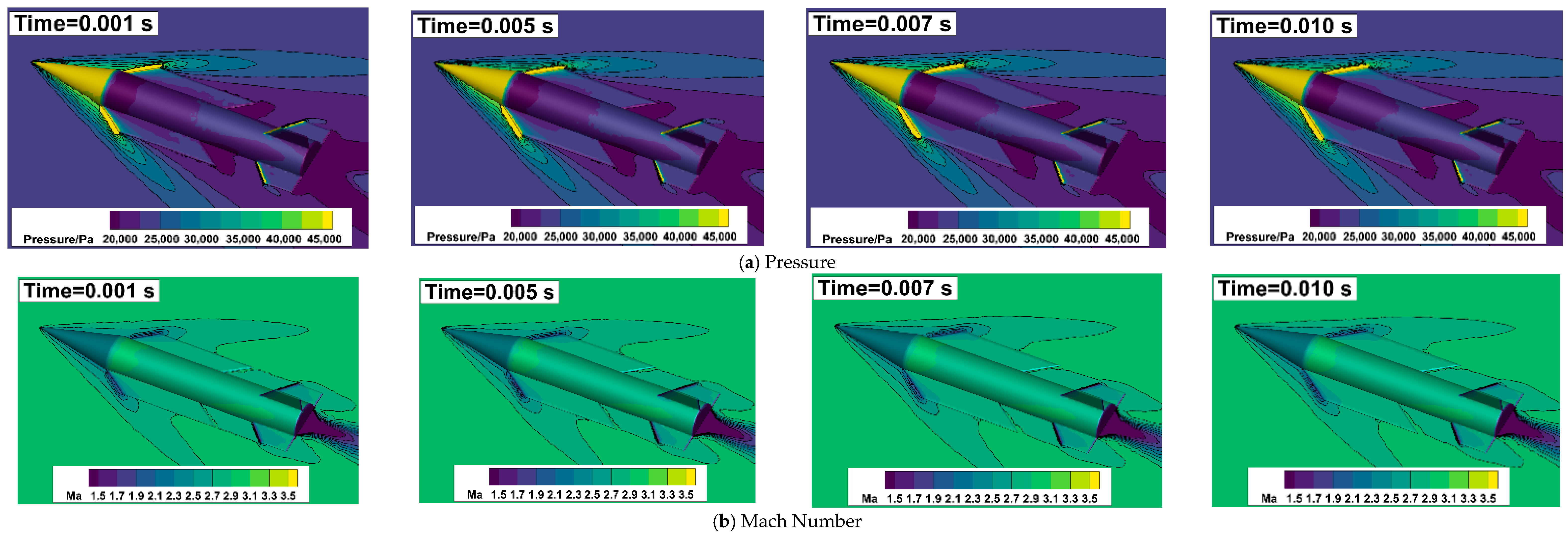
First, the variations in flow-field pressure and surface pressure during the wing extension process were analyzed at several selected time instants for different Mach numbers. The evolution of the wing surface mesh and the corresponding surface pressure contours were shown in Figure 19, while the pressure and Mach number distributions around the fuselage were presented in Figure 20, Figure 21 and Figure 22.
Figure 19.
Pressure contour on wing surface (only for comparison of pressure variations at different time instants under the same Mach number condition).
Figure 20.
Contour plots at Ma = 0.4.
Figure 21.
Contour plots at Ma = 0.9.
Figure 22.
Contour plots at Ma = 3.0.
At a freestream Mach number of 0.4, high-pressure regions were observed mainly near the nose of the fuselage and along the leading edge of the wing, as shown in Figure 20a. Due to the relatively low flow velocity, the overall pressure level in the flow field remained low.
As shown by the Mach number contours (Figure 20b) and the wing surface pressure contours (Figure 19a), the flow field under this condition is generally stable, with the Mach number distribution and pressure patterns exhibiting consistent characteristics. At relatively low freestream Mach numbers, high- and low-pressure regions appear on the wing surface, but the overall pressure gradients remain small. Specifically, the local high-pressure region near the wing leading edge reaches a peak of approximately 23,500 Pa, the central wing surface region is around 22,600 Pa, and the extended wingtip surface is about 22,800 Pa. In addition, a small low-pressure region exists at the junction between the wing leading edge and the fuselage, with a pressure of approximately 21,800 Pa; however, this area is limited in extent and has minimal impact on the overall aerodynamic forces.
As shown in Figure 21a, with increasing freestream Mach number, the flow was deflected around the nose of the fuselage and accelerated along both sides, leading to a higher-pressure region near the wing leading edge (approximately 23,900 Pa). A lower-pressure region appeared near the junction between the fuselage nose and wing root (approximately 12,000 Pa). During wing extension, the incoming flow interacting with the newly exposed wing surface led to an additional pressure variation near the wing tip (approximately 24,000 Pa). Meanwhile, wing motion influenced the local pressure distribution on the wing surface. As shown in Figure 19b, the pressure distribution became more non-uniform, with increased gradients near the leading edge, and the proportion of higher-pressure regions increased with wing extension.
As shown in the Mach number contours in Figure 21b, under transonic conditions (), more complex flow features were observed compared with subsonic and supersonic cases. Local supersonic regions appeared on both the wing and fuselage surfaces, and the flow showed increased sensitivity to geometric changes.
At a freestream Mach number of 3.0, a shock wave formed ahead of the fuselage nose, as shown in Figure 22a. The incoming flow expanded along both sides of the body, resulting in a relatively uniform pressure distribution around the fuselage. Due to the high freestream momentum, the influence of wing deformation on the surrounding flow field was limited. The pressure distribution on the wing surface remained nearly unchanged during the extension process, with higher pressure concentrated near the leading edge. The maximum pressure reached approximately 63,000 Pa, and the mean pressure was around 23,000 Pa, as shown in Figure 19c.
The Mach number contours are shown in Figure 22b. A clear bow shock forms ahead of the nose, while the main regions of the wing and fuselage remain in a uniform supersonic post-shock flow. Due to the stability of the shock structure and the mainstream flow, the gradual wing extension does not cause significant disturbances to the overall wave system or velocity distribution.
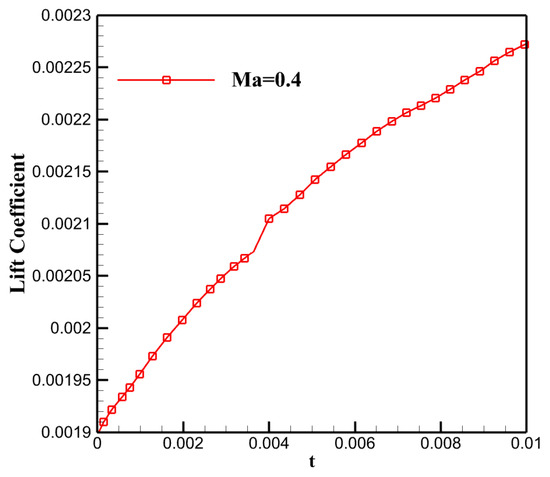
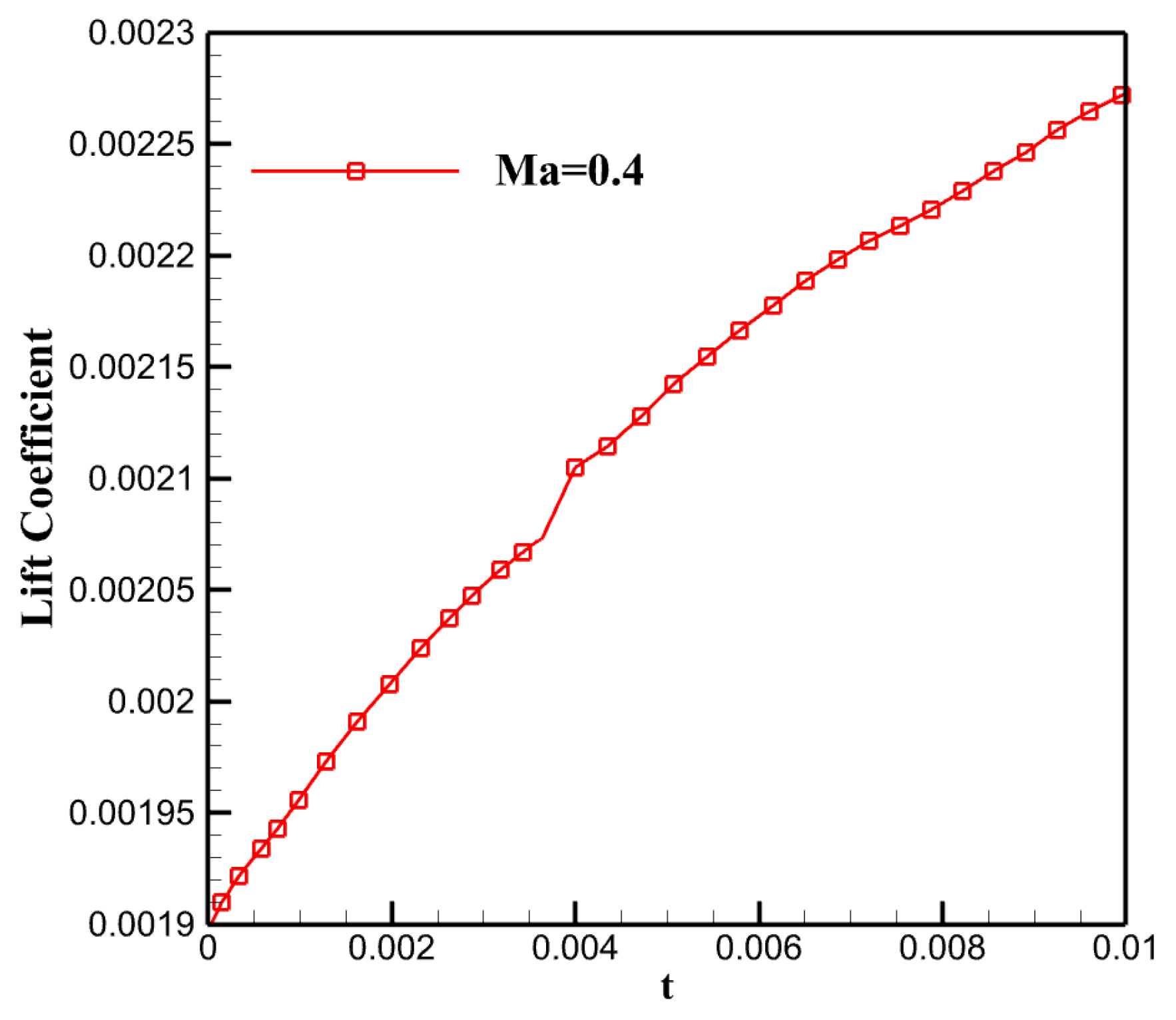
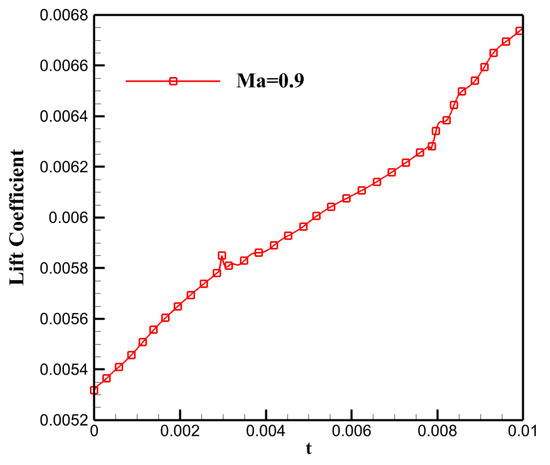
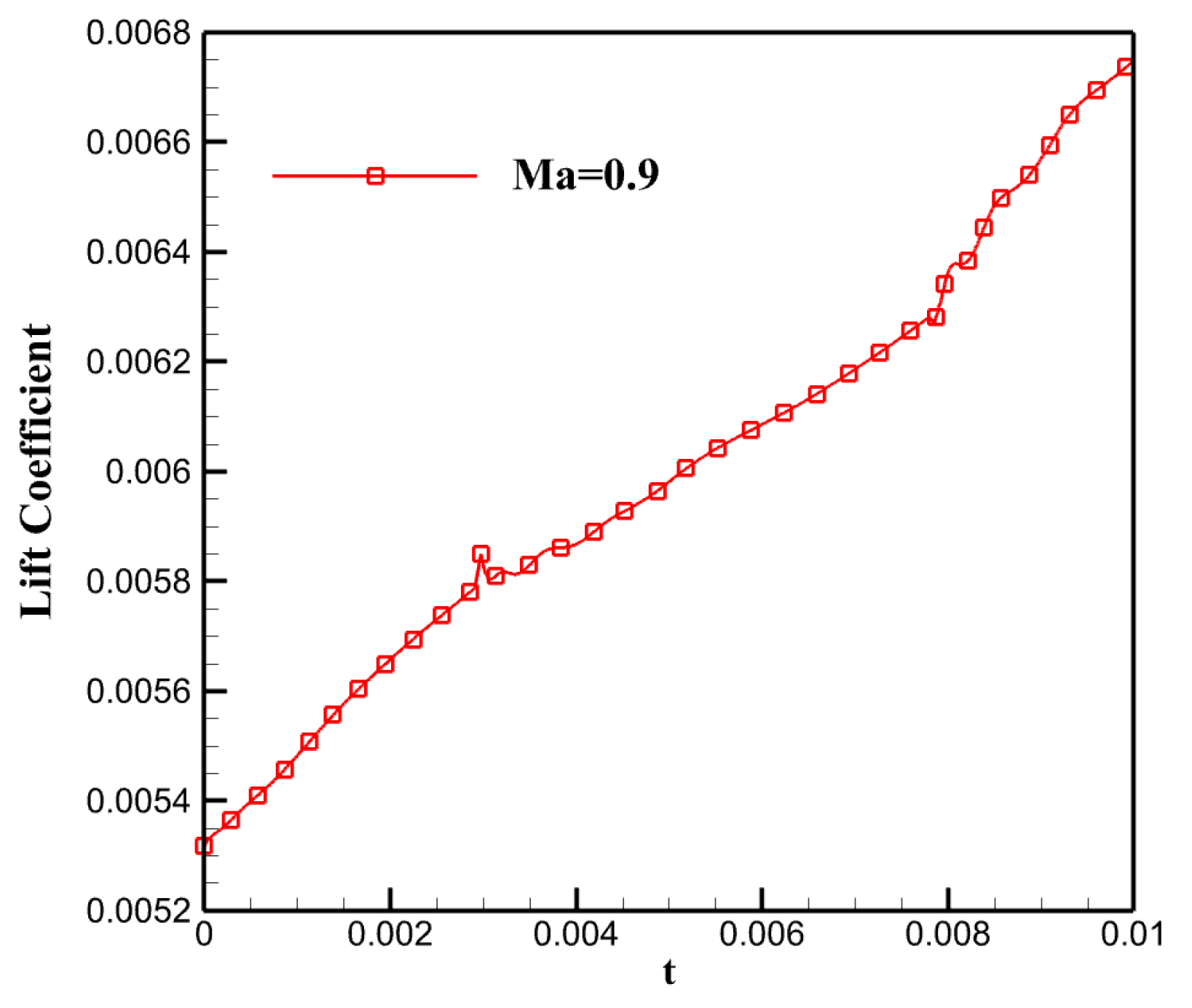
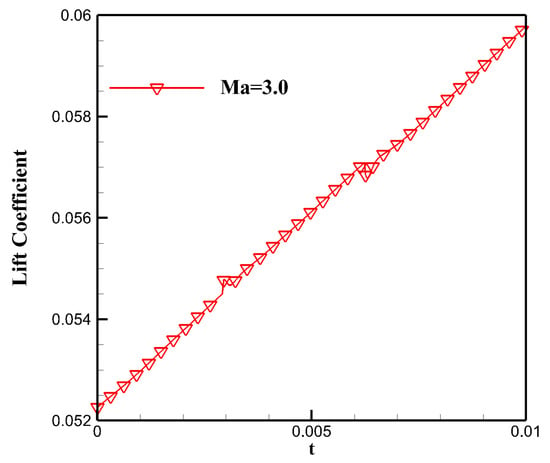
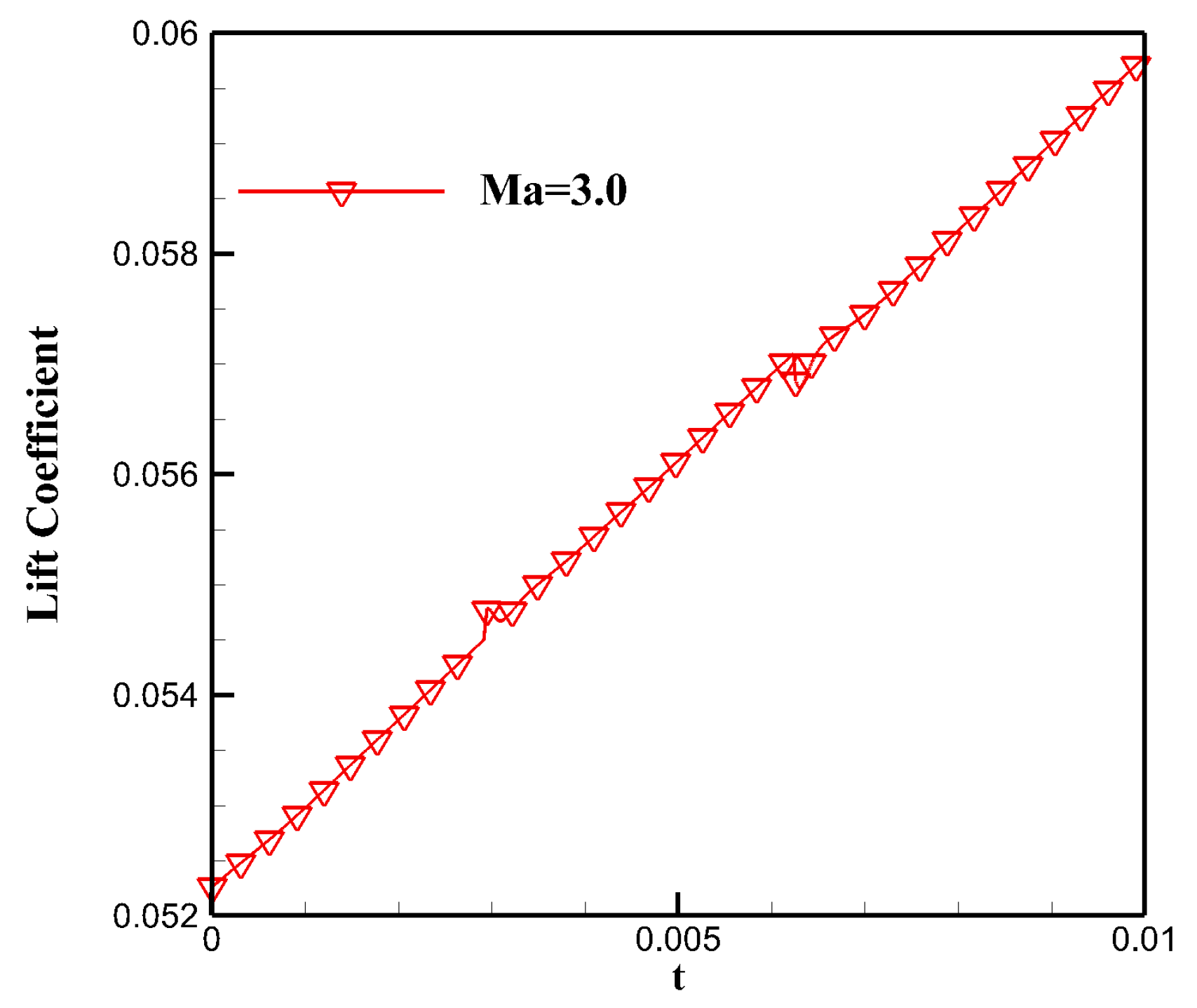
The lift coefficient curves during the wing extension process under different Mach numbers are illustrated in Figure 23, Figure 24 and Figure 25.
Figure 23.
Lift coefficient curve at Ma = 0.4.
Figure 24.
Lift coefficient curve at Ma = 0.9.
Figure 25.
Lift coefficient curve at Ma = 3.0.
By comparing the lift coefficient curves at three Mach numbers, it was observed that as the wing extended, the increasing wing area led to an overall increase in the lift coefficient, which is consistent with basic aerodynamic behavior.
As shown in Figure 25, under supersonic conditions (), the flow field remained relatively uniform over the wing surface, and the lift coefficient increased in an approximately linear manner with wing extension.
Under subsonic conditions (), the extension of the wing introduced only minor disturbances into the surrounding flow field. The pressure distribution on the wing surface remained relatively smooth, and pressure gradients stayed at a low level. Due to weak compressibility effects in this regime, the flow responded gradually to changes in geometry. As shown in Figure 23, the lift coefficient increased monotonically with wing span extension. The trend showed mild nonlinearity, but no abrupt changes or discontinuities were observed.
Under transonic conditions (), the flow behavior was more complex compared with subsonic and supersonic cases. Although Figure 21 indicates that the secondary high-pressure region near the wing tip emerges as early as , the sharp increase in the lift coefficient shown in Figure 24 was delayed until around . This difference suggests that the aerodynamic response did not vary synchronously with geometric deformation under transonic conditions. During wing extension, the shock structure and local flow field were adjusted continuously with the changing geometry. When the configuration reached a certain stage, further deformation was associated with stronger interactions between shock structures and moving boundaries, leading to a rapid change in surface pressure distribution and a corresponding increase in lift coefficient. Such nonlinear and delayed responses are typically observed in transonic flow conditions.
Overall, the surface-based dynamic mesh method provided a numerical framework for simulating continuous wing morphing processes and allowed the comparison of aerodynamic responses under different Mach number conditions.
5. Conclusions
Based on a spring-analogy mesh deformation method, this study develops a surface-driven dynamic mesh technique for continuous body-surface deformation. By prescribing localized motion on the surface mesh, the unstructured dynamic mesh approach was applied to unsteady simulations of continuously morphing wings and is consistently coupled with the flow solver.
Numerical results demonstrated that the coupled framework remained stable during the deformation process and maintained acceptable mesh quality. The results obtained using localized surface mesh motion showed good agreement with those from corresponding fixed-mesh simulations. Under supersonic inflow conditions where quasi-steady assumptions are applicable, the discrepancy between transient results during continuous deformation and steady solutions of the corresponding static configurations remained within 0.55%.
The proposed method is applicable for simulating unsteady aerodynamic characteristics of morphing aircraft.
Author Contributions
Conceptualization, Y.Z., J.Z., H.S. and J.L.; Methodology, Y.Z., J.Z., H.S. and J.L.; Software, Y.Z. and J.L.; Validation, Y.Z. and J.L.; Formal analysis, Y.Z. and J.L.; Investigation, Y.Z., J.Z., H.S. and J.L.; Resources, Y.Z., J.Z., J.C. and J.L.; Data curation, Y.Z., J.C. and J.L.; Writing —original draft, Y.Z., J.C. and J.L.; Writing—review & editing, J.L.; Visualization, Y.Z., J.Z. and J.L.; Supervision, J.Z., H.S. and J.L.; Project administration, J.C. and J.L.; Funding acquisition, J.L. All authors have read and agreed to the published version of the manuscript.
Funding
This research was funded by the project ‘Study on Complex Flow Interference and Separation Dynamics of Embedded Recessed Separation’, grant number U21B2054. And the APC was funded by [Large-scale Numerical Simulation Application Porting, Optimization, and Platform Integration (13th Five-Year Plan), grant number: 3014-0802003].
Data Availability Statement
The original contributions presented in this study are included in the article. Further inquiries can be directed to the corresponding author.
Conflicts of Interest
The authors declare no conflict of interest.
References
- Barbarino, S.; Bilgen, O.; Ajaj, R.; Friswell, M.; Inman, D. A review of morphing aircraft. J. Intell. Mater. Syst. Struct. 2011, 22, 823–877. [Google Scholar] [CrossRef] [Scilit]
- Jha, A.K.; Kudva, J.N. Morphing aircraft concepts, classifications, and challenges. In Proceedings of the Smart Structures and Materials, Proc SPIE 5388, Smart Structures and Materials 2004: Industrial and Commercial Applications of Smart Structures Technologies; SPIE: San Diego, CA, USA, 2004; Volume 5388, pp. 213–224. [Google Scholar]
- Zhang, X.H.; Xie, C.L.; Liu, S.J.; Yan, M.; Xing, S.Y. Development needs and difficulty analysis for smart morphing aircraft. Acta Aeronaut. Astronaut. Sin. 2023, 44, 529302. [Google Scholar]
- Li, X.J.; Liu, F.; Qiao, Y. Development and application prospect of morphing aircraft. Aircr. Des. 2022, 42, 1–7+13. [Google Scholar] [CrossRef]
- Chen, Q.; Bai, P.; Chen, N.; Li, F. Investigation on the unsteady aerodynamic characteristics of sliding-skin variable-sweep morphing unmanned aerial vehicle. Acta Aerodyn. Sin. 2011, 29, 645–650. [Google Scholar]
- Chen, Q.; Bai, P.; Li, F. Morphing aircraft wing variable-sweep: Two practical methods and their aerodynamic characteristics. Acta Aerodyn. Sin. 2012, 30, 658–663. [Google Scholar]
- Peng, W.Y.; Yang, T.; Wang, C.Y.; Feng, Z.W.; Tu, J.Q. Trajectory multi-objective optimization for hypersonic telescopic wing morphing aircraft. J. Natl. Univ. Def. Technol. 2019, 41, 41–47. [Google Scholar]
- Ivanco, T.; Scott, R.; Love, M.; Zink, S.; Weisshaar, T. Validation of the lockheed martin morphing concept with wind tunnel testing. In Proceedings of the 48th AIAA/ASME/ASCE/AHS/ASC Structures, Structural Dynamics, and Materials Conference; AIAA: Reston, VA, USA, 2007; p. 2235. [Google Scholar]
- Chen, S.S.; Jia, M.L.; Liu, Y.X.; Gao, Z.H.; Xiang, X.H. Deformation modes and key technologies of aerodynamic layout design for morphing aircraft: Review. Acta Aeronaut. Astronaut. Sin. 2024, 45, 629595. [Google Scholar]
- Yao, C.Y.; Wang, X.P.; Zhang, H.R.; Lei, B.; Xia, Y. The Application Requirements and Technological Development Route of Deformable Wing Rudder Technology in Missile Fields. Missiles Space Veh. 2024, 28, 9–13. [Google Scholar]
- Yuan, M.C.; Shi, Z.W.; Cheng, K.M. Research on unsteady aerodynamic characteristics of folding wing aircraft by wind tunnel test. J. Exp. Fluid Mech. 2013, 27, 14–18. [Google Scholar]
- Lv, Z.J.; Lu, Z.Y.; Chen, Q.M.; Luo, S. Research status and key aerodynamic technology of high speed variable wing vehicle. Aerosp. Technol. 2022, 49–56+76. [Google Scholar] [CrossRef]
- Peng, W.Y. Research on Aerodynamic Deformation Scheme Design and Shape Optimization Method of Hyper Sonic Vehicle. Ph.D. Thesis, National University of Defense Technology, Changsha, China, 2019. [Google Scholar]
- Li, H.J. Aerodynamic Performance Analysis and Configuration Study of Morphing Aircraft. Ph.D. Thesis, Northwestern Poly Technical University, Xi’an, China, 2021. [Google Scholar]
- Dai, P.; Yan, B.B.; Huang, W.; Zhen, Y.F.; Wang, M.G.; Liu, S.X. Design and aero dynamic performance analysis of a variable-sweep-wing morphing wave rider. Aerosp. Sci. Technol. 2020, 98, 105703. [Google Scholar] [CrossRef] [Scilit]
- Chen, Q.; Yin, W.L.; Bai, P.; Leng, J.S.; Liu, Z.Q. System design and characteristics analysis of a variable-sweep and variable span wing-body. Acta Aeronaut. Astronaut. Sin. 2010, 31, 506–513. [Google Scholar]
- Liu, Y.; Lyu, F.X.; Zhou, J. Overall performance analysis on XB-70 folding wingtip system. Aeronaut. Sci. Technol. 2022, 33, 47–53. [Google Scholar]
- Guo, S.Z.; Zheng, X.M.; Yin, C.; Wang, P. Aerodynamic performance analysis of folding-wing aircraft. Adv. Aeronaut. Sci. Eng. 2013, 4, 358–363. [Google Scholar]
- Li, X.R.; Bai, P. Review of Overall Benefit Assessment and Optimization Methods for Morphing Aircraft. Mod. Def. Technol. 2025, 53, 1–18. [Google Scholar]
- Huang, Y.; Yan, C.; Xi, K.; Wang, W. Analysis of flying vehicle’s dynamic characteristics based onnumerical virtual flight technology. Acta Aeronaut. Astronaut. Sin. 2016, 37, 2525–2538. [Google Scholar]
- Amprikidis, M.; Cooper, J. Development of smart spars for active aeroelastic structures. In Proceedings of the 44th AIAA/ASME/ASCE/AHS/ASC Structures Structural Dynamics, and Materials Conference, Norfolk, Virginia, 7–10 April 2003. [Google Scholar]
- Hu, R.; Meng, J.H.; Ma, N.; Ma, W.C.; Jin, Z.H. Integrated Design of Structure and Mechanism for Cross-domain Blended Wing Body Morphing Aircraft. Unmanned Syst. Technol. 2024, 7, 51–64. [Google Scholar]
- Xie, Z.; Zhou, C.C.; Zhao, Z.T.; Huang, W. Overview of development and research status of wide speed range aircraft. Aerosp. Technol. 2022, 2022, 28–39+86. [Google Scholar]
- Jiang, Q.F.; Chen, S.S.; Yang, H.; Zhang, Z.G.; Gao, Z.H. Unsteady aerodynamic characteristics of a morphing tail configuration. Phys. Fluids 2024, 36, 036133. [Google Scholar] [CrossRef] [Scilit]
- Li, C.; Zhao, R.; Guo, X.W. Implementation of RBF Mesh Deformation with Topology Refinement in OpenFOAM. In Proceedings of the 2020 4th International Conference on High Performance Compilation, Computing and Communications, Guangzhou, China, 27–29 June 2020; pp. 79–83. [Google Scholar]
- Roy, A.; Mukherjee, R. Unsteady aerodynamics of the control of three dimensional flow separation by morphing a wing surface. Eur. J. Mech.-B/Fluids 2026, 115, 204348. [Google Scholar] [CrossRef] [Scilit]
- Wu, J.; Benjamin, K.S.W. Modelling and analysis of two-dimensional static and dynamic aeroelasticity of Fish Bone Active Camber morphing aerofoils. J. Fluids Struct. 2024, 129, 104171. [Google Scholar] [CrossRef] [Scilit]
- Huang, G.; Yang, C.Q.; Guo, X.W.; Wu, C.K.; Zhang, X. Scalability of OpenFOAM for Viscoelastic Solver on High Performance Systems. In Proceedings of the International Conference on Electronics, Electrical Engineering and Information Science, Guangzhou, China, 8–10 September 2017. [Google Scholar]
- Axtmann, G.; Rist, U. Scalability of OpenFOAM with Large Eddy Simulations and DNSonHigh-Performance Systems. In High Performance Computing in Science and Engineering’ 16; Springer: Berlin/Heidelberg, Germany, 2016; pp. 413–424. [Google Scholar]
- Gori, G.; Zocca, M.; Cammi, G.; Spinelli, A.; Guardone, A. Experimental assessment of the open-source SU2 CFDsuite for ORC applications. Energy Procedia 2017, 129, 256–263. [Google Scholar] [CrossRef] [Scilit]
- advanCFD. advanCFD/libROUNDSchemes: Release (v1.0); Zenodo: Geneva, Switzerland, 2023. [Google Scholar] [CrossRef]
- Economon, T.D.; Palacios, F.; Alonso, J.J.; Bansal, G.; Mudigere, D.; Deshpande, A.; Heinecke, A.; Smelyanskiy, M. Towards high-performance optimizations of the unstructured open-source SU2 suite. In AIAA Infotech@ Aerospace; American Institute of Aeronautics and Astronautics: Reston, VA, USA, 2015; p. 1949. [Google Scholar]
- Batina, J.T. Unsteady Euler airfoil solutions using unstructured dynamic meshes. AlAA J. 1990, 28, 1381–1388. [Google Scholar] [CrossRef] [Scilit]
- Liu, J.; Xu, C.G.; Bai, X.Z. Finite Volume Methods and Unstructured Dynamic Grids Technique; SciencePress: Beijing, China, 2016. [Google Scholar]
- Liu, J.; Bai, X.Z.; Guo, Z. A new method for transferring flow information among meshes. Comput. Fluid Dyn. J. 2007, 15, 509–514. [Google Scholar]
- Liewski, L.; Suhs, N. Chimera-Eagle Store Separation; AIAA: Reston, VA, USA, 1992; pp. 45–69. [Google Scholar]
- Heim, E.R. CFD Wing/Pylon/Finned Store Mutual Interference Wind Tunnel Experiment; Arnold Engineering Development Center, Air Force Systems Command, United States Air Force: Arnold Air Force Base, TN, USA, 1991. [Google Scholar]
- Zhanf, Z.L. Numerical Study on the Release Technology of External Stores. Doctoral Dissertation, Northwestern Polytechnical University, Xi’an, China, 2004; pp. 33–46. [Google Scholar]





Disclaimer/Publisher’s Note: The statements, opinions and data contained in all publications are solely those of the individual author(s) and contributor(s) and not of MDPI and/or the editor(s). MDPI and/or the editor(s) disclaim responsibility for any injury to people or property resulting from any ideas, methods, instructions or products referred to in the content. |
© 2026 by the authors. Licensee MDPI, Basel, Switzerland. This article is an open access article distributed under the terms and conditions of the Creative Commons Attribution (CC BY) license.