Article

Effect of Compressor Root Slot Structure on Suppressing Corner Separation and Aerodynamic Parameter Deterioration Induced by Seal Cavity Leakage Flow


by
Wenfeng Xu
,
Xinrui Du
,
Shilong Zou
,
Dan Sun
and
Guozhe Ren
*
School of Aero-Engine, Shenyang Aerospace University Key Laboratory of Advanced Test Technology for Aeronautical Propulsion System of Liaoning Province, Shenyang 110136, China
*
Author to whom correspondence should be addressed.
Aerospace 2026, 13(4), 391; https://doi.org/10.3390/aerospace13040391
Submission received: 15 February 2026 / Revised: 11 April 2026 / Accepted: 16 April 2026 / Published: 21 April 2026

Abstract

To alleviate the adverse effects of the flow-field structure caused by interstage sealing structures on the aerodynamic characteristics of compressor cascades, a blade-root through-slot structure was designed in this study. The structure links the pressure surface to the suction surface of the blade. Numerical simulation techniques were utilized to investigate the process. In this process, the through-slot structure enhances corner separation across varying jet positions, jet heights, and jet widths. The results indicate that the high-speed fluid ejected by the through-slot configuration can suppress the accumulation of low-energy fluid at the suction root. It can also alleviate blockages in the cascade passage and reduce the range of separation vortices and recirculation zones on the suction side. Consequently, the flow loss due to separation is reduced. As the through-slot jet progresses from the blade leading edge to the trailing edge, its restraining impact on the low-energy fluid cluster gradually diminishes. This leads to a corresponding reduction in its effect on the total pressure loss. With an increase in the slot height, the restraining impact on corner separation and total pressure loss first rises and then falls. As the through-slot height increases, the suppressive effect on corner separation and loss initially intensifies and then weakens. As the through-slot width increases, the suppressive effect on corner separation and total pressure loss increases steadily. Compared to the original compressor cascade, the through-slot configuration attains peak performance at 25% chord length, with a height of 6% height and a width of 10 mm, reducing the total pressure loss coefficient by 19.22%. Furthermore, as the incoming flow incidence angle enlarges, the enhancement impact of the through-slot configuration on cascade performance initially intensifies and then diminishes. The peak enhancement impact occurs at a 0° incidence angle. At this angle, the configuration can reduce flow loss by 16.72% compared to the original, significantly improving the aerodynamic performance of the high-load compressor cascade.

1. Introduction

In the design and development of aero-engines, enhancing the thrust-to-weight ratio and diminishing specific fuel consumption have consistently been key aims. The compressor is a crucial element among the three core components of the aircraft engine. Its aerodynamic characteristics and operational stability have a decisive impact on overall performance [1].
During compressor operation, corner separation is a critical bottleneck that limits aerodynamic performance. Seal leakage is a key factor that induces and aggravates this phenomenon [2]. Specifically, the leakage flow from the seal gap disturbs the endwall’s boundary layer, enhances the potency of the secondary vortex network, and drives the fluid to accumulate toward the suction surface. Meanwhile, it intensifies the adverse pressure gradient. Corner separation ultimately occurs at the intersection of the endwall and the suction side [3]. The existing technical system for compressor corner control is categorized into active and passive flow-control types. Among these, active flow control [4] has developed mature technical approaches owing to its dynamic adjustment advantage. These approaches include endwall suction [5,6], pulsed suction [7], plasma excitation [8], pulsed jet [9,10], and synthetic jet [11,12].
Nevertheless, it increases the compressor’s structural intricacy. This is unfavorable for real-world engineering implementations. Passive flow-control [13] configurations achieve flow-field regulation by reallocating energy within the apparatus. Commonly adopted methods include vortex-bowed and swept-blade technology [14,15], flow generators [16,17], endwall winglet design [18], non-axisymmetric endwalls [19,20], and blade/endwall fusion technology [21,22]. Nevertheless, most passive control technologies require a secondary design of flow passages or blade profiles. Besides, they have stringent machining accuracy requirements and poor adaptability to engineering applications [23]. This indicates that to effectively suppress the corner separation phenomenon in planar compressor cascades and achieve efficient control, exploring a more optimized technical approach is urgently needed.
The cascaded slot structure is an innovative control technology for corner separation in compressor cascades. It has gradually attracted the attention of the academic community and has developed into an important research direction in this field [24]. Saraswat, A. et al. [25] investigated the axial casing slots of compressors. They found that this structure can effectively regulate the evolution of flow structures between blade rows and improve the adaptability to operating conditions. Garg, A. et al. [26] studied the axial tip slot structure with variable parameters. They found that the configuration can efficiently optimize aerothermodynamic performance and improve flow conditions at the blade tip. Liu, E.B. et al. [27] researched the slotting technology for compressor stator blades. Forming high-momentum jets at the leading-edge notches and suction outlets can increase stage efficiency by 1.10%. When combined with blade-tip forward sweeping, the stall margin can be further improved by 7.77%. Gancedo, M. et al. [28] examined the bleeding slot configuration in the inducer of radial compressors. They ascertained that the configuration can broaden the surge range with minimal adverse effects. It can also attenuate perturbations at specific frequencies to enhance overall stability. Ba, D. et al. [29] conducted research on the optimal design of a novel axial-slot casing treatment. They reported that this design can increase the compressor stall range by 11.23% while mitigating blade-passage obstructions. Gao Y., et al. [30] explored the slot scheme for transonic compressor rotor blades. They found that grooving can significantly improve the compressor stability margin and promote the ejection of high-energy fluid from the slits at the suction side outlet. Wang J., et al. [31] studied the double-slot and single-slot configurations at the blade end of high-load compressors. They found that the dual-slot scheme has a superior impact on regulating corner separation and offers greater benefits in enhancing pressure diffusion capacity and stability range. Liu W., et al. [32] examined the blade end slot technique for three-stage compressors under low Reynolds number circumstances. They found that this technique can reduce corner losses and extend the stall range without reducing efficiency. Additionally, the combined slot scheme can efficiently enhance the stall range. Existing studies have conducted in-depth and systematic research on slot structures. However, there is still no specific research on the effect of slot structures on the corner separation control in compressors with labyrinth seal devices. Therefore, researching the regulatory effect of slot structures on corner separation in compressors with labyrinth seal devices has significant theoretical value and practical engineering applications.
Researchers have demonstrated that the compressor cascade slot structure can optimize overall aerodynamic characteristics and flow-field distribution. However, they still have a poor understanding of the inherent correlation between the slot’s geometric parameters and flow-control efficiency, which limits the slot’s potential performance. In this study, the root slot was selected as the investigation target. It is grounded in the concept of introducing high-speed airflow from the pressure face and employing the ejector effect to enhance the flow condition of low-energy fluid clusters. This study adopted the numerical simulation approach and thoroughly investigated the operational mechanism of the root slot’s layout position and dimensional parameters (width and height). These parameters affect the aerodynamic properties and internal flow traits of compressor blades under interstage leakage.

2. Subject and Method

2.1. Research Object

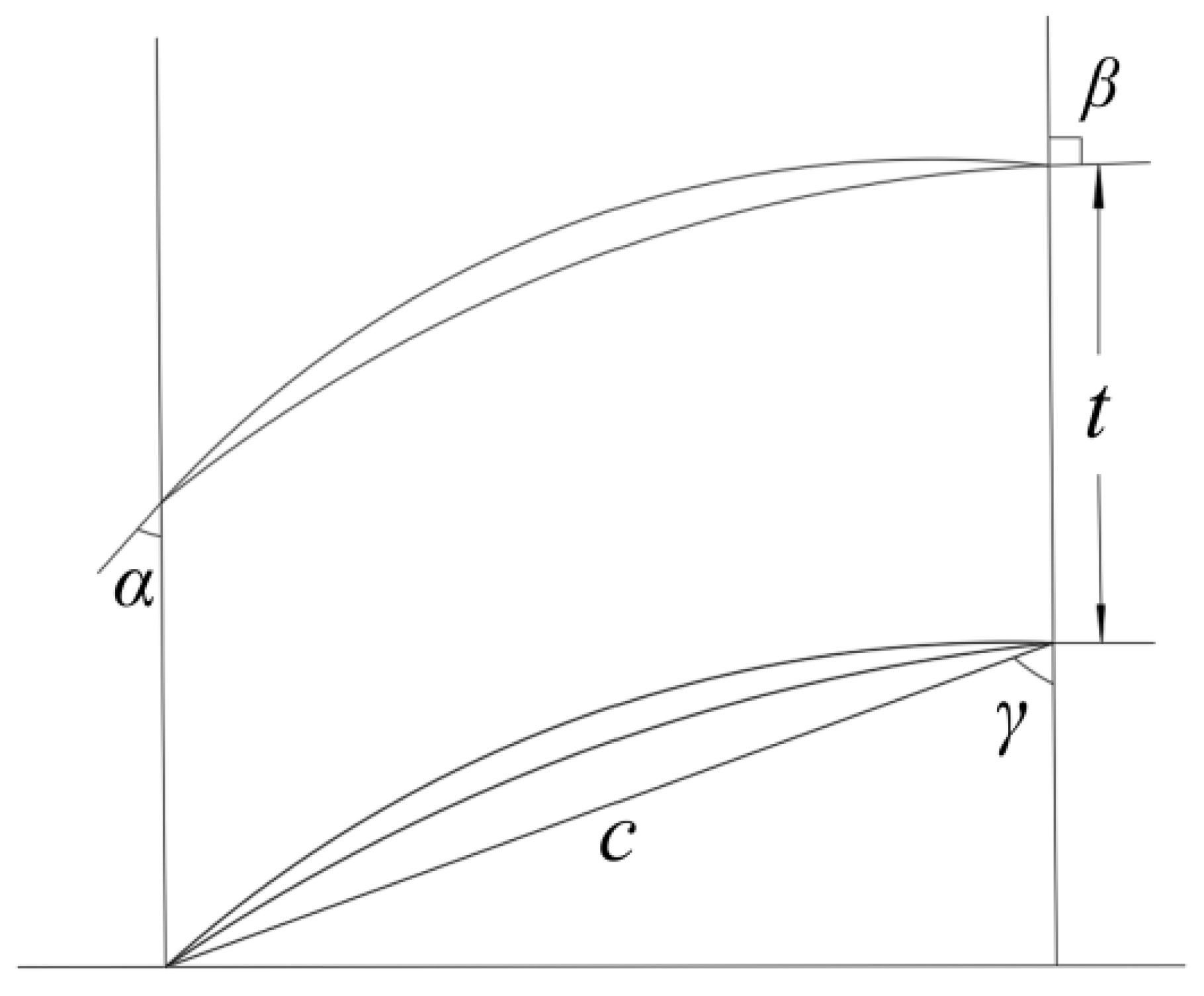
This investigation selected the NACA65-K48 high-load diffuser cascade as the subject. To focus on the control mechanism of the through-slot structure on corner flow, no fillets were applied at the junctions between the blade tip, blade root, or the upper and lower endwalls in the geometric model of this study. The schematic diagram of the blade profile parameter definition introduced in this study is shown in Figure 1, and the main geometric and aerodynamic parameters of this cascade model are shown in Table 1.
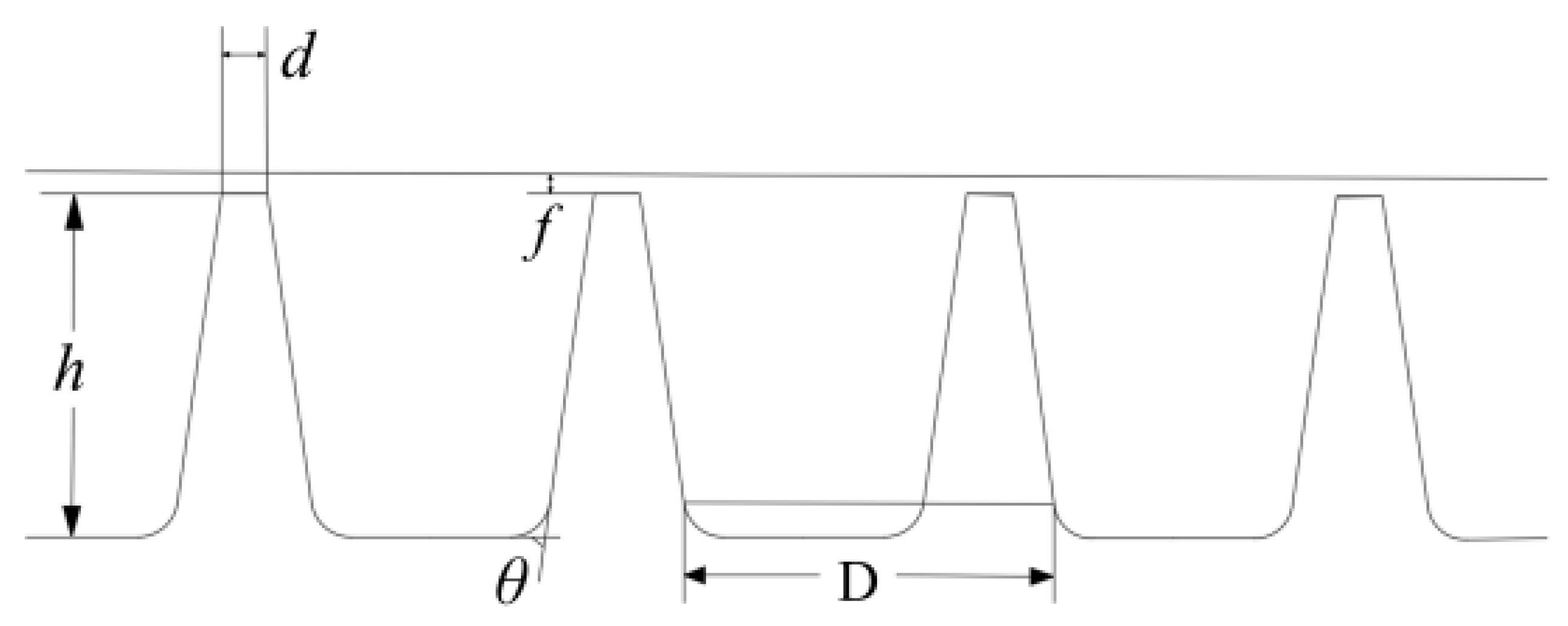
The diagram of the interstage labyrinth configuration chosen in this investigation is shown in a two-dimensional perspective in Figure 2. The inlet and outlet widths are 5%H, and other parameters are shown in Table 2.
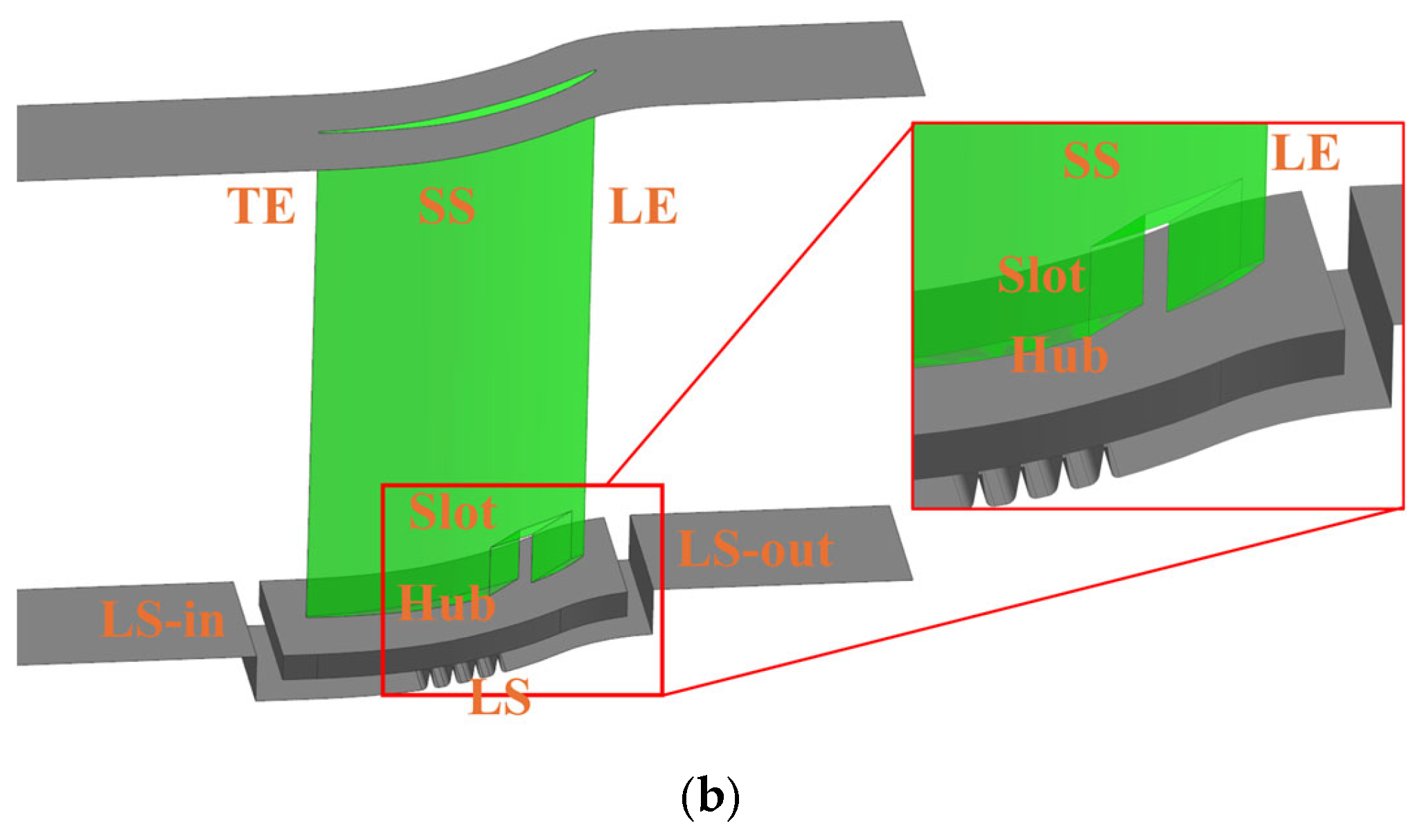
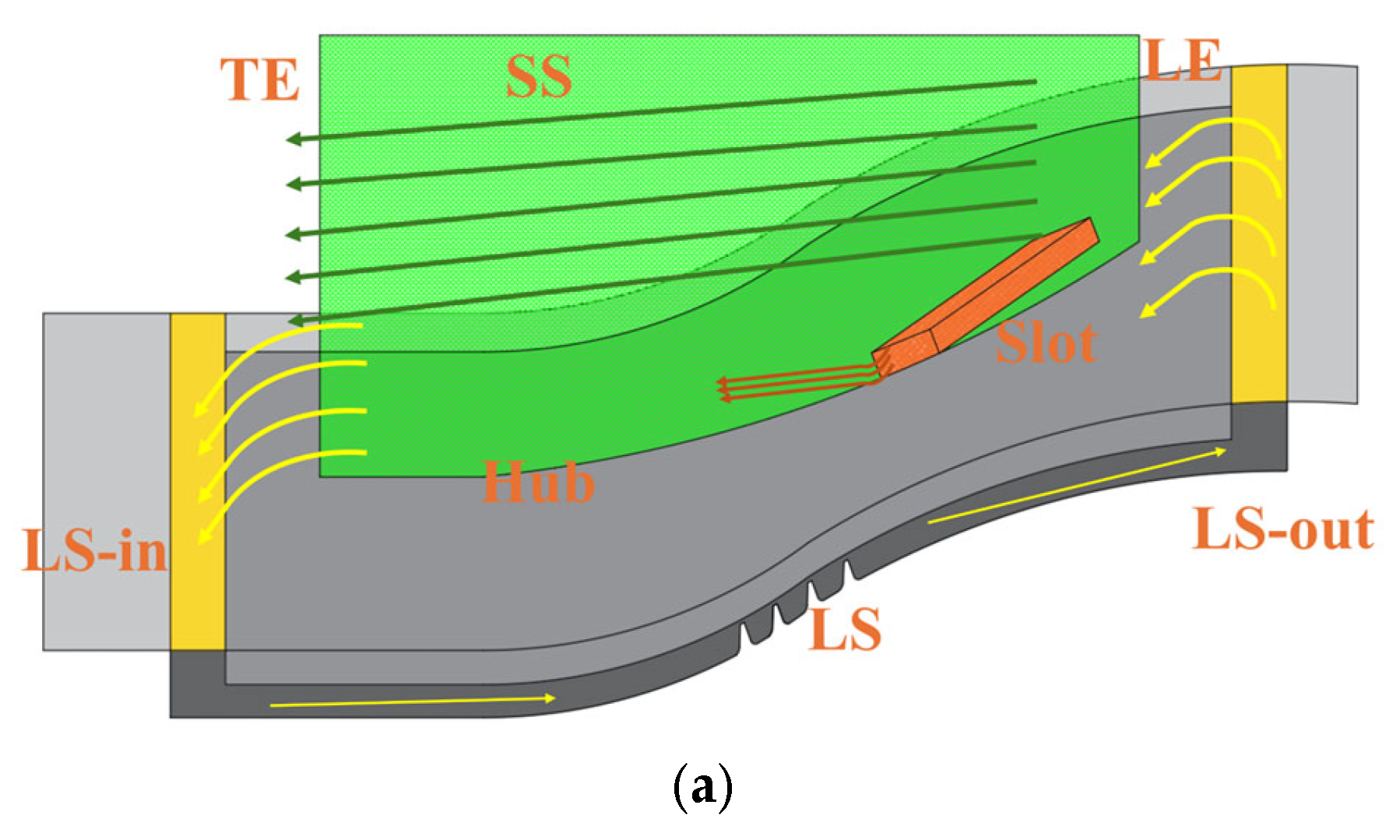
Figure 3 is a schematic illustration showing the airflow and three-dimensional structural view in the compressor cascade corner region established in this investigation. Due to dispersal, some of the flow from the trailing edge (TE) seeps through the interstage seal to the leading edge (LE). This flow forms a jet, which intensifies boundary-layer separation in the corner region. To precisely control the intricate flow characteristics, a root slot technique was designed. This technique uses high-pressure airflow to impact the low-energy medium, thereby enhancing the flow performance.

2.2. Numerical Computation Approach and Precision Validation

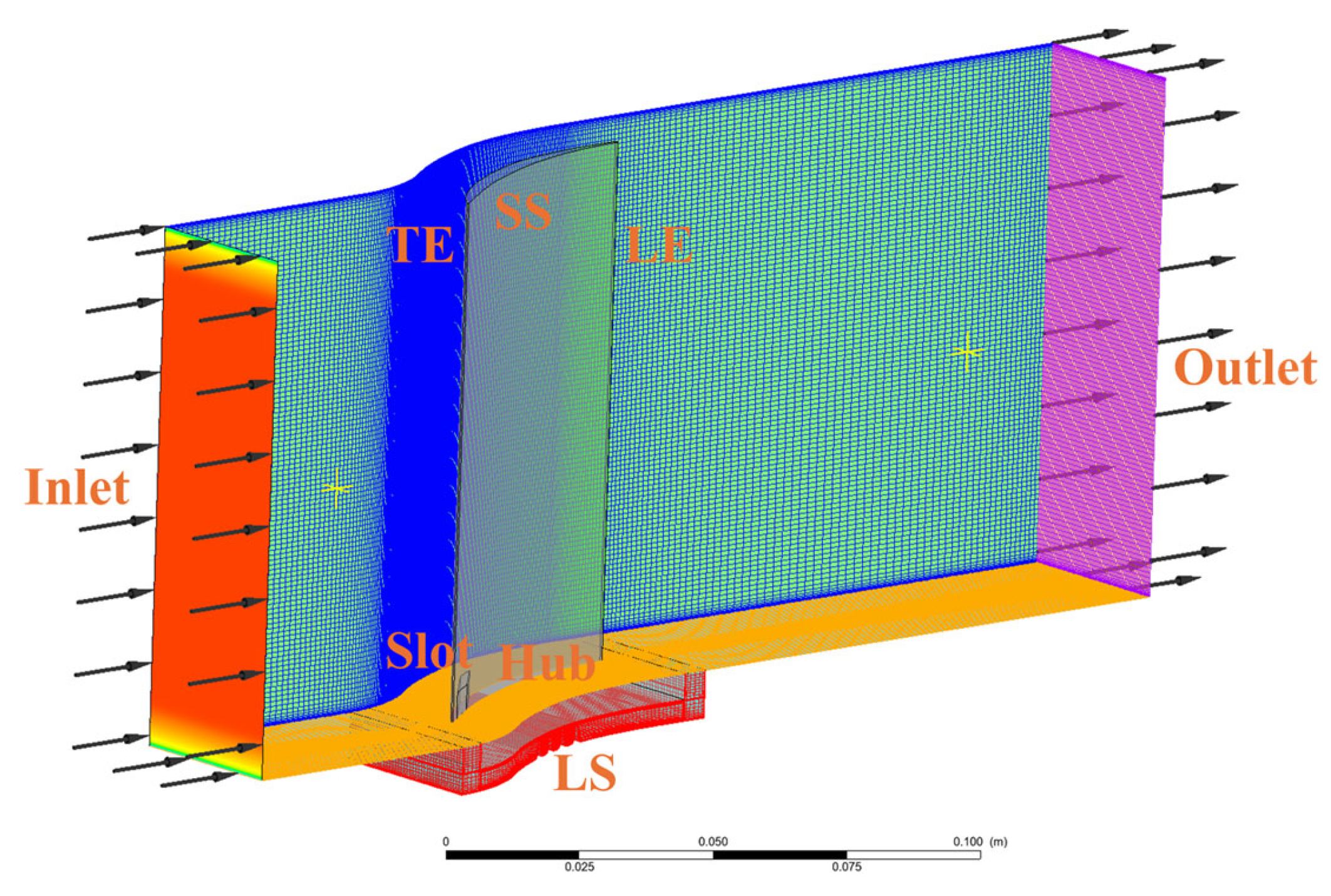
In this investigation, the computational domain mesh was generated using ICEM CFD 2022 R1 software, as shown in Figure 4. TE represents Trailing Edge, LE represents Leading Edge, LS represents leakage slot, and SS represents Suction Side. The different colors in the figure are only used to clearly distinguish the meshes of various structural components without additional special implications. Structured grids were adopted throughout the computational domain, and O-type grids were introduced near the blade walls for local grid refinement. To make the dimensionless y+ value on the cascade surface as close as possible to the ideal value (approximately 1), a detailed optimization and adjustment strategy was implemented for the endwalls and blade contact interfaces. The height of the first layer grid near the wall was set to 0.002 mm, and the y+ value was finally stabilized around 1. Steady-state flow simulations were conducted using the ANSYS CFX 2022 R1 commercial solver. The finite volume method was adopted for the solver, and the governing equations were the Reynolds-averaged N-S equations (RANS). Fully turbulent flow solution was applied, and the γ-θ transition turbulence model was used for coupled calculation, thereby replicating operational conditions as closely as practicable. To ensure stable and reliable calculation results, the simulation convergence criterion was set such that the residuals dropped below 1 × 10⁻⁶, and the fluctuation amplitudes of monitoring parameters such as mass flow rate and pressure were less than 1%.
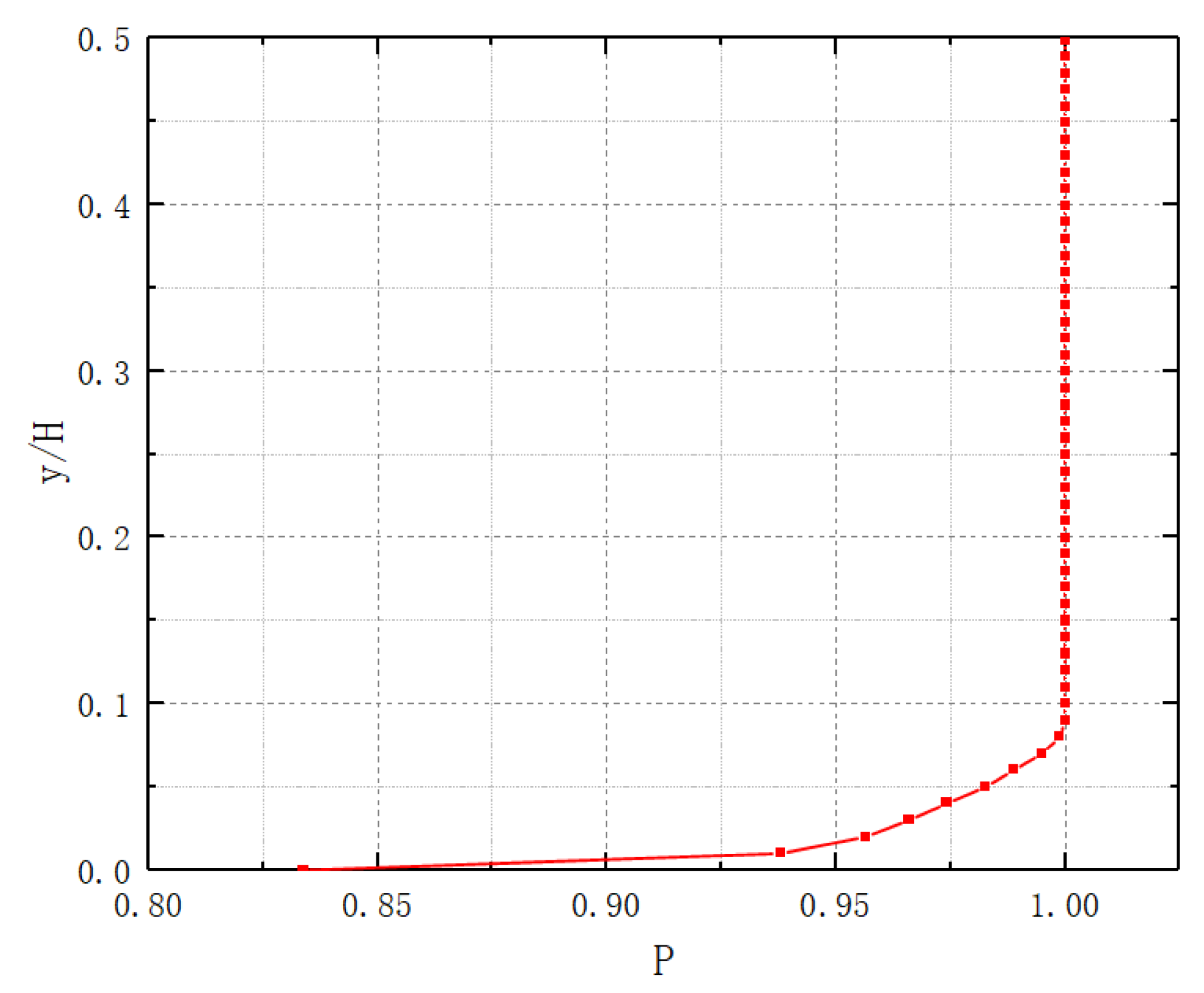
The boundary conditions were configured as follows. Periodic boundary handling was employed for the junctions on either flank. The inlet was characterized as a pressure inlet. The total incoming stream temperature was fixed at 320 K. The total pressure allocation was dynamically tuned along the blade spanwise in accordance with actual operational conditions, as shown in Figure 5. The red dots in the figure represent the discrete sampling points of the inlet total pressure profile, where each point corresponds to the total pressure value at a specific spanwise position y/H. The outlet was set to be open for air expulsion under standard atmospheric pressure. Specifically, the static pressure was set to 101,325 Pa under static conditions, and the temperature was maintained at the initially established value of 288 K. All residual surfaces were subjected to adiabatic, smooth, and non-slip boundary conditions.
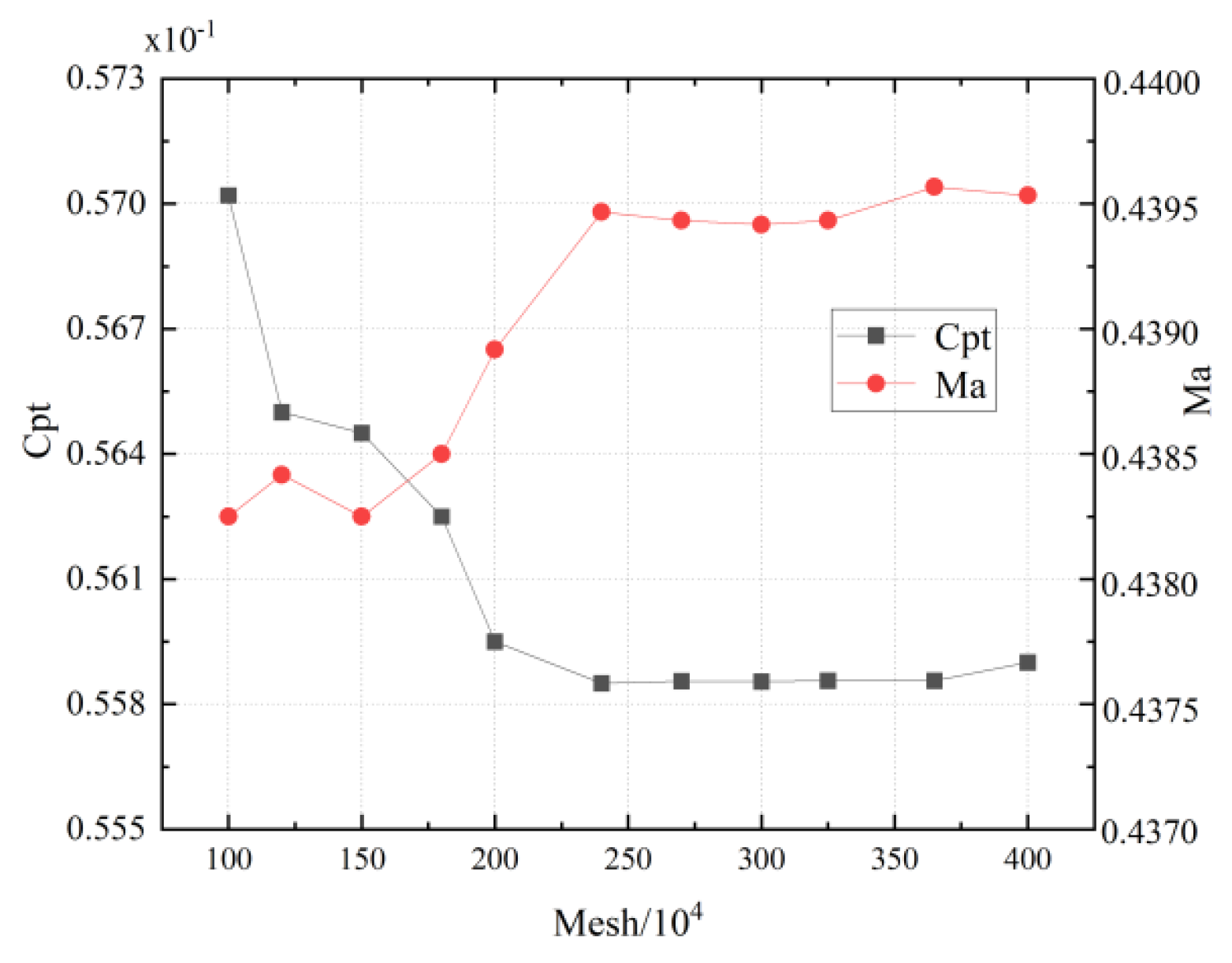
The total pressure loss coefficient (Cpt) and the Mach number (Ma) were chosen as the main assessment criteria for grid autonomy validation. As shown in Figure 6, as the node count escalates, the variation trends of the two parameters tend to stabilize. When the total number of elements approaches 2.35 million, the variation range stabilizes within ±5%. After factors such as calculation efficiency, convergence characteristics, and precision requirements were considered, a mesh division scheme with 2.6 million elements was selected for the numerical simulation. In addition, the grid generation settings for all through-slot configurations were kept consistent with those of the baseline case to ensure grid independence among all cases in this study.
The specific definition of the coefficient of total pressure loss is as follows:
C pt = p i n * p * p i n * p i n
In Equation (1), p i n * represents the mass-flow-averaged total pressure at the cascade inlet, p * represents the total pressure at any point, and p i n is the mass-flow-averaged static pressure at the inlet.
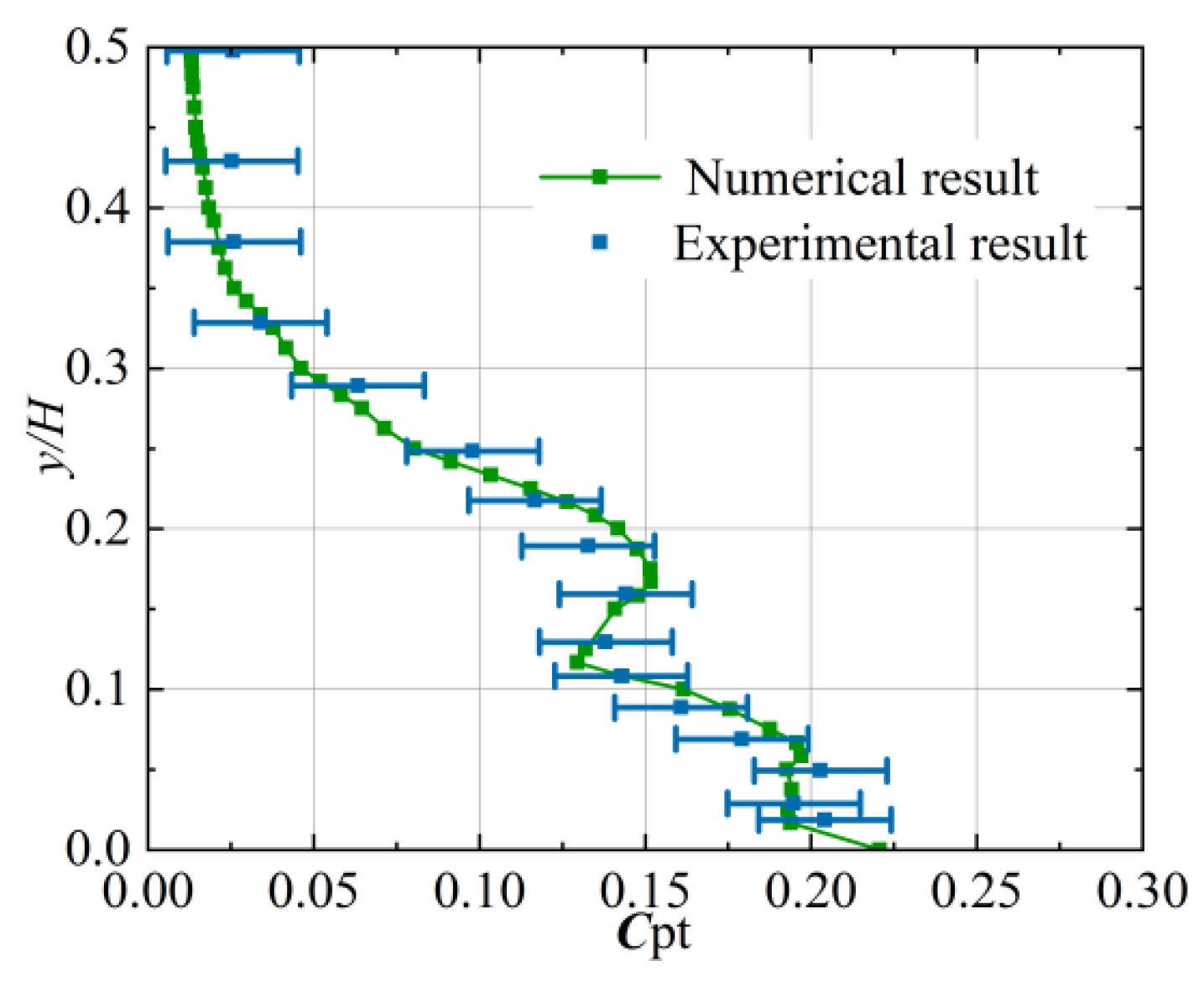
Drawing on the empirical results of the prototype compressor cascade reported in Ref. [33], a comparative analysis was conducted of the numerical simulation outcomes. The juxtaposition of these results is shown in Figure 7. Along the spanwise, the distribution contours of the Cpt likewise exhibit a substantial degree of resemblance. The disparity between the contours is entirely within 5%. This indicates that the numerical computation methodology used in this research has high precision.

3. Deterioration Induced by Seal Cavity Leakage

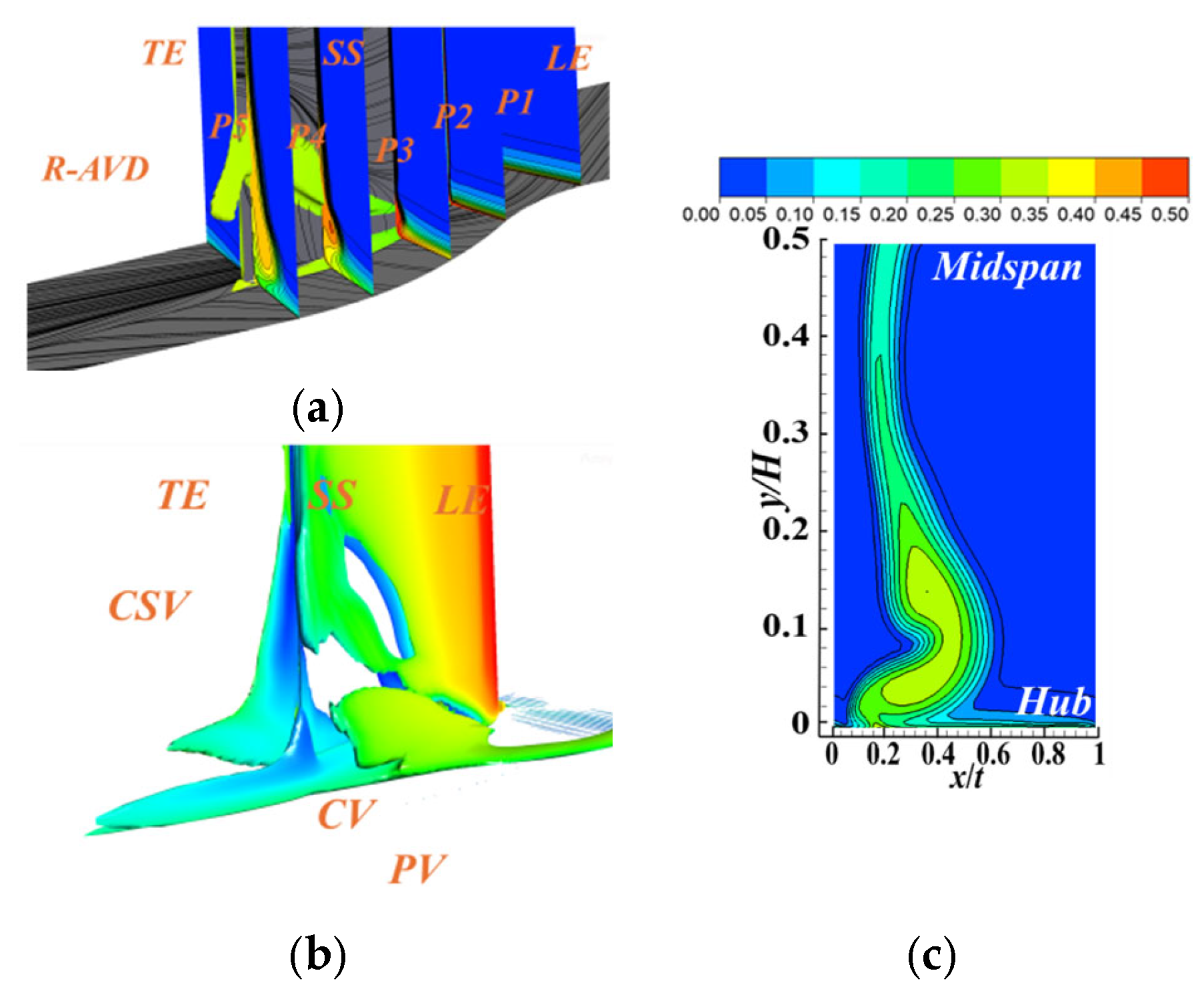
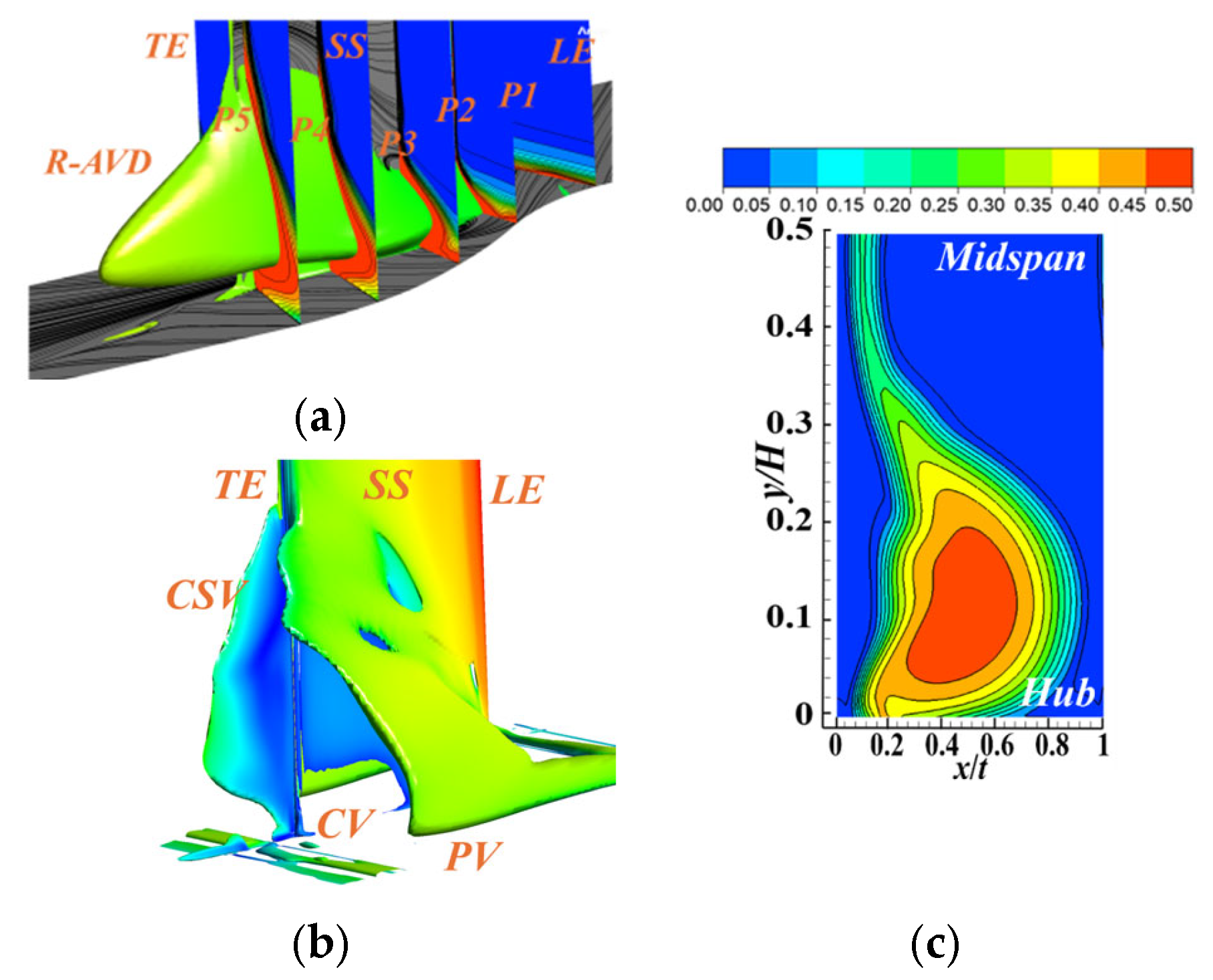
Figure 8 and Figure 9 show how seal leakage affects the flow field structure. The low-energy fluid clusters intuitively reveal the spatial distribution of the low-energy fluid in the corner region of the blade suction surface. This is achieved through an isosurface equipped with zero axial velocity density (AVD). The analysis was supplemented by additional examination combined with contour plots of the Cpt at various axial cross-sections. The vortex structure was identified in the flow field using an isosurface with a Q-criterion value of 9.06 × 10⁶ s−2. For the convenience of analyzing the distribution of flow along the blade height, the dimensionless radial height y/H = 0.5 is defined as the geometric midpoint of the blade in this paper rather than the aerodynamic midpoint in the flow sense. The same definition applies to all subsequent occurrences of such expressions without further explanation.
The visualization outcomes of the three-dimensional vortex configuration were analyzed. These outcomes indicate that in the passage without a labyrinth seal, the concentrated shedding vortex (CSV) evolves to a comparatively restricted degree. Meanwhile, the passage vortex (PV) emerges and progresses solely in the localized area of the blade root. After the maze seal apparatus was integrated into the cascade configuration, the impact scope of the low-energy fluid masses was magnified by 640% compared to the original structure. The region was concurrently enlarged. Ultimately, the Cpt of the original (ORI) scheme was 183.2% higher than that of the NLS scheme. It can be inferred that the labyrinth seal structure significantly deteriorates the internal airflow characteristics and flow-field layout of the cascade. This structure also increases the complexity of the vortex structure in the corner region, thereby undermining aerodynamic performance.

4. Effect of Root Slot Position on Deterioration Induced by Seal Cavity Leakage

4.1. Effect of Root Slot Position on Aerodynamic Performance

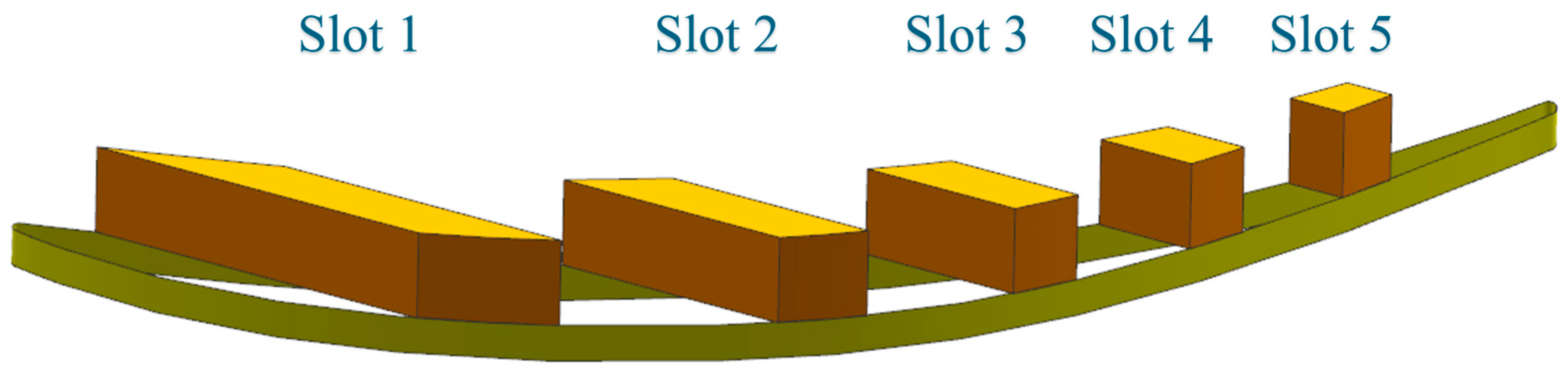
In this study, five root slot schemes with different positions, all having a height of 4%H, were designed, as shown in Table 3. The schematic diagrams of the slot structures for each positional scheme are shown in Figure 10 and Figure 11.
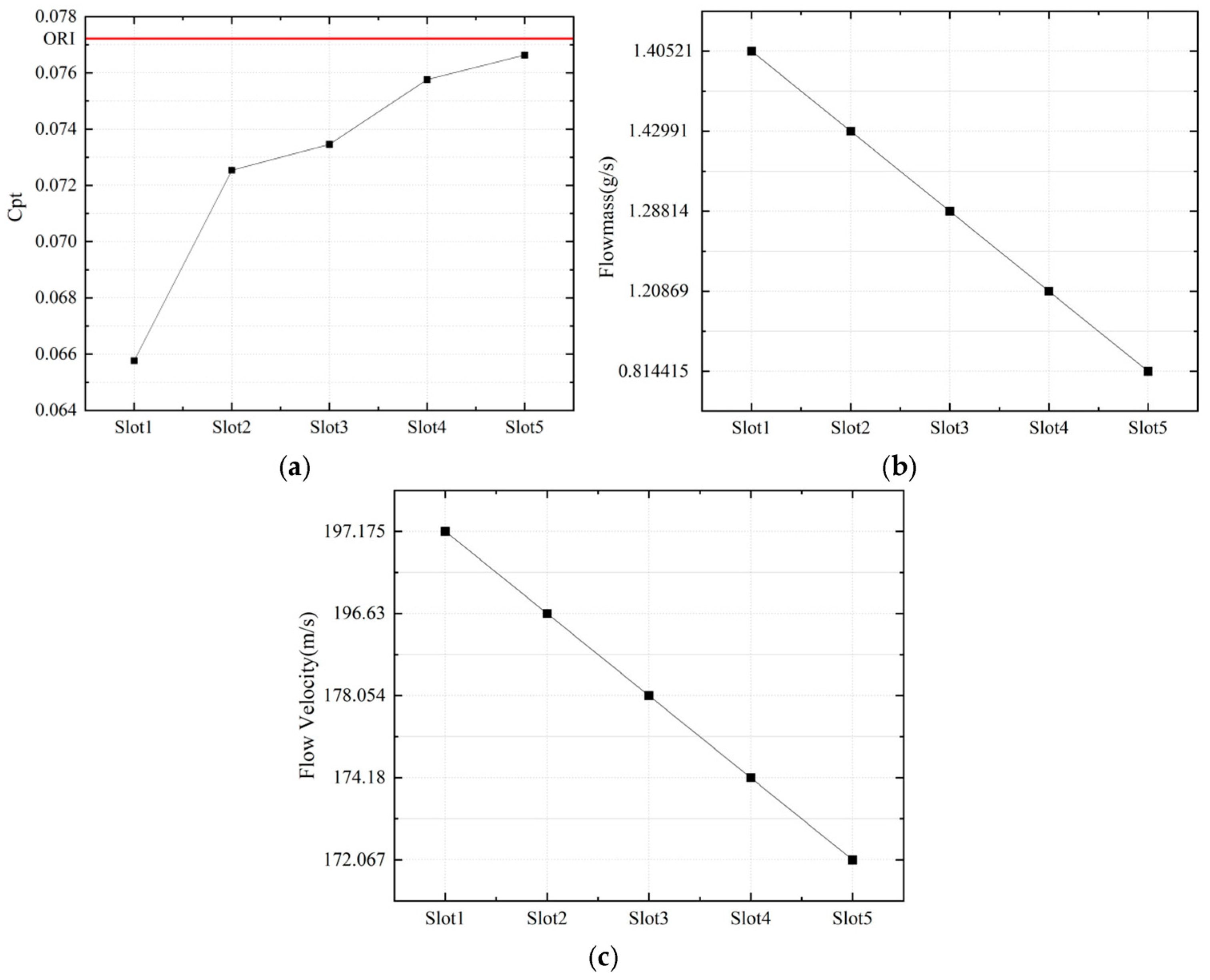
The Cpt and jet parameters for different position schemes are shown in Figure 12. In the comparison of the total pressure loss coefficients, the proficiency progressively wanes as the slot position shifts towards the trailing margin. The five schemes curtail total pressure loss by 14.8%, 6.1%, 4.9%, 1.9%, and 0.8%, respectively. Slot 1 exhibits the greatest performance improvement and the highest loss-reduction efficacy. Moreover, in the comparison of the jet flow rate and jet velocity for different schemes, as the slot position moves gradually from the leading edge to the trailing edge, the mass flow rate in the cascade passage shows a decreasing trend. The corresponding slot jet velocity also decreases, and the kinetic energy of the jet decreases synchronously. This leads to a gradual weakening of its effect on suppressing total pressure loss.
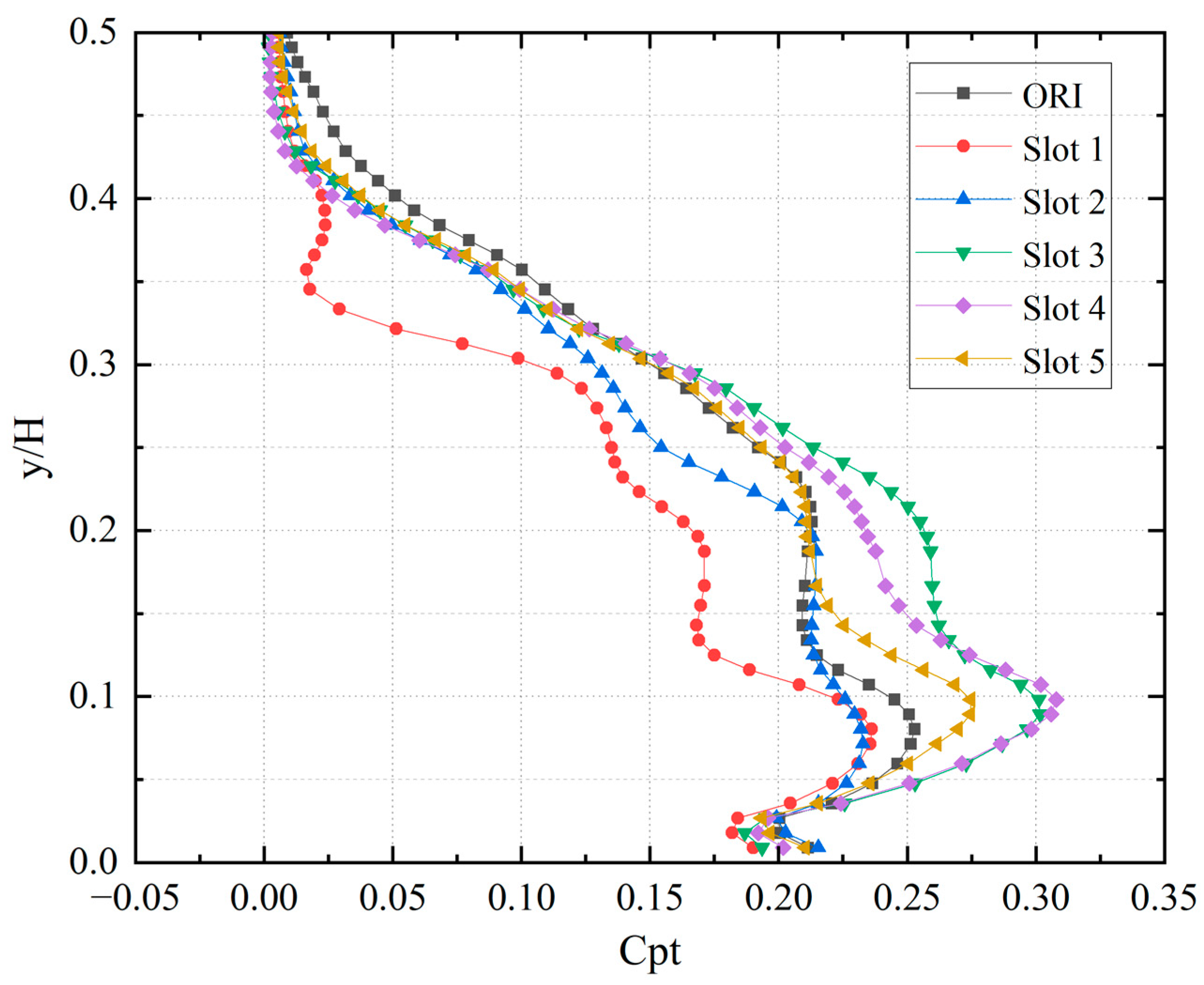
Figure 13 shows the distribution of the Cpt for different positional schemes. As shown in this figure, within the mid-to-high span range of 32.5–50%H, all slot configurations exhibit a notable reduction in flow resistance inside the blade passage. However, in the low-span region (≤10%H), more distinct differential impacts can be discerned, especially proximate to the blade root. The regulating influence in this zone is primarily amassed around roughly 20%c. It then gradually decreases until it diminishes entirely. For Slot 3, Slot 4, and Slot 5, the Cpt values exceed those of the ORI. When the span is below 5%H, all curves remain largely stable and closely align with the baseline. This result indicates limited room for further improvement. It also explains the optimal performance of Slot 1 shown in Figure 12.
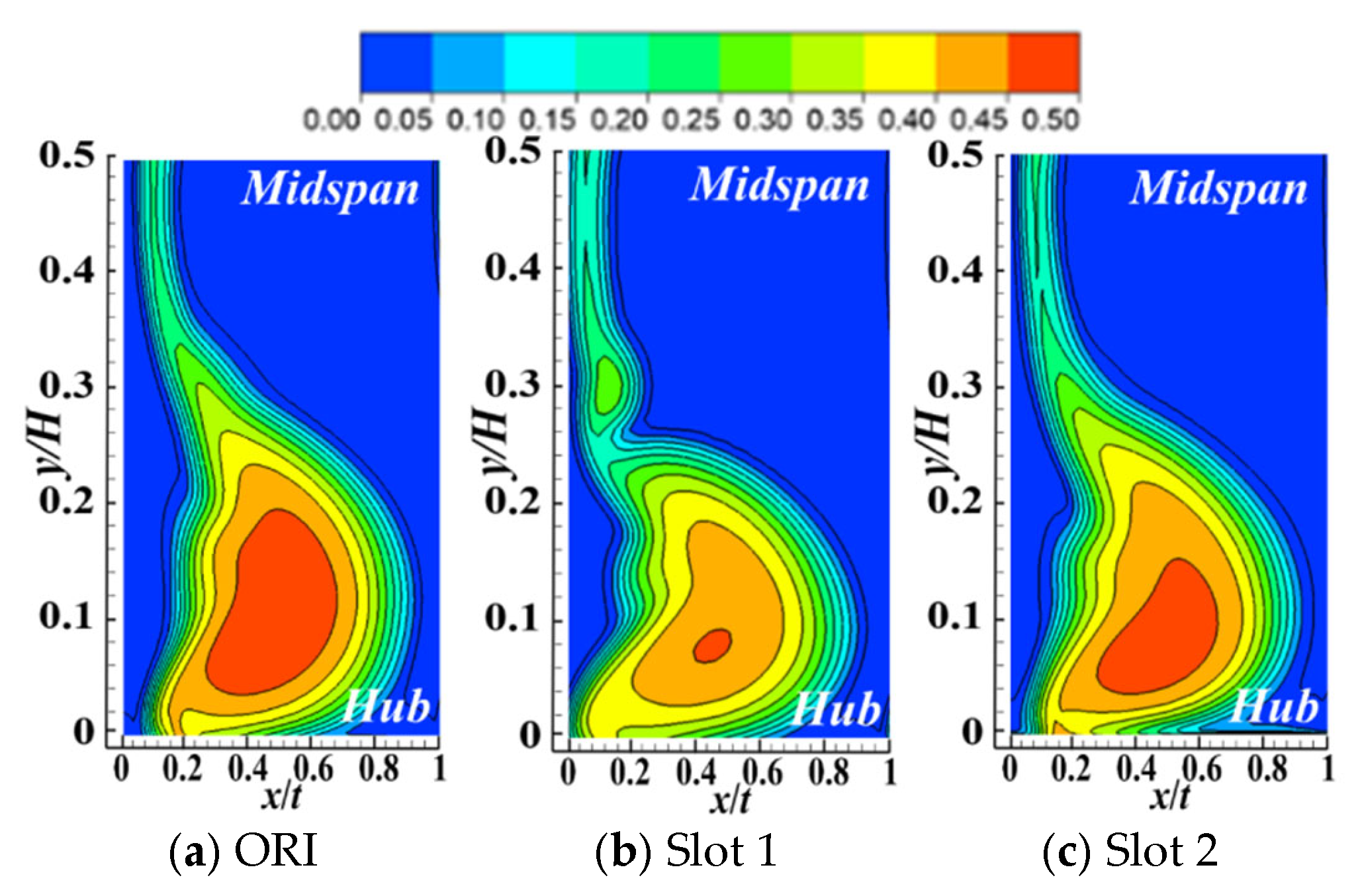
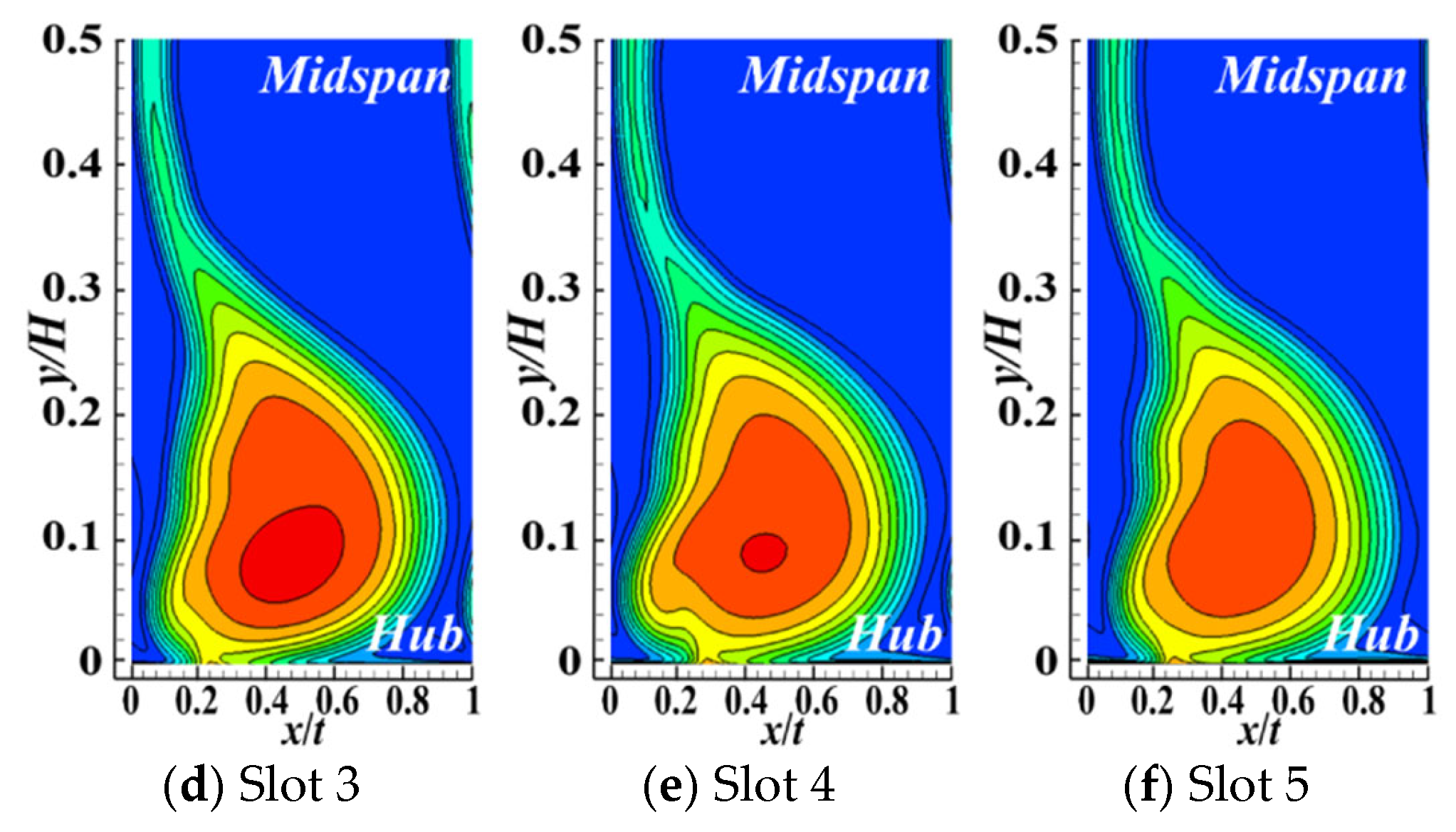
Figure 14 shows the spatial dispersion reflecting Cpt for diverse root slot layout schemes. In the original design, a conspicuous high-loss region is manifest at the corner shaped by the suction surface and the endwall. As the slot position migrates downstream, the extent of this high-loss region initially contracts and then expands again. A comparison indicates that the optimized structures of Slot 1 and Slot 2 reduce the corresponding high-loss region by 56.8% and 23.6%, respectively. In contrast, the distribution of the high-loss region for the remaining schemes is highly similar to that of the prototype cascade structure.

4.2. Effect of Root Slot Position on Flow-Field Structure

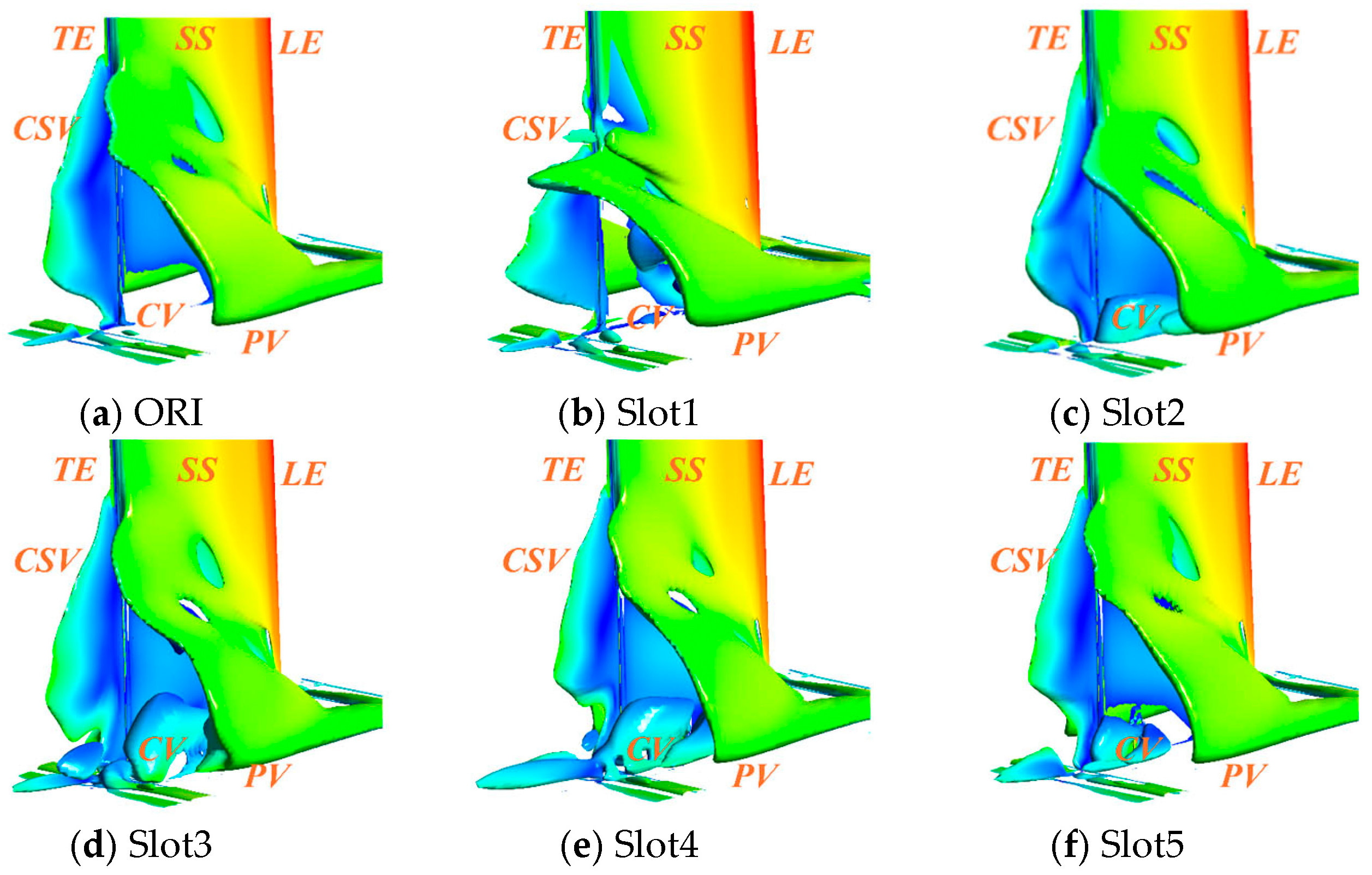
As shown in Figure 15, a notable disparity existed in the vortex distribution between the prototype cascade and the enhanced schemes. In the ORI scheme, the CSV’s influence scope is relatively limited, confined to the area near the blade root. However, the other optimized schemes exhibit more distinct vortex characteristics in the flow field. The primary cause of this phenomenon is clear. Airflow from adjacent blade leading edges is propelled toward both sides of the main flow path by the pressure difference. It then gradually converges in the middle of the passage, forming a typical triangular recirculation zone. The inherent adverse pressure gradient within the compressor primarily drives this phenomenon. The gradient obstructs the mainstream flow along the passage and promotes the continuous expansion of vortices toward the trailing region. Eventually, these vortices couple with the concentrated shedding vortices. In this way, a counter-rotating characteristic is formed. The design principle of the slot is straightforward. It mainly uses the high-pressure region to introduce high-energy fluid. In combination with the spreading effect on the low-energy fluid in the corner region, this design substantially reduces pressure loss during gas flow within the conduit.
Furthermore, in the ORI scheme, the CSV exhibits a broad distribution along the spanwise direction. It also demonstrates significant pitchwise correlation with the passage vortex (PV). The PV also shows a wide distribution range in the pitchwise direction. The strong coupling between CSV and PV results in a substantial axial distribution range for both vortices. In contrast, Slot 1 effectively compresses the CSV’s longitudinal extent. This weakens the coupling intensity and enhances vortex diffusion. As a result, the accumulation of the low-energy flow is curtailed. Consequently, the axial dispersion scope of CSV is curtailed, thereby enhancing the mitigation of total pressure loss. Concurrently, Slot 1 constrains the efficacious prolongation of PV in the pitchwise direction. This induces the CSV to migrate toward the suction surface, further reducing their coupling. However, Slot 2 exhibits a wider spanwise distribution of CSV than does Slot 1. Both CSV and PV also exhibit broader axial distributions. Overall, the suppression effect of Slot 2 is less pronounced than that of Slot 1. For Slots 3, 4, and 5, the spanwise distribution of CSV and the pitchwise distribution of PV are both reduced compared to those of ORI.
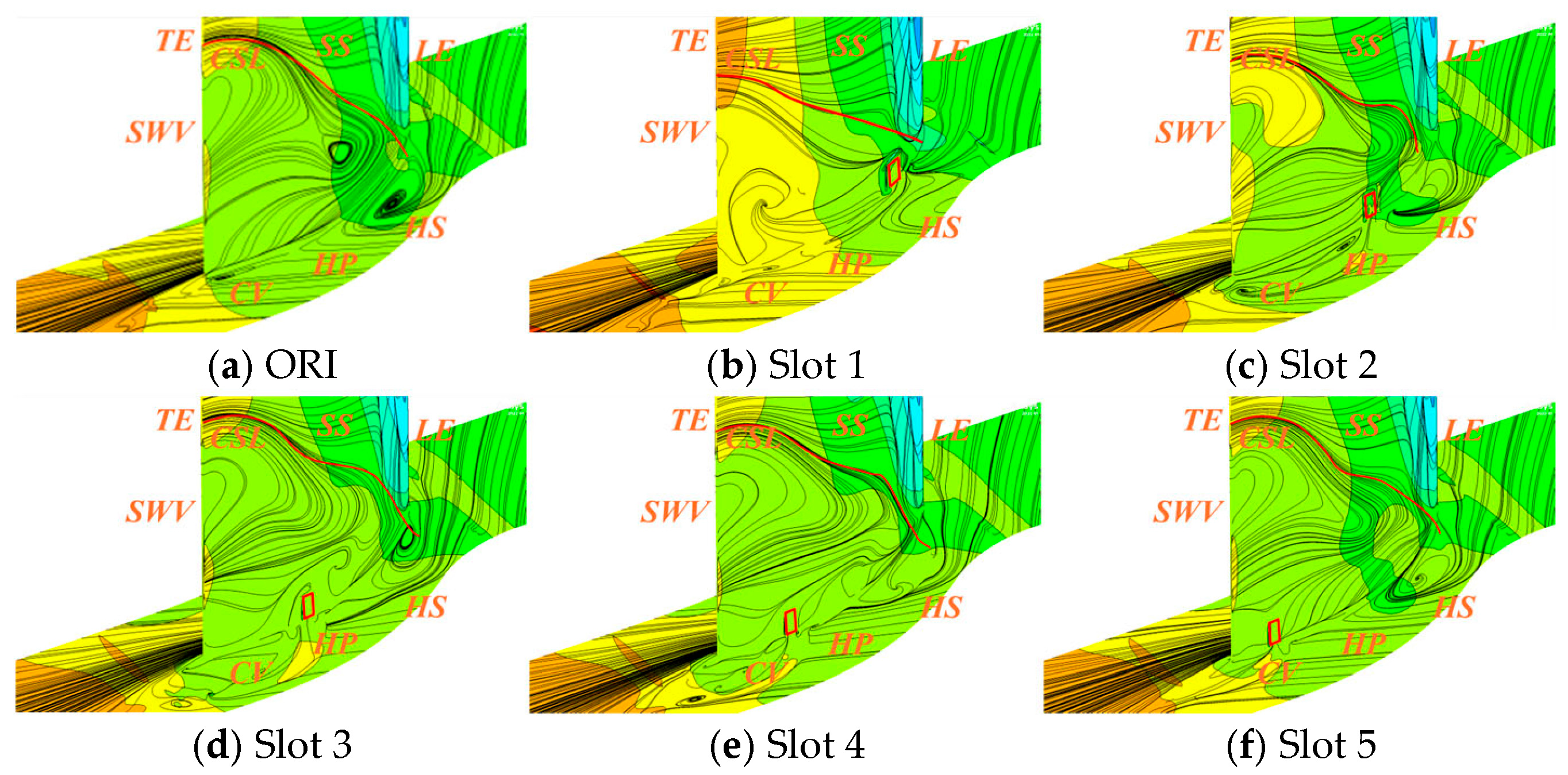
Figure 16 shows the hub surface pressure contours and boundary streamlines for the prototype cascade and the root slot schemes at various positions. Here, CSL represents the corner separation line on the blade suction side. HS symbolizes the horseshoe vortex proximate to the blade leading margin. CV denotes the corner vortex at the blade trailing margin. HP represents the pressure-side offshoot of the adjacent blade leading margin. As shown in Figure 16, the ORI configuration exhibits a large, intense CV with highly entangled streamlines.
In contrast, Slot 1 to Slot 5 schemes all show a reduction in the CV influence range, along with smoother streamline patterns. This impact stems from the high-energy airflow introduced by the root slot. The airflow impinges on the low-velocity region and effectively suppresses the development of large-scale corner separation vortices in both spanwise and pitchwise directions. Consequently, the root slot significantly modifies the local flow traits. As the slot position migrates nearer to the trailing margin, the height of the corresponding separation line increases gradually. This trend is consistent with the earlier theoretical predictions. Among the schemes, Slot 1 achieves the greatest reduction in separation line height, approximately 23% below the initial height. This result exhibits the most pronounced suppression of flow separation.
The horseshoe vortex exhibits strong diffusivity, resulting in intense recirculation near the blade root. However, the recirculation range induced by the horseshoe vortex in Slots 1–5 is considerably smaller compared to that in ORI. This reduction results from the slot’s influence on the jet behavior. The high-energy flow guided through the slot becomes concentrated near the blade-root corner. This leads to a sharp decrease in pressure along the suction leading edge, effectively suppressing the expansion of the local recirculation zone induced by the horseshoe vortex (HS).
Nevertheless, this configuration might still contribute to the thickening of the CV proximate to the trailing margin. Among the schemes, Slot 1 demonstrates the best flow-loss regulation performance. Compared with ORI, the larger area of the yellow low-velocity region indicates an expanded low-pressure region, which adversely affects diffusion. This observation corroborates the phenomenon shown in Figure 15, where the CSV in Slot 1 moves closer to the suction, thereby exhibiting reduced diffuser capability.
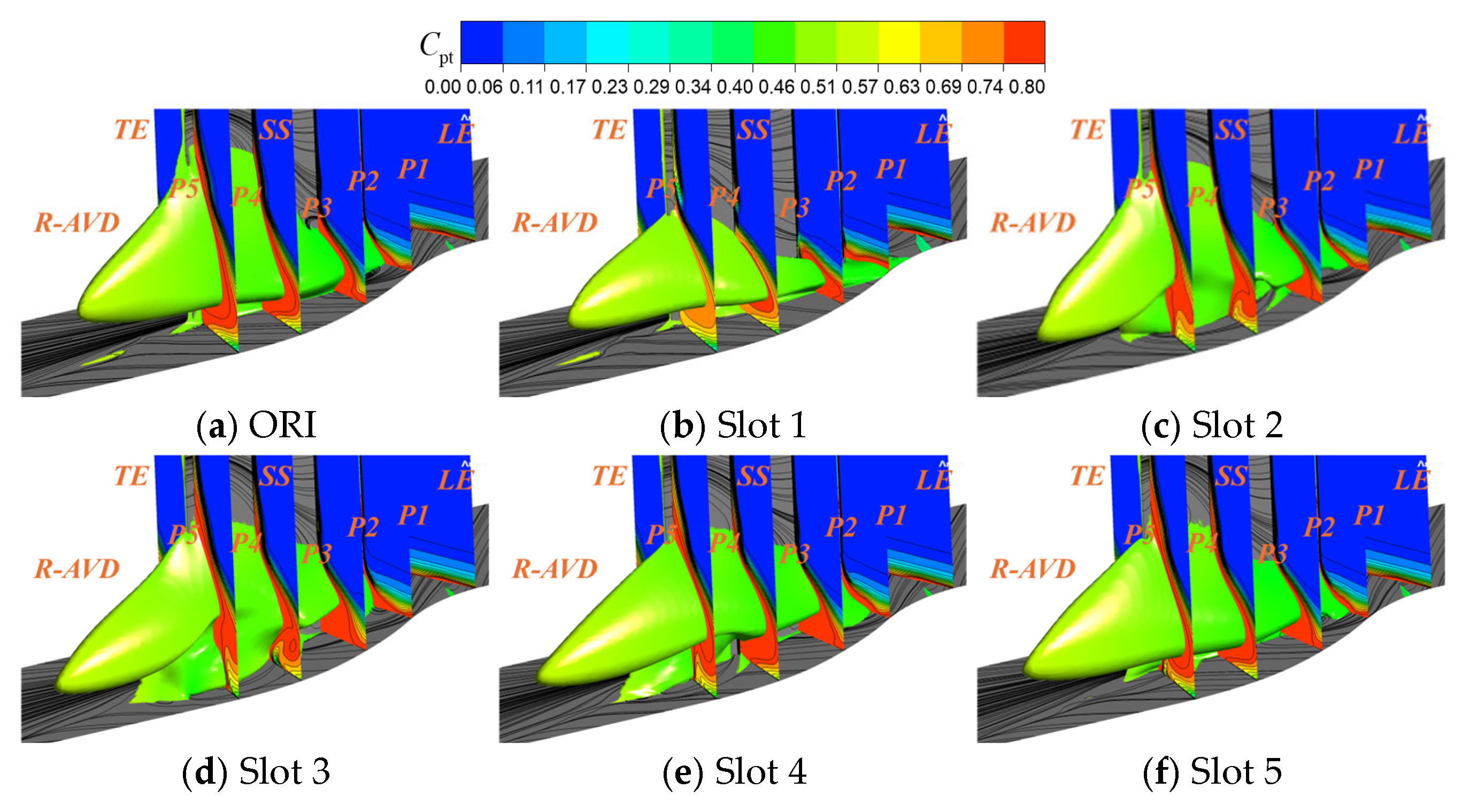
Figure 17 shows the streamwise evolution traits of low-energy fluid masses within the cascade passage under diverse configurations. In the primordial ORI design, the low-energy fluid commences to accumulate in section P2 and progressively extends toward the trailing edge (TE). During this process, its distribution area expands significantly in both radial and pitchwise directions. This expansion leads to an obstruction of the flow passage. Slot 1 reduces the fluid mass by approximately 27.8% compared to ORI.
Furthermore, as the flow progresses downstream from section P2, Slot 1 restricts the spread, thereby alleviating blockage and improving aerodynamic performance. By contrast, Slots 2–5 effectively suppresses the pitchwise expansion of the low-energy fluid mass. However, its spanwise distribution widens, leading to greater accumulation near the endwall at the trailing edge compared to ORI. According to section P5, the low-energy fluid cluster obviously divides into upper and lower portions. Such a structure greatly raises the risk of high-loss regions propagating toward the blade surface. Furthermore, the proportions of the fluid mass for Slot 2, Slot 3, Slot 4, and Slot 5 increase by 8.3%, 9.7%, 4.3%, and 2.3%, respectively. When viewed in combination with the progressively higher Cpts of Slots 2–5 shown in Figure 12, a clear conclusion can be drawn. These schemes exhibit significantly weaker total pressure loss suppression than does Slot 1.
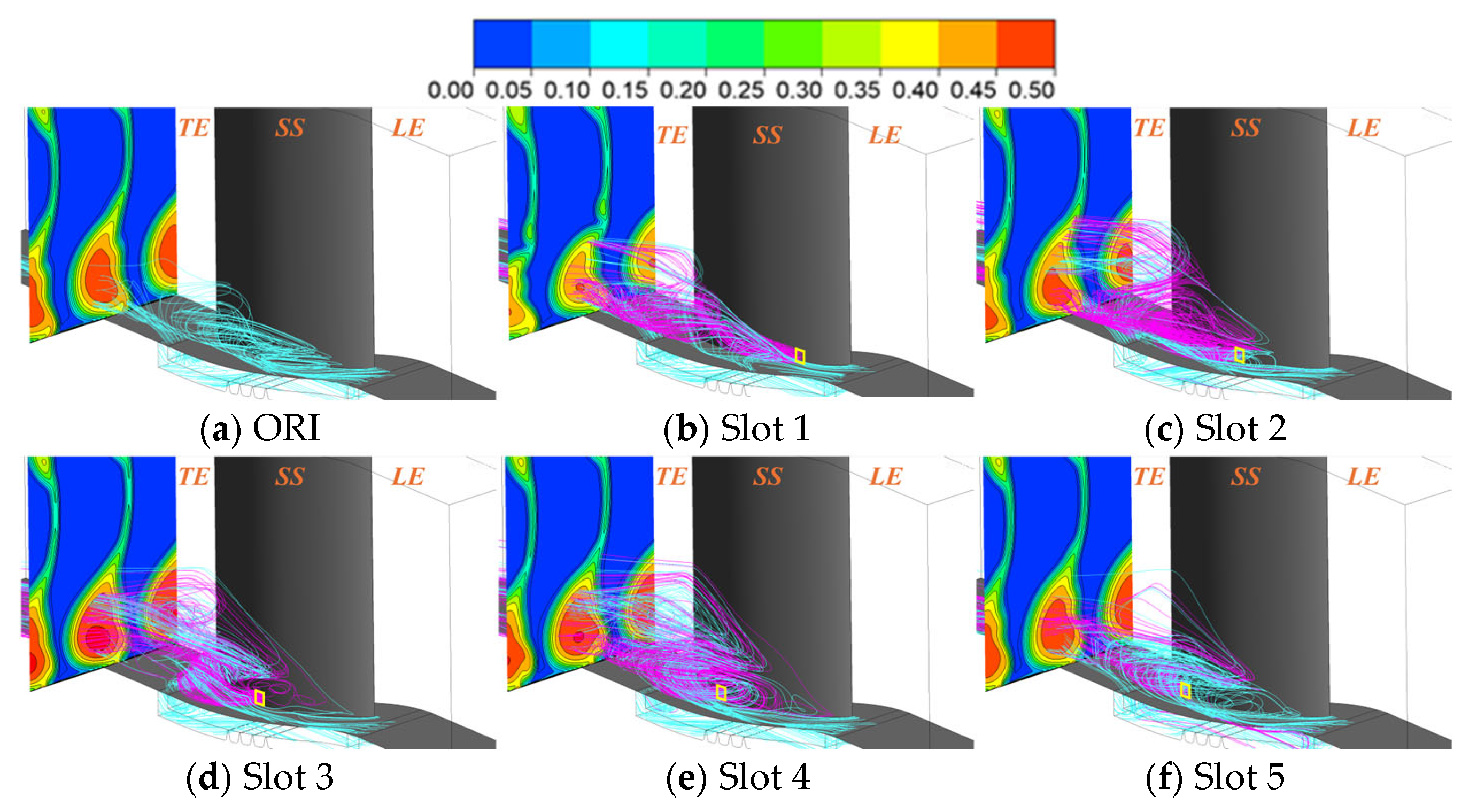
Figure 18 shows the characteristic three-dimensional streamline dispersion within the semi-passage of the prototype cascade and its derivatives. The yellow squares in Figure 18 indicate the locations of the slots in each schemes. Owing to the impact of the suction-surface separation vortex (SSV), the airflow diverges from the intended geometric outlet angle trajectory. After optimization with the slot structure, its ability to guide airflow within the separation-vortex-affected region is significantly enhanced. This improvement refines the local flow-field characteristics and further elevates overall blade performance. As shown in Figure 18, the streamlines of ORI exhibit greater deviation from the TE. At the same time, those of Slots 1–5 are more concentrated and directed toward the TE. They align more closely with the geometric outlet direction of the blade. Furthermore, the ORI streamlines are relatively well-converged. By contrast, those of Slot 1 are more evenly distributed. The three-dimensional vortex developments in both spanwise and pitchwise directions are conspicuously diminished compared to these of ORI. It can be deduced that the slot configuration substantially suppresses the SSV and the recirculation zone. This design limits the influence range of the separation vortex in the cross-flow region, reduces flow losses, and elevates the static pressure near the trailing edge. This once more substantiates the considerable diminution in the high-loss region observed for Slot 1 shown in Figure 14.
Additionally, as the slot position moves closer to the trailing edge, the uniformity of the streamlines progressively deteriorates. The three-dimensional rotational impacts in both spanwise and pitchwise directions become increasingly significant. These impacts lead to a gradual weakening of the flow’s resistance-reducing performance. This observation is consistent with the trend shown in Figure 12, which shows the Cpt rising gradually as the slot position moves toward the trailing edge. For Slot 3 and Slot 4, the streamlines are densely distributed in the blade-root region. This distribution increases the vortex shedding frequency and enhances vortex intensity in this region. When viewed in combination with the data shown in Figure 14, in can be concluded that the structural characteristic contributes to a further expansion of the high-energy-loss region in space.
As per the comprehensive conclusions above, Slot 1 can guide the airflow to adhere closely to the geometric outlet and arrange it reasonably to suppress the generation of separation vortices and their backflow impact. Meanwhile, it minimizes the increase of energy loss in the main flow channel. Thus, Slot 1 achieves the optimal aerodynamic performance optimization effect.

5. Effect of Root Slot Height on Deterioration Induced by Seal Cavity Leakage

5.1. Effect of Root Slot Height on Aerodynamic Performance

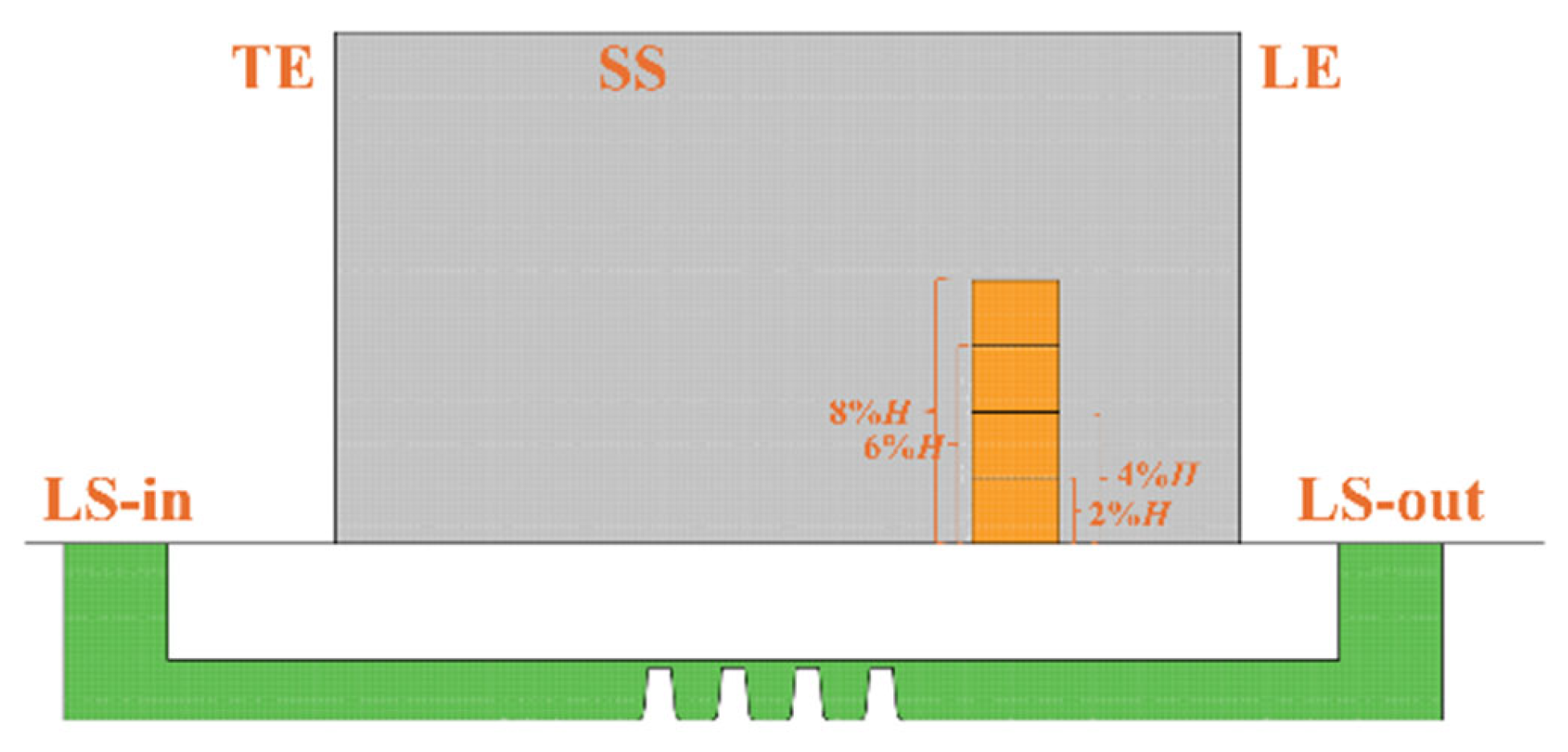
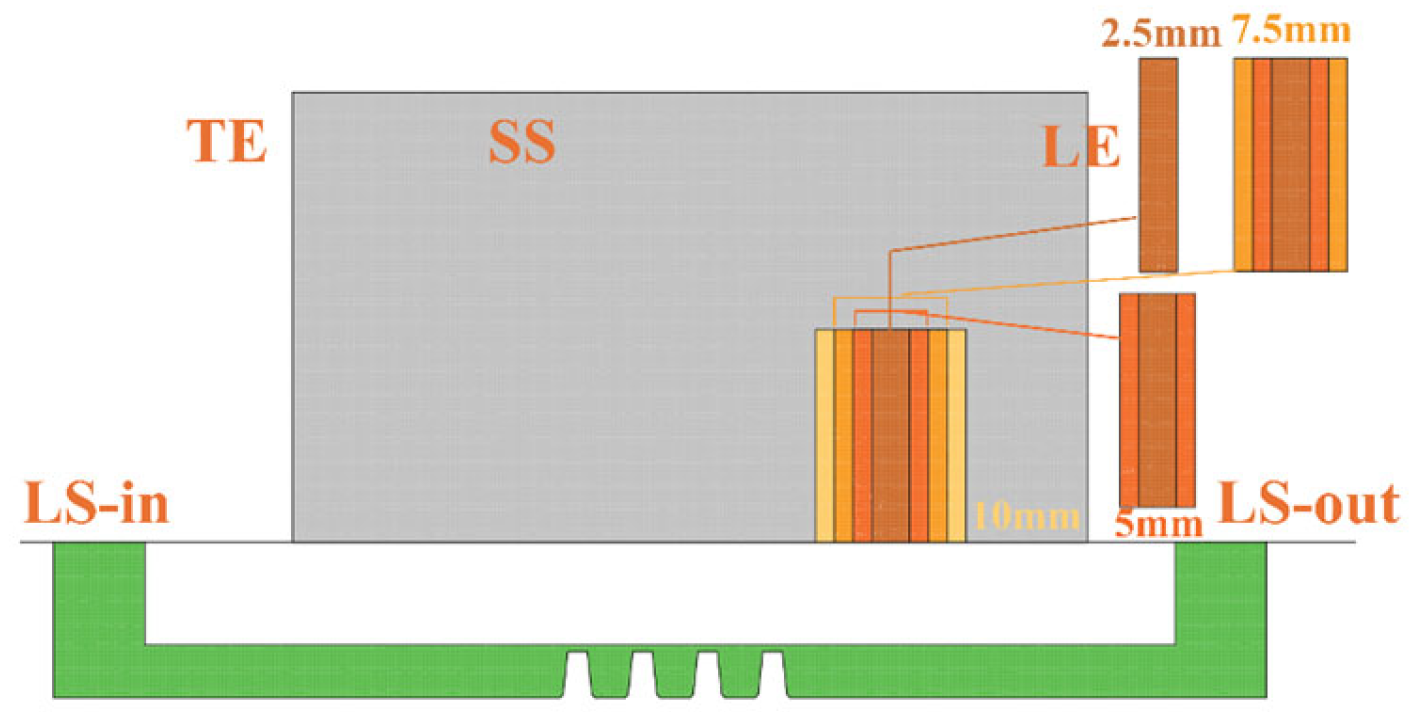
The best positional plan was determined to be 25%c. Besides the 4%H (5 mm) height scheme, three additional slot schemes with heights of 2%H (2.5 mm), 6%H (7.5 mm), and 8%H (10 mm) were designed in this study. The various height schemes are enumerated in Table 4, and their schematic diagrams are shown in Figure 19.
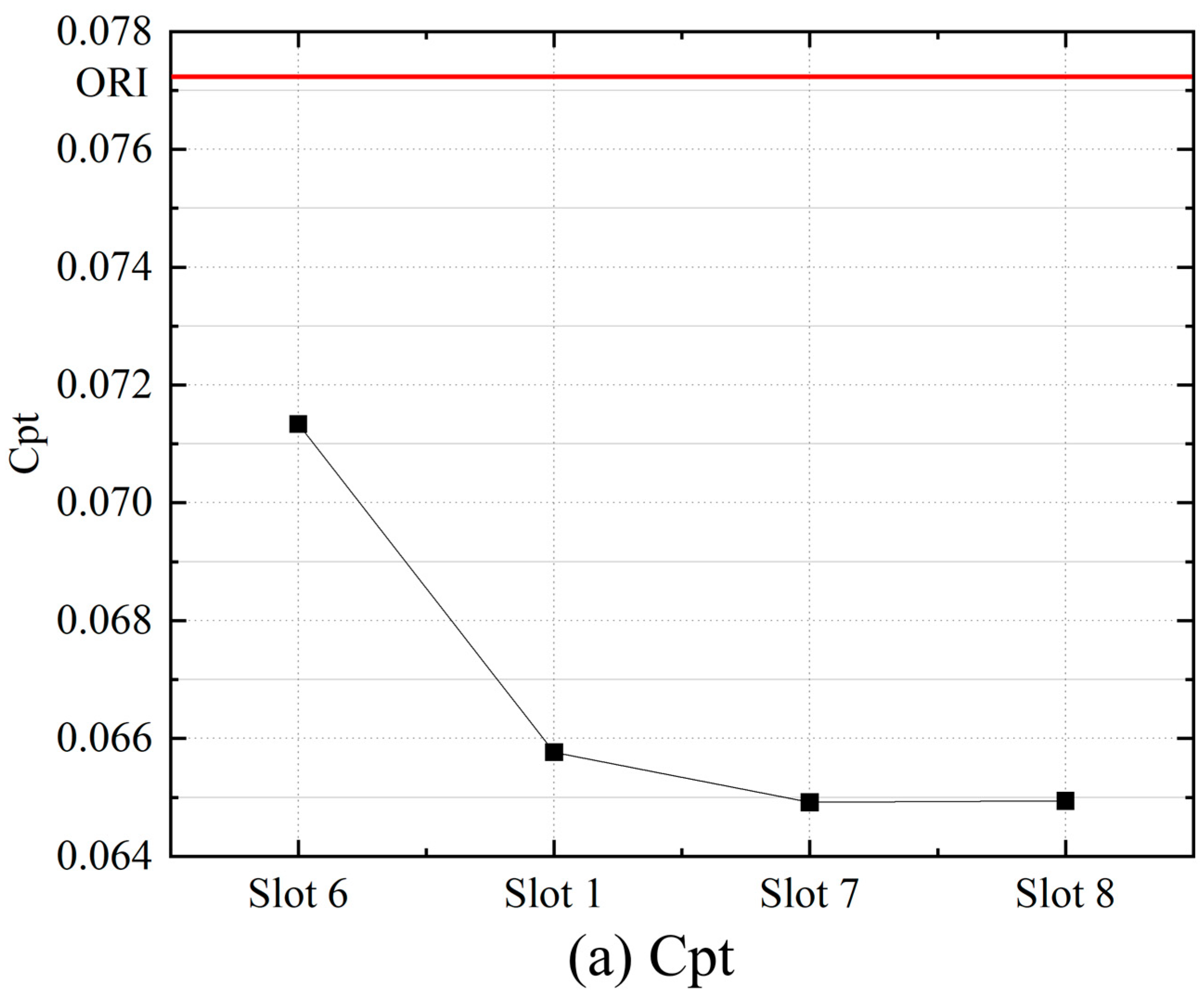
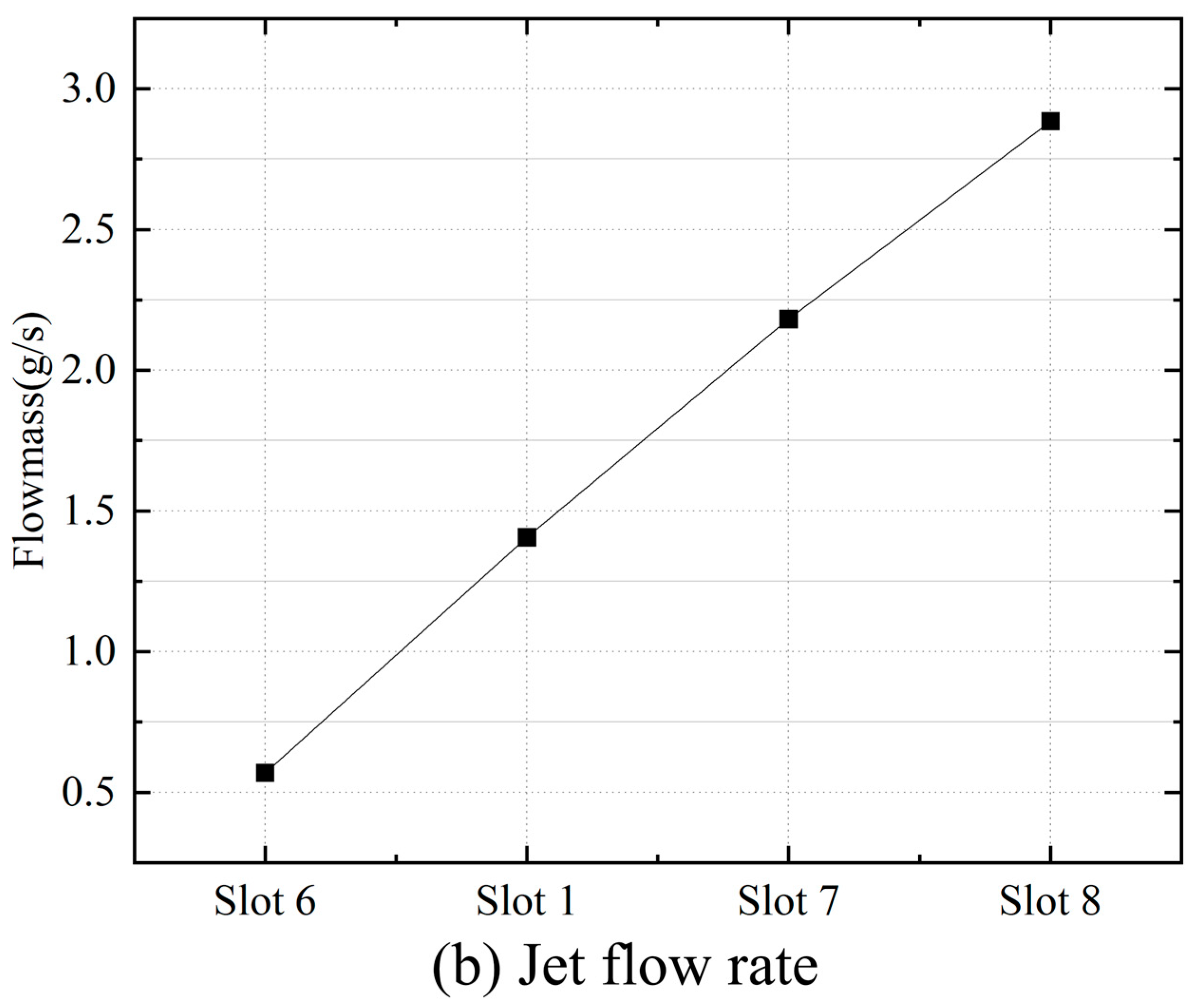
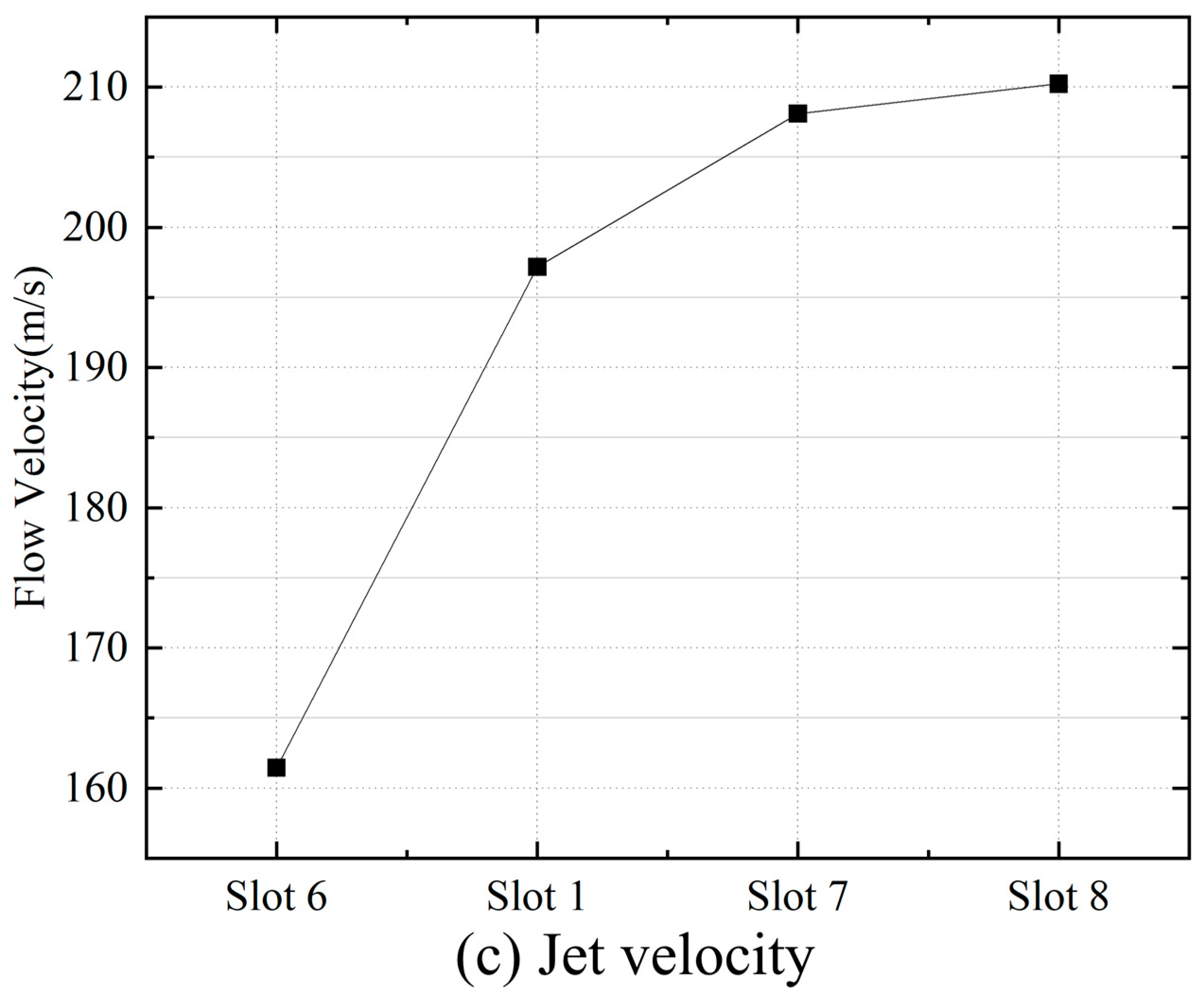
Figure 20 shows the Cpt and jet parameters for different height schemes. Comparing the total pressure loss coefficients, we found that Slot 6, Slot 1, Slot 7, and Slot 8 diminishes the loss by 7.62%, 14.84%, 15.94%, and 15.91%, respectively. All these schemes, therefore, effectively mitigate flow loss. With an increase in slot height, the flow loss reduction capability first increases and then decreases. Among these, Slot 7 has the minimum Cpt value. This scheme shows the strongest total pressure-loss-suppression capability. Additionally, as seen in comparison of the jet flow rate and jet velocity for different schemes, as the slot height increases, the mass flow rate in the cascade passage shows a gradually increasing trend. The corresponding slot jet velocity also increases, and the kinetic energy of the jet increases synchronously. This leads to a gradual enhancement of its effect on suppressing total pressure loss.
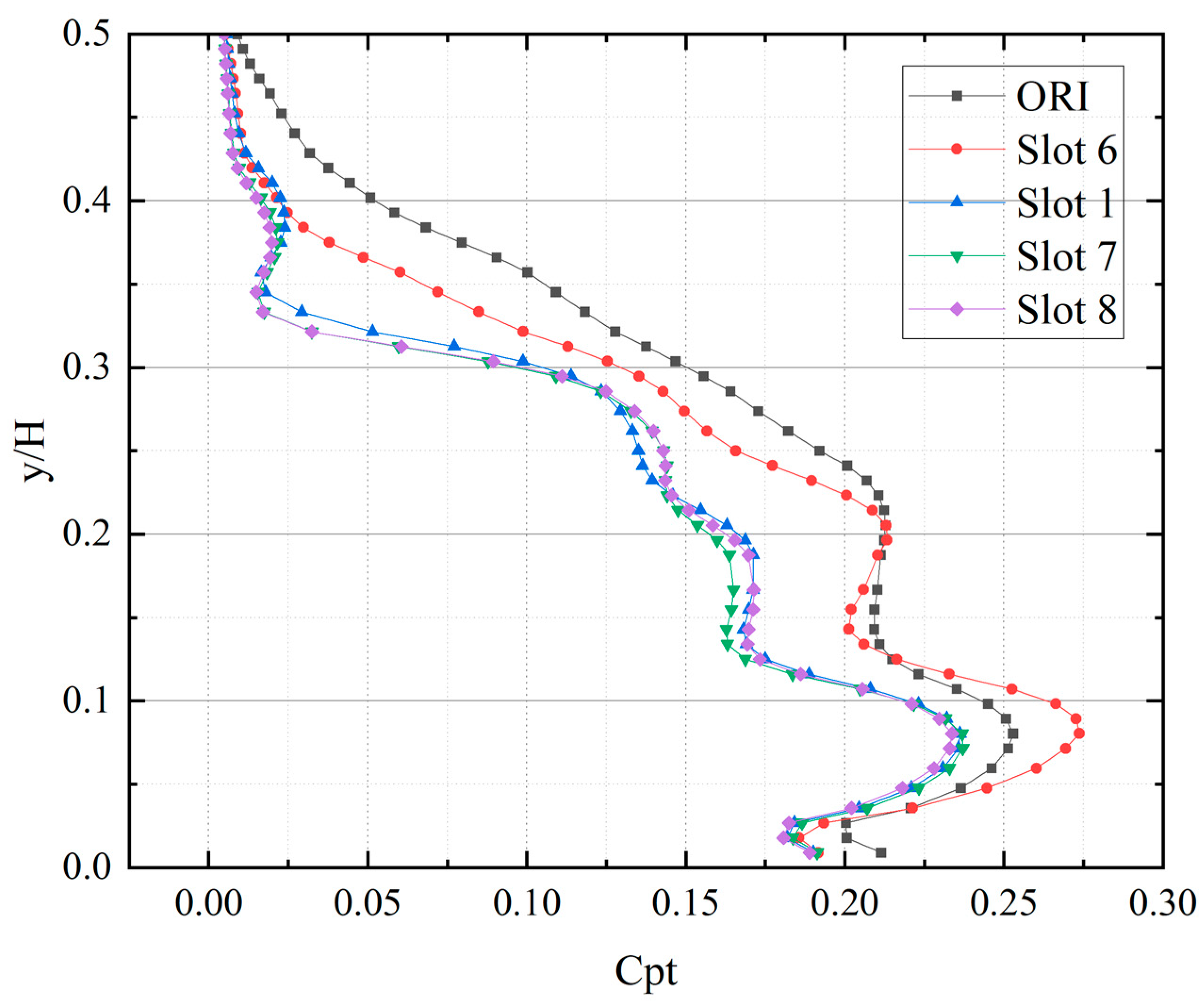
Figure 21 shows the spanwise dispersion of the Cpt for the different height schemes. All height schemes reduce the flow loss in the blade passage within the mid-to-high span range of 20–50%H. Nevertheless, the Cpt contour for Slot 6 exceeds that of the ORI baseline in the 20–5%H span. This result indicates poor suppression of total pressure loss in this region. In contrast, the Cpt contours for Slot 1, Slot 7, and Slot 8 show similar distributions in the 0–20%H span. Their Cpt levels are lower than those of the ORI, which confirms excellent total pressure-loss-suppression performance.

5.2. Effect of Root Slot Height on Flow-Field Configuration

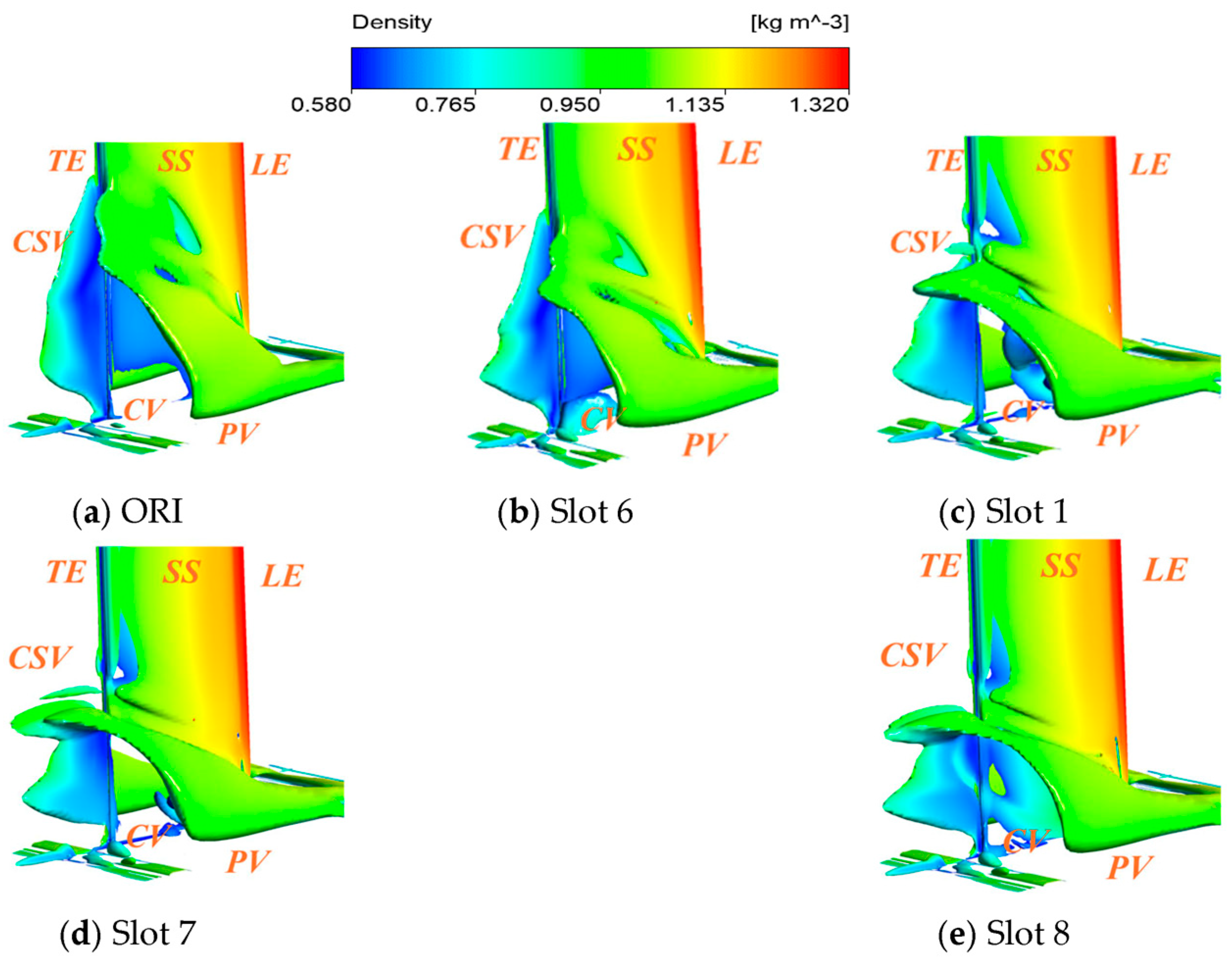
Figure 22 shows the three-dimensional vortex system configurations of the prototype cascade and diverse height schemes. Compared to the ORI scheme, Slot 6 substantially constrains the spanwise extent of the CSV’s dispersion. It also restrains the pitchwise dispersal of the PV. Meanwhile, it reduces the axial distribution ranges of both vortices. For Slot 1, the spanwise distribution of the CSV and the pitchwise distribution of the PV are further reduced compared with Slot 6. Slot 1 weakens the coupling effect and continuously enhances the suppression of flow loss. In Slot 7, the spanwise distribution of the CSV is the narrowest among all schemes, with the weakest coupling effect and the strongest vortex inhibition. It reduces the axial distribution of both the CSV and PV and significantly suppresses the pitchwise distribution of the PV. This moves the CSV closer to the suction and weakens its pressure rise capability. In Slot 8, the spanwise distribution of the CSV and the pitchwise distribution of the PV are wider than are those in Slot 7. The axial distributions of the CSV and PV are more dispersed but remain reduced compared with the those of ORI scheme. It was found that Slot 6, Slot 1, Slot 7, and Slot 8 effectively suppress the spanwise distribution of the CSV and the pitchwise distribution of the PV. These schemes also reduce the vortex coupling effect and simultaneously inhibit the axial extension of the CSV and PV. Furthermore, the suppression magnitude first increases and then decreases as the slot height rises. Slot 7 exhibits the strongest flow-loss suppression among all schemes, consistent with its minimum Cpt value shown in Figure 20. To determine the optimal slot height, the pressure contours and boundary streamlines on the hub surface were further analyzed.
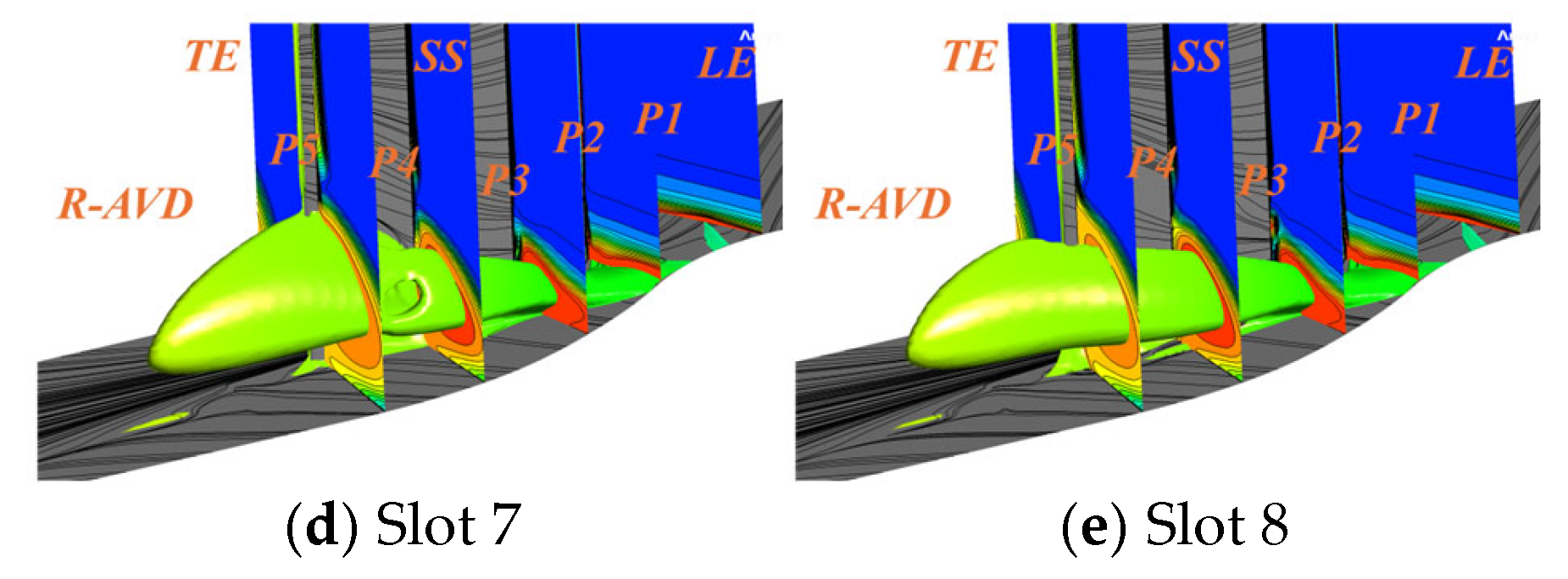
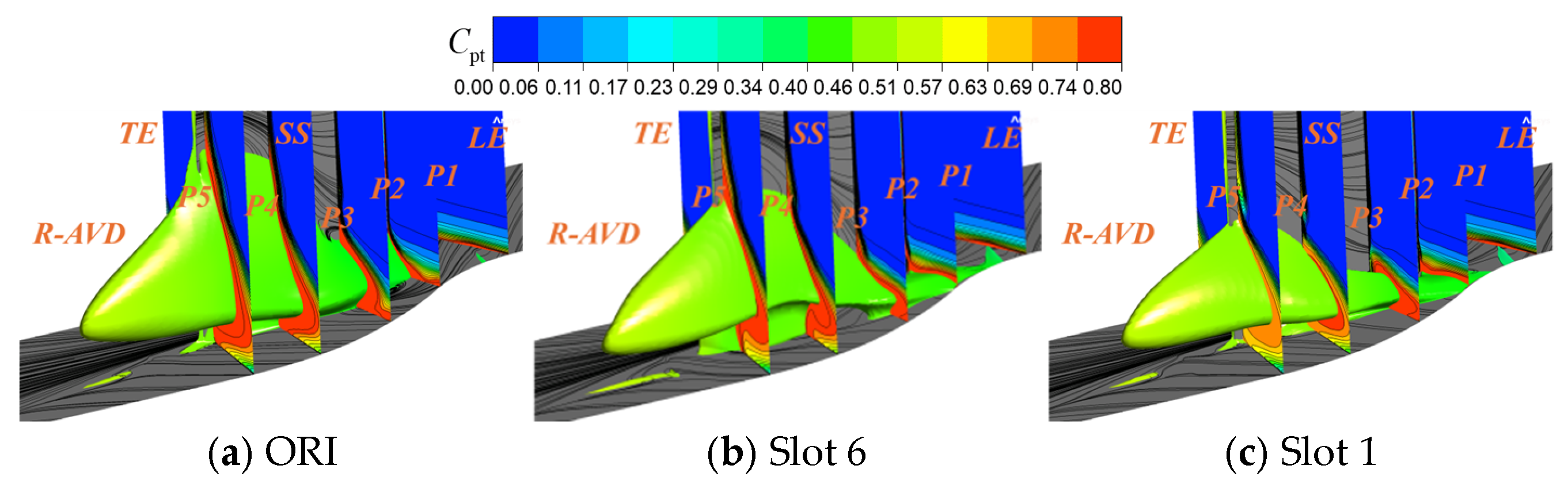
Figure 23 shows the streamwise progression of low-energy fluid masses within the cascade passage for distinct root-slot-height schemes. Compared to the ORI, Slot 6 exhibits an obvious bifurcation of the low-energy fluid mass into upper and lower segments at section P5. This increases the probability that high-loss regions propagate toward the surface. Slot 1 restrains its dispersion in both spanwise and pitchwise directions to a certain degree. However, the spanwise dispersion range of the fluid mass at section P5 remains relatively wide. This results in a relatively weak improvement in aerodynamic efficiency. Slot 7 exerts a strong suppression effect on both the radial and longitudinal diffusion of the low-energy fluid mass. It reduces its volume by approximately 32.4% relative to ORI, mitigating fluid accumulation and substantially alleviating blockage. As a result, aerodynamic performance is enhanced. Slot 8 also significantly reduces fluid intake. However, the fluid mass that accumulates tends to split into upper and lower portions. By comparison, Slot 7 exhibits a superior suppression effect. This again confirms the phenomenon shown in Figure 20, in which Slot 7 has the smallest Cpt.
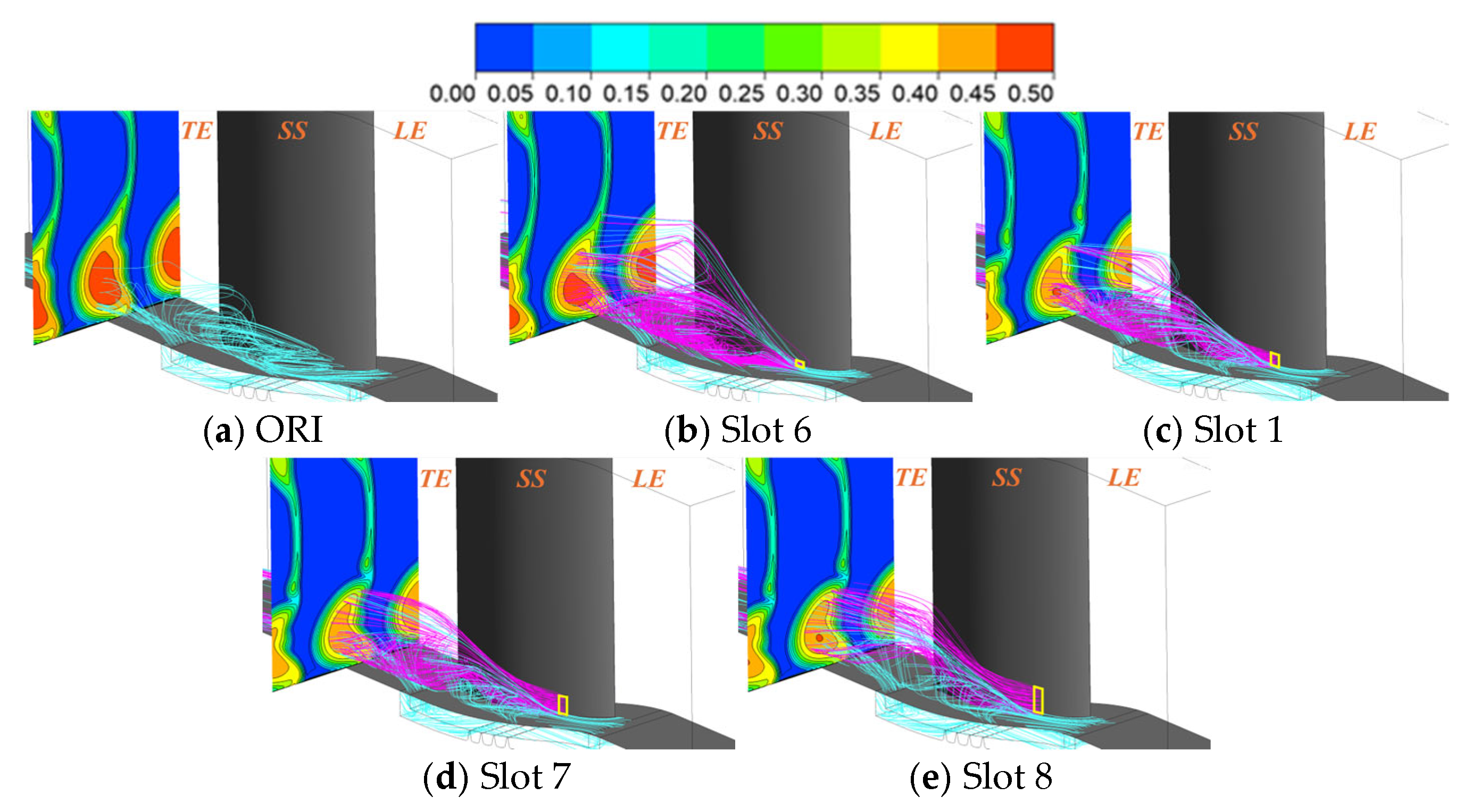
Figure 24 shows three-dimensional streamlines of prototype and derivative cases. The yellow squares in Figure 18 indicate the locations of the slots in each schemes. The streamlines of Slot 6 are more dispersed than are those of ORI but exhibit lower uniformity. They are distributed densely, especially in the blade-root region. This leads to an increased vortex shedding frequency and enhanced intensity in this area. The streamlines of Slot 1 are now more uniform and do not build up as much in the blade-root region. However, the three-dimensional rotational effects in both the spanwise and pitchwise directions remain quite noticeable. This makes it difficult to reduce flow resistance. The streamlines of Slot 7 are more concentrated and directed toward the trailing edge. They align more intimately with the geometric outlet direction of the blade. The three-dimensional vortex configurations in both spanwise and pitchwise directions are notably reduced compared to the prototype. This enables excellent flow-loss suppression. Slot 8 exhibits dispersed streamlines. Its three-dimensional rotational effects in both the spanwise and pitchwise directions are intensified. As a result, its ability to suppress flow loss is weakened.
Based on the comprehensive conclusions presented above, Slot 7 has the lowest Cpt value. It can effectively guide the airflow to adhere closely to the geometric outlet and arrange the structure reasonably to suppress the generation of separation vortices and their backflow impact. Meanwhile, it minimizes the increase in energy loss within the main flow passage. As a result, Slot 7 is the optimal height scheme for achieving aerodynamic performance optimization.

6. Effect of Root Slot Width on Deterioration Induced by Seal Cavity Leakage

6.1. Effect of Root Slot Width on Aerodynamic Performance

This segment preserves the optimal slot position at 25%c and the optimal height of 6%H (7.5 mm) unchanged. Four slot schemes with widths of 2%, 4%, 6%, and 8% of the hydraulic diameter (2.5 mm, 5 mm, 7.5 mm, and 10 mm, respectively) were devised and compared. These slot schemes are enumerated in Table 5. Figure 25 shows schematic diagrams of the structures.
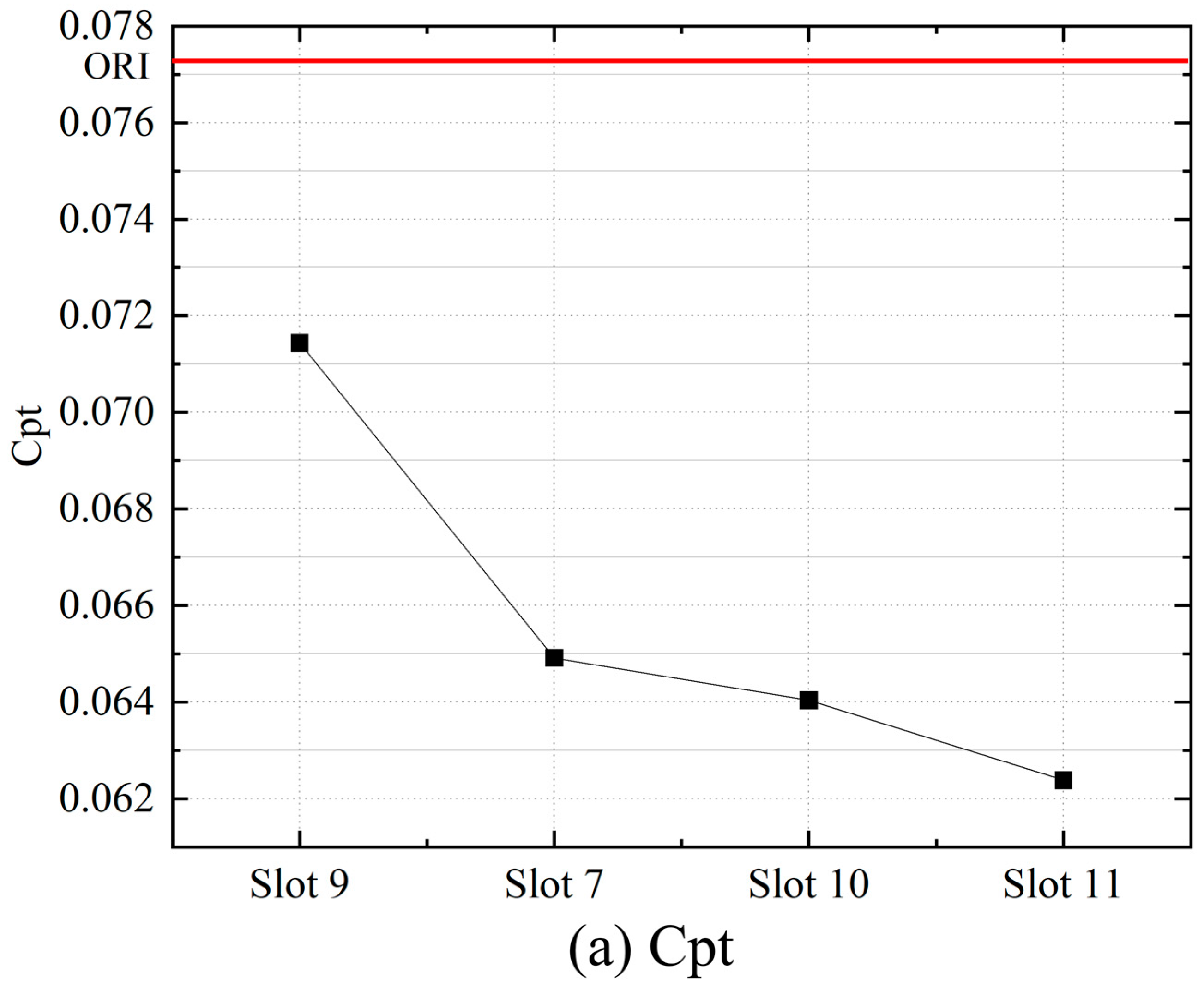
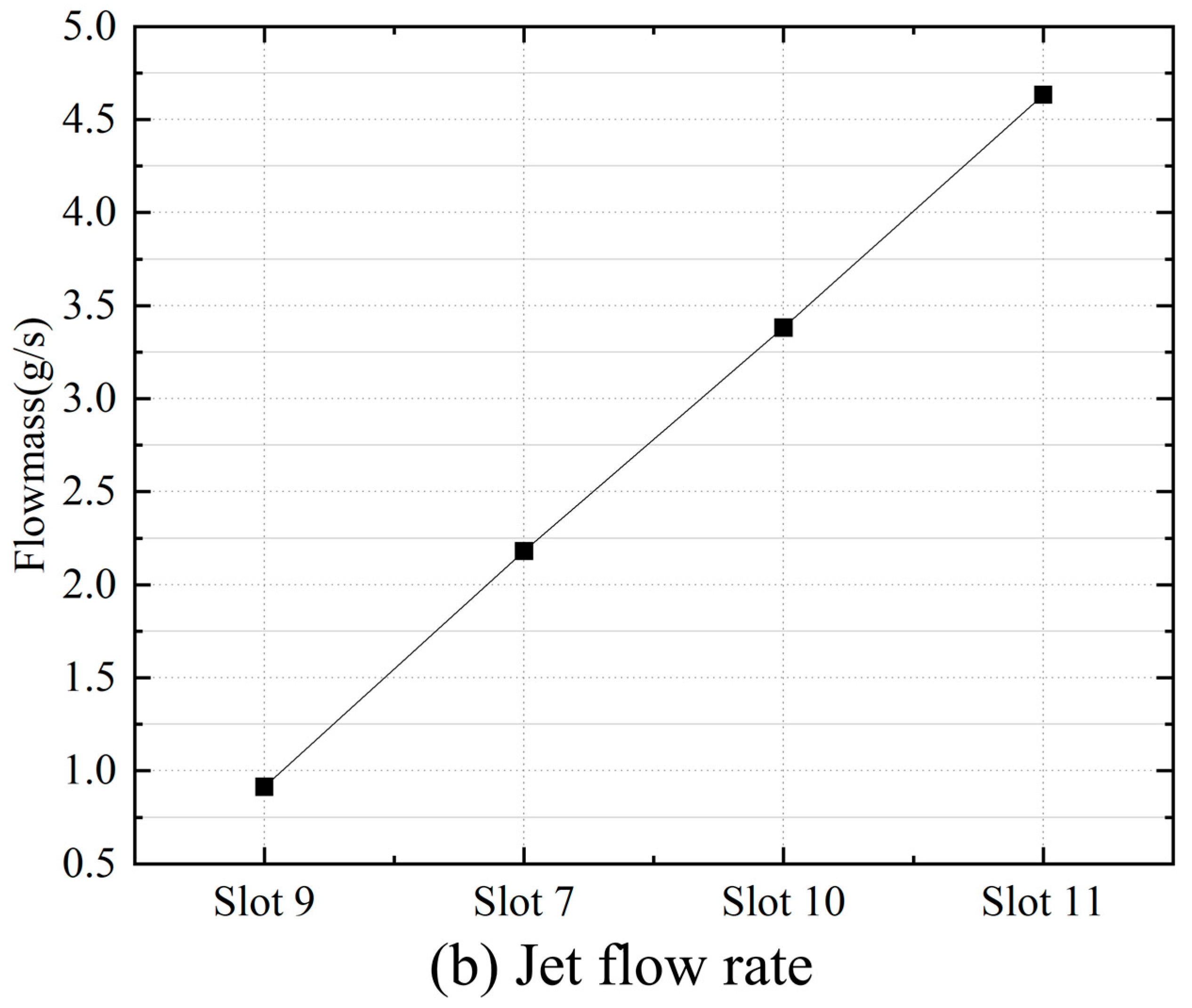
In Figure 26, the Cpt and jet parameters for different width schemes is shown. Slot 9, Slot 7, Slot 10, and Slot 11 reduce the total pressure loss at the outlet part by 7.49%, 15.94%, 17.08%, and 19.22%, respectively. It can be observed that all quartet-width schemes effectively reduce the loss. Moreover, the flow resistance-suppressing capability increases gradually with increasing slot width. Among the schemes, Slot 11 has the smallest Cpt value, indicating the strongest total pressure-loss-suppression capability. Additionally, as shown by the comparison of jet flow rate and jet velocity for different schemes, as the slot width increases, the mass flow rate in the cascade passage shows a gradually increasing trend. The corresponding slot jet velocity also increases, and the kinetic energy of the jet increases synchronously. This leads to a gradual enhancement of its effect on suppressing total pressure loss.
The loss distribution for different width schemes is shown in Figure 27. As shown, within the mid-to-high span range of 15–50%H, the Cpt values for all width schemes are lower than those of the prototype ORI. Meanwhile, the flow resistance inside the blade passage is reduced. Within the 3–15%H range, the Cpt contour for Slot 9 exceeds the ORI baseline. This results in diminished proficiency in total pressure loss suppression. In contrast, within the 0–15%H range, the Cpt values for Slot 7, Slot 10, and Slot 11 are all lower than are those for ORI. Additionally, the total pressure-loss-suppression impact of the slot gradually increases as its width increases. Among the schemes, Slot 11 demonstrates the optimal suppression effect.

6.2. Effect of Root Slot Width on Flow-Field Structure

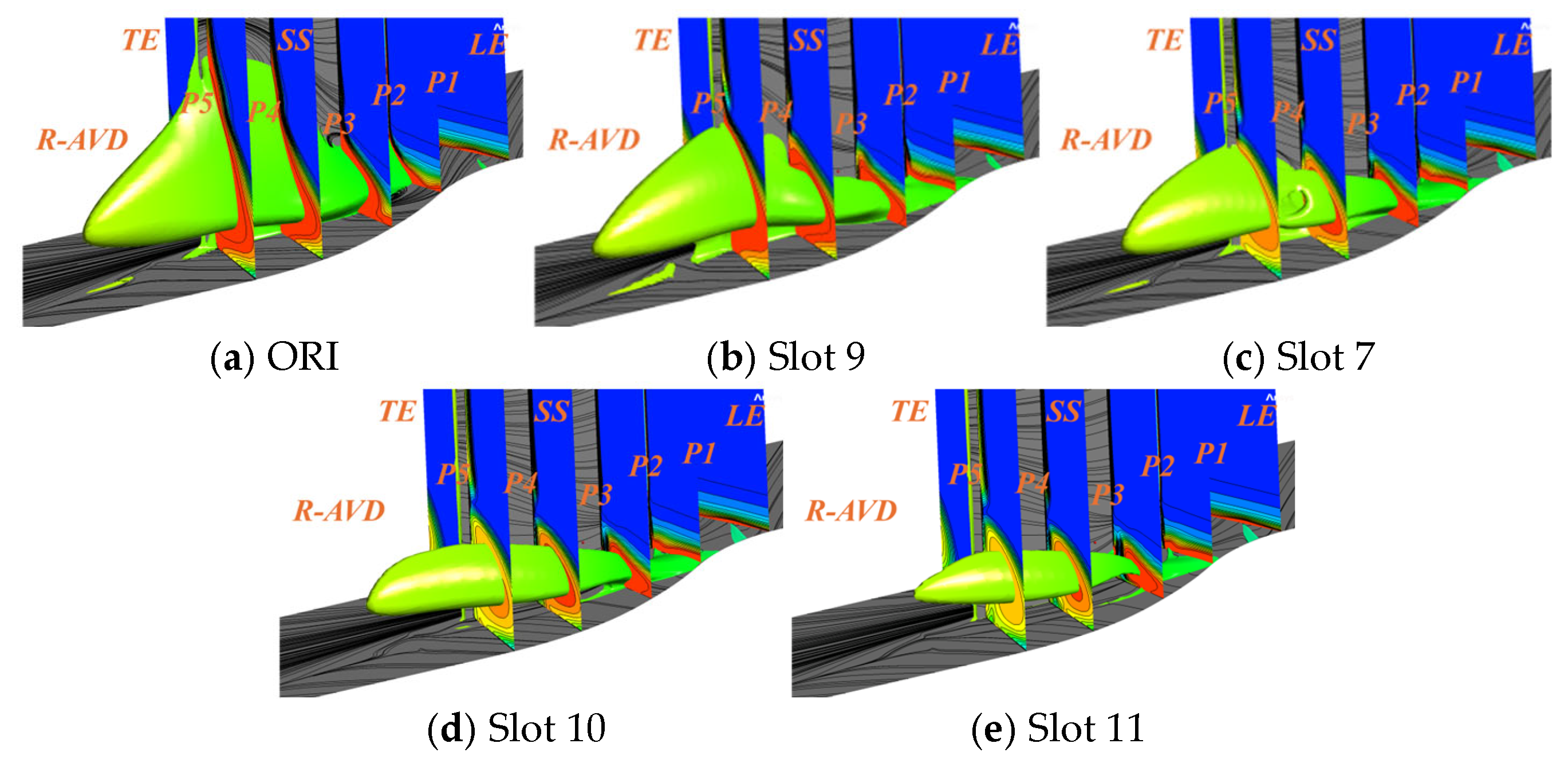
Figure 28 shows the three-dimensional vortex structures for the prototype and different width schemes. In the ORI scheme, the CSV extends from the hub to the upper span with a wide coverage. In contrast, the spanwise distribution of the CSV in Slot 9 is significantly narrower than that in ORI. It extends solely from the hub to the mid-span region. All four width schemes simultaneously reduce the PV’s pitchwise extension range and weaken the coupling between the CSV and the PV. For Slot 7, the spanwise distribution of CSV and the pitchwise distribution of PV are further narrowed compared with those of Slot 9. All four width schemes reduce their axial distributions and continuously enhance vortex diffusion.
Slot 10 exerts a stronger longitudinal compression on the CSV, and the upper end of its CSV shifts downward relative to Slot 7. This reduces the PV’s pitchwise coverage. In the Slot 11 scheme, the spanwise dispersion of the CSV is at a minimum, and the axial coverage areas of both PV and CSV are the smallest. The coupling effect is the weakest, and the vortex diffusion is the strongest. This confirms that Slot 11 possesses the smallest accumulation of low-energy fluid, as shown in Figure 29. Meanwhile, the reduced pitchwise distribution of the PV leads to a greater shift of the CSV toward the suction surface. This decreases the diffusion capability. The analysis shows that the slot’s suppression effect on the spatial distribution of the CSV and the PV fortifies progressively as the slot width increases. This aligns with the tendency of the Cpt to diminish with increasing slot width, as shown in Figure 26. The optimal slot width scheme was determined by examining the pressure contours and boundary streamline attributes on the hub surface.
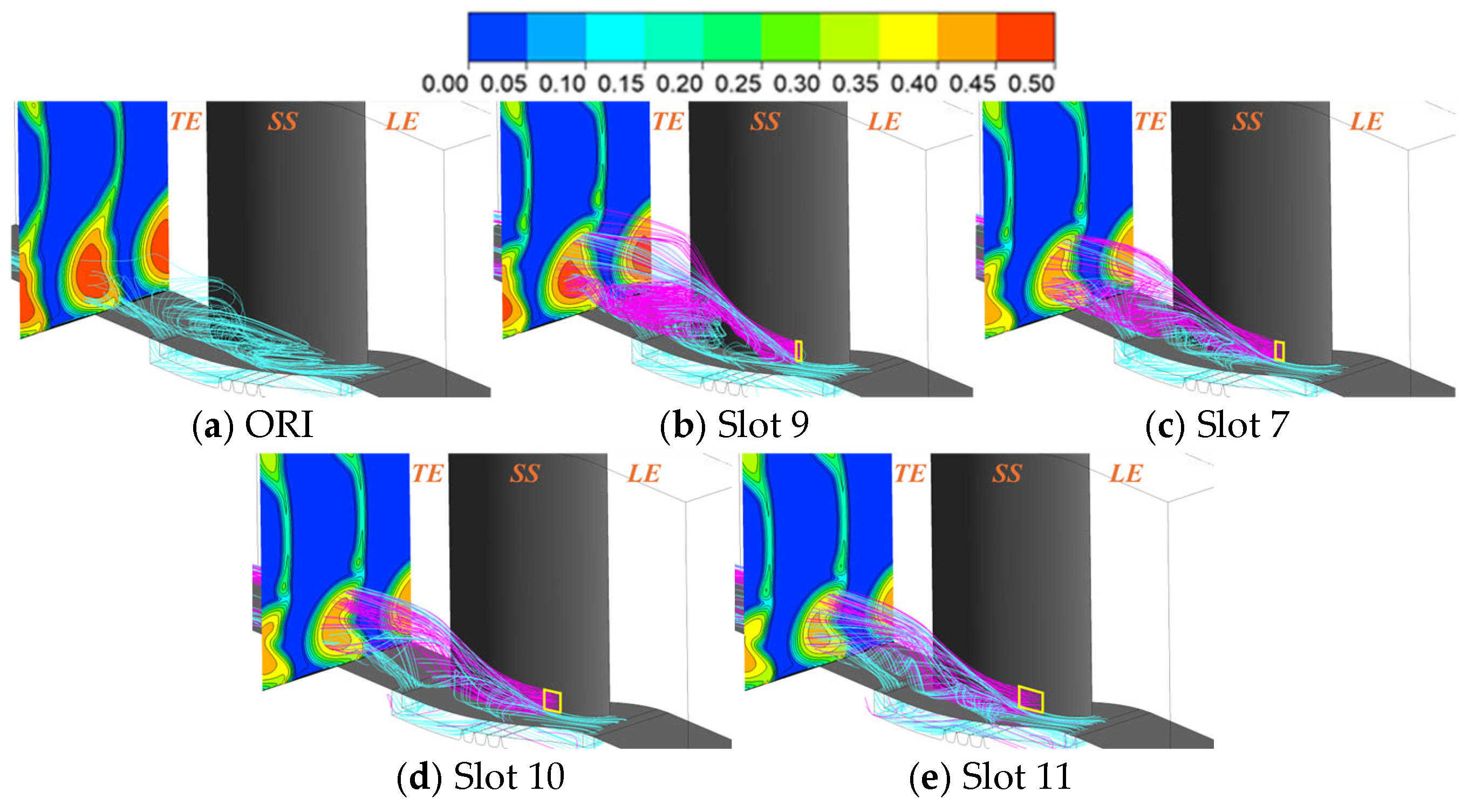
Figure 29 shows streamwise progression reflecting low-energy fluid masses within the cascade passage for distinct root-slot-width schemes. The yellow squares in Figure 18 indicate the locations of the slots in each schemes. Slot 9 and Slot 7 diminish the magnitude of the low-energy fluid mass by roughly 25.7% and 32.4%, respectively. This effectively restrains the congregation of the fluid mass in both spanwise and pitchwise directions. Nevertheless, the dispersion scope of the fluid mass in the spanwise direction at segments P4 and P5 remains relatively extensive. The fluid mass accumulates near the hub, obstructing the cascade passage and reducing flow efficiency. Slot 10 reduces the magnitude of the low-energy fluid mass by approximately 43.3% relative to ORI. Compared with Slot 7, the accumulation of the fluid mass in the spanwise direction is significantly reduced across all sections downstream from P2. This reduction reduces total pressure loss. For Slot 11, fluid mass accumulation near the hub is essentially eliminated, and its spanwise and pitchwise distributions contract further. The spanwise distribution of the fluid mass is almost half of what it is in Slot 10, especially in section P3. Slot 11 reduces the magnitude of the low-energy fluid mass by around 54.3% compared to ORI. It is the most effective in preventing fluid mass accumulation. This confirms again that Slot 11 has the smallest Cpt value in Figure 26. The above analysis shows that all four width schemes effectively suppress the radial and longitudinal diffusion of low-energy fluid masses. They likewise alleviate flow obstruction and augment the aerodynamic efficacy of the cascade. Furthermore, the enhancement impact intensifies as the slots’ width augments.
Figure 30 shows the three-dimensional streamline of different cases. The streamlines of Slot 9 are more dispersed than are those of ORI. However, their uniformity is lower. The streamlines cluster densely in the blade-root region, leading to increased vortex shedding and greater vortex intensity in this region. This structural characteristic impairs the slot’s ability to suppress high energy loss. The streamlines of Slot 7 show better uniformity than do those of Slot 9, with reduced concentration in the blade-root region. However, the slot scheme produces pronounced three-dimensional rotational effects in both the spanwise and pitchwise directions, thereby amplifying the flow loss. The streamlines of Slot 10 are markedly smoother than are those of Slot 7. The three-dimensional vortex configurations in both spanwise and pitchwise directions are notably curtailed compared to those of Slot. 7.
Nevertheless, distinct streamline stratification remains evident, and the streamlines near the hub exhibit a clear upward rotational trend. For Slot 11, streamline stratification is substantially weakened, and the streamline patterns across different spanwise positions become more consistent. Nearly all streamlines closely follow the hub surface. They effectively suppress spanwise three-dimensional flow and significantly reduce flow resistance and energy loss.
According to the comprehensive conclusions presented above, Slot 11 effectively guides the airflow to adhere closely to the geometric outlet. It rationally arranges the structure to suppress the generation of separation vortices and their backflow impact. It also minimizes the increase in energy loss within the main flow passage. With the lowest Cpt value, Slot 11 is the optimal width scheme for achieving aerodynamic performance optimization.

7. Effect of Optimal Root Slot Scheme on Compressor Cascade with Interstage Labyrinth Seal Performance

7.1. Effect of Root Slot on Aerodynamic Efficacy Under Variable Incidence Angles

Based on the aforementioned investigation, the optimal design parameters for Slot 11 are as follows: located at 25%c, with a height of 6%H (7.5 mm), and a width of 8%H (10 mm). Slot 11 was selected as the subject of the investigation. We aimed to further probe the impact of slot configuration on aerodynamic efficacy and to explore vortex development under diverse incidence angles.
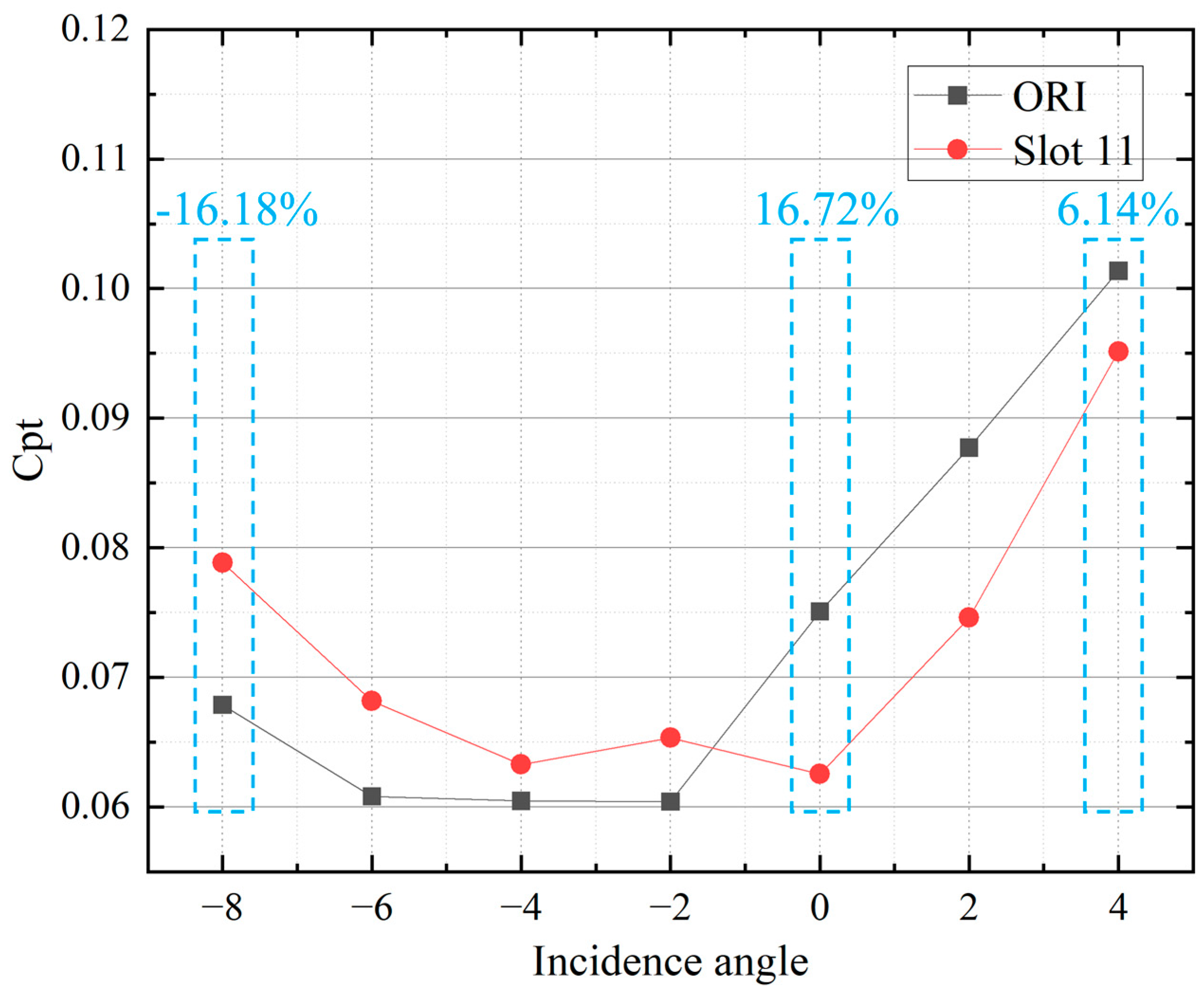
In Figure 31, the dispersions of the Cpt for the ORI and the optimal scheme at fluctuating incidence angles are shown. As the incidence angle increases, both ORI and Slot 11 exhibit an overall tendency in which Cpt initially diminishes before rising. The minimal loss for ORI occurs at an incidence angle of −2°, whereas Slot 11 achieves its minimum loss at 0°. This indicates that the slot structure shifts the minimum-loss incidence angle toward a higher value. Moreover, Figure 31 shows that the slot structure provides a notable improvement effect at positive incidence angles (>0°). However, this influence gradually weakens as the incidence angle increases. The most significant improvement can be observed at 0° incidence, with the Cpt reduced by 16.72% relative to the ORI. At 4° incidence, the improvement effect is the weakest yet still achieves a 6.14% reduction in loss.
The conclusion is that at an incidence angle of −8°, Slot 11 has an initial degradation of cascade performance. As the incidence angle escalates incrementally, this deleterious impact abates. Slot 11 shows improvement at 0° incidence, and this effect weakens as the incidence angle increases. To elucidate the fundamental mechanism by which the slot configuration influences the aerodynamic performance at disparate incidence angles, this study selected three typical incidence angles (−8°, 0°, and 4°) for further investigation.
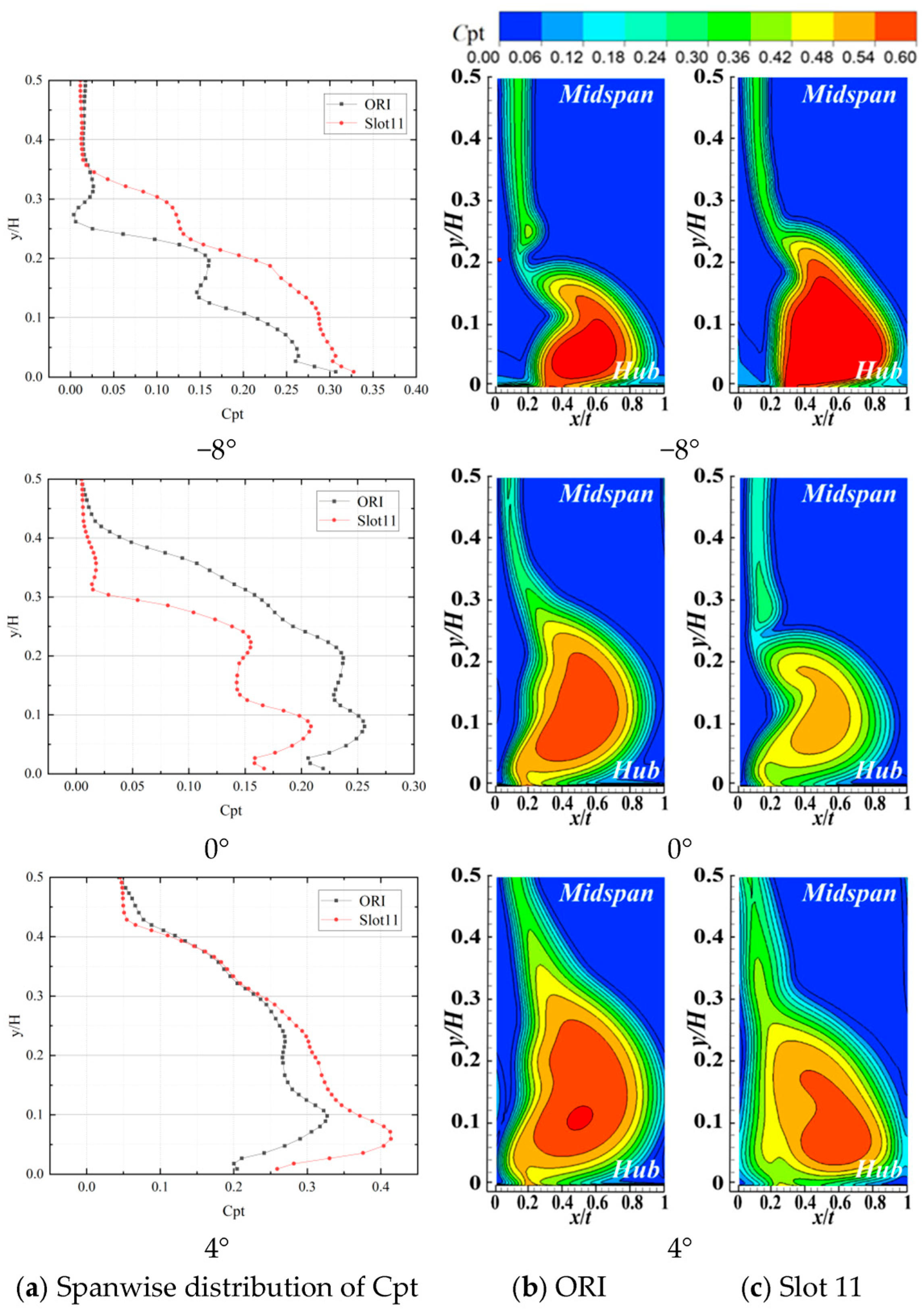
At incidence angles of −8°, 0°, and 4°, the impact of the slot configuration on the Cpt shows notable spanwise dispersion and incidence-angle dependence. At −8° incidence, Slot 11 diminishes the total pressure loss above the 35%H span compared to ORI. However, the Cpt curves of the two schemes nearly coincide, indicating no significant suppression effect. Below a 35%H span, Slot 11 conversely causes a marked increase in total pressure loss. At 0° incidence, Slot 11 substantially reduces the Cpt value below the 50%H span relative to ORI. It shows a strong suppression of total pressure loss. At 4° incidence, within the 40–50%H, Slot 11 achieves a modest reduction in Cpt compared to ORI. Between 30%H and 40%H, the Cpt curves of Slot 11 and ORI essentially overlap. Below a 30%H span, Slot 11 exhibits a pronounced ability to suppress total pressure loss. Furthermore, from the Cpt contour plots, it is evident that at −8 ° incidence, the high-loss region of Slot 11 amplifies significantly. At 0° incidence, Slot 11 significantly narrows the region. At a 4° angle of attack, the red area representing the highest loss disappears in Slot 11. Compared to ORI, the remaining high-loss regions contract in both spanwise and pitchwise directions. However, these regions are notably larger than are those at 0° incidence. This suggests that, as the angle of attack increases, Slot 11’s ability to prevent the formation of high-loss regions first strengthens and then weakens. The optimal loss-suppression effect occurs at an incidence angle of 0°. This finding corroborates the result shown in Figure 32, which illustrates that the reduction in Cpt relative to ORI is greatest at 0° incidence.

7.2. Effect of Root Slot on Flow Field Structure Under Variable Incidence Angles

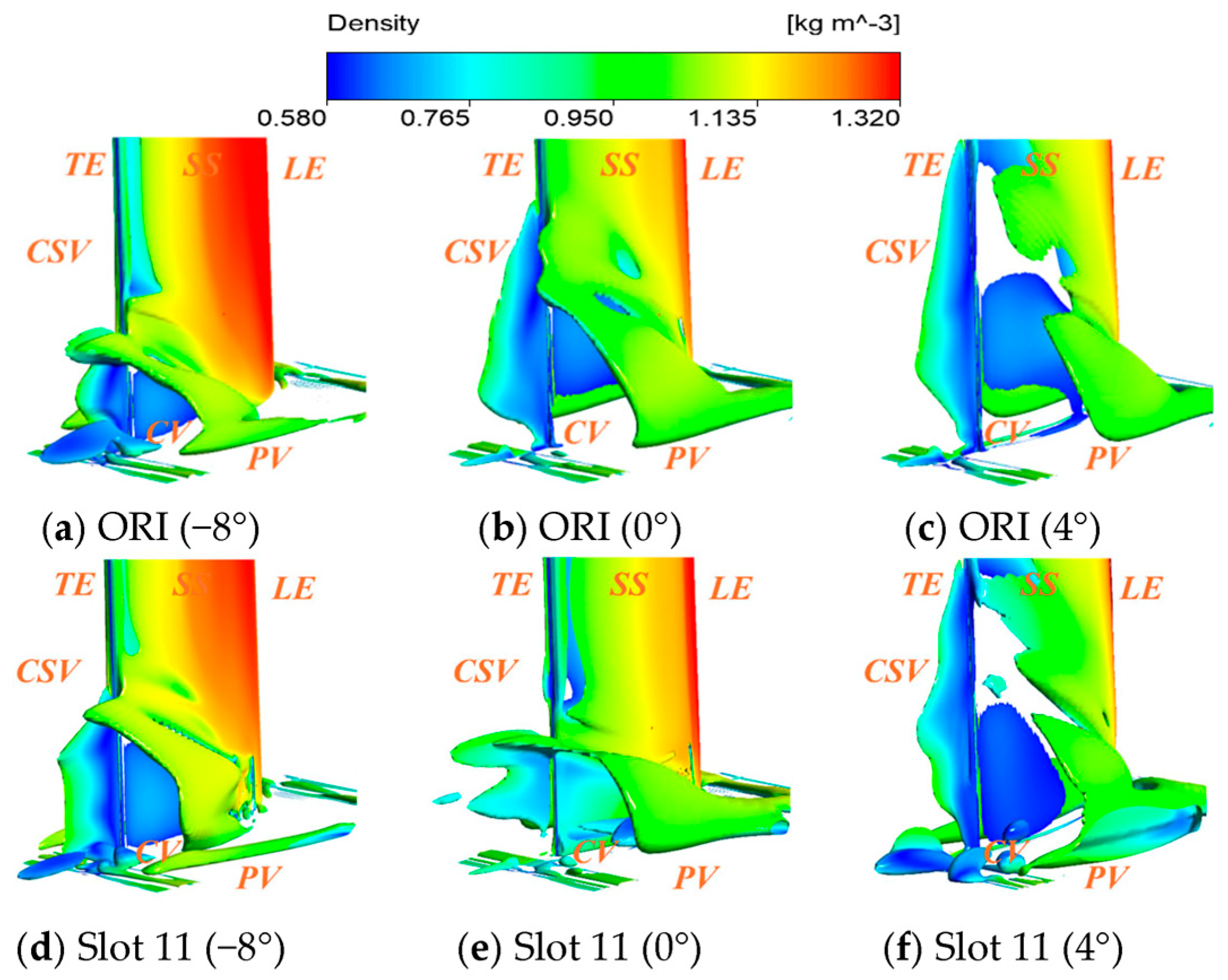
Figure 33 shows the ORI’s three-dimensional vortex structures and the optimal scheme Slot 11 at different incidence angles. At −8° incidence, the CSV in ORI shifts significantly toward the suction surface. It has a relatively narrow spanwise distribution and shows a pronounced pitchwise correlation with the PV. In contrast, Slot 11 exhibits a wider spanwise distribution of CSV, and both CSV and PV expand axially. The effective elongation of PV in the pitchwise direction increases. This reduces the suction-side shift of CSV and enhances diffusion capability. At 0° incidence, ORI shows CSV formation near the blade root with a broad spanwise distribution. Slot 11 effectively compresses the longitudinal extent of CSV. It also reduces the axial extension of both CSV and PV. This weakens their coupling intensity and enhances vortex diffusion. Such behavior is consistent with the reduced accumulation of low-energy fluid mass for Slot 11 at a 0° incidence shown in Figure 32. Consequently, the suppression of total pressure loss is improved. Simultaneously, Slot 11 restricts PV elongation in the pitchwise direction. This shifts the CSV toward the suction surface, reducing diffusion performance. At 4° incidence, the vortex structures of ORI and Slot 11 are similar, and both exhibit a wide spanwise distribution of CSV. However, Slot 11 slightly compresses the spanwise extent of CSV. It suppresses the pitchwise spread of PV, but this suppression effect is considerably weaker than at 0° incidence. This restricts its ability to reduce total pressure loss. It is clear that the effect of Slot 11 to suppress vortex diffusion first increases and then decreases as the incidence angle increases.
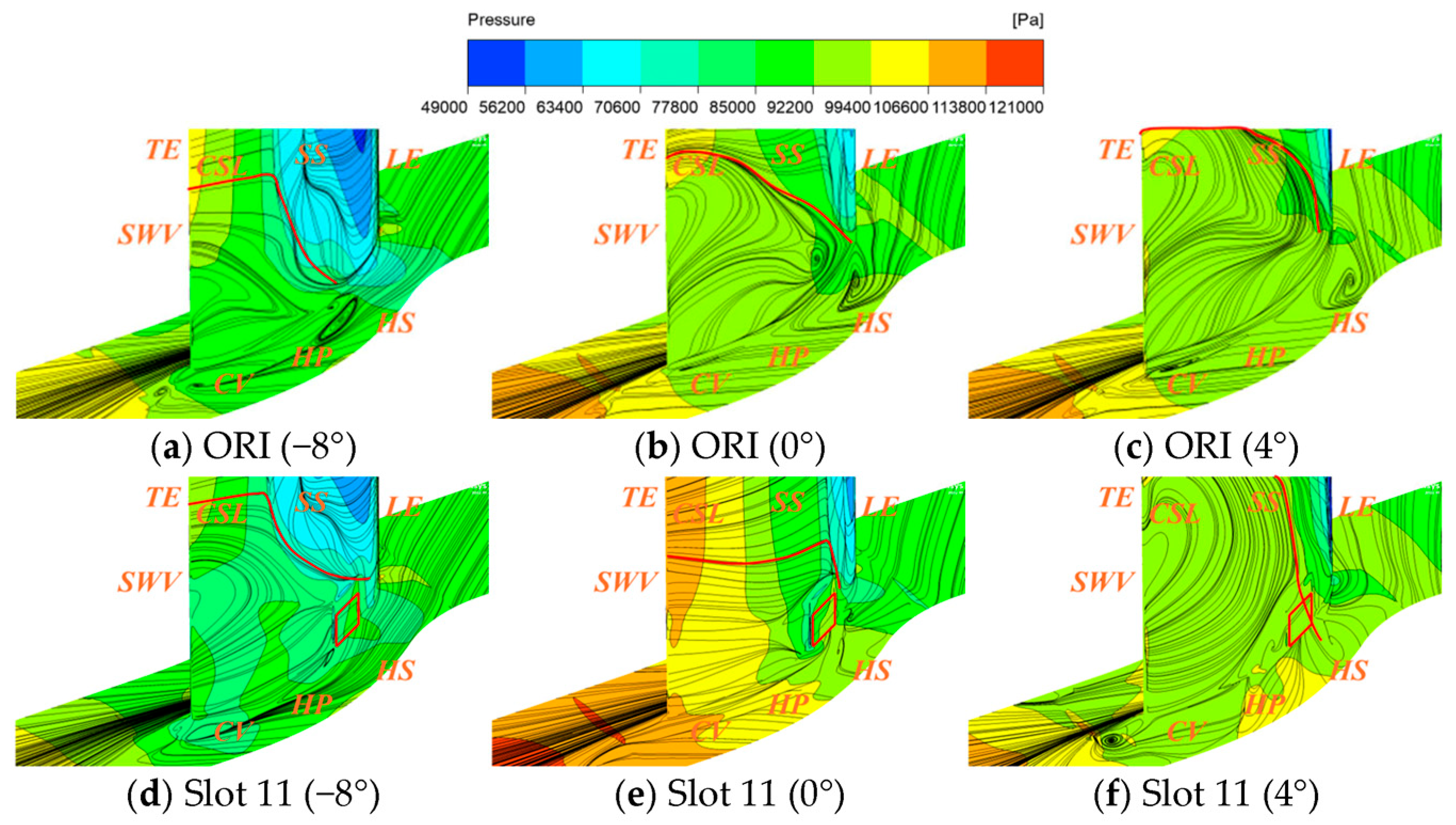
A comparison of hub surface pressure contours and limiting streamlines between the prototype cascade and the optimal root slot scheme under varying incidence angles is shown in Figure 34. At −8° incidence, both ORI and Slot 11 have larger areas of green and high-speed (blue) regions compared to the 4° and 0° schemes, indicating enhanced diffusion. The separation line height of Slot 11 is higher than that of ORI. Meanwhile, its CV recirculation zone expands more significantly in both spanwise and pitchwise directions. The horseshoe vortex recirculation region extends axially, leading to a substantial decrease in flow efficiency. At 0° incidence, ORI shows large recirculation zones for both CV and HS. This causes a significant blockage of the mainstream flow. The streamlines display substantial curvature and congregation proximate to the intersection of the hub and the suction surface.
In contrast, Slot 11 significantly contracts the recirculation regions of HS and CV. It also greatly weakens the streamwise rotational effect and reduces the separation line height by approximately 32% compared to ORI. This indicates obvious suppression of flow separation. At 4° incidence, ORI shows strong HS diffusion, leading to intense recirculation near the blade root. Slot 11 markedly reduces the recirculation range of HS. Its streamline patterns remain nearly consistent across different spanwise positions, effectively suppressing corner separation. However, the recirculation zone of the CV expands more than that of ORI, and the separation line rises. Overall, the improvement in flow efficiency is weaker than that observed at 0° incidence. Based on the aforementioned scrutiny, as the incidence angle increases, the efficacy of Slot 11 in suppressing corner separation and improving flow performance first increases and reaches a maximum. Then it gradually decreases. This trend confirms the variation observed in Figure 32. With increasing incidence angle, the high-loss region of Slot 11 first shrinks and then expands.
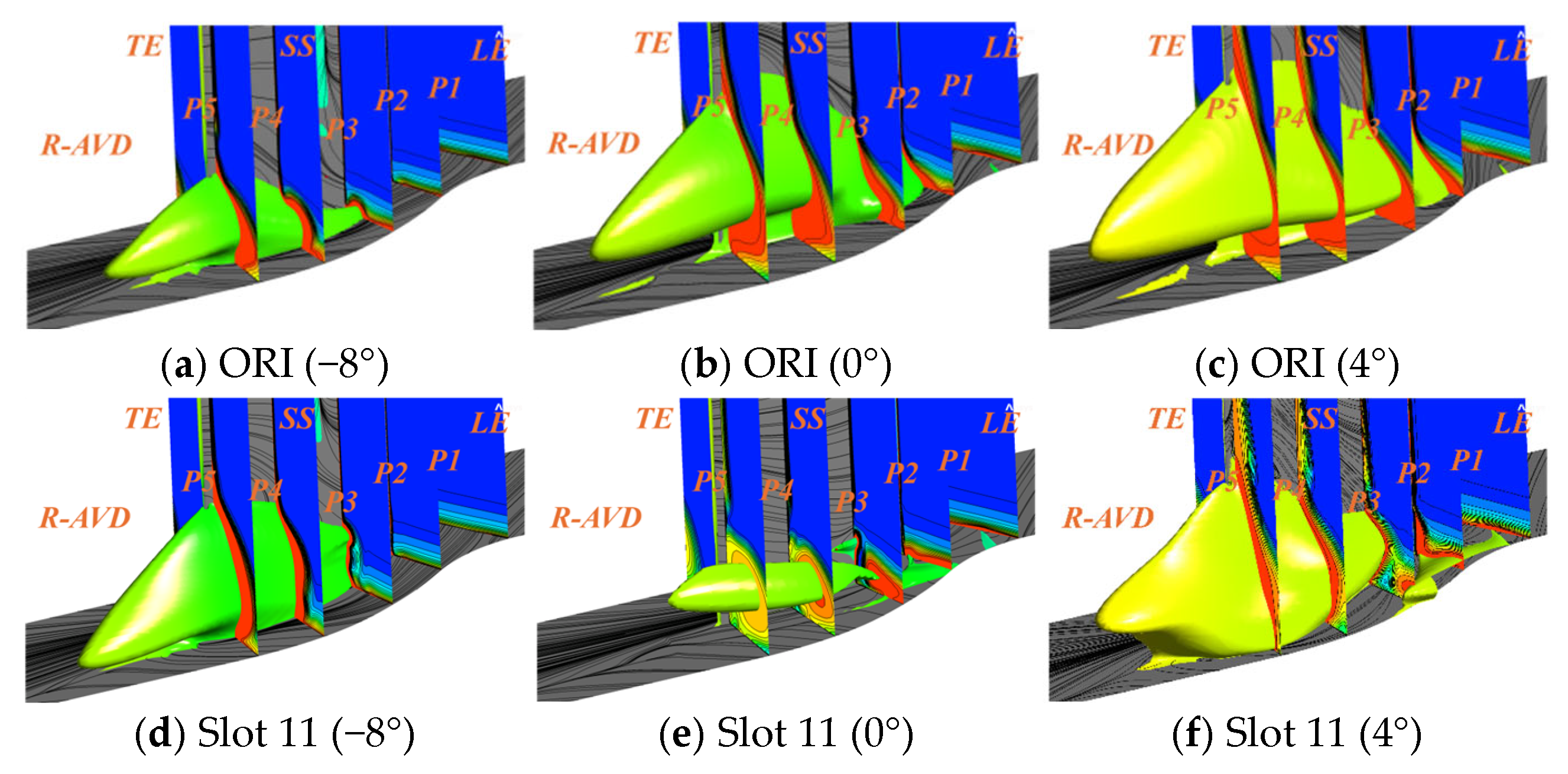
Figure 35 shows the streamwise evolution characteristics of low-energy fluid clusters inside the passage. These results apply to both the original model and the optimal slot design under different incidence angles. At −8° incidence, the low-energy fluid mass in Slot 11 is distributed over a much larger range in both radial and longitudinal directions compared to ORI. This results in deteriorated aerodynamic performance. At 0° incidence, Slot 11 almost removes fluid accumulation near the hub, significantly reducing flow blockage and boosting performance. Furthermore, with a move downstream from the P2 section, the slot structure effectively suppresses the radial and longitudinal diffusion of the low-energy fluid clusters, and the accumulation of fluid clusters near the hub almost disappears, which greatly improves the blockage and enhances the aerodynamic performance. At 4° incidence, the fluid masses in both ORI and Slot 11 appear more yellowish than at 0° and −8°. This indicates higher energy in the accumulated fluid and a weaker flow-blocking impact. The low-energy fluid mass in Slot 11 contracts in the pitchwise corner separation relative to ORI. At sections P4 and P5, the fluid mass shrinks slightly in the upper half of the span but expands in the lower half. It remains closely attached to the hub and causes flow blockage, which weakens the improvement in aerodynamic performance. In summary, as the incidence angle increases, the enhancement in aerodynamic improvement provided by Slot 11 first strengthens and then weakens. This trend is consistent with the prediction based on the variation in the Cpt contours.
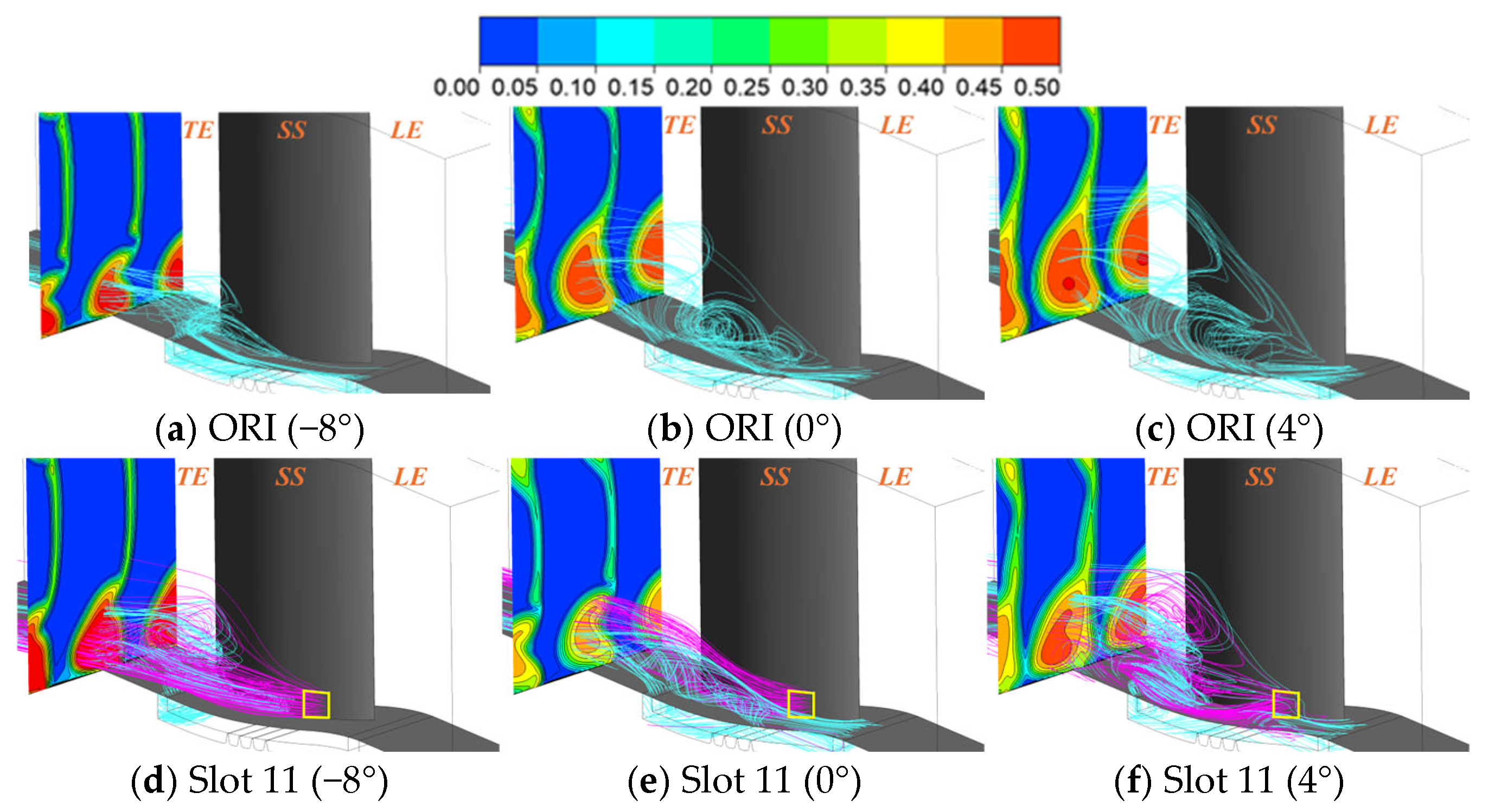
Figure 36 shows the distinctive three-dimensional streamline distributions in the semi-passage of the prototype cascade and the optimal scheme at diverse incidence angles. The yellow squares in Figure 18 indicate the locations of the slots in each schemes. At −8° incidence, Slot 11 features more uniform streamlines than does the ORI. However, it exhibits intensified three-dimensional rotational effects in both the spanwise and pitchwise directions. A large number of streamlines lift from the hub region toward the mid-span, increasing flow resistance. At 0° incidence, the streamlines of ORI deviate significantly near the TE and show many bends. Obvious differences in streamline patterns exist at different spanwise positions.
In contrast, the streamlines of Slot 11 are smoother. They are more concentrated toward the TE and align better with the blade’s geometric outlet direction. The rotational scope of the three-dimensional vortex configurations in both spanwise and pitchwise directions is markedly diminished in comparison to that of ORI. At 4° incidence, the streamlines of ORI appear tangled and disordered. They cluster densely in the root slot region, which raises the frequency and strength of vortex shedding in this area. Slot 11 exhibits a slight reduction in streamline density near the blade root and a minor contraction in its pitchwise rotational range.
Nevertheless, Slot 11 cannot effectively suppress spanwise streamwise rotation. The flow remains tangled and intertwined. Based on the above analysis, Slot 11 exhibits the most pronounced impact in curtailing flow loss and enhancing flow efficacy at 0° incidence. This observation further supports the result shown in Figure 32, which shows that the high-loss region of Slot 11 is the smallest at 0° incidence.
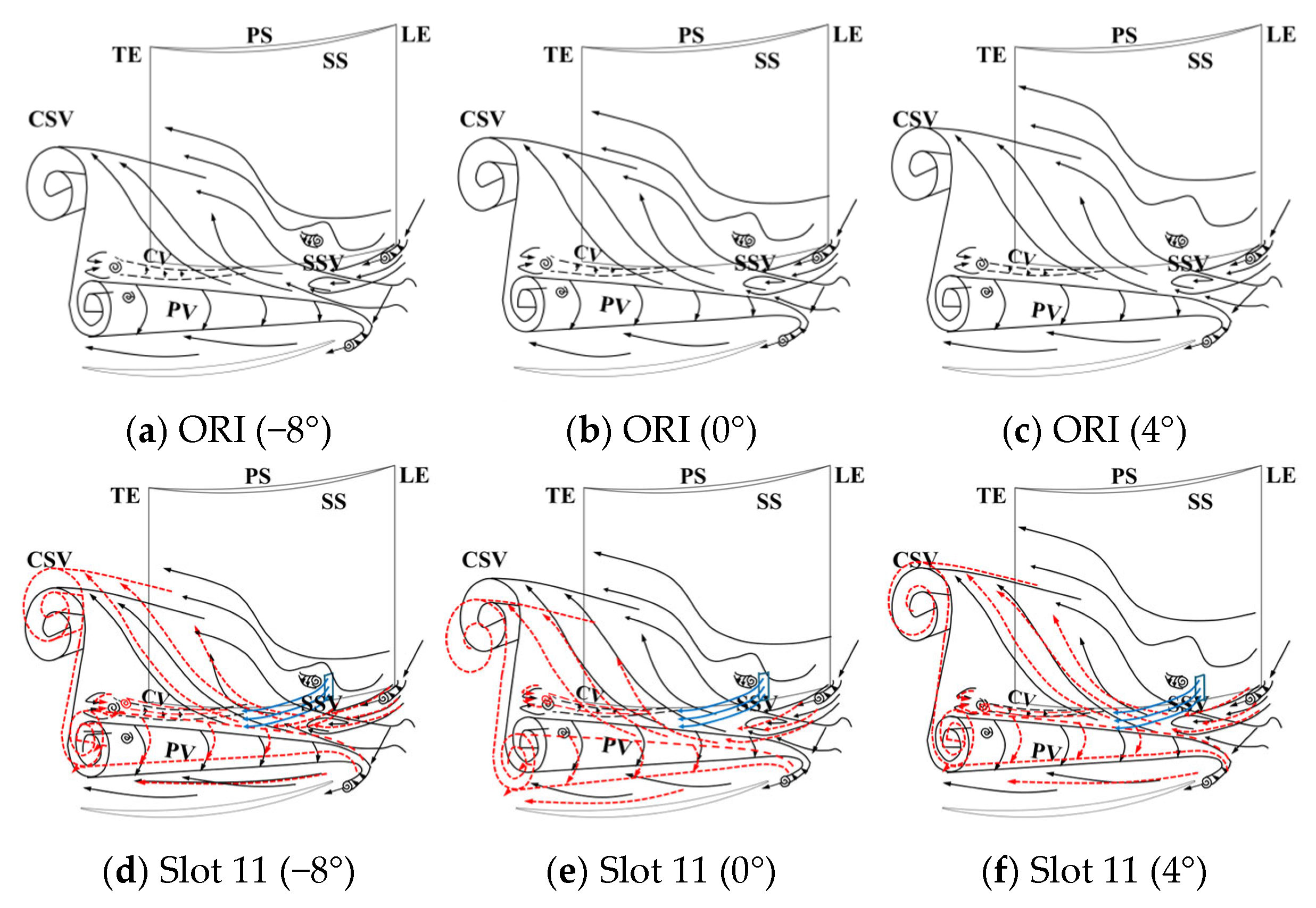
Figure 37 shows a schematic illustration of the flow-field structure before and after implementation of Slot 11. The black lines signify ORI, red dotted lines designates Slot 11, and blue illustrates airflow emitted from the slot configuration. At −8° incidence, Slot 11 elevates the CSV height. Since the spanwise dispersion of the CSV is related to the pitchwise dispersion of the PV, the separation vortex persists longer in both spanwise and pitchwise directions. The PV is relocated off the suction, thereby reducing the affected scope of the CV. At 0° incidence, Slot 11 disperses the SSV and notably reduces the CSV height. This restricts the influence range of the separation vortex in both pitchwise and spanwise directions. Simultaneously, owing to the reduced pitchwise extent of the separation vortex, PV moves toward the suction surface and extends the axial impact region. Under the combined compressive impact of the CSV and the PV, the CV substantially curtails its influence near the trailing edge of the root slot. It remains closely attached to the corner region. At 4° incidence, Slot 11 causes a smaller upward shift in CSV height than does ORI. This leads to a slight augmentation in the separation vortex’s influence range in both the pitchwise and spanwise directions. PV recedes only marginally from the suction surface. When considered in conjunction with the significant congregation of low-energy fluid mass observed for Slot 11 shown in Figure 35, it can be concluded that the ambit of CV expands to a certain extent, thereby escalating flow loss.

8. Conclusions

The research findings indicate the following:
(1) The root slot efficiently eliminates the accumulation of low-energy fluid caused by interstage leakage on the suction surface near the root slot trailing rim. It diminishes the scope of the passage vortex in the pitchwise direction, substantially relieving blockage within the passage. It also contracts the corner separation region and boosts the compressor performance.
(2) As the slot moves from the leading edge toward the trailing edge, its effectiveness in suppressing corner separation and total pressure loss gradually declines. As the slot height increases, the restraining effect initially intensifies and subsequently wanes. Conversely, as the slot width increases, its ability to reduce corner separation and total pressure loss progressively increases. Among the tested configurations, the slot situated at 25%c, with a height of 6% span and a width of 10 mm, performs best. It reduces the total pressure loss by 19.22%.
(3) The limiting influence of the root slot structure on the total pressure reduction of the cascade initially reinforces and then diminishes as the incidence direction rises. Under adverse incidence conditions, the baseline cascade has a relatively small corner separation region. The jet effect induced by the slot may instead increase corner separation and flow loss. At 0° incidence, the improvement effect is most significant. As the incidence angle increases further, the beneficial effect of the slot gradually weakens.

Author Contributions

Methodology, S.Z.; Software, W.X.; Validation, D.S.; Formal analysis, D.S.; Resources, W.X.; Data curation, G.R.; Writing—original draft, X.D.; Visualization, X.D.; Supervision, W.X.; Project administration, S.Z.; Funding acquisition, G.R. All authors have read and agreed to the published version of the manuscript.

Funding

This research was funded by Doctoral Research Initiation Project of Liaoning Provincial Natural Science Foundation grant number 2025-BS-0334, and National Natural Science Foundation of China grant number 52375195.

Data Availability Statement

The original contributions presented in this study are included in the article.

Conflicts of Interest

The authors declare no conflicts of interest regarding the publication of this article.

References

  1. Liu, Y.; Zhong, W.; Tang, Y. Unsteady flow mechanism of corner separation control using blade end slots in a highly loaded compressor cascade. ASME J. Turbomach. 2025, 147, 061016. [Google Scholar] [CrossRef]
  2. Liu, Y.W.; Zhong, W.B.; Tang, Y.M. Impact of Dominant Flow Structures on Turbulence Energy in Compressor Corner Separation. AIAA J. 2025, 63, 5355–5370. [Google Scholar] [CrossRef]
  3. Wang, Q.; Zhang, Z.; Hong, Q.S.; Ren, L. Impact Investigation of Stator Seal Leakage on Aerodynamic Performance of Multistage Compressor. Front. Energy Res. 2021, 9, 760477. [Google Scholar] [CrossRef]
  4. Mansy, A.; Faruque, I.A. Compressor and Valve Control Performance Implications on Active Flow Control Aircraft. J. Aircr. 2023, 60, 1937–1946. [Google Scholar] [CrossRef]
  5. Cui, Q.; Qin, G.L.; Jia, C.; Wang, Y.; Lei, J. Numerical investigation of centrifugal compressor stability enhancement using vaned diffuser endwall contouring technology. Energy Sci. Eng. 2022, 10, 2808–2826. [Google Scholar] [CrossRef]
  6. Xin, J.C.; Liu, X.Y.; Liu, F.Y.; Wang, Y.; Tian, Z.; Lu, H. Study on the influence of variable inlet guide vane slot on the aerodynamic performance in air storage centrifugal compressor. J. Energy Storage 2024, 90, 111907. [Google Scholar] [CrossRef]
  7. Zhang, H.X.; Chen, S.W.; Wang, S.T.; Wang, Z. Numerical Study of Unsteady Pulsed Suction through Endwall Bleed Holes in a Highly Loaded Compressor Cascade. Int. J. Turbo Jet-Engines 2022, 39, 303–317. [Google Scholar] [CrossRef]
  8. Wang, Y.Z.; Wu, Y.; Zong, H.H.; Zhang, H.; Li, Y. A parametric study on control authority and vorticity transport in a compressor airfoil with plasma actuation at low Reynolds number. Phys. Fluids 2023, 35, 036117. [Google Scholar] [CrossRef]
  9. Zhang, Y.; Yu, J.; Chen, F.; Song, Y. Investigation of transition flow on suction surface of highly loaded compressor cascade controlled by plasma actuator. Int. J. Heat Fluid Flow 2024, 105, 109273. [Google Scholar] [CrossRef]
  10. Lu, H.W.; Wang, C.Z.; Kong, X.Z.; Wang, S.; Xin, J.; Guo, S. Experimental study on multi-angle pulsed jet actuators for controlling corner separation flow in a compressor cascade. Aerosp. Sci. Technol. 2024, 149, 109135. [Google Scholar] [CrossRef]
  11. Khoshnejad, A.; Ebrahimi, R.; Pouryoussefi, G.S. Inductive plasma excitation forcing configuration on reduction of tip distorted inflow effect on the aerodynamic stability of axial compressor rotor. Comput. Fluids 2024, 284, 106433. [Google Scholar] [CrossRef]
  12. Wang, G.; Liu, W.H.; Chu, W.L. Numerical investigation of the influence of suction surface synthetic jet on the performance of transonic axial flow compressor. Proc. Inst. Mech. Eng. Part G J. Aerosp. Eng. 2025, 239, 338–358. [Google Scholar] [CrossRef]
  13. Ashrafi, F.; Vo, H.D. Passive flow control at impeller radial bend for stall delay in centrifugal compressors with fishtail pipe diffusers. Aerosp. Sci. Technol. 2024, 145, 108840. [Google Scholar] [CrossRef]
  14. Wang, H.; Liu, B.; Zhang, B. Passive Control with Blade-End Slots and Whole-Span Slot in a Large Camber Compressor Cascade. J. Fluids Eng. 2022, 14, 703–714. [Google Scholar]
  15. Cao, Z.P.; Wang, Y.M.; Zhao, L.B.; Guan, C.; Niu, X.; Chen, C. Design technique of swept and bowed axial compressor. Acta Aeronaut. Astronaut. Sin. 2024, 45, 529676. [Google Scholar]
  16. Gao, X.; Cao, Z.; Gu, Q.; Liu, B. Investigation of the Effect of Vortex Generators on Flow Separation in a Supersonic Compressor Cascade. Aerospace 2025, 12, 692. [Google Scholar] [CrossRef]
  17. Hong, S.L.; Chi, J.; Xiang, X.; Lu, W. Theoretical Model and Numerical Analysis of the Tip Leakage Vortex Variations of a Centrifugal Compressor. Aerospace 2022, 9, 830. [Google Scholar] [CrossRef]
  18. Khader, M.A.; Sayma, A.I.; Al-Zaili, J.; Ghavami, M.; Wu, H. Aerothermal Investigation of the Effect of Endwall Structures on Radial Turbine Heat Losses. Energies 2025, 18, 4366. [Google Scholar] [CrossRef]
  19. Khaleghi, H. Rotating tip clearance asymmetry and role of endwall injection in stability desensitization of a transonic fan. Proc. Inst. Mech. Eng. Part A J. Power Energy 2022, 236, 405–419. [Google Scholar] [CrossRef]
  20. Cui, Q.; Qin, G.; Jia, C.; Wang, Y.; Lei, J.; Zhang, Y.; Sun, Y. Investigation of vaned diffuser endwall contouring technology for improving the stable operating range of a centrifugal compressor with an asymmetric volute. Energy Sci. Eng. 2024, 12, 4236–4259. [Google Scholar] [CrossRef]
  21. Pan, T.; Li, T.; Yan, Z.; Li, Q. Turbulence-induced disturbances and their evolution to stall onset in a compressor cascade using large eddy simulation. Chin. J. Aeronaut. 2026, 9, 103491. [Google Scholar] [CrossRef]
  22. Liu, S.; Pan, T.; Li, Q. An Improved Body Force Model to Simulate Blade Loading Variation Under Various Operating Conditions in Transonic Axial Flow Compressor. J. Turbomach. 2024, 146, 101002. [Google Scholar] [CrossRef]
  23. Zhang, H.; Xu, C.; Huang, G.; Mao, Z.; Yu, X. Tip leakage-flow control in a high-subsonic compressor cascade by distributed pulsed suction. Aerosp. Sci. Technol. 2026, 169, 111456. [Google Scholar] [CrossRef]
  24. Yildiz, A.; Tanürün, H.E.; Es, H.A.; Seyhan, M. Multi-response optimization of slotted airfoil for total aerodynamic performance: A Taguchi methodology with fuzzy decision support. Aerosp. Sci. Technol. 2026, 169, 111408. [Google Scholar] [CrossRef]
  25. Saraswat, A.; Koley, S.S.; Katz, J. Impact of operating conditions and axial casing grooves on the evolution of flow structure across blade rows in an axial compressor. ASME J. Turbomach. 2023, 145, 071002. [Google Scholar] [CrossRef]
  26. Garg, A.; Vadlamani, N.R.; Srinivasan, B. Aerothermal performance of axially varying winglet-squealer blade tips. ASME J. Turbomach. 2023, 145, 071009. [Google Scholar] [CrossRef]
  27. Liu, E.B.; Zhou, Z.G.; Zheng, H. Control of High-Load Compressor Stator Corner Flow by Blade Slotting. Int. J. Aerosp. Eng. 2025, 149, 3743172. [Google Scholar] [CrossRef]
  28. Gancedo, M.; Guillou, E.; Gutmark, E. Effect of bleed slots on turbocharger centrifugal compressor stability. Int. J. Heat Fluid Flow 2018, 70, 206–215. [Google Scholar] [CrossRef]
  29. Ba, D.; Zhang, Q.F.; Du, J.; Li, Z.; Zhang, H.; Nie, C. Design optimization of axial slot casing treatment in a highly-loaded mixed-flow compressor. Aerosp. Sci. Technol. 2020, 107, 106262. [Google Scholar] [CrossRef]
  30. Gao, Y.; Li, X.D.; Zhong, J.J. Study on the Influence of Different Slot Sizes on the Flow Field of Transonic Compressor Rotors. Aerospace 2024, 11, 825. [Google Scholar] [CrossRef]
  31. Wang, H.J.; Mao, X.C.; Liu, B.; Zhang, B.; Yang, Z. Effect investigation of single-slotted and double-slotted configurations on the corner separation and aerodynamic performance in a high-load compressor cascade. Aerosp. Sci. Technol. 2023, 135, 108203. [Google Scholar] [CrossRef]
  32. Liu, Y.W.; Zhang, P.L.; Tang, Y.M.; Wei, X.; Yang, J.; Ji, G. Passive control of flow separation with blade-end slots for a three-stage compressor at different Reynolds numbers. Aerosp. Sci. Technol. 2024, 155, 109742. [Google Scholar] [CrossRef]
  33. Lu, H.; Yang, Y.; Guo, S.; Huang, Y.-X.; Wang, H.; Zhong, J.-J. The Effect of Dimpled Surface on Loss Reduction and Vortices in a Highly Loaded Compressor Cascade. Proc. Inst. Mech. Eng. Part G J. Aerosp. Eng. 2018, 232, 374–387. [Google Scholar] [CrossRef]
Figure 1. Linear cascade geometric parameters diagram.
Aerospace 13 00391 g001
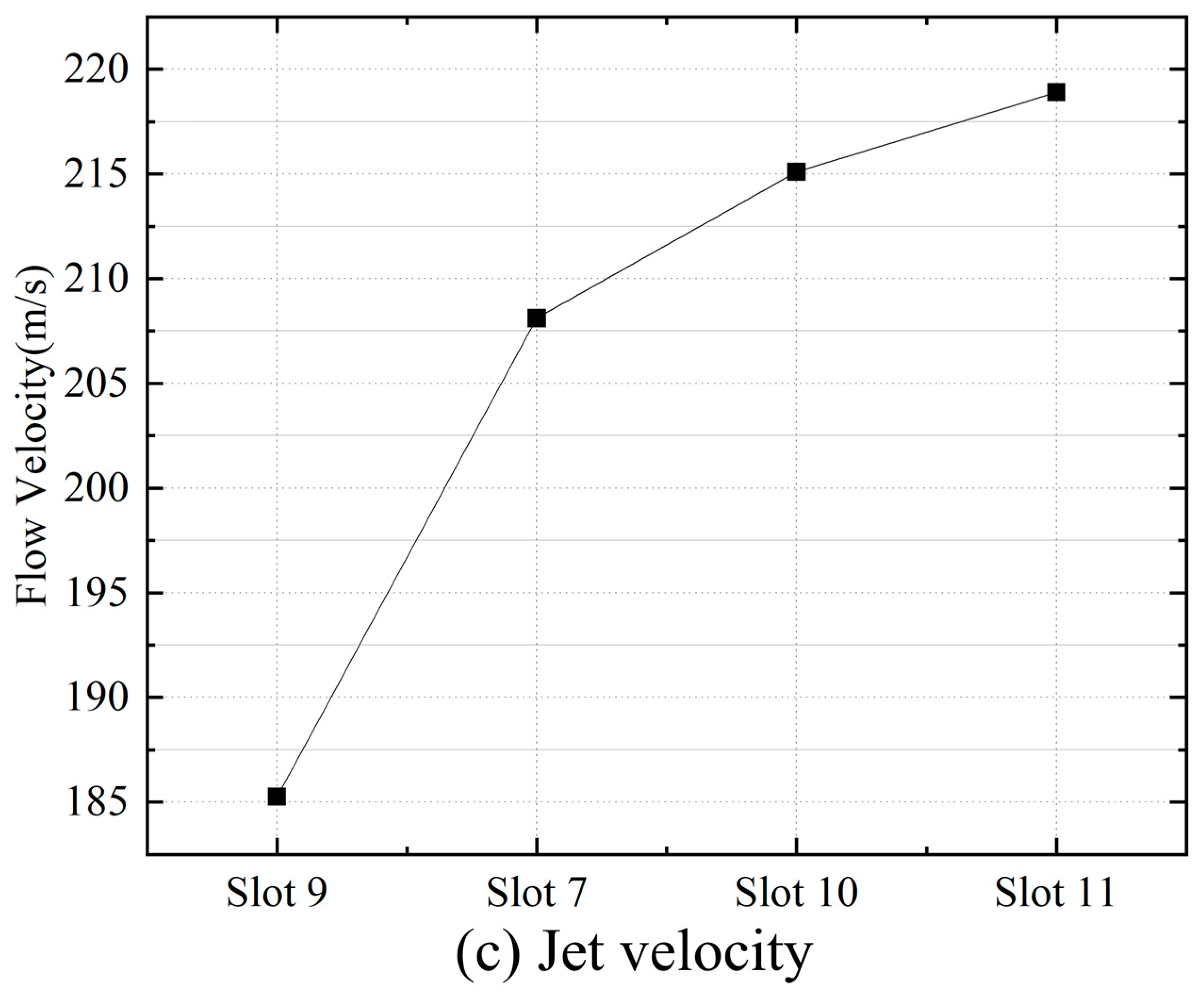
Figure 2. Labyrinth seal parameter diagram.
Aerospace 13 00391 g002
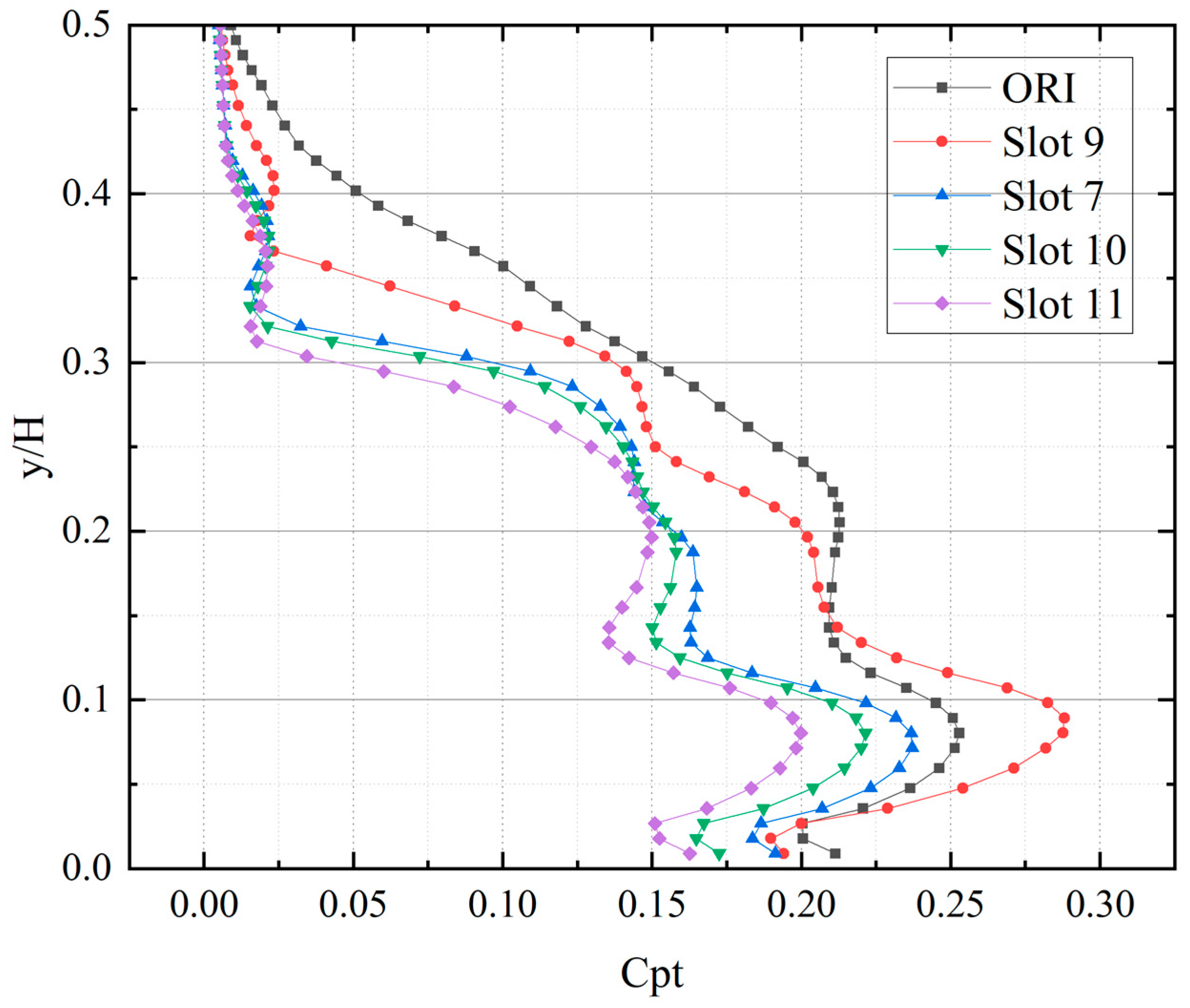
Figure 3. Corner region structure view of compressor cascade. (a) Airflow trend diagram. (b) Three-dimensional structural view.
Aerospace 13 00391 g003aAerospace 13 00391 g003b
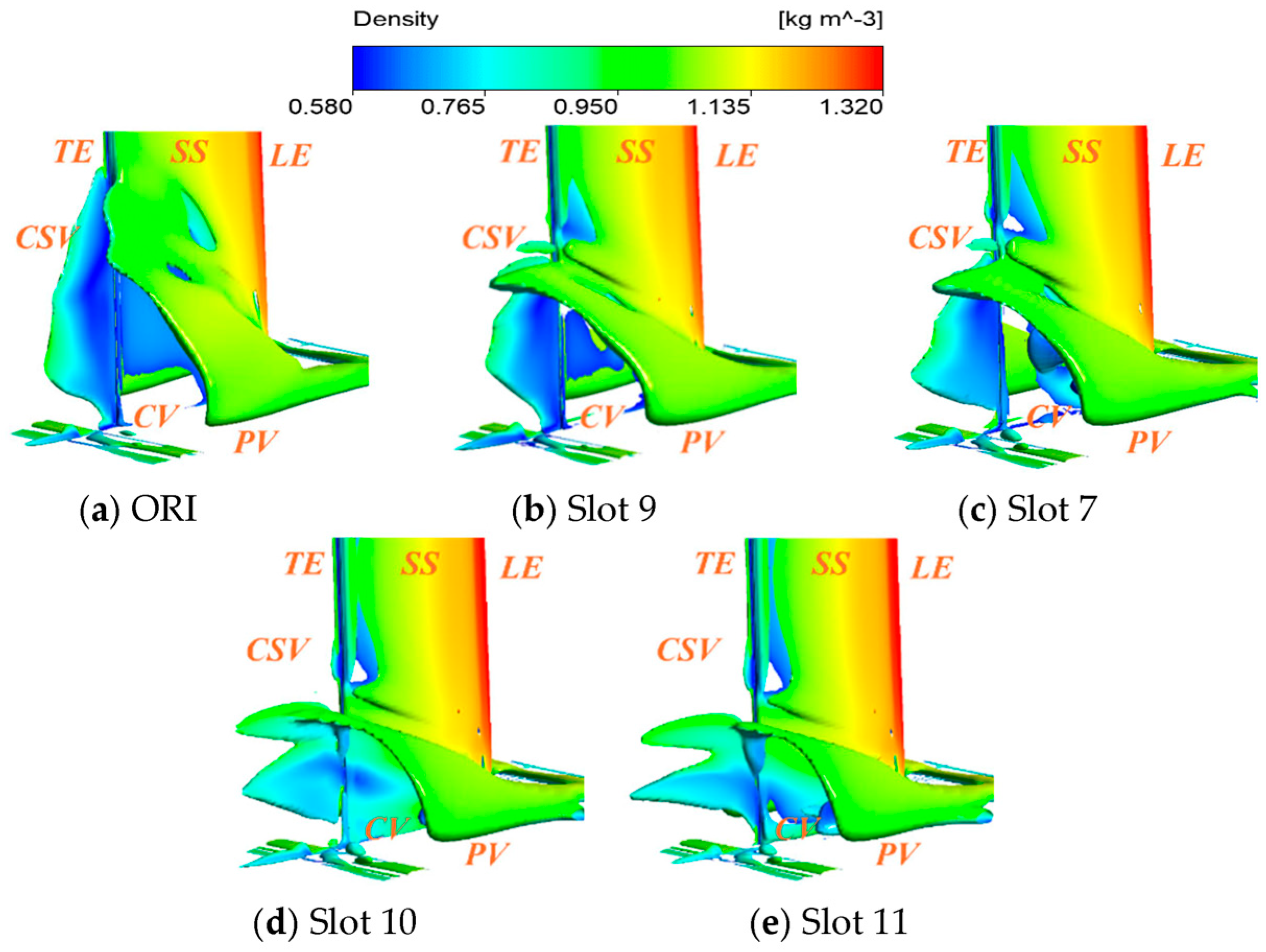

Figure 4. Computational mesh diagram.
Aerospace 13 00391 g004
Figure 5. Inlet total pressure profile.
Aerospace 13 00391 g005
Figure 6. Grid independence verification.
Aerospace 13 00391 g006
Figure 7. Cpt distribution along spanwise.
Aerospace 13 00391 g007
Figure 8. Flow-field structure and Cpt contours of cascade without labyrinth seal. (a) Low-energy fluid cluster. (b) Vortex structure. (c) Cpt contour.
Aerospace 13 00391 g008
Figure 9. Flow-field structure and Cpt contours of cascade with labyrinth seal. (a) Low-energy fluid cluster. (a) Low-energy fluid cluster. (b) Vortex structure. (c) Cpt contour.
Aerospace 13 00391 g009
Figure 10. Schematic diagram of root slot structure for different position schemes.
Aerospace 13 00391 g010
Figure 11. Planar schematic diagram of root slot for different position schemes.
Aerospace 13 00391 g011
Figure 12. The total pressure loss and jet parameters for different position schemes. (a) Cpt. (b) Jet flow rate. (c) Jet velocity.
Aerospace 13 00391 g012
Figure 13. Distribution of Cpt in the spanwise direction for different position schemes.
Aerospace 13 00391 g013
Figure 14. Contour of Cpt.
Aerospace 13 00391 g014aAerospace 13 00391 g014b
Figure 15. Three-dimensional vortex structure.
Aerospace 13 00391 g015aAerospace 13 00391 g015b
Figure 16. Contours of static pressure coefficient and constraining streamlines on the endwall and surface.
Aerospace 13 00391 g016aAerospace 13 00391 g016b
Figure 17. Allocation of the low-energy fluid mass in the corner region.
Aerospace 13 00391 g017
Figure 18. Three-dimensional streamlines in the corner region.
Aerospace 13 00391 g018
Figure 19. Schematic diagrams of root slot structure for different height schemes.
Aerospace 13 00391 g019
Figure 20. The total pressure loss and jet parameters for different height schemes.
Aerospace 13 00391 g020aAerospace 13 00391 g020bAerospace 13 00391 g020c
Figure 21. Distribution of Cpt in the spanwise direction for different height schemes.
Aerospace 13 00391 g021
Figure 22. Three-dimensional vortex structure for different height schemes.
Aerospace 13 00391 g022
Figure 23. Distribution of low-energy fluid mass for different height schemes.
Aerospace 13 00391 g023aAerospace 13 00391 g023b
Figure 24. Three-dimensional streamlines in the corner region for different height schemes.
Aerospace 13 00391 g024
Figure 25. Schematic diagram of root slot structure for different width schemes.
Aerospace 13 00391 g025
Figure 26. The total pressure loss and jet parameters for different width schemes.
Aerospace 13 00391 g026aAerospace 13 00391 g026bAerospace 13 00391 g026c
Figure 27. Distribution of Cpt in the spanwise direction for different width schemes.
Aerospace 13 00391 g027
Figure 28. Three-dimensional vortex structure for different width schemes.
Aerospace 13 00391 g028
Figure 29. Distribution of low-energy fluid mass for different width schemes.
Aerospace 13 00391 g029aAerospace 13 00391 g029b
Figure 30. Three-dimensional streamlines in the corner region for different width schemes.
Aerospace 13 00391 g030
Figure 31. Cpt of the prototype and the optimal slot scheme under variable incidence angles.
Aerospace 13 00391 g031
Figure 32. Spanwise dispersion of Cpt and contour plot of Cpt under variable incidence angles.
Aerospace 13 00391 g032
Figure 33. Three-dimensional whirlpool configuration under changing incidence angles.
Aerospace 13 00391 g033
Figure 34. Outlines of static pressure factor and critical flow lines on the endwall and blade face under changing incidence angles.
Aerospace 13 00391 g034
Figure 35. Distribution of low-energy fluid mass under variable incidence angles.
Aerospace 13 00391 g035aAerospace 13 00391 g035b
Figure 36. Three-dimensional streamlines in the corner region under variable incidence angles.
Aerospace 13 00391 g036
Figure 37. Mechanism analysis diagram under variable incidence angles.
Aerospace 13 00391 g037
Table 1. Cascade parameter.
ParameterNumberUnit
Chord length c0.06m
Blade height H100mm
Blade pitch t0.033m
Stagger angle γ22.15°
Geometric inlet angle α42°
Inlet Ma0.7-
Table 2. Labyrinth seal geometric parameters.
MetricValue
Tooth pitch (D/mm)4.5
Tooth height (h/mm)3.85
Top width (d/mm)0.37
Tooth angle (θ/°)80
Clearance (f/mm)0.35
Table 3. Position of the root slot for different schemes.
SchemePosition of the Root Slot
Slot 125%c
Slot 240%c
Slot 355%c
Slot 470%c
Slot 585%c
Table 4. Height of root slot for different schemes.
SchemeHeight of Root Slot
Slot 62%H
Slot 14%H
Slot 76%H
Slot 88%H
Table 5. Width of root slot for different schemes.
SchemeWidth of Root Slot
Slot 92%H
Slot 74%H
Slot 106%H
Slot 118%H
Disclaimer/Publisher’s Note: The statements, opinions and data contained in all publications are solely those of the individual author(s) and contributor(s) and not of MDPI and/or the editor(s). MDPI and/or the editor(s) disclaim responsibility for any injury to people or property resulting from any ideas, methods, instructions or products referred to in the content.