Article

Potential Field-Based Topology Construction of Structured Grids Around an Aircraft

Department of Thermal Science and Energy Engineering, University of Science and Technology of China, Hefei 230027, China
*
Author to whom correspondence should be addressed.
Aerospace 2026, 13(4), 389; https://doi.org/10.3390/aerospace13040389

Submission received: 13 March 2026 / Revised: 11 April 2026 / Accepted: 15 April 2026 / Published: 20 April 2026

Abstract

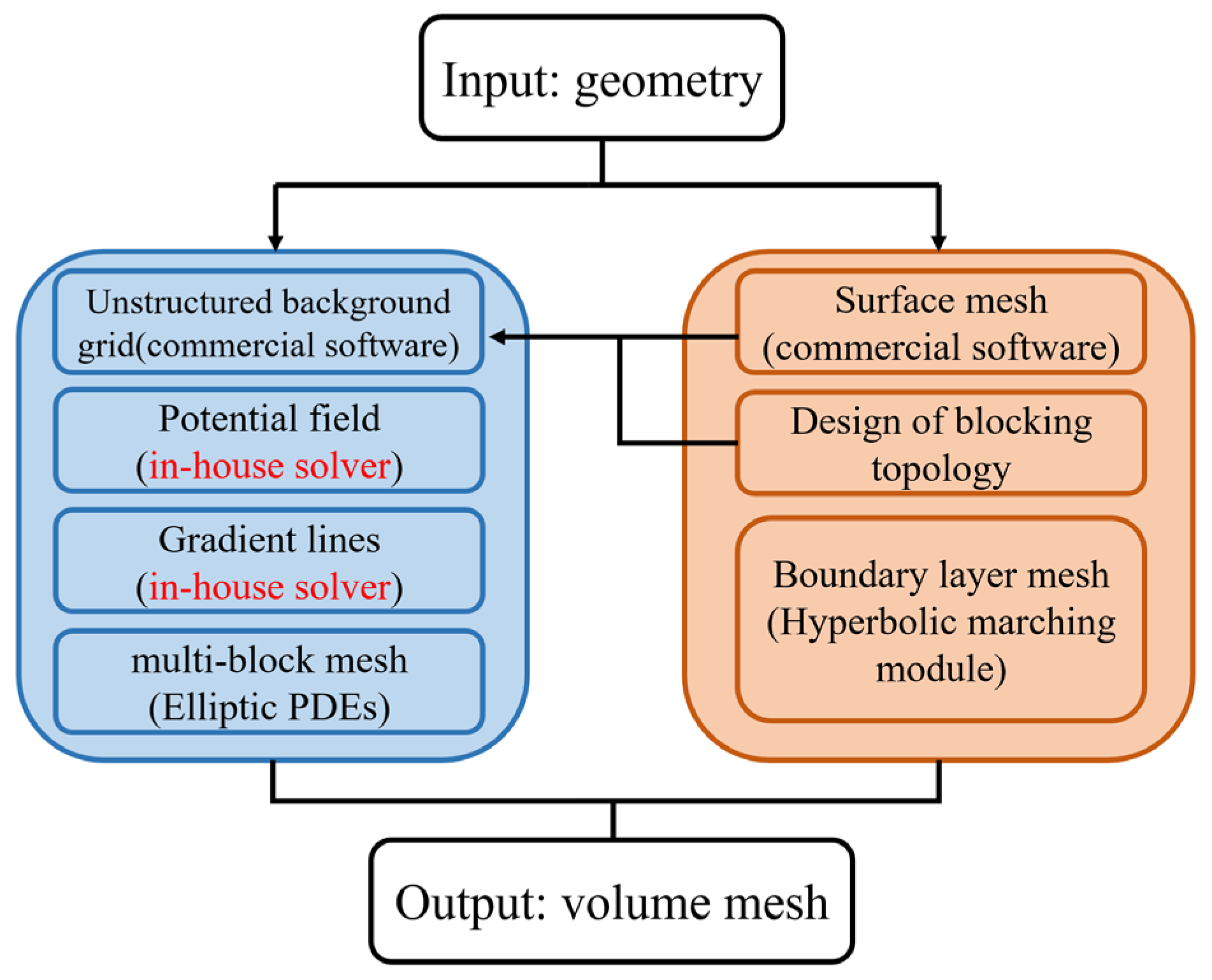
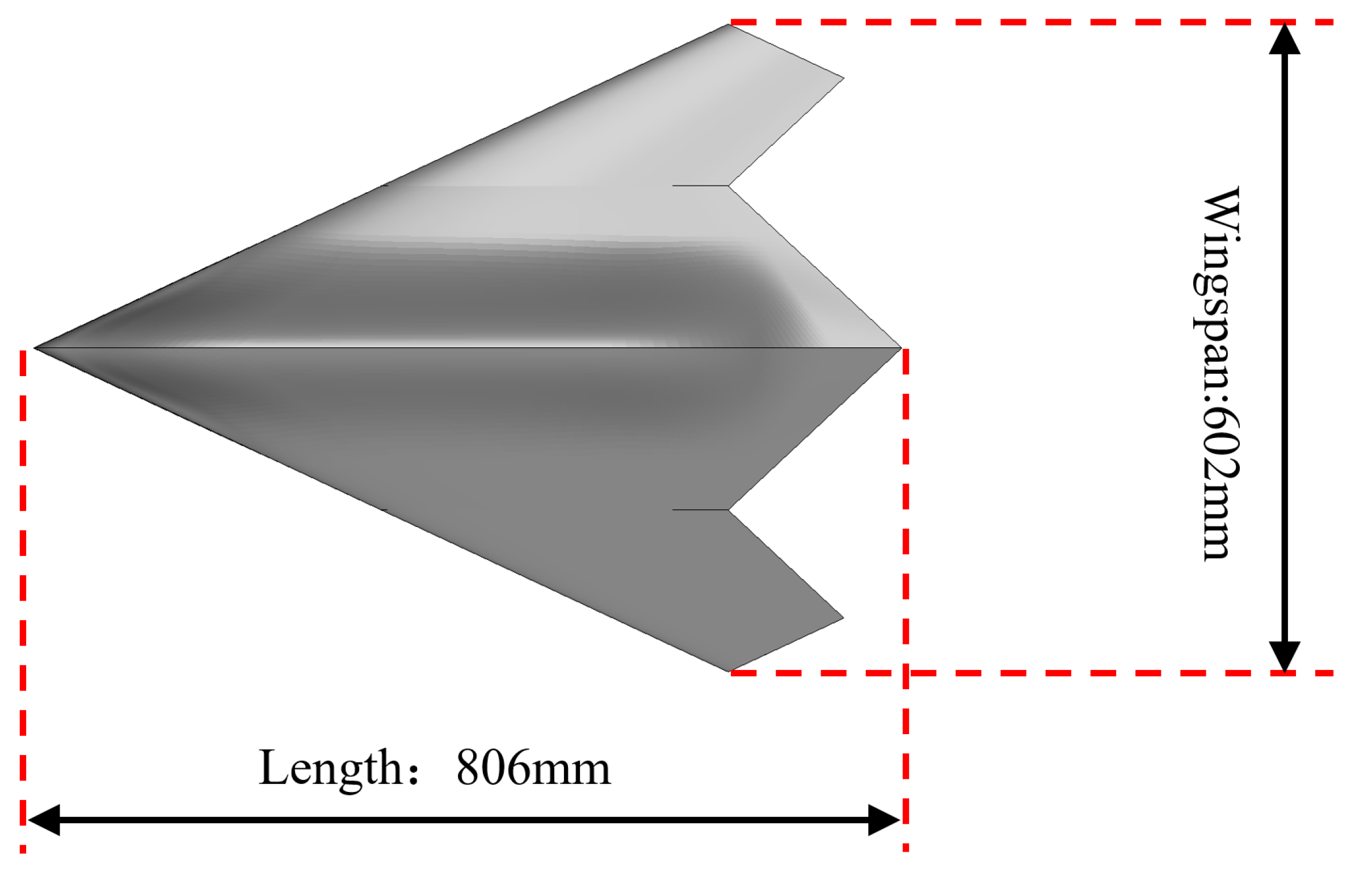
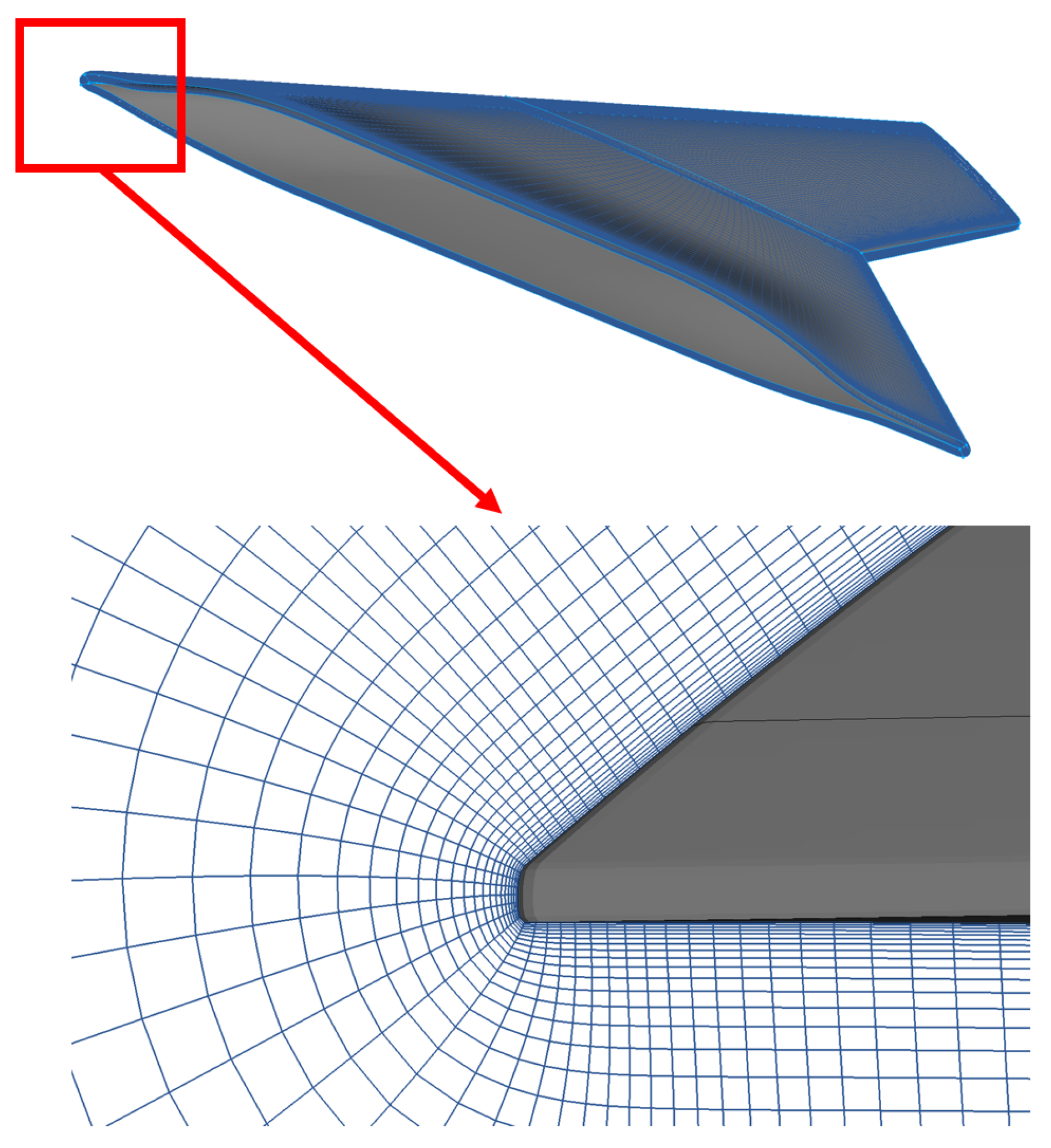
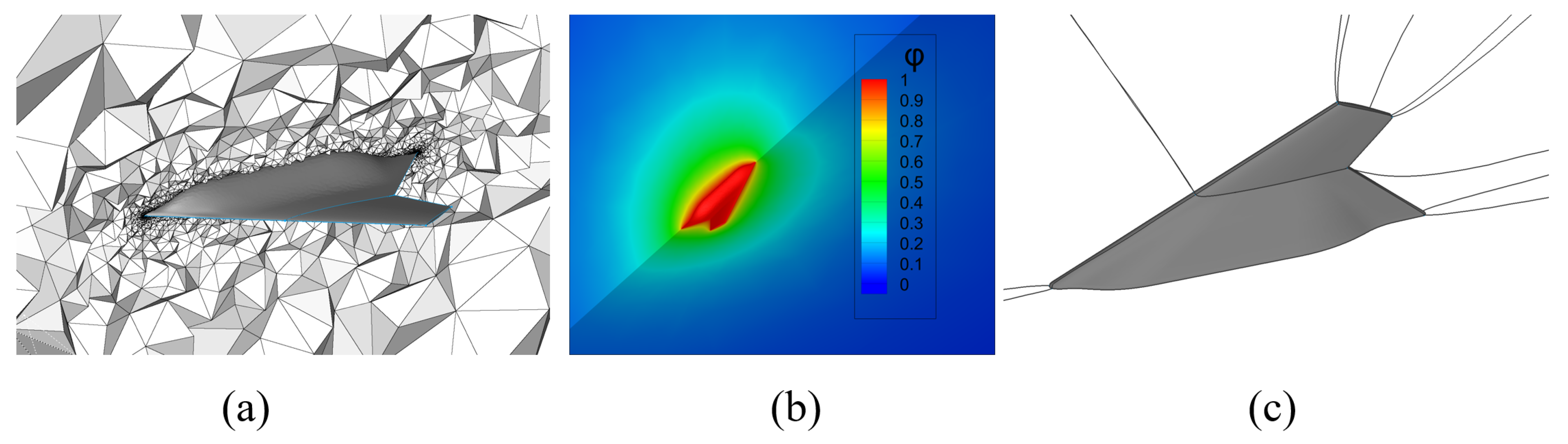
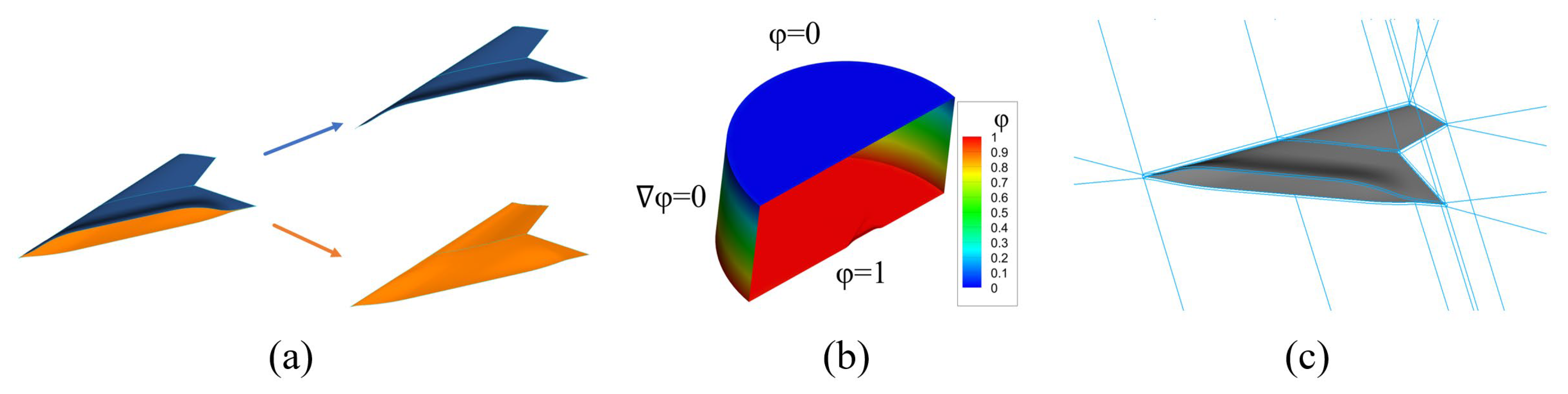
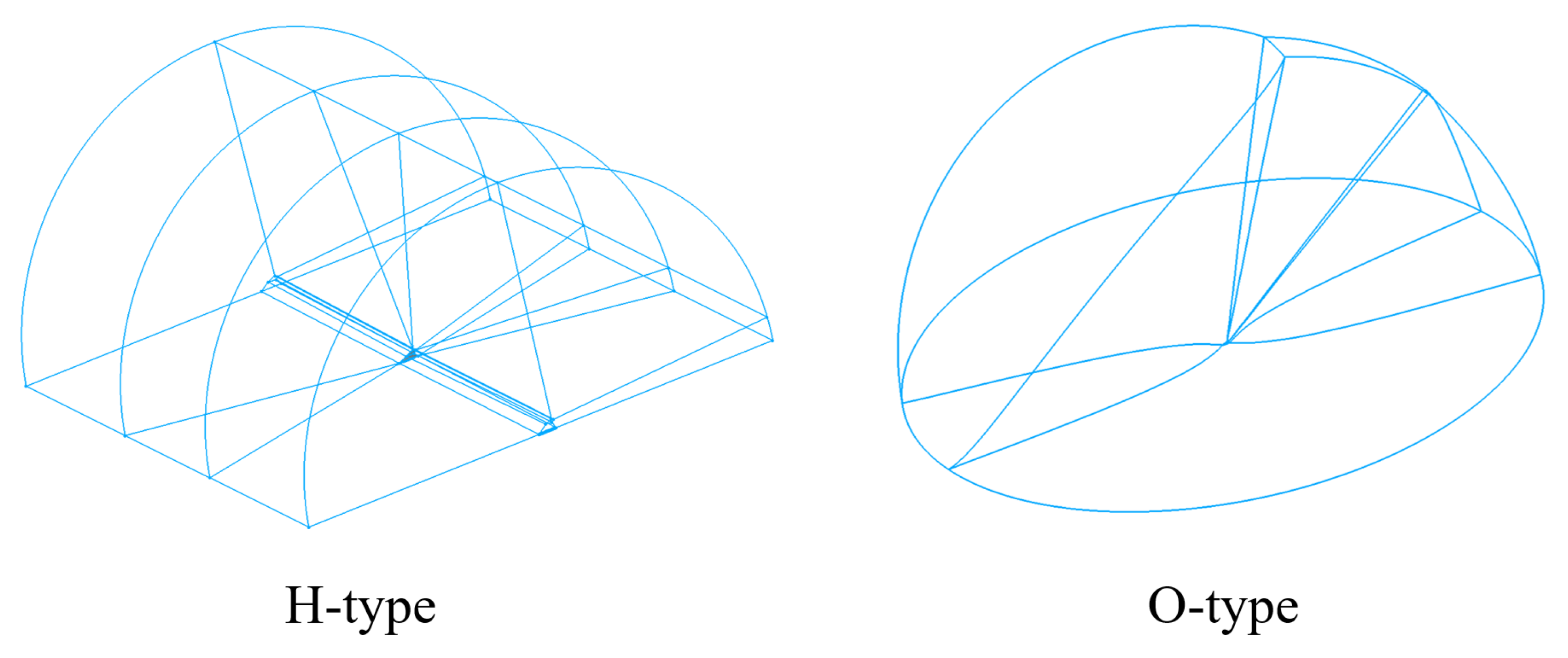
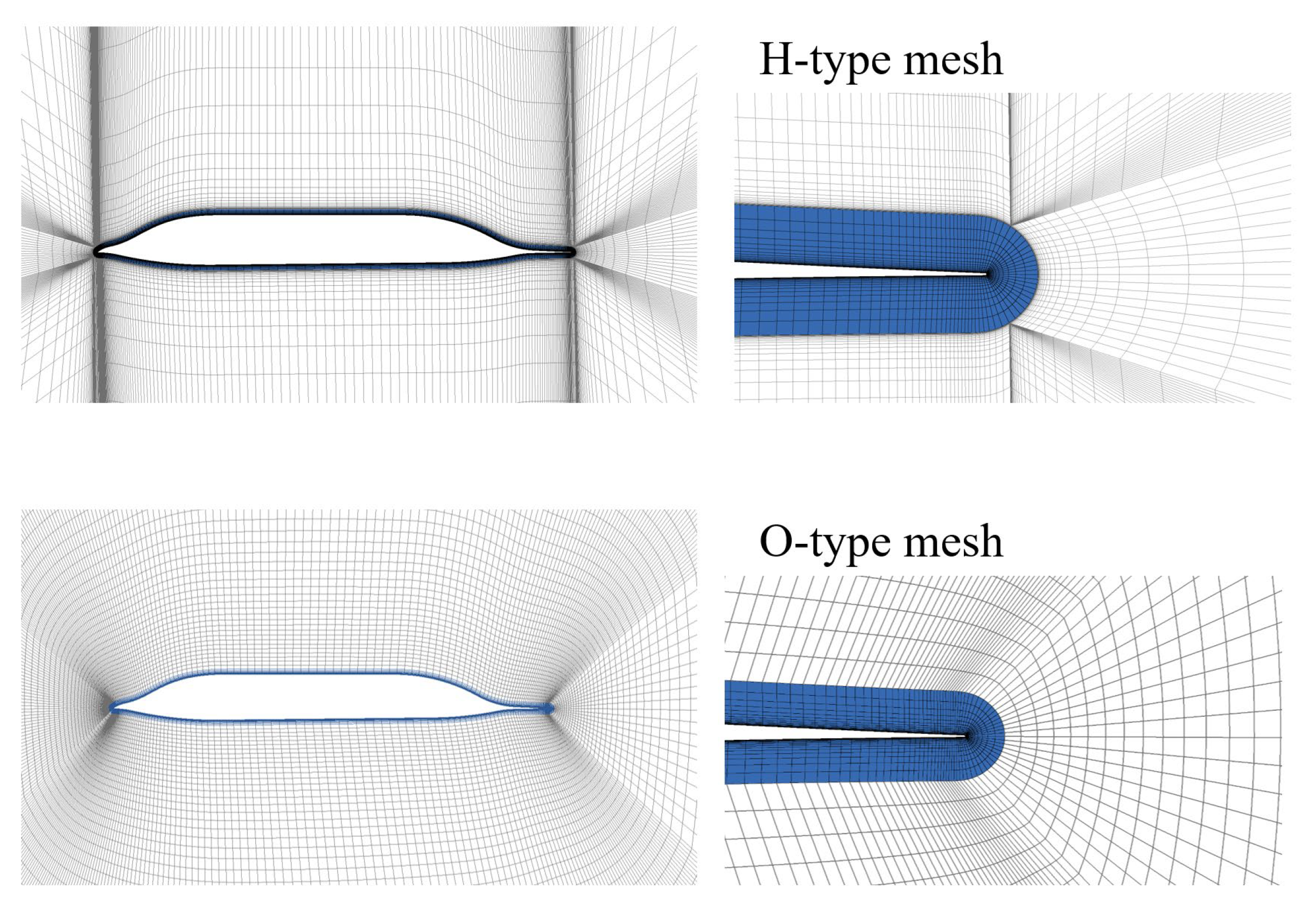
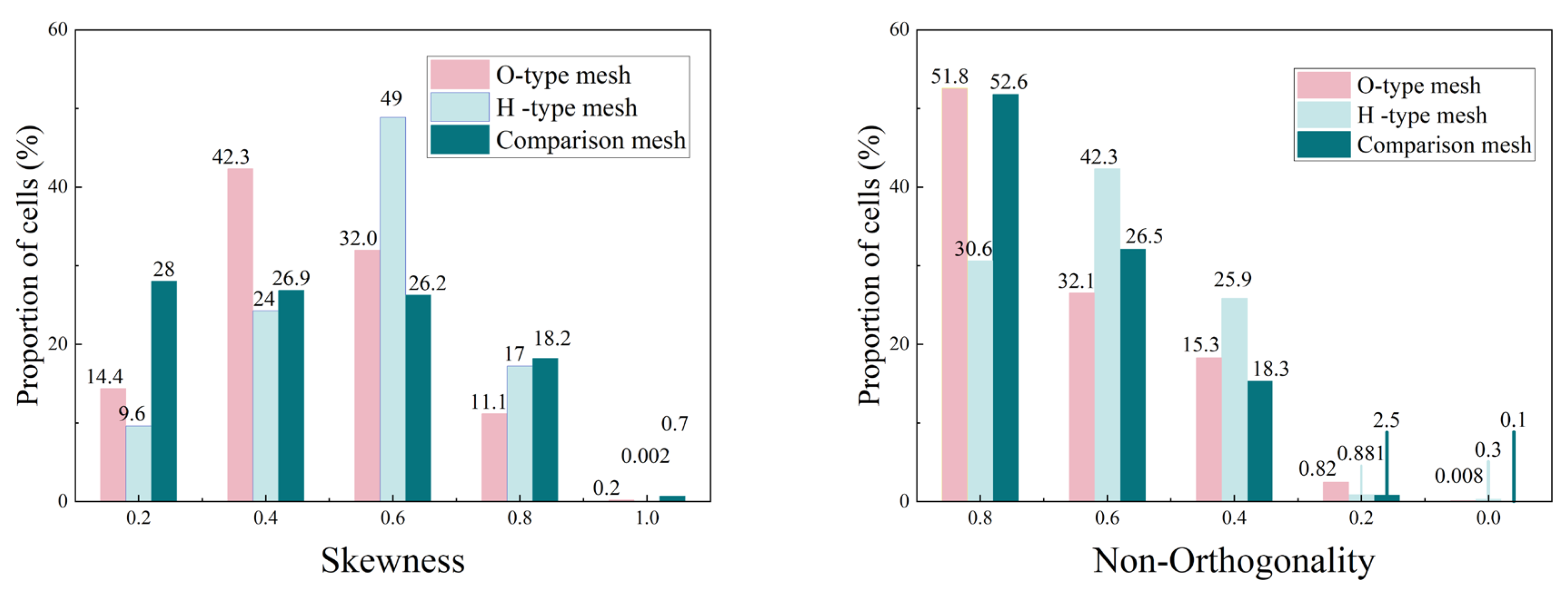
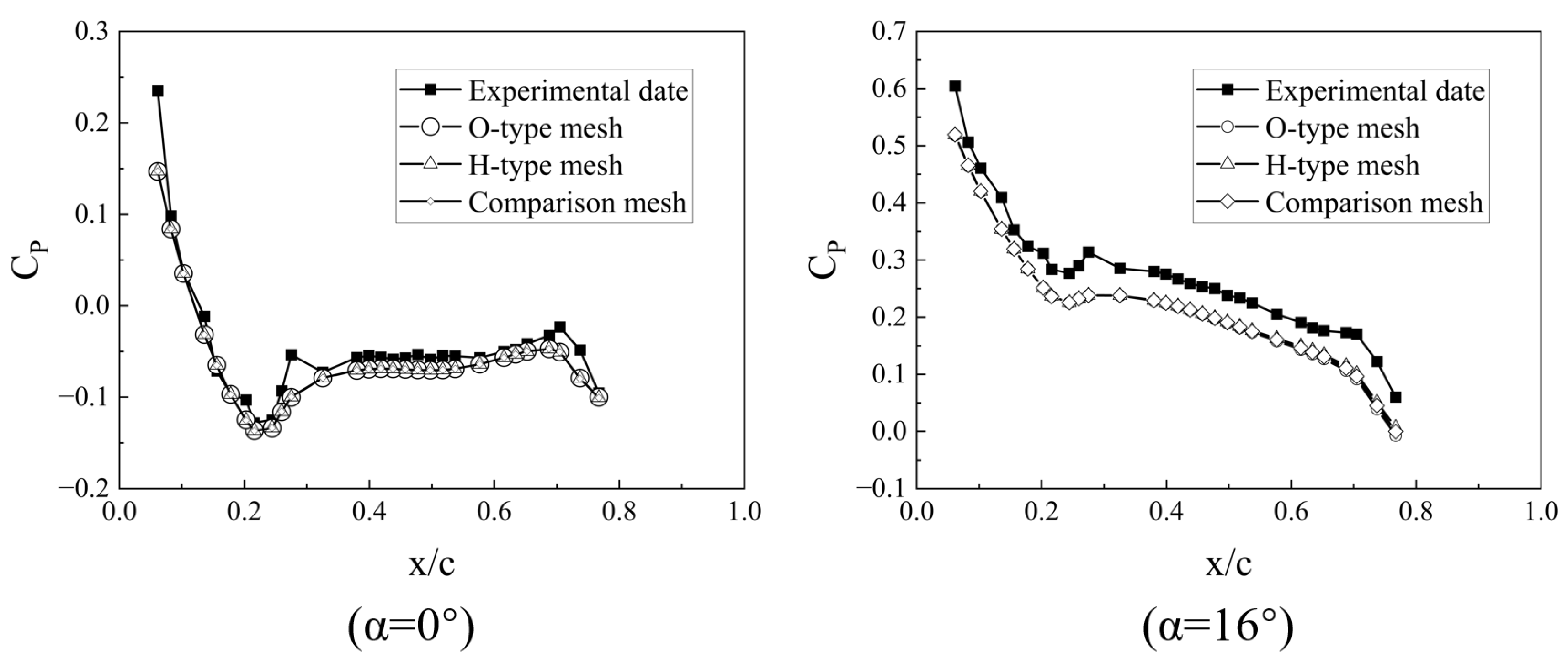
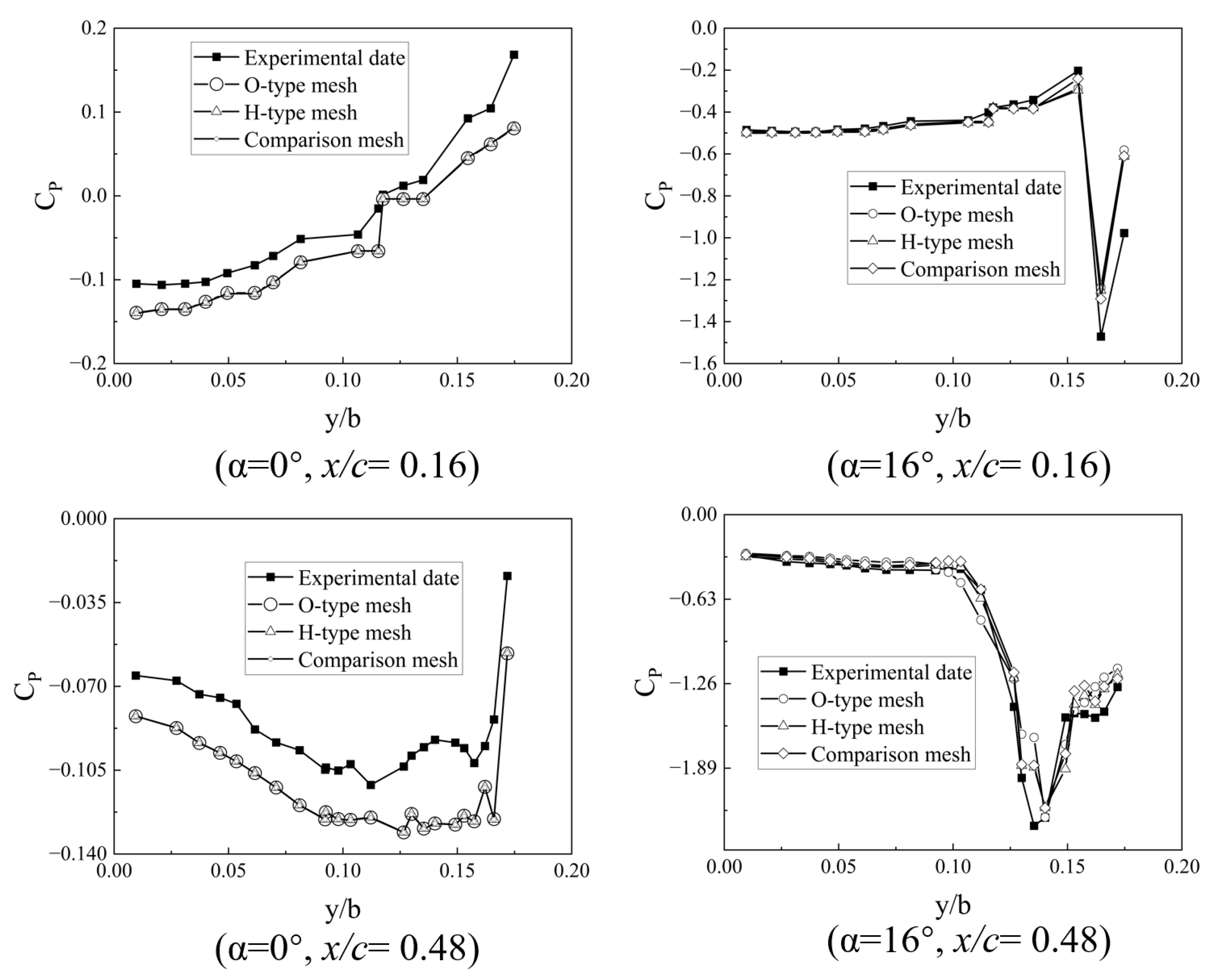
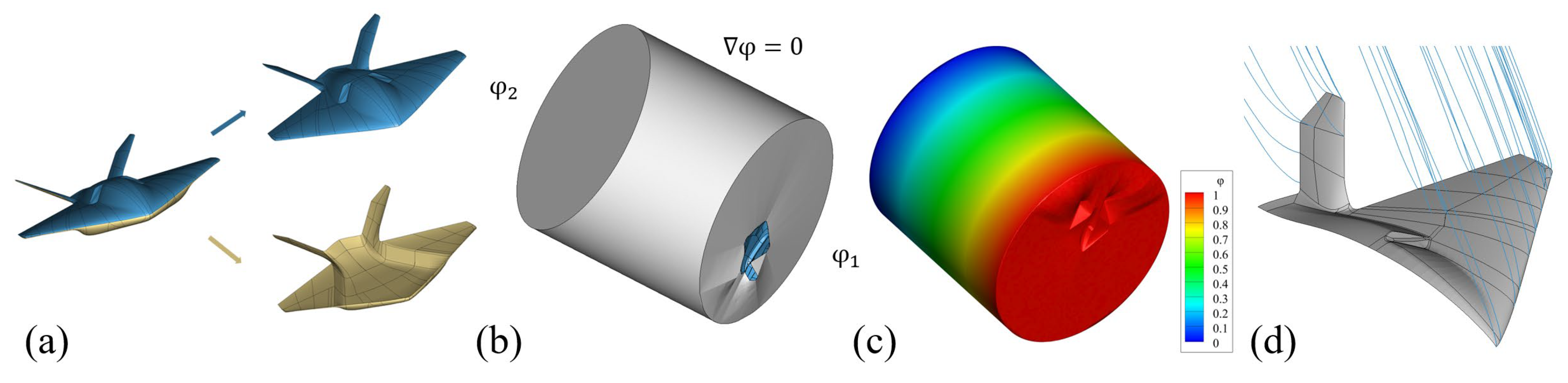
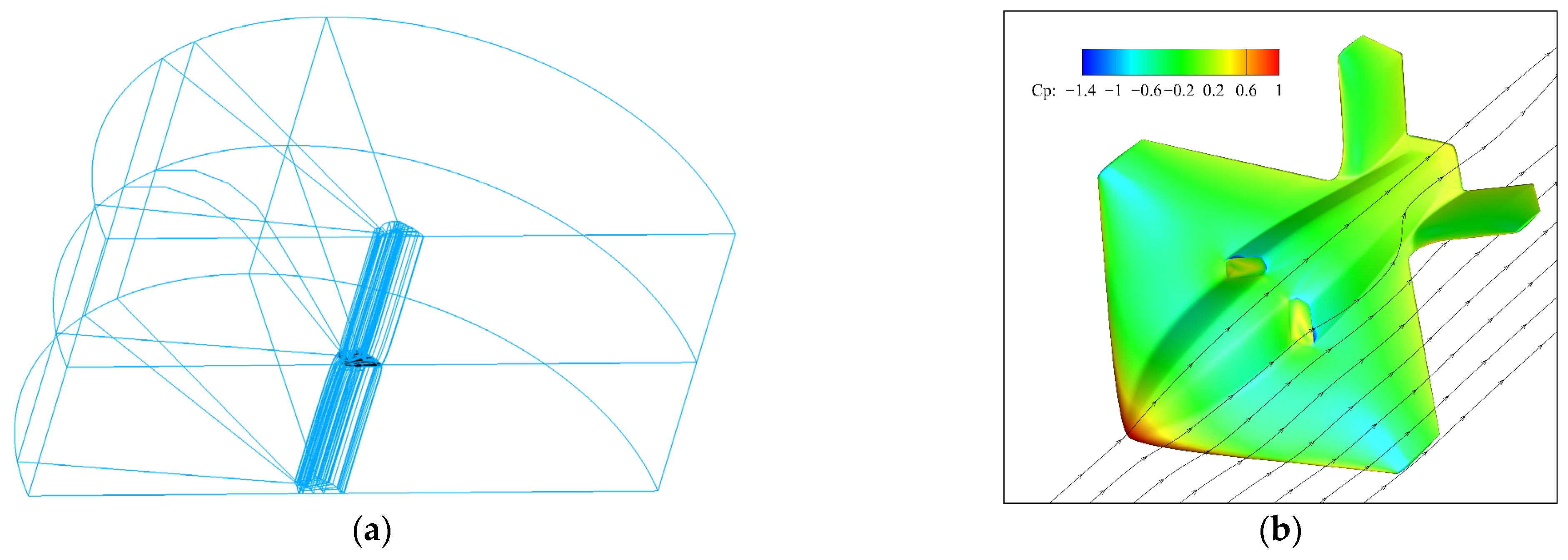
Multi-block structured mesh is widely used for high-precision aerodynamic simulation, but mesh blocking usually requires substantial manual intervention, which is time-consuming and demands a high level of user expertise. In this study, a potential field-based blocking algorithm for mesh generation around an aircraft is proposed, and a corresponding multi-block grid generation workflow is established. First, the hyperbolic partial differential equation (PDE) method is used to march boundary layer grids from the body surface. Next, the potential field is solved on an unstructured background grid, and the grid topology is flexibly designed by adjusting boundary conditions. The gradient lines of the potential field are then determined and employed to partition the external domain into blocks. Finally, the elliptic PDE method is applied to generate structured grids within each sub-block. A low-aspect-ratio flying-wing configuration is adopted as the test case. Structured grids of both H-type and O-type topologies are generated and compared with the benchmark grid released by the China Aerodynamics Research and Development Center (CARDC). The grid quality analysis and aerodynamic calculation results demonstrate that the two generated grids possess good quality, and the computational results show satisfactory agreement with experimental data. The O-type mesh yields more accurate predictions for the lift coefficient and pitching moment coefficients. Furthermore, two test cases, namely a rocket sled and a V-tail aircraft, are presented to demonstrate that the proposed method can flexibly design either O-type or H-type topologies to accommodate different geometric characteristics. In summary, the proposed method enables efficient generation of high-quality multi-block structured grids for the configurations examined in this study.
Keywords: CFD; multi-block structured mesh; potential field; mesh generation; blocking method CFD; multi-block structured mesh; potential field; mesh generation; blocking method