1. Introduction
With the rapid development of satellite communication technology, the Variable-Inclination Continuous Transverse Stub (VICTS) antenna has attracted extensive attention in aviation airborne applications due to its low profile, low power consumption, high dynamic response, and ultra-wide communication bandwidth [
1,
2]. As shown in
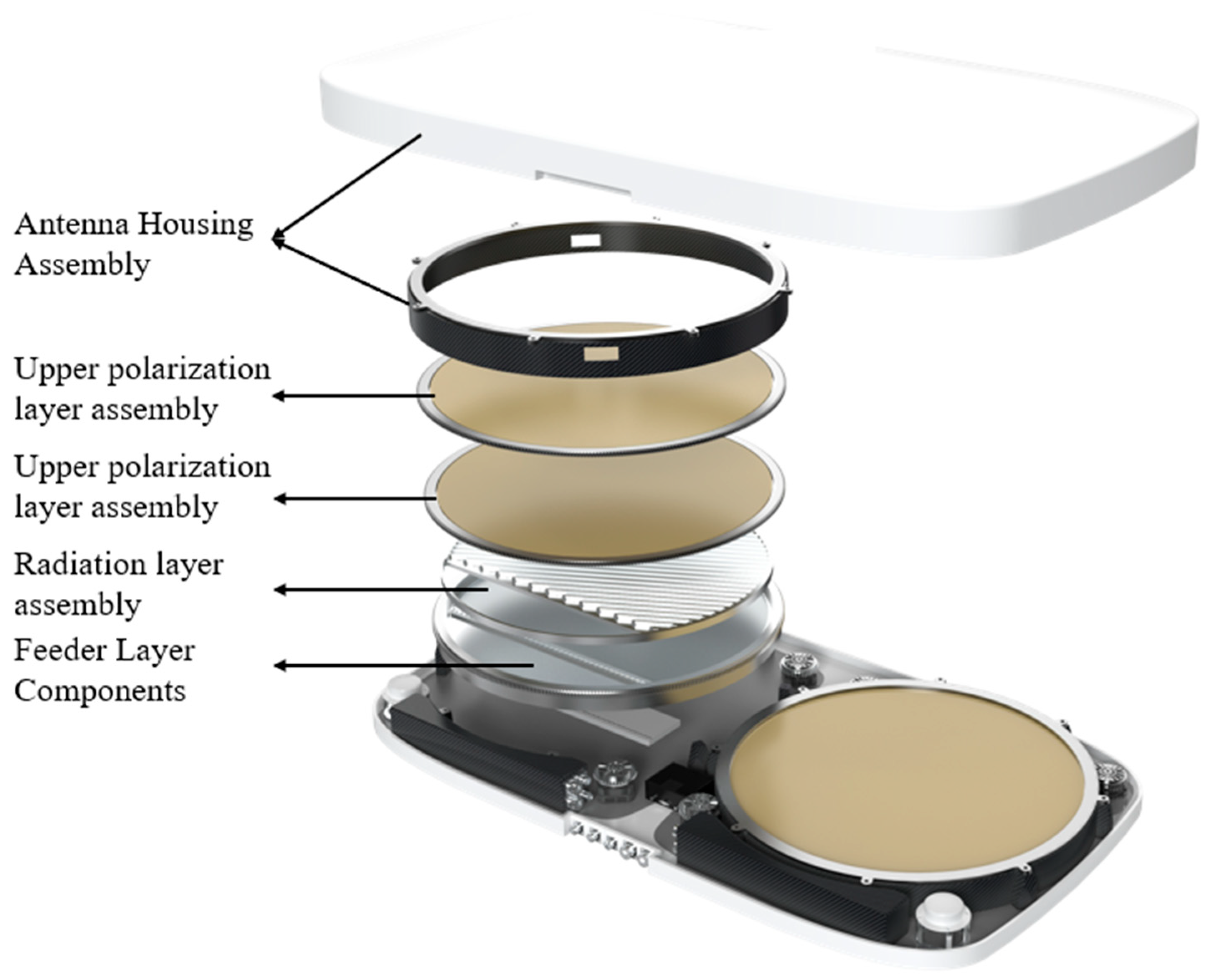
Figure 1, the main body of a typical direct-drive VICTS antenna is divided into four functional layers with independent rotational degrees of freedom: the upper polarization layer, lower polarization layer, radiation layer, and feeder layer. Beam scanning in the azimuth and pitching planes is realized via the differential rotation of the radiation layer and feeder layer, while the polarization direction of the antenna beam is adjusted by the rotation of the upper and lower polarization layers [
3].
Existing research on VICTS antennas has mainly focused on electromagnetic principal optimization, beam pointing control, and communication performance improvement [
4,
5]. However, there are very few reports on the dynamic optimization design of its mechanical rotating components, which directly determine the antenna’s tracking accuracy, stability, and environmental adaptability in airborne scenarios. For high-frequency band and most satellite communication applications, the maximum rotational speed of each VICTS layer can reach 300°/s, with a maximum angular acceleration of up to 1000°/s
2 [
6,
7]. To meet the demand for rapid scanning, the direct-drive scheme is widely adopted, forming a coaxial multi-layer large hollow rotating motor structure [
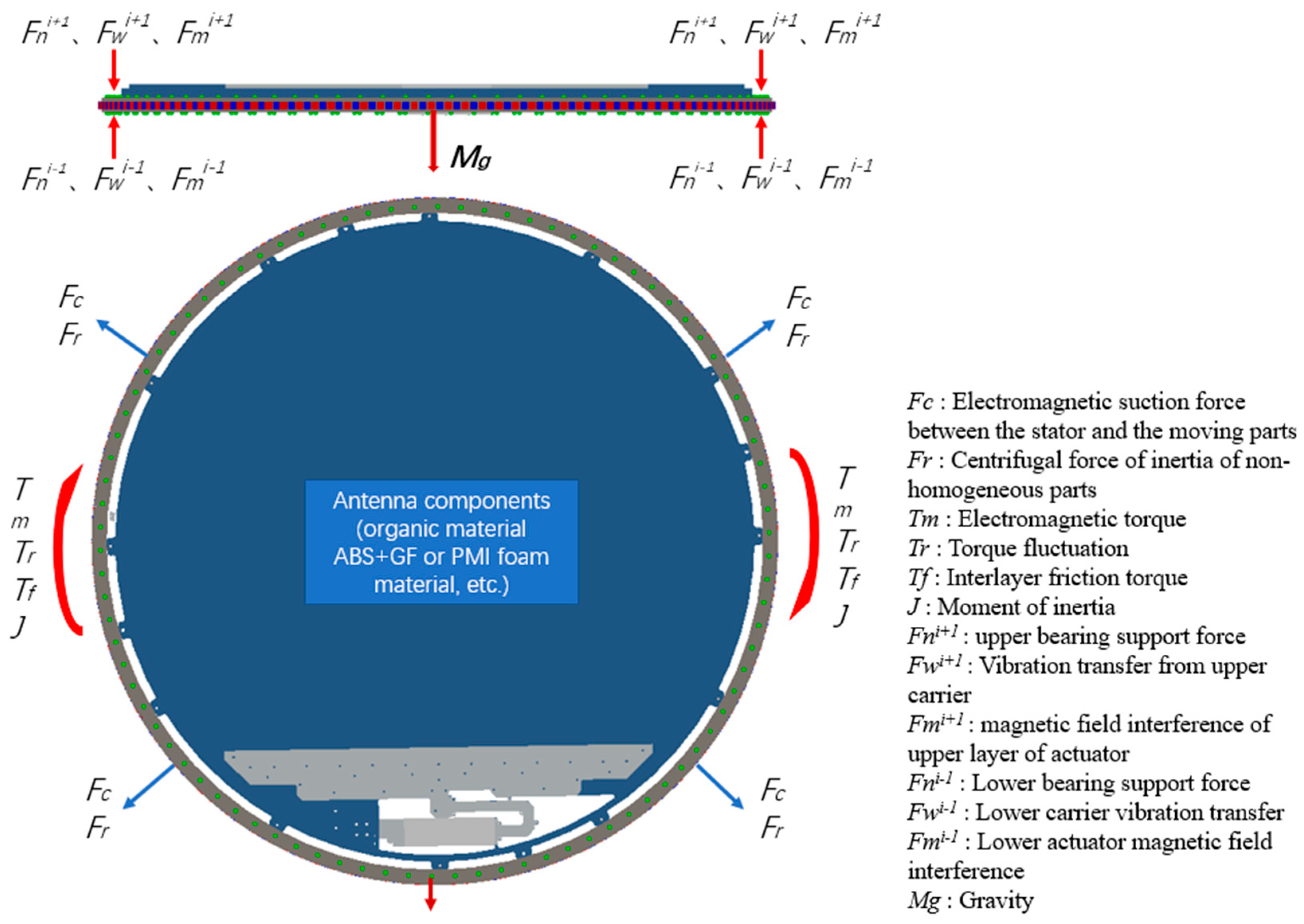
8]. High-precision ceramic balls are arranged between adjacent layers as support, and NdFeB permanent magnets are mounted on the outer side of each layer’s rotating ring to form the motor rotor. The force diagram of the rotor and support structure is shown in
Figure 2.
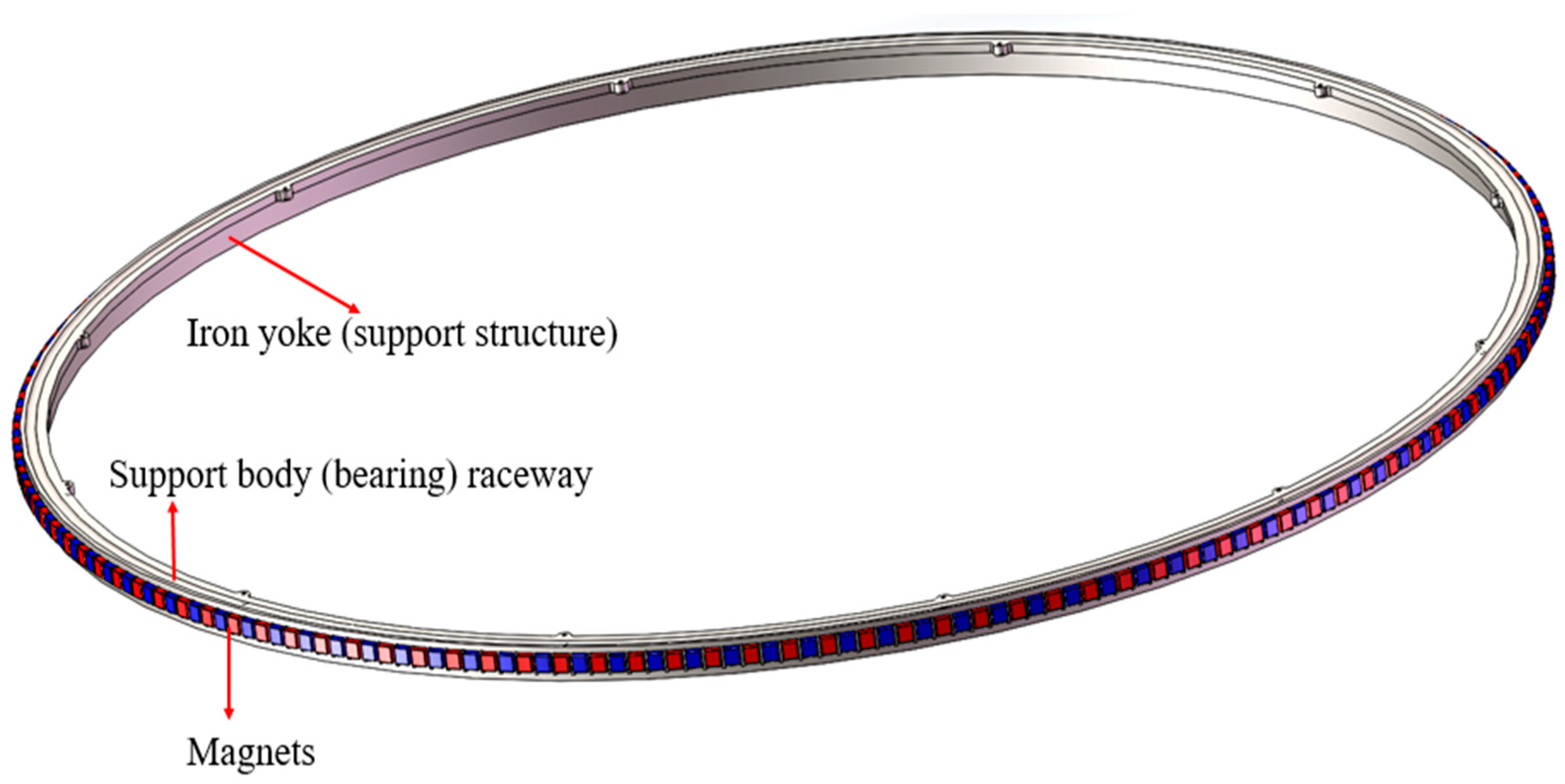
The rotating ring is the core load-bearing component of the antenna: it fixes the antenna’s functional layers on the inner side, with magnet-mounting grooves on the outer surface and bearing raceways on the top and bottom surfaces. The overall structure is similar to a large-diameter planar rolling bearing, with the balls in the raceways providing rotational support. For aviation airborne applications, there are stringent requirements for structural weight, vibration suppression, and environmental adaptability, as well as high requirements for the rotational dynamic performance of the rotor under high-speed motion, inertia constraints, and modal control. However, local structural features such as ball raceways and magnet-mounting grooves lead to extremely high computational cost and low optimization efficiency for traditional full-model finite element iterative optimization, which also lacks clear physical guidance for dynamic design. Therefore, developing an efficient, physics-based dynamic optimization method for the rotating components of direct-drive VICTS antennas is of great significance for product design and engineering iteration.
In recent years, wave equation-based mechanical vibration analysis has been widely applied in ring structure dynamic research, including the dynamic behavior analysis of static and rotating rings and the safety risk assessment caused by excessive vibration of annular structures [
9]. Tang et al. calculated the natural frequency of rotating rings based on the traveling wave theory in solid elastic media and solved the forced vibration response of rotating rings via the traveling wave method [
10]. Geng et al. established a mathematical model of composite horns based on wave theory and calculated the resonance frequency of catenary-inverted cone composite horn structures [
11]. Huang et al. applied elastic solid wave theory to derive the forced response solution of rotating thin-walled rings in a static coordinate system and analyzed the influence of angular velocity and angular acceleration on the dynamic characteristics of thin-walled rings [
12]. However, existing wave-based ring vibration studies mostly focus on regular cross-section structures, and there is a lack of equivalent modeling methods for irregular cross-section rings, which limits the application of wave theory in the lightweight optimization design of VICTS antenna rotating components.
For the direct-drive VICTS antenna motor rotor, which is a typical thin-walled annular structure, the rotational speed is below 150 rpm, so the effects of rotational speed and Coriolis acceleration can be neglected in modal analysis [
13]. The main vibration excitation sources include the motor’s electromagnetic force, the revolution of interlayer balls during relative rotation, and external environmental disturbances. For airborne applications, external disturbances are mainly low-frequency, and their frequency spectrum is far from the structural modal frequency of the motor. Therefore, this study focuses on the dynamic characteristic optimization of the motor rotor ring, with the main excitation source being the vibration caused by the revolution of interlayer support balls.
In summary, existing studies face three critical quantitative limitations for VICTS antenna rotating components: (1) Studies on VICTS antennas only focus on electromagnetic optimization, with no mechanical dynamic optimization reported [
4,
5]. (2) Wave-theory-based ring models only apply to regular cross-sections, with modal error above 4.2% and no targeted modal suppression [
10,
12]. (3) Traditional uniform support design relies on time-consuming FE iteration and cannot balance lightweight and dynamic stiffness [
8], while damping methods achieve less than a 10% weight reduction with a 5%–8% modal error [
9].
To solve these issues, this work proposes a wave-theory-based dynamic optimization method, which features a maximum modal error of 3.1%, 40% weight reduction, 40% wider modal separation, 65% lower tracking error, and only ≈5 min per iteration.
Addressing the aforementioned issues, this paper proposes a VICTS antenna rotating ring modal blocking mechanism based on wave theory; establishes a homogenization equivalent method based on representative volume elements (RVEs) for irregular cross-section rings, facilitating rapid wave-equation-based modal analysis; develops a multi-objective dynamic optimization framework for lightweight design and dynamic performance improvement; and validates the proposed methods through numerical simulation, finite element analysis, and prototype testing. The proposed method provides a highly valuable reference for the design and optimization of thin-walled annular components, such as the rotor support bearings in direct-drive VICTS motors.
2. Dynamic Modeling and Vibration Suppression Mechanism
2.1. Wave Equation for a Rotating Thin-Walled Ring
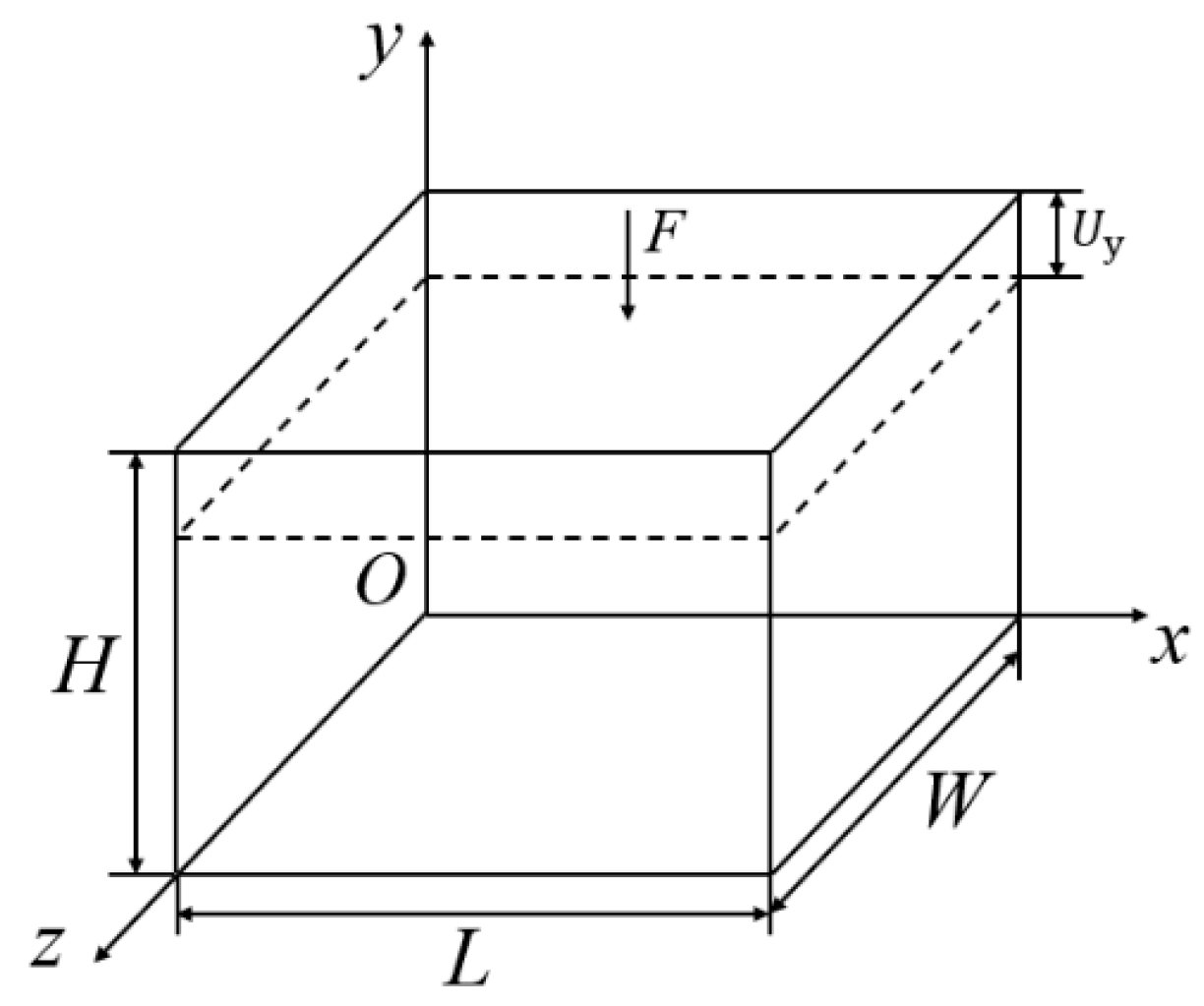
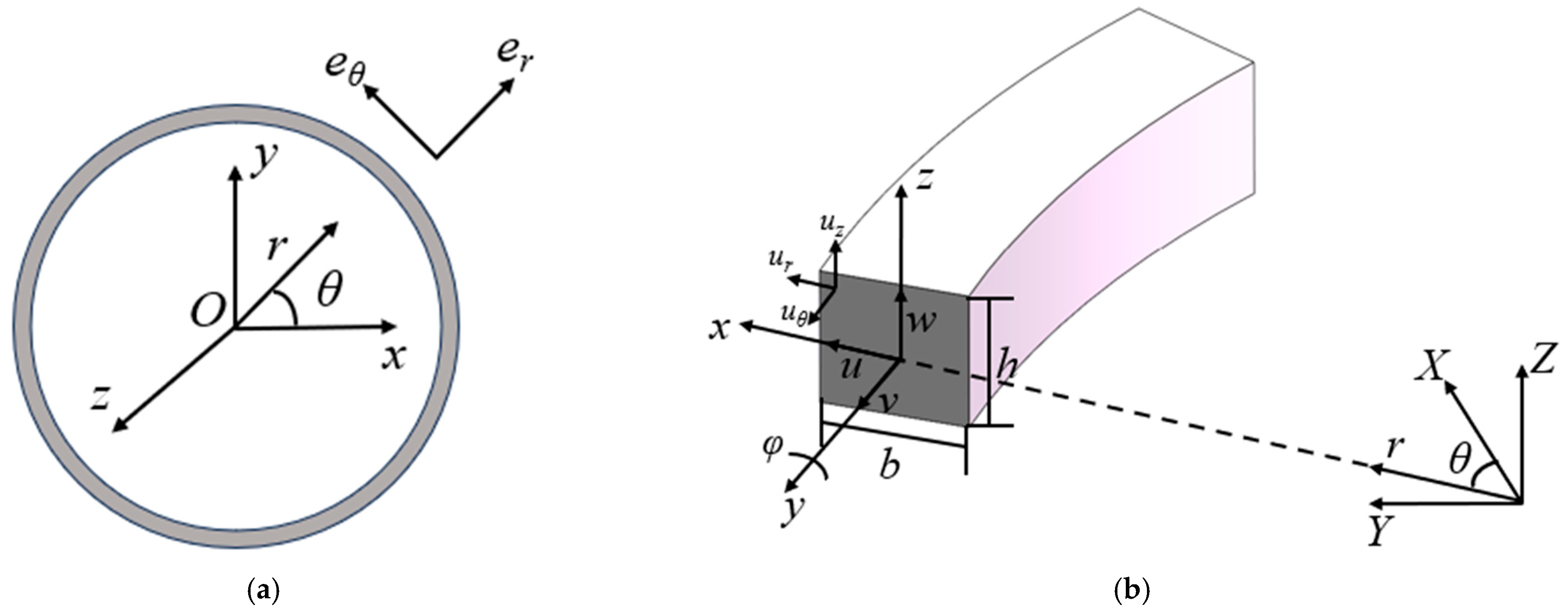
The thin-walled ring is the key structural component of the direct-drive VICTS antenna motor’s rotating part, as shown in
Figure 3. In this study, the Euler–Bernoulli beam model is adopted to establish the dynamic model of the rotating ring, with the following assumptions:
(1) The cross-section of the annular ring has no concave–convex deformation during vibration, and the beam axis is always perpendicular to the cross-section.
(2) Based on the slender ring assumption, transverse shear deformation and cross-section torsion deformation are neglected.
(3) The ring rotates around the central axis at a constant angular velocity Ω, with a negligible Coriolis acceleration effect under low-speed operation.
A spatially fixed inertial coordinate system
XYZ is adopted as the reference system, and the cylindrical coordinate system (
r,
θ,
Z) is established, where
θ is the angular coordinate measured from the
X-axis to the
Y-axis. For the undeformed ring structure, the radius of the mid-plane from the central axis is
R, the cross-sectional height is
h, and the radial width is
b. A body-fixed rotating coordinate system
xyz is established, as shown in
Figure 4.
Based on the Euler–Bernoulli beam model, the Lagrange equation and Hamilton’s principle are introduced to derive the coupled nonlinear partial differential equations of motion for the rotating ring [
14]. For free vibration, the transverse elastic fluctuation can be regarded as the propagation of elastic waves in a solid medium, and the free modes are formed by the superposition of individual traveling waves. Therefore, the solution of the motion equations is assumed to have the form of simple harmonic motion [
14]:
where
c1~
c4 are the wave amplitude coefficients,
is the natural frequency corresponding to the circumferential wave number
n,
i is the imaginary unit, and
u,
v,
w, and
are the radial, tangential, out-of-plane, and axial displacements of the ring, respectively.
Substituting Equation (1) into the nonlinear partial differential equations of motion [
14], the characteristic equation can be written in matrix form:
where the coefficient matrix elements are defined as
| (3) |
| (4) |
| (5) |
| (6) |
| (7) |
| (8) |
| (9) |
| (10) |
In the above equations, Ω is the constant angular velocity of the ring, E is the elastic modulus of the ring material, ρ is the material density, G is the shear modulus, R is the mid-plane radius of the ring, Ii is the area moment of inertia around the z-axis, Io is the area moment of inertia around the x-axis, Ip is the polar area moment of inertia around the y-axis, is the prescribed equilibrium position, and A is the cross-sectional area of the ring.
For the homogeneous linear Equation (2) to have non-trivial solutions, the determinant of the coefficient matrix must be zero, which gives the frequency characteristic equation [
14]:
By solving Equation (11), the natural frequencies corresponding to different circumferential wave numbers n can be obtained. The solutions for wave numbers n = ±2, ±3, ±4, ±5 correspond to the first four orders of elastic modes of the ring, while the solutions for n = 0, ±1 correspond to the rigid body modes of the structure.
2.2. Excitation Modeling of Interlayer Balls for Multi-Layer Rotating Systems
The direct-drive VICTS motor adopts angular contact ball bearings as the interlayer support structure [
8]. For high-rotational-speed conditions (above 5000 rpm), the dynamic performance of the bearing is significantly affected by the rigidity of the inner and outer rings, cage motion, ball dimensional accuracy, surface roughness, and external load [
15,
16,
17,
18]. However, for the VICTS antenna application with rotational speed below 150 rpm, the main factor affecting the dynamic performance of the large-diameter thin-walled rotating structure is the periodic excitation caused by the revolution of the interlayer balls.
According to the geometric relationship of angular contact ball bearings, the rotational speed of the cage is the average value of the inner and outer ring speeds [
19,
20]. The rotational frequency of the cage is expressed as
where
is the diameter of the ball;
is the bearing pitch diameter;
is the contact angle;
is the rotation frequency of the outer ring;
is the rotational frequency of the inner ring.
For a bearing with
Z balls, the balls pass through a fixed point on the inner ring
Z times for each revolution of the cage. The ball passing frequency of the inner ring fixed point is
Similarly, the ball passing frequency of the outer ring fixed point is
In the multi-layer direct-drive VICTS antenna, high-precision ceramic balls are arranged above and below each layer’s rotating ring to realize relative rotation between adjacent layers. Under appropriate preload, the slip of the balls can be neglected, and the revolution of the balls along the raceway forms the main periodic vibration excitation source for the rotating ring. According to (13)~(14), the excitation frequencies of the ball revolution on the motor rotating system of the four antenna layers
f1c~
f4c are derived as
where
f1~
f4 are the rotational frequencies of the four motor layers, respectively,
Nb is the number of balls between adjacent layers,
d is the ball diameter,
D is the pitch diameter of the ring raceway, and α is the contact angle of the ball bearing.
2.3. Modal Blocking Mechanism for Targeted Vibration Suppression
For the rotating ring structure of the direct-drive VICTS motor, the lowest-order elastic mode frequency is usually low, making it difficult to avoid the ball revolution excitation frequency in a wide operating speed range. Therefore, designing a reasonable ball distribution law to achieve targeted vibration suppression is critical.
From the annular wave equation derived in
Section 2.1, the first four orders of elastic modes correspond to circumferential wave numbers
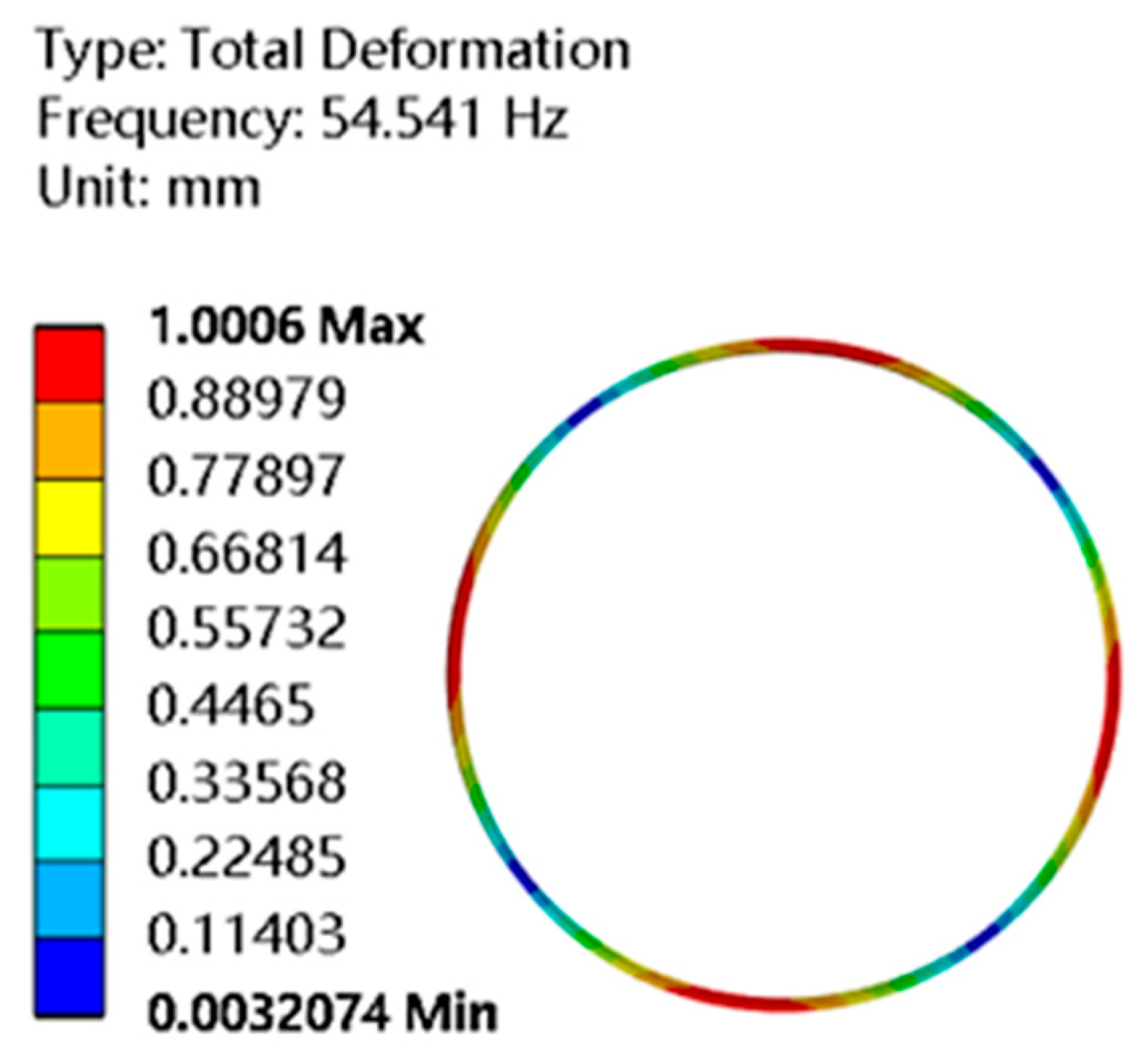
n = ±2, ±3, ±4, ±5. The mode shape corresponding to wave number
n = 2 is shown in
Figure 5.
For a given circumferential wave number
n, the imaginary part of (1) is considered to dissipate energy, and then the circumferential vibration wave of the ring can be expressed as
where
is the vibration displacement of each part of the circular ring,
is the amplitude,
is the wave number,
is the angular coordinate of the circular ring (range 0–360 °), and
is the initial phase of vibration.
For the traditional uniform support scheme, the interlayer balls are evenly distributed along the circumferential direction. The superposition equation of the vibration wave under the support of
Nb evenly distributed balls is
From the wave interference principle, when the number of balls Nb is an integer multiple of 2n, the superposition amplitude of the vibration wave = 0. This means that the vibration wave corresponding to the wave number n is completely canceled out via wave interference, and the corresponding modal shape cannot be formed. This is the core of the Modal Blocking Mechanism proposed in this paper: by appropriately designing the number and distribution of the support balls to satisfy the half-wavelength constraint, dangerous modes that cannot be eliminated through conventional structural optimization can be suppressed at the source, rather than relying on traditional trial-and-error approaches.
For wave numbers n = ±2, ±3, ±4, the vibration can be effectively suppressed by selecting the number of balls as an integer multiple of 24 with uniform distribution.
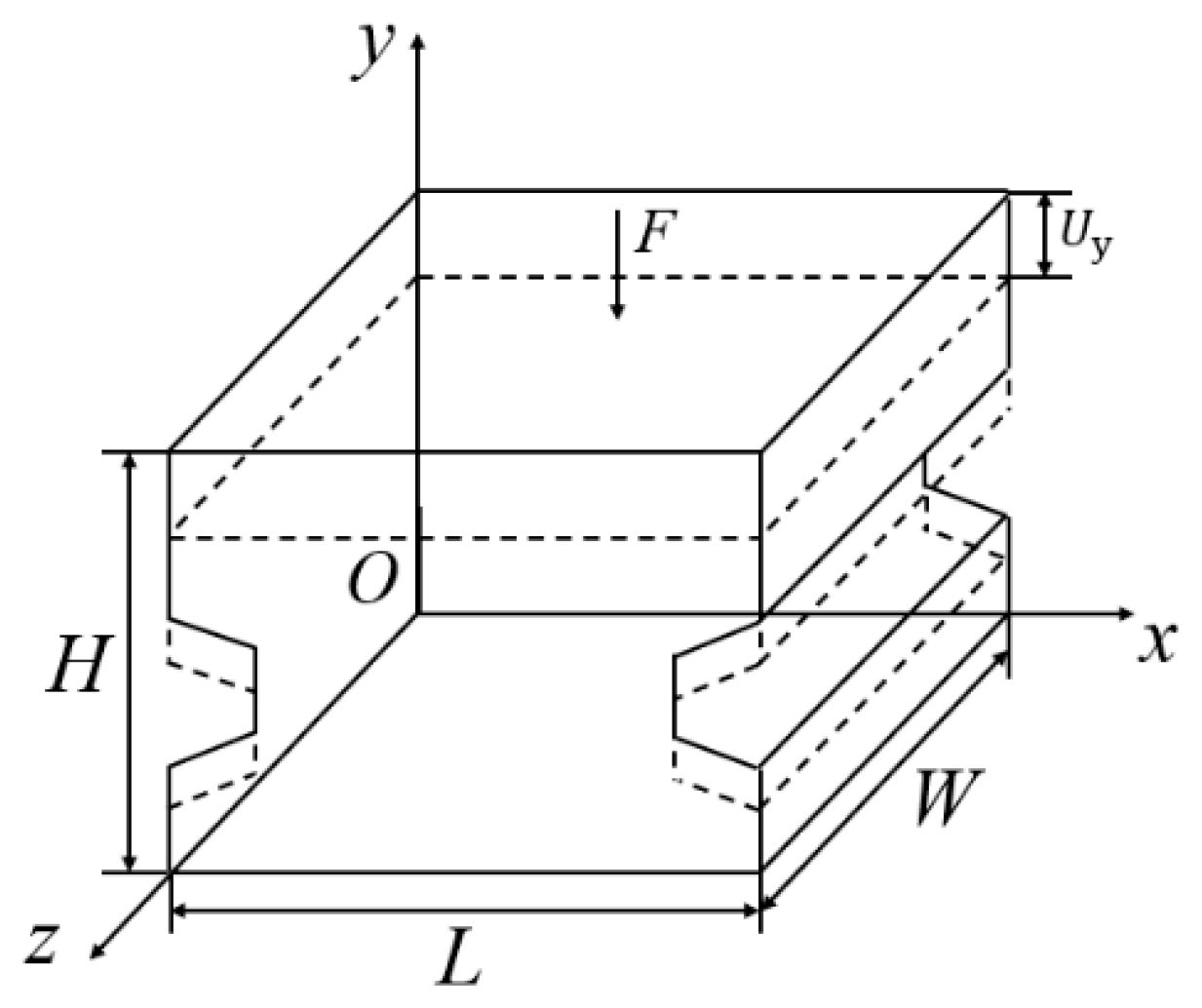
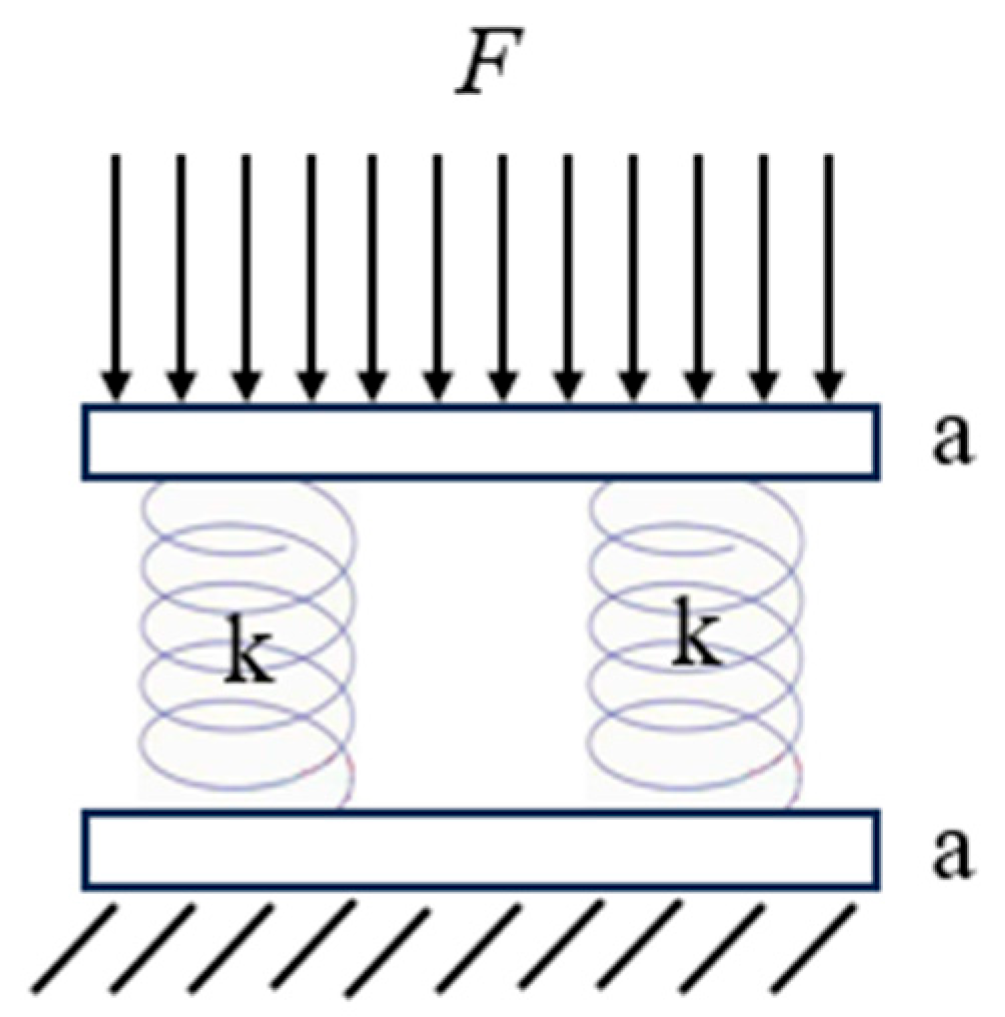
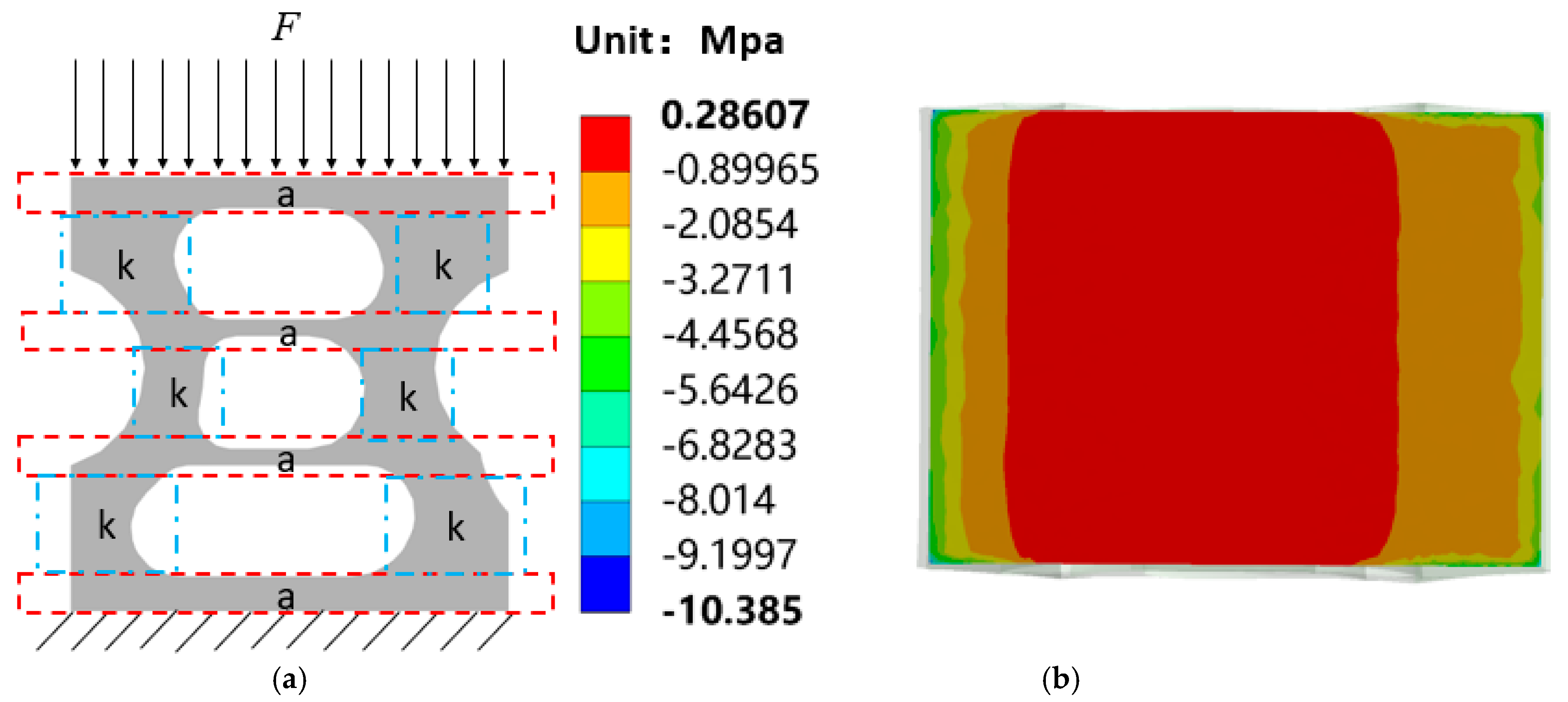
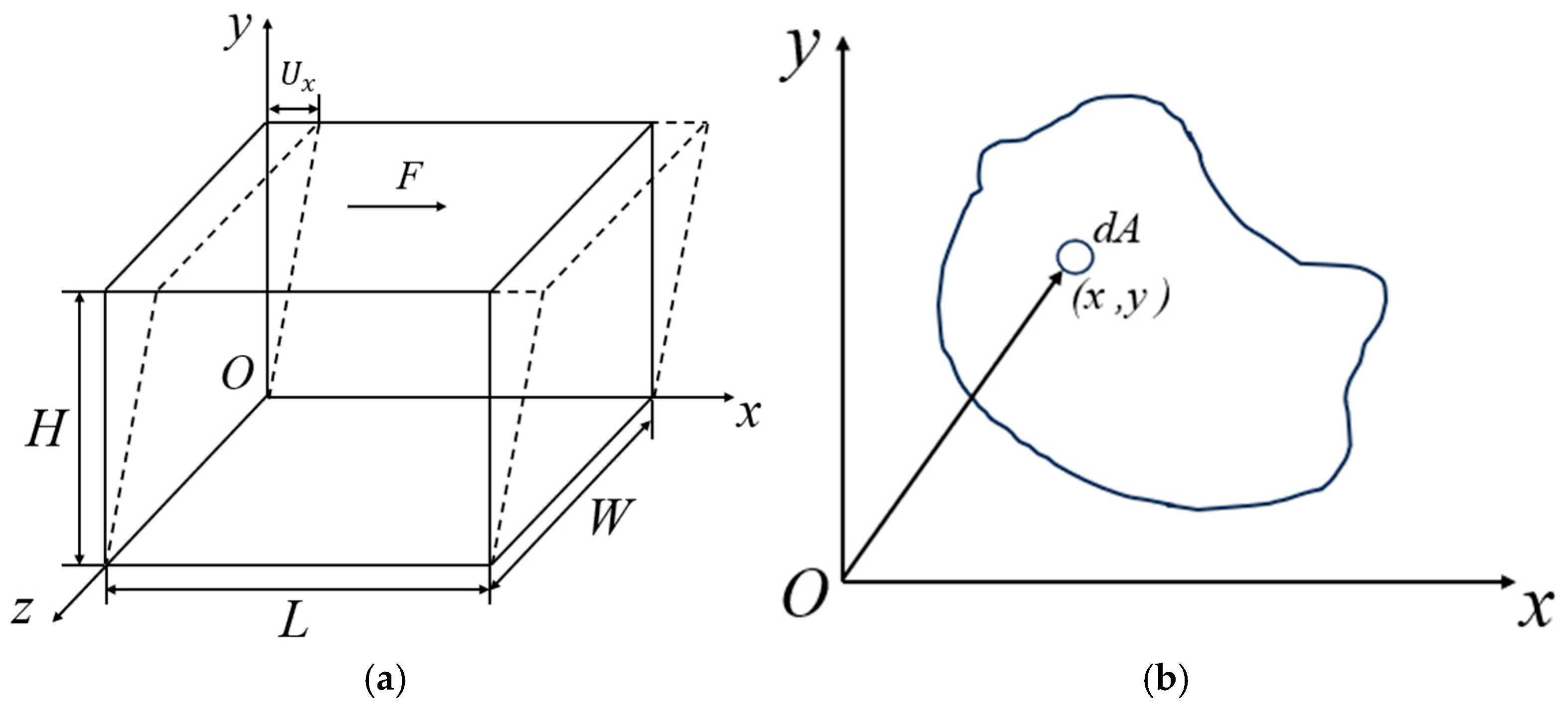
The above kinematic equations are established based on homogenized material properties and rectangular cross-section rings. However, in lightweight optimization design, the ring is usually designed with an irregular cross-section to reduce weight while maintaining dynamic stiffness. Therefore, a homogenization equivalent method for irregular cross-section rings is proposed in the following section to enable the application of the wave equation in lightweight optimization.
4. Rapid Multi-Objective Dynamic Optimization Framework
Based on the above dynamic model, the Modal Blocking Mechanism, and the homogenization equivalent method, an engineering-feasible rapid multi-objective dynamic optimization framework is established for the rotating components of the direct-drive VICTS antenna. The framework realizes deterministic quantitative design without trial and error and simultaneously balances lightweight design and dynamic performance enhancement.
4.1. Optimization Objectives, Constraints, and Design Variables
Optimization Objectives:
(1) Minimize the structural weight of the rotating ring, reflected in the equivalent density ρeq of the irregular cross-section RVE.
(2) Maximize the minimum modal separation interval between the structural modal frequencies and the ball revolution excitation frequency to avoid resonance and improve dynamic stability.
Constraint Conditions:
(1) The number of support balls Nb meets the minimum load-bearing and environmental adaptability requirements (no less than 90 for the engineering case in this study).
(2) The first-order elastic modal frequency is not lower than the minimum limit value to ensure the dynamic stiffness of the structure.
(3) All modal frequencies corresponding to wave numbers n ≥ 5 are at least one sigma away from the ball revolution excitation frequency to avoid resonance.
(4) The rotational inertia of the rotating ring meets the acceleration and speed performance requirements of the antenna.
Design Variables:
(1) The number of support balls Nb determined based on the Modal Blocking Mechanism and excitation frequency calculation.
(2) The cross-sectional shape of the rotating ring, with the corresponding equivalent material parameters , , and calculated via the homogenization equivalent method.
4.2. Optimization Process
The step-by-step optimization process is as follows:
(1) Excitation Frequency Calculation: According to the rotational speed requirements and the minimum number of support balls meeting the load-bearing requirements, calculate the ball revolution excitation frequency range for the rotating ring using Equation (15).
(2) Constraint Determination: Determine the optimization constraints for the weight and rotational inertia of the rotating ring based on the antenna’s acceleration, speed, and airborne weight requirements.
(3) Support Ball Number Design: Based on the Modal Blocking Mechanism, the minimum number of balls, and the excitation frequency range, comprehensively determine the number of support balls Nb and calculate the corresponding ball revolution excitation frequency and the target circumferential wave number of the ring vibration.
(4) Equivalent Parameter Calculation: Select the initial cross-sectional shape of the rotating ring, calculate the equivalent density , in-plane equivalent elastic modulus, and out-of-plane equivalent shear modulus via the homogenization equivalent method, and verify that the equivalent density meets the weight optimization objective.
(5) Modal Characteristic Solution: Substitute the equivalent material parameters into the annular wave equation to analytically solve the in-plane and out-of-plane vibration modes of the rotating ring.
(6) Convergence Judgment: Compare the calculated modal characteristics with the optimization objectives and constraints. If the requirements are not met, iterate between steps 4 and 5 until the optimization objectives are achieved.
This optimization framework avoids the heavy full-model finite element iterative calculation in traditional optimization methods and greatly accelerates the design iteration speed of the rotating ring structure.
5. Validation, Results, and Discussion
5.1. Case Description and Optimization Setup
To verify the accuracy and superiority of the proposed method, a 0.6 m diameter direct-drive VICTS satellite antenna feeder layer motor is taken as the research case. The equivalent material parameters and geometric dimensions of the original rectangular cross-section ring are listed in
Table 2.
According to engineering requirements, the number of interlayer balls shall not be less than 90, the ball diameter is 4 mm, the raceway contact angle is 20°, and the maximum rotational speed of the motor is 300°/s. The optimization objective is to reduce the structural weight to less than 60% of the original rectangular cross-section design. According to Equation (15), the ball revolution excitation frequency of the motor rotating ring is approximately 300 Hz, corresponding to a circumferential wave number n = 4 according to the wave equation. Based on the Modal Blocking Mechanism, 96 balls are selected, resulting in a ball revolution excitation frequency of 321 Hz.
The optimization constraints are set as
(1) The modal frequencies corresponding to wave number n ≥ 5 are above 445 Hz (one sigma away from the excitation frequency).
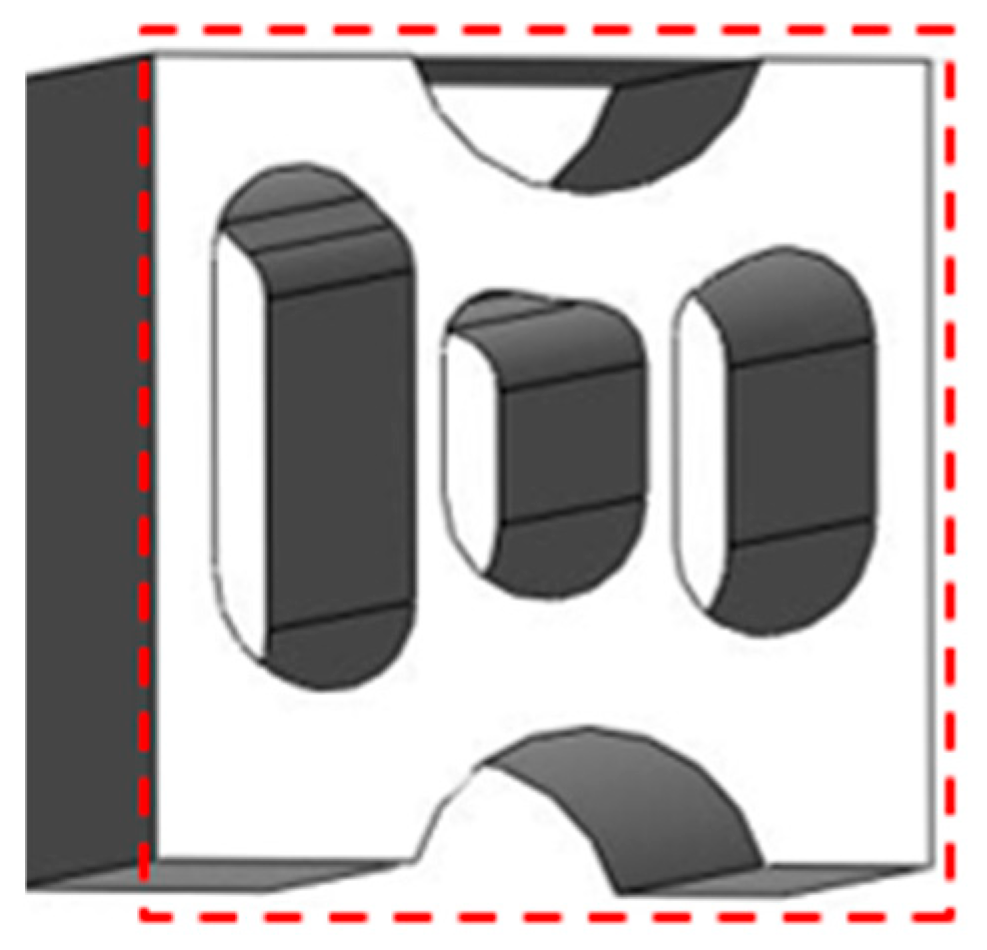
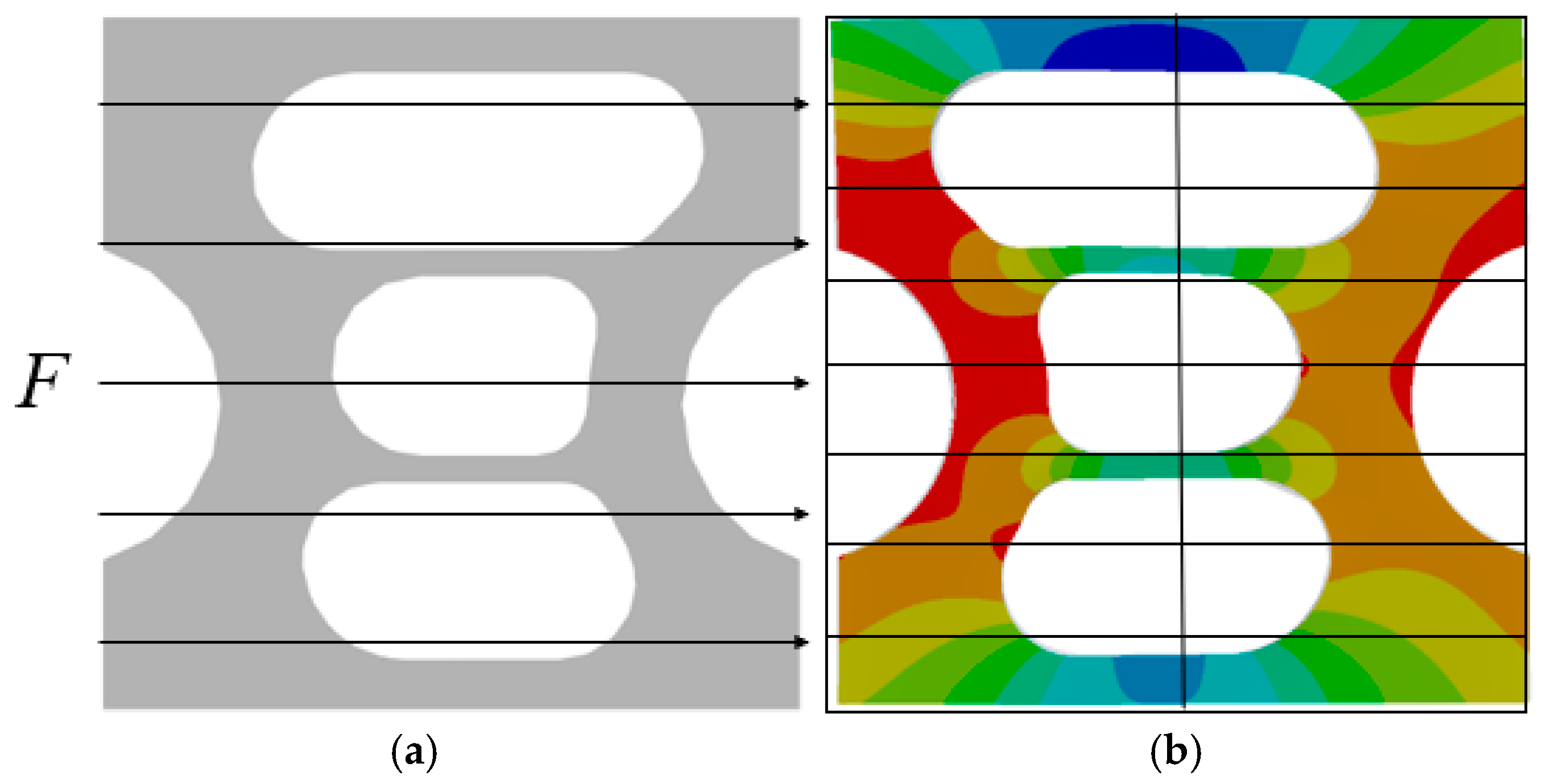
(2) The first-order elastic modal frequency is not lower than that of the original design to ensure dynamic stiffness. The optimized irregular cross-section of the ring is shown in
Figure 6, and both the full-model finite element modal simulation and wave equation analytical solution are carried out for the optimized structure.
5.2. Modal Prediction Accuracy Validation
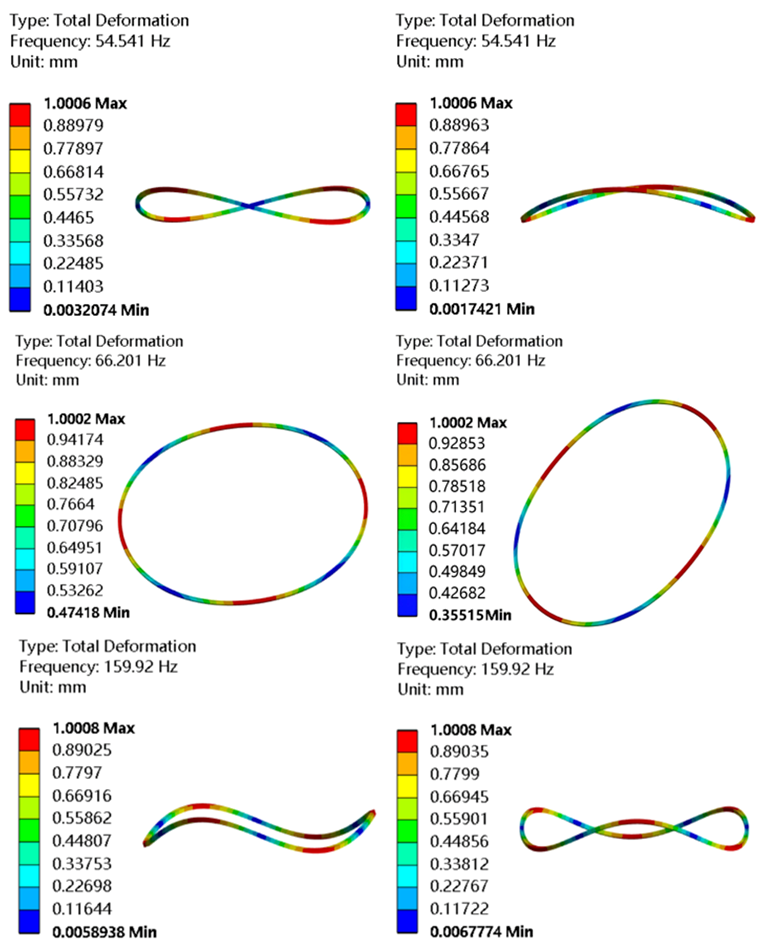
The first six modes of the optimized rotating ring obtained via ANSYS (ANSYS 2023 R1) Workbench finite element simulation are shown in
Figure 13. The 1st, 2nd, 5th, and 6th modes are out-of-plane vibration modes, while the 3rd and 4th modes are in-plane vibration modes.
Using the annular wave equation derived in
Section 2.1 and the equivalent parameters in
Table 2, the first 16 modal frequencies of the rotating ring are analytically calculated. The results are compared with the finite element simulation results and the experimental results measured by three piezoelectric force sensors, owing to their light weight and high bandwidth, as detailed in
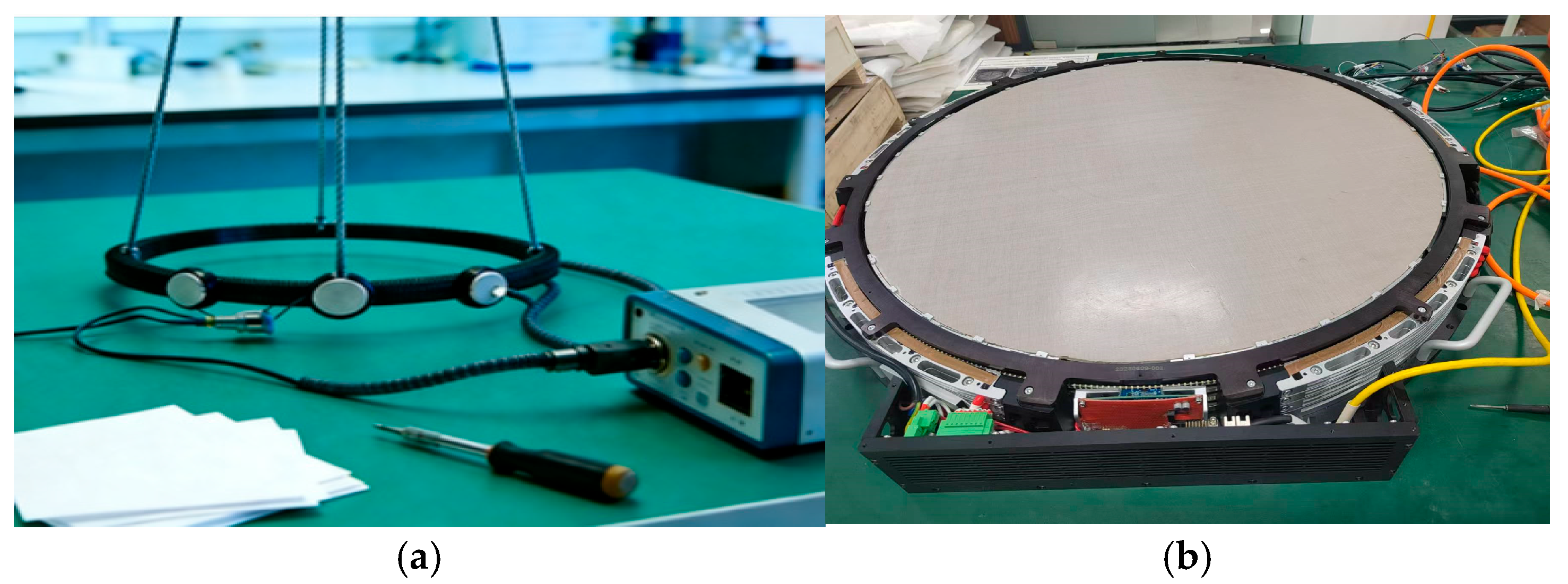
Table 3. The vibration test setup equipped with three piezoelectric force sensors is presented in
Figure 14a, and the overall prototype of the antenna is illustrated in
Figure 14b. Piezoelectric sensor signals were sampled using a Googol Tech GSN-series controller with a sampling period of 250 us. The resulting sampling frequency of 4 kHz satisfies the Nyquist criterion for the frequency band of interest (within 1 kHz), thus ensuring reliable spectral acquisition without aliasing effects.
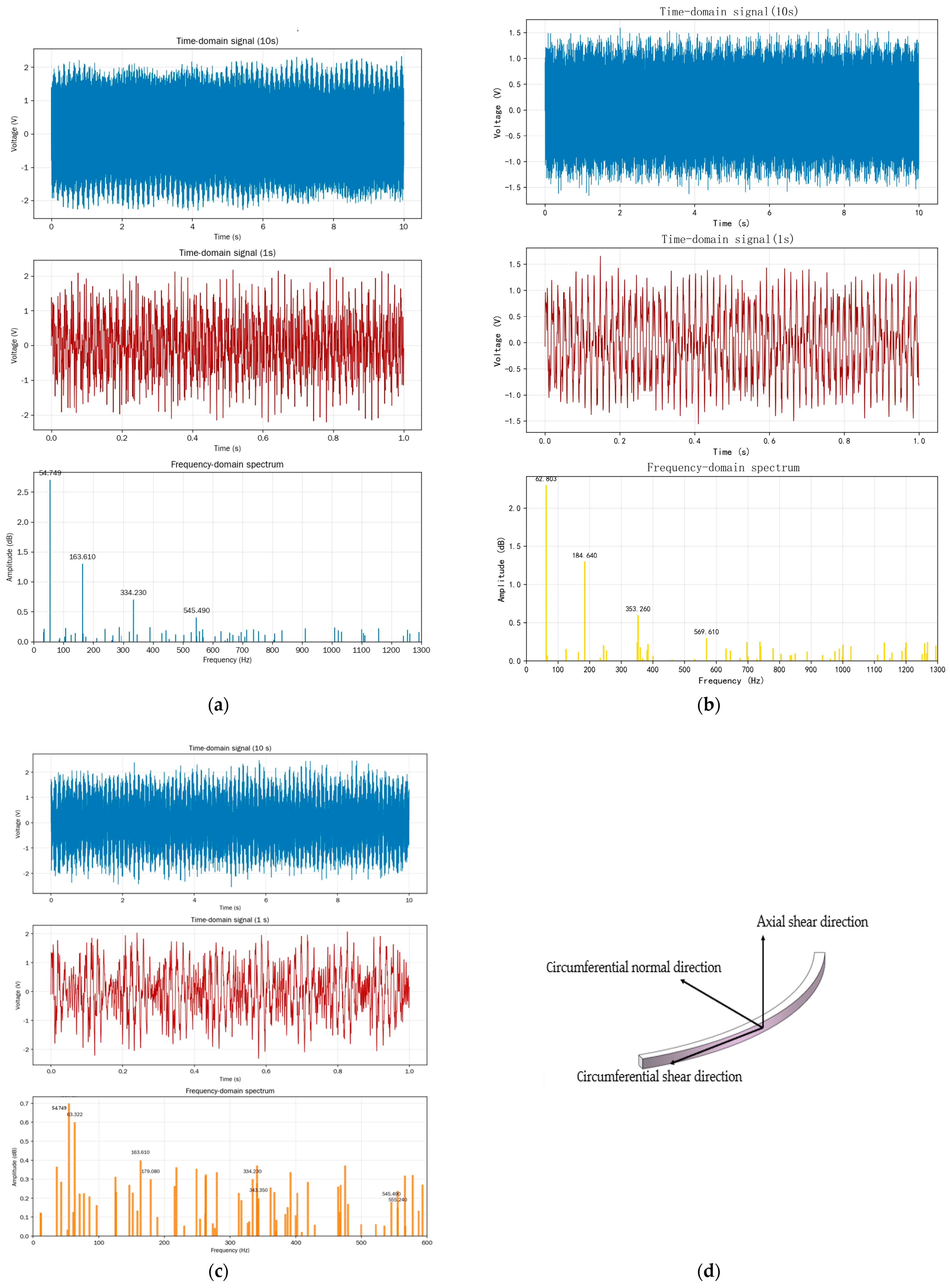
The time-domain curves and Fourier-transformed frequency-domain spectra of the circumferentially mounted normal stress sensor, axial shear stress sensor, and circumferential shear stress sensor are shown in
Figure 15. To mitigate spectral leakage, a sufficiently long sampling duration of 10 s was adopted for spectral analysis. As shown in the figures, the amplitude of high-frequency components is indistinct due to substantial noise interference, indicating that further analysis of excessively high-order modes is of limited practical significance.
As depicted in
Figure 15c, the measured signal in the circumferential shearing direction represents a composite response involving out-of-plane, in-plane, and torsional vibration modes. While the characteristic frequencies of interest exhibit relatively low prominence in this component, their corresponding amplitude levels remain overall weak.
This observation provides supplementary evidence that the in-plane and out-of-plane vibration modes analyzed in the present work constitute the dominant mechanical modes of the direct-drive VICTS rotor support ring.
From
Table 3, the following conclusions can be drawn:
(1) For each circumferential wave number n, there are always two orthogonal vibration modes with the same natural frequency, and the natural frequency increases with the increase in the wave number and modal order, which is consistent with the theoretical characteristics of annular structure vibration.
(2) The maximum error between the modal frequency calculated by the wave equation and the experimental results is only 3.1%, and the agreement with the finite element simulation results is even better. The small error comes from the neglect of minor structural features such as mounting holes in the analytical model.
(3) The proposed wave equation-based analytical modeling method can accurately predict the modal characteristics of the rotating ring and avoids the heavy computational cost of full-model finite element simulation in the optimization process.
5.3. Performance Comparison with Traditional Design
We conducted a comprehensive performance comparison between the optimized design and the traditional uniform support rectangular cross-section design, and the results are presented in
Table 4.
The comparison results clearly demonstrate that the proposed method not only achieves a 40% weight reduction in the rotating ring but also significantly improves the dynamic performance: the minimum modal separation interval is increased by 40%, and the RMS tracking error at 300°/s is reduced by 65% compared with the traditional design. Meanwhile, the optimization efficiency is greatly improved, with the modal prediction time per iteration reduced from 2 h to less than 5 min.
5.4. Engineering Prototype Validation
Based on the optimized cross-section shown in
Figure 6, 18Ni300 stainless steel is selected as the material, and the feeder layer motor rotating ring is fabricated via metal 3D printing. The weight of the finished prototype is reduced by 40% compared with the original design. The whole antenna prototype is shown in
Figure 14b.
In the engineering test, when the optimized antenna operates at a rotational speed of 300°/s, the tracking speed fluctuation is within ±5%, which fully meets the engineering application requirements. The test results prove the feasibility and effectiveness of the proposed optimization method in practical engineering applications.
6. Conclusions
This work presents the vibration modeling and dynamic performance optimization of the core rotating components (rotating ring and support balls) of the direct-drive VICTS satellite communication antenna motor. The main conclusions are as follows:
(1) A wave-theory-based dynamic model of the multi-layer rotating ring is established, including the annular wave equation of the thin-walled ring and the ball revolution excitation equation. The analytical solution of the structural modal characteristics is realized, and the accuracy of the model is validated via finite element simulation and experimental testing, with a maximum prediction error of only 3.1%.
(2) A Modal Blocking Mechanism is proposed based on the wave interference principle, which realizes the targeted suppression of specific order modes by designing the support ball layout to satisfy the half-wavelength constraint. A ball distribution law for vibration suppression in multi-ball-supported rotational transmission systems is derived, providing a deterministic quantitative design criterion for support layout.
(3) A homogenization equivalent method for irregular cross-section rotating rings is developed, with analytical formulations for equivalent density, in-plane equivalent elastic modulus, and out-of-plane equivalent shear modulus. This method enables the fast analytical solution of modal characteristics for irregular cross-section lightweight designs, avoiding heavy finite element iterative computation.
(4) A rapid multi-objective dynamic optimization framework is established, which simultaneously realizes lightweight design and dynamic performance enhancement. Compared with the traditional uniform support design, the optimized structure achieves a 40% weight reduction, a 40% increase in the minimum modal separation interval, and a 65% reduction in the RMS tracking error, with greatly improved optimization efficiency.
This work provides an efficient, reliable, and physics-informed dynamic design method for large-diameter annular structures such as direct-drive VICTS satellite antennas. Future work will focus on the nonlinear dynamic modeling of the rotating ring under extreme operating conditions, and the multi-physics coupling optimization of electromagnetic–thermal–structural performance of the multi-layer direct-drive motor.