Article

Study on the Effects of Inflow Conditions on the Inlet Performance of a Dorsal S-Shaped Inlet

1
School of Civil Aviation, Northwestern Polytechnical University, Xi’an 710072, China
2
School of Unmanned Aerial Vehicle Industry, Chengdu Aeronautic Polytechnic University, Chengdu 610100, China
3
School of Aeronautics, Northwestern Polytechnical University, Xi’an 710072, China
4
High-Speed Aerodynamic Institute, China Aerodynamics Research and Development Center, Mianyang 621000, China
*
Author to whom correspondence should be addressed.
Aerospace 2026, 13(4), 319; https://doi.org/10.3390/aerospace13040319
Submission received: 9 March 2026 / Revised: 26 March 2026 / Accepted: 27 March 2026 / Published: 29 March 2026
(This article belongs to the Section Aeronautics)

Abstract

As an important aerodynamic configuration of the new-generation UAV, the dorsal S-shaped inlet’s performance is affected by the complex coupling of inflow conditions and the boundary layer ingestion effect. To investigate the influence mechanisms of these factors on inlet performance, CFD based on the scale-adaptive simulation (SAS) turbulence model is used to systematically analyze the flow field and performance of a UAV dorsal S-shaped inlet within a typical flight envelope. It is found that with increasing Mach number (0.6–0.9), the exit total pressure recovery decreases significantly, while the circumferential distortion coefficient almost doubles. As the angle of attack varies from −10° to 10°, a slight decrease in total pressure recovery is observed, but distortion improves due to a relatively stable separation region. Changes in sideslip angle have minimal impact on overall performance but notably alter the symmetry of the vortex system, resulting in a decrease in distortion coefficient. Additionally, at a specific Mach number, back pressure correlates positively with inlet performance. The increase in back pressure can effectively inhibit the flow separation and enhance the total pressure recovery, while the distortion coefficient decreases. The research results provide an important theoretical basis for the design optimization of the new-generation UAV.

1. Introduction

The dorsal inlet is a highly integrated aircraft propulsion system layout, which embeds the engine and intake on the upper surface of the aircraft and is typically combined with the S-shaped inlet to achieve shielding of the engine intake, provide streamline flow paths, and reduce structural weight [1,2]. Modern unmanned aerial vehicles (UAVs) often adopt flying-wing or blended-wing-body configurations to balance flight performance with stealth capabilities. In such designs, the engine fan blades, being strong radar scatterers, are typically embedded within the fuselage to achieve low detectability. Studies have shown that electromagnetic waves undergo multiple reflections within curved ducts, resulting in significant energy attenuation, which effectively reduces radar cross-section (RCS) at the inlet [3,4]. In addition, with the urgent demand for lightweight and low-resistance new-generation UAVs [5], such unconventional configurations have emerged as an important direction in the design of next-generation aircraft [6,7].
The dorsal inlet often adopts an S-shaped configuration with high offset and curvature to complete flow turning and diffusing of airflow in a limited space, and to achieve shielding of the engine fan and enhance the outlet static pressure through the pre-compression effect of the curved section [8,9]. However, when fluid flows through a curved duct, the centrifugal force acting on fluid elements induces a radial pressure gradient across the duct cross-section. Due to its low momentum, the fluid within the boundary layer generates a secondary flow in the direction perpendicular to the mainstream, thereby forming a pair of counter-rotating streamwise vortices [10]. In an S-shaped inlet, the reversal of curvature between the first and second bends leads to complex vortex interactions, resulting in flow separation and significant total pressure loss [11]. Consequently, this adversely affects the thrust output and operational stability of the engine [12,13].
To address these challenges, scholars worldwide have carried out various studies using computational fluid dynamics (CFD), experimental measurements, and multidisciplinary optimization approaches. In recent years, computational fluid dynamics (CFD) methods have become the primary tool for S-shaped inlet analysis and optimization. Zhang et al. [14] combined CFD with the Taguchi method and investigated how area distribution and centerline distribution affect the aerodynamic performance of a dual serpentine nozzle. Based on this, they established a systematic approach for parameter sensitivity analysis. Hu et al. [15] employed Co-Kriging surrogate models combined with parameter dimensionality reduction techniques for aerodynamic stealth multi-objective optimization of S-shaped inlets, significantly increasing the total pressure recovery coefficient while markedly reducing the total pressure distortion coefficient and RCS of the optimized inlet. Ming et al. [16] investigated the internal flow in a continuously variable curvature S-shaped duct by using Large Eddy Simulation (LES), and revealed the generation, development, and evolution of distortion and vortices upstream of the compressor inlet. In the aspect of inlet geometric parameters optimization, Asghar [17,18] systematically analyzed the influence of the inlet-to-outlet area ratio and the inlet aspect ratio on inlet performance. Through both experiments and CFD approaches, they revealed the physical mechanism of geometric parameters regulating the flow phenomenon. He et al. [19] employed a multi-objective particle swarm optimization (MOPSO) algorithm based on radial basis function (RBF) neural networks to conduct a multi-objective optimization design of an S-shaped inlet with an internal bump, achieving optimized results that strike a balance between electromagnetic and aerodynamic performance. Based on a circumferential body force model, Jia [20] studied the influence of the centerline offset and inlet aspect ratio on the flow field of a distributed propulsion system. They found that changes in these geometric parameters on the center and edge fans showed an opposite trend. Parhizkar [21] optimized the geometry of an S-shaped inlet for a missile at low Mach numbers, thereby reducing the total pressure loss at the exit. In the study on the influence of flight parameters, Behfarshad [22] systematically evaluates the performance of an S-shaped inlet under various flight conditions such as cruise, climb and stall through a low subsonic wind tunnel test. Liou and Lee [23] investigated the effects of crosswind on inlet performance, finding that the impact of crosswind on exit distortion is relatively weak. Berra [24] explores the performance of an inlet designed based on the shock system at the off-design Mach number, revealing that variations in shock position and intensity can lead to increased total pressure loss and distortion. These studies demonstrate the rapid advancement of CFD techniques in S-shaped inlet research, from traditional Reynolds-averaged Navier–Stokes (RANS) approaches to scale-resolving simulations and multidisciplinary optimization.
Notably, for dorsal inlets, boundary layer ingestion (BLI) represents a unique challenge. Modern UAVs eliminate the traditional boundary layer diverter at the inlet entrance to reduce cross-section, allowing the thick boundary layers developed on the forebody to be directly ingested into the inlet [25]. This configuration, combined with the absence of a diverter, makes BLI an inherent feature rather than an avoidable disturbance. It is shown that the momentum of the ingested boundary layer is relatively low, and the flow separation and distortion are easily aggravated under the combined effects of adverse pressure gradient and curved wall boundaries [26,27]. Through wind tunnel experiments, Rein [28] demonstrates that the thicker the boundary layer, the more prone the lip region is to separation, leading to the formation of a horseshoe vortex structure and thereby enhancing flow field distortion. Li et al. [29] investigated the relationship between separated flow and the height-to-radius ratio (HRR) in an S-shaped diffuser with boundary layer ingestion. The results reveal that flow separation within the S-shaped duct is significantly influenced by the height-to-radius ratio yet remains insensitive to variations in the relative boundary layer height. Chiang et al. [30] applied a high-fidelity aerodynamic shape optimization framework based on RANS equations to optimize an S-shaped duct with boundary layer ingestion (BLI) for the embedded engine of a high-subsonic UAV. Multi-point optimization results show that the S-shaped duct maintains excellent performance under cruise, climb, and descent conditions. However, existing studies have primarily focused on geometric optimization under specific flight conditions, while the understanding of the interaction mechanisms between inflow conditions (such as free-stream Mach number, angle of attack, sideslip angle, and outlet back pressure) and the BLI effect remains relatively limited.
In view of this, this paper focuses on the large offset dorsal S-shaped inlet of a UAV, adopts the CFD method to systematically investigate the influence of key parameters such as the free-stream Mach number, angle of attack, sideslip angle and outlet back pressure on the internal flow structure and performance indexes (total pressure recovery, pressure ratio, circumferential total pressure distortion coefficient) of the inlet, and aims to provide references for the design and performance evaluation of such inlets.

2. Numerical Method and Geometric Model

2.1. Governing Equations

According to the flight conditions of a UAV (Ma > 0.3), air compressibility should be considered. Neglecting the body force term, the governing equations of compressible fluids in Cartesian coordinates are as follows:
ρ t + ( ρ u i ) x i = 0
( ρ u i ) t + ( ρ u i u j ) x j = p x i + ( τ i j + τ i j mod ) x j
( ρ E ) t + [ ( ρ E + p ) u i ] x i = ( q i + q i mod ) x i + ( u j τ i j + u j τ i j mod ) x i
where u i is the velocity component, x i is the coordinate, ρ is the fluid density, p represents pressure, and E represents specific total energy. τ i j and τ i j mod represent molecular viscous stress and turbulent Reynolds stress respectively, while q i and q i mod represent molecular heat flux and turbulent heat flux respectively.
In this study, a self-developed large-scale parallel computational fluid dynamics (CFD) solver is employed to simulate compressible flows. The solver is based on the finite volume method with second-order accuracy. The turbulent stress and heat flux terms are closed by the scale-adaptive simulation (SAS) method, which is based on the Boussinesq eddy viscosity assumption combined with the Spalart–Allmaras model [31,32]. As a hybrid RANS/LES method, SAS differs from DES in its switching mechanism. DES relies on grid spacing to determine the mode of simulation, whereas SAS adaptively resolves turbulent structures by detecting the von Neumann length scale L ν k = κ Ω / | 2 U | [33], where Ω represents the local vorticity and U represents the flow velocity. By taking the smaller value of length scale d and von Neumann length L ν k in a S-A model and removing the DES limiter, the expression for the characteristic scale d ˜ can be obtained:
d ˜ = min ( d , L ν k / κ )
In regions dominated by unresolved turbulence, the model operates in RANS mode. When fine-scale vortical structures emerge, the von Neumann length scale L ν k decreases, and the flow naturally transitions to LES mode. To date, the SAS method has been validated across various computational scenarios and achieves a favorable balance between computational cost and solution accuracy [34,35]. Therefore, this study adopts the Spalart–Allmaras (S-A) model with the scale-adaptive simulation (SAS) approach as the primary research tool.

2.2. Numerical Validation

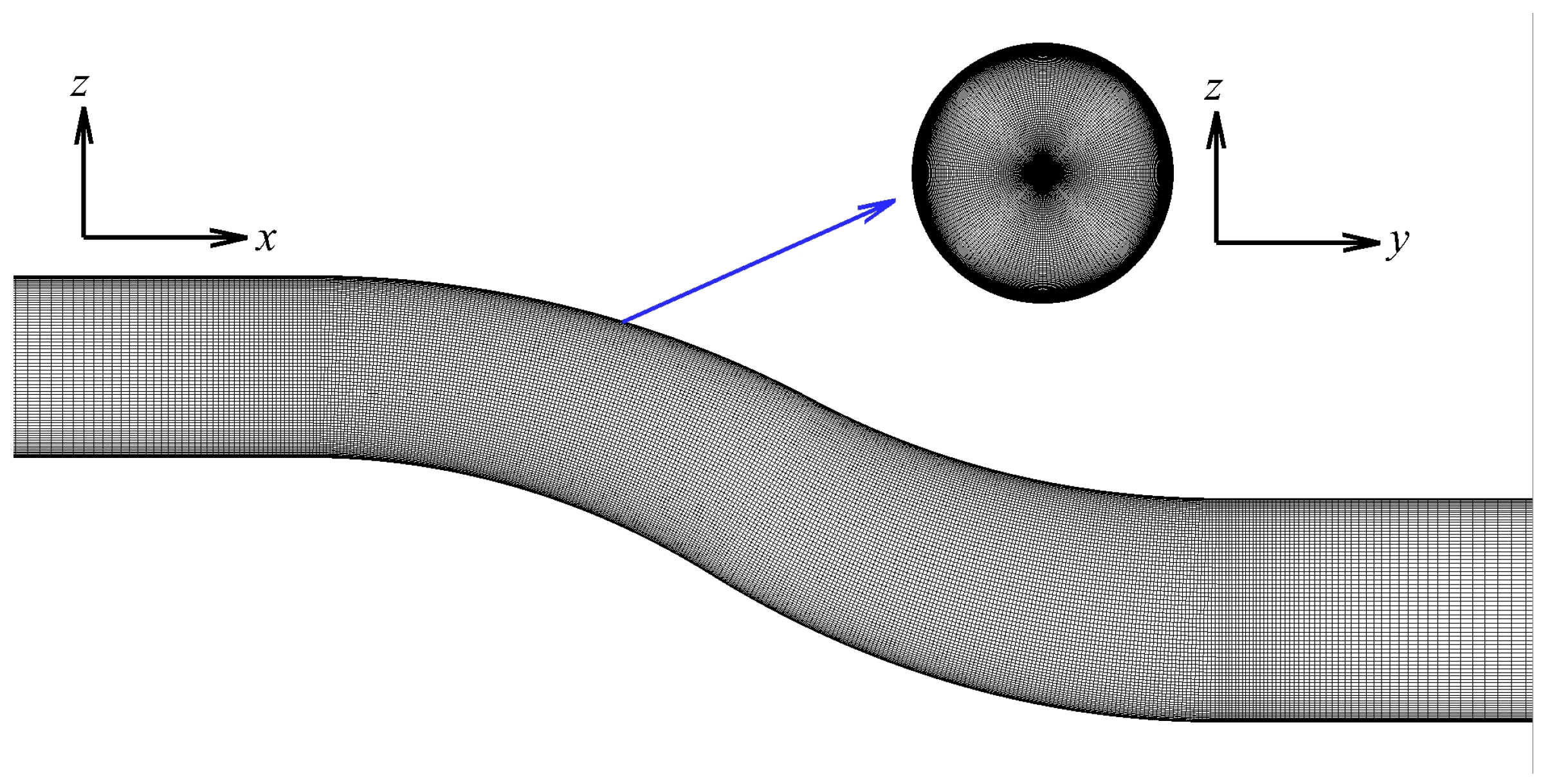
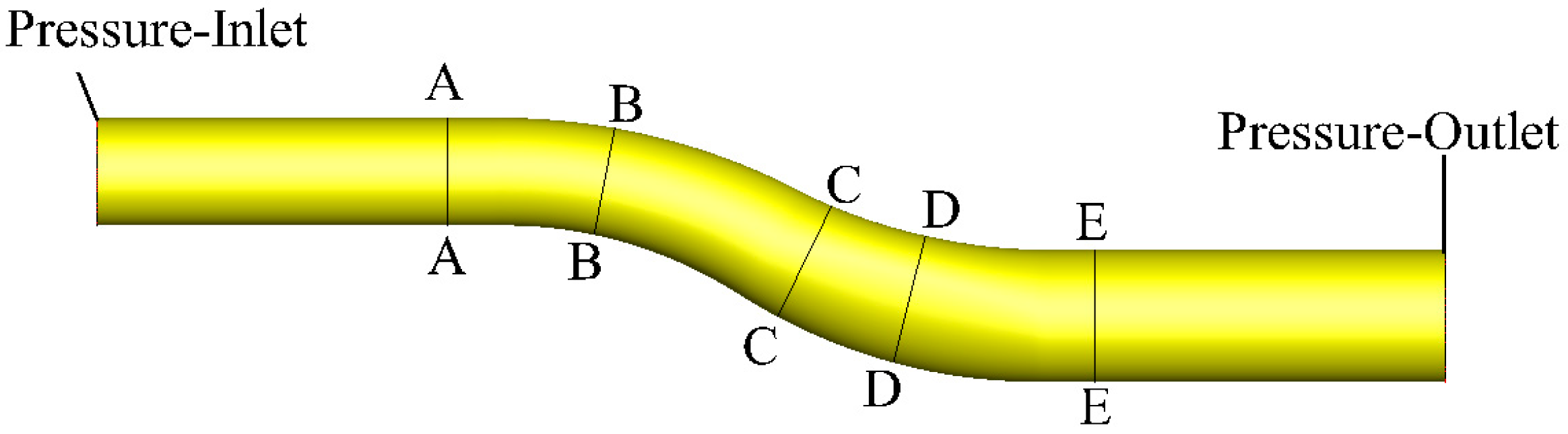
To validate the capability of the SAS method based on a S-A model for S-shaped inlet flow, a typical S-shaped diffuser is selected for case verification. The S-shaped diffuser model is shown in Figure 1, where the inlet and exit sections are appropriately extended for computational convenience. Here, A to E represent the sections used for the flow field calculation and analysis of the inlet duct. The computational domain mesh is a structured mesh, with refined meshing near the wall and regions with significant curvature changes. Following best-practice guidelines for S-shaped inlet simulations and a preliminary grid sensitivity check, the total number of grid cells is approximately 12.46 million. The overall mesh distribution and cross-sectional mesh can be seen in Figure 2.
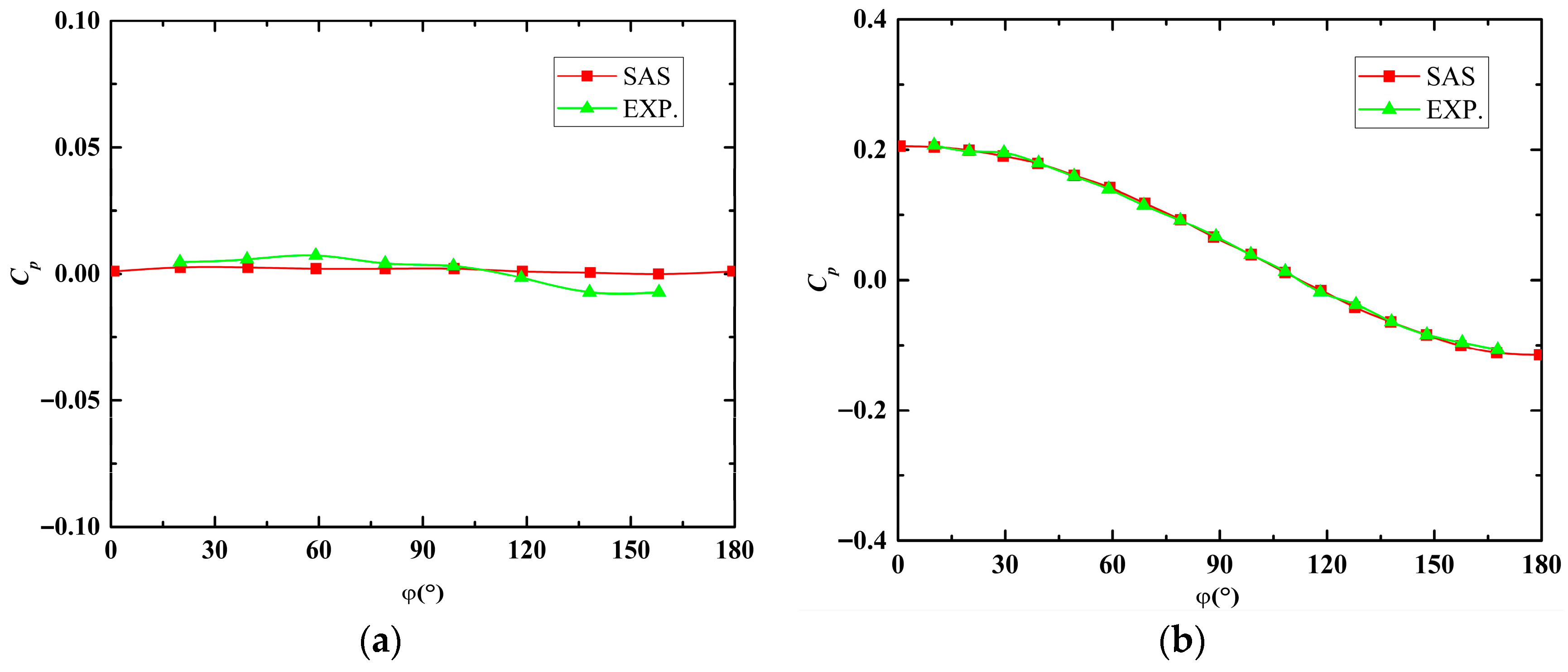
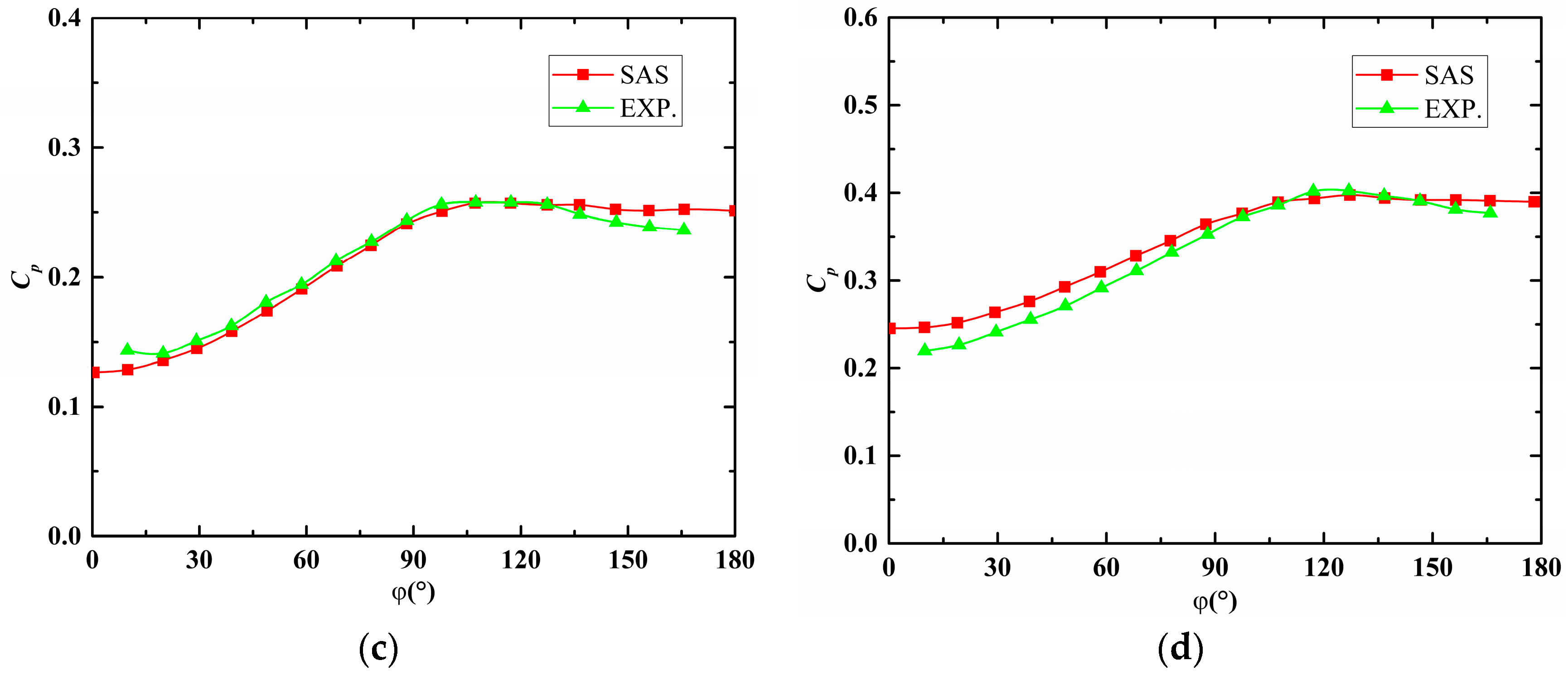
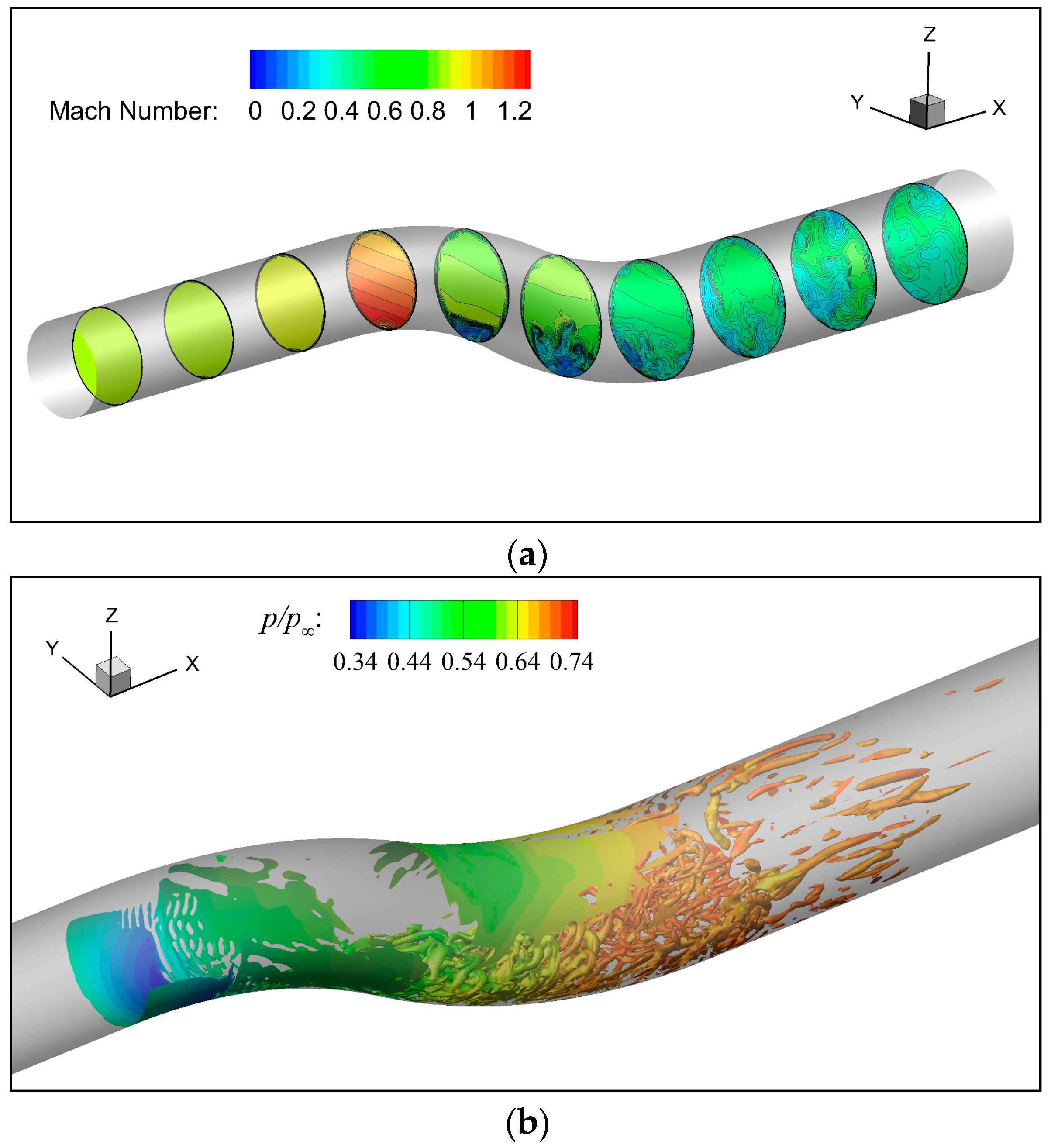
The boundary conditions are set as follows: the inlet is prescribed a total pressure of 1.01 × 10 5 Pa, the back pressure at the outlet is 7.92 × 10 4 Pa, the total temperature in the flow field is 298 K, and the wall is adiabatic. Figure 3 compares the computed surface static pressure coefficient Cp at key cross-sectional locations with the experimental data from Ref. [36]. The surface static pressure coefficient is defined as the ratio of the difference between the wall static pressure and the free-stream static pressure to the free-stream dynamic pressure. The simulation results show good agreement with the experimental data, indicating that the numerical method employed possesses high accuracy in predicting the mean flow characteristics. Furthermore, the accurate capture of vortex structure evolution shown in Figure 4 indicates that the method can effectively simulate turbulence and capture flow separation phenomena in the internal flow field.

2.3. Geometric Model and Boundary Conditions

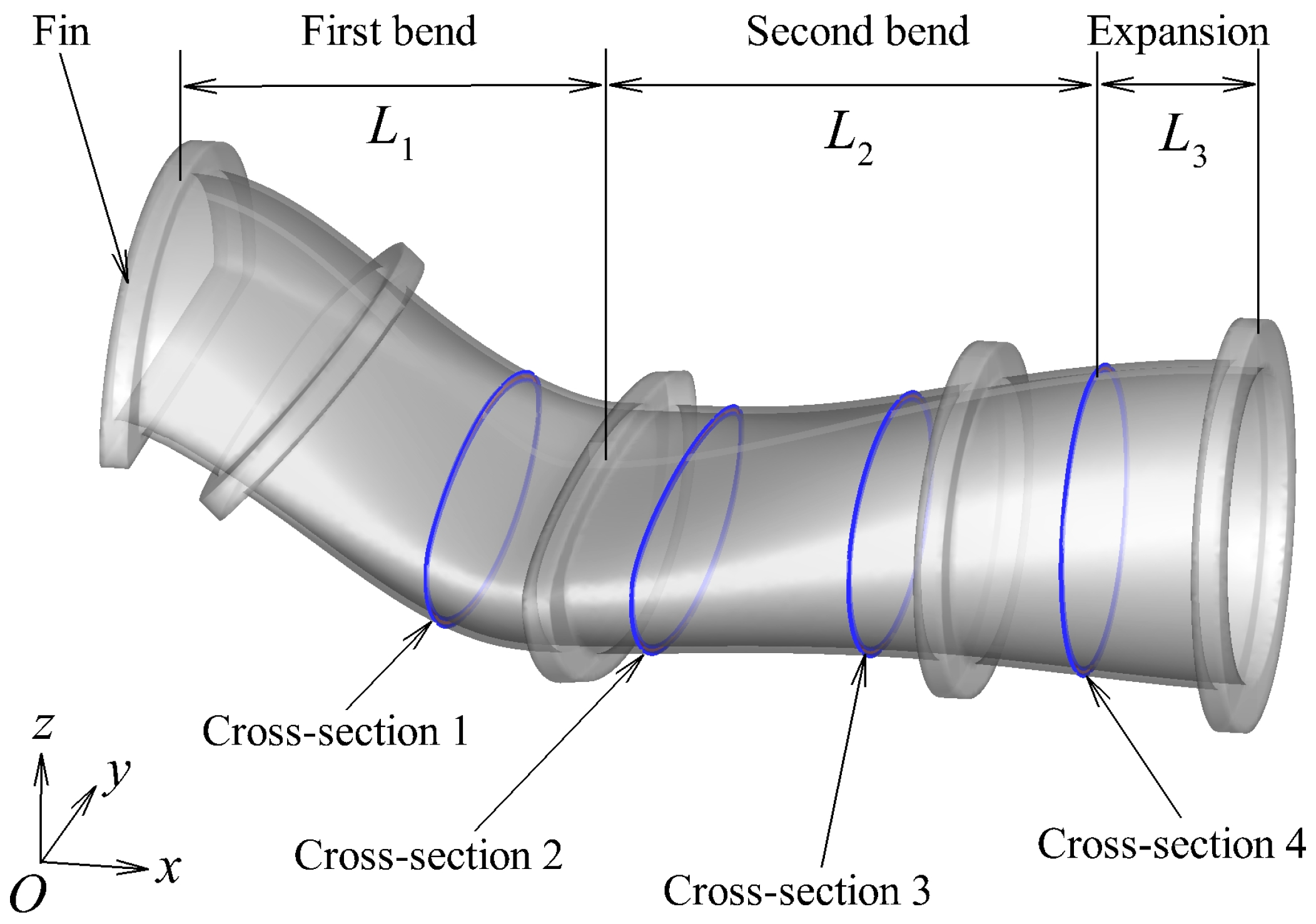
The geometric model of the dorsal S-shaped inlet investigated in this study is shown in Figure 5, consisting of a semi-circular inlet, first-bend section, second-bend section and circular diffuser exit. Due to technical confidentiality requirements associated with the engineering project from which the inlet model originates, the detailed surface coordinates and the specific dimensions of the internal flow path cannot be disclosed. Therefore, only the overall length L and the exit diameter D are provided as the basic dimensional references. The actual length of the inlet is approximately 3.7 m, and the exit diameter is around 0.9 m. Four cross-sectional positions are selected along the axial direction for flow field analysis. It is worth noting that, in order to simulate the boundary layer ingestion of an aircraft forebody, the nose and part of the fuselage of a certain UAV are added ahead of the inlet. And the outlet of the inlet is appropriately extended to prevent the internal flow field from being affected by the outlet boundary. As a brief background, it is noted that, in curved duct flows, the centrifugal force at large-curvature bends induces a radial pressure gradient, which drives the boundary layer fluid to roll up and form typical Dean vortices [36]. At locations where the curvature reverses, the newly generated vortex pairs under the effect of the opposing radial pressure gradient merge with the original vortices, leading to the formation of large-scale streamwise vortical structures [37].
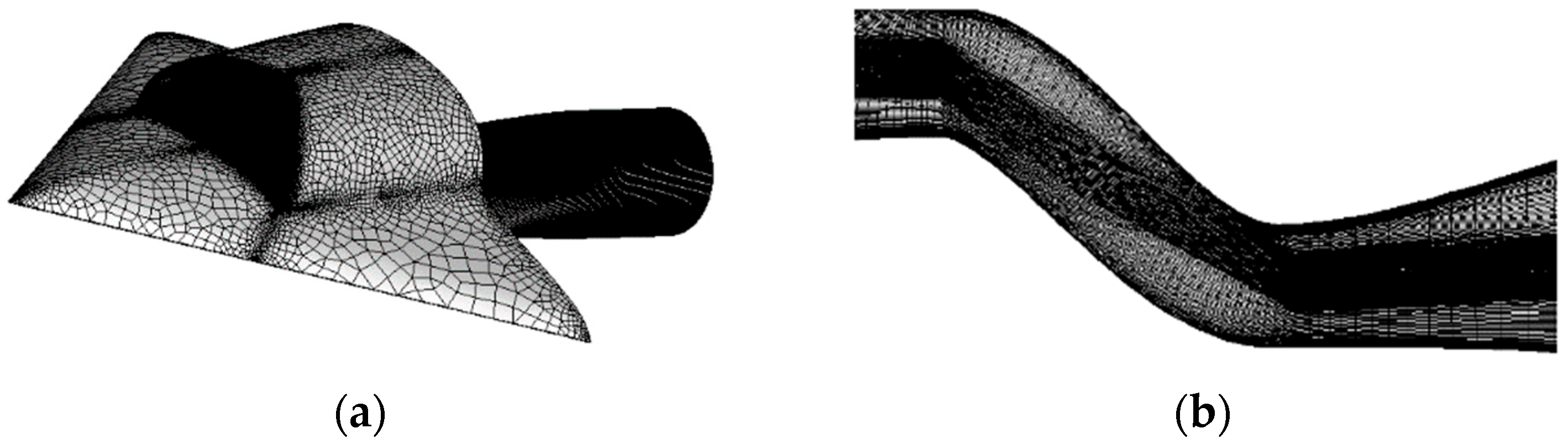
The calculation domain is divided into two parts: the external flow field and the inlet flow field. The external flow field is a cylindrical region with a diameter and height of 40 m, where the free-stream boundary condition is applied using pressure far-field conditions. The inlet of the internal flow field is located within the external flow field, and the outlet of the internal flow field is set as the pressure outlet boundary. Figure 6 shows the mesh generation of the inlet with a UAV forebody. The external flow field uses unstructured mesh, while the internal flow field uses structured mesh. Local mesh refinement is applied around the intake entrance and near-wall regions. In accordance with established practices for similar inlet configurations, the first-layer mesh height is set to satisfy y+ < 1, ensuring proper resolution of boundary layer flow structures. And the final mesh comprises approximately 8 million elements. Additionally, the computational conditions are set to a flight altitude of H = 5.5 km. According to the International Standard Atmosphere (ISA), the pressure and temperature at this altitude are specified as P = 50 , 539 Pa and T = 252.4 K, respectively.

2.4. Performance Evaluation Parameters

The core function of the inlet is to provide stable and high-quality airflow for the engine. The total pressure recovery (TPR), pressure ratio, and total pressure distortion coefficient are key parameters for evaluating its performance. The following section briefly introduces the definitions and calculation methods of these indicators:
The TPR is defined as the ratio of the total pressure at the inlet exit to the total pressure of the free-stream, used to characterize the degree of energy loss of the airflow after passing through the inlet. Its expression is as follows:
TPR = P o u t * P *
In the equation, P o u t * and P * represent the total pressure at the inlet exit and the total pressure of the free-stream respectively. A lower TPR indicates significant thrust loss in the engine.
The pressure ratio is defined as the ratio of the average static pressure at the inlet exit section to the static pressure of the free-stream far ahead, which is used to evaluate the diffusion capability of the inlet. Its expression is as follows:
π = P o u t ¯ P
where P o u t ¯ and P are the average static pressure at the exit section of the inlet and the static pressure from far ahead respectively. A higher pressure ratio indicates a stronger airflow compression capability of the inlet but may also lead to increased total pressure loss and deterioration of flow uniformity, among other adverse effects. It should be emphasized that the outlet section actually selected in this study is Cross-Section 4, as defined earlier.
The circumferential total pressure distortion coefficient is defined as the difference between the average total pressure at the outlet cross-section of the inlet and the minimum average total pressure within a sector region of this cross-section, divided by the dynamic pressure at the outlet cross-section. It is a parameter used to evaluate total pressure non-uniformity. Typically, the average total pressure within a 60° sector region is used as a reference. Its expression is as follows:
D C 60 = P o u t * ¯ P min , 60 * ¯ q a v
In the formula, P * ¯ represents the average total pressure at the exit section, P min , 60 * ¯ is the minimum average total pressure within 60 degrees of the section, q a v is the average dynamic pressure of the section. Higher D C 60 will threaten the stable operation of the engine.

3. Results and Discussion

3.1. Effect Analysis of Free-Stream Mach Number on Inlet Performance

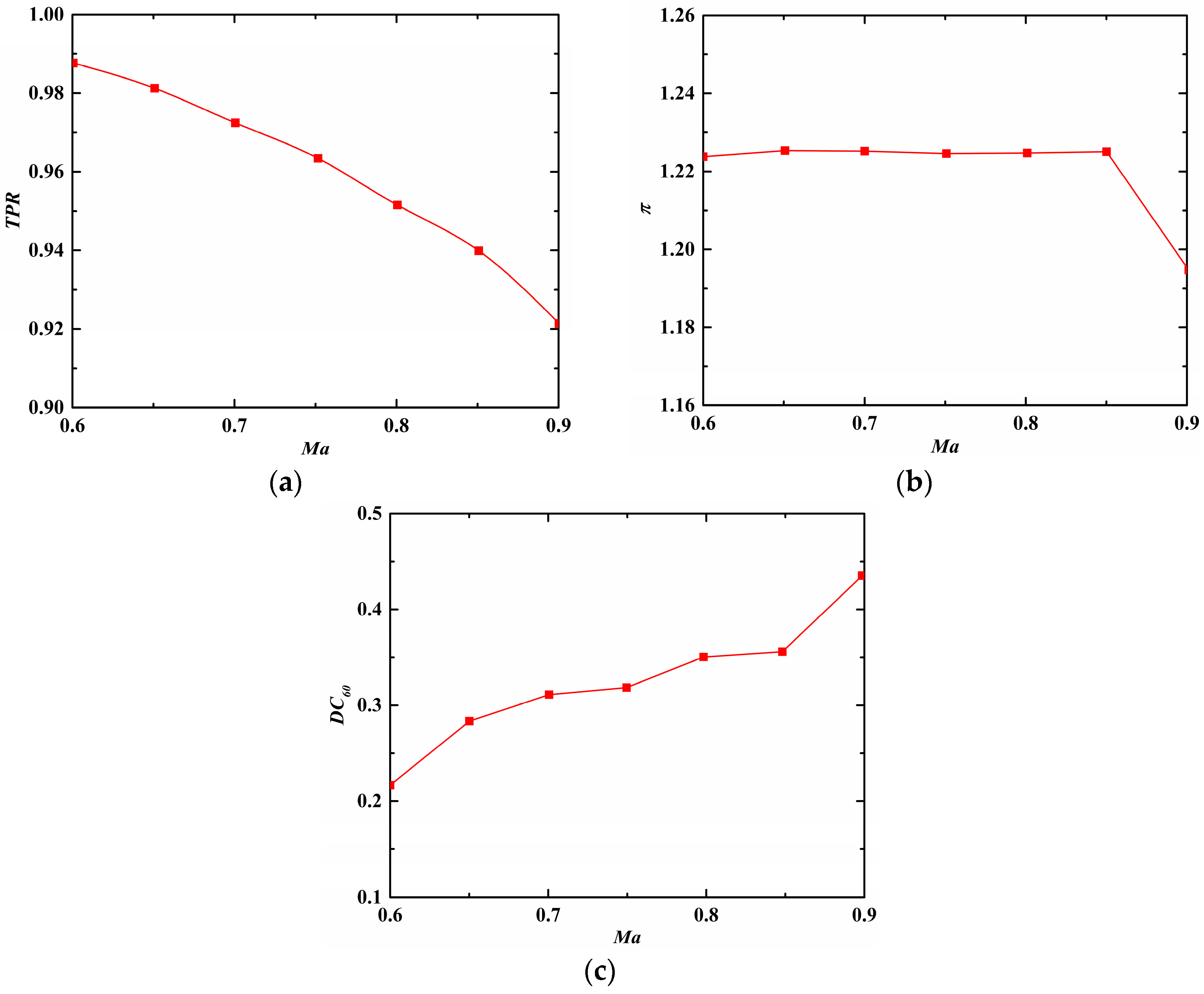
To reveal the mechanism of different Mach numbers on the performance of the S-shaped inlet, this section systematically investigates the evolution of inlet performance metrics under Mach number conditions of Ma = 0.6 to 0.9, angle of attack α = 0°, and sideslip angle β = 0°. Figure 7 shows the variation curves of the TPR, pressure ratio, and circumferential total pressure distortion coefficient with the free-stream Mach numbers. The results show that the TPR exhibits a monotonic decreasing trend with increasing Mach number, decreasing from 0.988 at Ma = 0.6 to 0.921 at Ma = 0.9, representing a reduction of approximately 6.8%. The core reason is that the high-speed free-stream increases the total pressure at the inlet entrance, resulting in higher flow velocities throughout the internal duct, which in turn exacerbates wall friction losses and induces intense flow separation due to strong shock waves at the bend section. Notably, the pressure ratio is less sensitive to Mach number variations, remaining around 1.22 within the Ma = 0.6–0.8 range, with only a slight decrease to 1.194 at Ma = 0.9. This may be attributed to the complex interaction. At a high subsonic Mach number approaching 0.9, the strong compression waves induce significant flow separation within the inlet. The separation zone effectively reduces the available flow area, thereby locally accelerating the flow and altering the distribution of the mean static pressure at the exit. The circumferential total pressure distortion coefficient, however, increases significantly at Ma = 0.9, nearly doubling compared to the Ma = 0.6 condition, indicating that the uniformity of the outlet flow field deteriorates obviously at high Mach numbers.
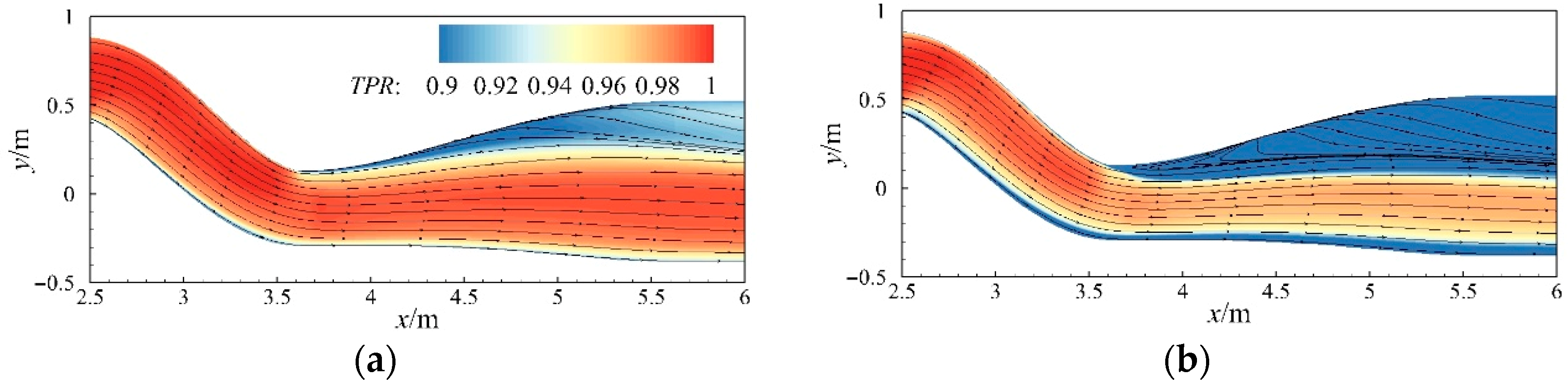
Figure 8 presents the distribution of the TPR and streamline diagrams at the symmetrical cross-section of the inlet under different Mach numbers. From the flow structures, it is evident that with increasing Mach number, the separation region on the upper wall of the inlet expands significantly, and the area of the low-pressure region (blue area) increases obviously. The low-pressure region at Ma = 0.9 is approximately twice as large as that at Ma = 0.7. This large-scale separation structure not only causes significant total pressure losses but also severely deteriorates the uniformity of the exit flow field. Additionally, the convergence of streamlines is observed in the low-pressure region at Ma = 0.9, indicating intense shear flow between the separation zone and the mainstream. The increased shear loss may contribute to the reduction in the peak value of the TPR compared to low-Mach-number conditions.
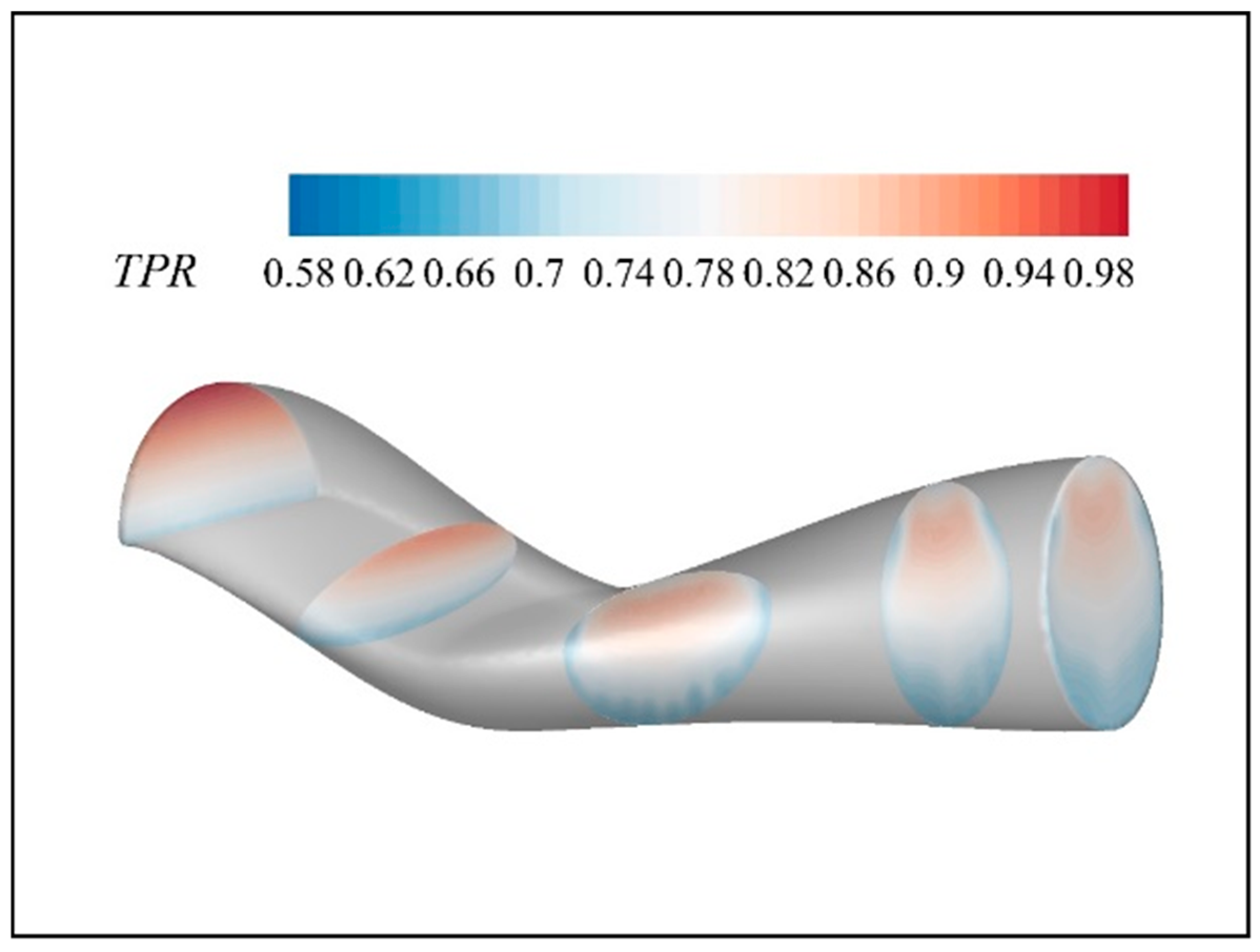
In order to further understand the flow evolution process, Figure 9 shows the distribution nephogram of TPR along the key section of the flow direction at Mach 0.5. At the intake entrance, the TPR exhibits a clear longitudinal stratification characteristic, and the lower wall region experiences significant total pressure loss (TPR ≈ 0.58) due to the boundary layer ingestion of a UAV forebody, while the mainstream region maintains a TPR close to 1.0. In the rapidly contracting and strongly curved sections, the flow shows pronounced stratification, with the lower surface evolving into a series of streamwise vortex structures that exhibit a typical “pea-shaped” feature, which is consistent with the secondary flow structures reported in reference [38]. As the flow continues to evolve along the flow direction, the inlet cross-section continues to expand, causing the vorticity to exhibit transverse diffusion and enhancing the mixing effect. As the static pressure on the side wall decreases continuously, the flow vortex on the lower wall gradually surges up against the wall, resulting in more obvious flow separation near the exit section.
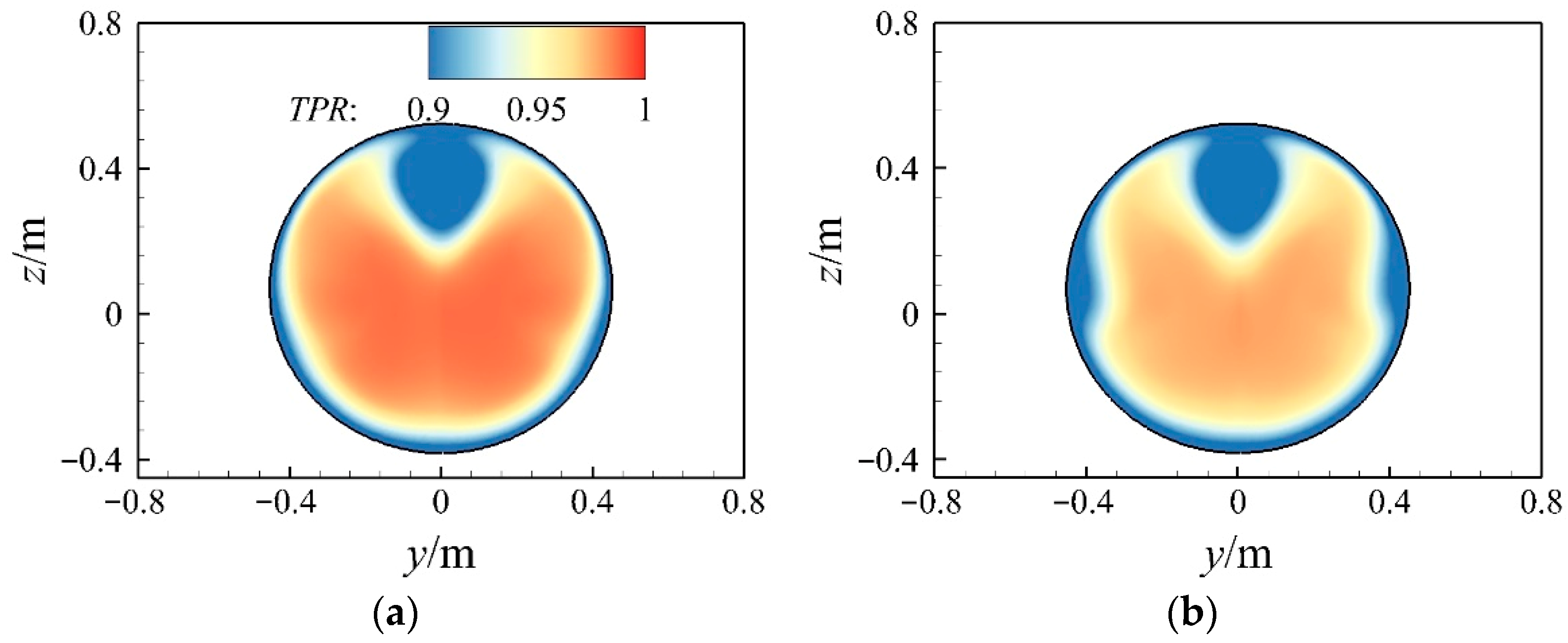
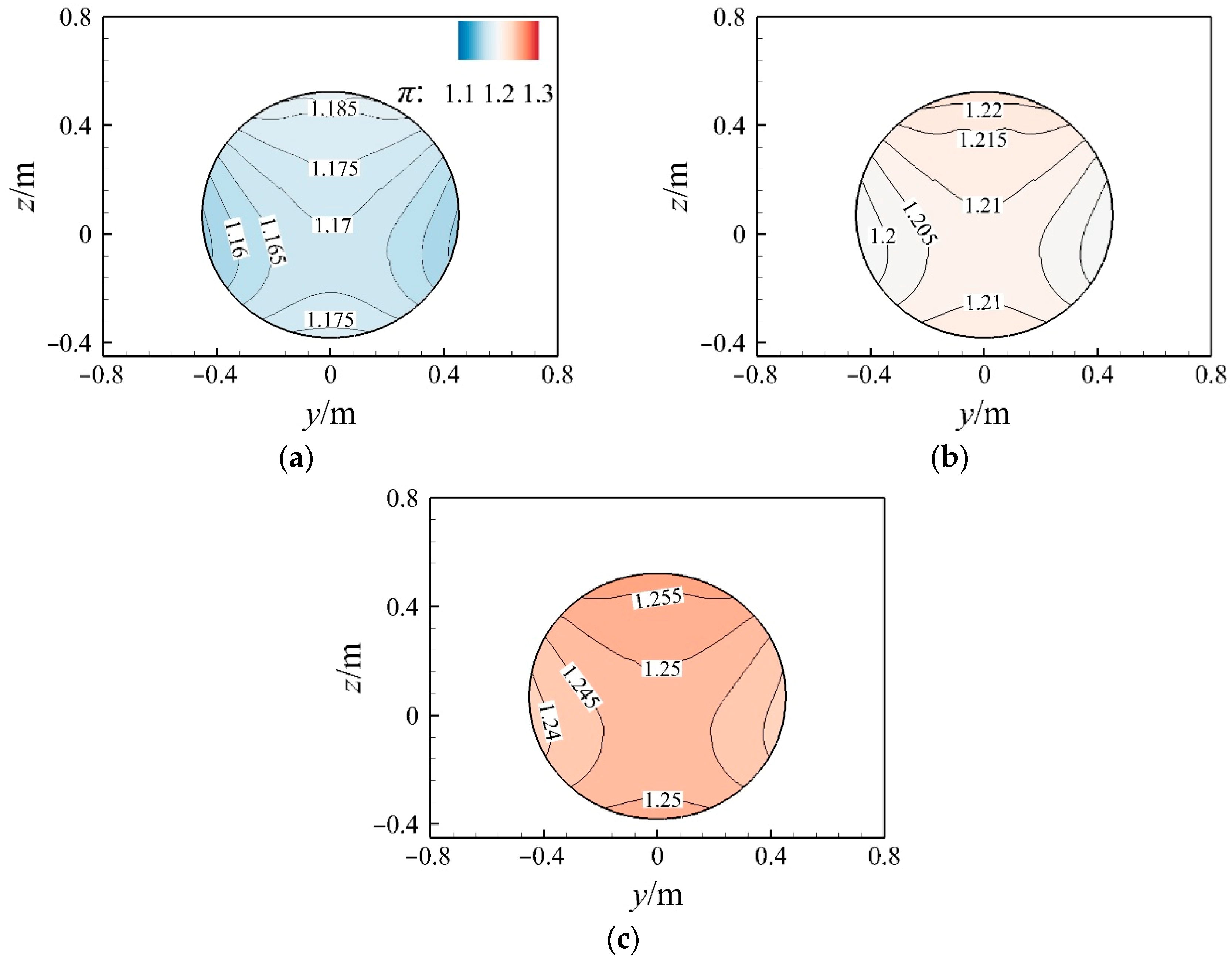
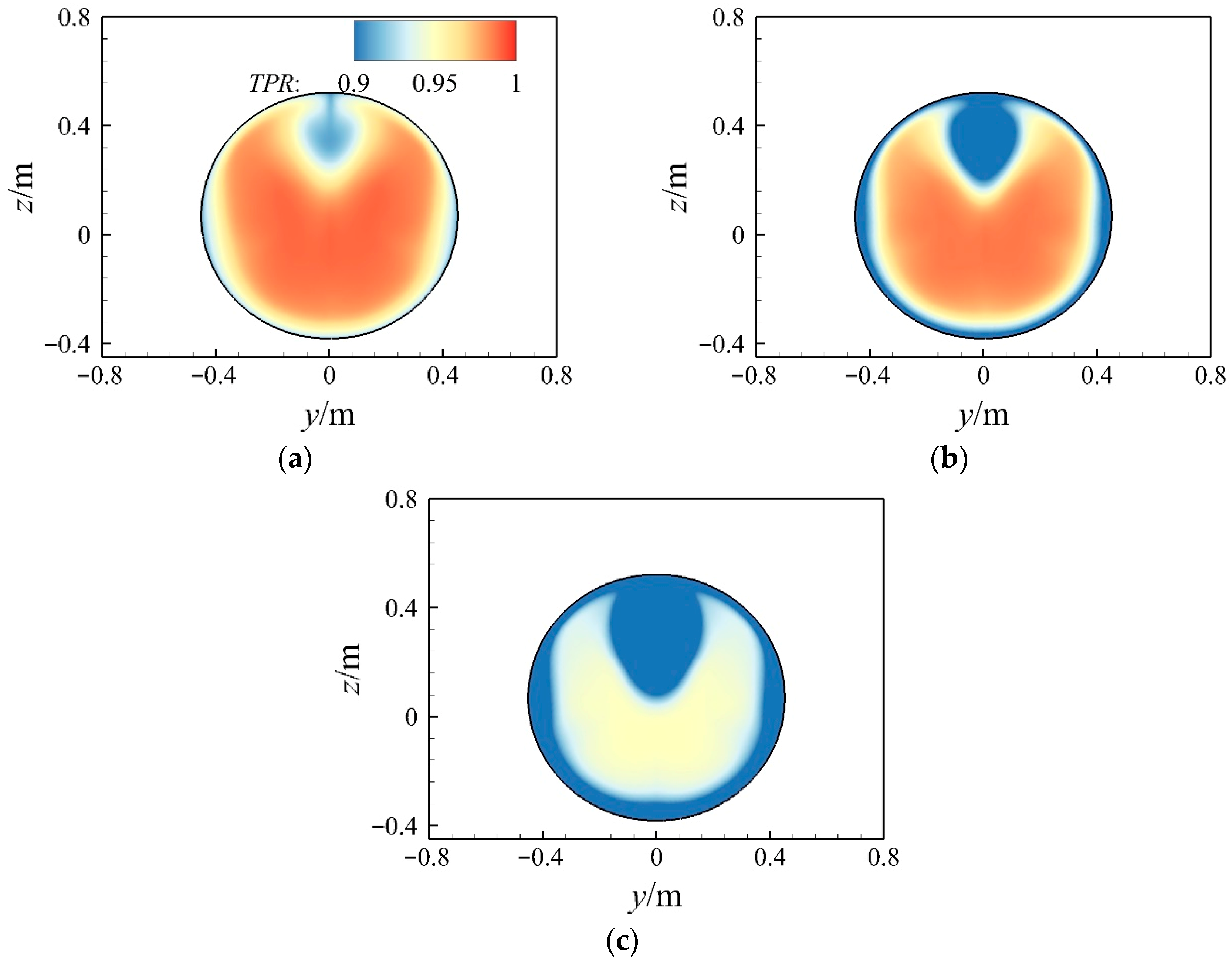
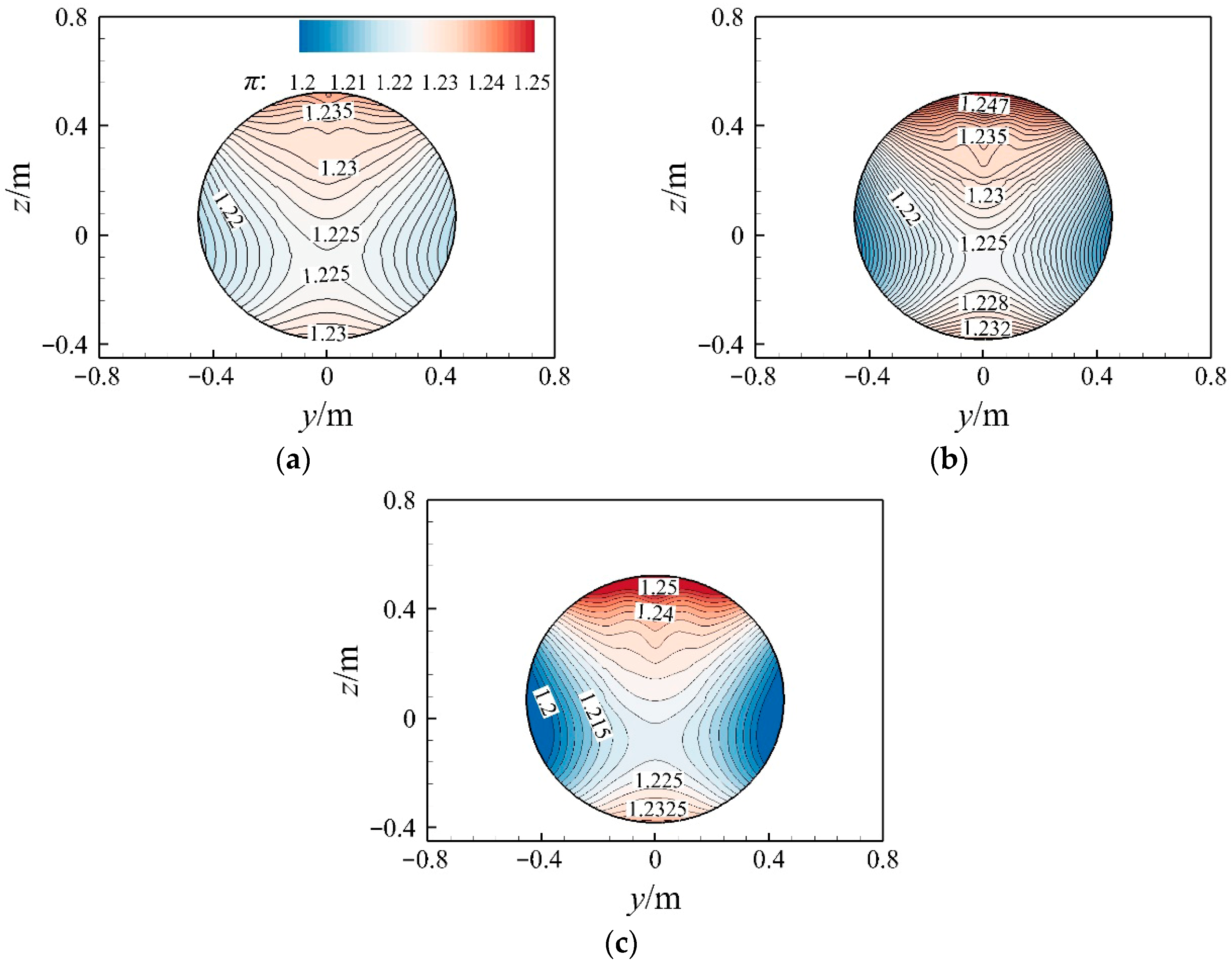
Figure 10 and Figure 11 respectively present the TPR and pressure ratio distribution nephograms of the inlet exit section at different Mach numbers. It can be seen from the distribution of TPR that with the increase in Mach number, the size of the high-pressure area (marked in red) gradually decreases, while the size of the low-pressure area (marked in blue) increases, and the peak value of TPR decreases obviously. This distribution characteristic directly leads to the increase in the circumferential total pressure distortion coefficient. The pressure ratio contour maps indicate that Mach number variations have a minor impact on the pressure ratio peak. However, at Ma = 0.9, due to the transverse pressure gradient, the pressure ratio exhibits significant differences between the upper/lower sides of the wall. And the difference between the maximum value and the minimum value reaches 0.05, which demonstrates enhanced non-uniformity in the diffuser process under high-Mach-number conditions.
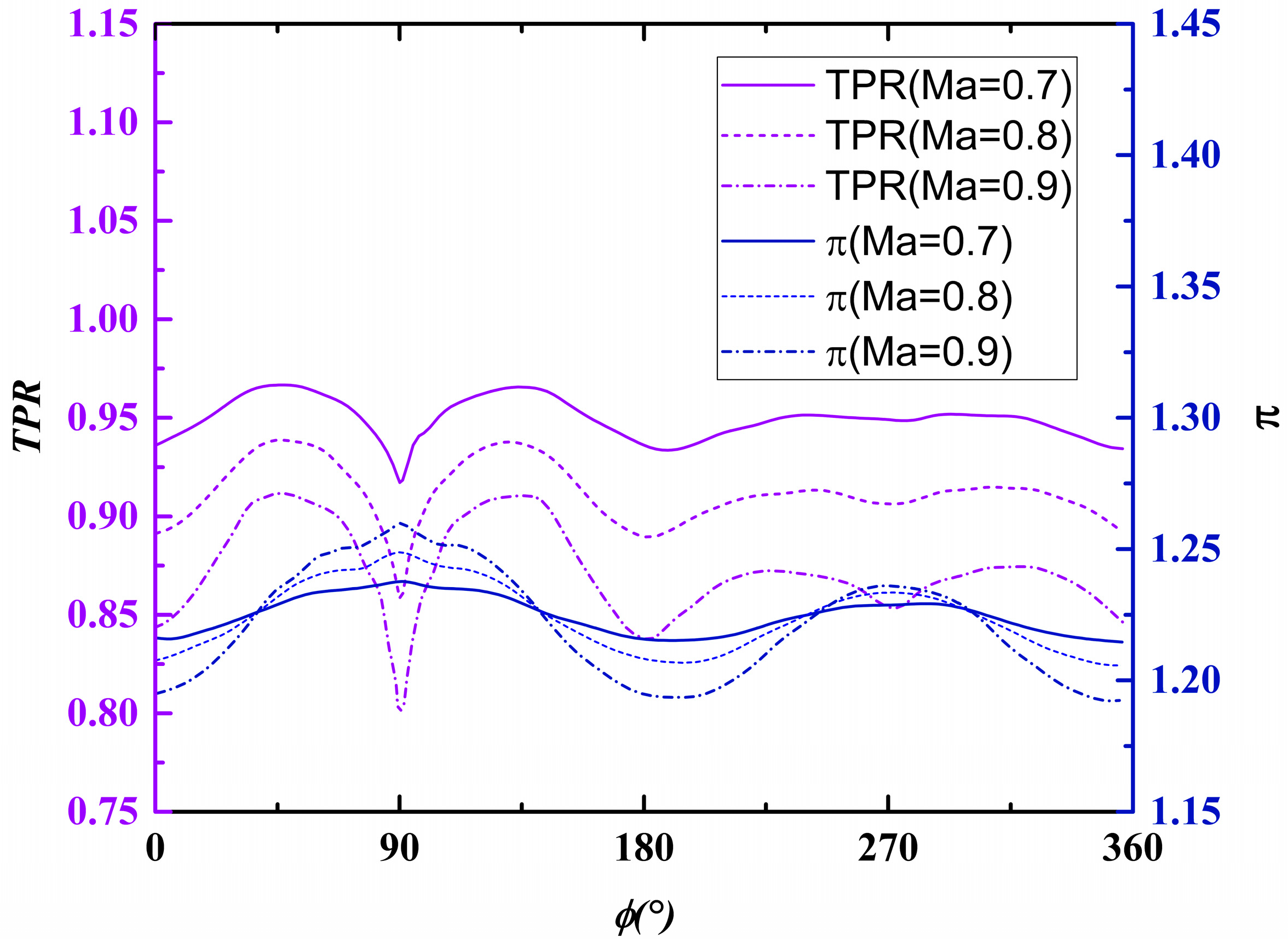
Figure 12 quantitatively presents the circumferential distribution of the TPR and pressure ratio on the wall of the exit section. As shown in the figure, the circumferential non-uniformity of the TPR significantly increases with the rise in Mach number, with the difference between the maximum and minimum values rising from 0.05 at Ma = 0.7 to 0.11 at Ma = 0.9. The average pressure ratio remains relatively stable, while the extreme value difference in its circumferential distribution also increases with the Mach number. Notably, a pronounced dip in the TPR appears at the 90 position (center of the upper wall), corresponding to a peak in the pressure ratio at this location. Combined with the analysis of Figure 8, Figure 9, Figure 10 and Figure 11, it can be inferred that the higher pressure ratio results from the deceleration of airflow and the rise in static pressure in the separation region. According to the Bernoulli equation, high static pressure corresponds to a low total pressure region, as intense turbulent mixing in the separation zone causes significant mechanical energy losses. The higher the Mach number, the larger the separation region and the more severe the mixing losses, manifesting as increasingly prominent local low-total-pressure areas near the upper wall.

3.2. Effect Analysis of Angle of Attack on Inlet Performance

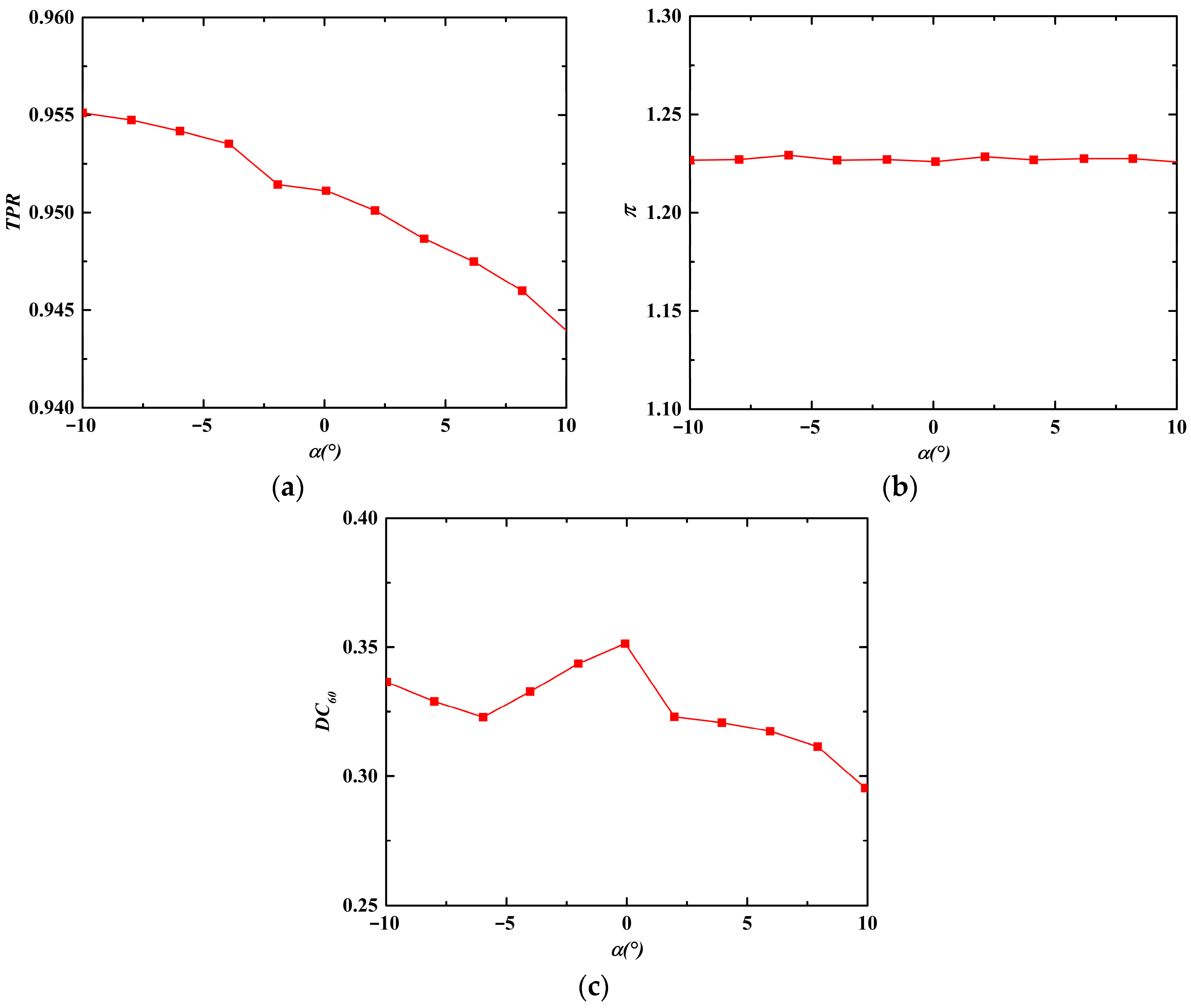
Under the conditions of Mach number Ma = 0.8 and sideslip angle β = 0°, the influence of the angle of attack α ranging from −10° to 10° on the inlet performance is investigated. Figure 13 shows the variation curves of the TPR, pressure ratio, and circumferential total pressure distortion coefficient with the angle of attack. The results indicate that, as the angle of attack increases from −10° to 10°, the TPR decreases from 0.955 to 0.944, representing a reduction of about 1.2%. The pressure ratio remains relatively stable, maintaining around 1.226. The circumferential total pressure distortion coefficient gradually decreases within the positive angle of attack range, while it initially decreases and then increases in the negative angle of attack range, reaching a maximum at α = 0°. This is mainly due to the change in the angle of attack which changes the flow capture and the development of the forebody boundary layer in the inlet. This phenomenon is primarily attributed to changes in the flow capture capability and forebody boundary layer development characteristics induced by the angle of attack variation, which subsequently affect the velocity distribution of the ingested boundary layer and the inlet flow field structure [18].
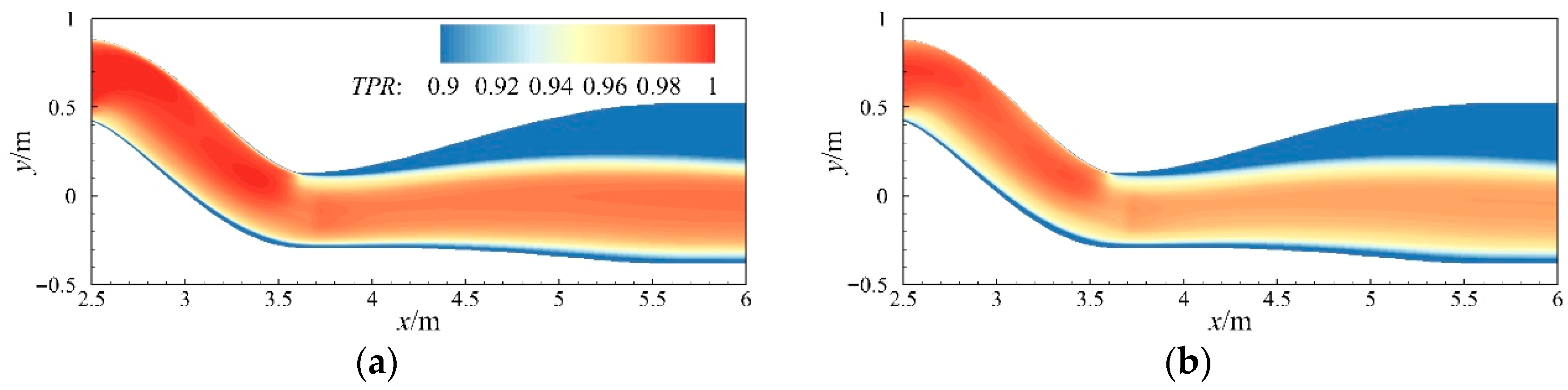
Figure 14 presents the contour maps of the TPR distribution in the symmetric section of the inlet under different angles of attack. It can be seen from the flow structure that the variation in angle of attack primarily affects the TPR in the mainstream region, while the size of the separation zone and the intensity of flow loss remain basically consistent. Under the α = 10° condition, the peak value of the TPR in the main flow region decreases compared to the α = −10° condition. This is primarily attributed to the increased effective angle of attack at the inlet under positive angles of attack, causing flow deflection before entering the inlet and thereby increasing localized losses at the entrance. It is worth noting that the extent and intensity of the upper wall separation region remain relatively insensitive to different angles of attack, which indicates that the impact of the angle of attack on the internal secondary flow structures is relatively limited within the studied range.
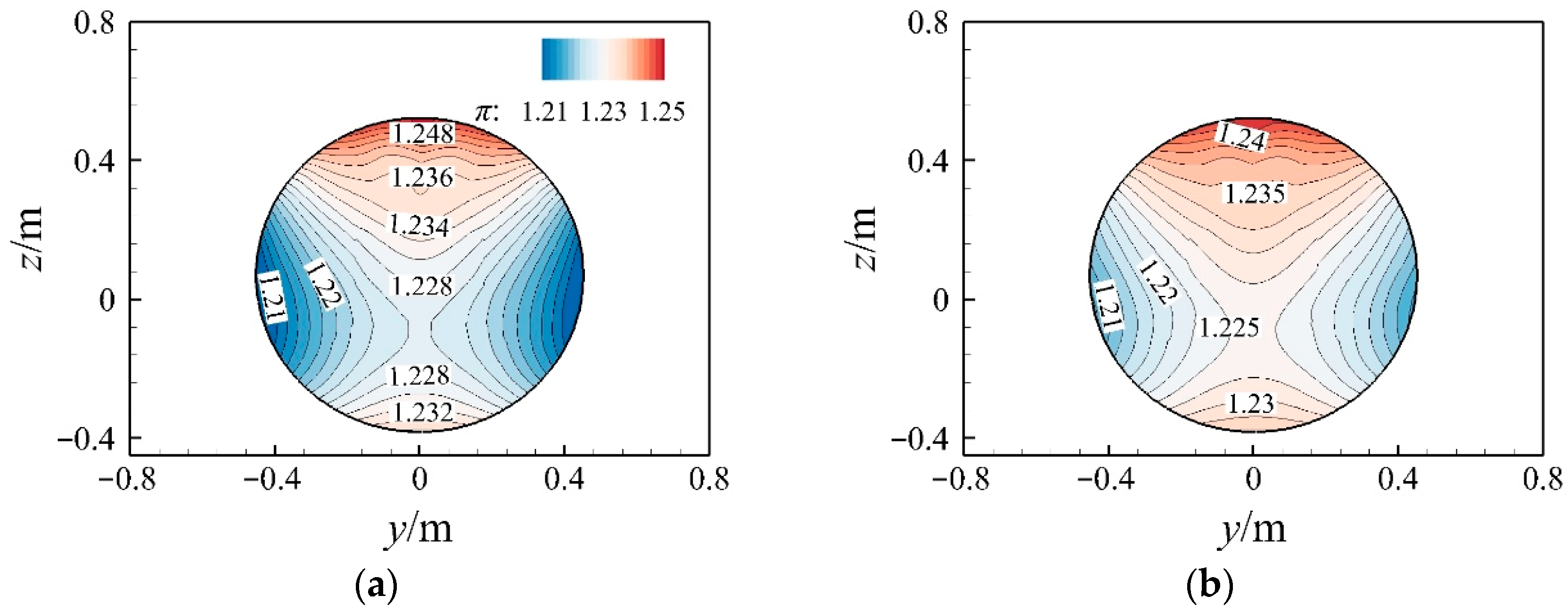
Figure 15 and Figure 16 present the contour maps of the TPR and pressure ratio distribution at the exit section under different angles of attack respectively. As observed from the distribution of TPR, the high-pressure area at the exit section decreases while the low-pressure area increases with increasing angle of attack. This trend directly leads to a reduction in the TPR. For the pressure ratio, the variation in the angle of attack has minimal impact on the distribution pattern across the section, with static pressure values remaining largely unchanged, indicating that the diffusing capability of the inlet is insensitive to changes in the angle of attack.
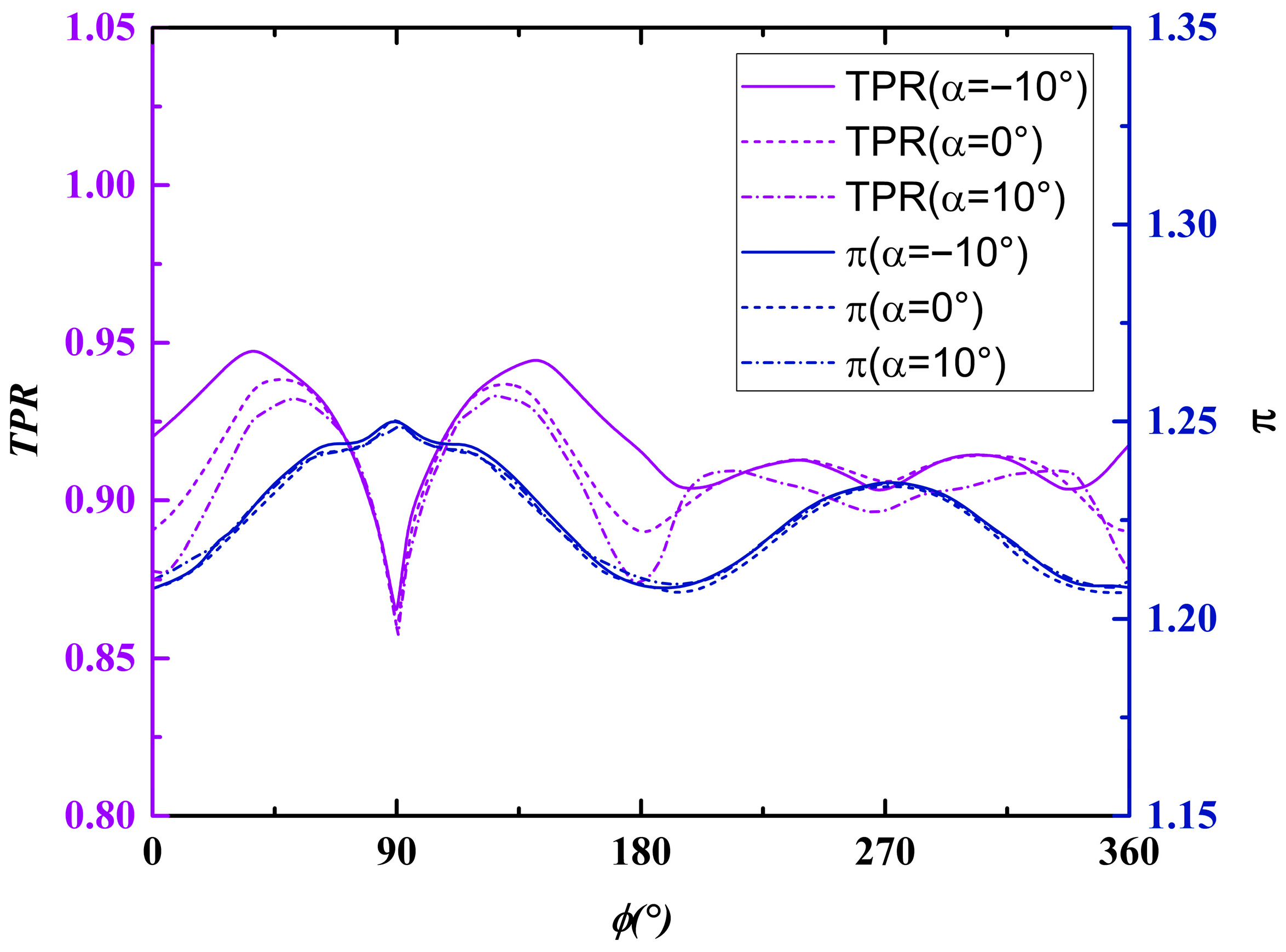
Figure 17 quantitatively presents the distribution of the TPR and pressure ratio along the circumferential wall of the exit section. As shown in the figure, the variation in the angle of attack has minimal impact on the pressure ratio, with the distribution curves of the pressure ratio along the circumferential wall nearly overlapping across the three angles of attack. The mean value of the TPR decreases with increasing angle of attack, while the minimum values remain relatively stable, consistently occurring at the central position of the upper wall of the exit section (90° location). This indicates that the angle of attack primarily affects the circumferential average performance, while its influence on the intensity and location of localized low-total-pressure regions is limited.

3.3. Effect Analysis of Sideslip Angle on Inlet Performance

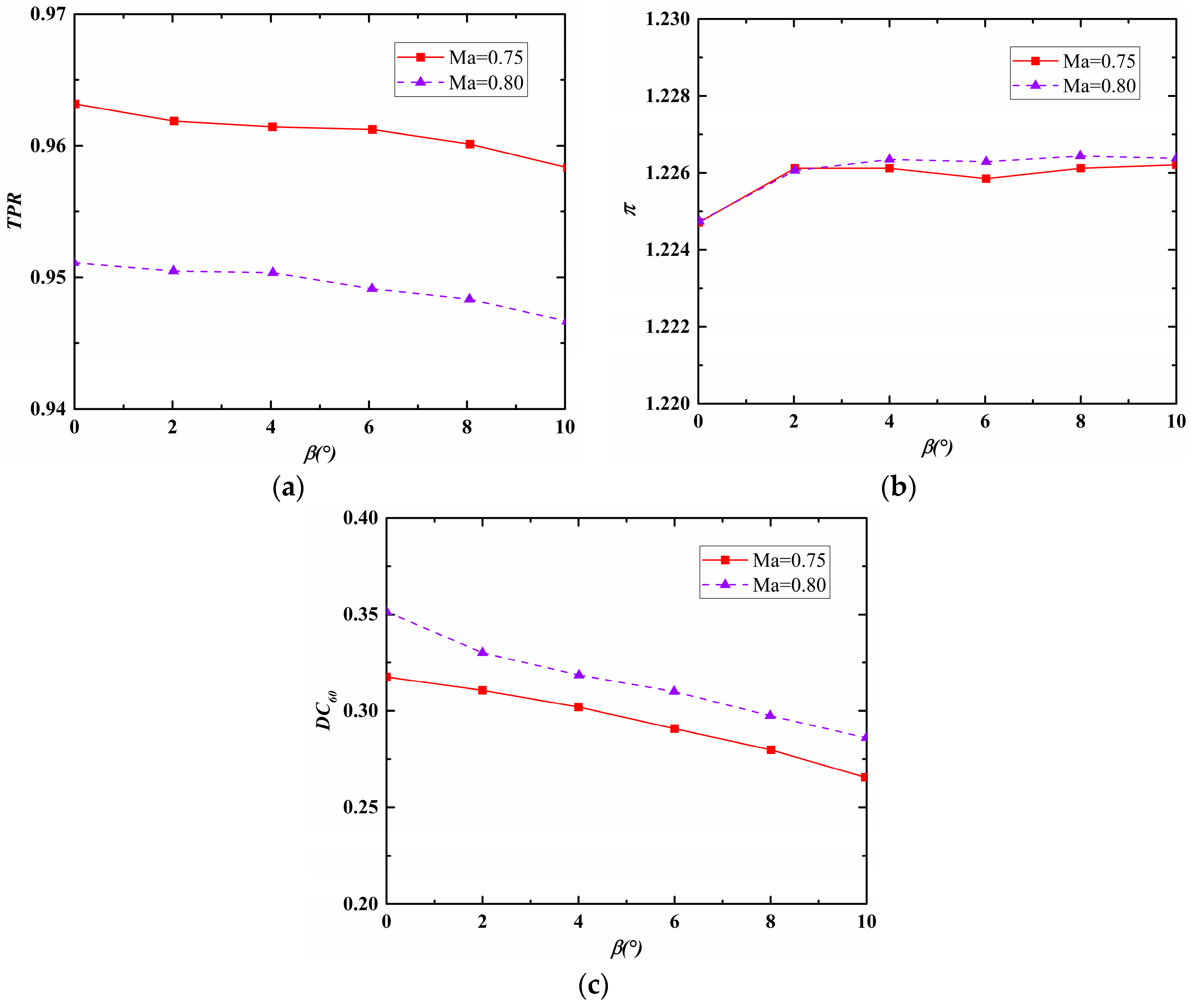
This section investigates the influence of sideslip angle β ranging from −0° to 10° on the inlet performance under two typical cruise Mach numbers: Mach 0.6 and Mach 0.75. Figure 18 presents the variation curves of the TPR, pressure ratio, and circumferential total pressure distortion coefficient with increasing sideslip angle. The results indicate that within the range of β ranging from 0° to 10°, the TPR gradually decreases with an increase in sideslip angle, but the decline is relatively small (approximately 0.5%). Meanwhile, the pressure ratio remains largely unchanged. Notably, the circumferential total pressure distortion coefficient decreases progressively with increasing sideslip angle. This suggests that although the flow field symmetry is lost under sideslip conditions, the local total pressure gradient may be reduced, which makes the circumferential total pressure distribution smoother. As a result, the DC60 index calculated based on a 60° sector area decreases, and the uniformity of the flow field at the inlet exit is actually improved.
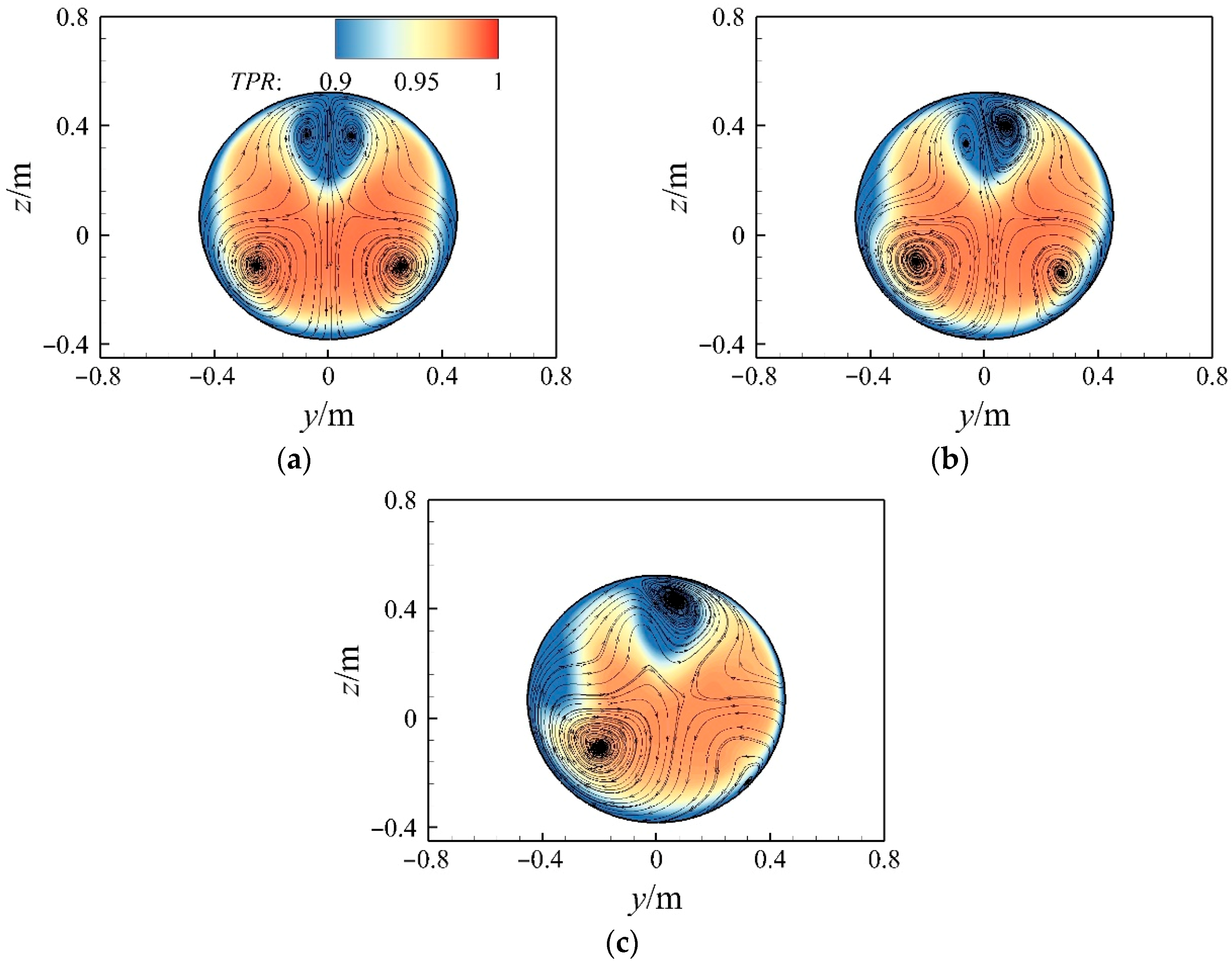
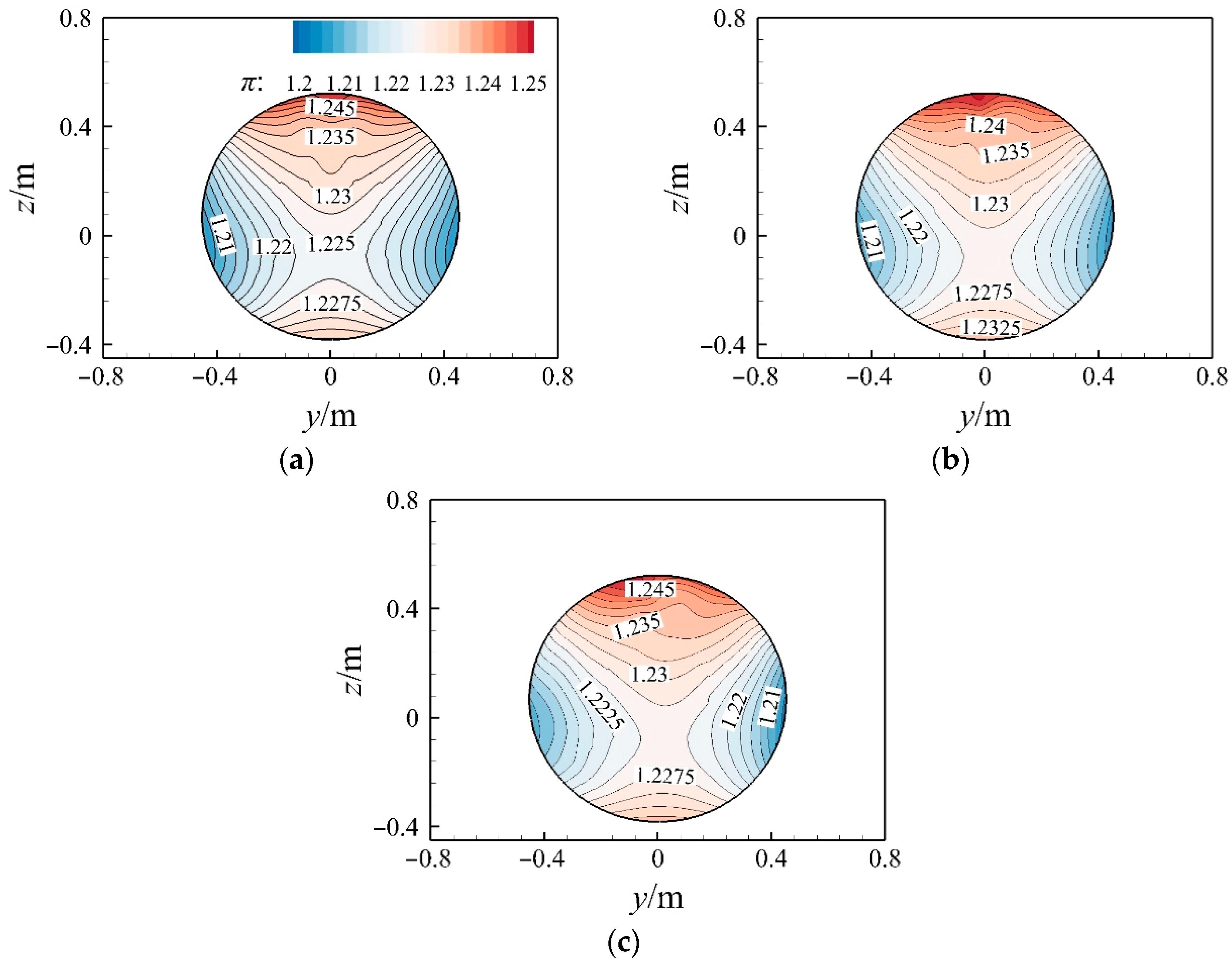
Figure 19 and Figure 20 respectively show the contour maps of TPR and pressure ratio distribution at the exit section under different sideslip angles when Ma = 0.75. It can be seen from the distribution of TPR that with the increase in sideslip angle, the high-pressure area of the exit section moves to the sideslip direction (right side), while the low-pressure area expands compared to the normal level flight condition, leading to a slight decrease in the TPR. Notably, the symmetric vortex structure at the exit section gradually evolves into a single vortex structure with an increasing sideslip angle. When β = 0°, the exit section exhibits a typical symmetric dual-vortex structure. However, as the sideslip angle increases, the right vortex is significantly intensified while the left vortex weakens and gradually gets absorbed, forming a single vortex structure biased toward the right side. This vortex evolution is a direct result of the change in the lateral pressure gradient caused by the sideslip angle. Meanwhile, the local pressure gradient decline observed in the contour maps also verifies the analysis of the distortion coefficient reduction mentioned earlier. Additionally, as shown in the pressure ratio distribution, the sideslip angle has minimal impact on the pressure ratio at the exit section, with extreme values still distributed at the central positions on the upper/lower and left/right walls.
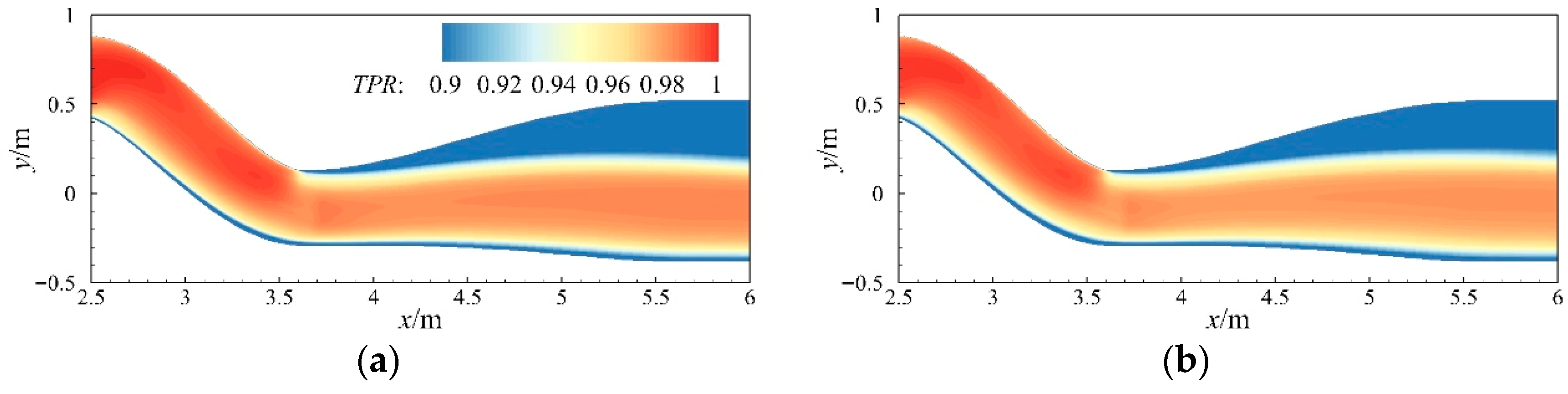
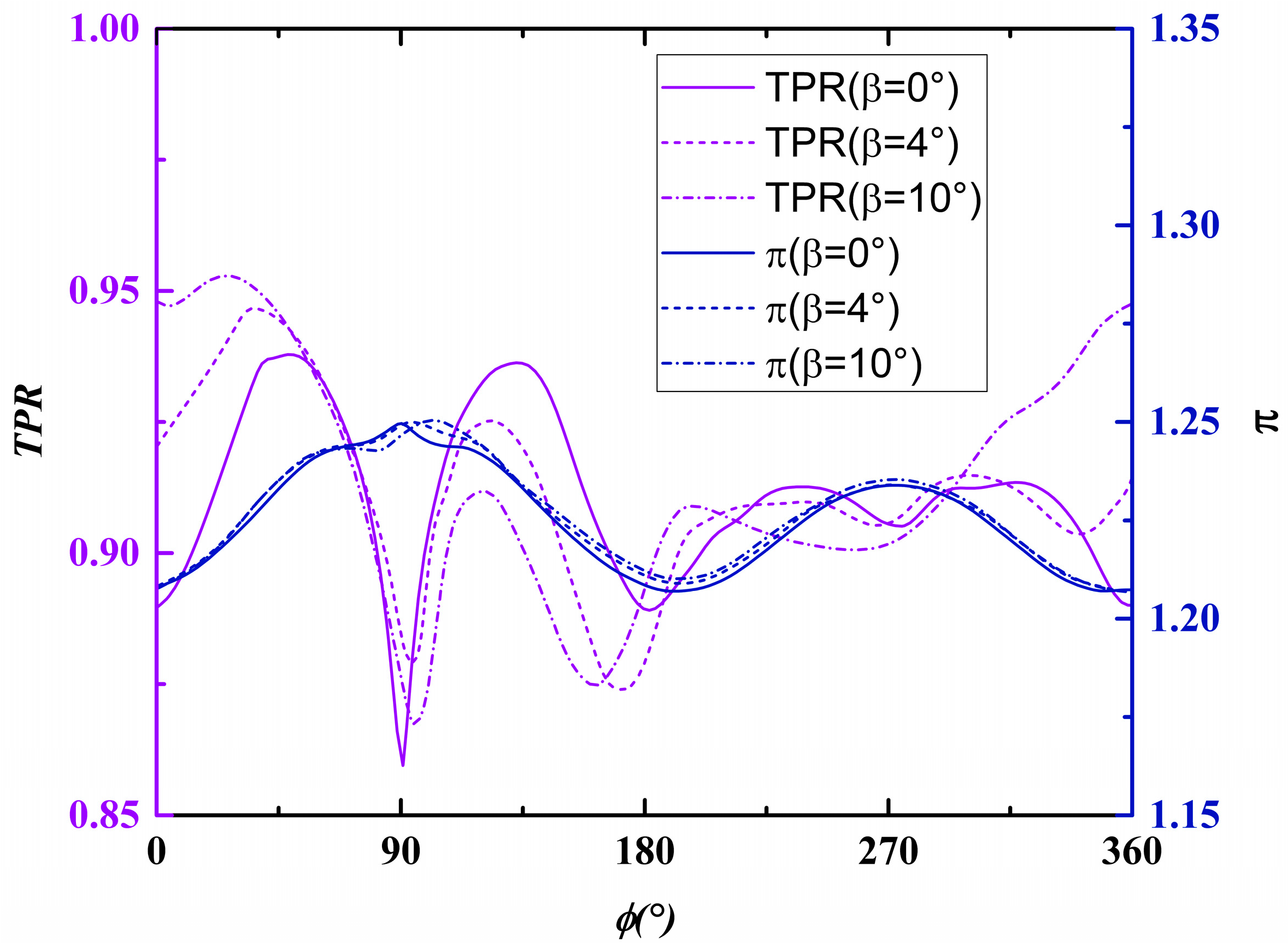
Figure 21 presents contour maps of the TPR distribution in the symmetric section of the inlet under two sideslip angles. As shown in the figure, the effect of the sideslip angle on the axial distribution of the TPR along the inlet is minimal, with nearly identical flow structures under both inflow conditions. Combined with Figure 19 and Figure 20, it can be inferred that the sideslip angle primarily influences the flow structure within the transverse section, while its impact on flow separation and secondary flow characteristics within the vertical symmetry plane is limited. Figure 22 quantitatively illustrates the circumferential distribution of the TPR and pressure ratio on the exit section. As revealed by the TPR curve, the sideslip angle alters the pressure distribution pattern, causing the high-pressure area to slightly shift toward the airflow direction (right side), which aligns with the contour map observations. The pressure ratio distribution curves overlap under different sideslip angles, further confirming the conclusion that the sideslip angle has minimal influence on the diffuser process.

3.4. Effect Analysis of Exit Back Pressure on Inlet Performance

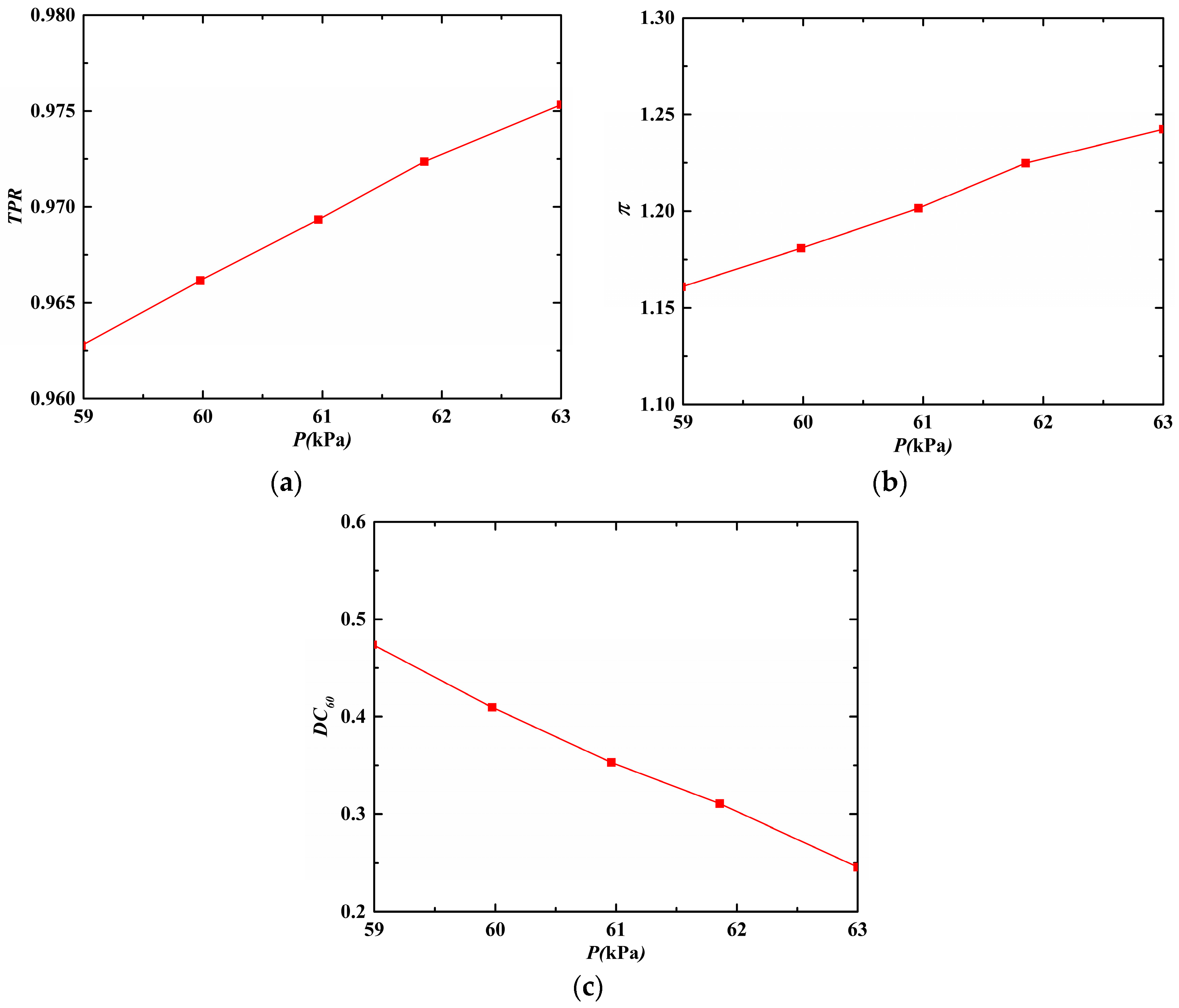
Back pressure at the outlet of the inlet is a key parameter that affects the internal flow field and working performance, and its change directly determines the working state and flow capacity of the inlet. Under the condition of external flow field Mach number Ma = 0.7, the variation in inlet performance in the range of exit back pressure P = 59 ~ 63 kPa is studied. The exit back pressure usually has a significant impact on the flow field and working performance in the inlet. Figure 23 presents the variation curves of the TPR, pressure ratio, and circumferential total pressure distortion coefficient with respect to the outlet back pressure. The results show that, under certain inlet flow conditions, the increase in exit back pressure makes the TPR and pressure ratio increase, while the distortion coefficient decreases. On the one hand, with the increase in outlet back pressure, the pressure difference between the inlet and the outlet of the inlet decreases, shifting the operating point toward the low-flow condition. This leads to a decrease in the average internal flow velocity, thereby reducing friction losses. On the other hand, the reduced average flow velocity weakens the shock strength at the bent section. The diminished flow losses caused by shock-induced separation improve the inlet’s operational performance. Experimental studies have confirmed that flow separation is the primary source of total pressure loss and flow field distortion [39]. Therefore, a moderate increase in outlet back pressure at a subsonic velocity is helpful to improve the working performance of the inlet.
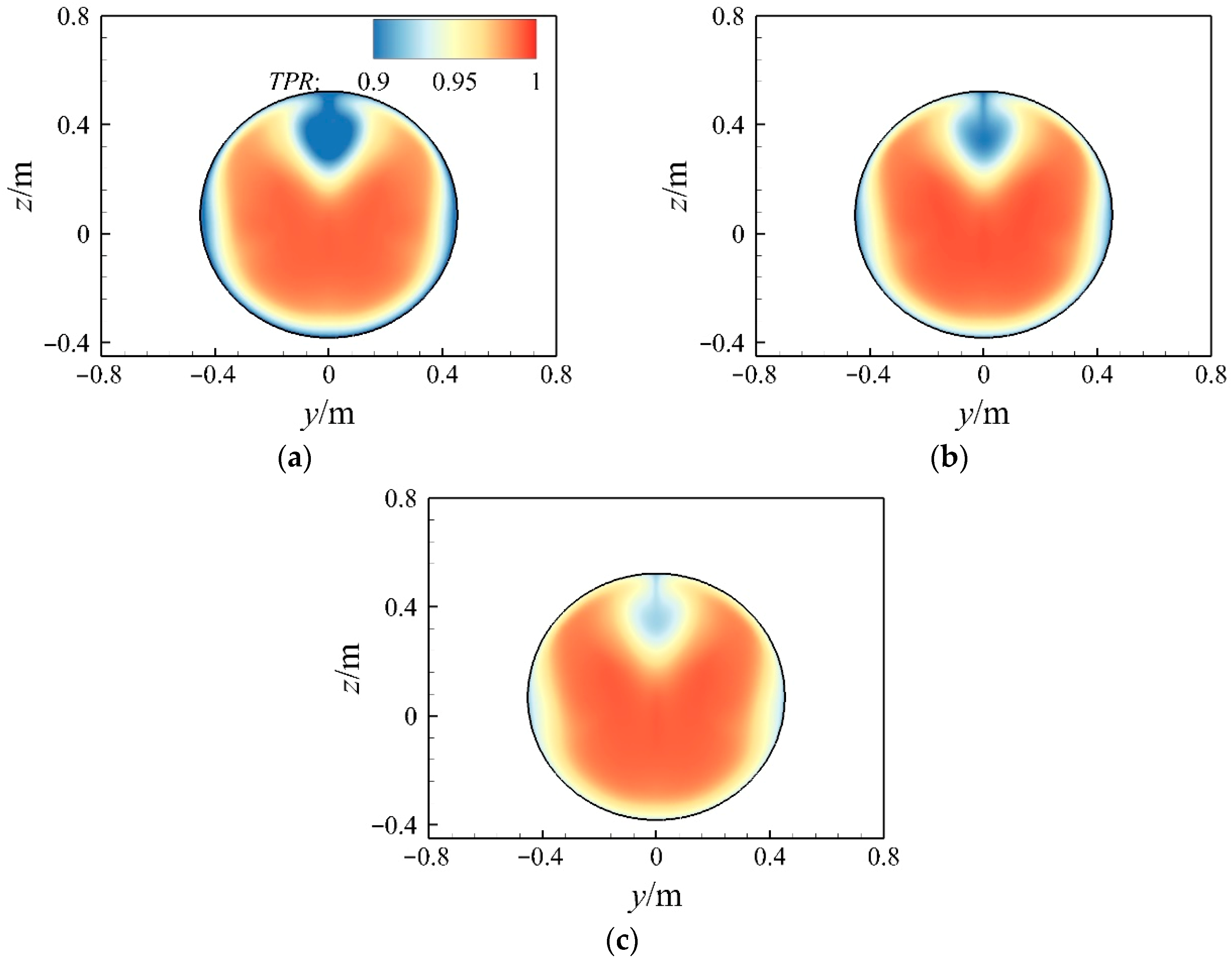
Figure 24 and Figure 25 show the contour plots of the TPR and pressure ratio distributions at the exit section under different outlet back pressures. From the distribution of the TPR, it can be observed that, as the outlet back pressure increases, the area of the high-pressure region (red area) gradually expands, while the low-pressure region (blue area) shrinks, resulting in a significant decrease in flow losses. Consequently, the non-uniformity of the cross-section decreases, and flow distortion is reduced. From the pressure ratio distribution, it is evident that, as the back pressure increases, the pressure ratio distribution becomes more uniform. The range of extreme values decreases from 0.025 to 0.015, indicating improved uniformity in the diffusion process.
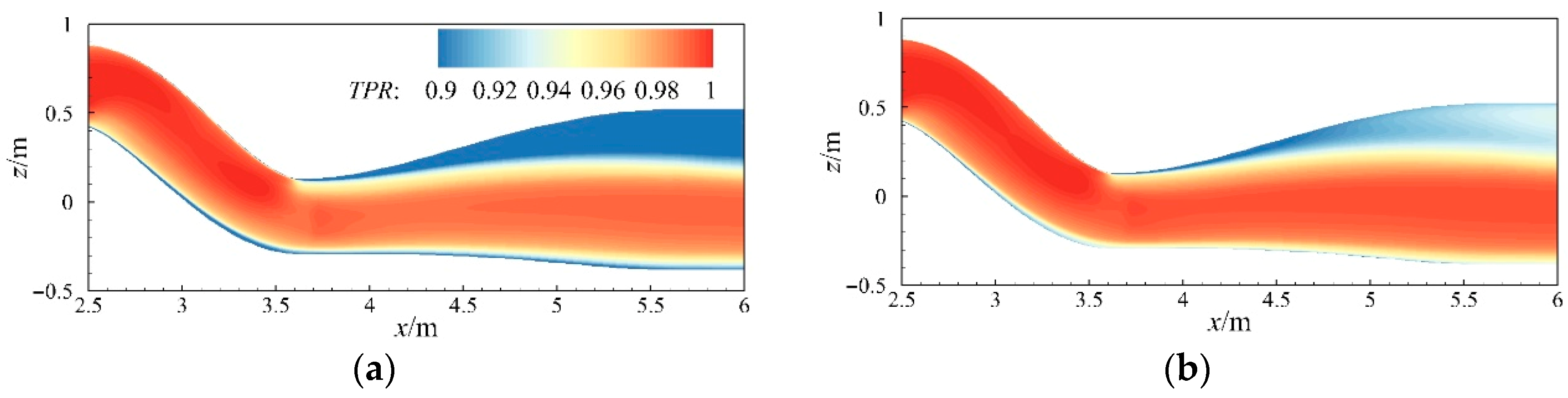
Figure 26 shows the contour plots of TPR distribution at the symmetric section of the inlet under different outlet back pressures. As shown in the figure, the increase in exit back pressure significantly reduces the area of the low-pressure region at the outlet of the inlet. Under the P = 59 kPa condition, a large-scale separation region exists on the upper wall, with a maximum height reaching approximately 30% of the flow channel height. However, under the P = 63 kPa condition, although the size of the separation region changes slightly, the flow loss within it decreases significantly. This is consistent with the analysis that increased back pressure weakens the airflow velocity and reduces the shock strength at the bend section.
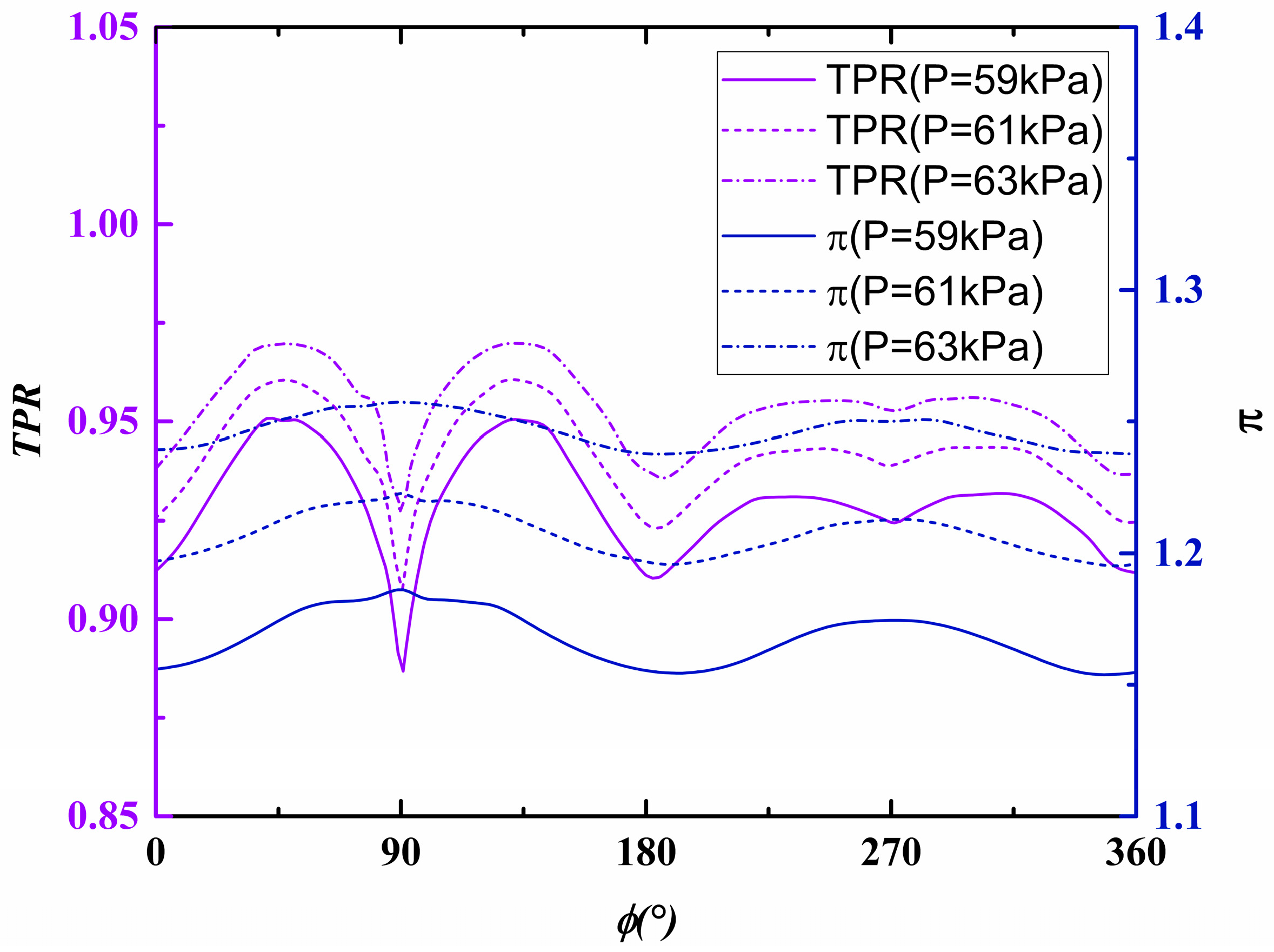
Figure 27 provides a quantitative presentation of the circumferential TPR and pressure ratio distributions at the outlet cross-section location under different back pressures. It can be seen from the figure that the distribution law of TPR and pressure ratio at the wall surface remain largely consistent under varying back pressures, with only a fixed offset. Numerically, these values are approximately proportional to the increment of the back pressure. The minimum value of the TPR consistently appears at the center of the upper wall (90°), indicating that this region is the most severely affected by flow separation.

4. Conclusions

This study investigates the effects of free-stream Mach number, angle of attack, sideslip angle, and outlet back pressure on the performance of dorsal S-shaped inlets with forebody boundary layer ingestion using the scale-adaptive simulation (SAS) method. The main conclusions are as follows:
(1) The free-stream Mach number has the most significant impact on inlet performance. When the Mach number Ma ≥ 0.6, the increase in wall friction losses caused by higher velocity and the enhanced shock-induced flow separation significantly reduce TPR and intensify circumferential distortion, leading to a pronounced decline in inlet performance with increasing Mach number.
(2) The variation in angle of attack primarily affects inlet flow losses, with limited influence on internal secondary flow structures and separation region characteristics, manifested as a slight decrease in TPR with an increasing angle of attack, while the pressure ratio remains largely unchanged, and the distortion coefficient shows improvement within the positive angle of the attack range.
(3) Sideslip angle disrupts the symmetry of secondary flow vortex pairs within the inlet, causing the high-total-pressure region to shift toward the windward side. However, the dispersion of low-energy fluid actually reduces the circumferential distortion coefficient.
(4) At Ma = 0.7, the performance of the dorsal S-shaped inlet is better under the high-back-pressure condition, which shows that engine matching in high-back-pressure states is more favorable for stable operations in practical applications.
These findings hold certain engineering significance for the design and optimization of next-generation dorsal UAV inlets. However, several assumptions and limitations should be acknowledged, such as the neglect of inlet wall deformation and the coupling effect between the inlet and the fan. In addition, due to constraints in computational resources and manuscript length, the flow structures and underlying mechanisms under certain operating conditions have not been thoroughly analyzed through flow field visualization. Consequently, the applicability of these findings to more complex operational environments or to geometrically distinct configurations (e.g., inlets with larger offset ratios or active flow control systems) requires further experimental validation. Future research should focus on inlet–fan interactions and geometric distortion, using detailed flow visualization to clarify the underlying physics. This will help assess the effects of inflow conditions on engine stability and operability and inform design optimization strategies.

Author Contributions

Conceptualization, M.C. and Y.T.; methodology, D.L. (Daxin Liao) and H.W.; software, D.L. (Daxin Liao); validation, F.L. and C.Z.; formal analysis, H.W.; investigation, F.L.; resources, N.X. and D.L. (Dawei Liu); data curation, D.L. (Daxin Liao) and H.W.; writing—original draft preparation, M.C.; writing—review and editing, M.C., J.C. and Y.T.; visualization, C.Z.; supervision, M.C. and J.C.; project administration, D.L. (Dawei Liu) and Y.T.; funding acquisition, N.X. and Y.T. All authors have read and agreed to the published version of the manuscript.

Funding

This research was funded by the National Natural Science Foundation of China (Grant no. 52372433), Key Research and Development Projects of Shaanxi Province (2024QYZGJHX-01).

Data Availability Statement

Data are available on request due to restrictions.

Conflicts of Interest

The authors declare no conflicts of interest. The funders had no role in the design of the study; in the collection, analyses, or interpretation of data; in the writing of the manuscript; or in the decision to publish the results.

Abbreviations

The following abbreviations are used in this manuscript:
UAVUnmanned Aerial Vehicle
TPRTotal Pressure Recovery
CFD Computational Fluid Dynamics
SASScale-Adaptive Simulation
S-ASpalart–Allmaras
DESDetached Eddy Simulation
LESLarge Eddy Simulation
RANSReynolds-Averaged Navier–Stokes
BLIBoundary Layer Ingestion
RCSRadar Cross Section
ISAInternational Standard Atmosphere
MOPSOMulti-Objective Particle Swarm Optimization
HRRHeight-to-Radius Ratio

References

  1. Vaccaro, J.C.; Elimelech, Y.; Chen, Y.; Sahni, O.; Jansen, K.E.; Amitay, M. Experimental and numerical investigation on steady blowing flow control within a compact inlet duct. Int. J. Heat Fluid Flow 2015, 54, 143–152. [Google Scholar] [CrossRef]
  2. Jirasek, A.; Aref, P.; Ghoreyshi, M.; Cummings, R.M.; Satchell, M. Computational design of S-duct intakes for the NATO AVT-251 multi-disciplinary configuration. In Proceedings of the 2018 Applied Aerodynamics Conference, Atlanta, GA, USA, 25–29 June 2018; p. 3164. [Google Scholar] [CrossRef]
  3. Deng, J.; Zhao, K.; Zhou, L.; Zhang, W.; Shu, B.; Huang, J.; Gao, Z. Aerodynamic/stealth design of S-duct inlet based on discrete adjoint method. Appl. Math. Mech. (Engl. Ed.) 2024, 45, 725–746. [Google Scholar] [CrossRef]
  4. Reddy, B.R.S.; Dubey, S.; Vardhan, J.N.V. Performance Evaluation of Radar Backscatter of S-Shaped Duct with Conventional Intake Duct. In Lecture Notes in Networks and Systems; Springer: Singapore, 2023; pp. 103–113. [Google Scholar] [CrossRef]
  5. Wallis, V.C.; Robert, B. Advanced Propulsion System Design and Integration for a Turbojet Powered Unmanned Aerial Vehicle; AIAA Paper 2003-415; AIAA: Reston, VA, USA, 2003. [Google Scholar] [CrossRef]
  6. Moormann, D.; Korte, U.; Fischer, B.; Kurze, M. The barracuda autoflight module for autonomous flight. Ifac Proc. Vol. 2007, 40, 846–851. [Google Scholar] [CrossRef]
  7. Liu, Z.P.; Yan, P.P.; Zhang, Q.F.; Li, X.Z.; Sun, C. Unsteady flow characteristics of dorsal inlet under low-energy inflow. J. Beijing Univ. Aeronaut. Astronaut. 2019, 45, 672–680. (In Chinese) [Google Scholar] [CrossRef]
  8. Huang, H.X.; Sun, S.; Yu, H.; Tan, H.; Lin, Z.; Li, Z.; Wang, K. Recent Progress in Subsonic S-Shaped Inlets. J. Propuls. Technol. 2020, 41, 2642–2658. (In Chinese) [Google Scholar] [CrossRef]
  9. Lee, C.; Boedicker, C. Subsonic Diffuser Design and Performance for Advanced Fighter Aircraft; AIAA 85-3073; AIAA: Reston, VA, USA, 1985. [Google Scholar] [CrossRef]
  10. Sun, D.; Li, Z.; Dong, X.; Sun, X. Calibration of S-duct Swirl Distortion Based on Vortex Identification Methods. J. Therm. Sci. 2022, 31, 35–46. [Google Scholar] [CrossRef]
  11. Gao, X.; Cao, Z.; Zhang, X.; Zhang, F.; Yang, J.; Liu, B. Performance enhancement and flow separation control in an S-duct by air injection. Int. J. Turbo Jet-Engines 2022, 40, s259–s270. [Google Scholar] [CrossRef]
  12. Sadatpour, S.H.; Madadi, A.; Ahadian, R. Numerical optimization of S-shaped intake performance using special cross-sectional profiles. Thermophys. Aeromechanics 2022, 29, 769–783. [Google Scholar] [CrossRef]
  13. Zhao, W.C. Integrated Investigation of the Flow Features in A Serpentine Inlet and A Transonic Fan. Master’s Thesis, Nanjing University of Aeronautics and Astronautics, Nanjing, China, 2019. (In Chinese) [Google Scholar]
  14. Zhang, X.; Shan, Y.; Zhang, J.; Wu, Z. Optimization for aerodynamic performance of double serpentine nozzles with spanwise offsets using Taguchi-based CFD analysis. Chin. J. Aeronaut. 2023, 36, 1–17. [Google Scholar] [CrossRef]
  15. Hu, Y.; Jia, G.; Yang, X.; Guo, Z. Aerodynamic-Stealth Optimization of an S-Shaped Inlet Based on Co-Kriging and Parameter Dimensionality Reduction. Aerospace 2025, 12, 990. [Google Scholar] [CrossRef]
  16. Ming, L.; Wu, Y.; Li, O.L. Large eddy simulation investigation of S-shaped intake distortion and swirl characteristics. Aerosp. Sci. Technol. 2023, 141, 108578. [Google Scholar] [CrossRef]
  17. Asghar, A.; Stowe, R.A.; Allan, W.D.E.; Alexander, D. Performance Evaluation of an S-Duct Diffuser of a Flight-Vehicle Inlet in High-Subsonic Flow; ASME Paper No. GT2015-43740; ASME: New York, NY, USA, 2015. [Google Scholar] [CrossRef]
  18. Asghar, A.; Stowe, R.A.; Allan, W.D.E.; Alexander, D. Entrance Aspect Ratio Effect on S-Duct Inlet Performance at High-Subsonic Flow. J. Eng. Gas Turbines Power 2017, 139, 052602.1–052602.8. [Google Scholar] [CrossRef]
  19. He, Y.; Yang, Q.; Shi, Y.; Gao, X.; Yang, H.C. Multi-objective optimization design of S-shaped inlet with internal bump. Aerosp. Sci. Technol. 2022, 129, 107901. [Google Scholar] [CrossRef]
  20. Jia, W.; Li, G.; Liu, T.; Kong, Q.; Ding, S. Numerical Analysis of the Effect of S-Shaped Duct Key Geometry Parameters on the inlet Distortion of distributed Ducted Fans. Aerospace 2025, 12, 316. [Google Scholar] [CrossRef]
  21. Parhrizkar, H.; Aminjan, K.K.; Doustdar, M.M.; Heydari, A. Optimization of S-Shaped Air Intake by Computational Fluid Dynamics. Int. J. Fluid Mech. Therm. Sci. 2019, 5, 36. [Google Scholar] [CrossRef]
  22. Behfarshad, G.; Mahlou, S. Wind-tunnel study of a-S-shaped air-intake performance. Aircr. Eng. Aerosp. Technol. 2014, 86, 99–107. [Google Scholar] [CrossRef]
  23. Liou, M.S.; Lee, B.J. Characterization of Aerodynamic Performance of Boundary-Layer-Ingesting Inlet Under Crosswind; ASME GT2012-68509; ASME: New York, NY, USA, 2012. [Google Scholar] [CrossRef]
  24. Berra, L.M.; Slater, J.W.; Oltmen, S.M. Conceptual Redesign of the B-1B Bomber Inlets for Improved Supersonic Performance. Aerosp. Sci. Technol. 2015, 45, 476–483. [Google Scholar] [CrossRef]
  25. Hall, D.K.; Huang, A.C.; Uranga, A.; Greitzer, E.M.; Drela, M.; Sato, S. Boundary Layer Ingestion Propulsion Benefit for Transport Aircraft. J. Propuls. Power 2017, 33, 1118–1129. [Google Scholar] [CrossRef]
  26. Lucas, J.R.; O’Brien, W.F.; Ferrar, A.M. Effect of BLI-Type Inlet Distortion on Turbofan Engine Performance; ASME Paper No. GT2014-26666; ASME: New York, NY, USA, 2014. [Google Scholar] [CrossRef]
  27. McMillan, M.L.; Mackie, S.A.; Gissen, A.; Vukasinovic, B.; Lakebrink, M.T.; Glezer, A.; Mani, M.; Mace, J.L. Inlet Flow Control and Prediction Technologies for Embedded Propulsion Systems; NASA-CR-2011-217237; NASA: Washington, DC, USA, 2011. [Google Scholar]
  28. Rein, M.; Koch, S.; Rütten, M. Experimental Investigations on the Influence of Ingesting Boundary Layers into a Diverterless S-Duct Intake; AIAA 2014-0373; AIAA: Reston, VA, USA, 2014. [Google Scholar] [CrossRef]
  29. Li, Z.; Lu, Y.; Pan, T.; Zhang, Y. Numerical Investigation on the Effect of Height-to-Radius Ratio on Flow Separation Features in S-Shaped Diffuser with Boundary Layer Ingestion. Aerospace 2023, 10, 551. [Google Scholar] [CrossRef]
  30. Chiang, C.; Koo, D.; Zingg, D.W. Aerodynamic Shape Optimization of an S-Duct Intake for a Boundary-Layer Ingesting Engine. J. Aircr. 2022, 59, 625–641. [Google Scholar] [CrossRef]
  31. Xu, J.L.; Yan, C. A one-equation scale-adaptive simulation model. Phys. Gases 2010, 5, 78–82. (In Chinese) [Google Scholar]
  32. Menter, F.R.; Egorov, Y. The Scale-Adaptive Simulation Method for Unsteady Turbulent Flow Predictions. Part 1: Theory and Model Description. Flow Turbul. Combust. 2010, 85, 113–138. [Google Scholar] [CrossRef]
  33. Xu, C.Y.; Zhou, T.; Wang, C.L.; Sun, J.H. Application of scale-adaptive simulation technique based on one-equation turbulence model. Appl. Math. Mech. 2015, 36, 121–130. [Google Scholar] [CrossRef]
  34. Egorov, Y.; Menter, F.R.; Lechner, R.; Cokljat, D. The Scale-Adaptive Simulation Method for Unsteady Turbulent Flow Predictions. Part 2: Application to Complex Flows. Flow Turbul. Combust. 2010, 85, 139–165. [Google Scholar] [CrossRef]
  35. Singh, S.N.; Sinha, S.S.; Vijayakumar, R. Comparative Assessment of URANS, SAS and DES Turbulence Modeling in the Predictions of Massively Separated Ship Airwake Characteristics. Ocean Eng. 2021, 229, 108954. [Google Scholar] [CrossRef]
  36. Wellborn, S.R.; Reichert, B.A.; Okiishi, T.H. An experimental investigation of the flow in a diffusing S-duct. In Proceedings of the 28th Joint Propulsion Conference and Exhibit, Nashville, TN, USA, 6–8 July 1992. [Google Scholar] [CrossRef]
  37. Fu, Z.; Jin, Z.; Zhang, W.; Yang, T.; Li, J.; Shen, J. Numerical Investigation on Flow Separation Control for Aircraft Serpentine Intake with Coanda Injector. Fluids 2025, 10, 271. [Google Scholar] [CrossRef]
  38. Sun, P.; Zhou, L.; Wang, Z.X.; Shi, J.W. Fluid-Structure Interaction Characteristic of Double Serpentine Nozzle. J. Propuls. Technol. 2022, 42, 153–162. (In Chinese) [Google Scholar] [CrossRef]
  39. Vaccaro, J.C.; Elimelech, Y.; Chen, Y.; Sahni, O.; Jansen, K.E.; Amitay, M. Experiment and numerical investigation on the Flow field within a compact inlet duct. Int. J. Heat Fluid Flow 2013, 44, 478–488. [Google Scholar] [CrossRef]
Figure 1. Schematic diagram of geometric model of S-shaped diffuser.
Aerospace 13 00319 g001
Figure 2. Schematic diagram of calculation grid of S-shaped diffuser.
Aerospace 13 00319 g002
Figure 3. Comparison between calculation and test data of wall static pressure coefficient of each section. (a) Section A; (b) Section B; (c) Section C; (d) Section D.
Aerospace 13 00319 g003aAerospace 13 00319 g003b
Figure 4. Unsteady flow structure in S-shaped diffuser. (a) Local Mach number distribution of different sections; (b) pressure distribution of instantaneous vortex structure based on Q criterion (Q = 5).
Aerospace 13 00319 g004
Figure 5. Schematic diagram of geometric model of S-shaped inlet.
Aerospace 13 00319 g005
Figure 6. Schematic diagram of grid division of UAV forebody inlet. (a) Surface grid of UAV fuselage; (b) internal grid of inlet.
Aerospace 13 00319 g006
Figure 7. Curve of inlet performance changing with Mach numbers of incoming flow. (a) TPR; (b) π; (c) DC60.
Aerospace 13 00319 g007
Figure 8. Nephogram and streamline diagram of TPR in symmetrical section of inlet under different Mach numbers. (a) Ma = 0.7; (b) Ma = 0.9.
Aerospace 13 00319 g008
Figure 9. Cloud diagram of TPR of each section of inlet.
Aerospace 13 00319 g009
Figure 10. Distribution of TPR in the inlet exit section under different Mach numbers. (a) Ma = 0.7; (b) Ma = 0.8; (c) Ma = 0.9.
Aerospace 13 00319 g010
Figure 11. Isoline distribution of pressure ratio at inlet exit section under different Mach numbers. (a) Ma = 0.7; (b) Ma = 0.8; (c) Ma = 0.9.
Aerospace 13 00319 g011
Figure 12. Distribution of circumferential TPR and pressure ratio of inlet exit section under different Mach number.
Aerospace 13 00319 g012
Figure 13. Curve of inlet performance changing with angles of attack. (a) TPR; (b) π; (c) DC60.
Aerospace 13 00319 g013
Figure 14. Nephogram of TPR in symmetrical section of inlet at different angles of attack. (a) α = −10°; (b) α = 10°.
Aerospace 13 00319 g014
Figure 15. Distribution of TPR in the inlet exit section at different angles of attack. (a) α = −10°; (b) α = 10°.
Aerospace 13 00319 g015
Figure 16. Isoline distribution of pressure ratio at inlet exit section at different angles of attack. (a) α = −10°; (b) α = 10°.
Aerospace 13 00319 g016
Figure 17. Distribution of circumferential TPR and pressure ratio of inlet exit section at different angles of attack.
Aerospace 13 00319 g017
Figure 18. Curves of inlet performance changing with sideslip angle under different Mach numbers. (a) TPR; (b) π; (c) DC60.
Aerospace 13 00319 g018
Figure 19. Distribution of TPR in the inlet exit section under different sideslip angles. (a) β = 0°; (b) β = 4°; (c) β = 10°.
Aerospace 13 00319 g019
Figure 20. Isoline distribution of pressure ratio at inlet exit section at different sideslip angles. (a) β = 0°; (b) β = 4°; (c) β = 10°.
Aerospace 13 00319 g020
Figure 21. Nephogram of TPR in symmetrical section of inlet at different sideslip angles. (a) β = 4°; (b) β = 10°.
Aerospace 13 00319 g021
Figure 22. Distribution of circumferential TPR and pressure ratio of inlet exit section at different sideslip angles.
Aerospace 13 00319 g022
Figure 23. Curves of inlet performance changing with outlet back pressure. (a) TPR; (b) π; (c) DC60.
Aerospace 13 00319 g023
Figure 24. Distribution of TPR in the inlet exit section under different outlet back pressures. (a) P = 59 kPa; (b) P = 61 kPa; (c) P = 63 kPa.
Aerospace 13 00319 g024
Figure 25. Isoline distribution of pressure ratio in inlet exit section under different outlet back pressures. (a) P = 59 kPa; (b) P = 61 kPa; (c) P = 63 kPa.
Aerospace 13 00319 g025
Figure 26. Nephogram of TPR in symmetrical section of inlet under different outlet back pressures. (a) P = 59 kPa; (b) P = 61 kPa.
Aerospace 13 00319 g026
Figure 27. Distribution of circumferential TPR and pressure ratio of inlet exit section under different outlet back pressures.
Aerospace 13 00319 g027
Disclaimer/Publisher’s Note: The statements, opinions and data contained in all publications are solely those of the individual author(s) and contributor(s) and not of MDPI and/or the editor(s). MDPI and/or the editor(s) disclaim responsibility for any injury to people or property resulting from any ideas, methods, instructions or products referred to in the content.