


Abstract
With the rapid development of the aviation industry, engines operate under extreme conditions of high temperature, high pressure, and high vibration, making them prone to surface damage such as ablation. Ablation not only affects the structural integrity of engine components but also threatens flight safety, making efficient and accurate detection of paramount importance. Traditional detection methods rely on manual visual inspection and non-destructive testing, which suffer from high subjectivity and low efficiency. In recent years, deep learning has achieved significant progress in industrial defect detection. However, conventional CNN-and Transformer-based architectures still suffer from substantial computational overhead and inadequate boundary segmentation accuracy in aero-engine ablation detection. This paper proposes a novel dual-pathway network Visual State-Space Residual Neural Network (VSS-ResNet) based on Mamba that combines Visual State Space (VSS) modules with ResNet50. This architecture leverages the global modeling capability of VSS modules and the local feature extraction capability of CNNs, effectively enhancing the accuracy and robustness of ablation boundary detection with the support of multi-scale feature fusion modules. Experimental results demonstrate that the proposed method achieves superior performance in mIoU, mPA, and Acc compared to mainstream segmentation models such as U-Net, Pyramid Scene Parsing Network (PSPNet), and DeepLab V3+ on a self-constructed engine endoscopic ablation dataset, validating its potential in intelligent aero-engine inspection.
1. Introduction
The rapid expansion of the global aviation industry has resulted in unprecedented operational demands, with commercial aero-engine operating under increasingly challenging conditions. Because aero-engines operate in extreme environments characterized by high temperature, high stress, and high rotational speed and are simultaneously subjected to combined working and vibrational loads, such harsh conditions can significantly increase component defects and make the engine more prone to failure [1,2]. Among the various degradation mechanisms affecting engine components, ablation—the progressive erosion of surface material due to extreme thermal, chemical, and mechanical stresses—poses a significant threat to engine integrity and operational safety. The detection and quantification of ablation damage are essential for predictive maintenance strategies [3,4], yet current inspection methods face substantial limitations in accuracy, efficiency, and consistency.
Traditional aero-engine inspection relies predominantly on manual visual examination supplemented by non-destructive testing (NDT) techniques, including borescope inspection, fluorescent penetrant inspection (FPI), and eddy current testing [5,6,7]. While these methods have served the aviation industry for decades, they suffer from several inherent limitations. Although manual visual inspection is the most widely used method, there are still many problems, such as strong subjectivity, large errors, and low efficiency. Applying deep learning technology to the image processing of aero-engine borescope inspection enables it to detect and assist in diagnosing ablation conditions through edge devices, improving the detection efficiency and accuracy and reducing the flight safety risks.
Recently, data-driven approaches utilizing deep learning have demonstrated remarkable success in various industrial inspection applications, offering the potential to augment human expertise with automated, objective, and traceable defect detection capabilities [8]. In particular, semantic segmentation algorithms based on convolutional neural networks (CNNs) have shown promise in pixel-level defect recognition and achieved impressive results on industrial datasets. However, their application to aero-engine ablation detection poses unique challenges that are difficult to address with existing architectures. The computational complexity of state-of-the-art models, particularly transformer-based architectures with quadratic complexity O(N2), renders them impractical for real-time deployment on high-resolution engine surface images [9]. Industrial standards and prior studies indicate that boundary-level segmentation is essential in aero-engine borescope maintenance, as assessments such as ablation severity classification, remaining-material estimation, and repair-level decision-making all rely directly on the precise contour of the damaged region. This requirement is reflected in both regulatory maintenance guidelines and recent automated borescope research, which emphasize accurate defect boundaries as a prerequisite for reliable inspection and safety evaluation [10,11]. See Table 1 for a comparison of methods and industrial requirements.
Table 1.
Comparison of recent data-driven methods for aero-engine ablation or industrial defect detection.
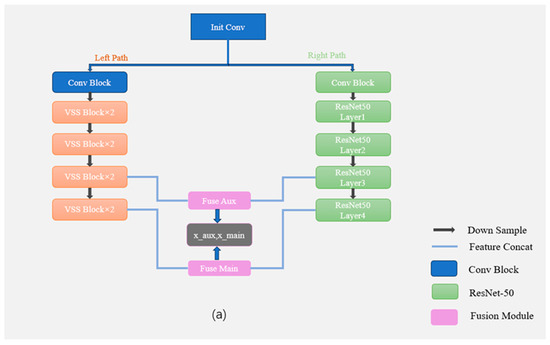
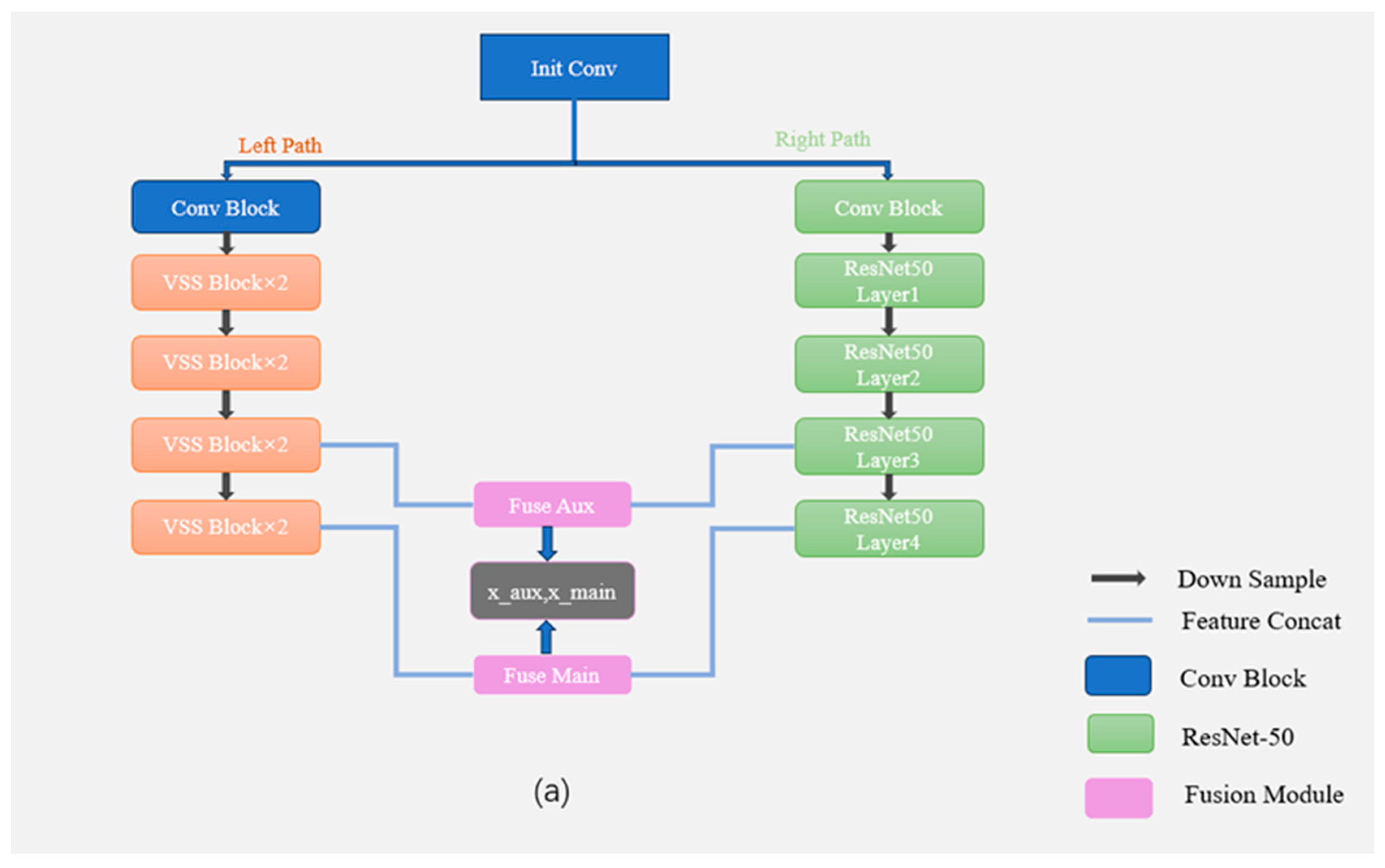
In order to improve the accuracy of the ablation boundary segmentation, it is first necessary to enhance the feature extraction ability of the model, especially the ability to handle boundaries and computational complexity. Secondly, it is about context dependence. In some tasks with a lot of noise, this kind of dependence will reduce the robustness of the model. To cope with these difficulties, we propose a novel VSS-ResNet network, which is a dual-path semantic segmentation architecture that synergistically integrates Mamba, ResNet to achieve accurate and efficient aero-engine ablation detection. The proposed approach exploits the complementary strengths of Mamba and CNN to enhance boundary segmentation accuracy in ablation imagery. Our approach features a parallel processing design: the left path integrates VSS blocks to capture long-range dependencies with linear computational complexity, while the right path employs standard ResNet50 blocks to extract hierarchical convolutional features. This dual-path strategy enables the network to simultaneously leverage the complementary strengths of both architectures—the global context modeling capability of VSS with O(N) complexity and the proven local feature extraction power of CNNs. The features from both paths are progressively fused at multiple scales through specialized fusion modules, creating rich multi-scale representations specifically tailored for ablation detection. The main contributions of this paper are summarized as follows:
- (1)
- We propose VSS-ResNet, a novel dual-path architecture that processes images through parallel branches—a VSSB path for efficient global context modeling and a Res-Net path for hierarchical feature extraction—with multi-scale feature fusion to achieve superior ablation detection performance.
- (2)
- We introduce an innovative integration of VSS blocks in the left path, creating a powerful feature extraction pipeline that combines linear-complexity long-range dependency modeling with adaptive channel-wise feature recalibration, specifically optimized for capturing ablation characteristics.
- (3)
- An adaptive multi-scale feature fusion mechanism is designed to integrate features from both pathways at different abstraction levels. The fusion strategy incorporates spatial alignment through bilinear interpolation and channel dimension adaptation via 1 × 1 convolutions, ensuring seamless information integration between auxiliary (256 + 1024→1024) and main (512 + 2048→2048) feature outputs while preserving fi-ne-grained spatial details.
The remainder of this paper is organized as follows: In Section 2, we review related works on sematic segmentation, industrial defect detection, stated space models, and mamba, with a focus on aerospace applications. In Section 3, we present the VSS-ResNet dual-path architecture, detailing the network design, mathematical formulations, and feature fusion strategy. Section 4 describes the experimental setup, including dataset characteristics, preprocessing, training strategies, and evaluation metrics. And, the results and ablation studies are demonstrated and discussed. Finally, Section 5 concludes the paper and outlines directions for future work.
2. Related Works
2.1. Semantic Segmentation for Industrial Applications
Semantic segmentation has emerged as a fundamental technique for pixel-level understanding in computer vision, with significant applications in industrial defect detection. The pioneering work of Long et al. [20] introduced Fully Convolutional Networks (FCNs), which replaced the fully connected layers of classification networks with convolutional layers, enabling end-to-end pixel-wise prediction. This breakthrough spawned numerous architectural innovations tailored for industrial applications. Ronneberger et al. [12] proposed U-Net, featuring a symmetric encoder–decoder structure with skip connections that preserve fine-grained spatial information—a critical requirement for detecting subtle defects in industrial settings. Although CNN-based architectures have become the de facto standard for many industrial inspection tasks due to their efficiency and accuracy—especially in scenarios with limited training data—their intrinsic locality still constrains their ability to capture long-range dependencies. To overcome these limitations, transformer-based segmentation models have emerged, providing strong global context modeling through self-attention.
Models such as SETR and SegFormer have demonstrated robustness under complex illumination, reflections, and background textures commonly found in industrial imaging scenarios [15,16]. However, their quadratic computational complexity limits their suitability for embedded or real-time inspection systems. Earlier efforts toward incorporating global context can be traced to Zhao et al. [21], who proposed the Pyramid Scene Parsing Network (PSPNet), where a pyramid pooling module aggregates multi-scale global context—an essential capability for understanding industrial defects within their structural surroundings.
Building upon this idea, recent works have explored hybrid architectures that combine transformer-based global modeling with CNN-based local refinement. Approaches such as Swin-UNet and Defect Transformer achieve improved robustness and fine-grained segmentation quality on industrial datasets by effectively balancing global semantics and local detail preservation [22,23]. More recently, the emergence of state-space models (SSMs) and Mamba-based architectures has introduced a promising direction for efficient long-range modeling with linear complexity, making them more suitable for high-resolution industrial applications [18,19]. Despite these advancements, achieving accurate boundary-level segmentation while maintaining strong global context understanding and computational efficiency remains a significant challenge in many industrial inspection tasks.
2.2. Deep Learning for Aerospace Defect Detection
The aerospace industry has increasingly adopted deep learning techniques for automated inspection, driven by stringent safety requirements and the need for consistent, traceable defect detection. Recent advances in computer vision have demonstrated promising results for various aerospace inspection tasks. For example, Shi et al. [24] developed a multi-scale R-CNN architecture for turbine blade crack detection, effectively addressing the challenge of identifying hairline cracks against complex surface textures. In the context of engine component inspection, several approaches have been proposed for ablation detection. Zheng et al. [25] introduced a threshold-based semantic segmentation method, although its performance was limited by gradual ablation boundaries and the need for extensive manual parameter tuning. To improve feature discrimination, attention mechanisms have been incorporated in recent models; Zhang et al. [26], for instance, applied multi-scale fusion attention to turbine blade inspection, achieving better detection of multi-scale defects. However, these approaches remain largely dependent on conventional CNN architectures or quadratic-complexity attention mechanisms, resulting in high computational cost.
Compared with generic industrial defect detection, aero-engine borescope inspection presents significantly greater challenges. Ablation defects in borescope imagery often exhibit thin, ambiguous boundaries, irregular morphology, low contrast, and strong metallic reflectivity—making precise boundary-level segmentation indispensable for maintenance decision-making. Recent studies have applied deep learning to borescope-based compressor blade and turbine component inspection. Upadhyay et al. [27] demonstrated that deep-learning models substantially improve defect detection accuracy in borescope inspections. Shang et al. [28] further showed that deep neural networks effectively identify erosion, cracks, and complex damage patterns under noisy imaging conditions.
Boundary-level segmentation, which is essential for estimating material loss, burn severity, and repair requirements, remains insufficiently explored. Moreover, current methods often lack dedicated boundary-preservation mechanisms and tend to struggle with illumination variation, metallic reflection, and strong texture artifacts inherent to borescope imagery. Therefore, boundary-sensitive segmentation architectures are not only beneficial but explicitly required by aviation maintenance standards and industry experts to support reliable defect quantification.
2.3. Vision State Space Models and Mamba
Due to the difficulty of CNNs in capturing long-range dependencies and the high computational complexity of Transformers, a new approach called SSM [29] has recently emerged in the field of deep learning, showing rapid development. State Space Models (SSMs) have recently emerged as a promising alternative to transformer architectures, offering linear computational complexity while maintaining the ability to model long-range dependencies. Mamba [18] is one of the most prominent examples of SSM. It introduces a selective SSM that dynamically adjusts its parameters according to the input, achieving excellent performance across various domains while maintaining O(N) complexity.
The adaptation of SSMs to computer vision tasks has shown remarkable promise. Zhu et al. [30] proposed Vision Mamba, demonstrating that SSM-based architectures could effectively process 2D images by treating them as sequences, achieving competitive results on ImageNet classification. Liu et al. [19] introduced VMamba and proposed the VSS Block, which incorporates cross-scan mechanisms to better capture 2D spatial relationships, outperforming Vision Transformers on several benchmarks while requiring significantly less memory. Ma et al. [31] proposed U-Mamba, combining the U-Net architecture with SSM blocks, demonstrating particular effectiveness in medical image segmentation where capturing long-range dependencies is crucial.
The linear complexity and efficient long-range modeling capabilities of SSMs make them particularly suitable for high-resolution industrial images where defects may span large spatial distances. Moreover, the selective mechanism in Mamba could potentially learn to focus on defect-relevant features while ignoring irrelevant background variations—a critical capability for ablation detection where defects often manifest as subtle textural changes across extended surface areas. These advantages have made Mamba a current research hotspot, providing novel solutions for industrial defect detection and segmentation.
3. Methods
3.1. Architecture Overview
The proposed VSS-ResNet adopts a novel dual-path design that synergistically combines the global modeling capability of Vision State Space models with the hierarchical feature extraction power of convolutional neural networks. As illustrated in Figure 1, our architecture consists of three main components: (i) a shared initial processing module, (ii) parallel dual-path feature extraction with a VSS path and a ResNet [14] path, and (iii) multi-scale feature fusion modules. The overall architecture is integrated with PSPNet for final semantic segmentation, enabling effective ablation detection through complementary feature representations.
Figure 1.
Overall architecture of VSS-ResNet. (a) shows the detailed structure of CNN+Mamba.
The key innovation lies in the parallel processing strategy: while the left path employs VSS blocks to capture long-range dependencies with linear complexity O(N), the right path utilizes standard ResNet blocks to extract multi-scale convolutional features. This design enables the network to leverage both global context and local details crucial for identifying ablation patterns that manifest across various scales and textures.
3.2. Shared Initial Processing
Both paths begin with a shared initial processing module that performs preliminary feature extraction and spatial downsampling. Given an input image x ∈ R^ (H × W × 3), the initial processing applies (as shown in Equation (1):
where Conv represents the initial convolutional layer from ResNet50 with deep-base configuration, outputting 128 channels. This shared processing ensures consistent low-level feature extraction while reducing computational load for subsequent dual-path processing. The output x0 ∈ R^ (H/4 × W/4 × 128) serves as input to both parallel paths.
3.3. VSS Path (Left Path)
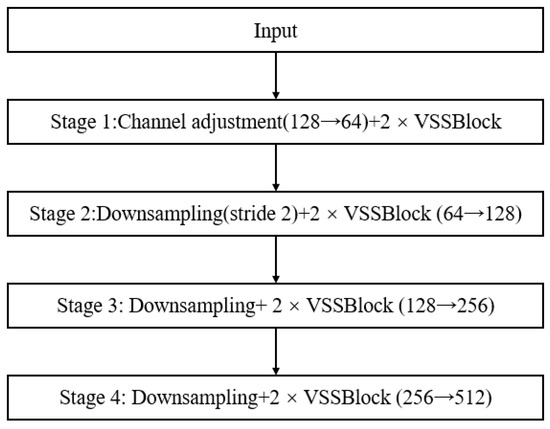
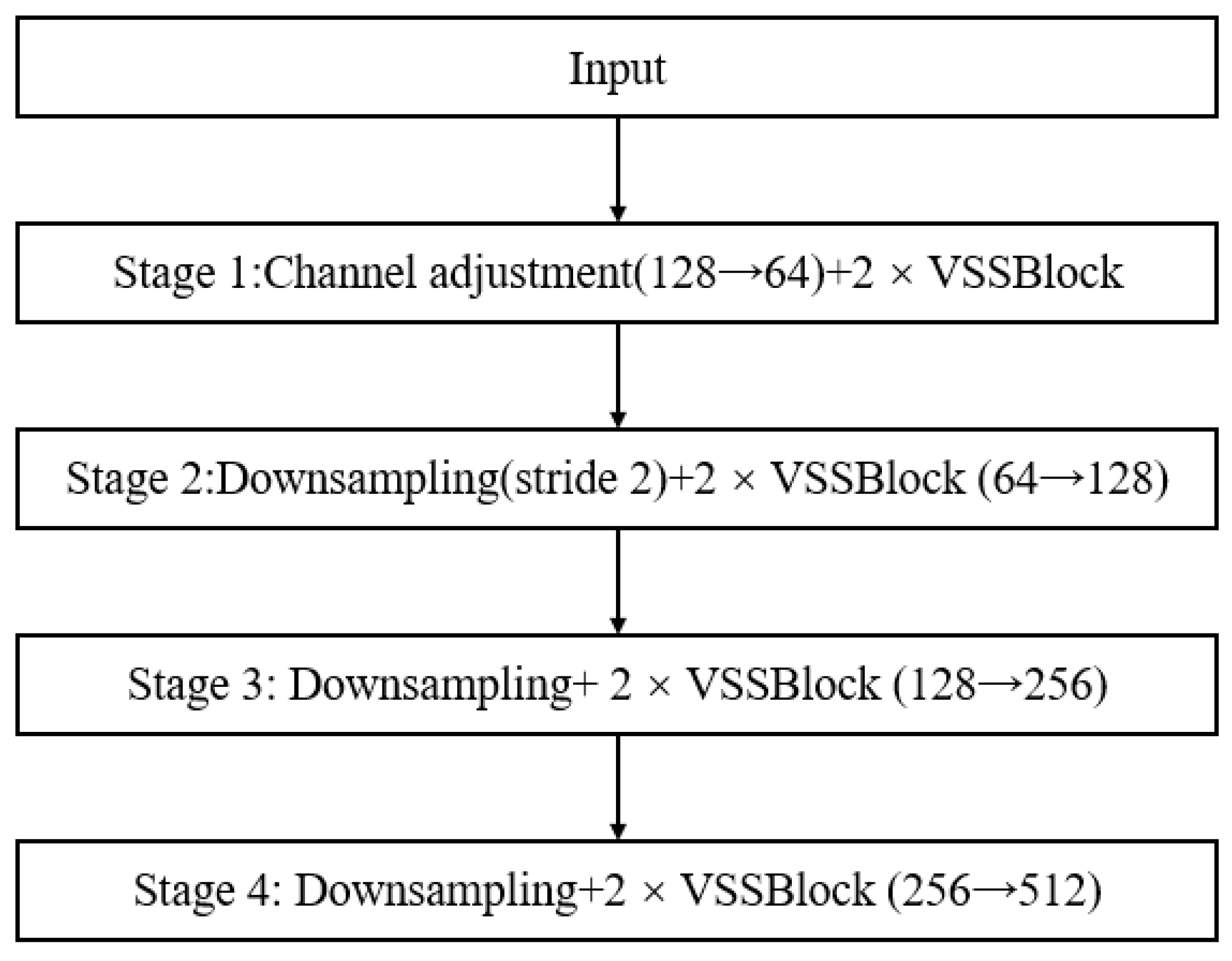
The left path is designed to capture global dependencies and long-range interactions through Vision State Space blocks enhanced. This path consists of four stages, each containing VSS blocks followed by downsampling operations. The left pathway is a crucial branch in our dual-pathway architecture, which adopts a structure similar to ResNet-50 and forms a dual pathway through symmetrical design. It primarily consists of four stages, each comprising two core components: a feature extraction pathway and a downsampling pathway. Specifically, the input first undergoes 1 × 1 convolution to compress the channel dimension from 128 to 64, followed by stacking two VSSBs to constitute Left Path1. Subsequently, downsampling is performed through 3 × 3 convolution with stride = 2, expanding the channels to 128 and entering Left Path2, and so forth. The output of each stage generates feature maps with 64, 128, 256, and 512 channels, respectively. Figure 2 show the structure of the left pathway and its output channels map.
Figure 2.
The structure of the left pathway and its output channels map.
Vision State Space Block
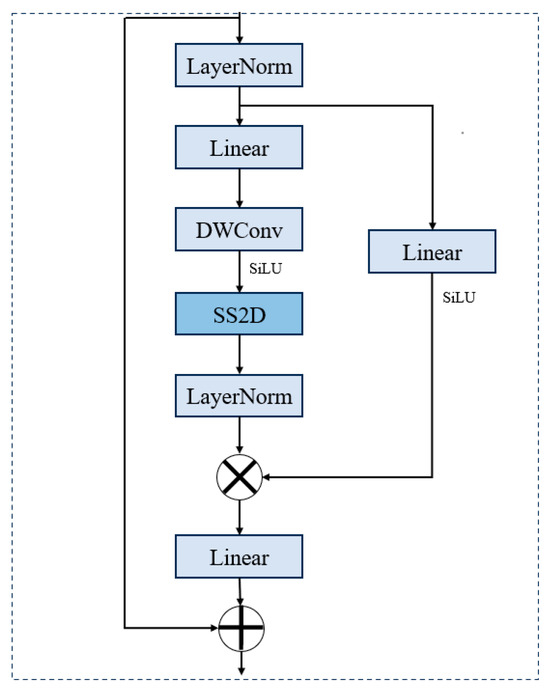
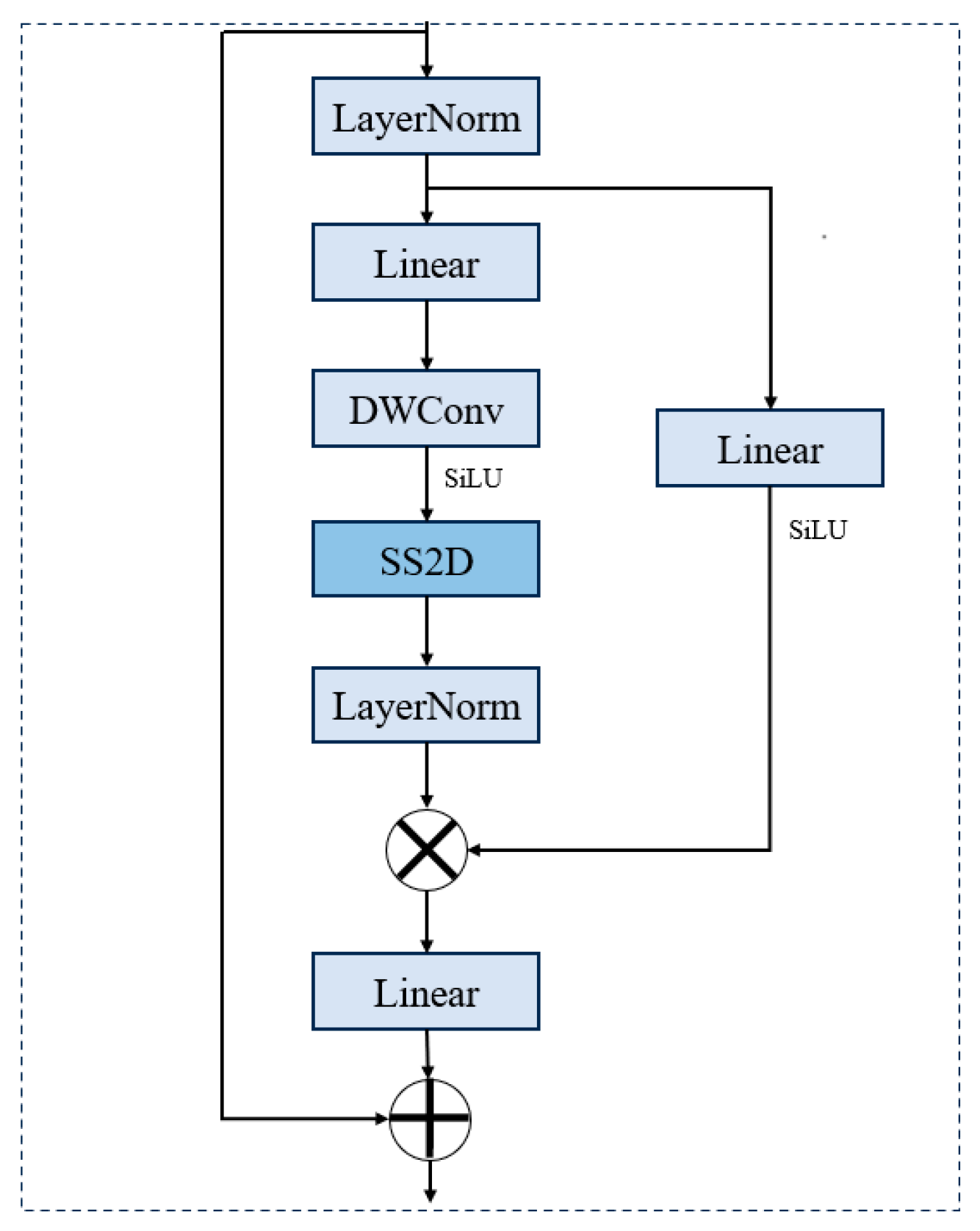
The core Visual State Space Block (VSSB) of Mamba originates from VMamba, serving as the central module in the left path of the dual-path architecture, as illustrated in Figure 3. The VSSB first applies layer normalization to the input feature maps, ensuring stability in data distribution. Subsequently, two parallel branches are employed for feature processing. The first branch consists of a linear layer, a 3 × 3 depthwise separable convolution, and a SiLU activation function, followed by fine-grained scanning and filtering of features through SS2D, with layer normalization applied to further enhance feature distinctiveness and expressiveness. The second branch utilizes a simple linear layer and activation function to preserve the integrity of the original features. Subsequently, element-wise multiplication is performed with the output of the first branch to facilitate information complementarity and integration. Finally, the fused features are linearly superimposed with the input features to form the VSSB output.
Figure 3.
VSSB structure.
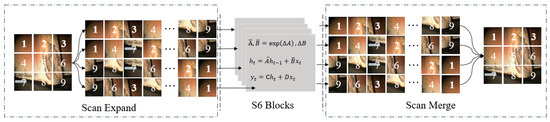
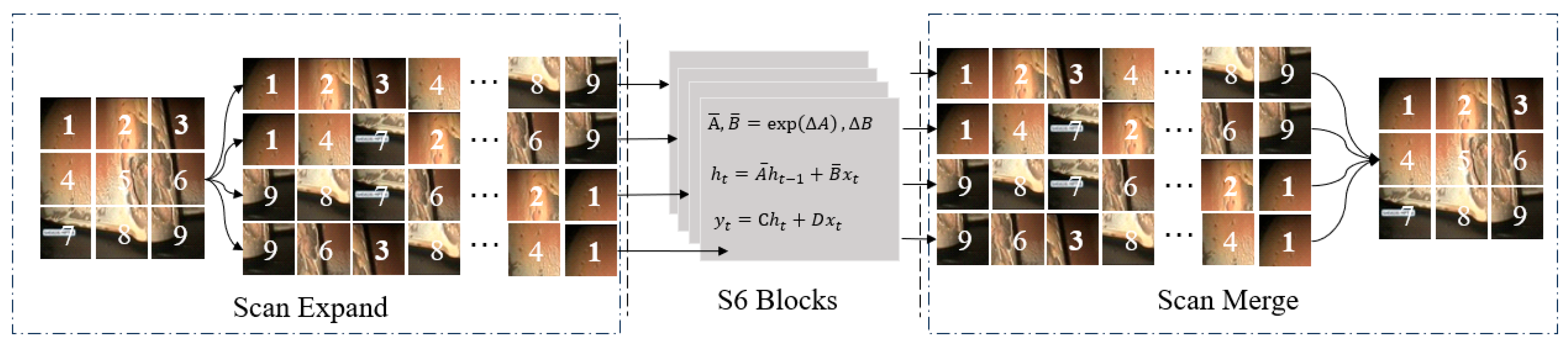
The SS2D module, as depicted in Figure 4, comprises three key components: scan expansion, S6 blocks, and scan merge. The scan expansion transforms the input image into sequences by scanning along four distinct paths, which are then processed in parallel by S6 blocks for computation. Finally, the scan merge operation reconstructs and merges the resulting sequences, restoring the output to match the input image dimensions. This multi-directional scanning enables each pixel to gather contextual information from surrounding pixels in different directions.
Figure 4.
SS2D structure.
3.4. ResNet Path (Right Path)
In engine ablation segmentation tasks, where datasets are typically limited in size, the selection of an appropriate network architecture is crucial. When dealing with small datasets, choosing the suitable ResNet variant is of paramount importance. We apply atrous convolution with removed stride to layers 3 and 4 to achieve higher feature resolution (output stride = 8/16), and perform spatial alignment and channel concatenation with the left path (VSSB branch) at the intermediate and high-level layers, respectively. Specifically, at the L3/L4 positions, we concatenate features of [L:256, R:1024] and [L:512, R:2048] and compress them to 1024/2048 channels through 1 × 1 convolution to obtain fused features for the auxiliary and main branches. Consequently, we selected ResNet-50 for our architecture.
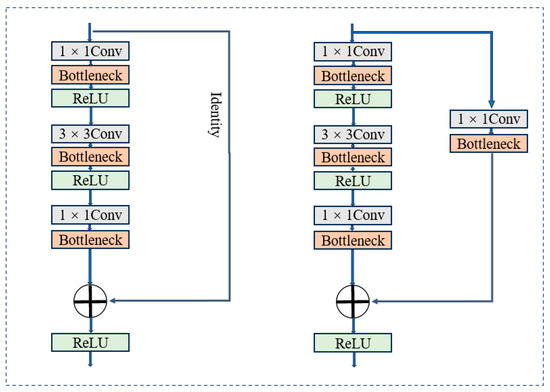
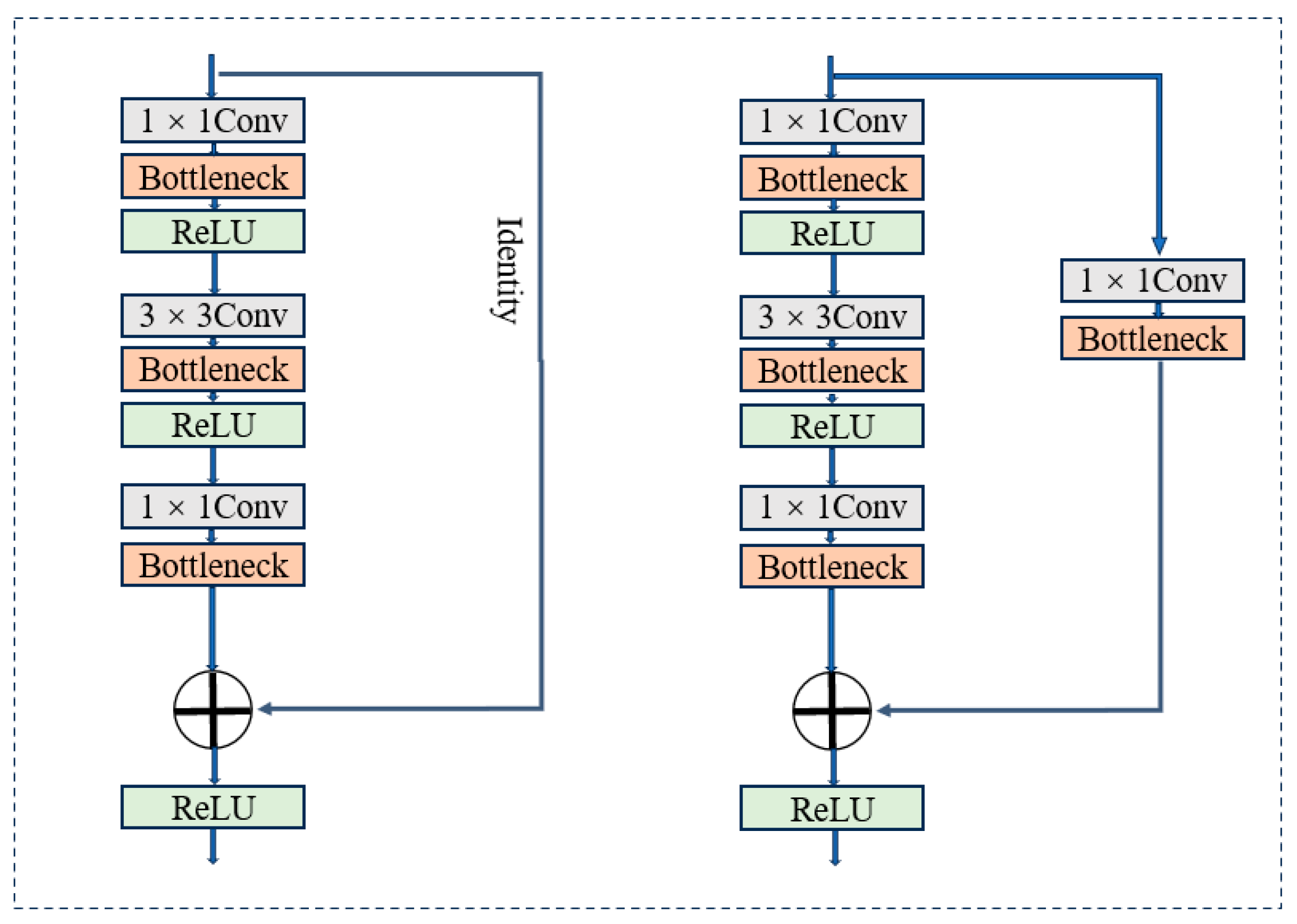
The rationale for choosing ResNet-50 [32] is threefold: First, its bottleneck structure provides superior high-level representation capability compared to ResNet-34, while naturally matching the fusion head in channel dimensions. Second, compared to ResNet-101, it offers lower computational and memory overhead. Third, after introducing VSSB for long-range modeling, the performance gains from further deepening the right path become marginal. Therefore, ResNet-50 achieves an optimal trade-off between performance and efficiency. The architecture of ResNet-50 is illustrated in Figure 5, with detailed specifications provided in Table 2.
Figure 5.
Two types of bottleneck architectures in ResNet-50tructure of ResNet-50.
Table 2.
Architecture of ResNet-50.
3.5. Multi-Scale Feature Fusion
The features from both paths are fused at multiple scales to create rich representations that combine global context with local details. We employ two fusion modules:
At Stage 3, features from both paths are concatenated and fused:
where L3 ∈ R^ (H/8 × W/8 × 256) and R3 ∈ R^ (H/8 × W/8 × 1024) are features from the left and right paths, respectively, and Conv1 × 1 reduces channels from 1280 to 1024.
Similarly, at Stage 4:
where L4 ∈ R^ (H/8 × W/8 × 512) and R4 ∈ R^ (H/8 × W/8 × 2048), producing output features F_main ∈ R^ (H/8 × W/8 × 2048).
3.6. Integration with PSPNet
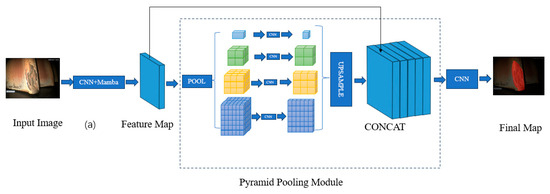
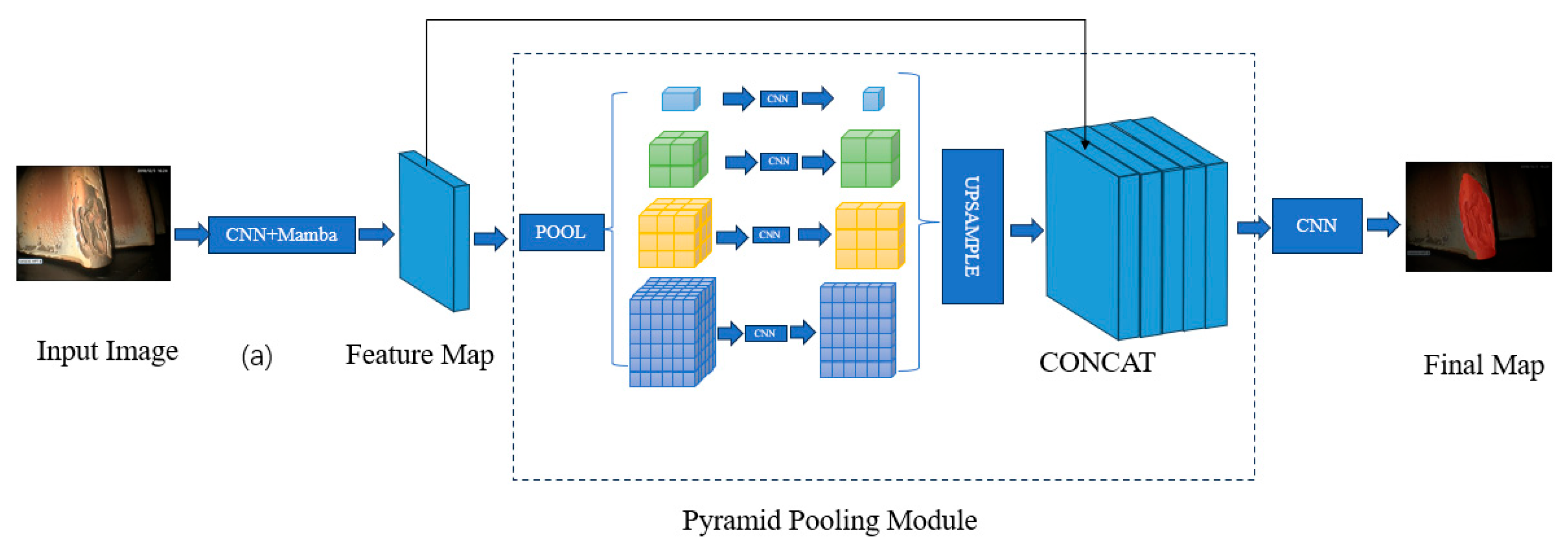
In the decoding module, we construct the prediction module based on PSPNet. PSPNet is a deep convolutional neural network architecture that leverages pyramid spatial pooling modules, offering advantages in multi-level feature extraction and pyramid spatial pooling. The PSPNet architecture generally comprises four components: the feature extraction module, pyramid spatial pooling module, classification module, and auxiliary loss module. Specifically, high-level features output from the backbone network are first fed into the Pyramid Pooling Module (PPM) for context aggregation at multiple scales, then processed through bottleneck convolution and 1 × 1 convolution to map to the number of categories. The output is upsampled to restore the input resolution as the final prediction result. Meanwhile, we introduce an auxiliary supervision branch at intermediate features to enhance gradient flow during training. Although PSPNet can capture contextual information at different scales to some extent, it may inadequately consider inter-pixel relationships and low-level spatial detail features for complete detection of small ablation classes and boundaries. However, after fusing the dual-pathway backbone outputs, global dependencies are enhanced. We employ the PSPNet decoding head to aggregate multi-scale context, thereby achieving segmentation predictions that balance both global and local considerations, as shown in Figure 6.
Figure 6.
Overall dual-path network architecture, where Mamba and CNN serve as backbone networks, with module (a) designed for efficient global context modeling of images, as detailed in Figure 1.
4. Experiments
This section evaluates the performance of our proposed method on the aero-engine ablation detection task. All experiments were conducted on NVIDIA GeForce RTX 3090 24 GB with Python 3.10, PyTorch 2.0, and CUDA 12.3. The operating system was Ubuntu 24.04.1. During training, the Adam optimizer was employed with an initial learning rate of 0.0005, input image size of 512 × 512, and batch size of 8. To ensure fairness, the dual-pathway model was trained for 150 epochs, and ResNet50 was also trained for 150 epochs with early stopping. Additionally, various data augmentation techniques were applied during the training phase to further enhance model robustness, including flipping, rotation and cropping, random noise addition, and histogram equalization methods, which further prevent overfitting phenomena.
4.1. Dataset Description
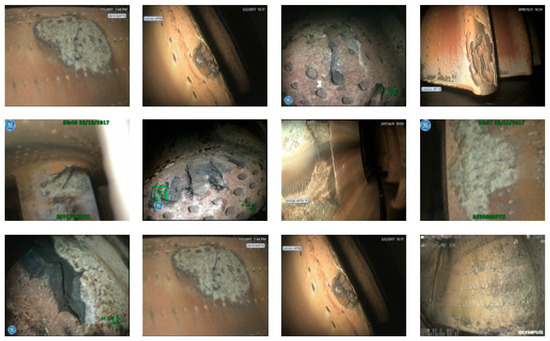
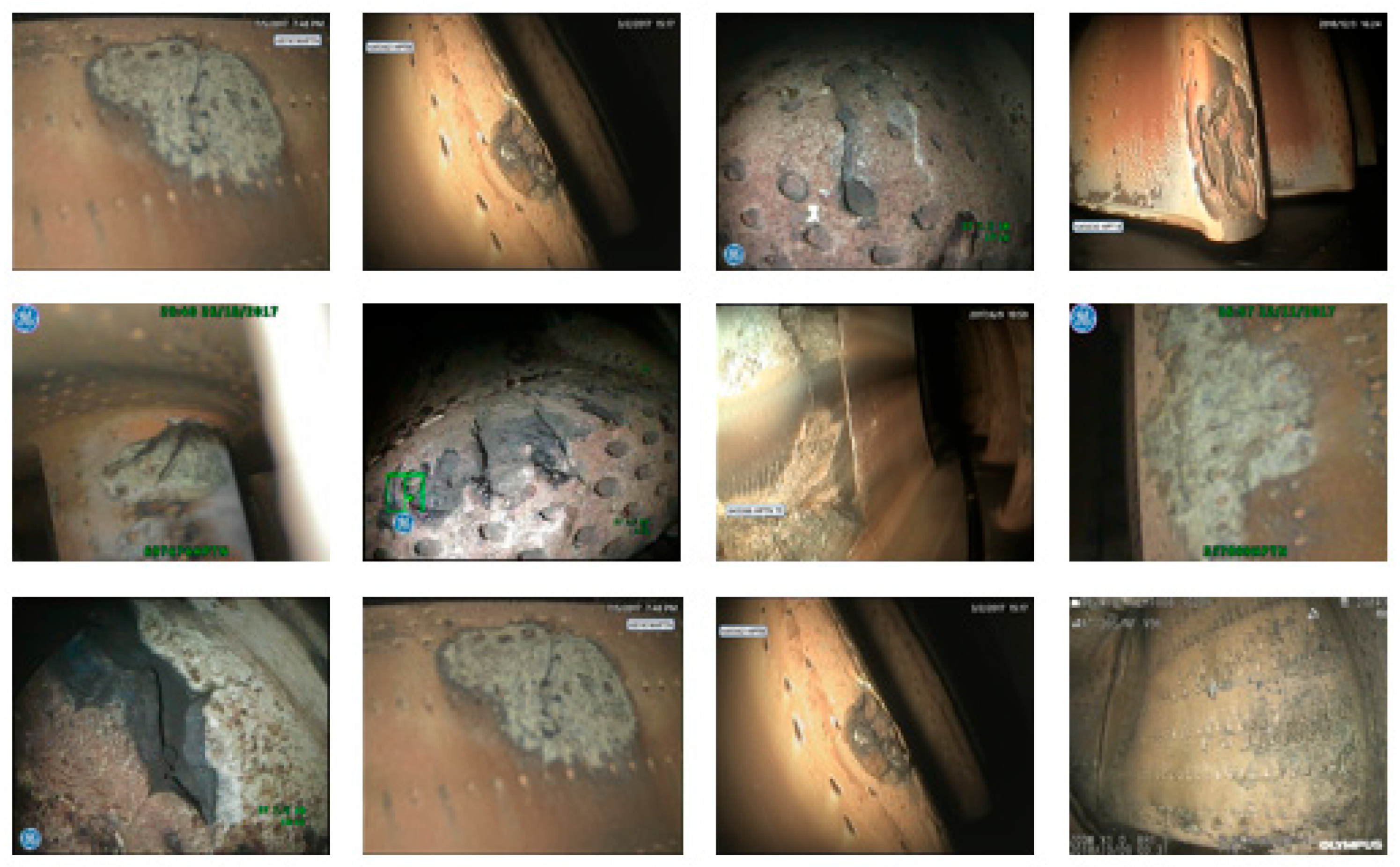
This study uses borescope-acquired inspection data from a specific aero-engine model as the research subject. The raw videos contain a large number of visually redundant frames due to slow camera motion and the narrow internal structure of the engine. To address this issue, a redundancy-removal pipeline was implemented to ensure that the dataset consists of non-duplicated and morphologically diverse samples, as shown in Figure 7.
Figure 7.
Original dataset.
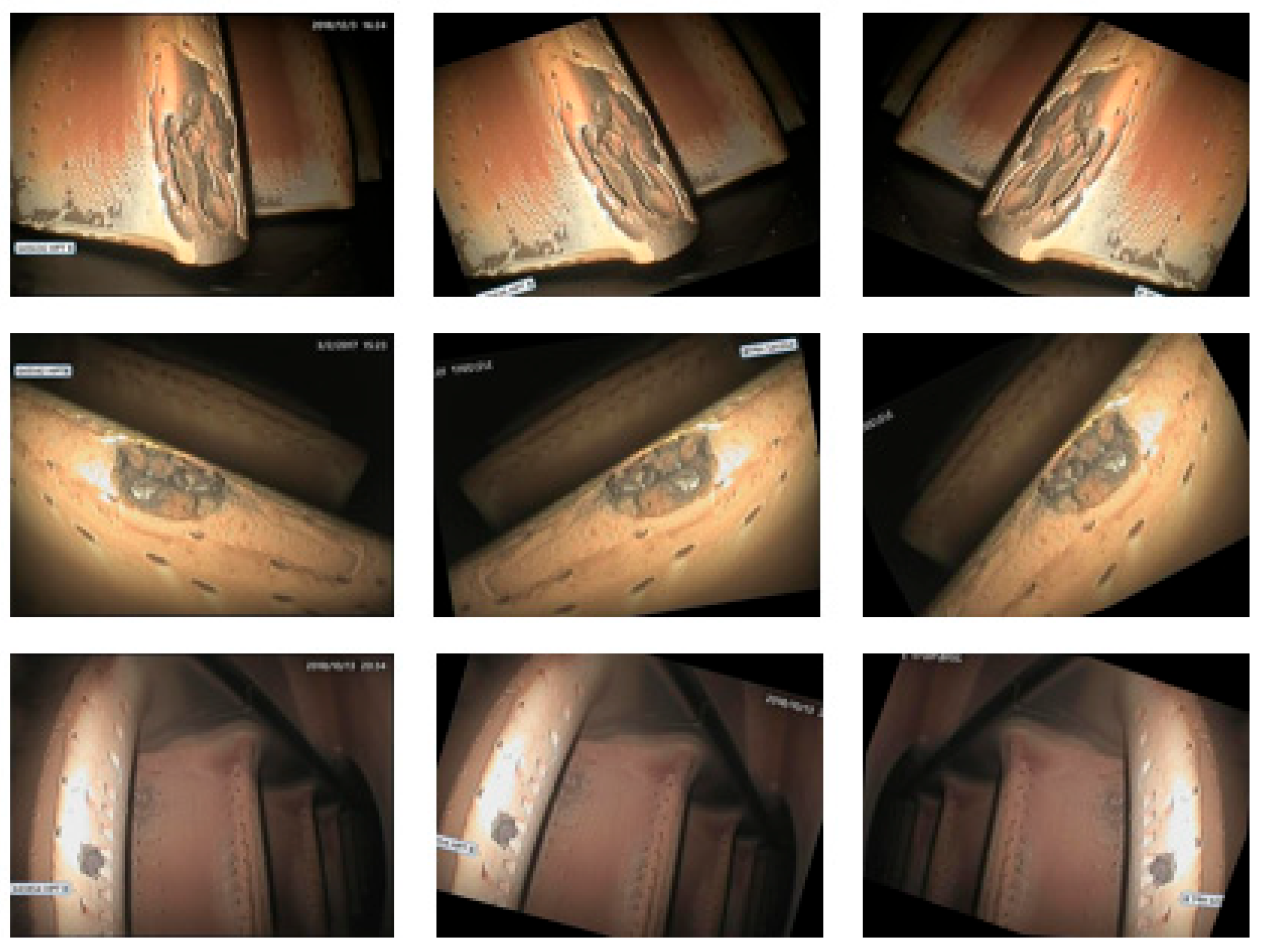
First, uniform temporal sampling was applied to reduce near-identical consecutive frames. Then, motion-based filtering using inter-frame pixel differences and structural similarity (SSIM) was performed to automatically remove frames with minimal morphological variation. Finally, two trained inspectors manually reviewed the remaining samples to ensure that each retained image exhibited distinct ablation characteristics, such as variations in surface topology, ablation depth, texture distribution, and boundary sharpness. After this filtering process, a total of 874 representative images were collected for model training and evaluation. To increase data diversity, these images were further augmented during training through rotation, cropping, and flipping, thereby enhancing the model’s generalization capability, as shown in Figure 8 and Figure 9.
Figure 8.
Data augmentation.
Figure 9.
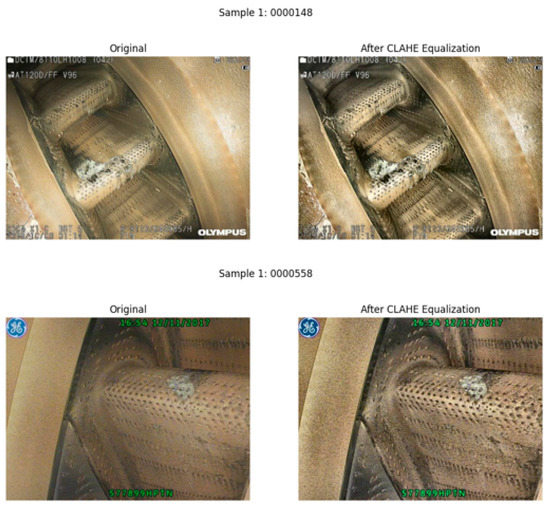
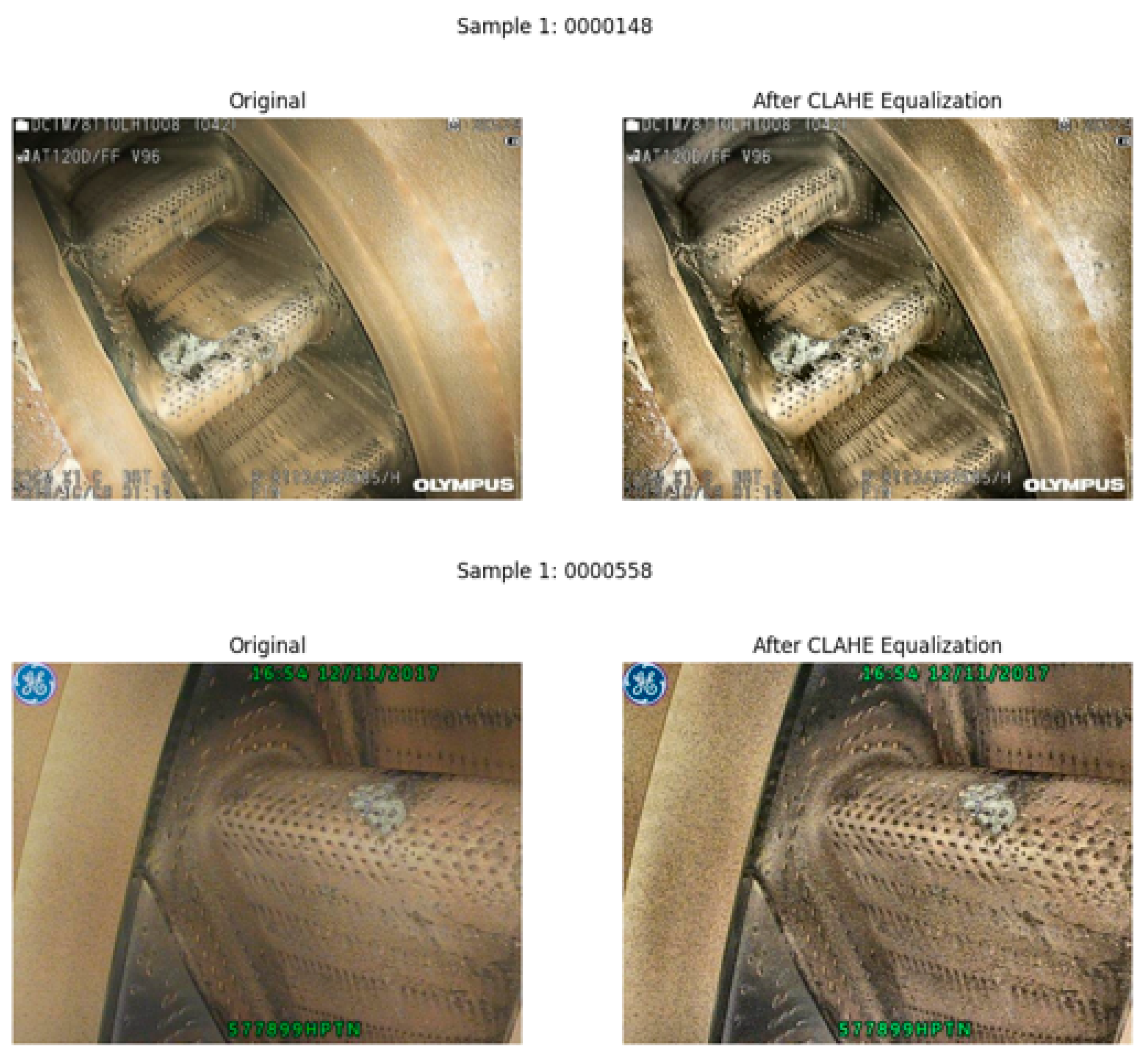
After histogram processing.
To enhance statistical reliability, all experiments were conducted using five independent random 80/20 train–test splits, and the results were reported as the mean ± standard deviation across the five runs, as shown in Table 3.
Because borescope illumination is limited inside the engine, the collected images generally exhibit low brightness. To improve visual clarity and enhance feature learning for the segmentation model, histogram equalization was applied to the entire dataset. This preprocessing step improves contrast and highlights ablation boundaries without altering structural information.
4.2. Evaluation Metrics
We quantitatively evaluated the semantic segmentation performance using three commonly adopted metrics: mean Intersection over Union (mIoU), mean Pixel Accuracy (mPA), and Overall Accuracy (Acc). Here, TPi denotes the number of pixels predicted as class i that indeed belong to class I (True Positive); FPi denotes the number of pixels predicted as class I but actually belonging to other classes (False Positive); FNi represents the number of pixels that truly belong to class i but are incorrectly predicted as non–class I (False Negative); N denotes the total number of classes; pii corresponds to the number of correctly classified pixels (diagonal entries of the confusion matrix); and pii represents the total number of pixels whose ground truth class is i.
Since our task focuses on ablation versus non-ablation segmentation, it is a binary classification problem with N = 2. Accordingly, the index i = 1 is used for the ablation class, and we maintain consistent notation throughout the manuscript.
The standard cross-entropy loss [33] is employed as the loss function for the segmentation task, which is defined as follows:
Furthermore, in the engine ablation segmentation task, most ablation regions occupy a relatively small proportion of the entire image. Therefore, Dice loss [34], which is more sensitive to imbalanced data, is introduced to focus more on the excavation of ablation regions. The definition of Dice is as follows:
where X and Y represent the prediction results and ground truth, respectively.
4.3. Comparison Methods
On our engine ablation dataset, the proposed dual-pathway network architecture was compared with advanced segmentation methods including FCN [20], U-Net [31], PSPNet [21], DeepLabV3+ [35], SegFormer [15], and HRNet [36]. To intuitively demonstrate the proposed method, as shown in Table 4. The calculation formulas for the missed-ablation rate (MAR) and false-alarm rate (FAR) are shown in Equations (10) and (11), respectively.
Table 3.
Performance comparison across five independent random 80/20 train–test splits. Results are reported in terms of mIoU, mPA, and Acc (%).
Table 4.
The comparison results of mIoU, mPA and Acc across different semantic segmentation models.
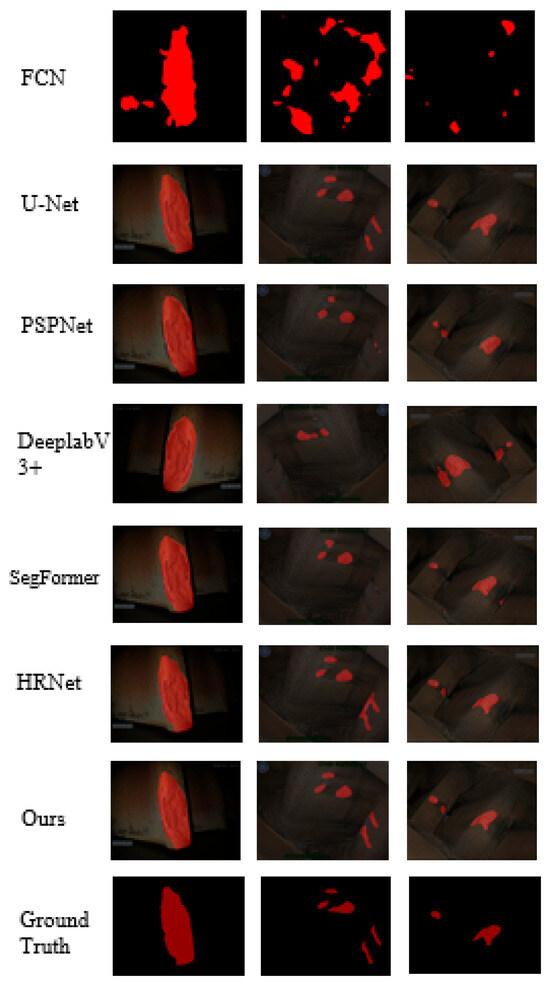
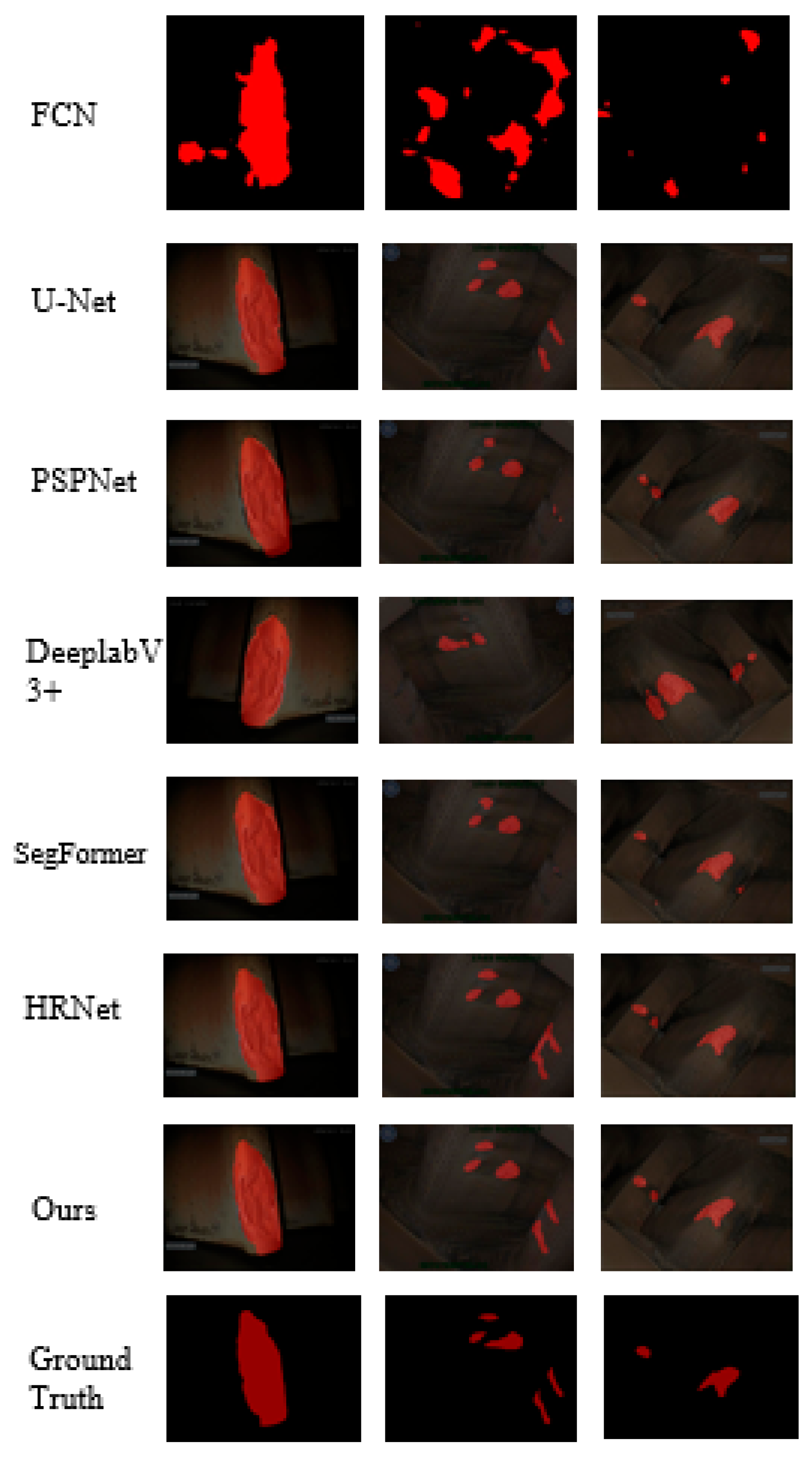
The quantitative results clearly demonstrate that our method achieves the highest accuracy in terms of mIoU, mPA, and Acc, reaching 81.42%, 87.45%, and 97.87%, respectively. Compared with the baseline model PSPNet, mIoU is improved by 4.57%, mPA by 2.67%, and Acc by 2.02%. Figure 10 shows that the improvement in mIoU proves its superiority in boundary segmentation. From the segmentation results, existing methods exhibit varying degrees of over-segmentation or under-segmentation at ablation boundaries. In contrast, the proposed method shows significant advantages in handling ablation cases.
Figure 10.
Qualitative comparison of semantic segmentation results.
To evaluate the performance of the MDR framework in ablation feature extraction, we constructed PSPNet frameworks with different backbones. All models have an image input size of 512 × 512 and were tested using the same testing. We evaluated six models, five of which are based on the PSPNet framework, including VGG16, ResNet-34, ResNet-50, ResNet-101, and MobileNet as backbones. The results are shown in Table 5.
Table 5.
The comparison of mIoU and mPA results under different backbones.
Although the improvement in mIoU is modest (~2%), increased boundary accuracy can substantially reduce the risk of missed or under-estimated damage during borescope inspection, which is critical for aero-engine safety. Prior studies and industry practice emphasize that improved boundary-level segmentation helps minimize manual re-inspection and maintenance overheads [37].
4.4. Ablation Study
Ablation experiments were conducted on the designed dual-branch network, with results shown in Table 6. As shown in the table, after introducing VSSB, Acc exhibits a slight improvement. When VSSB is applied to the left pathway, all metrics are enhanced. This is because VSSB alleviates the weak long-range perception capability inherent in convolutional neural networks, thereby improving their ability to capture contextual information. However, when two VSSB layers are stacked on the left pathway, the performance gain becomes marginal. Since the core advantage of VSSB lies in strengthening long-range dependencies, stacking two VSSBs at the same feature scale leads to partially overlapping contextual representations, resulting in a diminishing-return effect.
Table 6.
Comparison of ablation segmentation performance under different network configurations.
In our model design, the dual-path architecture demonstrates superior feature representation capability compared with the single-path variant. This superiority primarily arises from the complementary inductive biases of the two branches: the CNN (ResNet) branch excels at capturing local textures and boundary details, whereas the VSSB branch effectively models long-range dependencies and maintains global semantic consistency. After fusing the two types of features at the decoder stage, the network benefits from both fine-grained local sensitivity and robust global structural awareness. Such a combination is particularly advantageous for aero-engine ablation segmentation, where boundaries are gradual, shapes are complex, and scales vary significantly. The experimental results further demonstrate that the dual-path architecture consistently outperforms the single-path variant in terms of mIoU, mPA, and Acc, confirming that the complementary feature representations are both effective and necessary for improving semantic segmentation performance.
Table 7 provides a comparative analysis of computational complexity and inference efficiency between the baseline ResNet50 and multiple variants incorporating the VSSB module. The results reveal a consistent trend: introducing VSSB increases the number of parameters, FLOPs, and inference latency while reducing FPS. As the number of VSSB modules increases or when progressive integration strategies are applied, the computational cost rises further. The baseline ResNet50 exhibits the lowest complexity (51.43 M parameters, 204.07G FLOPs) and the fastest inference speed (19.24 ms, 51.96 FPS). Integrating a single VSSB module moderately increases the parameter count and FLOPs and leads to slower inference (21.18 ms, 47.22 FPS). Employing two VSSB modules (VSSB × 2) further increases computational overhead (24.35 ms, 41.07 FPS). The progressive VSSB integration results in the highest computational load among single-path configurations, yielding the lowest FPS (34.77). The dual-path VSSB structure, which combines a ResNet50 branch with a VSSB branch, incurs the largest overall cost (61.41 M parameters, 223.73G FLOPs, 37.62 ms inference time, 26.58 FPS).
Table 7.
Performance Comparison of ResNet50 with VSSB Module Integration.
Overall, incorporating VSSB enhances the model’s feature representation capability, and although it introduces additional computational cost, the improvement is worthwhile considering the stringent requirements of aero-engine blade inspection. Moreover, the dual-path architecture demonstrates the strongest representational ability, albeit at the highest efficiency cost.
5. Conclusions
In this paper, we address the challenging task of unclear segmentation of engine ablation boundaries and long-range modeling capability. Therefore, we propose a novel dual-branch network backbone based on Mamba and ResNet for accurately segmenting ablation conditions in engines, particularly irregular boundaries; achieving efficient global dependency modeling and local feature extraction; and combining multi-scale feature fusion strategies to significantly enhance segmentation performance in aero-engine ablation detection tasks. Experimental results demonstrate that this method outperforms existing mainstream models in both accuracy and robustness, with particularly evident advantages in handling small targets and complex boundaries. This indicates its potential in intelligent aero-engine inspection. Future work will primarily focus on the following directions: (1) expanding the dataset scale to improve the model’s generalization capability; (2) exploring integration with other advanced attention mechanisms or lightweight structures to provide more intelligent detection methods for aero-engine health management.
Author Contributions
X.W. conceptualization, methodology, supervision, writing—original draft; H.S. methodology, software, visualization, validation, writing—original draft; Y.X. conceptualization, methodology, supervision, funding acquisition; Q.F. conceptualization, supervision, funding acquisition; J.Q. methodology, software, visualization, validation. All authors have read and agreed to the published version of the manuscript.
Funding
This research was support by the Henan Province Key R&D Special Fund (No. 251111242100), the R&D Program of Key Laboratory of Flight Techniques and Flight Safety, CAAC (No. FZ2022ZZ01), and the Sichuan Province College Student Innovation and Entrepreneurship Training Program (No. X202510624372).
Data Availability Statement
The data are not publicly available due to commercial sensitivity and data privacy.
Conflicts of Interest
The authors declare no conflicts of interest.
Abbreviations
The following abbreviations are used in this manuscript:
| CNN | Convolutional Neural Network |
| R-CNN | Region-Convolutional Neural Network |
| VSSB | Visual State-Space Block |
| mIoU | Mean Intersection over Union |
| mPA | Mean Pixel Accuracy |
| Acc | Accuracy |
| PSPNet | Pyramid Scene Parsing Network |
| NDT | Non-Destructive Testing |
| FPT | Fluorescent Penetrant Inspection |
| FCN | Fully Convolutional Networks |
| SSM | State Space Models |
| SS2D | Selective Scan 2D |
References
- Rao, N.; Kumar, N.; Prasad, B.; Madhulata, N.; Gurajarapu, N. Failure mechanisms in turbine blades of a gas turbine engine—An overview. Int. J. Eng. Res. Dev. 2014, 10, 48–57. [Google Scholar]
- Aust, J.; Shankland, S.; Pons, D.; Mukundan, R.; Mitrovic, A. Automated defect detection and decision-support in gas turbine blade inspection. Aerospace 2021, 8, 30. [Google Scholar] [CrossRef] [Scilit]
- Wang, D.; Tsui, K.-L.; Miao, Q. Prognostics and health management: A review of vibration based bearing and gear health indicators. IEEE Access 2017, 6, 665–676. [Google Scholar] [CrossRef] [Scilit]
- Lau, D.; Fong, B. Special issue on prognostics and health management. Microelectron. Reliab. 2011, 51, 253–254. [Google Scholar] [CrossRef] [Scilit]
- Yasuda, Y.D.; Cappabianco, F.A.; Martins, L.E.G.; Gripp, J.A. Aircraft visual inspection: A systematic literature review. Comput. Ind. 2022, 141, 103695. [Google Scholar] [CrossRef] [Scilit]
- Aust, J.; Mitrovic, A.; Pons, D. Comparison of visual and visual–tactile inspection of aircraft engine blades. Aerospace 2021, 8, 313. [Google Scholar] [CrossRef] [Scilit]
- Avdelidis, N.P.; Almond, D.P.; Dobbinson, A.; Hawtin, B.; Ibarra-Castanedo, C.; Maldague, X. Aircraft composites assessment by means of transient thermal NDT. Prog. Aerosp. Sci. 2004, 40, 143–162. [Google Scholar] [CrossRef] [Scilit]
- Shang, C.; Yang, F.; Huang, D.; Lyu, W. Data-driven soft sensor development based on deep learning technique. J. Process Control 2014, 24, 223–233. [Google Scholar] [CrossRef] [Scilit]
- Vaswani, A.; Shazeer, N.; Parmar, N.; Uszkoreit, J.; Jones, L.; Gomez, A.N.; Kaiser, Ł.; Polosukhin, I. Attention is all you need. Adv. Neural Inf. Process. Syst. 2017, 30, 1–11. [Google Scholar]
- Wong, C.Y.; Seshadri, P.; Parks, G.T. Automatic borescope damage assessments for gas turbine blades via deep learning. In Proceedings of the AIAA Scitech 2021 Forum, Online, 11–21 January 2021; p. 1488. [Google Scholar]
- Uzun, I.; Tolun, M.R.; Sari, F.; Alpaslan, F.N. Damage detection in aircraft engine borescope inspection using deep learning. Neural Comput. Appl. 2025, 37, 20105–20126. [Google Scholar] [CrossRef] [Scilit]
- Ronneberger, O.; Fischer, P.; Brox, T. U-net: Convolutional networks for biomedical image segmentation. In Proceedings of the International Conference on Medical Image Computing and Computer-Assisted Intervention, Munich, Germany, 5–9 October 2015; pp. 234–241. [Google Scholar]
- Badrinarayanan, V.; Kendall, A.; Cipolla, R. Segnet: A deep convolutional encoder-decoder architecture for image segmentation. IEEE Trans. Pattern Anal. Mach. Intell. 2017, 39, 2481–2495. [Google Scholar] [CrossRef] [Scilit]
- He, K.; Zhang, X.; Ren, S.; Sun, J. Deep residual learning for image recognition. In Proceedings of the IEEE Conference on Computer Vision and Pattern Recognition, Las Vegas, NV, USA, 27–30 June 2016; pp. 770–778. [Google Scholar]
- Xie, E.; Wang, W.; Yu, Z.; Anandkumar, A.; Alvarez, J.M.; Luo, P. SegFormer: Simple and efficient design for semantic segmentation with transformers. Adv. Neural Inf. Process. Syst. 2021, 34, 12077–12090. [Google Scholar]
- Zheng, S.; Lu, J.; Zhao, H.; Zhu, X.; Luo, Z.; Wang, Y.; Fu, Y.; Feng, J.; Xiang, T.; Torr, P.H. Rethinking semantic segmentation from a sequence-to-sequence perspective with transformers. In Proceedings of the IEEE/CVF Conference on Computer Vision and Pattern Recognition, Nashville, TN, USA, 20–25 June 2021; pp. 6881–6890. [Google Scholar]
- Luo, D.; Cai, Y.; Yang, Z.; Zhang, Z.; Zhou, Y.; Bai, X. A review of deep learning methods for industrial defect detection. Sci. China Inf. Sci 2022, 52, 1002–1039. [Google Scholar]
- Gu, A.; Dao, T. Mamba: Linear-time sequence modeling with selective state spaces. In Proceedings of the First Conference on Language Modeling, Philadelphia, PA, USA, 7–9 October 2024. [Google Scholar]
- Liu, Y.; Tian, Y.; Zhao, Y.; Yu, H.; Xie, L.; Wang, Y.; Ye, Q.; Jiao, J.; Liu, Y. Vmamba: Visual state space model. Adv. Neural Inf. Process. Syst. 2024, 37, 103031–103063. [Google Scholar]
- Long, J.; Shelhamer, E.; Darrell, T. Fully convolutional networks for semantic segmentation. In Proceedings of the IEEE Conference on Computer Vision and Pattern Recognition, Boston, MA, USA, 7–12 June 2015; pp. 3431–3440. [Google Scholar]
- Zhao, H.; Shi, J.; Qi, X.; Wang, X.; Jia, J. Pyramid scene parsing network. In Proceedings of the IEEE Conference on Computer Vision and Pattern Recognition, Honolulu, HI, USA, 21–26 July 2017; pp. 2881–2890. [Google Scholar]
- Wang, J.; Xu, G.; Yan, F.; Wang, J.; Wang, Z. Defect transformer: An efficient hybrid transformer architecture for surface defect detection. Measurement 2023, 211, 112614. [Google Scholar] [CrossRef] [Scilit]
- Cao, H.; Wang, Y.; Chen, J.; Jiang, D.; Zhang, X.; Tian, Q.; Wang, M. Swin-unet: Unet-like pure transformer for medical image segmentation. In Proceedings of the European Conference on Computer Vision, Tel Aviv, Israel, 23–27 October 2022; pp. 205–218. [Google Scholar]
- Shi, L.; Long, Y.; Wang, Y.; Chen, X.; Zhao, Q. Evaluation of internal cracks in turbine blade thermal barrier coating using enhanced multi-scale Faster R-CNN model. Appl. Sci. 2022, 12, 6446. [Google Scholar] [CrossRef] [Scilit]
- Zheng, J.; Tang, C.; Sun, Y. Thresholding-accelerated convolutional neural network for aeroengine turbine blade segmentation. Expert Syst. Appl. 2024, 238, 122387. [Google Scholar] [CrossRef] [Scilit]
- Zhang, H.-B.; Zhang, C.-Y.; Cheng, D.-J.; Zhou, K.-L.; Sun, Z.-Y. Detection transformer with multi-scale fusion attention mechanism for aero-engine turbine blade cast defect detection considering comprehensive features. Sensors 2024, 24, 1663. [Google Scholar] [CrossRef] [Scilit]
- Upadhyay, A.; Li, J.; King, S.; Addepalli, S. A deep-learning-based approach for aircraft engine defect detection. Machines 2023, 11, 192. [Google Scholar] [CrossRef] [Scilit]
- Shang, H.; Sun, C.; Liu, J.; Chen, X.; Yan, R. Deep learning-based borescope image processing for aero-engine blade in-situ damage detection. Aerosp. Sci. Technol. 2022, 123, 107473. [Google Scholar] [CrossRef] [Scilit]
- Gu, A.; Johnson, I.; Goel, K.; Saab, K.; Dao, T.; Rudra, A.; Ré, C. Combining recurrent, convolutional, and continuous-time models with linear state space layers. Adv. Neural Inf. Process. Syst. 2021, 34, 572–585. [Google Scholar]
- Zhu, L.; Liao, B.; Zhang, Q.; Wang, X.; Liu, W.; Wang, X. Vision mamba: Efficient visual representation learning with bidirectional state space model. arXiv 2024, arXiv:2401.09417. [Google Scholar] [CrossRef] [Scilit]
- Ma, C.; Wang, Z. Semi-Mamba-UNet: Pixel-level contrastive and cross-supervised visual Mamba-based UNet for semi-supervised medical image segmentation. Knowl. Based Syst. 2024, 300, 112203. [Google Scholar] [CrossRef] [Scilit]
- Mukti, I.Z.; Biswas, D. Transfer learning based plant diseases detection using ResNet50. In Proceedings of the 2019 4th International Conference on Electrical Information and Communication Technology (EICT), Khulna, Bangladesh, 20–22 December 2019; pp. 1–6. [Google Scholar]
- Mao, A.; Mohri, M.; Zhong, Y. Cross-entropy loss functions: Theoretical analysis and applications. In Proceedings of the International Conference on Machine Learning, Honolulu, HI, USA, 23–29 July 2023; pp. 23803–23828. [Google Scholar]
- Li, X.; Sun, X.; Meng, Y.; Liang, J.; Wu, F.; Li, J. Dice loss for data-imbalanced NLP tasks. In Proceedings of the 58th Annual Meeting of the Association for Computational Linguistics, Online, 5–10 July 2020; pp. 465–476. [Google Scholar]
- Chen, L.-C.; Zhu, Y.; Papandreou, G.; Schroff, F.; Adam, H. Encoder-decoder with atrous separable convolution for semantic image segmentation. In Proceedings of the European Conference on Computer Vision (ECCV), Munich, Germany, 8–14 September 2018; pp. 801–818. [Google Scholar]
- Wang, J.; Sun, K.; Cheng, T.; Jiang, B.; Deng, C.; Zhao, Y.; Liu, D.; Mu, Y.; Tan, M.; Wang, X. Deep high-resolution representation learning for visual recognition. IEEE Trans. Pattern Anal. Mach. Intell. 2020, 43, 3349–3364. [Google Scholar] [CrossRef] [Scilit]
- Ma, Y.; Yin, J.; Huang, F.; Li, Q. Surface defect inspection of industrial products with object detection deep networks: A systematic review. Artif. Intell. Rev. 2024, 57, 333. [Google Scholar] [CrossRef] [Scilit]

Disclaimer/Publisher’s Note: The statements, opinions and data contained in all publications are solely those of the individual author(s) and contributor(s) and not of MDPI and/or the editor(s). MDPI and/or the editor(s) disclaim responsibility for any injury to people or property resulting from any ideas, methods, instructions or products referred to in the content. |
© 2026 by the authors. Licensee MDPI, Basel, Switzerland. This article is an open access article distributed under the terms and conditions of the Creative Commons Attribution (CC BY) license.