1. Introduction
The Turbine-Based Combined Cycle (TBCC) engine delivers continuous thrust for high-speed aircraft from takeoff to high Mach numbers and features high specific impulse, positioning it as an ideal propulsion system for high-speed and even hypersonic vehicles. As a crucial component of the TBCC engine, the inlet must supply stably compressed airflow to the downstream engine across a broad operational envelope that encompasses turbine, ramjet, and combined modes. This wide operating range presents a fundamental design conflict: the inlet must achieve high aerodynamic performance under cruise conditions while maintaining reliable starting capability across all Mach numbers.
Based on the compression method, supersonic inlets can be categorized as internal compression, external compression, and mixed compression types. Among these, internal compression inlets suffer from severe starting issues, while external compression inlets are unsuitable for excessively high incoming flow Mach numbers. Therefore, TBCC inlets typically adopt a mixed compression design. Mixed compression inlets combine the advantages of both internal and external compression, but, due to their reliance on internal contraction, still face starting challenges. The starting issue is not only closely related to engine performance but also significantly affects the stable operation of the engine, directly threatening flight safety. Thus, research on the starting problem of TBCC inlets is of great importance.
D. M. Van Wie defined the “started” condition of an inlet as a state in which the internal flow field does not affect the inlet’s mass capture performance [
1]. Based on one-dimensional isentropic flow calculations, Kantrowitz derived a critical self-starting contraction ratio for inlets, known as the Kantrowitz limit. When the internal contraction ratio is below this limit, the inlet can achieve self-starting [
2]. Timofeev et al. analyzed the isentropic compression starting limit curve and the Kantrowitz limit. The two curves divide the plane of the internal contraction ratio and freestream Mach number into three regions: the self-starting region, the dual-solution region, and the unstarted region [
3]. If an inlet transitions from an unstarted state into the dual-solution region, it remains unstarted. Conversely, if it transitions from a started state into the dual-solution region, it stays in the started state. The operational range of a TBCC inlet is exceptionally wide. To ensure optimal aerodynamic performance across this range, the freestream Mach number and internal contraction ratio are generally situated within the dual-solution region. Consequently, geometric adjustments are often employed in practice to transition the inlet from a self-starting state to the designed high-performance operating state. This implies that geometric adjustment holds potential not only for performance optimization but also for actively controlling the starting process itself.
Given this critical need, a significant body of scholarly work has been dedicated to investigating the flow field behavior and starting mechanisms of these inlets. These studies can be broadly categorized into two aspects: investigations of flow field characteristics during starting/unstart processes, and explorations of various techniques to enhance starting capability. Guan B. et al. used two-dimensional unsteady numerical calculation methods to compute the flow fields of inlets with different cowl-lip positions. They found that the amplitude of flow field oscillations in response to changes in freestream Mach number varies with the cowl-lip position. When the cowl-lip is positioned for high Mach numbers, flow field oscillations intensify as the freestream Mach number increases. Conversely, when positioned for low Mach numbers, the oscillations weaken with increasing freestream Mach number [
4]. Zhang Kailing et al. studied the impact of parametric uncertainties in RANS methods on numerical calculation results for inlets. They found that uncertainties in model parameters lead to significant variability in predictions of shock wave structures in started conditions and separation regions in unstarted conditions. This further results in non-negligible uncertainties of approximately 10% in inlet performance parameters [
5]. Jin Y. et al. achieved hypersonic inlet restart using active jet control and simulated the dynamic starting process via numerical simulations. They demonstrated that active jet control can expel the high-pressure separation bubble from the internal compression section, thereby enabling inlet start [
6]. You Y. et al. improved the starting performance of a hypersonic inlet by designing a bump and conducted a detailed study on the effects of bump parameters. They found that increasing both the bump height and width significantly enhances starting performance [
7]. Zhu W. et al. investigated a reverse design method for curved compression inlets with controllable internal and external compression surfaces. They performed numerical simulations and experimental studies on the designed binary curved compression inlet under varying angles of attack at different Mach numbers. They obtained the hysteresis loop of the inlet’s starting angle of attack, and the unstarted and self-started angles of attack, outlet flow fields, and pressure distributions from simulations and experiments showed good agreement [
8]. Wu J. et al. conducted numerical simulation studies on the acceleration starting process of a hypersonic inlet using two-dimensional quasi-steady, unsteady, and three-dimensional quasi-steady approaches. Their analysis indicated that two-dimensional quasi-steady and unsteady simulations yield consistent self-starting Mach numbers, but the quasi-steady method cannot capture periodic variations in the flow field [
9]. Zhao H. et al. confirmed the existence of a hysteresis phenomenon in inlet starting through throttling experiments and demonstrated that the degree of throttling significantly affects the size of the hysteresis loop [
10]. Yang D. et al. studied the self-starting performance of an inward-turning inlet and successfully broadened its operational range by implementing lower wall bleeding [
11]. Tan H et al. conducted wind tunnel experimental studies on the low-Mach-number unstart and restart phenomena of a truncated binary hypersonic inlet. In the experiments, they simulated changes in the inlet freestream Mach number by varying the angle of attack and simulated flow blockage caused by heat release in the combustion chamber by placing a blockage cone downstream in the channel. The study found that when the inlet is unstarted at low Mach numbers, the shock wave induced by the separation bubble at the inlet entrance is influenced by the oscillation characteristics of the bubble itself. During the restart process, a hysteresis phenomenon occurs in the ingestion of the separation bubble. When the inlet recovers from the “minor buzz” stage to the started state, the separation bubble fails to be fully ingested due to the presence of high pressure downstream, exhibiting small-amplitude oscillations without a fundamental frequency similar to those during low-Mach-number unstart. These oscillations gradually disappeared only after the downstream channel was fully opened and the separation bubble at the inlet entrance was ingested, at which point the inlet smoothly returned to the started state [
12]. Pan C. J. et al., based on the Kantrowitz starting criterion and by linking shock relations and the continuity equation, derived a series of contour lines. They applied these contours to hypersonic inlet starting problems, exploring the feasibility of theoretically estimating the inlet starting Mach number quickly [
13]. Yang Y. Y. et al. investigated the restart process of an RBCC inlet and found that reducing the back pressure can effectively achieve inlet restart [
14]. Zhong J. X. et al. introduced deep learning methods, which, compared with wind tunnel experiments and CFD numerical simulations, can more efficiently predict the flow field of inlets operating over a wide range [
15]. Ye K. et al. studied flow field issues arising from decreased structural rigidity in adjustable cowl-lip configurations. They found that reduced rigidity in adjustable inlet structures leads to flow fields entirely different from those of rigid inlets, more easily inducing instability in downstream shock trains and causing inlet buzz [
16]. Kaikai Yu et al., using a self-built continuous variable Mach number wind tunnel, studied the aerodynamic process of inlets. They discovered that the inlet starting process comprises four states: in addition to started and unstarted states, there are also pseudo-started and pseudo-unstarted states [
17].
The above review shows that extensive research has advanced the understanding of inlet starting from multiple perspectives: flow field characteristics during starting/unstart, numerical methodology assessments, and various starting enhancement techniques, including jet control, bump design, bleeding, and back pressure regulation. However, it is noteworthy that among these efforts, investigations specifically focused on employing geometric adjustment, particularly cowl-lip translation, as an active strategy to achieve inlet start remain scarce. Furthermore, while some studies have examined cowl-lip position effects or adjustable structures, these have been predominantly numerical or have emphasized structural stability, lacking experimental validation of geometry change as a deliberate starting method.
Motivated by this need, the present study experimentally investigates the feasibility of achieving inlet start through cowl-lip translation. This study takes an axisymmetric inlet operating within a Mach number range of 0–4.0 as the research subject. A wind tunnel test model was designed, and an experimental plan was formulated to validate the feasibility of transforming a non-self-starting inlet into a started state by adjusting the internal contraction ratio through translating the cowl-lip. The core contribution of this work is to provide experimental evidence demonstrating the effectiveness of cowl-lip translation as an active starting method.
2. Inlet Configuration
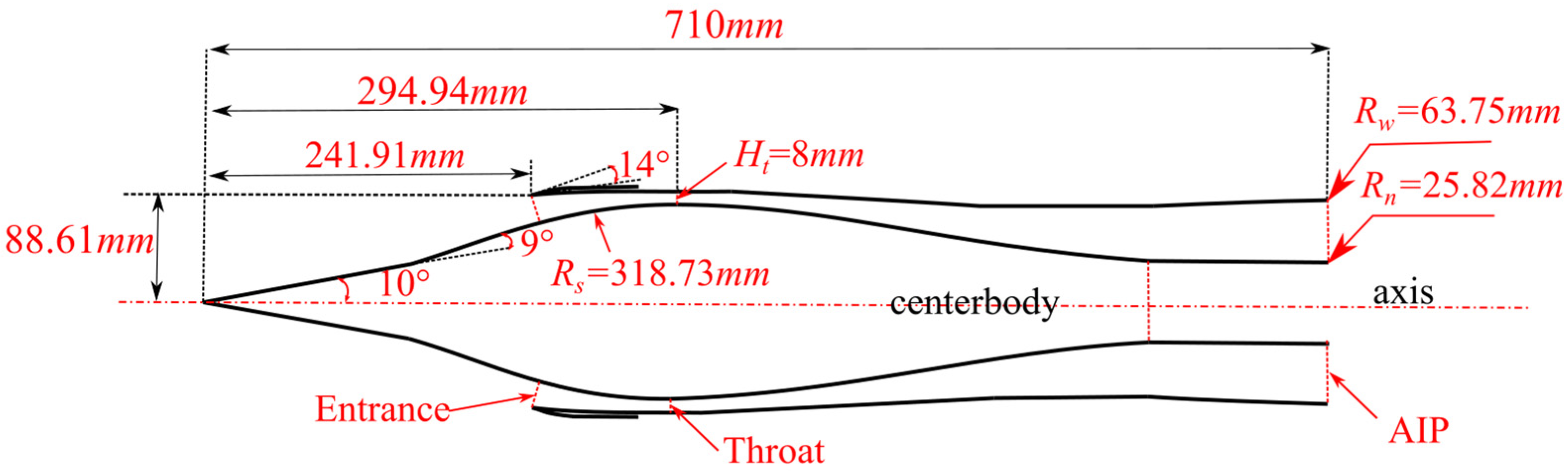
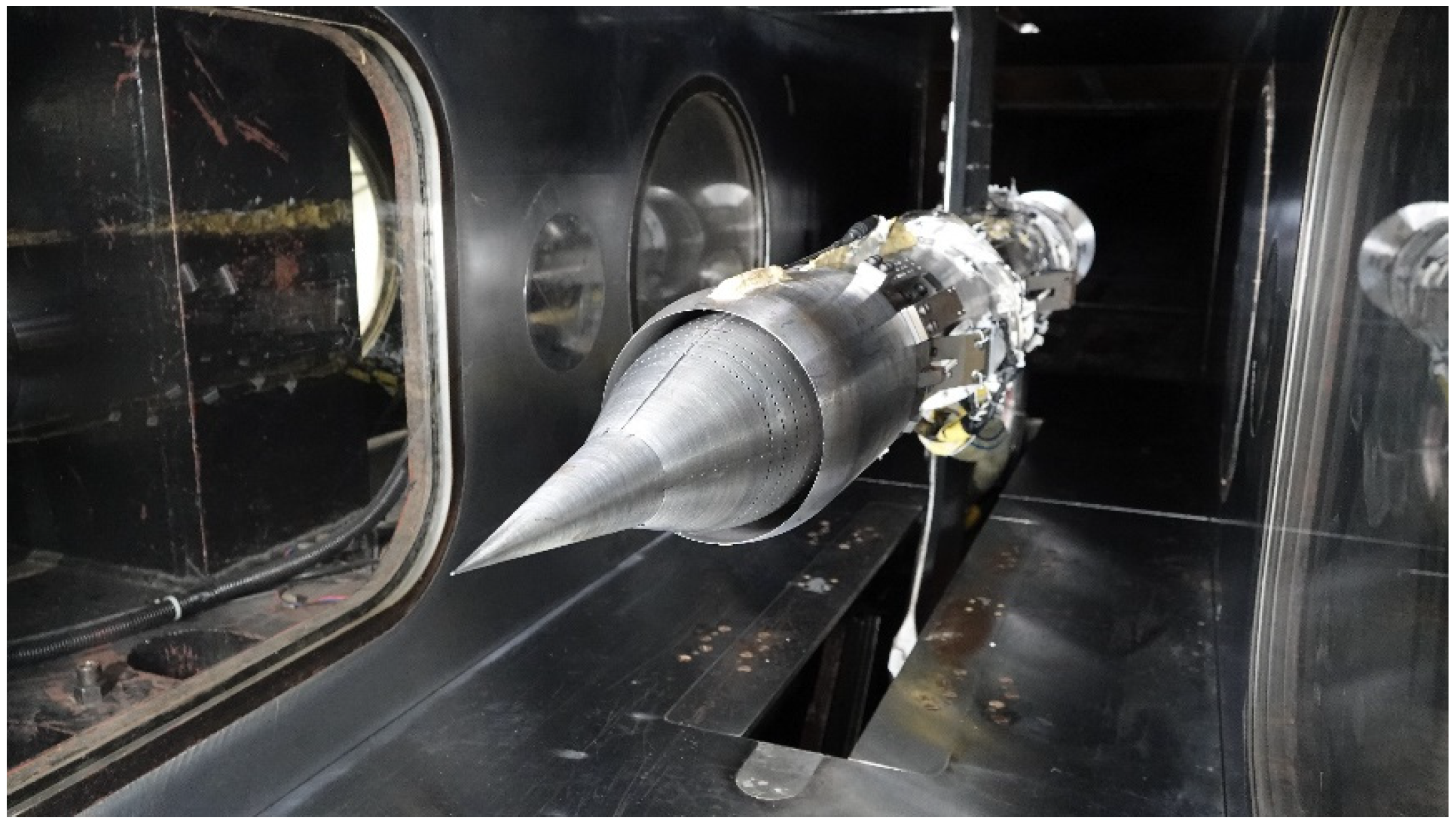
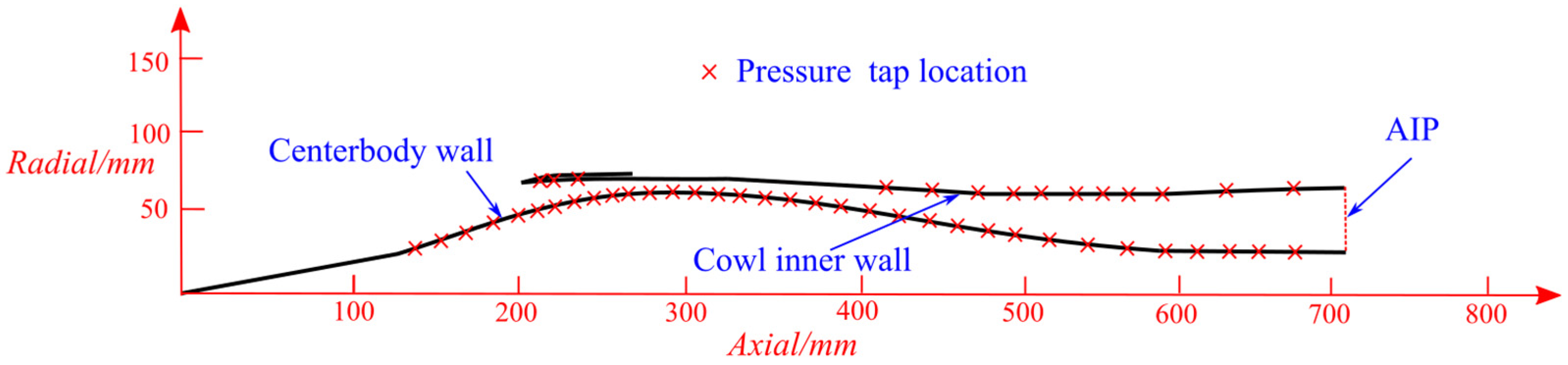
The structure and flow path of the inlet are shown in
Figure 1. This inlet operates within a range of Mach 0–4 and is suitable for tandem-type TBCC engines. The cruise Mach number of the inlet is 4.0. The aerodynamic design of the inlet takes the cruise condition as the design point and adopts the shock-on-lip design. Due to the project background requirements, the preliminary research focuses on the aerodynamic performance at incoming flow Mach numbers of 3.5 and 4.0. The inlet has an entrance radius of 88.61 mm, with the external compression section centerbody consisting of two conical stages of 10° and 9° half-angles. The internal flow turning angle of the inlet cowl is 14°, and the cowl can move forward and aft. The shoulder is designed as an arc curve with a curvature radius
Rs of 318.73 mm. The throat height
Ht is 8 mm, and the internal contraction ratio is approximately 1.93. The internal contraction ratio is defined as the ratio of the inlet entrance area to the throat area, as shown in Equation (1):
The inlet exit, also known as the aerodynamic interface plane (AIP), has an annular cross-section, with an outer radius Rw of 63.75 mm and an inner radius Rn of 25.82 mm. Correspondingly, the inner radius decreases in the front half of the passage, while in the rear half, the inner radius remains fixed and the outer radius increases to achieve area expansion. The expansion ratio of the inlet diffuser section, defined as the ratio of the AIP area to the throat area, is 3.27. The total length of the inlet is 710 mm, with the external compression section measuring 241.91 mm.
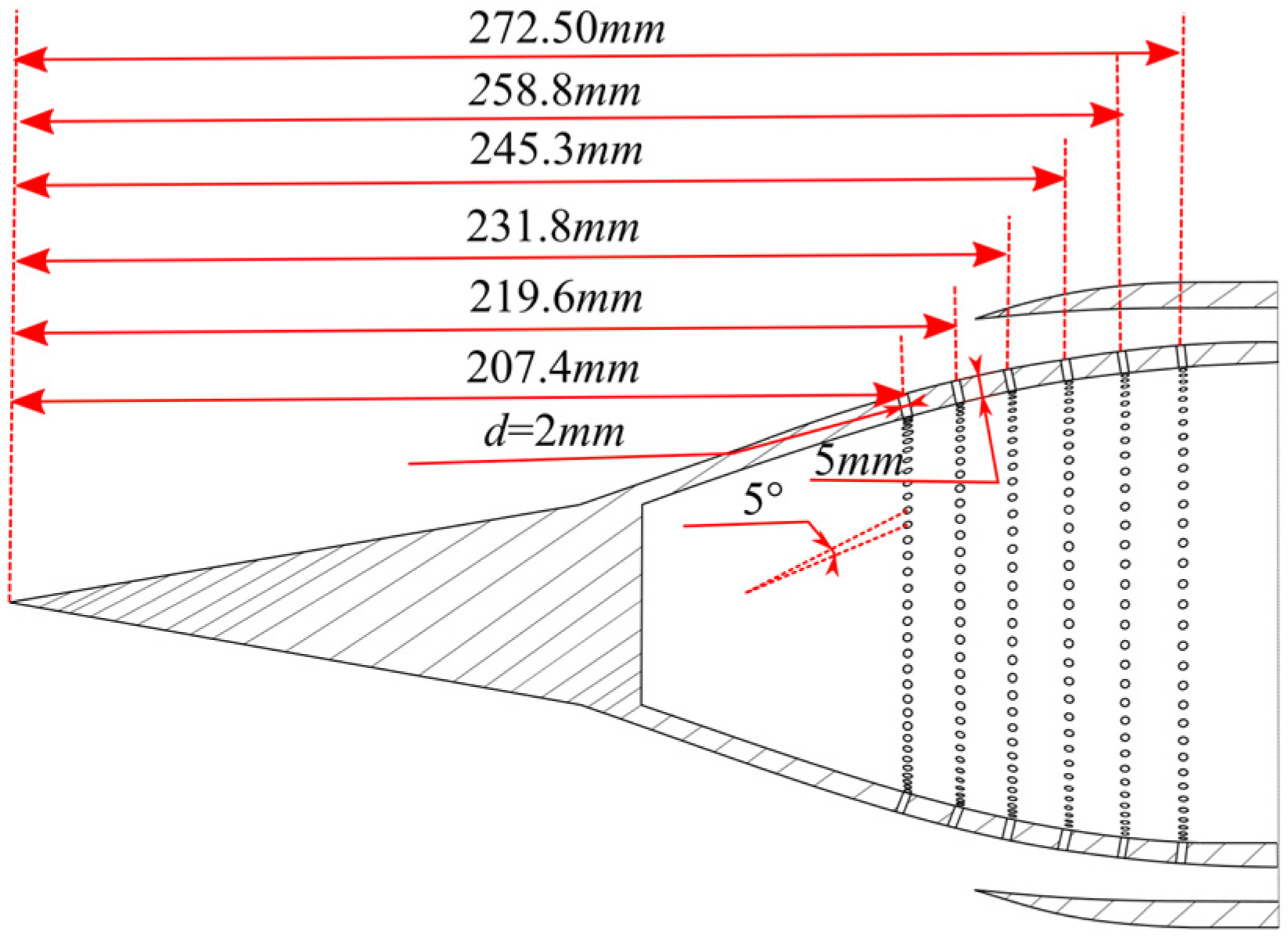
In order to remove the thicker boundary layer generated by the compression surface and enhance the performance of the inlet, six rows of suction holes are designed at the shoulder. The design and distribution of these suction holes are shown in
Figure 2. Of these six rows, the foremost suction hole is located 207.4 mm from the tip of the centerbody, while the rearmost suction hole is located 272.5 mm from the tip of the centerbody. The diameter of each suction hole is 2 mm, and the circumferential spacing between holes in the same row is 5°, and the centerbody has a wall thickness of 5 mm. The expected suction mass flow loss was approximately 3%, not exceeding 5%.
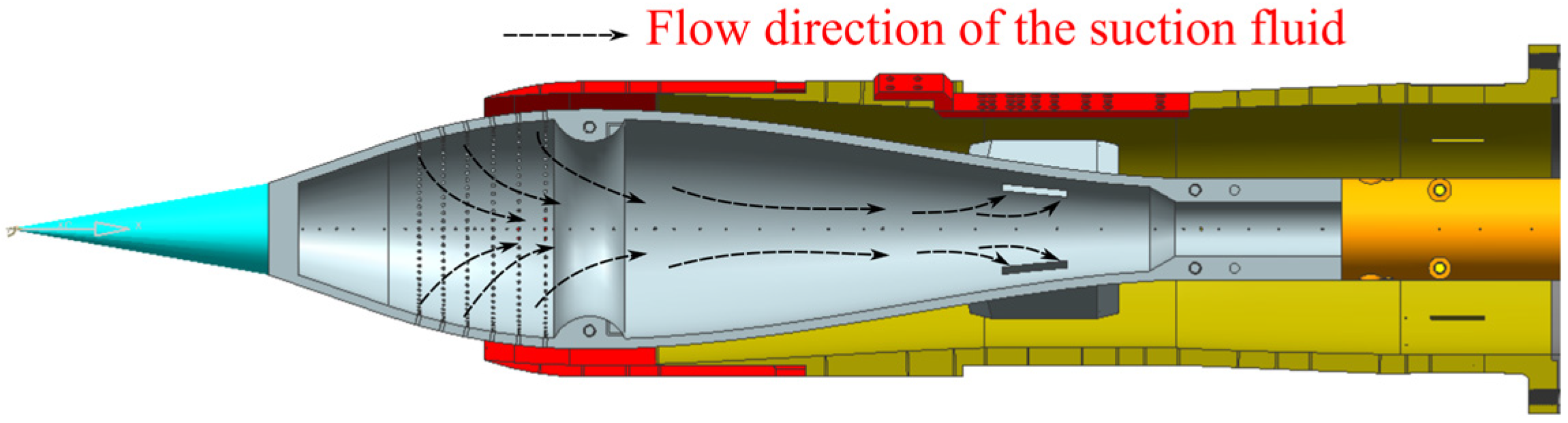
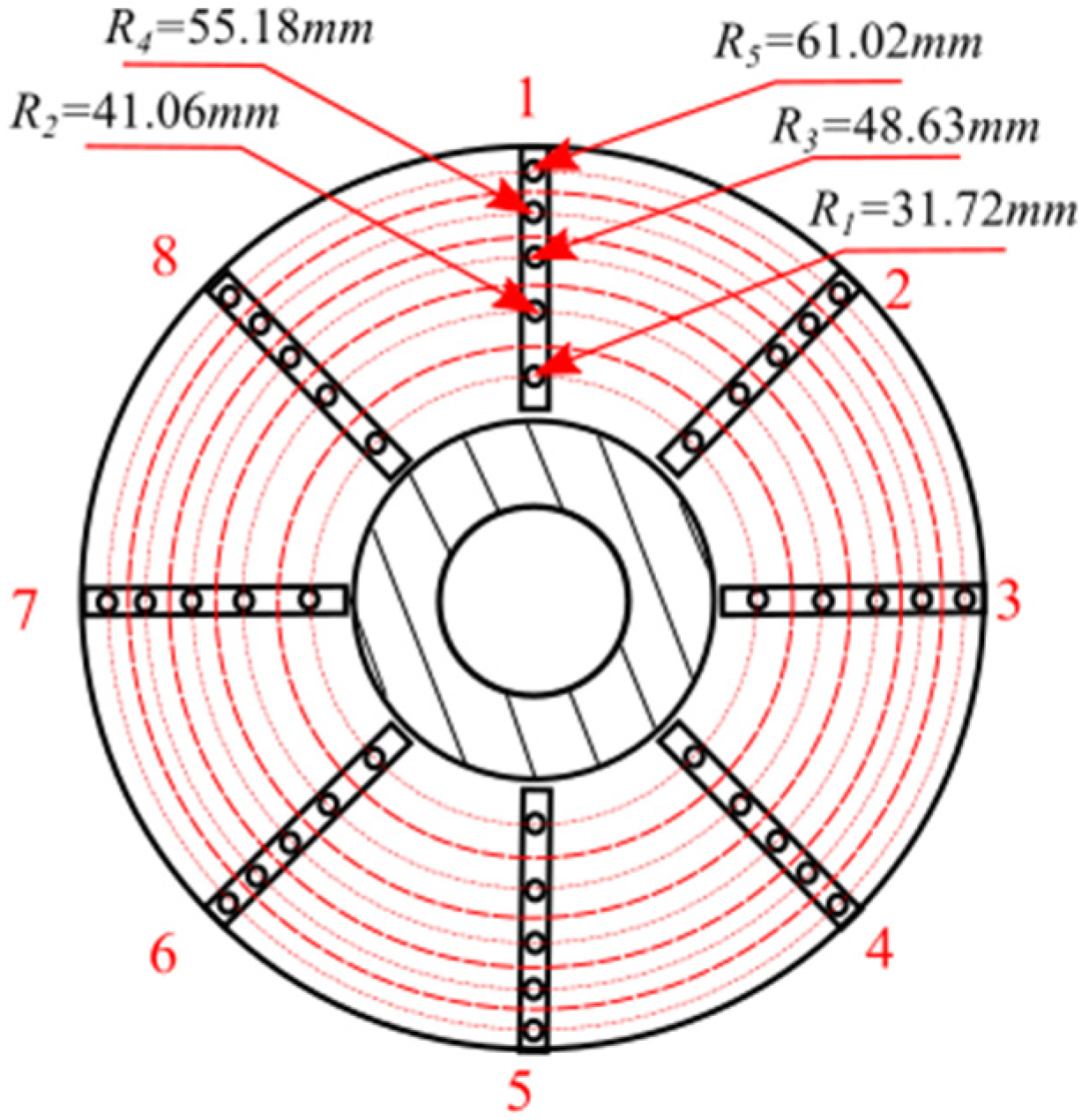
All holes are drilled perpendicular to the centerbody surface. The airflow discharged through the suction holes enters the center body cavity and is then expelled via internal channels within the support structure, as illustrated in
Figure 3.
4. Results and Discussion
4.1. Schlieren Results and Analysis
4.1.1. Unstarted Flow Field During Downstream Cowl-Lip Translation
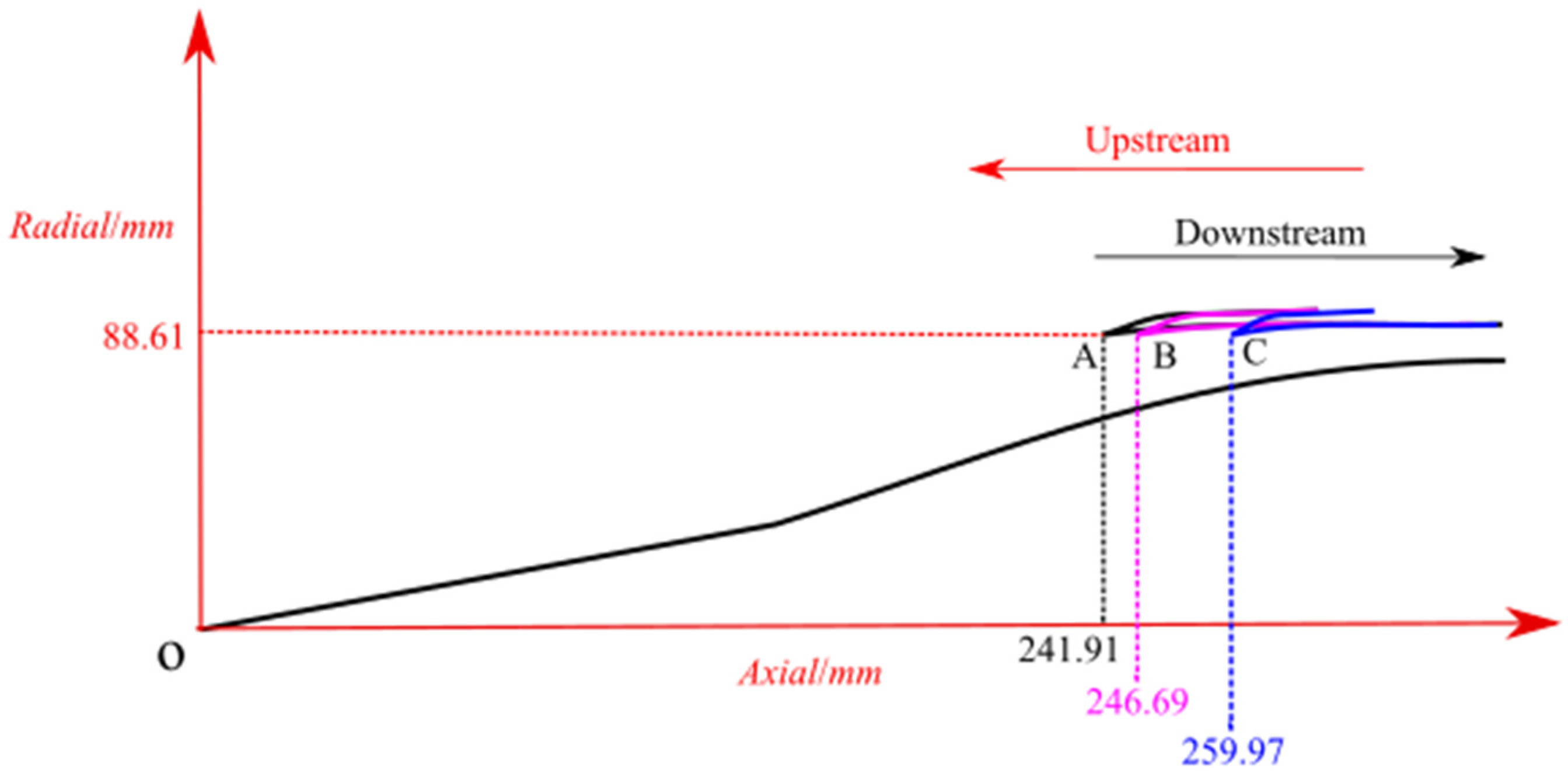
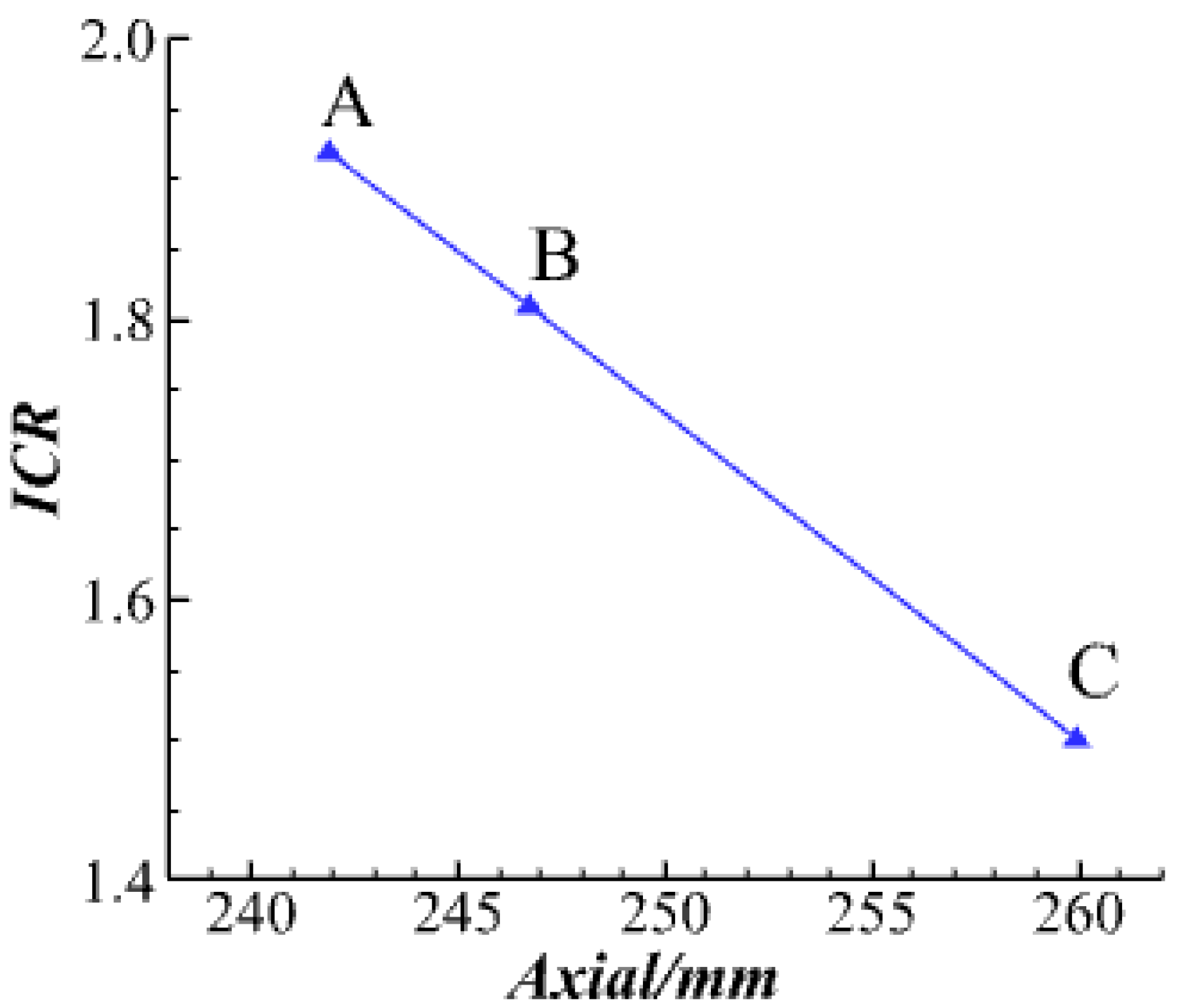
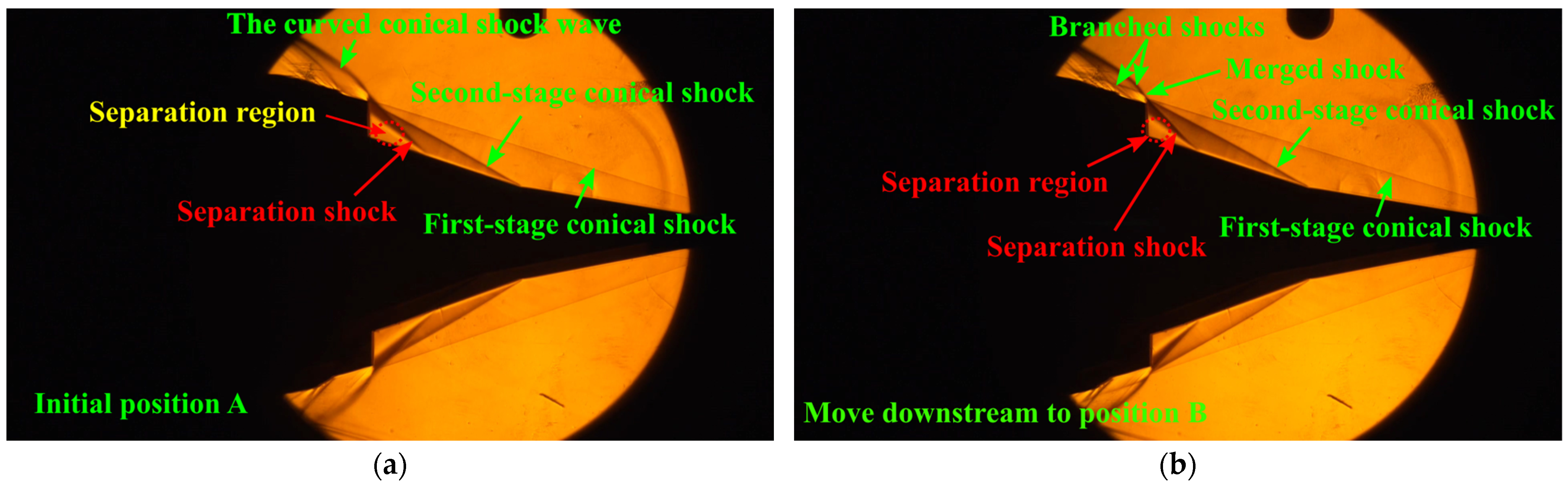
Figure 9 presents schlieren images of the inlet external compression section at a freestream Mach number of 4.0, with the cowl-lip at the initial Position A and after downstream translation to Position B. Following wind tunnel startup, with no cowl-lip adjustment applied, the inlet exhibited a pronounced unstarted condition. Due to the geometric deflection angles in the external compression section, conical shocks were generated at each stage: a first-stage conical shock and a second-stage conical shock formed at the corresponding corners. Under this condition, the inlet operated within the dual-solution region. The high adverse pressure gradient in the internal passage could not be eliminated during the flow development from a quiescent to a steady state. Under the combined effects of the initial cowl-lip incident shock and boundary layer interaction along the internal contraction wall, flow separation occurred at the inlet entrance. This separation forced subsonic spillage upstream of the cowl-lip, serving as a mechanism to divert the airflow that could not be processed through the throat. The separation region originated on the centerbody upstream of the inlet entrance, within the observable range of the schlieren system. This separation region obstructed the incoming supersonic flow, forcing it to redirect and generating a separation shock upstream of the separation zone. This separation shock first intersected with the second-stage conical shock, merging into a single shock. The merged shock subsequently intersected with the first-stage conical shock and coalesced into a curved conical shock.
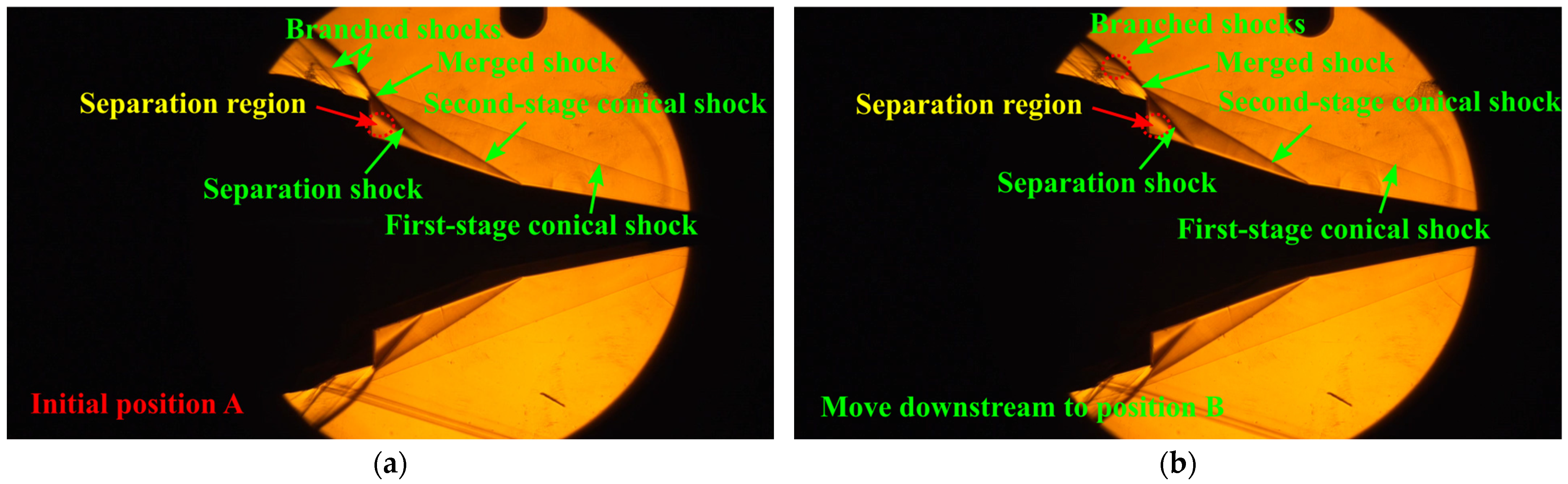
Figure 10 presents schlieren images of the inlet external compression section at a freestream Mach number of 3.5, captured after wind tunnel flow establishment and after the first adjustment. As the cowl-lip was translated downstream from the initial Position A to Position B, both positions exhibited unstarted flow fields, with flow structures qualitatively similar to those observed at Mach 4.0. The main difference was observed in the shock interaction pattern: at the initial Position A, the separation shock bifurcated into two branches after intersecting with the upstream conical shocks. Overall, the starting behavior at Mach 3.5 during the adjustment process was consistent with that observed at Mach 4.0.
4.1.2. Transition to Started State at Position C
As the cowl-lip continued to be translated downstream to Position C, the inlet entered the self-starting region.
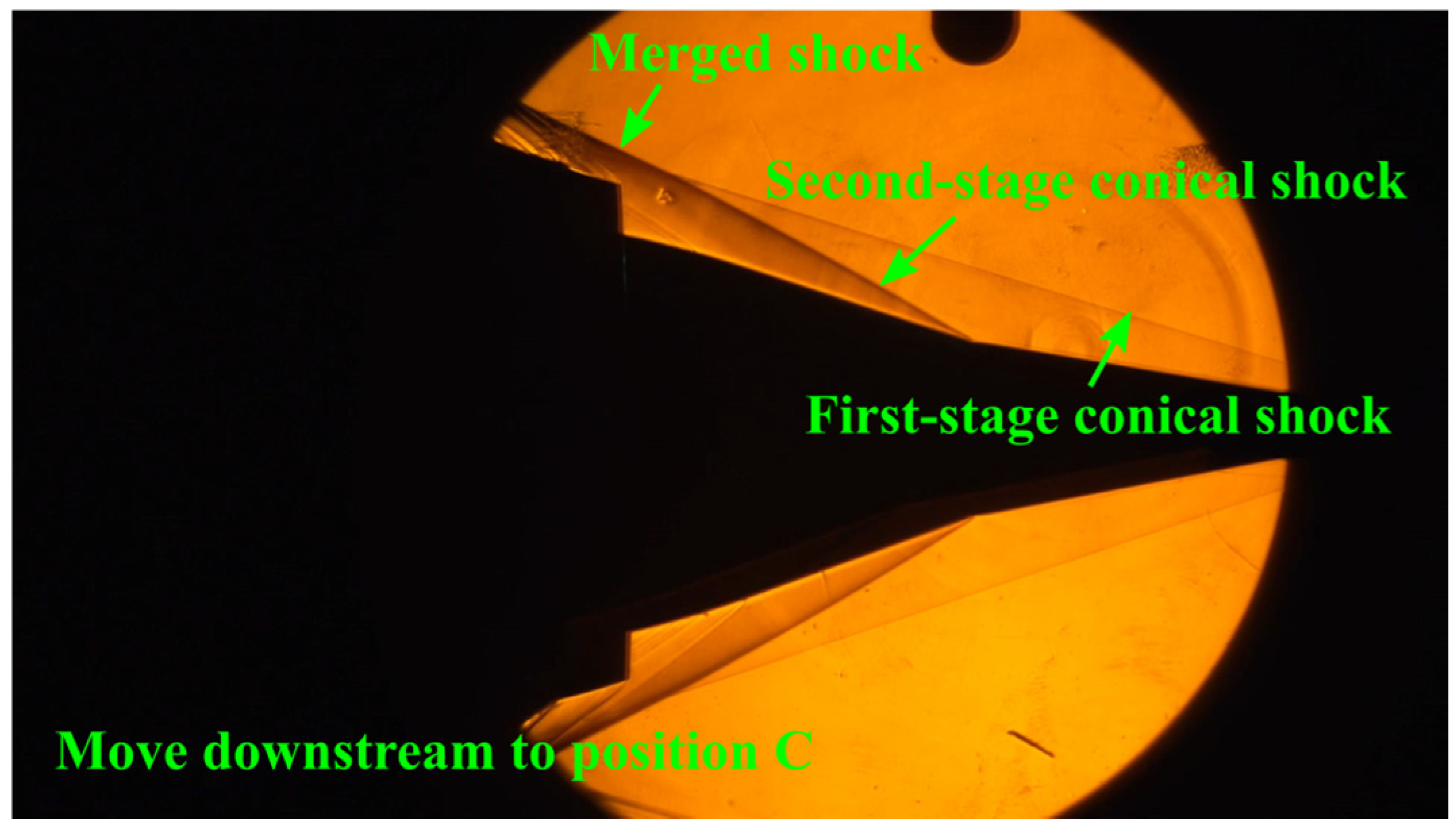
Figure 11 presents the schlieren image at this cowl-lip position. The schlieren results show that the separation region at the inlet entrance disappeared, along with the associated separation shock, indicating that the inlet achieved a started state. This process demonstrates that the inlet can be started by translating the cowl-lip. The transition from an unstarted to a started state is primarily attributed to the reduction in the internal contraction ratio as the cowl-lip moved from Position B to Position C. The decreasing contraction ratio progressively lowered the adverse pressure gradient within the internal passage, allowing the separation region to be ingested and eliminated. Simultaneously, the downstream translation of the cowl-lip promoted increased spillage upstream of the cowl, which transitioned from subsonic spillage characteristic of the unstarted condition to supersonic spillage. Consequently, only two conical shock waves remained on the centerbody in the external compression section. These two conical shocks intersected and merged upstream of the cowl-lip, forming a single new shock wave.
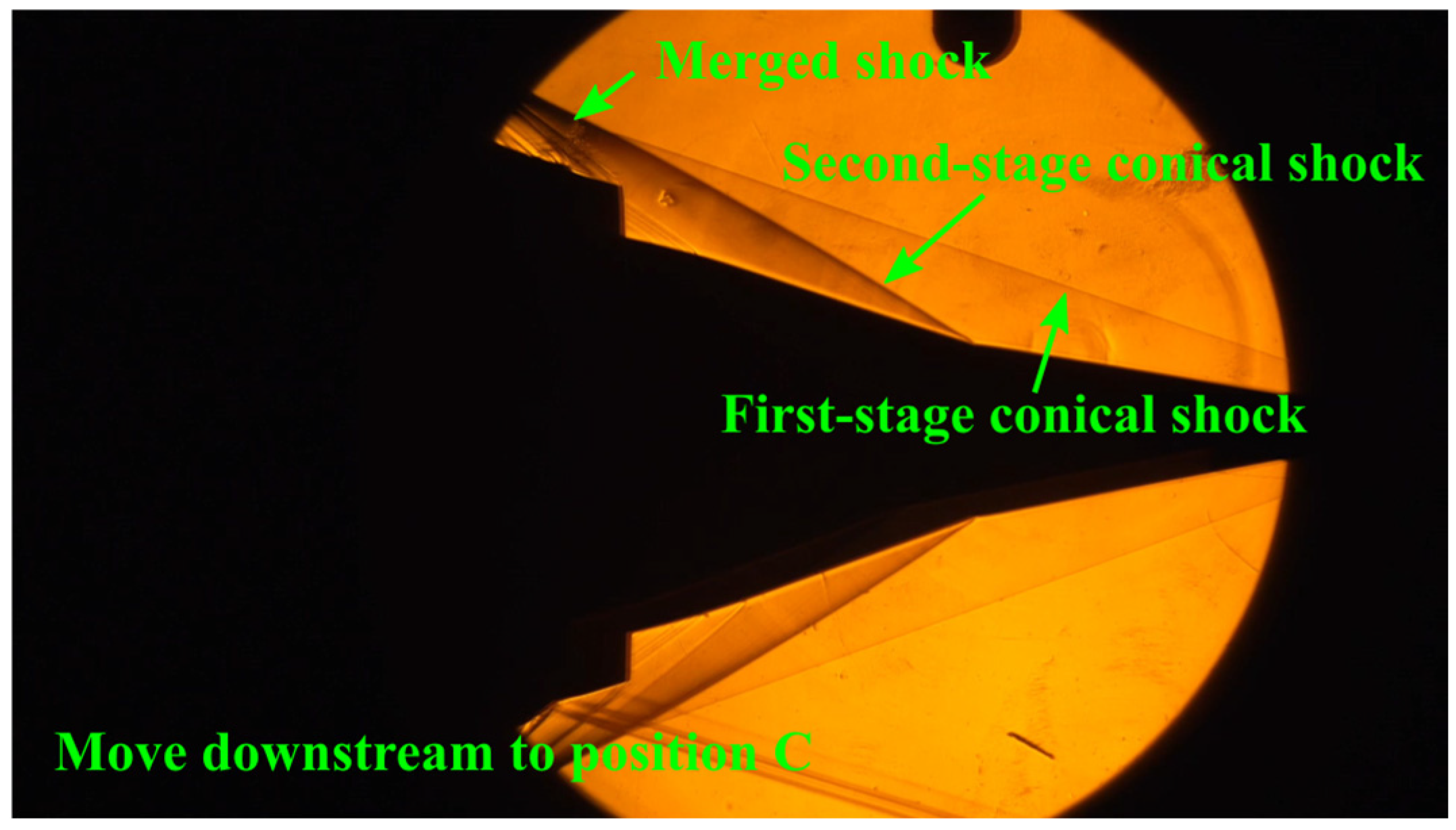
At a freestream Mach number of 3.5, as the cowl-lip was translated from Position B to Position C, the inlet transitioned to a started state, similar to the behavior observed at Mach 4.0. The corresponding schlieren image is presented in
Figure 12. Due to the lower freestream Mach number, the shock angles in the external compression section increased, causing the shocks to stand slightly farther from the cowl-lip compared with the Mach 4.0 case.
4.1.3. Maintained Started State During Upstream Translation
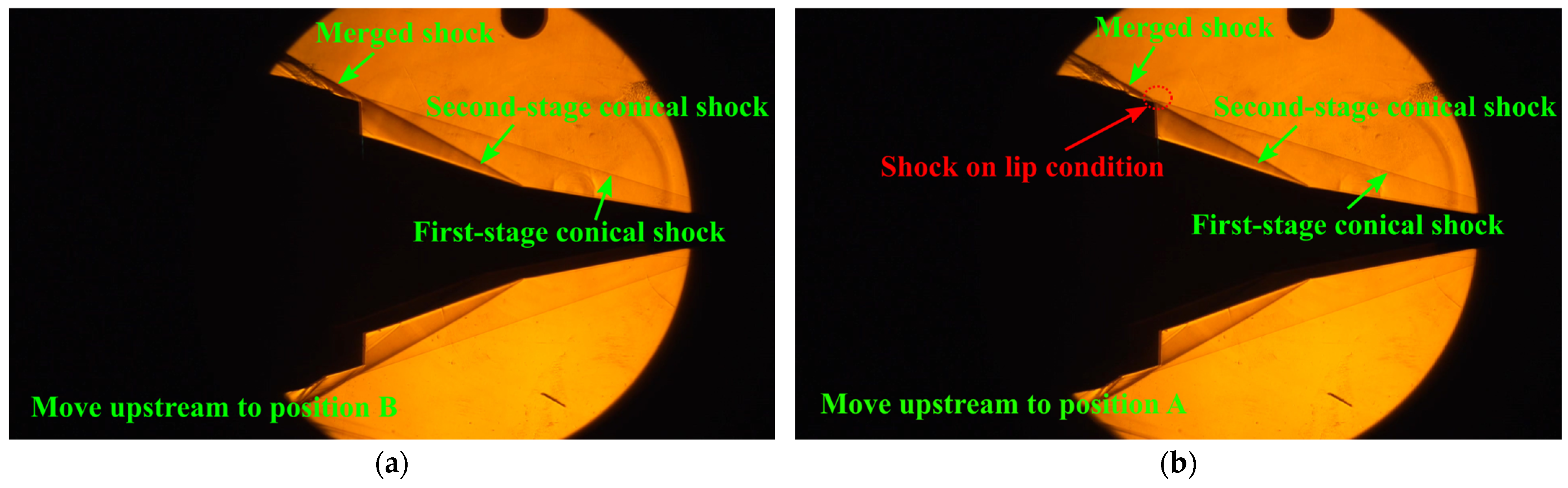
Figure 13 presents schlieren images of the inlet during upstream translation of the cowl-lip from Position C (where starting was achieved) back to Position B and then to Position A. This procedure was designed to verify whether the inlet could maintain a started state upon re-entering the dual-solution region from an already started condition. The schlieren results show that the inlet remained fully started throughout the upstream translation from Position C to Position B and subsequently to Position A, with no flow separation observed at the entrance. When the cowl-lip returned to Position A, the external compression section shock waves were clearly observed to be in a shock-on-lip condition, indicating full mass flow capture. At this point, the cowl-lip operated at its ideal design position, enabling the inlet to achieve high aerodynamic performance. The underlying reason for these results lies in the favorable flow characteristics of a started inlet. Once started, the inlet possesses strong through-flow capacity and flow field stability. Although the increase in internal contraction ratio during upstream translation raises the adverse pressure gradient to some extent, the increase remains within an acceptable range and does not become excessive. Furthermore, the interaction between the incident shock from the internal contraction section and the boundary layer remains stable, preventing flow separation.
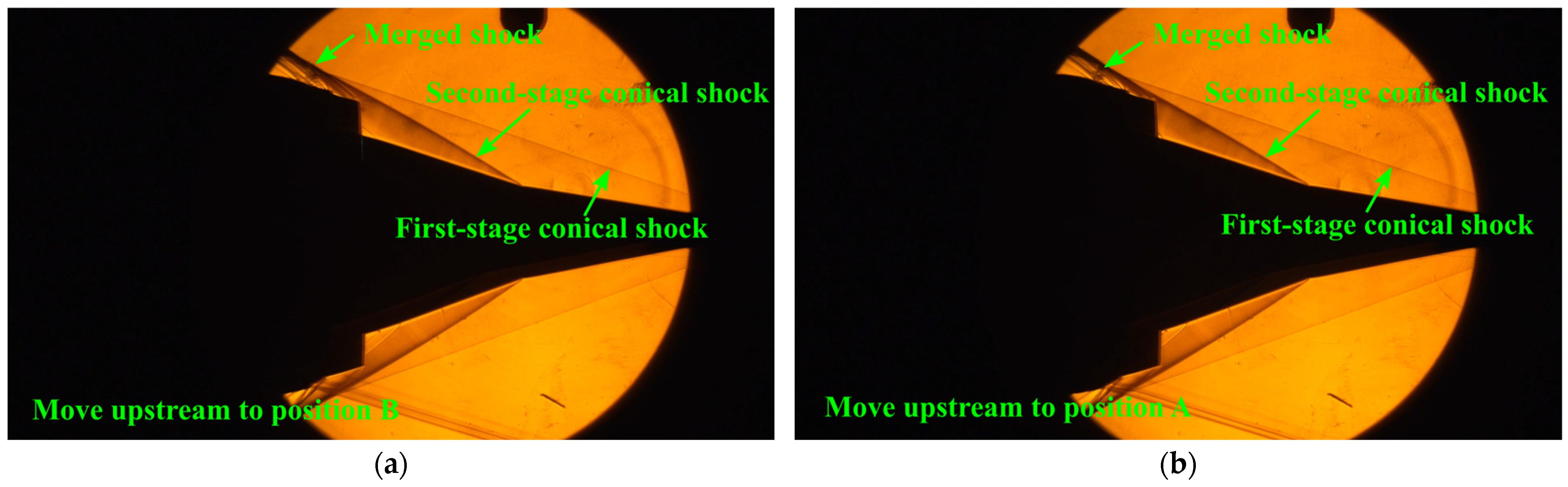
Figure 14 presents schlieren images of the external compression section at a freestream Mach number of 3.5 during upstream translation of the cowl-lip from Position C back to Position B and then to Position A. The schlieren results show that, similar to the observations at Mach 4.0, the inlet maintained a started state throughout this process. However, due to the lower freestream Mach number, after returning to Position A, the shock wave did not achieve a shock-on-lip condition, and a certain degree of supersonic spillage persisted.
4.2. Wall Pressure Response to Cowl-Lip Translation
To understand the flow evolution within the internal passage during the aforementioned adjustment process and to validate the analysis of pressure variations in the internal compression section, the experimentally measured pressures on the inner wall of the cowl and the centerbody wall were processed.
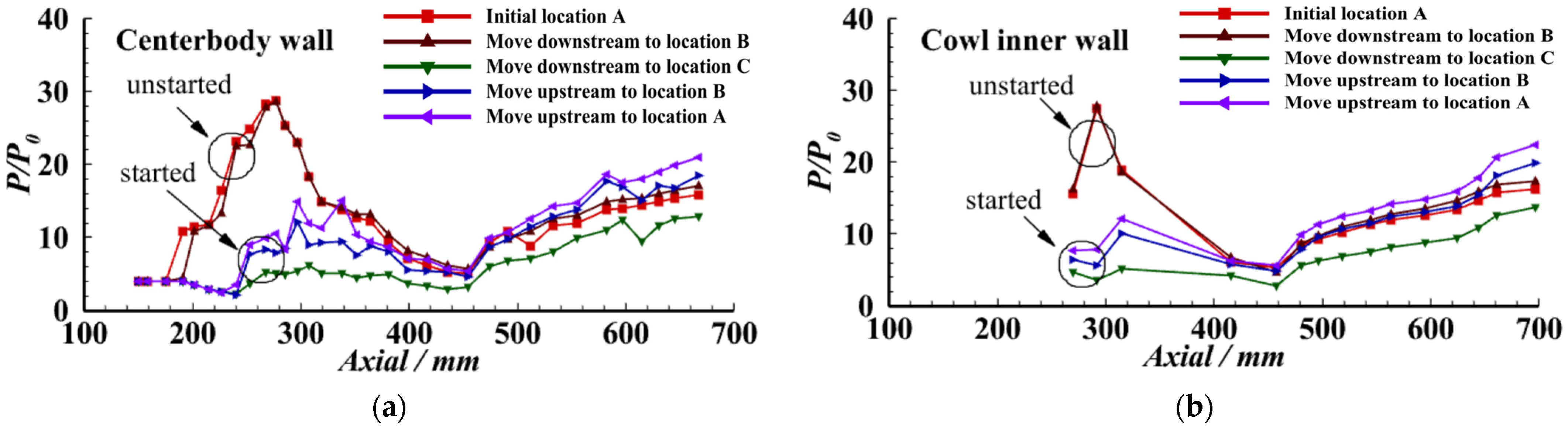
Figure 15 presents the results at Mach 4.0, and
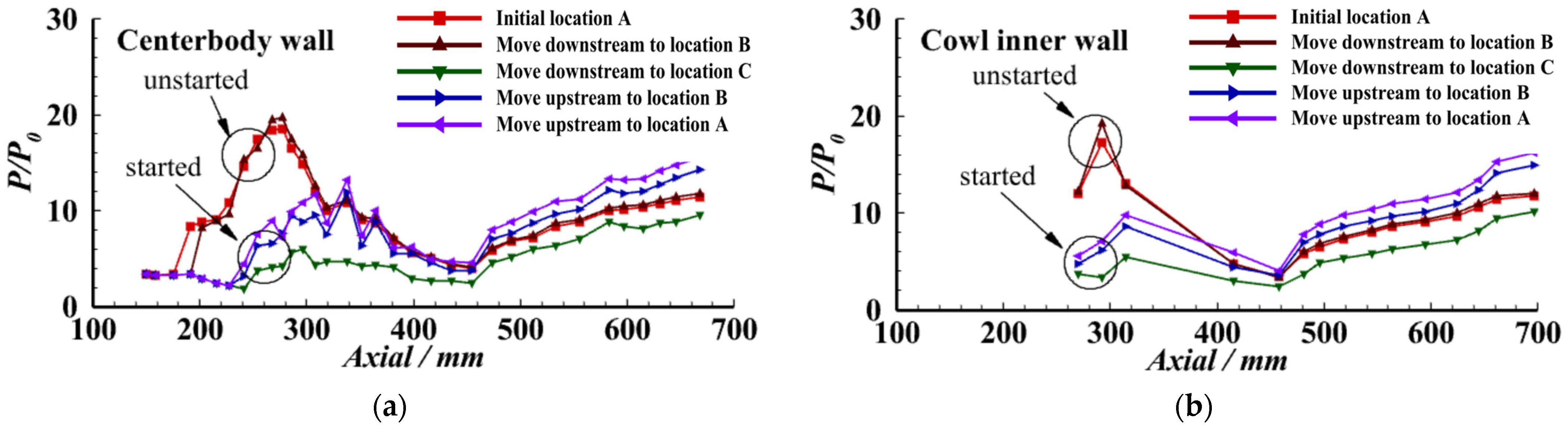
Figure 16 shows the corresponding results at Mach 3.5. On the centerbody wall, the pressure measured at taps upstream of the separation region remained unchanged at both Mach numbers throughout the process, consistent with the flow conditions. Downstream of the separation region and within the internal compression section, however, significant pressure rises were observed. When the cowl-lip was at the original Position A, the pressure increased markedly, with a rapid rise in wall pressure toward the downstream direction. This trend was observed at both Mach numbers, indicating an extremely high adverse pressure gradient that induced flow separation at the entrance. As the cowl-lip was translated downstream to Position B, the pressure at the fourth pressure tap on the centerbody wall decreased and converged with the pressures measured in subsequent adjustment steps, indicating that the origin of the separation region had shifted downstream. Nevertheless, the downstream pressure taps still exhibited a significant adverse pressure gradient, explaining why separation persisted at this condition. When the cowl-lip was further translated downstream to Position C, the pressures on both the centerbody wall and the cowl inner wall in the external and internal compression sections dropped rapidly. The adverse pressure gradient decreased substantially, allowing the separation region to be ingested and eliminated. During the subsequent upstream translation of the cowl-lip, the adverse pressure gradient in the internal compression section increased to some extent. This increase was directly related to the increase in internal contraction ratio, but remained far below the level that would induce flow separation. Throughout this process, the pressure distributions consistently differed from those observed during the unstarted condition at the same cowl-lip positions.
4.3. AIP Performance Variations During Cowl-Lip Translation
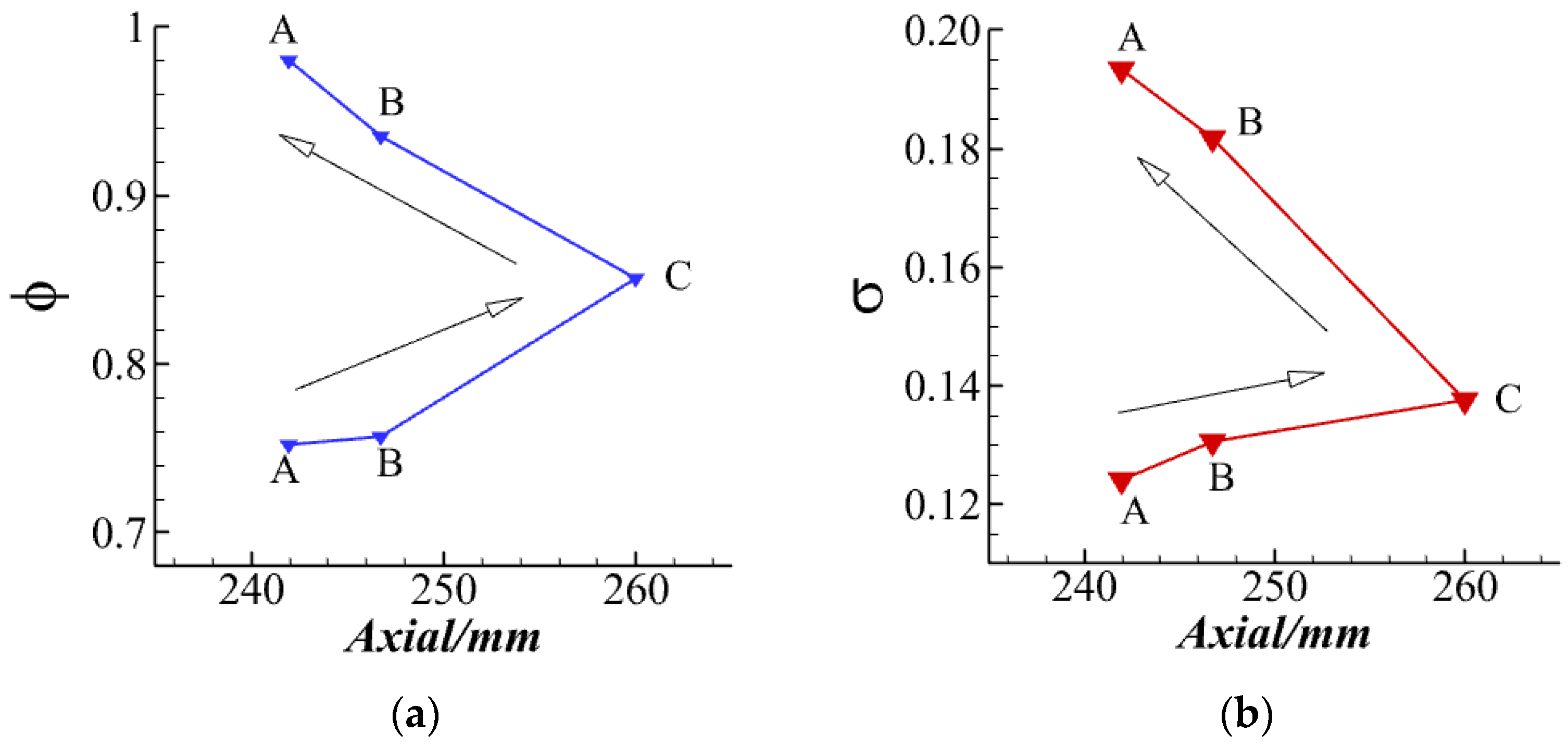
Figure 17 presents the variations in the mass flow coefficient and total pressure recovery coefficient at the Aerodynamic Interface Plane (AIP) during cowl-lip translation at a freestream Mach number of 4.0, derived from processed measurements at this plane. At the initial Position A, the mass flow coefficient was approximately 0.75, and the total pressure recovery coefficient at the AIP was approximately 0.12. After the cowl-lip was translated downstream to Position B, the mass flow coefficient showed no significant change, while the total pressure recovery coefficient increased slightly. This is attributed to the fact that the downstream translation did not alter the unstarted condition; the inlet remained in a choked state, and its flow capacity did not change substantially. However, the rearward movement of the cowl-lip led to a partial reduction in the separation region at the entrance, resulting in a moderate decrease in total pressure loss. As the cowl-lip was translated further to Position C, both the mass flow coefficient and total pressure recovery coefficient increased markedly, reaching approximately 0.84 and 0.14, respectively. At this position, the inlet achieved a started state. The separation region at the entrance was ingested, and the subsonic spillage upstream of the cowl-lip transitioned to supersonic spillage. Although the rearward movement of the cowl-lip theoretically reduces the captured streamtube, the actual mass flow increased significantly due to the transition from unstarted to started flow and the corresponding change in spillage characteristics. During the subsequent upstream translation of the cowl-lip from Position C back to Position A, the internal contraction ratio increased, and the supersonic spillage at the entrance decreased accordingly. The inlet remained in a started state throughout this process, and the mass flow coefficient continued to rise. Upon returning to Position A, a shock-on-lip condition was achieved, with a mass flow coefficient of approximately 0.98, indicating nearly full mass flow capture. However, due to the presence of suction holes at the shoulder, a mass flow loss of approximately 2% was observed. During this upstream translation, the total pressure recovery coefficient increased rapidly as the inlet maintained a started state and the internal contraction ratio increased, which raised the throat Mach number and reduced the downstream shock strength. At Position A, the total pressure recovery coefficient reached approximately 0.19. It should be noted that the primary objective of this study was to validate the feasibility of achieving inlet starting via cowl-lip translation. Although the cowl-lip was adjusted to its ideal design position, the inlet was not operating under fully matched conditions. When the inlet operates near the critical condition with downstream throttling, the total pressure recovery coefficient would be expected to be higher.
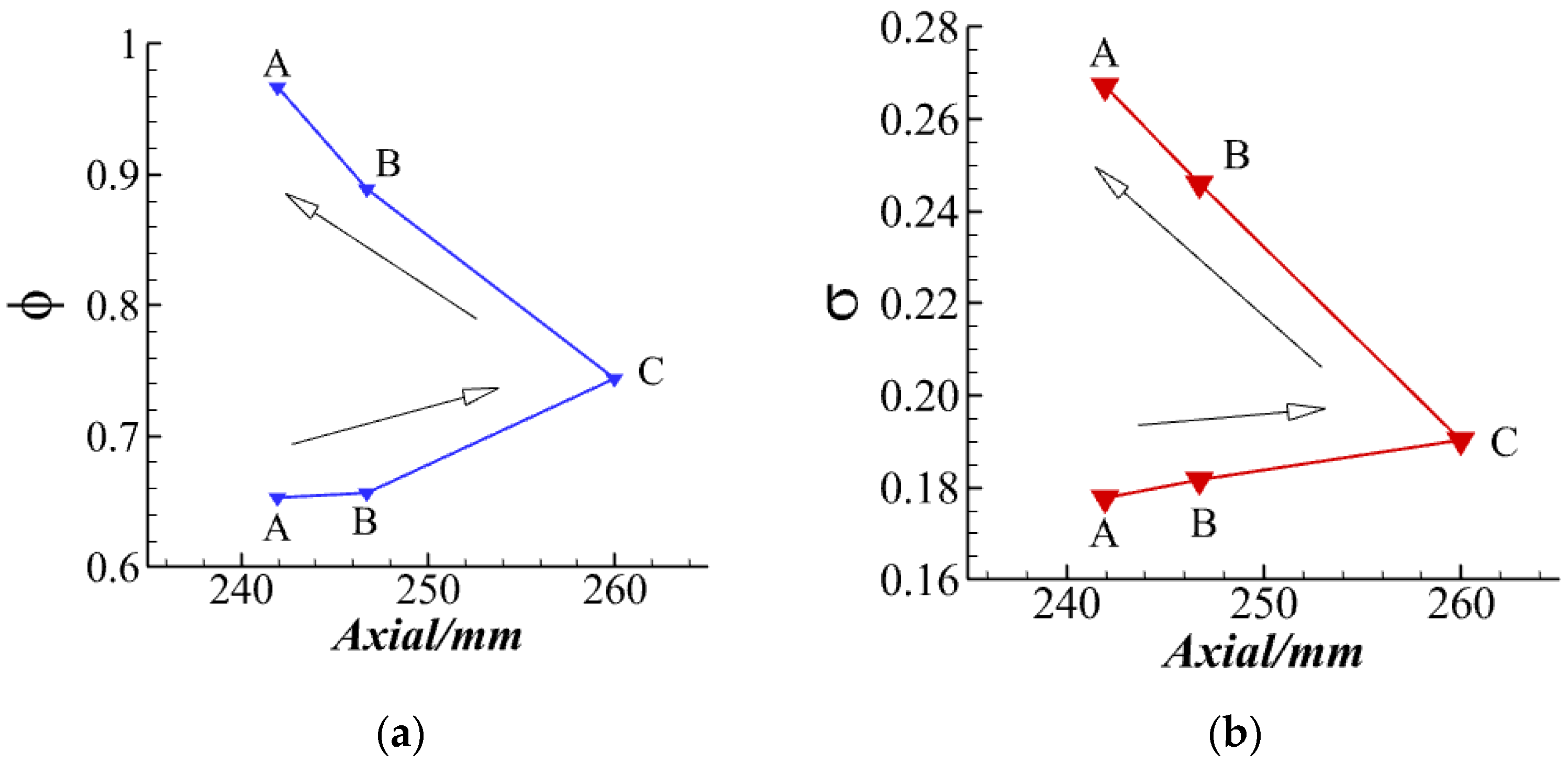
Figure 18 presents the corresponding results at a freestream Mach number of 3.5. The trends in the mass flow coefficient and total pressure recovery coefficient at the AIP were consistent with those observed at Mach 4.0. Upon returning to Position A, the mass flow coefficient was approximately 0.97, with a small amount of supersonic spillage present. The mass flow loss due to the suction holes was less than 3% under this condition.
4.4. Discussion of the Effectiveness and Applicability of the Cowl-Lip Translation Method
The axisymmetric inlet investigated in this study is designed for an operating range of Mach 0 to 4.0. To achieve optimal aerodynamic performance across different Mach numbers, a variable geometry design approach was adopted. Furthermore, owing to its axisymmetric configuration, cowl-lip translation offers a relatively straightforward means of geometric adjustment, with the corresponding actuation mechanisms capable of being integrated into the external structure of the inlet and the internal space aft of the cowl-lip. Under different freestream Mach numbers, both the ideal cowl-lip position and the critical starting Mach number of the inlet vary accordingly. Although the original purpose of cowl-lip adjustment was to match the ideal operating condition at various Mach numbers, this mechanism simultaneously serves as an effective means for regulating inlet starting in practice. Due to experimental constraints and cost limitations, and given that the project during the design phase emphasized high Mach number conditions, this study focuses on validating the feasibility of regulated starting at freestream Mach numbers of 3.5 and 4.0. Based on the requirements for the mass flow coefficient and total pressure recovery coefficient at these two Mach numbers, the designed ideal cowl-lip positions happened to coincide; therefore, an identical adjustment strategy was employed for validation.
In the experiments, the started state of the inlet was primarily determined by observing schlieren images of the test section. Additionally, the unstarted condition is characterized by a significantly higher adverse pressure gradient at the inlet entrance and within the internal contraction section compared with the started state, as well as notable differences in the mass flow coefficient and the AIP total pressure recovery coefficient between the two states. These features can serve as alternative criteria for determining inlet starting in wind tunnel facilities lacking high-resolution schlieren systems.
At different freestream Mach numbers, the ideal cowl-lip position varies accordingly. The proposed method of achieving inlet starting via cowl-lip translation remains applicable; however, the specific adjustment scheme, namely, the cowl-lip translation sequence and the corresponding positions, must be re-determined based on the target Mach number. Based on the starting limit curve and the experimental results obtained in this study, the cowl-lip position required for starting lies within the self-starting region of the inlet starting map. Once a started flow field is established at this position, the cowl-lip can be adjusted toward its ideal design position, and as long as the internal contraction ratio remains within the dual-solution region corresponding to that Mach number, the started state can be maintained.
The wind tunnel used in this study was incapable of dynamically varying the freestream Mach number; therefore, the regulation process during acceleration was not directly verified. Nevertheless, the proposed method can provide direct guidance for regulating inlet starting during actual acceleration processes. Specifically, before the freestream Mach number reaches the mixed-compression operating condition, the cowl-lip should first be adjusted to the self-starting region corresponding to that Mach number to ensure that the inlet can start and operate properly upon acceleration to that state. Subsequently, the cowl-lip is adjusted toward its ideal design position, with the inlet maintaining a started condition. As the freestream Mach number continues to increase, the cowl-lip can be continuously adjusted to vary the internal contraction ratio, thereby matching the ideal operating state of the inlet while sustaining the started condition. This approach offers a potential solution to the trade-off between high aerodynamic performance and starting capability, particularly the conflict between high Mach number performance and low Mach number starting requirements.
In addition, during the design phase of the inlet, six rows of suction holes were arranged at the shoulder to mitigate boundary layer accumulation and enhance flow stability, as described in detail in
Section 2. The presence of these suction holes inevitably introduces mass flow losses. The design target was to limit the total mass flow loss to no more than 5%, with a preferred range of approximately 3%. The experimental results at both Mach 3.5 and Mach 4.0 confirm that the suction hole losses are consistent with the design expectations, with measured mass flow losses not exceeding 3% under either condition.