Article

Effects of Ambient Temperature on Cornering Characteristics of Aircraft Tires

1
College of Aerospace Engineering, Nanjing University of Aeronautics and Astronautics, Nanjing 210016, China
2
State Key Laboratory of Mechanics and Control for Aerospace Structures, Nanjing University of Aeronautics and Astronautics, Nanjing 210016, China
3
College of General Aviation and Flight, Nanjing University of Aeronautics and Astronautics, Changzhou 213300, China
*
Author to whom correspondence should be addressed.
Aerospace 2026, 13(3), 241; https://doi.org/10.3390/aerospace13030241
Submission received: 28 January 2026 / Revised: 24 February 2026 / Accepted: 27 February 2026 / Published: 4 March 2026
(This article belongs to the Section Aeronautics)

Abstract

Aircraft functions under extreme environmental circumstances, encompassing both elevated and diminished temperatures, influence the material characteristics and inflation pressure of aircraft tires. This results in modifications to the tire’s cornering, affecting the shock absorption efficacy of the landing gear and maneuvering stability during cornering. This study examines the cornering characteristics of aircraft tires at four ambient temperatures: −60 °C, −40 °C, 25 °C, and 50 °C. The analysis of stress–strain findings of rubber materials at varying temperatures assessed the impact of ambient temperature on rubber properties. Based on this, a numerical model for tire cornering was constructed using ABAQUS to examine the impact of ambient temperature on the tire’s cornering characteristics. The model considers the intricate friction dynamics between the tire and road surface and the convergence tolerance parameter of ABAQUS. The precision of this model and methodology was confirmed through experimental testing. The findings demonstrate that ambient temperature significantly affects the lateral force and self-aligning torque of aircraft tires, hence impacting cornering stiffness considerably. The influence of radial force and rolling speed on cornering differs with varying ambient temperatures. These results offer significant insights into the design of aircraft tire environmental adaptability and aircraft ground handling systems.

1. Introduction

The aircraft tire is the exclusive point of contact between an aircraft and a runway. It fulfills roles such as ground support, traction, takeoff and landing, and energy absorption. It significantly affects the aircraft’s taxiing performance and maneuverability, directly influencing the landing gear’s shock absorption capacities and the aircraft’s roll stability attributes [1,2]. The cornering capability of aircraft tires is a crucial determinant influencing ground control and safety. It affects the distribution of landing gear loads and acts as a crucial indicator of an aircraft’s capacity to sustain directional stability under lateral forces [3]. Insufficient lateral force capability sometimes arises while cornering, greatly contributing to ground handling mishaps in commercial aviation [4]. An aircraft is often subjected to extreme environmental conditions, which substantially affect the performance of rubber and cord fabric composites in aircraft tires [5]. At elevated temperatures, material softening may result in handling delays and extended braking distances. Conversely, low-temperature material hardening may result in less adhesion and excessive sensitivity in handling. Consequently, cornering characteristics can be modified, affecting energy dissipation attributes and thereby influencing aircraft stability during landing, taxiing movements, and steering [6,7]. Consequently, elucidating the mechanism by which ambient temperature affects cornering characteristics is essential. This offers a scientific basis for tire structural optimization and material selection, which also supplies essential data for landing gear design compatibility, all-weather operational airworthiness certification, and flight safety assurance [8].
The cornering characteristics of a tire is influenced by various elements, including tire dimensions, type, ply, and tread pattern [9,10,11,12]. Load and inflation pressure are the two principal elements affecting the cornering of tires. Moreover, camber angle has demonstrated a substantial impact [13,14,15]. Du et al. [16] examined aircraft ground-coordinated steering systems characterized by unpredictable angular stiffness parameters. This study improved system resilience to attacks and disturbances via event-triggered control techniques. Kharrazi et al. [17] examined the impact of tread depth on the cornering performance of truck tires. Their research assessed its impacts on the cornering coefficient, peak lateral friction, and relaxation length.
Current research on factors affecting tire cornering characteristics suggests that the influence of temperature effects on these qualities is still in the exploratory stage. Temperature markedly impacts rubber’s viscoelasticity, rigidity, and stickiness, thus affecting lateral force production and stability [18]. Lu et al. [19] created the UniTire cornering model, which integrates tire temperature and has remarkable validity. Peng et al. [20] examined the correlation between the tire cornering angle and lateral force across different ice surface temperatures and dry pavement conditions. The findings demonstrate that ice surface temperature significantly affects tire cornering properties. Lu et al. [21] formulated a temperature-dependent tire brush model using equations for tread stiffness and steering stiffness that integrate temperature variables. Based on this, a relationship between temperature and tire cornering stiffness was established. Savant et al. [22] introduced a temperature adjustment technique derived from experimental data. It facilitated the translation of test results from diverse asphalt temperatures to a 25 °C reference temperature. This addressed the problem of non-comparable test results caused by temperature variations. Vargas et al. [23] used a precision multi-parameter-controlled tire test rig to examine the regulatory effects of temperature on tire lateral stiffness, relaxation length, and the lateral friction coefficient. Based on this, a temperature-based prediction model for the lateral friction coefficient was developed. Dell’ Orto [24] developed an innovative test apparatus for assessing the lateral properties of indoor bicycle tires. It facilitated accurate control of ambient temperature while performing evaluations under diverse conditions of temperature, tire pressure, vertical load, and travel speed. Angrick et al. [25] demonstrated the correlation between cornering stiffness, creep length, and the lateral friction coefficient with tire surface temperature. Mizuno et al. [26] established a tire force model that integrates the impacts of tire surface temperature via the use of thermodynamic models. The newly formulated tire model considers fluctuations in tire surface temperature and examines its impact.
Advancements in finite element methods and tire modeling have led to a growing diversity in research on tires’ cornering characteristics at room temperature. Lu et al. [27] augmented the UniTire model to incorporate wear conditions, examining the impact of different wear states on cornering stiffness and alignment stiffness. Zhang et al. [28] developed a finite element model of tire wear grounded in Archard’s theory, examining its influence on cornering dynamics. Ge et al. [29] created a numerical simulation model for tires with intricate tread patterns, examining the impact of cornering features on rolling resistance. Yin et al. [30] utilized numerical extension methods to examine the influence of tire stiffness on the bifurcate behavior of aircraft steering systems. It emphasized that fluctuations in stiffness might lead to substantial changes in system dynamics, consequently impacting ground handling stability. Fathi et al. [31] utilized finite element methods to examine the cornering characteristics of passenger car tires on stiff surfaces under diverse operating situations. Yang et al. [32] introduced a method for predicting driving/braking stiffness grounded in tire cornering stiffness.
Nevertheless, current research mostly emphasizes room temperature circumstances. Numerous studies have also focused on temperature changes on the tire surface or heat generated by friction. Many studies have overlooked the impact of ambient temperature. A few studies statistically clarified the mechanisms that influence changes in the cornering behavior of aircraft tires at different temperatures. Many current finite-element or experimental investigations overlook this temperature dependence, resulting in a substantial research void.
Accordingly, this paper examines the impact of ambient temperature on the cornering characteristics of aircraft tires. Initially, stress–strain experiments and analysis were performed on the rubber materials of aircraft tires at four ambient temperatures (−60 °C, −40 °C, 25 °C, and 50 °C). This confirmed the applicability of the Yeoh rubber constitutive model within this temperature spectrum. A numerical model of aircraft tire cornering was developed using ABAQUS. The model incorporates the intricate friction conditions between the tire and the road surface, along with the influence of ABAQUS convergence tolerance parameter factors on the simulation outcomes. The precision of this numerical model and methodology was corroborated through experimental testing. The impact of ambient temperature on the cornering characteristics of aircraft tires was examined. The impact of diverse radial forces and rolling speeds on these parameters at varying ambient temperatures was examined.

2. Material Properties of Aircraft Tires

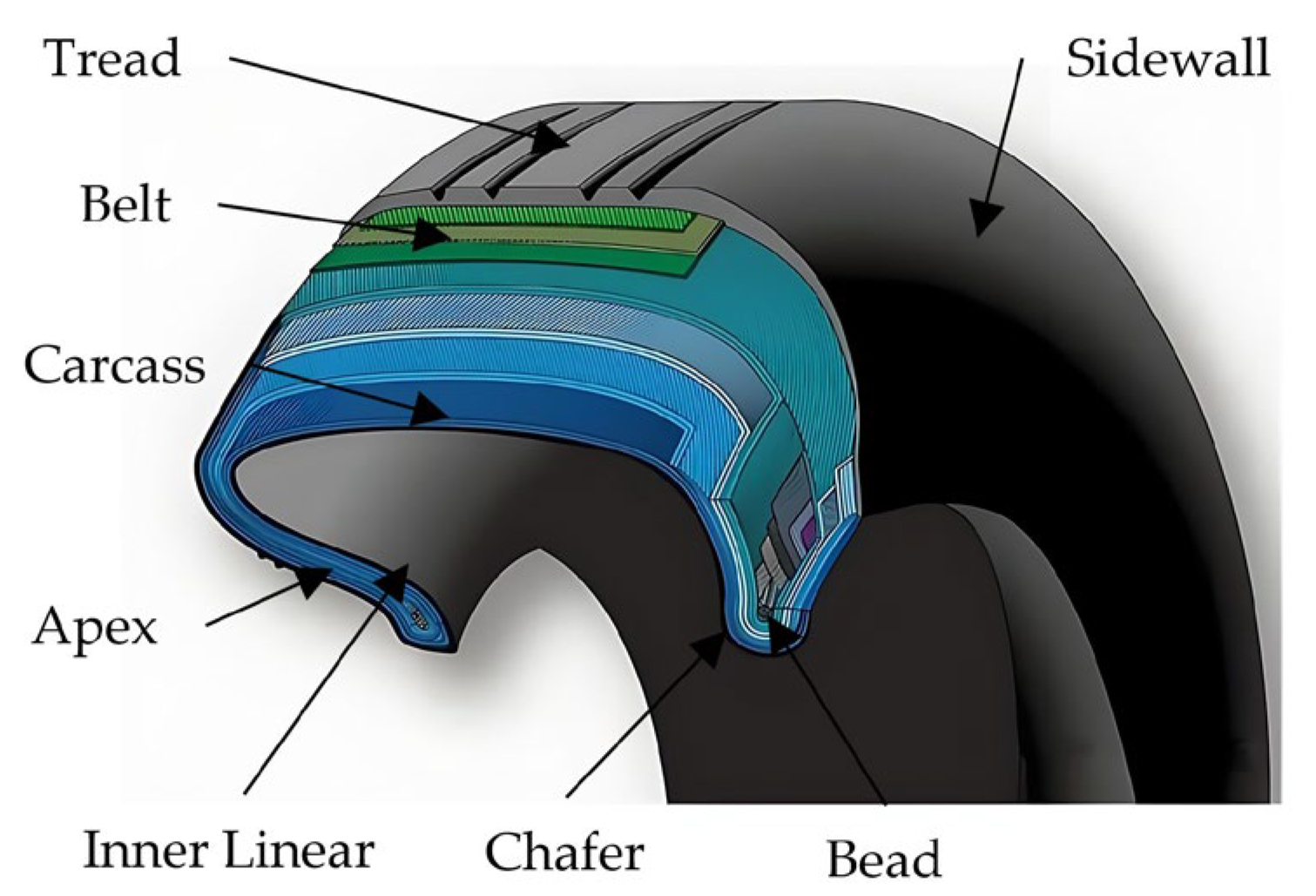
Figure 1 demonstrates that an aircraft tire consists of a blend of rubber materials and framework materials. The principal rubber materials are the carcass, sidewalls, tread, and apex. The carcass comprises layers of rubber fabric called plies, which provide strength and flexibility to the tire. The sidewall and tread are produced from chemically processed rubber [33]. Framework materials comprise a belt, ply, and bead.
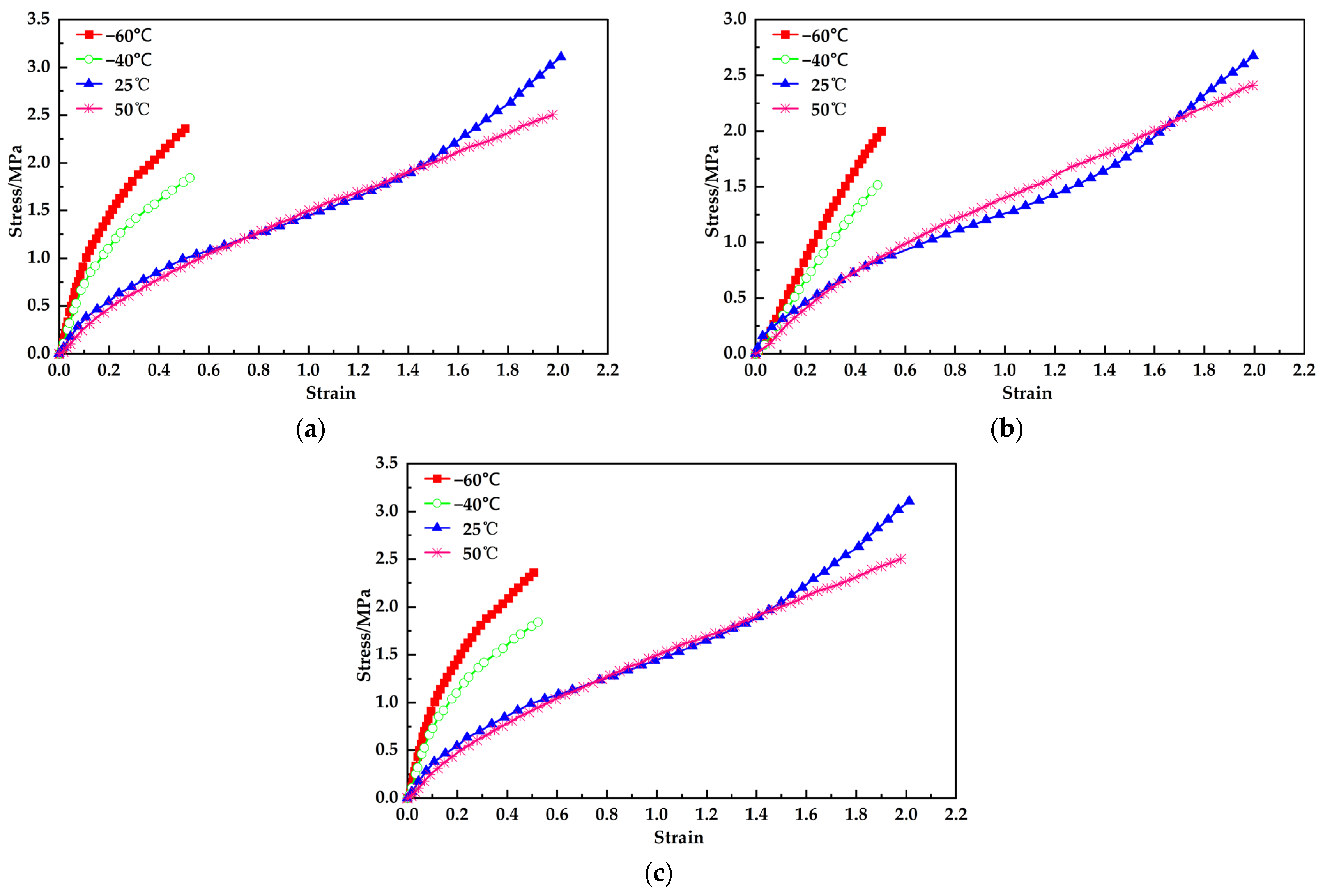
The qualities of rubber materials used in aircraft tires can be determined using uniaxial tensile testing [34,35]. This study got test results for the rubber material at four ambient temperature conditions: −60 °C, −40 °C, 25 °C, and 50 °C. The results are shown in Figure 2.
Rubber materials are the principal component of aircraft tires. It is a hyperplastic substance with intricate mechanical properties, defined by hyperelasticity and incompressibility. Their stress–strain relationship exhibits significant non-linearity [36]. A substantial body of literature [37,38,39,40] demonstrates that hyperelastic strain energy functions accurately characterize rubber characteristics and fulfill the criteria for tire research. The often-utilized constitutive models for rubber materials [41,42] are as follows:
Model of Mooney–Rivlin:
W = C 10 I 1 3 + C 01 I 2 3
Model of Neo-Hookean:
W = C 10 I 1 1
Model of Yeoh:
W = C 10 I 1 3 + C 20 I 1 3 2 + C 30 I 1 3 3
In the equation, W denotes the strain energy density, which signifies the strain per unit volume of material. C10, C01, C20 and C30 are material properties, while I1 and I2 represent the first and second strain invariants, respectively.
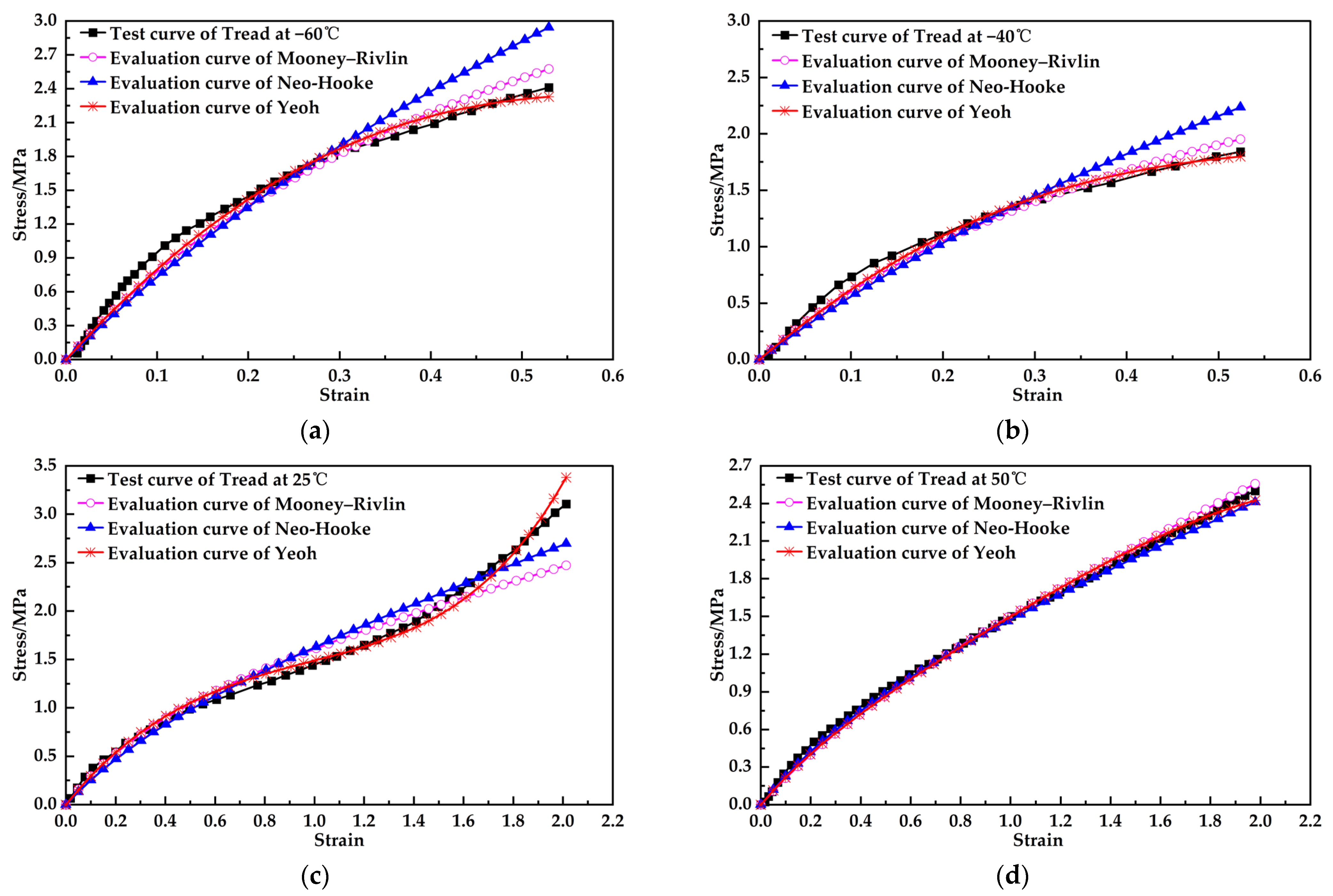
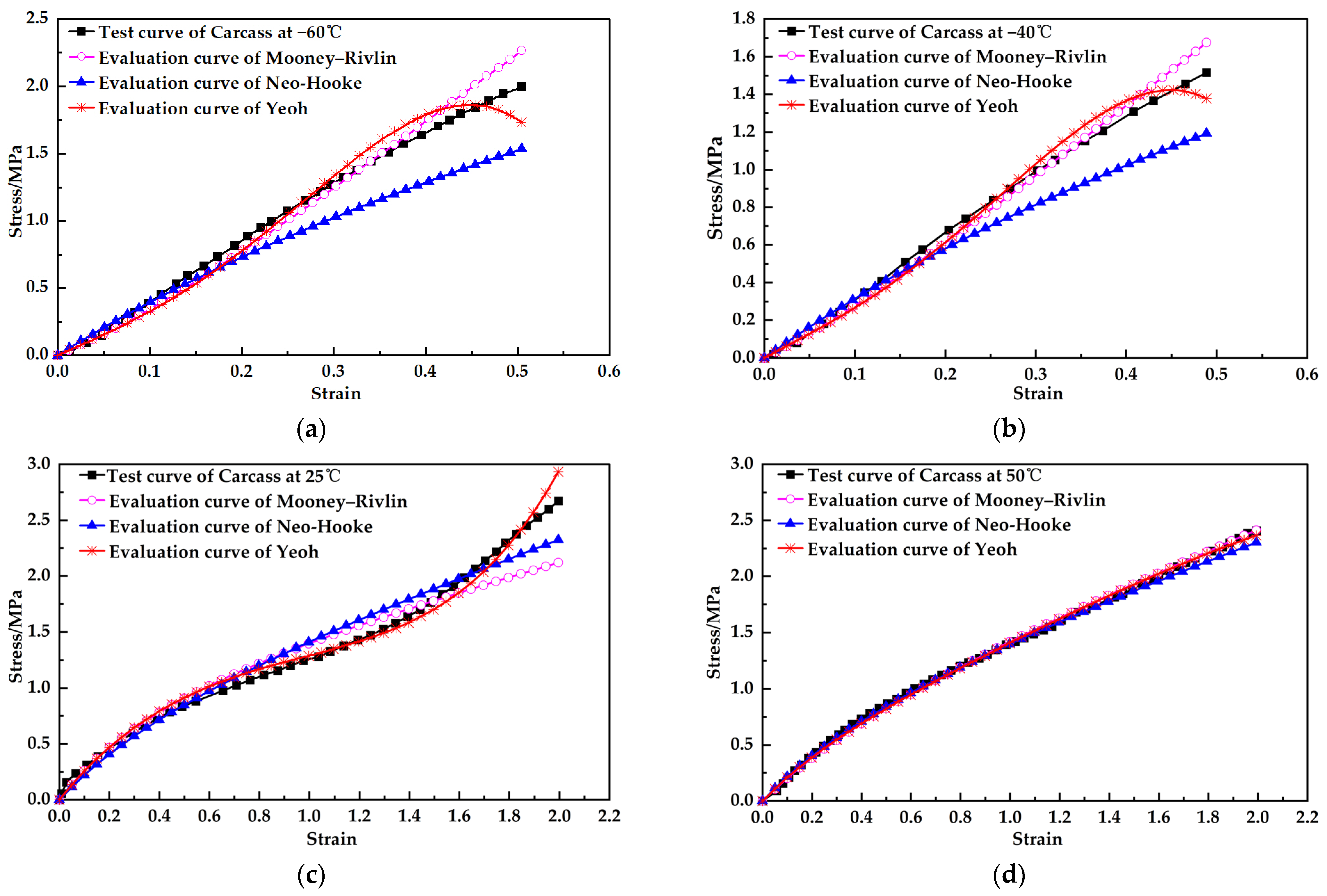
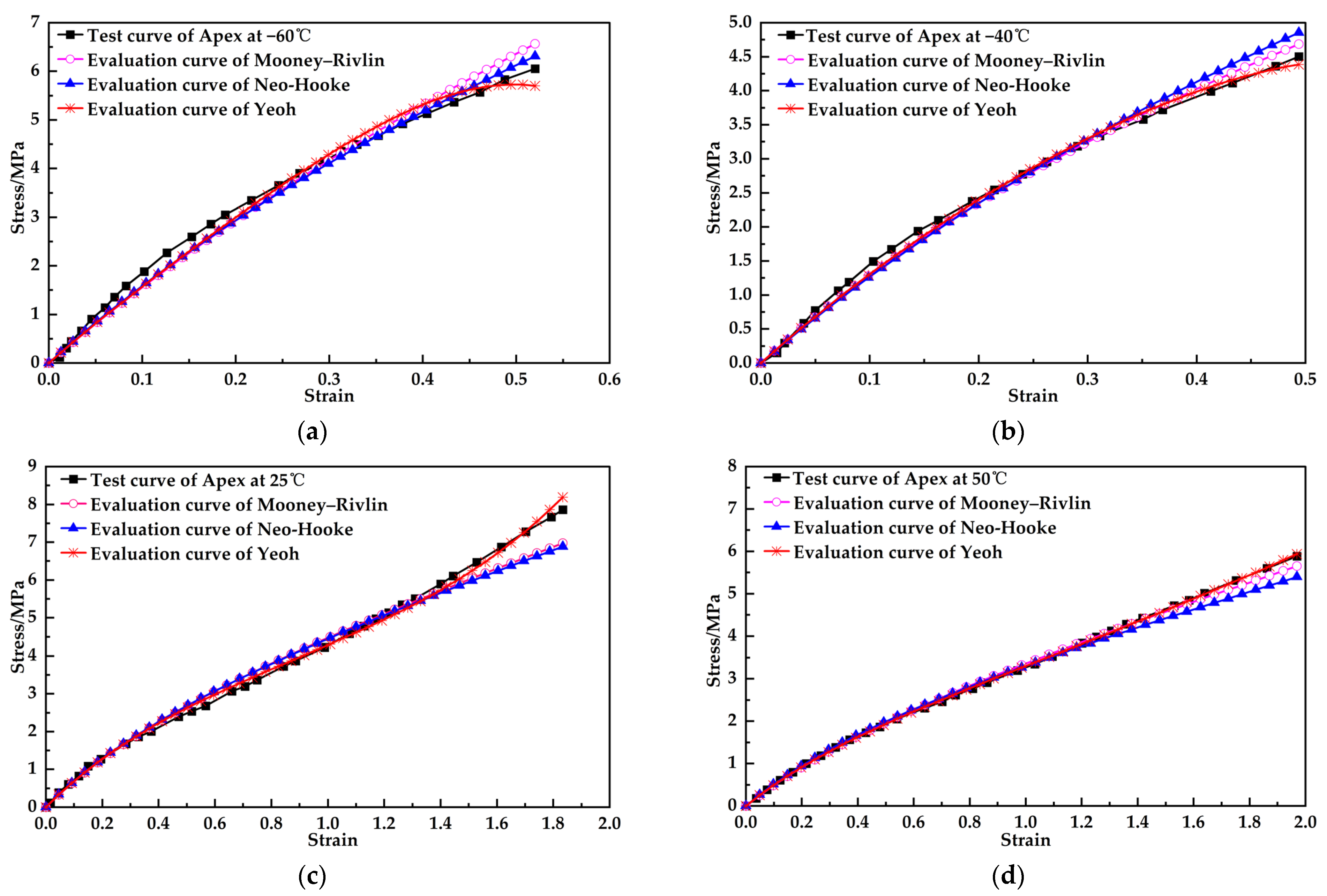
Model evaluation was performed using ABAQUS, based on experimental results for rubber materials at various ambient temperatures. This resulted in the constitutive model evaluation curves for rubber materials depicted in Figure 3, Figure 4 and Figure 5.
The stress–strain relationship of rubber has notable differences at different ambient temperatures. Low temperatures cause substantial hardening in the rubber material, leading to marked changes in its characteristics. The evaluation results indicate that the Neo-Hookean model and Mooney–Rivlin model produce strikingly comparable assessments for rubber materials in various regions. As shown in Figure 4a,b, the Neo-Hookean model exhibits poor performance in the low-temperature environment of the carcass compound. It shows significant deviation from experimental results. Figure 3, Figure 4 and Figure 5 reveal that the Mooney–Rivlin model exhibits substantial deviation from test data under large deformation conditions. Yeoh demonstrates excellent performance across all temperatures. The Yeoh model performs better than both models. It exhibits superior performance across diverse ambient temperatures, accurately representing the behavior of rubber materials. This study utilizes the Yeoh model to characterize the rubber material. The least squares method for curve fitting provided the parameters for the Yeoh model of the rubber material, as shown in Table 1, Table 2 and Table 3.
The non-rubber elements of aircraft tires consist of framework materials. These materials are generally isotropic elastic compounds that demonstrate a linear connection between stress and strain. This research utilizes a linear elastic model to characterize them, delineating their properties via Young’s modulus and Poisson’s ratio. Current research [37,40] suggests that the deformation of non-rubber materials during tire operation is negligible, and a linear elastic model adequately fulfills performance criteria. Table 4 presents the parameters for aircraft tire carcass materials at various ambient temperatures.

3. Numerical Model of Aircraft Tire

3.1. Numerical 2D Model

A cross-sectional diagram of an aircraft tire was created using AutoCAD 2018 (Autodesk Inc., San Rafael, CA, USA). Thereafter, it was loaded into HYPERMESH, where a two-dimensional cross-section of the aircraft tire was meshed to create a 2D numerical model. The interaction between the framework material and the rubber material was subsequently defined using the Rebar element in ABAQUS 2020 (Dassault Systèmes Simulia Corp., Providence, RI, USA) [43,44]. This model layers multi-ply fabrics with rebar elements or laminate-comparable moduli without creating distinct models for each cable and rubber component. Rebar elements precisely encapsulate the unidirectional tensile rigidity and thermal expansion of cables while enabling seamless integration with the rubber matrix. Following similar modeling, the overall stiffness and thermal response remain unchanged [45].
In ABAQUS, inflation pressure is exerted on the inner liner of the 2D model to replicate the tire inflation process. At 25 °C, the inflation pressure measures 0.85 MPa. According to Charles’s Law, with tire volume and inflation volume held constant, the absolute pressure of the internal gas is directly proportional to temperature and independent of the quantity of gas present [46]. When the ambient temperature fluctuates, the tire volume remains invariant, and no gas escape transpires. The ideal gas equation of state indicates that pressure is directly proportional to temperature. As a result, the inflation pressures for the tire at various ambient temperatures were recorded according to the following formula:
p V = n R T
In this equation, p represents the absolute pressure of gas (Pa), V represents the volume (m3), n denotes the amount of substance (mol), R denotes the universal gas constant (J/(mol·K)), and T denotes the absolute temperature (K).
The results are illustrated in Table 5.

3.2. Numerical 3D Model

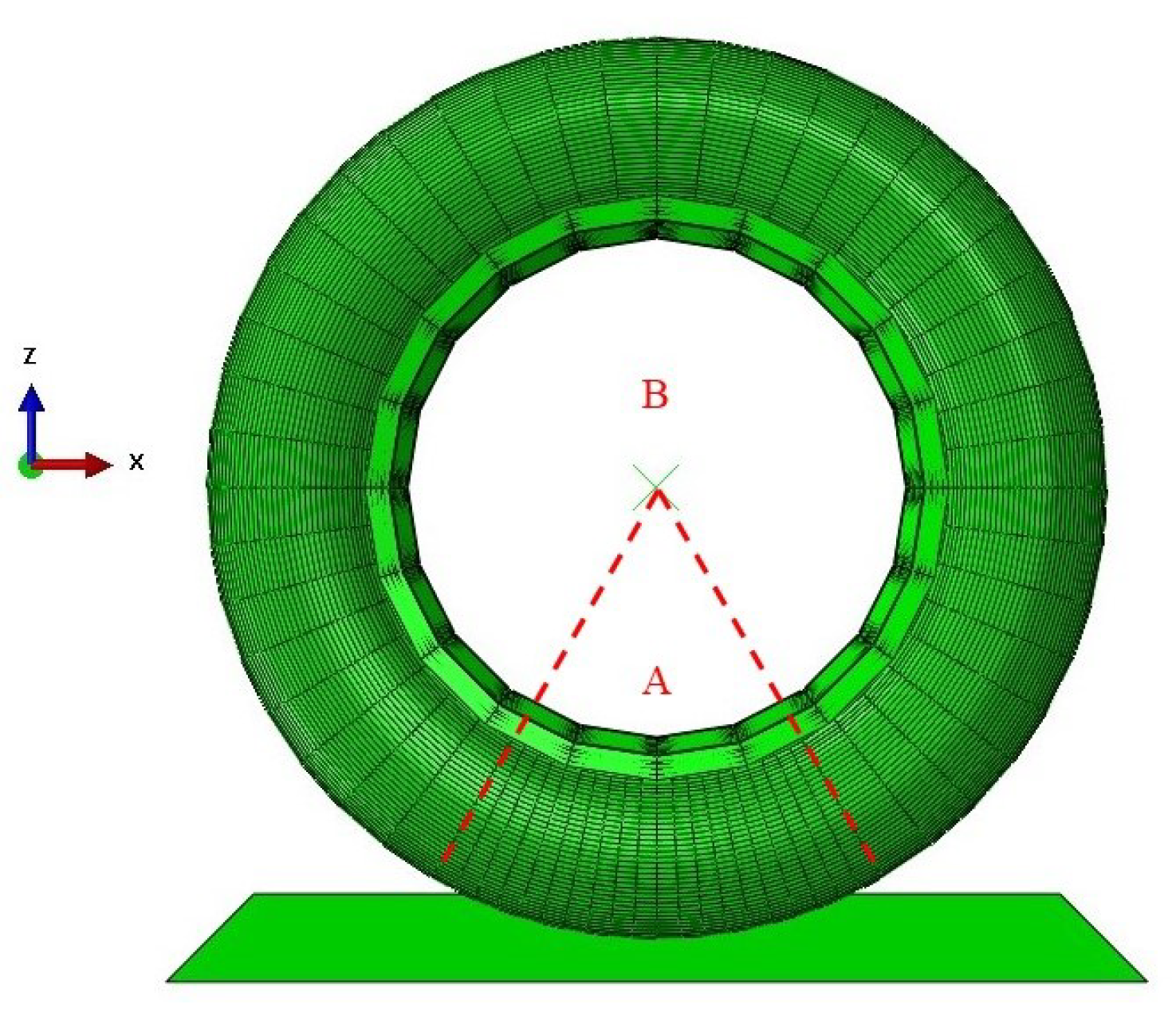
The *SYMMETRIC MODEL GENERATION command was utilized to rotate the 2D model around its central axis and produce a 3D model. In the rotation of the 2D model, the mesh is densely partitioned at the tire’s point nearest to the road surface, while it is comparatively sparsely partitioned at the point farthest from the road surface, thus improving computational efficiency. In tire cornering simulations, the mesh density must only meet the criteria for accurately recording contact deformation. Comprehensive studies [47,48,49,50] demonstrate that mesh variations do not affect the variation patterns of lateral forces or restoring torques. The use of local refinement and global coarsening is an effective mesh simplification approach that harmonizes precision with computing efficiency. Figure 6 demonstrates that Region A is evenly divided into 20 segments, whereas Region B consists of 40 segments. These regions correspond to central angles of 60 degrees and 300 degrees, respectively.
The rim’s rigidity greatly surpasses that of the tire rubber, rendering its deformation insignificant and thus having no impact on tire cornering or ground pressure distribution. The inflexible rim minimizes the quantity of metal meshes, decreases the number of contact pairs, and markedly enhances solution stability. The assumption of stiffness does not influence tire model computations [51]. In comparison to the deformation of aircraft tires, the deformation of the road and rim is insignificant and is hence regarded as analytically rigid.

3.3. Simulation Method of Cornering for Tires

3.3.1. Steady-State Rolling

In a steady-state rolling analysis, prevalent techniques encompass the quasi-static direct rolling method, the Lagrange–Euler transformation, and the explicit finite element method [52]. This work uses the Lagrange–Euler transformation to model the steady-state rolling of an aircraft tire. The Lagrange–Euler method combines the advantages of the Euler method and the Lagrange method, and its core idea is to divide the simulation domain into two interacting regions. Lagrangian-region mesh nodes are attached to the material and move and deform with the material. The Euler-region grid is fixed in space, and materials flow between these static grid cells. The Lagrange–Euler method automatically deals with the interaction between the Euler and Lagrange regions by defining the contact on the interface between them. It closes the gap between the pure Lagrangian method (unable to deal with large deformation fluid) and the pure Euler method (unable to accurately describe solid structures).
This method uses the rotational symmetry of the tire construction to convert the steady-state dynamic issue into a static one. The mesh is conventionally spread across the tire, although the rolling motion is seen as material flow through the mesh, like fluid flow analyses. Steady-state rolling transpires when the torque around the tire’s axis is virtually nil (or when longitudinal friction is minimal).

3.3.2. A Friction Model for Aircraft Tires in Contact with the Road

When an aircraft tire demonstrates cornering, a complicated interaction arises between the tire and road. Accurately evaluating the coefficient of friction between the tire and road is essential for precisely forecasting cornering dynamics. The friction mechanism of rubber, influenced by viscoelastic effects, varies from that of other materials and is significantly affected by physical factors, including sliding speed, contact pressure, and temperature. A significant amount of the literature has focused on elucidating tire–road friction behavior. Van Der Steen [53] investigated the relevance of diverse friction models in characterizing tire–road interactions. The original Savkoor’s friction model demonstrates unsatisfactory accuracy under high working circumstances, owing to insufficient consideration of temperature and the viscoelastic temperature dependency of materials. The revised model, which includes temperature variables, has been corroborated by analogous research to demonstrate universal applicability [54,55]. It allows for accurate replication of the temperature-dependent fluctuations in the friction coefficient of aviation tire tread rubber. Temperature greatly affects the lateral slip properties of aircraft tires by modifying rubber elasticity and contact friction conditions [22,56]. The revised Savkoor’s model efficiently integrates temperature effects with friction, and associated thermal–mechanical coupling research has validated its superior forecast accuracy [57,58]. Falk et al. [59] established that an enhanced temperature-dependent Savkoor’s model may more accurately quantify rubber friction compared to prior research models, with characteristics ascertainable regardless of road surface roughness and texture.
Thus, a modified Savkoor’s model was utilized in this investigation to characterize the frictional interaction between the aircraft tire and the road surface. The revised Savkoor’s model is delineated as follows:
μ p , υ , T = P P 0 ( T ) k ( T ) μ s ( T ) + μ m ( T ) μ s ( T ) exp h ( T ) 2 log 2 ( υ V max ( T ) )
Let T represent temperature, P signify contact pressure, v denote sliding velocity, P0 and k be constants associated with contact pressure, μs be the static coefficient of friction, μm be the maximum friction force at Vmax, and h be a constant connected to sliding velocity. The stick–slip phenomenon is regulated by a penalty approach, in which
τ c r i t = μ P
The friction behavior is executed and regulated using the internal FRIC user function of ABAQUS. This study did not empirically assess friction behavior. It utilized data from reference [59].

3.4. Numerical Stability and Convergence

The convergence tolerance parameter consists of convergence criteria for maximum residuals and the associated mean flux norm, as well as criteria for maximum solution corrections and their respective incremental solution values. The convergence tolerance parameter in ABAQUS simulations affects both the accuracy of the results and the total length of dynamic simulations. Consequently, while conducting cornering simulations for aircraft tires, it is imperative to choose an appropriate convergence tolerance parameter that guarantees simulation accuracy while also improving simulation efficiency.

4. Cornering Tests for Aircraft Tires

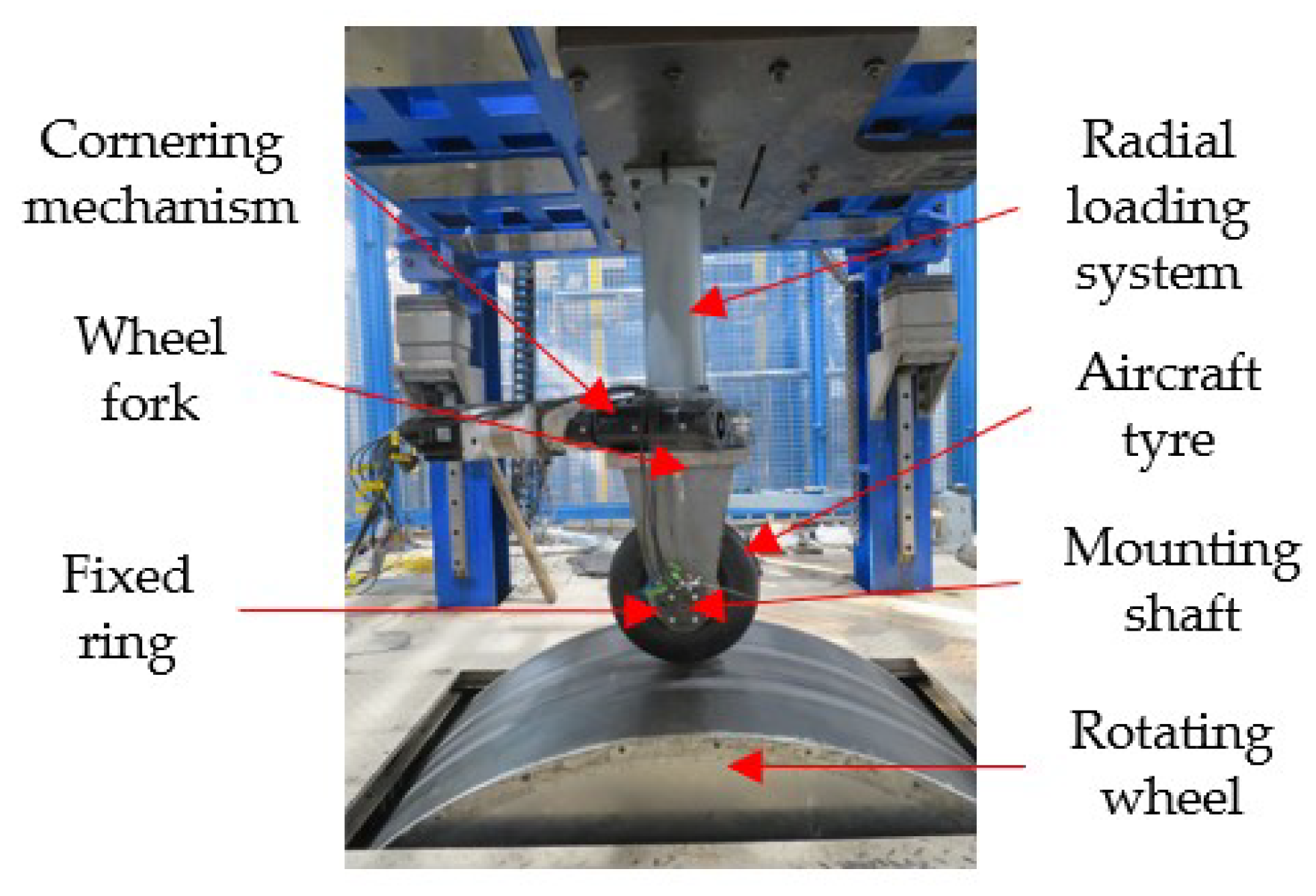
The cornering tests of aircraft tires are depicted in Figure 7. This method facilitates the assessment of cornering characteristics for aircraft tires at 25 °C. The testing apparatus is devoid of a temperature chamber, making temperature evaluation too expensive. Therefore, cornering tests were performed exclusively at 25 °C. In the simulation, the impact of the rotating wheel was overlooked, while the road was upheld as a rigid plane.
In the experiment, the strain gauge measurement technique was employed to assess the load and torque during the aircraft tire’s cornering, instead of using traditional six-axis force transducers. This technology of strain bridges presents considerable advantages over conventional force sensors for cost, weight, and structural integration. This method allows for the construction of configurable sensitivity and measurement ranges according to the strain distribution during bearing loading. It also minimizes the effect on the original force transmission path and structural stiffness during installation.
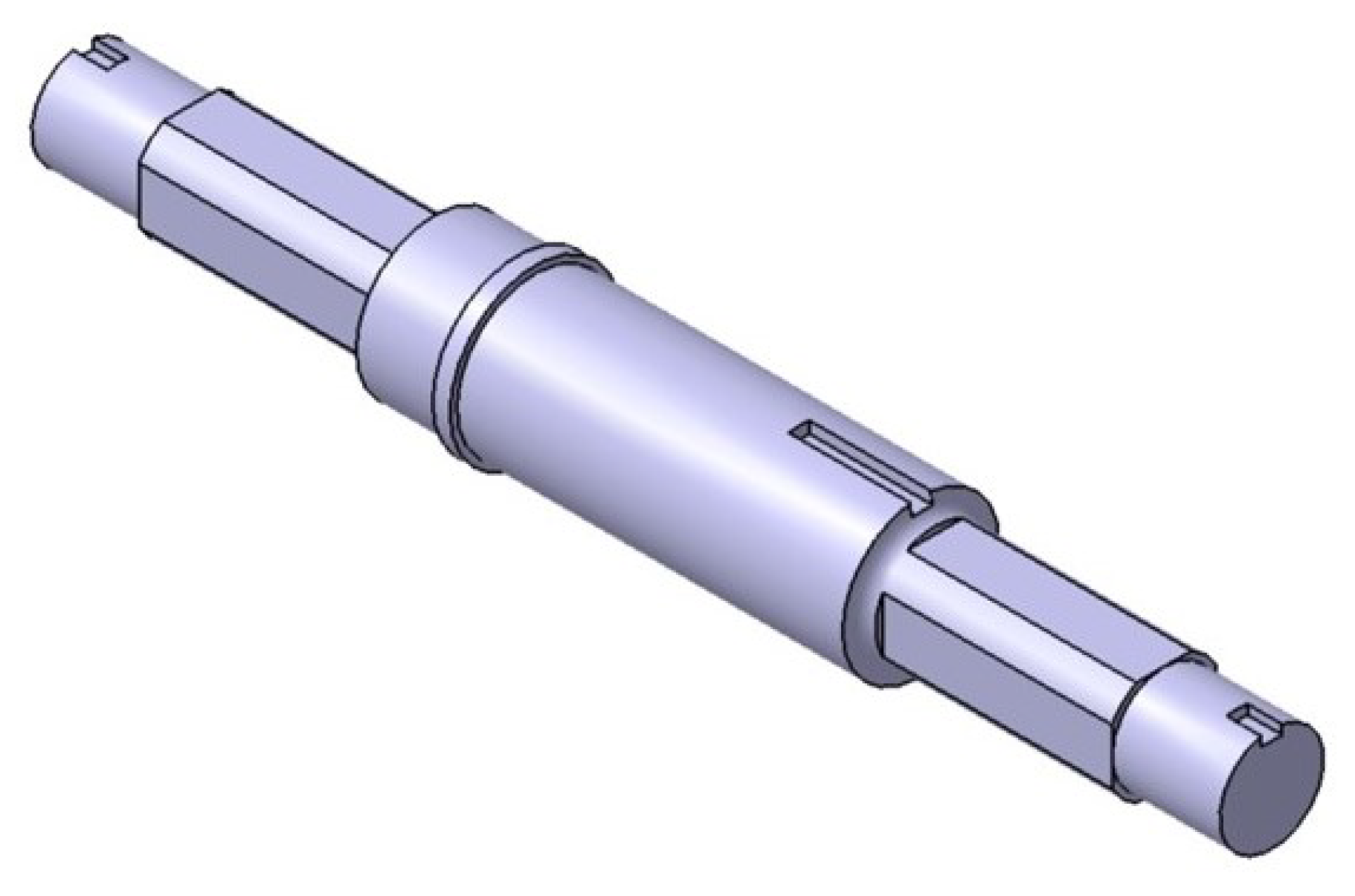
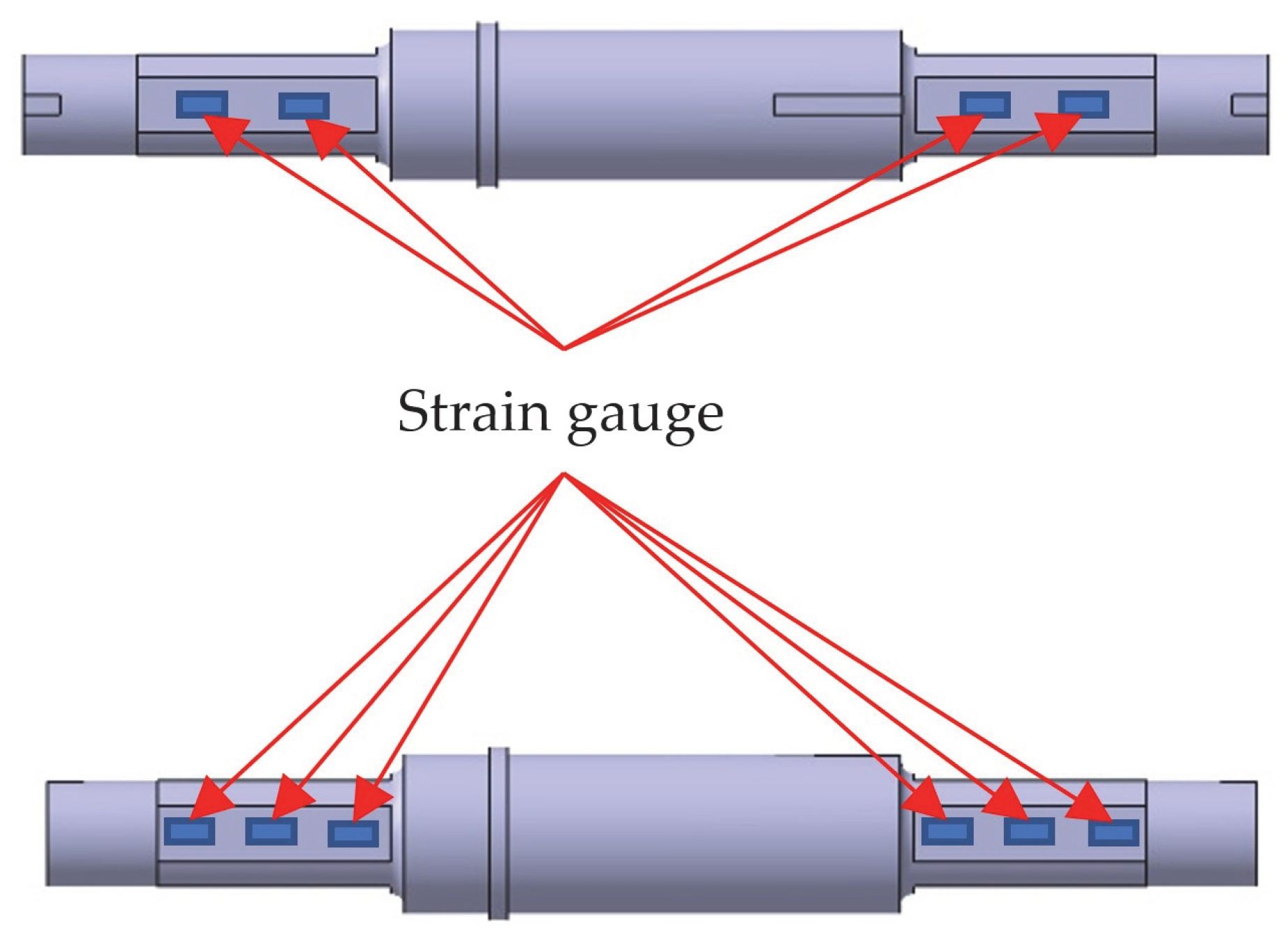
Figure 8 illustrates the mounting shaft of the aircraft tire. Strain gauges are attached to the mounting shaft to create a strain bridge, with the installation locations depicted in Figure 9. Strain gauges are similarly positioned at equivalent locations on the flip side of Figure 9, with each gauge evenly spaced. Four strain gauges symmetrically arranged around the shaft’s transverse and longitudinal axes constitute a single strain bridge assembly. Five assemblies are utilized to measure the radial force, lateral force, longitudinal force, self-aligning torque, and yaw torque of the aircraft tire, respectively. Before initiating testing, each strain gauge assembly is subjected to range calibration to guarantee measurement precision.

4.1. Verification of Convergence Tolerance Parameter

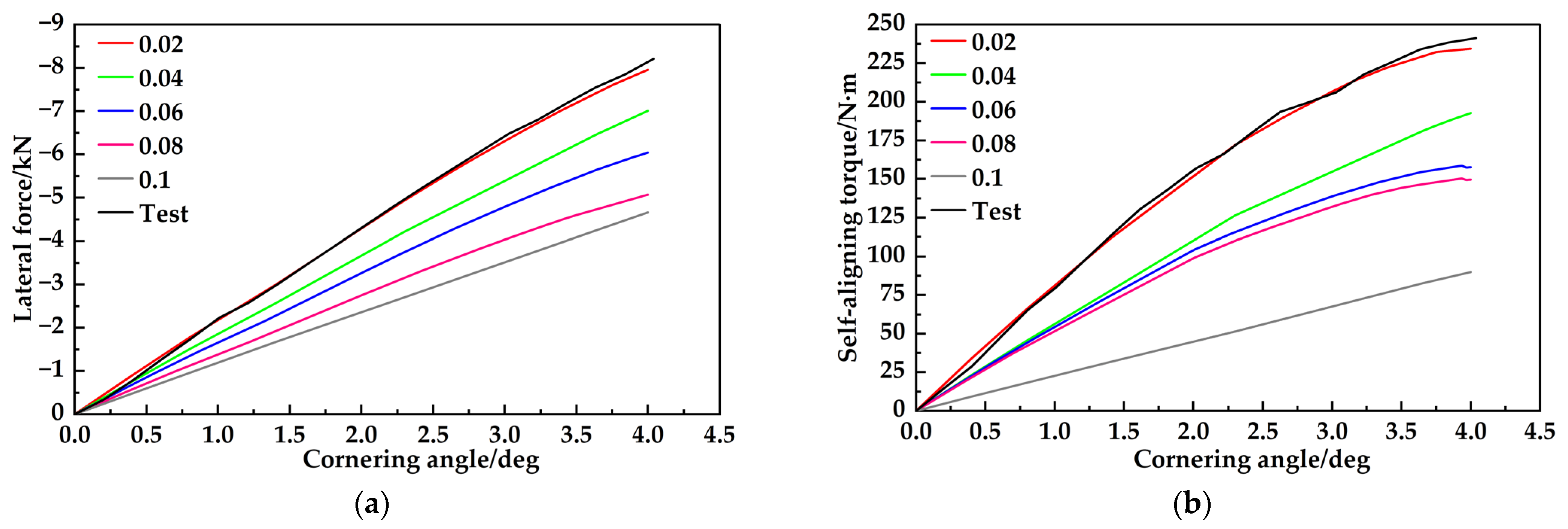
In ABAQUS, cornering simulations of the aircraft tire were performed with different convergence tolerance parameters, resulting in lateral forces and self-aligning torques as illustrated in Figure 10. The convergence tolerance parameter significantly affects the simulation results. With the convergence tolerance parameter established at 0.02, the peak lateral force attained was 7.96 kN, while the maximum self-aligning torque reached 234.47 N·m. Augmenting the convergence tolerance parameter to 0.06 diminished the maximum lateral force to 6.05 kN and the maximum self-aligning torque to 157.75 N·m. Upon increasing the convergence tolerance parameter to 0.1, the maximum lateral force on the aircraft tire reached 4.66 kN, while the maximum self-aligning torque attained 90.01 N·m. With an increase in the convergence tolerance parameter, both the lateral force and self-aligning torque demonstrated a declining trend. Figure 10 clearly demonstrates that at a convergence tolerance parameter of 0.02, the simulation data aligns well with the experimental results.

4.2. Cornering Tests at Different Radial Forces

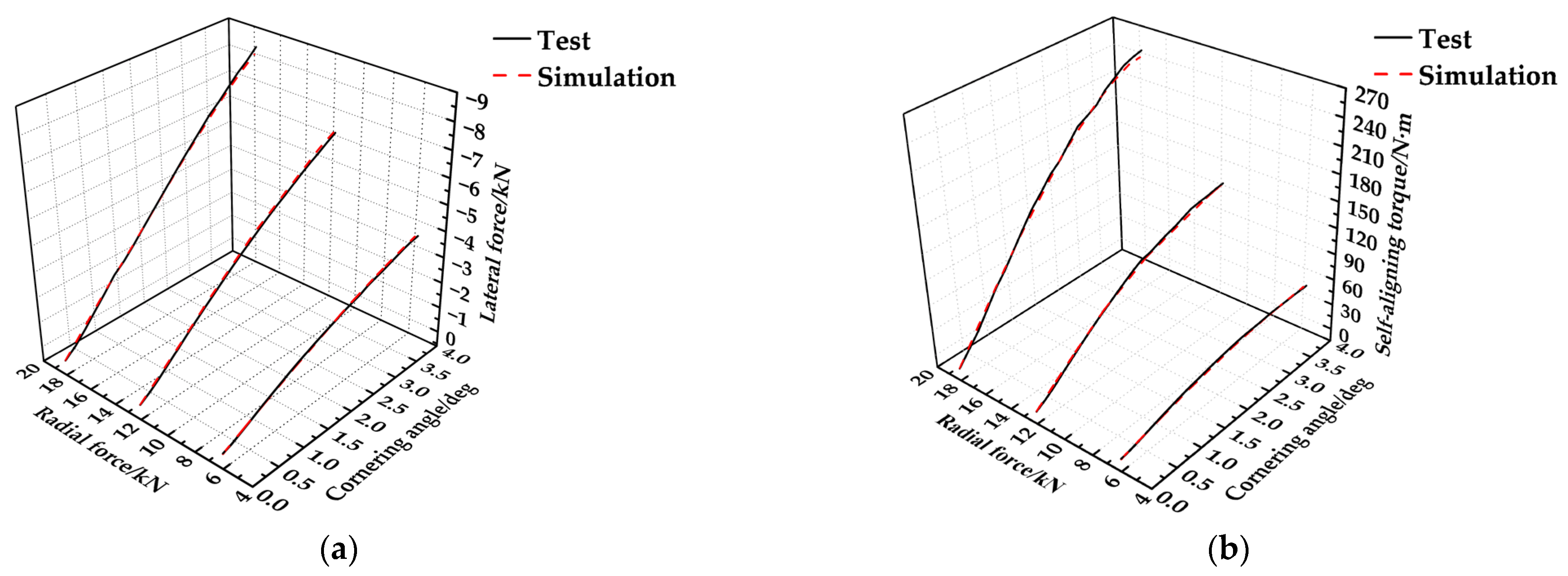
Cornering tests on the aircraft tire were performed at 25 °C under three different radial forces: 6 kN, 12 kN, and 18 kN. The findings are illustrated in Figure 11.
Figure 11 illustrates that the computed lateral force curves correspond with experimental data during cornering. The experimental self-aligning torque curve exhibits marginally inferior performance compared to the simulation. The most significant deviation was observed at a 8 kN radial force and a 3.3° cornering angle. The experimentally determined self-aligning torque was 113.60 N·m, whereas the simulated self-aligning torque was 108.83 N·m. This resulted in an error of 4.2%. Thus, the developed numerical model accurately represents the cornering characteristics of aircraft tires under different radial forces.

4.3. Cornering Tests at Different Rolling Speeds

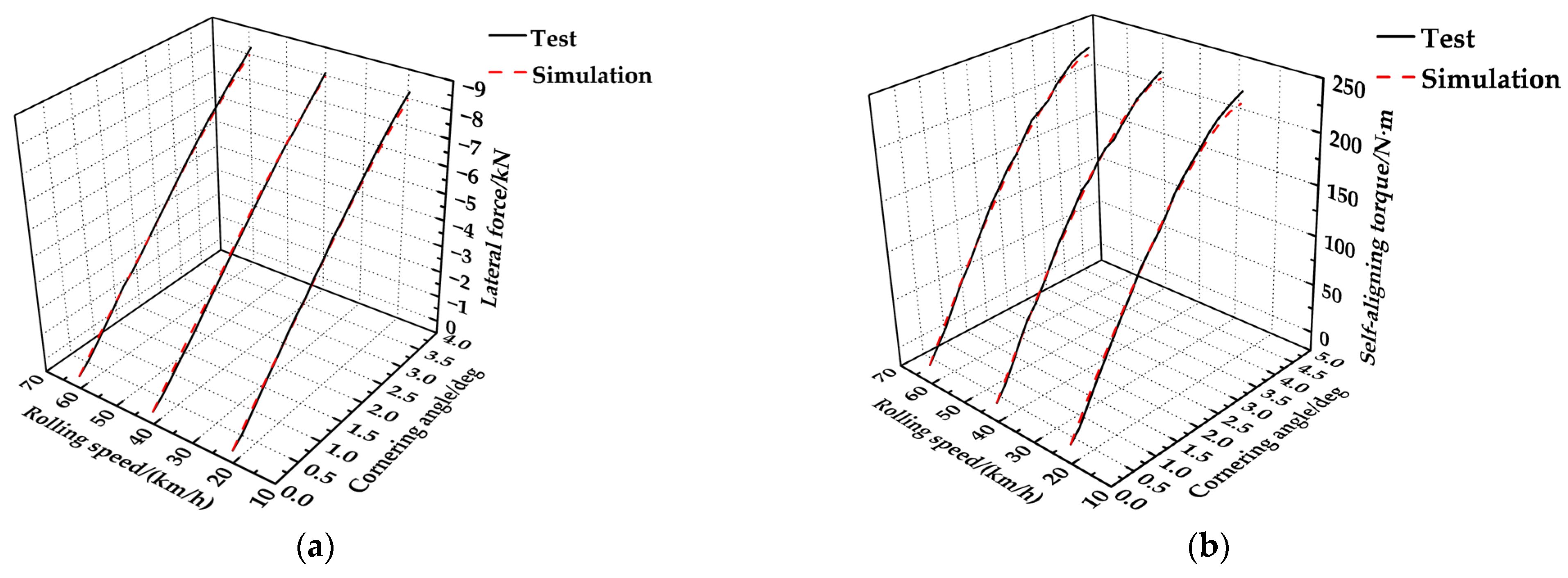
Tests of cornering were performed at 25 °C across three rolling speeds: 20 km/h, 40 km/h, and 60 km/h. The findings are illustrated in Figure 12.
Figure 12 illustrates that the modeling outcomes for the aircraft tire at various rolling speeds are predominantly aligned with the experimental data. Although the simulated results are fundamentally the same, the experimentally obtained lateral forces at different speeds display tiny variations, probably due to modest surface degradation on the aircraft tire. At a 4° cornering angle, the largest discrepancy between the simulated and experimental self-aligning torque was 4.38%, remaining within the 5% criterion.
The findings derived from the constructed numerical model consistently fall within 5%, indicating a reasonable margin of error. This signifies that the model accurately represents the cornering behavior of aircraft tires. The principal differences in the numerical model for aircraft tires at varying ambient temperatures pertain to material characteristics and inflation pressure. All other parameters remain constant throughout all ambient temperatures. Material qualities were established according to experimental data, with inflation pressure continually regulated to ensure precision. Thus, by juxtaposing simulated outcomes at ambient temperature with empirical data, the veracity of the simulation model and methodology can be established.

5. Results and Discussion

This study examines the influence of ambient temperature on the cornering properties of an aircraft tire at four temperatures: −60 °C, −40 °C, 25 °C, and 50 °C. Three unique scenarios were evaluated regarding the impacts of ambient temperature on the rubber materials and inflation pressure of the aircraft tire: the influence on the rubber materials alone, the impact on inflation pressure alone, and a combined analysis of both factors. The impact of ambient temperature on cornering characteristics was analyzed across these three conditions. Additionally, the influence of ambient temperature on cornering characteristics was examined under different radial forces and rolling speeds.

5.1. Effects of Ambient Temperature on Aircraft Tires

5.1.1. Effect on Radial Force

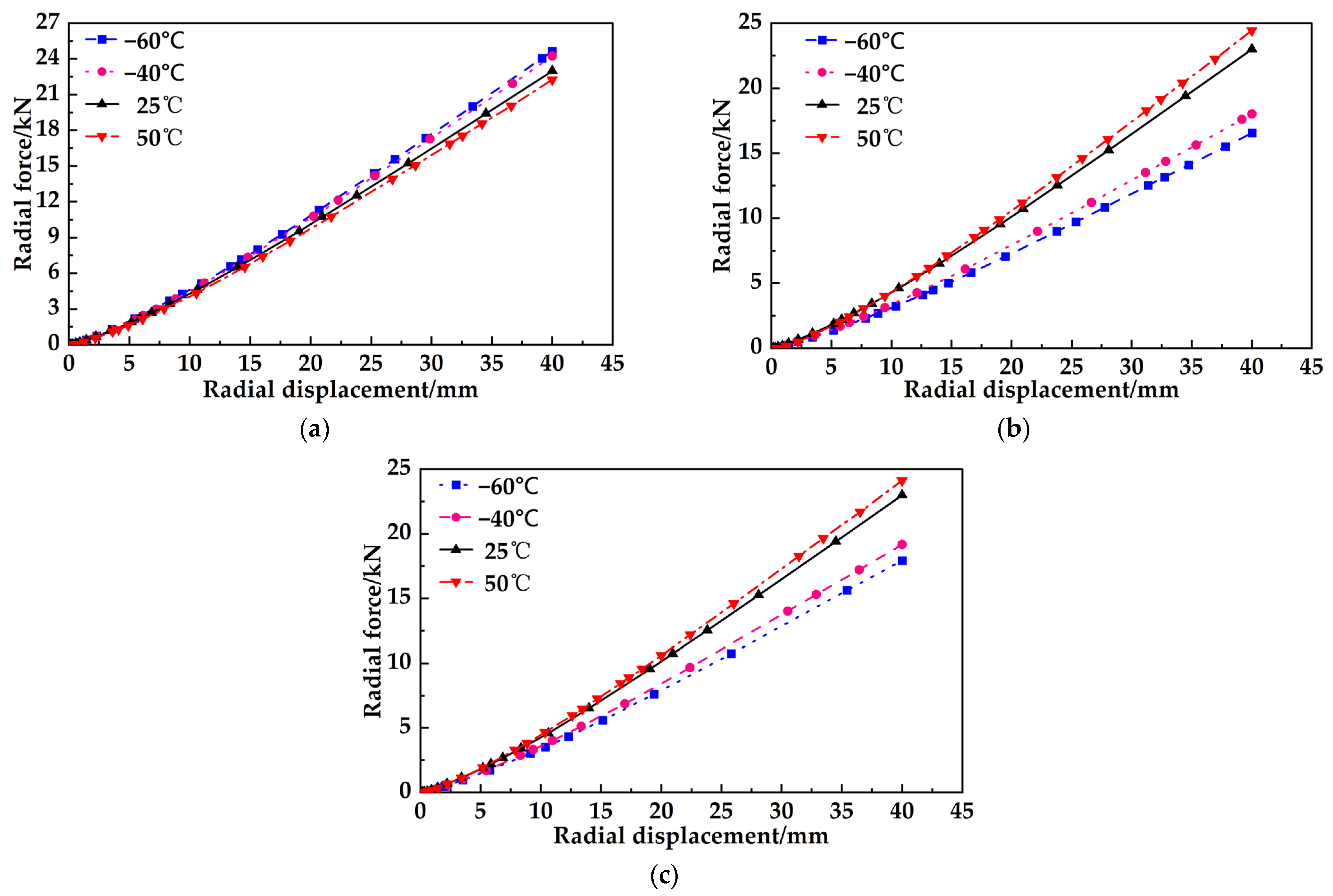
Figure 13 illustrates the impact of ambient temperature on the radial force of an aircraft tire under three different situations. The results pertaining exclusively to the influence of ambient temperature on the material are illustrated in Figure 13a. At a constant radial displacement, the radial force applied to the aircraft tire lowers as ambient temperature increases, signifying a reduction in the tire’s radial stiffness with rising ambient temperatures. Elevated temperatures cause the rubber and framework materials of the aircraft tire to soften, consequently diminishing its load-bearing capacity. Figure 13b illustrates that when exclusively evaluating the impact of ambient temperature on inflation pressure, the inflation pressure of the aircraft tire escalates with increasing ambient temperature, resulting in an enhancement of the tire’s radial stiffness. Figure 13c illustrates that when thoroughly evaluating the cumulative impact of ambient temperature on the aircraft tire, the radial stiffness concurrently increases with elevated ambient temperature. At 50 °C and a deflection of 40 mm, the radial forces of the aircraft tire under the three situations were 22.61 kN, 24.46 kN, and 24.14 kN, respectively. This signifies that ambient temperature significantly impacts inflation pressure, serving as the principal determinant of the radial load-bearing capacity of aircraft tires.

5.1.2. Effect on Cornering Characteristics

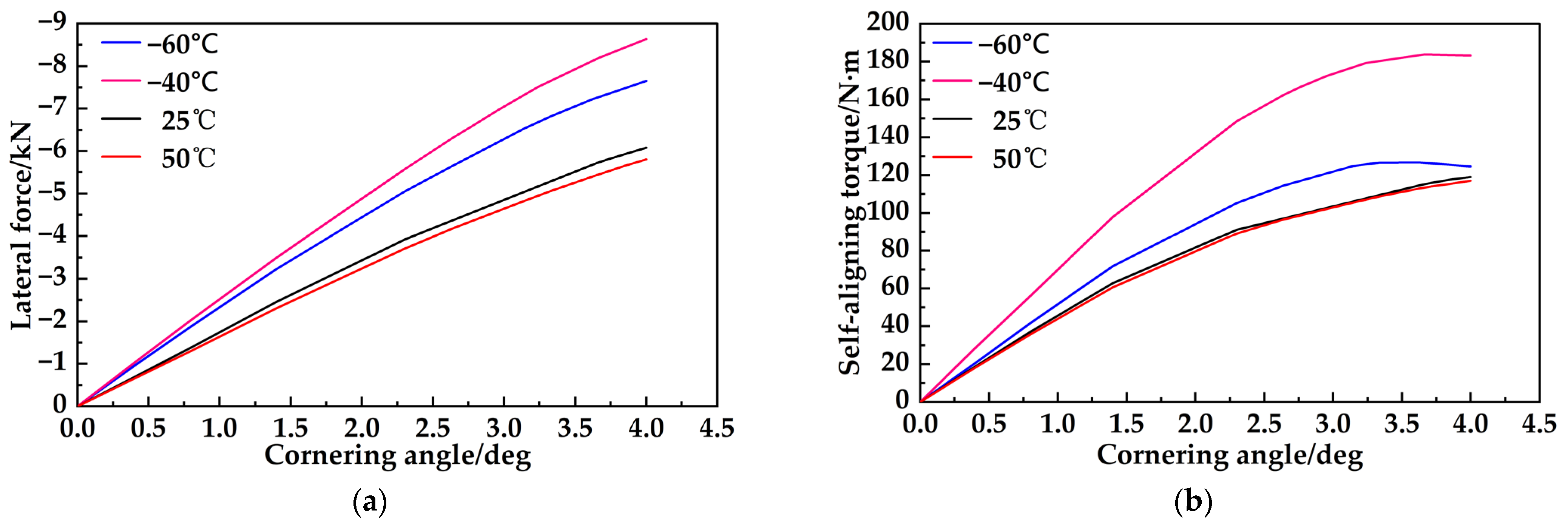
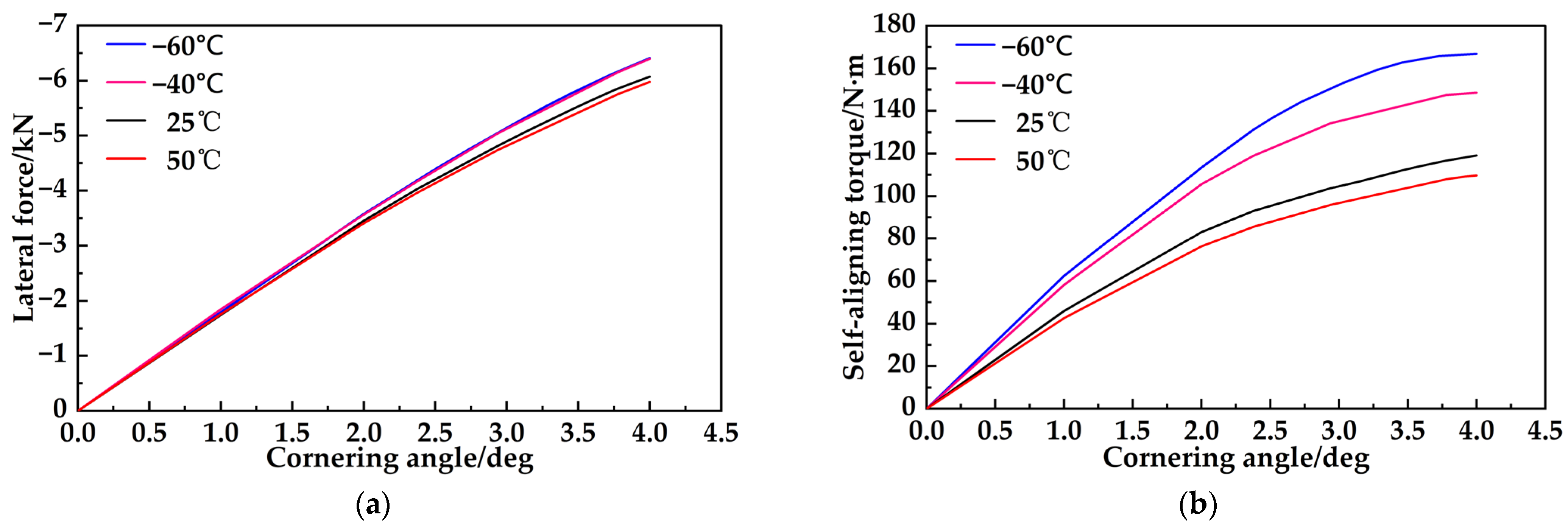
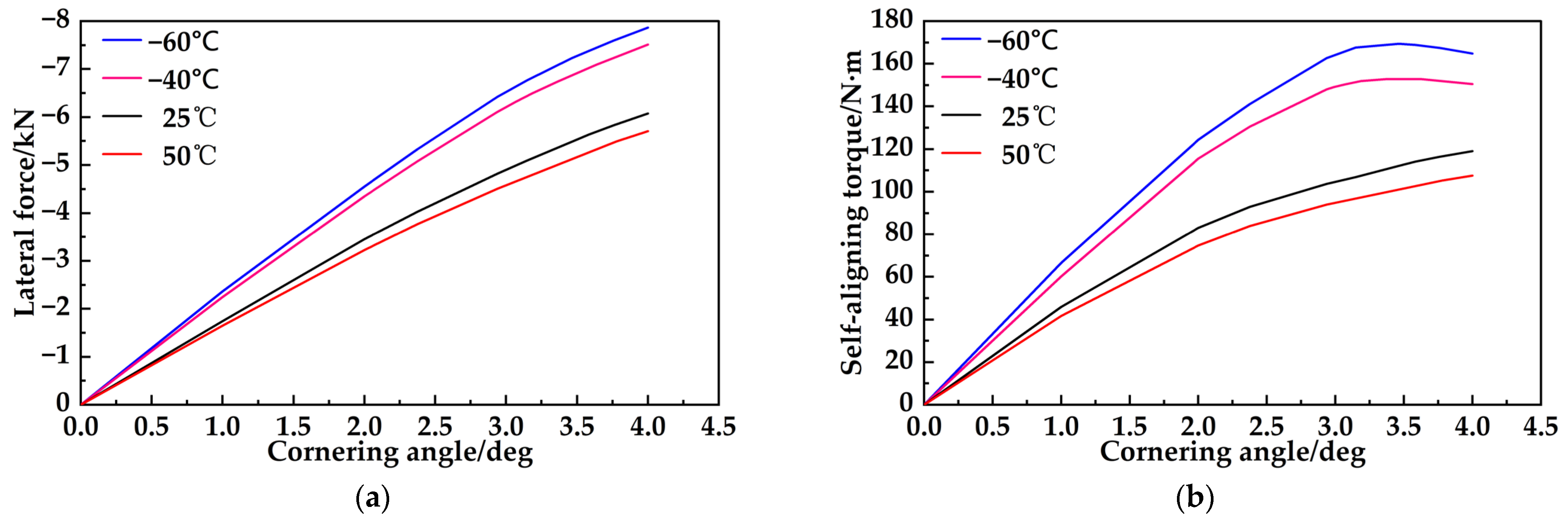
Numerical modeling was employed to perform cornering simulations for the aircraft tire at four ambient temperatures: −60 °C, −40 °C, 25 °C, and 50 °C. The cornering characteristics of the aircraft tire were analyzed under three unique situations, demonstrating the variation of these characteristics with temperature, as depicted in Figure 14, Figure 15 and Figure 16.
Figure 14 illustrates that when exclusively examining the influence of ambient temperature on rubber materials, the cornering characteristics of an aircraft tire display erratic fluctuations with temperature changes. The lateral force and self-aligning torque are at their lowest at an ambient temperature of 50 °C, while the lateral deflection force and self-aligning torque peak at −40 °C, not at −60 °C. Under identical radial loads, the tread rubber approaches (or even enters) the glass transition zone at −60 °C. It causes significant material hardening, reduces viscoelastic energy dissipation, and diminishes the ability to conform to micro-roughness on the road surface. This results in a decrease in actual contact area and equivalent lateral friction coefficients. This also makes it more difficult to establish lateral shear stresses within the contact patch, leading to an earlier onset of localized slippage. Conversely, at −40 °C the rubber retains relative elasticity, enabling better road surface conformity and effective shear deformation. Thus, it transmits greater lateral forces. The rubber remains relatively ‘elastic,’ better conforming to the road surface and generating effective shear deformation. This enables greater lateral forces to be transmitted. Although increased ambient temperatures soften the rubber, they concurrently modify the tire’s load-bearing capacity. Under constant radial stress, an elevated temperature results in increased radial deformation, therefore altering the tire’s contact condition with the road surface. This interaction leads to an uneven temperature-dependent fluctuation in cornering characteristics.
Figure 15 demonstrates that both the lateral force and self-aligning torque of the aircraft tire diminish with rising ambient temperatures when solely assessing the impact of ambient temperature on inflation pressure. The effect of varying inflation pressures on lateral force is comparatively negligible. However, their influence on self-aligning torque is substantial.
A complete analysis of the influence of ambient temperature on the aircraft tire is depicted in Figure 16. This reveals significant fluctuations in both lateral force and self-aligning torque at varying ambient temperatures. As the ambient temperature diminishes, both lateral force and self-aligning torque escalate during aircraft tire deflection.
Alterations in material characteristics impact the lateral force of the tire, whereas fluctuations in inflation pressure affect the self-aligning torque. In evaluating the effect of ambient temperature on the cornering characteristics of aircraft tire, it is essential to analyze these aspects completely to accurately ascertain the influence patterns of ambient temperature on these characteristics.

5.2. Effect of Ambient Temperature on Aircraft Tire at Varying Radial Forces

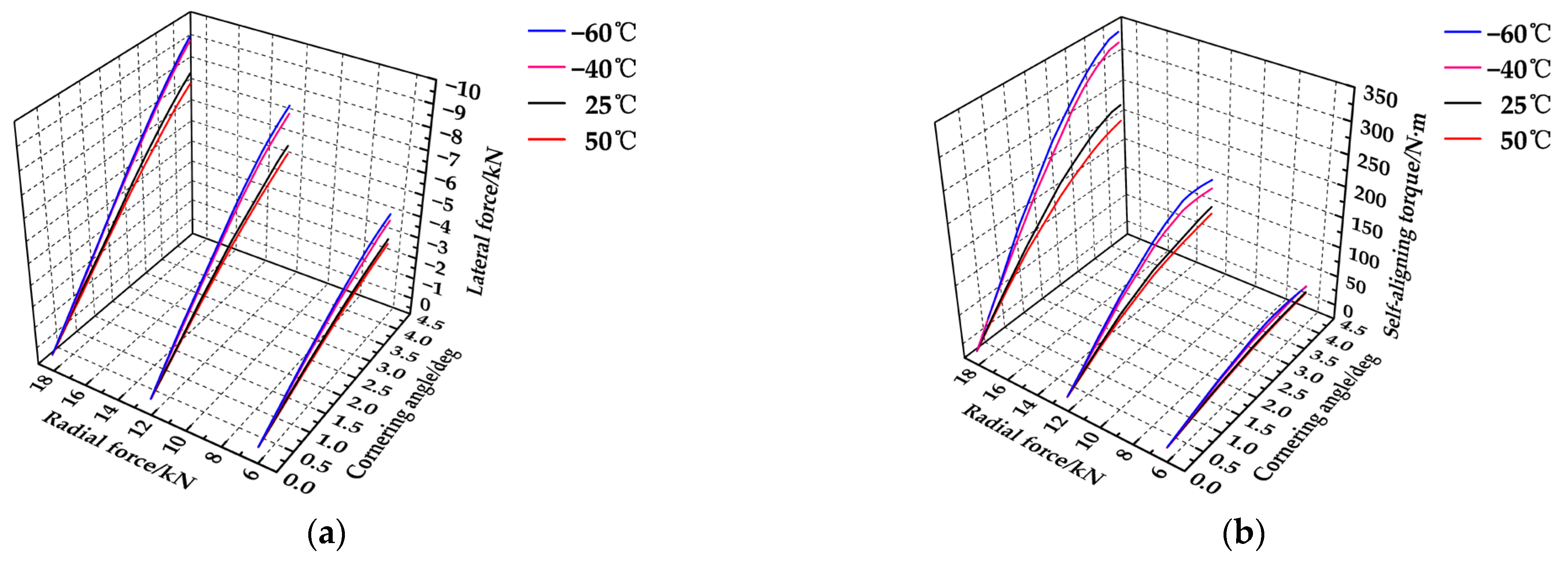
Aircraft tires experience various load circumstances during operation, affecting their cornering characteristics. Employing the established model that thoroughly considers the impact of ambient temperature on tire material and inflation pressure, three radial forces of 6 kN, 12 kN, and 18 kN were exerted. This demonstrated the influence of ambient temperature on the cornering characteristics of the aircraft tire under different radial forces, as depicted in Figure 17.
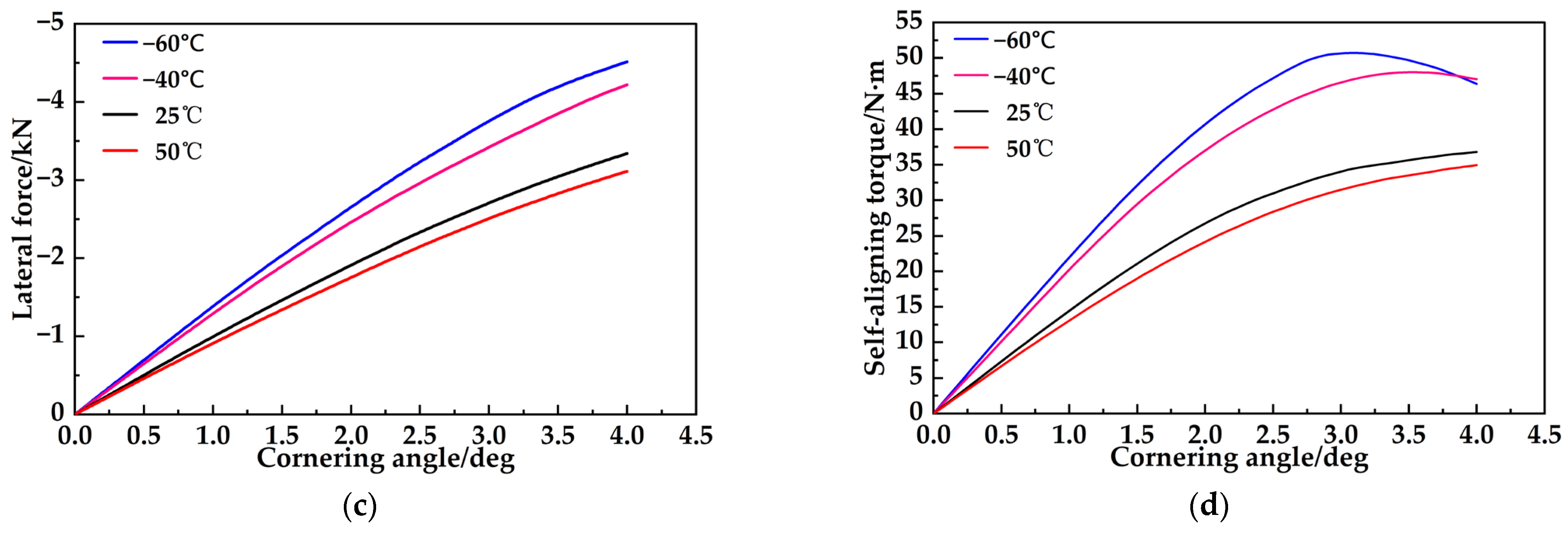
Figure 17a,b depict the relationship between lateral force and self-aligning torque as a function of cornering angle. In the low cornering angle region, both lateral force and self-aligning torque demonstrate a linear correlation with the cornering angle. At a constant ambient temperature, an increase in radial force results in a rise in both lateral force and self-aligning torque. As the ambient temperature increases, both lateral force and self-aligning torque diminish under different radial forces, illustrating continuous trends in the effect of temperature on cornering dynamics. As shown in Figure 17c,d, the lower the temperature, the earlier the self-aligning changes during cornering.
Cornering stiffness is a critical factor affecting an aircraft tire’s resistance to lateral distortion. Cornering stiffness is defined as the lateral force required to produce a unit cornering angle in an aircraft tire. The expression is as follows:
K = F α
In this equation, K represents the cornering stiffness (N/rad), F represents the lateral force (N), and α denotes the cornering angle (rad). In this article, the units of cornering stiffness have been converted to kN/deg.
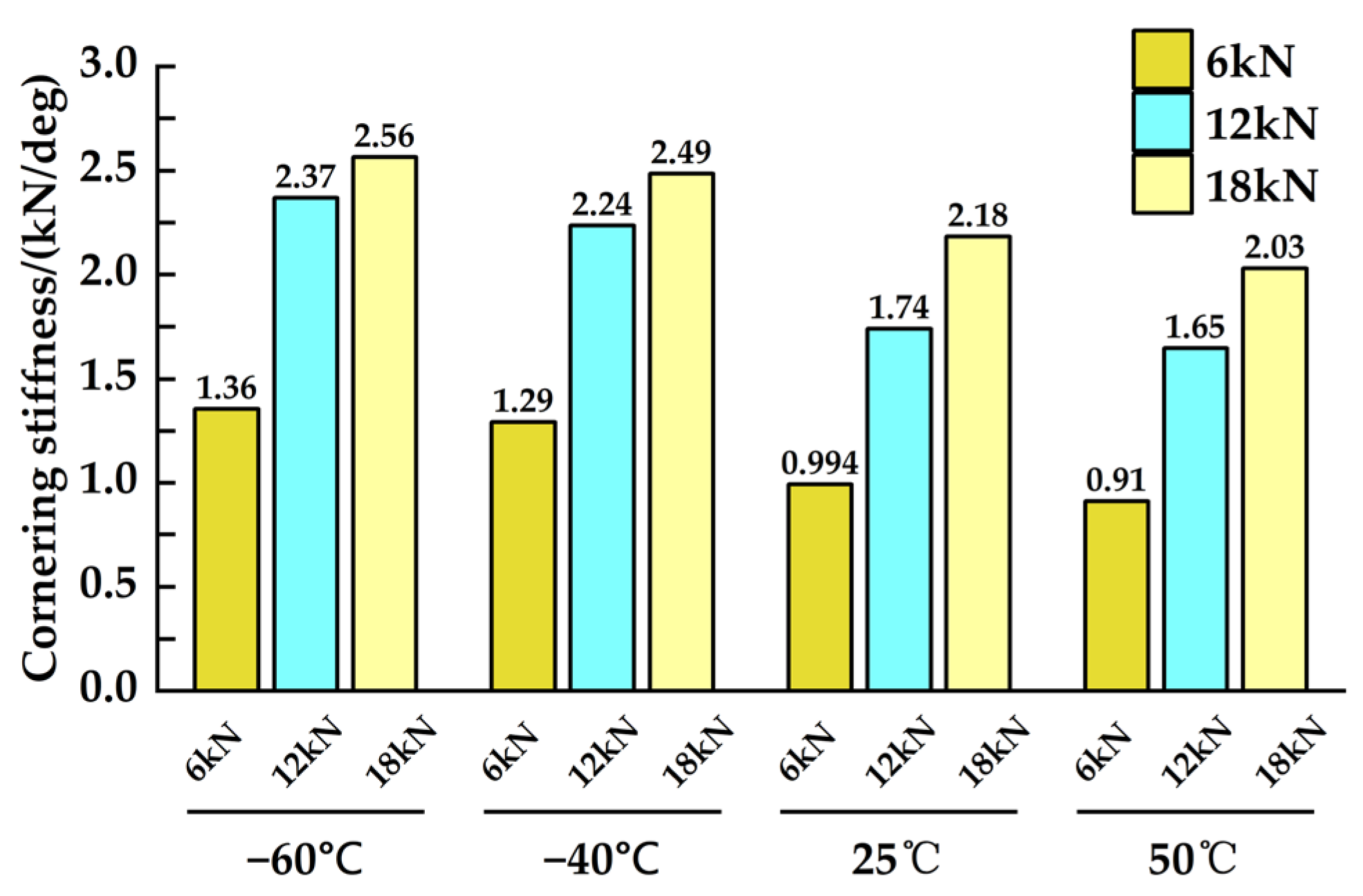
Figure 18 depicts the cornering stiffness of an aircraft tire under different ambient temperatures and radial forces. As the radial force increases, the cornering stiffness of the aircraft tire correspondingly increases. Conversely, as the ambient temperature increases, cornering stiffness diminishes, demonstrating an inverse relationship to the radial force effect. Variations in ambient temperature and radial force affect the cornering characteristics of aircraft tires.
As the radial load escalates from 6 kN to 18 kN at 25 °C, the cornering stiffness increases from 0.994 kN/deg to 2.18 kN/deg. As the ambient temperature rose from −60 °C to 50 °C, cornering stiffness under a 12 kN radial force diminished from 2.37 kN/deg to 1.65 kN/deg. Radial force provides a more significant influence than ambient temperature.

5.3. Effect of Ambient Temperature on Aircraft Tire at Varying Rolling Speeds

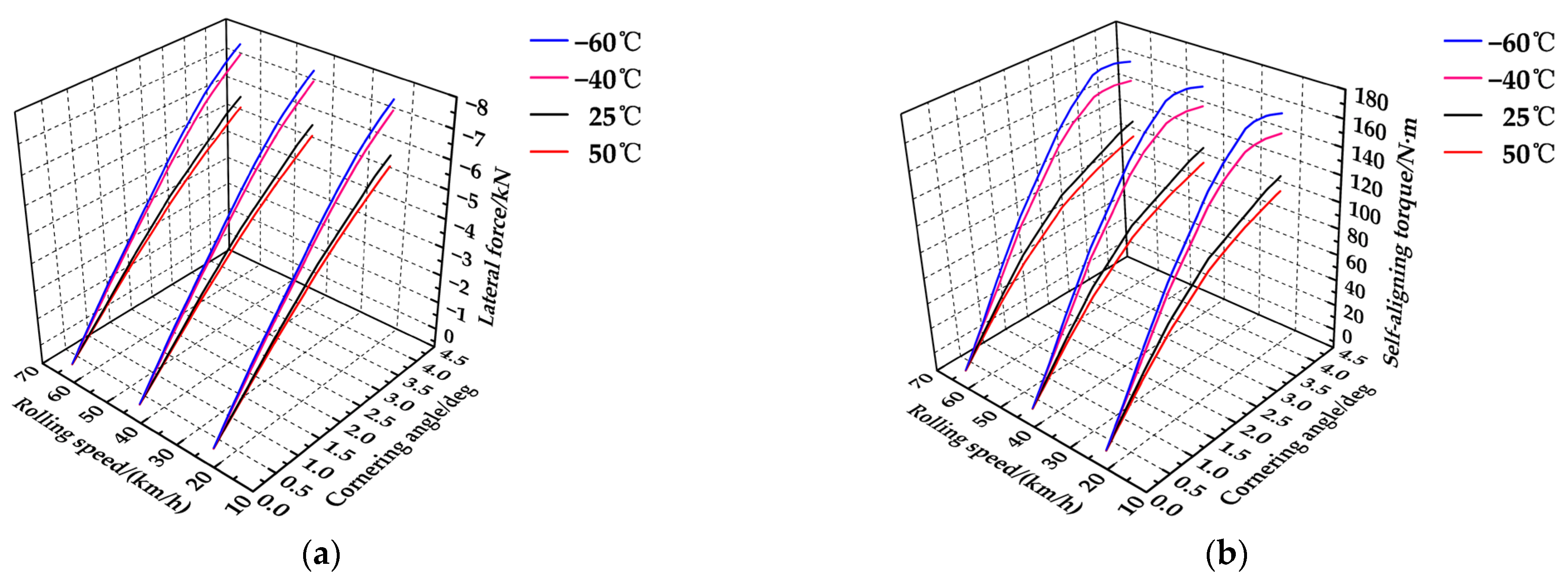
As the rolling speed escalates, the deformation and stress distribution within the aircraft tire intensifies, potentially influencing its cornering characteristics. The created numerical model was utilized to examine the effect of ambient temperature on the cornering characteristics of the aircraft tire at three rolling speeds: 20 km/h, 40 km/h, and 60 km/h. The findings are illustrated in Figure 19.
Figure 19a depicts the influence of ambient temperature on lateral force in the aircraft tire at various rolling speeds. The lateral force escalates linearly with the cornering angle, demonstrating non-linear characteristics at elevated cornering angles. At a constant ambient temperature, lateral forces remain rather stable across different rolling speeds, with the variation curves for lateral force in relation to camber angle being essentially superimposable. Alterations in rolling speed have no significant effect on lateral force. The ambient temperature influences lateral force similarly across various rolling speeds, and the relationship between lateral force and ambient temperature is independent of the tire’s rolling speed. Figure 19b depicts the influence of ambient temperature on the self-aligning torque of the aircraft tire at various rolling speeds. At a constant ambient temperature, the self-aligning torque exhibits basically similar variation with the cornering angle at low angles. At elevated cornering angles, the self-aligning torque demonstrates minor fluctuations based on the rolling speed. As the rolling speed transitions from 20 km/h to 60 km/h, the maximum self-aligning torque of the aircraft tire at −60 °C diminishes from 164.76 N·m to 162.66 N·m. It indicated a negligible difference. This trend is consistent across various ambient temperatures, with the self-aligning torque remaining substantially unchanged by fluctuations in rolling speed.
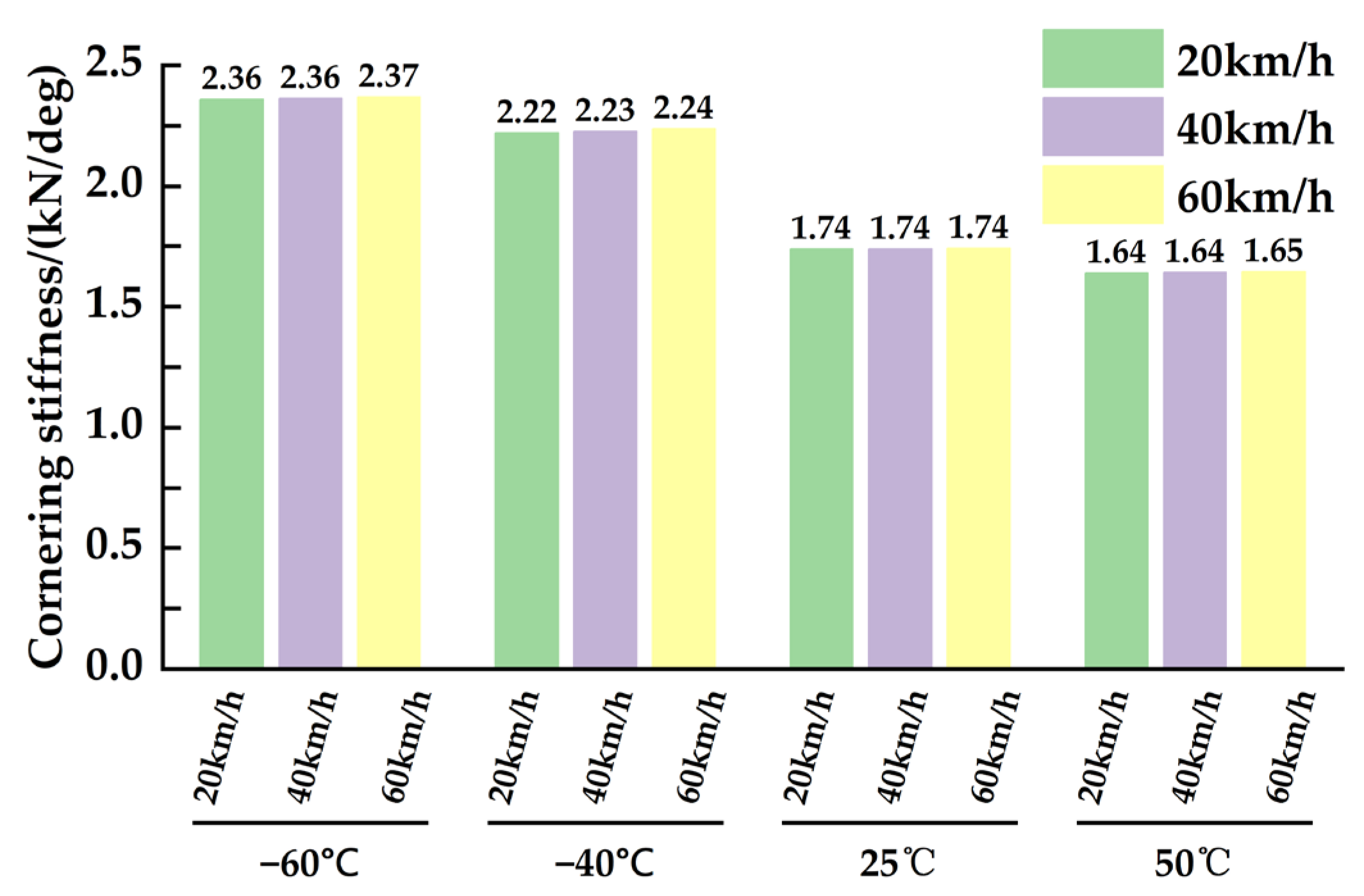
Figure 20 depicts the fluctuation in cornering stiffness of the aircraft tire at varying rolling speeds and environmental temperatures. It is apparent that an increase in ambient temperature results in a decrease in the cornering stiffness of an aircraft tire. But varying rolling speeds have no effect on cornering stiffness at any ambient temperature.
Variations in ambient temperature affect the material properties and inflation pressure of an aircraft tire, leading to a significant alteration in cornering characteristics. At varying ambient temperatures, changes in rolling speed do not influence cornering characteristics. The cornering characteristics of an aircraft tire demonstrate significant sensitivity to ambient temperature, although they indicate less sensitivity within the standard rolling speed range of 0–60 km/h. Within the speed range of this study, both lateral force and self-aligning torque exhibit only a slight dependence on rolling speed across different ambient temperatures. No interaction between speed and temperature was observed. At a given temperature, curves obtained at different speeds largely overlap. This indicates minimal influence of speed on lateral deviation characteristics. Note that interaction effects may emerge beyond the tested range. At elevated speeds, under substantial loads, or at pronounced cornering angles, rolling speeds may significantly affect cornering characteristics.

6. Conclusions

This study examines the effect of ambient temperature on the cornering characteristics of aircraft tires. The stress–strain results for the rubber materials of aircraft tires were evaluated at various ambient temperatures (−60 °C, −40 °C, 25 °C, and 50 °C). The applicability of the rubber material’s constitutive model was assessed across these conditions. This establishes the groundwork for developing a numerical model of aircraft tires under varying ambient temperatures. A numerical model of an aircraft tire was created using ABAQUS. The model incorporated the real friction characteristics between the tire and road surface, as well as the impact of the convergence tolerance parameter. The model and the approach were confirmed with experimental data. The impact of ambient temperature on material qualities and inflation pressure was examined concerning its effect on the cornering characteristics of aircraft tires. An analysis was conducted on the effects of radial force and rolling speed on cornering characteristics at various ambient temperatures.
The principal results derived from the research are as follows:
  • Ambient temperature fluctuations considerably influence the performance of rubber materials in aircraft tires. In comparison with the Neo-Hookean and Mooney–Rivlin models, the Yeoh model exhibits superior applicability in precisely characterizing the actual behavior of rubber materials over an extensive temperature range.
  • A numerical model for tire cornering in ABAQUS was created. It utilized the Euler–Lagrange technique and a modified Savkoor’s friction model. At 25 °C, the disparities between experimental and simulated data were under 5%. This confirmed the precision of the numerical model and simulation approach.
  • An increased ambient temperature affects both the material qualities and inflation pressure of aircraft tires. The lateral force and self-aligning torque of the aircraft tire diminishes, which leads to a reduction in cornering stiffness and markedly impacts cornering performance. Conversely, augmented radial force improves lateral rigidity. Radial force significantly impacts cornering characteristics more than ambient temperature. At low rolling speeds (0–60 km/h), fluctuations in speed do not influence the tire’s cornering characteristics.
  • Design considerations must thoroughly address the impact of ambient temperature on aircraft tires. When operating the aircraft at varying ambient temperatures, the cumulative influences of ambient temperature, radial force, and rolling speed must be evaluated holistically. This serves as a reference for the design of aircraft tire environmental adaptability and aircraft ground handling systems.
Future studies will refine the impact of ambient temperature on the cornering characteristics of aircraft tires. A more extensive temperature field model will be formulated for aircraft tires, considering the viscoelastic properties of rubber. Simultaneously, an extensive effect analysis will be performed to assess the influence of ambient temperature on the cornering characteristics of aircraft tires, considering the heat generation and wear that occur during cornering.

Author Contributions

Conceptualization, X.F. and H.C.; methodology, X.B. and X.F.; investigation, X.B.; data curation, X.B.; writing—original draft, X.B.; writing—review and editing, X.W. and H.N.; supervision, X.F., H.C. and X.W.; project administration, X.F. and X.W.; funding acquisition, H.N., X.W. and H.C. All authors have read and agreed to the published version of the manuscript.

Funding

This research was funded by the Joint Funds of the National Natural Science Foundation of China, grant number U2570226; National Natural Science Foundation of China, grant number 52275114; and Joint Funds of the National Natural Science Foundation of China, grant number NS2024065.

Data Availability Statement

The original contributions presented in this study are included in the article. Further inquiries can be directed to the corresponding author.

Conflicts of Interest

The authors declare no conflicts of interest.

References

  1. Li, H. Development Overview of Aircraft Tyre (Part II). Rubber Technol. 2013, 1, 5–14. [Google Scholar] [CrossRef]
  2. Li, H. Development Overview of Aircraft Tyre (Part I). Rubber Technol. 2013, 1, 5–8. [Google Scholar] [CrossRef]
  3. Koul, P. Advancements in Finite Element Analysis for Tire Performance: A Comprehensive Review. Int. J. Multidiscip. Res. Arts Sci. Technol. 2024, 2, 1–17. [Google Scholar] [CrossRef]
  4. Ma, G. Study on Asymmetric Landing Gear Loads for Civil Aircraft. Civ. Aircr. Des. Res. 2024, 58–62. [Google Scholar] [CrossRef]
  5. Wang, B.; Cheng, Z.; Qiang, G.; Wu, J.; Ren, Z. Simulation Research on Ice-Breaking Dynamics of Civil Aircraft Flap Mechanism Based on Measured Data. Int. J. Aeronaut. Space Sci. 2024, 25, 112–121. [Google Scholar] [CrossRef]
  6. Fang, W.; Zhu, L.G.; Wang, Y.S. Analysis of Ambient Temperature Influence to Landing Gear Shock Absorber Performance of Aircraft. Mach. Des. Manuf. Eng. 2021, 50, 76–80. [Google Scholar] [CrossRef]
  7. Feng, G.; Ding, J.B.; Jiang, Y.Y.; Jin, J.; Yu, H.W.; Jiang, B.Y. Influence of Tire Stiffness Characteristics on Shimmy of Large Civil Aircraft Nose Landing Gear. J. Adv. Aeronaut. Sci. Eng. 2023, 14, 55–64. [Google Scholar] [CrossRef]
  8. Editorial Board. Aircraft Design Manual. Volume 14: Take-off and Landing System Design; Aviation Industry Press: Beijing, China, 2002. [Google Scholar]
  9. Fnadi, M.; Plumet, F.; Benamar, F. Nonlinear Tire Cornering Stiffness Observer for a Double Steering Off-Road Mobile Robot. In Proceedings of the 2019 International Conference on Robotics and Automation (ICRA); IEEE: Montreal, QC, Canada, 2019; pp. 7529–7534. [Google Scholar]
  10. Wang, Y.; Geng, K.; Xu, L.; Ren, Y.; Dong, H.; Yin, G. Estimation of Sideslip Angle and Tire Cornering Stiffness Using Fuzzy Adaptive Robust Cubature Kalman Filter. IEEE Trans. Syst. Man. Cybern. Syst. 2022, 52, 1451–1462. [Google Scholar] [CrossRef]
  11. Gillespie, T. Fundamentals of Vehicle Dynamics; SAE International: Warrendale, PA, USA, 2021. [Google Scholar]
  12. Pastò, C.; Lot, R.; Massaro, M. The Effect of Road Unevenness on Cornering Performance of Road Vehicles. In Lecture Notes in Engineering and Computer Science: Proceedings of The World Congress on Engineering 2021; Newswood Limited: London, UK, 2021; pp. 247–252. [Google Scholar]
  13. Wong, J.Y. Theory of Ground Vehicles; John Wiley & Sons: Hoboken, NJ, USA, 2022. [Google Scholar]
  14. Foale, T. Motorcycle Handling and Chassis Design: The Art and Science; Tony Foale: Alicante, Spain, 2006. [Google Scholar]
  15. Gent, A.N.; Walter, J.D. Pneumatic Tire; The University Of Akron: Akron, OH, USA, 2006. [Google Scholar]
  16. Du, C.; Li, F.; Shi, Y.; Yang, C.; Gui, W. Integral Event-Triggered Attack-Resilient Control of Aircraft-on-Ground Synergistic Turning System with Uncertain Tire Cornering Stiffness. IEEE/CAA J. Autom. Sin. 2023, 10, 1276–1287. [Google Scholar] [CrossRef]
  17. Kharrazi, S.; Hjort, M. Effect of Tread Depth on the Tire Cornering Performance. In Advances in Dynamics of Vehicles on Roads and Tracks III; Huang, W., Ahmadian, M., Eds.; Lecture Notes in Mechanical Engineering; Springer Nature: Cham, Switzerland, 2024; pp. 231–242. ISBN 978-3-031-66967-5. [Google Scholar]
  18. Chen, H.; Mu, B.; Chen, N.; Ma, Q.; Xu, Y. The Effect of Temperature and Vulcanization Time on the Thermal and Mechanical Properties of Rubber Used in Tires. Plast. Rubber Compos. 2023, 52, 304–313. [Google Scholar] [CrossRef]
  19. Lu, L.; Lu, D.; Wu, H.; Wang, W.; Li, L.; Lv, Y.M. Research and Modeling of Tire Cornering Characteristics Considering Temperature Based on UniTire Model. Proc. Inst. Mech. Eng. Part. D J. Automob. Eng. 2022, 236, 497–511. [Google Scholar] [CrossRef]
  20. Peng, X.; Meng, X.; Guo, K.; Lu, D.; Xie, Y. Experimental Study on Tire Cornering Characteristics on Icy and Dry Pavements. J. Mech. Eng. 2004, 40, 24–28. [Google Scholar] [CrossRef]
  21. Lu, D.; Lu, L.; Wu, H.; Li, L.; Wang, W.; Lv, M. Study on the Influence of Temperature on Tire Cornering Stiffness and Aligning Stiffness; Preprint (Version 1); Research Square: Durham, UK, 2020. [Google Scholar] [CrossRef]
  22. Savant, S.; Pinheiro, H.D.C.; Sacchi, M.E.; Conti, C.; Carello, M. Tires and Vehicle Lateral Dynamic Performance: A Corrective Algorithm for the Influence of Temperature. Machines 2023, 11, 654. [Google Scholar] [CrossRef]
  23. Vargas, M.A.; Fernández, J.P.; Andrades, I.S.; Carrillo, J.A.C.; Aguilar, J.J.C. Modeling of the Influence of Operational Parameters on Tire Lateral Dynamics. Sensors 2022, 22, 6380. [Google Scholar] [CrossRef] [PubMed]
  24. Dell ‘Orto, G. Bicycle Tyre Lateral Characteristics and Their Effect on Bicycle Dynamics. Joint Doctoral Supervision. Ph.D. Thesis, Polytechnic of Milan, Italy & Delft University of Technology, Delft, The Netherlands, 2025. [Google Scholar]
  25. Angrick, C.; van Putten, S.; Prokop, G. Influence of Tire Core and Surface Temperature on Lateral Tire Characteristics. SAE Int. J. Passenger. Cars Mech. Syst. 2014, 7, 468–481. [Google Scholar] [CrossRef]
  26. Mizuno, M.; Sakai, H.; Oyama, K.; Isomura, Y. Development of a Tyre Force Model Incorporating the Influence of the Tyre Surface Temperature. Veh. Syst. Dyn. 2005, 43, 395–402. [Google Scholar] [CrossRef]
  27. Lu, L.; Lu, D.; Wu, H.; Li, L.; Wang, W.; Lyu, M. Research and Modeling of Tire Cornering Characteristics Considering Tread Wear Based on UniTire Model. Proc. Inst. Mech. Eng. Part D J. Automob. Eng. 2022, 236, 1155–1169. [Google Scholar] [CrossRef]
  28. Zhang, S.; Liu, Y.; Zhou, H.; Zhang, W.; Chen, Y.; Zhu, H. Analysis of the Effect of Wear on Tire Cornering Characteristics Based on Grounding Characteristics. World Electr. Veh. J. 2023, 14, 166. [Google Scholar] [CrossRef]
  29. Ge, Y.; Yan, Y.; Yan, X.; Meng, Z. Study on the Influence of Cornering Characteristics of Complex Tread Tires on Rolling Resistance Based on Finite Element Method. Adv. Mech. Eng. 2023, 15, 16878132231153373. [Google Scholar] [CrossRef]
  30. Yin, Q.; Kong, D.; Deng, J.; Wei, X.; Song, J. Tire Stiffness Effects on Aircraft Turning Bifurcation Characteristics Using Numerical Continuation Method. J. Aircr. 2024, 61, 1016–1024. [Google Scholar] [CrossRef]
  31. Fathi, H.; El-Sayegh, Z.; Ren, J. Cornering Characteristics of a Passenger Car Tire Using Finite Element Analysis. In International Design Engineering Technical Conferences and Computers and Information in Engineering Conference; American Society of Mechanical Engineers: New York, NY, USA, 2024; Volume 88339, p. V001T01A015. [Google Scholar]
  32. Yang, W.; Lu, D. Research on Prediction Method of Driving/Braking Stiffness Based on Tire Cornering Stiffness. Proc. Inst. Mech. Eng. Part D J. Automob. Eng. 2025. [Google Scholar] [CrossRef]
  33. Koraboyevna, A.S. Tire Manufacturing Technology. Sci. Educ. Innov. Mod. Tasks Prospect. 2025, 2, 15–18. [Google Scholar]
  34. Rafei, M.; Ghoreishy, M.H.R.; Naderi, G. Thermo-Mechanical Coupled Finite Element Simulation of Tire Cornering Characteristics—Effect of Complex Material Models and Friction Law. Math. Comput. Simul. 2018, 144, 35–51. [Google Scholar] [CrossRef]
  35. Lei, K.; Wu, J.; Ren, Z.; Deng, W.; Wang, C. Static Mechanical Characteristics Analysis of Aircraft Tire Under Extreme Weather Conditions. Int. J. Aeronaut. Space Sci. 2024, 25, 979–989. [Google Scholar] [CrossRef]
  36. Baranowski, P.; Janiszewski, J.; Małachowski, J. Tire Rubber Testing Procedure over a Wide Range of Strain Rates. J. Theor. Appl. Mech. 2017, 55, 727–739. [Google Scholar] [CrossRef]
  37. Wei, Y. Tire Mechanics and Finite Element Simulation; Science Press: Beijing, China, 2019. [Google Scholar]
  38. Guo, K. Principles of Vehicle Handling Dynamics; Jiangsu Science and Technology Publishing House: Nanjing, China, 2011. [Google Scholar]
  39. Pacejka, H.B. Tyre and Vehicle Dynamics, 2nd ed.; Butterworth-Heinemann: Oxford, UK, 2002. [Google Scholar]
  40. Shi, Q.; Chen, W.; Hong, Y.; Chen, X. Simulation of tire stiffness characteristics based on finite element model. J. Syst. Simul. 2006, 18, 1445–1449. [Google Scholar]
  41. Yeoh, O.H. Some Forms of the Strain Energy Function for Rubber. Rubber Chem. Technol. 1993, 66, 754–771. [Google Scholar] [CrossRef]
  42. Badienia, Y. A Comparative Study of the Fitting Performance of Hyperelastic Constitutive Models. Master’s Thesis, Middle East Technical University, Ankara, Turkey, 2019. [Google Scholar]
  43. Behroozi, M.; Olatunbosun, O.A.; Ding, W. Finite Element Analysis of Aircraft Tyre–Effect of Model Complexity on Tyre Performance Characteristics. Mater. Des. 2012, 35, 810–819. [Google Scholar] [CrossRef]
  44. Kondé, A.K.; Rosu, I.; Lebon, F.; Brardo, O.; Devésa, B. On the Modeling of Aircraft Tire. Aerosp. Sci. Technol. 2013, 27, 67–75. [Google Scholar] [CrossRef]
  45. Zang, M.; Xu, Y.; Zhou, T. Simulation of five stiffness characteristics of 3D nonlinear tire. J. South China Univ. Technol. Nat. Sci. Ed. 2011, 39, 129–135. [Google Scholar] [CrossRef]
  46. Hyttinen, J.; Ussner, M.; Österlöf, R.; Jerrelind, J.; Drugge, L. Estimating Tire Pressure Based on Different Tire Temperature Measurement Points; SAE Technical Paper; SAE International: Warrendale, PA, USA, 2024. [Google Scholar]
  47. Wang, Y.; Wang, Q.; Wu, J. Finite Element Analysis and Modeling Method of Mechanical Properties of Aircraft Tires. China Rubber Ind. 2020, 67, 721–726. [Google Scholar]
  48. Ma, L.; Ren, X. Establishment and Analysis of Aircraft Tire Model Based on Rebar Element. J. Qingdao Univ. Sci. Technol. Nat. Sci. 2015, 36, 318–321. [Google Scholar] [CrossRef]
  49. Cao, J.; Wang, Z.; Cao, Y.; Shen, D.; Li, C.; Jia, S. Efficient Automatic Meshing Technology for Finite Element Simulation Model of Complex Tire Section. Comput. Appl. Softw. 2025, 42, 69–74. [Google Scholar]
  50. Miao, H.; Xu, H. Finite Element Analysis of Tire Cornering Performance. J. Beijing Univ. Chem. Technol. Nat. Sci. 2001, 28, 60–63. [Google Scholar] [CrossRef]
  51. Rosu, I.; Elias-Birembaux, L.; Lebon, F. On the modeling of aircraft tire. Aerosp. Sci. Technol. 2012, 23, 308–317. [Google Scholar]
  52. Brinkmeier, M.; Nackenhorst, U.; Ziefle, M. Finite Element Analysis of Rolling Tires a State of the Art Review. In International CTI Conference Automotive Tire Technology; Springer Vieweg: Stuttgart, Germany, 2007; p. 1. [Google Scholar]
  53. Van der Steen, R. Enhanced Friction Modeling for Steady-State Rolling Tires. Doctoral Dissertation, Technische Universiteit Eindhoven, Eindhoven, The Netherlands, 2010. [Google Scholar] [CrossRef]
  54. Liu, J.; Wang, M.; Yin, H. A Study of the Friction Characteristics of Rubber Thermo-Mechanical Coupling. Polymers 2024, 16, 596. [Google Scholar] [CrossRef]
  55. Sakai, H. Theoretical and Experimental Studies on the Dynamic Properties of Tyres Part 1: Review of Theories of Rubber Friction. Int. J. Veh. Des. 1981, 2, 78–110. [Google Scholar] [CrossRef]
  56. Pacejka, H.B. Tyre and Vehicle Dynamics, 3rd ed.; Butterworth-Heinemann: Oxford, UK, 2012. [Google Scholar]
  57. Guo, K.; Yuan, Z.; Lu, D.; Lin, Z. Velocity prediction capability of UniTire steady-state tire model. J. Jilin Univ. Eng. Technol. Ed. 2005, 35, 457–461. [Google Scholar] [CrossRef]
  58. Gipser, M. FTire: A Physically Based Application-Oriented Tyre Model for Use with Detailed MBS and Finite-Element Suspension Models. Veh. Syst. Dyn. 2005, 43, 76–91. [Google Scholar] [CrossRef]
  59. Falk, K.; Nazarinezhad, A.; Kaliske, M. Tire Simulations Using a Slip Velocity, Pressure and Temperature Dependent Friction Law. In Proceedings of the German SIMULIA Conference; Dassault Systèmes: Vélizy-Villacoublay, France, 2015. [Google Scholar]
Figure 1. The structure of aircraft tires.
Aerospace 13 00241 g001
Figure 2. The test results of rubber materials at different temperatures: (a) tread; (b) carcass; (c) apex.
Aerospace 13 00241 g002
Figure 3. The evaluation curves of the constitutive model for the tread under different ambient temperatures: (a) −60 °C; (b) −40 °C; (c) 25 °C; (d) 50 °C.
Aerospace 13 00241 g003
Figure 4. The evaluation curves of the constitutive model for the carcass under different ambient temperatures: (a) −60 °C; (b) −40 °C; (c) 25 °C; (d) 50 °C.
Aerospace 13 00241 g004
Figure 5. The evaluation curves of the constitutive model for the apex under different ambient temperatures: (a) −60 °C; (b) −40 °C; (c) 25 °C; (d) 50 °C.
Aerospace 13 00241 g005
Figure 6. Numerical 3D model of aircraft tire.
Aerospace 13 00241 g006
Figure 7. Cornering test bench of aircraft tires.
Aerospace 13 00241 g007
Figure 8. The mounting shaft of aircraft tire.
Aerospace 13 00241 g008
Figure 9. Installation location of strain gauges.
Aerospace 13 00241 g009
Figure 10. Cornering results of aircraft tire under different convergence tolerance parameters: (a) variation of lateral force with cornering angle; (b) variation of self-aligning torque with cornering angle.
Aerospace 13 00241 g010
Figure 11. Comparison of experimental and simulated results at different radial forces: (a) variation of lateral force with cornering angle and radial force; (b) variation of self-aligning torque with cornering angle and radial force.
Aerospace 13 00241 g011
Figure 12. Comparison of experimental and simulated results at different rolling speeds: (a) variation of lateral force with cornering angle and rolling speed; (b) variation of self-aligning torque with cornering angle and rolling speed.
Aerospace 13 00241 g012
Figure 13. Radial force of aircraft tire under three conditions: (a) influence on the rubber materials alone; (b) influence on the inflation pressure alone; (c) combined influence on the rubber materials and inflation pressure.
Aerospace 13 00241 g013
Figure 14. Cornering characteristics of aircraft tire considering the influence on the rubber materials alone: (a) variation of lateral force with cornering angle; (b) variation of self-aligning torque with cornering angle.
Aerospace 13 00241 g014
Figure 15. Cornering characteristics of aircraft tire considering the influence on the inflation pressure alone: (a) variation of lateral force with cornering angle; (b) variation of self-aligning torque with cornering angle.
Aerospace 13 00241 g015
Figure 16. Cornering characteristics of aircraft tire considering the combined influence on the rubber materials and inflation pressure: (a) variation of lateral force with cornering angle; (b) variation of self-aligning torque with cornering angle.
Aerospace 13 00241 g016
Figure 17. Cornering characteristics of aircraft tire under different ambient temperatures: (a) variation of lateral force with cornering angle and radial force; (b) variation of self-aligning torque with cornering angle and radial force; (c) effect of temperature on lateral force under radial force of 6kN; (d) effect of temperature on self-aligning torque under radial force of 6kN.
Aerospace 13 00241 g017aAerospace 13 00241 g017b
Figure 18. Cornering stiffness of aircraft tire under different ambient temperatures and radial forces.
Aerospace 13 00241 g018
Figure 19. Cornering characteristics of aircraft tire under different ambient temperatures: (a) variation of lateral force with cornering angle and rolling speed; (b) variation of self-aligning torque with cornering angle and rolling speed.
Aerospace 13 00241 g019
Figure 20. Cornering stiffness of aircraft tire under different ambient temperatures and rolling speeds.
Aerospace 13 00241 g020
Table 1. Parameters of Yeoh model for the tread under different ambient temperatures.
TemperatureTread
C10C20C30
50 °C0.4010.009−0.000748
25 °C0.546−0.0440.00459
−40 °C1.152−0.3300.0749
−60 °C1.485−0.3840.0543
Table 2. Parameters of Yeoh model for the carcass under different ambient temperatures.
TemperatureCarcass
C10C20C30
50 °C0.3840.006−0.000374
25 °C0.474−0.0390.00417
−40 °C0.4370.933−0.87
−60 °C0.5271.322−1.215
Table 3. Parameters of Yeoh model for the apex under different ambient temperatures.
TemperatureApex
C10C20C30
50 °C0.9080.0080.0001755
25 °C1.268 −0.0280.00575
−40 °C2.396 −0.066−0.228
−60 °C2.829 0.801−1.027
Table 4. Parameters for framework materials under different ambient temperatures.
TemperatureBeltBeadPly
Young’s ModulusPoisson’s RatioYoung’s ModulusPoisson’s RatioYoung’s ModulusPoisson’s Ratio
50 °C68,9640.427090.368,9640.4
25 °C84,0000.433000.384,0000.4
−40 °C125,4960.449300.3125,4960.4
−60 °C137,8020.454140.3137,8020.4
Table 5. Inflation pressure for aircraft tire under different ambient temperatures.
Temperature/°C−60−402550
Inflation pressure/MPa0.580.640.850.93
Disclaimer/Publisher’s Note: The statements, opinions and data contained in all publications are solely those of the individual author(s) and contributor(s) and not of MDPI and/or the editor(s). MDPI and/or the editor(s) disclaim responsibility for any injury to people or property resulting from any ideas, methods, instructions or products referred to in the content.