
An Analytical Modeling Framework for Martian Soil—Sampling Scoop Interaction with Numerical Validation

 ,
,
Abstract
1. Introduction
2. Modeling Conditions and Validation Framework
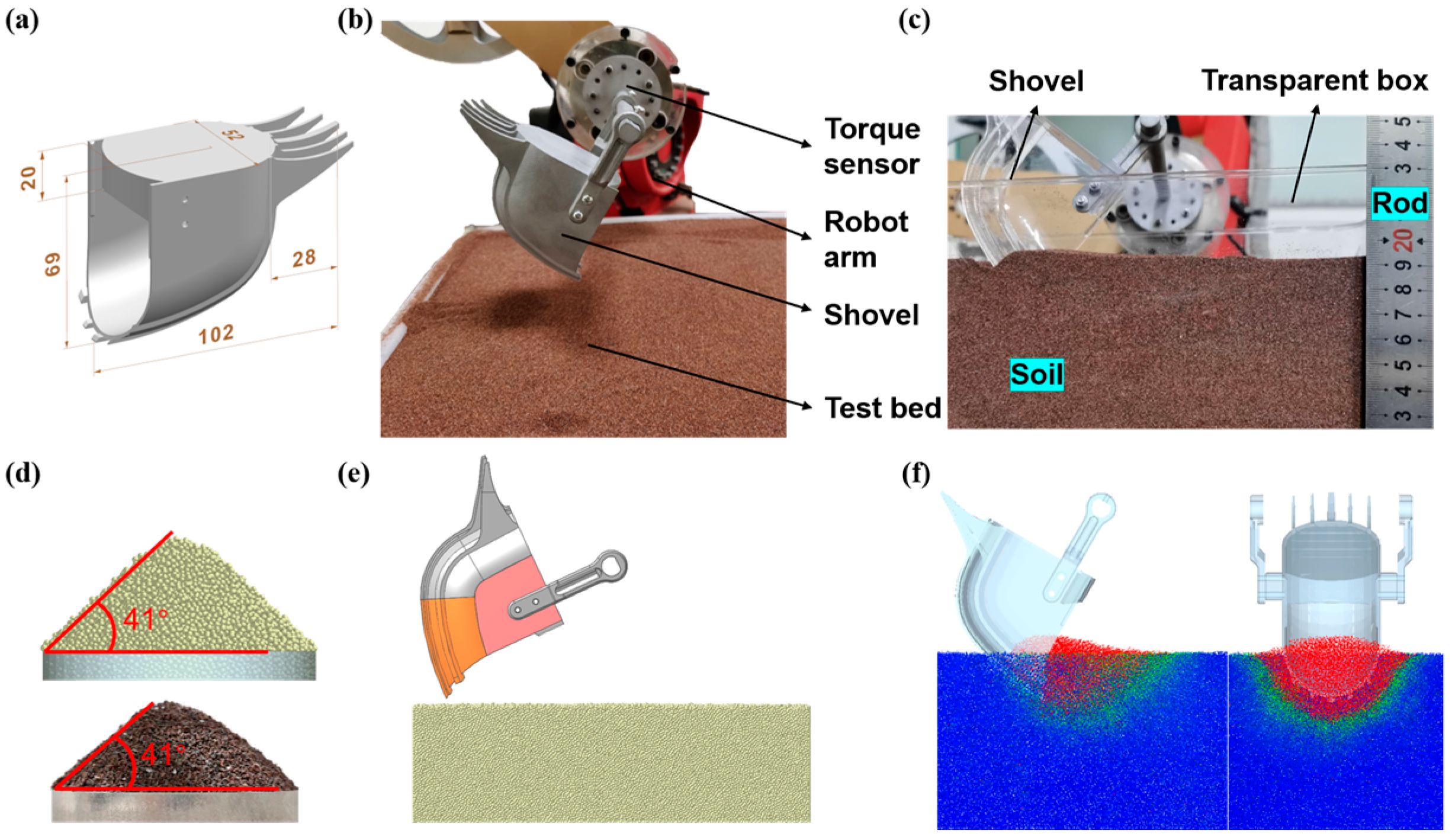
2.1. Geometric Definition of the Sampling Scoop and Test Configuration
2.2. Numerical Configuration for Force Validation
3. Analytical Modeling of Excavation Forces for Scoop Tool
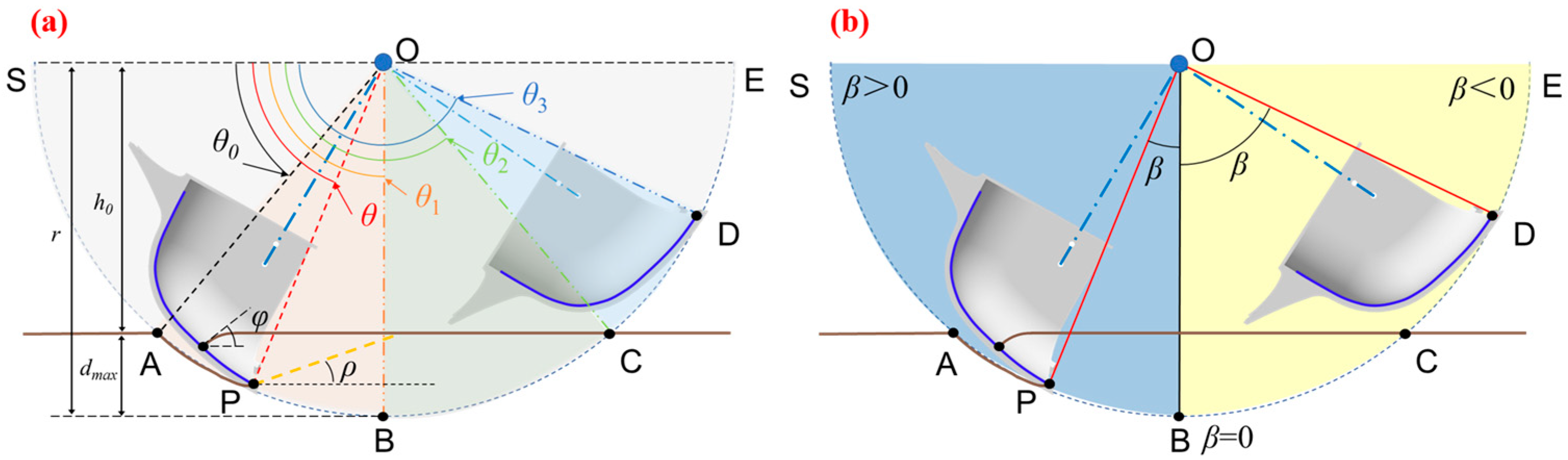
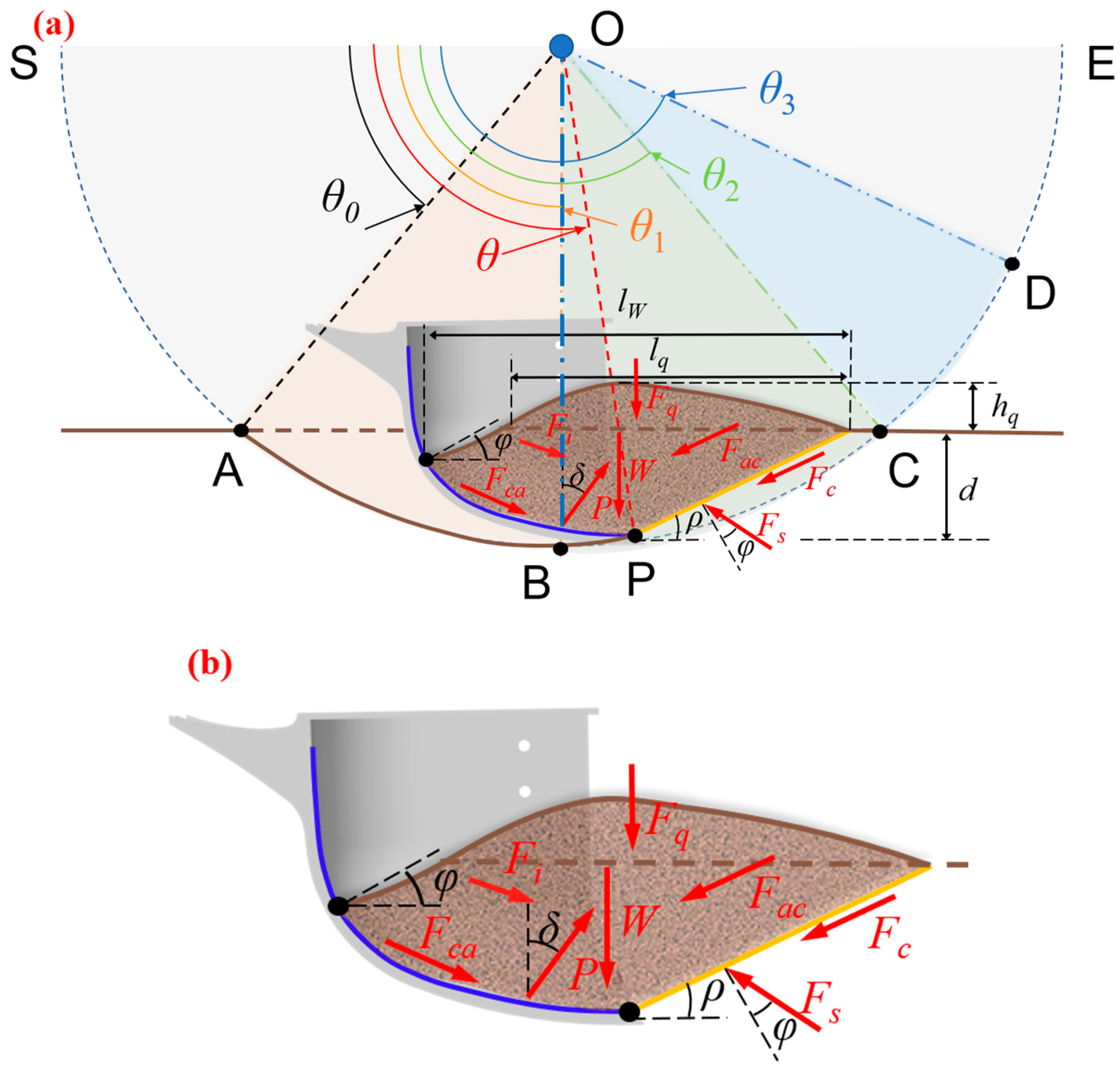
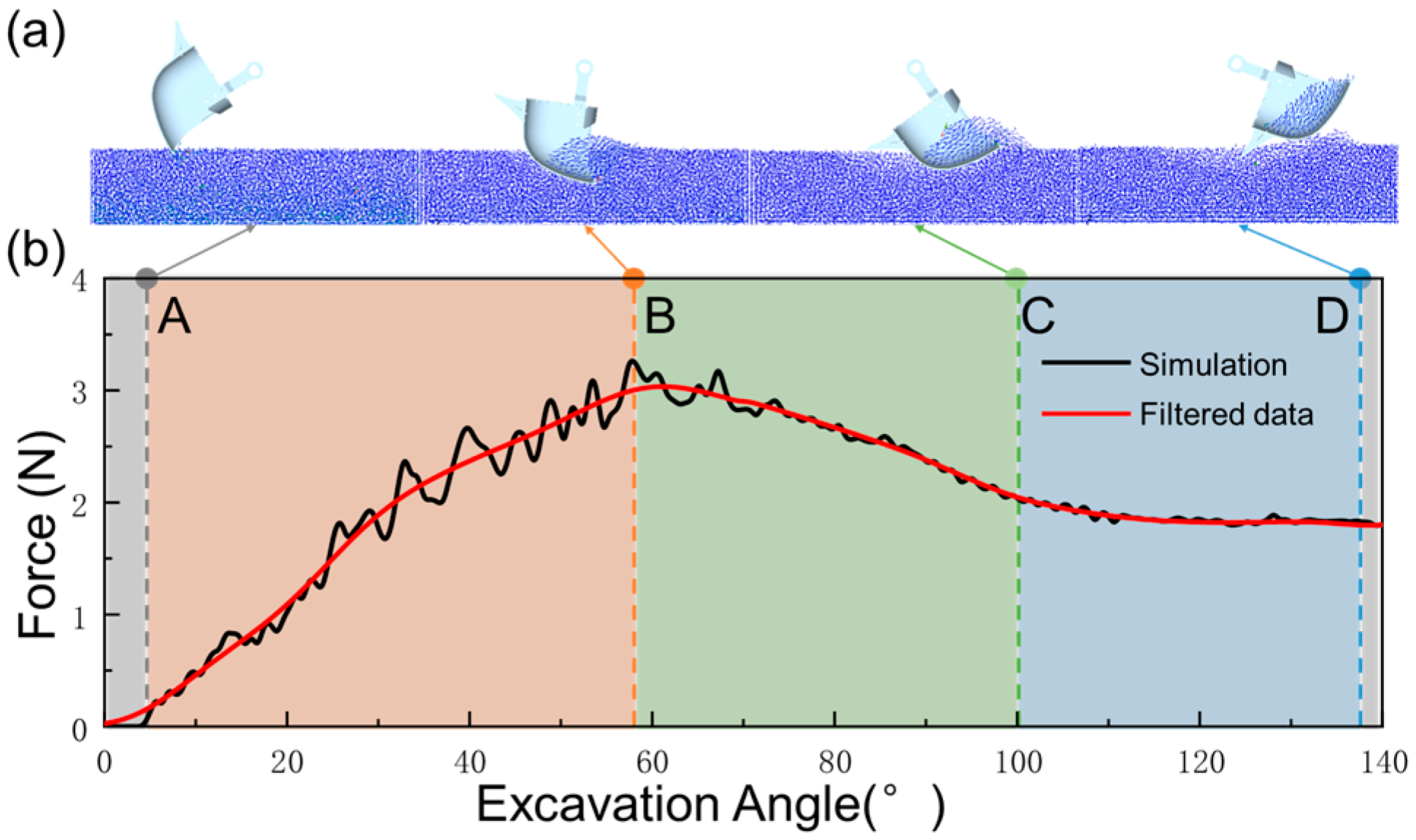
3.1. Analysis of Excavation Process
3.2. Forces Acting on the Idealized Failure Wedge
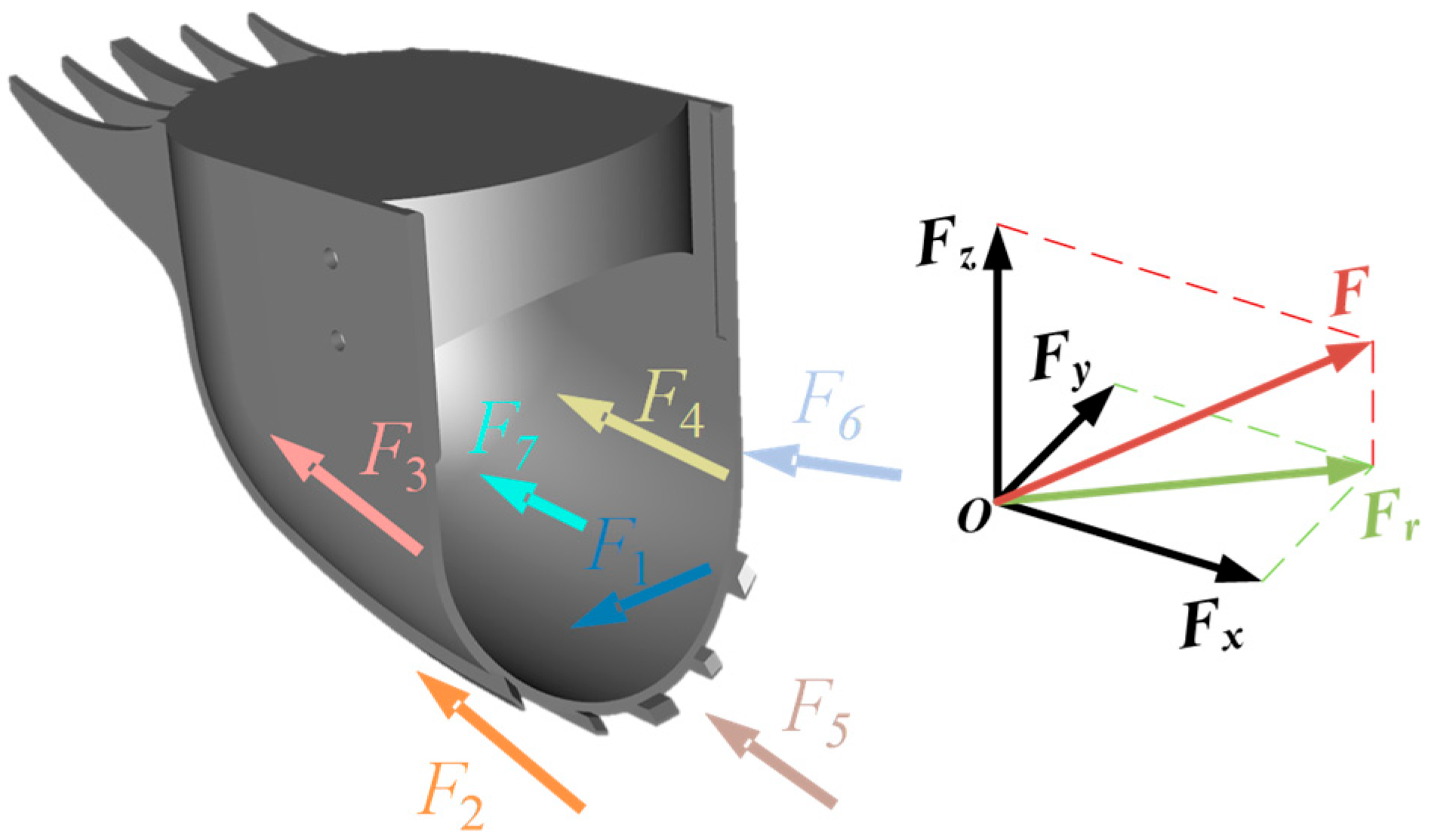
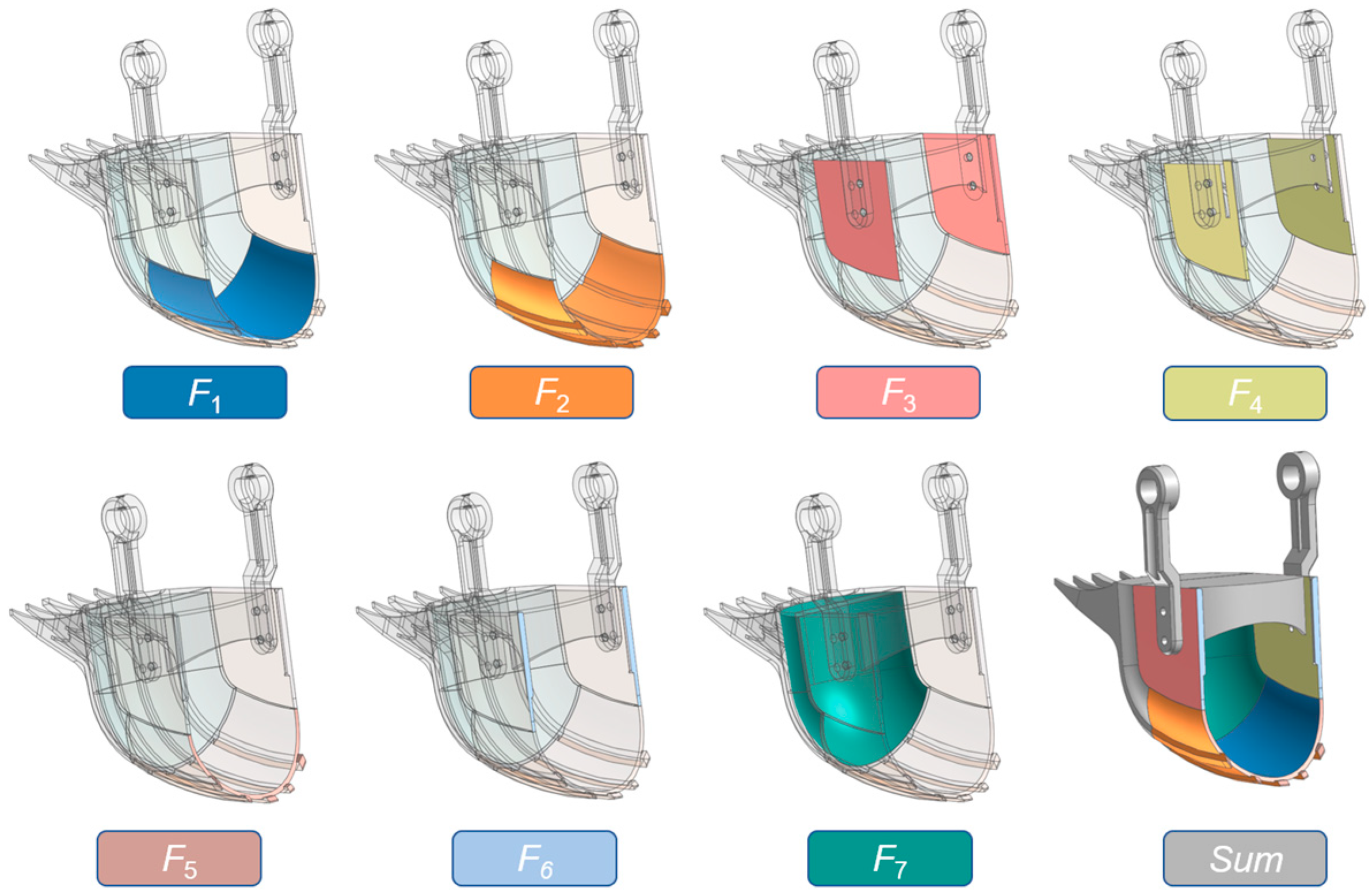
3.3. Forces and Moments Acting on Sampler

| Symbol | Definition | Symbol | Definition |
|---|---|---|---|
| Fac | Passive earth pressure | βtip | Angular position of the scoop tip |
| Fq | Radial force | βsurf | Surface boundary angle |
| Fs | Vertical force | βtail | Theoretical scoop-tail angle |
| Fc | Forward force | βlag | Lag angle when the back plate starts to bear load |
| Fca | Lateral force | βend | Terminal angle at full scoop engagement |
| W | Weight of soil inside the scoop | βs | |
| Fi | Shear force on the inner surface of the sidewall | βe | |
| P | Passive earth pressure | βoc | Effective contact cut-off angle on the outer surface |
| Fr | Radial force | βi1 | |
| Fz | Vertical force | βi2 | |
| Fx | Forward force | ri1 | |
| Fy | Lateral force | ri2 | |
| F1 | Force acting on the inner bottom surface of the scoop | βo1 | |
| F2 | Force acting on the outer bottom surface of the scoop | βo2 | |
| F3 | Force acting on the outer surface of the scoop sidewall | ro1 | |
| F4 | Force acting on the inner surface of the scoop sidewall | ro2 | |
| F5 | Force acting on the front cutting edge | re1 | Radius at the intersection of the side plate and the soil surface |
| F6 | Force acting on the sidewall edge | re2 | Outermost edge of the side plate |
| F7 | Force acting on the inner rear surface of the scoop | ηs | Effective contact coefficient |
| Fsum | Resultant force acting on the scoop | Vq | Soil wedge volume |
| M | Resultant moment about the scoop rotation axis | Sq | Area of the soil heap |
| τca(r,α) | Shear stress | hq | Height of the soil heap |
| τca,max | Maximum shear stress | wq | Width of the soil heap |
| τoc(β) | Outer-surface shear stress | lq | Length of the soil heap |
| σoc(β) | Outer-surface normal stress | koc | Contact correction coefficient for the outer bottom surface |
| σec | Normal stress at the front cutting edge | kc | Soil cohesion modulus |
| j | Shear displacement | kϕ | Soil friction modulus |
| ka | Shear deformation modulus | n | Sinkage exponent |
| σ | Normal stress | dmax | Maximum excavation depth |
| τ | Shear stress | koc | Contact correction coefficient |
4. Results and Model Validation
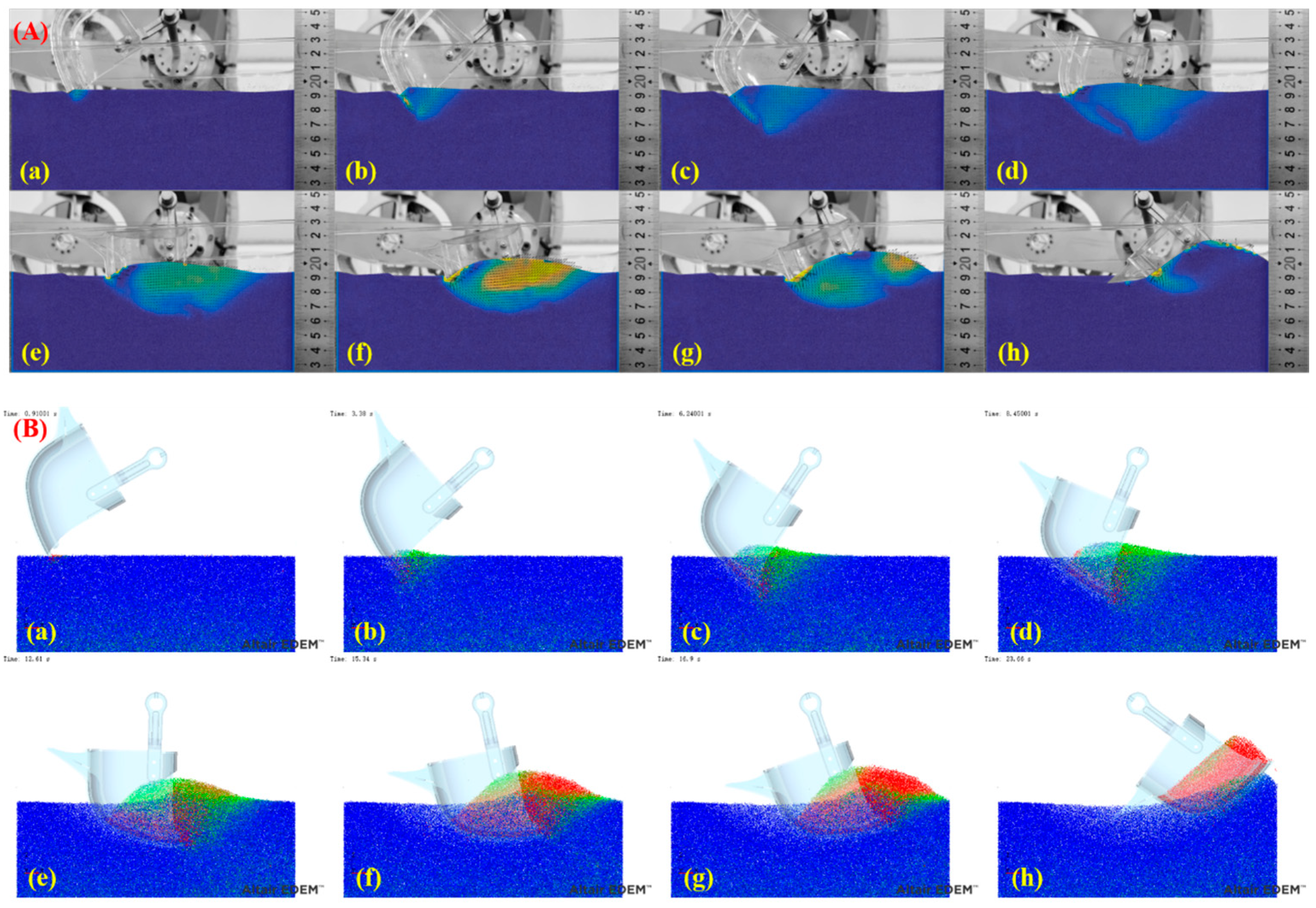
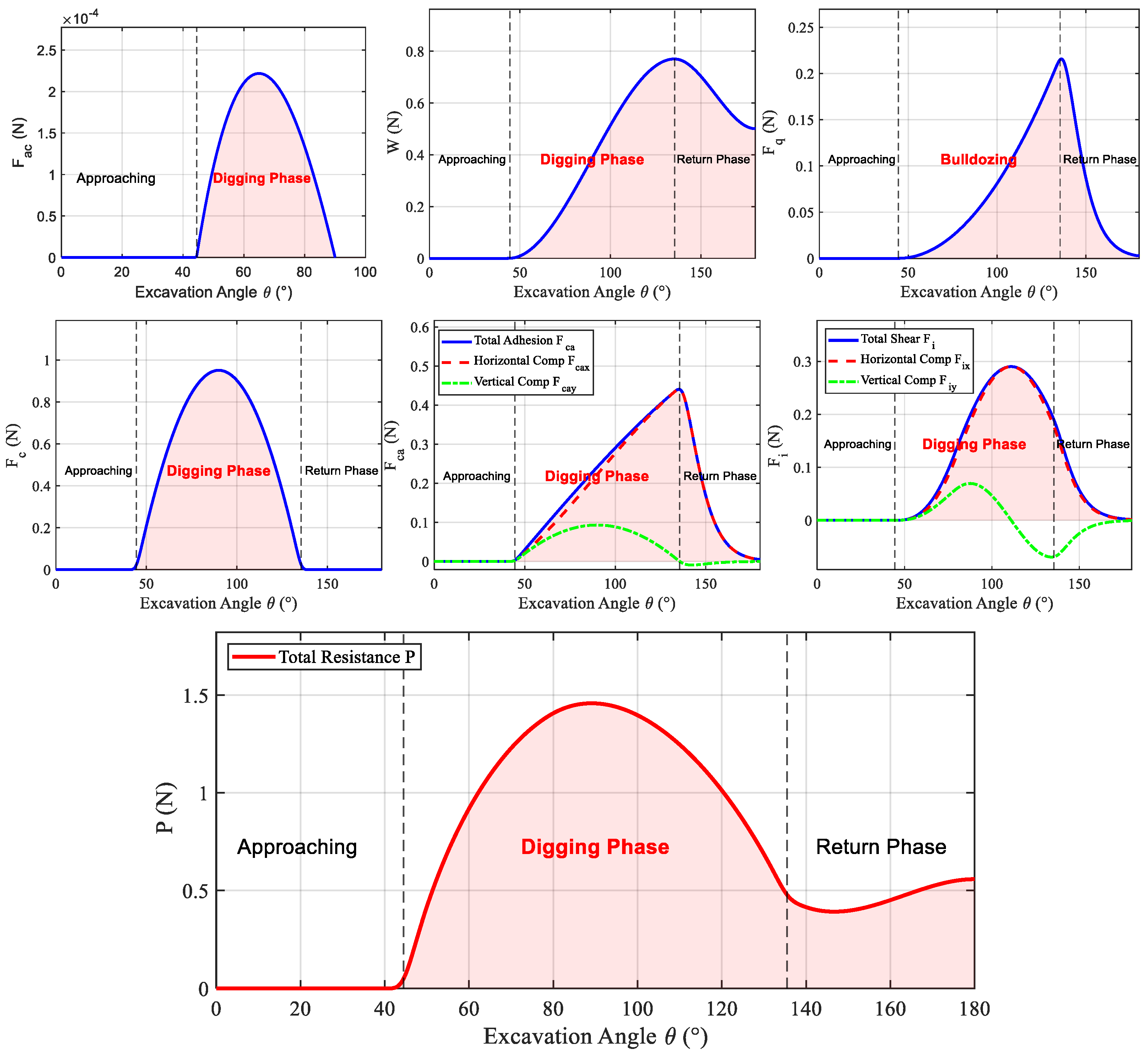
4.1. Analysis of Excavation Response
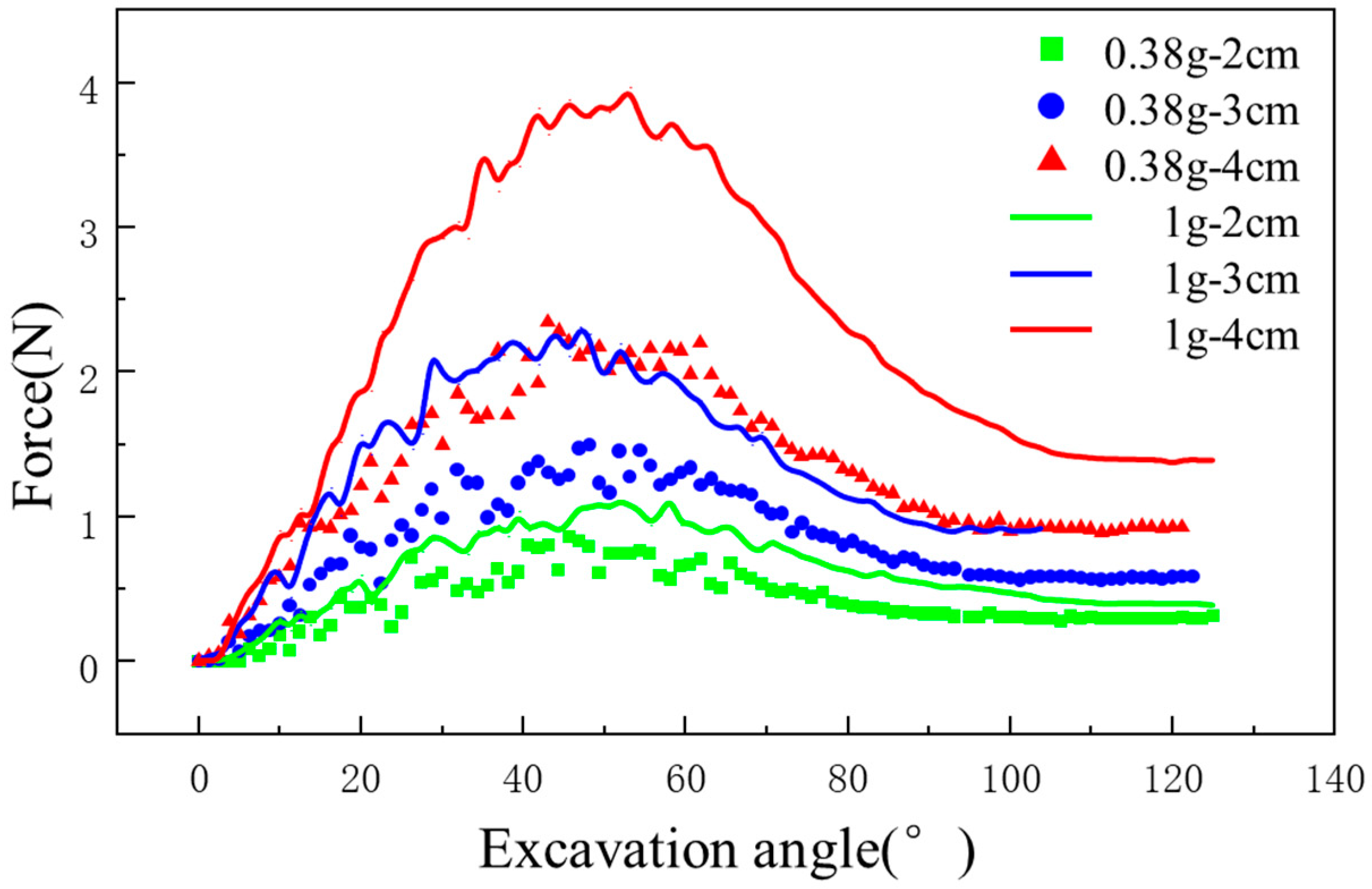
4.2. Analysis of Influencing Factors of the Excavation Model
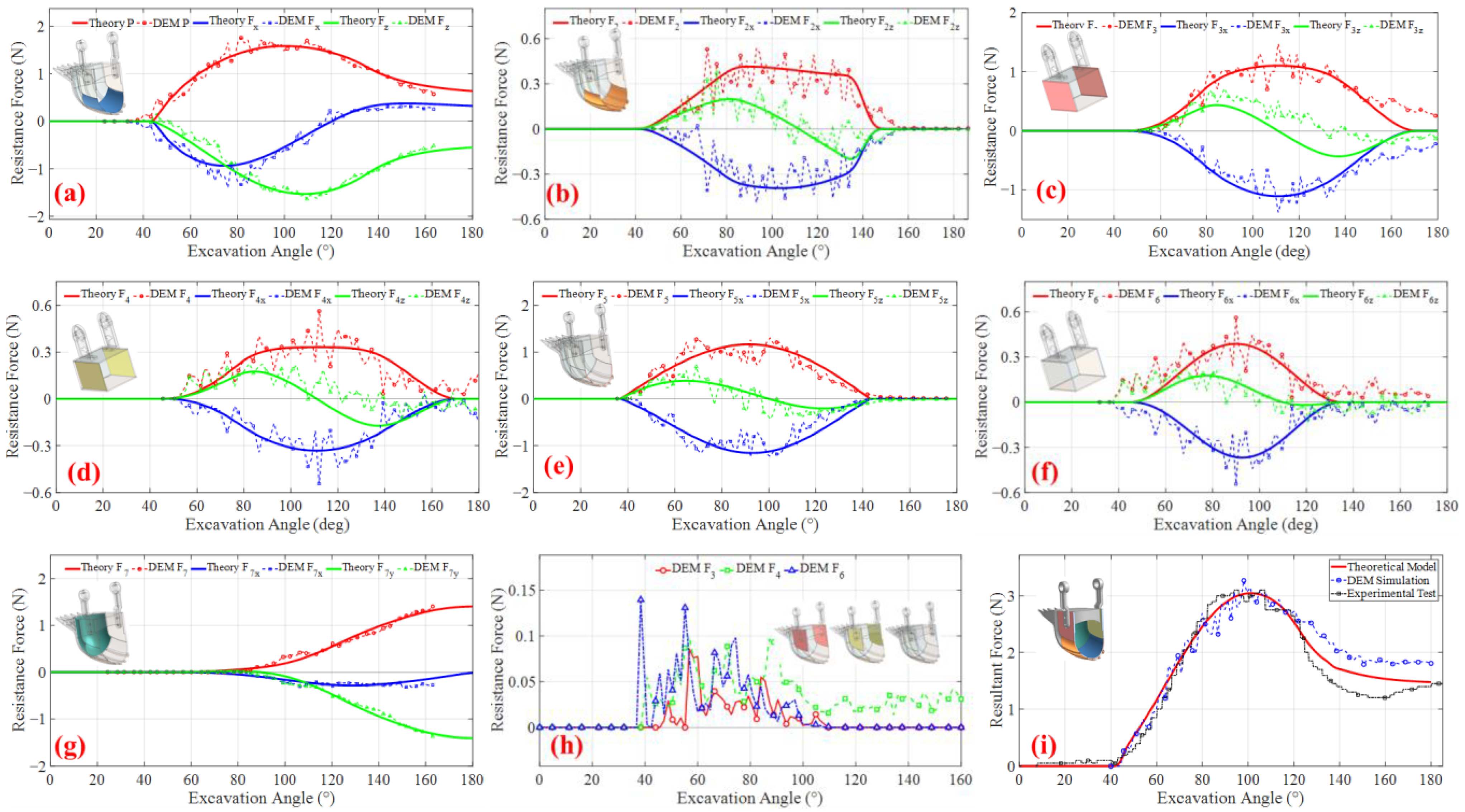
4.3. Simulation Validation of Model Reliability
5. Discussion
- (1)
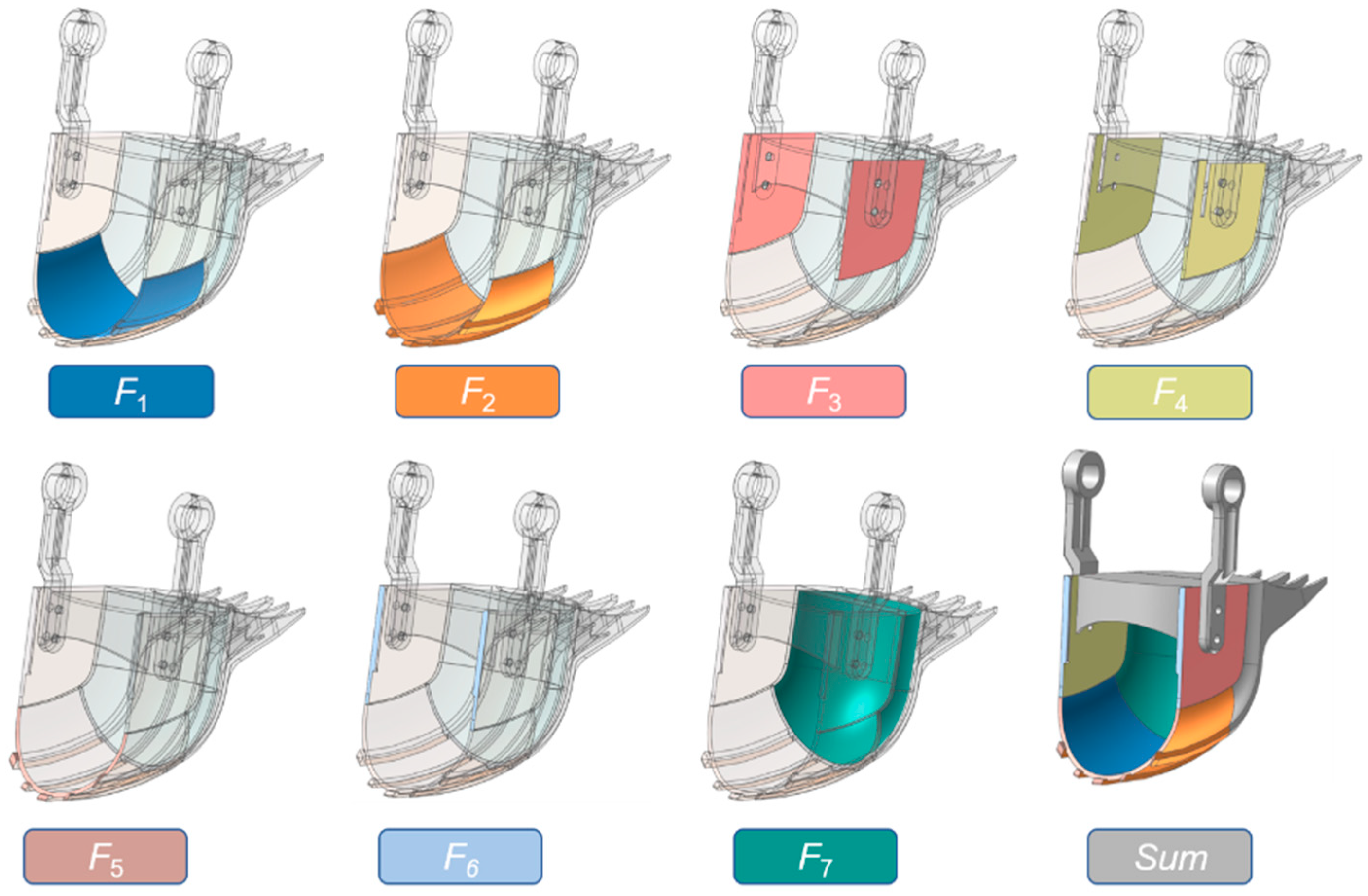
- Structure-resolved force decomposition and enhanced interpretability. Many existing studies validate excavation models only at the level of the resultant force/torque, making it difficult to mechanistically verify the rationality of load contributions from different structural faces. This limits the interpretability of such models for structural optimization and load-path analysis. In this work, the sampling scoop is explicitly considered, and the total excavation resistance is decomposed into seven physically interpretable components associated with different structural surfaces (denoted as F1–F7). Analytical expressions for each component are derived within a unified soil-wedge failure and interface friction framework. As a result, the model provides not only the resultant force/torque but also the quantitative contributions of the structure-resolved components, which directly supports design optimization and load-path interpretation.
- (2)
- Component-wise verification enabled by DEM–MBD coupling. Unlike conventional validations that compare only the resultant resistance, we further integrate DEM–MBD coupled simulations. Under the same operating conditions and kinematics as the ground tests, the contact reactions on individual scoop surfaces are extracted and compared component-by-component with the theoretical predictions of F1–F7, forming a closed-loop verification at the force-component level (while still validating the resultant force/torque). This strategy provides more direct evidence for the physical meaning and correctness of the modelling assumptions and decomposition, and offers traceable and quantifiable load information for subsequent structural parameter optimization.
- (3)
- Identification of a critical load component: F5 should not be neglected. The component-wise comparison indicates that the force acting on the cutting-edge/front rim, F5, contributes approximately 30% of the total resistance. In some existing formulations, this contribution is either neglected or lumped into other terms. Our results demonstrate that F5 is a non-negligible component, particularly during the penetration–cutting phase where cutting-edge interaction dominates. Neglecting F5 can underestimate the peak resistance and its evolution, thereby affecting strength design and operating-condition identification.
- (4)
- Introduction of F7 to describe late-stage excavation response. To explain the load evolution in the late stage of excavation (lifting–breakout), we introduce and formulate the F7 component to represent the interaction associated with the rear structural surface and the soil/collected material. This provides a theoretical basis for interpreting the residual/plateau response during breakout and improves the completeness and stage-wise applicability of the model across the entire excavation process.
6. Conclusions
Author Contributions
Funding
Institutional Review Board Statement
Informed Consent Statement
Data Availability Statement
Acknowledgments
Conflicts of Interest
References
- Blouin, S.; Hemami, A.; Lipsett, M. Review of Resistive Force Models for Earthmoving Processes. J. Aerosp. Eng. 2001, 14, 102–111. [Google Scholar] [CrossRef]
- Jin, S.; Cao, H.; Deng, X.; Zheng, Y.; Xue, L.; Zou, M. Establishment of Lunar Soil Excavation Model and Experimental Simulation Study. Aerospace 2025, 12, 315. [Google Scholar] [CrossRef]
- Li, Z.; Sun, W.; Wang, H.; Wang, J.; Simionescu, P.A. Study on the Process of Soil Clod Removal and Potato Damage in the Front Harvesting Device of Potato Combine Harvester. Agriculture 2024, 14, 1947. [Google Scholar] [CrossRef]
- Zhu, Y.; Wang, W.; Xu, Z.; Chen, J.; Zhang, J. Hydro-Mechanical Numerical Analysis of a Double-Wall Deep Excavation in a Multi-Aquifer Strata Considering Soil–Structure Interaction. Buildings 2025, 15, 989. [Google Scholar] [CrossRef]
- Sedara, A.; Zeng, Z.; Digman, M.; Timm, A. Optimization of Liquid Manure Injector Designs for Cover Crop Systems Using Discrete Element Modeling and Soil Bin Evaluation. AgriEngineering 2025, 7, 404. [Google Scholar] [CrossRef]
- Salem, T.N.; Elmahdy, M.S.; Katunský, D.; Dolníková, E.; El Ela, A.A. Numerical Investigation of Seismic Soil–Structure–Excavation Interaction in Sand. Buildings 2025, 15, 3732. [Google Scholar] [CrossRef]
- Wilkinson, A.; DeGennaro, A. Digging and pushing lunar regolith: Classical soil mechanics and the forces needed for excavation and traction. J. Terramech. 2007, 44, 133–152. [Google Scholar] [CrossRef]
- Osman, M.S. The mechanics of soil cutting blades. J. Agric. Eng. Res. 1964, 9, 313–328. [Google Scholar]
- Gill, W.R.; Berg, G.E.V. Soil dynamics in tillage and traction. In Agriculture handbook; US Department of Agriculture: Washington, DC, USA, 1967; Available online: https://acsess.onlinelibrary.wiley.com/doi/10.2136/sssaj1968.03615995003200030005x (accessed on 3 February 2026).
- Swick, W.C.; Perumpral, J.V. A model for predicting soil-tool interaction. J. Terramech. 1988, 25, 43–56. [Google Scholar] [CrossRef]
- McKyes, E. Soil Cutting and Tillage; Elsevier: Amsterdam, The Netherlands, 1985. [Google Scholar]
- Hemami, A.; Goulet, S.; Aubertin, M. Resistance of particulate media to excavation: Application to bucket loading. Int. J. Surf. Min. Reclam. Environ. 1994, 8, 125–129. [Google Scholar] [CrossRef]
- Balovnev, V.I.; Datta, P.; Pandit, V.S. New Methods for Calculating Resistance to Cutting of Soil; Amerind Publishing Private Limited: New Delhi, India, 1983. [Google Scholar]
- Shaw, A.; Arvidson, R.E.; Bonitz, R.; Carsten, J.; Keller, H.U.; Lemmon, M.T.; Mellon, M.T.; Robinson, M.; Trebi-Ollennu, A. Phoenix soil physical properties investigation. J. Geophys. Res. Planets 2009, 114. [Google Scholar] [CrossRef]
- Xi, B.; Jiang, M.; Cui, L.; Liu, J.; Lei, H. Experimental verification on analytical models of lunar excavation. J. Terramech. 2019, 83, 1–13. [Google Scholar] [CrossRef]
- Catanoso, D.; Stucky, T.; Case, J.; Rogg, A. Analysis of Sample Acquisition Dynamics Using Discrete Element Method. In Proceedings of the 2020 IEEE Aerospace Conference, Big Sky, MT, USA, 7–14 March 2020; pp. 1–11. [Google Scholar]
- Xi, B.; Jiang, M.; Cui, L. 3D DEM analysis of soil excavation test on lunar regolith simulant. Granul. Matter 2020, 23, 1. [Google Scholar] [CrossRef]
- Xue, L.; Chen, B.; Zhao, Z.; Dang, Z.; Zou, M. Experimental Study of Torque Using a Small Scoop on the Lunar Surface. Int. J. Aerosp. Eng. 2016, 2016, 8035456. [Google Scholar] [CrossRef]
- Abdeldayem, M.A.A.; Tekeste, M.Z. Simulation of cohesive-frictional artificial soil-to-blade interactions using an elasto-plastic discrete element model with stress-dependent cohesion. J. Terramech. 2025, 117, 101029. [Google Scholar] [CrossRef]
- Narayanan, A.; Bhojne, S. Construction Equipment’s Bucket Design Based on Soil-Tool Interaction-Analytical and DEM Approach; SAE International: Warrendale, PA, USA, 2017. [Google Scholar]
- Mori, D.; Ishigami, G. Excavation model of soil sampling device based on particle image velocimetry. J. Terramech. 2015, 62, 19–29. [Google Scholar] [CrossRef]
- Olmedo, N.A.; Barczyk, M.; Lipsett, M.G. An improved terramechanics model for a robotic soil surface sampler. J. Terramech. 2020, 91, 257–271. [Google Scholar] [CrossRef]
- Jaky, J. The coefficient of earth pressure at rest. J. Soc. Hung. Archit. Eng. 1944, 78, 355–358. [Google Scholar]





| Symbol | Definition | Unit | Value |
|---|---|---|---|
| Tool | |||
| w | Tool width | m | 0.052 |
| l | Tool length | m | 0.05 |
| t | Tool thickness | m | 0.0015 |
| Soil | |||
| c | Cohesion | kPa | 0–3.5 |
| φ | Internal friction angle | ° | 20–50 |
| γ | Soil specific mass | kg/m3 | 1–3 × 10³ |
| Tool-Soil | |||
| δ | External friction angle | ° | 0–50 |
| ca | adhesion | kPa | 0–5 |
| Test | |||
| h0 | Height of rotation axis above ground | m | 0.04–0.1 |
| r | Excavation radius | m | 0.1 |
| θ | Excavation angle | ° | 0–180 |
| β | Effective mechanical angle | ° | β = π/2 − θ |
| d | Tool excavation depth | m | 0–0.05 |
| ω | Tool excavation angular velocity | °/s | 1–10 |
| ρ | Failure surface angle | ° | π/4 + φ/2 |
| q | Surcharge load | kg/m2 | 0–100 |
| K0 | Coefficient of earth pressure at rest | - | 1 − sinφ |
| Gravity | |||
| g | Earth gravity | m/s2 | 9.81 |
| Mars gravity | m/s2 | 3.71 |
Disclaimer/Publisher’s Note: The statements, opinions and data contained in all publications are solely those of the individual author(s) and contributor(s) and not of MDPI and/or the editor(s). MDPI and/or the editor(s) disclaim responsibility for any injury to people or property resulting from any ideas, methods, instructions or products referred to in the content. |
© 2026 by the authors. Licensee MDPI, Basel, Switzerland. This article is an open access article distributed under the terms and conditions of the Creative Commons Attribution (CC BY) license.
Share and Cite
Cao, H.; Xie, H.; Pan, D.; Qi, Y.; Richter, L.; Shen, Y.; Zou, M. An Analytical Modeling Framework for Martian Soil—Sampling Scoop Interaction with Numerical Validation. Aerospace 2026, 13, 237. https://doi.org/10.3390/aerospace13030237
Cao H, Xie H, Pan D, Qi Y, Richter L, Shen Y, Zou M. An Analytical Modeling Framework for Martian Soil—Sampling Scoop Interaction with Numerical Validation. Aerospace. 2026; 13(3):237. https://doi.org/10.3390/aerospace13030237
Chicago/Turabian StyleCao, Hongtao, Haoran Xie, Dong Pan, Yingchun Qi, Lutz Richter, Yan Shen, and Meng Zou. 2026. "An Analytical Modeling Framework for Martian Soil—Sampling Scoop Interaction with Numerical Validation" Aerospace 13, no. 3: 237. https://doi.org/10.3390/aerospace13030237
APA StyleCao, H., Xie, H., Pan, D., Qi, Y., Richter, L., Shen, Y., & Zou, M. (2026). An Analytical Modeling Framework for Martian Soil—Sampling Scoop Interaction with Numerical Validation. Aerospace, 13(3), 237. https://doi.org/10.3390/aerospace13030237