


Abstract
With the development of the deep space exploration missions, performing in-orbit experiments with small mammals to investigate the effects of microgravity and cosmic radiation on mammalian life becomes increasingly important. In this study, a small mammal husbandry and life support system for small mammal life support in the microgravity environment of space stations has been developed. The system consists of small mammal feeding device, mouse experiment unit, environmental control module and upward/downward life support devices. The system combines gas circulation, dynamic oxygen source, exhaust gas absorption, temperature and humidity control and the on-board monitoring of several parameters into a closed loop control system and a hermetic system. The circulation in the system is uniform, and there is an excellent gas exchange performance within the system in closed environment, which was verified by computational fluid dynamics numerical simulation of gas distribution and exhaust gas purification. The system can protect samples during transportation by using flexible packaging and cushioning structure. The system can satisfy the requirements of oxygen, food and water supply to ensure the feeding of mice throughout their life cycle in space. The research results lay a foundation for the development of deep-space life support system and long-term mammalian experiments in space stations.
1. Introduction
The knowledge of organisms coping with life in space is being accumulated through research on space environmental effects on living organisms as mankind beings to explore space [1]. This, in turn, will contribute to establishing life support bases in the extraterrestrial environment, the health protection system for the astronauts for deep space exploration, and the lunar bases or Mars colonies of the future [2]. The mouse is the most primary experimental mammal used in space biology. That’s owing to they are relatively free from the interference of microorganisms and parasites, easy to culture from development, have genetic similarities to humans, and exhibit development processes with human physiological and biochemical characteristics. Since the 1950s, the United States, Italy, Japan, and the former Soviet Union have studied rodents in space biology experiments. The systems studied have included skeletal [3,4,5], muscular [6], nervous [7], cardiovascular [8], and immune [9,10,11]. For example, in 1999, the International Space Station recorded data related to how the space environment affects the physiology and behavior of animals [12,13]. Furthermore, the Russian Bion satellite program has conducted many mammalian studies [14,15]. The Bion-M No. 2 mission, which was successfully completed in 2025, aimed to investigate the effects of high-intensity cosmic radiation and microgravity on biological organisms, with 75 rodents onboard [16]. Previous spaceflight missions have also revealed the vulnerability of biological experiments to life support system failures. For example, during the Foton-M No. 4 mission, malfunctions in the life support system led to the failure of multiple biological experiments, highlighting the critical need for reliable and robust environmental control and life support technologies in space [17]. To better understand microgravity’s effects on animal growth, immune responses, and osteoporosis, mice are used as model organisms. Currently, China’s space station (CSS) functions as a long-term orbiting experimental platform. It features specialized facilities like the Life Ecology Experiment Cabinet and the Biotechnology Experiment Cabinet, offering a top-tier scientific platform for plants, microorganisms, zebrafish, and fruit flies [18,19]. However, the lack of a mammalian experimental platform limits research involving rodents and other mammals, creating a gap in China’s life science research.
This research aims to facilitate life science experiments on mice in space by designing and building a new life support system for mammals, along with upstream and downstream transport devices. It ultimately advances China’s space life science research by creatively proposing two major module systems: gas circulation and waste treatment. These systems are designed to ensure that experimental animals receive the necessary life support in space while also accurately and efficiently collecting key physiological data.
The task of transporting live animals for mammalian reproduction has been successfully completed on the Chinese Space Station. Currently, the Tianzhou cargo spacecraft is intended to transport mammalian payloads and deliver them to the CSS Wentian experimental module aboard the Shenzhou manned spacecraft [20,21]. To ensure the successful transportation, space survival experiments, and post-mission studies of metabolically active organisms like mice, the experiment design incorporates two device modules: the Mouse Experimental Unit (MEU) and the Space Small Mammal Feeding Device (MFD), which serves as the experimental modules; and the Uplink Launch Life Support Device (ULSD-L) and the Downward Recovery Life Support Device (DLSD-R), acting as transportation modules.
The primary components of the MFD include the Mouse Experiment Unit (MEU) and the Environment Control Module (ECM). It is designed to collect experimental data and maintain vital signs during mouse space survival. It manages the overall gas circulation and life support systems. The gas circulation system supplies essential gases, such as oxygen, to the rodents through built-in oxygen cylinders and gas purification devices. Additionally, a purification and filtration system stops the buildup of waste gases and carbon dioxide inside the chamber. To maintain a suitable experimental environment, these modules and systems work in tandem. They ensure mice’s survival and the accuracy of experimental data by using gas sensors and other multi-parameter monitoring devices. In this work, verification includes numerical verification, ground-based functional verification of the gas purification subsystem, and on-orbit verification of the integrated device on the Chinese Space Station.
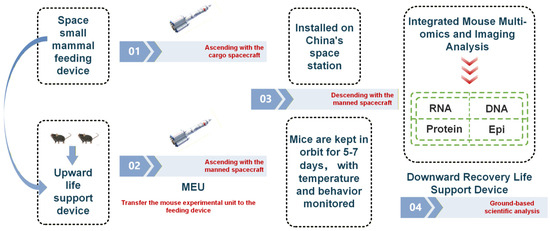
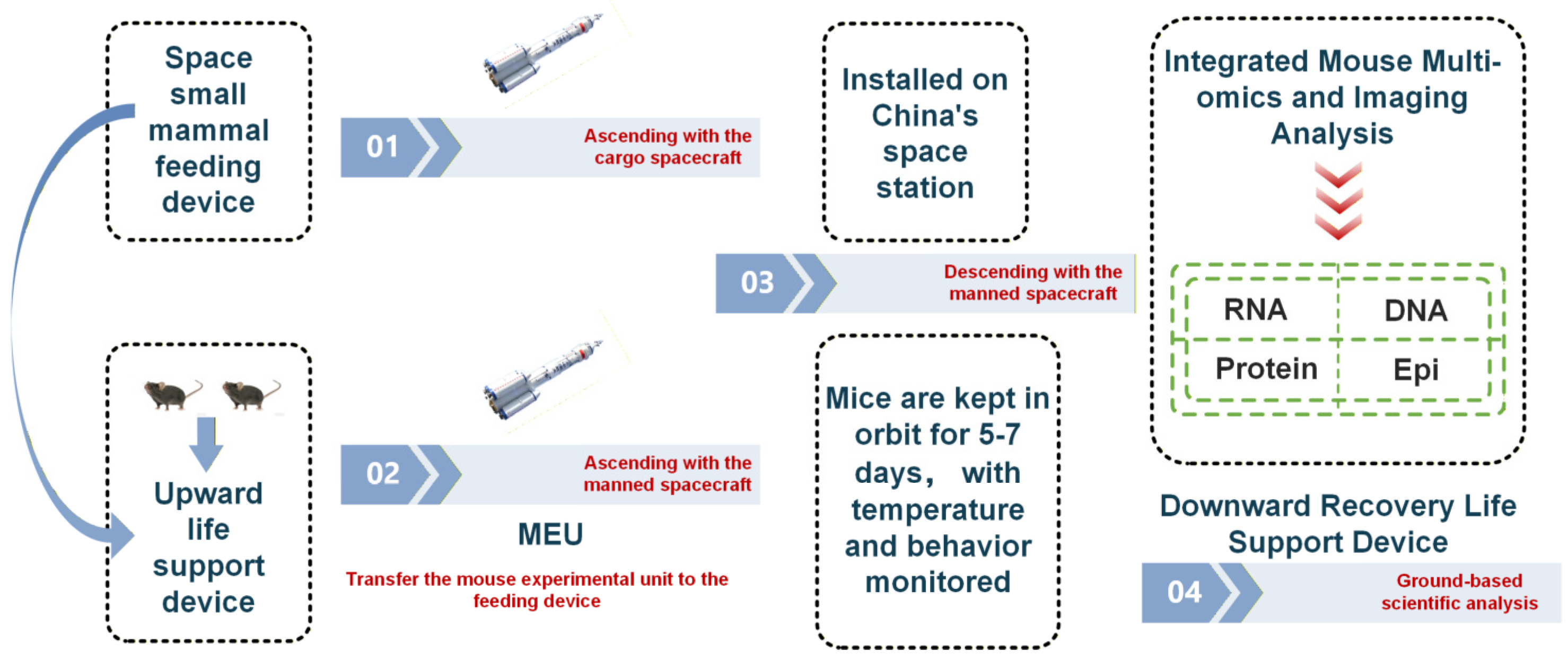
The mammalian animal experiment’s entire launch and transfer process is depicted in Figure 1. The MFD was transported to CSS and successfully operated in orbit and subsequently deployed on the application payload general support platform in the Wentian experimental module. Four C57BL mice, two of which are located in the mouse experiment unit (MEU), will be housed in an ascent life support device and launched to the space station on a crewed spacecraft. The mouse experimental units will be removed from the ascent life support device, installed, and secured on the MFD upon their arrival. The MEU will be disassembled and transferred to the MEU-R for returning to Earth aboard the crewed spacecraft after undergoing in-orbit flight cultivation. The experimental mice will be subjected to multi-omics analysis, imaging analysis, and brain microstructure imaging upon their arrival on the ground for scientific researches. ULSD-L and DLSD-R are used exclusively as transportation instruments in this experiment design, not as equipment for housing mammals on the space station. Consequently, the MFD, a device that is compatible with the Application Payload Support Platform for collaborative testing, will be launched to the space station as unpowered cargo aboard a cargo spacecraft. In the space station, flexible containers are used to store ULSD-L and DLSD-R. MEU supported in-orbit mouse husbandry for 14 days, exceeding the originally planned 5–7 days. The rodent research endeavor necessitates the return of live animals to the Earth for post-flight studies. Upon the conclusion of the feeding experiment, astronauts will be required to extract certain components of MEU and transfer the remaining unit, which contains the rodents, to DLSD-R. DLSD-R will subsequently return to Earth with the spacecraft, owing to resource constraints on the return capsule.
Figure 1.
The process of dispatch and transfer for mammalian animal habitation facilities.
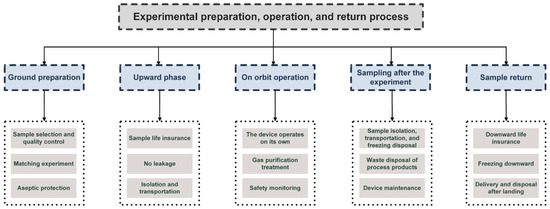
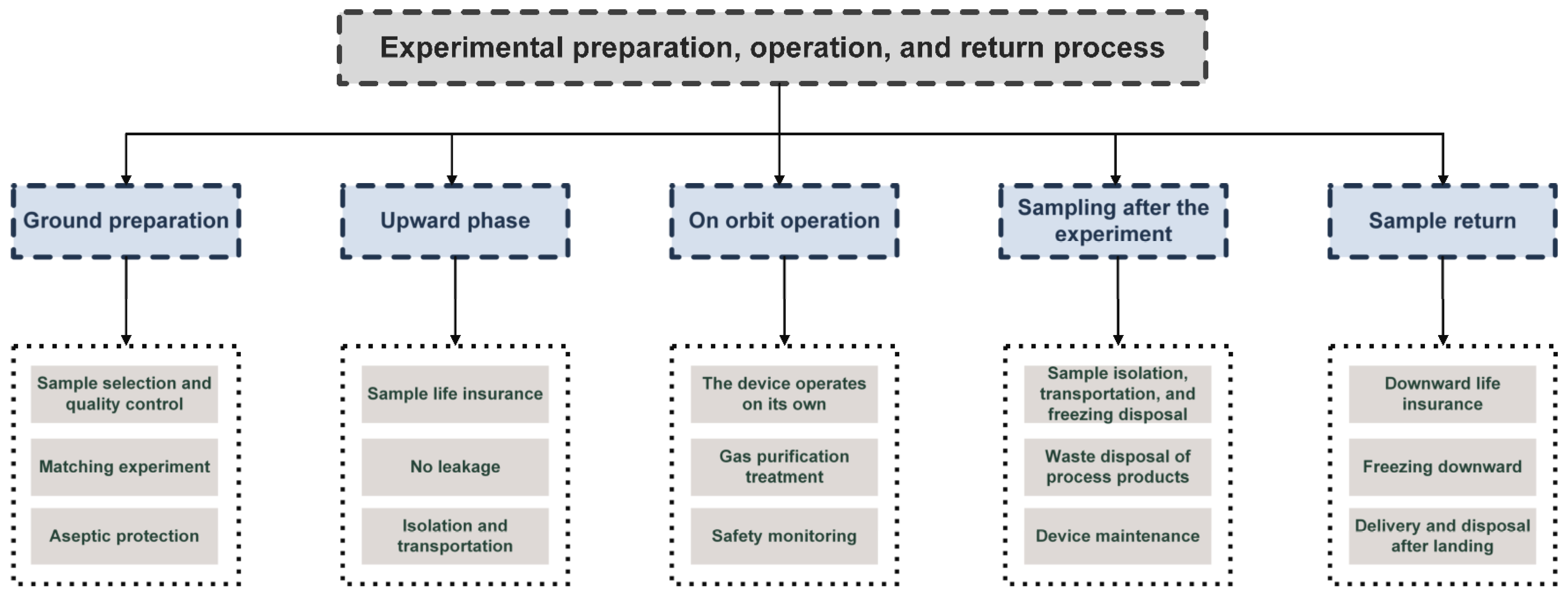
A standardized operational procedure that encompasses the entire process, from ground preparation to sample return, is illustrated in Figure 2. The main components of this system are as follows: sample selection and quality control, matching experiments that meet experimental conditions, biosafety protection, sample life support systems, sealed leak-proof isolation and transfer, automated experimental apparatus operation, gas purification treatment systems, real-time safety monitoring system, sample low-temperature isolation transfer and cryopreservation, harmless disposal of experimental byproducts, equipment maintenance and inspection procedures, downlink life support system, low-temperature storage and transportation chain, and ground terminal disposal. A comprehensive closed-loop management system is established by the division of the workflow into five primary phases: ground preparation, ascension transportation, in-orbit experiments, post-experiment sampling, and sample return. Through a multi-parameter real-time monitoring network, a stratified safety protection mechanism, and a highly automated operation platform, this system guarantees the safety of the experimental environment and the integrity of the samples.
Figure 2.
Sample processing and biosafety control system for the Earth return mission: a closed-loop workflow from ascent to return.
2. Materials and Methods
The primary task of the proposed system is to support short-term in-orbit survival and experimental operation of small mammals under microgravity conditions on a space station platform. The system is required to provide a stable and controllable environment, including oxygen supply, carbon dioxide removal, temperature and humidity regulation, and waste management, throughout the mission duration. The system design is subject to multiple constraints, including limited mass, volume, and power resources, compatibility with space station payload interfaces, sealed operation in a confined environment, and high reliability under autonomous operation with minimal crew intervention. In addition, the system must ensure biosafety and safe containment during launch, on-orbit operation, and return.
To address these requirements and constraints, a requirement-driven and modular design methodology was adopted. The system architecture integrates functional subsystems for gas circulation, environmental control, sensing, and control into a closed-loop life support device. Numerical simulations, particularly CFD analysis, were employed as a primary engineering tool to verify the feasibility of gas circulation and environmental regulation under microgravity conditions.
2.1. Specifications for the Design Parameters
The precise regulation of temperature and humidity, carbon dioxide emissions, and oxygen consumption is the foundation of life support systems in the confined environment of space. The fundamental respiratory requirements of living organisms are directly supported by the oxygen supply, as space stations lack natural gas exchange mechanisms. In the interim, the degradation of air quality and the potential hazard to life safety are both exacerbated by the impact of elevated carbon dioxide concentrations on metabolic processes. For example, biological experiments may be compromised if gas parameters are not monitored in real-time and dynamically adjusted within the experimental cabin. This can result in oxygen depletion and carbon dioxide accumulation exceeding safety thresholds within a short period, resulting in physiological dysfunction or even death of experimental animals. The reliability of scientific research tasks is thereby compromised [22]. Consequently, the development of an environmental control system with intelligent feedback regulation capabilities to reliably maintain gas concentrations and temperature/humidity within physiological tolerance ranges has become a critical technological foundation for the success of space science experiments.
We designed a compact mammalian housing system to maintain the habitats of the animals in space and the accuracy of the laboratory measures. To support system design with vital data, we conducted comprehensive calculations of oxygen consumption and carbon dioxide emissions from the apparatus based on mice’s metabolic needs. These data guided the sizing of oxygen cylinders and the performance specifications of carbon dioxide removal devices, ensuring oxygen and carbon dioxide levels stayed within safe limits during the 7–day mouse experiment. This helped maintain a stable environment for the animals. The MFD must respond immediately during the 7–day in-orbit mission to keep oxygen, humidity, carbon dioxide, and temperature within comfortable ranges for the animals. These factors were included in the design to ensure the space station’s animal habitat meets their physiological needs [23]. The comfort zone and allowable environmental bounds for mice (temperature, relative humidity, O2 and CO2 concentration) used as design inputs are summarized in Table 1, based primarily on the national standard GB 14925–2010 [24].
Table 1.
Atmosphere conditions to be maintained by MFD.
We selected mice from the C57BL strain for their stability and reproducibility in experiments [25]. We monitored metabolic data, including water and food intake, oxygen consumption, and carbon dioxide production, using a small animal energy metabolism system. This data provided a basis for system design and helped us manage gas supply and waste emission effectively during operations. These estimates served as important reference data for actual tasks, especially for verifying key parameters like oxygen consumption and water needs. During ground experiments, mice showed higher respiratory rates in both low-oxygen and high-carbon dioxide environments. Using this data, we designed modules capable of real-time regulation of oxygen levels and monitoring environmental parameters such as carbon dioxide.
We placed two 8–week-old female mice in the metabolic cages of the Oxymax-CLAMS-Oxymax Comprehensive Lab Animal Monitoring System (Columbus Instruments, LLC: Columbus, OH, USA), a small animal metabolic energy monitoring system, to conduct a 24-h non-invasive assessment of physiological and behavioral parameters [26]. The data show that the experimental subjects included two 6–week-old female C57BL mice tested over 24 h within the monitoring system. The study mainly measured the mice’s 24-h food and water intake, oxygen consumption, carbon dioxide production, and the respiratory exchange ratio of oxygen to carbon dioxide. The following data represent the test results. The mice’s daily food intake was 5–6 g, water intake was 5–6 g, and oxygen consumption was about 0.3 L higher than carbon dioxide output, with oxygen consumption around 2 L per day and carbon dioxide exhalation approximately 1.8 L per day. The data in the table are estimates based on the peak intake of mice during periods of elevated metabolic activity. The values shown in the table are derived from peak conditions rather than average values or the amount consumed solely to maintain vital signs. Table 2 provides a summary of the metabolic consumption of four mice over one week, based on monitoring data collected from metabolic cages. It details water, food, and oxygen intake, along with carbon dioxide emissions, respiration rates, and metabolic water produced from urine during this period. Table 2 presents the total demand and emission figures:
Table 2.
Cumulative life support volumes for 4 mice over a 7–day mission scenario used as a worst-case design guideline for MFD.
2.2. Mouse Experiment Unit Module
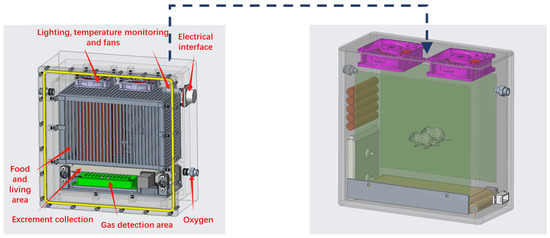
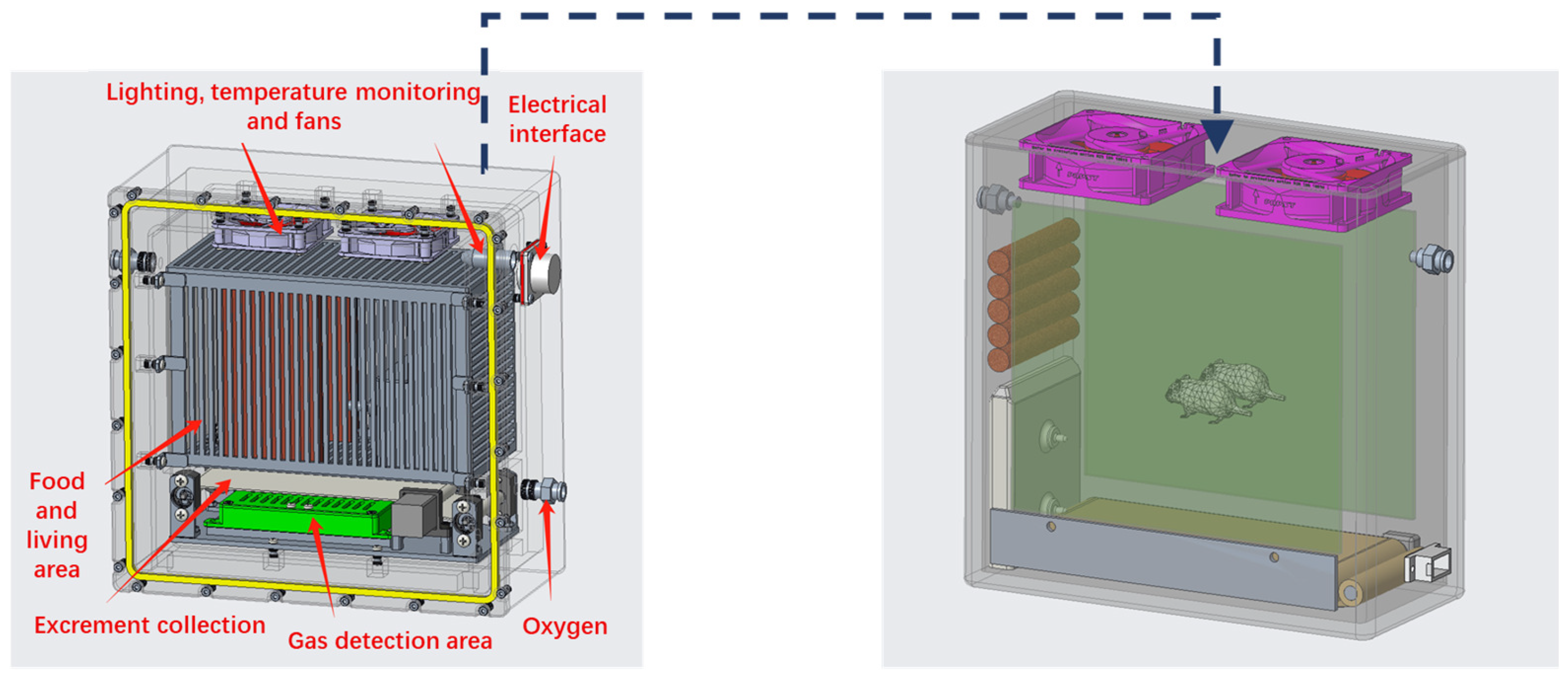
The Mouse Experiment Unit (MEU) provides a stable and controllable experimental environment. This confined biological experiment payload module is specifically designed for microgravity conditions. The main frame of the mouse living space in our device is shown in Figure 3. The mammalian housing system has gas inlets and outlets, lighting and temperature monitoring, camera for mouse behavior observation, gas detection, drinking water parts, mouse food and living space, and waste collection and dehumidification module. The whole unit is designed in drawer type to facilitate the animal handling and experimental operations. The MEU installs the waste collection module, which is driven by the fan to establish directed ventilation and transfer exhaust gas and waste to the gas purification and waste treatment module (ECM) of the life support subsystem (LSS). The life support system consists of independent functional subsystems, including gas circulation, oxygen supply, exhaust gas purification, environmental sensing, and control electronics, which are integrated through a modular architecture. The maintenance of an undisturbed environment and stable ambient conditions is imperative for experimental accuracy. The module installs dehumidification and high adhesion material to seal the waste, and uses air filtration method to separate solid-liquid.
Figure 3.
The schematic diagram of the structural design of the mouse experimental unit.
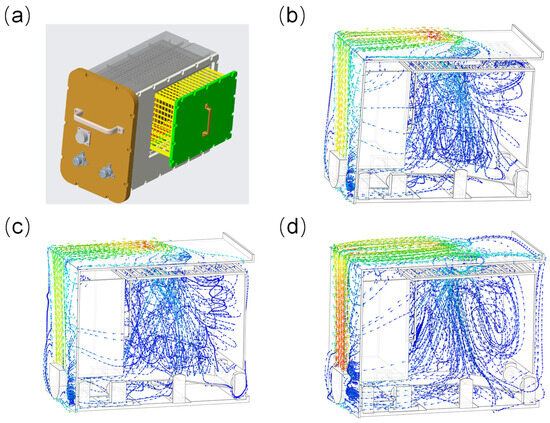
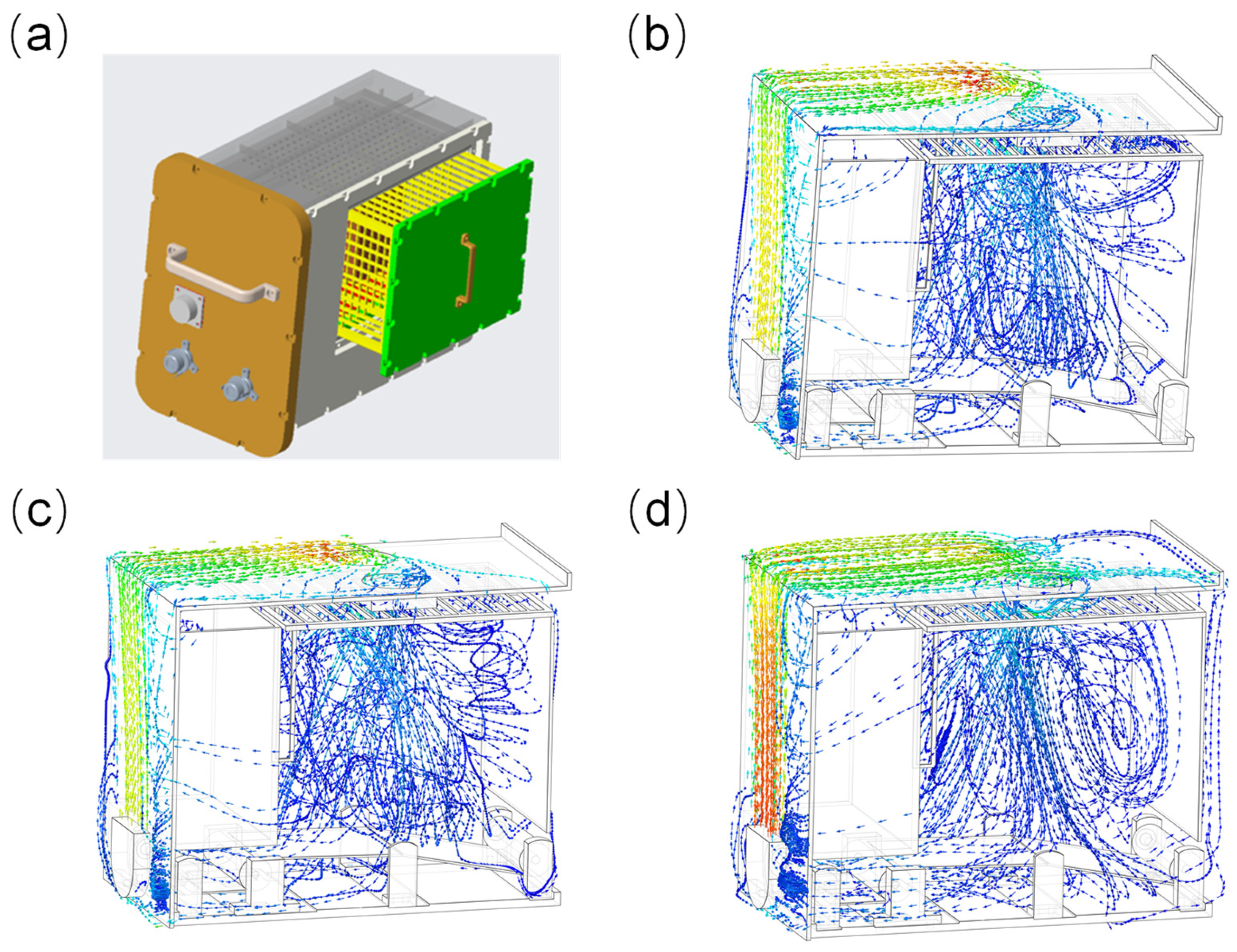
It is imperative to ensure the uninterrupted and reliable supply of medical gases, notably oxygen. Based on the research on the stability of spatial mouse life characteristics, the CFD method was used to simulate and analyze the airflow system of the mouse experimental unit (MEU) to verify the feasibility of the design scheme [27]. Four fans control the internal circulation loop of the inside air. The solid and liquid waste are transported to the excretion collection box when the airflow arrives at the excretion collection box from the fan to the mouse cage. The airflow distribution of the experimental unit is shown in Figure 4 (airflow simulation diagram). The diagram shows the direction, velocity and flow form of ventilation in different parts of the ventilation system, which can help to understand the stability and effectiveness of the ventilation system of the gas circulation system. The gas circulation performance of the mouse experimental unit (MEU) was studied by experimental methods and fluid dynamics simulation. The fan-driven airflow system can maintain an optimal oxygen level by establishing a stable laminar flow field (Reynolds number < 2300), as is shown in the experimental results [28]. The entire system is replaced in 2.3 ± 0.4 s, indicating that metabolic waste gases like CO2 are efficiently transported, outperforming traditional diffusion-based ventilation methods. This is verified by CFD simulations.
Figure 4.
CFD simulation input model and airflow streamline results under different fan derating factors: (a) input model; (b) derating factor = 1.0 (100% nominal operation); (c) derating factor = 0.85; (d) derating factor = 0.7.
The CFD model of the MEU ventilation system was established based on a four-fan symmetric layout. To evaluate robustness under fan performance degradation, three fan derating cases were simulated: derating factor = 1.0 (100% nominal operation), 0.85, and 0.7. As shown in Figure 4b, when the fan derating factor is 1.0 (100% nominal operation), the circulation loop provides the strongest momentum input and yields the most effective global gas exchange, with airflow penetrating the main cage region and minimizing low-velocity zones. In Figure 4c (derating factor = 0.85), the overall circulation pattern remains similar while peak velocities are reduced, indicating adequate ventilation coverage with improved flow uniformity. In contrast, Figure 4d (derating factor = 0.7) exhibits more pronounced large-scale recirculation and an increased proportion of low-velocity regions, suggesting a higher risk of local gas renewal insufficiency. There-fore, derating = 1.0 provides the best ventilation performance, and derating = 0.85 is recommended as a practical operating point with sufficient margin, while derating = 0.7 represents a conservative degraded-case scenario. Overall, derating = 0.85 maintains the ventilation topology while reducing localized high-velocity regions, which is beneficial for both environmental stability and animal comfort.
In the CFD simulations, the flow field is dominated by the momentum introduced by the circulation fans. Micro-acceleration effects were not explicitly included in the numerical model, as their contribution is negligible compared with the actively induced airflow for the present configuration. This modeling assumption is commonly adopted for engineering-level verification of gas circulation performance in spaceborne life support systems.
2.3. Space Small Mammal Feeding Device
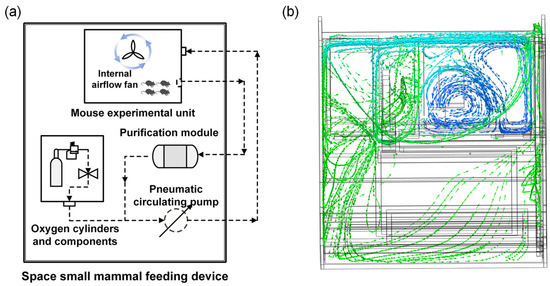
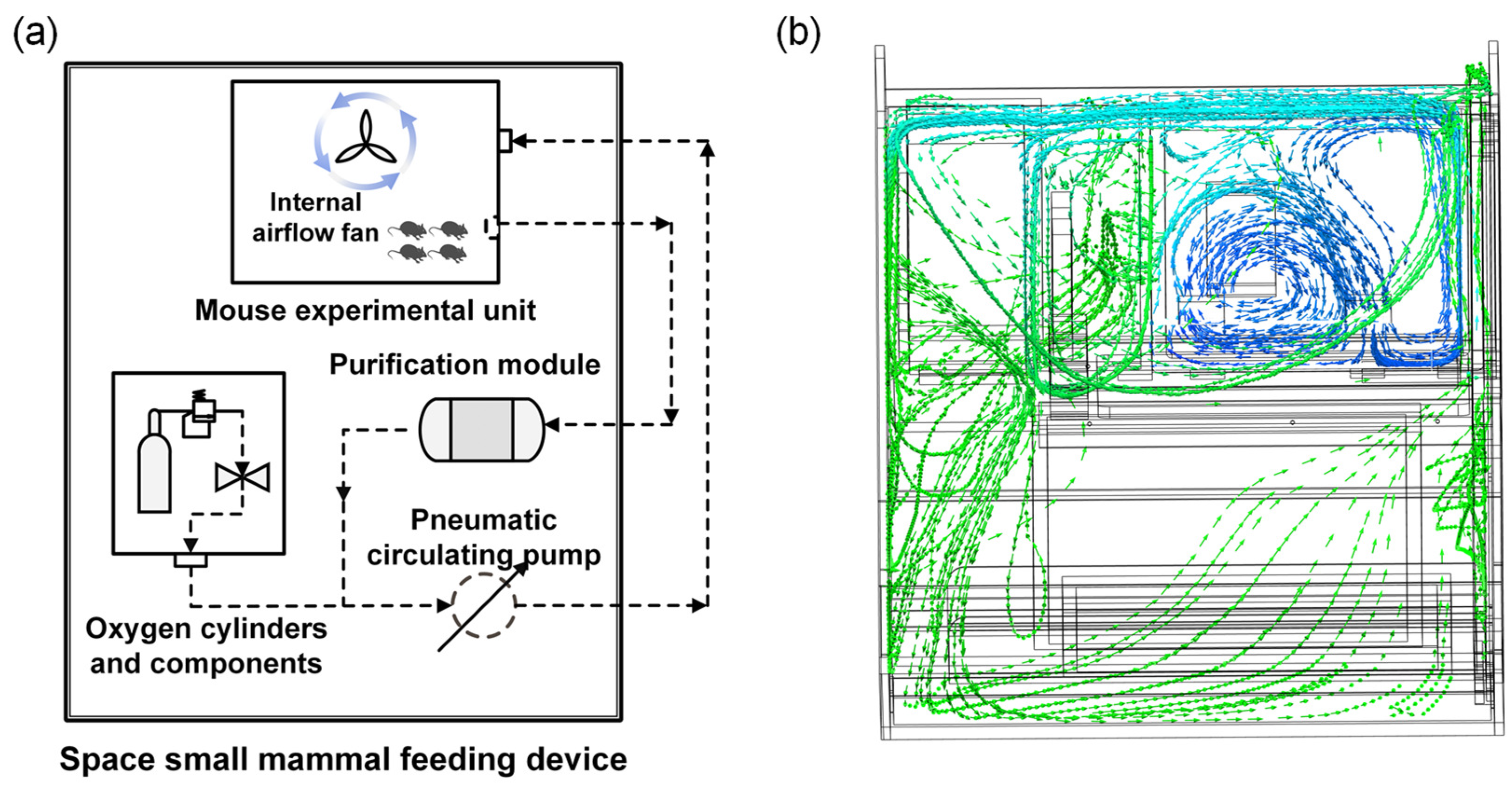
The Space Small Mammal Feeding Device (MFD) features a hermetic design that ensures the stability and safety of biological experiments in a microgravity environment. The gas purification module and the mouse experimental unit (MEU) within the device are connected via air tubes to the purification module, oxygen cylinders, and other life support system components, forming a complete closed-loop gas circulation system. Both modules have independent airtight structures. To ensure optimal system sealing during experiments, the leak rate of the gas connections is maintained at 10−7 Pa·m3/s. A schematic diagram showing the gas circulation between the environmental control module, mouse unit, and rearing device is shown in Figure 5a. In space environment, the gravity is almost zero and natural convection is disappeared. The device takes advantage of the fan driven active air circulation technology to compensate for the lack of natural convection. The gas is collected by the effect of the fan. The fan draws the gas into the MEU and induces a vortex. The gas is drawn through the pores of the ECM and filtered and purified. The gas pump moves the gas through a specially designed ventilation duct to induce the gas return to the MEU and forms a closed cycle. In the ECM, the partial pressure of the oxygen is controlled and supplemented by the oxygen cylinder. Computational fluid dynamics (CFD) method was used to simulate the gas flow pattern in the MFD device to evaluate the gas distribution and the flow field in the MFD device. The simulation results of the present work are depicted in Figure 5b. The simulation results revealed that the distribution of the gas in the device was uniform, with no dead zone or vortices in the flow field, and the flow field was stable under the above-mentioned conditions of operation, which maintained the circulation of the gas and transport of the pollutants.
Figure 5.
Schematic diagram of gas circulation in the rearing device and model simulation (a) Space small mammal feeding device (MFD) (b) Simulation results of the MFD.
The MFD and MEU constitute a double-layer sealing system to prevent the gas leakage and contamination in the experiment. The above design could guarantee that the air environment inside the chamber was not affected by the breeding experiment of rodents.
In addition to functional design, structural considerations were incorporated at the engineering level. The device adopts a modular load-bearing framework, with each functional module enclosed in a mechanically independent and sealed housing. Structural materials were selected to satisfy mass, stiffness, and compatibility requirements for spaceflight payloads. The overall configuration is designed to withstand the mechanical environments associated with launch, on-orbit operation, and recovery, in accordance with the interface and accommodation requirements of the space station payload support platform.
2.4. Environment Control Module (ECM)
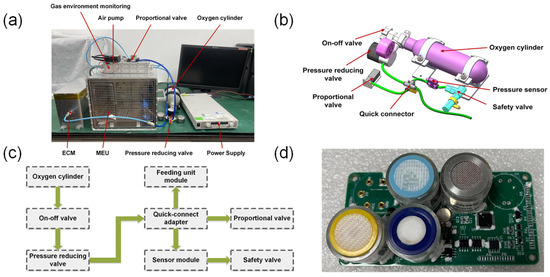
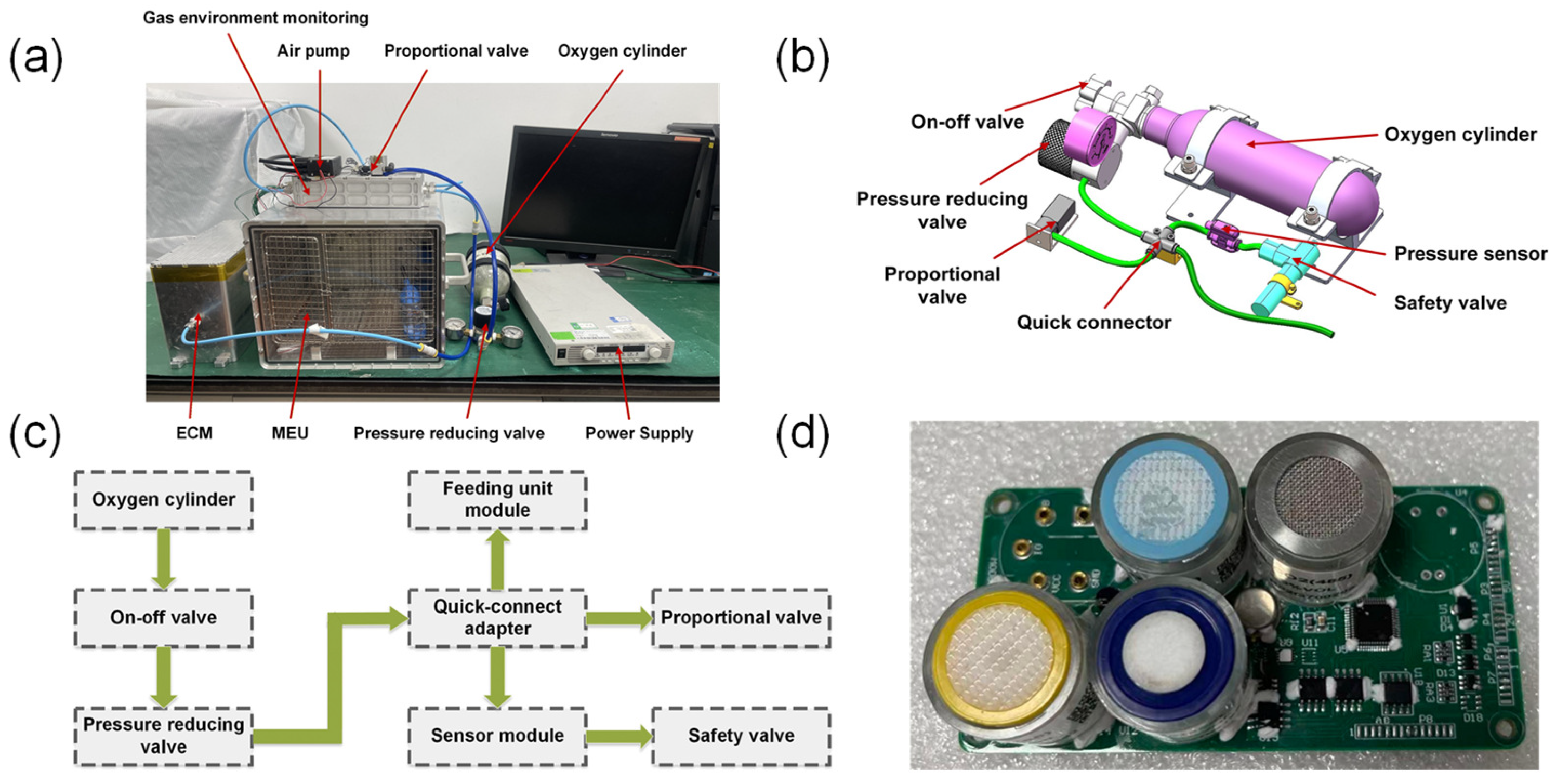
As shown in Figure 6a, a closed culture system was constructed for the gas purification. Real-time gas monitoring network (sampling cycle: 1000 ms) is composed of the environmental control module (ECM) designed in this study. The sensor array used in the ECM is an industrial grade. As shown in Figure 6d, the sensors consist of an oxygen sensor: Sangbay K-5S-O2, with a range of 0–30% vol and a resolution of 0.1% vol; a carbon dioxide sensor: SangbayK-5S-CO2, with a range of 0–5% vol, linear error less than ±0.05%, and a resolution of 0.1% vol; and an ammonia/hydrogen sulfide sensor: SangbayK-5S-NH3/H2S, with a detection range of 0–100 ppm and a resolution of 1 ppm. Additionally, a high-precision closed-loop oxygen regulation system is integrated into the space mammal housing device developed in this investigation. As shown in Figure 6b,c, the core module includes a miniaturized proportional valve, a safety valve, a pressure reducer, a control valve, and an O2 cylinder (leakage rate less than 0.016 cm3/min of helium at 150 psi). Oxygen cylinder specifications and compliance are shown in Table 3. The system continuously adjusts the oxygen partial pressure (setpoint 21% vol. ± 0.3% vol.) based on a PID control algorithm and uses an embedded oxygen sensor (range 0–30% vol., accuracy ± 0.3 FS %) for real-time feedback. The oxygen supply unit features a single O2 cylinder with a volume of 1.1 L, filled to a pressure of 15 MPa (nominal pressure 30 MPa, test pressure 50 MPa). Key parameters of the oxygen supply system are calculated as follows:
Figure 6.
Environmental Control Module (a) Experimental setup for gas purification in closed culture (b) Oxygen supplementation structure (c) Oxygen cylinder and valve connection (d) Life-Supporting gas detection sensor combination module.
Table 3.
Oxygen Cylinder Specifications and Compliance.
The oxygen consumption rate per mouse is 108 mL/h, based on the metabolic needs of rodents. The average daily oxygen consumption is 10.4 L, determined through an experimental setup with four rodents. According to the ideal gas law, the effective oxygen storage capacity at 15 MPa pressure is as follows:
Continuous oxygen supply capacity:
The safety factor meets the 7–day in-orbit requirement and has a redundancy of 6.5 d.
3. Experimental Characterisation
The gas purification and detection system developed in this study is based on a modular hierarchical processing architecture (as shown in Figure 7a). Its functional components include two parts: a composite adsorption purification module and an intelligent detection and control module. The adsorption purification module features an LiOH-based CO2 adsorption unit with a dynamic adsorption capacity of (25 °C,101 kPa) [29], a phosphoric acid-impregnated activated carbon module with an adsorption capacity of 125 cm3/g for ammonia and other volatile organic compounds [30], and a color-changing silica gel unit with an adsorption capacity of 403 mg/g for humidity regulation [31]. The intelligent detection and control module uses a high-precision sensor array for gas sampling and a small diaphragm gas compressor for gas circulation.
Figure 7.
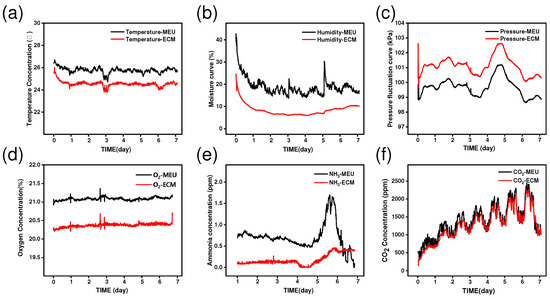
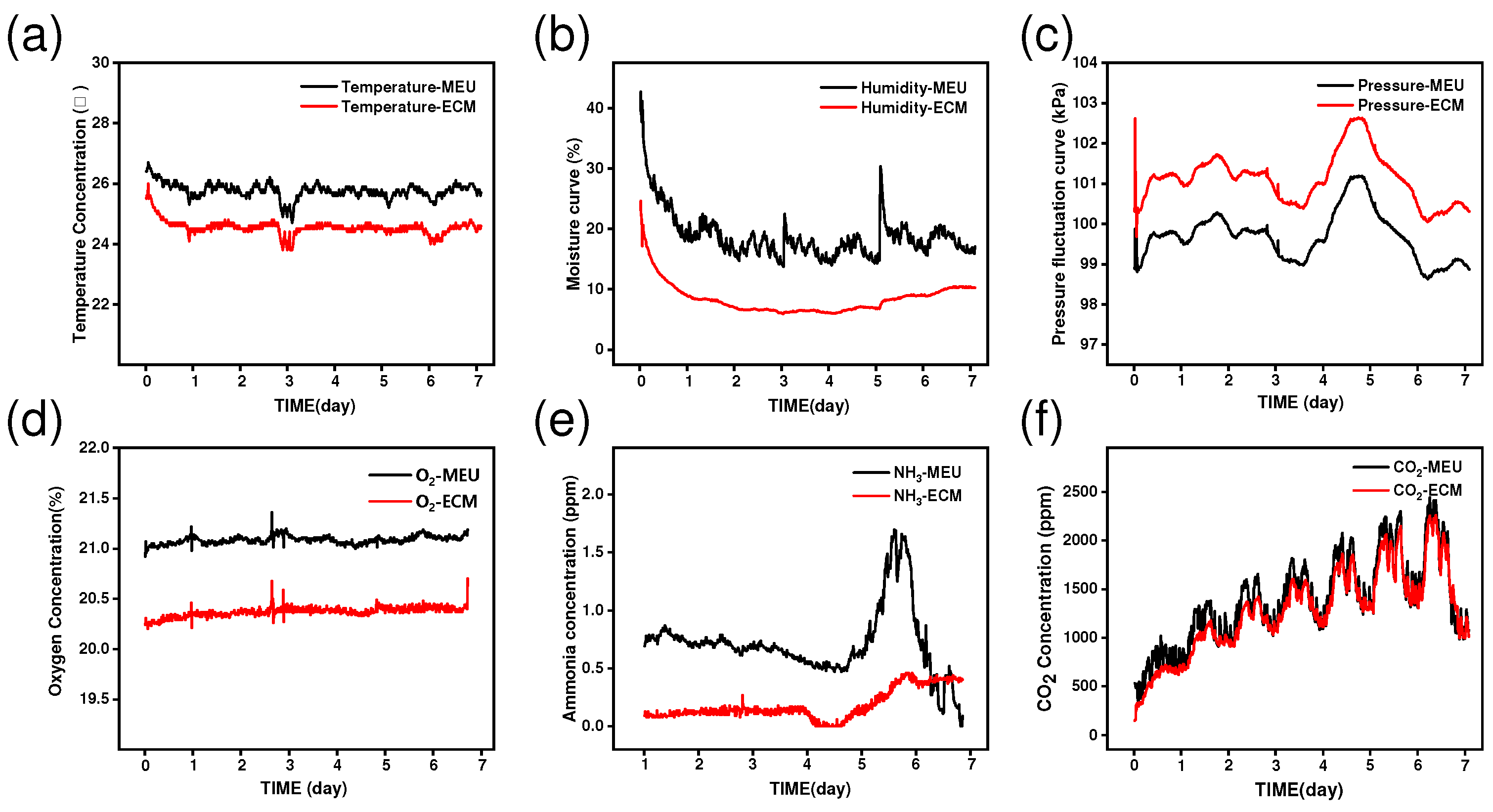
MEU and ECM gas monitoring data and gas purification curves (a) Temperature change curve (b) Humidity change (c) Pressure curve (d) Oxygen concentration (e) Ammonia concentration (f) Carbon dioxide concentration. Note: The data shown are representative results from one formal matched experiment.
The evaluation results of gas purification performance are shown in Figure 7. Under the closed-loop feedback control system: The temperature inside the MEU and ECM modules is consistently kept between 24 °C and 26 °C, providing a suitable environment for the rodents (Figure 7a). The humidity inside the MEU is maintained between 20% and 30%, while the relative humidity in the ECM is about 10%, as shown in Figure 7b. The filtration devices in the ECM are highly efficient at dehumidification, indicating that moisture from mouse respiration is effectively absorbed. The centralized exhaust and treatment of gases are achieved through the small pressure difference between the MEU and ECM units, which directs airflow in a designated direction, as illustrated in Figure 7c. The overall system pressure remains stable. The oxygen level in the ECM stays steady at 21%, as shown in Figure 7d, while the MEU maintains an oxygen concentration between 20% and 20.5%, meeting the environmental requirements for mouse experiments. The system’s ability to remove NH3 is demonstrated by the fact that the highest ammonia (NH3) concentration in the MEU is 1.7 ppm, and after purification, the maximum in the ECM drops to 0.45 ppm (Figure 7e). The carbon dioxide (CO2) levels are consistently kept below 2500 ppm during the experiment, as shown in Figure 7f. The system achieved stable control of multiple physical parameters, with overall gas cleanliness meeting experimental standards as the LiOH adsorption process continued. On the seventh day during daytime, CO2 levels were about 1400 ppm, peaking at roughly 2400 ppm at night.
4. Conclusions
We conducted ground-based experiments to validate the system’s feasibility and discussed the composition and performance of the MFD. The primary technical challenges in breeding mammals on space stations were the focus of this study, which also developed a high-reliability closed-loop life support system. We successfully addressed technical obstacles on multiple scales, including regulating gas circulation in microgravity, providing water in confined environments, and environmental control. We achieved a standard deviation of σ < 0.15 % vol. (21 ± 0.3 % vol.) by building an oxygen dynamic replenishment system, enabling precise control of oxygen concentration fluctuations. The key issues of rapid removal of metabolic waste gases and maintaining stable air composition were solved using lithium hydroxide molecular sieve adsorption purification technology (CO2 < 2500 ppm, NH3 < 0.5 ppm). The liquid circuit architecture and humidity buffer system, featuring a silicon gel adsorption capacity of 26%, were innovatively designed to meet the drinking water needs of mice and keep humidity in the electronics zone below RH < 70%. This effectively reduces risks of material corrosion and biological contamination caused by high humidity. Ground-based experiments confirmed that gas component testing meets space payload reliability standards, providing a measurable and reproducible survival support solution for rodent experiments in international space life science research. The presented results provide functional and design verification of the proposed system at the numerical simulation level, laying the foundation for subsequent hardware implementation and experimental validation. Beyond numerical simulation and ground-based verification, the proposed life support system was successfully validated during a 14–day in-orbit mission on the Chinese Space Station. The payload safely returned to Earth with the re-entry capsule on 14 November 2025, demonstrating the engineering reliability and operational robustness of the system under real microgravity conditions. This in-orbit verification substantially strengthens the practical value of the proposed design for future long-duration mammalian experiments in space.
The future of CSS involves conducting more diverse research, including mammalian reproduction experiments and longer-term rodent culture studies in space. This study’s space-based small mammal reproduction system prioritizes automating experimental procedures while ensuring monitoring and daily care of mice. It will also develop into a multi-species compatible intelligent life support platform by creating detection and analysis devices suitable for microgravity environments. This platform for deep space exploration will have significant scientific and technological value for in-orbit in situ analysis, detection, and the return of live mice.
Author Contributions
Conceptualization, R.Y. and F.L.; methodology, F.L.; software, W.G. and X.Y.; validation, Y.W., R.Y. and F.L.; formal analysis, W.G.; investigation, X.Y.; resources, Y.W.; data curation, R.Y.; writing—original draft preparation, R.Y.; writing—review and editing, F.L.; visualization, T.Z.; supervision, T.L. and J.G.; project administration, W.Z.; funding acquisition, F.L. All authors have read and agreed to the published version of the manuscript.
Funding
This study was funded by grants from the National Key Research and Development Program (2021YFA0719303 to F.L. and T.L., 2022YFA1104300 to T.L.), the Space Application System of China Manned Space Program (KJZ-YY-NSM0601).
Data Availability Statement
The original contributions presented in this study are included in the article. Further inquiries can be directed to the corresponding authors.
Conflicts of Interest
The authors declare no conflicts of interest.
Abbreviations
The following abbreviations are used in this manuscript:
| CSS | Chinese Space Station |
| MEU | Mouse Experiment Unit |
| MFD | Space Small Mammal Feeding Device |
| ECM | Environment Control Module |
| ULSD-L | Uplink Launch Life Support Device |
| DLSD-R | Downward Recovery Life Support Device |
| LSS | Life Support Subsystem |
| ISS | International Space Station |
| CFD | Computational Fluid Dynamics |
References
- Wnorowski, A.; Sharma, A.; Chen, H.; Wu, H.; Shao, N.-Y.; Sayed, N.; Liu, C.; Countryman, S.; Stodieck, L.S.; Rubins, K.H.; et al. Effects of Spaceflight on Human Induced Pluripotent Stem Cell-Derived Cardiomyocyte Structure and Function. Stem Cell Rep. 2019, 13, 960–969. [Google Scholar] [CrossRef] [Scilit] [PubMed]
- Krittanawong, C.; Singh, N.K.; Scheuring, R.A.; Urquieta, E.; Bershad, E.M.; Macaulay, T.R.; Kaplin, S.; Dunn, C.; Kry, S.F.; Russomano, T.; et al. Human Health during Space Travel: State-of-the-Art Review. Cells 2023, 12, 40. [Google Scholar] [CrossRef] [Scilit] [PubMed]
- Lee, S.-J.; Lehar, A.; Meir, J.U.; Koch, C.; Morgan, A.; Warren, L.E.; Rydzik, R.; Youngstrom, D.W.; Chandok, H.; George, J.; et al. Targeting myostatin/activin A protects against skeletal muscle and bone loss during spaceflight. Proc. Natl. Acad. Sci. USA 2020, 117, 23942–23951. [Google Scholar] [CrossRef] [Scilit] [PubMed]
- Macaulay, T.R.; Siamwala, J.H.; Hargens, A.R.; Macias, B.R. Thirty days of spaceflight does not alter murine calvariae structure despite increased Sost expression. Bone Rep. 2017, 7, 57–62. [Google Scholar] [CrossRef] [Scilit]
- Coulombe, J.C.; Sarazin, B.A.; Mullen, Z.; Ortega, A.M.; Livingston, E.W.; Bateman, T.A.; Stodieck, L.S.; Lynch, M.E.; Ferguson, V.L. Microgravity-induced alterations of mouse bones are compartment- and site-specific and vary with age. Bone 2021, 151, 116021. [Google Scholar] [CrossRef] [Scilit]
- Tascher, G.; Brioche, T.; Maes, P.; Chopard, A.; O’gorman, D.; Gauquelin-Koch, G.; Blanc, S.; Bertile, F. Proteome-wide adaptations of mouse skeletal muscles during a full month in space. J. Proteome Res. 2017, 16, 2623–2638. [Google Scholar] [CrossRef] [Scilit]
- Mao, X.W.; Nishiyama, N.C.; Byrum, S.D.; Stanbouly, S.; Jones, T.; Holley, J.; Sridharan, V.; Boerma, M.; Tackett, A.J.; Willey, J.S.; et al. Spaceflight induces oxidative damage to blood-brain barrier integrity in a mouse model. FASEB J. 2020, 34, 15516–15530. [Google Scholar] [CrossRef] [Scilit]
- Mao, X.W.; Sandberg, L.B.; Gridley, D.S.; Herrmann, E.C.; Zhang, G.; Raghavan, R.; Zubarev, R.A.; Zhang, B.; Stodieck, L.S.; Ferguson, V.L.; et al. Proteomic Analysis of Mouse Brain Subjected to Spaceflight. Int. J. Mol. Sci. 2019, 20, 7. [Google Scholar] [CrossRef] [Scilit]
- Ballard, R.W.; Connolly, J.P. US/USSR joint research in space biology and medicine on Cosmos biosatellites. FASEB J. 1990, 4, 5–9. [Google Scholar] [CrossRef] [Scilit]
- Sun, G.-S.; Tou, J.C.; Yu, D.; Girten, B.E.; Cohen, J. The past, present, and future of National Aeronautics and Space Administration spaceflight diet in support of microgravity rodent experiments. Nutrition 2014, 30, 125–130. [Google Scholar] [CrossRef] [Scilit]
- Cancedda, R.; Liu, Y.; Ruggiu, A.; Tavella, S.; Biticchi, R.; Santucci, D.; Schwartz, S.; Ciparelli, P.; Falcetti, G.; Tenconi, C.; et al. The Mice Drawer System (MDS) Experiment and the Space Endurance Record-Breaking Mice. PLoS ONE 2012, 7, e32243. [Google Scholar] [CrossRef] [Scilit]
- Bal, A. Uluslararası Uzay İstasyonu (ISS) Etrafında Uzay Hukukunun Yeniden Yapılandırılması. Ank. Hacı Bayram Veli Üniv. Hukuk Fak. Derg. 2025, 29, 1241–1308. [Google Scholar] [CrossRef] [Scilit]
- Voels, S.A.; Eppler, D.B. The International Space Station as a platform for space science. Adv. Space Res. 2004, 34, 594–599. [Google Scholar] [CrossRef] [Scilit]
- Toth, L.A. The influence of the cage environment on rodent physiology and behavior: Implications for reproducibility of pre-clinical rodent research. Exp. Neurol. 2015, 270, 72–77. [Google Scholar] [CrossRef] [Scilit] [PubMed]
- Garner, J.P. Stereotypies and Other Abnormal Repetitive Behaviors: Potential Impact on Validity, Reliability, and Replicability of Scientific Outcomes. ILAR J. 2005, 46, 106–117. [Google Scholar] [CrossRef] [Scilit]
- Andreev-Andrievskiy, A.; Popova, A.; Boyle, R.; Alberts, J.; Shenkman, B.; Vinogradova, O.; Dolgov, O.; Anokhin, K.; Tsvirkun, D.; Soldatov, P.; et al. Mice in Bion-M 1 Space Mission: Training and Selection. PLoS ONE 2014, 9, e104830. [Google Scholar] [CrossRef] [Scilit]
- Anshakov, G.P.; Belousov, A.I.; Sedel’nikov, A.V. The problem of estimating microaccelerations aboard Foton-M4 spacecraft. Russ. Aeronaut. 2017, 60, 83–89. [Google Scholar] [CrossRef] [Scilit]
- Jia, C.; Zheng, W.; Liu, F.; Ding, K.; Yuan, Y.; Wang, J.; Xu, D.; Zhang, T.; Zheng, H. Biological culture module for plant research from seed-to-seed on the Chinese Space Station. Life Sci. Space Res. 2024, 42, 47–52. [Google Scholar] [CrossRef] [Scilit]
- Xu, Z.; Liu, F.; Zhang, X.; Tian, Q.; Zhang, T. Development of the Microbial Online Monitoring Module (MOMM) for the Chinese Space Station. Microgravity Sci. Technol. 2024, 36, 39. [Google Scholar] [CrossRef] [Scilit]
- Wei, W. Development and construction progress of the Tiangong space station in China. Chin. Sci. Bull. 2022, 67, 4017–4028. [Google Scholar] [CrossRef] [Scilit]
- Li, J.; Liu, F.; Zhang, T. Research Progress of Space Mice Flight Payload. Chin. J. Space Sci. 2021, 41, 445–456. [Google Scholar] [CrossRef] [Scilit]
- Niederwieser, T.; Gerren, R.; Koenig, P.; Tozer, S.; Stodieck, L.; Rieger, S.; Hoehn, A. AEM-E–A small life support system for the transport of rodents to the ISS. In Proceedings of the 44th International Conference on Environmental Systems, Tucson, AZ, USA, 13–17 July 2014. [Google Scholar]
- Holquist, J.; Koenig, P.; Tozer, S.; Williams, A.A.; Klaus, D.M.; Stodieck, L.; Niederwieser, T.; Olthoff, C.T.; Hoehn, A. Atmosphere Regeneration to enable Life Support for the Transport of Rodents to and from the ISS-Design Trades and Test Results. In Proceedings of the 43rd International Conference on Environmental Systems, Vail, CO, USA, 14–18 July 2013; p. 3461. [Google Scholar]
- GB 14925-2010; Laboratory Animal—Requirements of Environment and Housing Facilities. Code of China: Beijing, China, 2011. Available online: https://www.codeofchina.com/standard/GB14925-2010.html (accessed on 18 January 2026).
- Mandillo, S.; Tucci, V.; Holter, S.M.; Meziane, H.; Banchaabouchi, M.A.; Kallnik, M.; Lad, H.V.; Nolan, P.M.; Ouagazzal, A.-M.; Coghill, E.L.; et al. Reliability, robustness, and reproducibility in mouse behavioral phenotyping: A cross-laboratory study. Physiol. Genom. 2008, 34, 243–255. [Google Scholar] [CrossRef] [Scilit]
- Lou, P.-H.; Yang, G.; Huang, L.; Cui, Y.; Pourbahrami, T.; Radda, G.K.; Li, C.; Han, W. Reduced body weight and increased energy expenditure in transgenic mice over-expressing soluble leptin receptor. PLoS ONE 2010, 5, e11669. [Google Scholar] [CrossRef] [Scilit]
- Zawawi, M.H.; Saleha, A.; Salwa, A.; Hassan, N.H.; Zahari, N.M.; Ramli, M.Z.; Muda, Z.C. A review: Fundamentals of computational fluid dynamics (CFD). In AIP Conference Proceedings; AIP Publishing LLC: Melville, NY, USA, 2018; p. 020252. [Google Scholar]
- Tatsumi, T.; Yoshimura, T. Stability of the laminar flow in a rectangular duct. J. Fluid Mech. 1990, 212, 437–449. [Google Scholar] [CrossRef] [Scilit]
- Zilberman, P. The CO2 Absorber Based on LiOH. Acta Medica Marisiensis 2015, 61, 4–6. [Google Scholar] [CrossRef] [Scilit]
- Niu, Y.; Zheng, C.; Xie, Y.; Kang, K.; Song, H.; Bai, S.; Han, H.; Li, S. Efficient adsorption of ammonia by surface-modified activated carbon fiber mesh. Nanomaterials 2023, 13, 2857. [Google Scholar] [CrossRef] [Scilit]
- Patterson, G.D., Jr.; Mellon, M. Determination of Sulfur Dioxide by Color-Changing Gels. Anal. Chem. 1952, 24, 1586–1590. [Google Scholar] [CrossRef] [Scilit]

Disclaimer/Publisher’s Note: The statements, opinions and data contained in all publications are solely those of the individual author(s) and contributor(s) and not of MDPI and/or the editor(s). MDPI and/or the editor(s) disclaim responsibility for any injury to people or property resulting from any ideas, methods, instructions or products referred to in the content. |
© 2026 by the authors. Licensee MDPI, Basel, Switzerland. This article is an open access article distributed under the terms and conditions of the Creative Commons Attribution (CC BY) license.