1. Introduction
Detonative propulsion systems have the potential to significantly increase the specific impulse of rocket engines. The values for the increase in specific impulse that can be found in literature are up to about 20% [
1] depending on the propellant combination and the application case. The most prominent solutions to realize detonative propulsion are Pulsed Detonation Engines (PDEs) and Rotating Detonation Engines (RDEs) [
1,
2,
3].
The basic principle of the detonation wave process inside a rotating detonation combustor (RDC) has been known for decades [
4,
5,
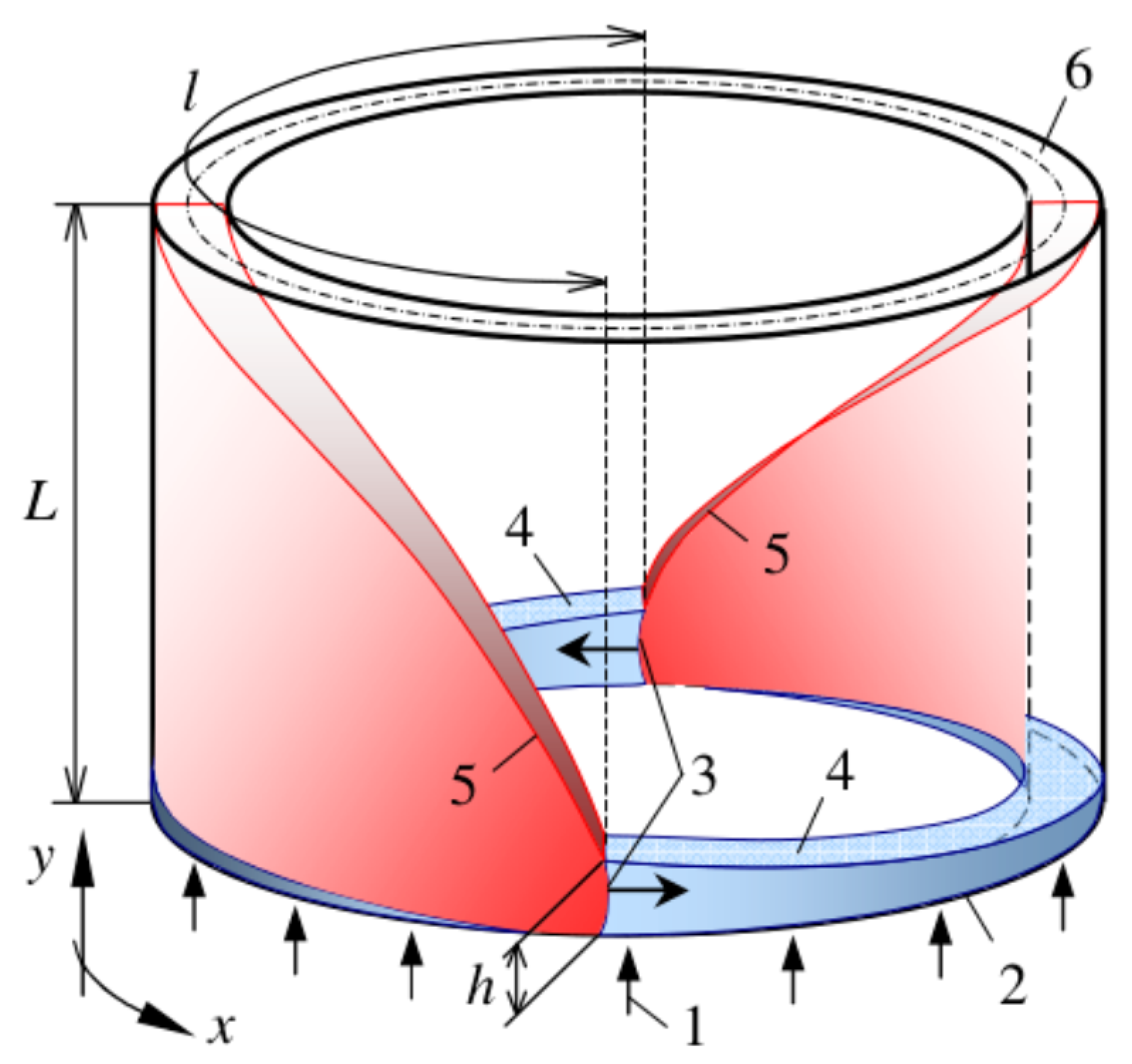
6] and is presented in
Figure 1 for an annular chamber with length
, outer diameter
. The mixture is injected (1) from the aft end of the chamber (2) such that a rotating detonation front (3), spaced by a spatial distance
l between two consecutive detonation waves, combusts the fresh mixture (4) that has reached a certain fill height
h. An oblique shock (5) is produced by the detonation wave, and the combustion products exit through the open end of the chamber (6).
Apart from the theoretical efficiency increase [
1,
2], additional advantages of rotating detonation rocket engines are a lower feed-pressure to achieve similar performance, which could reduce turbopump powers [
7] and most importantly compactness of the engine [
1], due to the constant volume combustion.
Figure 1.
Schematic of the working principle of an RDE, adapted from [
8]. 1—propellant injection; 2—injection plane; 3—detonation front; 4—fresh propellant layer; 5—oblique shock; 6—exit plane.
Figure 1.
Schematic of the working principle of an RDE, adapted from [
8]. 1—propellant injection; 2—injection plane; 3—detonation front; 4—fresh propellant layer; 5—oblique shock; 6—exit plane.
For about 15 years, there has been a rapidly growing interest in RDE technology worldwide for the given advantages of pressure gain combustion [
3]. In general, compared to the more commonly used propellant combinations of O
2-CH
4 for rocket-type RDEs [
3,
9,
10,
11,
12,
13,
14,
15,
16] or air-breathing RDE-research with hydrogen [
3,
17,
18], the studies on hydrogen–oxygen RDCs are rather limited [
5,
19,
20,
21]. This could be attributed to the fast chemical reactions for hydrogen–oxygen, even for deflagration [
22]. So, in an RDC environment, it is challenging to reduce the deflagration losses with this propellant combination. Nevertheless, there are still a few examples that prove that achieving detonation waves in Rotating Detonation Combustors is possible with hydrogen–oxygen [
5,
19,
20,
21,
23].
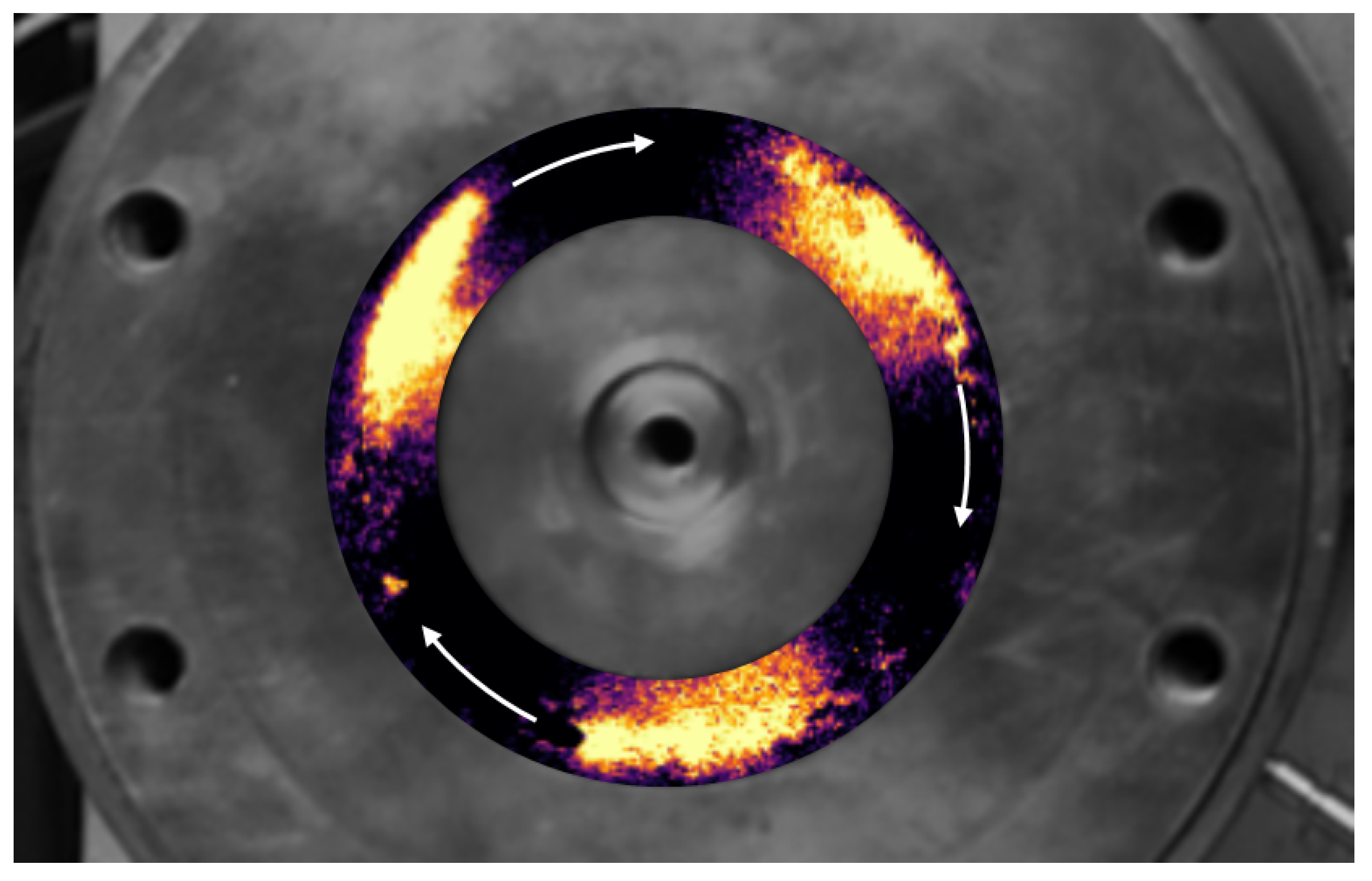
The high repetition rate of the detonation waves in RDCs presents a challenge for the diagnostics for the investigation of the rotating detonation waves. One common technique to study and characterize the detonation wave regime is to install a powerful high-speed camera downstream of the annular detonation chamber and visualize the number and the direction of the waves [
11,
17,
21,
24]. This diagnostic technique is therefore really useful to identify the number of waves and thus the speed of the rotating wave in the annular detonation chamber. For that reason, putting a high-speed camera downstream of the RDC to visualize the detonation waves can be considered almost as a standard practice in RDC testing and has also already applied to hydrogen–oxygen RDCs [
21,
25].
Another challenge is that, until today, there exist no generally applicable design guidelines for RDC detonation chambers and injectors that ensure stable detonation waves. While the groundbreaking work from Bykovskii et al. [
6] laid the foundation for design guidelines for the RDC chamber dimensions, many studies now focus on the injector design, which is crucial for stable detonation waves. In order to achieve stable and strong detonation waves, the injectors need to be able to inject and achieve good mixing of the fresh propellants before the next detonation wave arrives. Due to the high repetition rate of several Kilohertz in RDEs, the time window for injection and mixing is typically in the order of less than 100
s.
A simple scaling law for RDCs and their injectors is based on the so-called filling height of the fresh gases, which are consumed by the rotating detonation wave [
2,
6]. This parameter can define how many waves could appear, how to dimension the RDC chamber, and thus also has an influence on the injector design [
1]. However, measuring this crucial parameter
h is not a trivial experiment and thus the available information is rather limited. For different propellant combinations, Bykovskii et al. [
6] published the well-known semi-empirical correlation
to estimate
h in function of the detonation cell size
. However, it is evident that the uncertainty in the given equation is high, and a more detailed knowledge of
h is necessary to design RDCs and RDC injectors. One method to gain knowledge on the detonation wave structure, including the detonation wave height and the angle of the detonation wave and the trailing shock wave, is to equip the combustor with a large number of high-frequency pressure sensors and based on the time and phase angle of the pressure oscillations at different locations inside the combustor interpolate the important wave structures [
26]. Another possibility to experimentally investigate the detonation wave structure and the interaction with mixing is to radially visualize the detonation waves inside the annular detonation chambers [
9,
14,
18,
20,
27,
28,
29,
30,
31,
32,
33]. This has already been demonstrated for air-breathing RDCs [
28,
30,
33] as well as rocket-type RDCs [
9,
14,
20,
27,
29,
31,
32]. Due to the increased temperatures in rocket RDCs, realizing optical access in the detonation chamber is a challenge.
While there are a few examples of successful detonative operation of hydrogen–oxygen RDCs with the visualization of the detonation waves from downstream of the chamber axis, to the authors’ knowledge, there has been only one attempt to radially visualize the detonation wave front structure of a O
2/H
2 detonation wave inside an RDC [
20]. However, the visualization quality of the detonation waves in the study from Bykovskii et al. [
20] is not comparable with modern studies, and in addition, the study also does not contain many details regarding the design of the experiment, such as the injector design and scale, the optical access window design and a proper scaling for the visualized waves. For the given reasons, to the authors’ knowledge, there is also a lack of a well-documented hydrogen–oxygen RDC test case with a radial wave visualization for the validation of numerical tools. Since it was shown in RDCs using different propellant combinations that the radial visualization of the detonation wave front is highly valuable in understanding the mixing processes and the filling height, which is important to improve injector designs, it is the goal of this study to visualize the structure of the detonation wave and a hydrogen–oxygen RDC. In order to do so, the existing and already studied small-scale 68 mm RDC at DLR Lampoldshausen was modified to achieve radial optical access [
22].
2. Experimental Methods
This chapter describes the experimental setup for the visualization of the detonation wave structure as well as the methodology to derive the results from the experimental data.
2.1. Test Bench M3.1
The initial RDC run-in tests were conducted at the M3 test field at DLR Lampoldshausen [
34]. While this test bench offers great flexibility and cost-effective testing, the propellant flow rates are limited. The M3 test field currently houses three active test positions (M3.1, M3.3, M3.5) for tests with cryogenic media liquid or gaseous oxygen and gaseous hydrogen or hydrocarbon fuels on a laboratory scale and feed-line pressures of up to 40 bar [
35]. The test bench M3.1 is designed for injection, ignition and combustion testing. Test sequences can be varied by fast-reacting valves that allow a sequencing of the fuel and oxidizer flow rate in the order of milliseconds with a reproducibility in the order of 5 ms for gaseous media. The temperature range for GH
2 is 200 K to ambient. Maximum mass flow rates are in the order of 70 g/s depending on the mixture ratio and the test set-up [
35]. For the studied RDC tests, both oxygen and hydrogen are fed in a gaseous state at approximately ambient temperatures.
2.2. Small-Scale Hydrogen–Oxygen RDC at DLR
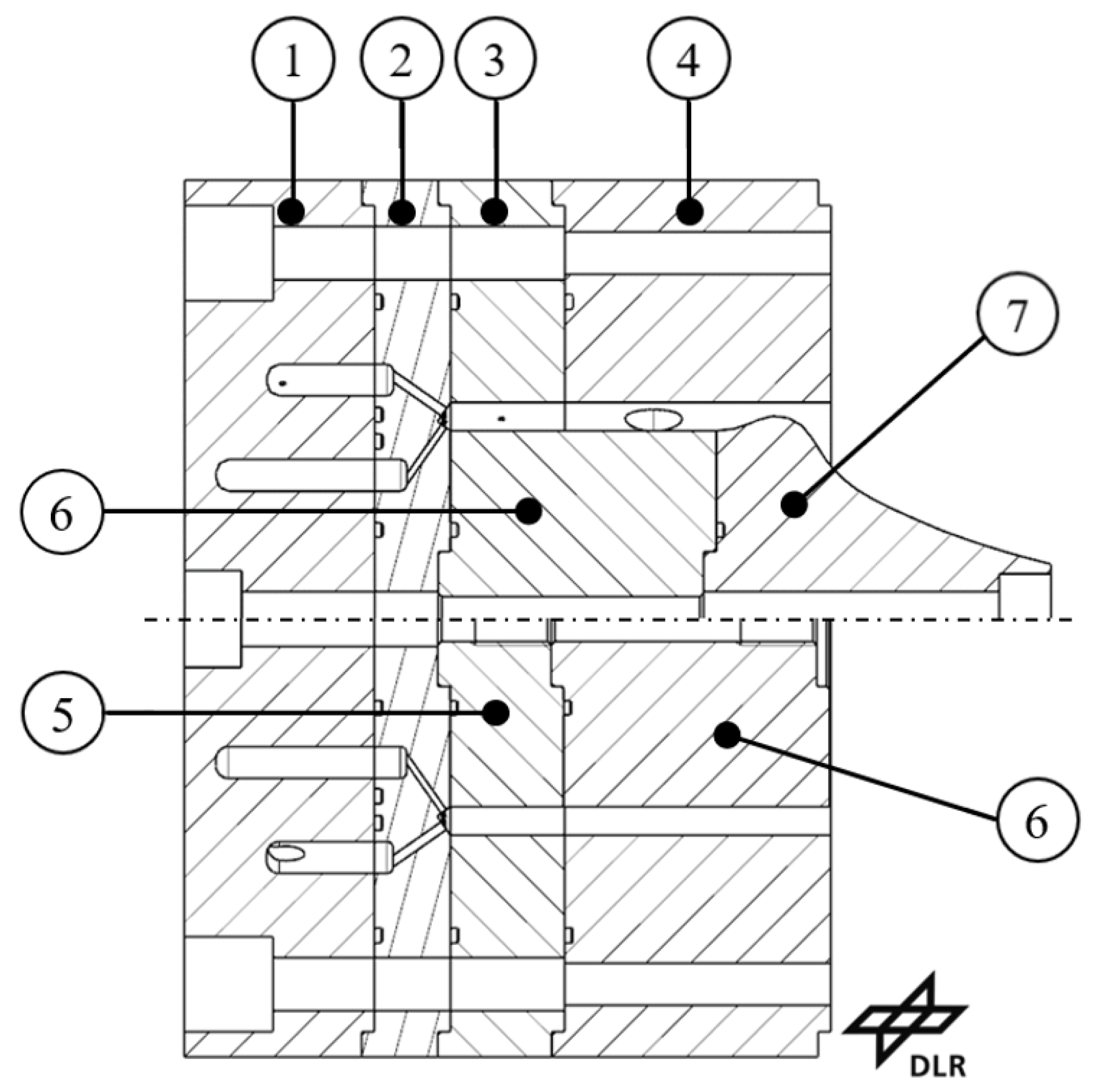
The general setup of the existing RDC at DLR, without optical access as shown in
Figure 2, has already been described in previous publications [
24,
25]. The RDC hardware was designed to be highly modular and different variations have already been tested [
36,
37]. For that reason, only a short summary of the main features of the general RDC design is presented here and the main focus of the experimental setup description is set on the optical access and the optical diagnostics.
2.2.1. Chamber Design
The DLR RDC was designed for the propellant combination hydrogen–oxygen, and to be operated at the research test bed M3. Due to the limited mass flow rates at this test bench, a relatively small RDC was realized, and a simple and robust uncooled heat-sink design was chosen. The detonation chamber segments and injector plate are made from a copper alloy (CuCr1Zr), while the injector manifold is made from stainless steel. The outer diameter of the annular chamber is 68 mm. As was described before, an important aspect of the experimental design was modularity. For that reason, already different injector plates, center body pieces and measurement rings exist. In the standard configuration, which is presented in
Figure 2, the RDC chamber had a length of about 50 mm and an inner diameter of 59 mm, yielding a channel width of 4.5 mm. However, also different channel widths and even hollow-core settings have been tested recently [
36].
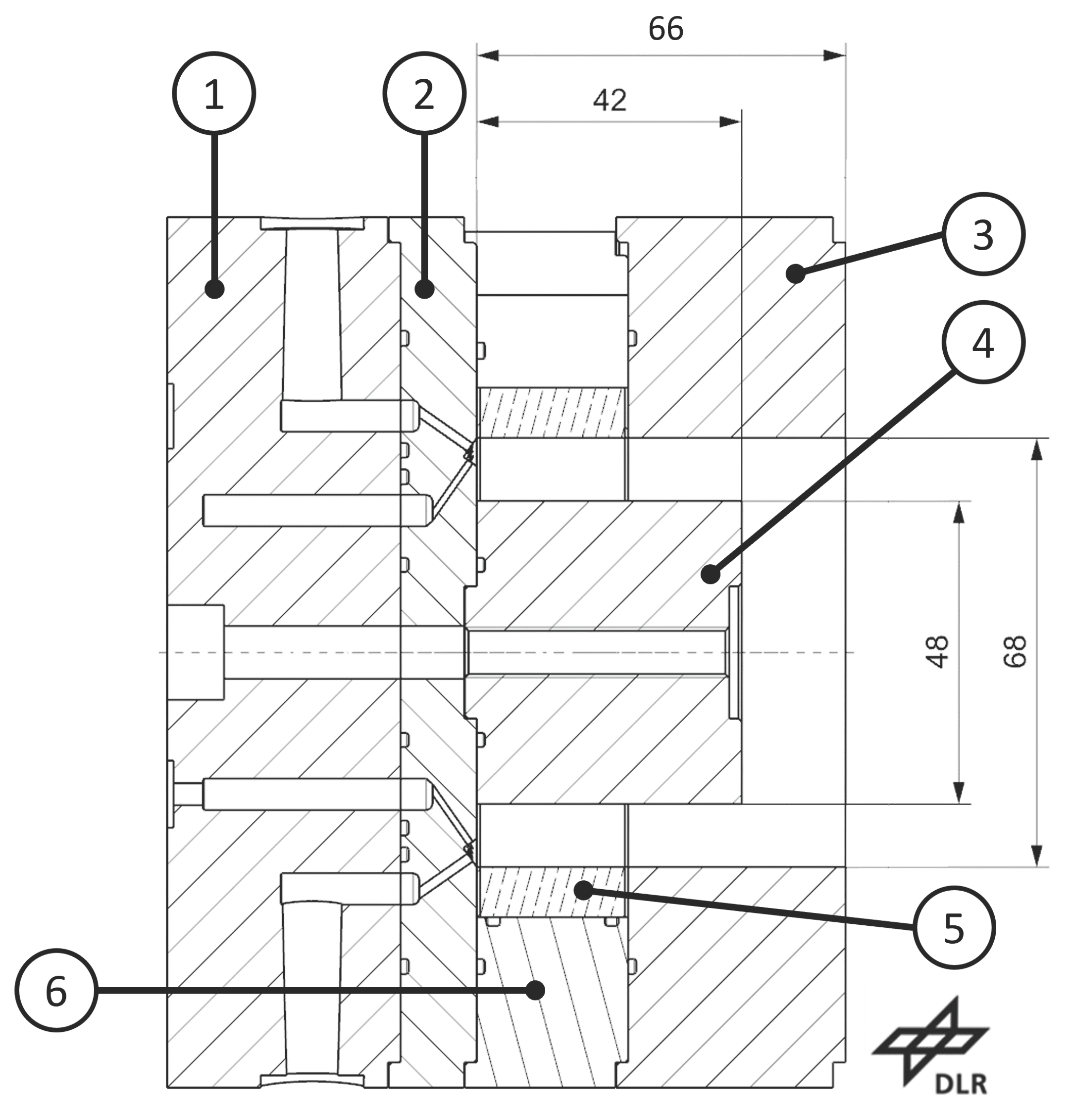
In the previously conducted tests, it was observed that for the given RDC configuration, an increased channel width resulted in more stable co-rotating waves, even though this further reduces the chamber mass flux. For that reason, it was decided to test the optically accessible RDC with a gap width of 10 mm, yielding an inner diameter of 48 mm [
22]. To include the optical access window, the length of the outer body of the chamber increased slightly to 66 mm. The length of the inner or center body was 42 mm and thus the inner body was recessed with respect to the outer chamber wall. As can be seen in
Figure 2, the RDC can be tested with and without a throat and a nozzle. For better visualization of the wave dynamics through a downstream camera and in order to reduce the loads on the window, no nozzle was installed in this study. A sketch of the modified RDC configuration with optical access used in this study, with the most important dimensions of the detonation chamber, is presented in
Figure 3.
2.2.2. Injector Design
The injector plate consists of 72 pairs of unlike doublet impinging jets to supply the gaseous propellants from the two manifold rings into the annular detonation chamber. The O2 injectors have a diameter of 1.5 mm and the H2 injectors a diameter of 1.0 mm, respectively. In order to balance the momentum and also the large difference in injection velocities between hydrogen and oxygen, the two injector holes are tilted with respect to the chamber axis, resulting in uneven angles of 35° for oxygen and 55° for hydrogen, respectively. Since the injector plate was designed for the RDC chamber configuration of 68 mm outer diameter and a channel gap width of 4.5 mm, there is a zone on the injection plate towards the inner body, where no propellants are injected in the configuration of the increased channel width of 10 mm.
2.2.3. Ignition Method
In the first run-in tests of the RDC at DLR, the chamber was ignited with an automotive spark plug installed directly in the chamber wall [
34]. For most of the conducted RDC tests, the hardware was updated, such that a hydrogen–oxygen pre-detonator was installed and successfully initiated the RDC operation [
24,
38]. However, since the pre-detonator produces the strongest detonation wave inside the RDC with peak pressures sometimes exceeding 20 bar, it was decided to switch back to a direct ignition with the spark plug for the optically accessible RDC tests again. This is deemed acceptable because spinning waves were also observed in the tests with the spark plug ignition [
34]. By doing so, the ignition process of the RDC should be less harsh for the window.
2.2.4. Optical Access
Generally, in RDCs, it is expected that the detonation waves propagate in close vicinity to the injector plate [
2,
3,
6]. This was also observed in other RDCs with optical access [
9,
10,
14,
18,
27,
28,
30]. For that reason, it was decided for an easy realization of optical access close to the injection plane, to replace the first segment of the outer body of the existing RDC, the so-called “measurement ring” (see also
Figure 2) by a quartz-glass ring.
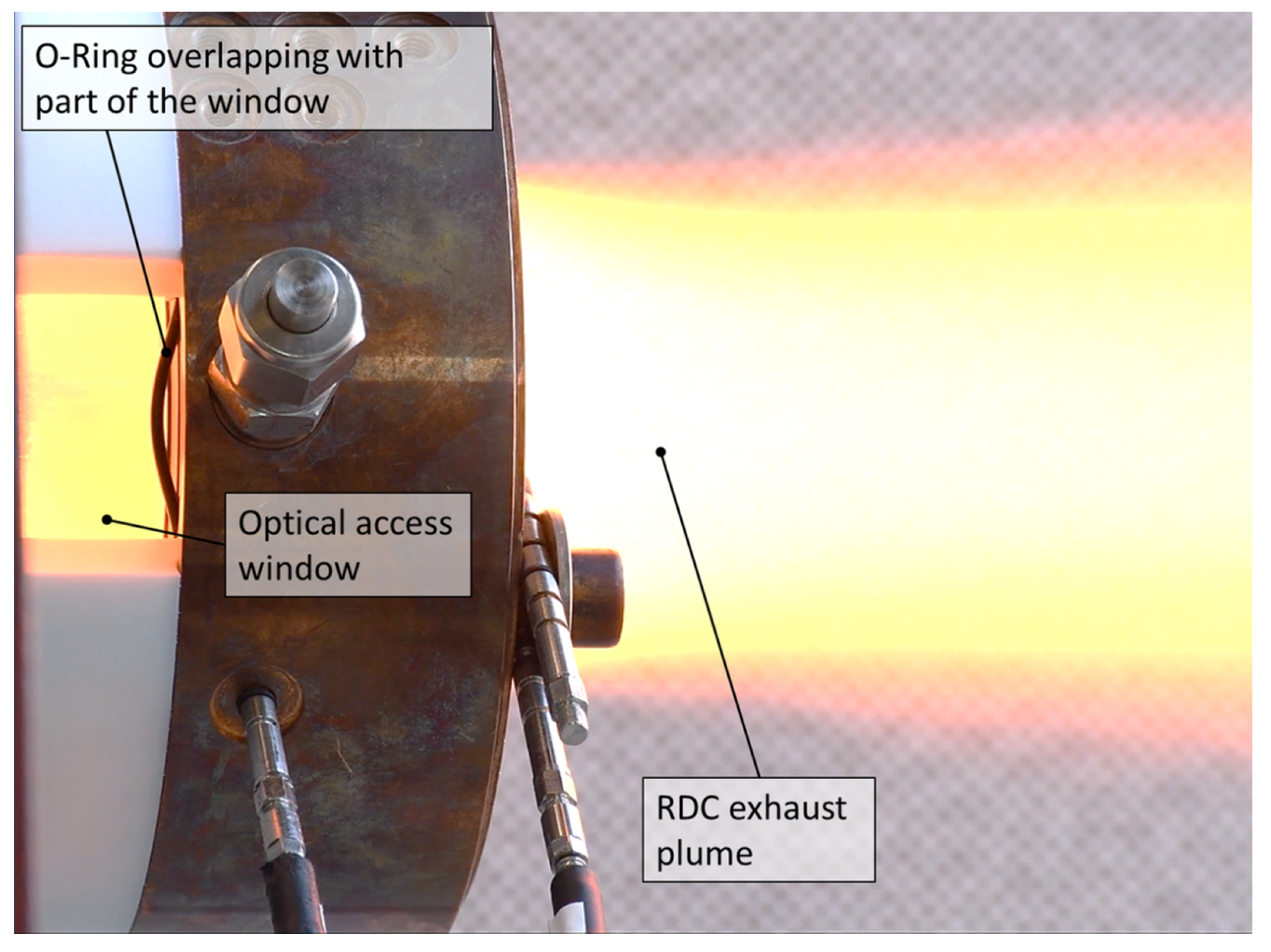
The resulting quartz ring is made from HOQ310 (Heraeus, Hanau, Germany) and is 23 mm long. The HOQ310 material was chosen since it has comparable transmission at the OH* wavelengths peaking at 306–310 nm, but at the same time reduced cost compared to higher quality quartz material, such as Suprasil. Graphite seals with a thickness of 0.5 mm are placed between the quartz ring and the metal components, injector plate and detonation ring, respectively. The quartz ring has the same inner diameter as the RDC outer body (68 mm) and an outer diameter of 84 mm, resulting in a wall thickness of 8 mm. This was chosen as a compromise between sufficient wall thickness to withstand the mechanical loads, but at the same time not being too thick to be less prone to thermal shock. Due to the relatively thin quartz ring and a viewing angle that is mostly normal to the window, the distortion of the quartz ring is neglected in this study. Instead, based on the dimensions of the optical access field of view, a constant millimeter-to-pixel conversion is applied in the radial and axial directions individually. Furthermore, for centering purposes, a small step in the copper-alloy detonation ring, which is mounted downstream of the optical access, covers the last 1.5 mm of the quartz ring. Thus, the first 0.5 to 22 mm of the RDC are optically accessible. With respect to the well-known semi-empirical relation from Bykovskii et al. [
6] for the filling height
and with
mm for hydrogen–oxygen at stoichiometric conditions [
16,
39,
40], this length should cover the location of the passing detonation waves sufficiently. Furthermore, an investigation of the heat flux distribution in this DLR RDC [
37] also showed the highest heat flux to be located in the first ≈10 mm from the faceplate, which gives another indication that the optical access window should cover the region of the detonation waves.
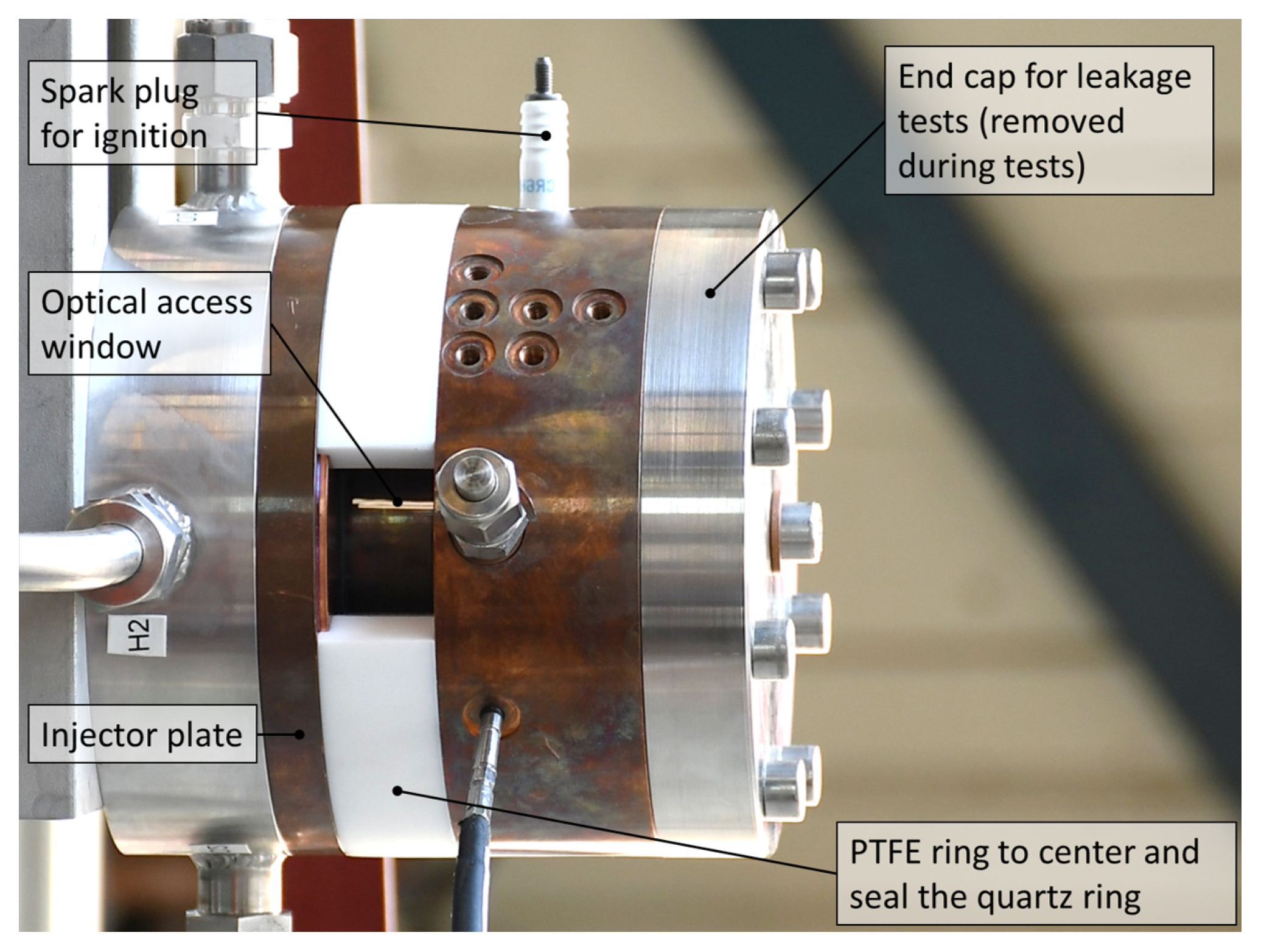
Since the high-speed camera can only record the wave dynamics from one radial position with a limited spatial resolution due to the high frame rate, an outer ring made from PTFE was built that holds the quartz ring in place and also supports the sealing concept of the setup. This outer PTFE ring has a cut-out space with a width of 32 mm. For the annular detonation chamber, this yields an observable angle of about 31°.
A cut through the CAD assembly of the optically accessible RDC is shown in
Figure 3. The final assembly mounted on the thrust frame of the M3.1 test bench can be seen in
Figure 4. Here, the PTFE ring for centering and sealing of the optical access quartz ring can clearly be observed. Also, in
Figure 4, an end cap is installed in order to perform leakage tests before the first hot-fire testing, which is removed for the actual RDC tests.
Furthermore, since the so-called “measurement ring” of the original RDC was replaced by the quartz ring, there are no high-frequency pressure sensors installed in the optical access configuration of the RDC. For that reason, the characterization of the detonation wave regime has to be solely based on the downstream high-speed camera data.
2.3. Measurements
In order to characterize the operating condition of the RDC, both the test bench and the RDC are equipped with conventional, low-frequency diagnostics. The propellant mass flow rates, which are fed from the test bench to the RDC manifold are measured with high-precision Coriolis flowmeters.
The propellant manifolds of the RDC are both equipped with static pressure sensors (Kistler type 4043A, Kistler, Winterthur, Switzerland) and type K thermocouples. The Kistler sensors are sampled at 10 kHz, the thermocouples with 1 kHz, and the Coriolis with 100 Hz, respectively. Due to the replacement of the previously used measurement ring in this RDC with the optical access quartz ring, there were no chamber pressure sensors (both high-frequency pressure oscillations and average chamber pressure) in this study.
Since the Coriolis are installed far upstream in the feed system of the M3 test bench and have a low sampling rate, an estimation of the mass flow rate with a better time resolution was calculated based on the manifold pressures and discharge coefficient for the injector, which is calculated during steady-state mass flow rate regimes and the mass flow rate measurements of the Coriolis flowmeters. A more detailed description of this procedure can be found in [
36].
Table 1 summarizes the calculated measurement uncertainties of the conventional diagnostics to describe the time-averaged operating condition of the RDC.
The uncertainty on ROF translates into an uncertainty of the evaluated CJ speed DCJ less than 2%, assuming the mixture in front of the detonation is perfectly homogeneous and corresponds to the injected composition.
2.4. Operating Conditions in This Study
The described RDC experiment and its components have already been tested more than 100 times. The mass flow rates have been varied from 15 g/s–70 g/s at the test bench M3.1 and up to 300 g/s at the test bench M11 [
25,
36].
To reduce thermal and mechanical loads on the quartz window, the RDC tests with optical access were performed with an intermediate mass flow rate of
g/s and a test time of <1 s. As was described before, a configuration with a larger gap width of 10 mm was installed with the optical access windows. This yields a rather low detonation chamber mass flux of
kg/m
2/s. Compared to other rocket-type RDE experiments in literature [
3,
6,
14,
21,
23,
27] this puts the operating conditions at the lower end of the reasonable mass fluxes for RDC operability. However, in previous tests, it was observed that rotating waves were present at comparable mass flow rates.
In total, three tests have been realized with the optical access ring. However, due to the complexity of the optical diagnostics setup, the optical data of the first test run was considered as not satisfactory for analysis. This leaves two test runs for the investigation of the detonation wave structure. To also understand the reproducibility of the wave structure, it was aimed to perform these two tests with the same feeding mass flow rates of the propellants. In the third and last test, the oxygen mass flow rate was slightly lower, resulting still in similar conditions with a reduced oxidizer to fuel ratio ROF or increased equivalence ratio .
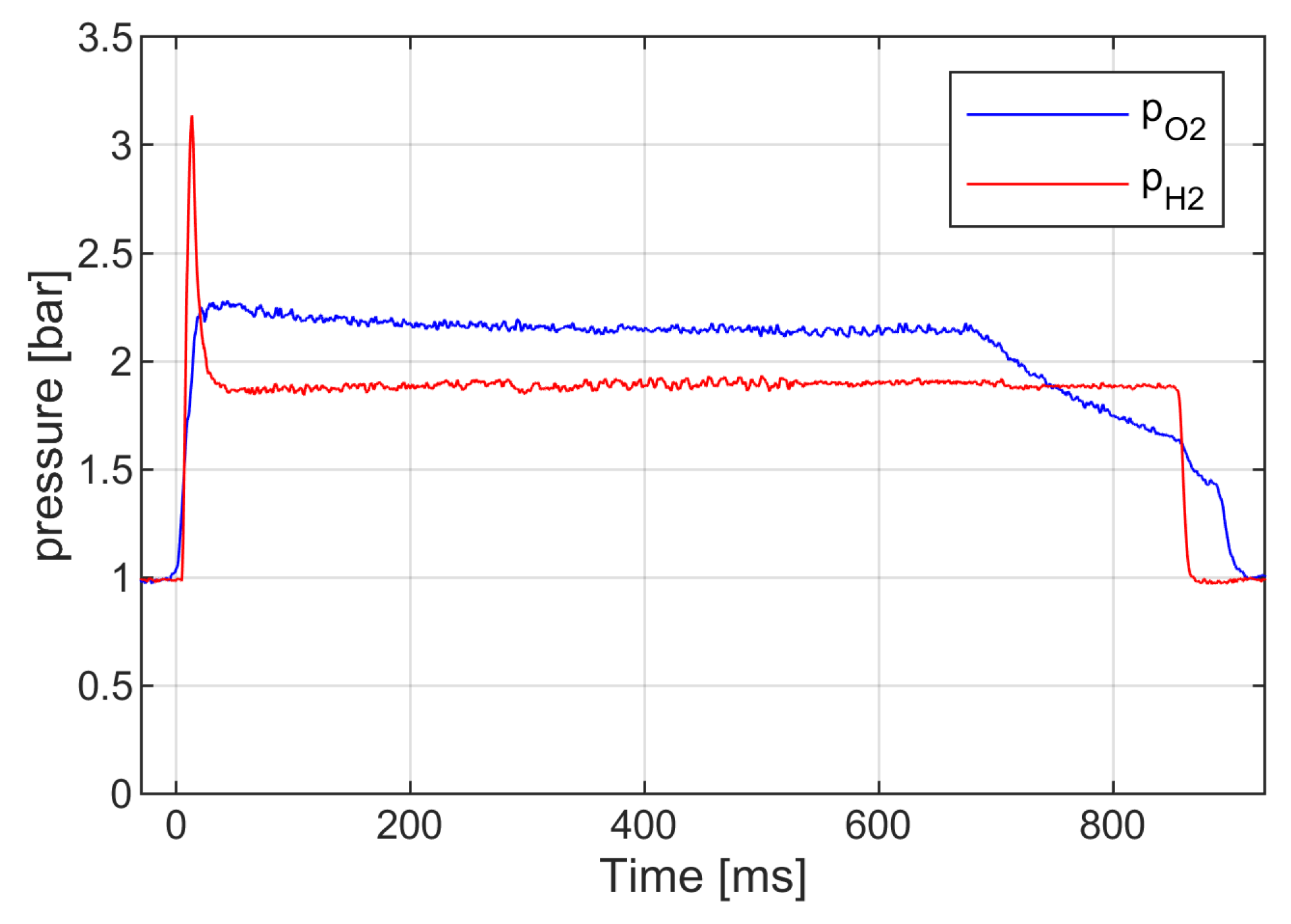
Figure 5 shows the manifold pressures for both oxygen and hydrogen during one of the performed test runs. As can be seen, a constant feed pressure is rapidly established and steady-state propellant feeding conditions are achieved between 200 ms and 600 ms, when the oxygen flow rate is steadily reduced before the shutdown of the RDC. The short test duration is chosen based on the heat-sink design of the experiment. However, due to the typical detonation wave speeds, this test duration is still sufficient to observe several thousand rotations of the waves. Due to the replacement of the measurement ring with the quartz ring, there was no measurement of both the averaged, static chamber pressure and the high-frequency pressure oscillations during the studied RDC tests with optical access. However, based on the experience of previous tests with this RDC, including pressure measurements [
25], the mean chamber pressure for these conditions is about 1 bar.
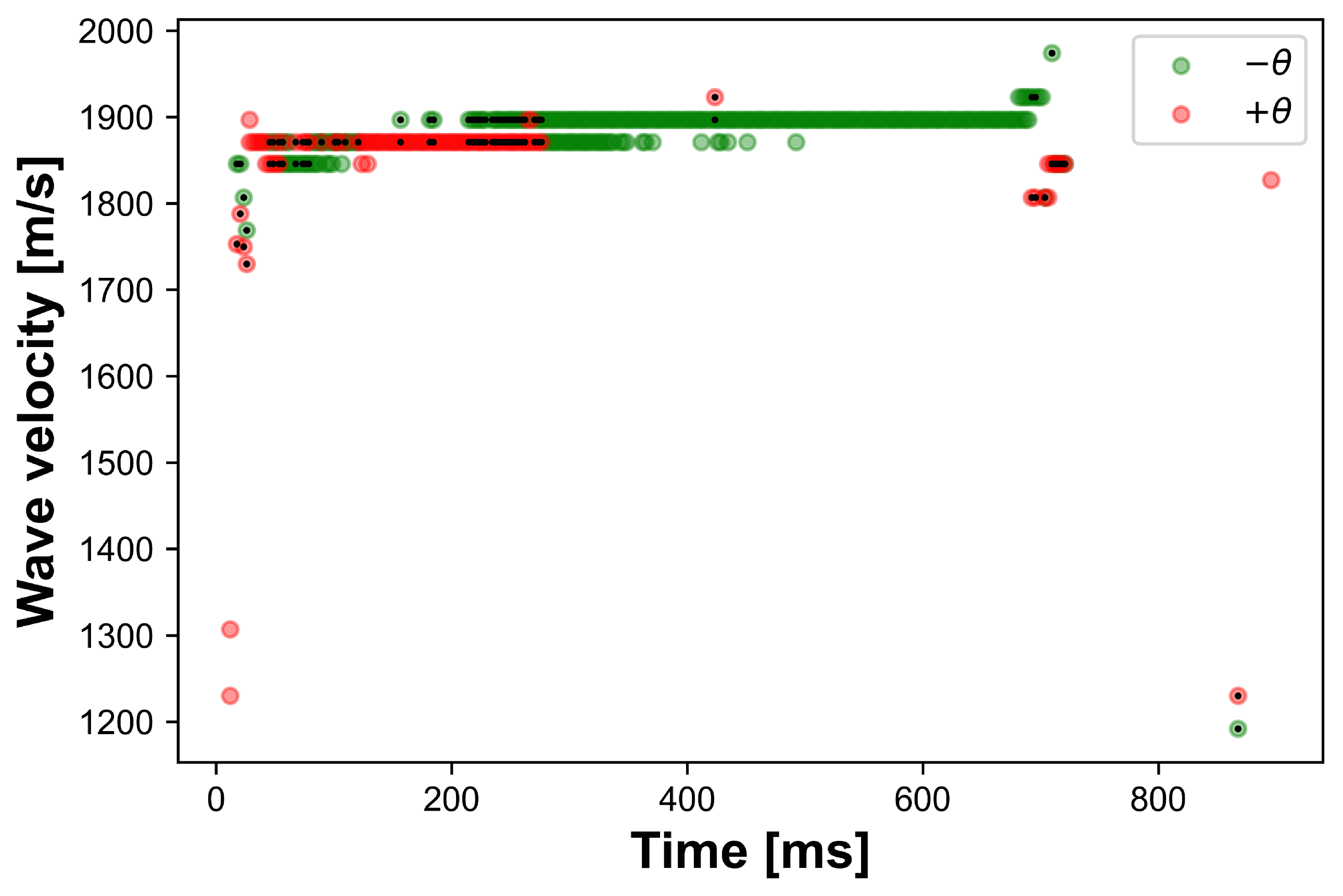
As will be shown later, a stable co-rotating detonation wave regime was observed during this steady state condition. This was a repeatable behavior in both analyzed test runs. For that reason, the operating conditions are averaged over the steady-state time window of interest.
Table 2 summarizes the tested and analyzed load points with the optical access quartz ring for which both steady injection conditions and a stable detonation wave regime were observed. The presented theoretical wave velocities (
) were calculated using NASA CEA [
41] with an ambient temperature of the fresh gas mixture, the presented ROF and a pressure of 1 bar in front of the detonation wave.
2.5. Optical Diagnostics
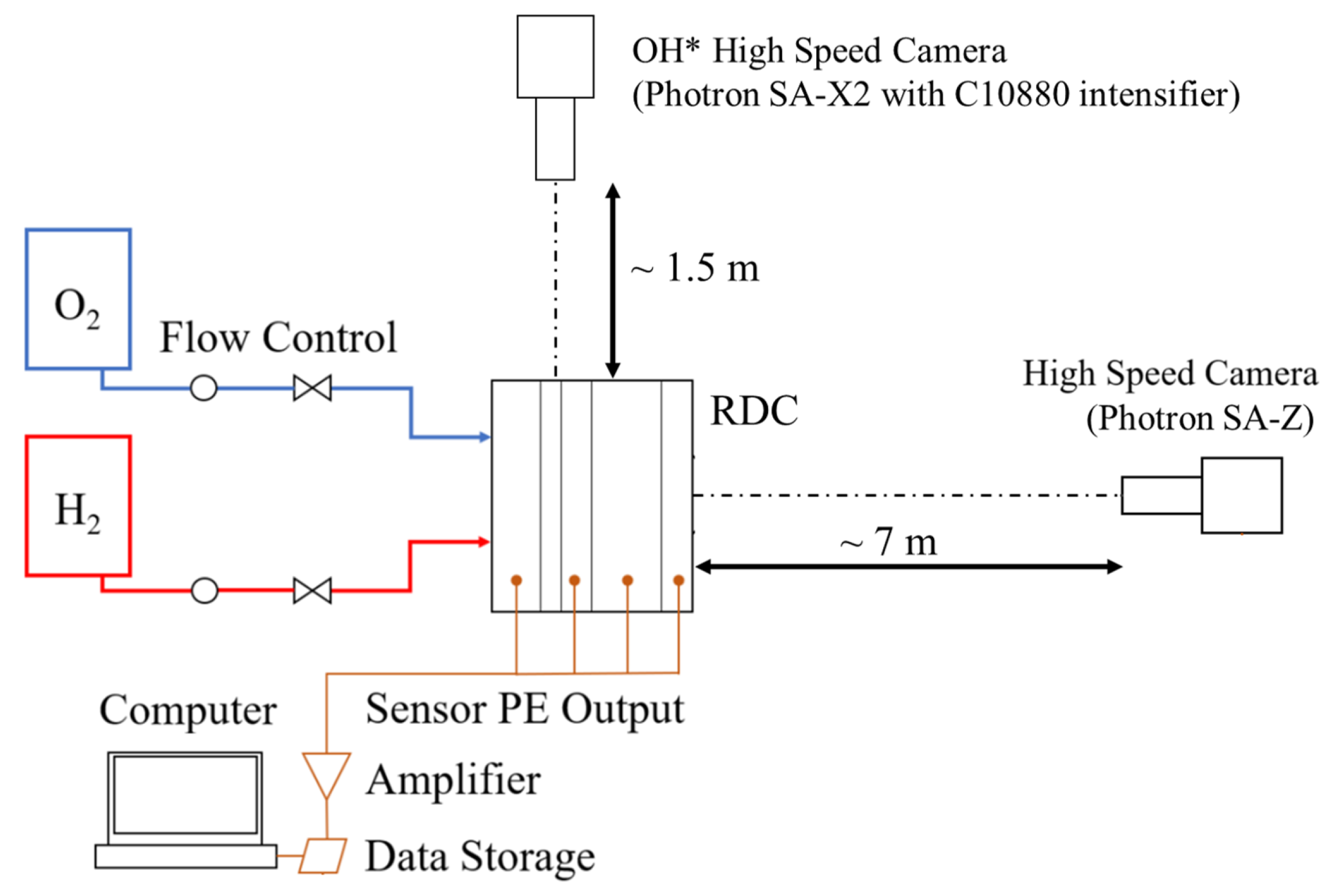
Two Photron high-speed cameras were used in the underlying tests. In order to visualize and analyze the detonation wave dynamics, one high-speed camera was placed downstream of the RDC exit, similar to previous RDC tests at DLR [
24,
25]. Here, the Photron SA-Z (Photron, Tokyo, Japan) was placed aligned with the chamber axis and at a distance of about 7 m away from the RDC. No special emission filter was used for this camera. A lens with a 500 mm focal length and an aperture of 4.5 was used. The spatial resolution was 256 × 256 pixels and the outer diameter of the annular RDC was covered by about 210 × 210 pixels.
A second high-speed camera, the Photron SA-X2, was placed normal to the chamber axis to visualize the passing detonation waves through the optical access window. Both cameras were synchronized at 180,000 frames per second (FPS). The resolution was set to 256 × 168 pixels, with about 120 × 80 pixels covering the optical access into the annular RDC chamber. In order to capture OH* emissions from the detonation wave, the SA-X2 camera was combined with a Hamamatsu image intensifier (type C10880) (Hamamatsu, Shizuoka, Japan). A special UV-lens with 105 mm focal length and an aperture of 4.5 was installed and an OH* filter with 310 ± 5 nm was mounted on the lens. This camera was installed with a radial distance of about 1.5 m from the RDC. The simplified setup of the experiment and the optical diagnostics is presented in
Figure 6.
2.6. Image Processing Routine
The Photron high-speed cameras both record the images in gray scale. In order to better visualize the waves and to investigate both the detonation wave regime (number and direction of waves) and the detonation wave structure, image processing procedures were applied. These routines are described in the following sections.
2.6.1. Detonation Wave Regime (SA-Z)
The image processing method used on the downstream high-speed camera is based on publications from Bennewitz et al. [
11,
12]. The implementation at DLR has already been described in detail in a previous publication from Bard et al. [
24]. Here, only a summary of the most important steps is given.
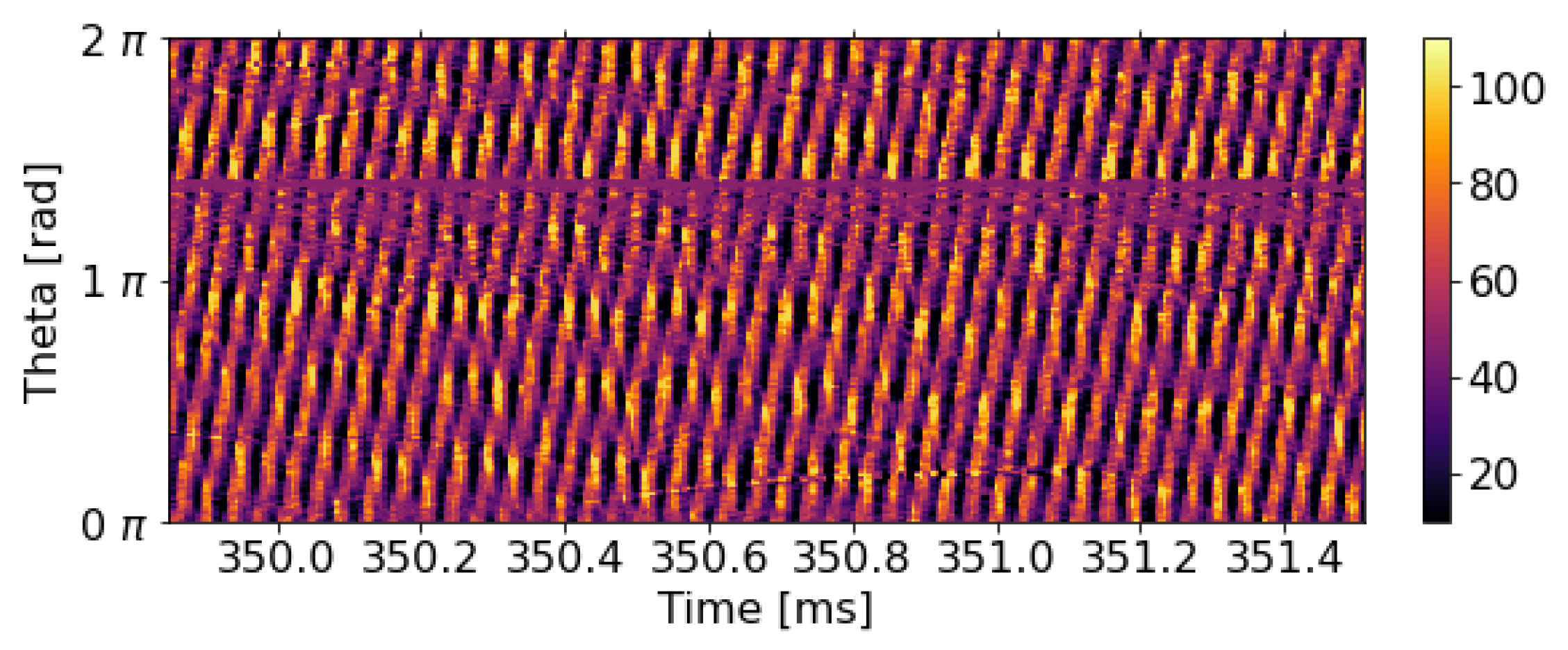
In order to get a time-resolved evolution of the detonation waves, first the high-speed camera data is cut into segments of 500 frames each (equal to ≈2.8 ms). Next, an image correction is applied by removing the mean image and increasing contrast and brightness. The location of the chamber annulus is identified in a second step by performing a pixel-wise Fast Fourier Transformation (FFT) and identifying the pixels with the highest dynamics. The annulus is then divided into 360 bins. The number of waves and their direction can finally be derived either from angular-time (
-
t) plots of the intensity or from a 2D-FFT [
24]. Knowing the dominant frequency
f, the outer diameter of the RDC
and the number of waves
, the wave speed
can be calculated directly by using the following equation:
2.6.2. Detonation Wave Structure from OH* (SA-X2)
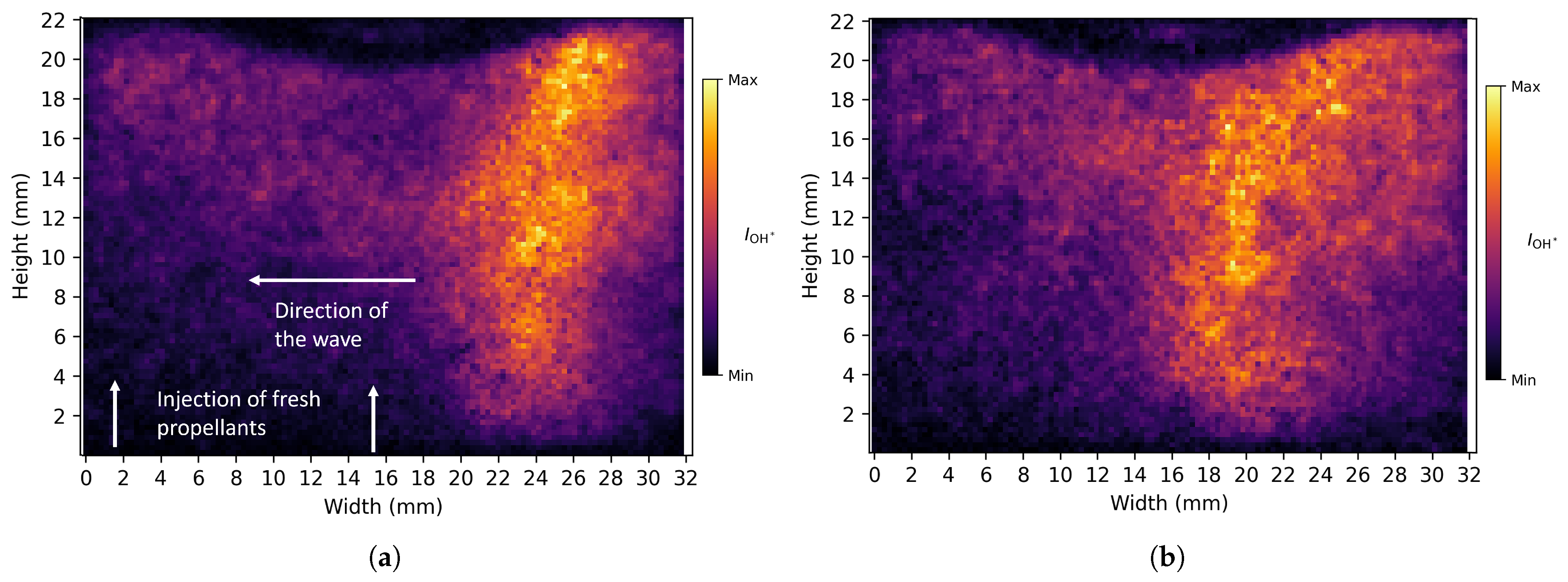
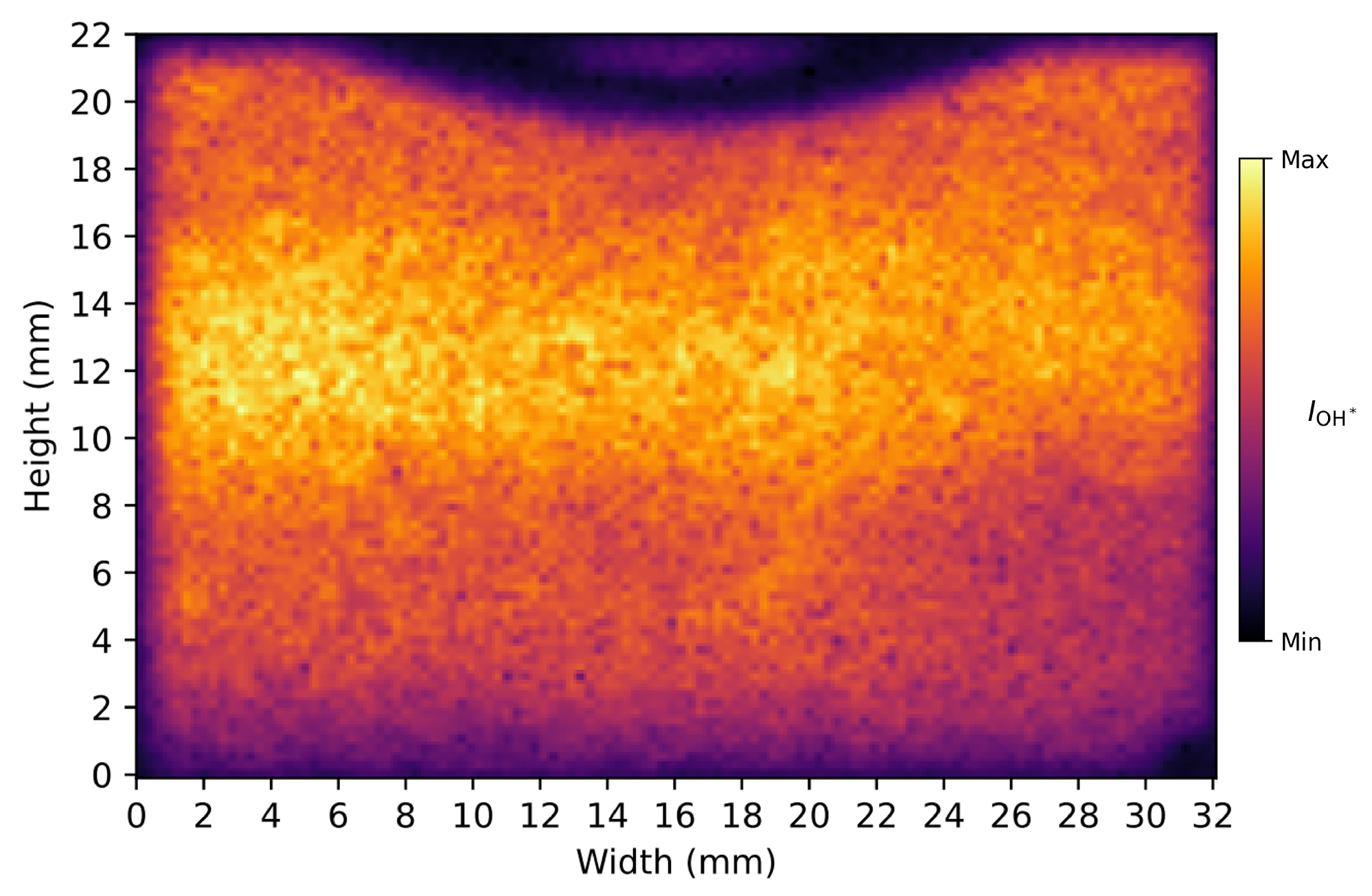
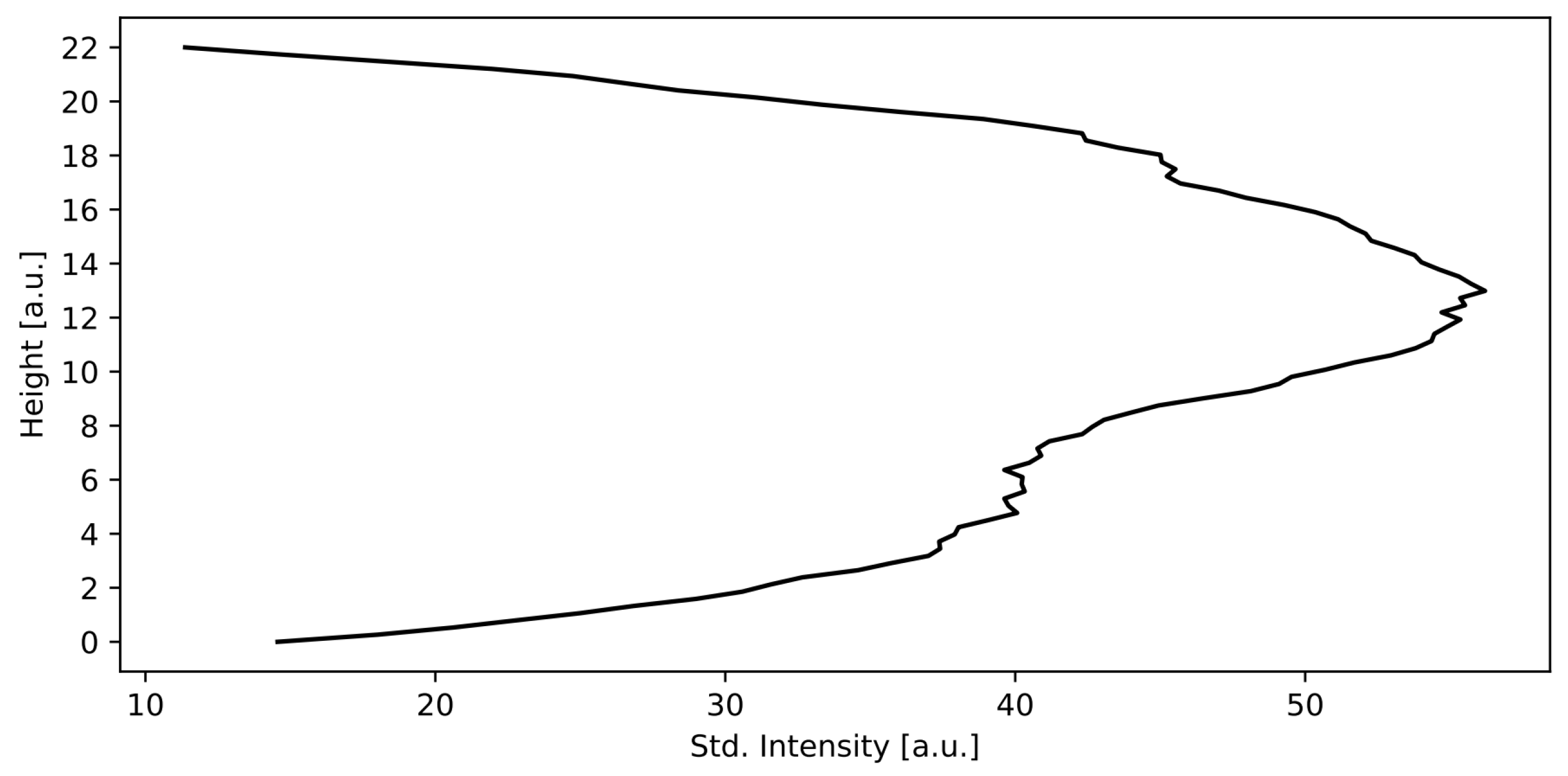
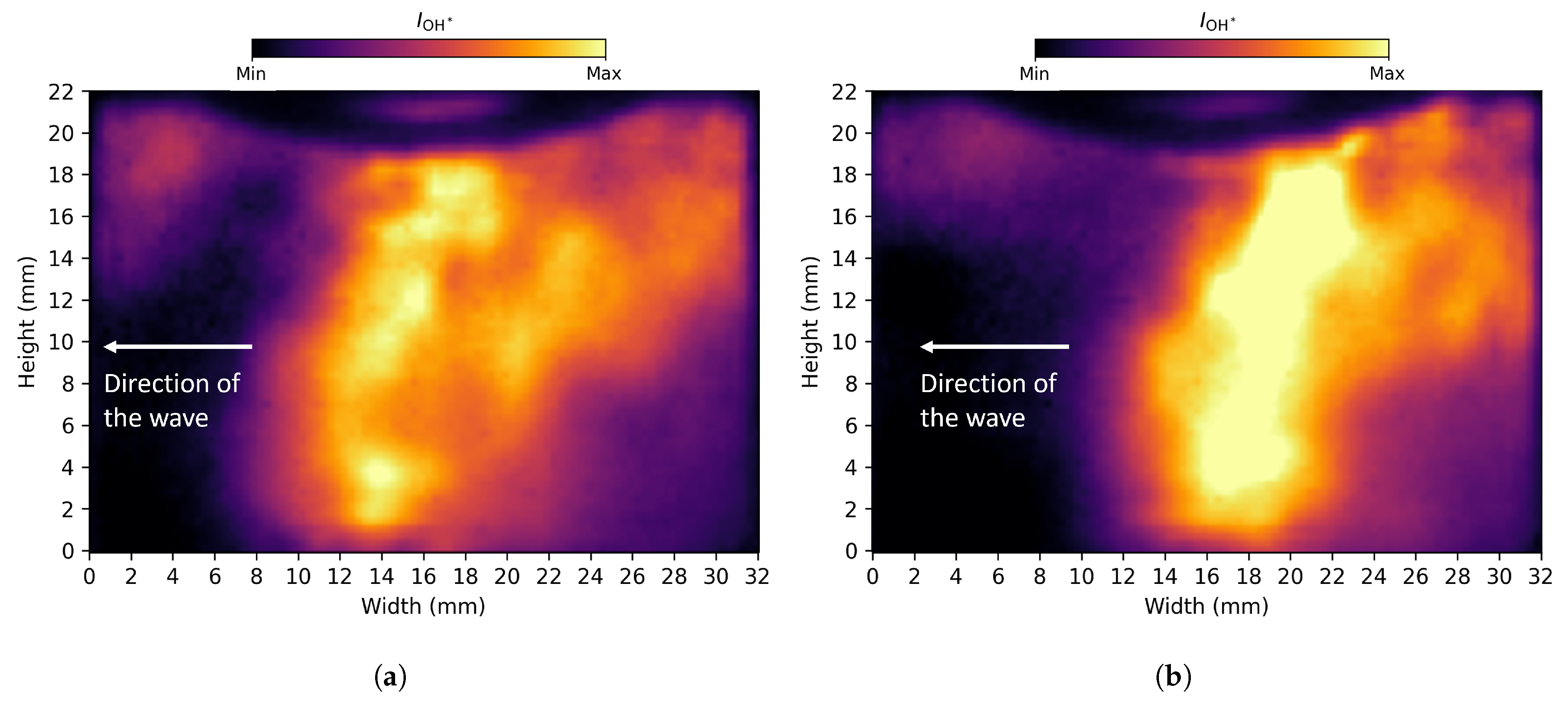
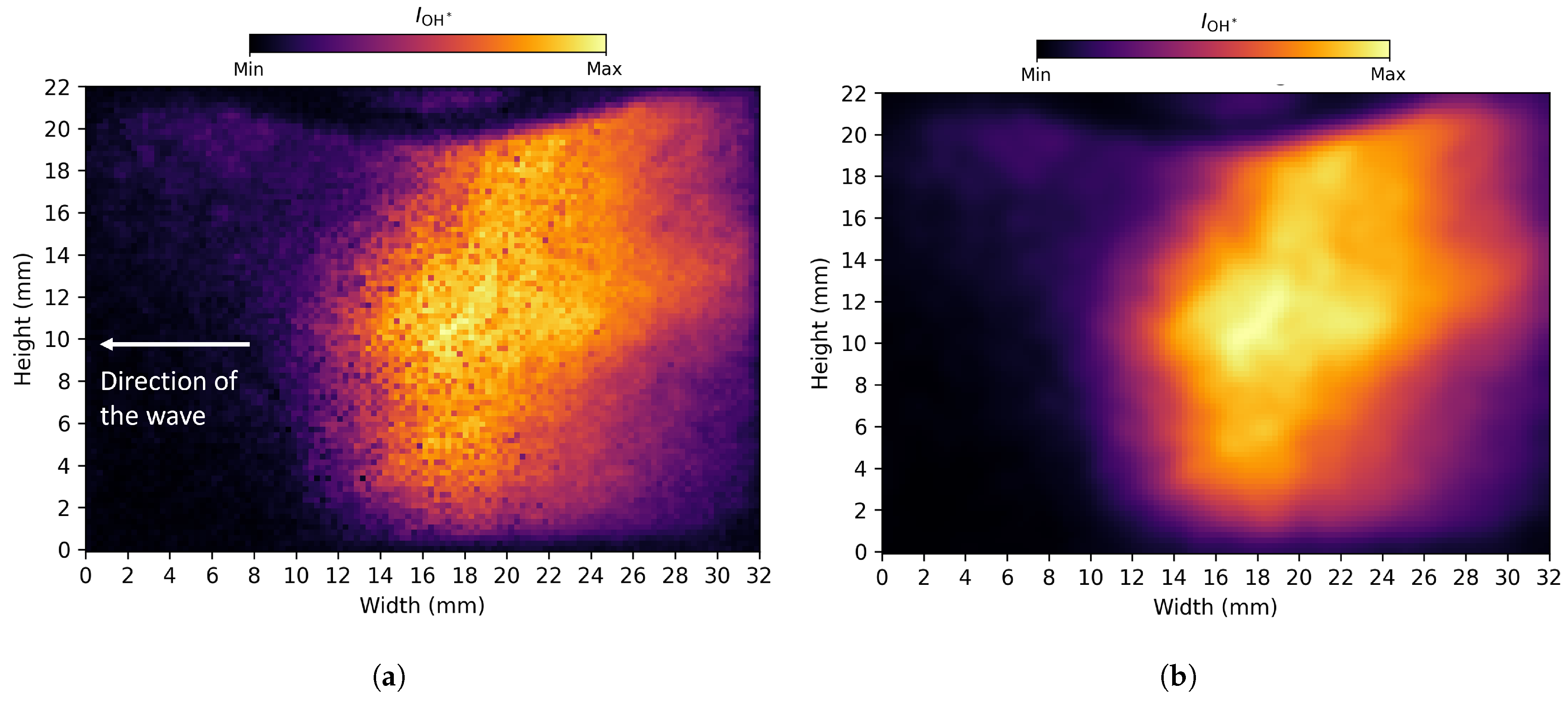
The detonation wave structure can be observed in the radial OH* high-speed images. First, the OH* images are post-processed to increase intensity, contrast and plotted in false color. Since rotating detonation waves are highly dynamic and to a certain extent, also chaotic, additional methods to gain more insights into the time-averaged wave structure are applied. In order to do so, a two-dimensional pixel-wise standard deviation is calculated. This standard-deviation map shows the locations of the strongest intensity dynamics. Thus, the standard deviations should give an indication of the location of the detonation waves.
In addition, a phase-averaging algorithm is applied to the data to calculate a mean detonation wave structure. The image sequence is analyzed using a structured processing workflow to extract the wave front characteristics. Initially, the images are pre-processed to adjust the brightness level. The following procedure is applied to test segments of 10,000 frames each. For that purpose, a mean horizontal gradient, aligned with the direction of the passing wave, is computed first using a moving window approach. This also serves to smooth the signal and reduce local fluctuations. The result is a one-dimensional signal indicating the passing wave position in the window region. An FFT is then applied to extract the main frequency component, its amplitude and the corresponding phase angle. To ensure that only images containing a wave are retained, the images are then filtered based on the amplitude strength. The remaining images are sorted into 120 bins according to their phase. A mean phase-averaged image is then computed for each bin, creating a sequence of images that can then be used for further analysis [
22].
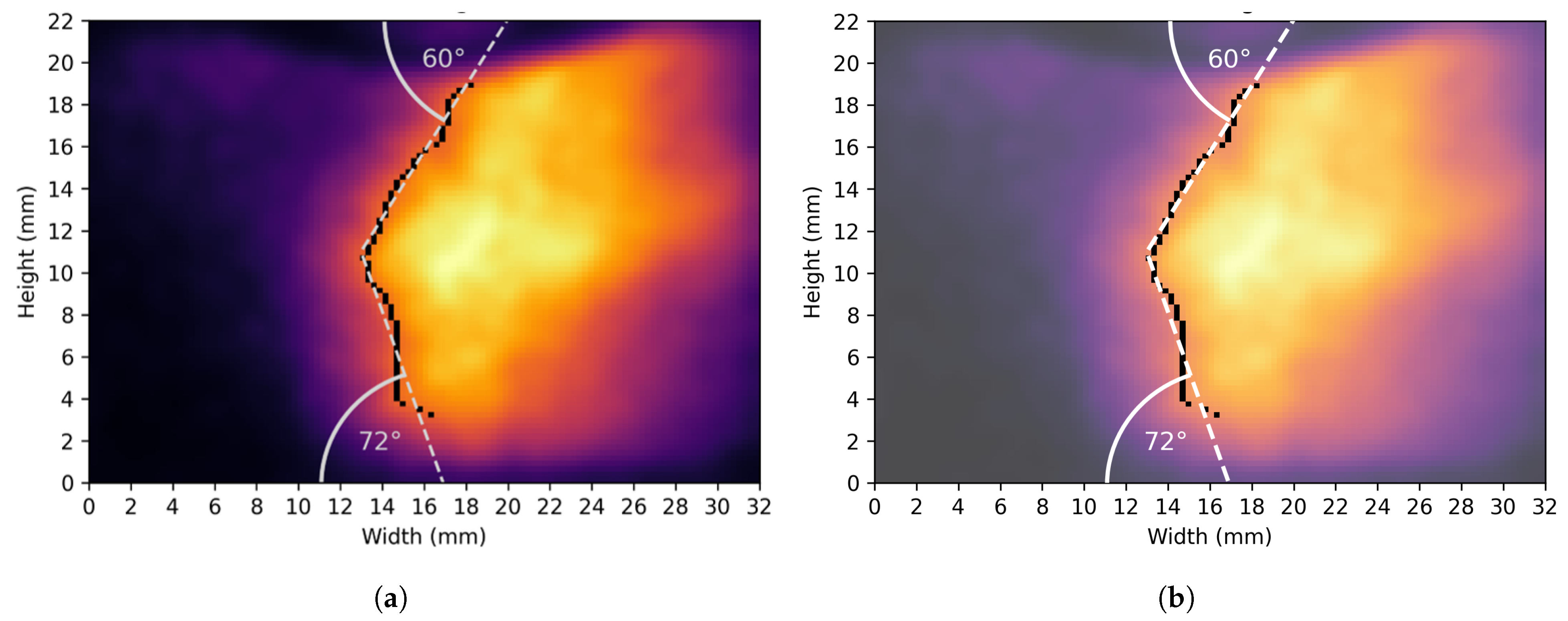
For the determination of the angles of the leading detonation wave and the oblique shock wave, each phase-averaged image is smoothed using a Gaussian blur to suppress surface noise caused by impurities in the quartz glass. A brightness threshold is then applied to identify the contour of the leading wave fronts. Two linear regressions are then fitted to this contour, separated by the inclination point of the wave front. Thus, two angles are obtained: one for the detonation wave front and one for the start of the oblique shock. These angles are calculated for each phase-averaged image to increase the statistics of the resulting angles and to evaluate the uncertainty.
In addition, a decomposition method was also applied to the high-speed imaging of OH* emission. The standard DMD algorithm assumes a linear system [
42] and is, for that reason, not a well-fitting approach for the optical analysis of detonation waves, especially in the case of counter-rotating modes [
25]. Therefore, a nonlinear DMD analysis decomposing the data into dynamics at certain frequencies can be achieved via a Koopman operator. The Koopman theory states that with a suitable transformation, each nonlinear system can be linearly mapped with the Koopman operator. However, except for canonical problems, it was not yet possible to describe nonlinear systems through an infinite-dimensional linear (Koopman) operator and corresponding nonlinear functions (observables) analytically. Recent studies approximated the Koopman operator via neural networks [
43,
44].
4. Discussion
Assuming that the point of inflection in the wave images is a marker for the detonation wave height, the detonation wave height for these conditions would be around 11 mm or (7 ± 1
, which lies at the lower end of the well-known correlation by Bykovskii et al. [
6]. Here,
h is the mixing height of the fresh propellants, which is typically in the order of the detonation height or slightly larger [
28]. However, compared to the correlation from Bykovskii et al., the wave height in this hydrogen–oxygen RDC has a lower uncertainty and also the actual height for this experiment is clearly at the lower end of the
range. Due to the now more precise range of the detonation wave height for these conditions, improved injector designs, which are optimized to fill only the first 8
of the detonation channel instead of up to 17
can be derived and tested in future work.
However, why both the standard deviation and the phase-averaged images show the highest intensity at an axial distance of 9–14 mm downstream of the injection plane and not over the full height of the detonation wave, which theoretically should extend from close to the injection plane until the
h is currently not fully understood. A possible explanation could be that in the short time frame in between two consecutive waves, the best fresh gas mixture quality is achieved in the location of 8–15 mm downstream of the injection plane and thus the rotating detonation waves show the strongest chemical reactions in this region. More insights into this axial evolution of the OH* intensity oscillations could be obtained from CFD modeling of the given combustor and operating condition. Numerical studies of this RDC are currently ongoing and first simulation results have recently been published [
45]. Even though different operating conditions were modeled, the CFD indicated that 3D effects of the larger 10 mm gap size compared to the previously tested 4.5 mm gap size stabilize the detonation waves in the DLR combustor. In addition, the results also predicted the best fresh propellant mixing and the most intense detonation waves to be observed at around 4 and 10 mm downstream of the injection plane, which very well agrees with the experimental observations in this study. However, a similar simulation of the exact experimental setup and operating condition of the optical access RDC tests of this study needs to be performed in order to confirm that the observations from Bard et al. [
45] are similar for these conditions and to gain a better understanding of the injection, propellant mixing and wave stabilization for the given condition.
In the circumferential direction of the channel, the high intensity region in the phase-averaged images extends between 4 and 8 mm. This would correlate with 2 to 5
and is significantly larger than expected widths of the reaction zone of detonation waves, which is usually less than
[
6,
46]. However, in the single snapshots presented in
Figure 11, the high intensity region and thus the combustion zone of the detonation wave appear much thinner. Here, the thickness of the high-intensity zone appears to be about 1–4 mm thick, which would be around (1–2.4)
. This shows that the phase-averaging routine contributes to the thickening of the high-intensity region in the radial direction. Most likely, this is due to the challenging resolution of the phase bins, due to the high wave speed and the small window. An additional effect, which could explain the slightly increased extension of the detonation wave width compared to what is expected from literature, is due to the curvature of the channel and the relatively large annular gap width of 10 mm. The structure of detonation waves in curved channels has been investigated by several studies [
47,
48], and it was found that the detonation wave front in curved channels is not planar but gets bent. Due to the projection of the curved wave front onto the camera chip, this could also lead to a thickened detonation wave in the OH* imaging.
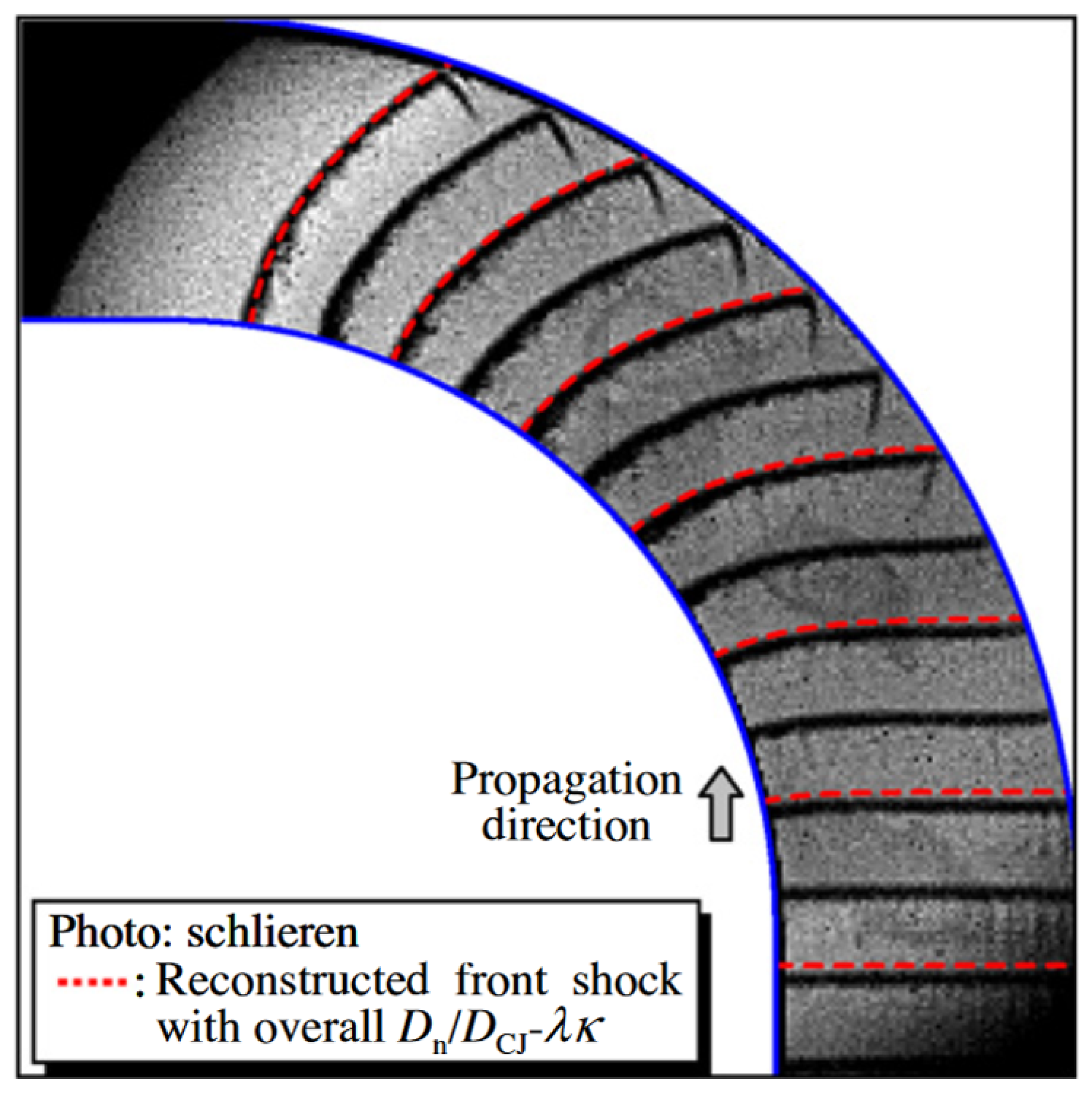
Figure 17 shows the detonation front of a hydrogen–oxygen detonation wave in a curved channel with an outer radius of
mm and a channel width of 20 mm [
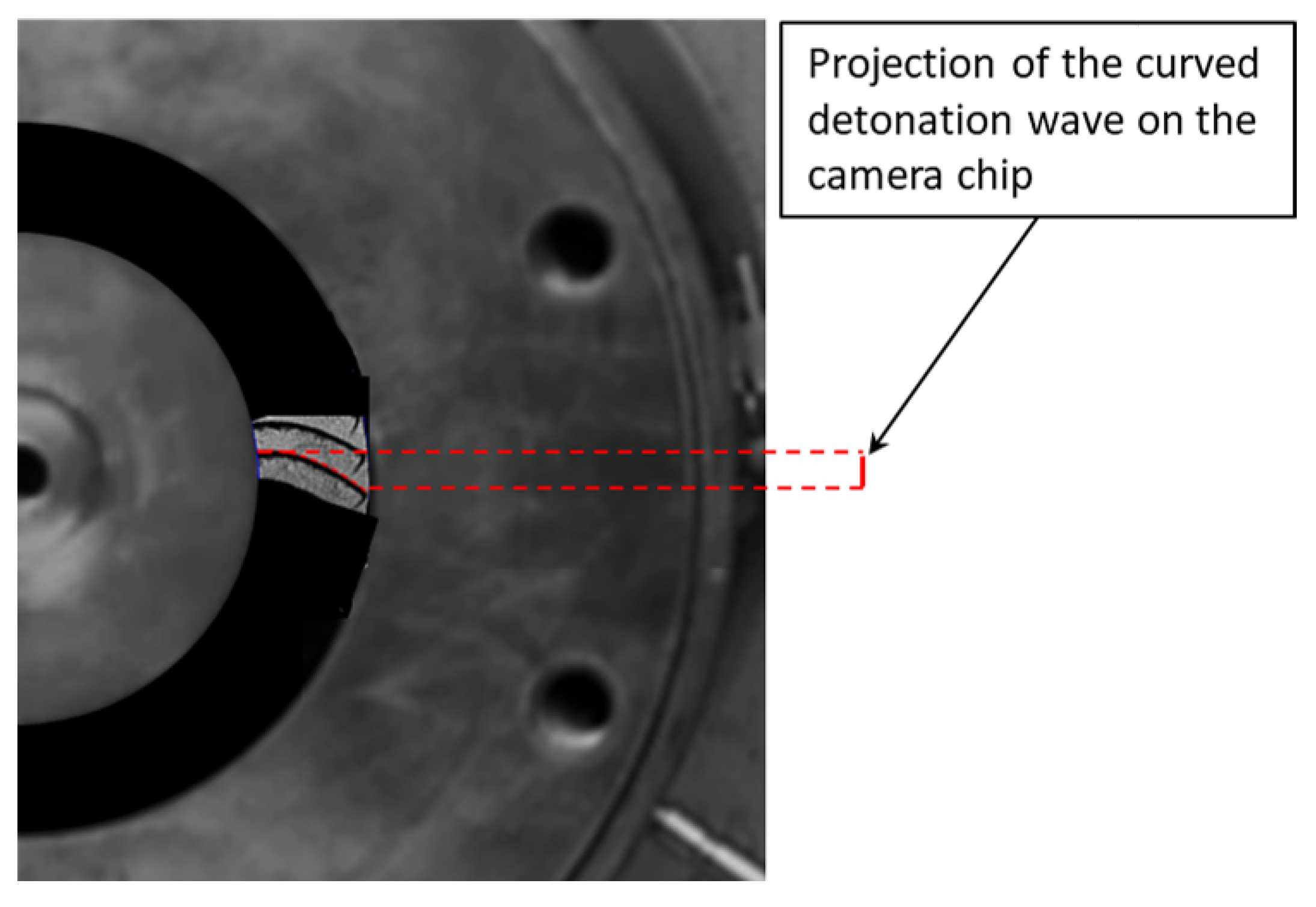
47]. It can be seen that the wave front is not a planar wave normal to the channel walls, but the curved channel bends the wave front itself. Now, assuming that in the studied RDC with an outer diameter of 68 mm and a channel width of 10 mm, a similar shape of the wave front is present, the line-of-sight projection, which is recorded by the camera chip, would lead to a thickening of the detonation wave front. A sketch of this described effect of the curved waves leading to a thickening in the visualization of the OH* emission of the wave front through the projection on the camera chip can be seen in
Figure 18.
However, in the single snapshots presented in
Figure 11, the high intensity region and thus the combustion zone of the detonation wave appears much thinner. Here, the thickness of the high-intensity zone appears to be t about 2–3 mm thick, which would be around 1–2
. This shows that most likely both the projection from the curved detonation wave and the phase-averaging routine contribute to the thickening of the detonation wave in
Figure 15 and
Figure 16.
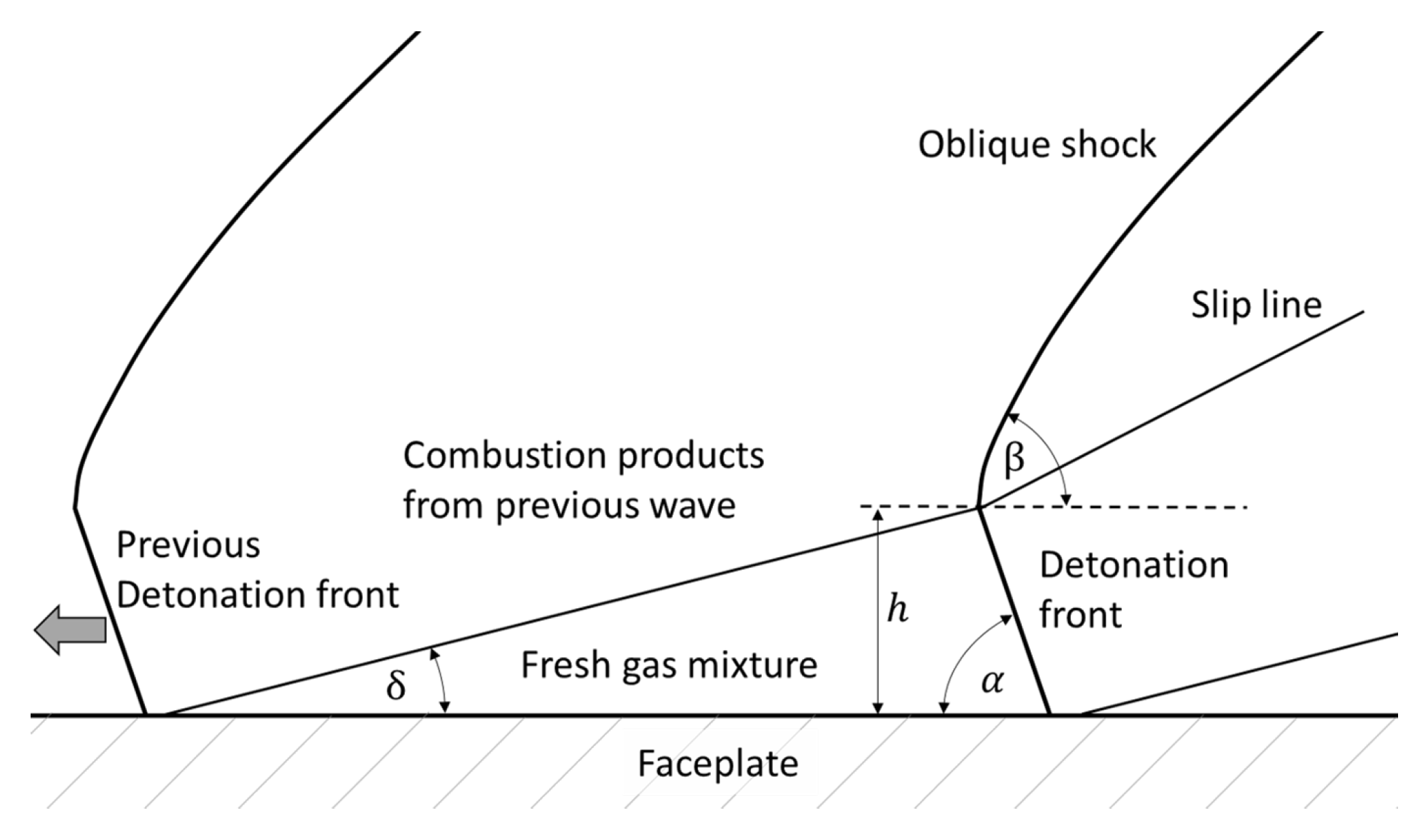
Now that the structure of the wave front is derived from the OH* imaging, this information can be combined with the additional geometrical information of the chamber annulus and the number of waves to create a sketch of the hydrogen–oxygen detonation wave structure in the DLR RDC for the given operating conditions. This simplified model is presented in
Figure 19. Here,
h is the filling height of the fresh gases in front of the detonation wave,
the height of the detonation wave itself, and
l the distance between two consecutive waves. Based on the imaging, three main angles can be defined:
is the angle of the detonation wave front with respect to the injection plane,
is the angle of the start of the oblique shock wave and
is the angle of the triangle of the fresh gas mixture.
The final geometrical features of the detonation wave structure can be described as follows. The height of the fresh gas mixture
h is estimated to be about 12 mm from the injection plane. The detonation wave height
is about 11 mm or 6–8 detonation cell seizes
. Knowing that three co-rotating waves are present in the chamber, the distance
l between two consecutive waves can be calculated and is 70 mm. Thus, the angle of the boundary between the injected fresh gas mixture and the burnt products from the previous wave is estimated with
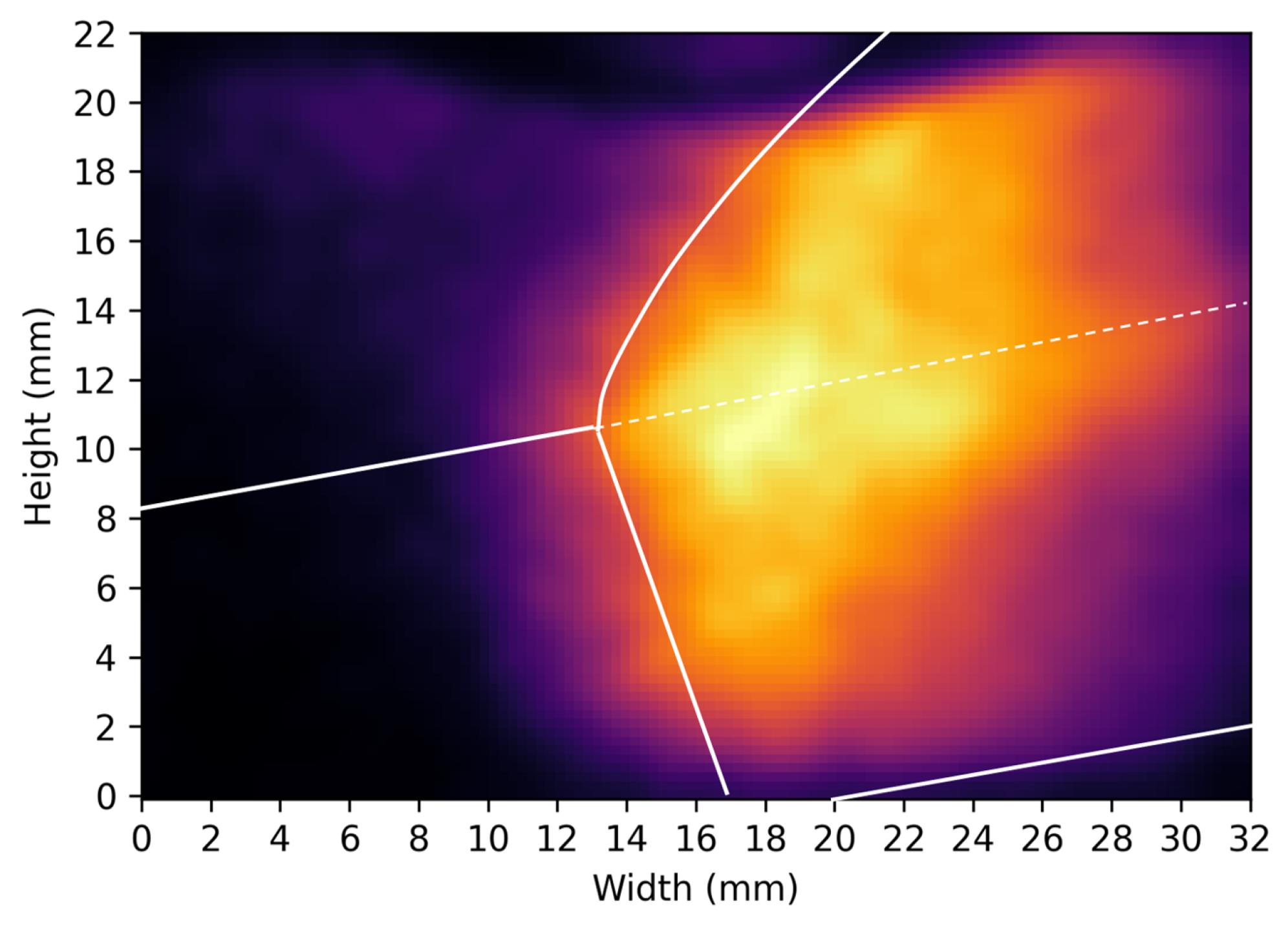
. As was explained before, the angles of the detonation wave and the oblique shock wave are both obtained from the fitting of linear regressions to the edge detection wave front in the phase-averaged images. Since, for each bin, a different phase-averaged image, including slightly different angles are processed, the mean angles from all phase-averaged images are calculated. The forward leaning angle of the detonation wave is
. The trailing oblique shock starts at the inflection point located 12 mm from the injection plane. If an angle of a linear approximation is fitted to the first few millimeters of the curved shock, the angle of this line can be approximated with
. Finally, in
Figure 20, these geometrical characteristics are now overlayed on the phase-averaged, smoothed OH* imaging [
22].
5. Summary & Conclusions
In Rotating Detonation Combustors, the injector design is crucial for obtaining stable detonation waves. However, in order to design these injectors, it is important to have an understanding of the required filling height of the fresh gas mixture that is consumed by one detonation wave. However, the well-known semi-empirical correlation to estimate this filling height from Bykovskii et al. [
6] has an uncertainty of ±33%. For that reason, radial optical access is a powerful diagnostic method in order to increase the understanding of the interaction of the injection and mixing of fresh propellants and the detonation waves in RDCs. For that reason, radial visualization of the detonation wave structure was already applied in several studies. However, to the author’s knowledge up to today, there exists only one previous publication including radial visualization of hydrogen–oxygen detonation waves in rotating detonation rocket combustors by Bykovskii et al. [
20]. But in this experiment, important information, such as the injector geometry, is not well documented. For that reason, an optical access quartz ring was integrated into an existing RDC at DLR. Two tests with similar steady-state operating conditions were analyzed. During these tests, the wave dynamics showed good repeatability, and in both tests, there were longer durations with stable co-rotating cases of three waves. The wave speed was about 1900 m/s or 71% of the theoretical CJ-velocity.
A second high-speed camera was placed normal to the RDC axis and captured OH* emissions with 180,000 FPS through a quartz window that covered approximately 22 mm in axial direction of the detonation chamber and about 30 mm in circumferential direction, which translates to an angular field of view of 31° of the annular chamber.
The OH* images clearly showed the passing waves in the field of view. The post-processing of the images indicates that the mixing height of the fresh propellants for the investigated conditions is about 11 mm and therefore about (6–8) from the injection plane. Furthermore, the OH* intensity was also low between 0 mm and up to about 2–3 mm from the injection plane, which shows that the good mixing of the fresh propellants seems to be present between 3 mm and 12 mm, and thus the waves are not traveling directly on the faceplate but slightly lifted. A phase-averaged image was calculated to show the structure of the passing detonation wave. An edge-detection algorithm was applied to the phase-averaged image and revealed a forward-leaning detonation wave with an angle of 74 ± 4°. At a distance of 10–12 mm from the injection plane, there is an inflection point and a backward-leaning edge in OH* intensity that can be observed. This is currently interpreted as the start of the oblique shock.
The presented visualization of the detonation wave structure will be useful for the design of new injectors for future hydrogen–oxygen RDCs at DLR, since the filling height is now characterized. Based on the presented findings, new injectors with adjusted injection velocities for this wave height will be designed and tested in future work. Furthermore, in order to better understand the influence of injectors and the mixing quality on the wave dynamics, the optical access and the processing methods of this study could be applied to new injector designs and other operating conditions. In addition, the results could also be valuable for the validation of CFD simulations, because, to the authors’ knowledge, this study presents the first visualization of the hydrogen–oxygen detonation wave structure in a well-documented RDC experiment.




 ,
,