Installation Effect of the Rear-Mounted Tails of a Compound Helicopter on Its Propeller Noise


Abstract
1. Introduction
2. Flowfield and Aeroacoustic Simulation Methods
2.1. Flowfield Simulation Method
2.2. Aeroacoustic Prediction Method
2.3. Validation of the Flowfield Solver
2.4. Validation of the Acoustic Solver

3. Analyses of the Results
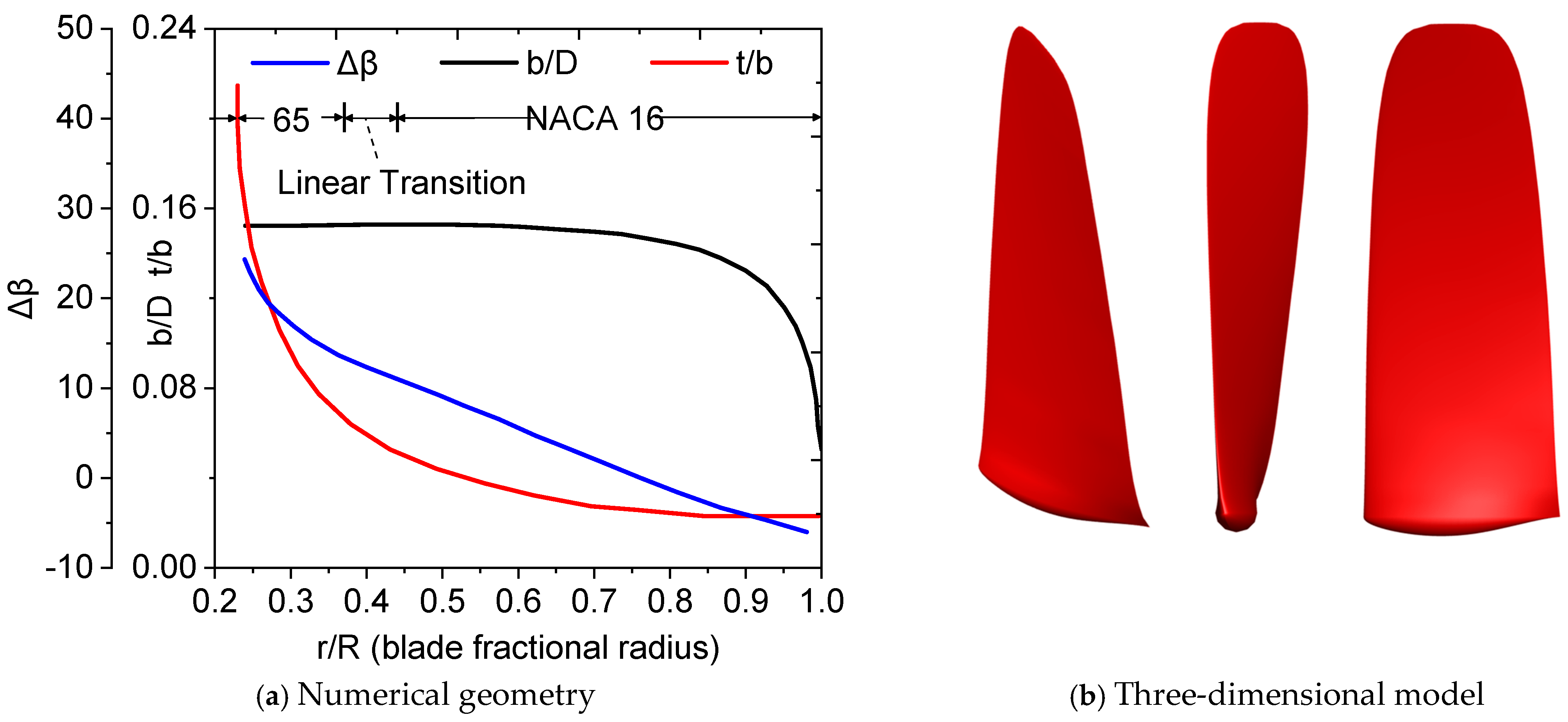
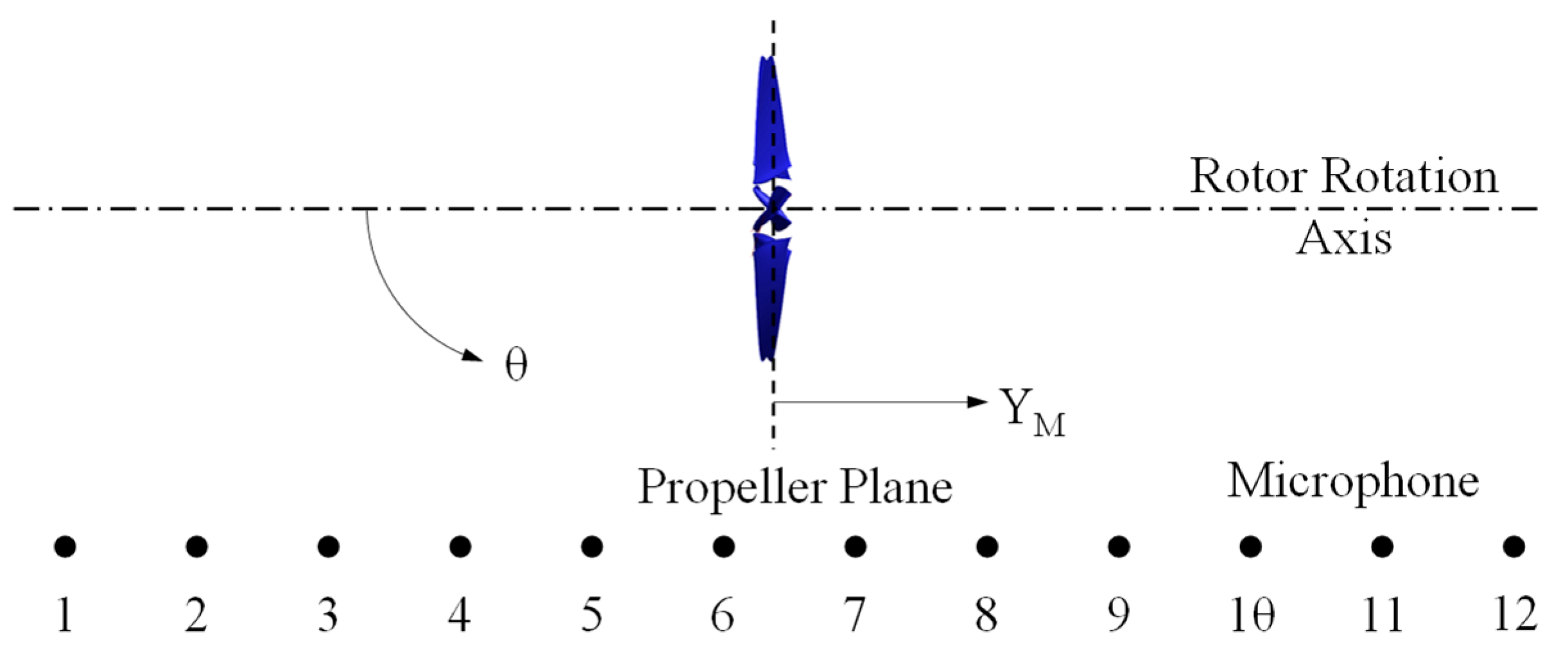
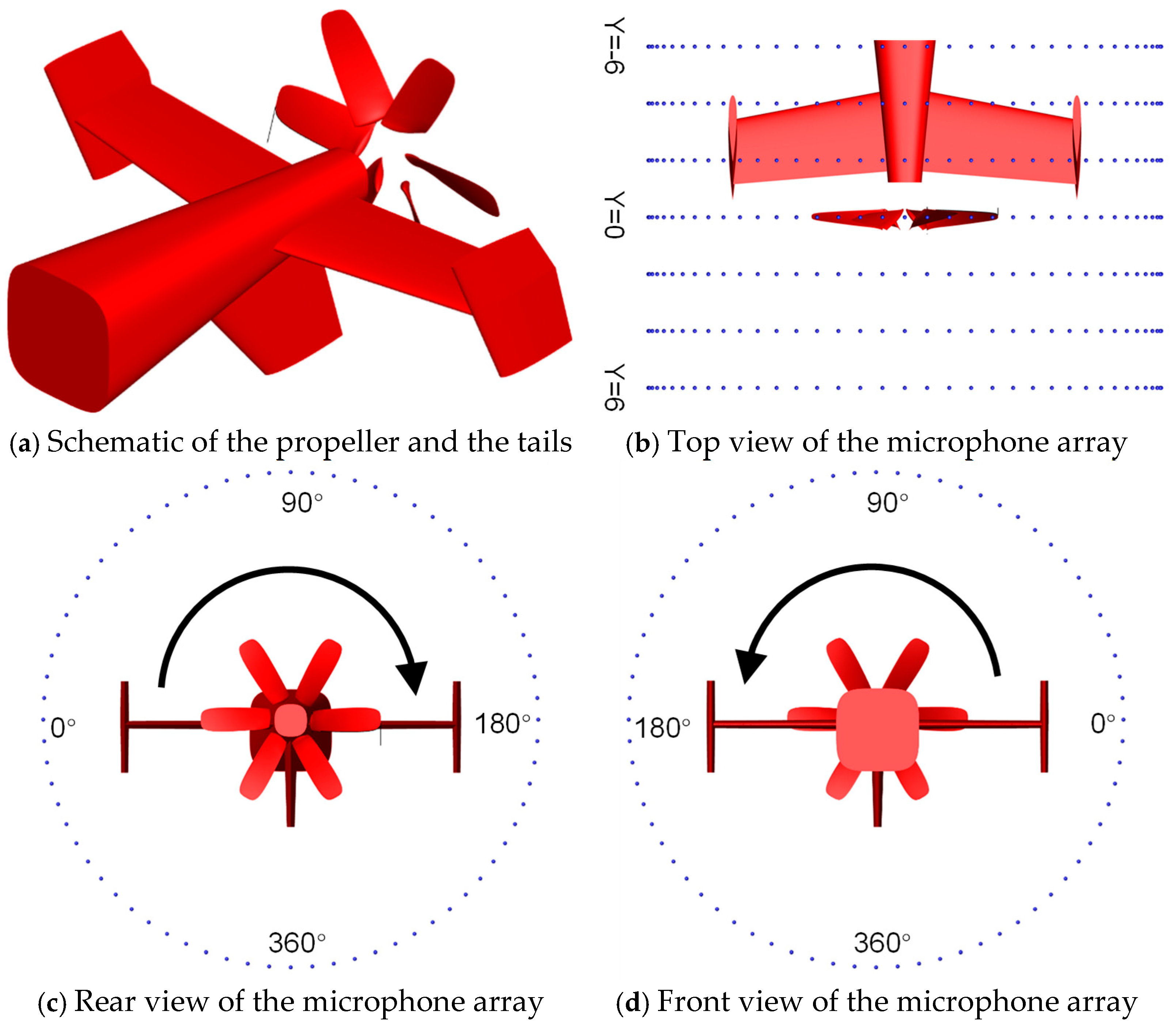
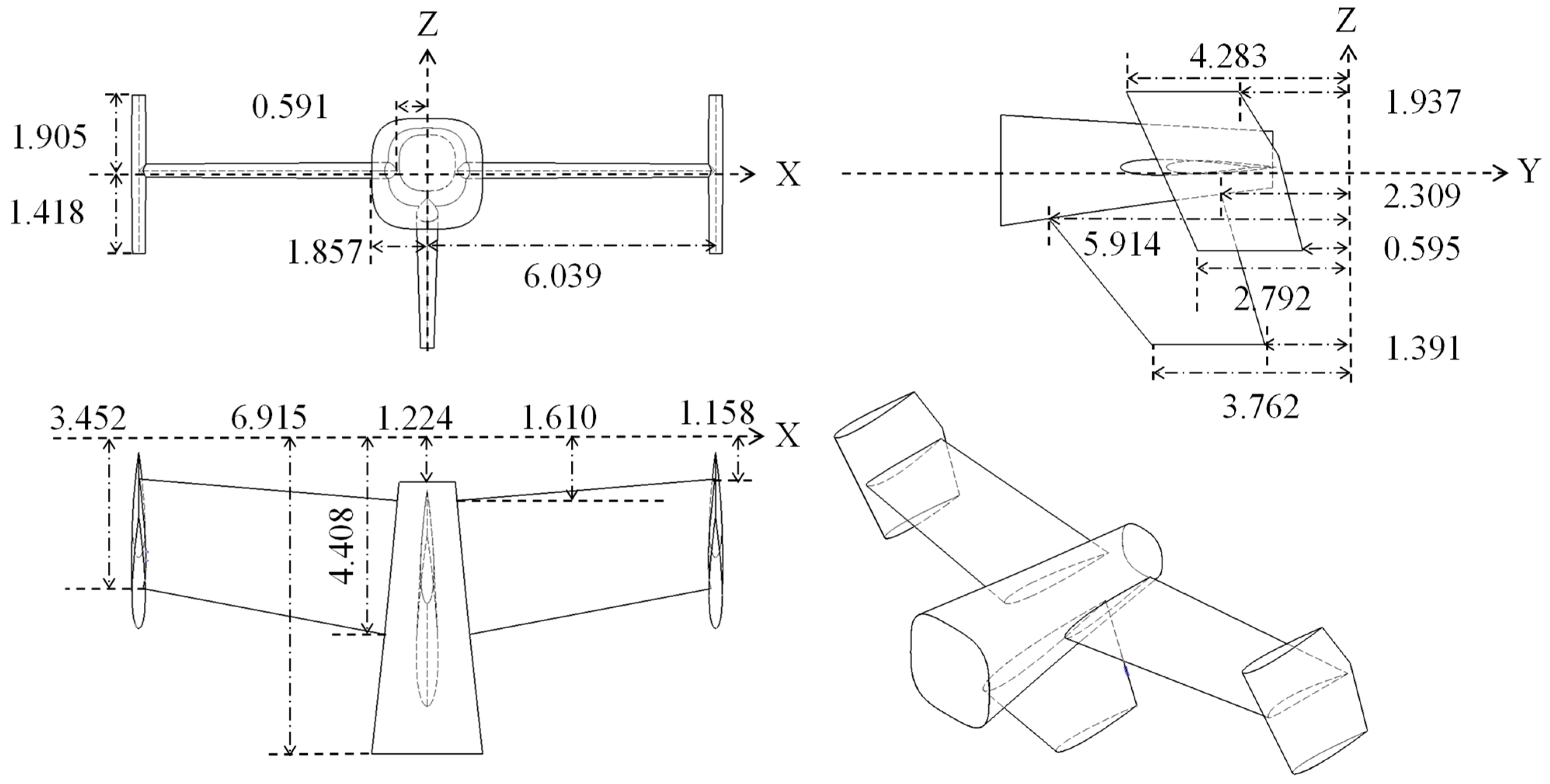
3.1. Simulation Model and Acoustic Probe Array
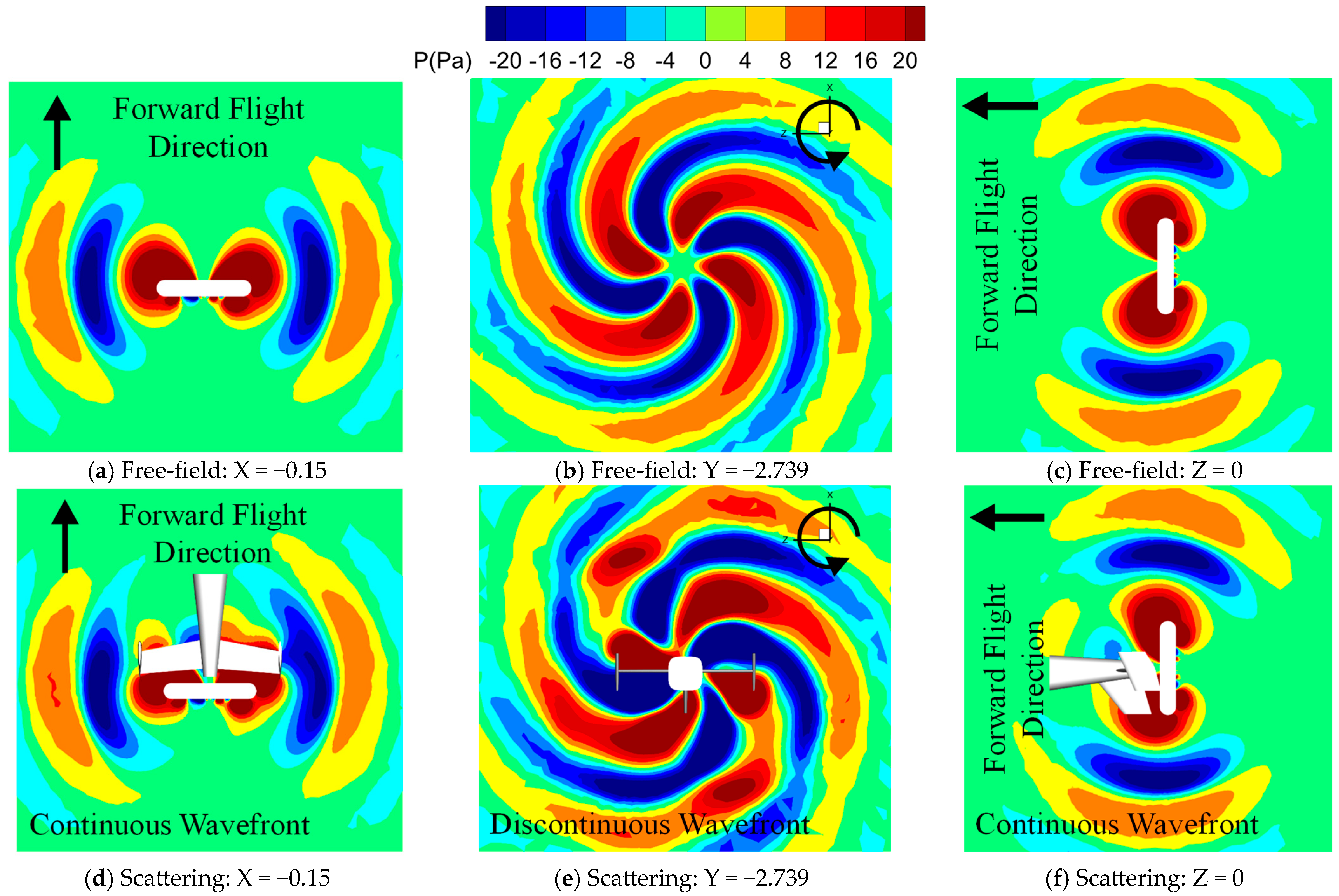
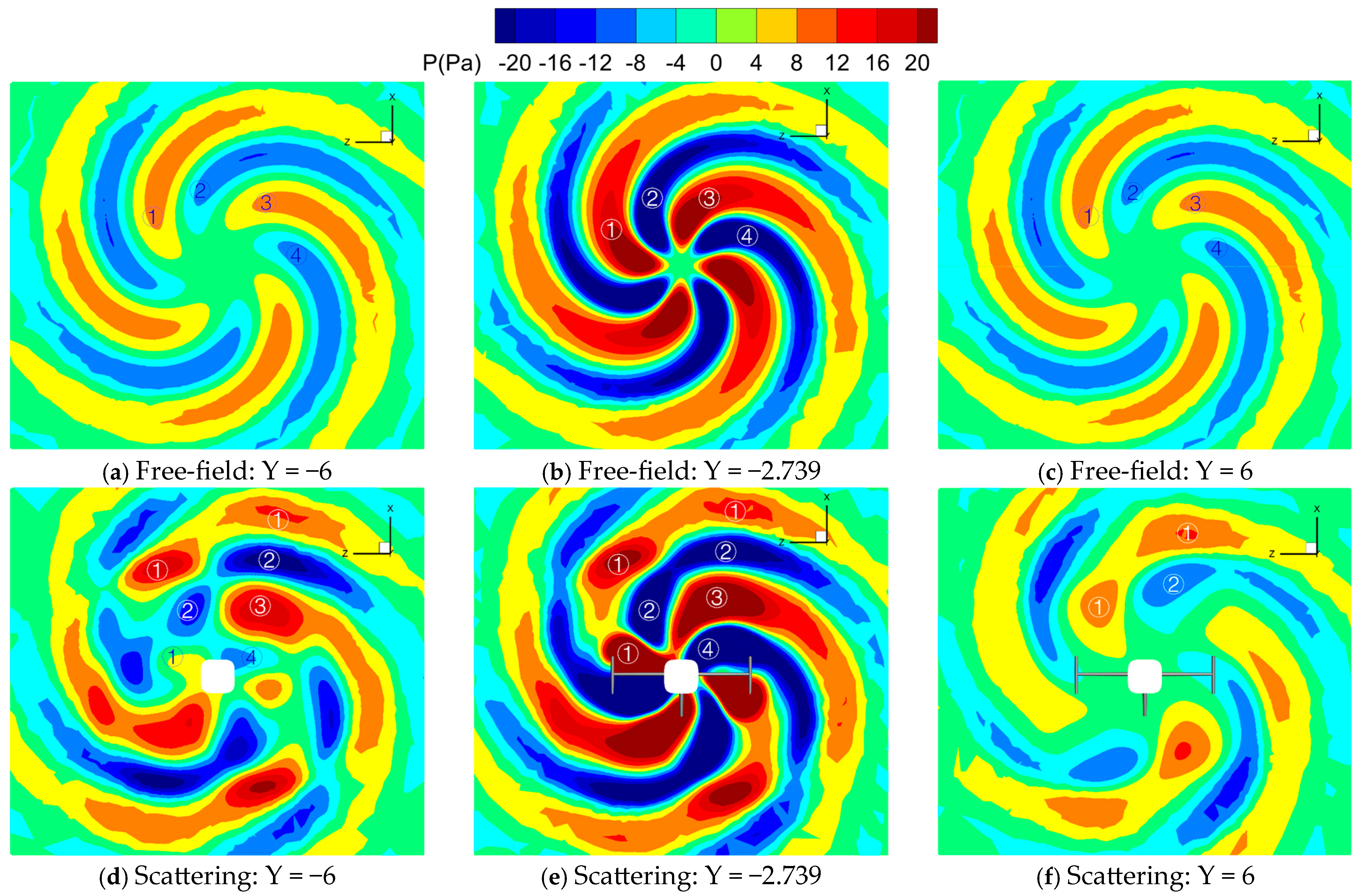
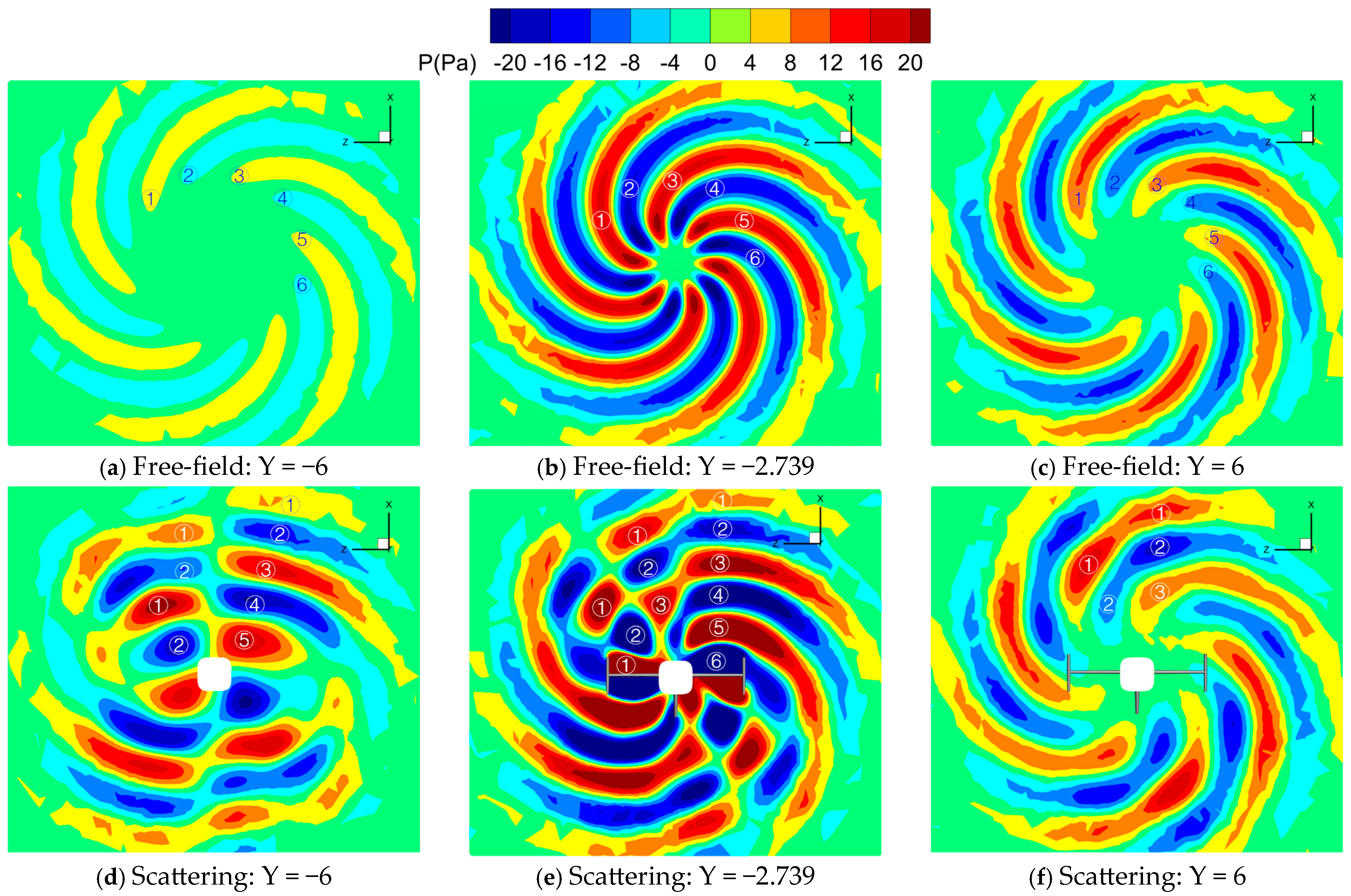
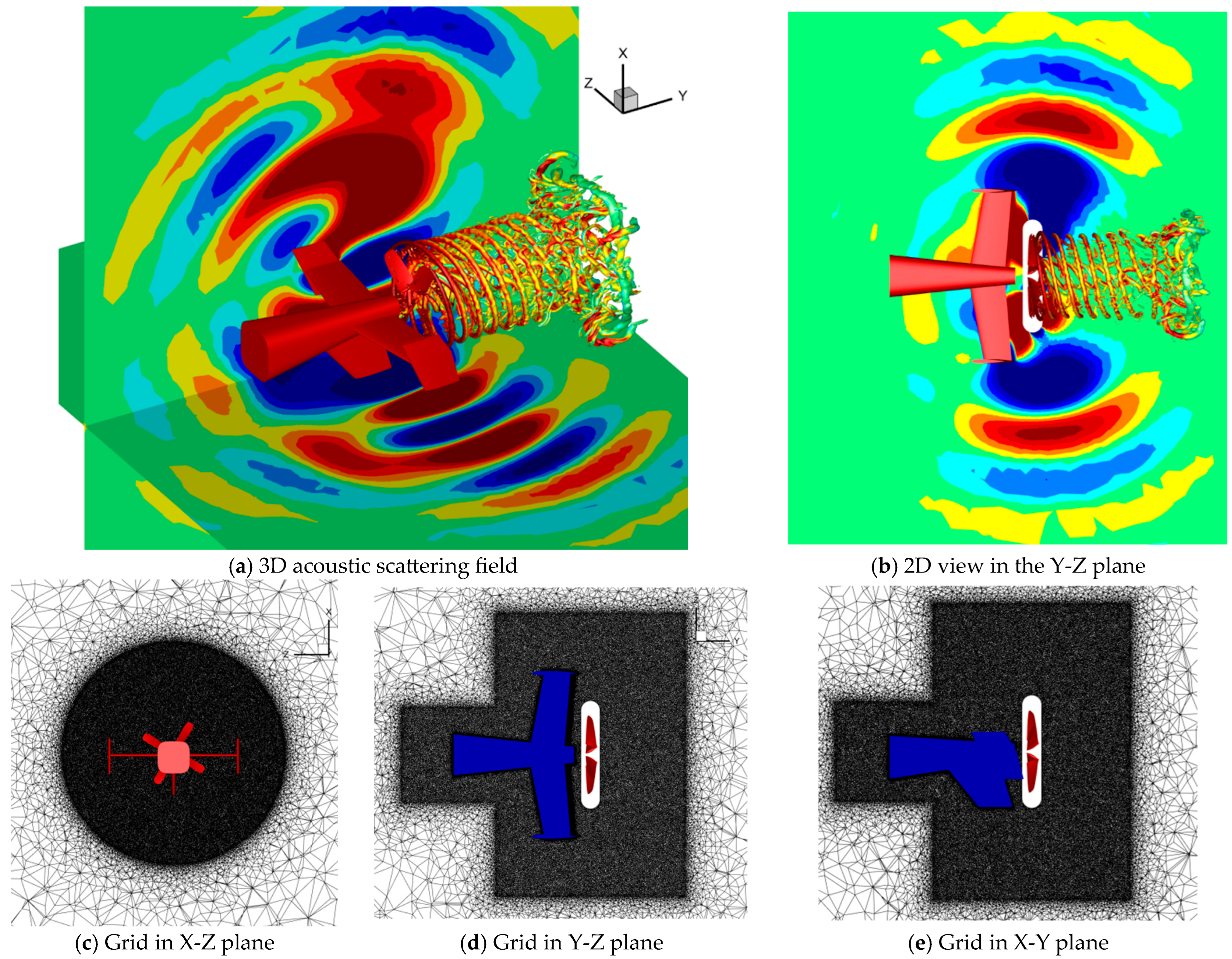
3.2. Distortion Characteristic of the Acoustic Waves
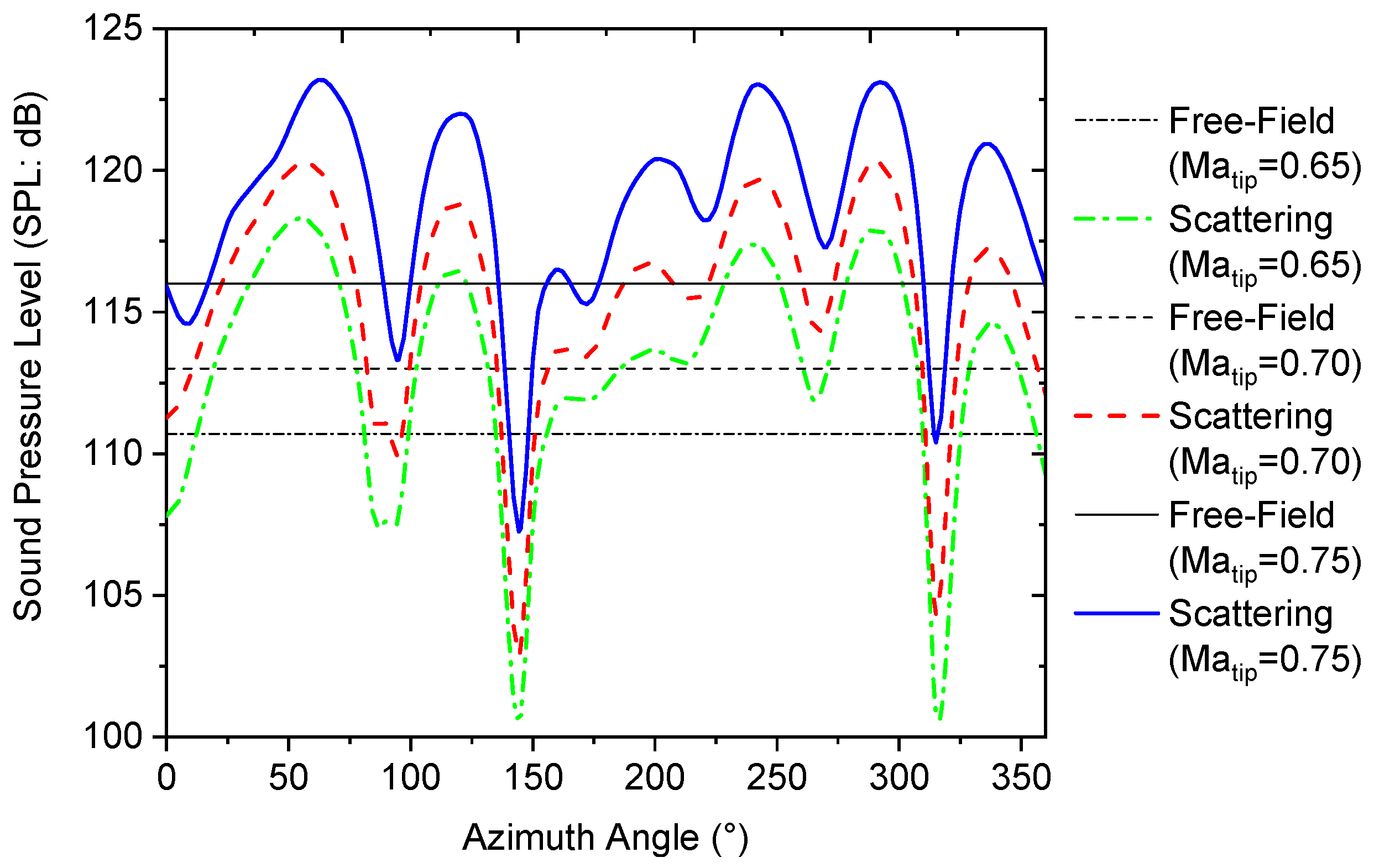
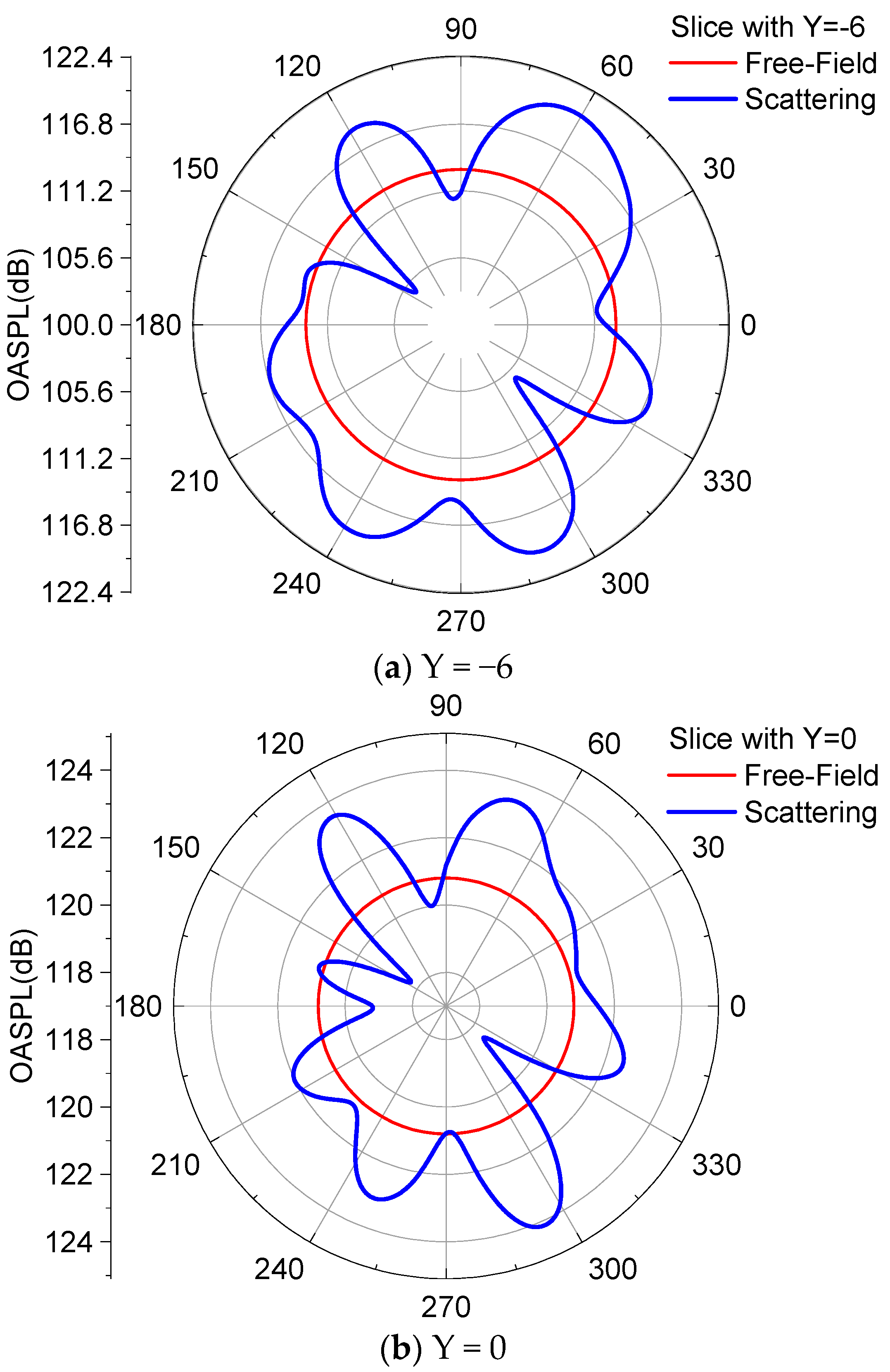
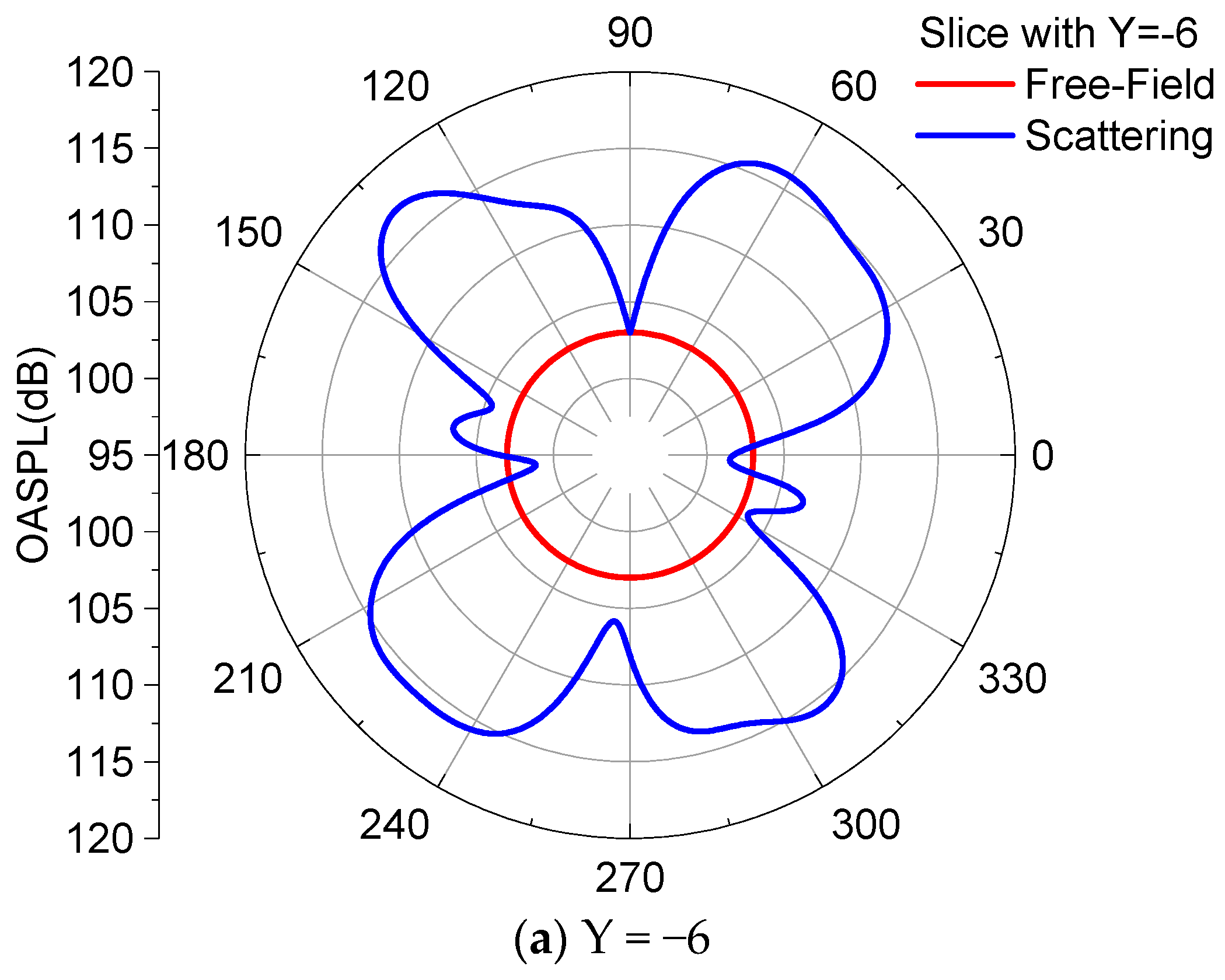
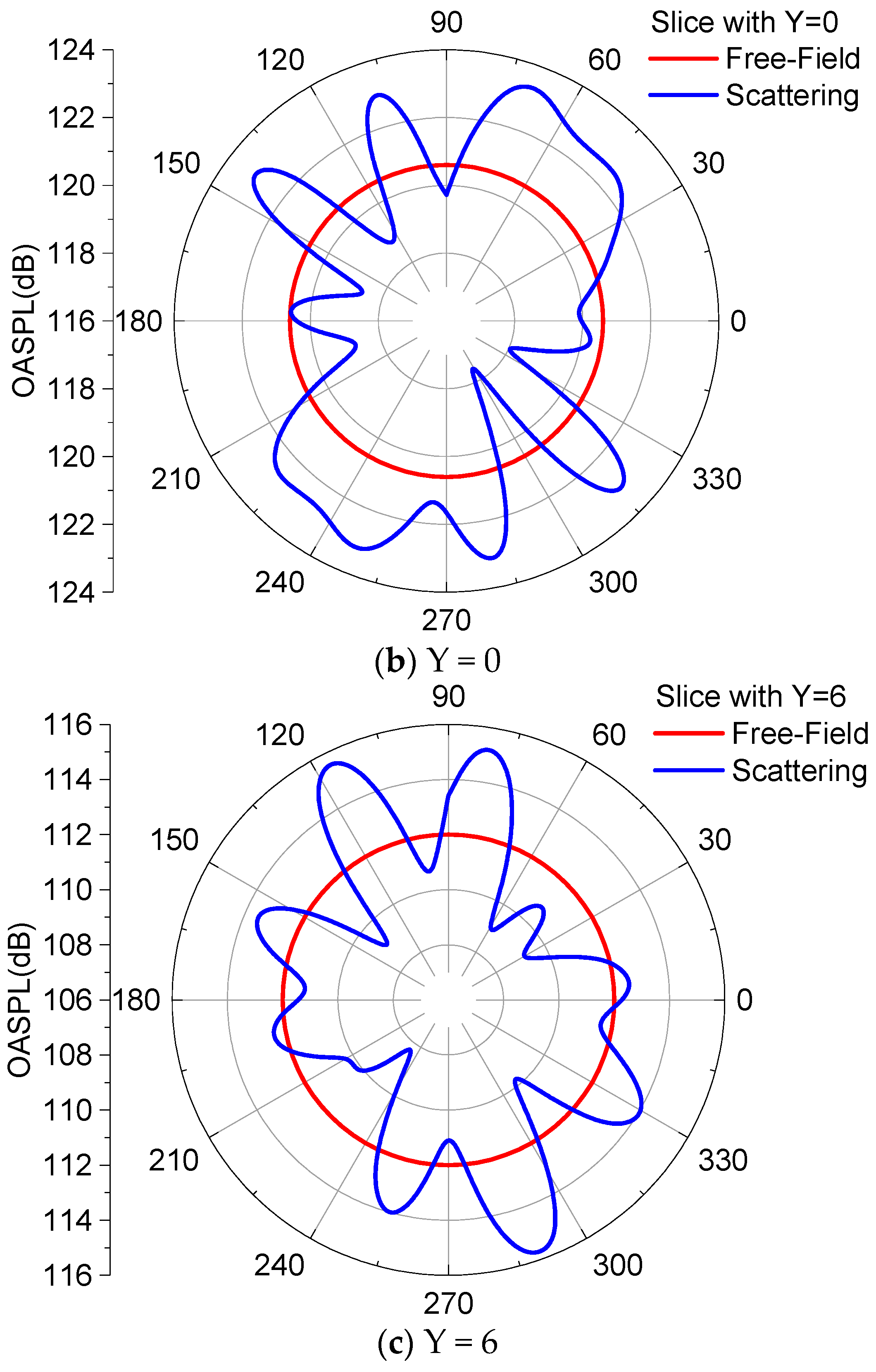
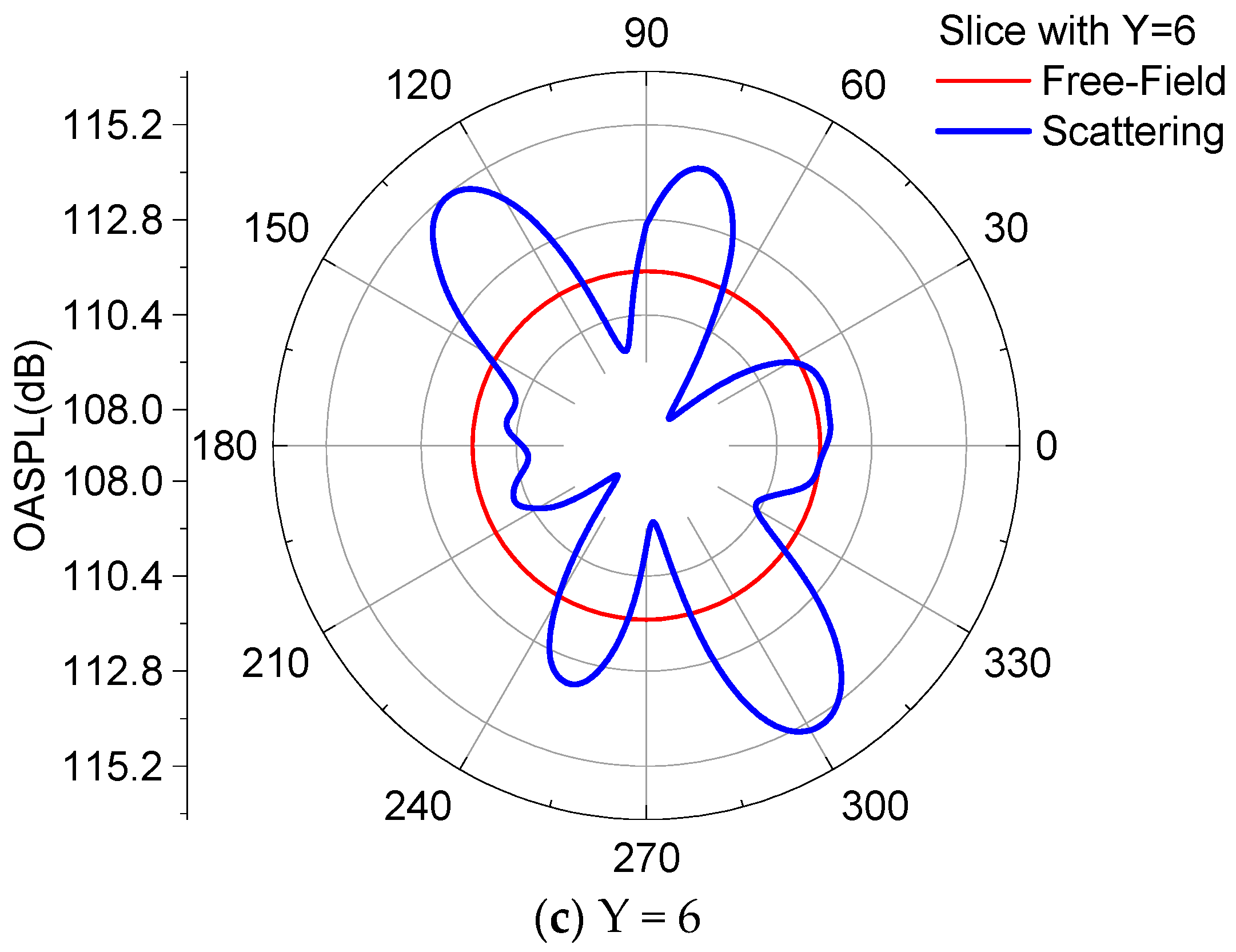
3.3. Alteration of the Acoustic Directivity
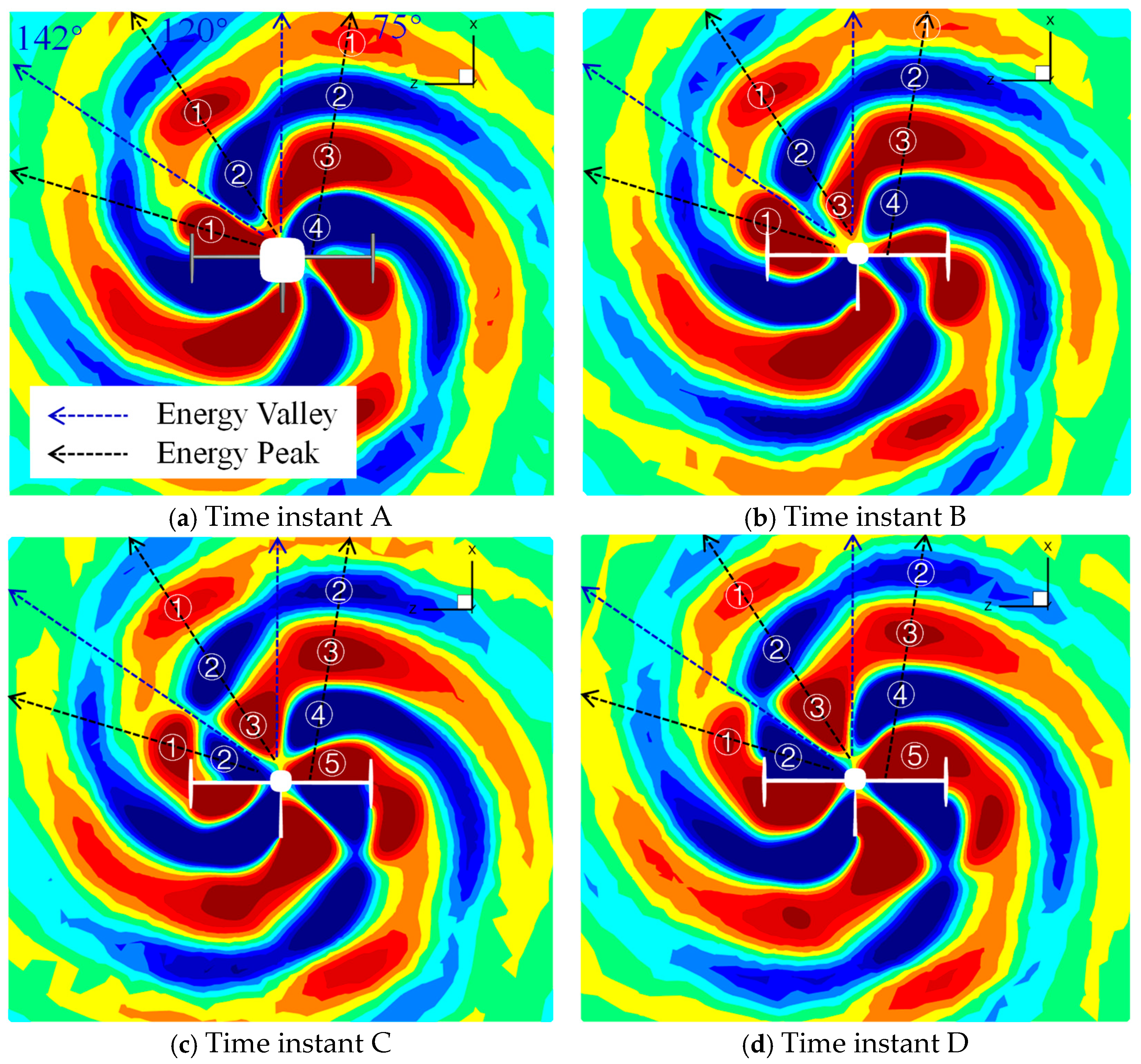
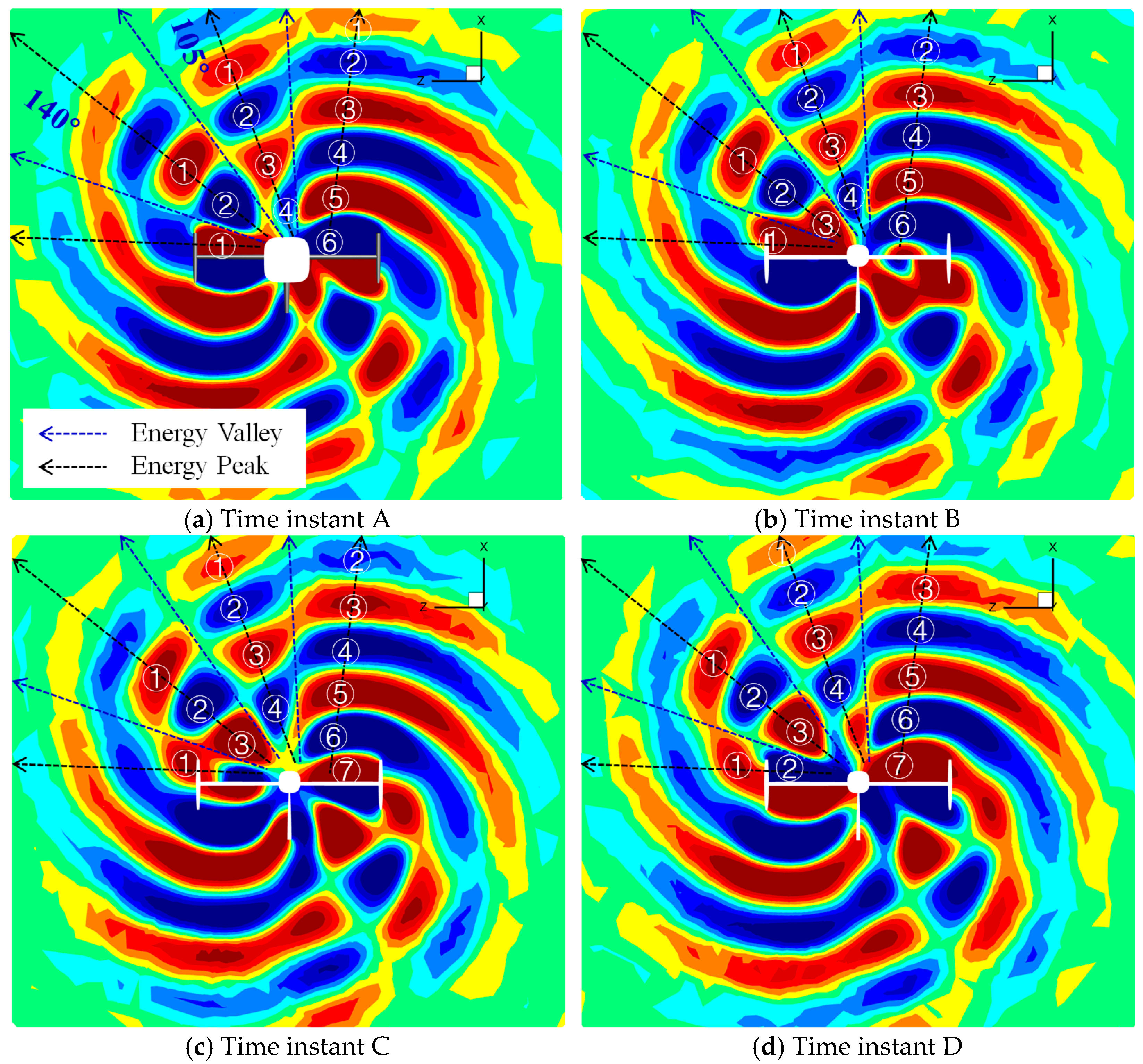
3.4. Transient Propagation Process of Acoustic Waves
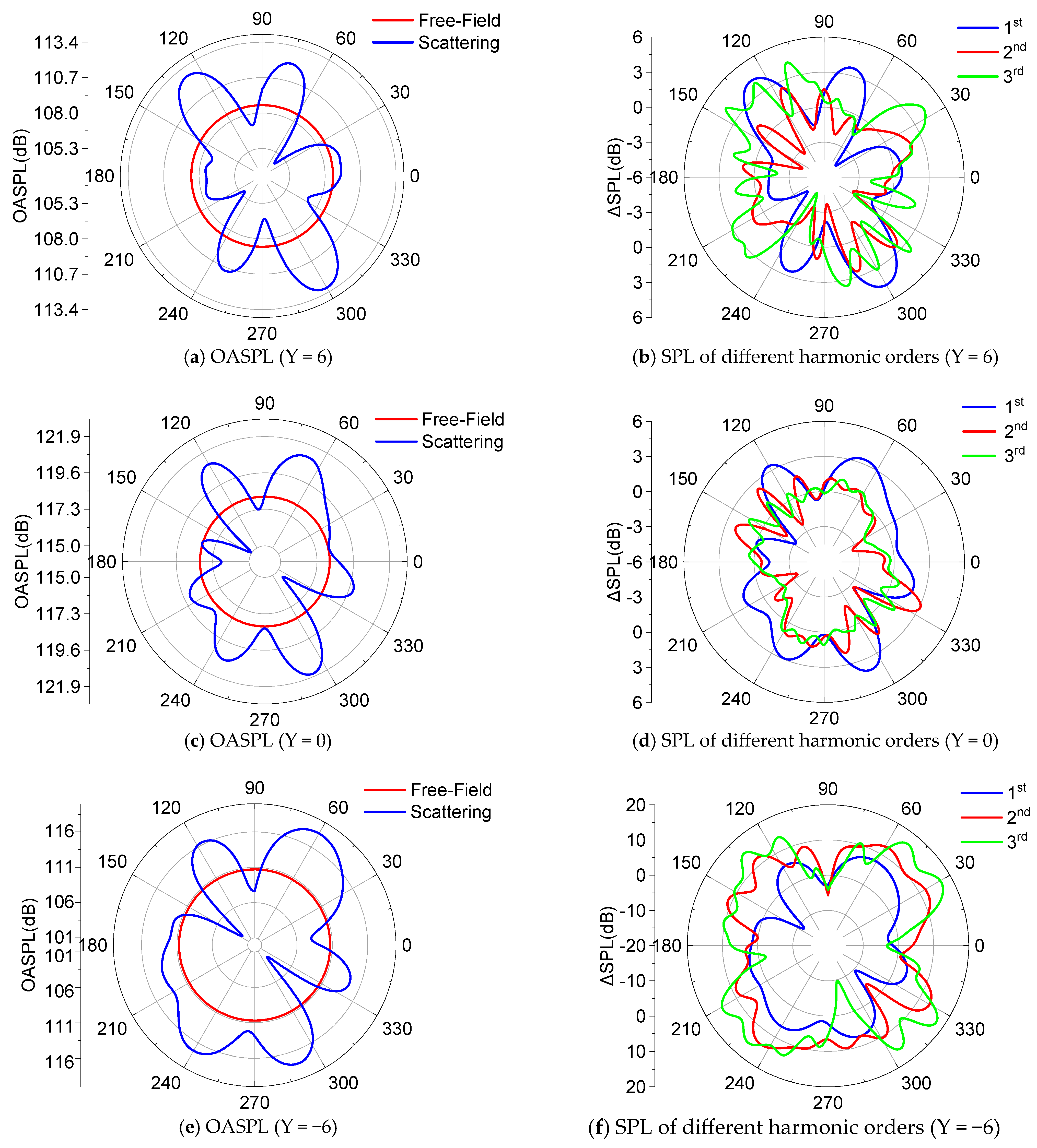
3.5. Alteration of the Acoustic Power Spectrum
4. Conclusions
- (1)
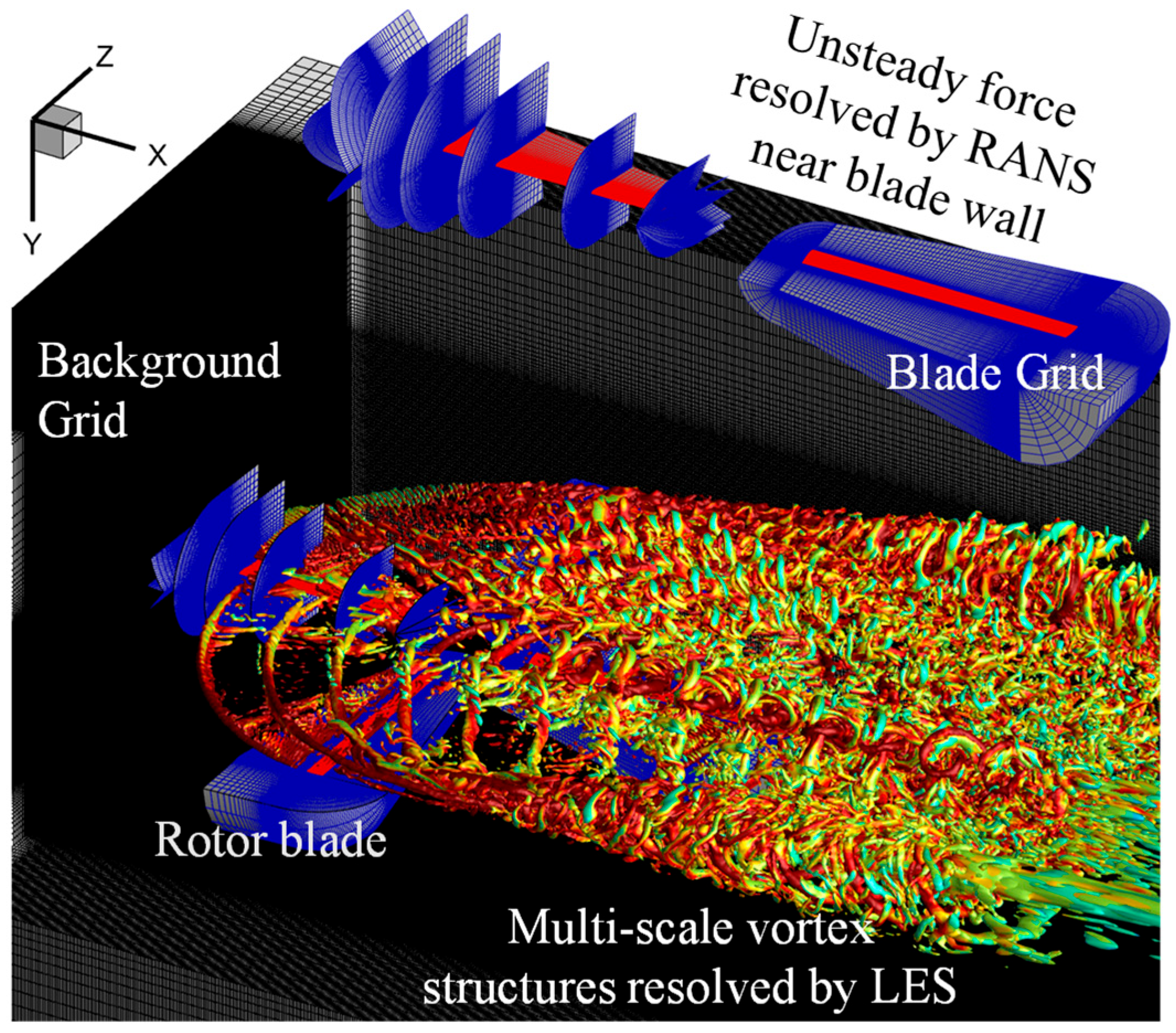
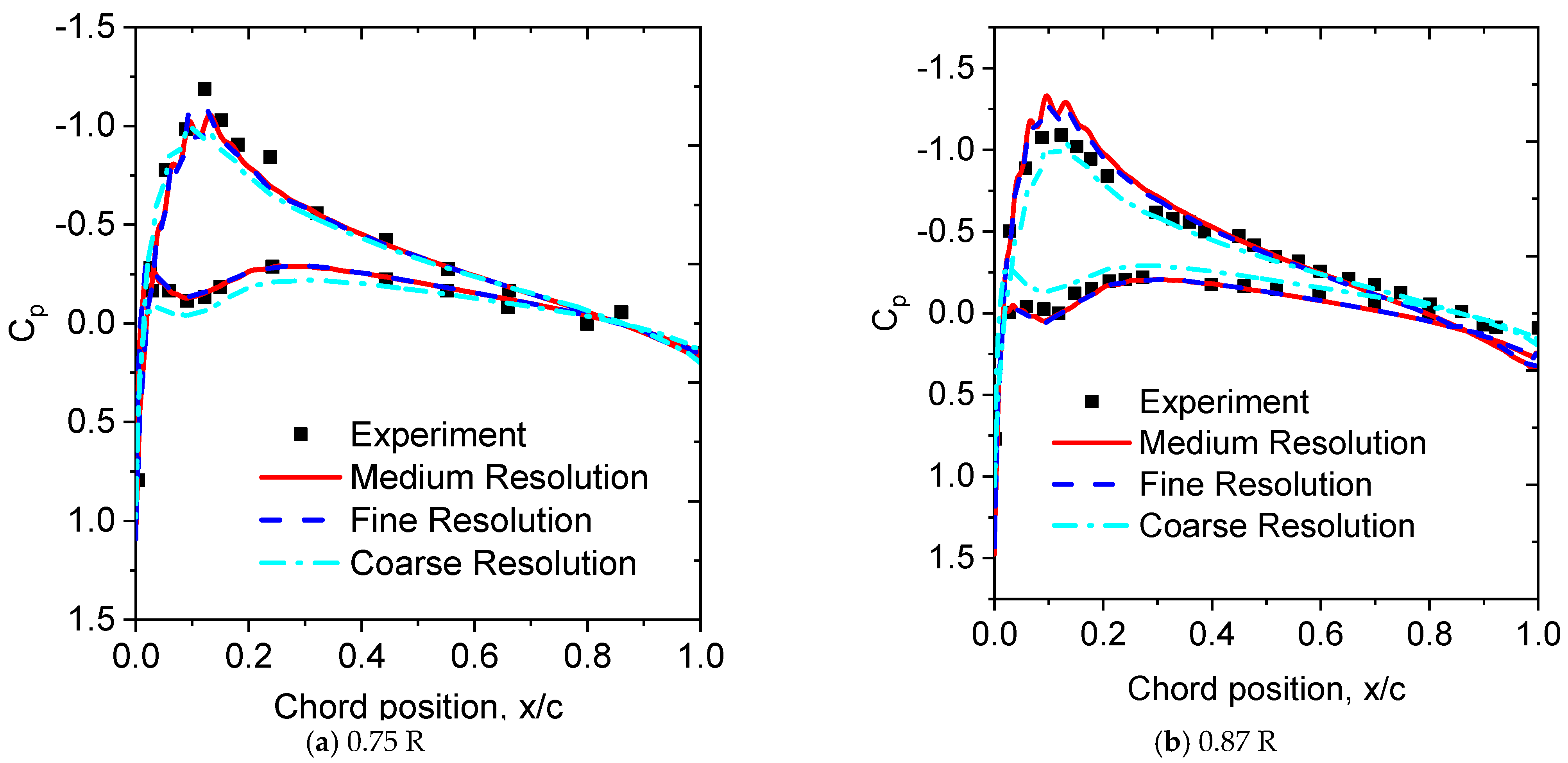
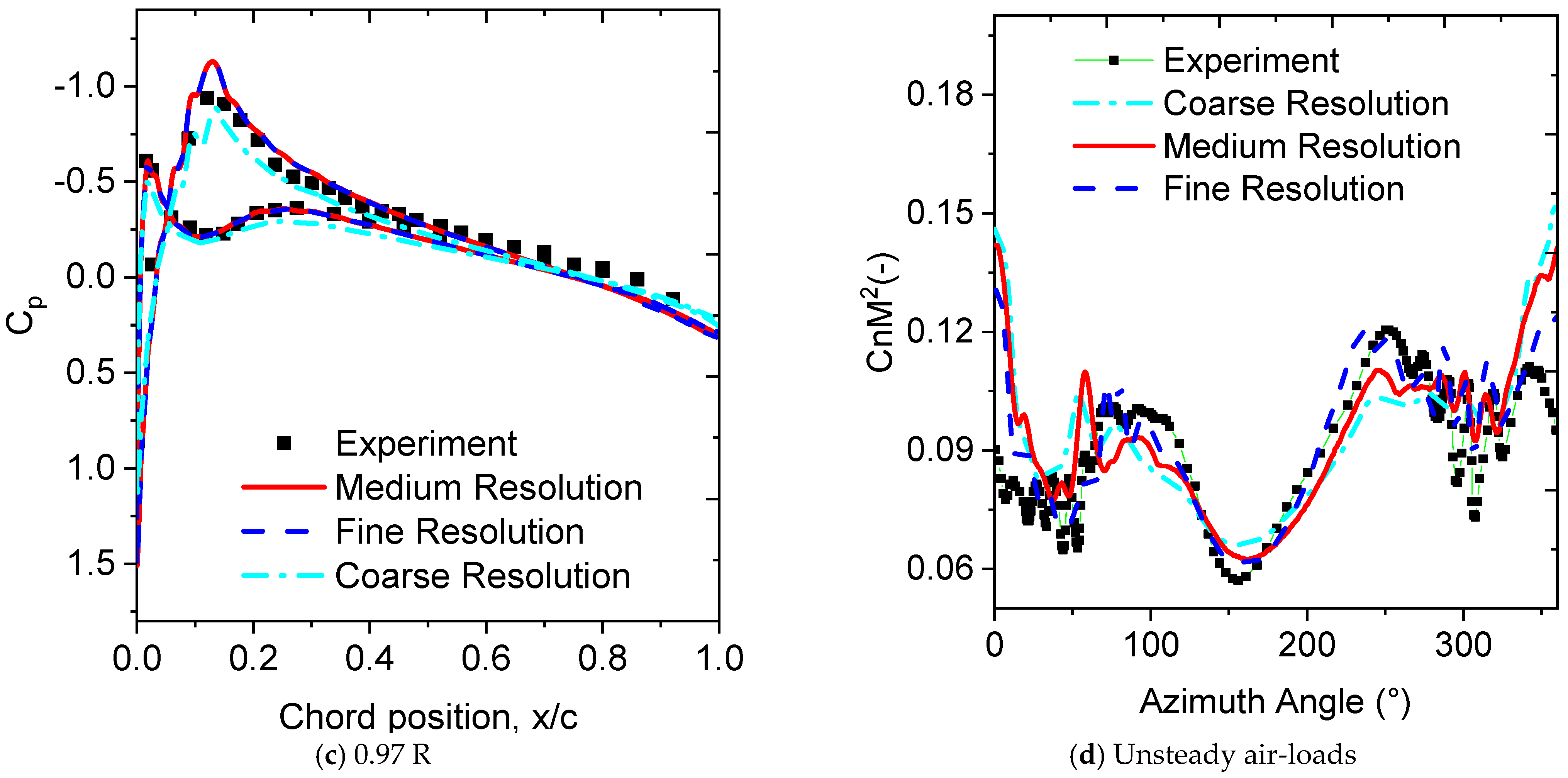
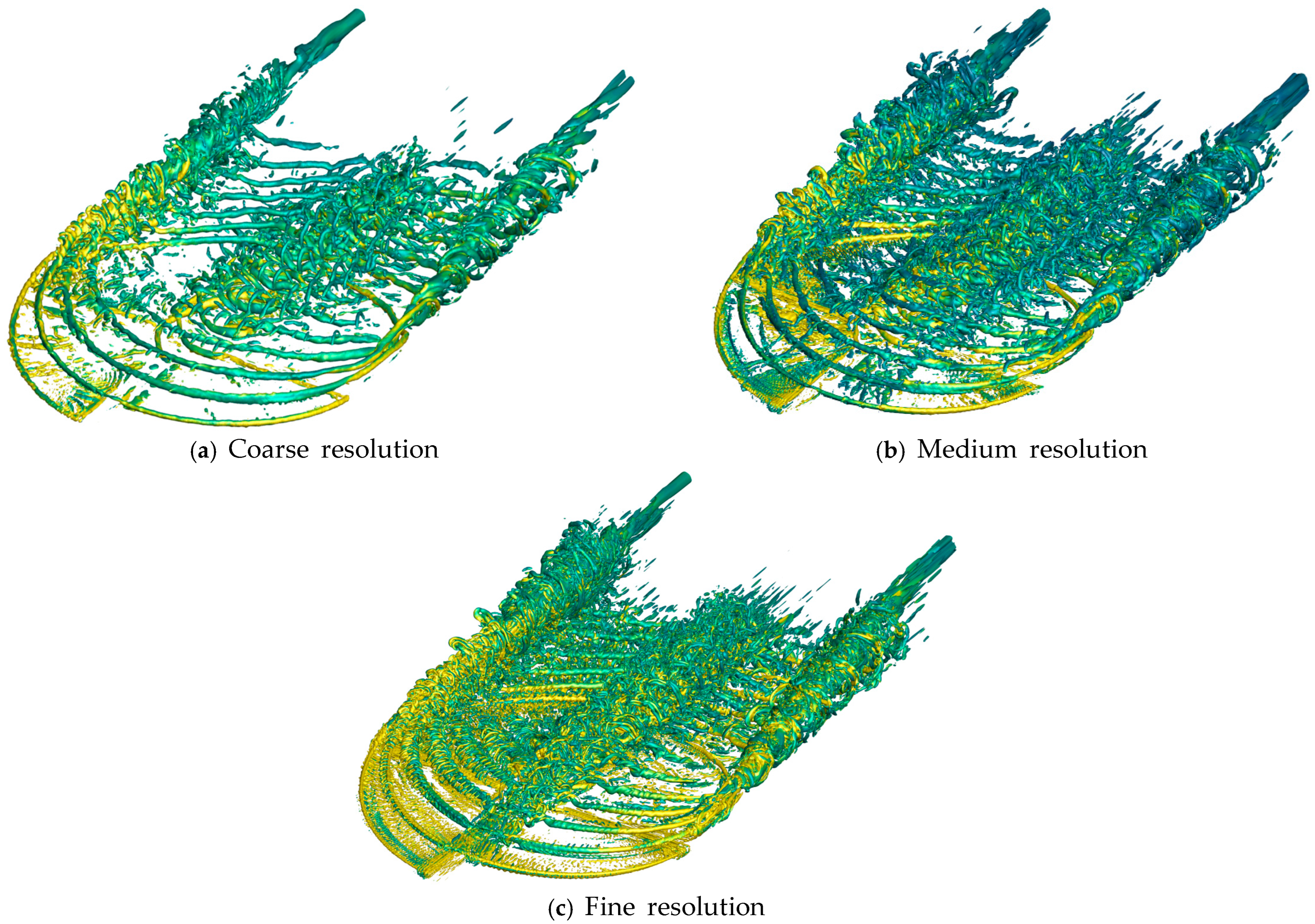
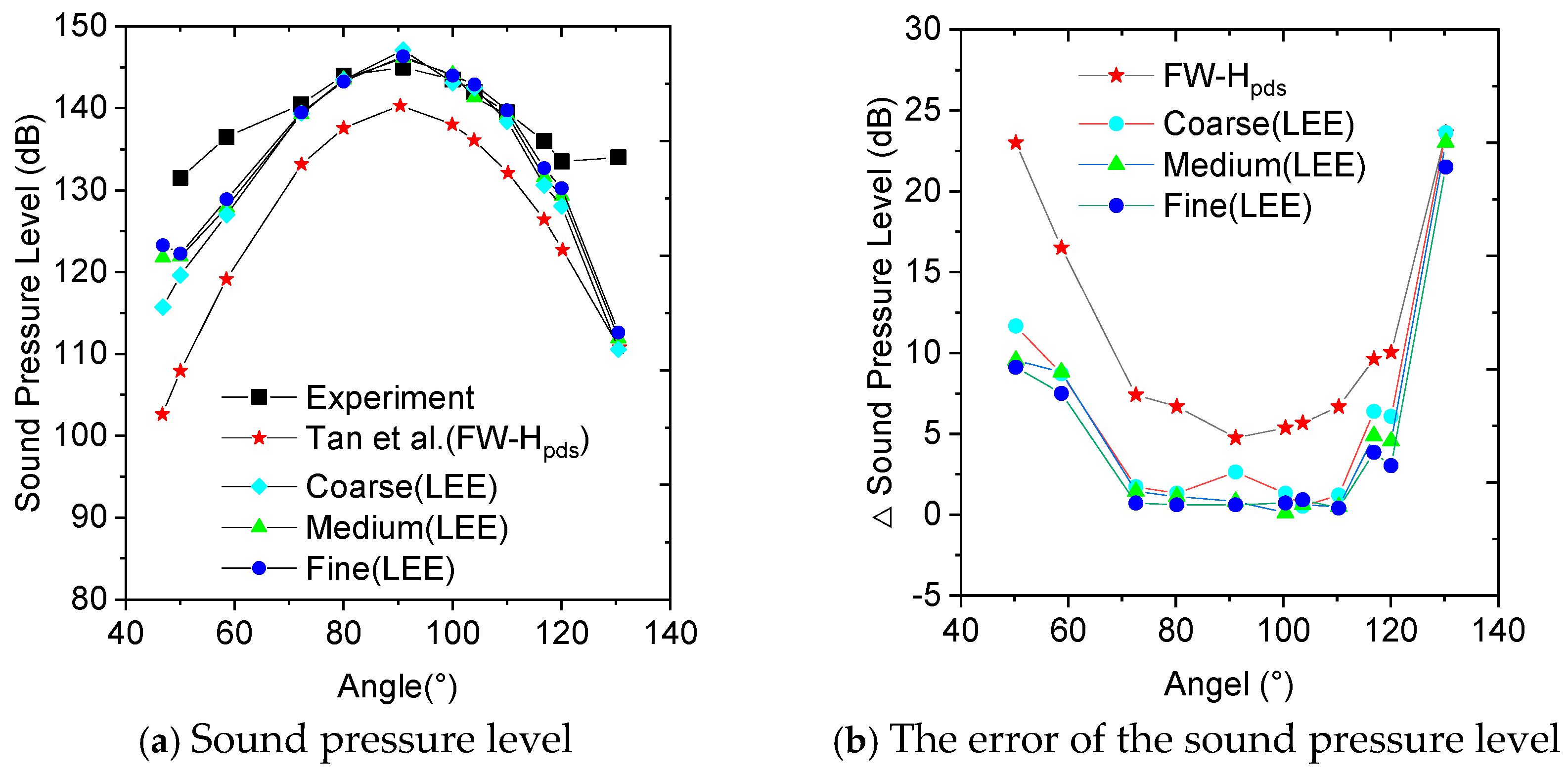
- The improved CFD solver is verified by the aerodynamic data of the BO-105 model rotor. The intricate multi-scale vortex structures are well resolved, and the predicted results show good alignment with the experimental data. The novel continuous and conserved acoustic source extraction method is incorporated into the HCAA solver to reduce the non-physical waves on the one-way CFD–CAA coupling surface. The efficacy of the HCAA solver is confirmed through noise data from the SR2 propeller, with the results in this study showing closer alignment with the experimental data compared with the reference data predicted by the FW-H equation.
- (2)
- The instantaneous acoustic waves and the acoustic directivity of the pusher propeller under the influence of the vertical/horizontal tails are numerically investigated. The alteration patterns of acoustic directivity from four-blade and six-blade pusher propellers exhibit significant differences, which indicates that the distortion effect is highly correlated with the number of blades. Conversely, the alteration patterns of acoustic directivity are weakly correlated with the blade tip Mach number of the pusher propeller.
- (3)
- Strong multiple-reflection effects of the acoustic waves happen when they interact with the vertical/horizontal tails. For the four-blade propeller, the reflected acoustic waves interacted with the subsequently arriving first acoustic wave, leading to the formation of one short acoustic wave with a high intensity. For the six-blade propeller, two short waves are generated. The first short acoustic wave with high intensity is generated when the acoustic wave is reflected by the vertical/horizontal tails, and the second short acoustic wave is then generated due to the mutual interaction between the first short wave and the subsequently arriving first acoustic wave.
- (4)
- For the four-blade propeller, due to the mutual interaction between the acoustic waves, the reflected acoustic waves are compressed by the subsequently arriving first acoustic waves, leading to the diffraction of the reflected acoustic waves at the tip of the vertical tail. For the six-blade propeller, most of the acoustic energy is reflected, so the energy of the diffraction acoustic waves occupies only a small portion when compared with the four-blade propeller. The interaction pattern of the tails on the propeller acoustic is highly correlated with the harmonic orders, and the effect of the vertical/horizontal tails on the propeller noise is dominated by the alteration of the first-order harmonic noise.
Author Contributions
Funding
Data Availability Statement
Conflicts of Interest
Abbreviations
| CLORNS | Chinese Laboratory of Rotorcraft Navier-Stokes |
| TENO-P | Perturbed polynomial reconstructed Targeted Essentially Non-Oscillatory scheme |
| SA-DDES | Delayed Detached Eddy Simulation based on Spalart–Allmaras |
| CFD–CAA | Computational Fluid Dynamics and Computational AeroAcoustics |
| ABC | Advancing blade concept |
| X2TD | X-2 Technology Demonstrator |
| CFD/CSD | Computational Fluid Dynamics and Computational Structural Dynamics |
| OASPL | OverAll sound pressure level |
| FW-H | Ffowcs–Williams–Hawkings |
| CAA | Computational AeroAcoustics |
| DDES | Delayed Detached Eddy Simulation |
| SA | Spalart–Allmaras |
| RANS | Reynolds-Averaged Navier-Stokes |
| LES | Large Eddy Simulation |
| RKDG | Runge–Kutta Discontinuous Galerkin |
| LEE | Linearized Euler equations |
References
- Hyeonsoo, Y. Design and aeromechanics investigation of compound helicopters. Aerosp. Sci. Technol. 2019, 88, 158–173. [Google Scholar] [CrossRef]
- Zhang, T.; Barakos, G.; Furqan; Foster, M. High-fidelity aerodynamic and acoustic design and analysis of a heavy-lift eVTOL. Aerosp. Sci. Technol. 2023, 137, 108307. [Google Scholar] [CrossRef]
- Yuan, Y.; Chen, R.; Thomson, D. Propeller design to improve flight dynamics features and performance for coaxial compound helicopters. Aerosp. Sci. Technol. 2020, 106, 106096. [Google Scholar] [CrossRef]
- Charles, C.; Crawford, J.R. Noise Requirements from a Military Point of View; U.S. Army Aviation Research and Development Command: Huntsville, AL, USA, 1978. [Google Scholar]
- Qi, H.; Xu, G.; Lu, C.; Shi, Y. A study of coaxial rotor aerodynamic interaction mechanism in hover with high-efficient trim model. Aerosp. Sci. Technol. 2019, 84, 1116–1130. [Google Scholar] [CrossRef]
- Yuan, X.; Bian, W.; Zhao, Q.; Zhao, G. Numerical investigation of aerodynamic interactions for the coaxial rotor system in low-speed forward flight. Aerosp. Sci. Technol. 2024, 149, 109148. [Google Scholar] [CrossRef]
- Jia, Z.; Lee, S. Aerodynamically induced noise of a lift-offset coaxial rotor with pitch attitude in high-speed forward flight. J. Sound Vib. 2021, 491, 115737. [Google Scholar] [CrossRef]
- Jia, Z.; Lee, S. Impulsive loading noise of a lift-offset coaxial rotor in high-speed forward flight. AIAA J. 2020, 58, 687–701. [Google Scholar] [CrossRef]
- Zhong, S.; Ma, Z.; Zhou, P.; Wu, H.; Zhang, X. Predicting the aerodynamic noise of counter-rotating coaxial rotors. J. Sound Vib. 2023, 547, 117487. [Google Scholar] [CrossRef]
- Xu, P.; Peng, J.; Bai, J.; Han, X.; Song, W. Aeroacoustic and aerodynamic optimization of propeller blades. Chin. J. Aeronaut. 2020, 33, 826–839. [Google Scholar] [CrossRef]
- Pagano, A.; Barbarino, M.; Casalino, D.; Federico, L. Tonal and broadband noise calculations for aeroacoustic optimization of a pusher propeller. J. Aircr. 2010, 47, 835–848. [Google Scholar] [CrossRef]
- Chiaramonte, J.; Favier, D.; Maresca, V.; Benneceur, S. Aerodynamic interaction study of the propeller/wing under different flow configurations. J. Aircr. 1996, 33, 46–53. [Google Scholar] [CrossRef]
- Yin, J.; Stuermer, A.; Aversano, M. Aerodynamic and aeroacoustic analysis of installed pusher-propeller aircraft configurations. J. Aircr. 2012, 49, 1423–1433. [Google Scholar] [CrossRef]
- Soderman, P.T.; Horne, W.C. Acoustic and Aerodynamic Study of a Pusher-Propeller Aircraft Model; NASA Technical Paper 3040; NASA: Washington, DC, USA, 1990.
- Sun, D.; Chen, X.; Zhao, Q.; Bao, W. Numerical analyses of aerodynamic and aeroacoustic interaction characteristics of rear-mounted propeller on highspeed helicopter. Aerospace 2025, 12, 343. [Google Scholar] [CrossRef]
- Redonnet, S.; Desquesnes, G.; Manoha, E. Numerical study of acoustic installation effects with a computational aeroacoustics method. AIAA J. 2010, 48, 929–937. [Google Scholar] [CrossRef]
- Redonnet, S. Investigation of the acoustic installation effects of an open-jet anechoic wind tunnel using computational aeroacoustics. Appl. Acoust. 2020, 169, 107469. [Google Scholar] [CrossRef]
- Redonnet, S.; Lockard, D.P.; Khorrami, M.R.; Choudhari, M.M. The non-reflective interface: An innovative forcing technique for computational acoustic hybrid methods. Int. J. Numer. Methods Fluids 2016, 81, 22–44. [Google Scholar] [CrossRef]
- Terracol, M.; Manoha, E.; Herrero, C.; Labourasse, E.; Redonnet, S.; Sagaut, P. Hybrid methods for airframe noise numerical prediction. Theor. Comput. Fluid Dyn. 2005, 19, 197–227. [Google Scholar] [CrossRef]
- Yang, T.; Chen, X.; Zhao, Q.; Ding, Y. Numerical analysis on the high-speed impulsive noise propagation characteristic of helicopter rotor in the presence of strong shear flow. Appl. Acoust. 2023, 203, 109213. [Google Scholar] [CrossRef]
- Yang, T.; Chen, X.; Zhao, Q.; Zhao, G. Numerical study on the noise propagation characteristics of rotor in non-uniform downwash flowfield based on linearized Euler equations. Int. J. Aeroacoustics 2022, 21, 731–765. [Google Scholar] [CrossRef]
- Yang, T.; Zhao, G.; Zhao, Q. Novel TENO schemes with improved accuracy order based on perturbed polynomial reconstruction. J. Comput. Phys. 2023, 488, 112219. [Google Scholar] [CrossRef]
- Zhao, Q.; Xu, G. A study on aerodynamic and acoustic characteristics of advanced tip-shape rotors. J. Am. Helicopter Soc. 2007, 52, 201–213. [Google Scholar] [CrossRef]
- Zhao, Q.; Zhao, G.; Wang, B.; Wang, Q.; Shi, Y.; Xu, G. Robust Navier-Stokes method for predicting unsteady flowfield and aerodynamic characteristics of helicopter rotor. Chin. J. Aeronaut. 2018, 31, 214–224. [Google Scholar] [CrossRef]
- Chen, X.; Zhang, K.; Zhao, Q.; Wang, W. Numerical analysis of rotor aeroacoustics characteristics during collective pitch aperiodic variation in hover. Aerosp. Sci. Technol. 2022, 124, 107411. [Google Scholar] [CrossRef]
- Vatsa, V.; Lockard, D.; Spalart, P. Grid sensitivity of SA-based delayed-detached-eddy-simulation model for blunt-body flows. AIAA J. 2017, 55, 2842–2847. [Google Scholar] [CrossRef]
- Liu, J.; Chen, J.; Xiao, Z. Improvements for the DDES model with consideration of grid aspect ratio and coherent vortex structures. Aerosp. Sci. Technol. 2024, 151, 109314. [Google Scholar] [CrossRef]
- Yang, X.; Yang, A.; Si, J. Efficient numerical techniques for simulation of rotorcraft flow field with overlap grids. AIAA J. 2015, 53, 1372–1383. [Google Scholar] [CrossRef]
- Yang, X.; Griffin, K. Grid-point and time-step requirements for direct numerical simulation and large-eddy simulation. Phys. Fluids 2021, 33, 015108. [Google Scholar] [CrossRef]
- Gennaretti, M.; Bernardini, G.; Serafini, J.; Romani, G. Rotorcraft comprehensive code assessment for blade-vortex interaction. Aerosp. Sci. Technol. 2018, 80, 232–246. [Google Scholar] [CrossRef]
- You, Y.; Na, D.; Jun, S. Improved rotor aeromechanics predictions using a fluid structure interaction approach. Aerosp. Sci. Technol. 2018, 73, 118–128. [Google Scholar] [CrossRef]
- Romani, G.; Casalino, D. Rotorcraft blade-vortex interaction noise prediction using the Lattice-Boltzmann method. Aerosp. Sci. Technol. 2019, 88, 147–157. [Google Scholar] [CrossRef]
- Kotwicz Herniczek, M.T.; Feszty, D.; Meslioui, S.A.; Park, J.; Nitzsche, F. Evaluation of acoustic frequency methods for the prediction of propeller noise. AIAA J. 2019, 57, 2465–2478. [Google Scholar] [CrossRef]
- Tan, C.H.; Voo, K.S.; Siauw, W.L.; Alderton, J.; Boudjir, A.; Mendonça, F. CFD analysis of the aerodynamics and aeroacoustics of the NASA SR2 propeller. In Proceedings of the ASME Turbo Expo 2014: Turbine Technical Conference and Exposition, Düsseldorf, Germany, 16–20 June 2014. [Google Scholar]






| N | 1 | 2 | 3 | 4 | 5 | 6 | 7 | 8 | 9 | 10 | 11 | 12 |
|---|---|---|---|---|---|---|---|---|---|---|---|---|
| YM | −46.7 | −41.7 | −30.5 | −16 | −8.9 | 0.8 | 8.9 | 12.4 | 18.0 | 25.0 | 28.7 | 42.4 |
| 46.8 | 50.0 | 58.5 | 72.2 | 80 | 90.9 | 100 | 104 | 110 | 116.8 | 120.0 | 130.4 |
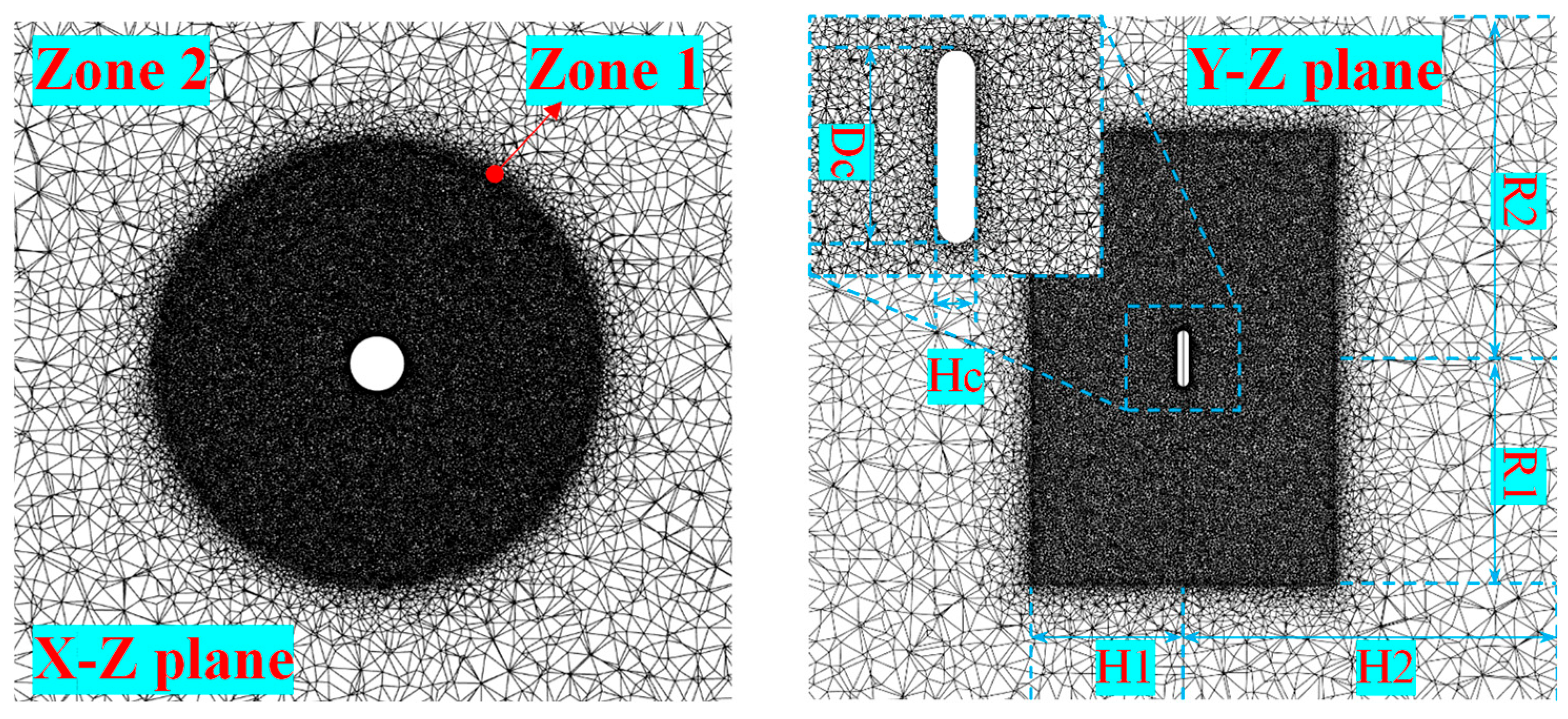
| Grid | Computational Domain | Zone 1 | Zone 2 |
|---|---|---|---|
| Coarse | R1 = 30, R2 = 60 H1 = 20, H2 = 60 Dc = 7.5, Hc = 1.5 | ||
| Medium | |||
| Fine |
Disclaimer/Publisher’s Note: The statements, opinions and data contained in all publications are solely those of the individual author(s) and contributor(s) and not of MDPI and/or the editor(s). MDPI and/or the editor(s) disclaim responsibility for any injury to people or property resulting from any ideas, methods, instructions or products referred to in the content. |
© 2026 by the authors. Licensee MDPI, Basel, Switzerland. This article is an open access article distributed under the terms and conditions of the Creative Commons Attribution (CC BY) license.
Share and Cite
Yang, T.; Chen, X.; Gao, X.; Ma, L.; Zhang, X.; Zhao, Q. Installation Effect of the Rear-Mounted Tails of a Compound Helicopter on Its Propeller Noise. Aerospace 2026, 13, 157. https://doi.org/10.3390/aerospace13020157
Yang T, Chen X, Gao X, Ma L, Zhang X, Zhao Q. Installation Effect of the Rear-Mounted Tails of a Compound Helicopter on Its Propeller Noise. Aerospace. 2026; 13(2):157. https://doi.org/10.3390/aerospace13020157
Chicago/Turabian StyleYang, Tao, Xi Chen, Xuan Gao, Li Ma, Xiayang Zhang, and Qijun Zhao. 2026. "Installation Effect of the Rear-Mounted Tails of a Compound Helicopter on Its Propeller Noise" Aerospace 13, no. 2: 157. https://doi.org/10.3390/aerospace13020157
APA StyleYang, T., Chen, X., Gao, X., Ma, L., Zhang, X., & Zhao, Q. (2026). Installation Effect of the Rear-Mounted Tails of a Compound Helicopter on Its Propeller Noise. Aerospace, 13(2), 157. https://doi.org/10.3390/aerospace13020157