1. Introduction
Shape memory alloy (SMA) actuators possess unique advantages for aerospace applications, including large deformation, a high work-to-weight ratio, and structural simplicity, leading to broad application prospects in areas such as space-deployable antenna structures [
1], spacecraft attitude and thermal control [
2,
3], morphing wings [
4], and aero-engine nozzle control [
5]. However, their inherent strongly saturated and asymmetric hysteresis characteristics lead to significant nonlinearity, output oscillations, and closed-loop instability, which limits their application in high-precision and high-reliability aerospace actuation systems.
Researchers have developed numerous models to characterize SMA hysteresis based on micromechanics [
6], constitutive modeling [
7,
8,
9], and phenomenological approaches [
10,
11,
12,
13,
14]. Current phenomenological hysteresis modeling approaches can be categorized into three distinct classes. The first class consists of operator-based models, which describe hysteresis via the weighted superposition of elementary operators. Common models include the Preisach [
15,
16,
17,
18], Prandtl–Ishlinskii (PI) [
19,
20], and Krasnosel’skii–Pokrovskii [
21,
22] models. The GPI model further characterizes the asymmetric saturation of SMAs by incorporating envelope functions. However, a common limitation of these models is the non-differentiability at switching points due to their piecewise-linear characteristics. This lack of smoothness complicates the computation of system Jacobians, which are essential for many modern control and estimation frameworks, thereby hindering the development of a unified and continuous mathematical representation for closed-loop analysis. The second class involves differential equation-based models, such as the Bouc-Wen [
23,
24] and Duhem [
25,
26] models. Although they offer the smoothness required for control design, these models have limitations in describing strong saturation and asymmetric hysteresis, making them less suitable for the complex characteristics of SMA actuators. The third class leverages data-driven approaches, utilizing deep learning architectures such as recurrent neural networks [
27] or neural operators [
28] to achieve high-precision nonlinear mapping. However, despite their high accuracy, data-driven models impose heavy computational burdens and are difficult to deploy in resource-constrained embedded systems, facing challenges in real-time control. Given the respective trade-offs between mathematical smoothness, structural flexibility, and computational cost in existing approaches, there is an urgent need for a modeling approach that preserves the structural flexibility of operator models while providing analytical differentiability. Based on this, the present study establishes a continuously differentiable model suitable for direct state-space analysis by smoothing the operators of the GPI model.
Most existing hysteresis models primarily focus on characterizing the relationship between temperature and displacement or output force [
29]. However, such direct mapping is highly dependent on external load conditions. Models identified under specific loads may suffer from significant degradation in accuracy when the load changes, thereby limiting their practical applicability. As a temperature-driven material, the SMA spring undergoes variations in martensite volume fraction during temperature changes. According to the Tanaka model [
7], the Young’s modulus of SMA exhibits a linear relationship with the martensite volume fraction. Consequently, the phase transformation process directly influences the mechanical properties of the SMA spring, resulting in different stiffness coefficients for SMA in different phases. Therefore, the relationship between temperature and stiffness coefficient—an intrinsic material property governed by phase transformation—demonstrates stronger independence from external loads. By developing a hysteresis model for the temperature–stiffness relationship, the resulting model achieves enhanced generalization capability under varying operational conditions.
Research on hysteresis compensation strategies is extensive in the literature. Quintanar-Guzmán et al. [
30] evaluated multiple controllers for the position tracking of an SMA-driven robotic arm, while Bil et al. [
31] compared the performance of different compensators for SMA morphing wings through wind tunnel tests. Schmidt et al. [
32] proposed a predictive model for antagonistic SMA spring actuators to optimize bistable designs. Currently, mainstream architectures predominantly rely on feedforward compensation based on inverse hysteresis models. For piezoelectric actuators or specific SMA wires where the response is directly driven by an electric field or input current, such input–output mapping remains feasible [
33,
34]. However, stiffness regulation in SMA springs is primarily temperature-dependent rather than a direct mapping of current. In practical applications, Joule heating via current alters the temperature, but the heating and cooling processes are constrained by ambient convective heat transfer, exhibiting significant time constants and thermal hysteresis. Existing inverse compensation schemes often employ a cascaded structure [
29] that calculates a reference temperature via a static inverse model. Such open-loop feedforward approaches typically ignore thermal inertia, leading to severe dynamic phase lags and a lack of robustness against environmental disturbances.
To address the limitations of open-loop inverse compensation, it is necessary to employ a predictive control framework capable of explicitly handling system delays and unobservable nonlinearities. Model Predictive Control (MPC) [
35,
36,
37] has emerged as an effective method for such complex systems, as its multi-step optimization over a prediction horizon can effectively compensate for the phase lags induced by thermal inertia. Furthermore, since the internal hysteresis states of SMA are not directly observable, the integration of an Extended Kalman Filter (EKF) [
38,
39], a recursive estimation method, is essential for providing accurate state feedback under noisy environments. By combining the predictive characteristics of MPC with the state estimation capabilities of EKF, a closed-loop state-feedback control structure can be established to handle the complex hysteresis nonlinearities of SMA actuators.
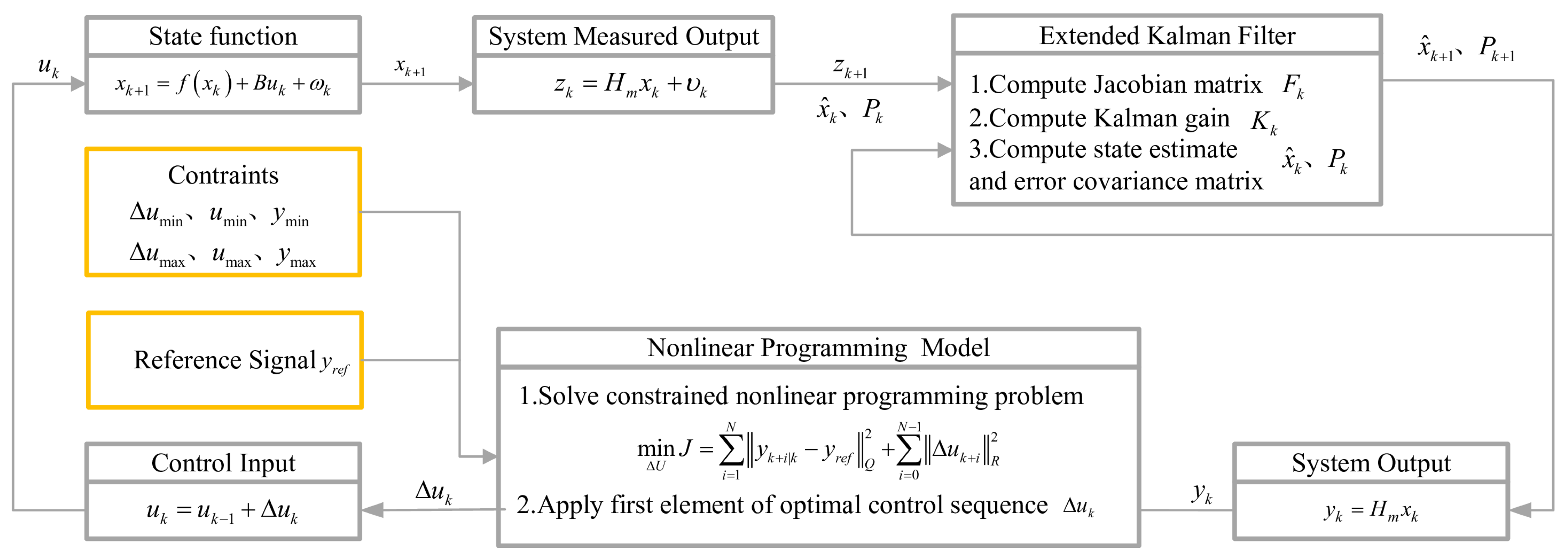
In this study, we propose a Smoothed Generalized Prandtl–Ishlinskii (SGPI) model by modifying the hysteresis operators of the GPI model to be smooth differentiable functions. This preserves the ability to characterize the strongly saturated and asymmetric hysteresis characteristics of SMA actuators while enabling the design of state estimation-based controllers. Specifically, the state-space representation based on the SGPI model allows the design of an EKF for real-time estimation of unmeasurable hysteresis states under process and measurement noise. These state estimates serve as essential inputs to a MPC algorithm, which performs multi-step prediction and rolling optimization to compute optimal control signals that compensate for hysteresis effects, achieving high precision stiffness coefficients tracking.
The rest of this paper is organized as follows.
Section 2 elaborates on the mathematical modeling of the SMA actuator, including thermodynamic modeling, SGPI hysteresis modeling, and model parameter identification.
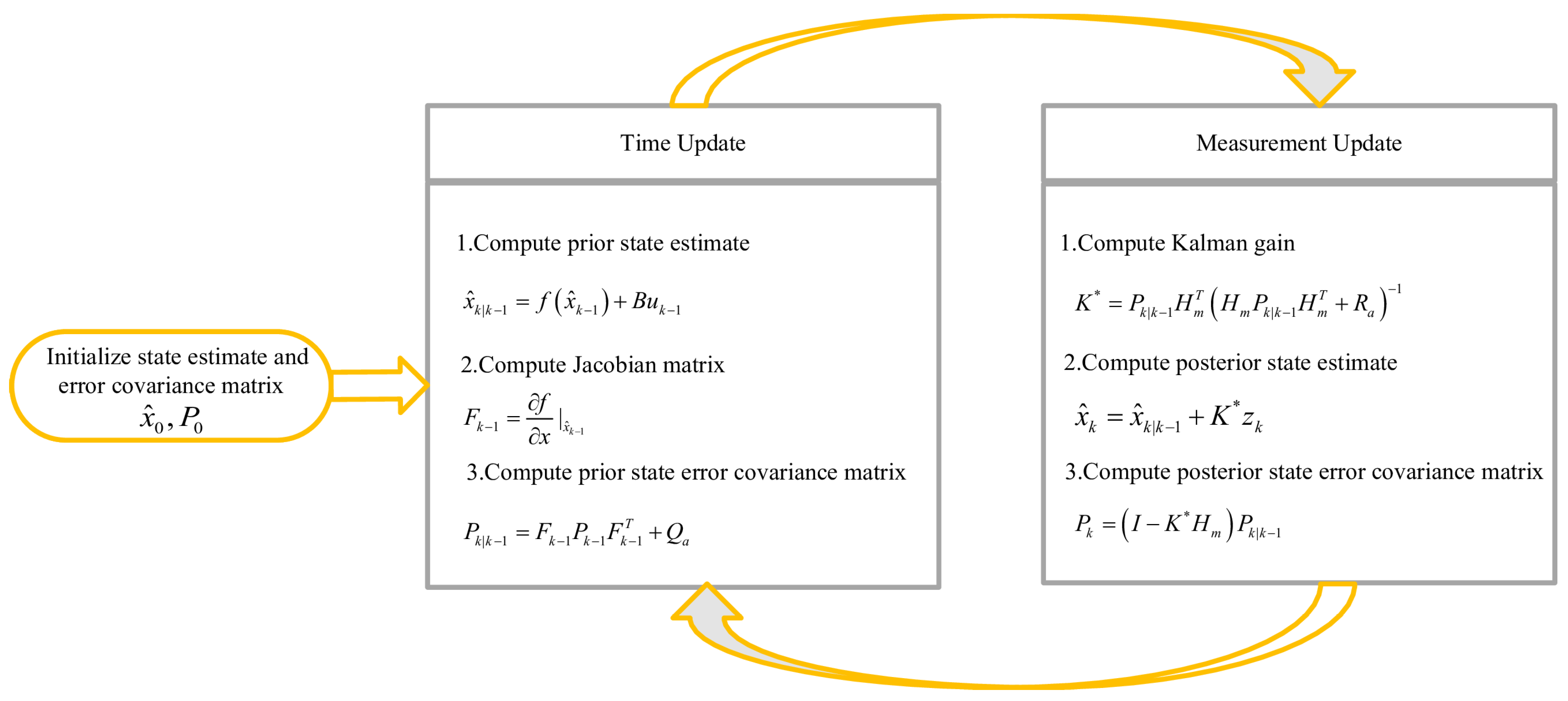
Section 3 presents the design of the EKF and MPC based on the SGPI model.
Section 4 presents the simulation results. Finally,
Section 5 concludes the paper.
2. Mathematical Modeling of SMA Actuator
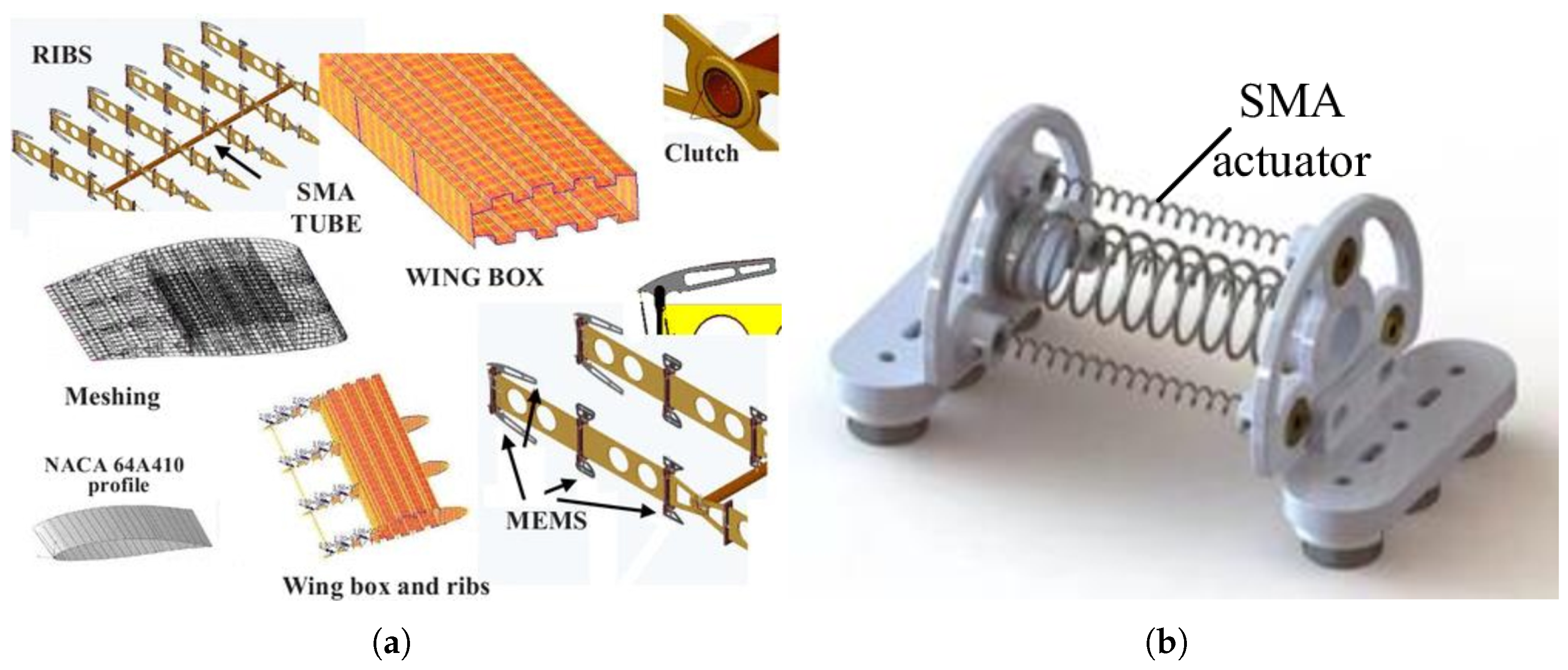
As shown in
Figure 1, SMAs are widely used in aerospace applications, such as motion control of space soft-bodied crawling robot and adaptive wings [
40]. The core actuation of these applications relies on the reliable performance of SMA actuators. These applications fundamentally require an accurate description and control of the dynamic relationship among the input current, temperature state, and output performance of the SMA actuator. Therefore, the focus of this study is to establish the current–temperature–stiffness coefficient correlation model of the SMA actuator and achieve stiffness control of the SMA-driven system. As shown in
Figure 2, the mathematical model of the SMA actuator system consists of two components: a thermal model and an SGPI phenomenological mathematical model. The thermal model characterizes the relationship between the input current and the spring temperature, while the SGPI model describes the relationship between the spring temperature and the stiffness coefficient of the SMA actuator.
2.1. SMA Spring Thermodynamic Model
The thermodynamic model of the SMA spring primarily considers three factors [
41]: thermal absorption during heating, convective heat exchange with ambient air, and resistive heating governed by Joule’s law:
where
is the specific heat capacity coefficient of the SMA spring;
m is the mass of the spring;
I is the current applied to the spring;
R is the electrical resistance of the spring;
h is the heat convection coefficient;
A is the circumferential surface area of the spring;
T and
represent the temperature of the spring and ambient temperature, respectively. Dividing both sides of the thermodynamic model equation by
:
Assuming
,
,
, and
, the thermodynamic model can be expressed by the following state equation:
2.2. GPI Hysteresis Model
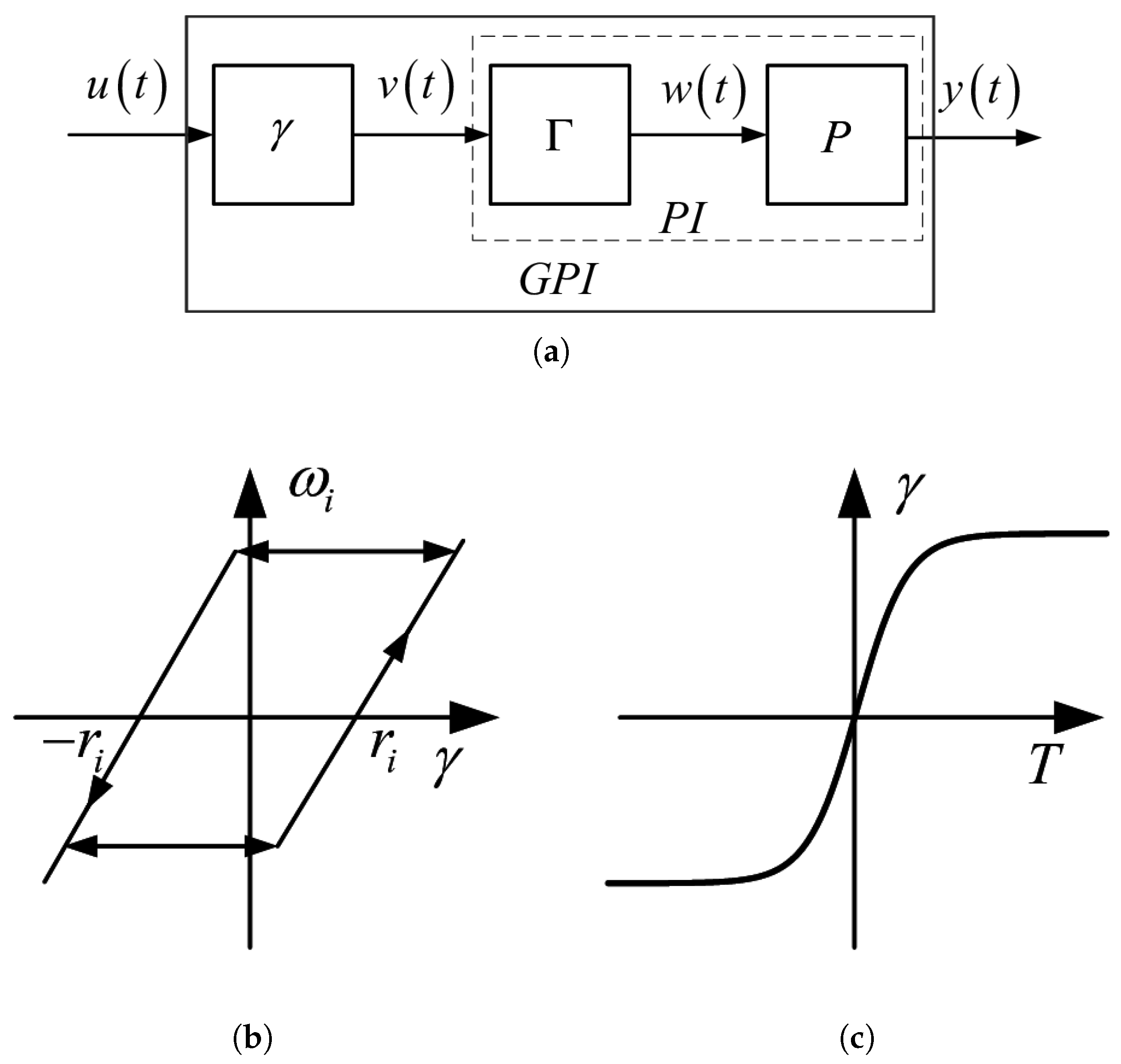
The PI hysteresis model is a nonlinear modeling approach based on hysteresis operator superposition and is widely employed for characterizing hysteresis behavior in smart materials, such as shape memory alloy actuators and piezoelectric actuators. However, although the PI model exhibits symmetric loading or unloading paths, the actual SMA springs demonstrate complex asymmetric hysteresis with output saturation characteristics during thermal cycling. To address these limitations, an envelope function is incorporated into the PI framework, resulting in a Generalized Prandtl–Ishlinskii (GPI) model. The GPI approach fundamentally applies input-signal nonlinearization and characterizes complex hysteresis phenomena through the weighted superposition of multiple play operators. The architecture primarily consists of three cascaded components: envelope function, play hysteresis operators, and density function, as shown in
Figure 3a.
For a piecewise monotonic input function
, where
denotes the space of continuous functions in the interval
. The output
of the GPI model can be expressed as
where
is the envelope function,
is the system output of the envelope function, and
denotes the PI hysteresis model.
The PI hysteresis model is characterized by multiple hysteresis play operators. For a piecewise monotonic envelope input function
, a play hysteresis, as shown in
Figure 3b, operator with a fixed threshold
, denoted as
, is defined as follows.
Let,
be a partition of the time domain
such that
is monotonic on each subinterval
, where
. Then, the play hysteresis operator
and its corresponding hysteresis state
can be given by when,
:
when,
:
To characterize the saturation and asymmetric hysteresis properties of the SMA, the envelope function
can be represented using various methods such as dead-zone functions, hyperbolic tangent functions, or polynomials. This study employs a hyperbolic tangent function to describe output saturation and asymmetry under specific inputs. The hyperbolic tangent function, as shown in
Figure 3c, is expressed as follows:
where
are parameters to be identified.
The output of the GPI hysteresis model consists of a weighted linear combination of multiple play operators with distinct fixed thresholds
:
where
n is the number of play operators and
are positive weighting coefficients (also referred to the density function). The thresholds
and weighting coefficients
are defined as follows:
where
are parameters to be identified.
2.3. SGPI Hysteresis Model
Although the GPI model can characterize the strongly saturated and asymmetric hysteresis behaviors of SMA actuators, its hysteresis play operators are constructed using non-smooth max()/min() functions with piecewise linearity. These operators induce non-differentiable dynamics, posing significant challenges for direct application in model-based controller synthesis.
To leverage the representational capabilities of the GPI model while enabling controller design, we propose the Smoothed Generalized Prandtl–Ishlinskii (SGPI) model. Specifically, the non-smooth
operators are approximated by differentiable functions
as follows:
The smoothing parameter
introduces a trade-off between model fidelity and numerical differentiability. As
, the SGPI operators converge to the standard non-smooth max/min operators, preserving the structural characteristics of the GPI model. However, an excessively small
results in abrupt gradient changes, known as numerical stiffness, which can compromise the stability of gradient-based optimization and state estimation frameworks. Conversely, a larger
ensures smoother derivatives that are beneficial for algorithmic convergence but may lead to deviations from the desired hysteresis envelope, potentially distorting the model’s output characteristics. In this work,
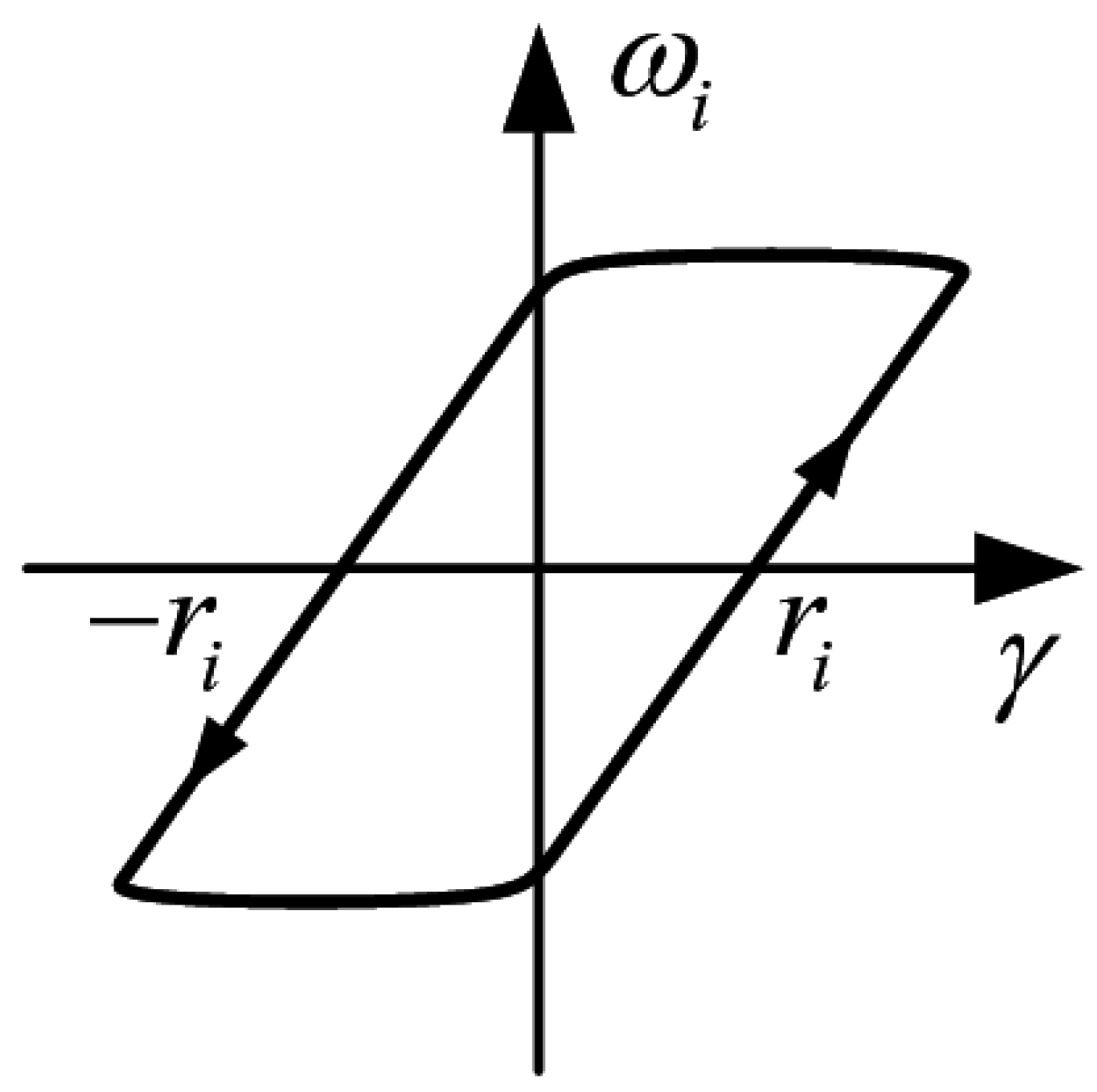
is selected to balance approximation accuracy with the numerical robustness required for subsequent computational tasks. The resulting smoothed play hysteresis operator is depicted in
Figure 4. In contrast to the conventional piecewise-linear operator shown in
Figure 3b, the SGPI formulation ensures smooth dynamics over the entire domain. This transition from piecewise-linear to smooth dynamics establishes a mathematically tractable foundation for model-based control and observation schemes. Consequently, the transformed hysteresis state
is described as follows:
when,
:
where the hyperbolic tangent envelope function is still selected for
and
.
Figure 4.
The smoothed play hysteresis operator.
Figure 4.
The smoothed play hysteresis operator.
The SGPI model retains the capability of the GPI model to characterize the strongly saturated and asymmetric hysteresis in SMA actuators by establishing differentiable dynamics. This enables the formulation of state-space feedback control laws.
2.4. Identification the SGPI Model Parameters
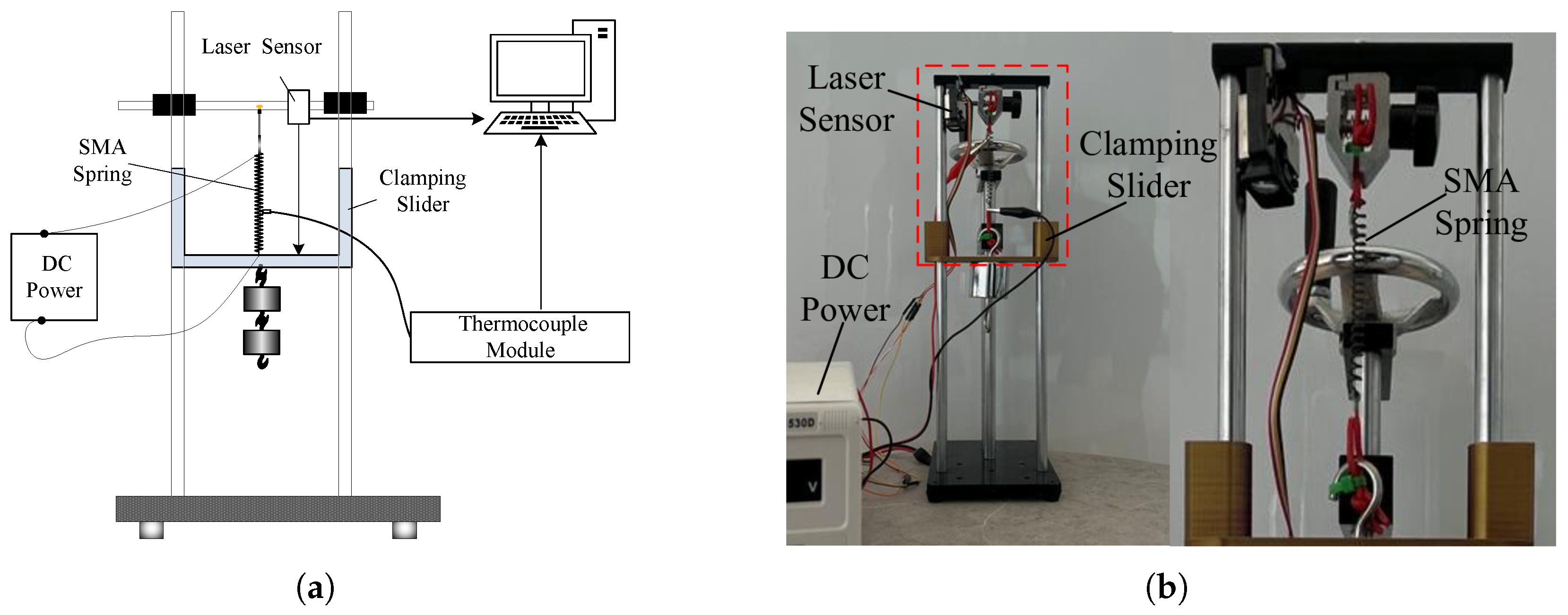
The SMA actuator system is shown in
Figure 5, with
Figure 5a illustrating the structural schematic of the SMA actuator and
Figure 5b showing the experimental setup of the SMA actuator. The system comprises six components: a SMA spring actuator, clamping slider, programmable power supply, computer, laser displacement sensor, and a thermocouple temperature module. One end of the SMA spring was clamped, whereas the opposite end was connected to the slider via a hook weight. The slider was moved vertically along the linear guide. The laser displacement sensor emitted a beam onto the slider surface, continuously measuring the distance between the slider and overhead beam to compute the real-time SMA spring length. A programmable DC power supply applies voltage across both SMA spring terminals. The thermocouple probe was affixed to the SMA spring to measure real-time temperature variations.
To comprehensively account for the relationship between the SMA temperature and output stiffness coefficients, and to effectively identify the parameters of the SGPI hysteresis model, the system was actuated with a constant current of 1 A under a constant load of 250 g. After sustained heating, the SMA spring underwent thermal expansion and contraction. When the SMA spring temperature reached the austenite finish temperature, the spring contracted to its minimum length. At this point, the constant-current power supply was shut off to allow natural cooling, restoring the initial length, while the experimental displacement data were collected.
The measured temperature and displacement data were subsequently processed to determine the stiffness coefficient. Based on the mechanical definition, the stiffness coefficient
was calculated as follows:
where,
represents the constant load force applied to the spring,
denotes the real-time length of the spring at temperature
T, and
is the original length of the spring at room temperature before loading.
The parameters of the SGPI hysteresis model were identified through an optimization algorithm with the following mean square error (MSE) objective function:
where
N is the number of sampling points,
is the experimentally measured output,
is the output of the SGPI model, and the parameter vector
X is defined as
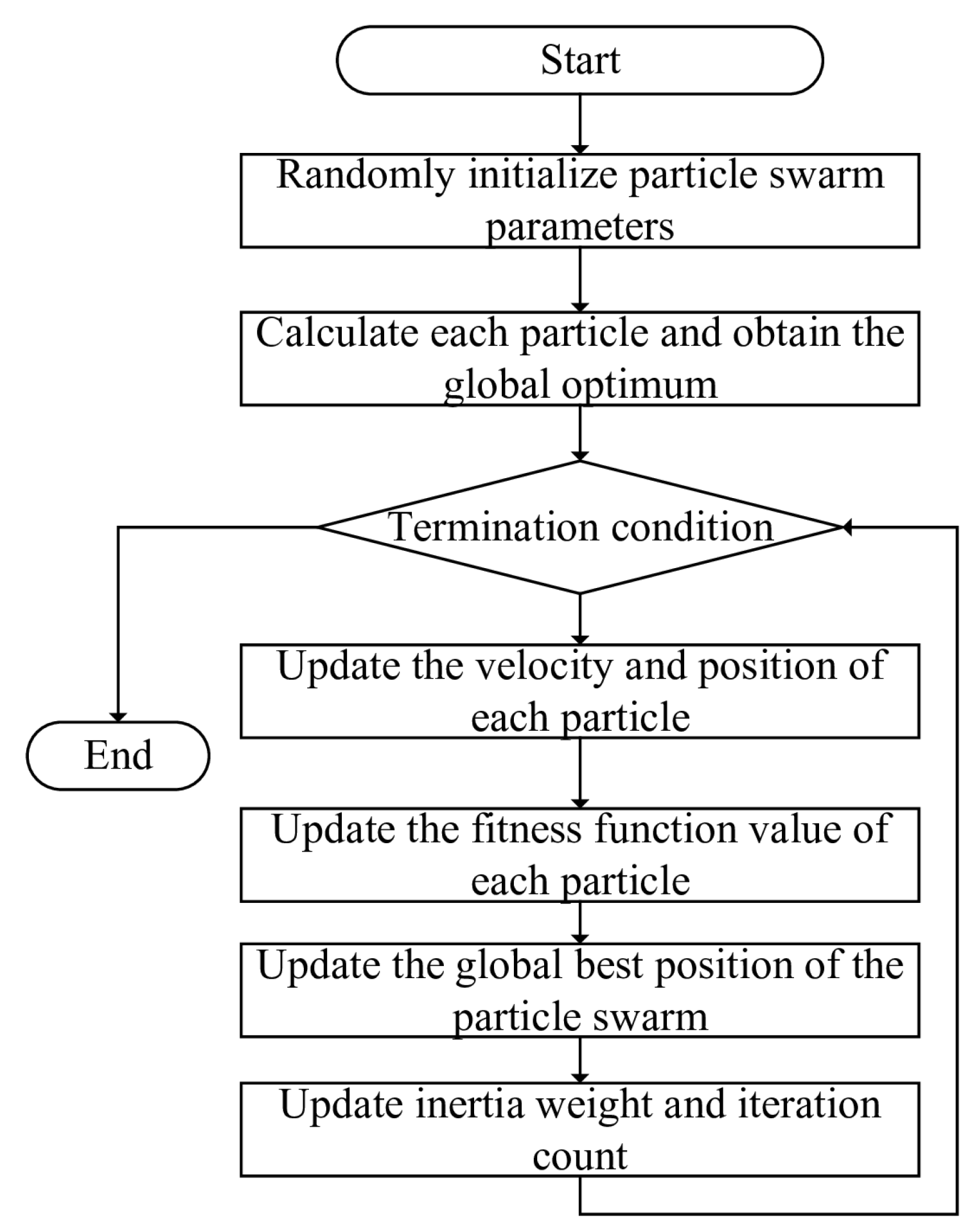
Particle Swarm Optimization (PSO) and its advanced variants (e.g., Q-learning based PSO [
42]) are widely recognized as efficient approaches for nonlinear system identification. In this study, parameter identification was performed using the PSO algorithm as shown in
Figure 6. The identification results are presented as follows.
Table 1 presents the parameter identification results for the SGPI model.
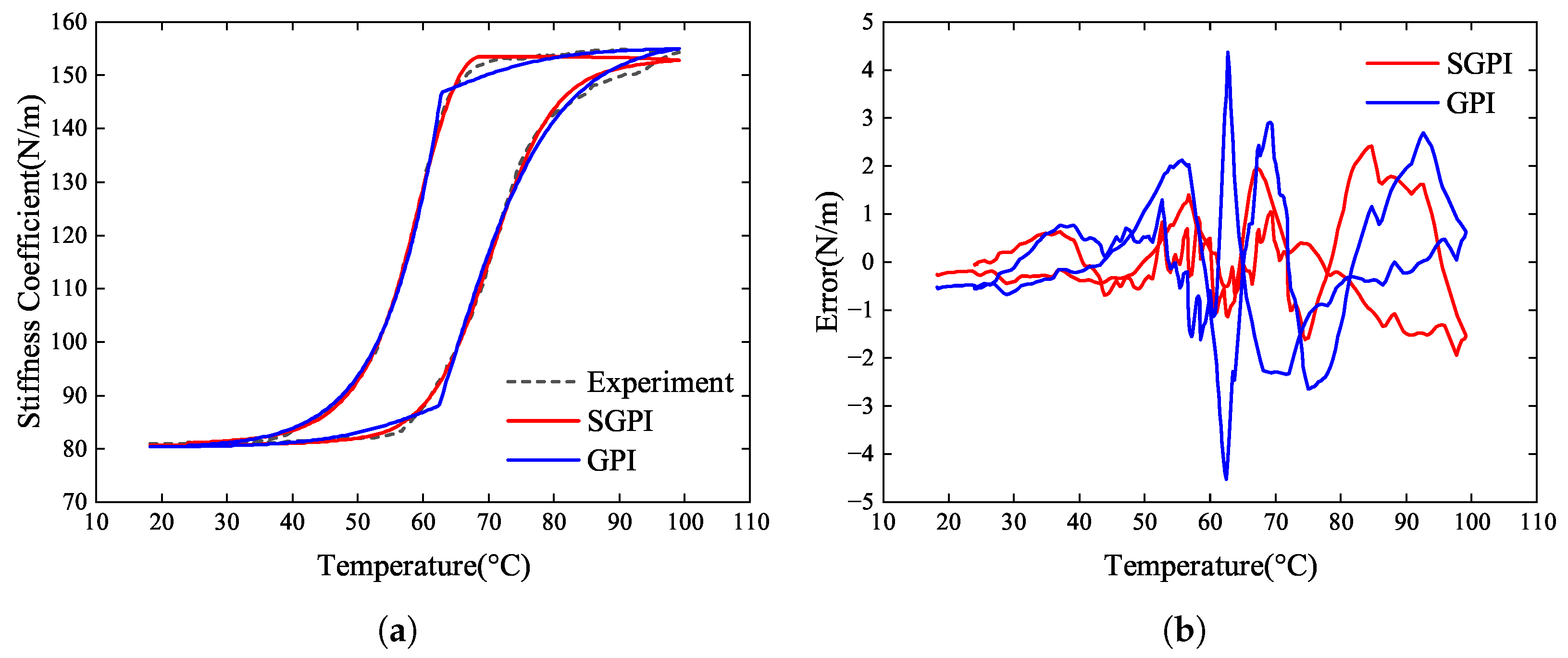
Figure 7a compares the identification results of both the SGPI and GPI models against the experimental data, while
Figure 7b illustrates the corresponding tracking errors. The results demonstrate that the SGPI model effectively characterizes the hysteresis behavior of the SMA actuator, exhibiting smoother transitions at phase transition points and higher accuracy than the GPI model. To evaluate the modeling precision, three error metrics are defined in
Table 2: Root Mean Square Error (RMSE), Average Absolute Error (AAE), and Maximum Relative Displacement Error (MRDE). The proposed SGPI model achieved reductions of 18.9% in RMSE, 15.9% in AAE, and 36.0% in MRDE compared to the GPI model. These quantitative metrics further validate the effectiveness of the proposed SGPI model.
4. Simulation
To validate the effectiveness of the proposed EKF and MPC frameworks, numerical simulations were conducted using an SMA actuator model identified from the experimental tests. The numerical simulations were performed on a personal computer equipped with an Intel Core i7-14650H processor (2.20 GHz) and 16 GB of RAM. The algorithms were implemented using MATLAB R2023b, and the nonlinear programming problems were solved using the CasADi framework version 3.5.5. Under this computational setup, the average execution time per time step was approximately 17 ms.
The simulation environment was configured with a sampling time of
s and initialized with the SMA thermodynamic parameters
,
, and
. The MPC horizons were set to
and
. This selection provides a 1.5 s look-ahead window, which is sufficient to cover the dominant thermal time constant of the SMA for phase lag compensation, while the smaller
ensures that the optimization can be completed within the sampling interval. The initial conditions consisted of a spring temperature
and the initial stiffness coefficients
N/m. The hysteresis virtual state vector
was initialized using the operator definition in (
13):
Realistic perturbations were incorporated by injecting zero-mean Gaussian process noise
and measurement noise
with diagonal covariance matrices:
To validate the estimation capability of the EKF for both measurable outputs and virtual hysteresis states under process and measurement noise, a low-frequency sinusoidal excitation signal
is applied to the system for the first 50 s, followed by a period of zero input for the subsequent 50 s. The process noise covariance matrix
and the measurement noise covariance matrix
in the EKF were configured to match the true noise covariance matrices
and
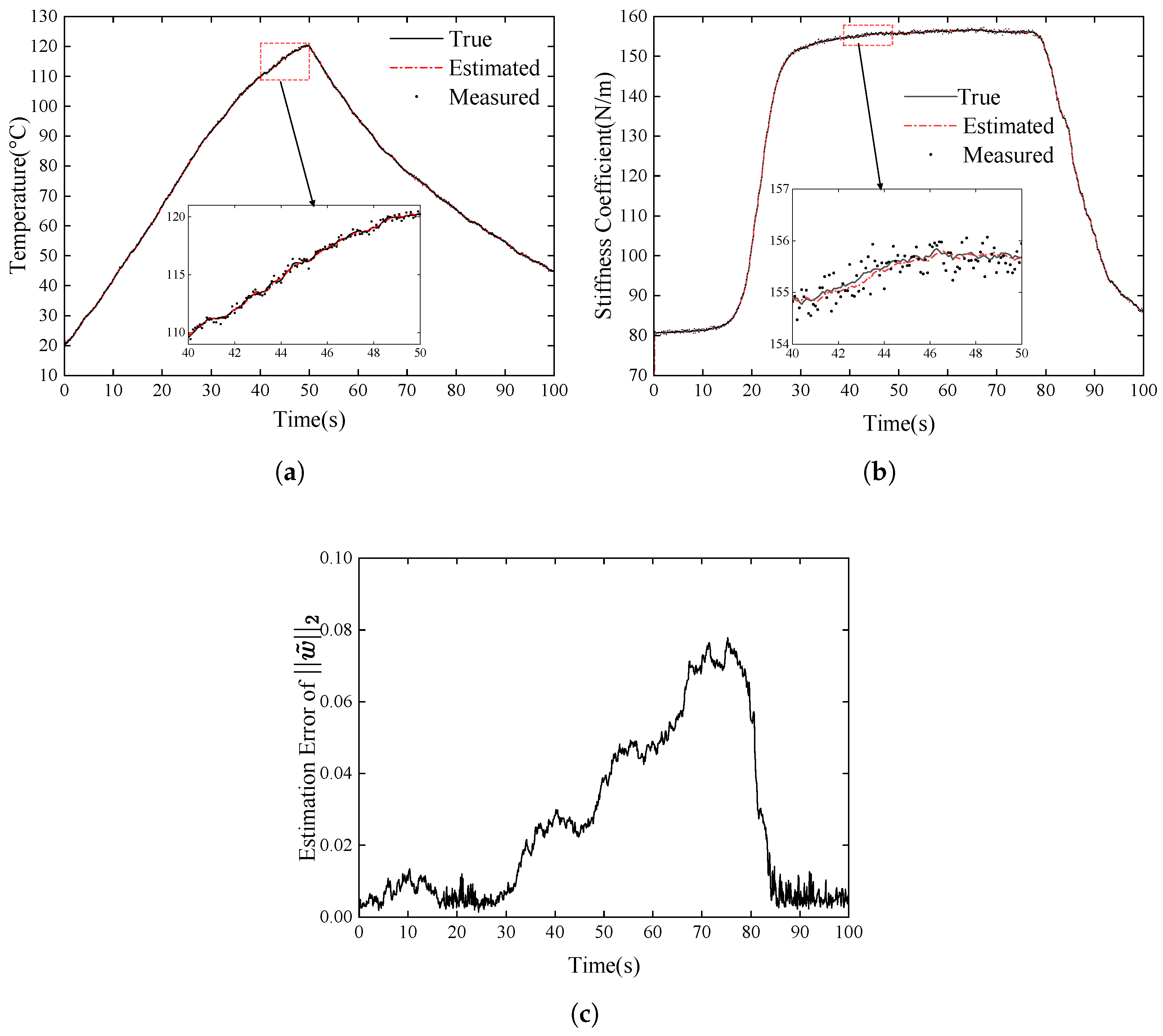
of the simulation environment. The estimation performance and quantitative analysis results are shown in
Figure 10 and
Table 3.
Figure 10a shows the estimated temperature profile of the actuator,
Figure 10b shows the estimated stiffness coefficients trajectory against the measured and true values, and
Figure 10c presents the Euclidean norm evolution of the virtual hysteresis state estimate.
Table 3 presents quantitative performance metrics. The simulation results demonstrate that under measurement noise, the EKF data fusion mechanism achieves a 44.66% reduction in temperature estimation standard deviation, a 14.16% reduction in stiffness coefficients estimation standard deviation, and a virtual hysteresis state estimation error norm that is consistently below 0.08. This results validate the effectiveness of the EKF in estimating both the measurable outputs and unmeasurable hysteretic states under noisy conditions.
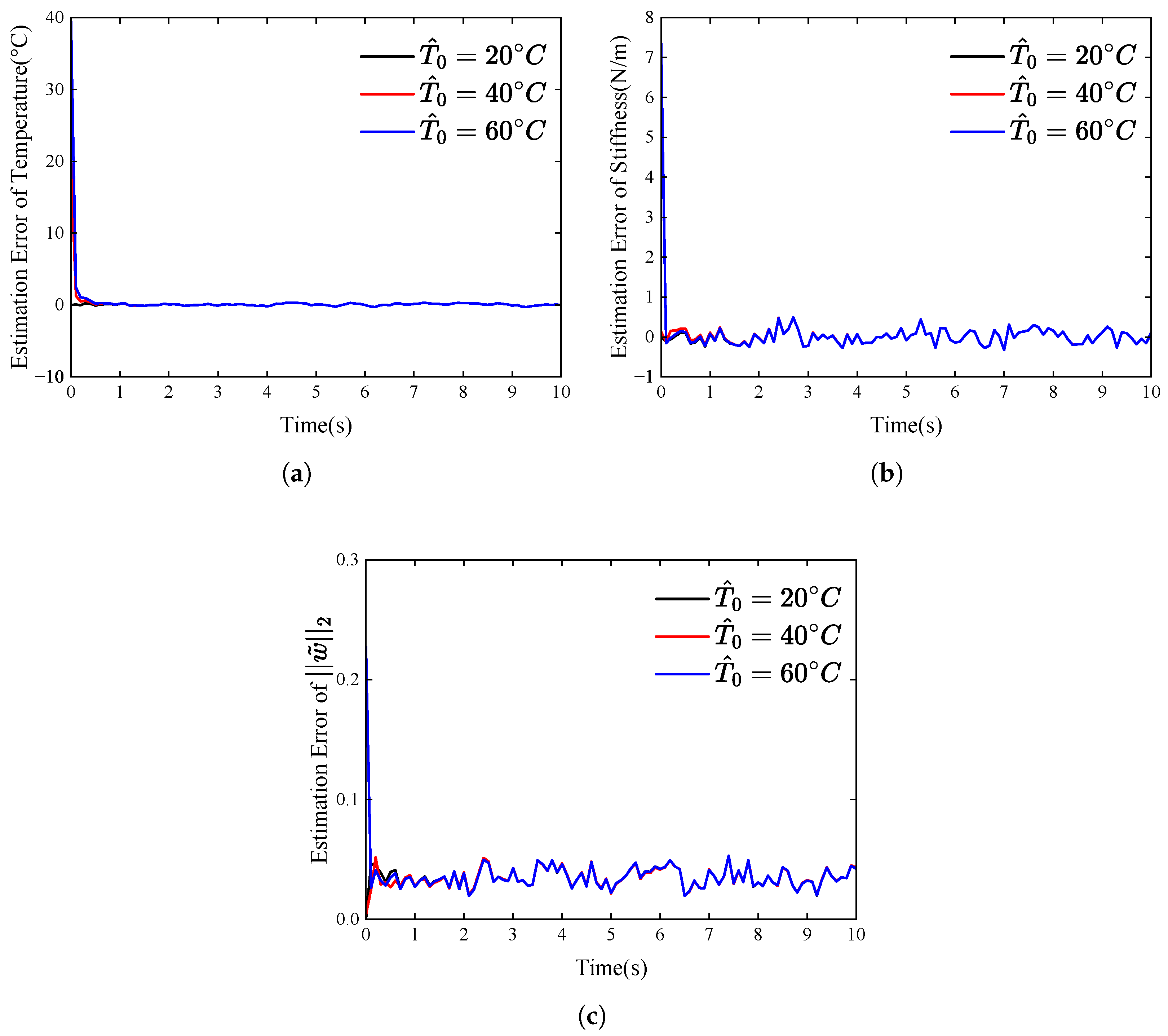
To analyze the sensitivity of the proposed Extended Kalman Filter (EKF) to initial state errors and noise parameter tuning, two sets of comparative simulation experiments were conducted. First, to assess the convergence performance under uncertain initialization, three experimental cases were established with the noise covariance matrices held constant. These cases corresponded to initial temperature estimates of 20 °C, 40 °C, and 60 °C, respectively. As illustrated in
Figure 11, despite the significant discrepancies in the initial states, the state estimates in all cases rapidly converged to the true trajectory within approximately 0.7 s. This demonstrates that the algorithm possesses strong robustness to initial errors and exhibits fast convergence capabilities. Second, to evaluate the sensitivity of the filter to process noise parameters, three different filter configurations were selected while maintaining accurate initial states. Specifically, the process noise covariance matrix
was scaled by factors of 0.1, 1, and 10, respectively. For these three scenarios, the Mean Squared Error (MSE) of the estimation errors for temperature, stiffness, and the Euclidean norm of the virtual hysteresis state vector
were calculated. The quantitative comparisons are summarized in
Table 4. The results indicate that while the baseline parameter configuration yields the lowest MSEs, the estimation errors remain within a low and bounded range even under significant parameter mismatch. This confirms that the proposed algorithm maintains stable tracking performance across different noise parameter configurations.
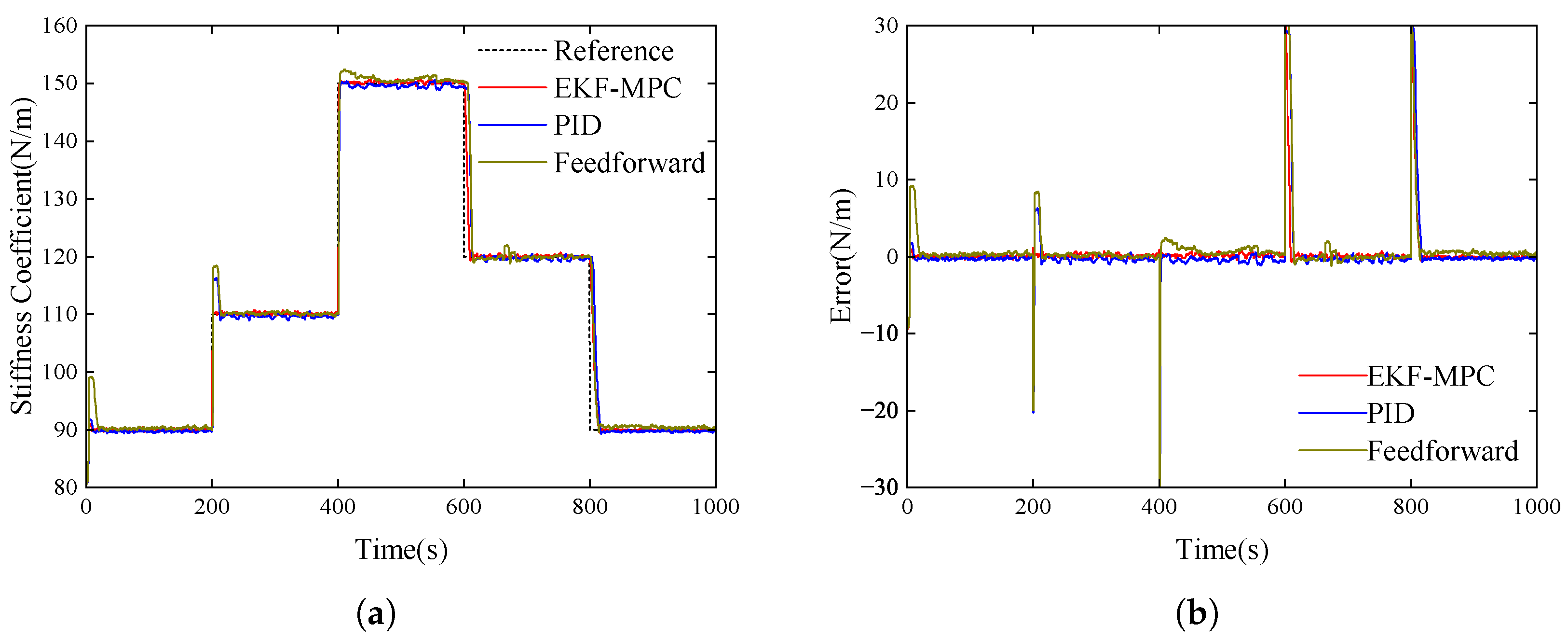
To validate the effectiveness of the MPC algorithm, simulation studies were conducted for multi-setpoint tracking under disturbance conditions. Comparative analyses were performed against the traditional PID control and feedforward compensation control. The PID parameters were initially determined using the Ziegler–Nichols frequency response method and subsequently fine-tuned to achieve an optimal balance between transient response speed and overshoot suppression. The feedforward compensation strategy, developed in reference to [
29], consists of a static inverse-GPI model to cancel hysteresis nonlinearities, integrated with a Model Reference Adaptive Control (MRAC) for thermal regulation and a PID loop to compensate for the modeling errors of the inverse-GPI model.
Figure 12 presents the modeled stiffness coefficients tracking and error curves of the three control strategies, and
Table 5 provides quantitative comparison results of the key performance metrics.
The simulation results indicate that the proposed EKF-MPC controller exhibits superior overall performance across all evaluated metrics. In terms of overshoot suppression, the EKF-MPC demonstrates a significant advantage. Simulation data from Steps 3 to 5 show that its overshoot is maintained within 2%, outperforming both the PID and feedforward–feedback control schemes. Notably, EKF-MPC achieves a faster response during the stiffness reduction phases (Steps 4–5). Fundamentally, both PID and feedforward–feedback control are reactive. They require the perception of a tracking error or a discrete change in the reference stiffness to trigger a reduction in the heating current. Specifically, the PID controller must wait for an error signal to emerge before adjusting its output, while the feedforward component remains static until the reference stiffness trajectory shifts. Consequently, these methods rely on a slow integration process to compensate for model mismatches. In contrast, by leveraging the receding horizon optimization mechanism, the MPC is capable of pre-adjusting the control input based on stiffness variations within the prediction horizon. This proactive control action allows for the early modulation of the input current, effectively compensating for the thermal inertia and passive cooling limitations that hinder rapid stiffness adjustment in SMA actuators. Regarding settling time, the EKF-MPC exhibits the fastest response across all steps, with an average settling time of 6.38 s, representing a substantial improvement over the 11.1 s recorded for the PID control. Furthermore, the EKF-MPC achieves the lowest average steady-state error (0.1355 N/m) among the three methods. These findings confirm that the integration of EKF state estimation with the MPC disturbance rejection mechanism effectively enhances the control precision and stability of the system under complex hysteric nonlinear conditions.