Article

AEM-D3QN: A Graph-Based Deep Reinforcement Learning Framework for Dynamic Earth Observation Satellite Mission Planning


1
CETC Key Laboratory of Aerospace Information Applications, Shijiazhuang 050081, China
2
School of Systems Engineering, National University of Defense Technology, Changsha 410008, China
3
School of Electrical and Information Engineering, Tianjin University, Tianjin 300072, China
*
Author to whom correspondence should be addressed.
Aerospace 2025, 12(5), 420; https://doi.org/10.3390/aerospace12050420

Submission received: 1 April 2025 / Revised: 4 May 2025 / Accepted: 7 May 2025 / Published: 9 May 2025
(This article belongs to the Section Astronautics & Space Science)

Abstract

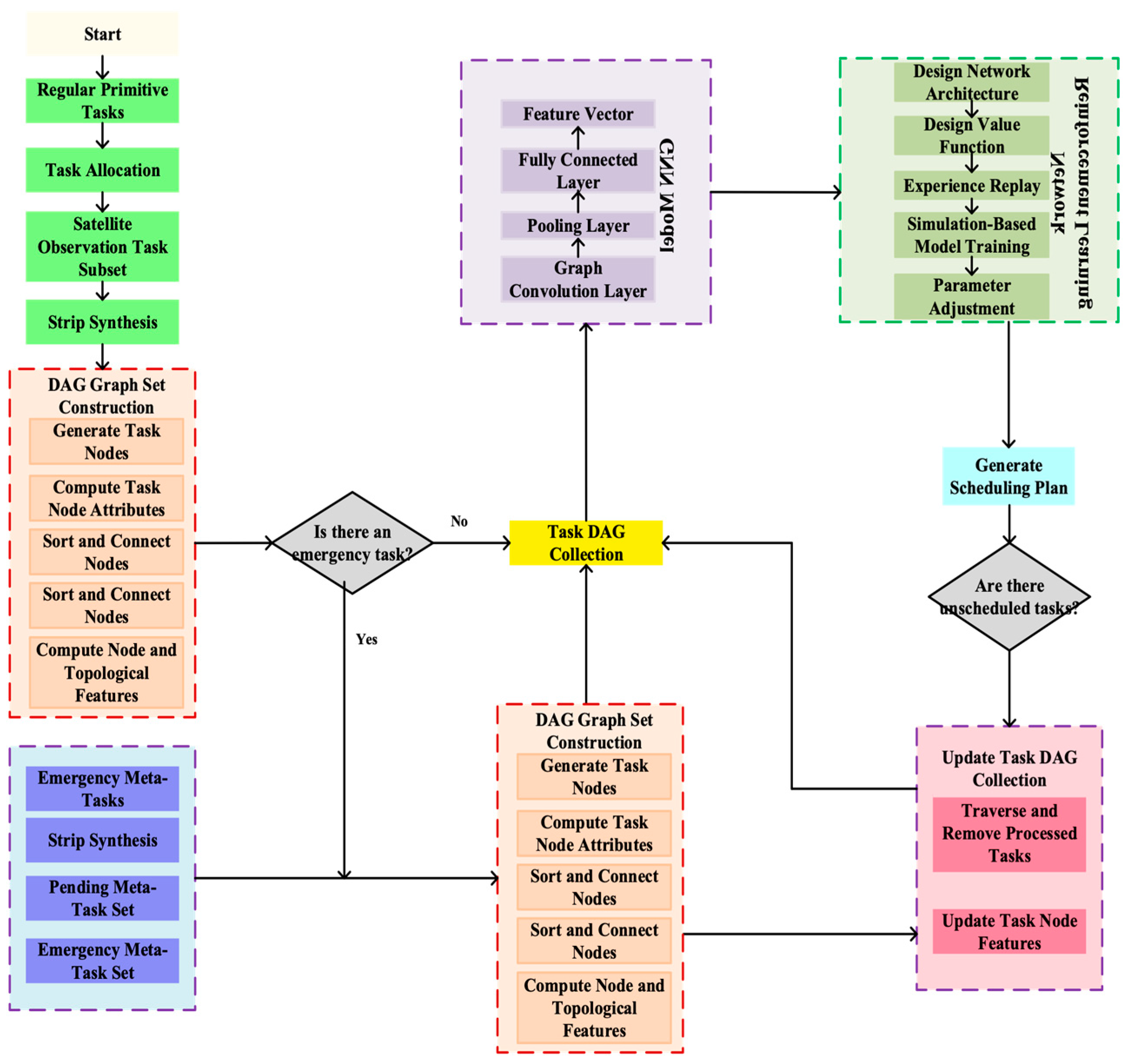
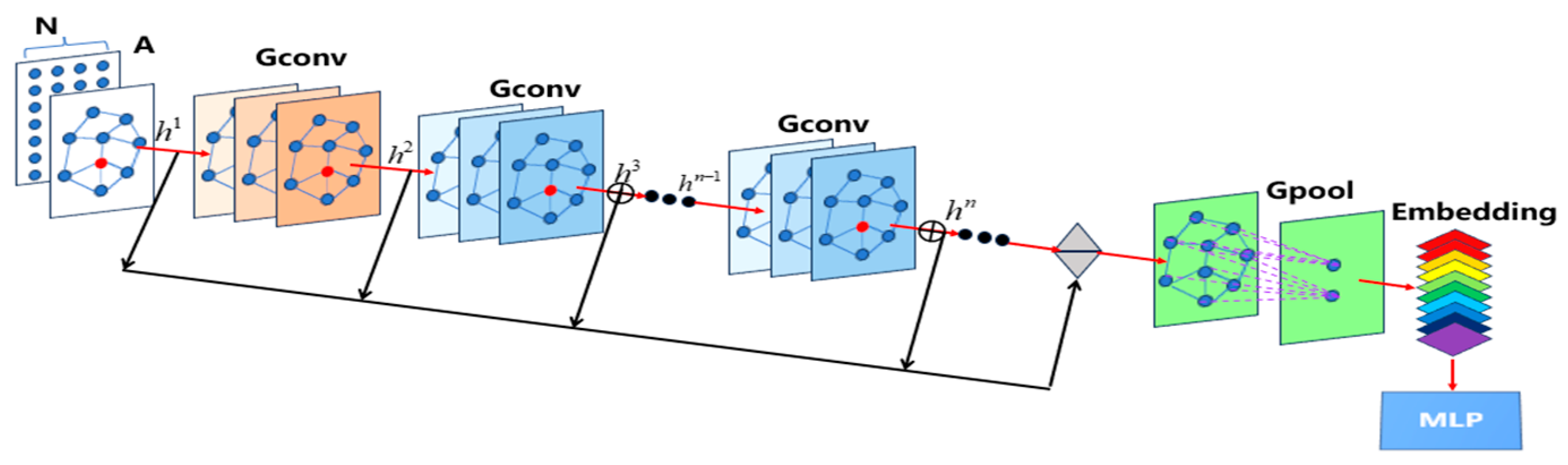
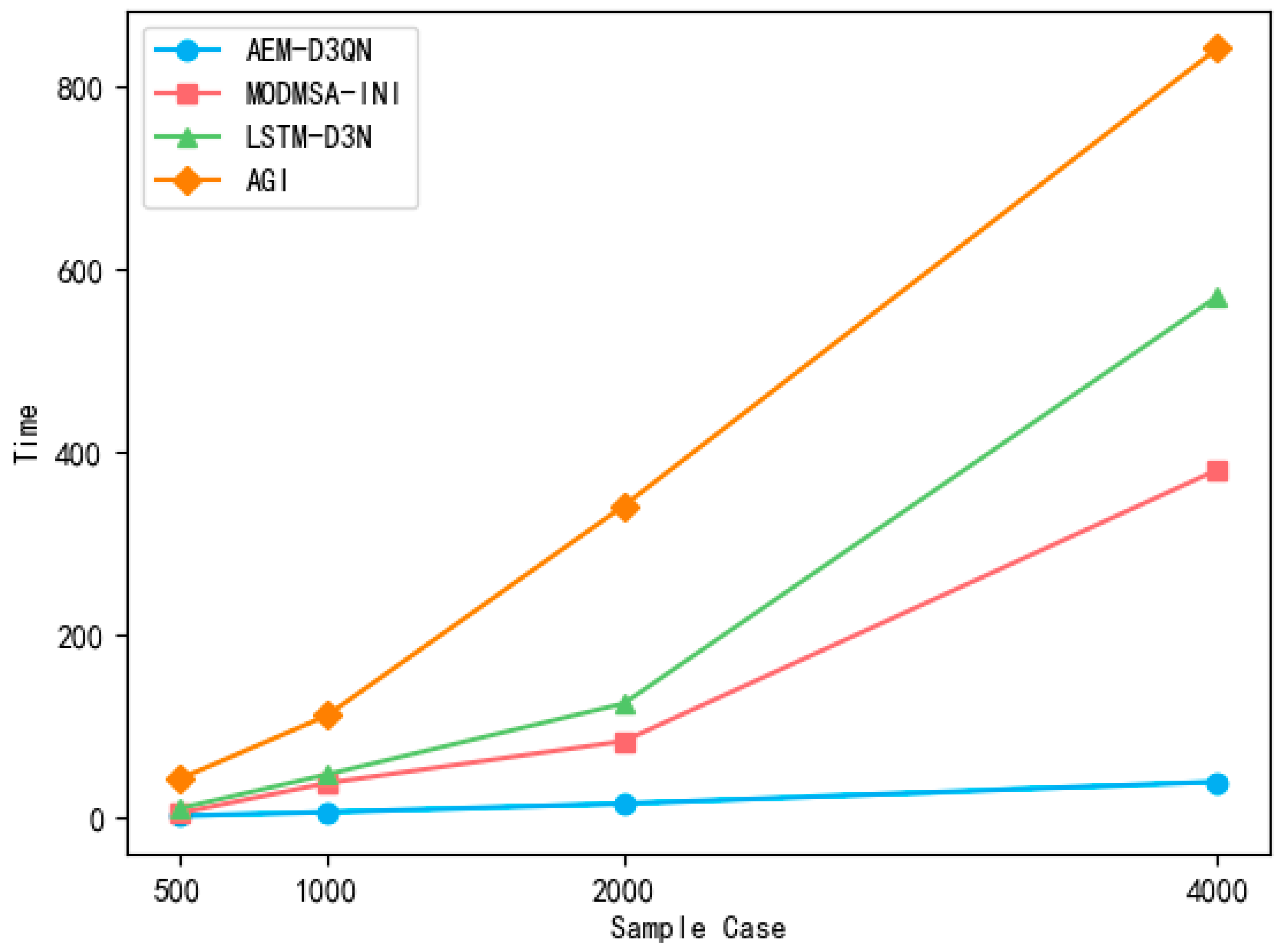
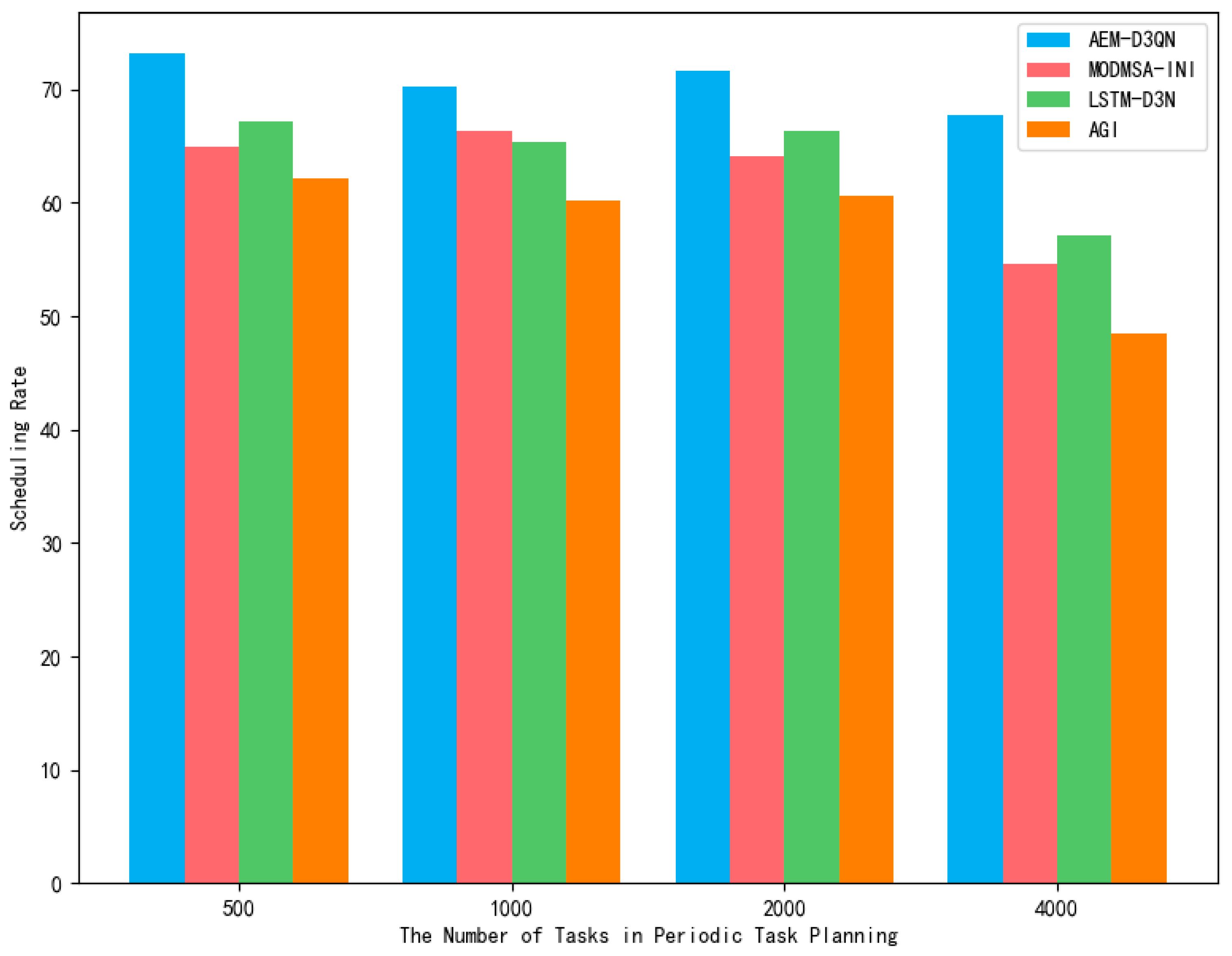
Efficient and adaptive mission planning for Earth Observation Satellites (EOSs) remains a challenging task due to the growing complexity of user demands, task constraints, and limited satellite resources. Traditional heuristic and metaheuristic approaches often struggle with scalability and adaptability in dynamic environments. To overcome these limitations, we introduce AEM-D3QN, a novel intelligent task scheduling framework that integrates Graph Neural Networks (GNNs) with an Adaptive Exploration Mechanism-enabled Double Dueling Deep Q-Network (D3QN). This framework constructs a Directed Acyclic Graph (DAG) atlas to represent task dependencies and constraints, leveraging GNNs to extract spatial–temporal task features. These features are then encoded into a reinforcement learning model that dynamically optimizes scheduling policies under multiple resource constraints. The adaptive exploration mechanism improves learning efficiency by balancing exploration and exploitation based on task urgency and satellite status. Extensive experiments conducted under both periodic and emergency planning scenarios demonstrate that AEM-D3QN outperforms state-of-the-art algorithms in scheduling efficiency, response time, and task completion rate. The proposed framework offers a scalable and robust solution for real-time satellite mission planning in complex and dynamic operational environments.
Keywords: mission planning; graph neural network; remote sensing satellite; geospatial grid; deep reinforcement learning; directed acyclic graph mission planning; graph neural network; remote sensing satellite; geospatial grid; deep reinforcement learning; directed acyclic graph