1. Introduction
Human spaceflight technology is a key area of focus in the progress of international space exploration. It not only showcases a country’s technological capabilities in space but also acts as an important indicator of its economic, technological, and military strength, as well as its overall national power [
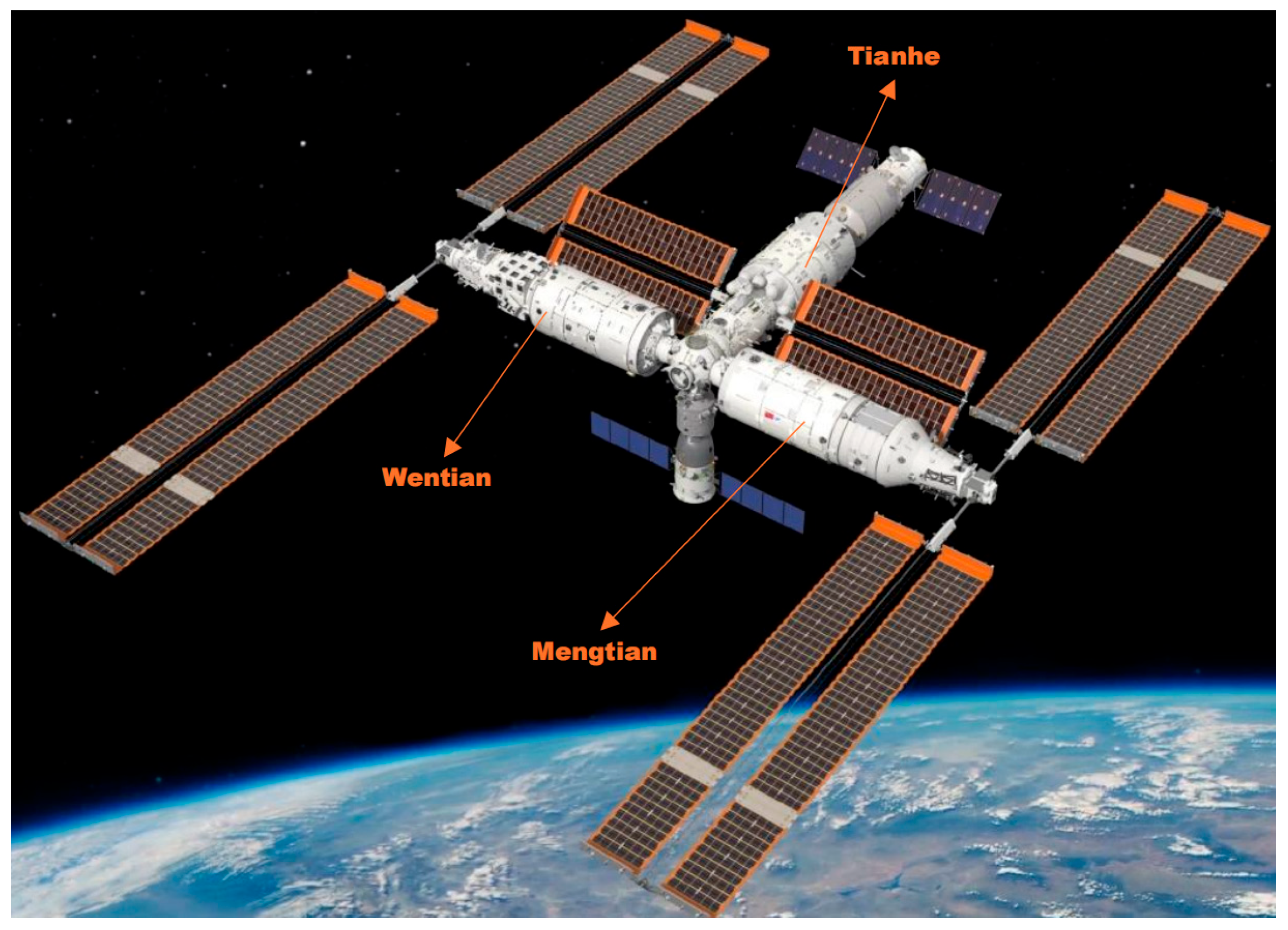
1]. China’s ‘Tiangong’ space station consists of three components: the ‘Tianhe’ core module, the ‘Wentian’ experimental module, and the ‘Mengtian’ experimental module, all of which were built and assembled in orbit, with an expected operational duration of over a decade, the structure diagram of the China Space Station is depicted in
Figure 1 [
2,
3]. Due to the intricate operational demands during the development and application stages of the space station, there is a pressing need to integrate knowledge related to operational management, efficient payload operation management technologies, and frameworks for conducting scientific experiments in space. It is crucial to assess the current operational management approaches of the systems in orbit and to suggest innovative strategies and recommendations for improving future operational management practices in this field.
This article first elaborates on the backgrounds of China Space Station (CSS) and the International Space Station (ISS), followed by a comparative analysis of their operational and management organizational structures. Subsequently, it details the in-orbit operational management models and methodologies adopted by the CSS, and presents a statistical overview of its current in-orbit operational management status. Finally, the existing challenges and implications learned are summarized, and corresponding conclusions are drawn.
2. Background
Human space exploration programs are viewed as crucial scientific and technological ventures that combine vast resources through collaboration across multiple levels, disciplines, and systems, resulting in a sophisticated aerospace mega-system [
4]. Managing such extensive scientific initiatives requires the unification of process and goal management, which entails merging methodologies focused on processes with those centered on objectives [
5]. The engineering management structure of this aerospace mega-system is marked by its large scale and complex organizational framework. To improve management effectiveness and maximize results, it is essential to create a holistic and sustainable aerospace ecosystem [
4]. Additionally, the approach to managing operations in space must blend system engineering with organizational management strategies to enable effective cooperation among various systems [
6].
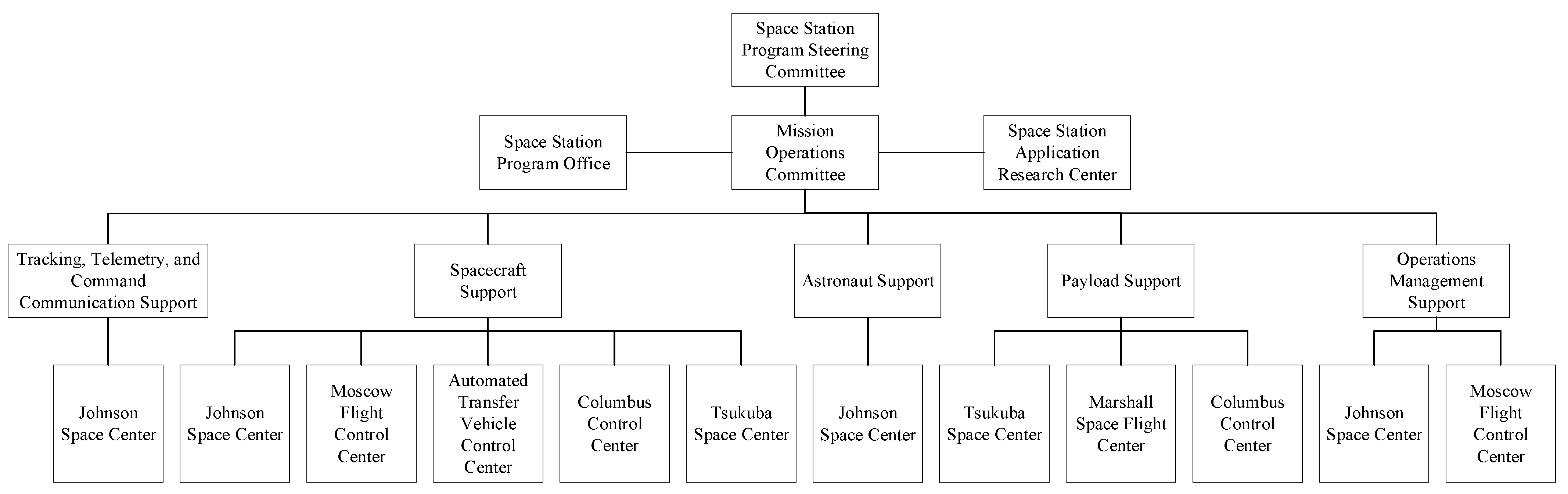
ISS is a joint initiative involving 16 countries, coordinated through seven operational control hubs: the Johnson Space Center (JSC) in the USA, the Payload Operations Integration Center also in the USA, the Moscow Mission Control Center (TsUP) in Russia, the Columbus Control Centre in Germany, the Automated Transfer Vehicle Control Centre in France, the Tsukuba Space Center in Japan, and the Mobile Servicing System Operations Complex in Canada. The ISS is made up of ten unique systems, which include the Electrical Power System (EPS), Thermal Control System (TCS), Communication and Tracking System (C&TS), Guidance, Navigation and Control System (GNC), Structures and Mechanisms System (S&M), Environmental Control and Life Support System (ECLSS), Command and Data Handling System (C&DH), Robotics System (RS), Flight Crew System (FCS), and Payload System (PL) [
7]. The management of the ISS is structured in three tiers, allowing the seven centers to carry out operational functions that are interdependent within a decentralized system [
8]. The organizational structure of the ISS is depicted in
Figure 2.
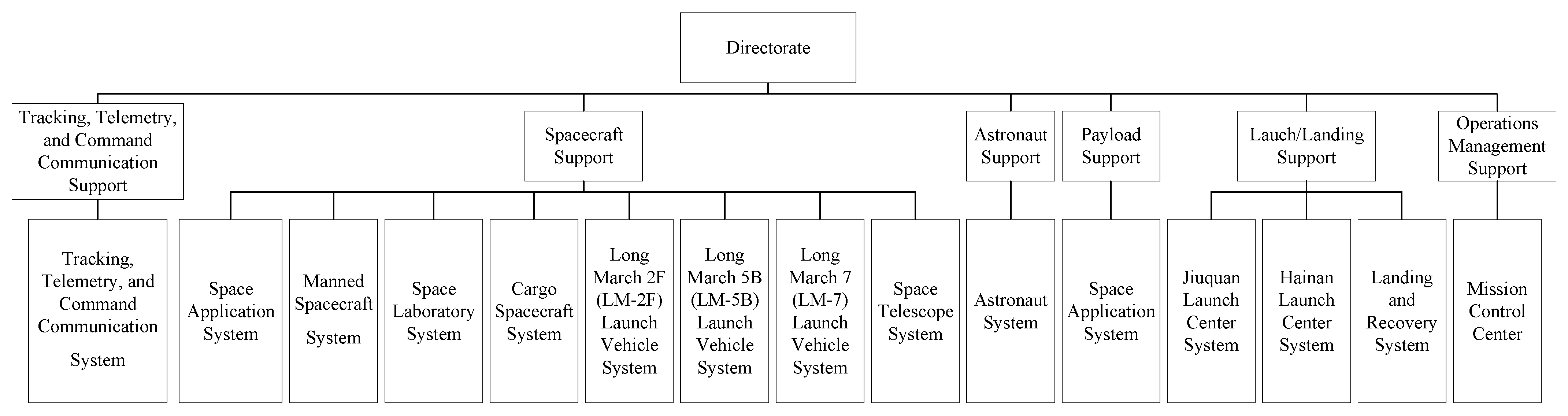
The China Manned Space Program (CMS) consists of fourteen key systems, which encompass the Astronaut System, Space Application System, Manned Spacecraft System, Long March 2F (LM-2F) Launch Vehicle System, Jiuquan Launch Center System, Tracking, Telemetry, and Command (TT&C) Communication System, Landing and Recovery System (LRS), Space Laboratory System, Cargo Spacecraft System, Space Station System, Space Telescope System, Long March 5B (LM-5B) Launch Vehicle System, Long March 7 (LM-7) Launch Vehicle System, and Hainan Launch Center System.
The structure governing the operational oversight of the CSS requires cooperation from over ten different units and organizations. A directorate acts as the governing authority tasked with carrying out operational control activities, enabling the integration of multiple systems to guarantee efficient management of the space station’s functions, as depicted in
Figure 3.
3. Operational Management Model of Space Application System
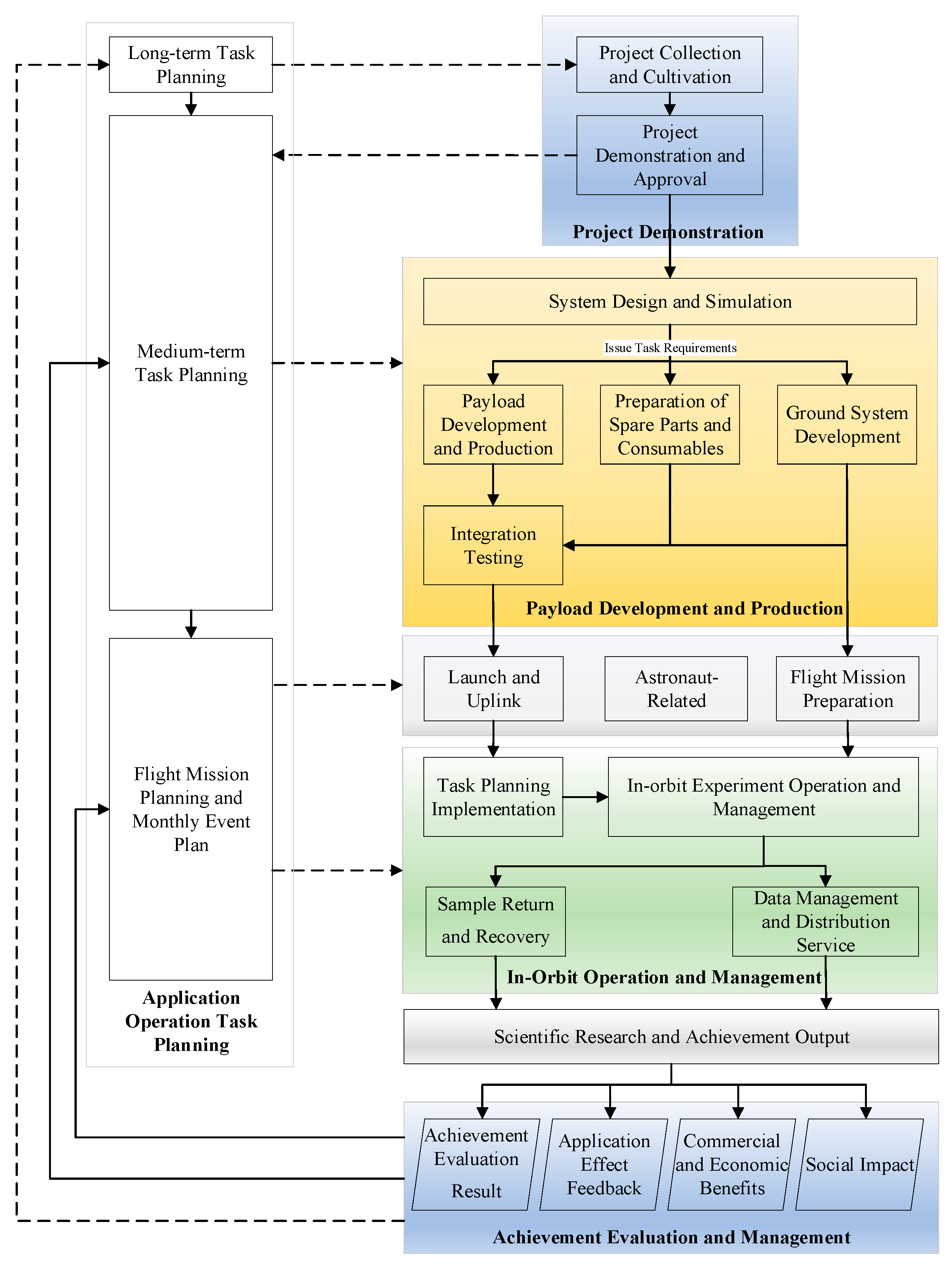
In the process of applying and developing the CSS, the space application system is fundamentally aimed at delivering tangible results, leading to the creation of the Space–Ground Integrated Operations Model. As depicted in
Figure 4, this system is organized into multiple phases: long-term mission strategy, mid-term mission strategy, flight mission strategy, and monthly event strategy. These phases work in succession to enable the execution of diverse activities, such as demonstrating application projects, developing and producing payloads, managing operations in orbit, and assessing outcomes for scientific experiments.
During the extended mission planning stage, application projects are mainly initiated and cultivated. Following this, the mid-term mission planning phase is where project demonstrations and approvals occur. The finalization of payload development and production usually takes place during this mid-term period, which entails conducting pertinent research that aligns with the established space experiment framework. This stage encompasses the execution of theoretical analyses, ground experiments, and simulations, along with completing related tasks such as payload creation, material preparation, and the development of ground systems according to mission requirements. A series of tests for ground verification and integration are carried out. Based on the results from these evaluations, enhancements are made to experimental devices, in-orbit experimental strategies, and processes.
The management of operations in space commences once the payload has been developed, manufactured, and launched, following a structured flight mission or monthly event schedule. This stage focuses on tasks associated with preparing for the flight mission, implementing the mission plan, overseeing in-orbit experiments, facilitating sample retrieval and recovery, and managing data throughout the mission’s duration. Ultimately, in the phase dedicated to evaluating and managing results, it is essential to analyze and interpret the experimental findings, conducting a thorough assessment from multiple angles, such as scientific results, practical applications, commercial benefits, and societal effects.
This article focuses on the oversight of in-orbit operations related to scientific experiments and their equipment within space application systems following their launch. The Payload Operation and Application Center (POAC) serves as the main coordinator for experiments conducted on the space station. POAC manages various in-orbit scientific projects through five essential functions: planning flight missions and scheduling monthly events, preparing for experiments in orbit, conducting these experiments, monitoring payload conditions and analyzing data, and performing evaluations and routine maintenance of payloads. Additionally, the POAC has established standardized and efficient protocols, utilizing advanced digital technologies to guarantee the safe, stable, and effective implementation of scientific projects in space, thus continually improving support for research outcomes.
4. In-Orbit Operation Management Measures
The in-orbit operational management measures cover multiple links, with relevant methodologies applied to mission planning, uplink control, downlink control, anomaly detection, data analysis, human resource management, and other aspects. Such methodologies include decision-making system, control technologies, hierarchical and classified management approaches, personnel management concepts, etc. Subsequent sections will elaborate on the specific management methods for each link and their current application status.
4.1. Mission Planning
The planning of tasks for the CMS combines forward process management with reverse goal management, utilizing a method defined by backward scheduling for plans and forward scheduling for measures [
5]. This strategy aims to enhance the effectiveness of task planning and oversight. To promote the smooth execution of various activities and maximize productivity within the task cycle, the CSS planning during its development and application stages is structured into five separate tiers: long-term, medium-term, flight mission, monthly, and implementation planning (operational task planning) [
9]. The task planning for the space application system employs a holistic approach throughout its lifecycle, following a layered, phased, iterative, and progressively refined methodology. Given the limitations of resources and the variety of task demands, the planning process incorporates multi-level, multi-objective global optimization to ensure the judicious distribution of application resources and the optimization and coordination of the engineering implementation process. Through more scientific mission planning, the duration of the experimental project for a payload has been reduced by over 65%, while the experimental efficiency has been increased by more than 25%.
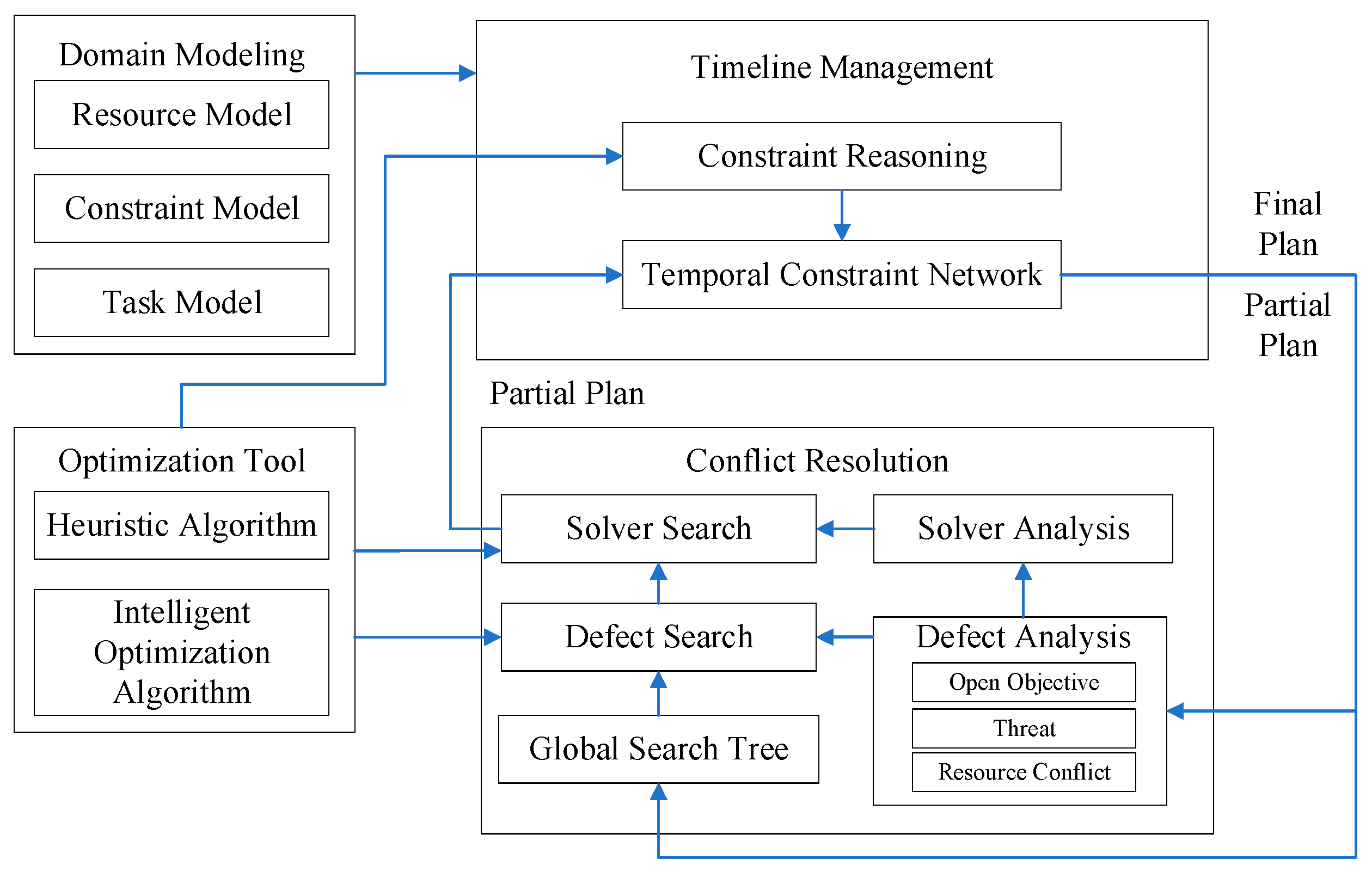
The task planning is divided into long-term, medium-term and short-term plans according to time periods, and can be gradually refined into daily and hourly experimental arrangements. The planning and control of application tasks rely on the experimental data gathered and the unique needs of the application. By merging task windows obtained from orbital computations and event forecasts, a time-sensitive network model is created. Following this, temporal planning algorithms are utilized to support thorough planning and scheduling, which allows for efficient resource distribution and the development of various plans. As depicted in
Figure 5, the task planning in the space application system provides crucial domain insights by forming multiple domain models, such as the resource model, task model, and constraint model. A timeline management module supervises temporal planning, while a conflict resolution module is engaged to enhance and address intermediate plans. This module also performs defect analysis, solver analysis, defect searches, and solver searches, among other tasks, to promote plan iteration. Additionally, optimization tools present a variety of domain-specific heuristic and intelligent optimization algorithms to aid in constraint reasoning, defect searches, solver searches, and similar activities.
4.2. Operation Control
In the phases of application and development, the space station employs a hybrid flight control system that combines centralized command with distributed execution. During key flight control scenarios, including launch, docking, and extravehicular activities, the TT&C and Communication Command Directorate will synchronize various systems and sectors to shift into a centralized control mode. In contrast, when operating in a distributed mode, numerous systems and sectors will collaborate in control and operational tasks through a cooperative distributed framework. The operational system of the space station adheres to the principles of technical democratic centralism, emphasizing the responsibility of technical experts in overseeing in-orbit activities. Throughout the technical discussion process, insights, suggestions, and experiences from scientists, engineering professionals, and other stakeholders are gathered to formulate strategies for in-orbit operations and tackle challenges faced during these activities, ensuring the safe and effective management of payload operations. The responsibility of technical experts indicates that decisions on technical issues are made by appointed leaders in the field. For example, major in-orbit concerns related to scientific payloads are usually approved and carried out by the designated technical leader or the deputy chief engineer in that area. Establishing a framework of technical responsibility based on democratic centralism is crucial for overcoming technical obstacles and enhancing application advantages. By utilizing the expertise of specialists, in-orbit quality challenges can be efficiently addressed and prevented, thus protecting the operational integrity of equipment in space and aiding in achieving the intended results.
4.2.1. Uplink Control
The control of uplink operations within the space application system utilizes microservices and distributed processing techniques to enable cooperative efforts between terrestrial and extraterrestrial environments for remote scientific research [
10]. This procedure includes tasks such as data injection, packaging, inversion, and verification related to the system’s payload, all carried out according to a predefined implementation strategy. This culminates in the creation of necessary uplink control commands. The overall operation is segmented into four key areas: processing data injection, packaging data, verifying data, and transmitting data. Each segment is automated via a messaging system, which guarantees the precision, promptness, and effectiveness of the uplink operation control.
4.2.2. Downlink Control
The space application system, as designated by CSS, can reach a downlink data transmission speed of 1.1 Gbps, significantly outpacing the ISS’s 100 Mbps rate [
11]. To meet the space station’s requirements for advanced real-time computing capabilities and to improve the system’s scalability, availability, and reliability, a comprehensive network architecture has been developed at the system level. This architecture for the space application system integrates real-time processing with principles of classified and hierarchical management.
The core idea behind classification management is the organized sorting of downstream data according to predefined criteria to improve both management and analytical functions. By systematically structuring the information network framework of the entire space application system, one can gain a deeper insight and more effectively manage intricate information, thus boosting management productivity. The classification criteria include various categories: data can be sorted by type into digital telemetry, engineering, parameter-based scientific data, and visual media; by protocol into payload source packets, CCSDS packets, 32KB packets, and PDXP packets; and by purpose into data product files, CSV files, and visual media products. In the field of image data processing, numerous methods are utilized, such as thumbnails, multi-resolution pyramids, continuous scale displays, linear stretching, tone-mapping techniques, and discrete Fourier transform methods. For the real-time ordered reception of high-speed data, a technology for single-channel high-speed UDP data reception has been developed. Moreover, for data sent through IP tunneling, the IPinIP soft gateway technology has been implemented. In the context of real-time processing of high-speed streaming data, various technologies are employed, including a computing cluster of high-performance X86 servers, the Storm distributed stream computing framework, the distributed NoSQL database Cassandra, and the distributed subscription service middleware Kafka.
The core idea behind hierarchical management is the organized arrangement of data in a descending order based on its significance, complexity, and urgency. By sorting this information, operational managers can more efficiently distribute resources and apply specific management techniques suited to each level of data. For example, data with high-risk factors or strict time constraints may require immediate processing for analysis and detection of anomalies. In contrast, data that falls into the medium risk category or has moderate time sensitivity can be evaluated in real time during essential operations or flight control scenarios. Data considered low risk or with less urgent timing can be subjected to routine analysis and anomaly detection. This method of classifying and managing data hierarchically not only simplifies the data analysis process but also enhances the configuration of system resources, improving the overall flexibility and efficiency of the information network architecture within space application systems. This strategy allows for the simultaneous execution of multiple in-orbit experiments, ultimately boosting the effectiveness of operational management.
4.3. Anomaly Detection
The space application system utilizes a tiered strategy for managing detection aimed at recognizing irregularities in payloads. The process of anomaly detection relies on telemetry data received from downlinks, engineering information, or a mix of uplink commands, and is divided into three specific levels: Level 1 focuses on static threshold anomaly detection, Level 2 on dynamic threshold anomaly detection, and Level 3 on threshold-in anomaly detection. In Level 1, specialists analyze real-time telemetry data to identify static anomalies. Level 2 combines uplink commands with downlink telemetry to evaluate if the data shows reasonable dynamic fluctuations, guided by changes in the uplink information. Level 3 leverages the relationships and timing aspects of in-orbit data to detect intricate associated and time-series anomalies.
The anomaly detection system designed for in-orbit operations is divided into three phases, which align with the features of a knowledge management framework: configuration of prior knowledge, iterative knowledge development during orbit, and forecasting application knowledge. This system emphasizes the importance of promptness, precision, and thoroughness in managing in-orbit activities. At present, the intelligent diagnostic system for scientific instruments aboard the space station combines knowledge of fault symptoms with qualitative reasoning based on causal models, creating a robust framework for diagnosing faults. The knowledge repository is built and continuously improved through insights gained from operational management, leveraging expert systems and specialized knowledge to establish rules for detecting anomalies. This approach integrates rule-based reasoning with real-time data-driven techniques for monitoring scientific equipment, while also employing incremental and deep learning strategies to identify temporal variations and complex anomalies within the data streams [
12]. By utilizing these sophisticated technologies, the system enhances the detection and notification of anomalies, as well as forecasts and assesses the condition of payload equipment by considering both physical and data-driven states, thus allowing for the proactive identification of potential payload issues.
4.4. Data Analysis
The space application system is designed to meet application needs by leveraging sensor information from payload devices sent from the space station. It incorporates various methodologies, such as dynamic histogram clustering for segmentation, adaptive extraction of subsequence patterns, residual attention mechanisms, adversarial deep learning models, and convolutional neural networks with multi-scale correlation matrices, to conduct statistical evaluations, diagnostics, and forecasts of essential parameters and notable phenomena associated with the payload of the space application system. A tiered management strategy is implemented to classify and prioritize the requirements for data analysis. (1) Analyzing safety-related parameter data is crucial for the secure operation of astronauts, the space station, and its payloads. This foundational analysis zeroes in on vital safety parameters, including equipment temperature, the status of gas–liquid circuits, and pressure levels in sealed containers. (2) The analysis of key parameters for scientific experiments is also critical; for example, tracking the fluctuations in lithium battery voltage can signal potential reductions in power supply capability, which is vital for related scientific endeavors. (3) The analysis of performance parameters is becoming increasingly important due to the prolonged nature of operations in orbit, especially for components that are life-dependent. The results from these analyses can significantly guide the improvement in in-orbit experimental and maintenance strategies, allowing for more precise and timely planning of spare parts. (4) Lastly, scientific data analysis is essential for enhancing the efficiency and results of in-orbit scientific experiments, requiring strong data analysis capabilities from the operational control system.
4.5. Human Resource Management (HRM)
The human resource management (HRM) system for the space station application is built on foundational management concepts that emphasize a focus on individuals, goal achievement, collaboration, and ongoing enhancement. This individual-focused strategy highlights the necessity of meeting the needs and fostering the professional growth of the operations management team, which in turn encourages their participation in decision-making and strengthens their sense of accountability and community. The strategy aimed at achieving specific goals clarifies the main aim of the operations management team: to efficiently, reliably, and stably conduct space application experiments in orbit while continually producing scientific results. Additionally, this framework underscores the importance of collaboration, fostering a shared understanding among operations management staff through interdepartmental teamwork and establishing effective communication channels to ensure smooth information flow throughout the organization. Utilizing the PDCA (Plan–Do–Check–Act) cycle allows for the ongoing refinement of work processes and management techniques, creating a culture of continuous innovation and feedback in operations management, and facilitating prompt adjustments to management approaches.
Personnel management strategies within the space application system encompass several key elements: (1) consistently offering training initiatives designed to improve the skills and overall effectiveness of the operations management team; (2) aiding staff in defining their career paths through organized career development plans; (3) creating efficient response strategies based on thorough and ongoing risk evaluations, along with comprehensive assessments of all operations management staff to swiftly recognize and address potential risks, thus ensuring operational continuity; (4) hosting regular workshops to enhance understanding of collaboration across different departments and teams; (5) perpetually improving work processes and management techniques through the PDCA cycle, making timely modifications to operations management strategies and frameworks in response to innovation and feedback; (6) tracking and analyzing various data produced by operations management, employing analytical tools to pinpoint operational challenges and make necessary changes.
5. In-Orbit Operation and Management Status
The space application system is divided into three distinct modules, which include 14 scientific experiment cabinets, a range of in-orbit support tools, and various external payloads. This system supports research in diverse scientific fields such as space life sciences, biotechnology, materials science in space, fundamental physics under microgravity conditions, fluid dynamics in microgravity, combustion science in microgravity, space physics, aerospace medicine, and technology experiments related to aerospace. As of 1 December 2024, a total of 181 scientific and application projects have been conducted aboard the space station. Nearly 2 tons of scientific supplies have been uploaded, almost 100 types of experimental samples have been returned to Earth, and over 300 terabytes (TB) of scientific data have been collected. Throughout this interval, the space station maintained stable operations for a duration exceeding 1600 days.
6. Problems and Implications
Even with significant progress in scientific studies and a wealth of operational management knowledge gained from space science experiments, many obstacles remain in guaranteeing the secure, effective, and consistent functioning of these experiments. Certain challenges are critical issues rooted in the space application system, while others involve the integration of resources and teamwork among various systems.
6.1. The Necessity for Enhanced Digitization
Currently, the framework for collaboration between space and ground systems has been thoroughly established, integrating both space-based systems and ground support mechanisms to enhance the application and development stages of the space station. The ground support system includes multiple elements, such as the space environment assurance system, a scientific and application data center, a payload operation control management system, a physical mirror platform for conducting space science experiments, and a digital space application system, among others.
The space application system in the digital realm has created a digital twin for the space station space application system, leveraging models developed during the initial phases. This digital twin is capable of being powered by digital telemetry and engineering information sourced from the payload downlink within the station, facilitating alignment between operations in space and on the ground, as well as enabling virtual–physical integration. Alongside various payloads and the physical counterpart for space science experiments on the orbiting station, this digital space application system forms a comprehensive operational framework known as the three-set space station space application system [
13]. This framework offers support for simulation validation during pre-mission preparations, digital assistance throughout the mission, and evaluations of the mission’s outcomes afterward.
To achieve genuine digital support, it is essential to implement an adaptive feedback system that persistently gathers data from orbit and relevant boundary conditions. This system should also enhance the digital representation using machine learning and AI technologies. Additionally, the model requires frequent validation and calibration to maintain consistency with real-world conditions. If needed, the model’s detail level should be adjusted, and various models must be cohesively integrated to facilitate effective cooperation among diverse integrated models, specialized functional models, and simplified logical models, thus accurately meeting the needs of digital support.
6.2. The Necessity for Enhanced Intelligence
Since the space station functions as a crewed vehicle, ensuring the safety of astronauts, the station itself, and its cargo are of utmost importance. At present, the space application system utilizes a real-time expert system for fault diagnosis, which has effectively provided online automatic interpretation and alert features for more than 3000 fault scenarios across three different modules, achieving a perfect fault detection rate of 100%. Nevertheless, the complex nature of the payloads used in space research, along with the variable conditions of the space environment, can result in situations where current fault management strategies fall short. Therefore, the capability of the anomaly detection and diagnosis system to adjust to faults that are not covered by existing plans and to perform quick incremental modeling is a vital measure of its level of intelligence. In the future, the establishment of an intelligent system will enable it to play a role in real-time, comprehensive system-health monitoring, early anomaly detection & precursors identification, intelligent fault isolation & root cause analysis, autonomous repair and maintenance, and other related aspects.
Furthermore, numerous elements in the payloads used for space research lack extensive lifecycle data collected in orbit. This shortcoming leads to lifespan forecasting models that are heavily influenced by limited sample sizes. Additionally, the data gathered from ground-based training and testing do not adequately simulate the intricate and fluctuating conditions experienced in space, which further complicates the dependability of lifespan predictions. Consequently, it is crucial to consistently advance the sophistication of the fault diagnosis expert system, create a sustainable monitoring framework for equipment performance, and establish a relevant knowledge base to enhance the precision of lifespan forecasts for equipment.
6.3. The Necessity for Enhanced Space–Ground Collaboration Mechanism
Astronauts on orbital missions have a range of essential duties, which include working together on research initiatives related to space life sciences and human studies, performing regular upkeep of the space station, following consistent exercise routines, and assisting with experiments linked to space application systems [
14]. As astronaut-scientists or engineer-astronauts, Payload Specialists are primarily responsible for payload management and operations aboard space stations. Current efforts to enhance in-orbit experimentation require increasing the number of payload specialist missions and optimizing the Space–Ground collaborative mechanism, which would significantly improve both the success rate and operational efficiency of space-based scientific experiments. The collaboration efficiency of space–ground system also relies on the stability of communication links, the security and timeliness of data transmission, as well as the space–ground data sharing mechanism. A more refined space–ground collaboration mechanism can be achieved by enhancing the anti-interference capability of communication links, increasing link bandwidth, establishing an integrated space–ground data sharing system, and pursuing technological innovations.
To address these issues, it is crucial for space application systems to leverage the advantages of human participation within the context of a crewed space station. This involves creating a well-rounded system, conducting in-depth evaluations of chosen experimental initiatives, and refining the design of experimental units. Emphasizing the safety, dependability, and consistent functioning of experiments is important, and simplifying intricate systems that necessitate manual intervention can encourage more active involvement of astronauts in research activities. Additionally, the proportion of payload specialists should be increased, and the space–ground collaborative mechanism should be enhanced.
7. Conclusions
Since its launch in 1992, CMS has adhered to the principle of creating spacecraft to build a station and constructing the station to support various applications. For nearly 1000 days, CSS has been fully functional, entering a phase of application and development that has produced a steady stream of scientific research outcomes across multiple disciplines. The space application system adeptly manages the challenges posed by extensive, interdisciplinary, and prolonged scientific payload operations in orbit through an Integrated Operations Model that connects space and ground. By thoroughly examining different facets of in-orbit operational management strategies, we have pinpointed issues related to improving digitalization and intelligence and enhancing space–ground collaborative mechanism. Our goal is to create standardized operational protocols and a secure, stable, regulated, and efficient management system to support ongoing advanced scientific research and applications, ultimately maximizing the benefits derived from these initiatives.
Author Contributions
Conceptualization, Y.W., C.Z., H.W. and M.W.; methodology, C.Z. and Y.W.; software, H.W. and J.Z.; validation, S.J., C.Z. and Y.W.; formal analysis, C.Z. and Y.W.; investigation, C.Z. and Y.W.; resources, H.W.; data curation, C.Z. and Y.W.; writing—original draft preparation, C.Z. and Y.W.; writing—review and editing, C.Z.; visualization, C.Z.; supervision, H.W.; project administration, X.G. and L.Z.; funding acquisition, J.Z. All authors have read and agreed to the published version of the manuscript.
Funding
This work was supported by the National Major Science and Technology Projects of China [NMSTP] (T3142811SN), the Technology and Engineering Center for Space Utilization, Chinese Academy of Sciences [CSU-CAS](CSU-CXXD-ZD-2025-001, CXXD-PY-2025-001) and the Postdoctoral Fellowship Program of CPSF (GZB20240766).
Data Availability Statement
Data are contained within the article.
Acknowledgments
This work was supported by the Space Application System of the China Manned Space Engineering Program through technical collaboration.
Conflicts of Interest
The authors declare no conflict of interest.
Abbreviations
The following abbreviations are used in this manuscript:
| CSS | China Space Station |
| ISS | International Space Station |
| CMS | China Manned Space Program |
References
- Wang, X.; Zhang, Q.; Wang, W. Characteristics and Prospects of the System Scheme for China Space Station Construction. Aerosp. Eng. 2022, 31, 26–39. [Google Scholar]
- Bai, L.H.; Wang, W.; Zhou, H.C.; Shang, S. Digital Applications in the Operation of China Space Station. China Aerosp. 2023, 9–16. [Google Scholar]
- China Space Station. Available online: https://baike.baidu.com/item/中国空间站 (accessed on 26 November 2025).
- Li, M.H. Preliminary Study on the Engineering Management System and Implementation of Aerospace Complex Giant Systems. J. Eng. Stud.—Eng. Interdiscip. Perspect. 2020, 12, 155–163. [Google Scholar]
- Liu, Y.D. Research on Engineering Management Innovation of the “Two Bombs and One Satellite” Project; Doctoral Dissertation; National University of Defense Technology: Changsha, China, 2013. [Google Scholar]
- Su, X. Seven Ground Control Centers of the International Space Station. Int. Space 1999, 20–21. [Google Scholar]
- Fan, W.N. System Design of the International Space Station. Int. Space 2012, 22–33. [Google Scholar]
- Qiu, L.; Gu, W.; Luo, Q.; Zhang, R.; Li, H.; Li, W. Preliminary Study on the Commercial Operation Mode of Large Manned Space Infrastructure. J. Nanjing Univ. Aeronaut. Astronaut. 2019, 51 (Suppl. S1), 155–160. [Google Scholar]
- Guo, S. Study on Constraint Handling and Planning Method of Lunar Planning Tasks for Space Station; Doctoral Dissertation; National University of Defense Technology: Changsha, China, 2021. [Google Scholar]
- Dragoni, N.; Giallorenzo, S.; Lafuente, A.L.; Mazzara, M.; Montesi, F.; Mustafin, R.; Safina, L. Microservices: Yesterday, today, and tomorrow—Landscape and research opportunities. arXiv 2024, arXiv:1606.04036. [Google Scholar]
- Yang, H.; Zhang, H.; Zhou, H.C. Engineering Technology and Management Innovation of China Space Station. Front. Eng. Manag. 2022, 41, 1–6. [Google Scholar]
- Liu, Q.; Li, J.X.; Wang, Z.Y.; Chen, X.L. Lightweight spacecraft anomaly detection based on telemetry data feature prediction. J. Astronaut. 2025, 46, 232–243. [Google Scholar]
- Wang, W.; Peng, K. Application of MBSE Technology in the Development of Manned Spacecraft in China. Aerosp. Eng. 2022, 31, 69–75. [Google Scholar]
- Li, R.X.; Zhang, Z.X. Enlightenment of the International Space Station Health Management System to the Construction of China’s Space Station. Manned Spacefl. 2020, 26, 120–127. [Google Scholar]
| Disclaimer/Publisher’s Note: The statements, opinions and data contained in all publications are solely those of the individual author(s) and contributor(s) and not of MDPI and/or the editor(s). MDPI and/or the editor(s) disclaim responsibility for any injury to people or property resulting from any ideas, methods, instructions or products referred to in the content. |
© 2025 by the authors. Licensee MDPI, Basel, Switzerland. This article is an open access article distributed under the terms and conditions of the Creative Commons Attribution (CC BY) license (https://creativecommons.org/licenses/by/4.0/).




 ,
,