

Benefits from Thin-Ply Composite Materials in Aircraft Wing Structures


Abstract
1. Introduction
2. Methodology
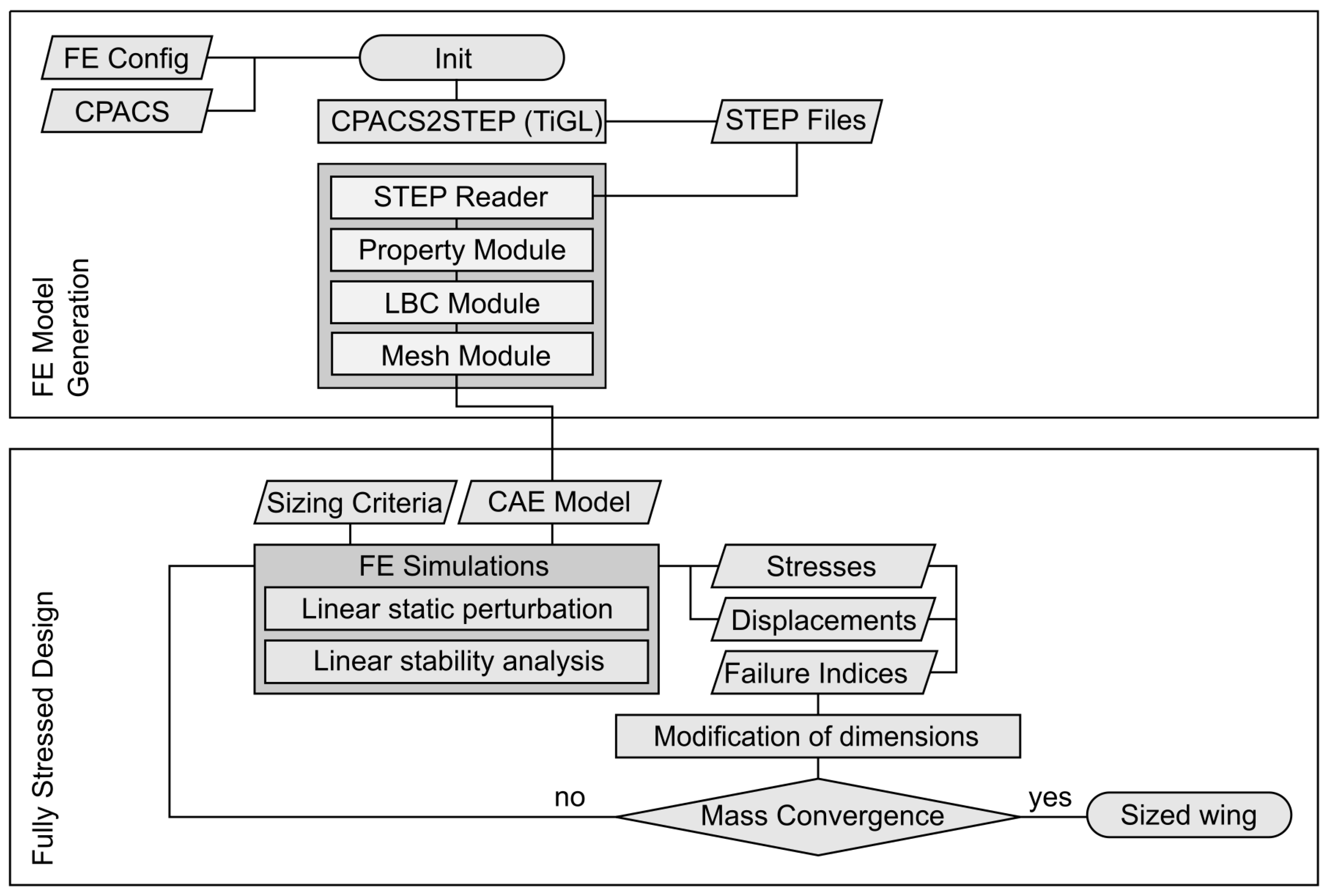
2.1. Model Generation and Sizing
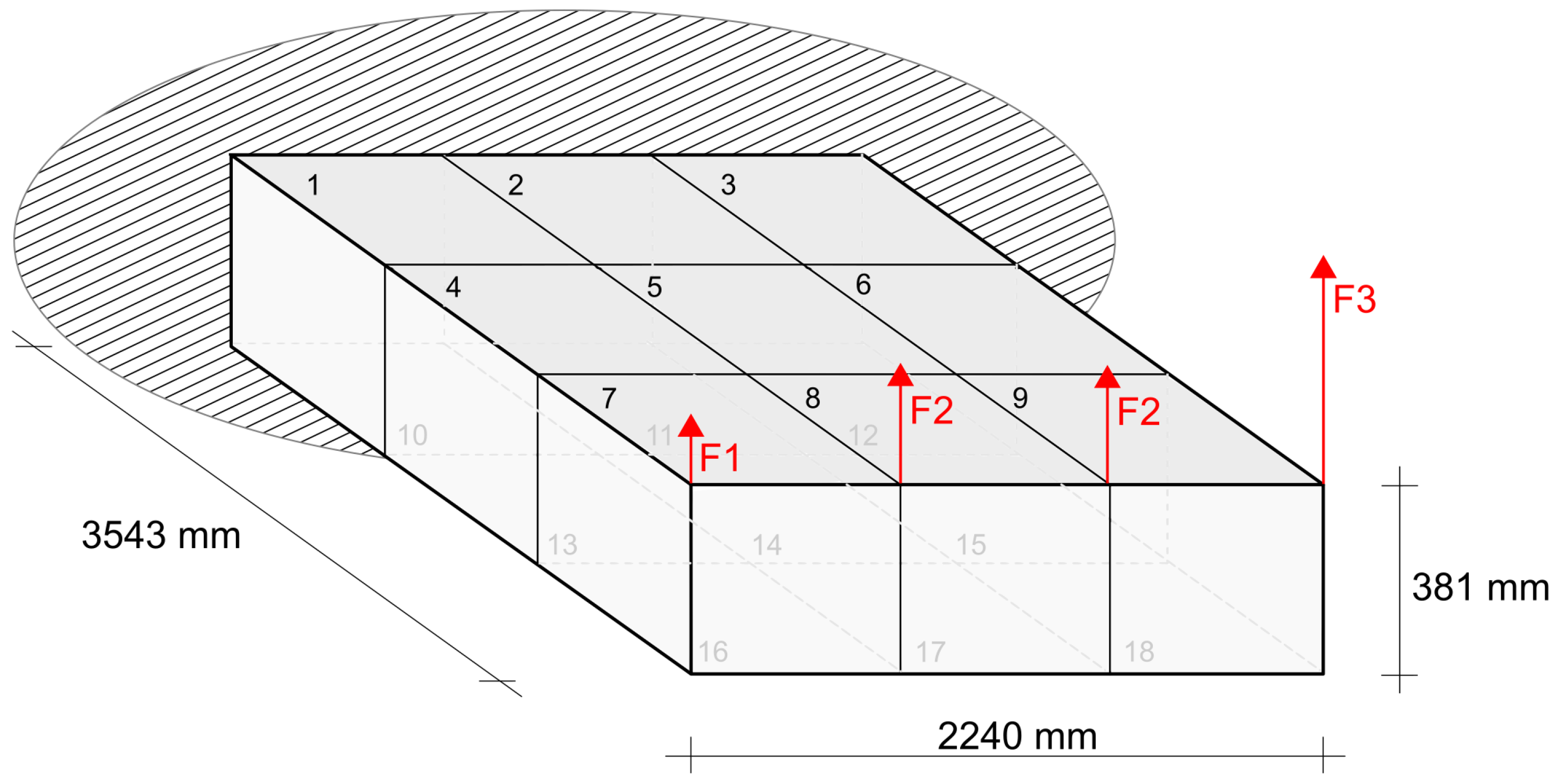
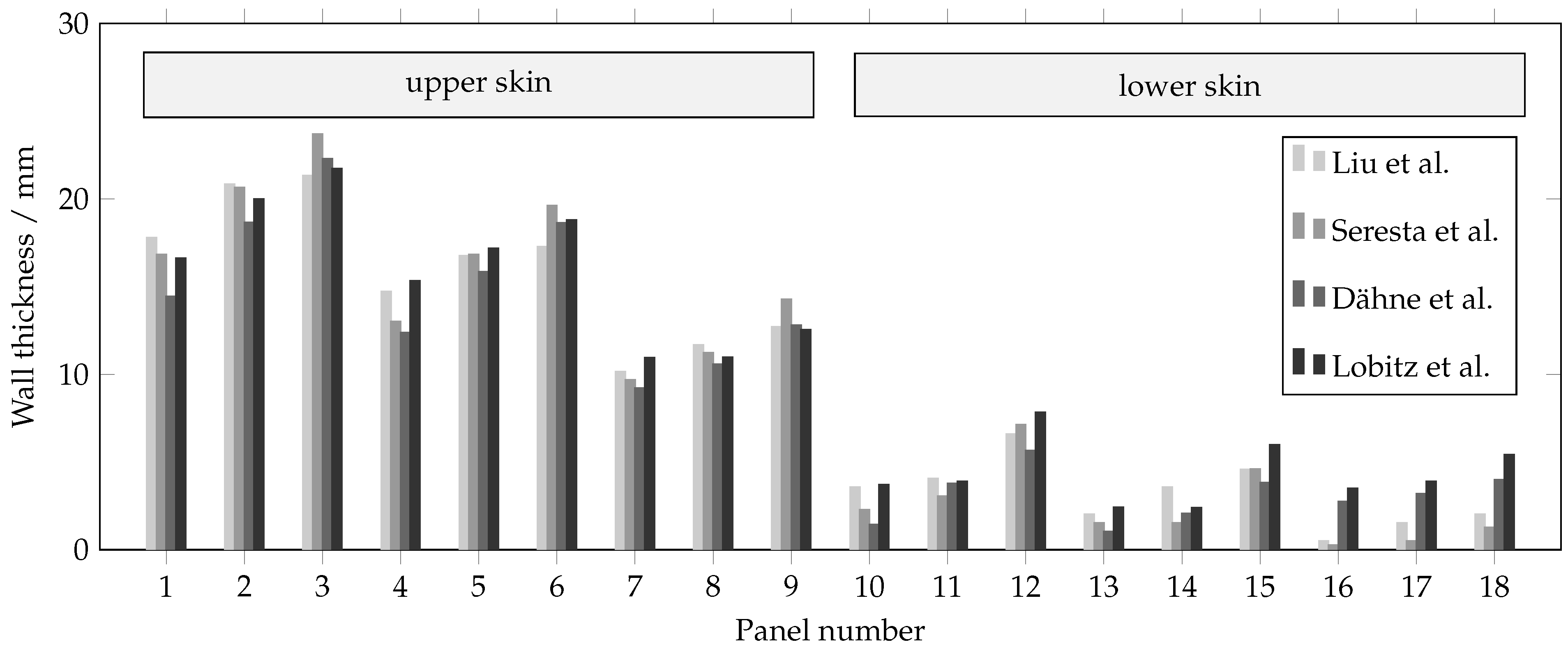
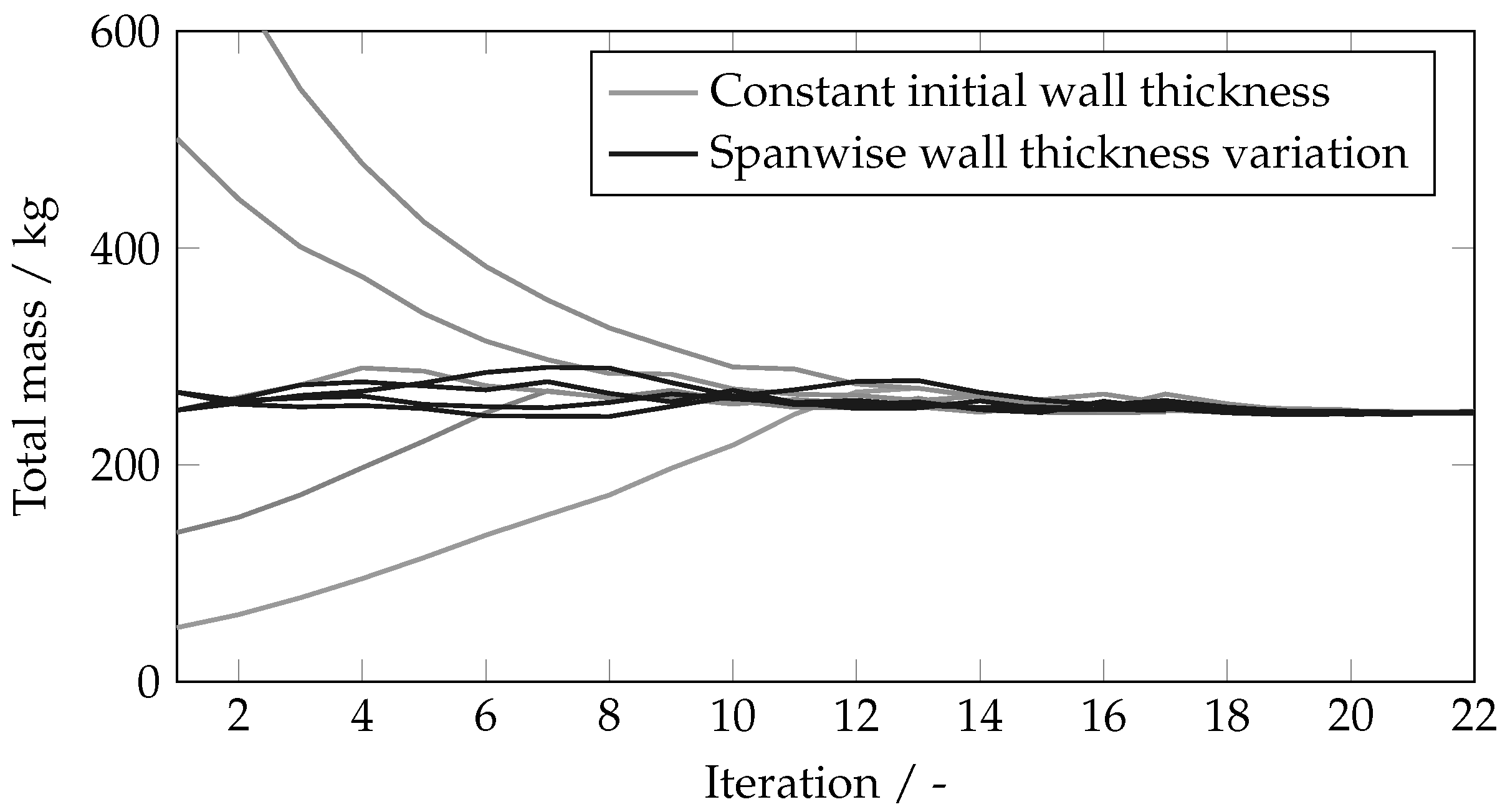
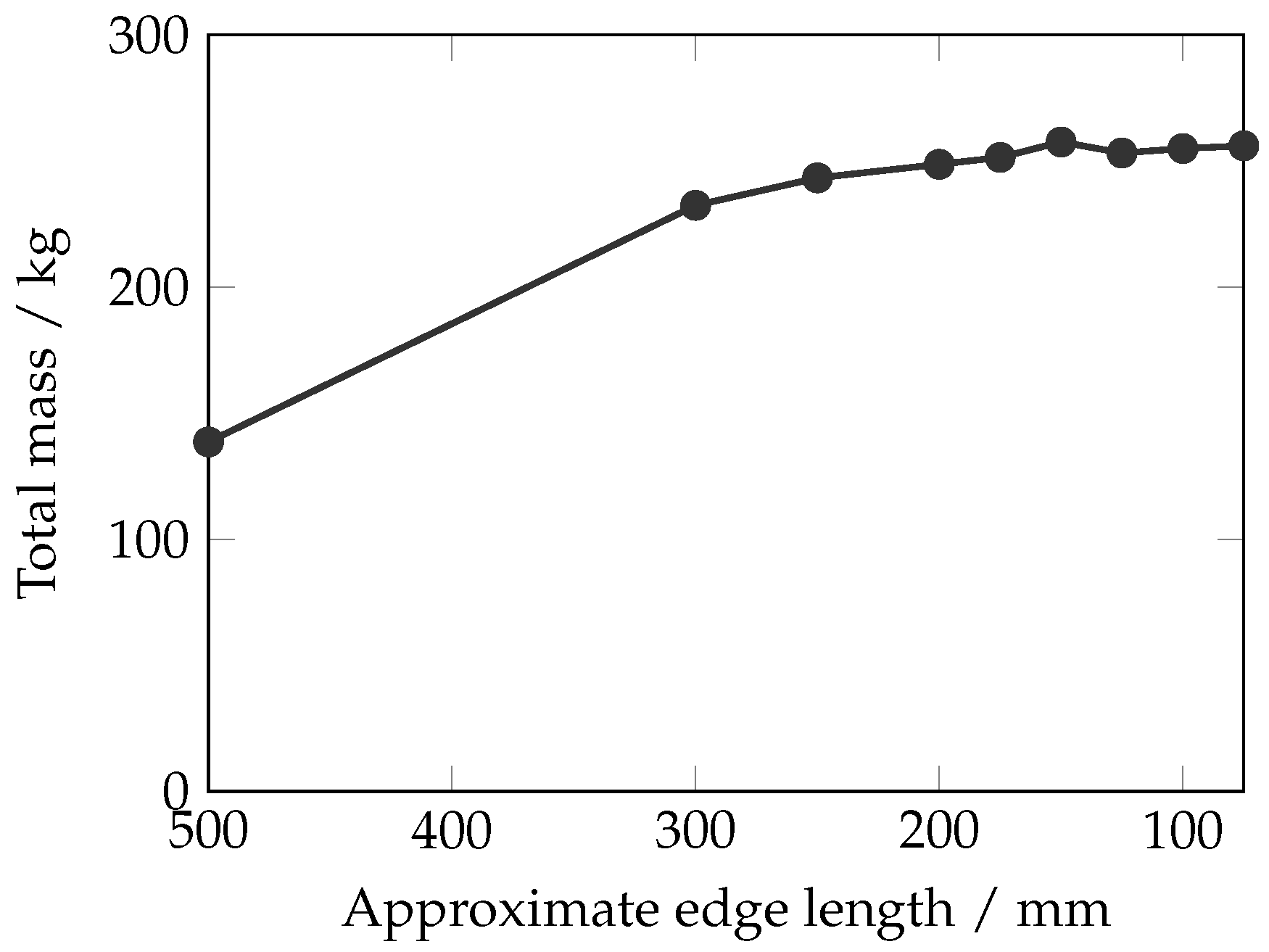
2.2. Validation of the Methodology Using a Simplified Wingbox Structure
- Initial skin thickness ranging from 2 to 30 and representing both under- and oversized start designs;
- Spanwise variation of the initial skin thickness, with the thickness either increasing or decreasing with span (each pattern applied once in a moderate and in a stronger form).
2.3. Use Case for the Assessment of Thin-Ply Materials
2.4. Prestudy: Stability Considerations
3. Analysis on Global Wing Level
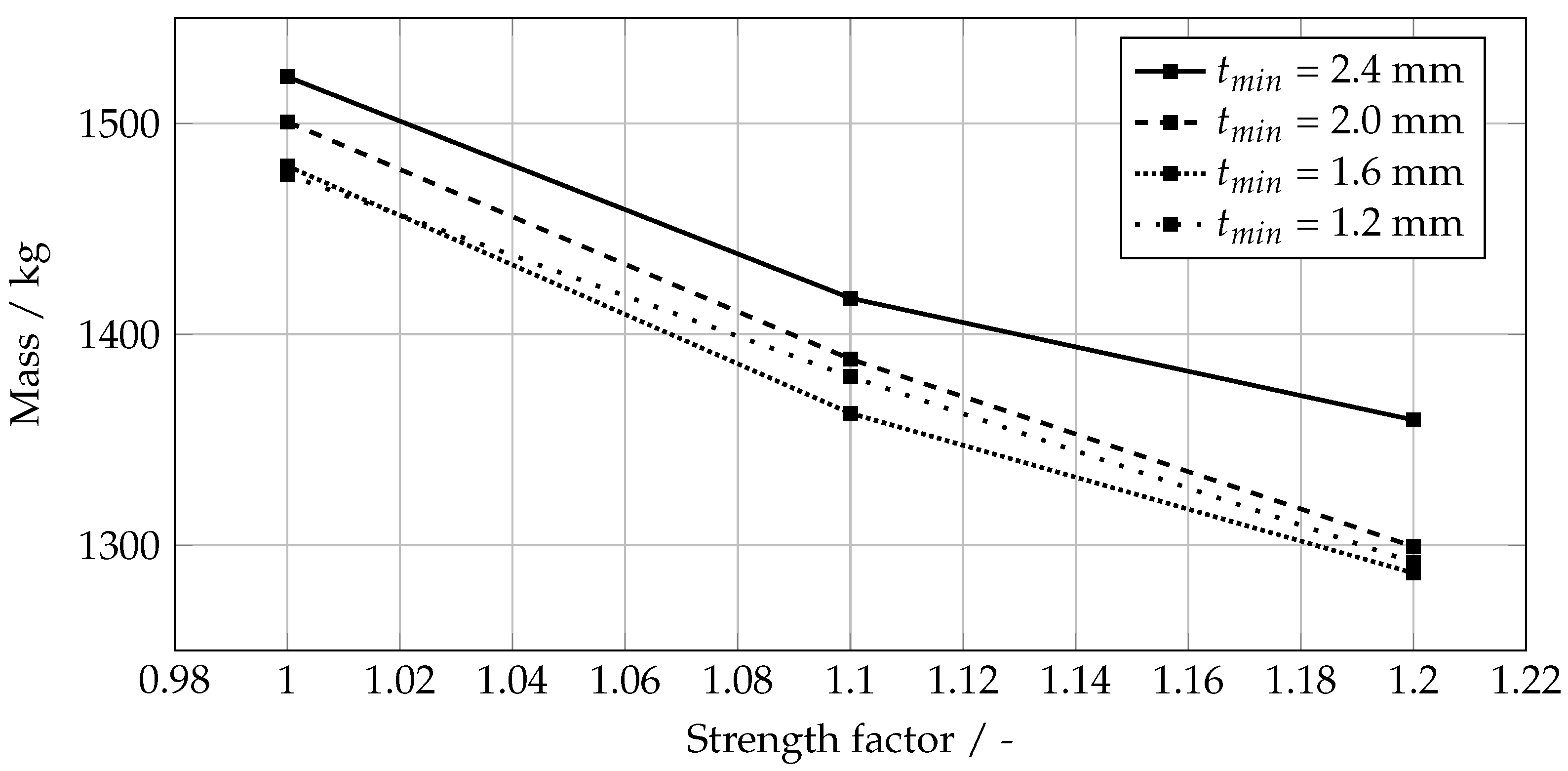
3.1. Advantages from Increased Strength
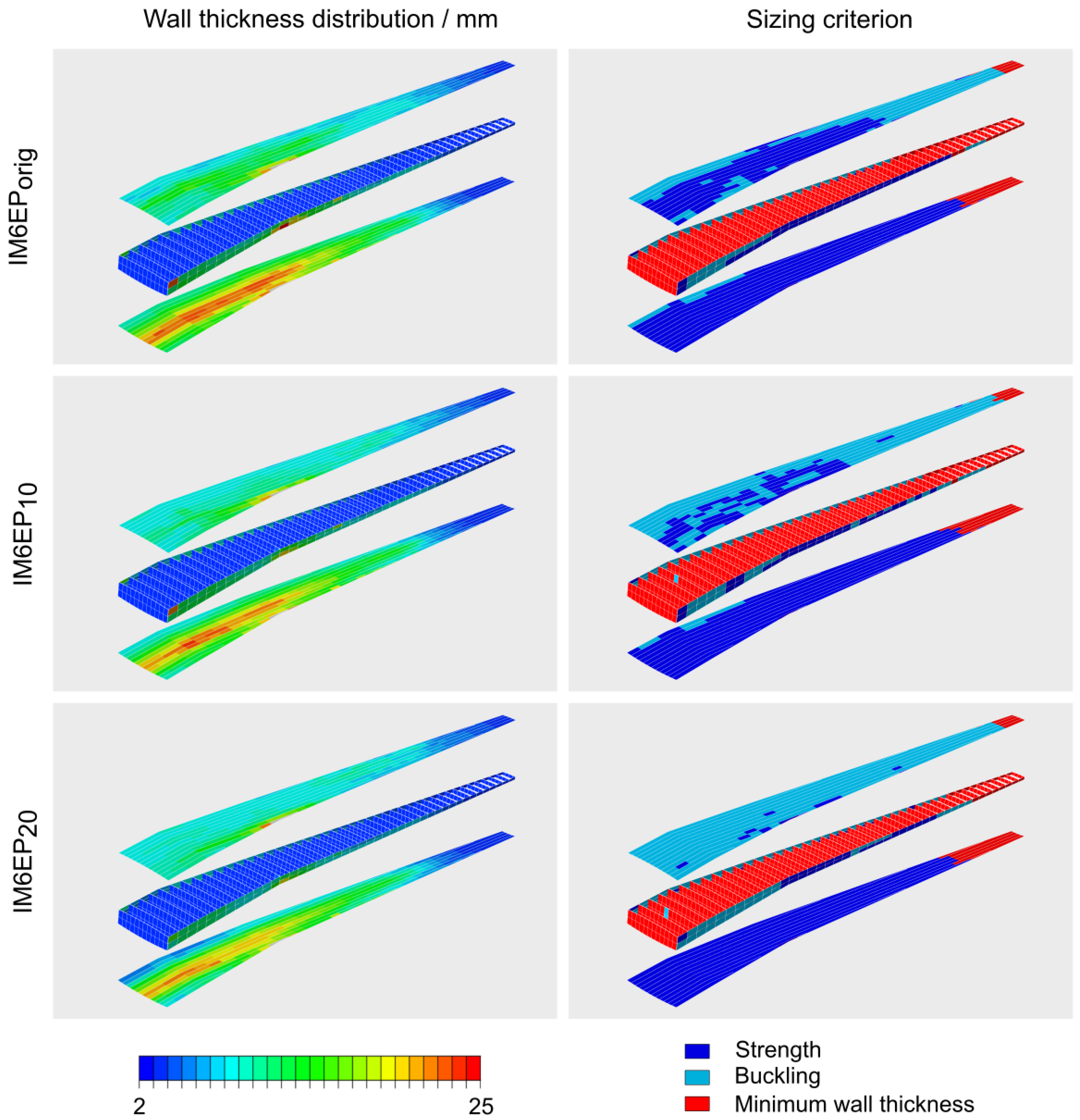
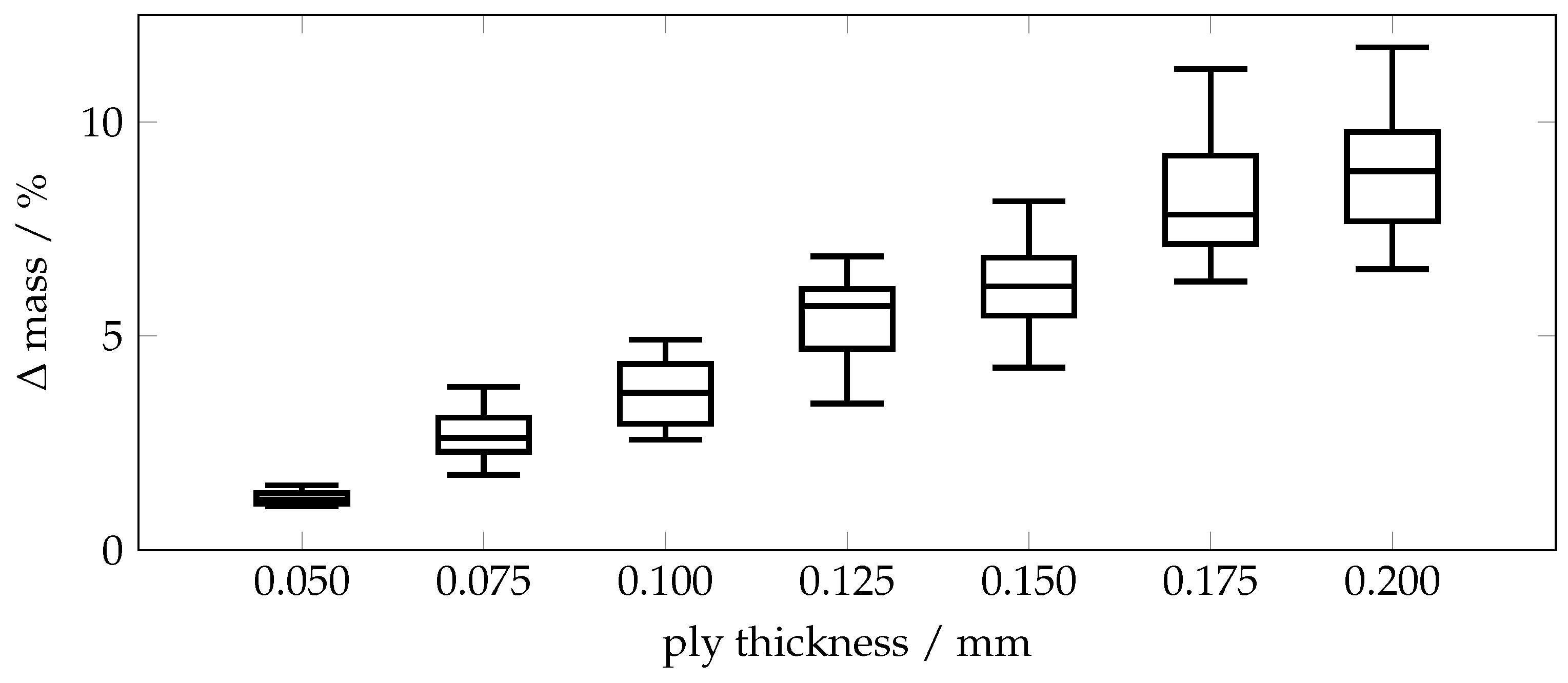
3.2. Advantages from Increased Design Freedom
4. Conclusions
Author Contributions
Funding
Data Availability Statement
Conflicts of Interest
Abbreviations
| CFRP | Carbon fibre-reinforced polymer |
| CPACS | Common parametric aircraft configuration schema |
| FE | Finite-element |
| FSD | Fully-stressed design |
| OHC | Open hole compression |
| OHT | Open hole tension |
| QI | Quasi-isotropic |
| SE2A | Cluster of Excellence for Sustainable and Energy-Efficient Aviation |
References
- Beck, N.; Landa, T.; Seitz, A.; Boermans, L.; Liu, Y.; Radespiel, R. Drag reduction by laminar flow control. Energies 2018, 11, 252. [Google Scholar] [CrossRef]
- Karpuk, S.; Elham, A. Influence of novel airframe technologies on the feasibility of fully-electric regional aviation. Aerospace 2021, 8, 163. [Google Scholar] [CrossRef]
- Karpuk, S.; Radespiel, R.; Elham, A. Assessment of future airframe and propulsion technologies on sustainability of next-generation mid-range aircraft. Aerospace 2022, 9, 279. [Google Scholar] [CrossRef]
- Galos, J. Thin-ply composite laminates: A review. Compos. Struct. 2020, 236, 111920. [Google Scholar] [CrossRef]
- Sasayama, H.; Kawabe, K.; Tomoda, S.; Ohsawa, I.; Kageyama, K.; Ogata, N. Effect of Lamina Thickness on First Ply Failure in Multidirectionally Laminated Composites. J. Jpn. Soc. Compos. Mater. 2004, 30, 142–148. [Google Scholar] [CrossRef]
- Kawabe, K.; Tomoda, S.; Matsuo, T. A pneumatic process for spreading reinforcing fiber tow. Evol. Technol. Compet. Edge. 1997, 42, 65–76. [Google Scholar]
- Tsai, S.; Sihn, S.; Kim, R. Thin Ply Composites. In Proceedings of the 46th AIAA/ASME/ASCE/AHS/ASC Structures, Structural Dynamics and Materials Conference, Austin, TX, USA, 18–21 April 2005; AIAA: Reston, VA, USA, 2005. [Google Scholar] [CrossRef]
- Sihn, S.; Kim, R.; Kawabe, K.; Tsai, S. Experimental studies of thin-ply laminated composites. Compos. Sci. Technol. 2007, 67, 996–1008. [Google Scholar] [CrossRef]
- Yokozeki, T.; Aoki, Y.; Ogasawara, T. Experimental characterization of strength and damage resistance properties of thin-ply carbon fiber/toughened epoxy laminates. Compos. Struct. 2008, 82, 382–389. [Google Scholar] [CrossRef]
- Arteiro, A.; Catalanotti, G.; Xavier, J.; Camanho, P. Notched response of non-crimp fabric thin-ply laminates. Compos. Sci. Technol. 2013, 79, 97–114. [Google Scholar] [CrossRef]
- Amacher, R.; Cugnoni, J.; Botsis, J.; Sorensen, L.; Smith, W.; Dransfeld, C. Thin ply composites: Experimental characterization and modeling of size-effects. Compos. Sci. Technol. 2014, 101, 121–132. [Google Scholar] [CrossRef]
- Furtado, C.; Arteiro, A.; Catalanotti, G.; Xavier, J.; Camanho, P. Selective ply-level hybridisation for improved notched response of composite laminates. Compos. Struct. 2016, 145, 1–14. [Google Scholar] [CrossRef]
- Sebaey, T.; Mahdi, E. Using thin-plies to improve the damage resistance and tolerance of aeronautical CFRP composites. Compos. Part A Appl. Sci. Manuf. 2016, 86, 31–38. [Google Scholar] [CrossRef]
- Wagih, A.; Maimí, P.; González, E.; Blanco, N.; de Aja, J.S.; de la Escalera, F.; Olsson, R.; Alvarez, E. Damage sequence in thin-ply composite laminates under out-of-plane loading. Compos. Part A Appl. Sci. Manuf. 2016, 87, 66–77. [Google Scholar] [CrossRef]
- Cugnoni, J.; Amacher, R.; Kohler, S.; Brunner, J.; Kramer, E.; Dransfeld, C.; Smith, W.; Scobbie, K.; Sorensen, L.; Botsis, J. Towards aerospace grade thin-ply composites: Effect of ply thickness, fibre, matrix and interlayer toughening on strength and damage tolerance. Compos. Sci. Technol. 2018, 168, 467–477. [Google Scholar] [CrossRef]
- Arteiro, A.; Furtado, C.; Catalanotti, G.; Linde, P.; Camanho, P. Thin-ply polymer composite materials: A review. Compos. Part A Appl. Sci. Manuf. 2020, 132, 105777. [Google Scholar] [CrossRef]
- Arteiro, A. Structural Mechanics of Thin-Ply Laminated Composites. Ph.D. Thesis, University of Porto, Porto, Portugal, 2016. [Google Scholar]
- Camanho, P.; Dávila, C.; Pinho, S.; Iannucci, L.; Robinson, P. Prediction of in situ strengths and matrix cracking in composites under transverse tension and in-plane shear. Compos. Part A Appl. Sci. Manuf. 2006, 37, 165–176. [Google Scholar] [CrossRef]
- Moon, J.B.; Kim, M.G.; Kim, C.G.; Bhowmik, S. Improvement of tensile properties of CFRP composites under LEO space environment by applying MWNTs and thin-ply. Compos. Part A Appl. Sci. Manuf. 2011, 42, 694–701. [Google Scholar] [CrossRef]
- Lovejoy, A.; Scotti, S.; Miller, S.; Heimann, P.; Miller, S. Characterization of IM7/8552 Thin-ply and Hybrid Thin-ply Composites. In Proceedings of the AIAA Scitech 2019 Forum, San Diego, CA, USA, 7–11 January 2019; AIAA: Reston, VA, USA, 2019. [Google Scholar] [CrossRef]
- Kawabe, K.; Sasayama, H.; Kageyama, K.; Ogata, N. Effect of Ply Thickness on Compressive Properties in Multidirectionally Laminated Composites. J. Jpn. Soc. Compos. Mater. 2008, 34, 173–181. [Google Scholar] [CrossRef][Green Version]
- Masania, K.; Geissberger, R.; Stefaniak, D.; Dransfeld, C. Steel foil reinforced composites: Study of strength, plasticity and ply size effects. In Proceedings of the 20th International Conference on Composite Materials, Copenhagen, Denmark, 19–24 July 2015; ICCM: Montreal, Canada, 2015. [Google Scholar]
- Huang, C.; He, M.; He, Y.; Xiao, J.; Zhang, J.; Ju, S.; Dazhi.; Xiaofei, J. Mechanical behaviors of thin-ply composite laminates under short-beam shear and open-hole tensile-loads: Pseudo-homogeneous and isotropic behaviors. In Proceedings of the 21th International Conference on Composite Materials, Xi’an, China, 20–25 August 2017; ICCM: Montreal, Canada, 2017. [Google Scholar]
- Richardson, M. Travelling Light; Aerospace Manufacturing Magazine: Kent, UK, 2012; pp. 31–32. [Google Scholar]
- Amacher, R.; Smith, W.; Dransfeld, C.; Botsis, J.; Cugnoni, J. Thin ply: From size-effect characterization to real life design. In Proceedings of the CAMX 2014—Composites and Advanced Materials Expo, Orlando, FL, USA, 13–16 October 2014; CAMX: Arlington, VA, USA, 2014. [Google Scholar]
- Amacher, R.; Smith, W.; Botsis, J.; Dransfeld, C.; Cugnoni, J. New design opportunities using thin-ply composites. JEC Compos. Mag. 2015, 52, 33–35. [Google Scholar]
- Yamashita, S.; Sonehara, T.; Takahashi, J.; Kawabe, K.; Murakami, T. Effect of thin-ply on damage behaviour of continuous and discontinuous carbon fibre reinforced thermoplastics subjected to simulated lightning strike. Compos. Part A Appl. Sci. Manuf. 2017, 95, 132–140. [Google Scholar] [CrossRef]
- Yamashita, S.; Hirano, Y.; Sonehara, T.; Takahashi, J.; Kawabe, K.; Murakami, T. Residual mechanical properties of carbon fibre reinforced thermoplastics with thin-ply prepreg after simulated lightning strike. Compos. Part A Appl. Sci. Manuf. 2017, 101, 185–194. [Google Scholar] [CrossRef]
- Lovejoy, A.E.; Scotti, S. Potential Weight Benefits of IM7/8552 Hybrid Thin-ply Composites for Aircraft Structures. In Proceedings of the AIAA Scitech 2019 Forum, San Diego, CA, USA, 7–11 January 2019; American Institute of Aeronautics and Astronautics: Reston, VA, USA, 2019. [Google Scholar] [CrossRef]
- Lobitz, L.; Traub, H.; Overbeck, M.; Bień, M.; Heimbs, S.; Hühne, C.; Friedrichs, J.; Horst, P. Aircraft Wing Design for Extended Hybrid Laminar Flow Control. Aerospace 2023, 10, 938. [Google Scholar] [CrossRef]
- Harik, R.; Lovejoy, A.; Yokan, C.; Jegley, D. Thin-ply: Exploration and manufacturing with automated fiber placement. In Proceedings of the CAMX 2020—Composites and Advanced Materials Expo, Orlando, FL, USA, 20–24 September 2020. [Google Scholar]
- Kermani, N.N.; Gargitter, V.; Simacek, P.; Advani, S.G. Gap filling mechanisms during the thin ply automated tape placement process. Compos. Part A Appl. Sci. Manuf. 2021, 147, 106454. [Google Scholar] [CrossRef]
- Alder, M.; Moerland, E.; Jepsen, J.; Nagel, B. Recent advances in establishing a common language for aircraft design with CPACS. In Proceedings of the Aerospace Europe Conference, Bordeaux, France, 25–28 February 2020; EUCASS Association: Bruxelles, Belgium, 2020. [Google Scholar]
- Siggel, M.; Kleinert, J.; Stollenwerk, T.; Maierl, R. TiGL: An open source computational geometry library for parametric aircraft design. Math. Comput. Sci. 2019, 13, 367–389. [Google Scholar] [CrossRef]
- Rieke, J. Bewertung von CFK-Strukturen in Einem Multidisziplinären Entwurfsansatz für Verkehrsflugzeuge. Ph.D. Thesis, TU Braunschweig, Braunschweig, Germany, 2013. [Google Scholar]
- Sommerwerk, K.; Krukow, I.; Haupt, M.; Dinkler, D. Investigation of aeroelastic effects of a circulation controlled wing. J. Aircr. 2016, 53, 1746–1756. [Google Scholar] [CrossRef]
- Puck, A.; Schürmann, H. Failure analysis of FRP laminates by means of physically based phenomenological models. Compos. Sci. Technol. 2002, 62, 1633–1662. [Google Scholar] [CrossRef]
- Hürlimann, F.; Kelm, R.; Dugas, M.; Oltmann, K.; Kress, G. Mass estimation of transport aircraft wingbox structures with a CAD/CAE-based multidisciplinary process. Aerosp. Sci. Technol. 2011, 15, 323–333. [Google Scholar] [CrossRef]
- Liu, B.; Haftka, R.; Akgun, M. Composite wing structural optimization using genetic algorithms and response surfaces. In Proceedings of the 7th AIAA/USAF/NASA/ISSMO Symposium on Multidisciplinary Analysis and Optimization, St. Louis, MO, USA, 2–4 September 1998; p. 4854. [Google Scholar]
- Liu, B.; Haftka, R.T.; Akgün, M.A. Two-level composite wing structural optimization using response surfaces. Struct. Multidiscip. Optim. 2000, 20, 87–96. [Google Scholar] [CrossRef]
- Seresta, O.; Gürdal, Z.; Adams, D.B.; Watson, L.T. Optimal design of composite wing structures with blended laminates. Compos. Part B Eng. 2007, 38, 469–480. [Google Scholar] [CrossRef]
- Scardaoni, M.P.; Montemurro, M. A general global-local modelling framework for the deterministic optimisation of composite structures. Struct. Multidiscip. Optim. 2020, 62, 1927–1949. [Google Scholar] [CrossRef]
- Dähne, S.; Werthen, E.; Zerbst, D.; Tönjes, L.; Traub, H.; Hühne, C. Lightworks, a scientific research framework for the design of stiffened composite-panel structures using gradient-based optimization. Struct. Multidiscip. Optim. 2024, 67, 70. [Google Scholar] [CrossRef]
- Liu, B.; Haftka, R. Composite wing structural design optimization with continuity constraints. In Proceedings of the 19th AIAA Applied Aerodynamics Conference, Anaheim, CA, USA, 11–14 June 2001; p. 1205. [Google Scholar]
- Niu, M. Airframe Structural Design: Practical Design Information and Data on Aircraft Structures; Hong Kong Conmilit Press Ltd.: Hong Kong, China, 1988. [Google Scholar]
- Zhu, J.; Zhang, W.; Xia, L. Topology optimization in aircraft and aerospace structures design. Arch. Comput. Methods Eng. 2016, 23, 595–622. [Google Scholar] [CrossRef]
- Krog, L.; Tucker, A.; Kemp, M.; Boyd, R. Topology optimisation of aircraft wing box ribs. In Proceedings of the 10th AIAA/ISSMO Multidisciplinary Analysis and Optimization Conference, Albany, NY, USA, 30 August–1 September 2004; p. 4481. [Google Scholar]
- Peeters, D.; van Baalen, D.; Abdallah, M. Combining topology and lamination parameter optimisation. Struct. Multidiscip. Optim. 2015, 52, 105–120. [Google Scholar] [CrossRef]





| Layup | Thin Plies | Reference | /% | Author | |
|---|---|---|---|---|---|
| (a) Tensile strength | QI | 0.04 mm | 0.2 mm | 10 | Sihn et al. [8] |
| QI | 75 g/m2 | 145 g/m2 | 20 | Yokozeki et al. [9] | |
| QI | 0.06 mm | 0.125 mm | 9 | Moon et al. [19] | |
| QI | 30 g/m2 | 300 g/m2 | 13 | Amacher et al. [11] | |
| QI | 30 g/m2 | 190 g/m2 | 32 | Lovejoy et al. [20] | |
| (b) Compressive strength | QI | 0.045 mm | 0.136 mm | 28 | Kawabe et al. [21] |
| QI | 75 g/m2 | 145 g/m2 | 16 | Yokozeki et al. [9] | |
| UD | 30 g/m2 | 100 g/m2 | 21 | Amacher et al. [11] | |
| QI | 30 g/m2 | 190 g/m2 | 36 | Lovejoy et al. [20] | |
| (c) Open hole tension strength | QI | 0.04 mm | 0.2 mm | −10 | Sihn et al. [8] |
| QI | 30 g/m2 | 150 g/m2 | −25 | Amacher et al. [11] | |
| QI | 30 g/m2 | 300 g/m2 | −30 | Amacher et al. [11] | |
| QI | 30 g/m2 | 300 g/m2 | −28 | Masania et al. [22] | |
| QI | 20 g/m2 | 125 g/m2 | −20 | Huang et al. [23] | |
| QI | 54 g/m2 | 125 g/m2 | −10 | Huang et al. [23] | |
| (d) Open hole compression strength | QI | 75 g/m2 | 145 g/m2 | 9 | Yokozeki et al. [9] |
| QI | 30 g/m2 | 150 g/m2 | 11 | Amacher et al. [11] | |
| QI | 30 g/m2 | 300 g/m2 | 18 | Amacher et al. [11] | |
| QI | 30 g/m2 | 190 g/m2 | 8 | Lovejoy et al. [20] |
| E1/GPa | E2/GPa | G12/GPa | / | X/MPa | Y/MPa | S/MPa | ||||
|---|---|---|---|---|---|---|---|---|---|---|
| 128.0 | 13.0 | 6.4 | 0.3 | 1578 | 0.008 | 0.029 | 0.015 | 1016.0 | 377.0 | 96.15 |
| E1/GPa | E2/GPa | G12/GPa | / | /MPa | /MPa | /MPa | /MPa | S/MPa | |
|---|---|---|---|---|---|---|---|---|---|
| 177.0 | 10.8 | 7.6 | 0.27 | 1600.0 | 2860.0 | 1875.0 | 49.0 | 246.0 | 83.0 |
| Minimum Wall Thickness | Component | Mass/kg | /% | /% |
|---|---|---|---|---|
| (a) 2.4 mm | Total | 1522.1 | −6.9 | −10.7 |
| Lower skin | 691.1 | −8.4 | −16.4 | |
| Upper skin | 475.9 | −7.5 | −5.3 | |
| Spars | 191.6 | −5.8 | −13.0 | |
| Ribs | 163.5 | −0.1 | 0.2 | |
| (b) 2.0 mm | Total | 1500.7 | −7.5 | −13.4 |
| Lower skin | 692.9 | −8.6 | −16.3 | |
| Upper skin | 485.2 | −7.6 | −10.6 | |
| Spars | 193.0 | −8.0 | −19.5 | |
| Ribs | 129.6 | 0.0 | 0.4 | |
| (c) 1.6 mm | Total | 1479.8 | −7.9 | −13.0 |
| Lower skin | 693.3 | −8.5 | −15.8 | |
| Upper skin | 491.1 | −8.2 | −10.5 | |
| Spars | 195.4 | −9.7 | −17.3 | |
| Ribs | 100.0 | 0.5 | 1.6 | |
| (d) 1.2 mm | Total | 1475.7 | −6.5 | −12.5 |
| Lower skin | 695.0 | −8.1 | −15.6 | |
| Upper skin | 492.4 | −4.9 | −4.0 | |
| Spars | 207.0 | −10.1 | −26.9 | |
| Ribs | 81.2 | 7.1 | −0.4 |
| Component | m2.4mm/kg | Δm2.0mm/% | Δm1.6mm/% | Δm1.2mm/% |
|---|---|---|---|---|
| Total | 1522.1 | −1.4 | −2.8 | −3.1 |
| Lower skin | 691.1 | 0.3 | 0.3 | 0.6 |
| Upper skin | 475.9 | 2.0 | 3.2 | 3.5 |
| Spars | 191.6 | 0.8 | 2.0 | 8.1 |
| Ribs | 163.5 | −20.8 | −38.9 | −50.3 |
Disclaimer/Publisher’s Note: The statements, opinions and data contained in all publications are solely those of the individual author(s) and contributor(s) and not of MDPI and/or the editor(s). MDPI and/or the editor(s) disclaim responsibility for any injury to people or property resulting from any ideas, methods, instructions or products referred to in the content. |
© 2025 by the authors. Licensee MDPI, Basel, Switzerland. This article is an open access article distributed under the terms and conditions of the Creative Commons Attribution (CC BY) license (https://creativecommons.org/licenses/by/4.0/).
Share and Cite
Lobitz, L.; Bülow, C.; Heimbs, S.; Horst, P. Benefits from Thin-Ply Composite Materials in Aircraft Wing Structures. Aerospace 2025, 12, 1078. https://doi.org/10.3390/aerospace12121078
Lobitz L, Bülow C, Heimbs S, Horst P. Benefits from Thin-Ply Composite Materials in Aircraft Wing Structures. Aerospace. 2025; 12(12):1078. https://doi.org/10.3390/aerospace12121078
Chicago/Turabian StyleLobitz, Lennart, Christian Bülow, Sebastian Heimbs, and Peter Horst. 2025. "Benefits from Thin-Ply Composite Materials in Aircraft Wing Structures" Aerospace 12, no. 12: 1078. https://doi.org/10.3390/aerospace12121078
APA StyleLobitz, L., Bülow, C., Heimbs, S., & Horst, P. (2025). Benefits from Thin-Ply Composite Materials in Aircraft Wing Structures. Aerospace, 12(12), 1078. https://doi.org/10.3390/aerospace12121078