Article

Multi-Level Firing with Spiking Neural Network for Orbital Maneuver Detection

1
School of Space Information, Space Engineering University, Beijing 101416, China
2
National Key Laboratory of Space Target Awareness, Beijing 101416, China
3
Hangzhou Institute of Technology, Xidian University, Hangzhou 311231, China
4
Beijing Institute of Tracking and Telecommunication Technology, Beijing 100094, China
*
Author to whom correspondence should be addressed.
Aerospace 2025, 12(11), 991; https://doi.org/10.3390/aerospace12110991
Submission received: 11 September 2025 / Revised: 29 October 2025 / Accepted: 3 November 2025 / Published: 5 November 2025
(This article belongs to the Section Astronautics & Space Science)

Abstract

Orbital maneuver detection is critical for space situational awareness, yet it remains challenging due to the complex and dynamic nature of satellite behaviors. This paper proposes a novel Multi-Level Firing Spiking Neural Network (MLF-SNN) for detecting orbital maneuvers based on changes in satellite orbital parameters. The MLF-SNN incorporates multiple firing thresholds and a leaky integrate-and-fire (LIF) neuron model to enhance temporal feature extraction and classification performance. The MLF-SNN encodes time-dependent input features, which include variations in orbital elements, and subsequently processes these features through a multi-layer spiking architecture. A surrogate gradient approach is adopted during training to enable end-to-end backpropagation through the spiking layers. Experimental results on real satellite data demonstrate that the proposed method achieves improved recall in maneuver detection compared to conventional approaches, effectively reducing false alarms and missed detections. The work highlights the potential of MLF-SNN in processing time-series spatial data and offers a robust solution for autonomous satellite behavior analysis.

1. Introduction

With the escalating complexity of space environments and the surge in orbital maneuvers by satellites and space debris, orbital maneuver detection has emerged as a critical task for ensuring space situational awareness (SSA) and maintaining the safety of space operations [1,2]. The growing demand for real-time monitoring and accurate tracking of space objects has highlighted the limitations of traditional detection methods, which struggle to balance precision, computational efficiency, and adaptability across various orbital scenarios. As space activities become more frequent, the ability to detect subtle orbital changes and distinguish maneuvers from normal dynamics is essential for reliable space traffic management.
Existing spacecraft maneuver detection methods are primarily categorized into early data-driven and model-based approaches [3]. Early data-driven approaches often leverage anomalies in publicly available Two-Line Element (TLE) datasets. Patera [4] proposed a moving window curve fitting method to calculate detection metrics, flagging potential maneuvers when parameter uncertainties exceeded predefined thresholds; this method was validated using TLE datasets to identify orbital element deviations. Li and Chen [5] analyzed anomalous TLE segments and constructed semi-major axis time series for maneuver identification. Subsequent advancements in this direction focused on propagating historical orbital parameters and comparing them with real-time observed data [6]. Bai [7] applied unsupervised clustering methods to TLE data for detecting orbital maneuvers at multiple scales. Pastor [8] introduced optimal control-based methods for single- and multi-burn maneuver detection using optical survey data within a multiple hypothesis tracking framework. A key challenge of such methods lies in establishing robust detection thresholds. To address this, Shao et al. [9] introduced a sliding window-based threshold determination strategy, while Liu et al. [10] developed an expectation-maximization filter integrated with polynomial regression and variance estimation—this filter dynamically sets outlier thresholds, thereby enhancing maneuver detection performance across diverse orbital regimes and space environments.
The model-based approaches, by contrast, often adopt multi-model adaptive estimation frameworks. These methods characterize post-maneuver trajectories using distinct dynamical models and analyze subsequent changes in key orbital parameters. Goff et al. [11] proposed a filter-through method that combines interacting multiple models and covariance inflation for tracking non-cooperative maneuvering targets. Wang et al. [12] developed a Neyman–Pearson criterion-based model for maneuver detection. Yang [13] presents a spacecraft maneuver detection method based on nonlinear uncertainty propagation along decussated orbital arcs, combining Gaussian mixture model and unscented transform (GMM-UT) to handle non-Gaussian uncertainties and improve orbit association accuracy. Overall, the evolution of spacecraft maneuver detection methods reflects a shift from direct anomaly mining in TLEs to more sophisticated statistical and adaptive model-based frameworks.
Current research in orbital maneuver detection predominantly employs conventional artificial intelligence methods, including Deep Neural Networks (DNNs) [14], and Long Short-Term Memory (LSTM) [15,16] networks, to identify satellite maneuvers from orbital residuals or historical Two-Line Element (TLE) data. Abay [17] explore the use of Bidirectional GANs (BIGAN) to model normal orbital behavior and detect maneuvers as anomalies, achieving high precision and recall by learning the distribution of orbital element differences over time. Ying [18] apply LSTM-based networks to classify maneuvering status using observation residuals from space-based optical sensors, achieving high accuracy by leveraging sequential data patterns and multi-network fusion. Perovich [19] compare Random Forest and DNN classifiers against traditional statistical methods, demonstrating significant reductions in false alarm rates while maintaining high detection performance using simulated radar and optical residuals. Kato [20] implement an LSTM AutoEncoder for anomaly detection in TLE data, successfully identifying maneuvers—including those missed by conventional systems—by analyzing reconstruction errors in time-series orbital data. These approaches have demonstrated improved detection rates and reduced false alarms compared to traditional statistical techniques. However, they often suffer from high computational complexity, substantial data dependency, limited generalization across diverse orbital regimes, and insufficient inherent capability for modeling temporal dynamics in an energy-efficient manner. Additionally, many models require extensive hyperparameter tuning and struggle with real-time processing constraints. To overcome these limitations, we propose a novel approach based on Spiking Neural Networks (SNNs) for space object maneuver detection. SNNs offer event-driven processing, low power consumption, and superior temporal pattern recognition by mimicking biological neural mechanisms, making them particularly suitable for handling noisy, sparse, and asynchronous orbital data while enhancing robustness and adaptability in real-world operational scenarios.
To address the challenges of high computational cost, limited generalization, and inefficient temporal feature extraction in conventional deep learning-based orbital maneuver detection methods, we propose a novel Multi-Level Firing Spiking Neural Network (MLF-SNN) framework in Table 1 and Figure 1. This approach leverages bio-inspired spiking neurons with multi-threshold firing mechanisms to efficiently capture dynamic patterns in orbital parameter changes. The network encodes time-varying features—such as variations in inclination, right ascension of the ascending node, eccentricity, and other Keplerian elements—through spike-based information processing, enabling low-power and event-driven computation. By employing a surrogate gradient training strategy, the model effectively learns discriminative spatio-temporal representations of maneuver events while mitigating the vanishing gradient problem. This method enhances detection sensitivity to both impulsive and low-thrust maneuvers, improves robustness against noisy and sparse orbital data, and offers significant potential for deployment in real-time space situational awareness systems. Overall, our contributions are as follows:
  • We first proposed the first application of a SNN to the task of space object orbital maneuver detection, introducing an energy-efficient and temporally aware bio-inspired approach to a domain traditionally dominated by artificial neural networks.
  • We propose a Multi-Level Firing MLF-SNN with LIF neurons at varying thresholds to mitigate gradient vanishing and improve feature expression in dynamic orbital modeling. Combined with surrogate gradients, this mechanism enables stable backpropagation and enhances capture of maneuver detection.
  • The proposed method demonstrates superior performance in terms of detection recall, effectively identifying both impulsive and low-thrust maneuvers while maintaining robustness against noisy and sparse orbital data.

2. Related Work

2.1. Physical Model-Based Orbital Maneuver Detection

Physical model-based orbital maneuver detection has emerged as a crucial field in SSA to address the growing need for monitoring and tracking space objects, especially with the increasing complexity of space environments and the rise in orbital maneuvers. These methods leverage the physical principles governing orbital mechanics and dynamics to detect and analyze maneuvers performed by space objects, offering a reliable and efficient approach to maintain the accuracy and stability of space object catalogs. Patera [4] proposed a seminal method constructing a statistical model of orbital prediction residuals to conduct significance tests for satellite maneuvers, establishing the theoretical foundation for subsequent studies. Li [5] developed an operational status monitoring method using historical orbital data. By constructing a statistical baseline model of orbital parameters via sliding windows, they utilized deviations between real-time data and the baseline as detection metrics, significantly enhancing the accuracy for routine maneuver detection in LEO. In their subsequent work [6], kernel density estimation was introduced to model residual distributions, addressing performance degradation of traditional Gaussian assumptions under asymmetric error distributions. However, these methods rely on long-term stable tracking data for baseline construction, limiting detection capabilities during the initial tracking phase of new targets. With the enrichment of space surveillance data, methods based on TLE data have become a research focus. Shao [9] proposed a maneuver detection method for geostationary orbit (GEO) satellites by analyzing long-term variations in orbital inclination and longitude. Liu [10] introduced the Expectation-Maximization (EM) algorithm into TLE outlier detection, modeling the joint distribution of orbital elements (semi-major axis, eccentricity, etc.) using a mixture Gaussian model. In the field of maneuvering model-based approaches, Goff [11] proposed an interacting multiple model (IMM) filter that achieves continuous tracking of spacecraft maneuvers through weighted fusion of multiple motion models. Wang [12] developed a model-free maneuver detection method based on the Neyman–Pearson criterion, constructing a detection statistic to maximize the optimal trade-off between detection probability and false alarm probability. Yu [21] proposed a physical model-based approach for orbital maneuver detection by analyzing the perturbations before and after maneuvers and deriving two types of maneuver models using relative dynamical equations, which were verified through various maneuver cases such as east–west station-keeping, orbital altitude adjustment, and Hohmann transfer maneuvers. By incorporating the underlying physical principles of orbital mechanics, these approaches are better equipped to handle the complexities and uncertainties associated with space object maneuvers. However, challenges still remain in improving the precision, computational efficiency, and applicability of these methods across diverse orbital scenarios and maneuver types.

2.2. Deep Learning Based Orbital Maneuver Detection

Deep learning based Orbital Maneuver Detection has emerged as a significant area of research, driven by the need to enhance space situational awareness and address the challenges posed by orbital debris and satellite operations. Recent studies have leveraged the capabilities of deep learning, particularly LSTM recurrent networks and CNNs, to detect and predict orbital maneuvers. Cipollone [15] developed an LSTM-based algorithm to analyze the pattern of life in satellites, detecting maneuvers by processing orbital parameter sequences. Cipollone [16] presents a LSTM networks to detect maneuvers of Resident Space Objects (RSOs) in Low Earth Orbit (LEO) by training models on historical orbital and maneuver data. Similarly, Li [22] proposed a CNN-based approach to detect station-keeping maneuvers of non-cooperative GEO satellites using TLE data, achieving high macro F1-scores. Yuan [23] introduced a hierarchical recognition method for long-term orbital maneuvering intentions of non-cooperative satellites, incorporating trajectory partitioning and an intention prediction model based on bidirectional LSTM networks. Ying [18] presented an intelligent hierarchical recognition method for long-term orbital maneuvering intentions of non-cooperative satellites, using a deep learning-based approach with trajectory partitioning mechanisms and an intention prediction model. Despite advancements, deep learning for orbital maneuver detection has limitations: heavy reliance on large datasets and difficulty capturing subtle spatiotemporal correlations in complex orbital dynamics. These drawbacks highlight the need for brain-inspired approaches, which efficiently process sparse data, enable adaptive learning, and demonstrate robust generalization through neural-like mechanisms—offering a more effective paradigm to address deep learning’s shortcomings.

2.3. Brain-Inspired Based Detection Methods

Brain-inspired based detection methods have emerged as a significant paradigm in the field of computer vision, drawing insights from the human brain’s sophisticated information processing mechanisms to enhance detection performance. Researchers have been actively exploring how to mimic the brain’s neural processing and cognitive functions to develop more efficient and robust detection algorithms. For instance, Zhang [24] proposed a dynamic dual-processing object detection framework inspired by the brain’s recognition mechanism, which integrates CNN-based and Transformer-based detectors to simulate the brain’s familiarity and recollection processes. This approach employs a shared backbone, an efficient dual-stream encoder, and a dynamic dual-decoder to better integrate local and global features. Additionally, Wang [25] introduced a brain-inspired deep learning model for electroencephalogram (EEG)-based low-quality video target detection, incorporating EEG phased encoding and feature-aligned fusion. This model divides EEG segments into pre-phase and post-phase, extracting compressed temporal features using a phased encoder based on multi-scale convolution and attention mechanisms. Furthermore, in the realm of small target detection, Zhang [26] attempted to combine brain-inspired intelligence with generative models to improve detection performance. They utilized a spiking neural network to simulate the multi-scale attention mechanism of the biological visual system, enhancing spatial sensitivity for small target features. These studies collectively demonstrate the potential of brain-inspired approaches in advancing detection methods by leveraging the brain’s inherent processing advantages.

3. Proposed Method

3.1. Overview

The proposed method for satellite orbital maneuver detection is built upon a specialized SNN architecture that incorporates Multi-Level Firing (MLF) neurons in Figure 1, designed to effectively process spatio-temporal features derived from satellite orbital parameters. The system consists of three core components: a data preprocessing module that extracts meaningful orbital element difference features (e.g., inclination difference, RAAN difference, semi-major axis difference, etc.) and the Radar cross-section (RCS) feature, an MLF-based SNN prediction model that captures temporal dynamics through spike-based encoding and multi-threshold neuronal activation, and an evaluation module that provides both satellite-level and system-level performance metrics. The key innovation lies in the use of MLF neurons, which enhance gradient propagation and expressive capacity by emitting spikes at multiple voltage thresholds, thereby mitigating the vanishing gradient problem common in deep SNNs while maintaining biological plausibility and low computational overhead. This approach enables robust and efficient identification of orbital maneuvers from sequential orbital data, leveraging both spatial feature relationships and temporal dependencies.

3.2. MLF Unit

The Leaky Integrate-and-Fire (LIF) model is one of the most widely used spiking neuron models due to its biological plausibility and computational efficiency. The dynamics of the LIF neuron can be described by the following equations:
u i t + 1 = τ · u i t · ( 1 o i t ) + j w i j o j t o i t + 1 = H ( u i t + 1 V t h )
where u i t is the membrane potential of the i-th neuron at time t, τ is the decay factor, w i j is the synaptic weight, o j t is the spike input from the pre-synaptic neuron, V t h is the firing threshold, and  H ( · ) is the Heaviside step function that outputs a spike when the membrane potential exceeds the threshold.
When applying LIF-based SNNs to satellite orbital maneuver detection, two major issues arise due to the binary and non-differentiable nature of spike signals: First, Gradient Vanishing. The use of surrogate gradients (e.g., rectangular functions) during backpropagation results in a narrow non-zero gradient region. Neurons whose membrane potentials fall outside this region—particularly those with excessively high potentials—become dormant, which blocks the propagation of gradients. Second, Limited Representational Capacity. Once the membrane potential exceeds the threshold, binary spikes can no longer distinguish between features of varying intensities. This leads to information loss and impairs the network’s ability to capture subtle changes in satellite orbits.
To address these limitations, we introduce the Multi-Level Firing (MLF) method into the SNN architecture for orbital maneuver detection. The MLF unit consists of multiple LIF neurons with increasing firing thresholds:
V t h , k = V t h , 1 + ( k 1 ) · a
where a is the width of the surrogate gradient. The forward process of an MLF unit is defined as:
u t + 1 = τ u t ( 1 o t ) + x t + 1 o t + 1 = f ( u t + 1 V t h ) o ^ t + 1 = s ( o t + 1 ) = k = 1 K o k t + 1
where V t h = ( V t h , 1 , V t h , 2 , , V t h , K ) is the threshold vector, f ( · ) is the spike generation function, and  s ( · ) is the spike encoder that sums spikes from all levels. The benefits of using MLF in orbital maneuver detection are threefold: first, it enhances gradient propagation—by expanding the effective gradient region through multiple thresholds, MLF reduces the number of dormant neurons and thereby alleviates the gradient vanishing issue that plagues traditional SNNs; second, it improves feature discrimination, as multi-level firing allows the network to distinguish between spike trains of different intensities, enabling it to capture not only sharp orbital changes but also subtle variations that might otherwise be overlooked; third, it maintains high efficiency, since MLF introduces no additional trainable parameters and only marginally increases computational cost, making it well-suited for resource-constrained application scenarios. Thus, integrating MLF into SNNs yields a more effective and reliable solution for orbital maneuver detection, one that achieves high temporal precision while significantly improving the network’s training stability.

3.3. MLF-SNN for Orbit Maneuver Detection

The proposed SNN architecture for space object maneuver detection is designed to leverage both spatial and temporal features extracted from orbital element time series. The network processes input features X R N × D (where N is the number of samples and D is the feature dimension) through an encoding layer that expands the input into T timesteps via a repeat-based direct coding scheme, producing an encoded spike train X encoded R T × N × D . The core of the network consists of multiple hidden layers, each comprising a linear transformation followed by a MLF spiking neuron module and dropout regularization. The MLF module implements a bio-inspired leaky integrate-and-fire mechanism with multi-threshold dynamics, defined as:
u t + 1 = τ u t ( 1 o t ) + W o t o t + 1 = k = 1 K H ( u t + 1 V t h , k )
where u t is the membrane potential at time t, τ is the decay constant, W is the weight matrix, H ( · ) is the Heaviside step function, and  V t h , k denotes the k-th firing threshold. The final layer aggregates spike outputs over time via temporal averaging and applies a linear classifier to produce maneuver probabilities y [ 0 , 1 ] N . This design combines event-driven sparsity with multi-scale temporal feature extraction, offering enhanced efficiency and representational capacity for detecting orbital maneuvers under noise and uncertainty.

3.4. The Surrogate Gradient

The surrogate gradient method is employed to address the non-differentiability of spike generation in SNNs [27], which is a fundamental challenge for gradient-based learning. Specifically, the rectangular function is adopted as a continuous approximation to the derivative of the hard threshold function, enabling error backpropagation through spiking neurons without violating the requirement of differentiability. The surrogate gradient function is defined as:
o k u k = 1 a · sign | u k V t h k | < a 2 ,
where a is the width parameter, u k is the membrane potential, and  V t h k is the firing threshold for the k-th level. This approximation allows gradients to flow through neurons that would otherwise have zero derivative, thus mitigating the gradient vanishing problem and facilitating more effective training in deep SNNs. By combining this approach with MLF, the effective non-zero gradient region is expanded across multiple threshold levels, further enhancing the stability and efficiency of gradient propagation in both spatial and temporal domains.

3.5. Loss Function

Traditional loss functions often fail to adequately address the temporal irregularity and class imbalance issues prevalent in maneuver detection tasks, where orbital maneuvers occur sporadically compared to periods of normal orbital motion. Additionally, subtle yet critical maneuver signals can be easily overshadowed by background noise or normal orbital perturbations. By defining the ground truth (gt) as binary labels that indicate the presence or absence of maneuvers at each time step and the prediction (pred) as the estimated probabilities of maneuvers in the network, we formulate the loss of cross-entropy as
L c = i = 1 N [ gt i · log ( pred i ) + ( 1 gt i ) · log ( 1 pred i ) ]
where N is the total number of time steps in the observation sequence. This formulation effectively measures the dissimilarity between the predicted probability distribution and the ground truth labels. By minimizing this cross-entropy loss during training, the model is optimized to accurately identify the temporal occurrence of orbit maneuvers, enhancing both the sensitivity to subtle maneuver signals.
The proposed method’s details are discussed in Algorithm 1. To address potential over-fitting, the proposed algorithm incorporates multiple regularization strategies. Firstly, dropout layers with a dropout rate of 0.3 are integrated into the spiking neural network architecture, which randomly deactivates a proportion of neurons during training to prevent over-reliance on specific features and reduce co-adaptation between neurons. Secondly, the training process employs a validation set to monitor model performance, combined with a learning rate scheduler (ReduceLROnPlateau) that adjusts the learning rate based on validation loss. This dynamic adjustment not only facilitates effective convergence but also mitigates over-fitting by halting excessive optimization on the training data when validation performance deteriorates. These mechanisms collectively enhance the model’s generalization capability.
Algorithm 1: MLF-SNN Satellite Maneuver Detection with Multi-Level Firing.
Input: Orbital elements dataset: X R N × d , Maneuver labels: y { 0 , 1 } N , Time steps: T
Output: Trained model weights: W * , Prediction results: y ^ , Performance metrics: ( Recall )
1:
Preprocess satellite data:
2:
Extract orbital parameters: X features CreateFeatures ( X )
3:
X scaled StandardScaler ( X features )                ▹ Normalize features
4:
Split X scaled , y ( X train , X val , X test )
5:
Initialize SNN model with MLF units:
6:
Define MLF activation function with thresholds: V t h = 0.6 , V t h 2 = 1.6 , V t h 3 = 2.6
7:
Define surrogate gradient: h ( u ) = 1 a · sign ( | u V t h | < a 2 )
8:
Initialize network layers: Linear MLF Dropout Linear
9:
for epoch = 1 to E do                        ▹ Training loop
10:
    Encode input: X encoded Repeat ( X train , T )                ▹ Coding
11:
    for batch in X encoded  do
12:
        Forward pass:
13:
         u t + 1 = τ u t ( 1 o t ) + W o t + b            ▹ Membrane potential update
14:
         o t + 1 = f ( u t + 1 V t h )                    ▹ Spike generation
15:
         o ^ t + 1 = k = 1 3 o k t + 1                   ▹ Multi-level firing output
16:
        Temporal average: h = 1 T t = 1 T o ^ t
17:
        Final output: y ^ = Linear ( h )
18:
        Compute loss: L CrossEntropy ( y ^ , y train )
19:
        Backward pass with surrogate gradients
20:
        Update parameters: W W η W L
21:
    end for
22:
    Validate on X val :
23:
     α Accuracy ( y ^ val , y val )
24:
     Recall TP TP + FN
25:
    Adjust learning rate based on validation performance
26:
end for

4. Experiments

4.1. Dataset

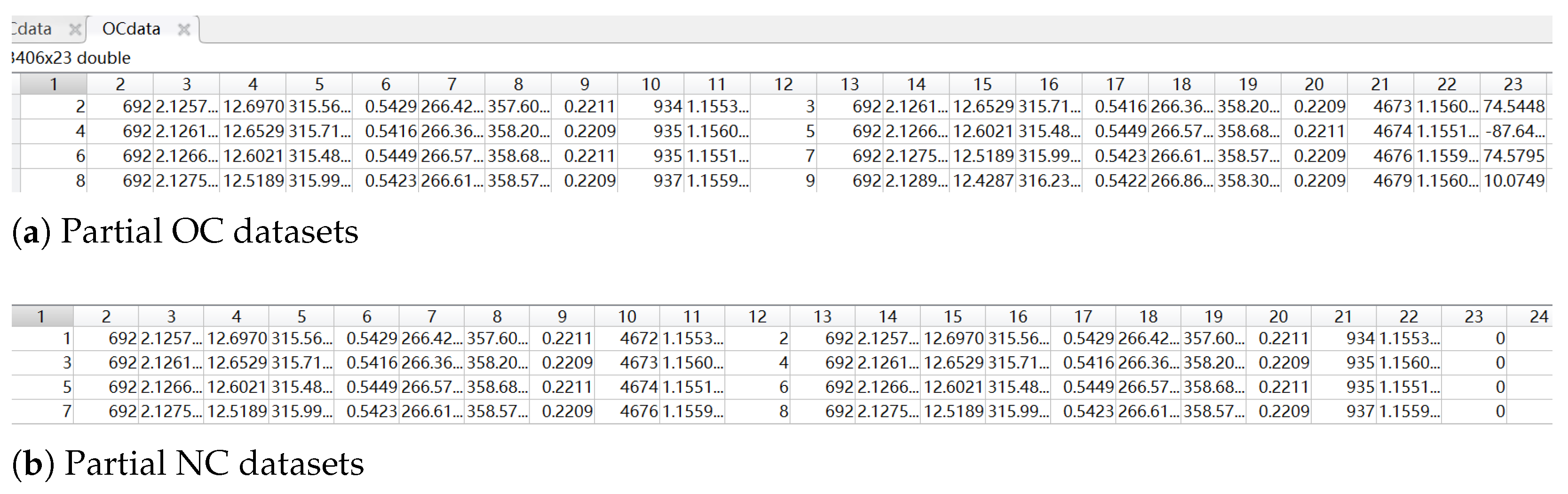
The dataset utilized in this study is derived from the publicly available Two-Line Element (TLE) sets published on Space-Track.org, encompassing all orbital elements released during November and December 2021. The dataset is organized into two distinct subsets: OC.mat representing the maneuver dataset and NC.mat representing the non-maneuver dataset. Each subset contains comprehensive orbital parameter records, with OC.mat comprising instances where orbital maneuvers were confirmed (labeled by identifying a change in the semi-major axis that exceeds a statistically derived threshold of ±0.1 km, determined based on the maximum natural variation in semi-major axis observed in non-maneuvering satellite orbits), and NC consisting of normal orbital operation periods without maneuvers (where the semi-major axis change is within the aforementioned natural variation threshold).
Each data instance in both OC.mat and NC.mat consists of 23 feature vectors, representing both pre-maneuver and post-maneuver orbital parameters for a given satellite object. The attributes include the object catalog number, satellite ID, epoch time, orbital inclination, Right Ascension of the Ascending Node (RAAN), eccentricity, argument of perigee, mean anomaly, mean motion (revolutions per day), revolution number at epoch, and semi-major axis for both pre- and post-maneuver states. Additionally, the dataset provides the RCS value. Each data instance contains the following 23-dimensional feature vector:
  • Pre-maneuver orbital elements:
    • Target orbital elements number (pre-maneuver)
    • Satellite ID (pre-maneuver)
    • Epoch time (pre-maneuver)
    • Orbital inclination (pre-maneuver)
    • Right ascension of the ascending node - RAAN (pre-maneuver)
    • Eccentricity (pre-maneuver)
    • Argument of perigee (pre-maneuver)
    • Mean anomaly (pre-maneuver)
    • Mean motion (revolutions per day, pre-maneuver)
    • Revolution number at epoch (pre-maneuver)
    • Semi-major axis (pre-maneuver)
  • Post-maneuver orbital elements:
    12.
    Target orbital elements number (post-maneuver)
    13.
    Satellite ID (post-maneuver)
    14.
    Epoch time (post-maneuver)
    15.
    Orbital inclination (post-maneuver)
    16.
    RAAN (post-maneuver)
    17.
    Eccentricity (post-maneuver)
    18.
    Argument of perigee (post-maneuver)
    19.
    Mean anomaly (post-maneuver)
    20.
    Mean motion (revolutions per day, post-maneuver)
    21.
    Revolution number at epoch (post-maneuver)
    22.
    Semi-major axis (post-maneuver)
  • Derived feature:
    23.
    Change in semi-major axis (post-maneuver minus pre-maneuver)
To provide clarity on the dataset structure sample, Figure 2 illustrates three representative data samples from 85 Satellite ID, showcasing the variations in key orbital parameters before and after maneuvers. The visualization highlights the characteristic changes in semi-major axis, eccentricity, and inclination that serve as primary indicators for maneuver detection.
To address the concern about computational efficiency, the proposed method is conducted on a system featuring an Intel (R) Core (TM) i9-14900HX processor (Intel, Santa Clara, CA, USA) (2.20 GHz), 32.0 GB of RAM (5600 MT/s), and an NVIDIA GeForce RTX 4060 GPU (NVIDIA, Santa Clara, CA, USA) (8188 MiB of memory, with 6701 MiB utilized during runtime and a GPU utilization rate of 39%). Additionally, the low power [28] efficiency of our model stems from the event-driven paradigm of SNNs—computations are only triggered when neurons generate spikes (events), leading to inherently sparse activation and avoiding the continuous computation overhead of traditional neural networks, thus achieving low power consumption.

4.2. Parameter Configuration

The proposed SNN model was configured with a carefully selected set of hyperparameters to optimize performance for the satellite maneuver detection task in Table 2. The network architecture employs a multi-layer structure with hidden layer dimensions of [128, 64, 32] neurons, utilizing a dropout rate of 0.3 for regularization. The spiking neuron model incorporates three distinct threshold voltages (0.6, 1.6, and 2.6) to enable multi-level firing patterns, with a membrane potential decay factor (tau) of 0.75 and a surrogate gradient width (a) of 1.0 to facilitate effective backpropagation through time. The model was trained over 100 epochs with a batch size of 256, using the Adam optimizer with an initial learning rate of 0.001 and weight decay of 1 × 10 5 . To address class imbalance, the loss function applied weights of [1.0, 3.0] for the non-maneuver and maneuver classes, respectively. A learning rate scheduler was implemented with a reduction factor of 0.5 and patience of 10 epochs to stabilize training convergence. This configuration balances model complexity, training efficiency, and detection performance for the specialized task of orbital maneuver identification.

4.3. Quantitative Result

Table 3 presents a comprehensive comparison of maneuver detection performance between a conventional CNN-based approach and the proposed method across 22 satellite targets. The CNN approach achieved perfect precision with zero false alarms but missed 9 actual maneuvers, resulting in a precision of 95.2% (177/186). In contrast, the proposed model achieved perfect recall by correctly identifying all 186 actual maneuvers with zero missed detections, while generating 5 false alarms that slightly reduced its recall to 97.4% (186/191). This performance characteristic is particularly valuable for orbital maneuver detection applications, where missing actual maneuvers poses substantially greater risks than false alarms, as undetected maneuvers may lead to collision hazards or failure to track strategic satellite activities.
Table 4 presents maneuver detection results for Satellite 50414 ID, explicitly linking the dataset’s actual orbital parameters to the neural network’s output. Here, “EN” denotes the space object orbital element number; “ a 1 ” (pre-maneuver) and “ a 2 ” (post-maneuver) are measured semi-major axes from the dataset; “ Δ a ” ( a 2 a 1 ) indicates real maneuvers (non-zero) or near-zero values (no maneuver); and “Pred. Label” (1 = maneuver, 0 = no maneuver) is the model’s output. All 15 samples show strict consistency: non-zero Δ a aligns with Pred. Label = 1, while near-zero Δ a matches Pred. Label = 0. This direct correspondence verifies the model’s reliability, allowing readers to confirm outputs are consistent with the dataset’s intrinsic characteristics.
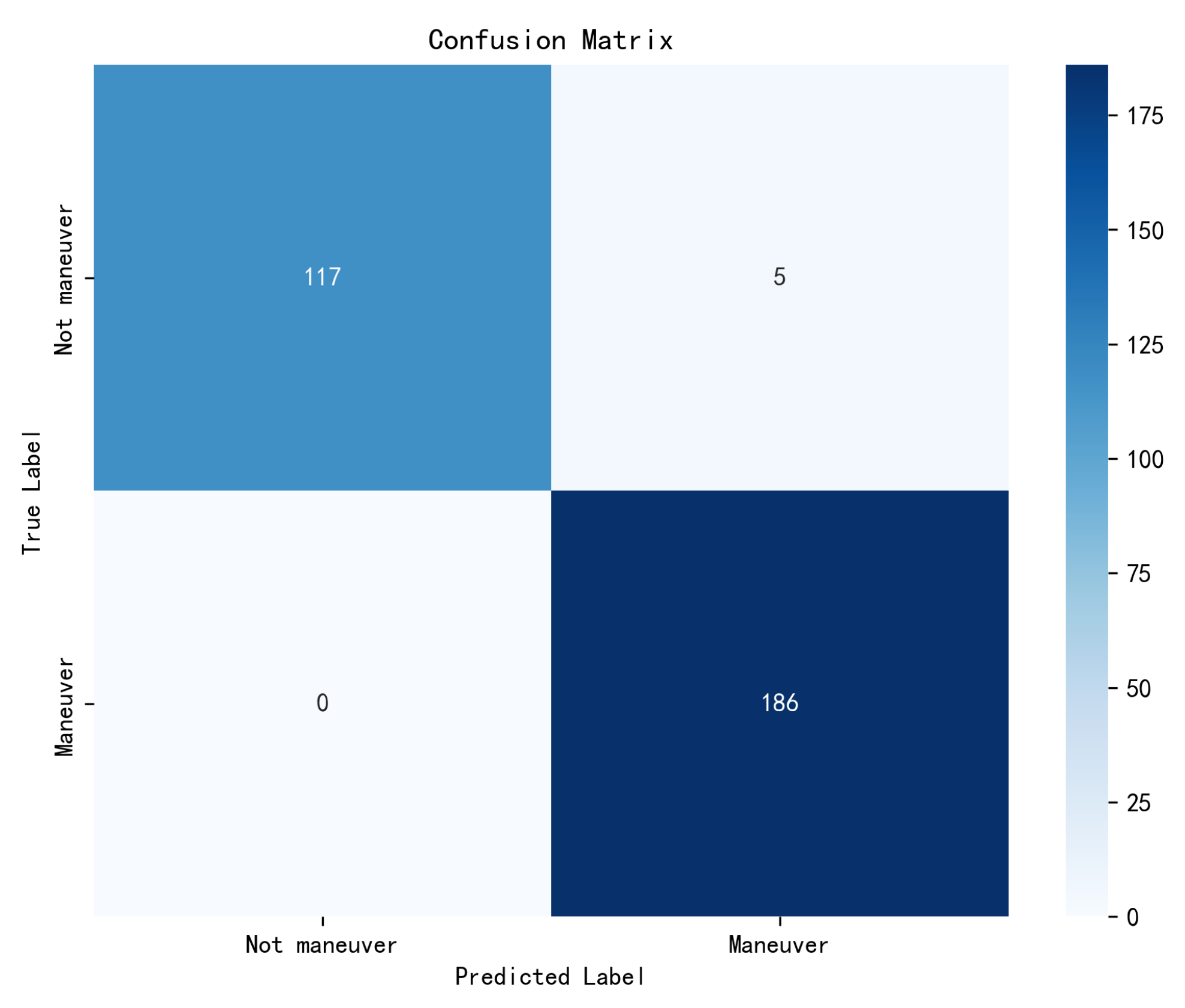
The confusion matrix in Figure 3 visually illustrates the performance of the satellite maneuver detection method. For the “Not maneuver” true label, there are 117 correct predictions of “Not maneuver” and 5 false predictions of “Maneuver”. For the “Maneuver” true label, there are 186 correct predictions of “Maneuver” and 0 false predictions of “Not maneuver”.

4.4. Multi-Level LIF Neuron Spiking Activity

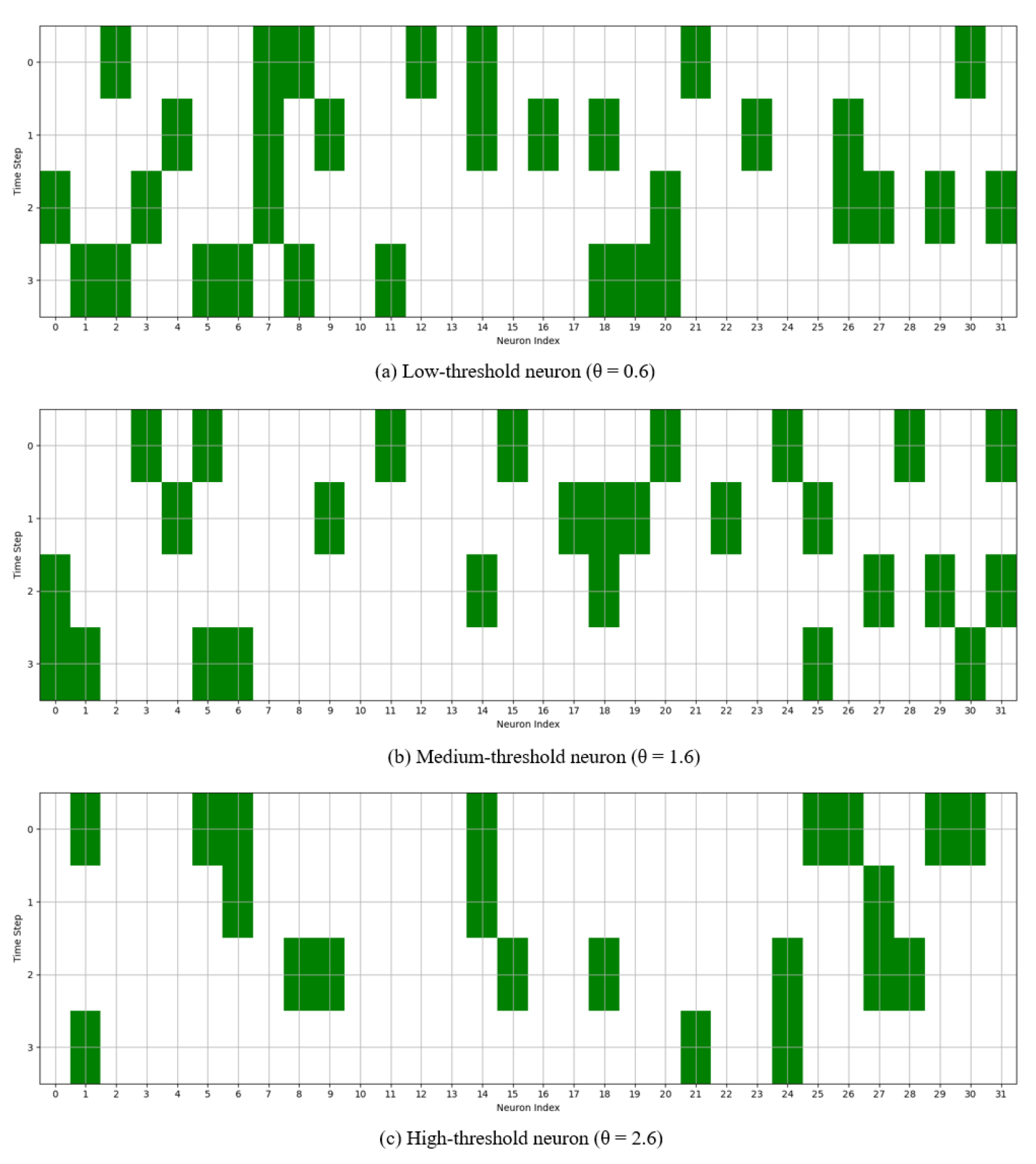
Figure 4 illustrate the spiking activity of three distinct leaky integrate-and-fire (LIF) neurons [29] within the multi-threshold spiking neural network (SNN) layer, with respective firing thresholds set at 0.6, 1.6, and 2.6. The results demonstrate a clear inverse relationship between the firing threshold and the spiking frequency: as the threshold increases, the number of output spikes decreases significantly across the same simulation time steps. This pattern aligns with the expected behavior of LIF neurons, where higher thresholds require greater membrane potential accumulation to trigger a spike, thereby reducing firing rates. Such multi-threshold design enables the network to capture features at varying intensity levels, enhancing the model’s capacity for temporal and dynamic feature extraction in satellite maneuver prediction tasks.

4.5. Analysis of Surrogate Gradient Dynamics

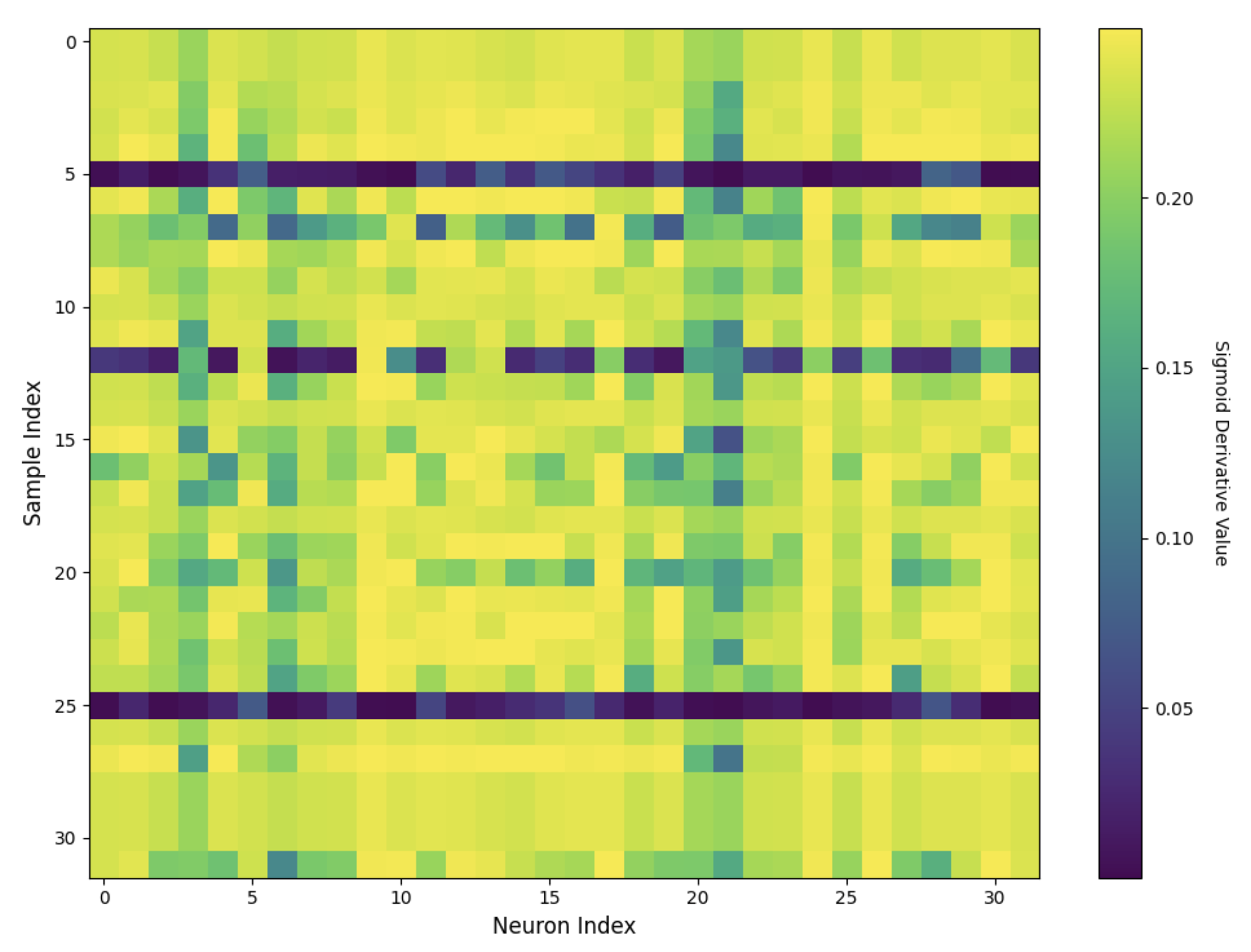
Figure 5 visually represents the surrogate gradient during the backpropagation process in spiking neural networks, presented in the form of a heatmap. The horizontal axis corresponds to the neuron index, while the vertical axis indicates the sample index. The color gradient, ranging from blue to yellow, illustrates the increasing magnitude of the surrogate gradient values. This visualization effectively captures the variation in the gradient value between different neurons and samples, highlighting regions of high and low gradient activity that are essential to understand learning dynamics in surrogate gradient-based training.

5. Ablation Experiment

5.1. Analysis of Multi-Level Firing Spiking

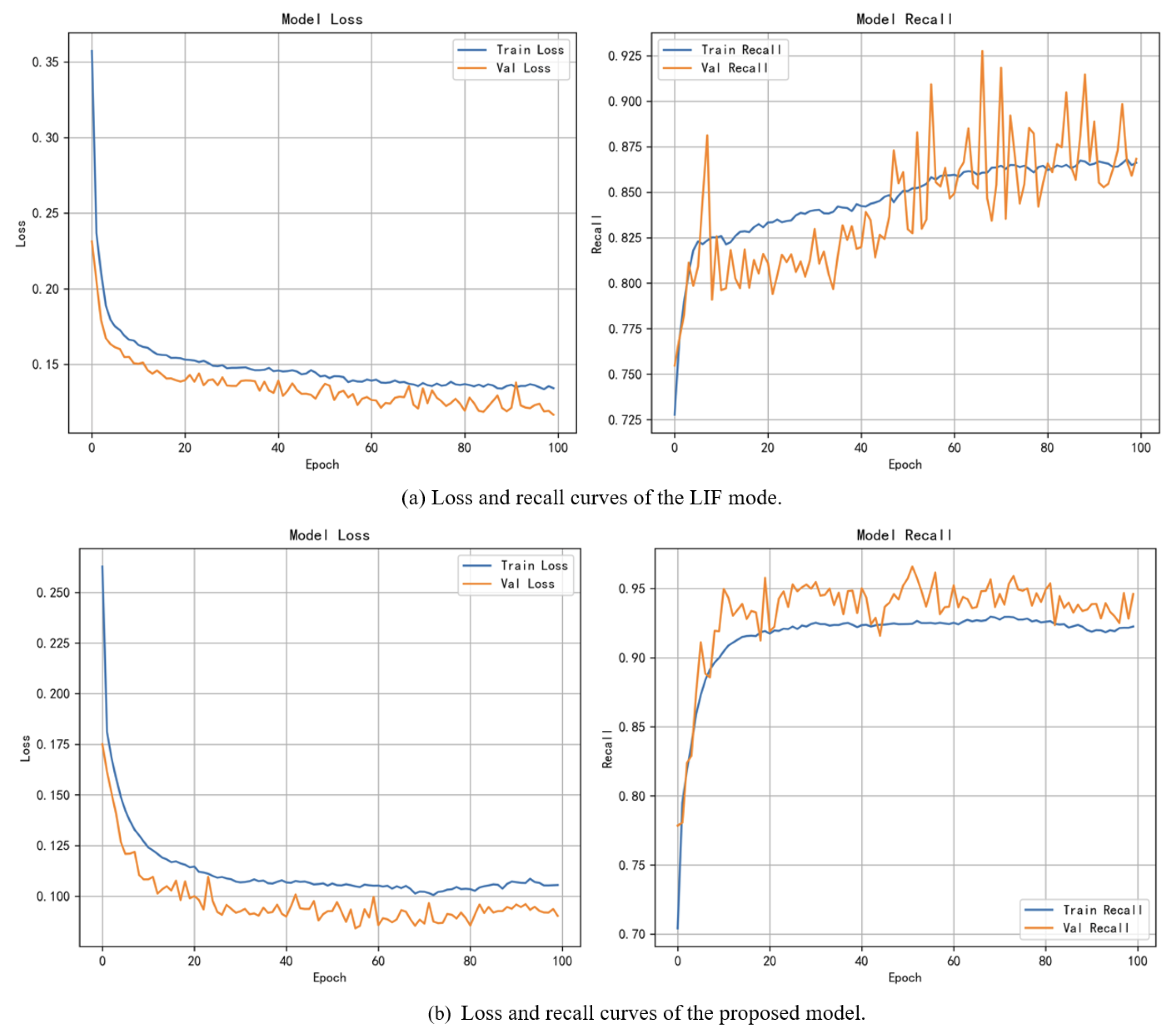
Figure 6 shows satellite maneuver detection model metrics over 100 epochs, with Figure 6a for LIF and Figure 6b for the proposed model. Both models’ losses drop fast initially, but Figure 6b reaches lower, stabler values with smaller validation loss fluctuations. For the model recall, both recall curves rise swiftly early on; Figure 6b stabilizes at a higher level, with validation recall more consistent and closer to training recall, outperforming LIF in identifying maneuvers. As quantified in Table 5, In the proposed model, the average recall rate for 100 epochs (0.940) significantly exceeds the LIF method (0.841), validating the effectiveness of multi-level firing spiking.

5.2. Effect Analysis of Taking the Differential Characteristics of Orbital Elements as Input

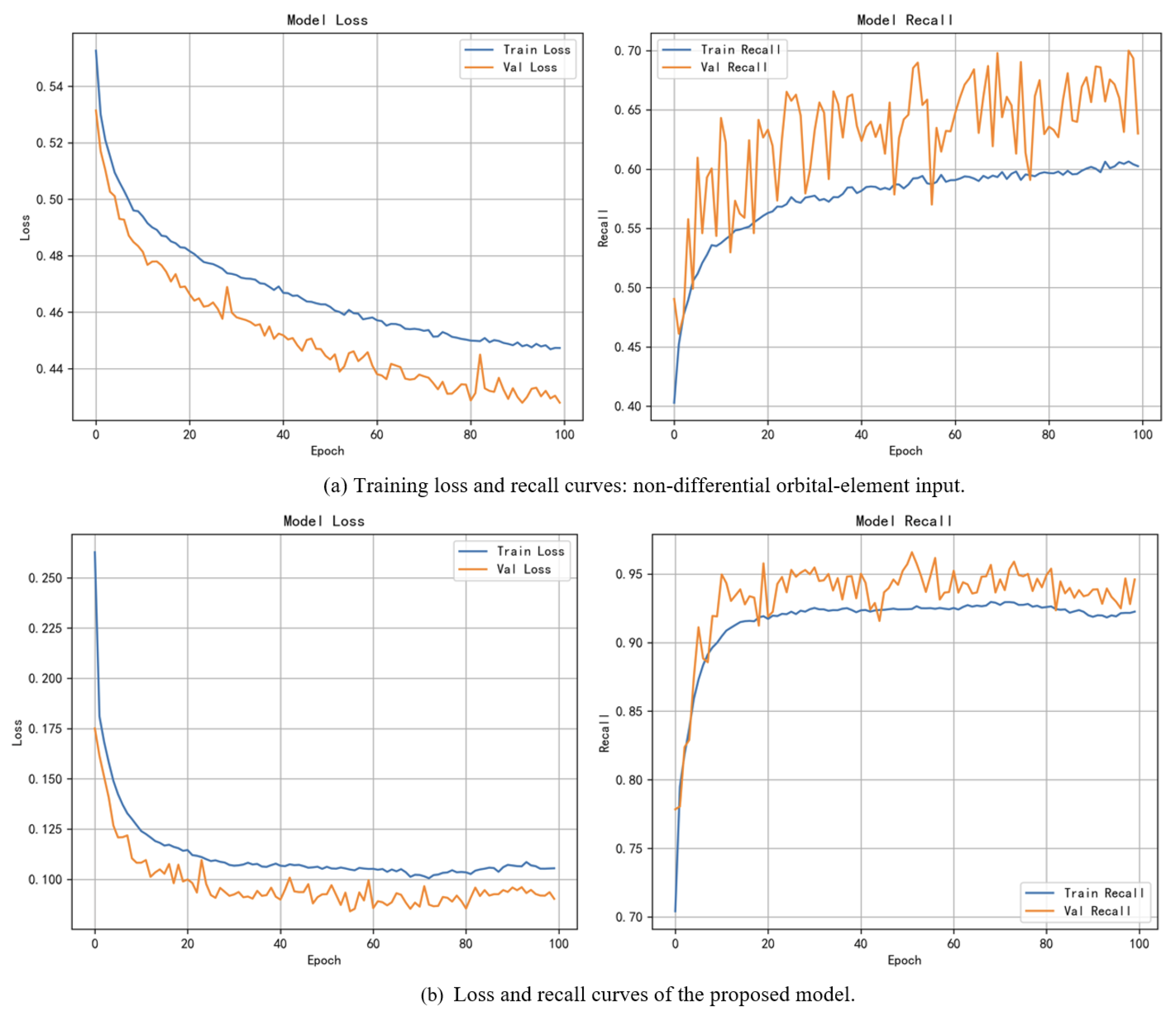
Experimental results visualized in Figure 7 show that using the differential characteristics of orbital elements as input (Figure 7b) outperforms the non-differential method (Figure 7a). The former achieves faster convergence of losses, higher and more stable recalls. As quantified in Table 6, In the proposed model, the average recall rate for 100 epochs (0.940) significantly exceeds that of the non-differential input (0.624), validating the effectiveness of incorporating the differential features of the orbital element for better satellite maneuver recognition performance.
On the real-world applicability of our proposed MLF-SNN module, first, the public TLE dataset used in our study serves as a representative proxy for real-time multi-source orbital data (e.g., from radar and optical sensors) that the module would process in practice, as both share sparsity, asynchronicity, and noise characteristics. In operational SSA workflows, the module would ingest such continuous sensor data and directly encode time-varying orbital-parameter differences—validated to boost recall to 0.940 versus 0.624 for non-differential input—into spike trains via its event-driven architecture, thereby avoiding extensive offline preprocessing. Second, the MLF unit’s shared-weight design introduces no additional trainable parameters, ensuring minimal computational overhead that is critical for resource-constrained ground stations or on-board platforms. Meanwhile, its multi-threshold firing scheme (thresholds 0.6, 1.6, 2.6) captures both impulsive and low-thrust maneuvers, outperforming single-threshold LIF (recall 0.841). Overall, the MLF-SNN is explicitly engineered to address real-world challenges—data sparsity, limited computational resources, and highly dynamic environments—thereby bridging dataset validation and practical SSA operations.

6. Conclusions

In this study, we proposed a multi-level firing with spiking neural network for orbital maneuver detection. The system incorporates a MLF neuron model, which enhances feature extraction capability through multi-threshold spike generation and membrane potential dynamics. The proposed MLF-SNN architecture processes satellite orbit parameter data by converting input features into spatiotemporal spike patterns across multiple timesteps, enabling effective capture of maneuver-related characteristics. Experimental results demonstrate that the system achieves reliable performance in distinguishing maneuver and non-maneuver events, with comprehensive evaluation metrics including recall analyzed both globally and for individual satellites. The data processing pipeline, featuring robust feature engineering of orbit parameter changes and standardized preprocessing, ensures the model’s adaptability to different data formats.

Author Contributions

Methodology, H.C. and Z.P.; Validation, L.Z., K.Q. and Z.Z.; Data curation, X.W.; Writing—review & editing, H.C. All authors have read and agreed to the published version of the manuscript.

Funding

This research received no external funding.

Data Availability Statement

Publicly available datasets were analyzed in this study. This data can be found here: https://www.space-track.org/.

Conflicts of Interest

The authors declare no conflicts of interest.

References

  1. Lu, Y.; Shao, Q.; Lv, L.; Fang, G.; Yue, H. Nonlinear dynamics of a space tensioned membrane antenna during orbital maneuvering. Aerospace 2022, 9, 794. [Google Scholar] [CrossRef]
  2. Yang, S.; Jin, X.; Gong, B.; Han, F. Space-Based Passive Orbital Maneuver Detection Algorithm for High-Altitude Situational Awareness. Aerospace 2024, 11, 563. [Google Scholar] [CrossRef]
  3. Xi, L.; Yang, L.; Cai, W.; Liu, J. GEO spacecraft maneuver detection based on causal inference. Adv. Space Res. 2023, 72, 3756–3769. [Google Scholar] [CrossRef]
  4. Patera, R.P. Space event detection method. J. Spacecr. Rocket. 2008, 45, 554–559. [Google Scholar] [CrossRef]
  5. Li, T.; Chen, L. Historical-orbital-data-based method for monitoring the operational status of satellites in low Earth orbit. Acta Astronaut. 2018, 151, 88–94. [Google Scholar] [CrossRef]
  6. Li, T.; Li, K.; Chen, L. Maneuver detection method based on probability distribution fitting of the prediction error. J. Spacecr. Rocket. 2019, 56, 1114–1120. [Google Scholar] [CrossRef]
  7. Bai, X.; Liao, C.; Pan, X.; Xu, M. Mining two-line element data to detect orbital maneuver for satellite. IEEE Access 2019, 7, 129537–129550. [Google Scholar] [CrossRef]
  8. Pastor, A.; Escribano, G.; Escobar, D. Satellite maneuver detection with optical survey observations. In Proceedings of the Advanced Maui Optical and Space Surveillance Technologies Conference (AMOS), Maui, HI, USA, 15–18 September 2020. [Google Scholar]
  9. Shao, C.; Xiong, W.; Han, J. Research on the Method of GEO Satellite Maneuver Detection Based on TLE Data. In Proceedings of the 2020 International Conference on Aviation Safety and Information Technology, Weihai, China, 14–16 October 2020; pp. 705–709. [Google Scholar]
  10. Liu, J.; Liu, L.; Du, J.; Sang, J. TLE outlier detection based on expectation maximization algorithm. Adv. Space Res. 2021, 68, 2695–2712. [Google Scholar] [CrossRef]
  11. Goff, G.M.; Black, J.T.; Beck, J.A. Tracking maneuvering spacecraft with filter-through approaches using interacting multiple models. Acta Astronaut. 2015, 114, 152–163. [Google Scholar] [CrossRef]
  12. Wang, Q.; Zou, J.; Wu, W.; Chen, J. Orbital maneuver detection method of space target based on Neyman-Pearson criterion. Chin. Space Sci. Technol. 2021, 41, 96–103. [Google Scholar]
  13. Yang, Z.; Huang, H.X.; Li, J.S.; Luo, Y.Z. Spacecraft Maneuver Detection Based on Nonlinear Uncertainty Propagation Along Decussated Orbital Arc. Adv. Space Res. 2025, 76, 2472–2487. [Google Scholar] [CrossRef]
  14. Perovich, N.; Folcik, Z.; Jaimes, R. Applications of artificial intelligence methods for satellite maneuver detection and maneuver time estimation. In Proceedings of the Advanced Maui Optical and Space Surveillance Technologies Conference (AMOS), Maui, HI, USA, 27–30 September 2022. [Google Scholar]
  15. Cipollone, R.; Leonzio, I.; Calabrò, G.; Di Lizia, P. An LSTM-based Maneuver Detection Algorithm from Satellites Pattern of Life. In Proceedings of the 2023 IEEE 10th International Workshop on Metrology for AeroSpace (MetroAeroSpace), Milan, Italy, 19–22 June 2023; pp. 78–83. [Google Scholar]
  16. Cipollone, R.; Frueh, C.; Di Lizia, P. LSTM-based maneuver detection for resident space object catalog maintenance. Neural Comput. Appl. 2025, 37, 17341–17362. [Google Scholar] [CrossRef]
  17. Abay, R.; Gehly, S.; Balage, S.; Brown, M.; Boyce, R. Maneuver detection of space objects using generative adversarial networks. In Proceedings of the Advanced Maui Optical and Space Surveillance Technologies Conference, Maui, HI, USA, 11–14 September 2018. [Google Scholar]
  18. Ying, Y.; Ziyu, Z.; Qingrui, Z.; Rong, M.; Pei, C. Maneuver Detection of Cataloged Space Object Based on Machine Learning. In Proceedings of the 2024 43rd Chinese Control Conference (CCC), Kunming, China, 28–31 July 2024; pp. 6038–6043. [Google Scholar]
  19. Perovich, N.; Folcik, Z.; Jaimes, R. Satellite maneuver detection using machine learning and neural network methodsbehaviors. In Proceedings of the 2022 IEEE Aerospace Conference (AERO), Big Sky, MT, USA, 5–12 March 2022; pp. 1–19. [Google Scholar]
  20. Kato, R.; Sakaue, T.; Mori, D.; Tanaka, M.; Sano, T.; Taya, K.; Ebara, M.; Nakazawa, R.; Yoshida, J.; Togawa, R. Validity evaluation of anomaly detection using lstm autoencoder for maneuver detection. In Proceedings of the Advanced Maui Optical and Space Surveillance (AMOS) Technologies Conference, Maui, HI, USA, 19–22 September 2023; p. 122. [Google Scholar]
  21. Yu, S.; Wang, X.; Zhu, T. Maneuver detection methods for space objects based on dynamical model. Adv. Space Res. 2021, 68, 71–84. [Google Scholar] [CrossRef]
  22. Li, F.; Zhao, Y.; Zhang, J.; Zhang, Z.; Wu, D. A station-keeping maneuver detection method of non-cooperative geosynchronous satellites. Adv. Space Res. 2024, 73, 160–169. [Google Scholar] [CrossRef]
  23. Yuan, W.; Xia, Q.; Qian, H.; Qiao, B.; Xu, J.; Xiao, B. An intelligent hierarchical recognition method for long-term orbital maneuvering intention of non-cooperative satellites. Adv. Space Res. 2025, 75, 5037–5050. [Google Scholar] [CrossRef]
  24. Zhang, M.; Bu, T.; Hu, L. A Dynamic Dual-Processing Object Detection Framework Inspired by the Brain’s Recognition Mechanism. In Proceedings of the IEEE International Conference on Computer Vision, Paris, France, 2–3 October 2023; pp. 6264–6274. [Google Scholar]
  25. Wang, D.; Shi, J.; Liu, M.; Han, W.; Bi, L.; Fei, W. Brain-inspired deep learning model for EEG-based low-quality video target detection with phased encoding and aligned fusion. Expert Syst. Appl. 2025, 288, 128189. [Google Scholar] [CrossRef]
  26. Zhang, B.; Wu, L.; Rong, J.; Huang, S.; Li, Y.; Luo, M. Synergistic Optimization Mechanism of Brain-Inspired Intelligence and Generative Models in Small Target Detection. In Proceedings of the 2025 2nd International Conference on Generative Artificial Intelligence and Information Security, Hangzhou, China, 21–23 February 2025; pp. 242–246. [Google Scholar]
  27. Lian, S.; Shen, J.; Liu, Q.; Wang, Z.; Yan, R.; Tang, H. Learnable Surrogate Gradient for Direct Training Spiking Neural Networks. In Proceedings of the International Joint Conference on Artificial Intelligence, Macao, China, 19–25 August 2023; pp. 3002–3010. [Google Scholar]
  28. Mishra, S.M.; Shekhawat, H.S.; Pidanic, J.; Trivedi, G. FPGA-Based Adaptive LIF Neuron for High-Speed, Energy-Efficient Spiking Neural Network. IEEE Trans. Circuits Syst. Artif. Intell. 2025, 2, 276–285. [Google Scholar] [CrossRef]
  29. Wei, Y.; Yao, F.; Kang, Y. Design and Application of Spiking Neural Networks Based on LIF Neurons. In Proceedings of the 2024 3rd International Conference on Data Analytics, Computing and Artificial Intelligence (ICDACAI), Zakopane, Poland, 18–20 October 2024; pp. 10–15. [Google Scholar]
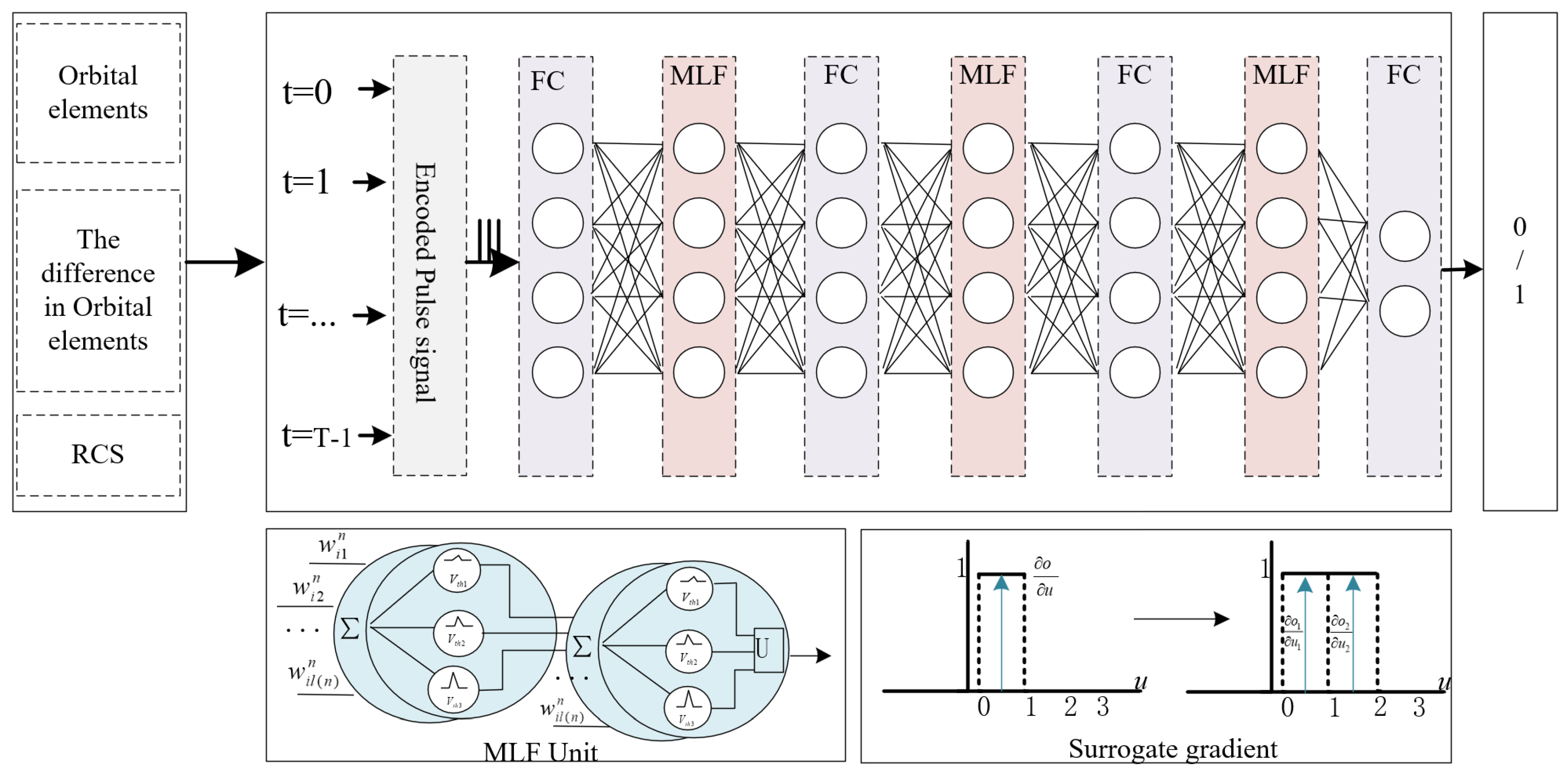
Figure 1. Overall framework of the MLF-SNN.
Aerospace 12 00991 g001
Figure 2. Partial OC and NC dataset.
Aerospace 12 00991 g002
Figure 3. The Confusion Matrix.
Aerospace 12 00991 g003
Figure 4. The Multi-Level LIF Neuron Spiking Activity.
Aerospace 12 00991 g004
Figure 5. The visualization of the surrogate gradient.
Aerospace 12 00991 g005
Figure 6. The curve changes in loss and recall of LIF and the proposed model.
Aerospace 12 00991 g006
Figure 7. The curve changes in loss and recall of taking the differential characteristics of orbital elements as input.
Aerospace 12 00991 g007
Table 1. Comparison of Deep Learning, LIF Neuron, and MLF Methods.
ComparisonDeep Learning (DL)LIF NeuronMulti-Level Firing Neurons
Computing UnitArtificial neurons (ReLU/Sigmoid)Spiking neurons (Leaky Integrate-and-Fire)Multi-threshold LIF neurons
Connection StructureFully connected/convolutional/recurrentFixed or trainable synaptic connectionsShared weights across multi-level neurons
Dynamic CharacteristicsStatic or recurrent activationsTemporal dynamics with spike reset mechanismMulti-level firing with expanded gradient region
Training MechanismBackpropagation (BP)Spatio-Temporal Backpropagation (STBP)STBP with multi-level gradient propagation
Temporal ProcessingRequires RNN/LSTM modulesInherent temporal coding capabilityEnhanced temporal representation with multiple thresholds
Biological PlausibilityLowHighMedium (multi-threshold approximation)
Key ImplementationStandard PyTorch1.7 modulesSTBP with surrogate gradientsMulti-level LIF units with weight sharing
Table 2. Model Hyperparameter Configuration.
Parameter CategoryParameter NameValueFunctional Description
TimeStep4Number of time steps, controlling the temporal dimension
Network Architecturehidden_sizes[128, 64, 32]Configuration of neuron counts in SNN hidden layers
dropout_rate0.3Dropout rate for regularization to prevent overfitting
Vth0.6Threshold voltage for the first LIF neuron layer
Vth21.6Threshold voltage for the second LIF neuron layer
Neuron ParametersVth32.6Threshold voltage for the third LIF neuron layer
a1.0Width parameter for the trapezoidal surrogate gradient function
tau0.75Membrane potential leakage decay factor
batch_size256Batch size for training
Training Parametersepochs100Total number of training epochs
class_weights[1.0, 3.0]Class weights for cross-entropy loss, with higher weight for positive class
learning_rate0.001Initial learning rate for Adam optimizer
Optimizer Parametersweight_decay 1 × 10 5 Weight decay coefficient for Adam optimizer
reduce_lr_patience10Patience value for ReduceLROnPlateau scheduler
Scheduler Parametersreduce_lr_factor0.5Learning rate reduction factor for ReduceLROnPlateau scheduler
Table 3. Satellite Maneuver Detection Results Comparison.
Satellite IDCNNThe Proposed Model
RMMDFDPMRMMDFDPM
50414110011110011
5042361056006
50424120012120012
50425121011120012
50429150015150015
5043211209110011
50433120012120012
5043420022013
5043590099009
5043641034015
5043770077007
5043830033003
5043970077007
5044080088008
5044160066017
5044270077007
50445100010100111
5044680088008
5044771067018
50448110011110011
5044910307100010
5045080088008
Table 4. 50414 Satellite ID Maneuver Detection Results.
EN a 1 EN a 2 Δ a Pred. Label
16843.836926842.6169−1.22001
26842.616936842.4245−0.19241
36842.424546841.6918−0.73271
46841.691856841.69180.00000
56841.691866840.4492−1.24261
66840.449276840.44920.00000
76840.449286839.2828−1.16641
86839.282896838.6289−0.65391
96838.6289106838.62890.00000
106838.6289116838.0199−0.60911
116838.0199126837.3109−0.70891
126837.3109136837.31090.00000
136837.3109146836.5326−0.77831
146836.5326156836.0669−0.46571
156836.0669166835.3282−0.73871
Table 5. Satellite Maneuver Recall Results Between LIF and The Proposed Model.
LIFThe Proposed Model
Average Recall0.8410.940
Table 6. Satellite Maneuver Recall Results Between Non-Differential Input and The Proposed Model.
Non-Differential InputThe Proposed Model
Average Recall0.6240.940
Disclaimer/Publisher’s Note: The statements, opinions and data contained in all publications are solely those of the individual author(s) and contributor(s) and not of MDPI and/or the editor(s). MDPI and/or the editor(s) disclaim responsibility for any injury to people or property resulting from any ideas, methods, instructions or products referred to in the content.