
Effects of Nacelle Inlet Geometry on Crosswind Distortion Under Ground Static Conditions



Abstract
1. Introduction
2. Research Object and Methodology
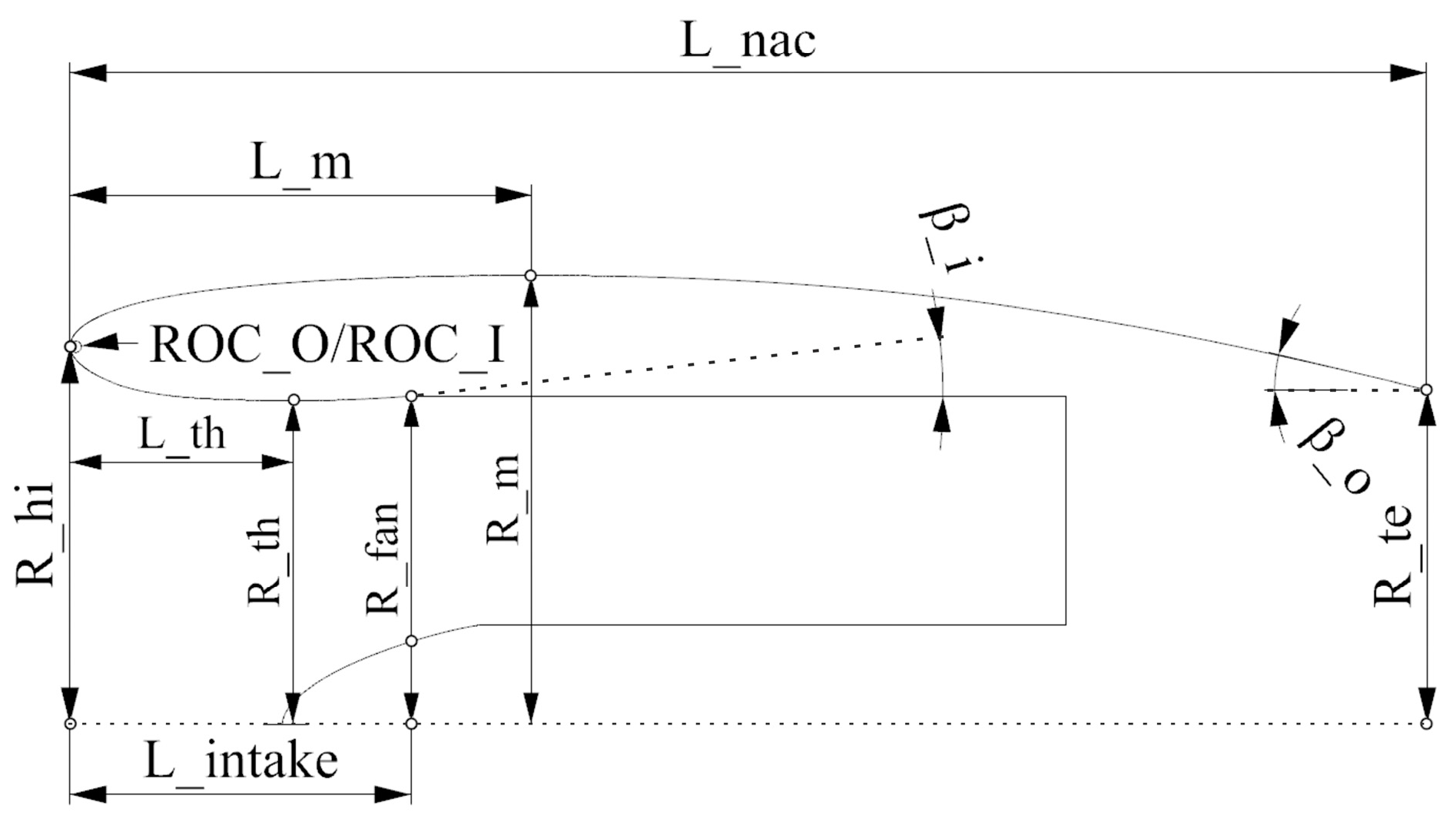
2.1. Nacelle Parameterization Method
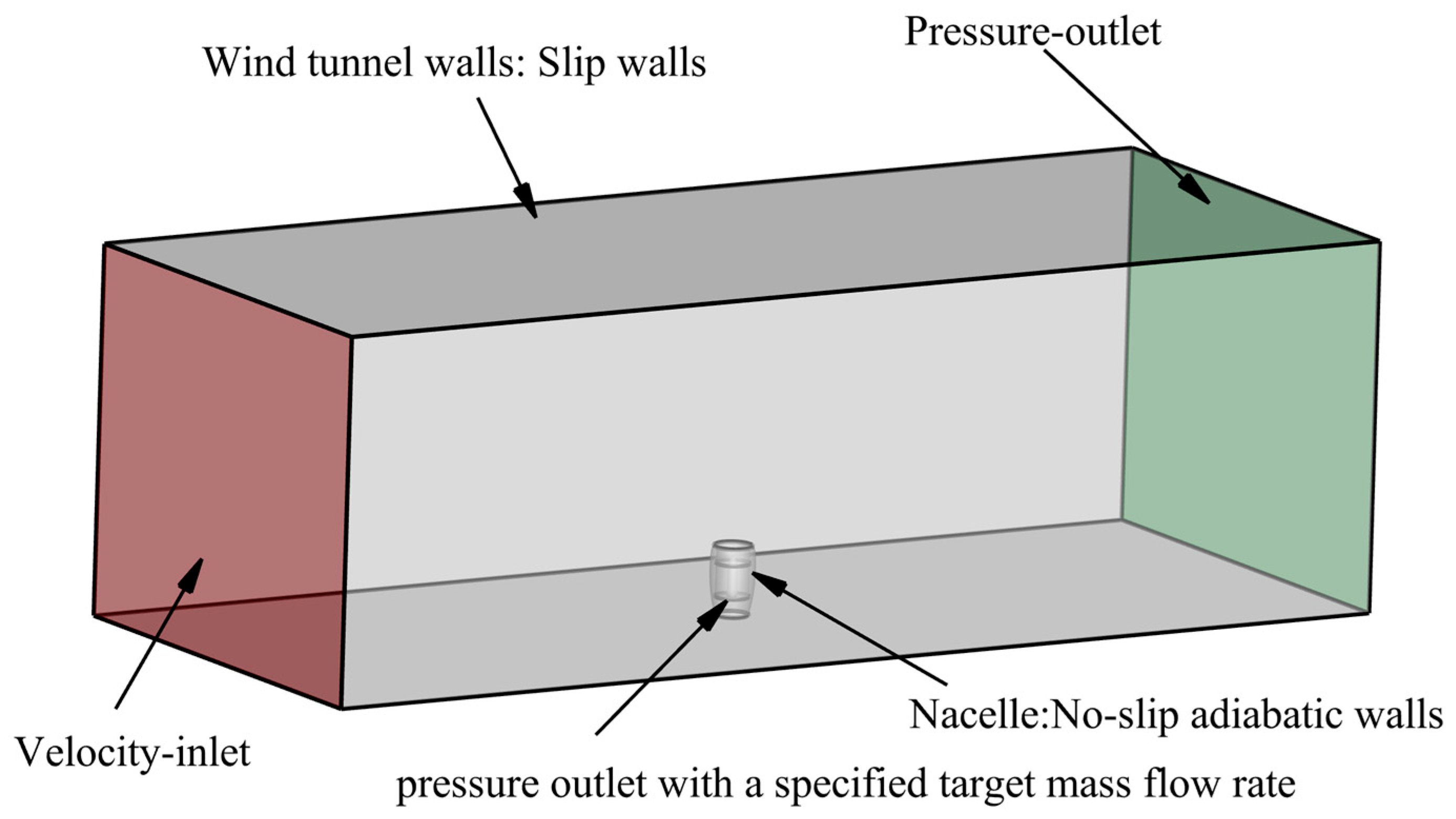
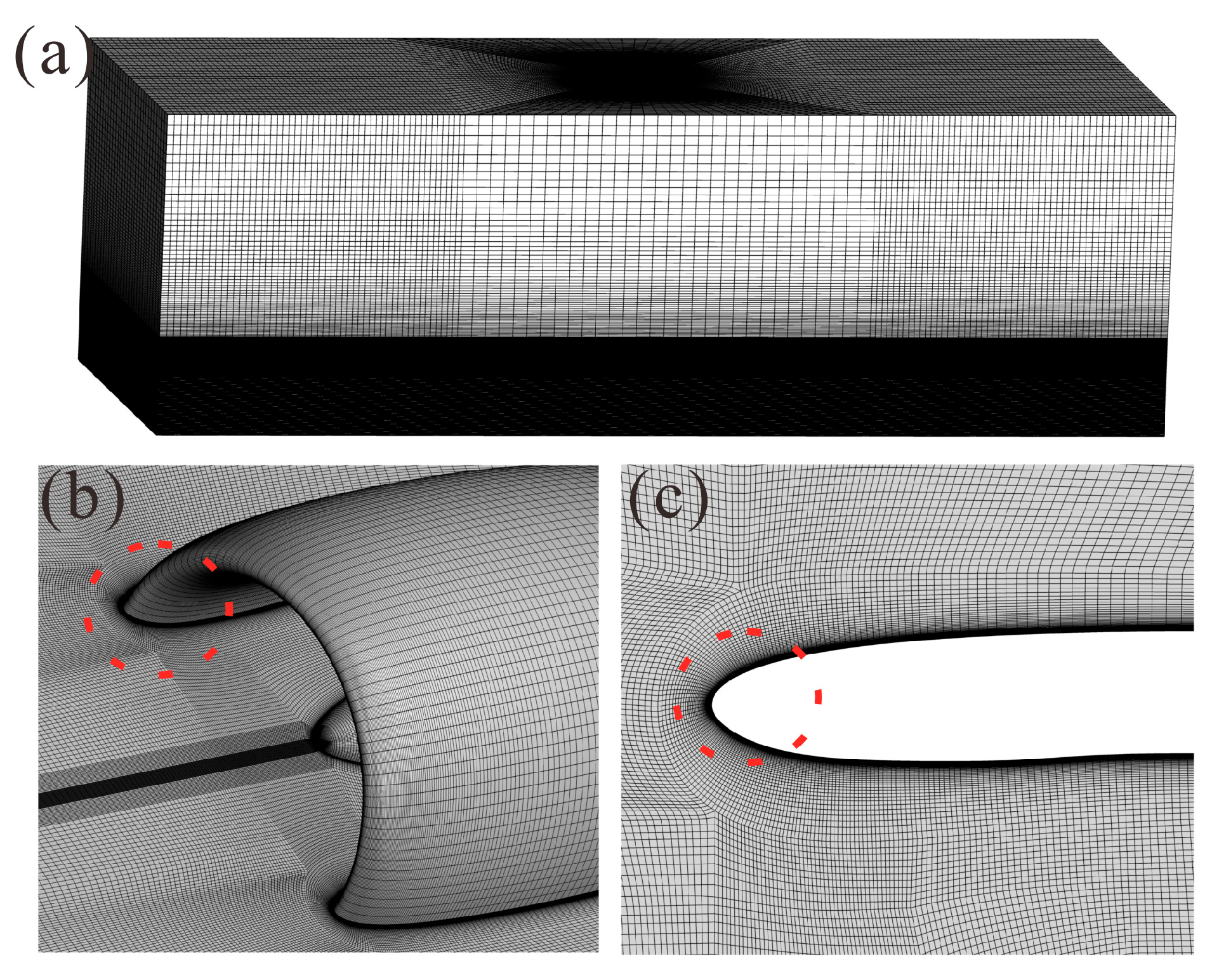
2.2. Numerical Methods and Setup
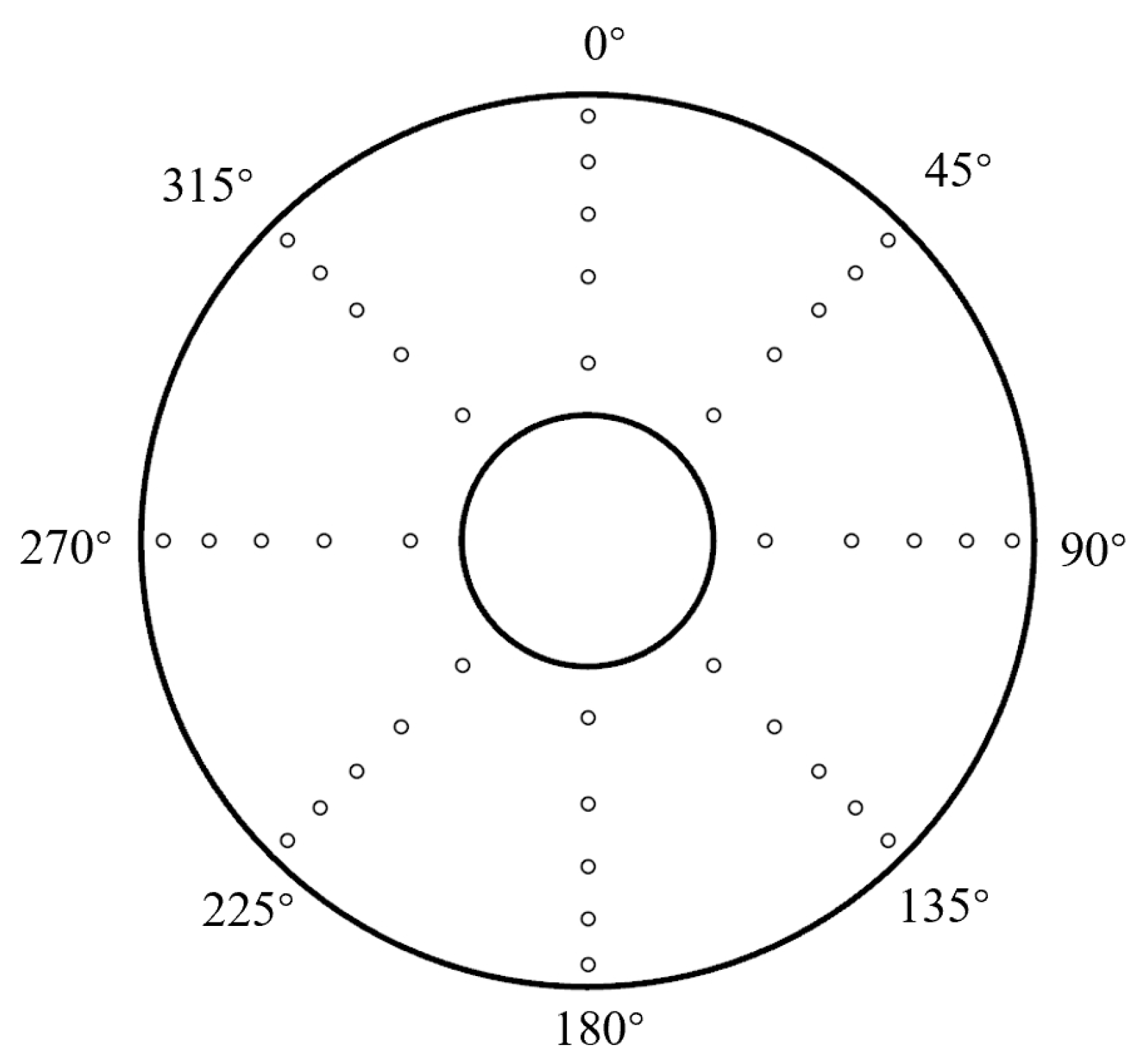
2.3. Definition of Nacelle Performance Parameters
2.4. Validation of the Computational Method
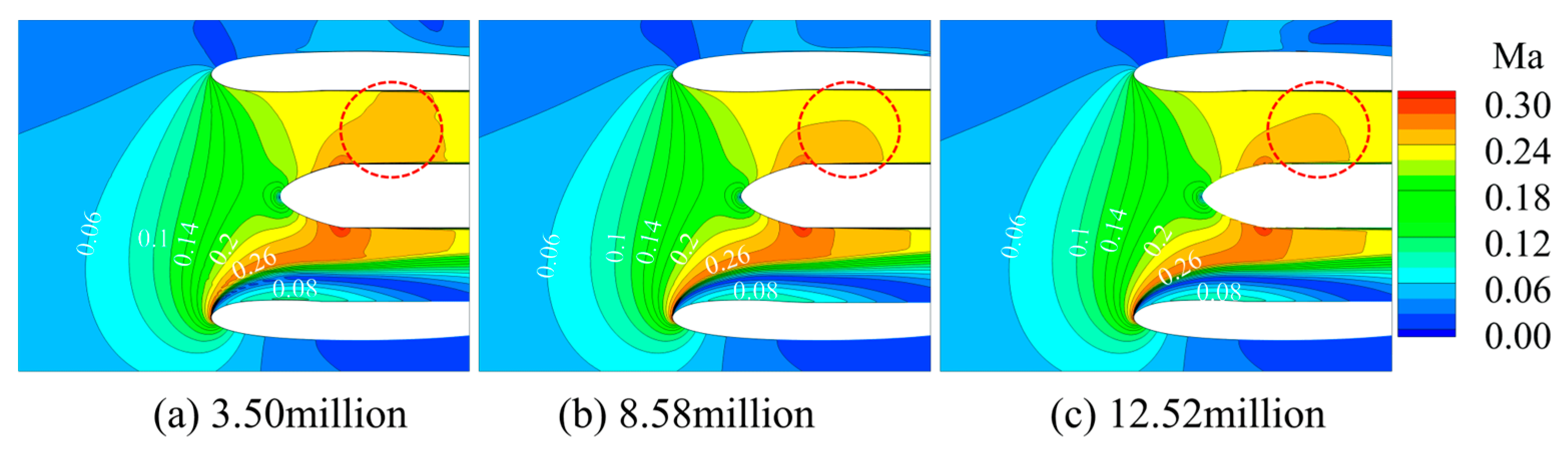
2.4.1. Mesh Independence Examination
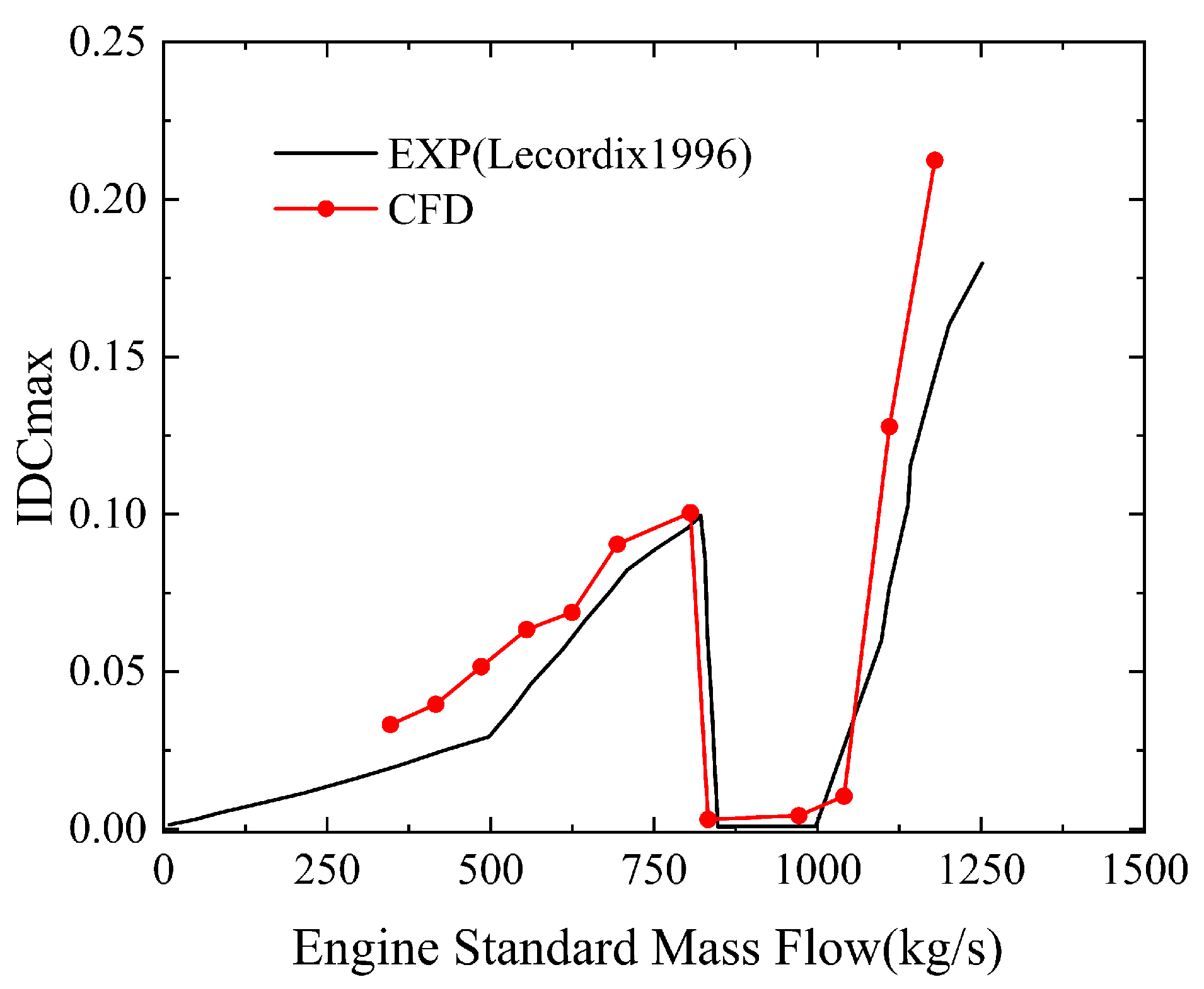
2.4.2. Validation of Numerical Method
3. Results and Discussion
3.1. Basic Crosswind Distortion Characteristics
3.2. Influence of Mass Flow Rate
3.3. Influence of Reynolds Number
3.4. Influence of Geometric Parameters
3.4.1. Influence of Throat Axial Location
3.4.2. Influence of Fan Face Radius
3.4.3. Influence of Leading-Edge Radius
4. Conclusions
- 1.
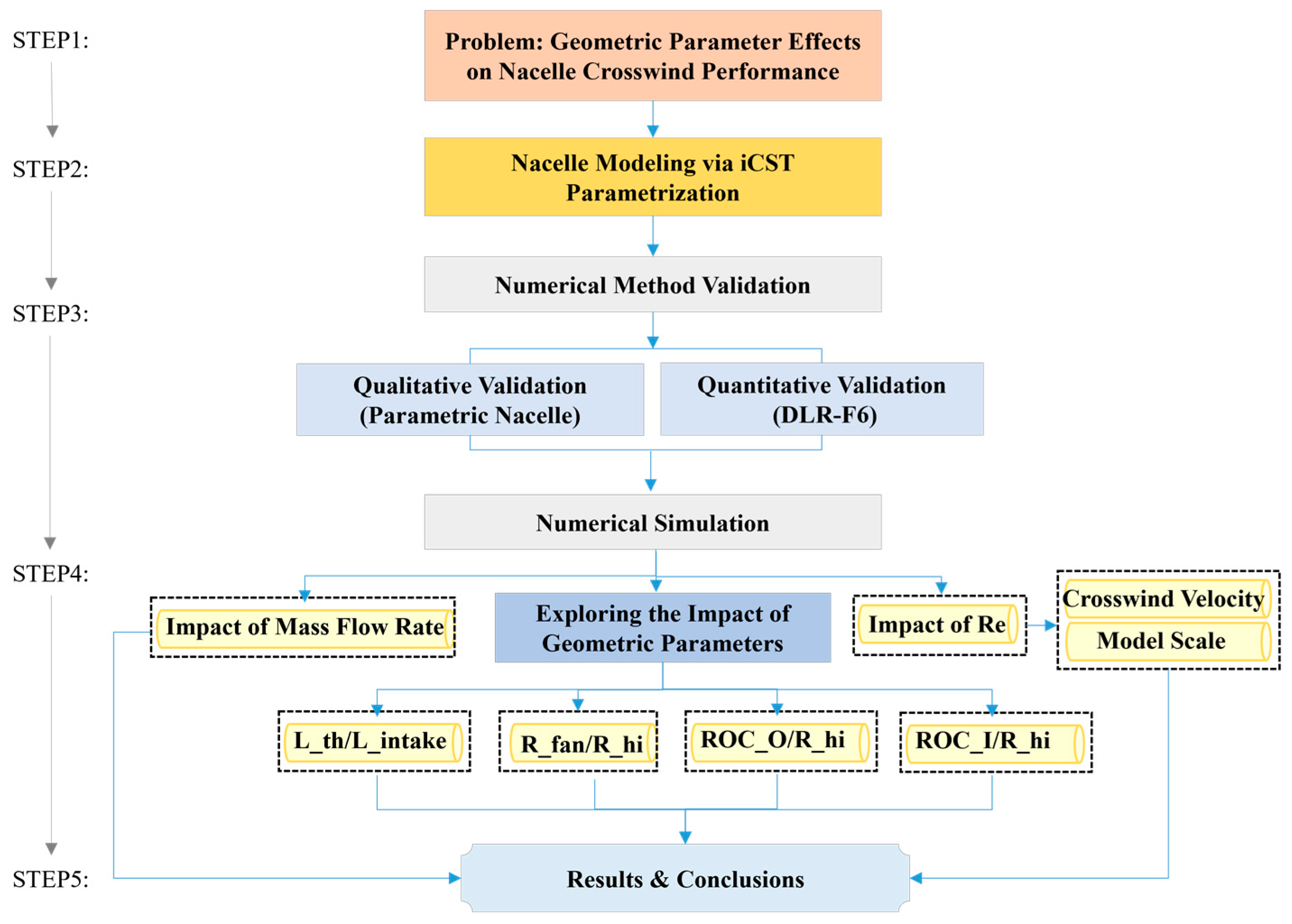
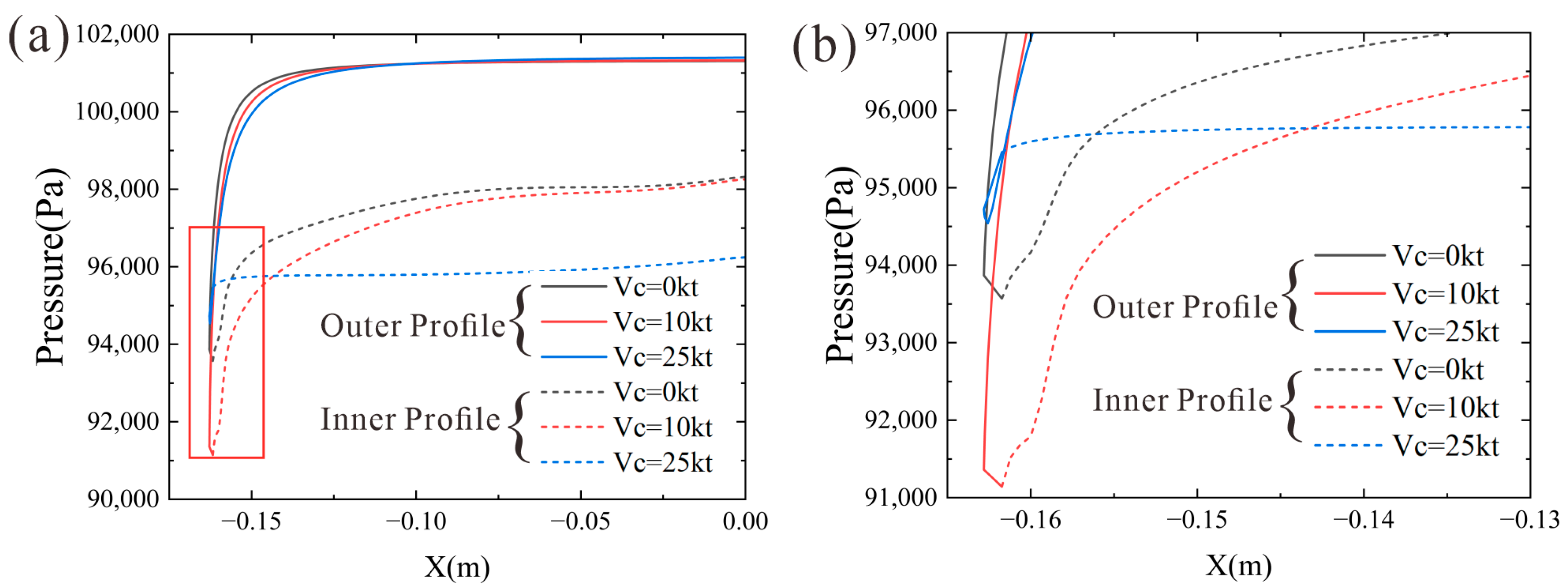
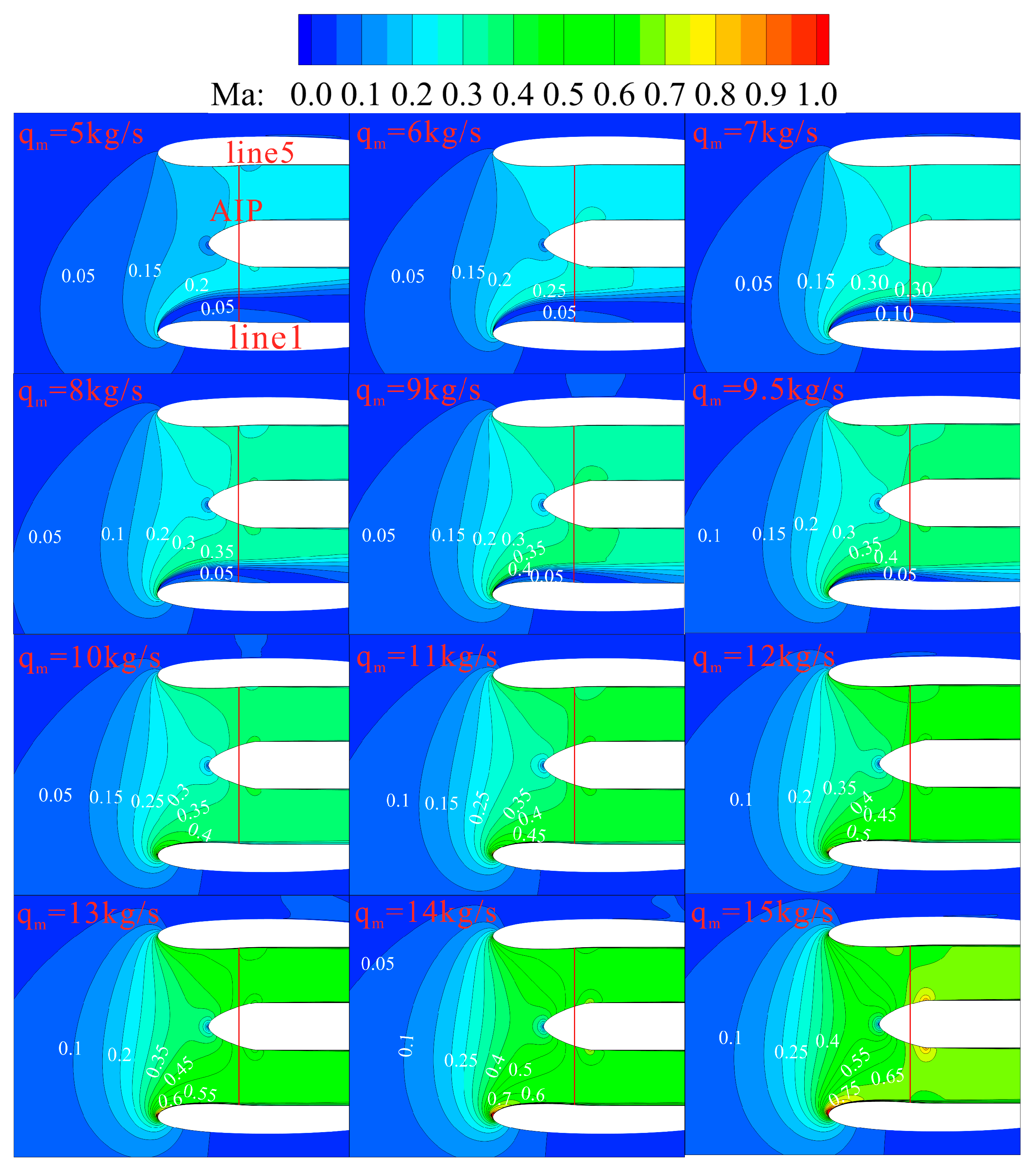
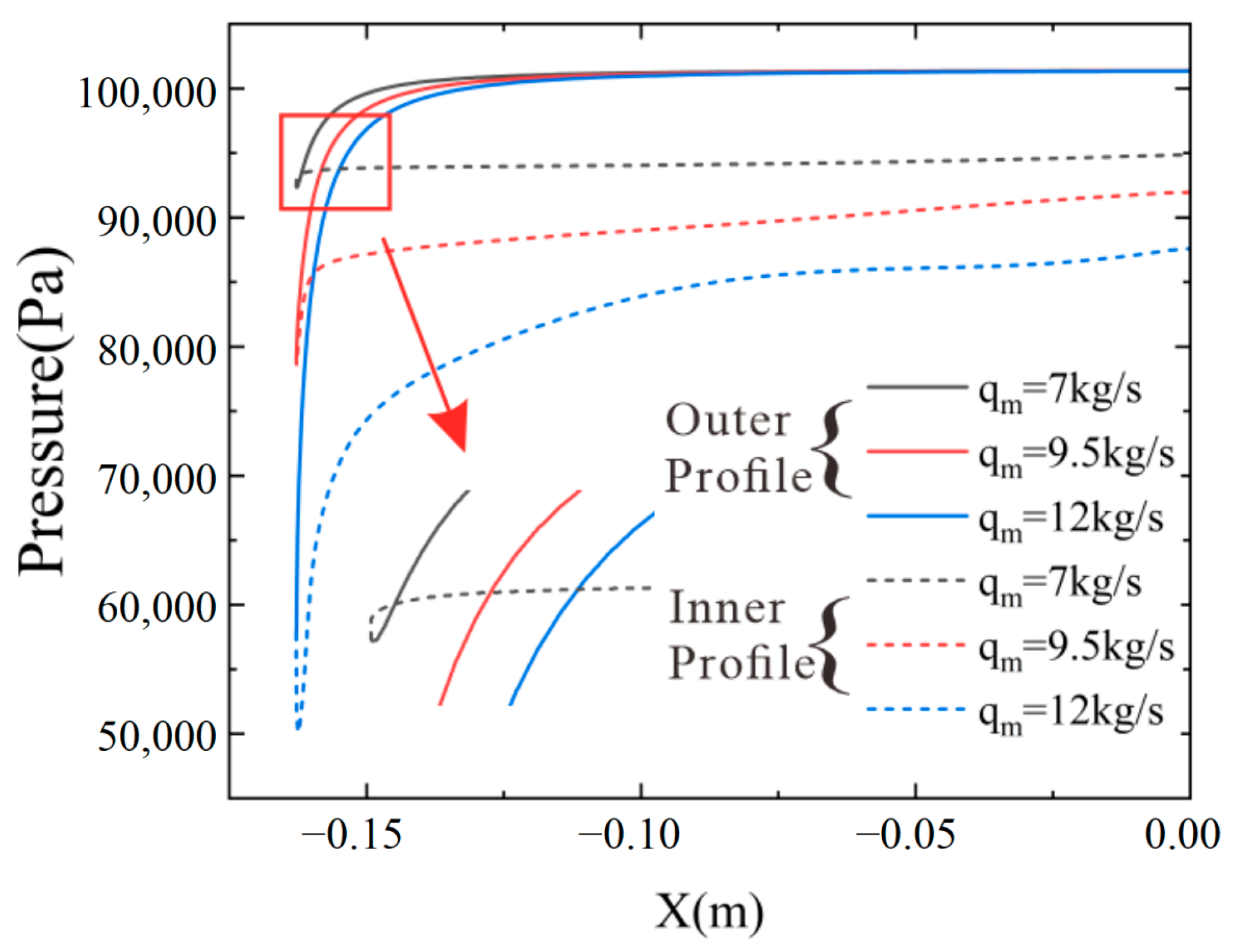
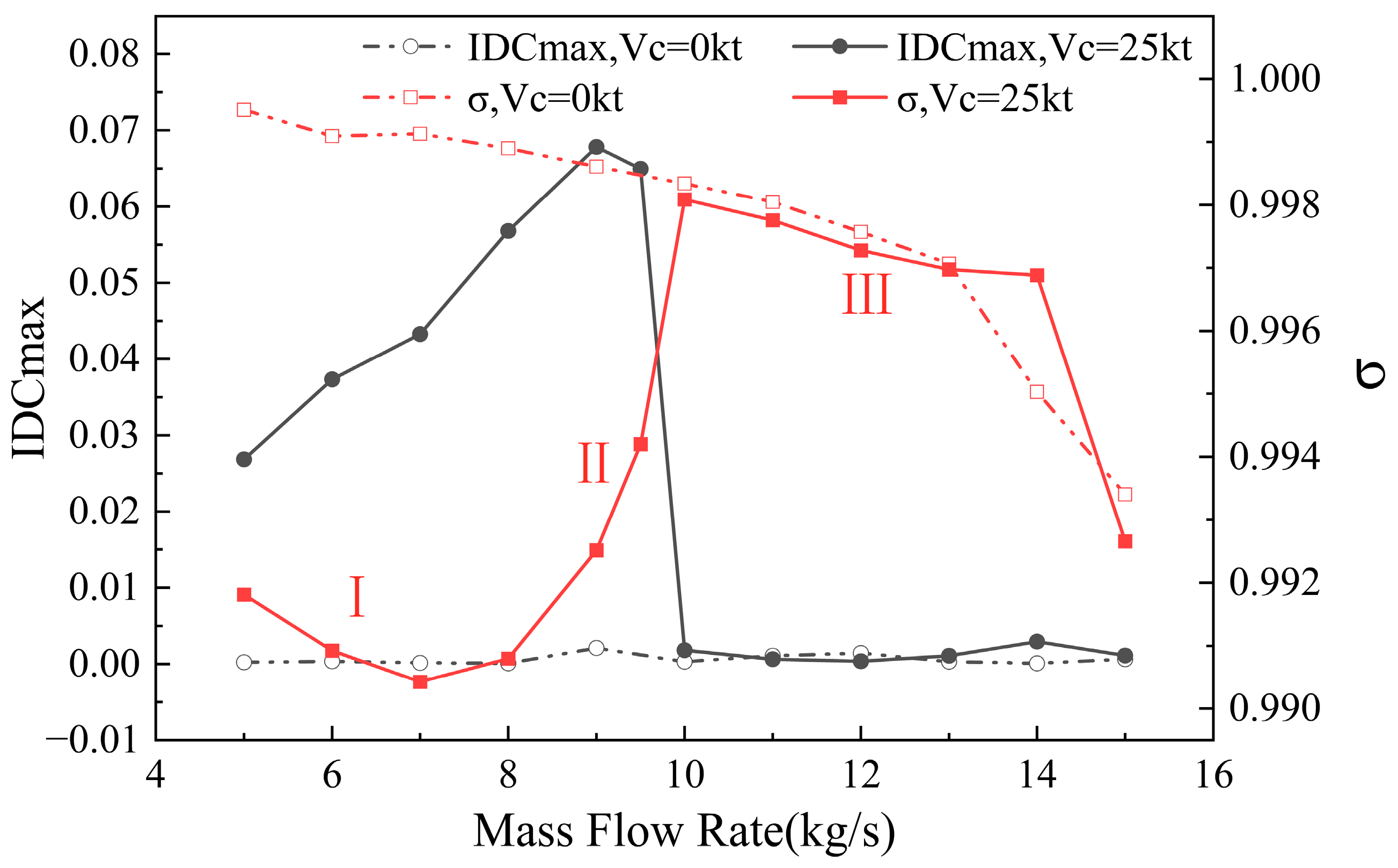
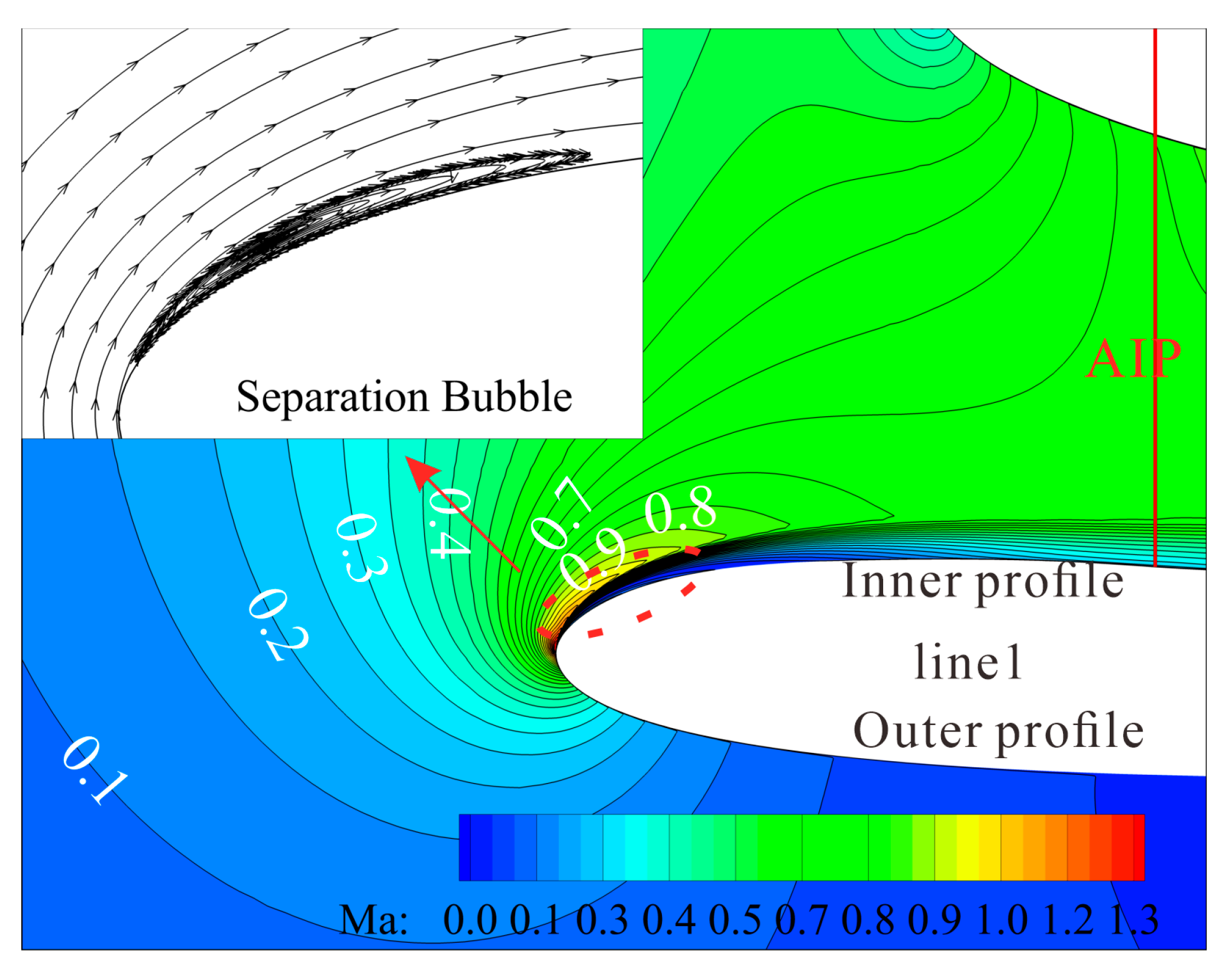
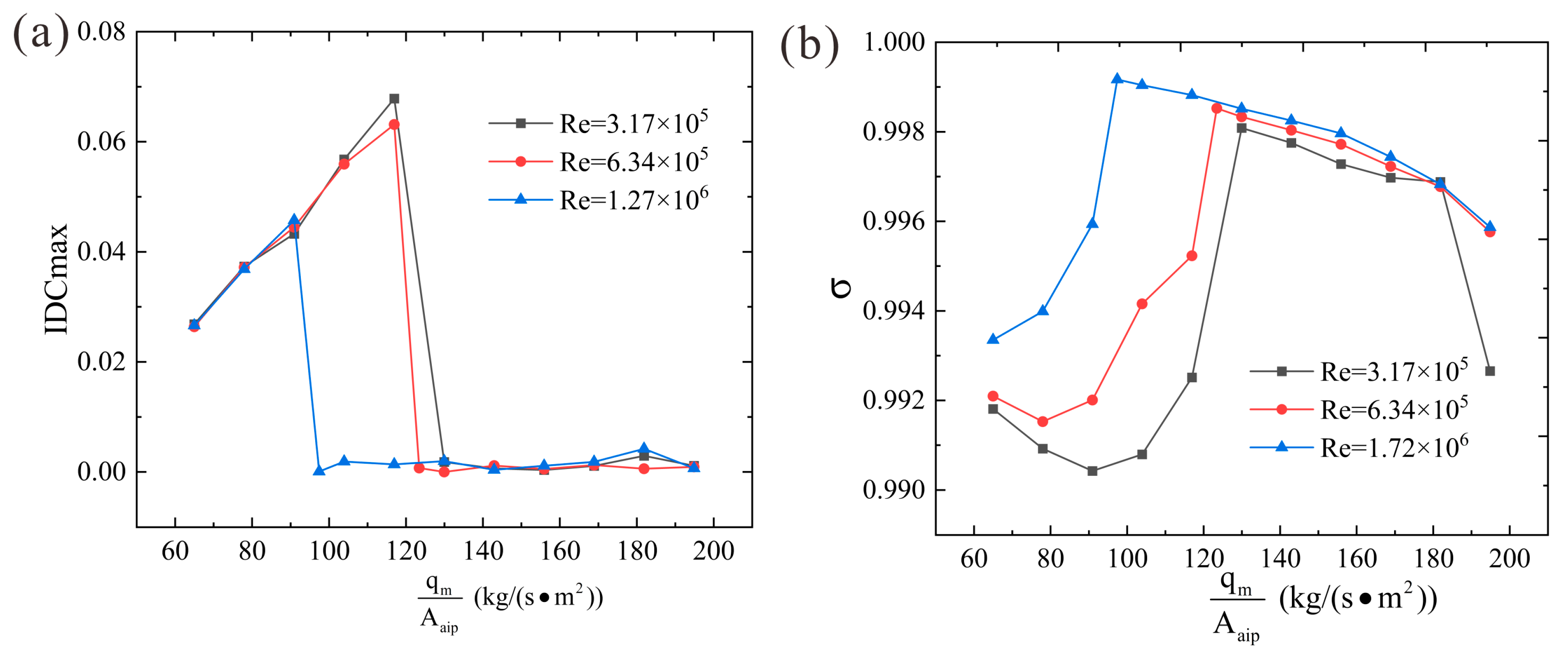
- Influence of mass flow rate. The coupling effect of engine suction and crosswind dictates the flow pattern. The total pressure distortion index (IDCmax) initially increases with mass flow rate due to the strengthening of the separation zone, then drops sharply after a critical mass flow rate is reached due to a complete flow reattachment. The total pressure recovery coefficient (σ) exhibits a more complex three-phase trend with increasing mass flow rates, influenced by the competing roles of separation intensity and separation zone area.
- 2.
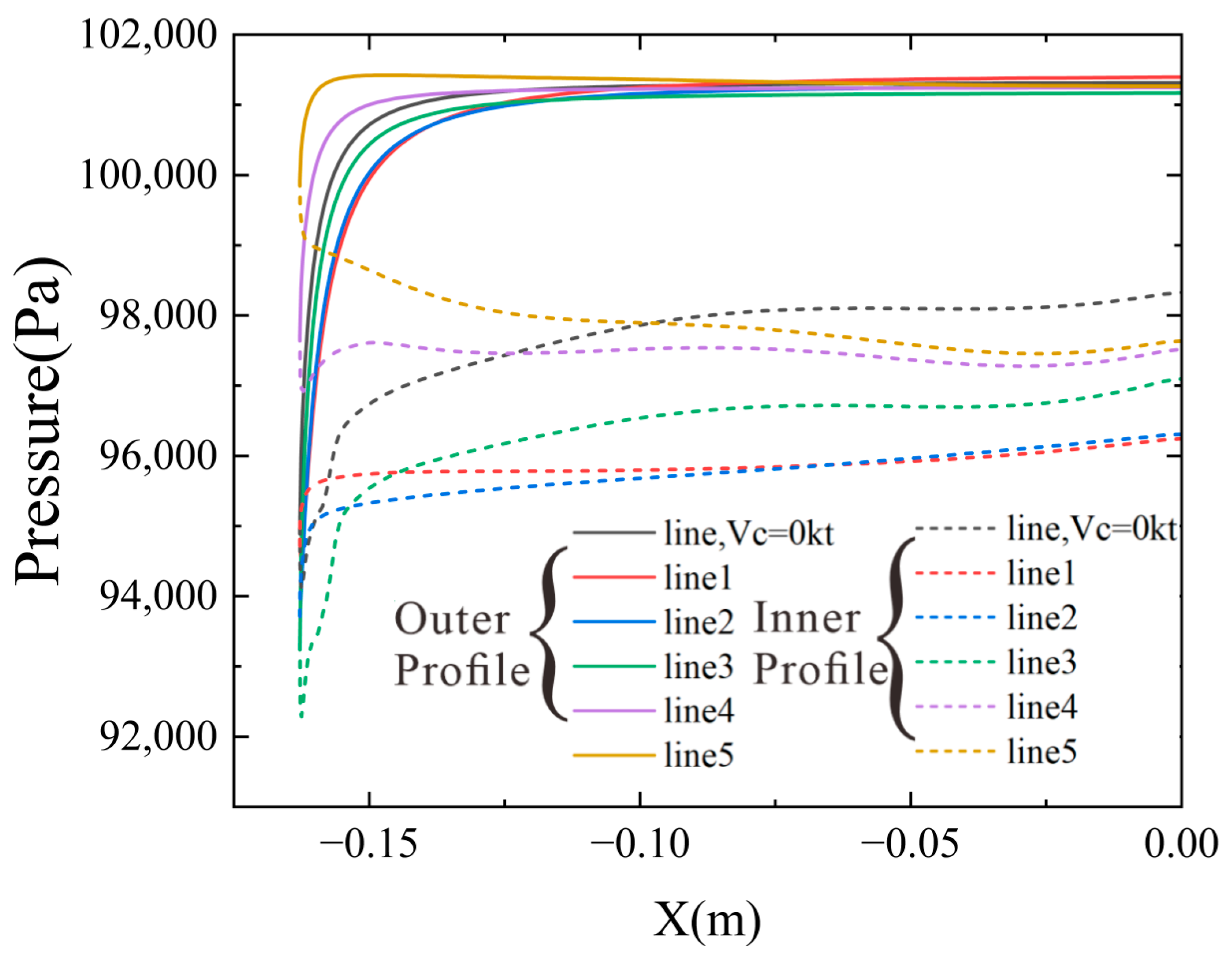
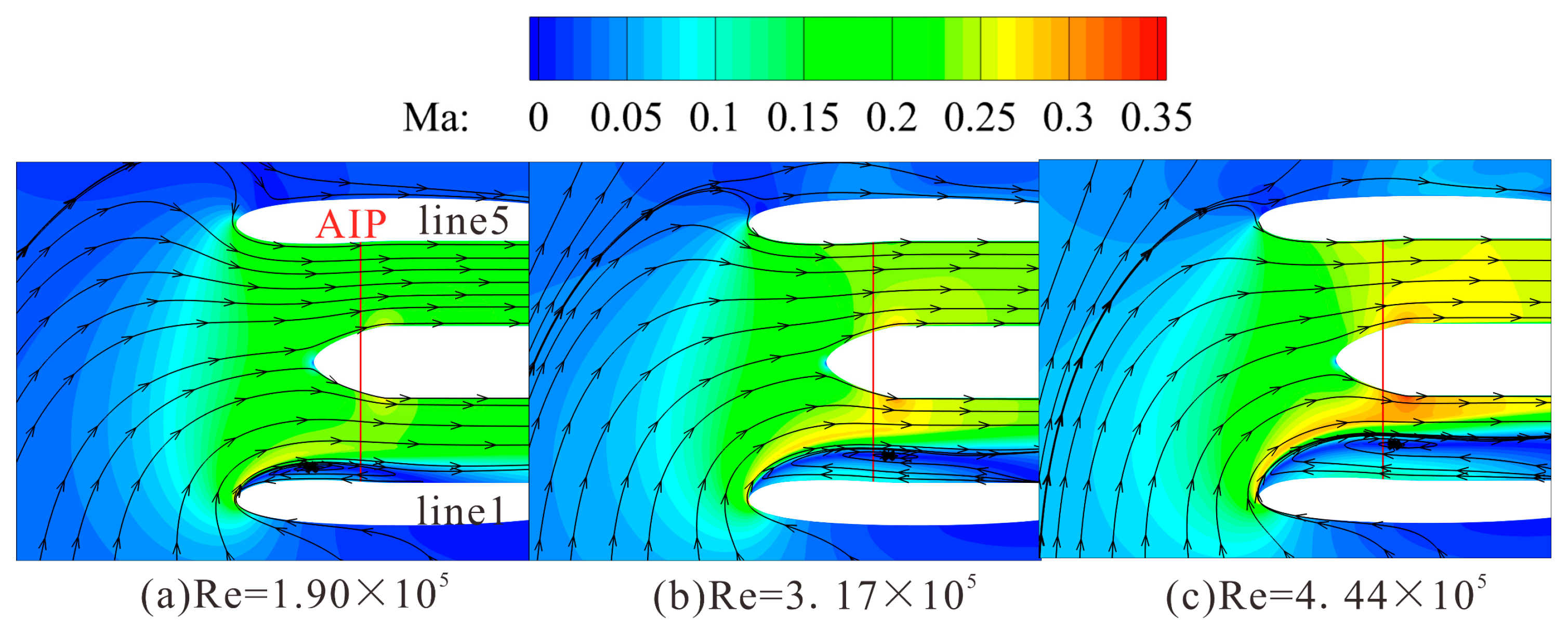
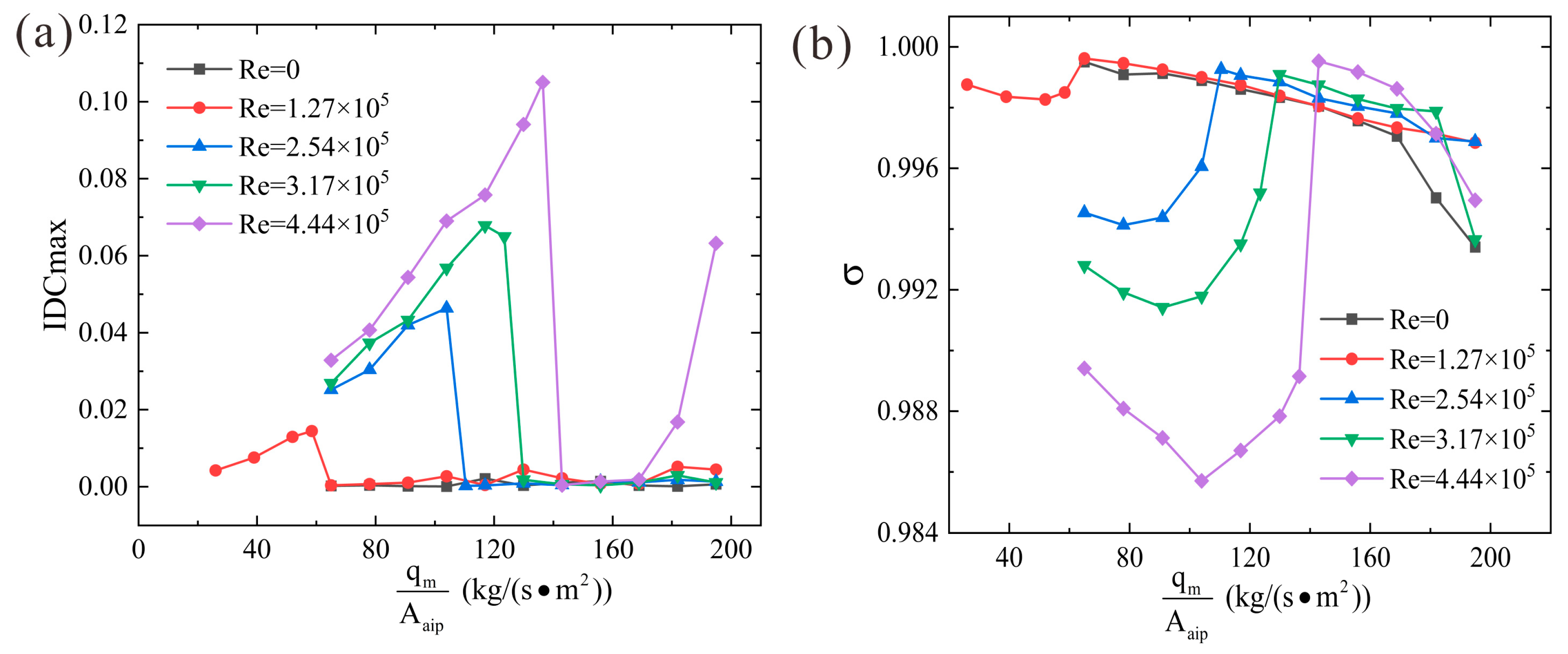
- Influence of Reynolds number Re. The effects of Re lie in two folds: (1) For a fixed model scale, both IDCmax and σ remain nearly unchanged when no separation is present in the flow field. However, as the crosswind velocity-based Re is increased to cause significant flow separations, the aerodynamic performance of the inlet suffers a remarkable degradation with rapidly rising IDCmax and decreasing σ. Meanwhile, the peak IDCmax 465 rises from 0.0145 to 0.1050, representing an increase of 624.14% with the reattachment mass flow rate delayed by 120%. (2) For a fixed crosswind velocity, the peak IDCmax progressively decreases with increasing Re. Specifically, as Re increases from to , the peak distortion is reduced by 32.6%. Furthermore, the reattachment is delayed by 33.32% in the mass flow rate density. Regarding the total pressure recovery coefficient, the entire performance curve exhibits an overall enhancement as Re rises.
- 3.
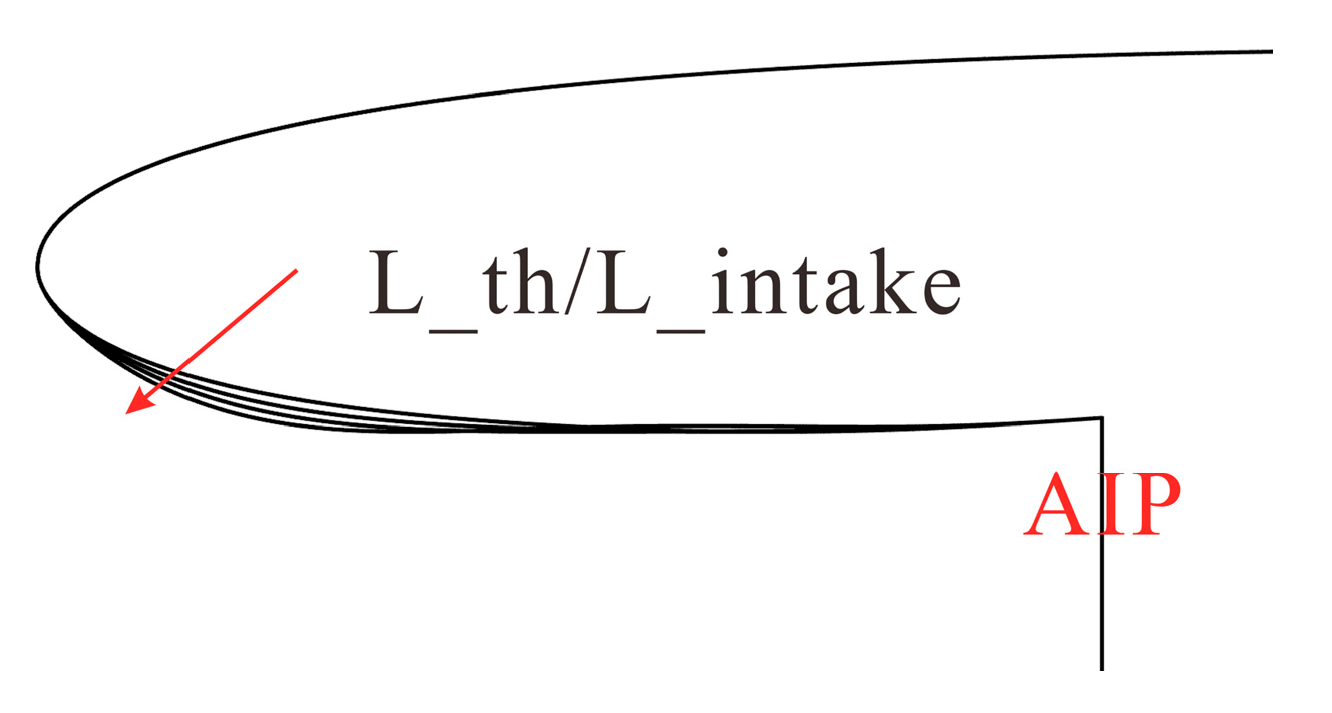
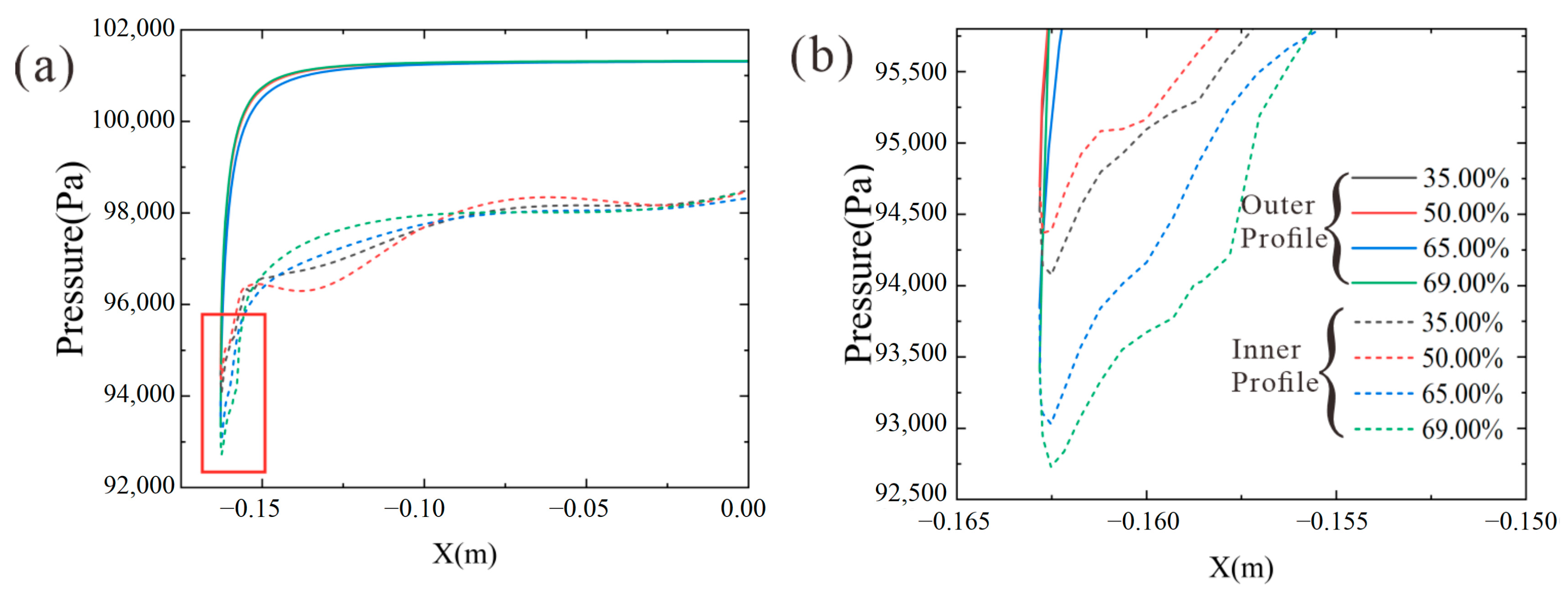
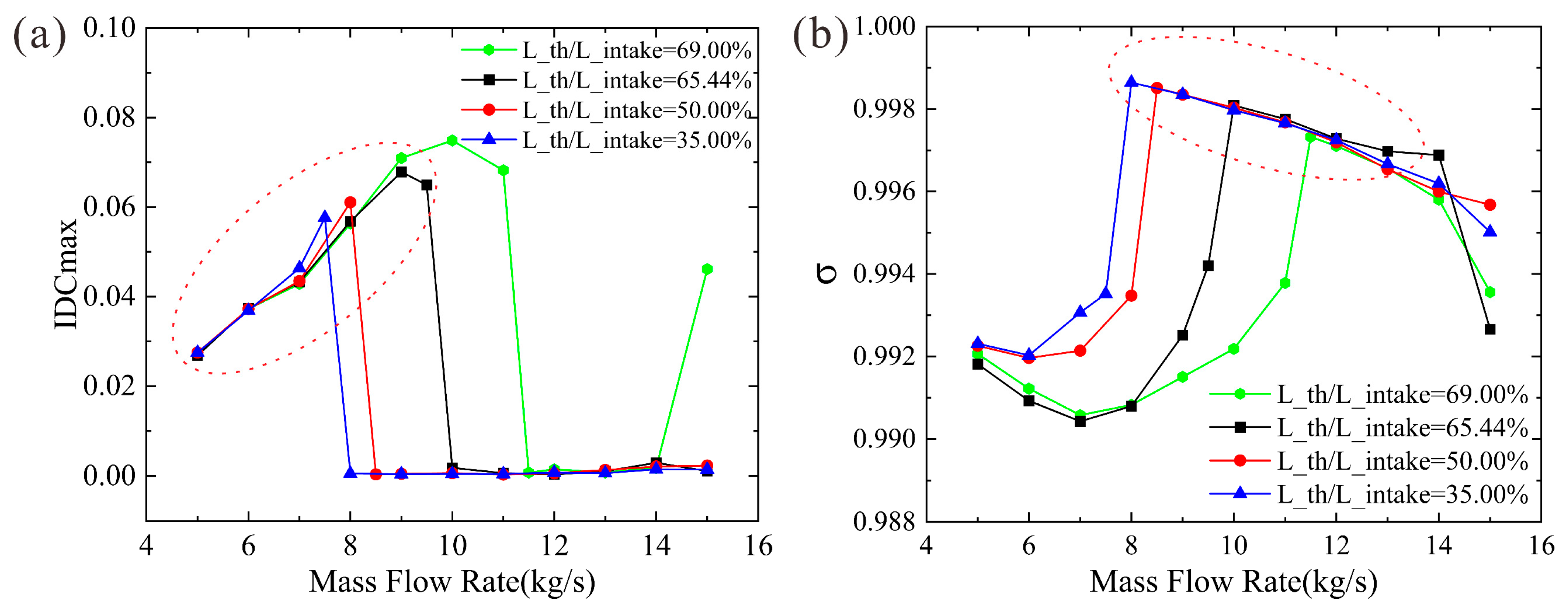
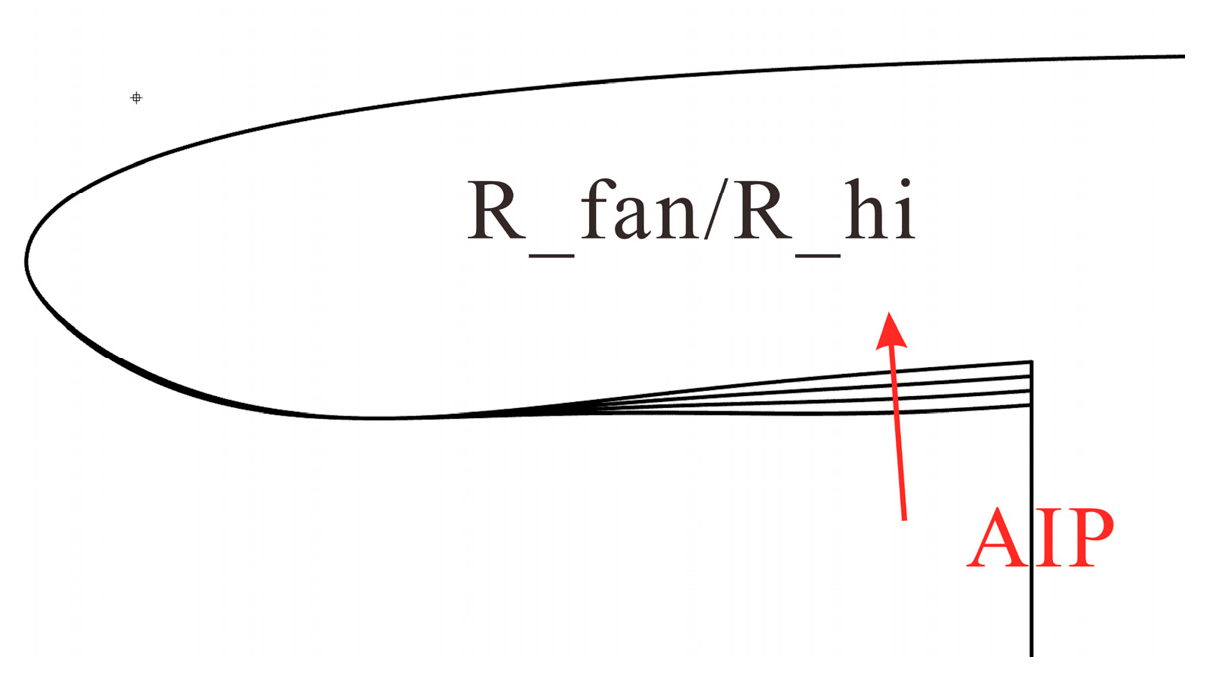
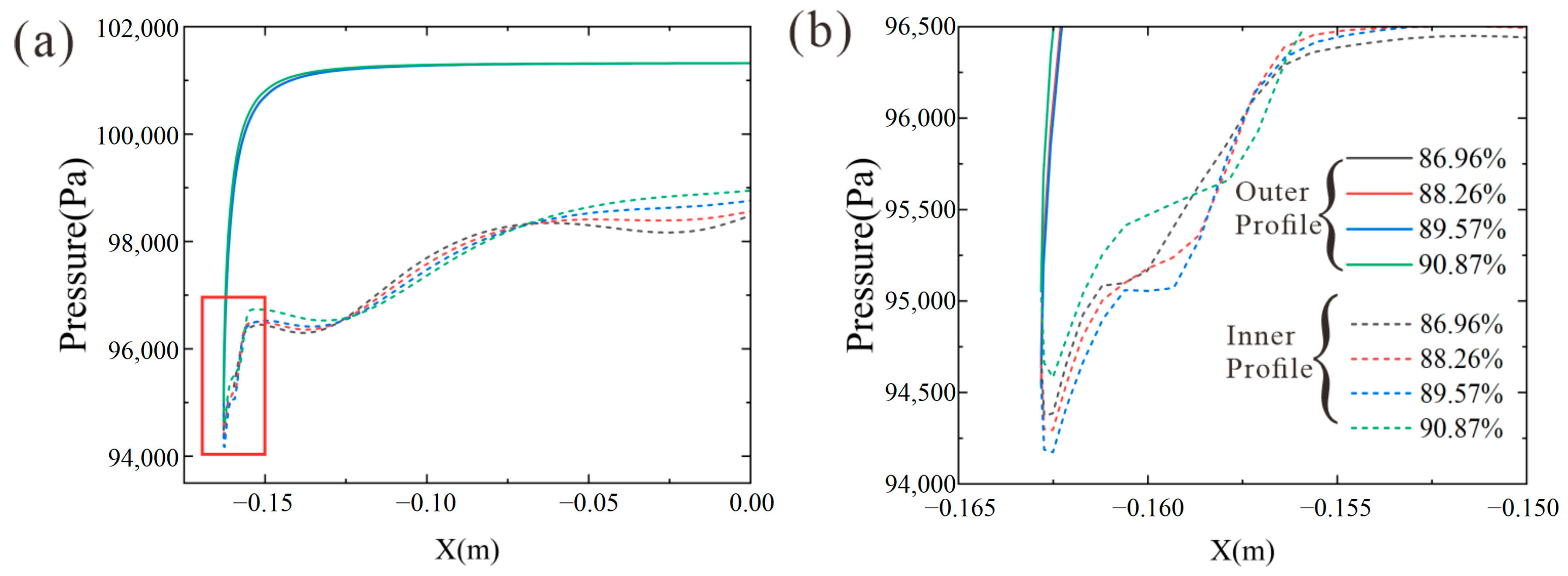
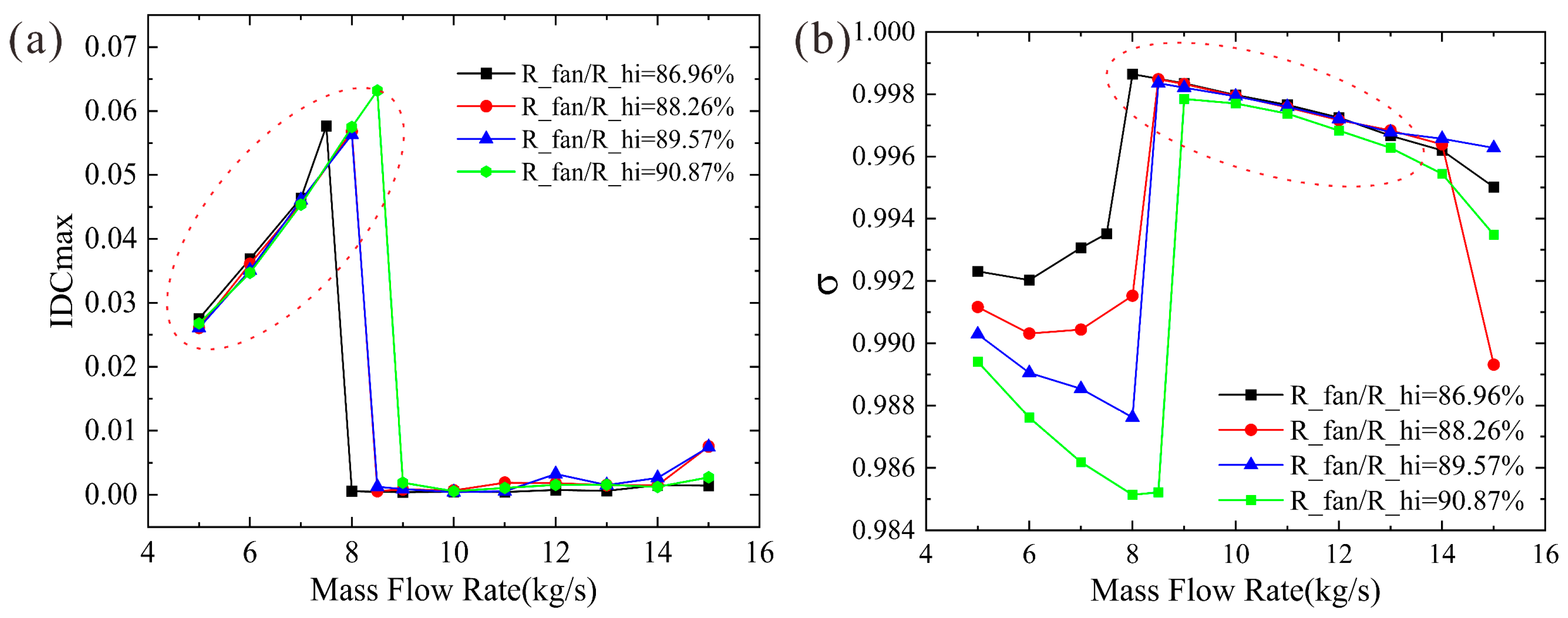
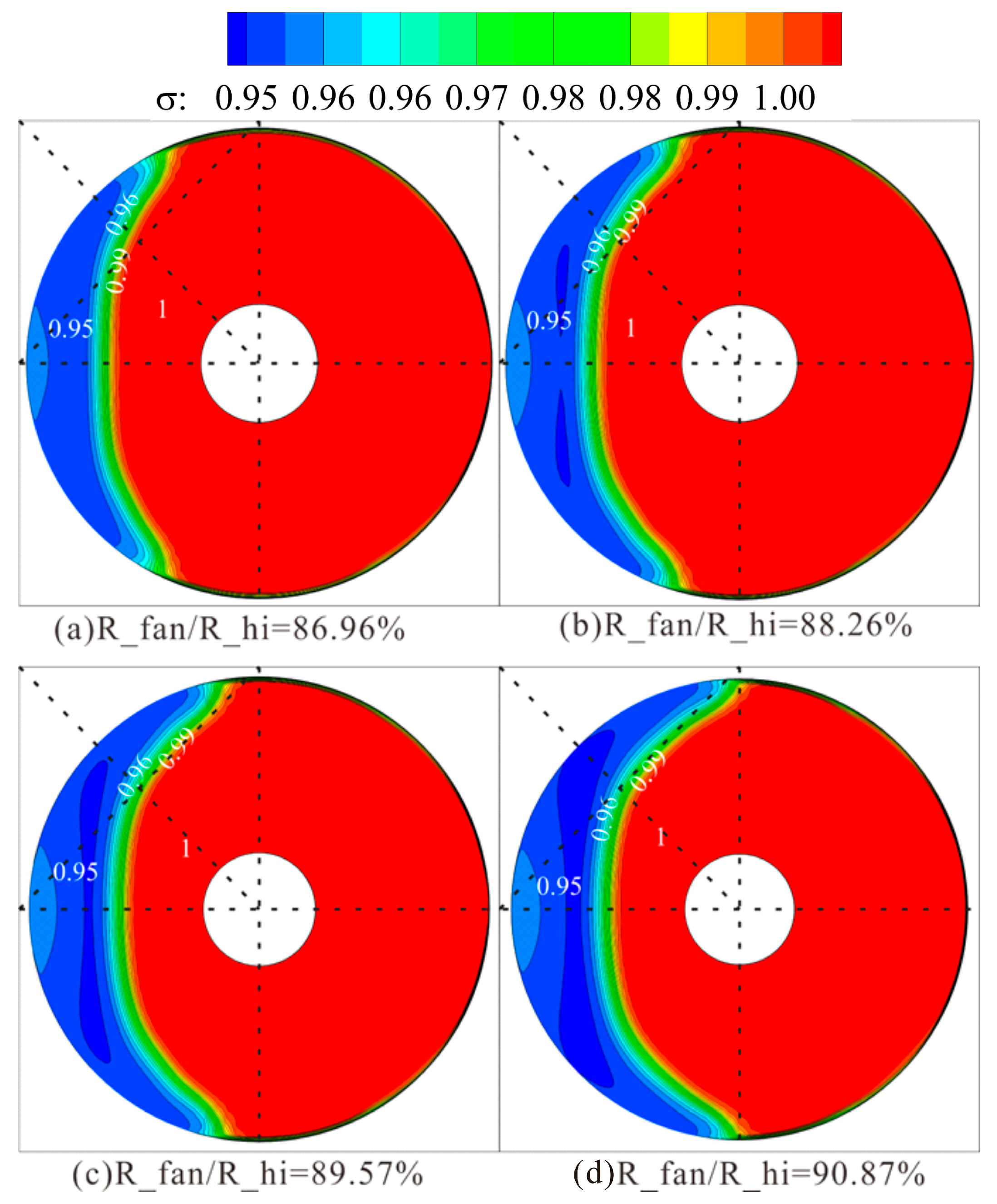
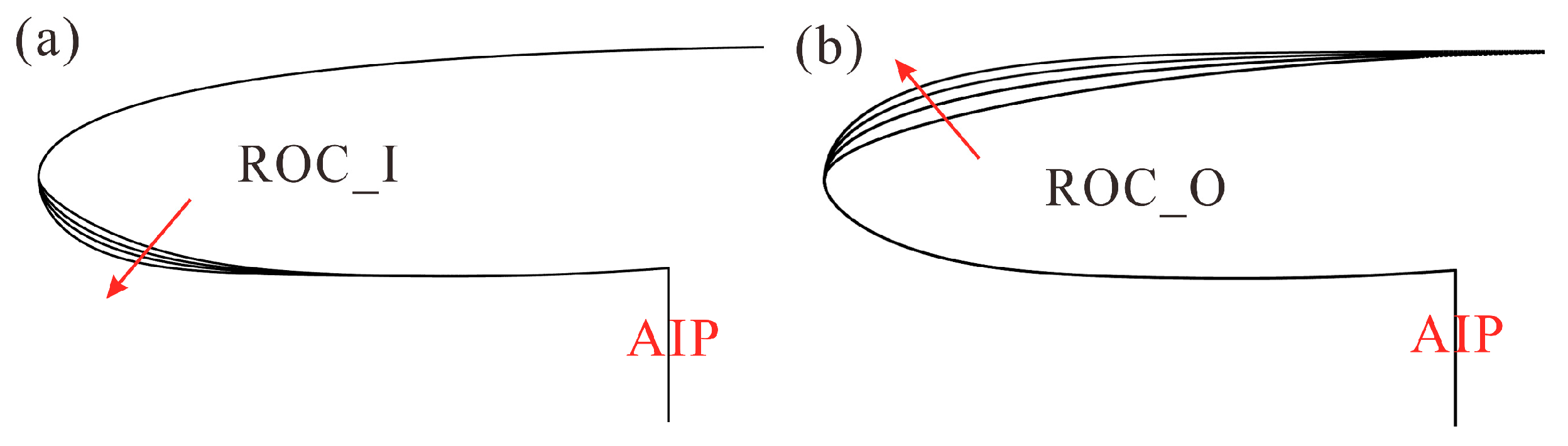
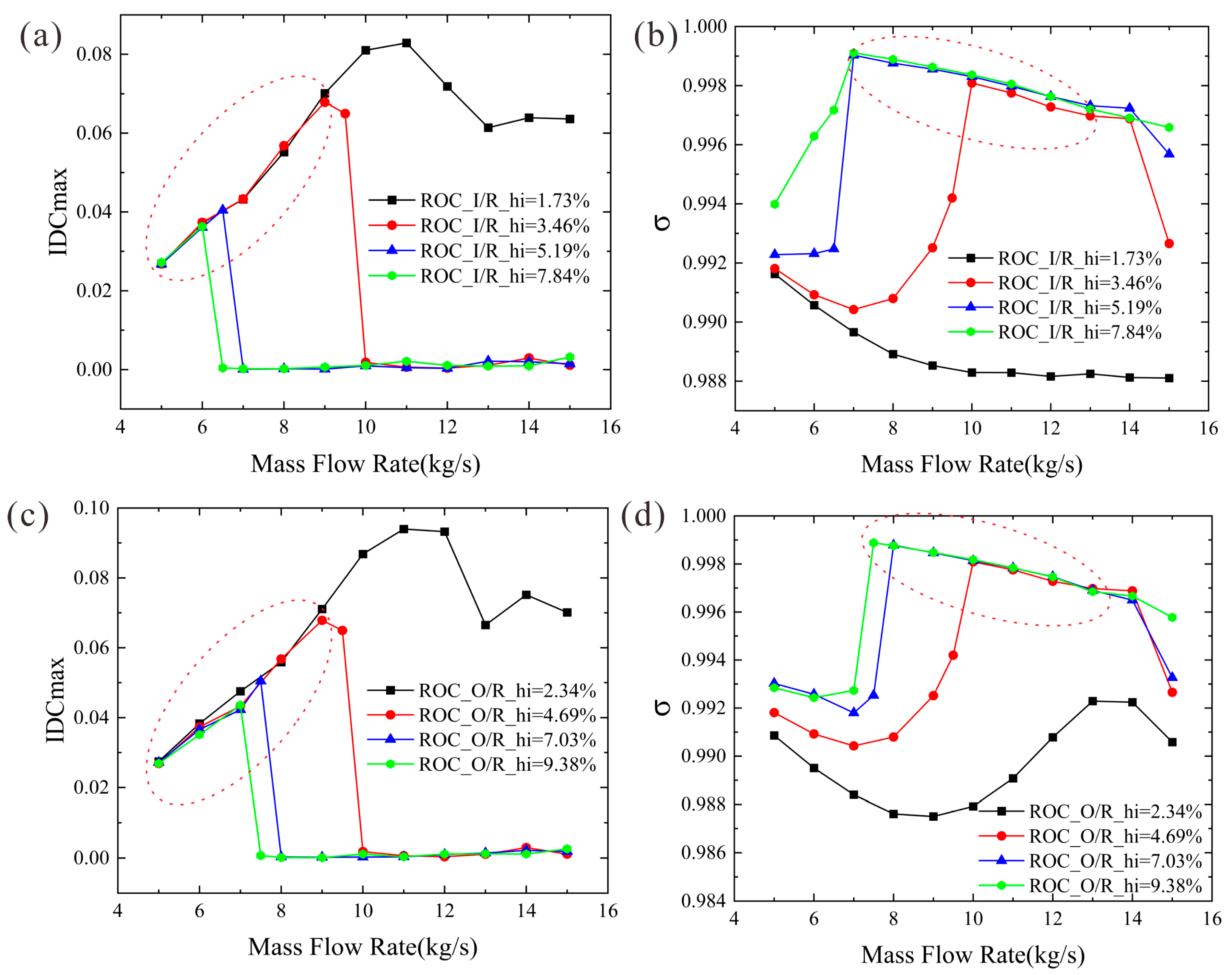
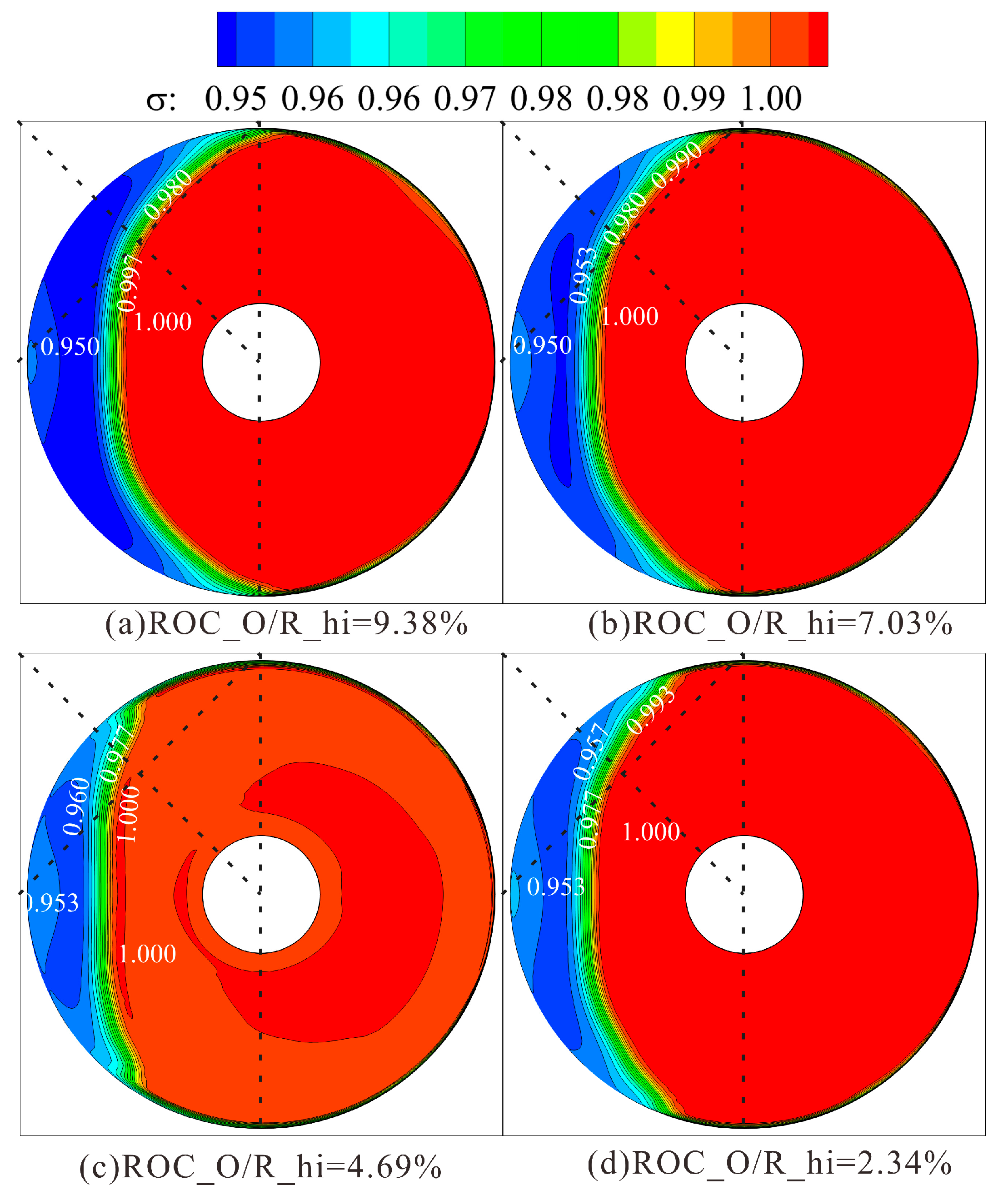
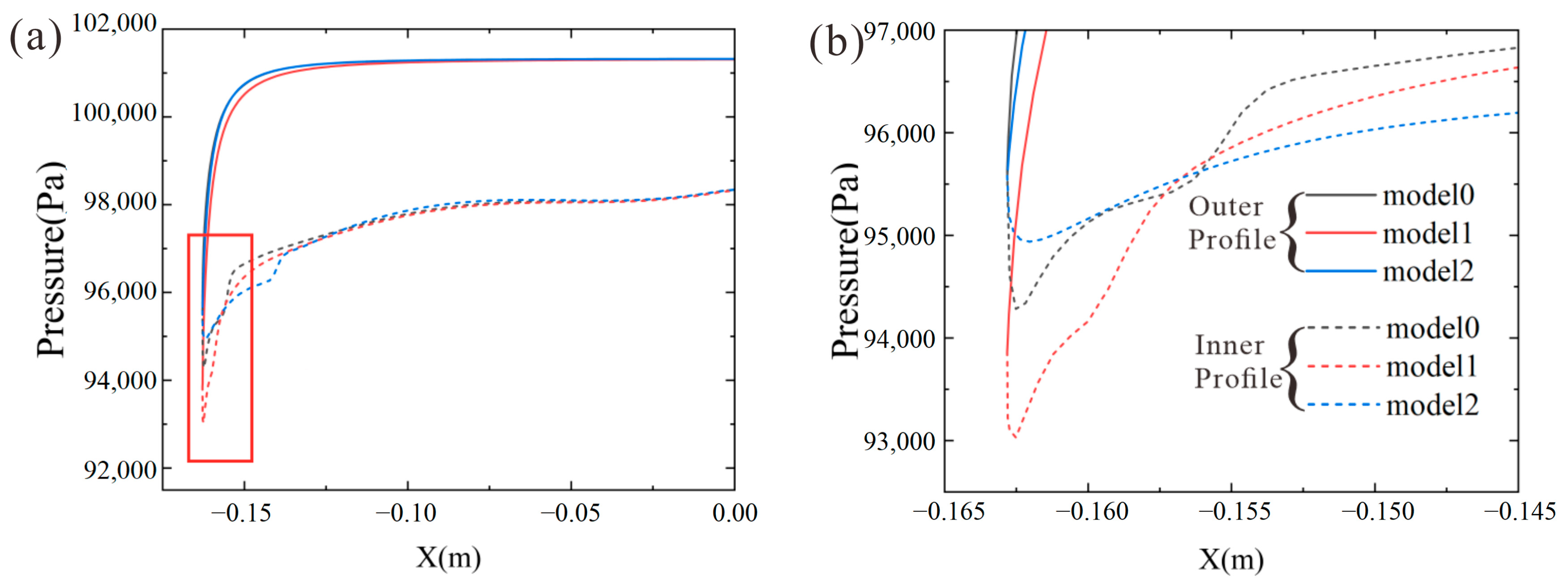
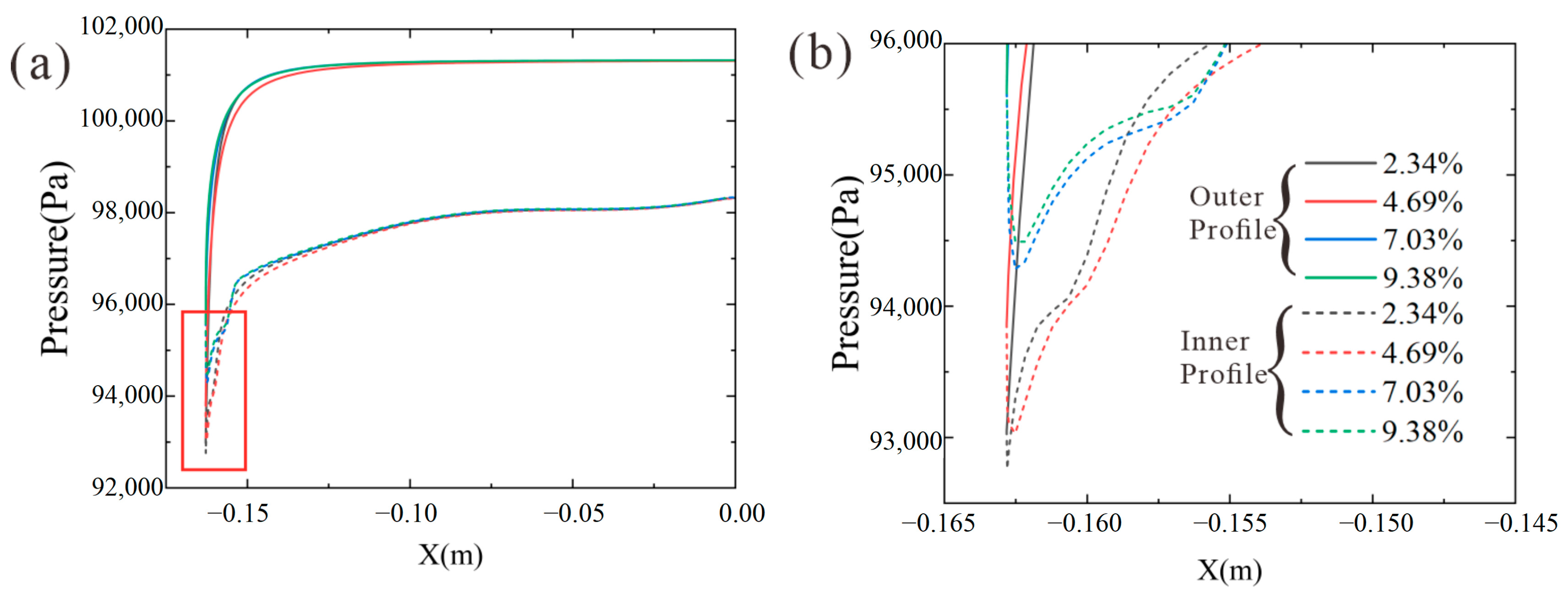
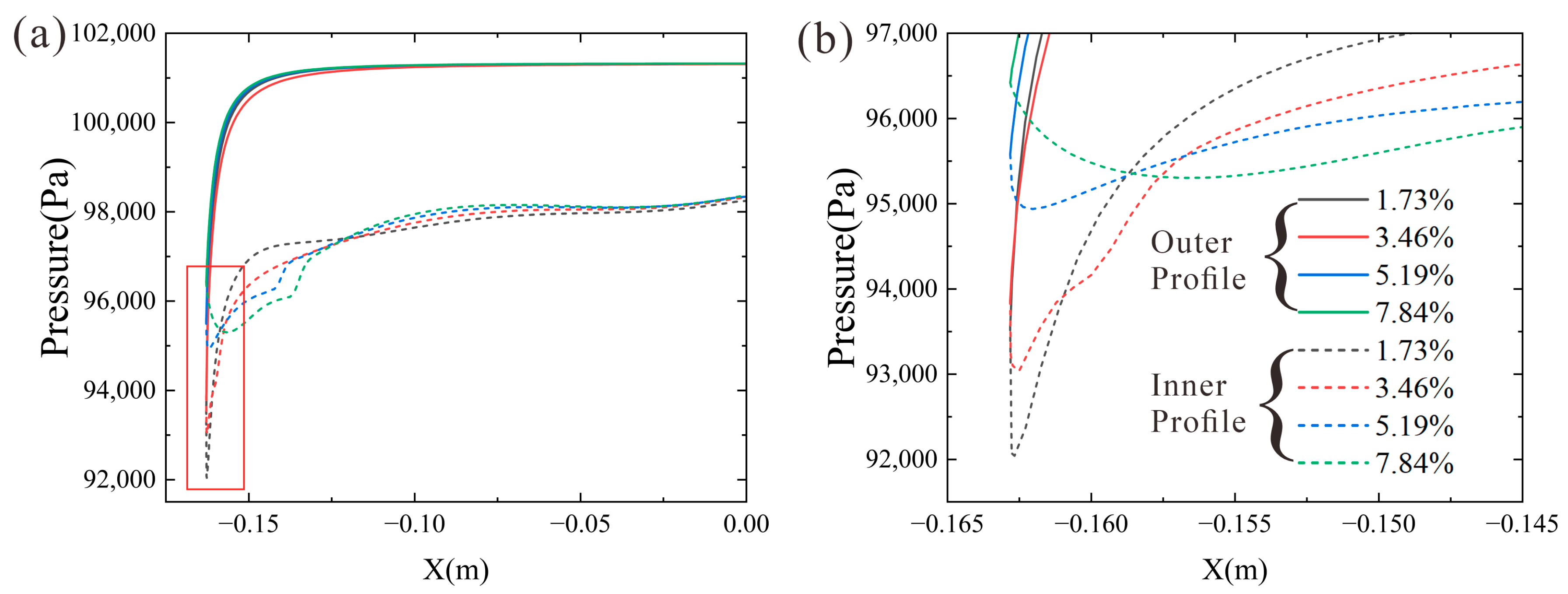
- Influence of geometric parameters. (1) Leading-edge radius is the most influential geometric parameter. Increasing the radii of both the inner and outer contours effectively reduces the peak distortion value and advances the mass flow rate required for the disappearance of separation by mitigating the adverse pressure gradient near the lip. Specifically, when ROC_O/R_hi decreases from 9.38% to 4.69%, the peak IDCmax increases by 55.50%, accompanied by a 33.33% rearward shift in the complete reattachment mass flow rate. In contrast, when ROC_I/R_hi decreases from 7.84% to 3.46%, the peak IDCmax demonstrates a more substantial increase of 86.78%, while the complete reattachment mass flow rate exhibits a pronounced rearward shift of 53.85%. An insufficient radius can lead to persistent separation at all the mass flow rates of interest. (2) Moving the throat axial location forward reduces the lip curvature and adverse pressure gradient, thereby lowering the peak distortion, advancing the critical mass flow rate for the disappearance of separation, and improving the pressure recovery coefficient across the majority of the operating range. When the throat axial location shifts from 35.00% to 69.00%, the peak IDCmax increases by 30.03%, and the complete reattachment mass flow rate exhibits a rearward shift of 43.75%. (3) The fan face radius primarily influences the flow in the diffuser section, with limited impact on the lip leading edge. Consequently, it exhibits a more pronounced effect on the total pressure recovery coefficient, while its influence on IDCmax remains relatively minor. When R_fan/R_hi increases from 86.96% to 90.87%, the peak IDCmax changes by only 9.72%, and the complete reattachment mass flow rate shifts rearward by 12.5%.
Author Contributions
Funding
Data Availability Statement
Acknowledgments
Conflicts of Interest
Nomenclature
| AIP | Aerodynamic interface plane |
| The area of the aerodynamic interface plane | |
| Matrix of coefficients | |
| Bernstein polynomial | |
| The maximum length of the profile | |
| Class function | |
| CST | Class-Shape transformation |
| Dhi | Highlight plane diameter |
| Index of summation | |
| iCST | Intuitive class shape transformation |
| IDCmax | Maximum circumferential distortion index |
| L_intake | The length of intake |
| L_m | The axial location of the maximum thickness of the nacelle |
| L_nac | The length of the nacelle |
| L_th | The axial location of the throat |
| Ma | Mach number |
| Super-elliptic exponent | |
| Bernstein polynomial order or super-elliptic exponent | |
| The number of probe rings | |
| First exponent in the class function | |
| Second exponent in the class function | |
| Total pressure | |
| The average total pressure | |
| The minimum total pressure within the **-th ring | |
| Re | Reynolds number |
| qm | Mass flow rate of the nacelle |
| ROC_I | The radius of curvature at the leading edge of the inner profile |
| ROC_O | The radius of curvature at the leading edge of the outer profile |
| R_fan | The radius of the fan face |
| R_hi | The Radius of the highlight plane |
| R_m | The radius of the nacelle at the maximum thickness location |
| R_te | The radius of the nacelle trailing edge |
| R_th | The radius throat |
| Shape function | |
| SIMPLEC | Semi-implicit method for pressure-linked equations |
| SST | Shear-stress transport |
| Vc | Velocity of crosswind |
| Axial coordinate | |
| Radial coordinates | |
| y+ | Wall non-dimensional distance |
| β_i | The boattail angle of the inner profile |
| β_o | The boattail angle of the outer profile |
| Dynamic viscosity | |
| Non-dimensional ordinate | |
| Freestream density | |
| σ | Mass flow averaged total pressure recovery coefficient |
| The converged variable from the fine mesh | |
| The converged variable from the coarse mesh | |
| Non-dimensional abscissa | |
| The radial offset from the trailing edge to the leading edge point |
Appendix A
Appendix A.1. Research Models and Test Conditions
Appendix A.2. Sensitivity Analysis of Pressure Outlet
Appendix A.3. Three-Dimensional Non-Axisymmetric Nacelle Modeling Approach
Appendix A.4. Detailed Figures and Charts



| qm (kg/s) | 346.94 | 416.33 | 485.72 | 555.11 | 624.50 | 693.89 |
| IDCmax (Experiment) | 0.0194 | 0.0241 | 0.0286 | 0.0442 | 0.0608 | 0.0783 |
| IDCmax (Simulation) | 0.0331 | 0.0396 | 0.0516 | 0.0633 | 0.0688 | 0.0904 |
| qm (kg/s) | 805.91 | 832.67 | 971.44 | 1040.83 | 1110.22 | 1179.61 |
| IDCmax (Experiment) | 0.0965 | 0.0585 | 0.0009 | 0.0263 | 0.0773 | 0.1442 |
| IDCmax (Simulation) | 0.1005 | 0.0031 | 0.0042 | 0.0104 | 0.1278 | 0.2124 |
| L_th/L_intake | R_fan/R_hi | ROC_O/R_hi | ROC_I/R_hi |
|---|---|---|---|
| 35.00% | 86.96% | 2.34% | 1.73% |
| 50.00% | 88.26% | 4.69% | 3.46% |
| 65.44% | 89.57% | 7.03% | 5.19% |
| 69.00% | 90.87% | 9.38% | 7.84% |
| Pressure | IDCmax | Relative Error | Mass Flow Rate (kg/s) | Relative Error |
|---|---|---|---|---|
| 90250 | 0.026899 | 0.19% | 5.0007216 | 0.01% |
| 95000 | 0.026847 | 5.0000455 | ||
| 99750 | 0.026811 | 0.13% | 4.9996582 | 0.01% |
References
- Federal Aviation Administration. Part 25: Airworthiness Standards: Transport Category Airplanes. In Federal Aviation Regulations; Federal Aviation Administration: Washington, DC, USA, 2002; p. 7. [Google Scholar]
- CCAR25-R4; Civil Aviation Regulations of China Part 25 Airworthiness Standards for Aircraft. Civil Aviation Administration of China: Beijing, China, 2011.
- Lecordix, J.L.; Mullender, A.; Lecossais, E.; Godard, J.L.; Hepperle, M. Hybrid laminar flow nacelle design. In Proceedings of the 20th Congress of the International Council of the Aeronautical Sciences (ICAS), Sorrento, Italy, 8–13 September 1996. [Google Scholar]
- Quémard, C.; Garçon, F.; Raynal, J.C. High Reynolds number air intake tests in the ONERA F1 and S1MA wind tunnels. In Workshop on Airframe Engine Integration at DLR; DLR: Brunswick, Germany, 1996. [Google Scholar]
- Colin, Y.; Aupoix, B.; Boussuge, J.F.; Chanez, P. Numerical simulation of the distortion generated by crosswind inlet flows. In International Symposium on Air Breathing Engines–2007; 2007. [Google Scholar]
- Colin, Y.; Aupoix, B.; Boussuge, J.F.; Chanez, P. Prediction of crosswind inlet flows: Some numerical and modelling challenges. In Proceedings of the 18th ISABE Conference, Beijing, China, 2–7 September 2007; pp. 1–13. [Google Scholar]
- Colin, Y.; Aupoix, B.; Boussuge, J.F.; Chanez, P. Numerical simulation and analysis of crosswind inlet flows at low Mach numbers. In Proceedings of the 8th International Symposium on Experimental and Computational Aerothermodynamics of Internal Flows Lyon, Lyon, France, 2–5 July 2007. [Google Scholar]
- Zhang, M. Numerical investigation of nacelle intake flow distortion at crosswind conditions. In Proceedings of the 32nd Congress of the International Council of the Aeronautical Sciences, ICAS, Shanghai, China, 6–10 September 2021; pp. 1–11. [Google Scholar]
- Nichols, D.A.; Vukasinovic, B.; Glezer, A.; DeFore, M.C.; Rafferty, B. Steady and Unsteady Control of Nacelle Inlet Flow in Crosswind. In AIAA Scitech 2021 Forum; American Institute of Aeronautics and Astronautics: Reston, VA, USA, 2021; p. 1556. [Google Scholar]
- Tourrette, L. Navier-Stokes simulations of air-intakes in crosswind using local preconditioning. In Proceedings of the 32nd AIAA Fluid Dynamics Conference and Exhibit, St. Louis, MO, USA, 24–26 June 2002; p. 2739. [Google Scholar]
- Kokubo, R.; Fujimura, S.; Yamamoto, M.; Yoshinori, O. Numerical study of inlet distortion under crosswind conditions using OpenFOAM. In AIAA Aviation Forum and Ascend 2024; American Institute of Aeronautics and Astronautics: Reston, VA, USA, 2024; p. 3920. [Google Scholar]
- Shams Taleghani, A.; Ghajar, A. Aerodynamic characteristics of a delta wing aircraft under ground effect. Front. Mech. Eng. 2024, 10, 1355711. [Google Scholar] [CrossRef]
- Shams Taleghani, A.; Ghajar, A.; Masdari, M. Experimental study of ground effect on horizontal tail effectiveness of a conceptual advanced jet trainer. J. Aerosp. Eng. 2020, 33, 05020001. [Google Scholar] [CrossRef]
- Nichols, D.A.; Vukasinovic, B.; Glezer, A.; Rafferty, B. Formation of a Nacelle Inlet Ground Vortex in Crosswind. In AIAA SCITECH 2022 Forum; American Institute of Aeronautics and Astronautics: Reston, VA, USA, 2022; p. 1698. [Google Scholar]
- Trapp, L.G.; Girardi, R. Evaluation of engine inlet vortices using CFD. In Proceedings of the 50th AIAA Aerospace Sciences Meeting Including the New Horizons Forum and Aerospace Exposition, Nashville, TN, USA, 9–12 January 2012; p. 1200. [Google Scholar]
- Abdolahipour, S. Effects of low and high frequency actuation on aerodynamic performance of a supercritical airfoil. Front. Mech. Eng. 2023, 9, 1290074. [Google Scholar] [CrossRef]
- Abdolahipour, S. Review on flow separation control: Effects of excitation frequency and momentum coefficient. Front. Mech. Eng. 2024, 10, 1380675. [Google Scholar] [CrossRef]
- Zhang, J.; Zhan, H.; Mi, B. Study on Aerodynamic Design of the Front Auxiliary Inlet. Aerospace 2023, 10, 700. [Google Scholar] [CrossRef]
- Zhao, X.; Van Hoorn, P.; Yao, H.-D.; Alderman, J. Parameter sensitivity study on inflow distortion of boundary layer ingested turbofans. Aerospace 2022, 9, 426. [Google Scholar] [CrossRef]
- Burley, R. Effect of lip and centerbody geometry on aerodynamic performance of inlets for tilting-nacelle VTOL aircraft. In Proceedings of the 17th Aerospace Sciences Meeting, New Orleans, LA, USA, 15–17 January 1979; p. 381. [Google Scholar]
- Younghans, J.; Hoelmer, W.; Stockman, N. Low speed effects of Reynolds number and lip geometry on high bypass ratio inlet performance. In Proceedings of the 20th Aerospace Sciences Meeting, Orlando, FL, USA, 11–14 January 1982; p. 59. [Google Scholar]
- Min, Q.I.; Zhan-xue, W.A.N.G.; Li, Z.H.O.U.; Wen-jian, D.E.N.G. Numerical Study on Effects of Lip Geometric Parameters on Performance of Nacelle Inlet. J. Propuls. Technol. 2020, 41, 2021–2030. [Google Scholar]
- Wei, Y.B.; Duan, Z.Y.; Guo, Z.D.; Yang, C.F. Parameterization investigation method for nacelle aerodynamic performance. Acta Aeronaut. Astronaut. Sin. 2022, 43, 526742. (In Chinese) [Google Scholar]
- Kulfan, B.M. Universal parametric geometry representation method. J. Aircr. 2008, 45, 142–158. [Google Scholar] [CrossRef]
- Zhu, F.; Qin, N. Intuitive class/shape function parameterization for airfoils. AIAA J. 2014, 52, 17–25. [Google Scholar] [CrossRef]
- Christie, R.; Heidebrecht, A.; MacManus, D. An automated approach to nacelle parameterization using intuitive class shape transformation curves. J. Eng. Gas Turbines Power 2017, 139, 062601. [Google Scholar] [CrossRef]
- Tejero, F.; Christie, R.; MacManus, D.; Sheaf, C. Non-axisymmetric aero-engine nacelle design by surrogate-based methods. Aerosp. Sci. Technol. 2021, 117, 106890. [Google Scholar] [CrossRef]
- Fluent, A. Ansys Fluent Users Guide; Ansys Inc.: Canonsburg, PA, USA, 2023. [Google Scholar]
- Du, P.; Agarwal, R.K. Drag Prediction of NASA Common Research Models Using Different Turbulence Models. In Proceedings of the 35th AIAA Applied Aerodynamics Conference, Denver, CO, USA, 8 June 2017; p. 4233. [Google Scholar]
- Togiti, V.; Eisfeld, B.; Brodersen, O. Turbulence model study for the flow around the NASA common research model. J. Aircr. 2014, 51, 1331–1343. [Google Scholar] [CrossRef]
- AIAA CFD Drag Prediction Workshop. Available online: https://aiaa-dpw.larc.nasa.gov/Workshop2/ (accessed on 15 December 2024).
- Sun, Y.; Li, R.F.; Xiong, Y.D.; Zhou, L.; Wang, L. Research on Influencing Factors of Computational Mesh and Turbulence Model on DLR-F6 Configuration. Aero Weapon. 2017, 5, 60–67. (In Chinese) [Google Scholar]
- Li, C.; Tang, S.; Li, Y.; Geng, Z. A modified RANS model for drag prediction of practical configuration with riblets and experimental validation. Aerospace 2022, 9, 125. [Google Scholar] [CrossRef]
- Huang, C.L.; Dai, R.; Wang, Z.L. Effects of upstream vortex generators on the intake duct performance for a waterjet propulsion system. Ocean. Eng. 2021, 239, 109838. [Google Scholar] [CrossRef]
- Cao, Y.; Qin, Y.; Wang, M. Numerical study on interference effects of the nacelle position on aerodynamic characteristics and nacelle intake performances. Proc. Inst. Mech. Eng. Part G J. Aerosp. Eng. 2024, 238, 117–134. [Google Scholar] [CrossRef]
- Nambiar, V.R.; Pachidis, V. Nacelle intake flow separation reduction at cruise condition using active flow control. Propuls. Power Res. 2022, 11, 337–352. [Google Scholar] [CrossRef]
- SAE APR1420B; Gas Turbine Engine Inlet Flow Distortion Guidelines. SAE International: Warrendale, PA, USA, 2011.
- Meana-Fernández, A.; Oro, J.M.F.; Díaz, K.M.A.; Galdo-Vega, M.; Velarde-Suárez, S. Application of Richardson extrapolation method to the CFD simulation of vertical-axis wind turbines and analysis of the flow field. Eng. Appl. Comput. Fluid Mech. 2019, 13, 359–376. [Google Scholar] [CrossRef]


| Parameters (Outer Profile) | Value (Outer Profile) | Parameters (Inner Profile) | Value (Inner Profile) |
|---|---|---|---|
| R_hi/mm | 180.00 | R_hi/mm | 180.00 |
| L_nac/mm | 647.70 | L_intake/mm | 162.82 |
| ROC_O/mm | 86.09 | ROC_I/mm | 63.49 |
| R_m/mm | 213.79 | R_th/mm | 154.41 |
| L_m/mm | 219.66 | L_th/mm | 106.55 |
| R_te/mm | 159.48 | R_fan/mm | 156.53 |
| β_o/(°) | 13.27 | β_i/(°) | 4.02 |
| Setup | ||
|---|---|---|
| Steady State, Ideal Gas | ||
| Viscosity | Sutherland | |
| Turbulence Model | SST ) | Curvature Correction (model constant = 1) |
| Production Kato-Launder | ||
| Production Limiter | ||
| Transition Model (gamma-transport-eqn) | ||
| Boundary Conditions | Velocity-inlet | Pressure: 101,325 Pa Velocity: 0–35 kt |
| Pressure-outlet | Pressure: 101,325 Pa | |
| Wind tunnel walls | Slip wall | |
| Nacelle | No Slip adiabatic wall | |
| Pressure out with a specified target mass flow rate | Gauge Pressure: 95,000 Pa Target Mass Flow Rate: 5–15 kg | |
| Solution Methods | Pressure-Velocity Coupling | Scheme: SIMPLC |
| Spatial Discretization | Gradient: LSCB Pressure: Second Order Energy: Second Order Upwind | |
| Mesh | Number of Elements | ~858 million |
| First layer height | 0.002 mm | |
| Growth rate | 1.1 | |
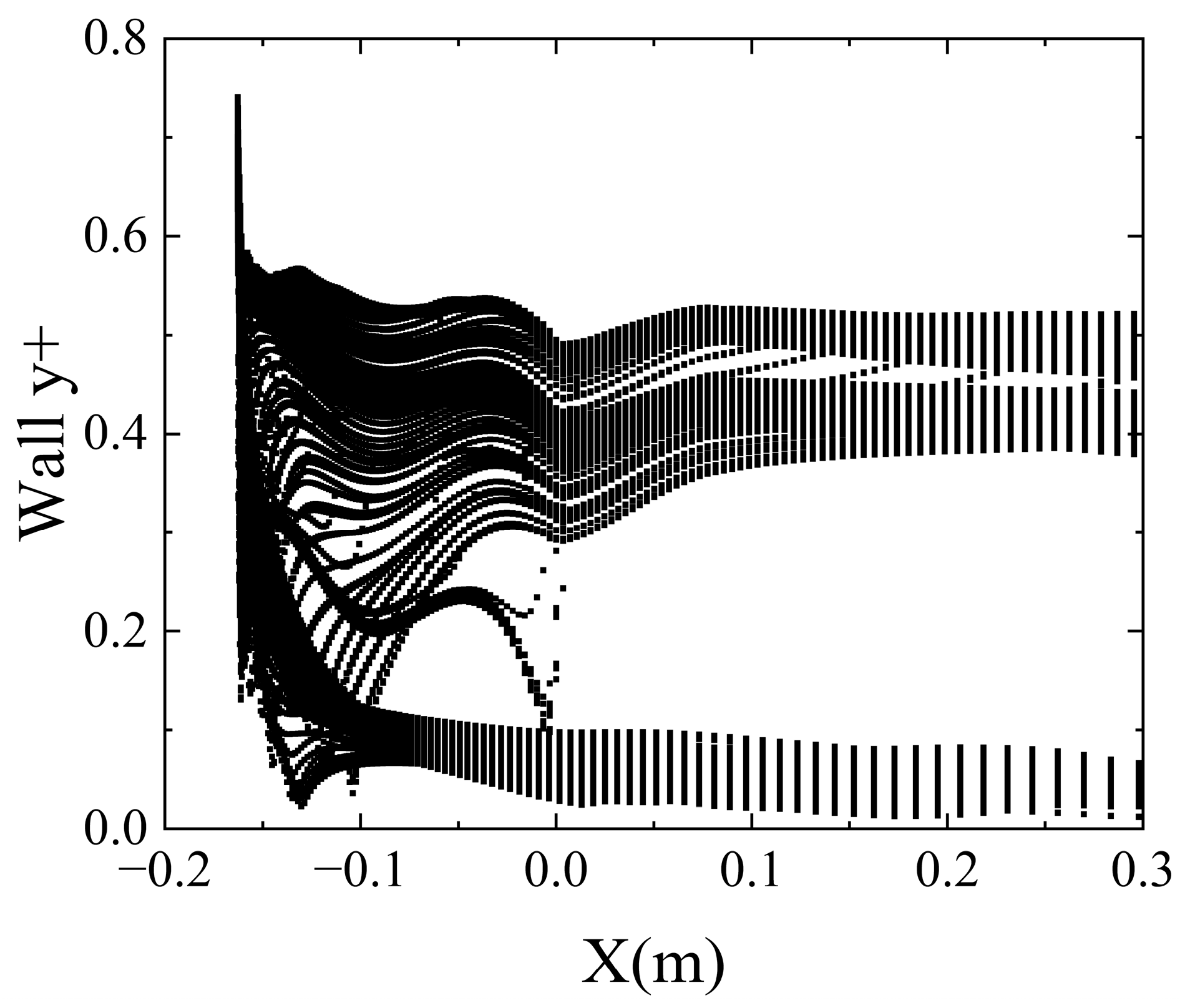
| <1.0 |
| Grid Resolution (Millions) | σ | Relative Error | IDCmax | Relative Error |
|---|---|---|---|---|
| 3.50 | 0.986684 | 0.08% | 0.032497 | 1.10% |
| 8.58 | 0.987475 | 0.05% | 0.032859 | 0.10% |
| 12.52 | 0.987952 | 0.032826 |
| Vc (kt) | Dhi (m) | Re |
|---|---|---|
| 0 | 0.36 | 0 |
| 5 | 0.36 | |
| 10 | 0.36 | |
| 15 | 0.36 | |
| 20 | 0.36 | |
| 25 | 0.36 | |
| 30 | 0.36 | |
| 35 | 0.36 |
| Vc (kt) | Dhi (m) | Re |
|---|---|---|
| 0 | 0.36 | 0 |
| 10 | 0.36 | |
| 20 | 0.36 | |
| 25 | 0.36 | |
| 35 | 0.36 |
| Vc (kt) | Dhi (m) | Re |
|---|---|---|
| 25 | 0.36 | |
| 25 | 0.72 | |
| 25 | 1.44 |
Disclaimer/Publisher’s Note: The statements, opinions and data contained in all publications are solely those of the individual author(s) and contributor(s) and not of MDPI and/or the editor(s). MDPI and/or the editor(s) disclaim responsibility for any injury to people or property resulting from any ideas, methods, instructions or products referred to in the content. |
© 2025 by the authors. Licensee MDPI, Basel, Switzerland. This article is an open access article distributed under the terms and conditions of the Creative Commons Attribution (CC BY) license (https://creativecommons.org/licenses/by/4.0/).
Share and Cite
Song, X.; Tang, B.; Li, C.; Wu, Z. Effects of Nacelle Inlet Geometry on Crosswind Distortion Under Ground Static Conditions. Aerospace 2025, 12, 955. https://doi.org/10.3390/aerospace12110955
Song X, Tang B, Li C, Wu Z. Effects of Nacelle Inlet Geometry on Crosswind Distortion Under Ground Static Conditions. Aerospace. 2025; 12(11):955. https://doi.org/10.3390/aerospace12110955
Chicago/Turabian StyleSong, Xiufeng, Binbin Tang, Changkun Li, and Zhenlong Wu. 2025. "Effects of Nacelle Inlet Geometry on Crosswind Distortion Under Ground Static Conditions" Aerospace 12, no. 11: 955. https://doi.org/10.3390/aerospace12110955
APA StyleSong, X., Tang, B., Li, C., & Wu, Z. (2025). Effects of Nacelle Inlet Geometry on Crosswind Distortion Under Ground Static Conditions. Aerospace, 12(11), 955. https://doi.org/10.3390/aerospace12110955