
Experimental Thermohydraulic Assessment of Novel Curved Ribs for Heat Exchanger Tubes: A Machine Learning Approach


 ,
,  and
and 
Abstract
1. Introduction
2. Experimentation and Data Collection
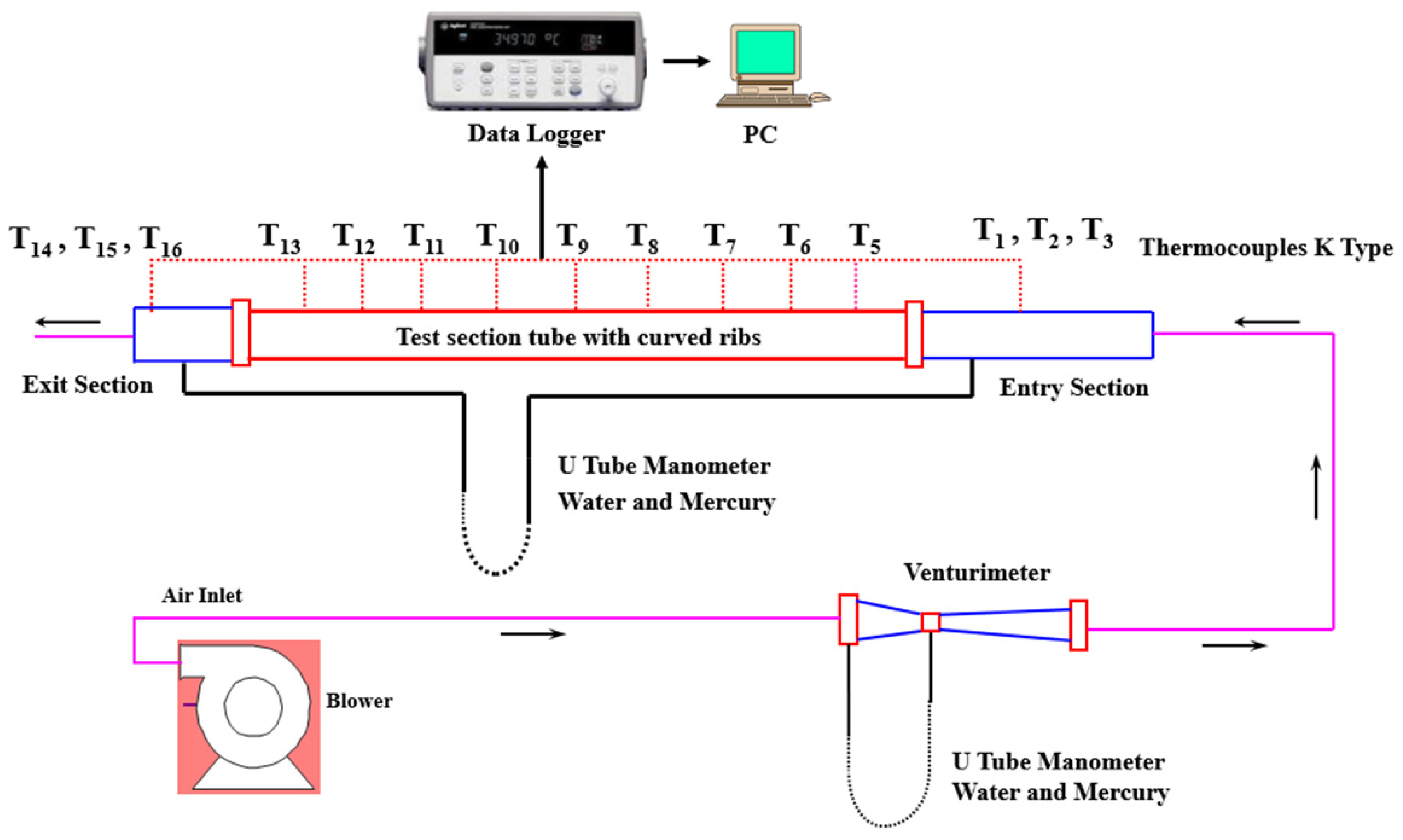
2.1. Experimental Setup
2.2. Experimental Procedure and Data Reduction
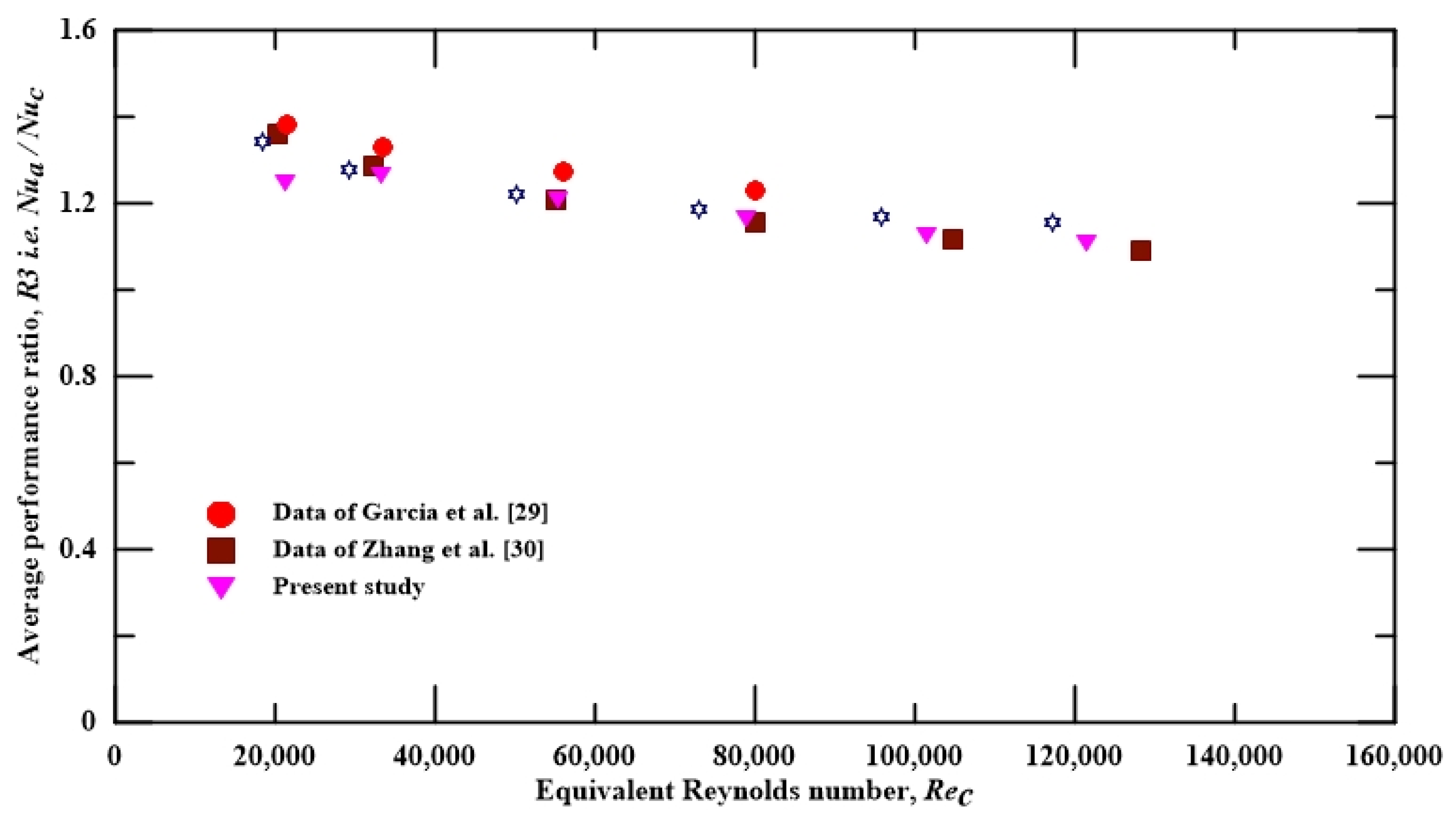
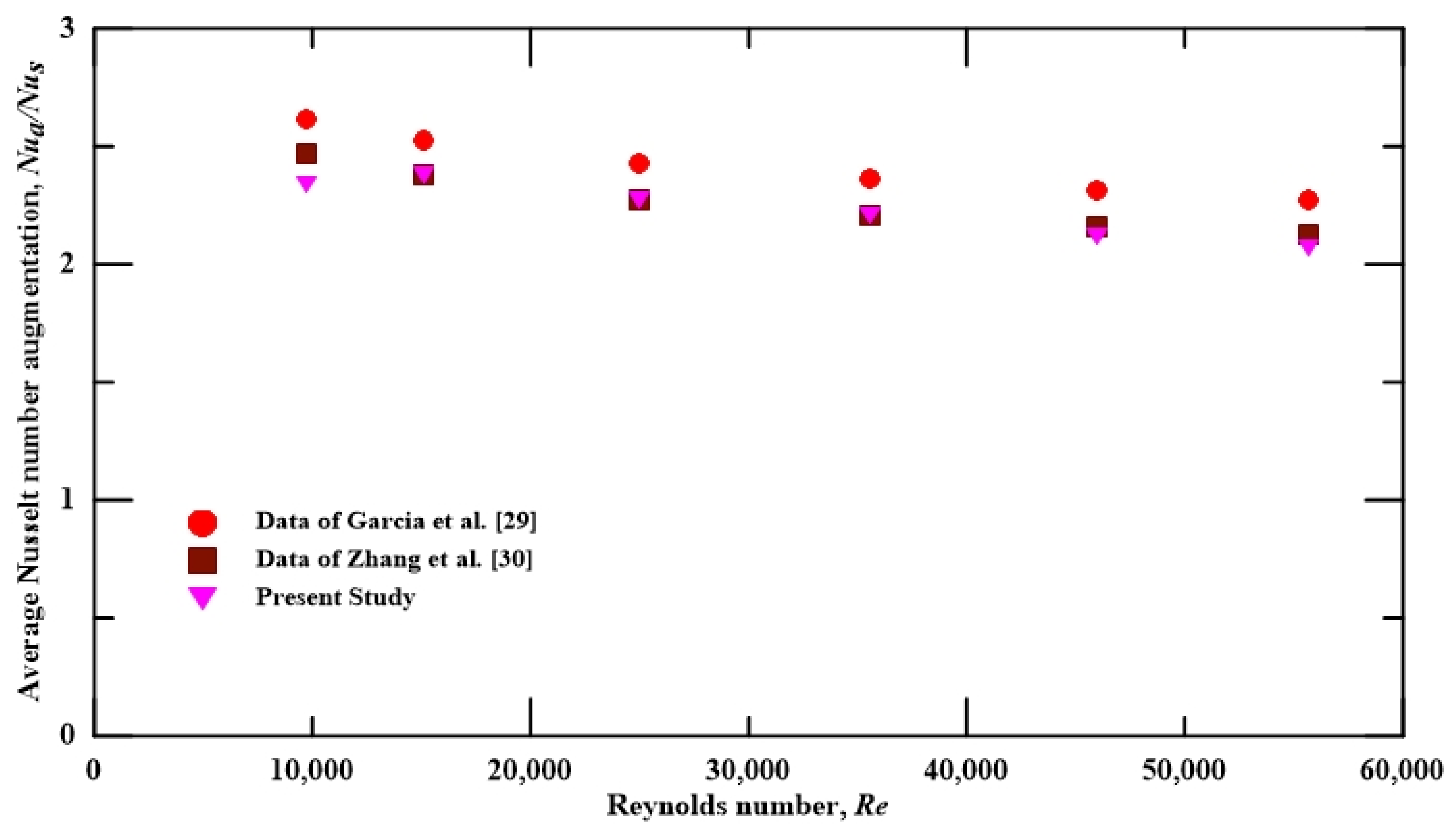
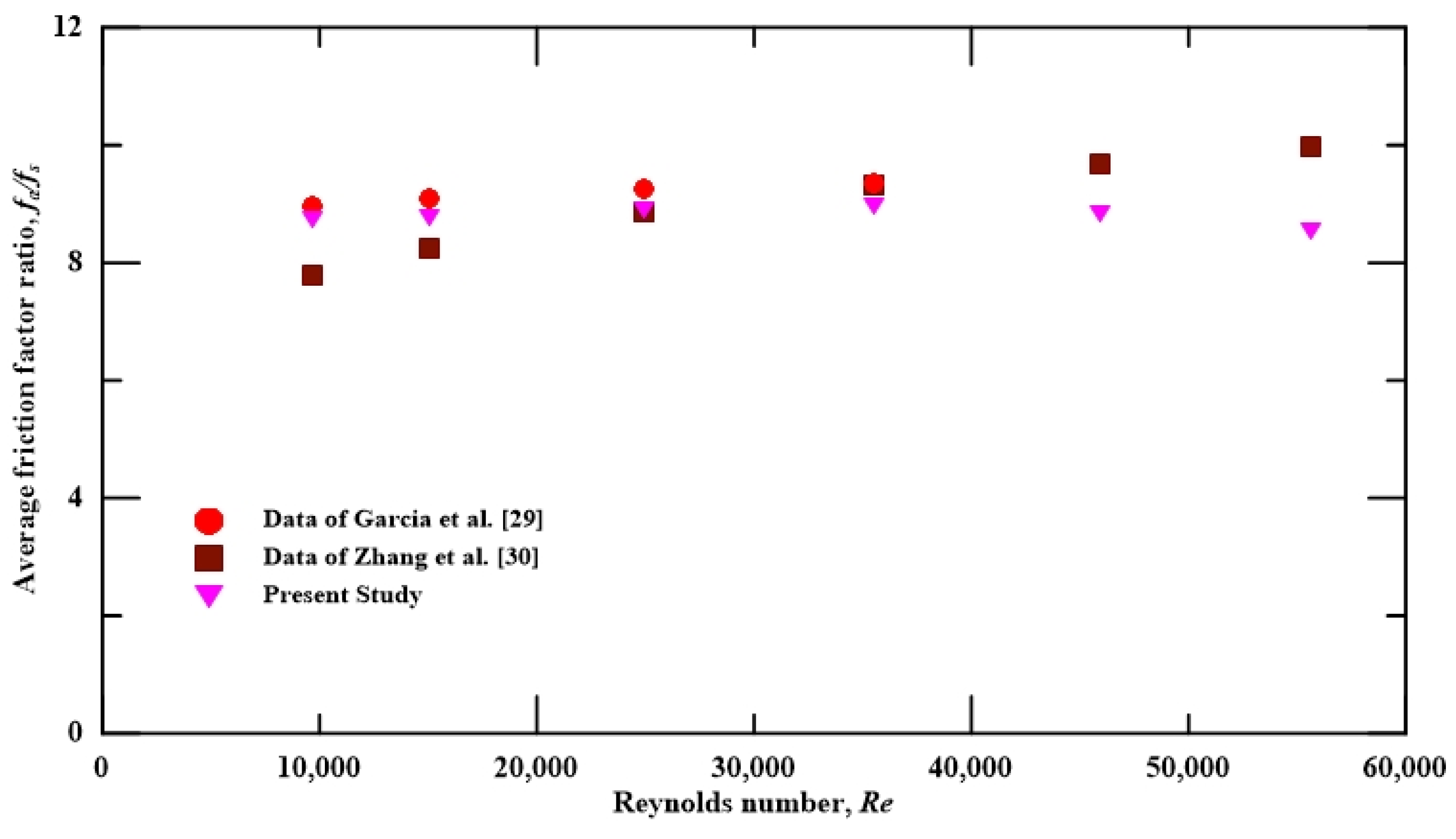
2.3. Experimental Data Validation Using a Tube Retrofitted with a Helical Wire Coil (HWC)
2.4. Data Representation
3. Experimental Results and Discussion
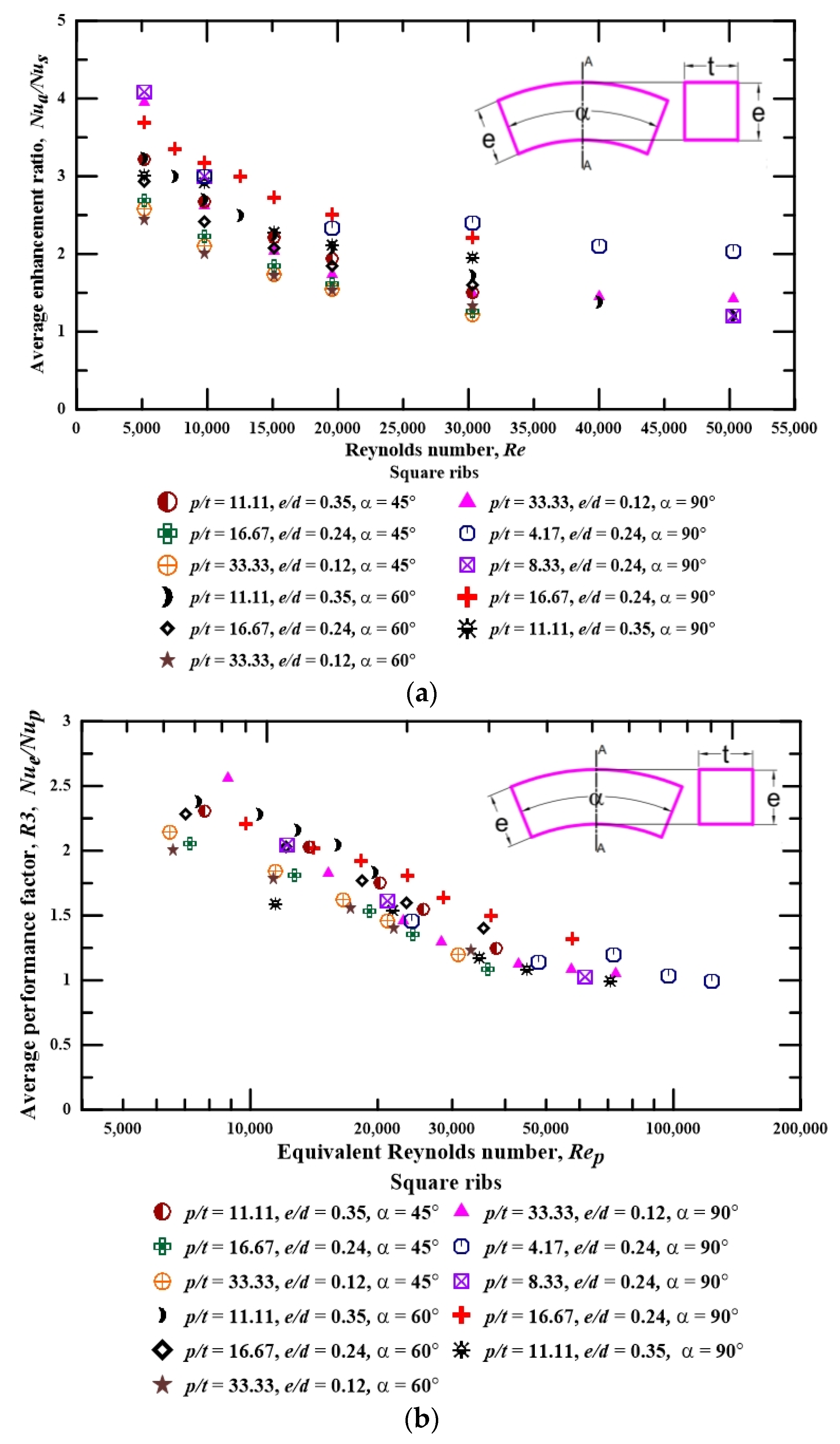
Heat Transfer and Pressure Drop Results for Different Configurations
4. Design of ANN Architecture
4.1. ANN Intuition
4.2. Hyperparameters
4.3. Train–Test Split Ratio
4.4. Learning Rate in Optimisation Algorithms
4.5. Choice of the Optimisation Algorithm
4.6. Choosing of Correct Activation Function
4.7. Model-Based Choice of Cost-or-Loss Function
- Regression cost function is mainly used to evaluate regression results where the distance-based error is calculated.
- Classification cost function is mainly used for evaluating results of classification problems such as binary and multiclass classification, where prediction is made between the number of classes in the dataset.
- The correct choice of the cost function for the problem helps to evaluate the model accurately.
4.8. Hidden Layers
4.9. Number of Epochs in Training a Neural Network
4.10. Batch Size
5. Machine Learning Results and Discussion
5.1. Design and Development of ANN
5.2. Design of Neural Network for a Generalised Prediction
5.3. ReLU
5.4. Adam
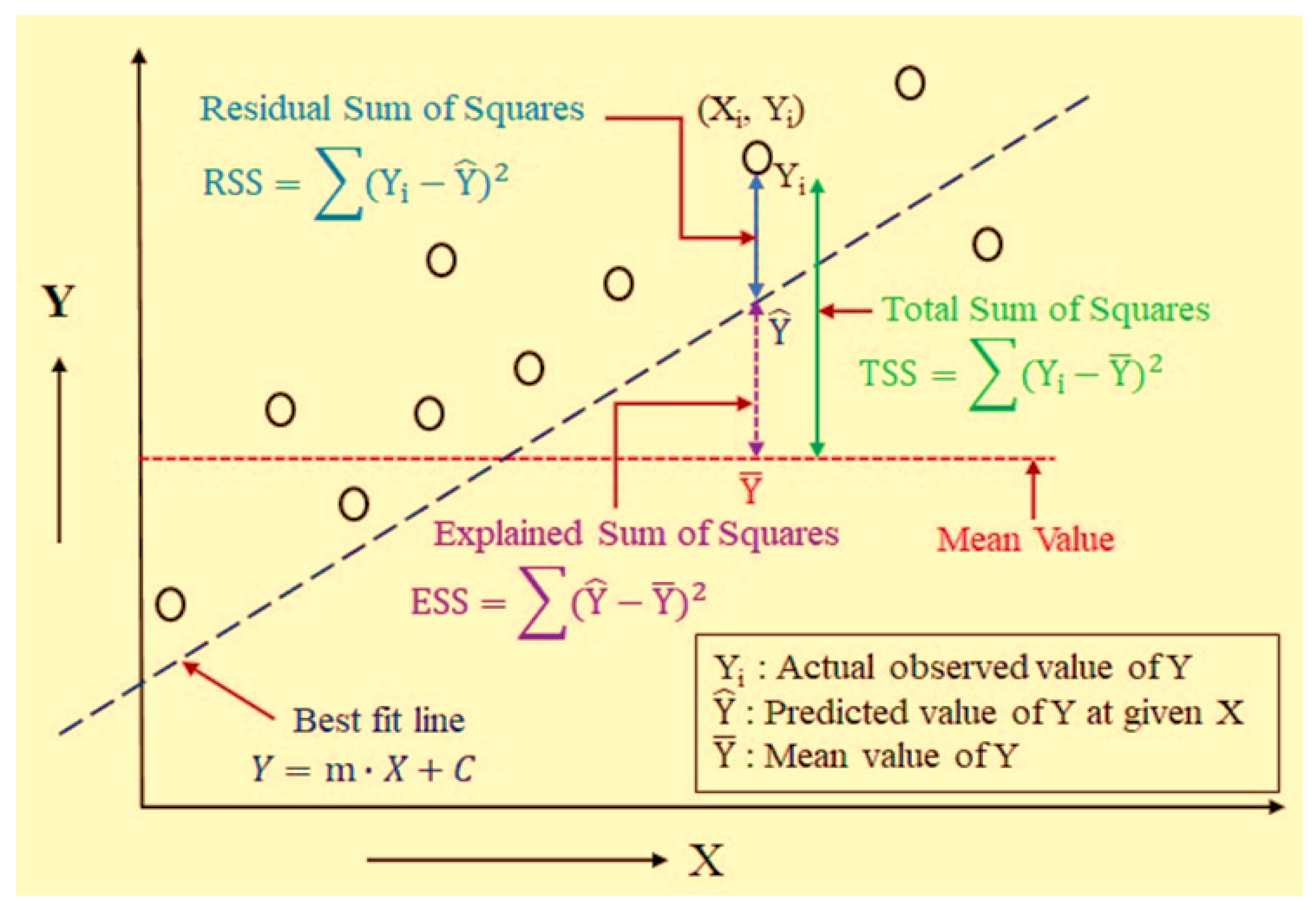
5.5. Mean-Squared Error
5.6. Computational Environment
5.7. Predictions Using Designed ANN and Hyperparameter Tuning
- Depth: As the data size after the upsampling was 50 rows, the depth of the neural network was chosen to be 2 instead of 3. The neural network with depth of 3 was overfitting on the dataset and was not providing acceptable results. Thus, a neural network of the depth size of 2 hidden layers was selected.
- Nodes: Our experimentation consisted of increasing the node size by a factor of 5. The first hidden layer is responsible for generating accurate results to feed into the next layer for learning purposes; hence, the number of 20 was chosen after trying increments of 5 nodes starting for 5, as it gave a better performance compared to 5, 10, and 15 nodes. For similar reasons, the next hidden layer had 10 nodes. The network ended with a single node for prediction.
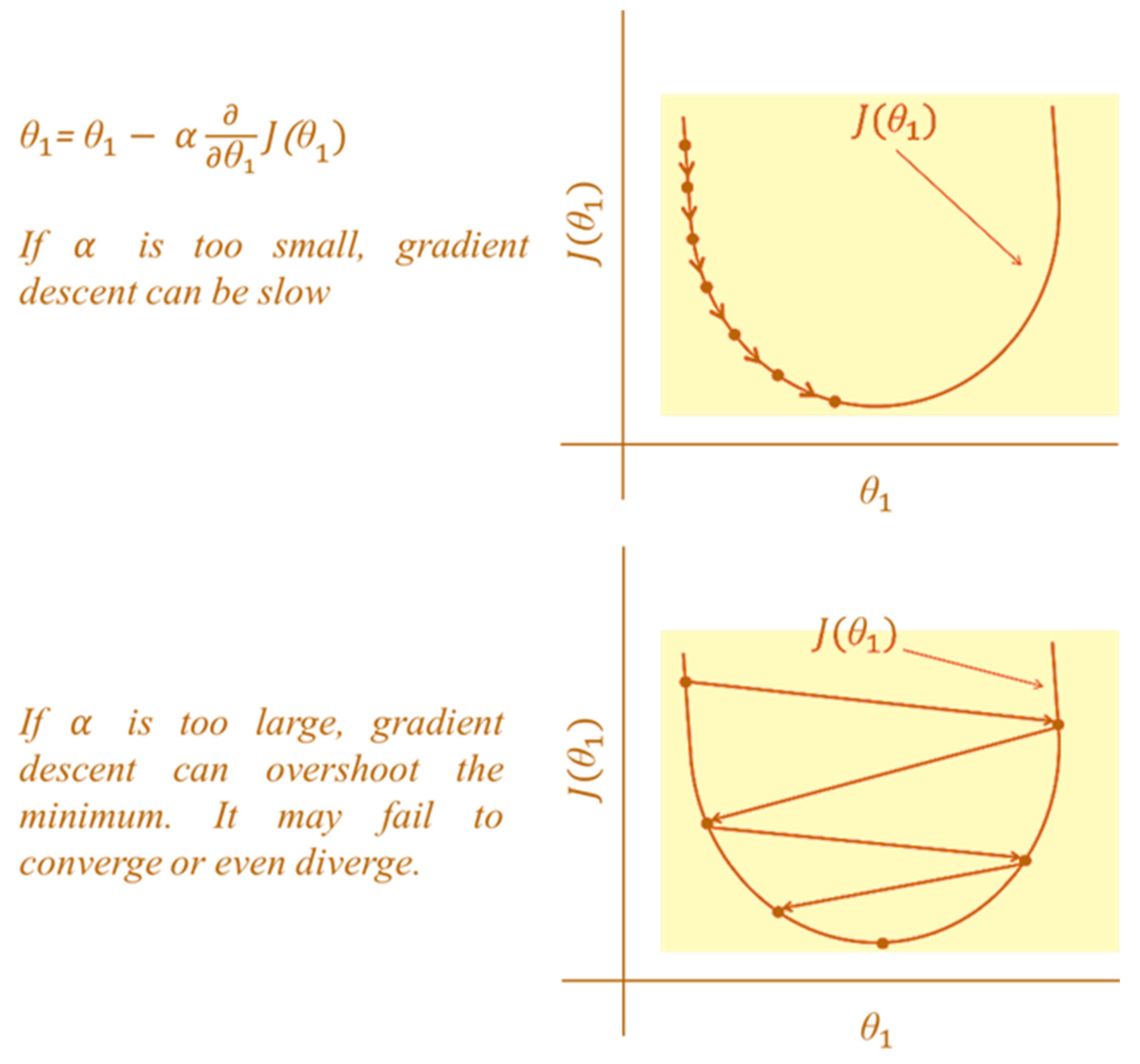
- Learning rate: The learning rate signifies the learning steps of the pass in the neural network. A learning rate that is too high will make the learning jump over minima, but a learning rate that is too low will either take too long to converge or become stuck in an undesirable local minimum. For this particular application, the learning rate of 0.01 was chosen, which gave good results and good convergence.
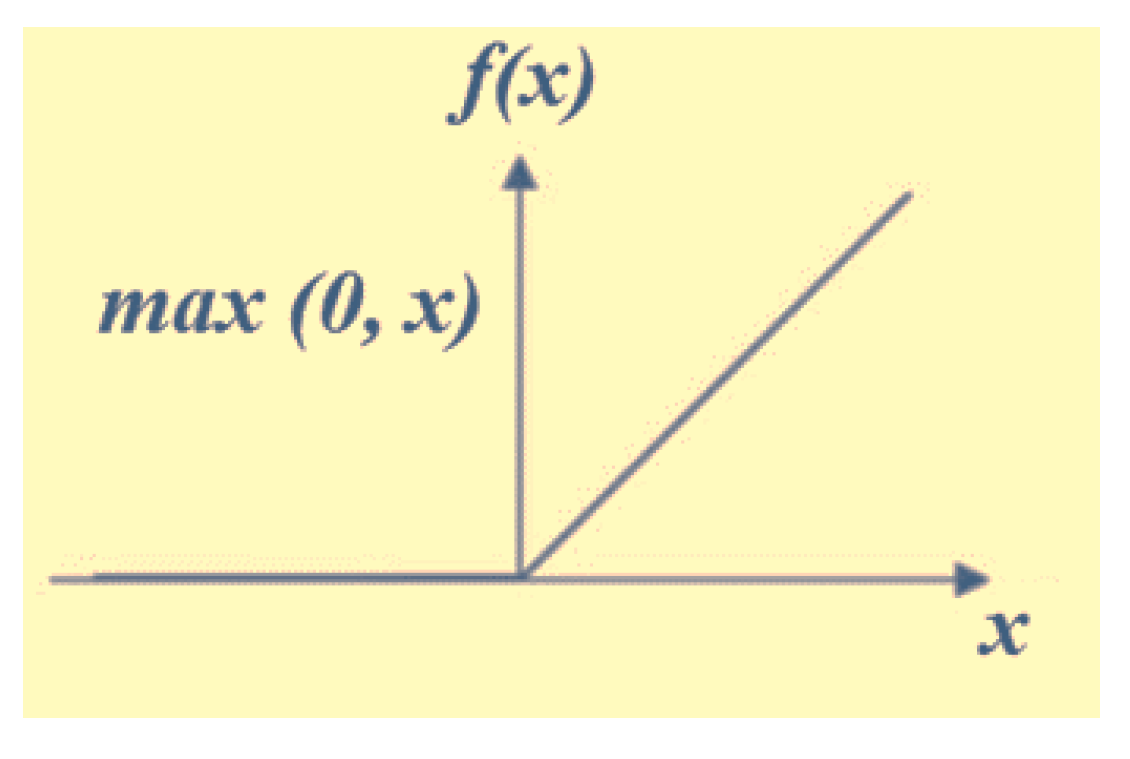
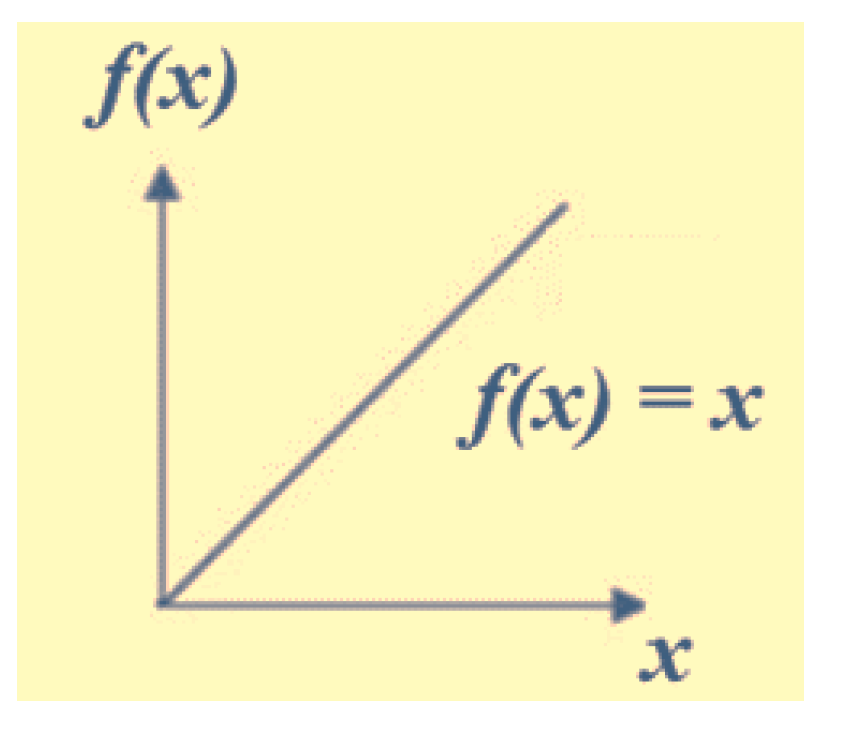
- Activation function: Regression problems solved with artificial neural network use tanh or ReLU as an activation function. For this application, the neural network had a shallow depth; hence, the most appropriate choice of ReLU activation function was applied and good results were obtained.
- Batch size: Batch size signifies the batch of data that passes through a neural network for one cycle of forward and backward pass. For this application, the data size was relatively small so a batch size of 64 was chosen. A lesser batch size would have taken more time to learn; a lower learning rate or higher number of epochs results in more time necessary for convergence.
- Epochs: For the experimentation a value of 50 epochs was most appropriate for the hyperparameter values chosen above. More epochs would have resulted in overfitting and fewer epochs would have resulted in fewer accurate predictions.
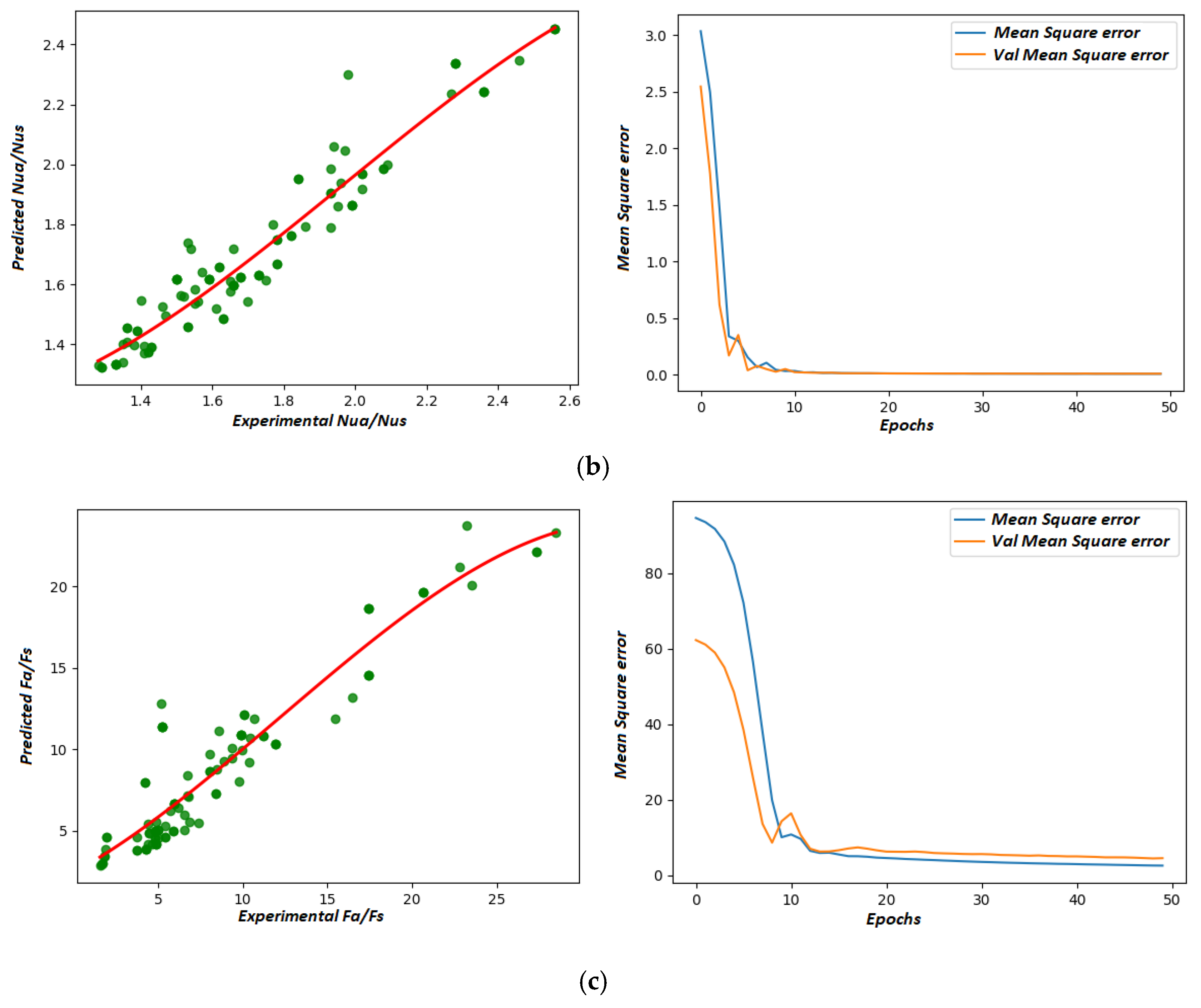
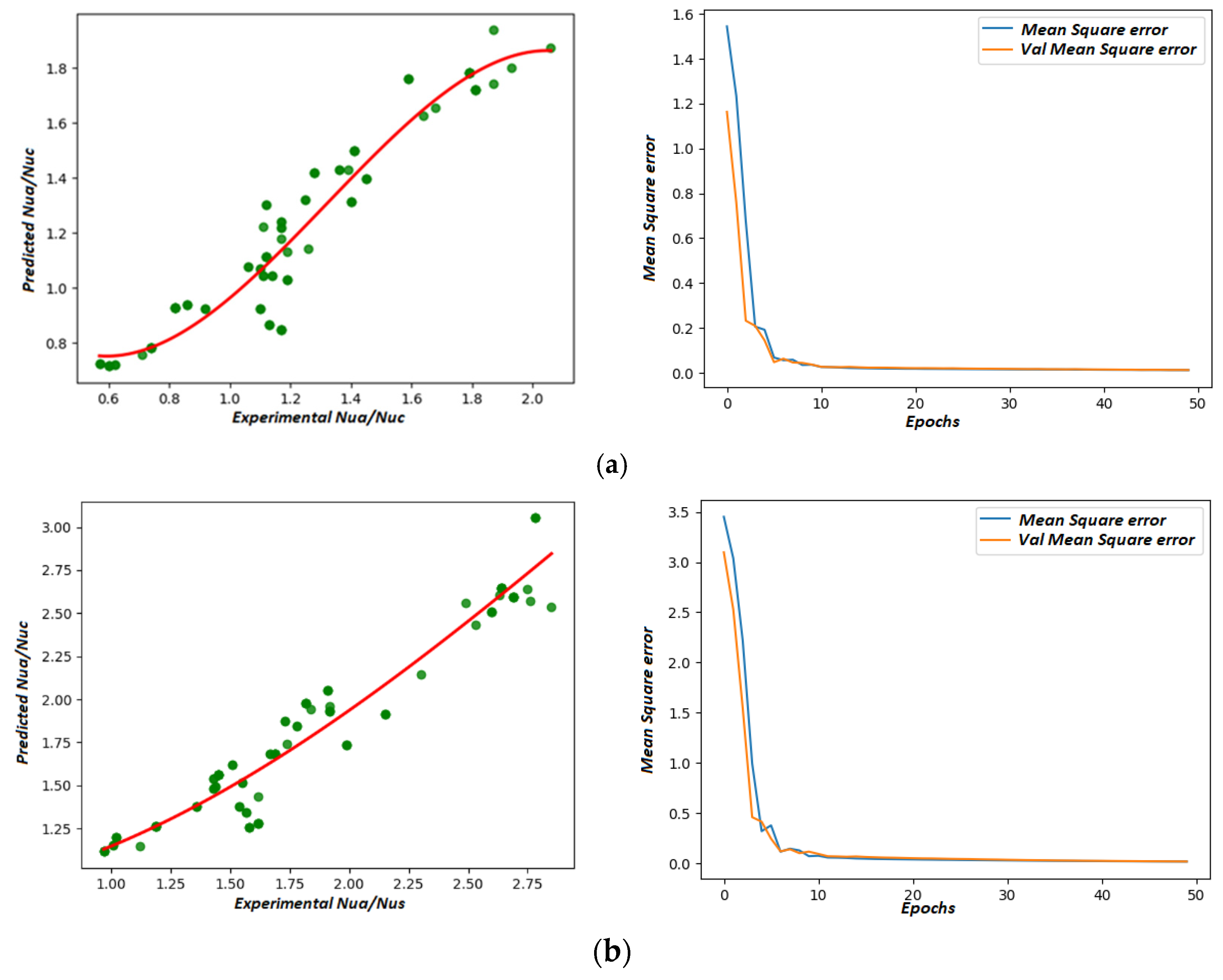
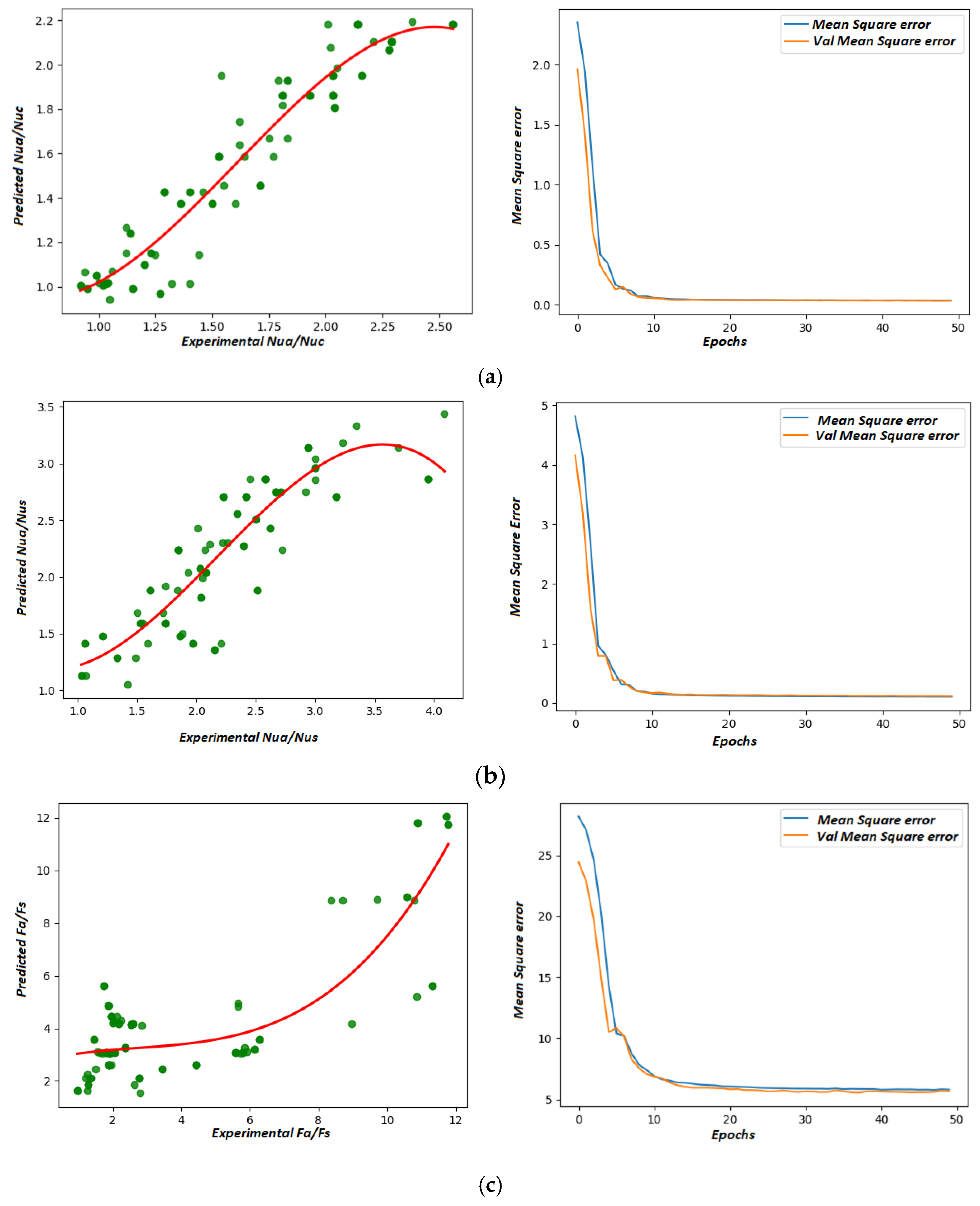
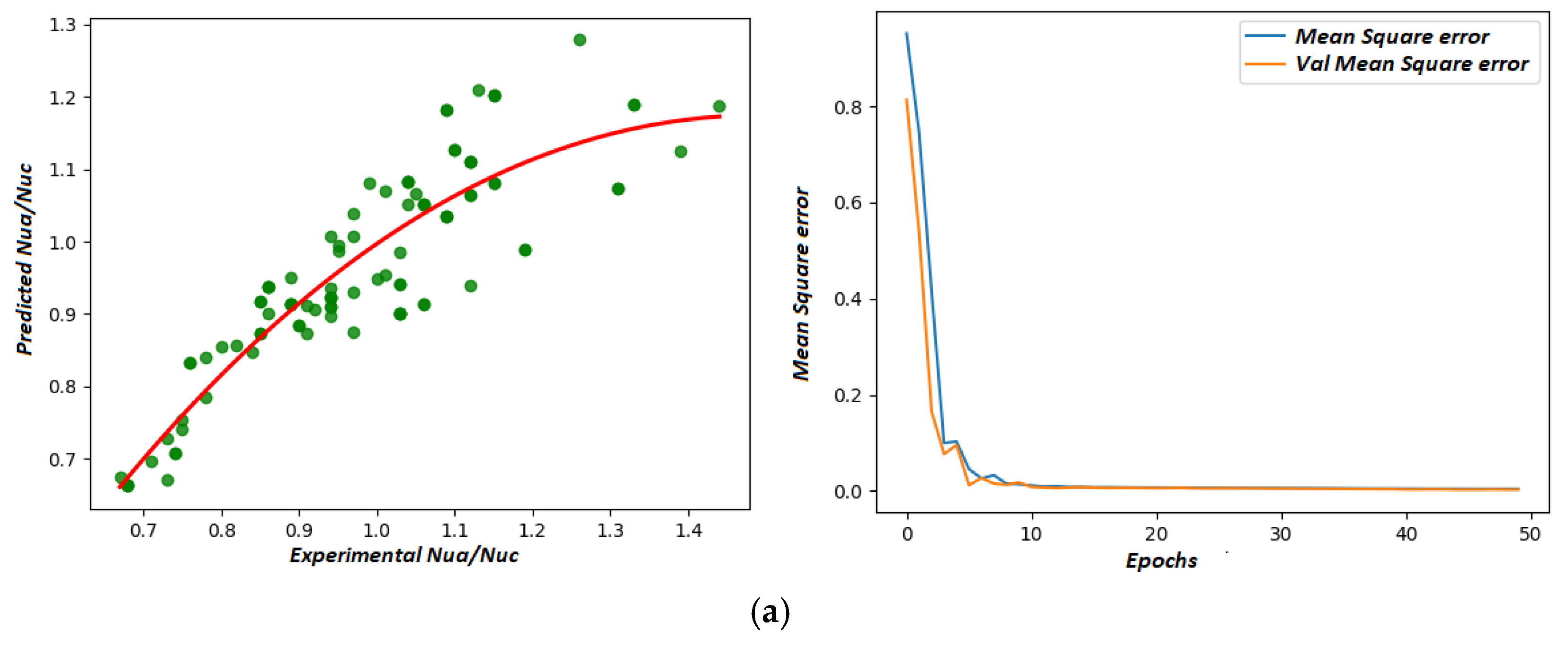
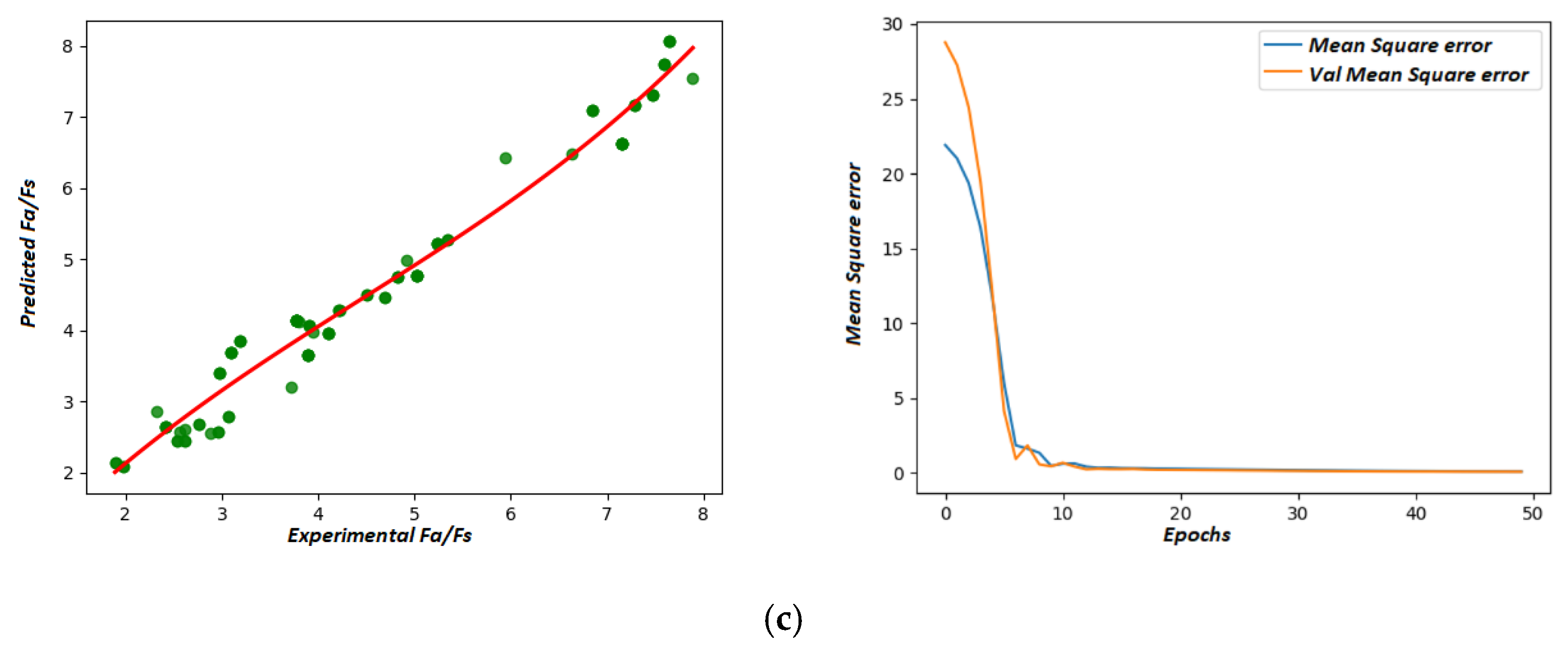
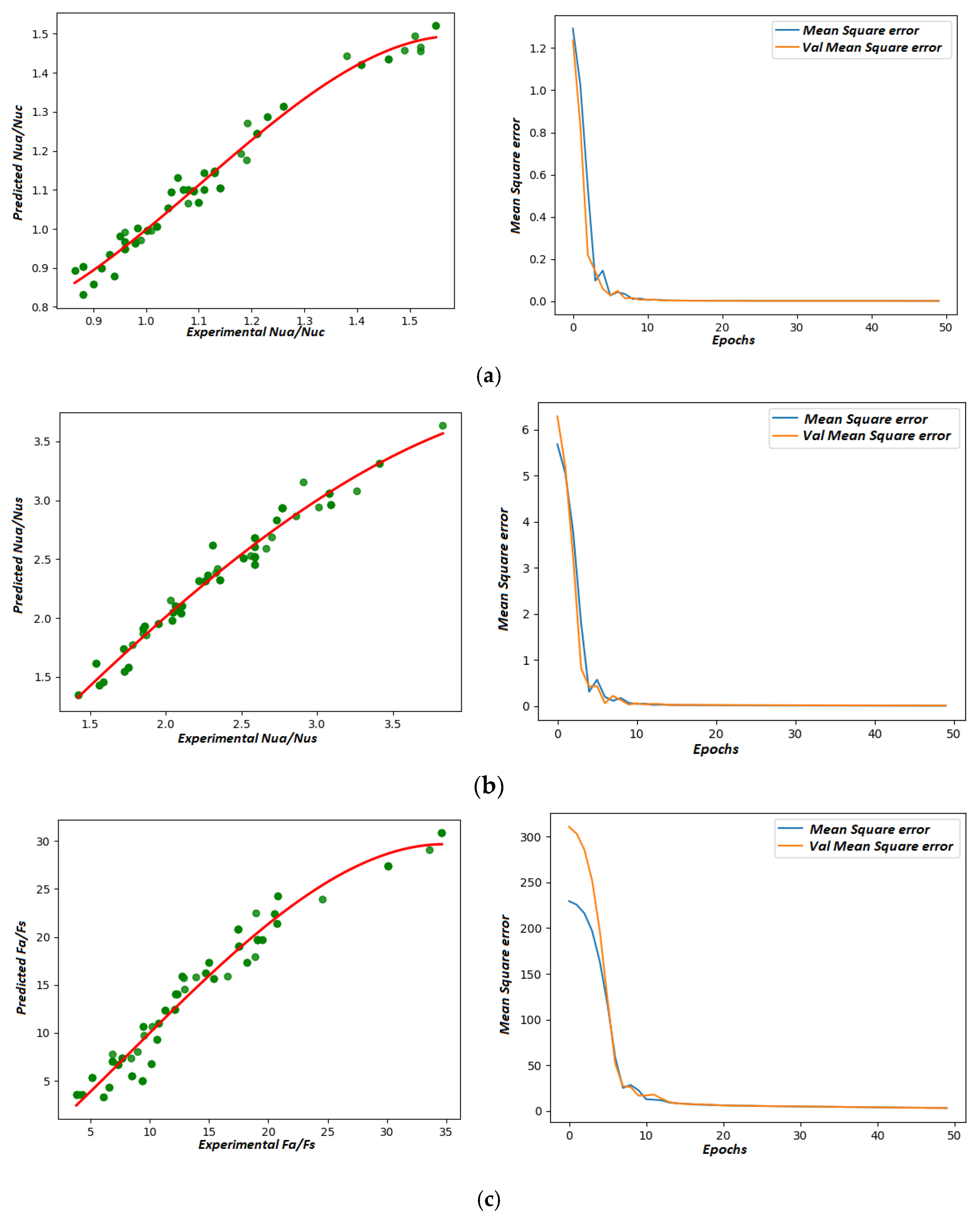
- Enhanced prediction accuracy: ML models revealed tedious patterns and relationships within a dataset of multiple variables, enabling prediction of thermohydraulic performance indicators more accurately. The experimental data were trained and it learned from the involved relations among various factors—the Reynolds number, p/b, e/d, and beta as the dependent variables and Nua/Nus, Nua/Nuc and fa/fs as the independent variables—and provided reliable predictions with high accuracy of 95% for the tested dataset.
- Cost and time efficiency: The conventional experimental approaches often need extensive data collection and testing; however, ML allows for reducing the effort required to collect extensive data through experimentation while still achieving accurate predictions. By training existing data collected through experimentation, prediction of performance indicators without undertaking further time-consuming trials was achieved. This feature expressively reduced the cost and time while assessing numerous configurations of the curved rib.
- Comprehensive performance evaluation: The ML algorithm predicted multiple performance indicators simultaneously, exhibiting an inclusive assessment of various heat transfer enhancement parameters. In this study, the artificial neural network predicted heat transfer indicators providing perceptions into different aspects of curved rib performance using a single modelling approach.
- Identification of optimal rib configurations: Through ML, the configurations of curved rib which showed the highest performance factor R3 at different Reynolds numbers were identified. This inference appears valuable in the design of heat-exchanging devices with curved ribs tailored to particular applications, ensuring optimal heat transfer performance.
6. Conclusions
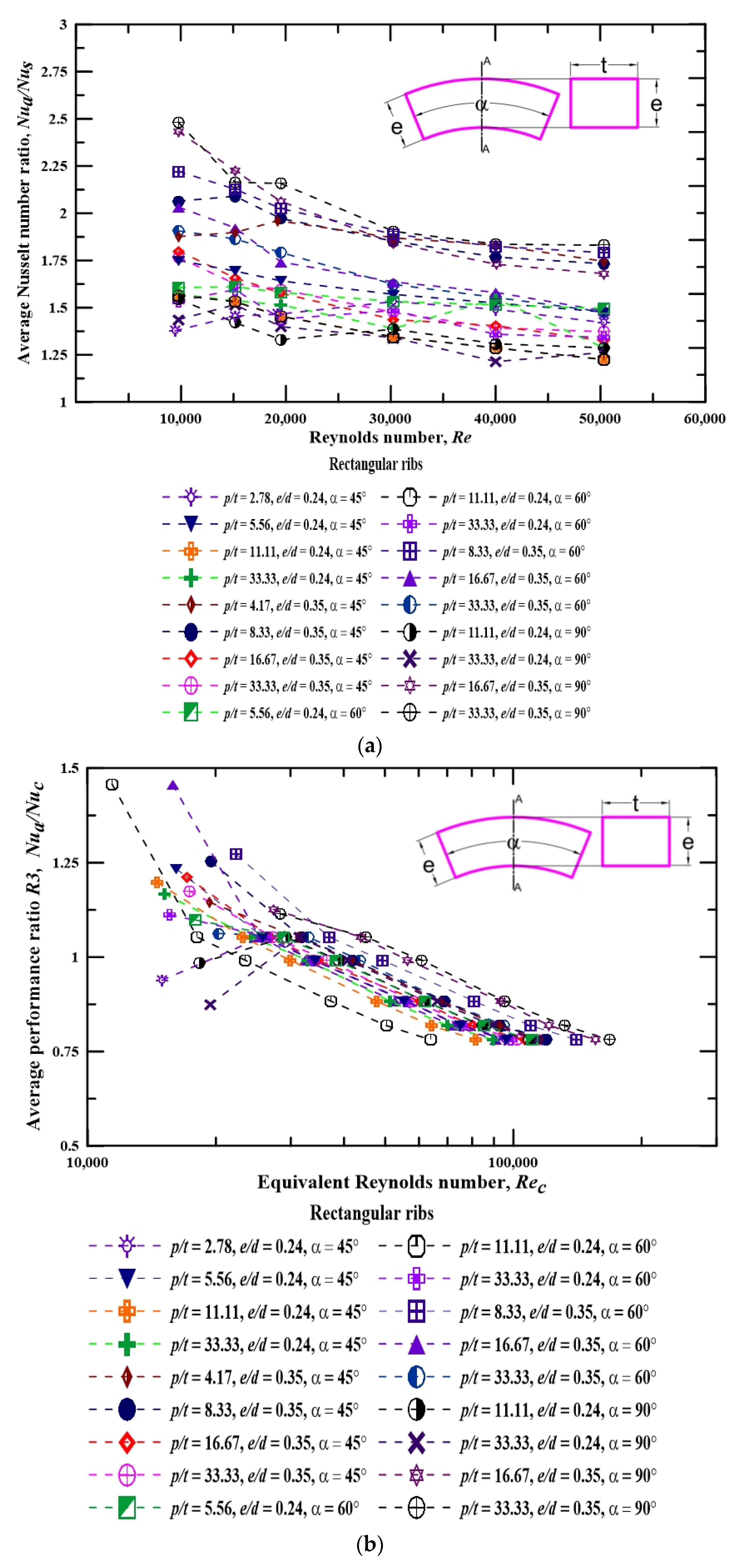
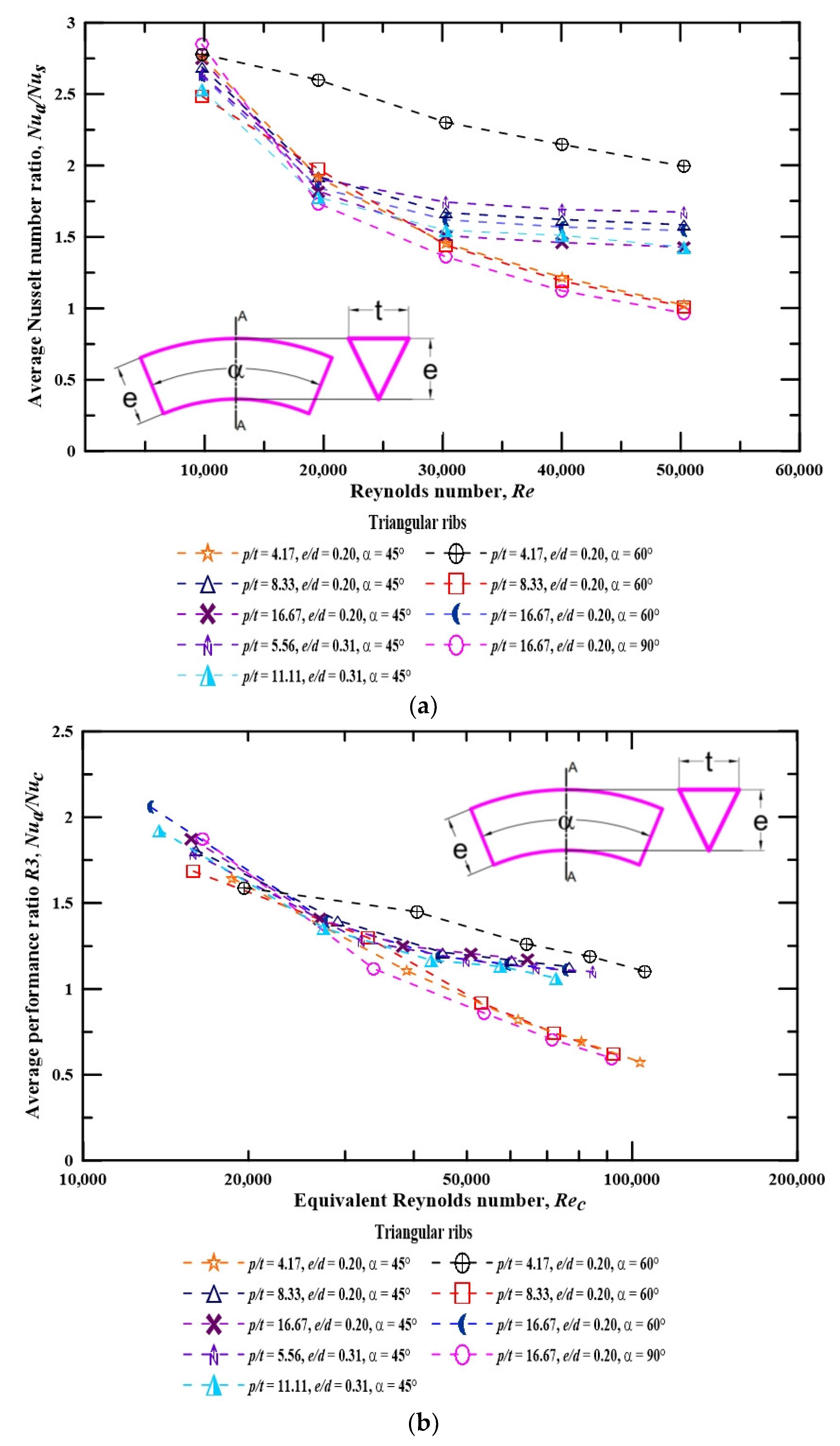
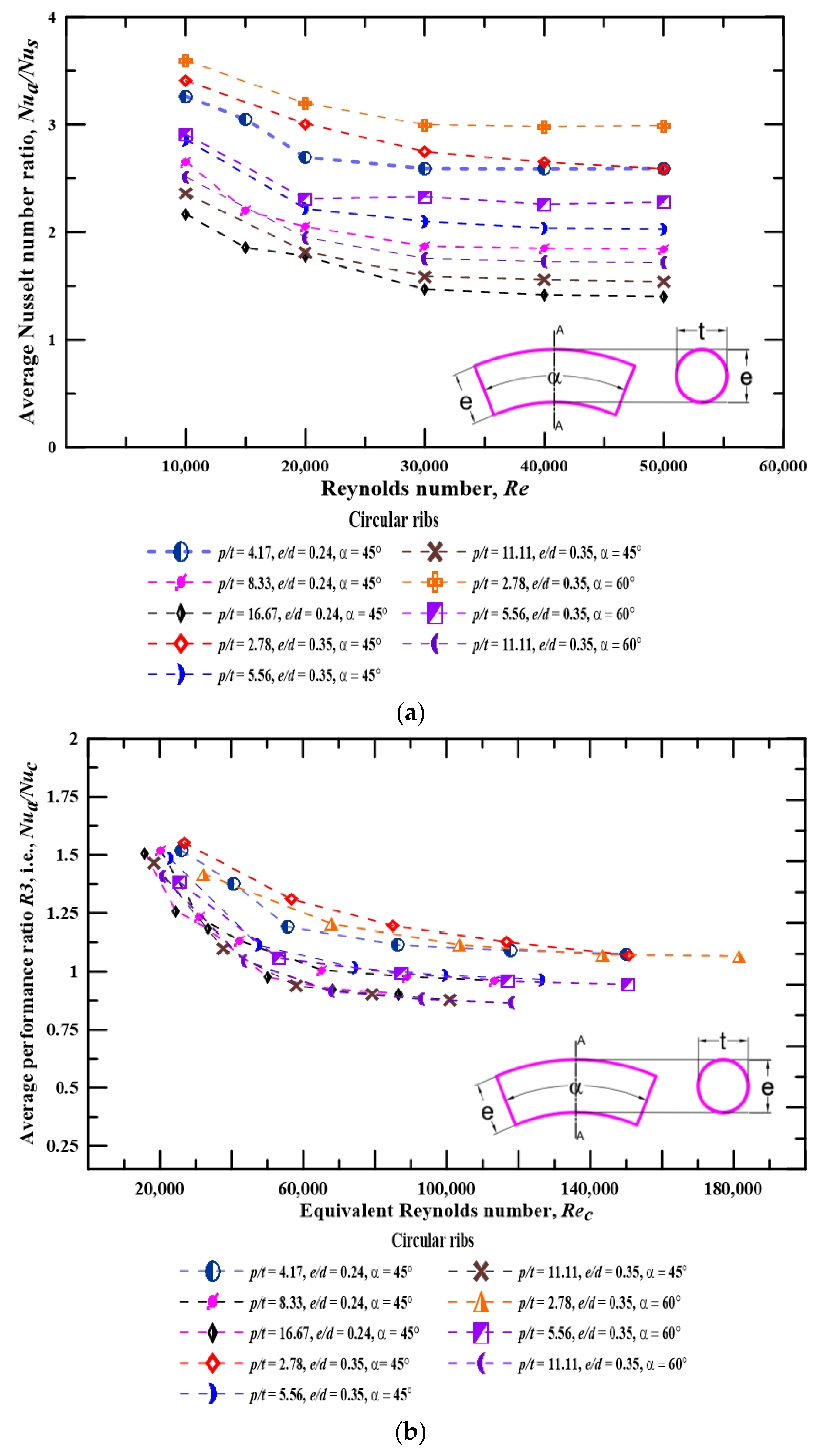
- The average Nusselt number ratio of the tube with ribs to the Nusselt number of the tube without ribs, Nua/Nus, increases with the Reynolds number, Re. This trend is observed for all rib types.
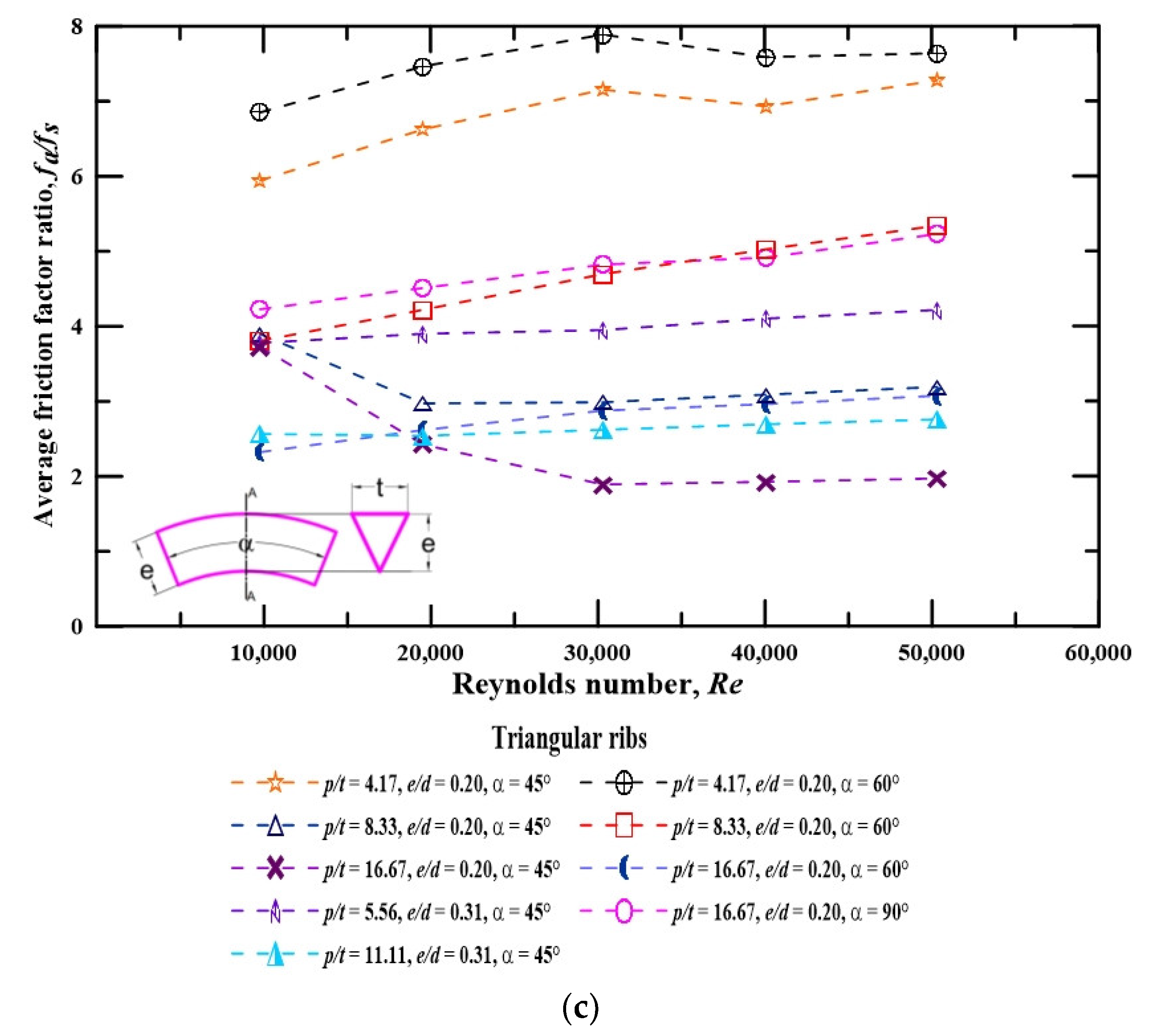
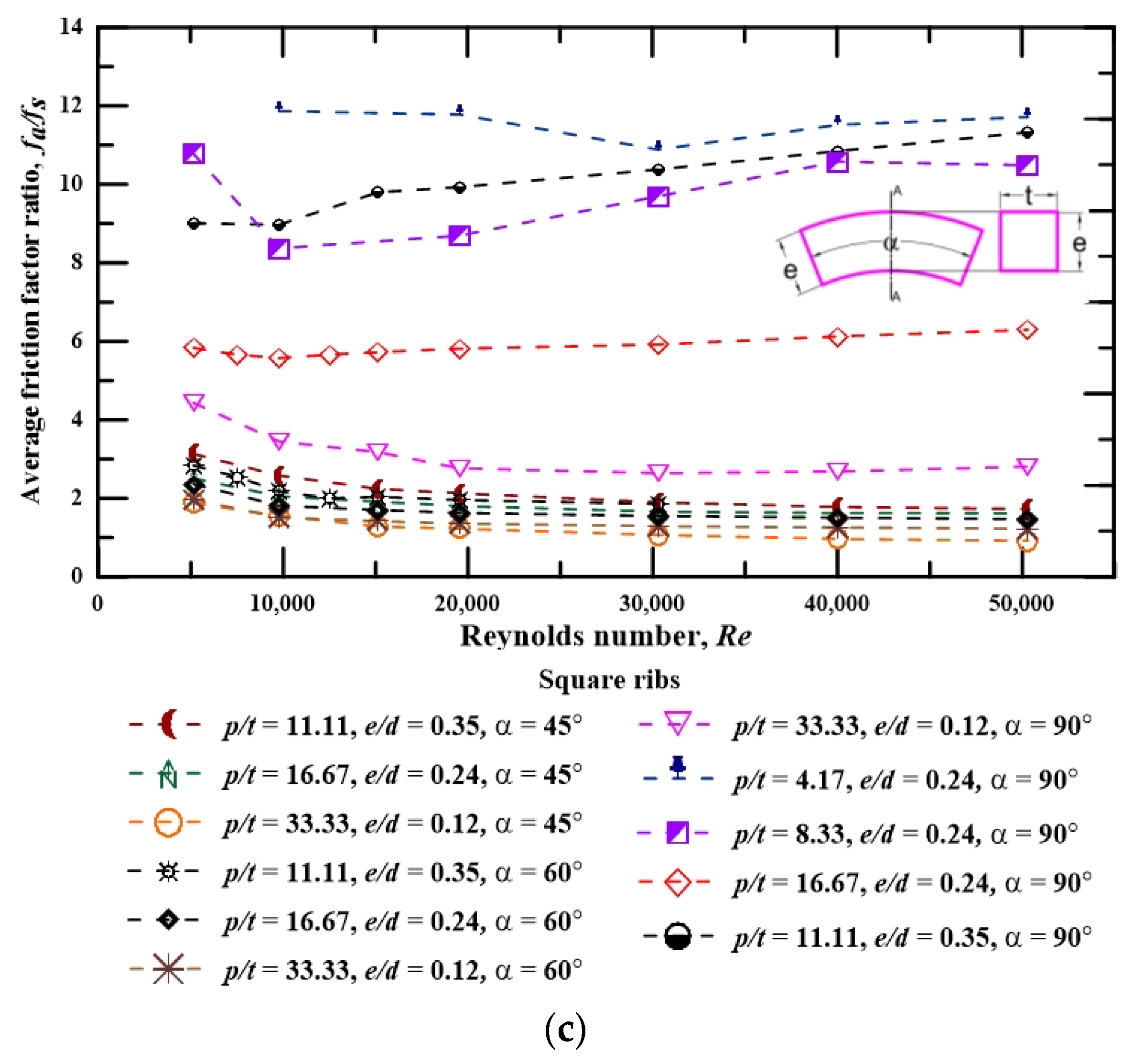
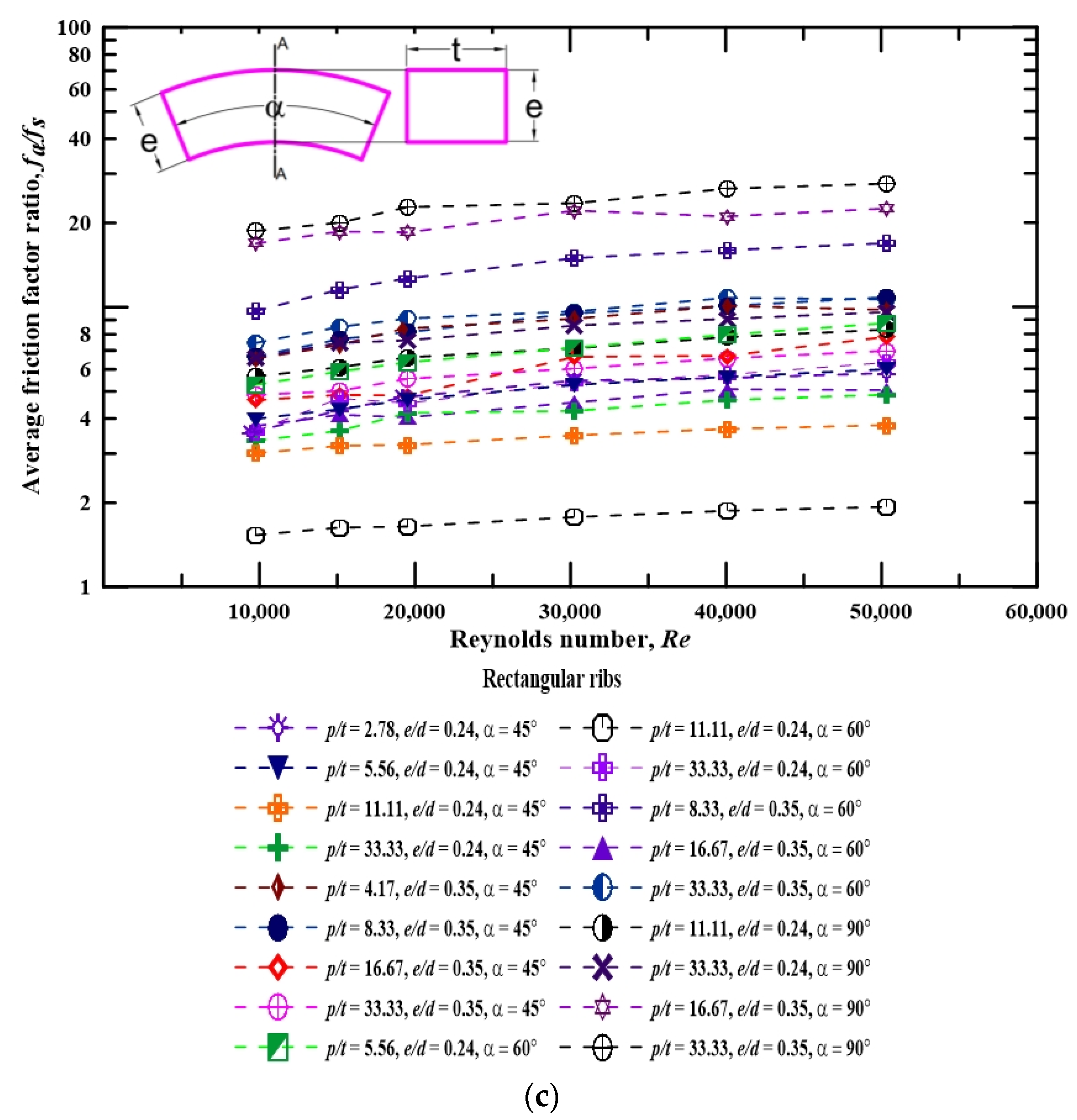
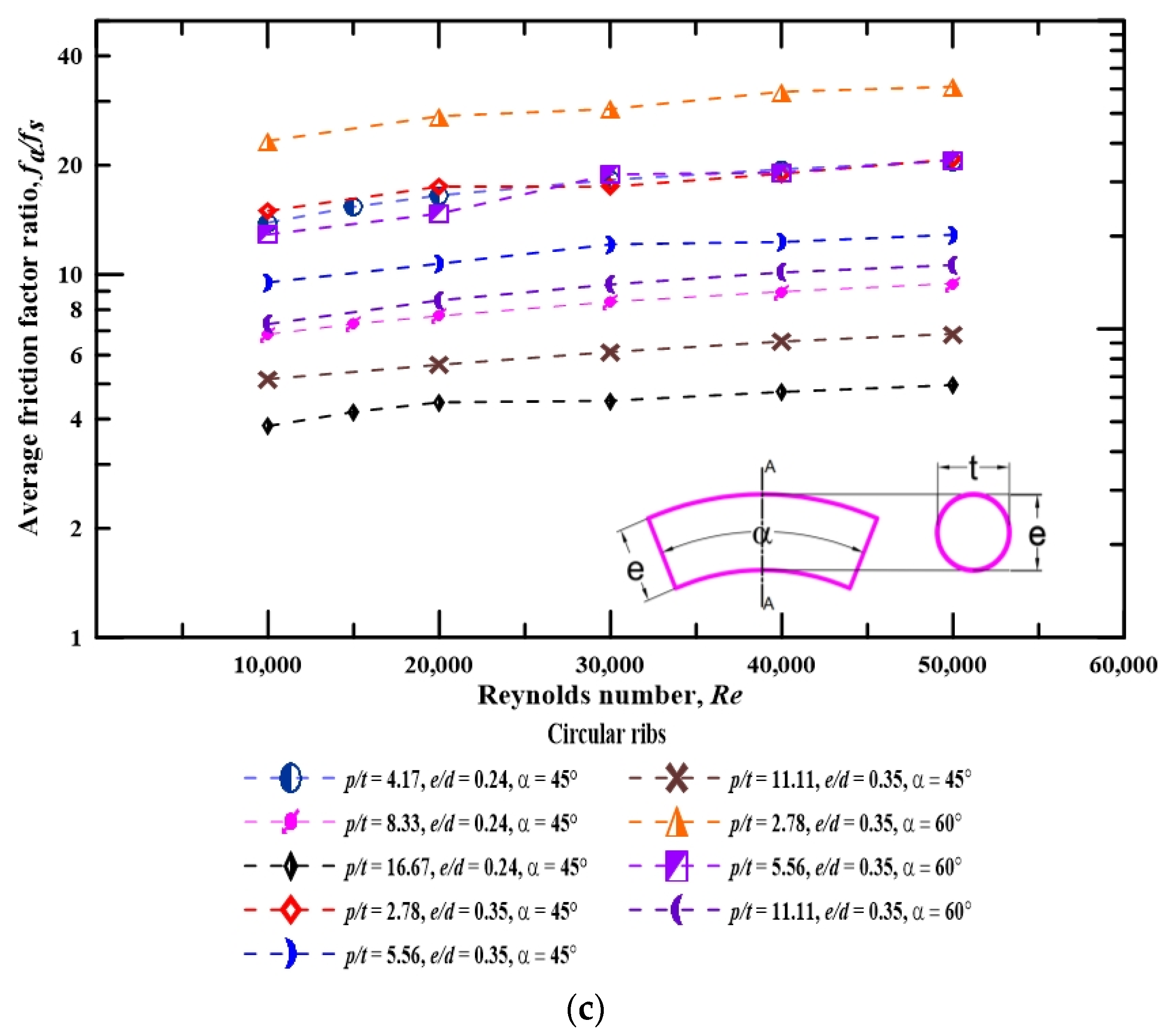
- The general observation for all rib configurations is that the rib elements with a higher contact angle value α and at a low pitch-to-rib thickness p/t ratio offer more frictional resistance to fluid flow.
- The square and triangular curved rib elements caused less friction-factor enhancement than the rectangular and circular curved rib elements because the lower surface area was exposed to the flowing fluid.
- A linear decrease in the performance factor R3 value was observed for all types of ribs with respect to the equivalent Reynolds number Rec.
- The best configuration of square ribs produces the value of performance factor R3 in the range of 1.5 to 2.65 until the equivalent Reynolds number Rec attained a value of 20,000.
- It can be concluded that the rib configurations are suitable at lower flow rates. After that, the performance factor R3 linear value drops and reaches 1.0, or even less, for a few configurations.
- It is important to note that using ribs with different cross sections offers effective alternatives/additional methods for heat transfer enhancement over the other passive methods reported in the literature.
- An ANN model predicts the performance indicators like average heat transfer enhancement Nua/Nus, average heat transfer enhancement fa/fs, and performance ratio R3, i.e., Nua/Nuc.
- The models were evaluated to have an accuracy of 95.00% on unknown test data, and the proposed model reasonably forecasted Nua/Nus, fa/fs, and Nua/Nuc.
Author Contributions
Funding
Data Availability Statement
Conflicts of Interest
Nomenclature
| A | inside surface area of the circular tube (πdL), m2 |
| t | rib thickness, m |
| Cp | specific heat at constant pressure, J/kg.K |
| d | inner diameter of the tube, m |
| e | height of the rib element, m |
| e/d | ratio of rib height to inner tube diameter, dimensionless |
| f | friction factor, dimensionless |
| friction factor for the tube fitted with curved ribs, i.e., enhanced tube, dimensionless | |
| friction factor for the smooth tube, i.e., tube without any ribs, dimensionless | |
| L | length of the test section, m |
| mass flow rate of the fluid, kg/s | |
| Nu | Nusselt number, dimensionless |
| Nua | |
| Nus | |
| Nuc | Nusselt number for the equivalent smooth tube, i.e., the tube without curved ribs runs at the same pumping power as that of the enhanced tube, |
| p | pitch of rib configuration, m |
| p/t | ratio of the pitch to rib thickness |
| Pr | |
| Qout | heat transfer rate to the flowing fluid between the inlet and outlet, W |
| constant heat flux, W/m2 | |
| Re | |
| Rea | |
| Res | |
| Rec | |
| T | temperature, K |
| bulk temperature of the fluid at the inlet of the tube, K | |
| bulk temperature of the fluid at the outlet of the tube, K | |
| temperature of the inner wall of the tube, K | |
| v | average fluid velocity, m/s |
| Greek Symbols | |
| k | thermal conductivity of the fluid, W/m.K |
| α | included angle of the rib element, ° |
| µ | dynamic viscosity, Pa·s |
| ρ | fluid density, kg/m3 |
| ΔP | pressure drop between inlet and outlet of the test section, N/m2 |
| Subscripts | |
| b | bulk fluid |
| a | augmented tube |
| s | smooth tube flow at the equal Reynolds number |
| c | smooth tube flow at the equal pumping power |
| w | tube wall |
References
- Koşar, A.; Peles, Y. Convective flow of refrigerant (R-123) across a bank of micro pin fins. Int. J. Heat Mass Transf. 2006, 49, 3142–3155. [Google Scholar] [CrossRef] [Scilit]
- Ma, X.; Sha, J.; Wang, D.; Yu, Y.; Yang, Q.; Niu, X. Study on a prediction of P2P network loan default based on the machine learning LightGBM and XGboost algorithms according to different high dimensional data cleaning. Electron. Commer. Res. Appl. 2018, 31, 24–39. [Google Scholar] [CrossRef] [Scilit]
- Mei, D.; Lou, X.; Qian, M.; Yao, Z.; Liang, L.; Chen, Z. Effect of tip clearance on the heat transfer and pressure drop performance in the micro-reactor with micro-pin–fin arrays at low Reynolds number. Int. J. Heat Mass Transf. 2014, 70, 709–718. [Google Scholar] [CrossRef] [Scilit]
- Duangthongsuk, W.; Wongwises, S. A comparison of the heat transfer performance and pressure drop of nanofluid-cooled heat sinks with different miniature pin fin configurations. Exp. Therm. Fluid Sci. 2015, 69, 111–118. [Google Scholar] [CrossRef] [Scilit]
- Jeng, T.-M.; Tzeng, S.-C. Pressure drop and heat transfer of square pin-fin arrays in in-line and staggered arrangements. Int. J. Heat Mass Transf. 2007, 50, 2364–2375. [Google Scholar] [CrossRef] [Scilit]
- Lee, H.; Kang, M.; Jung, K.W.; Kharangate, C.R.; Lee, S.; Iyengar, M.; Malone, C.; Asheghi, M.; Goodson, K.E.; Lee, H. An artificial neural network model for predicting frictional pressure drop in micro-pin fin heat sink. Appl. Therm. Eng. 2021, 194, 117012. [Google Scholar] [CrossRef] [Scilit]
- Yang, L.; Wang, Q.; Rao, Y. Searching for irregular pin-fin shapes for high temperature applications using deep learning methods. Int. J. Therm. Sci. 2020, 161, 106746. [Google Scholar] [CrossRef] [Scilit]
- Kang, M.S.; Park, S.G.; Dinh, C.T. Heat transfer enhancement by a pair of asymmetric flexible vortex generators and thermal performance prediction using machine learning algorithms. Int. J. Heat Mass Transf. 2023, 200. [Google Scholar] [CrossRef] [Scilit]
- Kim, S.-K.; Huh, J.-H. Consistency of Medical Data Using Intelligent Neuron Faster R-CNN Algorithm for Smart Health Care Application. Healthcare 2020, 8, 185. [Google Scholar] [CrossRef] [Scilit]
- Cho, E.; Lee, H.; Kang, M.; Jung, D.; Lee, G.; Lee, S.; Lee, H. A neural network model for free-falling condensation heat transfer in the presence of non-condensable gases. Int. J. Therm. Sci. 2022, 171, 107202. [Google Scholar] [CrossRef] [Scilit]
- Kim, K.; Lee, H.; Kang, M.; Lee, G.; Jung, K.; Kharangate, C.R.; Asheghi, M.; Goodson, K.E.; Lee, H. A machine learning approach for predicting heat transfer characteristics in micro-pin fin heat sinks. Int. J. Heat Mass Transf. 2022, 194, 123087. [Google Scholar] [CrossRef] [Scilit]
- Gau, C.; Lee, C. Impingement cooling flow structure and heat transfer along rib-roughened walls. Int. J. Heat Mass Transf. 1992, 35, 3009–3020. [Google Scholar] [CrossRef] [Scilit]
- Talapati, R.; Katti, V. Influence of turbulator under the detached rib on heat transfer study of air jet impinging on a flat surface. Int. J. Therm. Sci. 2023, 184, 107946. [Google Scholar] [CrossRef] [Scilit]
- Chuwattanakul, V.; Wongcharee, K.; Ketain, P.; Chamoli, S.; Thianpong, C.; Eiamsa-Ard, S. Aerothermal performance evaluation of a tube mounted with broken V-ribbed twisted tape: Effect of forward/backward arrangement. Case Stud. Therm. Eng. 2023, 41, 102642. [Google Scholar] [CrossRef] [Scilit]
- He, Q.; Zhao, W.; Chi, Z.; Zang, S. Application of deep-learning method in the conjugate heat transfer optimization of full-coverage film cooling on turbine vanes. Int. J. Heat Mass Transf. 2022, 195, 123148. [Google Scholar] [CrossRef] [Scilit]
- Boonloi, A.; Jedsadaratanachai, W. Numerical predictions of flow topology and heat transfer in a square duct with staggered V-ribs. Int. Commun. Heat Mass Transf. 2022, 139, 106483. [Google Scholar] [CrossRef] [Scilit]
- Lee, Y.J.; Lee, P.S.; Chou, S.K. Enhanced Thermal Transport in Microchannel Using Oblique Fins. J. Heat Transf. 2012, 134, 101901. [Google Scholar] [CrossRef] [Scilit]
- Guan, N.; Jiang, G.; Liu, Z.G.; Zhang, C.W. Effects of heating load on flow resistance and convective heat transfer in mi-cro-pin-fin heat sinks with different cross-section shapes. Exp. Heat Transf. 2014, 29, 673–690. [Google Scholar] [CrossRef] [Scilit]
- Hua, J.; Li, G.; Zhao, X.; Li, Q. Experimental study on thermal performance of micro pin fin heat sinks with various shapes. Heat Mass Transf. 2016, 53, 1093–1104. [Google Scholar] [CrossRef] [Scilit]
- Kharangate, C.R.; Jung, K.W.; Jung, S.; Kong, D.; Schaadt, J.; Iyengar, M.; Malone, C.; Lee, H.; Asheghi, M.; Goodson, K.E. Experimental Investigation of Embedded Micropin-Fins for Single-Phase Heat Transfer and Pressure Drop. J. Electron. Packag. 2018, 140, 021001. [Google Scholar] [CrossRef] [Scilit]
- Hou, F.; Yang, D.; Zhang, G.; Hai, Y.; Liu, D.; Liu, L. Thermal transient analysis of LED array system with in-line pin fin heat sink. In Proceedings of the 12th International Conference on Thermal, Mechanical & Multi-Physics Simulation and Experiments in Microelectronics and Microsystems, Linz, Austria, 18–20 April 2011; pp. 1–5. [Google Scholar] [CrossRef] [Scilit]
- Koroleva, A.P.; Kuzmenkov, N.V.; Frantcuzov, M.S. Application of machine learning methods for investigating the heat transfer enhancement performance in a circular tube with artificial roughness. J. Phys. Conf. Ser. 2020, 1675, 012008. [Google Scholar] [CrossRef] [Scilit]
- Kwon, B.; Ejaz, F.; Hwang, L. Machine learning for heat transfer correlations. Int. Commun. Heat Mass Transf. 2020, 116, 104694. [Google Scholar] [CrossRef] [Scilit]
- Khorunzhii, I.; Gabor, H.; Job, R.; Fahrner, W.R.; Baumann, H. Modelling of a pin-fin heat converter with fluid cooling for power semiconductor modules. Int. J. Energy Res. 2003, 27, 1015–1026. [Google Scholar] [CrossRef] [Scilit]
- Bayer, S.; Oskouei, B.; Aradag, S. Investigation of double-layered wavy microchannel heatsinks utilizing porous ribs with artificial neural networks. Int. Commun. Heat Mass Transf. 2022, 134, 105984. [Google Scholar] [CrossRef] [Scilit]
- Panda, J.P.; Kumar, B.; Patil, A.K.; Kumar, M. Machine learning assisted modeling of thermo-hydraulic correlations for heat exchangers with twisted tape inserts. Int. Commun. Heat Mass Transf. 2022; to be submitted.
- Dittus, F.W.; Boelter, L.M.K. Heat transfer in automobile radiators of the tubular type. Int. Commun. Heat Mass Transf. 1930, 12, 3–22. [Google Scholar] [CrossRef] [Scilit]
- Moffat, R.J. Describing the uncertainties in experimental results. Exp. Therm. Fluid Sci. 1988, 1, 3–17. [Google Scholar] [CrossRef] [Scilit]
- Garcıa, A.; Vicente, P.G.; Viedma, A. Experimental Study of heat transfer enhancement with wire coil inserts in lami-nar-transition-turbulent regimes at different Prandtl numbers. Int. J. Heat Mass Transf. 2005, 48, 4640–4651. [Google Scholar] [CrossRef] [Scilit]
- Zhang, Y.F.; Li, F.Y.; Liang, Z.M. Heat Transfer in Spirl Coil Inserted tubes and its applications. In Advances in Heat Transfer Augmentation; Ebadian, M.A., Pepper, D.W., Diller, T., Eds.; ASME Symposium: New York, NY, USA, 2022; Volume HTD 169, pp. 31–36. [Google Scholar]
- Larry, H. Explained: Neural Networks; Massachusetts Institute of Technology News Office: Cambridge, MA, USA, 2017. [Google Scholar]
- Yang, Z.R.; Yang, Z. Artificial Neural Networks. In Comprehensive Biomedical Physics; Elsevier: Stockholm, Sweden, 2014; pp. 1–17. ISBN 978-0-444-53633-4. [Google Scholar]
- Abbod, M.F.; Catto, J.W.; Linkens, D.A.; Hamdy, F.C. Application of Artificial Intelligence to the Management of Urological Cancer. J. Urol. 2007, 178, 1150–1156. [Google Scholar] [CrossRef] [Scilit]
- Lederer, J. Activation Functions in Artificial Neural Networks: A Systematic Overview. arXiv 2021, arXiv:2101.09957. [Google Scholar] [CrossRef] [Scilit]
- Nyuytimbiy, K. Parameters & Hyperparameters in Machine Learning. Towards Data Sci. 2020. Available online: https://towardsdatascience.com/parameters-and-hyperparameters-aa609601a9ac (accessed on 20 April 2023).
- Zulkifli, H. Understanding Learning Rates and How It Improves Performance in Deep Learning. Towards Data Sci. 2018. Available online: https://towardsdatascience.com/understanding-learning-rates-and-how-it-improves-performance-in-deep-learning-d0d4059c1c10 (accessed on 20 April 2023).
- Gupta, A. A Comprehensive Guide on Optimizers in Deep Learning. 2021. Available online: https://www.analyticsvidhya.com/blog/2021/10/a-comprehensive-guide-on-deep-learning-optimizers/ (accessed on 21 April 2023).
- Brownlee, J. How to Control the Stability of Training Neural Networks with the Batch Size. 2019. Available online: https://machinelearningmastery.com/how-to-control-the-speed-and-stability-of-training-neural-networks-with-gradient-descent-batch-size/ (accessed on 22 April 2023).
- Shah, T. About train, validation and test sets in Machine Learning. Towards Data Sci. 2017. Available online: https://towardsdatascience.com/train-validation-and-test-sets-72cb40cba9e7 (accessed on 23 April 2023).
- Kingma, D.P.; Ba, J. Adam: A Method for Stochastic Optimization. arXiv 2014, arXiv:1412.6980. [Google Scholar] [CrossRef] [Scilit]









| Parameter | Range |
|---|---|
| Axial pitch | 30 mm |
| Height of roughness, e | 2.5 mm |
| Helical angle, α | 450 |
| Reynolds number, Re | 10,000–55,000 |
| Rib Cross-Section | Contact Angle of the Rib, α (°) | Rib Thickness t (mm) | Rib Height, e (mm) | Pitch to Rib Thickness Ratio, p/t (-) | Rib Height to Inner Tube Diameter Ratio, e/d (-) |
|---|---|---|---|---|---|
| Circle | 45° | 6 | 6 | 4.17 | 0.24 |
| 45° | 6 | 6 | 8.33 | 0.24 | |
| 45° | 6 | 6 | 16.67 | 0.24 | |
| 45°, 60° | 9 | 9 | 2.78 | 0.35 | |
| 45°, 60° | 9 | 9 | 5.56 | 0.35 | |
| 45°, 60°, 90° | 9 | 9 | 11.11 | 0.35 | |
| Rectangular | 45°,60°, 90° | 3 | 6 | 33.33 | 0.24 |
| 45°,60°, 90° | 3 | 9 | 33.33 | 0.35 | |
| 45° | 6 | 9 | 4.17 | 0.35 | |
| 45°,60° | 6 | 9 | 8.33 | 0.35 | |
| 45°,60°, 90° | 6 | 9 | 16.67 | 0.35 | |
| 45° | 9 | 6 | 2.78 | 0.24 | |
| 45°,60° | 9 | 6 | 5.56 | 0.24 | |
| 45°, 60°, 90° | 9 | 6 | 11.11 | 0.24 | |
| Square | 45°, 60°, 90° | 3 | 3 | 33.33 | 0.12 |
| 45°, 60°, 90° | 6 | 6 | 16.67 | 0.24 | |
| 45°, 60°, 90° | 9 | 9 | 11.11 | 0.35 | |
| 90° | 6 | 6 | 4.17, 8.33 | 0.24 | |
| Equilateral triangle | 45°, 60° | 6 | 5.2 | 4.17 | 0.2 |
| 45°, 60° | 6 | 5.2 | 8.33 | 0.2 | |
| 45°,60°,90° | 6 | 5.2 | 16.67 | 0.2 | |
| 45° | 9 | 7.8 | 5.56 | 0.31 | |
| 45° | 9 | 7.8 | 11.11 | 0.31 |
Disclaimer/Publisher’s Note: The statements, opinions and data contained in all publications are solely those of the individual author(s) and contributor(s) and not of MDPI and/or the editor(s). MDPI and/or the editor(s) disclaim responsibility for any injury to people or property resulting from any ideas, methods, instructions or products referred to in the content. |
© 2023 by the authors. Licensee MDPI, Basel, Switzerland. This article is an open access article distributed under the terms and conditions of the Creative Commons Attribution (CC BY) license (https://creativecommons.org/licenses/by/4.0/).
Share and Cite
Deshmukh, P.; Lahane, S.; Sumant, H.; Patange, A.D.; Gnanasekaran, S. Experimental Thermohydraulic Assessment of Novel Curved Ribs for Heat Exchanger Tubes: A Machine Learning Approach. Aerospace 2023, 10, 658. https://doi.org/10.3390/aerospace10070658
Deshmukh P, Lahane S, Sumant H, Patange AD, Gnanasekaran S. Experimental Thermohydraulic Assessment of Novel Curved Ribs for Heat Exchanger Tubes: A Machine Learning Approach. Aerospace. 2023; 10(7):658. https://doi.org/10.3390/aerospace10070658
Chicago/Turabian StyleDeshmukh, Prashant, Subhash Lahane, Hari Sumant, Abhishek D. Patange, and Sakthivel Gnanasekaran. 2023. "Experimental Thermohydraulic Assessment of Novel Curved Ribs for Heat Exchanger Tubes: A Machine Learning Approach" Aerospace 10, no. 7: 658. https://doi.org/10.3390/aerospace10070658
APA StyleDeshmukh, P., Lahane, S., Sumant, H., Patange, A. D., & Gnanasekaran, S. (2023). Experimental Thermohydraulic Assessment of Novel Curved Ribs for Heat Exchanger Tubes: A Machine Learning Approach. Aerospace, 10(7), 658. https://doi.org/10.3390/aerospace10070658