Article

Improvement of Take-Off Performance for an Electric Commuter Aircraft Due to Distributed Electric Propulsion


1
Smartup Engineering, Piazza Salvatore Di Giacomo, 123, 80123 Naples, Italy
2
Department of Industrial Engineering, University of Naples “Federico II”, Via Claudio 21, 80125 Naples, Italy
3
Rolls-Royce Deutschland, Otto-Hahn-Ring 6, 81739 Munich, Germany
*
Author to whom correspondence should be addressed.
Aerospace 2023, 10(3), 276; https://doi.org/10.3390/aerospace10030276

Submission received: 29 December 2022 / Revised: 27 February 2023 / Accepted: 2 March 2023 / Published: 11 March 2023
(This article belongs to the Special Issue Turboprop Aircraft Design and Optimization)

Abstract

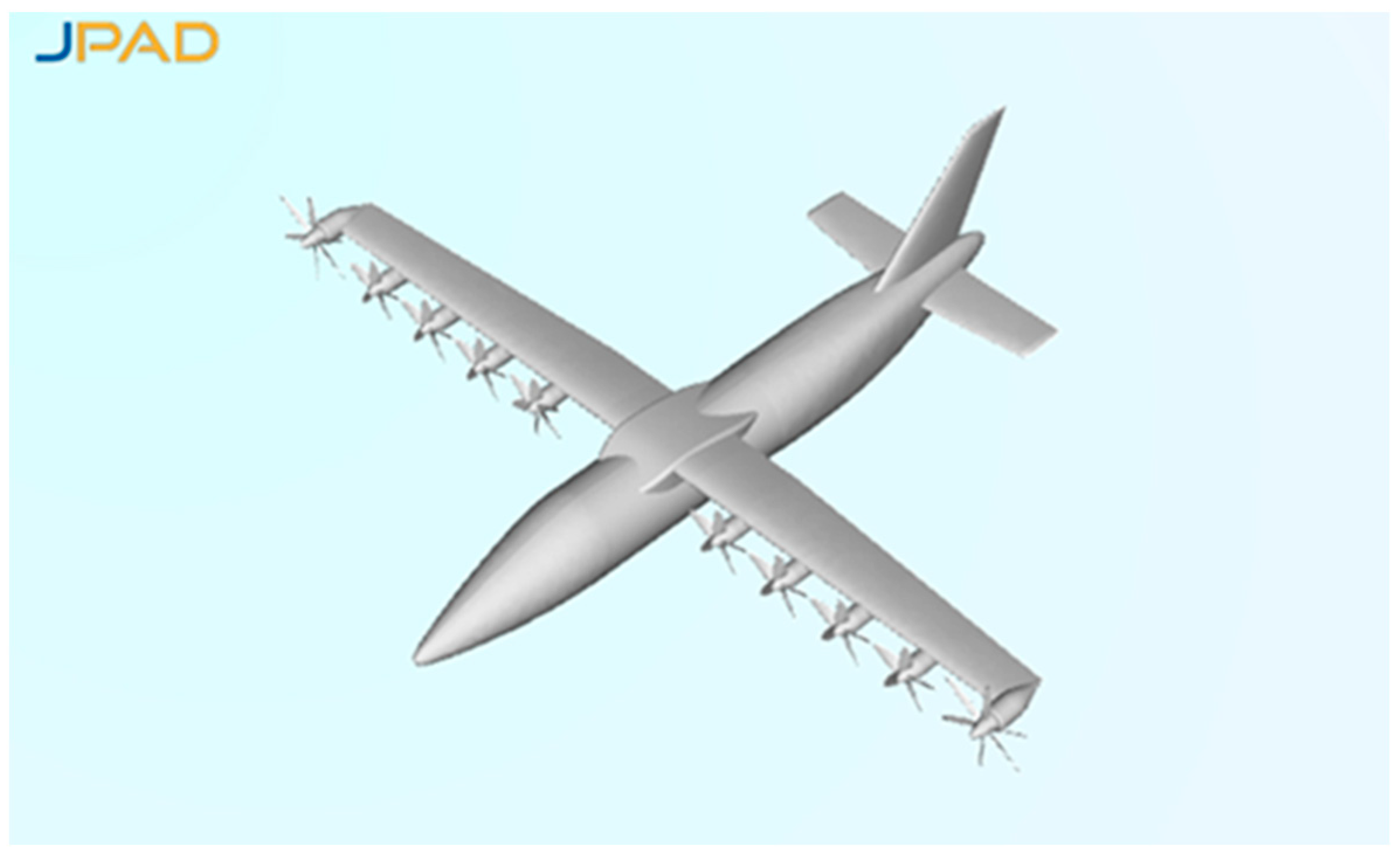
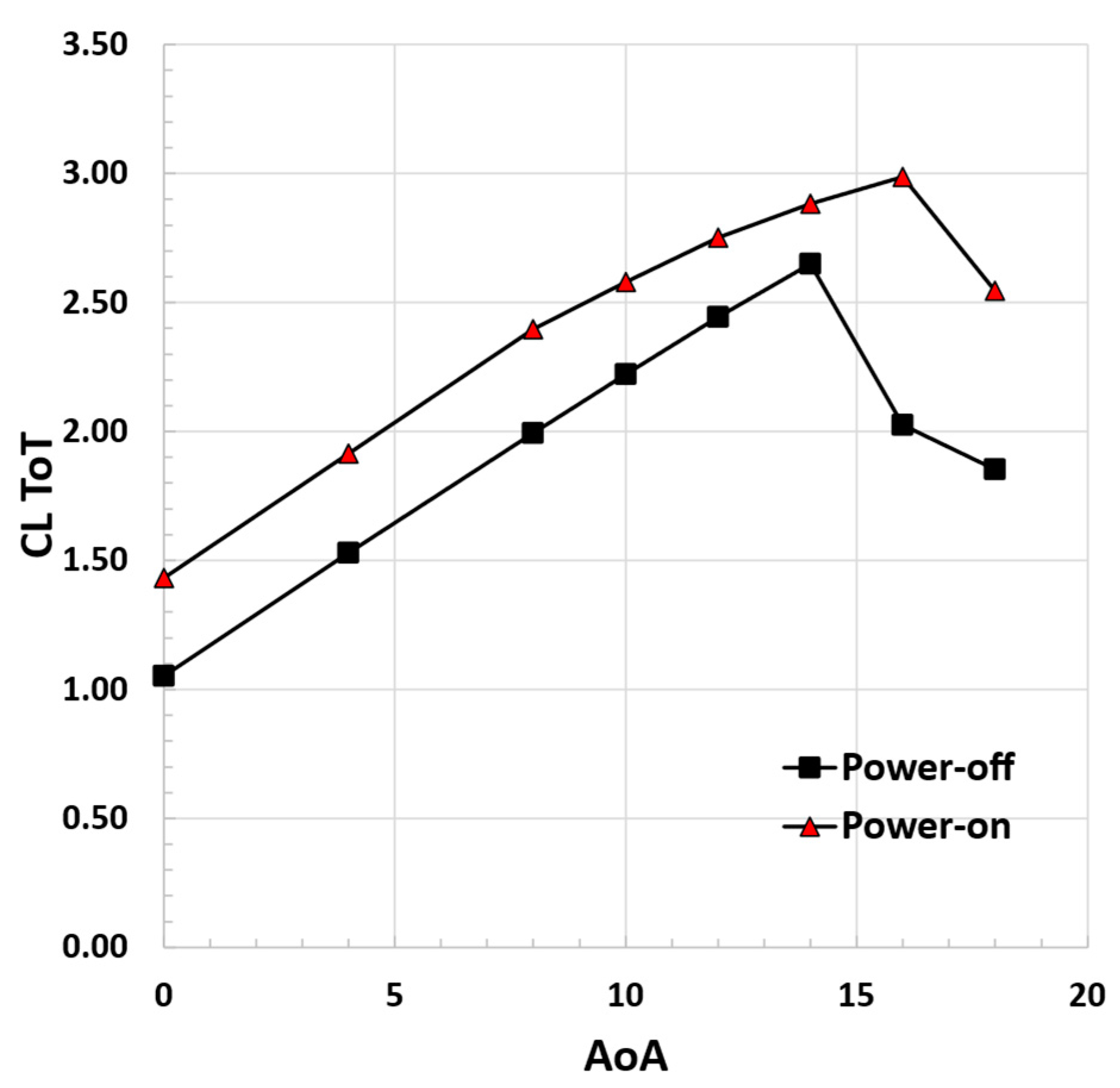
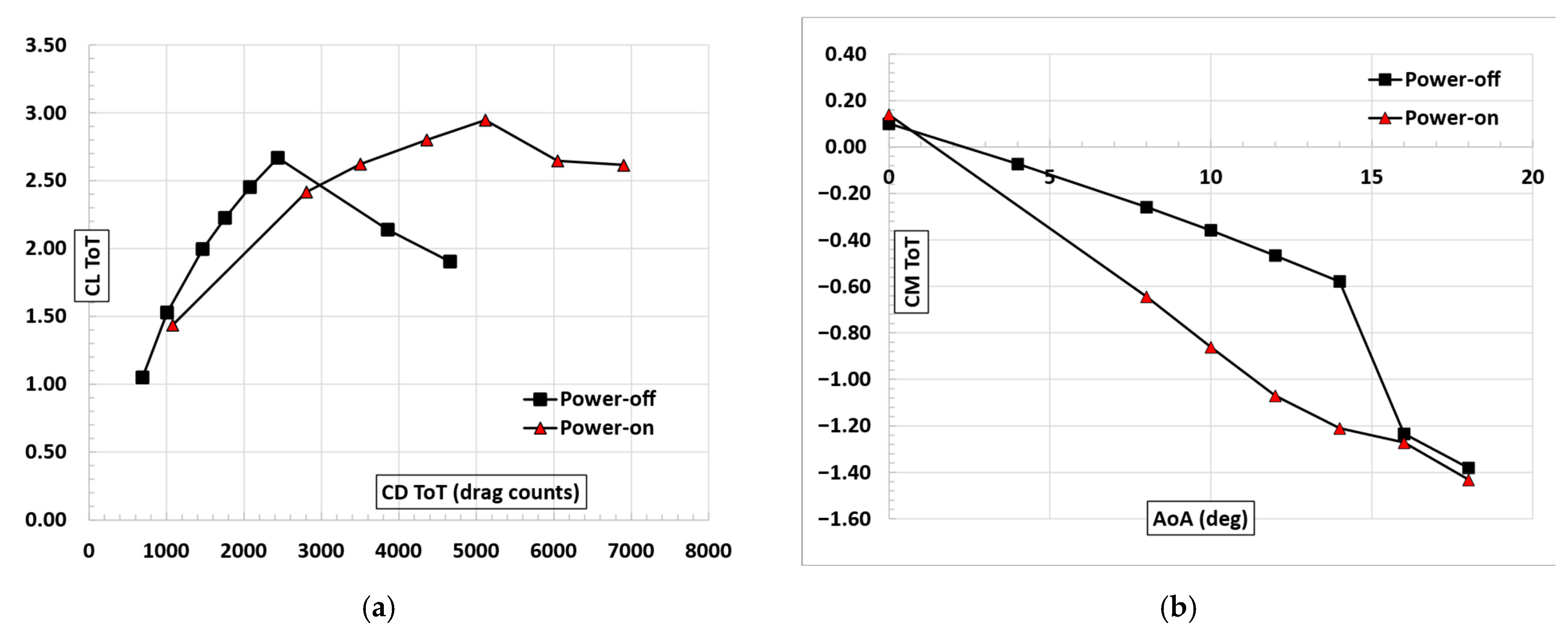
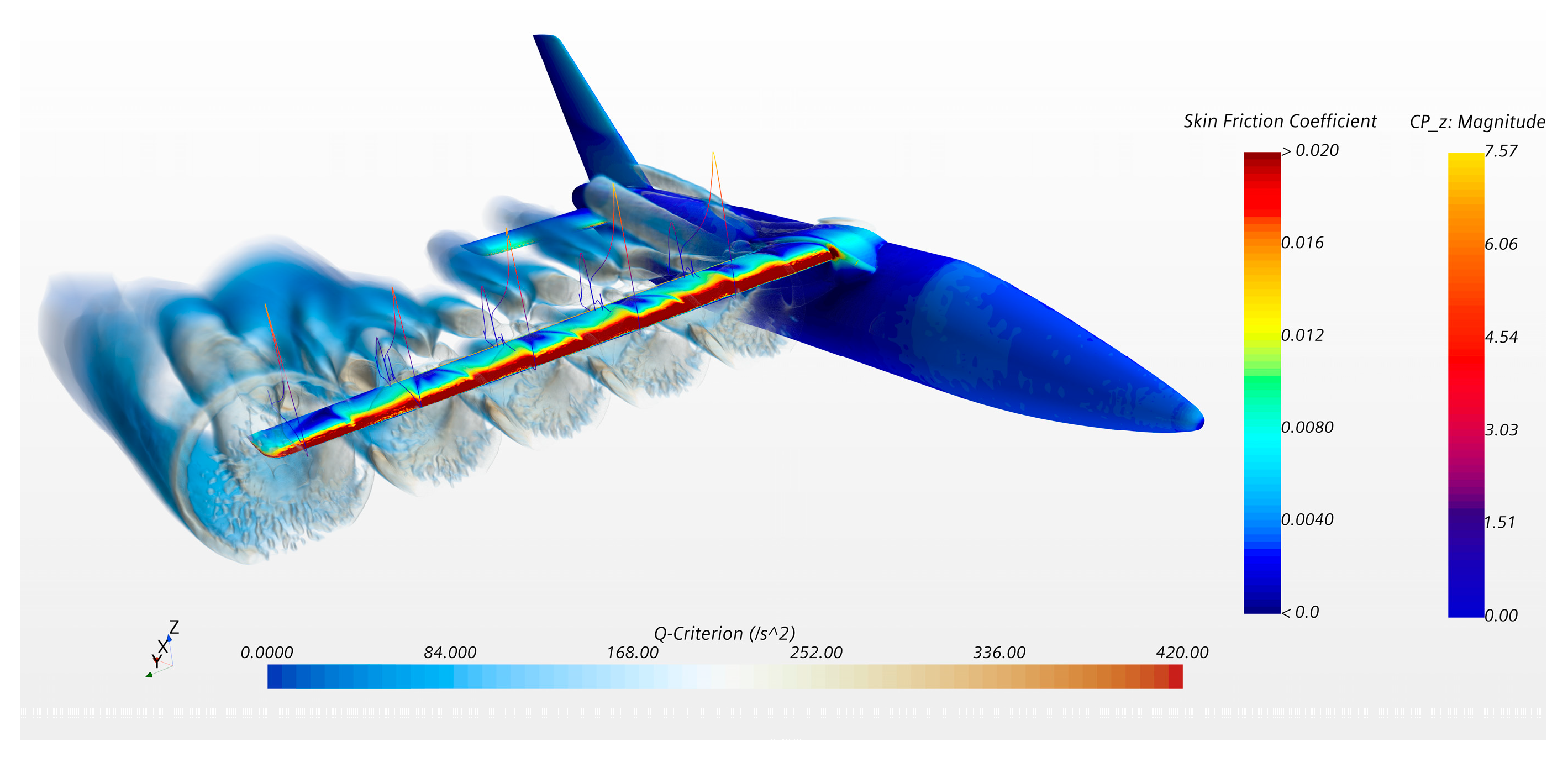
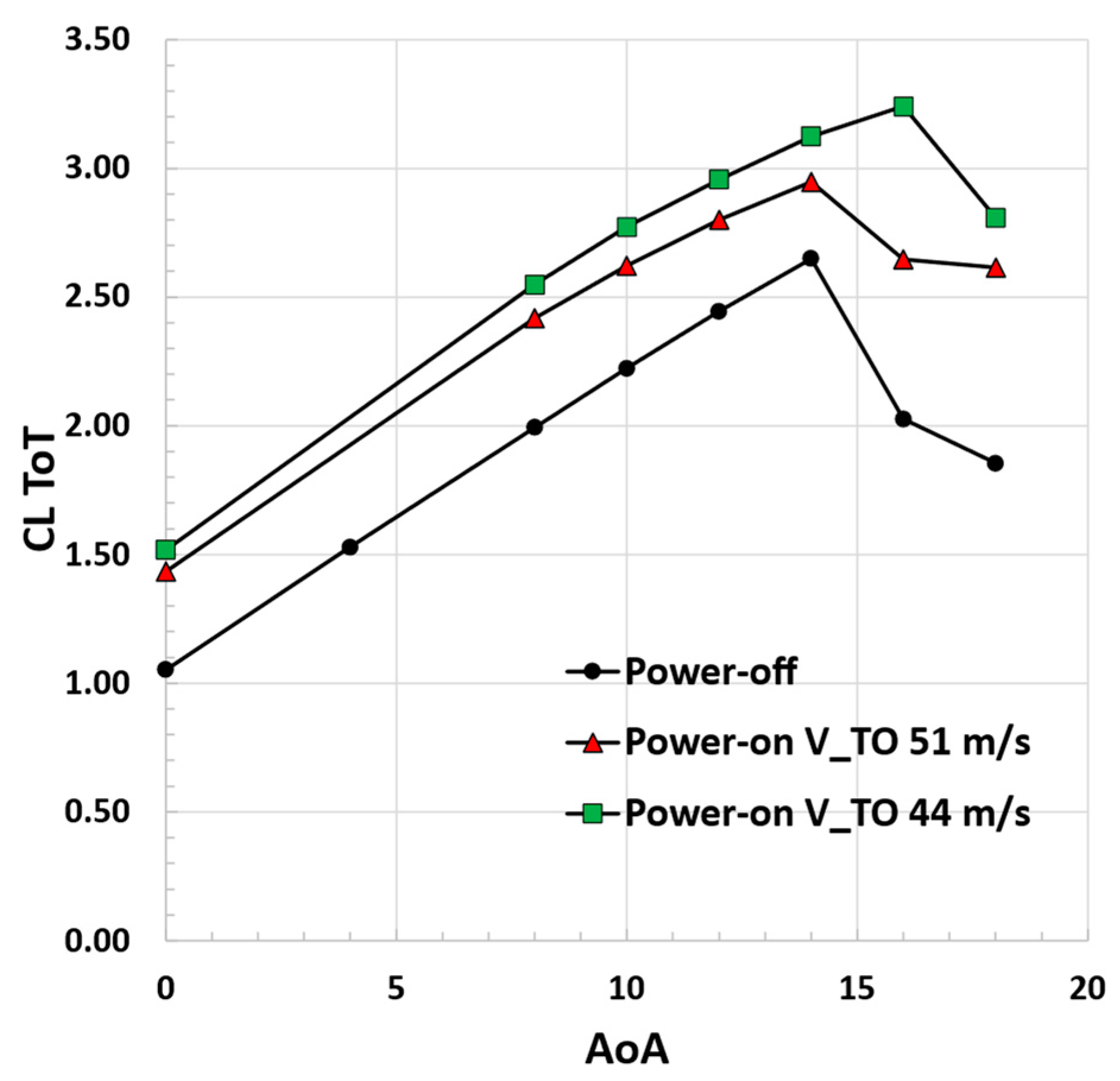
The need for environmentally responsible solutions in aircraft technology is now considered the priority for global challenges related to the limited supply of traditional fuel sources and the potential global hazards associated with emissions produced by traditional aircraft propulsion systems. Several projects, including research into highly advanced subsonic aircraft concepts to drastically reduce energy or fuel usage, community noise, and emissions associated with aviation, are currently ongoing. One of the proposed propulsion concepts that address European environmental goals is distributed electric propulsion. This paper deals with the detailed aerodynamic analyses of a full-electric commuter aircraft with fuel cells, which expects two primary electric motors at the wing tip and eight other electric motors distributed along the wingspan as secondary power sources. The main objective was the numerical estimation of propulsive effects in terms of lift capabilities at take-off conditions to quantify the possible reduction of take-off field length. However, the aircraft was designed from scratch, and therefore a great effort was spent to design both propellers (for the tip and distributed electric motors) and the wing flap. In this respect, several numerical tests were performed to obtain one of the best possible flap positions. This research work estimated a reduction of about 14% of the take-off field length due to only the propulsive effects. A greater reduction of up to 27%, if compared to a reference conventional commuter aircraft, could be achieved thanks to a combined effect of distributed propulsion and a refined design of the Fowler flap. On the contrary, a significant increment of pitching moment was found due to distributed propulsion that may have a non-negligible impact on the aircraft stability, control, and trim drag.
Keywords: DEP; take-off performance; full-electric aircraft; CFD-RANS DEP; take-off performance; full-electric aircraft; CFD-RANS