Article

Application of Machine Learning to Predict Heating Demand and Heating Energy Savings from Green Roof Installations in an Urban Environment

by
Todorka Samardzioska
1,
Milica Jovanoska-Mitrevska
1 and
Slobodan B. Mickovski
1,2,*
1
Faculty of Civil Engineering, Ss. Cyril and Methodius University in Skopje, 1000 Skopje, North Macedonia
2
Department of Construction and Built Environment, Glasgow Caledonian University, Glasgow G4 0BA, UK
*
Author to whom correspondence should be addressed.
Climate 2026, 14(7), 141; https://doi.org/10.3390/cli14070141 (registering DOI)
Submission received: 28 April 2026 / Revised: 26 June 2026 / Accepted: 3 July 2026 / Published: 6 July 2026

Abstract

Buildings account for a significant share of final energy consumption, with space heating representing one of the major energy uses in residential buildings. Therefore, improving the thermal performance of building envelopes is an important strategy for reducing energy demand. Green roofs can contribute to this objective by modifying roof thermal properties and reducing heat losses through the building envelope. This study investigates the use of machine learning to predict annual heating demand and potential heating energy savings associated with replacing conventional roof configurations with a selected green roof assembly in a representative stock of Macedonian buildings. A representative dataset comprising 2934 building cases based on post-2013 buildings designed in accordance with the national energy-performance regulations was assembled. The dataset covers a wide range of building typologies, envelope thermal properties, climatic conditions and heating schedules. Three supervised learning models, Random Forest, Artificial Neural Network and Extreme Gradient Boosting (XGBoost), were developed and compared. The results show that XGBoost achieved the highest predictive accuracy and the best computational efficiency, with test coefficients of determination of 0.9901 for the heating demand of conventional roof buildings and 0.9956 for green-roof-related heating energy savings. Most simulated buildings showed heating energy savings of up to 10% following green roof implementation, while only a limited number of cases exhibited increases in heating demand of up to 3%. The feature importance analysis identified heated floor area, heating duration and wall area as the major drivers of heating demand in conventional roof buildings, whereas roof thermal transmittance was the most influential factor governing green-roof-related heating energy savings. The findings demonstrate that machine learning can reliably reproduce the results of the established energy performance assessment methodology and provide rapid estimates of the potential heating energy savings associated with replacing conventional roofs with a selected green roof system across a representative building stock. The proposed approach can support engineers, urban planners and architects in the early-stage assessment of green roofs as an energy-efficient measure.

1. Introduction

Improving building energy performance is one of the key strategies for reducing energy consumption and greenhouse gas emissions in the built environment, thereby contributing to climate change mitigation. The residential sector accounted for 54% of total final electricity consumption in Macedonia in 2023. Around 71% of household energy demand was associated with space heating and cooling, while 17% was related to domestic hot water production [1]. The greenhouse gas emissions were 4 tons of CO2 per capita in 2023. At the same time, according to the European Environment Agency [2], final energy consumption in the country shows a slight increase instead of the planned yearly decrease of 2.7% up to 2030 by the National Energy and Climate Plan [3]. These trends underline the need for effective measures to reduce building energy demand and greenhouse-gas emissions. Since buildings are long life facilities with high cumulative energy consumption, improving their performance is essential for meeting future climate targets.
Roof systems represent an important component of the building envelope and can influence building energy performance. Green roofs have attracted increasing attention as a potential energy efficiency measure, because they modify the thermal behaviour of roof assemblies. A typical green roof consists of waterproofing and root barriers, drainage and filter layers, growing substrate and vegetation. Its thermal behaviour is governed by several interacting mechanisms, including added insulation, solar shading, evapotranspiration, increased albedo and the thermal mass of the substrate layer. In green roofs, solar radiation is balanced by sensible and latent heat flux from plants and ground surfaces, as well as conduction through the underlying soil layer. Many studies have been conducted over the last two decades to investigate the potential energy benefits of green roofs. These studies have reported potential reductions in heating demand during winter [4,5,6,7,8] and, more consistently, reductions in cooling demand during summer [5,6,7,8,9].
In addition to their potential contribution to building energy performance, green roofs may provide wider environmental and social benefits, including mitigation of the urban heat island effect, storm water retention, and potential reductions in life-cycle carbon emissions, biodiversity support, acoustic insulation and improved urban resilience [10,11,12,13,14,15,16,17,18,19]. Their growing strategic importance is also reflected in policy measures such as the French requirement for new commercial developments to include either solar panels or green roofs [20]. These findings highlight the broader sustainability value of green roofs.
Predicting the impact of green roofs on building energy demand remains challenging because performance depends on complex interactions among climate, building geometry, envelope properties and operating conditions. Building Energy Performance Forecasting (BEPF) is a process of predicting the future energy consumption of a building with a given geometry and building envelope characteristics [21]. Machine learning (ML) techniques have emerged as powerful tools for BEPF recently, because they can efficiently capture complex and nonlinear relationships among multiple influencing variables while significantly reducing computational requirements.
Numerous studies have demonstrated the applicability of different machine learning techniques for predicting building energy performance [22,23,24,25]. For example, Shakeel et al. [22] presented a comparative analysis of several machine learning models for predicting energy consumption in residential buildings, while Alvarez-Sanz et al. [23] investigated the influence of building design and operational parameters on annual heating demand and developed prediction models using several supervised machine learning algorithms trained on large datasets generated through building energy simulations.
Several studies have also explored the application of artificial intelligence methods to evaluate the thermal performance of green roofs. For example, researchers proposed an Artificial Neural Network (ANN) model for predicting monthly internal and external green roof surface temperatures, as well as indoor air temperature, under Mediterranean climatic conditions [26]. The model was developed using data from an existing green roof installed on a building at the University of Palermo. A dataset was used that included 180 simulated green roof configurations with different vegetation characteristics, substrate thicknesses, thermal and physical properties. The results demonstrated that machine learning approaches can provide an efficient alternative to conventional simulation methods for assessing green roof thermal performance. Similarly, Wang et al. [27] proposed a Sparrow Search Algorithm (SSA)–optimised Backpropagation Neural Network (BPNN) model for predicting the thermal performance of green roofs in subtropical regions. The model was established using meteorological data from Guangzhou, China, and simulated green roof temperature data. The study demonstrated the benefits of applying the Sparrow Search Algorithm to optimise the neural network prediction model. Li et al. [28] presented an artificial intelligence framework integrating graph convolution for predicting the interior and exterior surface temperatures of green roofs. The framework incorporates a Graph Convolutional Network (GCN), a Fully Connected Network (FCN) and SHapley Additive exPlanations (SHAP). The training dataset was established using meteorological data collected in Shanghai, China, along with experimental data obtained from green roofs installed on existing buildings. The proposed framework demonstrated the applicability of deep learning techniques for predicting green roof thermal performance while accounting for spatial dependencies among input parameters. Wang et al. [29] systematically identified the ANN type and optimised its hyper parameters to improve the prediction of transferred energy through green roofs. Different ANN architectures, including feedforward, recurrent and cascade neural networks, were compared for estimating heat flux from four design factors: plant height, leaf area index, soil depth and the overall heat transfer coefficient of the support layer.
Machine learning techniques have also been applied to other aspects of green roof and energy system research. Thermal imaging and RGB techniques were used to provide a more efficient assessment of vegetation cover using machine learning, which is useful for long-term green roof studies [30]. Different machine learning models were compared for estimation of energy consumption, making them effective forecasting tools in the energy sector [31,32]. In addition to being used for energy forecasting, machine learning is used to optimise battery storage and manage the grid, improving the efficiency of renewable energy sources and contributing to net zero emissions [33]. The application of machine learning models to simulate water-runoff reduction and rainwater retention by green roofs has also been investigated, highlighting their potential role in climate-adaptation strategies for densely populated urban environments [34,35].
Despite the growing body of research on machine learning for building energy prediction and the increasing interest in the thermal performance of green roofs, studies applying machine learning techniques to predict the potential building energy savings associated with green roof implementation remain limited. Furthermore, applications focused on southeast European building stocks and heating-dominated climates remain limited, particularly in Macedonia.
Therefore, this study investigates the application of machine learning techniques to predict annual heating demand and potential heating energy savings resulting from the replacement of conventional roof configurations with a selected green roof system in a representative stock of newly designed Macedonian buildings. Since the current national methodology for building energy performance assessment considers heating demand as the relevant performance indicator [36], the present study focuses exclusively on heating-related energy performance. The green roof is represented through its steady-state thermal transmittance, while dynamic processes such as evapotranspiration, shading and moisture storage are not explicitly modelled. A dataset comprising 2934 building cases was assembled from a reference sample of 70 post-2013 building projects for which energy-performance studies were available to the authors. The dataset encompasses a wide range of building typologies, envelope thermal characteristics, climatic conditions and heating schedules. Based on this dataset, Random Forest (RF), Artificial Neural Network (ANN) and Extreme Gradient Boosting (XGBoost) models were developed and compared within a multi-output regression framework. In addition to evaluating predictive accuracy and computational efficiency, the study identifies the most influential input parameters within the machine learning models. The research develops a simplified machine learning model based on a reduced set of input data, enabling rapid prediction with lower data requirements while maintaining satisfactory predictive accuracy. The proposed framework demonstrates how ML techniques can support rapid data-driven assessment of green-roof implementation as a measure of energy efficiency in the built environment.

2. Materials and Methods

2.1. Dataset Based on Building Stock

The building database used in this study contains 2934 cases generated from a reference sample of 70 real building projects designed after the implementation of the national energy performance regulations in 2013; the authors had energy-performance studies available. Additional cases were produced by varying key parameters, including the thermal transmittance values (U-values) of envelope components within the limits prescribed by the national regulations [36], climatic conditions, heating demand assumptions and window-to-wall ratios. Since the Macedonian regulatory framework considers only building heating demand, heating energy demand was the only performance indicator calculated and analysed in this study.
The analysed building stock includes representative building typologies commonly found in the Macedonian construction sector, including single-family houses, residential apartment buildings, mixed residential–commercial buildings, attic extensions and reconstructed buildings. Therefore, the dataset is suitable for evaluating heating energy behaviour across a diverse range of building geometries and envelope configurations.
The final dataset includes buildings with gross heated floor areas ranging from 54 m2 to 4426.4 m2. The total building envelope area ranges from 194.5 m2 to 3657.4 m2, covering both small individual dwellings and larger multi-family or mixed-use buildings.
The thermal properties of the envelope elements are consistent with the maximum prescribed values for new buildings designed under the requirements of the Rulebook on Energy Properties in Buildings [36]. The wall thermal transmittance, Uwall, ranges from 0.120 to 0.350 W/m2·K, while the floor thermal transmittance, Ufloor, ranges from 0.170 to 0.500 W/m2·K. The window thermal transmittance, Uwindow, varies from 0.900 to 2.000 W/m2·K, covering different glazing and frame performance levels. The roof thermal transmittance, Uroof, ranges from 0.110 to 0.250 W/m2·K.
The calculations were performed using the number of heating degree days corresponding to the Macedonian climatic conditions. The heating degree days in the dataset vary from 2080 to 3735 HDD, representing climatic variation among Macedonian cities and locations. The daily heating duration considered in the calculations ranges from 10 to 24 h per day, allowing different occupancy profiles and heating operation assumptions to be represented. The annual specific heating demand of the buildings was calculated in accordance with the Rulebook on Energy Properties in Buildings [36]. Consequently, the ML models were trained to reproduce the output results of the methodology based on the Rulebook, rather than measuring the buildings’ energy consumption.
The calculation is based on heat losses through the building envelope, using the thermal transmittance values of the envelope components, together with climatic data and heating operation assumptions. The calculated heating demand is normalised by the heated floor area and expressed as annual specific heating demand (kWh/m2·an.).
Overall, the dataset provides a representative sample of new Macedonian buildings that are compliant with regulations. It covers a wide range of building sizes, envelope areas, thermal envelope properties, climatic conditions and heating schedules. This enables the developed machine learning models to learn the relationship between building geometry, envelope thermal properties, climate severity, heating operation and heating energy demand under the specific climate conditions.

2.2. Green Roof Scenario and Modelling Assumptions

The buildings included in the dataset comprise both flat and pitched conventional roof configurations with different construction layers and finishing materials. The thermal performance of these roof systems is represented by roof thermal transmittance values (Uroof) ranging from 0.110 to 0.250 W/m2·K, consistent with current energy-efficient practices and regulatory requirements in Macedonia.
The objective of this scenario analysis was to assess how replacing conventional roof configurations with a selected green roof system affects building heating energy demand. All climatic conditions, heating assumptions and envelope properties were kept unchanged for each building case. Only the roof configuration was replaced by the selected green roof system, which allowed the resulting differences in heating demand to be attributed solely to the roof replacement. Although green roof systems are not yet widely implemented in the Macedonian construction sector, their potential thermal and environmental benefits justify their consideration as a prospective design solution.
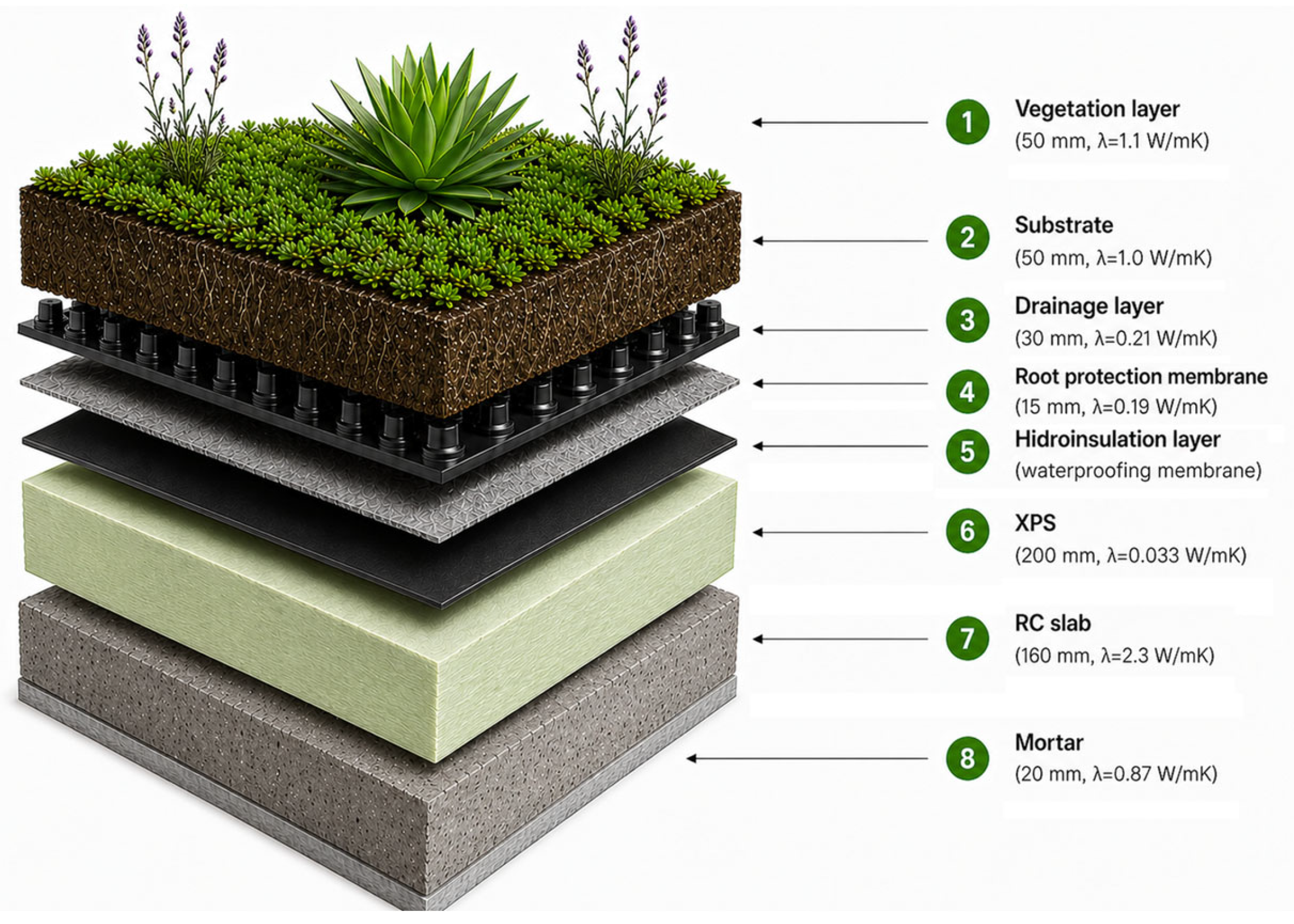
Figure 1 shows the layer configuration and thermal characteristics of the selected green roof system. Based on the specified material properties and layer thicknesses, a theoretical steady-state thermal calculation was performed, resulting in a thermal transmittance value of U = 0.15 W/m2·K for the green roof assembly.
In the present study, the dynamic thermal effects of green roofs were not explicitly considered and the selected system was represented using a steady-state thermal transmittance approach. This simplification was considered appropriate because the analysis focused exclusively on winter heating energy demand, where heat transfer is mainly governed by conductive losses through the roof assembly.
D’Orazio et al. [8] reported that the difference between the dynamically measured effective U-value and the theoretically calculated value is approximately 7.48%. Evangelisti et al. [37] demonstrated that an ultra-lightweight, soil-free green roof layer does not significantly modify roof thermal transmittance during the heating period when adequate insulation is already present. On the contrary, during cooling periods, dynamic processes such as shading, evapotranspiration and thermal mass can substantially reduce cooling loads.
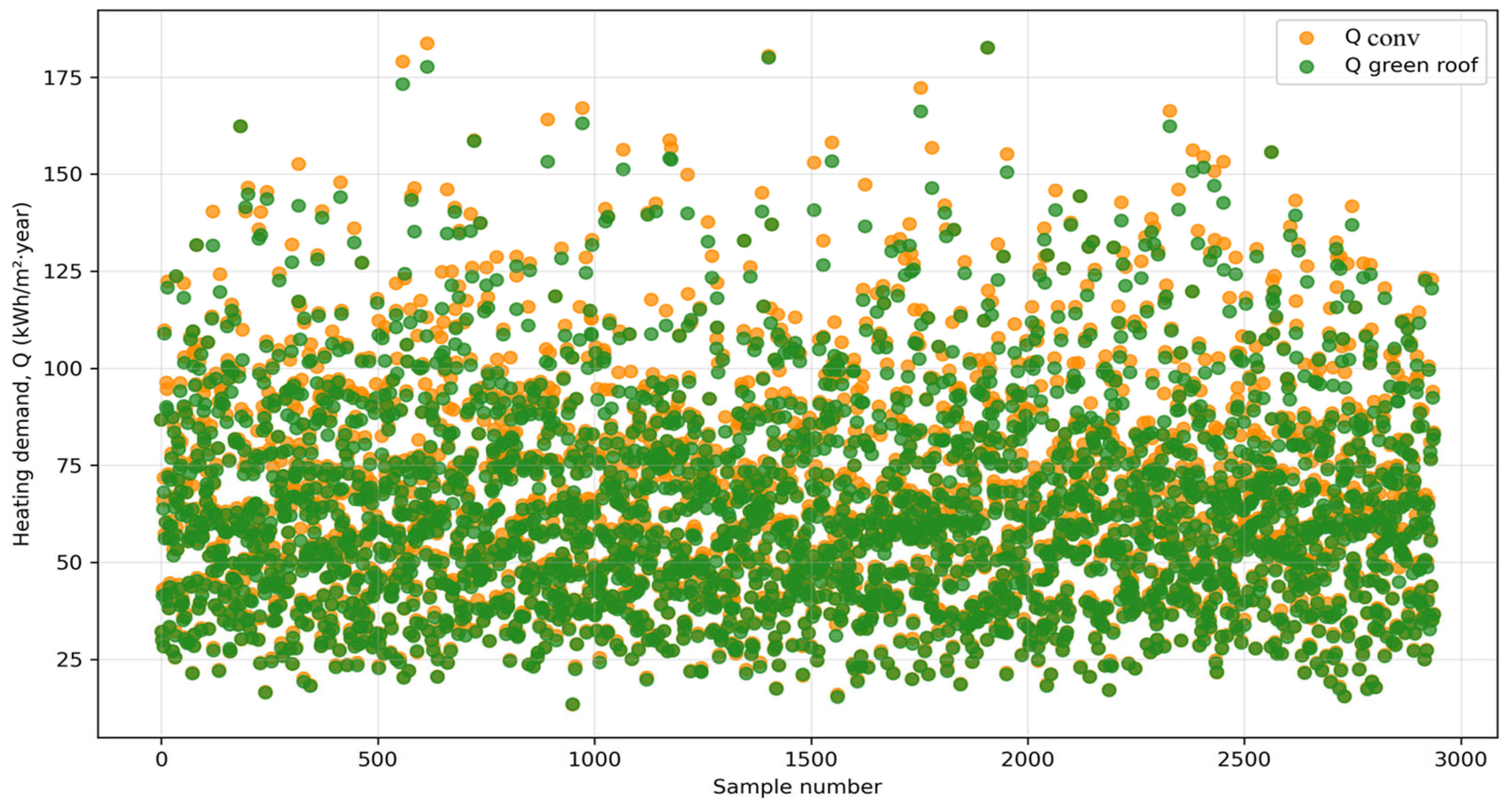
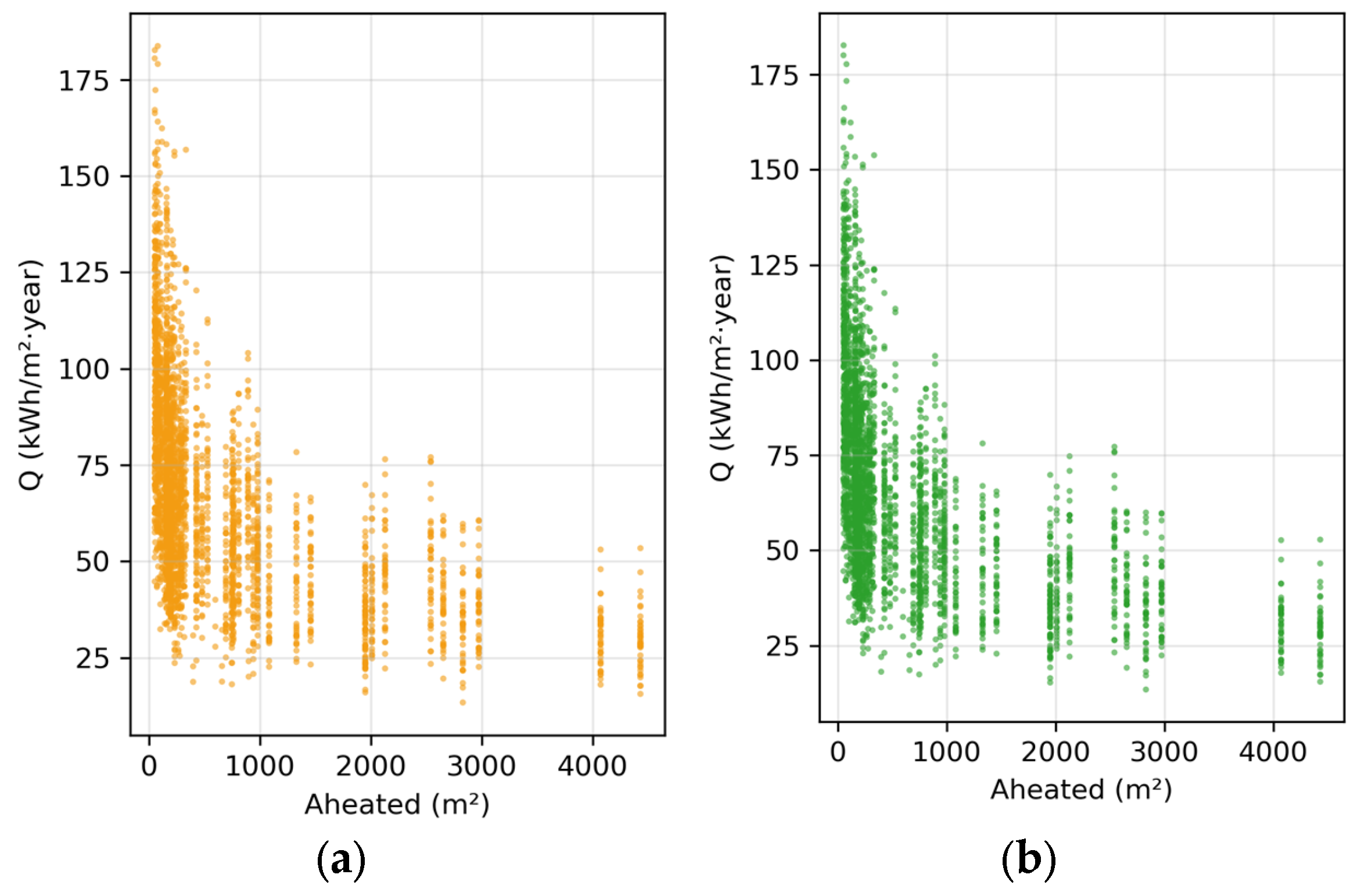
Figure 2, Figure 3, Figure 4 and Figure 5 summarise the simulated effect of applying the selected green roof configuration to the complete building dataset. Figure 2 compares the annual specific heating demand of buildings with the conventional roof design (Qconv) to the heating demand of the same buildings after green roof implementation (Qgr) for all analysed cases. Figure 3 presents the relationship between annual specific heating demand and heated floor area for both roof configurations, providing additional insight into the distribution of heating demand across the analysed building stock. Smaller buildings in the dataset tend to exhibit higher specific heating demand, which can be attributed to their generally higher envelope area/floor area ratio and lower geometric compactness, resulting in greater transmission heat losses per unit of heated area.
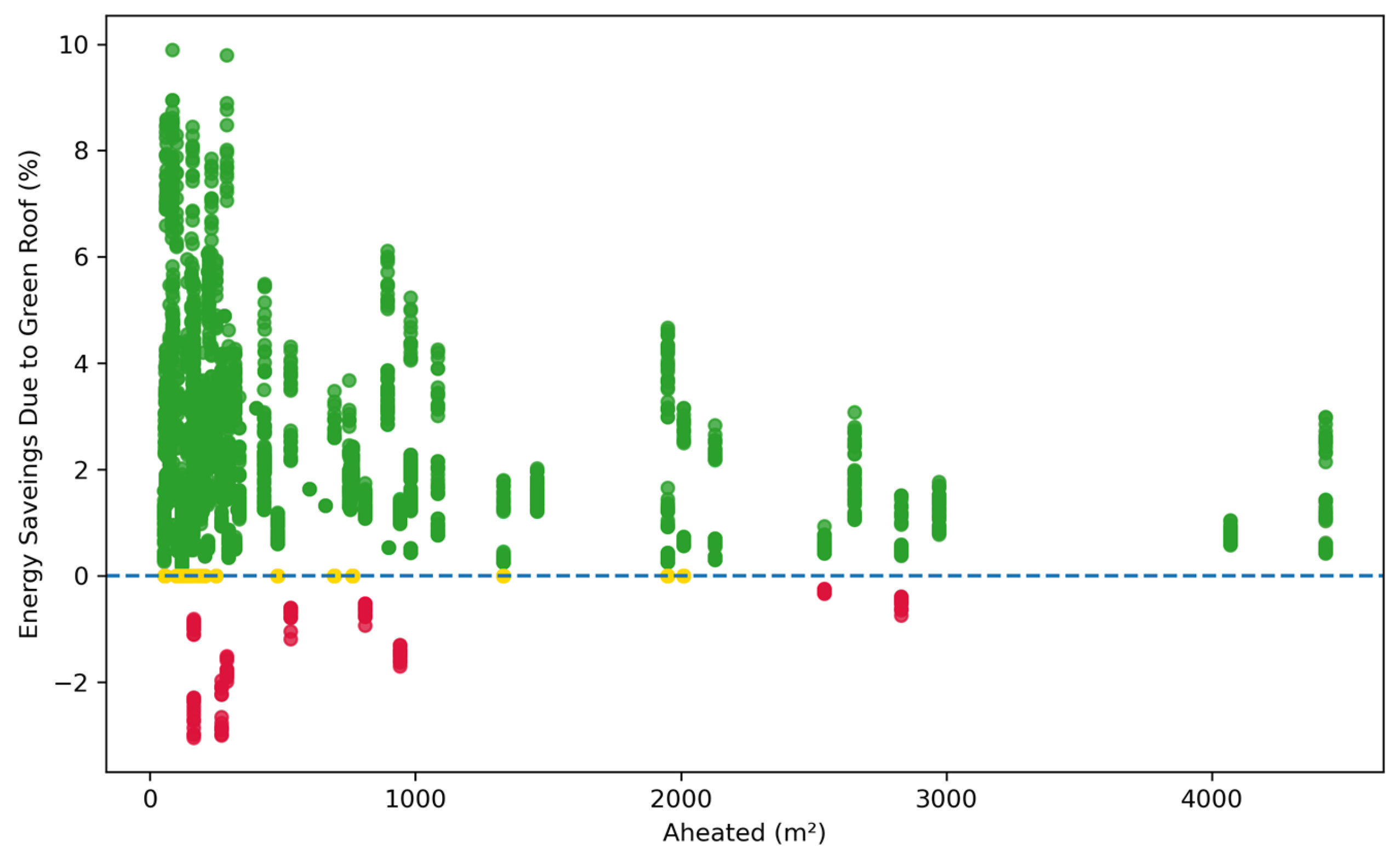
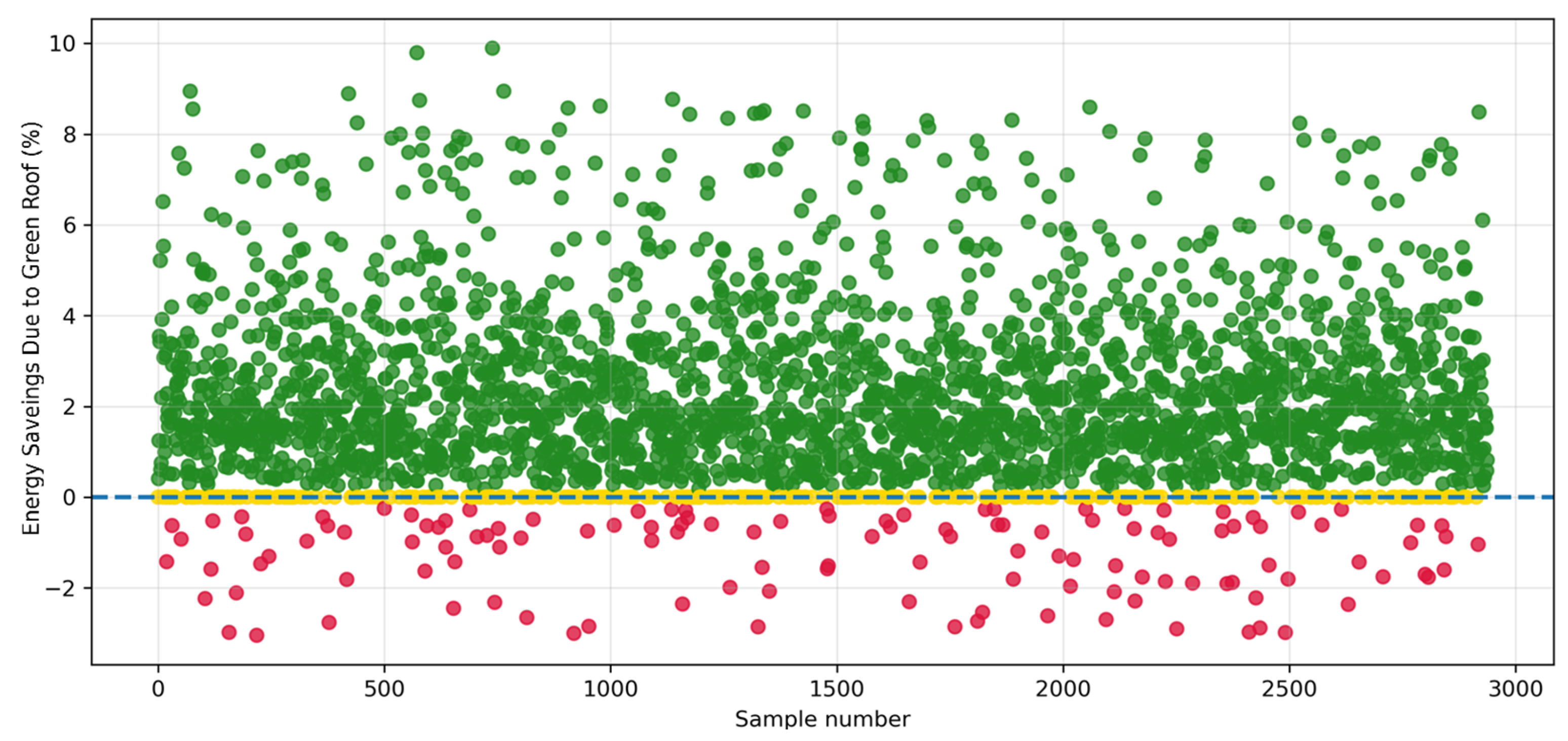
Figure 4 presents the percentage change in annual specific heating demand when the conventional roof is replaced by the selected green roof configuration (EnergySaveGR). Positive values indicate reduced heating demand and improved thermal performance, whereas negative values indicate a slight increase in heating demand. Most cases show positive savings of up to 10%, while only a limited number of buildings exhibit negative responses, up to 3%. Figure 5 shows that positive heating energy savings occur across almost the entire range of heated floor areas, although the highest savings are more frequently observed in smaller buildings. The heating energy benefit of the green roof is case-dependent and influenced by building size and the thermal performance of the original roof system. Most of the buildings analysed had heated floor areas below 1000 m2, reflecting the characteristics of the reference number of recent Macedonian buildings.
Therefore, the observed trends were supported by a larger number of cases in this range, while larger buildings were less represented in the dataset.

2.3. Machine Learning Approaches

Machine learning (ML) is a core component of data science that focuses on developing algorithms capable of learning patterns from data and making predictions or decisions without explicit programming. It integrates concepts from statistics, mathematics and computer science to analyse large datasets and extract meaningful knowledge.
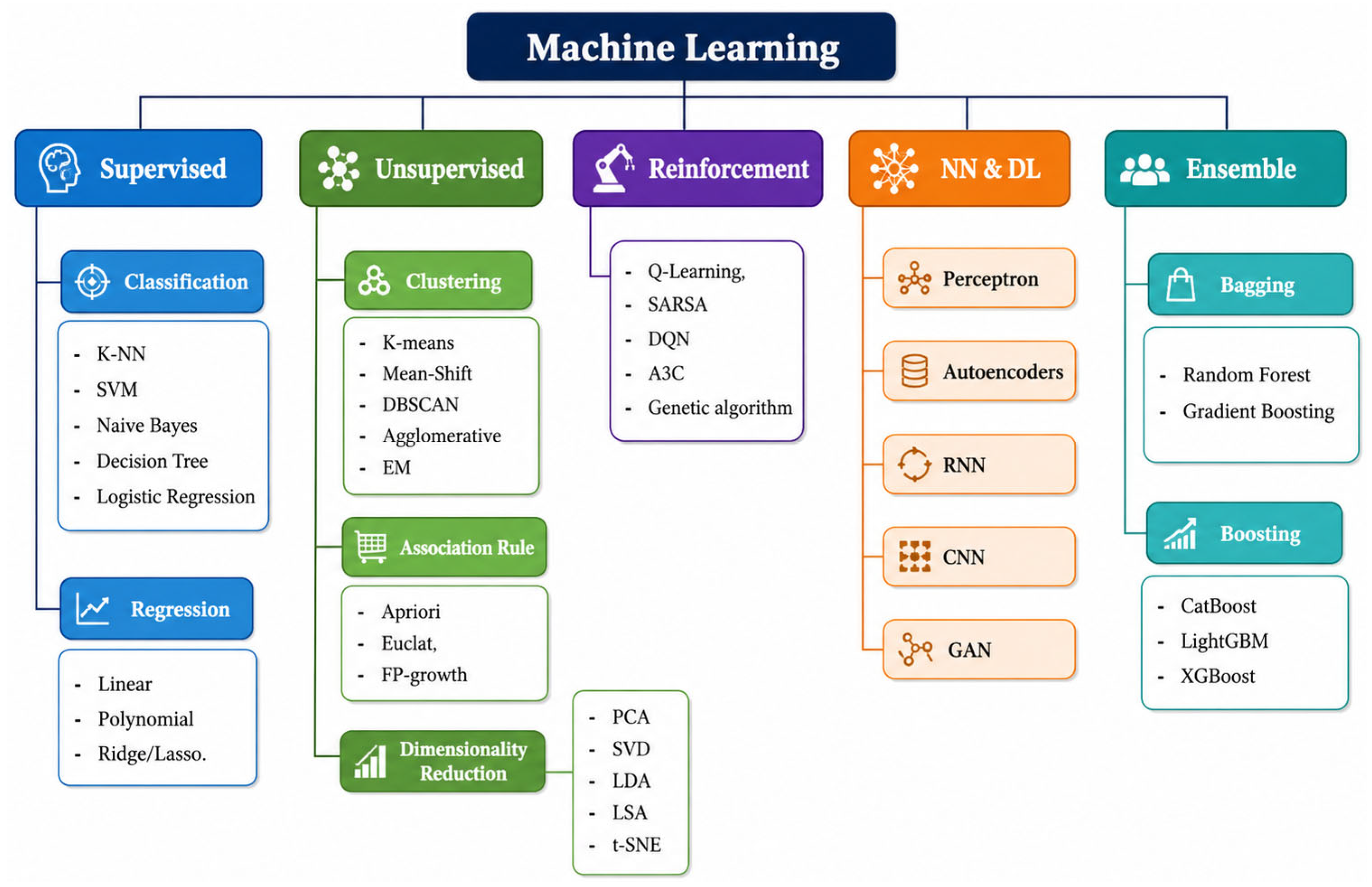
Machine learning techniques can be broadly categorised into several main types, including supervised learning, unsupervised learning, reinforcement learning, neural networks and deep learning, and ensemble learning, as illustrated in Figure 6 [38].
Supervised learning uses labelled data to train models for tasks such as classification and regression. Neural networks, commonly applied within supervised learning, are particularly suitable for modelling complex nonlinear relationships between input and output variables through interconnected processing layers. In contrast, unsupervised learning operates on unlabelled data to identify hidden structures or patterns. Reinforcement learning focuses on sequential decision making. Ensemble learning methods, including bagging and boosting approaches such as Random Forest, Gradient Boosting, LightGBM, CatBoost and XGBoost, combine multiple base learners to improve predictive performance by reducing variance, bias or both. These methods are particularly effective for structured and tabular datasets.
In this study, Random Forest, Artificial Neural Network and Extreme Gradient Boosting (XGBoost) models were employed to predict the annual specific heating demand of buildings with a conventional roof and energy savings due to implementation of a green roof scenario. The models were developed in Python 3.13.9 using the Anaconda environment and Jupyter Notebook 7.4.5. The input variables were selected according to the parameters required by the national methodology for calculating building heating demand. The input variables included heating degree days (HDD), heating duration, heated area, total envelope area, as well as the areas and thermal transmittance values (U-values) of the main building envelope components, including walls, windows, roof and floor.
Prior to model training, the dataset was pre-processed by removing missing values, duplicated records, infinite values and physically invalid observations. The cleaned dataset was then randomly divided into training and testing subsets using an 80:20 ratio, with a fixed random condition to ensure reproducibility.
The modelling approach was formulated as a multi-output regression problem, where two target variables were predicted simultaneously: annual specific heating demand of buildings with the conventional roof design (Qconv) and energy savings [%] associated with the implementation of a green roof, EnergySaveGR. The annual specific heating demand of buildings with the green roof scenario (Qgr) was not used as a direct training target; instead, it was derived from the predicted values of Qconv and EnergySaveGR using a physically consistent relationship. Model performance was evaluated using the mean absolute error (MAE), root mean square error (RMSE), and coefficient of determination (R2).

2.3.1. Random Forest

Random Forest was implemented as a multi-output regression model using the RandomForestRegressor algorithm within a MultiOutputRegressor framework, enabling prediction of the heating demand of buildings with conventional roofs (Qconv) and heating demand change due to green roof implementation (EnergySaveGR) through separate target-specific estimators.
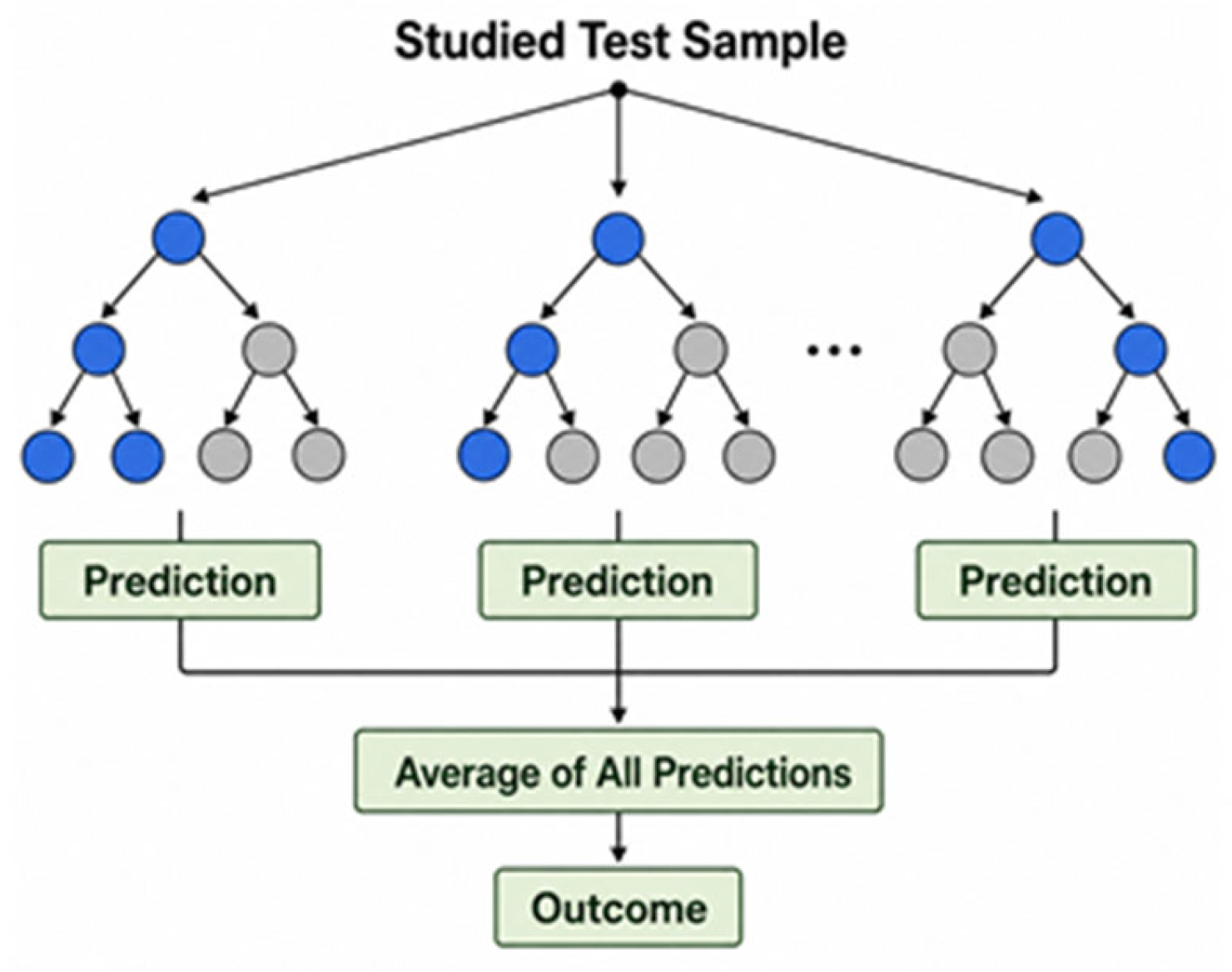
Figure 7 illustrates the structure of the Random Forest model. A given input sample was evaluated by multiple decision trees within each ensemble, where each tree independently generated predictions. Final outputs were obtained by averaging predictions, representing the bagging mechanism of Random Forest.
Hyperparameter tuning was performed using randomised search with 60 parameter combinations and 5-fold cross-validation repeated twice. The optimised parameters included the number of trees, maximum depth, minimum samples for node splitting, minimum samples per leaf and the number of features considered at each split. The model was trained using bootstrap aggregation, subsampling and parallel computation.

2.3.2. Neural Network

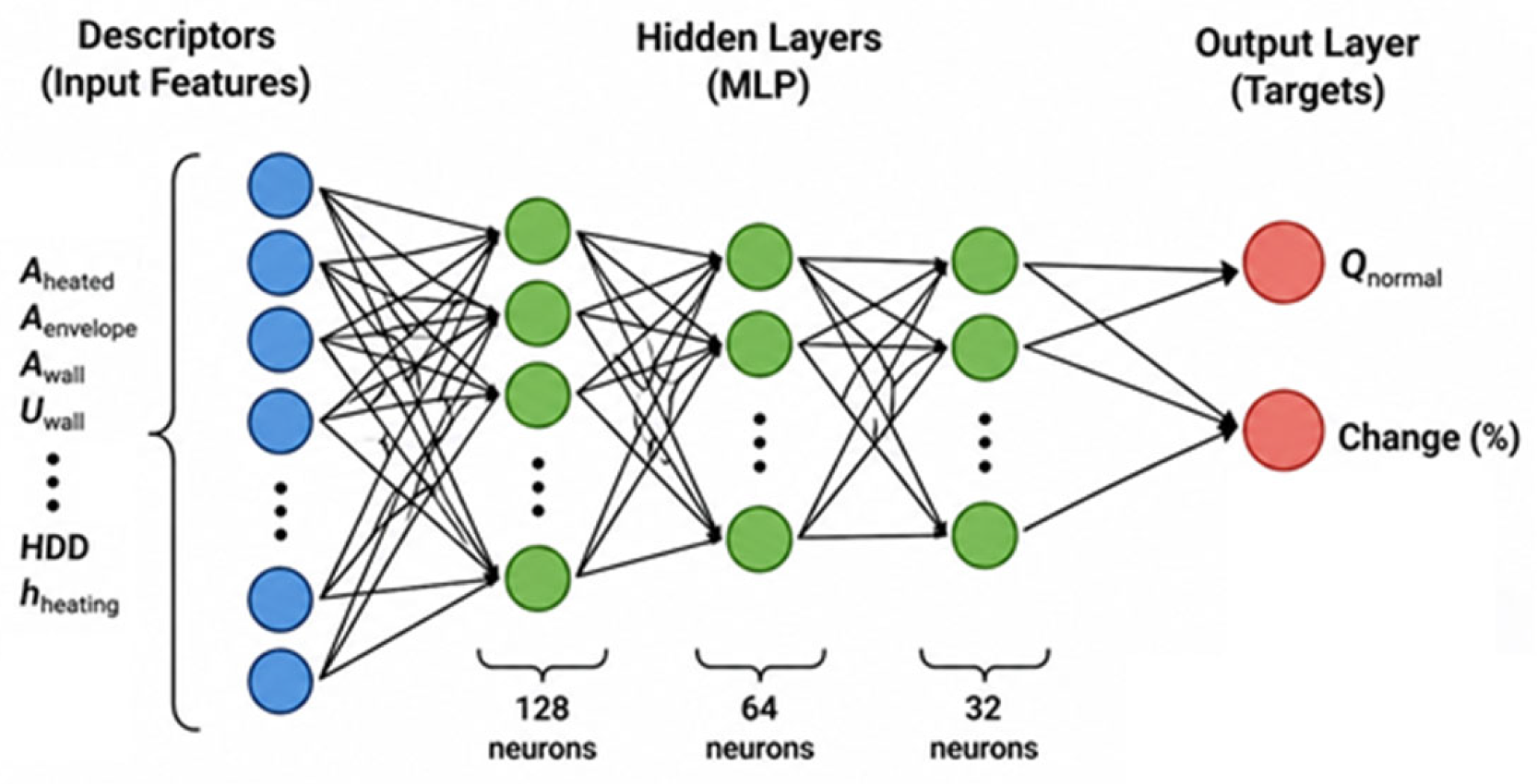
The Neural Network was implemented as a multi-output regression model using the MLPRegressor algorithm within a MultiOutputRegressor framework, enabling prediction of the heating demand (Qconv) and relative heating demand change due to green roof implementation (EnergySaveGR) through separate target-specific estimators. Input variables were processed using median imputation followed by standardisation using StandardScaler.
Figure 8 illustrates the structure of the Neural Network model. A given input sample was passed through interconnected hidden layers composed of neurons, where weighted connections and activation functions learn relationships between inputs and outputs. Final predictions were obtained through forward propagation across the network.
Hyperparameter tuning was performed using randomised search with 20 parameter combinations and 3-fold cross-validation. The optimised parameters included hidden-layer architecture, regularisation factor, initial learning rate, batch size and maximum training iterations. The model was trained using the Adam optimisation algorithm with early stopping to prevent overfitting.

2.3.3. Extreme Gradient Boosting (XGBoost)

Extreme Gradient Boosting (XGBoost) was implemented as a multi-output regression model using the XGBRegressor algorithm within a MultiOutputRegressor framework, enabling prediction of baseline heating demand (Qconv) and relative heating demand change due to green roof implementation (EnergySaveGR) through separate target-specific estimators.
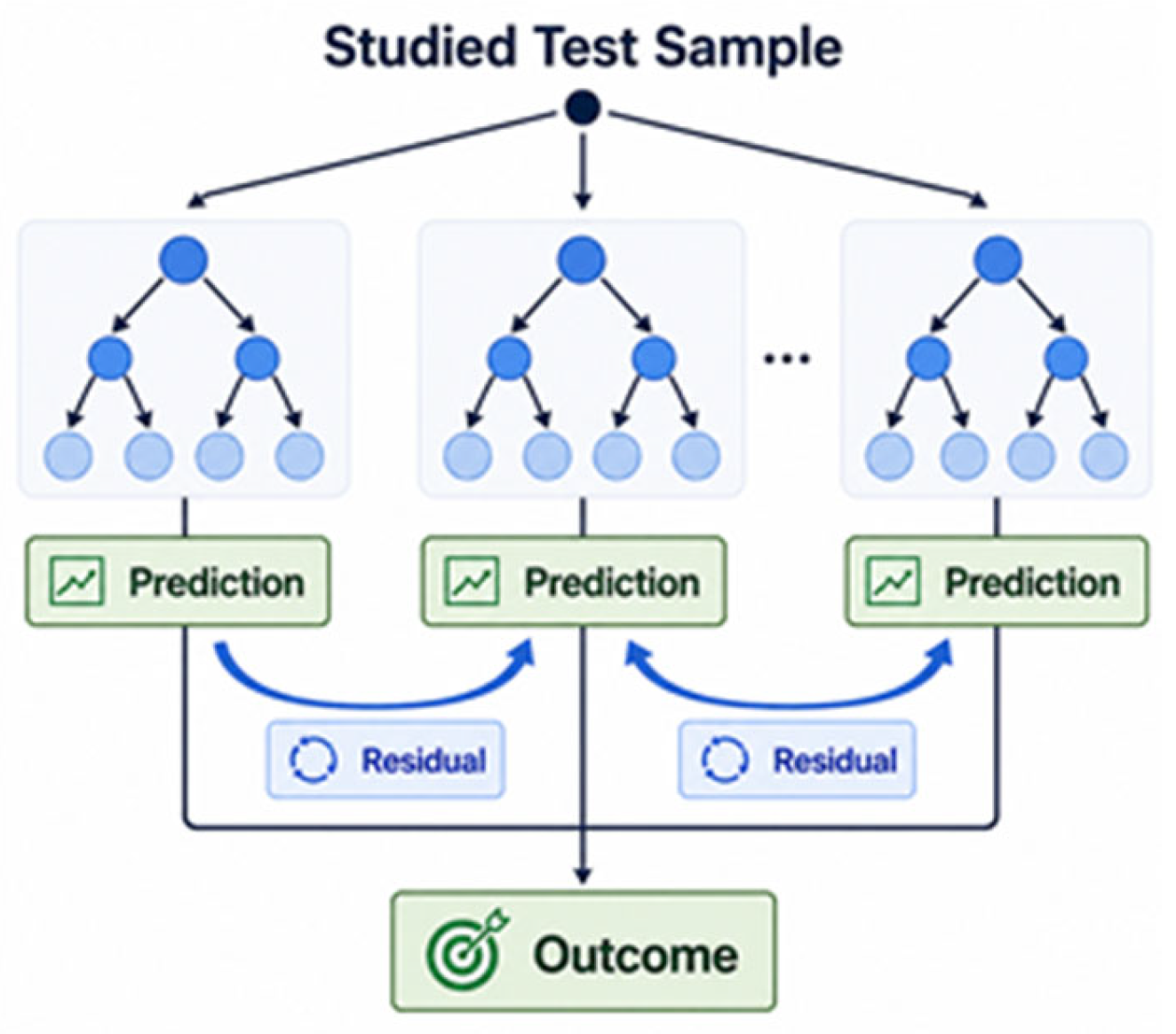
Figure 9 illustrates the structure of the XGBoost regression model. A given input sample was processed through decision trees built sequentially, where each new tree corrected the prediction errors of the previous trees. Final outputs were obtained by combining the contribution of all trees, representing the gradient boosting mechanism.
Hyperparameter tuning was performed using randomised search with 60 parameter combinations and 5-fold cross-validation repeated twice. The optimised parameters included the number of trees, maximum depth, learning rate, subsampling ratio, column sampling ratio, minimum child weight, gamma and regularisation terms. The model was trained using parallel computation and histogram-based tree construction.

3. Results and Discussion

3.1. Comparative Performance Evaluation of Random Forest, Neural Network and XGBoost

Table 1 compares the predictive performance of the developed Random Forest, Neural Network and XGBoost models. Overall, XGBoost achieved the best performance for both target variables, while Random Forest showed the weakest accuracy. For Qconv, XGBoost produced the lowest MAE and RMSE, equal to 1800.4680 Wh/m2 annually and 2599.3877 Wh/m2 annually, respectively, and the highest R2 value of 0.9901. The Neural Network also performed well, with R2 = 0.9851, but with higher errors than XGBoost. Random Forest reached R2 = 0.9413, indicating acceptable but lower predictive capability.
For EnergySaveGR, all three models achieved very high accuracy. XGBoost again gave the best result, with the lowest MAE of 0.0717%, lowest RMSE of 0.1293% and highest R2 of 0.9956. The Neural Network was slightly less accurate, while Random Forest showed the lowest R2 value of 0.9920.
In terms of computation time (training + testing), Random Forest and XGBoost required 50 s, whereas the Neural Network required 150 s. Therefore, XGBoost provided the best compromise between accuracy and computational efficiency. Hence, further detailed analysis in the following sections is focused on the XGBoost model.

3.2. XGBoost Training and Test Performance

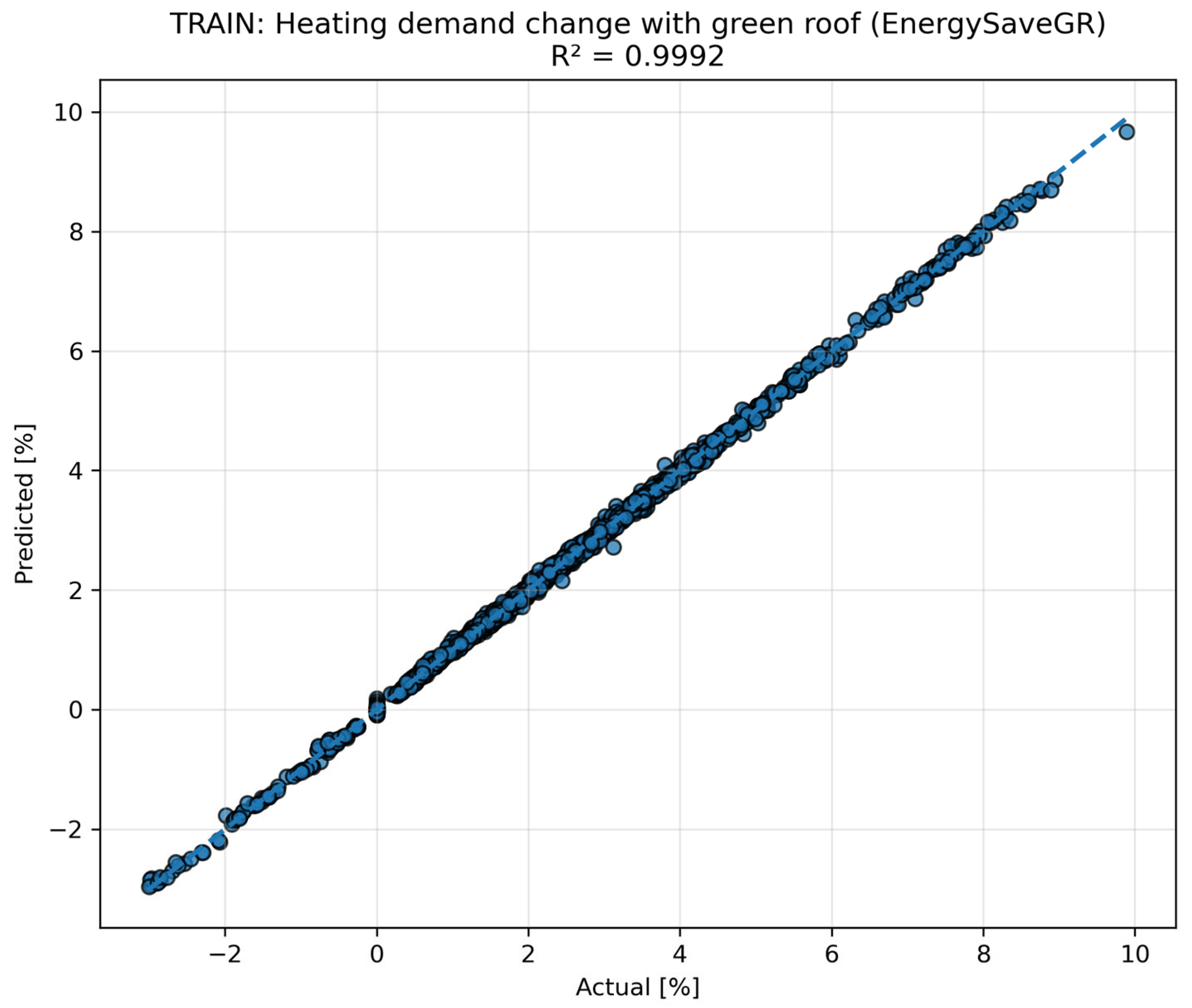
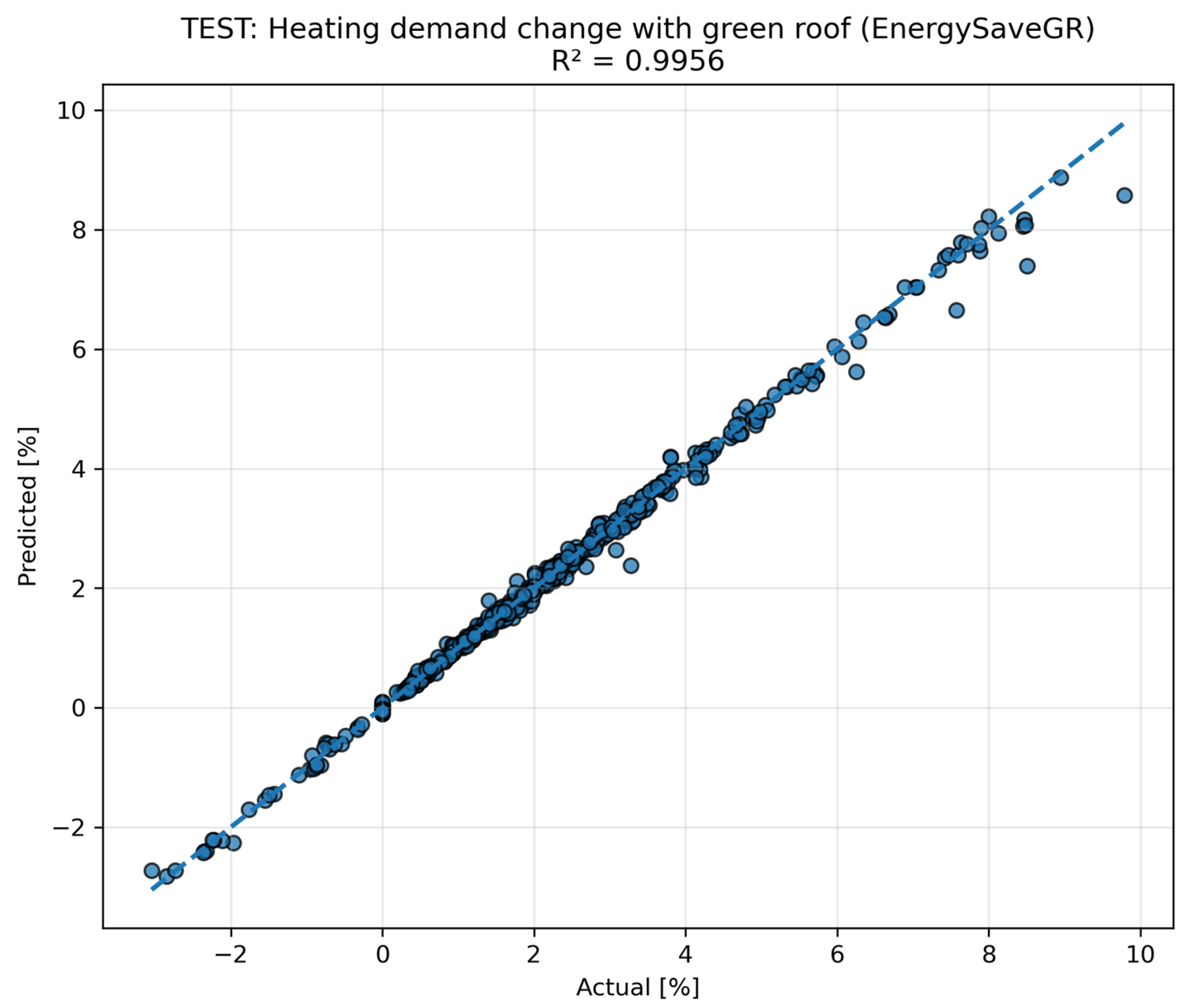
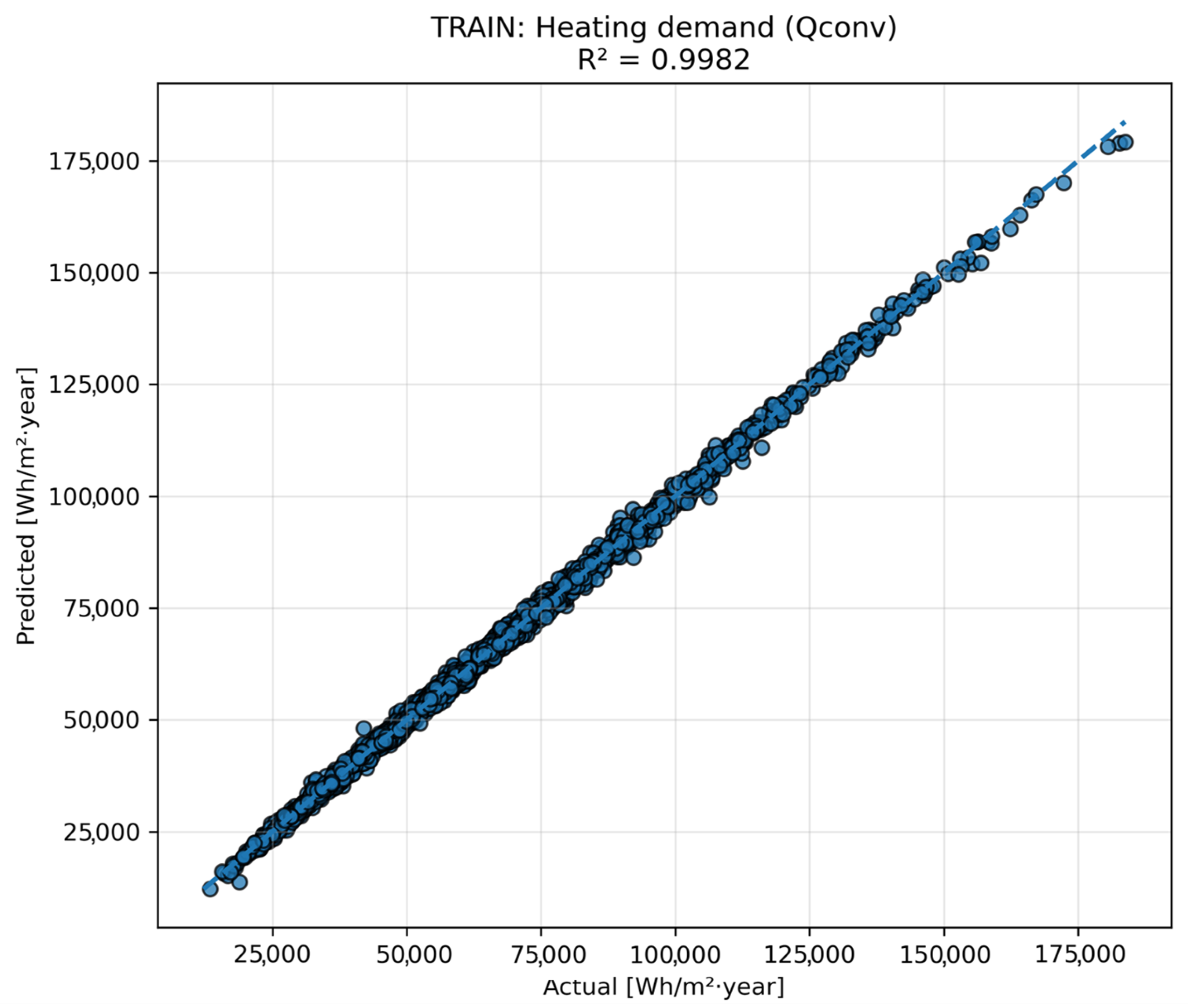
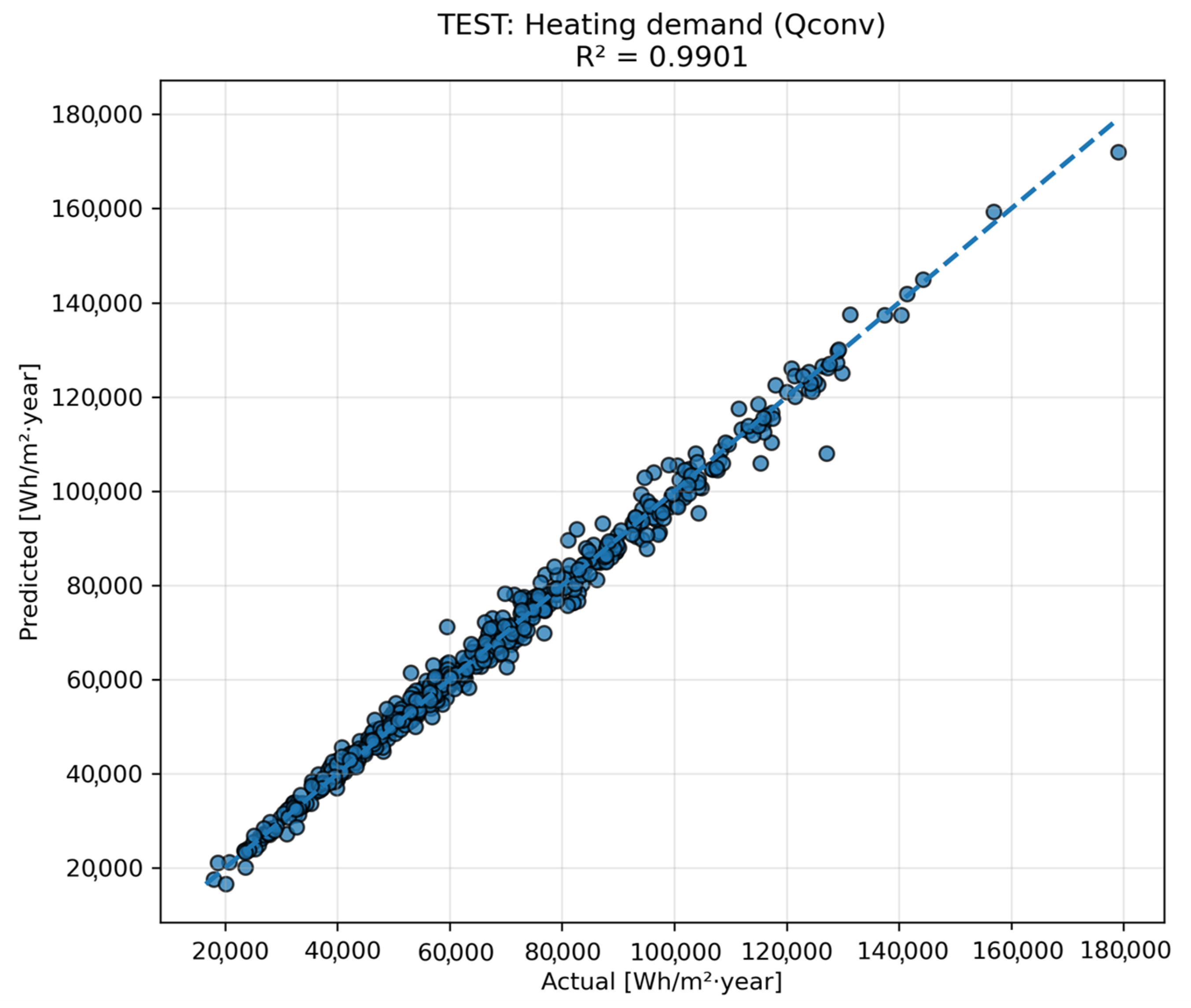
Figure 10, Figure 11, Figure 12, Figure 13, Figure 14, Figure 15 and Figure 16 present the detailed evaluation of the XGBoost model. The actual versus predicted plots show a strong agreement between simulated and predicted values, with most points closely distributed around the 1:1 reference line. This confirms that the model successfully captured the relationship between building geometry, envelope properties, climatic conditions and heating demand.
For the annual specific heating demand of buildings with the conventional roof design (Qconv), without green roof, the test results showed high predictive accuracy, with R2 = 0.9901. The model performed consistently across low-, medium- and high-demand ranges, although a slightly larger dispersion was visible for buildings with higher heating demand, Figure 12.
The prediction of EnergySaveGR is even stronger, with R2 = 0.9956 on the test set. The points are tightly aligned with the reference line, showing that XGBoost accurately reproduced both positive and negative energy savings associated with the green roof scenario, where positive values indicate heating demand reduction (improvement) and negative values indicate increased heating demand, Figure 13.
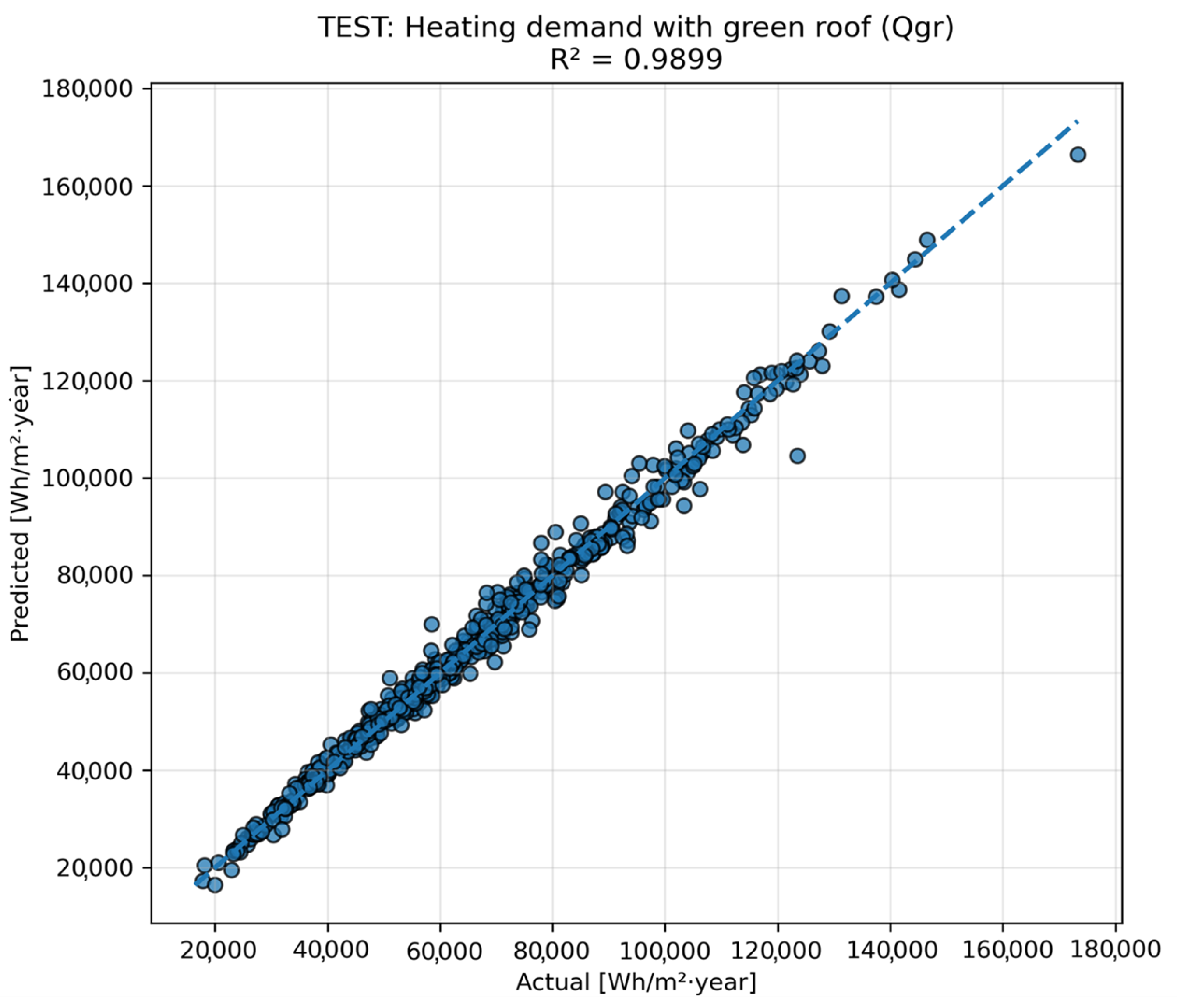
The derived heating demand with green roof also showed excellent agreement with the actual values, with R2 = 0.9899. This confirms that calculating Qgr from predicted heating demand Qconv and EnergySaveGR does not introduce major error accumulation. Therefore, the two-step prediction approach is reliable, Figure 14.
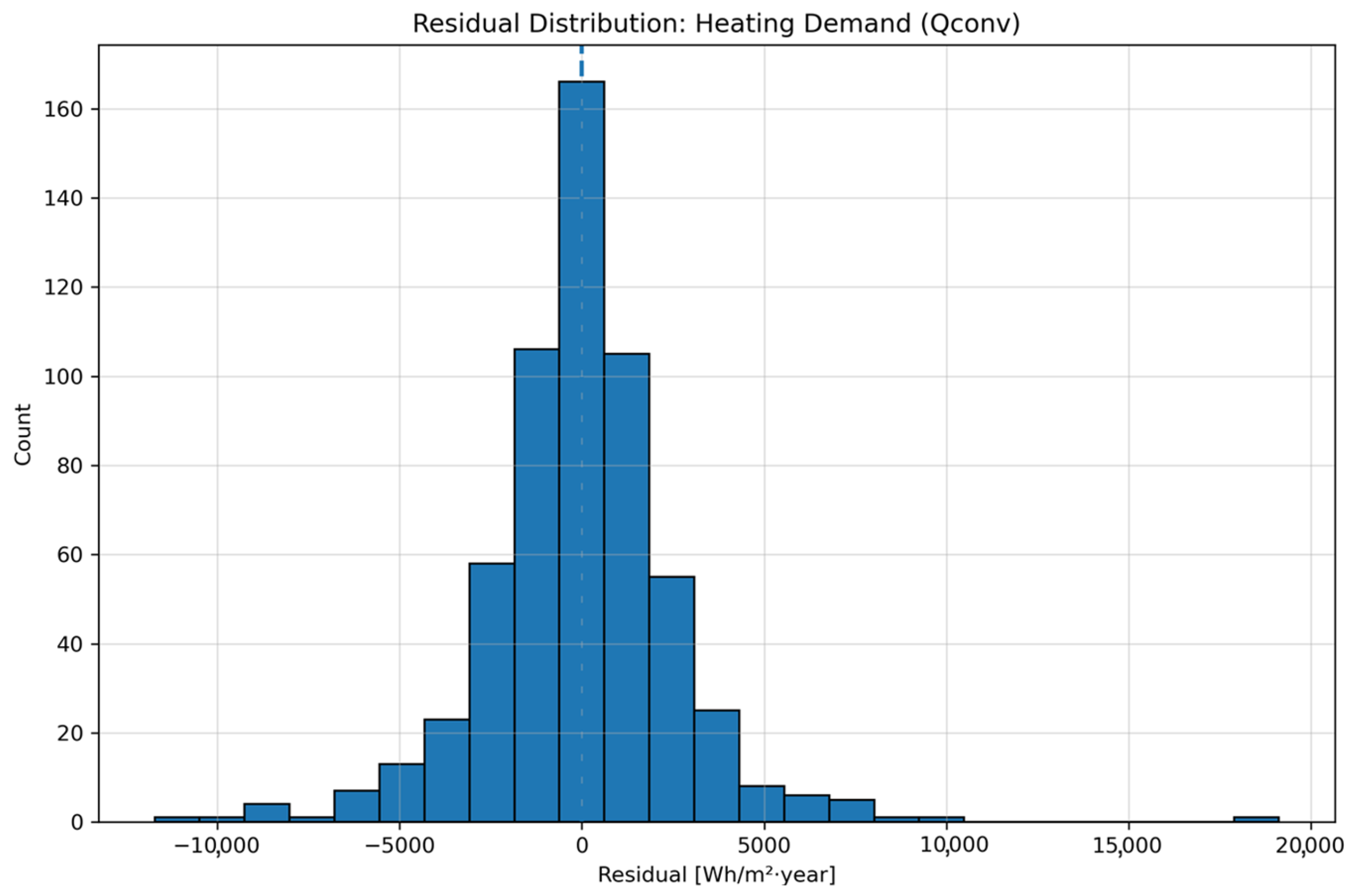
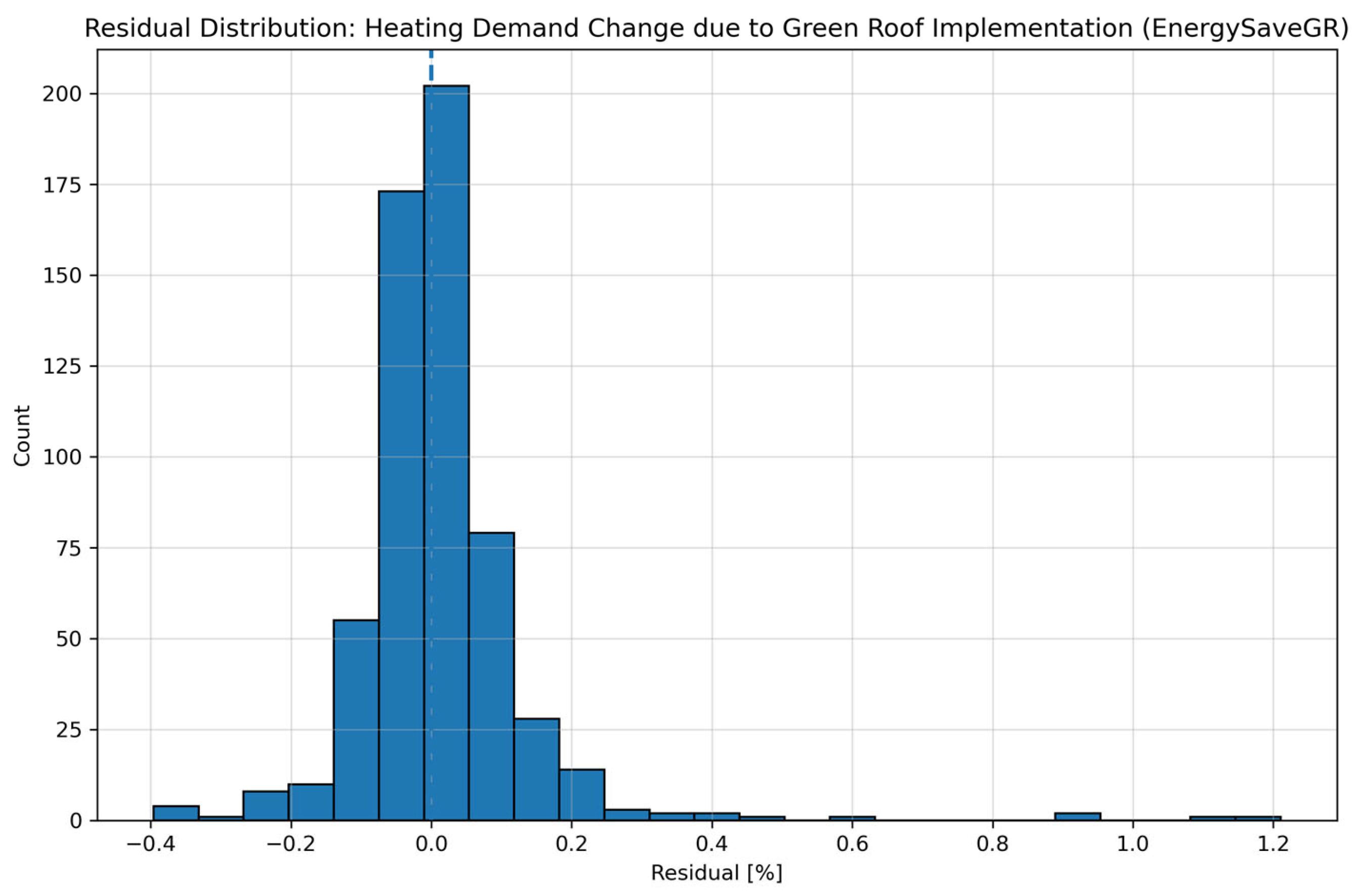
The residual distributions support these results, Figure 15 and Figure 16. For baseline heating demand without green roof, residuals were centred near zero, with most errors within a narrow range and only a few extreme deviations. EnergySaveGR residuals showed the same pattern, remaining strongly concentrated around zero, which indicates low bias and stable prediction of the green roof effect.
Overall, XGBoost achieved high accuracy, low residual bias and strong generalisation on the test set, supporting its selection as the primary model for further analysis.
The results obtained in this study are consistent with previous research demonstrating the applicability of machine learning techniques to building energy prediction. Shakeel et al. [22] showed that machine learning models can effectively predict building energy performance, while Álvarez-Sanz et al. [23] reported high accuracy in forecasting annual residential heating demand and, similarly to the present study, identified XGBoost as one of the most effective algorithms. The present results further confirm the suitability of machine learning methods for building energy performance forecasting under Macedonian climatic conditions. Furthermore, the predicted reduction in heating demand due to green roof implementation is consistent with previous studies [7,8,9,10,11], which reported improved thermal performance and heating energy savings during winter conditions.

3.3. XGBoost Feature Importance Analysis

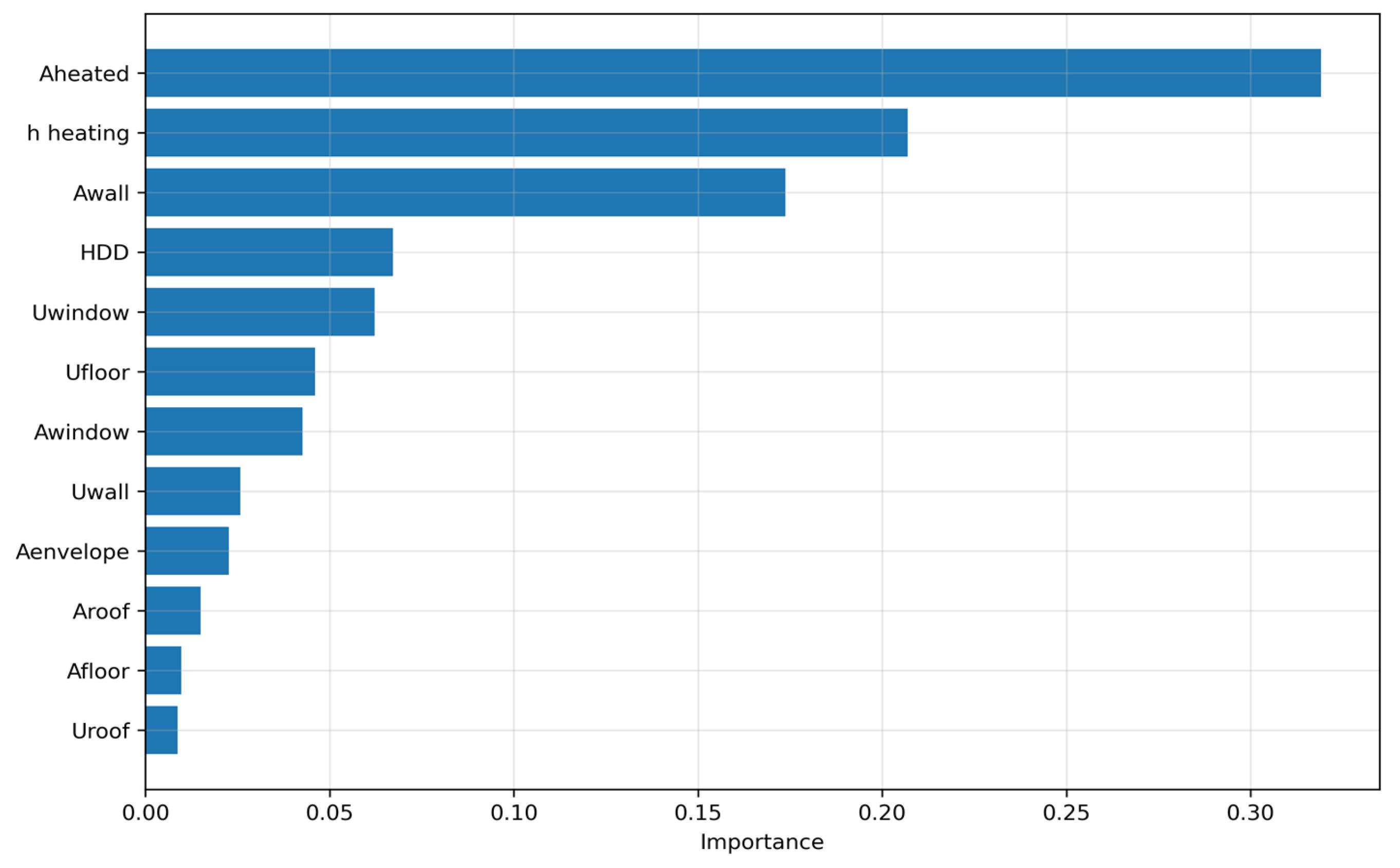
Feature importance was evaluated using the gain-based importance metric provided by the XGBoost algorithm and it was calculated separately for the Qconv and EnergySaveGR target variables. Figure 17 and Figure 18 show the relative importance of the input variables in the XGBoost model. For annual specific heating demand of buildings with the conventional roof design (Qconv), without green roof, the most influential parameter was the gross heated floor area, followed by heating duration and wall area. This is physically consistent, since heating demand is mainly governed by the size of the heated space, operating time and dominant heat loss surface area, Figure 17. Climatic severity, represented by HDD, also contributes, but less strongly than the main geometric variables.
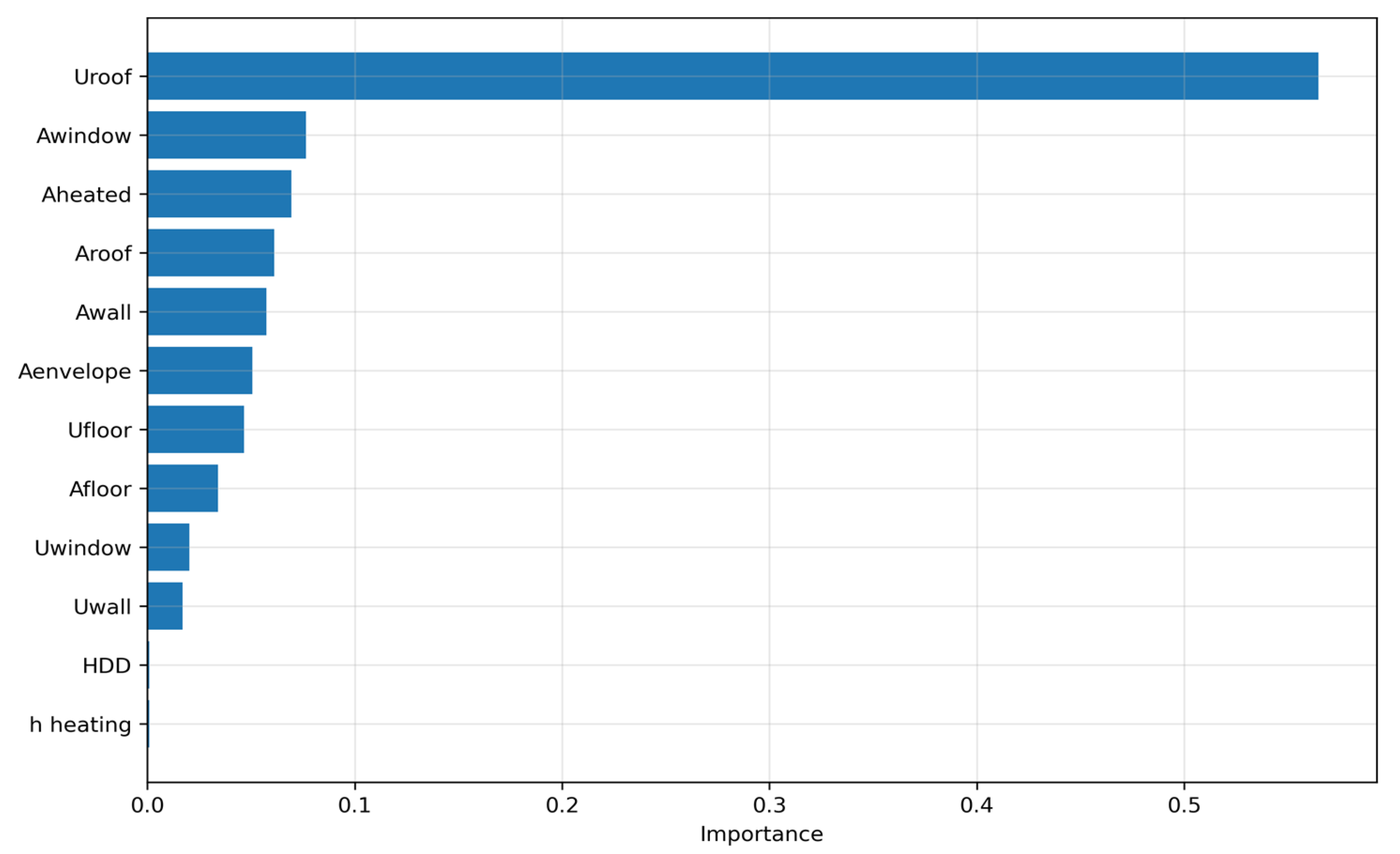
For EnergySaveGR, the dominant parameter was the thermal transmittance of the original (conventional) roof, Uroof, Figure 18. Its importance is much higher than that of all other variables, indicating that the predicted benefit of the green roof is primarily controlled by the thermal performance of the original roof. Window area, heated area, roof area and wall area have smaller secondary effects. HDD and heating duration exhibit very low importance for EnergySaveGR because this target is defined as the relative percentage change between two scenarios: the same building with a conventional roof and the same building with the adopted green roof design, evaluated under identical climatic conditions and heating schedules. This suggests that the heating energy benefit of green roof implementation is greatest for buildings with poor initial roof thermal performance, whereas smaller improvements are expected when the existing roof is already well insulated. This result was expected, since the analysis is limited to heating demand and the green roof was represented using a steady-state thermal transmittance value.

3.4. Reduced-Input XGBoost Model Based on Feature Importance Analysis

Based on the feature importance analysis presented in Figure 17 and Figure 18, a reduced-input XGBoost model was developed to evaluate whether comparable predictive performance could be achieved with a substantially smaller number of input variables. Since the model was implemented within a multi-output regression framework, a common set of input parameters was required for both target variables, namely, annual heating demand (Qconv) and heating energy savings due to green roof installation (EnergySaveGR). Therefore, five input variables were selected: heated floor area (Aheated), wall area (Awall), roof thermal transmittance (Uroof), heating degree days (HDD) and daily heating duration (h heating). The selected variables include the most influential predictors of annual heating demand (Figure 17), while also retaining Uroof, which was identified as the dominant predictor of the heating energy savings (Figure 18). This approach reduced the number of input variables from twelve to five.
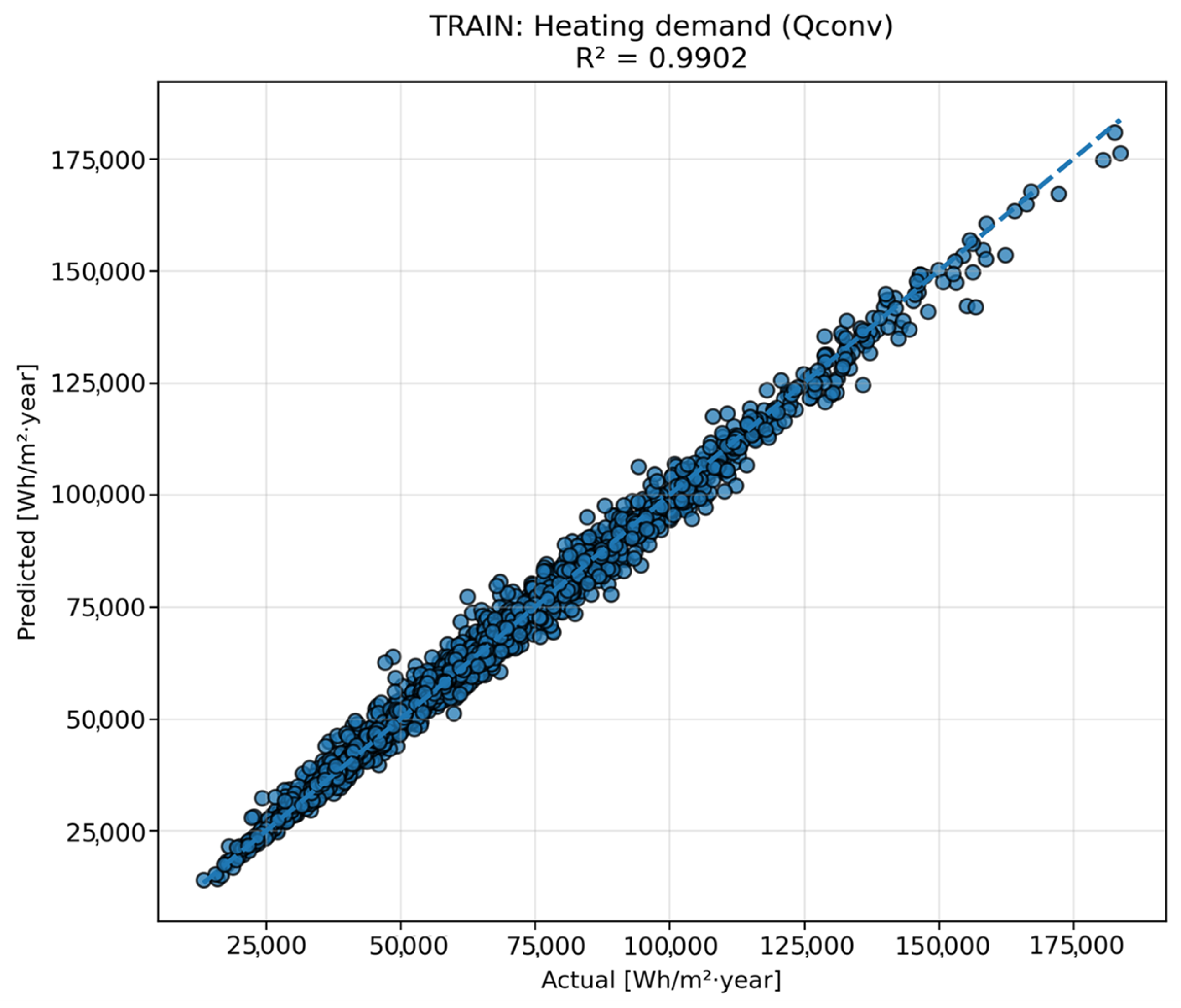
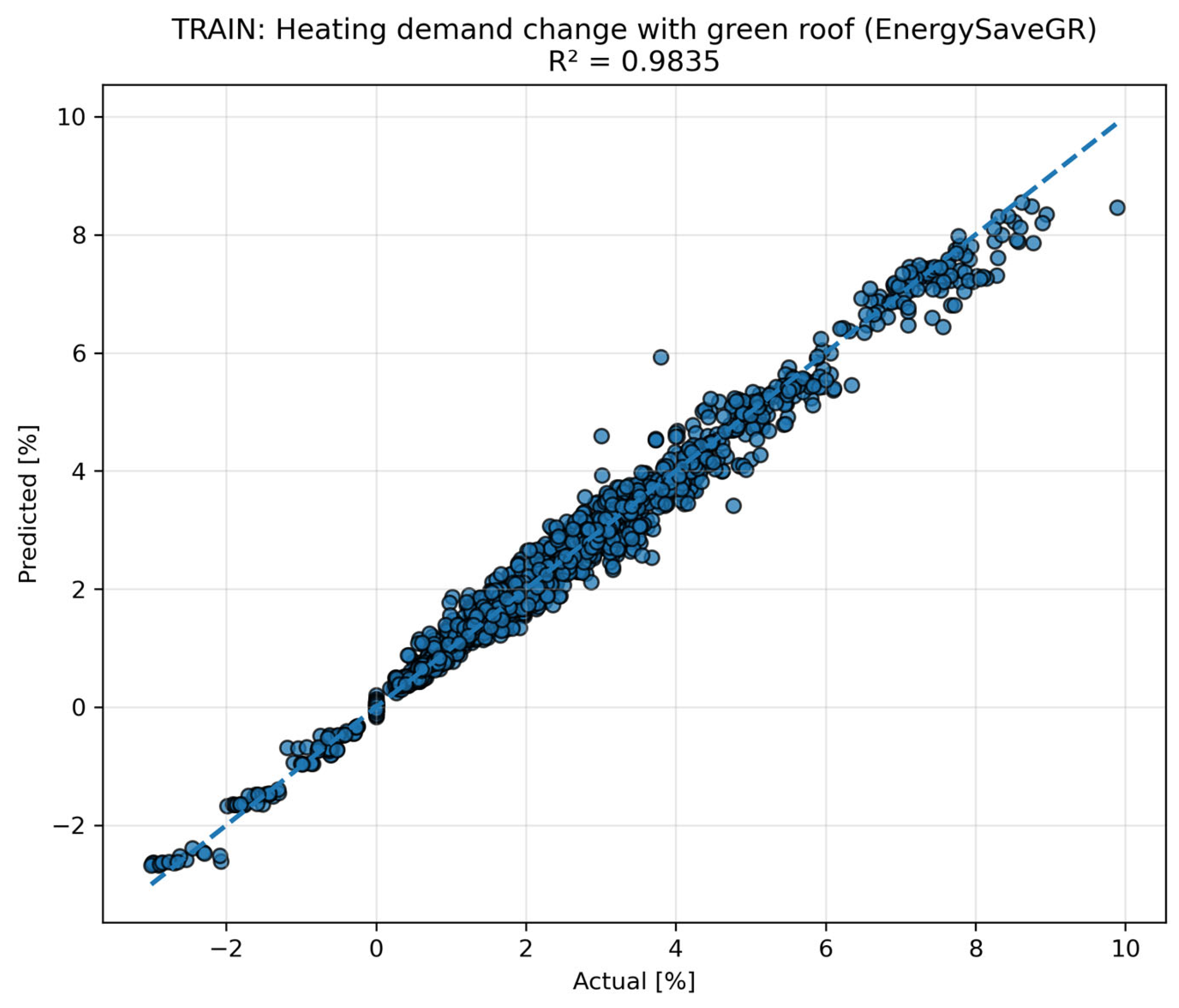
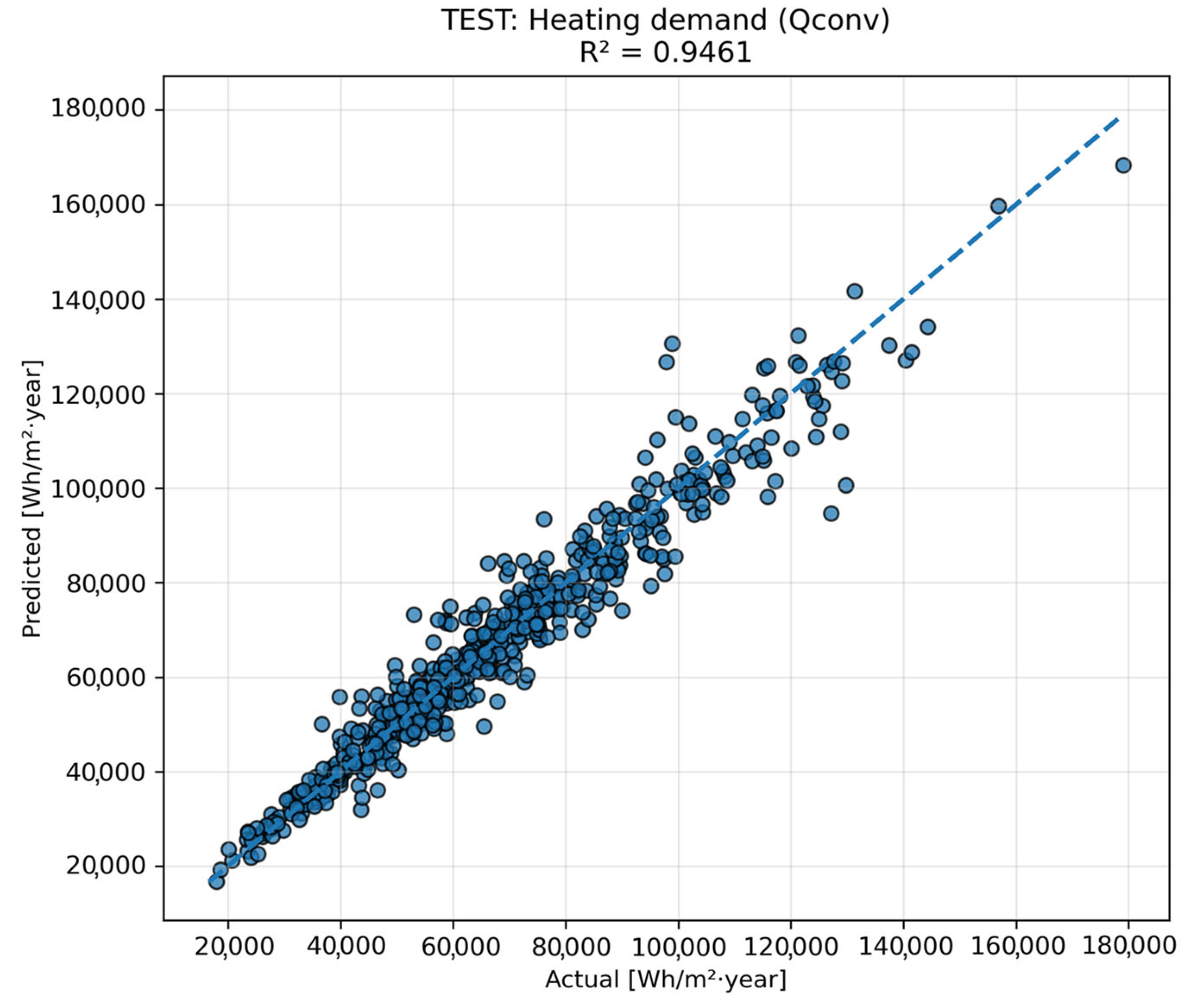
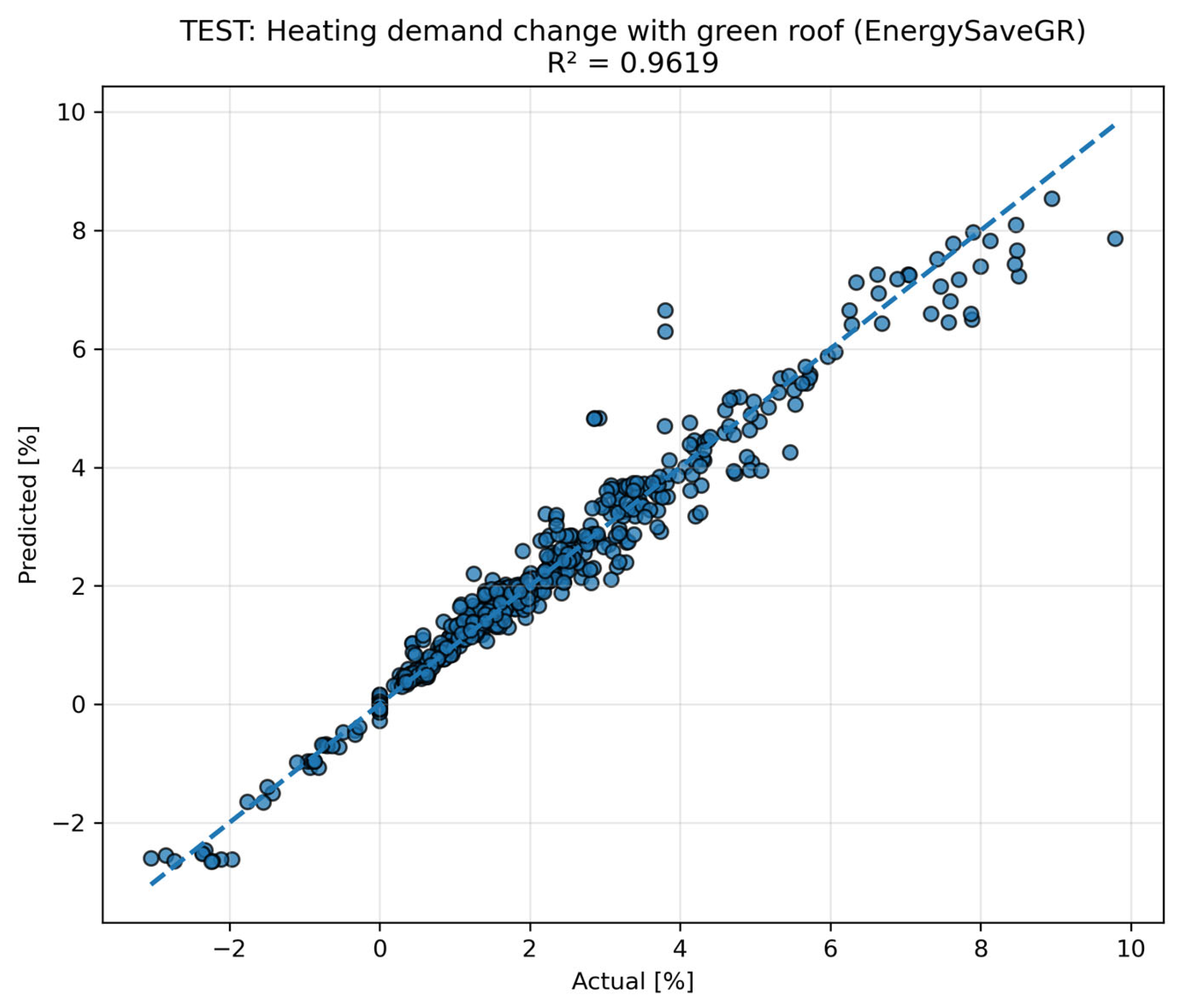
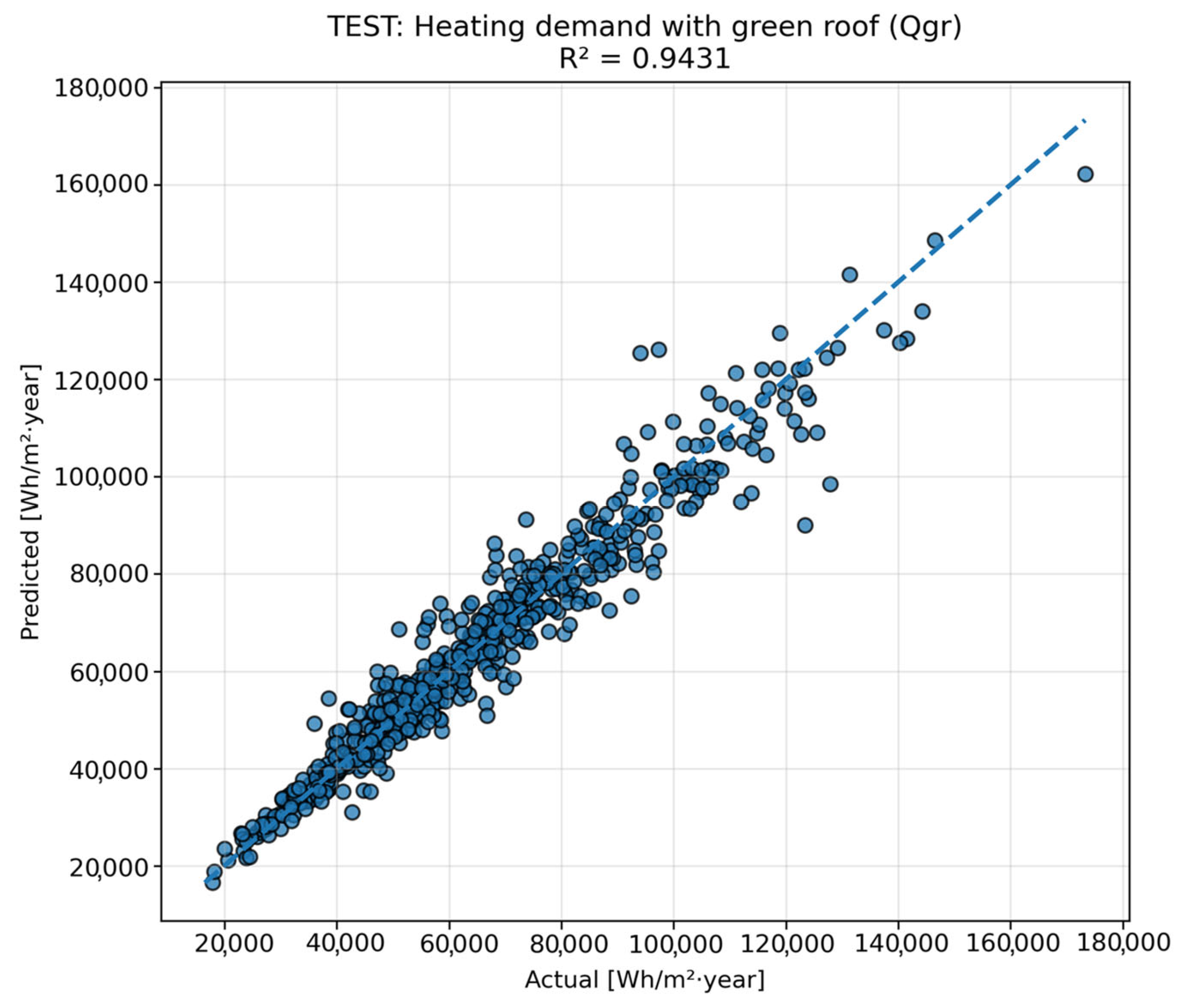
Figure 19, Figure 20, Figure 21 and Figure 22 present the actual versus predicted values obtained with the reduced- input XGBoost model for the training and test datasets. For the training dataset, coefficients of determination (R2) of 0.9902 and 0.9835 were achieved for annual heating demand (Qconv) and heating energy savings due to green roof installation (EnergySaveGR), respectively. For the test dataset, the corresponding R2 values were 0.9461 and 0.9619. In addition, the annual heating demand for the green roof scenario (Qgr), calculated from the predicted values of Qconv and EnergySaveGR, achieved an R2 value of 0.9431 for the test dataset, Figure 23.
Despite reducing the number of input variables from twelve to five, the reduced-input XGBoost model maintained high predictive accuracy. The reduced-input model achieved coefficients of determination exceeding 0.94 for all predicted outputs, as shown in Table 2. Although a slight reduction in predictive performance was observed compared with the full-input model, the results indicate that the selected variables retain most of the predictive information contained in the complete feature set, while substantially reducing data requirements. The reduced-input model can be used when detailed information on all envelope components is unavailable, providing a practical alternative for rapid preliminary assessment of heating demand and potential green-roof-related energy savings.

4. Conclusions

This study evaluated the potential of machine learning models as rapid surrogate tools for predicting heating demand and energy savings resulting from green roof implementation in a representative stock of newly designed buildings in Macedonia based on the national building energy performance assessment methodology. The modelling framework used building geometry, envelope thermal properties, heating degree days and heating duration as input variables, while annual specific heating demand of buildings with conventional roofs (Qconv) and energy savings due to green roof implementation (EnergySaveGR) were predicted as target outputs.
Among the models tested, XGBoost achieved the best overall performance, while maintaining the lowest computational time. It produced the lowest prediction errors for both target variables, with test R2 values of 0.9901 for Qconv and 0.9956 for EnergySaveGR. Compared with Random Forest and Artificial Neural Network models, XGBoost provided the best balance between predictive accuracy and computational time efficiency, making it the most suitable approach for this application.
The detailed XGBoost analysis showed strong agreement between the actual and predicted results for both training and test datasets. In addition, the derived heating demand for buildings with green roofs (Qgr) was predicted with high reliability, confirming that the indirect two-step calculation based on Qconv and EnergySaveGR did not introduce significant error accumulation.
Feature importance analysis indicated that conventional roof heating demand is governed mainly by heated floor area, heating duration and wall area, whereas the energy benefit of green roofs is controlled primarily by the original roof thermal transmittance (Uroof). Based on these findings, a reduced-input XGBoost model was developed using only five input variables. Despite reducing the number of inputs from twelve to five, the simplified model maintained high predictive accuracy, with test R2 values of 0.9461 for Qconv and 0.9619 for EnergySaveGR. This demonstrates that reasonable predictions can be achieved with substantially lower data requirements.
Overall, the results demonstrate that machine learning, particularly XGBoost, is a reliable and efficient tool for rapid assessment of green roof scenarios and their energy implications in buildings. The developed framework can support data-driven evaluation of green roofs during early-stage design and building stock analyses, while reducing the need for repeated engineering calculations.
This study is subject to several limitations. The dataset represents buildings designed after 2013 according to the actual national regulatory framework [36] and may not fully encompass older or nonstandard building stocks. The analysis focused only on the heating demand and used a steady-state representation of the green roof system. Therefore, dynamic summer processes such as evapotranspiration, shading and thermal mass were not explicitly modelled. Future research should extend the framework towards annual energy performance, including cooling demand and peak load reduction during summer conditions, where green roofs may provide even greater urban and building-scale benefits. Future research should also investigate the sensitivity of the predicted savings to key input parameters, explore additional retrofit and green roof scenarios, and quantify prediction uncertainty to further improve the interpretability and robustness of machine learning-based building energy assessments.
Integration of life-cycle cost analysis, measured field data, and future climate scenarios would further strengthen the practical application of machine learning tools for sustainable urban planning. In addition, since the present study is based on heating demand calculations performed according to the national methodology for building energy performance assessment, future validation against measured building performance data would provide further confidence in the applicability of the proposed framework.
To fulfil the total potential of green roofs, further progress in standardisation, technology development and efficient management is needed. With proper implementation and continuous research, green roofs can make a significant contribution to creating sustainable and comfortable cities for the future.


Author Contributions

Conceptualisation, T.S.; Methodology, T.S. and S.B.M.; Software, M.J.-M.; Formal Analysis, T.S.; Investigation, T.S. and M.J.-M.; Writing—Original Draft, T.S. and M.J.-M.; Funding Acquisition, S.B.M.; Writing—Review and Editing, T.S. and S.B.M.; Data Curation, T.S. and S.B.M.; Validation, M.J.-M. All authors have read and agreed to the published version of the manuscript.

Funding

This research received no external funding.

Data Availability Statement

Further inquiries can be directed to the corresponding author.

Acknowledgments

During the preparation of this manuscript, the authors used ChatGPT (OpenAI, GPT-5.5) for language editing and text refinement. The authors reviewed and edited the output and take full responsibility for the content of this publication.

Conflicts of Interest

The authors declare no conflicts of interest.

References

  1. International Energy Agency (IEA). North Macedonia: Electricity. Available online: https://www.iea.org/countries/north-macedonia/electricity (accessed on 6 April 2026).
  2. European Environment Agency (EEA). North Macedonia. Europe’s Environment 2025. Available online: https://www.eea.europa.eu/en/europe-environment-2025/countries/north-macedonia (accessed on 6 April 2026).
  3. National Energy and Climate Plan of the RNM, January 2022. Available online: https://share.google/3Q1MH65k9wCNMJQef (accessed on 6 April 2026).
  4. Lee, L.S.H.; Jim, C.Y. Thermal-irradiance behaviours of subtropical intensive green roof in winter and landscape-soil design implications. Energy Build. 2020, 209, 109692. [Google Scholar] [CrossRef]
  5. D’Orazio, M.; Di Perna, C.; Di Giuseppe, E. Green roof yearly performance: A case study in a highly insulated building under temperate climate. Energy Build. 2012, 55, 439–451. [Google Scholar] [CrossRef]
  6. Liu, K.; Baskaran, B. Thermal performance of extensive green roofs in cold climates. In Proceedings of the World Sustainable Building Conference, Tokyo, Japan, 27–29 September 2005; National Research Council: Ottawa, ON, Canada, 2005; pp. 1–8. [Google Scholar]
  7. Maiolo, M.; Pirouz, B.; Bruno, R.; Palermo, S.A.; Arcuri, N.; Piro, P. The Role of the Extensive Green Roofs on Decreasing Building Energy Consumption in the Mediterranean Climate. Sustainability 2020, 12, 359. [Google Scholar] [CrossRef]
  8. Borras, J.G.; Gil, J.V.E.; Lerma, C.; Mas, A. Energy efficiency evaluation of green roofs as an intervention strategy in residential buildings in the field of Spanish climate. Buildings 2022, 12, 959. [Google Scholar] [CrossRef]
  9. Santamouris, M. Cooling the cities-A review of reflective and green roof mitigation technologies to fight heat island and improve comfort in urban environments. Sol. Energy 2014, 103, 682–703. [Google Scholar] [CrossRef]
  10. Haider, T.; Sailor, T.D.J.; Akbari, H. High-Albedo Materials for Reducing Building Cooling Energy Use; Energy and Environment Division, Lawrence Berkeley Laboratory, University of California: Berkeley, CA, USA, 1992. Available online: https://www.osti.gov/servlets/purl/7000986 (accessed on 7 April 2026).
  11. Mohapatra, S.; Verma, S.; Chowdhury, S.; Dwivedi, G.; Harish, V.S.K.V. A critical appraisal of green vegetated roofs: Energy and environment in focus. Mater. Today Proc. 2021, 46, 5703–5710. [Google Scholar] [CrossRef]
  12. Kim, E.; Jung, J.; Hapsari, G.; Kang, S.; Kim, K.; Yoon, S.; Lee, M.; Han, M.; Choi, Y.; Choe, J.K. Economic and environmental sustainability and public perceptions of rooftop farm versus extensive garden. Build. Environ. 2018, 146, 206–215. [Google Scholar] [CrossRef]
  13. Vourdoubas, J. Review of the benefits of green roofs. Int. J. Curr. Sci. Res. Rev. 2024, 7, 7296–7310. [Google Scholar] [CrossRef]
  14. Olaboye, O.S. Green roofs and vertical gardens: Assessing their impact on urban heat reduction and storm water management. Int. J. Adv. Eng. Manag. 2025, 7, 430–441. [Google Scholar] [CrossRef]
  15. Coma, J.; Cotana, F.; Cabeza, L.F.; Fabiani, C.; Pisello, A.L.; Perez, G. Thermo-acoustic performance of green roof substrates in dynamic hygrothermal conditions. Energy Build. 2018, 178, 140–153. [Google Scholar] [CrossRef]
  16. Zhang, X.; Soe, A.N.; Dong, S.; Chen, M.; Wu, M.; Htwe, T. Urban resilience through green roofing: A literature review on dual environmental benefits. E3S Web Conf. 2024, 536, 01023. [Google Scholar] [CrossRef]
  17. Nasr, Y.; El Zakhem, H.; Hamami, A.E.A.; El Bachawati, M.; Belarbi, R. Comprehensive assessment of the impact of green roofs and walls on building energy performance: A scientific review. Energies 2024, 17, 5160. [Google Scholar] [CrossRef]
  18. De Cristo, E.; Evangelisti, L.; Barbaro, L.; De Lieto Vollaro, R.; Asdrubali, F. A systematic review of green roofs’ thermal and energy performance in the Mediterranean region. Energies 2025, 18, 2517. [Google Scholar] [CrossRef]
  19. Musa, H.H.; Hussein, A.M. Impact of urban heat island on thermal comfort in the outdoor spaces of residential complexes: Insights Durrat Karbala Residential Complex in Iraq. J. Int. Soc. Study Vernac. Settl. 2023, 10, 213–233. [Google Scholar] [CrossRef]
  20. European Commission. Plants and Solar Panels Will Cover Roofs in France to Make Commercial Areas Greener. BUILD UP 23 August 2022. Available online: https://build-up.ec.europa.eu/en/news-and-events/news/plants-and-solar-panels-will-cover-roofs-france-make-commercial-areas-greener (accessed on 12 April 2026).
  21. Yang, Y.; Duan, Q.; Samadi, F. A systematic review of building energy performance forecasting approaches. Renew. Sustain. Energy Rev. 2025, 223, 116061. [Google Scholar] [CrossRef]
  22. Shakeel, H.M.; Iram, S.; Hill, R.; Farid, H.M.A.; Sheikh-Akbari, A.; Saleem, F. A machine learning-based intelligent framework for predicting energy efficiency in next-generation residential buildings. Buildings 2025, 15, 1275. [Google Scholar] [CrossRef]
  23. Álvarez-Sanz, M.; Satriya, F.A.; Terés-Zubiaga, J.; Campos-Celador, Á.; Bermejo, U. Ranking building design and operation parameters for residential heating demand forecasting with machine learning. J. Build. Eng. 2024, 86, 108817. [Google Scholar] [CrossRef]
  24. Lu, C.; Li, S.; Lu, Z. Building Energy Prediction Using Artificial Neural Networks: A Literature Survey. Energy Build. 2022, 262, 111718. [Google Scholar] [CrossRef]
  25. Samardzioska, T.; Zileska Pancovska, V.; Petrusheva, S.; Sekovska, B. Prediction of Energy Consumption in Buildings Using Support Vector Machine. Teh. Vjesn. 2021, 28, 649–656. [Google Scholar] [CrossRef]
  26. Mazzeo, D.; Matera, N.; Peri, G.; Scaccianoce, G. Forecasting green roofs’ potential in improving building thermal performance and mitigating urban heat island in the Mediterranean area: An artificial intelligence-based approach. Appl. Therm. Eng. 2023, 222, 119879. [Google Scholar] [CrossRef]
  27. Wang, J.; Chen, B.; Yang, W.; Xu, D.; Yan, B.; Zou, E. BP neural network multi-module green roof thermal performance prediction model optimized based on sparrow search algorithm. J. Build. Eng. 2024, 96, 110615. [Google Scholar] [CrossRef]
  28. Li, Y.; Dai, Z.; Fu, H. A graph-based hybrid deep learning approach for the thermal performance potential prediction of green roofs. J. Build. Eng. 2024, 84, 108554. [Google Scholar] [CrossRef]
  29. Wang, Q.; Chu, X.; Chao, Y. Modeling of heat gain through green roofs utilizing artificial intelligence techniques. Energy 2024, 303, 131898. [Google Scholar] [CrossRef]
  30. Cao, R.; MacIvor, J.S. Automation of green roof plant cover measurements using machine learning and a comparison of digital and thermal imaging techniques. Appl. Veg. Sci. 2024, 27, e12790. [Google Scholar] [CrossRef]
  31. Yenikaya, A.; Oktaysoy, O. Machine learning in energy efficiency: Comparison of energy estimation models. EKEV Akad. Derg. 2025, 103, 196–210. [Google Scholar] [CrossRef]
  32. Ul Islam, P.Z. Machine Learning in Energy: Enhancing Efficiency, Sustainability, and Grid Management. Int. J. Sc. Res. Eng. Manag. 2023, 7, 1–14. [Google Scholar]
  33. Oladapo, B.I.; Olawumi, M.A.; Omigbodun, F.T. Machine Learning for Optimising Renewable Energy and Grid Efficiency. Atmosphere 2024, 15, 1250. [Google Scholar] [CrossRef]
  34. Gholamnia, M.; Sajadi, P.; Khan, K.; Sannigrahi, S.; Ghaffarian, S.; Shahabi, H.; Pilla, F. Assessment and Modeling of Green Roof System Hydrological Effectiveness in Runoff Control: A Case Study in Dublin. IEEE Access 2024, 12, 189689–189709. [Google Scholar] [CrossRef]
  35. Abdalla, E.M.H.; Pons, V.; Stovin, V.; De-Ville, S.; Fassman-Beck, E.; Alfredsen, K.; Muthanna, T.M. Evaluating different machine learning methods to simulate runoff from extensive green roofs. Hydrol. Earth Syst. Sci. 2021, 25, 5917–5935. [Google Scholar] [CrossRef]
  36. Ministry of Economy of the Republic of Macedonia. Rulebook on Energy Properties of Buildings, Rulebook on Energy Auditors; No. 94/2013; Official Gazette of Republic of Macedonia: Skopje, Macedonia, 2013. [Google Scholar]
  37. Evangelisti, L.; De Cristo, E.; De Lieto Vollaro, R. In Situ Winter Performance and Annual Energy Assessment of an Ultra-Lightweight, Soil-Free Green Roof in Mediterranean Climate: Comparison with Traditional Roof Insulation. Energies 2025, 18, 4581. [Google Scholar] [CrossRef]
  38. Ali, Z.A.; Abduljabbar, Z.H.; Tahir, H.A.; Sallow, A.B.; Almufti, S.M. Exploring the power of eXtreme Gradient Boosting algorithm in machine learning: A review. Acad. J. Nawroz Univ. 2023, 12, 320–334. [Google Scholar] [CrossRef]
  39. Sen, D.; Huseyinoglu, M.F.; Günay, M.E. Prediction of global temperature anomaly by machine learning based techniques. Neural Comput. Appl. 2023, 35, 15601–15614. [Google Scholar] [CrossRef]
Figure 1. Green roof assembly with layer sequence and thermal conductivities used in this study.
Climate 14 00141 g001
Figure 2. Annual specific heating demand before and after green roof implementation.
Climate 14 00141 g002
Figure 3. Relationship between annual specific heating demand and heated floor area (Aheated) for the analysed building stock: (a) conventional roof buildings and (b) buildings with green roofs.
Climate 14 00141 g003
Figure 4. Energy savings (%) due to the green roof implementation across all simulated samples, with positive values (green points) indicating improvement, negative values (red points) indicating increased demand and zero values (yellow points) indicating no change.
Climate 14 00141 g004
Figure 5. Energy savings (%) due to green roof implementation as a function of heated floor area (Aheated) for all simulated building cases, with positive values (green points) indicating heating demand reduction, negative values (red points) indicating increased heating demand and zero values (yellow points) indicating no change.
Climate 14 00141 g005
Figure 6. Major machine learning categories and representative algorithms for predictive modelling, (reproduced from [38]).
Climate 14 00141 g006
Figure 7. Random Forest workflow (reproduced from [38]).
Climate 14 00141 g007
Figure 8. Neural Network workflow (reproduced from [39]).
Climate 14 00141 g008
Figure 9. XGBoost workflow (reproduced from [39]).
Climate 14 00141 g009
Figure 10. XGBoost training results for heating demand Qconv (actual vs. predicted).
Climate 14 00141 g010
Figure 11. XGBoost training results for energy savings due to green roof installation EnergySaveGR (actual vs. predicted).
Climate 14 00141 g011
Figure 12. XGBoost test results for heating demand Qconv (actual vs. predicted).
Climate 14 00141 g012
Figure 13. XGBoost test results for energy savings due to green roof installation EnergySaveGR (actual vs. predicted).
Climate 14 00141 g013
Figure 14. XGBoost comparison of heating demand with green roof (Qgr) obtained from predicted Qconv and EnergySaveGR versus actual values.
Climate 14 00141 g014
Figure 15. Test residual distribution of XGBoost predictions for heating demand Qconv.
Climate 14 00141 g015
Figure 16. Test residual distribution of XGBoost predictions for energy savings due to green roof implementation EnergySaveGR.
Climate 14 00141 g016
Figure 17. XGBoost input feature importance for predicting heating demand Qconv.
Climate 14 00141 g017
Figure 18. XGBoost input feature importance for predicting energy savings due to green roof installation EnergySaveGR.
Climate 14 00141 g018
Figure 19. Reduced-input XGBoost training results for heating demand Qconv (actual vs. predicted).
Climate 14 00141 g019
Figure 20. Reduced-input XGBoost training results for energy savings due to green roof installation EnergySaveGR (actual vs. predicted).
Climate 14 00141 g020
Figure 21. Reduced-input XGBoost test results for heating demand Qconv (actual vs. predicted).
Climate 14 00141 g021
Figure 22. Reduced-input XGBoost test results for energy savings due to green roof installation EnergySaveGR (actual vs. predicted).
Climate 14 00141 g022
Figure 23. Reduced-input XGBoost comparison of heating demand with green roof (Qgr) obtained from predicted Qconv and EnergySaveGR versus actual values.
Climate 14 00141 g023
Table 1. Comparative performance of Random Forest, Neural Network and XGBoost models for predicting annual specific heating demand for buildings with conventional roofs (Qconv) and energy savings due to green roof implementation (EnergySaveGR).
MetricRandom ForestNeural NetworkXGBoost
Computation Time [s] (training + testing)50 s150 s50 s
MAE, Qconv [Wh/m2 an.] 4698.84532225.25901800.4680
RMSE, Qconv [Wh/m2 an.]6689.22583192.82032599.3877
R2, Qconv [Wh/m2 an.]0.94130.98510.9901
MAE, EnergySaveGR [%]0.08020.08160.0717
RMSE, EnergySaveGR [%]0.16210.13510.1293
R2, EnergySaveGR [%]0.99200.99530.9956
Table 2. Comparison of the full-input and reduced-input XGBoost models.
MetricFull-Input XGBoostReduced-Input XGBoost
Number of inputs125
Qconv (Test R2)0.99010.9461
EnergySaveGR (Test R2)0.99560.9619
Qgr (Test R2)0.98990.9431
Disclaimer/Publisher’s Note: The statements, opinions and data contained in all publications are solely those of the individual author(s) and contributor(s) and not of MDPI and/or the editor(s). MDPI and/or the editor(s) disclaim responsibility for any injury to people or property resulting from any ideas, methods, instructions or products referred to in the content.