Article

Direct Radiative Effects of Biomass Burning Aerosols from Key Biomass Burning Regions

1
College of Geoinformatics, Zhejiang University of Technology, Deqing, Huzhou 313200, China
2
Moganshan Geospatial Information Laboratory, Deqing, Huzhou 313299, China
3
National Centre for Earth Observation, University of Edinburgh, Edinburgh EH9 3FF, UK
4
School of GeoSciences, University of Edinburgh, Edinburgh EH9 3FF, UK
5
China-UK Low Carbon College, Shanghai Jiao Tong University, Shanghai 201306, China
*
Author to whom correspondence should be addressed.
Climate 2026, 14(6), 125; https://doi.org/10.3390/cli14060125 (registering DOI)
Submission received: 15 April 2026 / Revised: 8 June 2026 / Accepted: 12 June 2026 / Published: 13 June 2026

Abstract

Aerosols emitted by biomass burning represent one of the largest sources of uncertainty in our current understanding of the Earth’s radiative balance. We investigate the climatic influence of biomass burning aerosols emitted from six key regions of biomass burning by using GEOS-Chem coupled with the rapid radiative transfer model. We evaluate our model using AERONET observation, with the model reproducing data with 87% observed spatial and seasonal variability with a low negative bias of 7%. The radiation sensitivity is generally highest for North Asia (NAS) and for North America (NCC); lowest for South America (SAM) and South and Southeast Asia (SSA); and moderate for Africa (AFR) and Oceania (OCE). These regional differences are related to the main burning types of the regions. When we consider the global radiation influence, AFR dominates the global picture due to the comparatively large biomass burned. We estimate the global mean radiation influence of biomass burning aerosol is −0.116 W m−2. For monthly features, in summer, due to higher incident energy obtained in NAS and NCC, high negative radiation sensitivity of biomass burning, biomass burning aerosols, and biomass burning organic aerosol are shown in these regions. Meanwhile, the radiation sensitivity peak of black carbon for these two regions occurs earlier in late spring (NAS) or early summer (NCC), when large incident energy and large high reflectance snow cover coexist in these two high-latitude regions. A significant yearly difference in radiation influence, rather than radiation sensitivity, is found, with the relative difference between the maximum year and minimum year reaching 90% of the maximum radiation influence year. Specifically, two regions affected by El Niño (OCE and SSA) have the most significant yearly variation in all factors, with anomalies occurring in El Niño years.

1. Introduction

Our progressively warmer climate results in the drying of above-ground and below-ground biomass [1]. Such phenomena increase the probability of fire ignition and the subsequent spread of fires [2]. Aerosols emitted from the combustion of biomass—including carbonaceous constituents that can absorb or scatter incoming radiation [3]—are generally considered as one of the primary sources of uncertainty for the current Earth’s anthropogenic radiative forcing [4,5]. In this study, we use a global 3-D chemistry transport model to investigate the regional and seasonal direct climate effect of biomass burning aerosols.
Research has continued to develop our understanding of the relationships between biomass burning aerosols and climate. Building on early work that focused only greenhouse gases [6,7,8,9], a warmer climate is expected to intensify biomass burning (BB), particularly across the Arctic, and aerosols should be considered in future climate model projections [10]. The elemental composition and morphology of aerosols, determined by a range of factors such as aging [11], the composition and moisture content of the fuel and the coincidence of other emissions (e.g., biogenic or anthropogenic sources) [12], influence whether biomass aerosol eventually result in net cooling or warming. Studies have emphasized the need to consider these regional differences when evaluating possible control strategies to minimize ozone and particulate matter (e.g., [13]). Others have evaluated the sensitivity of the radiative balance to key aerosol components [14] (carbonaceous materials and black carbon) that determine their optical properties and subsequently their ability to cool/warm the atmosphere, taking into account regional seasonal variations [15,16]. This growing body of work has employed a wide array of approaches and data to investigate the influence of biomass burning aerosols on climate, including satellite observations [17,18], ground-based measurements [19,20,21], and advanced modeling techniques [22,23]. However, these studies result in a range of conclusions that are not necessarily consistent due partly to the difference in regional characteristics that contribute to the uncertainty on the global scale.
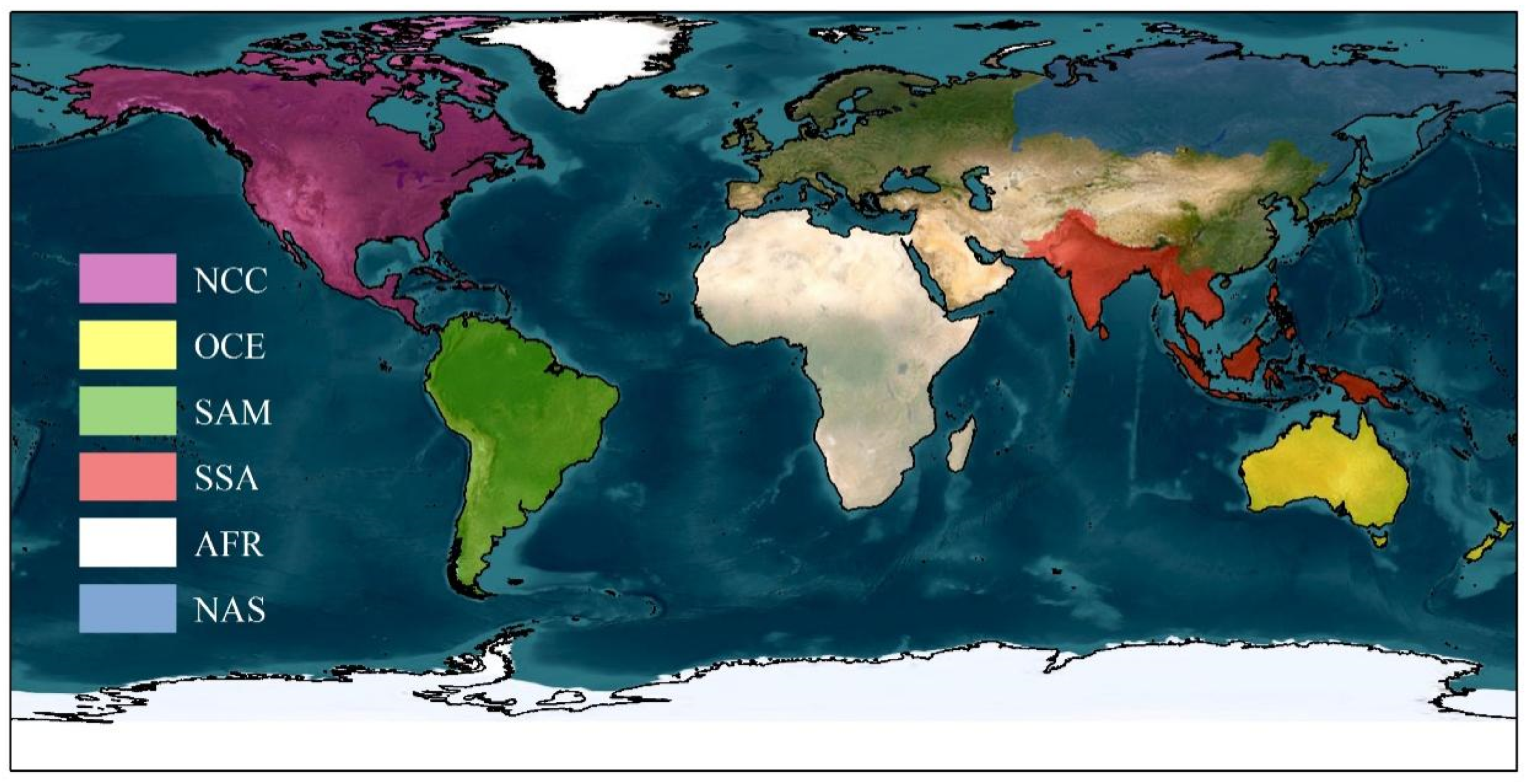
In this study, we use the GEOS-Chem atmospheric transport model coupled with the rapid radiative transfer model for general circulation models to examine the direct climate effects of biomass burning from six geographic regions (Figure 1) that contribute significant emissions of greenhouse gases and air pollutants. They include: (1) Africa (AFR); (2) North Asia (NAS), which mostly describes Siberia; (3) Northern America, Central America, and the Caribbean (NCC), which is a geographically connected area generally located north of the equator on the American continent; (4) Oceania (OCE), which mostly describes Australia and New Zealand; (5) South America (SAM), which is generally located south of the equator on the American continent; and (6) South and Southeast Asia (SSA), which mainly consists of the Indian subcontinent, the Indo-China peninsula, the Indonesian archipelago, and the Philippines. Table 1 shows the percentage of global burning biomass for these six geographical regions with a further numerical breakdown into different burning types. The statistical data is based on the Global Fire Emissions Database (GFED) inventory [24] (described below) that is derived from combining 500 m MODIS burned area maps with active fire data from the Tropical Rainfall Measuring Mission (TRMM) Visible and Infrared Scanner (VIRS) and the Along-Track Scanning Radiometer (ATSR) family of sensors. AFR has the highest percentage of global biomass burning, representing almost half of the global total. The remaining regions are comparable, ranging from 12.9% (SAM) to 5.7% (OCE) of the global total.
In this study, we use the GEOS-Chem atmospheric transport model coupled with a radiative transfer model to investigate the direct climate effect of biomass aerosols emitted from these six geographical regions. In the next section, we describe the data and methods used. In Section 3, we report our results, and we conclude our results in Section 4.

2. Data and Methods

We use the GEOS-Chem global 3-D atmospheric chemistry transport model [25] to describe the relationship between biomass burning emissions and the 4-D fields of atmospheric concentrations, coupled with the rapid radiative transfer model for general circulation models (RRTMG [26]) to determine the radiative effect of biomass burning aerosols. Since aerosol–cloud interactions are not considered in GEOS-Chem, this research focuses specifically on the direct radiative effect.

2.1. The GEOS-Chem Model

We use version 14.0.2 [27] of the 3-D GEOS-Chem model (https://geoschem.github.io/, last access: 23 January 2026) to simulate global atmospheric composition from 2010 to 2019. Following one year of model spin-up, we run the global model at a horizontal resolution of 4° × 5°. The model is described by NOx + Ox + Br + Cl + I + aerosol chemistry in the troposphere and stratosphere [28]. All our simulations extend vertically through 47 terrain-following sigma levels between the surface and 0.01 hPa, about 30 of which are typically below the dynamic tropopause. The model is driven by assimilated meteorology from the Modern-Era Retrospective analysis for Research and Applications version 2 (MERRA-2) [29] provided by the Global Modeling and Assimilation Office (GMAO) at NASA Goddard Space Flight Center.
The dry mass concentrations, as well as the deposition velocities, of Particle Matter (PM) simulated by GEOS-Chem encompass a collective of 17 PM species [30], including sulfate, nitrate, ammonium [31], secondary organic aerosol [32], hydrophilic and hydrophobic organic carbon [33], hydrophilic and hydrophobic black carbon [34], accumulation and coarse mode sea salt [35], and dust [36], distributed across 7 size bins. The aerosol optical properties are calculated using Mie calculations from different variables (mass extinction efficiency, single scattering albedo, phase functions) of each aerosol species [37,38].
We use pyrogenic emissions from the Global Fire Emissions Database version 4.1, which includes small fires (GFED4.1s) [39], alongside default GEOS-Chem emission inventories for other sources. The GFED inventory provides monthly dry matter emissions based on satellite observations of fire activity and vegetation coverage from the MODIS satellite [40]. These dry matter emissions are classified into six different fire types defined by the predominant vegetation burned: (1) savanna (SAVA), (2) boreal forest (BORF), (3) temperate forest (TEMP), (4) tropical deforestation (DEFO), (5) peat (PEAT), and (6) agricultural waste (AGRI). The GEOS-Chem model applies vegetation-specific emission parameters [41] to the dry matter emissions from the GFED to produce speciated biomass burning emissions of trace gases and aerosols.

2.2. Radiative Transfer Model

We use the radiative transfer model RRTMG, which provides a physically based representation of the absorption, emission, and scattering of radiation by atmospheric constituents such as gases, clouds, and aerosols. We couple the RRTMG with GEOS-Chem to quantify the direct radiative effects of atmospheric composition changes, particularly the influence of biomass burning aerosols.
We use RRTMG to calculate the surface level (downward direction) and Top of Atmosphere (TOA) level (upward direction) radiation fluxes, for shortwave (SW) and longwave (LW) bands for clear sky (ClrSky) and all sky (AllSky) scenarios. We also use the model to quantify the influence of both biomass burning (BB) as a whole, which includes gases and aerosols, as well as individual biomass burning aerosol types, including Total Aerosol (PM); organic aerosol (OA); black carbon (BC); sulfate (SU); ammonium (AM); and nitrate (NI). The aerosol properties of these aerosol tyupes are given in the Supplementary Materials.
As part of our work, we also consider the deposition of BC on snow surface and the subsequent change in surface reflectance. The default model configuration calculates the TOA radiation in SW using reflectance data from the MODIS satellite without considering this aerosol feedback. We include this modification using a linear relationship between BC deposition and snow albedo [42].

2.3. Validating Model Radiation Fluxes

We validate our model results using ground-based sun-photometer data, collected by the Aerosol Robotic Network (AERONET)—a globally federated network of ground-based remote sensing instruments that measure wavelengths (with spectral range between 340 nm and 1020 nm) relevant to aerosol extinction. The AERONET utilizes the direct and diffuse radiance measured by high-precision CIMEL Electronique (CE)-318 sun–sky photometers to ascertain aerosol physical–optical properties [43]. To maintain data quality, the AERONET conducts centralized annual calibration of instruments against a master instrument, which undergoes precise calibration using the Langley method at AERONET/PHOTONS sites [44]. We use the radiation flux data of the AERONET as a benchmark to validate the SW radiation flux simulation quality of our GEOS-Chem-RRTMG coupling model SW radiation flux simulation quality.
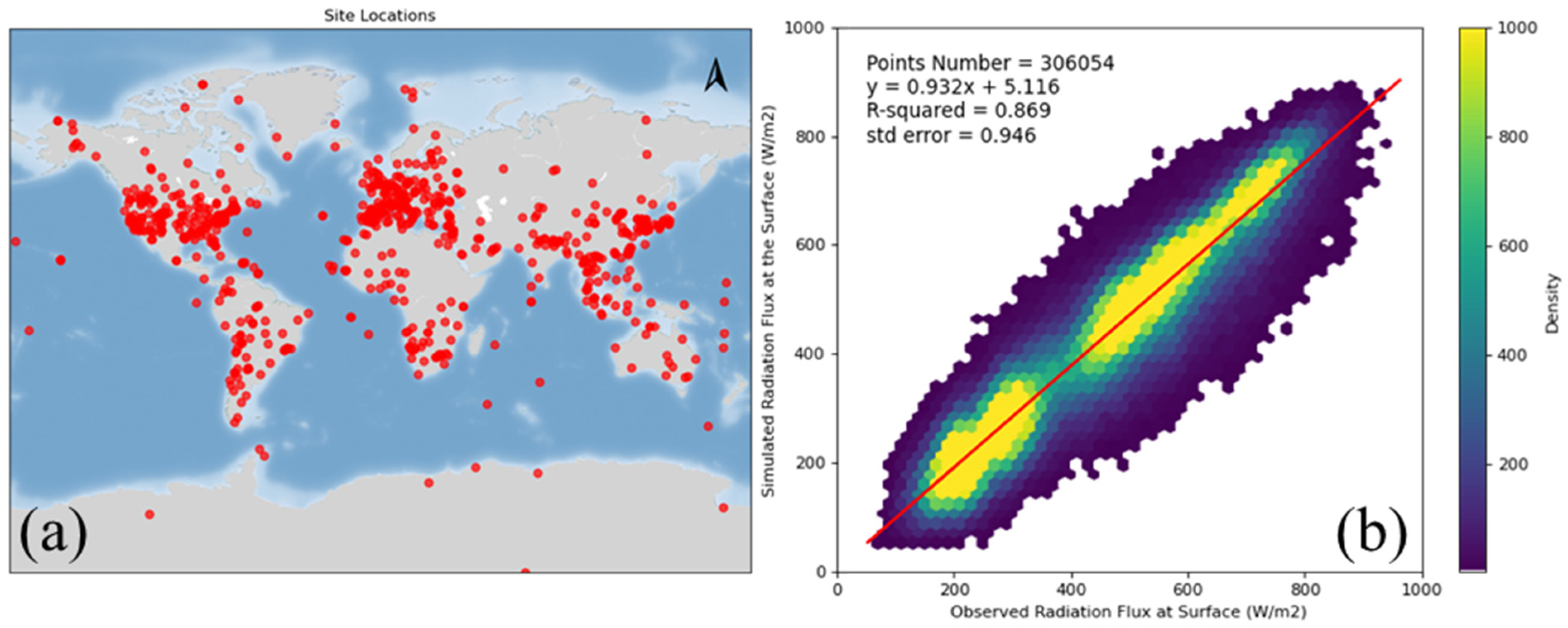
For the purposes of comparing the model with the AERONET observations, we sample the model at the time and location of the measurements. We use a time difference threshold of <15 min. After screening, 923 AERONET worldwide sites were selected (Figure 2a). Figure 2b demonstrates a statistically significant linear relationship between model and AERONET surface radiation (W m−2) with very small disagreement, described by y = 0.932x + 5.116 with a squared Pearson correlation (R2 = 0.87). The different wavelength range between the model (0.20 µm–12.20 µm for RRTMG shortwave band [45]) and observation (0.20 µm–4.0 µm for AERONET band [46]) when calculating the radiation flux may partly be the reason for such a difference.

2.4. Calculating the Influence of Biomass Burning Aerosols on Climate

To determine the influence of biomass burning aerosols on the climate, we adopt three metrics: (1) radiation sensitivity—the sensitivity of radiative fluxes to a small perturbation of regional biomass burning aerosols; (2) radiation influence—the radiation sensitivity scaled by the total dry matter burned from an individual region; and (3) the associated change in temperature, based on a simple approach that relates the radiation influence with the climate sensitivity.

2.4.1. Radiation Sensitivity

To calculate radiation sensitivity to specific PM species from biomass burning for a particular region, we take the difference in radiation fluxes of the TOA level between a perturbed and baseline model calculation and scale by the perturbed mass to normalize the quantity as follows:
S R = F l u x p e r t u r b e d F l u x b a s e l i n e M a s s p e r t u r b e d
where S R is the radiation sensitivity of a specific region, month, and factor that has a unit of W m−2 Tg−1 month. F l u x p e r t u r b e d and F l u x b a s e l i n e represent the simulated radiation fluxes with and without perturbation. M a s s p e r t u r b e d is the perturbed mass of dry matter burned. The perturbed model involves increasing the dry matter burned by 5 Tg for a particular region (Figure 1) for a single month. This value represents about 10% of the average dry matter burned in key biomass burning regions, a magnitude consistent with the typical annual mass fluctuation. The 5 Tg perturbation is allocated to each pixel in a specific key biomass burning region of the input GFED burned mass data using a weighting scheme based on the original pixel values, with the total increase constrained to 5 Tg. We examine the differences between total SW and LW radiation simulations and the contributions from individual aerosol types: OA, BC, SU, AM, and NI. This calculation is repeated for our six regions (NCC, OCE, SAM, SSA, AFR, and NAS) and for each month from 2010 to 2019, inclusively. In addition, the model runs with and without perturbation to calculate the radiation sensitivity of black carbon deposition on the snow surface, instead of only running with the inclusion of BC deposition; an additional run without the inclusion of BC deposition is also needed. To differentiate the radiative effects of atmospheric BC and deposited BC on the snow surface, we divide the total BC radiative effect into BCAT (Black Carbon Atmosphere) and BCDP (black carbon deposition). Similarly, we also separately consider the radiative effect of PMAT (atmospheric aerosols) out of the total PM.

2.4.2. Radiation Influence

We calculate radiation influence ∆F (unit W m−2) by multiplying the radiation sensitivity by the total dry matter burned in the corresponding region, representing the influence of specific factors (PM species) from biomass burning in a specific region on radiation:
F = M a s s × S R
where S R is the radiation sensitivity, and M a s s denotes the total dry matter burned in the corresponding region and month (unit Tg month−1). By summing the radiation influence from all six biomass burning regions, we can calculate the global radiation influence of biomass burning.

2.4.3. Global Mean Temperature Change

We calculate the global mean temperature change ∆T (unit °C) due to biomass burning aerosol using the following relationship [6,7,8]:
T = S C × F
where ∆F is the radiation influence, and S C is the climate sensitivity (unit °C W−1 m2). By examining Earth’s historical climate data, the results from [6,7,8] gave an estimation of climate sensitivity of about 0.75 °C per W m−2.

3. Results

We present the results from our decadal numerical experiments (2010–2019) that examine the spatial and temporal changes in the influence of biomass burning aerosols on radiation fluxes. All values we report refer to the direct climate effect in SW + LW wavelengths for the AllSky scenario, unless otherwise stated.

3.1. General Global Characteristics of Biomass Burning Aerosols’ Direct Climate Effect

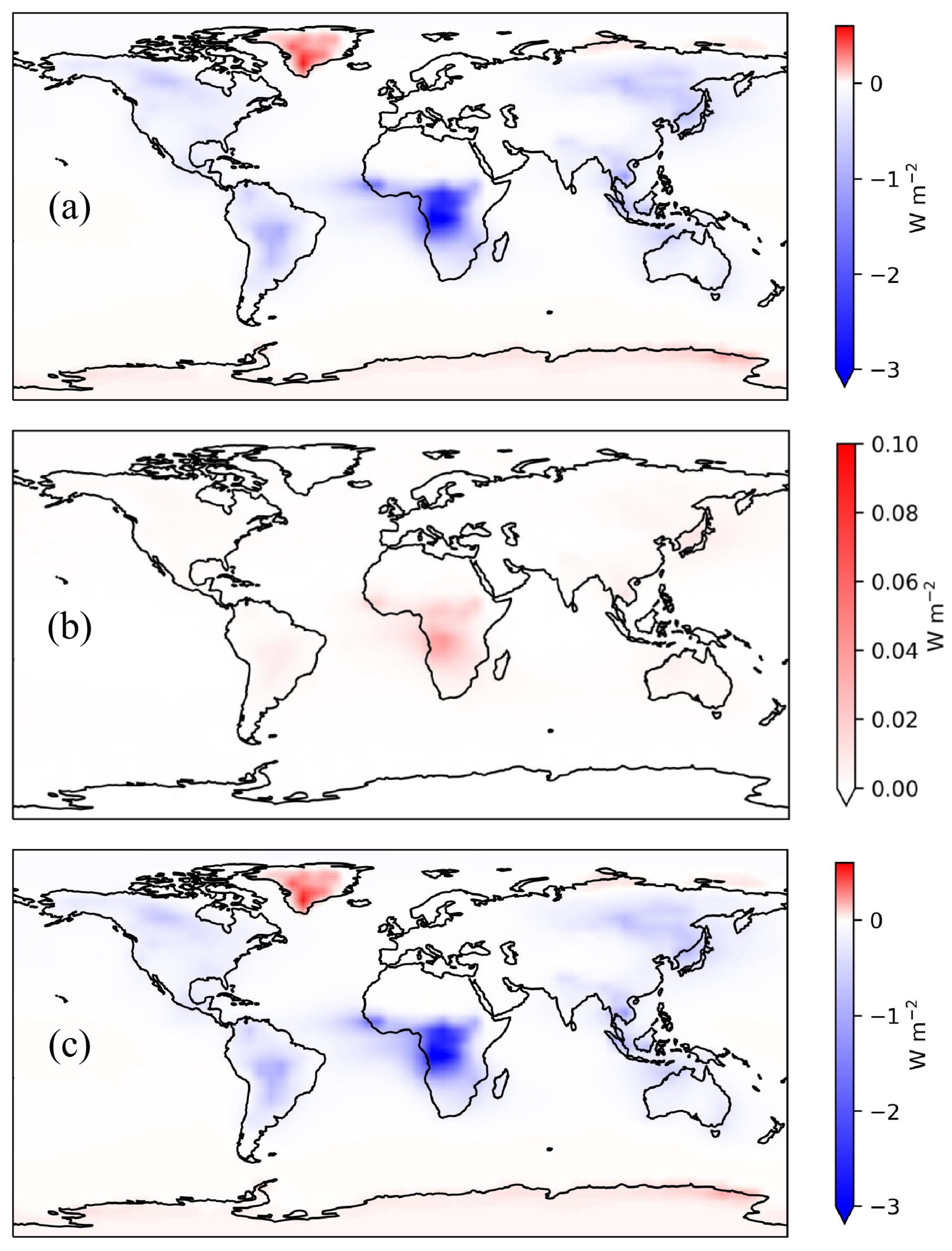
Figure 3 shows the decadal mean of the radiation influence of biomass burning aerosols and Table 2 shows the statistics for specific biomass burning factors. We calculate a global mean value for the biomass burning aerosol radiation influence, including SW and LW, to be a net cooling of −0.116 W/m2. The global mean influence on SW radiation dominates with a value of −0.118 W/m2, while the influence on LW radiation is 0.002 W/m2.
Figure 3 shows that for most regions, there is a net cooling, particularly prominent over Africa. The only exceptions are Greenland and Antarctica, where there is a net warming. OA is the main cooling component in biomass burning aerosols (with a high single scattering albedo), with a global mean radiation influence of −0.111 W m−2. BC is the only heating component in biomass burning aerosols (with low single-scattering albedo) with a global mean total radiation influence of 0.026 W m−2: this value is dominated by atmospheric heating (0.025 W m−2). The heating effects of BC associated with its deposition on snow surfaces mainly occur over Greenland and Antarctica, downwind of major fire loci, with a global mean value of 0.001 W m−2. Incorporating all the biomass burning factors, including aerosol and gaseous species, we calculate a global mean radiation influence of biomass burning as a net cooling of −0.088 W m−2.

3.2. Regional Characteristics of Biomass Burning Aerosols’ Direct Climate Effect

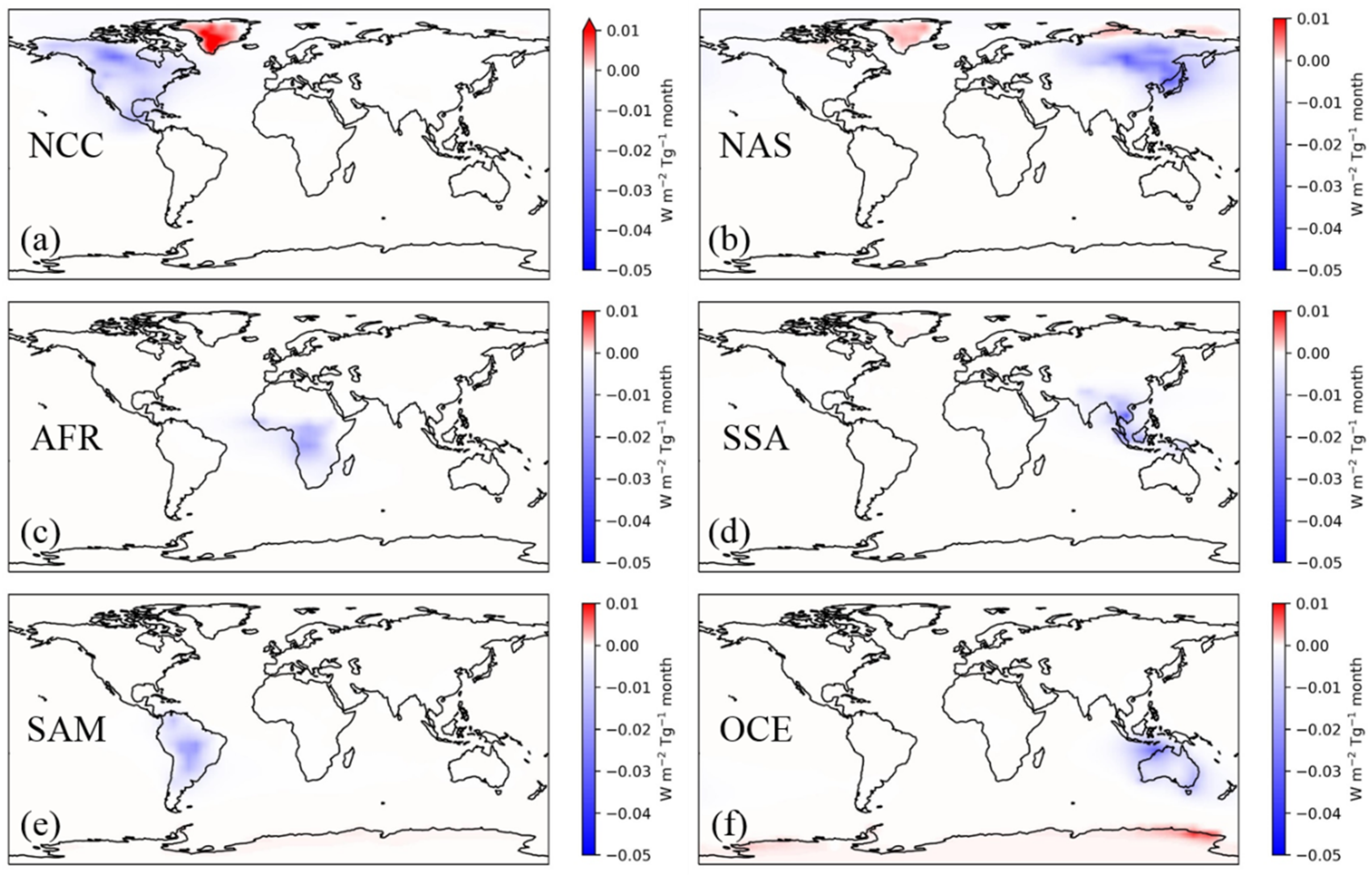
Figure 4 shows the biomass burning aerosol radiation sensitivity for the six key biomass burning regions (Figure 1). The result maps of each biomass burning region indicate that the direct climate effects mainly occur in the corresponding biomass burning regions. In addition, several biomass burning regions dominate the climate effect of Greenland (NCC and NAS) and Antarctica (OCE).
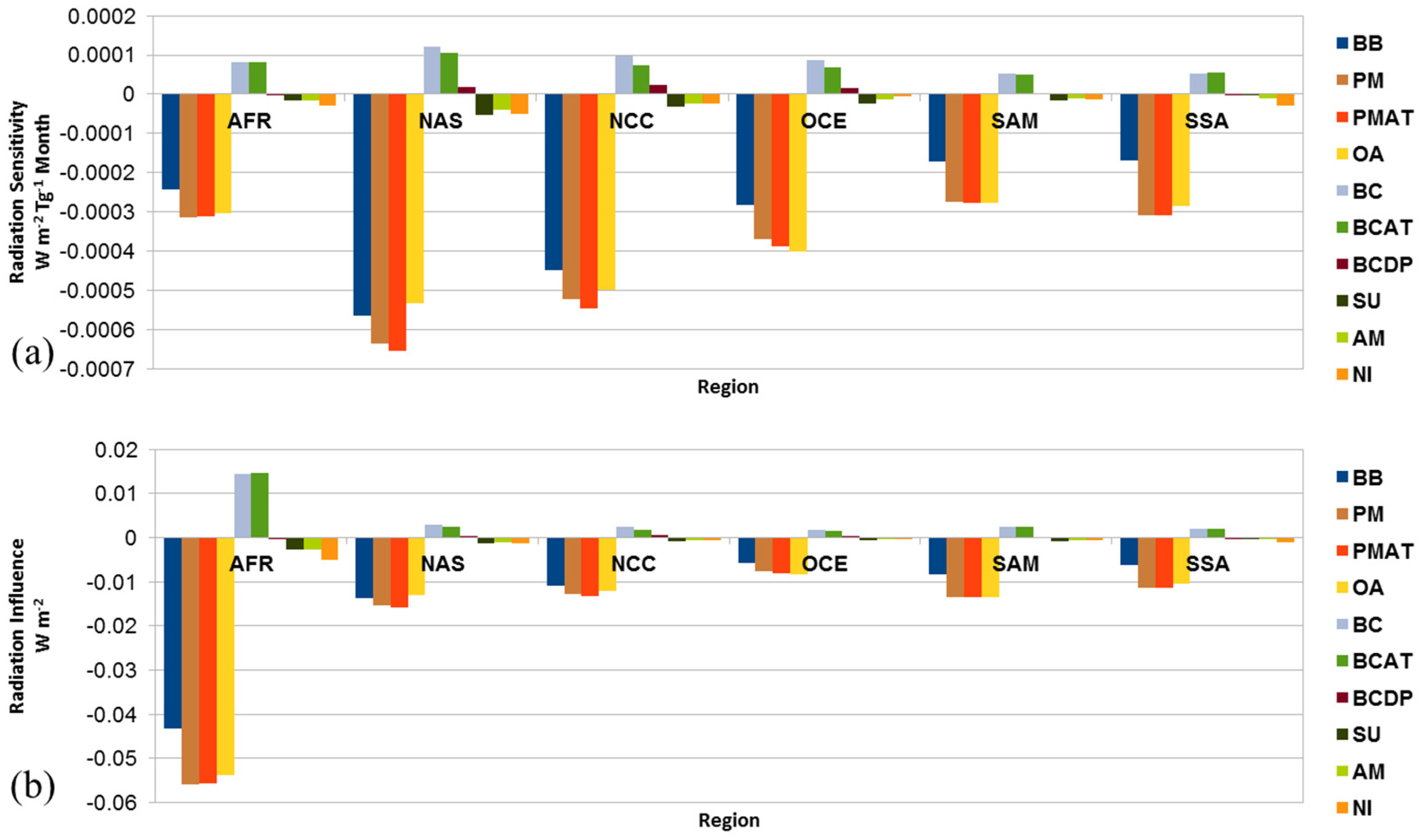
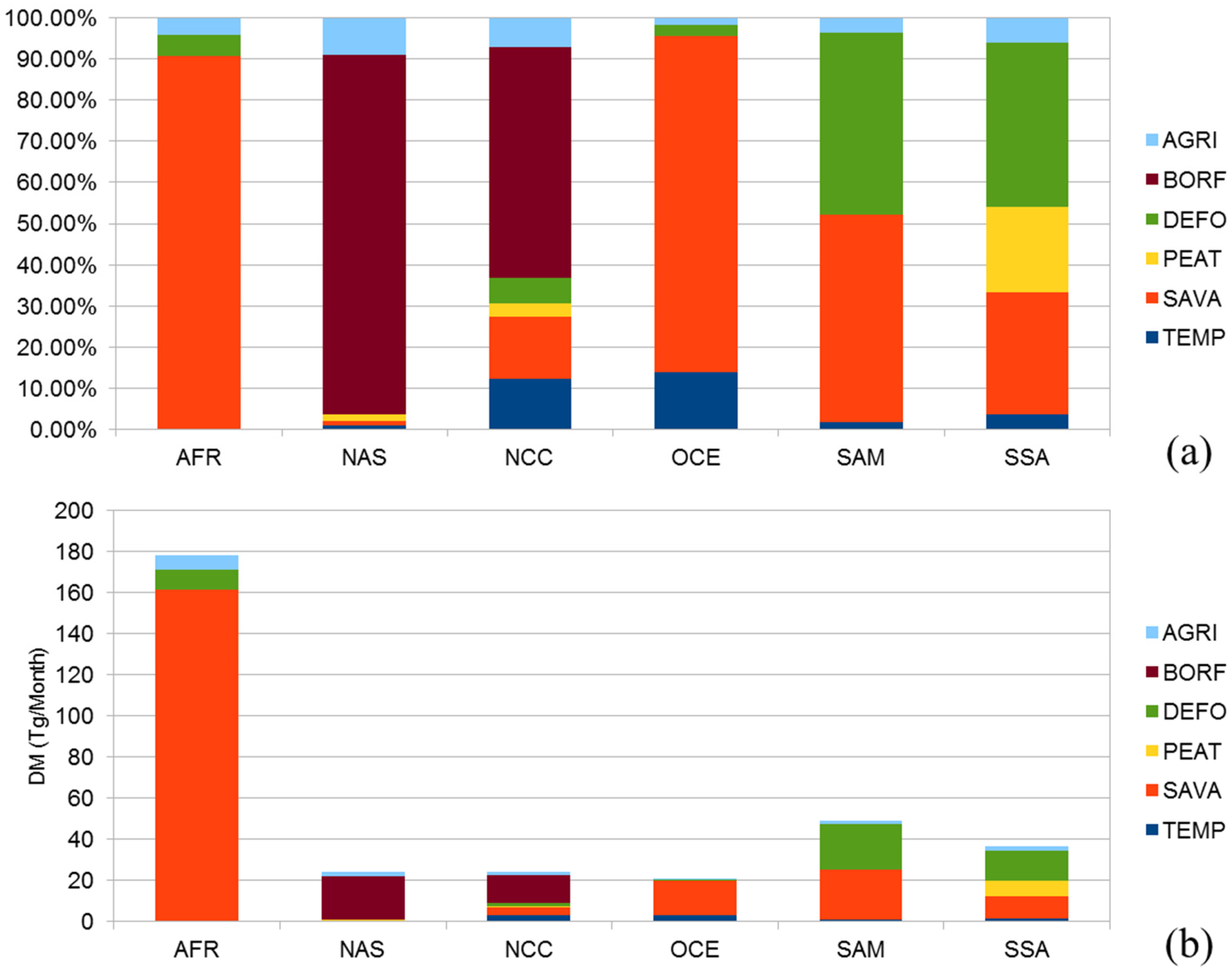
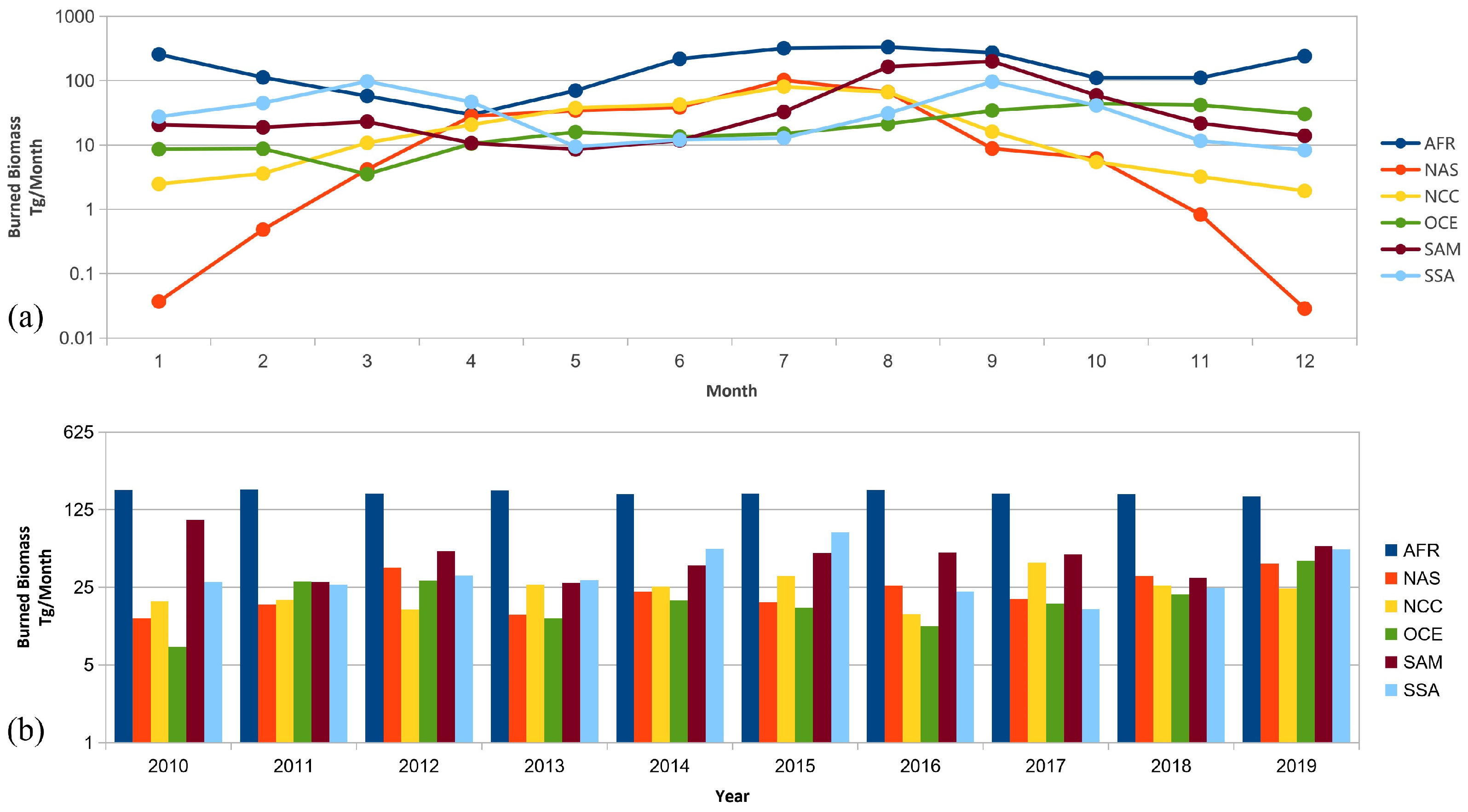
Figure 5a shows the global mean radiation sensitivities for each of the six geographical regions, broken down by aerosol constituents. Radiation sensitivity is generally higher in NAS and NCC regions, while SAM and SSA show a consistent low radiation sensitivity; AFR and OCE have in-between values for radiation sensitivity. Figure 6a shows that there are substantial regional differences in the fractional breakdown of dry matter burned. Dry matter burned over NAS and NCC is mainly dominated by BORF. In contrast, over AFR and OCE the dominant source of dry matter burnt is SAVA. Different from the other burning regions, over SAM and SSA, the main source of dry matter is from DEFO. Figure 5b shows that the radiation influences of all biomass burning factors in AFR are significantly higher than other regions, though moderate radiation sensitivity magnitudes are found in this area. After checking the absolute mean value of biomass burned (Figure 6b), as well as its monthly (Figure 7a) and yearly (Figure 7b) variations, the significantly high value of radiation influence in AFR is mainly caused by the comparatively large regional biomass burned.

3.3. Temporal Characteristics of Biomass Burning Aerosol Direct Climate Effect

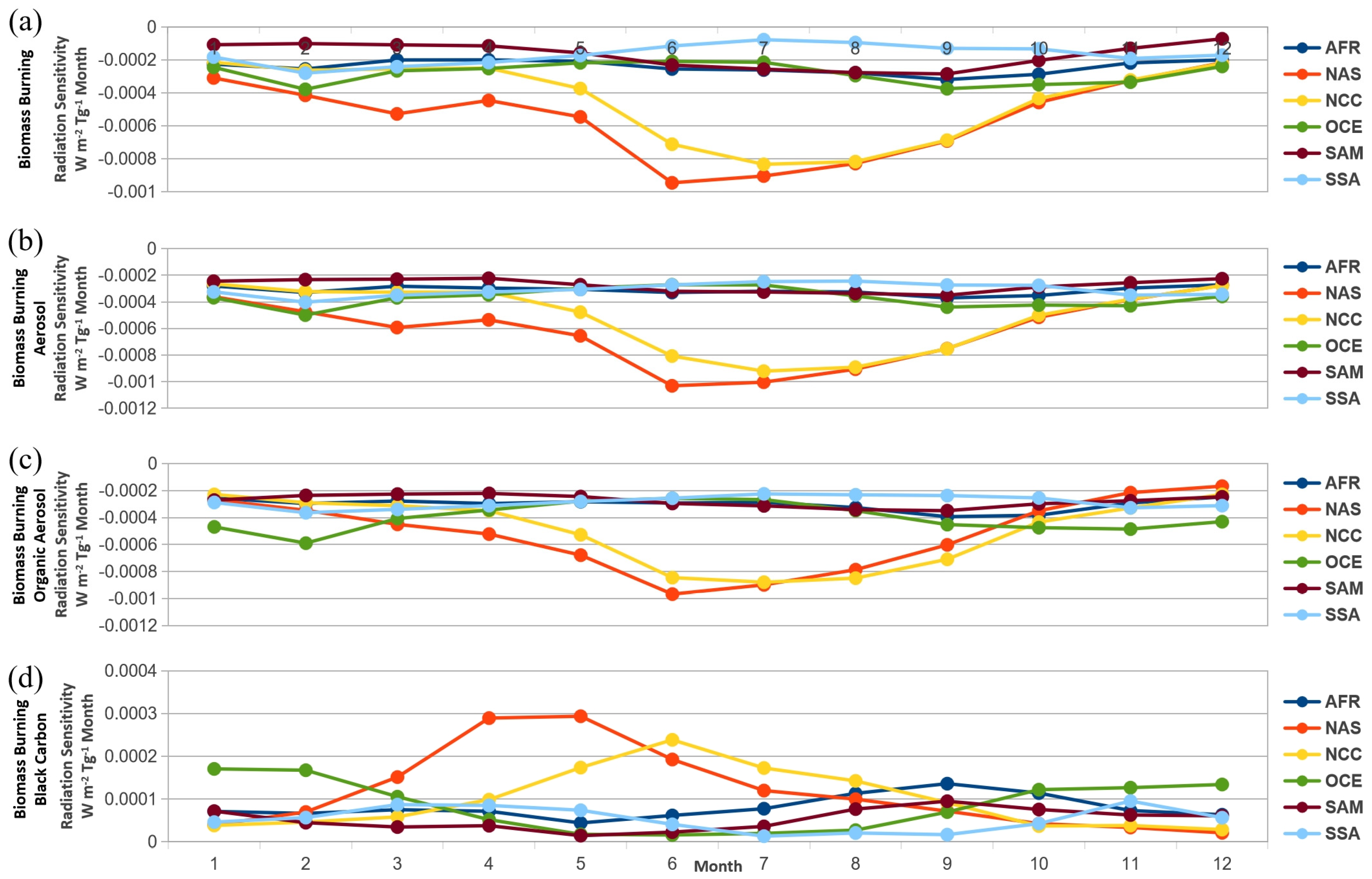
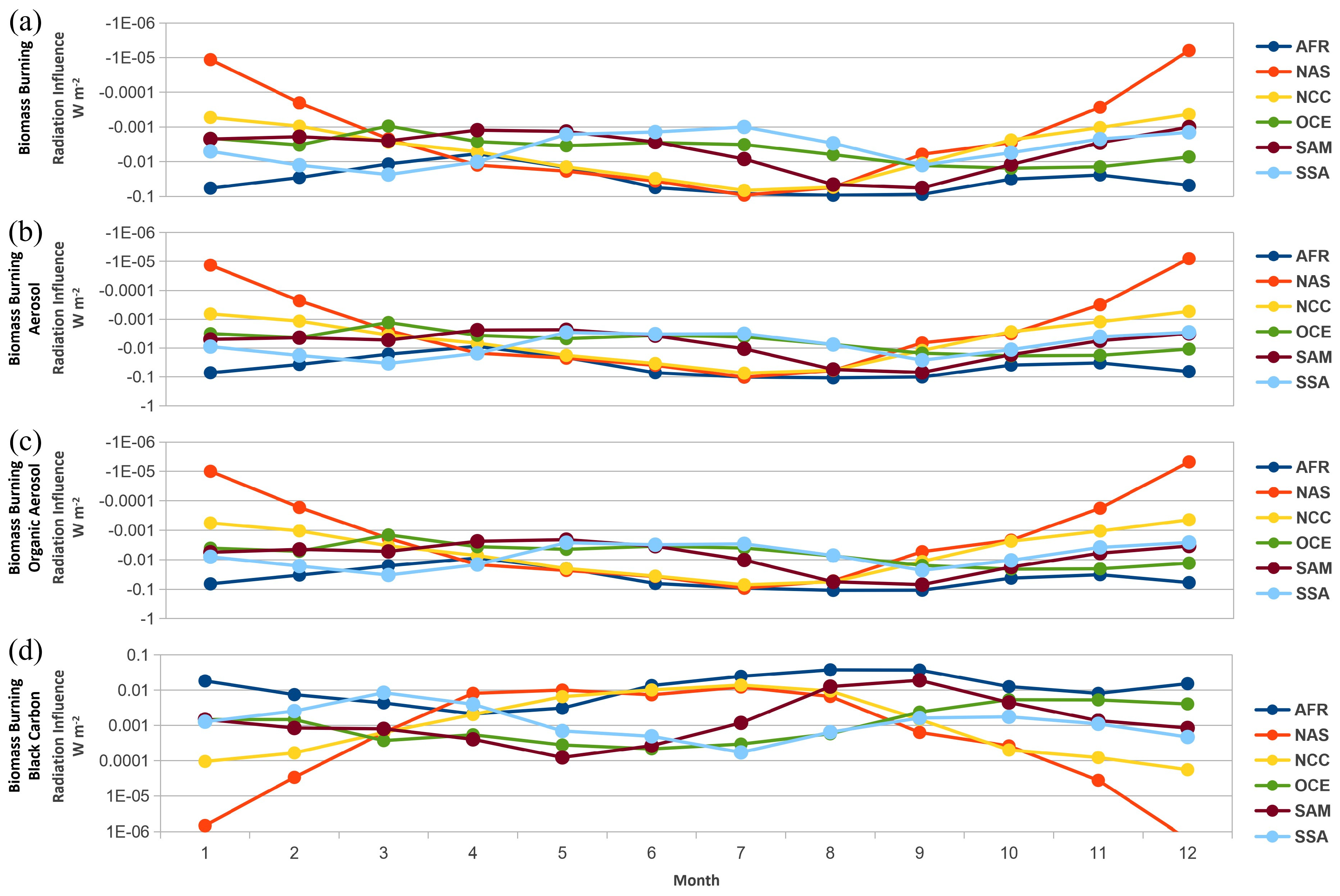
Figure 8 shows the mean monthly variation in radiation sensitivity for 2010–2019. The monthly characteristics of BB, PM, and OA radiation sensitivity show similar negative effects. Meanwhile, BC shows a distinctive positive effect. Most significantly NAS and NCC show high radiation sensitivity of BB (ranging from −0.00095 to −0.00071 W m−2 Tg−1 Month), PM (ranging from −0.001 to −0.00081 W m−2 Tg−1 Month), and OA (ranging from −0.00097 to −0.00079 W m−2 Tg−1 Month) in summer time. NAS and NCC are located in the north part of the hemisphere. In the summer, daylight duration is longer, and the solar zenith angle is smaller, which all lead to higher incident energy and finally bring about the highest radiation sensitivity in this season. For BC, a peak occurs earlier in NAS (with a late spring value of 0.00029 W m−2 Tg−1 Month) and NCC (with an early summer value of 0.00024 W m−2 Tg−1 Month), especially in NAS, whose location is further north than NCC. Such a phenomenon is the result of the combined influence of both incident energy (mentioned above) and surface reflectance. When the surface is covered by snow, the high surface reflectance will intensify the absorption of BC in the atmosphere. In addition, BC’s deposition on the snow surface will change the surface reflectance and also intensify the absorption. Late spring and early summer are the seasons having both large incident energy and large snow cover in the high-latitude region. Thus, the BC radiation sensitivity peak occurs in these seasons in NAS and NCC. OCE, which dominates the direct climate effect over Antarctica, follows a similar mechanism to NAS and NCC but during the austral summer months, with the exception that Antarctica does not show a significant reduction in snow surface reduction. The OA and BC factors in the OCE region have high radiation sensitivity from September to March (with extreme values of −0.00081 W m−2 Tg−1 Month for OA in February and 0.00016 W m−2 Tg−1 Month for BC in January) and low radiation sensitivity from April to August. The radiation sensitivity of BB and PM factors in the OCE region are mainly influenced by the combined effect of both OA and BC. For AFR and SAM, all factors have peak radiation sensitivity in September. As for the SSA region, BB, PM, and OA have a peak radiation sensitivity around February and low radiation sensitivity around June and July. The BC factor in the SSA region has low radiation sensitivity from July to September and a peak in November, as well as a high-value period from March to May.
Figure 9 shows the monthly variation in radiation influence, the product of the values shown in Figure 7a and Figure 8. Because the biomass burned shows a more obvious monthly difference than the radiation sensitivity, the monthly variation in radiation influence is mainly consistent with the monthly biomass burned. AFR has two significant radiation influence periods that peak around DJF and JAS; NCC peaks during JJA; OCE peaks during SON; SAM peaks during ASO; and SSA has peaks during FMA and ASO. In addition to the peak biomass burning period around July, the radiation influence of BC in NAS shows an additional high value period in late spring (Figure 9d) because of the significant late spring peak of radiation sensitivity in NAS mentioned above.
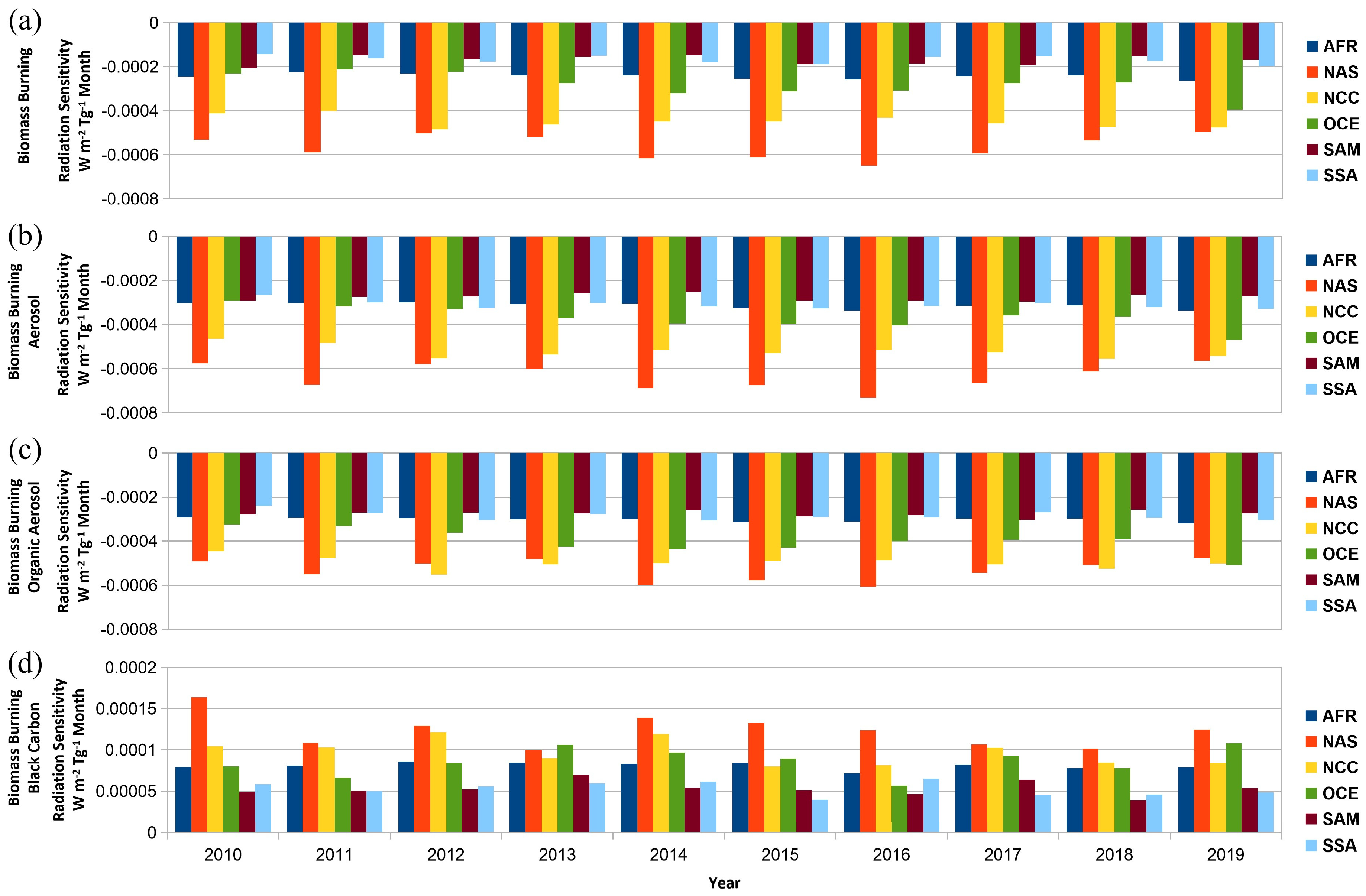
Figure 10 shows the yearly variation in radiation sensitivity for key factors in six regions. The yearly difference in radiation sensitivity is relatively small. The relative difference between the maximum year and minimum year is no more than half of the maximum radiation sensitivity year for each factor.
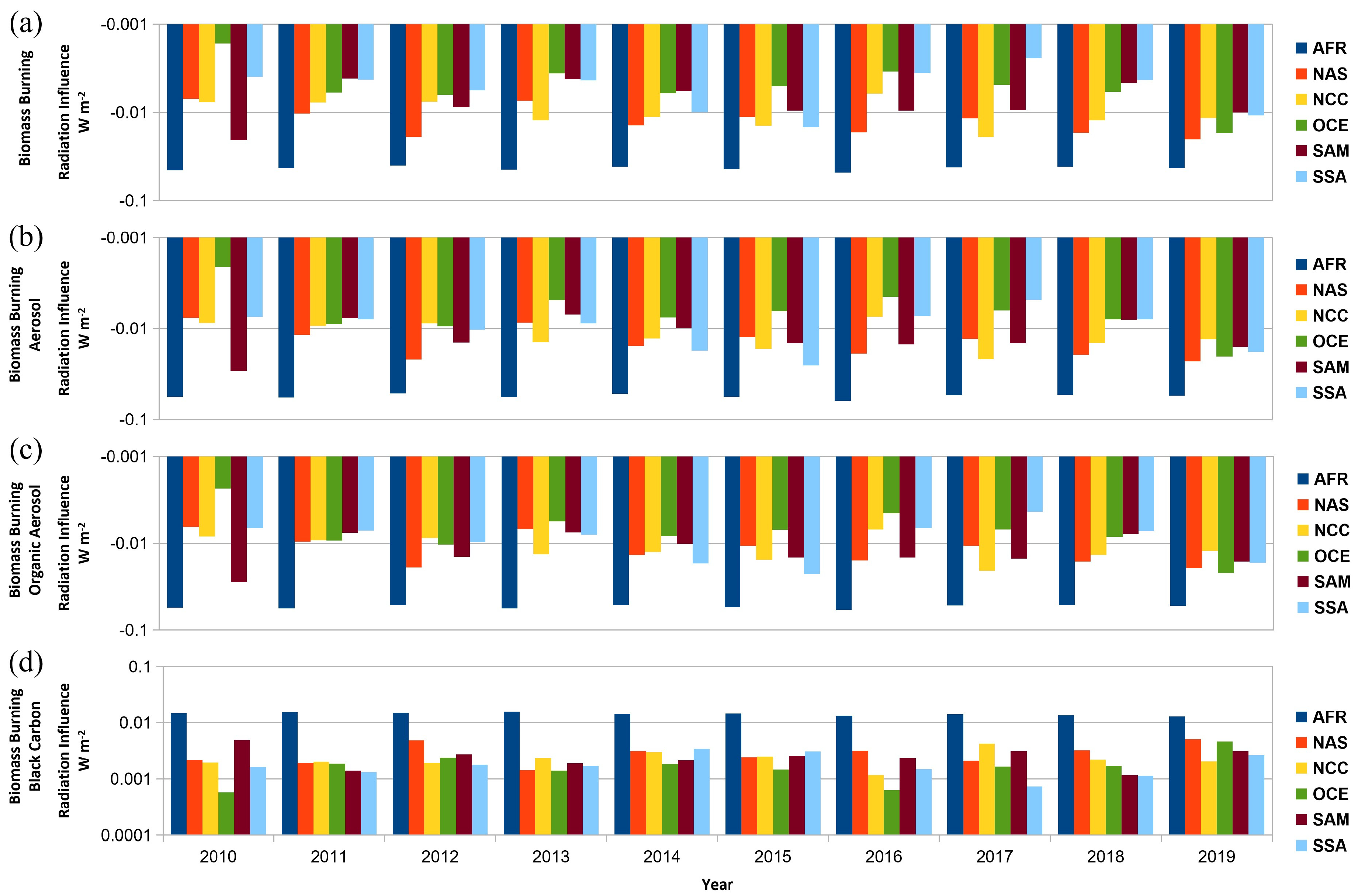
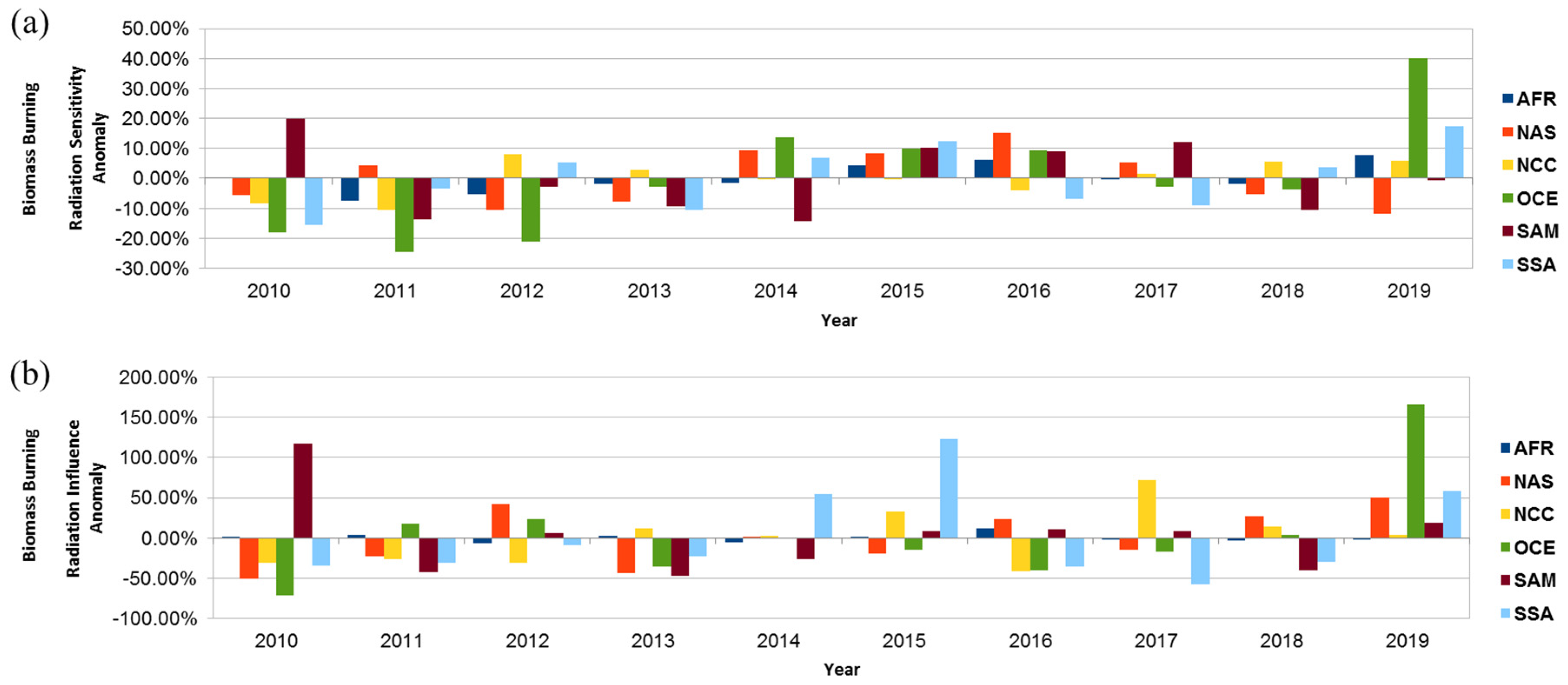
Meanwhile, the yearly difference in radiation influence is significantly larger than radiation sensitivity. Figure 11 shows that the relative difference between the maximum year and minimum year can reach 90% of the maximum radiation influence year. Specifically, two regions mainly affected by El Niño (OCE and SSA) have the most significant yearly variation in all factors, with anomalies occurring in El Niño years (2014, 2015, and 2019). The comparison in Figure 12 shows that the anomaly of radiation influence is about four times larger than radiation sensitivity.

4. Conclusions

In this study, we quantified the global and regional direct climate effects of biomass burning aerosols using the GEOS-Chem model coupled with a radiative transfer model, with model validation against AERONET measurements showing good agreement (R2 = 0.87, bias = −7%). An evaluation and analysis framework for the direct climate effects of biomass burning aerosols was developed, based primarily on radiation sensitivity and radiation influence.
In general, the global mean radiation influence of biomass burning (including gases and aerosols) is −0.088 W m−2, with aerosols alone contributing −0.116 W m−2, corresponding to global temperature changes of approximately −0.066 °C and −0.087 °C, respectively.
Regionally, the six key biomass burning regions can be classified into three categories based on radiation sensitivity: high-sensitivity regions (NAS, NCC) are dominated by boreal forest fires; low-sensitivity regions (SAM, SSA) contain a distinctive type of tropical deforestation; and moderate-sensitivity regions (AFR, OCE) are characterized predominantly by savanna fires. Moreover, Africa contributes nearly half of the global biomass burning, resulting in an incomparable high radiative influence among all regions.
Temporally, inherent monthly features of radiation sensitivity are found. Most significantly, compared to other aerosol types, the radiation sensitivity peak of black carbon occurs earlier in late spring or early summer for high-latitude regions, when high incident solar radiation and a large area of high-reflectance snow cover coexist. Meanwhile, the monthly variation in radiation influence is typically consistent with the monthly biomass burned, with some additional peaks brought by radiation sensitivity. Caused by the fluctuation in regional biomass burned, the yearly difference in radiation influence is significantly larger than radiation sensitivity, which is an inherent property determined by the geographical conditions. The relative difference between the maximum year and minimum year can reach 90% of the maximum radiation influence year. Specifically, two regions affected by El Niño (Oceania, South Asia, and Southeast Asia) have the most significant yearly variation in all factors, with anomalies occurring in El Niño years (2014, 2015, and 2019).
Several potential factors may contribute to the uncertainty of this research, such as the selection of global fire emissions inventories [47]; the rapid chemical and physical changes in biomass burning aerosols [11,17]; and the inaccurate assumption of the biomass burning aerosol model [16]. An extended study or other relevant existing studies can provide additional insights into these factors.

Supplementary Materials

The following supporting information can be downloaded at: https://www.mdpi.com/article/10.3390/cli14060125/s1, Table S1: Variable Names Description; Table S2: BC; Table S3: OA; Table S4: SNA; Table S5: SS; Table S6: DU.

Author Contributions

Conceptualization, S.S. and P.I.P.; methodology, S.S. and P.I.P.; software, F.Y. and S.S.; validation, S.S.; formal analysis, S.S.; investigation, S.S. and P.I.P.; resources, P.I.P. and S.S.; data curation, S.S., F.Y. and P.I.P.; writing—original draft preparation, S.S.; writing—review and editing, S.S., P.I.P. and F.Y.; visualization, S.S.; supervision, P.I.P.; project administration, S.S. and P.I.P.; funding acquisition, S.S. All authors have read and agreed to the published version of the manuscript.

Funding

This research was funded by the Scientific Research Subsidy of Zhejiang Province (grant number 432310-HX2025002) and China Scholarship Council (grant number CSC 202204910187). The APC was funded by 432310-HX2025002.

Data Availability Statement

The data presented in this study are available on request from the authors.

Acknowledgments

We extend our sincere gratitude to the GEOS-Chem community, particularly the team at Harvard University for their maintenance of the GEOS-Chem model, and to the NASA Global Modeling and Assimilation Office (GMAO) for providing the meteorological reanalysis data products. We acknowledge Atmospheric and Environmental Research, Inc. (AER, Inc.) for the open-source codes of RRTMG and the solar irradiance dataset. We are deeply grateful to Liang Feng for his invaluable guidance on model debugging and experimental design.

Conflicts of Interest

The authors declare no conflicts of interest. The funders had no role in the design of the study; in the collection, analyses, or interpretation of data; in the writing of the manuscript; or in the decision to publish the results.

References

  1. Zhang, A.; Wang, Y.; Zou, Y. Positive Feedback to Regional Climate Enhances African Wildfires. iScience 2023, 26, 108533. [Google Scholar] [CrossRef]
  2. Flannigan, M.D.; Krawchuk, M.A.; de Groot, W.J.; Wotton, B.M.; Gowman, L.M. Implications of Changing Climate for Global Wildland Fire. Int. J. Wildland Fire 2009, 18, 483–507. [Google Scholar] [CrossRef]
  3. Zhang, G.; Li, J.; Li, X.-D.; Xu, Y.; Guo, L.-L.; Tang, J.-H.; Lee, C.S.L.; Liu, X.; Chen, Y.-J. Impact of Anthropogenic Emissions and Open Biomass Burning on Regional Carbonaceous Aerosols in South China. Environ. Pollut. 2010, 158, 3392–3400. [Google Scholar] [CrossRef]
  4. Bond, T.C.; Doherty, S.J.; Fahey, D.W.; Forster, P.M.; Berntsen, T.; DeAngelo, B.J.; Flanner, M.G.; Ghan, S.; Kärcher, B.; Koch, D.; et al. Bounding the Role of Black Carbon in the Climate System: A Scientific Assessment. J. Geophys. Res. Atmos. 2013, 118, 5380–5552. [Google Scholar] [CrossRef]
  5. Bellouin, N.; Quaas, J.; Gryspeerdt, E.; Kinne, S.; Stier, P.; Watson-Parris, D.; Boucher, O.; Carslaw, K.S.; Christensen, M.; Daniau, A.-L.; et al. Bounding Global Aerosol Radiative Forcing of Climate Change. Rev. Geophys. 2020, 58, e2019RG000660. [Google Scholar] [CrossRef] [PubMed]
  6. Hansen, J.; Lacis, A.; Ruedy, R.; Sato, M.; Wilson, H. How Sensitive Is the World’s Climate? Natl. Geog. Res. Explor. 1993, 9, 142–158. [Google Scholar]
  7. Hansen, J.; Sato, M. Paleoclimate Implications for Human-Made Climate Change. In Climate Change: Inferences from Paleoclimate and Regional Aspects; Springer: Vienna, Austria, 2011. [Google Scholar] [CrossRef]
  8. Hansen, J.; Sato, M. Greenhouse Gas Growth Rates. Proc. Natl. Acad. Sci. USA 2004, 101, 16109–16114. [Google Scholar] [CrossRef] [PubMed]
  9. Dong, Q.; Zhong, C.; Geng, Y.; Dong, F.; Chen, W.; Zhang, Y. A Bibliometric Review of Carbon Footprint Research. Carbon Footpr. 2024, 3, 3. [Google Scholar] [CrossRef]
  10. Chen, A.; Xie, Z.; Zhan, H.; Jiang, B.; Zhang, A.; Liu, H.; Hu, C.; Wu, X.; Yue, F.; Xu, L. Long-Term Observations of Levoglucosan in Arctic Aerosols Reveal Its Biomass Burning Source and Implication on Radiative Forcing. J. Geophys. Res. Atmos. 2023, 128, e2022JD037597. [Google Scholar] [CrossRef]
  11. Adachi, K.; Sedlacek, A.J.; Kleinman, L.; Springston, S.R.; Wang, J.; Chand, D.; Hubbe, J.M.; Shilling, J.E.; Onasch, T.B.; Kinase, T.; et al. Spherical Tarball Particles Form through Rapid Chemical and Physical Changes of Organic Matter in Biomass-Burning Smoke. Proc. Natl. Acad. Sci. USA 2019, 116, 19336–19341. [Google Scholar] [CrossRef]
  12. Marvin, M.R.; Palmer, P.I.; Yao, F.; Latif, M.T.; Khan, M.F. Uncertainties from Biomass Burning Aerosols in Air Quality Models Obscure Public Health Impacts in Southeast Asia. Atmos. Chem. Phys. 2024, 24, 3699–3715. [Google Scholar] [CrossRef]
  13. Naik, V.; Mauzerall, D.L.; Horowitz, L.W.; Schwarzkopf, M.D.; Ramaswamy, V.; Oppenheimer, M. On the Sensitivity of Radiative Forcing from Biomass Burning Aerosols and Ozone to Emission Location. Geophys. Res. Lett. 2007, 34, L03818. [Google Scholar] [CrossRef]
  14. Saleh, R.; Marks, M.; Heo, J.; Adams, P.J.; Donahue, N.M.; Robinson, A.L. Contribution of Brown Carbon and Lensing to the Direct Radiative Effect of Carbonaceous Aerosols from Biomass and Biofuel Burning Emissions. J. Geophys. Res. Atmos. 2015, 120, 10285–10296. [Google Scholar] [CrossRef]
  15. Rana, A.; Rawat, P.; Sarkar, S. Sources, Transport Pathways and Radiative Effects of BC Aerosol during 2018–2020 at a Receptor Site in the Eastern Indo-Gangetic Plain. Atmos. Environ. 2023, 309, 119900. [Google Scholar] [CrossRef]
  16. Brown, H.; Liu, X.; Pokhrel, R.; Murphy, S.; Lu, Z.; Saleh, R.; Mielonen, T.; Kokkola, H.; Bergman, T.; Myhre, G.; et al. Biomass Burning Aerosols in Most Climate Models Are Too Absorbing. Nat. Commun. 2021, 12, 277. [Google Scholar] [CrossRef] [PubMed]
  17. Shi, S.; Cheng, T.; Gu, X.; Guo, H.; Wu, Y.; Wang, Y.; Bao, F.; Zuo, X. Probing the Dynamic Characteristics of Aerosol Originated from South Asia Biomass Burning Using POLDER/GRASP Satellite Data with Relevant Accessory Technique Design. Environ. Int. 2020, 145, 106097. [Google Scholar] [CrossRef]
  18. Shi, S.; Ma, Y.; Bao, F.; Mumtaz, F. A Satellite Data Based Detailed Study of the Aerosol Emitted from Open Biomass Burning in Northeast China. Atmosphere 2021, 12, 1700. [Google Scholar] [CrossRef]
  19. Shi, S.; Cheng, T.; Gu, X.; Guo, H.; Wu, Y.; Wang, Y. Biomass Burning Aerosol Characteristics for Different Vegetation Types in Different Aging Periods. Environ. Int. 2019, 126, 504–511. [Google Scholar] [CrossRef] [PubMed]
  20. Nikonovas, T.; North, P.R.J.; Doerr, S.H. Smoke Aerosol Properties and Ageing Effects for Northern Temperate and Boreal Regions Derived from AERONET Source and Age Attribution. Atmos. Chem. Phys. 2015, 15, 6445–6479. [Google Scholar] [CrossRef]
  21. Nikonovas, T.; North, P.R.J.; Doerr, S.H. Particulate Emissions from Large North American Wildfires Estimated Using a New Top-down Method. Atmos. Chem. Phys. 2017, 17, 6423–6438. [Google Scholar] [CrossRef]
  22. Markowicz, K.M.; Lisok, J.; Xian, P. Simulations of the Effect of Intensive Biomass Burning in July 2015 on Arctic Radiative Budget. Atmos. Environ. 2017, 171, 248–260. [Google Scholar] [CrossRef]
  23. Myhre, G.; Samset, B.H.; Schulz, M.; Balkanski, Y.; Bauer, S.; Berntsen, T.K.; Bian, H.; Bellouin, N.; Chin, M.; Diehl, T.; et al. Radiative Forcing of the Direct Aerosol Effect from AeroCom Phase II Simulations. Atmos. Chem. Phys. 2013, 13, 1853–1877. [Google Scholar] [CrossRef]
  24. Giglio, L.; Randerson, J.T.; van der Werf, G.R. Analysis of Daily, Monthly, and Annual Burned Area Using the Fourth-Generation Global Fire Emissions Database (GFED4). J. Geophys. Res. Biogeosci. 2013, 118, 317–328. [Google Scholar] [CrossRef]
  25. Bey, I.; Jacob, D.J.; Yantosca, R.M.; Logan, J.A.; Field, B.D.; Fiore, A.M.; Li, Q.; Liu, H.Y.; Mickley, L.J.; Schultz, M.G. Global Modeling of Tropospheric Chemistry with Assimilated Meteorology: Model Description and Evaluation. J. Geophys. Res. Atmos. 2001, 106, 23073–23095. [Google Scholar] [CrossRef]
  26. Heald, C.; Ridley, D.; Kroll, J.; Barrett, S.; Cady-Pereira, K.; Alvarado, M.; Holmes, C. Beyond Direct Radiative Forcing: The Case for Characterizing the Direct Radiative Effect of Aerosols. Atmos. Chem. Phys. Discuss. 2013, 13, 32925–32961. [Google Scholar]
  27. Yantosca, B.; Sulprizio, M.; Lundgren, L.; kelvinhb; Keller, C.; Fritz, T.; 22degrees; Ridley, D.; Bindle, L.; Eastham, S.D.; et al. Geoschem/Geos-Chem: 14.0.2. 2022. Available online: https://scixplorer.org/abs/2023zndo...8411433Y/abstract (accessed on 1 April 2026).
  28. Lin, H.; Long, M.S.; Sander, R.; Sandu, A.; Yantosca, R.M.; Estrada, L.A.; Shen, L.; Jacob, D.J. An Adaptive Auto-Reduction Solver for Speeding Up Integration of Chemical Kinetics in Atmospheric Chemistry Models: Implementation and Evaluation in the Kinetic Pre-Processor (KPP) Version 3.0.0. J. Adv. Model. Earth Syst. 2023, 15, e2022MS003293. [Google Scholar] [CrossRef]
  29. Gelaro, R.; McCarty, W.; Suárez, M.J.; Todling, R.; Molod, A.; Takacs, L.; Randles, C.A.; Darmenov, A.; Bosilovich, M.G.; Reichle, R.; et al. The Modern-Era Retrospective Analysis for Research and Applications, Version 2 (MERRA-2). J. Clim. 2017, 30, 5419–5454. [Google Scholar] [CrossRef]
  30. Yao, F.; Palmer, P.I. Source Sector Mitigation of Solar Energy Generation Losses Attributable to Particulate Matter Pollution. Environ. Sci. Technol. 2022, 56, 8619–8628. [Google Scholar] [CrossRef] [PubMed]
  31. Park, R.J.; Jacob, D.J.; Field, B.D.; Yantosca, R.M.; Chin, M. Natural and Transboundary Pollution Influences on Sulfate-Nitrate-Ammonium Aerosols in the United States: Implications for Policy. J. Geophys. Res. Atmos. 2004, 109, D15204. [Google Scholar] [CrossRef]
  32. Pai, S.J.; Heald, C.L.; Pierce, J.R.; Farina, S.C.; Marais, E.A.; Jimenez, J.L.; Campuzano-Jost, P.; Nault, B.A.; Middlebrook, A.M.; Coe, H.; et al. An Evaluation of Global Organic Aerosol Schemes Using Airborne Observations. Atmos. Chem. Phys. 2020, 20, 2637–2665. [Google Scholar] [CrossRef]
  33. Turpin, B.J.; Lim, H.-J. Species Contributions to PM2.5 Mass Concentrations: Revisiting Common Assumptions for Estimating Organic Mass. Aerosol Sci. Technol. 2001, 35, 602–610. [Google Scholar] [CrossRef]
  34. Wang, Q.; Jacob, D.J.; Spackman, J.R.; Perring, A.E.; Schwarz, J.P.; Moteki, N.; Marais, E.A.; Ge, C.; Wang, J.; Barrett, S.R.H. Global Budget and Radiative Forcing of Black Carbon Aerosol: Constraints from Pole-to-Pole (HIPPO) Observations across the Pacific. J. Geophys. Res. Atmos. 2014, 119, 195–206. [Google Scholar] [CrossRef]
  35. Jaeglé, L.; Quinn, P.K.; Bates, T.S.; Alexander, B.; Lin, J.-T. Global Distribution of Sea Salt Aerosols: New Constraints from in Situ and Remote Sensing Observations. Atmos. Chem. Phys. 2011, 11, 3137–3157. [Google Scholar] [CrossRef]
  36. Fairlie, T.D.; Jacob, D.J.; Park, R.J. The Impact of Transpacific Transport of Mineral Dust in the United States. Atmos. Environ. 2007, 41, 1251–1266. [Google Scholar] [CrossRef]
  37. Hess, M.; Koepke, P.; Schult, I. Optical Properties of Aerosols and Clouds: The Software Package OPAC. Bull. Am. Meteorol. Soc. 1998, 79, 831–844. [Google Scholar] [CrossRef]
  38. Mishchenko, M.; Travis, L.; Macke, A. Scattering of Light by Polydisperse, Randomly Oriented, Finite Circular Cylinders. Appl. Opt. 1996, 35, 4927–4940. [Google Scholar] [CrossRef] [PubMed]
  39. Randerson, J.; Van Der Werf, G.; Giglio, L.; Collatz, G.; Kasibhatla, P. Global Fire Emissions Database, Version 4.1 (GFEDv4); ORNL DAAC: Oak Ridge, TN, USA, 2015.
  40. van der Werf, G.R.; Randerson, J.T.; Giglio, L.; van Leeuwen, T.T.; Chen, Y.; Rogers, B.M.; Mu, M.; van Marle, M.J.E.; Morton, D.C.; Collatz, G.J.; et al. Global Fire Emissions Estimates during 1997–2016. Earth Syst. Sci. Data 2017, 9, 697–720. [Google Scholar] [CrossRef]
  41. Akagi, S.K.; Yokelson, R.J.; Wiedinmyer, C.; Alvarado, M.J.; Reid, J.S.; Karl, T.; Crounse, J.D.; Wennberg, P.O. Emission Factors for Open and Domestic Biomass Burning for Use in Atmospheric Models. Atmos. Chem. Phys. 2011, 11, 4039–4072. [Google Scholar] [CrossRef]
  42. Park, R.J.; Jacob, D.J.; Palmer, P.I.; Clarke, A.D.; Weber, R.J.; Zondlo, M.A.; Eisele, F.L.; Bandy, A.R.; Thornton, D.C.; Sachse, G.W.; et al. Export Efficiency of Black Carbon Aerosol in Continental Outflow: Global Implications. J. Geophys. Res. Atmos. 2005, 110, D11205. [Google Scholar] [CrossRef]
  43. Li, Z.; Blarel, L.; Podvin, T.; Goloub, P.; Buis, J.-P.; Morel, J.-P. Transferring the Calibration of Direct Solar Irradiance to Diffuse-Sky Radiance Measurements for CIMEL Sun-Sky Radiometers. Appl. Opt. 2008, 47, 1368–1377. [Google Scholar] [CrossRef]
  44. Holben, B.N.; Eck, T.F.; Slutsker, I.; Tanré, D.; Buis, J.P.; Setzer, A.; Vermote, E.; Reagan, J.A.; Kaufman, Y.J.; Nakajima, T.; et al. AERONET—A Federated Instrument Network and Data Archive for Aerosol Characterization. Remote Sens. Environ. 1998, 66, 1–16. [Google Scholar] [CrossRef]
  45. Oreopoulos, L.; Mlawer, E.; Delamere, J.; Shippert, T.; Cole, J.; Fomin, B.; Iacono, M.; Jin, Z.; Li, J.; Manners, J.; et al. The Continual Intercomparison of Radiation Codes: Results from Phase I. J. Geophys. Res. Atmos. 2012, 117, D06118. [Google Scholar] [CrossRef]
  46. Derimian, Y.; Léon, J.-F.; Dubovik, O.; Chiapello, I.; Tanré, D.; Sinyuk, A.; Auriol, F.; Podvin, T.; Brogniez, G.; Holben, B.N. Radiative Properties of Aerosol Mixture Observed during the Dry Season 2006 over M’Bour, Senegal (African Monsoon Multidisciplinary Analysis Campaign). J. Geophys. Res. Atmos. 2008, 113, D00C09. [Google Scholar] [CrossRef]
  47. Liu, T.; Mickley, L.J.; Marlier, M.E.; DeFries, R.S.; Khan, M.F.; Latif, M.T.; Karambelas, A. Diagnosing Spatial Biases and Uncertainties in Global Fire Emissions Inventories: Indonesia as Regional Case Study. Remote Sens. Environ. 2020, 237, 111557. [Google Scholar] [CrossRef]
Figure 1. Six biomass burning regions that collectively represent nearly 97% of global burning biomass. They include Africa (AFR); North Asia (NAS); Northern America, Central America, and the Caribbean (NCC); Oceania (OCE); South America (SAM); and South and Southeast Asia (SSA).
Climate 14 00125 g001
Figure 2. (a) Location of 923 AERONET sites used to validate GEOS-Chem/RRTMG surface radiation flux estimates, and (b) density scatterplot of AERONET and GEOS-Chem/RRTMG model values of surface radiation (W m−2). Inset of panel (b) includes the number of observations plotted, the linear least-squares model that describes the data, the squared Pearson correlation coefficient, and the standard error of the linear model fit to the data.
Climate 14 00125 g002
Figure 3. Decadal mean (2010–2019) values for the radiation influence of biomass burning aerosols on (a) SW + LW, (b) LW, and (c) SW.
Climate 14 00125 g003
Figure 4. Biomass burning aerosol radiation sensitivity (2010–2019 mean) for different regions. (af) correspond to the key biomass burning regions of NCC, NAS, AFR, SSA, SAM, and OCE, respectively.
Climate 14 00125 g004
Figure 5. The radiation sensitivity and radiation influence of different biomass burning factors in the 6 regions: (a) radiation sensitivity; (b) radiation influence.
Climate 14 00125 g005
Figure 6. Types of the biomass burned for the six geographical regions shown in Figure 1 and partly reported in Table 1, described as (a) percentage and (b) absolute values.
Climate 14 00125 g006
Figure 7. (a) Monthly (2010–2019 mean) and (b) annual biomass burned for the six geographical regions shown in Figure 1.
Climate 14 00125 g007
Figure 8. Monthly radiation sensitivity (2010–2019 mean) for key factors in 6 regions: (a) biomass burning (BB); (b) biomass burning aerosol (PM); (c) biomass burning organic aerosol (OA); (d) biomass burning black carbon (BC).
Climate 14 00125 g008
Figure 9. Monthly radiation influence (2010–2019 mean) for key factors in 6 regions: (a) biomass burning (BB); (b) biomass burning aerosol (PM); (c) biomass burning organic aerosol (OA); (d) biomass burning black carbon (BC).
Climate 14 00125 g009
Figure 10. Yearly radiation sensitivity for key factors in 6 regions: (a) biomass burning (BB); (b) biomass burning aerosol (PM); (c) biomass burning organic aerosol (OA); (d) biomass burning black carbon (BC).
Climate 14 00125 g010
Figure 11. Yearly radiation influence of key factors in 6 regions: (a) biomass burning (BB); (b) biomass burning aerosol (PM); (c) biomass burning organic aerosol (OA); (d) biomass burning black carbon (BC).
Climate 14 00125 g011
Figure 12. Comparison of yearly (a) radiation sensitivity anomaly and (b) radiation influence anomaly for biomass burning in 6 regions.
Climate 14 00125 g012
Table 1. Percentage of global burning biomass with breakdown of different burning types for six key biomass burning regions in terms of 10-year (2010–2019) mean of total dry mass (DM) burned.
Key Biomass Burning RegionsNCCOCESAMSSAAFRNAS
Percentage of Global Burning Biomass10.3%5.7%12.9%9.8%45.9%11.9%
Temperate Forest (TEMP)
1.3%0.8%0.2%0.4%0.0%0.1%
Savanna (SAVA)
1.6%4.6%6.5%2.9%41.6%0.1%
Peat (PEAT)
0.3%0.0%0.0%2.0%0.0%0.2%
Tropical Deforestation (DEFO)
0.6%0.2%5.7%3.9%2.4%0.0%
Boreal Forest (BORF)
5.8%0.0%0.0%0.0%0.0%10.4%
Agricultural Waste (AGRI)
0.7%0.1%0.5%0.6%1.9%1.1%
Table 2. Global average of radiation influence (SW + LW) for different biomass burning factors.
Biomass Burning FactorsRadiation Influence Global Average (SW + LW)
(W m−2)
BB−0.088
PM−0.116
PMAT−0.117
OA−0.111
BC0.026
BCAT0.025
BCDP0.001
SU−0.006
AM−0.005
NI−0.009
Disclaimer/Publisher’s Note: The statements, opinions and data contained in all publications are solely those of the individual author(s) and contributor(s) and not of MDPI and/or the editor(s). MDPI and/or the editor(s) disclaim responsibility for any injury to people or property resulting from any ideas, methods, instructions or products referred to in the content.