Article

Assessing Multiple-Year Climate Variability Impacts on Coconut Production and Price in Sri Lanka

by
Kimesha Irangika Silva
1,* and
Kenichi Matsui
2
1
Graduate School of Science and Technology, University of Tsukuba, 1-1-1 Tennodai, Tsukuba, Ibaraki 305-8577, Japan
2
Faculty of Life and Environmental Sciences, University of Tsukuba, 1-1-1 Tennodai, Tsukuba, Ibaraki 305-8577, Japan
*
Author to whom correspondence should be addressed.
Climate 2026, 14(3), 62; https://doi.org/10.3390/cli14030062
Submission received: 14 January 2026 / Revised: 20 February 2026 / Accepted: 28 February 2026 / Published: 3 March 2026

Abstract

The assessment of climate variability impacts on crop production and price varies by what factors studies consider, including annuals and perennials. Unlike annual crops, climate impacts on perennial crops like coconuts require a multiple-year assessment. Although previous studies have examined climate effects on coconut production, there is a critical gap in understanding multiple-year impacts of climate variability on coconut production and price. Therefore, this paper aims to fill this gap by assessing the extent to which climate variability affects coconut production and prices in Sri Lanka, the fourth largest coconut producer in the world. For this purpose, we analyzed rainfall, temperature, average drought months, coconut production, coconut cultivation area, and coconut retail price from 2010 to 2022. We then created and administered five regression models to illustrate the impact of climate variables for a single year and multiple years on coconut production, yield, and price. The results indicate that rainfall in the previous year is the most critical determinant for production (p = 0.014) and yield (p = 0.032), while drought intensity and temperature shocks show delayed negative effects on production. Lagged temperature shocks and supply shortages significantly increased nominal coconut retail prices. A temperature increase by 1 °C in the previous year raised prices by approximately LKR 36 per nut. After adjusting for inflation, only temperature (p = 0.002) effects was found significant, indicating that climate-induced supply constraints dominate real price changes. Our three-year analysis showed that drought conditions, together with rainfall and temperature variability, reduced production with a delayed effect (p = 0.026). These findings highlight the importance of incorporating multiple-year climate impacts into adaptation and price stabilization policies for coconut and other perennial crops.

1. Introduction

Recent studies on climate change showed that the climate affected crop prices, as extremely dry and hot summers caused poor harvests and crop failures, leading to supply shortages and food price inflation [1,2,3,4]. The Intergovernmental Panel on Climate Change (IPCC) has reiterated this possibility since its 2014 report, but only 5% of the studies cited in that report analyzed the effects of climate change on food prices or the broader economy [5].
Climate change and variability phenomena that affect crop prices were examined with major references to long-term and short-term rainfall, temperature changes, drought occurrences, and CO2 concentration [6,7,8]. These studies focused on annual crops such as maize, rice, and wheat [9,10,11,12,13]. What we do not know much, however, is the impact of climate change and variability on the price of important perennial crops like coconut.
Coconut, a key perennial plantation crop, has gained growing attention in climate change/variability impact studies due to its sensitivity to climatic variability and its importance for livelihoods and economies [14]. Past coconut studies primarily examined regional production changes driven by “heatflation” (higher temperature), precipitation changes, elevated CO2 concentration, and increased pest and disease occurrences mainly in India, the Philippines, and Indonesia [15,16,17,18,19]. Studies about China showed increased stress accumulation due to rhinoceros beetles, coconut mites, red palm weevils, white flies, and black-headed caterpillars under warming temperature conditions [20,21]. Studies conducted in Sri Lanka focused on moisture stress and high-temperature-related damage in coconut production [22,23,24,25,26].
Sri Lanka has experienced rainfall and temperature anomalies in recent decades, posing growing risks to climate-sensitive agricultural sectors [27]. Here a critical question arises as to the extent to which observed climate variability affected coconut production and price in Sri Lanka, one of the major coconut producers in the world, accounting for approximately 5% of total global coconut production [28]. However, past studies on coconuts have not clarified the interconnectedness between price, production, and climatic variable. Considering this gap as a potential oversight, this paper examines the extent to which observed climate variability affected coconut production and price in Sri Lanka by looking from 2010 to 2022.

2. Literature Review: Climate Change Impact on Coconut

Climate change and variability impact research on coconut production in Sri Lanka has undergone considerable changes over the past three decades. In the 1990s, foundational studies, such as those by Peiris et al. [29] and Peiris [30], primarily explored the relationships between seasonal rainfall changes and coconut yields. These studies were mostly based on historical yield records and correlation analyses, showing that coconut production in Sri Lanka was sensitive to inter-annual climatic fluctuations.
In the 2000s, modeling approaches emerged. These studies attempted to predict yield responses to climate stress by incorporating crop–climate simulation models and long-term observational data [31,32,33]. These studies examined how climatic factors, including drought, rainfall timing, and temperature anomalies, affected key physiological stages of the coconut palm, such as flowering and nut development.
In the 2010s, studies became more integrative [23]. Patiraja et al. analyzed yield trends in connection with observed climate change and early climate projections [34]. They included farmer’s perceptions, socio-economic vulnerability, and GIS-based spatial variations [26]. Pathmeswaran et al. analyzed production trends in relation to extreme weather events and found that climatic variability affected coconut productivity differently across climatic zones [25]. Eeswaran provided a comprehensive synthesis of climate variability impacts and adaptation challenges in Sri Lanka’s agricultural sector, highlighting increasing temperature trends, rainfall variability, and the increasing vulnerability of perennial crops. While these studies provided insights into future production in terms of regional adaptation needs and potential risks, no study has quantified the persistence of climate shocks to market outcomes [27].
By the 2020s, the emphasis on climate risk and adaptation became more prominent. Samaraweera et al., for instance, documented the effects of cyclone events and heavy monsoons on tree damage and multi-seasonal yield disruptions [35]. However, despite advances in methodology and scope, few studies investigated multi-year impacts of a single extreme climate event. Most empirical research remains focused on short-term or annual impacts, without fully capturing lagged effects on productivity, market supply, and price stability. Moreover, past studies have not shed much light on the impact of climate-induced price volatility on farmers’ livelihoods and market stability.
That being said, there are studies that helped us better understand changes in coconut production and prices, although they are not directly connected to recent climate variability. Unlike seasonal and annual crops, coconuts require price stability for their steady growth due to their inability to make short-term adjustments to price fluctuations [36]. Also, variations in prices erode the purchasing power of consumers. As a result, producers may make costly decisions [37]. Moreover, past coconut price uncertainties plagued the coconut industry with a low investment–low productivity cycle [38]. Sri Lanka’s policy concerning the coconut industry has focused on consumer protection, partly because an average household spends about 5.8% of its food and drink budget on coconuts [39]. Any changes in coconut and coconut oil prices can substantially impact the cost of living.
In past studies, empirical evidence is fragmented regarding temporal persistence and economic transmission mechanisms largely due to their emphasis on short-term or region-specific production responses. This trend has limited an analysis of lagged climate effects and their implications on production, yield, and price dynamics. Therefore, this study examines the immediate and lagged impacts of rainfall variability, temperature change, and drought conditions on coconut production, yield, and retail prices in Sri Lanka.

3. Materials and Methods

3.1. Study Area

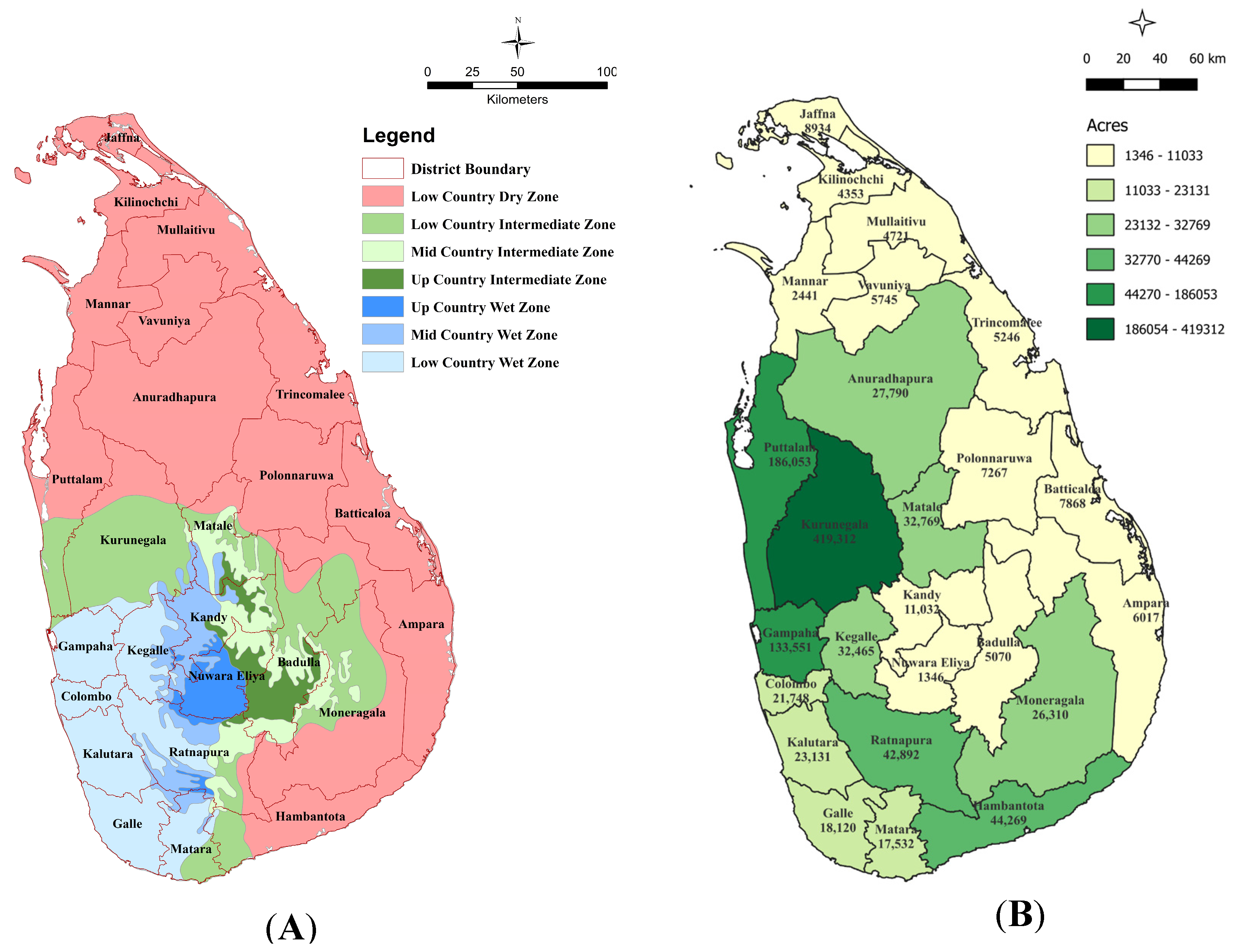
In this research, all coconut-growing areas in Sri Lanka are considered. Sri Lanka has created two types of classification for coconut production areas. As much of the available coconut-related information is based on these classifications, these are essential for understanding climate variability impacts on coconut cultivation. One is the classification by the Department of Agriculture that identified seven agro-climatic zones (Figure 1). These were established on the basis of elevation and annual rainfall with the purpose of identifying ecological diversity that affects coconut productivity, pest and disease prevalence, and water availability [40].
According to the FAO [41], optimal coconut production conditions can be obtained with the temperature range of 27–32 °C, a mean annual temperature of 27 °C with 5–7 °C diurnal variation, and an annual well-distributed rainfall of 1800–2500 mm. The coconut requires at least 2000 sunshine hours per year and 80–90% relative humidity. Somewhat based on these criteria, Table 1 outlines the agro-climatic zone classification used in the study. Although coconut can be grown in all seven agro-climatic zones, about 78.5% of the total cultivated coconut area is in the LCWZ and LCIZ.
According to the Coconut Research Institute of Sri Lanka (CRISL), the average national yield of coconut varies from 3500 to 7000 nuts per hectare per year. On average, one coconut palm may yield 30–100 nuts per year, with a maximum of 150 nuts. In Sri Lanka, coconuts thrive in well-drained soils that are rich with organic matters, with a depth of 1–1.5 m. Suitable soil types include laterite soils, coastal sandy soils, alluvial soils, and reclaimed marshy lowland soils. These soil types are commonly found in the LCWZ and LCIZ. Coconut palms can tolerate moderate salinity and a broad 5.2–8 pH range, constituting diverse agroecological zones across the island [30].
Another classification divides coconut areas into main, mini, and northern coconut triangles due partly to administrative expediency instead of optimum production criteria. This classification shows the concentration of coconut plantation areas on the map, indicating historical coconut plantation practices since the colonial period. This classification is useful for planning infrastructure development, market access, and value chain interventions. The Ministry of Plantation Industries defined mini and northern coconut triangles in 2005 and 2023. In 2005, the area defined as the mini coconut triangle experienced a notable increase in coconut cultivation mainly due to stakeholder engagement. This area included Southern Province, specifically Hambantota District. The national government prioritized this newly defined coconut region to revitalize coconut production [42].
The main coconut triangle consists of three districts: Puttalam, Kurunegala, and Gampaha [43]. These districts are intermixed with dry, intermediate, and wet climate. Before 2002, Colombo District, which encompasses the capital region, had been part of the main triangle. However, urbanization took much of coconut lands there, making farmers move their operations to neighboring Gampaha District. As Table 2 shows, the total coconut cultivation area decreased from 1962 to 2002 mainly due to urban expansion in Colombo District. The main coconut triangle accounted for 69% of the coconut cultivation area and 70% of coconut production in 2022. Additionally, 9.5% of the coconut cultivation area was in the Southern Coconut Belt, which encompasses Kalutara, Galle, Matara, and Hambantota districts [44].
Figure 1. (A) Agro-climatic zones in Sri Lanka [45]. (B) Land under coconut cultivation in Sri Lanka [46].
Climate 14 00062 g001
In Sri Lanka’s Sinhala language, coconut is traditionally called kapruka or the “tree of life”, as it has long formed an integral part of its society, economy, and culture [44]. Historically, coconut cultivation was widespread among rural households, primarily for cooking oil, fuel, food, drink, and ceremonial materials [47]. Over time, especially during Dutch and British colonial periods, coconut production became commercialized due to international demand for products like copra, coconut oil, and coir [48]. Today, more than 80% of the cultivated area belongs to smallholders; the sector has been transitioning toward industrial-scale processing and export-oriented production [49].

3.2. Data Collection and Analysis

3.2.1. Data Sources

For a quantitative analysis, we collected national-level data on coconut production (million nuts), yield (nuts per hectare), cultivated area (hectares), and retail price (nominal and real price in Sri Lankan Rupees) for the period between 2010 and 2022 from the Coconut Development Authority, Coconut Cultivation Board, Coconut Research Institute, Department of Census and Statistics, and Central Bank of Sri Lanka (CBSL). In addition, climate data (annual rainfall in millimeters and annual average temperature in Celsius) in the main coconut growing areas were obtained from the Department of Meteorology. To assess multiple-year impacts, we reviewed annual reports (2010–2022) from CBSL’s national output, expenditure, and input chapters, and monitoring and evaluation reports [50,51] from the Coconut Development Authority (CDA) and Coconut Research Institute (CRI). Although king coconut (Cocos nucifera var. aurantiaca) is important for Sri Lanka’s market, it is known as a niche segment; therefore, we did not include it in this analysis. Peer-reviewed journal articles and academic books were used to understand coconut floral biology, climate resilience, and market analysis as supplementary sources. The year 2010 was selected as the base year due to the establishment of the Ministry of Coconut Development and Janatha Estate Development, a separate cabinet ministry.

3.2.2. Analytical Framework

To analyze the impacts of climate variability on coconut production and prices in Sri Lanka, we created a framework in which we assessed both same-year and lag effects through five steps, each being examined through a regression model. Given the perennial nature of coconut, this process was designed to capture delayed biological and production responses to observed climate variability and recent climatic trends between 2010 and 2022.
Model 1 establishes the baseline supply–demand relationship between coconut production and retail price (nominal price). It tests whether production fluctuations directly influence prices in the same year. The relationship is specified in Equation (1).
Pricet = β0 + β1 (Productiont) + ϵ
where β0 = intercept, β1 = coefficient representing the impact of the production on price, and ϵ = error term.
Model 2 examines the immediate (same-year) impact of temperature and rainfall on production, whereas Model 2a examines the yield. The relationships are expressed in Equations (2) and (3):
Productiont = α + β1Rainfallt + β2 Temperaturet + ϵ
where Productiont = coconut production in yeart; α = intercept; β1 and β2 = coefficients representing the same year impact of rainfall and temperature on production; and ϵ = Error term.
Yieldt = α + β1Rainfallt + β2 Temperaturet + ϵ
where Yieldt = coconut yield in yeart; α = intercept; β1 and β2 = coefficients representing the same year impact of rainfall and temperature on yield; and ϵ = error term.
Model 3 assesses lagged (previous-year) climate variables that influenced production, accounting for delayed physiological responses due to the perennial nature of coconut palms. The relationship is specified in Equation (4).
Productiont = α + β1Rainfallt−1 + β2 Temperaturet−1 + ϵ
where Productiont = coconut production in yeart; Temperaturet−1 = average annual temperature in the previous year; Rainfallt−1 = annual rainfall in the previous year; α = intercept; β1 and β2 = coefficients representing the previous year impact of rainfall and temperature on production; and ϵ = error term.
Model 3a examines lagged climate influence on yield, and it is expressed in Equation (5).
Yieldt = α + β1Rainfallt−1 + β2 Temperaturet−1 + ϵ
where Yieldt = coconut yield in yeart; Temperaturet−1 = average annual temperature in the previous year; Rainfallt−1 = annual rainfall in the previous year; α = intercept; β1 and β2 = coefficients representing the impact of previous-year rainfall and temperature on yield; and ϵ = error term.
The regression framework adopted in this study follows standard econometric approaches widely applied in the climate–agriculture and price-transmission literature. Linear regression models are commonly used to assess climate impacts on agricultural production and yield, while lagged climate variables are employed to capture delayed biological responses in perennial crops [52,53]. Similar model structures have been used to examine both same-year and lagged effects of temperature and rainfall on crop productivity and market outcomes [54,55].
Here, we need to acknowledge limitation in terms of data availability for the above analyses. Understanding coconut production outcomes requires not only climatic conditions but also non-climatic factors, such as farm management, technological progress, policy intervention, and input application. However, we could not obtain annual national-level data for these non-climatic variables for the entire study period. Instead, this study primarily focuses on capturing the impacts of climate variables on production and yield. The unobserved variables are captured within the model error term. This allowed us to estimate coefficients within marginal effects of climate variability [54,56,57].
To isolate climate-induced productivity effects without modeling land expansion, yield-based models were used. This allowed us to estimate coconut yield (nuts per ha.) as the dependent variable. Defining yield as output per unit area removes the influence of cultivated area and captures the physiological response of coconut palms to climate variability. Also, production models were used to estimate a total coconut output that means aggregate supply outcomes. Given the gradual expansion of coconut cultivation area in Sri Lanka between 2010 and 2022, a yield-based assessment allows us to understand production increases in association with land expansion, which should be distinguished conceptually from climate-driven production changes.
To capture how both climate variables and production influence retail price, we established Models 4 and 5 using the same regression structure, with nominal and real retail prices as dependent variables. Each model was estimated for nominal prices and once using inflation-adjusted retail prices. We developed Model 4 (4N and 4R), which tests the same-year effects of production, rainfall, and temperature on retail price.
Price(N)t = γ + δ1Productiont + δ2Rainfallt + δ3Temperaturet + ϵ
Price(R)t = γ + δ1Productiont + δ2Rainfallt + δ3Temperaturet + ϵ
where Price(N)t and Price(R)t = nominal ad real coconut retail price; Productiont = coconut production in yeart; Temperaturet = average annual temperature; Rainfallt = annual rainfall; γ = intercept; δ1, δ2, and δ3 = coefficients representing the impact of production, rainfall, and temperature on price; and ϵ = error term.
Model 5 (5N and 5R) examines lagged climate variables to assess delayed climatic shocks on market price.
Price(N)t = γ + δ1Production + δ2Rainfallt−1 + δ3Temperaturet−1 + ϵ
Price(R)t = γ + δ1Production + δ2Rainfallt−1 + δ3Temperaturet−1 + ϵ
where Pricet = coconut retail price in yeart; Productiont = coconut production in year; Temperaturet = average annual temperature in the previous year; Rainfallt = annual rainfall in the previous year; γ = intercept term; δ1, δ2, and δ3 = coefficients representing the impact of production, rainfall, and temperature on price; and ϵ = error term.
Nominal prices were deflated using the Colombo Consumer Price Index (CCPI), with series linked from the 2006/2007 base year to 2013 using official linking factors. Real prices allow inflation-driven changes to be distinguished from production- and climate-related price effects. Here, production is the key supply-side variable, since market prices are determined by the total quantity of coconuts at market, not at farms. Yield models remain complementary, validating whether production shifts reflect true productivity changes or expansion in cultivated area.
By evaluating model performance using R2 values and F-statistics, we identified statistically robust relationships. For multiple-year analyses, lagged climate variables up to three years were tested. We used an extreme event as a reference to capture the prolonged nature of climate shocks. Here, a regression analysis included lagged climate variables to capture both immediate and delayed effects of extreme climate events on production and pricing outcomes. The model accounted for three consecutive years was indicated as Lag 1, Lag 2, and Lag 3 (independent variables). We analyzed coconut production, yield, and retail price in separate regressions. This provides a better understanding of how climate and economy are interconnected in a perennial crop system.
In addition to regression analysis, we calculated the price elasticity of supply (PES) to understand producers’ response to price changes. This metric complements our regression models by showing whether price signals are strong enough to stimulate production adjustments, even under climate stress.
PES = (% Change in quantity supplied)/(% Change in price)

4. Results and Discussion

4.1. Price–Production Nexus in the Sri Lankan Coconut Industry

Our regression model quantified the impact of production changes on coconut prices (Equation (1)), with production as the independent variable and price as the dependent variable. The estimated model is Pricet = 116.65 + −0.284 (Productiont).
The negative and statistically significant coefficient at the 5% confidence level (β1 = −0.284, p = 0.00) suggests that for every 1 million nuts added to the market, the retail price falls by about 0.284 Sri Lankan rupees (LKR) per nut (Table 3). This price fall is relative to the mean retail price of the previous year. This inverse relationship is consistent with the basic economic principle of supply and demand: when supply increases, prices tend to fall if demand remains relatively stable. Conversely, lower production levels restrict supply, creating upward pressure on prices. Thus, our results show that fluctuations in production are directly transmitted to price dynamics in the coconut market, underscoring the sensitivity of prices to supply-side shocks. The statistically significant coefficient and its magnitude suggest that coconut prices are highly sensitive to production variability. This implies that supply-side shocks, particularly production shortfalls, play a central role in driving retail price movements in the coconut market.
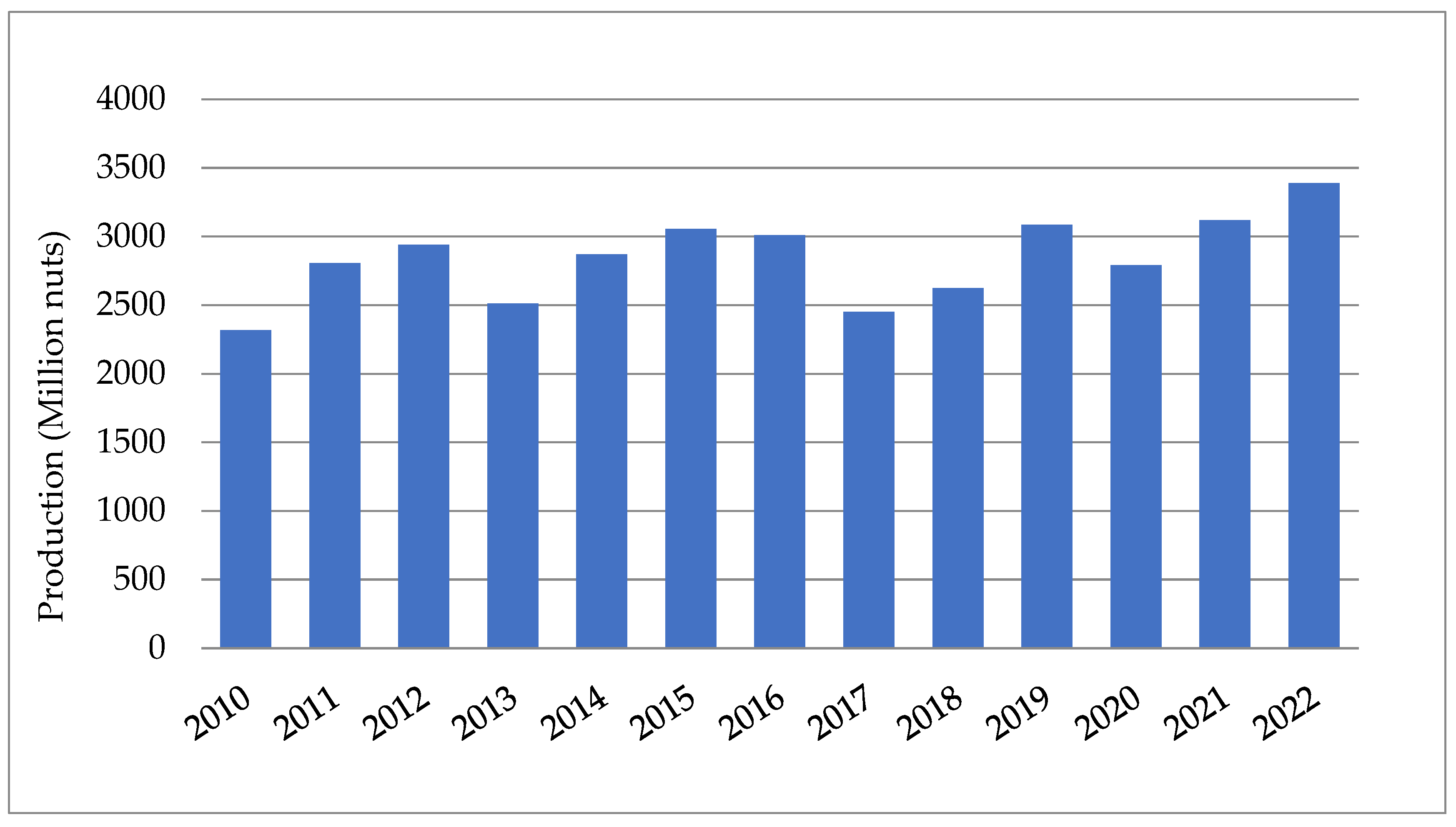
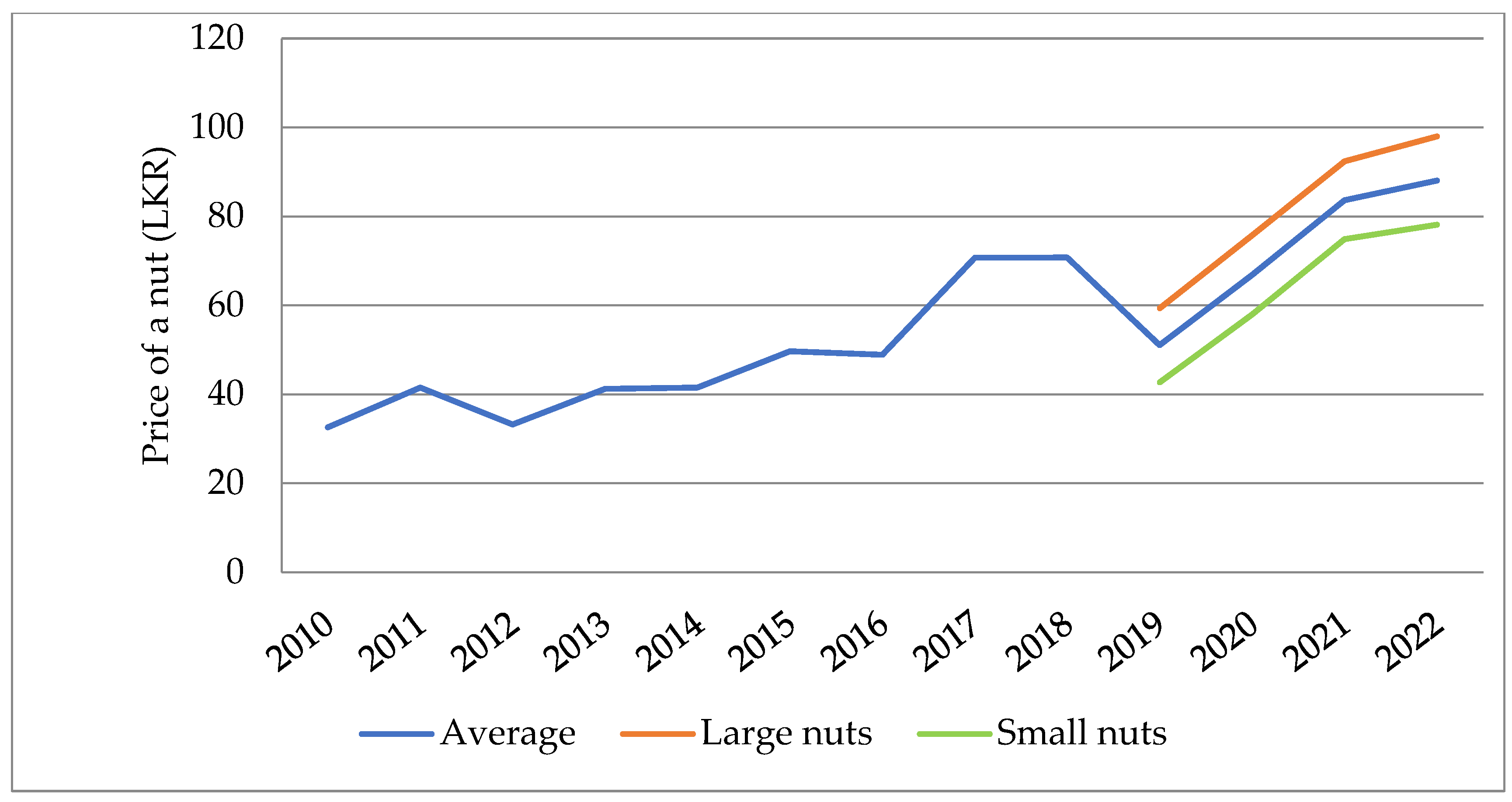
Figure 2 illustrates trends in coconut production and retail price between 2010 and 2022 [58]. Our analysis of fresh coconut retail prices shows that, despite an overall increase in production, prices fluctuated from 2010 to 2019. Thereafter, an exponential increase was observed (Figure 3), indicating that market dynamics are shaped not solely by production volumes but also by such factors as yield performance and nut quality [53,54]. Droughts, excessive rainfall, or heat stress created disruptions between demand and supply, leading to significant price increases [54,56].
To understand price responsiveness, we calculated the price elasticity of supply (PES), using the percentage change in quantity supplied and the percentage change in price (Equation (10)). The elasticity value for the 2010–2022 period is 0.06. A PES value between 0 and 1 indicates an inelastic supply. Therefore, PES 0.06 suggests that a 1% increase in price would lead to only a 0.06% increase in the quantity supplied. When the supply is highly inelastic, prices can be more volatile, as small changes in demand can lead to significant price fluctuations. Low elasticity indicates biological and structural constraints of perennial tree crops, where production decisions and yield outcomes are determined well in advance of harvest [32,56,57]. Therefore, if production is negatively affected, prices can increase sharply due to the inelastic nature of the coconut supply.

4.2. Impact of Climate Variability on Production and Yield

To assess the impact of climate variability on coconut production and yield, we ran four regression models (Equations (2)–(5)). Model performance was assessed using R2, adjusted R2, overall model significance (significance F), standard error, and statistical significance of individual predictors at the 5% confidence level (Table 4). Model 2, which examined the relationship between same-year rainfall and temperature with coconut production, explained only 3.8% of the variation (R2 = 0.038). The model was not statistically significant (p = 0.810), and none of the predictors emerged as significant. The high standard error (312.79) further indicated poor predictive accuracy. Similarly, Model 2a, which analyzed same-year climate variables against yield, explained just 3.9% of the variance (R2 = 0.039) and was not statistically significant (p = 0.821). Together, these results suggest that same-year climate conditions have limited explanatory power for both coconut production and yield.
By contrast, Models 3 and 3a, which incorporated lagged (previous-year) climate variables, provided stronger explanatory power (Table 5). Model 3 explained about 49.7% of the variation in production (R2 = 0.497) and was statistically significant at the 5% confidence level (p = 0.032). Among predictors, previous-year rainfall (P-RF) (p = 0.014) had a significant positive impact on production, while previous-year temperature (P-T) showed a weaker effect. The model’s standard error (236.56) indicated moderate prediction accuracy. This model showed that a 1 °C rise in last year’s temperature reduces production by about 104 million nuts (3–4% of national production). In contrast, an extra 1 mm of rainfall increases production by roughly 0.6 million nuts. Yield showed a similar pattern.
Model 3a, which focused on yield, explained 40.3% of the variation (R2 = 0.403). While the overall model was only marginally significant (p = 0.076), previous-year rainfall (P-RF) again emerged as the key predictor (p = 0.032), showing a positive influence on yield. In contrast, previous-year temperature (P-T) did not significantly affect yield (p = 0.761). These findings indicate that coconut production and yield variability in Sri Lanka are primarily driven by aggregated rainfall fluctuations. It found that a 1 °C rise in last year’s temperature reduces yield by about 161 nuts per ha. In contrast, an extra 1 mm of rainfall increases yield only by 1.3 nuts per ha.
We also tested lagged climate variables up to three years after an extreme event to capture climate shocks (Table 6). The model included the event year and lagged effects (Lag 1, Lag 2, and Lag 3) as independent variables, while coconut production and yield were used as dependent variables in separate regressions. For production, the event year effect was negligible, but a statistically significant negative effect emerged at Lag 1, indicating production losses of about 622 million nuts (p = 0.026). The decline persisted at Lag 2, but it was not statistically significant (−291.63; p = 0.240). A slight recovery appeared at Lag 3 (7.83; p = 0.973). Yield followed a similar pattern, with non-significant but negative effects in Lags 1 and 2.
The weak explanatory power of same-year climate variables suggests that coconut production and yield did not respond instantaneously to annual weather fluctuations. This can be explained by the biological characteristics of coconut palms, as coconuts require long gestation periods within multi-year yield formation cycles. As a result, contemporaneous climate indicators cannot fully capture the cumulative physiological effects that ultimately determine harvest outcomes.
The positive and significant influence of previous-year rainfall on both production and yield reflects the role of adequate soil moisture in supporting inflorescence development, nut setting, and kernel formation processes that occur well before harvest. Temperature effects, while negative in magnitude, were generally weaker and statistically insignificant, suggesting that rainfall deficits pose a more immediate constraint on coconut productivity than gradual temperature changes under current climatic conditions.
The multi-year lag analysis further demonstrates that extreme climate events generate persistent production losses, with the most pronounced effects occurring in the first post-event year. This delayed impact underscores the vulnerability of perennial tree crops to climate shocks. It also explains why production shortfalls and associated price pressures can persist even after climatic events subsided. In short, these findings indicate that climate variability affects the coconut sector primarily through lagged rainfall variability and shock persistence, rather than through short-term weather anomalies.

4.3. Impact of Climate Variability on Coconut Price

Models 4 and 5 (Equations (6)–(9)) were used to understand the combined effects of climate variables and production on retail price. We used both nominal and real prices to separate inflation effects from production shocks and climate variables. Modal 4 examined the same-year climate variables, and Model 5 found a lagged climate effect. We analyzed the model performance using R2, adjusted R2, overall model significance (Significance F), standard error, and statistical significance of individual predictors at the 5% level (Table 7) to select the best model.
Table 7 presents the diagnostic statistics for Models 4 and 5 using both nominal and real coconut retail prices. For Model 4, which includes same-year production, rainfall, and temperature, the explanatory power is weak for both price measures. R2 values are low (0.189 for nominal prices and 0.027 for real prices), and adjusted R2 values are negative, indicating that the model explains little variation beyond the intercept. Model 4 is not statistically significant for either nominal prices (p = 0.576) or real prices (p = 0.968). None of the explanatory variables is statistically significant at the 5% level.
In contrast, Model 5, which incorporates lagged climate variables, shows substantially improved model performance. R2 increases to 0.608 for nominal prices and 0.676 for real prices, with corresponding adjusted R2 values of 0.477 and 0.568, indicating a strong improvement in explanatory power. The overall model is statistically significant for both nominal prices (p = 0.032) and real prices (p = 0.014). Production and lagged temperature (P-T) are significant determinants of nominal prices in Model 5, while lagged temperature alone remains significant in the real price. Low standard errors in Model 5, particularly for real price (5.47), further indicate improved predictive accuracy.
Overall, these results demonstrate that price responses in the Sri Lankan coconut market occur with a lag, especially in response to temperature shocks. The stronger results for real price suggest that climate-induced price effects persist even after removing inflationary influences, highlighting the delayed but economically meaningful transmission of climate variability to market prices.
Next, we estimated how previous-year climate conditions and production influenced both nominal and real retail prices to capture indirect and delayed climate shocks to market outcomes. The results from Model 5N (Table 8) indicate that production (p = 0.039) and the previous year’s average temperature (p = 0.013) are statistically significant determinants of nominal retail prices. However, previous-year rainfall did not show a direct effect (p = 0.462). A 1 °C rise in previous year is associated with an increase in the nominal retail price by LKR 35.90 per nut. This price response is consistent with a scarcity mechanism, where temperature-induced stress reduces supply in subsequent periods, thereby raising prices. In addition, lower production levels are associated with higher retail prices, reinforcing the strong supply-driven nature of coconut price in Sri Lanka.
The regression results from Model 5R (Table 9), which used real (inflation-adjusted) retail prices, further strengthen the relevance of delayed climate effects on coconut market prices. Unlike the nominal price model, previous-year average temperature (P-T) is the only statistically significant predictor of real retail prices (p = 0.002). The significance of lagged temperature in the real price model indicates that temperature-driven supply shocks exert a robust effect on coconut prices beyond general inflationary pressures. In other words, higher temperatures in the previous year translate into higher real coconut prices, reflecting genuine supply constraints rather than nominal price inflation.
After comparing the results from Models 5N and 5R, we found how climate and production effects are transmitted to coconut prices. In the nominal price model (5N), both production and previous-year temperature are statistically significant, suggesting that observed market prices were influenced by a combination of physical supply changes and broader inflationary dynamics. In the real-price model (5R), only lagged temperature remains significant. This divergence implies that the production–price relationship in the nominal price was somewhat influenced by inflation or market-wide price adjustments, whereas temperature shocks directly affected real prices. In short, climate variability, particularly rising temperatures, played a structurally important role in shaping coconut price dynamics during the study period.
Beyond production and price effects, the estimated climate–production–price relationships have important economic implications for farmers and the coconut market in general. Lagged effects of rainfall shortage and temperature increase significantly reduced coconut output while simultaneously increasing retail prices. For producers, this combination does not necessarily translate to higher net income. Yield losses associated with temperature stress and delayed recovery following extreme climate events are likely to increase unit production costs, particularly for smallholders who rely on rainfed systems. In such contexts, higher market prices may only partially offset income losses caused by reduced harvest volumes and increased climate-related management costs.
At the macro level, sustained production declines driven by climate variability tighten the domestic supply and increase reliance on coconut imports to stabilize local markets and the industry. Sri Lanka’s coconut sector plays a dual role in ensuring domestic food security and supporting export-oriented industries. Climate-induced supply shocks weaken export availability while increasing import dependence during low-production years. Although this study does not model future trade volumes explicitly, the observed lagged climate effects provide empirical evidence that climate variability already influences economic outcomes along the coconut value chain.

5. Conclusions

This study examined the extent to which observed climate variability affected coconut production and prices in Sri Lanka between 2010 and 2022, with particular emphasis on lagged climatic effects. Whereas past studies focused on short-term impacts of climate variables on production outcomes, this paper attempted to capture lagged effects of climate variables on productivity, market supply, and price stability.
Regarding the interconnection between production and price, we showed that an additional one million nuts in supply reduce price by approximately LKR 0.284 per nut, implying that even minor production shocks generate pronounced price volatility. With this overall supply–demand picture, we ran through several regression models. We showed that rainfall in the previous year was the most critical determinant of coconut production (p = 0.014) and yield (p = 0.032). Specifically, an additional millimeter of rainfall in the previous year increased production by about 0.6 million nuts and yield by 1.3 nuts per hectare, while a 1 °C rise in previous-year temperature reduced production by approximately 104 million nuts (3–4% of national output).
Our multiple-year analysis showed that loss from an extreme climate event lasted up to three years, with the sharpest decline occurring one year after the event. For production, the event year effect was negligible, but a statistically significant negative effect was observed in the following year, with production losses of about 622 million nuts (p = 0.026). We showed that a 1 °C temperature increase in the previous year raised retail prices by LKR 35.9 per nut in the following year. By contrast, rainfall did not directly affect prices. While both production shortfalls and temperature shocks influenced nominal prices, only lagged temperature effects remained significant after adjusting for inflation. This indicates that climate-induced supply constraints, rather than general inflationary pressures, are the primary drivers of real coconut price volatility.
Overall, our findings established that coconut production in Sri Lanka is highly sensitive to lagged rainfall and temperature variabilities. Even though coconut showed its growth recovery in the third year, multiple climate hazards in consecutive years might make this natural recovery process more prolonged in the future. Therefore, price stabilization and sector resilience cannot rely solely on market-based interventions. Instead, policy efforts should prioritize climate adaptation strategies, including improved water management, drought resilience, and the promotion of heat-tolerant coconut varieties.
This study is subject to several limitations. First, the analysis is based on observed annual climate variability over the 2010–2022 period rather than long-term climate projections, due to data constraints. Second, the use of national-level data may mask regional heterogeneity in climate impacts across coconut-growing areas. Third, the absence of consistent data on farm-level management practices and input use limits the ability to explicitly control for non-climatic factors. Future research should extend this analysis using longer time series, regional- or district-level data, and climate model-based scenarios to assess future risks. Incorporating farm income, trade flows, and adaptation costs would further improve understanding of the economic implications of climate change for the coconut sector in Sri Lanka.

Author Contributions

Conceptualization, K.I.S. and K.M.; methodology, K.I.S. and K.M.; analysis, K.I.S.; data interpretation, K.I.S.; investigation, K.I.S. and K.M.; data curation, K.I.S. and K.M.; writing—original draft preparation, K.I.S.; writing—reviewing and editing, K.M.; supervision, K.M. All authors have read and agreed to the published version of the manuscript.

Funding

This research publication is funded by Support for Pioneering Research Initiated by the Next Generation (SPRING), Japan Science and Technology Agency (JST).

Data Availability Statement

The data presented in this study are available upon request from the corresponding author. The data are not publicly available due to privacy or ethical restrictions.

Acknowledgments

The authors acknowledge the Ministry of Plantation and Community Infrastructure and Coconut Development Authority of Sri Lanka for providing data support; the views expressed are solely those of the author and not of the institutions.

Conflicts of Interest

The authors declare that they have no competing interests.

Abbreviations

The following abbreviations are used in this manuscript:
CBSLCentral Bank of Sri Lanka
CDACoconut Development Authority
CRICoconut Research Institute
CRISLCoconut Research Institute of Sri Lanka
DZDry zone
FAOFood and Agriculture Organization
IPCCIntergovernmental Panel on Climate Change
LCWZLow Country Wet Zone
LCIZLow Country Intermediate Zone
LKRSri Lankan Rupees
MCWZMid Country Wet Zone
MCIZMid Country Intermediate Zone
PESPrice elasticity of supply
P-RFPrevious-year rainfall
P-TPrevious-year temperature
UCWZUp Country Wet Zone
UCIZUp Country Intermediate Zone

References

  1. Ghalehsard, S.K.; Shahraki, J.; Akbari, A.; Sardar, S.A. Assessment of the impacts of climate change and variability on water resources and use, food security, and economic welfare in Iran. Environ. Dev. Sustain. 2021, 23, 14666–14682. [Google Scholar] [CrossRef]
  2. Thompson, W.; Lu, Y.; Gerlt, S.; Yang, X.; Campbell, J.E.; Kueppers, L.M.; Snyder, M.A. Automatic responses of crop stocks and policies buffer climate change effects on crop markets and price volatility. Ecol. Econ. 2018, 152, 98–105. [Google Scholar] [CrossRef]
  3. Blanco, M.; Ramos, F.; Van Doorslaer, B.; Martínez, P.; Fumagalli, D.; Ceglar, A.; Fernández, F.J. Climate change impacts on EU agriculture: A regionalized perspective taking into account market-driven adjustments. Agric. Syst. 2017, 156, 52–66. [Google Scholar] [CrossRef]
  4. Extreme Weather is Driving Food Prices Higher. These Five Crops are Facing the Biggest Impacts. Climate Action, Weforum 2024. Available online: https://www.weforum.org/stories/2024/02/climate-change-food-prices-drought/ (accessed on 12 October 2024).
  5. Porter, J.R.; Xie, L.; Challinor, A.J.; Cochrane, K.; Hoeden, S.M.; Iqbal, M.M.; Lobell, D.B.; Travasso, M.I. Food security and food production systems. In Climate Change 2014: Impacts, Adaptation and Vulnerability, Part A: Global and Sectoral Aspects. Contribution of Working Group II to the Fifth Assessment Report of the Intergovernmental Panel on Climate Change; Field, C.B., Barros, V.R., Dakken, D.J., Mach, K.J., Mastrandrea, B.T.E., Chatterjee, M., Ebi, K.L., Estrada, Y.O., Genova, R.C., Girma, B., et al., Eds.; Cambridge University Press: Cambridge, UK, 2014; pp. 485–533. [Google Scholar]
  6. Herold, N.; Downes, S.M.; Gross, M.H.; Ji, F.; Nishant, N.; Macadam, I.; Beyer, K. Projected changes in the frequency of climate extremes over southeast Australia. Environ. Res. Commun. 2021, 3, 011001. [Google Scholar] [CrossRef]
  7. Nicholson, C.F.; Stephens, E.C.; Kopainsky, B.; Jones, A.D.; Parsons, D.; Garrett, J. Food security outcomes in agricultural systems models: Current status and recommended improvements. Agric. Syst. 2021, 188, 103028. [Google Scholar] [CrossRef]
  8. Parajuli, R.; Thoma, G.; Matlock, M.D. Environmental sustainability of fruit and vegetable production supply chains in the face of climate change: A review. Sci. Total Environ. 2019, 650, 2863–2879. [Google Scholar] [CrossRef]
  9. Cui, Q.; Ali, T.; Xie, W.; Huang, J.; Wang, J. The uncertainty of climate change impacts on China’s agricultural economy based on an integrated assessment approach. Mitig. Adapt. Strateg. Glob. Change 2022, 27, 25. [Google Scholar] [CrossRef]
  10. Jain, A.; Marvaniya, S.; Godbole, S.; Munigala, V.A. Framework for crop price forecasting in emerging economies by analyzing the quality of time-series data. arXiv 2009, arXiv:2009.04171. [Google Scholar] [CrossRef]
  11. Aye, G.C.; Haruna, R.F. Effect of Climate Change on Crop Productivity and Prices in Benue State, Nigeria: Implications for Food Security. In Establishing Food Security and Alternatives to International Trade in Emerging Economies; Erokhin, V., Ed.; IGI Global: Hershey, PA, USA, 2018; pp. 244–268. [Google Scholar]
  12. Chen, K.Z.; Hsu, C. Managing climate change risk in China’s agricultural sector: The potential for an integrated risk management framework. J. Integr. Agric. 2014, 13, 1418–1431. [Google Scholar] [CrossRef]
  13. Marshall, E.; Aillery, M.; Malcolm, S.; Williams, R. Agricultural production under climate change: The potential impacts of shifting regional water balances in the United States. Am. J. Agric. Econ. 2015, 97, 568–588. [Google Scholar] [CrossRef]
  14. Naresh Kumar, S.; Aggarwal, P.K. Climate change and coconut plantations in India: Impacts and potential adaptation gains. Agric. Syst. 2013, 117, 45–54. [Google Scholar] [CrossRef]
  15. Hebbar, K.B.; Balasimha, D.; Thomas, G.V. Plantation crops response to climate change: Coconut perspective. Clim. Resilient Hortic. Adapt. Mitig. Strateg. 2013, 1, 177–187. [Google Scholar]
  16. Pradeepkumar, T.; Jyothibaskar, S.; Satheesan, K.N. Management of Horticultural Crops, Horticulture Science Series-11; Peter, K.V., Ed.; New India Publishing: New Delhi, India, 2008; pp. 453–765. [Google Scholar]
  17. Singh, S.; Singh, D.R.; Velmurugan, A.; Jaisankar, I.; Swarnam, T.P. Coping with climatic uncertainties through improved production technologies in tropical island conditions. In Biodiversity and Climate Change Adaptation in Tropical Islands; Sivaperuman, C., Velmurugan, A., Jaisankar, I., Eds.; Academic Press: Cambridge, MA, USA, 2008; pp. 623–666. [Google Scholar]
  18. Thomas, G.V.; Krishnakumar, V.; Dhanapal, R.; Srinivasa-Reddy, D.V. Agro-management practices for sustainable coconut production. In The Coconut Palm (Cocos nucifera L.)–Research and Development Perspectives; Nampoothiri, K.U.K., Krishnakumar, V., Thampan, P.K., Hegde, M.R., Eds.; Springer: Berlin/Heidelberg, Germany, 2018; pp. 227–322. [Google Scholar]
  19. Zhao, Y.; Wang, C.; Wang, S.; Tibig, L.V. Impacts of present and future climate variability on agriculture and forestry in the humid and sub-humid tropics. Clim. Change 2005, 70, 73–116. [Google Scholar] [CrossRef]
  20. Hu, Y.; Li, B.; Zhang, Z.; Wang, J. Farm size and agricultural technology progress: Evidence from China. J. Rural Stud. 2022, 93, 417–429. [Google Scholar] [CrossRef]
  21. Fu, C.; Qian, Q.; Deng, X.; Zhuo, Z.; Xu, D. Prediction and analysis of the global suitable habitat of the Oryctes rhinoceros (Linnaeus, 1758) (Coleoptera: Scarabaeidae) based on the MaxEnt model. Insects 2024, 15, 774. [Google Scholar] [CrossRef]
  22. Ranasinghe, C.S.; Kumaratunga, D.; Jayaranjini, S.; De Costa, W.A.J.M. Photosynthetic Irradiance Response, Canopy Photosynthesis and their Variation with Canopy Strata in tall and dwarf x tall Coconut Cultivars (Cocos nucifera). Sci. Hortic. 2015, 189, 175–183. [Google Scholar] [CrossRef]
  23. Ranasinghe, C.S.; Nainanayake, N.P.A.D.; Silva, L.R.S.; Premasiri, R.D.N. Quantifying the Effect of Climatic Factors and Competition for Assimilates on Survival Rate of Young Nuts and its Impact on Yield Fluctuation in Coconut. In Proceedings of the Fourth Symposium on Plantation Crop Research–Technological Innovations for Sustainable Plantation Economy, Colombo, Sri Lanka, 20–21 September 2012; Hettiarachchi, L.S.K., Abeysinghe, I.S.B., Eds.; pp. 265–280. [Google Scholar]
  24. Ranasinghe, K.M.R.; Ranasinghe, C.S.; Gunathilake, H.A.W.S. Effect of Heat Stress on Pollen Germination and Fruit Set of Different Varieties of Coconut (Cocos nucifera L.). In Proceedings of 10th Agricultural Research Symposium; Wayamba University of Sri Lanka: Makandura, Gonawila, 2010; pp. 236–240. [Google Scholar]
  25. Pathmeswaran, C.; Lokupitiya, E.; Waidyarathne, K.P.; Lokupitiya, R.S. Impact of extreme weather events on coconut productivity in three climatic zones of Sri Lanka. Eur. J. Agron. 2018, 96, 47–53. [Google Scholar] [CrossRef]
  26. Jayalath, K.V.N.N.; Punyawardena, B.V.R.; Silva, P.; Hemachandra, D.; Weerahewa, J. Climate Change and Extreme Events in WL1a Agro-ecological Zone of Sri Lanka: Implications on Coconut Production. Trop. Agric. Res. 2021, 31, 13–25. [Google Scholar] [CrossRef]
  27. Eeswaran, R. Climate Change Impacts and Adaptation in the Agriculture Sector of Sri Lanka: What We Learnt and Way Forward. In Handbook of Climate Change Communication; Leal Filho, W., Manolas, E., Azul, A., Azeiteiro, U., McGhie, H., Eds.; Climate Change Management; Springer: Berlin/Heidelberg, Germany, 2018; Volume 2, pp. 97–110. [Google Scholar] [CrossRef]
  28. Food and Agriculture Organization of the United Nations (FAO). World Food and Agriculture—Statistical Yearbook/FAOstat Country Data 2023; Food and Agriculture Organization of the United Nations: Rome, Italy, 2023. [Google Scholar]
  29. Peiris, T.S.G.; Thattil, R.O.; Mahindapala, R. An Analysis of Climate and Weather Effect on Coconut (Cocos nucifera). Exp. Agric. 1995, 31, 451–460. [Google Scholar] [CrossRef]
  30. Peiris, T.S.G. Influence of Climate and Weather on the Nut Yield of Coconut (Cocos nucifera). Doctoral Dissertation, University of Colombo, Colombo, Sri Lanka, 1997. [Google Scholar]
  31. Peiris, T.S.G.; Wijeratne, M.; Ranasinghe, C.S. Impact of Climate Change on Coconut and Tea Industry in Sri Lanka. In Proceedings of the 2nd AIACC Regional Workshop for Asia and the Pacific, Manila, Philippines, 2–5 November 2004. [Google Scholar]
  32. Peiris, T.S.G.; Hansen, J.W.; Zubair, L. Use of Seasonal Climate Information to Predict Coconut Production in Sri Lanka. Int. J. Climatol. 2008, 28, 103–111. [Google Scholar] [CrossRef]
  33. Fernando, M.T.N.; Zubair, L.; Peiris, T.S.G.; Ranasinghe, C.S. Economic Value of Climate Variability Impacts on Coconut Production in Sri Lanka; AIACC Working Paper No. 45; The AIACC Project Office: Washington, DC, USA, 2007. [Google Scholar]
  34. Pathiraja, E.; Griffith, G.; Farquharson, R.; Faggian, R. The cost of climate change to agricultural industries: Coconuts in Sri Lanka. Int. J. Food Syst. Dyn. 2019, 10, 428–457. [Google Scholar]
  35. Samaraweera, W.G.R.L.; Dharmadasa, R.A.P.I.S.; Kumara, P.H.T.; Bandara, A.S.G.S. Evidence of Climate Change Impacts in Sri Lanka: Review of Literature. Econ. Res. 2024, 11, 69–94. [Google Scholar]
  36. Das, P.K. Movement of Wholesale Prices of Coconuts, Copra, and Coconut Oil in Kerala during the last Two and Half Decades. J. Plant. Crops 1986, 14, 105–114. [Google Scholar]
  37. Abeygunawardena, P.; Idirisingha, I.; Ariyawardana, A. Forecasting of Coconut Prices: A Vector Autoregression Approach. Sri Lankan J. Agric. Sci. 1996, 33, 159–181. [Google Scholar]
  38. Abeysekara, M.G.D.; Waidyarathne, K. The Coconut Industry: A Review of Price Forecasting Modelling in Major Coconut Producing Countries. CORD 2020, 36, 17–26. [Google Scholar] [CrossRef]
  39. Department of Census and Statistics. Final Report, Household Income and Expenditure Survey (HIES) 2016; Ministry of National Policies and Economic Affairs: Colombo, Sri Lanka, 2018.
  40. Department of Agriculture. Agro-Ecological Regions of Sri Lanka; Department of Agriculture: Peradeniya, Sri Lanka, 2020. Available online: https://doa.gov.lk/map-gallery/ (accessed on 6 February 2025).
  41. Food and Agriculture Organization. Coconut-Tree of Life; FAO: Rome, Italy, 2024; Available online: https://www.fao.org/4/y3612e/y3612e03.htm (accessed on 12 December 2023).
  42. Seneviratne, H.H. Mini Coconut Triangular for South. Daily News Newspaper. 20 September 2025. Available online: https://archives.dailynews.lk/2005/09/20/bus04.htm (accessed on 12 February 2024).
  43. Department of Census and Statistics. Statistical Abstract of the Democratic Socialist Republic of Sri Lanka; Ministry of National Policies and Economic Affairs: Colombo, Sri Lanka, 2020.
  44. Department of Census and Statistics. General Report Economic Census 2013/14 Agricultural Activities Sri Lanka; Department of Census and Statistics: Battaramulla, Sri Lanka, 2018.
  45. Department of Agriculture. Agro-Climatic Zones of Sri Lanka; Department of Agriculture: Peradeniya, Sri Lanka, 2020.
  46. Department of Census and Statistics. Land Under Coconut Cultivation in Sri Lanka 2014; Department of Census and Statistics: Battaramulla, Sri Lanka, 2014.
  47. Samarajeewa, S.R. Coconut Cultivation and Industry in Sri Lanka; Coconut Research Institute: Lunuwila, Sri Lanka, 2020. [Google Scholar]
  48. Sri Lanka Export Development Board. Sri Lanka: Plantation Crops Sector Report; Sri Lanka Export Development Board: Colombo, Sri Lanka, 2004.
  49. Export Development Board of Sri Lanka. Overview of the Agriculture and Plantation Sector. 2024. Available online: https://www.srilankabusiness.com/coconut/ (accessed on 22 May 2024).
  50. Central Bank of Sri Lanka. An Annual Report: National Output and Expenditure and Income (2010–2021). Available online: https://www.cbsl.gov.lk/en/publications/economic-and-financial-reports/annual-reports (accessed on 18 June 2021).
  51. Central Bank of Sri Lanka. An Annual Report: National Output and Expenditure and Income, 2022. Available online: https://www.cbsl.gov.lk/en/publications/economic-and-financial-reports/annual-reports (accessed on 25 May 2023).
  52. Gujarati, D.N.; Porter, D.C. Basic Econometrics, 5th ed.; McGraw-Hill: New York, NY, USA, 2009. [Google Scholar]
  53. Lobell, D.B.; Burke, M. On the use of statistical models to predict crop yield responses to climate change. Agric. For. Meteorol. 2010, 150, 1443–1452. [Google Scholar] [CrossRef]
  54. Schlenker, W.; Roberts, M.J. Nonlinear temperature effects indicate severe damages to U.S. crop yields under climate change. Proc. Natl. Acad. Sci. USA 2009, 106, 15594–15598. [Google Scholar] [CrossRef]
  55. Auffhammer, M.; Hsiang, S.; Schlenker, W.; Sobel, A. Using weather data and climate model output in economic analyses of climate change. Rev. Environ. Econ. Policy 2013, 7, 181–198. [Google Scholar] [CrossRef]
  56. David, B.L.; Christopher, B.F. Global scale climate–crop yield relationships and the impacts of recent warming. Environ. Res. Lett. 2007, 2, 014002. [Google Scholar] [CrossRef]
  57. Schlenker, W.; Roberts, M.J. The supply and demand impacts of climate change on U.S. agriculture. Am. Econ. Rev. 2011, 101, 196–201. [Google Scholar]
  58. Ministry of Plantation Industries. Statistical Information of Plantation Crops; Ministry of Plantation Industries: Battaramulla, Sri Lanka, 2022.
  59. Coconut Development Authority. Coconut Statistics 2022; Coconut Development Authority: Colombo, Sri Lanka, 2022.
Figure 2. Coconut production changes in Sri Lanka from 2010 to 2022 [58].
Climate 14 00062 g002
Figure 3. Fresh coconut retail price changes in Sri Lanka from 2010 to 2022 [59].
Climate 14 00062 g003
Table 1. Agro-climatic zone classification used in the study.
Agro-Climatic ZoneElevation (m)Annual Rainfall (mm)Climatic Characteristics
Low Country Wet Zone (LCWZ)<300>2500Warm and humid temperatures throughout the year
Low Country Intermediate Zone (LCIZ)<3001750–2500Warm and moderately dry climate with seasonal rainfall patterns
Mid Country Wet Zone (MCWZ)300–900>2500Cooler and wetter climate
Mid Country Intermediate Zone (MCIZ)300–9001750–2500Moderate climate with cooler temperatures
Up Country Wet Zone (UCWZ)>900>2500Cool and moist climate with relatively low temperatures
Up Country Intermediate Zone (UCIZ)>9001750–2500Cool and moderately wet
Dry Zone (DZ)<300<1750Dry season and variable temperature
Table 2. Change in the total coconut cultivation area in Sri Lanka, 1962–2014 [44].
YearTotal
Coconut Cultivated
Area (ha)
Area Cultivated by
Smallholding Sector
(ha)
Percentage of Cultivated
Areas by Smallholder (%)
1962433,164336,78977.8
1982416,253313,12475.2
2002394,836323,48981.9
2014443,538371,24483.7
Table 3. Coefficients of price variables.
VariableCoefficientsStandard Errort Statp-Value
Intercept (β0)116.65012.4299.3850.00
Production (β1)−0.2840.053−5.3880.00 **
** p < 0.05.
Table 4. Diagnostic statistics of the estimated production and yield regression models (Models 2, 2a, 3, and 3a: Equations (2)–(5)).
Diagnostic StatisticsModel 2Model 2aModel 3Model 3a
R20.0380.0390.49680.403
Adjusted R2−0.137−0.1540.39620.284
Standard error312.79773.47236.56609.52
Significance F
(Overall model)
0.80960.82110.03230.0758
Significant Predictors
(p < 0.05)
NoneNoneP-RF
(p = 0.014)
P-RF
(p = 0.032)
Table 5. Coefficients of production and yield variables (Models 3 and 3a: Equations (4) and (5)).
VariableProduction
(Model 3)
Yield
(Model 3a)
Intercept (α)4643.206
(0.429)
9205.452
(0.540)
Previous-year rainfall (β1)0.609
(0.014 **)
1.317
(0.032 **)
Previous-year temperature (β2)−103.985
(0.615)
−161.192
(0.761)
** p < 0.05 (p-values are in parenthesis). Using the regression model specified in the methodology as Equations (4) and (5), the estimated models are Production = 4643.206 + 0.609 (P-RF) + (−103.985) (P-T), and Yield = 9205.452 + 1.317 (P-RF) + (−161.192) (P-T).
Table 6. Regression analysis results for multiple-year impact analysis.
VariableProductionYieldPrice
Intercept3005.177184.6761.83
(0.000)(0.000)(0.000)
Event5.83485.33−12.92
(0.985)(0.559)(0.582)
Lag1_event−621.67−871.17−10.17
(0.026 **)(0.186)(0.567)
Lag2_event−289.67−282.17−5.67
(0.240)(0.652)(0.747)
Lag3_event7.83244.33−19.69
(0.973)(0.696)(0.281)
** p < 0.05. (p-values are in parentheses).
Table 7. Diagnostic statistics of the estimated price regression models (Models 4 and 5: Equations (6)–(9)).
Diagnostic StatisticsModel 4Model 5
Nominal
Price (4N)
Real
Price (4R)
Nominal
Price (5N)
Real
Price (5R)
R Square (R2)0.18890.0270.60780.676
Adjusted R2−0.081−0.2970.4770.5676
Standard error19.349.4813.455.47
Significance F
(Overall model)
0.57620.96750.03150.0139
Significant predictor
(p < 0.05)
NoneNoneProduction (p = 0.039), P-T (p = 0.013)P-T (p = 0.002)
Table 8. Coefficients of price variables nominal prices (Model 5N: Equation (8)).
VariableCoefficientStandard Errort Statp-Value
Intercept (γ)−1042.45340.43−3.1460.012
Previous-year rainfall (δ2)−0.0120.016−0.7680.462
Previous-year temperature (δ3)35.9011.793.1090.013 **
Production (δ1)0.0440.0182.4110.039 **
** p < 0.05. Using the regression model specified in the methodology as Model 5(N), the estimated model is Price = −1042.45 + (−0.012)(P-RF) + 35.90(P-T) + 0.044(Production).
Table 9. Coefficients of price variables real prices (Model 5R: Equation (9)).
VariableCoefficientStandard Errort Statp-Value
Intercept (γ)−518.74138.84−3.8470.003
Previous-year rainfall (δ2)−0.0030.006−0.3990.699
Previous-year temperature (δ3)20.054.704.2660.002 **
Production (δ1)0.0040.0070.5930.566
** p < 0.05. Using the regression model specified in the methodology as Model 5(R), the estimated model is Price = −518.74 + (−0.003)(P-RF) + 20.05(P-T) + 0.004(Production).
Disclaimer/Publisher’s Note: The statements, opinions and data contained in all publications are solely those of the individual author(s) and contributor(s) and not of MDPI and/or the editor(s). MDPI and/or the editor(s) disclaim responsibility for any injury to people or property resulting from any ideas, methods, instructions or products referred to in the content.