Review

Indigenous Traditional Food Systems and the 1.5 °C Climate Target: Insights from Arctic and Southern Hemisphere Contexts


1
Faculty of Education and Psychology, University of Oulu, 90570 Oulu, Finland
2
Department of Built Environment, Aalto University, 02150 Espoo, Finland
3
Department of Biochemistry, Microbiology and Biotechnology, Faculty of Agriculture, Engineering and Natural Sciences, University of Namibia, 10026 Windhoek, Namibia
4
Science and Technology Division, Multidisciplinary Research Services, Centre for Research Services (CRS), University of Namibia, 10026 Windhoek, Namibia
5
Faculty of Technology, University of Turku, 20014 Turku, Finland
6
The Finnish Southern Africa Cooperation Institute (FSAI), 9000 Windhoek, Namibia
7
Global Change Research, Arctic Centre, University of Lapland, Pohjoisranta 4, 96101 Rovaniemi, Finland
*
Author to whom correspondence should be addressed.
Climate 2026, 14(2), 61; https://doi.org/10.3390/cli14020061
Submission received: 12 December 2025 / Revised: 12 February 2026 / Accepted: 17 February 2026 / Published: 19 February 2026

Abstract

This paper explores the intertwined relationship between food systems and climate change, emphasizing their role in achieving the global target of limiting warming to 1.5 °C above pre-industrial levels. Food systems contribute significantly to greenhouse gas emissions; approximately 30% of global CO2 emanates from agricultural practices, livestock production, and export-oriented supply chains. Conversely, climate change disrupts food production via rising temperatures, sea-level rise, and water scarcity, particularly in vulnerable regions such as Namibia and other parts of the Southern Hemisphere. In contrast, the European Arctic faces unique opportunities and challenges. This paper highlights mitigation and adaptation strategies, including smart agriculture technologies and genetic crop engineering. Behavioural shifts toward plant-based diets and strengthening local food systems are identified as critical for reducing emissions and enhancing resilience. Furthermore, the value of Indigenous knowledge and traditional food systems, which promote biodiversity, minimize fossil fuel use, and offer climate-resilient crops, is highlighted. Institutional capacity and governance frameworks are pivotal for implementing these solutions. The authors advocate for co-production of knowledge between the Northern and Southern Hemispheres, ensuring equitable adaptation rather than one-way technology transfer. Ultimately, integrated strategies combining technological innovation, policy reform, and cultural resilience are essential to break the cycle between food systems and climate change, fostering global cooperation toward the 1.5 °C goal.

1. Introduction

Food systems are known to constitute a complex network that encompasses agricultural production, preharvest and postharvest processes, logistics, and consumption, all of which exert profound impacts on the environment [1]. With the accelerating pace of globalization, these systems have become increasingly interconnected and intricate. In addition, the growing prominence of international trade has shifted agricultural priorities from local food production toward maximizing export-oriented profits. This transition not only undermines local food security but also intensifies the environmental and climatic consequences of food production.
According to the Paris Agreement, nations have committed to reducing greenhouse gas (GHG) emissions to limit global temperature rise to 1.5 °C above pre-industrial levels. Evidence suggests that the impacts of climate change are particularly pronounced in the Arctic, a region critical to global climate regulation [2]. The Arctic sea ice plays a vital role in reflecting solar radiation and mitigating oceanic heat absorption; however, rising temperatures are driving substantial ice loss, thereby diminishing the region’s capacity to stabilize the global climate [3]. These changes have far-reaching implications, influencing weather patterns, sea levels, and ecosystems worldwide. Evidence from the National Aeronautics and Space Administration (NASA) demonstrates the progressive retreat of Arctic sea ice, reinforcing concerns that disruptions to Arctic food systems could threaten global food security [4].
The intricate interdependence between global food systems and climate change represents a critical area of concern requiring coordinated international action [5]. Climate-induced disruptions to food systems not only threaten food availability but also create reinforcing feedback loops that exacerbate global warming, thereby jeopardizing efforts to limit temperature rise to below 1.5 °C. The Intergovernmental Panel on Climate Change (IPCC) has unequivocally concluded that human activities, including those associated with food production, are the primary drivers of contemporary global warming [5].
During the past decade, there have been major triumphs in environmental protection and green transition across the European Arctic region. Such best practices can be strengthened through collaborative initiatives with the Southern Hemisphere through education offered by a network of Finnish universities that supports interdisciplinary studies and research, as well as societal impact and partnerships of universities related to global sustainable development. In advancing this network’s goal of promoting the exchange of knowledge and institutional partnerships between Finnish universities and universities in the Southern Hemisphere, we look at how the traditional food system in the Arctic region and in Namibia (Southern Hemisphere) is affected by the negative impacts of climate change. What lessons can be learnt? Due to its unique characteristics, Namibia is considered a powerful example of climate vulnerability and resilience. These include the following:
  • Namibia is the driest country in sub-Saharan Africa [6].
  • High climate variability in several areas such as variable temperatures, persistent droughts, unpredictable rainfall patterns, and water scarcity [7,8].
  • Typical hot and dry climate, with an average annual temperature above 20 °C [9].
As a result, Namibia is significantly vulnerable to the impacts of climate change [10]. In addition to its highly variable climate, the acute vulnerability of Namibia to climate change is affected by the high reliance of local livelihoods and forest ecosystem services on climate-related natural resources [11,12].
The methodology for this review is based on a thematic literature review; we examined publications specific to the Nordic-Arctic and Namibia that are related to the food system. The literature search criteria were “climate change and food security” and being conducted from July to November 2025. The information on the search criteria was obtained using online databases such as Scopus® (http://www.scopus.com, accessed on 15 July 2025), Web of Science (https://www.webofknowledge.com, accessed on 16 July 2025), and Google Scholar (https://scholar.google.com, accessed on 16 July 2025). More than over 200 articles were found, and the most relevant 57 articles between 2020 and 2025 were selected; 23 other articles outside this year range were selected to support the discussion. Most of these articles form the suggested readings recommended for the ‘Climate and Food Security in the Arctic with Global Consequences’, part of the Finnish University Partnership for International Development (UNIPID) course jointly organized by the University of Lapland, Finland, and the University of Namibia, Namibia. The selected articles were discussed among the authors to further examine the parts that will be included in each section of the manuscript. Perspectives that are most relevant to Namibia were provided by the authors at the University of Namibia, while those most relevant to the Arctic were provided by the authors from Finland. Insights were added to Section 5, “Traditional foods and associated knowledge”, based on the experience from the Arctic Centre at the University of Lapland in previous projects with the Indigenous Saami. After this introductory section, the review article in Section 2 discusses the impacts of climate change on the food system, Section 3 highlights climate actions and policies to mitigate the impacts, while Section 4 discusses lessons learned from the European Arctic and Namibia. Section 5, discusses traditional foods and associated Knowledge. Finally, Section 6 concludes this paper.

2. Impacts from the Food Systems

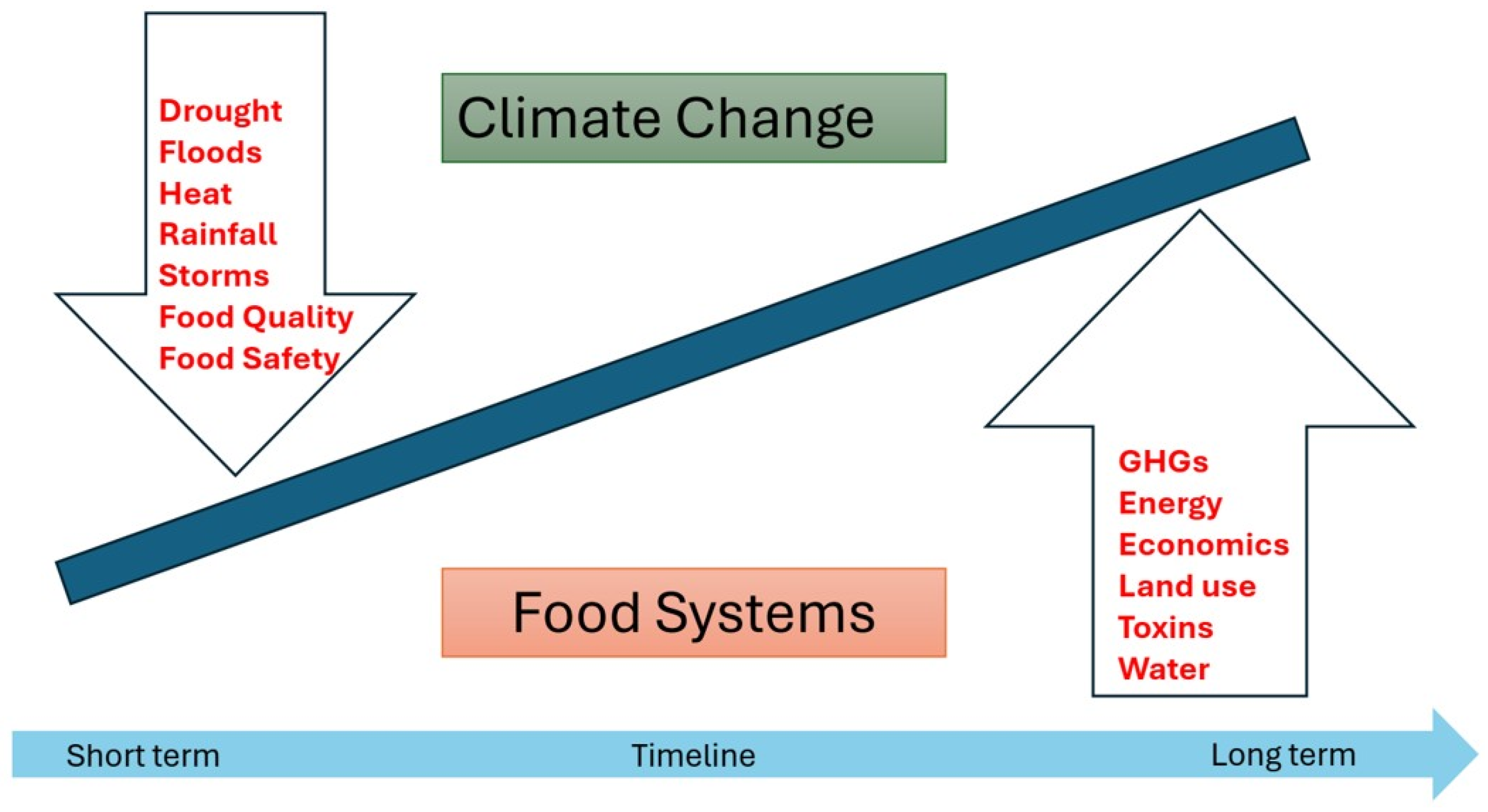
Among the impacts of several factors on the global food systems, climate change (CC) seems to be the most evident. A recent report [13] reveals that greenhouse gas emissions (GHGs) act as an encompassing film around the Earth, trapping heat radiated by the sun and causing the temperature of the Earth to peak above its norm. Food systems represent significant determinants within the myriad of multilateral factors contributing to climate change [14]. Food production produces molecules of GHGs, among which carbon dioxide (CO2), methane, and nitrous oxide are the most common. These GHGs, in their chemical makeup, act as a sponge that soaks up the heat that would otherwise go into space, making the earth warmer [15]. The relationship between them is that of a reciprocal type, as described in Figure 1, adapted from [16]. This figure summarizes the interconnectedness of CC and food systems, whereby they affect each other and may not be restored by simply addressing food and nutrient supply.
Not only does climate change pose challenges to local and global food systems, but food systems also drive climate change. According to [17] in 2022, agriculture and food production emissions were 30% of total CO2 emissions, with no significant differences from the previous years. In addition to carbon dioxide, agriculture produces other greenhouse gases such as methane and nitrous oxide [18]. These emissions stem from different phases of the food production system, with a high emphasis on meat production [18]. The more the global food system focuses on exports instead of local foods, the bigger role transport plays in the total agrifood emissions. On the other hand, traditional Indigenous foods minimize fossil fuel use since the energy requirement is lower, and there is reduced storage, transportation, and packaging in the production system [17,18]. Traditional foods within local food systems can emit up to three times fewer carbon emissions in the distribution phase compared to conventional, long-distance supply chains, primarily through reduced “food miles” and less need for extensive refrigeration and packaging. Agriculture also has negative impacts on a local scale, as irrigation and pollutants, such as fertilizers and pesticides, are significant contributors to water scarcity worldwide [19]. Access to clean water is not only crucial for food security but also essential for the health of local fisheries, as reduced water quality can have a significant negative impact on them [20].

2.1. Action Towards Meeting the Expected Target

There is a discrepancy between the publicity on climate action and how people understand it. Concrete steps by individuals without feelings of coercion are important. For further elaboration, the shifts from psychological and behavioural perspectives were reflected upon in the Nordics. It is important to mention the new emergence of ideas from other aspects that are related to Sustainable Development (SD). Such perspectives include (eco)critical sustainability, early childhood education, care, and Nordic education. SD is a good goal as a means of bringing about the aspiration towards the target of keeping global warming below 1.5 °C pre-industrial levels. The 1.5 °C goal is based on climate models that show far more severe climate consequences for 2 °C global warming than 1.5 °C [17]. Limiting global warming to 1.5 °C instead of 2 °C could result in around 400 million people being exposed to frequent extreme heatwaves, less intense rainfall events, significantly fewer droughts, and reduced impacts on human life and the ecosystem, among many other factors [14,21]. Associated risks to global warming exceeding the 1.5 °C target include the risks of triggering multiple, self-perpetuating climate tipping points, such as the collapse of ice sheets and biome loss, which will result in irreversible impacts [22].

2.2. Making the Right Choices

In a periconceptional state of mind, green choices and a counter-human-centric consciousness would be considered sufficient. However, the complexity of the whole status quo can be unpacked, not only on an environmental level but also on an educational level; some individual behavioural shifts can positively impact a powerful change. Bilfinger [23] suggests that focus on an individual’s actions should be veered for ethical and equity reasons [3]. On a more personal level, at times, climate action movements give a connotation of shaming people into the need to submit and subscribe. However, this relates to issues over which they exert limited influence, owing to society’s strong dependence on fossil fuels. For example, debates often frame fossil fuel-powered vehicles as environmentally harmful and place the burden of change on individuals to adopt electric modes of transportation. Yet this narrative overlooks significant limitations. For example, in cold climates, electric vehicles can be unreliable under severe weather conditions, while in tropical regions, they may present an elevated risk of fire. Such individual-focused solutions risk obscuring the responsibility of top decision-makers and major industrial leaders who are the primary contributors to environmental degradation. This raises the question of whether meaningful behavioural change can be achieved without disproportionately shifting blame onto individuals through guilt-based narratives [24,25].

3. Climate Action and Policies

Some key elements of successful climate action and policy could be, first, the multi-level governance approaches that align national policies with local implementation. As in the case of the Swedish effective waste management initiative, it was a product of culturally appropriate policy-making and policy alignment. In their comparative literature review, Compton et al. (2019) [26] identify three core aspects of a successful policy alignment: (i) Inclusivity of the process: how much the people can relate and identify themselves in adopting the new policies, and how much the new policies reflect the local community’s values and worldviews. (ii) Degree of innovation: how progressive the new policies are, how plausible the innovation is, and whether they reflect/oppose the community’s culture, which leads to (iii) the pace of change: How quickly should the implementation be, such that the community is fortified and united to change together.

3.1. Integrating Traditional and Scientific Knowledge

It is worth mentioning the integration of traditional and scientific knowledge systems and the strong institutional frameworks that support long-term planning. The demonstration of this element was in the successful case scenarios of the Vermont Farm-to-Plate program (FTP). As a benchmark to other regions, the Vermont FTP offers a comprehensive model for regional food system transformation. It combines legislative grounding, multi-stakeholder collaboration, targeted support mechanisms, and robust evaluation practices that have produced measurable outcomes in economic development, job creation, local food market expansion, and system resilience [27]. The program’s experiences with an emphasis on network building, strategic planning, and policy integration provide transferable mechanisms that other states or regions could adapt to strengthen their own food systems.
The program demonstrated how long-term planning, managing decentralized, community-based resources, and integrating old and new knowledge orchestrate the plausibility of a climate-resilience building initiative.
It is well known that the environmental leaps in Europe, North America, and East Asia have been achieved through vast investments enabled by the steady economic state in these regions. In addition, the level of educational status in these countries is high, governments are efficient, and they remain unburdened by armed conflicts. Today, the investments and regulations of the past year have led to a burgeoning “green economy”, making environmentally friendly products not only sustainable but also affordable.

3.2. Disparity Between the Northern and Southern Hemispheres

Few countries in the Southern Hemisphere possess the investment potential of the countries that may lead the green revolution; thus, environmental success must be approached in a different way. For example, it has been identified that in Africa, the lack of finance is not the most frequent barrier for climate action but instead is exceeded by a notable margin by limited institutional capacity [28]. Institutional capacity gaps in Africa can be addressed through strengthened biosafety and land-tenure legislation, joint Arctic–Southern research centres, and governance reforms recognizing Indigenous food systems.
This suggests that by reinforcing the legislation and planning frameworks, environmental efforts could be made more efficient without substantially increased investment. While climate change manifests in different ways between the Northern and Southern Hemispheres, similar institutional structures could still be applied. In Europe, for example, climate change mitigation is led by the European Topic Centre on Climate Change Mitigation (ETCCM), a partnering consortium of the European Environment Agency (EEA) and 15 environmental organizations [29]. The ETCCM oversees the monitoring of climate change mitigation efforts on a European level by collecting and analyzing data and developing solutions for climate-related issues [29]. This is done in partnership with national-level agencies, which typically lead a similar role over local agencies and environmental projects [29]. This model promotes coordination and cooperation between local actors across the continent, making data and idea sharing easy for all parties, thus enhancing the efficiency of climate efforts. In Africa, a similar approach is applied through the UN Environmental Programme (UNEP); however, the lack of institutional capacity in climate mitigation still prevails [30]. It could be argued that an organization led by the stakeholder countries, such as ETC CM, would be more efficient in responding to the local needs compared to the United Nations-led program. This is also supported by Adenle et al. (2017) [28], who suggest the creation of a regional institution to fill the need for institutional capacity and promote cooperation between different communities. Policy and governance represent another area for potential learning. Many Northern Hemisphere nations have adopted stronger environmental policies, established emissions reduction targets, and promoted collaboration among various stakeholders [31]. Southern Hemisphere nations can co-share knowledge based on practical and pragmatic lessons from these experiences by strengthening their own governance structures, enforcing environmental regulations, and encouraging cooperation.

4. Lessons from the European Arctic and Namibia

Food systems play a significant role in contributing to global warming. It is essential to take urgent and coordinated action to mitigate their negative effects. Transitioning to sustainable food production systems, reducing food waste, and promoting food sovereignty are crucial steps toward the goal of keeping global warming below 1.5 °C. A coherent framework based on technology-based vs. traditional knowledge-based approaches is proposed under this section to explain the critical role of each of the proposed strategies and linkages to their impact on Indigenous traditional food systems and the 1.5 °C climate target are discussed accordingly.
Food systems are the major drivers of global warming, accounting for a substantial portion of greenhouse gas emissions. This reality highlights the urgent need for concerted global action to address and mitigate its harmful impacts on the climate. Technology-based mitigation strategies, such as industrial food production, significantly contribute to greenhouse gas emissions (GHGs) [32]. These food system emissions could prevent achieving the 1.5° and 2 °C climate change targets if they are not reduced through the adoption of effective technology-based approaches [33].
The modern food system relies heavily on industrial agriculture, which is energy-intensive. It demands substantial energy to produce fertilizers and pesticides, as well as for the transportation and processing of food. It is estimated that the industrial food system requires 10 to 15 energy calories to produce just one calorie of food, accounting for 22% of total GHG emissions [34,35]. This high level of energy consumption exacerbates climate change. The Food and Agriculture Organization of the United Nations (FAO) highlights that agriculture, forestry, and land-use changes significantly contribute to GHG emissions [17].
The global climate crisis poses an unparalleled challenge, significantly affecting both environmental stability and food security. The Intergovernmental Panel on Climate Change (IPCC) has cautioned that rising temperatures, altered precipitation patterns, and the increasing occurrence of extreme weather events are disrupting ecosystems, economies, and societies around the globe [36]. The impacts of climate change are not distributed evenly around the world. According to UNFCC [37], Africa’s socio-economic development, food and water security, and human health and safety are all at risk due to rising temperatures and sea levels, shifting precipitation patterns, and increasingly extreme weather [38,39]. The challenges faced by the Southern Hemisphere are complex and require a nuanced approach that combines lessons learned from the Northern Hemisphere with context-specific solutions. These regions often rely heavily on agriculture, have less diversified economies, and possess weaker infrastructure, making them more susceptible to climate-related shocks [40,41].
Tackling the food system’s impact on global warming necessitates a multifaceted approach. According to [42,43], Sustainable Development Goal (SDG) 2 “focuses on eliminating hunger and malnutrition and improving the sustainability of food systems.” SDG2 acknowledges the connections between encouraging sustainable agriculture, empowering small farmers, advancing gender equality, eradicating rural poverty, guaranteeing healthy lifestyles, combating climate change, and other topics covered by the Post-2015 Development Agenda’s 17 Sustainable Development Goals [43,44]. The agricultural production system and food security are continuously threatened by climate change. Because of the direct and indirect effects of ongoing climate change, the agriculture sector faces significant obstacles in reaching the Sustainable Development Goals [22]. To achieve and attain sustainable food systems status, industrial food production must be transformed into an environmentally sustainable agrofood sector that is resilient to climate change and adopt new innovative and competitive uses of advanced technologies [45].
Shafiee, 2022 [46], points out that the Inuit and First Nation cultures emphasize the scarcity of both traditional and market meals and that the accessibility pillar of food security is significantly impacted by several variables, including lack of access to transportation, high food prices, and economic disadvantages. The Northern Hemisphere has made significant progress in technological innovation, particularly in agriculture. This is another technology-based mitigation strategy that can advance the field. For instance, crop gene editing offers promising opportunities to enhance crops’ adaptability to climate change [47,48]. According to [49], gene-editing approaches, such as the use of site-directed nucleases (SDNs), enable extremely precise alterations to a target DNA area. This accuracy has prompted several countries to distinguish gene-edited products from standard genetically modified organisms (GMOs) and to develop new regulatory methods that may be more effective [50]. SDN can be used to enhance stress tolerance (e.g., drought or frost resistance) within locally valued landraces, thereby strengthening cultural continuity while improving climate resilience. Additionally, innovations in plant growth-promoting bacteria from the Northern Hemisphere have opened new avenues for improving agricultural productivity [48,51]. Moreover, evidence is emerging that adopting biotechnology-based techniques such as gene editing can positively impact the agriculture sector to meet the UN’s SDG 2 achievement [52].
On the other hand, Free, Prior and Informed Consent (FPIC) is a legal and ethical standard requiring that Indigenous Peoples have the right to give or withhold consent to proposed actions that may affect their territories and rights. The concept is firmly established in UNDRIP (Articles 19 and 32) and ILO Convention No. 169 (Article 6) [53]; it is debatable how much Indigenous Peoples have been consulted on such new innovations. UNDRIP aligns closely with the Kunming-Montreal Global Biodiversity Framework, particularly in its emphasis on Indigenous Peoples’ rights to territories, governance, and knowledge. The binding commitments in the case of North American states vary; Canada and the U.S. rely mainly on UNDRIP, while Namibia acknowledges UNDRIP but lacks binding international treaty ratification [53].
North America exhibits more articulated Indigenous governance institutions, though operating within complex colonial legal frameworks; Namibia’s governance system offers less formal authority to Indigenous communities under state law.
Indigenous land rights in North America are supported by historical treaties and structured claims processes, whereas in Namibia, formal recognition and secure tenure remain weak. Studies show that Indigenous-managed lands often have lower rates of ecological degradation, yet national conservation laws in countries like Norway and Finland frequently lack binding guarantees for shared governance or Indigenous consent [54,55]. In Sápmi, examples include Sámi-led management structures, such as in Laponia, and land use practices like reindeer grazing that reflect long-standing ecological stewardship.
According to [56], research on biosafety laws in Africa shows that countries can benefit from gene editing by developing local capacity and regulatory frameworks customized to their specific ethical, social, and environmental context. This strategy is critical for developing public trust and societal acceptance, which are required for the successful application of these technologies. Furthermore, investments in climate-smart agriculture, such as the development of drought-resistant crops and enhancements to irrigation techniques, are crucial for improving food security as climatic conditions continue to change [57].
Furthermore, it is essential to consider the impact of climate change on microorganisms and their subsequent effects on agricultural production. Anthropogenic climate change influences microorganisms, which subsequently affect the carbon cycle and contribute to global warming [13]. Additionally, climate change affects pests and pathogens, which in turn impact crops [58]. Understanding these complex interactions is vital for developing effective adaptation and mitigation strategies in the Southern Hemisphere [59,60]. This emphasizes the need for interdisciplinary research that brings together experts from various fields, including microbiology, ecology, and agriculture, to create holistic solutions to the challenges posed by climate change.
The challenges associated with climate change in the Southern Hemisphere are further complicated by several factors, including limited access to resources, poverty, and existing social inequalities. A population’s vulnerability is determined by the nature and magnitude of climate change hazards, the extent of exposure to these hazards, the sensitivity and resilience of the affected populations, and the community’s capacity [61,62]. These factors tend to be more pronounced in the Southern Hemisphere. Moreover, the effects of climate change are already being felt, with an increasing frequency of natural disasters contributing to food insecurity [22,63]. These socio-economic factors create additional barriers to adaptation, making it more difficult for communities to cope with the impacts of climate change [64].
The Southern Hemisphere faces significant challenges in addressing climate change and ensuring food security [65]. By learning from the successes of the Northern Hemisphere and adapting those lessons to local contexts, Southern nations can develop effective and sustainable solutions. This requires a multifaceted approach that includes technological innovation, strengthened governance, public awareness, international cooperation, and commitment to social justice. Integrating modern science with traditional practices, such as applying genome editing to traditional crops, offers a promising pathway toward a climate-resilient and food-secure future for the Southern Hemisphere. It is essential that the global community works together to support these efforts, ensuring that the most vulnerable populations are not left behind in this global crisis.
Adopting sustainable food production methods, such as regenerative agriculture [66] and organic farming [67], can improve soil health, reduce emissions, and enhance biodiversity. Furthermore, implementing strategies to minimize food waste throughout the supply chain—from production to consumption—can significantly lower emissions associated with discarded food. Promoting food sovereignty [68] is also vital; empowering communities to take control of their food systems fosters resilience and supports local economies. These critical steps are necessary to achieve the goal of limiting global warming to below 1.5 °C, ensuring a healthier planet for future generations. Our food system and climate change affect each other negatively. However, there are ways to mitigate the cycle; these could include the following:

4.1. Strengthening Local Agriculture

Eating local foods reduces the need for long-distance transportation and subsequently cuts down greenhouse gas emissions associated with food production and distribution [69]. Quicker and shorter transport chains also minimize food losses and lessen the demand for extensive pre- and post-harvest processing. Ideally, farmers could sell their produce directly to local communities without intermediaries, increasing their share of profit while offering consumers more affordable and fresher products [70].
Strengthening local food systems additionally creates opportunities for diversifying farmer income, for example, by expanding beyond single-crop production into multi-cropping, mixed farming, and integrating crop and animal production systems. Crop–livestock integration enhances nutrient cycling, improves soil fertility, and stabilizes yields under climate variability—contributing to both economic and ecological resilience. Diversifying crops likewise reduces production risks, improves dietary diversity, and enhances ecosystem functions such as pest control and carbon sequestration.
Moreover, investing in local food processing and value-added activities (e.g., drying, fermenting, oil extraction, dairy processing, milling) enables communities to retain more value within the region. This not only increases rural employment opportunities but also reduces the carbon footprint associated with exporting raw commodities to distant processing centres. Local processing therefore strengthens local agriculture while contributing to climate change mitigation [71].
Collectively, these elements—shorter supply chains, diversified production systems, and value addition—enhance food security and build greater resilience against disruptions such as supply-chain interruptions, extreme weather events, or geopolitical crises. However, transitioning toward stronger, more localized food systems requires significant policy adjustments, including supportive market regulations, investment in rural infrastructure, incentives for diversification, and frameworks that empower smallholder farmers within the current globalized food economy [72].

4.2. Plant-Based Diet

While the global consumption of animal-based products is increasing, there exists a contrasting phenomenon gaining momentum in wealthy nations, such as Finland, where more people are opting for a plant-based diet for climate reasons [73]. Plant-based diets are becoming a central solution in the global discussions about sustainability, where adopting such diets that require fewer resources for protein production will offer a wide range of benefits, including land use patterns, climate change mitigation, and environmental protection [74]. While animal-based products are dense in macro- and micronutrients, livestock is not very efficient in converting feed into edible body mass for humans. Thus, choosing plant-based nutrient sources reduces the land needed for producing the same amount of protein, as agricultural land is already scarce [75]. However, a careful balance is required between encouraging vegetarian diets to reduce emissions and preserving traditional livestock farming. In both the Arctic and Namibia, traditional livestock systems—such as reindeer herding and pastoralism—are low-input, circular, and culturally integral. Climate-mitigation efforts should therefore prioritize reducing industrial meat consumption while preserving Indigenous livestock systems that support biodiversity, nutrition, and cultural identity.

4.3. Smart Agriculture

The third opportunity lies in improving crop yields. This can be achieved, for example, through smart technologies, which offer many opportunities for climate-friendly agriculture. The use of remote sensors for soil, pest, or cattle monitoring could reduce (1) the need for fertilizers and pesticides, (2) food losses, (3) greenhouse emissions, (4) input costs, and (5) manual labour hours [76]. Another technical revolution in food production could be the manipulation of crop genes to engineer resilient plants for demanding conditions [77]. While emerging technology offers opportunities to curate optimal growing conditions for each crop, GMOs could offer optimal crops for each growing condition. However, for smart agriculture to deliver meaningful and equitable benefits, investments and technological solutions must remain low-cost, energy-efficient, and accessible to small-scale farmers—who form the majority of growers in the Global South. Technologies should be designed to accommodate gender considerations, ensuring that women farmers—often responsible for food production and household nutrition—have equal access to tools, training, financing, and decision-making. Similarly, vulnerable groups, including youth, pastoralists, and low-income households, must be intentionally included to avoid widening technological and socio-economic gaps [78].
In addition, capacity-building programs, digital literacy training, community-level demonstration plots, and farmer-led innovation hubs are essential for empowering users to sustainably adopt and maintain new tools. Affordable repair services, open-source software, and low-energy devices (such as solar-powered sensors or offline-capable apps) further support long-term sustainability. Collaborative models—such as cooperatives, shared machinery pools, or community technology centres—can dramatically reduce costs for individual farmers while promoting collective resilience [79]. In remote regions such as northern Namibia and Arctic rural communities, smart agriculture depends on decentralized infrastructure solutions, including solar-powered sensors, low-bandwidth mobile networks, satellite connectivity, and offline-capable applications. Community-level energy micro-grids and shared digital service hubs offer cost-effective alternatives to centralized infrastructure expansion. Overall, for smart agriculture to contribute effectively to climate mitigation, food security, and rural development, it must be inclusive, affordable, locally adaptable, and centred on the needs of small-scale producers, rather than driven solely by high-tech industrial farming [80].

5. Traditional Foods and Associated Knowledge

This section explores how Southern Hemisphere nations might adapt Northern successes to their contexts while leveraging their unique strengths—which are their vibrant traditional food systems (with resilient crop genes, capable of climate adaptation) with their associated Indigenous knowledge—to enhance food security and mitigate carbon emissions. Integrating traditional knowledge with modern science offers a powerful strategy. For example, genome editing—an advanced technology—can enhance traits in traditional crops, making them more resilient to climate change [81]. This method combines the benefits of technological innovation with the sustainability and resilience of traditional food systems. By merging scientific advancements with time-tested traditional practices, climate-resilient agricultural systems that are both productive and sustainable can be developed [82].
In the Arctic, many Indigenous communities regard traditional wild food species as kin-species, and the harvesting process and associated knowledge around it are part of a caring relationship that people must maintain as part of their relational responsibility to their kin [83,84]. Such an approach is expected to lead to increased nutrition outcomes associated with agroecology [85]. The associated knowledge within the Indigenous traditional food system should emphasize the co-production of knowledge by building on their existing strengths. Ref. [86] testified to the principle of knowledge co-production between the North and the South with effective exchange of dialogues rather than one-way transfer. The strengths of the South are not only those of a conceptual level, but also those of tangible ecological effects.
From the Namibian perspective, two studies reported on the changing food preferences among a former hunter–gatherer group, and the loss of cultural and associated traditional knowledge has led to the replacement of sustainable harvesting methods with harmful practices. In this example, it refers to the Khwe San Indigenous people in the Zambezi Region of the Bwabwata National Park of Namibia. These harmful practices include inappropriate seasonal burning and cutting tree branches rather than climbing to collect fruit, both of which damage the plants and inhibit fruit production [87]. They indicated that current preferences towards traditional foods do exist; however, these preferences were not prevailing among all the participants in the study area [88].
Climate change presents a global challenge that demands coordinated responses, yet solutions often develop unevenly across regions. Several studies have documented the interdecadal causes and effects of climate change across both the Northern and Southern Hemispheres, with a notable observation that Southern Hemisphere nations generally suffer more from the consequences [89,90,91]. In terms of problem-solving and solution generation, many developed nations in the Northern Hemisphere have successfully implemented many environmental protection and climate-resilience building initiatives. Meanwhile, many Southern Hemisphere countries face similar or more severe climate threats with fewer resources [92]. This discrepancy warrants investigations into both the challenges and the opportunities for knowledge exchange.
The most promising path forward involves truly reciprocal exchange rather than one-way transfer of knowledge or technology. A reciprocal approach recognizes that Northern societies have much to learn from Indigenous food systems about diversification, ecological integration, and cultural resilience. Meanwhile, Southern communities might benefit from Northern experiences in scaling sustainable practices and navigating global economic systems. Through such genuine mutual exchange, both hemispheres could develop more robust responses to our shared climate challenge, responses that protect biological and cultural diversity while ensuring food security in a changing world. The result might be not only more climate-resilient communities but also a more equitable global system for addressing our shared environmental future. Due to the traditional ecological knowledge (TEK) that encompasses a wide range of knowledge related to sustainable natural resource management, Indigenous communities have high potential to become leaders in climate change mitigation. For example, in the US, a Climate Ready Tribes Initiative (CRTI) was launched in 2016 to provide tools, funding, and cooperation for climate change mitigation in the communities’ own terms [56]. Projects funded through the CRTI in the 2020–2023 period include, for example, mitigating health risks from shellfish biotoxins, improving adaptive capacity through training, and improving stakeholder cooperation through working groups [93,94]. In addition to CRTI, there are other private and government-funded programs and initiatives in North America aimed at increasing the climate adaptability of Indigenous communities. The Canadian government has funded 27 Indigenous-Led Natural Climate Solutions projects for 2023–2024, ranging from environmental data collection and modelling to concrete habitat restoration projects [95]. As western ideas of sustainability include similar concepts to TEK, such as reciprocity and regenerative action, collaboration with Indigenous groups will enrich our environmental projects. Potentially, a network of Indigenous groups worldwide, utilizing a variety of TEK, with access to funds and research, could come up with many unique ideas for climate-related issues. Unfortunately, these groups are often marginalized and under-appreciated, and their ideas are left unheard. The successful Indigenous environmental projects in North America are proof that the discriminatory colonial structures are only hindering climate efforts. Direct transplantation of Northern models to Southern contexts faces significant challenges. Many Southern Hemisphere nations contend with distinct historical, economic, and ecological circumstances that require tailored approaches. In addition, colonial legacies have caused disruption in land usage and created a fragmented governance system with inequitable resource access. The conditions for successful North–South cooperation, among which equitable and thoughtful adaptation is of crucial importance [96]: Indigenous communities possess invaluable knowledge about sustainable land management, biodiversity conservation, and climate adaptation [97,98]. Practices such as agroforestry, soil conservation, and fire management can significantly contribute to carbon sequestration and emissions reduction. It is essential to recognize and respect the rights of Indigenous peoples, ensure their participation in decision-making processes, and support their traditional practices. This approach is not only crucial for achieving climate goals but also for promoting social justice and preserving cultural heritage [99]. Traditional ecological knowledge, which has been passed down through generations, provides insights into living harmoniously with nature and managing resources sustainably. Article 8(j) of the Convention on Biological Diversity (CBD) is a key provision for the protection of Indigenous knowledge and the rights of Indigenous Peoples in biodiversity governance. It calls on Parties to respect, preserve, and maintain traditional knowledge of Indigenous Peoples, relevant for conservation and sustainable use of biodiversity, to promote its wider application with the approval and involvement of knowledge holders, and to encourage equitable benefit-sharing.
In the Arctic, and especially in Sámi areas, Article 8(j) affirms the value of árbediehtu, the Sámi Indigenous knowledge system, in sustaining biodiversity. It also underlines the need for respectful engagement, including free, prior, and informed consent and participation in decision-making. North American Indigenous peoples have access to some public and negotiated funding mechanisms (albeit often contested), whereas Namibia’s Indigenous groups rely more on external funding without formalized state systems aligned with rights frameworks.

6. Concluding Remarks

The impacts of climate change on agriculture and vice versa are individual but interconnected challenges that reinforce one another. The current global food system, largely oriented towards export markets, poses risks to food security while contributing significantly to greenhouse gas emissions through long-distance transportation. A transition toward more sustainable and resilient food systems will require changes in local policies, consumption patterns, and dietary choices.
Smart agriculture offers a promising pathway for this transformation. The integration of low-cost, efficient digital tools—such as soil sensors, precision irrigation, early-warning systems, and climate-resilient crop varieties—can support small-scale farmers, reduce emissions, and enhance adaptive capacity. When these technologies are inclusive and accessible to women, youth, and vulnerable communities, they contribute not only to higher productivity but also to social equity.
Strengthening local agriculture through diversified cropping systems, crop–livestock integration, and community-based food processing further enhances resilience. Such localized food systems reduce dependence on global supply chains, retain value within rural areas, and lower the carbon footprint associated with transportation and overprocessing. Combined with behavioural shifts toward responsible consumption, these strategies create a more sustainable food economy that supports both people and the planet.
As the impacts of climate change increasingly and disproportionately affect Indigenous peoples, equitable approaches to regional climate change adaptation must centre the voices, needs, and priorities of Indigenous communities [100]. In this narrative review, the voices of Indigenous Peoples need to be amplified, and this is a shortcoming. Equitable approaches to climate change adaptation require centering the voices, needs, and priorities of Indigenous Peoples. As such, tribal nations must be intentionally and meaningfully engaged in regional climate change adaptation initiatives, despite tribally led recommendations for federal actions that address the needs of Indigenous Peoples in climate adaptation [90].
In conclusion, tremendous global mitigation efforts aimed at keeping the Earth’s temperature below 1.5 °C above pre-industrial levels are commendable. Ultimately, harnessing smart, inclusive, and locally grounded agricultural innovations will be essential to meeting the 1.5 °C target and building a food system that is both climate-friendly and resilient for future generations.

Author Contributions

Conceptualization, A.C. and D.R.; investigation, T.N., E.V., P.P.V., A.C., M.D. and D.R.; writing—original draft preparation, D.R.; writing—review and editing, T.N., E.V., P.P.V., A.C., M.D. and D.R.; visualization, D.R.; supervision, D.R. All authors have read and agreed to the published version of the manuscript.

Funding

This research received no external funding.

Data Availability Statement

No new data were created.

Acknowledgments

The authors would like to thank their family members and colleagues for their support during the conceptualization and writing stages of this publication. We also express our gratitude to the anonymous reviewers for their valuable comments.

Conflicts of Interest

The authors declare no conflicts of interest.

References

  1. Cisneros, M.; Zoumenou, V.; McIntosh, W.A. Food Systems, Subsystems, Components, and Families. In Food Systems, Health, and Well-Being: Understanding Complex Relationships and Dynamics of Change; Springer International Publishing: Cham, Switzerland, 2024; pp. 3–24. [Google Scholar]
  2. Kayode-Edwards, J.O.; Kayode-Edwards, I.I.; Kayode-Edwards, D.O. Climate change in the Arctic. In Arctic Marine Ecotoxicology: Climate Change, Pollutants, and Their Far-Reaching Effects; Springer Nature: Cham, Switzerland, 2024; pp. 71–96. [Google Scholar]
  3. Poltronieri, A.; Bochow, N.; Boers, N.; Rypdal, M. Increasing fluctuations in the Arctic summer sea ice cover are expected with future global warming. Environ. Res. Clim. 2024, 3, 035007. [Google Scholar] [CrossRef]
  4. NASA. Arctic Sea Ice Minimum|NASA Global Climate Change, Climate Change: Vital Signs of the Planet; NASA: Washington, DC, USA, 2022. Available online: https://climate.nasa.gov/vital-signs/arctic-sea-ice/?intent=121 (accessed on 21 September 2025).
  5. IPCC. IPCC Climate Change 2021: The Physical Science Basis; IPCC: Geneva, Switzerland, 2021; Available online: https://www.ipcc.ch/report/ar6/wg1/ (accessed on 18 August 2025).
  6. Crawford, A.; Terton, A. Review of Current and Planned Adaptation Action in Namibia; Collaborative Adaptation Research Initiative in Africa and Asia (CARIAA): London, UK, 2016; pp. 1–4. [Google Scholar]
  7. Keja-Kaereho, C.; Tjizu, B.R. Climate Change and Global Warming in Namibia: Environmental Disasters vs. Human Life and the Economy. Manag. Econ. Res. J. 2019, 5, 1. [Google Scholar] [CrossRef]
  8. Mapani, B.S.; Shikangalah, R.N.; Mwetulundila, A.L. A review on water security and management under climate change conditions, Windhoek, Namibia. J. Afr. Earth Sci. 2023, 197, 104749. [Google Scholar] [CrossRef]
  9. Liu, X.; Zhou, J. Assessment of the Continuous Extreme Drought Events in Namibia during the Last Decade. Water 2021, 13, 2942. [Google Scholar] [CrossRef]
  10. Shikangalah, R.N. The 2019 Drought in Namibia: An Overview. J. Namib. Stud. 2020, 27, 37–58. [Google Scholar]
  11. Vrabcová, P.; Nikodemus, A.; Hájek, M. Utilization of Forest Resources and Socio-Economic Development in Uukolonkadhi Community Forest of Namibia. Acta Univ. Agric. Silvic. Mendel. Brun. 2019, 67, 197–206. [Google Scholar] [CrossRef]
  12. Nikodemus, A.; Hájek, M.; Ndeinoma, A.; Purwestri, R.C. Forest Ecosystem Services-Based Adaptation Actions Supported by the National Policy on Climate Change for Namibia: Effectiveness, Indicators, and Challenges. Forests 2022, 13, 1965. [Google Scholar] [CrossRef]
  13. Food and Agriculture Organization of the United Nations. C 2023/30—Biennial Theme 2024–25: Water resources management for the four betters: Better production, better nutrition, better environment and better life. In Proceedings of the FAO Conference, Forty-Third Session, Rome, Italy, 1–7 July 2023; Available online: https://openknowledge.fao.org/bitstreams/4eb091d7-c09d-44f7-a1fb-7854b20e8259/download (accessed on 11 August 2025).
  14. Nielsen, K.S.; Cologna, V.; Bauer, J.M.; Berger, S.; Brick, C.; Dietz, T.; Hahnel, U.J.; Henn, L.; Lange, F.; Stern, P.C.; et al. Realizing the full potential of behavioural science for climate change mitigation. Nat. Clim. Change 2024, 14, 322–330. [Google Scholar] [CrossRef]
  15. Newell, P.; Twena, M.; Daley, F. Scaling behaviour change for a 1.5 degree world: Challenges and opportunities. Global Sustain. 2021, 4, e22. [Google Scholar] [CrossRef]
  16. Bremer, A.A.; Raiten, D.J. The Reciprocal Relationship between Climate and Environmental Changes and Food Systems and Its Impact on Food/Nutrition Security and Health. Nutrients 2023, 15, 2824. [Google Scholar] [CrossRef]
  17. Food and Agriculture Organization of the United Nations. Greenhouse Gas Emissions from Agrifood Systems. Global, Regional and Country Trends (2000–2022). 2024. Available online: https://www.fao.org/statistics/highlights-archive/highlights-detail/greenhouse-gas-emissions-from-agrifood-systems.-global--regional-and-country-trends--2000-2022/en (accessed on 19 August 2025).
  18. Li, L.; Awada, T.; Shi, Y.; Jin, V.L.; Kaiser, M. Global greenhouse gas emissions from agriculture: Pathways to sustainable reductions. Glob. Change Biol. 2025, 31, e70015. [Google Scholar] [CrossRef] [PubMed]
  19. Fanzo, J.; de Steenhuijsen Piters, B.; Soto-Caro, A.; Saint Ville, A.; Mainuddin, M.; Battersby, J. Global and local perspectives on food security and food systems. Commun. Earth Environ. 2024, 5, 227. [Google Scholar] [CrossRef]
  20. Saleem, A.; Anwar, S.; Nawaz, T.; Shah Fahad Saud, S.; Ur Rahman, T.; Khan, M.N.R.; Nawaz, T. Securing a sustainable future: The climate change threat to agriculture, food security, and sustainable development goals. J. Umm Al-Qura Univ. Appl. Sci. 2024, 11, 595–611. [Google Scholar] [CrossRef]
  21. Hoegh-Guldberg, O.; Jacob, D.; Taylor, M.; Bindi, M.; Brown, S.; Camilloni, I.; Diedhiou, A.; Djalante, R.; Ebi, K.; Engelbrecht, F.; et al. Impacts of 1.5 °C Global Warming on Natural and Human Systems. In Global Warming of 1.5 °C; Cambridge University Press: Cambridge, UK; New York, NY, USA, 2018; pp. 175–312. [Google Scholar]
  22. McKay, D.I.A.; Staal, A.; Abrams, J.F.; Winkelmann, R.; Sakschewski, B.; Loriani, S.; Fetzer, I.; Cornell, S.E.; Rockström, J.; Lenton, T.M. Exceeding 1.5 °C global warming could trigger multiple climate tipping points. Science 2022, 377, eabn7950. [Google Scholar] [CrossRef]
  23. Bilfinger, L.; Brummernhenrich, B.; Jucks, R. On the Defensive: Reactance and Trustworthiness in Processing Written Information about Climate Change. Curr. Res. Ecol. Soc. Psychol. 2026, 10, 100262. [Google Scholar] [CrossRef]
  24. Kleespies, M.W.; Hahn-Klimroth, M.; Dierkes, P.W. Perceptions of biodiversity loss among future decision-makers in 37 countries. NPJ Biodivers. 2024, 3, 21. [Google Scholar] [CrossRef]
  25. San Cornelio, G.; Martorell, S.; Ardèvol, E. “It is the voice of the environment that speaks”, digital activism as an emergent form of environmental communication. Environ. Commun. 2024, 18, 375–389. [Google Scholar] [CrossRef]
  26. Compton, M.; Luetjens, J.; Hart, P. Designing for Policy Success. Int. Rev. Public Policy 2019, 1, 119–146. [Google Scholar] [CrossRef]
  27. Nottermann, K. Working Toward the Goals of the Vermont Agriculture and Food System Strategic Plan 2021–2030. 2025. Available online: https://www.vsjf.org/2025/01/30/working-toward-the-goals-of-the-vermont-agriculture-and-food-system-strategic-plan-2021-2030/#:~:text=Farm%20to%20Plate%20History,over%20the%20previous%20ten%20years (accessed on 21 January 2026).
  28. Adenle, A.; Manning, D.; Arbiol, J. Mitigating Climate Change in Africa: Barriers to Financing Low-Carbon Development. World Dev. 2017, 100, 123–132. [Google Scholar] [CrossRef]
  29. European Environmental Agency (EEA). ETC Climate Change Mitigation (ETC CM). 2025. Available online: https://www.eionet.europa.eu/etcs/etc-cm (accessed on 12 September 2025).
  30. UNEP Our Work in Africa. 2025. Available online: https://www.unep.org/regions/africa/our-work-africa (accessed on 3 October 2025).
  31. OECD. The Climate Action Monitor 2023: Providing Information to Monitor Progress Towards Net-Zero; OECD Publishing: Paris, France, 2023. [Google Scholar]
  32. Sahu, S.; Arya, S.K. Mitigation of Greenhouse Gas Emissions in Agriculture and Food Processing through Sustainable Management Practices for Climate Change. In Advances and Technology Development in Greenhouse Gases: Emission, Capture and Conversion; Elsevier: Amsterdam, The Netherlands, 2024; pp. 71–96. [Google Scholar]
  33. Clark, M.A.; Domingo, N.G.; Colgan, K.; Thakrar, S.K.; Tilman, D.; Lynch, J.; Azevedo, I.L.; Hill, J.D. Global Food System Emissions Could Preclude Achieving the 1.5 and 2 °C Climate Change Targets. Science 2020, 370, 705–708. [Google Scholar] [CrossRef]
  34. McMichael, A.J.; Powles, J.W.; Butler, C.D.; Uauy, R. Food, livestock production, energy, climate change, and health. Lancet 2007, 370, 1253–1263. [Google Scholar] [CrossRef] [PubMed]
  35. Voltr, V.; Hruška, M.; Nobilis, L. Complex Valuation of Energy from Agricultural Crops including Local Conditions. Energies 2021, 14, 1415. [Google Scholar] [CrossRef]
  36. IPCC. IPCC Climate Change 2023: Synthesis Report. Contribution of Working Groups I, II, and III to the Sixth Assessment Report of the Intergovernmental Panel on Climate Change; IPCC: Geneva, Switzerland, 2023. [Google Scholar]
  37. UNFCC. Climate Change Is an Increasing Threat to Africa. 2020. Available online: https://unfccc.int/news/climate-change-is-an-increasing-threat-to-africa (accessed on 16 October 2025).
  38. Gebeyehu, L.; Gemechu, A.; Bedemo, A. Effects of climate change on food security in Africa: Meta-analysis. J. Agric. Food Res. 2025, 23, 102214. [Google Scholar] [CrossRef]
  39. Simane, B.; Kapwata, T.; Naidoo, N.; Cissé, G.; Wright, C.Y.; Berhane, K. Ensuring Africa’s Food Security by 2050: The role of population growth, climate-resilient strategies, and putative pathways to resilience. Foods 2025, 14, 262. [Google Scholar] [CrossRef]
  40. World Bank. Climate Change and Food Insecurity. In IMF eLibrary; World Bank: Washington, DC, USA, 2022. [Google Scholar]
  41. Bedair, H.; Alghariani, M.S.; Omar, E.; Anibaba, Q.A.; Remon, M.; Bornman, C.; Kiboi, S.K.; Rady, H.A.; Salifu, A.-M.A.; Ghosh, S.; et al. Global warming status in the African continent: Sources, challenges, policies, and future direction. Int. J. Environ. Res. 2023, 17, 45. [Google Scholar] [CrossRef]
  42. Fanzo, J. Healthy and Sustainable Diets and Food Systems: The Key to Achieving Sustainable Development Goal 2? Food Ethics 2019, 4, 159–174. [Google Scholar] [CrossRef]
  43. Michel, M.; Eldridge, A.L.; Hartmann, C.; Klassen, P.; Ingram, J.; Meijer, G.W. Benefits and challenges of food processing in the context of food systems, value chains and sustainable development goals. Trends Food Sci. Technol. 2024, 153, 104703. [Google Scholar] [CrossRef]
  44. United Nations. Food Security and Nutrition and Sustainable Agriculture|Department of Economic and Social Affairs. 2015. Available online: https://sdgs.un.org/topics/food-security-and-nutrition-and-sustainable-agriculture (accessed on 4 October 2025).
  45. Wijerathna-Yapa, A.; Pathirana, R. Sustainable Agro-Food Systems for Addressing Climate Change and Food Security. Agriculture 2022, 12, 1554. [Google Scholar] [CrossRef]
  46. Shafiee, M.; Keshavarz, P.; Lane, G.; Pahwa, P.; Szafron, M.; Jennings, D.; Vatanparast, H. Food Security Status of Indigenous Peoples in Canada According to the Four Pillars of Food Security: A Scoping Review. Adv. Nutr. 2022, 13, 2537–2558. [Google Scholar] [CrossRef]
  47. Karavolias, N.G.; Horner, W.; Abugu, M.N.; Evanega, S.N. Application of Gene Editing for Climate Change in Agriculture. Front. Sustain. Food Syst. 2021, 5, 685801. [Google Scholar] [CrossRef]
  48. Horgan, M.D.; Cummings, C.L.; Kuzma, J.; Dahlstrom, M.; Cimadori, I.; Cuchiara, M.; Larter, C.; Loschin, N.; Grieger, K.D. Beyond the Hype: Stakeholder Perceptions of Nanotechnology and Genetic Engineering for Sustainable Food Production. Sustainability 2025, 17, 6795. [Google Scholar] [CrossRef]
  49. Turnbull, C.; Lillemo, M.; Hvoslef-Eide, T.A.K. Global Regulation of Genetically Modified Crops Amid the Gene Edited Crop Boom—A Review. Front. Plant Sci. 2021, 12, 630396. [Google Scholar] [CrossRef] [PubMed]
  50. Ghimire, B.K.; Yu, C.Y.; Kim, W.R.; Moon, H.S.; Lee, J.; Kim, S.H.; Chung, I.M. Assessment of benefits and risk of genetically modified plants and products: Current controversies and perspective. Sustainability 2023, 15, 1722. [Google Scholar] [CrossRef]
  51. Yang, P.; Condrich, A.; Scranton, S.; Hebner, C.; Lu, L.; Ali, M.A. Utilizing plant growth-promoting rhizobacteria (PGPR) to advance sustainable agriculture. Bacteria 2024, 3, 434–451. [Google Scholar] [CrossRef]
  52. Okigbo, R.N. The Role of Plant Scientists to Achieving SDG-2 and SDG-15. In University-Led Knowledge and Innovation for Sustainable Development; Nnamdi Azikiwe University: Awka, Nigeria, 2021; p. 186. [Google Scholar]
  53. Mansuy, N.; Staley, D.; Alook, S.; Parlee, B.; Thomson, A.; Littlechild, D.B.; Munson, M.; Didzena, F. Indigenous protected and conserved areas (IPCAs): Canada’s new path forward for biological and cultural conservation and Indigenous well-being. Facets 2023, 8, 1–16. [Google Scholar] [CrossRef]
  54. Åhrén, M. The Fosen Vind Decision and the Rights of the Sámi People; University of Tromsø: Tromsø, Norway, 2023. [Google Scholar]
  55. Heinämäki, L.; Herrmann, T.M.; Valkonen, S.; Hossain, K.; Kotkasaari, P. Saamelaisten Oikeuksien Toteutuminen: Kansainvälinen Oikeusvertaileva Tutkimus; Prime Minister’s Office: Tokyo, Japan, 2017. [Google Scholar]
  56. Ongu, I.; Olayide, P.; Alexandersson, E.; Mugwanya Zawedde, B.; Eriksson, D. Biosafety regulatory frameworks in Kenya, Nigeria, Uganda and Sweden and their potential impact on international R&D collaborations. GM Crops Food 2023, 14, 1–17. [Google Scholar]
  57. Rabuma, T.; Moronta-Barrios, F.; Craig, W. Navigating biosafety regulatory frameworks for genetic engineering in Africa: A focus on genome editing and gene drive technologies. Front. Bioeng. Biotechnol. 2024, 12, 1483279. [Google Scholar] [CrossRef]
  58. Cavicchioli, R.; Ripple, W.J.; Timmis, K.N.; Azam, F.; Bakken, L.R.; Baylis, M.; Behrenfeld, M.J.; Boetius, A.; Boyd, P.W.; Classen, A.T.; et al. Scientists’ Warning to Humanity: Microorganisms and Climate Change. Nat. Rev. Microbiol. 2019, 17, 569–586. [Google Scholar] [CrossRef]
  59. Dang, P.; Chang, S.X.; Chen, J.; Delgado-Baquerizo, M.; Bahram, M.; Eisenhauer, N.; Xu, C.; Li, X.; Wang, S.; Mikryukov, V.; et al. Long-term climate warming substantially reduces global soil microbial richness. One Earth 2025, 9, 101511. [Google Scholar] [CrossRef]
  60. Webster, N.S. Microorganisms as architects of a sustainable future. Nat. Rev. Genet. 2025, 27, 5–6. [Google Scholar] [CrossRef]
  61. McMichael, A.J.; Woodruff, R.E.; Hales, S. Climate change and human health: Present and future risks. Lancet 2006, 367, 859–869. [Google Scholar] [CrossRef] [PubMed]
  62. Turesson, K.; Pettersson, A.; Herve, M.d.G.d.; Gustavsson, J.; Haas, J.; Koivisto, J.; Karagiorgos, K.; Nyberg, L. The human dimension of vulnerability: A scoping review of the Nordic literature on factors for social vulnerability to climate risks. Int. J. Disaster Risk Reduct. 2024, 100, 104190. [Google Scholar] [CrossRef]
  63. Ebi, K.L.; Vanos, J.; Baldwin, J.W.; Bell, J.E.; Hondula, D.M.; Errett, N.A.; Hayes, K.; Reid, C.E.; Saha, S.; Spector, J.; et al. Extreme weather and climate change: Population health and health system implications. Annu. Rev. Public Health 2021, 42, 293–315. [Google Scholar] [CrossRef] [PubMed]
  64. Schramm, P.; Janabi, A.; Campbell, L.; Donatuto, J.; Gaughen, S. How Indigenous Communities Are Adapting to Climate Change: Insights from the Climate-Ready Tribes Initiative. Health Aff. 2020, 39, 2153–2159. [Google Scholar] [CrossRef] [PubMed]
  65. Raj, S.; Roodbar, S.; Brinkley, C.; Wolfe, D.W. Food security and climate change: Differences in impacts and adaptation strategies for rural communities in the global south and north. Front. Sustain. Food Syst. 2022, 5, 691191. [Google Scholar] [CrossRef]
  66. Moisés, C.; Arrobas, M.; Tsitos, D.; Pinho, D.; Rezende, R.F.; Rodrigues, M.Â. Regenerative Agriculture: Insights and Challenges in Farmer Adoption. Sustainability 2025, 17, 7235. [Google Scholar] [CrossRef]
  67. Petrovic, B.; Kononets, Y.; Csambalik, L. Adoption of drone, sensor, and robotic technologies in organic farming systems of Visegrad countries. Heliyon 2025, 11, e41408. [Google Scholar] [CrossRef]
  68. Steckley, M. Community-based food sovereignty assessments (FSAs): A review. Food Secur. 2025, 17, 257–273. [Google Scholar] [CrossRef]
  69. Molokwa, D.T.; Setshego, M.V. Traditional Food Systems as a Tool for Achieving Food Sovereignty in South Africa. In Resurgence and Revalorization of Indigenous Knowledge Systems in the Contemporary Society; IGI Global Scientific Publishing: Hershey, PA, USA, 2025; pp. 69–90. [Google Scholar]
  70. Kapari, M.; Hlophe-Ginindza, S.; Nhamo, L.; Mpandeli, S. Contribution of smallholder farmers to food security and opportunities for resilient farming systems. Front. Sustain. Food Syst. 2023, 7, 1149854. [Google Scholar] [CrossRef]
  71. Smith, J.; Sones, K.; Grace, D.; MacMillan, S.; Tarawali, S.; Herrero, M. Beyond milk, meat, and eggs: Livestock’s role in food and nutrition security. Food Sec. 2013, 5, 743–761. [Google Scholar] [CrossRef]
  72. Food and Agriculture Organization (FAO). The State of Food and Agriculture 2017: Leveraging Food Systems for Inclusive Rural Transformation; FAO: Rome, Italy, 2017. [Google Scholar]
  73. Vainio, A.; Niva, M.; Jallinoja, P.; Latvala, T. From Beef to Beans: Eating Motives and the Replacement of Animal Proteins with Plant Proteins among Finnish Consumers. Appetite 2016, 106, 92–100. [Google Scholar] [CrossRef]
  74. Balan, I.M.; Trasca, T.I. Reducing Agricultural Land Use Through Plant-Based Diets: A Case Study of Romania. Nutrients 2025, 17, 175. [Google Scholar] [CrossRef]
  75. Bhowmick, S.; Suri, S. Plant-Based Diet for Mission LiFE: Food Security, Health, and Environment. In Wellbeing, Values and Lifestyles: Towards a New Development Paradigm; Springer Nature: Singapore, 2025; pp. 73–87. [Google Scholar]
  76. Aziz, D.; Rafiq, S.; Saini, P.; Ahad, I.; Gonal, B.; Rehman, S.A.; Rashid, S.; Saini, P.; Rohela, G.K.; Aalum, K.; et al. Remote sensing and artificial intelligence: Revolutionizing pest management in agriculture. Front. Sustain. Food Syst. 2025, 9, 1551460. [Google Scholar] [CrossRef]
  77. Papadopoulos, G.; Arduini, S.; Uyar, H.; Psirouskis, V.; Kasimati, A.; Fountas, S. Economic and environmental benefits of digital agricultural technologies in crop production: A review. Smart Agric. Technol. 2024, 8, 100441. [Google Scholar] [CrossRef]
  78. World Bank. Future of Food: Harnessing Digital Technologies for Agriculture; World Bank: Washington, DC, USA, 2019. [Google Scholar]
  79. Ndjuluwa, L.N.P.; Adebisi, J.A.; Dayoub, M. Internet of Things for Crop Farming: A Review of Technologies and Applications. Commodities 2023, 2, 367–381. [Google Scholar] [CrossRef]
  80. Food and Agriculture Organization of the United Nations (FAO). The Digitalization of Rural Areas: Integrating Smallholders into Digital Agriculture; FAO: Rome, Italy, 2022. [Google Scholar]
  81. Chavhan, R.L.; Jaybhaye, S.G.; Hinge, V.R.; Deshmukh, A.S.; Shaikh, U.S.; Jadhav, P.K.; Kadam, U.S.; Hong, J.C. Emerging applications of gene editing technologies for the development of climate-resilient crops. Front Genome Ed. 2025, 7, 1524767. [Google Scholar] [CrossRef] [PubMed] [PubMed Central]
  82. Pretty, J.; Benton, T.G.; Bharucha, Z.P.; Dicks, L.V.; Flora, C.B.; Godfray, H.C.J.; Goulson, D.; Hartley, S.; Lampkin, N.; Morris, C.; et al. Global assessment of agricultural system redesign for sustainable intensification. Nat. Sustain. 2018, 1, 441–446. [Google Scholar] [CrossRef]
  83. Todd, Z. Fish Pluralities: Human-Animal Relations and Sites of Engagement in Paulatuuq, Arctic Canada. Études Inuit Stud. 2014, 38, 217–238. [Google Scholar] [CrossRef]
  84. Baker, J.M. Do Berries Listen? Berries as Indicators, Ancestors, and Agents in Canada’s Oil Sands Region. Ethnos 2021, 86, 273–294. [Google Scholar] [CrossRef]
  85. Zhu, S.J.; Mfuni, T.I.; Powell, B. Greater Attention to Wild Foods and Cultural Knowledge Supports Increased Nutrition Outcomes Associated with Agroecology. Sustainability 2024, 16, 3890. [Google Scholar] [CrossRef]
  86. Kuleshov, Y. Climate Change and Southern Hemisphere Tropical Cyclones International Initiative: Twenty Years of Successful Regional Cooperation. In Climate Change, Hazards and Adaptation Options. Climate Change Management; Leal Filho, W., Nagy, G., Borga, M., Chávez Muñoz, P., Magnuszewski, A., Eds.; Springer: Cham, Switzerland, 2020. [Google Scholar]
  87. Heim, A. Food Environment Research among an Indigenous Community in Namibia—A New Approach to Explore Food Security of Rural People in Developing Countries. J. Hunger. Environ. Nutr. 2019, 16, 809–828. [Google Scholar] [CrossRef]
  88. Heim, A.; Pyhälä, A. Changing food preferences among a former hunter-gatherer group in Namibia. Appetite 2020, 151, 104709. [Google Scholar] [CrossRef] [PubMed]
  89. Jones, P.D.; Raper, S.C.B.; Wigley, T.M.L. Southern Hemisphere surface air temperature variations: 1851–1984. J. Clim. Appl. Meteorol. 1986, 25, 1213–1230. [Google Scholar] [CrossRef]
  90. Trenberth, K.E. Recent observed interdecadal climate changes in the northern hemisphere. Bull. Am. Meteorol. Soc. 1990, 71, 988–993. [Google Scholar] [CrossRef]
  91. Hughes, L. Biological consequences of global warming: Is the signal already apparent? Trends Ecol. Evol. 2000, 15, 56–61. [Google Scholar] [CrossRef]
  92. Chambers, L.E.; Barnard, P.; Poloczanska, E.S.; Hobday, A.J.; Keatley, M.R.; Allsopp, N.; Underhill, L.G. Southern Hemisphere biodiversity and global change: Data gaps and strategies. Austral Ecol. 2016, 42, 20–30. [Google Scholar] [CrossRef]
  93. National Indian Health Board (NIHB). Special Report: Climate Ready Tribes 2020–2023. 2024. Available online: https://www.nihb.org/wp-content/uploads/2024/12/NIHB-CLB-Report-2024.pdf (accessed on 16 August 2025).
  94. Redvers, N.; Aubrey, P.; Celidwen, Y.; Hill, K. Indigenous Peoples: Traditional knowledges, climate change, and health. PLoS Glob Public Health 2023, 3, E0002474. [Google Scholar] [CrossRef]
  95. Government of Canada. List of 27 Indigenous-Led Natural Climate Solutions Projects 2023–2024. 2024. Available online: https://www.canada.ca/en/environment-climate-change/news/2024/01/list-of-27-indigenous-led-natural-climate-solutions-projects-20232024.html (accessed on 26 August 2025).
  96. Chandiwana, S.; Ornbjerg, N. Review of North-South and South-South Cooperation and Conditions Necessary to Sustain Research Capability in Developing Countries. J. Health Popul. Nutr. 2003, 21, 288–297. [Google Scholar]
  97. Berkes, F.; Colding, J.; Folke, C. Rediscovery of traditional ecological knowledge as adaptive management. Ecol. Appl. 2000, 10, 1251–1262. [Google Scholar] [CrossRef]
  98. Johnson, K.A.; Wilson, L.M.; Miller, P.A.; Wilsey, C.B.; Alessa, L. The role of indigenous knowledge in climate change adaptation: A case study of the Yupik community of Chevak, Alaska. Local Environ. 2016, 21, 849–865. [Google Scholar]
  99. United Nations. United Nations Declaration on the Rights of Indigenous Peoples; UN General Assembly: New York, NY, USA, 2007. [Google Scholar]
  100. Dent, L.A.; Donatuto, J.; Campbell, L.; Boardman, M.; Hess, J.J.; Errett, N.A. Incorporating Indigenous voices in regional climate change adaptation: Opportunities and challenges in the US Pacific Northwest. Clim. Change 2023, 176, 27. [Google Scholar] [CrossRef]
Figure 1. Conceptual framework of the relationship between climate change (CC) and food systems [16] adapted from Bremer & Raiten, 2023, with data updated to 2024.
Climate 14 00061 g001
Disclaimer/Publisher’s Note: The statements, opinions and data contained in all publications are solely those of the individual author(s) and contributor(s) and not of MDPI and/or the editor(s). MDPI and/or the editor(s) disclaim responsibility for any injury to people or property resulting from any ideas, methods, instructions or products referred to in the content.