
Methodological Pathways for Measuring Tourism Carbon Footprint: A Framework-Oriented Systematic Review


Abstract
1. Introduction
2. Research Design and Methodology
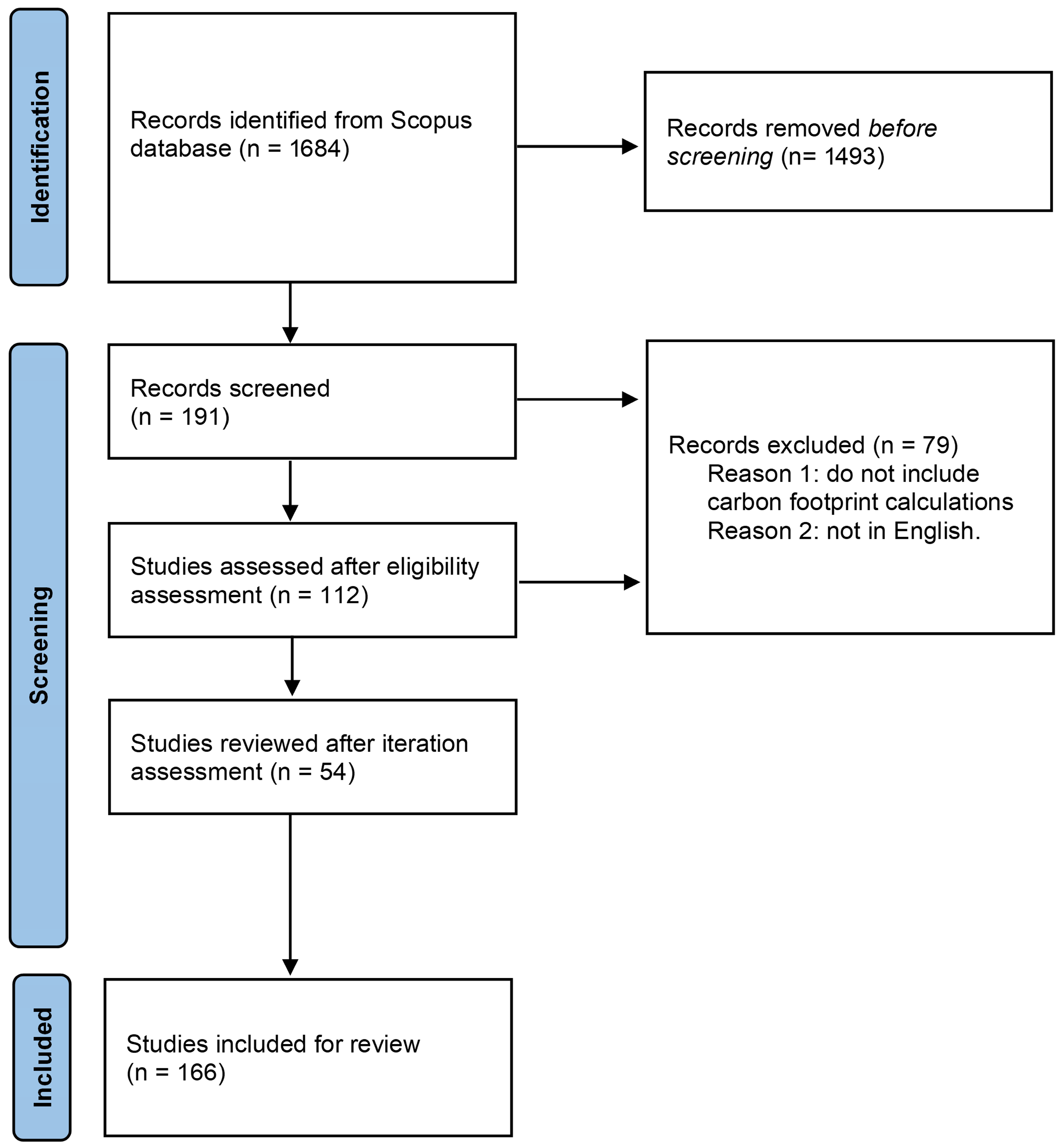
- Identification process: This study focuses on peer-reviewed academic literature that estimates the carbon footprint of tourism, specifically carbon dioxide (CO2) or greenhouse gas emissions. To ensure access to globally relevant studies and maintain reproducibility and methodological consistency, only English-language journals published up to 30 June 2025, are included. While some key works [25,26] may be excluded, their significance is acknowledged. Technical reports lacking detailed calculation methods, as noted by Loehr and Becken [17], are also excluded. Furthermore, discussions of ecological footprints and other environmental impacts are not part of this analysis.Before conducting the systematic search for TCF articles, common keywords were identified from an initial set of TCF-related papers. To maintain methodological rigour and consistency, Scopus served as the primary database for compiling papers. The subsequent search has been conducted within Scopus: “tourism” AND “carbon footprint” OR “energy consumption” OR “greenhouse gas emissions” OR “GHG emissions”. The time-stopping rule set for this analysis was July 2025, leading to 1684 results for the query (Table 1).
- Screening process: The abstracts of the records obtained in the first search excluded 1493 research studies that did not meet the inclusion requirements, and 191 were further analysed.
- ○
- Eligibility assessment: 79 papers were discarded because they did not meet all the initial criteria (n = 112). This is primarily because the term ‘calculation’ was not part of the keywords used for our search, a result of a frequency analysis of the most frequently used keywords in a first selection of papers.
- ○
- Iteration: The Scopus database search has been supplemented with a backward search. After scanning the texts and bibliographies of 112 papers, 54 additional works were identified in the final round.
- Final inclusion: This made 166 academic papers that were systematically analysed, all of which can be found in the Supplementary Materials File.

| Considered Parameter | Constraint |
|---|---|
| Database consulted | Scopus |
| Search strings | “tourism” AND “carbon footprint” OR “energy consumption” OR “greenhouse gas emissions” OR “GHG emissions” |
| Search fields | Title/abstract/keywords |
| Temporal boundaries | Published before 1 July 2025 |
| Study types and status | Published in peer-reviewed academic journals |
| Content constraints | Must include self-conducted TCF calculations. |
Tourism Carbon Footprint Analytical Framework (TCFAF)
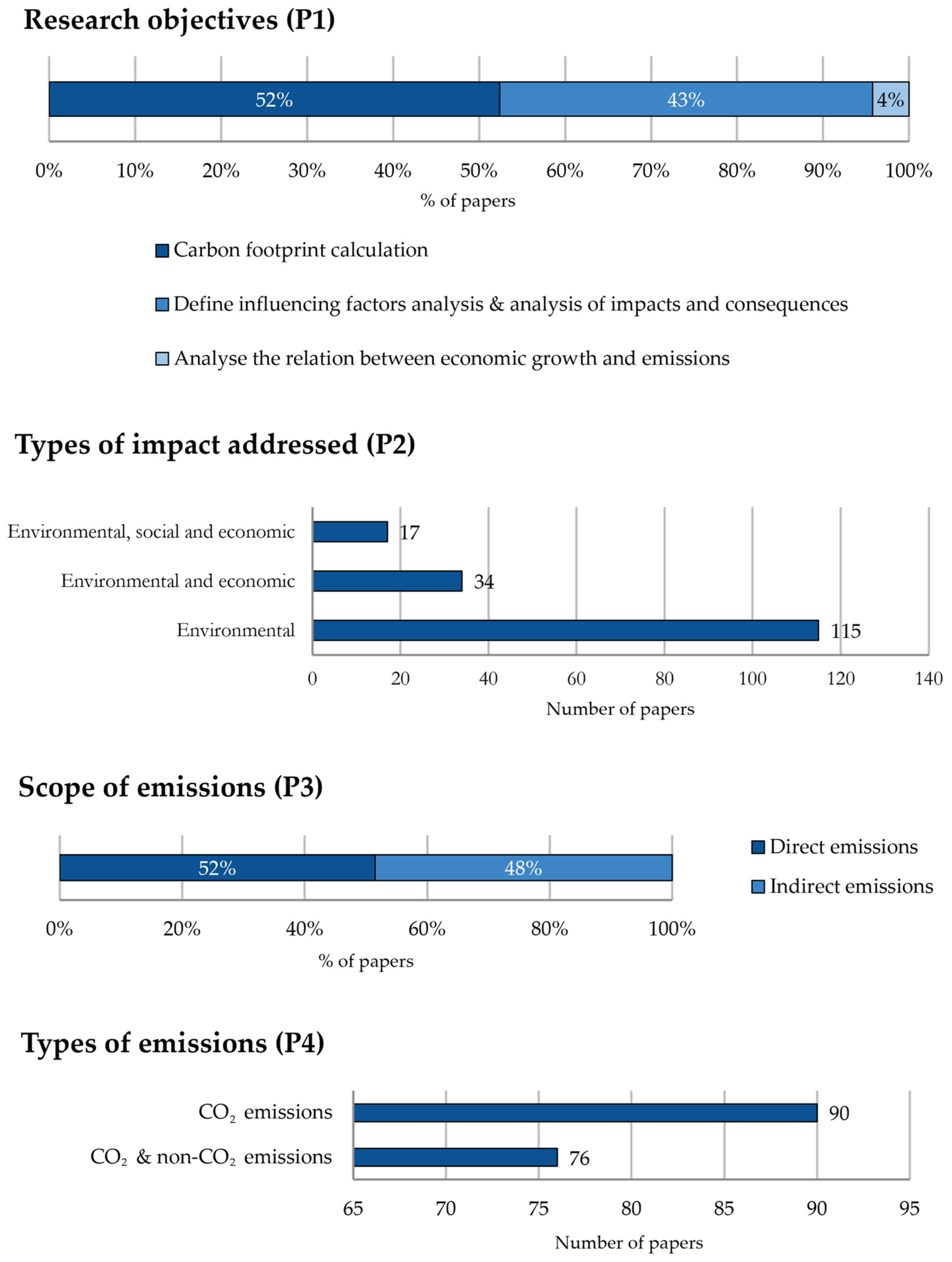
- D1. Framing Impacts of Analysis
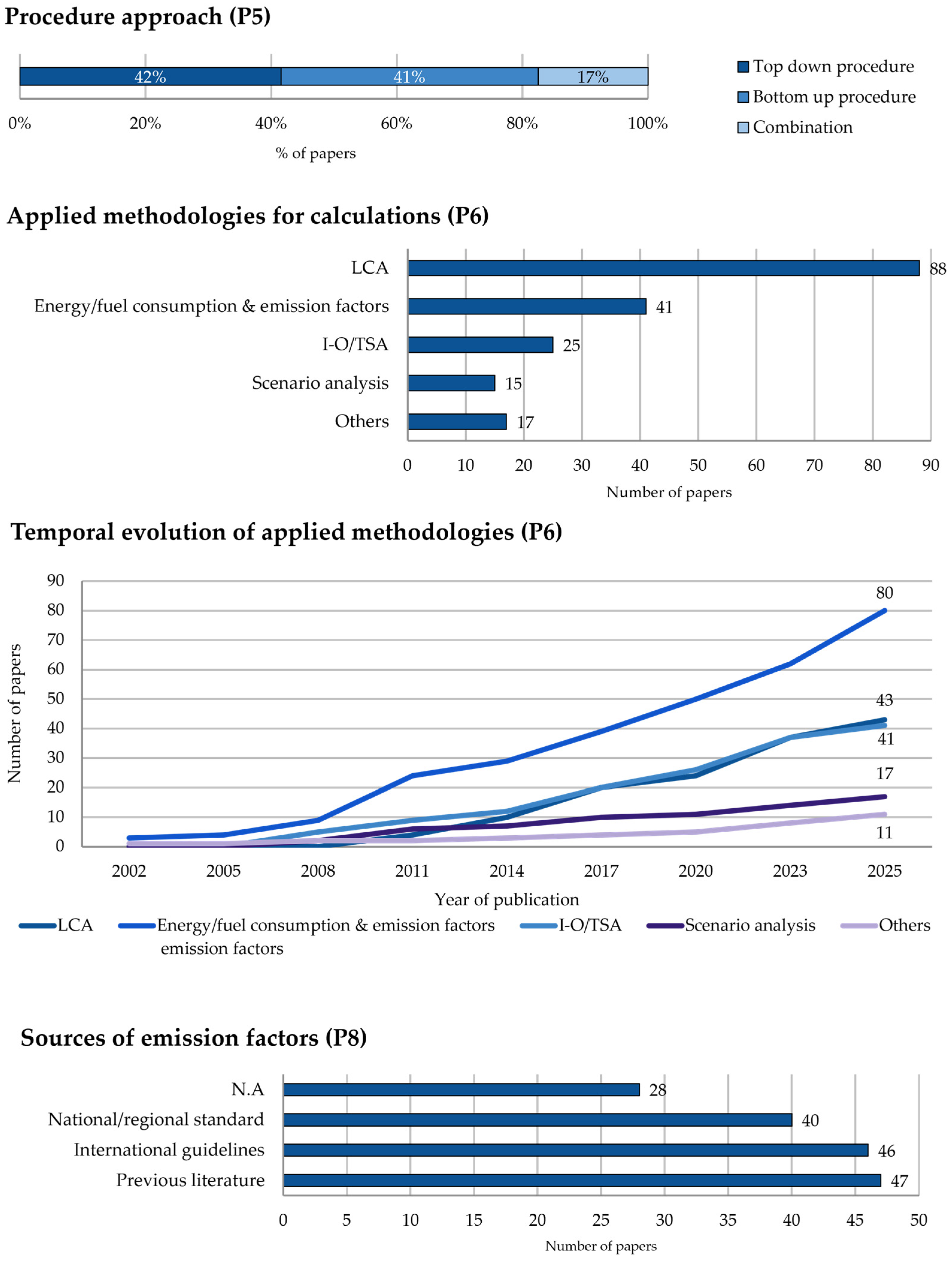
- D2. Calculation Methods
- Lifecycle analysis: Tourist products and services produce emissions throughout their entire life cycle, which encompasses raw materials extraction, manufacturing, processing, service operation, demolition, and waste management.
- Energy or fuel consumption and emission factors: These are usually accompanied by a questionnaire or on-site data collection. They focus on the energy use of a tourism service or visitor. The corresponding emission factors in each case will weigh the different types of energy used in each process.
- Input-output (I-O) and TSA: This methodology uses macroeconomic data to compute carbon emissions based on the production and consumption of tourism products and services in a specific territory. This methodology has evolved towards more sustainability-oriented perspectives, and new I-O-based calculation approaches have emerged (i.e., environmentally extended I-O).
- Scenario analysis: Using statistical data to suggest and simulate possible economic and social scenarios for which TCF and other social, environmental, and economic implications are predicted (i.e., backcasting or forecasting).
- Other methods: Methods such as Kuznets’ curve, Kaya identity emission or various econometric models.
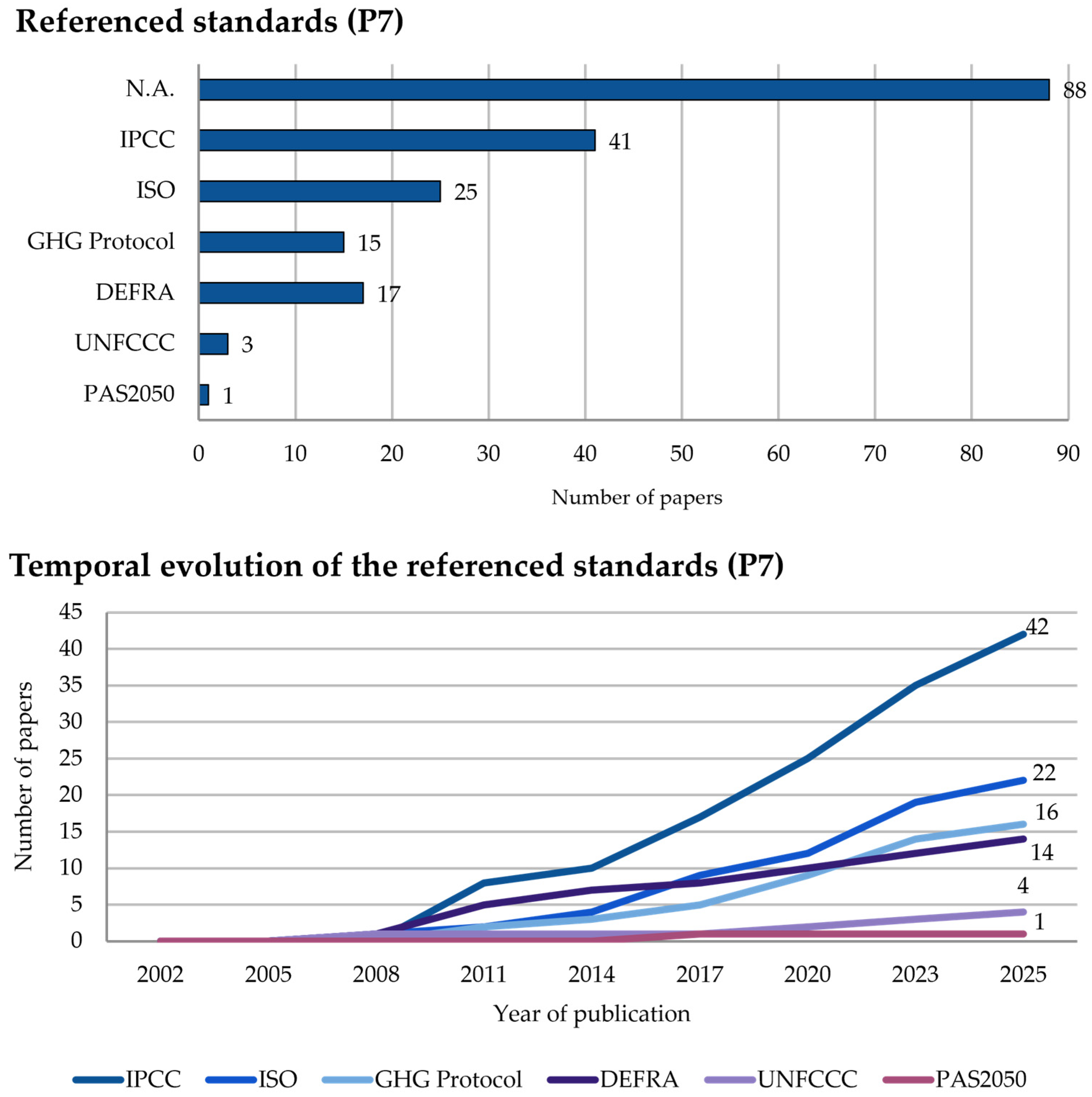
- GHG Protocol: It provides carbon footprint estimates for various production sectors to support organisations in carbon footprint reporting [38].
- Intergovernmental Panel on Climate Change (IPCC): Based on emission factors collected from various sources (e.g., EEA), the IPCC offers guidelines for calculating the carbon footprint of territories and companies [46].
- ISO: Especially in lifecycle analysis, the ISO 14064-1 standard is a reference framework for calculating companies’ carbon footprints [47].
- United Nations Framework Convention on Climate Change (UNFCCC): Instructions and methods for calculating and reporting organisational, individual, and event carbon footprints [48].
| Methodology | Advantages | Limitations |
|---|---|---|
| Lifecycle analysis (LCA): Tourist products and services produce emissions throughout their entire life cycle, which encompasses raw materials extraction, manufacturing, processing, service operation, demolition, and waste management. | Comprehensive models account for indirect impacts, particularly in the supply chain stage, and include environmental effects across sub-sectors. Though product-focused, this approach can also assess entire trips and compare itineraries within a destination. | Very detailed data inventories are required to develop lifecycle methods. The comprehensive approach to analysis poses challenges when studying large sample objects (i.e., the hotel sector). |
| Energy or fuel consumption and emission factors: These are usually accompanied by a questionnaire or on-site data collection. They focus on the energy uses of a tourism service or visitor. The corresponding emission factors in each case will weigh the different types of energy used in each process. | National and international emission factors are regularly updated and recalibrated. Some, such as DEFRA, also include indirect emissions like fuel production. Consumption data from surveys or audits aligns accurately with the study object. | Emission factors for some countries or regions are limited, potentially causing under- or overestimation. The quality of the survey may affect the results. |
| I-O and TSA: This methodology applies macroeconomic data to estimate carbon emissions from tourism product and service production and consumption within a given territory. It has evolved toward sustainability-focused approaches, introducing new environmentally extended I-O models. | No need to collect primary data. The data used has been previously validated. Indirect impacts can be calculated. | National I-O tables are not updated annually. It requires several assumptions to be made, such as linear future growth or constant prices. |
| Scenario analysis: Using statistical data to suggest and simulate possible economic and social scenarios for which TCF and other social, environmental, and economic implications are predicted (i.e., backcasting or forecasting). | Emission reduction strategies and actions can be planned according to expected scenarios. | The quality of scenarios relies on both the available data and the developed model. |
| Other methods: Methods such as Kuznets’ curve, Kaya identity emission or various different econometric models. | N.A. | N.A. |
- D3. Analytical Scope and Boundaries
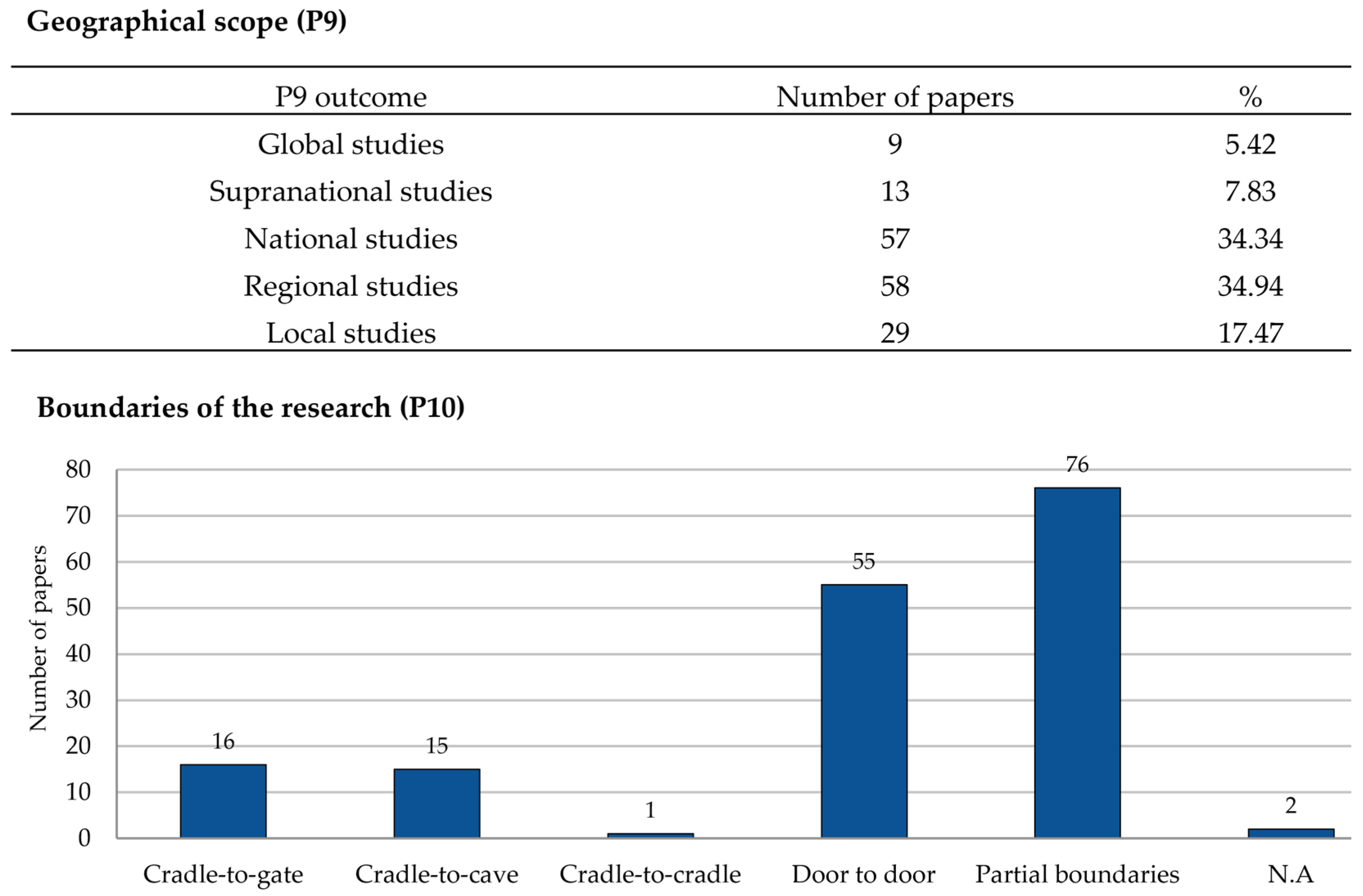
- Cradle-to-grave: It primarily pertains to lifecycle analysis studies estimating emissions from manufacturing to waste management (e.g., hotel construction to waste management). These studies are classified as cradle-to-cave when the analysis stops after the operational phase, and cradle-to-cradle when they also consider the regeneration process of the exploited resources.
- Door to door: This boundary is mainly related to work with the visitor (or the territory) as the object of study. It encompasses, at least, emissions associated with transportation, accommodation, and activities tourists consume during their stay.
- D4. Target of Assessment
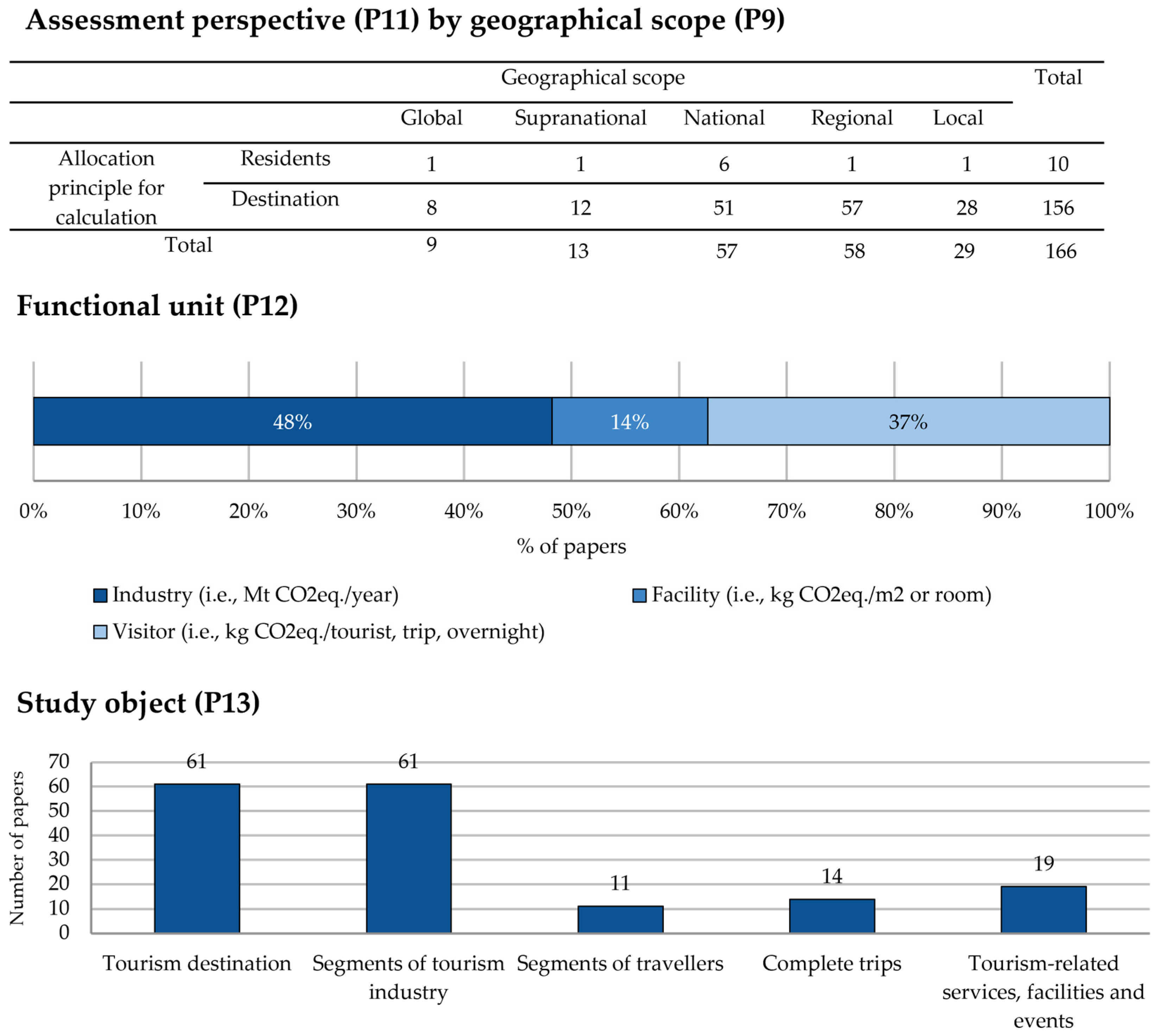
- Tourism destinations: TCF generated by visitors and the sector in a territory is analysed, with the place being the main object of study.
- Tourism industry segments: Includes sub-sectors of the tourism industry (i.e., accommodation or transportation sector).
- Segments of travellers: Segments of visitors or specific source markets, such as British visitors.
- Complete trips: Tourism emissions are generated throughout visitors’ entire trips. In this case, they focus on travelling.
3. Analysis of Results
3.1. Framing Impacts of Analysis (D1)
3.2. Calculation Methods (D2)
3.3. Analytical Scope and Boundaries (D3)
3.4. Target of Assessment (D4)
4. Theoretical Discussion
5. Conclusions and Practical Recommendations
Limitations of the Study and Future Research Lines
Supplementary Materials
Author Contributions
Funding
Data Availability Statement
Conflicts of Interest
Abbreviations
| COP | Conference of Parties |
| DEFRA | UK’s Department of Environment, Food and Rural Affairs |
| DTA | Domestic technology assumption (DTA) |
| GDP | Gross domestic product |
| GHG | Greenhouse gases |
| GWP | Global warming potential |
| I-O | Input-output |
| IPCC | Intergovernmental Panel on Climate Change |
| ISO | International Organisation for Standardisation |
| LCA | Lifecycle analysis |
| TCF | Tourism carbon footprint |
| TCFAF | Tourism Carbon Footprint Analytical Framework |
| TPCC | Tourism Panel on Climate Change |
| TSA | Tourism satellite accounts |
| UNFCCC | United Nations Framework Convention on Climate Change |
Appendix A
| Country | Number of Papers | % Papers That Received Funding |
|---|---|---|
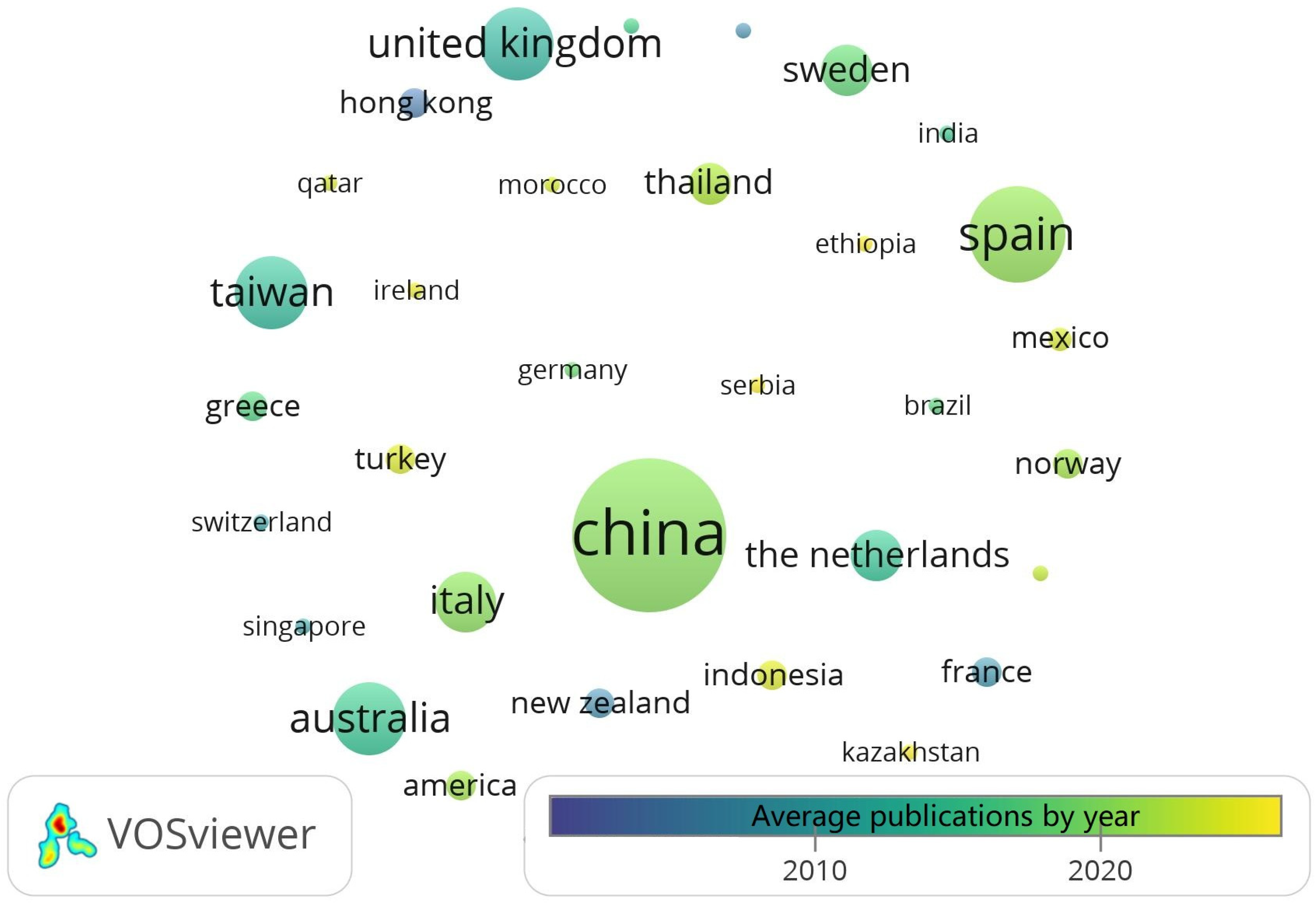
| China | 39 | 76.92% |
| Spain | 20 | 75% |
| Taiwan | 12 | 50% |
| UK | 12 | 33.33% |
| Australia | 12 | 75% |
| Italy | 9 | 33.33% |
| The Netherlands | 7 | 57.14% |
| Sweden | 7 | 42.86% |
| Japan | 4 | 60% |
| Thailand | 5 | 25% |
| Greece | 3 | 0% |
| France | 3 | 0% |
| Hong Kong | 3 | 66.67% |
| New Zealand | 3 | 33.33% |
| USA | 3 | 33.33% |
| Turkey | 3 | 33.33% |
| Norway | 3 | 33.33% |
| Austria | 2 | 66.67% |
| Indonesia | 3 | 50% |
References
- Hall, C.M. Changing paradigms and global change: From sustainable to steady-state tourism. Tour. Recreat. Res. 2010, 35, 131–143. [Google Scholar] [CrossRef]
- Hall, C.M. Tourism and the capitalocene: From green growth to ecocide. Tour. Plan. Dev. 2022, 19, 61–74. [Google Scholar] [CrossRef]
- Global Humanitarian Forum (GHF). The Anatomy of a Silent Crisis. GHF. Available online: https://www.ghf-ge.org/human-impact-report.pdf (accessed on 1 December 2025).
- World Health Organization (WHO). Climate Change [Press Communication]. Available online: https://www.who.int/news-room/fact-sheets/detail/climate-change-and-health#:~:text=Between%202030%20and%202050%2C%20climate,diarrhoea%20and%20heat%20stress%20alone (accessed on 1 December 2025).
- Clarke, B.; Otto, F.; Stuart-Smith, R.; Harrington, L. Extreme weather impacts of climate change: An attribution perspective. Environ. Res. Clim. 2022, 1, 012001. [Google Scholar] [CrossRef]
- Boyd, E.; Chaffin, B.C.; Dorkenoo, K.; Jackson, G.; Harrington, L.; N’guetta, A.; Stuart-Smith, R. Loss and damage from climate change: A new climate justice agenda. One Earth 2021, 4, 1365–1370. [Google Scholar] [CrossRef]
- Hamilton, J.M.; Maddison, D.J.; Tol, R.S. Effects of climate change on international tourism. Clim. Res. 2005, 29, 245–254. [Google Scholar] [CrossRef]
- Scott, D.; Gössling, S.; Hall, C.M. International tourism and climate change. Wiley Interdiscip. Rev. Clim. Change 2012, 3, 213–232. [Google Scholar] [CrossRef]
- Sun, Y.Y.; Faturay, F.; Lenzen, M.; Gössling, S.; Higham, J. Drivers of global tourism carbon emissions. Nat. Commun. 2024, 15, 10384. [Google Scholar] [CrossRef]
- Dong, S.; Xia, B.; Li, F.; Cheng, H.; Li, Z.; Li, Y.; Zhang, W.; Yang, Y.; Liu, Q.; Li, S. Spatial–temporal pattern, driving mechanism and optimization policies for embodied carbon emissions transfers in multi-regional tourism: Case study of provinces in China. J. Clean. Prod. 2023, 382, 135362. [Google Scholar] [CrossRef]
- Perch-Nielsen, S.; Sesartic, A.; Stucki, M. The greenhouse gas intensity of the tourism sector: The case of Switzerland. Environ. Sci. Policy 2010, 13, 131–140. [Google Scholar] [CrossRef]
- Tourism Panel on Climate Change (TPCC). Code Red for Climate Resilient Tourism. Available online: https://tpcc.info/code-red/ (accessed on 1 December 2025).
- European Commission (EC). Transition Pathway for Tourism, Publications Office of the European Union. Directorate-General for Internal Market, Industry, Entrepreneurship and SMEs. Available online: https://data.europa.eu/doi/10.2873/344425 (accessed on 1 December 2025).
- United Nations Tourism (UN Tourism). Tourism Unites Behind the Glasgow Declaration in Climate Change Action at COP26 [Press Communication]. Available online: https://www.unwto.org/news/tourism-unites-behind-the-glasgow-declaration-on-climate-action-at-cop26 (accessed on 1 December 2025).
- World Meteorological Organization (WMO). State of the Global Climate 2021. Available online: https://library.wmo.int/viewer/56300/?offset=#page=1&viewer=picture&o=bookmark&n=0&q= (accessed on 1 December 2025).
- Lenzen, M.; Sun, Y.Y.; Faturay, F.; Ting, Y.P.; Geschke, A.; Malik, A. The carbon footprint of global tourism. Nat. Clim. Change 2018, 8, 522–528. [Google Scholar] [CrossRef]
- Loehr, J.; Becken, S. The tourism climate change knowledge system. Ann. Tour. Res. 2021, 86, 103073. [Google Scholar] [CrossRef]
- Gallucci, T.; Strippoli, R.; Lagioia, G.; Ingrao, C.; Amicarelli, V.; Paiano, A. A Framework for Carbon Footprint Assessment in the Tourism Sector. In Innovation, Quality and Sustainability for a Resilient Circular Economy; Lagioia, G., Paiano, A., Amicarelli, V., Gallucci, T., Ingrao, C., Eds.; AISME 2022. Circular Economy and Sustainability; Springer: Cham, Switzerland, 2024. [Google Scholar]
- Masselot, P.; Mistry, M.N.; Rao, S.; Huber, V.; Monteiro, A.; Samoli, E.; Gasparrini, A. Estimating future heat-related and cold-related mortality under climate change, demographic and adaptation scenarios in 854 European cities. Nat. Med. 2025, 31, 1294–1302. [Google Scholar] [CrossRef] [PubMed]
- White, G.F.; Kates, R.W.; Burton, I. Knowing better and losing even more: The use of knowledge in hazards management. Glob. Environ. Change B Environ. Hazards 2001, 3, 81–92. [Google Scholar] [CrossRef]
- Liu, D.; Ji, J.; Wu, M. Tourism Carbon Emissions: A Systematic Review of Research Based on Bibliometric Methods. J. Qual. Assur. Hosp. Tour. 2023, 26, 833–853. [Google Scholar] [CrossRef]
- Sun, Y.Y.; Cadarso, M.A.; Driml, S. Tourism carbon footprint inventories: A review of the environmentally extended input-output approach. Ann. Tour. Res. 2020, 82, 102928. [Google Scholar] [CrossRef]
- Casals-Miralles, C.; Barioni, D.; Mancini, M.S.; Jordà, J.C.; Roura, M.B.; Salas, S.P.; Galli, A. The footprint of tourism: A review of water, carbon, and ecological footprint applications to the tourism sector. J. Clean. Prod. 2023, 422, 138568. [Google Scholar] [CrossRef]
- Page, M.J.; McKenzie, J.E.; Bossuyt, P.M.; Boutron, I.; Hoffmann, T.C.; Mulrow, C.D.; Shamseer, L.; Tetzlaff, J.M.; Akl, E.A.; Brennan, S.E.; et al. The PRISMA 2020 statement: An updated guideline for reporting systematic reviews. Int. J. Surg. 2021, 88, 105906. [Google Scholar] [CrossRef]
- Becken, S. The Carbon Footprint of Domestic Tourism. The Hikurangi Foundation. Available online: https://researcharchive.lincoln.ac.nz/bitstream/handle/10182/1216/becken_carbon_footprint.pdf?sequence=1&isAllowed=y (accessed on 1 December 2025).
- Hoque, S.; Forsyth, P.; Dwyer, L.; Spurr, R.; Van Ho, T.; Pambudi, D. The Carbon Footprint of Queensland Tourism. Queensland, Australia: CRC for Sustainable Tourism. Available online: https://sustain.pata.org/wp-content/uploads/2014/12/STCRC_CEP_CF_Queensland_WEB.pdf (accessed on 1 December 2025).
- Gössling, S.; Balas, M.; Mayer, M.; Sun, Y.Y. A review of tourism and climate change mitigation: The scales, scopes, stakeholders and strategies of carbon management. Tour. Manag. 2023, 95, 104681. [Google Scholar] [CrossRef]
- Sharp, H.; Grundius, J.; Heinonen, J. Carbon footprint of inbound tourism to Iceland: A consumption-based life-cycle assessment including direct and indirect emissions. Sustainability 2016, 8, 1147. [Google Scholar] [CrossRef]
- Tang, M.; Ge, S. Accounting for carbon emissions associated with tourism-related consumption. Tour. Econ. 2018, 24, 510–525. [Google Scholar] [CrossRef]
- Dwyer, L. Relevance of triple bottom line reporting to achievement of sustainable tourism: A scoping study. Tour. Rev. Int. 2005, 9, 79–938. [Google Scholar] [CrossRef]
- Campos-Herrero, C.; Laso, J.; Cristóbal, J.; Albertí, J.; Bala, A.; Fullana, M.; Fullana-i-Palmer, P.; Margallo, M.; Aldaco, R. Towards more sustainable tourism under a carbon footprint approach: The Camino Lebaniego case study. J. Clean. Prod. 2022, 369, 133222. [Google Scholar] [CrossRef]
- Raworth, K. Doughnut Economics: Seven Ways to Think Like a 21st-Century Economist; Chelsea Green Publishing: Hartford, VT, USA, 2017. [Google Scholar]
- Liu, J.; Feng, T.; Yang, X. The Energy Requirements and Carbon Dioxide Emissions of Tourism Industry of Western China: A Case of Chengdu City. Renew. Sustain. Energy Rev. 2011, 15, 2887–2894. [Google Scholar] [CrossRef]
- Tao, Y.G.; Huang, Z.F. Review of accounting for carbon dioxide emissions from tourism at different spatial scales. Acta Ecol. Sin. 2014, 34, 246–254. [Google Scholar] [CrossRef]
- Huang, T.; Tang, Z. Estimation of tourism carbon footprint and carbon capacity. Int. J. Low Carbon Technol. 2021, 16, 1040–1046. [Google Scholar] [CrossRef]
- Department for Environment, Food & Rural Affairs (DEFRA). 2010 Guidelines to DEFRA/DECC’s GHG Conversion Factors for Company Reporting. Available online: https://webarchive.nationalarchives.gov.uk/ukgwa/20130402141656/http:/archive.defra.gov.uk/environment/business/reporting/pdf/101006-guidelines-ghg-conversion-factors.pdf (accessed on 1 December 2025).
- Filimonau, V.; Dickinson, J.; Robbins, D.; Reddy, M.V. The role of ‘indirect’ greenhouse gas emissions in tourism: Assessing the hidden carbon impacts from a holiday package tour. Transp. Res. A Policy Pract. 2013, 54, 78–91. [Google Scholar] [CrossRef]
- World Resources Institute (WRI). Calculation Tools and Guidance. Available online: https://ghgprotocol.org/calculation-tools-and-guidance (accessed on 1 December 2025).
- Lenzen, M.; Murray, S.A.; Korte, B.; Dey, C.J. Environmental impact assessment including indirect effects—A case study using input–output analysis. Environ. Impact Assess. Rev. 2003, 23, 263–282. [Google Scholar] [CrossRef]
- Sun, Y.Y.; Gössling, S.; Hem, L.E.; Iversen, N.M.; Walnum, H.J.; Scott, D.; Oklevik, O. Can Norway become a net-zero economy under scenarios of tourism growth? J. Clean. Prod. 2022, 363, 132414. [Google Scholar] [CrossRef]
- Dwyer, L.; Forsyth, P.; Spurr, R.; Hoque, S. Estimating the carbon footprint of Australian tourism. J. Sustain. Tour. 2010, 18, 355–376. [Google Scholar] [CrossRef]
- Zhong, Y.; Shi, S.; Li, S.; Luo, F.; Luo, W.; Xiao, Q. Empirical research on construction of a measurement framework for tourism carbon emission in China. Chin. J. Popul. Resour. 2015, 13, 240–249. [Google Scholar] [CrossRef]
- Becken, S.; Patterson, M. Measuring National Carbon Dioxide Emissions from Tourism as a Key Step Towards Achieving Sustainable Tourism. J. Sustain. Tour. 2009, 14, 323–338. [Google Scholar] [CrossRef]
- Filimonau, V.; Rosa, M.S.; Franca, L.S.; Creus, A.C.; Ribeiro, G.M.; Molnarova, J.; Piumatti, R.G.; Valsasina, L.; Safaei, A. Environmental and carbon footprint of tourist accommodation: A comparative study of popular hotel categories in Brazil and Peru. J. Clean. Prod. 2021, 328, 129561. [Google Scholar] [CrossRef]
- Ibrahim, N.; Sugar, L.; Hoornweg, D.; Kennedy, C. Greenhouse gas emissions from cities: Comparison of international inventory frameworks. Local Environ. 2012, 17, 223–241. [Google Scholar] [CrossRef]
- Intergovernmental Panel on Climate Change (IPCC). 2019 Refinement to the 2006 IPCC Guidelines for National Greenhouse Gas Inventories. Available online: https://www.ipcc.ch/report/2019-refinement-to-the-2006-ipcc-guidelines-for-national-greenhouse-gas-inventories/ (accessed on 1 December 2025).
- ISO 14064-1:2018; Greenhouse Gases—Part 1: Specification with Guidance at the Organization Level for Quantification and Reporting of Greenhouse Gas Emissions and Removals. International Organization for Standardization (ISO): Geneva, Switzerland, 2018. Available online: https://www.iso.org/standard/66453.html (accessed on 1 December 2025).
- United Nations Framework Convention on Climate Change (UNFCCC). Measure Your Emissions—Carbon Neutral Now. Available online: https://unfccc.int/climate-action/climate-neutral-now/measure-your-emissions (accessed on 1 December 2025).
- Department for Environment, Food & Rural Affairs (DEFRA). Greenhouse Gas Reporting: Conversion Factors 2023. Available online: https://www.gov.uk/government/publications/greenhouse-gas-reporting-conversion-factors-2023 (accessed on 1 December 2025).
- British Standard Institutions (BSI). The Guide to PAS 2050:2011—How to Carbon Footprint Your Products, Identify Hotspots and Reduce Emissions in Your Supply Chain. Available online: https://www.wkcgroup.com/wp-content/uploads/2023/02/PAS-2050-Assessment-of-the-life-cycle-greenhouse-gas-emissions-of-goods-and-services.pdf (accessed on 1 December 2025).
- Minx, J.; Wiedmann, T.; Barrett, J.; Suh, S. Methods Review to Support the PAS for the Calculation of the Embodied Greenhouse Gas Emissions of Goods and Services. London: Stockholm Environment Institute and University of Minnesota. Available online: https://naturalengland.contentdm.oclc.org/digital/api/collection/p21006coll3/id/4848/download (accessed on 1 December 2025).
- Tang, C.; Zhong, L.; Ng, P. Factors that influence the tourism industry’s carbon emissions: A tourism area life cycle model perspective. Energy Policy 2017, 109, 704–718. [Google Scholar] [CrossRef]
- Warren, C.; Becken, S. Saving energy and water in tourist accommodation: A systematic literature review (1987–2015). Int. J. Tour. Res. 2017, 19, 289–303. [Google Scholar] [CrossRef]
- Candia, S.; Pirlone, F. Tourism environmental impacts assessment to guide public authorities towards sustainable choices for the post-COVID era. Sustainability 2022, 14, 18. [Google Scholar] [CrossRef]
- Luo, Y.; Mou, Y.; Wang, Z.; Su, Z.; Qin, Y. Scenario-based planning for a dynamic tourism system with carbon footprint analysis: A case study of Xingwen Global Geopark, China. J. Clean. Prod. 2020, 254, 119999. [Google Scholar] [CrossRef]
- Airebule, P.; Cheng, H.; Ishikawa, J. Assessing carbon emissions embodied in international trade based on shared responsibility. J. Jpn. Int. Econ. 2023, 68, 101260. [Google Scholar] [CrossRef]
- De Camillis, C.; Raggi, A.; Petti, L. Tourism LCA: State-of-the-art and perspectives. Int. J. Life Cycle Assess. 2010, 15, 148–155. [Google Scholar] [CrossRef]
- Sun, Y.Y. Decomposition of tourism greenhouse gas emissions: Revealing the dynamics between tourism economic growth, technological efficiency, and carbon emissions. Tour. Manag. 2016, 55, 326–336. [Google Scholar] [CrossRef]
- Chan, W.W.; Lam, J.C. Prediction of pollutant emission through electricity consumption by the hotel industry in Hong Kong. Int. J. Hosp. Manag. 2002, 21, 381–391. [Google Scholar] [CrossRef]
- Unger, R.; Abegg, B.; Mailer, M.; Stampfl, P. Energy consumption and greenhouse gas emissions resulting from tourism travel in an alpine setting. Mt. Res. Dev. 2016, 36, 475–483. [Google Scholar] [CrossRef]
- Gössling, S.; Scott, D.; Hall, C.M. Inter-market variability in CO2 emission-intensities in tourism: Implications for destination marketing and carbon management. Tour. Manag. 2015, 46, 203–212. [Google Scholar] [CrossRef]
- Sun, Y.Y.; Higham, J. Overcoming information asymmetry in tourism carbon management: The application of a new reporting architecture to Aotearoa New Zealand. Tour. Manag. 2021, 83, 104231. [Google Scholar] [CrossRef]
- Cadarso, M.; Gómez, N.; López, L.; Tobarra, M.; Zafrilla, J. Quantifying Spanish tourism’s carbon footprint: The contributions of residents and visitors: A longitudinal study. J. Sustain. Tour. 2015, 23, 922–946. [Google Scholar] [CrossRef]
- He, B.; Li, L.; Wang, J.; Li, J.; Zhu, L. Investigating the influence of tourism on economic growth and carbon emissions: Evidence from Hainan Island, China. J. Qual. Assur. Hosp. Tour. 2023, 24, 237–252. [Google Scholar] [CrossRef]
- Hu, Y. Where Have Carbon Emissions Gone? Evidence of Inbound Tourism in China. Sustainability 2022, 24, 11654. [Google Scholar] [CrossRef]
- Wang, J.C.; Wang, Y.; Ko, L.; Wang, J.H. Greenhouse gas emissions of amusement parks in Taiwan. Renew. Sustain. Energy Rev. 2017, 74, 581–589. [Google Scholar] [CrossRef]
- Sun, Y.Y. A framework to account for the tourism carbon footprint at island destinations. Tour. Econ. 2014, 45, 16–27. [Google Scholar] [CrossRef]
- Morfeldt, J.; Curtale, R.; Kamb, A.; Larsson, J.; Nässén, J. Carbon footprint effects of shifting from flights to night trains for Swedish tourism. J. Clean. Prod. 2023, 420, 138321. [Google Scholar] [CrossRef]
- Babri, S.; Díez-Gutiérrez, M.; Aspen, D.M.; Johansen, B.H. A simulation model to assess emission reduction policies in tourism transport: Case study of the Geiranger fjord UNESCO world heritage site in Norway. Int. J. Sustain. Transp. 2023, 17, 1006–1019. [Google Scholar] [CrossRef]
- Larsson, J.; Kamb, A.; Nässén, J.; Åkerman, J. Measuring greenhouse gas emissions from international air travel of a country’s residents methodological development and application for Sweden. Environ. Impact Assess. Rev. 2018, 72, 137–144. [Google Scholar] [CrossRef]
- Kitamura, Y.; Ichisugi, Y.; Karkour, S.; Itsubo, N. Carbon Footprint Evaluation Based on Tourist Consumption toward Sustainable Tourism in Japan. Sustainability 2020, 12, 2219. [Google Scholar] [CrossRef]
- Ren, Y.; Zhao, C.; Fu, J. Dynamic Study on Tourism Carbon Footprint and Carbon Carrying Capacity in Sichuan Province. J. Geosci. Environ. Prot. 2019, 7, 14–24. [Google Scholar] [CrossRef]
- Rico, A.; Martínez-Blanco, J.; Montlleó, M.; Rodríguez, G.; Tavares, N.; Arias, A.; Oliver-Solà, J. Carbon footprint of tourism in Barcelona. Tour. Manag. 2019, 70, 491–504. [Google Scholar] [CrossRef]
- Li, Y.; Zhang, L. Ecological efficiency management of tourism scenic spots based on carbon footprint analysis. Int. J. Low-Carbon Technol. 2020, 15, 550–554. [Google Scholar] [CrossRef]
- Liu, T.; Yang, T. Study on Carbon Emission and Its Influencing Factors in China’s Tourism Industry. Pol. J. Environ. Stud. 2024, 33, 6259–6265. [Google Scholar] [CrossRef]
- Mou, D. Tourism energy consumption estimation and driving factors of carbon emissions based on LMDI and panel data models. J. Comput. Method Sci. Eng. 2024, 24, 1839–1849. [Google Scholar] [CrossRef]
- Peng, R.; Su, R.; Gao, W.; Zhang, X. Research on the estimation and spatial pattern of net tourism carbon emissions in the Yellow River Basin from 2009 to 2019. Environ. Sci. Pollut. Res. 2024, 31, 12288–12300. [Google Scholar] [CrossRef]
- Popović, I.; Marković, V.; Vasiljević, Đ.; Milošević, S.; Radišić, M.; Matejević, M.; Kovačević, M.; Ponjiger, I.; Radišić, M.; Pevac, D. Carbon Footprint Assessment Within Urban and Rural Areas—Example of Inbound Tourism in Serbia. Sustainability 2025, 17, 2891. [Google Scholar] [CrossRef]
- Campos, C.; Dias, A.C.; Quinteiro, P.; Gutiérrez, D.; Villanueva-Rey, P.; Gallego, M.; Aldaco, R. Assessing the environmental impacts of three different types of accommodations in Portugal and Spain by using an LCA approach. Sci. Total Environ. 2024, 927, 172230. [Google Scholar] [CrossRef]
- Kuo, N.; Chen, P. Quantifying energy use, carbon dioxide emission, and other environmental loads from island tourism based on a life cycle assessment approach. J. Clean. Prod. 2009, 17, 1324–1330. [Google Scholar] [CrossRef]
- Rosselló-Batle, B.; Moià, A.; Cladera, A.; Martínez, V. Energy use, CO2 emissions and waste throughout the life cycle of a sample of hotels in the Balearic Islands. Energy Build. 2010, 42, 547–558. [Google Scholar] [CrossRef]
- Neger, C.; Prettenthaler, F.; Gössling, S.; Damm, A. Carbon intensity of tourism in Austria: Estimates and policy implications. J. Outdoor Recreat. Tour. 2021, 33, 100331. [Google Scholar] [CrossRef]
- Jones, C. The carbon footprint of regional tourism trips: Insights from environmentally extended regional input output analysis. J. Sustain. Tour. 2023, 32, 1605–1620 . [Google Scholar] [CrossRef]
- Pham, T.; Meng, X.; Becken, S. Measuring tourism emissions at destination level: Australia case. Ann. Tour. Res. Empir. Insights 2022, 3, 100062. [Google Scholar] [CrossRef]
- Frischknecht, R.; Jungbluth, N.; Althaus, H.J.; Doka, G.; Dones, R.; Heck, T.; Spielmann, M. The ecoinvent database: Overview and methodological framework. Int. J. Life Cycle Assess. 2005, 10, 3–9. [Google Scholar] [CrossRef]
- Díaz-Pérez, F.J.; Chinarro, D.; Guardiola-Mouhaffel, A.; Díaz-Martín, R.; Pino-Otín, M.R. Comparative study of carbon footprint of energy and water in hotels of Canary Islands regarding mainland Spain. Environ. Dev. Sustain. 2019, 21, 1763–1780. [Google Scholar] [CrossRef]
- Van Velzen, A.; Wit, R.C. National Allocation of International Aviation and Marine CO2-Emissions. Centre for Energy Conservation and Environmental Technology. Available online: https://cedelft.eu/wp-content/uploads/sites/2/2021/03/00_7568_35.pdf (accessed on 1 December 2025).
- Kelly, J.; Williams, P.W. Modelling Tourism Destination Energy Consumption and Greenhouse Gas Emissions: Whistler, British Columbia, Canada. J. Sustain. Tour. 2007, 15, 67–90. [Google Scholar] [CrossRef]
- Platts, E.J.; Keifer, H.L.; Samuels, K.L. Carbon footprints of travel to World Heritage Sites: Communicating climate to potential tourists through a consumption-based life-cycle assessment. J. Herit. Tour. 2023, 18, 407–426. [Google Scholar] [CrossRef]
- Peeters, P.; Dubois, G. Tourism travel under climate change mitigation constraints. J. Transp. Geogr. 2010, 18, 447–457. [Google Scholar] [CrossRef]
- Campos-Herrero, C.; Dias, A.C.; Gallego, M.; Gutiérrez, D.; Quinteiro, P.; Villanueva-Rey, P.; Oliveira, S.; Albertí, J.; Bala, A.; Fullana-i-Palmer, P.; et al. Tool for Greener Tourism: Evaluating Environmental Impacts. Sustainability 2025, 17, 3476. [Google Scholar] [CrossRef]
- Tsutsumi, A.; Furukawa, R.; Kitamura, Y.; Itsubo, N. G20 Tourism Carbon Footprint and COVID-19 Impact. Sustainability 2024, 16, 2222. [Google Scholar] [CrossRef]
- Senese, A.; Ahmad, A.; Maugeri, M.; Diolaiuti, G.A. Assessing the carbon footprint of the 2024 Italian K2 expedition: A path towards sustainable high-altitude tourism. Sustainability 2025, 17, 344. [Google Scholar] [CrossRef]
- Scott, D.; Hall, C.M.; Gössling, S. A report on the Paris Climate Change Agreement and its implications for tourism: Why we will always have Paris. J. Sustain. Tour. 2016, 24, 933–948. [Google Scholar] [CrossRef]
- Wu, P.; Shi, P. An estimation of energy consumption and CO2 emissions in tourism sector of China. J. Geogr. Sci. 2011, 21, 733–745. [Google Scholar] [CrossRef]
- Zha, J.; Fan, R.; Yao, Y.; He, L.; Meng, Y. Framework for accounting for tourism carbon emissions in China: An industrial linkage perspective. Tour. Econ. 2021, 27, 1430–1460. [Google Scholar] [CrossRef]
- Kumpiw, W.; Damrongsak, D.; Jaitiang, T.; Wongsapai, W.; Sangkakorn, K.; Daroon, S.; Khiaolek, K.; Srichai, P.; Auttarat, S.; Krajangchom, S.; et al. Performance Tracking of Sustainable Tourism Goal (STG) Criteria for Achieving Thailand’s Greenhouse Gas Mitigation Targets in the Service Sector: A Case Study of Large Thai Hotels. Sustainability 2025, 17, 1635. [Google Scholar] [CrossRef]
- Meng, W.; Xu, L.; Hu, B.; Zhou, J.; Wang, Z. Reprint of: Quantifying direct and indirect carbon dioxide emissions of the Chinese tourism industry. J. Clean. Prod. 2017, 163, S401–S409. [Google Scholar] [CrossRef]
- Seboka, A.D.; Feng, L.; Morken, J.; Adaramola, M.S.; Abera, G.B.; Ewunie, G.A. Assessing energy consumption patterns and biowaste generation in southern Ethiopian hotels and universities: Towards sustainable energy solutions. Discov. Sustain. 2025, 6, 262. [Google Scholar] [CrossRef]
- Taylor, S.; Peacock, A.; Banfill, P.; Shao, L. Reduction of greenhouse gas emissions from UK hotels in 2030. Build. Environ. 2010, 45, 1389–1400. [Google Scholar] [CrossRef]
- Tsai, K.; Lin, T.; Hwang, R.; Huang, Y. Carbon dioxide emissions generated by energy consumption of hotels and homestay facilities in Taiwan. Tour. Manag. 2014, 42, 13–21. [Google Scholar] [CrossRef]
- Ceron, J.P.; Dubois, G. Limits to Tourism? A Backcasting Scenario for Sustainable Tourism Mobility in 2050. Tour. Hosp. Plan. Dev. 2007, 4, 191–209. [Google Scholar] [CrossRef]
- Yang, G.; Li, P.; Zheng, B.; Zhang, Y. GHG Emission-Based Eco-Efficiency Study on Tourism Itinerary Products in Shangri-La, Yunnan Province, China. Curr. Issues Tour. 2008, 11, 604–622. [Google Scholar] [CrossRef]
- Vourdoubas, J. Estimation of Carbon Emissions due to Tourism in the Island of Crete, Greece. J. Hosp. Tour. Manag. 2019, 7, 24–32. [Google Scholar] [CrossRef]
- Tang, C.; Zhong, L.; Fan, W.; Cheng, S. Energy consumption and carbon emission for tourism transport in World Heritage Sites: A case of the Wulingyuan area in China. Nat. Resour. Forum 2015, 39, 134–150. [Google Scholar] [CrossRef]
- Hanpattanakit, P.; Pimonsree, L.; Jamnongchob, A.; Boonpoke, A. CO2 Emission and Reduction of Tourist Transportation at Kok Mak Island, Thailand. Chem. Eng. Trans. 2018, 63, 37–42. [Google Scholar] [CrossRef]
- Pereira, R.P.T.; Ribeiro, G.M.; Filimonau, V. The carbon footprint appraisal of local visitor travel in Brazil: A case of the Rio de Janeiro-São Paulo itinerary. J. Clean. Prod. 2017, 141, 256–266. [Google Scholar] [CrossRef]
- Yessimova, D.; Faurat, A.; Belyi, A.; Yessim, A.; Sadykov, Z. Environmental Sustainability and Carbon Footprint of Tourism: A Study of a Natural Park in Northeastern Kazakhstan. Sustainability 2025, 17, 1723. [Google Scholar] [CrossRef]
- Susilorini, R.M.I.R.; Ismail, A.; Wastunimpuna, B.Y.A.; Wardhani, D.K.; Prameswari, L.L.N.; Amasto, A.H.; Suryono, A. Tourism Village Carbon Footprint after COVID-19 Pandemic: A Challenge to Sustainability. Sustainability 2022, 14, 2400. [Google Scholar] [CrossRef]
- Osorio, P.; Cadarso, M.Á.; Tobarra, M.Á.; García-Alaminos, Á. Carbon footprint of tourism in Spain: Covid-19 impact and a look forward to recovery. Struct. Change Econ. Dyn. 2023, 65, 303–318. [Google Scholar] [CrossRef]
- Huang, K.; Wang, J.C. Greenhouse Gas Emissions of Tourism-Based Leisure Farms in Taiwan. Sustainability 2015, 7, 11032–11049. [Google Scholar] [CrossRef]
- Luo, F.; Becken, S.; Zhong, Y. Changing travel patterns in China and ‘carbon footprint’ implications for a domestic tourist destination. Tour. Manag. 2018, 65, 1–13. [Google Scholar] [CrossRef]
- Michailidou, A.V.; Vlachokostas, C.; Moussiopoulos, Ν.; Maleka, D. Life Cycle Thinking used for assessing the environmental impacts of tourism activity for a Greek tourism destination. J. Clean. Prod. 2016, 111, 499–510. [Google Scholar] [CrossRef]
- Peeters, P.; Papp, B. Pathway to zero emissions in global tourism: Opportunities, challenges, and implications. J. Sustain. Tour. 2024, 32, 1784–1810. [Google Scholar] [CrossRef]
- Promjittiphong, C.; Junead, J.; Hanpattanakit, P. Greenhouse Gas Emission and Mitigation from Sports Tourism in Benja Burapha Cycling Rally, Sa Kaeo, Thailand. Chem. Eng. Trans. 2018, 63, 397–402. [Google Scholar] [CrossRef]
- Safaa, L.; Atalay, A.; Makutėnienė, D.; Perkumienė, D.; Bouazzaoui, I.E. Assessment of Carbon Footprint Negative Effects for Nature in International Traveling. Sustainability 2023, 15, 12510. [Google Scholar] [CrossRef]
- Suasapha, A.H.; Suardana, I.W.; Yanthy, P.S.; Sunarta, I.N.; Ngelambong, A. Selecting the Sustainable Tourist Market for Bali Based on Carbon Footprint. J. Kaji. Bali 2025, 15, 119–145. [Google Scholar] [CrossRef]
- Zhong, C.Y.; Liu, L.J.; Liang, Q.M.; Yu, Y.Y. Tackling the carbon footprint of tourism: Strategies for China’s inbound and domestic travel. Resour. Conserv. Recycl. 2025, 218, 108238. [Google Scholar] [CrossRef]
- Sanyé-Mengual, E.; Romanos, H.; Molina, C.; Oliver, M.A.; Ruiz, N.; Pérez, M.; Carreras, D.; Boada, M.; Garcia-Orellana, J.; Duch, J.; et al. Environmental and self-sufficiency assessment of the energy metabolism of tourist hubs on Mediterranean Islands: The case of Menorca (Spain). Energy Policy 2014, 65, 377–387. [Google Scholar] [CrossRef]
- Yu, L.; Bai, Y.; Liu, J. The dynamics of tourism’s carbon footprint in Beijing, China. J. Sustain. Tour. 2019, 27, 1553–1571. [Google Scholar] [CrossRef]
- Sun, Y.Y.; Pratt, S. The economic, carbon emission and water impacts of Chinese visitors to Taiwan: Eco-efficiency and impact evaluation. J. Travel Res. 2014, 53, 733–746. [Google Scholar] [CrossRef]
- Cooper, J.A. Making orange green? A critical carbon footprinting of Tennessee football gameday tourism. J. Sport Tour. 2020, 24, 31–51. [Google Scholar] [CrossRef]
- Al Sholi, H.Y.; Wakjira, T.; Kutty, A.A.; Habib, S.; Alfadhli, M.; Aejas, B.; Kim, D. How circular economy can reduce scope 3 carbon footprints: Lessons learned from FIFA world cup Qatar 2022. Circ. Econ. 2023, 2, 10002. [Google Scholar] [CrossRef]
- Gössling, S.; Peeters, P.; Ceron, J.; Dubois, G.; Patterson, T.; Richardson, R.B. The eco-efficiency of tourism. Ecol. Econ. 2005, 54, 417–434. [Google Scholar] [CrossRef]
- Cadarso, M.Á.; Gómez, N.; López, L.A.; Tobarra, M.Á. Calculating tourism’s carbon footprint: Measuring the impact of investments. J. Clean. Prod. 2016, 111, 529–537. [Google Scholar] [CrossRef]
- Liu, J.; Lin, C.; Huang, L.; Zhu, J.; Wu, L.; Li, Y. Use of Household Survey Data as a Tool to Assess the Carbon Footprint of Rural Tourist Accommodation and Related Services in China: A Case Study of Mount Qingcheng. Sustainability 2017, 9, 1680. [Google Scholar] [CrossRef]
- Zhao, X.; Zhu, J.; Yin, K.; Ding, G.; He, C. Quantitative impact analysis of cross-border tourism on global food greenhouse gas emissions. Resour. Conserv. Recycl. Adv. 2024, 22, 200215. [Google Scholar] [CrossRef]
- Cai, M. Greenhouse gas emissions from tourist activities in South Tyrol. Tour. Econ. 2016, 22, 1301–1314. [Google Scholar] [CrossRef]
- Filimonau, V.; Dickinson, J.E.; Robbins, D.; Reddy, M.V. A critical review of methods for tourism climate change appraisal: Life cycle assessment as a new approach. J. Sustain. Tour. 2011, 19, 301–324. [Google Scholar] [CrossRef]
- Arimany-Serrat, N.; Gomez-Guillen, J.J. Sustainability and environmental impact of the tourism sector: Analysis applied to swimming pools in the hotel industry on the costa brava. Environ. Process. 2023, 10, 55. [Google Scholar] [CrossRef]
- Bruccoleri, M.; Cannova, P.; Cruz-Pérez, N.; Rodríguez-Martín, J.; Ioras, F.; Santamarta, J.C. Leisure Boating Environmental footprint: A study of leisure marinas in Palermo, Italy. Sustainability 2022, 15, 182. [Google Scholar] [CrossRef]
- Cerutti, A.K.; Beccaro, G.L.; Bruun, S.; Donno, D.; Bonvegna, L.; Bounous, G. Assessment methods for sustainable tourism declarations: The case of holiday farms. J. Clean. Prod. 2016, 111, 511–519. [Google Scholar] [CrossRef]
- Fernandes, M.; Neves, P.; Araújo, P.; Brás, I.; Silva, E. Carbon footprint of tourism sector in Portugal. J. Tour. Dev. 2022, 39, 475–491. [Google Scholar] [CrossRef]
- Grossi, G.; Vitali, A.; Bernabucci, U.; Lacetera, N.; Nardone, A. Greenhouse Gas Emissions and Carbon Sinks of an Italian Natural Park. Front. Environ. Sci. 2021, 9, 251. [Google Scholar] [CrossRef]
- Sun, Y.Y.; Drakeman, D. Measuring the carbon footprint of wine tourism and cellar door sales. J. Clean. Prod. 2020, 266, 121937. [Google Scholar] [CrossRef]
- Gungor, A.; Moscarelli, R. Experimenting with Sustainable Hospitality: A Life Cycle Assessment Analysis of the Set-Up Phase of a Public Hostel in Italy. Tour. Hosp. 2025, 6, 40. [Google Scholar] [CrossRef]
- Kuo, N.; Lin, C.; Chen, P.; Chen, Y. An inventory of the energy use and carbon dioxide emissions from island tourism based on a life cycle assessment approach. Environ. Prog. Sustain. Energy 2012, 31, 459–465. [Google Scholar] [CrossRef]
- Amelung, B.; Lamers, M.; Lamers, M. Estimating the Greenhouse Gas Emissions from Antarctic Tourism. Tour. Mar. Environ. 2007, 4, 121–133. [Google Scholar] [CrossRef]
- Campos, C.; Gallego, M.; Villanueva, P.; Laso, J.; Dias, A.C.; Quinteiro, P.; Oliveira, S.; Albertí, J.; Fullana-i-Palmer, P.; Margallo, M.; et al. Life cycle assessment to address the environmental impacts of tourism in a Spanish tourist destination: The case of Rias Baixas (Galicia) holidays. Sci. Total Environ. 2023, 896, 166242. [Google Scholar] [CrossRef]
- Díaz Pérez, F.J.; Pino Otin, M.R.; Mouhaffel, A.G.; Martin, R.D.; Chinarro, D. Energy and Water Consumption and Carbon Footprint in Tourist Pools Supplied by Desalination Plants: Case Study, the Canary Islands. Environ. Dev. Sustain. 2018, 21, 1763–1780. [Google Scholar] [CrossRef]
- Jones, C.; Munday, M. Exploring the Environmental Consequences of Tourism: A Satellite Account Approach. J. Travel Res. 2007, 46, 164–172. [Google Scholar] [CrossRef]
- Byrnes, T.A.; Warnken, J. Greenhouse Gas Emissions from Marine Tours: A Case Study of Australian Tour Boat Operators. J. Sustain. Tour. 2006, 14, 255–270. [Google Scholar] [CrossRef]
- Dubois, G.; Peeters, P.; Ceron, J.; Gössling, S. The future tourism mobility of the world population: Emission growth versus climate policy. Transp. Res. A Policy Pract. 2011, 45, 1031–1042. [Google Scholar] [CrossRef]
- Gössling, S.; Peeters, P. Assessing tourism’s global environmental impact 1900–2050. J. Sustain. Tour. 2015, 23, 639–659. [Google Scholar] [CrossRef]
- Huang, H.; Tang, L.X. Calculation Analysis of Tourism Carbon Emissions Amount— A Case Study. Chem. Eng. Trans. 2016, 51, 1165–1170. [Google Scholar] [CrossRef]
- Huang, Y.; Shigetomi, Y.; Matsumoto, K.I. Evaluating the environmental effects of Japan’s tourism: Insights into pandemic-induced changes and driving forces. Environ. Res. Commun. 2025, 7, 015010. [Google Scholar] [CrossRef]
- Kitamura, Y.; Karkour, S.; Ichisugi, Y.; Itsubo, N. Carbon Footprint Evaluation of the Business Event Sector in Japan. Sustainability 2020, 12, 5001. [Google Scholar] [CrossRef]
- Yang, Z.H.; Chen, X.H.; Yang, Y. Estimating Carbon Emission of Tourism Transportation and Accommodation in China. Adv. Mat. Res. 2014, 962, 1327–1331. [Google Scholar] [CrossRef]
- Sun, L.; Luo, L.; Dong, C.; Hua, H.; Shi, R. Effects of China’s pilot low-carbon city policy on carbon emission reduction in the hotel industry: A quasi-natural experiment in tourism cities. Energy Rep. 2024, 11, 3037–3049. [Google Scholar] [CrossRef]
- Gunter, U.; Wöber, K. Estimating transportation-related CO2 emissions of European city tourism. J. Sustain. Tour. 2022, 30, 145–168. [Google Scholar] [CrossRef]
- Chenoweth, J. Is tourism with a low impact on climate possible? Worldw. Hosp. Tour. Themes 2009, 1, 274–287. [Google Scholar] [CrossRef]
- Debbage, K.G.; Debbage, N. Aviation carbon emissions, route choice and tourist destinations: Are non-stop routes a remedy? Ann. Tour. Res. 2019, 79, 102765. [Google Scholar] [CrossRef]
- Eijgelaar, E.; Thaper, C.; Peeters, P. Antarctic cruise tourism: The paradoxes of ambassadorship, last chance tourism and greenhouse gas emissions. J. Sustain. Tour. 2010, 18, 337–354. [Google Scholar] [CrossRef]
- Filimonau, V.; Dickinson, J.; Robbins, D. The carbon impact of short-haul tourism: A case study of UK travel to Southern France using life cycle analysis. J. Clean. Prod. 2014, 64, 628–638. [Google Scholar] [CrossRef]
- Gürçam, S. Determination of personal carbon footprint in aviation and tourism axis: Cappadocia Airport case. Environ. Res. Technol. 2023, 6, 60–67. [Google Scholar] [CrossRef]
- Hernández-Martín, R.; Padrón-Ávila, H. The Carbon Footprint of Airport Ground Access as Part of an Outbound Holiday Trip. Sustainability 2021, 13, 9085. [Google Scholar] [CrossRef]
- Howitt, O.J.A.; Revol, V.G.N.; Smith, I.J.; Rodger, C.J. Carbon emissions from international cruise ship passengers’ travel to and from New Zealand. Energy Policy 2010, 38, 2552–2560. [Google Scholar] [CrossRef]
- Jones, C. Assessing the Impact of a Major Sporting Event: The Role of Environmental Accounting. Tour. Econ. 2008, 14, 343–360. [Google Scholar] [CrossRef]
- Michailidou, A.V.; Vlachokostas, C.; Moussiopoulos, N. A methodology to assess the overall environmental pressure attributed to tourism areas: A combined approach for typical all-sized hotels in Chalkidiki, Greece. Ecol. Indic. 2015, 50, 108–119. [Google Scholar] [CrossRef]
- Xuchao, W.; Priyadarsini, R.; Siew Eang, L. Benchmarking energy use and greenhouse gas emissions in Singapore’s hotel industry. Energy Policy 2010, 38, 4520–4527. [Google Scholar] [CrossRef]
- Conefrey, A.; Hanrahan, J. Measuring the carbon footprint of inbound tourism at a destination level. Eur. J. Tour. Res. 2024, 36, 3610. [Google Scholar] [CrossRef]
- Munday, M.; Turner, K.; Jones, C. Accounting for the carbon associated with regional tourism consumption. Tour. Manag. 2013, 36, 35–44. [Google Scholar] [CrossRef]
- Pousa-Unanue, A.; Alzua-Sorzabal, A.; Álvarez-Fernández, R.; Delgado-Jiménez, A.; Femenia-Serra, F. Calculating the Carbon Footprint of Urban Tourism Destinations: A Methodological Approach Based on Tourists’ Spatiotemporal Behaviour. Land 2025, 14, 534. [Google Scholar] [CrossRef]
- Chen, J.; Zhao, A.; Zhao, Q.; Song, M.; Balezentis, T.; Streimikiene, D. Estimation and factor decomposition of carbon emissions in China’s tourism sector. Probl. Ekorozwoju 2018, 13, 91–102. [Google Scholar]
- Dubois, G.; Ceron, J.P. Tourism/Leisure Greenhouse Gas Emissions Forecasts for 2050: Factors for Change in France. J. Sustain. Tour. 2006, 14, 172–191. [Google Scholar] [CrossRef]
- Gallego, I.; Font, X.; Torres-Delgado, A. Balancing economic benefits and environmental costs: Introducing carbon footprint indicators in tourist market targeting. Tour. Manag. 2025, 107, 105066. [Google Scholar] [CrossRef]
- Jiao, B.B.; Shi, P.J. A Rough Estimation of Energy Consumption and CO2 Emission in Tourism of GanSu Province Based on Low-Carbon. Appl. Mech. Mater. 2013, 316-317, 435–440. [Google Scholar] [CrossRef]
- Wu, P.; Han, Y.; Tian, M. The measurement and comparative study of carbon dioxide emissions from tourism in typical provinces in China. Acta Ecol. Sin. 2015, 35, 184–190. [Google Scholar] [CrossRef]
- Wicker, P. The carbon footprint of active sport tourists: An empirical analysis of skiers and boarders. J. Sport Tour. 2018, 22, 151–171. [Google Scholar] [CrossRef]
- Laroche, P.C.; Schulp, C.J.; Kastner, T.; Verburg, P.H. The role of holiday styles in shaping the carbon footprint of leisure travel within the European Union. Tour. Manag. 2023, 94, 104630. [Google Scholar] [CrossRef]
- Xiao, Q.; Zhong, Y.; Deng, J. Carbon footprint and its composition: A comparison between domestic and international tourists to Chenzhou City, China. Sustainability 2023, 15, 5670. [Google Scholar] [CrossRef]
- Koiwanit, J.; Filimonau, V. Carbon footprint assessment of home-stays in Thailand. Resour. Conserv. Recycl. 2021, 164, 105123. [Google Scholar] [CrossRef]
- Beccali, M.; La Gennusa, M.; Lo Coco, L.; Rizzo, G. An empirical approach for ranking environmental and energy saving measures in the hotel sector. Renew. Energy 2009, 34, 82–90. [Google Scholar] [CrossRef]
- Chan, W.W.; Lam, J.C. A Study on Pollutant Emission Through Gas Consumption in the Hong Kong Hotel Industry. J. Sustain. Tour. 2002, 10, 70–81. [Google Scholar] [CrossRef]
- Chen, X.; Yang, S.; Yang, Y.; Shuai, C.; Zhao, B. Low-Carbon Hospitality Development: Tracking the Global Carbon Emission Embodied in Trade Networks. Sustain. Dev. 2025, 33, 7025–7037. [Google Scholar] [CrossRef]
- Cheng, M.; Chen, G.; Wiedmann, T.; Hadjikakou, M.; Xu, L.; Wang, Y. The sharing economy and sustainability—Assessing Airbnb’s direct, indirect and induced carbon footprint in Sydney. J. Sustain. Tour. 2020, 28, 1083–1099. [Google Scholar] [CrossRef]
- Curtis, I.A. Environmentally Sustainable Tourism: A Case for Carbon Trading at Northern Queensland Hotels and Resorts. Australas. J. Environ. Manag. 2002, 9, 27–36. [Google Scholar] [CrossRef]
- Xu, X.; Li, L.; Zang, H.; Huang, Y.; Feng, C. A compensation mechanism for air pollutants generated by tourism-related land-based transportation: An exergy-based case study from Macao. J. Environ. Manag. 2023, 331, 117252. [Google Scholar] [CrossRef]
- Lin, T. Carbon dioxide emissions from transport in Taiwan’s national parks. Tour. Manag. 2010, 31, 285–290. [Google Scholar] [CrossRef]
- Goswami, D.; Kumar, R. Carbon Footprint of Public Transportation—A Case Study of Religious Tourism to Shri Mata Vaishano Devi Shrine in Katra, Jammu and Kashmir, India. J. Chem. Environ. Sci. Appl. 2015, 1, 73–79. [Google Scholar] [CrossRef]
- Jiménez-Islas, D.; del Río-Rama, M.D.L.C.; Pérez-Romero, M.E.; Flores-Romero, M.B. The carbon footprint associated with air transport in three Mexican tourist destinations. Qual. Quant. 2025, 1–23. [Google Scholar] [CrossRef]
- Peeters, P.; Szimba, E.; Duijnisveld, M. Major environmental impacts of European tourist transport. J. Transp. Geogr. 2007, 15, 83–93. [Google Scholar] [CrossRef]
- Becken, S. Analysing International Tourist Flows to Estimate Energy Use Associated with Air Travel. J. Sustain. Tour. 2002, 10, 114–131. [Google Scholar] [CrossRef]
- Brand, C.; Preston, J.M. ‘60-20 emission’—The unequal distribution of greenhouse gas emissions from personal, non-business travel in the UK. Transp. Policy 2010, 17, 9–19. [Google Scholar] [CrossRef]
- Happonen, M.; Rasmusson, L.; Elofsson, A.; Kamb, A. Aviation’s climate impact allocated to inbound tourism: Decision-making insights for “climate-ambitious” destinations. J. Sustain. Tour. 2023, 31, 1885–1901. [Google Scholar] [CrossRef]
- Yan, Y.; Phucharoen, C. Tourism Transport-Related CO2 Emissions and Economic Growth: A Deeper Perspective from Decomposing Driving Effects. Sustainability 2024, 16, 3135. [Google Scholar] [CrossRef]
- Jia, J.S.; Kuang, C.H.; Hu, L.L. Analysis on the Energy Consumption (EC) and Carbon Emission (CE) of Tourism Transport of Jiangxi Province Using the PLS Method. Appl. Mech. Mater. 2014, 535, 533–536. [Google Scholar] [CrossRef]
- Li, L.; Wu, L.; Bao, S. Spatial–temporal evolution trend, decoupling effect, and emission reduction pathways of tourism transportation carbon emissions in China’s provinces under the ‘dual carbon’ goal combined with big data: From a geographic spatial perspective. GeoJournal 2025, 90, 141. [Google Scholar] [CrossRef]
- Atalay, A.; Perkumiene, D.; Labanauskas, G.; Perkumas, A. Environmental challenges in recreation and hospitality services of SPA centres. J. Infrastruct. Policy Dev. 2024, 8, 4710. [Google Scholar] [CrossRef]
- Lai, J.H.K.; Yik, F.W.H.; Man, C.S. Carbon audit: A literature review and an empirical study on a hotel. Facilities 2012, 30, 417–431. [Google Scholar] [CrossRef]
- Demeter, C.; Lin, P.; Sun, Y.; Dolnicar, S. Assessing the carbon footprint of tourism businesses using environmentally extended input-output analysis. J. Sustain. Tour. 2022, 30, 128–144. [Google Scholar] [CrossRef]
- Huang, Y.C.; Yang, S.H.; Luo, C.H. Evaluation of Greenhouse Gas Emissions for Leisure Hotels. Adv. Mat. Res. 2011, 183–185, 1374–1377. [Google Scholar] [CrossRef]
- Lestari, F.; Tua, I.N.; Muzanni, A.; Nugroho, D.F.; Wibowo, A.A.; Wartono, T.; Yuliani, R. Carbon sink and greenhouse gas emission of dryland vegetation cover in tourismvillages in Flores Island, East Nusa Tenggara, Indonesia. Biodiversitas 2023, 24. [Google Scholar] [CrossRef]
- Hu, A.H.; Huang, C.; Chen, C.; Kuo, C.; Hsu, C. Assessing carbon footprint in the life cycle of accommodation services: The case of an international tourist hotel. Int. J. Sustain. Dev. World Ecol. 2015, 22, 313–323. [Google Scholar] [CrossRef]
- Hjalager, A.M.; Piihl, J. Are second homes CO2 saints or sinners? Electricity consumption from a seasonal and geographical perspective. Scand. J. Hosp. Tour. 2025, 25, 116–138. [Google Scholar] [CrossRef]
- El Hanandeh, A. Quantifying the carbon footprint of religious tourism: The case of Hajj. J. Clean. Prod. 2013, 52, 53–60. [Google Scholar] [CrossRef]
- Gallo, M.; Arcioni, L.; Leonardi, D.; Moreschi, L.; Del Borghi, A. GHG Accounting for sustainable mega-events: How lessons learnt during the Milan Expo 2015 world fair could lead to less carbon-intensive future mega-events. Sustain. Prod. Consum. 2020, 22, 88–109. [Google Scholar] [CrossRef]
- Saldaña, J. The Coding Manual for Qualitative Researchers; Sage Publications: London, UK, 2021. [Google Scholar]
- Puig, R.; Kiliç, E.; Navarro, A.; Albertí, J.; Chacón, L.; Fullana-i-Palmer, P. Inventory analysis and carbon footprint of coastland-hotel services: A Spanish case study. Sci. Total Environ. 2017, 595, 244–254. [Google Scholar] [CrossRef]
- Filimonau, V.; Dickinson, J.; Robbins, D.; Huijbregts, M.A.J. Reviewing the carbon footprint analysis of hotels: Life Cycle Energy Analysis as a holistic method for carbon impact appraisal of tourist accommodation. J. Clean. Prod. 2011, 19, 1917–1930. [Google Scholar] [CrossRef]
- Wang, L.E.; Ni, X.; Li, Y.; Li, J.; Cheng, S. Framework proposal for estimating tourist food waste and its carbon footprint in China: Sampling from four main tourist destinations. Resour. Conserv. Recycl. 2023, 197, 107107. [Google Scholar] [CrossRef]
- Farreny, R.; Oliver-Solà, J.; Lamers, M.; Amelung, B.; Gabarrell, X.; Rieradevall, J.; Boada, M.; Benayas, J. Carbon dioxide emissions of Antarctic tourism. Antarct. Sci. 2011, 23, 556–566. [Google Scholar] [CrossRef]
- Jiang, Z.; Zhang, X.; Qin, J. Decoupling of Carbon Emissions From Tourism and Its Driving Factors. Int. J. Tour. Res. 2025, 27, e2792. [Google Scholar] [CrossRef]
- Cao, R.; Mo, Y.; Ma, J. Carbon footprint analysis of tourism life cycle: The case of Guilin from 2011 to 2022. Sustainability 2023, 15, 7124. [Google Scholar] [CrossRef]
- Lundie, S.; Dwyer, L.; Forsyth, P. Environmental-Economic Measures of Tourism Yield. J. Sustain. Tour. 2007, 15, 503–519. [Google Scholar] [CrossRef]
- Xu, Z.; Li, Y.; Wang, L.; Chen, S. Decoupling tourism growth from carbon emissions: Evidence from Chengdu, China. Environ. Sci. Pollut. Res. 2023, 30, 125866–125876. [Google Scholar] [CrossRef]
- United Nations Tourism (UN Tourism). Glasgow Declaration on Climate Action in Tourism. Implementation Report 2023—Summary of Main Takeaways. Available online: https://www.oneplanetnetwork.org/sites/default/files/2024-02/GD_CAPs_Main_Takeaways_Feb2024.pdf (accessed on 1 December 2025).
- Mazanec, J.A. Unravelling myths in tourism research. Tour. Recreat. Res. 2009, 34, 319–323. [Google Scholar] [CrossRef]
- McKercher, B.; Denizci-Guillet, B.; Ng, E. Rethinking loyalty. Ann. Tour. Res. 2012, 39, 708–734. [Google Scholar] [CrossRef]
- Gössling, S.; Humpe, A.; Sun, Y.Y. On track to net-zero? Large tourism enterprises and climate change. Tour. Manag. 2024, 100, 104842. [Google Scholar] [CrossRef]
- Becken, S. Evidence of a low-carbon tourism paradigm? J. Sustain. Tour. 2017, 25, 832–850. [Google Scholar] [CrossRef]
- Hall, C.M. Degrowing tourism: Décroissance, sustainable consumption and steady-state tourism. Anatolia 2009, 20, 46–61. [Google Scholar] [CrossRef]
- Higham, J.E.; Font, X.; Wu, J. Code red for sustainable tourism. J. Sustain. Tour. 2021, 30, 1–13. [Google Scholar] [CrossRef]
- Mongeon, P.; Paul-Hus, A. The journal coverage of Web of Science and Scopus: A comparative analysis. Scientometrics 2016, 106, 213–228. [Google Scholar] [CrossRef]


| Dimension | Parameter | Categories |
|---|---|---|
| D1. Framing Impacts of Analysis | P1. Research objective | Carbon footprint calculation Define influencing factor analysis and analysis of impacts or consequences Analyse the relation between economic growth and emissions |
| P2. Types of impact addressed | Environmental Environmental and social Environmental and economic Environmental, social and economic | |
| P3. Scope of emissions | Direct emissions Indirect emissions | |
| P4. Types of emissions | CO2 emissions CO2 emissions & non-CO2 emissions | |
| D2. Calculation Methods | P5. Data collection procedure | Top-down procedure Bottom-up procedure Combination |
| P6. Methodology applied | LCA Energy/fuel consumption and emission factors I-O/TSA Scenario analysis Others | |
| P7. Referenced standards | GHG Protocol IPCC ISO UNFCCC DEFRA PAS 2050 | |
| P8. Sources of emission factors | Previous literature International guidelines National/regional standards | |
| D3. Analytical Scope and Boundaries | P9. Geographical scope | Global studies Supranational studies National studies Regional studies Local studies |
| P10. Boundaries of the research | Cradle-to-gate Cradle-to-cave Cradle-to-cradle Door to door Partial boundaries | |
| D4. Target of Assessment | P11. Assessment perspective | Residents’ approach Destination approach |
| P12. Functional unit | (Open-ended responses) | |
| P13. Study object | Tourism destination Segments of tourism industry Segments of travellers Complete trips Tourism-related services, facilities and events | |
| P14. Constraints of the study. | (Open-ended responses) |
| Study Object | Received Funding | % |
|---|---|---|
| Tourism destination | 35 | 57.38 |
| Segments of tourism industry | 36 | 59.02 |
| Segments of travellers | 8 | 72.73 |
| Complete trips | 7 | 53.85 |
| Tourism-related services, facilities and events | 8 | 50 |
| Study Object | Share of Papers with Funding | Share of Papers Without Funding |
|---|---|---|
| Tourism destination | 70% and 40% | 67% and 40% |
| Segments of tourism industry | 20% and 13% | 33% and 60% |
| Segments of travellers | 7% and 7% | 0% and 0% |
| Complete trips | 3% and 27% | 0% and 0% |
| Tourism-related services, facilities and events | 0% and 13% | 0% and 0% |
| Applied Calculation Method | Share of Papers with Funding | Share of Papers Without Funding |
|---|---|---|
| LCA | 23% | 29% |
| Energy/fuel consumption and emission factors | 49% | 46% |
| I-O/TSA | 26% | 24% |
| Scenario analysis | 9% | 14% |
| Others | 6% | 7% |
| Geographical Scale | Share of Papers with Funding | Share of Papers Without Funding |
|---|---|---|
| Global studies | 3% | 8% |
| Supranational studies | 9% | 6% |
| National studies | 39% | 29% |
| Regional studies | 34% | 38% |
| Local studies | 15% | 19% |
| Excluded Items: Transportation | Example |
| Different transportation modes | Rosselló-Batlé et al. [81] |
| Journey-related emissions | Jones [158] |
| International air travel | Becken and Patterson [43] |
| Excluded Items: Accommodation | Example |
| Accommodation-related emissions: laundry, cooling, etc. | Puig et al. [199] |
| Emissions from certain types of accommodations | Campos-Herrrero et al. [31] |
| Hotel building, equipment and refurbishment | Filimonau et al. [200] |
| Assumptions | No. Reps | Example |
| Segment of visitors coming by certain means of transport | 11 | Wang et al. [201] |
| Data homogeneity and proportionality | 6 | Cadarso et al. [63] |
| Departures from largest gateways | 4 | Farreny et al. [202] |
| Domestic technology assumption (DTA) | 4 | Sun et al. [40] |
| Other Shortcomings | No. Reps | Example |
| Lack of detailed/accurate data | 30 | Jiang et al. [203] |
| Limited scale of calculation | 11 | Cao et al. [204] |
| Temporal inconsistencies | 10 | Lundie et al. [205] |
| Small sample size | 3 | Filimonau et al. [44] |
| Survey data quality | 3 | Chan and Lam [61] |
| Use of third-party methodologies/data | 3 | Xu et al. [206] |
| Authors | No. Papers Studied | Applied Databases | Temporal Scope | Goal/Focus of the Research | Studied Parameters |
|---|---|---|---|---|---|
| De Camillis et al. [57] | 12 | N.A. | 1994–2009 | “To identify LCA approaches that may be used as a basis for the subsequent development of sectorial lice cycle thinking guidelines” (p. 1) | Type of LCA methodology, study object, purpose and functional unit |
| Tao and Huang [34] | 46 | N.A. | 2000–2014 | “The content of carbon dioxide emissions from tourism at different scales” (p. 1) | Applied coefficients and geographical scale |
| Casals-Miralles et al. [23] | 54 (out of which 27 were about TCF) | Google Scholar | 2000–2023 | “Pressure exerted by visitors and the local population” (p. 1), measured through “units [of emissions] per tourist” (p. 2) | Location, scope, type of data, methodology and approach |
| Gössling et al. [27] | 62 | Google Scholar, EBSCO (secondary data), Web of Science | 1986–2022 | To validate the 4s model: “the paper provides a systematic review of these dimensions and their interrelationship, with a focus on emission inventory comprehensiveness, allocation principles, clearly defined responsibilities for decarbonisation and the identification of significant mitigation strategies” (p. 1) | Geographical scope, involved stakeholder, scope and strategy |
| Parameter | Gössling et al. [27] | TCFAF |
|---|---|---|
| Spatial focus/P9 | Global; National; Subnational; Business | Global; Supranational; National; Regional; Local (including business-level) |
| Assessment method/P6 | I-O; Multiplication; LCA | LCA; Energy/fuel consumption and emission factors; I-O/TSA; Scenario analysis; Others |
| Assessment standard/P7 | GHG Protocol; ISO/PAS2050 | GHG Protocol; IPCC; ISO; UNFCCC; DEFRA PAS 2050 |
Disclaimer/Publisher’s Note: The statements, opinions and data contained in all publications are solely those of the individual author(s) and contributor(s) and not of MDPI and/or the editor(s). MDPI and/or the editor(s) disclaim responsibility for any injury to people or property resulting from any ideas, methods, instructions or products referred to in the content. |
© 2026 by the authors. Licensee MDPI, Basel, Switzerland. This article is an open access article distributed under the terms and conditions of the Creative Commons Attribution (CC BY) license.
Share and Cite
Pousa-Unanue, A.; Alzua-Sorzabal, A.; Femenia-Serra, F. Methodological Pathways for Measuring Tourism Carbon Footprint: A Framework-Oriented Systematic Review. Climate 2026, 14, 28. https://doi.org/10.3390/cli14020028
Pousa-Unanue A, Alzua-Sorzabal A, Femenia-Serra F. Methodological Pathways for Measuring Tourism Carbon Footprint: A Framework-Oriented Systematic Review. Climate. 2026; 14(2):28. https://doi.org/10.3390/cli14020028
Chicago/Turabian StylePousa-Unanue, Aitziber, Aurkene Alzua-Sorzabal, and Francisco Femenia-Serra. 2026. "Methodological Pathways for Measuring Tourism Carbon Footprint: A Framework-Oriented Systematic Review" Climate 14, no. 2: 28. https://doi.org/10.3390/cli14020028
APA StylePousa-Unanue, A., Alzua-Sorzabal, A., & Femenia-Serra, F. (2026). Methodological Pathways for Measuring Tourism Carbon Footprint: A Framework-Oriented Systematic Review. Climate, 14(2), 28. https://doi.org/10.3390/cli14020028