1. Introduction
Drought is among the most complex and widespread natural disasters globally, and its impacts are particularly severe in sub-Saharan Africa, where it has become a recurrent threat to sustainable development. In this region, droughts disrupt food systems, water availability, and socioeconomic stability, often leading to humanitarian crises. Kenya, as a representative case in Eastern Africa, is especially vulnerable due to its high dependence on rain-fed agriculture and its exposure to climate variability and land degradation [
1]. Recurrent drought events have not only intensified in frequency and severity in recent decades, but they have also become increasingly unpredictable, challenging conventional monitoring and response mechanisms [
2].
More than 80% of Kenya’s landmass falls within arid and semi-arid lands (ASALs), inhabited by pastoral and agropastoral communities whose livelihoods are particularly sensitive to rainfall variability [
3]. These regions often experience below-average rainfall and are ecologically fragile, with limited adaptive capacity. Compounding this vulnerability are land-use changes, deforestation, unsustainable water abstraction, and population growth. Such pressures increase exposure to climate risks and decrease ecosystem resilience, making drought not just an environmental hazard but a deeply embedded socioeconomic challenge [
4]. Kenya’s climate is characterized by a bimodal rainfall regime, with the long rains (March to May (MAM)) and the short rains (October to December (OND)) being the primary agricultural seasons. The failure of these rains can lead to widespread crop failure, livestock deaths, water scarcity, increased malnutrition, and disease outbreaks [
5]. The OND season, in particular, has become increasingly erratic in recent years, with failed or suppressed rainfall events causing widespread disruption. This variability is often linked to broader climatic systems such as the El Niño-Southern Oscillation (ENSO) and the Indian Ocean Dipole (IOD), which influence regional precipitation anomalies [
6]. Conversely, the January–February (JFM) and June–September (JJAS) periods, although typically dry or marginally wet, provide important windows for evaluating soil moisture recovery, vegetation stress, and hydrological trends post-rainy season [
7].
Historically, Kenya has relied on ground-based meteorological observations and early warning bulletins provided by institutions such as the Kenya Meteorological Department (KMD) and the National Drought Management Authority (NDMA). While these systems have improved over time, they still face challenges in spatial coverage, timeliness, and integration with local knowledge systems. The sparsity of meteorological stations in ASALs, data gaps, and bureaucratic delays in dissemination hinder rapid response and planning, especially at the sub-county and community levels [
8].
In light of these limitations, remote sensing technologies and geospatial analytics are increasingly being adopted as alternative or complementary approaches for drought detection, monitoring, and mapping. Satellite-derived indicators provide spatially continuous and temporally frequent observations that are critical for understanding the onset, duration, and severity of drought events across large and data-scarce regions. Among these, the Vegetation Condition Index (VCI), derived from Moderate Resolution Imaging Spectroradiometer (MODIS) NDVI, is widely used to assess vegetation health and biomass anomalies, serving as a proxy for agricultural and ecological drought [
7]. Meanwhile, the Standardized Precipitation Evapotranspiration Index (SPEI), which standardizes precipitation and evaporation deviations over selected time scales, is effective in capturing meteorological drought and has become a global standard due to its adaptability and statistical robustness [
9]. With global warming, atmospheric evaporative demand (PET) is becoming an important driver of drought severity.
The use of cloud-based platforms such as Google Earth Engine (GEE) now enables large-scale processing of Earth observation data with enhanced computational efficiency. GEE’s ability to integrate multiple datasets such as MODIS, CHIRPS, and Landsat, alongside user-defined algorithms, allows for scalable drought monitoring across regions, seasons, and years [
10]. Integrating SPEI and VCI allows for a multidimensional assessment of drought that accounts for both cause (rainfall deficit) and effect (vegetation stress), making it particularly suitable for heterogeneous environments like Kenya. Previous studies have demonstrated the effectiveness of this integration in East Africa. For instance, [
11] used Climate Hazards Group InfraRed Precipitation with Station (CHIRPS) and NDVI-derived indices to validate drought risk zones across Ethiopia, while [
12] emphasized the role of remote sensing in improving drought early warning systems in the Horn of Africa. However, these efforts have largely focused on annual or regional scales, with limited disaggregation across agro-ecological zones or seasons. To address these gaps, this study applies a Combined Drought Indicator (CDI) approach, which integrates SPEI and VCI within a unified framework, offering a more comprehensive, seasonally and spatially resolved assessment of drought.
Given the evolving risks posed by climate change, drought planning in Kenya must move beyond reactive crisis response to proactive, evidence-based risk management. Seasonal drought mapping serves this purpose by illuminating when and where water deficits are likely to occur, enabling anticipatory actions such as pre-positioning of relief supplies, adjustment of planting calendars, and conservation of grazing lands [
13]. Moreover, the creation of drought atlases based on SPEI and VCI data supports integration into national contingency plans, county integrated development plans (CIDPs), and regional food security strategies. This gap is particularly concerning given that seasonal drought characteristics vary across Kenya’s counties due to differences in altitude, land cover, and local climate regimes [
14]. Counties such as Turkana, Garissa, Wajir, and Tana River face recurrent early-year droughts, while Kitui, Makueni, and Machakos often experience late-year rainfall deficits.
This study seeks to generate high-resolution, seasonal drought occurrence maps for Kenya using SPEI and VCI derived from CHIRPS rainfall data and MODIS NDVI, respectively, for the period 2000–2024. It directly contributes to the global climate adaptation agenda and aligns with frameworks such as the Sendai Framework for Disaster Risk Reduction, the Paris Agreement on Climate Change, and the Sustainable Development Goals (SDGs), particularly SDG 13 on climate action and SDG 2 on food security. The resulting seasonal drought atlas serves as a decision-support tool for policymakers, humanitarian agencies, researchers, and community stakeholders in building resilience against future droughts.
2. Study Area
Kenya, located in Eastern Africa between latitudes 5° N and 5° S and longitudes 34°E and 42°E, is a country of diverse topography and climate, making it particularly susceptible to hydrological extremes such as droughts. It spans approximately 582,646 km
2 and consists of varied landscapes ranging from the humid coastal region to the arid and semi-arid lands that cover about 80% of the country [
14]. These ASAL regions are especially vulnerable to droughts due to low and erratic rainfall, high evapotranspiration rates, and limited access to adaptive infrastructure. Kenya’s climate is primarily influenced by the Intertropical Convergence Zone (ITCZ), which drives a bimodal rainfall pattern in most parts of the country with short rains (October to December) and long rains (March to May) [
15]. However, the northern and eastern ASAL counties, such as Turkana, Wajir, Mandera, and Garissa, often receive less than 500 mm of rainfall annually, making them hotspots for recurrent drought events [
16,
17].
Administratively, Kenya is divided into 47 counties, many of which have developed localized climate adaptation plans to address frequent climatic shocks. Despite the presence of national early warning systems, such as those coordinated by the National Drought Management Authority (NDMA), data gaps persist in understanding spatial and seasonal drought variability at local scales [
18].
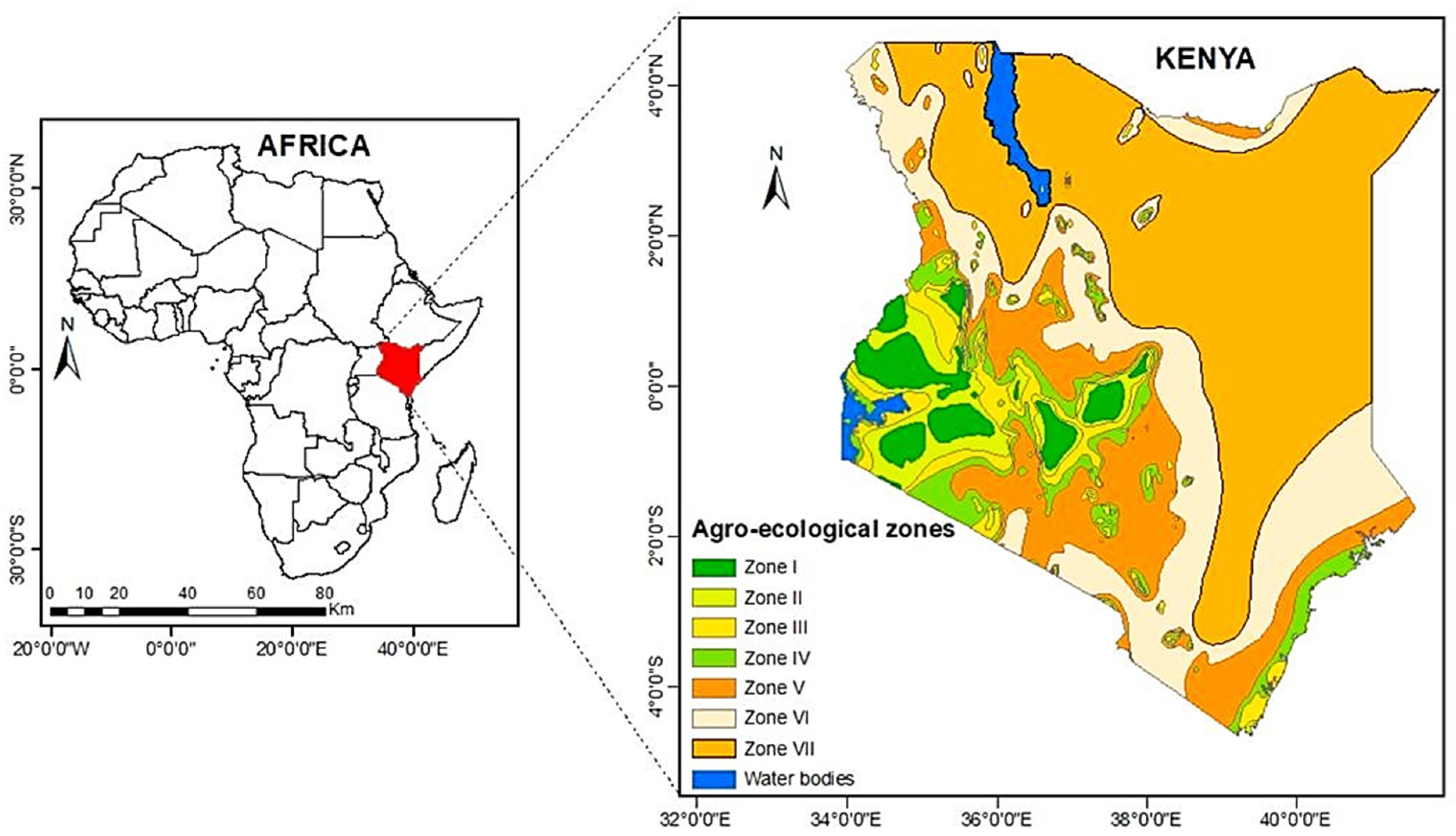
Kenya’s climatic variability is closely tied to its agro-ecological zones, which range from the humid highlands with annual rainfall above 1200 mm to the dry lowlands and arid northern plains that often receive less than 400 mm. The agro-ecological zones vary by rainfall and agricultural potential. Zone I is humid with high rainfall and excellent farming conditions. Zone II is sub-humid, receiving moderate rainfall and supporting medium to high agricultural productivity. Zone III is semi-arid with low to moderate rainfall and limited farming potential. Zone IV is arid, characterized by low rainfall. Zone V is very arid with minimal agricultural viability. Zone VII is transitional, lying between arid and desert climates [
18]. Temperature regimes also vary significantly, from the cool highland areas such as the Aberdares and Mount Kenya, where mean annual temperatures can fall below 15 °C, to the hot and dry lowlands in Turkana and Garissa, where daytime temperatures often exceed 35 °C. These gradients in rainfall and temperature strongly influence water availability, soil moisture, vegetation cover, and ultimately the exposure and sensitivity of different regions to drought (
Figure 1).
Agro-ecological zoning further illustrates Kenya’s vulnerability to drought, characterized by fragile ecosystems and limited agricultural potential. In contrast, highland and medium-potential zones in counties such as Kericho, Nyeri, and Bungoma provide more stable agricultural outputs due to reliable rainfall and favorable temperatures. The dependence of rural households on rain-fed agriculture and livestock within the ASALs underscores the relevance of mapping drought occurrence, since prolonged dry spells directly threaten livelihoods, food security, and ecosystem resilience [
19].
3. Methodology
3.1. Overview
This study employs an integrated remote sensing and geospatial approach to monitor and map seasonal drought occurrence across Kenya using multi-source satellite-derived drought indices. The methodology combines precipitation anomalies, soil moisture dynamics, and vegetation condition indicators into a harmonized framework for assessing drought severity and persistence. The analysis focused on the June–September (JJAS) season for the period 2000–2024 (2000, 2010, 2020, and 2024), which were selected as temporal milestones to illustrate long-term drought shifts under increasing climate stress.
Although this proof-of-concept relies on four time steps, the approach is scalable to a continuous multi-decadal time series, which would enhance trend detection and attribution of drought patterns to climate variability and change in future work. The methodological process involved the acquisition and preprocessing of precipitation, evapotranspiration, vegetation, and soil moisture datasets, the computation of standardized drought indices (SPEI, VCI, SMA, and FAPAR anomaly), their integration into a Combined Drought Indicator (CDI) using a four-class classification scheme (Normal, Watch, Warning, and Alert), validation of CDI results against National Drought Management Authority (NDMA) bulletins, and spatial as well as statistical analyses at pixel and county levels to detect severity, persistence, and sectoral exposure to drought.
3.2. Data Sources
3.2.1. Satellite-Derived Datasets
The data sources employed in this study integrate both satellite-derived and ancillary datasets to ensure robust spatial-temporal drought analysis across Kenya. The primary remote sensing inputs include CHIRPS, MODIS NDVI, soil moisture datasets, and FAPAR-derived products. The Climate Hazards Group InfraRed Precipitation with Station Data (CHIRPS) provides precipitation data with a spatial resolution of 0.05° and a daily-to-monthly temporal scale. This dataset has been rigorously validated across East Africa and is widely utilized for computing precipitation-based drought indices such as the Standardized Precipitation Evapotranspiration Index (SPEI) due to its accuracy and historical coverage [
16]. Temperature Data were acquired from MODIS (MOD11A2) land surface temperature and ERA5 reanalysis datasets. The PET Estimation was derived from Potential evapotranspiration computed using Penman–Monteith (FAO56 method).
In parallel, vegetation conditions were assessed using the Moderate Resolution Imaging Spectroradiometer (MODIS) Normalized Difference Vegetation Index (NDVI) data, specifically the MOD13Q1 product at a 250-m spatial resolution. This dataset was used to derive the Vegetation Condition Index (VCI), which effectively captures plant stress responses to moisture availability and is a widely adopted proxy in drought monitoring frameworks [
17]. Additionally, root-zone soil moisture anomalies were extracted from the LISFLOOD hydrological model developed by the Joint Research Centre (JRC), which provides temporally consistent and physically based estimates of soil water content [
19]. To complement these indicators, the study also utilized the Fraction of Absorbed Photosynthetically Active Radiation (FAPAR) anomaly, a satellite-based metric that quantifies vegetation photosynthetic efficiency and biomass response under drought conditions [
20].
3.2.2. Administrative Boundaries
For spatial disaggregation and contextualization, administrative boundary data for Kenya’s counties were obtained from the International Livestock Research Institute (ILRI) and the Kenya National Bureau of Statistics (KNBS). These shapefiles facilitated precise mapping of drought severity across administrative units. To validate the satellite-derived indicators and ensure alignment with on-the-ground impacts, the study incorporated drought bulletins and situational reports from the National Drought Management Authority (NDMA). These reports served as ground truth references to assess the consistency of remotely sensed signals with observed drought occurrences, thereby enhancing the credibility and operational relevance of the analysis. A summary of all datasets used in the study is presented in
Table 1.
3.3. Drought Indices
3.3.1. Standardized Precipitation Evapotranspiration Index (SPEI)
The Standardized Precipitation Evapotranspiration Index (SPEI) was computed at the 3-month scale (SPEI-3) for the JJAS season. SPEI integrates both rainfall supply and atmospheric evaporative demand by standardizing the climatic water balance (precipitation minus PET) over a given accumulation period [
21]. This makes it particularly useful in assessing droughts that are exacerbated by rising temperatures and other climate drivers.
For this study, CHIRPS daily precipitation data were aggregated into monthly totals, while meteorological variables for potential evapotranspiration (PET), including air temperature, wind speed, relative humidity, and surface net radiation, were obtained from ERA5-Land reanalysis. PET was calculated using the FAO-56 Penman–Monteith method, which provides a robust physically based estimation of atmospheric evaporative demand. All computations were carried out over the common climatological period of 2000, 2010, 2020, and 2024, ensuring consistency with the SPEI analysis.
SPEI uses the climatic water balance (D), defined as precipitation (P) minus potential evapotranspiration (PET), fitted to a log-logistic probability distribution and standardized (Equations (1) and (2)):
where Di is the climatic water balance for the ith accumulation period;
is the long-term mean of the water balance, and σD is the standard deviation of the water balance. This allows capturing both precipitation deficits and increased evaporative demand.
PET was computed using the FAO-56 Penman–Monteith equation (Equation (3)):
where PET = potential evapotranspiration (mm day
−1), Δ = slope of the saturation vapor pressure curve (kPa °C
−1), R
n = net radiation at the crop surface (MJ m
−2 day
−1), G = soil heat flux density (MJ m
−2 day
−1), γ = psychrometric constant (kPa °C
−1), T = mean daily air temperature at 2 m height (°C).
u2 = wind speed at 2 m height (m s−1), es = saturation vapor pressure (kPa), and ea = actual vapor pressure (kPa). This physically based equation ensures robust estimation of atmospheric evaporative demand.
3.3.2. Vegetation Condition Index (VCI)
The VCI is derived from the MODIS NDVI time series, normalized relative to its historical maximum and minimum for each pixel to account for inter-annual variability [
7]. VCI helps detect vegetation anomalies caused by drought, providing an indirect yet spatially rich view of ecological drought effects (Equation (4)).
where
NDVIi is the
NDVI in a given period, and
NDVImin and
NDVImax represent the historical minimum and maximum
NDVI values for the same period. A VCI < 35% was considered indicative of drought-stressed vegetation.
3.3.3. Soil Moisture Anomaly (SMA) and FAPAR Anomaly
SMA, obtained from the LISFLOOD’s soil water index, represents deviations in volumetric soil moisture from its long-term mean. It is expressed in standard deviations, with negative anomalies (typically <−1) signaling soil moisture deficits that correspond with agricultural drought phases [
22]. FAPAR anomalies were computed by subtracting long-term climatological means from observed values in each 10-day composite (dekad). Persistent negative anomalies across consecutive dekads suggest ongoing vegetative stress linked to water scarcity, serving as an early proxy for drought impact on biomass productivity [
20]. To account for vegetation response lag, FAPAR and VCI anomalies were aligned with SPEI values from the preceding month and dekad composites. This ensured that delayed vegetation stress, typically manifesting weeks after rainfall deficits, was captured in the CDI framework.
3.4. Combined Drought Indicator (CDI)
The Combined Drought Indicator (CDI) was applied as the central framework for synthesizing multiple drought indices into a unified classification system. Following the approach of [
23], the CDI integrates the Standardized Precipitation Evapotranspiration Index (SPEI), Soil Moisture Anomaly (SMA), and the Fraction of Absorbed Photosynthetically Active Radiation (FAPAR) anomaly to capture the interaction between meteorological, soil, and vegetation responses to water stress. The integration process is based on conditional rules that assess whether precipitation deficits are translating into soil and vegetation stress, thereby distinguishing between early-warning conditions and fully developed drought events. For this study, drought severity was classified into four operational categories that are widely used in drought early warning systems: Normal, Watch, Warning, and Alert (
Table 2).
This harmonized four-class scheme was consistently applied across both the methodological framework and the results presentation, ensuring comparability and alignment with operational drought monitoring systems such as those used by the National Drought Management Authority (NDMA) in Kenya and other global early warning platforms. By adopting this classification, the CDI offers a transparent and policy-relevant tool for identifying drought onset, progression, and severity, enabling evidence-based planning and response at multiple scales.
To validate the remotely sensed CDI outputs, we compared them against historical drought reports from the National Drought Management Authority (NDMA) spanning 2000–2024. These reports provide county-level drought classifications (Normal, Alert, Alarm, Emergency, Recovery), which were reclassified into equivalent CDI categories (Normal, Watch, Warning, Alert). Cross-comparison was conducted using contingency tables to assess agreement between CDI-derived and NDMA-reported drought status. This validation step was critical in testing the operational reliability of CDI for drought early warning in Kenya.
In this study, all three CDI components, SPEI, SMA, and FAPAR anomaly, were assigned equal weights following [
12]. The equal-weight approach is widely applied in operational drought monitoring frameworks when index quality is comparable across meteorological, hydrological, and vegetation dimensions. The decision avoids overemphasizing any single component and ensures that CDI classifications reflect compound stress conditions rather than meteorological anomalies alone. Equal weighting is also consistent with implementation standards in Copernicus Global Drought Observatory and regional drought monitoring systems in East Africa [
24].
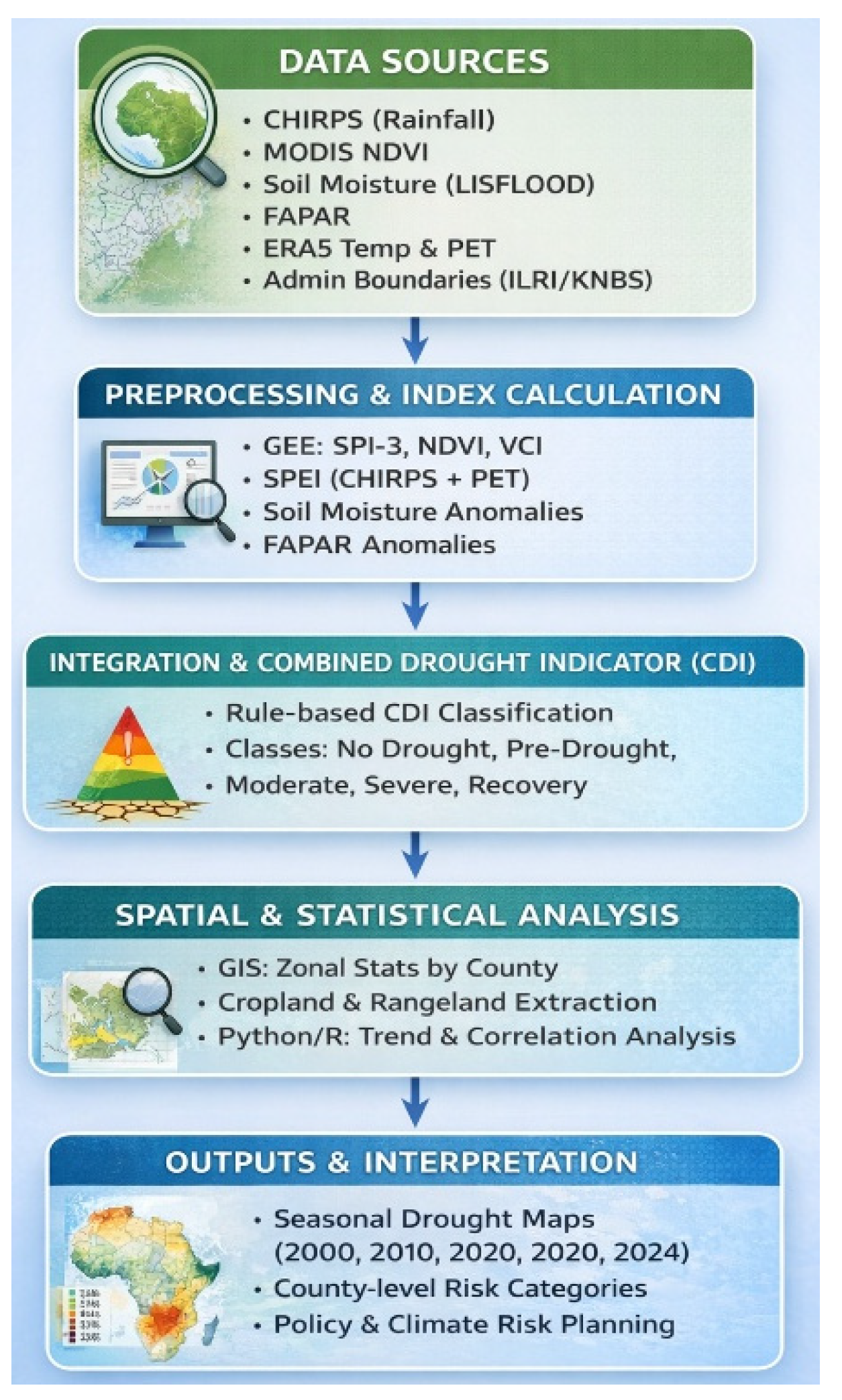
3.5. Tools and Workflow
The methodological workflow for this study integrated advanced geospatial and statistical tools to ensure efficient, reproducible, and accurate drought assessment and mapping. The entire process was structured around two major platforms: Google Earth Engine (GEE) for satellite data processing and extraction, and desktop-based GIS and programming tools for visualization, spatial analytics, and statistical computations.
Google Earth Engine (GEE) served as the central cloud-computing environment for all remote sensing-based data analysis. GEE’s ability to handle large-scale spatiotemporal datasets made it ideal for the computation of seasonal drought indicators. Specifically, GEE was used to preprocess and filter CHIRPS rainfall data and MODIS NDVI datasets to match the climatological focus of the study. Seasonal composites for the June–September (JJAS) periods in 2000, 2010, 2020, and 2024 were generated to enable consistent temporal comparisons. The Standardized Precipitation Evapotranspiration Index (SPEI-3) was computed directly on GEE for each target year and integrated with MODIS-derived NDVI to calculate the Vegetation Condition Index (VCI). It aggregated precipitation and PET over the JJAS 3-month window for each of the study years (2000, 2010, 2020, and 2024). All drought indices were classified into severity levels based on established thresholds and exported as cloud-optimized GeoTIFFs for further analysis. A water balance series was then created by calculating the difference between precipitation and PET. For each pixel, a log-logistic probability distribution was fitted to the long-term water balance series, and cumulative probabilities were transformed into standardized z-scores, yielding SPEI values.
Post-processing and spatial analysis of the drought layers were conducted using open-source and proprietary GIS tools. QGIS version 3.28 was utilized for spatial overlays with county boundaries, zonal statistics to quantify drought impact by administrative unit, and thematic map development. The processed layers were also subjected to vector-based extraction to isolate cropland and rangeland-specific drought patterns. In parallel, Python (v3.11) and R (v4.3) programming environments were employed for statistical evaluation of the drought metrics. This included time-series plotting, trend analysis, and correlation assessment between SPEI, VCI, and the derived Combined Drought Indicator (CDI) classes. Optional use of ArcGIS Pro 3.4 supported cartographic refinement and layout design for publication-quality map figures, particularly for comparative analysis across the four study years. These tools collectively enabled a robust and multidisciplinary approach to seasonal drought mapping in Kenya.
An annual JJAS CDI composite was generated for each year from 2000–2024 by computing CDI values for each pixel and selecting the maximum drought severity class within the JJAS season. This process produced a consistent temporal dataset suitable for both spatial frequency analysis and Mann–Kendall trend detection (
Figure 2).
Trend Analysis Using Mann–Kendall and Sen’s Slope
Long-term temporal trends in drought conditions (2000–2024) were assessed using the non-parametric Mann–Kendall (MK) test and Sen’s slope estimator [
24,
25]. The MK test evaluates monotonic trends without assuming data normality, making it suitable for hydroclimatic variables such as SPEI, SMA, and CDI time series. Sen’s slope quantifies the magnitude of change by estimating the median rate of increase or decrease per year.
CDI time series for each county and pixel were extracted from the annual JJAS composites (2000–2024), producing 25 data points per pixel. Positive Sen’s slope values indicate a trend toward wetter conditions, while negative slopes represent intensifying drought conditions. Statistical significance was evaluated at α = 0.05 using two-tailed testing. These methods improve drought characterization by identifying long-term directional changes that might be obscured by interannual variability.
3.6. Seasonal and Interannual Analysis
Drought mapping was undertaken for the JJAS seasons of 2000, 2010, 2020, and 2024 to capture inter-decadal variations in drought conditions. For each of these years, CDI-based maps were generated to show the geographic distribution and severity of drought, highlighting persistent hotspots, newly emerging drought-affected areas, and regions showing signs of recovery. Beyond these temporal snapshots, a continuous CDI time series covering the full 2000–2024 period was developed at the pixel level (1 km) to quantify the frequency and persistence of drought events. Frequency was expressed as the number of JJAS seasons in which each pixel experienced Watch, Warning, or Alert conditions, while persistence was measured as the proportion of seasons a pixel remained under drought stress, thus identifying zones of chronic exposure. Long-term trends in drought occurrence were further evaluated using the non-parametric Mann–Kendall test together with Sen’s slope estimator to establish whether directional changes in drought patterns were statistically significant. At the county level, zonal statistics were applied to summarize drought severity and persistence across administrative boundaries.
Impact Variables
To link drought conditions with socioeconomic and ecological systems, three impact variables were included: population, croplands, and rangelands. Population exposure was derived from the 2024 WorldPop gridded population dataset at ~1 km resolution. Population counts were spatially overlaid on CDI maps to estimate the number of people falling into different drought severity classes. Croplands were extracted from the ESA Climate Change Initiative (CCI) Land Cover product (300 m resolution), while Rangelands were mapped using MODIS MCD12Q1 land cover data. For each impact variable, exposure was quantified by calculating the proportion of pixels classified under Watch, Alert, or Warning CDI categories for each analysis year (2000, 2010, 2020, and 2024). This allowed assessment of sectoral vulnerabilities to drought stress.
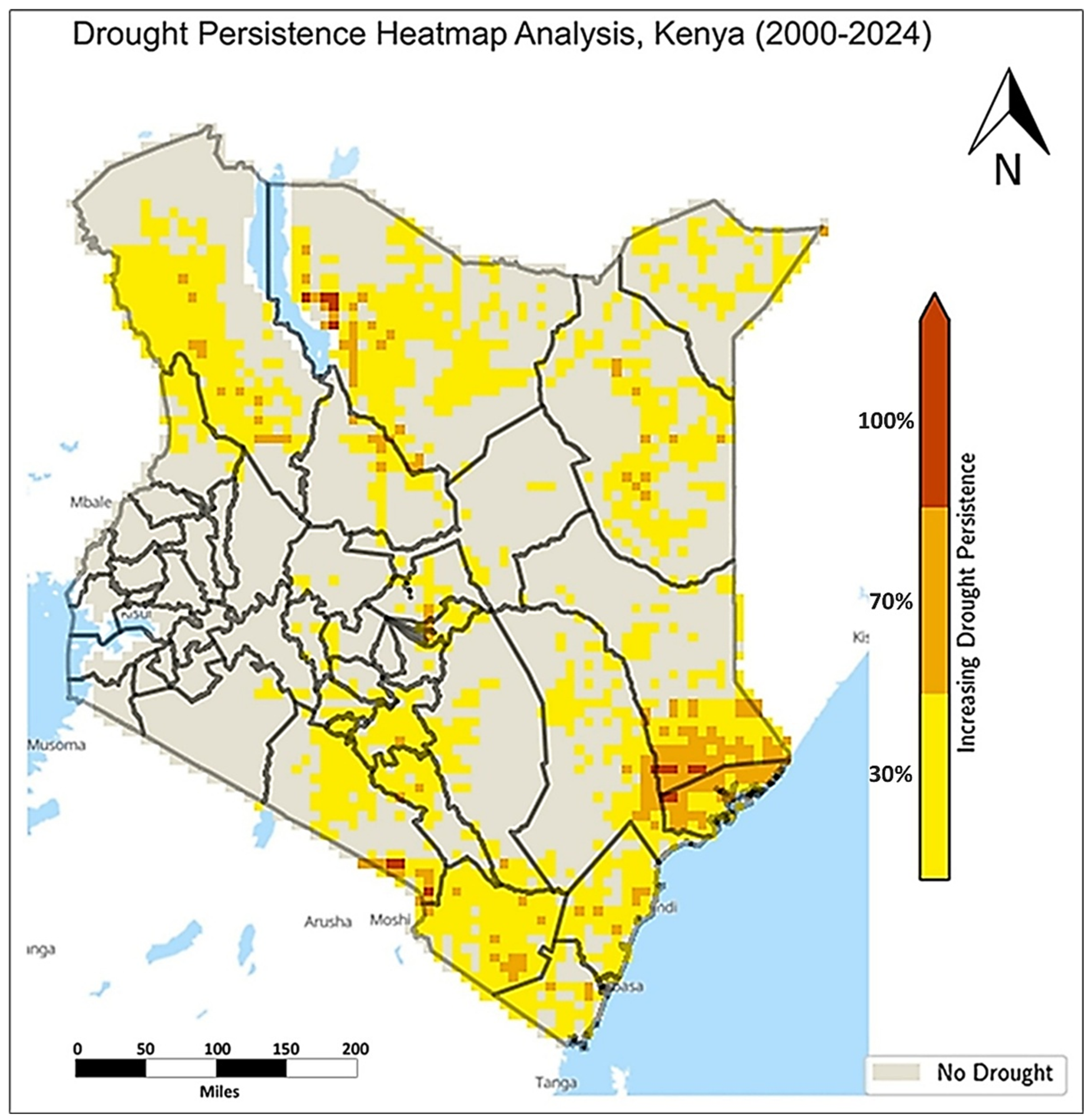
The percentage increase in vulnerability was computed relative to baseline exposure in the year 2000, explaining the large proportional increase observed in rangeland systems. Drought persistence was calculated as the number of JJAS seasons in which a county pixel was classified under Alert or worse categories across the study period (2000–2024), producing a persistence heatmap. This metric highlights areas facing chronic stress due to recurrent droughts.
5. Discussion
The findings of this study provide robust evidence of intensifying drought conditions in Kenya, underscoring significant spatial expansion, temporal persistence, and sectoral vulnerability associated with climate-induced water scarcity. The analysis, anchored on the CDI, harmonized to four standard categories (Normal, Watch, Warning, Alert), confirms not only the intensification of drought events in Kenya over the past two decades but also reveals a structural transformation in hydroclimatic patterns that has substantial implications for sustainable development and disaster risk management in the country.
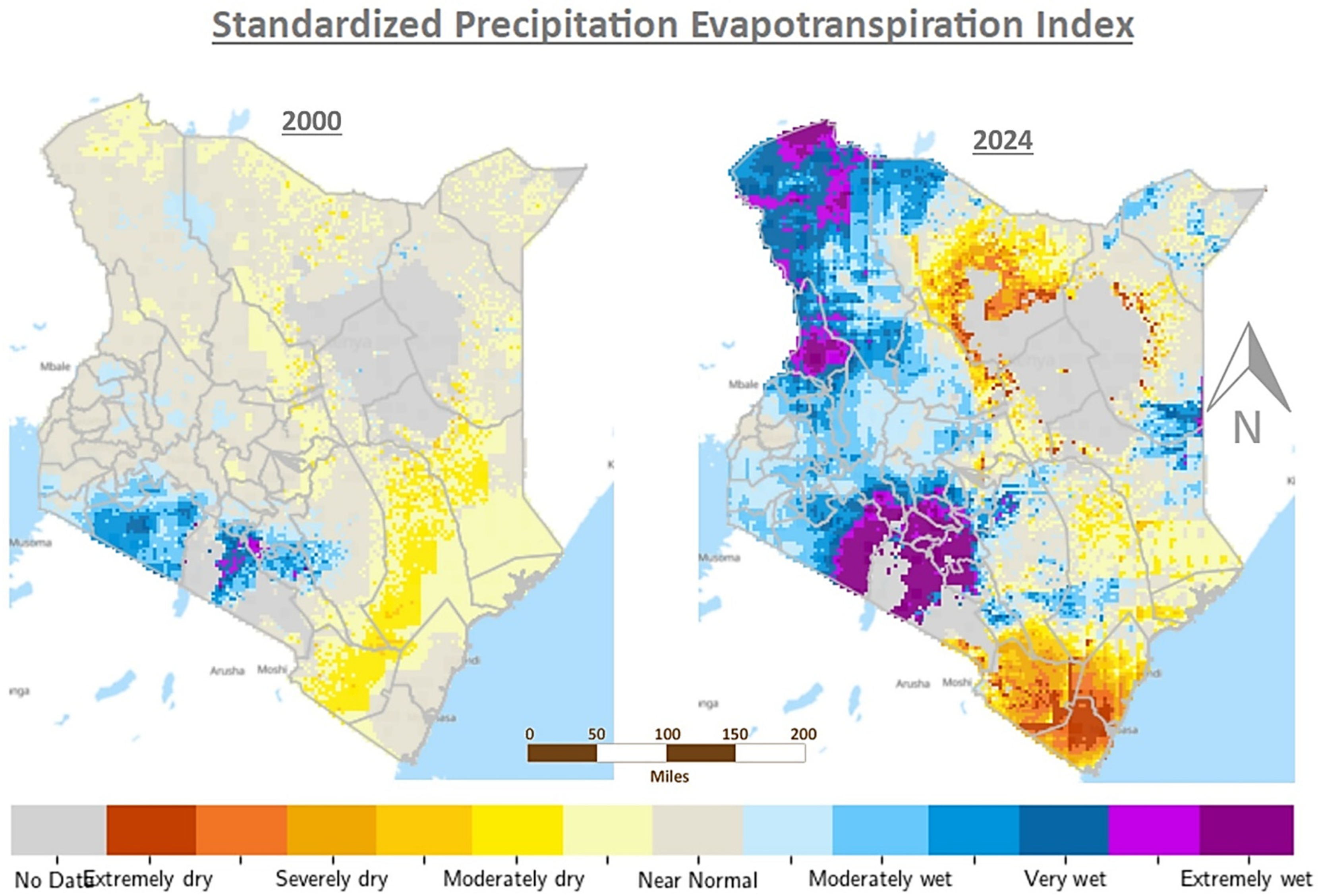
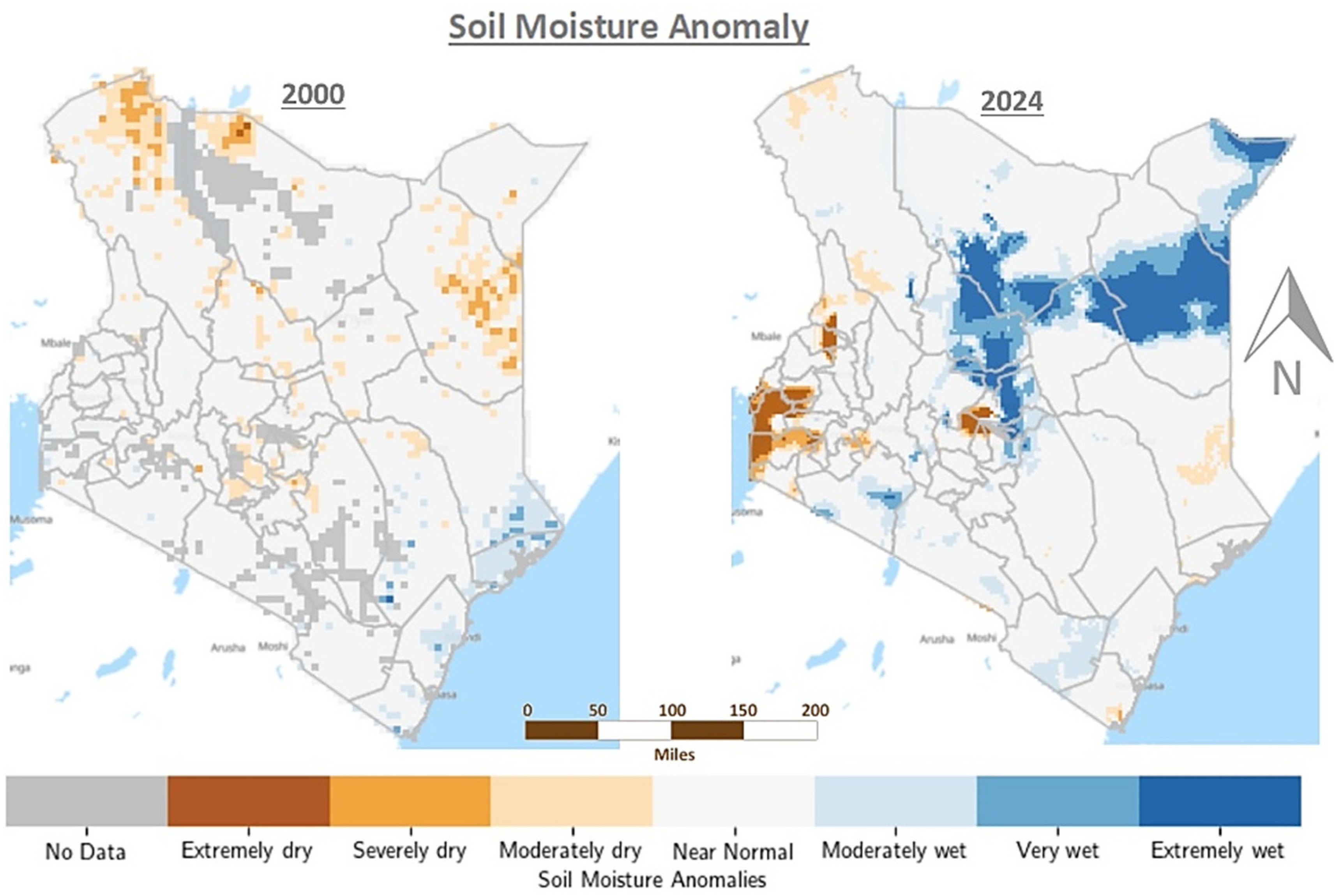
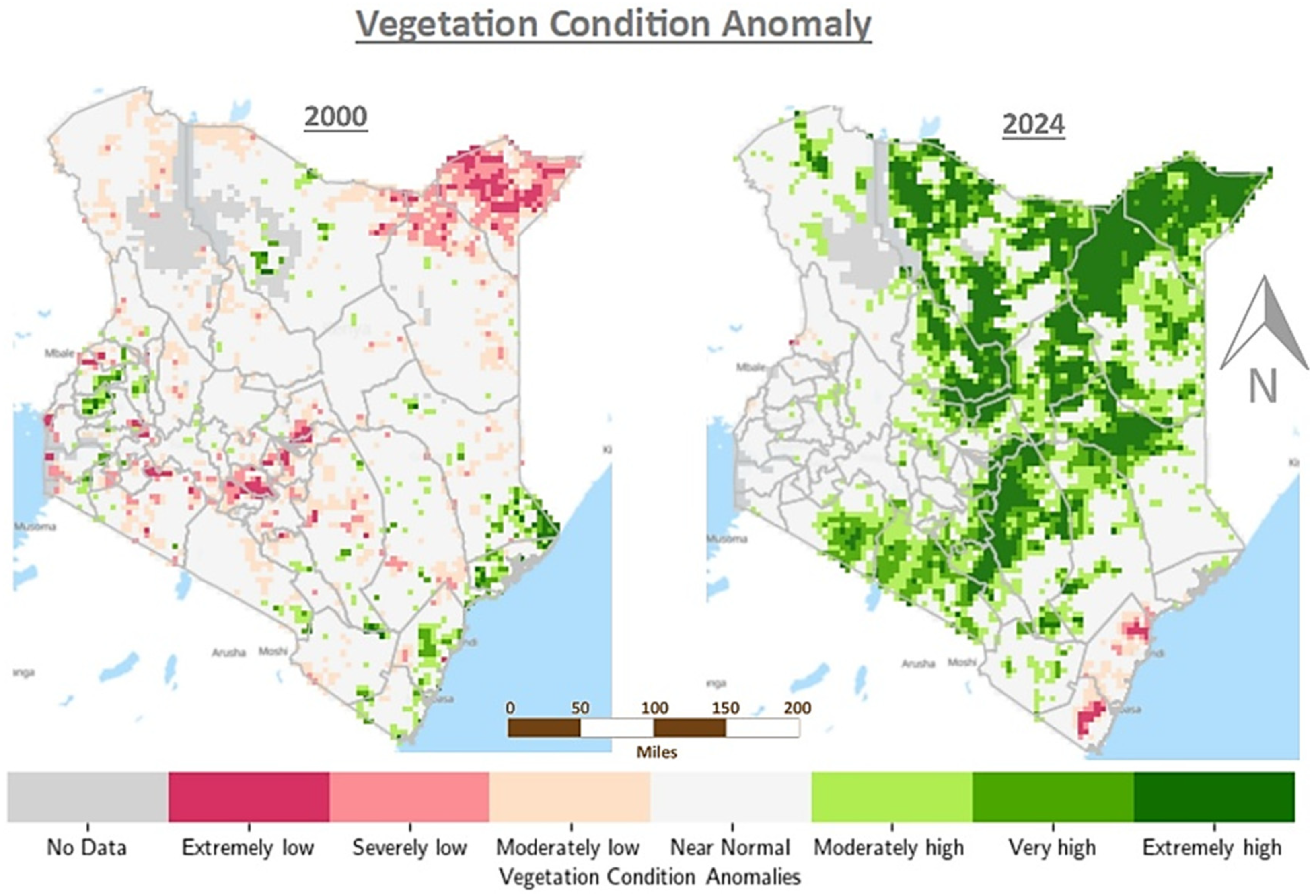
Beyond the CDI synthesis, the independent drought indicators themselves provide valuable insights into the mechanisms of drought onset and impact. The SPEI effectively captured rainfall variability, with the strong negative anomalies in 2000 confirming the occurrence of a pronounced meteorological drought, consistent with earlier regional assessments of rainfall failure linked to ENSO and Indian Ocean Dipole variability [
27]. However, the SPEI alone was insufficient to explain the severity of ecosystem and livelihood impacts, underscoring the need for complementary measures. The SMA revealed how precipitation deficits translated into hydrological stress, particularly in agricultural and semi-arid regions, where low soil water availability exacerbated vulnerability in rain-fed systems. This finding echoes work by [
28], who emphasized soil moisture as a critical mediator between meteorological forcing and agricultural drought. The VCA further highlighted the ecological consequences of combined meteorological and hydrological deficits, with strong vegetation stress in 2000 aligning spatially with areas of low SPEI and SMA. Similar vegetation responses to coupled water deficits have been reported in the Horn of Africa [
29], reaffirming the ecological sensitivity of rangelands and croplands to prolonged drought. Taken together, the three indicators illustrate complementary dimensions of drought processes: meteorological triggers, soil water deficits, and ecological responses, while also revealing the limitations of single-indicator approaches when used in isolation.
The observed transition from predominantly Normal and Watch conditions in the early 2000s to widespread Alert and Warning classifications in 2020 and 2024 aligns with global trends of increasing drought frequency and severity under anthropogenic climate change. This progression is particularly pronounced in the ASALs of Kenya, where high CDI scores were consistently recorded. These findings corroborate earlier assessments by [
2,
16], which documented recurring rainfall failure in Kenya’s eastern and northeastern counties due to disruptions in the Indian Ocean Dipole (IOD) and El Niño–Southern Oscillation (ENSO) patterns.
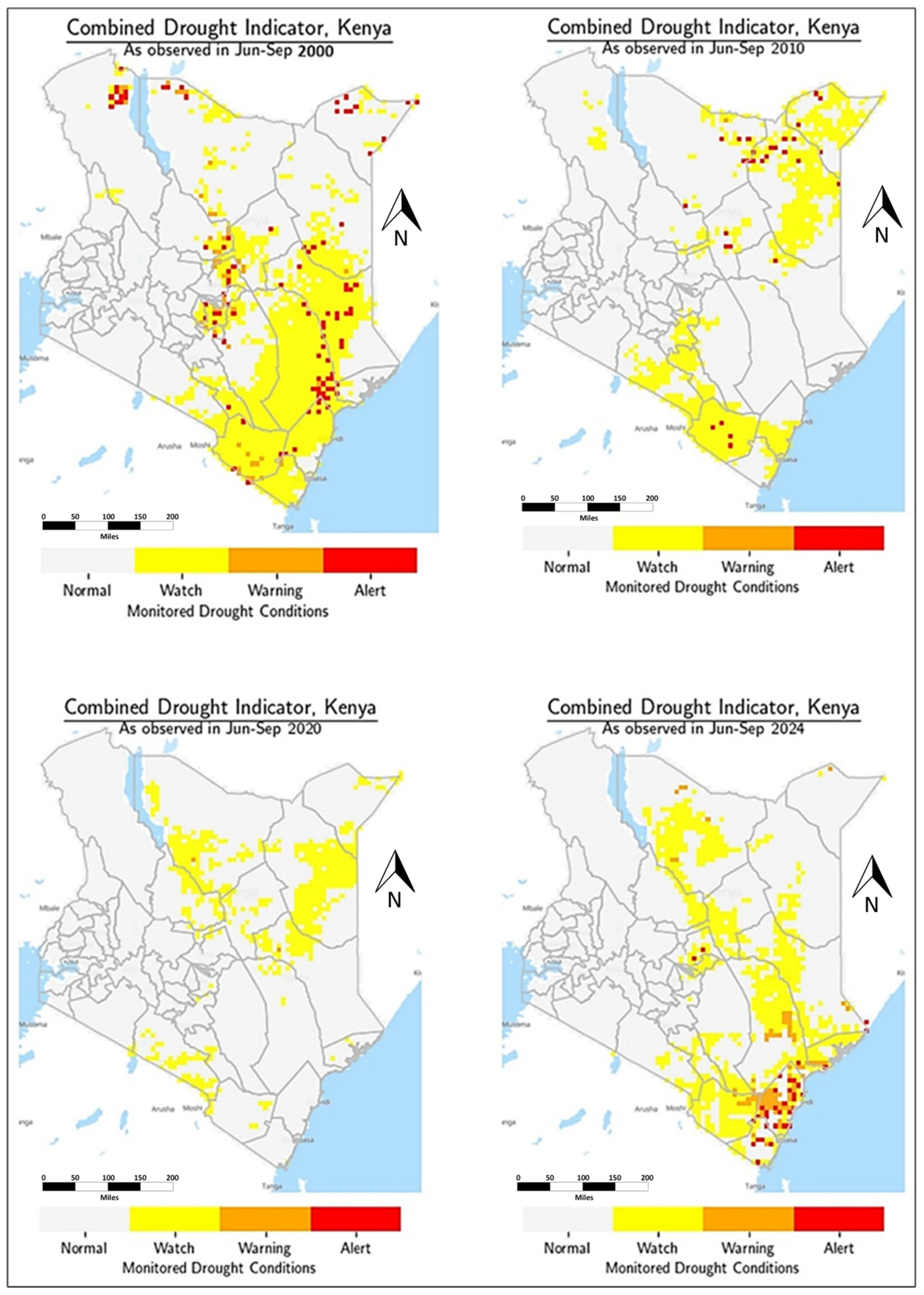
The CDI-based drought maps (
Figure 6) reveal a critical increase in the spatial extent of severe drought conditions, particularly in southeastern Kenya, with Tana River, Kitui, and Garissa counties experiencing persistent Alert conditions. This aligns with the work of [
17], who highlighted that these counties face compounding risks due to fragile ecosystems, land degradation, and poor access to water resources. The increased exposure of these regions to extreme drought conditions calls into question the adequacy of existing water harvesting and storage infrastructure, which remains underdeveloped despite repeated drought episodes.
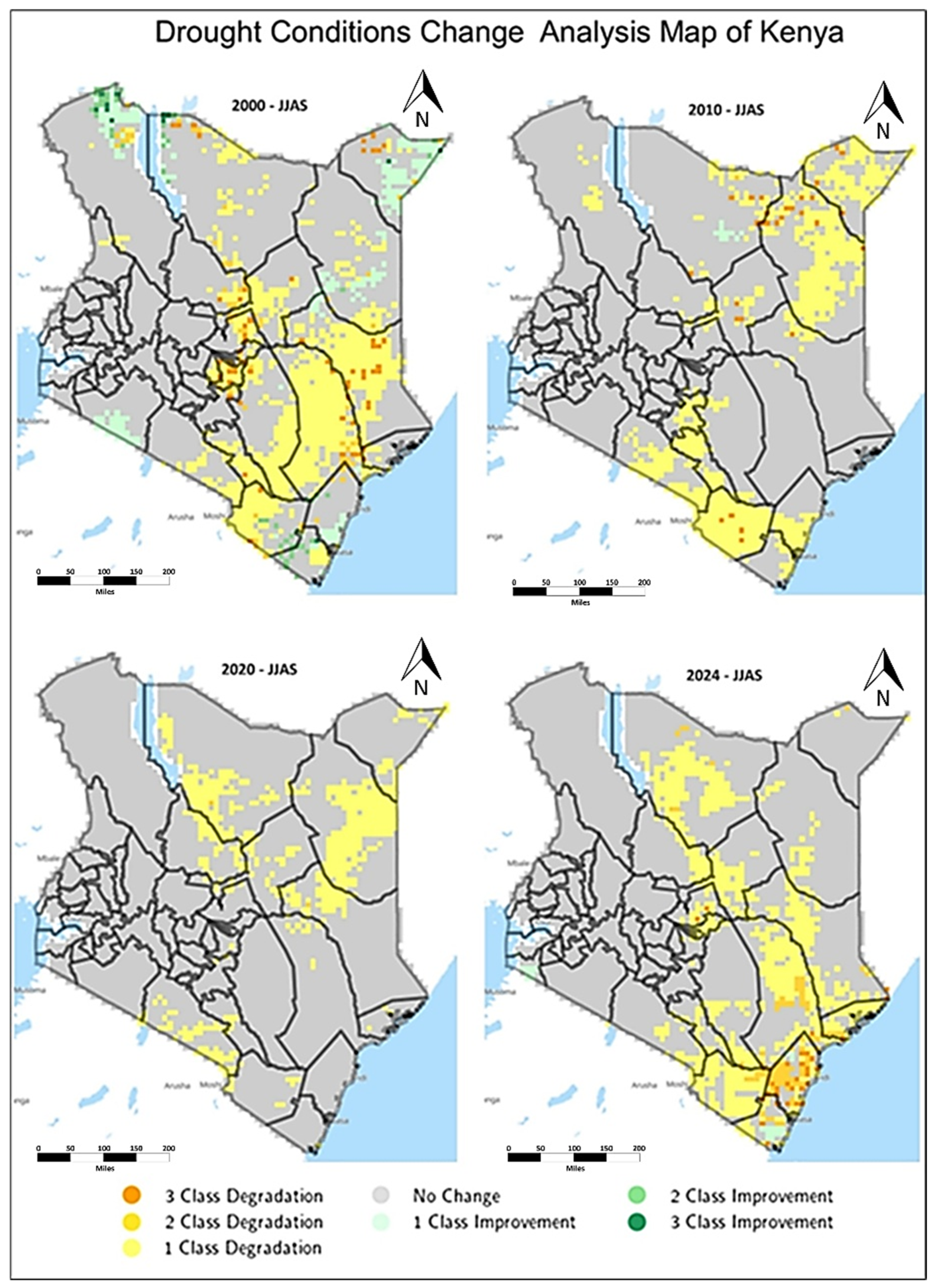
The spatial-temporal degradation maps (
Figure 7) add another layer of insight by highlighting temporal shifts in CDI classes, where degradation represents a transition into more severe categories (e.g., Normal → Watch, Watch → Warning, or Warning → Alert). Counties such as Makueni and Kajiado exhibit consistent class degradations across the decades, suggesting chronic stress and limited natural or policy-induced recovery. On the contrary, counties in the western highlands and around Lake Victoria show intermittent improvements, indicating some buffering from localized hydrological and microclimatic advantages [
13].
The drought persistence heatmap (
Figure 8) provides an integrated perspective on the cumulative drought experience across Kenya from 2000 to 2024. Persistent hotspots in Marsabit, Turkana, and Wajir emphasize the chronic nature of drought in the northern ASAL belt. These counties are socioeconomically reliant on pastoralism, which is acutely sensitive to rangeland degradation, water scarcity, and animal mortality during droughts [
12]. The escalation in drought persistence in these zones reaffirms their classification as humanitarian risk epicenters, echoing alerts issued by NDMA and Famine Early Warning Systems Network (FEWS NET) during past drought emergencies. This spatial patterning underscores the need for region-specific drought mitigation strategies. High-persistence zones require targeted interventions such as drought-resilient agriculture, enhanced water harvesting infrastructure, and early warning systems. The heatmap serves as a critical tool for informing national drought policy, guiding resource allocation, and prioritizing resilience-building efforts in Kenya’s most vulnerable regions.
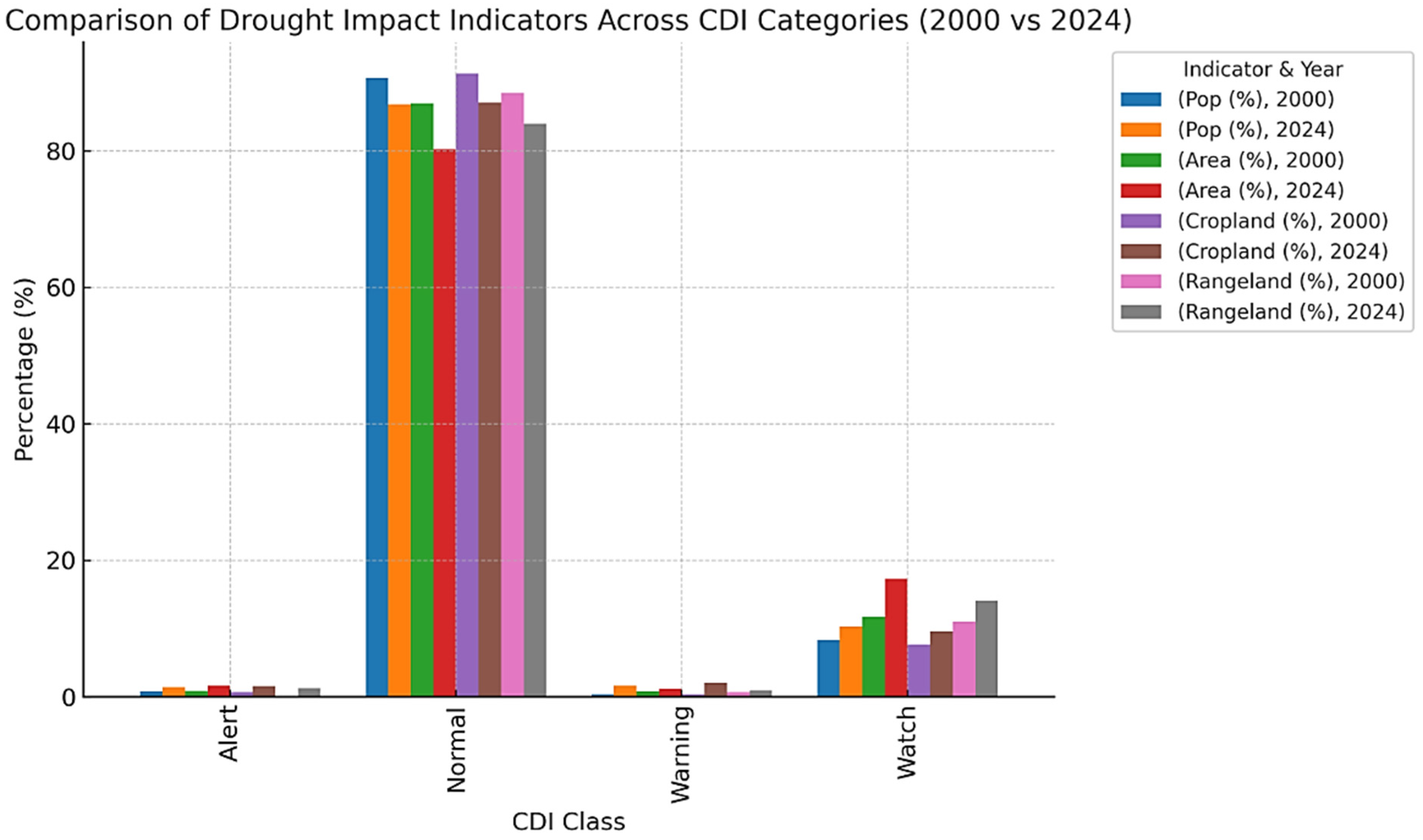
A critical dimension revealed through this study is the increasing population’s exposure to drought risk. Between 2000 and 2024, the population under Alert conditions nearly doubled, while those under Watch conditions increased by over 24%. This increase mirrors national demographic growth and urban-rural shifts, but more importantly, indicates a failure to diversify livelihoods or relocate vulnerable populations to less drought-prone regions.
Equally concerning is the rising vulnerability of Kenya’s croplands and rangelands. The analysis shows that cropland under Alert conditions more than doubled between 2000 and 2024, from 279 km
2 to 575 km
2. The expansion of Watch and Warning croplands suggests deteriorating rainfall reliability and soil moisture retention, critical variables for rainfed agriculture. This aligns with SPEI-3 patterns showing negative deviations during key agricultural months (JJAS), consistent with similar assessments in the Horn of Africa [
11]. Additionally, rangelands—which support Kenya’s vast pastoral economy—saw a 56-fold increase in area under Alert drought classification. This dramatic escalation, also noted by [
6] points to ecosystem degradation, bush encroachment, and declining forage quality, all of which threaten the viability of pastoralism as a sustainable livelihood.
The multi-indicator approach used in this study strengthens the scientific robustness of the results. By integrating SPEI, SMA, and FAPAR anomalies, the CDI reflects both the meteorological trigger (rainfall anomalies) and the ecological response (vegetation and soil moisture deficits). The SPEI-3 index is highly sensitive to agricultural drought, while FAPAR anomalies effectively capture delayed responses in plant productivity [
20]. This methodological triangulation offers a more comprehensive picture of drought development and recovery than any single index alone. The harmonization into four operational CDI categories, validated against NDMA drought bulletins, further strengthens its relevance for Kenya’s early warning system. Moreover, the spatial harmonization of drought maps using GEE and QGIS enabled high-resolution analysis at the county level, which is crucial for decentralizing drought response and integrating early warning into local development planning. Counties can now leverage the drought severity and persistence outputs to calibrate their County Integrated Development Plans (CIDPs), Disaster Risk Reduction (DRR) strategies, and resource allocation frameworks.
Comparative analysis with regional and global studies further situates these findings within a broader drought-monitoring discourse. The four-class CDI aligns with international drought early warning practices [
23]. For example, similar CDI-based approaches in Ethiopia and the Sahel have been shown to improve drought early warning compared to rainfall-only indices [
30]. Our findings of increased drought persistence in northern Kenya parallel trends observed across the Horn of Africa, where prolonged dry spells have intensified pastoral vulnerability [
31]. At the same time, the county-level granularity of this study provides a finer-scale contribution than many regional analyses, making the outputs more actionable for localized planning. Importantly, the CDI drought maps developed here can be directly incorporated into NDMA’s early warning bulletins, county-level climate adaptation plans, and NGO drought response programming, thereby bridging the gap between scientific innovation and operational drought management in Kenya.
6. Conclusions
This study provides a comprehensive spatiotemporal assessment of drought occurrence and severity in Kenya by integrating multiple remote sensing indices, SPEI, VCI, SMA, and FAPAR, into the Combined Drought Indicator (CDI). By focusing on the JJAS seasons of 2000, 2010, 2020, and 2024, the analysis captures both historical and projected drought dynamics at the subnational scale, offering new insights into Kenya’s evolving hydroclimatic risks. The CDI improves upon single-indicator approaches by simultaneously accounting for meteorological deficits, soil moisture anomalies, and vegetation stress, thereby reducing uncertainty and enhancing policy relevance.
The results reveal a clear escalation in the frequency, intensity, and persistence of droughts over the past two decades, particularly in arid and semi-arid regions such as Garissa, Kitui, Marsabit, and Tana River. Drought persistence analysis identifies northeastern and southeastern counties as chronic hotspots, while the increasing exposure of croplands, rangelands, and human populations highlights growing threats to food security and livelihoods. These findings align with broader regional trends in the Horn of Africa and emphasize the inadequacy of reactive, short-term drought responses. By disaggregating drought occurrence across seasons and administrative units, the CDI outputs provide actionable evidence for NDMA, county governments, and NGOs to strengthen early warning systems, climate adaptation plans, and resource allocation frameworks.
Looking forward, future work should integrate socioeconomic exposure metrics, household vulnerability data, and climate projections to better capture the human and economic dimensions of drought risk. Linking CDI outputs with poverty, livelihood, and migration datasets would enable more holistic drought risk assessments, while embedding downscaled climate model projections could help anticipate long-term shifts in drought regimes under climate change. Such extensions would further enhance the utility of CDI-based monitoring as both a scientific tool and a decision-support framework, supporting Kenya’s transition toward proactive, resilience-centered drought management.




 ,
,