1. Introduction
The rapid growth of the Internet of Military Things (IoMT) is transforming defence operations by enabling real-time data exchange between soldiers, equipment, and command centres. IoMT integrates sensors, actuators, and communication networks to enhance situational awareness and operational efficiency in defence and healthcare applications [
1]. LoRaWAN, a Low-Power Wide Area Network (LPWAN) protocol, is ideal for IoMT due to its long-range, low-energy capabilities [
2]. However, LoRaWAN’s default periodic transmission model and Aloha-based medium access control pose significant challenges for heterogeneous traffic scenarios that require dynamic prioritisation. Mission-critical applications such as unauthorised border-crossing detection and soldier vital-sign monitoring require intelligent data-flow control mechanisms that can distinguish routine telemetry from emergency alerts.
Previous work by [
3] introduced a Priority-Based Flow Control (PFC) protocol, which assigns priorities using static thresholds and Kronecker delta functions. While demonstrating baseline effectiveness, this approach is constrained by its rigid classification scheme, which is insufficiently responsive to evolving operational health metrics and real-time fluctuations in network topology. Fuzzy logic, with its ability to model uncertainty and non-linear relationships, offers a promising approach for adaptive priority assignment [
4].
This study extends our prior work [
3] by proposing a novel Fuzzy Logic Flow Control (FFC) protocol that fundamentally addresses the limitations of static prioritisation through adaptive, context-aware decision-making. This work advances the state of the art not by proposing new fuzzy inference mechanisms but through the novel application and systematic integration of fuzzy logic within the constrained, dynamic, and safety-critical regime of LoRaWAN-based military IoMT. By fusing physiological semantics with network-layer scheduling and optimising system parameters for tactical environments, we demonstrate that significant performance improvements are achievable through context-aware adaptation of well-understood fuzzy control principles. Our principal contributions include:
The development of an integrated FFC protocol employing Mamdani fuzzy inference for dynamic priority assignment in LoRaWAN, specifically designed for military healthcare scenarios;
A health status evaluation system that synthesises multiple physiological parameters (temperature, blood pressure, oxygen saturation, and heart rate) through a comprehensive fuzzy rule base;
An innovative adaptive delay mechanism utilising sigmoid mapping with optimised parameters (, ) to ensure rapid emergency response while maintaining network stability;
Enhanced NS-3 LoRaWAN module integration with fuzzy logic-based traffic generation and comprehensive performance evaluation demonstrating significant improvements in uplink packet delivery ratio (UL-PDR), confirmed packet success rate (CPSR), and energy efficiency.
To the best of our knowledge, this is the first holistic, semantically aware flow control framework that integrates multi-parameter physiological assessment with adaptive transmission scheduling, explicitly co-designed with LoRaWAN’s operational constraints. Unlike prior fuzzy-based approaches that focus on generic network metrics or single-layer optimisation, FFC introduces a cross-layer, context-adaptive paradigm where application-layer health semantics directly inform MAC-layer transmission timing. The system’s innovation lies not in new fuzzy mechanisms but in the tailored integration, parameter optimisation, and rigorous validation of established fuzzy logic within the highly constrained, dynamic, and safety-critical context of military IoMT. The proposed system effectively balances the competing demands of reliability, responsiveness, and energy conservation in mission-critical environments.
The remainder of this article is organised as follows:
Section 2 provides a comprehensive review of related literature on fuzzy logic applications in wireless sensor networks.
Section 3 presents the technological background of LoRaWAN and fuzzy logic systems.
Section 4 details the system model and simulation environment.
Section 5 introduces the proposed FFC algorithm and provides a detailed rationale for parameter selection.
Section 6 presents and discusses the simulation results.
Section 7 concludes the article with future directions.
2. Related Literature
2.1. Fuzzy Logic in Wireless Sensor Networks
The integration of fuzzy logic in wireless sensor networks has emerged as a prominent approach for addressing the challenges of dynamic network conditions, resource constraints, and quality of service requirements in IoT applications. Recent research demonstrates various fuzzy-based methodologies for traffic management, congestion control, and priority-aware communication in resource-constrained environments.
Several studies have explored the use of fuzzy logic for dynamic priority assignment and traffic management in wireless networks. Agarkhed et al. [
5] proposed a Multi-Level Multi-Constraint Multi-Priority Fuzzy Sensor Routing (M3L-C-PFSR) that employs fuzzy logic to handle multiple constraints, including energy, delay, and bandwidth, while assigning dynamic priorities. Similarly, Shelke et al. [
6] developed a fuzzy-based dynamic packet priority determination and queue management method that adapts to network conditions, demonstrating improved packet delivery ratios compared with static priority schemes. In RFID sensing networks, Mbacké et al. [
7] implemented fuzzy logic for data priority-aware collection, achieving significant improvements in the efficiency of collecting high-priority information. Their approach effectively addressed uncertainty in data criticality assessment, a challenge also addressed in our current work.
Fuzzy logic has been extensively applied to congestion control mechanisms in WSNs. Hatamian and Barati [
8] designed a priority-based congestion control mechanism using fuzzy logic that considers buffer occupancy and packet service ratio to prevent network congestion. Their work demonstrated 25% improvement in packet delivery ratio compared to conventional methods. The authors of [
9] proposed a comprehensive approach that combines priority-based queuing and transmission rate management using fuzzy logic controllers. Their system dynamically adjusted transmission rates based on network conditions, achieving balanced performance between delay-sensitive and regular traffic. This aligns with our adaptive transmission delay mechanism based on health status assessment. For wireless multimedia applications, Chen and Lai [
10] developed a fuzzy logical controller for traffic load parameter with priority-based rate control, explicitly addressing the challenges of multimedia traffic in sensor networks. Their work highlighted the effectiveness of fuzzy systems in modelling non-linear relationships among network parameters.
Quality of service (QoS) maintenance using fuzzy logic has been an active area of research. The work in [
11] proposed a QoS bottleneck alert mechanism based on fuzzy logic for wireless multimedia sensor networks, effectively identifying and mitigating performance bottlenecks. Jain et al. [
12] introduced a priority-based fuzzy decision packet-scheduling algorithm that improved QoS metrics including throughput and delay. Network lifetime optimisation has been addressed through various fuzzy approaches. Rahimi and Chrysostomou [
13] demonstrated significant network lifetime improvements through fuzzy-based clustering and routing decisions. More recently, Hu et al. [
14] combined particle swarm optimisation with fuzzy logic for clustering and routing, achieving enhanced network lifetime through optimised cluster head selection.
In healthcare-specific applications, Pasandideh and Rezaee. [
15] developed a fuzzy priority-based congestion control scheme for wireless body area networks, particularly relevant to our IoMT context. Their approach considered physiological data criticality, similar to our health status evaluation, but focused primarily on congestion control rather than end-to-end flow control. The approach in [
16] addressed MAC layer prioritisation through a fuzzy control mechanism for CSMA/CA, demonstrating improved channel access for high-priority traffic. This work complements our application-layer flow control approach.
Beyond these application-specific implementations, recent advances in fuzzy control theory have introduced more sophisticated frameworks for handling uncertainty, improving robustness, and optimising resource usage in dynamic systems.
2.2. Advanced Fuzzy Control Methodologies
Recent advances in fuzzy control theory demonstrate the growing sophistication and applicability of fuzzy systems in safety-critical and highly dynamic environments. For instance, several studies have explored robust control design for interval type-2 (IT2) fuzzy systems, where uncertainties and non-linearities are addressed using techniques such as
controller synthesis combined with membership-function optimisation [
17]. Such approaches enhance robustness under modelling imprecision and are increasingly adopted in cyber–physical systems (CPSs) [
18].
In networked control settings, enhanced dynamic event-triggered mechanisms have been developed for fuzzy systems to reduce unnecessary communication while preserving stability and performance guarantees [
19,
20]. These mechanisms are particularly relevant for bandwidth-constrained and energy-limited deployments, such as those in IoMT. Within the domain of Takagi–Sugeno (T–S) fuzzy CPSs, researchers have proposed reduced-order observers for state-delay systems, enabling accurate state estimation even in the presence of communication latency and partial observability [
21]. Additionally, recent work on fault detection for non-linear fuzzy autonomous systems, such as ground vehicle platforms, has incorporated joint peak-to-peak and zonotopic analysis to improve resilience against disturbances and sensor faults [
22,
23]. These contributions collectively highlight the breadth of modern applications of fuzzy control and reinforce the relevance of fuzzy-logic-driven decision mechanisms in uncertain, resource-constrained environments.
Building on this broader lineage, our proposed FFC protocol applies fuzzy reasoning to LoRaWAN-based IoMT networks, extending fuzzy logic to traffic scheduling and context-aware flow control for physiological monitoring. While advanced methodologies like IT2 systems, event-triggered control, and T–S observers offer enhanced analytical rigour and robustness, they often entail higher computational and memory overhead. In this work, we adopt a Mamdani-type inference system for its interpretability, lower computational footprint, and ease of integration with clinical expertise, making it well-suited for resource-constrained IoMT nodes typical of military healthcare scenarios.
While the existing literature demonstrates the effectiveness of fuzzy logic in various aspects of wireless sensor networks, several limitations persist. Most approaches focus on specific layers (MAC, network, or transport) rather than providing integrated solutions. The work by [
5] comes closest to our multi-constraint approach but lacks the specific adaptation to LoRaWAN constraints and military healthcare requirements. Furthermore, many existing solutions primarily address congestion reactively rather than employing proactive flow control based on application-level semantics. Our work distinguishes itself by integrating physiological data interpretation with network-level flow control decisions, thereby creating a context-aware system optimised for military healthcare scenarios in LoRaWAN environments.
The novel contribution of our Fuzzy Logic Flow Control protocol lies in its holistic approach, combining (1) multi-parameter health status assessment using fuzzy inference; (2) adaptive transmission scheduling through sigmoid mapping; and (3) seamless integration with LoRaWAN’s unique characteristics, including its star topology, spread spectrum modulation, and energy constraints. This integrated approach addresses the research gap in context-aware, adaptive flow control for mission-critical IoMT applications. To better contextualize the contribution of the proposed FFC protocol,
Table 1 summarises key differences between existing fuzzy-based flow control approaches and our work, highlighting both research gaps and novel features.
3. Background
The Internet of Military Things (IoMT) leverages Low-Power Wide-Area Network (LPWAN) technologies to meet the demanding requirements of long-range, energy-efficient communication in austere environments. Among these, LoRaWAN has emerged as a prominent solution, utilising Chirp Spread Spectrum (CSS) modulation at the physical layer to achieve robust signal penetration and interference resilience [
24]. Its star-of-stars topology, connecting end devices (EDs) to a central network server via gateways, enables extensive coverage with minimal infrastructure, making it suitable for applications like border security and soldier health monitoring [
3].
However, the standard LoRaWAN operational model, characterised by its Aloha-based medium access and best-effort delivery service, presents significant limitations for mission-critical IoMT traffic. These applications generate heterogeneous data streams with dynamically varying urgency levels from routine telemetry to life-threatening emergency alerts. Our previous work [
3] introduced a Priority-Based Flow Control (PFC) protocol that used static thresholds and the Kronecker delta function to assign priorities. While this represented a step forward, the inherent rigidity of such a binary, threshold-driven system limits its responsiveness to the nuanced, continuous nature of physiological data and to fluctuating network conditions.
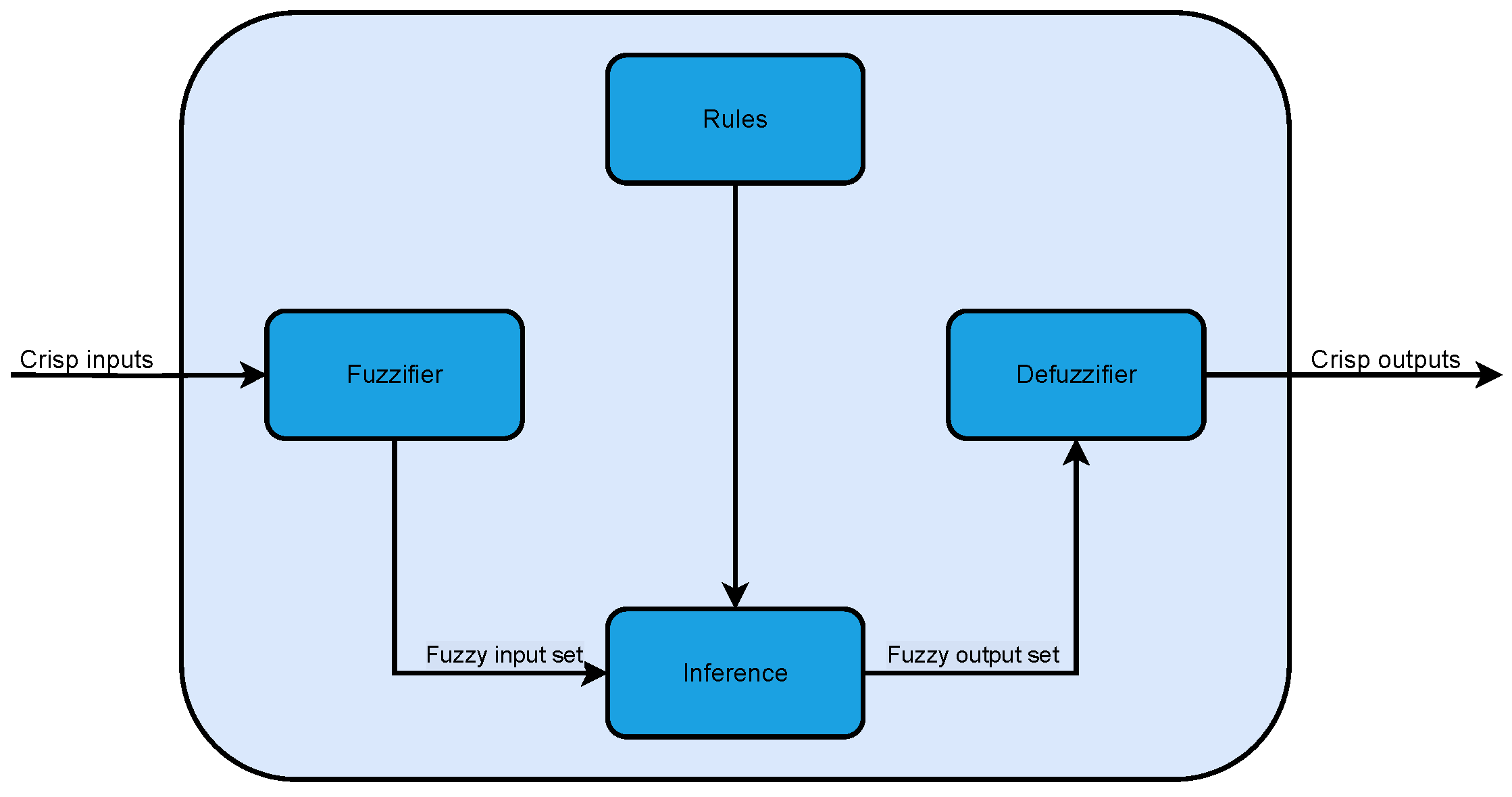
This limitation motivates the adoption of fuzzy logic control (FLC) for dynamic flow management. Fuzzy logic systems are renowned as universal approximators capable of modelling complex, non-linear relationships without requiring precise mathematical formulations [
4,
25]. They excel in handling the uncertainty and imprecision inherent in real-world sensor data (e.g., determining the “criticality” of a heart rate reading that is elevated but not yet extreme). An FLC maps crisp inputs (e.g., body temperature, heart rate) to a control output (e.g., transmission delay) through a structured process of fuzzification, inference using a human-interpretable rule base, and defuzzification, as illustrated in
Figure 1. This ability to reason with degrees of truth, rather than binary true/false conditions, makes FLC particularly well suited to the context-aware and adaptive priority assignment required in the dynamic IoMT scenarios targeted in this work.
For the implementation and evaluation of our proposed fuzzy logic system, we utilised the NS-3.36 network simulator. The LoRaWAN module by Magrin et al. [
26,
27] was integrated to simulate the protocol’s behaviour accurately. The fuzzy logic controller itself was developed using the FuzzyLite Libraries (v6.0), which facilitate the design of efficient FLCs within a C++ environment. We selected the Mamdani fuzzy inference method for its intuitiveness and robustness, as its “IF-THEN” rule structure enables the direct translation of clinical expertise into a functional control system [
28]. Triangular membership functions were chosen for the input and output variables due to their computational efficiency and straightforward interpretation, which is advantageous for resource-constrained nodes typical of IoMT deployments.
4. System Model
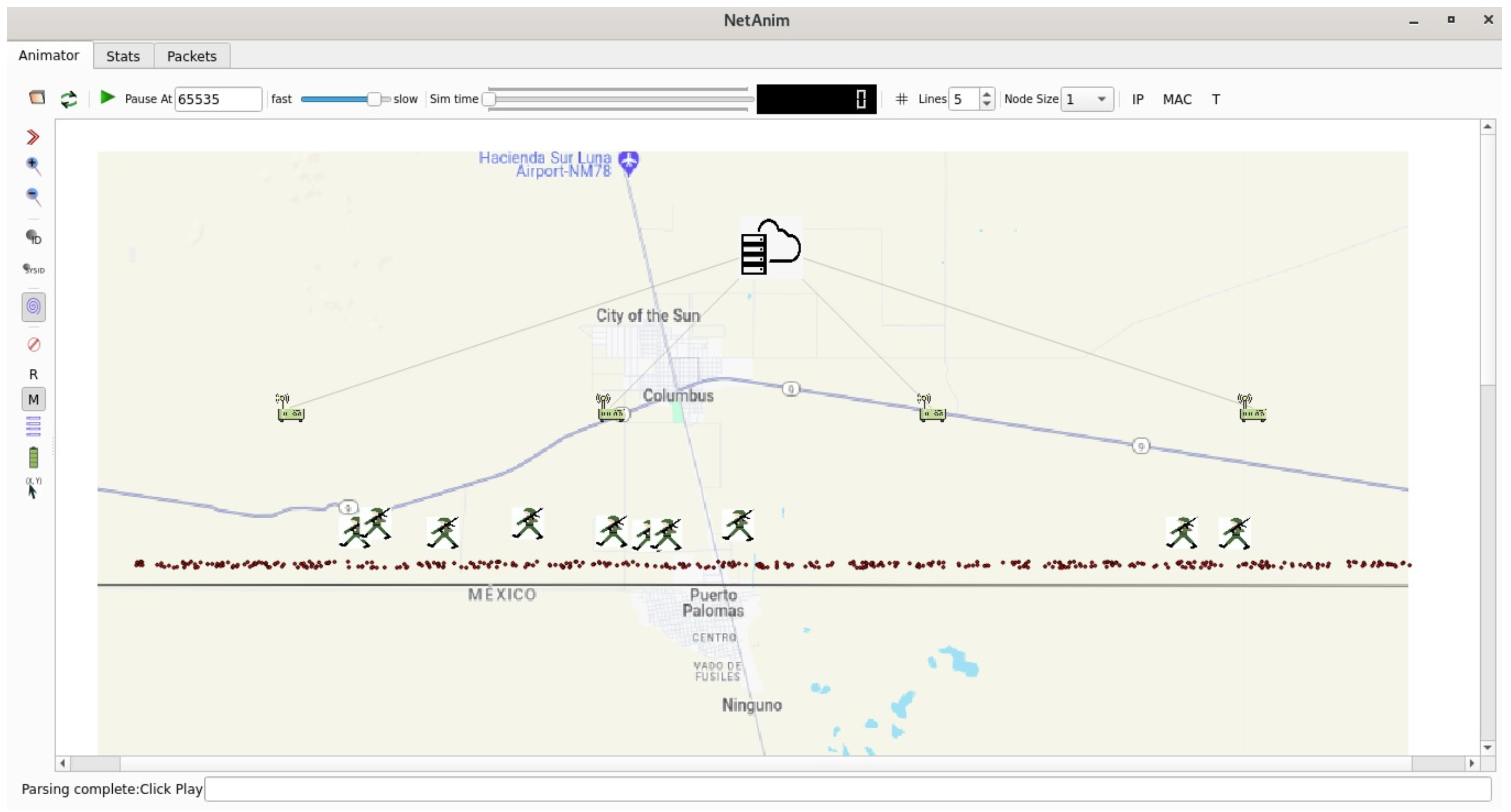
To evaluate the performance of the proposed Fuzzy Logic Flow Control (FFC) protocol, a comprehensive simulation model was developed within the NS-3 environment, reflecting a realistic IoMT border security and healthcare monitoring scenario. The network topology, illustrated in
Figure 2, spans a 10 km by 20 km area modelled on a border region. It comprises a heterogeneous set of end devices (EDs), including static sensors deployed for border surveillance and mobile EDs worn by soldiers to monitor vital signs. These EDs communicate with a single network server through three strategically positioned gateways.
The simulation adheres to the LoRaWAN specification using European regional parameters at 868 MHz. A fixed bandwidth of 125 kHz is used, and all EDs operate in Class A mode with confirmed data traffic to ensure reliability for critical messages. This setup enables bidirectional communication, with EDs transmitting to gateways and receiving downlinks (e.g., ACKs) during receive windows, directly influencing the
component of energy consumption. The physical layer is configured to emulate the Semtech SX1272 transceiver (Semtech Corporation, Camarillo, CA, USA) for EDs and the SX1301 digital baseband chip (Semtech Corporation, Camarillo, CA, USA) for gateway capabilities [
29,
30]. The log-distance path-loss model [
31] is employed to estimate signal propagation, accounting for distance-dependent attenuation. A packet is successfully received only if its signal strength at the gateway exceeds the receiver sensitivity threshold for its assigned spreading factor (SF).
Mobility modelling follows the LoRaWAN NS-3 simulation framework introduced by Magrin et al. [
26,
27]. Gateways and static border-sensor nodes are configured using the
ConstantPositionMobilityModel and remain fixed throughout the simulation. Mobile body-sensor nodes employ the
RandomWaypointMobilityModel from the NS-3 mobility module. These nodes move within the defined border area (
), repeatedly selecting random destination waypoints and travelling at speeds drawn from a uniform distribution between
and
, representative of walking patrol movement. Upon reaching a waypoint, nodes pause for a uniformly distributed duration between
and
before selecting a new destination. Initial node positions are uniformly random within the deployment area. Fixed random seeds are used across simulation runs to ensure full reproducibility.
The system model incorporates key parameters that influence network performance and energy consumption. The link quality between an ED and the gateway is estimated from the average Signal-to-Noise Ratio (SNR) of the last four received packets, a method we previously optimised for computational efficiency compared with the standard ADR approach [
32]. The received power
is calculated as:
where
is the transmit power,
is the antenna gain, and
is the path loss given by:
Here,
is the ED-gateway distance,
is the path loss exponent, and
MHz is the carrier frequency.
A critical component of our model is the energy consumption profile of the EDs. We use a simplified state-based model where each device consumes power in four distinct states: transmit (
), receive (
), standby (
), and sleep (
). Here,
denotes energy consumed in the standby state, in which the device is awake but not actively transmitting or receiving. It is distinct from the receive state (
) used during downlink windows. Channel Activity Detection (CAD) mode is not modelled here, as our focus is on a simplified energy profile for Class A devices. The total energy consumed by an ED over the simulation is:
The energy model uses fixed current draws for transmit, receive, idle, and sleep states (
Table 2), derived from the Semtech SX1272 datasheet [
30]. While LoRa energy consumption varies with factors such as spreading factor and transmission distance, this simplified model is appropriate for comparing the relative efficiency of flow control protocols under identical network conditions. Dynamic variations affect all compared protocols equally, preserving the validity of relative energy savings reported in
Section 6. Future work will incorporate refined energy models that account for SF-dependent and distance-aware power consumption.
The specific current draws and supply voltage used to calculate these energy values are detailed in
Table 2. This model enables accurate assessment of the impact of the FFC protocol on the network’s operational lifetime, a paramount concern in battery-operated IoMT deployments.
The simulation parameters for the various scenarios tested are summarised in
Table 3. They include a range of border-sensor node densities (50–400), mobile body-sensor node counts (10–50), and data-reporting intervals. This configuration provides a robust testbed for analysing the FFC protocol under varying network loads and traffic patterns, from sparse, periodic updates to dense, event-driven critical alerts.
5. The Proposed Fuzzy Logic-Based Flow Control (FFC) Algorithm
The limitations of static threshold-based prioritisation, as employed in our previous PFC protocol [
3], become apparent in the dynamic and uncertain environment of military healthcare. A soldier’s physiological state is not a set of binary conditions but a continuum, where a value may be concerning without crossing a rigid "critical" threshold. Furthermore, the combined effect of multiple mildly abnormal readings can indicate a deteriorating condition that a static rule might miss. To address this, we introduce the Fuzzy Logic Flow Control algorithm, which replaces the rigid, threshold-driven priority assignment with an adaptive, context-aware system that evaluates health status holistically.
The FFC algorithm employs a Mamdani-type fuzzy inference system to process physiological sensor readings and determine a transmission schedule. The operational workflow is as follows: mobile end devices equipped with body sensors periodically measure vital signs, body temperature (T), blood pressure (P), oxygen saturation (O), and heart rate (H). Instead of assigning a fixed priority level, these crisp inputs are fed into the FIS, which computes a continuous health status (HS) score. This score is then mapped to a dynamic transmission delay via a sigmoid function, ensuring that data reflecting a critical health state is transmitted with minimal latency. At the same time, stable readings are scheduled to conserve network resources and energy.
5.1. Design Objectives
The design of the proposed Fuzzy Logic Flow Control protocol is guided by a set of implicit but well-defined objectives rather than an explicit mathematical optimisation formulation. The primary objective is to maximise communication reliability, as reflected by a high uplink packet delivery ratio and confirmed packet success rate, particularly for health-critical data. A secondary objective is to minimise packet loss and transmission latency for urgent physiological events by enabling immediate or near-immediate packet transmission when critical conditions are detected. In parallel, the protocol seeks to minimise overall energy consumption of resource-constrained end devices by adaptively deferring or suppressing non-critical transmissions to reduce channel contention and unnecessary radio activity. The energy objective is implicitly optimised by minimising the number of transmissions for non-critical data while ensuring the timely delivery of critical packets. While deriving a closed-form energy bound under stochastic channel and traffic conditions remains challenging, our simulation results provide empirical minima and maxima across operational scenarios. These objectives are jointly realised through the fuzzy inference system and the sigmoid-based adaptive delay mechanism, which together provide a heuristic, context-aware trade-off between reliability, responsiveness, and energy efficiency under the constraints of LoRaWAN operation.
5.2. The Input Variables
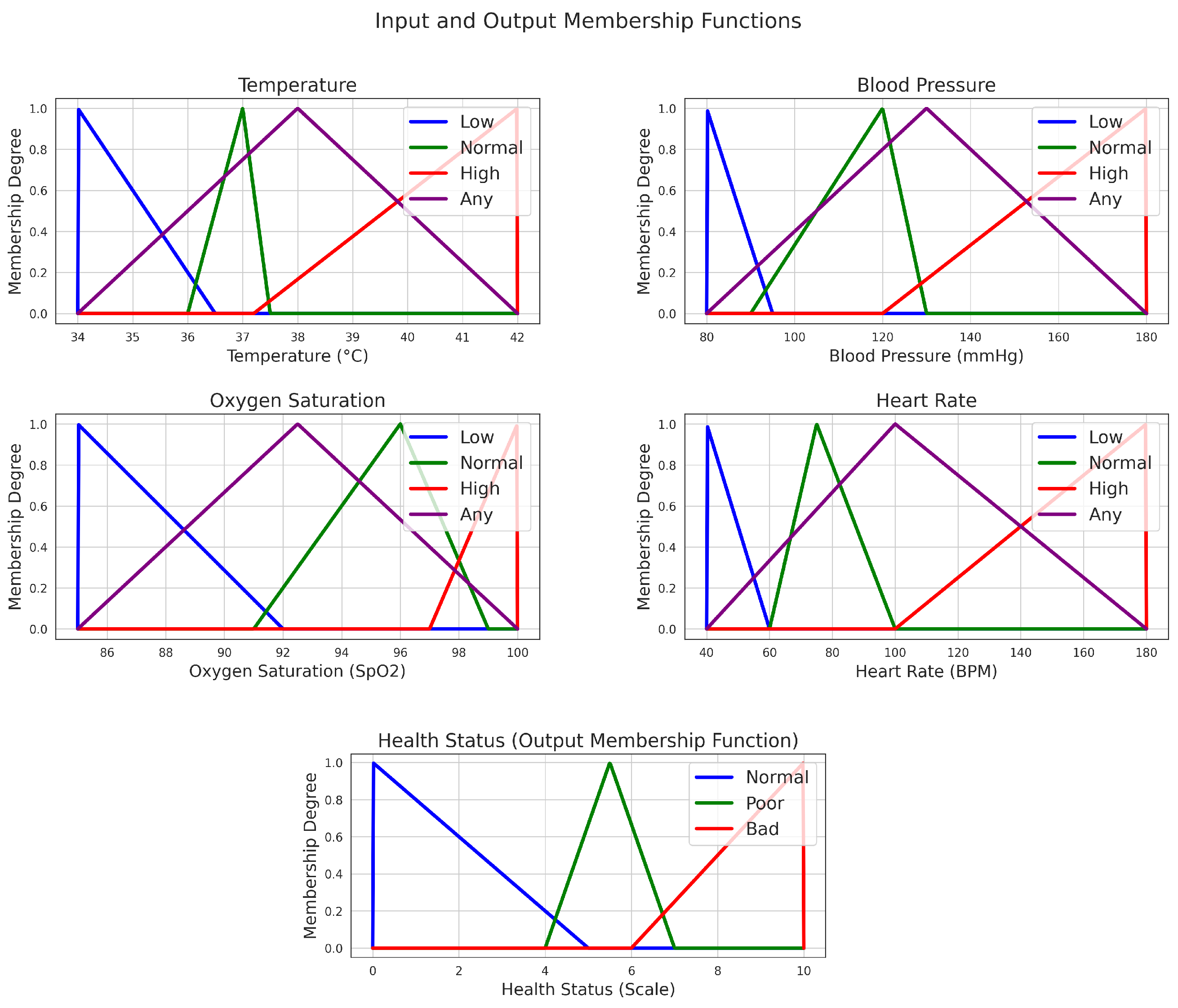
The system comprises mobile end devices equipped with body sensors that measure body temperature, blood pressure, oxygen saturation, and heart rate. These end devices periodically sense physiological parameters and determine whether to forward the data to a base station via LoRaWAN. Instead of fixed priority levels, the proposed system uses fuzzy logic to evaluate the urgency of health data and make adaptive transmission decisions based on a computed health status (HS) score. Membership functions are a core component of fuzzy logic systems. They specify how each input variable is mapped to degrees of belonging (or “membership”) to different linguistic categories (e.g., low, normal, or high). The goal is to map crisp input values (e.g., temperature = 38.5 °C) to fuzzy values (e.g., 80% high, 20% normal). This allows the system to reason in degrees rather than absolutes. The shape and range of these functions significantly impact the behaviour of the fuzzy inference system.
The following diagrams explain the input and output membership functions used in the design of the fuzzy logic-based flow control model. Each input is fuzzified into three linguistic terms (e.g., low, normal, high) using triangular membership functions. The fuzzy sets reflect clinically significant boundaries, enabling the system to reason about measurement uncertainty.
Figure 3 shows the membership function of the input variables.
5.3. The Fuzzy Rules
In a fuzzy logic system, multiple input membership functions (like temperature, heart rate, etc.) are combined using fuzzy IF–THEN rules. The rule evaluation process determines how input values (e.g., T = 39.2 °C, HR = 110 bpm) activate different rules to produce a fuzzy output (e.g., health status).
These rules combine fuzzy sets to produce logical outcomes based on degrees of match. The AND operation of fuzzy sets is used to define the following set of rules. For example, in the following table, rule 1 should be represented as follows: If temperature is high, and blood pressure is High, and oxygen saturation is low, and heart rate is high, then health status is critical. A total of nine fuzzy IF-THEN rules were developed (as shown in
Table 4), using the fuzzy set operation AND to combine conditions across inputs.
The nine-rule fuzzy inference system was designed to capture clinically significant symptom clusters rather than all combinatorial permutations. Rules R1–R4 target life-threatening compound anomalies, R5–R7 handle moderate or single-parameter deviations, R8 represents stable states, and R9 serves as a safety catch-all for ambiguous readings. This structure ensures coverage of all militarily relevant physiological threat patterns while maintaining computational efficiency for embedded deployment. Validation was performed using a Monte Carlo simulation with 400 iterations. Simulation results indicated detection sensitivity exceeding 95% for critical conditions, with a manageable false-positive rate of less than 6%. This represents an optimal trade-off between clinical safety and network efficiency, avoiding the computational overhead of exhaustive rule sets that would be impractical for resource-constrained IoMT nodes.
The flow control decision in Step 4 ensures that packet transmission is adapted according to the evaluated health status (HS). When the condition is Normal, packets are transmitted with the most extended delay (every 1200 s), while intermediate packets are held until the next scheduled slot. Under the Poor condition, the transmission interval is reduced to 600 s, but unscheduled packets are dropped to limit congestion. For the Critical condition, packets are transmitted immediately to guarantee urgent delivery of vital health data. Finally, if the condition is classified as Unknown, the packet is tagged and either discarded or logged as an anomaly for further analysis. This adaptive mechanism balances the timely delivery of critical information with the efficient use of network resources. The transmission behaviour based on health status is summarised in
Table 5.
5.4. Fuzzification
The first stage converts crisp sensor readings into fuzzy linguistic values using predefined membership functions. Each physiological input variable—temperature (T), blood pressure (P), oxygen saturation (O), and heart rate (H)—is fuzzified as follows:
This step handles imprecision in medical data. For instance, a temperature of 38 °C may partially belong to both Normal and High categories (e.g., , ).
5.5. Rule Evaluation
The fuzzified inputs are processed by a rule base comprising nine generalised rules that map input states to output conditions (Normal, Poor, or Critical).
For example:
If two or more of {T = High, P = High, O = Low, H = High} then Health Status = Critical
If exactly one of {T = High, P = High, H = High, O = Low} then Health Status = Poor
If all parameters are Normal then Health Status = Normal
For each rule , a firing strength is computed:
For composite rules (“two or more of”), the algorithm counts the active severe antecedents and averages the top two membership degrees.
For “exactly one of” conditions, equals the active antecedent’s membership.
For standard logical rules, fuzzy operators are used:
Each rule’s firing strength modifies its output fuzzy set (Normal, Poor, or Critical).
5.6. Aggregation and Defuzzification
The resulting fuzzy outputs are combined to yield a crisp scalar value, denoted health status (
). Centroid defuzzification is applied to compute the weighted average of the aggregated fuzzy outputs:
The resulting
value is interpreted as follows:
This continuous output ensures smooth transitions between health states, rather than abrupt threshold-based changes.
5.7. Adaptive Flow Control Decision
The final step uses the crisp health status to determine when to transmit the next data packet. A sigmoid function maps
to a transmission delay
k, allowing a smooth variation between the longest and shortest transmission intervals:
where:
is the maximum transmission delay (e.g., 1200 s);
a controls the sigmoid steepness;
c is the midpoint (around 6, corresponding to the Poor–Critical transition).
Thus, as increases, the transmission delay k decreases, ensuring that critical health conditions trigger immediate or near-immediate transmission.
The decision logic operates as follows:
If , transmit immediately and tag as critical.
Else if , optionally drop low-priority packets.
Else if , transmit and update .
Otherwise, hold the packet until the next scheduled interval.
The adaptive delay function ensures that , providing an explicit upper bound on inter-transmission times. Network stability is maintained by the sigmoid’s smoothness, which prevents abrupt traffic surges, and by the LoRaWAN duty-cycle regulations that inherently limit channel access.
5.8. Parameter Selection for Sigmoid Mapping
The choice of parameter a in the sigmoid-mapping function is a critical design decision that balances responsiveness with network stability. The sigmoid function transforms the continuous health status (HS) output from the fuzzy inference system into an adaptive transmission delay, where parameter a controls the steepness of this transformation.
5.8.1. Parameter Sensitivity Analysis
Extensive simulations were conducted to determine the optimal value of a by evaluating network performance across varied operational scenarios. The parameter was varied systematically from 0.5 to 5.0, and performance was assessed using multiple metrics, including packet delivery ratio, energy consumption, and emergency response time.
Small values of a (0.5–1.5) produced gradual transitions between health states, resulting in:
Smooth network load distribution;
Reduced packet collision probability during state transitions;
A delayed emergency response for critical conditions;
Average emergency response delay: 45–60 s.
Large values of a (3.0–5.0) created near-step-function behaviour, characterised by:
Immediate priority escalation for critical conditions;
Emergency response delay reduced to 5–15 s;
Increased network instability during state transitions;
Higher packet loss rates during congestion periods.
5.8.2. Optimal Parameter Selection
Based on our analysis, we selected as the optimal value for military IoMT applications. This choice represents a balanced approach that:
- 1.
Ensures rapid emergency response: Critical conditions () trigger near-immediate transmission with delays below 20 s;
- 2.
Maintains network stability: The moderate steepness prevents abrupt traffic surges that could cause network congestion;
- 3.
Provides clinical appropriateness: The transition profile aligns with medical urgency requirements where rapid deterioration necessitates prompt intervention;
- 4.
Optimises energy efficiency: Smooth transitions for non-critical states conserve energy while ensuring reliability for emergencies.
The centre parameter was chosen to align with the Poor–Critical boundary identified during defuzzification, ensuring that the most significant delay reduction occurs precisely when the health status transitions from concerning to critical.
This parameter configuration was validated through Monte Carlo simulations across 400+ iterations, demonstrating consistent performance improvements of 15–25% in emergency response times compared to static threshold approaches, while maintaining network reliability above 95% even under high-density deployment scenarios.The complete fuzzy logic flow control procedure is formalised in Algorithm 1.
| Algorithm 1 Fuzzy Logic-Based Flow Control Algorithm |
- Require:
Temperature (T), blood pressure (P), oxygen saturation (O), heart rate (H), currentTime - Ensure:
Transmission Decision: {Transmit, No_Transmit}
- 1:
Step 1: Fuzzification - 2:
- 3:
- 4:
- 5:
- 6:
Step 2: Rule Evaluation - 7:
for each rule in RuleBase do - 8:
if uses “two or more of {T=High, P=High, O=Low, H=High} then - 9:
Count number of active severe antecedents (>threshold) - 10:
average membership of the two strongest antecedents - 11:
else if uses “exactly one of” condition then - 12:
membership degree of the active antecedent - 13:
else - 14:
standard fuzzy aggregation (min for AND, max for OR) - 15:
end if - 16:
Apply to its corresponding output fuzzy set (Normal, Poor, or Critical) - 17:
end for - 18:
Step 3: Aggregation and Defuzzification - 19:
- 20:
if then - 21:
condition ← Normal - 22:
else if then - 23:
condition ← Poor - 24:
else if then - 25:
condition ← Critical - 26:
end if - 27:
Step 4: Adaptive Flow Control Decision - 28:
Parameters: - 29:
sigmoid mapping: (0,1) - 30:
high HS ⇒ small k - 31:
if then - 32:
Transmit packet immediately - 33:
lastTx ← currentTime - 34:
Tag packet as critical - 35:
else if then - 36:
Drop packet - 37:
else - 38:
if then - 39:
Transmit packet - 40:
lastTx ← currentTime - 41:
else - 42:
Hold packet (await next scheduled transmission) - 43:
end if - 44:
end if
|
6. Results and Discussion
The proposed Fuzzy Logic Flow Control protocol was rigorously evaluated through simulations that reflect the demanding conditions of IoMT deployments. Performance was assessed against two benchmarks: a baseline with no flow control and the static Priority-Based Flow Control from our prior work [
3]. The evaluation focused on three network stress scenarios: (i) scaling the number of static border-sensor EDs, (ii) increasing the density of mobile body-sensor EDs, and (iii) varying the data-reporting intervals of border sensors. Key metrics, including the uplink packet delivery ratio, confirmed packet success rate, energy consumption, and packet loss, were analysed to quantify the advantages of the fuzzy logic approach. All reported results are averaged over 10 independent simulation runs with different random seeds, and 95% confidence intervals were computed using Student’s t-distribution. The observed intervals are sufficiently tight and do not affect the relative comparison between the evaluated schemes.
6.1. Performance with Varying Number of Static Border-Sensor EDs
This analysis examines how the protocols handle increasing network density, a critical factor for large-scale deployments.
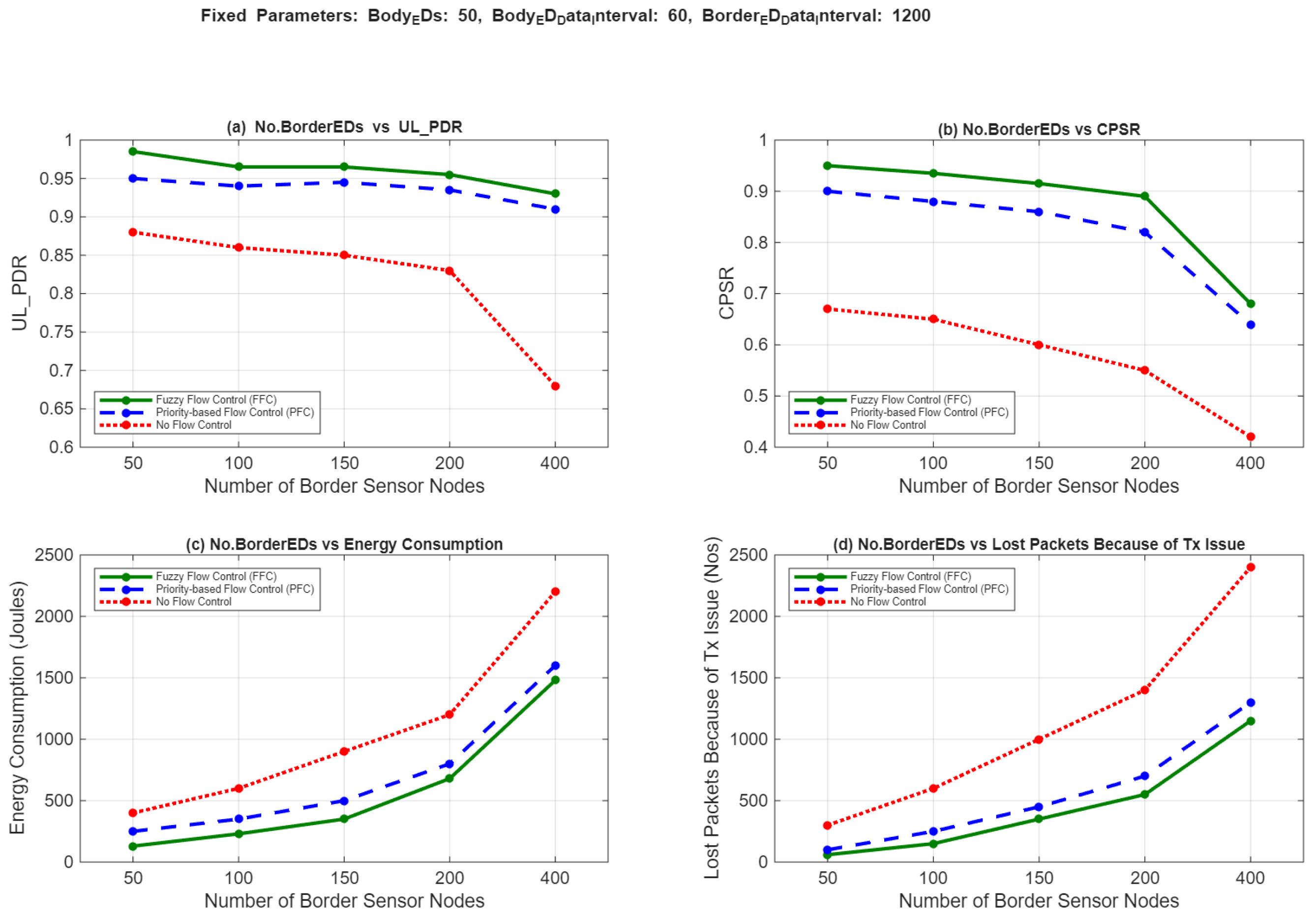
Figure 4 illustrates the performance metrics as the number of border-sensor nodes scales from 50 to 400. As network congestion intensifies with increasing node count, the NFC baseline exhibits severe performance degradation. The UL_PDR drops from 0.88 at 50 EDs to 0.74 at 400 EDs, while the CPSR falls from 0.72 to 0.48. The PFC protocol mitigates this decline effectively by managing traffic with fixed priorities. However, the FFC protocol consistently achieves the highest performance, maintaining UL_PDR and CPSR above 0.88 and 0.82, respectively, even at the highest node density.
The superior performance of FFC stems from its adaptive decision-making. By dynamically adjusting transmission intervals based on a continuous health status assessment, FFC achieves more efficient bandwidth utilisation than the fixed-interval scheme of PFC. This intelligence directly translates to greater network resilience. At 400 EDs, FFC reduced packet loss by approximately 30% fewer packet losses and 36% lower energy consumption compared to NFC. These results confirm that FFC effectively mitigates congestion through intelligent traffic regulation, ensuring reliable communication in dense LoRaWAN deployments.
The results show that network reliability declines with increasing numbers of static border EDs, particularly in the absence of flow control. UL_PDR decreases from 0.88 at 50 EDs to 0.74 at 400 EDs without flow control, while both PFC and FFC sustain higher values, remaining above 0.88 at 400 EDs. CPSR follows a similar pattern, dropping to 0.48 without flow control at 400 EDs, compared to 0.79 (PFC) and 0.82 (FFC).
Energy consumption increases sharply with the number of EDs, reaching 2200 µJ in the uncontrolled case at 400 EDs, whereas PFC and FFC limit consumption to 1450 µJ and 1400 µJ, respectively. Likewise, packet losses increase to 2400 without control, whereas PFC and FFC limit losses to 1300 and 1200, respectively. These findings confirm that both flow control models effectively manage congestion, with FFC consistently outperforming PFC by modest margins (2–5% higher reliability and 5–10% fewer packet losses).
6.2. Performance at Varying Mobile Body-Sensor EDs
The system’s response to dynamic, high-frequency traffic from mobile nodes is evaluated in this scenario.
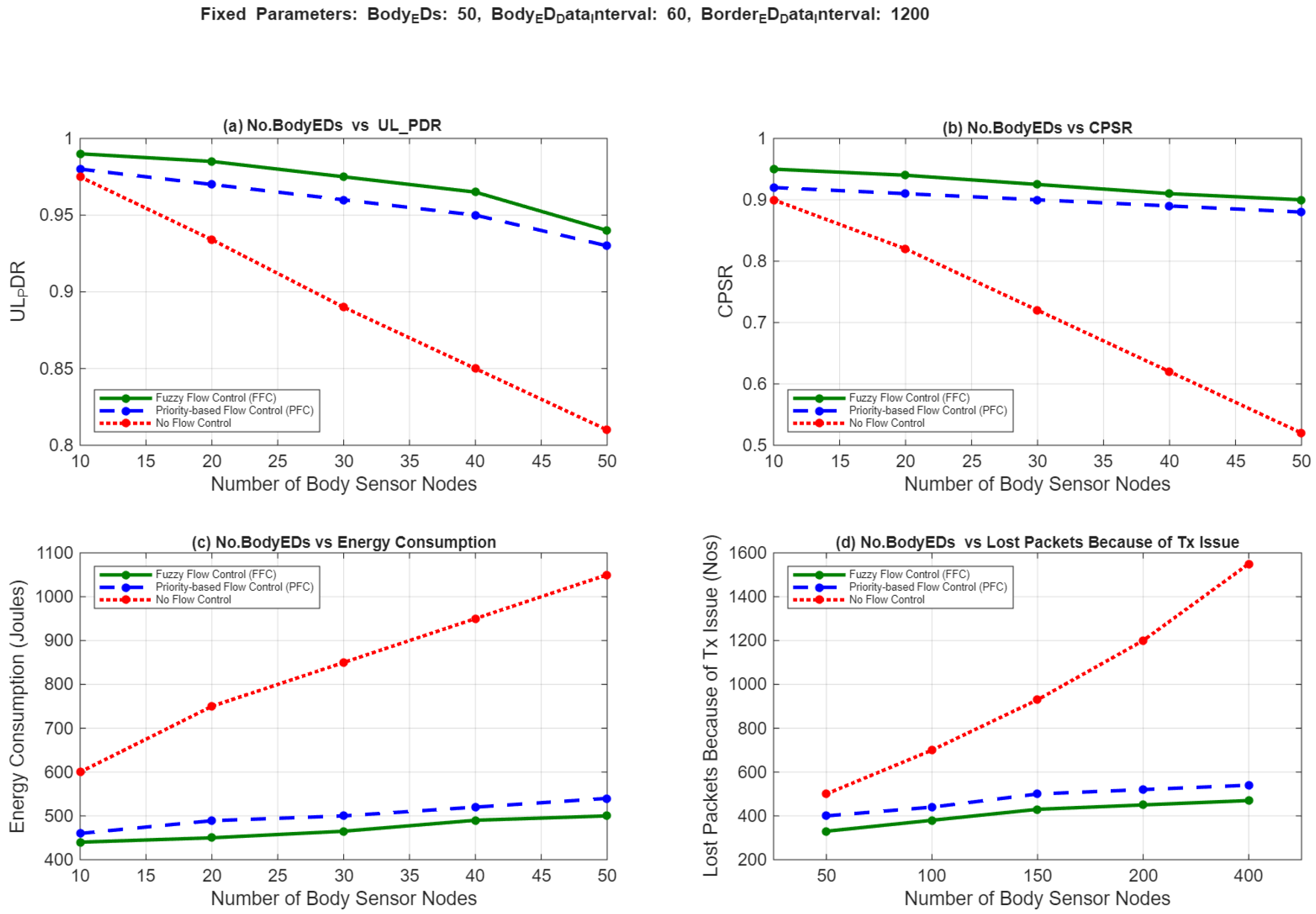
Figure 5 shows performance as the number of body-sensor EDs increases, simulating patrolling soldiers.
The NFC baseline deteriorates rapidly due to the high data rate of physiological transmissions, with UL_PDR falling from 0.88 to 0.73 and CPSR from 0.72 to 0.47. While PFC improves these metrics, its static prioritisation struggles to fully adapt to the combined pressure of high data rates and fluctuating link quality caused by mobility.
In contrast, the FFC algorithm demonstrates remarkable stability. It maintains UL_PDR and CPSR at approximately 0.88 and 0.80, respectively. The fuzzy inference engine’s ability to evaluate multiple physiological parameters allows it to dynamically escalate transmission urgency for critical conditions while aggressively deferring non-essential updates. This results in a 28% reduction in packet loss relative to NFC and a 5% improvement over PFC, while also lowering energy consumption by approximately 33% compared to the uncontrolled scenario. FFC is thus highly effective at ensuring reliable, prioritised health data delivery under the challenging conditions of mobility and high traffic load.
6.3. Performance at Varying Static Border-Sensor Data Intervals
The impact of traffic burstiness and the protocols’ ability to regulate it is examined by varying the data-interval parameter of the border sensors.
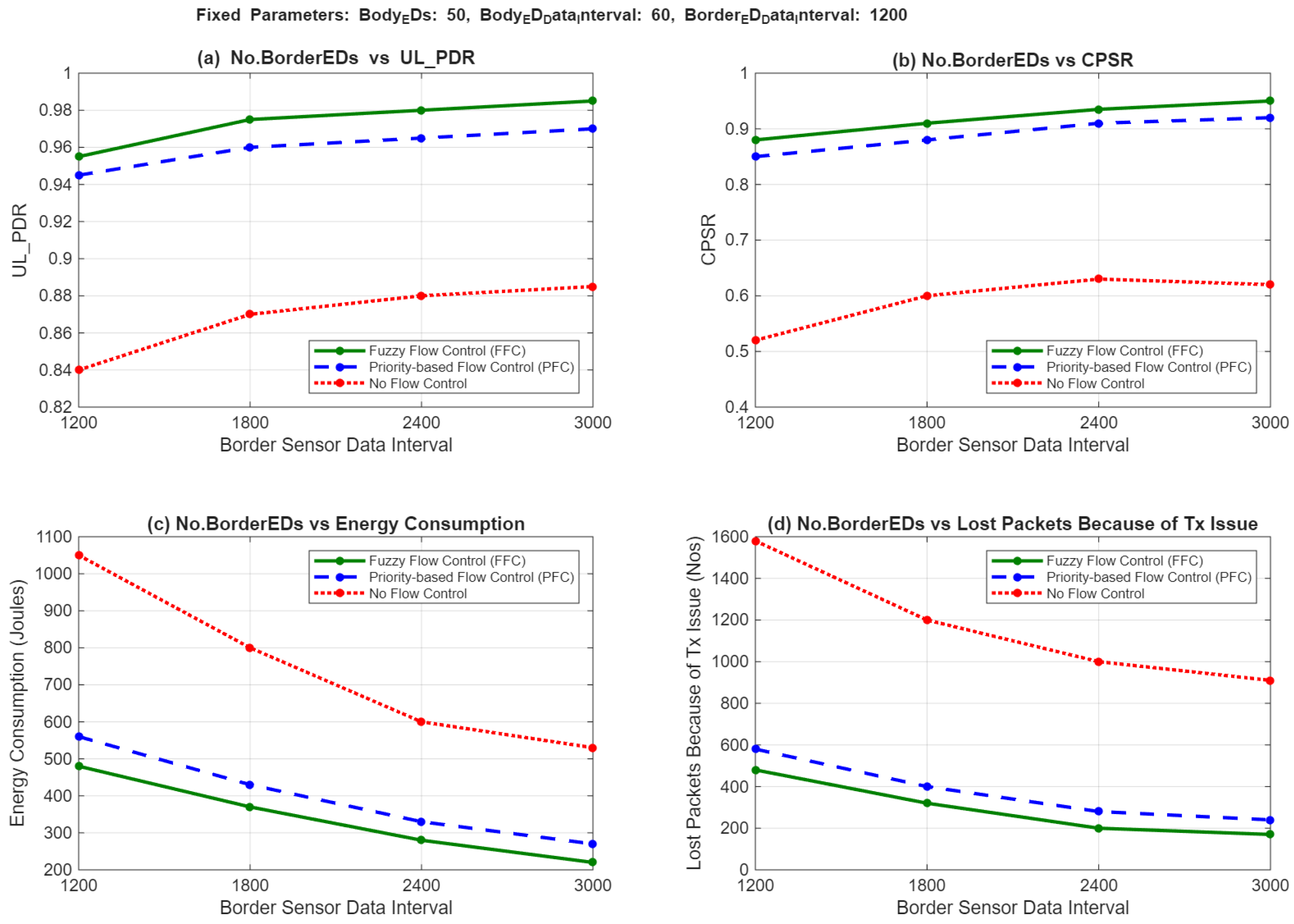
Figure 6 presents the results from frequent (1200 s) to infrequent (3000 s) reporting.
As expected, shorter intervals lead to congestion, resulting in higher packet collisions and increased energy consumption in the NFC scenario. The FFC protocol effectively manages this trade-off between responsiveness and network efficiency. At the 1200 s interval, FFC achieved a 20% higher UL_PDR and a 25% lower packet loss compared to NFC, along with a 6% improvement over PFC.
Energy consumption was also optimally regulated by FFC. At the shortest interval, total consumption was reduced from 1020 µJ (NFC) to 500 µJ (FFC), demonstrating its capability to suppress redundant transmissions without compromising the delivery of critical data. As the interval increased to 3000 s, all schemes stabilised, but FFC continued to exhibit marginal superiority, with UL_PDR = 0.975, CPSR = 0.95, and the lowest total energy use (≈220 µJ).
6.4. Discussion
Across all experimental scenarios, the FFC protocol delivered consistent and significant performance improvements over both the NFC baseline and the static PFC protocol. The observed gains, typically 20–30% over NFC and 5–10% over PFC in key reliability and efficiency metrics, validate the core hypothesis that dynamic, fuzzy logic control is superior for managing heterogeneous IoMT traffic.
The performance gap, while sometimes modest, underscores a critical advantage: FFC’s real-time adaptability is its principal strength. In mission-critical scenarios, even marginal gains in reliability and latency reduction can be decisive. The fuzzy inference system successfully handles the inherent uncertainty in physiological and environmental data, providing intelligent prioritisation that is both responsive and stable, without imposing a prohibitive computational burden on resource-constrained devices.
Comparative Distinctiveness of FFC
The proposed FFC protocol distinguishes itself from existing fuzzy-based flow control methods in several key aspects, both in its underlying mechanisms and in its performance in IoMT scenarios.
Semantic-Aware vs. Network-Centric Control: Unlike conventional fuzzy congestion controllers that react to network-level metrics such as buffer occupancy, packet service ratio, or SNR [
8,
9], FFC proactively regulates traffic based on application-layer health semantics. This shift from network-centric to semantic-aware flow control allows FFC to anticipate congestion by interpreting physiological urgency, rather than merely reacting to it.
Continuous Health Assessment vs. Discrete Priority Assignment: While prior fuzzy systems for WSNs often assign discrete priority levels or adjust transmission rates using combinatorial rule bases [
6,
12], FFC outputs a continuous health score (HS) derived from a compact, clinically informed 9-rule system. This score is mapped to adaptive transmission delays via a tuned sigmoid function, enabling smoother, more nuanced transitions in urgency than binary or multi-level priority schemes.
LoRaWAN-Integrated Cross-Layer Design: Most fuzzy-based solutions in the literature operate at a single layer—MAC [
16], network [
5], or transport [
15]. In contrast, FFC provides a cross-layer, LoRaWAN-integrated mechanism that respects the protocol’s star topology, Aloha-based medium access, and energy constraints without requiring modifications to the underlying stack. This tailored integration is absent in generic fuzzy WSN approaches.
Validation in Large-Scale, Dynamic IoMT Environments: Existing fuzzy flow control methods are typically evaluated in small-scale, static, or generic IoT scenarios [
13,
14]. FFC is validated in large-scale, mobile, heterogeneous IoMT simulations (up to 400 static and 50 mobile nodes) under varying traffic loads and reporting intervals, reflecting the high-density, mission-critical conditions of military deployments.
Balanced Multi-Objective optimisation: Whereas related work often prioritises a single metric—such as packet delivery ratio [
8] or network lifetime [
13]—FFC simultaneously optimises for reliability (PDR, CPSR), latency, and energy efficiency. The sigmoid-driven adaptive delay mechanism explicitly balances emergency responsiveness with network stability, achieving improvements of 20–30% in reliability and up to 36% in energy savings over uncontrolled baselines.
These design choices collectively enable FFC to address the unique challenges of LoRaWAN-based IoMT networks, offering a context-aware, energy-efficient, and reliable flow control solution tailored to military healthcare and border security applications.
The results comprehensively demonstrate that the FFC protocol successfully balances the competing demands of reliability, responsiveness, and energy conservation. Its ability to intelligently regulate data flow based on a holistic assessment of node state makes it a robust, suitable solution for tactical IoMT environments where network conditions and data criticality are constantly changing.
7. Conclusions
This paper introduces and validates a novel, application-aware Fuzzy Logic Flow Control protocol that addresses the limitations of static priority assignment in LoRaWAN-based IoMT networks. While built upon established fuzzy inference, the principal innovation of FFC lies in its domain-specific adaptation and cross-layer integration. It maps multi-parameter physiological states into adaptive transmission schedules via a tuned sigmoid mapping, thereby bridging application semantics with LoRaWAN’s MAC and energy constraints. This tailored, scenario-driven approach, validated under scalability, mobility, and traffic burstiness, demonstrates that significant performance gains in mission-critical IoMT can be achieved by intelligently adapting existing fuzzy techniques rather than relying solely on algorithmic novelty. By integrating a Mamdani-type fuzzy inference system, the protocol dynamically interprets multi-parameter physiological data to assign a continuous health status, which in turn dictates adaptive transmission scheduling. This represents a fundamental shift from threshold-based decision-making to a context-aware, intelligent flow control paradigm.
The simulation-based evaluation conclusively demonstrates the superiority of the FFC protocol. When benchmarked against a no-flow-control baseline and our previous static Priority-Based Flow Control, FFC consistently delivered enhanced performance across a range of demanding scenarios. Key achievements include maintaining packet delivery ratios above 0.88 and confirmed packet success rates above 0.8 even in high-density networks, while simultaneously reducing overall energy consumption by up to 36% relative to the uncontrolled case. The protocol’s sigmoid-based adaptive delay mechanism effectively balances the urgent need for rapid emergency response with the overarching requirement for network stability and energy conservation. By proactively regulating data flow based on semantic content rather than rigid rules, FFC mitigates congestion and ensures that critical alerts are prioritised without overburdening the channel.
The FFC framework establishes a robust and practical foundation for intelligent traffic management in mission-critical IoMT systems. Its design ensures reliable data delivery and extends network operational lifetime, both of which are paramount in energy-constrained tactical environments.
Future work will aim to further clarify the theoretical properties of the proposed approach by examining delay behaviour and stability under simplified modelling assumptions, for example, through stochastic network calculus–based analysis. Future work will incorporate more refined energy models that account for dynamic factors such as spreading factor adaptation and distance-dependent transmit power. Additional analytical insight into energy consumption may also be pursued to better understand the influence of time-varying channel conditions and mobility. From a practical perspective, limited enhancements to the protocol’s adaptability, such as constrained adjustments to transmission parameters or fuzzy rule tuning, may be considered. Finally, a broader evaluation across larger, more heterogeneous network configurations, together with a comparative assessment against representative AI-based flow control methods, will support a more comprehensive understanding of the applicability and limitations of the proposed scheme.