High Terpene Production in Myrtaceae: Evolutionary Insights from Terpene Pathway Genes


Abstract
1. Introduction
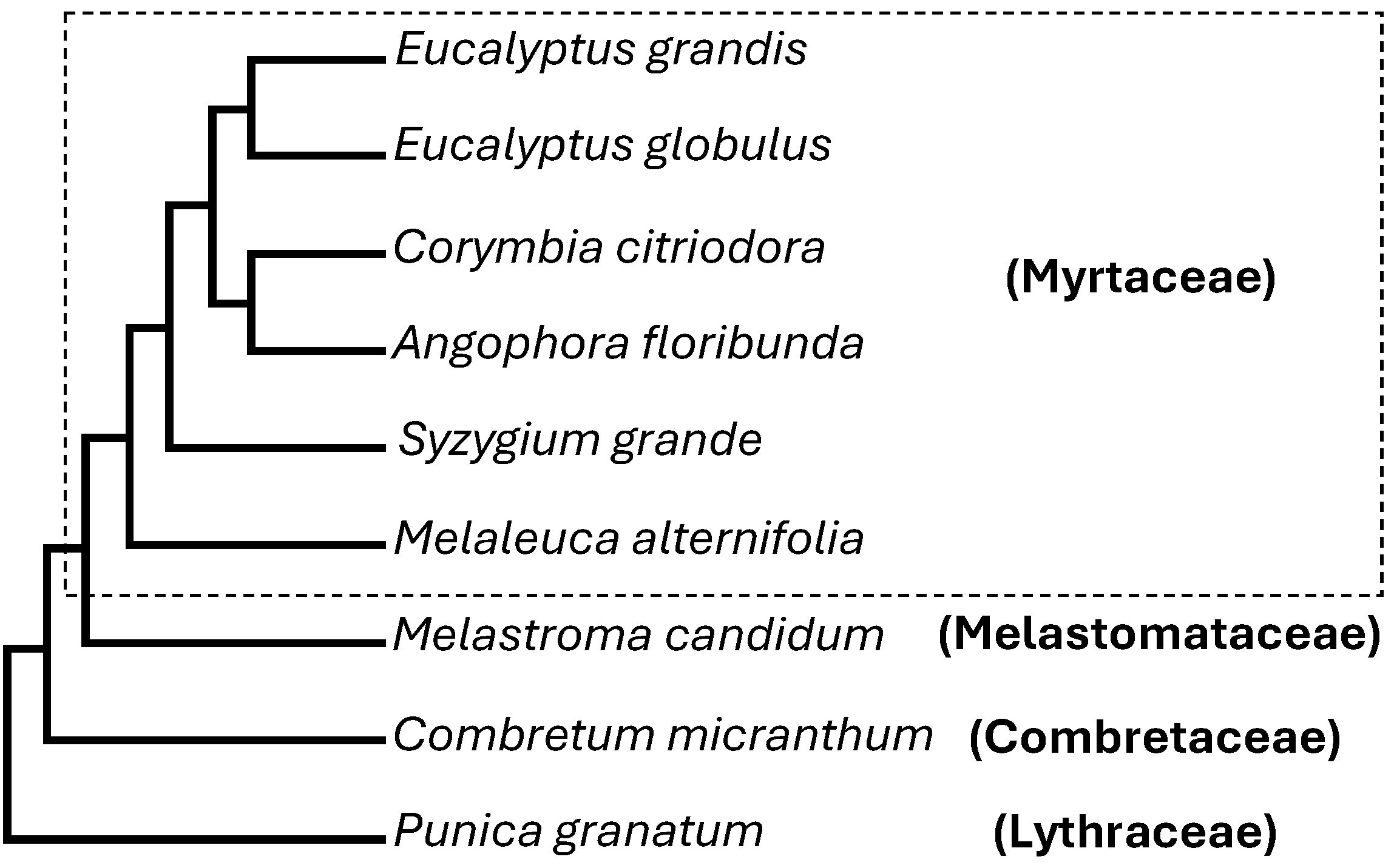
2. Results and Discussion
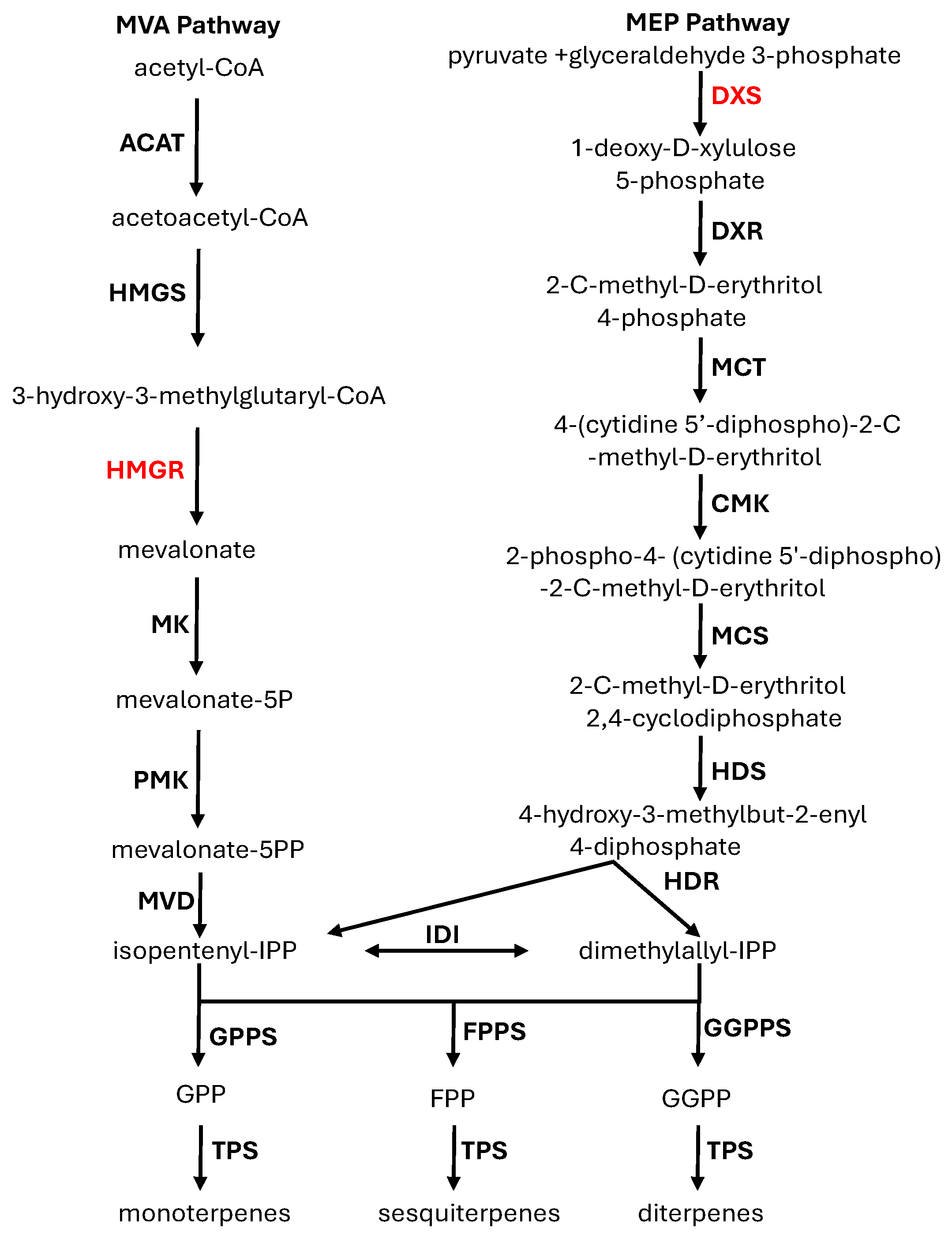
2.1. Comparative Genomic Analysis of the MVA Pathway Genes
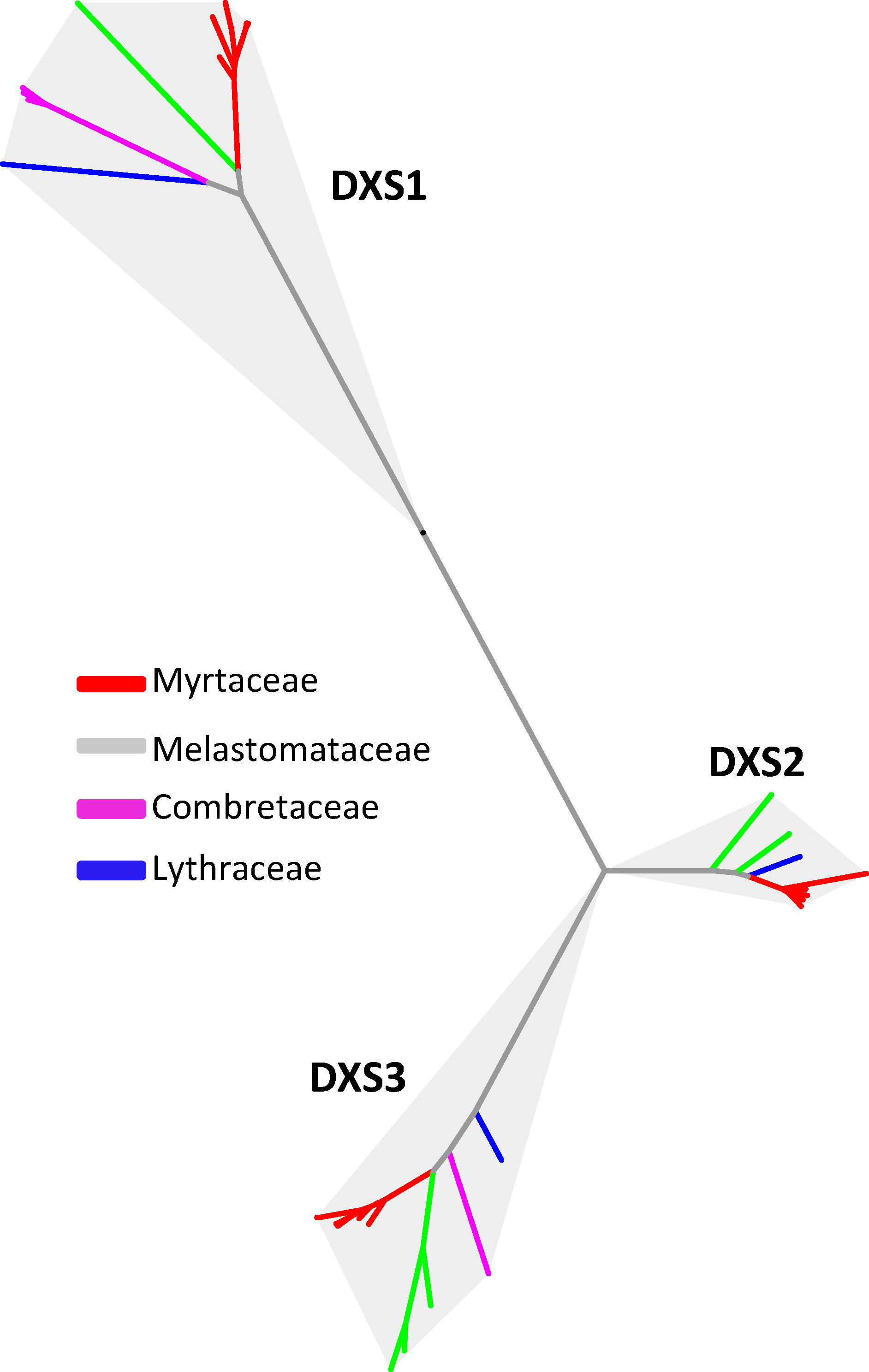
2.2. Comparative Genomic Analysis of the MEP Pathway Genes
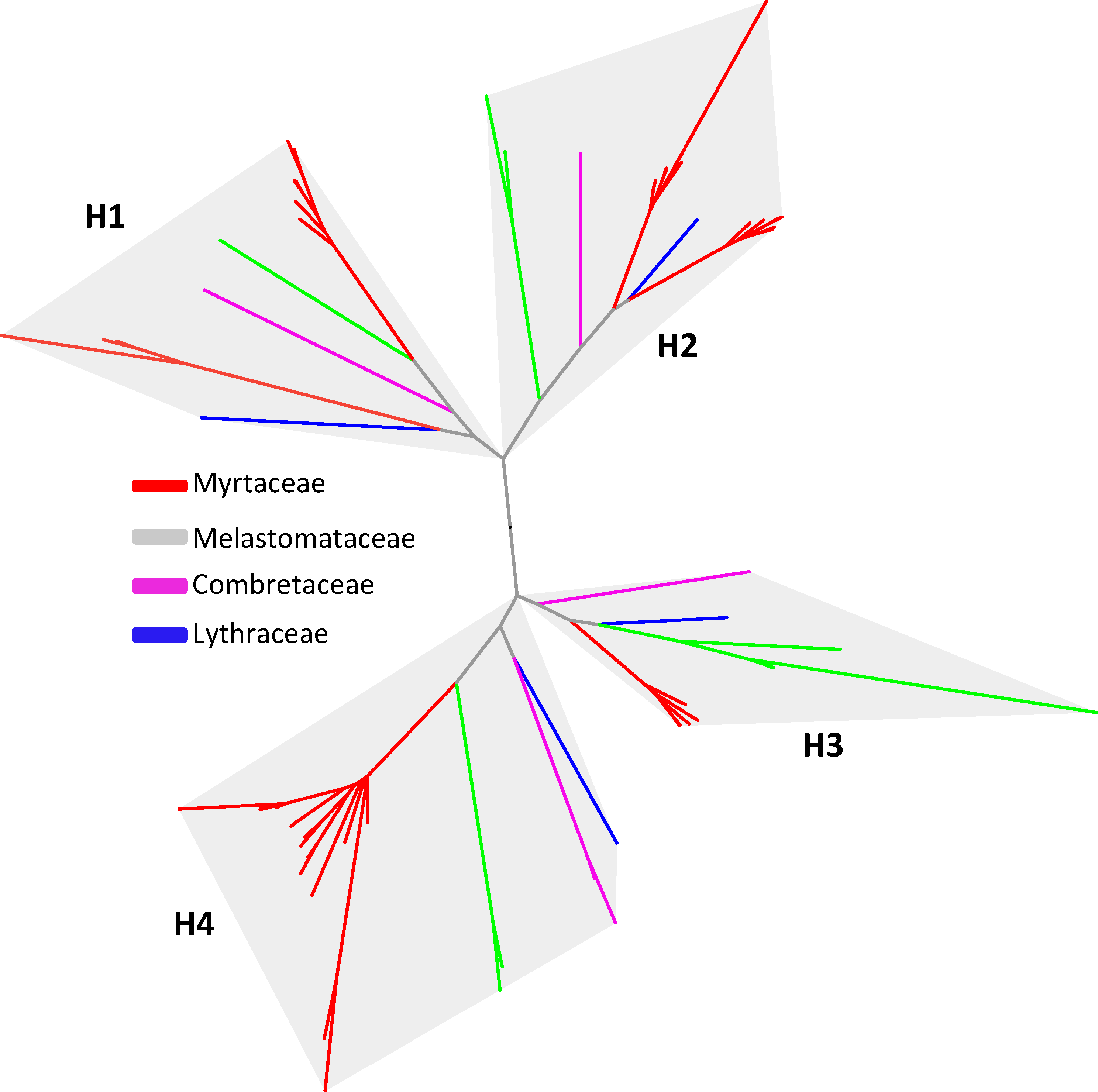
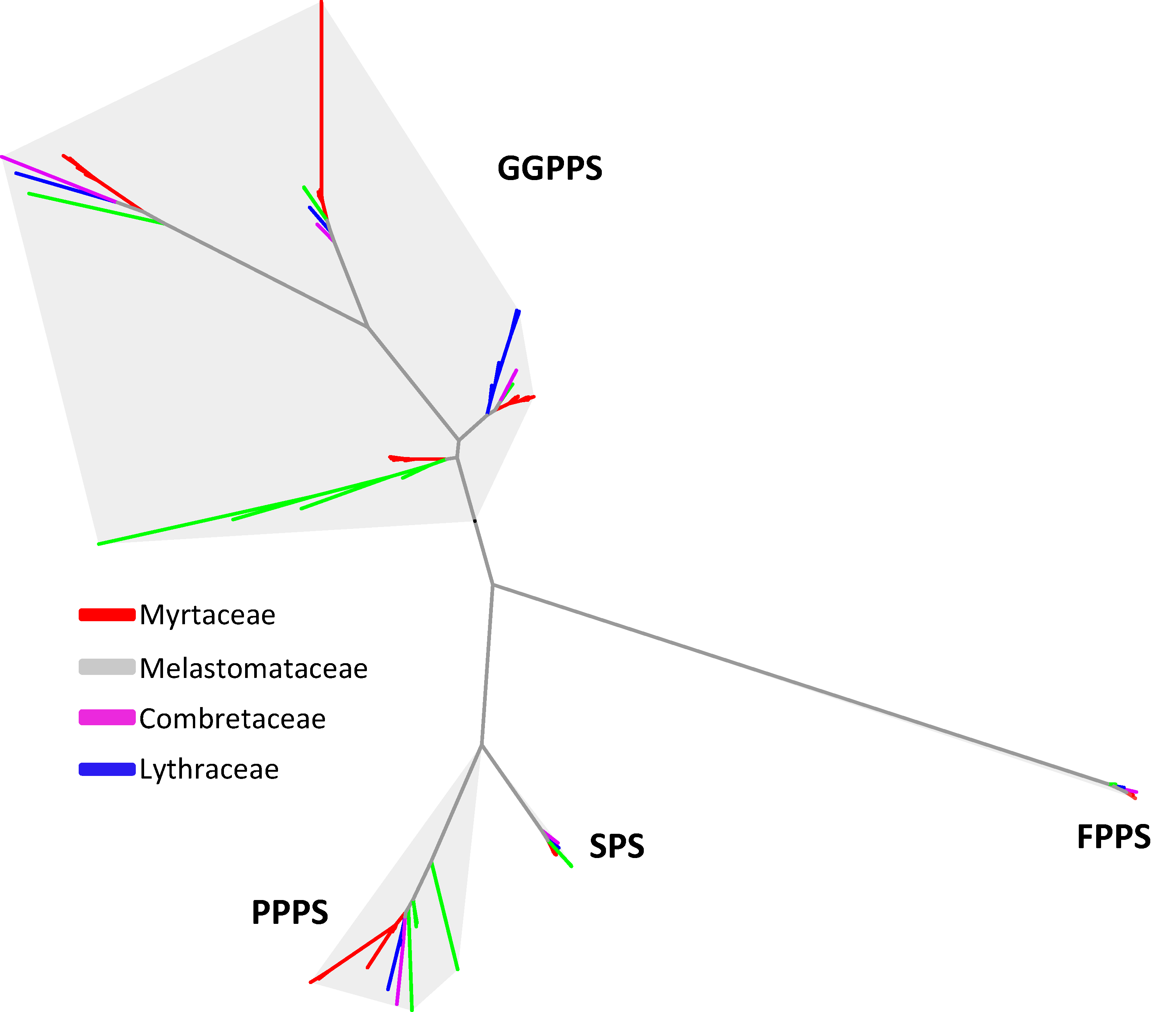
2.3. Comparative Genomic Analysis of Isoprenyl Diphosphate (IDS) Genes
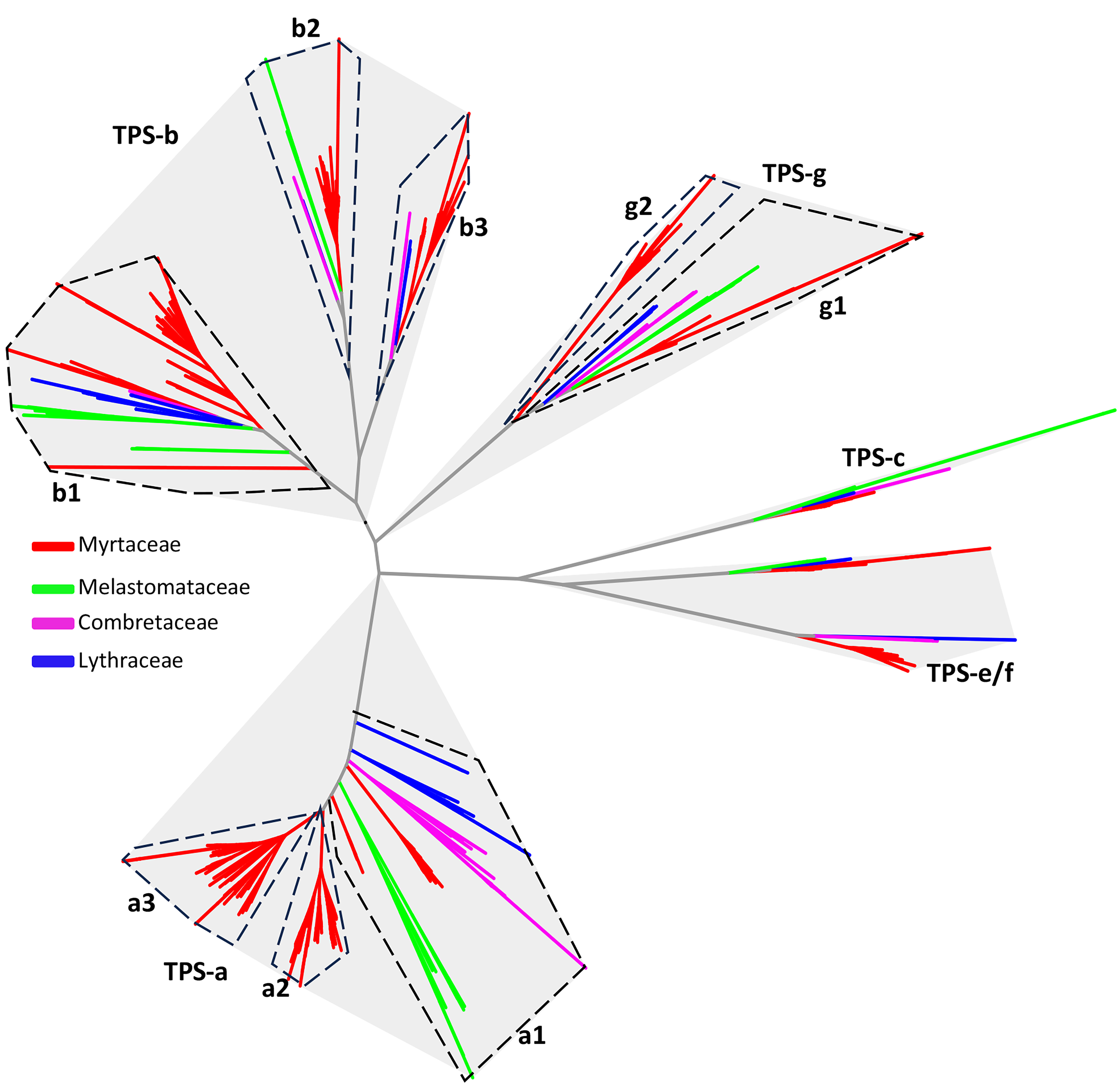
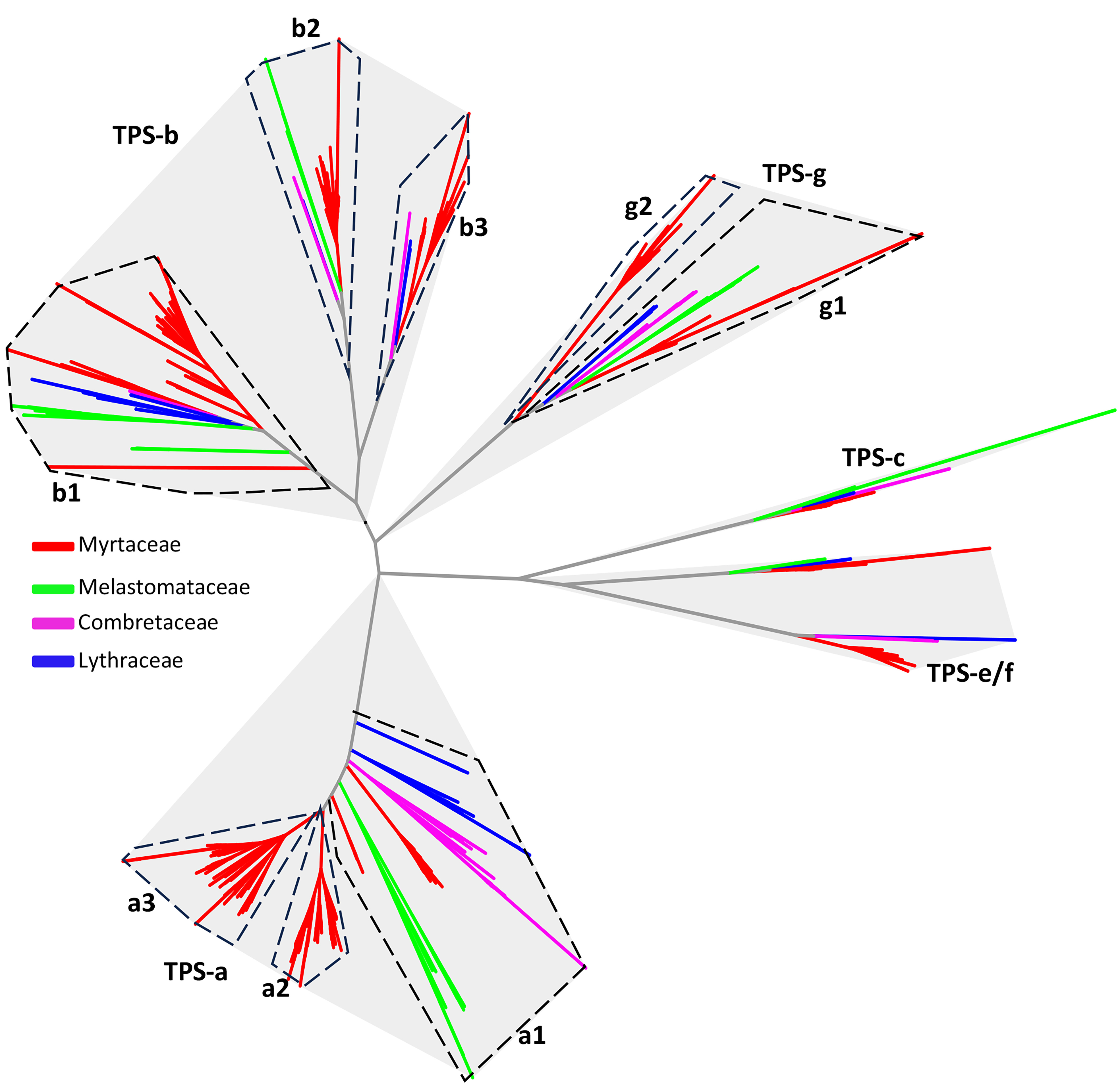
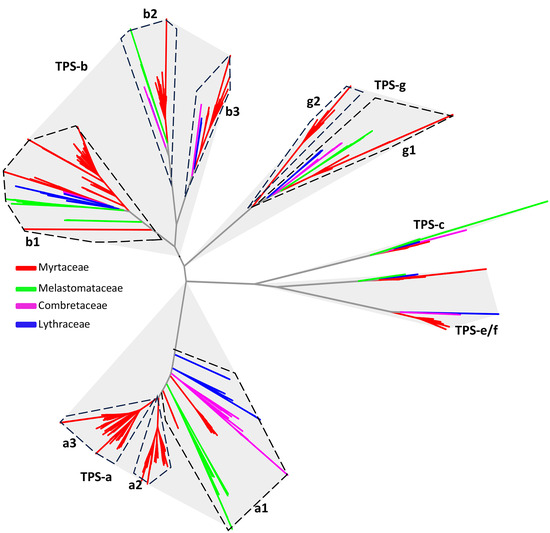
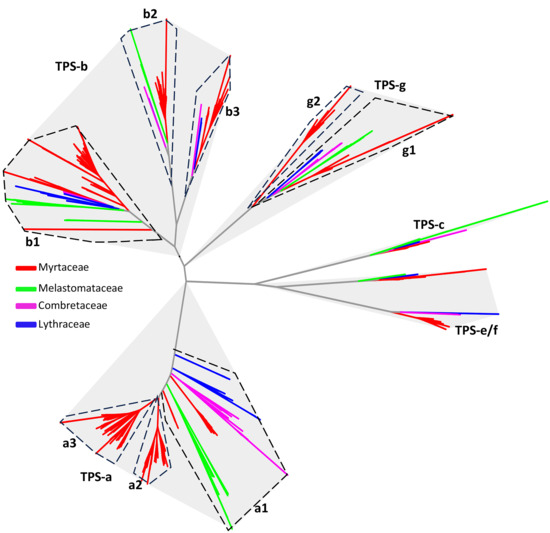
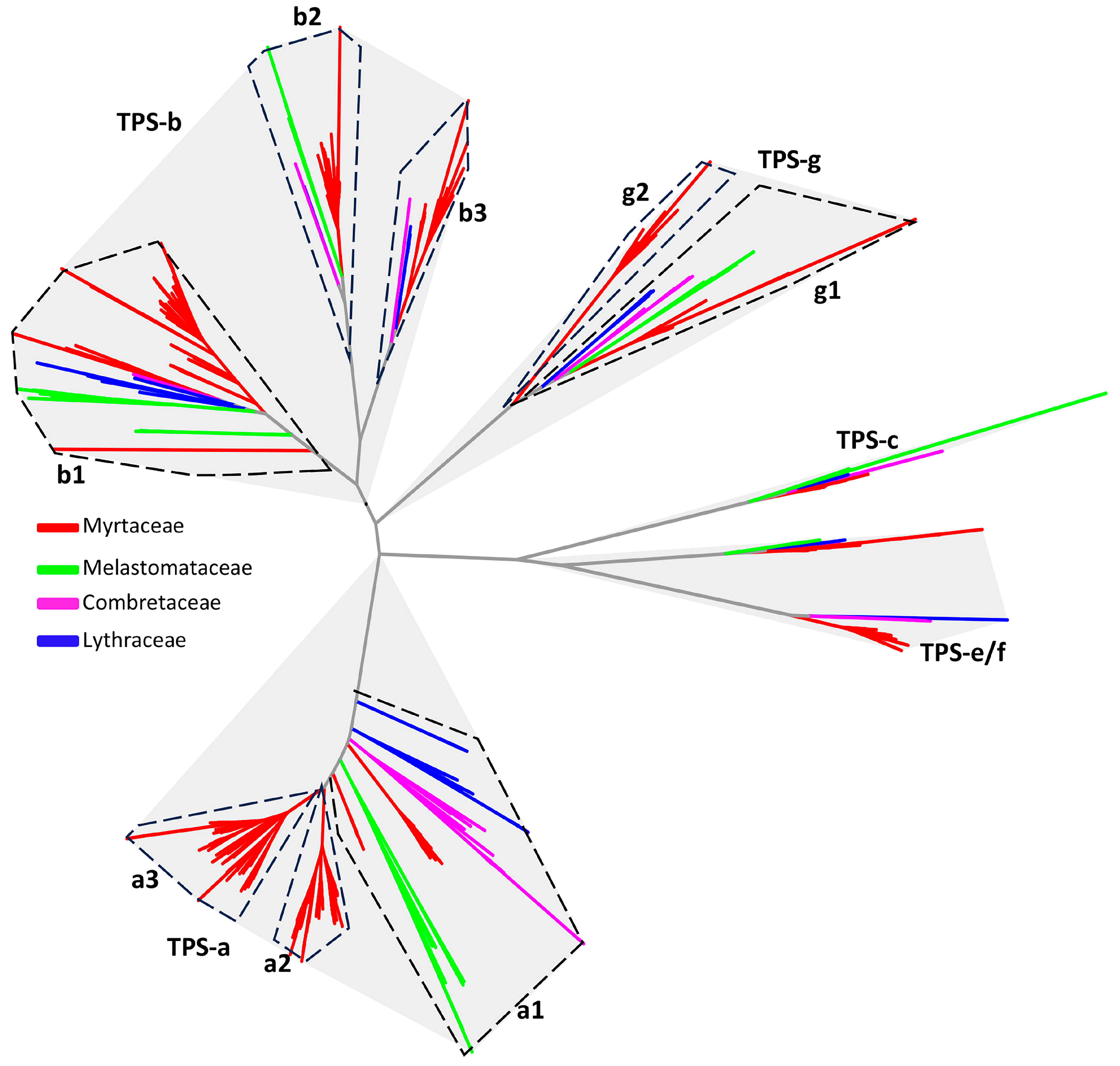
2.4. Comparative Genomic Analysis of TPS Genes
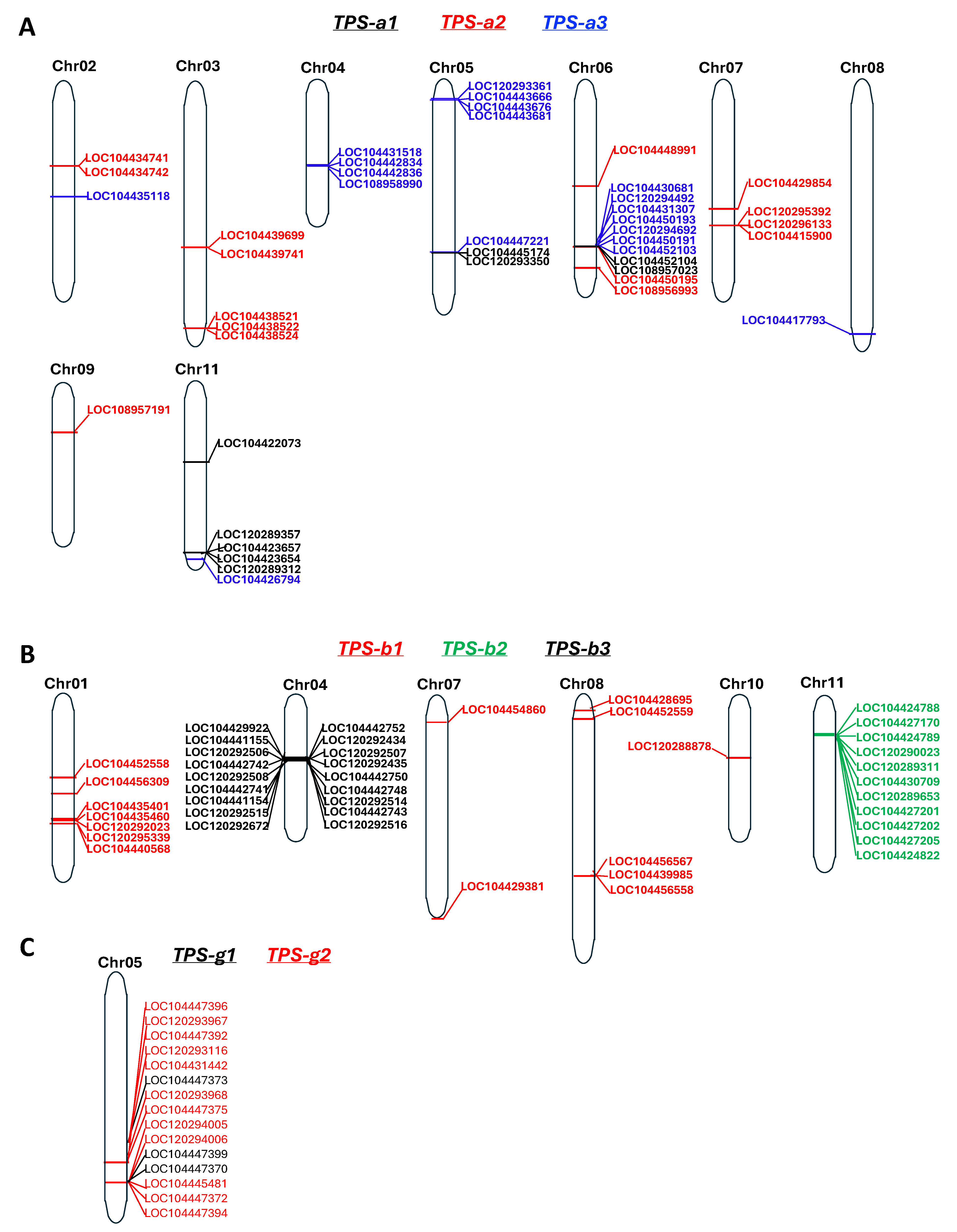
2.5. Distribution of Selected TPS Genes in the Genome of E. grandis
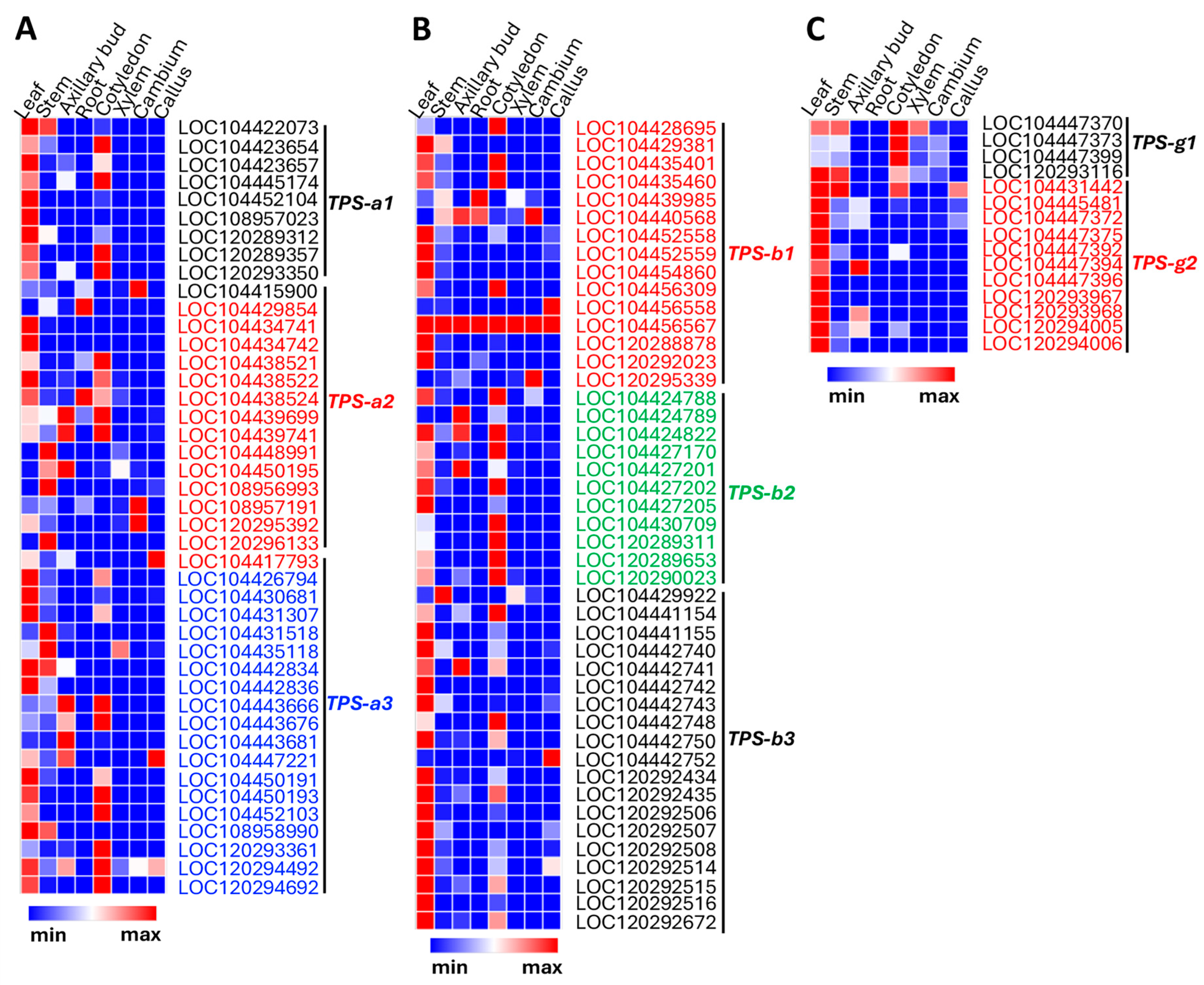
2.6. Expression Patterns of Selected TPS Genes in E. grandis
3. Conclusions
4. Material and Methods
4.1. Sequence Retrieval and Analysis
4.2. Sequence Analysis
4.3. Phylogenetic Analyses
4.4. Chromosomal Location and Expression Data of TPS Genes in E. grandis
Supplementary Materials
Author Contributions
Funding
Data Availability Statement
Acknowledgments
Conflicts of Interest
Notice
References
- Maurin, O.; Anest, A.; Bellot, S.; Biffin, E.; Brewer, G.; Charles-Dominique, T.; Cowan, R.S.; Dodsworth, S.; Epitawalage, N.; Gallego, B.; et al. A nuclear phylogenomic study of the angiosperm order Myrtales, exploring the potential and limitations of the universal Angiosperms353 probe set. Am. J. Bot. 2021, 108, 1087–1111. [Google Scholar] [CrossRef]
- Myerscough, P.J. Ecology of Myrtaceae with special reference to the Sydney region. Cunninghamia 1998, 5, 787–807. [Google Scholar]
- Jo, I.; Bellingham, P.J.; McCarthy, J.K.; Easdale, T.A.; Padamsee, M.; Wiser, S.K.; Richardson, S.J. Ecological importance of the Myrtaceae in New Zealand’s natural forests. J. Veg. Sci. 2022, 33, e13106. [Google Scholar] [CrossRef]
- Keith, H.; Mackey, B.G.; Lindenmayer, D.B. Re-evaluation of forest biomass carbon stocks and lessons from the world’s most carbon-dense forests. Proc. Natl. Acad. Sci. USA 2009, 106, 11635–11640. [Google Scholar] [CrossRef] [PubMed]
- Burrows, G. Epicormic strand structure in Angophora, Eucalyptus and Lophostemon (Myrtaceae): Implications for fire resistance and recovery. New Phytol. 2002, 153, 111–131. [Google Scholar] [CrossRef]
- de Amorim, M.S.; Verdan, M.H.; Oliveira, C.S.; Santos, A.D.C. Essential oils of Neotropical Myrtaceae species from 2011 until 2023: An update. Chem. Biodivers. 2025, 22, e202401503. [Google Scholar] [CrossRef]
- Padovan, A.; Keszei, A.; Külheim, C.; Foley, W.J. The evolution of foliar terpene diversity in Myrtaceae. Phytochem. Rev. 2014, 13, 695–716. [Google Scholar] [CrossRef]
- Freitas, V.D.; Coelho, E.L.J.; Moreira, J.; Dutra, V.; Sousa, V.R.F.; Almeida, A. Antibacterial activity of Clove essential oil (Syzygium aromaticum) against oxacillin-resistant Staphylococcus pseudintermedius isolated from dogs with Otitis Externa. Pathogens 2025, 14, 709. [Google Scholar] [CrossRef]
- Carson, C.F.; Hammer, K.A.; Riley, T.V. Melaleuca alternifolia (Tea Tree) oil: A review of antimicrobial and other medicinal properties. Clin. Microbiol. Rev. 2006, 19, 50–62. [Google Scholar] [CrossRef]
- Salehi, B.; Sharifi-Rad, J.; Quispe, C.; Llaique, H.; Villalobos, M.; Smeriglio, A.; Trombetta, D.; Ezzat, S.M.; Salem, M.A.; Zayed, A. Insights into Eucalyptus genus chemical constituents, biological activities and health-promoting effects. Trends Food Sci. Technol. 2019, 91, 609–624. [Google Scholar] [CrossRef]
- Yip, S.C.; Ho, L.Y.; Wu, T.-Y.; Sit, N.W. Chemical composition and bioactivities of Eucalyptus essential oils from selected pure and hybrid species: A review. Ind. Crops Prod. 2024, 222, 120118. [Google Scholar] [CrossRef]
- Külheim, C.; Padovan, A.; Hefer, C.; Krause, S.T.; Köllner, T.G.; Myburg, A.A.; Degenhardt, J.; Foley, W.J. The Eucalyptus terpene synthase gene family. BMC Genom. 2015, 16, 450. [Google Scholar] [CrossRef] [PubMed]
- Butler, J.B.; Freeman, J.S.; Potts, B.M.; Vaillancourt, R.E.; Grattapaglia, D.; Silva-Junior, O.B.; Simmons, B.A.; Healey, A.L.; Schmutz, J.; Barry, K.W.; et al. Annotation of the Corymbia terpene synthase gene family shows broad conservation but dynamic evolution of physical clusters relative to Eucalyptus. Heredity 2018, 121, 87–104. [Google Scholar] [CrossRef] [PubMed]
- Voelker, J.; Mauleon, R.; Shepherd, M. The terpene synthase genes of Melaleuca alternifolia (tea tree) and comparative gene family analysis among Myrtaceae essential oil crops. Plant Syst. Evol. 2023, 309, 13. [Google Scholar] [CrossRef]
- Chen, F.; Tholl, D.; Bohlmann, J.; Pichersky, E. The family of terpene synthases in plants: A mid-size family of genes for specialized metabolism that is highly diversified throughout the kingdom. Plant J. 2011, 66, 212–229. [Google Scholar] [CrossRef]
- Martina, C.; Krenn, L.; Krupicka, L.; Yamada, H.; Hood-Nowotny, R.; Lahuatte, P.F.; Yar, J.; Schwemhofer, T.; Fischer, B.; Causton, C.E.; et al. Evaluating Volatile Plant Compounds of Psidium galapageium (Myrtales: Myrtaceae) as Repellents Against Invasive Parasitic Diptera in the Galapagos Islands. J. Med. Entomol. 2022, 59, 89–98. [Google Scholar] [CrossRef]
- Li, Y.J.; Liu, T.A.; Zhao, H.; Han, Y.; Lou, B.H.; Lei, C.Y.; Song, Y.Q.; Jiang, H.B. Repellency, Toxicity, and Chemical Composition of Plant Essential Oils from Myrtaceae against Asian Citrus Psyllid, Diaphorina citri Kuwayama (Hemiptera Liviidae). Molecules 2024, 29, 3390. [Google Scholar] [CrossRef]
- Cascaes, M.M.; Guilhon, G.M.; de Aguiar Andrade, E.H.; das Graças Bichara Zoghbi, M.; da Silva Santos, L. Constituents and Pharmacological Activities of Myrcia (Myrtaceae): A Review of an Aromatic and Medicinal Group of Plants. Int. J. Mol. Sci. 2015, 16, 23881–23904. [Google Scholar] [CrossRef]
- Ribeiro, A.V.; de Sá Farias, E.; Santos, A.A.; Filomeno, C.A.; dos Santos, I.B.; Barbosa, L.C.A.; Picanço, M.C. Selection of an essential oil from Corymbia and Eucalyptus plants against Ascia monuste and its selectivity to two non-target organisms. Crop Prot. 2018, 110, 207–213. [Google Scholar] [CrossRef]
- Garrison, M.D.; Keller, C.L.; Woodroffe, J.-D.; Nagel, E.M.; Harvey, B.G. Synthesis and characterization of high-density biosynthetic fuels from myrtenal. Fuel 2023, 354, 129258. [Google Scholar] [CrossRef]
- Mewalal, R.; Rai, D.K.; Kainer, D.; Chen, F.; Külheim, C.; Peter, G.F.; Tuskan, G.A. Plant-Derived Terpenes: A Feedstock for Specialty Biofuels. Trends Biotechnol. 2017, 35, 227–240. [Google Scholar] [CrossRef] [PubMed]
- Wang, K.C.; Ohnuma, S. Isoprenyl diphosphate synthases. Biochim. Biophys. Acta 2000, 1529, 33–48. [Google Scholar] [CrossRef] [PubMed]
- Jia, Q.; Chen, F. Catalytic Functions of the Isoprenyl Diphosphate Synthase Superfamily in Plants: A Growing Repertoire. Mol. Plant 2016, 9, 189–191. [Google Scholar] [CrossRef]
- Christianson, D.W. Structural and Chemical Biology of Terpenoid Cyclases. Chem. Rev. 2017, 117, 11570–11648. [Google Scholar] [CrossRef] [PubMed]
- Keszei, A.; Brubaker, C.L.; Carter, R.; Köllner, T.; Degenhardt, J.; Foley, W.J. Functional and evolutionary relationships between terpene synthases from Australian Myrtaceae. Phytochemistry 2010, 71, 844–852. [Google Scholar] [CrossRef]
- Kainer, D.; Padovan, A.; Degenhardt, J.; Krause, S.; Mondal, P.; Foley, W.J.; Külheim, C. High marker density GWAS provides novel insights into the genomic architecture of terpene oil yield in Eucalyptus. New Phytol. 2019, 223, 1489–1504. [Google Scholar] [CrossRef]
- Shelton, D.; Zabaras, D.; Chohan, S.; Wyllie, S.G.; Baverstock, P.; Leach, D.; Henry, R. Isolation and partial characterisation of a putative monoterpene synthase from Melaleuca alternifolia. Plant Physiol. Biochem. 2004, 42, 875–882. [Google Scholar] [CrossRef]
- Myburg, A.A.; Grattapaglia, D.; Tuskan, G.A.; Hellsten, U.; Hayes, R.D.; Grimwood, J.; Jenkins, J.; Lindquist, E.; Tice, H.; Bauer, D.; et al. The genome of Eucalyptus grandis. Nature 2014, 510, 356–362. [Google Scholar] [CrossRef]
- Chase, M.W.; Christenhusz, M.J.; Fay, M.F.; Byng, J.; Judd, W.; Soltis, D.; Mabberley, D.; Sennikov, A.; Soltis, P. An update of the Angiosperm Phylogeny Group classification for the orders and families of flowering plants: APG IV. Bot. J. Linn. Soc. 2016, 181, 1–20. [Google Scholar] [CrossRef]
- Marks, R.A.; Hotaling, S.; Frandsen, P.B.; VanBuren, R. Representation and participation across 20 years of plant genome sequencing. Nat. Plants 2021, 7, 1571–1578. [Google Scholar] [CrossRef]
- Friesen, J.A.; Rodwell, V.W. The 3-hydroxy-3-methylglutaryl coenzyme-A (HMG-CoA) reductases. Genome Biol. 2004, 5, 248. [Google Scholar] [CrossRef]
- de Luna-Valdez, L.; Chenge-Espinosa, M.; Hernández-Muñoz, A.; Cordoba, E.; López-Leal, G.; Castillo-Ramírez, S.; León, P. Reassessing the evolution of the 1-deoxy-D-xylulose 5-phosphate synthase family suggests a possible novel function for the DXS class 3 proteins. Plant Sci. 2021, 310, 110960. [Google Scholar] [CrossRef] [PubMed]
- Song, S.; Jin, R.; Chen, Y.; He, S.; Li, K.; Tang, Q.; Wang, Q.; Wang, L.; Kong, M.; Dudareva, N.; et al. The functional evolution of architecturally different plant geranyl diphosphate synthases from geranylgeranyl diphosphate synthase. Plant Cell 2023, 35, 2293–2315. [Google Scholar] [CrossRef] [PubMed]
- Jia, Q.; Brown, R.; Köllner, T.G.; Fu, J.; Chen, X.; Wong, G.K.-S.; Gershenzon, J.; Peters, R.J.; Chen, F. Origin and early evolution of the plant terpene synthase family. Proc. Natl. Acad. Sci. USA 2022, 119, e2100361119. [Google Scholar] [CrossRef] [PubMed]
- Martin, D.M.; Fäldt, J.; Bohlmann, J. Functional characterization of nine Norway Spruce TPS genes and evolution of gymnosperm terpene synthases of the TPS-d subfamily. Plant Physiol. 2004, 135, 1908–1927. [Google Scholar] [CrossRef]
- Li, M.; Cao, Y.; Wu, W.; Mo, Y.; Wang, J.; Geng, X.; Xu, J.; Fei, Y.; Su, G.; Hu, H.; et al. EucaMOD: A comprehensive multi-omics database for functional genomics research and molecular breeding of fast-growing eucalyptus trees. Plant J. 2025, 124, e70603. [Google Scholar] [CrossRef]
- Fahn, A. Secretory tissues in vascular plants. New Phytol. 1988, 108, 229–257. [Google Scholar] [CrossRef]
- Xie, W.; Guo, Z.; Wang, J.; He, Z.; Li, Y.; Feng, X.; Zhong, C.; Shi, S. Evolution of woody plants to the land-sea interface—The atypical genomic features of mangroves with atypical phenotypic adaptation. Mol. Ecol. 2023, 32, 1351–1365. [Google Scholar] [CrossRef]
- Voelker, J.; Shepherd, M.; Mauleon, R. A high-quality draft genome for Melaleuca alternifolia (tea tree): A new platform for evolutionary genomics of myrtaceous terpene-rich species. GigaByte 2021, 2021, gigabyte28. [Google Scholar] [CrossRef]
- Katoh, K.; Standley, D.M. MAFFT multiple sequence alignment software version 7: Improvements in performance and usability. Mol. Biol. Evol. 2013, 30, 772–780. [Google Scholar] [CrossRef]
- Darriba, D.; Taboada, G.L.; Doallo, R.; Posada, D. ProtTest 3: Fast selection of best-fit models of protein evolution. Bioinformatics 2011, 27, 1164–1165. [Google Scholar] [CrossRef]
- Stamatakis, A. RAxML version 8: A tool for phylogenetic analysis and post-analysis of large phylogenies. Bioinformatics 2014, 30, 1312–1313. [Google Scholar] [CrossRef]
- Chao, J.; Li, Z.; Sun, Y.; Aluko, O.O.; Wu, X.; Wang, Q.; Liu, G. MG2C: A user-friendly online tool for drawing genetic maps. Mol. Hortic. 2021, 1, 16. [Google Scholar] [CrossRef]






| Family | Species | AACT | HMGS | HMGR | MK | PMK | MPDC | IDI |
|---|---|---|---|---|---|---|---|---|
| Myrtaceae | Eucalyptus grandis | 2 | 1 | 7 | 2 | 1 | 2 | 2 |
| Eucalyptus globulus | 2 | 2 | 8 | 3 | 1 | 2 | 2 | |
| Angophora floribunda | 3 | 2 | 9 | 1 | 1 | 1 | 2 | |
| Corymbia citriodora | 2 | 2 | 8 | 2 | 1 | 2 | 2 | |
| Syzygium grande | 1 | 2 | 5 | 2 | 1 | 1 | 3 | |
| Melaleuca alternifolia | 2 | 4 | 7 | 2 | 1 | 3 | 2 | |
| Melastomataceae | Melastoma candidum | 4 | 5 | 9 | 3 | 1 | 2 | 2 |
| Combretaceae | Combretum micranthum | 3 | 1 | 5 | 3 | 1 | 3 | 2 |
| Lythraceae | Punica granatum | 2 | 1 | 4 | 2 | 1 | 1 | 2 |
| Family | Species | DXS | DXR | MCT | CMK | MDS | HDS | HDR |
|---|---|---|---|---|---|---|---|---|
| 2Myrtaceae | Eucalyptus grandis | 3 | 1 | 1 | 1 | 1 | 1 | 2 |
| Eucalyptus globulus | 3 | 1 | 1 | 1 | 1 | 1 | 2 | |
| Angophora floribunda | 4 | 1 | 1 | 1 | 1 | 1 | 2 | |
| Corymbia citriodora | 4 | 1 | 1 | 1 | 2 | 1 | 2 | |
| Syzygium grande | 3 | 1 | 1 | 1 | 2 | 1 | 2 | |
| Melaleuca alternifolia | 3 | 1 | 1 | 1 | 1 | 1 | 1 | |
| Melastomataceae | Melastoma candidum | 6 | 2 | 2 | 2 | 2 | 1 | 5 |
| Combretaceae | Combretum micranthum | 6 | 1 | 1 | 2 | 1 | 2 | 2 |
| Lythraceae | Punica granatum | 3 | 1 | 1 | 1 | 1 | 1 | 1 |
| Family | Species | GGPPS | FPPS | PPPS | SPPS |
|---|---|---|---|---|---|
| Myrtaceae | Eucalyptus grandis | 5 | 1 | 4 | 1 |
| Eucalyptus globulus | 6 | 1 | 1 | 1 | |
| Angophora floribunda | 7 | 1 | 2 | 1 | |
| Corymbia citriodora | 6 | 1 | 1 | 1 | |
| Syzygium grande | 5 | 1 | 1 | 1 | |
| Melaleuca alternifolia | 5 | 1 | 2 | 1 | |
| Melastomataceae | Melastoma candidum | 10 | 2 | 4 | 2 |
| Combretaceae | Combretum micranthum | 5 | 1 | 2 | 1 |
| Lythraceae | Punica granatum | 7 | 1 | 2 | 1 |
| Family | Species | Total TPS | TPS Subfamilies | ||||
|---|---|---|---|---|---|---|---|
| a | b | g | c | e/f | |||
| Myrtaceae | Eucalyptus grandis | 112 | 43 | 45 | 15 | 3 | 6 |
| Eucalyptus globulus | 113 | 46 | 37 | 12 | 2 | 16 | |
| Angophora floribunda | 98 | 42 | 33 | 10 | 2 | 11 | |
| Corymbia citriodora | 117 | 59 | 38 | 12 | 1 | 7 | |
| Syzygium grande | 70 | 29 | 24 | 9 | 1 | 7 | |
| Melaleuca alternifolia | 83 | 44 | 28 | 5 | 1 | 5 | |
| Melastomataceae | Melastoma candidum | 42 | 15 | 15 | 6 | 4 | 2 |
| Combretaceae | Combretum micranthum | 44 | 24 | 5 | 9 | 2 | 4 |
| Lythraceae | Punica granatum | 44 | 17 | 19 | 5 | 1 | 2 |
| Family | Species | TPS-a | TPS-b | TPS-g | |||||
|---|---|---|---|---|---|---|---|---|---|
| a1 | a2 | a3 | b1 | b2 | b3 | g1 | g2 | ||
| Myrtaceae | Eucalyptus grandis | 9 | 15 | 19 | 15 | 19 | 11 | 4 | 11 |
| Eucalyptus globulus | 7 | 16 | 23 | 20 | 10 | 7 | 1 | 11 | |
| Angophora floribunda | 6 | 23 | 12 | 17 | 7 | 9 | 6 | 4 | |
| Corymbia citriodora | 4 | 30 | 25 | 20 | 8 | 10 | 7 | 5 | |
| Syzygium grande | 7 | 12 | 10 | 15 | 5 | 4 | 4 | 4 | |
| Melaleuca alternifolia | 3 | 28 | 13 | 19 | 7 | 2 | 1 | 4 | |
| Melastomataceae | Melastoma candidum | 15 | 12 | 3 | 6 | ||||
| Combretaceae | Combretum micranthum | 24 | 2 | 1 | 2 | 9 | |||
| Lythraceae | Punica granatum | 17 | 15 | 1 | 3 | 5 | |||
Disclaimer/Publisher’s Note: The statements, opinions and data contained in all publications are solely those of the individual author(s) and contributor(s) and not of MDPI and/or the editor(s). MDPI and/or the editor(s) disclaim responsibility for any injury to people or property resulting from any ideas, methods, instructions or products referred to in the content. |
© 2026 by the authors. Licensee MDPI, Basel, Switzerland. This article is an open access article distributed under the terms and conditions of the Creative Commons Attribution (CC BY) license.
Share and Cite
Chen, X.; Chen, J.-G.; Tuskan, G.A.; Chen, F. High Terpene Production in Myrtaceae: Evolutionary Insights from Terpene Pathway Genes. Plants 2026, 15, 1293. https://doi.org/10.3390/plants15091293
Chen X, Chen J-G, Tuskan GA, Chen F. High Terpene Production in Myrtaceae: Evolutionary Insights from Terpene Pathway Genes. Plants. 2026; 15(9):1293. https://doi.org/10.3390/plants15091293
Chicago/Turabian StyleChen, Xinlu, Jin-Gui Chen, Gerald A. Tuskan, and Feng Chen. 2026. "High Terpene Production in Myrtaceae: Evolutionary Insights from Terpene Pathway Genes" Plants 15, no. 9: 1293. https://doi.org/10.3390/plants15091293
APA StyleChen, X., Chen, J.-G., Tuskan, G. A., & Chen, F. (2026). High Terpene Production in Myrtaceae: Evolutionary Insights from Terpene Pathway Genes. Plants, 15(9), 1293. https://doi.org/10.3390/plants15091293