Evolution of Plant AIG1-like Proteins: Different Modes of Sequence Divergence and Their Contributions to Functional Diversification

Abstract
1. Introduction
2. Results
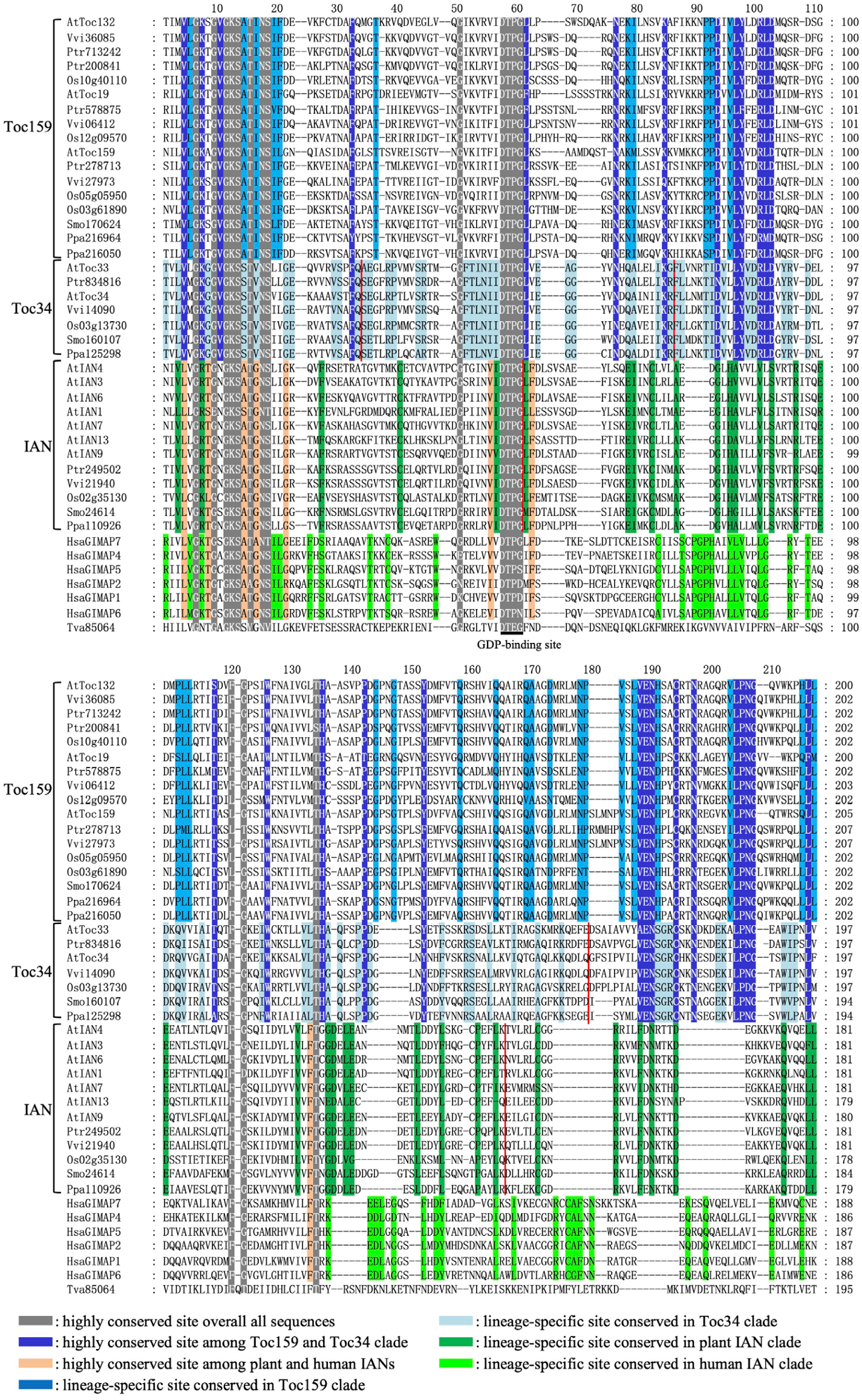
2.1. Abundance and Domain Architecture of AIG1 Domain-Containing Proteins
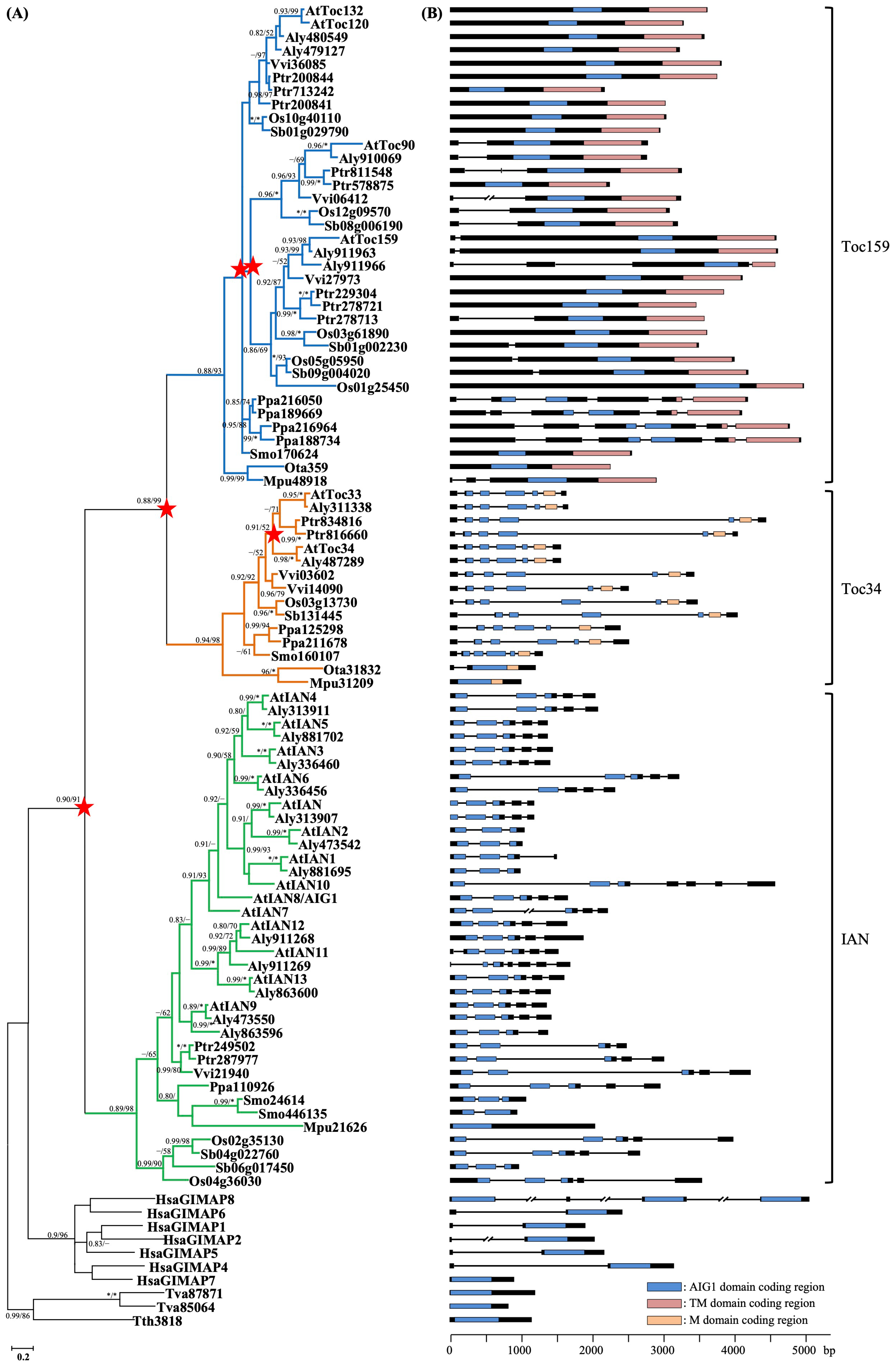
2.2. Phylogenetic Relationships of Plant Toc34, Toc159 and IAN Genes
2.3. Evolution of Genic Structure of Plant AIG1-Domain Containing Proteins
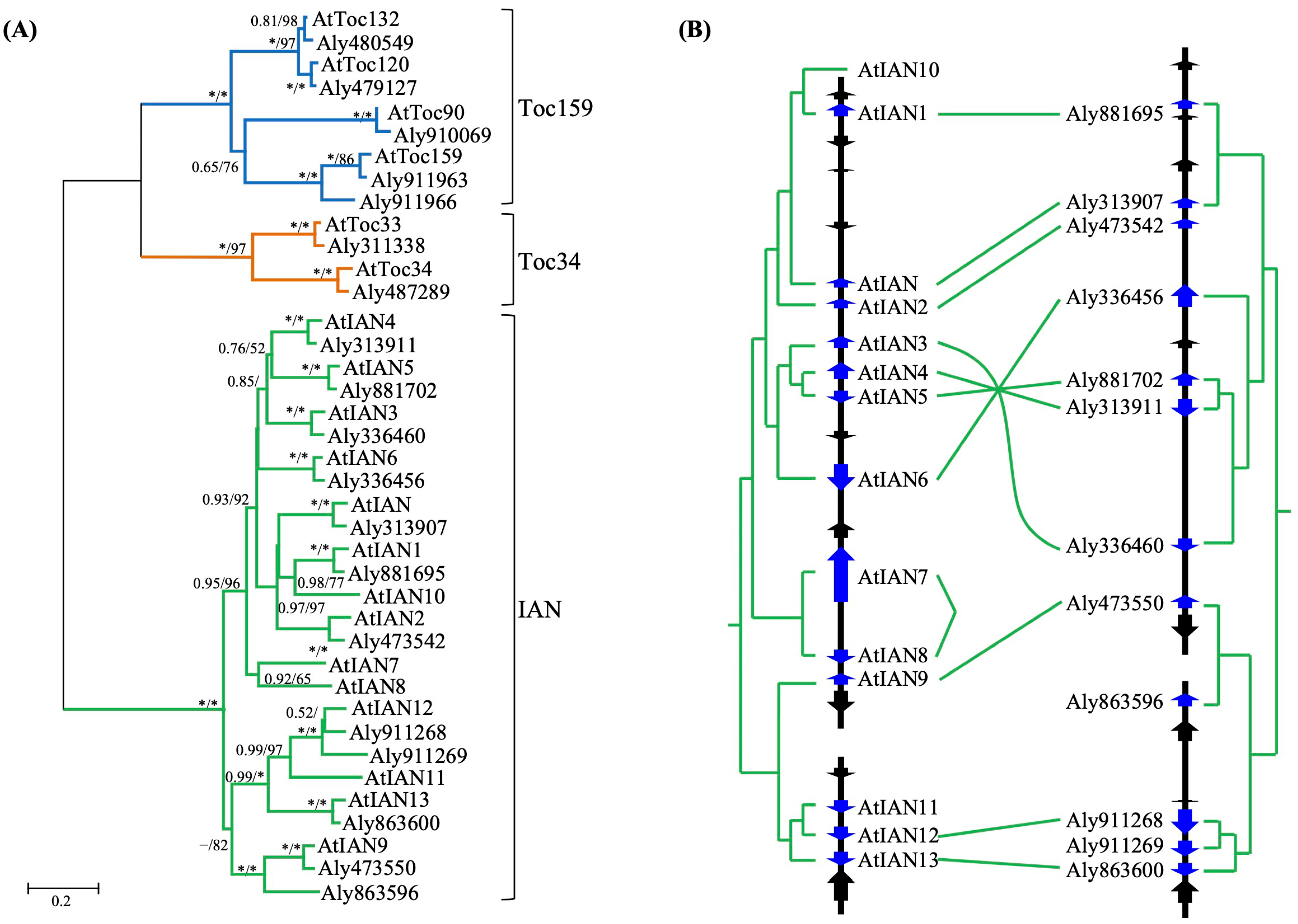
2.4. Gene Duplication Patterns in AIG1-like Genes
3. Discussion
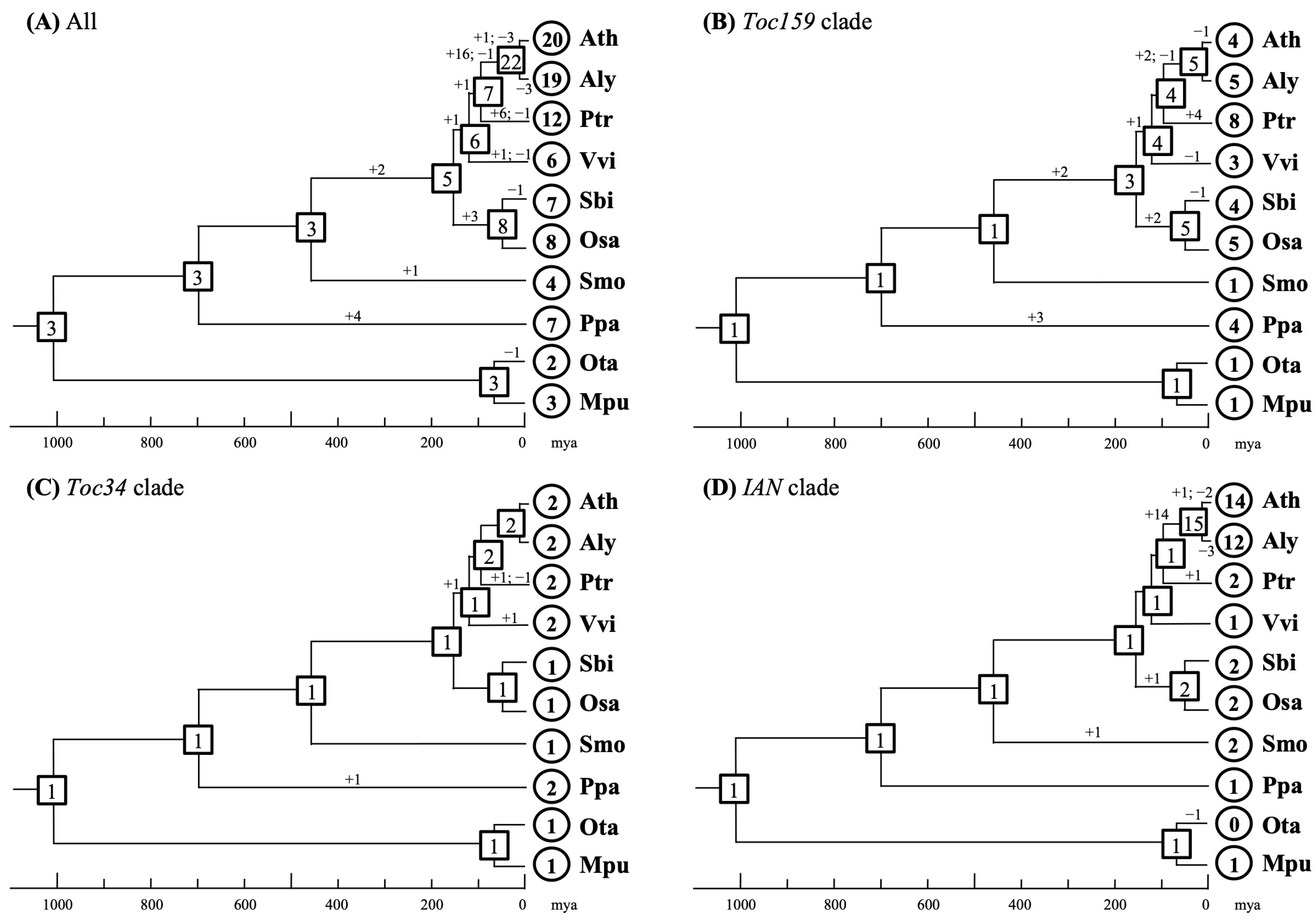
3.1. Evolutionary History of AIG1 Gene Family
3.2. Phylogenetic Relationships and Evolutionary Dynamics of Plant Toc34, Toc159, and IAN Genes
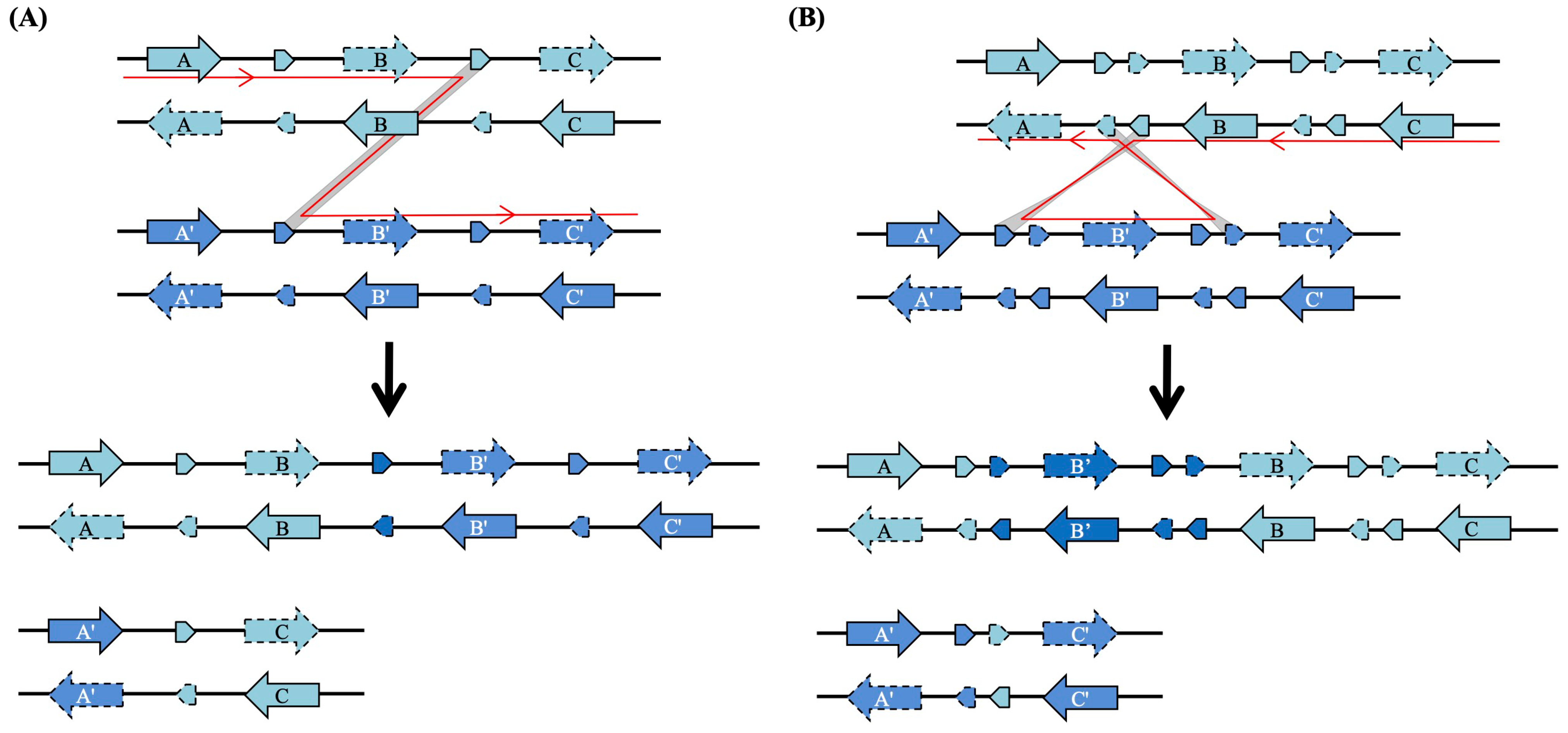
3.3. Mechanism Underlying the Generation of Head-to-Head Tandem Duplicated Genes
3.4. The Importance of Copy Number Variation and Sequence Changes in Plant Evolution
4. Materials and Methods
4.1. Sequence Retrieval and Domain Analysis
4.2. Sequence Alignment and Phylogenetic Analysis
4.3. Determination of the Duplication Types
Supplementary Materials
Author Contributions
Funding
Data Availability Statement
Conflicts of Interest
References
- López-Juez, E. Plastid biogenesis, between light and shadows. J. Exp. Bot. 2007, 58, 11–26. [Google Scholar] [CrossRef] [PubMed]
- Jarvis, P. Targeting of nucleus-encoded proteins to chloroplasts in plants. New Phytol. 2008, 179, 257–285. [Google Scholar] [CrossRef] [PubMed]
- Song, Y.; Feng, L.; Alyafei, M.A.M.; Jaleel, A.; Ren, M. Function of chloroplasts in plant stress responses. Int. J. Mol. Sci. 2021, 22, 13464. [Google Scholar] [CrossRef] [PubMed]
- Stiller, J.W. Plastid endosymbiosis, genome evolution and the origin of green plants. Trends Plant Sci. 2007, 12, 391–396. [Google Scholar] [CrossRef]
- Keeling, P.J. The endosymbiotic origin, diversification and fate of plastids. Philos. Trans. R. Soc. B 2010, 365, 729–748. [Google Scholar] [CrossRef]
- Sato, N. Are cyanobacteria an ancestor of chloroplasts or just one of the gene donors for plants and algae? Genes 2021, 12, 823. [Google Scholar] [CrossRef]
- Gao, L.L.; Hong, Z.H.; Wang, Y.; Wu, G.Z. Chloroplast proteostasis: A story of birth, life, and death. Plant Commun. 2023, 4, 100424. [Google Scholar] [CrossRef]
- Zhang, Y.; Tian, L.; Lu, C. Chloroplast gene expression: Recent advances and perspectives. Plant Commun. 2023, 4, 100611. [Google Scholar] [CrossRef]
- Olejniczak, S.A.; Łojewska, E.; Kowalczyk, T.; Sakowicz, T. Chloroplasts: State of research and practical applications of plastome sequencing. Planta 2016, 244, 517–527. [Google Scholar] [CrossRef]
- Wang, J.; Kan, S.; Liao, X.; Zhou, J.; Tembrock, L.R.; Daniell, H.; Jin, S.; Wu, Z. Plant organellar genomes: Much done, much more to do. Trends Plant Sci. 2024, 29, 754–769. [Google Scholar] [CrossRef]
- Inaba, T.; Schnell, D.J. Protein trafficking to plastids: One theme, many variations. Biochem. J. 2008, 413, 15–28. [Google Scholar] [CrossRef] [PubMed]
- Gross, J.; Bhattacharya, D. Revaluating the evolution of the Toc and Tic protein translocons. Trends Plant Sci. 2009, 14, 13–20. [Google Scholar] [CrossRef] [PubMed]
- Kessler, F.; Schnell, D.J. Chloroplast protein import: Solve the GTPase riddle for entry. Trends Cell Biol. 2004, 14, 334–338. [Google Scholar] [CrossRef] [PubMed][Green Version]
- Harris, A.J.; Goldman, A.D. The very early evolution of protein translocation across membranes. PLoS Comput. Biol. 2021, 17, e1008623. [Google Scholar] [CrossRef]
- Liu, H.; Li, A.; Rochaix, J.D.; Liu, Z. Architecture of chloroplast TOC–TIC translocon supercomplex. Nature 2023, 615, 349–357. [Google Scholar] [CrossRef]
- Agne, B.; Kessler, F. Protein transport in organelles: The Toc complex way of preprotein import. FEBS J. 2009, 276, 1156–1165. [Google Scholar] [CrossRef]
- Richardson, L.G.L.; Paila, Y.D.; Siman, S.R.; Chen, Y.; Smith, M.D.; Schnell, D.J. Targeting and assembly of components of the TOC protein import complex at the chloroplast outer envelope membrane. Front. Plant Sci. 2014, 5, 269. [Google Scholar] [CrossRef]
- Hiltbrunner, A.; Bauer, J.; Alvarez-Huerta, M.; Kessler, F. Protein translocon at the Arabidopsis outer chloroplast membrane. Biochem. Cell Biol. 2001, 79, 629–635. [Google Scholar] [CrossRef]
- Kubis, S.; Patel, R.; Combe, J.; Bédard, J.; Kovacheva, S.; Lilley, K.; Biehl, A.; Leister, D.; Ríos, G.; Koncz, C.; et al. Functional specialization amongst the Arabidopsis Toc159 family of chloroplast protein import receptors. Plant Cell 2004, 16, 2059–2077. [Google Scholar] [CrossRef]
- Ivanova, Y.; Smith, M.D.; Chen, K.; Schnell, D.J. Members of the Toc159 import receptor family represent distinct pathways for protein targeting to plastids. Mol. Biol. Cell 2004, 15, 3379–3392. [Google Scholar] [CrossRef]
- Smith, M.D.; Rounds, C.M.; Wang, F.; Chen, K.; Afitlhile, M.; Schnell, D.J. atToc159 is a selective transit peptide receptor for the import of nucleus-encoded chloroplast proteins. J. Cell Biol. 2004, 165, 323–334. [Google Scholar] [CrossRef]
- Bauer, J.; Chen, K.; Hiltbrunner, A.; Wehrli, E.; Eugster, M.; Schnell, D.; Kessler, F. The major protein import receptor of plastids is essential for chloroplast biogenesis. Nature 2000, 403, 203–207. [Google Scholar] [CrossRef] [PubMed]
- Infanger, S.; Bischof, S.; Hiltbrunner, A.; Agne, B.; Baginsky, S.; Kessler, F. The chloroplast import receptor Toc90 partially restores the accumulation of Toc159 client proteins in the Arabidopsis thaliana ppi2 mutant. Mol. Plant 2011, 4, 252–263. [Google Scholar] [CrossRef] [PubMed]
- Hiltbrunner, A.; Grünig, K.; Alvarez-Huerta, M.; Infanger, S.; Bauer, J.; Kessler, F. AtToc90, a new GTP-binding component of the Arabidopsis chloroplast protein import machinery. Plant Mol. Biol. 2004, 54, 427–440. [Google Scholar] [CrossRef] [PubMed]
- Jarvis, P.; Chen, L.J.; Li, H.M.; Peto, C.A.; Fankhauser, C.; Chory, J. An Arabidopsis mutant defective in the plastid general protein import apparatus. Science 1998, 282, 100–103. [Google Scholar] [CrossRef]
- Inoue, K.; Potter, D. The chloroplastic protein translocation channel Toc75 and its paralog OEP80 represent two distinct protein families and are targeted to the chloroplastic outer envelope by different mechanisms. Plant J. 2004, 39, 354–365. [Google Scholar] [CrossRef]
- Kalanon, M.; McFadden, G.I. The chloroplast protein translocation complexes of Chlamydomonas reinhardtii: A bioinformatic comparison of Toc and Tic components in plants, green algae and red algae. Genetics 2008, 179, 95–112. [Google Scholar] [CrossRef]
- Day, P.M.; Potter, D.; Inoue, K. Evolution and targeting of Omp85 homologs in the chloroplast outer envelope membrane. Front. Plant Sci. 2014, 5, 535. [Google Scholar] [CrossRef]
- Koenig, P.; Oreb, M.; Höfle, A.; Kaltofen, S.; Rippe, K.; Sinning, I.; Schleiff, E.; Tews, I. The GTPase cycle of the chloroplast import receptors Toc33/Toc34: Implications from monomeric and dimeric structures. Structure 2008, 16, 585–596. [Google Scholar] [CrossRef]
- Yue, J.; Zhang, C.; Wang, X.; Wang, Q.; Chen, J.; Li, W.; Yan, J. Genome-wide identification of the Toc GTPase gene family in tomato and involvement of SlToc34-1 gene in fruit chloroplast development. Plant Physiol. Biochem. 2025, 219, 109331. [Google Scholar] [CrossRef]
- Liu, C.; Wang, T.; Zhang, W.; Li, X. Computational identification and analysis of immune-associated nucleotide gene family in Arabidopsis thaliana. J. Plant Physiol. 2008, 165, 777–787. [Google Scholar] [CrossRef]
- Wang, Z.; Li, X. IAN/GIMAPs are conserved and novel regulators in vertebrates and angiosperm plants. Plant Signal. Behav. 2009, 4, 165–167. [Google Scholar] [CrossRef] [PubMed]
- Reuber, T.L.; Ausubel, F.M. Isolation of Arabidopsis genes that differentiate between resistance responses mediated by the RPS2 and RPM1 disease resistance genes. Plant Cell 1996, 8, 241–249. [Google Scholar] [CrossRef] [PubMed]
- Weiss, Y.; Forêt, S.; Hayward, D.C.; Ainsworth, T.; King, R.; Ball, E.E.; Miller, D.J. The acute transcriptional response of the coral Acropora millepora to immune challenge: Expression of GiMAP/IAN genes links the innate immune responses of corals with those of mammals and plants. BMC Genom. 2013, 14, 400. [Google Scholar] [CrossRef] [PubMed]
- Poirier, G.M.; Anderson, G.; Huvar, A.; Wagaman, P.C.; Shuttleworth, J.; Jenkinson, E.; Jackson, M.R.; Peterson, P.A.; Erlander, M.G. Immune-associated nucleotide-1 (IAN-1) is a thymic selection marker and defines a novel gene family conserved in plants. J. Immunol. 1999, 163, 4960–4969. [Google Scholar] [CrossRef]
- Krücken, J.; Schroetel, R.M.U.; Müller, I.U.; Saïdani, N.; Marinovski, P.; Benten, W.P.M.; Stamm, O.; Wunderlich, F. Comparative analysis of the human gimap gene cluster encoding a novel GTPase family. Gene 2004, 341, 291–304. [Google Scholar] [CrossRef]
- Nitta, T.; Takahama, Y. The lymphocyte guard-IANs: Regulation of lymphocyte survival by IAN/GIMAP family proteins. Trends Immunol. 2007, 28, 58–65. [Google Scholar] [CrossRef]
- Carvalho, A.T.P.; Szeler, K.; Vavitsas, K.; Åqvist, J.; Kamerlin, S.C.L. Modeling the mechanisms of biological GTP hydrolysis. Arch. Biochem. Biophys. 2015, 582, 80–90. [Google Scholar] [CrossRef]
- Paila, Y.D.; Richardson, L.G.L.; Schnell, D.J. New insights into the mechanism of chloroplast protein import and its integration with protein quality control, organelle biogenesis and development. J. Mol. Biol. 2015, 427, 1038–1060. [Google Scholar] [CrossRef]
- Rochaix, J.D. Chloroplast protein import machinery and quality control. FEBS J. 2022, 289, 6908–6918. [Google Scholar] [CrossRef]
- Takai, Y.; Sasaki, T.; Matozaki, T. Small GTP-binding proteins. Physiol. Rev. 2001, 81, 153–208. [Google Scholar] [CrossRef] [PubMed]
- Zhang, C.; Li, W.; Wu, Y.; Li, S.; Hua, B.; Sun, H. Chloroplast functionality at the interface of growth, defense, and genetic innovation: A multi-omics and technological perspective. Plants 2025, 14, 978. [Google Scholar] [CrossRef] [PubMed]
- Fish, M.; Nash, D.; German, A.; Overton, A.; Jelokhani-Niaraki, M.; Chuong, S.D.X.; Smith, M.D. New insights into the chloroplast outer membrane proteome and associated targeting pathways. Int. J. Mol. Sci. 2022, 23, 1571. [Google Scholar] [CrossRef] [PubMed]
- Nei, M.; Rooney, A.P. Concerted and birth-and-death evolution of multigene families. Annu. Rev. Genet. 2005, 39, 121–152. [Google Scholar] [CrossRef]
- Innan, H.; Kondrashov, F. The evolution of gene duplications: Classifying and distinguishing between models. Nat. Rev. Genet. 2010, 11, 97–108. [Google Scholar] [CrossRef]
- Hanada, K.; Zou, C.; Lehti-Shiu, M.D.; Shinozaki, K.; Shiu, S.H. Importance of lineage-specific expansion of plant tandem duplicates in the adaptive response to environmental stimuli. Plant Physiol. 2008, 148, 993–1003. [Google Scholar] [CrossRef]
- Flagel, L.E.; Wendel, J.F. Gene duplication and evolutionary novelty in plants. New Phytol. 2009, 183, 557–564. [Google Scholar] [CrossRef]
- Kong, H.; Leebens-Mack, J.; Ni, W.; dePamphilis, C.W.; Ma, H. Highly heterogeneous rates of evolution in the SKP1 gene family in plants and animals: Functional and evolutionary implications. Mol. Biol. Evol. 2004, 21, 117–128. [Google Scholar] [CrossRef]
- Xu, G.; Ma, H.; Nei, M.; Kong, H. Evolution of F-box genes in plants: Different modes of sequence divergence and their relationships with functional diversification. Proc. Natl. Acad. Sci. USA 2009, 106, 835–840. [Google Scholar] [CrossRef]
- Airoldi, C.A.; Davies, B. Gene duplication and the evolution of plant MADS-box transcription factors. J. Genet. Genom. 2012, 39, 157–165. [Google Scholar] [CrossRef]
- Qiao, X.; Li, Q.; Yin, H.; Qi, K.; Li, L.; Wang, R.; Zhang, S.; Paterson, A.H. Gene duplication and evolution in recurring polyploidization–diploidization cycles in plants. Genome Biol. 2019, 20, 38. [Google Scholar] [CrossRef] [PubMed]
- Reams, A.B.; Neidle, E.L. Selection for gene clustering by tandem duplication. Annu. Rev. Microbiol. 2004, 58, 119–142. [Google Scholar] [CrossRef] [PubMed]
- Graham, G.J. Tandem genes and clustered genes. J. Theor. Biol. 1995, 175, 71–87. [Google Scholar] [CrossRef] [PubMed]
- Elemento, O.; Gascuel, O.; Lefranc, M.P. Reconstructing the duplication history of tandemly repeated genes. Mol. Biol. Evol. 2002, 19, 278–288. [Google Scholar] [CrossRef]
- Hiom, K. Homologous recombination. Curr. Biol. 2000, 10, R359–R361. [Google Scholar] [CrossRef][Green Version]
- Koyanagi, K.O.; Hagiwara, M.; Itoh, T.; Gojobori, T.; Imanishi, T. Comparative genomics of bidirectional gene pairs and its implications for the evolution of a transcriptional regulation system. Gene 2005, 353, 169–176. [Google Scholar] [CrossRef]
- Li, Y.Y.; Yu, H.; Guo, Z.M.; Guo, T.Q.; Tu, K.; Li, Y.X. Systematic analysis of head-to-head gene organization: Evolutionary conservation and potential biological relevance. PLoS Comput. Biol. 2006, 2, e74. [Google Scholar] [CrossRef]
- Smithies, O.; Powers, P.A. Gene conversions and their relation to homologous chromosome pairing. Philos. Trans. R. Soc. B 1986, 312, 291–302. [Google Scholar] [CrossRef]
- Chen, Y.Q.; Yu, H.; Li, Y.X.; Li, Y.Y. Sorting out inherent features of head-to-head gene pairs by evolutionary conservation. BMC Bioinform. 2010, 11, S16. [Google Scholar] [CrossRef]
- Chen, Y.; Li, Y.; Wei, J.; Li, Y.Y. Transcriptional regulation and spatial interactions of head-to-head genes. BMC Genom. 2014, 15, 519. [Google Scholar] [CrossRef]
- Makino, T.; McLysaght, A. The evolution of functional gene clusters in eukaryote genomes. In Evolutionary Biology: Concept, Modeling, and Application; Pontarotti, P., Ed.; Springer: Berlin/Heidelberg, Germany, 2009; pp. 185–194. [Google Scholar] [CrossRef]
- Jukes, T.H.; King, J.L. Evolutionary nucleotide replacements in DNA. Nature 1979, 281, 605–606. [Google Scholar] [CrossRef] [PubMed]
- Di Bari, L.; Bisardi, M.; Cotogno, S.; Weigt, M.; Zamponi, F. Emergent time scales of epistasis in protein evolution. Proc. Natl. Acad. Sci. USA 2024, 121, e2406807121. [Google Scholar] [CrossRef] [PubMed]
- Hastings, P.J.; Lupski, J.R.; Rosenberg, S.M.; Ira, G. Mechanisms of change in gene copy number. Nat. Rev. Genet. 2009, 10, 551–564. [Google Scholar] [CrossRef] [PubMed]
- Katju, V.; Bergthorsson, U. Copy-number changes in evolution: Rates, fitness effects and adaptive significance. Front. Genet. 2013, 4, 273. [Google Scholar] [CrossRef]
- Nozawa, M.; Kawahara, Y.; Nei, M. Genomic drift and copy number variation of sensory receptor genes in humans. Proc. Natl. Acad. Sci. USA 2007, 104, 20421–20426. [Google Scholar] [CrossRef]
- Xue, H.Y.; Xu, G.X.; Guo, C.C.; Shan, H.Y.; Kong, H. Comparative evolutionary analysis of MADS-box genes in Arabidopsis thaliana and A. lyrata. Biodivers. Sci. 2010, 18, 109. [Google Scholar] [CrossRef]
- Johnson, L.S.; Eddy, S.R.; Portugaly, E. Hidden Markov model speed heuristic and iterative HMM search procedure. BMC Bioinform. 2010, 11, 431. [Google Scholar] [CrossRef]
- Finn, R.D.; Clements, J.; Eddy, S.R. HMMER web server: Interactive sequence similarity searching. Nucleic Acids Res. 2011, 39, W29–W37. [Google Scholar] [CrossRef]
- Katoh, K.; Standley, D.M. MAFFT multiple sequence alignment software version 7: Improvements in performance and usability. Mol. Biol. Evol. 2013, 30, 772–780. [Google Scholar] [CrossRef]
- Nicholas, K.B.; Nicholas, H.B. GeneDoc: A Tool for Editing and Annotating Multiple Sequence Alignments. 1997. Available online: http://iubioarchive.bio.net/soft/molbio/ibmpc/genedoc-readme.html (accessed on 21 April 2025).
- Larkin, M.A.; Blackshields, G.; Brown, N.P.; Chenna, R.; McGettigan, P.A.; McWilliam, H.; Valentin, F.; Wallace, I.M.; Wilm, A. Clustal W and Clustal X version 2.0. Bioinformatics 2007, 23, 2947–2948. [Google Scholar] [CrossRef]
- Kumar, S.; Stecher, G.; Suleski, M.; Sanderford, M.; Sharma, S.; Tamura, K. MEGA12: Molecular Evolutionary Genetics Analysis version 12 for adaptive and green computing. Mol. Biol. Evol. 2024, 41, msae263. [Google Scholar] [CrossRef]
- Nguyen, L.T.; Schmidt, H.A.; von Haeseler, A.; Minh, B.Q. IQ-TREE: A fast and effective stochastic algorithm for estimating maximum-likelihood phylogenies. Mol. Biol. Evol. 2015, 32, 268–274. [Google Scholar] [CrossRef]
- Kalyaanamoorthy, S.; Minh, B.Q.; Wong, T.K.F.; von Haeseler, A.; Jermiin, L.S. ModelFinder: Fast model selection for accurate phylogenetic estimates. Nat. Methods 2017, 14, 587–589. [Google Scholar] [CrossRef]
- Ronquist, F.; Teslenko, M.; van der Mark, P.; Ayres, D.L.; Darling, A.; Höhna, S.; Larget, B.; Liu, L.; Suchard, M.A.; Huelsenbeck, J.P. MrBayes 3.2: Efficient Bayesian phylogenetic inference and model choice across a large model space. Syst. Biol. 2012, 61, 539–542. [Google Scholar] [CrossRef]
- Lee, T.H.; Tang, H.; Wang, X.; Paterson, A.H. PGDD: A database of gene and genome duplication in plants. Nucleic Acids Res. 2013, 41, D1152–D1158. [Google Scholar] [CrossRef]


Disclaimer/Publisher’s Note: The statements, opinions and data contained in all publications are solely those of the individual author(s) and contributor(s) and not of MDPI and/or the editor(s). MDPI and/or the editor(s) disclaim responsibility for any injury to people or property resulting from any ideas, methods, instructions or products referred to in the content. |
© 2026 by the authors. Licensee MDPI, Basel, Switzerland. This article is an open access article distributed under the terms and conditions of the Creative Commons Attribution (CC BY) license.
Share and Cite
Peng, J.; Xia, L.; Wang, J.; Guo, C. Evolution of Plant AIG1-like Proteins: Different Modes of Sequence Divergence and Their Contributions to Functional Diversification. Plants 2026, 15, 301. https://doi.org/10.3390/plants15020301
Peng J, Xia L, Wang J, Guo C. Evolution of Plant AIG1-like Proteins: Different Modes of Sequence Divergence and Their Contributions to Functional Diversification. Plants. 2026; 15(2):301. https://doi.org/10.3390/plants15020301
Chicago/Turabian StylePeng, Jiajing, Liying Xia, Jing Wang, and Chunce Guo. 2026. "Evolution of Plant AIG1-like Proteins: Different Modes of Sequence Divergence and Their Contributions to Functional Diversification" Plants 15, no. 2: 301. https://doi.org/10.3390/plants15020301
APA StylePeng, J., Xia, L., Wang, J., & Guo, C. (2026). Evolution of Plant AIG1-like Proteins: Different Modes of Sequence Divergence and Their Contributions to Functional Diversification. Plants, 15(2), 301. https://doi.org/10.3390/plants15020301