Antifungal Efficacy of Essential Oils and Nanoformulations Against Fusarium Wilt of Tomato: Systematic Review (2000–2025)

 , ,
, ,  , and
, and
Abstract
1. Introduction
2. Results
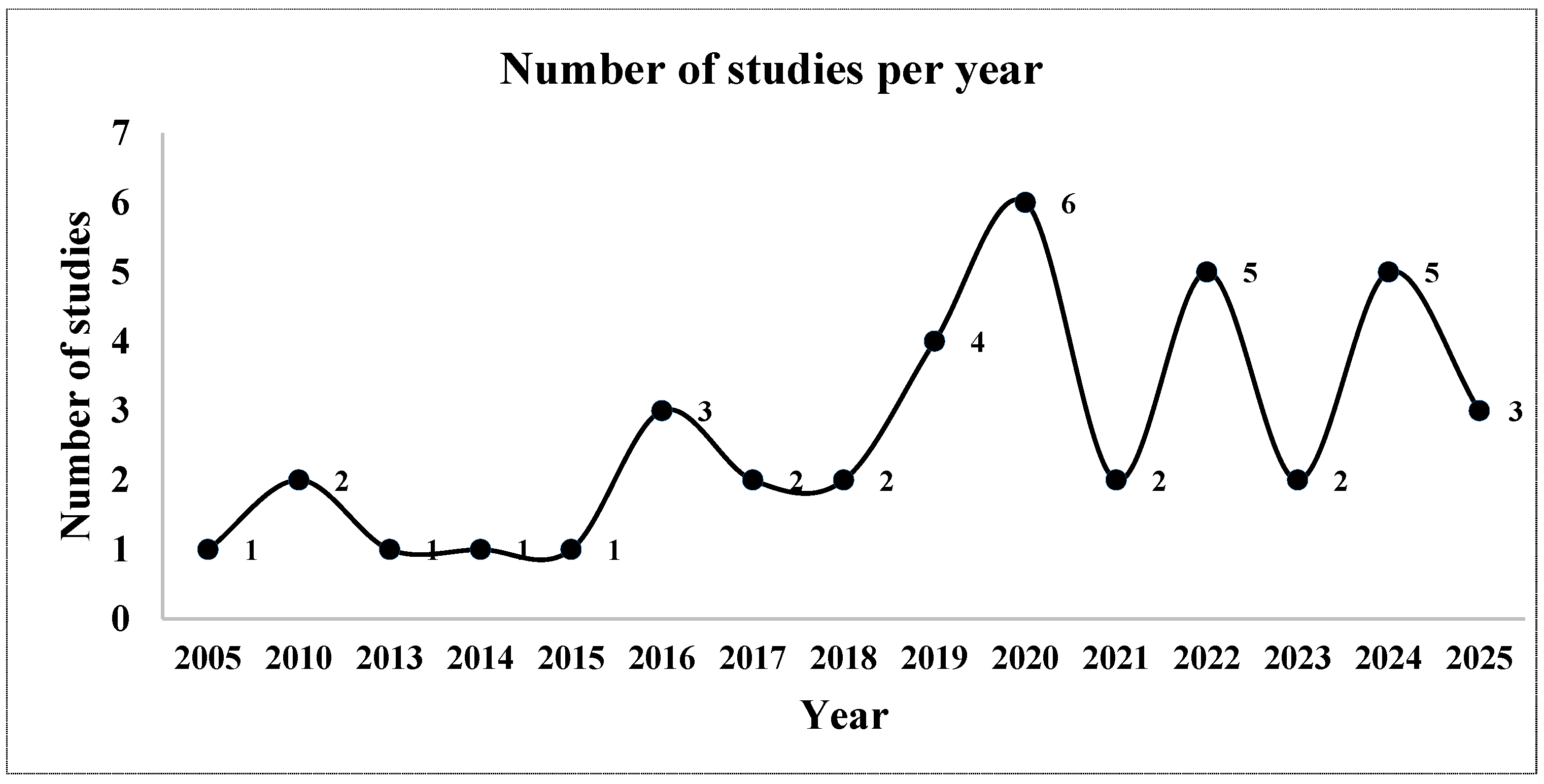
2.1. Overview of Included Studies
2.2. In Vitro Efficacy of EOs Against FOL
2.3. In Vivo and Greenhouse Efficacy Against Fusarium Wilt of Tomato
2.4. Antifungal Activity of EO Compounds
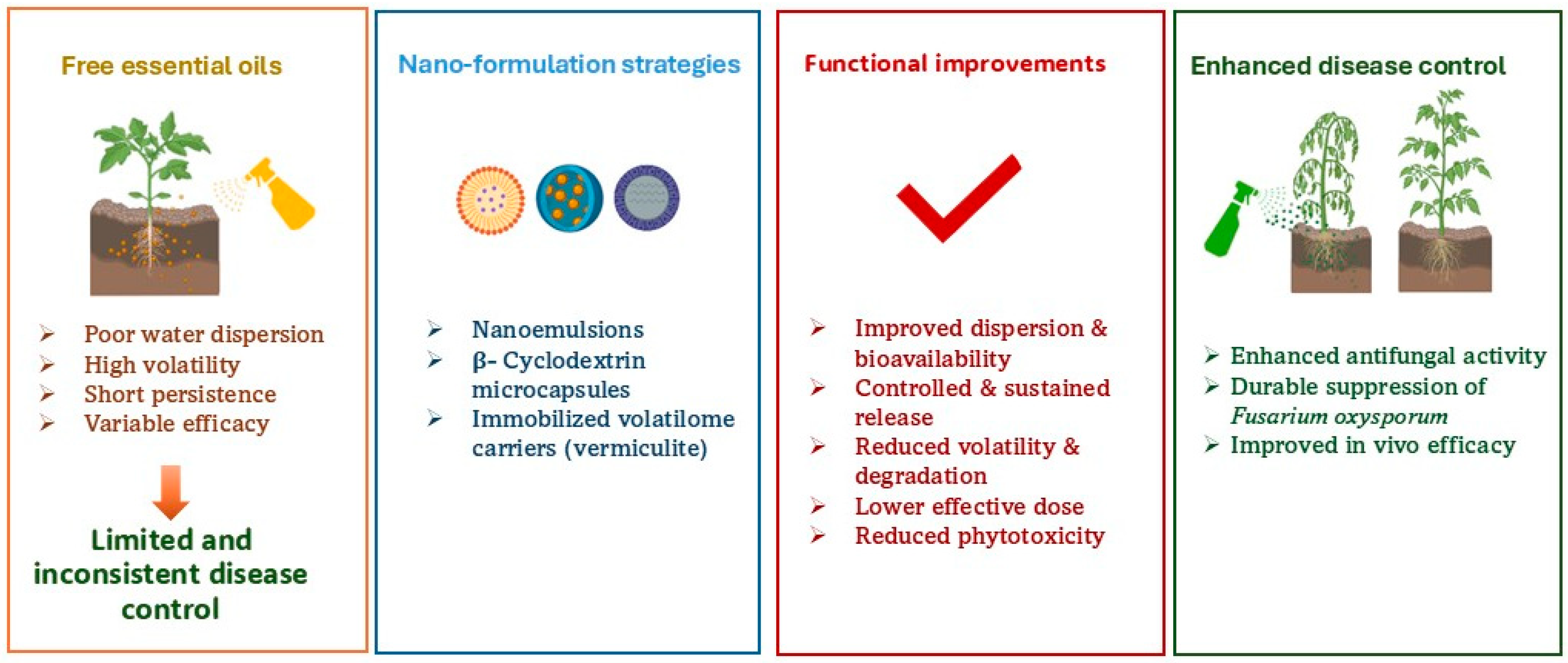
2.5. Antifungal Efficacy of Nanoformulated EOs and EO Compounds
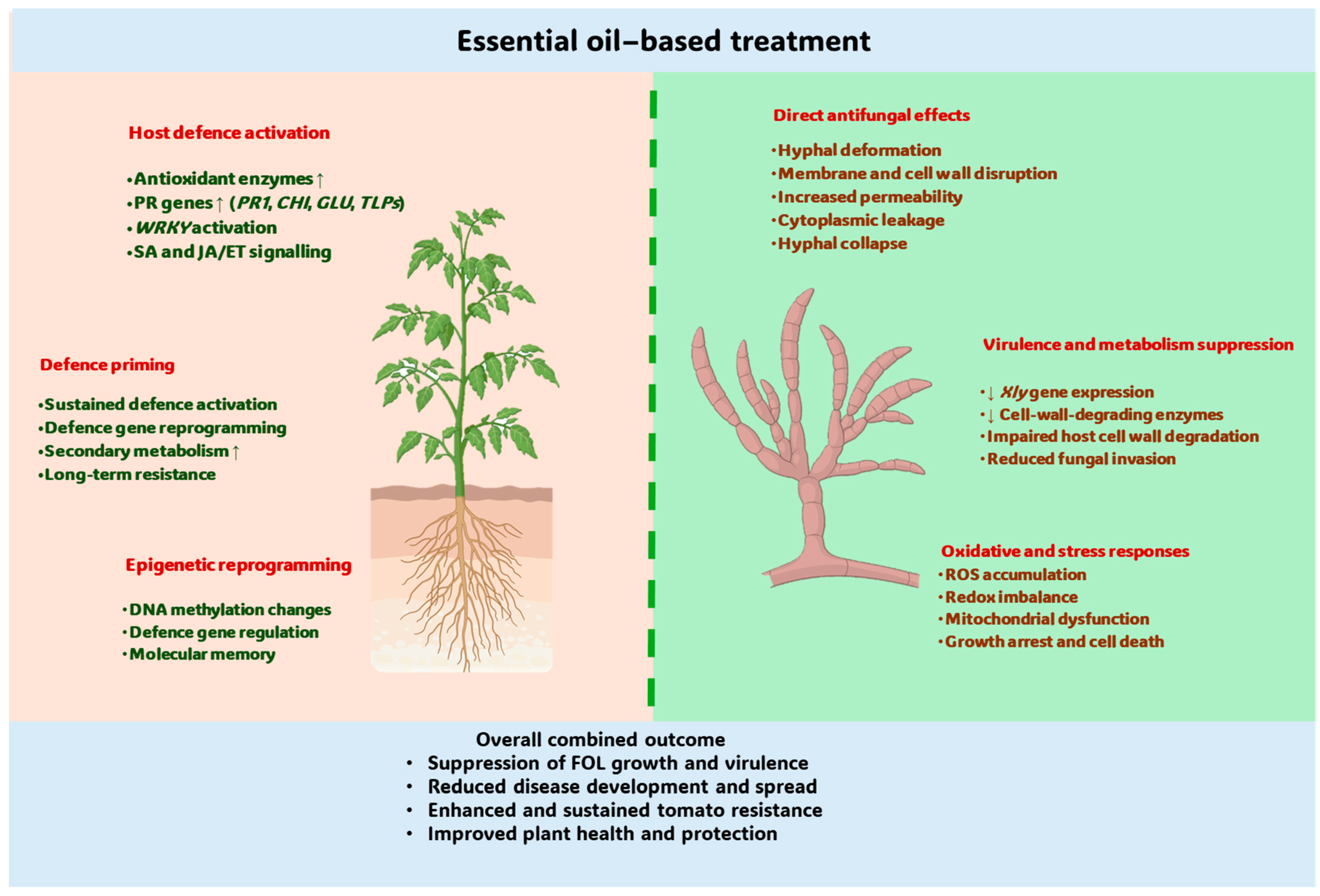
2.6. Mechanistic and Molecular Basis of EO Activity Against FOL
2.6.1. Direct Antifungal Effects on FOL Structure and Physiology
2.6.2. Suppression of FOL Virulence and Metabolism at the Molecular Level
2.6.3. Induction of Oxidative and Stress-Response Pathways in Fungal Cells
2.6.4. Activation of Tomato Defense-Related Physiological and Molecular Responses
2.6.5. Defense Priming and Epigenetic Reprogramming in the Host
2.6.6. Modulation of Mechanisms by Nanoformulation
3. Materials and Methods
3.1. Literature Search Strategy
3.2. Inclusion and Exclusion Criteria
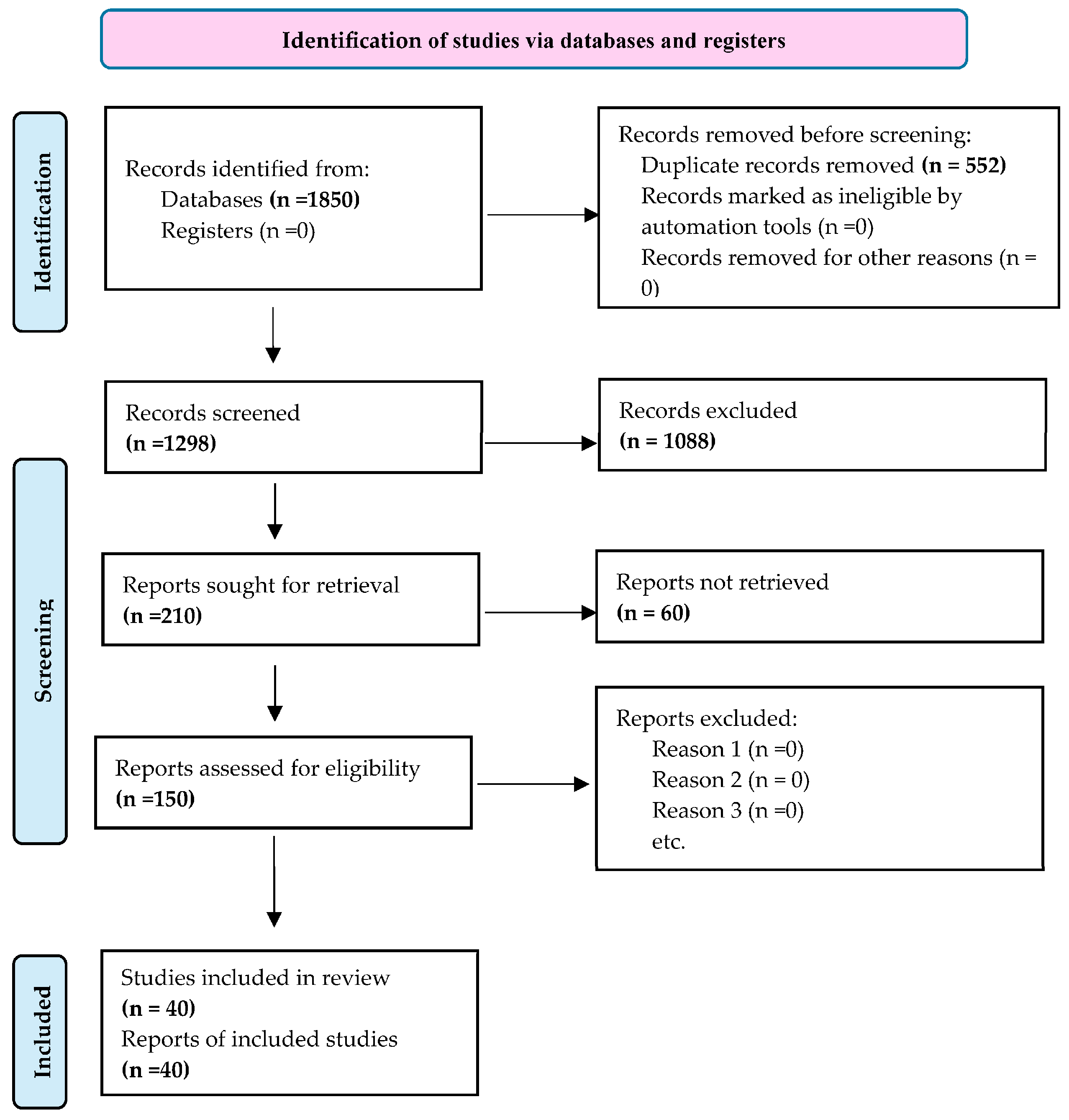
3.3. Study Selection Process
3.4. Data Extraction
3.5. Study Quality Assessment
3.6. Data Synthesis
4. Conclusions
Author Contributions
Funding
Data Availability Statement
Conflicts of Interest
Abbreviations
| AgNPs | Silver nanoparticles |
| AUDPC | Area under the disease progress curve |
| β-CD | β-Cyclodextrin |
| CWDEs | Cell wall–degrading enzyme |
| EC50 | Effective concentration causing 50% inhibition |
| EC90 | Effective concentration causing 90% inhibition |
| EO | Essential oil |
| FOL | Fusarium oxysporum f. sp. Lycopersici |
| GC-MS | Gas chromatography–mass spectrometry |
| IC50 | Inhibitory concentration causing 50% inhibition |
| ITS | Internal transcribed spacer |
| LOX | Lipoxygenase |
| MTG | mean time to germination |
| MIC | Minimum inhibitory concentration |
| MFC | Minimum fungicidal concentration |
| NPs | Nanoparticles |
| PDA | Potato dextrose agar |
| PR genes | Pathogenesis-related genes |
| PEDC | Percent efficacy of disease control |
| PDS | Percent disease severity |
| PDI | Percent disease index |
| PRISMA | Preferred Reporting Items for Systematic Reviews and Meta-Analyses |
| ROS | Reactive oxygen species |
| TLP | Thaumatin-like protein |
| VOCs | Volatile organic compounds |
| ZnO | Zinc oxide |
References
- Szabo, K.; Varvara, R.A.; Ciont, C.; Macri, A.M.; Vodnar, D.C. An Updated Overview on the Revalorization of Bioactive Compounds Derived from Tomato Production and Processing By-Products. J. Clean. Prod. 2025, 497, 145151. [Google Scholar] [CrossRef] [Scilit]
- Ansari, W.A.; Krishna, R.; Kashyap, S.P.; Al-Anazi, K.M.; Abul Farah, M.; Jaiswal, D.K.; Yadav, A.; Zeyad, M.T.; Verma, J.P. Relevance of Plant Growth-Promoting Bacteria in Reducing the Severity of Tomato Wilt Caused by Fusarium oxysporum f. Sp. Lycopersici by Altering Metabolites and Related Genes. Front. Microbiol. 2024, 15, 1534761. [Google Scholar] [CrossRef] [Scilit]
- Ghazalibiglar, H.; Kandula, D.R.W.; Hampton, J.G. Biological Control of Fusarium Wilt of Tomato by Trichoderma Isolates. New Zealand Plant Prot. 2016, 69, 57–63. [Google Scholar] [CrossRef] [Scilit]
- Srinivas, C.; Nirmala Devi, D.; Narasimha Murthy, K.; Mohan, C.D.; Lakshmeesha, T.R.; Singh, B.P.; Kalagatur, N.K.; Niranjana, S.R.; Hashem, A.; Alqarawi, A.A.; et al. Fusarium oxysporum f. Sp. Lycopersici Causal Agent of Vascular Wilt Disease of Tomato: Biology to Diversity–A Review. Saudi J. Biol. Sci. 2019, 26, 1315–1324. [Google Scholar] [CrossRef] [Scilit]
- Hossain, M.M.; Sultana, F.; Mostafa, M.; Rubayet, M.T.; Mishu, N.J.; Khan, I.; Mostofa, M.G.; Hossain, M.M.; Sultana, F.; Mostafa, M.; et al. Biological Management of Soil-Borne Pathogens Through Tripartite Rhizosphere Interactions with Plant Growth-Promoting Fungi. Appl. Microbiol. 2025, 5, 123. [Google Scholar] [CrossRef] [Scilit]
- Leiva-Mora, M.; Bustillos, D.; Arteaga, C.; Hidalgo, K.; Guevara-Freire, D.; López-Hernández, O.; Saa, L.R.; Padilla, P.S.; Bustillos, A.; Leiva-Mora, M.; et al. Antifungal Mechanisms of Plant Essential Oils: A Comprehensive Literature Review for Biofungicide Development. Agriculture 2025, 15, 2303. [Google Scholar] [CrossRef] [Scilit]
- Gensch, L.; Jantke, K.; Rasche, L.; Schneider, U.A. Pesticide Risk Assessment in European Agriculture: Distribution Patterns, Ban-Substitution Effects and Regulatory Implications. Environ. Pollut. 2024, 348, 123836. [Google Scholar] [CrossRef] [Scilit]
- Engleng, B.; Paul, S.; Kalita, E. Green Antibacterial Materials for Crop Protection. In Green Antibacterial Materials; Woodhead Publishing in Materials: Cambridge, UK, 2026; pp. 317–357. [Google Scholar] [CrossRef] [Scilit]
- Luo, P.; Feng, X.; Liu, S.; Jiang, Y. Traditional Uses, Phytochemistry, Pharmacology and Toxicology of Ruta graveolens L.: A Critical Review and Future Perspectives. Drug Des. Devel. Ther. 2024, 18, 6459–6485. [Google Scholar] [CrossRef] [Scilit] [PubMed]
- Falleh, H.; Ben Jemaa, M.; Saada, M.; Ksouri, R. Essential Oils: A Promising Eco-Friendly Food Preservative. Food Chem. 2020, 330, 127268. [Google Scholar] [CrossRef] [Scilit] [PubMed]
- Kesraoui, S.; Andrés, M.F.; Berrocal-Lobo, M.; Soudani, S.; Gonzalez-Coloma, A. Direct and Indirect Effects of Essential Oils for Sustainable Crop Protection. Plants 2022, 11, 2144. [Google Scholar] [CrossRef] [Scilit]
- Sadgrove, N.J.; Padilla-González, G.F.; Phumthum, M. Fundamental Chemistry of Essential Oils and Volatile Organic Compounds, Methods of Analysis and Authentication. Plants 2022, 11, 789. [Google Scholar] [CrossRef] [Scilit]
- De Oliveira, M.S.; da Costa, W.A.; Bezerra, P.N.; da Silva, S.F.; de Carvalho Junior, R.N.; de Oliveira, M.S.; da Costa, W.A.; Bezerra, P.N.; Filho, A.P.d.S.S.; Junior, R.N.d.C. Potentially Phytotoxic of Chemical Compounds Present in Essential Oil for Invasive Plants Control: A Mini-Review. In Biological Approaches for Controlling Weeds; IntechOpen: London, UK, 2018. [Google Scholar] [CrossRef] [Scilit]
- Omidian, H.; Cubeddu, L.X.; Gill, E.J.; Omidian, H.; Cubeddu, L.X.; Gill, E.J. Harnessing Nanotechnology to Enhance Essential Oil Applications. Molecules 2025, 30, 520. [Google Scholar] [CrossRef] [Scilit]
- Cruz-Luna, A.R.; Cruz-Martínez, H.; Vásquez-López, A.; Medina, D.I.; Cruz-Luna, A.R.; Cruz-Martínez, H.; Vásquez-López, A.; Medina, D.I. Metal Nanoparticles as Novel Antifungal Agents for Sustainable Agriculture: Current Advances and Future Directions. J. Fungi 2021, 7, 1033. [Google Scholar] [CrossRef] [Scilit]
- Baigorria, C.G.; Cerioni, L.; Debes, M.A.; Ledesma, A.E.; Alastuey, P.; Tirado, M.; Volentini, S.I.; Rapisarda, V.A.; Baigorria, C.G.; Cerioni, L.; et al. Antifungal Action of Metallic Nanoparticles Against Fungicide-Resistant Pathogens Causing Main Postharvest Lemon Diseases. J. Fungi 2024, 10, 782. [Google Scholar] [CrossRef] [Scilit] [PubMed]
- Cruz-Luna, A.R.; Vásquez-López, A.; Rojas-Chávez, H.; Valdés-Madrigal, M.A.; Cruz-Martínez, H.; Medina, D.I. Engineered Metal Oxide Nanoparticles as Fungicides for Plant Disease Control. Plants 2023, 12, 2461. [Google Scholar] [CrossRef] [Scilit]
- Mossa, M.I.; El-Sharkawy, E.E.S.; Elsharawy, A.A.; Stenglein, S. Antifungal Activity of Silver Nanoparticles Green Biosynthesis from the Extract of Zygophyllum album (L.f.) on Fusarium Wilt. J. Plant Prot. Res. 2023, 63, 340–349. [Google Scholar] [CrossRef] [Scilit]
- Liu, X.; Li, T.; Cui, X.; Tao, R.; Gao, Z. Antifungal Mechanism of Nanosilver Biosynthesized with Trichoderma longibrachiatum and Its Potential to Control Muskmelon Fusarium Wilt. Sci. Rep. 2024, 14, 20242. [Google Scholar] [CrossRef] [Scilit]
- Ibrahim, G.H.; Salah, M.M.; Nour EL- Din, M.M.S.; Ali, M.H. Suppression of the Interaction Damage of Meloidogyne Incognita and Fusarium oxysporum f. Sp. Lycopersici to Tomato Plants by Some Plant Oils. J. Pest Control. Environ. Sci. 2005, 13, 1–13. [Google Scholar] [CrossRef] [Scilit]
- Göze Özdemir, F.G. Management of Disease Complex of Meloidogyne incognita and Fusarium oxysporum f.Sp. Radicis lycopersici on Tomato Using Some Essential Oils. Bitki Koruma Bülteni 2022, 62, 27–36. [Google Scholar] [CrossRef] [Scilit]
- El-Aswad, A.F.; Aly, M.I.; Alsahaty, S.A.; Basyony, A.B.A. Efficacy Evaluation of Some Fumigants against Fusarium oxysporum and Enhancement of Tomato Growth as Elicitor-Induced Defense Responses. Sci. Rep. 2023, 13, 2479. [Google Scholar] [CrossRef] [Scilit]
- Yousafi, Q.; Bibi, S.; Saleem, S.; Hussain, A.; Hasan, M.M.; Tufail, M.; Qandeel, A.; Khan, M.S.; Mazhar, S.; Yousaf, M.; et al. Identification of Novel and Safe Fungicidal Molecules against Fusarium oxysporum from Plant Essential Oils: In Vitro and Computational Approaches. BioMed Res. Int. 2022, 2022, 5347224. [Google Scholar] [CrossRef] [Scilit]
- Soudani, S.; Poza-Carrión, C.; De la Cruz Gómez, N.; González-Coloma, A.; Andrés, M.F.; Berrocal-Lobo, M. Essential Oils Prime Epigenetic and Metabolomic Changes in Tomato Defense Against Fusarium oxysporum. Front. Plant Sci. 2022, 13, 804104. [Google Scholar] [CrossRef] [Scilit]
- Ma, Y.N.; Chen, C.J.; Li, Q.Q.; Xu, F.R.; Cheng, Y.X.; Dong, X. Monitoring Antifungal Agents of Artemisia annua against Fusarium oxysporum and Fusarium solani, Associated with Panax notoginseng Root-Rot Disease. Molecules 2019, 24, 213. [Google Scholar] [CrossRef] [Scilit]
- Claude, S.; Christopher, S.; Alain Vianey, M.B.; Brice Gatien, N.N.; Jacob, L.D.; Pierre François, D.; Victor Desire, T. Essential Oils as Control Agents against Fusarium oxysporum f. Sp. Lycopersici in Lycopersicon esculentum Used under in Vitro and in Vivo Conditions. Int. J. Appl. Biotechnol. Res. 2019, 7, 55–69. [Google Scholar]
- Gonçalves, D.C.; Tebaldi de Queiroz, V.; Costa, A.V.; Lima, W.P.; Belan, L.L.; Moraes, W.B.; Pontes Póvoa Iorio, N.L.; Corrêa Póvoa, H.C. Reduction of Fusarium Wilt Symptoms in Tomato Seedlings Following Seed Treatment with Origanum vulgare L. Essential Oil and Carvacrol. Crop Prot. 2021, 141, 105487. [Google Scholar] [CrossRef] [Scilit]
- Timofte, A.-A.; Florea, A.-M.; Lipșa, D. Essential Oils and Homemade Fungicides against Fusarium oxysporum f. Sp. Lycopersici Tomato Pathogen. Sci. Pap. Ser. B Hortic. 2018, LXII, 513–516. [Google Scholar]
- Daboy Charles, D.; Julienne, N.; Lekagne, D.; Blaise, J.; Yamdeu, G.; Hubert, J.; Udom René, A.; Irénée, S.; Zollo, A.; Henry, P. Antifungal Potential of Essential Oils, Aqueous and Ethanol Extracts of Thirteen Plants against Fusarium oxysporum f. Sp Lycopersici and Phytophtora infestans (Mont.) de Bary as Major Tomato Pathogens in Cameroon. Int. J. Curr. Sci. 2016, 19, 128–145. [Google Scholar]
- Le Dang, Q.; Nguyen, C.Q.; Vo, T.K.A.; Nguyen, T.T.T.; Pham, Q.D.; Nguyen, T.X.; Cao, T.H.; De Tran, Q.; Le, T.T.; Do, T.H.; et al. A Botanical Nanoemulsion against Phytopathogenic Fungi Colletotrichum Sp. and Fusarium oxysporum: Preparation, in Vitro and in Vivo Bioassay. J. Nat. Pestic. Res. 2024, 10, 100099. [Google Scholar] [CrossRef] [Scilit]
- Thangaraj, P.; Balamurali, A.S.; Subbiah, K.A.; Sevugapperumal, N.; Gurudevan, T.; Uthandi, S.; Shanmugam, H. Antifungal Volatilomes Mediated Defense Mechanism against Fusarium oxysporum f. Sp. Lycopersici, the Incitant of Tomato Wilt. Molecules 2022, 27, 3631. [Google Scholar] [CrossRef] [Scilit]
- Sharma, A.; Sehra, G.; Sabni, P.; Kamra, A.; Sharma, S. Development of Clove Oil Based Nanoformulation against Fusarium oxysporum. Indian Phytopath. 2016, 69, 313–315. [Google Scholar]
- El-Mohamedy, R.S.R.; Abdel-Kader, M.M.; Abd-El-Kareem, F.; El-Mougy, N.S.; El, N.S. Essential Oils, Inorganic Acids and Potassium Salts as Control Measures against the Growth of Tomato Root Rot Pathogens in Vitro. J. Agric. Technol. 2013, 9, 1507–1520. [Google Scholar]
- Schuster-Russiano, M.C.; Russiano, C.G.S.; Moraes, P.V.D.; Ducatti, R.D.B.; Mazaro, S.M. Volatile Organic Compounds (VOCs) of Essential Oils for the Control of Fusarium oxysporum in Cherry Tomato Seeds. Braz. J. Biol. 2023, 83, e274368. [Google Scholar] [CrossRef] [Scilit]
- Sharma, A.; Rajendran, S.; Srivastava, A.; Sharma, S.; Kundu, B. Antifungal Activities of Selected Essential Oils against Fusarium oxysporum f. Sp. Lycopersici 1322, with Emphasis on Syzygium aromaticum Essential Oil. J. Biosci. Bioeng. 2017, 123, 308–313. [Google Scholar] [CrossRef] [Scilit] [PubMed]
- Kalleli, F.; Abid, G.; Salem, I.B.; Boughalleb-M’Hamdi, N.; M’Hamdi, M. Essential Oil from Fennel Seeds (Foeniculum vulgare) Reduces Fusarium Wilt of Tomato (Solanum lycopersicon). Phytopathol. Mediterr. 2020, 59, 63–76. [Google Scholar] [CrossRef] [Scilit]
- Soliman, S.A.; Hafez, E.; Alkolaibe, A.M.G.; Abdel Razik, E.S.S.; Abd-Ellatif, S.; Ibrahim, A.A.; Kabeil, S.S.A.; Elshafie, H.S. Biochemical Characterization, Antifungal Activity, and Relative Gene Expression of Two Mentha Essential Oils Controlling Fusarium oxysporum, the Causal Agent of Lycopersicon esculentum Root Rot. Plants 2022, 11, 189. [Google Scholar] [CrossRef] [Scilit]
- Kadoglidou, K.; Chatzopoulou, P.; Maloupa, E.; Kalaitzidis, A.; Ghoghoberidze, S.; Katsantonis, D.; Kadoglidou, K.; Chatzopoulou, P.; Maloupa, E.; Kalaitzidis, A.; et al. Mentha and Oregano Soil Amendment Induces Enhancement of Tomato Tolerance against Soilborne Diseases, Yield and Quality. Agronomy 2020, 10, 406. [Google Scholar] [CrossRef] [Scilit]
- Praveen, T.; Krishnamoorthy, A.; Nakkeeran, S.; Sivakumar, U.; Amirtham, D. Antifungal Volatiles from Medicinal Herbs Suppress Fusarium oxysporum f. Sp. Lycopersici. J. Entomol. Zool. Stud. 2021, 9, 1083–1093. [Google Scholar] [CrossRef] [Scilit]
- Wogiatzi, E.; Gougoulias, N.; Papachatzis, A.; Vagelas, I.; Chouliaras, N. Greek Oregano Essential Oils Production, Phytotoxicity and Antifungal Activity. Biotechnol. Biotechnol. Equip. 2009, 23, 1150–1152. [Google Scholar] [CrossRef] [Scilit]
- Gomes, P.R.B.; da Silva Barros, F.R.; Reis, J.B.; Everton, G.O.; de Oliveira, R.W.S.; Louzeiro, H.C.; Fontenele, M.A.; de Freitas, A.C.; do Livramento de Paula, M.; Filho, V.E.M. Chemical Composition and Biological Activity of the Essential Oil of the Fruits Pimenta dioica against Formae Speciales of Fungus Fusarium oxysporum. Rev. Colomb. Cienc. Quim. Farm. 2020, 49, 89–100. [Google Scholar] [CrossRef] [Scilit]
- La Torre, A.; Caradonia, F.; Matere, A.; Battaglia, V. Using Plant Essential Oils to Control Fusarium Wilt in Tomato Plants. Eur. J. Plant Pathol. 2016, 144, 487–496. [Google Scholar] [CrossRef] [Scilit]
- Muñoz Castellanos, L.; Amaya Olivas, N.; Ayala-Soto, J.; De La O Contreras, C.M.; Zermeño Ortega, M.; Sandoval Salas, F.; Hernández-Ochoa, L. In Vitro and In Vivo Antifungal Activity of Clove (Eugenia caryophyllata) and Pepper (Piper nigrum L.) Essential Oils and Functional Extracts Against Fusarium oxysporum and Aspergillus niger in Tomato (Solanum lycopersicum L.). Int. J. Microbiol. 2020, 2020, 1702037. [Google Scholar] [CrossRef] [Scilit]
- Yfanti, P.; Patakioutas, G.; Douma, D.; Lekka, M.E. In Vitro Antifungal Activity of Satureja horvatii Ssp. Macrophylla Against 3 Tomato Phytopathogenic Fungi. Nat. Prod. Commun. 2021, 16. [Google Scholar] [CrossRef] [Scilit]
- Bayan, Y.; Akşit, H. Antifungal Activity of Essential Oils and Plant Extracts from Sideritis germanicopolitana BORNM. Growin in Turkey. Egypt. J. Biol. Pest Control. 2016, 26, 333–337. [Google Scholar]
- Estrada Cano, C.; Anaya Castro, M.A.; Castellanos, L.M.; Antonio Garcia Triana, N.A.O.; Ochoa, L.H. Antifungal Activity of Microcapsulated Clove (Eugenia caryophyllata) and Mexican Oregano (Lippia berlandieri) Essential Oils against Fusarium oxysporum. J. Microb. Biochem. Technol. 2017, 9, 567–571. [Google Scholar] [CrossRef]
- Derguini, A.; Chikhoune, A.; Benberkane, A.; Belazougui, K.; Djinni, I.; Idres, T.; Boudjellaba, S.; Iguer-Ouada, M. Evaluation of Antifungal Activity of Free and Encapsulated Clove Oil in β-Cyclodextrin against an Algerian Isolate of Fusarium oxysporum F. Sp Radicis lycopersici. Ann. Univ. Dunarea Jos Galati. Fascicle VI Food Technol. 2024, 48, 178–191. [Google Scholar] [CrossRef] [Scilit]
- Khanjani, R.; Dehghan, H.; Sarrafi, Y. Antifungal Edible Tomato Coatings Containing Ajwain, Neroli, and Rosemary Essential Oils. J. Food Meas. Charact. 2021, 15, 5139–5148. [Google Scholar] [CrossRef] [Scilit]
- Cueto–Wong, M.; Rivas–Morales, C.; Alanís–Guzmán, M.G.; Oranday–Cárdenas, A.; Amaya–Guerra, C.A.; Núñez–González, A.; Samaniego–Gaxiolay, J.A.; Cano–Ríos, Y.P. Antifungal Properties of Essential Oil of Mexican Oregano (Lippia berlandieri) against Fusarium oxysporum f. Sp. Lycopersici. Rev. Mex. Micol. 2009, 31, 29–35. [Google Scholar]
- Si Mohammed, A.; Kadar, N.H.; Djaafer, M.; Baghdad, A.; Kihal, M.; Sanchez, J.; Gallego, E.; Garrido-Cardenas, J.A. In Vitro Activity of Lavandula dentata Essential Oil against Fusarium oxysporum f. Sp. Radicis-Lycopersici in Algeria. South Asian J. Exp. Biol. 2020, 10, 249–254. [Google Scholar] [CrossRef] [Scilit]
- Huang, Y.; Zhao, J.; Zhou, L.; Wang, J.; Gong, Y.; Chen, X.; Guo, Z.; Wang, Q.; Jiang, W. Antifungal Activity of the Essential Oil of Illicium verum Fruit and Its Main Component Trans-Anethole. Molecules 2010, 15, 7558–7569. [Google Scholar] [CrossRef] [Scilit] [PubMed]
- Kishore, G.K.; Pande, S.; Harish, S. Evaluation of Essential Oils and Their Components for Broad-Spectrum Antifungal Activity and Control of Late Leaf Spot and Crown Rot Diseases in Peanut. Plant Dis. 2007, 91, 375–379. [Google Scholar] [CrossRef] [Scilit]
- Assadpour, E.; Can Karaça, A.; Fasamanesh, M.; Mahdavi, S.A.; Shariat-Alavi, M.; Feng, J.; Kharazmi, M.S.; Rehman, A.; Jafari, S.M. Application of Essential Oils as Natural Biopesticides; Recent Advances. Crit. Rev. Food Sci. Nutr. 2024, 64, 6477–6497. [Google Scholar] [CrossRef] [Scilit]
- Semerdjieva, I.; Slavov, S.B.; Dincheva, I.; Cantrell, C.L.; Zheljazkov, V.D. Antifungal Efficacy of Juniperus and Pinus Essential Oils against Phytopathogens. J. Nat. Pestic. Res. 2026, 16, 100185. [Google Scholar] [CrossRef] [Scilit]
- Chang, Y.; Harmon, P.F.; Treadwell, D.D.; Carrillo, D.; Sarkhosh, A.; Brecht, J.K. Biocontrol Potential of Essential Oils in Organic Horticulture Systems: From Farm to Fork. Front. Nutr. 2022, 8, 805138. [Google Scholar] [CrossRef] [Scilit]
- Araújo, O.P.; Souza, G.R.; Neto, A.V.; Júlio, A.A.; Lima, O.A.; Silva, S.P.; Alves, L.A.; Alves, M.; Sirtoli, G.F.; Parreira, L.A.; et al. In Vitro and in Vivo Evaluation of Citronella Essential Oil and Its Compounds in the Control of Fusarium Wilt in Tomato Plants. Res. Sq. 2025, 1–19. [Google Scholar] [CrossRef] [Scilit]
- Ali-Shtayeh, M.S.; Jamous, R.M.; Abu-Zaitoun, S.Y.; Akkawi, R.J.; Kalbouneh, S.R.; Dudai, N.; Bernstein, N. Secondary Treated Effluent Irrigation Did Not Impact Chemical Composition, and Enzyme Inhibition Activities of Essential Oils from Origanum Syriacum Var. Syriacum. Ind. Crops Prod. 2018, 111, 775–786. [Google Scholar] [CrossRef] [Scilit]
- Ali-Shtayeh, M.S.; Jamous, R.M.; Abu-Zaitoun, S.Y.; Akkawi, R.J.; Kalbouneh, S.R.; Bernstein, N.; Dudai, N. Chemical Profile and Bioactive Properties of the Essential Oil Isolated from Clinopodium serpyllifolium (M.Bieb.) Kuntze Growing in Palestine. Ind. Crops Prod. 2018, 124, 617–625. [Google Scholar] [CrossRef] [Scilit]
- Papageorgiou, V.; Gardeli, C.; Mallouchos, A.; Papaioannou, M.; Komaitis, M. Variation of the Chemical Profile and Antioxidant Behavior of Rosmarinus officinalis L. and Salvia fruticosa Miller Grown in Greece. J. Agric. Food Chem. 2008, 56, 7254–7264. [Google Scholar] [CrossRef] [Scilit] [PubMed]
- Edris, A.E.; Shalaby, A.S.; Fadel, H.M.; Abdel-Wahab, M.A. Evaluation of a Chemotype of Spearmint (Mentha spicata L.) Grown in Siwa Oasis, Egypt. Eur. Food Res. Technol. 2003, 218, 74–78. [Google Scholar] [CrossRef] [Scilit]
- Osei-Obeng, P.; Kiirika, L.M.; Nyende, A.B. Antifungal Activity of Citral against Fusarium Wilt in Tomatoes and Induction of the Upregulation of Glucanase, Chitinase, and Thaumatin-like Protein Plant Defense Genes. J. Nat. Pestic. Res. 2024, 10, 100097. [Google Scholar] [CrossRef] [Scilit]
- Kaur, G.; Ganjewala, D.; Bist, V.; Verma, P.C. Antifungal and Larvicidal Activities of Two Acyclic Monoterpenes; Citral and Geraniol against Phytopathogenic Fungi and Insects. Arch. Phytopathol. Plant Prot. 2019, 52, 458–469. [Google Scholar] [CrossRef] [Scilit]
- Portia, O.-O.; Leonard, M.K.; Aggrey, B.N. In Vitro Antifungal Potential of Citral and Nanoencapsulated Citral against Fusarium oxysporum f. Sp. Lycopersici. Afr. J. Biotechnol. 2024, 23, 131–141. [Google Scholar] [CrossRef] [Scilit]
- Li, X.; Wang, Q.; Li, H.; Wang, X.; Zhang, R.; Yang, X.; Jiang, Q.; Shi, Q. Revealing the Mechanisms for Linalool Antifungal Activity against Fusarium oxysporum and Its Efficient Control of Fusarium Wilt in Tomato Plants. Int. J. Mol. Sci. 2023, 24, 458. [Google Scholar] [CrossRef] [Scilit]
- Sharma, A.; Sharma, N.K.; Srivastava, A.; Kataria, A.; Dubey, S.; Sharma, S.; Kundu, B. Clove and Lemongrass Oil Based Non-Ionic Nanoemulsion for Suppressing the Growth of Plant Pathogenic Fusarium oxysporum f.Sp. Lycopersici. Ind. Crops Prod. 2018, 123, 353–362. [Google Scholar] [CrossRef] [Scilit]
- Ullah, Z.; Iqbal, J.; Abbasi, B.A.; Ijaz, S.; Ahmad, S.; Khan, S.; Sampath, S.; Iqbal, R.; Murtaza, G.; Mehmood, Y.; et al. Nano-Formulation for Agriculture Applicability. In Revolutionizing Agriculture: A Comprehensive Exploration of Agri-Nanotechnology; Part F3986; Springer: Cham, Switzerland, 2024; pp. 325–367. [Google Scholar] [CrossRef] [Scilit]
- Kutasy-Takács, B.; Pallos, J.P.; Kiniczky, M.; Hegedűs, G.; Virág, E. Plant-Derived Biostimulants and Liposomal Formulations in Sustainable Crop Protection and Stress Tolerance. Appl. Sci. 2026, 16, 490. [Google Scholar] [CrossRef] [Scilit]
- Singh, A.P.; Singh, K.K.; Kumari, B.; Kumar, P. Regulatory Frameworks and Biosafety Protocols of Nanomaterials in Agro-Based Applications. In Eco-Friendly Nanotechnology: Harnessing Small-Scale Technologies for a Cleaner and Healthier Planet; Deep Science Publishing: London, UK, 2025. [Google Scholar] [CrossRef] [Scilit]
- Verma, K.K.; Song, X.P.; Liang, Q.; Xu, L.; Mishra, K.K.; Chen, G.L.; Huang, H.R.; Li, Y.R. Engineered Nano-Pesticides: A Multifaceted Strategy for Sustainable Crop Protection and Enhanced Food Security in the Era of Climate Change. Plant Signal. Behav. 2026, 21, 2633785. [Google Scholar] [CrossRef] [Scilit]
- Peixoto, P.M.C.; Júlio, A.A.; Jesus, E.G.; Venancio, A.N.; Parreira, L.A.; Santos, M.F.C.; Menini, L. Fungicide Potential of Citronella and Tea Tree Essential Oils against Tomato Cultivation’s Phytopathogenic Fungus Fusarium oxysporum f. Sp. Lycopersici and Analysis of Their Chemical Composition by GC/MS. Nat. Prod. Res. 2024, 38, 667–672. [Google Scholar] [CrossRef] [Scilit] [PubMed]
- Page, M.J.; McKenzie, J.E.; Bossuyt, P.M.; Boutron, I.; Hoffmann, T.C.; Mulrow, C.D.; Shamseer, L.; Tetzlaff, J.M.; Akl, E.A.; Brennan, S.E.; et al. The PRISMA 2020 Statement: An Updated Guideline for Reporting Systematic Reviews. BMJ 2021, 372, n71. [Google Scholar] [CrossRef] [Scilit]



| Plant (Family) | In Vitro Antifungal Activity | In Vivo Efficacy | Reference |
|---|---|---|---|
| Allium cepa L. (Amaryllidaceae) | Strong inhibition (71.8%) of FOL mycelial growth | Reduced wilt severity by 67.7%; improved plant performance | [20] |
| Allium sativum L. (Amaryllidaceae) | Moderate to strong activity: inhibition zones of 21.2 mm (25 µL mL−1) and 33.8 mm (50 µL mL−1); complete inhibition at 100 µL mL−1. Also 37.84% inhibition at 500 mg L−1; dose-dependent | Soil application (1000 ppm/pot): disease severity index 1.6; 55.52% suppression, superior to fungicide alone. EC50 = 52.6 mg kg−1 soil | [21,22,23] |
| Aloe vera (L.) Burm.f. (Asphodelaceae) | 46.2% inhibition of FOL mycelial growth (lowest among tested oils) | Reduced wilt severity by 55.6% in FOL + Meloidogyne incognita complex | [20] |
| Argania spinosa (L.) Skeels (Sapotaceae), Accepted name (Sideroxylon spinosum L.) | Weak in vitro activity (≤18.92% inhibition at 500 mg L−1) | EC50 = 39.2 mg kg−1 soil; limited disease suppression | [22] |
| Artemisia absinthium L. (Asteraceae) | Strong fungicidal activity: spore germination inhibition 44.25 ± 1.72% at 0.5 mg mL−1; EC50 = 109.91 µg mL−1 | Seed coating reduced disease ratio: improved water status (+15%), reduced fresh weight loss (–30%), enhanced pigments | [24] |
| Artemisia annua L. (Asteraceae) | Strong inhibition (77.16%) of mycelial growth; MIC = 0.22 ± 0.03 mg mL−1 | Soil amendment reduced disease incidence from 72.22% to 25.00% | [25] |
| Azadirachta indica A. Juss. (Meliaceae) | The inhibition was 27.03% at 250–500 mg L−1 and strong (92.82%) at 100 µL mL−1EC50 = 163 mg kg−1 soil. Inhibition zones: 9.2–17.5 mm | Not reported | [22,23,26] |
| Brassica nigra (L.) W.D.J.Koch (Brassicaceae) | Not reported | Disease severity reduced by 38.92% | [21] |
| Cinnamomum zeylanicum Blume (Lauraceae), Accepted name: Cinnamomum verum J.Presl | Complete inhibition at 600 µg mL−1; EC50 = 171.79 µg mL−1; EC100 = 575.18 µg mL−1 | Not reported | [27] |
| Cinnamomum aromaticum Nees (Lauraceae), Synonym: Cinnamomum cassia (L.) J.Presl | Fungicidal activity only at 10% (w/w); inactive at lower doses | Not reported | [28] |
| Callistemon citrinus (Curtis) Skeels (Myrtaceae), Syn: Melaleuca citrina (Curtis) Dum. Cours. | Complete inhibition at 2500 µg mL−1 | Not reported | [29] |
| Capsicum annuum L. (Solanaceae) | Low inhibition at 5–10 µL mL−1 (17.56–23.08%); high inhibition (92.69%) at 100 µL mL−1 | Poor disease control even at higher concentrations | [26] |
| Chenopodium ambrosioides L. (Amaranthaceae), Accepted name: Dysphania ambrosioides (L.) Mosyakin & Clemants | Complete inhibition at 10 µL mL−1; 75.64% at 5 µL mL−1 | Preventive treatment reduced diseased leaves by 50%, comparable to or superior to fungicides. | [26] |
| Cinnamomum cassia (L.) J.Presl (Lauraceae), Synonym: Cinnamomum aromaticum Nees | Very strong inhibition: cinnamon EO and nanoemulsions caused 92% mycelial inhibition at 1% and 57% at 0.5% | Disease reduction 55–57%; non-phytotoxic | [30] |
| Citrus limon (L.) Osbeck (Rutaceae) | Fungicidal activity at 10% (w/w) | Disease severity was suppressed by 22.16% | [21,28] |
| Citrus sinensis (L.) Osbeck (Rutaceae) | Weak inhibition; 18.92% and 27.03% inhibition at 250 and 500 mg L−1, respectively. The largest inhibition zones were 47.5 and 46.3 mm at 25 and 50 µL mL−1, respectively. Complete inhibition at 10% (w/w); inactive at ≤1% | Soil drench EC50 = 19.2 mg kg−1. Foliar spray: lowest disease severity (PDS = 3.1) at 80 µL mL−1; seed treatment gave lowest PDS = 2.11 and disease incidence = 1.5 | [22,23,28] |
| Cuminum cyminum L. (Apiaceae) | Inhibition zones: 27.0 mm (50 µL mL−1) and 15.3 mm (25 µL mL−1) | Seed treatment: PDS = 12.44, PDI = 60, PEDC = 40, disease incidence = 4.5. Foliar spray (60 µL mL−1): PDS = 12.0–12.9; moderate disease suppression | [23] |
| Cupressus sempervirens L. (Cupressaceae) | Strong inhibition (82.02%) at 10 µL mL−1; moderate inhibition (64.62%) at 5 µL mL−1; near-complete inhibition at 20 µL mL−1 | Preventive application significantly reduced disease and improved growth; the curative effect is limited. | [26] |
| Cymbopogon citratus (DC.) Stapf (Poaceae) | Strong inhibition (75.29%) in the olfactory chamber. MIC = 62.5 ppm, MFC = 250 ppm, and IC50 = 24.25 ppm (mycelium) and 0.98 ppm (spores). PDA-amended: up to 100% inhibition at 2.5% (v/v) | Not evaluated in pots/greenhouse | [31,32,33] |
| Cymbopogon winterianus Jowitt ex Bor (Poaceae), Common name: Java citronella | Ineffective under fumigation; increased mycelial growth and sporulation | No disease suppression; seed germination unaffected | [34] |
| Eruca sativa Mill. (Brassicaceae) | Strong inhibition (67.7%) of FOL mycelial growth | Soil treatment reduced wilt severity by 66.0–67.7% | [20] |
| Eucalyptus globulus Labill. (Myrtaceae) | Moderate inhibition (15.9–72.5%); MIC = 500 ppm; IC50 = 207.86 ppm. Also, 60.6% inhibition in comparative assays | Reduced wilt severity by 65.3%; improved plant growth | [20,35] |
| Eucalyptus grandis W.Hill ex Maiden (Myrtaceae) | Strong mycelial inhibition; among the most active Eucalyptus leaf EOs | Some reduction in wilt severity in mixed soil-borne disease trials; limited FOL-specific greenhouse data | [23] |
| Eucalyptus tereticornis Sm. (Myrtaceae) | Moderate antifungal activity; complete inhibition at 2500 µg mL−1; fungicidal to mycelium and conidia | Not reported | [29] |
| Foeniculum vulgare Mill. (Apiaceae/Umbelliferae) | Strong dose-dependent inhibition: 83% mycelial inhibition and 97% sporulation inhibition at 500 µL mL−1 and 44% at 250 µL mL−1. IC50 = 300.37 µL mL−1; complete growth suppression at 500 µL mL−1; severe hyphal alterations (lysis, vacuolization, chlamydospore formation) | Curative soil drench (500 µL mL−1) reduced disease severity from 98% to 57% at 8 weeks; greenhouse curative treatment reduced severity by 42.85%. Marked improvement in growth, pigments, sugars, phenolics, flavonoids; strong induction of PR1, WRKY, TLP, LOX, ERF, chitinase, β-1,3-glucanase | [36] |
| Lavandula stoechas L. (Lamiaceae) | Partial hyphal damage (SEM), but continued mycelial growth | Increased mean time to germinate (MTG = 2.48 days); no effective disease suppression | [34] |
| Melaleuca alternifolia (Maiden & Betche) Cheel (Myrtaceae) | Strong mycelial inhibition: SEM revealed hyphal deformation and collapse. Seed-to-PDA assay: complete suppression of mycelial growth (0 cm) for 144 h after seed fumigation (20 µL EO, 24 h) | Seed fumigation reduced seedlings with mycelial growth from 35% to 5% (~80% reduction); abnormal seedlings were reduced (10% vs. 40%); germination was unaffected (≈81–90%); no induction of chitinase or β-1,3-glucanase | [34] |
| Mentha × piperita L. (Lamiaceae) | MIC = 125 ppm; MFC = 500 ppm; IC50 = 60.05 ppm (mycelium) and 3.2 ppm (spores) | Not reported | [35] |
| Mentha longifolia (L.) L. (Lamiaceae) | Complete inhibition at ≥1.0% (v/v); strong fungicidal effect after 7 days | Root rot severity reduced to 3.5%; enhanced plant growth (max height 32.42 cm); increased SOD, CAT, APX activities | [37] |
| Mentha spicata L. (Lamiaceae) | Dose-dependent inhibition (0.25–1.25% v/v); 92.55% mycelial inhibition at 1.25% v/v. Volatilomes inhibited FOL by 92.35% (olfactory chamber assay) | EO treatment reduced root rot severity to 5.6% (vs. 86.39%). Soil amendment (4% w/w plant material) reduced AUDPC from 160 to 51.25. Volatilomes vermiculite balls reduced wilt incidence to 8.33% (91.67% reduction) | [31,37,38] |
| Moringa oleifera Lam. (Moringaceae) | Lower inhibition compared with citrus and mint oils | Weak–moderate protection; not a leading candidate for Fusarium wilt control | [23] |
| Ocimum gratissimum L. (Lamiaceae) | Two response types reported: (i) hyphal damage with persistent sporulation; (ii) complete mycelial inhibition at 625 µg mL−1 with fungicidal effect at higher concentrations | Some disease reduction, but consistently lower efficacy than Melaleuca alternifolia | [29,34] |
| Ocimum selloi Benth. (Lamiaceae), Synonym: Ocimum carnosum (Spreng.) Link & Otto ex Benth. | Hyphal narrowing and curling observed; no growth arrest | No disease suppression | [34] |
| Ocimum tenuiflorum L. (Lamiaceae), Synonym: Ocimum sanctum L. | Moderate antifungal activity | Not reported | [39] |
| Origanum vulgare L. (Lamiaceae) | EO caused 61% inhibition at 1% (w/w) and complete fungicidal activity at 10% (v/v). PDA assay (4 µL/dish): significant inhibition for all biotypes; Leptokaria biotype showed complete inhibition | Greenhouse: low dose (16 µL/plant) non-phytotoxic and increased yield; high dose (≥97 µL/plant) phytotoxic. Soil application (1000 ppm/pot) under M. incognita + FOL reduced disease severity by 55.52% | [21,28,40] |
| Origanum vulgare subsp. hirtum (Link) Ietsw. (Lamiaceae) | Not tested by direct contact; EO-derived soil volatilomes rich in carvacrol (78.31%); volatiles persisted up to 60 DAI | Soil amendment (4% w/w): AUDPC reduced ~2.6-fold; yield increased 77–95%; Fol symptoms partial, Vs symptoms absent at 50 DAT; chlorophyll +38–62%, photosynthesis +79% | [38] |
| Pimenta dioica (L.) Merr. (Myrtaceae) | Up to 97.78% inhibition of mycelial development within 7.2 days | Not reported | [41] |
| Rosmarinus officinalis L. (Lamiaceae), Accepted name: Salvia rosmarinus Spenn. | Weak in vitro inhibition (≤300 µg mL−1); limited effect on conidial germination, Moderate antifungal activity | In the greenhouse, the disease severity was reduced by 20.3–35.6% (150–300 µg mL−1) and 30.5–47.5% (150–250 µg mL−1), indicating an indirect/plant-mediated effect. Greenhouse: 38–39% reduction in wilt severity; partial control | [21,42] |
| Piper nigrum L. (Piperaceae) | Weak activity: Mycelial growth remained high (6.03–7.5 cm at 100–500 ppm). Major compounds: limonene, sabinene, β-caryophyllene | Not effective in vivo; no significant disease suppression on tomato fruit | [43] |
| Salvia hispanica L. (Lamiaceae) | Highest mycelial growth among tested treatments; ineffective | No disease suppression | [34] |
| Salvia officinalis L. (Lamiaceae) | Not evaluated separately in vitro | Disease severity suppression 33.32%; gall suppression 37.16%; egg mass suppression 34.06% | [21] |
| Satureja horvatii Šilić (Lamiaceae) | Essentially, no antifungal activity at tested doses | No meaningful in vivo effect | [44] |
| Sesamum indicum L. (Pedaliaceae) | Not evaluated separately in vitro | Disease severity suppression 22.16%; gall suppression 46.44%; egg mass suppression 49.94% | [21] |
| Sideritis germanicopolitana Bornm. (Lamiaceae) | EO fumigant: 19.71% inhibition (2 µL/Petri), 47.54% (5 µL/Petri). Methanol extract: up to 44.76% inhibition | Not reported | [45] |
| Simmondsia chinensis (Link) C.K.Schneid. (Simmondsiaceae) | Weak inhibition (32.43%) at 500 mg L−1 | EC50 = 43.0 mg kg−1 soil | [22] |
| Syzygium aromaticum (L.) Merr. & L.M.Perry (Myrtaceae) | Strong dose-dependent inhibition. PDA: 100% inhibition at ≥500 ppm. MIC 31.25 ppm; IC50 = 18.22 ppm (mycelia), 0.3 ppm (spores). Nano-EO improved stability. β-CD encapsulation doubled the inhibition zone | Pot trial: 5% soil emulsion reduced wilt severity by 86.5% (1% = 61.8%); 10% phytotoxic. Postharvest fruit assays showed reduced efficacy vs. in vitro | [35,43,46,47] |
| Thymus vulgaris L. (Lamiaceae) | Complete fungicidal activity at 10% (w/w). PDA-amended: 44.4% (0.25%), 60.0% (0.5%), 82.2% (1%), 100% (1.5%) inhibition | Not reported | [28,33] |
| Trachyspermum ammi (L.) Sprague (Apiaceae) | Strong inhibition via membrane disruption (thymol-rich EO) | Pot trials: 50% reduction in wilt severity; improved growth | [23,48] |
| Lippia berlandieri Schauer (Verbenaceae) | Extremely potent: MIC 0.2 µL mL−1 (contact), 0.15 µL mL−1 air (volatile). ≥93% inhibition; biomass fully inhibited | Seed treatment (0.5% EO) completely prevented seed colonization; germination was unaffected. | [49] |
| Lavandula dentata L. (Lamiaceae) | Strong dose-dependent inhibition; ≥1 µL mL−1 caused 100% inhibition for all strains | Not evaluated | [50] |
| Illicium verum Hook.f. (Schisandraceae) | Strong activity: IC50 = 0.14 mg mL−1; trans-anethole identified as principal active compound | Not evaluated | [51] |
| Category | Main Findings | Plants Included | Key Implication |
|---|---|---|---|
| Highly effective in vitro and in vivo | Consistent strong antifungal activity (≥90% inhibition and/or ≥75% disease reduction); fungicidal effects and/or strong host protection | Mentha spicata, | Top candidates for formulation development, nano-delivery, and field translation |
| Mentha longifolia | |||
| Foeniculum vulgare | |||
| Syzygium aromaticum | |||
| Melaleuca alternifolia | |||
| Lippia berlandieri | |||
| Citrus sinensis | |||
| Strong in vitro but limited/untested in vivo | Potent mycelial inhibition or fungicidal activity, but no or limited greenhouse/pot validation | Cinnamomum verum | Require in vivo validation or improved delivery systems (e.g., nano-encapsulation, slow-release) |
| Thymus vulgaris | |||
| Illicium verum | |||
| Lavandula dentata | |||
| Lavandula stoechas | |||
| Pimenta dioica | |||
| Mentha × piperita | |||
| Cymbopogon citratus | |||
| Eucalyptus tereticornis | |||
| Callistemon citrinus | |||
| Moderate efficacy (both levels) | Partial inhibition and moderate disease suppression (≈25–60%) under laboratory and greenhouse conditions | Allium cepa, | Useful components of IPM strategies, mixtures, or complementary treatments |
| Artemisia absinthium, | |||
| Artemisia annua, | |||
| Aloe vera, | |||
| Eucalyptus globulus, | |||
| Eucalyptus grandis, | |||
| Origanum vulgare, | |||
| Citrus limon, | |||
| Cuminum cyminum, | |||
| Cupressus sempervirens, | |||
| Eruca sativa, | |||
| Ocimum gratissimum, | |||
| Rosmarinus officinalis | |||
| Volatilomes/fumigation-effective oils | Strong antifungal activity via the vapor phase rather than direct contact | Mentha spicata, | Suitable for soil fumigation, seed treatment, volatilome-based, or slow-release systems |
| Cymbopogon citratus | |||
| Melaleuca alternifolia | |||
| Sideritis germanicopolitana | |||
| Plant-mediated/indirect protection | Modest direct antifungal effect but significant disease reduction via induced resistance, physiological priming, or soil effects | Origanum vulgare subsp. hirtum, | Indicate defense priming and host-mediated resistance mechanisms |
| Foeniculum vulgare, | |||
| Rosmarinus officinalis, | |||
| Salvia officinalis | |||
| Weak or inconsistent efficacy | Low inhibition and/or poor or inconsistent disease control | Argania spinosa, annuum | Low priority for further development against Fusarium wilt |
| Piper nigrum, | |||
| Moringa oleifera, | |||
| Ocimum selloi | |||
| Simmondsia chinensis, | |||
| Capsicum | |||
| Ineffective or antagonistic | No inhibition or stimulation of fungal growth | Cymbopogon winterianus | Should be excluded from Fusarium wilt control strategies |
| Salvia hispanica | |||
| Satureja horvatii | |||
| Phytotoxicity at high doses | Effective only at concentrations causing plant damage or growth suppression | Syzygium aromaticum (≥10%), | Highlights the need for dose optimization and encapsulation |
| Origanum vulgare (high doses), | |||
| Capsicum annuum |
| Compound | Chemical Group | Antifungal Activity of the Main Compound | Reference(s) |
|---|---|---|---|
| Cinnamyl acetate | Phenylpropanoid ester | Moderate mycelial growth inhibition in vitro; consistently weaker than cinnamaldehyde; no in vivo or greenhouse evaluation reported | [30] |
| Cinnamaldehyde | Phenylpropanoid | Strongest cinnamon-derived compound with high inhibition at low doses in vitro; nanoemulsion formulation contributed to ~50–60% reduction in fruit disease severity under in vivo conditions | [30] |
| Camphene | Monoterpene hydrocarbon | MIC vs. F. oxysporum = 0.16 ± 0.03 mg/mL (in vitro) | [25] |
| Camphor | Oxygenated monoterpene | MIC vs. F. oxysporum = 0.11 ± 0.02 mg/mL (in vitro) | [25] |
| Carvacrol | Monoterpenoid phenol | Strong mycelial inhibition (EC100 ≈ 166 µg·mL−1); fungistatic at lower doses. Seed treatment (1200 µg·mL−1) reduced AUDPC by ~54% and wilt incidence; safe for germination | [27] |
| Carvone | Oxygenated monoterpene | Up to 90.98% mycelial growth inhibition at 500 ppm (partition plate assay) | [39] |
| Citral (neral + geranial) | Monoterpenoid aldehydes | Highly fungicidal. In vitro: MIC/MFC ≈ 512 µg·mL−1; complete inhibition at ≥500 µg·mL−1 and ≥1.5% (v/v); ≥84% radial inhibition at 0.4–2 mL·mL−1. In vivo/greenhouse: soil drench reduced wilt severity by 46–54% (control 61.7% → 28.3–33.3%); strong induction of PR genes (chitinase, β-1,3-glucanase, TLP). Nano-citral (chitosan NPs) showed lower efficacy than free citral | [33,61,62,63] |
| Citronellal | Monoterpenoid aldehyde | Moderate inhibition (~40–50%); fungistatic behavior in vitro (~46% inhibition at 0.5 µL·mL−1); no in vivo validation | [56] |
| Citronellol | Monoterpenoid alcohol | Stronger fungicidal activity than citronellal; low IC50 (0.207 µL·mL−1); 100% inhibition at ≥0.5 µL·mL−1 and at 500 ppm (in vitro); no greenhouse data reported | [39,56] |
| Linalool | Monoterpenoid alcohol | Antifungal activity reported in vitro, but no quantitative MIC/MFC values against FOL, and no in vivo or greenhouse validation | [64] |
| Eugenol | Phenylpropanoid | Moderate inhibition; largely fungistatic in vitro (EC50 = 187.5 µg·mL−1; EC100 = 374.9 µg·mL−1); strong inhibition of mycelial growth and conidial germination; highest combined in vitro and greenhouse efficacy among tested phenylpropanoids | [27,42] |
| Geraniol | Monoterpenoid alcohol | Very strong antifungal activity; fungicidal at low concentrations. In vitro: dose-dependent inhibition (up to ~68% at 2 mL·mL−1); IC50 = 0.144 µL·mL−1, IC90 = 0.610 µL·mL−1, 100% inhibition ≥0.5 µL·mL−1. In vivo: soil drench suppressed Fusarium wilt comparable to a chemical fungicide | [39,56,62] |
| Nerol | Monoterpenoid alcohol | Complete inhibition (100%) of F. oxysporum growth at ≥1.5% (v/v) | [33] |
| Thymol | Monoterpenoid phenol | Complete inhibition of conidial germination at all tested concentrations; MIC50 ≈ 295 µg·mL−1 | [42] |
| trans-Anethole | Phenylpropanoid ether | IC50 = 0.14 mg·mL−1 (direct contact assay) | [51] |
| α-Pinene | Monoterpene hydrocarbon | No inhibition of mycelial growth; partial inhibition of conidial germination only | [42] |
| β-Caryophyllene | Sesquiterpene | MIC vs. F. oxysporum = 0.13 ± 0.01 mg·mL−1 (in vitro) | [25] |
| Active EO/Compound (Merged) | Nano-Carrier and Formulation | Antifungal Efficacy | The Main Advantage of Using Nanoformulation | Reference(s) |
|---|---|---|---|---|
| Citral―nano vs. free (comparator) | Citral–chitosan nanoparticles (CCNPs); ionic gelation; low encapsulation efficiency + free citral comparator | Nano-citral showed weak in vitro antifungal activity with no reported plant-level validation, whereas free citral exhibited strong fungicidal activity in vitro and consistent disease suppression in vivo | Nanoformulation improved handling and controlled release, but reduced biological efficacy due to low loading and slow release | [61] |
| Cinnamon EO (cinnamaldehyde-rich) + Annona squamosa seed extract | Botanical oil-in-water nanoemulsion | Strong in vitro inhibition and moderate to high disease control under in vivo conditions | Improved dispersion, stability, and bioavailability compared with bulk botanical oils | [30] |
| Volatilomes (phyto-fumigant system): Mentha spicata vs. Cymbopogon citratus | Vermiculite-immobilized volatilomes | Volatilomes caused high in vitro growth inhibition; M. spicata additionally achieved very strong disease suppression in vivo, while C. citratus showed lower efficacy | Sustained vapor release and effective diffusion in soil and enclosed environments | [31] |
| Clove EO (Syzygium aromaticum; eugenol-rich)―multiple carriers | Oil-in-water nanoemulsion; β-cyclodextrin inclusion complex; β-cyclodextrin microcapsules | Nano-formulated clove EO showed markedly enhanced in vitro antifungal activity compared with free EO; no plant-level validation was reported | Improved dispersibility, stability, and sustained release, leading to stronger antifungal effects | [32,46,47] |
| Clove EO + Lemongrass EO (1:1) | Non-ionic nanoemulsion | Nanoemulsion demonstrated higher in vitro potency and substantial disease suppression in vivo, without observable phytotoxicity | Reduced effective dose, faster fungicidal action, and improved soil performance | [65] |
| Mexican oregano EO (Lippia berlandieri) | β-cyclodextrin microcapsules | Microencapsulation resulted in stronger and more persistent in vitro antifungal activity compared with free EO; no in vivo data available | Improved persistence and controlled release | [46] |
Disclaimer/Publisher’s Note: The statements, opinions and data contained in all publications are solely those of the individual author(s) and contributor(s) and not of MDPI and/or the editor(s). MDPI and/or the editor(s) disclaim responsibility for any injury to people or property resulting from any ideas, methods, instructions or products referred to in the content. |
© 2026 by the authors. Licensee MDPI, Basel, Switzerland. This article is an open access article distributed under the terms and conditions of the Creative Commons Attribution (CC BY) license.
Share and Cite
Abuzaitoun, S.Y.; Salman, M.N.; Hamdan, Y.Y.; Jamous, R.M.; Ali-Shtayeh, M.S. Antifungal Efficacy of Essential Oils and Nanoformulations Against Fusarium Wilt of Tomato: Systematic Review (2000–2025). Plants 2026, 15, 1268. https://doi.org/10.3390/plants15081268
Abuzaitoun SY, Salman MN, Hamdan YY, Jamous RM, Ali-Shtayeh MS. Antifungal Efficacy of Essential Oils and Nanoformulations Against Fusarium Wilt of Tomato: Systematic Review (2000–2025). Plants. 2026; 15(8):1268. https://doi.org/10.3390/plants15081268
Chicago/Turabian StyleAbuzaitoun, Salam Y., Mazen N. Salman, Yamen Y. Hamdan, Rana M. Jamous, and Mohammed S. Ali-Shtayeh. 2026. "Antifungal Efficacy of Essential Oils and Nanoformulations Against Fusarium Wilt of Tomato: Systematic Review (2000–2025)" Plants 15, no. 8: 1268. https://doi.org/10.3390/plants15081268
APA StyleAbuzaitoun, S. Y., Salman, M. N., Hamdan, Y. Y., Jamous, R. M., & Ali-Shtayeh, M. S. (2026). Antifungal Efficacy of Essential Oils and Nanoformulations Against Fusarium Wilt of Tomato: Systematic Review (2000–2025). Plants, 15(8), 1268. https://doi.org/10.3390/plants15081268