Valorization of Sea Buckthorn, Black Chokeberry, and Black Currant Branch Biomass as a Novel Source of Bioactive Oligomeric Proanthocyanidins
 ,
,
Abstract
1. Introduction
2. Results and Discussion
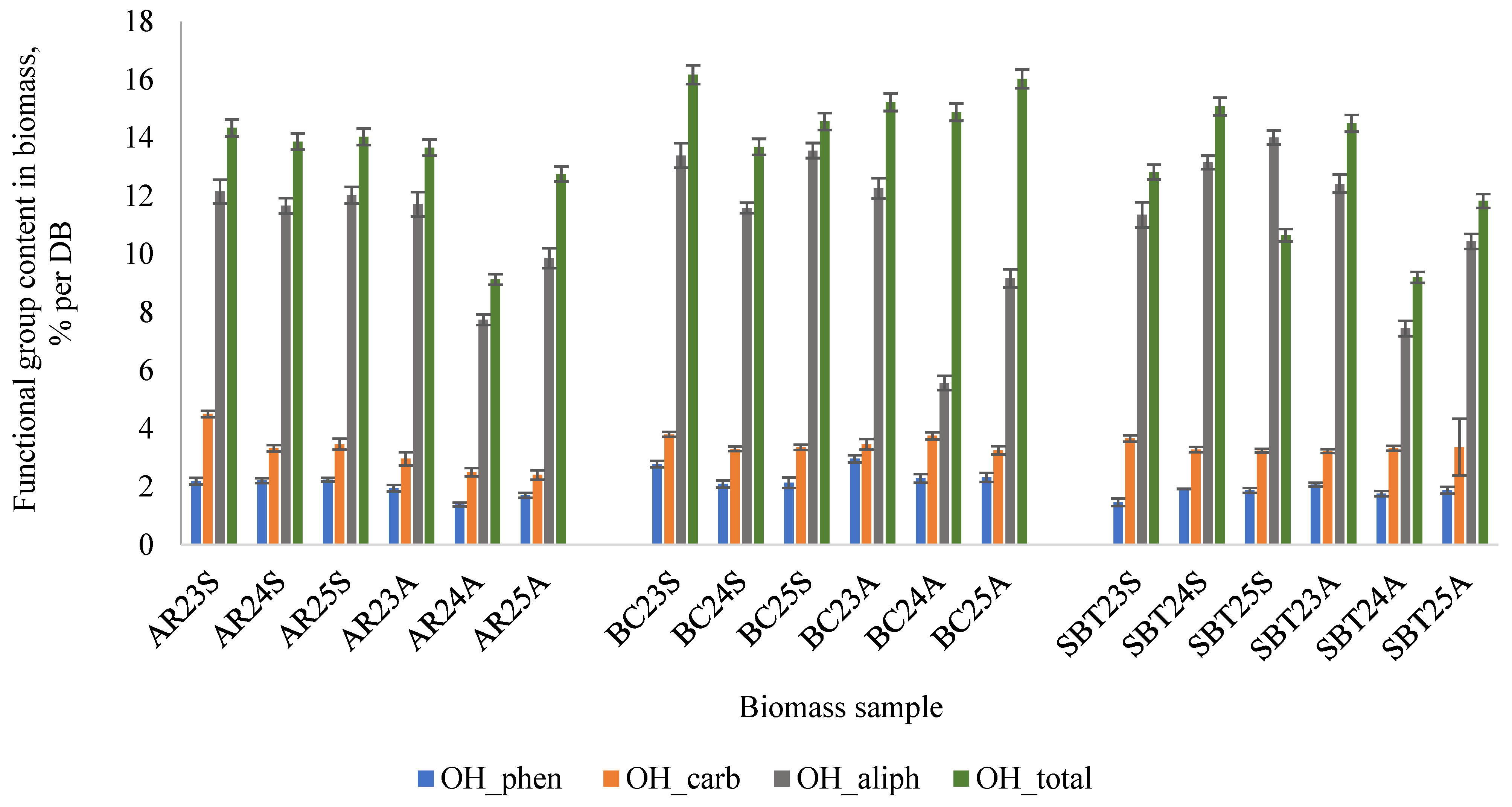
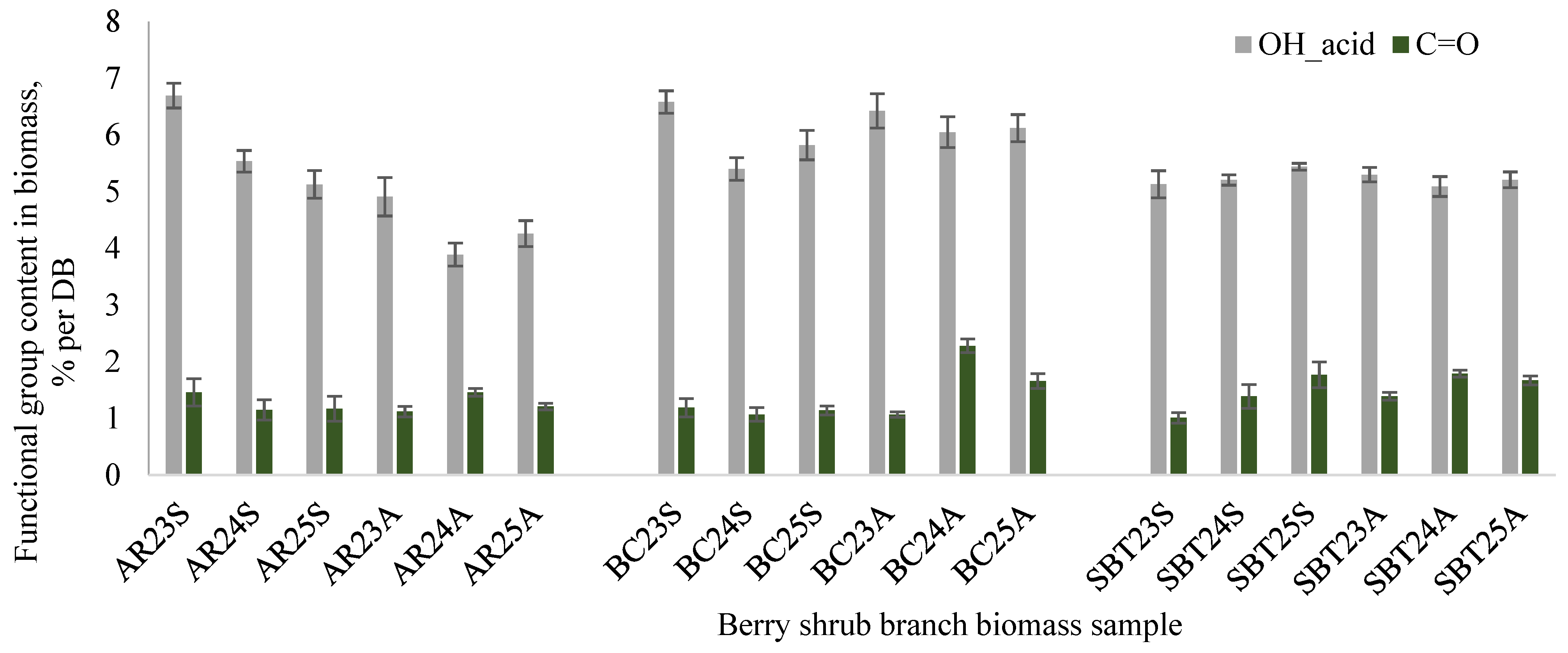
2.1. Qualitative and Quantitative Functional Analysis of Fruit Branches’ Biomass
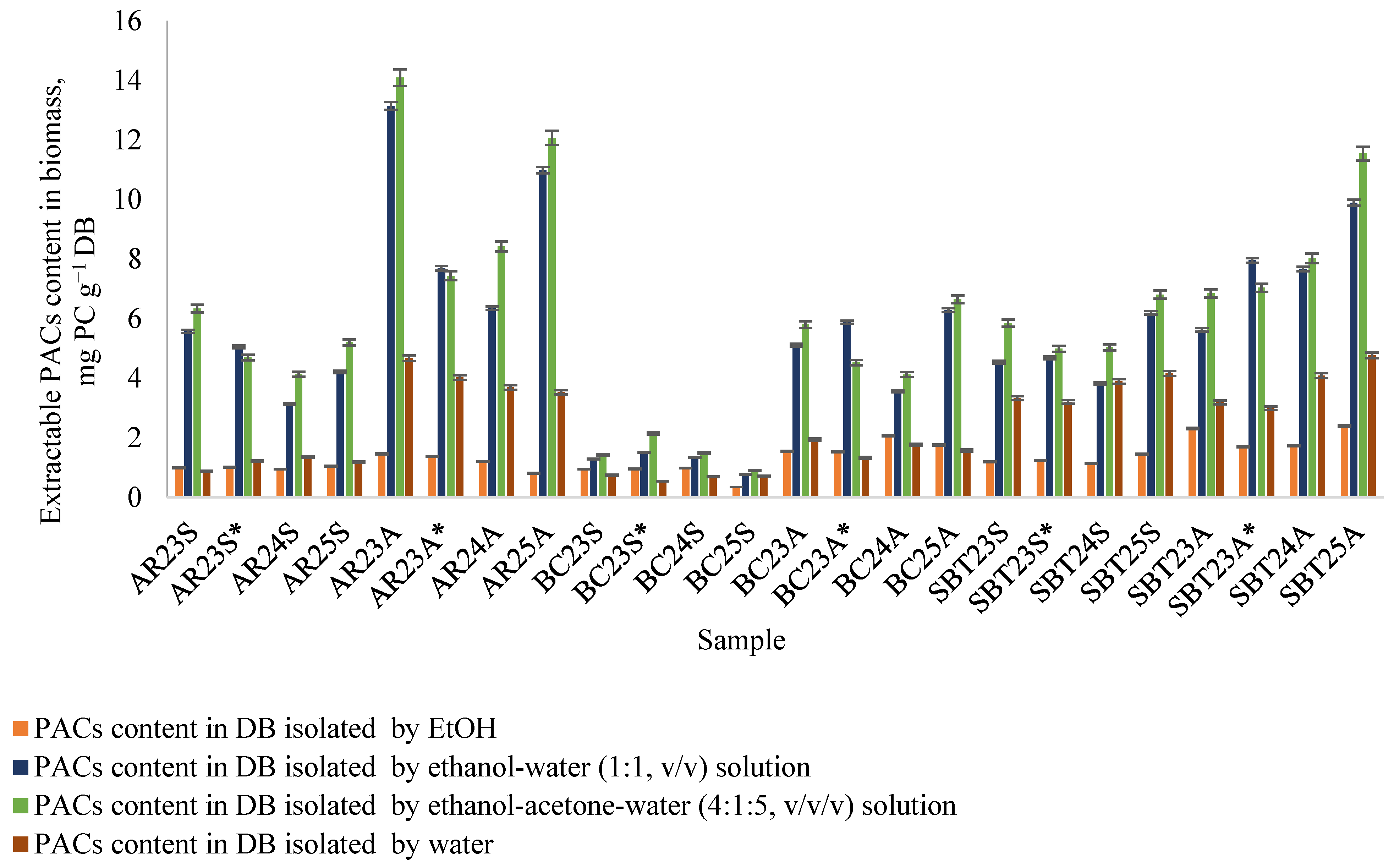
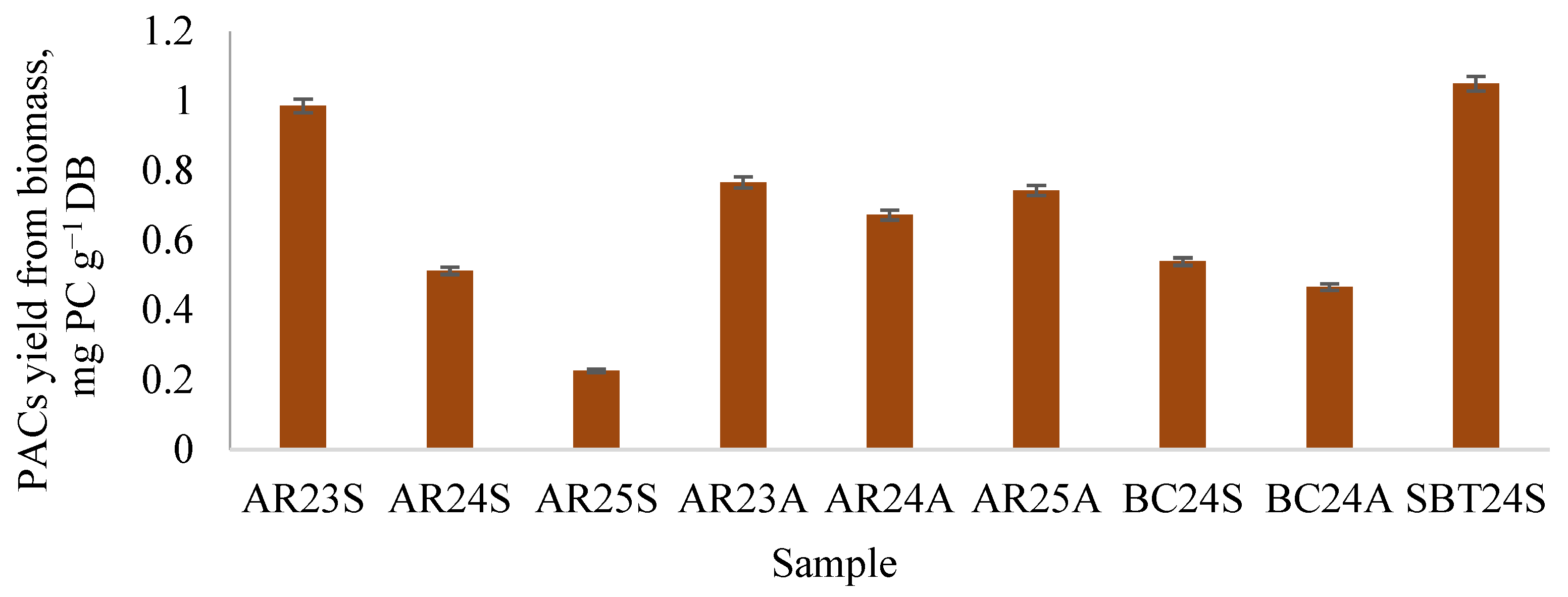
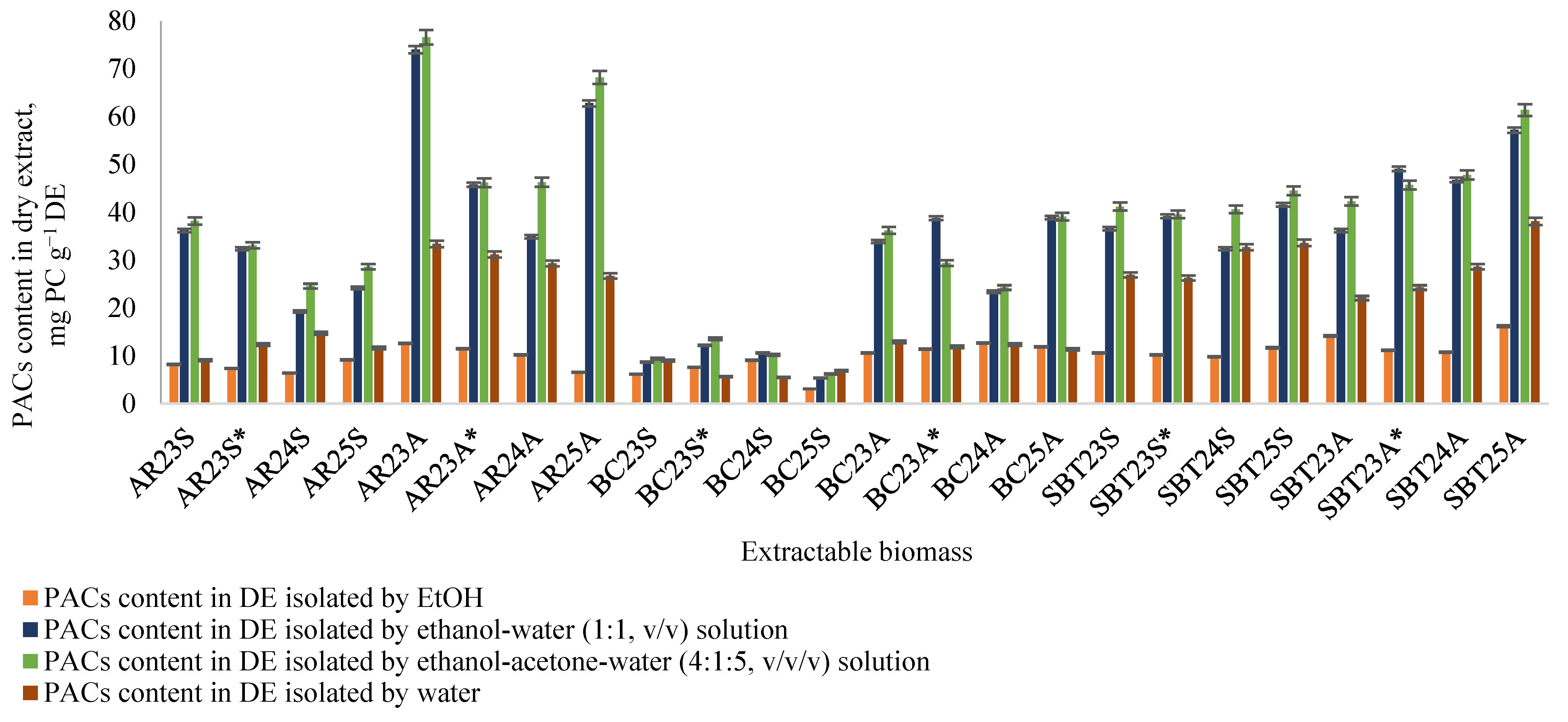
2.2. Assessment of Fruit Branch Biomass as a Source of PACs
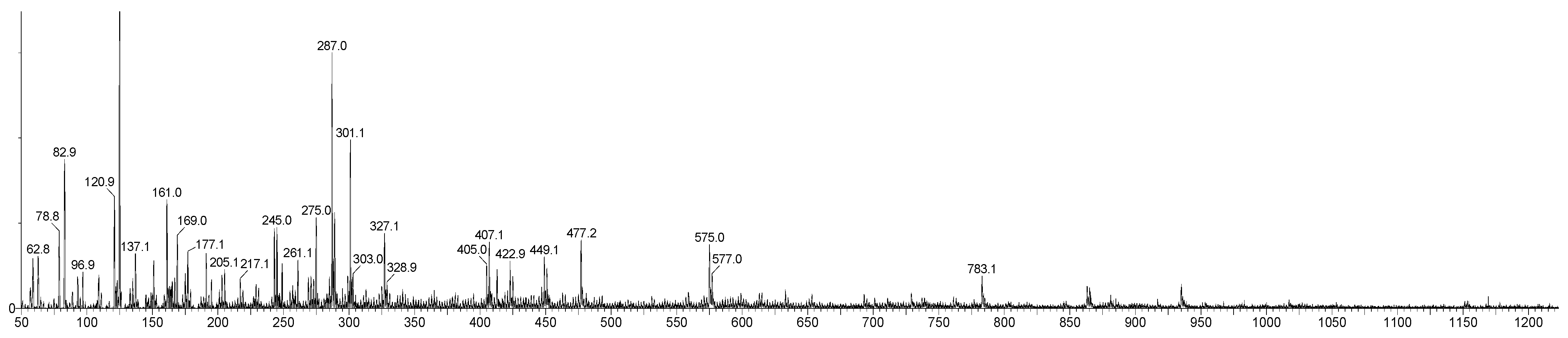
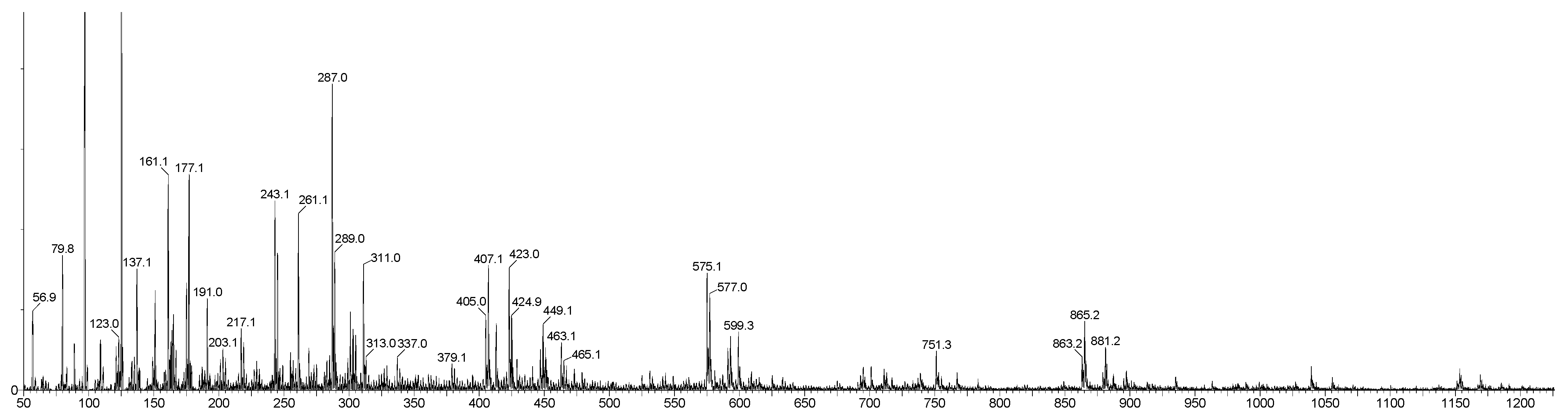
2.3. Isolated PAC Mixture Characterization
2.4. Assessment of Insoluble PACs in Biomass Composition
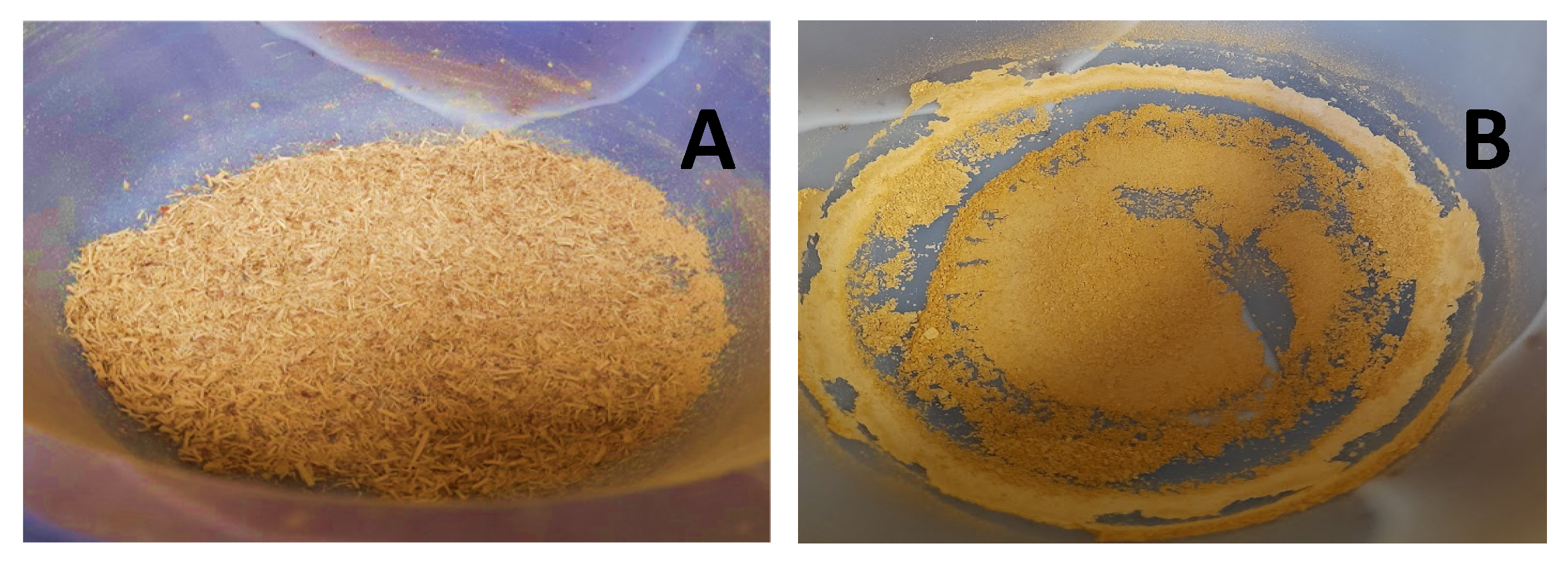
2.5. Influence of Mechanical Processing on PAC Isolation from Biomass
2.6. Element Analysis of Fruit Branches’ Biomass
3. Materials and Methods
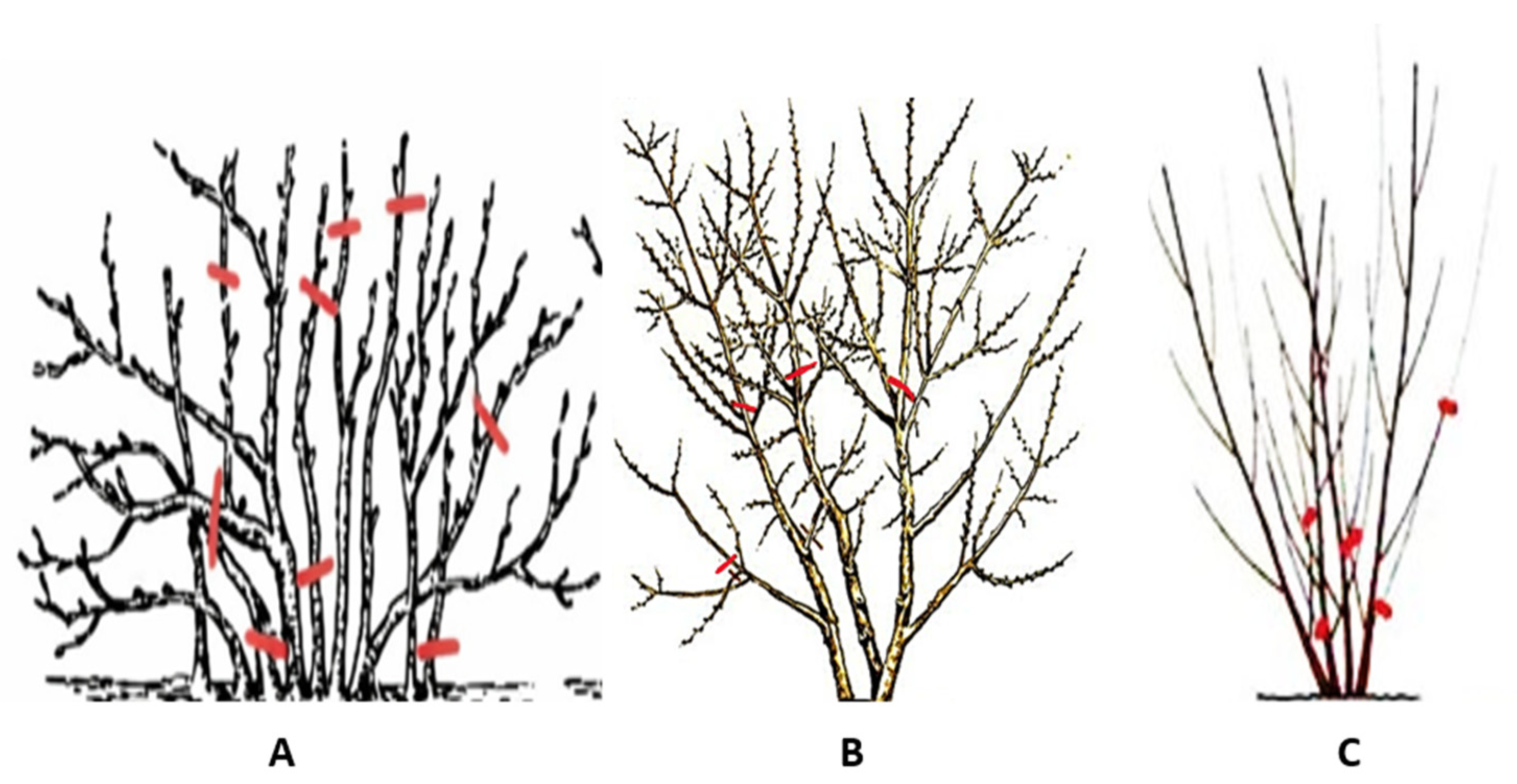
3.1. Material Collection and Preparation
3.2. Chemicals
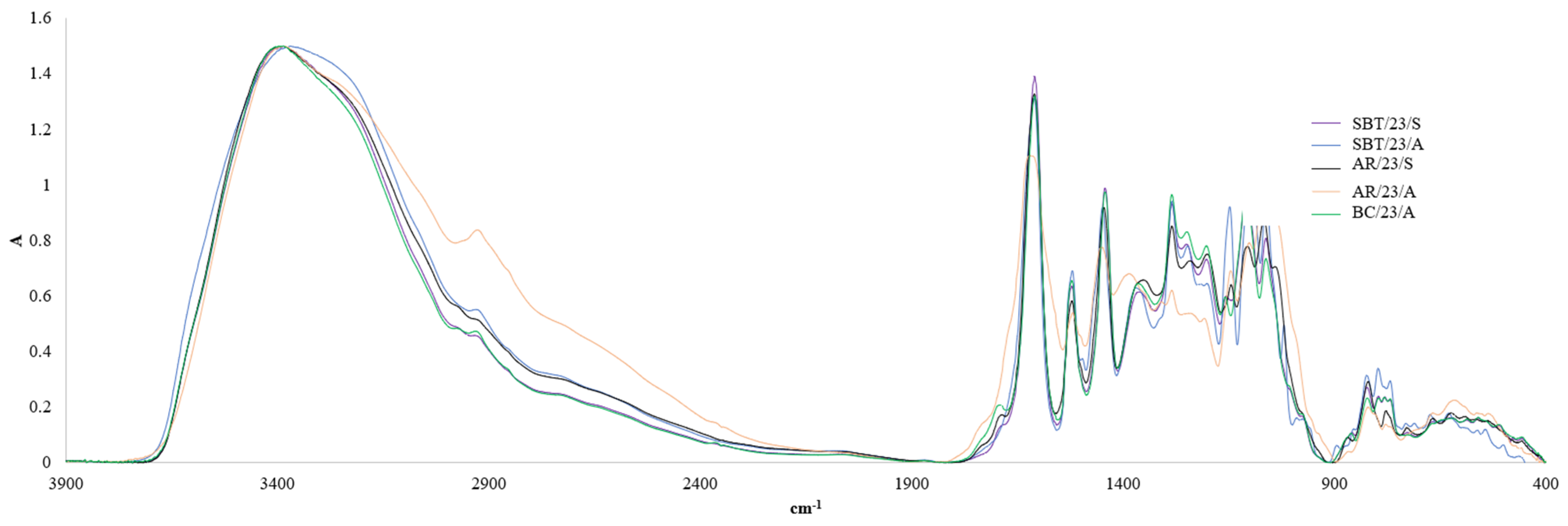
3.3. FTIR Analysis
3.4. Determination of the Number of Functional Groups in the Extract
- OH_carb—the content of carboxyl groups in the sample, % per DB;
- OH_phen—the content of phenolic hydroxyl groups in the sample, % per DB;
- a,b—consumed titrant volume, mL;
- A—dry weight mass of extract (moisture < 1%), mg;
- 1.7—a mass of hydroxyl groups corresponding to 1 mL of 0.1 M HCl solution, mg.
- OH_total—the content of total hydroxyl groups in the sample, % per DB;
- a0—acetylation mix mass in control experiment, mg (average between 3 repetitions);
- a—acetylation reagent mass, mg;
- b—0.1 N LiOH volume used in titration of the reaction mixture after acetylation, mL;
- b0—0.1 N LiOH volume used in titration of the control sample, mL;
- f—0.1 N LiOH factor;
- G—a mass of the analyzed sample, mg;
- 1.7—a mass of hydroxyl groups corresponding to 1 mL of 0.1 M HCl solution, mg.
3.5. Biomass Extraction
3.6. Determination of the PACs in the Extracts and Biomass
3.7. PAC Isolation for Characterization
3.8. PAC Composition Determination
3.9. Mechanical Processing of Biomass
3.10. Extraction of Mechanically Treated Biomass
3.11. Inorganic Element Quantification by ICP-MS
3.11.1. Sample Preparation
3.11.2. Inorganic Element Quantification
3.12. Statistical Analysis
4. Conclusions
Author Contributions
Funding
Institutional Review Board Statement
Informed Consent Statement
Data Availability Statement
Acknowledgments
Conflicts of Interest
References
- Karastergiou, A.; Gancel, A.-L.; Jourdes, M.; Teissedre, P.-L. Valorization of Grape Pomace: A Review of Phenolic Composition, Bioactivity, and Therapeutic Potential. Antioxidants 2024, 13, 1131. [Google Scholar] [CrossRef]
- Mirabella, N.; Castellani, V.; Sala, S. Current Options for the Valorization of Food Manufacturing Waste: A Review. J. Clean. Prod. 2014, 65, 28–41. [Google Scholar] [CrossRef]
- Sagar, N.A.; Pareek, S.; Sharma, S.; Yahia, E.M.; Lobo, M.G. Fruit and Vegetable Waste: Bioactive Compounds, Their Extraction, and Possible Utilization. Comp. Rev. Food Sci. Food Safe 2018, 17, 512–531. [Google Scholar] [CrossRef]
- Meremäe, K.; Raudsepp, P.; Rusalepp, L.; Anton, D.; Bleive, U.; Roasto, M. In Vitro Antibacterial and Antioxidative Activity and Polyphenolic Profile of the Extracts of Chokeberry, Blackcurrant, and Rowan Berries and Their Pomaces. Foods 2024, 13, 421. [Google Scholar] [CrossRef]
- Pedisić, S.; Zorić, Z.; Repajić, M.; Levaj, B.; Dobrinčić, A.; Balbino, S.; Čošić, Z.; Dragović-Uzelac, V.; Elez Garofulić, I. Valorization of Berry Fruit By-Products: Bioactive Compounds, Extraction, Health Benefits, Encapsulation and Food Applications. Foods 2025, 14, 1354. [Google Scholar] [CrossRef]
- Dienaitė, L.; Pukalskas, A.; Pukalskienė, M.; Pereira, C.V.; Matias, A.A.; Venskutonis, P.R. Phytochemical Composition, Antioxidant and Antiproliferative Activities of Defatted Sea Buckthorn (Hippophaë rhamnoides L.) Berry Pomace Fractions Consecutively Recovered by Pressurized Ethanol and Water. Antioxidants 2020, 9, 274. [Google Scholar] [CrossRef] [PubMed]
- Prior, R.L.; Lazarus, S.A.; Cao, G.; Muccitelli, H.; Hammerstone, J.F. Identification of Procyanidins and Anthocyanins in Blueberries and Cranberries (Vaccinium Spp.) Using High-Performance Liquid Chromatography/Mass Spectrometry. J. Agric. Food Chem. 2001, 49, 1270–1276. [Google Scholar] [CrossRef] [PubMed]
- Nijveldt, R.J.; Van Nood, E.; Van Hoorn, D.E.; Boelens, P.G.; Van Norren, K.; Van Leeuwen, P.A. Flavonoids: A Review of Probable Mechanisms of Action and Potential Applications. Am. J. Clin. Nutr. 2001, 74, 418–425. [Google Scholar] [CrossRef] [PubMed]
- Calderaro, A.; Patanè, G.T.; Tellone, E.; Barreca, D.; Ficarra, S.; Misiti, F.; Laganà, G. The Neuroprotective Potentiality of Flavonoids on Alzheimer’s Disease. Int. J. Mol. Sci. 2022, 23, 14835. [Google Scholar] [CrossRef]
- Yu, K.; Song, Y.; Lin, J.; Dixon, R.A. The Complexities of Proanthocyanidin Biosynthesis and Its Regulation in Plants. Plant Commun. 2023, 4, 100498. [Google Scholar] [CrossRef]
- Nie, F.; Liu, L.; Cui, J.; Zhao, Y.; Zhang, D.; Zhou, D.; Wu, J.; Li, B.; Wang, T.; Li, M.; et al. Oligomeric Proanthocyanidins: An Updated Review of Their Natural Sources, Synthesis, and Potentials. Antioxidants 2023, 12, 1004. [Google Scholar] [CrossRef]
- Ou, K.; Gu, L. Absorption and Metabolism of Proanthocyanidins. J. Funct. Foods 2014, 7, 43–53. [Google Scholar] [CrossRef]
- Zhang, L.; Wang, Y.; Li, D.; Ho, C.-T.; Li, J.; Wan, X. The Absorption, Distribution, Metabolism and Excretion of Procyanidins. Food Funct. 2016, 7, 1273–1281. [Google Scholar] [CrossRef]
- Rauf, A.; Imran, M.; Abu-Izneid, T.; Iahtisham-Ul-Haq; Patel, S.; Pan, X.; Naz, S.; Sanches Silva, A.; Saeed, F.; Rasul Suleria, H.A. Proanthocyanidins: A Comprehensive Review. Biomed. Pharmacother. 2019, 116, 108999. [Google Scholar] [CrossRef]
- Patanè, G.T.; Putaggio, S.; Tellone, E.; Barreca, D.; Ficarra, S.; Maffei, C.; Calderaro, A.; Laganà, G. Catechins and Proanthocyanidins Involvement in Metabolic Syndrome. Int. J. Mol. Sci. 2023, 24, 9228. [Google Scholar] [CrossRef]
- Nandakumar, V.; Singh, T.; Katiyar, S.K. Multi-Targeted Prevention and Therapy of Cancer by Proanthocyanidins. Cancer Lett. 2008, 269, 378–387. [Google Scholar] [CrossRef] [PubMed]
- Rasmussen, S.E.; Frederiksen, H.; Struntze Krogholm, K.; Poulsen, L. Dietary Proanthocyanidins: Occurrence, Dietary Intake, Bioavailability, and Protection against Cardiovascular Disease. Mol. Nutr. Food Res. 2005, 49, 159–174. [Google Scholar] [CrossRef] [PubMed]
- De La Iglesia, R.; Milagro, F.I.; Campión, J.; Boqué, N.; Martínez, J.A. Healthy Properties of Proanthocyanidins. BioFactors 2010, 36, 159–168. [Google Scholar] [CrossRef]
- Janceva, S.; Andersone, A.; Lauberte, L.; Telysheva, G.; Krasilnikova, J.; Nokalne, I.; Janceva, J. Influence of Extracts from Bark of Deciduous Trees on the Activity of the Amylolytic Enzyme—Alpha Amylase. Key Eng. Mater. 2021, 903, 34–39. [Google Scholar] [CrossRef]
- Cires, M.J.; Wong, X.; Carrasco-Pozo, C.; Gotteland, M. The Gastrointestinal Tract as a Key Target Organ for the Health-Promoting Effects of Dietary Proanthocyanidins. Front. Nutr. 2017, 3, 57. [Google Scholar] [CrossRef]
- Dixon, R.A.; Xie, D.; Sharma, S.B. Proanthocyanidins—A Final Frontier in Flavonoid Research? New Phytol. 2005, 165, 9–28. [Google Scholar] [CrossRef]
- Janceva, S.; Lauberte, L.; Arshanitsa, A.; Akishin, J.; Dizhbite, T.; Telysheva, G. Optimization of Proanthocyanidins Extraction from Bark of Local Hardwood. Key Eng. Mater. 2018, 762, 163–168. [Google Scholar] [CrossRef]
- Hellström, J.K.; Törrönen, A.R.; Mattila, P.H. Proanthocyanidins in Common Food Products of Plant Origin. J. Agric. Food Chem. 2009, 57, 7899–7906. [Google Scholar] [CrossRef]
- Smeriglio, A.; Barreca, D.; Bellocco, E.; Trombetta, D. Proanthocyanidins and Hydrolysable Tannins: Occurrence, Dietary Intake and Pharmacological Effects. Br. J. Pharmacol. 2017, 174, 1244–1262. [Google Scholar] [CrossRef]
- Platonova, E.Y.; Shaposhnikov, M.V.; Lee, H.-Y.; Lee, J.-H.; Min, K.-J.; Moskalev, A. Black Chokeberry (Aronia melanocarpa) Extracts in Terms of Geroprotector Criteria. Trends Food Sci. Technol. 2021, 114, 570–584. [Google Scholar] [CrossRef]
- Platibas-Aug-Lielakie-Smiltserksku-Aroniju-Un-Cidoniju-Lauki. Available online: https://lasi.lv/saimnieks-uznemejs/darzkopiba/platibas-aug-lielakie-smiltserksku-aroniju-un-cidoniju-lauki.4417 (accessed on 30 September 2025).
- Janceva, S.; Andersone, A.; Lauberte, L.; Bikovens, O.; Nikolajeva, V.; Jashina, L.; Zaharova, N.; Telysheva, G.; Senkovs, M.; Rieksts, G.; et al. Sea Buckthorn (Hippophae rhamnoides) Waste Biomass after Harvesting as a Source of Valuable Biologically Active Compounds with Nutraceutical and Antibacterial Potential. Plants 2022, 11, 642. [Google Scholar] [CrossRef]
- Andersone, A.; Janceva, S.; Lauberte, L.; Skadins, I.; Nikolajeva, V.; Logviss, K.; Zaharova, N.; Rieksts, G.; Telysheva, G. A Comparative Analysis of the Proanthocyanidins from Fruit and Non-Fruit Trees and Shrubs of Northern Europe: Chemical Characteristics and Biological Activity. Sustain. Chem. Pharm. 2023, 36, 101266. [Google Scholar] [CrossRef]
- Milella, R.A.; De Rosso, M.; Gasparro, M.; Gigante, I.; Debiase, G.; Forleo, L.R.; Marsico, A.D.; Perniola, R.; Tutino, V.; Notarnicola, M.; et al. Correlation between Antioxidant and Anticancer Activity and Phenolic Profile of New Apulian Table Grape Genotypes (V. vinifera L.). Front. Plant Sci. 2023, 13, 1064023. [Google Scholar] [CrossRef] [PubMed]
- Cai, Y.; Luo, Q.; Sun, M.; Corke, H. Antioxidant Activity and Phenolic Compounds of 112 Traditional Chinese Medicinal Plants Associated with Anticancer. Life Sci. 2004, 74, 2157–2184. [Google Scholar] [CrossRef] [PubMed]
- González-Quilen, C.; Rodríguez-Gallego, E.; Beltrán-Debón, R.; Pinent, M.; Ardévol, A.; Blay, M.T.; Terra, X. Health-Promoting Properties of Proanthocyanidins for Intestinal Dysfunction. Nutrients 2020, 12, 130. [Google Scholar] [CrossRef] [PubMed]
- Tamo, A.K. Nanocellulose-Based Hydrogels as Versatile Materials with Interesting Functional Properties for Tissue Engineering Applications. J. Mater. Chem. B 2024, 12, 7692–7759. [Google Scholar] [CrossRef]
- Ioelovich, M. Adjustment of Hydrophobic Properties of Cellulose Materials. Polymers 2021, 13, 1241. [Google Scholar] [CrossRef]
- Rodríguez-Fabià, S.; Torstensen, J.; Johansson, L.; Syverud, K. Hydrophobization of Lignocellulosic Materials Part II: Chemical Modification. Cellulose 2022, 29, 8957–8995. [Google Scholar] [CrossRef]
- Kabir, S.M.F.; Sikdar, P.P.; Haque, B.; Bhuiyan, M.A.R.; Ali, A.; Islam, M.N. Cellulose-Based Hydrogel Materials: Chemistry, Properties and Their Prospective Applications. Prog. Biomater. 2018, 7, 153–174. [Google Scholar] [CrossRef]
- Persano, F.; Malitesta, C.; Mazzotta, E. Cellulose-Based Hydrogels for Wastewater Treatment: A Focus on Metal Ions Removal. Polymers 2024, 16, 1292. [Google Scholar] [CrossRef]
- Mergbi, M.; Galloni, M.G.; Aboagye, D.; Elimian, E.; Su, P.; Ikram, B.M.; Nabgan, W.; Bedia, J.; Amor, H.B.; Contreras, S.; et al. Valorization of Lignocellulosic Biomass into Sustainable Materials for Adsorption and Photocatalytic Applications in Water and Air Remediation. Environ. Sci. Pollut. Res. 2023, 30, 74544–74574. [Google Scholar] [CrossRef] [PubMed]
- Patroklou, G.; Triantafyllopoulou, E.; Goula, P.-E.; Karali, V.; Chountoulesi, M.; Valsami, G.; Pispas, S.; Pippa, N. pH-Responsive Hydrogels: Recent Advances in Pharmaceutical Applications. Polymers 2025, 17, 1451. [Google Scholar] [CrossRef] [PubMed]
- Musialik, M.; Kuzmicz, R.; Pawłowski, T.S.; Litwinienko, G. Acidity of Hydroxyl Groups: An Overlooked Influence on Antiradical Properties of Flavonoids. J. Org. Chem. 2009, 74, 2699–2709. [Google Scholar] [CrossRef]
- Karagoz, P.; Khiawjan, S.; Marques, M.P.C.; Santzouk, S.; Bugg, T.D.H.; Lye, G.J. Pharmaceutical Applications of Lignin-Derived Chemicals and Lignin-Based Materials: Linking Lignin Source and Processing with Clinical Indication. Biomass Conv. Bioref. 2024, 14, 26553–26574. [Google Scholar] [CrossRef]
- Li, Y.; Ding, X.; Hu, H.; Xu, F.-J. Stimulus-Responsive Polysaccharide-Based Hydrogels: From Design to Biomedical Applications. Precis. Med. Eng. 2024, 1, 100001. [Google Scholar] [CrossRef]
- Mahmoudi, C.; Tahraoui Douma, N.; Mahmoudi, H.; Iurciuc, C.E.; Popa, M. Hydrogels Based on Proteins Cross-Linked with Carbonyl Derivatives of Polysaccharides, with Biomedical Applications. Int. J. Mol. Sci. 2024, 25, 7839. [Google Scholar] [CrossRef]
- De Oliveira, I.; Santos-Buelga, C.; Aquino, Y.; Barros, L.; Heleno, S.A. New Frontiers in the Exploration of Phenolic Compounds and Other Bioactives as Natural Preservatives. Food Biosci. 2025, 68, 106571. [Google Scholar] [CrossRef]
- Hu, M. Oxidative Stability and Shelf Life of Low-Moisture Foods. In Oxidative Stability and Shelf Life of Foods Containing Oils and Fats; Elsevier: Amsterdam, The Netherlands, 2016; pp. 313–371. ISBN 978-1-63067-056-6. [Google Scholar]
- Li, C.; Wang, Y.; Yu, W. Dynamic Changes of Phenolic Compound Contents in Leaf and Bark of Poplar during Autumn Temperature Drop. J. For. Res. 2011, 22, 481–485. [Google Scholar] [CrossRef]
- Symma, N.; Hensel, A. Advanced Analysis of Oligomeric Proanthocyanidins: Latest Approaches in Liquid Chromatography and Mass Spectrometry Based Analysis. Phytochem. Rev. 2022, 21, 809–833. [Google Scholar] [CrossRef]
- Rockenbach, I.I.; Jungfer, E.; Ritter, C.; Santiago-Schübel, B.; Thiele, B.; Fett, R.; Galensa, R. Characterization of Flavan-3-Ols in Seeds of Grape Pomace by CE, HPLC-DAD-MSn and LC-ESI-FTICR-MS. Food Res. Int. 2012, 48, 848–855. [Google Scholar] [CrossRef]
- Renard, C.M.G.C.; Watrelot, A.A.; Le Bourvellec, C. Interactions between Polyphenols and Polysaccharides: Mechanisms and Consequences in Food Processing and Digestion. Trends Food Sci. Technol. 2017, 60, 43–51. [Google Scholar] [CrossRef]
- Choma, J.; Szczęśniak, B.; Jaroniec, M. Mechanochemical Preparation of Biomass-Derived Porous Carbons. Molecules 2025, 30, 3125. [Google Scholar] [CrossRef] [PubMed]
- Mungwari, C.P.; King’ondu, C.K.; Sigauke, P.; Obadele, B.A. Conventional and Modern Techniques for Bioactive Compounds Recovery from Plants: Review. Sci. Afr. 2025, 27, e02509. [Google Scholar] [CrossRef]
- Comission Regulation (EU) 2023/915. Available online: https://eur-lex.europa.eu/legal-content/EN/TXT/PDF/?uri=CELEX:32023R0915 (accessed on 21 December 2025).
- Janceva, S.; Svarta, A.; Nikolajeva, V.; Zaharova, N.; Rieksts, G.; Andersone, A. Forest Logging Residue Valorization into Valuable Products According to Circular Bioeconomy. Forests 2025, 16, 1418. [Google Scholar] [CrossRef]
- Zakis, G. Conductometric Titration. In Functional Analysis of Lignins and Their Derivatives; TAPPI Press: Atlanta, GA, USA, 1994; pp. 180–183. [Google Scholar]
- Porter, L.J.; Hrstich, L.N.; Chan, B.G. The Conversion of Procyanidins and Prodelphinidins to Cyanidin and Delphinidin. Phytochemistry 1985, 25, 223–230. [Google Scholar] [CrossRef]






| Element | AR24S/MP | AR24A/MP | BC24S/MP | BC24A/MP | SBT24S/MP |
|---|---|---|---|---|---|
| Element Concentration, mg∙kg−1 | |||||
| Be | 0.08 ± 0.03 | 0.09 ± 0.03 | 0.09 ± 0.03 | 0.10 ± 0.02 | 0.09 ± 0.03 |
| Hg * | ˂0.002 | ˂0.002 | ˂0.002 | ˂0.002 | ˂0.002 |
| Cr | 0.05 ± 0.01 | 0.24 ± 0.03 | 0.82 ± 0.05 | 0.20 ± 0.02 | 0.07 ± 0.03 |
| Ni | 0.14 ± 0.03 | 0.12 ± 0.03 | 0.14 ± 0.03 | 0.17 ± 0.03 | 0.10 ± 0.03 |
| As | 0.04 ± 0.02 | 0.03 ± 0.02 | 0.04 ± 0.02 | 0.06 ± 0.03 | 0.02 ± 0.01 |
| Se | 0.02 ± 0.01 | 0.02 ± 0.01 | 0.03± 0.01 | 0.02 ± 0.01 | 0.03 ± 0.01 |
| Cd * | ˂0.0004 | ˂0.0004 | ˂0.0004 | ˂0.0004 | ˂0.0004 |
| Pb | 0.47 ± 0.05 | 0.59 ± 0.03 | 0.55 ± 0.03 | 0.32 ± 0.05 | 0.30 ± 0.05 |
| Tl * | ˂0.01 | ˂0.01 | ˂0.01 | ˂0.01 | ˂0.01 |
| Sb * | ˂0.01 | ˂0.01 | ˂0.01 | ˂0.01 | ˂0.01 |
| Ca | 453.9 ± 0.2 | 679 ± 12 | 811 ± 7 | 751 ± 9 | 359 ± 10 |
| Cu | 2.1 ± 0.1 | 4.2 ± 0.1 | 5.1 ± 0.1 | 3.4 ± 0.3 | 3.0 ±0.4 |
| Fe | 30 ± 3 | 33 ± 1 | 35± 2 | 47 ± 6 | 14 ± 4 |
| Li | 0.11 ± 0.04 | 0.09 ± 0.05 | 0.08 ± 0.05 | 0.10 ± 0.02 | 0.04 ± 0.01 |
| Mg | 458 ± 11 | 604 ± 46 | 1104 ± 41 | 1028 ± 49 | 188 ± 7 |
| Mn | 4.6 ± 0.4 | 5.3 ± 0.3 | 19.5 ± 0.5 | 15.1 ± 0.2 | 6.5 ± 0.5 |
| Mo | 0.08 ± 0.01 | 0.06 ± 0.02 | 0.38 ± 0.03 | 0.34 ± 0.05 | 0.80 ± 0.04 |
| Zn | 8.1 ± 0.5 | 13.0 ± 0.1 | 13.4 ± 0.1 | 15.2 ±0.2 | 4.9 ± 0.5 |
| Sr | 8 ± 2 | 10 ± 2 | 15 ± 1 | 14 ± 1 | 10 ± 2 |
| Ti | 2.4 ± 0.5 | 2.3 ± 0.2 | 2.4 ± 0.2 | 2.7 ± 0.3 | 0.5 ± 0.1 |
| V | 0.08 ± 0.02 | 0.06 ± 0.02 | 0.07 ± 0.03 | 0.13 ±0.04 | ≤ 0.01 |
| Co | 0.02 ± 0.01 | 0.02 ± 0.01 | 0.02 ± 0.01 | 0.02 ± 0.01 | ˂0.01 |
| Sample Abbreviation | Collection Year, Month Period | Sample Abbreviation | Collection Year, Month Period | Sample Abbreviation | Collection Year, Month Period |
|---|---|---|---|---|---|
| Black chokeberry (Aronia melanocarpa) | Blackcurrant (Ribes nigrum) | Sea buckthorn (Hippophae rhamnoides L.) | |||
| AR23S | 2023, March | BC23S | 2023, March | SBT23S | 2023, March |
| AR24S | 2024, March | BC24S | 2024, March | SBT24S | 2024, March |
| AR25S | 2025, March | BC25S | 2025, March | SBT25S | 2025, March |
| AR23A | 2023, September | BC23A | 2023, September | SBT23A | 2023, September |
| AR24A | 2024, September | BC24A | 2024, September | SBT24A | 2024, September |
| AR25A | 2025, September | BC25A | 2025, September | SBT25A | 2025, September |
| AR23S * | 2023, March | BC23S * | 2023, March | SBT23S * | 2023, March |
| AR23A * | 2023, September | BC23A * | 2023, September | SBT23A * | 2023, September |
Disclaimer/Publisher’s Note: The statements, opinions and data contained in all publications are solely those of the individual author(s) and contributor(s) and not of MDPI and/or the editor(s). MDPI and/or the editor(s) disclaim responsibility for any injury to people or property resulting from any ideas, methods, instructions or products referred to in the content. |
© 2026 by the authors. Licensee MDPI, Basel, Switzerland. This article is an open access article distributed under the terms and conditions of the Creative Commons Attribution (CC BY) license.
Share and Cite
Janceva, S.; Petersone, L.; Zaharova, N.; Schastnaja, K.; Rieksts, G.; Andersone, A. Valorization of Sea Buckthorn, Black Chokeberry, and Black Currant Branch Biomass as a Novel Source of Bioactive Oligomeric Proanthocyanidins. Plants 2026, 15, 472. https://doi.org/10.3390/plants15030472
Janceva S, Petersone L, Zaharova N, Schastnaja K, Rieksts G, Andersone A. Valorization of Sea Buckthorn, Black Chokeberry, and Black Currant Branch Biomass as a Novel Source of Bioactive Oligomeric Proanthocyanidins. Plants. 2026; 15(3):472. https://doi.org/10.3390/plants15030472
Chicago/Turabian StyleJanceva, Sarmite, Liga Petersone, Natalija Zaharova, Karina Schastnaja, Gints Rieksts, and Anna Andersone. 2026. "Valorization of Sea Buckthorn, Black Chokeberry, and Black Currant Branch Biomass as a Novel Source of Bioactive Oligomeric Proanthocyanidins" Plants 15, no. 3: 472. https://doi.org/10.3390/plants15030472
APA StyleJanceva, S., Petersone, L., Zaharova, N., Schastnaja, K., Rieksts, G., & Andersone, A. (2026). Valorization of Sea Buckthorn, Black Chokeberry, and Black Currant Branch Biomass as a Novel Source of Bioactive Oligomeric Proanthocyanidins. Plants, 15(3), 472. https://doi.org/10.3390/plants15030472