Glycyrrhiza glabra L. Extracts with Potential Antiproliferative and Anti-Migration Activities Against Breast and Gynecological Cancer Cell Lines
 ,
,  ,
,  , , , ,
  ,
,  and
and
Abstract
1. Introduction
2. Results and Discussion
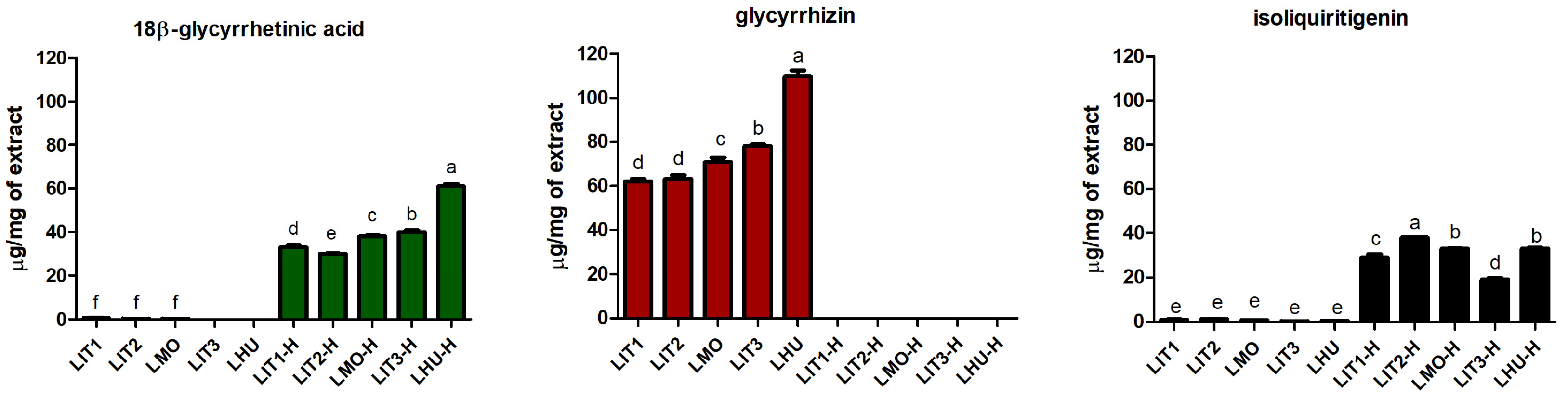
2.1. Phytochemical Analyses

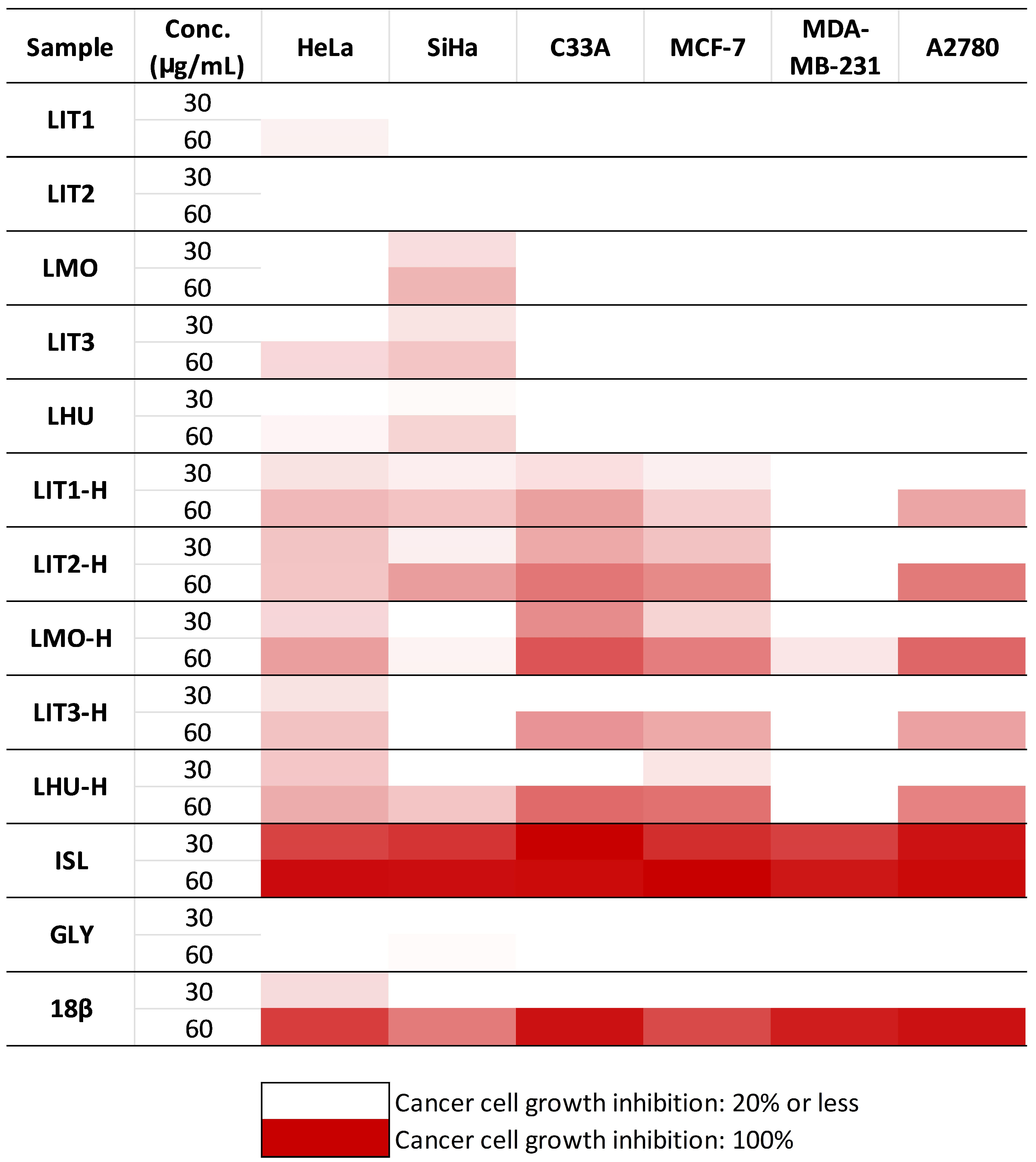
2.2. Antiproliferative Assay
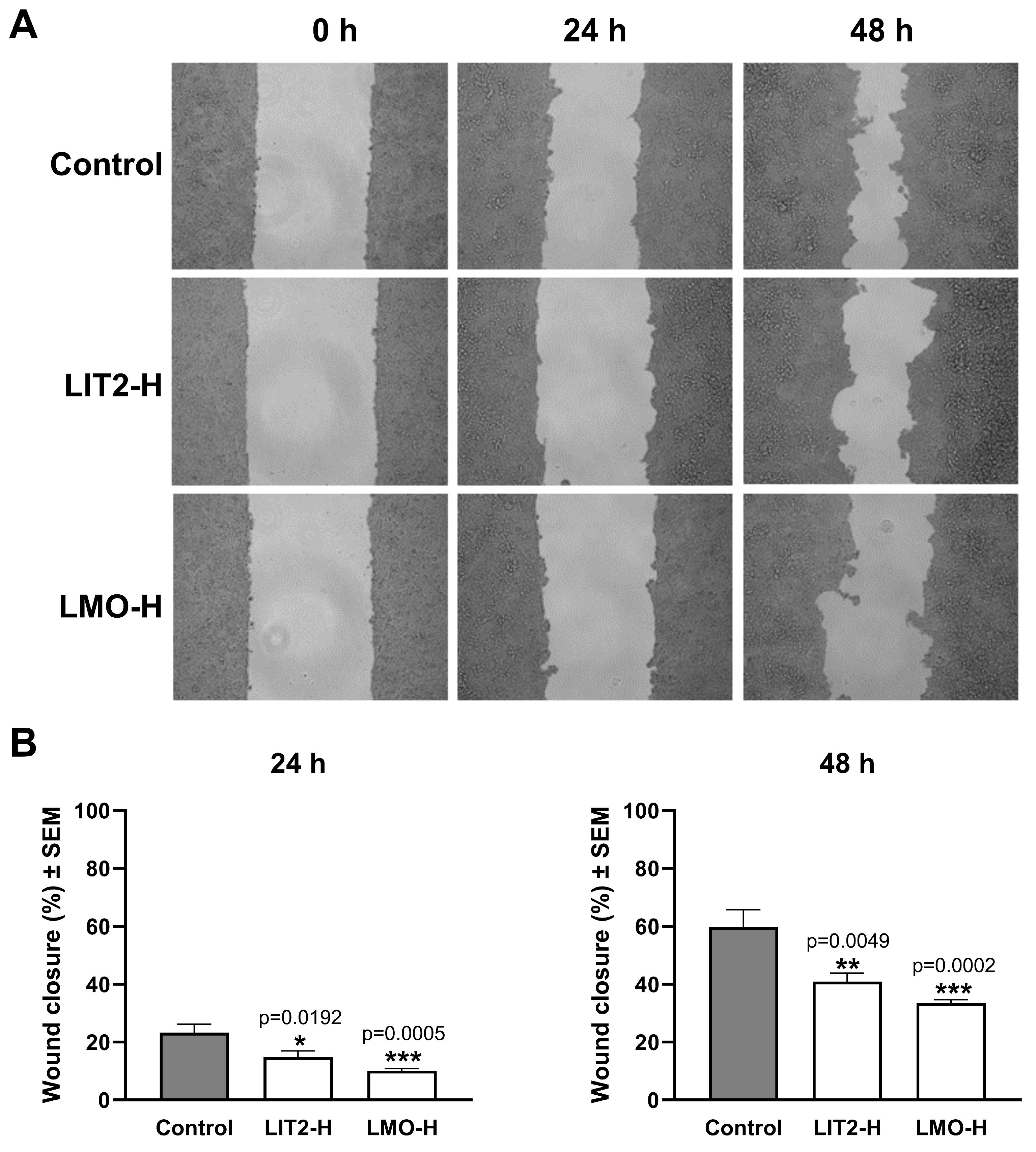
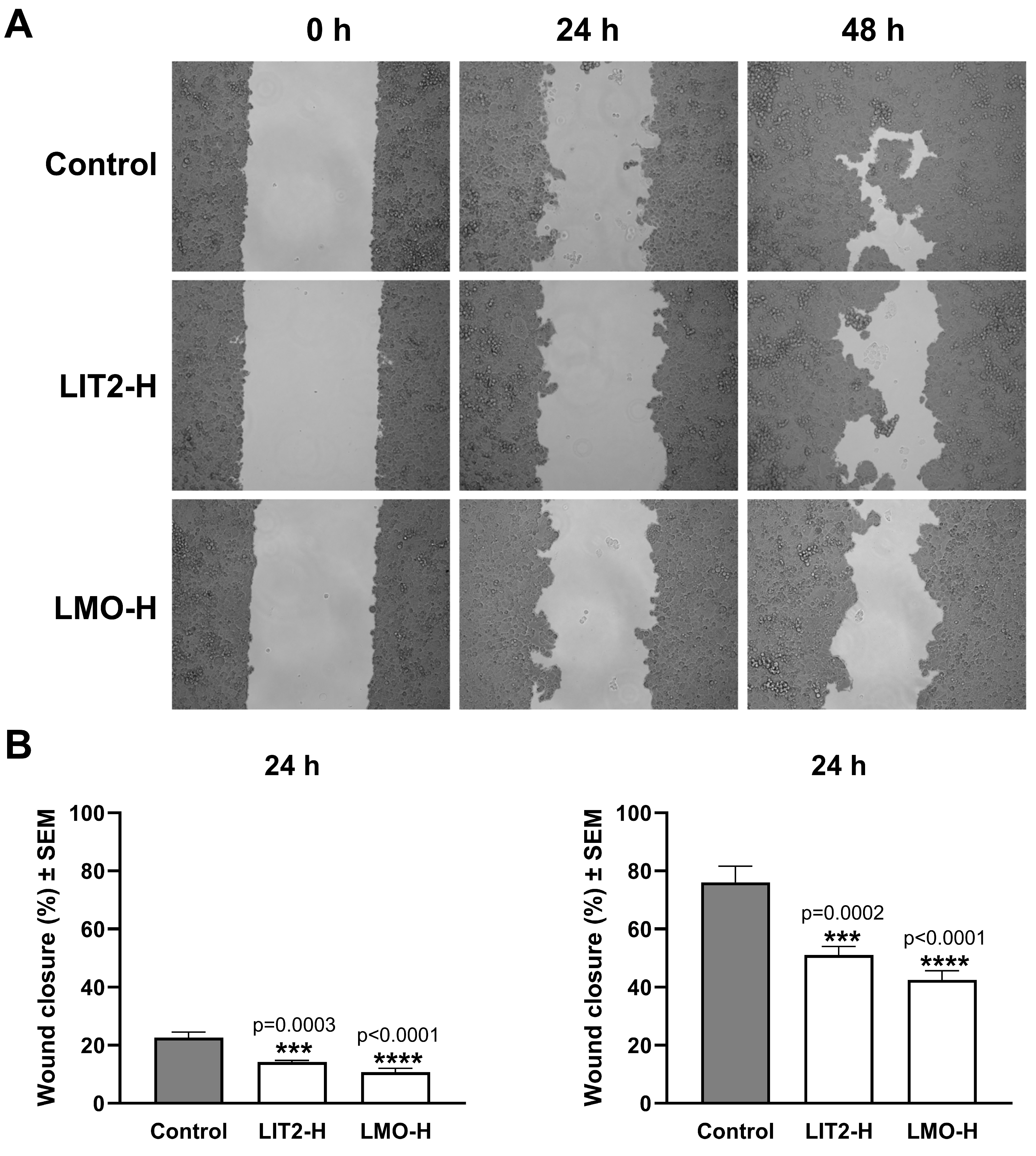
2.3. Wound-Healing Assay
3. Materials and Methods
3.1. Reagents
3.2. Plant Material Extraction and Hydrolysis Process

| Code | Geographical Origin |
|---|---|
| LIT1 (raw) LIT1-H (hydrolysate) | Italy |
| LIT2 (raw) LIT2-H (hydrolysate) | Italy |
| LMO (raw) LMO-H (hydrolysate) | Morocco |
| LIT3 (raw) LIT3-H (hydrolysate) | Italy |
| LHU (raw) LHU-H (hydrolysate) | Hungary |
3.3. HPLC Analyses
| Reference Compounds | Linear Range | Standard Calibration Curve | R2 |
|---|---|---|---|
| 18β-glycyrrhetinic acid (18β) | 1–0.001 mg/mL | y = 10,000,000x + 45,832 | 0.9998 |
| glycyrrhizin (GLY) | 1–0.05 mg/mL | y = 7,000,000x – 285,127 | 0.9995 |
| Isoliquiritigenin (ISL) | 0.5–0.0001 mg/mL | y = 50,000,000x + 132,335 | 0.9994 |
3.4. Antiproliferative Assay
3.5. Wound-Healing Assay
3.6. Statistical Analyses
4. Conclusions
Supplementary Materials
Author Contributions
Funding
Data Availability Statement
Conflicts of Interest
Abbreviations
| EMEM | Minimal Essential Medium |
| EMT | Epithelial–Mesenchymal Transition |
| ER | Estrogen |
| FBS | Fetal Bovine Serum |
| HER 2 | Human Epidermal Growth Factor 2 |
| HMGB1 | High Mobility Group Box 1 |
| HPLC | High-Performance Liquid Chromatography |
| HPV | Human Papillomavirus |
| MMP | Matrix Metalloproteinase |
| NEAA | Non-Essential Amino Acids |
| NOAEL | No-Observed Adverse Effect Level |
| PR | Progesterone |
| TGF | Transforming Growth Factor |
| ROS | Reactive Oxygen Species |
| WHO | World Health Organization |
References
- Mattiuzzi, C.; Lippi, G. Current cancer epidemiology. J. Epidemiol. Glob. Health 2019, 9, 217. [Google Scholar] [CrossRef]
- Waks, A.G.; Winer, E.P. Breast cancer treatment: A review. JAMA 2019, 321, 288–300. [Google Scholar] [CrossRef] [PubMed]
- Bauer, K.R.; Brown, M.; Cress, R.D.; Parise, C.A.; Caggiano, V. Descriptive analysis of estrogen receptor (ER)-negative, progesterone receptor (PR)-negative, and HER2-negative invasive breast cancer, the so-called triple-negative phenotype: A population-based study from the California cancer Registry. Cancer 2007, 109, 1721–1728. [Google Scholar] [CrossRef] [PubMed]
- La Rosa, V.L.; Garzon, S.; Gullo, G.; Fichera, M.; Sisti, G.; Gallo, P.; Riemma, G.; Schiattarella, A. Fertility preservation in women affected by gynaecological cancer: The importance of an integrated gynaecological and psychological approach. Ecancermedicalscience 2020, 14, 1035. [Google Scholar] [CrossRef]
- Jayson, G.C.; Kohn, E.C.; Kitchener, H.C.; Ledermann, J.A. Ovarian cancer. Lancet 2014, 384, 1376–1388. [Google Scholar] [CrossRef]
- Stewart, C.; Ralyea, C.; Lockwood, S. Ovarian cancer: An integrated review. Semin. Oncol. Nurs. 2019, 35, 151–156. [Google Scholar] [CrossRef]
- Saunders, W.B.; Reid, B.M.; Permuth, J.B.; Sellers, T.A. Epidemiology of ovarian cancer: A review. Cancer Biol. Med. 2017, 14, 9. [Google Scholar] [CrossRef]
- Zhou, J.; Li, H.; Wu, B.; Zhu, L.; Huang, Q.; Guo, Z.; He, Q.; Wang, L.; Peng, X.; Guo, T. Network pharmacology combined with experimental verification to explore the potential mechanism of naringenin in the treatment of cervical cancer. Sci. Rep. 2024, 14, 1860. [Google Scholar] [CrossRef]
- Zhang, S.; Xu, H.; Zhang, L.; Qiao, Y. Cervical cancer: Epidemiology, risk factors and screening. Chin. J. Cancer Res. 2020, 32, 720. [Google Scholar] [CrossRef] [PubMed]
- Vu, M.; Yu, J.; Awolude, O.A.; Chuang, L. Cervical cancer worldwide. Curr. Probl. Cancer 2018, 42, 457–465. [Google Scholar] [CrossRef]
- Matulonis, U.A.; Sood, A.K.; Fallowfield, L.; Howitt, B.E.; Sehouli, J.; Karlan, B.Y. Ovarian cancer. Nat. Rev. Dis. Primers 2016, 2, 1–22. [Google Scholar] [CrossRef]
- Cohen, P.A.; Jhingran, A.; Oaknin, A.; Denny, L. Cervical cancer. Lancet 2019, 393, 169–182. [Google Scholar] [CrossRef]
- Bouvard, V.; Wentzensen, N.; Mackie, A.; Berkhof, J.; Brotherton, J.; Giorgi-Rossi, P.; Kupets, R.; Smith, R.; Arrossi, S.; Bendahhou, K.; et al. The IARC perspective on cervical cancer screening. N. Engl. J. Med. 2021, 385, 1908–1918. [Google Scholar] [CrossRef] [PubMed]
- Arezzo, F.; Cormio, G.; Loizzi, V.; Cazzato, G.; Cataldo, V.; Lombardi, C.; Ingravallo, G.; Resta, L.; Cicinelli, E. HPV-Negative cervical cancer: A narrative review. Diagnostics 2021, 11, 952. [Google Scholar] [CrossRef]
- Surh, Y.J. Cancer chemoprevention with dietary phytochemicals. Nat. Rev. Cancer 2003, 3, 768–780. [Google Scholar] [CrossRef] [PubMed]
- Mad-adam, N.; Madla, S.; Lailerd, N.; Hiransai, P.; Graidist, P. Piper nigrum Extract: Dietary Supplement for Reducing Mammary Tumor Incidence and Chemotherapy-Induced Toxicity. Foods 2023, 12, 2053. [Google Scholar] [CrossRef] [PubMed]
- Sharma, V.; Katiyar, A.; Agrawal, R.C. Glycyrrhiza glabra: Chemistry and pharmacological activity. In Sweeteners; Springer Nature: Berlin/Heidelberg, Germany, 2018; pp. 87–100. [Google Scholar]
- El-Saber Batiha, G.; Magdy Beshbishy, A.; El-Mleeh, A.; Abdel-Daim, M.M.; Prasad Devkota, H. Traditional uses, bioactive chemical constituents, and pharmacological and toxicological activities of Glycyrrhiza glabra L. (Fabaceae). Biomolecules 2020, 10, 352. [Google Scholar] [CrossRef]
- Pastorino, G.; Cornara, L.; Soares, S.; Rodrigues, F.; Oliveira, M.B.P. Liquorice (Glycyrrhiza glabra): A phytochemical and pharmacological review. Phytother. Res. 2018, 32, 2323–2339. [Google Scholar] [CrossRef]
- Dong, S.; Inoue, A.; Zhu, Y.; Tanji, M.; Kiyama, R. Activation of rapid signaling pathways and the subsequent transcriptional regulation for the proliferation of breast cancer MCF-7 cells by the treatment with an extract of Glycyrrhiza glabra root. Food Chem. Toxicol. 2007, 45, 2470–2478. [Google Scholar] [CrossRef]
- Dastagir, G.; Rizvi, M.A. Glycyrrhiza glabra L. (Liquorice). Pak. J. Pharm. Sci. 2016, 29, 1727–1733. [Google Scholar]
- Kim, D.H.; Hong, S.W.; Kim, B.T.; Bae, E.A.; Park, H.Y.; Han, M.J. Biotransformation of glycyrrhizin by human intestinal bacteria and its relation to biological activities. Arch. Pharm. Res. 2000, 23, 172–177. [Google Scholar] [CrossRef] [PubMed]
- Akao, T.; Hayashi, T.; Kobashi, K.; Kanaoka, M.; Kato, H.; Kobayashi, M.; Takeda, S.; Oyama, T. Intestinal bacterial hydrolysis is indispensable to absorption of 18β-glycyrrhetic acid after oral administration of glycyrrhizin in rats. J. Pharm. Pharmacol. 1994, 46, 135–137. [Google Scholar] [CrossRef]
- Chowdhury, B.; Bhattamisra, S.K.; Das, M.C. Anti-convulsant action and amelioration of oxidative stress by Glycyrrhiza glabra root extract in pentylenetetrazole-induced seizure in albino rats. Indian J. Pharmacol. 2013, 45, 40–43. [Google Scholar] [CrossRef] [PubMed]
- Gupta, M.; Sasmal, S.K.; Karmakar, N.; Sasmal, S.; Chowdhury, S. Experimental evaluation of antioxidant action of aqueous extract of glycyrrhiza glabra linn. Roots in potassium dichromate induced oxidative stress by assessment of reactive oxygen species levels. Inter. J. Pharmacogn. Phytochem. Res. 2016, 8, 1325–1333. [Google Scholar]
- Hosseinzadeh, H.; Shakib, S.S.; Sameni, A.K.; Taghiabadi, E. Acute and subacute toxicity of safranal, a constituent of saffron, in mice and rats. Iran. J. Pharm. Res. 2013, 12, 93. [Google Scholar] [CrossRef]
- Cantelli-Forti, G.; Maffei, F.; Hrelia, P.; Bugamelli, F.; Bernardi, M.; D’intino, P.; Maranesi, M.; Raggi, M.A. Interaction of licorice on glycyrrhizin pharmacokinetics. Environ. Health Perspec. 1994, 102, 65. [Google Scholar] [CrossRef]
- Al-Qarawi, A.A.; Abdel-Rahman, H.A.; Ali, B.H.; El Mougy, S.A. Liquorice (Glycyrrhiza glabra) and the adrenal-kidney-pituitary axis in rats. Food Chem. Toxicol. 2002, 40, 1525–1527. [Google Scholar] [CrossRef]
- Nazari, S.; Rameshrad, M.; Hosseinzadeh, H. Toxicological effects of Glycyrrhiza glabra (licorice): A review. Phytother. Res. 2017, 31, 1635–1650. [Google Scholar] [CrossRef]
- Tang, Z.H.; Li, T.; Tong, Y.G.; Chen, X.J.; Chen, X.P.; Wang, Y.T.; Lu, J.J. A systematic review of the anticancer properties of compounds isolated from Licorice (Gancao). Planta Med. 2015, 81, 1670–1687. [Google Scholar] [CrossRef]
- Lee, C.S.; Kim, Y.J.; Lee, M.S.; Han, E.S.; Lee, S.J. 18β-Glycyrrhetinic acid induces apoptotic cell death in SiHa cells and exhibits a synergistic effect against antibiotic anticancer drug toxicity. Life Sci. 2008, 83, 481–489. [Google Scholar] [CrossRef]
- Chen, H.Y.; Huang, T.C.; Shieh, T.M.; Wu, C.H.; Lin, L.C.; Hsia, S.M. Isoliquiritigenin induces autophagy and inhibits ovarian cancer cell growth. Int. J. Mol. Sci. 2017, 18, 2025. [Google Scholar] [CrossRef]
- Perri, M.R.; Pellegrino, M.; Toma, C.C.; Prezioso, P.; Tagliaferri, V.; Marrelli, M.; Conforti, F.; Statti, G. Glycyrrhiza glabra L. Extracts Prevent LPS-Induced Inflammation in RAW264.7 Cells by Targeting Pro-Inflammatory Cytokines, Mediators and the JAK/STAT Signaling Pathway. Foods 2025, 14, 3746. [Google Scholar] [CrossRef]
- Graebin, C.S. The pharmacological activities of glycyrrhizinic acid (“glycyrrhizin”) and glycyrrhetinic acid. In Sweeteners; Springer Nature: Berlin/Heidelberg, Germany, 2018; pp. 245–261. [Google Scholar]
- Eghlima, G.; Tafreshi, Y.M.; Aghamir, F.; Ahadi, H.; Hatami, M. Regional environmental impacts on growth traits and phytochemical profiles of Glycyrrhiza glabra L. for enhanced medicinal and industrial use. BMC Plant Biol. 2025, 25, 116. [Google Scholar] [CrossRef]
- Astaf’eva, O.V.; Sukhenko, L.T. omparative analysis of antibacterial properties and chemical composition of Glycyrrhiza glabra L. from Astrakhan region (Russia) and Calabria region (Italy). Bull. Exp. Biol. Med. 2014, 156, 829–832. [Google Scholar] [CrossRef] [PubMed]
- Maggiolini, M.; Statti, G.; Vivacqua, A.; Gabriele, S.; Rago, V.; Loizzo, M.; Menichini, F.; Andò, S. Estrogenic and antiproliferative activities of isoliquiritigenin in MCF7 breast cancer cells. J. Steroid Biochem. Mol. Biol. 2002, 82, 315–322. [Google Scholar] [CrossRef] [PubMed]
- Rossi, T.; Castelli, M.; Zandomeneghi, G.; Ruberto, A.; Benassi, L.; Magnoni, C.; Santachiara, S.; Baggio, G. Selectivity of action of glycyrrhizin derivatives on the growth of MCF-7 and HEP-2 cells. Anticancer Res. 2003, 23, 3813–3818. [Google Scholar]
- Song, D.; Gao, Y.; Wang, R.; Liu, D.; Zhao, L.; Jing, Y. Downregulation of c-FLIP, XIAP and Mcl-1 protein as well as depletion of reduced glutathione contribute to the apoptosis induction of glycyrrhetinic acid derivatives in leukemia cells. Cancer Biol. Ther. 2010, 9, 96–108. [Google Scholar] [CrossRef]
- Zhang, Z.; Yang, L.; Hou, J.; Tian, S.; Liu, Y. Molecular mechanisms underlying the anticancer activities of licorice flavonoids. J. Ethnopharmacol. 2021, 267, 113635. [Google Scholar] [CrossRef]
- Tuli, H.S.; Garg, V.K.; Mehta, J.K.; Kaur, G.; Mohapatra, R.K.; Dhama, K.; Sak, K.; Kumar, A.; Varol, M.; Aggarwal, D.; et al. Licorice (Glycyrrhiza glabra L.)-derived phytochemicals target multiple signaling pathways to confer oncopreventive and oncotherapeutic effects. OncoTargets Ther. 2022, 15, 1419. [Google Scholar] [CrossRef]
- Smolarczyk, R.; Cichoń, T.; Matuszczak, S.; Mitrus, I.; Lesiak, M.; Kobusińska, M.; Kamysz, W.; Jarosz, M.; Sieron, A.; Szala, S. The role of glycyrrhizin, an inhibitor of HMGB1 protein, in anticancer therapy. Arch. Immunol. Ther. Exp. 2012, 60, 391–399. [Google Scholar] [CrossRef]
- Farooqui, A.; Khan, F.; Khan, I.; Ansari, I.A. Glycyrrhizin induces reactive oxygen species-dependent apoptosis and cell cycle arrest at G0/G1 in HPV18+ human cervical cancer HeLa cell line. Biomed. Pharmacother. 2018, 97, 752–764. [Google Scholar] [CrossRef] [PubMed]
- Ahmad, R.; Alqathama, A.; Aldholmi, M.; Riaz, M.; Mukhtar, M.H.; Aljishi, F.; Althomali, E.; Alamer, M.A.; Alsulaiman, M.; Ayashy, A.; et al. Biological screening of Glycyrrhiza glabra L. from different origins for antidiabetic and anticancer activity. Pharmaceuticals 2022, 16, 7. [Google Scholar] [CrossRef] [PubMed]
- Wang, K.L.; Yu, Y.C.; Hsia, S.M. Perspectives on the Role of Isoliquiritigenin in Cancer. Cancers 2021, 13, 115. [Google Scholar] [CrossRef] [PubMed]
- Icer, M.A.; Sanlier, N.; Sanlier, N. A review: Pharmacological effects of licorice (Glycyrrhiza glabra) on human health. Int. J. Basic Clin. Stud. 2017, 6, 12–26. [Google Scholar]
- Hasan, M.K.; Ara, I.; Mondal, M.S.A.; Kabir, Y. Phytochemistry, pharmacological activity, and potential health benefits of Glycyrrhiza glabra. Heliyon 2021, 7, e07240. [Google Scholar] [CrossRef]
- Ahmad, A.; Tiwari, R.K.; Mishra, P.; Alkhathami, A.G.; Almeleebia, T.M.; Alshahrani, M.Y.; Ahmad, I.; Asiri, R.A.; Alabdullah, N.M.; Hussien, M.; et al. Antiproliferative and apoptotic potential of Glycyrrhizin against HPV16+ Caski cervical cancer cells: A plausible association with downreguation of HPV E6 and E7 oncogenes and Notch signaling pathway. Saudi J. Biol. Sci. 2022, 29, 3264–3275. [Google Scholar] [CrossRef]
- Ahmad, A.; Tiwari, R.K.; Saeed, M.; Ahmad, I.; Ansari, I.A. Glycyrrhizin mediates downregulation of notch pathway resulting in initiation of apoptosis and disruption in the cell cycle progression in cervical cancer cells. Nutr. Cancer 2022, 74, 622–639. [Google Scholar] [CrossRef]
- Saeed, M. 18β-glycyrrhetinic acid induces cell cycle arrest and apoptosis in HPV18+ HeLa cervical Cancer cells. J Pharm Res Int. 2020, 32, 52–66. [Google Scholar] [CrossRef]
- Mohammad, S.I.; Vasudevan, A.; Nadhim Mohammed, S.; Uthirapathy, S.; MM, R.; Kundlas, M.; Prasad, G.V.S.; Kumari, M.; Mustafa, Y.F.; Ali Hussein, Z. Antimetastatic potential of flavonoids for the treatment of cancers: Focus on epithelial-mesenchymal transition (EMT) process. Naunyn-Schmiedebergs Arch. Pharmacol. 2025, 398, 14849–14875. [Google Scholar] [CrossRef]
- Tibenda, J.J.; Du, Y.; Huang, S.; Chen, G.; Ning, N.; Liu, W.; Ye, M.; Nan, Y.; Yuan, L. Pharmacological mechanisms and adjuvant properties of licorice glycyrrhiza in treating gastric cancer. Molecules 2023, 28, 6966. [Google Scholar] [CrossRef]
- Zhang, Y.; Cao, J.; Wang, Y.; Xiao, S. Simultaneous determination of glycyrrhizin and 15 flavonoids in licorice and blood by high performance liquid chromatography with ultraviolet detector. Int. Sch. Res. Not. 2013, 2013, 786151. [Google Scholar] [CrossRef]
- Vlaisavljević, S.; Šibul, F.; Sinka, I.; Zupko, I.; Ocsovszki, I.; Jovanović-Šanta, S. Chemical composition, antioxidant, and anticancer activity of licorice from Fruska Gora locality. Ind. Crops Prod. 2018, 112, 217–224. [Google Scholar] [CrossRef]
- Wang, K.L.; Yu, Y.C.; Chen, H.Y.; Chiang, Y.F.; Ali, M.; Shieh, T.M.; Hsia, S.M. Recent Advances in Glycyrrhiza glabra (Licorice)-Containing Herbs Alleviating Radiotherapy- and Chemotherapy-Induced Adverse Reactions in Cancer Treatment. Metabolites 2022, 12, 535. [Google Scholar] [CrossRef] [PubMed]


Disclaimer/Publisher’s Note: The statements, opinions and data contained in all publications are solely those of the individual author(s) and contributor(s) and not of MDPI and/or the editor(s). MDPI and/or the editor(s) disclaim responsibility for any injury to people or property resulting from any ideas, methods, instructions or products referred to in the content. |
© 2026 by the authors. Licensee MDPI, Basel, Switzerland. This article is an open access article distributed under the terms and conditions of the Creative Commons Attribution (CC BY) license.
Share and Cite
Perri, M.R.; Lupia, C.; Vágvölgyi, M.; Hunyadi, A.; Bartha, S.; Minorics, R.; Zupkó, I.; Marrelli, M.; Conforti, F.; Statti, G. Glycyrrhiza glabra L. Extracts with Potential Antiproliferative and Anti-Migration Activities Against Breast and Gynecological Cancer Cell Lines. Plants 2026, 15, 475. https://doi.org/10.3390/plants15030475
Perri MR, Lupia C, Vágvölgyi M, Hunyadi A, Bartha S, Minorics R, Zupkó I, Marrelli M, Conforti F, Statti G. Glycyrrhiza glabra L. Extracts with Potential Antiproliferative and Anti-Migration Activities Against Breast and Gynecological Cancer Cell Lines. Plants. 2026; 15(3):475. https://doi.org/10.3390/plants15030475
Chicago/Turabian StylePerri, Maria Rosaria, Carmine Lupia, Máté Vágvölgyi, Attila Hunyadi, Sándor Bartha, Renáta Minorics, István Zupkó, Mariangela Marrelli, Filomena Conforti, and Giancarlo Statti. 2026. "Glycyrrhiza glabra L. Extracts with Potential Antiproliferative and Anti-Migration Activities Against Breast and Gynecological Cancer Cell Lines" Plants 15, no. 3: 475. https://doi.org/10.3390/plants15030475
APA StylePerri, M. R., Lupia, C., Vágvölgyi, M., Hunyadi, A., Bartha, S., Minorics, R., Zupkó, I., Marrelli, M., Conforti, F., & Statti, G. (2026). Glycyrrhiza glabra L. Extracts with Potential Antiproliferative and Anti-Migration Activities Against Breast and Gynecological Cancer Cell Lines. Plants, 15(3), 475. https://doi.org/10.3390/plants15030475